Middle Eastern Studies Forum middleeast.stanford.edu
middleeast@stanford.edu mideaststanford
@mideaststanford mideaststanford
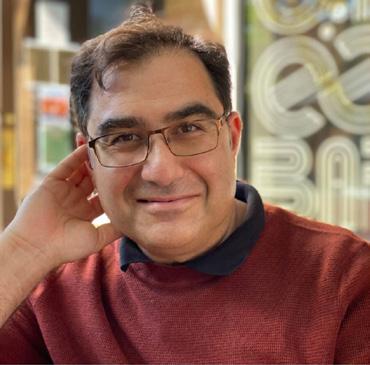
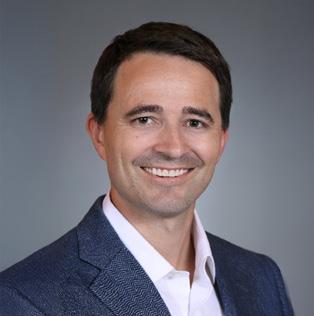
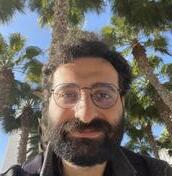
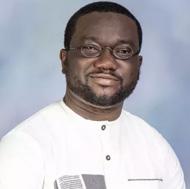
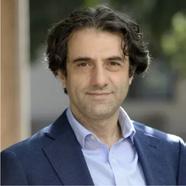
Ali Yaycıoğlu
Associate Professor of History
Dear Friends,
The 2024–25 academic year was a remarkably productive one for the Abbasi Program in Islamic Studies. The program not only responded to the growing interest in Islamic Studies across the Stanford campus but also continued to serve as a platform for global conversations about the field.
Throughout the year, the Abbasi Program sponsored dozens of events, lectures, and workshops spanning history, literary studies, the fine arts, politics, and current affairs related to the Islamicate world, broadly defined. We continued to be responsive to the needs of both faculty and students by supporting research projects, extending research and travel grants to graduate and undergraduate students, and providing internship opportunities.
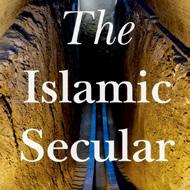
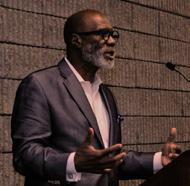
Our Annual Abbasi Lecture was delivered on April 23, 2025 by Professor Sherman Jackson, the King Faisal Chair in Islamic Thought and Culture and Professor of Religion and American Studies and Ethnicity at the University of Southern California. Professor Jackson, one of North America’s leading scholars of Islamic thought, delivered a lecture on “The Islamic Secular.” Prior to his talk, he participated in a roundtable discussion with Abbasi faculty on “The State of Islamic Studies.” This conversation was part of our ongoing series exploring the future of studying Islam and Muslim-majority and -minority societies within and beyond the academy. In the same series we also had the pleasure of hosting Professors Judith Pfeiffer and Evrim Binbaş from the University of Bonn, two of Europe’s leading scholars of medieval Islamic history. Their visit further strengthened the Abbasi Program’s global partnerships and reaffirmed our commitment to fostering scholarly conversations across regions and disciplines.
In addition, the Abbasi Program organized a series of events on Islamic intellectual traditions, bringing together leading scholars in Islamic thought to explore new approaches to theology, philosophy, political thought, and the transmission of knowledge across Muslim societies—from the early medieval to our time.
Our Annual Conference for the 2024–25 academic year took place in November 2024 under the leadership of Professors Aron Rodrigue and Nora Barakat from the History Department. The conference brought together scholars working on the history of financial institutions and Muslim, Armenian, Greek, and Jewish finance dealers in the early modern Middle East and Southeastern Europe. The Abbasi Program is proud to support the forthcoming publication of the conference papers.
In collaboration with the Division of Literatures, Cultures, and Languages, the Abbasi Program co-sponsored the First International Kurdish Literature Conference, Kî ne em? / Who Are We? The conference brought together scholars, writers, and translators working in the growing field of Kurdish literary studies. Taking inspiration from the plurality of Kurdish languages and identities, the
DIRECTOR’S LETTER
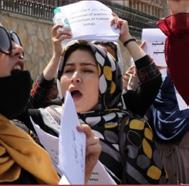
event explored the role of Kurdish cultural and literary production in shaping contemporary debates on identity, belonging, and creativity. We also co-sponsored the Symposium on Confronting Gender Apartheid in Afghanistan, which convened scholars, activists, and policymakers to address the urgent humanitarian and ethical challenges facing Afghan women and to examine the possibilities of transnational feminist solidarities in Muslim contexts.
The Abbasi Program successfully completed its search for the Palestine Studies Postdoctoral Fellowship. Dr. Suleiman Hodali, a graduate of UCLA in Comparative Literature, joined us for a two-year appointment.
Looking Ahead: 2025–26 Academic Year
The upcoming academic year promises to be equally dynamic, with a rich slate of events, talks, and workshops. I would like to highlight three new initiatives that mark important developments in our program:
The Abbasi Program has launched Islam and Science, a new speaker series co-sponsored by the Program in History & Philosophy of Science and Stanford’s History Department. Each talk spotlights cutting-edge research on how scientific knowledge was practiced, taught, debated, and exchanged across the medieval, early modern, and modern Islamic worlds. Drawing on newly uncovered sources, the series challenges received narratives and reshapes our understanding of science in Islamicate societies.
In coordination with the Center for Spatial and Textual Analysis (CESTA), the Abbasi Program inaugurated the Lab for Ottoman and Middle Eastern Studies in Digital Humanities. Housed at CESTA, the lab serves as a hub for faculty, graduate, and undergraduate students developing digital projects in Islamic, Middle Eastern, and Ottoman studies. It represents a major step in integrating digital tools into humanistic research on the Islamicate world.
Each quarter, Abbasi faculty and students will gather for the new Faculty Conversations series— an informal forum in which one of our faculty members shares their scholarly journey and intellectual life story. This initiative is designed to strengthen our academic community and foster mentorship across generations.
The Abbasi Program in Islamic Studies will continue to serve as a vibrant home for knowledge, intellectual exchange, and cultural engagement with the Islamicate world at Stanford— despite the many challenges of our time.
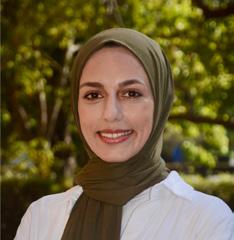
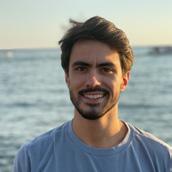
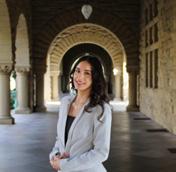
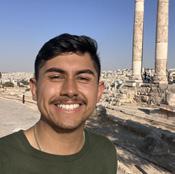
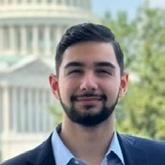
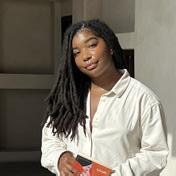
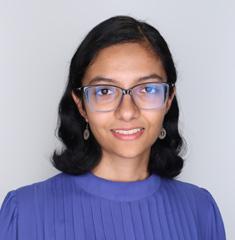
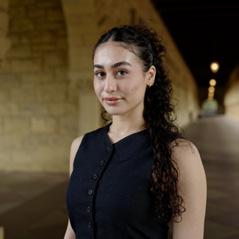
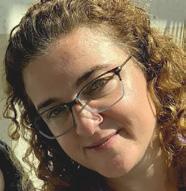
Ameera Eshtewi is a rising junior from Portland, OR, majoring in Biomedical Computation. When she’s not bridging neuroscience and computation to understand the mind, she can be found writing poetry beside the still pond and evergreens of Kingscote Gardens. She is a poet and a member of Stanford’s Spoken Word Collective, and is passionate about how language, memory, and faith intertwine. As an Abbasi-Markaz Fellow, she looks forward to exploring storytelling as a bridge between tradition, reflection, and identity, and as a form of resistance and reclamation.
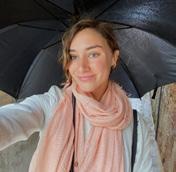
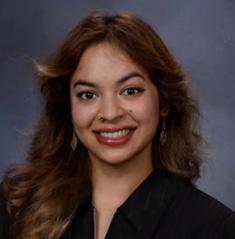
Rabia Kutlu Karasu is a Ph.D. Candidate in Political Science at Stanford University. Her research explores the intersection of authoritarianism, political institutions, and elite behavior, with a regional focus on the Middle East. Specifically, she studies the dynamics of hegemonic party formation and the strategies ruling parties use to shape elite behavior, consolidate power, and control political discourse. Her research employs quasi-experimental statistical designs and computational text analysis.
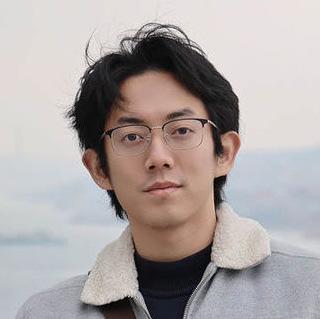
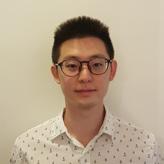
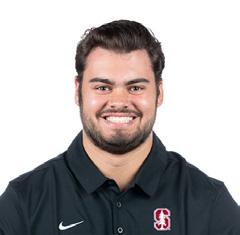
Yuanhao “Rüzgâr” Zou is pursuing a Ph.D. student in history at the Stanford School of Humanities and Sciences. He graduated from Carleton College in 2022 with a BA in history and math. Upon graduation, he studied folk music traditions and minority languages in the Caucasus, Northwest Africa, the Balkans, Mainland Southeast Asia, China, and Japan. Now, he is interested in historical connections between China and the Ottoman Empire.
FEATURED AFFILIATES
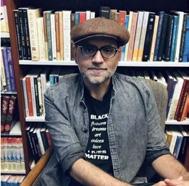
Interview with Cole Bunzel
Could you share your intellectual journey and what ultimately brought you to Stanford?
I was drawn to the study of the Middle East because it was an area of immense topical interest during my college years (2004–08). I was always torn between my interest in government and policy and my more academic interest in Middle Eastern and Islamic history. At Princeton, I studied Arabic intensively and majored in Near Eastern Studies, then spent a year studying advanced Arabic in Damascus, Syria. I later earned an MA in International Relations at the Johns Hopkins School of Advanced International Studies (SAIS) while working part-time at the Defense Intelligence Agency. My experience in government wasn’t inspiring, and my teacher Fouad Ajami encouraged me to consider academia, which led me back to Princeton, where I completed my PhD in Near Eastern Studies in 2018.
At Princeton I became interested in two subjects in particular: militant Islamist movements such as al-Qaida and the Islamic State, and the history of Saudi Arabia. I followed the social media of jihadi groups and wrote for the website Jihadica.com, which led to my study From Paper State to Caliphate: The Ideology of the Islamic State (Brookings, 2015).
Meanwhile, I began research on Wahhabism, whose texts and ideas were central to modern jihadism. My initial plan to write on the scholar Sulayman ibn Sihman (c. 1849–1930) grew into a broader project tracing Wahhabism from the mid-eighteenth to early twentieth centuries. Drawing on neglected manuscripts and anti-Wahhabi refutations from Iraq, the Hijaz, and Yemen, I offered a new assessment of Ibn ʿAbd al-Wahhab’s (c. 1703–92) doctrine. A revised version was published by Princeton University Press in 2023 as Wahhābism: The History of a Militant Islamic Movement.
The book shows that Ibn ʿAbd al-Wahhab’s movement was from the outset intolerant and incendiary. Launching his reformist mission in 1741, he condemned mainstream Islamic practices as akin to pagan polytheism, focusing his ire on grave visitation. Drawing on Ibn
Taymiyya (d. 1328), he viewed such acts as polytheism (shirk) and urged a return to pure monotheism (tawhid ). The movement grew increasingly militant, threatening by the early nineteenth century the Ottoman provinces of Iraq and Syria with jihad to eradicate alleged idolatry.
After a postdoctoral year at Yale Law School’s Program in Islamic Law and Civilization, I came to Stanford in 2019 as a Hoover Fellow—an ideal setting for combining policy-relevant research on the Middle East with historical study.
During your time here, what were the main areas of focus in your research, and how did you engage with the Stanford community to share your work?
In addition to revising my book, my research at Stanford has centered on Islamism and Saudi Arabia. I have written on developments in jihadism, including for Foreign Affairs, and produced academic articles and chapters on the ideology of Hamas, the 1979 Mecca mosque takeover, al-Qaida’s failure in Syria, and Saudi Arabia’s transformation under Crown Prince Mohammed ibn Salman.
At Stanford I have given talks at Hoover and elsewhere, taught an undergraduate class on Islamic political thought, and led a Stanford Travel/Study trip to Saudi Arabia in 2023.
Your recent Abbasi Program book talk on Wahhabism has drawn significant attention on YouTube. What first sparked your interest in Wahhabism—and, more broadly, Islamic intellectual history?
My interest began with frequent citations of Wahhabi scholars in Sunni jihadi writings. One key text, Millat Ibrahim (The Religion of Abraham) by Abu Muhammad al-Maqdisi, is largely quotations from eighteenth- to early twentieth-century Wahhabis insisting that worship belongs to God alone and that deviation from tawhid warrants excommunication (takfir), enmity (‘adawa), and jihad. Why did jihadis draw so heavily on this tradition? That question led me to reconstruct its history and doctrine, showing how it could be claimed both by official Saudi scholars and by militant jihadis. My research deepened into the intellectual roots of Wahhabism, especially Ibn Taymiyya and his student Ibn Qayyim al-Jawziyya (d. 1350), whose ideas Ibn ʿAbd al-Wahhab adopted and radicalized.
As for the YouTube lecture, debates over it are often divided between those who see Wahhabism as a fanatical distortion of Islam and those who revere its founder as a reformer. My book takes neither side but seeks to reconstruct the movement’s history on its own terms.
Some scholars have likened Wahhabism to Christian Puritanism, suggesting that it represents a reformist current in Islam that might catalyze positive social change. How do you view such comparisons?
It is natural to reason by analogy with what is familiar. Early European writers on Wahhabism—many of them travelers in Arabia—often compared it to Protestantism because both opposed saint veneration and emphasized foundational scripture. The analogy is not entirely wrong but reveals more about the observers, many of whom were devout Protestants projecting their own values. Wahhabism was, on my showing, aggressively intolerant, even to the point of waging jihad against professed Muslims, and modern critics may find justification for their views.
While working on your book project, what did you find most striking or unexpected? How do you see your work contributing to our understanding of contemporary Muslim political thought?
One striking discovery was how Ibn ʿAbd al-Wahhab’s movement evolved. My teacher Michael Cook noted in “On the Origins of Wahhābism” (1992) that the young preacher all at once “experienced something like a conversion,” thereafter viewing most Muslims of his day as polytheists to be fought. What I found, however, was that he initially did not promote violence. He saw his knowledge of tawhid as God-given but sought to spread his mission through preaching, calling believers to confront polytheists with “hatred” and “enmity.” He drew on Abraham’s example in the Qur’an (60:4) and on the Prophet Muhammad’s early, non-violent preaching in Mecca.
Only after moving to al-Dirʿiyya, home of the Al Saud dynasty, and aligning with a nascent state did he endorse jihad, entering what he saw as the Medinan phase of the Prophet’s mission. This suggested to me that the Wahhabis consciously modeled themselves on the early Islamic state.
Wahhabism has been described as apolitical or manipulated by the Al Saud, yet in practice it was not. Ibn ʿAbd al-Wahhab was closely involved in state matters and
provided theological justification for Saudi expansion as jihad to eradicate shirk. The movement, however, produced little political theory, which helps explain how its legacy could be invoked by both jihadis and Saudi royals.
Can it be said that Wahhabis traditionally subscribed to political quietism toward their rulers unless the latter committed egregious violations of God’s laws—and that this is what has driven their recent turn toward jihadism—or is what we now see in Salafi-Jihadism more a contingent outcome of its fusion with Sayyid Qutb’s radicalization of Muslim Brotherhood thought?
Early Wahhabis assumed their ruler would be a faithful adherent of their creed. They rarely discussed when rebellion was legitimate. Rebellion was permitted only if a ruler was deemed an apostate, not merely if he neglected parts of the Sharia. Qutb later argued that modern rulers, by rejecting the entirety of divine law, had effectively apostatized. Qutbism thus played a major role in shaping what became Jihadi Salafism.
Outside your research, how did you spend your time at Stanford?
At Hoover I work closely with the Working Group on the Middle East and the Islamic World, chaired by Russell Berman, contributing to programming, essays, and the quarterly Caravan . I am also active in the Hoover History Lab chaired by Stephen Kotkin.
Finally, what message would you like to share with the Stanford community about the future of Islamic studies at the university?
Unlike some leading universities, Stanford lacks a Department of Middle Eastern or Near Eastern Studies, which is typically where Islamic studies would reside. Yet it has excellent faculty who teach on Islamic subjects, particularly in the Religion and History Departments. The Abbasi Program also plays a vital role in bringing scholars together in a shared, non-political and non-ideological way—something worth celebrating in today’s polarized academic environment.
Thank you for this fascinating conversation.
Interviewed by Halil Yenigün
To access the full version of this interview, please scan the QR code.
FEATURED AFFILIATES
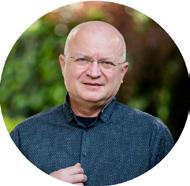
Interview with Ali Çarkoğlu
Can you tell us about your intellectual journey? What brought you to Stanford this year?
My journey began at Boğaziçi University, studying economics. The country was adopting market-oriented development strategies, and while politics was restricted under military rule, economic discussions dominated, which attracted me to study economics. In August 1987, I moved to the United States for graduate work. I increasingly became disillusioned with the field of economics. I was doing analytical modeling, which did not suit me well, and after a period of soul-searching, I moved to upstate New York, where I defended my dissertation in political science at SUNY-Binghamton in 1994. This experience provided a strong foundation in quantitative political science and for a career devoted to understanding the complex interplay between democratic institutions, electoral behavior, and socio-cultural change in Turkey.
Although I worked on successful projects that enhanced my academic reputation and contributed to Turkey’s agenda, my work on corruption and religion in Turkey produced significant reports that remain well-cited reference works in their fields.
The role of religion in public life and politics, particularly within Turkey’s secular framework, remains a significant focus in my work. My work on religion and voting behavior gained attention when I moved to Sabancı University. Over two decades, our work with Ersin Kalaycıoğlu has been crucial in establishing Turkey’s capacity for
longitudinal public opinion research through the Turkish Election Study (TES) and global survey platforms like the International Social Survey Programme (ISSP) and the Comparative Study of Electoral Systems (CSES). These platforms have enabled analysis of religious belief trends, their interaction with political cleavages, and placement of the Turkish case in comparative perspective.
During your time at Stanford, what were the main areas of focus in your research? In what ways did you engage with the Stanford community to share your work?
During my Stanford CDDRL sabbatical, I researched the relationship between religiosity and democratic values in Turkey, with a focus on public support for Sharia law within secular states. I examined how religious identification, particularly in the context of democratic backsliding, affects political polarization and institutional trust to analyze Turkish secularism within broader debates about religious legal preferences in democracies.
In addition to my core research agenda, I worked on a project examining minority religious identities, particularly the Alevi community in Turkey, within the dominant Sunni-nationalist discourse. During my stay, I engaged with Stanford’s academic community, presenting a CDDRL research seminar on Electoral Dynamics under Democratic Erosion in Turkey, sharing findings from electoral survey data (2002–2023) on authoritarian governance and partisan identities.
These engagements allowed me to receive interdisciplinary feedback.
You’ve given two lectures with the Abbasi Program during your time here. What initially sparked your interest in the Alevi question, support for Sharia, and more broadly, the intersection of religion and politics? How do these topics connect to your broader research agenda?
My interest in religion and politics emerged early in my academic career. Although Turkey maintains a secular constitutional order,
religious identity and values continue to shape political discourse, party alignments, and electoral behavior. This complex relationship led me to study how religious minorities and pious majorities perceive democracy, legitimacy, and justice.
Alevis represent a marginalized religious minority whose exclusion from state recognition and Sunni discourse challenges equal citizenship in Turkey. Their political behavior, marked by high democratic commitment despite facing discrimination, offers insight into majoritarian secularism and minority engagement. In my Stanford Abbasi Program presentation, I explored how Alevis navigate marginalization and how their identity politics intersect with religious pluralism and state legitimacy.
My research on support for Shariabased legal frameworks stems from how religiosity influences political
attitudes among Sunni Muslims. Through survey data, I showed that while Turkey maintains formal secularism, religion–politics boundaries blurred in the post-1980s, especially as religiously conservative parties rose. Contrary to assumptions about secular democracy, Turkish citizens often support both secular civic law arrangements and religious principles in law. This reflects a reimagining of democracy’s foundations through a religious lens.
These themes connect to my broader research agenda, which examines the interaction between identity-based cleavages—religious, ethnic, and ideological—and democratic institutions. Through national surveys, cross-national collaborations, and longitudinal analysis of Turkish public opinion, my work explores how citizens in divided societies understand political authority, representation, and inclusion.
Do you think Sharia support and Kemalist secular principles can truly coexist? Based on your research, do you reach any theoretical—normative or analytical— conclusions, or is this simply another paradox or inconsistency of the electorate, where they demand Sharia law while remaining content with secularism in civic life?
I’m afraid this has no simple answer. My answer to this question also relates to my work at Stanford. I believe my research has documented a decline in public practice (mosque attendance/prayer frequency at the top end), a softening of strong self-identification, but persistently high theism with rising doubt. In a way exemplifying, “less doing, milder belonging, durable believing.”
My findings give more credence to a European-style drift toward personalized, reflexive religion since I find, for instance, that there is a secular rise in “episodic believers and believers with doubts” among our survey respondents over the past two decades. There appears to be a decoupling between religious identity and practice and a shift from communal obligation to private meaning-making.
Demand for Sharia is also rooted in the dual nature of this overall secularization trend in Turkish society. Still, quite sizable groups in Turkish society appear to experience a countertrend to the pattern I described above. Hence their understanding of a “good society” remains intricately tied to a Shari’abased system and they remain vocal. Currently, secularizing groups also exhibit a higher level of silence towards these vocal demands due to
FEATURED AFFILIATES
authoritarian tendencies of the current administration, which leads to an inflated expression of Shari’a approval if not a demand for it. Hence, the coexistence between these groups emerges.
What did you find most striking in your research findings? How do you think your work contributes to our understanding of contemporary Turkey and the broader Middle East?
Rather than viewing Sharia law and democratic values as incompatible, many Turks envision democracy aligned with religious morality. This challenges frameworks equating secularism with democratic commitment and prompts a reconsideration of democratic legitimacy in diverse societies.
Would that, in your view, still qualify as a conception of democracy, given that many conservatives in Turkey equate democracy with crude majoritarianism?
Turkey’s secularism is already marked by intrinsic Sunni dominance over society through the state-sponsored Sunni Diyanet (Directorate of Religious Affairs). Don’t Alevis value democracy precisely because, for them, minority rights are indispensable— without which, along with other basic rights and liberties, a regime cannot truly be called a genuine democracy, but rather a tyranny of the (Sunni Muslim) majority?
You are certainly right in your claim that Alevis’ resilient support for a secular democracy stems from their expectation of protection for their sectarian identity. The dilemma of
Turkish democracy lies in maintaining a balance between fundamental democratic principles and conservative Islamist expectations that contradict those principles. When it comes to protection of civil liberties such as freedom of speech, press, assembly, religion, and association, the conservative side appears to have double standards. While guarding its own liberties, it does not hesitate to restrict the liberties of its competitors. Most importantly, under pro-Islamist incumbency, decisions are made by majority rule, but fundamental rights of minorities are not safeguarded, which inevitably creates a “tyranny of the majority.”
In Turkey’s context, this work explains the durability of authoritarian strategies, the role of religion in electoral mobilization, and the limitations of institutional reform. It offers insights into how religious identity and political pluralism interact in the Middle East’s evolving political landscapes.
Outside of your research, how did you spend your time at Stanford? Is there a moment or experience that stands out as especially memorable?
My time at Stanford was intellectually productive and personally enriching. The sabbatical offered a valuable opportunity to step back from teaching and administrative pressures and think more broadly about how my research fits into comparative and theoretical frameworks.
I cherished the campus life—walks
across the Oval, conversations with colleagues from different disciplines, and the atmosphere of curiosity.
Finally, what message would you like to share with the Stanford community regarding the future of Turkish Studies at the university?
I encourage viewing Turkish Studies not as a niche field, but as an interdisciplinary lens to examine pressing global questions: democratic backsliding, religious pluralism, identity politics, migration, and authoritarian resilience. Turkey is critical for understanding political transformation in the Global South and Muslim-majority societies. Stanford can become a leading hub for Turkish Studies. Crossdisciplinary dialogue between political science, anthropology, history, religious studies, law, and sociology can enrich both the study of Turkey and global questions. Partnerships with Turkish scholars and institutions can bridge academic communities and produce relevant research. Turkish Studies at Stanford can be a strategic space for generating knowledge on democracy, secularism, and identity challenges in the 21st century.
Thank you again for sharing your time and insights.
Interviewed by Halil Yenigün
To access the full version of this interview, please scan the QR code.
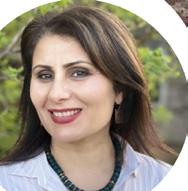
Interview with Nilay Özok-Gündoğan
Can you tell us about your intellectual journey? What brought you to Stanford this year?
I am a historian of the Ottoman Empire. My scholarship focuses on state formation, political and economic transformations, and intercommunal relations in Kurdistan during the late Ottoman period. I came to Stanford as a Stanford Humanities Center External Faculty Fellow for the 2024–2025 academic year. During my sabbatical from Florida State University, I’ve been working on my second book project, Forging Empire: Mineral Extraction, State-Making, and the Colonization of Ottoman Kurdistan, 1720–1870. This year allowed me to concentrate on developing and writing the manuscript.
What were the main focuses of your research at Stanford, and how did you engage with the community?
My research focused on the political and ecological consequences of mineral extraction in Ottoman Kurdistan, particularly the Keban-Ergani mines. These mines, which supplied the Imperial Mint and military industry for over a century, reshaped the region’s economy, social fabric, and landscape. I argue that mining was not a marginal activity, but a key tool of Ottoman colonization; one that enabled administrative expansion and undermined Kurdish autonomy.
Much of my engagement with the Stanford community happened through the Humanities Center’s everyday interactions. Lunchtime conversations often led to deep, productive exchanges. I also presented at the Tuesday seminar series, which helped sharpen my arguments. A book talk at the Abbasi Program brought together scholars of the Ottoman Empire, Turkey, and the Middle East, offering interdisciplinary feedback that was especially valuable.
What initially sparked your interest in Kurdish nobility and Kurdish studies within Middle East Studies?
My interest emerged from the erasures I kept encountering in Ottoman and Middle East historiography. Kurds were rarely treated as legitimate historical subjects. They were typically cast as rebels, victims, or marginal figures. Kurdistan itself was largely absent from the
conceptual map of the field. Even as Ottoman studies expanded to include provincial histories, Kurdistan remained excluded.
I turned to the Kurdish nobility not to write another elite-centered narrative, but to explore broader questions about sovereignty, property, and imperial governance. Kurdish actors including nobles, villagers, and petitioners negotiated their roles within the Ottoman order, and I wanted to trace how those relationships worked not only during upheaval, but in the everyday operations of power. More broadly, I aim to reintegrate Kurdistan into the analytical frameworks of Ottoman and Middle East history. This isn’t just about including another region—it’s about recognizing how its exclusion has shaped the assumptions of the field.
SECTION FEATURED AFFILIATES
How does your work relate to the idea of internal colonization, and does it challenge traditional center-periphery models of empire and state?
I don’t use the term “internal colonization” in my work. While it offers important insights for analyzing modern nation-states, particularly settler regimes, it does not fully capture the structures of the Ottoman imperial order, where sovereignty was layered, belonging was multiple, and governance was negotiated.
In the early modern period, Kurdish regions were incorporated through formalized arrangements. Emirates like Palu were governed by hereditary dynasties whose authority was recognized and codified by the Ottoman state. These families were exempt from fiscal surveys and protected from direct oversight. What made the Kurdish emirates distinctive was the de jure recognition of their hereditary rule and the longevity of that arrangement. These were not marginal anomalies; they were integral to the imperial system’s diversity of governance.
That began to change in the 19th century, as the Ottoman state pursued centralizing reforms and sought to administer frontier regions more directly. Legal protections for hereditary rulers were eroded; the region was militarized and surveilled. Kurdish society was reframed in official discourse as tribal, backward, and resistant to reform. In this context, colonial frameworks become more relevant for understanding how Kurdistan was subjected to extraction, exceptional rule, and epistemic violence.
My work challenges the conventional center-periphery model, which treats regions like Kurdistan as reactive or lagging. I argue that Kurdistan was not peripheral but central to imperial and national formations. It actively shaped state practices of governance, violence, and extraction. I’m less interested in revising the model and more invested in questioning the spatial metaphors that sustain it.
What did you find most striking in your archival research while writing this book? How do you think your work contributes to our understanding of contemporary Turkey, the Kurds, and the broader Middle East?
One formative episode that stayed with me occurred in 1848 in Palu, when villagers resisted an abusive levy imposed by a Kurdish notable and took their grievance to the imperial council in Istanbul. What struck me was their use of Ottoman legal language to assert their rights as subjects deserving justice. This incident led to the confiscation of hereditary lands from Kurdish elites and became a focal point of my book.
It illustrates a broader shift in the 19th century when centuries-old structures of Kurdish political autonomy were dissolved under the banner of centralization and modernization. These changes were not just bureaucratic. They reordered power on the ground and had long-lasting effects. When the post-World War I order divided the region among modern nation-states, Kurds entered it without the institutional structures that had once mediated their political place.
While there may not be a direct causal link, do you think the dismantling of Kurdish self-governance structures in the 19th century enabled Turkish nation and nation-state-building efforts, or did it eliminate key points of resistance that might otherwise have posed significant challenges to them?
Absolutely. Through military campaigns, administrative reforms, and legal changes, the Ottoman state eliminated the emirates, stripped Kurdish nobility of authority, and dismantled the mechanisms through which Kurds once negotiated with the state. These were not symbolic losses; they removed concrete sites of power.
By the time the Turkish Republic was established, much of this foundational work had already been done. The region had been politically disarmed and framed as a zone of disorder. No new recognized Kurdish political class emerged to replace the nobility. Instead,
surveillance, military oversight, and suspicion took their place—making the imposition of a homogenizing national order more feasible.
My research also traces the roots of this transformation earlier, to the 18th century. Even before direct administration, the Ottoman state had begun viewing Kurdistan as a resource frontier. The mines became part of a fiscal logic that prioritized extraction over partnership. The 19th century simply intensified and restructured this logic, turning pragmatic revenue collection into something closer to a colonial project. What had once been a space of negotiated governance became a target of direct rule, military presence, and epistemic domination.
Put simply, based on your work, how could we reframe the Kurdish question then?
I see the Kurdish question not as a matter of failed integration or cultural rights, but as a question of colonization. It involves the historical transformation of Kurdistan from an autonomous region embedded in imperial governance into a fragmented, subordinated periphery of multiple modern states.
Nation states did not merely exclude Kurds. They carried forward earlier imperial strategies that dismantled Kurdish political autonomy, expropriated elite power, and carved up the territory. What followed was not only exclusion from citizenship but the colonization of Kurdish space—its securitization, fragmentation, and subjection to nationalist development agendas that treated it as inherently threatening.
To reframe the Kurdish question, we need to ask: how was Kurdistan colonized—politically, economically, and epistemically? And how have modern states continued those processes under new regimes of rule? This approach recenters Kurdistan itself as a meaningful political space, and sees its fragmentation as fundamental to understanding the modern Middle East.
Outside of your research, how did you spend your time at Stanford? Is there a moment or experience that stands out as especially memorable?
The Humanities Center was an ideal space to write, reflect, and engage with others. The regular conversations—whether at lunch or in seminars—helped me refine my ideas. I also appreciated the broader campus community, especially events at the Abbasi Program that intersected with my research.
Outside of academic life, I found moments of calm walking around Lake Lagunita or sitting by one of the campus fountains. I’m drawn to water, and these simple routines became part of my rhythm during what was a very focused and fulfilling year.
Finally, what message would you like to share with the Stanford community regarding the future of Kurdish Studies at the university?
Kurds are the largest stateless ethnic group in the world, yet Kurdish Studies remains underrepresented in North American academia. Area studies programs have often mirrored dominant national frameworks—Turkish, Iranian, Arab—leaving Kurdish history and politics on the margins.
Stanford is uniquely positioned to help change that. With strengths in Ottoman, Turkish, and Middle East Studies, and a vibrant intellectual community, it could become a leader in advancing Kurdish Studies. Doing so would not only fill a longstanding gap but enrich the study of the region as a whole byopening space for new questions, voices, and conversations.
Thank you so much for this fascinating and extremely informative conversation.
Interviewed by Halil Yenigün
To access the full version of this interview, please scan the QR code.
STUDENT UPDATES
The Abbasi Program supported 16 students during the 2024-2025 academic year as they pursued remote research, fieldwork, language study, or internships, awarding a total of $57,100 in funding.
Language Study
Research or Fieldwork
Anna Galietti
Graduate, Comparative Literature Conference participation and research in London, U.K.
My grant funded a week-long trip in June to London and Cambridge. At King’s College London, I presented my dissertation research on early Islamic Arabic poetry. I also viewed a manuscript of Jarīr and al-Farazdaq’s Naqāʾiḍ at the British Library, the seventh–eighth century Arabic invective poetry collection that forms the focus of my dissertation. Seeing the manuscript was invaluable for understanding how this corpus was transmitted in the centuries after its composition. I then traveled to Cambridge to meet with a member of my dissertation committee. Returning to Cambridge was special, as I co-hosted an Arabic literature conference there in 2024 with my Stanford Comp Lit and Cambridge colleagues.
A.J. Naddaff
Graduate, Comparative Literature Language Study in Istanbul, Turkey
My grant supported 8 weeks in Istanbul, where I took part in Boğaziçi University’s Turkish language acquisition program and laid the groundwork for my eventual move to Istanbul for dissertation research. The program elevated my Turkish to the point where I can now read academic articles and communicate independently. Beyond the classroom, I explored the Ottoman State Archives and built academic connections with universities, with an invitation to return as a research affiliate. I treated the summer as a trial run, strengthening my language skills and preparing for my return.
Ronald Y. Chen
Graduate, Anthropology
Language Study and Dissertation Research in Amman, Jordan
My grant supported field research in Amman, Jordan, where I have been since fall 2024 and plan to remain until the end of 2025. My work focuses on tribal law, administrative detention, and women’s rights, exploring how reconciliation attempts can lead either to forgiveness and the payment of blood money or to detention by the state to prevent retaliation. Far from being marginal or primitive, tribal dispute resolution is mainstream, widespread, and even integrated into civil courts and governors’ offices. As part of my research, I visit detainees in prison, often returning with a heavy heart but also deeply moved by the human connections I form in Arabic. Conducting this work is both challenging and rewarding, reflecting my love and respect for Jordan. I am very grateful for this grant.
Emilia Cottignoli
Graduate, Art & Art History
Sicily, Italy; Cairo, Egypt, and Istanbul, Turkey
The grant supported my research trip to Sicily, Cairo, Amman, and Istanbul. Embodied perception is central to my work, and seeing monuments in person allowed me to understand their environments in ways photographs could not. In Cefalù, I realized how the cathedral and the mountain La Rocca together form the shape of a snail, a motif echoed in the local limestone, lumachella. In Istanbul, visiting the shrine of the Zoodochos Pege revealed how elements described in Late Antiquity remain active today, with holy water still bubbling in its basin. Evenings offered space for exploration, from hammams in Istanbul to granita stands in Sicily. This grant gave me the chance to self-direct a trip across four countries, returning with new ideas and inspiration.
Angelina Rivas
Undergraduate, International Relations Language Study in Amman, Jordan
My grant supported 10 weeks of Arabic study at the Sijal Institute in Amman, where my language skills improved dramatically. By the end of the summer, I felt confident reading signs around the city, speaking in the Shami dialect, and advancing in Modern Standard Arabic. Compliments from my host family and even Uber drivers confirmed my progress. A major highlight was volunteering with the Collateral Repair Project, teaching English to adult refugees from Sudan, Yemen, Palestine, and beyond—an experience that taught me more than any classroom could. I also traveled across Jordan, visiting Petra, Wadi Rum, Aqaba, and other sites, and built a strong support system with fellow students. My advice to future applicants is to embrace every part of the journey, give back to the community, and let challenges remind you why you came.
Mustafa Emre Günaydı Graduate, History
Research in Istanbul, Turkey and London, U.K.
My grant supported dissertation research. In Istanbul, I worked at the Ottoman State Archives, gathering sources and forming lasting professional friendships with fellow Ottomanists. Conversations over lunches and coffee breaks enriched the long hours in the archives. In London, I worked at the British Library for three weeks, navigating a paper request system after a cyberattack had left the online catalog unreliable. With the staff’s help, I accessed essential materials and gathered a substantial body of sources for my dissertation. Weekends allowed me to explore the city and even take a day trip to Oxford. This grant was invaluable in advancing my research and expanding scholarly connections.
STUDENT UPDATES
Dominic Cruz Bustillos
Graduate,
Political Science
Research
in Stanford, CA
My grant supported research on combat motivation among Soviet soldiers during the invasion of Afghanistan. I built a geographic information system for the Tatar Autonomous Soviet Socialist Republic, collecting demographic and mil- itary data to test whether pre-war inequality shaped non-core ethnic soldiers’ wiingness to fight. While initial results suggested Tatars were less likely than Russians to receive combat medals, controlling for other factors showed the effect was essentially null. This finding challenges both grievance-based and aspiration-based theories and may help explain current recruitment patterns targeting non-Slavic groups in Russia’s war in Ukraine. Alongside these results, I faced obstacles with archival scanning and limits in my research design. Part of making new discoveries is acknowledging that our pre-existing theories or hypotheses can be wrong, and setbacks often open new and important paths forward.
Andrew Kelmanson
Undergraduate, History and East Asian Studies
Language Study and Research in Dushanbe, Tajikistan
The grant supported my Persian language learning and Islamic studies. In Dushanbe, I took part in the University of Central Asia’s Summer Program, where I studied the differences between Tajiki, Dari, and Farsi and enjoyed learning Persian vocabulary with Arabic etymologies. I visited the ancient Hisor Fortress, observing artifacts from Islamic dynasties. I also traveled along the Tajik-Afghan border to Khorog, where I met Pamiri Muslims and learned about their unique culture and the lasting scars of the Tajiki Civil War. Touring the University of Central Asia’s Khorog campus and speaking with students was further enriching. This once-in-a-lifetime experience deepened my understanding of both Afghanistan and Central Asia’s history and of Islam’s influence in the region, while also showing me the blending of Islamic, Persian, and Russian cultural traditions.
Rabia Kutlu Karasu Graduate, Political Science
Field Research in Istanbul and Ankara, Turkey
In Istanbul, I met with current and former politicians to discuss their careers, while in Ankara I consulted the Grand National Assembly archives and spoke with legislators and policy experts. A major achievement was compiling a dataset on municipal complaints and service provision that complements my parliamentary data. A significant takeaway was seeing how local-level data can enrich our understanding of national political transformations and democratic backsliding, particularly in contexts where official narratives dominate. Accessing politicians proved difficult— ruling party members were cautious, and opposition figures faced heavy schedules and scrutiny—so I relied on rapport, flexibility, and trusted introductions. Outside research, conversations with local residents deepened my perspective on governance. My advice is to stay flexible, since the most valuable insights often come not from scheduled meetings but from unexpected conversations along the way.
Diego Calderon
Undergraduate, Economics
Language Study in Amman, Jordan
Although the one-week study at the Sijal Institute was short, it was an incredibly meaningful experience that allowed me to strengthen my skills in both standard Arabic and the local dialect, while deepening my understanding of the region through focused conversations about politics, democracy, and human rights. One of my biggest takeaways was realizing how much more powerful and personal these discussions felt in Arabic, especially when shaped by local perspectives. Outside the classroom, I explored Amman’s rich culture and history, visiting the Citadel and Rainbow Street, and ventured to the nearby town of Salt. These moments reminded me that language is not only about grammar and vocabulary but also about connection, and that some of my most meaningful learning came from unplanned conversations and everyday encounters in the city.
William Pirone
Undergraduate, Mathematics and Political Science
Summer School (language and research) in Dushanbe, Tajikistan
My grant supported two transformative weeks in Tajikistan through the University of Central Asia’s Summer Program. We spent most of our time in Dushanbe, later traveling along the Tajik-Afghan border to Khorog. The trip centered on Persian language study and the cultural intersections of Islam and Central Asia. During the weekdays, I was engaged in intensive Persian, Arabic, and Tajiki language immersion. By the end, I could navigate basic conversations in Persian and Tajiki and recognize subtle differences between Dari and Farsi. A highlight was visiting the ancient Hisor Fortress, where Central Asian history came vividly to life. The challenges—spotty internet, altitude sickness, and language barriers—proved formative. This trip reshaped how I think about the geopolitics of the region and Islam’s role in Central Asian statehood. My advice: embrace discomfort and let the experience transform you.
Bryn Evans
Graduate, Art and Art History
Research in Sharjah, U.A.E.
My grant supported travel to the UAE to attend the closing week of the Sharjah Biennial, a contemporary arts exhibition. Having attended the Hawai’i Triennial earlier in the year, I was struck by the shared curatorial threads— interlacing ecological systems and geographies with political histories, the poetics of ancestral relation, and mythologies connecting land, spirit, and governance. Beyond the Sharjah Art Museum, I visited satellite sites such as Al Mureijah Square, Al Qasimiyah School, Bait Al Serkal, and Calligraphy Square. A highlight was encountering photographs by Kegham Djeghalian Sr., founder of Gaza’s first studio, Photo Kegham (1944). What feels special about Photo Kegham is its ever-expanding network of intimacy—images collected, captioned, and cherished by those who co-created them and their descendants. I’m deeply grateful for this grant, which allowed me to experience this living archive firsthand.
MINOR STUDENTS
SECTION
Ritu Belani, as a sophomore in Chicana/ o-Latina/o and Islamic Studies, Ritu is excited to leverage the humanities to build bridges of cultural understanding. Her past research ranges from an exploration of the history of humor in Islam to NLP analysis of Spanish-English code-switching. By day, Ritu is a student, and by night, she is a stand-up comedian. One of her favorite shows was a comedy night she organized at a masjid: Hahalal.
Husna Nashnoush is a Political Science major and Sociology co-term at Stanford University, with minors in Islamic Studies and Human Rights. Born to Afghan and Libyan political refugees, Husna’s passion for justice and advocacy is deeply rooted in her family’s history. Their experiences have fueled her ambition to become a civil rights attorney and pursue law school in the near future.
In the upcoming academic year, Husna will immerse herself in the dynamic environment of Washington, D.C., with Stanford in Washington, channeling her dedication to justice, policy, and advocacy during the pivotal election season. Following this, she will continue her experience abroad in Paris, where she will indulge her passion for fashion and its connection to the law. Inspired by the historical significance of fashion as a form of resistance—from Elizabethan dress codes to the civil rights movement—Husna hopes to eventually transition from the civil rights realm to pursue a career in fashion law.
On campus, Husna balances her academic and advocacy work with a wide range of engagements that reflect her diverse passions. As an active member of the ACLU chapter at Stanford, she is deeply involved in initiatives that defend civil liberties and promote justice. Her commitment to empowering women in leadership roles is evident through her involvement with Stanford Women on Boards, where she advocates for greater representation of women in corporate governance. Additionally, Husna conducts research with the Sociology department, where she delves into critical social issues, further enhancing her understanding of systemic inequalities.
Alongside these commitments, Husna is also involved with FashionX, where she seamlessly blends her love for fashion with her commitment to social justice. Beyond her professional and academic pursuits, Husna finds the most joy in Pilates, health and wellness, coffee shop hopping, cooking with family, and enjoying cultural dinners with friends.
Sameeha Khan is a senior at Stanford University majoring in Comparative Studies in Race & Ethnicity, with minors in Human Biology (Health Equity & Justice) and Global Studies (Islamic Studies). Her academic and professional interests lie at the intersection of chaplaincy, medicine, and tasawwuf, exploring how Sufism, particularly within Black and Brown communities, serves as a conduit for healing, resistance, and the transmission of prophetic wisdom amidst systemic violence. Sameeha plans to pursue a Master of Divinity to further her commitment to spiritual healing and community care as a pathway toward liberation.
Zachary Buckey is currently a Senior at Stanford where he is majoring in Political Science with a minor is Islamic Studies, International Relations, and Arabic. His research focuses on the role of the Gulf States in relation to great power conflict and a close examination of the future relationship between the United States and the Kingdom of Saudi Arabia. While at Stanford he has been incredibly fortunate to work with some of the leading experts in the field of Middle Eastern Studies and has been captivated by the intricate and nuanced history of the region. After graduation, Zach hopes to attend law school and eventually work in the diplomatic field, where his goal is to help create a stronger and more vibrant relationship between the United States and the Middle East. In his free time, Zach enjoys reading, studying Arabic, and traveling.
Ronnie Hafez graduated this year with a B.A. in political science and economics, and a minor in global studies, with a specialization in Islamic studies.
As you reflect on your time at Stanford, what are you most proud of?
I’m most proud of the friendships that grew from simple moments—grabbing coffee at Verve before class, wandering the quad between fun courses, and late-night chats in the dorm. Those casual shared experiences—celebrating small victories, offering support after a hard day, or just laughing together—showed me what it means to belong. Leaving Stanford with friends who’ve been there through it all is what matters most.
What are your plans after graduation?
I’m building an AI company with two Stanford peers. I’m energized by founding a company at the start of my career and confident that the lessons I’ve learned at Stanford will guide me on this journey.
How has your minor in global studies changed your understanding of the world and prepared you for your next steps?
The interdisciplinary training taught me to ask questions like: How do trade policies in one country affect labor practices elsewhere? What do migration patterns reveal about governance or resource distribution? By combining quantitative data (for example, migration statistics or trade flows) with qualitative approaches (oral histories, cultural narratives), I gained a toolkit for understanding complexity instead of defaulting to simplistic explanations. Engaging with theories of globalism and globalization also made me rethink assumptions about the “universal” human experience—recognizing that values, norms, and expectations can vary dramatically across contexts. As I look ahead to founding a company, I feel prepared to approach business challenges with that same mindset: to trace connections across borders, honor local perspectives, and anticipate how a decision in one market might reshape opportunities elsewhere.
Minor in Global Studies With a Specialization in Islamic Studies
Explore the complex array of histories, literatures, philosophies, intellectual traditions, and institutions related to Islam and Islamicate societies and communities by a Minor in Global Studies with a specialization in Islamic Studies.
Complete 28 units, including:
• Completion of 28 units that includes GLOBAL 101 Critical Issues in Global Affairs (3 units)
• A minimum of 25 units of Islamic studies-related courses.
• At least one course must be an area-specific entry course focusing on the Islamicate world.
• At least one course from each of the following areas must be completed.
1. Islam: Religion, Arts, Literatures, and Cultures
2. Islam in History
3. Islam and Politics
• Completion of three courses in a relevant language such as Arabic, Persian, Turkish, Ottoman Turkish, Urdu, Pashto, Kazakh, or Swahili. A maximum of 15 relevant language course units may be counted towards the Global Minor, Islamic Studies subplan.
• Students may also work with the subplan advisor to develop a capstone project to count towards the unit fulfillment of the minor.
To check out current course offerings within these areas, please visit: islamicstudies.stanford. edu/academics/courses
If you are interested, set an appointment now with Dr. Halil Yenigun, Associate Director for the Islamic Studies Program to discuss your academic plan. Then, declare the Global Studies minor in the Islamic Studies subplan in Axess.
For more information, please visit: islamicstudies.stanford.edu/ academics/minor-global-studiesislamic-studies-specialization or scan here.
EVENTS HIGHLIGHTS
“Global Approaches to Sacred Space” Workshop: Patricia Blessing, “Ottoman Water Architectures”
Oct 10, 2024
A Session of 2024-2025 Global Approaches to Sacred Space workshop series
Labor and Liberation Across the Atlantic Symposium
Oct 11, 2024
A Symposium with: Kathleen Lopez, Gabrielle Hosein, Andrej Grubacic, Mariana Candido, Sasha Turner
Nation and Community: Muslim Universities and Indian Politics after Partition (1947-1990s)
October 14, 2024
A Book Talk with Laurence Gautier
Silent Crimes: Atrocities in Sudan and the International Response
October 21, 2024
A Panel with Christopher Tounsel and Laetitia Bader
From Colonial Gaze to Olympic Blaze: Deconstructing Gender and Sexuality in North Africa
October 23, 2024
A Lecture by Fatima Zahrae Chrifi Alaoui
The Muslim Social: Neoliberalism, Poverty, and Charity in Turkey
October 23, 2024
A Book Talk with Gizem Zencirci
Qaum, Mulk, Sultanat: Citizenship and National Belonging in Pakistan
October 25, 2024
A Webinar with Ali Qasmi and Amna Qayyum
Ottoman Passports: Security and Geographic Mobility, 1876-1908
October 28, 2024
A Book Talk with İlkay Yılmaz
Secular Polities and Sacred Rebellions: The Caliphate Debate, Divine Sovereignty and the Challenge of Post-Imperial West African Nation-States
November 6, 2024
A Lecture by Abdulbasit Kassim
Feminist Repatriation to Soviet Armenia in 1947? A History of Communist Armenian Women in France
November 15, 2024
A Lecture by Lerna Ekmekcioglu
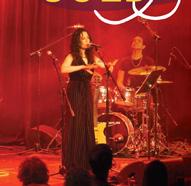
GOLD & WATER: The Poetry of Rumi
November 15, 2024
A Performance with Haleh Liza Gafori
Breaking Fear: Lessons from the Bangladesh Student Uprising
November 18, 2024
A Lecture by Elora Shehabuddin
An Abbasi-Markaz Fellow Event
Impact of the U.S. Elections and the Muslim Experience
November 20, 2024
A Lecture by Halil Yenigun
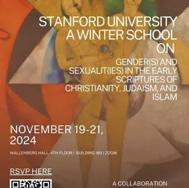
A Winter School on Gender(s) and Sexualit(ies) in the Early Scriptures of Christianity, Judaism, and Islam
November 19-21, 2024
A Workshop
Abbasi Annual Conference ‘24: “The Sarrafs: Money, State, and Finance Dealers in the Ottoman Empire (1700-1900)”
November 22-23, 2024
Police, Provocation, Politics: Counterinsurgency in Istanbul
December 2, 2024
A Book Talk with Deniz Yonucu
Fairuz: The Voice of the Lebanon That Was”
December 4, 2024
An Evening with Dr. Ramzi Salti
Tamazgha Remaps Africa: Reflections on the Scholarly Potential of Amazigh Indigeneity
December 11, 2024
A Lecture by Brahim El Guabli
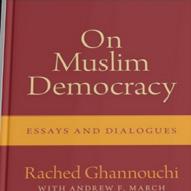
On Muslim Democracy: Essays and Dialogues
January 9, 2025
A Book Talk with Andrew March
Days of Opportunity: The United States and Afghanistan Before the Soviet Invasion
January 17, 2025
A Book Talk with Robert Rakove
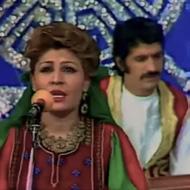
Celebrating the Inauguration of Ustad Farida Mahwash’s Archive at Stanford University Libraries
January 18, 2025
A Lecture by Ustad Farida Mahwash and Farida Anwary
Imamate and Siyāsa: Critical Reflections on Early Islamic Political Discourses
January 27, 2025
A Book Talk with Hayrettin Yücesoy
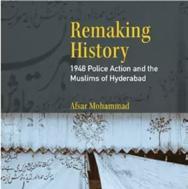
Remaking History: 1948 Police Action and the Muslims of Hyderabad
January 30, 2025
A Book Talk with Afsar Mohammad
Resisting the Taliban’s Ban on Female Education in Afghanistan
February 3, 2025
A Panel with Shabana Basij-Rasikh, Amran Fatih, and Lucy Ferriss
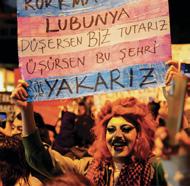
Violent Intimacies: The Trans Everyday and the Making of an Urban World
February 3, 2025
A Book Talk with Aslı Zengin
Rethinking Revolution: Lessons from Tahrir for the 21st Century
February 11, 2025
A Book Talk with Rusha Latif
The Authoritarian Paradox: How Centralization Weakens Regime Control in Electoral Autocracies
March 3, 2025
A Lecture by Evren Balta
Turkey in Syria: The Intersection of Domestic Politics and International Dynamics
March 4, 2025
A Panel with Evren Balta, Nora Barakat, and Halil Yenigun
EVENTS HIGHLIGHTS
Easing the Edges, Negotiating the Nodes: The Muayyadzade Network in the Ottoman World
March 10, 2025
A Lecture by Judith Pfeiffer
The Formation of the Safavid Empire in Syria
March 11, 2025
A Lecture by Evrim Binbaş
Prophetic Humor: Jokes and the Practice of Tradition in Muslim
South Asia
March 13, 2025
A Lecture by Ali Altaf Mian
Electoral Preferences of Turkey’s Elusive Alevi Population
March 31, 2025
A Lecture by Ali Çarkoğlu
Kurdish Nobility in the Ottoman Empire: Loyalty, Autonomy, and Privilege
April 7, 2025
A Book Talk Talk with Nilay ÖzokGündoğan
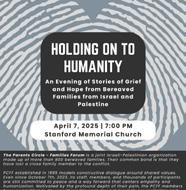
Holding on to Humanity: An Evening of Stories of Grief and Hope from Bereaved Families from Israel and Palestine
April 7, 2025
The Endurance of Palestinian Political Factions
April 17, 2025
A Book Talk with Perla Issa
Symposium on Confronting Gender Apartheid in Afghanistan
April 21, 2025
Symposium on The Islamic Secular
April 22, 2025
A Symposium with Sherman A. Jackson, Rushain Abbasi, Abiya Ahmed, and Alexander Key
Abbasi 2025 Annual Lecture: “Ash’arite Ethics and the Islamic Secular”
April 23, 2025
A Lecture by Sherman A. Jackson
Kî ne em? Kurdish Literature and Its Studies: An Interdisciplinary Conference
April 25-26 2025
Migration & The Transnational Development of Palestinian Political Consciousness in the Early 20th Century
April 29, 2025
A Book Talk with Nadim Bawalsa
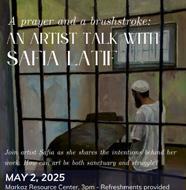
A Prayer and a Brushstroke
May 2, 2025
An Artist Talk with Safia Latif, An AbbasiMarkaz Fellow Event
The Matter of Palestinian Art
May 14, 2025
An Art Exhibition with Nisa Ari
A Secular Shift under an Islamist Government? Exploring Social Change in Turkey
May 6, 2025
A Lecture by Aytuğ Şaşmaz
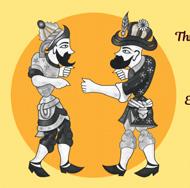
The Forest of the Witch | Karagoz, A Traditional Anatolian Shadow
Theater performed by Ayhan Hulagu
May 8, 2025
Political Dread & Personal Power: Book Talk with Özge Samancı on Evil Eyes Sea
May 12, 2025
Wahhābism: The History of a Militant Islamic Movement
May 15, 2025
A Book Talk with Cole Bunzel
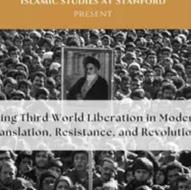
Contesting Third World Liberation in Modern Iran: Translation, Resistance, and Revolution
May 16, 2025
A Lecture by Eskandar SadeghiBoroujerdi
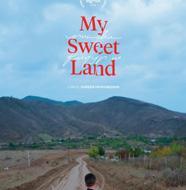
Film Screening: My Sweet Land
May 18, 2025
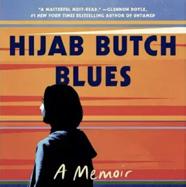
Hijab Butch Blues
May 19, 2025
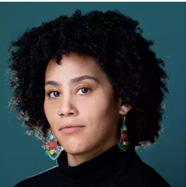
A Book Talk with Lamya H
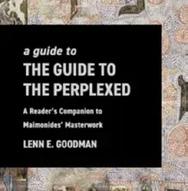
A Guide to the Guide
May 20, 2025
A Book Talk by Lenn E. Goodman
Living Fossils: Anatomies of Race and Reproduction in Modern Egypt
May 21, 2025
A Workshop with Taylor M. Moore
Learning under Civil War: Students at Beirut’s Franco-Lebanese Schools, 1975–1990
May 23, 2025
An ASN Event with Sami Ouchane
Supporting Shari’a in a Secular State: Understanding Public Opinion in Turkey
May 2027, 2025
A Lecture by Ali Çarkoğlu
Oor Eir Asdvadz [Where Were You, God]? Ethnic/Religious Identity & Mental Health Among Armenians in Turkey
June 2, 2025
A Lecture by Linda Baris Kirlangic
Reading Islam as Black History: Scholars and Stewards of Muslim Archival Legacies in Africa and the Global Black Diaspora
June 5, 2025
An Abbasi-Markaz Event by Abdulbasit Kassim
SECTION FEATURED EVENTS
Silent Crimes: Atrocities in Sudan and the International Response
October 21, 2024
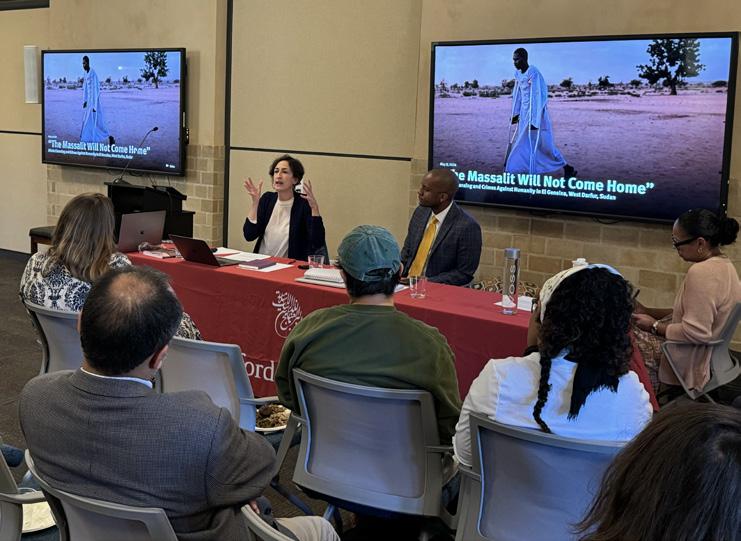
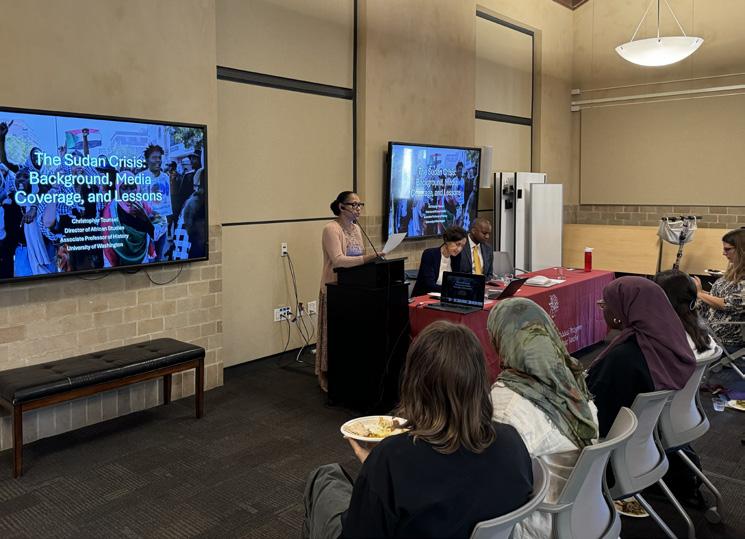
While the world’s focus has centered on particular regions and countries in debates about genocide, a much larger displacement has unfolded in Sudan with far less attention. To address this gap, the Abbasi Program in Islamic Studies, together with the Center for African Studies and the Center for Human Rights, co-hosted a panel on October 21, 2024, which brought together historian Christopher Tounsel, whose work explores race and religion in modern Sudan, and human rights advocate Laetitia Bader, Deputy Director in the Africa Division at Human Rights Watch, to examine Sudan’s ongoing war and the muted international reaction.
Tounsel began with the scale of the humanitarian crisis: as of October 2024, more than 15,000 people had been killed, 8 million displaced, and 25 million in need of aid. He situated these events in a long history of military coups—Sudan has experienced more than any other African country since independence in 1956—and explained how the current fighting pits the Sudanese Armed Forces (SAF) under Abdel Fattah al-Burhan against the Rapid Support Forces (RSF) led by Mohamed “Hemedti” Dagalo. Both, he noted, emerged from the postBashir political transition but turned against each other over control of the military and Sudan’s economic resources.
Tounsel traced how international attention has waned: global news outlets published about 7,000 stories on Sudan in April 2023, compared to fewer than 600 per month by early 2024, while coverage of Ukraine and Gaza remained above 100,000. He cited officials and commentators—including WHO Director Tedros Ghebreyesus and U.S. Representative Jamaal Bowman—who linked the neglect to racial bias. Yet he also highlighted African-American media and creators who have kept Sudan visible, from The Root, The Grio, and BET to artists such as 6lack and Summer Walker, extending a historical pattern of Black American engagement with the Nile region.
In response to a question about the uneven empathy shown for different conflicts, Tounsel reflected on what he called the long-standing distinction in global consciousness between “African lives” and “Arab lives.” He noted that Sudan’s mixed Arab and African heritage has often rendered its people racially ambiguous in Western eyes, shaping the way their suffering is valued or ignored.
Laetitia Bader followed with testimony from Human Rights Watch’s research in West Darfur, where the RSF and allied militias have carried out systematic attacks on civilians. Drawing on interviews with more than 200 survivors in Eastern Chad, she described mass killings, sexual violence, and forced displacement targeting the Masalit and other non-Arab communities. Satellite imagery confirmed the deliberate destruction of neighborhoods in El Geneina and Misterei, evidence of what Human Rights Watch identified as a campaign of ethnic cleansing.
She also detailed the humanitarian breakdown: famine declared in Zamzam IDP Camp, where half a million people are trapped without a single UN aid convoy, and the near-collapse of Sudan’s health system, with about 80 percent of medical facilities no longer functioning. Bader described how both warring parties have blocked or looted aid and called for a civilian protection mission under UN and African Union leadership to ensure access and accountability.
During the discussion, audience members raised questions about foreign involvement, the definition of genocide, and the role of African and regional actors. A Sudanese attendee shared a personal account of displacement from Khartoum and emphasized that conditions in areas controlled by the Sudanese Armed Forces were not comparable to those under RSF control, challenging the idea that the conflict affected civilians equally on “both sides.” Both speakers acknowledged the difficulty of documenting atrocities amid restricted access and underscored the need for sustained regional and international engagement.
The event concluded with a reflection on solidarity and historical memory. As Tounsel observed, the struggle to make Sudan visible is not new—it echoes past efforts by Black intellectuals, journalists, and activists who have long insisted that the lives along the Nile matter within the global conscience.
FEATURED EVENTS
SECTION
The Lebanon That Never Is/Was: Remembering Fairuz with Ramzi Salti
December 4, 2024
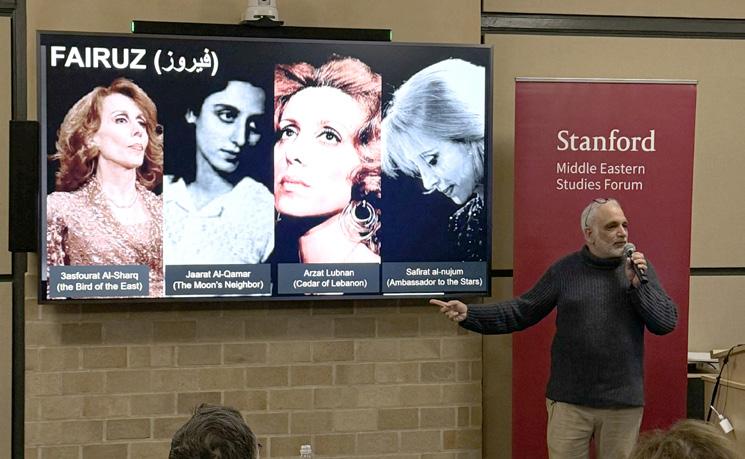
Our program hosted Ramzi Salti, Lecturer in Arabic, for a talk on the life and music of Fairuz, one of the most enduring voices of the Arab world. Salti situated Fairuz as both an artist and a cultural presence whose career spanned more than seven decades and continues to resonate across generations.
He traced her modest beginnings in Beirut, where she grew up in a household without a radio and listened to music through neighbors’ windows. At the Lebanese radio station, Halim el-Roumi gave her the stage name “Fairuz,” meaning “turquoise,” in recognition of the clarity of her voice. Soon after, she began working with the Rahbani Brothers, Assi and Mansour, with whom she produced more than twenty musicals, three films, and a large repertoire of songs that defined modern Lebanese culture. Together, they condensed traditional
Arabic song structures into shorter formats suited for radio, a change that contributed to Fairuz’s wide appeal.
Salti then described the transition to her later career, shaped by her collaboration with her son Ziad Rahbani. Beginning in the late 1970s, Ziad introduced jazz elements and colloquial lyrics into her repertoire, creating a different sound that carried her music to younger audiences while preserving its recognizability. One example he shared was the song Kifak Inta?, which Ziad wrote based on an exchange with his mother, turning a simple conversation into one of her most memorable recordings.
Beyond her music, Salti highlighted aspects of Fairuz’s public presence that contributed to her role in Lebanese cultural life. She became known for singing to places rather
than to leaders, dedicating songs to Beirut, Jerusalem, and Mecca, and avoiding direct praise of political figures. Her song Zahrat al-Mada’en addressed Jerusalem by naming its churches, mosques, and synagogues, an approach that reflected her focus on shared spaces. She was also associated with symbolic titles, among them “Cedar of Lebanon” and “Ambassador to the Stars.” At the Baalbek Festival, where she performed regularly, she became so closely linked with the venue that one photographer recalled storm clouds dispersing the moment she began to sing. Her steadfast decision to remain in Lebanon during the years of civil war rendered her endurance. Salti noted that her voice became part of the everyday soundtrack not only in Lebanon but also across the wider Arab world, where her songs were played in homes, cafés, and public gatherings.
The talk concluded with reflections on her continuing presence in cultural life. Tributes marked her 90th birthday in 2025, and her songs continue to be revisited through new recordings, digital playlists, and contemporary remixes. Salti observed that her voice now circulates globally, sampled by musicians such as Macklemore and The Weeknd, while remaining deeply embedded in regional memory. A lively Q&A followed, with participants sharing personal memories of Fairuz’s music and asking about her lasting influence across generations.
FACULTY PUBLICATIONS
The following publications by the Abbasi affiliate faculty and graduate students came out during the 2024-205 academic year:
Ahmed, Abiya. “Muslim Student Associations in North America.” Oxford Research Encyclopedia of Religion. Published April 16, 2025. https://oxfordre.com/religion/ view/10.1093/acrefore/9780199340378.001.0001/ acrefore-9780199340378-e-867.
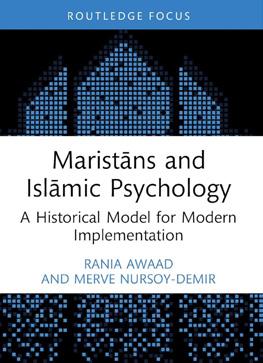
Awaad, Rania, and Merve Nursoy-Demir. 2024. Maristāns and Islāmic Psychology: A Historical Model for Modern Implementation . 1st ed. London: Routledge. https://doi.org/10.4324/ 9781003329589.
McBryde-Redzovic, Aminah, Iman Mahoui, Fairuziana Humam, Leena Raza, Heba Abolaban, Salwa Barhumi, and Rania Awaad. 2025. “The Family’s Role in Mental Health Care: Perceptions of Bay Area Muslims.” Journal of Family Psychology 39(3): 400–6. https://doi.org/10.1037/ fam0001298.
Hosseini, Zainab, Doonya Alucozai, Sadena Ahmed, Mahmood Omid, Zainab Khatib, Moones Mansouri, and Rania Awaad. 2025. “Caring for the Mental Health of Afghan Refugee Youth through a Decolonial Paradigm: A Qualitative Analysis of Distress, Coping Mechanisms, and Priorities for Treatment.” American Journal of Community Psychology 75: 447–61. https://doi.org/10.1002/ ajcp.12785.
Awaad, Rania, Sanah Ahmed, Dania Azzawi, Ahmed Deeb, Ammaar Kazi, Aminah McBryde-Redzovic, Malaz Mohamad, and Maram Saada. 2025. A Mental Health Handbook on Syria: Resources for Community and Religious Leaders. Stanford, CA: Stanford Muslim Mental Health and Islamic Psychology Lab and Maristan.
Rajeh, Neshwa, Lina Chihoub, Javariah Sohail , Iman Sattar, Yagmur Ozturkoglu, Hamza Khan, Fatima Alemam, Jasmine Shagan, Sanyah Qazi, and Rania Awaad. 2024. Nurturing Muslim Students’ Mental Health amid University Protests. Stanford, CA: Stanford Muslim Mental Health and Islamic Psychology Lab and Maristan.
Qadeer, Areej, Kubra Tor-Cabuk, Aminah McBrydeRedzovic, Iman Mahoui, and Rania Awaad. 2025. “Perceptions of Muslim Americans on the Role of Mental Health Professionals in Supporting Muslims with Mental Illness: A Community-Based Participatory Research (CBPR) Study.” Spirituality in Clinical Practice 12(2): 276–86. https://doi.org/10.1037/scp0000395.
Awaad, Rania, Neshwa Rajeh, Hamza Jalal , and Huma Manjra. 2024a. “The Muslim Mental Health Initiative: An Overview and Steps for Development and Implementation on American College Campuses.” Journal of College Student Mental Health 39(3): 498–519. https://doi.org/10.1080/28367138.2024.2374532.
Alemdaroğlu, Ayça. 2025a. “Turkey’s Hard Road to Democratic Renewal.” Journal of Democracy 32(3): 121–34.
———. 2025b. “Turkey’s Resistance Takes to the Streets.” Persuasion , April 3, 2025. https://www.persuasion. community/p/turkeys-resistance-takes-to-the-streets.,
Berman, Russell . 2024a. “Islamism and Immigration in Germany and the European Context.” The Caravan , September 17, 2024. https://www.hoover.org/ research/islamism-and-immigration-germanyand-european-context.
———. 2024b. “The End of the Assad Dictatorship and Western Security.” American Spectator, December 10, 2024. https://spectator.org/end-of-the-assad-dictatorshipmeans-west-security/.
———. 2024c. “From the Hamas Attack of October 7 Toward a New Middle East.” The Caravan , December 10, 2024. https://www.hoover.org/research/ hamas-attack-october-7-toward-new-middle-east.
FACULTY PUBLICATIONS
SECTION
Berman, Russell , and Rebecca Kobrin. 2025. “Encampments as Women’s Movement.” Telos Insights, May 6, 2025. https://insights.telosinstitute.net/p/ encampments-as-womens-movement.
Berman, Russell . 2025b. “The Maritime Middle East and Challenges for U.S. Strategy.” The Caravan, June 10, 2025. https://www.hoover.org/research/maritime-middle-eastand-challenges-american-strategy.
Blessing, Patricia. 2024a. “Mediterranean Anatolia, Anatolian Mediterranean: A Landmass and Its Sea(s).” Architectural Historie s 12(1): 1–19. https://doi.org/10.16995/ah.11575.
———. 2024b. “Mail-Order Mihrabs: Collaborative Labor in the Design of Tile Revetments in Iran and the Ottoman Empire.” Uṣūr al-Wusṭā 32: 361–402. https://doi.org/10.52214/uw.v32i.12541.
———. 2024c. Review of Panni tartarici . Seidengewebe aus Asien im spätmittelalterlichen Europa, by Juliane von Fircks. 21: Inquiries into Art, History, and the Visual — Beiträge zur Kunstgeschichte und visuellen Kultur 5(4): 1035–40. https://doi.org/10.11588/ xxi.2024.4.108255
———. 2025a. “Tiles, Stucco, and Wonder in Medieval Anatolia.” In Crafting Presence: Material Evocations in the Early and High Middle Ages, edited by Britta Dümpelmann, 228–43. Leiden: Brill.
———. 2025b. “Ilkhanid Stucco in Anatolia? The Mihrab of the Arslanhane Mosque in Ankara.” In Stucco in the Islamic World , edited by Richard P. McClary, 261–83. Edinburgh: Edinburgh University Press.
———. 2025c. Review of Tales Things Tell: Material Histories of Early Globalisms, by Finbarr Barry Flood and Beate Fricke. International Journal of Maritime History 37(2): 406–8. https://doi.org/10.1177/08438714251332135.
Cakiroglu, Miray. 2025. “The Temporality of Non-Muslim Property in Turkey: Istanbul and the Antakya Region.” In Minority Rights in the Centennial of the Republic, edited by Mehmet Polatel, 179–188. Istanbul: Hrant Dink Foundation Publications.
———. 2025b. Annem [My Mother]. Istanbul: Metis.
———. 2025c. “Following a Closed Parenthesis,” “In His Wake,” “Sun’s Pathfinding.” In The Pulse of Contemporary Turkish: Poems from the New Millennium, edited and translated by Buğra Giritlioğlu and Daniel Scher, 160–62. Syracuse, NY: Syracuse University Press.
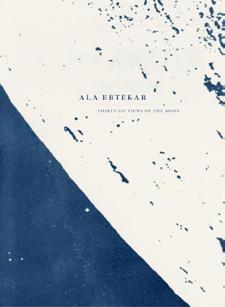
Ebtekar, Ala. 2024. Thirty-Six Views of the Moon . Contributions by Alexander Nemerov, Kim Beil, and Ladan Akbarnia. Santa Fe, NM: Radius Books.
Johnson, Marina. 2024a. “Guernica, Gaza: Visions from the Center of the Earth.” Arab Stages (16) https://www. thesegalcenter.org/arab-stages/review-guernica-gaza-visionsfrom-the-center-of-the-earth-by-naomi-wallace-and-ismail-khalidi.
———. 2024b. “Palestinian Theatre in the West Bank: An Interview with Iman Aoun.” In Refugees, Migration and Erased Memories in the Aftermath of Yugoslav Wars, edited by Blaž Kavšek and Gregor Moder, 255–73. Ljubljana: Maska, Institute for Publishing, Production and Education.
———. 2024c. “Reactivating Medea in Hanane Hajj Ali’s Jogging.” TDR: The Drama Review 684: 155-59. https://doi. org/10.1017/S1054204324000364.
———. 2025a. “Artificial Heart: Thinking into the Future.” Arab Stages (17). https://www.thesegalcenter. org/arab-stages/artificial-heart-by-mohammad-basha -and-firas-farrah.
———. 2025b. “To the Good People of Gaza: Theatre for Young People by Jackie Lubeck and Theatre Day Productions, edited and with an introduction by Samer Al-Saber.” Arab Stages, https://www.thesegalcenter.org/ arab-stages/review%3A-to-the-good-people-of -gaza%3A-theatre-for-young-people.
Johnson, Marina, and Nabra Nelson. 2025. “Exploring Affinity Spaces: Insights from the 2023 MENATMA Convening.” Theatre Topics 35(1): 45–52. https://doi.org/10.1353/tt.2025.a953951.
Key, Alexander, and James Weaver. 2025. “Questions and Responses: On a Recent Interpretation of Maʿnā in Classical Kalām Cosmology.” In Mobilität des Denken s, edited by Urs Gösken, Patric O. Schaerer, Roman Seidel, James Weaver, and Thomas Würtz, 790–837. Leiden: Brill. https://doi.org/10.1163/9789004715431_034.
Pentcheva, Bissera V. 2025. “Hagia Sophia and Universal Power from Byzantium to the Modern World.” In The Oxford Handbook of Religion in Turkey, edited by Philip Dorroll et al. Oxford: Oxford University Press. https://doi.org/10.1093/oxfordhb/9780197624883.013.18
Sallam, Hesham. 2025. “Authenticity and National Loyalty: The Intellectual Roots of Islamist-Leftist Affective Polarisation in Post-2013 Egypt.” The Journal of North African Studies, February, 1–29. https://doi.org/10.1080/13629387.2025.2469791.
Satia, Priya. 2025a. “Orwell, Race, and Empire.” In The Oxford Handbook of George Orwell , edited by Nathan Waddell, 347–370. Oxford: Oxford University Press.
———. 2025b. “Race in the Global History of Europe.” In Globalizing Europe: A History, edited by David Motadel, 159–180. Cambridge: Cambridge University Press.
———. “The Scholarly Business of Corporations and Slavery: Political Fault Lines of the Economic History of Empire.” Journal of British Studies 64(2025): 1–27. https:// doi.org/10.1017/jbr.2025.4
Salti, Ramzi. “Umm Kulthum: 50 Years since Her Passing.” Arabology, February 6, 2025. https://www.arabology.org/2025/02/ummkulthum.html.
Sinnar, Shirin. 2024. “Terrorism, Not Treason: The Rise and Fall of Criminal Charges.” University of Chicago Legal Forum (2024): 275–305.
———. 2025a. “Campus Protests and the Rule of Law.” Law and Contemporary Problems 87(3): 117–157.
———. 2025b. “Flooding the Courts: Mass Defense Strategies for Systemic Reform.” Stanford Journal of Civil Rights and Civil Liberties 21(2): 148–193.
Tufan, Morgan S. 2024. “Le Kurdistan en tant qu’espace politique coextensif de l’Empire Ottoman: analyse du Mülk-nāme de 1535 de Sultan Süleymān pour les princes kurdes.” Journal Asiatiqu e 312(2): 249–71.
Yaycıoğlu, Ali. 2025. “On the Ottoman Arguments during the Congress of Karlowitz (1699).” In Remapping Sovereignty: Borders and Their Discontents, edited by Karen Wigen and Martin Lewis. Chicago: University of Chicago Press.
Yazici, Irmak. 2024. “Conceptualizing Religion and Religious Ideology in Political Science Research: What Is in a Name and What Description Can Do.” International Politic s. https://doi.org/10.1057/s41311-024-00623-3.
Yolaçan, Serkan. 2025a. “Text, Time, and Travel: Temporal Pathways of Postsocialism and Islam.” Journal of the Royal Anthropological Institute 31(1): 217–39.
———. 2025b. “A Seven-Headed Public: Empire and Satire in Revolutionary Caucasus.” Comparative Studies in Society and History 67(3): 622–53.
GIFTS & SUPPORT
We at the Abbasi Program express our gratitude to our alumni, parents, students, and friends for their support of our activities at Stanford.
Your gift enhances genuine understanding of the histories, cultures, and languages of Islam and Islamicate societies by:
• Equipping the next generation of leaders with rigorous knowledge through courses, seminars, and research or internship opportunities.
• Supporting innovative faculty research and scholarship.
• Deepening our public and K-12 outreach efforts.
Your generosity ensures that knowledge of Islam and Islamicate societies is an integral part of the future of America and the globe.
For more information, please review islamicstudies.stanford.edu/about/make-gift or contact Tamar Sofer-Geri, Senior Associate Director of Development, at tamars@stanford.edu.