Stanford Global Studies
The Stanford Global Studies Division is the university’s hub for education, research, and community engagement centered on exploring issues, societies, and cultures from a regional and global perspective.
The
included in this
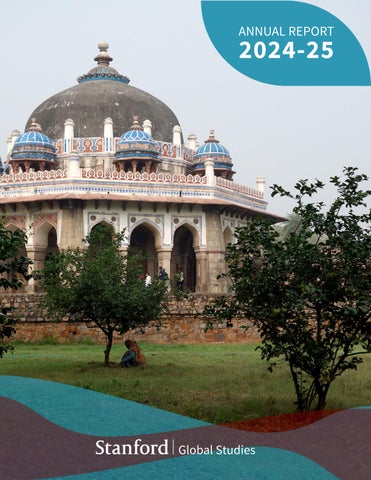
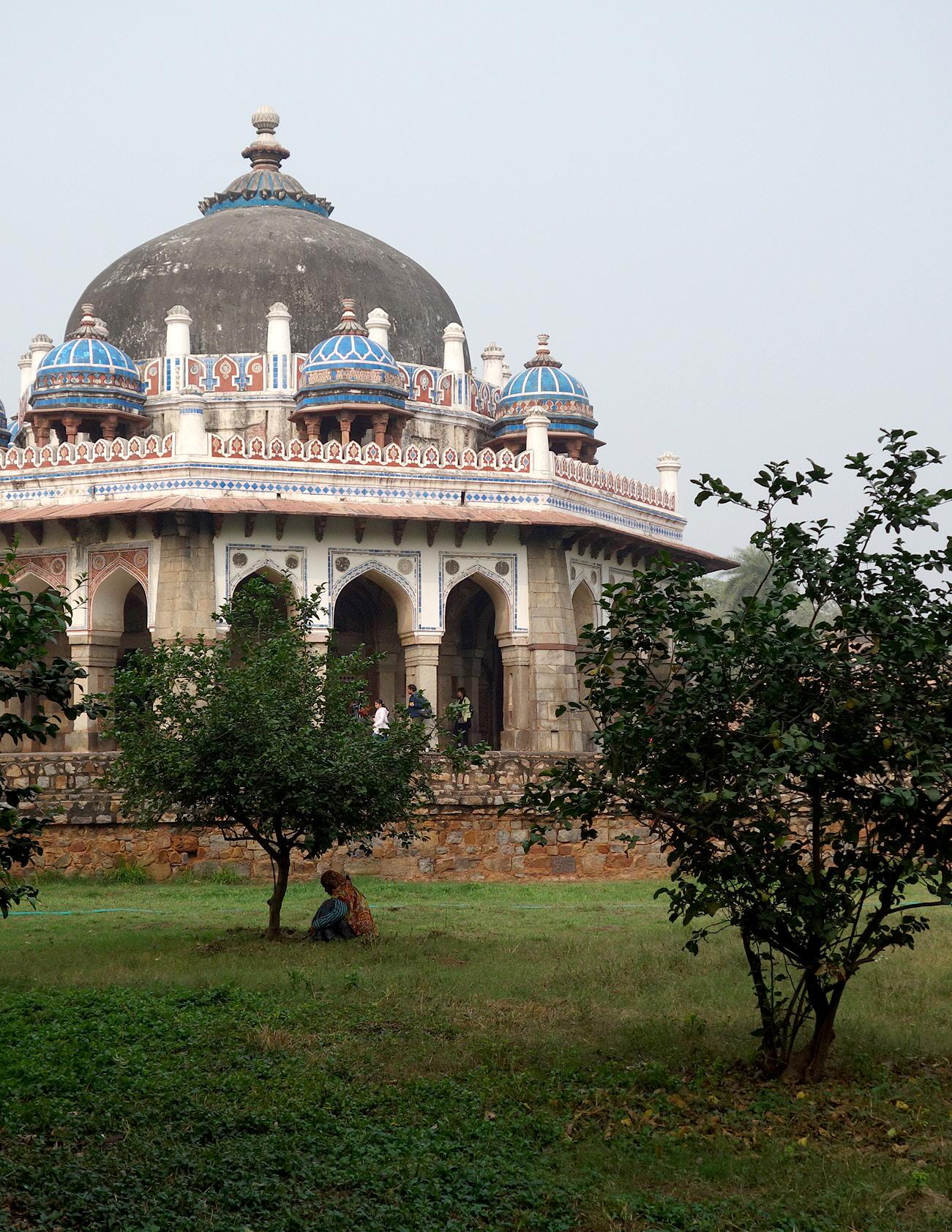
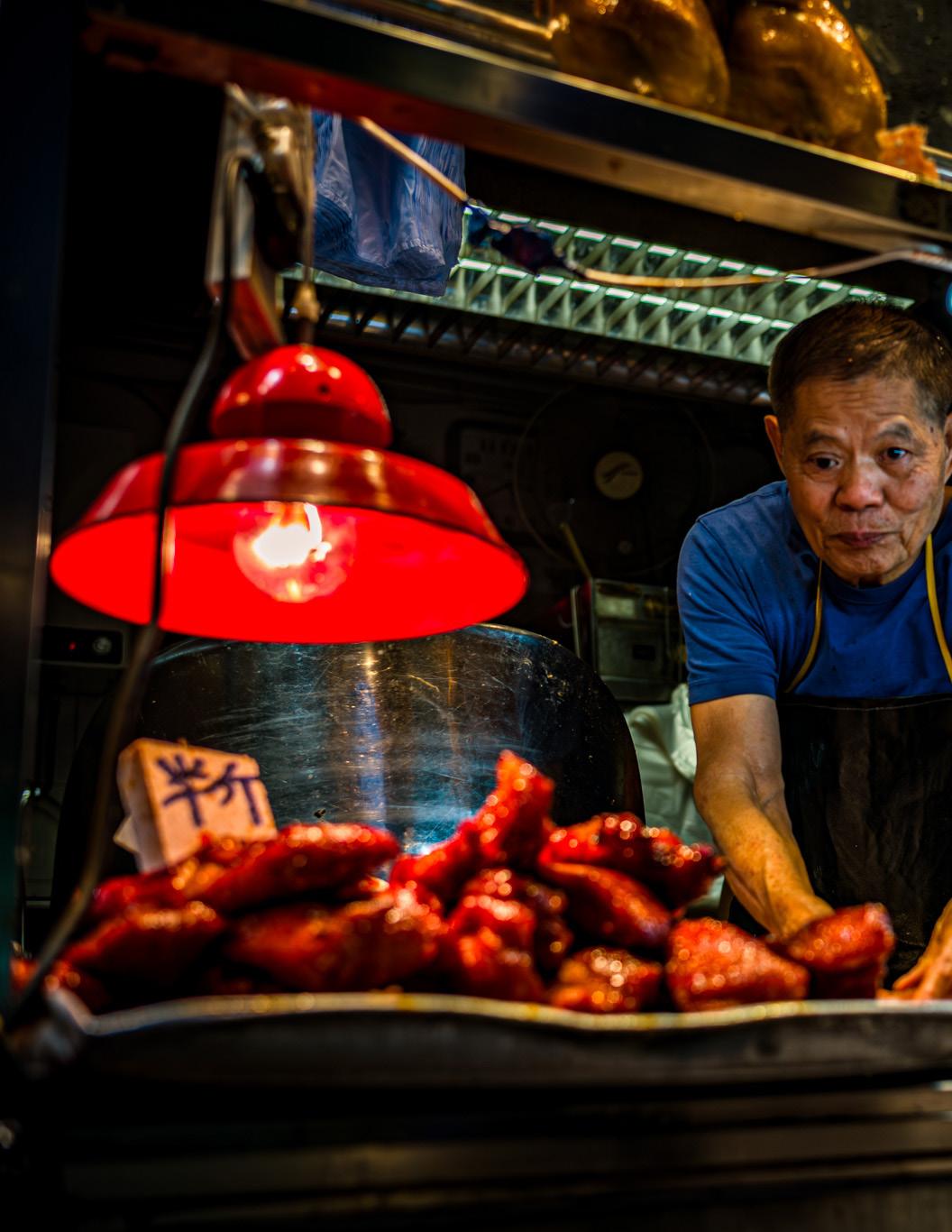
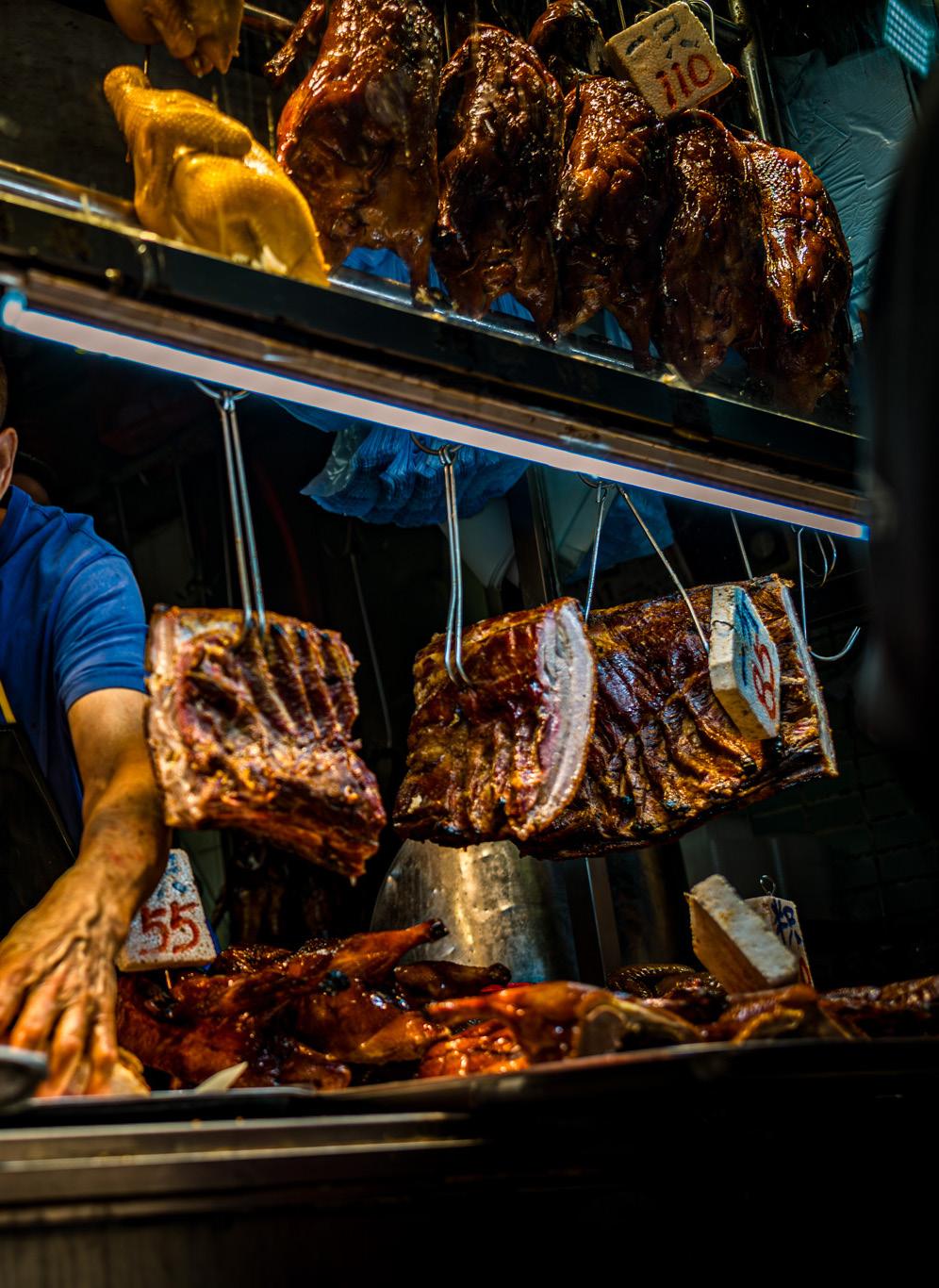
Cover image: Captured by global studies minor Manasi Garg, the cover photo “Eclipse” depicts Humayun’s Tomb in New Delhi, India. This page: “Cheerful Hong Kong Butcher” was taken by Paul Festa, associate director of the Program in International Relations, in Sham Shui Po, Kowloon, Hong Kong.
photos
annual report were submissions from the annual SGS photo contest.
Director’s Message
Dear Colleagues and Friends,
It is my great pleasure to share the Stanford Global Studies (SGS) Division’s Annual Report for 2024-25, a celebration of the remarkable scholarship, creativity, and collaboration that defines our community. This year’s achievements reflect the extraordinary contributions of our faculty, staff, students, and partners, who are united by a shared commitment to advancing global research, education, and community engagement.
This academic year was bustling with activity. Our 14 centers and programs hosted more than 400 dynamic events that reached audiences in every corner of the world. One highlight was our Global Dialogues Series, which convened distinguished scholars to examine important global topics, such as Afro-Asian Relations Across Indian and Atlantic Ocean Worlds.
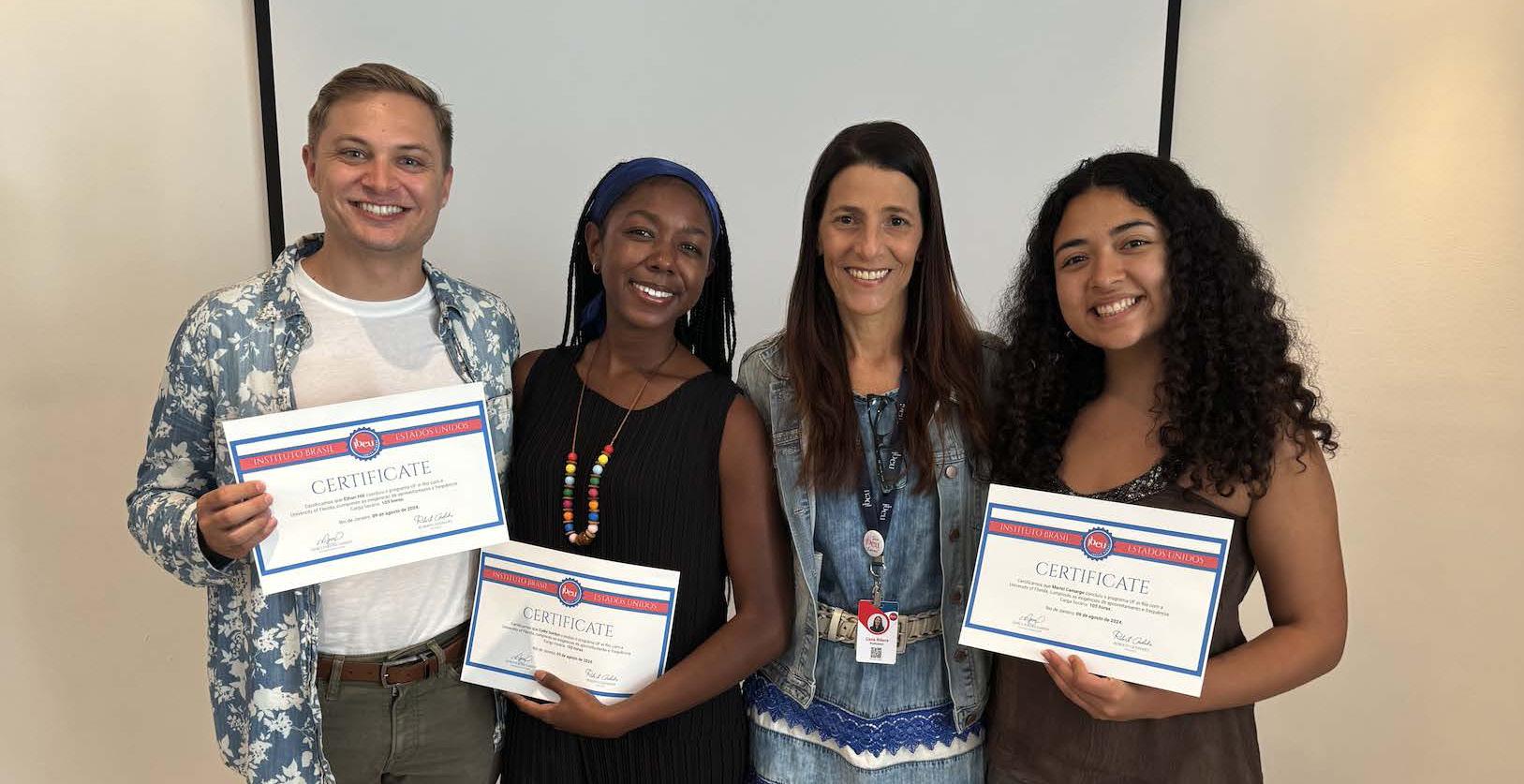
Over the past year, we deepened our investment in innovative global research, supporting seven interdisciplinary Global Research Workshops on topics ranging from imperial environments to multilingual data practices. One notable outcome of the workshop on Law and Literature in the Global South was a special edition of the humanities journal Occasion, titled Anticolonial Interventions in Legal Culture: Global South Art and Jurisprudence, published by Hector Hoyos and Joseph Wager. We also awarded close to $600,000 to 127 students who conducted fieldwork and language study in over 100 cities worldwide. Among them was Mariel Camargo, a master’s student in Latin American studies, who traveled to Rio de Janeiro to study Portuguese and conduct qualitative interviews for her thesis. At the same time, our Oceanic Imaginaries initiative offered a diverse array of programs exploring the societies, cultures, and histories of the Pacific Ocean.
Our campus served as a global crossroads for visiting scholars and students. We welcomed more than 70 researchers from countries across the globe, including several supported by the Scholar Rescue Fund, which provides residencies to academics facing persecution or hardship in their home countries. Dr. Iryna Kriachok, an oncologist from Ukraine’s National Cancer Institute, spent a term at the School of Medicine exploring new technologies for diagnosing and treating blood cancers, knowledge she plans to bring home to improve patient care in Ukraine.
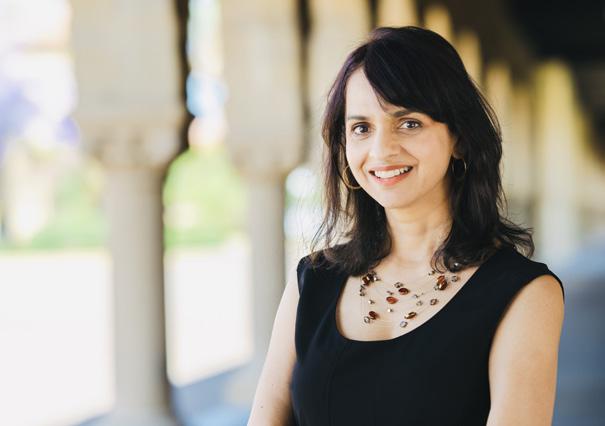
Jisha Menon Sakurako and William Fisher Family Director of the Stanford Global Studies Division; Robert G. Freeman Professor of International Studies; Professor of Theatre and Performance Studies and, by courtesy, of Comparative Literature
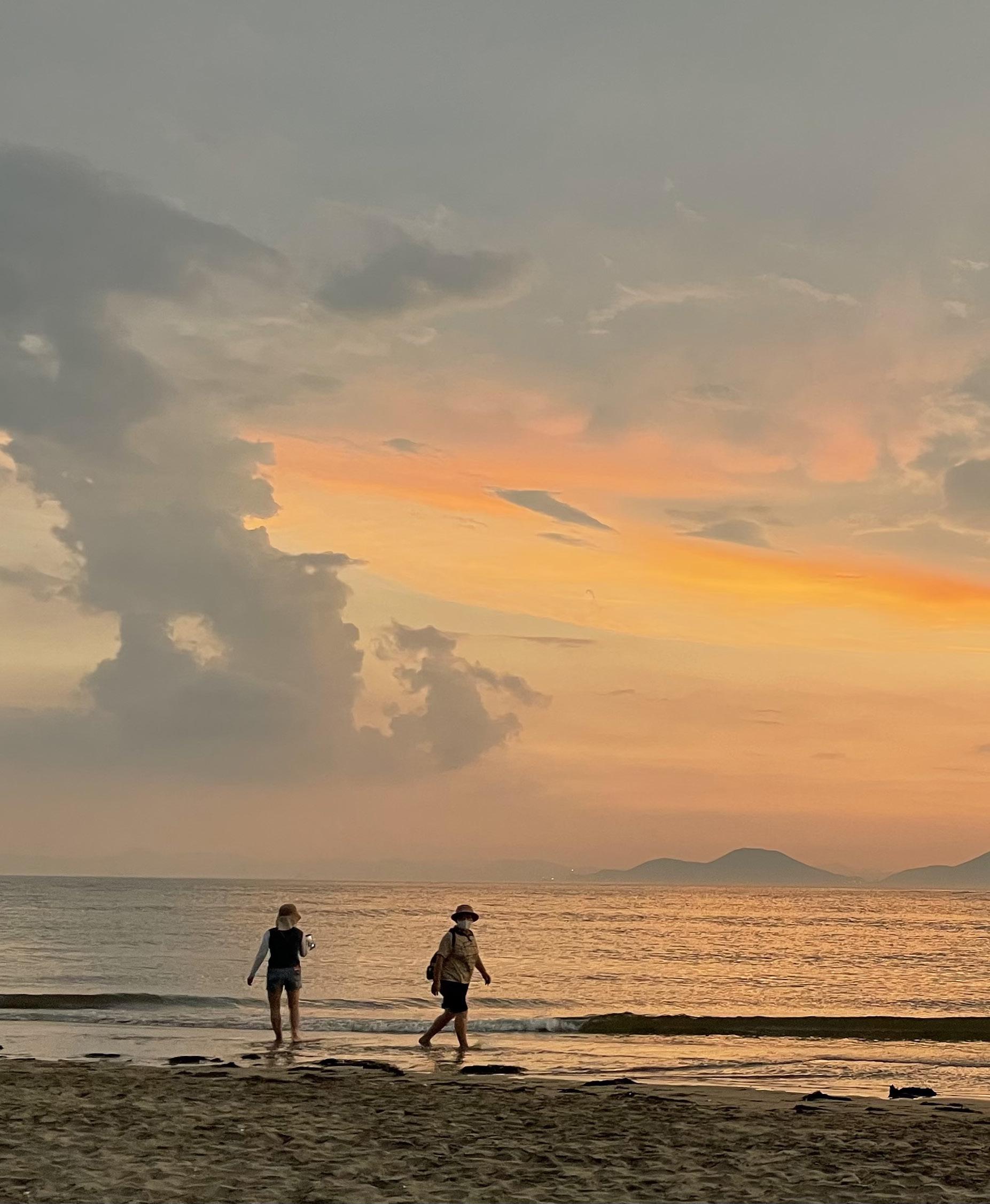
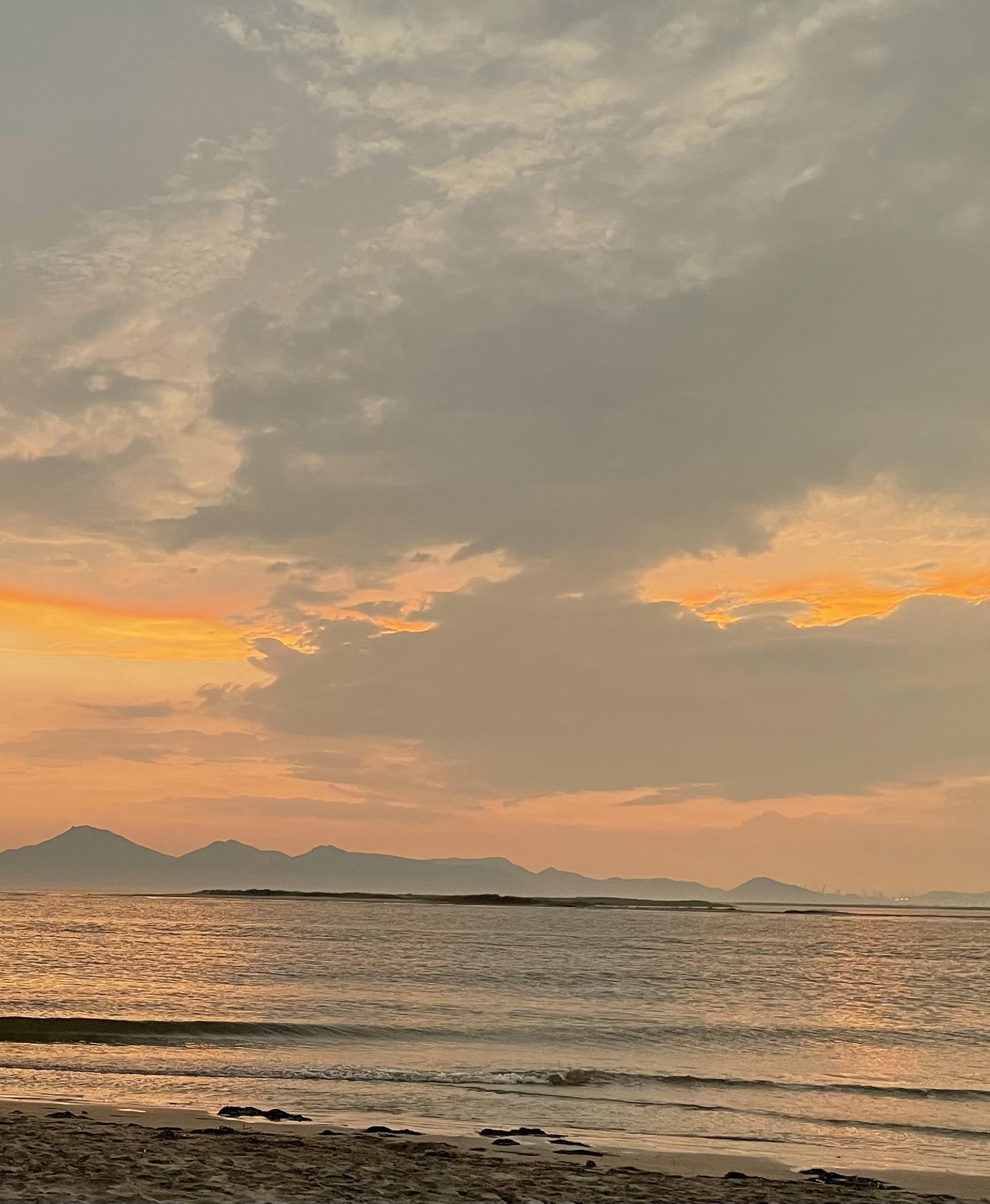
Majesty Zander, an M.A. student in the Center for East Asian Studies, captured this scene, “Dadaepo Sunset,” in Busan, South Korea.

Experiential learning remained at the heart of our mission, Global Studies Internship Program placing 80 students in transformative internships across six continents. These experiences bridged academic study with real-world impact in fields ranging from government and medicine to education and technology. For example, biology student Jessie Ong conducted Down syndrome research at the Italian Institute of Technology in Genoa, Italy, alongside a team of international researchers. “This experience has sharpened my scientific skills and strengthened my commitment to pursuing an M.D./Ph.D., with the goal of one day serving individuals with Down syndrome directly as both a physician and a scientist,” she shared.
In the classroom, SGS continued to enrich the university’s global curriculum by supporting hundreds of language and globally focused courses. In a new course funded by the Center for East Asian Studies, students combined historical Asian art forms with AI-generated artwork to explore the evolving relationship between technology and art. Our Course Innovation Award program further energized the curriculum with three exciting offerings: Culture and Revolution in Africa; Sustainability, Governance, and Economic Development in Southeast Asia; and Mexico in Ten Images.
Beyond campus, our four Title VI National Resource Centers fostered community outreach to support global learning and workforce development at schools and community colleges nationwide. Through the long-standing EPIC fellowship program, community college educators partnered with
Stanford faculty and staff to infuse global themes into their courses. For instance, Lisa Gilbert, professor of geology, oceanography, and environmental science at Cabrillo College, redesigned an introductory environmental science course to go beyond teaching isolated concepts and include case studies that place local and global issues into comparative perspective.
The successes of this past year would not have been possible without the dedication and talent of our colleagues. I am especially proud to recognize Jovana Lazić, associate director of the Center for Russian, East European, and Eurasian Studies, who received the Dean’s Award of Merit from the School of Humanities and Sciences. Her exemplary leadership and ability to bridge scholarly engagement with administrative excellence have enriched our entire community.
Returning from sabbatical this year has only reinforced for me how special the SGS community is. I am deeply grateful to Grant Parker for his excellent leadership as interim director during my absence. As I look ahead to my final year as director—and to the 20th anniversary of the Stanford Global Studies Division—I am filled with gratitude for all we have accomplished together and for the vibrant global community we continue to build.
Thank you for your continued partnership and support.
Sincerely,
Jisha Menon

About SGS
Who We Are
Stanford Global Studies— home to 14 centers and programs—is the university’s hub for global education, research, and community engagement.
What We Do
International Education & Research
Foreign Language Study
Global Internships
Community Outreach to Advance Global Learning

Why Global Studies Matters Now
Stanford Global Studies equips students and scholars with the global perspectives and analytical tools needed to understand and respond to the complex, interconnected challenges shaping our world.
Diana Gor, Russian, East European, Eurasian Studies M.A. student, captured “Art Nouveau in Riga” on Alberta Street in Riga, Latvia.
Preparing Stanford Students to Lead in the World
Deepening Understanding of Global Issues
293
92 Enrolled undergraduates M.A. students
95
48 Internships Cities around the world
344
SGS prepares students with the interdisciplinary knowledge and skills essential to leading in a global context. and in in
14
Affiliated faculty centers and programs
SGS supports the next generation of scholars in creatively examining regional and global issues and advances innovative research that deepens our understanding of the world.
$5M
For courses, research, language study, and internships for students, faculty, and visitors
474 Events
180
Language and globally focused courses
Students at the Center of Latin American Studies’ Spring Fiesta. Photo credit: Rod Searcey.
Academic Programs
Pathways to global understanding
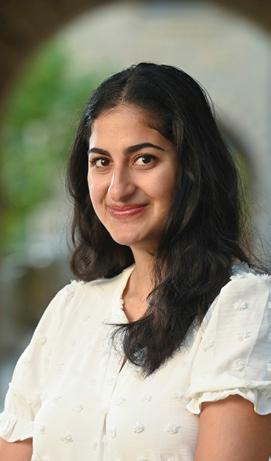
“Stanford has taught me to think critically about the world. Not just about geopolitical dynamics and contemporary politics, but also about the stories and experiences of everyday people who ultimately shape history.”
Malaina
Kapoor, International Relations, ’25
Undergraduate Programs
SGS supports interdisciplinary majors, minors, certificates, and honors programs for undergraduate students. In 2024-25, 293 students were enrolled in the division’s undergraduate programs. Most SGS students study overseas and acquire fluency in a second language as part of their degree requirements.
Degrees Granted
Graduate Programs
SGS offers several M.A. programs, which provide students with training and exposure to regional affairs, collaborative student cohorts, supportive faculty, small class sizes, personalized advising, and competitive internship, fellowship, research, and travel opportunities. In 2024-25, a total of 92 students pursued master’s programs in SGS.
Degrees Granted
Master of Arts
27 East Asian Studies
15 Latin American Studies
8 Russian, East European and Eurasian Studies
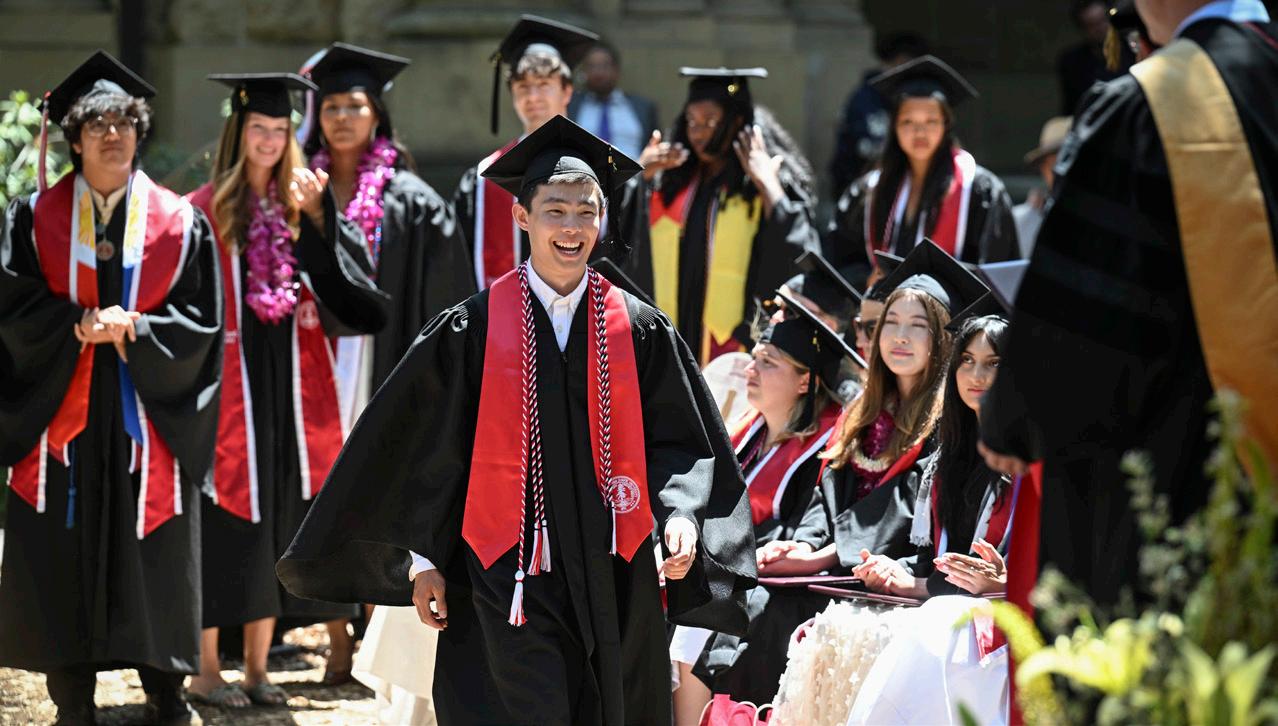
International relations student Noah Tan accepts his diploma at the 2025 commencement ceremony for the Program in International Relations.
Photo credit: Rod Searcey.
Through its centers and programs, SGS offers hundreds of foreign language and globally focused courses to students across campus.
$1.4M for courses
143
Globally-focused courses
37 Language courses
Innovative classes that bring the world into focus
Course Innovation Awards
Through its Course Innovation Award program, SGS has supported more than 20 courses across a wide range of disciplines—from political science and psychology to comparative literature and film studies. This year, three Stanford faculty members received awards to design new courses that encourage students to think critically about issues of regional and global importance:
• GLOBAL 126: Sustainability, Governance, and Economic Development in Southeast Asia
David Cohen
• GLOBAL 213: Culture and Revolution in Africa
Fatoumata Seck
• ILAC 142N: Mexico in Ten Images
Nicole Hughes
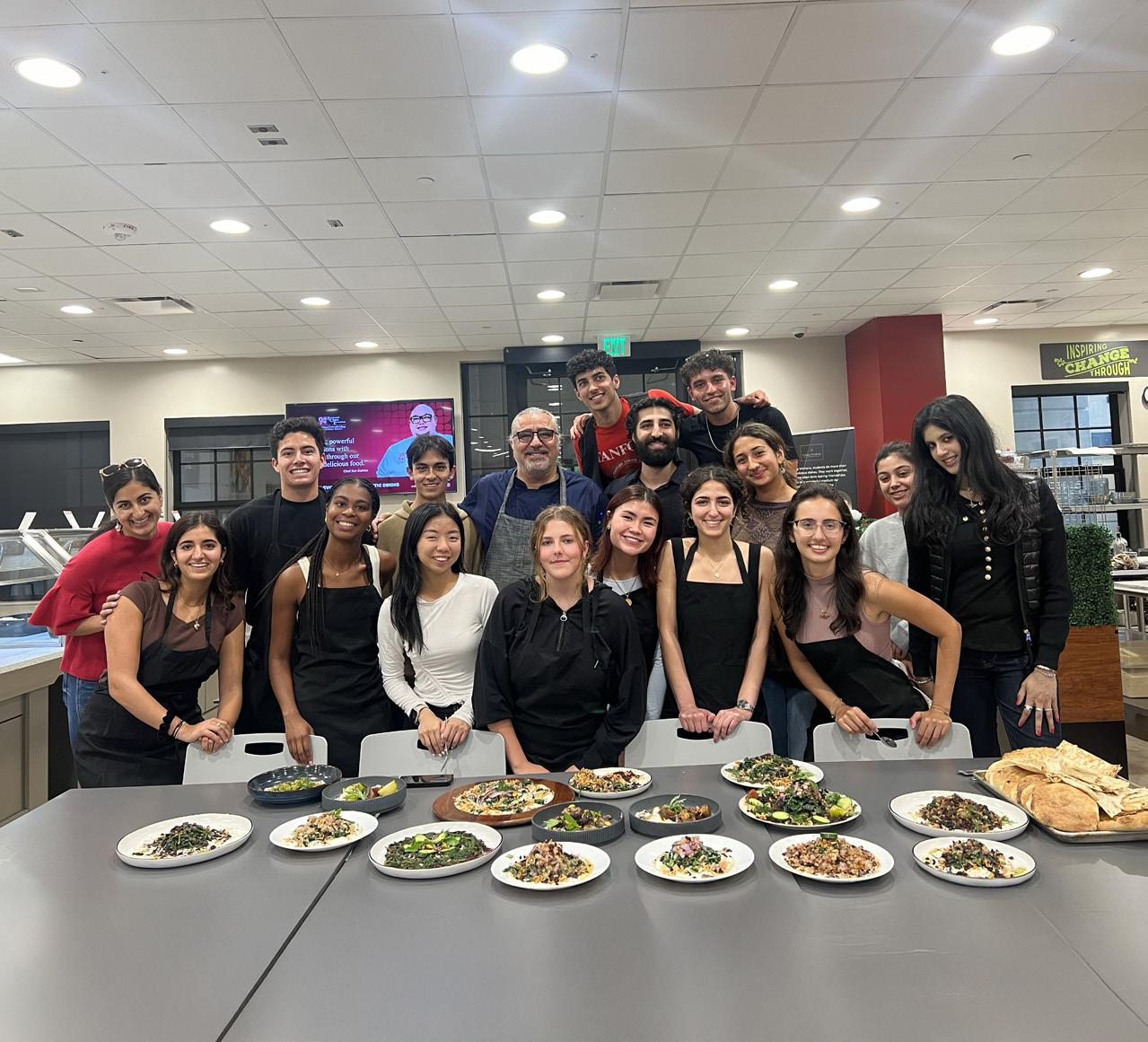
Students in GLOBAL 104: Iranian Cuisine explored the history, ingredients, and techniques of Iranian cooking through weekly themes and hands-on preparation of traditional dishes.
Faculty Expertise that spans continents and disciplines
Faculty are integral to the division’s efforts to grow international awareness and understanding at Stanford and beyond. The 344 faculty affiliated with SGS centers and programs represent every school at Stanford—business, sustainability, education, engineering, law, medicine, and humanities and sciences—as well as many of Stanford’s centers and institutes.
Abbas Milani’s mission to preserve Iranian history
Abbas Milani, the Hamid and Christina Moghadam Director of Iranian Studies at Stanford, has dedicated himself to establishing Stanford as a leading center for Iranian studies. Having witnessed the 1979 Iranian Revolution and endured imprisonment for his political beliefs, Milani has devoted his career to examining Iran’s complex history and advocating for freedom and democratic reform. Since joining Stanford, he has established the university as a global hub for Iranian studies, building world-class archives and fostering dialogue through research, teaching, and public engagement. As the Iranian Studies Program marks its 20th anniversary, Milani continues to inspire optimism for Iran’s future—one rooted in the enduring pursuit of democracy and the growing leadership of Iranian women.
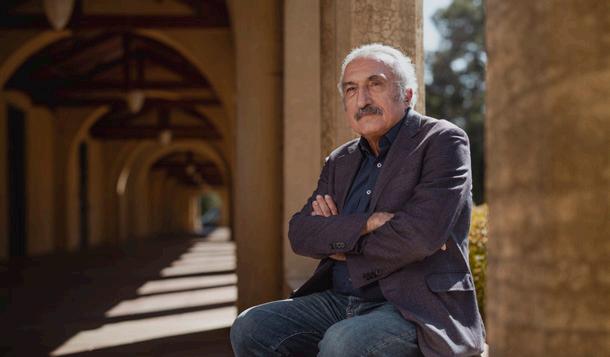
The Stanford Iranian Studies director has spent two decades transforming the program he founded into a global hub for the study of modern Iran.
Visiting Scholars International scholars broadening perspectives
Over the past year, SGS welcomed visiting scholars from around the world who enhanced Stanford’s intellectual and educational community through their teaching, research, mentorship, and public lectures.
Six Ukrainian doctors supported by the Stanford Scholar Rescue Fund complete observerships at the School of Medicine
Each year, Stanford’s Scholar Rescue Fund provides residencies for international scholars who face threats, persecution, or severe hardship in their home countries. In 2024-25, the fund supported six oncologists from Ukraine who completed observerships at the Stanford School of Medicine. During their month-long stays, the visiting physicians—representing a range of cancer specialties—had the opportunity to shadow Stanford clinicians, observe complex cases, and explore emerging cancer therapies. They will bring the expertise gained at Stanford back to Ukraine to train their colleagues and improve care for cancer patients in their communities.
Visiting
Postdoctoral scholars 7
Student researchers from 25
Countries around the world
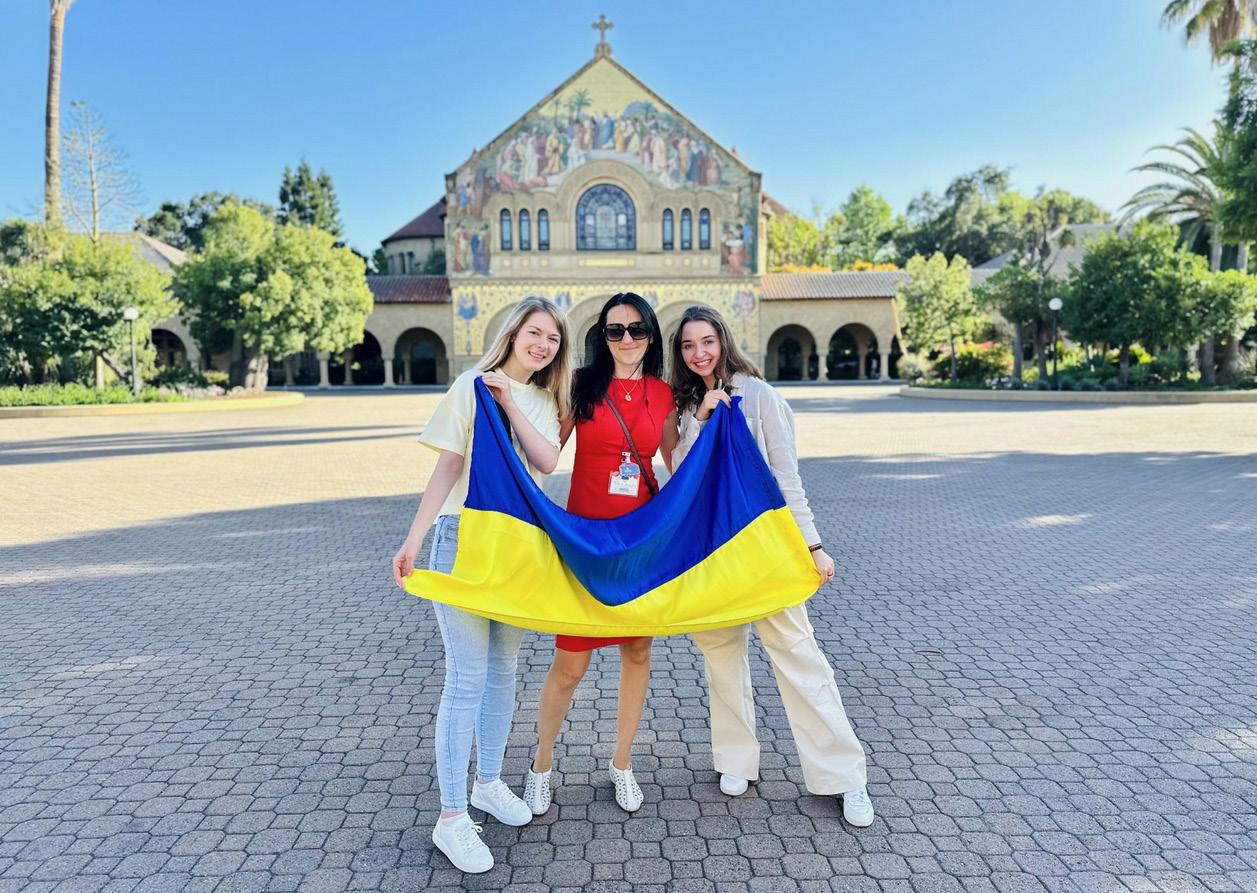
Ukrainian oncologists Sofiia-Iryna Zaluska, Nataliya Kovalchuk, and Daryna Semotyuk in front of Memorial Church.
Expanding knowledge across borders
SGS advances global understanding by facilitating research and data collection across disciplines and borders. Beyond offering research fellowships, its centers and programs lead collaborative projects, produce reports, and engage students in hands-on research opportunities.
Research funding
Students, postdocs, and visiting scholars funded
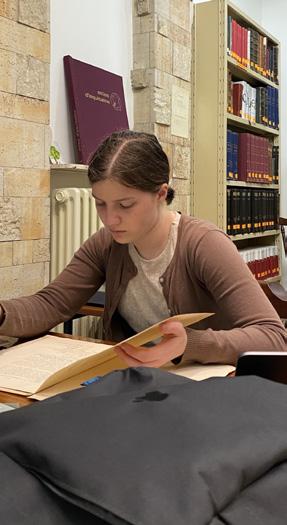
“I did research at three libraries and archives in Rome to gather material for my master’s thesis project on Anna Ivanovna Abrikosova, a Russian Catholic writer and religious leader persecuted by the Soviet authorities in the 1920s and 1930s. Overall, it was the highlight of my time at Stanford and has left me excited to pursue more archival research abroad in the future.”
— Stella Webster, M.A., Russian, East European, and Eurasian Studies, ’25
Faculty funded
Global Research Workshops
Cities around the world
SGS provides grants for Global Research Workshops to foster the sharing of research across academic fields and national boundaries, advancing our understanding of the world.
2024-25 Workshops:
• Developing an Interdisciplinary Research Platform Toward “Next Asia” (Gi-Wook Shin)
• French Speaking Worlds: Then & Now (Fatoumata Seck)
• Global Approaches to Multilingual Data Practices and Digital Humanities (Giovanna Ceserani)
• Global Approaches to Sacred Spaces (Bissera Pentcheva)
• Imperial Environments (Zephyr Frank)
• Law & Literature in the Global South (Hector Hoyos and Joe Wager)
• New Civilizationisms (Haiyan Lee)

Sarah Leibson, a master’s student in East Asian Studies, took this photo on Jeju Island while researching the island’s role in Korea’s renewable energy transition. Her work was supported by an SGS Global Perspectives Award, which funds international research for students in SGS master’s programs.
Language
Unlocking global understanding through language study
Foreign language skills are critical for enabling Stanford students to conduct research and lead in a global context. SGS centers and programs expand access to less commonly taught languages and support language learning by funding language courses and instructors, and also through language study fellowships.
$1M for language courses and fellowships
44
Students received language fellowships
Language Study Supported by SGS
• Arabic
• Chinese
• French
• Haitian Creole
• Hebrew
• Igbo
• Italian
• Japanese
• Korean
• Náhuatl
• Ottoman Turkish
• Persian
• Polish
• Portuguese
• Punjabi
• Quechua
• Russian
• Sanskrit
37
Language courses
• Tajik
• Tamil
• Telugu
• Tibetan
• Turkish
• Twi
29
Languages studied or taught
• Ukrainian
• Urdu
• Vietnamese
• Yiddish
• Yoruba
Urban studies major Mariel Camargo (right) received a Foreign Language and Area Studies (FLAS) fellowship from the Center for Latin American Studies to study Portuguese in Rio de Janeiro. Learning the language was essential for her thesis project, which involved
Internships
Real-world experience in a global context
Each year, Stanford students take learning beyond the classroom through transformative global internships, gaining hands-on experience in diverse cultural and professional settings around the world. In 2025, the Global Studies Internship Program offered 80 exciting opportunities for both undergraduate and graduate students, remaining the Haas Center for Public Service’s largest campus partner for international service opportunities. In collaboration with centers and programs across SGS, the internship program facilitated and funded 80 internship placements in 25 locations around the world. The Europe Center provided 8 additional opportunities and the Center for Human Rights and International Justice provided 7 additional opportunities, bringing the total to 95 internships funded across the division in 28 locations: 84 for undergraduates, 5 for M.A. students, and 6 for Ph.D. students.
80 Global Studies Internship Program Placements
Additional Center/Program Internships
Internships
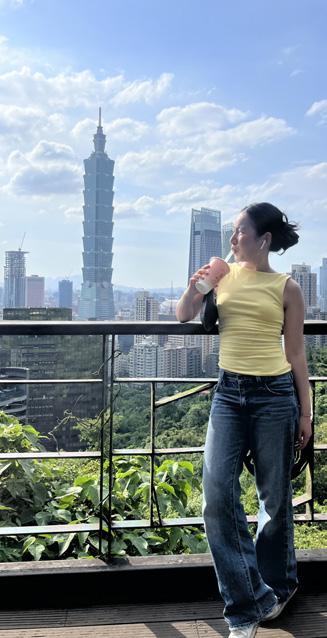
“I cannot overstate how life-changing this opportu nity has been for me—both academically and personally. The internship demanded research thinking, methodological problem-solving, and the ability to balance detail-oriented tasks with big-picture planning. I conducted interviews across industries, which led me to conversations with a venture capitalist, two professors, two startup accelerator directors, and countless founders. These interactions not only expanded my professional network but also deepened my interest in startup ecosystems, developmental economics, and international business, particularly in the Asian context.”
— Mandy Yang, Taiwan Institute of Economic Research
Locations Around the World
2024-25 Internship Locations
Armenia
• Synopsys
Australia
• The University of Sydney
Austria
• University of Salzburg
• University of Vienna
Belgium
• Bruegel
• Center for European Policy Studies
• Institute for European Environmental Policy
• Renew Europe Group
• The Lisbon Council
Bosnia and Herzegovina
• Post-Conflict Research Centre
Brazil
• Secretariat of Innovation and Artificial Intelligence
Cabo Verde
• Diaspora Mundi
Canada
• FCJ Refugee Centre
China
• Keru
• Youth Global Network (Creative Coding for Change)
Estonia
• NATO Cooperative Cyber Defence Centre of Excellence
• Johan Skytte Institute of Political Studies, University of Tartu
• Museum of Occupations and Freedom VABAMU
• TalTech
France
• Paris Brain Institute
• Paris Saclay/FAST Laboratory
• Gagosian Gallery
• LIRMM
- University of Montpellier
• Sorbonne University
• UNESCO
Germany
• European Molecular Biology Laboratory
• Technical University of Munich
• University of Bonn
• Max Planck Institute for Intelligent Systems
• Center for Art and Media - ZKM Karlsruhe
• Max Planck Tübingen
• WZB Berlin Social Science Center
• Ligeti Zentrum
• European Center for Constitutional and Human Rights
India
• LAICO (Aravind)
• Magic Bus India Foundation
• The White Elephant Clinic
Indonesia
• The Indonesian Institute for Independent Judiciary (LeIP)
Italy
• Galleria Borghese
• Istituto Italiano Di Tecnologia
Japan
• Mitsubishi Research Institute
• Rogers Investment Advisors
• Urban Connections
Kenya
• LAM Sisterhood
Latvia
• Latvian Strategy and Economic Research
• Rīga Stradiņš University
Madagascar
• Centre ValBio
Mexico
• Al Otro Lado
• Congress of Mexico
• Oficina de Resiliencia Urbana
Rwanda
• Ktsobe Jewels
South Africa
• Lalela South Korea
• Circus Image Works
• CJ Cultural Foundation
• Mirae Asset
• Simone
• Unification Media Group
• Amorepacific
• Seoul Museum of History Switzerland
• International Bridges to Justice
Taiwan
• International Climate Development Institute
• Intumit Inc.
• Kaohsiung Medical University Chung-Ho Memorial Hospital
• Taiwan Institute of Economic Research
Ukraine
• Center for Civil Liberties
• VoxUkraine
United Kingdom
• University of Oxford USA
• Tennessee Coalition to End Domestic & Sexual Violence
• PODER
• Carnegie Endowment for International Peace
• The Korea Society
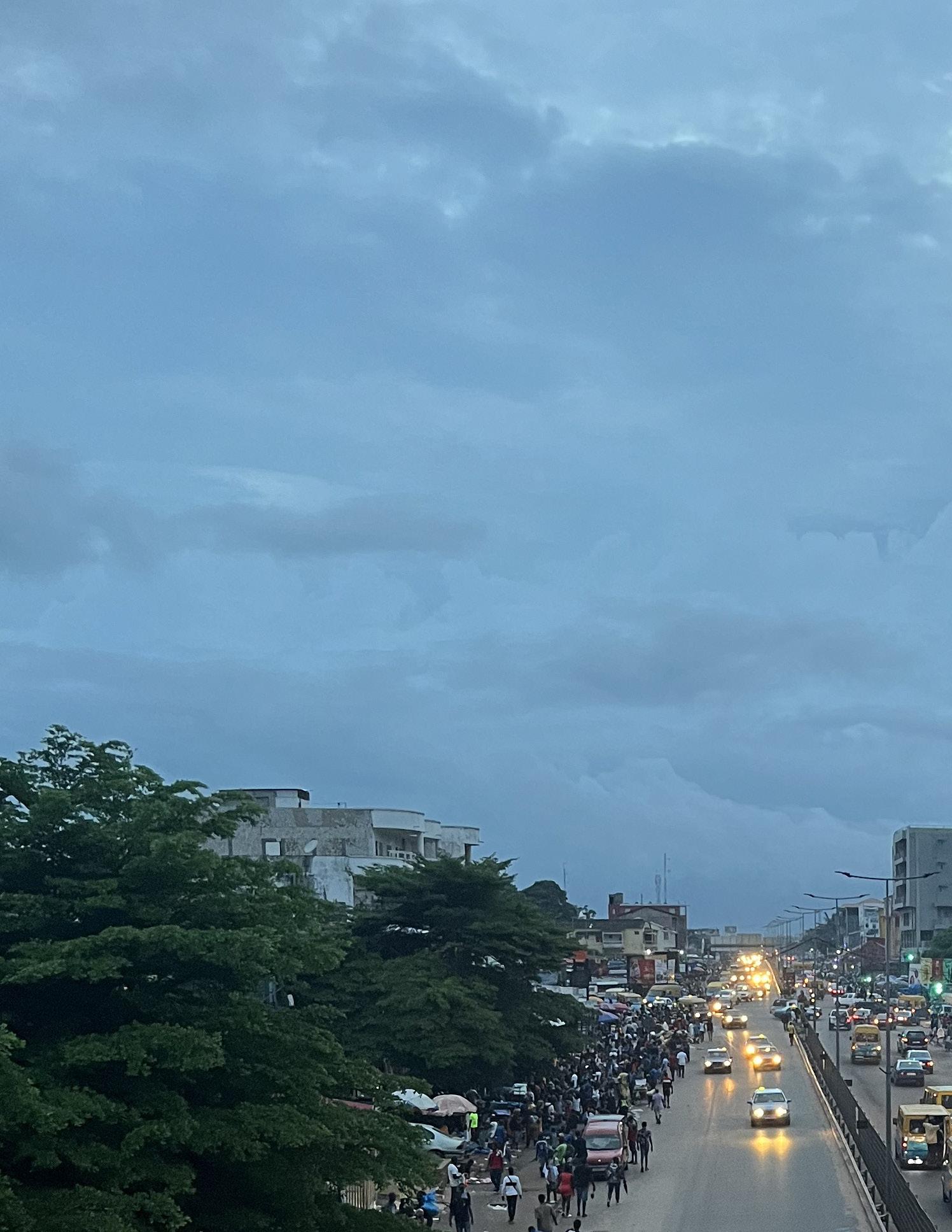
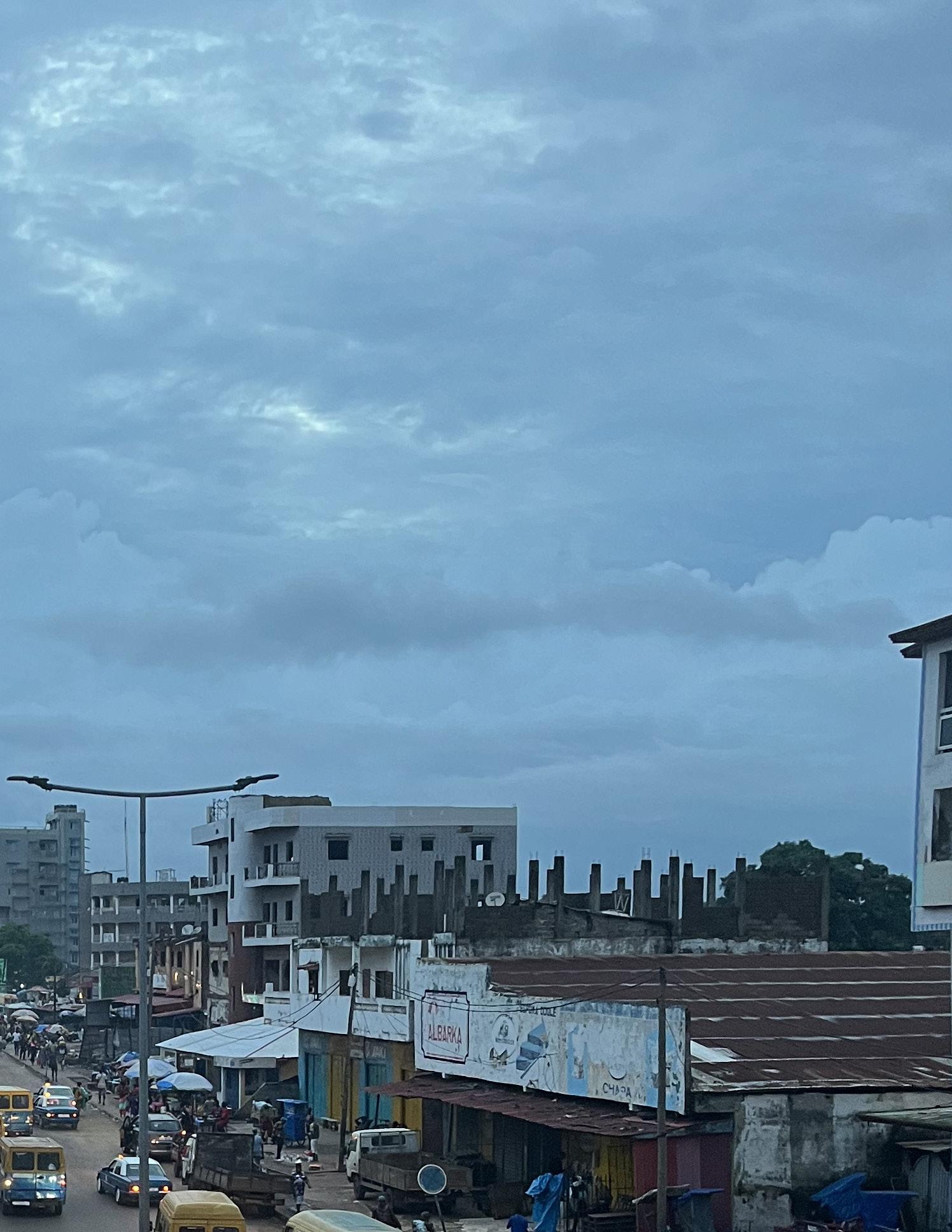
International relations major Jinna Na Nagara captured “Downtown Bissau” in Guinea-Bissau.
Funding Map
A global footprint of SGS support
SGS programs fuel curiosity and discovery by providing research grants, fellowships, internships, and language study opportunities to students, faculty, and visiting scholars at home and abroad. The map below captures the international scope of their journeys.
Locations of Internships, Language Study, and/or Research
• Albania
• Argentina
• Armenia
• Australia
• Austria
• Belgium
• Bosnia and Herzegovina
• Brazil
• Cabo Verde
• Canada
• China
• Colombia
• Croatia
• Denmark
• Dominican Republic
• Estonia
• Finland
• France
• Germany
• Ghana
• Greece
• Guatemala
• India
• Indonesia
• Israel
• Italy
• Japan • Jordan
• Kenya
• Kazakhstan
• Kosovo
• Latvia
• Lithuania
• Madagascar
• Malaysia
• Mauritius
• Mexico
• Mongolia
• Morocco
• Nepal
• Netherlands
• Nigeria
• North Macedonia
• Peru
• Poland
• Puerto Rico
• Rwanda
• Senegal
• Serbia
• Singapore
• South Africa
• South Korea
• Spain
• Switzerland
• Taiwan • Tajikistan
• Turkey
Uganda
Ukraine
United Kingdom • United States • Uzbekistan
Events Gathering our global community
By bringing scholars, artists, performers, and thought leaders to campus, SGS events spark curiosity and deepen the understanding of diverse peoples, regions, and cultures. In 2024-25, SGS centers and programs brought together over 23,000 attendees, who enjoyed 474 events.
474
Total number of events
286
Lectures, meetings, and webinars
Global Dialogues
70
Concerts, films, social, and cultural events
78
Conferences, symposia, and workshops
37
Educational outreach and professional development events
3 Podcasts
Our Global Dialogues Series sparks conversation on the world’s most pressing issues, bringing together scholars to explore fresh perspectives. In 2024-25, the series featured several compelling events, including Afro-Asian Relations Across Atlantic and Indian Ocean Worlds and The Politics of Solidarity.
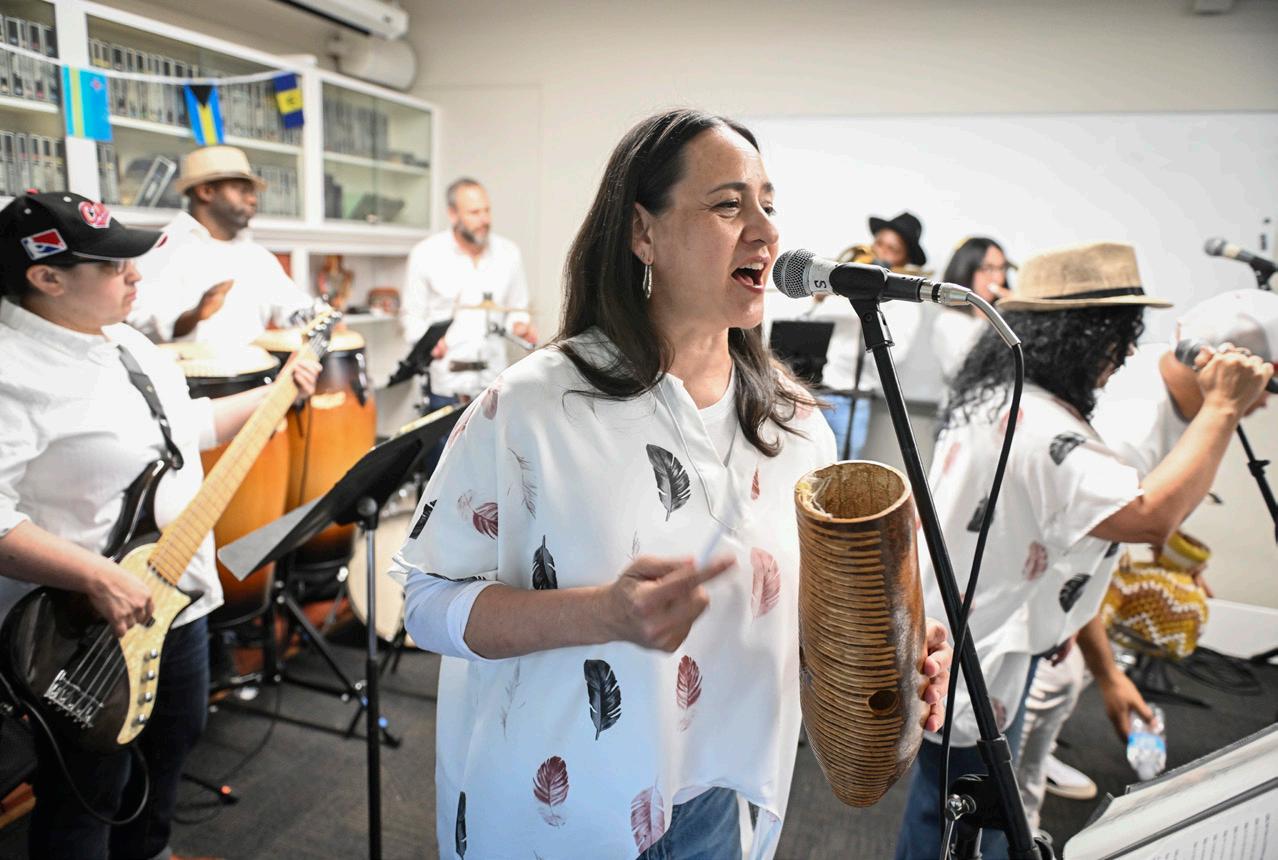
Yeny Valdes and the Team Bahia Music Band performed at the Center for Latin American Studies’ annual Spring Fiesta.
Oceanic Imaginaries
Exploring the world through its oceans
Oceanic Imaginaries is a Stanford Global Studies initiative that adopts the world’s oceans as an analytical framework for advancing cross-regional, interdisciplinary research and activities addressing timely global topics.
Events on the Pacific
The 2024-25 academic year focused on the Pacific Ocean, featuring various events that engaged with the societies, cultures, and histories of the Pacific. Highlights included:
• Itinerant Verses: Ali Lameda between North Korea and Venezuela, a discussion tracing Venezuelan poet Ali Lameda’s political and artistic journey across continents.
• Hope and Resilience: Lessons from the Climate Parliament for Latin America, Africa and South Asia, a conversation on cross-regional collaboration in the face of climate change.
Digitizing justice in the Pacific
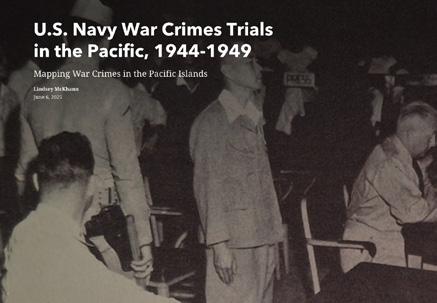
With support from Oceanic Imaginaries, the Center for Human Rights and International Justice and the Center for East Asian Studies are digitizing records of the U.S. Navy’s prosecution of Japanese war criminals for crimes committed in the Pacific during World War II. Once complete, the collection will join the Virtual Tribunals website, an online archive of international criminal justice records.
The project has already inspired new scholarship, including Stanford student Lindsey McKhann’s capstone on the Navy trials and researcher Michael Eastman’s award-winning essay on the prosecutions, which will appear in Naval History. Both projects will be incorporated into the digitized collection, slated for public release in December 2025.
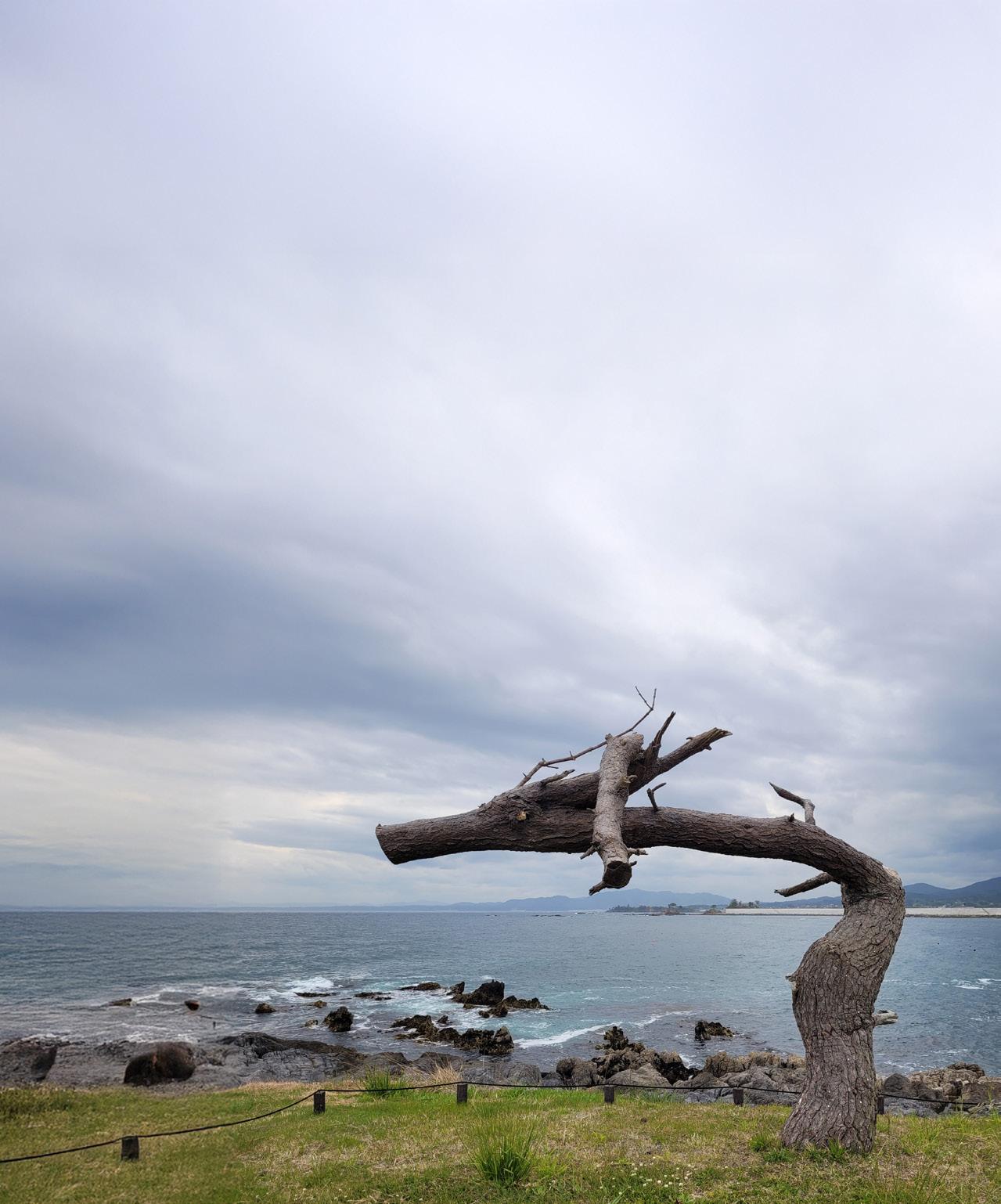
East Asian studies student Jenny O’Keeffe captured this photo of a “Dragon Tree” in Kesennuma, Japan–one of the last trees left standing along the coast after the 2011 tsunami.
International relations major Lindsey McKhann created a visual history of the Navy trials for her capstone project.
Community Outreach
Extending global learning beyond Stanford
Stanford Global Studies is home to four Title VI National Resource Centers (NRCs)—federally designated programs funded by the U.S. Department of Education to support excellence in international and area studies. Through outreach to K–12 schools and community colleges, the NRCs strengthen research and instruction on global issues, the internationalization of curriculum, and language and area studies training.
Community College Student Fair
At the fifth annual Global Perspectives, Global Careers: Stanford Fair for Community College Students, 50 community college students from across the U.S. participated in workshops and panel discussions led by Stanford scholars, students, and alumni on global topics.
“I registered for the Stanford Fair for Community College Students because I’m passionate about pursuing research and advanced study in fields that blend technology and social impact. I wanted to learn more about different global career pathways, connect with faculty and students, and explore opportunities that align with my academic goals in computer science and sociology. Attending the fair felt like a unique opportunity to envision my future, one that values interdisciplinary learning and community leadership.”
— Heba Alazzeh, computer science major, College of San
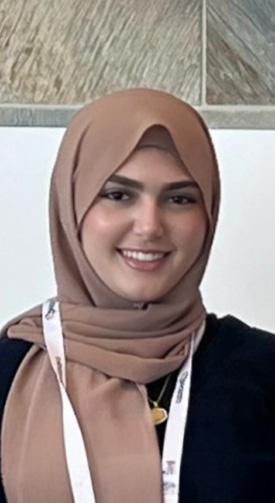
Mateo
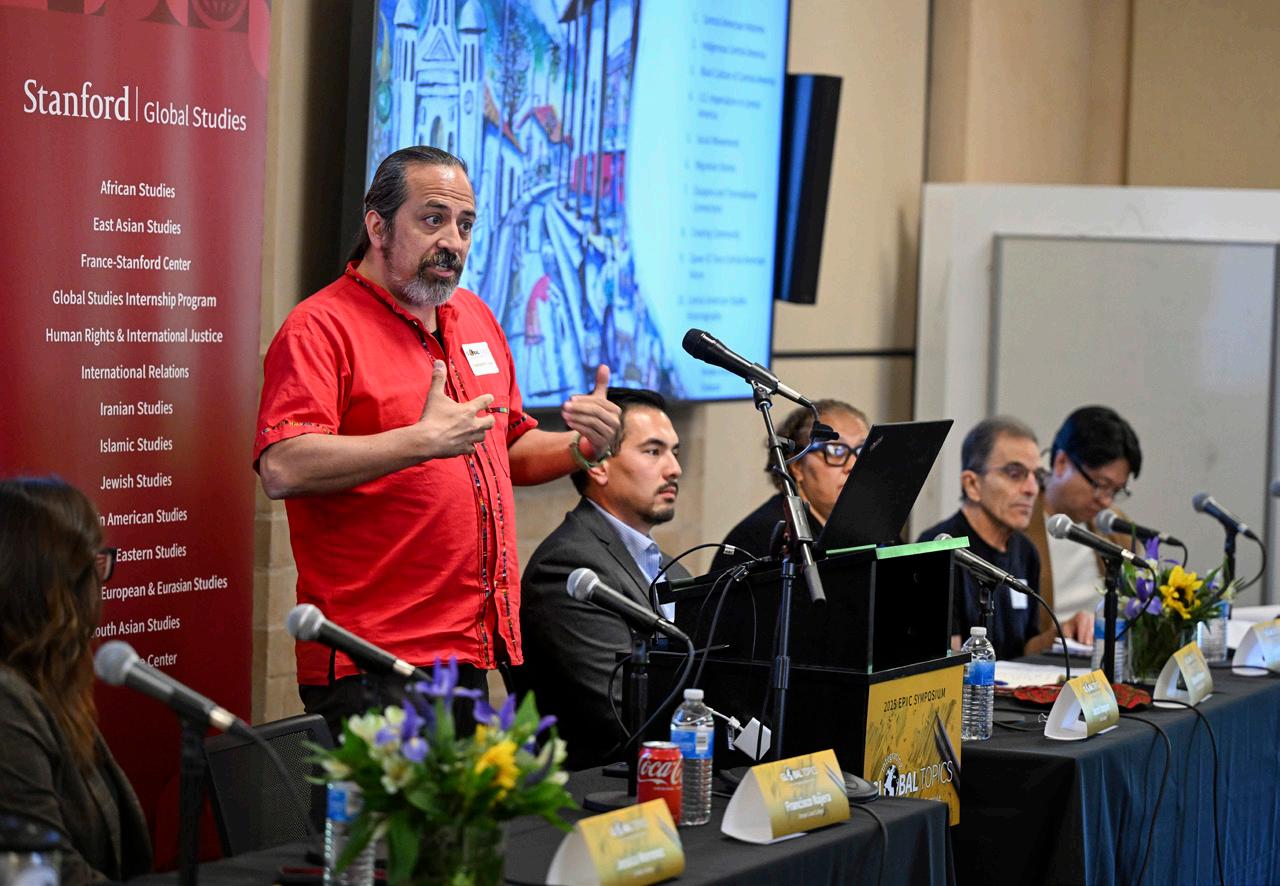
Community college faculty fellow Francisco Najera, instructor of ethnic studies at Orange Coast College, shares his final project at the 2025 EPIC Symposium, which brings together faculty and staff from community colleges across the U.S. to discuss the opportunities and challenges of internationalizing curriculum. Photo credit: Rod Searcey.
Community College Faculty Fellowship Programs
Professional Development Opportunities for Educators
Stanford Global Studies’ NRCs collaborate with campus partners to offer professional development opportunities for community college instructors seeking to internationalize their curriculum. Last year, they hosted a series of engaging book talks with leading Stanford faculty, including:
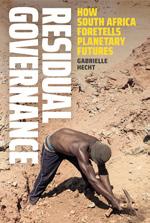
Residual Governance: How South Africa Foretells Planetary Futures with Professor Gabrielle Hecht
Stanford Global Studies offers two competitive fellowship programs for community college educators to advance international education on their campuses. During the academic year, the fellows worked closely with partners across Stanford—including the Center to Support Excellence in Teaching, the Stanford Program on International and Cross-Cultural Education, and the Center for Spatial and Textual Analysis—to develop their projects.
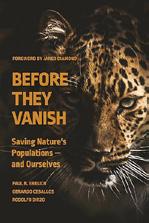
Before They Vanish: Saving Nature’s Populations—and Ourselves with Professors Paul Ehrlich and Rodolfo Dirzo
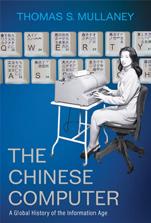
The Chinese Computer: A Global History of the Information Age with Professor Thomas Mullaney
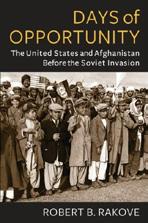
Days of Opportunity: The United States and Afghanistan Before the Soviet Invasion with Dr. Robert Rakove
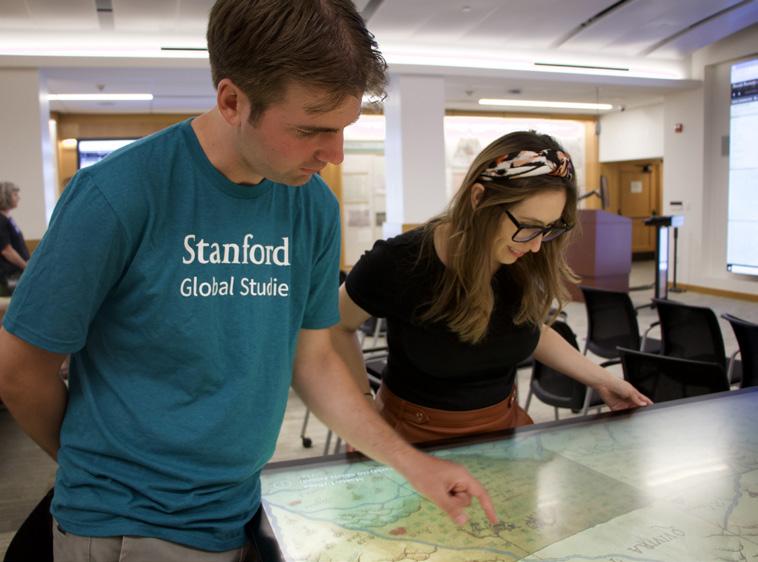
Community college faculty fellows look at digital maps while touring the David Rumsey Map Center during a visit to campus at the start of their fellowship program in August.
Centers & Programs
A network of 14 hubs advancing regional and global expertise
Center for African Studies
Director: Joel Cabrita
Associate Director: Robin Chapdelaine
Center for East Asian Studies
Director: Xueguang Zhou
Associate Director: John Groschwitz
Center for Human Rights and International Justice
Co-directors: David Cohen and Kiyoteru Tsutsui
Associate Director: Penelope Van Tuyl
Center for Latin American Studies
Director: Héctor Hoyos
Associate Director: Elizabeth Sáenz-Ackermann

Center for Russian, East European and Eurasian Studies
Director: Amir Weiner
Associate Director: Jovana Lazić
Center for South Asia
Director: Anna Bigelow
Associate Director: Lalita du Perron
The Europe Center
Director: Anna Grzymala-Busse
Program Administrator: Alyssa Goya
France-Stanford Center for Interdisciplinary Studies
Director: Fiona Griffiths
Program Manager: Isabelle Collignon
Global Studies Internship
Program
Program Manager: Grace Munene
Hamid and Christina Moghadam
Program in Iranian Studies
Director: Abbas Milani
Associate Director: Roma Parhad
Middle Eastern Studies Forum
Director: Ali Yaycıoğlu
Associate Director: Halil Yenigun
Program in International Relations
Director: Kenneth Schultz
Associate Director: Paul Festa
Sohaib and Sara Abbasi Program in Islamic Studies
Director: Ali Yaycıoğlu
Associate Director: Halil Yenigun
Taube Center for Jewish Studies
Director: Vered Shemtov
Associate Director: Shaina Hammerman
Diana Gor, a Russian, East European and Eurasian studies master’s student, took this photo, “Kjerringøy,” in Kjerringøy, Norway.
Center for African Studies
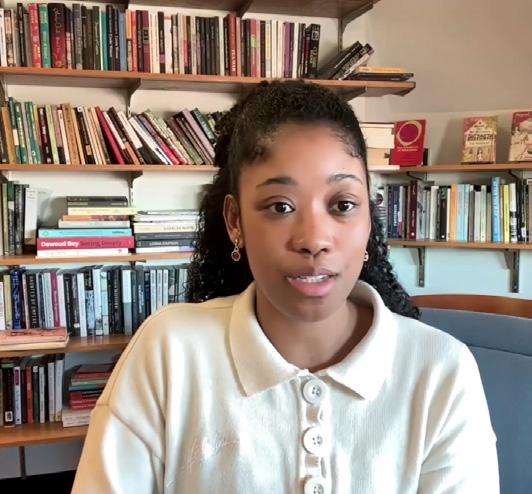
Kaneesha Parsard, assistant professor of English language and literature at the University of Chicago, speaking during the Global Dialogues webinar.
The Center for African Studies continued to advance cross-disciplinary scholarship and global partnerships, support student research, and create meaningful spaces for dialogue that amplified African voices and perspectives across the Stanford community and beyond. A major highlight of the year was the center’s Annual Lecture, delivered by award-winning author and filmmaker Tsitsi Dangarembga. Her thought-provoking talk on creativity, freedom, and social change captivated audiences and sparked rich discussions about African literature and feminist perspectives. Another milestone was the center’s deepened collaboration with the Stanford African Scholars in the Humanities (SASH) program, which offered SASH fellows multiple opportunities to present their research and engage with faculty and students across the university. The center also proudly co-hosted the webinar “Global Dialogues: Afro-Asian Relations Across Atlantic and Indian Ocean Worlds,” expanding the scope of transregional scholarship on campus.
Read the latest news from the Center for African Studies.
Center for East Asian Studies
The Center for East Asian Studies and the Department of East Asian Languages and Cultures welcomed international musical theater actor, singer, writer, producer, and Stanford alum Michael K. Lee to deliver a keynote at commencement. Lee has appeared in over 40 international stage productions, numerous films and television shows, and concerts all over the world, including Miss Saigon, Jesus Christ Superstar, Pacific Overtures, Allegiance, and most recently in the popular hit Netflix series XO, Kitty as “Professor Lee.” Lee gave an inspiring speech about how his Stanford education provided a solid foundation for his career in musical theater and entertainment.
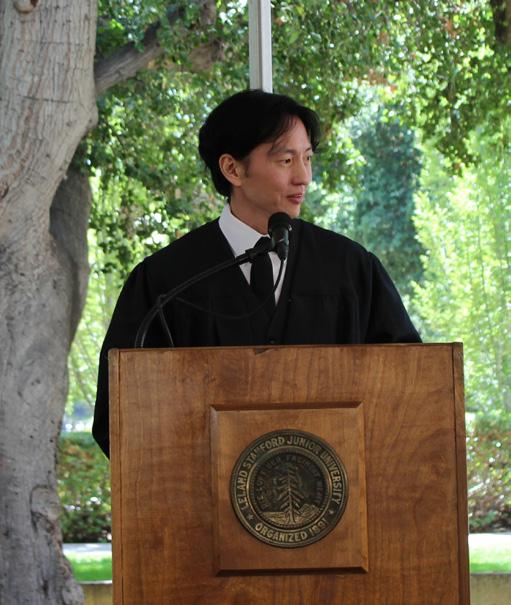
Michael K. Lee delivering a keynote address at the diploma ceremony for students in the Center for East Asian Studies and the Department of East Asian Languages and Cultures.
Read Horizons, the latest annual report from the Center for East Asian Studies
Center for Human Rights & International Justice
On June 13, the Center for Human Rights and International Justice celebrated with 30 human rights graduates and their loved ones in a heartwarming ceremony on the Encina Hall Lawn. Participating students represented human rights minors, summer fellows, research assistants, and student workers.
Read the latest news from the Center for Human Rights & International Justice.
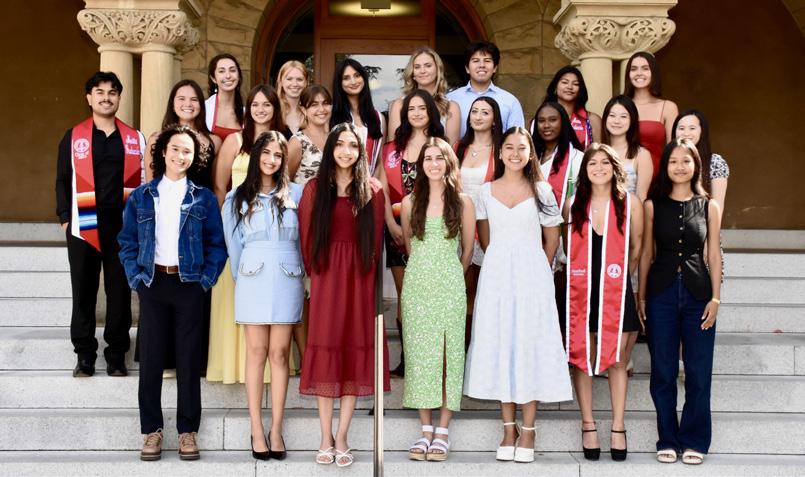
Undergraduate students from the Center for Human Rights and International Justice on the front steps of Encina Hall.
Center For Latin American Studies
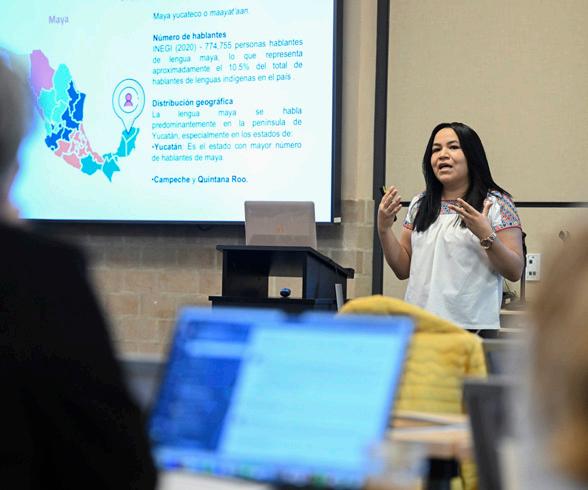
The Latin American Indigenous Studies Alliance—a partnership between Stanford, UC Berkeley, UCLA, and the University of Utah—launched a new fellowship program to support university-level instructors of Indigenous languages. This initiative advances crucial work on Indigenous language preservation. The year-long fellowship brought together four fellows—Silvia Carrillo Godínez, Edber Dzidz Yam, Elodia Ramírez Pérez, and Angelina Trujillo—who collaborated on self-designed projects centered on curriculum development and Indigenous pedagogical methods. The program began with an intensive workshop at Berkeley, followed by monthly virtual sessions led by pedagogy specialist Adriana Roque Corona. It concluded with a symposium at Stanford in May 2025, which united Indigenous language educators from across the country, along with local students, faculty, and scholars, to share insights on teaching, revitalization, and institutional sustainability.
Read Enlace, the latest annual report from the Center for Latin American Studies.
Pedagogy specialist Adriana Roque Corona speaking at the end-of-theyear symposium at Stanford in May 2025. Photo credit: Rod Searcey.
Center for Russian, East European & Eurasian Studies
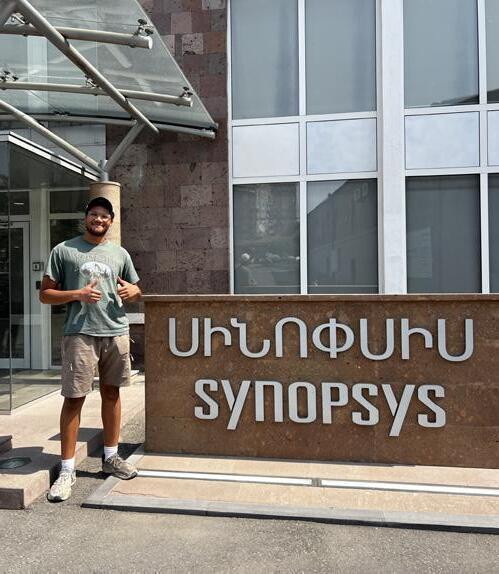
This year marked a significant expansion of Armenian studies at the Center for Russian, East European and Eurasian Studies. The center introduced a new course, Current Issues in Armenian Studies, which drew students from a wide range of disciplines. The course featured talks from leading scholars in Armenian studies, covering topics such as Armenian history, language, and diaspora studies. Additionally, with the support of the Armenian Education Foundation and the Armenian Students Association, the center launched Stanford’s first internship based in Yerevan, Armenia. The internship was hosted by Synopsys Armenia, a company specializing in R&D and product support for electronic design automation, design for manufacturing, and semiconductor intellectual property solutions. Electrical engineering major Chenault Ellis was the first student selected for this internship, a program that will continue next summer.
Read the CREEES Chronicle, the latest annual report from the Center for Russian, East European and Eurasian Studies.
Center for South Asia
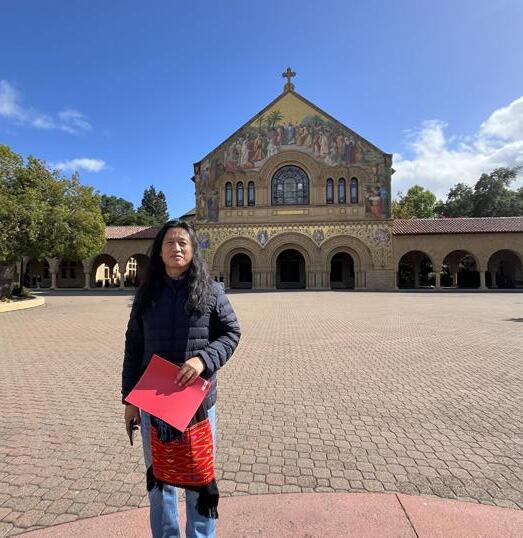
On May 12, 2025, the Center for South Asia, in collaboration with the Center for South Asian Studies at the University of California, Santa Cruz, hosted Aküm Longchari for a talk titled “Sharing Indigenous Experiences, Building Critical Solidarity.” Longchari is an educator in peacebuilding and the co-founder and publisher of The Morung Express, an independent English-language newspaper based in Nagaland. The talk was moderated by C. Matthew Snipp, the Burnet C. and Mildred Finley Wohlford Professor of Humanities and Sciences in the Department of Sociology at Stanford. Snipp and Longchari discussed shared Indigenous experiences both in India and the United States. The event reflected the Center for South Asia’s commitment to foregrounding marginalized perspectives and building networks across institutions. It drew students, faculty, and community members from Stanford, UC Santa Cruz, and beyond.
Read AWAAZ, the latest annual report from the Center for South Asia.
Aküm Longchari in front of Stanford Memorial Church. Photo credit: Dolly Kikon.
Engineering student Chenault Ellis at Synopsys Armenia.
The Europe Center
This year, The Europe Center launched the Fellowship for Undergraduate Travel and Research (FUTR), designed to fill funding gaps for students pursuing projects related to European politics, economics, history, or culture. FUTR also supports students from any field of study who have been accepted to present or perform at a conference or other academic convening in Europe. Since its inception in May 2025, FUTR has sponsored a diverse range of projects, including an immersive Italian language program at Middlebury College, a research internship on rare disease care in London, an exploration of Islamic public policy at the Arab World Institute of Paris, and archival research on the classical world in Athens. The fellowship is open to all Stanford undergraduates, with a particular focus on supporting under-resourced populations.
Read the latest news from The Europe Center
France-Stanford Center for Interdisciplinary Studies
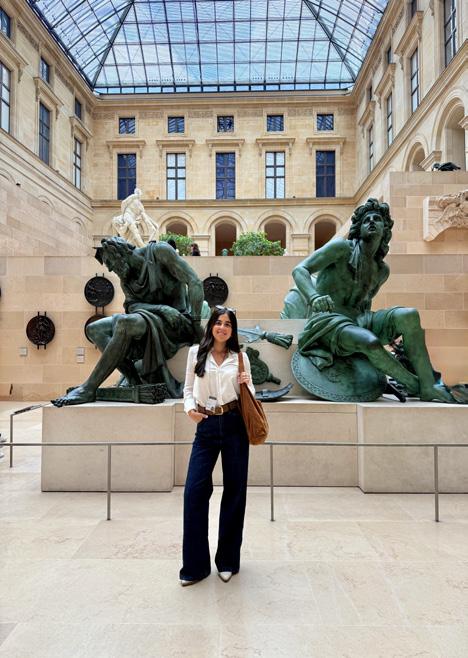
This summer, international relations major Amalia Abecassis completed an eight-week provenance research internship at the Louvre Museum in Paris, sponsored by the France-Stanford Center. Working closely with Dr. Emmanuelle Polack on the investigation of Nazi-looted artworks, she focused on Musées Nationaux Récupération (MNR) pieces, a special French classification for roughly 2,000 artworks recovered from Germany after WWII that remain in French museums pending identification of their rightful owners.
Abecassis’s primary project examined five paintings claimed by the Guy Stein family of Montreal, whose grandfather’s Jewish-owned gallery was looted by German forces in 1940. Through extensive archival research across multiple French and American institutions, including the Institut national d’histoire de l’art and the Frick Art Research Library, she analyzed 1930s gallery catalogues, examined physical evidence on artwork reverses, and cross-referenced international databases to establish provenance chains. Her findings provided strong evidence linking two works to the Stein gallery, and she prepared comprehensive documentation files for the Louvre’s review board to consider for restitution.
Beyond this case work, Abecassis contributed research to a scholarly article on the Monuments Men and gained behind-the-scenes access to the museum’s conservation labs and closed collections. The experience offered extraordinary training in art historical research, conservation, and the crucial work of addressing historical injustices through cultural heritage protection, directly supporting her studies and future career interests at the intersection of art law and cultural property.
Read the latest annual report from the France-Stanford Center.
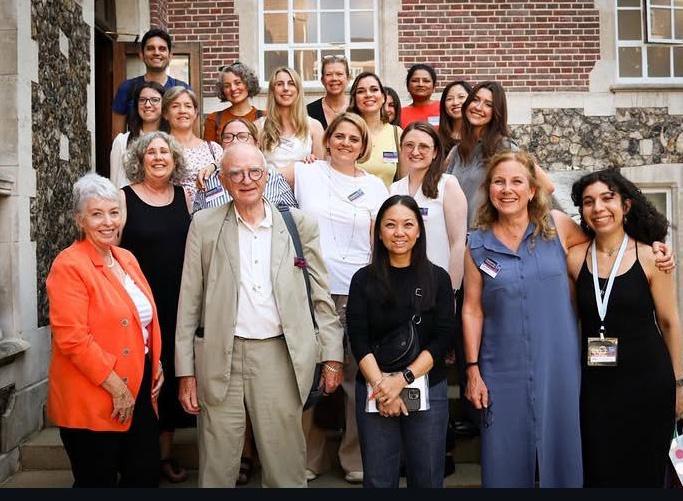
FUTR awardee and human biology major Lena Mikacich (right side, third row back, in grey shirt) and the team at the Great Ormond Street Hospital for Children in London, England.
Amalia Abecassis inside the Louvre Museum in Paris, France.
Hamid and Christina Moghadam Program in Iranian Studies
In March 2025, in celebration of International Women’s Day, the Program in Iranian Studies and Stanford’s Green Library co-hosted a conference celebrating archival collections on Iranian women, with a focus on Stanford’s significant holdings. The event brought together scholars to discuss the significance of these collections in preserving the modern history and narratives of women in Iran. Highlights included presentations such as “Bridges of Ink; Words with Wings: Epistolary Thresholds” by Farzaneh Milani, and “Archives in Dialogue with Social History: Insights from Homa Sarshar’s Legacy” by Mandana Zandian. Speakers delved into themes of forgotten histories, private archiving within diaspora communities, and the need for continued scholarship.
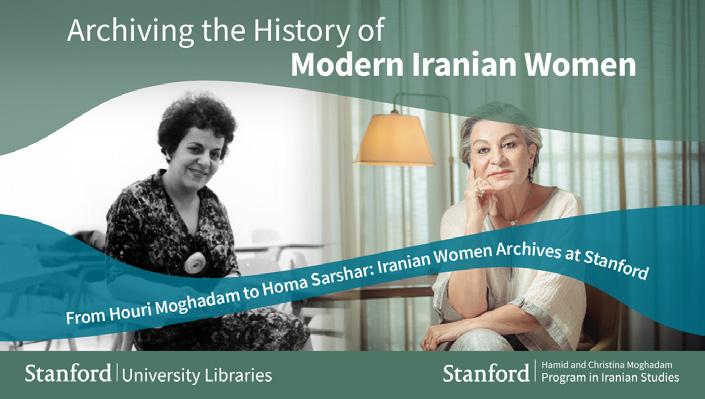
The conference emphasized the critical role of archives in deepening the understanding of Iranian women’s history and the ongoing importance of supporting archival scholarship.
Read the latest annual report from the Moghadam Program in Iranian Studies.
Program in International Relations
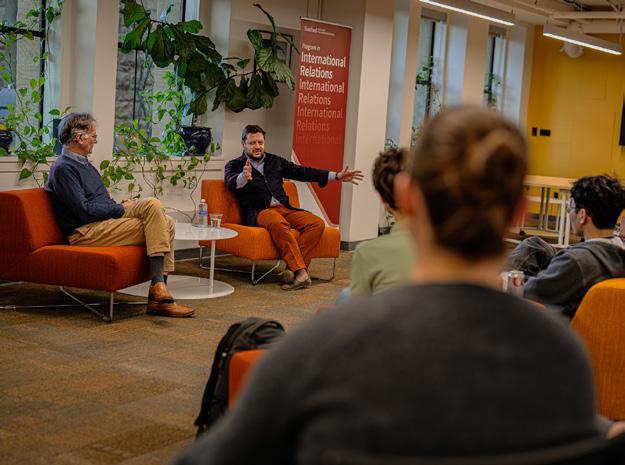
On March 4, the Program in International Relations (IR) hosted a career conversation with IR alum Tarun Chhabra, ’02, moderated by IR Director Stephen Stedman, senior fellow at the Freeman Spogli Institute for International Studies. Chhabra, an American lawyer and security analyst, most recently served as Senior Director for Technology and National Security at the U.S. National Security Council in the Biden Administration. In addition to earning a B.A. in international relations from Stanford, he holds an M.Phil. from Oxford University and a J.D. from Harvard University. More than 25 students attended the event, which offered an engaging and interactive discussion as well as a valuable opportunity for career development and professional networking.
Read the latest news from the Program in International Relations.
IR alum Tarun Chhabra in conversation with IR Director Stephen Stedman at a career development event for undergraduate students.
Poster to advertise the “Archiving the History of Modern Iranian Women” conference.
Sohaib and Sara Abbasi Program in Islamic Studies & Mediterranean Studies Forum
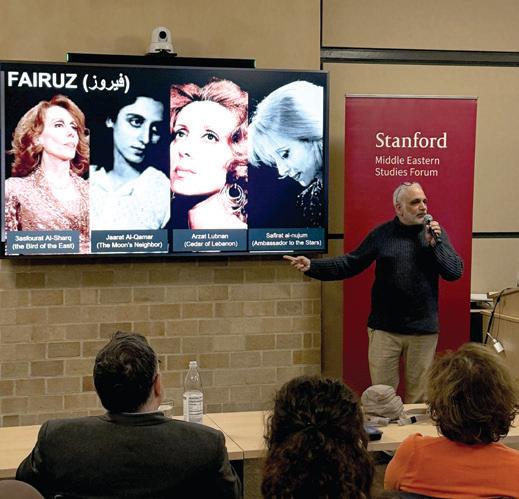
The Abbasi Program in Islamic Studies hosted Ramzi Salti, advanced lecturer for the Arabic Program, for a talk on the life and music of Lebanese singer Fairuz. Salti traced her career from early collaborations with the Rahbani Brothers, producing musicals, films, and songs that defined modern Lebanese culture, to her later work with her son Ziad, whose jazz-inflected compositions introduced her to new audiences. He highlighted her reputation for singing to cities rather than political leaders, her symbolic nickname the “Cedar of Lebanon,” and her role in creating a repertoire of songs that became part of everyday life across the Arab world. He also emphasized how her decision to remain in Lebanon during the civil war was noted as a symbol of unity and resilience. The talk concluded with tributes to her 90th birthday and reflections on the continuing presence of her songs in both regional memory and contemporary music.
Read Spotlight, the latest annual report from the Abbasi Program in Islamic Studies.
Taube Center for Jewish Studies
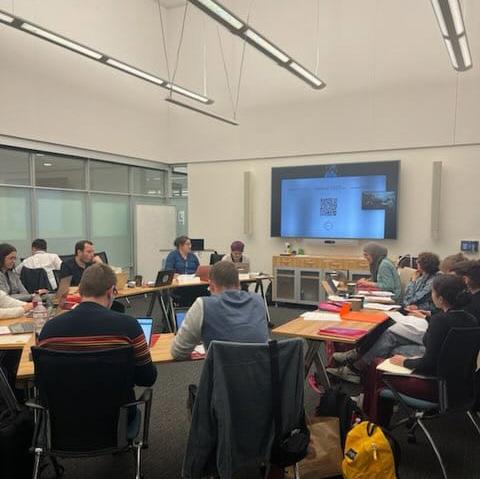
Scholars from the University of Hamburg, University of Graz, and University of Halle at a workshop on “Sexualities and Genders in the Early Scriptures of Judaism, Christianity and Islam” hosted at Stanford in November 2024.
Charlotte Fonrobert, associate professor of religious studies at Stanford, convened a workshop on “Sexualities and Genders in the Early Scriptures of Judaism, Christianity and Islam” in the fall. In collaboration with Professor Mira Seivers (Islamic Theology, University of Hamburg), Professor Katharina Pyschny (Catholic Theology, University of Graz), and Professor Annette Weissenrieder, (Protestant Theology, University of Halle), the group is developing an interdisciplinary textbook that brings together three scriptural traditions. Focusing on themes such as marriage, veiling, asceticism, blood flow, same-sex relations, and gender fluidity from their respective textual traditions, the project emphasizes the value of collaborative and interreligious chavruta. The team held workshops in Berlin, Graz, and Amman before convening at Stanford in November 2024, bringing together faculty and students from multiple institutions for a collaborative exchange.
Read the latest news from the Taube Center for Jewish Studies.
Ramzi Salti delivering a talk titled “Fairuz: The Voice of the Lebanon That Was.”
Career Development
Preparing students for impactful global careers
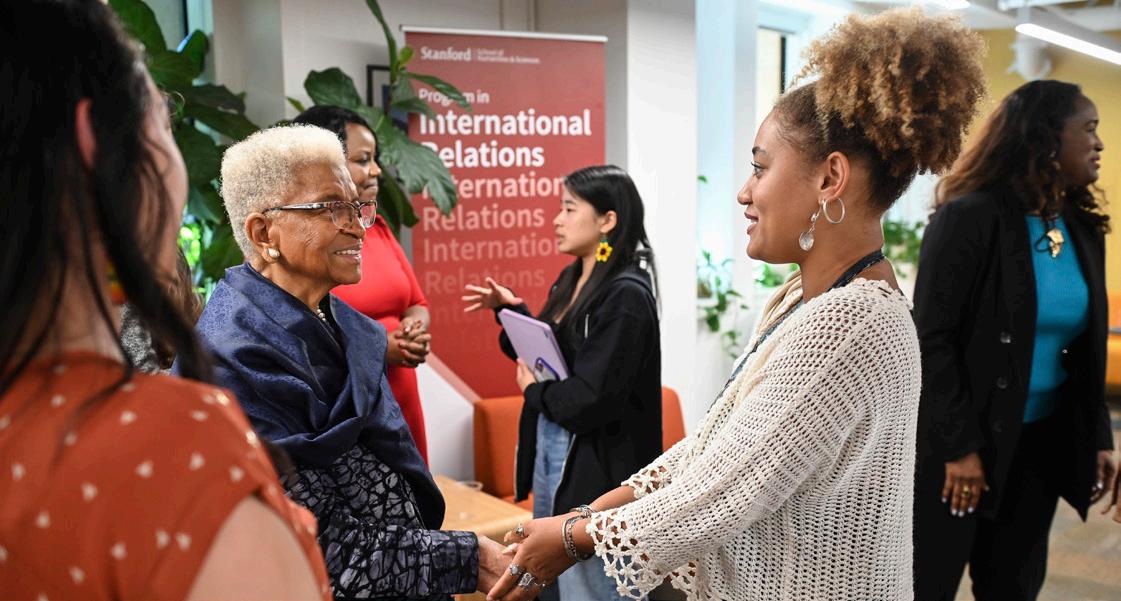
Across SGS, centers and programs hosted a robust series of career development workshops featuring distinguished Stanford alumni, scholars, and professionals working in international affairs. These events offered students valuable insights into global careers and professional pathways. Highlights from 2024–25 included conversations with foreign and civil service leaders, international and human rights lawyers, political science faculty, a Marine Corps major general, the former president of Liberia, and a member of the U.S. National Security Council.
Alumni
From Stanford to the world—and back
The centers and programs within SGS have shaped the career paths of thousands of students, cultivating alumni who are truly global in their outlook and impact. Since leaving Stanford, our graduates have leveraged their SGS experiences to build careers—from policymaking and diplomacy to entrepreneurship and journalism. Through rigorous training, immersive experiences, and cross-cultural engagement, SGS equips students with the skills, knowledge, and perspective to become leaders on the global stage.
Former Liberia President and Nobel Peace Laureate
Ellen Johnson Sirleaf spoke with Stanford students during a lunch conversation hosted by Stanford Global Studies. Photo credit: Rod Searcey.
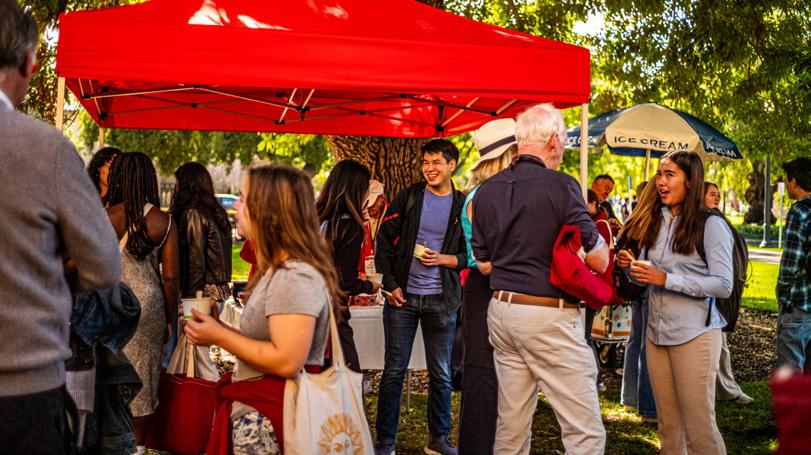
Stanford alumni, students, and faculty mingle at an ice cream social hosted by the Program in International Relations during Reunion Homecoming weekend in October.
Financial Summary
How funding fuels our global mission Expenses
Student Aid & Tuition Allowance
$ 3,459,228
Staff & Student Workers $ 4,193,148
Academic
1,515,368
3,277,685
1,752,016
Gifts & Support
The Stanford Global Studies Division extends sincere appreciation to our contributing alumni, parents, students, and friends for their generous support. Financial support provides core funding to strengthen our existing programs and help create new ones where needed, enhance interaction among faculty and students, and facilitate collaboration with other university programs. Funds are focused on activities that impact the broadest range of faculty and students and offer high leverage by encouraging communication and collaboration. Such activities include curriculum development; seminars, symposia, and conferences; visiting scholar programs; development of research networks linking internal and external faculty and students; research initiatives on key topics; and direct financial support for our students—the next generation of outstanding leaders, scholars, and policymakers.
For more information about working with us to enhance global studies initiatives at Stanford, please contact Tamar Sofer-Geri, senior associate director of development programs, at tamars@stanford.edu.
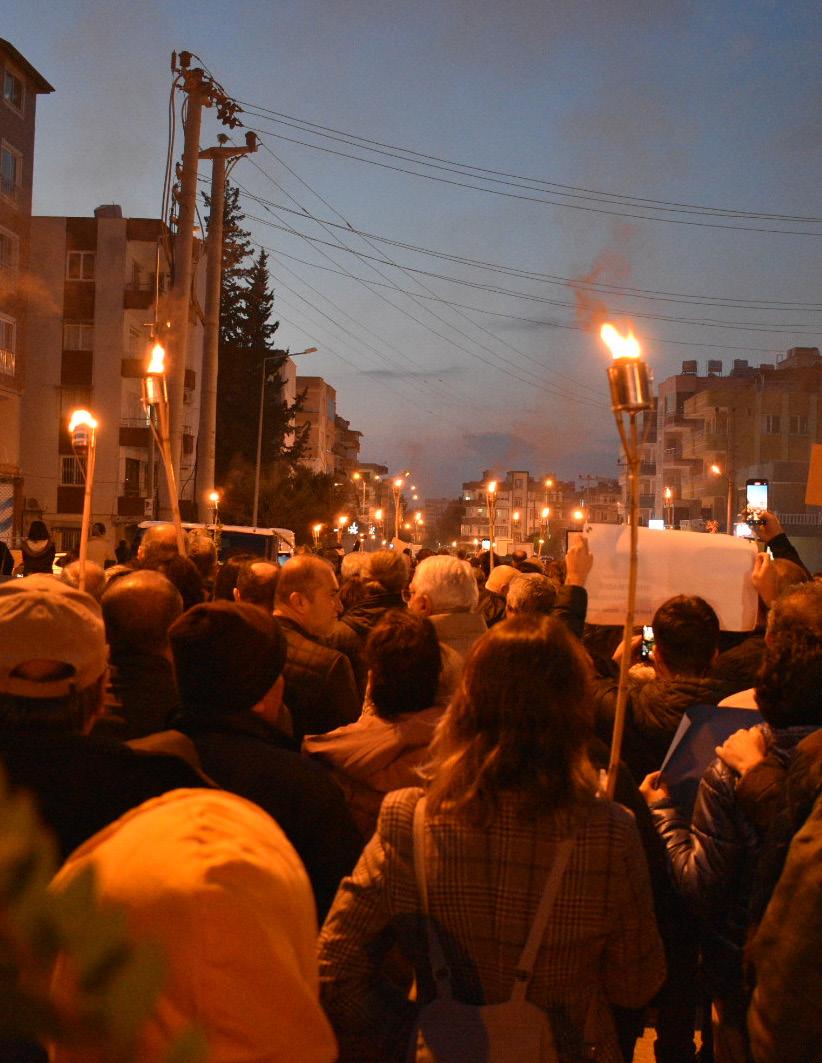
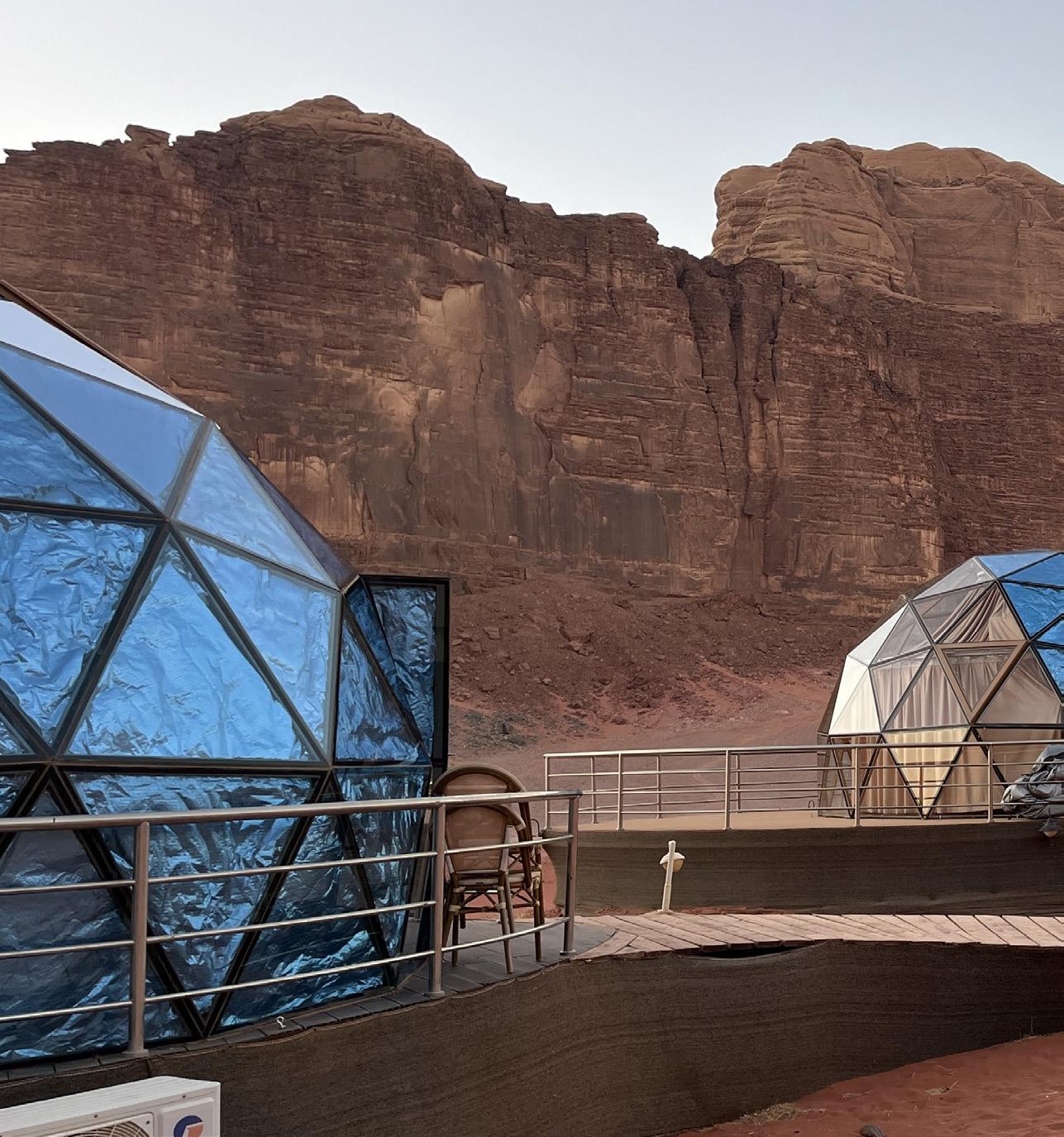
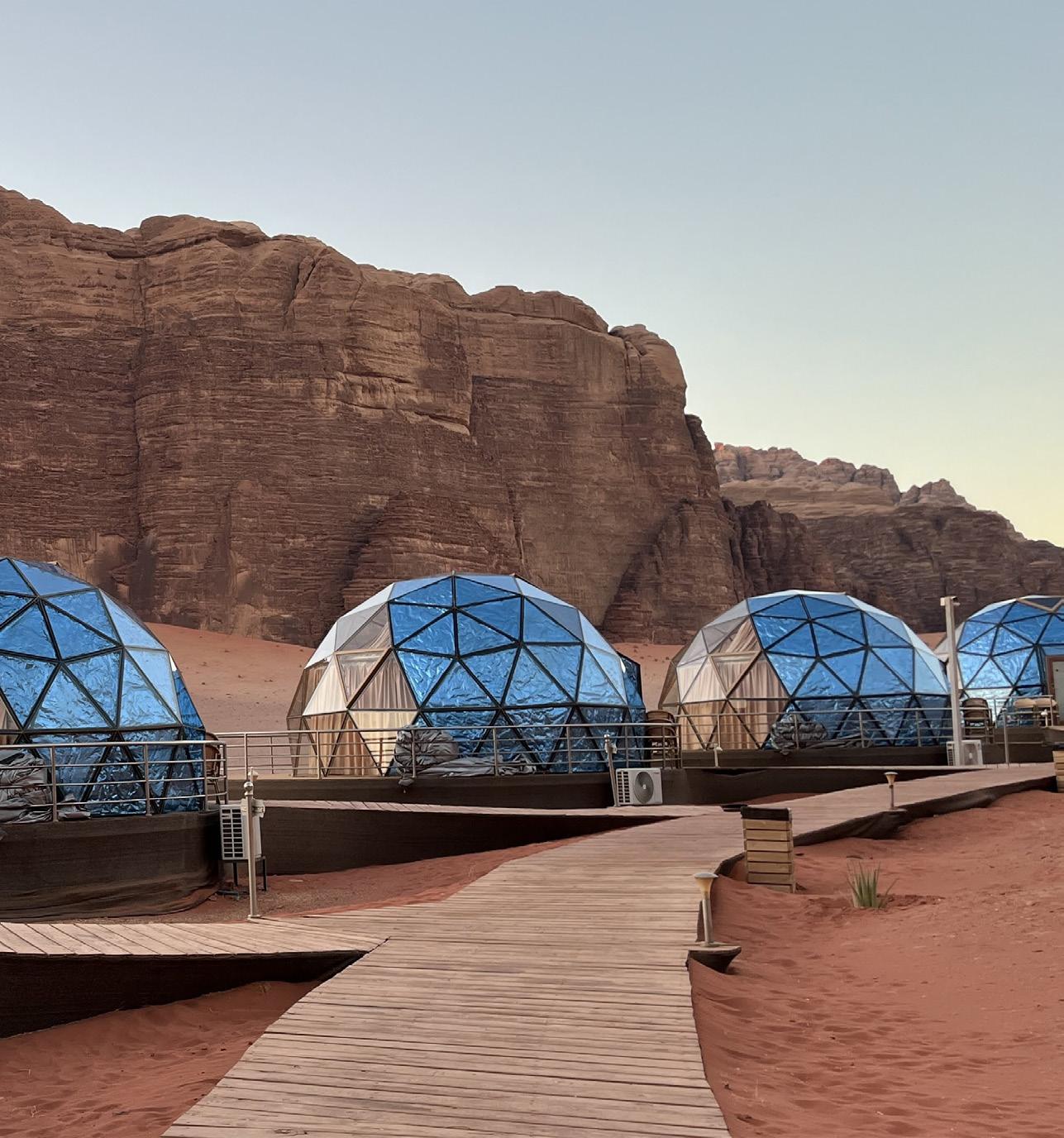
This page: Ramzi Salti, lecturer for the Abbasi Program in Islamic Studies, captured “Bubble Camping in Wadi Rum” in Wadi Rum, Jordan. Back page: Miray Cakiroglu, a Ph.D. student in anthropology and affiliate of the Abbasi Program in Islamic Studies, took home the grand prize in the annual SGS photo contest for her image “The Silent March.” The photograph depicts thousands of people marching solemnly in southern Turkey to commemorate the first anniversary of the country’s deadliest earthquake disaster.
Looking Ahead
Priorities shaping the next chapter of SGS
From climate change to geopolitical conflict to infectious disease, the challenges of our time don’t fit neatly inside borders—or disciplines. For the past two decades, Stanford Global Studies has empowered students to make sense of a rapidly changing world and to act with purpose in it. As we approach our 20th anniversary next year, we are looking ahead with ambition and excitement. The next chapter of SGS will deepen global engagement, expand opportunities for students, and strengthen the collaborative networks that make this work possible. Thank you for being part of this community—and for helping us imagine what we can achieve in the years to come.
As we evolve and expand our global mission, we are fortunate to be supported by a deeply dedicated team whose leadership, creativity, and commitment make this work possible:
Administration
Jisha Menon
Fisher Family Director
Katherine Kuhns Executive Director
Sylvia Arechiga Administrative Associate
Donna Even-Kesef Assistant Director
Kristyn Hara Outreach and Academic Manager
Grace Munene Global Studies Internship Program Manager
Luba Petrovchich Financial Analyst
Stefanie Pietkiewicz Communications Manager
Leanne Rodriguez
Student Services and Faculty Affairs Administrative Associate
Julie Won Tatsukawa Graphic Designer