The cover photo “Tree of Life” was taken by history Ph.D. candidate Michelle Mengsu, an affiliate of the Center for East Asian Studies, at Fragrant Hills Park in Beijing, China.
This page: “Dollhouses” was taken by undergraduate Olivia Popp, a participant in the Global Studies Internship Program, while visiting Rothenburg ob der Tauber, Germany.
The student photos included in this annual report were submissions from the annual SGS student photo contest.
Director’s Message
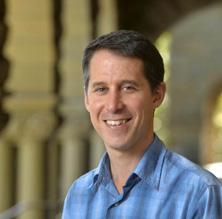
Jeremy M. Weinstein
The Sakurako and William Fisher Family Director of the Stanford Global Studies Division; Professor of Political Science; Senior Fellow, Freeman Spogli Institute for International Studies
Dear Colleagues and Friends,
Over the last academic year, we have faced extraordinary challenges that have dramatically reshaped our approach to work and education. Against the backdrop of a global pandemic, growing economic inequality, and a moment of racial reckoning, we transitioned to working remotely, adopted hybrid instruction, and implemented a range of health and safety measures.
I have been inspired everyday by the ingenuity and resilience of the dedicated faculty, staff, and students that make up the Stanford Global Studies community. We have persevered through unprecedented times and transformed how we deliver academic programming and student support. The pandemic has also exposed the reality of our global interdependence and underscored the importance of what we do in SGS. Today, there is a renewed emphasis on the value of global education and the need to prepare students for an increasingly complex and interconnected world.
In the face of these incredible national and global crises, we have emerged stronger than ever. We have shown that, no matter what is thrown our way, we can continue our mission of teaching and research that engages issues, societies, and cultures in regional and global perspective. Our Global Studies Internship Program offered virtual internships to 49 students in 19 countries on five continents. Additionally, our 14 centers and programs collectively hosted 452 virtual events, which reached more than 35,000 people around the globe.
The Kohler Fund for Innovation in Global Studies supported many engaging events and programs in centers across the division. The Center for African Studies hosted a workshop
Jasmine Reid, an anthropology Ph.D. candidate affiliated with the Center for African Studies, took this photo “Table Mountain at Night” in Cape Town, South Africa while conducting her anthropology fieldwork.
series titled “Shaping the Conversation: Scholars Speak on Justice, Access, and Rights,” which aimed to deepen conversations around youth politics, healthcare, LGBTQ rights, and fintech on the African continent. Meanwhile, the Center for South Asia launched the Arts & Justice Series, featuring leading scholars and artists from South Asia who discussed freedom of speech and the role of the arts within the context of justice.
In addition, we supported pioneering research that advances our understanding of regional and global issues. We provided over $800,000 to support 112 students, postdocs, and visiting scholars. Several of these scholars came to Stanford through the Institute of International Education’s Scholar Rescue Fund (IIESRF), a program that arranges and funds fellowships for threatened and displaced scholars at partnering higher education institutions worldwide. In the coming years, we are committed to continuing our work with IIE-SRF to protect the lives and careers of endangered scholars in a time of increasing attacks on academic freedom. We continued our course innovation award program to support the development of undergraduate courses focused on substantive topics of regional and global interest. We are excited that two of the courses—The Meat We Eat and The Politics of Development—will be offered through the new Civic, Liberal, and Global Education program, one of several initiatives that emerged through the university’s long-range planning process. SGS has played an instrumental role in helping design this new program, which aims to engage firstyear students in a purposeful study of liberal education and challenge them to examine their roles as global citizens in diverse societies.
Together with partners across campus, we also continued our community outreach initiatives and developed new accessible and inclusive opportunities for global learning. For the first time, we hosted a virtual fair for more than 80 community college students interested in global studies and international careers. In collaboration with the Center to Support Excellence in Teaching and the Stanford Program on International and Cross-Cultural Education, we hosted workshops and institutes for K-14 educators. And our community college faculty fellowship program continued to flourish. This year, 11 fellows worked with Stanford partners to creatively introduce global themes into the classroom. For example, Maiya Evans, adjunct professor at Skyline College, developed a roundtable series that invited students to rethink approaches to healthcare in the U.S. by borrowing from public health methodologies from other nations.
Finally, this year marks the end of my five-year term as the director of SGS. I am grateful for your unwavering support, which has helped us make remarkable progress in helping undergraduate and graduate students develop perspectives and skills that are critical for leadership in today’s world. I am very proud of the collaborative, dynamic community we have built at SGS, which has become a vibrant hub for international and area studies on campus.
In this academic year, Jisha Menon, associate professor of theater and performance studies, will be taking over as the director of SGS. Jisha is already an integral member of the SGS community, having served as a member of our advisory committee and as director of the Center for South Asia for nearly four years. I wish her and the entire SGS community every success in the years to come.
Sincerely,
Jeremy M. Weinstein
SGS at-a-Glance
The Stanford Global Studies (SGS) Division is the university’s hub for education, research, and community engagement centered on exploring issues, societies, and cultures in regional and global perspective.
Drawing on its network of more than 300 affiliated faculty, SGS equips Stanford students with the interdisciplinary knowledge and skills essential to leading in a global context and fosters innovative research that deepens society’s understanding of critical regions and global issues.
Preparing
Stanford
Students to Lead in the World
241
Enrolled undergraduates and 61 M.A. students
52
Internships in 35 organizations around the world
357
Affiliated faculty in 14 centers and programs
Deepening Understanding of Global Issues
SGS enables the next generation of scholars to creatively address regional and global issues and advance our understanding of the world.
$3.3M
For courses, fellowships, language study, and research for students, faculty, and visitors
452
Virtual events
82
Language and globallyfocused courses
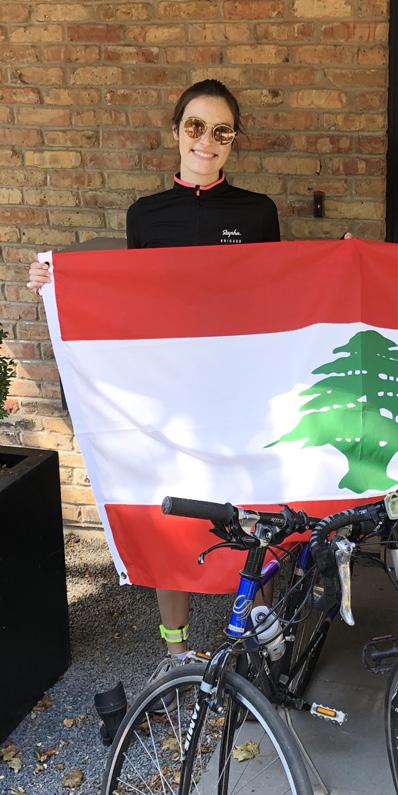
Global studies minor Gabby Conforti, together with several Stanford students, launched a fundraiser called Biking for Beirut to support victims of the explosion at the port of Beirut on August 4, 2020. Together, they biked a total of 280 miles, the length of traveling up and back down Lebanon’s coastline, and they have raised more than $24,000 to date.
Academic Programs
Undergraduate Programs
SGS supports interdisciplinary majors, minors, certificates, and honors programs for undergraduate students. In 2020-21, 241 students were enrolled in the division’s undergraduate programs. Most SGS students study overseas and acquire fluency in a second language as part of their degree requirements.
Global Studies Minor
Open to undergraduates from any major, the global studies minor allows students to pursue interdisciplinary study in one of six specializations, including African studies, European studies, Iranian studies, Islamic studies, Latin American studies, and South Asian studies, while integrating this knowledge into a larger vision of global affairs.
Graduate Programs
SGS offers several M.A. programs, which provide students with training and exposure to regional affairs, collaborative student cohorts, supportive faculty, small class sizes, personalized advising, and competitive internship, fellowship, research, and travel opportunities. In 2020-21, a total of 61 students pursued master’s programs in SGS.
Degrees Granted
Bachelor of Arts
39 International Relations
Honors
5 International Relations
Undergraduate Minor
6 Global Studies
21 Human Rights
7 International Relations
2 Jewish Studies
Certificate
2 African Studies
Degrees Granted
Master of Arts
30 East Asian Studies
3 Latin American Studies
5 Russian, East European and Eurasian Studies
Ayushi Tandel, ’21
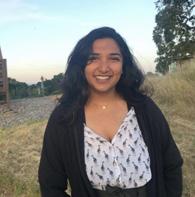
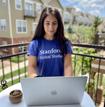
“As I graduate with a global studies minor, I leave with a desire to keep up with global issues, engage with communities other than my own, and do what I can to have a positive impact,” said Tandel, who graduated with a B.S. in computer science and a minor in global studies with a specialization in South Asian studies.
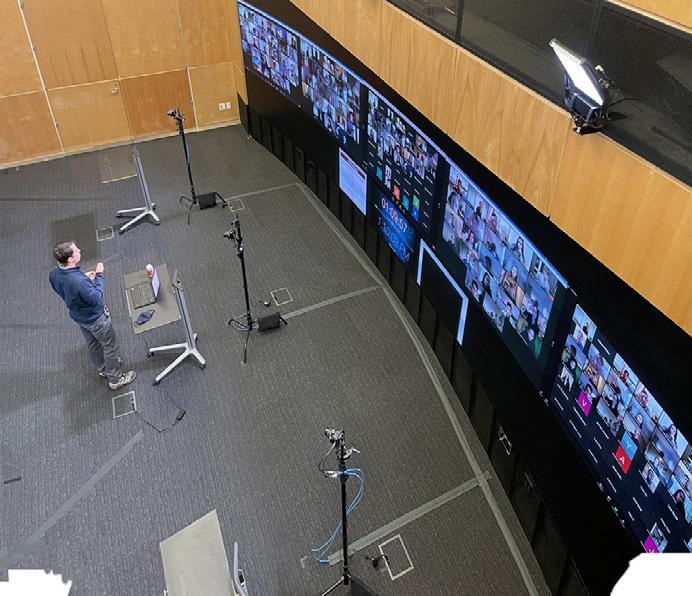
Stanford Global Studies makes learning about and engaging with the world an integral part of a Stanford education. This year, as the coronavirus pandemic continued on, students and faculty adapted to online learning over video platforms such as Zoom.
Below, SGS Director Jeremy Weinstein gives a lecture for his class CS 182: Ethics, Public Policy, and Technological Change using a new platform developed at Stanford that enables instructors to engage more with students.
$450K for courses 69
Globally-focused courses 13 Language courses
Faculty are integral to the division’s efforts to grow international awareness and understanding at Stanford and beyond. The 357 faculty affiliated with SGS centers and programs represent every school at Stanford—business, earth sciences, education, engineering, law, medicine, and humanities and sciences—as well as many of Stanford’s centers and institutes.
SGS Welcomes New Faculty Director
In September 2021, Stanford Global Studies welcomed Jisha Menon, associate professor of film and performance studies and, by courtesy, of comparative literature, as the new Sakurako and William Fisher Family Director of SGS.
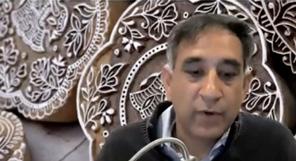
“I am delighted to be taking over as faculty director of SGS, which is the university’s primary hub for research and teaching on global studies. It houses 14 vibrant research centers that provide opportunities for engaging with regions across the world,” she said. “I am excited to build on the work of my brilliant predecessor, Jeremy Weinstein, and to continue to provide rich educational opportunities, while also initiating a range of research programs at SGS.”
Percent of SGS-Affiliated Faculty by School
Freeman Spogli Institute for International Studies
Hoover Institution
SLAC National Accelerator Laboratory
Stanford Institute for Economic Policy Research
Visiting Scholars
Over the past year, SGS centers and programs welcomed 17 visiting scholars and 2 postdocs from different countries to build global expertise on campus. These visitors strengthen the university’s intellectual and educational environment by delivering lectures, conducting research, mentoring students, and teaching courses.
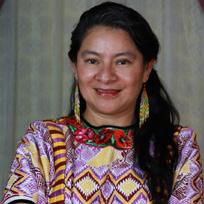
Irma Alicia Velásquez Nimatuj
Tinker Visiting Professor, Stanford Center for Latin American Studies
“I came to Stanford driven by a deep desire to teach graduate and undergraduate students. I wanted to share the knowledge and experience that I have accumulated during more than 20 years of working and accompanying Indigenous communities and organizations in Latin America in their political, economic, and social struggles for access to justice, and for the right to self-determination,” said Irma Alicia Velásquez Nimatuj, a journalist, activist, and international spokeswoman for Indigenous communities in Central America.
Supporting Displaced Academics During Crisis and Conflict
For almost a century, Stanford has worked with the Institute of International Education (IIE), an independent not-for-profit organization, to provide a refuge to endangered scholars who had to escape conflict or flee persecution in their home countries because of their research, race, or creed. Stanford Global Studies has been the academic home to many of the displaced scholars to arrive at Stanford over the past two decades.
Events are at the heart of building the SGS community. By inviting scholars, performers, and other luminaries to speak and collaborate with our faculty and students, SGS events instill deep curiosity and knowledge about other peoples, regions, and cultures. In 202021, in response to the coronavirus pandemic, all events were hosted virtually. In 2020-21, SGS centers and programs brought together over 36,225 attendees, who enjoyed 452 virtual events.
36,225
Total number of attendees
452
Total number of events
322 Lectures & meetings
40 Conferences, symposia & workshops
33 Concerts, films, social & cultural events
57 Educational outreach & professional development events
The End of Official Color-blindness and the Rise of Anti-anti-racism in Latin America
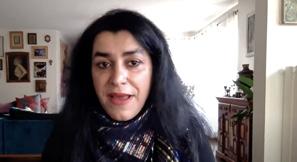
As part of the annual SGS Summer Film Festival, the Program in Iranian Studies and the France-Stanford Center screened the film “Chicken with Plums” and hosted a discussion with the writer and co-director, Marjane Satrapi.
The Center for South Asia organized an event on Understanding India’s COVID Surge with S.V. Mahadevan, professor of emergency medicine at the Stanford School of Medicine.
As part of its weekly lecture series, the Center for Latin American Studies hosted an event on The End of Official Color-blindness and the Rise of Anti-anti-racism in Latin America with Mara Loveman, professor of sociology at UC Berkeley.
Marjane Satrapi: Chicken with Plums
Understanding India’s COVID Surge
Student Photo Contest
This year marked the 10th anniversary of the SGS student photo contest, which is open to undergraduate and graduate students affiliated with the division’s 14 centers and programs. In 2021, we received more than 80 photos captured in locations across the United States and around the world.
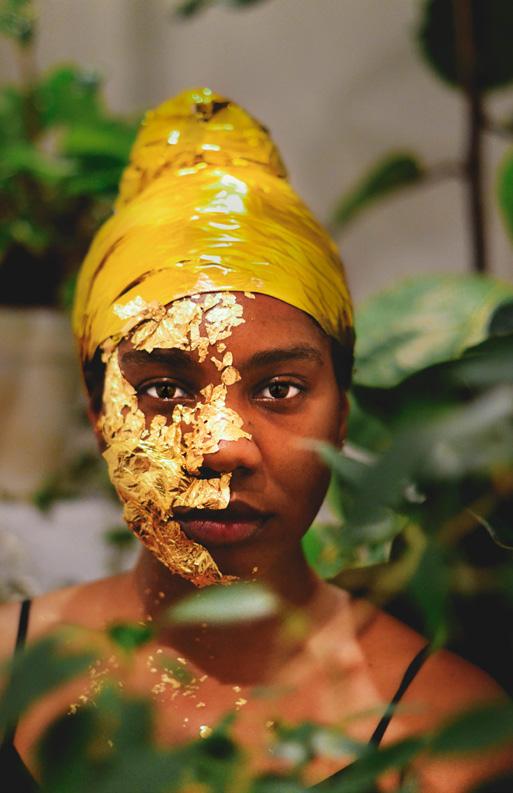
Jasmine Reid, an anthropology Ph.D. candidate affiliated with the Center for African Studies, won the grand prize for her self-portrait “Quarantine Birthday Portrait in Gold.”
Community Outreach
SGS is committed to outreach to foster global competencies, promote inclusive and equitable opportunities in global education, and share Stanford’s research expertise and educational resources with students and educators in our broader community and beyond.
The U.S. Department of Education has designated two SGS centers as National Resource Centers (NRC): the Center for East Asian Studies and the Center for Latin American Studies. Supported by Title VI of the Higher Education Act, these centers collaborate on programs to internationalize K-14 curricula, provide opportunities for instruction and research on critical global issues, and strengthen access to training in modern foreign languages and area studies.
Programs for Local Educators
Over the last year, the NRCs—in partnership with the Center to Support Excellence in Teaching (CSET) in the Graduate School of Education, the Stanford Program on International and Cross-Cultural Education (SPICE) in the Freeman Spogli Institute for International Studies, and other SGS centers—provided professional development courses, workshops, and institutes for local educators that explored a wide range of topics, including:
• Identity and Citizenship
• Rising Up: Movements for Change
• The Resurgence of Great Power Politics
• History of the Americas: U.S.-Mexico War or Intervention?
• Myanmar and U.S.-Myanmar Relations
“My experiences in community college encouraged and inspired me to seek a more international focus as I continued my studies. It really impacted me to be able to speak with people who had grown up in places and had experiences that were so different from mine,” said Tia Geri, an international relations major who transferred to Stanford from Foothill College.
Community College Student Fair
More than 80 community college students gathered virtually to explore international career paths at the inaugural Stanford Fair for Community College Students. Hosted by SGS, the day-long event featured workshops and presentations led by Stanford faculty and scholars, who emphasized the importance of developing a global mindset. The event concluded with a panel discussion featuring three students who transferred from community colleges to four-year institutions in the Bay Area.
Community College Faculty Fellowship Program
Stanford Global Studies welcomed a sixth cohort of community college faculty fellows from 11 schools across California and Illinois. Throughout the year, the fellows focused on incorporating global perspectives and intercultural learning into their courses. The fellowship culminated in a virtual symposium in May, which was attended by more than 60 faculty and staff from universities and community colleges across the country.
Community College Student Fair
“Participating in this program reinvigorated my teaching about global issues and allowed me to creatively redesign components of my curriculum.”
– Melissa King, assistant professor of anthropology at San Bernardino Valley College
EPIC Fellows, left to right: Sravani Banerjee, Evergreen Valley College; Julia diLiberti, College of DuPage; Maiya Evans, Skyline College; Ron Herman, Foothill College; Melissa King, San Bernardino Valley College; Rebecca Nieman, San Diego Mesa College; Jose Emmanuel Raymundo, Santa Rosa Junior College; Oliver A. Rosales, Bakersfield College; Heidi Saleh, Santa Rosa Junior College; Solen Sanli Vasquez, Santa Rosa Junior College; Joanna Sobala, Mission College
Cheryl Gibbs, senior director of the Office of International and Foreign Language Education in the U.S. Department of Education, opened the 2021 symposium with a keynote address.
SGS facilitates research and data collection across fields and national boundaries to advance our understanding of the world. In addition to providing research fellowships, SGS programs and centers host collaborative research initiatives, publish reports, and facilitate student research.
$1.2M Research funding 112 Students, postdocs, and visiting scholars funded
14 Faculty funded
16 Cities around the world
Faculty Research: Women’s Agency Expressed Through Dance in Hindi Cinema
In her new book, Dancing Women: Choreographing Corporeal Histories of Hindi Cinema , Usha Iyer, assistant professor of art and art history, argues that the dances performed by women in Hindi cinema are reflections not only of cultural history and changing cultural norms but also of the trans-regional cross currents that impacted South Asia.
Graduate Research: Understanding the Politics of Tajikistan
Carly Seedall, a master’s student in Russian, East European and Eurasian Studies, received funding through an SGS Global Perspectives Award for interpreting services so that she could conduct a series of interviews with Tajikistani exiles living in Europe for her thesis. “I am thankful for the openness and bravery of my interviewees, who shared their experiences of fleeing from their homeland, adjusting to life abroad, and hopes for political freedom in their country, and was honored to be able to elevate their voices,” she said.
Undergraduate Research: Examining Franco’s Use of Sexual and Gender-Based Violence
Senior Chloe Stoddard wrote an honors thesis through the Program in International Relations that explored the ways dictator Francisco Franco used sexual and gender-based violence to gain political power in Spain during the Spanish Civil War.
49 Global Studies Internship Program Placements 3 Additional Center/ Program Internships
52 Virtual Internships 20 Locations Around the World
2020-21 Virtual Internship Locations
Belgium
• Carnegie Europe
• Institution for European Environmental Policy (IEEP)
• Bruegel
• The Lisbon Council
• LICOS
Bosnia and Herzegovina
• Post Conflict Research Center
Brazil
• Fundação Getulio Vargas Center for Social Policy (FGV SOCIAL)
China
• Keru
• Tsinghua University
Costa Rica
• Nampuma Naki NGO
Estonia
• Johan Skytte Institute of Political Studies, University of Tartu
• Museum of Occupations and Freedom VABAMU
Germany
• OKAPI:Orbits GmbH
• Goethe-Universität Frankfurt am Main
• DLR-FK
India
• India Literacy Project
Italy
• San Raffaele Scientific Institute
Japan
• Mitsubishi Research Institute
• Rogers Investment Advisors
Latvia
• TechHub Riga
Over the summer, senior Zac Stoor worked full-time for the Institute for European Environmental Policy, a sustainability think tank whose team of economists, scientists, and attorneys produce and promote evidence-based research and policy insights to benefit Europe and the world.
Mexico
• Fundación Del Empresariado Sonorense (FESAC)
Pakistan
• The Citizens Foundation
Peru
• Aerobotany Project
Russia
• Skolkovo Institute of Science and Technology
South Africa
• Lalela
South Korea
• Coreana Connect
Taiwan
• Taiwan Institute of Economic Research
• Intumit
Ukraine
• Center for Civil Liberties
• Lviv UNESCO City of Literature (UNESCO Creative Cities Network)
United States
• Social Science Research Council
• The Kaizen Company
• StartX
• Indiegogo Inc.
• Carnegie Endowment for International Peace
One of his projects was updating the institute’s database of European Parliament members who have been – or may become – advocates for new sustainability policies. He also drafted posts for the institute’s Twitter and LinkedIn accounts and produced newsletters with information about upcoming activities.
“It has been an extraordinary learning experience to talk with experts on everything from sustainable agriculture to biodiversity preservation through the internship,” said Stoor, who is majoring in political science and minoring in global studies with a specialization in Europe. “Even doing something simple like drafting a tweet will require reading a publication where I will probably learn 20 new things about the European Union’s environmental policy.”
Virtual Internships
Each year, global internships provide Stanford students with unique opportunities to extend classroom learning to immersive, cultural, and professional experiences around the world. This year, in response to the COVID19 pandemic, SGS pivoted to offer virtual internships to 52 undergraduate and graduate students. The internship program continues to be the Haas Center for Public Service’s largest campus partner for overseas service opportunities – in 2021, 47% were Cardinal Quarter eligible.
In collaboration with centers and programs across SGS, the internship program facilitated and funded 49 virtual internship placements in 19 locations around the world. The Europe Center provided 3 additional opportunities, bringing the total to 52 internships funded across the division in 20 locations this past year: 43 for undergraduates, 7 for M.A. students, and 2 for Ph.D. students.
Funding Map
SGS programs offer research grants and fellowships, internships, language study opportunities, and other funding options to students, faculty, and visiting scholars both in the U.S. and abroad. Below is a visual representation of student research, study, and internship locations around the world. 92% of the opportunities represented below were virtual, and 8% were in person.
Sophia Vahanvaty
International Relations, ’24
Internship: Social Science Research Council New York, NY
Merve Tekgurler
Ph.D., History
Language: Polish Warsaw, Poland
Sierra Nota Ph.D., History
Nancy Lopez-Alvarez Psychology, ’21
Research topic: “Wars, Peace, and Revolutions at Mezhyhirya” Kyiv, Ukraine
Internship: Fundación del Empresariado Sonorense (FESAC)
Ciudad Obregón, Mexico
Sunil Persad
Ph.D., Religious Studies
Language: Arabic Amman, Jordan
Locations of Internships, Language Study, and/or Research
• Austria
• Azerbaijan
• Belgium
• Bosnia and Herzegovina
• Bulgaria
• Brazil
• China
• Costa Rica
• Estonia
• France
• Germany
• India
• Italy
• Japan
• Jordan
• Latvia
• Malaysia
• Mexico
• Morocco
• Pakistan
• Peru
• Poland
• Russia
• South Africa
• South Korea
• Taiwan
• Ukraine
• United Kingdom
• United States
Ian Ruohoniemi Mathematics, ’23
Internship: Skolkovo Institute of Science and Technology Moscow, Russia
Suhaila Meera Ph.D., Theater and Performance Studies
Research topic: “Partitioned Childhoods at the IndiaPakistan Border” Delhi, India
Zhi Xin Li Mathematics and Computational Science, ’23
Internship: Taiwan Institute of Economic Research Taipei, Taiwan
Flora Troy Human Biology, ’23
Internship: Lalela Cape Town, South Africa
Natalya Rahman Ph.D., Political Science
Research topic: “Candidate Strategy and Vote Choice in Pakistan” Karachi, Pakistan
Language
Foreign language skills are critical for enabling Stanford students to conduct research and lead in a global context. SGS centers and programs expand access to less commonly taught languages and support language learning by funding language courses and instructors, and also through language study fellowships.
$746K for language courses and fellowships
13 Language courses
29 Students received language fellowships
13 Languages studied or taught
Language Study Supported by SGS
• Arabic
• Chinese
• Hebrew
• Japanese
• Korean
• Luganda
• Malay
• Náhuatl
• Polish
• Persian
• Portuguese
• Quechua
• Russian
Foreign Language and Area Studies (FLAS)
In 2020-21, SGS’ National Resource Centers provided 21 students with funding to pursue fellowships for area and language studies, including Chinese, Japanese, Korean, Náhuatl, Portuguese, and Russian.
Nicholas Welch, an East Asian Studies major, took this photo “High Beauty Wetlands” in Taichung, Taiwan.
Center for African Studies
Director: Joel Cabrita
Associate Director: Laura Hubbard africanstudies.stanford.edu
Center for East Asian Studies
Director: Dafna Zur
Associate Director: John Groschwitz ceas.stanford.edu
Center for Human Rights and International Justice
Director: David Cohen
Associate Director: Penelope Van Tuyl humanrights.stanford.edu
Center for Latin American Studies
Director: Alberto Díaz-Cayeros
Associate Director: Elizabeth Sáenz-Ackermann clas.stanford.edu
Center for Russian, East European and Eurasian Studies
The Stanford Global Studies Division is home to 14 centers & programs within the School of Humanities and Sciences.
Center for African Studies
In May, the Center for African Studies (CAS) held the first event in its new annual distinguished lecture series, “Centering Africa,” which celebrates the centering of African scholars and intellectual voices across disciplines.
The inaugural event featured Ellah Wakatama, editor-at-large for Canongate, chair of the AKO Caine Prize for African Writing, and senior research fellow at the Centre for New Writing at the University of Manchester. Wakatama had spent the previous quarter working closely with CAS director Joel Cabrita and her students in the course Visible Bodies: Black Female Bodies and the Politics of Publishing in Africa . Wakatama engaged Stanford students in the process of editing and putting together a book for real-life publication.
Her “Centering Africa” lecture discussed two important works in the literary world: NoViolet Bulawayo’s Booker Prize shortlisted novel, We Need New Names, and Nii Ayikwei Parkes’ keynote address at the 2018 Bare Lit Festival. Wakatama creatively explored how new movements in genre fiction by writers from Africa and the diaspora provide new definitions and stories about the past, present, and future. Wakatama demonstrated how African literature is dynamic and exciting,
and provided listeners at Stanford and globally with a bookshelf of recommended contemporary African literature. “We cannot overstate how meaningful and resonant Wakatama’s words were for our students at Stanford and beyond,” shared Vaughn Raspberry, associate professor of English.
Center for East Asian Studies
With more than a thousand students and alumni spread across the globe, the Center for East Asian Studies (CEAS) looked for ways to leverage new technologies to bring them all together during the pandemic. In an effort to foster community, CEAS held its first virtual alumni mixer in March 2021. Over 60 alumni attended the event, ranging from members of the earliest CEAS cohorts from the 1960s to current students in Asia, Europe, and beyond. Participants connected through breakout rooms sorted by location, graduation year, and career field. Because the event received positive feedback from attendees, the center held a second alumni mixer in August 2021, and will continue to hold virtual mixers regularly going forward.
All of the books mentioned in Ellah Wakatama’s “Centering Africa” lecture. Image courtesy of Brittle Paper.
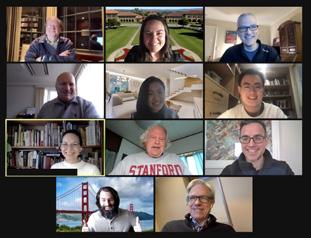
Alumni and students from the Center for East Asian Studies gathered on Zoom for a mixer.
Center for Human Rights & International Justice
During the Nuremberg trials, Marie-Claude Valliant Couturier revealed the conditions under which French women existed while interned; 49 of the 230 French women sent to Auschwitz survived. (Image credit: U.S. Holocaust Memorial Museum Collection, Gift of Channette Alexander.)
In the spring, the Center for Human Rights and International Justice embarked on a groundbreaking new chapter of its Virtual Tribunals initiative in collaboration with Stanford Libraries.
For the past seven years, with authorization from the International Court of Justice (ICJ) in The Hague, Stanford Libraries has managed the digital preservation of records of the war crimes trial conducted at Nuremberg in 1945 and 1946. This effort is part of a larger vision to create a comprehensive database, known as the Virtual Tribunals initiative, of all international criminal proceedings, from the post-WWII cases through the contemporary tribunals, that deal with mass atrocities.
Thanks to a grant from Tad Taube and Taube Philanthropies, a significant new collection of digital materials is now available to the public, preserved in cooperation with the ICJ in the Stanford Digital Repository. This additional collection, known as the Tad Taube Archive of the International Military Tribunal of Nuremberg, will allow the public to easily browse and discover the contents of over 5,000 trial records showing the efforts of the IMT, a group of representatives from four Allied countries who were tasked with prosecuting former officials of the Third Reich and holding them accountable for the horrific acts inflicted during World War II and the Holocaust.
Center For Latin American Studies
The Center for Latin American Studies (CLAS) swiftly adapted to virtual programming in 2020-21. The center continued its weekly lecture series remotely, featuring innovative scholarship in a variety of disciplines, and kept its commitment as a Title VI National Resource Center to supporting K-16 educators in the teaching of Latin America.
Additionally, thanks to the generosity of the Tinker Foundation, CLAS was able to provide funding to nine Stanford faculty members to conduct new research. The center also awarded the prestigious Monica Miller Walsh and the Pessoa-Trejos Internship Grants to four undergraduate students, who completed virtual internships with Latin American organizations.
The Academic Senate approved a five-year extension to the center’s M.A. degree-granting authority, affirming the importance and excellence of the teaching and research conducted by the center’s graduate students and affiliated faculty
CLAS is thankful to the faculty, students, service workers, friends, and colleagues who make Bolivar House the vibrant community that it is.
“Atlahua Icuic.”
Nahua man singing
Center for Russian, East European & Eurasian Studies
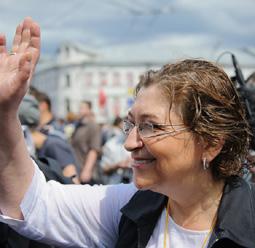
In 2021, the Center for Russian, East European and Eurasian Studies (CREEES) hosted a talk with Yevgenia M. Albats, a leading investigative journalist in Russia, known for holding accountable those in power. Albats is the host of Absolute Albats, a talk show on Ekho Moskvy, and the CEO and Editor in Chief of the New Times, two of the remaining independent and liberal media outlets in Russia. She has been a member of the International Consortium of Investigative Journalists (ICIJ) since its founding in 1996 and was an Alfred Friendly Press Fellow at the Chicago Tribune in 1990. Albats, a political scientist who earned her Ph.D. at Harvard, is author of The State Within a State: The KGB and Its Hold on Russia— Past, Present and Future. She spoke on “Institutional Persistence: The Role of the Political Police in the USSR and Present-Day Russia.” The talk, which was co-sponsored by the Freeman Spogli Institute, is part of CREEES’ “From Human to Artificial Intelligence: Modern Domestic Surveillance Regimes” series.
Center for South Asia
The Center for South Asia launched the Arts & Justice webinar series, which was supported by the Kohler Fund for Innovation in Global Studies. The new series offered attendees an opportunity to consider how artists, activists, and intellectuals have responded to spectacular and insidious forms of injustice in South Asia.
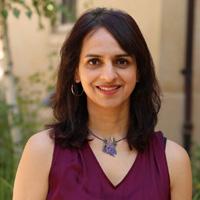
Justice is an aspiration as well as a moral horizon, a conceptual category of great power, which impacts us in ways that are both pedestrian as well as profound. How does the idea of justice shape our imagination? How are artists, activists, and intellectuals using their voices and their bodies, their words and their actions, their art, their protests, and their critiques to imagine and to rehearse as well as to enact new imaginaries of justice in South Asia? These questions and more were explored by speakers and artists in this series, which is now available on the center’s YouTube channel.
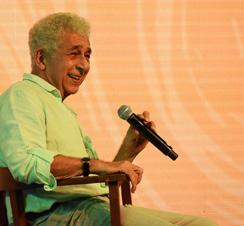
The series culminated in An Evening of Poetry, Politics, and Performance, in which globally renowned actor Naseeruddin Shah recited poetry and discussed activism with Center for South Asia Director Jisha Menon.
Naseeruddin Shah
Yevgenia M. Albats
The Europe Center
This year, The Europe Center focused on the growing populist and radical right movements around the world through its virtual “Global Populism” series. One talk by Mark Blyth, the William R. Rhodes Professor of International Economics at Brown University, provided for a rich and accessible discussion about the factors contributing to his emerging economic model of “angrynomics.” By exploring the impacts of aging populations, increasing inequity, and political pressure, Blyth articulated how we have arrived in a space ripe for nationalistic sentiments. Building on the concepts shared by other scholars throughout the discussion series, the talk considered possible policy solutions that could mitigate these crises. Attendees left the event with insight into the interconnectedness of economics, policy, and globalization as well as an appreciation for the possible ways to challenge long-held narratives.
France-Stanford Center for Interdisciplinary Studies
The France Stanford Center for Interdisciplinary Studies announced three new student prizes for people whose lives and careers spanned France and the United States, bringing French and American culture and society into dynamic conversation with one another. Three students in the departments of comparative literature, history, and French and Italian were awarded the prizes.
The Josephine Baker Undergraduate Honors Thesis Prize for outstanding undergraduate honors theses. Prizes may be awarded in an area related to French history and culture.
The Louise Bourgeois Essay Prize for a research essay by a Stanford master’s or early Ph.D. level student in humanities, arts, or social sciences on a topic concerning some aspect of French society and culture.
The James Baldwin Essay Prize for a research essay by a Stanford Ph.D. student in humanities, arts, or social sciences on a topic concerning some aspect of French society and culture.
Angrynomics webinar with Mark Blyth.
Highlights
Hamid and Christina Moghadam Program in Iranian Studies
Highlighting the important role of women in Iran has been a part of the Iranian Studies Program since its inception. This year, the program hosted a series of conversations about the women’s movement in Iran, featuring the work of activists, writers, lawyers, journalists, and academics. The series included women outside and inside Iran (often at great personal risk) who spoke on a range of topics to advocate for reform, equality, and human rights.
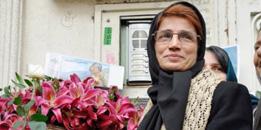
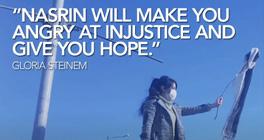
As a part of this series, in October 2020, the Iranian Studies Program screened the documentary NASRIN, about Nasrin Sotoudeh, a human rights activist, lawyer, and, since 2018, political prisoner in Iran. The panel discussion focused on the critical role of women in Iranian society, their long fight for freedom, and the ongoing activism of Nasrin (hailed as the “Nelson Mandela of Iran”) and others; it included Nobel Laureate Shirin Ebadi, filmmaker Jeff Kauffman, Nasrin’s husband and activist Reza Khandan, Iranian Studies faculty director Abbas Milani, and Marietje Schaake, a former member of the European Parliament and current fellow at the Freeman Spogli Institute for International Studies. Iranian women continue to break barriers, fight for equality and justice, and use their powerful voices and words to try to shape a brighter future for Iran.
Program in International Relations
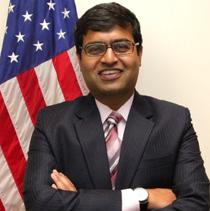
In response to strong student interest in foreign service careers, the Program in International Relations (IR) invited IR alum David Arulanantham, ’00 to talk about his 15-year career at the U.S. Department of State. The virtual event, which took place in February 2021, was well-attended and helped facilitate a dynamic conversation between the IR students and the speaker.
A career foreign service officer, Arulanantham joined the State Department in 2005, and he is currently the deputy counselor for political-military affairs at the U.S. Embassy in Riyadh. Previously he served as the Asia team lead for the Bureau of International Narcotics and Law Enforcement based in Washington, DC, and prior to that at the Embassy in New Delhi as the head of the unit covering Indian domestic politics. David has also worked as a desk officer for the Philippines and a foreign policy advisor at the Defense Department’s Indo-Pacific Command in Honolulu, Hawaii (where he worked on the response to the Japan earthquake). He is the recipient of two State Department Meritorious Honor Awards and a Superior Honor Award.
David Arulanantham
Trailer for NASRIN
Nasrin Sotoudeh
Sohaib and Sara Abbasi Program in Islamic Studies & Mediterranean Studies Forum
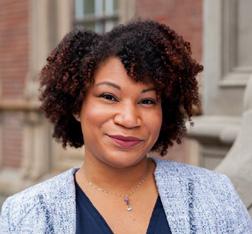
In February 2021, the Abbasi Program in Islamic Studies hosted a seminar on “Black Islam and the Legacy of Malcolm X.” The event was moderated by Alaina Morgan, assistant professor of history at the University of Southern California and a former postdoctoral scholar at the Abbasi Program. In honor of Black History Month and the 56th anniversary of Malcolm X’s assassination, the panel celebrated the legacy of Malcolm X and Islam in the Black American and African diasporic tradition.
Professor Morgan was joined by Senior Lecturer at the Columbia University School of International and Public Affairs Hisham Aidi, Associate Professor of Sociology at the University of Richmond Atiya Husain, and oral historian and history editor at Sapelo Square Zaheer Ali. Together, they discussed the importance of Islam to the Black freedom struggle, as well as the critical role Islam has played in the solidification of community among Black people in the Americas.
Taube Center for Jewish Studies
In the spring, Daniella Farah, a Ph.D. candidate in Jewish history, taught a course titled Jews of the Modern Middle East and North Africa . The course explored the political, cultural, and social histories of Middle Eastern and North African (MENA) Jews from the late nineteenth century to today. Through a critical examination of primary and secondary sources, the course assessed entrenched narratives about MENA Jews. Some of the topics under examination included Jewish identity and culture in Islamic contexts; the impacts of colonialism, westernization, and nationalism on MENA Jews; Jewish-Muslim relations; the Holocaust; the experience of MENA Jews in Israel; and debates around race and Jews of Color in the U.S. As part of the course, Dr. Farah hosted a series of public events featuring speakers from around the globe. The speaker series, together with the course, offered a rich tapestry of MENA Jewish history and contemporary issues, and the various political, religious, and national concerns that shape these Jewish worlds in their contexts.
Daniella Farah
Alaina Morgan
Alumni
The international area centers and programs that make up SGS have influenced the career decisions of thousands of students. Our alumni are truly global. They have built careers around a diverse range of interests and value many aspects of their global education since leaving Stanford. SGS provided many of them with the skills needed to be policymakers, diplomats, entrepreneurs, journalists, politicians, researchers, teachers, scholars, and global leaders.
Career Development Series
This spring, SGS hosted a series of virtual career development workshops featuring alumni from various programs.
Careers in Washington, DC with Ian McGinnity April 2, 2021
Ian McGinnity received his master’s degree in Russian, East European and Eurasian Studies from Stanford in 2016. Today, Ian is a program officer at the National Endowment for Democracy.
Careers in International Law with Penelope Van Tuyl
April 14, 2021
Penelope Van Tuyl is a human rights attorney and associate director of the Stanford Center for Human Rights & International Justice.
Careers in Research & Public Policy with Hari Seshasayee
April 20, 2021
Hari Seshasayee received his master’s degree in Latin American Studies from Stanford in 2015. Today, he is an advisor in ProColombia’s India and Middle East & North Africa office as well as a global fellow in the Wilson Center’s Latin America and Asia programs.
Careers in Washington, DC with Nate Bolin April 27, 2021
Nate Bolin received his master’s degree in East Asian Studies from Stanford in 1996. Today, he is a partner at the global law firm DLA Piper, and he was recently reappointed to the U.S. Department of State’s Defense Trade Advisory Group.
Expenses Funding
$1,901,076
$1,023,065
$862,954
$8,563,728
Gifts & Support
The Stanford Global Studies Division extends sincere appreciation to our contributing alumni, parents, students, and friends for their generous support. Financial support provides core funding to strengthen our existing programs and help create new ones where needed, enhance interaction among faculty and students, and facilitate collaboration with other university programs. Funds are focused on activities that impact the broadest range of faculty and students and offer high leverage by encouraging communication and collaboration. Such activities include curriculum development; seminars, symposia, and conferences; visiting scholar programs; development of research networks linking internal and external faculty and students; research initiatives on key topics; and direct financial support for our students—the next generation of outstanding leaders, scholars, and policymakers.
For more information about working with us to enhance global studies initiatives at Stanford, please contact Scott Sugiura, Senior Associate Director of Development at: ssugiura@stanford.edu or (650) 723-1208.
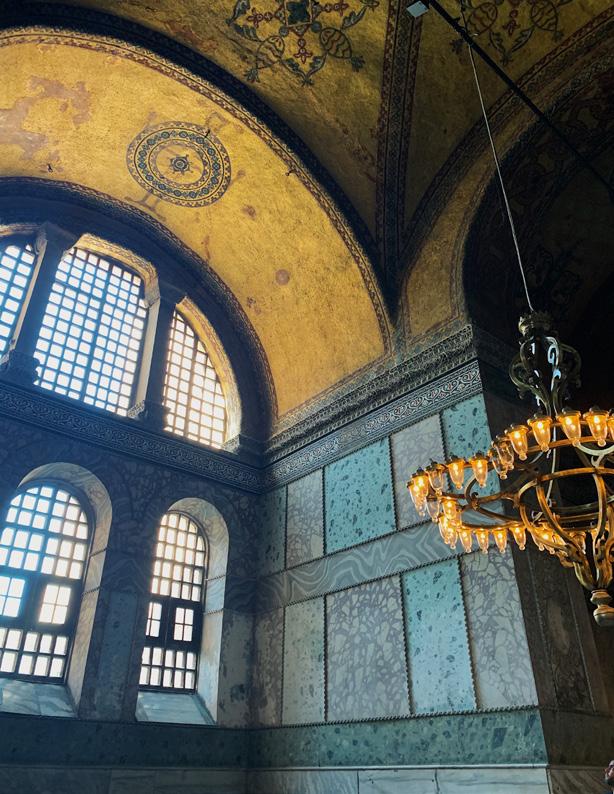
Last page: Undergraduate Sehajleen Kaur, an affiliate of the Center for Human Rights and International Justice, captured this photo “Radiance and Refuge”
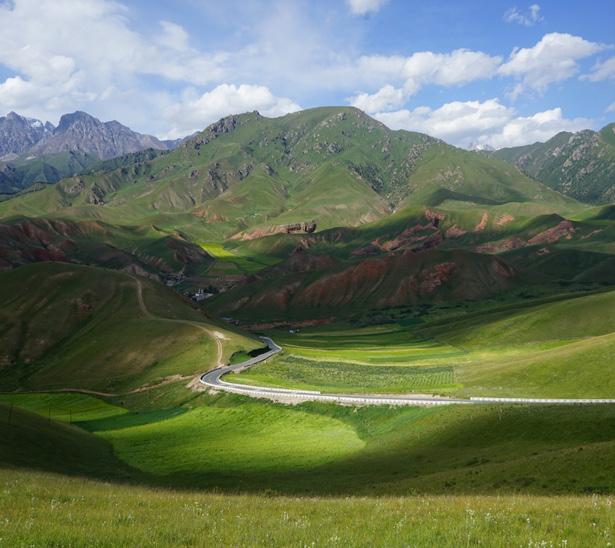
East Asian Studies master’s student Xingchen Lan took this photo “Qilian Mountain Road” in Qinghai Province, China.
in Istanbul, Turkey.
Administration About SGS
Jeremy M. Weinstein
The Sakurako and William Fisher
Family Director of the Stanford Global Studies Division
Katherine Kuhns
Executive Director
Denise Chu
Global Studies Internship
Program Manager
Donna Even-Kesef Division Manager
Kristyn Hara Outreach Coordinator
Nelia Lanets
Student Services Manager
Simrath Matharu
Events Coordinator
Quynh Nguyen
Accounting and Finance Associate
Stefanie Pietkiewicz
Communications Manager
Julie Won Tatsukawa
Graphic Designer
The Stanford Global Studies Division is the university’s hub for education, research, and community engagement centered on exploring issues, societies, and cultures in regional and global perspective.