Stanford Global Studies Division 2016-17 Annual Report
Stanford Global Studies (SGS) is a division of Stanford’s School of Humanities and Sciences that provides an arena for students and scholars to explore our increasingly complex world from multiple economic, political, social, environmental, technological and cultural perspectives.
Advisory Committee
Thomas Blom Hansen
Director, Center for South Asia; Reliance-Dhirubhai Ambani Professor in South Asian Studies; Professor in Anthropology
Alberto Diaz-Cayeros
Director, Center for Latin American Studies; Associate Professor (by courtesy) of Political Science
Michael Tomz
Director, Program in International Relations; Professor, Department of Political Science
Jun Uchida
Director, Center for East Asian Studies; Associate Professor of History
Administration
Jeremy M. Weinstein
The Sakurako and William Fisher Family Director of the Stanford Global Studies Division; Professor of Political Science
Katherine Kuhns Executive Director
Megan Amaral Financial Assistant
Kendra Davidson
Communications Manager
Jane Stahl Office Manager
Julie Tatsukawa Communications Coordinator
Katherine Welsh Outreach Coordinator
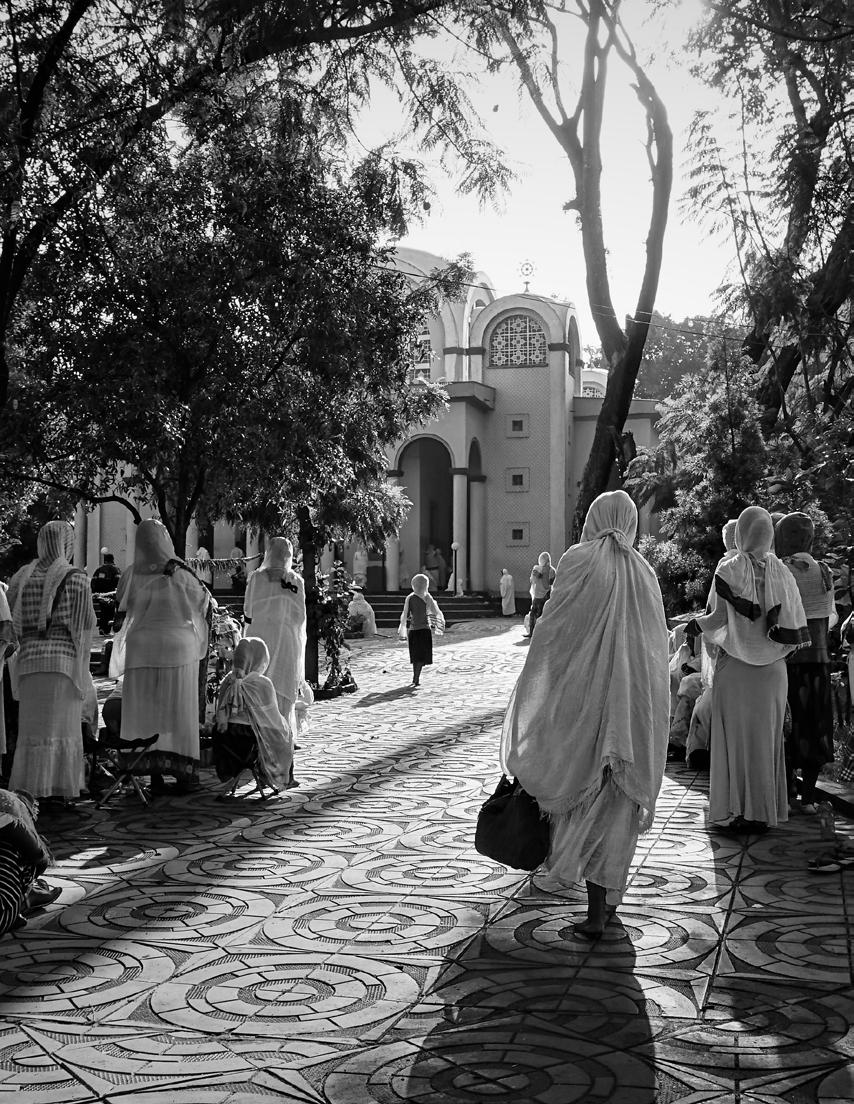
The cover photo, “Among the Believers,” was taken by Stanford student Wenhong Xie (International Policy Studies, ’18), at Saint George’s Church in Bahir Dar, Ethiopia.
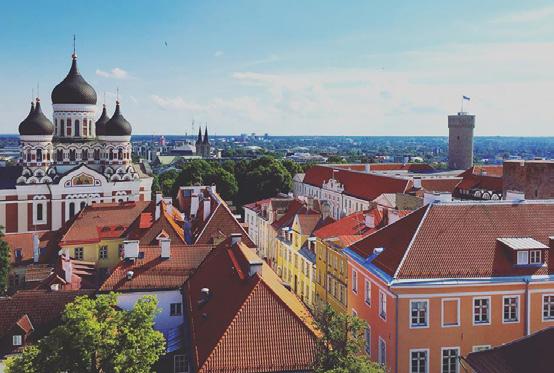
Left, Sarah Manney, (Political Science, ’18), took this photo, “Tallinn, East and West” from the top of Toompea Church while working in Tallinn, Estonia.
The student photos included in this annual report were submissions from the annual SGS student photo contest.
DIRECTOR’S MESSAGE
Jeremy
M. Weinstein
The Sakurako and William Fisher Family Director of the Stanford Global Studies Division;
Professor of Political Science; Senior Fellow, Freeman Spogli Institute for International Studies
Dear Friends,
It has been a privilege and great pleasure to return to the Stanford Global Studies Division this year, which, under the extraordinary leadership of Professor Norman Naimark, has become a vibrant center for international and area studies on campus.
The numbers alone speak to our continuing growth. In the past year, we hosted 26 visiting scholars from universities around the world, and sponsored 593 events covering topics as diverse as the psychology of democracy, interracial love in post-Apartheid South Africa, global warming in Bangladesh, and Beethoven’s influence in China. We supported 95 undergraduate and graduate courses to strengthen the university’s offerings on regional and global issues. SGS also continued to provide funding for undergraduate and graduate students to gain valuable skills and experience abroad, sponsoring 116 internships, as well as 268 research and language fellowships. In 2016-17, the first cohort of students graduated with a minor in human rights, and a total of 73 graduate and 72 undergraduate students completed degrees from SGS programs. The interest in regional and global issues at Stanford is high, and we are doing everything we can to keep pace with the demand.
It is also a very exciting time to be at Stanford, where, under the new leadership of President Tessier-Lavigne, a campus-wide process is underway to consider new directions that will shape Stanford’s trajectory for years to come. In order to better position ourselves within the university at this unique moment, we undertook a division-wide effort to articulate major goals and objectives moving forward, both for the individual centers and the division. In particular, we identified several common priorities where a strategic investment by the division could have an impact broadly across the university: investing in a new curricular and co-curricular focus on global competencies to ensure that all Stanford undergraduates leave the university with substantive knowledge about the world, meaningful experiences abroad, and strong language skills; growing Stanford’s global expertise by increasing the number of faculty who focus on regional and global issues, supporting international research, and bringing the best young scholars on global and regional issues to campus as postdoctoral scholars; and innovating in how we extend our reach beyond Stanford, building on the work
continued on next page
DIRECTOR’S MESSAGE
we are already doing through our Title VI programs with community colleges and high schools in California. We will continue to develop these priorities as the university’s strategic process coalesces into a new vision.
Of course, none of these activities would be possible without the dedication and hard work of the faculty and staff at SGS, a number of whom were recognized recently by the university for their excellence. Laura Hubbard, Associate Director of the Center for African Studies, received the university’s Amy J. Blue Award, which honors staff members who are exceptionally dedicated, supportive, and passionate about their work; Denise Chu, Program Manager of the Global Studies Internship Program, received the Dean’s
Award of Merit for her role in contributing to the success of the School of Humanities & Sciences; and Professor Mike Tomz, Director of the Program in International Relations, received the Gores award — the university’s highest teaching honor.
I am deeply grateful for the contributions of our faculty and staff, and for their desire to help the division broaden its impact across the university. With its expertise and resources on critical regions and global issues, SGS is in a unique position to help the university advance its mission of bettering the world through education and research. I look forward to continuing this work with all of you.
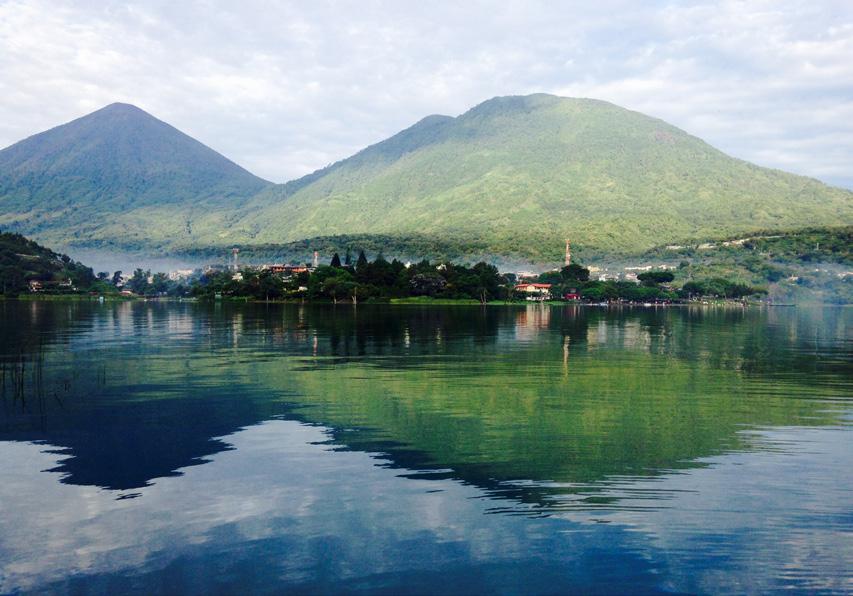
Rosie La Puma (International Relations, ’18) captured this scene of Lake Atitlán while in Guatemala as part of FSI’s summer field research internship.
CENTER FOR AFRICAN STUDIES
Director: Richard Roberts
Associate Director: Laura Hubbard africanstudies.stanford.edu
CENTER FOR EAST ASIAN STUDIES
Director: Jun Uchida
Associate Director: John Groschwitz ceas.stanford.edu
CENTER FOR LATIN AMERICAN STUDIES
Director: Alberto Diaz-Cayeros
Associate Director: Elizabeth Sáenz-Ackermann las.stanford.edu
CENTER FOR RUSSIAN, EAST EUROPEAN AND EURASIAN STUDIES
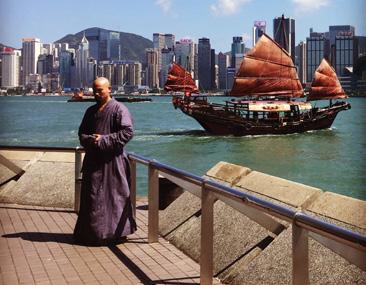
Above, Alina Utrata (History, ’17) took this photo “Old and New” in Hong Kong, while traveling back from her internship in Phnom Penh, Cambodia.
2016–17 HIGHLIGHTS
STANFORD GLOBAL STUDIES
CENTER FOR AFRICAN STUDIES
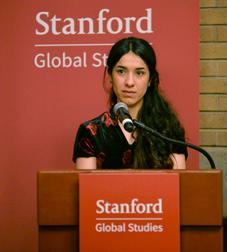
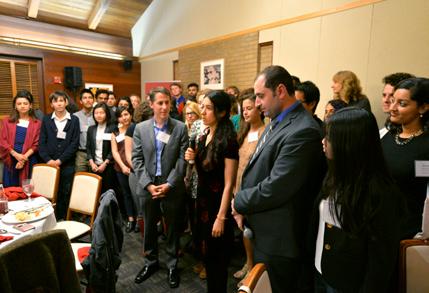
Last April, Nadia Murad, a Yazidi human rights activist who escaped ISIS captivity, spoke at the annual SGS student dinner, which brings together students, faculty, and staff from across the division for an evening of thoughtful dialogue. Murad, a Yazidi woman from northern Iraq, was kidnapped and held captive by ISIS when the militant group invaded her homeland as part of a campaign that displaced thousands of Yazidis — an ancient religious group. Following her escape, she briefed the UN Security Council in the first-ever session on human trafficking, and in 2016, the UN appointed her a Goodwill Ambassador for the Dignity of Survivors of Human Trafficking. Ms. Murad spoke about her experience as well as her efforts as Goodwill Ambassador to raise awareness of the millions of victims of trafficking, particularly refugees, women, and children. Another priority, she explained, is bringing ISIS to justice in the International Criminal Court: “If we do not bring ISIS to justice, we legitimize them as a force,” she said. Murad also spoke about Yazidi culture and traditions, and following the event — which happened to take place on the Yazidi New Year — students joined Ms. Murad in a video message to wish the Yazidi people a happy new year (pictured below).
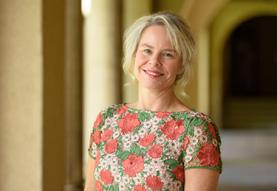
Known for her tremendous energy and compassion, Laura Hubbard, associate director for the Center for African Studies (CAS), was one of this year’s winners of the Amy J. Blue Award, which honors staff members who are exceptionally dedicated, supportive, and passionate about their work. In nominating Hubbard for the award, students, faculty members and colleagues praised her “tremendous energy and compassion,” her “unfailing generosity of time and spirit” and her passion and commitment to the African Studies community.
Richard Roberts, a professor of history and director of CAS, said Hubbard has transformed the center — “virtually single-handedly” — from a small group of academics into a large and vibrant community.
“Laura nurtures our community even as she maintains a very active scholarly program of lectures, conferences and symposia. Laura even balances our budget and manages to squeeze out of it a wonderful array of programs, a strong African language program and a series of highly competitive grants and fellowships. Did I mention that Laura also teaches and has one of the highest student ratings I have seen?”
SGS Faculty Director Jeremy Weinstein and Executive Director Kate Kuhns said Hubbard’s tireless outreach efforts have created a community that works diligently on behalf of students in all aspects of their Stanford experiences.
Activist Nadia Murad speaks at the annual SGS student dinner.
Laura Hubbard
INTERNATIONAL POLICY STUDIES
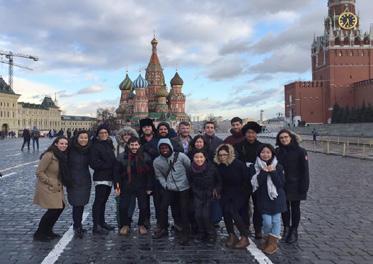
Students in the International Policy Studies (IPS) program spent their spring break in Moscow, where they learned first-hand how Russia views its relations with the United States. During the trip, students witnessed protests, met with diplomats and journalists, visited think tanks and financial institutions, and more. One of the goals of the trip was to overcome the negative perception of Russia that is frequently presented in Western media, and really understand the Russian point of view. “The students learned how Russia sees the world, which is so different from how the United States sees it, because of their different histories, and the age of their democratic systems. At the same time, that makes Russia special,” said Juanjo Lucci, one of the students who helped organize the trip. “We had a great time. It was a really holistic experience of Russia,” said Lucci, who said students were also able to experience Russian culture by visiting museums, and eating at local restaurants. They saw a ballet at the beautiful Bolshoi theater, and stayed at the Metropol Hotel, which is located right across from the Kremlin and is a renowned historical site where one of the biggest battles in the Russian Revolution took place.
FRANCE-STANFORD CENTER FOR INTERDISCIPLNARY STUDIES
In May, the France-Stanford Center for Interdisciplinary Studies hosted a conference entitled “Making the World Nuclear After Hiroshima.” The program brought together scholars from Stanford’s Departments of History and Political Science, as well as the Program in Science, Technology, and Society and the Center for International Security and Cooperation to examine how the world has come to live with the nuclear presence that exists today. Participants started by looking at how the world experienced and responded to the 1945 atomic bombings and then explored what these events came to symbolize for the global policy frameworks of nuclear technology, and what lessons have been learned about the impact of radiation on human health and the environment. The conference revisited these enduring questions in light of new sources and recent scholarship, and identified research areas to pursue in the future.
WSD HANDA CENTER FOR HUMAN RIGHTS & INTERNATIONAL JUSTICE
The past academic year has seen important developments for the Handa Center, both on the Stanford campus and beyond. The center strives to enable students across the campus to pursue their interests in human rights and global justice while completing degrees in a range of disciplines. The launch of the Human Rights Minor in September 2016 marks an important step towards achieving that goal. The first group completing the minor graduated this past June, and 19 students have already declared the minor concentration in its first year.
The Handa Center also launched several new projects in Southeast Asia, including a multi-country project on human trafficking; an initiative to combat legally sanctioned religious persecution and discrimination in Indonesia; assistance to the National Human Rights Commissions of Indonesia and the Philippines; as well as ongoing judicial training initiatives with the Supreme Courts of those countries.
IPS students at Red Square in Moscow.
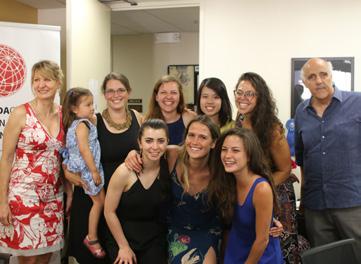
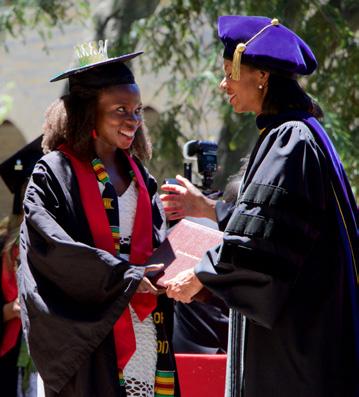
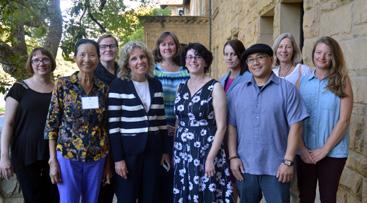
Handa Center graduates from the class of 2017 celebrate with faculty and staff (L-R) Beth Van Schaack, Penelope Van Tuyl, Jessie Brunner, and David Cohen.
2016–17 HIGHLIGHTS
CENTER FOR EAST ASIAN STUDIES
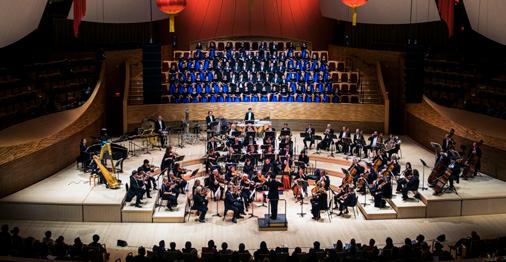
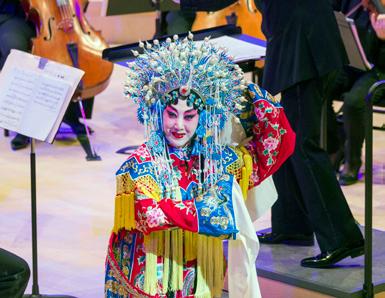
In February 2017, the Center for East Asian Studies (CEAS) hosted the 2017 Pan-Asian Music Festival (PAMF) at Bing Concert Hall. An annual event for the past 13 years, the festival showcases traditional and contemporary performing arts from across the Asian continent. The spotlight this year was on China and Iran. In “Music from Shanghai,” Symphony Silicon Valley joined with Peking opera singers and Western-style opera singers and a chorus to present a broad selection of classical music that traced the history of Western classical music in Shanghai, from the first Western-style orchestra there in 1879 to modern day compositions. CEAS was also proud to partner with the Hamid and Christina Moghadam Program in Iranian Studies to host two concerts, “Singing, Drumming, & Dancing from Iran” and “Enchanting Melodies of Persia,” which featured notable Iranian singers, musicians, and dancers.
TAUBE CENTER FOR JEWISH STUDIES
Last winter, Stanford cinephiles and music lovers enjoyed a special treat: a screening of The Yellow Ticket (Der Gelbe Schein), a silent movie accompanied by a live performance of music specially composed for the film by Alicia Svigals. Dating from 1918 and filmed at Berlin’s Tempelhof Studios, the film starred the legendary actress Pola Negri. In the film, which was released in the U.S. in 1922 under the title The Devil’s Pawn, Negri plays the role of a young Jewish woman from a Polish shtetl who, constrained by anti semitic laws, leads a double life in a brothel while attending medical school in tsarist Russia. Her character falls in love with a fellow student, but their romance is temporarily foiled when her secret is revealed. Through various plot twists, happily, they eventually reunite. The event, which was cosponsored with Theater and Performance Studies; Feminist, Gender, and Sexuality Studies; the Center for Russian, East European and Eurasian Studies; and Music at Stanford, took place in January 2017. Svigals, who is the world’s leading klezmer violinist and a founder of the Grammywinning group Klezmatics, performed her film score along with Canadian jazz pianist Marilyn Lerner and clarinetist Laura DeLuca of the Seattle Symphony.
THE EUROPE CENTER
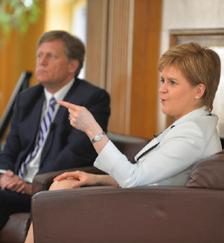
In her April visit to the Europe Center at Stanford University, Nicola Sturgeon, First Minister of Scotland and leader of the Scottish National Party, spoke to over 270 members of the Stanford community about Scotland’s place in the world. An additional 4,475 people viewed the talk remotely via live stream. With many Scottish voters choosing to remain a part of the United Kingdom in order to ensure continued membership in the European Union, Sturgeon argued that the June 2016 Brexit vote posed a “fundamental question for Scotland” and that the Scottish populace had a right to decide whether to pursue independence in order to continue to be a part of the European Union. Furthermore, Sturgeon argued that Scottish priorities of inclusivity, equality, openness, fairness, climate protection, and economic prosperity are at odds with a decision to prioritize “immigration curbs above all else.”
Symphony Silicon Valley performs with United Chorus, conducted by PAMF Artistic Director Jindong Cai.
Professor Michael McFaul moderated the Q&A session with First Minister of Scotland Nicola Sturgeon during her visit to Stanford in April.
ABBASI PROGRAM FOR ISLAMIC STUDIES & MEDITERRANEAN
STUDIES FORUM
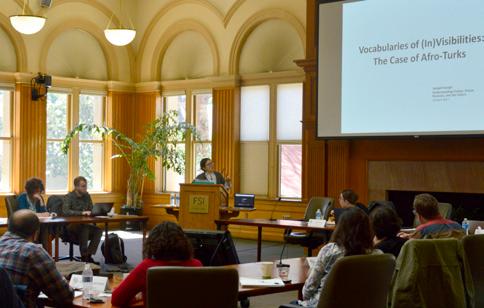
The Abbasi Program held its annual conference “Understanding Turkey: Vision, Revision and the Future” in April 2017. The attempted coup in Turkey in July 2016 and the academic crackdown that followed naturally sparked interest among scholars about the future of the country. The conference brought together leading scholars from across the U.S., Europe and Turkey to share current academic research. Scholars presented on topics including the link between environmentalism and authoritarian nationalism, the July 15 putsch, Afro-Turks, Turkish-German migrants, and Armenian activism in Turkey. “It was a two-day immersion in the most recent critical scholarship on Turkey, one you cannot possibly come across in Turkey these days,” said Dr. Halil Yenigun, one of the conference presenters. “From political economy to culture, art and literature; from the Republican era nation-building policies to current day political symbolism and citizen-making policies — not to mention their casualties and counter currents — several facets of Turkey were dissected through and through. It was timely and remarkable.”
The Mediterranean Studies Forum complemented the conference by presenting a series called “Understanding Turkey Through Film,” which showcased movies in a variety of genres. The series included discussions with three film directors and the U.S. premiere of The Last Schnitzel, a short comedy film banned from an Istanbul Film Festival by the country’s Ministry of Culture and Tourism for its political overtones.
CENTER FOR LATIN AMERICAN STUDIES
In the fall of 2016, the Colombian government signed a historic peace agreement with the Revolutionary Armed Forces of Colombia (FARC), a guerilla group established in the 1960s, bringing an end to a long standing armed conflict that has left as many as 220,000 people dead and 5.7 million displaced over the last half century. In January, the Center for Latin American Studies co-hosted an event with the WSD Handa Center for Human Rights and International Justice to discuss the legal limitations and challenges of the implementation of Colombia’s peace process. The event featured Santa Clara University Law School’s Claudia Josi, a SwissPeruvian human rights lawyer who specializes in transitional justice and international humanitarian law, and Guillermo Ruiz Pava, a Ph.D. Candidate at Colombia’s Los Andes School of Management and a visiting student researcher at the Center for Latin American Studies.
CENTER FOR SOUTH ASIA
The Center for South Asia (CSA) had the honor of hosting Professor Dipesh Chakrabarty for a series of events in May 2017. Professor Chakrabarty is the Lawrence A. Kimpton Distinguished Professor of History and South Asian Studies at the University of Chicago; Provincializing Europe: Postcolonial Thought and Historical Difference is one of his best known works. Using examples from South Asia, his talk “Provincializing Europe in a Warming World” brought together the two distinct areas of critical thinking in the humanities: global warming discourse and postcolonial criticism. Chakravarty offered reflections on questions of colonialism modernity, and modernization as we reconfigure them in a warming world. The lecture was very well attended by faculty and graduate students from various departments and world areas. Professor Chakrabarty also met for smaller meetings and social events with faculty and students.
Ayşegül Kayagil presents at the “Understanding Turkey” conference.
2016–17 HIGHLIGHTS
PROGRAM IN INTERNATIONAL RELATIONS
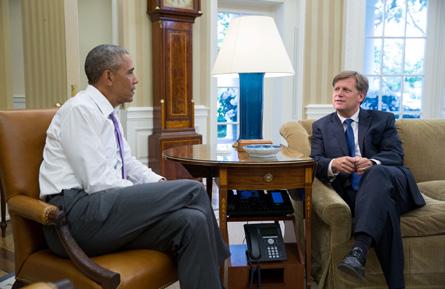
In February 2017, Ambassador Michael McFaul joined 25 undergraduates from the Program in International Relations (IR) for a special lunch discussion where he discussed the current state of U.S.-Russia relations as well as his experience serving in the Obama Administration. An in-house expert, McFaul is an alumnus of the IR program and received an M.A. in Russian, East European and Eurasian Studies. Currently, he is Professor of Political Science, Director and Senior Fellow at the Freeman Spogli Institute for International Studies, and Senior Fellow at the Hoover Institution. He served for five years in the Obama Administration, first as Special Assistant to the President and Senior Director for Russian and Eurasian Affairs at the National Security Council in the White House, and then as U.S. Ambassador to the Russian Federation.
CENTER FOR RUSSIAN, EAST EUROPEAN & EURASIAN STUDIES
During the 2016-17 academic year, CREEES sponsored or cosponsored a series of talks by artists and activists who addressed the role of art, including poetry, theater and graphics, in times of crisis, especially in the context of the current rise of populist and right-wing political movements in the region and around the world. Graphic artist Mirko Ilić examined neo-Nazi iconography in his talk, “Symbols of Hate.” Marin Blažević of the Croatian National Theater in Rijeka spoke on “Theater that Matters: Dramaturgies of Antifascism.” The Slavic Department hosted Russian and Ukrainian poets, Roman Osminkin, Pavel Arseniev, and Serhiy Zhadan, who held a presentation entitled, “The Powerlessness of Language: How to Write Poetry in Times of Crisis.”
HAMID AND CHRISTINA MOGHADAM PROGRAM IN IRANIAN STUDIES
This year, the Iranian Studies Program celebrated the tenth anniversary of the program’s endowment. Over the past ten years, the study of Iran at Stanford has grown from one class to more than 20 classes, and 290 events with a total attendance of more than 48,000 attendees. Undergraduate students can now pursue a minor in global studies with a specialization in Iranian studies, and receive research funding as well as paid summer internships.
Over the past decade, the program has hosted prominent visiting professors and visiting fellows, including authors, musicians, and playwrights, and has collaborated with more than a dozen programs across campus.
The program is grateful to its donors who have supported and trusted the program and allowed its five major projects to grow and thrive: the Stanford Iran 2040 Project on Iran’s economic future; the Stanford Festival of Iranian Arts accompanied by the 2016 premiere of the Public Art, Public Spaces project; the Science and Society joint initiative with the Laboratory for Behavioral and Cognitive Neurology; and the ninth annual Bita Prize.
The Iranian Studies Program looks forward to continuing its engagement with Stanford students, faculty, and programs, and with the community in the coming year.
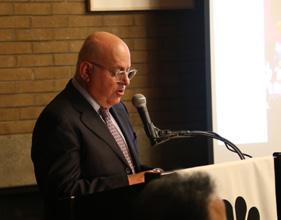
Hamid Moghadam speaks at the decennial celebration dinner.
Ambassador Michael McFaul with the former U.S. President Barack Obama.
ACADEMIC PROGRAMS
Undergraduate Programs
SGS supports undergraduate interdisciplinary majors, minors, certificates and honors programs. Over 158 students were enrolled in the division’s undergraduate programs in 2016–17, exploring global, regional and domestic factors occurring in contemporary politics, culture and history. Most SGS undergraduate students study overseas and acquire fluency in a second language as part of their degree requirements.
Within SGS, undergraduate students can major in International Relations or Jewish Studies. Minors are available in Human Rights, International Relations, Jewish Studies, and Global Studies, with specializations in African Studies, European Studies, Iranian Studies, Islamic Studies, Latin American Studies, and South Asian Studies. Honors options are available in International Relations and Jewish Studies. Certificates are also offered by Iranian Studies and African Studies.
Graduate Programs
SGS hosts four, one-year master’s degree programs in African Studies, East Asian Studies, Latin American Studies and Russian, East European and Eurasian Studies, as well as a two-year master’s program in International Policy Studies. A graduate certificate in African Studies is also available. Each aims to provide students with training and in-depth exposure to regional affairs, and offers collaborative student cohorts, involved and supportive faculty, small class sizes, individualized advising, and competitive internship, fellowship, research and travel opportunities. In 2016–17, a total of 186 students pursued master’s degrees in SGS.
Caitlyn Littlepage
Degrees Granted
and
M.A. Russian, East European and Eurasian Studies ’17
B.A. International Relations ’16
“I remember one day in our film class watching Solaris (Tarkovsky, 1972) and being struck with the humanity of our field of study. It’s easy to forget when focusing on history and politics that there is a deep undercurrent of culture and art that defines the Eastern European experience as well. Despite ideological obstacles to artistic experimentation and freedom, resilience and creativity won out. This is just as true for the Ukrainian authors of the 19th century and the protestors of today. From that point forward I tried to make it a point to always consider the human factor, rather than allowing myself to focus solely on political trends and rule from the top, and I take this with me as I start my career.”
Condoleezza Rice congratulates a new graduate at the 2017 International Relations diploma ceremony.
FUNDING
SGS programs offer research grants and fellowships, internships, scholarships, language study opportunities, and other funding options to students and visiting scholars both in the U.S. and abroad. Below is a visual representation of student research, study, and internship locations around the world.
Research
SGS centers provided 216 students with funding for research opportunities in 45 countries. SGS offered research funding in the form of grants, fellowships and teaching or research assistantships, which ranged from $250 to full tuition plus a stipend — $74,727 per year.
• Albania
• Argentina
• Austria
• Bangladesh
• Belarus
• Belgium
• Bosnia & Herzegovina
• Brazil
• Cambodia
• Canada
• China
• Colombia
• Cote d’Ivoire
• Croatia
• Denmark
• Estonia
• Zimbabwe Countries of Internships, Language Study and/or Research
• Ethiopia
• France
• Georgia
• Ghana
• Germany
• Greece
• Hong Kong
• Hungary
• India
• Ireland
• Israel
• Italy
• Ivory Coast
• Japan
• Jordan
• Kenya
• Kuwait
• Latvia
• Lebanon
• Malaysia
• Mexico
• Myanmar
• Netherlands
• Nicaragua
• Norway
• Pakistan
• Peru
• Poland
• Qatar
• Russia
• Rwanda
• Senegal
• Sierra Leone
• South Africa
• South Korea
• Spain
• Sri Lanka
• Sweden
• Switzerland
• Taiwan
• Thailand
• Tajikistan
• Timor L’Este
• Turkey
• Uganda
• Ukraine
• United Kingdom
• United States
• 2016–17 SGS Student Research Locations
• 2016–17 SGS Language Study Locations
• 2016–17 SGS Internship Locations
Global Internships
The following centers and programs provided placements and funding for student internships around the world: the Center for East Asian Studies; the Islamic Studies Program; the Center for Latin American Studies; the International Policy Studies Program; the Global Studies Internship Program; the Handa Center; the Center for Russian, East European and Eurasian Studies; the Center for South Asia; and The Europe Center.
Most of these centers worked closely with the Global Studies Internship Program to facilitate and fund 90 internship placements. The International Policy Studies Program, the Handa Center, and the Center for South Asia provided additional opportunities, bringing the total to 116 internships that were funded across the division: 97 for undergraduates and 19 for M.A. students.
$564,745
Language Study
In 2016–17, SGS programs and centers offered 52 students intensive study opportunities in the following languages:
• Arabic
• Avestan
• Brazilian Portuguese
• Cantonese
• Chinese
• French
• German
• Japanese
• Korean
• Kurdish
• Ladino
• Náhuatl
• Ottoman Turkish
• Polish
• Russian
• Ukrainian
• Yiddish
• Yoruba
$1,095,474
FUNDING
Global Studies Internship Program
Thanks to alumni and faculty affiliations, the Stanford Global Studies Internship Program secured 90 internship positions in 20 countries, including new locations in South Africa, the United Kingdom, Latvia, and Italy.
For the first time, the program collaborated with Stanford Arts to provide an opportunity for students to intern at Scene and Heard, a theater for inner-city children in London, and teamLab, an interdisciplinary digital art group in Tokyo.
The program attracted applicants from 47 majors, in addition to undeclared students. Student demand continues to grow: the applicant number increased to 411 this year, a 19% increase from last year, and we were able to award internships to 90 students. The following companies provided internships:
Argentina
• Centro para la Apertura y el Desarrollo de America Latina
• Asociación de los Derechos Civiles
Belgium
• Bruegel
• Carnegie Europe
• Doctors Without Borders
• The Alliance of Liberals and Democrats for Europe Group/ European Parliament (EP)
Bosnia and Herzegovina
• Post-conflict Research Centre
Brazil
• D’Or Institute for Research & Education
• Newfoundland Capital Management
• QuintoAnda
• Roberto Marinho Foundation
• Vetor Brazil Cambodia
• Tuol Sleng Genocide Museum
China
• 6Connex, Inc .
• ACON
• Center for Leadership Matrix Network
• Deep Technologies
• Disney Research China
• ELSA Institute
• Gap Inc., Greater China
• GoPro
• Lenovo
• Luoxin Biotechnology
• Non-Profit Incubator
• Shanghai Bizvane Information & Technology
• YiHou Medical Clinic
Estonia
• Enterprise Estonia
• Museum of Occupations
Hong Kong
• Arbor Ventures Shanghai
India
• CNN
• Forbes Marshall Pvt . Ltd .
Ireland
• Ashoka Ireland
Italy
• Italia Innovation
Japan
• Institution for a Global Society
• Japan Association for Refugees
• Kozo Keikaku Engineering Inc
• Mitsubishi Electric Co
• Mitsubishi Research Institute
• Morrison & Foerster LLP
• Orb
• Rogers Investment Advisors
• teamLab
• Venture Republic Inc. Korea
• Asia-Pacific Centre of Education for International Understanding under the auspices of UNESCO
• Herald Corporation
• theSeoulite
Latvia
• TechHub Riga
Nicaragua
• blueEnergy
Rwanda
• Rwanda Development Board
South Africa
• Lalela
Switzerland
• ETH Zurich
Taiwan
• China Medical University
• Fulbright Taiwan, Foundation for Scholarly Exchange
• National Museum of Natural Science
• Taiwan Institute of Economic Research
United Kingdom
• Scene & Heard
United States
• Social Science Research Council
• WikiHow
• Woodrow Wilson International Center for Scholars
Stanford intern Siyou Song, Human Biology ’17, working at an arts education internship at LaLela, South Africa.
Nicolette Grabiec
Product Design ’19, Italia Innovation, Italy
“This past summer, I interned in Italy with Italia Innovation. We were stationed at Fabrica, in Treviso, Italy, about 30 minutes away from Venice. Italia Innovation works as a start-up accelerator, and so I primarily worked with a start-up called Rossi & Rei. Rossi & Rei partners with Italian artisans to create bespoke knitwear, handbags, and hats for a primarily American consumer base. I worked on email marketing, mood boards, styling, and graphic design, and got the chance to see the behind-thescenes of working in a fashion business. One of my favorite moments was being able to travel to Milan, a fashion capital of the world, to help out with the product photography shoot. I also enjoyed traveling on the weekends to different parts of Italy.”
Ewea Tseumah
International Relations ’19, Scene & Heard, England
“I had the opportunity to go to London for the first time to work for a youth empowerment theater nonprofit for nine weeks. I participated in all the children’s performances and assisted with the writing weekend. I’ve always loved theater and have often considered working for a nonprofit after graduation. The experience was truly eye-opening and helped give me more clarity about my career interests. I loved that I was able to spend my summer working with inner-city children and helping an organization that does such good work for its community.”
Nathan Lee
Symbolic Systems ’20, TechHub, Latvia
Molly Montgomery International Relations ’18, CNN, India
“My internship with CNN in New Delhi, India, was certainly a once in a lifetime experience. I learned so much about how news is created, written, and produced, and gained valuable experience living on my own in India. I found it to be incredibly empowering — especially as a woman — and returned to the states feeling nearly invincible with the mentality that if I could live alone in one of the craziest cities in the world, surely, little could phase me back home — and I was right. Also, it is really easy in these increasingly nationalistic times to become insulated and unaware of life outside the U.S.; I am grateful that this program pushes us to maintain a global perspective and shows us what international business cooperation looks like. It was an experience that will be with me forever!”
“I was able to work on projects that will directly impact the growth of the young startup ecosystem here. For example, I worked to establish relationships between local universities and startups in need of tech talent. I was also able to help local startups directly, and learned much about business development in the process. Reflecting on the summer, I’m so grateful for the chance to grow not only professionally but also personally. I was able to befriend Latvians and have riveting discussions about the lasting impact of the Soviet Union on their national identity, and I got to see places of the world I really didn’t imagine I’d ever visit. I saw the stars underneath dense Latvian forests, took long overnight bus rides to Estonia and Lithuania, and saw the sunrise from an island off of Finland.”
Andrea Villarreal Management Science and Engineering ’18, Newfoundland Capital Management, Brazil
“This past summer I worked in Sao Paulo, Brazil, doing financial modeling and market/industry research under the supervision of a Stanford alum. The firm had a small staff, so I was entrusted with responsibilities that helped me learn a lot. I also took time to travel and get to know the city on the weekends, which was fun and eye-opening!”
FUNDING
Global Perspectives Grants
A generous gift from the Friends of Stanford University in Taiwan enabled the Stanford Global Studies Division to award 24 “Global Perspectives” grants to fund graduate student research abroad.
Karen Camacho
Center for Latin American Studies
Holly Moulton Center for Latin American Studies
“I was curious to learn about Mexico’s current efforts to revitalize Náhuatl, the indigenous language most widely spoken in Mexico that is also at risk of demise. I visited a Mexican nonprofit dedicated to teaching, research, and the revitalization of indigenous languages and cultures in Mexico, and interviewed its employees. I found that they encourage participants to conduct their own research and publish works in Náhuatl to demonstrate how this language can be used in modern-day life. They also informed me about the importance of reaching out to the youth who are the least likely to use the language nowadays. While in Zacatecas, I also participated in an intermediary Náhuatl course and noticed that my skills exponentially improved. Coming back to Stanford, I feel even more empowered and motivated to continue my Náhuatl studies. I also feel a deeper understanding and sense of purpose for the work I am doing.”
Ross
Conroy Center for African Studies
“I am researching the French military mission during the 1994 genocide in Rwanda, called Operation Turquoise. During this research trip I was able to access a significant amount of new data, mostly through the various archives and libraries concerning the genocide in Rwanda. It was an incredible opportunity for me to visit some of the memorials and massacre sites where the French were implicated and hear from witnesses directly about what happened. Nothing I could have done on Stanford’s campus could have been that moving and powerful, and was such a contribution to my research.”
“For my research, I visited several national parks and agricultural regions in Colombia to study the effects of climate change on indigenous communities, rural villages and farmers. Through informal interviews, I learned how farmers, national park employees, indigenous communities, and other land stewards view climate change and periodic strong weather events like El Niño & La Niña. It is critical for area studies to seek out on-the-ground experience; your generous donation allowed me to achieve this and gather valuable firsthand anecdotes to enrich my capstone project.”
Hokuto Asano
International Policy Studies
“I examined how Japan and India could collaborate with each other to work on infrastructure projects in Sri Lanka. In Colombo, Sri Lanka, I conducted interviews with the Embassy of Japan, the Japan External Trade Organization, the Japan International Cooperation Agency, construction companies, as well as investment and consulting firms. Through these meetings, I believe that I succeeded in identifying a project on which Japan can work with India. I believe that Sri Lanka can be a bridgehead for Japanese companies in South Asia, and based on the information I learned, I will think about how Japan can collaborate with India on infrastructure projects in Sri Lanka.”
NATIONAL RESOURCE CENTERS
The U.S. Department of Education has designated three SGS centers as National Resource Centers (NRCs): the Center for East Asian Studies, the Center for Latin American Studies, and the Center for Russian, East European and Eurasian Studies. Supported by Title VI of the Higher Education Act, NRCs strengthen access to training in the major languages of their respective regions, broaden area studies training across all disciplines, and pursue innovative collaborations with other educational organizations and local communities.
As part of their community engagement effort, the three NRCs collaborate with other Stanford centers, including the Stanford Program on International and Cross-Cultural Education and Lacuna, to establish the Education Partnership for Internationalizing Curriculum (EPIC). EPIC focuses on strengthening the internationalization of curricula and the professionalization of language instruction at community colleges and K-12 institutions.
This past year, EPIC hosted a second cohort of community college fellows from Bay Area schools to incorporate global themes into their course materials. The culmination of the fellowship was a symposium in May, which drew over 80 California community college faculty and administrators, and featured presentations from the fellows, as well as a keynote presentation by Stanford Global Studies Director Jeremy Weinstein.
In addition to the annual fellowship program, EPIC once again collaborated with the Graduate School of Education’s Center to Support Excellence in Teaching (CSET) and the
Abbasi Program in Islamic Studies to offer a series of Saturday workshops for middle, high school, and community college educators to learn how to incorporate the study of Islam into history, social studies, arts, and related subjects.
EPIC also teamed up with CSET over the summer to offer a set of week-long professional development courses for middle and high school teachers. One course focused on the history of the Americas, including nation building and the Mexican Revolution, and featured lectures from scholars at El Colegio de México — one of Mexico’s leading universities. Another course examined the First World War from the perspective of different world regions, such as Africa, the Middle East, as well as East and South Asia. In both classes, teachers received lectures, visited the Hoover Institution Library & Archives, and discussed how they could implement the newly learned material and resources into their own lesson plans.
FOREIGN LANGUAGE AND AREA STUDIES
The three NRCs are also recipients of another U.S. Department of Education grant to provide fellowships for Foreign Language and Area Studies (FLAS). The FLAS fellowship program complements the NRC program, providing opportunities for outstanding undergraduate and graduate students to engage in area studies and world language training.
In 2016-17, these centers provided 24 students with more than $795,000 in funding to pursue fellowships for area and language studies, including Chinese, Japanese, Korean, Náhuatl, Polish, Portuguese, Quechua, Russian and Ukrainian.
Local community college professors participate in the Education Partnership to Internationalize Curriculum fellowship program.
Samuel Garcia (International Relations, ’18), took this picture, “Glacier,” at Torres del Paine National Park in Patagonia, Chile.
FACULTY
The 405 faculty affiliated with SGS centers and programs represent every school at Stanford — Business, Earth Sciences, Education, Engineering, Law, Medicine and Humanities and Sciences — as well as many of Stanford’s centers and institutes, where multidisciplinary research extends beyond the scope of any one of the university’s schools.
Below is a snapshot of books published by our faculty this past year.
Faculty Publications
Inventing American Exceptionalism:
The Origins of American Adversarial Legal Culture 1800-1877
Yale University Press, 2017
By Amalia D. Kessler, Director of the France-Stanford Center for Interdisciplinary Studies, and Lewis Talbot and Nadine Hearn Shelton
Professor of International Legal Studies
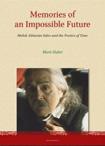
Memories of an Impossible Future: Mehdi Akhavān Sāles and the Poetics of Time
Brill, 2016
By Marie Huber, Assistant Professor of Persian and Comparative Literature
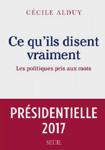
Ce Qu’ils Disent Vraiment: Les Politiques Pris Aux Mots
Éditions du Seuil, 2017
By Cécile Alduy, Professor of French and Italian
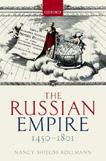
The Russian Empire, 1450-1801
Oxford University Press, 2017
By Nancy Kollmann, William H. Bonsall Professor of History
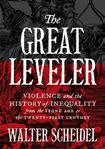
The Great Leveler: Violence and the History of Inequality from the Stone Age to the Twenty-First Century
Princeton University Press, 2017
By Walter Scheidel, Dickason Professor in the Humanities, Professor of Classics and History
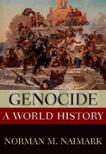
Genocide: A World History
Oxford University Press, 2016
By Norman Naimark, Robert and Florence McDonnell Professor of East European Studies
Hagia Sophia: Sound, Space, and Spirit in Byzantium
Penn State University Press, 2017
By Bissera V. Pentcheva, Professor of Art and Art History
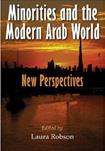
“Egypt and Its Jews: The Specter of an Absent Minority,” in Minorities and the Modern Arab World: New Perspectives
Syracuse University Press, 2016
Chapter by Joel Beinin, Donald J. McLachlan Professor of History.
Edited by Laura Robson
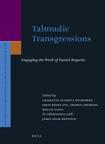
Talmudic Transgressions
Brill, 2017
By Charlotte Fonrobert, Director of the Taube Center for Jewish Studies and Associate Professor, by courtesy, of Classics and German Studies
SGS facilitates research and data collection across fields and national boundaries, enabling the next generation of scholars to creatively address regional and global issues to advance our understanding of the world. In addition to providing research fellowships, SGS programs and centers host collaborative research initiatives, produce research reports, and facilitate student research.
Iran 2040
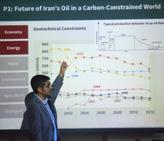
The Stanford Iran 2040 Project is an academic initiative that serves as a hub for academic researchers all around the world, particularly the Iranian diaspora scholars, to conduct research on issues related to the future of the Iranian economy and evaluate their possible implications in a global context. Hosted by the Iranian Studies Program, the project released three reports this past year, analyzing the future of Iran’s oil and its economic implications; land and precipitation for agriculture; and natural gas, electricity, and renewable energy.
International Trial Monitoring
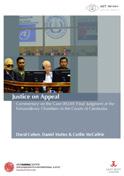
As part of its international trial monitoring program, the WSD Handa Center for Human Rights and International Justice produces reports throughout the year. This past year, they released a report analyzing the final judgment of Case 002/01 at the Extraordinary Chambers in the Courts of Cambodia, which was established to try the senior leaders of the Khmer Rouge for crimes committed during their reign from 1975 to 1979. Another Handa Center report assessed the early termination of the proceedings in the case against William Ruto and Joshua Sang at the International Criminal Court, which addressed the postelection violence in Kenya from 2007 to 2008.
Postdoctoral and Visiting Scholars
Effects of Alzheimer’s and Parkinson’s Disease
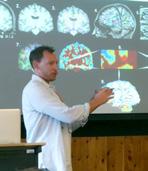
Owen Phillips of Stanford’s Department of Psychiatry visited the Université Toulouse III/INSERM in France as part of the FranceStanford Center Visiting Junior Scholar Fellowship. Dr. Phillips’ research project focused on the negative effects degenerative diseases such as Alzheimer’s, Parkinson’s disease, and Multiple System
Atrophy have on the brain’s connections. He employed advanced neuroimaging and sophisticated data analysis methods he developed to study the potentially highly vulnerable “superficial white matter” — which is a complex high plasticity area of the brain where information is transferred over short distances. This project is significant because no one has looked at the superficial white matter in Parkinson’s or Multiple System Atrophy. This work led to striking findings, which demonstrated advanced degeneration of the superficial white matter in Multiple System Atrophy, but not Parkinson’s disease.
The Nuclear Non-Proliferation Treaty
For her International Relations honors thesis, Yegina Whang researched why some states decide to sign, ratify, and then violate the Nuclear Non-Proliferation Treaty (NPT). Through evidence provided by her analysis of large-n data sets and case studies of North Korea, South Korea, and Iran, she hypothesized that international isolation plays a key role in explaining a leader’s decision to cheat on the NPT.
This past year, SGS centers and programs hosted 26 visiting scholars, 3 postdoctoral fellows, and 12 visiting student researchers from 21 different countries to build global expertise on campus. These visitors strengthen the university’s intellectual and educational environment by delivering lectures, conducting research, mentoring students and teaching courses.
Dr. Pooya Azadi, Iran 2040 project manager
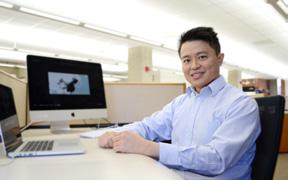
Charles Chang, the 2016-17 Chinese Studies Postdoctoral Fellow at the Center for East Asian Studies. Chang, who is originally from a small city called Yibin in China’s Sichuan Province and received his Ph.D. in Environmental Studies from the University of Wisconsin-Madison, studies big data and technology in China.
Events are at the heart of building the Stanford Global Studies community. By inviting scholars, performers, and other luminaries to speak and collaborate with our faculty and students, SGS events instill deep curiosity and knowledge about other peoples and cultures.
In 2016–17, SGS programs and centers brought together over 34,000 attendees, who enjoyed nearly 600 events. Lectures, conferences, workshops, films, concerts, plays, and other events connected faculty, students and the general public.
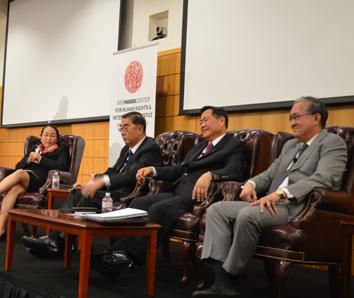
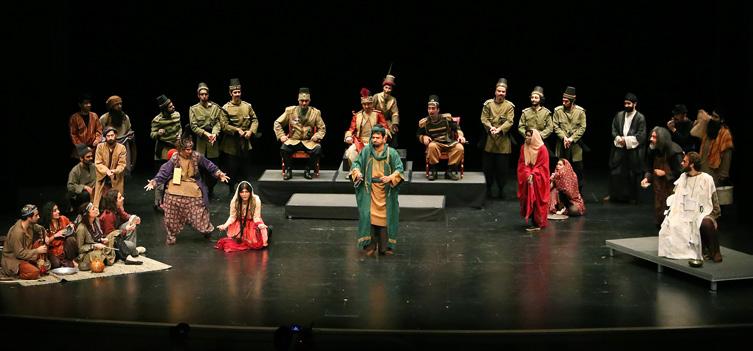
Clockwise from top left: The Rise of ASEAN and the Future of the U.S.-ASEAN Strategic Partnership panel discussion featured Diane Desierto (Handa Research Fellow) Ambassador Ong Keng Yong (former Secretary General of ASEAN), Gerardo Ablaza, Jr. (President and CEO, Manila Water Company), and Justice Antonio Carpio of the Supreme Court of the Philippines; Peking Opera singer Hong Ding performs a classic Chinese song as part of the 2017 Pan-Asian Music Festival at Bing Concert Hall; Iranian Studies professor and playwright, Bahram Beyzaie, wrote and directed his newest play Tarabnameh, which was performed to an audience of 3,000 people.
The international area centers and programs that make up SGS have influenced the career decisions of thousands of students. Our alumni are truly global. They have built careers around a diverse range of interests and value many aspects of their global education since leaving Stanford. SGS provided many of them with the skills needed to be policymakers, diplomats, entrepreneurs, journalists, politicians, researchers, teachers, scholars, and global leaders. Below they reflect on their academic and professional experiences.
Gladis Xiloj
B.A. East Asian Studies ’17 Global Studies Internship Program
“As a first generation college going student, I didn’t really consider interning abroad financially feasible until I found out about the SGS internships. My internship at the Asia-Pacific Centre of Education for International Understanding (APCEIU) in South Korea exposed me to Korean working culture and taught me that I could thrive while working abroad. Working at APCEIU also encouraged me to choose my major, East Asian Studies, and to pursue a career in diplomacy. Thanks to the confidence and experiences I gained through my internship, I am now in Seoul, South Korea, starting my three-year M.A. program in International Development and Cooperation at Korea University. Both in graduate school and in my future career, I am confident that I can contribute new ideas and discourse as a result of my immersive experiences in South Korea.”
Alina Utrata
2017 Marshall Scholar Human Rights Minor ’17
“The Handa Center became one of the most important aspects of my undergraduate career at Stanford. From when I first walked through its doors sophomore year, the center has been an incredible resource to me. But more than that, it has become an academic home for me — a place where I can always visit for advice or to talk through some aspect of my honors thesis. Its staff and affiliates are now some of my closest mentors at Stanford.”
Gloria Kyallo
Program Assistant, Alliance for HOPE International M.A. African Studies ’16
“CAS taught me that life is a celebration and community is at the heart of that celebration. I carry these hallmarks of CAS to work everyday at Alliance for HOPE International and hope to inspire those around me to celebrate one another, as we think critically about problems we aim to solve.”
Andrew Gee
Director, Albright Stonebridge Group M.A. East Asian Studies ’15
“There is no better place to study Asian foreign policy and political economy than at Stanford. Taking advantage of the highly-interdisciplinary nature of the M.A. program at CEAS, I was fortunate to take not only advanced foreign language and area studies courses, but also extremely useful courses at the law school, GSB, and IPS program — all of which prepared me well for my recent career growth and current role managing Asia engagements at a premier boutique consultancy that advises Fortune 100 firms on business strategy and regulatory challenges in emerging markets worldwide. In particular, the intensive foreign policy seminars I took with Condoleezza Rice, Anja Manuel, Alice Miller, Michael Armacost, and Thomas Fingar, pushed me to my intellectual limits, and forced me to develop razor-sharp critical and analytical thinking, reading, and writing skills that I now use daily in my work. Undoubtedly, my two years at Stanford offered unmatched intellectual rigor and reward — and provided far more gifts than I had ever anticipated, not only in terms of knowledge and skills, but also in terms of a global network and institutional brand name that continually open doors.”
Gina Shalavi
YouTube Public Affairs Manager, Google B.A. International Relations ’12
“The International Relations Program requires a diverse range of coursework and experiences that help individuals acquire an invaluably wide skill set applicable to many career paths. Having the tools to think critically, write eloquently, and analyze effectively not only prepared me for the professional world, but every day life.”
FINANCIAL SUMMARY
Expenses
Student Aid & Tuition Allowance
$3,363,623
Salaries: Staff & Student Workers $ 3,039,692
Salaries: Academic $1,498,912
Programming & Operating Expenses
$2,544,461 Benefits $1,331,473
Commitment for FY 2017–18 Activities $170,528
Total $11,948,689
Funding
H&S Dean’s Office
Endowment Income
Federal and Non-Federal Grants & Contracts
$4,154,826
$3,651,252
$1,797,698
Provost, President’s Office & Other $1,016,112
Gifts $1,190,797
Event Revenue $138,004
Total $11,948,689
CONNECT WITH US
@StanfordGlobal
Stanford Global Studies Division
SGS_Information@Stanford.edu
sgs.stanford.edu
GIFTS & SUPPORT
The Stanford Global Studies Division extends sincere appreciation to our contributing alumni, parents, students, and friends for their generous support. Financial support provides core funding to strengthen our existing programs and help create new ones where needed, enhance interaction among faculty and students, and facilitate collaboration with other university programs. Funds are focused on activities that impact the broadest range of faculty and students and offer high leverage by encouraging communication and collaboration. Such activities include curriculum development; seminars, symposia, and conferences; visiting scholar programs; development of research networks linking internal and external faculty and students; research initiatives on key topics; and direct financial support for our students — the next generation of outstanding leaders, scholars, and policymakers.
For more information about working with us to enhance global studies initiatives at Stanford, please contact Scott Sugiura, Associate Director of Development at: ssugiura@stanford.edu or (650) 723-1208.
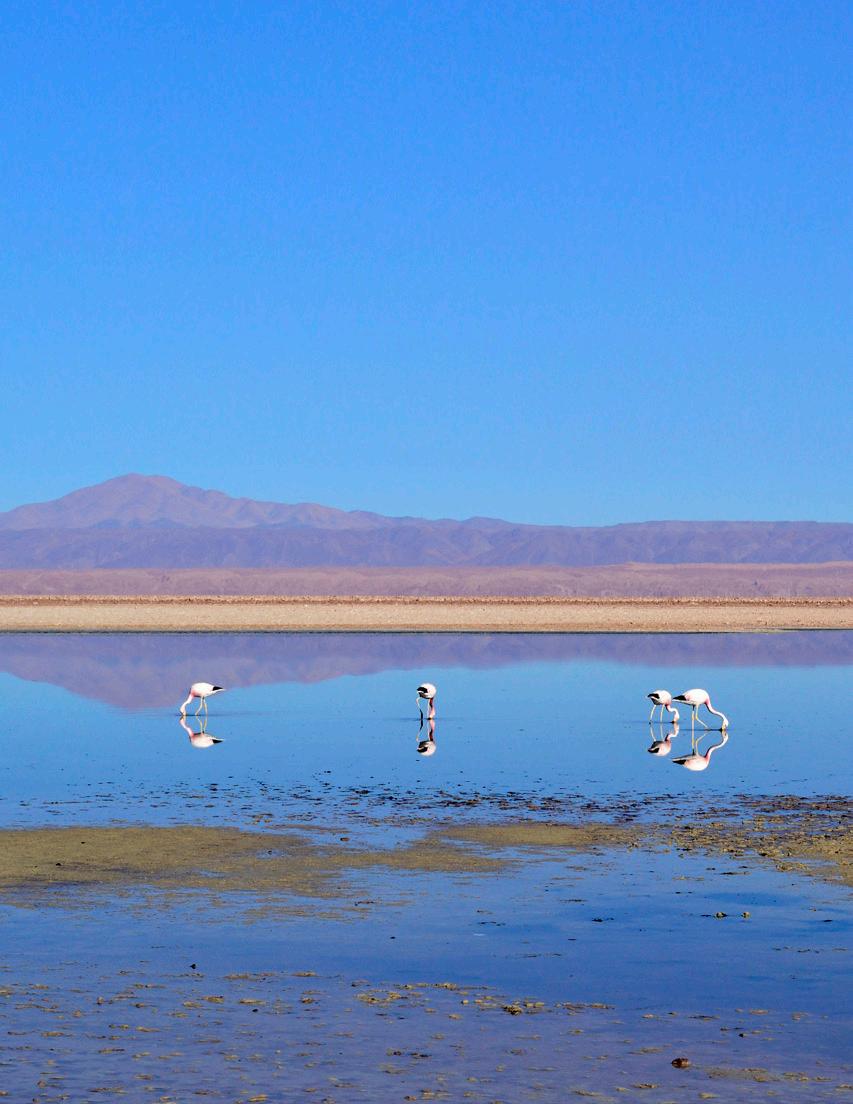
23 Samuel Garcia (International Relations, ’18) took this photo “Flamingos, Volcanoes” in Chile’s Atacama Desert.