Stanford Global Studies is a division of Stanford’s School of Humanities and Sciences that provides an arena for students and scholars to explore our increasingly complex world from multiple economic, political, social, environmental, technological and cultural perspectives.
Faculty Advisory Committee
Robert Crews
Associate Professor of History
Thomas Blom Hansen
Reliance-Dhirubhai Ambani
Professor in South Asian Studies; Professor in Anthropology
Rodolfo Dirzo
Bing Professor in Environmental Science; Senior Fellow, the Stanford Woods Institute for the Environment
Kathryn Stoner
Senior Fellow, Freeman Spogli Institute for International Studies
Administration
Norman Naimark
The Sakurako and William Fisher Family Director of the Stanford Global Studies Division
Katherine Kuhns
Executive Director
Joanne Camantigue
Financial Assistant
Kendra Davidson
Communications Manager
Jane Stahl Office Manager
Julie Tatsukawa
Communications Coordinator
Katherine Welsh
Outreach Coordinator
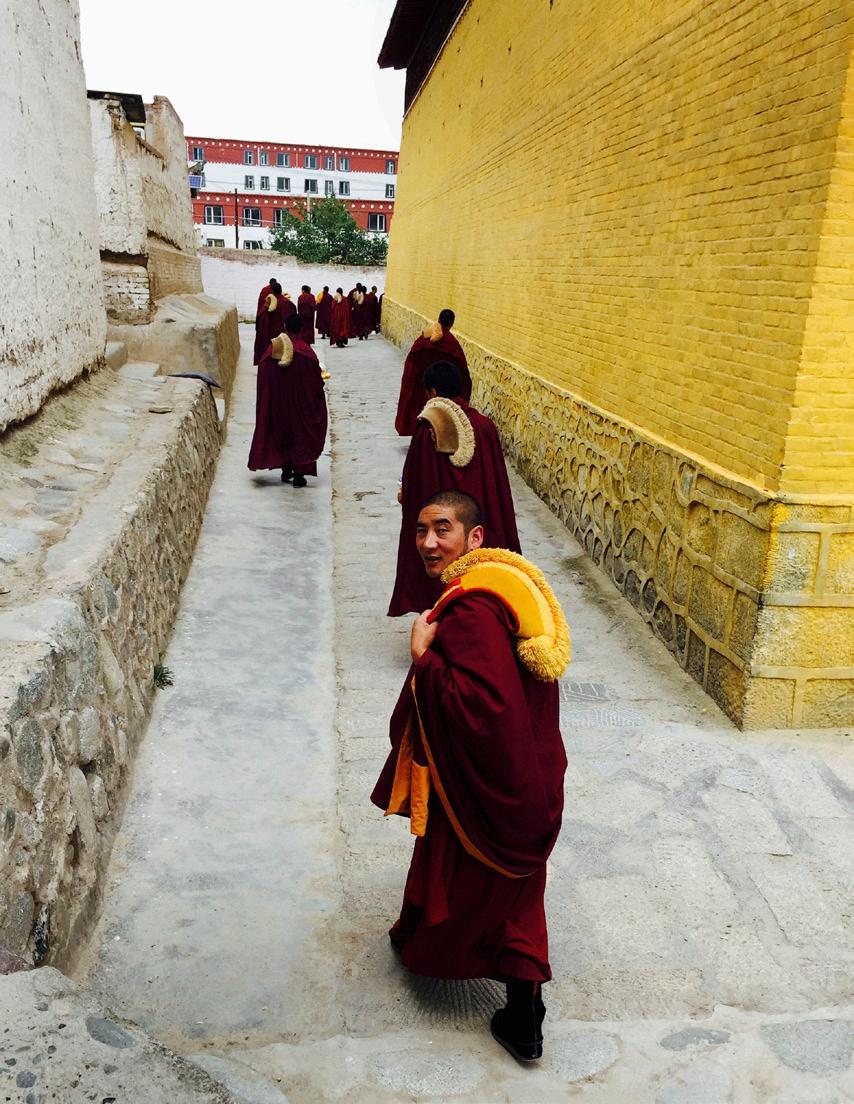
The cover photo “A Sudden Glance,” was taken by Stanford student Jun Wu (M.A. ’16, CLAS) as part of the annual SGS student photo contest. “A Tibetan monk suddenly looked back and smiled at me while I was traveling in Qinghai in 2015.”
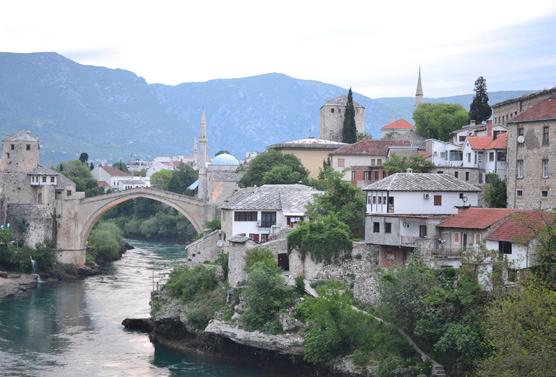
Left, Vladimir Hamed-Troyansky (Ph.D. candidate, History) took this photo, “Bridging into the Future” while traveling in the Balkans in May 2015. The Mostar Bridge is one of the finest and most recognizable examples of Ottoman architecture.
DIRECTOR’S MESSAGE
Norman Naimark
The Sakurako and William Fisher Family Director of the Stanford Global Studies Division
Robert and Florence McDonnell Professor in East European Studies
Dear Friends,
2015–16 was a year of remarkable milestones for the Stanford Global Studies community. We celebrated the fiftieth anniversaries of the Center for Latin American Studies and the Center for African Studies, as well as the tenth anniversary of the Hamid and Christina Moghadam Program in Iranian Studies. Anniversary events gave us an opportunity to reflect on the rich history and achievements of these programs, as well as their integral role in shaping academic life at Stanford. We look forward to more anniversary festivities to come, and are immensely proud of the lasting impact these centers have had on countless students, the Stanford community, and the academy.
We are also thrilled to announce that the youngest SGS program, the WSD HANDA Center for Human Rights and International Justice, will be offering a new Minor in Human Rights beginning in 2016-17. In furthering the center’s mission to increase student engagement in this field, the minor will encourage students from across the university to understand how human rights are interconnected across disciplines, and provide them with valuable mentorship from active scholars and practitioners.
Programs across SGS have continued to grow and flourish this past year, sponsoring over 480 events, 379 research, fellowship, and internship opportunities, and providing an additional 93 courses to enhance the university’s curriculum. Due to high demand and the generous support of our donors, the Global Studies Internship Program has increased its offerings once again, now arranging 87 internships in 20 countries for students from 29 majors. We are also pleased to note that we have graduated our first class of students with a Global Studies Minor. Student enrollment in the program is growing overall, which reflects the efforts of several centers and programs within SGS.
Our National Resource Centers (NRCs) continue to offer new and valuable professional development resources for K-14 educators through funding provided by the Department of Education’s Title VI grant. This past year, we hosted another class of community college fellows, whose work focused on integrating global issues into their curricula. The NRCs also partnered with the Abbasi Program in Islamic Studies to offer a series of workshops designed to provide teachers with resources for teaching about Islam.
continued on next page
DIRECTOR’S MESSAGE
The 2015–16 academic year also marks the conclusion of my directorship at SGS. It has been a memorable four years and we have come a long way in being able to offer the kind of educational experiences needed to prepare students to become leaders in a rapidly changing world. I am extremely proud of the vibrant and collaborative community SGS has become, as we consolidate our position as a dynamic center on campus for area and international studies.
Most of all, I would like to thank the dedicated faculty and staff with whom I have had the privilege to work these last several years, and who are committed to developing the field of global studies at Stanford. One seldom has the opportunity to meet and engage so many interesting and committed scholars and staff members, specializing in diverse parts of the world. I consider it a real privilege to have gotten to know and work with such fine colleagues.
Beginning in September of 2016, Jeremy Weinstein, Professor of Political Science and Senior Fellow at the Freeman-Spogli Institute, will take over as director of the Stanford Global Studies Division. Jeremy recently served as Deputy to the U.S. Ambassador to the United Nations. He has spent a number of years teaching at Stanford and is the former Director of the Center for African Studies, so he brings a unique combination of academic and policy experience to the position.
Please join me in welcoming Professor Weinstein back to the Global Studies community — I look forward to seeing the great things SGS will accomplish under his leadership.
Sincerely,
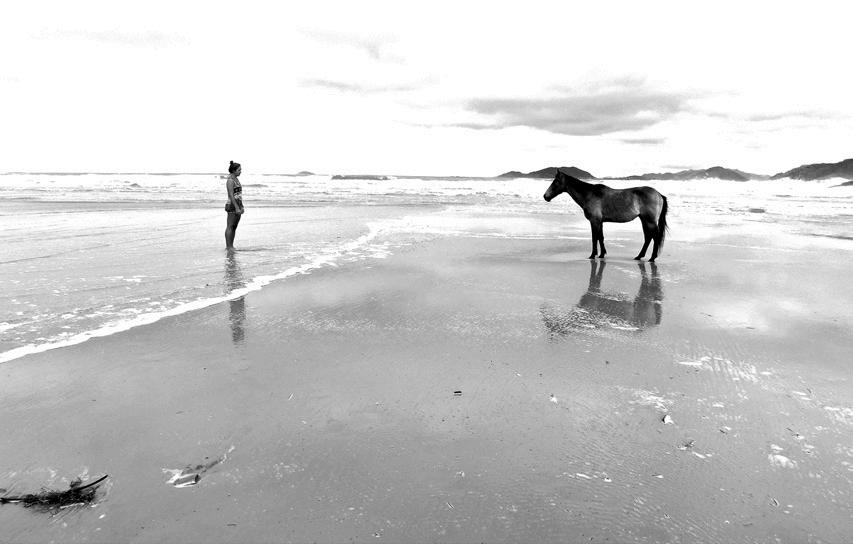
Allie Ballesteros (M.A. ’16, CLAS) captured this image “I’ve Been Through the Desert on a Horse with No Name,” while exploring Florianópolis’ beaches in Brazil.
CENTER FOR AFRICAN STUDIES
Director: Richard Roberts
Associate Director: Laura Hubbard africanstudies.stanford.edu
CENTER FOR EAST ASIAN STUDIES
Director: Gordon Chang
Associate Director: John Groschwitz ceas.stanford.edu
CENTER FOR LATIN AMERICAN STUDIES
Director: Rodolfo Dirzo
Associate Director: Elizabeth Sáenz-Ackermann las.stanford.edu
CENTER FOR RUSSIAN, EAST EUROPEAN, AND EURASIAN STUDIES
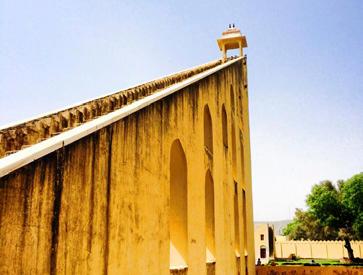
Above, Megumi Yoshinaga (M.A. ’17, CEAS) took this picture of the oldest clock in the world while visiting Jaipur, India.
2015–16 HIGHLIGHTS
STANFORD GLOBAL STUDIES
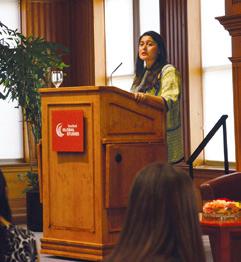
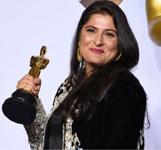
This year, Stanford Global Studies (SGS) hosted Oscar-winning filmmaker Sharmeen Obaid-Chinoy for a series of events, including the annual student dinner. An alumna of Stanford’s International Policy Studies program (’03), Obaid-Chinoy reflected on her path from journalist at age 14, to documentary filmmaker-turned advocate who highlights the voices of marginalized communities around the world. In her most recent Oscarwinning documentary, A Girl in the River: The Price of Forgiveness, she exposed the controversial issue of honor killings in Pakistan. “It really bothered me that in this modern day and age, culture and religion are being manipulated to kill women,” she told SGS students. After viewing the film, Pakistan’s Prime Minister vowed he would work on changing the law relating to honor killings. While on campus, Obaid-Chinoy met with students at SGS and the Department of Communication, and also taught a class for the documentary film and video M.F.A. program.
TAUBE CENTER FOR JEWISH STUDIES
As part of an ongoing effort to ensure the most vibrant conversation between faculty and students in Jewish Studies and the many components of the Center for the Study of Race and Ethnicity, the Center for Jewish Studies initiated a series of innovative presentations on Jews, ethnicity and the politics of race in American society and culture. The series featured several leading specialists on American Jewish life, including historian, and Stanford Jewish Studies alumna, Tony Michels of the University of WisconsinMadison; religious studies scholar Shaul Magid of Indiana University; renowned sociologist Steven M. Cohen of Hebrew UnionCollege — Jewish Institute of Religion; and political scientist Robert Putnam of Harvard University. Topics ranged from the urban crises of American Jews and the end of Jewish exceptionalism to re-thinking American Jewish Zionist identity and how religion divides and unites Americans — and why it’s basically good for Jews.
WSD HANDA CENTER FOR HUMAN RIGHTS & INTERNATIONAL JUSTICE
In furthering its mission to support scholarly and practical student engagement with human rights, the Handa Center launched several new initiatives this year. Working alongside the Haas Center for Public Service and Vice Provost for Undergraduate Education, the center welcomed international human rights law expert Dr. Chiseche Mibenge as Stanford’s inaugural Director for Community Engaged Learning in Human Rights, a position dedicated to connecting faculty, students and community partners in order to enrich traditional classroom learning. Together, Chiseche and Handa Center staff launched a new seminar series, Human Rights in Community, which engages students with human rights practitioners.
As part of the campus-wide Cardinal Service effort, the center sent its first cohort of six Human Rights Fellows to gain experience with partner organizations in five countries. The fellows worked on diverse issues such as art therapy for adolescent refugees in Greece, trial monitoring at the Special Tribunal for Lebanon in The Hague, and providing social and psychological support to Filipino migrant women in Italy. The center culminated an exciting year with the approval of a new Minor in Human Rights, which will be open to all undergraduates in the fall of 2016.
Sharmeen Obaid-Chinoy speaks at the SGS annual student dinner.
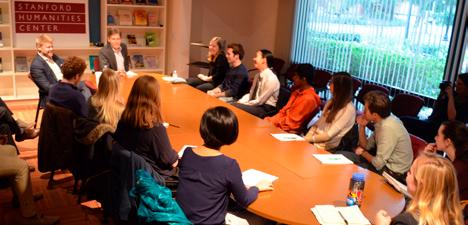
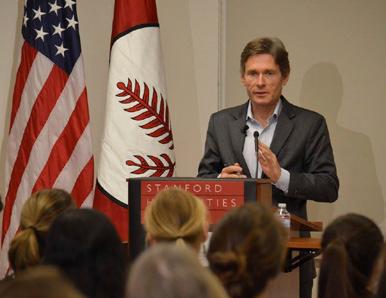
Tom Malinowski, U.S. diplomat and the Assistant Secretary of State for Democracy, Human Rights, and Labor, meets with Handa Center students.
PROGRAM IN INTERNATIONAL RELATIONS
In April 2016, the Program in International Relations (IR) hosted its first alumni panel event in recent history. The evening offered current students an opportunity to network with recent IR graduates, learn about what they are doing in their careers, and hear how they are utilizing the skills and knowledge gained from their academic experience.
The alumni speakers were (above, left to right) AJ Balance (’09), Co-founder and CEO at Dispatcher; Allyson Edwards (’13), International Project Manager at wikiHow; Nadia Mufti (’11), Co-founder & Experience Designer at Hive Global Leaders Program; and Allison Rose (’06), Director in State Government Affairs at the McKesson Corporation.
CENTER FOR EAST ASIAN STUDIES
The Chinese Railroad Workers in North America Project (CRRWP) at Stanford is an international group of researchers concerned with using archaeology and historical research to uncover the lives of the Chinese immigrants who worked on railroads in North America during the nineteenth and twentieth centuries. In April, the CRRWP convened a major conference to engage its research collective in a multi-day dialogue. Co-directors Gordon Chang and Shelley Fisher Fishkin hosted nearly 60 researchers to interpret and present new findings. They conceived the event to crystalize the project’s four years of research and discovery.
Conference highlights included launching a large digital archive, the beginnings of a full oratorio on the railroad workers, a research trip to the Sierras, and in-depth panels about ongoing research, such as where in China the workers came from, and how they lived as immigrants in America. Funding was provided by awards from the National Endowment for the Humanities and numerous additional grants.
The project’s next major phase is to make the discoveries prominent in books, digital media, film, and school curricula, through public outreach.
CENTER FOR LATIN AMERICAN STUDIES
The academic year 2015–16 marked a monumental milestone for the Center for Latin American Studies (CLAS): it was with great joy and pride that the center celebrated 50 years as an important pillar of culture and academia within the Stanford community. During the fall of 2015, CLAS held a number of events to reflect on its achievements over the last half-century, and to envision the future of the study of Latin America. In September, the center held an archival exhibit to showcase 50 years of collaboration between CLAS and Stanford’s Green Library. An anniversary gala featuring the former president of Peru, Alejandro Toledo, and Arturo Sarukhán, former Mexican ambassador to the U.S., took place in October. Lastly, CLAS convened twelve directors of Latin American Studies programs from across the U.S. to reflect on the significance of the study of Latin America in the twenty-first century, and to honor the former directors of Stanford’s CLAS.
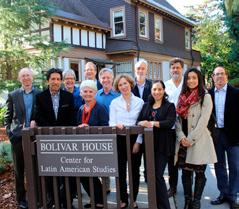
Directors of Latin American Studies programs from across the U.S. convened at Bolivar House.
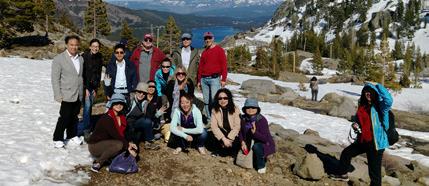
Participants in the CRRWP conference conducted a research trip to the Sierras.
2015–16 HIGHLIGHTS
HAMID AND CHRISTINA MOGHADAM PROGRAM IN IRANIAN STUDIES
In 2016, the Hamid and Christina Moghadam Program in Iranian Studies and the Center for Democracy, Development, and Rule of Law launched the Iran 2040 project for proactive and collaborative research on Iran’s path towards long-term economic development. The project will serve as a hub for scholars around the world to collaboratively collect and analyze data, and to ultimately create roadmaps for Iran’s future through 2040. Dr. Pooya Azadi has joined the Iranian Studies program as Project Manager for Iran 2040. A plenary conference, held in June, laid the foundations for a major public conference that will take place in the 20162017 academic year. The first phase of the project will focus on Iran’s economy, energy, water resources, environment, agriculture and transportation.
Other highlights this year include the graduation of the first Iranian Studies Minor student, Anna Polishchuk; the nearly sold-out premiere of Professor Beyzaie’s new play Tarabnameh; and the launch of the Houshang Golshiri archive at the Green Library.
CENTER FOR RUSSIAN, EAST EUROPEAN & EURASIAN STUDIES
The recent conflict between Russia and Ukraine has intensified interest in the region among faculty and students. To enrich intellectual exchange and course offerings in relevant topics, CREEES brought a number of experts from the region to Stanford. In 2015–16, the annual Dallin Lecture was given by renowned Kremlinology expert, Lilia Shevtsova, on the topic, “Russia as a Global Challenge.” The 2015–16 Wayne Vucinich Fellow was Ekaterina V. Klimenko, Senior Lecturer at the Saint Petersburg State Institute of Culture, who shared her research on the discourse and policy related to migrant integration in post-Soviet Russia. Finally, CREEES appointed as Visiting Assistant Professor, Dariya Orlova from the Mohyla School of Journalism at Ukraine’s National University of Kyiv-Mohyla Academy, who offered a course on media, democratization and political transformations in post-Soviet societies.
CENTER FOR SOUTH ASIA
In the spring, the Center for South Asia (CSA) hosted a two-day, multidisciplinary conference entitled “Shades of Sovereignty: Lineages of Authority and Social Order in South Asia.” State power and sources of authority in the region have remained uneven across space both during and after the period of British colonial dominance, and have profoundly shaped contemporary political imaginations and social orders. By bringing together faculty and students from varied disciplines and institutions, this conference ensured a fascinating set of papers and conversations that will contribute to the ever-changing landscape of South Asian Studies in significant ways.
Additional CSA highlights from this past year include a teach-in series, which focused on socio-political issues in contemporary South Asia, and a collaboration with the Berkeley Partition Archive to bring survivors and historians of the Indian Partition of 1947 to campus to share their stories.
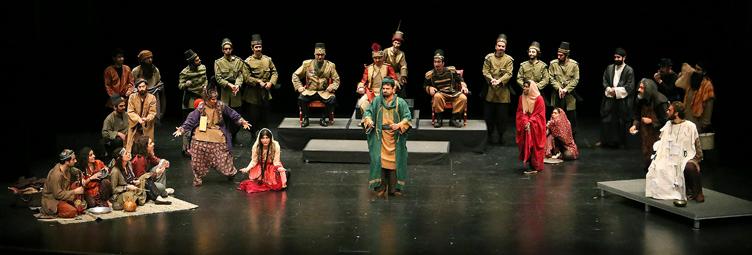
Iranian Studies professor and playwright, Bahram Beyzaie, wrote and directed his newest play, Tarabnameh. Photo by Vahid Zamani.
INTERNATIONAL POLICY STUDIES
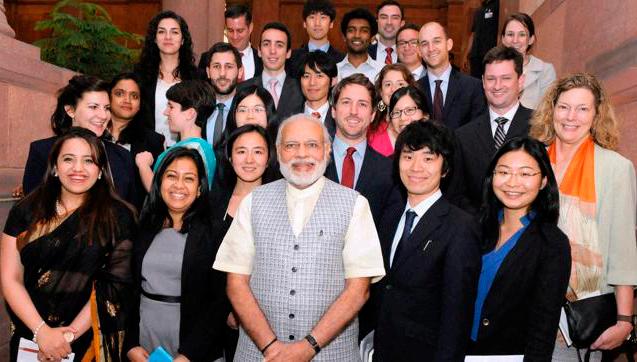
Over spring break, students from the Ford Dorsey Program in International Policy Studies, traveled to India, where they met with Prime Minister Narendra Modi. The Prime Minister answered questions about India’s relations with neighboring countries, his commitment to technology and e-governance, and competitive cooperative federalism. “We wanted to understand what India is doing to improve the ease of doing business in the country, such as improving labor laws and tax policies,” explained Radhika Lalit, a student who helped organize the trip. “Modi pointed to how he was solving these problems, and came across as somebody who was very passionate about development and very genuine.” This meeting was one of a series of candid conversations with India’s most senior government officials, NGOs, think tanks, media, and business leaders, where students asked critical questions about opportunities and challenges facing one of the world’s fastest growing countries.
FRANCE-STANFORD CENTER FOR INTERDISCIPLNARY STUDIES
In December 2015, the FranceStanford Center for Interdisciplinary Studies and the Centre de Recherches Internationales (Sciences Po Paris) brought together 20 scholars from Stanford, Europe, Canada and the Middle East for a conference entitled “The New Politics of Church-State Relations.”
The main objective of the conference was to examine the changing nature of church-state relations in France, the U.S. and other Western democracies as well as Russia and countries from around the Mediterranean. The conference participants — historians, lawyers, political scientists and philosophers — were asked to critically discuss the notions of secularism and freedom of religion and to highlight the tensions which may arise between the two principles. Topics included state support for faith-based activities, banning prayers and Muslim veils in public schools and prohibiting crèches and crosses in the public space.
ABBASI PROGRAM FOR ISLAMIC STUDIES
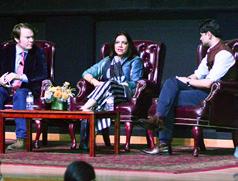
In 2015, the Sohaib and Sara Abbasi Program in Islamic Studies hosted renowned filmmaker Mira Nair for a conversation and screening of her film The Reluctant Fundamentalist . The film, based on the 2007 novel by Mohsin Hamad, tells the story of a Pakistani native whose American dream collapses in the wake of the 9/11 attacks. Nair is known for taking on complex and political storylines that defy stereotypes, and throughout the evening, the audience praised her work and questioned her view of how Islam is represented in Western media today. Most media, she explained, “look at Islam as this monolithic state of being, with no real consciousness of the fact that there are a billion people that practice this religion.”
Post 9/11, “an entire generation has come of age with sensationalized media images linking violence to Islam, that dehumanize and simplify the lives of Muslims,” said Abbasi Program Director Robert Crews, who moderated the discussion — “Mira Nair’s work presents a powerful alternative.”
IPS students meet with India’s Prime Minister Narendra Modi.
Filmmaker Mira Nair participates in a discussion after the screening of her film.
2015–16 HIGHLIGHTS
CENTER FOR AFRICAN STUDIES
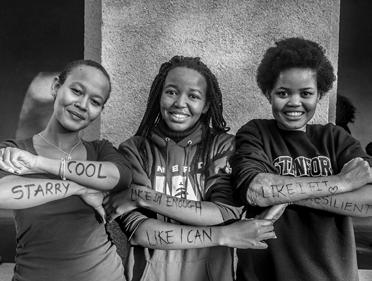
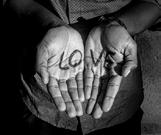
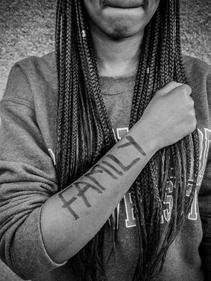
Since its founding in 1965, Stanford’s Center for African Studies (CAS) has emerged as one of the top centers for interdisciplinary research and teaching on all aspects of Africa. This year, the center celebrated its fiftieth anniversary as an intellectual and supportive home to many on campus. As part of the anniversary festivities, students, alumni, staff and community members reflected on their experiences with the center and participated in a photo shoot where they expressed what it means to be part of CAS. “The hope was that in capturing each individual’s interpretation of this place, we could bring to light how diverse yet singular this community actually is,” wrote Alex Nana-Sinkam (’13, ’14), who took the photographs. The images from the photoshoot were assembled for an exhibit at the center and culminated in an anniversary booklet to celebrate the extraordinary history and community of CAS.
MEDITERRANEAN STUDIES FORUM
In 2016, the Mediterranean Studies Forum & the Global Studies Internship Program devised a remote internship with professors at Koç University, Istanbul. For her summer internship, Davianna Olert (pictured above) — a rising junior in the School of Earth, Energy, and Environmental Sciences — worked with Koç University professors to study the influence of energy resources on external state intervention in internal conflict in the Middle East and on the water-energy nexus in the Middle East, Russia and Eurasia. “This project builds upon our previous collaboration with Koç University: a transatlantic, faculty speaker series,” explained Burçak Keskin Kozat, Associate Director of the Mediterranean Studies Forum. “We are actively looking for curricular and funding opportunities to further expand the intellectual exchange at the student level.”
THE EUROPE CENTER
Globalization is a central feature of European economic, social and political life. In November 2015, the Europe Center and the Department of Political Science hosted a conference of the International Political Economy Society. The event convened over 140 world experts on the political causes and consequences of international economic interdependence and the global institutions that attempt to govern these relationships.
Scholars presented and debated new research on a wide array of topics including how international trade and immigration are shaping new political coalitions around the world; the political causes and consequences of foreign aid policies; how and why Europe has succeeded or failed to respond effectively to challenges such as the Greek debt crisis and refugee crisis; and how political responses to globalization may or may not be undermining the institutions that have governed economic cooperation among states over the last half-century. Many of the themes of the conference are reflected in ongoing research projects at The Europe Center.
Photographs by Alex Nana-Sinkam were on display as part of the CAS fiftieth Anniversary festivities.
ACADEMIC PROGRAMS
Undergraduate Programs
SGS supports undergraduate interdisciplinary majors, minors, certificates and honors programs. Over 172 students were enrolled in the division’s undergraduate programs in 2015–16, exploring global, regional and domestic factors occurring in contemporary politics, culture and history. Most SGS undergraduate students study overseas and acquire fluency in a second language as part of their degree requirements.
Within SGS, undergraduate students can major in International Relations or Jewish Studies. Minors are available in International Relations, Jewish Studies, and Global Studies. Honors options are available in International Relations, Jewish Studies and Latin American Studies. Certificates are also offered by Iranian Studies and African Studies.
Graduate Programs
SGS hosts four, one-year master’s degree programs in African Studies, East Asian Studies, Latin American Studies and Russian, East European and Eurasian Studies, as well as a two-year master’s program in International Policy Studies. A graduate certificate in African Studies is also available. Each aims to provide students with training and in-depth exposure to regional affairs, and offers collaborative student cohorts, involved and supportive faculty, small class sizes, individualized advising, and competitive internship, fellowship, research and travel opportunities.
In 2015–16, a total of 133 students pursued master’s degrees in SGS.
DEGREES GRANTED
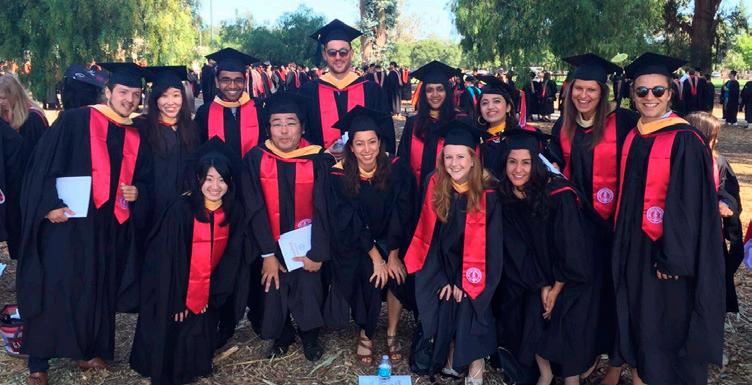
International Policy Studies students at the 2016 commencement ceremony.
FUNDING
SGS programs offer research grants and fellowships, internships, scholarships, language study opportunities, and other funding options to students and visiting scholars both in the U.S. and abroad. Below is a visual representation of student research, study, and internship locations around the world.
Research
SGS centers provided 204 students with funding for research opportunities in more than 50 countries. SGS offered research funding in the form of grants, fellowships and teaching or research assistantships, which ranged from $250 to full tuition plus a stipend — $74,727 per year.
Countries of Internships, Language Study and/or Research
• Angola
• Argentina
• Armenia
• Austria
• Bahamas
• Bangladesh
• Belgium
• Bosnia
• Brazil
• Cambodia
• Chile
• China
• Cuba
• Dominican Republic
• Estonia
• Ethiopia
• France
• Germany
• Ghana
• Greece
• Haiti
• Hong Kong
• India
• Ireland
• Italy
• Japan
• Jordan
• Kenya
• Mauritius
• Morocco
• Netherlands
• Nicaragua
• Peru
• Poland
• Portugal
• Qatar
• Russia
• Senegal
• South Africa
• South Korea
• Spain
• Sri Lanka
• Switzerland
• Taiwan
• Tanzania
• Thailand
• Turkey
• Uganda
• Ukraine
• United Kingdom
• USA
• 2015–16 SGS Student Research Locations
• 2015–16 SGS Language Study Locations
• 2015–16 SGS Internship Locations
Global Internships
In 2016, SGS offered a total of 108 internship opportunities in leading businesses and organizations around the world. Eighty-eight undergraduates and 20 master’s students held internships over the summer.
The following centers provided funding for internships: East Asian Studies, Latin American Studies, Mediterranean Studies, International Policy Studies, the Global Studies Internship Program, the Handa Center and The Europe Center.
TOTAL FUNDING
Language Study
In 2015–16, SGS programs and centers offered 67 students intensive study opportunities in the following languages:
• Arabic
• Armenian
• Cantonese
• Chinese
• Classical Arabic
• Estonian
• French • Japanese • Korean
• Modern Turkish
• Mughal Persian
• Nahuatl
• Pashto
• Portuguese
• Quechua
• Russian
• Wolof
• Yiddish
Number of Students Funded:
$1,442,064
FUNDING
Global Studies Internship Program
SGS collaborates with alumni, friends, organizations, institutions and nonprofits to provide students with a unique and immersive learning opportunity to engage professionally in a foreign country. The transformative impact on our participants coupled with the student demand for more locations means that the program is continuously expanding its horizons in many directions. Recently, the program developed new internship positions in Estonia and increased opportunities for humanities students. In addition, domestic internships are made possible for students when travel to a region is restricted or unadvised.
This year, the program received over 340 applications — an unprecedented number — and 87 students from 29 majors were sponsored to conduct internships in 20 countries. The following companies provided internships:
Austria
• Medical University of Graz
Belgium
• Bruegel
• Center for European Policy Studies
• The Alliance of Liberals and Democrats for Europe Group/ European Parliament
Bosnia
• SSST University and PostConflict Research Centre
Brazil
• Dias Carneiro Advogados
• GuiaBolso
• Newfoundland Capital Management
• QuintoAdar
• Rio 2016 Organizing Committee for the Olympic and Paralympic Games
Cambodia
• Asian International Justice Initiative
• Tuol Sleng Genocide Museum China
• Amazon China
• AnG
• Caixin Media
• Center for Leadership Matrix Network
• CollectiveResponsibility
• Dianrong
• GAP Inc., Greater China
• Jin Nian Hua Medical
• Joint U.S.-China Collaboration on Clean Energy
• Lenovo
• Santander
• Shanghai Fields China Trading Co.
• Shanghai Institute of American Studies
• Society of Entrepreneurs & Ecology
• SOHO China
• Time Out Beijing Magazine
Estonia
• Museum of Occupations
Germany
• EMBL Heidelberg
Ghana
• Imani Center for Policy and Education
Hong Kong
• 6Connex, Inc.
India
• Forbes Marshall Pvt. Ltd.
Ireland
• Ashoka Ireland
Japan
• Venture Republic
• Rogers Investment Advisors
• Morrison & Foerster LLP
• Mitsubishi Research Institute
• Mitsubishi Electric Co.
• Kozo Keikaku Engineering Inc.
• Kotsu Shoji
• Institution for a Global Society x Z-kai
Korea
• Asia-Pacific Centre of Education for International Understanding
• CHA Medical Group
• Herald Corporation
• Konrad-Adenauer-Stiftung Auslandsburo Korea
• TK101 Global Marketing
Nicaragua
• blueEnergy
Peru
• Supporting Kids in Peru
Portugal
• U.S. Embassy in Lisbon
Spain
• Gracia Work Center
Taiwan
• AU Optronics Corporation
• China Medical University
• Fulbright Taiwan, Foundation for Scholarly Exchange
• Kaohsiung Medical University
— Chinese Medicine
• LCY Chemical Corporation
Uganda
• Chapter Four
• Foundation for Human Rights Initiative
USA
• Pars Equality Center
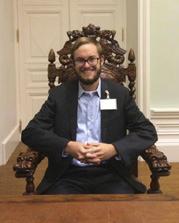
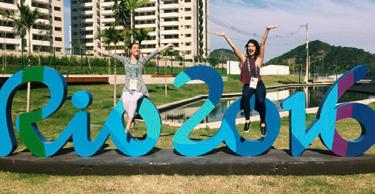
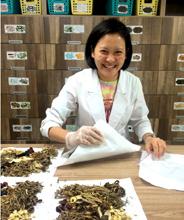
in the Office of the Prime Minister of Estonia, sitting in the chair used by every Estonian Prime Minister since the country’s founding. Virginia Rose La Puma and Graziella Camata interned with the 2016 Olympic Committee in Rio de Janeiro, Brazil. Valerie Chen at Kaohsiung Medical University Hospital, Taiwan.
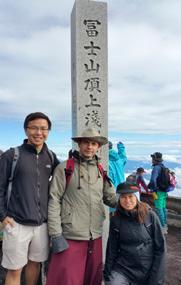
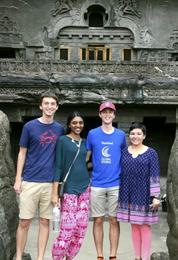
Clockwise from top left: Jimmy Chen, alumnus Len Umantz, and Pearly Meixsel at the Mount Fuji Summit, Japan. Sam Gold (left) and Alex Akesson (middle) in India. Ben Gardner-Gill
Yunha Hwang
Medical University of Graz, Austria, Computer Science ’18
“This internship gave me much insight into careers in academia and I was able to network with many people in the field of medical and biocomputational research. I really appreciate this opportunity to freely explore my academic interests. I took German classes in the evenings and was able to immerse myself in a new culture and make many friends from different parts of Europe. This was a valuable cultural learning experience for me.”
Alec Glassford
Ashoka
Ireland, Computer Science ’17
“I learned a great deal about the challenges that social entrepreneurs face and how to collaborate effectively in a small team to get a lot done! And living in Dublin was a deep joy in itself. From hiking by the Irish Sea, to exploring the settings of the stories of James Joyce (one of my favorite authors), to just walking by the Liffey and reading in local coffee shops, I was able to find excitement and delight in hundreds of new experiences. I will be sure to carry a little bit of Ireland back to Stanford in my heart and mind.”
Alina Utrata
Asian International Justice Initiative, Cambodia, History ’17
“Since coming to Stanford, I’ve been very interested about how to address post-conflict situations of mass atrocity. So often it seems that the history book ends with the end of this terrible event, but I want to learn what happens afterwards. How do communities who have suffered mass atrocity put themselves together again? Living in Cambodia, I got to see it for myself first-hand and, crucially, whether Cambodians thought the court was a good mechanism for addressing the legacy of genocide. This experience will hopefully prove a foundation for my future work in international law.”
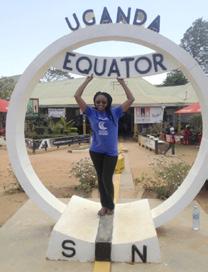
Saida Ali Chapter Four Uganda Anthropology/ African & African American Studies ’16
“During my time in Uganda, I got the opportunity to learn of the human rights issues plaguing the country through first-hand experience. I was exposed to legal cases that dealt with the matter of police brutality and various other forms of discrimination especially regarding sexual minorities. Through the internship, I had the opportunity to travel upcountry on cases with my supervisor, thus exposing me to matters concerning Ugandans beyond the city. This internship solidified my interest in attending law school as it demonstrated to me how one can combine law and service, two of my long-time passions and career goals.”
FUNDING
Global Perspectives Grants
A generous gift from the Friends of Stanford University Foundation in Taiwan enabled the Stanford Global Studies Division to award 21 “Global Perspectives” grants to fund graduate student research abroad.
Congratulations to the 2016 recipients:
Nadia Anggraini International Policy Studies
Adriana Baird Center for Latin American Studies
Rui Du International Policy Studies
Yaqian Fan Center for East Asian Studies
Ethan Hamilton International Policy Studies
David Jonason International Policy Studies
Gloria Kyallo Center for African Studies
Lin Le
Center for East Asian Studies
David Lee International Policy Studies
Daniel Limon Center for East Asian Studies
Mian Luo
Center for East Asian Studies
Ian McGinnity Center for Russian, East European and Eurasian Studies
Michael May International Policy Studies
Julia Mergendoller Center for Latin American Studies
Leah Nosal International Policy Studies
Beenish Pervaiz International Policy Studies
Walter Pratt Center for East Asian Studies
Swain Uber International Policy Studies
Henry Ulmer International Policy Studies
Amanda Ussak
Center for Latin American Studies
Jun Wu
Center for Latin American Studies
Nadia Anggraini International Policy Studies
Feasibility of Digital Textbook Adoption in Schools and Libraries in Ghana
“My classmates David Jonason, Ethan Hamilton, and I traveled to Accra to conduct research on the feasibility of digital textbook adoption in schools and libraries in Ghana... Through candid conversations, we were able to obtain a rich understanding of the country’s education landscape, priorities and challenges. Overall, the trip was a fantastic experience for the team, and went a long way in helping us produce a more nuanced and realistic deliverable for our client. Policy recommendations should never be made in a vacuum — even a vacuum as hallowed as the walls of Stanford University — and we are grateful to SGS for providing us the opportunity to conduct on-the-ground research to inform our final recommendations.”
Ian McGinnity Center for Russian, East European, and Eurasian Studies
Russian Investment in Solar Energy
“I conducted pilot research in Yerevan, Armenia, for my master’s capstone project through CREEES. My project analyzed recent Russian investment in and development of solar technology by governmental, corporate, and educational sectors...The information gained from this pilot research project was not only valuable in that it supported the driving idea behind my capstone project, but it also added to the project’s depth and perspective.”
Julia Mergendoller
Center for Latin American Studies
Refugee Resettlement in Brazil
“This summer, I traveled to Brazil with the generous support of the Stanford Global Perspectives Award. There, I studied Portuguese and researched issues surrounding refugees, focusing on their public perception and the contradictions between legal structures and reality. This opportunity allowed me to deepen my knowledge of the entire region, learn to speak a new language, and understand a topic that has global repercussions. I am profoundly grateful to the generous donors who support non traditional, experiential learning opportunities. ‘Obrigada!’ (Thank You!)”
NATIONAL RESOURCE CENTERS
The U.S. Department of Education has designated three SGS centers as National Resource Centers (NRCs): the Center for East Asian Studies, the Center for Latin American Studies, and the Center for Russian, East European and Eurasian Studies. Supported by Title VI of the Higher Education Act, NRCs strengthen access to training in the major languages of their respective regions, broaden area studies training across all disciplines, and pursue innovative collaborations with other educational organizations and local communities.
As part of the community engagement effort, the three NRCs have collaborated with other Stanford centers, including the Stanford Program on International and Cross-Cultural Education and Lacuna, to establish the Education Partnership for Internationalizing Curriculum (EPIC). EPIC focuses on strengthening the internationalization of curricula and the professionalization of language instruction at community colleges and K-12 institutions.
This past year, EPIC hosted a fellowship program for nine Bay Area community college faculty to integrate global topics into their course materials. The culmination of the fellowship was a symposium in May, which featured presentations from the fellows and convened over 75 community college faculty and administrators from across California.
In addition to the fellowship program, EPIC collaborated with the Graduate School of Education’s Center to Support
Excellence in Teaching (CSET) to offer a professional development course for high school teachers during the annual Summer Teaching Festival. During this 5-day seminar, teachers learned techniques for facilitating critical discourse, including comparative analysis, on a topic that spans history and the globe: imperialism.
In the spring, EPIC worked with CSET and the Abbasi Program in Islamic Studies to offer the first-ever Stanford Institute on Islam: a series of Saturday workshops for grade 6-14 educators, which explored how the study of Islam can be incorporated into the teaching of history, social studies, arts and related subjects.
FOREIGN LANGUAGE AND AREA STUDIES
The three NRCs are also recipients of another U.S. Department of Education grant to provide fellowships for Foreign Language and Area Studies (FLAS). The FLAS fellowship program complements the NRC program, providing opportunities for outstanding undergraduate and graduate students to engage in area studies and world language training.
In 2015–16, these centers provided 35 students with more than $1.2 million in funding to pursue fellowships for the study of Cantonese, Chinese, Estonian, Japanese, Korean, Nahuatl, Portuguese, Quechua and Russian.
Local community college professors participate in the Education Partnership to Internationalize Curriculum fellowship program.
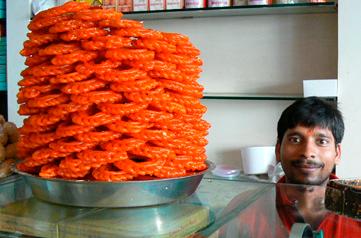
Ravid Itay (JSD candidate) took this picture, “Candy Man” in the neighborhood of Colaba, Mumbai, India.
FACULTY
The 405 faculty affiliated with SGS centers and programs represent every school at Stanford — Business, Earth Sciences, Education, Engineering, Law, Medicine and Humanities and Sciences — as well as many of Stanford’s centers and institutes, where multidisciplinary research extends beyond the scope of any one of the university’s schools.
Our faculty are uniquely qualified and positioned to help students tackle the complexities of the many problems we face around the world and expand their focus to include a global perspective.
Faculty Publications
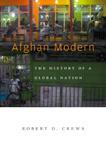
Afghan Modern: The History of a Global Nation
Harvard University Press, 2015
By Robert Crews, Director of the Abbasi Program in Islamic Studies, Director of the Mediterranean Studies Forum and an Associate Professor of History
A Well-Reasoned Opinion? Critical Analysis of the First Case Against the Alleged Senior Leaders of the Khmer Rouge (Case 002/01)
East-West Center, 2015
By David Cohen, Melanie Hyde and Penelope Van Tuyl of the WSD HANDA Center for Human Rights and International Justice
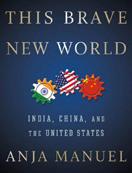
This Brave New World: India, China, and the United States
Simon & Schuster, 2016
By Anja Manuel, Lecturer in the International Policy Studies (IPS) Program
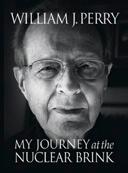
My Journey at the Nuclear Brink
Stanford University Press, 2015
By William Perry, Senior Fellow at the Freeman Spogli Institute for International Studies, affiliate of IPS
Why Muslim Integration Fails in ChristianHeritage Societies
Harvard University Press, 2016
By David T. Laitin, Professor of Political Science, affiliate of several SGS programs.
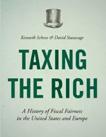
Taxing the Rich: A History of Fiscal Fairness in the United States and Europe
Princeton University Press, 2016
Co-authored by Kenneth Scheve, Director of The Europe Center, Professor of Political Science
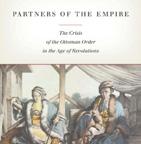
Partners of the Empire: The Crisis of the Ottoman Order in the Age of Revolutions
Stanford University Press, 2016
By Ali Yaycioglu, Assistant Professor of History, affiliate of multiple SGS programs
The James Bond Songs: Pop Anthems of Late Capitalism
Oxford University Press, 2015
Co-authored by Adrian Daub, Associate Professor of Comparative Literature and German Studies, affiliate of The Europe Center
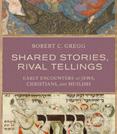
Shared Stories, Rival Tellings: Early Encounters of Jews, Christians and Muslims
Oxford University Press, 2015
By Robert Gregg, Professor in Religious Studies, Emeritus, affiliate of the Abbasi Program in Islamic Studies
ALUMNI
The international area centers and programs that make up SGS have influenced the career decisions of thousands of students. Our alumni are truly global. They have built careers around a diverse range of interests and value many aspects of their global education since leaving Stanford. SGS provided many of them with the skills needed to be policymakers, diplomats, entrepreneurs, journalists, politicians, researchers, teachers, scholars, and global leaders. These paths may diverge, but the experience our students has gained has led them to be responsible citizens and active participants in an increasingly complex and interconnected world. Below they reflect on their professional experiences as global citizens.
Lillian Rogers
Associate Consultant, APCO Worldwide, Beijing
B.A. International Relations (’13)
“My two internships have been transformative, essentially launching my career. My first internship at the Beijing Policy Center gave me my first true taste of working in China and my second internship at Caixin News provided the source material for my IR honors thesis and also landed me my current job. As a government relations consultant, I’m able to do what I love: study China’s fascinating and complex political economy while also having a real-world impact by facilitating client successes. All of this is thanks to the internships I was able to participate in because of Stanford, which gave me experience, allowed me to hone my language skills, and helped me build connections here.”
Avital Livny
Assistant Professor of Political Science, University of Illinois. Grant recipient of the Abbasi Program in Islamic Studies, Ph.D. Political Science (’14)
“Islamic Studies was critical in helping me stay connected to the people and places that are the focus of my research as a political scientist, while broadening my personal and professional network within the Stanford community. Now, as I begin the next phase of my career as an Assistant Professor at the University of Illinois, I hope to be able to recreate this rich interdisciplinary experience, for myself as well as for my students.”
Sharmeen Obaid-Chinoy
Journalist, Activist, Academy Award-Winning Filmmaker
M.A. International Policy Studies (’03)
“The IPS program was not just about what I learned in the classroom, it was also about the diversity of thought and people from around the world...it was about learning about different cultures, understanding the politics of their countries, understanding where they come from, what makes them tick and how they see the future of the world.
It was perhaps the greatest life experience for me, at 22 years old, to learn that all of us — wherever we come from — essentially are exactly the same. I think in a world that is so bifurcated and so divisive that was an important lesson to have learned at that young age.”
John Moore
U.S. Defense Attaché and Senior Defense Official, Lithuania
M.A. Russian, East European and Eurasian Studies (’09)
“My wife Beatrix and I are very happy to be in Vilnius, Lithuania at this very exciting time! This is a very busy time when there is a dramatically increased level of both U.S. and NATO defense interest in the Baltic Region. We truly enjoy working with our Lithuanian allies here and it has been an honor and a privilege to learn so much from them. My time at Stanford was absolutely instrumental in getting me ready for this. I am not the only Stanford alumnus here either; I serve with Jonathan Herzog, a diplomat, and a Stanford History Ph.D.!”
Davis Albohm
Associate Director, Global Operations, Stanford Institute for Innovation in Developing Economies M.A. African Studies (’11)
“My experience at CAS set my life’s trajectory. While facing both challenges and opportunities in my current work in East and West Africa, I draw on the research I conducted, the enduring relationships I made, and the amazing CAS community to influence my actions and decisions. The impact of being touched by CAS is immense… it changed my life.”
COURSES
As a premier university dedicated to international study, Stanford offered a wide range of courses focused on international and area studies in 2015–16. To enhance the university’s global curriculum, SGS provided $1.7 million for 93 additional courses that enrolled more than 750 students.
Courses Offered and Funded by SGS Centers and Programs
FALL 2015
• Aesthetics of Dissent: Iran
• AIDS, Literacy and Land: Foreign Aid and Development in Africa
• Between Nation-Building and Liberalization: The Welfare State in Israel
• Camera As Witness: International Human Rights Documentaries
• Chinese Music Performance
• Contemporary Issues in the Lusophone World, Fourth-Year Portuguese
• Covering Islam: On What We Learn to See, Think and Hear about Islam & Muslims
• Cultural Policies in Latin America and Europe: 1980-2015
• Democratic Transition in Ukraine: Values, Political Culture, Conflicts
• Ecology of the Cerrado
WINTER 2016
• Applied Econometrics
• Applied Statistics for Policy
• Behind the Headlines: An Introduction to U.S. Foreign Policy in South and East Asia
• Chinese Music Performance
• Contemporary Issues in the Lusophone World, Fourth-Year Portuguese
• Ecology beyond the Amazon
• First Year Nahuatl, Second Quarter
• Graduate Studies in Portuguese
• Health and Healthcare Systems in East Asia
SPRING 2016
• 350 Years of America-China Relations
• America’s War in Afghanistan: Multiple Actors and Divergent Strategies
• American Interventions, 1898-Present
• Anthropological Approaches to Health Issues in Contemporary Latin American
• Chinese Music Performance
• Cities of Empire: An Urban Journey through Eastern Europe and the Mediterranean
• Contemporary Iranian Theater
• Contemporary Issues in the Lusophone World, Fourth-Year Portuguese
• Core Seminar: Issues and Approaches in East Asian Studies
• Diplomacy on the Ground: Case Studies in the Challenges of Representing Your Country
• First Year Nahuatl, First Quarter
• Graduate Studies in Portuguese
• History and Politics in Russian and Eastern European Cinema
• International Law and International Relations
• International Relations Honors Seminar
• Introduction to Military History
• Introductory Statistics for Policy
• Inventing Japan: Traditional Culture in the Modern World
• IPS Practicum
• Korean Economy and Business: Theory, Practice, and Strategic Implications
• Regional Human Rights Protections: The Inter-American System
• Religion and Politics: A Threat to Democracy?
• Searching for Identity
• The Buddhist Body in East Asia: Charisma, Gender, and the Gift of the Body
• The Cold War: An International History
• The Formation of Political State in the Peruvian Andes
• The Iranian Cinema: Image and Meaning
• The Politics of International Humanitarian Action
• The Rise of China in World Affairs
• The U.S., UN Peacekeeping, and Humanitarian War
• Topics in International Macroeconomics
• Transitional Justice, Human Rights, and International Criminal Tribunals
• US Relations in Iran
• Hebrew Forum
• International Environmental Law and Policy
• International Justice
• International Mediation and Civil Wars
• Introduction to European Studies
• Introduction to Global Studies
• IPS Practicum
• IR Honors Thesis Writing
• Iranian Cinema in Disapora
• Issues in International Economics
• Media and Conflict in Africa
• Economics of Corruption
• Education for All? The Global and Local in Public Policy Making in Africa
• First-Year Nahuatl, Third Quarter
• Graduate Studies in Portuguese
• Higher Education and Development in Korea
• Innovation, Economic Growth, Globalization, and International Security Challenges
• International Relations Honors Field Research
• Islam in Africa through the Arts
• Islam, Iran and the West
• Masterpieces of Hebrew Literature from the Bible to the Present
• Media Representations of Africa
• Media, Democratization and Political Transformations in Post-Soviet Societies
• Politics in Modern Iran
• Presidents and Foreign Policy in Modern History
• Sociology of Citizenship
• State and Nation Building in Central Asia
• The Economics and Political Economy of the Multilateral Trade System
• The Geopolitics of Energy
• The International Relations of Asia since World War II
• Topics in Climate Change
• People’s Armies & Governments of WWII
• Post-secular Humanities: Religion and Spirituality in the Contemporary World
• Seminar on the Evolution of the Modern Chinese State, 1550-Present
• The Future of the European Union
• The Politics of Development: Social Service Delivery in the Developing World
• The Transition From War to Peace: Peacebuilding Strategies
• The United States, China & Global Security
• Transformation of Socialist Societies
• Urdu Literature and Bombay Cinema
• Violence, Imperialism and the Collapse of the Ottoman Empire
Events are at the heart of building the Stanford Global Studies community. By inviting scholars, performers, and other luminaries to speak and collaborate with our faculty and students, SGS events instill deep curiosity and knowledge about other peoples and cultures.
In 2015–16, SGS programs and centers brought together nearly 24,000 attendees, who enjoyed over 480 events. Lectures, conferences, workshops, films, concerts, plays, and other events connected faculty, students and the general public.
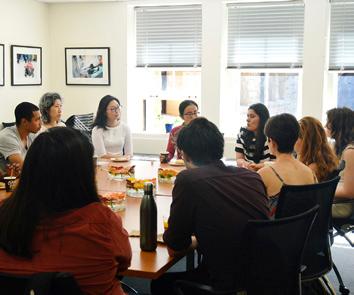
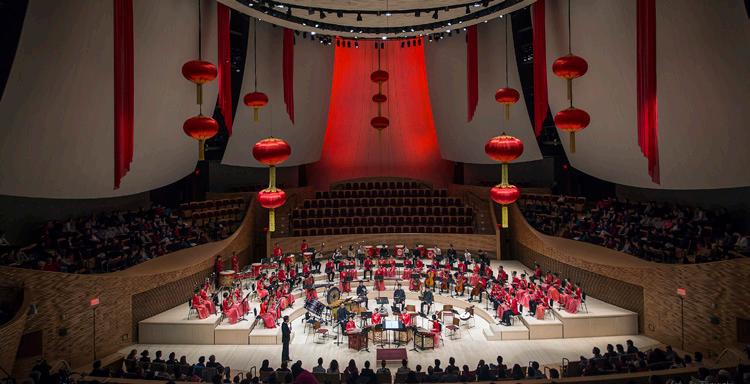
Clockwise from top left: Sharmeen Obaid-Chinoy (in stripes) engages with IPS students at a breakfast event held in conjunction with a screening of her Oscar-winning movie, A Girl in the River: The Price of Forgiveness. Assistant Secretary of State for Democracy, Human Rights, and Labor Tom Malinowski delivers the WSD HANDA Center for Human Rights and International Justice’s annual human rights lecture. The eleventh annual Pan-Asian Music Festival.
FINANCIAL SUMMARY
Expenses
Student Aid & Tuition Allowance
Salaries: Staff & Student Workers
$3,578,217
$3,133,408
Salaries: Academic $1,567,875
Programming & Operating Expenses
$2,370,452
Benefits $1,237,549
Commitment for FY 2016–17 Activities $285,456
Total $12,172,957
Funding
H&S Dean’s Office
Endowment Income
Federal and Non-Federal Grants & Contracts
Provost, President’s Office & Other
Gifts
$4,385,036
$3,475,506
$1,712,637
$1,322,719
$1,137,728
Event Revenue $139,331
Total $12,172,957
CONNECT WITH US
@StanfordGlobal
Stanford Global Studies Division
SGS_Information@Stanford.edu
sgs.stanford.edu
Stanford Global Studies
Right: While working in Buenos Aires, Argentina, for a summer internship through CLAS, Rachael Grau (B.S. ’16, Computer Science) took this photo, “Patagonia,” on a weekend trip to El Calafate.
GIFTS & SUPPORT
The Stanford Global Studies Division extends sincere appreciation to our contributing alumni, parents, student, and friends for their generous support. Financial support provides core funding to strengthen our existing programs and help create new ones where needed, enhance interaction among faculty and students, and facilitate collaboration with other university programs. Funds are focused on activities that impact the broadest range of faculty and students and offer high leverage by encouraging communication and collaboration. Such activities include curriculum development; seminars, symposia, and conferences; visiting scholar programs; development of research networks linking internal and external faculty and students; research initiatives on key topics; and direct financial support for our students — the next generation of outstanding leaders, scholars, and policymakers.
For more information about working with us to enhance global studies initiatives at Stanford, please contact Scott Sugiura, Associate Director of Development at: ssugiura@stanford.edu or (650) 723-1208.