
state
welcome
We’re three years into an exploration of what a sustained products + publications effort could look like for the d.school. It’s time to take stock of what we’ve learned and consider what comes next.
In the coming pages, Jenn, Susie, and I will share what we initially set out to do, what happened, what we learned, and what it makes us think and wonder about what we (the d.school) should do next.
Here’s a tension I feel in presenting this learning: I want to present genuinely open-ended questions about how the d.school should approach products + publications moving forward AND I fear that if I don’t bullishly pitch a bold vision for what I believe should come next, I am foreclosing on the opportunity that the d.school
might increase our investments in products + publications moving forward (‘Hey, if the person directing this thing isn’t enthusiastic about it, why would we put more resources into it?’).
So I’ll say this up front: After three years of work, approximately 15 experiments, and some fantastic synthesis and reflection with Susie and Jenn, I do believe we should invest even more resources and efforts in products + publications for both mission-driven and revenue-related reasons AND I think there are real and big questions about what those efforts should look like and how they should function within the ecosystem of our organization.
What an interesting place to be!
an overview of what’s in this book
looking back
why we stood up a p+p studio categories of business models
initial POV looking forward business models revisited POV evolution next ideas to test taking stock
process experiments
product experiments collaborations established
looking further p+p beyond 2027 big questions to consider
next steps
looking back. taking stock. looking forward.
looking back. taking stock. looking forward. looking
why we stood up a p+p studio
looking back. taking stock. looking forward. looking
motivation
Prior to 2021, if someone outside Stanford wanted to learn from the d.school, the options were free resources on the website or in-person courses that cost several thousand dollars/ participant.
The launch of d.school books created low-costhigh-valueofferings. We decided to launch a Products + Publications studio to further explore what we could provide to learners outside of the Stanford context in service of our strategic priority to getdesignmethods intothehandsofmorepeople.
Our initial goals for this endeavor were…
high-level goals at launch
The d.school has passiverevenue streams that significantly support the core work of the organization.
People previously unfamiliar with the d.school are discoveringd.school content on popular platforms.
The d.school is a destination for designproducts+publications that are equally delightful and deep.
looking back. taking stock. looking forward. looking
early research
Before launching new experiments, we set out to develop an understanding of the reach, results, and revenue of our current products and publications.
methods
The d.school’s Comms Director, Laurie Moore, and sam worked with a graduate student intern to conduct the following: user surveys (41), maker surveys (12), user interviews (12), and playtesting (4).
insights
From what we were able to gather:
1. Our current audience is largely caucasian, North American, 30-39 year olds, who work in education.
2. People who have interacted with us are hungry for more resources. People who have not interacted with us are not always clear on what to come to us for.
3. We spend a lot of money and time making things that we give away.
This early research effort increased our hunger to know more about our audience and has since led to new SMARTIE goals and marketing experiments focused on understanding, expanding, and diversifying our audience.
looking back. taking stock. looking forward. looking
looking back. taking stock. looking forward. looking further. winter
defacto business models of the past
We make things + we give them away for free. Other people make things + other people sell them.
We make things + other people sell them (but don’t give us any of the money).
business models we set out to explore
We make things + we sell them. Subscription-based text/multimedia content (e.g. membership portal).
Other people make things + we sell them. Forum approach (e.g. online platform, book festival, etc.)
We make things + other people sell them (and give us money). Video content on existing platforms (e.g. LinkedIn Learning, etc.)
looking back. taking stock. looking forward. looking
POV
looking back. taking stock. looking forward. looking
POV at the start
Based on what we learned from our early research, we saw many potential paths for experimentation toward our high level goals of passive revenue streams, introducing new audiences to d.school content, and making the d.school a destination for design products + publications.
Here are some of the lenses through which we looked at for new opportunities:
Partnerships > us building infrastructure
Activate a network of experts to help us get smarter faster
Optimize for reach + revenue
Experiment more with business models than content
With the goals, research, insights, business models, and initial POV in mind, we set out to run a series of experiments to test our understanding and explore new opportunities for the d.school.
looking back. taking stock. looking forward. looking further.
looking back. taking stock. looking forward. looking
process experiments
looking back. taking stock. looking forward. looking
advisory group
what we did
Assembled a group of leaders with expertise across areas of products + publications, including Bryant Terry (4 Color Books), Carl Scott (Meadowlark Media), Christy Fletcher (UTA), Jimmy
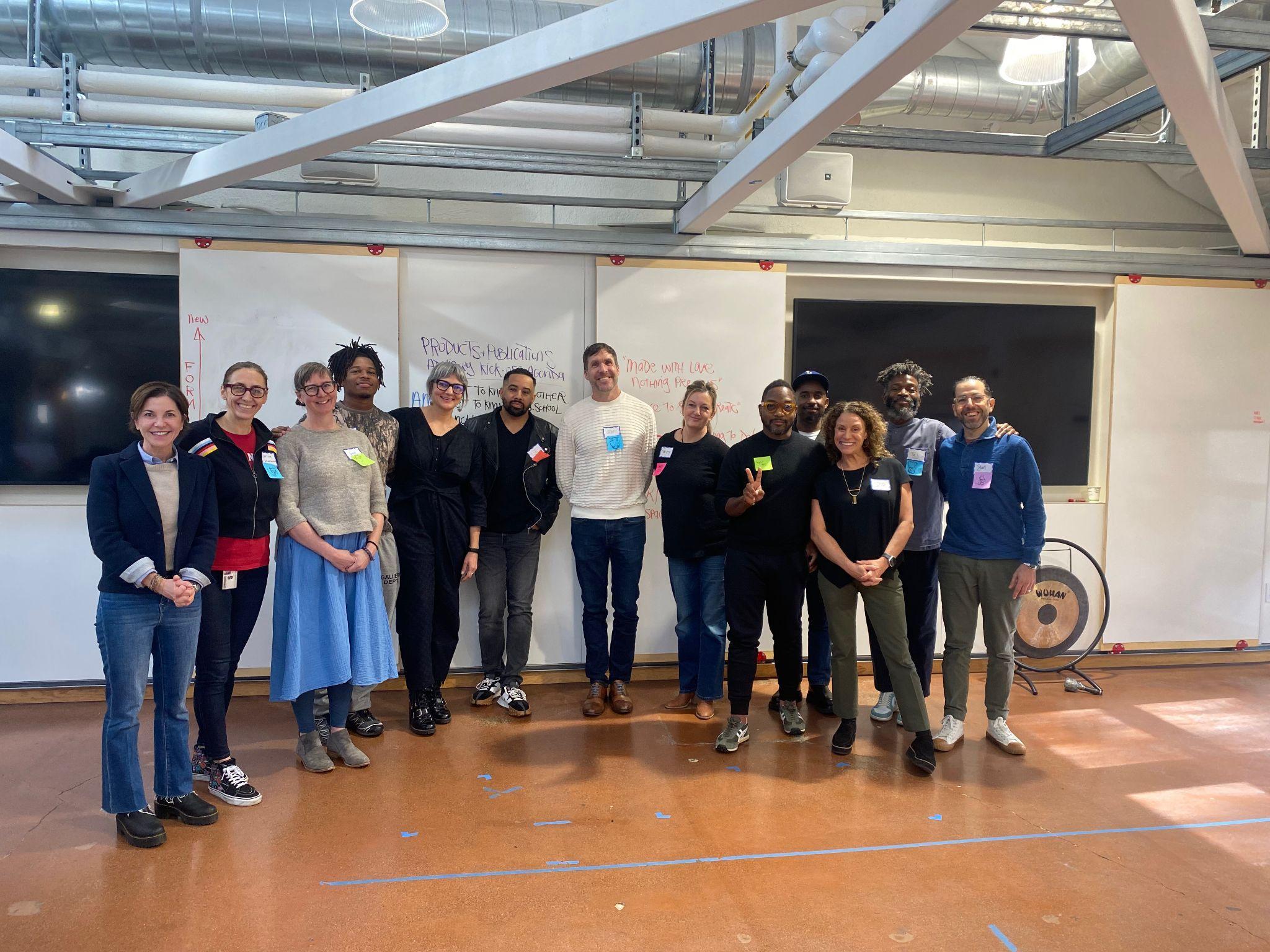
what we did with advisors over time
Conducted a daylong design sprint on audio product models with Carl Scott.
Explored online education ideas with Suz Howard.
Connected to Grizzly for marketing work through Taj Reid + engaged Marley Ewell in that contract.
Investigated marketing ideas with Taj Reid.
Deepened our relationship with Christy Fletcher at UTA.
what we learned
Audience. Strong conviction that broader audiences, particularly younger and more racially diverse audiences, want/need d.school products + publications.
Community. Advisors loved meeting and playing together and being in / experiencing the d.school.
Capacity. Keeping this effort ongoing takes effort / resources. looking back. taking stock. looking forward. looking
What this leads us to think / want to try next
Re-engage existing advisors to refine our POV and plans for moving forward with leading industry expertise and perspective.
Add advisors from Mozilla Foundation, Moleskine Foundation, Siegel Family Endowment, and Hasso Plattner Foundation.
Explore tie-ins with affiliates.
content camp
what we did
During the publishing of the d.school guides, more d.school home team and faculty expressed interest in writing books. In an effort to broaden and diversify our pipeline and make the process more transparent, in 2023, we invited folks to apply to develop a book project. A review team selected seven authors / author teams, who each received a stipend and coaching.
looking back. looking forward. looking
indicators of impact
20 proposals received in 2023.
5 external collaborators on the proposal review team.
7 projects selected for participation.
1 online course completed (Nadia, TB, & Susie’s Integrative Design course).
4 projects pitched by United Talent Agency to major publishing houses.
1 project nearly signed by a publisher (YC Sun and Zoey Zhu’s Speculative Futures Deck).
what we learned
Desire to have a book about one’s work doesn’t always equal a desire to write. And bandwidth limitations are real. Even with help, writing books is hard and slow. Most members of the Content Camp did not end up writing much. Jenn put a lot of effort into cultivating the four completed proposals that emerged.
Individual / institutional tensions. Explaining to what extent a project is by an individual and to what extent it represents the d.school can be tricky. Publishers seem to want both — individual authors named and explicit ties / use of the d.school brand. looking back. taking stock. looking forward. looking
what this leads us to think / want to try next
Content Camp offers a good “how” for developing content for a collective goal. The experience of Content Camp was wonderful and it’s become a mental model for folks looking to develop new material. In general, people appreciated being in a cohort that helped them stay accountable to doing work, and that offered feedback and support. While this Content Camp didn’t result in any publications (though YC + Zoey were close on their deck!) this model was successful in getting folks to turn their ideas into something more concrete.
looking back. taking stock. looking forward. looking
funnel deck
what we did
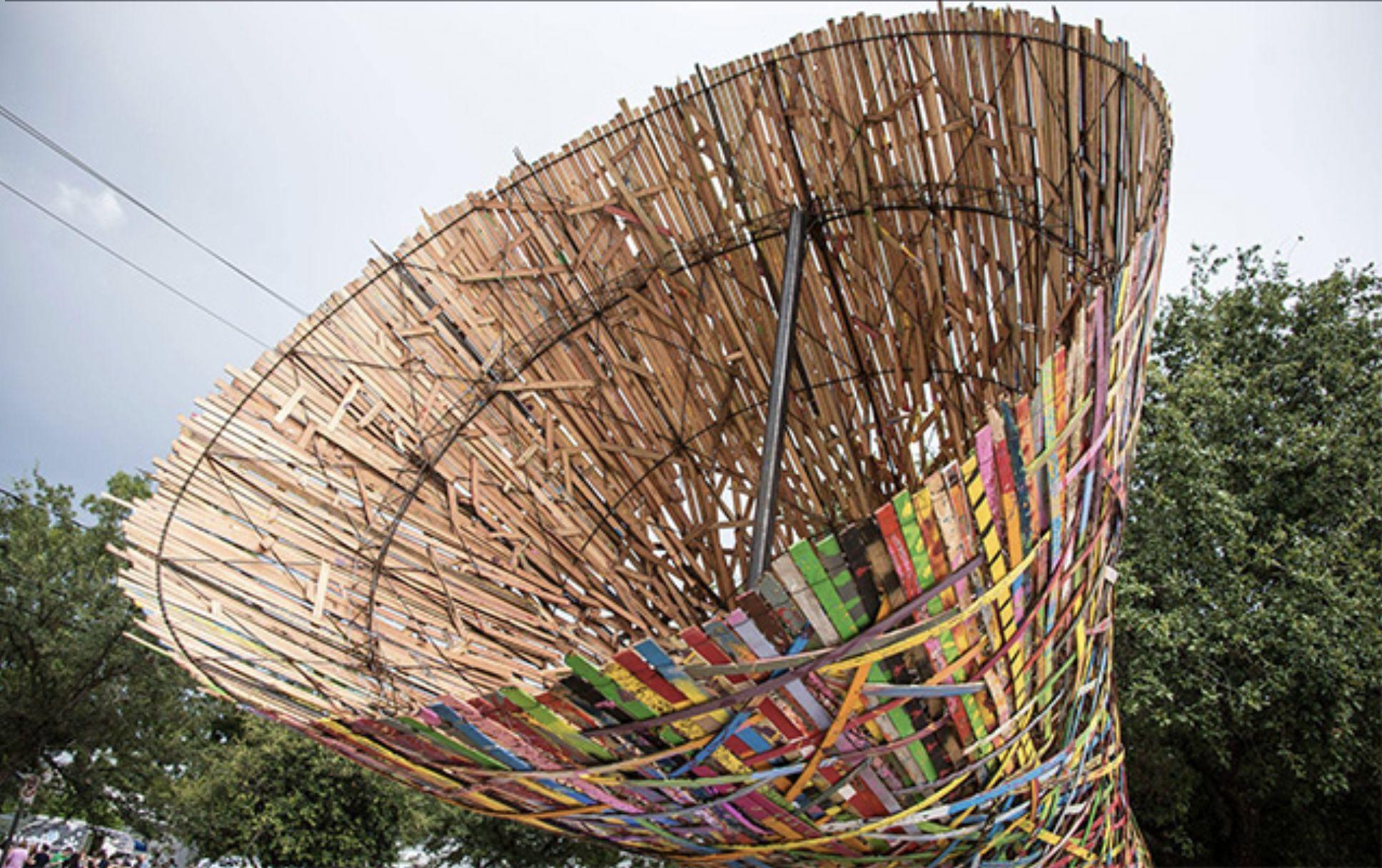
For landing day in 2024, we did a short presentation on content flow using a funnel analogy. The idea was to encourage folks to start building awareness of their idea – and testing audience interest – by creating shorter pieces we can share via the website and social media before developing the book/podcast/online course.
what we learned
Culture. The d.school culture of rapid making and moving on can be in tension with the time horizon of products + publications. To develop a product requires repeated exploration of an idea over time.
Capacity. This isn’t a one-off conversation. Folks are busy and need to hear frequently the ways in which the d.school can amplify their work. And folks aren’t really interested in this conversation until they have something they want to share. Folks are thinking of immediate needs / goals more than long term.
what this leads us to think / want to try next
The comms team continues to do a lot of work to share the ways in which folks can amplify work through the website and social. For those interested in doing larger projects, perhaps we can come up with a suggested model for building an audience (by testing and teasing new content through short articles, workshops, etc.).
product experiments
looking back. taking stock. looking forward.
additional experiments . . .
We make things + we give them away.
Yearbooks
Anniversary Celebrations Materials
Website Resources
We make things + we sell them.
We make things + other people sell them.
Other people make things + we sell them.
We make things to learn about our audiences.
looking back. taking stock. looking forward. looking
yearbook
what we did
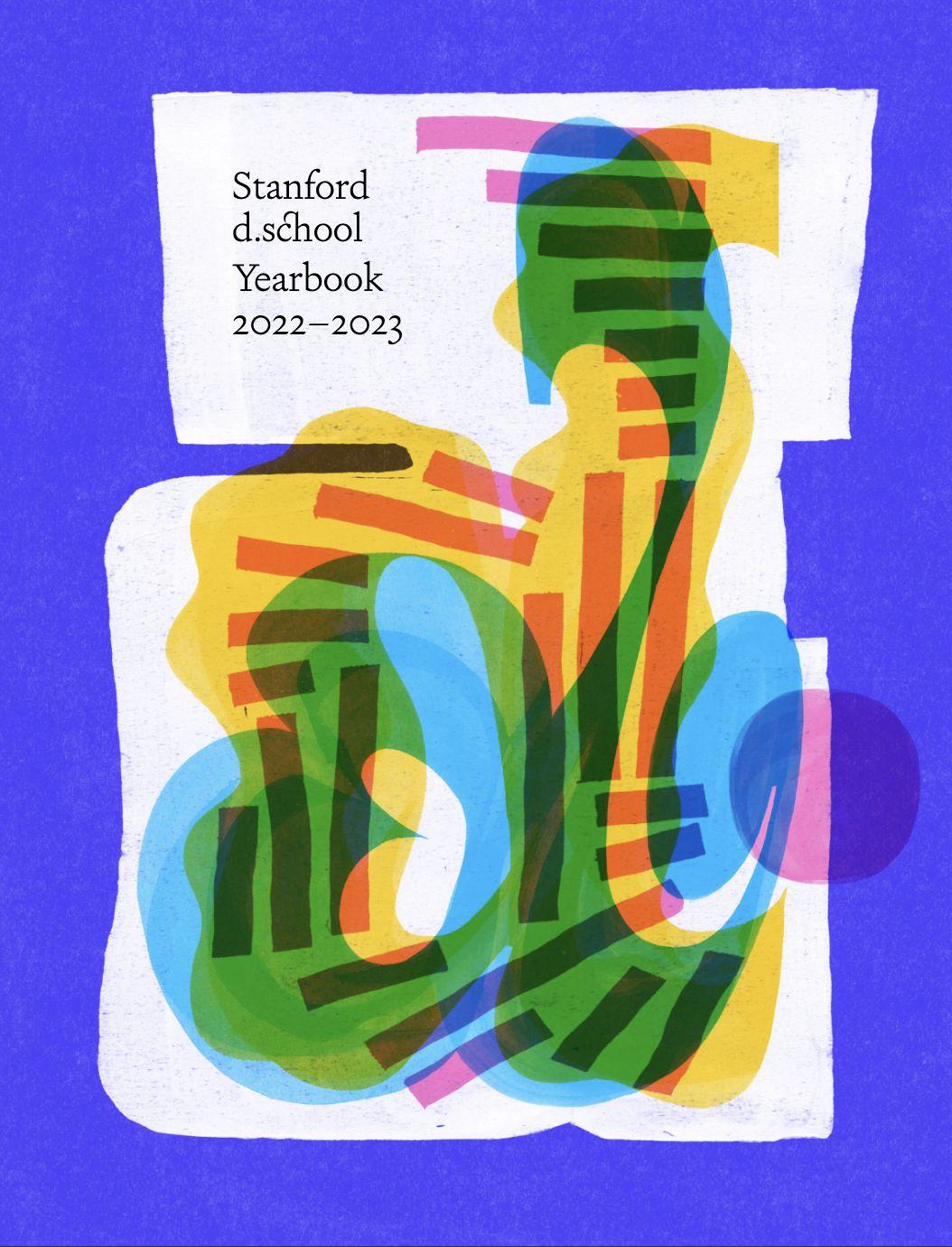
The Yearbook is the only annual print + digital publication that shares and archives the work happening at the d.school. Over the last few years, we’ve made an effort to turn the Yearbook into a publication that isn’t just for the Teaching and Learning team but that offers a report out on more of the remarkable projects and happenings that take place at or through the d.school across teams during the academic year. It’s also how we share a snapshot of annual data.

indicators of impact
400 copies printed each year to be given away to visitors, prospective students, and those interested in the d.school.
1000 reads on Issuu for the 2023-2024 Yearbook; 1000 reads for the 2022-2023 yearbook; and 4000 reads for the 2021-2022 yearbook. We suspect that the 21-22 yearbook has gotten more reads due to time online and number of awards won.
Many awards won for typography and design (from the Type Directors Club, Art Directors Club, Communication Arts) giving our brand more visibility and association with graphic design excellence.
what we learned
The d.school is not an easy place to represent in a single document, but it’s possible to capture a compelling a snapshot. By organizing content by areas of focus, and by tightening the article length, we’re able to give a good window into d.school culture and current thinking. By doing so, this becomes an attractive and interesting way to share a bit about the d.school to alumni, students, visitors, collaborators, potential funders, and more.
Distribution. There is still a challenge around getting the Yearbook out and into more hands.
what this leads us to think / want to try next
We are continuing to refine and evolve the Yearbook, and plan to shift the Yearbook from “a peek behind the curtain” to “showcasing what’s on stage” at the d.school. We’re positioning the Yearbook as being for people who want to learn more about what we do, with the primary audience being prospective students, funders, and donors.
looking back. taking stock. looking forward.
anniversary materials
what we did
For the This Is Design Work 20th anniversary event in October 2025, we created a folder of print materials, including the Data booklet and the Reflections on the Beginnings of the d.school Told Through Many Voices booklet. This was a way to celebrate the origins of the d.school and work done over the last 20 years and to shine a light on the impact the d.school has had and continues to have.
This work also sparked our relationship with the design firm, Public Official and with a new printer, Sorella Studios.
indicators of impact
1000 copies were printed for the anniversary event with 600 distributed to attendees on 10/4/25.
400 extra copies have been useful in handing out to visitors and to potential funders.
looking back. taking stock. looking forward. looking
what we learned
Windows are welcomed. People expressed delight upon opening the folder, discovering the booklets, and seeing the types of information they contained. People seem eager to know more about — and to feel a part of—the d.school.
Publication as keepsake. A physical booklet feels special. It’s a gift, a keepsake, and a piece of the d.school one can hold.
Playful + considered = good balance. These materials are easy to share with folks yet don’t feel throw-away. They are highly informative and share something of the vibe of the d.school.
what this leads us to think / want to try next
Can the booklet format be a way to showcase other work from the event or from the d.school? (We’re currently working on developing an Alumni booklet.)
The folder of collected materials is a promising format for sharing d.school info in a modular way (i.e., different pieces can be assembled for different audience members).
Deepening our relationship with Adam Royalty and/or other experts in data collection and interpretation can help us capture, understand, and produce content about the impact of the d.school’s work.
Invest more time in follow-up research on how these assets impact readers.
looking back. taking stock. looking forward. looking
website resources
what we did
With the launch of the new website a lot of work has gone into evaluating existing content, identifying gaps + content needs, and formalizing both the structure of content and how content is created. We’re also proactively reaching out to folks to fill gaps and get more voices on the site.
We’ve refreshed the tools and are looking at new ways of sharing them, both individually and through collections.
indicators of impact
392,587 unique users visited the Tools section of the website between April 2023 and July 2025.
48 tools and 4 tool collections are currently available on the Tools page. These tools were downloaded 2,694 times in 2025, showing a strong interest in our free resources.
1,345 active users and 830 unique users visited the Get Started with Design collection in just the month of January 2026, with resources downloaded 198 times. Introductory design tools are widely outperforming our other tools, largely due to these tools being surfaced in Google searches.
looking back. taking stock. looking forward. looking
what we learned
Production process is labor intensive. Some folks need a lot of support and time to create content. Even for short web stories and tools, content creation is slow work. Tool creation in particular, and especially for more robust tools like the Bootleg, can be a big lift.
Clarifying audience. The audience for our tools is still a bit unclear – who’s using these now? Who do we want to reach with future tools?
what this leads us to think / want to try next
From a feral field to a cultivated garden – make it easier to find content. Continue to organize the tools so that they are more findable / accessible. Add more collections by author or program.And be more intentional in what new tools we add — developing tools to known audience needs/wants.
Encourage staff to use the site. What will make the tools more usable for those who have created them? The more the creator can incorporate tools into their teaching and work, the more they will point folks to the tools, and the more the tools will spread and be used.
Create the next big tool. What’s the next Get Started With Design or Design Thinking Bootleg?
looking back. taking stock. looking forward. looking
business model experiments . . . additional experiments . . .
We make things + we give them away.
We make things + we sell them.
Book Club Riff / Scopey SXSW
We make things + other people sell them.
Other people make things + we sell them.
We make things to learn about our audiences.
looking back. taking stock. looking forward. looking
book club
what
we did
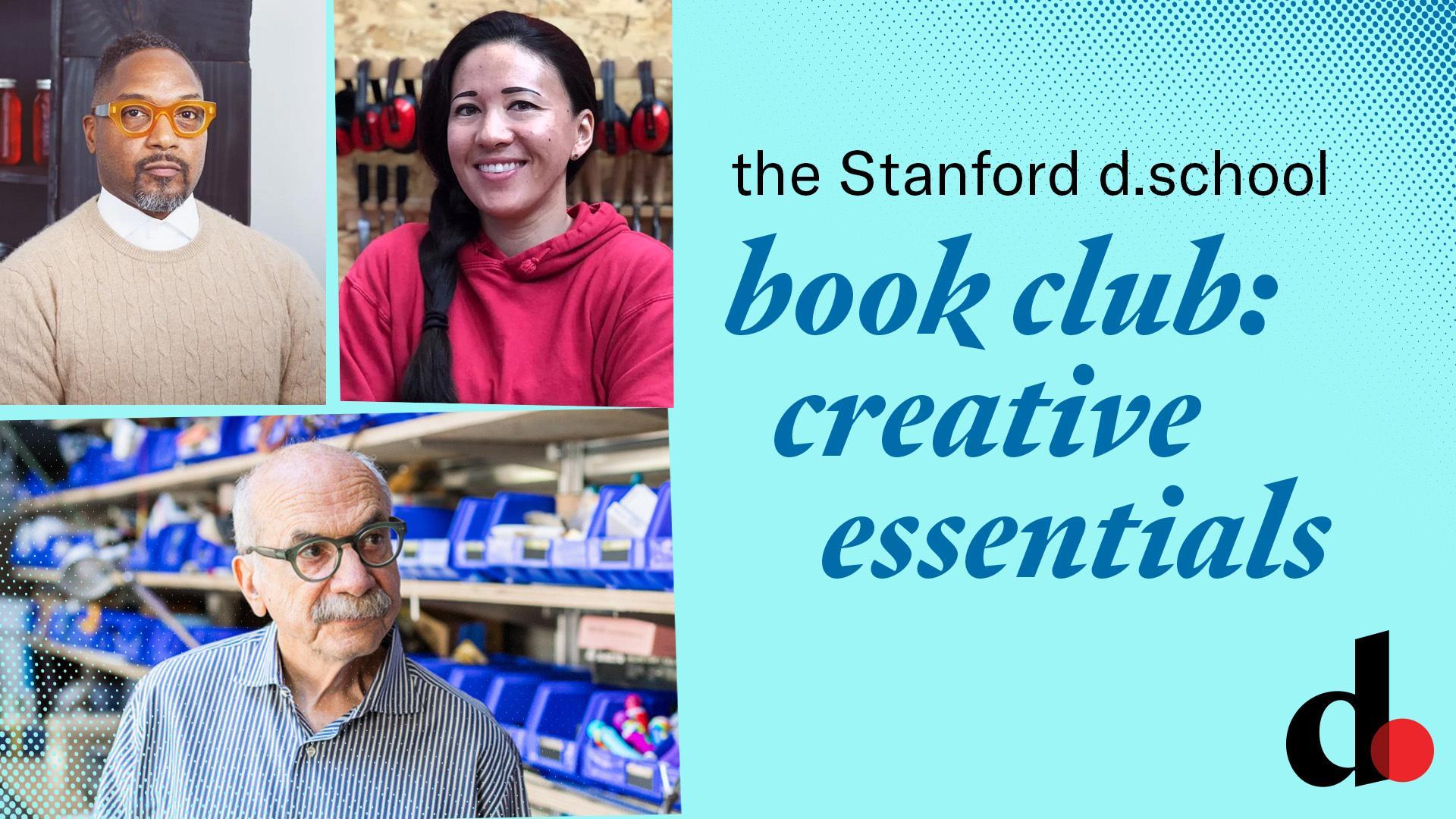
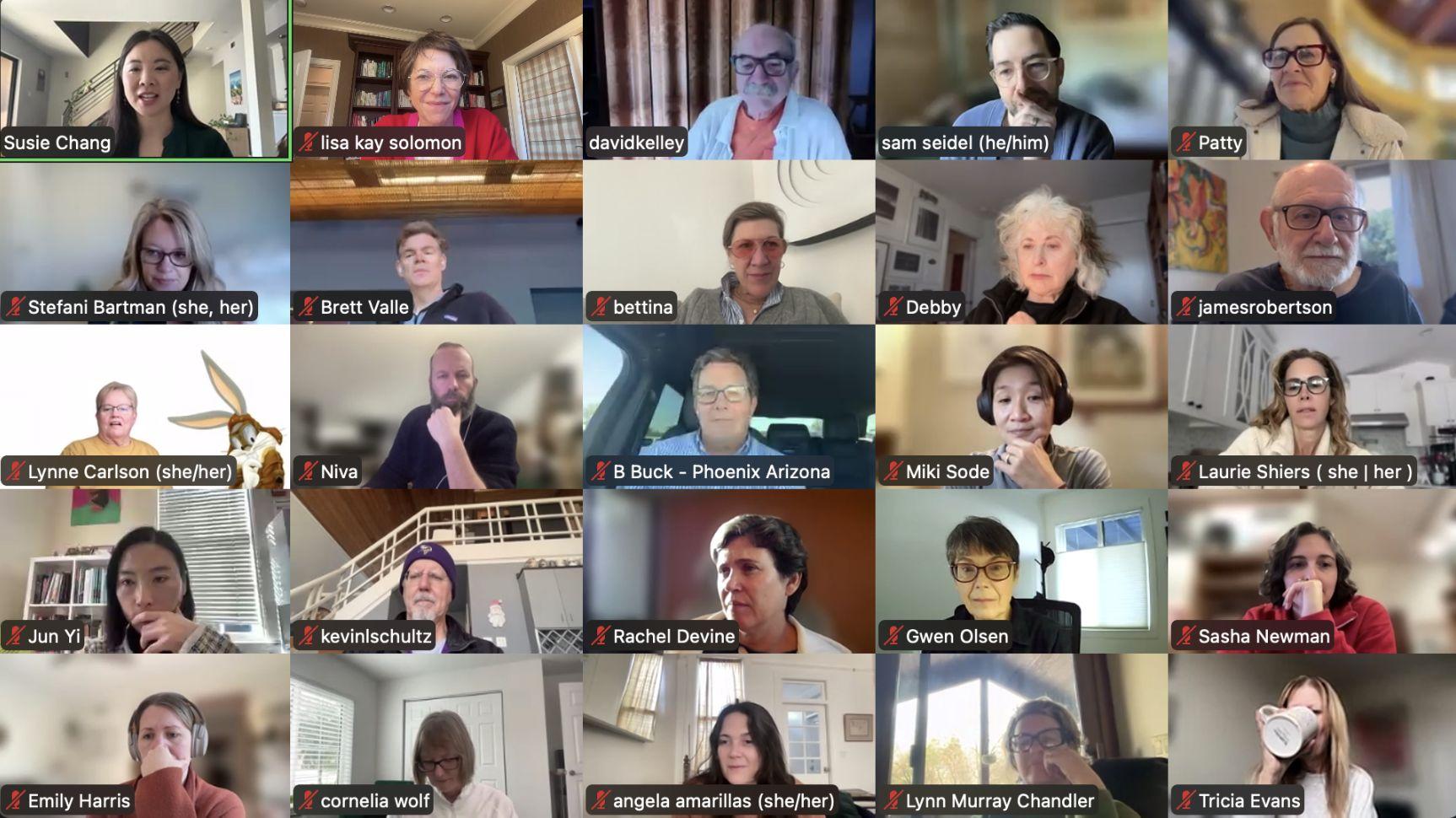
Launched the d.school’s first Book Club and hosted monthly virtual author talks in 2025, focusing on each of the books in the d.school collection. Collaborated with Matter to sell and distribute books to members.
Continued the momentum with the 2026 Book Club: Creative Essentials edition, with 228 full members as of April 8.
indicators of impact
12 monthly author talks in 2025
12 books in the d.school collection featured
230+ full book club members in 2025
228 full book club members in 2026 (to date) (similar to National Writers Series Virtual Talks, which also feature authors and have a similar price point)
Approx 110 book sets ordered from Matter
$80k+ registration revenue
90 single session signups
17% returning members
Many d.school authors attended sessions other than their own
Multiple requests for the Book Club to be offered in raffles
what we learned
Community. Book club members have relayed a strong desire (and gap felt) for creative community.
Infrastructure. Institutional infrastructure and capacity is a real constraint. Challenges with Merchant Services and Cardinal Pay make the registration and payment process clunky for potential members. It is not currently possible for us to directly sell our own books. looking back. taking stock. looking forward.
Opportunity. Desire for support in applying the content to participants’ own work / lives.
Marketing. In 2025, 50% of the book club members came from our newsletter and 45% came from the education sector: likely leaning on our existing audience.
what this leads us to think / want to try next
Consider opportunities for paid, facilitated online communities.
Create products that show the Creative Essentials, and help people implement them: Creative Essentials journal / workbook / playbook.
Collaborate with trusted organizations to distribute our products + publications, or decide internally (not a light decision) to take up the challenge of expanding Stanford infrastructure (e.g., payment platform capabilities or paid access to external platforms).
looking back. taking stock. looking forward. looking
Riff
what we did
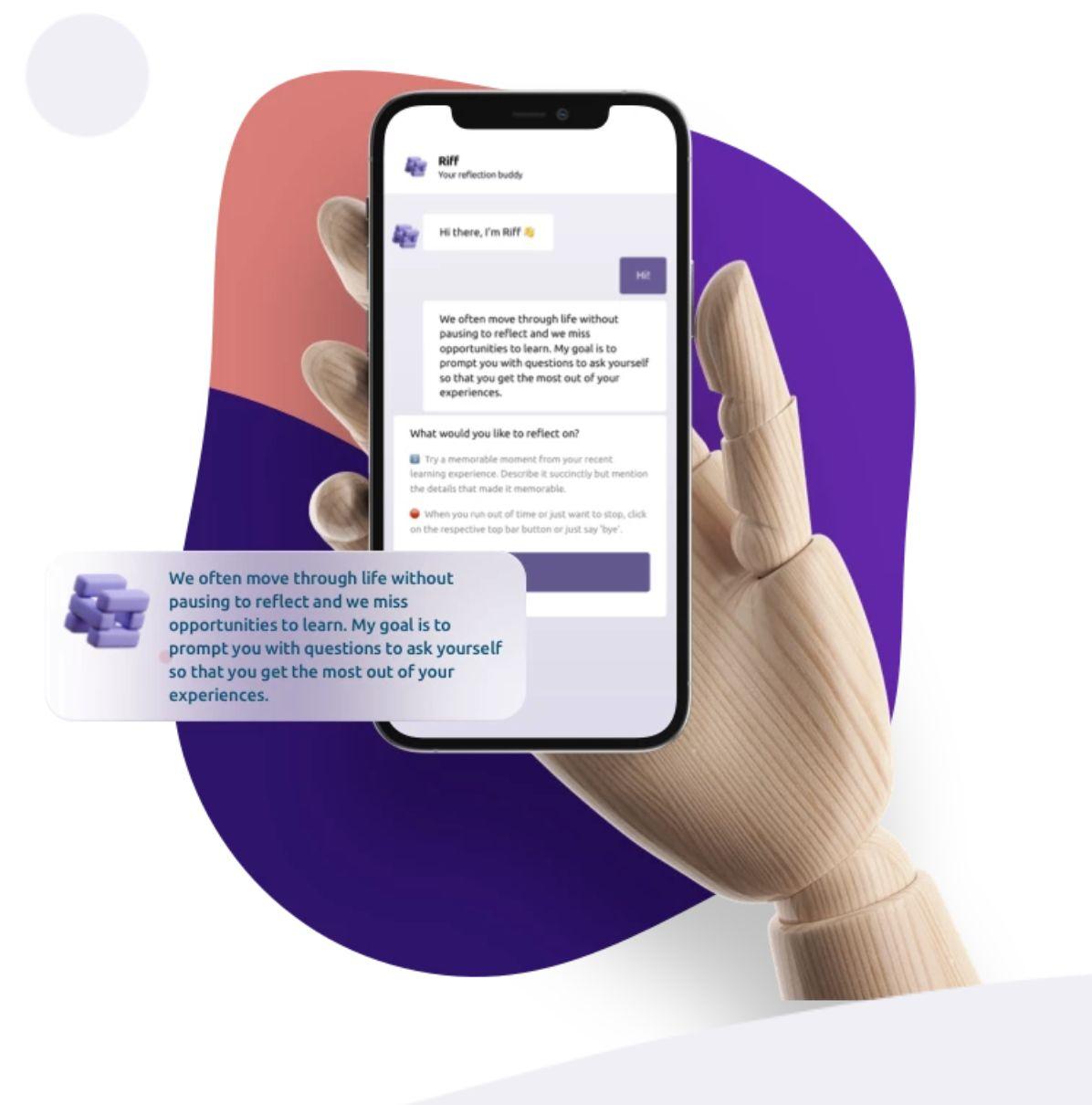
Leticia has worked with the developer Enchatted for years to develop Riff, an AI-powered reflection bot. We’ve met with the Office of Technology Licensing (OTL) to understand Stanford policies and support, Merchant Services to work through payment platforms, and have price tested with existing users of Riff. We explored five go-to-market models and are close to finalizing a fee-based model that includes capturing user feedback.
indicators of impact
900 accounts created from 3,100 requests and 2,100 invites
~2.3 average bots per user
6,600 average words per bot
~$1/month average cost per educator (this represents only the Application Programming Interface [API] cost and does not include other staffing or admin expenses)
what we learned
University can’t sell tech. The smoothest path forward was to frame an offering as a training on reflection, that included access to Riff.
System limitations. Payment platforms offered by Stanford are clunky and don’t include the features needed (e.g. recurring subscriptions).
Intense customer needs. Development of emerging technologies, particularly AI where regulation isn’t keeping pace, includes a lot of ambiguity and therefore cost to provide customer support.
what this leads us to think / want to try next
Decide if and what big projects to take on with Stanford’s institutional infrastructure.
Consider whether the d.school should have an organizational stance on how we utilize, produce, and spread AI tools in the context of our vision of a world with an abundance of human imagination?
Create a guide to help people develop their own stances on AI’s interaction with human imagination in their professions / lives (a la Questions to Your Answers About School Safety).
looking back. taking stock. looking forward. looking
what we did
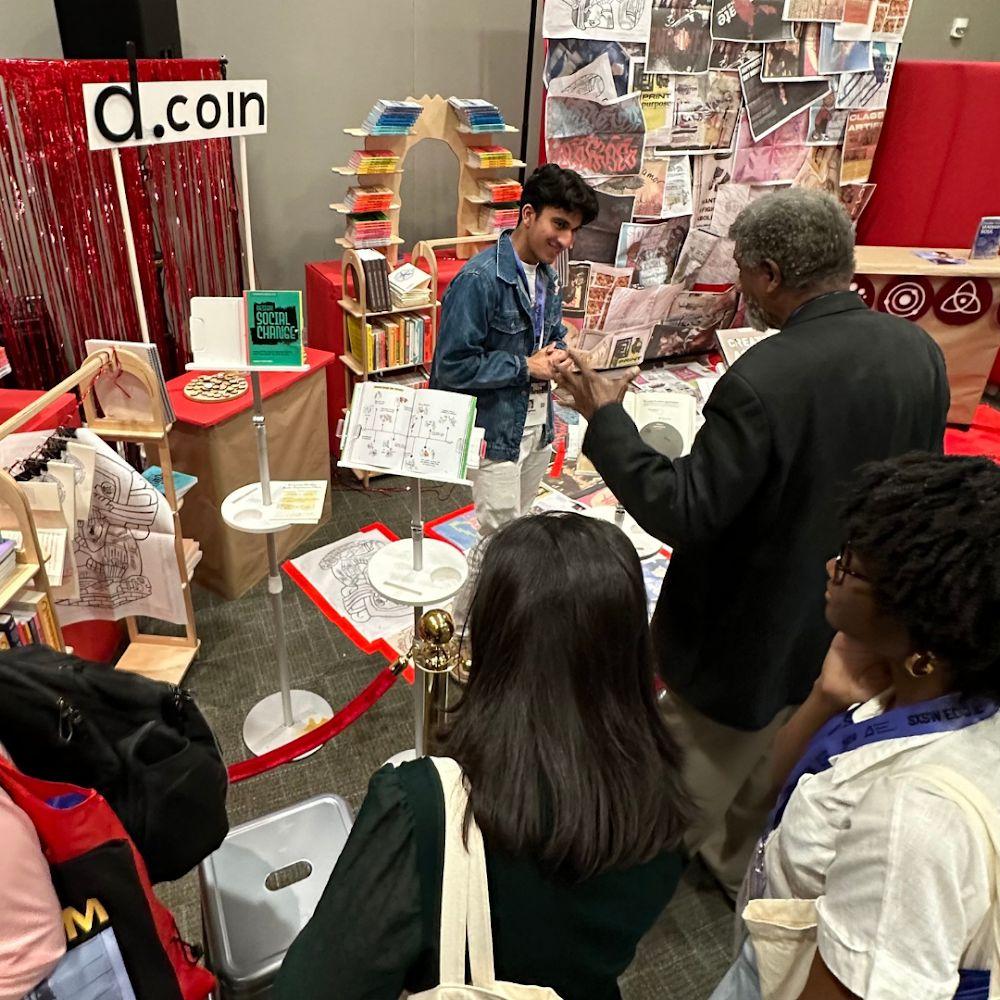
Through collaborations with Siegel Family Endowment, SXSW, and the Omidyar Network, we have stood up activations that have given away over 2,000 d.school books and several hundred other books about design to attendees of SXSW EDU and SXSW.
indicators of impact
2,000+ d.school books given away
100+ other books about design given away
600% sales increase in d.school titles during the time period surrounding the activations
looking back. taking stock. looking forward. looking
what we learned
Book awareness leads to book sales. We saw book sales spike around these activations, showing that when we put the books in the world with people at live events in compelling ways, it leads to book sales.
Third-party funding. The right collaborators can make it possible to share our products + publications at no cost to our organization.
what this leads us to think / want to try next
Continue to invest in relationships with organizations that share values around inspiring human imagination, ingenuity, and innovation.
Look for one other SXSW-sized opportunity/year?
Aim to make these sorts of live events part of every product + publication release plan.
looking back. taking stock. looking forward. looking
business model experiments . . . additional experiments . . .
We make things + we give them away.
We make things + we sell them.
We make things + other people sell them.
Amplifier Card Deck Futures x Design Course with CGOE Creative Hustle Online Course
Other online course explorations
Other people make things + we sell them.
We make things to learn about our audiences.
looking back. taking stock. looking forward. looking
amplifier card deck
what we did
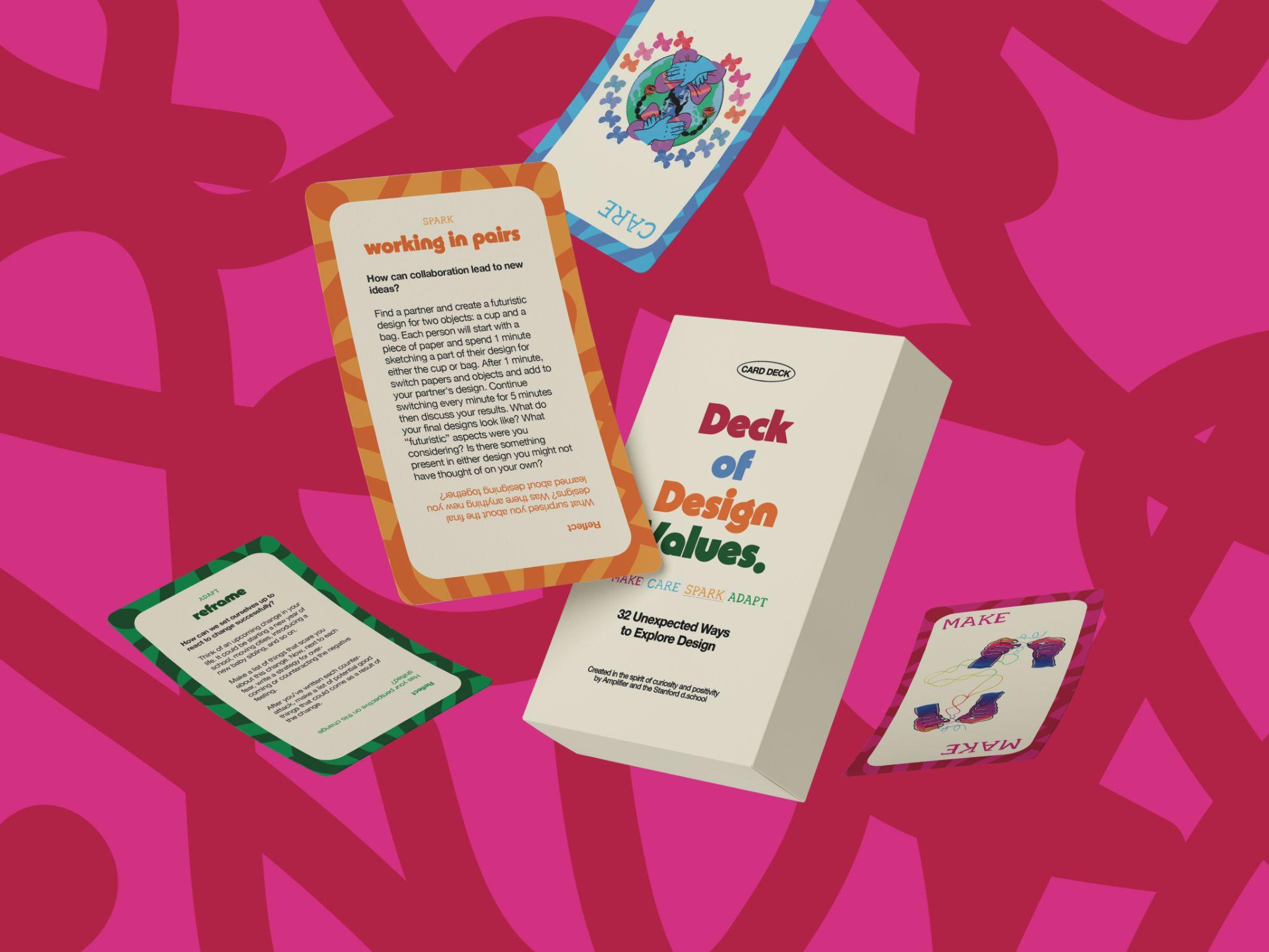
We collaborated with Amplifier to create a card deck based on the design pillars, with content written by d.school students, for educators serving students in middle school and above. Amplifier handled the artwork and graphic design, distribution, and sales through their online store. Discounts and free copies are offered to educators, along with resources suggesting how best to use them. Costs were shared. Revenue goes toward more resources for educators.
indicators of impact
1,000 decks were printed.
The project prioritized educator access and programmatic use:
150 decks shipped free of charge to educators across the US.
25% discount offered to educators who signed up for but did not receive a free deck.
240 decks distributed directly by the d.school.
150 decks were paid for by Siegel Family Endowment and given away at SXSW 2026.
305 units sold by Amplifier to date, 50 of which were directly tied to the d.school newsletter announcement.
what we learned
Collaboration can be tricky. Even with values-aligned partners, issues can arise (e.g. leadership turnover at partner organizations, funding changes, etc). Clear communication and documentation around goals, timeline, and roles is essential.
We’re the content creators. Even when working with a collaborator, we have a strong view on the content and therefore we’re often still responsible for generating the content.
Flexibility around changing markets. For this project, we needed to change format + audience mid-stream to acknowledge changing finances and market. looking back. taking stock. looking forward.
what this leads us to think / want to try next
There’s still space and opportunity to use these cards in the classroom and in content we continue to create around the pillars. In general, it would be great to find more ways to use the products + publications we create in classes and workshops at the d.school.
Opportunity to give away / promote at different activations or events, e.g. SXSW.
Collaborations like this should occur within bigger initiatives, e.g. Creative Essentials (not as stand alone projects).
looking back. taking stock. looking forward. looking
futures x design course with cgoe
what we did
Stanford has a unit that exists to bring courses to external audiences: The Center for Global Online Education. They share revenue with the academic department from which a course comes. We launched an experiment with them to create a class called Futures Thinking for Strategic Decision Making. We successfully tested audience interest with a webinar. We worked with CGOE and their contractor Global Alumni to build out and run the course. The first cohort launched in March 2026.
Time horizon. We started our process with the Center for Global Online Education in August 2023. It took 2.5 years to launch.
We are not typical academic collaborators. While most professors hand off content, we have much more interest in the design + delivery of the learning experience.
Labor intensity. Explaining our work to collaborators can be time-consuming. This project has taken hundreds of hours of team time.
what we learned what this leads us to think / want
to try next
We really need to see fruits of this effort going live in terms of enrollment, revenue, and student feedback.
We would love to experiment with other collaborators for online courses for external audiences, but there are institutional dynamics to navigate to be able to do this.
We should develop an internal vetting process of content to ensure readiness for new formats.
looking back. taking stock. looking forward. looking
creative hustle online course
what we did
Stanford Digital Education approached us about turning Creative Hustle into a free credit-bearing online course for Title 1 high school students. After months of work on the course, Stanford Digital Education was disbanded. However, the d.school received a gift to complete the online course. We have filmed the bulk of it and it is currently being edited and courseware is being built. Given the midstream shift, we do not currently have a clear distribution mechanism for the content.
Institutional politics can pose dramatic challenges. Stanford Digital Education’s position in the university was delicate. Our collaboration with them ended up being disrupted by political liabilities at the university.
Talent matters (we knew this but got to really feel it). The course producer we were paired with is excellent and has become a collaborator on multiple d.school projects.
what we learned what this leads us to think / want to try next
We are still in the production process for this course and actively exploring outlets for its distribution. We are currently talking with Free to Dream (entertainer Common’s nonprofit) about distribution channels to a similar audience as originally intended, and talking with College Unbound about the possibility of attaching college credits.
looking back. taking stock. looking forward. looking
other online course exploration
what we did
Met with Discovery Ed, IDEO U, MasterClass, Roundtable, SSIR, Studion, and YouTube Learning to explore potential collaborations.
Conversations have gone deepest with MasterClass, who we met with seven times. We have explored piloting a certification program together. This path has stalled out at the institutional level (broader Stanford contracting). We are now pursuing the possibility of a non-certificate Creative Essentials course featuring David Kelley.
what we learned
Tensions. We’ve received lots of interest in collaboration from external online learning platforms. Stanford has policies and politics that make standing up online courses with outside entities tricky.
Experience Design Friction. We have a strong perspective on how to design high quality learning experiences. Online learning platform providers do too. While some of these perspectives are held in common, the delta can be tricky to navigate.
what this leads us to think / want to try next
We are leaning heavily with Masterclass on getting a (non-certificate) David Kelley Creativity Class greenlit.
We are also exploring avenues within the university for the development of certificate courses with MasterClass (the GSB is currently exploring this path).
looking back. taking stock. looking forward. looking
business model experiments . . . additional experiments . . .
We make things + we give them away.
We make things + we sell them.
We make things + other people sell them.
Other people make things + we sell them.
Design Lit Fest
We make things to learn about our audiences.
looking back. taking stock. looking forward. looking
Design Lit Fest
what we did
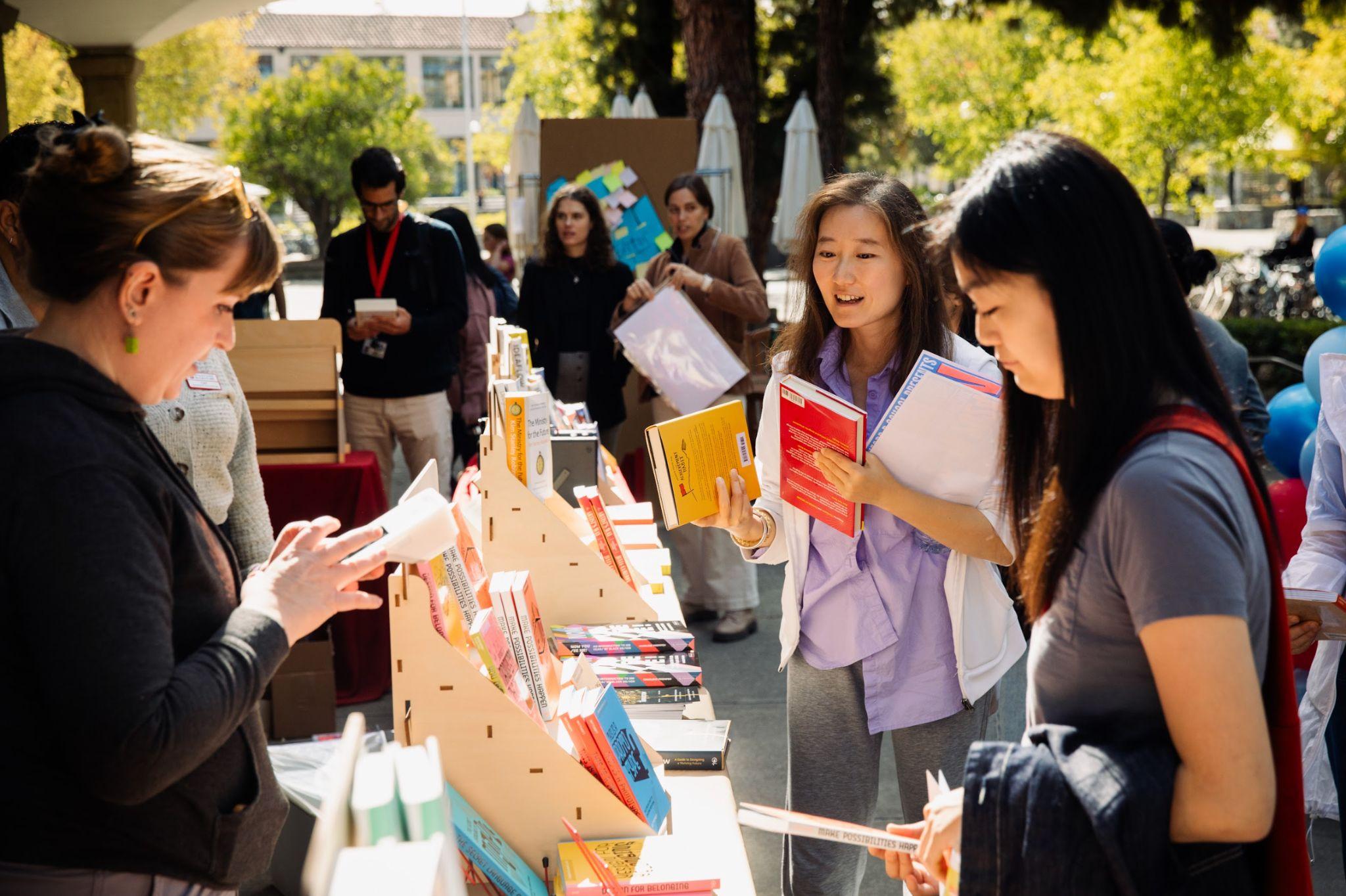
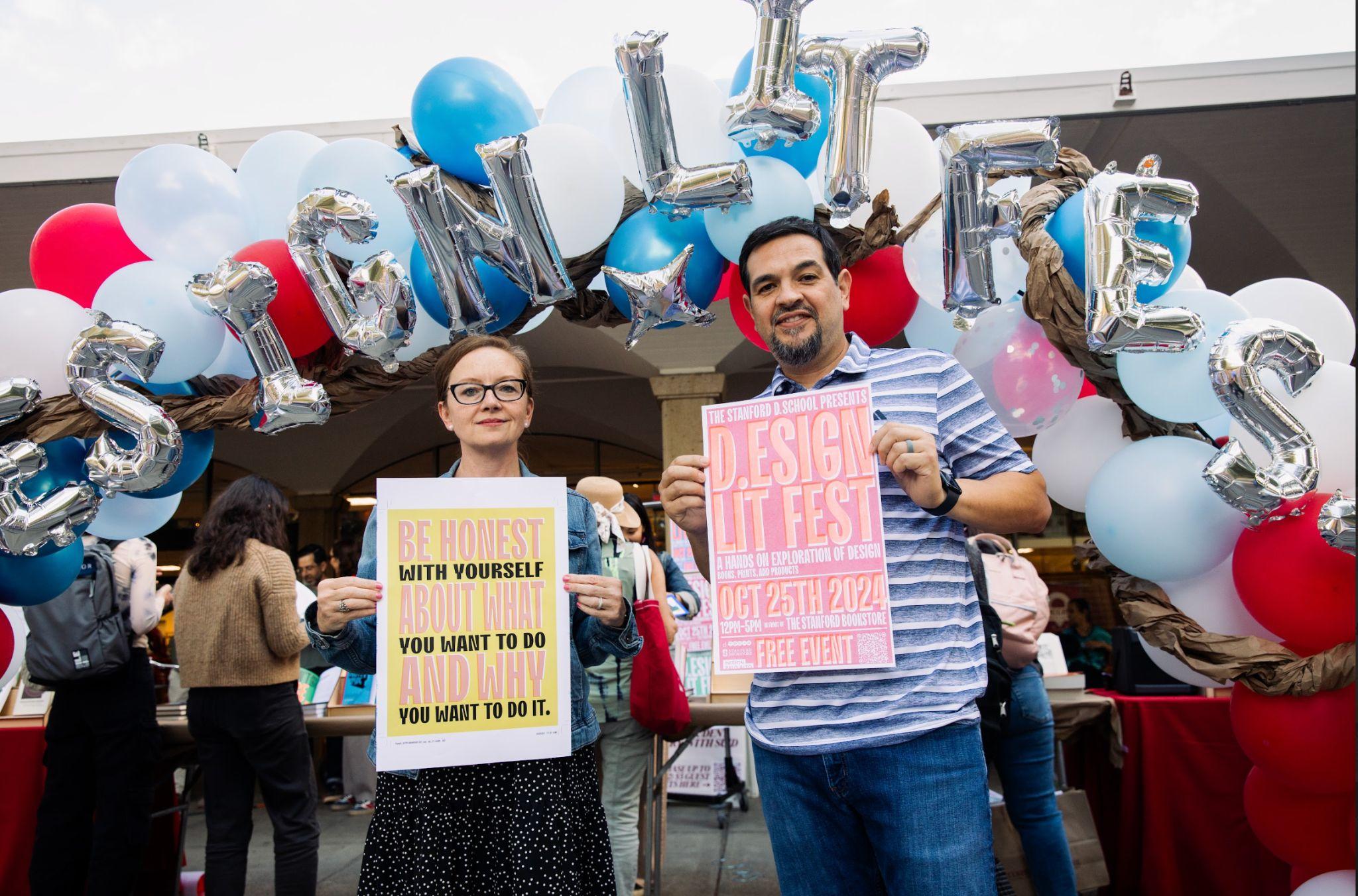
We hosted a Design Literary Festival in October 2024 in collaboration with the Stanford Bookstore.
We sold books — both d.school books and beyond — as well as postcards and poster prints from Daniel Frumhoff and Rick Griffith; and d.school authors hosted activities from their books. Approx 600+ attended, during Alumni Weekend.
indicators of impact
Approx 600+ in attendance, the space was packed and vibrant for 5 hours
13 authors present
12 books in the d.school collection available for sale
33 design books (non-d.school) available for sale
$4,884 in sales
227 products sold, including 110 d.school books. With a daily average of 84 books sold (calculated from 15,132 books sold in the 6 month period 7/1-12/31/24), this is a 31% increase in book sales.
we learned
In-person is appreciated. We received a lot of enthusiasm for in-person touch points with the d.school (a couple flew out from Chicago just for Lit Fest!).
Direct sales are hard + not lucrative. Selling books directly is laborious but doable. It has not been profitable, which suggests that sponsorship is necessary to make events like this net positive economically. looking back. taking stock. looking forward.
Location + timing = attendance. Hosting during a big day on campus brings in people learning about us possibly for the first time, some like Stanford as a destination, but it also limits attendance (Stanford is not easy to get to).
what this leads us to think / want to try next
Make secured sponsorship a prerequisite for holding another Lit Fest.
Integrate with the Book Club: we could experiment with a dedicated in-person gathering for book club members, including a mini-showcase of work accomplished through the books and book club.
Continue to pursue opportunities to give away / promote d.school and other design books at different activations or events, e.g. SXSW.
Find ways to seat collaborations like this within bigger initiatives, e.g. Creative Essentials (not as stand alone projects).
looking back. taking stock. looking forward. looking
model experiments . . . additional experiments . . .
We make things + we give them away.
We make things + we sell them.
We make things + other people sell them.
Other people make things + we sell them.
We make things to learn about our audiences.
Audio explorations Marketing experiments
looking back. taking stock. looking forward. looking
audio explorations
what we did
Met three times with the team from Think Fast, Talk Smart podcast out of the Stanford GSB.
Had a day-long sprint with advisor Carl Scott, who heads audio for MeadowLark Media.
Prototyped three episodes of Creativity Crisis Hotline.
Consistency of Cadence. Experts have shared that it does not make sense to invest effort into doing audio experiments and then let those channels go dormant. Once we start publishing content, a weekly cadence is key.
Consistency of Voice. While format and content can evolve, it’s important our audience can maintain a connection through a host.
what we learned what this leads us to think / want to try next
Podcasting could make a great contribution to our strategic priority of expanding to new audiences through new mediums. To do so, we need the production muscle to deliver consistently over time. We could build this internally OR collaborate with an external partner (e.g. WaitWhat).
The revenue model is likely to be sponsorship or paid advertisements, though it is also possible to sell a podcast to a platform (e.g. Sirius) that in turn can offer exclusive ad-free access and/or other extras.
Talk to Bernie + his team and consider Comms collaboration on this front.
looking back. taking stock. looking forward. looking
marketing experiments
what we did
We got bids from four potential firms— 510Media, Grizzly, McCalman, and Outcast — to run three marketing experiments.
We selected Grizzly based on diversity of approaches they offered and high recommendation from our advisor Taj Reid. We ran experiments with them focused on influencers and paid social media advertising.
Influencer muscle. Influencer marketing led to nominal sales boosts but lots of eyeballs (over 20,000 views of content related to the d.school). This could be a good strategy to explore further for awareness raising with new, particularly younger, audiences.
In-house expertise. David Martinez has experience and strong sensibilities in this area.
what we learned what this leads us to think / want to try next
As an organization, if we continue to invest in creating new products + publications with the aspiration of reaching new audiences, we need to continue to build our marketing and measurement muscles. The Comms team should lead this work and we should collaborate on the development and execution of campaigns.
looking back. taking stock. looking forward. looking further.
looking back. taking stock. looking forward. looking further. winter
Over the past few years, we have built ongoing collaborative relationships with several entities within and outside Stanford that have helped us create and distribute new products + publications and to reach new audiences.
distribution + operations collaborators: Matter (book sales, original totes as bonus elements, data sharing) + Stanford Merchant Services
convening collaborators:
SF Design Week/Design Bay Area + Stanford Bookstore + SXSW
artistic + distribution collaborator:
Amplifier Art
online course collaborators: CGOE + MasterClass print production + publishers: Ten Speed Press + Sorella Studios
literary agent: United Talent Agency
looking back. taking stock. looking forward. looking
looking back. taking stock. looking forward.
looking back. taking stock . looking forward. looking
defacto business models of the past
We make things + we give them away for free.
Other people make things + other people sell them.
We make things + other people sell them (but don’t give us any of the money).
business models we set out to explore
We make things + we sell them. Subscription-based text/multimedia content (e.g. newsletter).
Other people make things + we sell them. Forum approach (e.g. online platform, book festival, etc.)
We make things + other people sell them (and give us money).
Video content on existing platforms (e.g. LinkedIn Learning, etc.)
business models we see as having most potential
We make things + we sell them.
Book Club / membership models.
More B2B than B2C — meaning selling things in advance to philanthropy and affiliates, more so than directly to individual customers.
We make things + other people sell them (and give us money).
Online courses with CGOE.
We could explore licensing of tech, such as AI bots.
looking back. taking stock. looking forward. looking
POV evolution
looking back. taking stock. looking forward. looking
Partnerships > us building the infrastructure? Activate network of experts Optimize for reach + revenue Experiment more with business models than content
new POV
Partnerships > us building the infrastructure!
Build pipeline for new content development
Optimize for new audiences + conversion to EATs offerings
Focus on funded initiatives + sponsorships
looking back. taking stock. looking forward. looking
initial POV
Partnerships > us building the infrastructure?
new POV
Partnerships > us building the infrastructure!
the learning that shifted our thinking
Collaborations are messy and never go as smoothly as expected — and are still worth it, especially given institutional constraints.
Collaborations help us reach new audiences.
There are significant limitations on what and how we can sell things as part of Stanford University (we cannot sell software, we haven’t yet been able to bill customers on a repeating basis, we have a limited set of antiquated payment platforms, we are required to work with university entities to sell online courses).
Replicating services our collaborators provide would require building capacity in areas like customer service.
looking back. taking stock. looking forward. looking
the learning that shifted our thinking
Attracting world class advisors is a competitive advantage. We’ve benefited from our advisors’ perspectives and introductions, and we plan to engage them more deeply in our work moving forward. Strong advisor engagement ensures we stay on the cutting edge of content, form, marketing, and collaborations.
We have found that knowing what content might be great to produce and producing it are two different things. Moving forward, we want to invest more in building the internal pipelines for new content to be developed, tested, and produced. The 2026 Idea Nursery SMARTIE goal is an effort in this direction.
for
+
looking back. taking stock. looking forward.
new POV optimize for new audiences + conversion to EATs offerings
the learning that shifted our thinking
Products + publications are the most effective way of achieving the d.school’s strategic priority of getting design into the hands of more people. Our books have reached over 250,000 people. The resources and tools on our website have reached over 500,000.
While some products and publications can generate modest revenue, we believe the main value in the work we produce and disseminate will be to bring the d.school to more people, and more people to the d.school. In doing so, this will put design tools in more peoples’ hands, elevate public perception of the d.school’s value, and bring more customers into our external audience programs.
looking back. taking stock. looking forward. looking
initial POV experiment more with business models than content
new POV focus on funded initiatives + sponsorships
the learning that shifted our thinking
There are significant limitations on what and how we can sell things as part of Stanford University.
Profit margins on publications are tight and we invest a lot in the creation (e.g. on our book series, even though we have sold over 200,000 books, we are not yet close to recouping our advance).
We had a highly trafficked Design Lit Fest and sold many titles from outside the d.school but still didn’t generate enough revenue to cover the costs of hosting the event.
We have generated significant resources in the form of gifts (e.g. Creative Essentials and our recent gift from Siegel Family Endowment) and we believe that sponsoring efforts like the Design Lit Fest or Audio could be compelling to potential affiliates.
looking back. taking stock. looking forward. looking
next ideas to test
looking back. taking stock. looking forward.
new content development pipeline
what we propose doing
Reconvene our advisory group with possible additions including David Kelley, the Executive Editor of the Mozilla Foundation, the CEO of the Moleskine Foundation, colleagues from Siegel Family Endowment, Hasso Plattner Foundation, and possibly our Creative Essentials funder.
Build, test, and refine an Idea Nursery with colleagues from across the d.school.
Great new ideas / directions to explore for new content and formats.
Conviction and clarity on where to invest most heavily.
what outcomes we hope to generate what we hope to learn
Benefits and liabilities of producing a wider range of content types.
Muscles required for ongoing content production in areas such as audio.
looking back. taking stock. looking forward. looking
produce easy-toshare assets
what we propose doing
Create a suite of booklets: Alumni, Data, and History.
Develop AI-powered tools, e.g. Riff + MM.
Produce Yearbook. Experiment with a student-created Yearbook and/or Design Magazine.
Further explore the idea of creating a suite of audio podcasts.
Create the next Design Thinking Bootleg deck.
Design beautiful prints/posters.
Strengthen our alumni network.
Find new audiences.
Make outreach to funders and donors easier.
Build community amongst our audience (in collaboration with Comms) through the release of new offerings.
what outcomes we hope to generate what we hope to learn
What content and formats our existing audience are hungriest for.
More about who our audience is currently and how we want to grow it.
looking back. taking stock. looking forward.
strengthen collabs to find new audiences
what we propose doing
Work with MasterClass to develop a Creative Essentials online course.
Continue collaboration with Enchatted to develop and refine AI tools.
Explore how we can help signal and celebrate humans’ creative contributions with Mozilla Foundation.
Encourage Merchant Services to add new features on approved payment platforms.
Our community grows with people who previously weren’t familiar with the d.school.
Increased public respect and appreciation for humanly created work, including people’s own.
what outcomes we hope to generate what we hope to learn
What content is compelling for new audiences.
General pulse on response to AI-assisted or created content.
looking back. taking stock. looking forward. looking
test the sponsorship model
what we propose doing
Produce high-quality, public-facing productsaboutDavidKelley’sCreative Essentials with support from a donor:
Publish a book. Develop an online hub. Create an online course. Print and distribute posters.
Contingent on sponsorship:
Host another Lit Fest (on-the-road/tour version?).
Produce a series of tiny books.
Create a d.school podcast.
Provide informative, inspiring resources for people to build their Creative Essentials.
Increase awareness and appreciation of the d.school and our products.
what outcomes we hope to generate what we hope to learn
Appetite of potential sponsors.
Institutional affordances / limitations around sponsorship.
Best ways to utilize sponsorships to develop and distribute new content.
looking back. taking stock. looking forward. looking further.
looking back. taking stock. looking forward. looking
products + pubs will play an important auxiliaryrole in the d.school’s revenue generation.
While we will continue to pursue business models that generate revenue through products + publications, we do not see products + pubs serving as a significant stand-alone revenue-generator. We see them playing an essential role in establishing a sense of legitimacy and trust with donors, funders, and individual customers, and an important function at the top of a healthy revenue funnel.
Given that the d.school is supported by three main sources — gifts from high net worth individuals, institutional philanthropic investments, and earned revenue from professional learners — we need to consider how those revenue sources find us and how their decision makers choose where to make their investments.
Books and other well-conceived products convey legitimacy and depth of expertise. This can be influential as people make decisions to entrust large sums to an entity.
Our products + publications reaching hundreds of thousands of people contribute to our ability to generate revenue in two key ways:
First, thiscreatesawidetopofthe funnelthatbringsinenoughprospective workshopregistrations,donors,and funderstoyieldwhatweultimatelyneed tosupportourorganization.
Second, beingabletoshareimpressive audiencenumbersisoftenimportantto donors and foundations who want to see their investments benefit a broad scale ofrecipients.
looking back. taking stock. looking forward. looking
products + pubs are essential to achieving the d.school’s mission.
Consider the d.school’s… mission of advancing the widespread use of design. desire to impact the public imagination of what's possible. strategic priority of getting design methods into more hands.
We have had success in reaching hundreds of thousands of audience members with books and online tools.
Toengagethisbreadthandscaleof audiences, products + pubs,alongside comms,areessentialfunctionsofthe organizationandwewillneedtoincrease ourcapacityinbothareas.
looking to 2027 and beyond, what role can and should products + pubs play in the d.school’s future?
As the previous pages elucidate, a robust product and publication engine serves the d.school primarily as an audience expander, credibility builder, and impact amplifier. More than serving as a significant direct revenue source, they create the broad reach needed to feed the organization's revenue funnel, are an attractive component of the organization’s perceived impact, and ultimately are a key driver in the organization achieving its mission around widely spreading design.
Sowhatmightaboldinvestmentin products+publicationsrequireand enable? The following pages offer some glimpses, and then quickly open into juicy questions about the future that we’d like to dig into with you.
looking back. taking stock. looking forward. looking further. winter
what a bold investment in products + pubs might require
People Power. Product designers with expertise in specific product types (e.g. online courseware); Sales/tech support; User research specialists; Multimedia producers; Additional growth/marketing muscle.
Physical Infrastructure. Dedicated studio space with professional A/V equipment.
Digital Infrastructure. Content management system; E-commerce platform (navigating Stanford constraints); Customer relationship management system; Analytics tools.
Production + Distribution Partnerships. Imprint with a major publisher (e.g. 4Color Books + Ten Speed Press); Partnership with established audio studio (e.g. WaitWhat); Platform partnerships (Skillshare? MasterClass? LinkedIn Learning?); App store presence; Strategic content partnerships with media companies; Manufacturing partnerships for physical goods, toolkits, card decks, etc; Fulfillment collaborators that can handle volume; Retail distribution (e.g. museum stores, design shops, bookstores).
looking back. taking stock. looking forward. looking
what a bold investment in products + pubs might enable
Increase and innovation in types of products we are able to launch and support.
Consistency of content drumbeat (e.g. weekly podcast cadence, etc).
Multi-format storytelling, so that one idea can reach audiences in multiple mediums (text, audio, video, bot, etc) on multiple platforms.
A platform or connected ecosystem where products reinforce each other and where users can connect with one another and data flows between products to improve the user experience.
Data + learning to drive decisions by helping us understand across products what content resonates and why.
big questions to consider
looking back. taking stock. looking forward. looking
there is so much we don’t yet know . . .
What will the world look like in three years? And how does the answer influence what the d.school’s products and publications might need to look like to best achieve our mission?
What will it take to build the infrastructure to create and sustain the products + publications in the future scenario you consider most probable?
The matrix on the following pages offers a framework for considering radically different possible societal futures and raises questions about how they impact our decisions.
The questions on the pages following the matrix invite you to help us think about the capabilities and resources we will need moving into 2028 and beyond.
looking back. taking stock. looking forward. looking further. winter 2026.2027.
The retreat Tariffs, inflation, and/or market corrections have tightened budgets across the board. At the same time, a growing number of people are quietly opting out of the AI-saturated information environment — not loudly, but through their choices. They're reading more, attending local events, seeking teachers over algorithms. The hunger for meaningful learning is real, but the willingness to pay is constrained. The d.school's challenge here is accessibility: how do you bring the richness and spirit of a high-quality asset to an audience that can’t — or fears they can’t — afford it?
Economic contraction
The retreat Tariffs, inflation, and/or market corrections have tightened budgets across the board. At the same time, a growing number of people are quietly opting out of the AI-saturated information environment — not loudly, but through their choices. They're reading more, attending local events, seeking teachers over algorithms. The hunger for meaningful learning is real, but the willingness to pay is constrained. The d.school's challenge here is accessibility: how do you bring the richness and spirit of a high-quality asset to an audience that can’t — or fears they can’t — afford it?
The renaissance The economy is growing but the cultural mood has turned against screens and automation. A backlash against AI — partly aesthetic, partly political, partly exhaustion — has made human-made, human-taught, and human-gathered experiences feel precious. Professionals have disposable income and are spending it on things that feel real: workshops, beautifully designed books, gatherings. Learning is a lifestyle choice, not a career necessity. The d.school's voice — creativity, joy, making things with your hands and your team — sounds less like a niche and more like a movement.
Economic growth
The acceleration The economy is booming, driven in large part by AI productivity gains. Organizations are growing fast and need their people to think better, not just work faster. Design has a moment — but it needs to prove it belongs in the same conversation as AI tools. Learners are optimistic but time-starved, and they want experiences that feel worth the opportunity cost. The d.school competes in a crowded market of content, but its human depth and institutional credibility are differentiators — if it can package them for people moving at speed.
High AI resistance
High AI adoption
looking back. taking stock. looking forward.
what might the d.school need (to answer) to make a bold investment in products + pubs?
Increased Product Management, Biz Dev, and Marketing Capabilities. What combination of existing team members, new hires, and contractors would we need to deliver on a bold investment in products + publications?
Risk Tolerance & Experimentation Margin. If we are being truly experimental, what is a reasonable success rate for new products + publications?
Strategic Clarity on Audience & Value Prop. Who gets the most value from what we uniquely offer? Who is most underserved by current offerings? Who can we reach in ways others can't? Who, if we served them well, would create the most leverage? If we had to choose two primary audiences, which two would we choose? Why?
Significant Financial Investment.
What budget would enable a bold next iteration of a d.school products + publications studio?
Does impact increase proportionally with the investment of time and resources or arethereplateaus(e.g.doesitonly make sense to invest if we are going big or are there small and medium versions thatcanyieldmeaningfulresults)?
next steps
get feedback on this draft from d.school colleagues reconvene advisory board + get their feedback
Possible additions to group:
David Kelley, Stanford/IDEO
Bourree Lam, Mozilla Foundation
Adama Sanneh, Moleskine Foundation
Katy Knight, Siegel Family Endowment HPF? Creative Essentials funder?
design Creative Essentials and SFE-related work to maximize experimentation incorporate learning into comprehensive external audiences plan for 2028 + beyond