
Introducing our 2018 House Committee
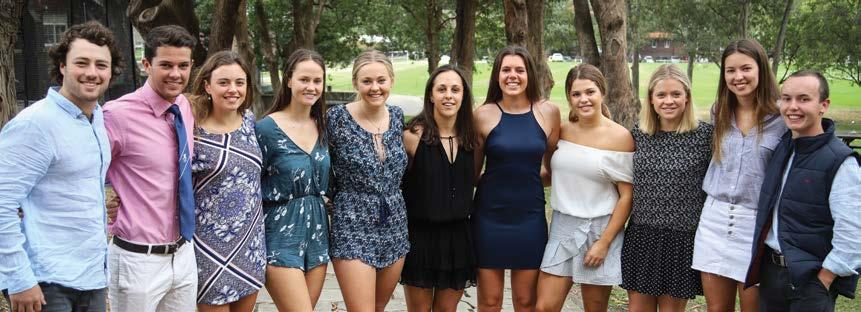
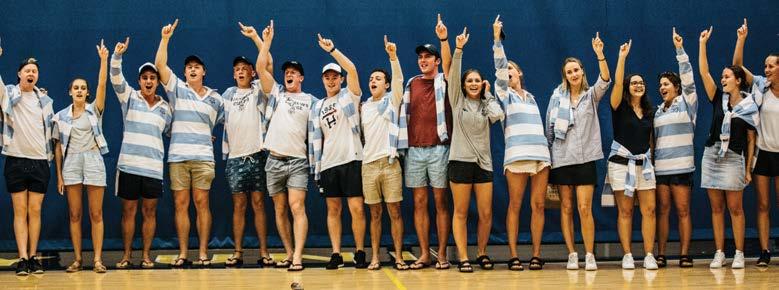
On Monday 9 October, our annual Students’ Club elections were held in the JCR to vote for the students who will form our 2018 House Committee.
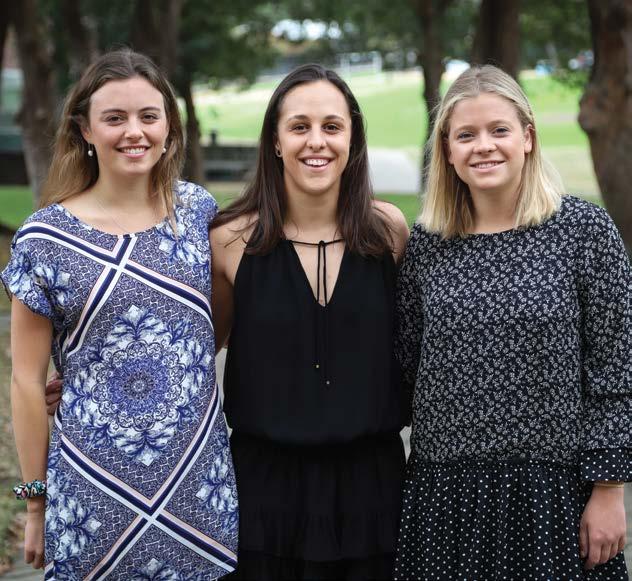
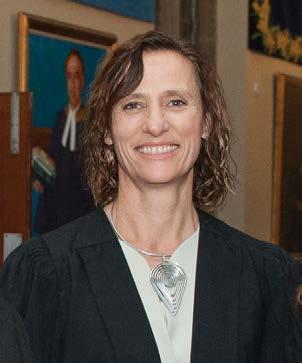
During a year in which we are celebrating both the 150th anniversary of the College and 15th anniversary of co-residency, it seemed only fitting for the Students’ Club to elect its first all-female Executive leadership team. Susannah Cooke, the 2018 Senior Student-elect, considers it very significant that the majority of the House Committee is composed of women. In her view, it shows that Andrew’s students today vote according to who is best for the job irrespective of gender. “Hopefully any barriers that women at St Andrew’s felt when applying for leadership positions have been completely eliminated,” she said.
B ard with the Rev
Rev Dr Gareth Clayton OAM, Chaplain
As Susannah prepares for the year ahead, the 2017 Senior Student readies to pass the baton. “The role of Senior Student has been an experience that I will hold close to my heart for the rest of my life,” Lachie Mactier said. “It has challenged me immensely and has taught me a lot about myself, but most importantly it has been very rewarding. Having the chance to be so close to all of the incredible achievements of our residents has been an absolute pleasure and a privilege.”
St Andrew’s College congratulates the following students, and looks forward to working with them in 2018:
Senior Student – Susannah Cooke
Honorary Secretary – Olivia Peck
Honorary Treasurer – Olivia O’Connor
HAT – Lachlan Barrett
Female Intercol Representative – Isobel Payne
Male Intercol Representative – Nicky Craze
Rosebowl Representative – Maddie McCathie
Rawson Representative – Matt Akehurst
Social Representative – Grace Shipway
Cultural Representative – Ruby Riethmuller
Alumni Liaison – Alexandra Finlay Jones
There can be no doubt of the devotion and faith of the founders of St Andrew’s College. Perhaps they were inspired by the words of the prophet Joel. Your old men will see visions and your young men will dream dreams....
But whatever, the foundations were and are strong and for that reason we can say with both John Wesley and Robert Browning that,
The Best is yet TO BE!

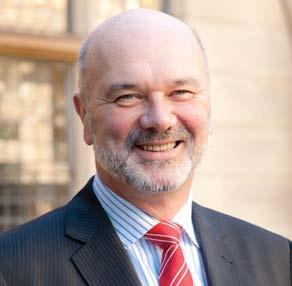
From the Bird and Chair
Our Sesquicentennial year has provided a timely opportunity to reflect on 150 years of history, tradition and change in this place.
The College was founded 150 years ago, with the passing of the Act to Incorporate St Andrew’s College, which received royal assent in 1867. In 1870 the College Council first met and in 1876, students first entered the grand sandstone building now known as the Main Building.
Our founding principles were born of the Scottish Enlightenment, that extraordinary outburst of illuminated intellect which burst the shackles of orthodoxy, and in so doing, shaped the modern world. Our mission remains to support our students with a breadth of intellectual, spiritual, cultural and social experiences built on these values.
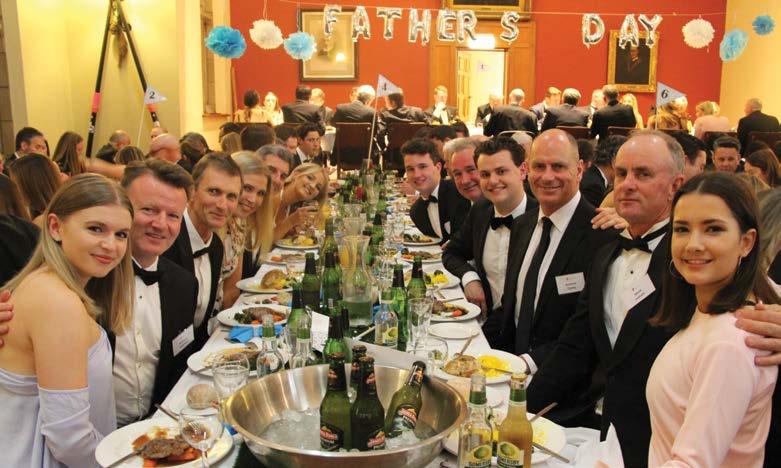
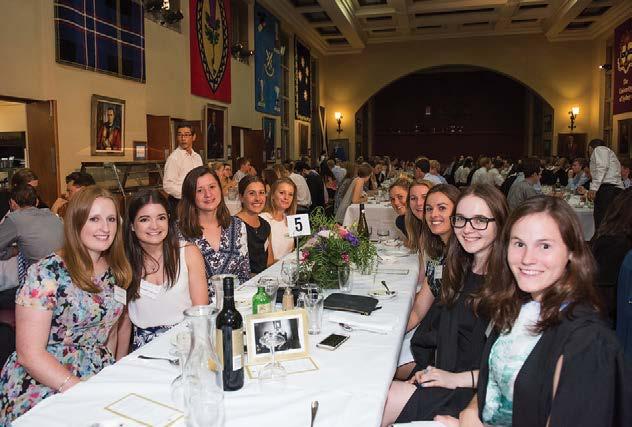
Our anniversary celebrations launched in February with a formal dinner in the Chapel, which many may remember as the old Dining Room. This was followed in March by a dinner celebrating 15 years of women in College. Co-residency was introduced in 2002 and it is safe to say, Andrew’s was forever changed for the better.
Our Family Fun Fair was held in April. The event allowed us to open our College doors and connect with families of Andrew’s men and women along with the local community. It was a terrific opportunity to welcome alumni back to College who resided here twenty years ago, and to meet their young families.
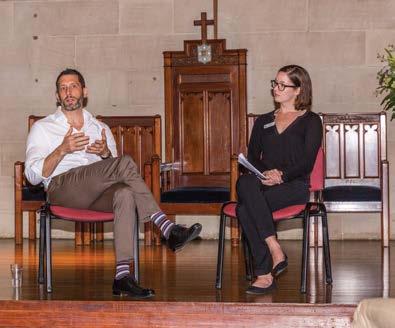
The Spaces In-Between, in May, was an afternoon of talks from some of St Andrew’s most inspired thinkers. These sessions brought our community together to talk about passions and areas of intellectual interest and success. From one of these sessions, Androvation was born –a College-first initiative which you can read about on page 17.
This year’s Annual Lecture guest speaker Rufus Black, Master of Ormond College, presented a very well received speech, concluding our ‘Life of the Mind’ week in June. He spoke of the relevance of colleges in the current university climate and touched on the history and relationship between St Andrew’s and Ormond, as well as the unique and diverse educational model that has influenced both. We were honoured to welcome special guests including University Vice-Chancellor Dr Michael Spence, Dame Marie Bashir and former Sex Discrimination Commissioner Liz Broderick.
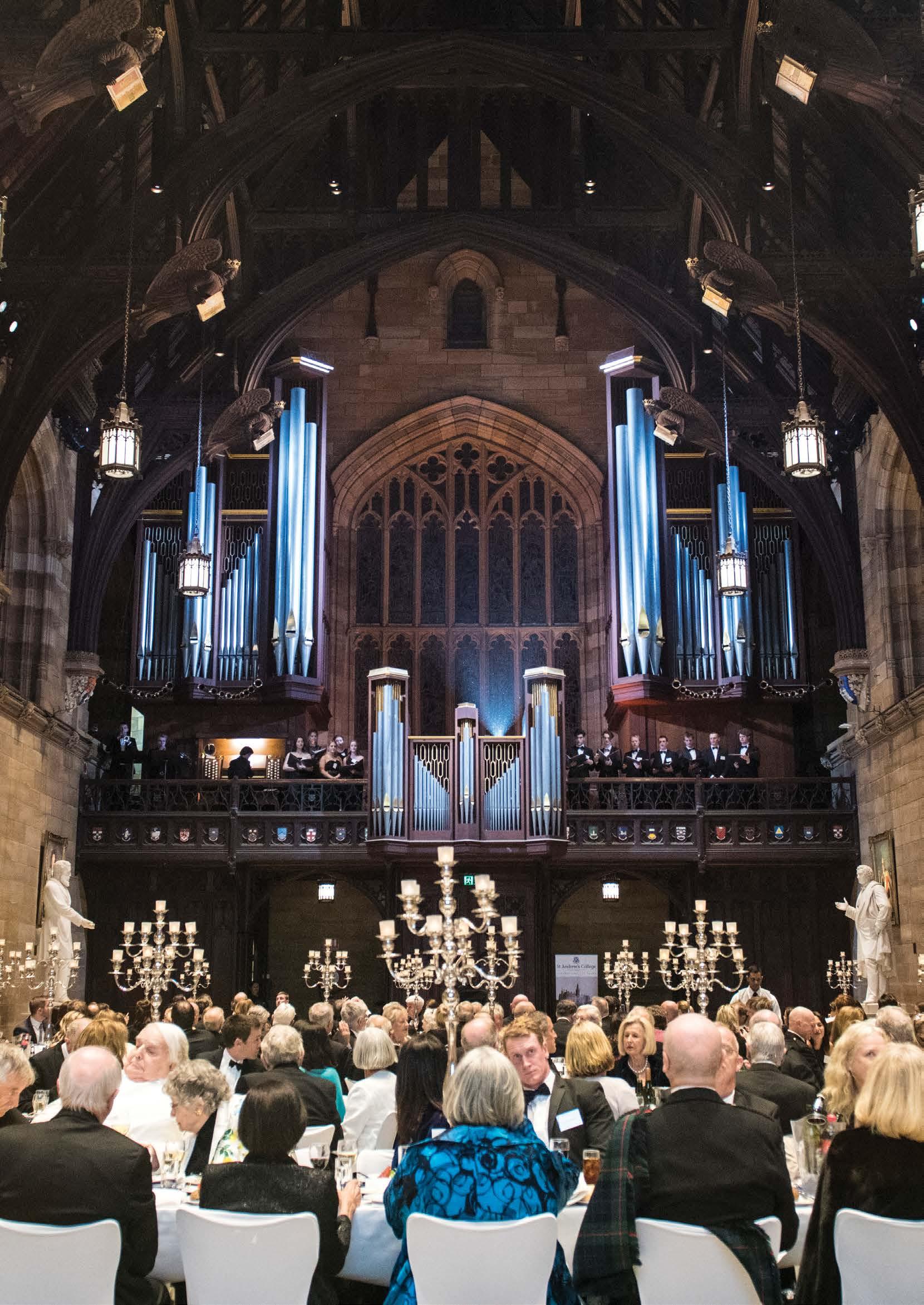
We officially concluded our Sesquicentennial calendar of events with our Gala Dinner at the Great Hall at Sydney University in September. ‘Past, present and future’ was the fitting theme of the evening and provided much to talk about, both in the official speeches and informal conversation between our many guests as they mingled and dined. For those who were unable to attend, I trust you will enjoy the report and accompanying photos, from what was a remarkable evening, on page 4.
I extend my appreciation and thanks to all who have joined us in our 150th year celebrations.
Wayne Erickson Principal
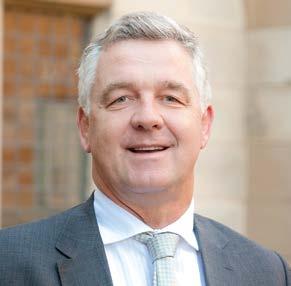
I hope everyone who attended our 150th anniversary dinner had an enjoyable and inspiring evening. It was an opportunity to talk about the wisdom of our founders, great achievements of our alumni, our rebellious and cheeky Scottish heritage, and friendships that have endured. We also had the Chancellor and the Vice Chancellor celebrate the achievements of the College, including the academic performance, the character of St Andrew’s and some of the important changes to encourage more diversity, such as the introduction of coresidency. Our founders would be proud that our buildings are still used to educate leaders of our communities, nation and our world. Although as good Scots, I suspect they would also be challenging us to make more of a difference.
It is worth reflecting that many institutions don’t make it to 150 years. St Patrick’s, the magnificent estate at North Head, is one such example. Founded in 1889 as the principal training facility for priests in Australia, the seminary closed in 1995, when the number of seminarians no longer justified the large building.
I don’t think the founders of St Patrick’s would be proud that their wonderful building is no longer used for its original purpose of training young people to lead in their communities. It is an important reminder that institutions can easily be lost in the past unless they adjust, and find a way to lead change.
So how do we ensure we don’t suffer the same fate? We need to make sure we are leading change in a way that will make us relevant for our next 150 years. Co-residency unleashed
a wave of energy and helped us recruit great talent and deliver much better academic, cultural and sporting performance. We are increasing the diversity in school backgrounds, with government and small independent schools now sitting at over 25%. We have on average 5 indigenous scholars. This has been supported by scholarship and bursary funding of $1.5m per annum, the largest funding by any Australian residential college. We can now offer the St Andrew’s experience to more students, by leasing an extra 30 rooms nearby. We now have the funds and philanthropic contributions to add another building with over 80 rooms. However, there is much more to do. We need further philanthropic support to properly endow our current level of scholarships and bursaries. We wish to increase this amount over time so that we can offer the best applicants a place in College, regardless of means. We must recognise that the world of higher education is evolving rapidly. Students can now attend lectures online, from leading academics worldwide. The future of work will require talented leaders and designers who can work well in teams to understand customer and community needs, and design products, services and solutions to meet those needs. Residential colleges like ours provide the ideal environment to learn these leadership and interpersonal skills. How do we make sure that we develop an even more distinctive offering for students in the future? By doing so, we can avoid the fate of St Patrick’s and others, and live up to the legacy of our founders. I hope that our community will be having even greater celebrations in 150 years, and thanking our generation for our foresight and contributions.
Charlie Taylor SS 1985, Chair of Council
Chair and Bird
Sesquicentenary Gala Dinner
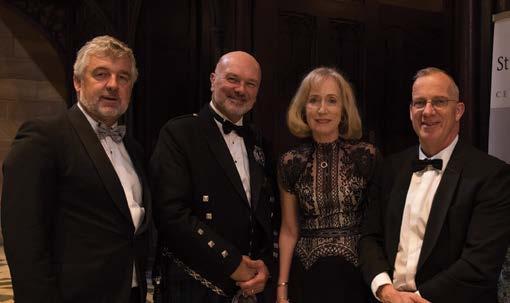
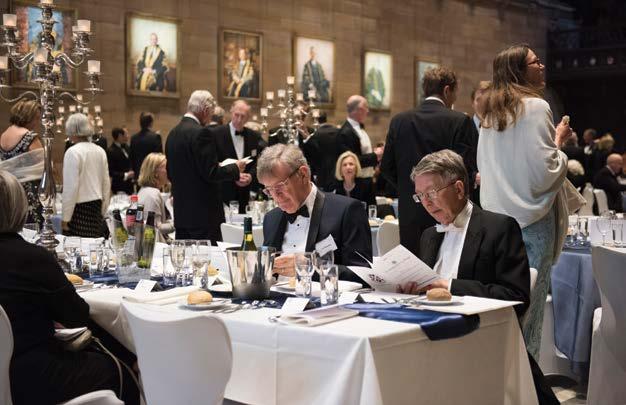
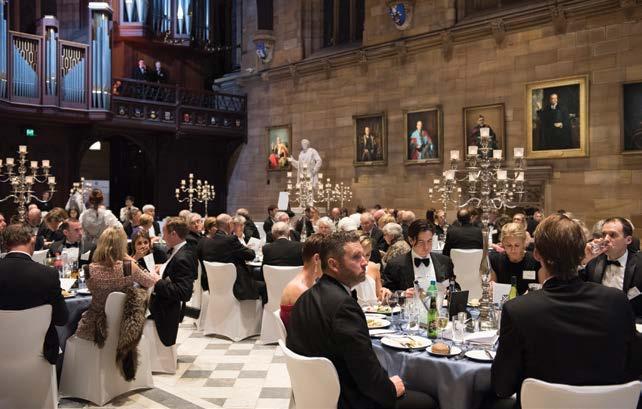
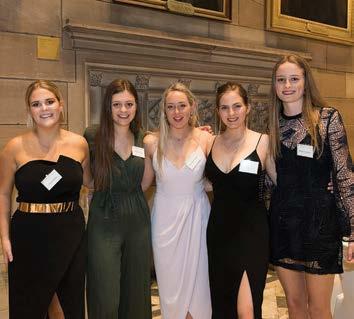
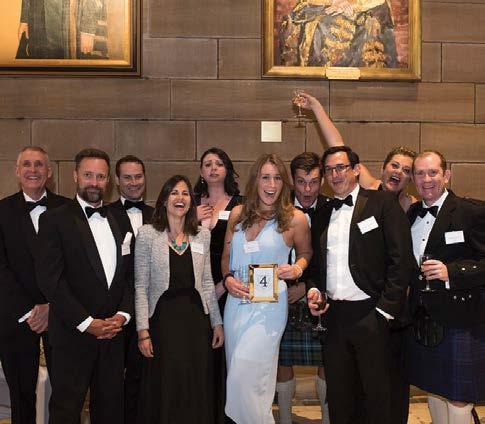
On Saturday 16 September, over 200 alumni, students, staff, parents and friends of St Andrew’s College gathered for the Sesquicentenary Cocktail Function and Gala Dinner. Held at the University of Sydney’s Great Hall, this was the culmination of our Sesquicentennial year.
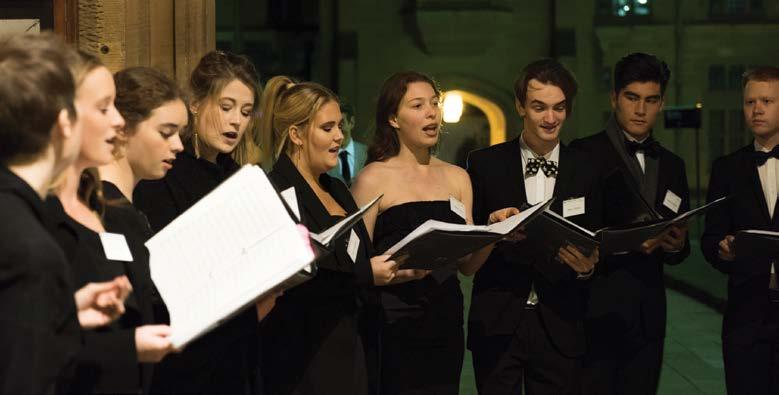
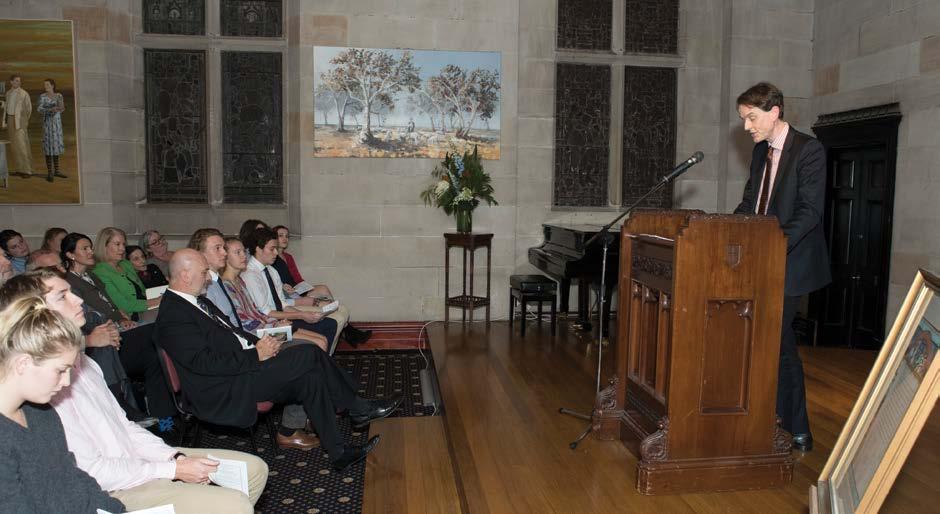
Guests were treated to a performance by the College Choir, accompanied by drinks and canapés in the Quadrangle, before being led into the Great Hall for the formal dinner by College pipers Tom Barter and Charlie Hunter. University of Sydney Chancellor Belinda Hutchinson gave warm Official Greetings and congratulated the College on its 150th anniversary. Vice Chancellor Dr Michael Spence AC gave an address that reflected on the unique value of the College environment and the similarities that many members of our community share with St Andrew, who was ‘a person who got things done’.
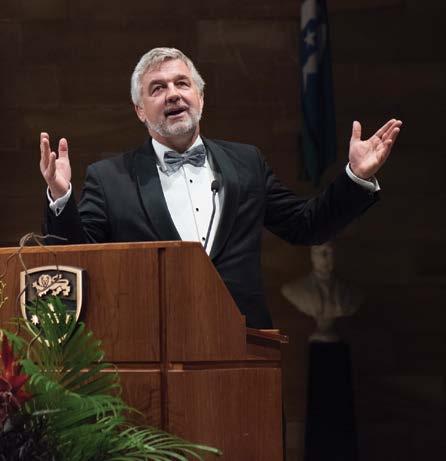
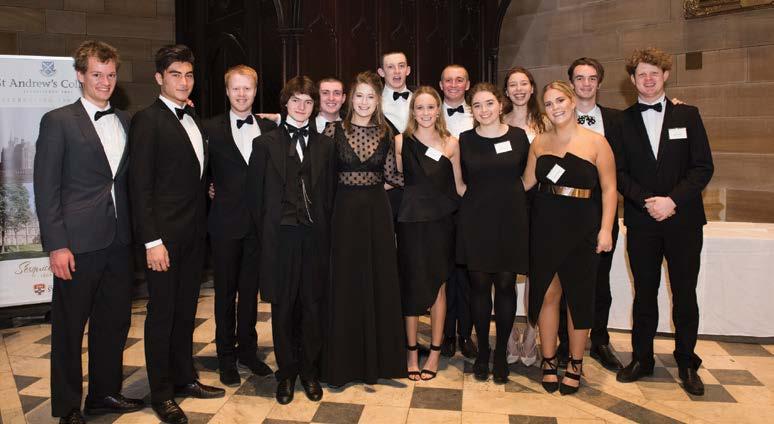
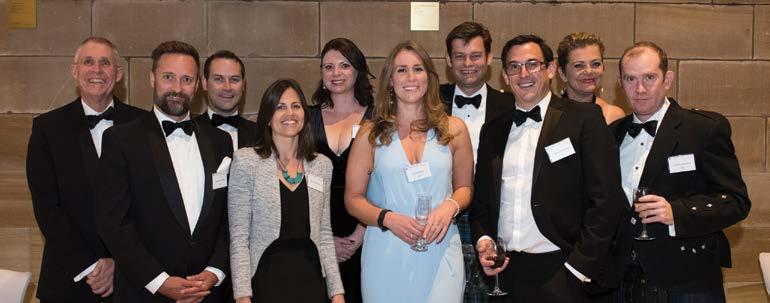
Guest of Honour and College Fellow Professor Dame Marie Bashir gave the official toast and shared fond memories of her own time at university and her long relationship with St Andrew’s College. In reflection and celebration of the past, present and future of St Andrew’s, our Senior Fellow and Archivist, Professor Ian Jack, spoke about the College’s historical past, while Senior Student Lachlan Mactier gave an insight into life at College in the present day.
Council Chairman Charlie Taylor provided guests with an update on the future of St Andrew’s. Alister Henskens SC, Member for Ku-ring-gai, presented the Notice of Motion for NSW’s Parliament to officially recognise the special occasion of the 150th anniversary and the many achievements of the College.
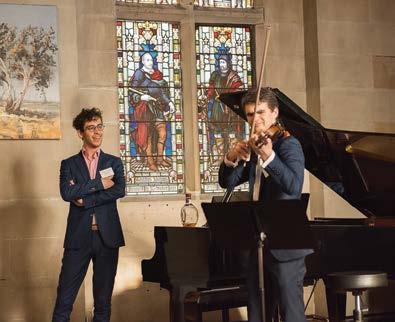
The night was indeed a wonderful and fitting celebration of the College community’s past and present achievements across all branches of learning, including music which was showcased through stirring performances from our Choir, Jazz Band and soloist musicians Will Cesta and Titus Grenyer throughout the evening.
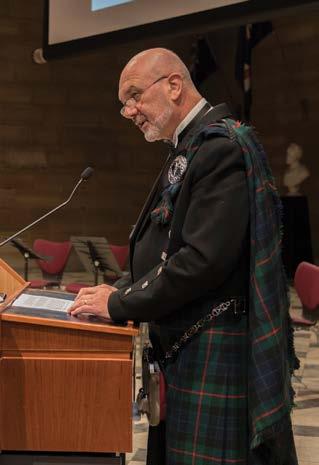
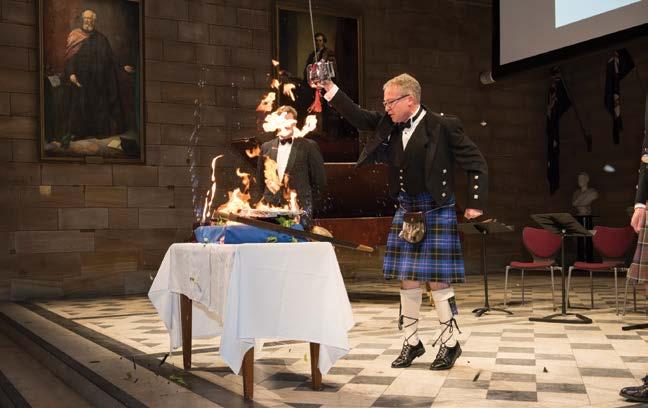
The traditional Address to the Haggis was a highlight of the night for many, with former Vice Principal John Sergeant delivering one

of the most dramatic performances seen at St Andrew’s in a decade, cleaving the Haggis tray in half and setting the tablecloth alight. No injuries were sustained.
Thank you to all those who attended the dinner and helped to wrap up a year-long calendar of Sesquicentenary events, commemorating 150 years since St Andrew’s College was created through the Act to incorporate it as a residential college within the University of Sydney.
More importantly, this anniversary celebrates the fact that St Andrew’s was founded through a visionary act of faith, philanthropy and commitment to providing education to young Australians. The evening was both the highlight and finale of the College’s 150th anniversary year, and is sure to be remembered by all in attendance for many years to come.
Honouring our Founders
The Enablers, 1868-1875
Founders and Benefactors Service, 11 September 2017
Tonight we are celebrating those 1,469 men and women who made St Andrew’s College possible 150 years ago. They were both founders and benefactors of the College. They were founders as well as benefactors, because, without their subscriptions in the years immediately after the Incorporation Act of 1867, College could not have met the stipulations of Parliament. I like to think of these 1,469 people as the Enablers, the men and women who created a reality out of an aspiration.
The Act to Incorporate St Andrew’s College, which was given royal assent in December 1867, is known as the Enabling Act. It prescribed that, before the College could be proclaimed in the Government Gazette, £10,000 had to be raised or securely promised by the community. Then and then only would the government of New South Wales supply a matching £10,000. These were not trifling sums: £10,000 in 1867 was the equivalent of well over $1 million in modern money. Under the 1854 Act relating generally to the creation of Colleges within the University of Sydney, all of this £10,000 had to be spent on erecting buildings.
So this proviso had been well known within the Scottish community of New South Wales long before 1867. An initial Committee to promote a Presbyterian College had been established in 1858. Although the Committee ceased to meet after a few months, its minute book is now in the College Archives, and we can see how this group of dedicated Scots laid down most of the principles which informed the later St Andrew’s.
In particular, the Committee unanimously accepted a motion of John Dunmore Lang, seconded by a prominent Scottish businessman and politician, John Black, which specified the means of raising the requisite £10,000. The principle agreed upon was that the money: should be raised in comparatively small sums by the middle and industrious classes of the Presbyterian community throughout the territory [of New South Wales]. [These middle and industrious classes] … will then take a deep interest in the institution which they have … contributed to establish. [And as an encouragement, the motion promised that the subscribers could look forward to their children attending the College, graduating and then, of course, rising] to the highest places in the land.
This wish to have the active support of the entire Scottish community, and not only the assistance of the successful graziers and merchants, runs through the subsequent debates which led a decade later to the successful founding of Andrew’s.
In the Enabling Act of 1867, it was specified that the electorate for the first Councillors would be the body of subscribers, but that
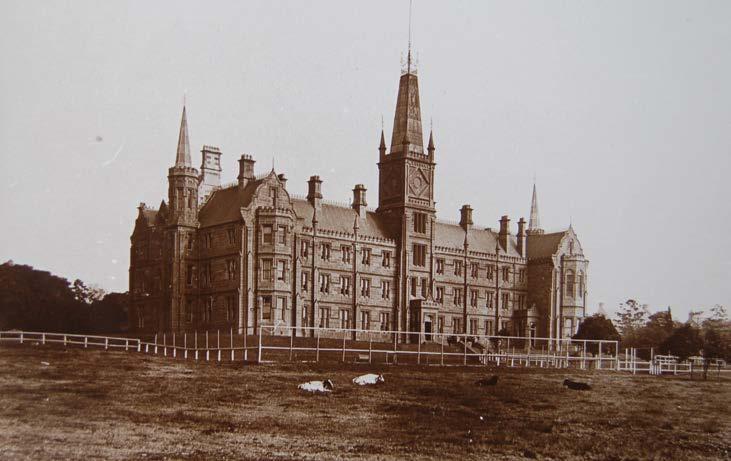
College circa 1910 with cows
the amount of voting power would vary with the amount subscribed. Thus everyone who subscribed £1 would have one vote, those who gave £10 would have two votes, £25 got three votes and £50 or more guaranteed four votes.
This was not a new idea. When back in 1862
Professor Woolley, the Principal of the University, had given evidence to a Parliamentary Committee on such a Presbyterian College, he had been asked about differential voting rights. Woolley made two characteristic observations:
[Gradation of votes] would induce attention on the part of working men to the College; it might also excite their ambition for their children.
[If the number of multiple votes were not restricted say to three, the influence of men of great wealth] might become a tyranny.
This conviction that the future College should not be ‘a mere aristocratic concern’, as had been feared in 1858, was widely held. At the same Parliamentary Committee in 1862, John Smith, the Scottish Professor of Chemistry and Experimental Physics, was asked by Dr Lang, ‘Is it not desirable to prevent the institution from getting into the hands of a few capitalists?’ Smith replied with a simple emphatic ‘Yes’. It is one of the most telling interchanges in an interesting day.
So after the Enabling Act was passed, a new College Committee was set up in 1868 and its Convener, the Revd William Purves, sent out a general Appeal to the Presbyterians of New South Wales and Neighbouring Colonies and the Friends of Education Generally. Purves presented an eloquent case for founding St Andrew’s and concluded:
We cannot believe, therefore that this appeal will be in vain … If the wealthy will give … as God has prospered them, and those of moderate means what they will never miss, the necessary sum will be raised.
Over the next eight years, but principally between 1868 and 1872, the Scots-Australians amply justified Purves’s confidence. The broad social spectrum supported by Principal Woolley, Professor Smith and Dr Lang made its vital contribution. Since College has retained wonderfully full records of all donations made in these foundation years, I know the names and addresses of every one of the 1,469 men and women who made it possible to build this great stone edifice.
Now in the mid-Victorian period 1,469 is a substantial number of people. The 1871 Census found that the total number of non-Aboriginal people in New South Wales was just over 500,000 and of these the majority were of English or Irish extraction.
About 8,000 families were of Scottish origin. Nearly 20% of all Scots-Australian families contributed to the Andrew’s appeal.
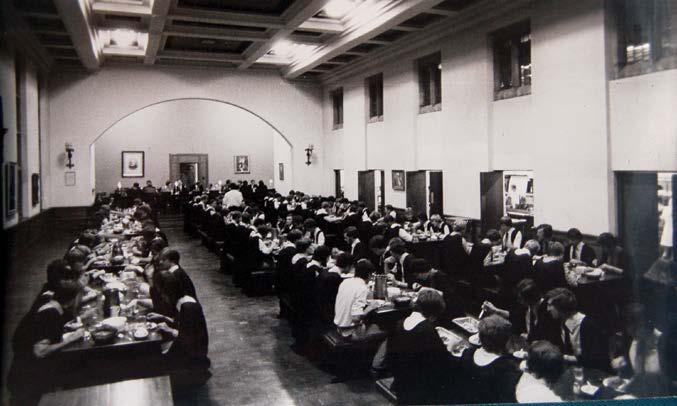
College Dining Hall 1978
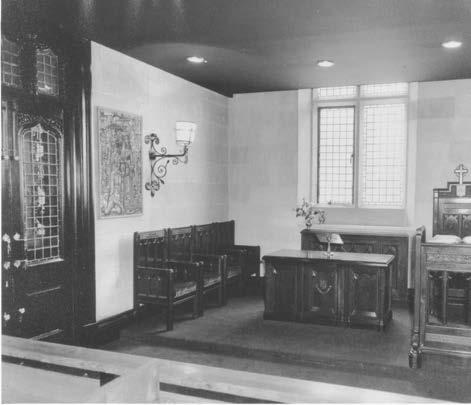
The Kinross Chapel circa 1961
Honouring our Founders
Although half of the £10,000 was contributed in donations of between £50 and £300, with one maverick gift of £1,000, this money came from only 45 folk. And that lump sum of £1,000 was not the capitalist lucre feared by Lang and Smith, but merely an instalment of a large bequest to College in which the widow held a life-interest. Mrs Hunter Baillie was only giving us £1,000 of our own money. What is deeply satisfying about the range of donations is that more than half of the donors gave less than £2. 793 folk of modest means, not just of ‘moderate means’ as Purves had urged, had given gladly and 85 of these gave less than £1, so that they did not even have the inducement of voting for the first Council.
These donors had responded to public meetings, printed brochures, press announcements and visitations throughout the state by distinguished ministers who were founders of the College. Dr Steel called these travelling ministers ‘ecclesiastical beggars, the mendicant friars of the modern Church’. The donors had all been made aware that, once founded, the College would look after deserving students whose parents could not afford the fees. The Revd Dr Steel declared at a meeting chaired by the Governor in 1868 that scholarships were essential:
He had known in Scotland young men from the humblest abodes of the people get their degrees in consequence of these helps being afforded them … Sums of money [would be] devoted to aiding young men while prosecuting their studies.
It was at this meeting that the appeal to raise money for the building was launched, so that the less well-to-do could be reassured that their deserving sons, and eventually their daughters
too, would be able to afford to come to the College which they were asked to make feasible.
And before the College building was even begun in 1874, an initial bequest of £1,000 had reached the Council to inaugurate the scholarships and bursaries which have so distinguished this College ever since.
St Andrew’s has prided itself on its family. The St Andrews family began in the 1860s as a sub-set of those 8,000 Scottish families which had brought to New South Wales many Scottish virtues, not least a dedication to good education. That sub-set became the Enablers whom we celebrate today and will be remembering again in the Great Hall next Saturday. St Andrew’s is no longer full of students and staff of Scottish descent, but it owes its existence and its liberality towards its students to the Scots in Australia 150 years ago. The donations ranging from 5 shillings to £300 given by 1,469 men and women made the building of this College possible. Their descendants and successors should be proud of the outcome. The Enablers are a special group within the Founders and Benefactors. They will not be forgotten.
Professor Ian Jack Senior Fellow and Archivist
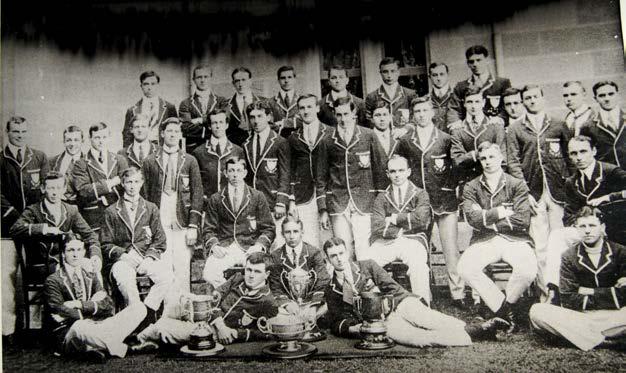
College Rawson teams 1910
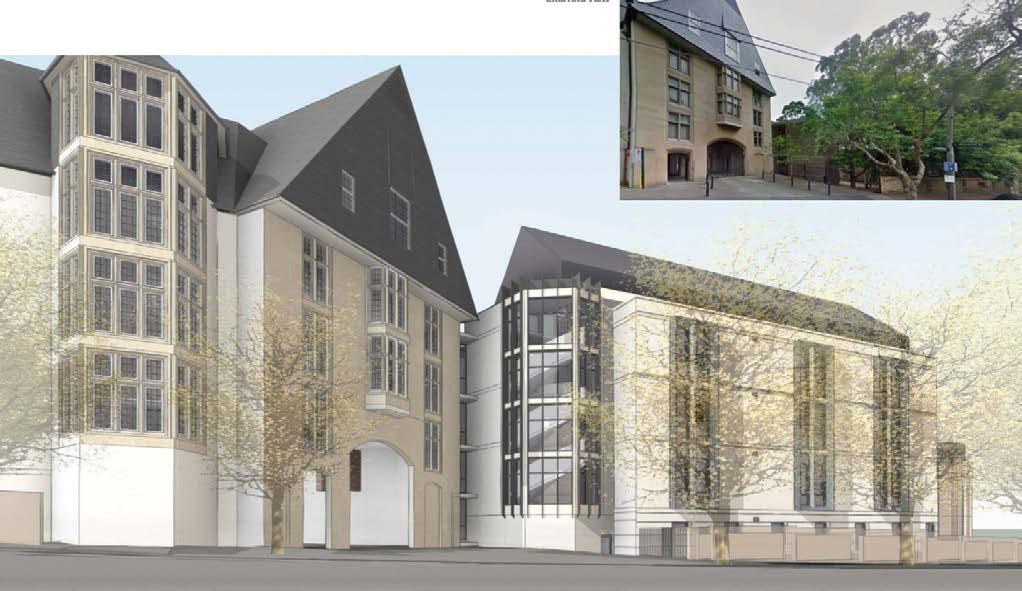
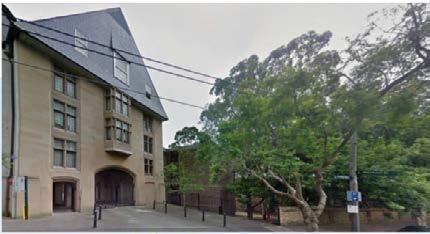
Harper Master Plan –Thyne Reid Link Building
Since lodging the Development Application (DA) with the City of Sydney earlier in the year, the Council’s Major Works Committee has progressed the various elements involved in the Thyne Reid development.
In anticipation of a November 2017 commencement date, the Committee narrowed a panel of builders down to a selection of four quality candidates to tender for the project. The interview process involving the successful tenderers proved to be a valuable exercise in narrowing the selection to a preferred builder.
The College also progressed negotiations with a senior lender to secure the additional finance necessary to fund this exciting next chapter in the College’s history. Many members of our community have also supported the College Council’s efforts to provide access to the residential collegiate experience for more students. This has been demonstrated through a willingness to give of their valuable time and expertise as well as monetary gifts towards the capital expenditure.
The City of Sydney has been working closely with us and has asked us to review elements of our initial design particularly around the interface of the new Thyne Reid Link with the existing Reid building. This consultative process has challenged our ability to commence construction this side of Christmas and the Council has subsequently agreed to delay the project to ensure we can complete the project prior to the 2020 student year with minimal impact on students during 2019.
In our Sesquicentenary year, the College Council followed the St Andrew’s tradition of making strong decisions with the long-term view in mind. In consideration of this, the Major Works Committee is also committed to progressing the Reid interior refurbishment as soon as possible and is currently doing all it can to engage our builder to commence an early works package this coming summer to refurbish up to 30 Reid bedrooms for students to enjoy sooner.
Whilst we have faced, and ultimately overcome, similar setbacks in our past, most notably in 2005 in connection with our application to construct the Hanks Building, the will of the College Council to convert the Harper Master Plan into a reality is stronger than ever.
Working with our students to help them become 21st Century Australian leaders
Here at St Andrew’s College, our mission is to create a community of students who will grow to have a positive, significant and far-reaching impact as citizens of the 21st century. By providing a comprehensive student leadership training program, we endeavour to support our student members to actively engage in both our community at College and society in general.
To be eligible for student leadership at College in 2018, either for a position on the House Committee or eligible to be selected as a mentor, students needed to satisfactorily complete a range of requirements. Theoretical basis for the training included the ‘Ethical Framework’; a four-part framework that asks what one ought to do based on a process of:
1. Considering self,
2. Considering others,
3. Asking and negotiating and,
4. Reflecting on the outcome of action and seeking to change this if needed.
The sessions covered a variety of topics, aimed at supporting candidates in developing skills, knowledge and insight required to be compassionate and effective leaders.
The sessions included:
1. a session with Professor Rufus Black on leadership as well as the St Andrew’s Annual Lecture
2. a session with religious and ethical leaders. This session was organised and facilitated by one of our Taylor Scholars, Bethany Cottee, and saw three leaders from the Christian, Islamic and Jewish faith and a humanist leader
describe their experience of leadership and what this meant for them. This interfaith Q&A session that was attended by close to 100 St Andrew’s College members
3. introductory session on mental health issues to begin the process of upskilling as first responders
4. an online survey reflecting their experience at College. Students were asked a series of questions including: aspects of College life they considered important, what was working well and what was not working so well. This survey asked participants to consider a challenging situation they had experienced where they needed to use the ethical framework to help them make a decision, or where the use of the framework could have helped them to make a decision in order to ethically deal with the situation. These answers were then used to start a discussion on how these issues might be resolved by the new leadership team as part of the final session;
5. a session on the challenges and opportunities of the role of student leaders in College
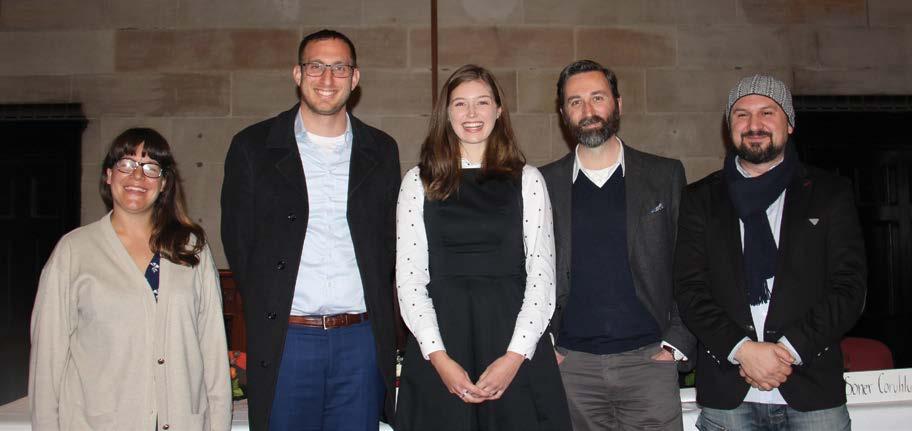
Taylor Scholar, Bethany Cottee with contributors at the Interfaith Leadership Panel
To ensure that all students interested had the chance to participate, those who couldn’t attend face to face meetings were given the chance to watch a recording of each session and complete an associated writing task.
In addition to the above sessions, Taylor Scholar Jaime Painter, as part of her work on supporting women in leadership, led a ‘Lean In Circle’, a leadership and development workshop for women at College.
The Taylor Scholar Program was established in 2015 by St Andrew’s College Chair of Council, Mr Charles Taylor. The program supports and encourages senior students of College to continue to engage significantly and meaningfully with College Life.
At the conclusion of our leadership program, over one-third of our student members had successfully completed the pre-selection component of leadership training and were eligible to either be elected to a position on the House Committee or be selected as a student mentor.
With an outstanding peer-elected House Committee, and a strong group of student mentors for the incoming freshers (selected by the House Committee with input from the Principal and Vice Principal), we move on to the process of selecting the Dean Team, Cultural Diversity Project (CDP) members, Academic Area Tutors and Taylor Scholars for 2018.
The Dean Team will take on a different format in 2018 and continue to support the health and wellbeing of our community. The CDP, up to six 3rd year students, will be selected by the House Committee and Vice Principal to assist the students to address inequities in representation based on diversity.
All student leaders will do further training to prepare for 2018. This will build on the work done so far, including mental health first responder training, physical first aid training, diversity awareness training, making difficult decisions, and creating an environment that is fun, safe and inclusive for all members of College.
Moving forward, we will address the recommendations of the Broderick Cultural Review as they come to hand and work together as a team (Council, staff and students) to build on the strong culture already embedded in St Andrew’s College. A culture that keeps what is good and strongly engages with the best of change, whilst supporting our students to grow, engage and positively lead now and in the future.
Dr Hester Wilson Vice Principal and Director of College Life
2018 Executive Leadership team
Visual Arts in College
Visual arts are an important element of the creative arts at St Andrew’s. Here, we introduce three students who have enjoyed success in this field.
Ruby Riethmuller (Fr 2016)
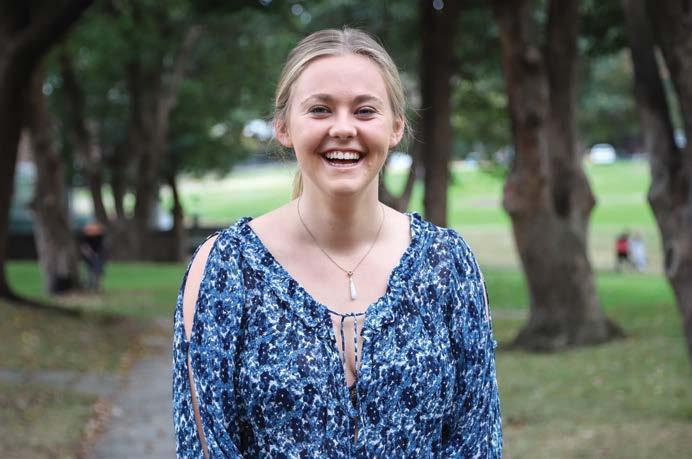
Ruby Riethmuller is the Head of Art and holds the Hugh Cairns scholarship for excellence in art.
What role do you play within the arts at College?
I was awarded an art and drama scholarship, which provided me with a drive to give back to College. I created an artwork that was submitted into the Palladian Art competition and put my hand up to act as the producer of last year’s DramSoc play. Producing the play was the highlight of my year. I have returned to my role as producer and have introduced more effective approaches to fundraising, marketing and crew roles.
This year as the Head of Art, I worked with students wanting to submit a piece by helping to generate concepts, develop works and solidify intentions, which led to two incredible submissions in the Palladian Art competition.
How has the College supported your passion?
I have developed a confidence I am so thankful for. The generous gift of my scholarship encouraged me to put my hand up for opportunities such as Palladian Art. In my time here I have noted an increase in the support of our cultural community although this is something I would like to see skyrocket in the future.
What unique opportunities have you had here?
Palladian provides students with a forum to express themselves and showcase their talent, which we Androvians have so much to offer. The competition is an exciting way to bring people together to not only create but support the arts and the level of quality we take to each competition is a genuine reflection of the internal opportunities within Drew’s.
There is every potential for anyone within Drew’s to become involved with expressing their artistic side. I am continually blown away by the incredible talent of my peers.
What are you most excited about for the future of visual arts in College?
Having been elected as the 2018 Cultural Representative, I’m excited about the arts in College next year. I would love to see more of a focus on acknowledging all of our talents without revolving solely around Intercol competitions.
I think it would be fantastic to have an annual exhibition of visual arts where anyone is welcome to submit a piece of work that we would exhibit for a week in College. We could invite our broader community to share in our artistic talent.

Bill Blampied (Fr 2017)
Bill Blampied studies at the National Art School.
How have you developed a passion for visual arts?
In a world driven by popular consensus, including the homogenisation of globalisation, art advocates difference. I consider art a passion because in many ways it’s an advocate for me. I love that it’s a tangible thought from one person, that can change the way others think. Art is a testament to the power of imagination.
Which styles of art most inspire you?
I love 17th century Dutch art the most, but I would say the bulk of my inspiration stems from modern art.
How has the College supported you within this field?
Not only has College given me an opportunity to represent them in the Palladian Art competition and put my work up in public, but the Addison Estate Endowment (scholarship) has given me direct financial support; art supplies aren’t cheap!
Victoria Boult (Fr 2016)
Victoria Boult won the 2017 Palladian Art competition.
What made you decide to enter the Palladian Art event this year?
This is actually the first time that I have made any ‘visual’ art. College friends and I were discussing how broad the theme of ‘vice’ is. It got me thinking about how I could create something very simple, but very meaningful. Tell us about your winning submission.
I am interested in the idea of female sexuality as a ‘vice’. My piece, entitled ‘You’re Sitting in the College Dining Hall’, speaks to the idea of women being unable to openly discuss their desires or fears. I wanted to create something that would reflect these fears, instigate discussion and accordingly, destroy this perception of it being a ‘vice.’
This eventually culminated in getting a group of college girls together, talking about what they felt ‘ashamed’ of, and then writing it on their foreheads. I recorded this process and turned it into a film – which ended up winning Palladian Art!
It’s interesting that in both 2016 and 2017, Palladian Art has been won by people who are not conventionally ‘artistic’. I think that really speaks to the idea of Palladian as being accessible to everyone.

Creative Arts in College
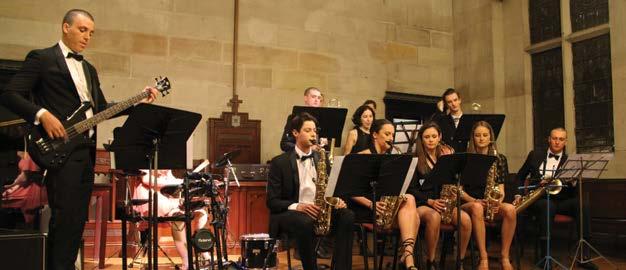
We have just secured the Palladian Cup for the third time in the last five years. Such success, together with the spirit of Sesquicentennial celebration, occasioned this reflection on the creative arts in College.
Professor Ian Jack notes that while there has always been a musical presence here, it remained overshadowed by other student interests until 2002, when “the simultaneous introduction of co-residency and the inter-collegiate Palladian competition for cultural activities created a lasting transformation.” A music director, the growing presence of Conservatorium students, and scholarship support has fostered the growth of this branch of College life.
Why should we be proud of the role creative arts have come to play here? It is necessary to first ask what College life, at its core, is all about. As Dean of Admissions, I often ask, “What do you think the role of College is?” There is one point on which the views of prospective students converge: that College is a place which fosters the growth of the ‘whole person.’
I think they’re spot on. The question becomes, then: what role does artistic pursuit play in facilitating this growth?
Firstly, by dispelling the shadows that sporting success once cast upon creative arts, we reinforce what we’re about: celebrating excellence irrespective of the area of endeavour, providing access to a range of experiences,
and helping people build their ‘whole person’ through exposure to a range of intellectual, sporting, spiritual and cultural experiences.
By sending a strong message about our multifaceted identity and quashing stereotypes, Andrew’s has been able to attract a broad range of students: sculptors, sound engineers, philosophers, composers, playwrights, historians and organists… and what colour they add to the place.
Secondly, individuals benefit from the creative arts. Art is, to those who engage with it, ‘a humanising agent’ (coined by Ben Adler, one of our string tutors); when one is intellectually stimulated by a provocative piece of art, or moved by a monologue, one is reminded of how magnificent the human experience can be. There is also something inherently transferable about the skills and values required to master an art; each endeavour demands passion, patience and curiosity.
Finally, artistic collaboration and celebration builds community. There is no greater vindication of this than our Chamber Ensemble. Members range from Conservatory students to those more at home on the tennis court or in the lab, yet each member finds a point of unification in their collective musical imagination. It is such unity that has both won the praise of esteemed Palladian panellists and also caused members of the College to brave mid-semester exam stress and attend the memorable performances.
Of the many things that provide a cause for celebration during our 150th anniversary, the proliferation of creative arts at St Andrew’s deserves a place high up on that list.
Will Cesta (Fr 2013) Dean of Admissions
Rosebowl Report
A very strong Rosebowl campaign across the entire year, winning 7 out of the 8 events. Our women continually showed dedication, spirit and skill across each sport and is a well-deserved win. Congratulations to all of our Rosebowl teams.
Palladian Cup

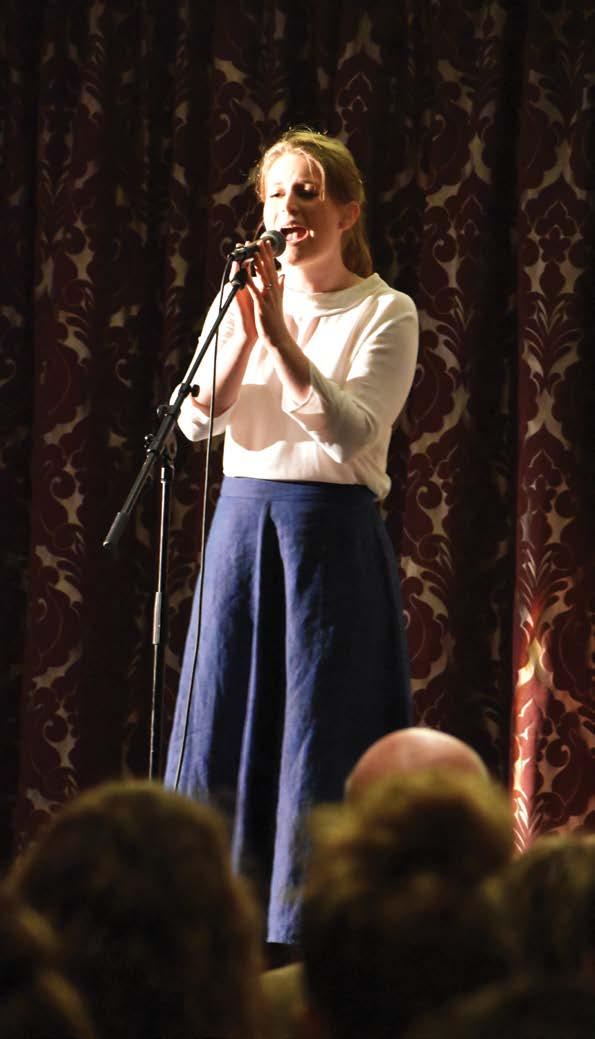
Congratulations to all those who displayed outstanding talent, skill and commitment across the spectrum of creative arts this year to bring home the Palladian Cup for the third time in five years! Stellar performances from those involved, along with a supportive College crowd, got St Andrew’s over the line for 2017. Some very memorable moments in dance, art, music, singing, drama and more. Well done!
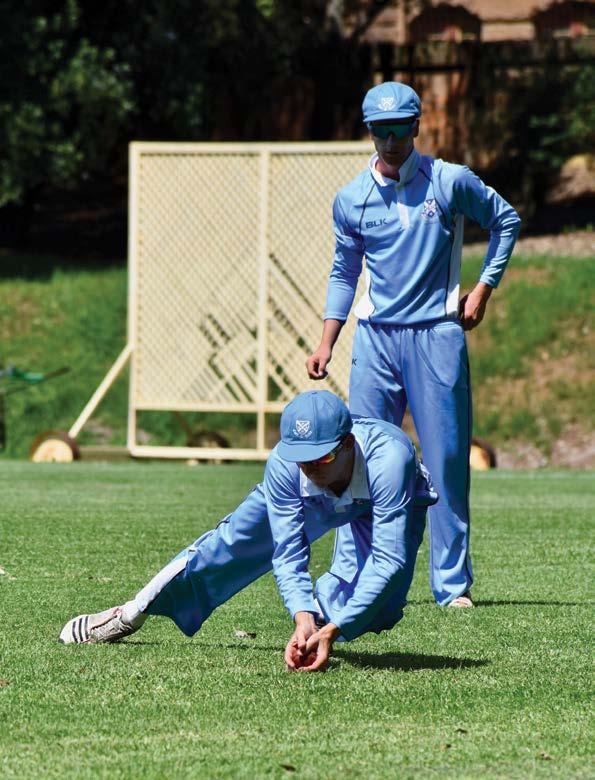
Report
Our Rawson men claimed 2nd place in this year’s overall campaign. Strong performances evident in cricket, rowing and swimming, were unfortunately not enough to bring home the Cup for 2017. We thank the strong crowd of supporters who continually showed up, and we look forward to a more competitive 2018 campaign.
College Blog
Each semester, a student takes on the role of College Blogger. They reflect on and review various events throughout the semester, providing great insight into College life through the eyes of a student. We encourage you to visit the blog here: standrewscollegeblog.wordpress.com
Rawson
Careers Week
Across the evenings of August 14 and 15, over thirty of our alumni and parents from a broad range of industries gave their time to speak to our students about their careers and experiences in the workplace.
Current Andrew’s men and women were able to learn about professions in the following fields: Business, Finance, Law, Accounting, Science, Medicine, Vet, Marketing, Human Resources, Entrepreneurship, Technology, Property, Nursing, Government Policy, Agribusiness and Education.
Alumni Liaison Nimalan Sundaram (Fr 2015) invited the guests to join students for formal dinner, followed by informal industry panel discussions, during which students were free to ask questions and gain valuable advice from our alumni and parents. The panel discussions were wrapped up with networking drinks in the JCR.
The evenings were valuable in inspiring St Andrew’s students to broaden their lens
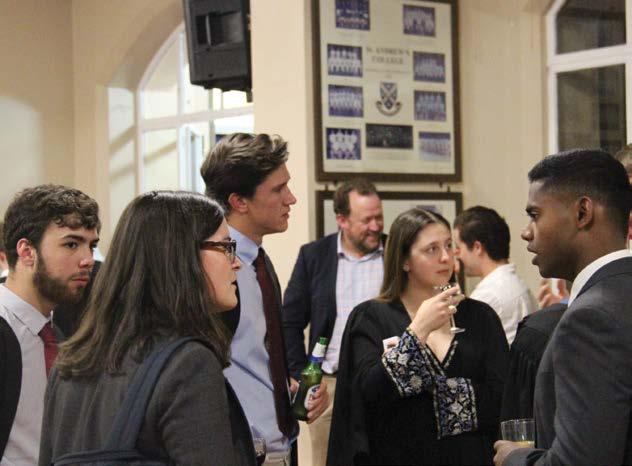
“The evenings were valuable in inspiring St Andrew’s students to broaden their lens and outlook in relation to their careers...”
and outlook in relation to their careers and further study as well as provide those within the alumni and broader College community the opportunity to engage with current students and offer advice and guidance. Additionally, the event helped establish both formal and informal professional mentoring relationships.
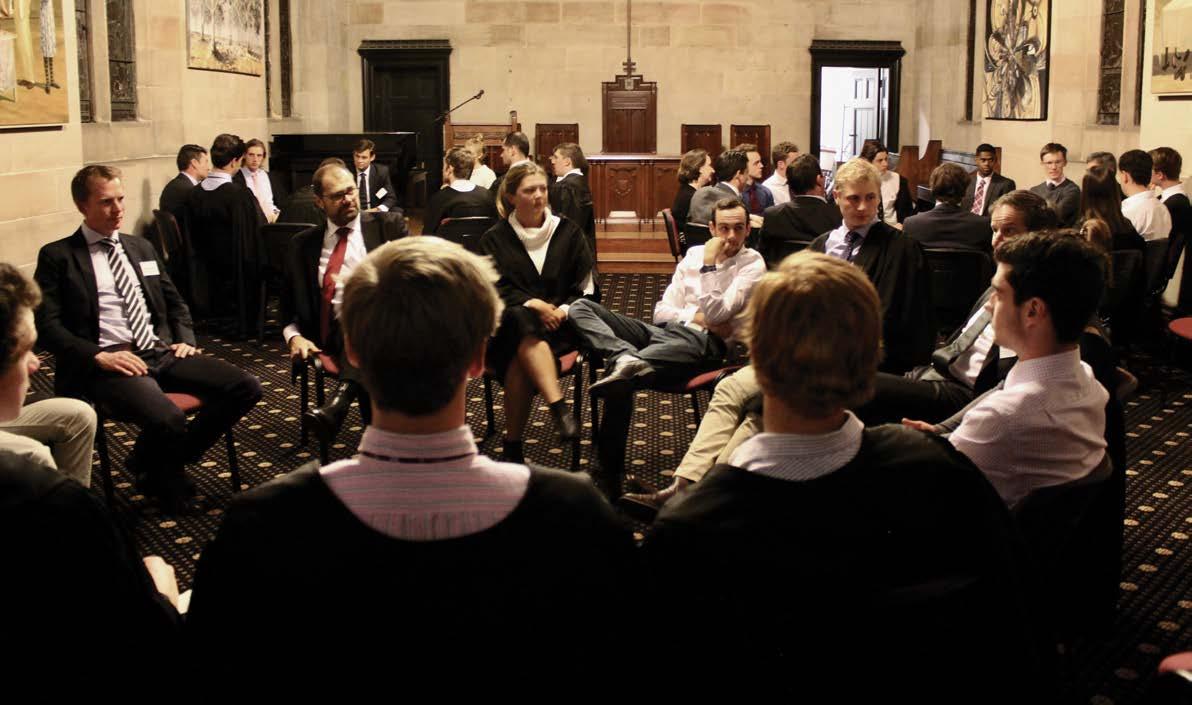
We would like to extend a very special thanks to all those alumni, parents and friends of the College who volunteered their time in 2017.
Androvation
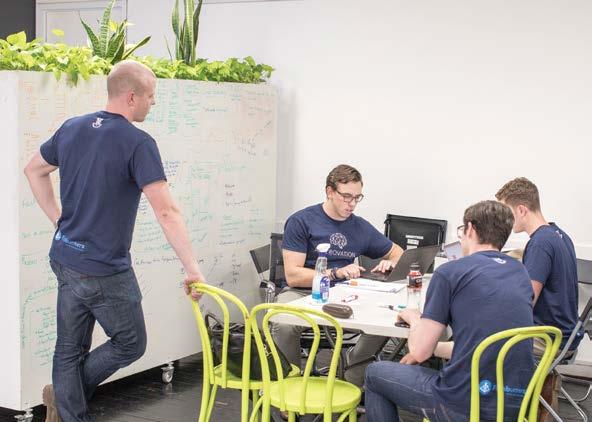
On 13 October, fifteen Andrew’s students came together for Australia’s first College-hosted startup hackathon, Androvation. Three teams competed to tackle real world challenges and develop business solutions over a fifty-hour period, turning Andrew’s into a pioneer in fostering entrepreneurial talent and business education.
Competitors met at Fishburners, Australia’s largest startup co-working space. Will McNamara, Dean of Students, gave competitors access to the tools they may need to build a minimum viable product (MVP). Teams then spent the evening defining problem statements and formulating teams to address these issues.
Guest speakers throughout the weekend encouraged and informed our students and alumni acted as mentors, for all things resourcing, defining and refining.
Competitors weren’t given a second’s break, and everyone stayed until midnight, building and wireframing their MVP for presentation the next day.
After judges Charlie Taylor (Chair of Council), Nick Harrington and Edward Hawthorne arrived, teams were each invited to speak for five minutes then questioned on their products.
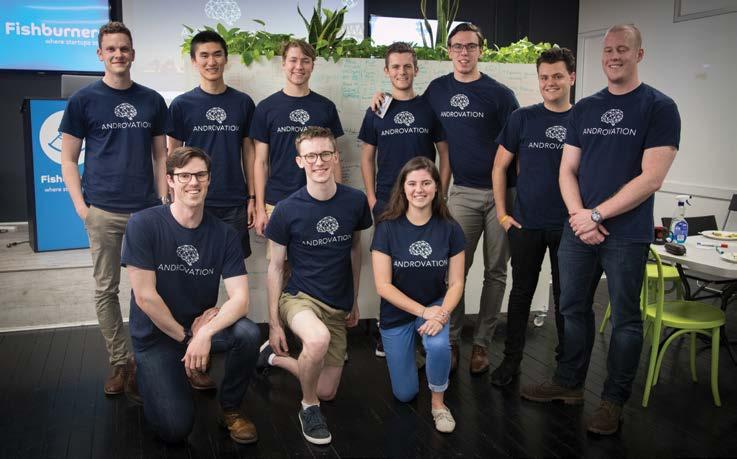
Team 1 presented Prime, a primary school replacement for vocational teaching, to give kids essential ‘living’ skills within the curriculum, like understanding a tax return.
Team 2 focused on Project Fulbright, an app which guides regular people from zero to the Fulbright scholarship, with reading lists, exercise regimes, meditation techniques and motivation manuals.
Team 3 built Study Canvas, an innovative way to select subjects and courses based on degree, study stage and major in an app designed for students to be sold to universities.
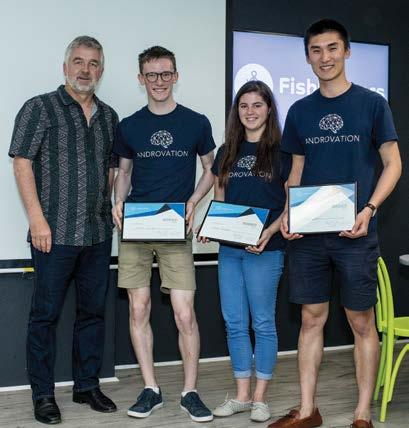
Congratulations freshers Xavier Eales, Katie Hodder and Hogan Wang on their win for Study Canvas. They will work closely with alumni to see their idea manifest into a viable product.
Androvation was a very successful first iteration of what will no doubt become a staple of St Andrew’s culture.
Celso Milne (Fr 2016)
Read the full report: http:// www.standrewscollege.edu.au/ androvation_entrepreneurs/
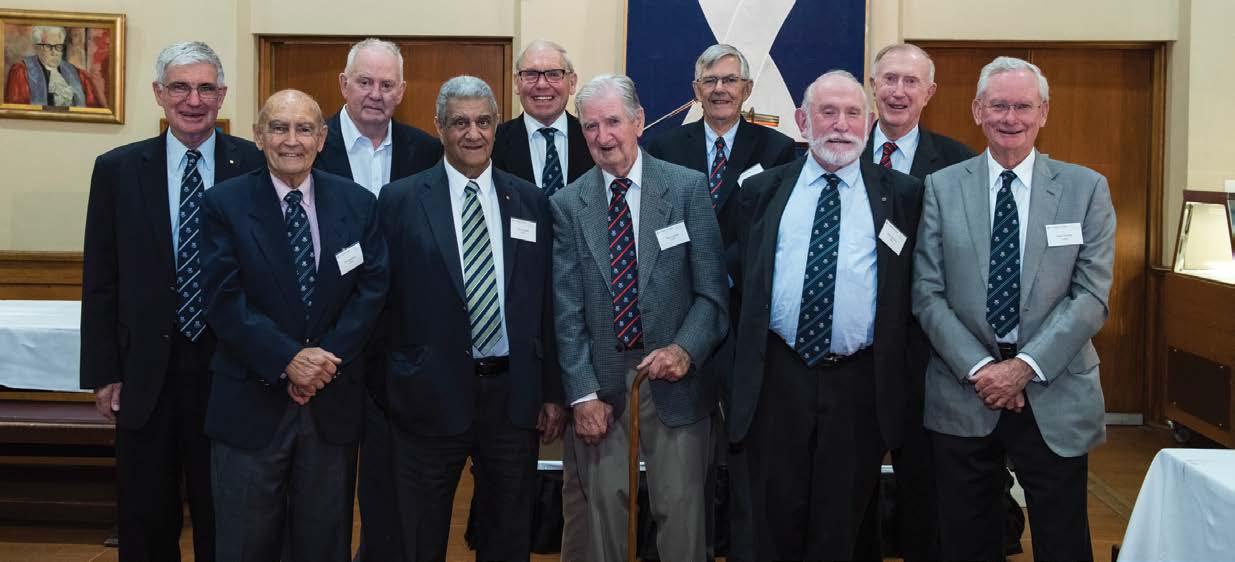
DickCircleSpann Lunch
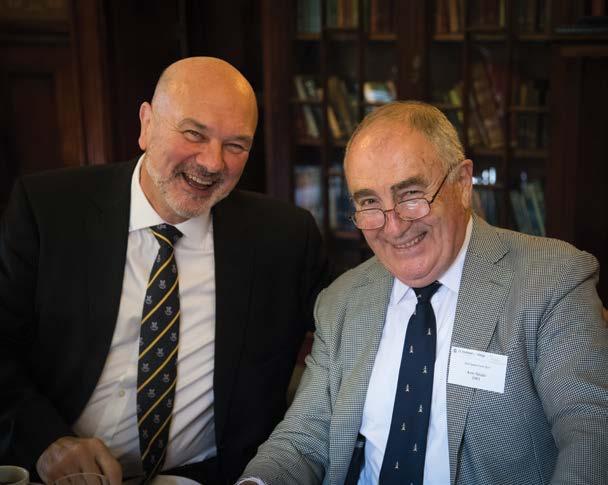
Honouring long-time Vice Principal Dick Spann, the Dick Spann Circle was formed by the Foundation and College to honour alumni and friends who have indicated that they have left a bequest to the College in their will. Members and
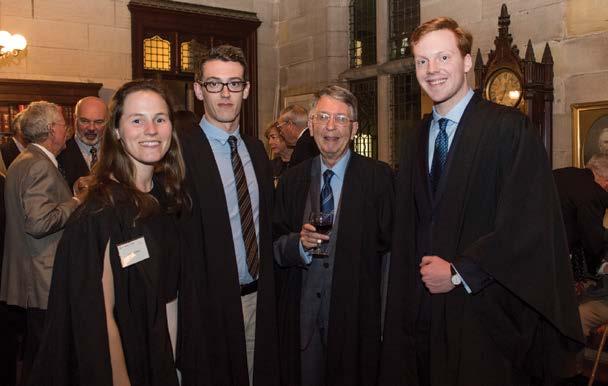
Founders and Benefactors Dinner
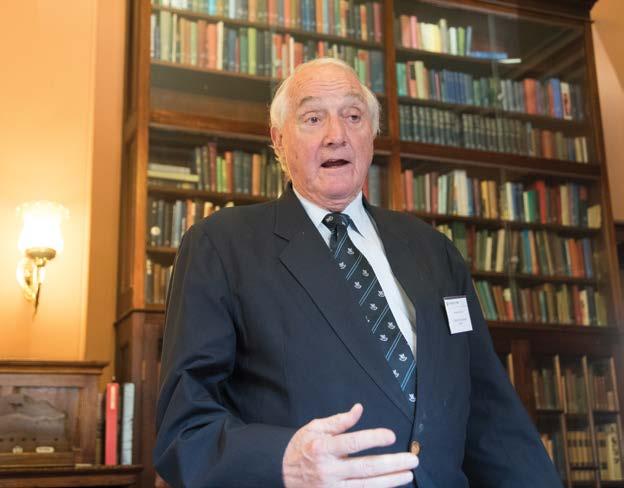
Our annual Founders and Benefactors Chapel Service and Dinner was held on 11 September. This event allows us to thank those who give so generously to support our students and College. It is always a pleasure to welcome alumni and others in our community back to St Andrew’s.
Speeches made by Senior Student Lachie Mactier and Max Carter demonstrated the impact of giving. Lachie spoke about the importance of giving back long after leaving College, whilst Max spoke about the effect his scholarship has had on him both
friends of the Dick Spann Circle gathered on Friday 13 October for an afternoon of lunch, laughter and stories. Campbell Anderson (Fr 1959) was the honorary speaker; his recollections of Dick Spann were funny as well as insightful into life at College during that era. The lunch concluded with a musical performance from students Will Cesta and Minami Takahashi.
personally and academically. A recital in the SCR followed dinner, with inspiring performances from some of our musically gifted Androvians.
Queen’s Birthday Honours
On 8 June, two members of the Andrew’s community were among the eminent Australians who received Queen’s Birthday Honours. The College would like to congratulate the below people on their prestigious honours:
Member (AM) in the General Division
Mr Stephen F Higgs AM (Fr 1967)
For significant service to community health through leadership roles with medical research organisations, particularly juvenile diabetes
Stephen is an Honorary Fellow and former Councillor of St Andrew’s College. He was a Founder of UBS Investment Bank in Australia and Director and Chair of the Juvenile Diabetes Research Foundation Australia and helped to set up a number of other important medical research funds. He is currently the Chairman of the Glycaemic Index Foundation.
Member (AM) in the General Division
Professor David R Fraser AM (Fellow 1992–2000)
For significant service to tertiary science education, as an academic and researcher, and to the study of human disease and domestic animal production.
David became a Professor of Animal Science at the University of Sydney in 1986, before then becoming Head of the Department of Animal Science (1992–1994) and then Dean of Faculty of Veterinary Science until 1998. He continues with research and teaching on the nutrition of domestic animals at the University of Sydney, with particular interest in vitamin D status and function.
We would be delighted to hear from any other members of our alumni community who received honours and are not listed above.
Our sympathy is extended to the families of these alumni and members of our community:
1940 Dr Malcolm Chennell Smith
1944 Em Prof Bruce Mansfield
1951 Malcolm Walker
1952 Roderick Donald Macdonald, Senior Student 1957
1952 Dr Jeffrey Anthony Cameron
1954 Dr Montagu Beesley
1944 Peter Gordon Grant Willis
1947 Hugh Edmund Carlyle Taylor, Chair of Council 1982-1985
1947 Lawrence Armstrong
1948 Bruce Edward Mackey
1967 Dr David McLean
1967 Geoff McWilliam
1967 John Park
1997 Benjamin Bailey
Mr Hugh Edmund Carlyle Taylor (Fr 1947)
The College honours the life of Hugh Taylor (Fr 1947), father of Hugh Taylor (Fr 1973) and James Taylor (Fr 1984). Hugh was a longtime Councillor (1976–2001) and served with distinction as Chair of Council from 1982 until 1985. He continued his long association with College through his many grandchildren. Our sympathy is extended to Hugh’s family.
Emeritus Professor Bruce Mansfield (Fr 1944)
The College honours the life of Emeritus Professor Bruce Mansfield (Fr 1944), Honorary Treasurer of the House Committee. Professor Mansfield was a pioneering leader at Macquarie University where from 1965 he occupied the first History chair in the Professoriate and later served as Deputy Vice-Chancellor (Academic).
If you know of any other deaths in our community, please contact us.
Cultural Collections
The Foundation Stone
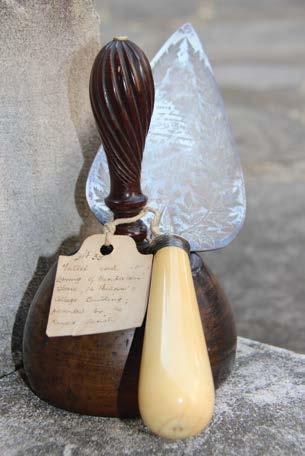
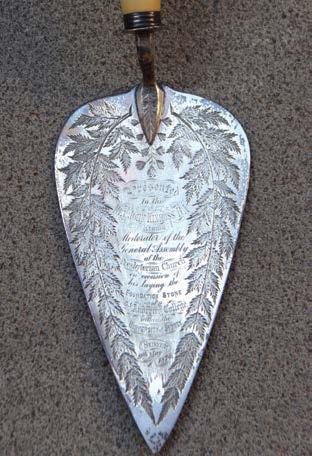
Wrought in fine silver with an ivory handle, this trowel pictured is engraved with a dedication to the Reverend John Kinross who laid the foundation stone of Main Building on 9 May 1874 in his capacity as Moderator of the General Assembly of the Presbyterian Church of New South Wales.
In a cavity within the stone, there were deposited a copy of the Act of Incorporation, a copy of the Government Gazette in which the incorporation was officially proclaimed, copies of the Sydney Morning Herald, the Empire and the Australian Witness for 9 May 1874 as well as all the current coins of the realm from a gold sovereign down.
History gives us such relics to conjure up our past and to focus our story in the contemplation of a tangible thing. The impractically delicate mallet made of myall wood with which Kinross tapped the foundation stone into place recks nothing of its original function. It holds a significance entirely beyond itself as the tool which inaugurated the ‘St Andrew’s project’. In as much as the trowel and mallet recall that afternoon in May 1874 and the ideals which set the College on its way, they are relics of the Androvian spirit.
In his address, Kinross declared that the great goal of St Andrew’s was ‘to awaken in the mind of the student a strong love of truth, a detestation of all that is low, debasing, and vicious, and an appreciation and practice of all that is noble in feeling and action’. The moral conviction and imperative to action live strong in this place still. The egalitarian principles which grew up in the ancient universities of Scotland and Kinross’ unique aspiration that the
College would ‘promote the cultivation of the man, not merely fit individuals for the discharge of the common occupations of life’ remain our core principles.
More telling still is that after he tapped the foundation stone into place, Kinross expressed a hope that the people of St Andrew’s would build the Colony into a country of nuance and sensitivity. Kinross believed that a College of such ideals could liberate the Colony from the ‘lowest and grossest forms of utilitarianism’ and help the colonisers see past the agricultural soils and pastures and appreciate Australia for what she is.
Since that autumn day in 1874, the College has forgotten the location of its foundation stone (though it is known to be close to ground level at a corner of the original building). It is perhaps an apt symbol of the College that, although the stone itself cannot be located, the tools which laid it remain. We retain the collegiate apparatus of common rooms, communal solidarity, and intellectual, sporting, and cultural rigour, and it is these that will guarantee our next 150 years.
Alex Wright Dean of Studies
Our 150th Year in Review
Our Sesquicentenary.
It has been a remarkable year of celebration and reflection within the walls of St Andrew’s College.
With a lively calendar of events, both lighthearted and thought-provoking, we have opened our doors to our community on many different occasions throughout the year.
We wish to thank all members of our College community – students, alumni, staff, parents and friends – who have joined us in 2017, to help us celebrate this milestone anniversary.
We look forward to your continued interest and involvement as the College moves forward into the next 150 years.
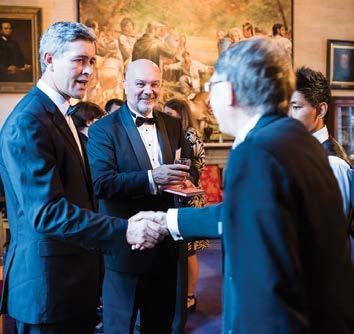
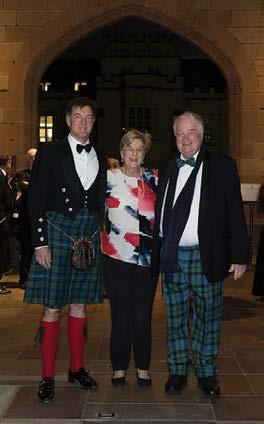
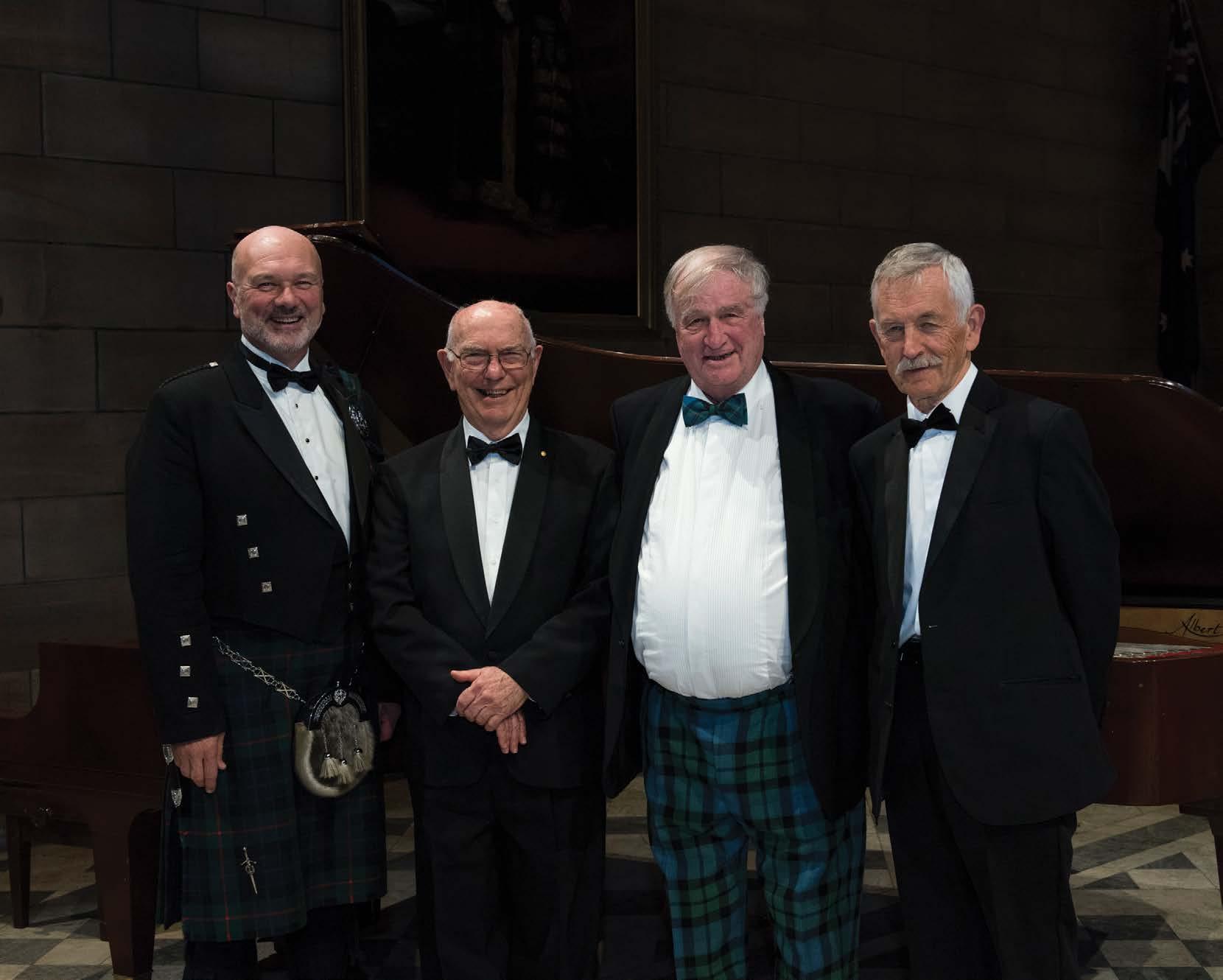
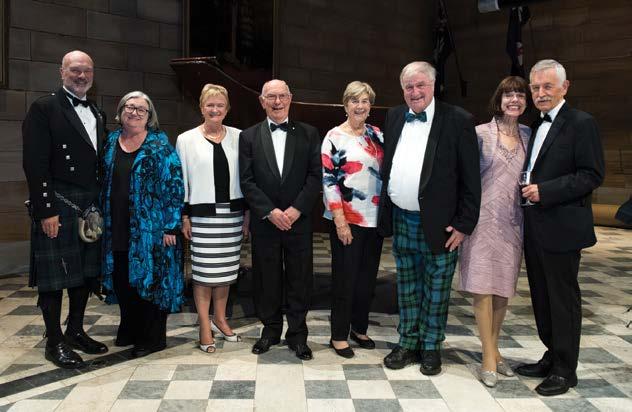
Four Principals of St Andrew’s College reunite at the Sesquicentenary Gala Dinner
L–R: Wayne Erickson, William Porges, Hugh Cairns and Peter Cameron