© Patrick Wainwright

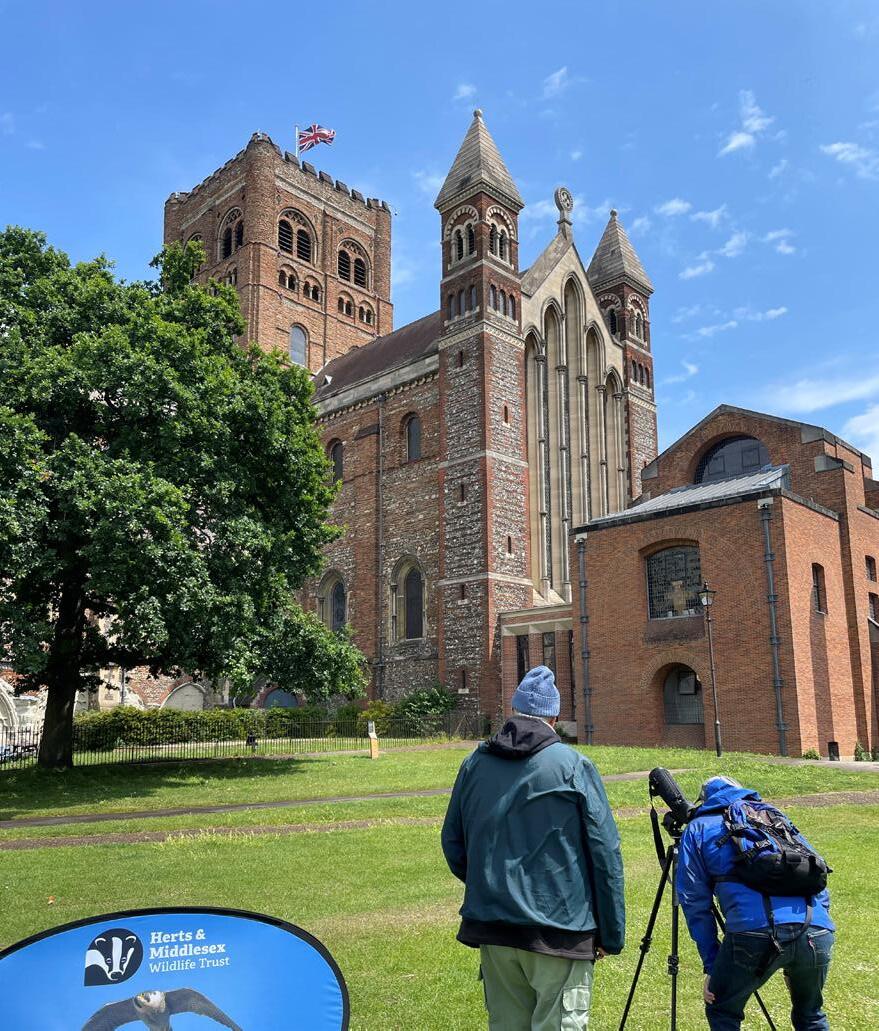
In 2022, a pair of Peregrine Falcons bred on St Albans Cathedral for the first time ever and raised one chick. Since 2023, three chicks have successfully hatched each year. We are delighted that the birds have been seen on and around the Cathedral since early spring and have bred for the fifth year in a row. We’ve put together this helpful guide so that you can learn more about these fascinating falcons.
Description
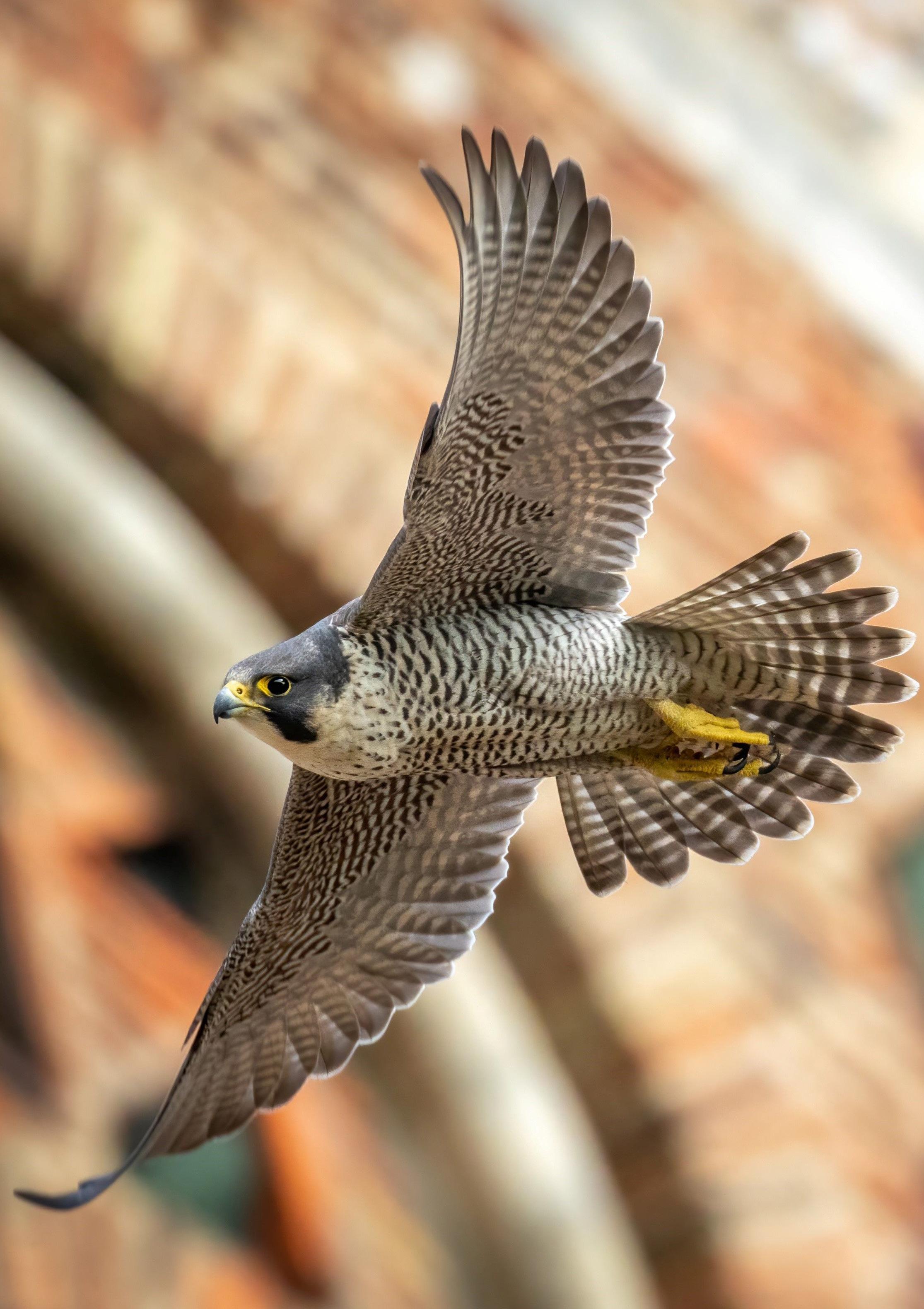
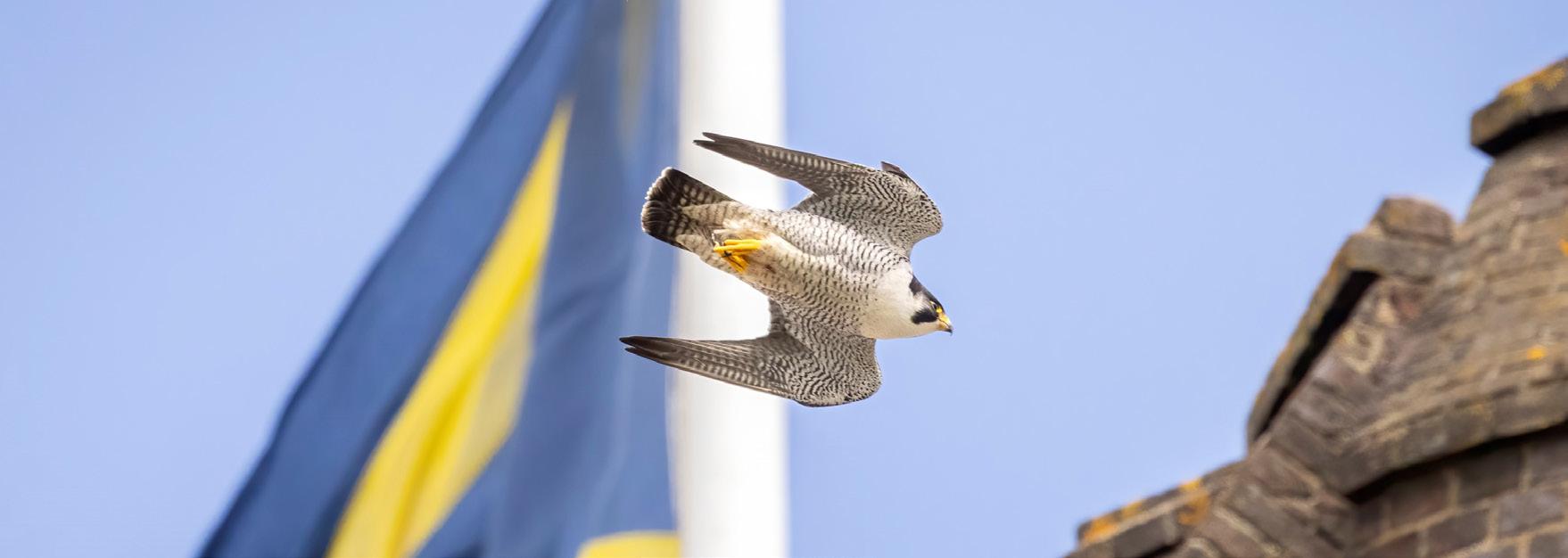
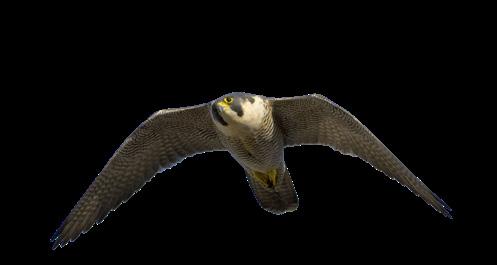
Peregrines have broad, pointed wings and a relatively short tail. The birds are blue-grey above, with a blackish top of the head and an obvious black ‘moustache’ that contrasts with its white face. Males are smaller than females. Both have a white, heavily barred chest, and grey wings. Juveniles are brown and streaked in appearance.
What’s in a name?
The name Peregrine comes from the Latin word ‘peregrinus’, which means ‘wanderer’ or ‘pilgrim’. It is so named because outside of the breeding season some birds can travel widely.
Breeding
Peregrines nest in high, out-of-the-way spots such as cliffs (or cathedrals!). The birds often mate for life and will return to their nest sites year-on-year. Peregrines normally lay 3-4 eggs each year and each egg takes about one month to hatch.
Fast falcon
When in full stoop (diving after prey) a Peregrine can reach speeds of over 200mph making it the fastest recorded animal on earth. Special adaptations in this bird’s nostrils enable it to reduce the change in air pressure experienced at this speed so that it can breathe.
Status
Peregrine numbers reached a low point in the 1960s due to human persecution and the impact of pesticides in the food chain. Improved legislation and protection has helped the birds to recover and their numbers are increasing. However, they are still persecuted - birds are illegally killed to prevent predation on game birds and racing pigeons. Eggs and chicks are also stolen for collections and falconry.
Falcon Factfile
Name: Peregrine Falcon
Latin Name: Falco peregrinus
Length: 39-50cm
Wingspan: 95-115cm
Weight: 600-1,300g
Speed: When diving for its prey, a Peregrine can reach speeds of over 200mph!
Status: Green – numbers of Peregrines are increasing across the country and there are approximately 1750 breeding pairs in the UK, with five pairs thought to be breeding in Hertfordshire, in St Albans, Watford, Hemel Hempstead, Welwyn Garden City and Wymondley.
Protection: Peregrines are a schedule 1 species, protected under the Wildlife and Countryside Act and disturbing them is a criminal offence.
Your Peregrine Questions Answered!
Are Peregrines migratory species?
Peregrines across the world do seem to migrate to reach different climates, however in the UK they appear to stick around.
What do Peregrines eat?
The most common prey item is pigeon, however, they do prey on a wide variety of other bird species too, from smaller birds such as finches and wrens to larger birds such as ducks.
How do Peregrines tend to their eggs?
Peregrines usually lay a clutch of 3 - 4 eggs. After the first egg is laid, the others will be laid at intervals of around two days per egg. Don’t worry if you see eggs left alone, it is only once the third egg is laid that the pair begin incubation. The Peregrines will stay close to the nest site and protect the eggs from predators. The female mainly incubates with some help from the male, who also brings in prey for her. The eggs will hatch around one month after they are laid, if they are successful (sometimes eggs are infertile or do not hatch).
Will the chicks be left alone on the nest?
At times, the chicks may appear to be left by themselves but the parents will be nearby to provide food and
protection. There will also be times when the chicks are out of sight, particularly so when seeking shelter from extreme weather.
When will the chicks fledge?
A young bird that has just left the nest has fledged. When it is still in the area and flying it is known as a fledgling. The young fledge between 35-42 days after hatching.
How do the chicks learn to catch their own prey?
Adult Peregrines will withhold food items and encourage the fledglings to take longer flights. At this time, the adults will drop prey in mid-air for them to catch in a food pass. Leaving their parents is gradual and spread over several weeks, during which time they gradually learn to fend for themselves. The adults will continue to feed them until they disperse naturally. There is no evidence that the adults drive juveniles away – it is likely that they will detach themselves from the parents as instinct dictates.
Where can I find more information about birds of prey?
Herts and Middlesex Wildlife Trust’s website has lots of information about birds of prey and other local wildlife –hertswildlifetrust.org.uk
A wilder future
Herts and Middlesex Wildlife Trust believe that wildlife should have space to thrive alongside our everyday lives, and that everyone benefits from having access to nature. You can support our work by purchasing a Peregrine Sponsorship Pack from our online shop - it’s also the perfect gift for a nature lover!
Watch the Peregrine Falcons live on the Cathedral’s webcam!
Thanks to sponsors Opticron, you can watch all the action live from the Peregrines’ nesting tray on the Cathedral via a webcam, at stalbanscathedral.org/peregrinelive-cam
And get the latest wildlife news by signing-up to our monthly newsletter, giving you access to events, seasonal highlights and more. hertswildlifetrust.org.uk

The history of Peregrine Falcons at St Albans Cathedral
The first confirmed evidence of a Peregrine was an item of prey that was found on the Tower in 2018, albeit there were rumours of sightings of single birds prior. This prompted local ornithologist and licensed bird ringer, Barry Trevis to make his first contact with the Cathedral. Following that sightings reduced. Then, Alan Gardiner, Herts County Bird Recorder for Herts Natural History Society (Herts Bird Club), reported one was being seen regularly in late winter 2020. Barry then made his first visit to examine the top of the Main Tower on 18 February 2020. Due to the pandemic, Barry’s contact with the Cathedral was put on hold until October 2021. Just a few months later, in mid-March 2022, there were first sightings of an actual Peregrine pair and the nest tray was fitted on 23 March 2022.
Please remember that the webcam gives us a great insight into nature but sometimes the birds will be out of view.
Peregrine Watch events
Herts and Middlesex Wildlife Trust and the St Albans Local RSPB Group organise Peregrine Watch within the grounds of the Cathedral over weekends throughout spring and summer. Find out more at: hertswildlifetrust.org.uk/events