Views from theTower
By Dr. Lenore Tedesco, Executive Director
Driving down the causeway onto Seven Mile Island, the lush expanse of green meadows is a welcome sight. Salt marshes are among Earth’s most productive and diverse habitats, with productivity comparable to rainforests.
The salt marsh is a watery world that forms between the mainland upland habitat, and the intertidal and underwater zones of the bays. Think of it as zero elevation. Each day, the salt marsh experiences two high tides and two low tides. Plants and animals that live in this habitat must be able to withstand constant environmental change or move with the tides.
The animals that are fixed in their habitats are adapted to survive the changing water levels. Bivalves, a type of mollusk that has two shells, take advantage of the flooding tides by filter feeding. At each high tide, bivalves are flooded with food and nutrients that sustain them. Some of the most commonly seen bivalves in our marsh are ribbed mussels, eastern oysters, and hard clams. Ribbed mussels (Geukensia demissa) are found firmly attached to the base of salt marsh grass, where they
use strong byssal threads to anchor themselves in place, where they will live out the rest of their lives. In contrast, hard clams (Mercenaria mercenaria) prefer to call mud flats home. In the soft mud, hard clams use their foot to orient themselves and move when submerged in water. Eastern oysters (Crassostrea virginica) float as plankton until they land on a hard substrate and begin to grow into their adult form. Despite their differences, all three of these bivalves help maintain this ecosystem by filtering water and creating habitat for numerous other organisms.
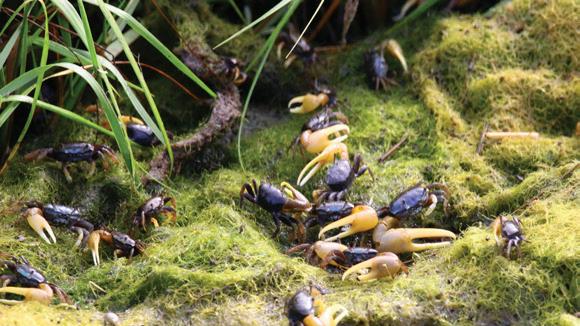
Another inhabitant of the salt marsh is the fiddler crab. They live in large groups and are quite social. They tunnel deep into the mud, creating a network of holes in the marsh that protect them from predators and keep them moist. The males have a large claw that they use for display or defense, and a small claw that they use to feed. The females have two small claws. They are a favorite food of diamondback terrapins.
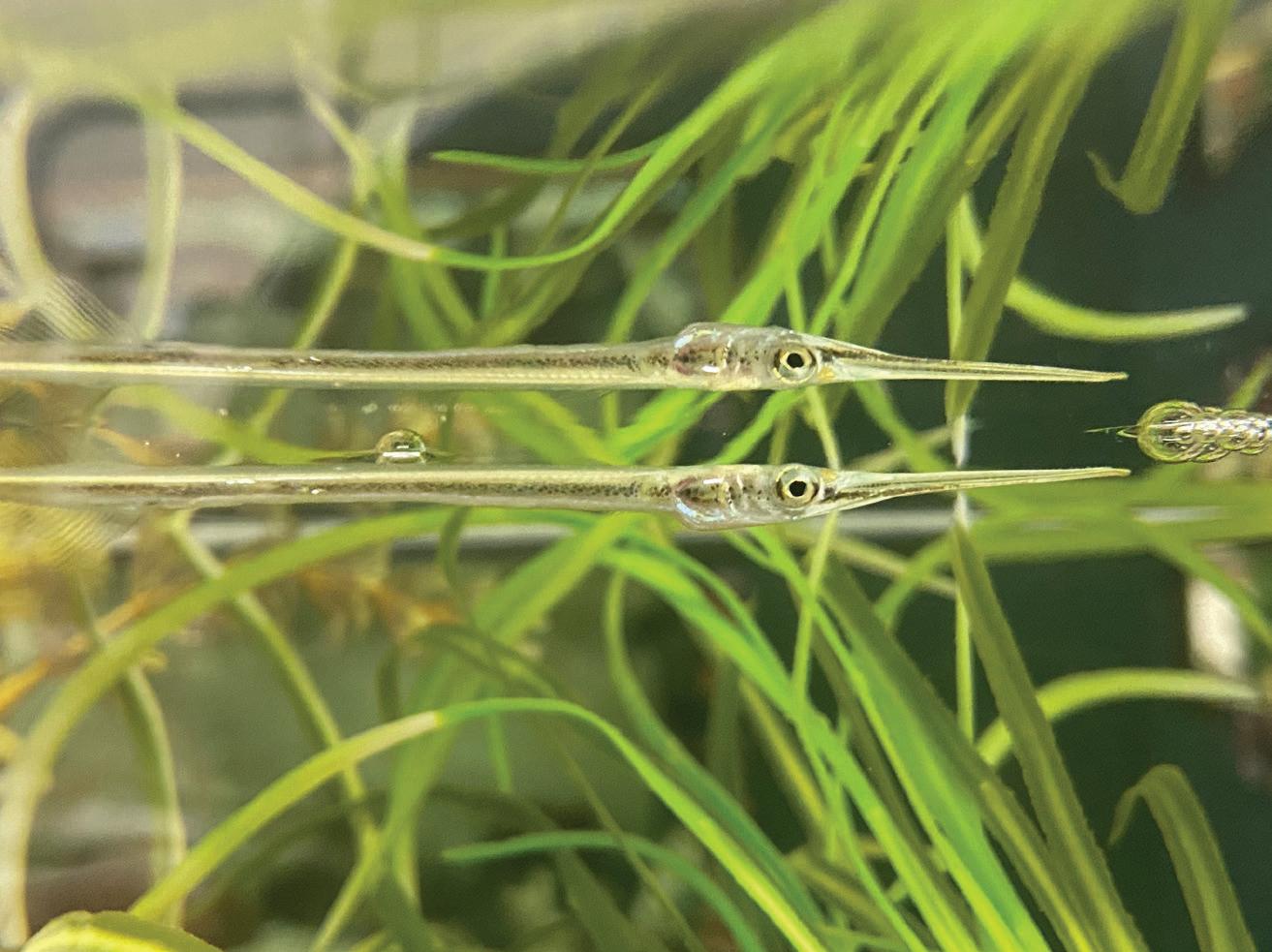
The Atlantic Needlefish (Strongylura marina) lives in the safety of the
marsh. Juvenile needlefish are a quick snack for most predators, so they hide at the surface of shallow water where their thin silver body looks like a glimmer of sunshine on the water.
Swimming below the needlefish is Black Sea Bass (Centropristis striata) who lay eggs in estuarine habitat. Once hatched, the larval sea bass float until they begin to develop into their juvenile states. After one to three years, the sea bass are ready to migrate offshore into deeper waters.
Understanding the value of this habitat, for both the organisms that call it home and the humans experiencing it, fosters a deeper appreciation for the salt marsh. To explore more and see many of these animals up close, visit us at The Wetlands Institute or take a guided walk on the Salt Marsh Trail.
Annie Ulichney, Chair
Deborah A. Hays, Vice Chair
Raymond Burke, Treasurer
William Wermuth, Secretary
Timothy Jon Clay
James Donohue
John Flynn
William Hankowsky
Linda Littenberg
Margaret McAllister
Staff
Leadership
John Millar
Jeannie Morris
Liz Thomas
Jon Tullis
Amy Welsh
Francis J. White III
Dr. Lenore Tedesco, Executive Director
Dr. Lisa Ferguson, Director of Research and Conservation
Jim Frick, Director of Finance and Operations
Brooke Knapick, Director of Educational Program Development
Research & Conservation
Julie Blum, Research Scientist
Samantha Collins, Research Scientist
Meghan Kolk, Conservation Scientist
Bailey Sanders, Research & Conservation Coordinator
Brian Williamson, Research Scientist
Education
Francesca Jacobs, Environmental Educator
Abbygayle Liles, Aquarist/Environmental Educator
Erin Rawls, Outreach Coordinator
Development & Communications
Leah Satterfield, Development Associate
Finance
Terrie Campbell, Finance Administrator
Christine Whaley, Finance Analyst
Administration
Mary Beth Ciccarone, Administrative Coordinator
Kimberly Dmytro, Tidepool Shop Manager
Michael Fridmann, Facilities Manager
Visit Us
Hours: Until May 18, open Saturday and Sunday 9:30 to 4:30. May 19 - September 14, open daily 9:30 to 4:30.
General Admission: Members: Free.
Non-members: $12 Adults, $10 Children 4-12.
Views From the Tower is the quarterly newsletter of The Wetlands Institute and can also be found on our website.
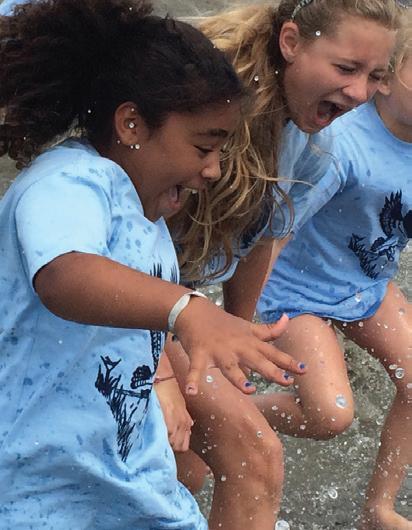
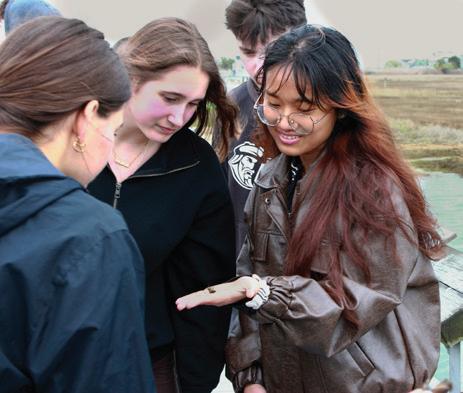
Here we go! Rolling into another summer at the shore with all the excitement and joy of this wonderful place. The promise of spring has been replaced by the energy and discovery that summer brings, and The Wetlands Institute is abuzz. Our education programs are peaking with visitor programs, guided nature walks, on-the-water tours, and the undergraduate interns are at the heart of them, bringing their own burst of energy to the season.
The research and conservation team is busy working on several grant-funded projects to track and understand the needs of wading birds on the marsh islands, in both the back bays and in Delaware Bay. Diamondback terrapin conservation efforts are in full swing. They are coordinating the reTURN the Favor program volunteers and conducting horseshoe crab surveys, stewarding the beaches to protect beach nesting birds, and educating the public on their needs. This year, their work also includes monitoring the marshes and salt marsh ahead of the Salt Marsh Trail revitalization project to monitor the restoration efforts. As always, the research interns are integral to this work, and their research projects will focus on coastal birds and terrapin conservation.
While things change around us all year, summer is different because it is the time when the changes are marked by a remarkable display of connections and a special sense of community felt by all of
By Dr. Lenore Tedesco, Executive Director
us. Schoolchildren releasing the diamondback terrapins they helped care for throughout the year is truly a treasured time when they take steps toward becoming stewards of these fragile marshes and make lasting connections to this community of caring. The gleeful ah-ha moments joyously shared (often loudly) by children in Summer Nature Programs are always a wonderful sound that makes me hopeful for a future filled with environmentally aware and engaged protectors of these special places. The bonds and connections formed among undergraduate interns are remarkable as they discover the impact of their personal actions, which is a testament to the importance of these opportunities, and watching how they develop over the course of their work is inspiring. There are so many ways in which The Wetlands Institute’s work, programs, and the opportunities we provide collectively build a community of care and stewardship, creating a ripple of change that everyone can be a part of. One piece of that change is our work to revitalize the Salt Marsh Trail and reimagine how we can use nature-based solutions to build resilience for generations to come. We hope you will visit and experience the marsh alongside us as we shape this exciting next chapter for The Wetlands Institute. And if you are already part of our community, invite a friend to discover the beauty, connection, and sense of stewardship that make this place so special.
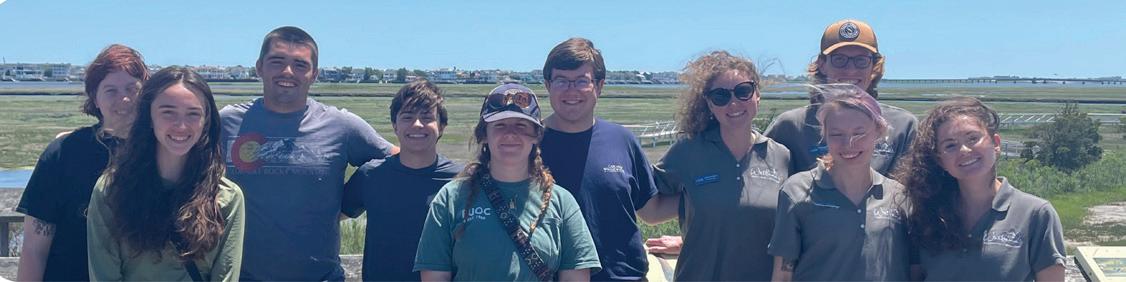
And they’re off! Our Environmental Education Interns are spending 12 weeks leading public education programs and designing their own independent project, all while immersing themselves in the unique environment of the surrounding saltmarsh and barrier islands. Jumping in with both feet first, they look forward to meeting you:
Fiona Buffington, West Chester University of Pennsylvania
Grace McHugh, Rutgers University – New Brunswick
Connor Robinson, Rowan University
Lillian Zimmerman, Montclair State University
Just in time for the summer field season, we’ve welcomed six 2026 CCRP interns to join our Research and Conservation department for a 10-week adventure, conducting independent research projects and contributing to our studies on diamondback terrapins and coastal birds. We are excited to have two interns returning for a second summer with us, as well! Please join us in welcoming:
Emma Healey, SUNY College of Environmental Science and Forestry
Joey Brace, Florida Gulf Coast University (2nd year intern)
Kristen Kallok , Barnard College of Columbia University (2nd year intern)
Lillian MacDonald, Rutgers University
Maxwell Ferrelli, University of Delaware
Peyton Munroe, Columbia University
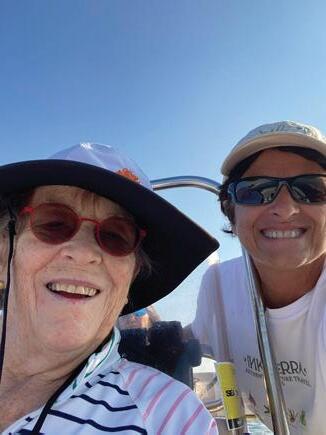
The Wetlands Institute family lost long-time board member and friend Jane Rakestraw this winter.
Jane made her home in Stone Harbor and spent her winters in Palm Springs, California, places that reflected her love of beauty, sunshine, and community. Jane devoted more than 35 years of her professional life to Saks Fifth Avenue, where she rose to Vice President of Human Resources. She was widely respected for her leadership, integrity, and commitment to mentoring others. When I arrived at the Institute more than 14 years ago, Jane was the first person I met, and she became a trusted advisor and close friend. Jane helped mentor me in so many ways and was a gift to my life, my leadership, and the Institute.
Mark your calendar so you can join us to see the results of their summer projects at The Wetlands Institute’s Annual Intern Symposium on August 3!
She cultivated friendships that were loyal, enduring, and filled with warmth, laughter, and mutual care. Those who knew Jane understood the depth of her generosity, her sharp intellect, and her unmistakable presence. She will be deeply missed and fondly remembered.
She was a committed and generous supporter of many charitable and educational organizations, including The Wetlands Institute. We are deeply grateful that Jane included the Institute in her estate planning, as we celebrate her legacy for years to come.
Donations in Jane’s memory may be made to The Wetlands Institute in Stone Harbor (wetlandsinstitute.org).
By Dr. Lenore Tedesco, Executive Director
As Summer rolls into the marshes, we are excited to provide an update on the marsh rehabilitation project at Scotch Bonnet Island in the marshes adjacent to The Wetlands Institute. The project partners, The Wetlands Institute (TWI), U.S. Army Corps of Engineers (USACE), and NJDEP Fish and Wildlife, are pleased to provide an update following the first year of recovery. The project, completed in the fall of 2024, is progressing well on a trajectory of revitalization.
Marshes are at their healthiest when they are nourished by tidal waters. However, when they are inundated too often and too deeply, they begin to deteriorate and drown. Our research has shown that many marshes in New Jersey are being stressed by rapidly rising seas and are at a tipping point. Since the 1950s, the Scotch Bonnet Island marshes have lost more than 30% of their area, and formerly lush expanses of marsh grass are increasingly converting to mud flats and open water.
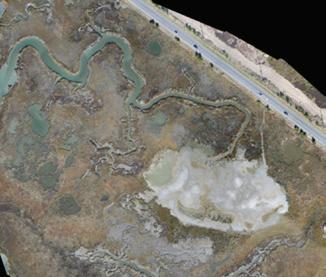
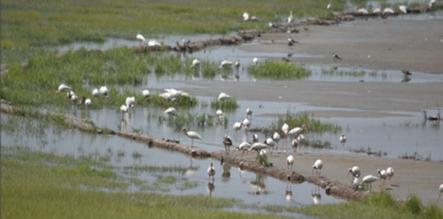
Prior to revitalization, the 86-acre marsh island was at an elevation that was almost entirely at or below stable low marsh elevation. Work began with USACE navigation channel maintenance operations to clear two critical shoals in the vicinity of Nummy Island. Dredged material was tested and confirmed to be free of contaminants and consisted of a sediment mixture of fine sand and mud. The dredged sediment slurry was pumped nearly two miles through a floating pipeline and sprayed onto a section of marsh managed by NJDEP as part of the Cape May Coastal Wetlands Wildlife Management Area, just south of Stone Harbor Boulevard at Scotch Bonnet Island and adjacent to TWI.
The construction phase of the project lasted for two months between October and December 2024. Biodegradable coir logs were used to direct flows into lower lying areas and prevent sediments from being lost to non-target areas. An expanding, erosional tidal channel that was dissecting the marsh area was blocked by two experimental weir structures that were designed to force the dredged material in discharge waters to settle out but to also allow tidal flooding to naturally distribute sediments across the target areas of marsh platform.
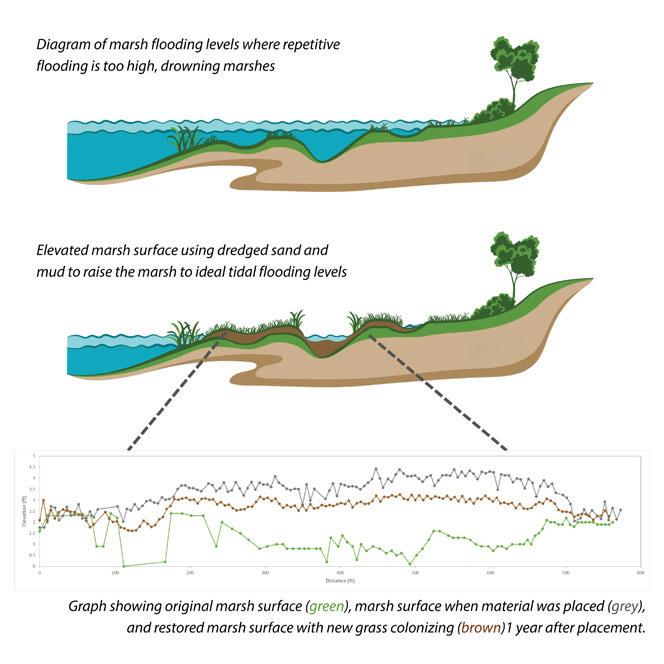
The project successfully placed 14,000 cubic yards of sand and mud over 5.5 acres. Construction target elevations were 1-1.5’ higher than the planned ecological elevations to allow for dewatering and consolidation of the underlying marsh sediments resulting from the weight of the placed sediments and dewatering. Sediment thickness was up to 3’ in places, successfully meeting elevation targets. After one year of site evolution, marsh elevations have decreased approximately 1’ and tidal channels are stable. By early spring 2025, a few months after construction, marsh grasses from natural seed dispersal had begun to grow on the marsh surface beginning site colonization and marsh elevations are within the range for continued grass growth.
Wildlife usage of the marsh was immediate including during the sediment placement phase, with the higher elevation serving as an important refuge for birds during high water events. Monitoring of site usage documented 32 bird species utilizing the placement area including notable numbers of migratory shorebirds and species of special interest.
The Wetlands Institute will be open daily from 9:30am-4:30pm with all-day activities from June 21 – September 7, 2026! Unless otherwise stated, all activities are free with admission and occur onsite at The Wetlands Institute. For more information, visit wetlandsinstitute.org/events.
Exploration Point
9:30 AM Monday
Bring your buckets! Meet at the trailhead at 122nd Street in Stone Harbor and explore Stone Harbor Point for awesome seashells, cool birds, and fun things that live under the sand.
Suggested $3 donation to The Wetlands Institute.
During this live animal presentation, get up close and personal with turtles, fish, crabs, sea stars and urchins, mollusks, horseshoe crabs, or the popular animals of Finding Nemo Creature Feature 11:15
Get your feet wet (or wear waders!) as you discover what swims in the back bays. Help us drag a seine net through the water to find crabs, shrimp, fish and more. Catch o’ the Day
Salt Marsh Safari
10 AM, 12 PM & 2
Watch our award-winning film, Secrets of the Salt Marsh, then join us for an interpretive marsh walk along our elevated walkway and onto the dock overlooking Scotch Bonnet creek!
Totally Turtle Tuesday
11 AM - 4 PM Tuesday
Every Tuesday is a day with the turtles! Meet them up-close at our Turtle Basking Station, learn about our latest research during our Creature Feature presentations, make unique turtle crafts, and join us for a special terrapin release during our noon Salt Marsh Safari.
Dune and Beach Walk 9:30 AM Wednesday
Meet at 48th Street and Dune Drive in Avalon for an interpretive walk along the maritime forest and dune trails to learn about the flora and fauna that call this area their home.
Free to attend and generously sponsored by Avalon Free Public Library.
Thursday
11 AM - 4 PM Thursday
Thursdays are for the Horseshoe Crabs! Meet these ancient animals up-close during our Creature Feature presentations, make horseshoe crab take-home crafts, and join us for a special horseshoe crab hatchling release during our noon Salt Marsh Safari.
Hooked on Fishing 10 AM Saturday
Go fishing! We’ll teach you how to bait a hook, cast a line, catch a fish and reel it in. We’ve even got fishing poles and bait.
Seashell Sunday
10 AM Sunday
Seashells at the seashore! Join us to learn all about seashells, how to collect them without harming the environment, and touch an assortment of live mollusks and cool artifacts.
Crabbing at the Dock
Drop a line in the water and see what pinches it! We’ll provide the bait and handlines - You reel in the blue crabs!
Help us feed the local marine life! We will open up feeding three times each week so you can see the burrfish eating crabs and the horseshoe crab gobbling shrimp.

Enjoy a virtual visit to The Wetlands Institute anytime and anywhere by visiting the Aquarium Bytes section of our Virtual Wetlands Experience portal on our website: wetlandsinstitute.org/ aquarium-bytes.
Paperless newsletters are more sustainable and they help reduce our cost so a larger portion of your gifts directly support our research, conservation, and education programs. Sign up for our e-newsletter at wetlandsinstitute.org/about-us/newsletter.
By Brooke Knapick, Director of Educational Program Development
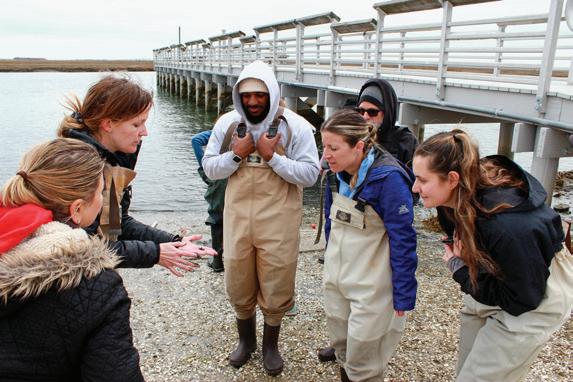
How is climate change affecting our local salt marsh ecosystem? Over the past two years, New Jersey school teachers from Grades K-12 have joined us for Wetlands Ecology Professional Development Workshops to explore this question and get the full hands-on, feet-wet experience only The Wetlands Institute can provide. These workshops are offered in partnership with Stockton University through the Climate Change Learning Collaborative, a statewide initiative funded by the NJ Department of Education to expand access to climate change education aligned with the New Jersey Student Learning Standards. During these immersive workshops, teachers engage in water quality and soil testing, along with seining, plankton analysis and biodiversity studies to better understand how changing environmental factors impact wetland plants and animals. They also take a close look at the Scotch Bonnet Marsh Enhancement project, a collaborative effort by local and national scientists to restore marshes and address sea level rise in our local community. Throughout the day, participants discuss ways to adapt the concepts and activities to meet the learning objectives of their individual classrooms.
Having received funding for a third year, we are excited to expand our no-cost professional development workshop offerings to include Barrier Beach Ecology. Participants will start with a walk through the maritime forest at 48th street in Avalon and see first-hand how a changing climate has shaped the landscape. Once over the dunes, teachers will experience beachcombing and taxonomy, water quality testing and invertebrate sampling to better understand how changing environmental factors impact wildlife.
For more information on upcoming Climate Change Education professional development workshops, please visit: www.stockton.edu/ettc/climate.html
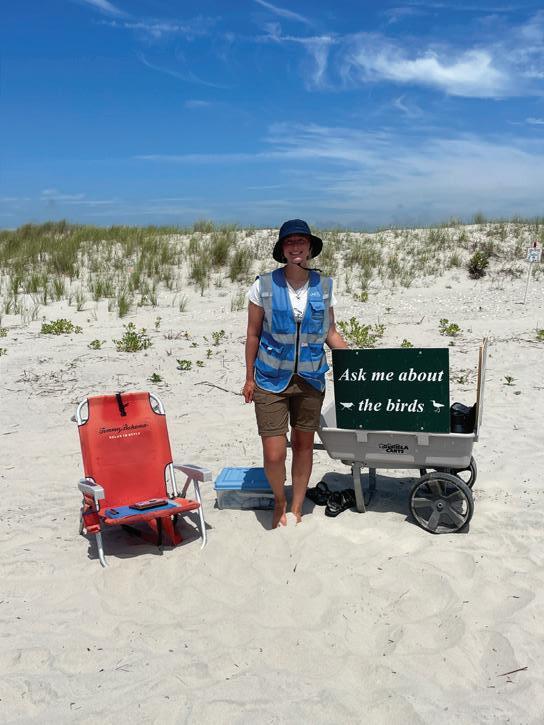
Shorebirds face a multitude of threats that are outside of our control, but recreational disturbance is one factor that we can reduce. With ever-growing demands on our beaches, there are fewer spaces for shorebirds and seabirds that depend on the beaches year-round to feed, rest, and raise their families. Even everyday activities on the beach that may seem harmless can be unintentionally damaging to these birds. Many of the birds that rely on our New Jersey beaches are threatened or endangered species, meaning their populations have declined to concerning levels.
One of our local beaches that provides critical habitat for both beach-nesting birds and migratory shorebirds is Stone Harbor Point Conservation Area. To address issues of recreational disturbance at this important site, we utilize our Shorebird Steward Program, coordinated in partnership with the Borough. During the summer months stewards interact with beachgoers to interpret educational information about shorebird conservation, beach closures and regulations, and how our behaviors impact birds. The data stewards collect about disturbance events help us better understand which issues need the most attention. Stewards play an integral role in conservation by educating the public and altering behaviors, gathering valuable data, protecting undisturbed spaces for shorebirds, and ultimately contributing to the breeding success of beach-nesting birds.
When you are out enjoying the beach there are simple ways that you can help share the beach with the birds that depend on it: always follow the guidance on signs and respect the areas fenced for the protection of beach-nesting birds, give birds plenty of space and walk around flocks of shorebirds, leave dogs and other pets at home, carry out trash and food scraps that attract predators, and never feed animals on or near the beach. Don’t forget to thank a steward for their dedication to shorebird conservation!
By Liz Hefner, Development
Another World Series of Birding is in the books, and this year’s all ladies Marshketeers reunited to bird their way to success. Over 20 hours of searching, they identified 133 species, including the bonus board, the Marsh Wren.
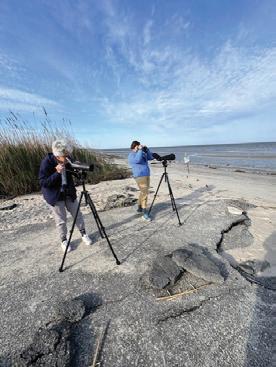
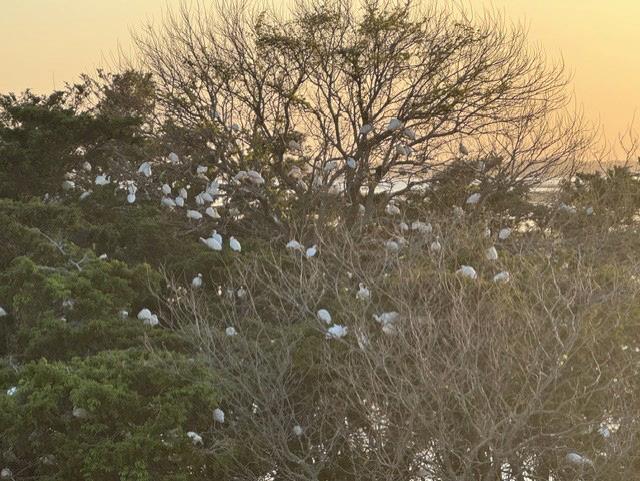
Our team got started early to listen for night-calling birds at 3:00 am, then traveled throughout the day, battling wind, rain, and those pesky no-see-ums gnats, all to wrap up at sunset at the Upper Township rookery. Each team member logged more than 16,000 steps, each step reconnecting them to the wonder of Cape May and its importance as world-renowned migration corridor hosting one of the great migrations on planet Earth.
Each year, the search takes the Marshketeers to diverse natural habitats and reminds them of the importance and necessity of natural areas for their survival – and for our wellbeing. Thanks to all of you who support our coastal bird conservation programs and enable us to do more to help the incredible at-risk species that nest along our coast.
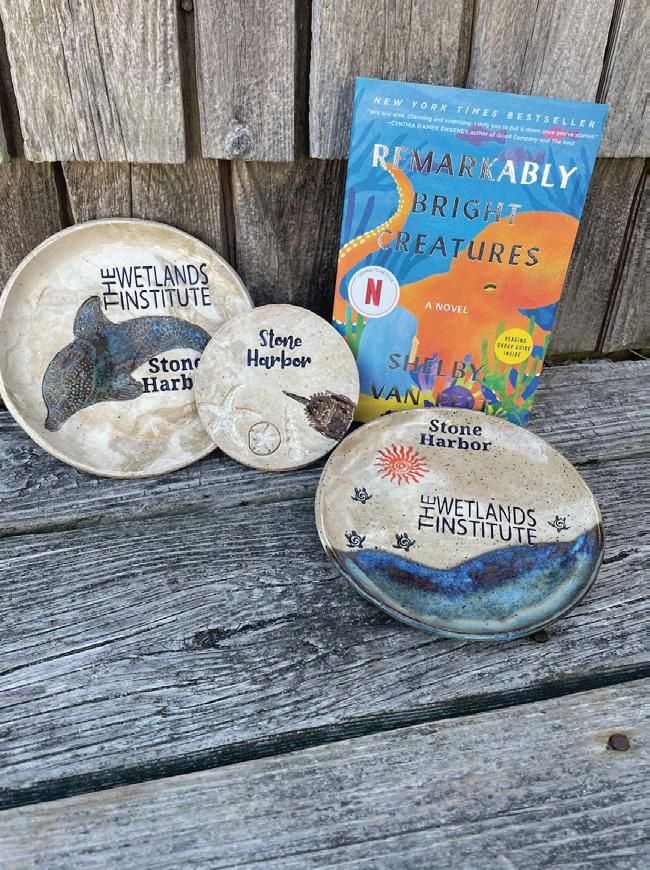
Crafted locally by hand using recycled clay, each unique plate reflects a commitment to sustainability and respect for natural resources.
The designs are inspired by the ancient and resilient horseshoe crab, bringing a coastal and ecological story into each one-of-a-kind piece.
Each plate measures just under 7 inches, and the coasters are cork-backed and measure 4 inches across.
While you visit, crack a book and dive deep into the mind of one of our most fascinating sea creatures: the cephalopod!
If you prefer your science-based reading in a novel format, Remarkably Bright Creatures by Shelby Van Pelt will inform and move you.
Now on Netflix!
The Tidepool Shop is bursting with books, plush, puzzles, and custom gifts to explore, so come see us!

1075 Stone Harbor Blvd.
Stone Harbor, NJ 08247-1424 ~ A non-profit organization studying, preserving, and protecting wetlands and coastal ecosystems
A non-profit organization studying, preserving, and protecting wetlands and coastal ecosystems

As a conservation organization, we have a special responsibility to address the global challenges of climate change and sustainability. We are committed to minimizing environmental impacts in all aspects of our operations. Visit our website at wetlandsinstitute.org/about-us/ sustainability/ for more on our sustainability initiatives.