Costs and savings shown are based on salary packaging a vehicle under a novated lease over five years, driving 15,000km per year, and an annual income of $75,000. Weekly costs shown represent estimated net impact on after tax salary. Savings shown represent estimated tax savings over the lease term. Images are for illustrative purposes only. Before making a decision, you should consult your independent legal, taxation and financial advisor for advice relating to your personal circumstances. Finance is available to approved applicants only. Terms, conditions, eligibility criteria and fees and charges apply.
*Offer available for a limited time and only to new members singing up to a Novated Lease with Paywise.
Correspondence:
The Editor, PO Box 212, West Perth WA 6872 editor@sstuwa.org.au | Ph: 9210 6000
Member Assist: Ph: 9210 6060 memberassist@sstuwa.org.au
Authorised by Sally Dennis, General Secretary, The State School Teachers’ Union of W.A., 1 West Street, West Perth WA. Printed by Vanguard Press, 26 John Street, Northbridge WA. May 2026.
Cover: More state government funding for GROH is a vindication of the SSTUWA’s efforts to highlight ongoing problems members have had with the scheme. Read more on page 5.
To access the digital copy of Western Teacher, visit: sstuwa.org.au/westernteacher
Acknowledgement of Country: We wish to acknowledge the traditional custodians of the land on which we live and work. We wish to pay respect to their Elders – past, present and future – and acknowledge the important role all Aboriginal and Torres Strait Islander people continue to play within Australia. We stand in solidarity.
Artwork: This design was created for the SSTUWA by Tyrown Waigana, a Wandandi Noongar and Ait Koedal artist/designer and former WA public school student. Read more about the artist and the artwork at sstuwa.org.au/connections
20,000
demountable buildings are currently in public schools across Australia
A National Inquiry Into Australia’s Public School Infrastructure Needs.
14,000
additional permanent classrooms are needed by 2030 to cater for rising student enrolments
63% of learning spaces do not adequately meet the needs of students with disability.
How can you help?
Share your story by making a submission.
An important way to contribute to the Inquiry is for union members working at a school to come together and make a joint submission.
Tell us what's working and what needs to change when it comes to public school infrastructure.
The submission can be as short or as long as you like, and individuals will not be identified in the Inquiry's report.
Scan here to make your submission before June 30th.
GROH needs to be better for all
By Matt Jarman President
The announcement by the Cook Labor government of an extra $419 million over four years for the biggest ever build of Government Regional Officer Housing (GROH) is a massive win for the SSTUWA, its members and fellow public sector unions.
Many times over the years the SSTUWA has used Western Teacher to highlight the extensive range of issues members experience with GROH. We have had multiple articles over the years about the decline in the standard of GROH, not just in terms of infrastructure but equally as concerning in the staffing of the organisation and the way customers (for that’s exactly what GROH users are) are treated.
This coordinated campaign has delivered results because of the willingness of members to share their experiences. Research-backed submissions by the SSTUWA and other public sector unions have driven the state government to tackle some of the issues. The SSTUWA’s pleas for more funding ahead of the state election saw $104 million promised for an extra 100 GROH homes, with an extra 78 properties added to the scheme since June and construction contracts signed in the South-West, Goldfields, Mid-West, Gascoyne and Wheatbelt. Now this additional funding has been announced.
Make no mistake, this is a huge win for all of the SSTUWA members who have shared their stories and helped us campaign for changes to GROH. The Cook government deserves full credit for listening and acting. We also need to recognise that it is becoming increasingly clear that extra investment in bricks and mortar, both in terms of new stock and improvements to existing properties is just one part of the solutions needed.
To support this new funding, we need a root and branch review of the bodies, both government and private sector, who are in charge of supporting GROH tenants. This is needed because, frankly, the current system is not fit for purpose; the support is in some areas negligible to non-existent.
Without naming names or identifying the specific area, I can share the tale of neglect, lack of empathy and complete failure of the current system that two or our members have undergone recently. These two members suffered through what they described as a “very nasty” home invasion. They sought support and action from the GROH authorities, asking for urgent improvements in security, including security screens and deadlocks – which should surely be mandatory anyway. No help was forthcoming.
The members asked to be given temporary accommodation or permanent relocation to a different house. No help was forthcoming. Within less than a month the members had their home broken into again. Imagine the completely avoidable trauma and stress this has caused them. Even that second terrible experience has not prompted action by the authorities.
Sadly, what should be a crucial service to attract and retain teachers in remote and regional areas has been reduced thanks to poor support. Literally the only job for GROH providers and the supporting services is to properly and safely house government workers. The state government needs to urgently act to complement the funding decision by making all GROH providers and support staff fully accountable. It needs to be resurrected as an organisation that keeps people securely and safely housed. Over recent years that state government has
invested millions of dollars in additional payments to try and encourage teachers to teach in regional and rural areas.
At a time when the cost of living issues faced by country-based staff are being exacerbated by fuel costs that drive up the cost of living in every aspect of life, there is a desperate need to support dedicated educators who are willing to live and work in regional and remote areas. The Cook government has again shown it does react to evidence-based lobbying from the SSTUWA.
Hopefully the Cook government will act to ensure GROH is now reviewed and renewed with an understanding of the crucial role it plays in supporting the delivery of essential public services in regional and remote WA. We hope the government will bring it back into full public ownership and ensure those who run the system and work within it remember it is dealing with people who provide vital services in local communities.
GROH needs to be an absolutely professional and supportive agency to ensure the government’s welcome added investment results in more homes, better maintenance and better services to GROH tenants.
This win on GROH further proves the value of the Facing the Facts review and the solid foundations it built for advocacy and research-based lobbying. This has delivered much higher investment in infrastructure spending, particularly towards getting air conditioning updates and significant increased spending on school maintenance. That strong SSTUWA advocacy, grounded in proper research, has also delivered significant gains during agreement negotiations.
Members building international solidarity
By Jonelle Rafols Senior Vice President
The State School Teachers’ Union of WA (SSTUWA) has a long and proud tradition of global advocacy promoting and defending the rights of children and teachers around the world.
This work is grounded in union policy, which recognises that human rights are a legitimate international concern and that the pursuit of peace, justice and disarmament remains an urgent priority for the global community.
As the senior officer for International, I am proud to support the re-establishment of the SSTUWA International Committee.
This reflects a growing commitment among members to engage meaningfully with international issues affecting education and to ensure our union continues to act in solidarity with education communities globally.
One of the reasons members called for the re-establishment of the International Committee was the publicised atrocities in Gaza.
The Australian Education Union (AEU) has issued public statements (October 2023, June 2025, September 2025) reflecting members’ concerns, stating: “the ongoing genocide in Gaza has torn through the heart of Palestine’s education system” and “as teachers and unionists, we cannot turn away. We must speak out, call for change and defend the right of every child, everywhere, to a safe education.”
The first meeting of the reformed [SSTUWA] International Committee was held in April 2026.
The committee is chaired by Ruth Ellis, and includes [SSTUWA] industrial organiser Ramona Mitussis, alongside
a committed group of public-school teachers and TAFE lecturers. The committee is working to strengthen the union’s international voice and ensure member perspectives inform its work.
Members have consistently called for action seeking a stronger, more coordinated response to global events that impact students, teachers and education systems.
Through State Council, members have demonstrated their commitment to international solidarity and to advocating for the protection of education in times of conflict and crisis.
At our first meeting, members shared their motivations for joining the committee. These included a deep commitment to improving the lives of children, advocating for safe and accessible education in challenging contexts and supporting the professional integrity of teachers navigating complex global issues in the classroom.
There was also strong interest in creating space for informed discussion, resource sharing and collective action on international matters.
International issues are not distant from WA classrooms. Our schools are diverse communities, with students and families connected to many parts of the world.
When global conflicts and humanitarian crises occur, their impacts are felt locally through students lived experiences, emotional wellbeing and the questions they bring into our classrooms.
Teachers are increasingly required to support students to make sense of complex and often confronting global events.
This work is not without challenge. Educators are balancing the responsibility to foster critical thinking, empathy and intercultural understanding, while navigating heightened sensitivities and, at times, scrutiny from the broader community.
This underscores the importance of professional support, clear guidance and a strong collective voice.
Through the International Committee, we aim to contribute to this by facilitating dialogue, sharing guidance and ensuring members feel confident and supported when engaging with global issues within the existing national curriculum framework.
At its core, this work is about solidarity, standing with education workers and students everywhere and reaffirming our commitment to safe, inclusive and high-quality public education systems worldwide.
Members can also support international solidarity efforts by getting involved with APHEDA, Union Aid Abroad (visit apheda.org.au for more information).
There are still opportunities for members to be involved in the International Committee. I encourage any member with an interest in global education, human rights and international solidarity to get involved.
Together, we can strengthen our international outlook and ensure that the values of equity, justice and solidarity continue to guide our work both locally and globally.
Related: Education International In solidarity with teachers and students devastated by the Middle East war, read more on page 20.
Health and wellbeing is union business
By Sharmila Nagar Vice President
The Organisation for Economic Cooperation and Development’s (OECD) Teaching and Learning International Survey (TALIS 2024) findings of teachers and school leaders was released in October last year and the Australian results would be unsurprising to SSTUWA members.
With regards to workload stress, TALIS 2024 reported that approximately 70 per cent of it was caused due to administrative work, 50 per cent due to marking and 46 per cent based on the changing demands of curriculum/ programme updates.
The time spent on administrative tasks for full-time teachers has not changed since 2018, with teachers doing on average 4.7 hours a week, 1.7 hours more than the OECD average. In addition, 46 per cent of teachers felt that too many new initiatives were introduced at their school (higher than the OECD average of 31 per cent), whilst 59 per cent preferred a period of stability before new changes are introduced (OECD average: 44 per cent); and 41 per cent report being asked to implement changes without the necessary resources (OECD average: 31 per cent).
The findings also indicated that teachers under the age of 30 were more likely to feel stressed than their older colleagues. When considering job satisfaction and retention, 84 per cent had job satisfaction (OECD average: 89 per cent). This figure has decreased by six per cent since 2018. There was a trend of teachers in the private sector being more satisfied with their jobs than those in public sectors. Yet again, almost 20 per cent of teachers under the age of 30 expressed an interest in leaving the profession in the next five years; seven per cent higher than 2018.
The report also found that while teachers in Australia taught on average 20.1 hours;
which was less than other OECD countries, the working hours were higher than the OECD average, as well as that of their lesson planning and marking.
Interestingly the survey also focused on the use on artificial intelligence (AI) in teaching and learning. Seventy-five per cent of teachers reported that they did not have the adequate knowledge and skills to teach using AI, which was similar to other OECD countries. Furthermore, 25 per cent of teachers felt their schools lacked the infrastructure to use AI, (OECD average: 37 per cent). Had this survey been conducted of only public schools, the SSTUWA is of the view that this percentage would be higher.
While the findings presented focused heavily on teachers, the SSTUWA knows that our school leader members can also attest to the growing workload demands placed on them daily.
A recent SSTUWA survey found that 90 per cent of school leaders reported that their work-related stress levels were either high or very high. Main workload issues included mental health challenges of staff and students, compliance requirements, student behaviour, lack of relief staff and parental demands. The survey also revealed that the key contributors to members considering leaving the profession included workload, burnout and personal health and wellbeing concerns.
These workplace hazards are not new; and our members know that workplace health and safety goes beyond physical hazards – it now includes psychosocial hazards.
Section four of the Work Health and Safety Act 2020 (WHS Act) defines health as meaning physical and psychological health. That means any provision of the
WHS Act that refers to “health” includes psychological health. Some of the more common psychosocial hazards that arise at work include poor workplace relationships, poor support, violence and aggression, lack of role clarity, poor organisational change management, various forms of harassment, bullying, stress and burnout.
The union has been supporting school members in a number of ways:
• Raising the matter with relevant line managers to address concerns.
• Resolving low level one-off incidences via mediation.
• Discuss with Member Assist and organisers if relevant clauses from the General Agreement or Award can be applied.
• Strategies to implement own control measures.
At any point, members are entitled to use the Department of Education’s Psychological Hazard or Incident Report (PHIR) form to report an incident. The union believes that the forms should be used when experiencing extreme oneoff behaviours; sustained patterns of inappropriate behaviours or issues or incidences of workplace violence and aggression that impacts your mental wellbeing.
Members can contact the SSTUWA for advice when considering a PHIR form. The union has supported members and branches who have either lodged PHIR forms or reported high risk psychosocial hazards.
It is the right of our members to feel safe and supported in their workplace and the union is here to support you.
Graduate Teacher Induction Program: what can I expect?
By Chloe Hosking Growth Team coordintor
In the previous edition, we outlined the funded entitlements available to graduate teachers, including the startup allowance, additional non-contact time, curriculum materials allowance and travel contingency support. Alongside these entitlements, graduate teachers are required to participate in the Graduate Teacher Induction Program, which includes four graduate modules. You may also choose to opt in to the In-Class Coaching Program (ICCP).
Graduate Modules
During your first 30 months of teaching with the Department of Education (DoE), you are required to complete four graduate modules. These modules are designed to support your transition from university study to classroom practice.
Completion of the modules is a DoE requirement. They are not a requirement of the Teacher Registration Board of Western Australia and you do not need to complete them to move from Provisional to Full Registration.
Each module has a specific focus:
• Modules 1 and 2: Professional standards for effective classroom practice.
• Module 3: Assessment.
• Module 4: De-escalation and positive handling.
Modules must generally be completed in order. The exception is Module 4, which can be completed at any time within your first 30 months of teaching.
Schools receive funding to cover your relief while you attend graduate modules. You should speak with your principal to arrange release time. If you choose to complete a module outside of work hours or during school holidays, you are entitled to Paid Time Off in Lieu. These arrangements should be confirmed before enrolling.
If you need to travel to attend a module, including within the metro area, you can access the travel contingency allowance. Speak with your Manager of Corporate Services to confirm how to claim this support.
To find module dates in your area, log in to IKON and access the Professional Learning Information System. Search for “graduate teaching module” to view upcoming sessions in metropolitan and regional locations.
In-Class Coaching Program
Graduate teachers can also choose to participate in the ICCP. This program provides confidential, non-judgmental support focused on professional growth and reflection.
Coaches are experienced teachers who support graduates through professional conversations, classroom observations, goal setting, data collection for full registration, reflective practice and job applications. Participation is optional and designed to complement your early career development.
The program also gives participants access to additional online professional learning to support transitions to full registration.
TAFE Know Your Rights: Journey Cover insurance
If you have an accident whilst travelling to or from work, which results in your inability to work, you may be entitled to a benefit for lost income.
Journey Cover insurance is provided to all financial members of the SSTUWA.
What to do in the event of a claim
• Contact Member Assist: 9210 6060 or 1800 106 683 or memberassist@sstuwa.org.au
• See your doctor as soon as possible to obtain a medical certificate.
• If a vehicle is involved and you are injured immediately lodge a claim with the Insurance Council of Western Australia (compulsory third party insurer).
What is SSTUWA Journey Accident Cover insurance?
Overview
The SSTUWA Journey Cover insurance policy has been designed to provide cover for members during their commute between work and home. Workers’ Compensation does not cover accidents to and from work. This covers the gap in Workers’ Compensation cover, giving peace of mind that in the event of an injury, members can expect income protection.
Cover can apply to a variety of commuting methods, including but not limited to the use of motor vehicles, bicycles, motorcycles, trains and walking.
Journey Cover insurance now goes a step further to provide members with cover during lunch breaks, should an injury fall outside of Workers’ Compensation cover.
There are two
main aspects of cover:
• Accidental death and capital benefits.
A lump sum payment of up to $250,000.
• Weekly injury benefits.
o 100 per cent of salary up to $2,000 a week for up to 104 weeks for members earning up to $100,000, or
o 100 per cent of salary up to $3,000 a week for up to 104 weeks for members earning between $100,000 and $250,000.
Note
There may be instances where a member’s commute may fall within the scope of Workers’ Compensation
insurance, for instance if a member was asked to visit a site or attend an offsite meeting directly from home or on the way home from work.
In these cases, Workers’ Compensation cover should firstly be considered. Any travel during working hours is generally covered by Workers’ Compensation.
The intention of the policy is to provide weekly salary compensation; any medical related costs would fall within the cover provided by Medicare or a health insurance policy.
Additional benefits
The following additional benefits are available, following particular claimable events:
• Return to work assistance.
• Tuition or advice expenses.
• Funeral expenses.
• Modification expenses.
• Chauffeur services.
Personal leave
Members are not required to firstly exhaust their personal leave before receiving weekly benefit payments under the Journey Cover policy.
The SSTUWA Journey Cover policy has a nil excess period, allowing payments to start immediately following the acceptance of a claim.
Members may need to utilise their personal leave credits until a claim is accepted. Journey Cover will then make payment to the member covering these leave dates.
Members are advised to contact Member Assist (memberassist@sstuwa.org.au / 9210 6060 / 1800 106 683) as soon as possible following a potential claim if they require any additional information or advice.
Exclusions
The following occurrences are some of those excluded from cover:
• Loss as a result of a covered person being under the influence of drugs or alcohol.
• Loss as a result of a pre-existing medical condition.
• When the covered person is over 85 years of age.
• Loss which is covered by Medicare, Transport Accident Legislation or Workers’ Compensation legislation.
• A loss that would result in the contravening of the Health Insurance Act 1973
This information is a general summary and is not part of the insurance agreement. This material is to be read in conjunction with, and does not override, the current policy wording and/or schedule.
It’s time to say "thank you " and celebrate all the wonderful work our P&Cs do each and every day
WA P&Cs contribute an incredible amount to their school communities, both in funds raised and in hours volunteered Together, our P&Cs have raised nearly $12 millon and volunteered 450,000 hours each year!
On P&C Day WA, WACSSO encourages all schools to host thank-you events and activities that acknowledge their P&C volunteers Join us in celebrating WA’s amazing P&Cs!
Facing the Facts on the world stage
By Lindsay Hale School leaders’ consultant
The International Summit on the Teaching Profession (ISTP) 2026 was held in Tallinn, Estonia in March, bringing together education ministers, teacher union leaders and experts from nearly 20 high-performing education systems to discuss the future of teaching and learning under the theme Shifting Gears: Teachers and Learners in the Future Learning Environment.
Through enabling dialogue and creating coalitions, the ISTP seeks the common ground necessary for real progress, based on unions and government working together. This year Australia was represented by Victorian Deputy Premier and Education Minister Ben Carroll, AEU Federal President Correna Haythorpe and Matt Jarman, in his additional role as AEU Deputy Federal President.
Each nation is required to develop three commitments which must be reported on within 12 months. From the three session themes (The evolving teaching profession, Autonomy of educators and school leadership and Artificial intelligence (AI) and educational technology) the new Australian commitments emerged. All three commitments are strongly aligned to the recommendations of Facing the Facts:
Commitment 1: Continue tripartite efforts to highlight the primacy of the teacherstudent relationship and the importance of teacher autonomy. Continue efforts that support, develop and enhance the workforce and prepare educators to respond to an evolving professional landscape via ongoing evidence-based reforms to initial teacher education, and strategies to support the existing workforce to further refine and develop their skills and knowledge through access to professional learning, teacher resources and refinements to the curriculum when required.
It is arguable that all 46 recommendations of Facing the Facts support Recommendation
1 - they aim to strengthen core teaching work, reduce workloads, improve support, enhance curriculum and professional learning. Improving teacher working conditions, reducing administrative burden, increasing school support, improving professional learning, providing curriculum clarity and resources and delivering systemic workforce planning are all foundational to strengthening the profession and preserving the teacher student relationship.
Facing the Facts: The attraction and retention of teaching staff “will be greatly facilitated by the Department’s public support for a reduction of workloads and the championing of teachers’ professionalism”.
Commitment 2: Advance an evolving and diverse teaching profession by supporting First Nations teachers and school leaders, and by providing targeted, culturally appropriate support to ensure all educators are confident and equipped to address complex learning environments and navigate a rapidly changing world.
Facing the Facts recommendations 7, 8, 26, 27, 28, 33, 41, 42, 43, 44, 45 address Aboriginal education, targeted support, equity, special needs, and cultural capability. Building a more diverse, culturally capable and effective workforce requires improving services for students with special needs, reducing educational disadvantage, establishing a dedicated Aboriginal Education Unit, creating expert First Nations educator teams and supporting schools serving Aboriginal communities.
Facing the Facts: “The Aboriginal Education Teaching and Learning Directorate has a limited role in the selection and training of staff and the development of Aboriginal education.”
Commitment 3: Recognising the need to preserve the meaningful relationship between teacher and student in a changing
digital learning environment, we will continue to support the safe, ethical and effective adoption of digital technologies in classrooms, including Generative Artificial Intelligence, (GenAI).
It’s hard to believe that AI has progressed so radically that many of our present concerns were not prominent when the research and consultation behind Facing the Facts were undertaken, but recommendations 12, 13, 14 and 32 are relevant to strengthening the foundation of digital readiness necessary for safe and effective AI adoption through curriculum improvement, clarity and targeted teacher development.
Recommendations 12 to 14 relate to curriculum resourcing and teacher professional learning, essential prerequisites for the effective integration of digital technologies and AI. Recommendation 32 addresses reducing administration time and increasing time for core teaching, which –somewhat paradoxically - could occur with the support of AI and becomes even more critical when integrating new digital tools.
Facing the Facts: It’s the relationships“Considering a one unit increase in school engagement has been associated with a 13-point increase in academic attainment in some domains, we cannot afford to ignore this fall in school wellbeing for Australian students. Beyond academic implications, there are many psychological, social and physical health costs.”
This is an opportunity to face the facts that restoring the professional status of teaching is at the heart of maintaining a strong and effective educator workforce, that supporting Aboriginal school leaders and teachers, as well as building cultural competence, is key to addressing Aboriginal educational disadvantage, and that failing to preserve human relationships is just as great a risk as not moving forward with technology.
Smarter electric driving starts with a
lease
Under the Electric Car Discount, eligible ^ EV novated leases are exempt from Fringe Benefits Tax (FBT), helping to unlock significant tax savings.
Tesla Model Y
Principals experiencing violence, threats and stress in their schools
By Paul Kidson, Herb Marsh and Theresa Dicke
Almost half of surveyed Australia’s school principals face physical violence in their jobs [according to the latest Australian Principal Occupational Health, Safety and Wellbeing Survey]. Almost 90 per cent say they encounter offensive behaviour from students, parents and even colleagues.
The latest instalment in [the] annual survey of Australian principals shows how their exposure to aggression risks becoming normalised in schools.
Principals also report they work an average of 54 hours a week. They say the sheer quantity of work is their biggest source of stress. As one principal from a Catholic high school told us, “This job is getting harder every year”.
What can governments and education systems do to help?
Our research
Since 2011, our study has collected the experiences of 2,000–2,500 Australian school principals per year.
This is now the 15th year of the study and over that time, 8,100 individual school leaders have completed at least one survey. This includes principals as well as other senior teachers, such as deputy principals.
Respondents come from primary and high schools around the country, and across the public, private and Catholic sectors.
Given there are less than 10,000 schools across the nation, this is a strong sample of the people who lead our schools.
When this many leaders speak, we should listen.
Reports of violence are growing
In 2025, nearly half of school leaders reported being subjected to physical violence. Almost 54 per cent experienced threats of violence. Students were the most common source of physical violence, while parents were the main source of threats.
These reports have increased significantly since the survey started in 2011. Rates of violence at this magnitude would be considered unacceptable in many other professions.
Meanwhile, almost 90 per cent of respondents say they are subject to some form of unacceptable/offensive behaviour in their jobs. This includes physical threats, sexual harassment, unpleasant teasing, cyberbullying and gossip.
As one primary school teacher told us: “When I became a principal I didn’t expect to be mired in managing adult behaviour. I thought it would be about instructional leadership and inspiring educators. I didn’t realise how I would be subject to
manipulation and need to respond like a lawyer – with extreme care and explicit language which leaves no room for interpretation.”
What else did we find?
School leaders continue to work long hours, averaging 53.9 hours per week during term and 19.6 hours during holidays. This is well above an average working week in Australia (about 38 hours). There has been some reduction in reported hours worked. In 2011, 27 per cent of participants reported working 60 hours
or more, which has reduced to 22 per cent in 2025.
Unsurprisingly, principals report mental health issues and plans to leave their jobs:
• Twenty-five per cent scored at least a “moderate” rating for anxiety and 23 per cent scored at least a “moderate” rating for depression.
• Fifty-four per cent agreed or strongly agreed with the statement, “I often seriously consider leaving my current job”. This is up slightly from last year.
As one respondent from a private high school told us: “The challenges of reduced funding, combined with growing expectations from all stakeholders make it more and more difficult to meet the demands of the role […] I am not sure how this will be sustainable for the next generation of principals.”
New rules for schools
Across the life of the project, we have seen important changes to try and improve conditions for principals.
The Victorian, Queensland, and NSW governments have introduced programs to reduce administrative loads, and public campaigns have tried to build community respect for the teaching profession.
Some states have developed programs to support aspiring principals.
The NSW government has introduced legislation to address aggressive parental behaviour, similar to Victorian laws. This will mean those who have engaged in threatening or abusive behaviour can be banned from coming within 25 metres of a school.
What else do we need?
But clearly more needs to be done to improve the conditions for school leaders.
In 2011 we also saw the release of the Australian Standard for Principals, which sets out what principals are expected to “know, understand and do to achieve in their work”.
It is time to review this.
Our last three reports show student and teacher mental health have become acute sources of stress for principals – this should be reflected in a revised standard. There is not one mention of teachers’ mental health throughout the document, despite it now consistently ranking as a top source of stress for principals.
And much has changed in our wider society. Since the standard was published, we’ve had a royal commission on child abuse in school settings, Covid-19 and a growing understanding of the need to manage young people’s healthy use of screens.
It’s time to honestly and openly acknowledge the life of the school principal has radically changed – and update our expectations and support.
We know principals have a huge influence on the culture and expectations of a school. So their welfare matters, not just to principals and those who aspire to these jobs. It is also vital to families who value their children’s education and governments who rely on education for our national good.
Editor’s note: To view the 2025 Australian Principal Occupational Health, Safety and Wellbeing Survey, visit bit.ly/4embZVj
Paul Kidson is Associate Professor in Educational Leadership at the Australian Catholic University. Herb Marsh is Distinguished Professor of Educational Psychology at the Australian Catholic University. Theresa Dicke is a Professor at the Institute for Positive Psychology and Education at the Australian Catholic University. The opinions expressed in this article are that of the authors and do not necessarily reflect any official policies or positions of the AEU or SSTUWA. This article was first published on The Conversation website and has been reproduced here with permission.
All In for National Reconciliation Week 2026
National Reconciliation Week (NRW) is a time for all Australians to learn about our shared histories, cultures and achievements, and to explore how each of us can contribute to achieving reconciliation in Australia.
The dates for NRW are the same each year; 27 May to 3 June. These dates commemorate two significant milestones in the reconciliation journey – the successful 1967 referendum, and the High Court Mabo decision.
Reconciliation must live in the hearts, minds and actions of all Australians as we move forward, creating a nation strengthened by respectful relationships between the wider Australian community and Aboriginal and Torres Strait Islander peoples.
We all have a role to play when it comes to reconciliation, and in playing our part we collectively build relationships and communities that value Aboriginal and Torres Strait Islander peoples, histories, cultures and futures.
The theme for National Reconciliation Week 2026 is All In, a call for all Australians to commit wholeheartedly to reconciliation every single day.
All In makes clear that reconciliation is not a spectator sport and that all of us must step away from the sidelines and take action to make change.
The theme also reminds us that reconciliation and advancing Aboriginal and Torres Strait Islander peoples’ rights isn’t a passive activity, and it is not solely the responsibility of First Nations people, who have carried the weight of championing, explaining and acting for far too long.
Reconciliation will not happen by itself and it will not happen without all of us.
The #NRW2026 campaign was created in collaboration with Carbon Creative, a First Nations-owned and operated marketing and creative agency.
NRW 2026 artwork and artist
The #NRW2026 artwork is called Gaagal and has been created by renowned Gumbaynggirr/Bundjalung artist Otis Hope Carey, who applied his distinctive style to create a colourful and optimistic visual representation of people from all walks of life being “all in” to make change.
Otis Hope Carey’s number one pursuit is the sharing of culture through his artworks in order to promote healthy conversations and education through the arts.
“All of my paintings connect to water. This artwork uses the ocean as a metaphor for people from all walks of life swirling together to be ‘all in’ for reconciliation,” he said.
“The phrase ‘Gaagal’ translates to ‘Ocean’, and it is the totemic spiritual emblem of the Gumbaynggirr people. It’s a really important clan totem and holds a lot of healing elements for us.
“We are a saltwater and freshwater people, and any body of water is sacred to us. My paintings are my interpretation of my connection to water. I use patterns to capture the flow of connection and the energetic rhythms of moving water.
“Concentric circles are traditional symbols which are exaggerated and expanded out to represent water and the way it may move in ripples when struck by rain, wind, or if a rock were to hit its surface.
“This echoes the action of people moving together for change, their voices and actions rippling outwards, inviting others on the reconciliation journey.
“The movement in the work is a representation of tidal charts, wave currents and flowing tides, which emulates the non-stop movement of the ocean … a symbol that reflects the ongoing fight for reconciliation in this country.”
Voices for Reconciliation
The song Beds Are Burning has been selected as the 2026 Voices for Reconciliation song.
Written and performed by Midnight Oil, the song is a powerful anthem that hit a chord nationally and internationally and became a defining soundtrack of the land rights movement.
The song was inspired by the Uluru-Kata Tjuta handback to the Anangu people in 1985 and was written over the course of the 1986 Blackfella/Whitefella tour the Oils embarked on with Warumpi Band throughout Western Desert and Arnhem Land communities.
Decades later, its message still resonates. The song stands as a powerful call to action to know our history and be All In to create a more just, equitable and reconciled future for us all.
Gap grows between underfunded public and overfunded private schools
By Trevor Cobbold
New school income data show that Catholic and Independent schools have increased their resource advantage over public schools in Australia.
This trend has been driven by sustained increases in government funding, combined with growth in fees in private schools. Decades of favourable funding for private schools is a key factor behind the enrolment shift to these schools. Public schools are massively underfunded while private schools are overfunded.
The new figures published by the Australian Curriculum Assessment and Reporting Authority (ACARA) show that in 2024, total income per student averaged $20,368 in public schools, compared with $22,067 in Catholic schools and $28,642 in Independent schools.
Generous government funding (Commonwealth and state/territory) underpins the resource advantage held by private schools. Government funding represents around three-quarters of Catholic school income and nearly half of Independent school income.
Catholic schools received approximately $16,590 per student from governments, while Independent schools received about $13,826.
Long-term trends since 2009 indicate that real government funding increases have been stronger for private schools than for public schools.
After adjusting for inflation using a combined wage and consumer price index, real government funding rose by $3,118 per student in Catholic schools and $2,729 in Independent schools between 2009 and 2024.
Over the same period, public school funding increased by a smaller amount —$2,154 per student. In percentage terms, funding growth in Catholic and
Independent schools was double that in public schools – 40 per cent, 43 per cent and 20 per cent respectively.
Increased government funding and fee increases have magnified the resource advantage of Independent schools.
In 2009, the total income per student in Independent schools was $4,066 higher than in public schools. By 2024, this had increased to $5,460 and their total income per student was 141 per cent of that of public schools.
Total income per student in Catholic schools was slightly below that of public schools in 2009, but since 2011 they have a significant advantage over public schools through generous government funding and fee increases.
Public schools are massively underfunded in all jurisdictions, except the ACT.
For example, public schools in NSW, Victoria, Queensland and the Northern
Territory are funded at less than 90 per cent of the Schooling Resource Standard (SRS) required to ensure successful school outcomes for all students. The total underfunding in 2026 is estimated at $6.5 billion.
While the new bilateral funding agreements between the Commonwealth and state and territory governments will provide a substantial boost in funding of public schools, they will remain underfunded to 2034 and beyond.
State and Northern Territory governments can continue to claim non-SRS expenditures as part of their share of funding public schools.
They can claim capital depreciation up to four per cent of the SRS, some school transport expenditure and expenditure on regulatory bodies. These expenditures are specifically excluded from how the SRS is estimated because the SRS is a measure of the resources needed in schools to deliver successful outcomes.
Government claims that public schools will be fully funded by 2034 are a blatant lie. While the four per cent allowance will be phased out by 2034, governments will continue to claim regulatory expenditures as part of their share of funding public schools.
By contrast, private schools in all states except the Northern Territory are overfunded and will remain so until at least 2029.
For example, Catholic and Independent schools in several states, including NSW, Queensland and Western Australia are funded at 102 per cent of their SRS in 2026.
The favourable treatment of private schools is also apparent in the new funding agreements. While the states can claim non-SRS expenditures as part of their share of funding public schools, they are not permitted to do so for private schools.
Private school students also benefit from school transport subsidies, and the remit of school regulatory bodies also includes private schools.
The jarring dichotomy in government funding policies towards public and
private schools is scandalous because it is public schools that do the heavy lifting in educating young people.
The Report on Government Services 2026 shows that 80 per cent of students from low socio-educational backgrounds, 81 per cent of Indigenous students, and a similar proportion of students in remote areas attend public schools.
Nearly one-third (32 per cent) of students in public schools are from low socioeducational backgrounds compared to 14 per cent in private schools. Research by Save Our Schools shows that 90 per cent of all disadvantaged schools are public schools.
The persistent underfunding of public schools has significant long-term implications. Students entering public schools today may spend much, if not all, of their entire schooling years in institutions operating below resource standards considered necessary for equitable outcomes.
This, in turn, may perpetuate educational inequality, social segregation, and constraints on national productivity and economic growth.
To address these concerns, governments must accelerate the transition to full funding of public schools. The funding agreements must be revised to give public schools better and fairer funding.
The Commonwealth should accelerate the increase in its funding share of the SRS public schools to achieve 25 per cent by 2029.
State governments should remove the existing four per cent allowance for nonSRS expenditure by 2029 and immediately remove new non-SRS expenditure claims as part of public school funding.
Overall, sustained policy reform is needed to reduce funding disparities between sectors. Ensuring adequate and fair funding for public schools is critical not only for educational equity but also for broader social and economic objectives.
Trevor Cobbold is the convenor of Save our Schools Australia. The opinions expressed in this article are that of the author and do not necessarily reflect any official policies or positions of the AEU or SSTUWA. This article was published on Save our Schools website and has been reproduced here with permission.
In solidarity with teachers and students devastated by the Middle East war
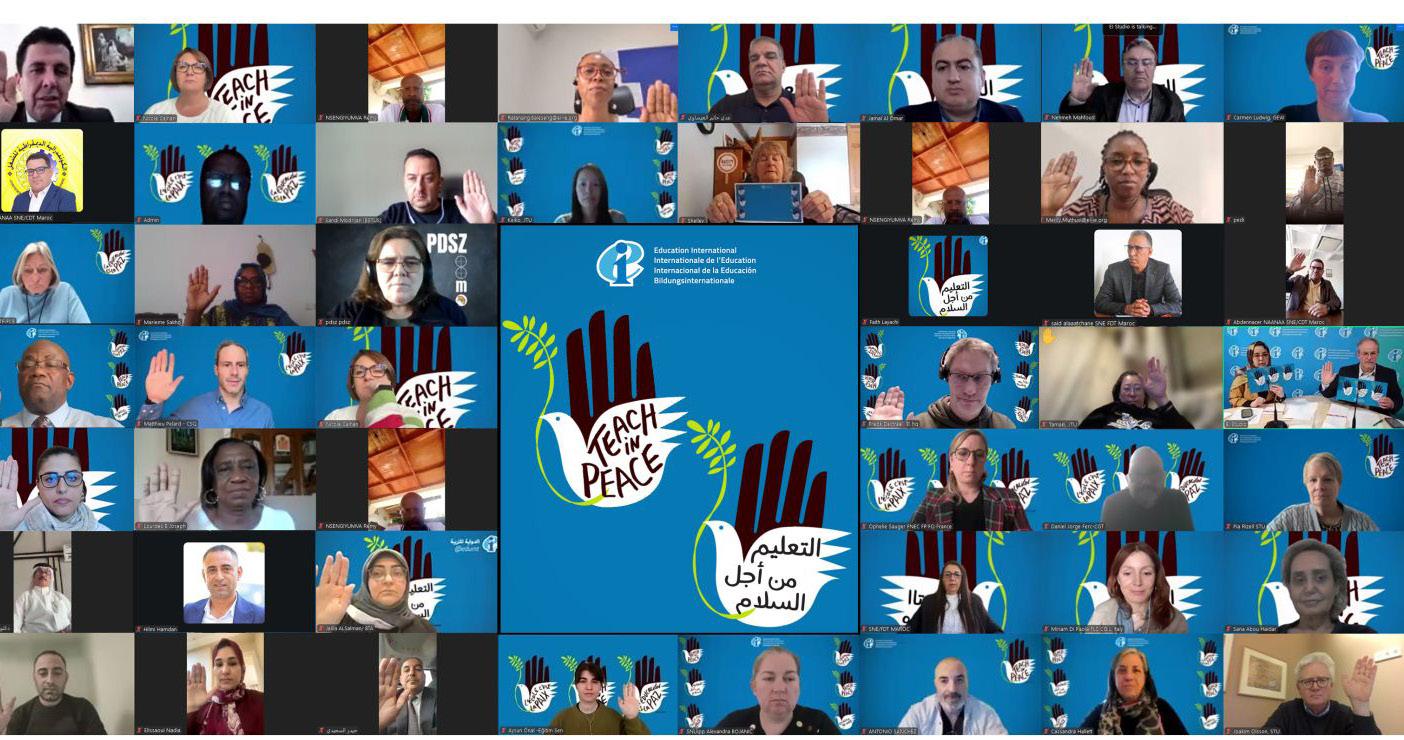
Education International (EI) has brought together education unionists from across the globe for a solidarity webinar with member organisations impacted by the war in the Middle East.
During the online gathering last month, which featured teachers and unionists directly impacted by the war, EI members reiterated a call for an immediate ceasefire, the protection of school communities and a commitment to peace in the region.
“We are here today because our unions choose solidarity, we choose peace and we choose to protect children and those who teach them,” stated EI president Mugwena Maluleke, who led the meeting.
“While today’s focus is the Middle East, these crises reflect global patterns, seen in Sudan, the Democratic Republic of Congo, Ukraine and many other conflict affected regions; where classrooms are being emptied, teachers and students are being killed and children’s futures are being eroded,” he added.
The session included first-hand accounts from education union leaders from Bahrain, Iran, Iraq, Kuwait, Lebanon, Palestine and Syria who shed light on the daily realities of violence, displacement, school destruction, humanitarian and economic crisis, and the immense pressures faced by educators striving to keep learning alive.
Members of the EI Executive Board, Jalila al Salman from Bahrain and Manal Hdaife, from Lebanon also chair of the Arab Countries Cross-regional Structure, were there to represent the voices of the region.
The online webinar comes as the war expands in the region following
large-scale attacks launched on 28 February by the United States and Israel against Iran. The military campaign has involved sustained air, missile and drone strikes across Iranian territory, targeting military facilities, nuclear-related infrastructure, energy systems, transport networks and, increasingly, civilian areas and public institutions. Iran has followed by retaliation against Israel, U.S. bases and Gulf states.
At least 30 universities and dozens of schools have been damaged or destroyed, millions face electricity shortages, inflation and displacement, and Iranian authorities have intensified internal repression, mass arrests and internet blackouts since the war began.
In Lebanon, a secondary war front, the conflict involves Israeli air strikes and ground operations inside Lebanon and rocket and drone attacks by Hezbollah against Israel. According to various sources more than 1,000 civilians have been killed and over 1.2 million have been displaced. Schools, hospitals and civilian infrastructure have been repeatedly
attacked, and around 70 per cent of public schools are now used as shelters.
While each country faces distinct challenges, participants made clear that these are not isolated crises. Instead, the testimonies painted a picture of a single, interconnected regional catastrophe driven by an imposed war and instability.
Education systems throughout the region are facing collapse. Schools have been destroyed, shut down, or repurposed as shelters for displaced families. In some countries schools and students have been pushed to go online despite power outages and other challenges. This approach is neither inclusive nor sustainable in the current context. Large parts of the region lack reliable internet access, electricity, adequate digital infrastructure, or even basic IT equipment.
Public education budgets are shrinking as inflation rises sharply, leading to severe salary instability for teachers and education workers. In Kurdistan, Lebanon, Palestine and Syria, teachers go without their salaries or are only partially paid,
Photo: Education International
receiving delayed, irregular or insufficient salaries that make it impossible to support their families or continue to teach with dignity.
In many countries, union rights are also coming under increasing pressure, further weakening already fragile education systems.
Union leaders described the scale of destruction—including mass killings, forced displacement and the systematic targeting of civilian infrastructure such as schools—as a collective regional trauma. Many characterised the situation as a genocide against the people of the region and against their future.
They also echoed that the current crisis is the result of continued violence, political paralysis and the failure of the international community to enforce international law, protect civilians, or protect the right to education. Every day of inaction deepens the humanitarian catastrophe and normalises the destruction of education systems and the impoverishment of education workers, they stated.
On behalf of their region, they made a clear call for an “immediate and unconditional ceasefire, firmly rooted in human rights,” and called for unions
to pressure their governments to act decisively and immediately.
They also called for:
• A halt on the killing of children, the protection of teachers and an end to the destruction of education systems.
• Explicit protection of education and schools: Schools must never be targeted, occupied, or militarised.
• Urgent financial and humanitarian support to stabilise teacher salaries and support displaced families.
• Restoration of public services.
• Support for education in emergency contexts through capacity building, training and the provision of pedagogical and education in emergencies materials.
• Full respect for union rights.
• Involve education unions in all emergency and reconstruction planning.
“In this moment of deep crisis, our solidarity as education unions is not only a moral duty but a political imperative, standing together to defend the right to education, protect our colleagues and uphold our shared values under attack,”
stated EI General Secretary David Edwards. “We will not leave you alone”, he added.
EI president Mugwena Maluleke reiterated EI’s commitment to peace and commended members for their steadfast support of education in times of crises and their solidarity across borders.
“Your courage, your honesty and your determination remind us why solidarity is not a slogan, it is a lifeline,” he said.
“Teacher unionists are standing firm amidst war, displacement, fear and immense loss. They, continue to organise, support and defend the right to education.”
Maluleke added that “we know that education unions are often the last democratic spaces standing when society is collapsing around them. We must be the global voice that insists on peace, ceasefire and negotiated political solutions because children cannot learn inside permanent war.”
He ended the webinar by echoing the call from EI members around the world.
“We call for the protection of civilians. We call for the protection of schools. We call for safe, unimpeded access to humanitarian aid. We call for the protection of education workers,” he said.
National education and union news
Schools for Our Future inquiry visits Perth
The Australian Education Union has brought its Australia-first national inquiry into public school infrastructure to Perth, focusing on how targeted investment can deliver world-class learning environments for every Western Australian student.
The inquiry, chaired by Sharan Burrow AC, is travelling the country to hear directly from teachers, governments and community organisations about how school infrastructure can support highquality teaching and learning now and into the future.
The inquiry will also visit schools which have unmet infrastructure needs and those schools that have seen recent state government investment so it can ascertain what is working well and what needs to be improved.
AEU Federal President Correna Haythorpe said WA had a strong foundation to build on, but sustained investment was needed to ensure every school benefited.
“We know WA has public schools with facilities that are too often outdated, overcrowded or not fit for purpose. There
are also examples of schools that have had significant investment,” she said.
“We see the incredible impact that highquality facilities can have when schools are properly resourced. The challenge now is uplifting every public school, so all students have access to high quality learning facilities.”
Consultations in Perth began with the WA Education Minister Sabine Winton and brought together principals, teachers, and community organisations to identify practical solutions and longterm priorities for school infrastructure investment in WA.
New data highlights why action is needed. Commonwealth investment in public school infrastructure in WA has declined sharply over the past decade, falling from an average of 31.6 per cent of total capital funding between 2009 and 2017 to just one per cent between 2018 and 2024.
“In 2024, the Commonwealth contribution to capital works in WA public schools was effectively zero. That’s not sustainable if we are serious about delivering world-
class public education,” Ms Haythorpe said.
“There is a real opportunity right now for the state and federal government to work together and invest in the schools our communities need.”
Ms Haythorpe said the inquiry is focused on solutions and long-term planning.
“This is about getting the settings right for the future. We must ensure our schools have the infrastructure to meet growing student needs and support high-quality teaching,” she said.
“Teachers in WA cannot be expected to deliver 21st century learning in facilities designed for decades past. With the right investment, we can ensure every child in Western Australia learns in a school that is safe, modern and built for success.”
The Perth roundtable formed part of a nationwide consultation process that will inform recommendations to governments on how to deliver equitable, futurefocused public school infrastructure across Australia.
Australian Unions go after wage increase for lower-paid
Australian Unions will seek a wage claim of five per cent in the upcoming Annual Wage Review.
The ACTU’s claim will increase the minimum wage to $26.19 per hour, lifting the annual full-time rate by $2,465 to $51,761.
The five per cent wage claim directly helps nearly 3 million workers whose pay is set by awards, but also helps all working Australians, by setting a
minimum wage floor under their pay.
A five per cent boost in wages will help Australia’s lower-paid workers get ahead of cost-of-living pressures that have gotten a lot tougher.
Even before the Middle East conflict, rents and power prices continued to put pressure on workers’ household budgets. Now working people have the added pressures of high petrol prices and a hike in interest rates.
Award-reliant workers are the hardest hit by increases in housing costs, such as higher mortgages and rents.
Around 41 per cent of award workers are renters, compared to 31 per cent of all adults. As many as 44 per cent of award workers are also paying off a mortgage, compared to 35 per cent of all Australians.
The current national minimum wage is not enough to get by on; and now falls
$262 a week short of what a full-time worker living alone needs to make a healthy living.
The pay gap is based on the Fair Work Commission’s budget standards research that measures how much income is needed to ensure a basic but healthy lifestyle.
Workers on award wages are also still behind from the last spike in inflation after Covid-19 and despite progress over the last few years, they have yet to catch up.
A typical full-time award wage worker would be nearly $2,500 a year better off today, if wages had kept up with inflation from mid-2021.
ACTU Secretary, Sally McManus said: “Everyone knows the lowest paid workers in Australia are doing it tough because they have borne the brunt of cost-ofliving increases as landlords put up rent and supermarkets and fuel companies pumped up prices to inflate their profits.
Working Australians need pay rises that get them ahead of inflation so they can continue to catch up.”
“We will not accept the lowest-paid workers in Australia going backwards because of the Reserve Bank and Donald Trump,” she continued.
NAPLAN a flawed assessment tool
Failures of the online NAPLAN testing platform earlier this year highlights that the system is riddled with problems and should be scrapped in favour of sample-based testing and teacher-led assessments.
The AEU has consistently expressed concern about NAPLAN as an assessment tool, the way data is used and the means by which it is collected.
AEU Federal President Correna Haythorpe said the failures in March’s tests should urge the Government to review NAPLAN as a whole.
“Assessment is a critical component of teaching and learning, but NAPLAN is a flawed system,” she said.
“NAPLAN should be scrapped and replaced with a comprehensive program of classroom-based and teacher-led
“Workers were the ones who felt it the most last time inflation spiked; we cannot let this happen again. This is why low-paid workers need and deserve a decent pay rise. Energy companies, the banks and the supermarkets continue to deliver their mega-profits. Hardworking Australians must not be left behind.”
assessments, along with sample-based testing.
“[The] outages, coupled with the highstakes nature of the assessment risks increasing student anxiety and will add to teachers’ increasing workloads.
“There will also be questions about the accuracy of the NAPLAN results once these assessments finally take place.
“NAPLAN is not a suitable assessment tool, and the union and its members must be consulted to develop a framework that puts the needs of students, teachers and parents at the centre of assessment.”
Private providers putting profit before safety: new report
The interim report of the Victorian Select Committee on the Early Childhood Education and Care Sector, released last month, has identified evidence that the rapid rise of for-profit early childhood education and care provision is undermining child safety and quality learning.
The Australian Education Union Victorian Branch has welcomed the Committee’s interim report and called for strong
findings and recommendations in the final report to ensure the safety of children and support for the workforce to enable high quality education and care to be at the heart of all early learning.
“Profit must never come before child safety and the provision of high-quality education,” said Branch President Justin Mullaly.
“It’s high time that governments take real steps to remove for-profit provision in the education of our children.
“There is also much more work for governments to do to ensure child safety and enhance the delivery of highquality learning by supporting the workforce.
“The AEU Victorian Branch is calling for the establishment of child safety consultative committees at each service and mandated supported delivery for services that are at risk of not meeting higher level quality standards.”
Education & Training Centre
General Membership Industrial Training Sessions Schools and TAFE
The SSTUWA encourages all members to build their industrial knowledge and to make use of their five days of trade union training (TUT) leave. We invite all SSTUWA members to participate in some scheduled sessions designed to support your understanding of your most recent agreements and to build your industrial confidence.
Schools 2023 General Agreement Online Series - Session Three: Personal Leave.
Thursday 14 May 3.30-4.15pm.
Schools 2023 General Agreement Online Series - Session Four: Staff Meetings, Trade-Off and DOTT.
Thursday 28 May 3.30-4.15pm.
Schools 2023 General Agreement Online Series - Session Five: Dispelling the Myths.
Thursday 11 June 3.30-4.15pm.
Know Your Rights - Schools 2023 General Agreement for General Membership (TUT) – Metro.
Thursday 21 May 9am-3pm.
Know Your Rights - Schools 2023 General Agreement for General Membership (TUT) – Geraldton.
Tuesday 26 May 9am-3pm.
Education Specific WHS Course for SSTUWA School Leader Members (TUT). Monday 25 May 9am-3pm.
SSTUWA - Building a Strong Foundation for New Teachers in Public Education. Thursday 15 July 9am-1pm.
TAFE 2023 General Agreement Online Series - Session Three: What are Activities Related to Delivery (ARD) and Professional Activities (PA) Time?
Wednesday 6 May 4-5pm.
TAFE 2023 General Agreement Online Series - Session Four: Things a New Lecturer Should Know. Monday 18 May 4-5pm.
TAFE 2023 General Agreement Online Series - Session Five: Hours of Work and Averaging.
Thursday 4 June 4-5pm.
TAFE 2023 General Agreement Online Series - Session Six: How to Calculate Delivery Hours for Online Teaching.
Wednesday 10 July 4-5pm.
Know Your Rights - TAFE 202 General Agreement for General Membership (TUT) Metro (Face-to Face).
Friday 22 May 9am-5pm.
Little People, Big Feelings - Supporting Behaviour Without Burning Out!
About the Conference
Children’s behaviour is communication but the messages behind it are becoming increasingly complex. As an early childhood educator, you often need to navigate heightened emotions, anxiety, dysregulation and challenging behaviours in your demanding and fast-paced classroom.
Little People, Big Feelings is a practical and reflective conference designed for early childhood educators who want to better understand why children behave the way they do and how to respond with confidence, consistency and compassion.
Join us and be inspired by each other, a range of incredible speakers and workshop presenters.
Guest speakers
Minister Sabine Winton (pictured top right), Minister for Education of Western Australia. Matthew Jarman, SSTUWA President.
Opening keynote speaker
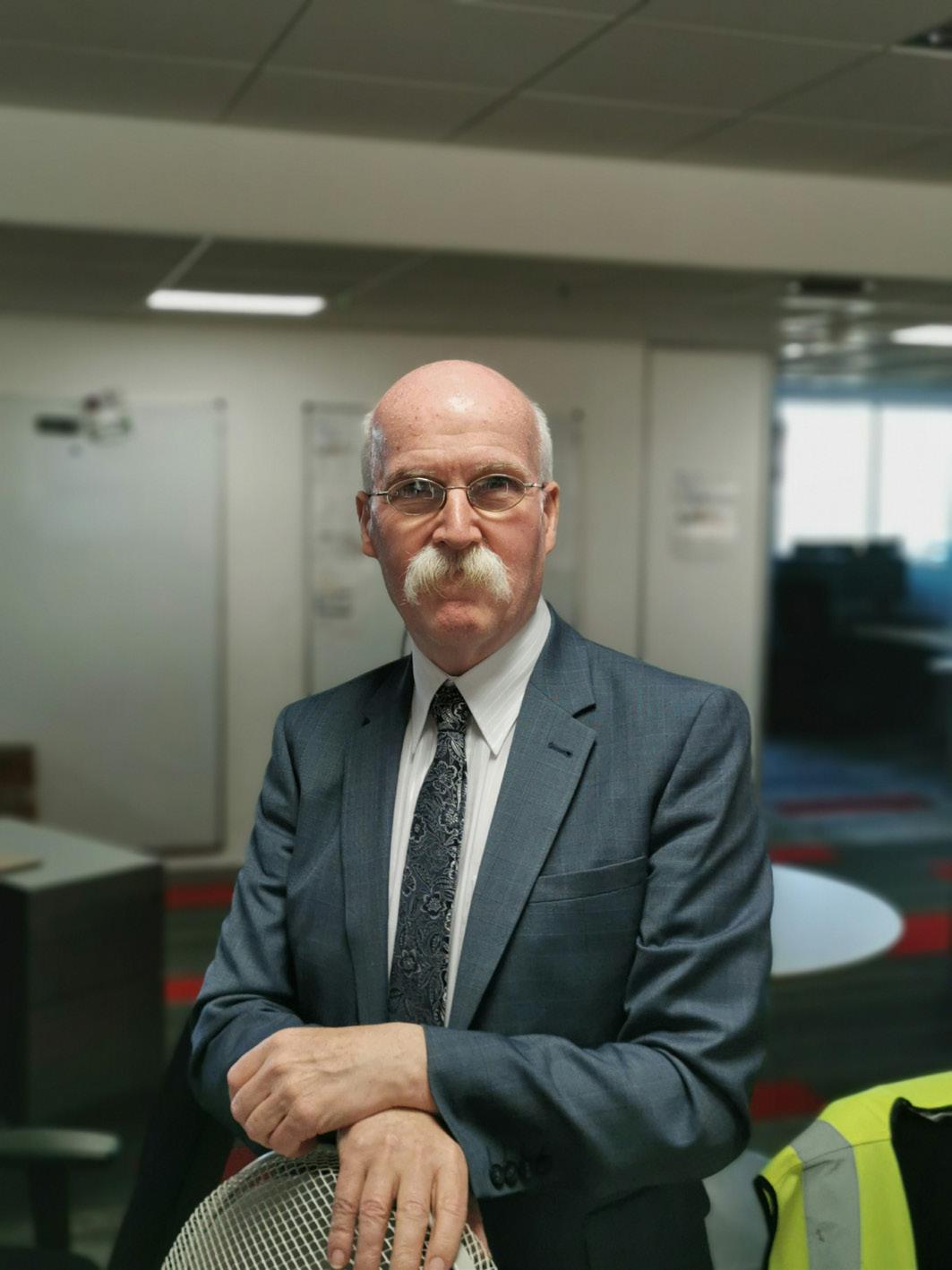
Dr Andrew Leech (pictured bottom right).
The Garden Family Medical Clinic. WINNER - 2023 RACGP WA GP OF THE YEAR AWARD.
You will also choose your preferred breakout workshop as you continue to work with the theme Little People, Big Feelings.
• Brad Williams, Director - Behaviour Tonics.
• Danica See, Education Consultant - Little Bloom Consultancy.
• Asha Pobar- ECE Teacher and ConsultantAutism Inclusive.
Closing Hospitality - Drinks and Nibbles.
Member benefits
Accountants and Financial Advisers
Aston Accountants
10% discount on personal income tax returns for members.
sstuwa.org.au/aston
Industry Fund Services
Specialist financial products for union members.
sstuwa.org.au/ifs
LIFE Financial Planners
$1,200 off your statement of advice fee plus a free financial health check for members.
sstuwa.org.au/lifefinancial
TIPS Financial Services
$1,100 discount on your TIPS Transition to Retirement strategy or Retirement plan. Exclusive to members. sstuwa.org.au/tipsfs
Banking
ME Bank
Special offers throughout the year for members. A bank built by, and for, union members.
sstuwa.org.au/mebank
Mortgages, Money and Me
Complimentary advice, property reports, finance tools and more for SSTUWA members.
sstuwa.org.au/mmme
OFX Money Transfers
When it matters, OFX it. Save with the experts in international money transfers.
sstuwa.org.au/ofx
Teachers Mutual Bank
Banking exclusively for the education community.
sstuwa.org.au/tmbank
Massive discounts on products and services for SSTUWA members
Cars
AutoBahn
Mechanical and electrical services. Members receive 10% off any AutoBahn service or repair, capped at $100. sstuwa.org.au/autobahn
Bayswater Mazda
Exclusive offer including fuel card, servicing and more. sstuwa.org.au/bayswatermazda
Bob Jane T-Marts
National fleet pricing on a range of products and services. sstuwa.org.au/bobjane
easifleet
$250 Magic Hand Carwash voucher with any easifleet procured novated lease.
sstuwa.org.au/easifleet
Europcar
10% discount on vehicle hire in Australia. sstuwa.org.au/europcar
Paywise
Fleet Network is now Paywise. Package your next car and save on tax. Bonus gift with vehicle delivery. sstuwa.org.au/paywise
Western Motor Vehicle Consultants
We’ll find a car you’ll love. Save time and money when sourcing your next vehicle. sstuwa.org.au/westernmotors
Computers
Altronics
Build it yourself electronics centre. VIP trade discount in store and online. sstuwa.org.au/altronics
Apple on Campus
For details visit: sstuwa.org.au/apple
Dell
Save up to 5% off selected items. sstuwa.org.au/dell
HP Computers
Huge savings for members on laptops, accessories, printers and more. sstuwa.org.au/hp
PLE Computers
Save on your IT with access to the PLE Computers academic portal. sstuwa.org.au/ple
Educational Resources
Effective Group Work
Beyond Cooperative Learning. By Barrie Bennett. sstuwa.org.au/effectivegroupwork
Graphic Intelligence
Possibilities for Assessment and Instruction. By Barrie Bennett. sstuwa.org.au/graphicintelligence
Instructional Intelligence
Building Instructional Expertise for the Classroom. An SSTUWA project in collaboration with Barrie Bennett. sstuwa.org.au/instructionalintelligence
Teacher Superstore
5-10% discount, in store and online. sstuwa.org.au/teachersuperstore
Entertainment
Movie tickets
Pre-order your movie tickets and save. sstuwa.org.au/movietickets
Outback Splash
Featuring both water and year-round attractions. Discounted tickets for members. sstuwa.org.au/outbacksplash
Rockface
Indoor rock climbing in Balcatta. $15 all day climbing pass with harness hire. sstuwa.org.au/rockface
For more information visit sstuwa.org.au/benefits and the benefits tab of the SSTUWA App *Terms & conditions
Food and Wine
Campbells
Access wholesale prices with a complimentary day pass. sstuwa.org.au/campbells
Cellar d’Or
Best value winery tour in the Margaret River Region. 10% discount for members.
sstuwa.org.au/cellardor
Taste Bud Tours
Swan Valley “Speed Grazing” – 20% discount. Good Food, Wine & Cider (am) or Good Food, Wine & Beer (pm). sstuwa.org.au/tastebudtours
Health and Wellbeing
Teachers Health Fund
Join the thousands of teachers who have already made the switch. sstuwa.org.au/teachershealth
WA Opticians
20% discount on spectacle frames and lenses. Perth and East Perth. sstuwa.org.au/waopticians
Housing
Houspect
Buy, build and invest with confidence. $50 discount on prepurchase building inspections. sstuwa.org.au/houspect
Johns Building Supplies
Trade prices on paint and painters’ hardware. Builders prices on all other hardware lines. sstuwa.org.au/jbs
SkylightsWA
Specialising in skylights and roof ventilation, servicing all regions of WA. 7% discount off selected products. sstuwa.org.au/skylightswa
Wattyl
15% off Wattyl paints, stains and accessories at Wattyl Paint Centres in WA.
sstuwa.org.au/wattyl
Insurance
and Legal
Journey Cover insurance
For details visit: sstuwa.org.au/journeycover
SSTUWA Legal Services
Access to quality legal services for both work-related and personal matters. sstuwa.org.au/legal
Teachers Health Fund
Join the thousands of teachers who have already made the switch. sstuwa.org.au/teachershealth
Teachers Health – Travel
For Teachers Health members who are planning a trip away, Teachers Health travel insurance offers comprehensive cover at competitive rates. sstuwa.org.au/travelinsurance
Wills for members
Members can access a complimentary simple will, where appropriate. For more information or details about a complex will, visit: sstuwa.org.au/wills
Shopping
isubscribe
Up to an extra 10% off any print and digital magazine subscription; over 4,000 titles. sstuwa.org.au/isubscribe
Jackson’s Drawing Supplies
10% discount in Jackson’s 12 shops and online. sstuwa.org.au/jacksons
Petals Flowers & Gifts
20% off flowers and gifts. World-wide delivery available. sstuwa.org.au/petals
Teacher Superstore
5-10% discount, in store and online. sstuwa.org.au/teachersuperstore
Union Shopper
Save on cost-of-living expenses with some of Australia’s biggest brands. Free access with your SSTUWA membership. sstuwa.org.au/unionshopper
Travel and Accommodation
Accor Hotels
Great savings for teachers at Accor Hotels in the Asia Pacific region. sstuwa.org.au/accorhotels
Choice Hotels
Choice Hotels welcomes SSTUWA members with exclusive rates at locations in Australia and NZ. sstuwa.org.au/choicehotels
Experience Oz
Save 10% on over 3,000 experiences across Oz + NZ. sstuwa.org.au/experienceoz
Inn the Tuarts Guest Lodge
Forest retreat, 4-star, with indoor pool, Jacuzzi, sauna and BBQ. Adults (12 years+) only. Five minutes to Busselton. Studios and rooms. 22.5% off rack rate or best available rate. sstuwa.org.au/innthetuarts
Jarrah Grove Forest Retreat
Luxurious, self-contained accommodation in Margaret River. Discounted rates for members. sstuwa.org.au/jarrahgrove
Mandurah Houseboats
10% discount on houseboat holidays. sstuwa.org.au/houseboats
Metro Hotel Perth City
15% discount on the best available rate. Located in East Perth near the WACA and Gloucester Park. sstuwa.org.au/metroperth
Rottnest ferry tickets
Save up to $15 on Rottnest ferry tickets with WestClub. sstuwa.org.au/rottnest
Classifieds
Dunsborough (Quindalup)
Large 4x2 holiday home on Geographe Bay Rd. Swimming beach 30m away. Free use of private boat mooring. Room to park boats with boat ramp a minute away. Slow combustion wood heater and reverse-cycle air-con. Available all year except for leavers’ vacation. No pets. 0419 943 203 a_r_moore@bigpond.com
Dwellingup
Après Huit and Dwell Cottage provide luxury self-contained accommodation set in beautifully landscaped gardens. Can be rented separately or together. Après Huit: 2x2, main house. Dwell Cottage: 1x1, furnished in a French theme. Robert: 0419 954 079 dwellcottage.com.au
Dwellingup
In need of a tree change? Time out to reconnect with nature? Time for a vacation in Dwellingup’s Jarrah forest, 90 minutes from Perth. Chuditch Holiday Home is perfect for couples, groups and families. It’s centrally located and sleeps up to eight people.
Shani: 0402 615 235 shanivore@hotmail.com
Frankland River
Private secluded retreat. Choose from three different types of separate accommodation. Three bedroom homestead: two king beds, two single beds – sleeps six (no pets). Two adults $195/night, children under 13 $25/night, extra adult guests $50/night. One bedroom chalet: one queen bed – sleeps two. $139/night, adults only. One bedroom cabin: one queen bed – sleeps two. $169/night, adults only. franklandriver.com.au
Jade: 0430 450 093 | Sam: 0413 160 093
Fremantle
Short term accommodation in central Fremantle. Recently refurbished with all conveniences for modern living. Townhouse has three queen-sized bedrooms plus provision for two singles. Enjoy time in the rear garden, complete with BBQ. Secure parking for two cars, access controlled by electric gates. 9430 4458 | 0407 083 174 info@westerley.com.au
Fremantle
Staycation? Attending a function? Cosmopolitan getaway? Fremantle is the place. Cafes, restaurants and breweries. Markets, beach, art galleries, museums, theatre, events, shopping, skate park, Ferris wheel, whale watching... What more could you want? Eco-Gallery Apartment is stylish, centrally located, sleeps three and has secure parking. (08) 6323 2339 admin@smartstaywa.com.au
Kallaroo
Serenity Escape is a 2x1 apartment with full kitchen, offering comfort and convenience. 20 min walk to beach, 5 min drive to train station, walking distance to Whitfords Brewing Co, cinema and shops. Toiletries, slippers and coffee machine provided. Min two nights. Sleeps four, or five with mattress. No pets. $125/night for 3 people; $10/night per extra person. Molly: 0428 166 559 mollysletters@gmail.com
Kalbarri
Clean, tidy, self-contained family-friendly 3x1 brick house at the top end of a quiet cul-de-sac. Sleeps eight: two x queen beds and two x bunk beds. Close to Blue Holes Beach, 15 min walk to town. kalbarriwa.net.au | 0435 845 504
Margaret River
Two bedrooms, private, comfortable, fully equipped stone cottage with fireplace, located amongst the forest opposite Boranup National Park, 17km south of Margaret River on Caves Road. Close to beaches, wineries, caves and galleries. $150 per night for two people, or provide own linen and towels for $120 per night. Russell: 0418 933 270
Nannup
Seraphim Retreat is a pet friendly 3x1 character farm cottage, five minutes from friendly Nannup. Set in acreage, with established gardens and stunning valley views. Air conditioned and wood
heater. Horse riders can bring their horses to access our arena and trails. Teacher discount: $159 weekends, $149 midweek. See website for details. seraphimretreatnannup.com SMS 0420 832 510
Safety Bay
Very clean and tidy, traditional style 3x1 duplex in Safety Bay. Fully furnished and equipped. One street from beach. Presently a minimum stay requirement (this may change).
cnjn@aapt.net.au
Trigg
Self contained accommodation. Kitchen, laundry, queen sized bed plus fold out double couch in lounge. Free WiFi and Netflix. Own entrance. Find us on Facebook.
Rammed earth cottage, 2x1, nestled amongst bushland. Well located, short walk to Studio Gallery Bistro, two-minute drive to Caves House. Beaches, galleries, wineries and restaurants close by. Sleeps six. No dogs. stayz.com.au (property 136151)
Kirsty: 0419 927 660
Tranquillity Counselling, Psychotherapy and Career Development
I provide holistic, confidential practical counselling to help you deal with an array of issues, some being: general relationship, mental health, anger issues/management, anxiety, depression, self-harm, grief and trauma, addiction, abuse, palliative care. Milica Robinson, MCnsig&Psychthpy, GradCertCareerDev, BEd. 0422 358 187
Retirement coach
Are you recently retired or retiring soon? You probably have a financial plan in place but developing a plan for the non-financial side of retirement can be as important as preparing financially. I offer support and guidance for the transition from work to
Email 50 words or fewer to editor@sstuwa.org.au along with your union membership number. Free for members.
Classifieds
retirement, helping you to find purpose and meaning in retirement. Contact me to arrange an obligation free chat. retirementcoaching01@gmail.com
Marriage celebrant
Marriage celebrant with 12 years of experience, working in the Peel, South West and Perth areas. Specialising in creating personalised ceremonies for couples at their chosen wedding location. I’d love to help you plan your special day!
Meridith: 0400 312 535 meri.lake4@gmail.com
Marriage celebrant
Heart Centered Ceremonies for couples wanting a personalised wedding. Lee will help you design your dream wedding – a memorable occasion. Mention this ad to receive a discount.
Lee: 0404 655 567 leehalligancelebrant.com.au
Marriage celebrant
Experienced professional celebrant available, all areas. Formal or informal, large or small weddings. A Beautiful Ceremony will help you design an unforgettable and uniquely personal ceremony.
Mary: 0418 906 391 maryburke40@hotmail.com
Funeral celebrant
I am an experienced funeral celebrant. It will be my honour to assist you in the cocreation and presentation of a ceremony that serves to honour your loved one, by revealing their essence through a uniquely constructed and presented combination of spoken word, rituals, symbols, audio and visual displays.
0449 075 001
Kc.fcelebrant@gmail.com
First aid training for students
St John Ambulance WA offers free first aid training to all school aged students, ranging from Triple 000 Hero for Kindergarten students to Road Trauma
First Aid for secondary school students. Courses are curriculum mapped. (08) 9334 1259 youth@stjohnambulance.com.au
Learn to social dance
Learn jive, waltz, rumba, samba, tango and other dances for social events (ball, wedding, cruise, etc). A fun and easy course with quality instruction. Join with or without a partner. Melville (LeisureFit) Recreation Centre. Mondays 7.30-9pm. $118/8 weeks. Beginners’ course held every term. Term 2 2026 starts Monday 11 May. Stan: 9330 6737 | stan@stansdancing.com
Messines Bee Farm Incursions
Four bee/sustainability themed incursions for primary, K - 6. Play based, engaging, hands on, live bees, honey tasting. messines.com.au workshops@messines.com.au
Road safety education for schools
RAC offers free curriculum aligned road safety workshops and online resources for primary schools (pre-primary to Year 6) and secondary schools (Years 10 to 12), covering a range of road safety topics designed to keep young people safe on and around the roads. (08) 9436 4471 | rac.com.au/education communityeducation@rac.com.au
Jump Rope for Heart
Looking for a ready-to-use program for your health and physical education plan? The Heart Foundation’s five-week Jump Rope for Heart program is just what you need! This easy-to-run primary school program, supported by an online teacher portal full of helpful resources, makes incorporating skipping into your school’s activities a breeze. It inspires kids to move more, have fun and develop heart-healthy habits, all while raising funds to save Aussie hearts. Discover how you can support your students in becoming Heart Heroes at jumprope.org.au
Mathematical Association of WA
MAWA offers professional learning opportunities, conferences and consultancy services to teachers and schools and networks. MAWA members receive 10 per cent discount on MAWA shop resources. For more information: mawainc.org.au 9345 0388 | eo@mawainc.org.au
Macramé is the new yoga
I'm a teacher running small group macramé classes in a cosy home studio. Join me and discover the power of mindfulness in a fun supportive environment. A powerful way to calm a busy mind.
marcia@knotinlove.com.au
Rainbow Reading (New Heights)
Rainbow Reading supports struggling readers, including neurodiverse, delayed, or new English learners. Need support with group work or extra reading mileage? Rainbow Reading has effective solutions. rainbowreading.com.au | Di: 0407 490 253
Teaching resources
From a retired teacher, the following resources are available: English, media, literature (Years 7 -12); ESL: primary and secondary; Aboriginal education: DHS; First Steps presenter books; science upper primary and lower secondary. Dave: 0438 579 689
Primary school resources
Retired teacher with valuable primary school resources for most year levels. Phone Susanne and leave a voice message please. 0417904043
Calling all retired teachers!
Are you a retired teacher with a spirit of adventure and time to spare? Would you like to assist families in remote areas of WA? You may like to join REVISE WA as a tutor. For more info, visit www.revisewa.com.au
Noticeboard
Retired teachers
The next meeting of the Retired Teachers’ Association of the SSTUWA will be at 10am Wednesday 3 June at the SSTUWA premises. All retired members are welcome.
Stay in touch: Join the RTA Facebook Group – search “Retired Teachers’ Association of the SSTUWA”.
State Council Conference
June 2026 State Council Conference will be held on 12-13 June 2026. The deadline for items was 24 April 2026.
Visit sstuwa.org.au/ statecouncilconference for further information.
Public Education Day – 23 May
On this day we recognise and celebrate public education and acknowledge and thank principals, teachers and education support staff in our public schools, preschools and TAFEs. Governments have a central role in strengthening public education systems through long-term investment focused on overcoming inequality. Join the AEU on X and Facebook and at aeufederal.org.au to celebrate this day.
World Day Against Child Labour
Held each year on 12 June, this day is a focal point of the International Labour Organisations’ push to end child labour worldwide. The day brings together governments, employers and workers organisations, civil society, as well as millions of people from around the world to highlight the plight of child labourers and what can be done to help them. For more information visit bit.ly/48RAQtO or bit.ly/49OhKG9
Research and studies
Did you know we have an extensive collection of research and studies on our website?
To view these, visit sstuwa.org.au/research
National Sorry Day and Reconciliation Week 2026
National Sorry Day falls on 26 May and remembers and acknowledges the mistreatment of Aboriginal and Torres Strait Islander people forcibly removed from their families and communities. The day recognises the strength of “Stolen Generation” survivors and allows us to reflect on how we can all play a part in the healing process for our people and nation. The day is followed by National Reconciliation Week, which falls 27 May-3 June. For more details visit reconciliation.org.au
Refugee Week: 15-21 June
Refugee Week is Australia’s peak annual activity to inform the public about refugees and celebrate positive contributions made by refugees to Australian society. World Refugee Day is celebrated during this period, on 20 June. The 2025 theme for Refugee Week is Finding Freedom: Diversity in Community. Australia has a once-in-a-lifetime opportunity to hit the reset button on how we behave towards one another and emerge a more fulfilled and connected society. For more information visit refugeeweek.org.au
SSTUWA committee meeting dates: Venue: SSTUWA office | Contact: (08) 9210 6000 or contact@sstuwa.org.au Videoconference facilities are available
New Educators Committee
Time: 4.30pm.
Dates 4 May, 27 Jul, 19 Oct.
Women’s Committee Time: 4pm.
Dates: 23 Jun, 1 Sept, 24 Nov.
Early Childhood Educators Committee Time: 4pm.
Dates TBC
LGBTIQ+ Committee Time: 3.45pm.
Dates 12 May, 4 Aug, 21 Nov.
Aboriginal and Torres Strait Islander Committee Time: 4pm.