


Correspondence:
The Editor, PO Box 212, West Perth WA 6872 editor@sstuwa.org.au | Ph: 9210 6000
Member Assist: Ph: 9210 6060 memberassist@sstuwa.org.au
Print post publication 100004470 | $4.95 ABN: 544 780 946 35
Authorised by Sally Dennis, General Secretary, The State School Teachers’ Union of W.A., 1 West Street, West Perth WA. Printed by Vanguard Press, 26 John Street, Northbridge WA. July 2026.
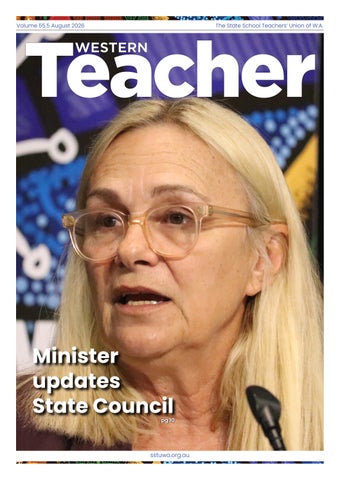
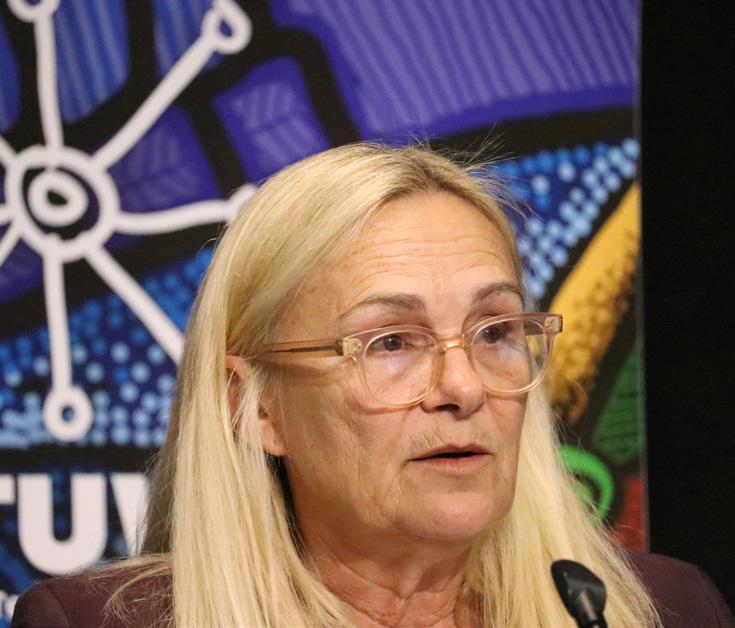
Cover: WA Education Minister Sabine Winton addresses June State Council Conference. Read more on page 10.
To access the digital copy of Western Teacher, visit: sstuwa.org.au/westernteacher






By Matt Jarman President
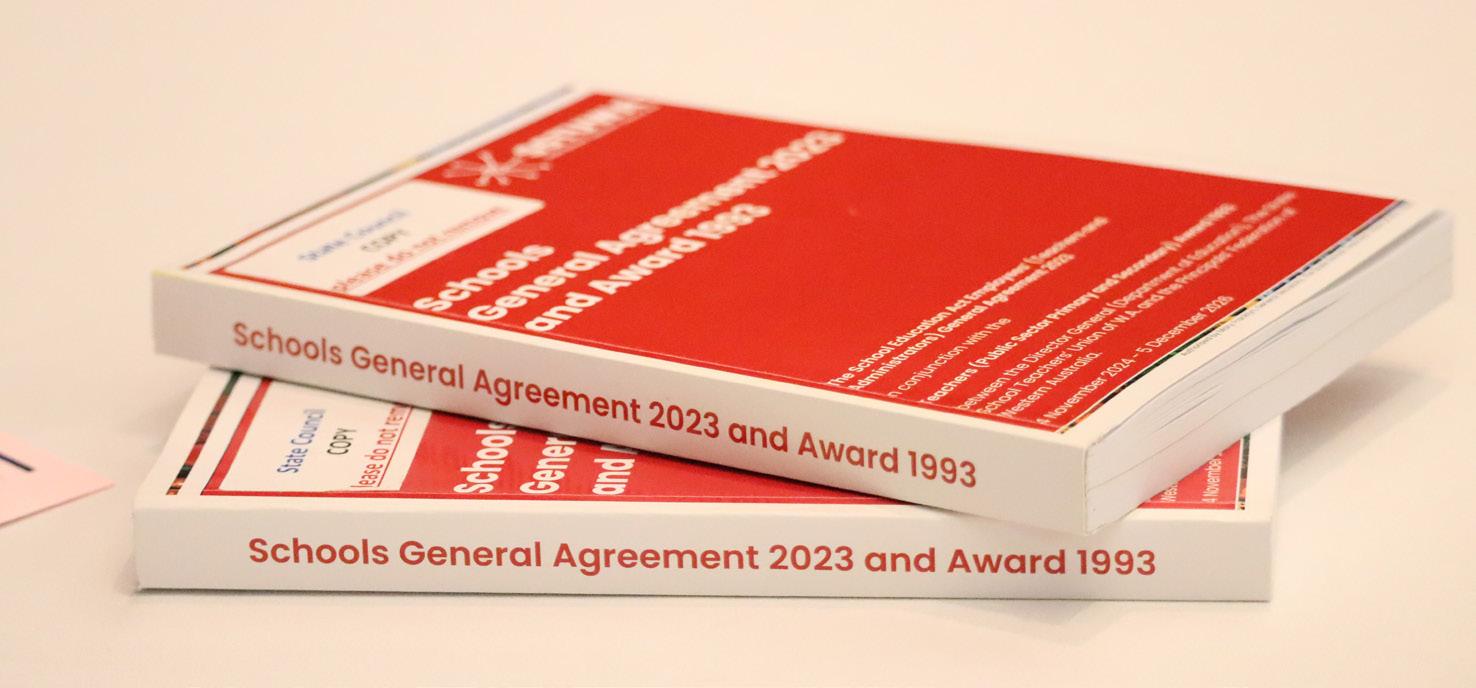
At the June State Council Conference (full reports from page 8) the SSTUWA continued the most crucial work it performs – the sometimes seemingly perpetual work on developing the Log of Claims on which our general agreement negotiations will depend.
Much was achieved in the 2023 General Agreement and every single claim that was successful is now either fully in place or underway.
Whether it was workload reduction, infrastructure improvements, more flexibility in terms of work location or career development, elements of the 2023 agreement have been implemented.
Now we need to build upon that success with further progress through the 2026 General Agreement. That work has already started but we now need the most important contribution of all – yours.
Every school-based member should understand the current draft which will be circulated in full, along with a wide range
of ways in which you can cast your vote. There are around 100 different items in the current draft. It is absolutely crucial that members take part in discussions around this log, which has been developed through discussions at district councils, executive meetings and State Council.
Members need to understand what is at stake and be ready to make a stand on what they believe in.
This is why the SSTUWA readied a range of information for all school members ahead of a vote on the log, which has now commenced (and closes 7 August). Member ownership of what we take to the negotiating table in our final 2026 Log of Claims is absolutely essential.
On 23 April 2024 we took to the streets across Western Australia with the biggest public demonstration of union power in decades. From Esperance to the Christmas Islands, it was absolutely clear that the SSTUWA wanted public education front and centre of public debate – and it was.
In a recent eNews I advised you of some important outcomes from the June State Council Conference.
If the SSTUWA is to expect to come into workplaces and insist on the highest standards of integrity and support for staff from employers, then it is crucial that we meet those same standards in our own workplace.
At the risk of repeating myself, it is my fundamental belief that a union must set the bar far above the best of workplaces when it comes to upholding its own
values and standards.
This why I outlined a number of concerns relating to internal matters to the State Council delegates that you elected to the union’s foremost decision-making body. As part of this process State Council endorsed an independent review of the union’s decision-making processes to ensure proper lines of management are followed and that decisions are transparent, are made in a consultative way and in accordance with the separate awards and agreements which cover Industrial and Administrative staff respectively. This review will be expected
That earned significant improvements to the offer we received – and also carried into elections in 2025. For once education wasn’t an afterthought in state and federal election campaigns, instead featuring strongly in the pre-election commitments.
That needs to happen again and this time we need the community to know what we want as teachers, what public educations needs and what they can do to support us in creating a better education environment for the massive amounts of pupils we care for in the public education system.
Be ready for the information you need to play your part. Consider it carefully cast your vote according to your wishes.
Not every item will be relevant to you personally. There may well be items not included that you would have preferred to have seen. However, every item reflects a consensus from the membership and seeks to raise the bar for workplace rights and entitlements.

to report to the November State Council, who will have the responsibility of considering any recommendations.
In addition to this action, an extensive review of psychosocial hazards in the office environment is underway.
Others may want to avoid scrutiny, but I am not afraid to open our union and indeed myself to independent review to ensure the SSTUWA maintains the highest possible standards and practices whilst applying the values all unionists subscribe to.
By Jonelle Rafols Senior Vice President
As the Senior Officer responsible for the Women’s Portfolio, I am privileged to work alongside dedicated women making a difference in our union, workplaces and communities.
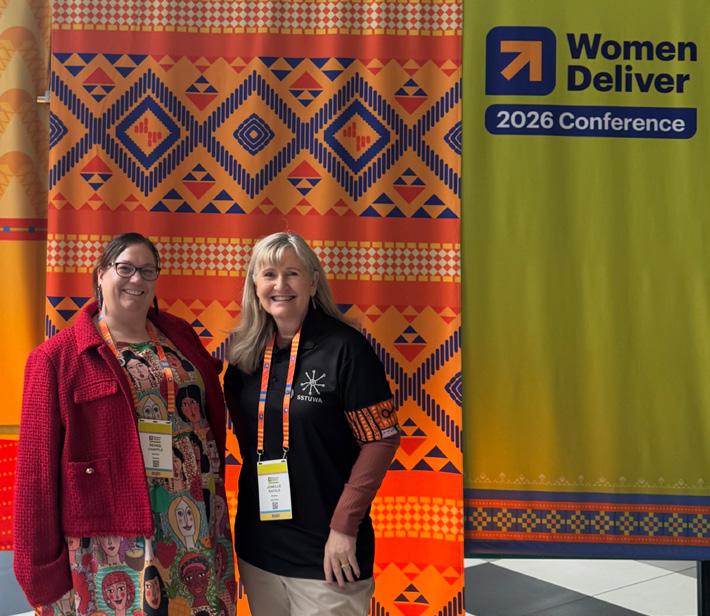
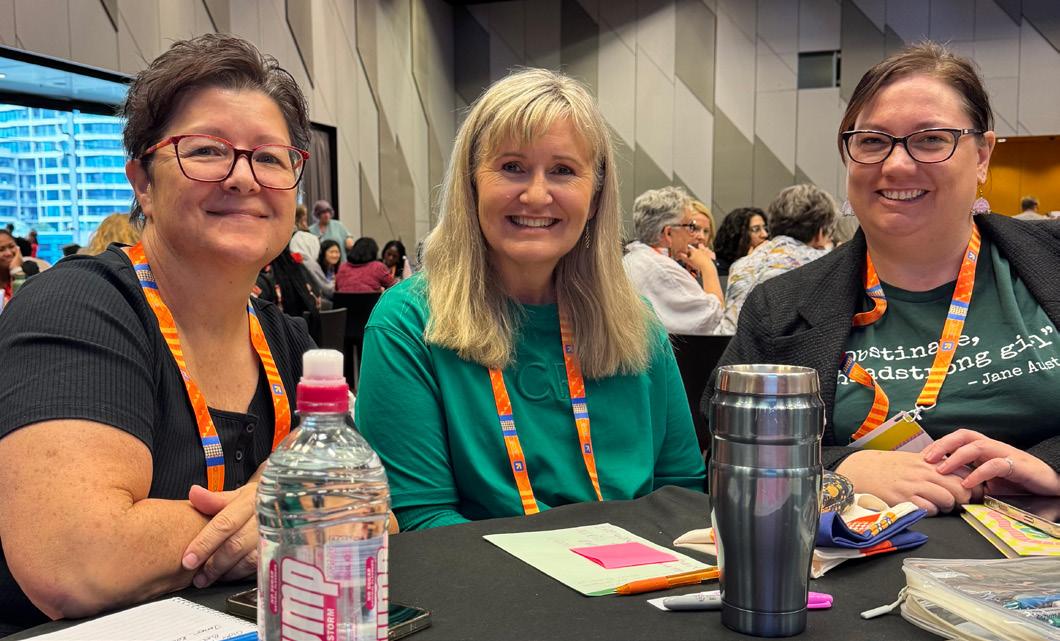
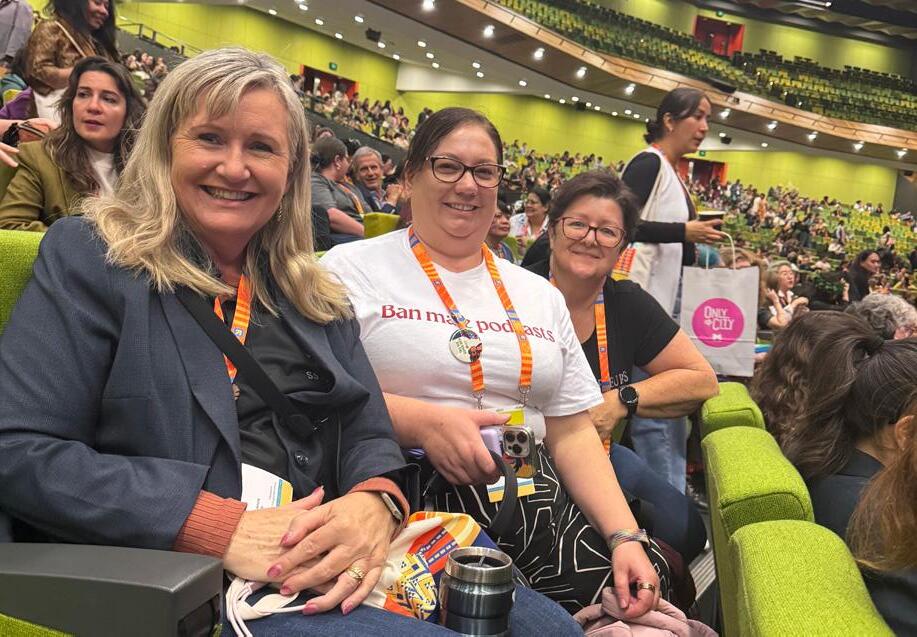
Earlier this year, I attended the Women Deliver Conference (WD 2026) with two SSTUWA Women’s Committee members (Leanne Day and Renee Chapple, pictured with me on this page), joining delegates committed to gender equality and women’s leadership.
The voices were diverse, but the message was clear: despite progress, women continue to face barriers that limit opportunity, participation and advancement. What struck me was how those global conversations reflected the experiences of women in education in WA.
Women make up the majority of our workforce as teachers, lecturers, education assistants, leaders, mentors and advocates. Many balance demanding careers with caring responsibilities at home while navigating workload pressures, workplace flexibility, job security and leadership pathways.
These are not simply women’s issues. They are workplace issues. They are union
issues. The SSTUWA has a proud history of advocating for women and creating opportunities for women to lead.
Working with SSTUWA Women’s Officer Janette Bedwell and the Women’s Committee, I see that commitment strengthening our union and ensuring women’s voices are heard.
support their families and fully participate in their workplaces and communities. Equity in education begins with job security.
While women face barriers to leadership in many sectors, the SSTUWA is proud that women comprise almost 79 per cent of our Executive. This reflects the value our union places on women’s leadership and members’ confidence in women leaders.
Women’s leadership helps shape a union that advocates for secure employment, fair workloads, safe workplaces and opportunities for all members to thrive. It keeps issues affecting women educators central to our advocacy and decision-making.
I am passionate about the fight for secure employment and permanency. Across schools and TAFE, women are disproportionately represented in temporary, fixed-term and casual work. Permanency is more than a contract; it provides financial security, professional stability and confidence to plan for the future.
Secure employment enables women to pursue leadership,
Progress happens when women step forward, share experiences, advocate for change and support one another. I have seen women attend an event, join a project or contribute to a committee and discover strengths they did not know they had.
True solidarity means refusing to tear another woman down. We build collective power by lifting each other up, creating space for women to lead and ensuring every woman has the opportunity to succeed.
When women rise, we all rise.
By Sharmila Nagar Vice President
At the SSTUWA’s recent June State Council, delegates were informed of the union’s response to the national inquiry into racism, hate and violence directed at Aboriginal and Torres Strait Islander people, as well as points from the union’s contribution to the First Nations policy. This report contains information from SSTUWA’s response into the racism inquiry.
As your union, it was vital that we had a voice in the federal government’s much-needed inquiry. Even in a very short timeframe, our First Nations members came forward with deeply personal stories that revealed the real and ongoing challenges facing First Nations members, students and communities regarding racism.
Our response predominantly focused on two types of racism – institutional racism and racial discrimination.
Institutional racism and racial discrimination against First Nations teachers take many forms. In professional settings, our First Nations members speak of the heavy burden of Colonial Load and Cultural Responsibility, and the ongoing toll this takes on educators, students and communities.
Most concerningly, our members reported that overt racism and hate directed at First Nations people has escalated in recent years, particularly since the referendum. In some ways, the referendum’s failure has been experienced as giving some people licence to express racist views more openly, often framed under the guise that “we are all Australian” and “everyone should be treated equally”. This is now a recurring and distressing topic of conversation for First Nations staff and students in schools.
Structures and systems in place disproportionately impact our First Nations students, whether it is Online Literacy and Numeracy Assessment (OLNA) requirements, class streaming or a lack of access to cultural needs, norms and obligations.
First Nations students should be able to engage with their Country and be confident that their cultural needs are understood and valued throughout their educational journey. Many of our teachers have identified OLNA as a significant disadvantage for First Nations students, directly impacting graduation achievement rates.
As stated in our response: “Institutional racism and racial discrimination regarding First Nations teachers comes in many forms. When it comes to professional matters, our First Nations members attest to the excessive workload created by Colonial Load and Cultural Responsibility and its ongoing impact on our First Nations educators and also students. As reported by one of our members; ‘as an Aboriginal educator, I carry an additional workload that is often invisible. I am expected to provide cultural knowledge, develop resources and advocate for accurate representation, all while managing my regular responsibilities. I am also actively involved in Land Council work, Native Title processes and language revitalisation, yet cultural obligations are not adequately supported within workplace structures. This creates ongoing pressure workload and emotional impact.’ However, when it comes to decision making around key learning aspects such as curriculum development, First Nations’ voices are often lacking.”
SSTUWA First Nations members have reported that there is no clear reporting
mechanism to report racist behaviours. This must change. Government agencies must respond with clarity, consistency and a genuine commitment to antiracism, backed by an explicit framework and policy. With the strategic plan now released, this is the work we will keep pushing for.
The SSTUWA recommends the following:
• Establish and implement a clear, whole-of-government anti-racism framework and policy, supported by practical guidance for schools on how to call out, respond to and resolve racism. The framework should provide an unambiguous mandate that racism is not acceptable and clearly set out the actions that will be taken when school communities are experiencing racial unsafety.
• Establish clear reporting mechanisms to record incidents and collect consistent data to determine whether racism is increasing or decreasing over time. Currently, there is no consistent approach to collecting this data across jurisdictions, limiting the ability of state and federal governments to monitor trends and evaluate the effectiveness of anti-racism measures.
Furthermore, please see our response and also the SSTUWA’s contribution to the AEU’s First Nations policy response at sstuwa.org.au/JuneSC26.
By Sally Dennis General Secretary
Across Western Australia, educators continue to face significant challenges. Cost-of-living pressures, increasing workloads, workforce shortages and growing demands in our schools have all placed additional strain on teachers and school leaders. As a union, we have a responsibility to listen to our members and respond to their concerns.
One issue that has been consistently raised by members is the cost of union membership. This year, discussions have taken place regarding how we can continue to provide high-quality representation and support while ensuring membership remains accessible and affordable. Research undertaken into teacher union fees across Australia found that SSTUWA members currently pay the highest membership fees in the country.
As a not-for-profit organisation, our purpose is to serve members. We exist to advocate for public education, protect members’ industrial rights and provide professional support when it is needed most. We must always ask ourselves whether we are delivering the greatest possible value to the members who fund our work. For this reason, proposals have been put forward for both a fee waiver equivalent to two fortnightly membership payments and an ongoing reduction in membership fees. These proposals are intended to provide direct financial relief to members while maintaining the union’s ability to deliver strong representation and support.
Importantly, these discussions are not about reducing services to members. In fact, we have continued to invest significantly in strengthening the support available to members across the state.
We have increased our Member Assist team to four officers who are available Monday to Friday, to respond to member enquiries, provide advice and assist with workplace concerns. We have also employed a second in-house Advocate to further strengthen support for members requiring representation, and we are currently shortlisting candidates for a two full time Case Managers positions to expand our capacity even further.
At the same time, we continue to invest in member education and industrial capability. We are offering a wide range of industrial training opportunities designed to equip members with the knowledge and confidence to navigate workplace issues, understand their rights and strengthen their advocacy skills. I encourage all members to visit the SSTUWA website and enrol in the training opportunities available. If courses are fully subscribed or unavailable in your area, please let us know. Demand from members helps us identify where additional training is required and we are committed to expanding these opportunities wherever possible.
The question of fee relief has generated considerable discussion within the union. Representatives from across the state have expressed differing views regarding both the fee waiver and ongoing fee reduction proposals. Such debate is an important part of a healthy democratic organisation. However, it is important for members to understand that these proposals cannot proceed unless they are supported through the union’s democratic processes.
The decision ultimately rests with State Council delegates. If members believe that fee relief should be implemented, then it is essential that they communicate their views to their elected delegates ahead

of the November State Council meeting, where these proposals will be considered. State Council delegates are elected to represent the views of members in their districts and branches. They play a critical role in shaping the future direction of our union. Their decisions should reflect the views and priorities of the members they represent.
The most important question in this discussion is a simple one: What do you want from your union? Do you believe membership fees should remain at their current level? Do you support a fee waiver and an ongoing fee reduction? Do you believe that, as a financially responsible not-for-profit organisation, the SSTUWA can provide meaningful fee relief while continuing to strengthen member services, representation and advocacy? These are important questions and every member deserves the opportunity to have their voice heard.
The strength of our union has always come from its members. Whether your priority is fee relief, industrial support, professional development, workplace representation or protecting public education, your views matter. I encourage all members to engage in this discussion, speak with their delegates and ensure their voices are heard. The future direction of union fees is a matter for members and their elected representatives, and your participation in that process is essential.
If you want fee relief, now is the time to tell your State Council delegates. They cannot represent your views if they do not hear them. Together, we can continue building a strong, responsive and member-focused union that delivers value, support and advocacy for educators across Western Australia.
By Lindsay Hale School leaders’ consultant
As we prepare for a new round of bargaining, the stakes for public education could not be higher. The Schools General Agreement is more than a pay and conditions framework— it is a statement of what the community and its government values.
In a state enjoying the strongest economy in the nation, it is time a renewed commitment to public education was aligned to that prosperity - and safeguarding it as sustainable and equitable for all.
The question is not whether we can afford to invest more in public schools, but whether we can afford not to. The cost-of-living crisis is affecting all Western Australians. Educators are no exception.
While salary outcomes matter, the next agreement must recognise that teachers and school leaders are not just employees - they are the backbone of a system the community increasingly views as struggling to meet contemporary demands. Public education is widely acknowledged as less and less fit for purpose. This agreement presents a critical opportunity to reshape the conditions that underpin effective teaching and learning.
The status of teachers and school leaders is central to much needed reform. Respect is not symbolic; it is structural. It must be reflected in manageable workloads, professional autonomy and competitive remuneration that recognises the complexity of modern classrooms and schools. Without this, attraction and retention challenges will persist and grow. And this is no longer about particularly hard-to-staff areas – it is increasingly system-wide.
Class sizes remain a defining issue. For too long, the debate has been framed in averages and muddied by dubious “evidence” rather than realities. (You can find more on this in Facing the Facts about class sizes.) Ask yourself, if class sizes really don’t matter, why do so many other nations provide smaller class sizes than Australia, why do so many other states provide smaller class sizes than WA, and why do so many private schools provide smaller class sizes than public schools?
Class sizes must also be considered in the context of the escalating complexity of student needs. Teachers are increasingly supporting students with disabilities and diverse behavioural and social challenges –with inadequate support, if any. Smaller class sizes overall and adjustments that properly account for complexity are essential to improving education outcomes and reducing teacher burnout.
The need for recognition of additional workload arising from deepening disadvantage and burgeoning student complexity is now urgent. This workplanning lessons, making adjustments, managing behaviours, liaising with families and external agencies - is substantial and growing. It must be properly acknowledged in workload allocations, rather than absorbed invisibly by already stretched educators.
Duties other than teaching (DOTT) is another critical pressure point. It must be protected. Sufficient and predictable DOTT is essential for the preparation, assessment and collaboration that teachers undertake as part of their core work. Without it, the system relies on unsustainable levels of unpaid labour, again contributing to burnout and attrition.
Equally, school leader time needs to be respected with more opportunity to focus
on their core work of leading, teaching and learning.
Teacher and school leader health and wellbeing must underpin the next agreement. Rising workload intensity has real consequences, from stress-related illness to early career exit. Facing the Facts, Understanding and Reducing the Workload of Teachers and Leaders in Western Australian Public Schools and countless other reports have consistently highlighted this trajectory. Now we need enforceable conditions, not aspirational rhetoric.
Regional and remote school staff still require particular attention. Adequate and consistent incentives are essential, as is available, affordable, safe and secure housing through GROH. So too are professional support and services. Inadequacies in the GROH system and lack of regional support and services undermine workforce stability in these communities.
Finally, systemic support must be strengthened. Schools cannot manage complex needs in isolation. Regionallevel support for students with disabilities, behaviour management, attendance and engagement, Aboriginal education and specialised curriculum support is critical. Without it, school leaders and classroom teachers are left to shoulder responsibilities far beyond their primary responsibility.
Every agreement is a moment of choice. This one can, despite what we have achieved in the past, perpetuate a system stretched to breaking point, or it can progress genuine renewal. Let’s face the facts and let’s, once again, bring the community with us. What is worth fighting for is clear: a sustainable profession, decent pay and conditions, and a public education system capable of meeting the needs of every student in Western Australia.
Workload reduction, early childhood education and regional education were among the issues covered by Education Minister Sabine Winton when she spoke at June State Council Conference.
Minister Winton (pictured right), who has been in the role since March last year, said she had visited more than 120 schools in the first 12 months of her tenure and wanted to stay connected with the work and concerns of public educators.
“I want you to know that I champion your work and professionalism everywhere I go, every single day,” she said.
Ms Winton said the Department of Education (DoE) had developed a new strategic plan, which had five interconnected priorities, which included fair access quality public schooling, respected, connected and supported staff and line direction and support across the system.
“This plan commits to providing more effective and targeted support for teachers in all our public schools for the next five years,” she said.
“It includes supporting teachers to deliver high quality teaching in every classroom.”
Ms Winton said reducing workload continued to be a key priority with the Workload Intensification Taskforce reset and the appointment of Emeritus Professor Colleen Hayward AM as independent Chair
“We’re already seeing some impactful results from the task force, including small group tuition, complex behaviour coordinators, documented planning, simplifying any semester reporting, streamlining teacher or principal improvement and simplifying a range of compliance requirements,” she said.
“My focus is on easing the pressure where I can, where our government can,
reducing unnecessary tasks and enabling you to spend more time on what makes the greatest difference.”
Ms Winton said unlike other Australian states, WA delivered kindergarten education in its schools, with 97 per cent of children enrolled – and that the state was leading nationally with its four-yearold kindergarten program.
She said the government was committed to play-based learning, as it was in the strategic plan, and also evident by the establishment of the WA Play Strategy Advisory Committee.
Ms Winton said a full-time kindergarten pilot program was now underway in various locations.
“The pilot is being delivered using best practice, including two supported EAs in each classroom and a play-based, relational and play-based pedagogy, prioritising relationships and partnerships with children and families,” she said.
Ms Winton said there would also be more support and professional learning for students with disability, with staff able to access an extra school development day next year to cater better for such students.
Ms Winton said the DoE strategic plan would boost the supply of teachers, particularly in regional and remotes areas.
There will be continued investment in regional attraction and retention incentives, with regional roles in school psychology and special education settings.
Government Regional Officer Housing (GROH) will be strengthened, with more money and homes for regional workers
and greater flexibility for educators to move back to the city upon the completion of a regional teaching stint.
“The key priority of the work being undertaken in this area is strengthening the support for teachers in the bush, so that they can stay, that they succeed, and build lasting connections with their communities,” she said.
Ms Winton said there was ongoing consultation and feedback with the union in the lead up to fresh negotiations relating to new enterprise bargaining agreements.
“Those negotiations across the public sector will be shaped by the state government’s public sector wage policy statement 2026, which outlines the underlying principles of bargaining for replacement industrial agreements,” she said.
“The wages policy emphasises making timely, reasonable and financially sustainable offers a priority.
“I’ll continue to work with the industrial relations minister and receive updates from the department about your ideas, to support the long-term attraction and retention of school teachers, and create places of learning that are safe and inspiring.”
By Matt Jarman President
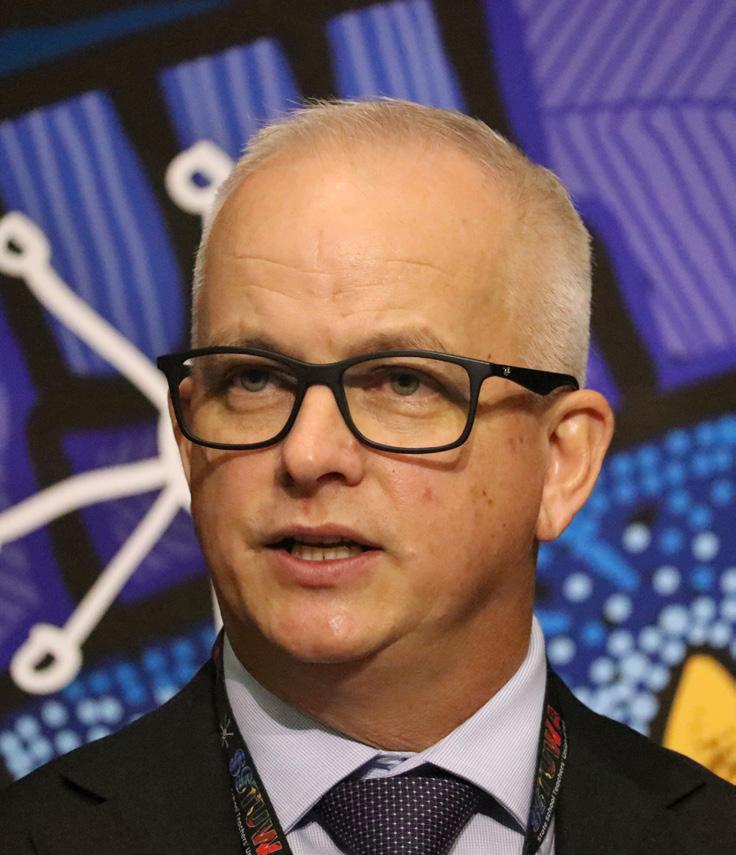
This is a transcript of the speech given by SSTUWA President Matt Jarman to open June State Council Conference 2026. Live remarks may differ slightly to written text.
As I said in my message in the State Council agenda, take some time to look around you.
You will see once more State Council has grown; a healthy reflection of our union.
I also referred in my agenda welcome the recent participation of our SSTUWA contingent in the May Day March through Fremantle provided a time for reflection.
The experience reminded me that being surrounded by an incredibly diverse range of people from such a varied range of jobs and backgrounds was a timely reminder that some values span society.
They are not restricted to builders or seafarers, or firefighters or railway workers. Those values are held dear too by nurses, by public servants, by local government staff, by aged care workers and yes, by teachers, school leaders and school psychologists.
It is not what we do for a wage that binds us, it is what we fundamentally believe in.
Collectivism, cooperation, equality, fairness, solidarity and natural justice. For true unionists these are not words; they are a code by which we operate in our workplaces and in our lives.
That shared set of beliefs is why we join together, why we unite.
It is not about what we can do for ourselves as an individual, it is about what we can achieve for everyone.
Unions face many detractors, but we are built to deal with them. This is because the work we do puts people ahead of profit. It is no surprise that the big mining companies have waged a campaign for decades to try and stop unionism taking hold in the Pilbara, for example.
They know unions will demand better pay, better conditions and safer workplaces.
Knowing that there are many who would capitalise on missteps by unions, we need to ensure we set high standards for our own behaviour.
We must live our values in how we treat others, we must be unwavering in these beliefs and set an example that shows non-unionists that joining is not selfinterest, but a contribution that benefits society as a whole.
We live in times when trust in public institutions has never been lower.
It is crucial then that unions in general retain their social licence.
Social licence, according to the Governance Institute of Australia says this: “In simple terms, the social licence to operate aligns with the notion of social acceptability. Social acceptability refers to a generalised perception of whether the organisation meets the demands and expectations held by local stakeholders and broader society about how the organisation should operate.”
“If the organisation is perceived to meet these demands and expectations, a metaphorical ‘licence to operate’ is said to be granted to the organisation by society in which it functions — hence, ‘social licence to operate’ refers to the ongoing acceptance and approval
(continued on page 12)
(continued from page 11)
of an organisation’s activities by its stakeholders and the general public.
“Unlike legal or regulatory licences, social licence is intangible and must be continually earned through responsible practices and engagement.”
Social licence is especially critical for unions.
A union expects access to a workplace and requests compliance with award and agreement conditions.
A union campaigns against bullying and harassment and cannot turn away when such issues are raised.
A union that stands up for its members by refusing to accept employers turning a blind eye to workplace issues must always open itself to transparency.
In essence a union must set the bar far above the best of workplaces when it comes to upholding its own values and standards.
Without such values and standards any social licence is lost and if that happens it is 19,000 odd members who suffer.
When we have social licence the SSTUWA delivers.
It delivers through evidence-based, fullyresearched lobbying.
It brings together the biggest union rally in decades and includes its regional members at every step.

The SSTUWA established the Lawrence review of public education just over two years ago. I’ve heard some people say they find Facing the Facts a bit boring.
I can only assume those who say that have never been in a classroom. Because not only did that process make our members feel heard and seen, it delivered concrete improvements then and even now continues to do so.
Having Dr. Lawrence and her team lead the inquiry allowed the report to be beyond reproach, and this in itself provided an important lesson.
Every single claim of the 2023 Log for schools has been delivered. The evidence contained within Facing the Facts was crucial in that process.
Subsequently we have seen submissions to the state government result that have

their roots in Facing the Facts secure extra funding for GROH, increased budget allocations for infrastructure and a growing recognition within government of the need to confront behavioural issues in schools.
I would like to return to the issue of a social licence.
The key stakeholders are, of course our organisation, and we meet the demands and expectations held by local stakeholders and broader society about how the organisation should operate, [which] by the way does not extend just to our members here in WA.
As you are aware, the SSTUWA is a branch of the national organisation, the Australian Education Union (AEU).
I am proud to be the current deputy federal president. It was my great honour to be part of the recent AEU delegation that visited WA as part of the national infrastructure inquiry: Schools for Our Future
As Schools for Our Future says, there is no national plan, no dedicated national funding stream, and no coordinated effort to ensure every community has a futureready school.
Fifty per cent of all WA public schools are 50 years or older. We need a longterm, nation-building approach to public school infrastructure – not piecemeal fixes.
The inquiry will examine the current state of public school infrastructure across all states and territories, assess what’s needed for the future, and recommend the policy and funding reforms required to ensure safe, inclusive and future-ready learning environments for every child.
To date WA has only contributed 16 of a national total of 257 submissions.
Inquiry chair Sharan Burrow AC says this: “Every child in Australia deserves to learn in a school that is safe, modern and built for the future. This inquiry will ensure their voices, and the voices of the teachers and support staff who serve them, are heard.”
And of course she is right. Unlike private schools, our public schools have no access to billions of dollars in infrastructure funding from the federal government. That needs to change.
As the SSTUWA did with Facing the Facts, the AEU has recognised that successful lobbying requires deep research and facts-based submissions to sway governments (and especially treasuries!)
As a result, the Schools for Our Future panel is traveling across Australia to see what is needed state by state and region by region.
To date they have visited metropolitan Perth, the Pilbara and the Kimberly and have seen almost 50 schools to date across the country.
The inquiry’s formal Terms of Reference set out its purpose and scope across six key areas:
1. Purpose
To examine the current state of public school infrastructure across all jurisdictions, assess future needs in light of demographic, technological and pedagogical trends.
2. The Importance of infrastructure
The inquiry will consider Australian and international evidence and examine the
impact on principal, teacher and staff effectiveness, motivation, wellbeing, job satisfaction, retention and career intentions.
3. The condition and safety of public school facilities
The inquiry will examine the physical condition and adequacy of classrooms, amenities, facilities and digital infrastructure in public schools. It will assess whether schools meet sustainability, safety, accessibility and compliance standards and are adequately maintained.
4. Future Needs
The inquiry will consider projected enrolment growth, demographic trends, the future infrastructure requirements to meet complex and diverse student needs, the integration of technology into teaching and learning and climate resilience and sustainability requirements.
5. Equity and Inclusion
The inquiry will examine school infrastructure gaps in low-SES, regional, remote, Aboriginal and Torres Strait Islander communities. It will consider capital investments that would help schools improve the education and support of students with additional needs, increase family and community engagement and ensure public schools are inclusive and culturally safe.
6. Funding
The inquiry will examine current and projected capital expenditure by state, territory and Commonwealth governments, the long-term investment strategies required and the educational, economic and social benefits of increased investment in public school infrastructure.
(continued on page 14)
(continued from page 13)
The inquiry will consult with public school principals, teachers, education support staff and families; Commonwealth, state and territory governments and education agencies; principal associations, education stakeholders, unions, community and not-for-profit organisations, researchers, youth and student bodies; and organisations representing Aboriginal people and Torres Strait Islander people, rural and remote Australians, young people experiencing disadvantage, and students with disability.
I have covered the terms of reference because everyone in this room has a role to play – delegate, life member, observers and staff.
The AEU needs submissions from you, from your schools and from your communities. Whether as an individual or with colleagues please make yourself heard. Go to schoolsforourfuture.org. au/make-a-submission and follow the prompts. I cannot emphasise enough how important it is to back this AEU initiative. [Editor’s note: submissions closed 30 June].
More recently we have seen the release of the Class Acts stories from the AEU, this is a wonderful series of stories featuring prominent Australians who are proud of their public education and the teachers that inspired them.
We have shared them through eNews and our social media channels. And the link to them is on your State Council portal on the SSTUWA website.
Whilst on the subject of the national body,
I want to formally acknowledge the bestowal of Life Membership of the AEU on our former general secretary Mary Franklyn.
This was awarded at the February national conference in February. It was a timely and highly deserved recognition of the contribution Mary has made to public education and to unionism and I am sure you will join me in acknowledging her achievements.
system who have been assessed as having a disability yet receive no disability loadings.
In other AEU news the federal budget, perhaps as ever brought mixed news for education.
AEU Federal President Correna Haythorpe said the housing tax measures were an important step towards addressing housing affordability, adding that the AEU have members across Australia who cannot afford to live in the communities they teach in. Many are locked out of house ownership and impacted by rising rents, which impacts on the retention of staff and contributes to workforce shortages. I will have more to say on this pressure when we present the Log of Claims.
Correna said the budget tax measures would help make housing fairer and more affordable for teachers, principals and education support staff who deserve to live in the communities in which they serve.
Correna pointed out there are more than 200,000 students in the public school
At the same time disability funding to private schools has grown by $1.4 billion from 2020 to 2024. The $472 million in savings to disability funding in schools announced in the budget is expected to primarily impact private schools who have been employing staff for several years through changes to compliance checks and procedures.
The intention is to ensure the money goes to those who most needs it and to start dealing with what Dr. Sunil Badami has labelled, the “wealthification” of private schools.
A recent AEU survey of public school principals found they were re-allocating $147,000 per school to support students with disability from other areas of the school budget because of unmet need.
As we know, public schools educate the overwhelming majority of students with disability, yet too many schools are being forced to stretch already limited budgets
to meet growing need.
The recently released strategic plan by the Department of Education is this government’s first effort to deal with the changing complexity in our schools and in our classrooms.
Proposed changes to school development days and the professional learning centre are central to delivering what teachers and schools need.
The upcoming round of negotiations provides a critical opportunity for a wealthy state government to invest in the most valuable asset public education has, its teachers, its psychologists and its leaders.
The WA state budget was a similarly mixed bag. Many of the issues the SSTUWA has raised and lobbied on did receive attention.
Key announcements included:
• $124 million to continue lower-fee and fee-free TAFE in 2027.
• $8.9 billion on education and WA schools in 2026-27.
• $7.7 million in response to high demand for swimming lessons, supporting the supply of swimming teachers, particularly in regional areas.
• $39.9 million from the Public Education Endowment Trust to support education maintenance and minor works projects.
• $15.7 million for a new Disability and Inclusion Professional Learning Hub and $310.1 million in increased support for students with disability.
• $4.6 million extension of WA
• $23.5 million additional investment towards support and wellbeing initiatives for Western Australian students, including students with English as an additional language or dialect, Aboriginal students and specialist schools.
• An additional WA Certificate of Education pathway to be developed for priority students to provide them with greater learning opportunities, with $6.9 million allocated.
• WA public schools selected for the expansion of Complex Behaviour Support Coordinators and Small Group Tuition initiatives.
• Increase to 64 full-time equivalent Complex Behaviour Support Coordinators to provide additional support in 192 schools.
• Small Group Tuition to provide targeted literacy and numeracy support to students in 350 WA public schools.
• The Workload Intensification Taskforce to continue to monitor the rollout and
impact of these new supports for schools.
I recently wrote to the Director General proposing an AI Reference Group be immediately developed earlier this semester as part of a national drive across the AEU.
The AEU has been working for some time to encourage the federal government to be more responsive to the fast-paced changes related to AI, whilst at the same time conducting their own research.
The report compiled by QTU [Queensland Teachers’ Union] President Cresta Richardson and former SSTUWA SVP [Senior Vice President] Natalie Blewitt is an excellent and detailed explanation of a range of concerns that will impact Australian teachers and school systems if we are not prepared, and this report has informed the directions the AEU is taking in 2026.
As recently as the last meeting of Federal Executive, held just a few weeks ago, our Vice President Sharmila Nagar continues our advocacy as a member of the recently formed AEU AI Reference Group reporting to Federal Executive and the national membership.
AEU leadership, through Education International, have been invited to see a suite of trial tools being developed collaboratively with American teacher unions and Microsoft.
I am concerned state and federal governments are knowingly or ignorantly letting our members down, neither is acceptable.
Thank you for your time and commitment in being involved with State Council Conference and I look forward to the many discussions that will be held as we strive to build a public education system that we all deserve.
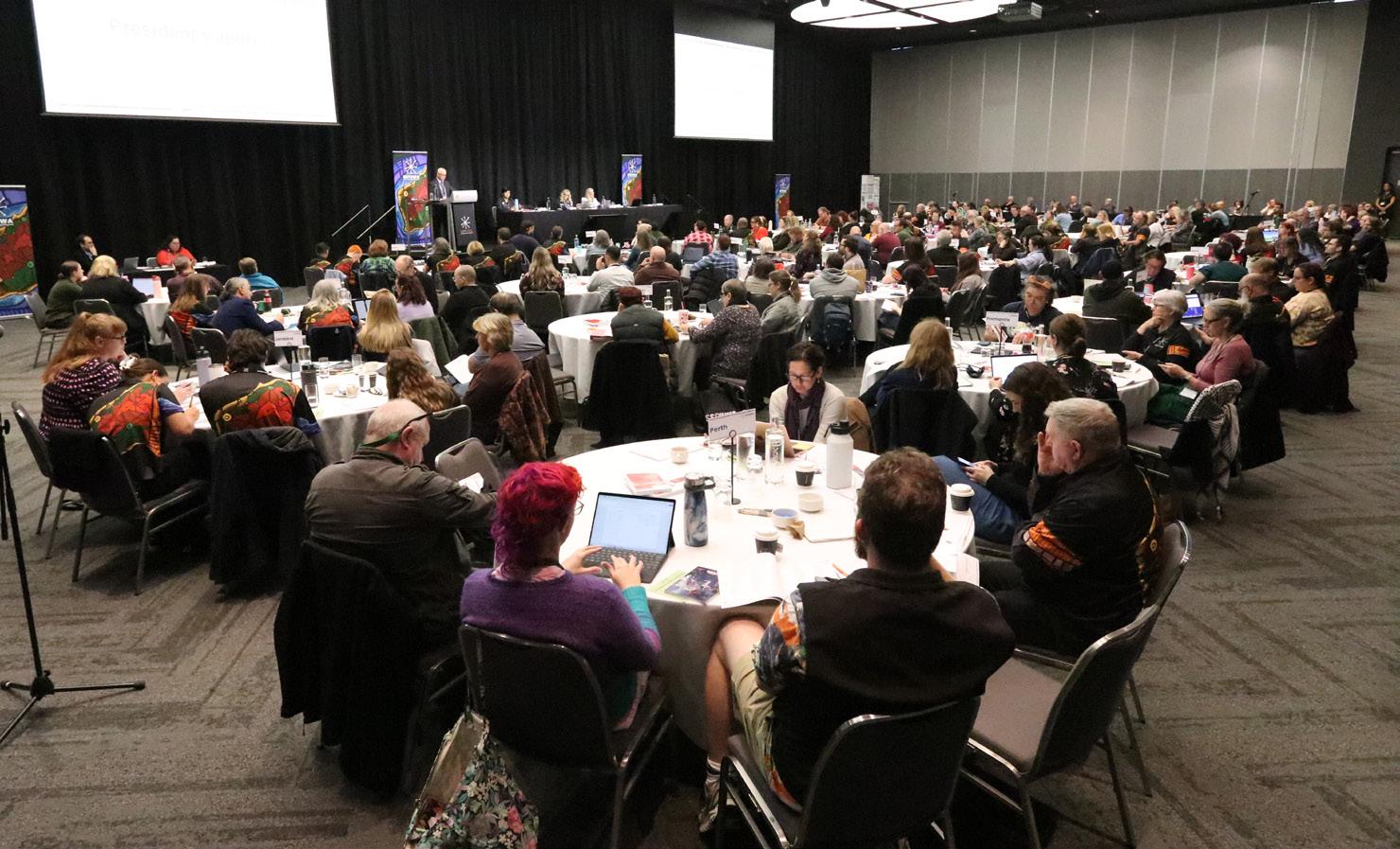
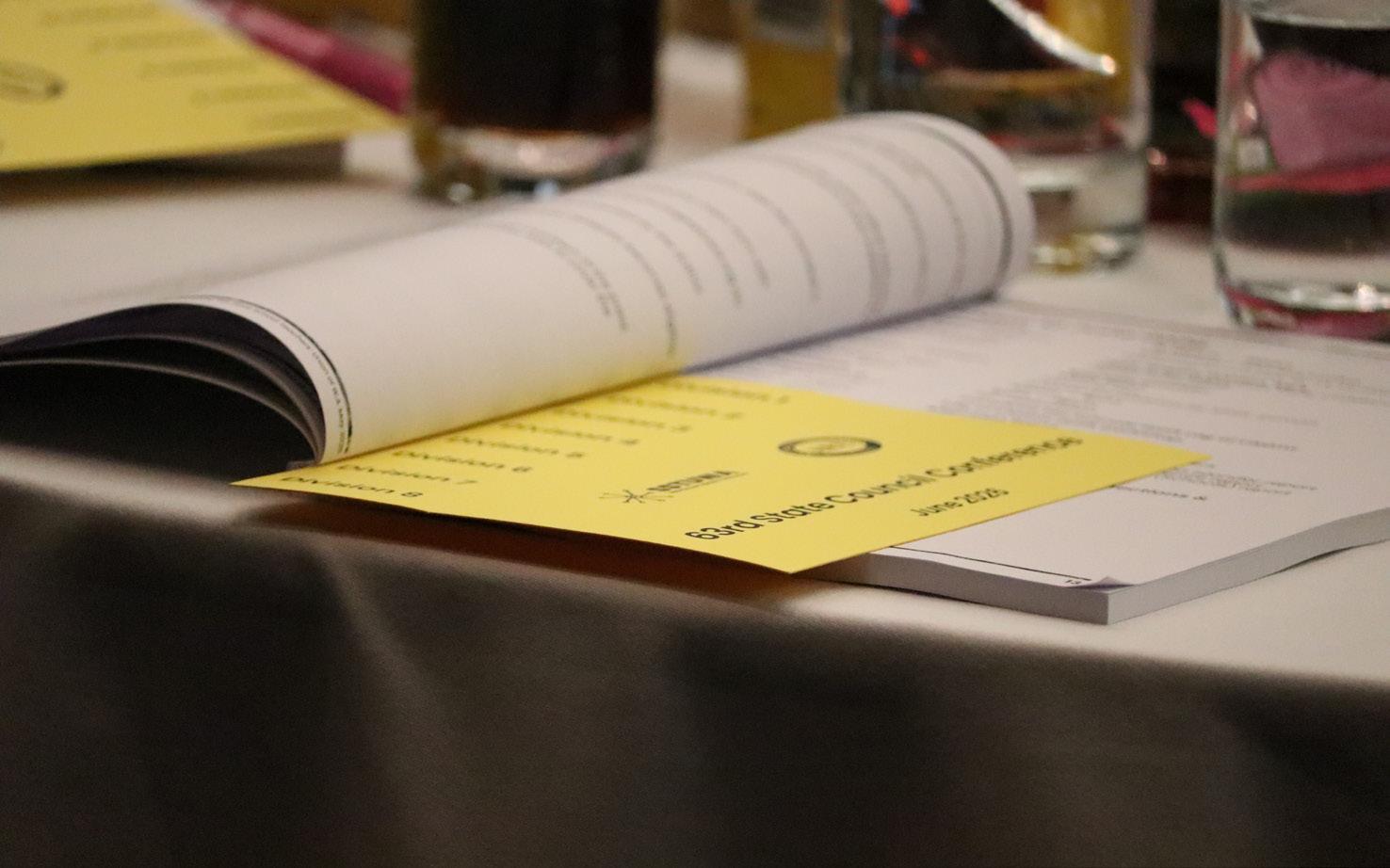
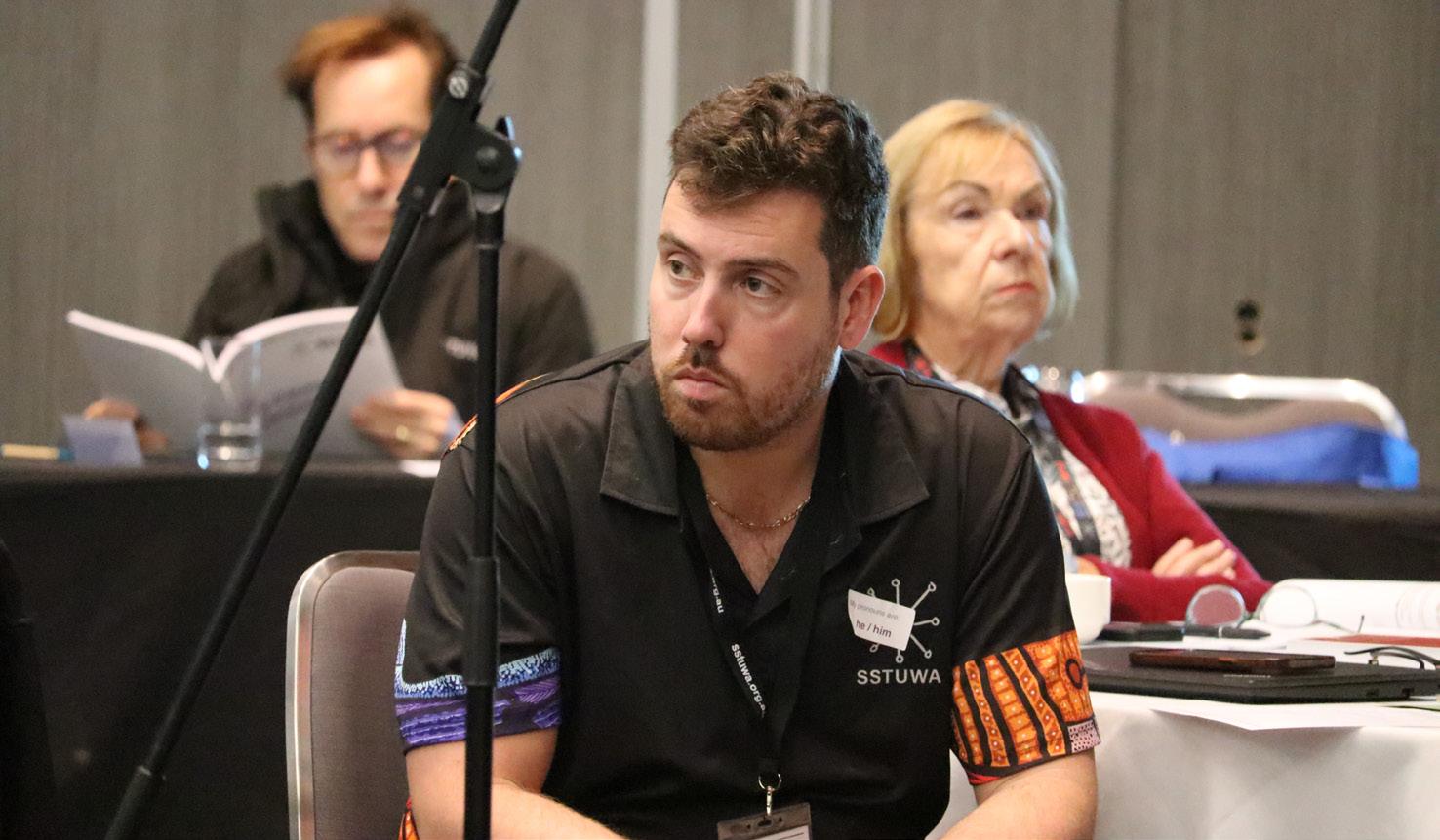
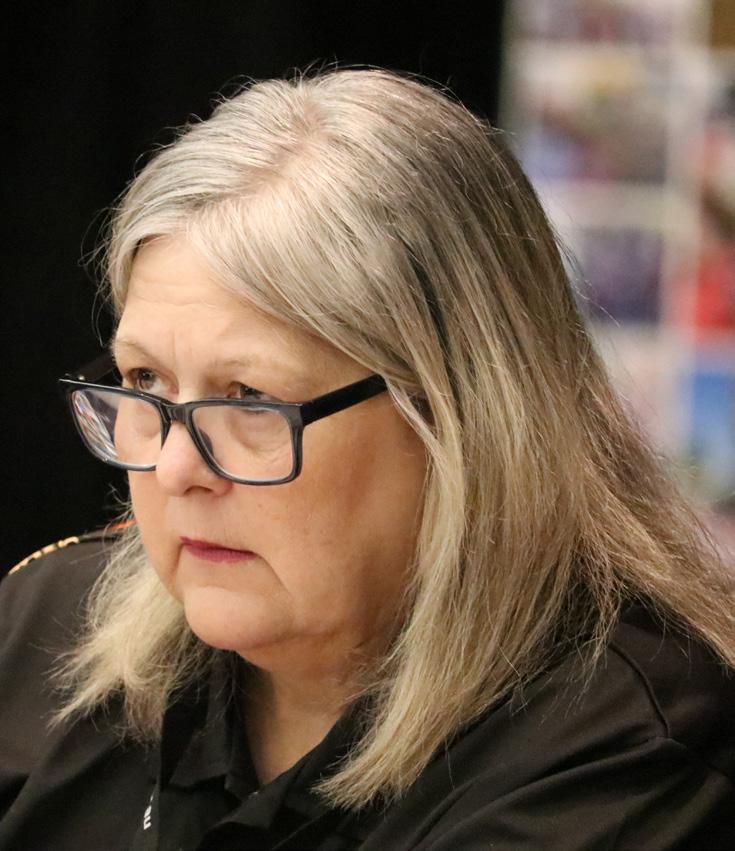
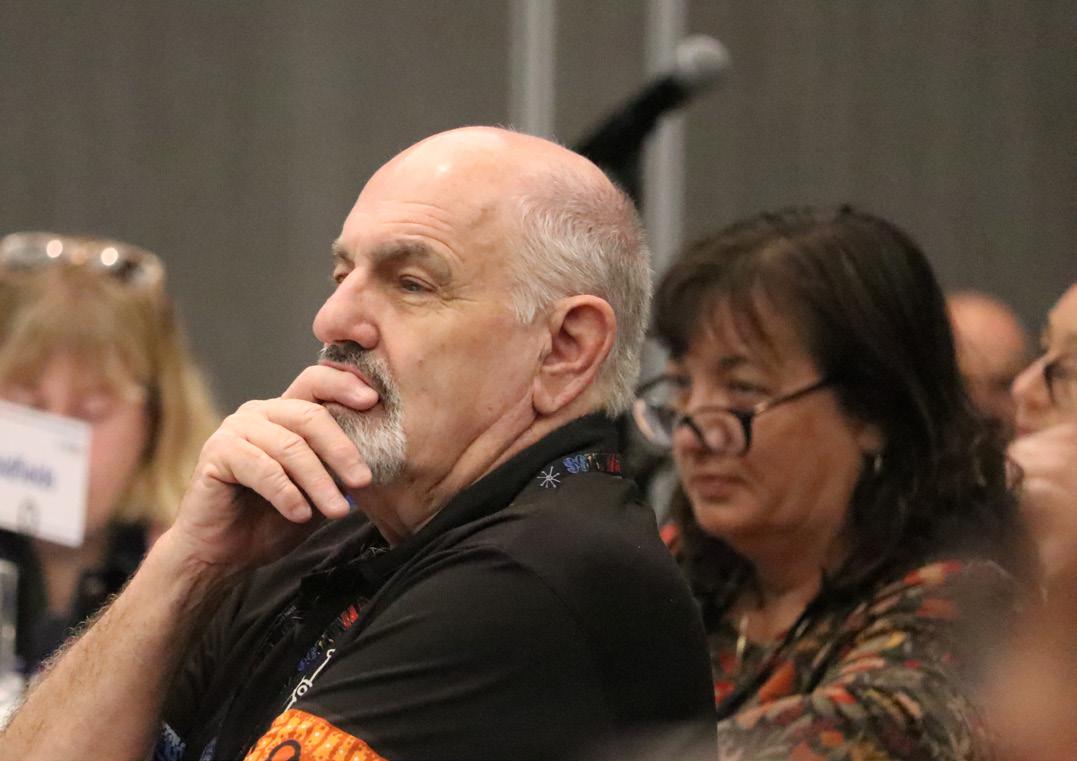
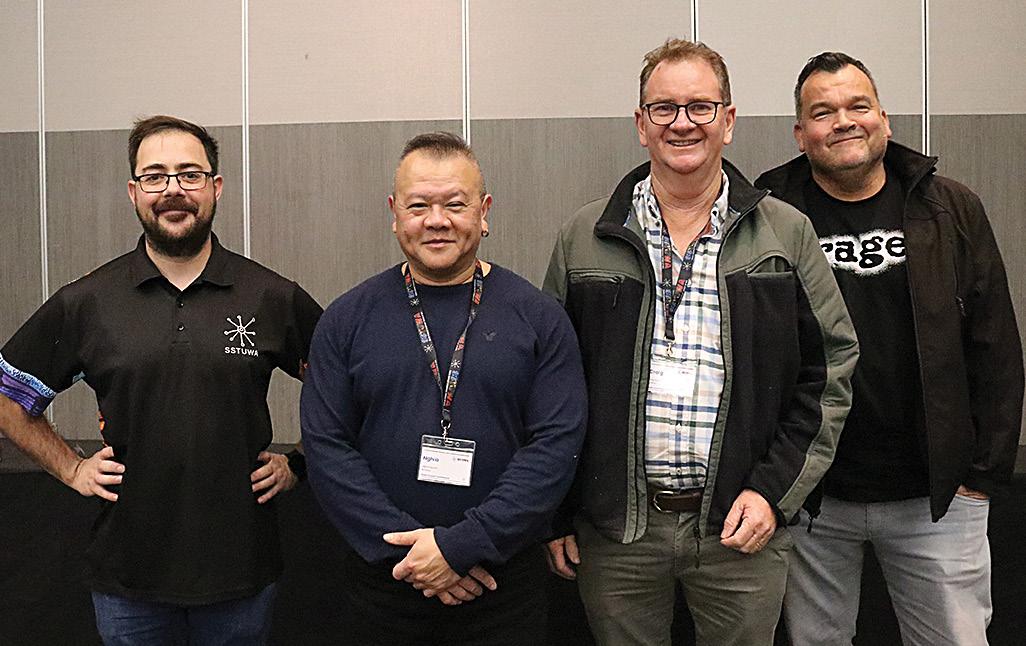
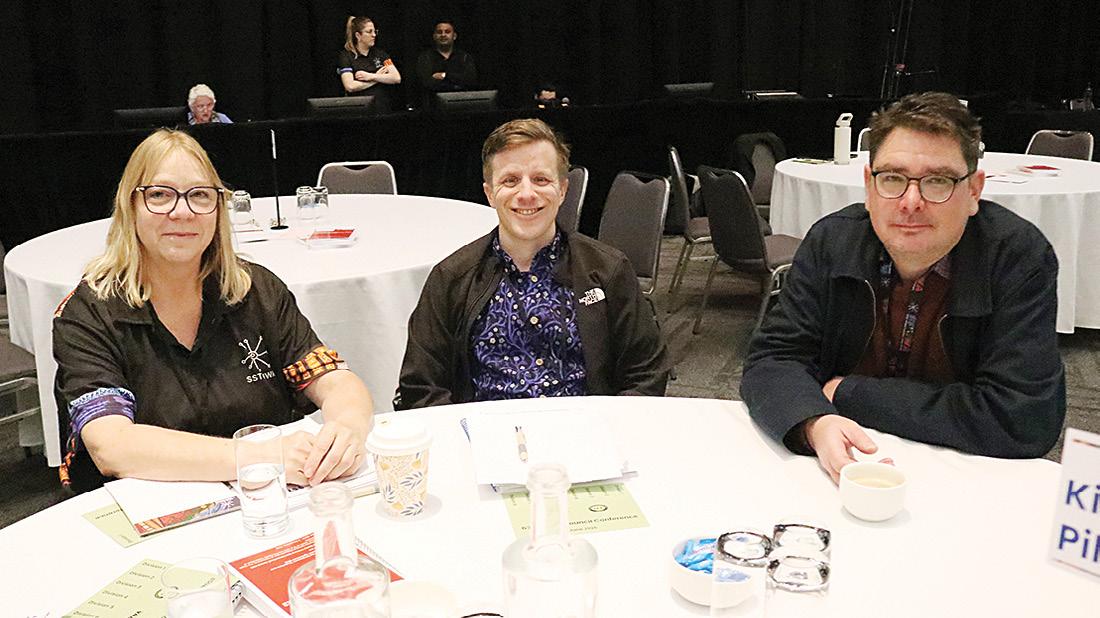
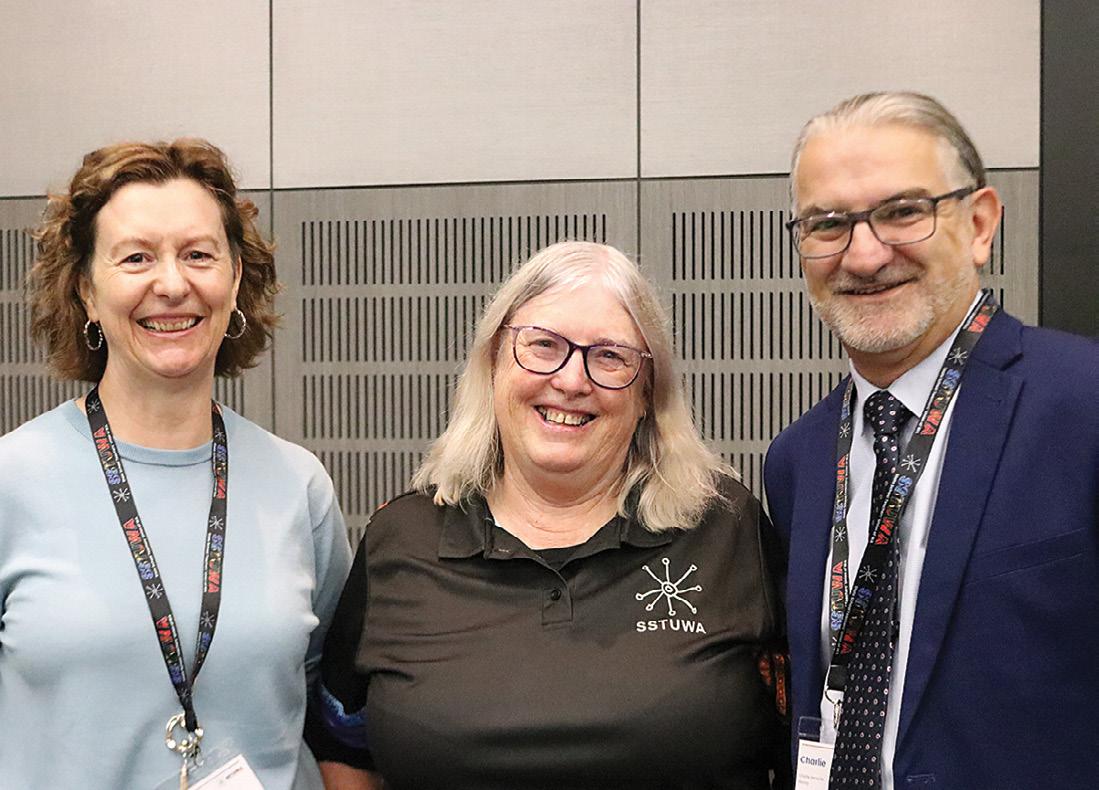
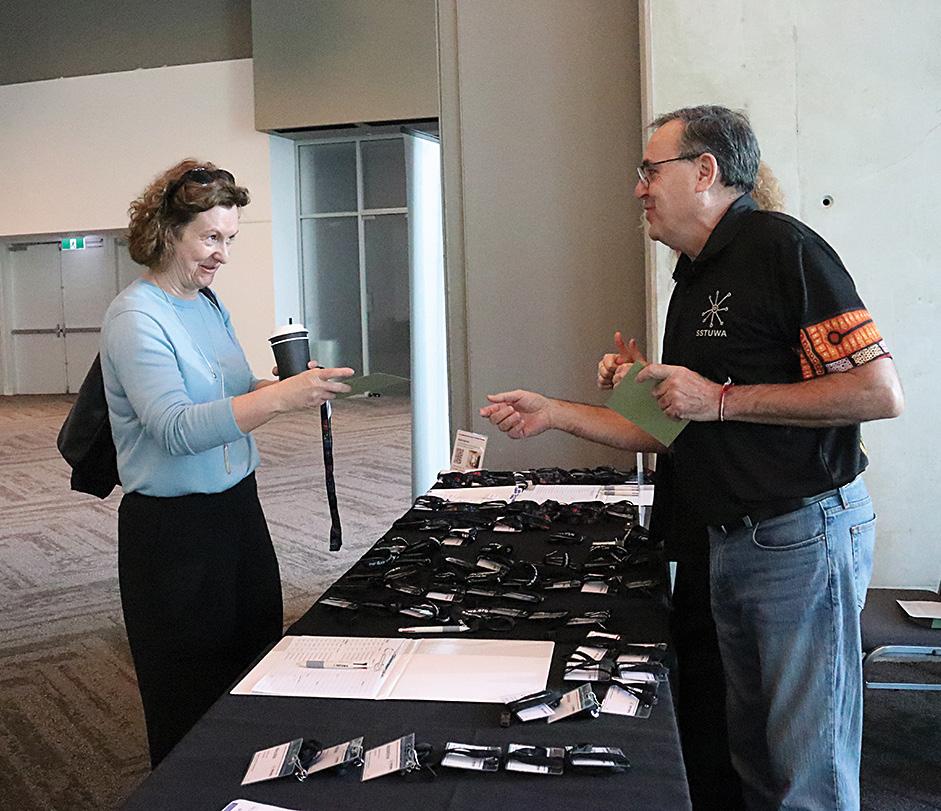
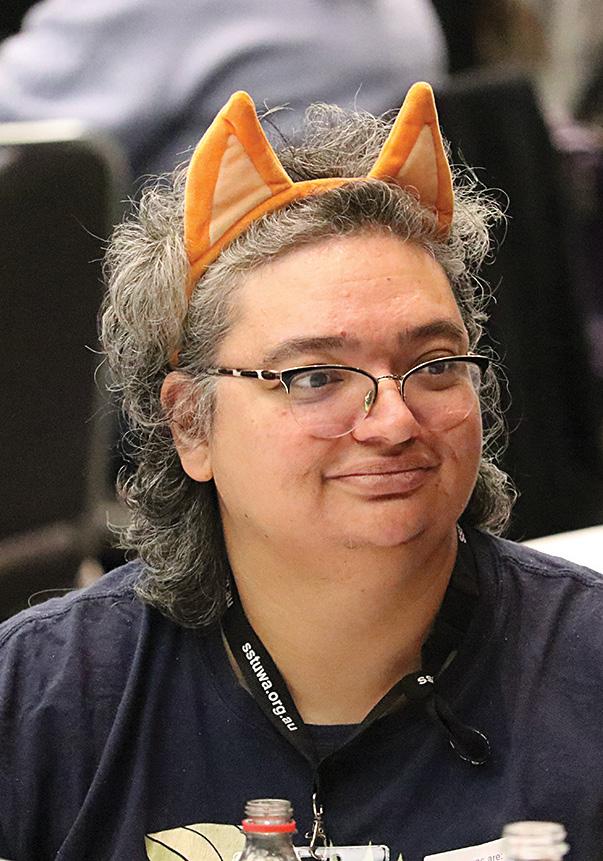
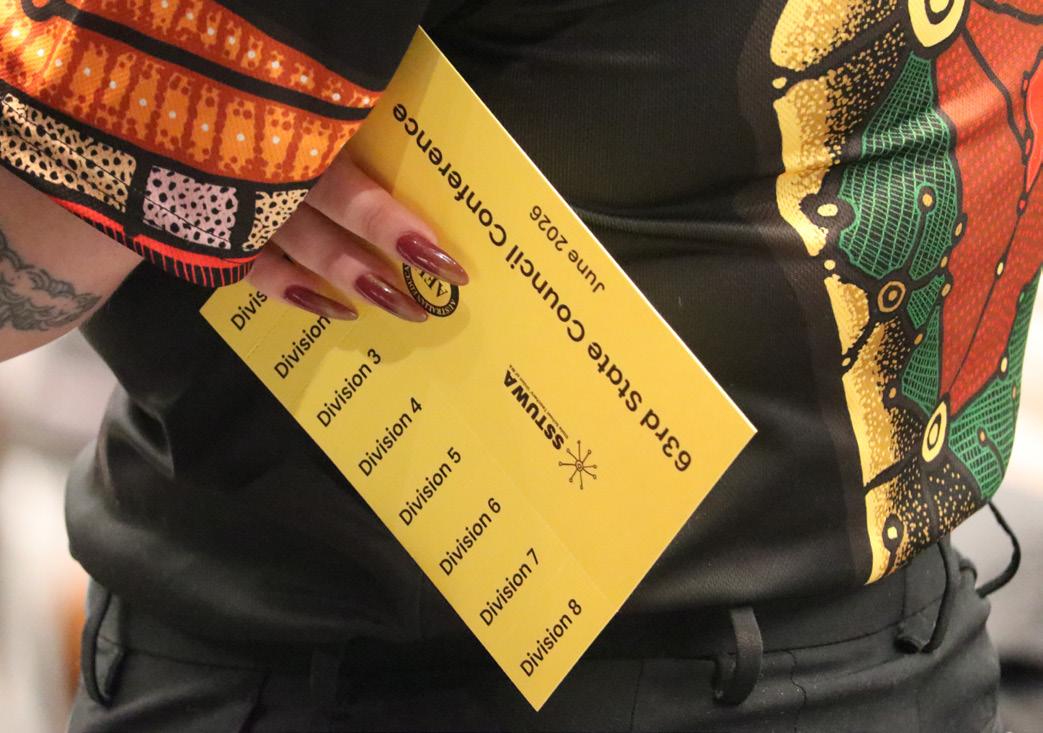
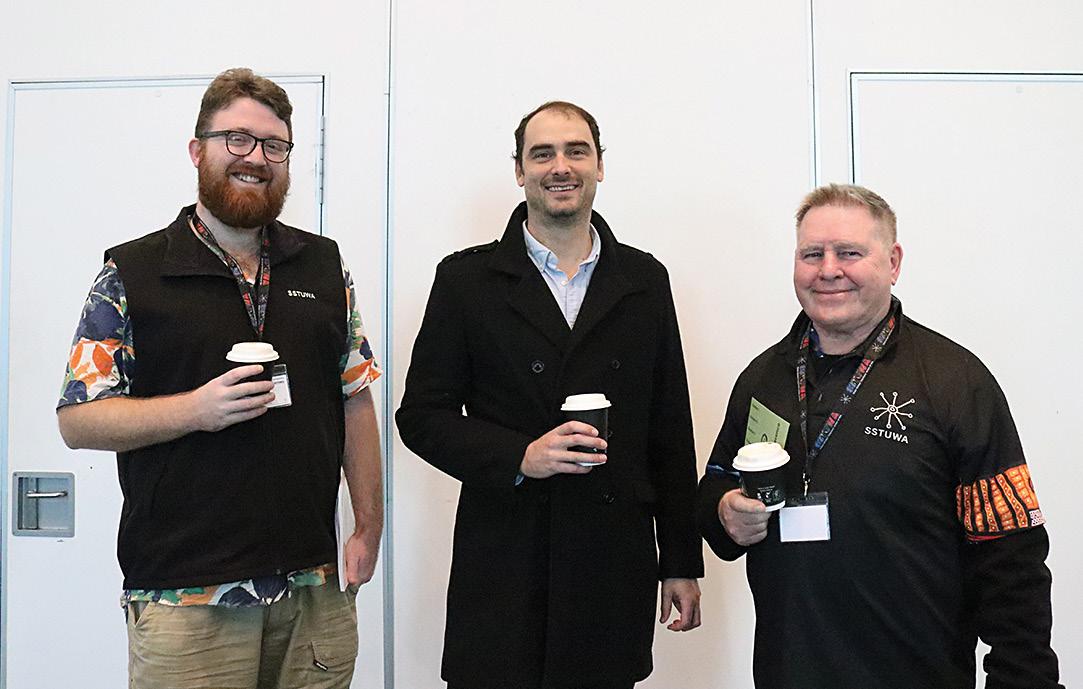
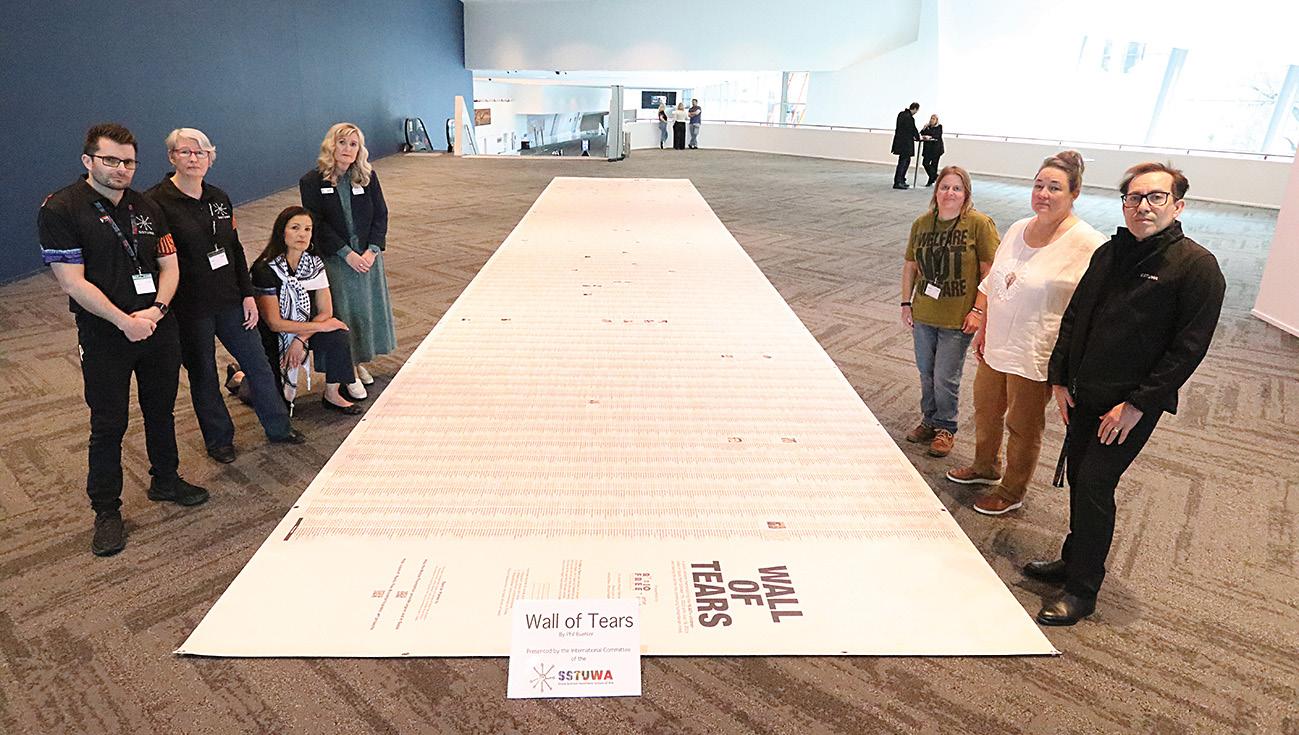
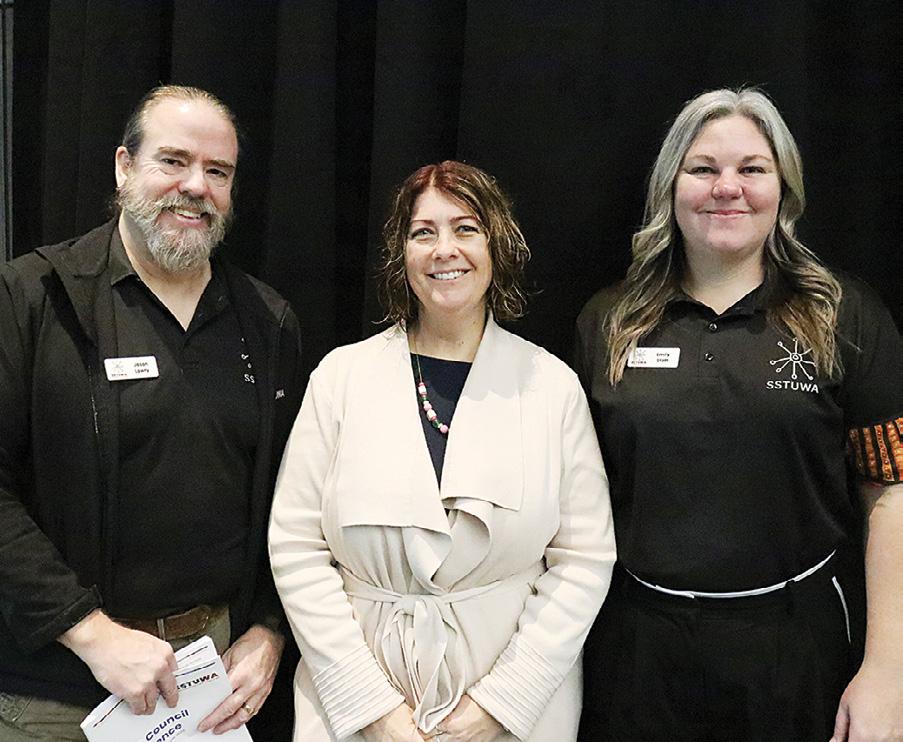
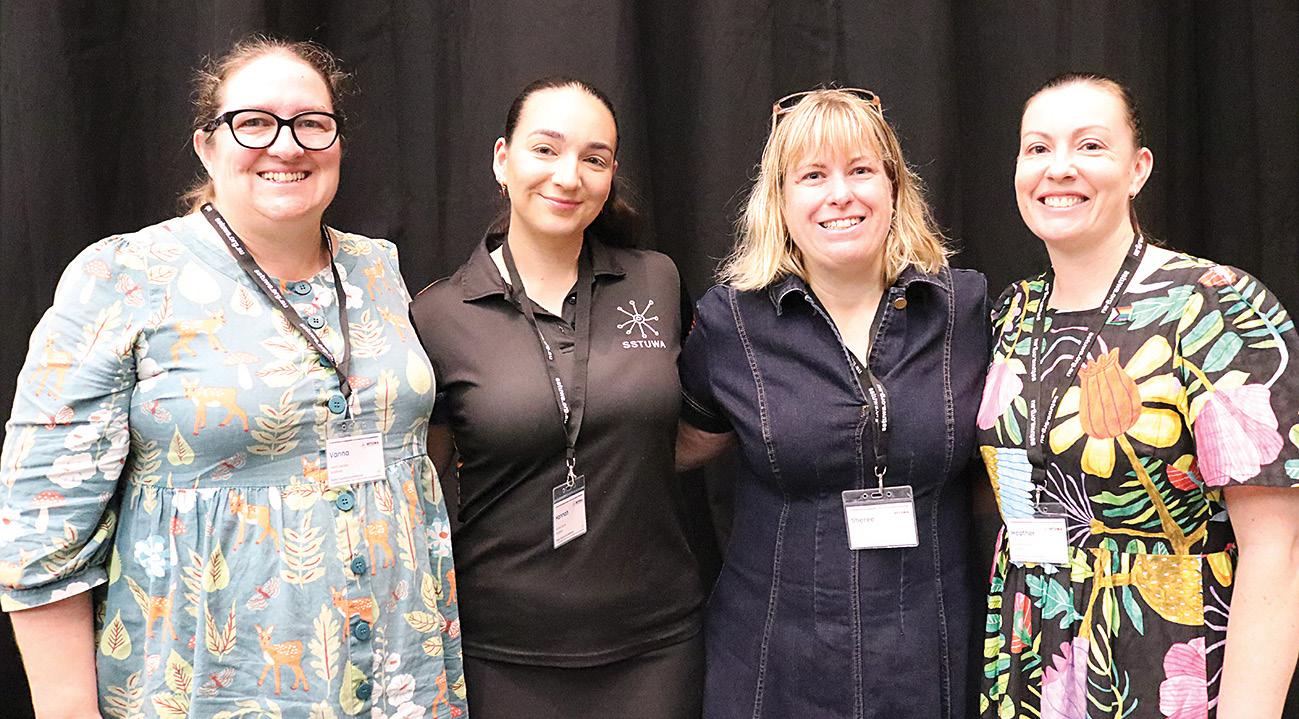
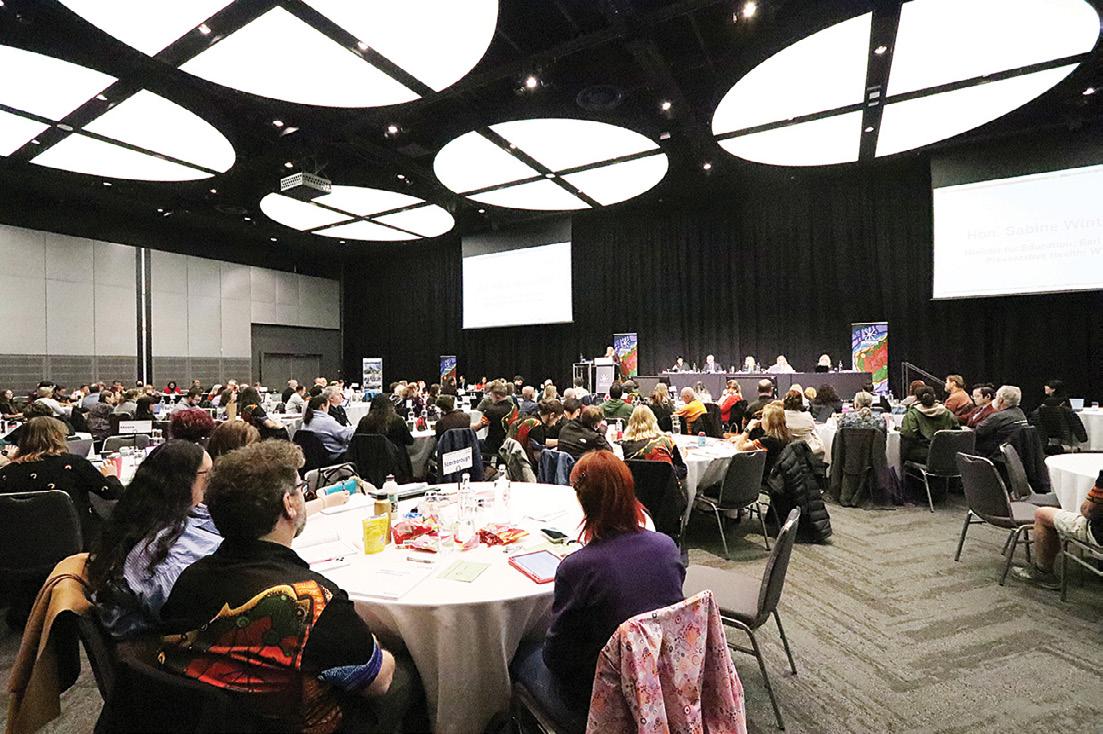
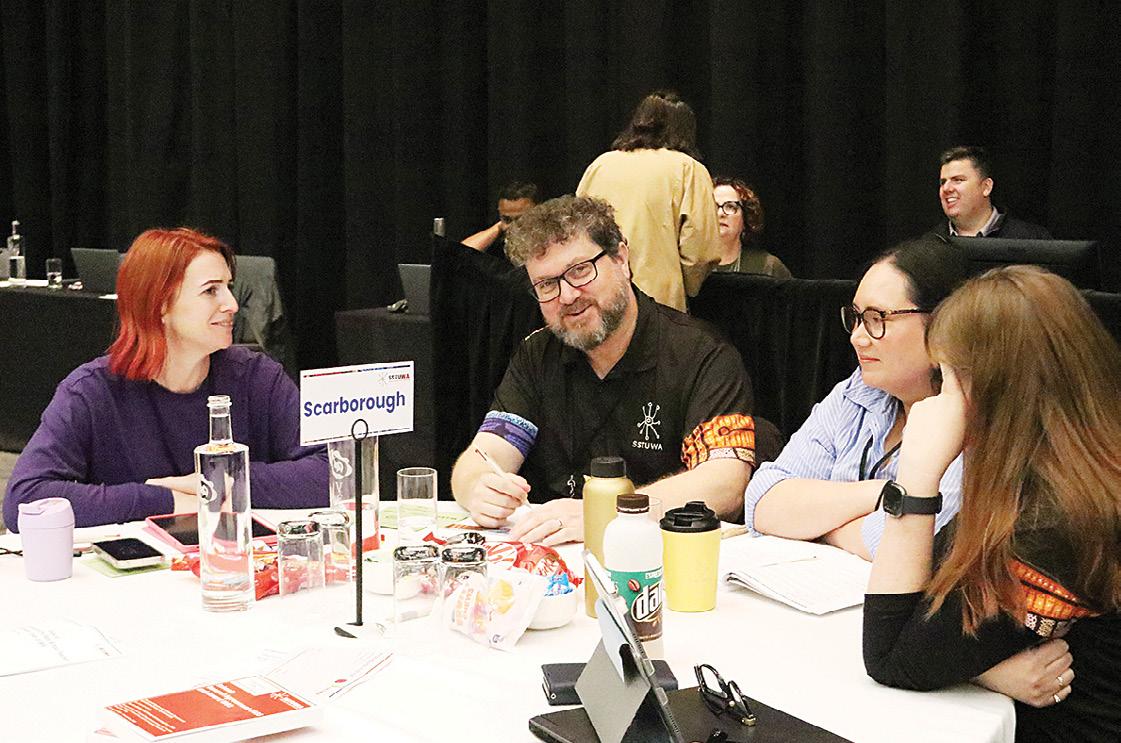
June State Council Conference was once again held at the Perth Convention and Exhibition Centre over two days, with the increased number of delegates meaning the event was moved to a bigger room.
Delegates heard from keynote speakers Education Minister Sabine Winton and wellbeing speaker Mark Bunn, before undertaking debate and discussion about the union’s future actions and upcoming Log of Claims for both schools and TAFE.



By Jonelle Rafols Senior Vice President
One of the greatest strengths of our Union is our commitment to investing in our members.
Every year, the SSTUWA provides scholarships and awards that help members build their professional knowledge, strengthen their leadership, undertake research, improve workplace health and safety and celebrate excellence in our schools and TAFE colleges.
Yet many of these opportunities receive far fewer applications than they deserve. If you’ve ever considered undertaking further study, attending a conference, researching an issue you’re passionate about or simply expanding your skills, I encourage you to explore what’s available. These scholarships are an investment in you; but they also strengthen our profession, our Union and public education.
SSTUWA Scholarship Program
Scholarship pool of $10,000
Have you been thinking about undertaking a course, attending a conference, conducting research or
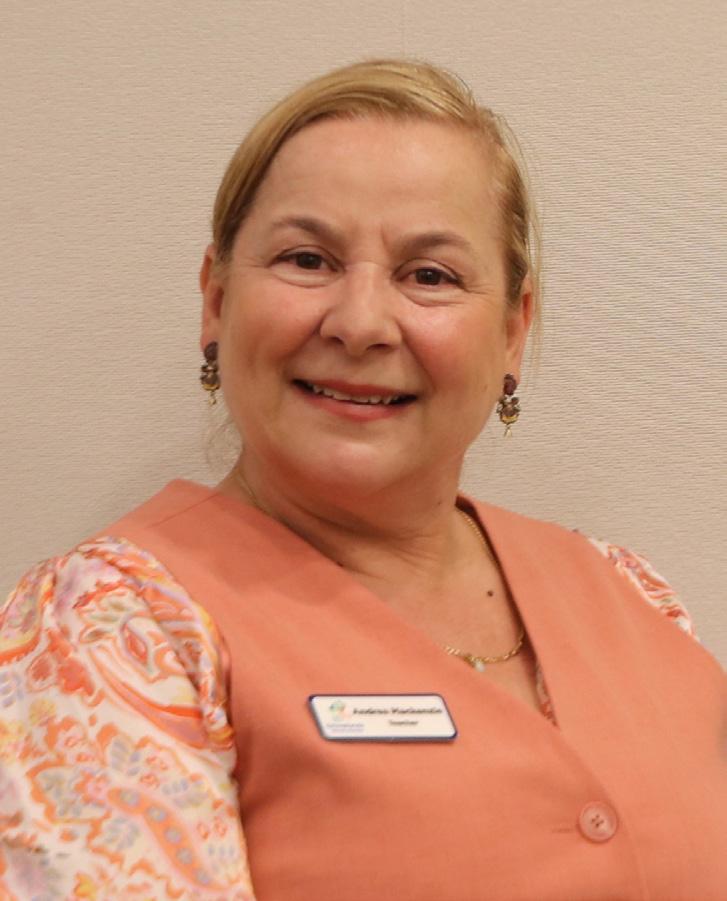
developing a project that will strengthen your professional practice or union leadership? The SSTUWA Scholarship Program is designed to help make those opportunities possible.
Each year, a pool of $10,000 is available to support members undertaking professional learning, research and development that aligns with the Union’s values and strategic priorities. Projects may focus on public education, workplace rights, equity, inclusion, leadership or professional practice.
Recipients are encouraged to share what they learn with fellow members through presentations, articles, professional learning or involvement in union projects, ensuring every scholarship benefits the wider membership.
Applications open 1 July and close 30 September, with recipients announced in early November. Visit sstuwa.org.au/ members-home/scholarships/sstuwascholarship-program
$1,500
The Lynette Virgona Scholarship honours the memory of a passionate educator, union activist and leader whose work continues to influence classrooms across Western Australia.
Lynette played a significant role in the development of the Behaviour Management and Discipline (BMAD) project, which evolved into the highly regarded Classroom Management Strategies (CMS) program. Through collaboration between the Union and the Department of Education, the program has supported teachers with professional learning, classroom resources and practical strategies that continue to benefit schools today.
The annual scholarship provides $1,500 for professional learning in student

behaviour management and instructional strategies, including course fees, travel, accommodation or teacher relief. Recipients are encouraged to share their learning with colleagues and the wider membership.
Nominations are now open and the scholarship will be presented at November State Council. Visit sstuwa. org.au/members-home/scholarships/ lynette-virgona-scholarship for more information.
$2,000
Established by the SSTUWA Goldfields District Council Branch, the Ruth Zahwe Scholarship honours an exceptional educator and unionist who dedicated her career to supporting students, colleagues and public education.
The annual scholarship supports members working in the Goldfields region including Kalgoorlie, Boulder, Kambalda, Norseman and Coolgardie to undertake professional learning and career development.
Funding can be used for course fees
and travel, helping members continue Ruth’s legacy of leadership, service and commitment to quality public education.
Nominations are now open and the scholarship will be presented at the Goldfields District Council. Further information will be soon available on the SSTUWA scholarships website..
Two scholarships of $1,000
Each year, two scholarships are awarded to Aboriginal and Torres Strait Islander SSTUWA members to support professional learning or career development opportunities. These scholarships recognise the invaluable contribution Aboriginal and Torres Strait Islander educators make to public education while supporting their ongoing professional growth.
Visit sstuwa.org.au/members-home/ scholarships/aboriginal-and-torresstrait-islander-education-scholarship for more information.
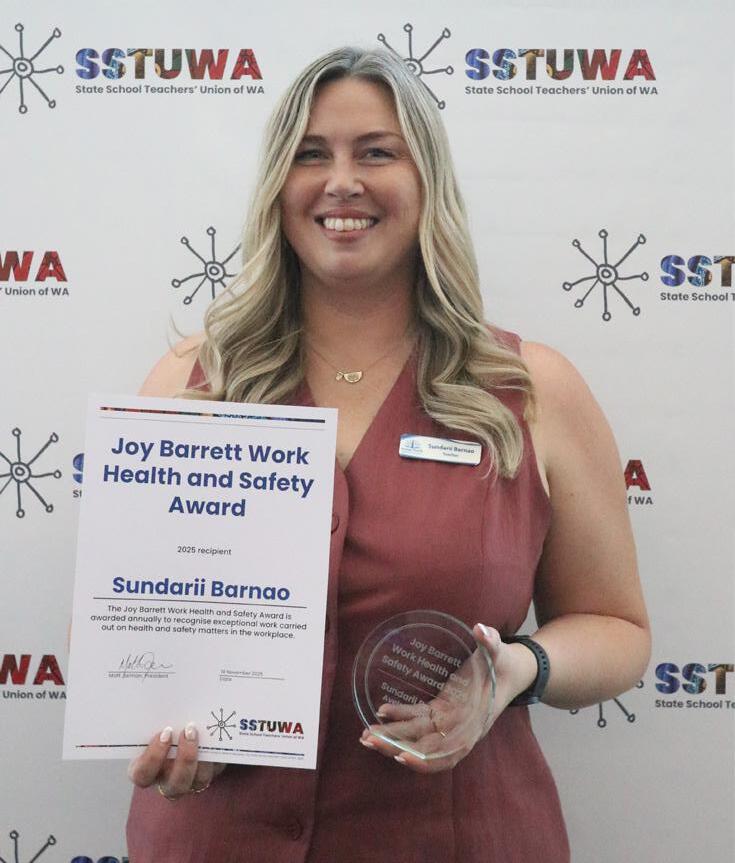
Some of the most important work in our schools happens quietly behind the scenes. The Joy Barrett Work Health and Safety Award recognises members who have demonstrated outstanding commitment to improving health, safety and wellbeing in their workplace.
Joy Barrett served as the Union’s Work Health and Safety Organiser for more
than three decades. Her determination and expertise transformed workplace safety across public education, including her work developing the Keeping Our Workplace Safe guidelines and education-specific WHS training that continues to support health and safety representatives today.
The award recognises members who continue Joy’s legacy by making our workplaces safer for everyone.
Visit sstuwa.org.au/members-home/ scholarships/joy-barrett-work-healthsafety-award for more information.
Up to $150 per student
Every registered SSTUWA school branch can nominate a deserving student for an SSTUWA Student Scholarship. These scholarships recognise Year 6 students transitioning to public secondary school and Year 12 students continuing into university or TAFE education.
Branches can tailor the award to recognise academic achievement, leadership, perseverance, citizenship or encouragement. It is a simple but meaningful way for branches to celebrate student success while promoting the value of public education within their school community.
Applications open 1 July and close 30 October. Visit sstuwa.org.au/membershome/scholarships/sstuwa-studentscholarship for more information.
Reconciliation in Action Award
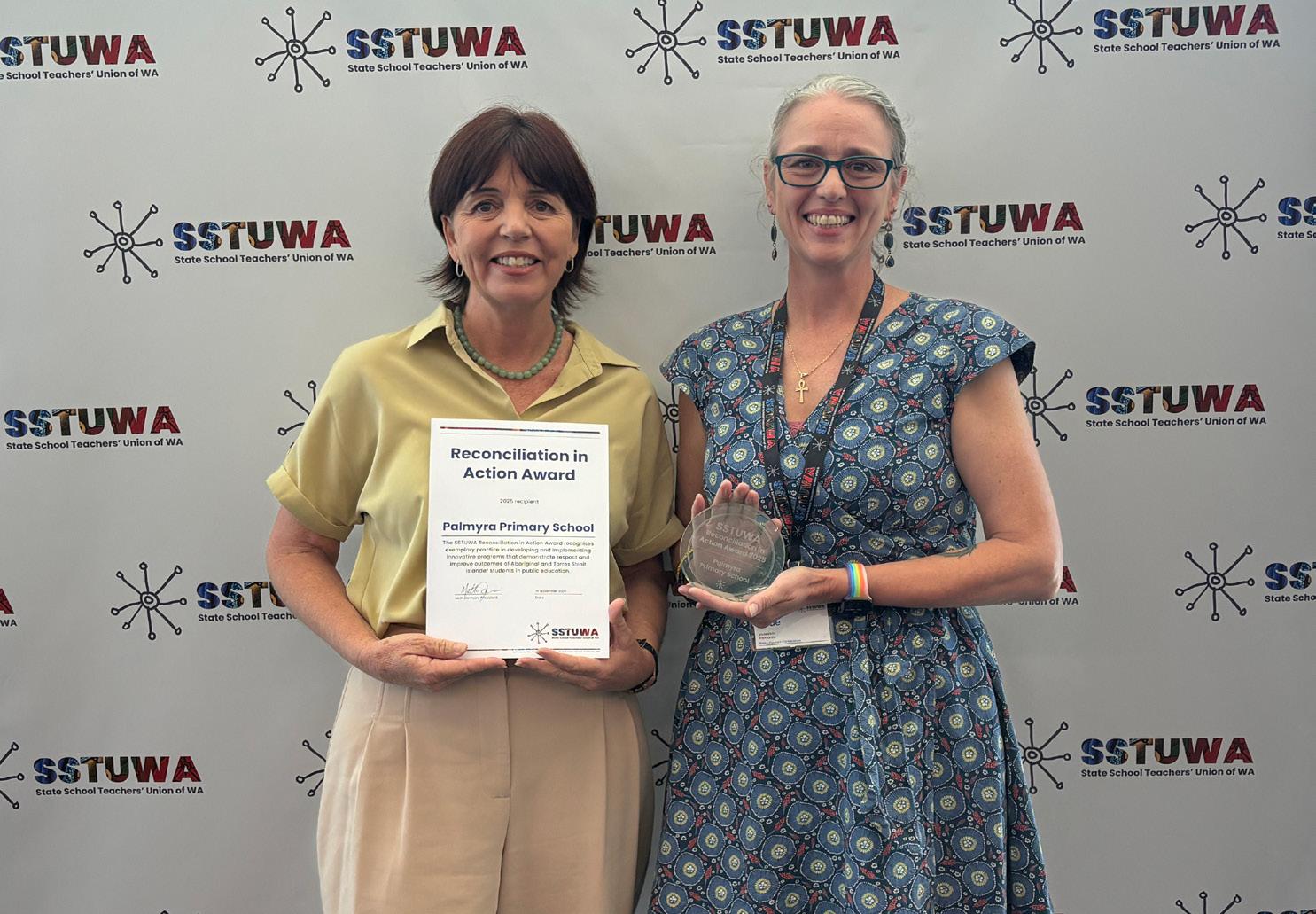
Recognising outstanding work in advancing reconciliation, promoting cultural understanding, improving educational outcomes and creating inclusive learning environments where every student can thrive. The award honours SSTUWA members, teams and schools making a meaningful difference for Aboriginal and Torres Strait Islander students and communities, with the recipient also nominated for the prestigious national AEU Arthur Hamilton Award.
Visit sstuwa.org.au/members-home/ scholarships/reconciliation-actionaward for more information.
Every scholarship and award represents our Union’s belief that investing in members strengthens public education. Too often, members decide not to apply because they think someone else is more deserving or that they don’t have enough experience. Don’t let that hold you back.
Whether you’re looking to build your skills, undertake research, improve workplace health and safety or recognise excellence in your school, there is an opportunity waiting for you. I encourage every member to click on the links in this article or visit sstuwa.org.au/scholarships, explore the scholarships and awards available, and consider applying or nominating a deserving colleague or student. The next opportunity could be the one that helps you grow professionally, develop as a leader and make an even greater contribution to public education.
For all eligibility, application dates and nomination forms, visit: sstuwa.org.au/scholarships

By Chloe Hosking Growth Team coordintor
The importance of a strong, active union cannot be overstated.
The SSTUWA plays a vital role in improving conditions, advocating for public education, and ensuring every teacher and lecturer is supported throughout their career.
But strong unions don’t happen by accident – they grow when members participate, communicate, and connect.
Every member has the power to help drive that growth.
One of the most effective ways to promote union growth is through authentic conversations with colleagues.
Casual chats in the staffroom or simple check-ins can open the door to answering questions about membership, sharing your own positive experiences, and dispelling common myths about the union.
Some new educators are unaware that workplace conditions they see as standard – DOTT, leave entitlements, salary progression, Senior Teacher classification, and many others – exist because of decades of union advocacy.
Visibility is another key driver of union growth.
Schools where union participation is normalised tend to see stronger engagement.
Something as simple as keeping your union noticeboard current, placing updates where colleagues will naturally see them, or occasionally wearing your SSTUWA shirt can signal that union membership is valued and part of the professional culture.

Involvement in union committees and networks also has a strong impact. Groups like the New Educator Network WA on Facebook provide valuable information about industrial conditions, key events, and opportunities tailored specifically to early career teachers.
Joining these spaces helps new educators stay informed, build connections, and deepen their understanding of how the union operates.
Consider sharing this group with pre-service teachers and other new educators by the “invite” function on Facebook.
Ultimately, promoting union growth is all about grass roots connection.
We know potential members are more likely to join when they’ve heard positive stories shared by their colleagues or witnessed an active branch.
Each new member adds to our collective strength to our mission to improve conditions and public education for generations to come.


Sometimes lecturers face increases in class sizes almost always without any consultation or consideration of the impact on the lecturer or students.
Lecturers should discuss their concerns with colleagues and the campus union representative.
It is recognised by Colleges and the union that class sizes, and the amount of training provided to students, have implications on lecturing workloads and must be safe, equitable and educationally sound.
Main clauses and documents
Consultation and workload management are requirements of the Western Australian TAFE Lecturers General Agreement 2023 and in particular clauses:
• Clause 11 – College Consultation.
• Clause 15 – System Consultation and Change Management.
• Clause 16 – Workload Management.
The union has assisted many lecturers dealing with class size increases and resources are available to help guide discussions with managers and have the issues resolved including but not limited to:
• STERC Memorandum of Understanding – Class Sizes Policy. Most of the policy is provided below and a full copy of this policy is available from the SSTUWA via Member Assist.
• Process for determining disputes about class sizes, which was developed and issued by the Western Australian Industrial Relations Commission (WAIRC) as a result of a particular dispute involving lecturers


in the Metal Trades, but which is still useful in terms of providing information to assist resolving class size issues at the College level. The process part of the document is printed below. For a full version please contact the SSTUWA via Member Assist.
In resolving class size issues lecturers should follow the class sizes review process that is part of the STERC Memorandum of Understanding –Class Sizes Policy. The campus union representative, WHS officer and Member Assist can help support members through the process. If unresolved directly with the manager, the SSTUWA TAFE and WHS Organisers can also assist.
This Policy must be read in conjunction with the STERC Timetabling Principles Policy to ensure consideration of class sizes and the amount of training provided to students occurs prior to commencement of the applicable class. Principles
The following are the principles that must be considered when planning class sizes and the amount of training provided to students:
1. The College must ensure that it adheres to the requirements of the Work Health and Safety Act 2020, including safety and workload.
(continued on page 22)
(continued from page 21)
2. The College must consider the teaching or learning environment a class is to be conducted in, including the size, equipment and capacity of the learning environment.
3. The College must not exceed any class size ratio specified in any applicable legislation, industry standard or guideline.
4. The College will take into consideration equity-based principles prescribed by applicable legislation, the Agreement and any relevant College policy.
5. In situations where students may have disabilities or additional needs, including literacy, numeracy or language barriers, the College will consider appropriate support.
6. Colleges must ensure that class sizes and the amount of training provided to students are appropriate to allow the achievement of student vocational education and training outcomes as required under the Standards for Registered Training Organisations 2015 (RTO Standards) and the Australian Qualifications Framework or their replacements.
7. In situations where student behaviour is an identified issue, consideration will be given to mitigation strategies, which may include additional in class support or a reduction in class size.
8. The amount of training provided to students should be consistent with the relevant amount of training clause in the RTO Standards and applicable documentation and will take into consideration the impact on the individual lecturer’s workload.
• The parties agree that in the event a concern is raised, regarding class sizes or the amount of training provided to students, the lecturer will refer their concern to the relevant portfolio manager for discussion and resolution at the local level.
• If a resolution cannot be reached the lecturer may refer the matter to the General Manager Training Services or their delegate for resolution, via the dedicated email address for the individual colleges.
• The General Manager Training Services or their delegate will take

into consideration the principles outlined in this Policy in determining the appropriate outcome for resolving the matter.
• The issue must be assessed and resolved within five (5) working days of the issue being raised.
• Where the matter is unable to be resolved the matter is to be dealt with in accordance Clause 12 – Dispute and Grievance Resolution Procedure of the Agreement.
Each college will provide a report each semester to STERC, detailing the number of matters raised under this Policy and supplementary information, which may include details such as:
• Location, study area, qualification and class size,
• whether the matter was resolved, and
• the timeframe within which an outcome was reached.
In developing the process, the Commission took a range of issues into account including the following:
• That the appropriate size of each class will depend on a range of issue which will be peculiar to each class including the physical layout and resourcing of workshops, the nature of the work being undertaken by the
students and the nature of the student cohort.
• That the resolution of appropriate class sizes should be, whenever possible, resolved by the Lecturers concerned and their respective managers.
Process for determining disputes about apprenticeship/traineeship class sizes taught by trades lecturers when undertaking employment-based training within the Western Australian TAFE system.
1. The Program area liaises with relevant Lecturers about appropriate class numbers before scheduling classes and call-ups for apprentices/ trainees.
2. The Portfolio Manager approves the class sizes, timetable and class callups taking into consideration: -
a. Class Sustainability for College.
b. Occupational Safety and Health Principles.
c. Equity Principles.
d. Educational Principles.
e. Modes of Delivery Principles.
3. Lecturers are then notified of timetables, class sizes and call-up numbers.
4. Process for dealing with a dispute about student numbers in a class due to occupational health and safety concerns:
a. If a Lecturer has occupational health and safety concerns due to excessive student numbers in his or her class and if attempts between the Lecturer and his or her line manager to resolve the issue are unsuccessful then the Lecturer should notify the dispute to a safety and health representative (S&H Rep).
b. The S&H Rep must investigate the dispute within three (3) days of this notification and endeavour to assist the Lecturer and line manager to arrive at a mutually agreed resolution.
c. If the matter remains unresolved the dispute is to be referred to the appropriate safety and health (S&H) committee for consideration and possible resolution within seven (7) days of being notified of the dispute.
d. After being considered by the S&H committee if the dispute remains unresolved, the Chairperson of the S&H committee or a delegated S&H Rep shall notify the Department of Consumer and Employment Protection – WorkSafe WA for assistance in order to resolve the dispute.
e. If the dispute remains unresolved after being referred to WorkSafe WA, the dispute is to be notified to the Western Australian Industrial Relations Commission for determination.
f. If the Lecturer believes that there is the possibility of imminent or serious injury occurring to anyone in the workshop or if the workshop is unsafe due to excessive student numbers whilst steps (a) to (d) above are being undertaken then students in excess of the number of students deemed appropriate by the Lecturer shall be removed from the class pending the resolution of the dispute. In the alternative an additional Lecturer may be rostered to assist the Lecturer with this class.
g. The above periods for resolving a dispute may be extended by agreement between the parties.
5. Process for dealing with all other concerns arising out of the number of students in a class:

a. If a Lecturer has concerns about the number of students in a class which is not based on occupational health and safety considerations, the Lecturer is to detail concerns about this class in writing to the Portfolio Manager, specifying the nature of the concerns and the remedy being sought within five (5) working days of being notified about his or her class.
b. Within five (5) working days of being notified of the Lecturer’s concerns and after considering the Lecturer’s concerns and taking into account the considerations specified in point 2 above, the Portfolio Manager is to notify the Lecturer of his or her decision in writing about this class specifying the basis on which the decision has been made.
c. If the Lecturer is aggrieved by the Portfolio Manager’s decision, then the dispute may be referred in writing by the Lecturer or Union representative to the Managing Director or his/her nominee and to the President of the Union and his/her nominee.
d. If the dispute is not resolved within ten (10) working days of being referred to the Managing Director or his/her nominee and to the President of the Union and his/her nominee, the dispute may be referred to the Western Australian Industrial Relations Commission or an agreed independent person for determination.
e. At all stages of this procedure the Lecturer may be accompanied by a Union representative.
f. The above periods for resolving a dispute may be extended by agreement between the parties.
g. Whilst the dispute remains unresolved the Lecturer will continue to undertake his or her duties as normal teaching the class numbers as timetabled.
The Australian Education Union (AEU) has paid tribute to Australian Council of Trade Unions (ACTU) greats Sally McManus and Michele O’Neil after their announcement they will be stepping down from their roles in coming months.
We recognise their extraordinary leadership, both together and individually, and the pivotal role they have played improving lives for workers across the country.
Over the course of their time as Secretary and President of ACTU they have led our movement with courage and conviction despite challenges such as Covid-19.
They have presided over some remarkable achievements, including in education, and worked to build a strong and effective union movement.
Their support, leadership and commitment to public education has been exemplary, with the last few years seeing significant wins in the sector including securing Free TAFE, pay rises for early childhood education and care workers, and commitments by the Albanese Government to fund schools as set out by Gonski.
Their focus on women’s issues in the workplace and progress towards genuine gender pay equity under their leadership has been a particularly important accomplishment for the AEU as a feminised union.
With significant wins for workers in terms of wages and workplace law reform, recent increases in union membership, and the raised profile of unions, Sally McManus and Michele O’Neil have provided consistent and stable leadership with a united purpose.
They always have the needs of workers at the forefront of union organising and campaigning.
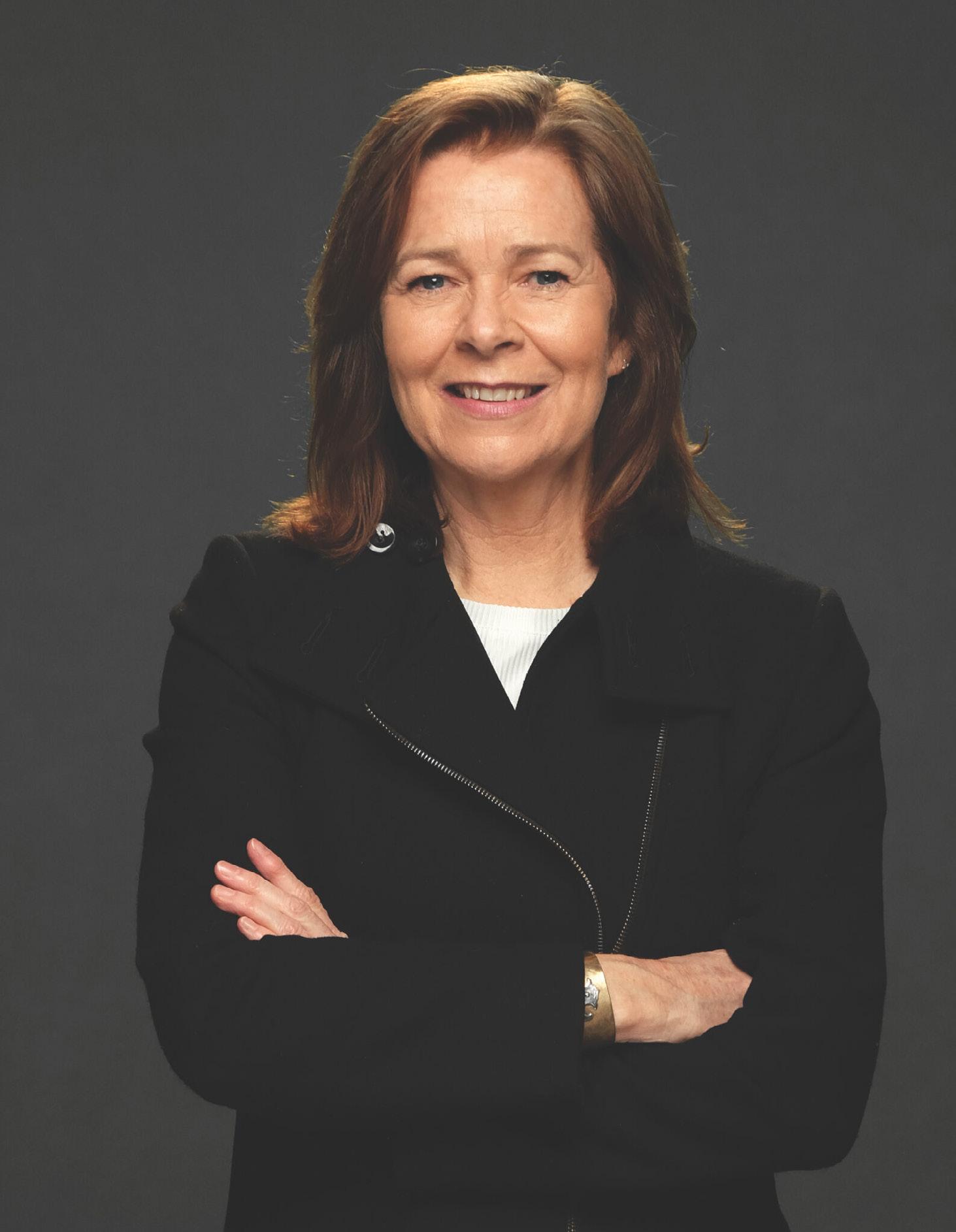
There is no doubt that the Australian union movement is stronger for their leadership.
The AEU thanks Sally and Michele for their tireless courage, guidance and leadership and we wish them well for the future.
The ACTU, the peak body for Australian
Unions, has announced it will transition to a new leadership team.
ACTU Secretary, Sally McManus and President, Michele O’Neil have announced they will make way for a new generation of union leaders to bring renewal to the peak union body.
With extensive new rights won and the
Australian union movement growing, Sally McManus and Michele O’Neil determined it is the right time for a new leadership team at the ACTU.
Sally and Michele were elected to the ACTU leadership in 2017 and 2018 respectively and are the longest serving ACTU leadership team since 1969.
Under their leadership, all attempts to reduce workers’ rights from the previous Coalition Government were defeated and 47 new rights for working Australians have become law under the Albanese Government.
These improvements have increased wages, reduced the gender pay gap, revived collective bargaining, increased secure jobs and increased workers’ share of the nation’s wealth.
Union membership has also grown for the first time in decades.
They are proud of the movement’s work during the pandemic, including securing JobKeeper payments so that financial support reached Australian households and small businesses.
They will stagger their departure from the ACTU with Sally stepping down as ACTU Secretary at the end of August, while Michele will stay on as ACTU President until later this year, to assist with the leadership transition.
The ACTU’s union affiliates will decide on the next leadership team, initially with the ACTU Executive filling the casual vacancies and then through an election at next year’s Congress, which will coincide with the ACTU’s 100th Anniversary.
ACTU Secretary Sally McManus said: “I am proud of our movement’s achievements, and it has been an honour to serve the union movement and working people as the Secretary of the ACTU for nearly a decade.”
“This is the right time to make way for new leadership to take our movement forward and to face new challenges,” she continued.
“When I took on this role, workers’ rights were under attack and workplace laws desperately needed fixing.
“I wanted to be part of turning that around. Unions are now growing and workers have extensive new rights that they can use to begin winning the pay rises and fairness at work they deserve.

“It is an absolute privilege representing working people and I’ve given it my all. Now I look forward to supporting new leaders stepping up.
“One of my favourite things has been meeting workplace union delegates in cities and towns across the country.
“They are the best people. Always looking out for others and bravely stand up for what’s right.
“They live our values of solidarity and fairness for all.”
ACTU President, Michele O’Neil said: “As the ACTU President, I’ve been proud to be part of a team leading a movement determined to win new rights for working people that make a real difference in the lives of workers and their families.”
“Every win we have achieved together has not been because of individuals but come as a result of workers standing together,” she continued.
“When I was elected President, the
challenge was clear, workers’ rights were under attack, jobs and industries were being lost, insecure work was on the rise.
“Having the opportunity with our movement to campaign for and win change has been the honour of my life.
“Workers today are safer, have better rights, and more secure jobs. Unions are growing.
“I want to thank union members from all over our country for what you have taught me and your support, solidarity and courage.
“Sally and I have decided to announce our decision together and to stagger our leaving times, I will stay for a period between now and the end of the year to support the transition to the new leadership team.
“We are lucky, our movement is full of passionate, skilled, committed people and now is the right time for renewal and for the movement to choose their next Secretary and President.”

The Australian Education Union (AEU) has marked National Public Education Day this year with the launch of Class Acts, a documentary series about the power of public education.
This heart-warming series features the personal stories of high-profile Australians, and how public education has shaped their lives.
AEU Federal President Correna Haythorpe said the documentary revealed the less well-known life story of the teacher that made a difference to their lives and culminated in a reunion of the interviewee and the teacher.
Public Education Day was celebrated on 28 May and is an occasion to recognise the central role that public schools, preschools and TAFE institutes play in strengthening the social, economic and cultural fabric of our society.
“It is a day to recommit to properly valuing and supporting public education in every community across Australia,” Ms Haythorpe said.
“The documentary series Class Acts provides an opportunity to showcase the positive impact of Australia’s public

education system and publicly reinforce Australia’s world-class public education system.”
The documentary profiles the following Australians: Larissa Behrendt AO, Craig Challen, Dr Tim Soutphommasane, Sean Christie David, Holly Rankin (aka Jack River), Jennifer Robinson, Gina Chick,
Professor Yalmay Yunupinu.
For more information about Class Acts visit: classacts.tv
Episodes can also be viewed at youtube/com/@ClassActsTeachers
Australian Unions have welcomed the Fair Work Commission’s decision to award a wage rise of 4.75 per cent for Australian workers who rely on minimum and award wages.
With headline inflation currently at 4.2 per cent, June’s Annual Wage Review decision broadly keeps up with the cost-of-living and will provide some financial relief for three million working Australians.
The uplift in pay for minimum wage and award-reliant workers will help working Australians deal with the very worst of the inflation effects caused by what the Fair Work Commission termed the “wild card of the Middle East conflict”.
Unions also welcome the Fair Work Commission’s decision to increase the wages of around 100,000 of the workers on the lowest modern award rates by six
per cent – matching the ACTU’s claim. This lifts the lowest rate of pay for ongoing work from $24.95 per hour to $26.44, or a $56 a week increase for a full-time worker to $1,004 annually as of 1 July.
A retail worker paid at level two of the retail award will receive a weekly wage increase of $49.78 or an annual pay boost of $2,588.70 if working on a full-time basis.
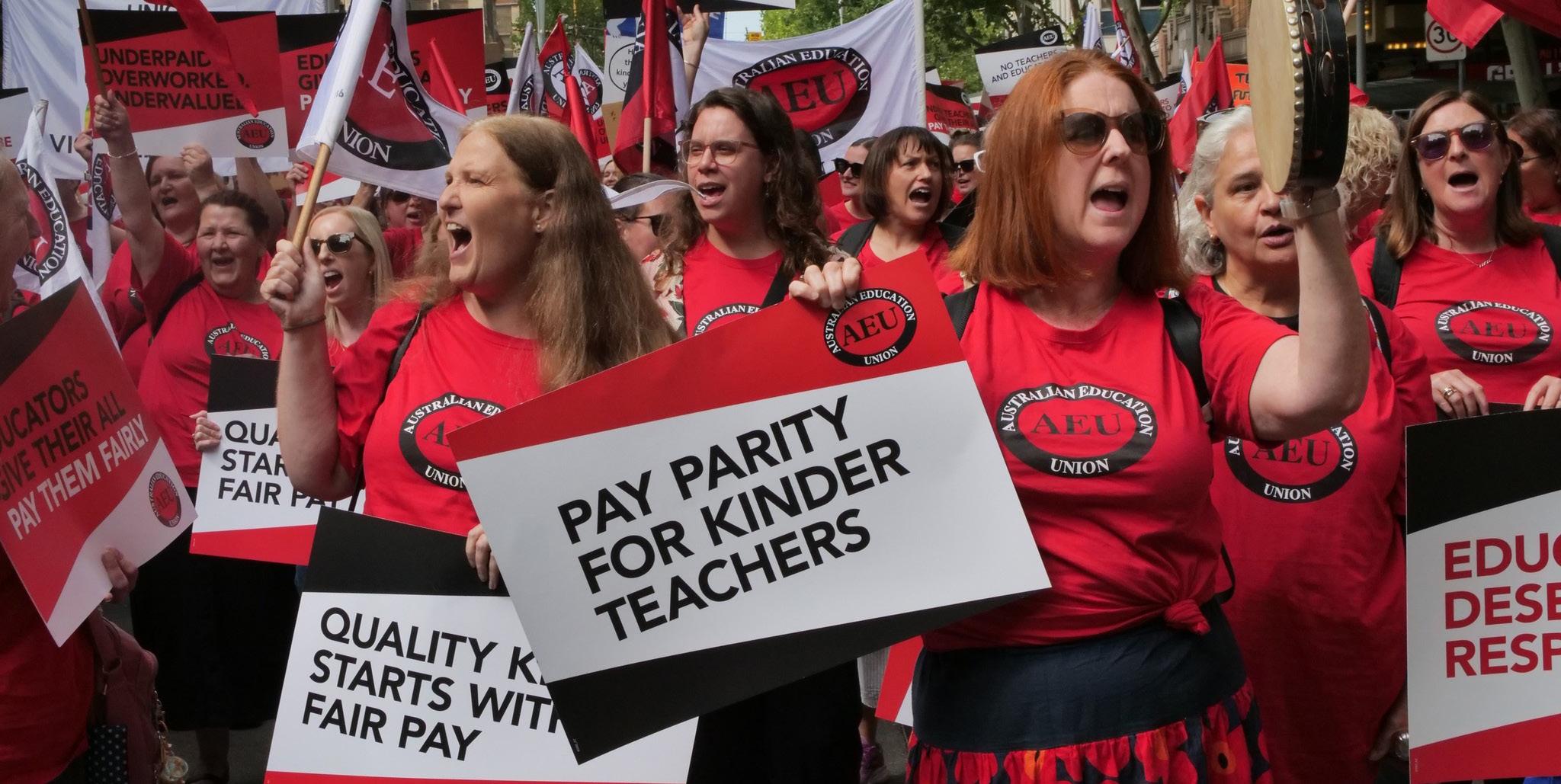
The pay boost has flowed through to workers immediately impacted as of 1 July and will benefit all working Australians by lifting the national minimum wage floor that unions bargain from.
Lower-paid workers are concentrated in retail, accommodation and food services, community, care, arts, administration, recreation and the health care sectors. They are predominantly women and on part time or casual work arrangements.
Unions pursued a six per cent minimum wage increase after the Federal Budget forecast that inflation would reach five per cent by the middle of the year.
While June’s annual wage review decision falls short of that except for the very lowest paid, it will ease some of the worst price pressures caused by the war’s aftershocks, with a small buffer if the global situation drags on.
ACTU Secretary Sally McManus said the wage increased meant relief for lower paid workers trying to keep up with price pressures and avoided the need to cut back on essentials such as food or seeing a doctor.
“This is a positive real wage increase, and it will provide some buffer against the worst impacts of the Trump war, providing
it doesn’t drag on throughout the year,” she said.
“It is encouraging to see that even higher wage rises of six per cent, matching our full claim, have been awarded to around 100,000 workers on the very lowest pay rates because they simply could not afford to wait.
“The lowest paid need to spend almost all of what they earn to survive, and this wage increase will be vital to them while generating income for local businesses that also need a boost.”
The International Court of Justice has affirmed the right to strike for workers worldwide.
The court handed down a legal opinion in late May confirming that workers’ right to strike is protected by the International Labour Organisation’s (ILO) Convention 87 (Freedom of Association and Protection of the Right to Organise Convention).
Employer organisations, led by the International Organisation of Employers (IOE), had argued that there is no such right in international law. This includes the Australian Chamber of Commerce and Industry which is a member of the IOE and ILO.
The International Labour Organisation is the UN body comprised of governments, trade unions and employers that sets and oversees international labour standards. Despite recognising the international right to strike in its jurisprudence since 1952, employers refused to accept these rulings in 2012, leading to a deadlock in the organisation.
The latest ruling gives a huge boost to workers all over the world. The right to strike is strongly linked to better wages and safer workplaces the world over. It has also helped to reduce economic inequality and strengthen and promote democracy.
The court’s legal opinion marks an important moment for the ILO and
upholds the rules-based multi-lateral approach to setting international labour standards, including the right to strike.
ACTU President, Michele O’Neil said:
“Australian Unions welcome and respect this ruling and look forward to working within the ILO to ensure the effective exercise and protection of the right to strike.”
“This ruling is important both for Australian workers and workers in countries with restrictive strike regimes or where courts have rejected workers’ general right to strike,” she continued.
“The right to strike is an essential part of workers being able to organise and win safer and fairer workplaces in Australia and across the world.”
Join us online in Term 3 for some outstanding short, sharp learning opportunities.

All events are offered through partnership with the Teacher Learning Network, Melbourne. Online Professional Learning Event
Building Effective Teams:
Michelle Rangelov – Experienced Senior Leader of Learning and Teaching, Curriculum Innovation and Professional Learning

Primary, Secondary and TAFE Thursday 20 August 3-4pm
Wellbeing: Managing Change and Staff Wellbeing:
Megan Corcoran – Director Wagtail Institute
Primary and Secondary
Embedding Staff Wellbeing Throughout the School
Kristy Elliot – Director – Restorative Pathways
Thursday 20 August 4.30-5.30pm
Primary and Secondary Thursday 10 September 3-4pm
Middle Leadership: What I Wish I Knew
Erin Bonavia – Deputy Principal
Primary and Secondary Thursday 1 October 8-10am
Understanding and Supporting Neurodiverse Girls
Eunice Dugdale – Occupational Therapist
Primary and Secondary Thursday 8 October 2-3pm
Trauma and Adversity in Education
Megan Corcoran – Director Wagtail Institute
Primary, Secondary and TAFE Thursday 8 October 3.30-4.30pm
Neuroaffirming Classrooms and Practices
Belinda Webb – Education Support Specialist
Primary and Secondary Thursday 22 October 2-3pm
Dyscalculia, Its Impact and Effective Classroom Support
Kerri Ledingham – Special Education Teacher
Primary and Secondary Thursday 22 October 3.30-4.30pm

Accountants and Financial Advisers
Aston Accountants
10% discount on personal income tax returns for members.
sstuwa.org.au/aston
Industry Fund Services
Specialist financial products for union members.
sstuwa.org.au/ifs
LIFE Financial Planners
$1,200 off your statement of advice fee plus a free financial health check for members.
sstuwa.org.au/lifefinancial
TIPS Financial Services
$1,100 discount on your TIPS Transition to Retirement strategy or Retirement plan. Exclusive to members. sstuwa.org.au/tipsfs
Banking
ME Bank
Special offers throughout the year for members. A bank built by, and for, union members.
sstuwa.org.au/mebank
Mortgages, Money and Me
Complimentary advice, property reports, finance tools and more for SSTUWA members.
sstuwa.org.au/mmme
OFX Money Transfers
When it matters, OFX it. Save with the experts in international money transfers.
sstuwa.org.au/ofx
Teachers Mutual Bank
Banking exclusively for the education community.
sstuwa.org.au/tmbank
AutoBahn
Mechanical and electrical services. Members receive 10% off any AutoBahn service or repair, capped at $100. sstuwa.org.au/autobahn
Bayswater Mazda
Exclusive offer including fuel card, servicing and more. sstuwa.org.au/bayswatermazda
Bob Jane T-Marts
National fleet pricing on a range of products and services. sstuwa.org.au/bobjane
easifleet
$250 Magic Hand Carwash voucher with any easifleet procured novated lease.
sstuwa.org.au/easifleet
Europcar
10% discount on vehicle hire in Australia. sstuwa.org.au/europcar
Paywise
Fleet Network is now Paywise. Package your next car and save on tax. Bonus gift with vehicle delivery. sstuwa.org.au/paywise
Western Motor Vehicle Consultants
We’ll find a car you’ll love. Save time and money when sourcing your next vehicle. sstuwa.org.au/westernmotors
Computers
Altronics
Build it yourself electronics centre. VIP trade discount in store and online. sstuwa.org.au/altronics
Apple on Campus
For details visit: sstuwa.org.au/apple
Dell
Save up to 5% off selected items. sstuwa.org.au/dell
Huge savings for members on laptops, accessories, printers and more. sstuwa.org.au/hp
Save on your IT with access to the PLE Computers academic portal. sstuwa.org.au/ple
Educational Resources
Effective Group Work
Beyond Cooperative Learning. By Barrie Bennett. sstuwa.org.au/effectivegroupwork
Graphic Intelligence
Possibilities for Assessment and Instruction. By Barrie Bennett. sstuwa.org.au/graphicintelligence
Instructional Intelligence
Building Instructional Expertise for the Classroom. An SSTUWA project in collaboration with Barrie Bennett. sstuwa.org.au/instructionalintelligence
Teacher Superstore
5-10% discount, in store and online. sstuwa.org.au/teachersuperstore
Entertainment
Movie tickets
Pre-order your movie tickets and save. sstuwa.org.au/movietickets
Outback Splash
Featuring both water and year-round attractions. Discounted tickets for members. sstuwa.org.au/outbacksplash
Rockface
Indoor rock climbing in Balcatta. $15 all day climbing pass with harness hire. sstuwa.org.au/rockface
For more information visit sstuwa.org.au/benefits and the benefits tab of the SSTUWA App
Campbells
Access wholesale prices with a complimentary day pass. sstuwa.org.au/campbells
Cellar d’Or
Best value winery tour in the Margaret River Region. 10% discount for members. sstuwa.org.au/cellardor
Taste Bud Tours
Swan Valley “Speed Grazing” – 20% discount. Good Food, Wine & Cider (am) or Good Food, Wine & Beer (pm). sstuwa.org.au/tastebudtours
Teachers Health Fund
Join the thousands of teachers who have already made the switch. sstuwa.org.au/teachershealth
WA Opticians
20% discount on spectacle frames and lenses. Perth and East Perth. sstuwa.org.au/waopticians
Houspect
Buy, build and invest with confidence. $50 discount on prepurchase building inspections. sstuwa.org.au/houspect
Johns Building Supplies
Trade prices on paint and painters’ hardware. Builders prices on all other hardware lines. sstuwa.org.au/jbs
SkylightsWA
Specialising in skylights and roof ventilation, servicing all regions of WA. 7% discount off selected products. sstuwa.org.au/skylightswa
Wattyl
15% off Wattyl paints, stains and accessories at Wattyl Paint Centres in WA.
sstuwa.org.au/wattyl

Insurance and Legal
Journey Cover insurance
For details visit: sstuwa.org.au/journeycover
SSTUWA Legal Services
Access to quality legal services for both work-related and personal matters. sstuwa.org.au/legal
Teachers Health Fund
Join the thousands of teachers who have already made the switch. sstuwa.org.au/teachershealth
Teachers Health – Travel
For Teachers Health members who are planning a trip away, Teachers Health travel insurance offers comprehensive cover at competitive rates. sstuwa.org.au/travelinsurance
Wills for members
Members can access a complimentary simple will, where appropriate. For more information or details about a complex will, visit: sstuwa.org.au/wills
Shopping
isubscribe
Up to an extra 10% off any print and digital magazine subscription; over 4,000 titles. sstuwa.org.au/isubscribe
Jackson’s Drawing Supplies
10% discount in Jackson’s 12 shops and online. sstuwa.org.au/jacksons
Petals Flowers & Gifts
20% off flowers and gifts. World-wide delivery available. sstuwa.org.au/petals
Teacher Superstore
5-10% discount, in store and online. sstuwa.org.au/teachersuperstore
Union Shopper
Save on cost-of-living expenses with some of Australia’s biggest brands. Free access with your SSTUWA membership. sstuwa.org.au/unionshopper
Accor Hotels
Great savings for teachers at Accor Hotels in the Asia Pacific region. sstuwa.org.au/accorhotels
Choice Hotels
Choice Hotels welcomes SSTUWA members with exclusive rates at locations in Australia and NZ. sstuwa.org.au/choicehotels
Experience Oz
Save 10% on over 3,000 experiences across Oz + NZ. sstuwa.org.au/experienceoz
Inn the Tuarts Guest Lodge
Forest retreat, 4-star, with indoor pool, Jacuzzi, sauna and BBQ. Adults (12 years+) only. Five minutes to Busselton. Studios and rooms. 22.5% off rack rate or best available rate. sstuwa.org.au/innthetuarts
Jarrah Grove Forest Retreat
Luxurious, self-contained accommodation in Margaret River. Discounted rates for members. sstuwa.org.au/jarrahgrove
Mandurah Houseboats
10% discount on houseboat holidays. sstuwa.org.au/houseboats
Metro Hotel Perth City
15% discount on the best available rate. Located in East Perth near the WACA and Gloucester Park. sstuwa.org.au/metroperth
Rottnest ferry tickets
Save up to $15 on Rottnest ferry tickets with WestClub. sstuwa.org.au/rottnest
Dunsborough (Quindalup)
Large 4x2 holiday home on Geographe Bay Rd. Swimming beach 30m away. Free use of private boat mooring. Room to park boats with boat ramp a minute away. Slow combustion wood heater and reverse-cycle air-con. Available all year except for leavers’ vacation. No pets. 0419 943 203 a_r_moore@bigpond.com
Dwellingup
Après Huit and Dwell Cottage provide luxury self-contained accommodation set in beautifully landscaped gardens. Can be rented separately or together. Après Huit: 2x2, main house. Dwell Cottage: 1x1, furnished in a French theme. Robert: 0419 954 079 dwellcottage.com.au
Dwellingup
In need of a tree change? Time out to reconnect with nature? Time for a vacation in Dwellingup’s Jarrah forest, 90 minutes from Perth. Chuditch Holiday Home is perfect for couples, groups and families. It’s centrally located and sleeps up to eight people.
Shani: 0402 615 235 shanivore@hotmail.com
Frankland River
Private secluded retreat. Choose from three different types of separate accommodation. Three bedroom homestead: two king beds, two single beds – sleeps six (no pets). Two adults $195/night, children under 13 $25/night, extra adult guests $50/night. One bedroom chalet: one queen bed – sleeps two. $139/night, adults only. One bedroom cabin: one queen bed – sleeps two. $169/night, adults only. franklandriver.com.au
Jade: 0430 450 093 | Sam: 0413 160 093
Fremantle
Short term accommodation in central Fremantle. Recently refurbished with all conveniences for modern living. Townhouse has three queen-sized bedrooms plus provision for two singles. Enjoy time in the rear garden, complete with BBQ. Secure parking for two cars, access controlled by electric gates. 9430 4458 | 0407 083 174 info@westerley.com.au

Fremantle
Staycation? Attending a function? Cosmopolitan getaway? Fremantle is the place. Cafes, restaurants and breweries. Markets, beach, art galleries, museums, theatre, events, shopping, skate park, Ferris wheel, whale watching... What more could you want? Eco-Gallery Apartment is stylish, centrally located, sleeps three and has secure parking. (08) 6323 2339 admin@smartstaywa.com.au
Kallaroo
Serenity Escape is a 2x1 apartment with full kitchen, offering comfort and convenience. 20 min walk to beach, 5 min drive to train station, walking distance to Whitfords Brewing Co, cinema and shops. Toiletries, slippers and coffee machine provided. Min two nights. Sleeps four, or five with mattress. No pets. $125/night for 3 people; $10/night per extra person. Molly: 0428 166 559 mollysletters@gmail.com
Kalbarri
Clean, tidy, self-contained family-friendly 3x1 brick house at the top end of a quiet cul-de-sac. Sleeps eight: two x queen beds and two x bunk beds. Close to Blue Holes Beach, 15 min walk to town. kalbarriwa.net.au | 0435 845 504
Margaret River
Two bedrooms, private, comfortable, fully equipped stone cottage with fireplace, located amongst the forest opposite Boranup National Park, 17km south of Margaret River on Caves Road. Close to beaches, wineries, caves and galleries. $150 per night for two people, or provide own linen and towels for $120 per night. Russell: 0418 933 270
Nannup
Seraphim Retreat is a pet friendly 3x1 character farm cottage, five minutes from friendly Nannup. Set in acreage, with established gardens and stunning valley views. Air conditioned and wood
heater. Horse riders can bring their horses to access our arena and trails. Teacher discount: $159 weekends, $149 midweek. See website for details. seraphimretreatnannup.com SMS 0420 832 510
Safety Bay
Very clean and tidy, traditional style 3x1 duplex in Safety Bay. Fully furnished and equipped. One street from beach. Presently a minimum stay requirement (this may change).
cnjn@aapt.net.au
Trigg
Self contained accommodation. Kitchen, laundry, queen sized bed plus fold out double couch in lounge. Free WiFi and Netflix. Own entrance. Find us on Facebook.
Kerry: 0409 884 330 | FB: @justriggin 67justriggin@gmail.com
Yallingup
Rammed earth cottage, 2x1, nestled amongst bushland. Well located, short walk to Studio Gallery Bistro, two-minute drive to Caves House. Beaches, galleries, wineries and restaurants close by. Sleeps six. No dogs. stayz.com.au (property 136151)
Kirsty: 0419 927 660
Tranquillity Counselling, Psychotherapy and Career Development
I provide holistic, confidential practical counselling to help you deal with an array of issues, some being: general relationship, mental health, anger issues/management, anxiety, depression, self-harm, grief and trauma, addiction, abuse, palliative care. Milica Robinson, MCnsig&Psychthpy, GradCertCareerDev, BEd. 0422 358 187
Retirement coach
Are you recently retired or retiring soon? You probably have a financial plan in place but developing a plan for the non-financial side of retirement can be as important as preparing financially. I offer support and guidance for the transition from work to
Email 50 words or fewer to editor@sstuwa.org.au along with your union membership number. Free for members.
retirement, helping you to find purpose and meaning in retirement. Contact me to arrange an obligation free chat. retirementcoaching01@gmail.com
Marriage celebrant
Marriage celebrant with 12 years of experience, working in the Peel, South West and Perth areas. Specialising in creating personalised ceremonies for couples at their chosen wedding location. I’d love to help you plan your special day!
Meridith: 0400 312 535 meri.lake4@gmail.com
Marriage celebrant
Heart Centered Ceremonies for couples wanting a personalised wedding. Lee will help you design your dream wedding – a memorable occasion. Mention this ad to receive a discount.
Lee: 0404 655 567 leehalligancelebrant.com.au
Marriage celebrant
Experienced professional celebrant available, all areas. Formal or informal, large or small weddings. A Beautiful Ceremony will help you design an unforgettable and uniquely personal ceremony.
Mary: 0418 906 391 maryburke40@hotmail.com
Funeral celebrant
I am an experienced funeral celebrant. It will be my honour to assist you in the cocreation and presentation of a ceremony that serves to honour your loved one, by revealing their essence through a uniquely constructed and presented combination of spoken word, rituals, symbols, audio and visual displays.
0449 075 001
Kc.fcelebrant@gmail.com
First aid training for students
St John Ambulance WA offers free first aid training to all school aged students, ranging from Triple 000 Hero for Kindergarten students to Road Trauma
First Aid for secondary school students. Courses are curriculum mapped. (08) 9334 1259 youth@stjohnambulance.com.au
Learn to social dance
Learn jive, waltz, rumba, samba, tango and other dances for social events (ball, wedding, cruise, etc). A fun and easy course with quality instruction. Join with or without a partner. Melville (LeisureFit) Recreation Centre. Mondays 7.30-9pm. $118/8 weeks. Beginners’ course held every term. Term 3 2026 began Monday 27 July. Stan: 9330 6737 | stan@stansdancing.com
Messines Bee Farm Incursions
Four bee/sustainability themed incursions for primary, K - 6. Play based, engaging, hands on, live bees, honey tasting. messines.com.au workshops@messines.com.au
Road safety education for schools
RAC offers free curriculum aligned road safety workshops and online resources for primary schools (pre-primary to Year 6) and secondary schools (Years 10 to 12), covering a range of road safety topics designed to keep young people safe on and around the roads. (08) 9436 4471 | rac.com.au/education communityeducation@rac.com.au
Jump Rope for Heart
Looking for a ready-to-use program for your health and physical education plan? The Heart Foundation’s five-week Jump Rope for Heart program is just what you need! This easy-to-run primary school program, supported by an online teacher portal full of helpful resources, makes incorporating skipping into your school’s activities a breeze. It inspires kids to move more, have fun and develop heart-healthy habits, all while raising funds to save Aussie hearts. Discover how you can support your students in becoming Heart Heroes at jumprope.org.au
Mathematical Association of WA
MAWA offers professional learning opportunities, conferences and consultancy services to teachers and schools and networks. MAWA members receive 10 per cent discount on MAWA shop resources. For more information: mawainc.org.au 9345 0388 | eo@mawainc.org.au
Macramé is the new yoga
I'm a teacher running small group macramé classes in a cosy home studio. Join me and discover the power of mindfulness in a fun supportive environment. A powerful way to calm a busy mind.
marcia@knotinlove.com.au
Rainbow Reading (New Heights)
Rainbow Reading supports struggling readers, including neurodiverse, delayed, or new English learners. Need support with group work or extra reading mileage? Rainbow Reading has effective solutions. rainbowreading.com.au | Di: 0407 490 253
Teaching resources
From a retired teacher, the following resources are available: English, media, literature (Years 7 -12); ESL: primary and secondary; Aboriginal education: DHS; First Steps presenter books; science upper primary and lower secondary. Dave: 0438 579 689
Primary school resources
Retired teacher with valuable primary school resources for most year levels. Phone Susanne and leave a voice message please. 0417904043
Calling all retired teachers!
Are you a retired teacher with a spirit of adventure and time to spare? Would you like to assist families in remote areas of WA? You may like to join REVISE WA as a tutor. For more info, visit www.revisewa.com.au
The next meeting of the Retired Teachers’ Association of the SSTUWA will be at 10am Wednesday 5 August at the SSTUWA premises. All retired members are welcome.
Stay in touch: Join the RTA Facebook Group – search “Retired Teachers’ Association of the SSTUWA”.

State Council Conference
November 2026 State Council Conference will be held on 6-7 November 2026.
Visit sstuwa.org.au/ statecouncilconference for further information.
The International Day of the World’s Indigenous Peoples is organised by the United Nations on 9 August to focus on the rights of the indigenous population groups globally. It also celebrates the way of life and culture of more than 370 million indigenous people worldwide, as well as raise awareness of each group’s needs. Visit un.org/en/events/indigenousday for more.
Para and Ability Dance WA (PADWA) is a registered charity advocating for dancers with disability.
PADWA is seeking Expressions of Interest from Education Support Schools and Centres interested in providing 10 complimentary dance classes to their students. Building on the funding support provided by Telethon in 2025 and 2026, PADWA hopes to continue this highly successful program in 2027.
Did you know we have an extensive collection of research and studies on our website?
To view these, visit sstuwa.org.au/research
Life’s ups and downs happen to all of us. So chances are someone you know might be struggling. Your genuine support can make a difference whatever they are facing, big or small. Make a moment meaningful and ask them how they’re really going. Are they really OK? Ask them today. Your conversation could change a life. For more resources visit ruok.org.au
The program offers students the opportunity to participate in inclusive, engaging dance activities that promote confidence, physical activity, social connection, and enjoyment.
Schools and centres interested in participating in this opportunity are invited to email chairman@padwa.org.au for further information or to register their interest.
SSTUWA committee meeting dates: Venue: SSTUWA office | Contact: (08) 9210 6000 or contact@sstuwa.org.au
New Educators Committee
Time: 4.30pm.
Dates: 19 Oct.
Women’s Committee Time: 4pm.
Dates: 1 Sept, 24 Nov.
Videoconference facilities are available
Early Childhood Educators Committee Time: 4pm.
Dates: TBC
LGBTIQ+ Committee
Time: 3.45pm.
Dates: 4 Aug, 21 Nov.
Aboriginal and Torres Strait Islander Committee Time: 4pm.
Dates: 29 Oct.
School Leaders Committee
Dates: TBC
TAFE Committee
Dates: 20 Aug, 17 Sept, 22 Oct, 12 Nov, 3 Dec.
All dates and times are subject to change.

The famous Red eBooks are available now for both schools and TAFE.
The famous Red eBooks are now available! Find all your rights, entitlements and conditions in this handy, searchable compilation.
Find all your rights, entitlements and conditions in this handy, searchable compilation. PDF, eBook or app – you choose!
General Agreements
2023
Schools and TAFE
By prioritising use of the Red eBook, we’re saving thousands of sheets of paper and significantly reducing the amount of books that need to be posted. That’s a lot of trees saved, and we’re reducing our carbon footprint.
The Red eBook can be accessed in both PDF and e-reader formats on your device of choice, including mobile, tablet and computer, as well as through the SSTUWA app. Choose the options that work best for you!
Available now for schools, with the TAFE book coming soon, the Red eBook can be accessed in both PDF and e-reader forms, on mobile, tablet and computer, as well as through the SSTUWA app. Both versions are fully searchable, so all the information you need is available at the tap of a button.
Fully searchable
The Red eBook is linked and fully searchable, so all the information you need is available with a quick tap or a keyword search.
Visit the Schools Hub or TAFE Hub on the SSTUWA website.
Type sstuwa.org.au/redbook into your browser.
Tap Know Your Rights (Schools) or Know Your Rights (TAFE) on the app.
Scan the QR code above.