7 & 8 May 2026
Hans Graf Farewell Series: Scheherazade

15 May 2026
Hans Graf Farewell Series: Mystère de l’instant
21 & 22 May 2026
Hans Graf Farewell Series: Mozart and Salieri
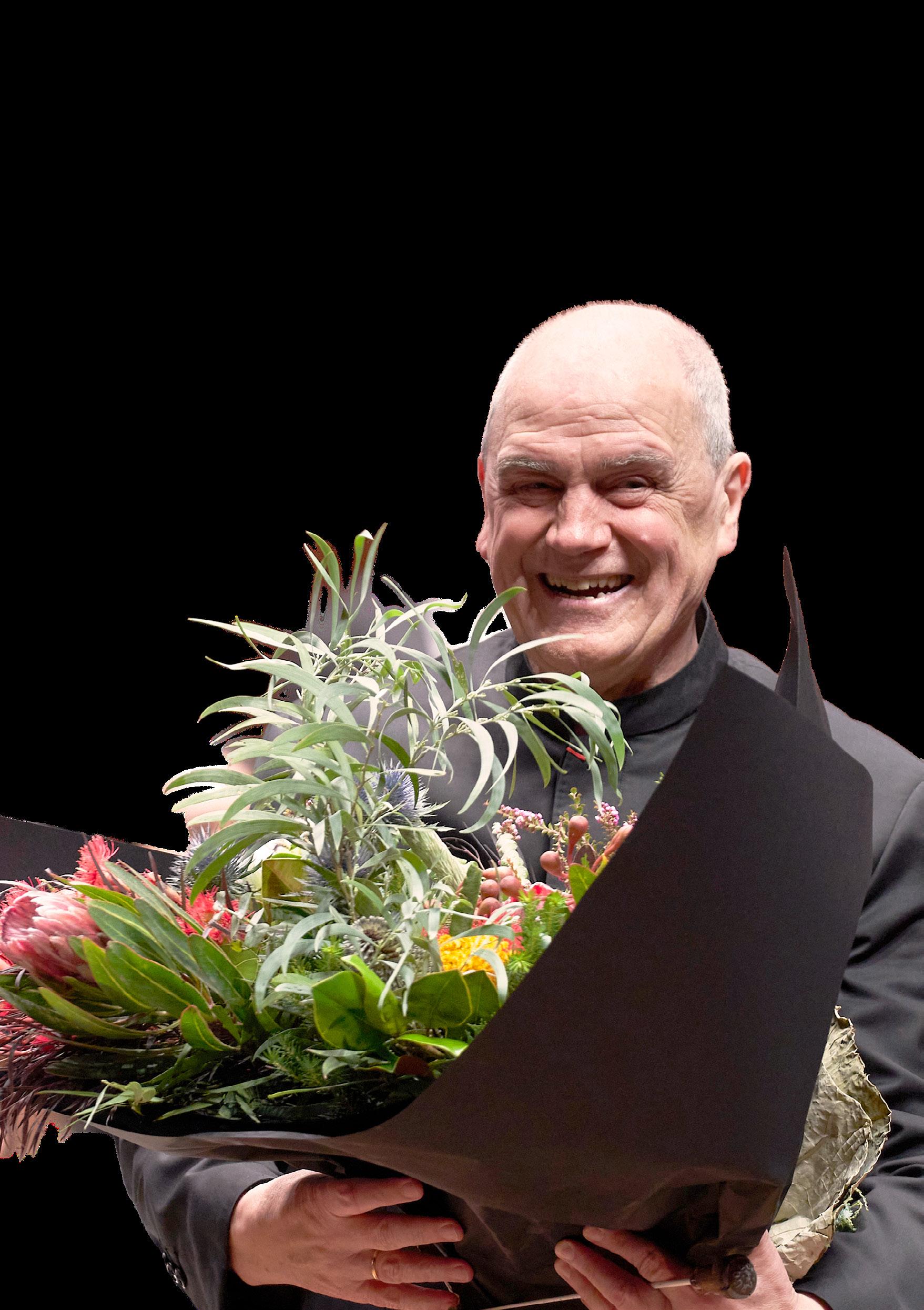

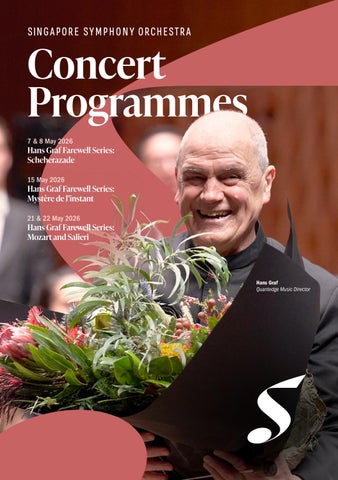
Hans Graf Quantedge Music Director
7 & 8 May 2026
Hans Graf Farewell Series: Scheherazade
15 May 2026
Hans Graf Farewell Series: Mystère de l’instant
21 & 22 May 2026
Hans Graf Farewell Series: Mozart and Salieri
Quantedge Music Director
Artist Highlights
Gil Shaham, Augustin Hadelich, Gautier Capuçon, Nobuyuki Tsujii, Marc-André Hamelin, Steven Isserlis, James Ehnes, Inmo Yang, Clara Jumi Kang, Stefan Dohr and Liao Chang Yong with conductors Marin Alsop, Vasily Petrenko, François Leleux, Lio Kuokman and many more.
Verdi’s Requiem, Bluebeard’s Castle, John Adams’s Harmonielehre, scenes from Götterdämmerung, masterpieces by Mahler, Beethoven, Bruckner, Dvořák, Tchaikovsky, Prokofiev and Rachmaninoff, alongside Singapore Premieres of works by Arvo Pärt, John Adams, Nikolai Kapustin, Unsuk Chin, Donghoon Shin, Tan Chan Boon, Zechariah Goh, Kevin Puts, Lera Auerbach and more. scenes from Götterdämmerung
TwoSet Violin, Apsaras Dance Company, Singapore’s very own Chloe Chua, Nathania Ong and more.
Scan

30
Hans Graf Farewell Series: Scheherazade
Thu & Fri, 7 & 8 May 2026
Esplanade Concert Hall
Hans Graf Farewell Series: Mystère de l’instant
Fri, 15 May 2026
Victoria Concert Hall
37
Hans Graf Farewell Series: Mozart and Salieri
Thu & Fri, 21 & 22 May 2026
Victoria Concert Hall
For the enjoyment of all patrons during the concert:
Please switch off or silence all electronic devices.
Please minimise noises during performance. If unavoidable, wait for a loud section in the music.
No photography, video or audio recording is allowed when artists are performing.
Non-flash photography is allowed only during bows and applause when no performance is taking place.
Go green. Digital programme books are available on www.sso.org.sg.
Photographs and videos will be taken at these events, in which you may appear. These may be published on the SSO’s publicity channels and materials. By attending the event, you consent to the use of these photographs and videos for the foregoing purposes.
Cover photo: Hans Graf © JAY PATEL
The orchestra performs over 60 concerts a year, and its versatile repertoire spans alltime favourites and orchestral masterpieces to exciting cutting-edge premieres. Bridging the musical traditions of East and West, Singaporean and Asian musicians and composers are regularly showcased in the concert season. The SSO makes its performing home at the 1,800-seat state-ofthe-art Esplanade Concert Hall. More intimate works, as well as community performances take place at the 673-seat Victoria Concert Hall, the Home of the SSO.
Since its founding in 1979, the Singapore Symphony Orchestra (SSO) has been Singapore’s flagship orchestra, touching lives through classical music and providing the heartbeat of the cultural scene with its 44week calendar of events.
In addition to its subscription series concerts, the orchestra is well-loved for its outdoor and community appearances, and its significant role educating the young people of Singapore through its school programmes. The SSO has also earned an international reputation for its orchestral virtuosity, having garnered sterling reviews for its overseas tours and many successful recordings. In 2021, the SSO clinched third place in the prestigious Orchestra of the Year Award by Gramophone. In 2022, BBC Music Magazine named the SSO as one of the 23 best orchestras in the world.
From the 2026/27 season, the SSO will be led by Finnish conductor Hannu Lintu, the fourth Music Director in the orchestra’s history after Choo Hoey (1979–1996), Lan Shui (1997–2019) and Hans Graf (2020–2026).
Beyond Singapore, the SSO has performed in Europe, Asia, Australia and the United States. In the 2024/25 season, the SSO performed to full houses at Asia Orchestra Week in Kyoto, Japan, and made its “dazzling – and true-blue – Down Under debut” (Limelight) in Sydney, Melbourne and Brisbane. In May 2016, the SSO was invited to perform at the Dresden Music Festival and the Prague Spring International Music Festival. This successful five-city tour of Germany and Prague also included the SSO’s second performance at the Berlin Philharmonie. In 2014, the SSO’s debut at the 120th BBC Proms in London received praise in major UK newspapers The Guardian and The Telegraph. The SSO has also performed in China on multiple occasions.
The SSO has released more than 50 recordings, with over 30 on the BIS label. Recent critically acclaimed albums include A Hero’s Life (OUR Recordings), Symbiosis - Tribute to Bill Evans (Pentatone) and a complete Mozart Violin Concerto cycle with Singaporean violinist Chloe Chua conducted by Hans Graf (Pentatone). The SSO also leads the revival and recording of significant works such as Kozłowski’s Requiem and violin concertos by Robert Russell Bennett and Vernon Duke.
The SSO has collaborated with such great artists as Vladimir Ashkenazy, Gustavo Dudamel, Charles Dutoit, Joe Hisaishi, Neeme Järvi, Lorin Maazel, Martha Argerich, Diana Damrau, Janine Jansen, Leonidas Kavakos, Lang Lang, Yo-Yo Ma, Mischa Maisky, Gil Shaham, Daniil Trifonov and Krystian Zimerman.
The SSO is part of the Singapore Symphony Group, which also manages the Singapore Symphony Choruses, the Singapore National Youth Orchestra, the Singapore International Piano Festival and the biennial National Piano & Violin Competition.
The Group’s vision is to be a leading arts organization that engages, inspires and reflects Singapore through musical excellence. Our mission is to create memorable shared experiences with music. Through the SSO and its affiliated performing groups, we spread the love for music, nurture talent and enrich our diverse communities.
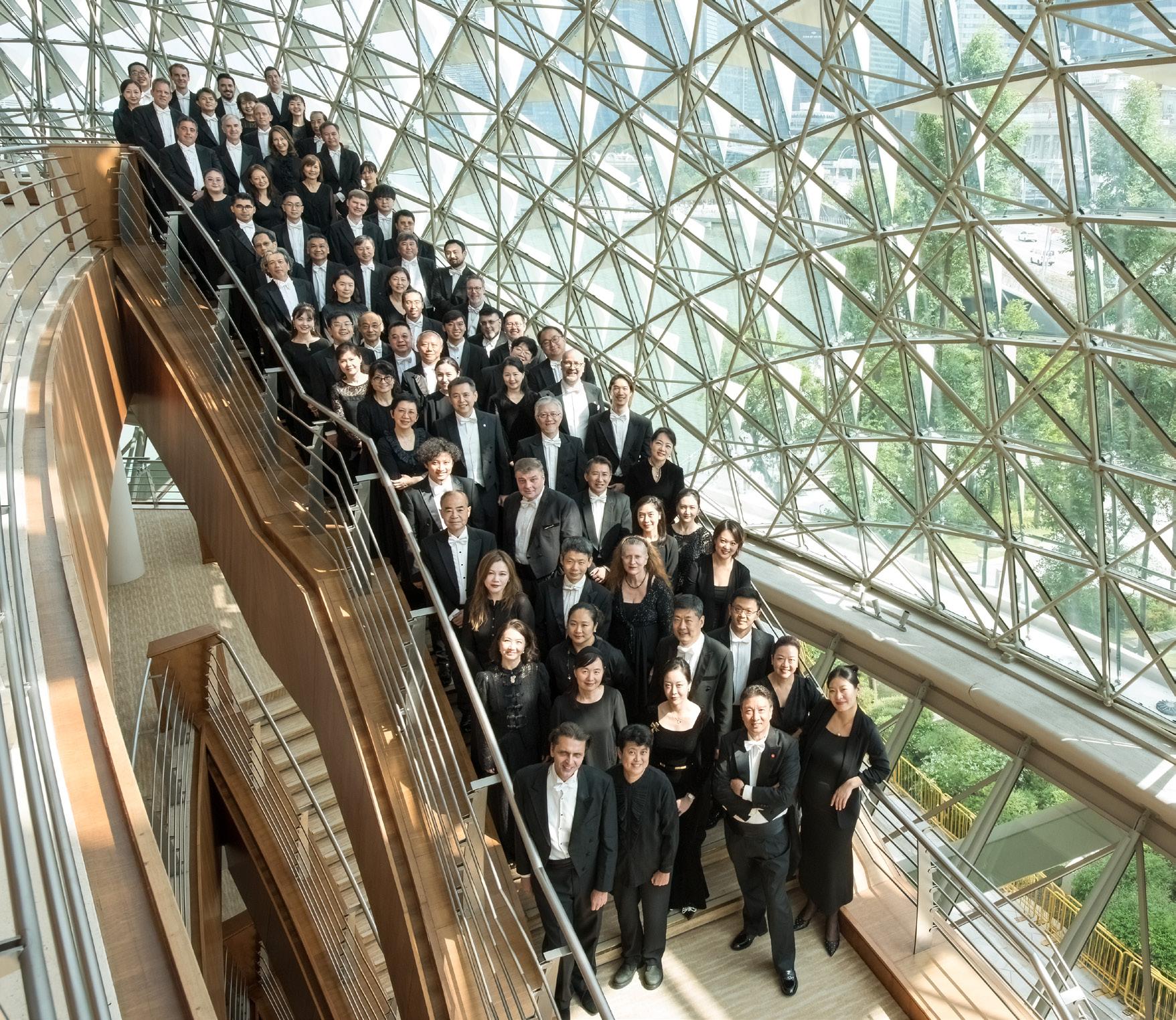
Sayuri Kuru Associate Principal
Nikolai Koval*
Hai-Won Kwok
Renyu Martin Peh^
Margit Saur
Shao Tao Tao
Wu Man Yun*
Xu Jueyi*
Yin Shu Zhan*
Zhao Tian
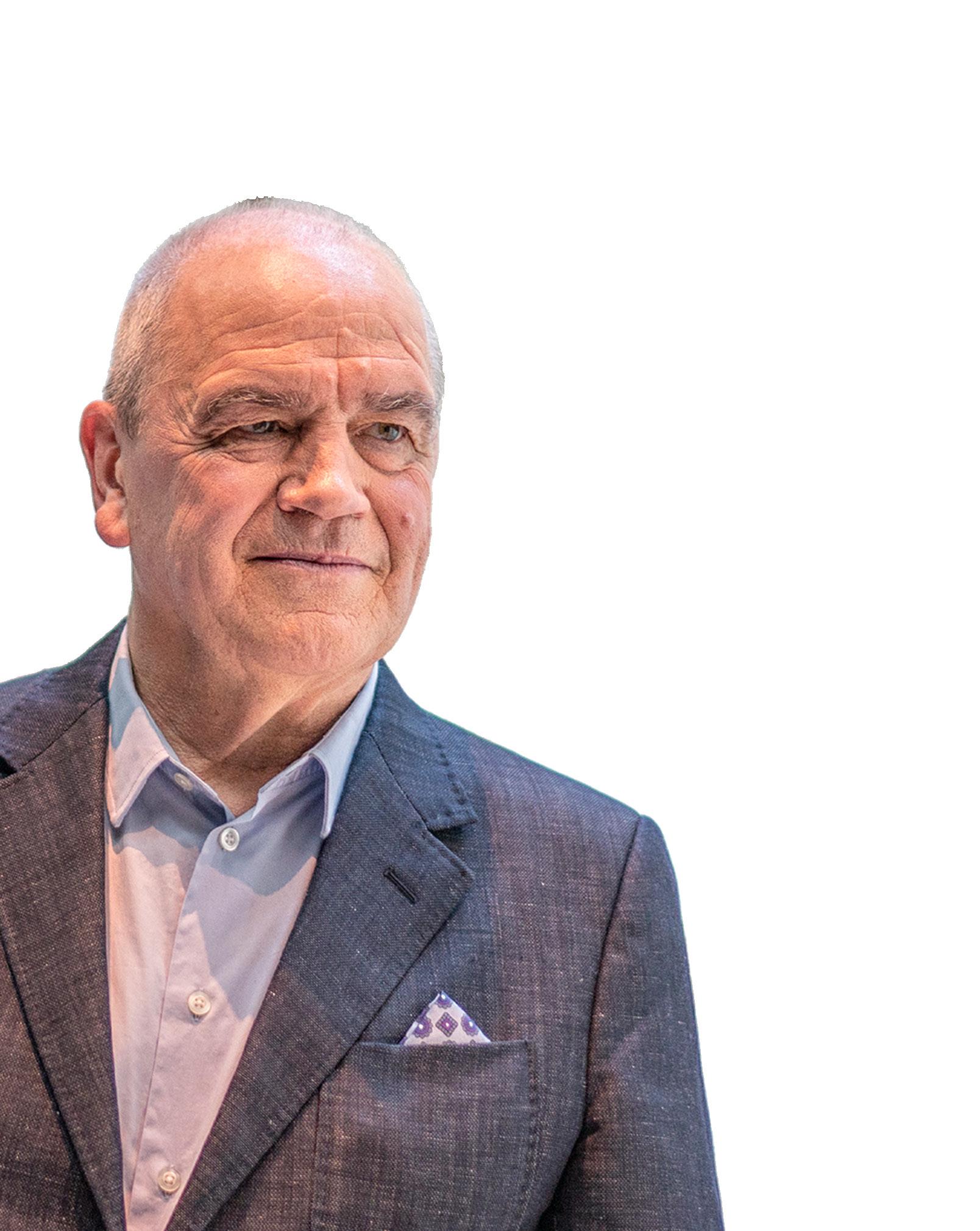
Hans Graf
Quantedge Music Director
Rodolfo Barráez
Associate Conductor
Lan Shui
Conductor Laureate
Eudenice Palaruan Choral Director
Wong Lai Foon Choirmaster
Ellissa Sayampanathan Assistant Choral Conductor
(Position vacant) Concertmaster, GK Goh Chair
David Coucheron Co-Principal Guest Concertmaster
Kevin Lin Co-Principal Guest Concertmaster
Chan Yoong-Han1 Acting Associate Concertmaster
Cao Can*
Duan Yu Ling
Foo Say Ming
Jin Li
Kong Xianlong
Cindy Lee
Karen Tan
William Tan
Wei Zhe
Ye Lin*
Zhang Si Jing
Manchin Zhang Principal, Tan Jiew Cheng Chair
Guan Qi Associate Principal
Gu Bing Jie* Assistant Principal
Chen Li
Marietta Ku
Luo Biao
Julia Park
Shui Bing
Janice Tsai
Dandan Wang
Yang Shi Li
Ng Pei-Sian Principal, The HEAD Foundation Chair
Yu Jing Associate Principal
Guo Hao Assistant Principal
Chan Wei Shing
Christopher Mui
Jamshid Saydikarimov
Song Woon Teng
Wang Yan
Wu Dai Dai
Zhao Yu Er
Yang Zheng Yi Acting Principal
Karen Yeo Assistant Principal
Po-Yu Fang
Victor Lee
Jacek Mirucki
Wang Xu
Jin Ta Principal, Stephen Riady Chair
Evgueni Brokmiller Associate Principal
Roberto Alvarez
Miao Shanshan
Piccolo
Roberto Alvarez Assistant Principal
Oboe
Rachel Walker Principal
Pan Yun Associate Principal
Simon Emes^
Carolyn Hollier
Elaine Yeo
Cor Anglais
Elaine Yeo Associate Principal
Clarinet
Ma Yue Principal
Li Xin Associate Principal
Liu Yoko
Tang Xiao Ping
Bass Clarinet
Tang Xiao Ping Assistant Principal
Bassoon
Guo Siping Principal
Liu Chang Associate Principal
Christoph Wichert
Zhao Ying Xue
Contrabassoon
Zhao Ying Xue Assistant Principal
Horn
Austin Larson Principal
Gao Jian Associate Principal
Jamie Hersch Associate Principal
Marc-Antoine Robillard Associate Principal
Bryan Chong
Hoang Van Hoc
Trumpet
Jon Paul Dante Principal
David Smith Associate Principal
Lau Wen Rong
Nuttakamon Supattranont
Allen Meek Principal
Damian Patti Associate Principal
Samuel Armstrong
Bass Trombone
Wang Wei Assistant Principal
Tomoki Natsume Principal
Christian Schiøler Principal
Mario Choo
Jonathan Fox Principal
Mark Suter Associate Principal
Mario Choo
Lim Meng Keh
Harp
Gulnara Mashurova Principal
With deep appreciation to the Rin Collection for their generous loan of string instruments. Musician on annual contract.
Chan Yoong-Han performs on a David Tecchler, Fecit Roma An. D. 1700, courtesy of Mr G K Goh. Musicians listed alphabetically by family name rotate their seats on a per programme basis.
Hans Graf Farewell Series: Scheherazade
7 & 8 May 2026
First Violin
Erik Heide Guest Concertmaster
Chen Dawei
Lim Shue Churn
Yew Shan
Second Violin
Michael Salm Guest Principal
Wilford Goh
Yvonne Lee
Lee Shi Mei
Ikuko Takahashi
Edward Tan
Viola
Ho Qian Hui
Thantakorn Lakanasirorat
Yeo Jan Wea
Double Bass
Olga Alexandrova
Guennadi Mouzyka
Trumpet
Christopher Moyse
Hans Graf Farewell Series: Mystère de l’instant
15 May 2026
First Violin
Lim Shue Churn
Second Violin
Lee Shi Mei
Ikuko Takahashi
Celesta
Nicholas Loh
Cimbalom
Patrick Ngo
Hans Graf Farewell Series: Mozart and Salieri
21 & 22 May 2026
First Violin
Markus Tomasi Guest Concertmaster
Second Violin
Markus Gundermann Guest Principal
Percussion
Cheong Kah Yiong
Sng Yiang Shan
Piano
Nicholas Loh
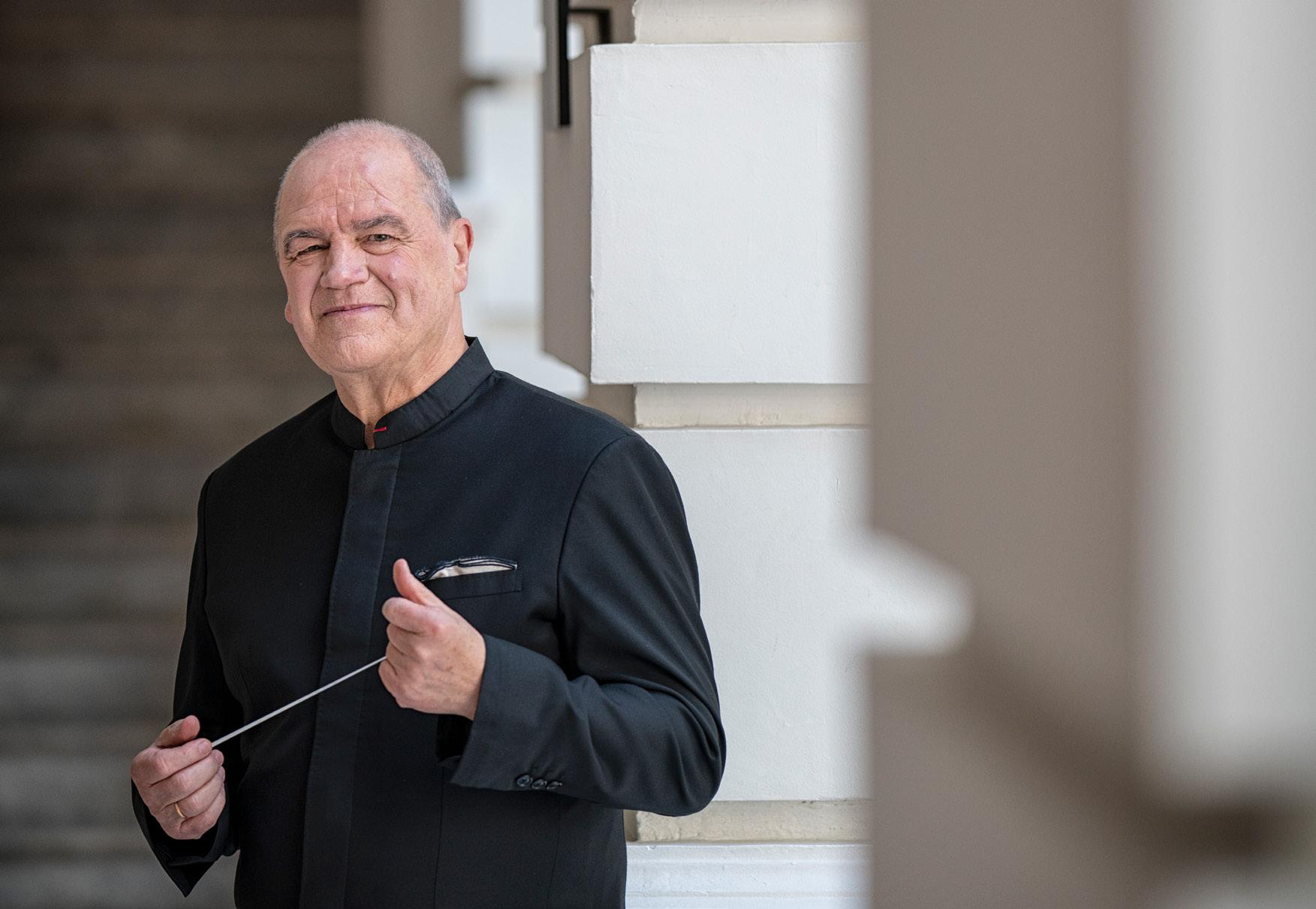

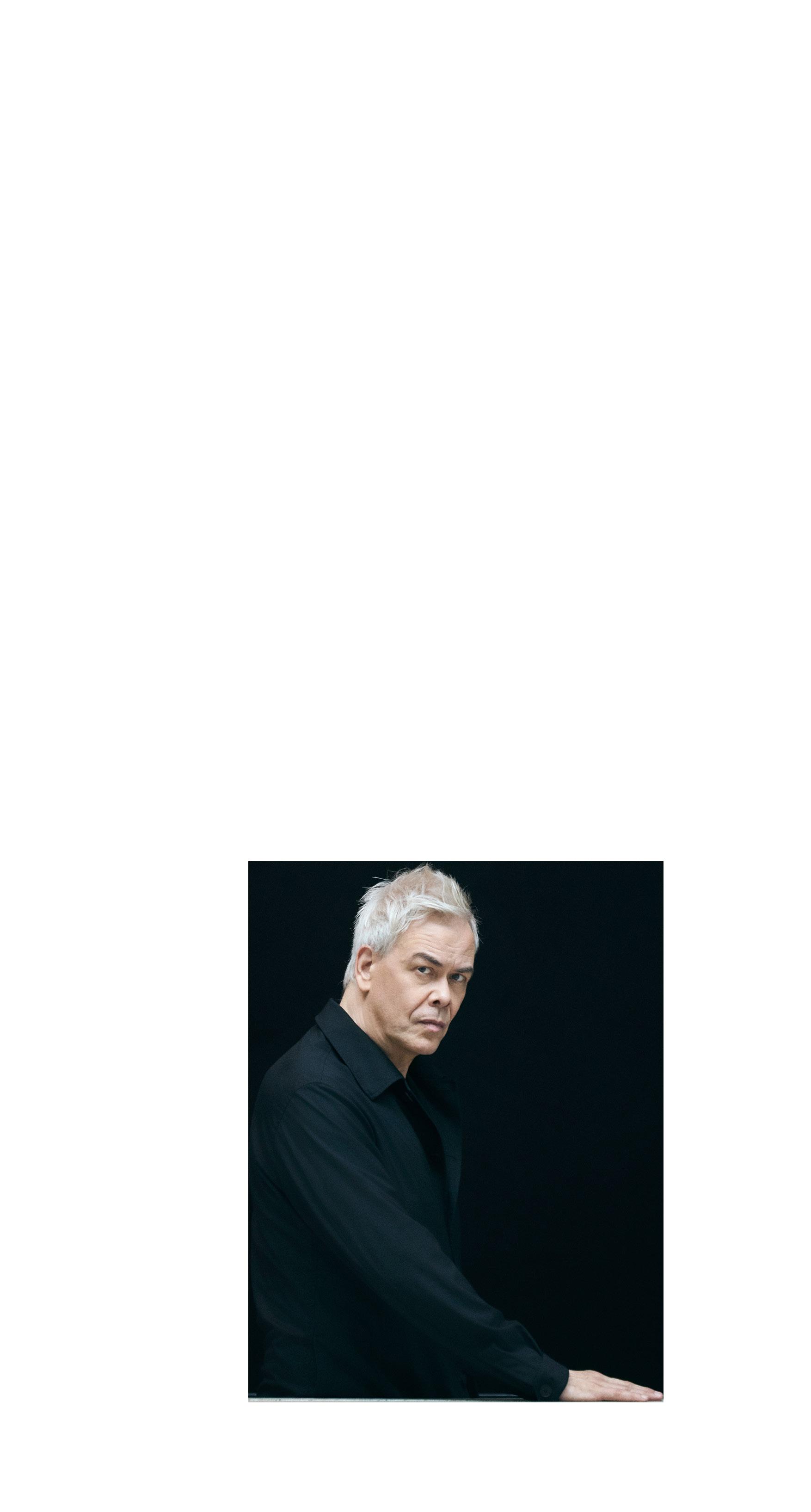
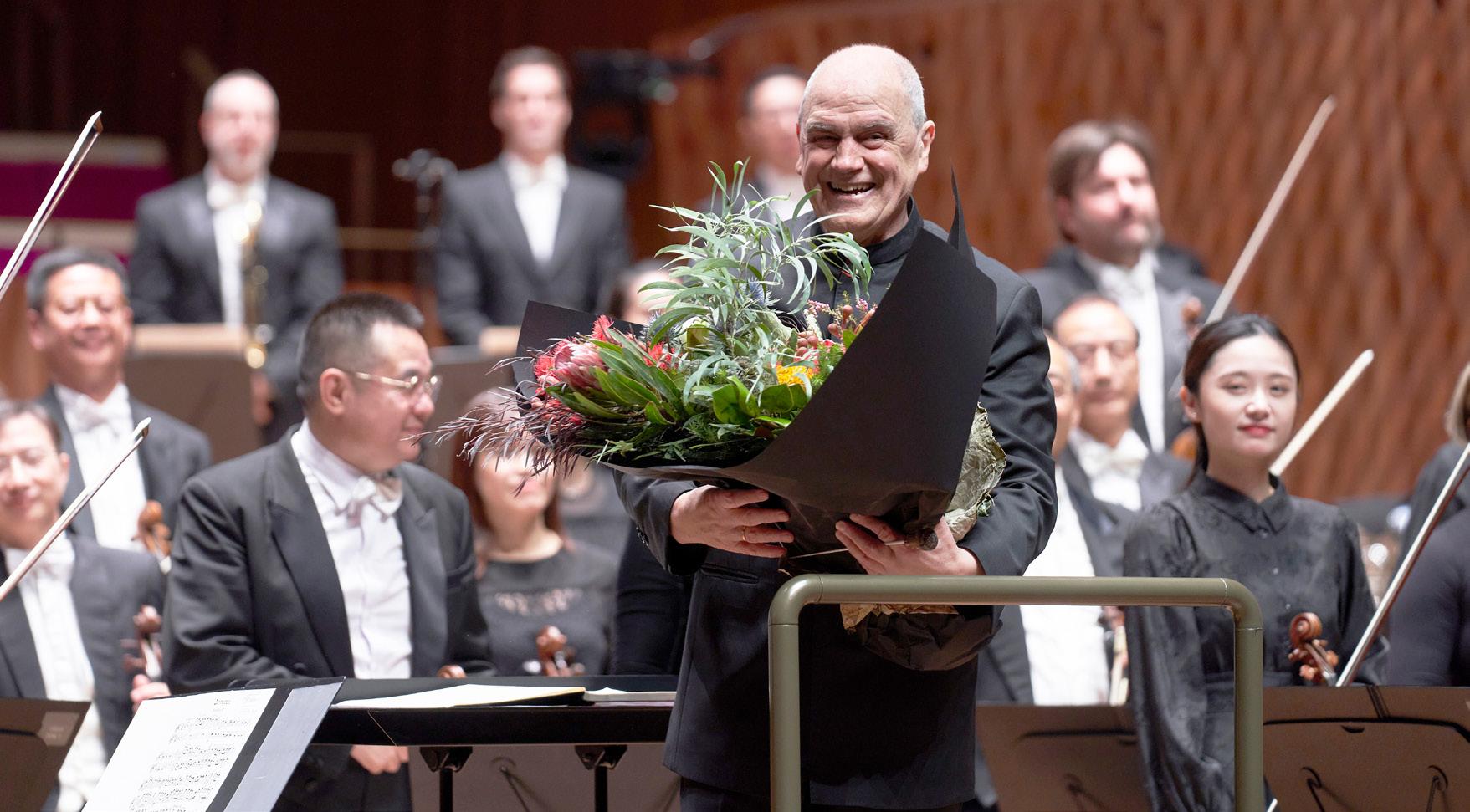
Armed with a spirit of musical curiosity and discovery, creative programming and his commanding presence on stage, Austrian conductor Hans Graf has raised orchestras to new heights while winning audiences young and old alike. With Hans Graf, the Singapore Symphony Orchestra (SSO) has achieved “a brave new world of music-making under inspired direction” (The Straits Times) since his appointment as Chief Conductor in the 2020/21 season, followed by five outstanding seasons as Music Director. Hans Graf’s farewell season in 2025/26 celebrates his remarkable achievements with his being named the SSO’s first Quantedge Music Director.
Graf was formerly Music Director of the Houston Symphony, Calgary Philharmonic, Orchestre National Bordeaux Aquitaine, Basque National Orchestra and Mozarteum
Orchestra Salzburg. He is a frequent guest with major orchestras and opera houses worldwide, receiving the Österreichischer Musiktheaterpreis award at the famed Vienna Volksoper in 2014.
Hans Graf’s discography includes extensive surveys of Mozart, Schubert and Dutilleux, as well as a GRAMMY and ECHO Klassik awardwinning recording of Berg’s Wozzeck. With the Singapore Symphony, Graf has recorded works by Paul von Klenau, Mozart, Stravinsky and his own edition of Kozłowski’s Requiem.
Hans Graf is Professor Emeritus at the Universität Mozarteum, Salzburg, and a recipient of the Chevalier de l'Ordre de la Légion d’Honneur (France) and the Grand Decoration of Honour (Austria).
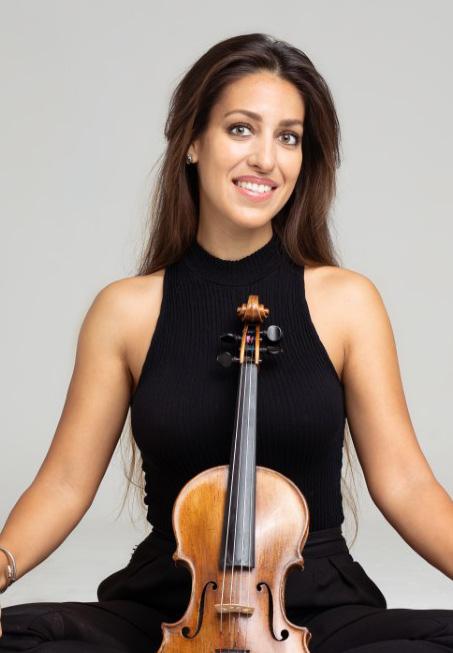
Recognised as a truly exciting and versatile violinist, Leticia Moreno “captivates audiences and critics alike with her natural charisma, virtuosity and deep interpretative force.” Her expressive artistry and commanding stage presence have earned her collaborations with many of the world’s leading conductors, including Zubin Mehta, Gustavo Dudamel, Esa-Pekka Salonen, Paavo Järvi, Vladimir Ashkenazy, Christoph Eschenbach, Yuri Temirkanov, Krzysztof Penderecki, and Peter Eötvös, among others.
In the 2025/26 season, Moreno brings her acclaimed chamber project Bach in the Jungle to the Enescu Festival and MontreuxVevey Festival, exploring the connections between Bach and South American classical traditions. She performs Jimmy López Bellido’s Aurora with the Orquesta Sinfónica de Tenerife and Pablo González, and Lalo’s Symphonie espagnole with the Orchestre du Capitole de Toulouse under Jonathan Nott.
Recent seasons have included performances with the Los Angeles Philharmonic and Gustavo Dudamel, NHK Symphony Orchestra and Paavo Järvi in Tokyo, NCPA Orchestra in Beijing with Vladimir Ashkenazy, and the Philharmonia Orchestra with Paavo Järvi. She also premiered Jimmy López Bellido’s Aurora with the Houston Symphony and Andrés Orozco-Estrada, later performing the work in Lima, deepening her artistic ties to Latin America.
Moreno studied with Zakhar Bron, Maxim Vengerov, and Mstislav Rostropovich at the Escuela Superior de Música Reina Sofía in Madrid, the Hochschule für Musik und Tanz in Cologne, and the Guildhall School of Music and Drama in London. She was the youngest member of the Alexander von HumboldtStiftung, and has won numerous international competitions including Szeryng, Concertino Praga, Novosibirsk, Sarasate, and Kreisler, as well as being named an Echo Rising Star.
Leticia Moreno plays a 1762 Nicola Gagliano violin.
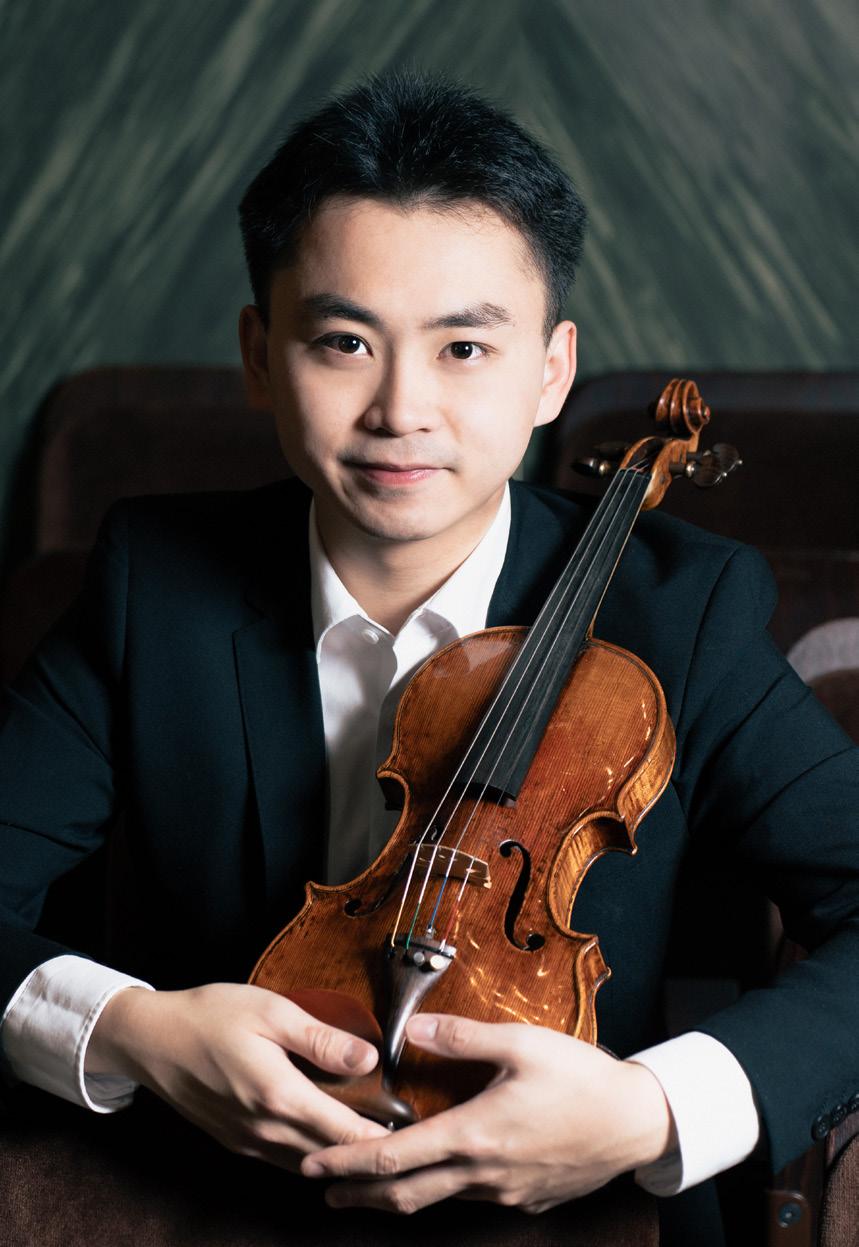
The outstanding violinist He Ziyu was the Eurovision Young Musician of the Year in 2014. In 2016 he won the Salzburg International Mozart Competition and the Yehudi Menuhin Competition, and was one of the youngest soloists ever with the Vienna Philharmonic when he made his debut with them under Adam Fischer at the Musikverein in 2017 aged 17.
He Ziyu recently made his debut with the Vienna Symphony Orchestra and was invited by Hans Graf to join the Singapore Symphony on several occasions for concerts and CD recordings. This season he will be in Vienna’s Musikverein with the Tonkünstler Orchestra and Maestro Graf for the Hindemith Violin Concerto.
He has worked with many distinguished conductors such as Diego Matheuz, James Judd, Howard Griffiths, Ilyich Rivas, Kazuki Yamada, Carlo Tenan, Kerem Hasan, Kriistina Poska, Pietari Inkinen, Thomas Rösner, Steven Sloane, Lio Kuokman and Valery Gergiev. As the violinist of the renowned Altenberg Trio, he regularly plays in their popular concert series in the Musikverein’s Brahms Hall and recently played the Mendelssohn Concerto in the Great Hall.
He Ziyu began violin lessons at five with Zhang Xiangrong in China. At 10 he was invited by Paul Roczek to study at Salzburg’s Mozarteum University, obtaining his violin master’s degree in 2021, and postgraduate studies with Benjamin Schmid. In 2023 he completed a master’s degree in viola with distinction after studies with Thomas Riebl. He plays the 1698 “ex Rouse-Boughton” violin by Antonio Stradivari on loan from the Austrian National Bank and a Giuseppe Guadagnini viola, dated 1797, thanks to generous private sponsors.
Hans Graf Farewell Series: Mystère de l’instant
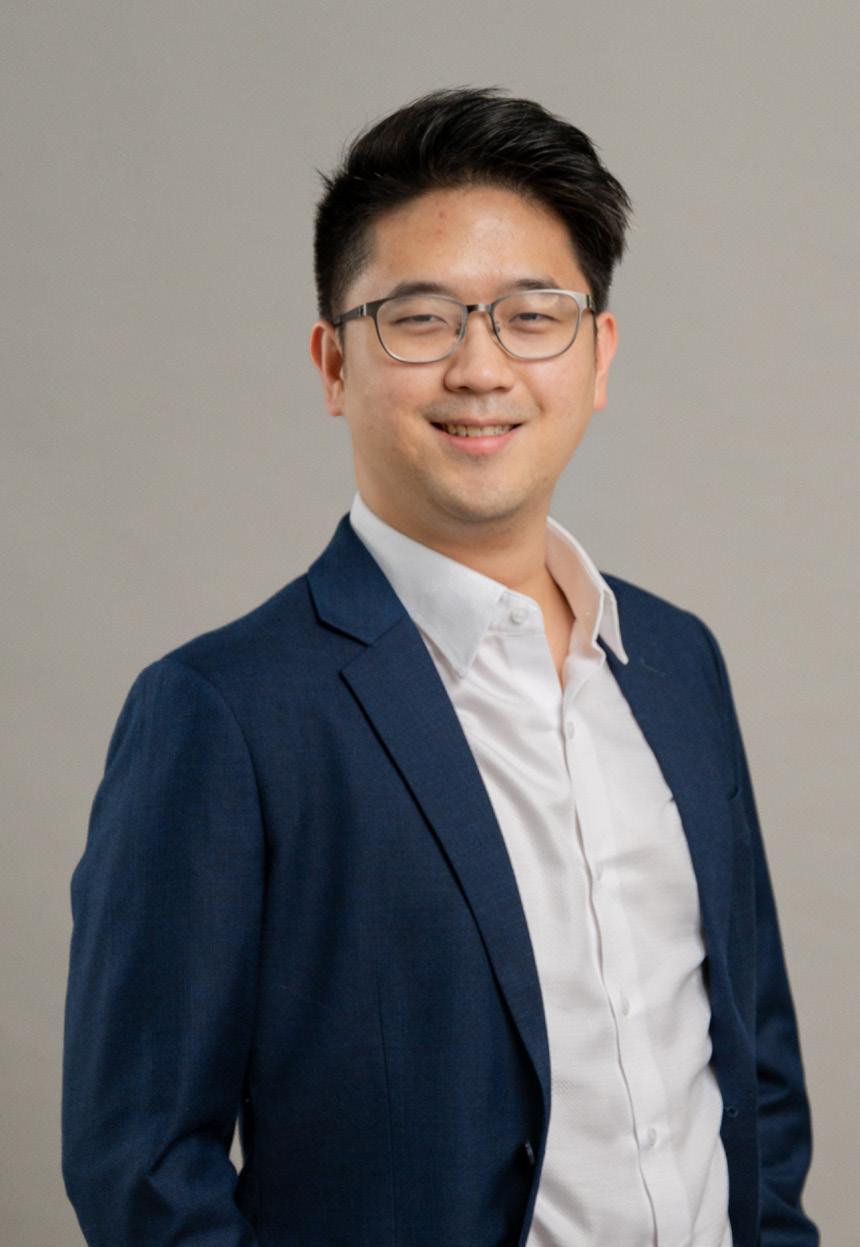
Hailed as a “Singaporean Saxophone Extraordinaire” by the Singapore Symphony Orchestra, Samuel Phua 潘培铭 is a recipient of the Singapore National Arts Council Arts Scholarship (Undergraduate) (2017). A passionate advocate of contemporary music, he has performed and recorded over 75 works by Singaporean composers, spanning Cultural Medallion recipients including Leong Yoon Pin, Dr Kelly Tang, and Phoon Yew Tien, to Young Artist Award recipients such as Emily Koh, Chen Zhangyi, Syafiqah 'Adha Sallehin, and Dr Zechariah Goh.
Samuel has appeared as a soloist with the Armenian State Symphony, Singapore Symphony Orchestra, Orchestra of the Music Makers, The Philharmonic Winds, Voices of Singapore, Singapore Wind Symphony, and VENTUS. As a chamber musician, he cofounded the Xin Saxophone Quartet and Modulah! Collective, creating interdisciplinary collaborations across music, storytelling and dance.
He is also a dedicated educator, teaching students of all ages in his private studio and at Tanglin Trust School.
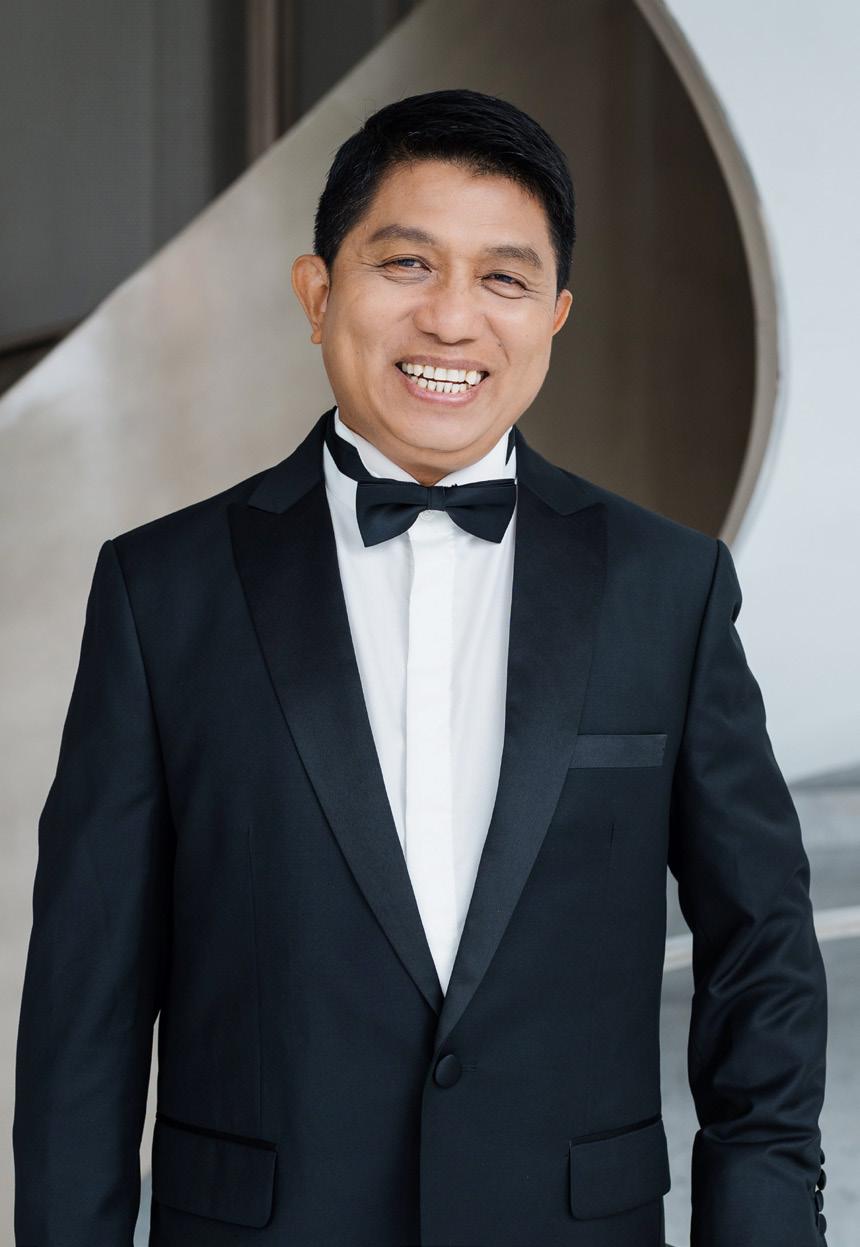
Eudenice Palaruan studied at the University of the Philippines College of Music, majoring in composition and choral conducting. He took further training in choral conducting at the Berliner Kirchenmusikschule, Germany. He graduated doctor of musical arts at St. Paul University Manila.
He was a singer, resident composer/arranger, and assistant choirmaster of the Philippine Madrigal Singers. In addition, he performed with the Berlin Spandauer Kantorei, the World Youth Choir, and sang countertenor with the Berlin Monteverdichor.
In addition, he was the principal conductor of the San Miguel Master Chorale. For years, he has been the resident conductor of the International Bamboo Organ Festival, where he performed and recorded significant selections of Latin-American baroque music. With his active involvement in the choralization of Philippine and other Asian indigenous music, he premiered a substantial volume of new Asian choral works. In addition, he was often invited to give lectures on non-Western vocal aesthetics.
Eudenice also arranges for the SSO choruses and the SSC community outreach programmes. In addition, the SSO choruses have premiered new choral works written by local composers and arrangers in Singapore under his direction.
He taught composition and choral conducting in institutions such as the University of the Philippines College of Music, the Asian Institute for Liturgy and Music, and St. Paul University College of Music and the Performing Arts. In addition, he teaches at the Singapore Bible College School of Church Music and directs the SBC Chorale. Eudenice is often invited to adjudicate in international composition competitions and give masterclasses in choral conducting.
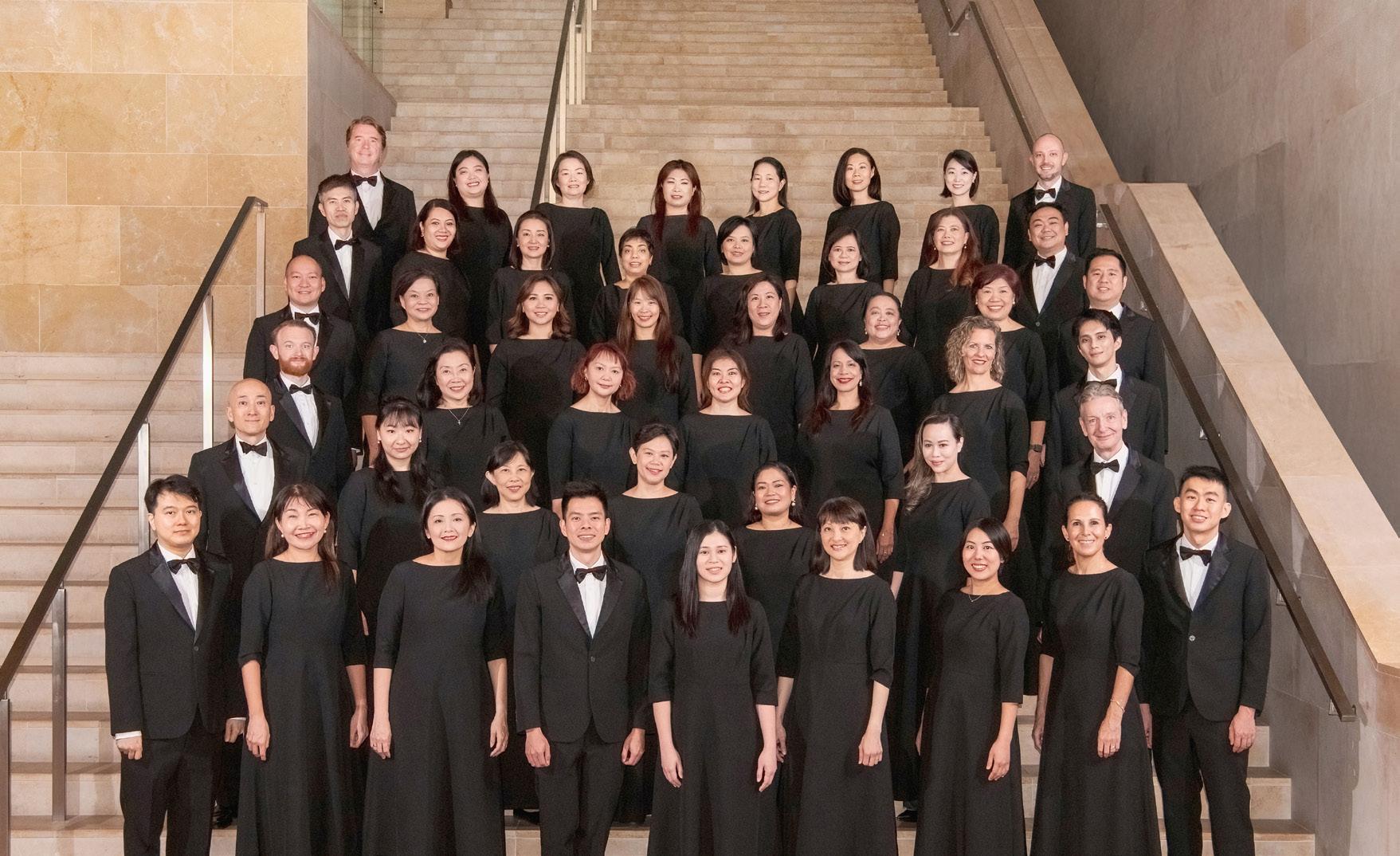
For 45 years, the Singapore Symphony Chorus (SSC) has brought together passionate choristers from varied backgrounds to create stirring symphonic music that transcends language and culture. More than a choir, the SSC is a vibrant community where lasting bonds are forged beyond the stage.
Committed to artistic excellence, its dedicated members rehearse weekly, performing at celebrated venues like the Esplanade and Victoria Concert Halls. Under the baton of world-class conductors such as Okko Kamu, Lan Shui, Lim Yau, Masaaki Suzuki, and Sofi Jeannin, the SSC has built a rich repertoire featuring masterpieces like Tippett’s A Child of Our Time, Arvo Pärt’s Te Deum, Britten’s War Requiem, and Bach’s St John Passion
The chorus’s unwavering dedication to delivering outstanding performances makes the SSC a leading choral ensemble – a shining example of music’s power to unite people across generations and cultures.
Eudenice Palaruan Choral Director
Ellissa Sayampanathan Assistant Choral Conductor
Ng Sheh Feng Choral Associate
Wong Yang Kai Choral Associate
Shane Thio rehearsal pianist
Hans Graf Farewell Series: Mozart and Salieri | 21 & 22 May 2026
Hans Graf Farewell Series: Mozart and Salieri
21 & 22 May 2026
Singapore Symphony Chorus
Soprano
Shireen Sanbhnani
Andrea Yenny Sjah
Vivienne Tan
Gladys Torrado
Alto
Truly Hutapea
Ng Sheh Feng*
Natividad Solaguren
Elizabeth Yeo
Tenor
Chong Wei Sheng
Jonathan Halliwell
Jeroven Marquez
Ian Tan
Bass
Ang Jian Zhong
Andy Jatmiko
Ethan Jerzak
Wong Yang Kai*
The Victoria Concert Hall has been a home for music, memories, and meaningful moments for generations.
Adopt a seat and be part of history by donating to the SSO Endowment Fund.
Your gift helps secure the future of our nation’s orchestra, so we can continue creating memorable shared musical experiences for years to come.
Seats are available for adoption in donation tiers of $8,000, $15,000 and $25,000, with various patron benefits.

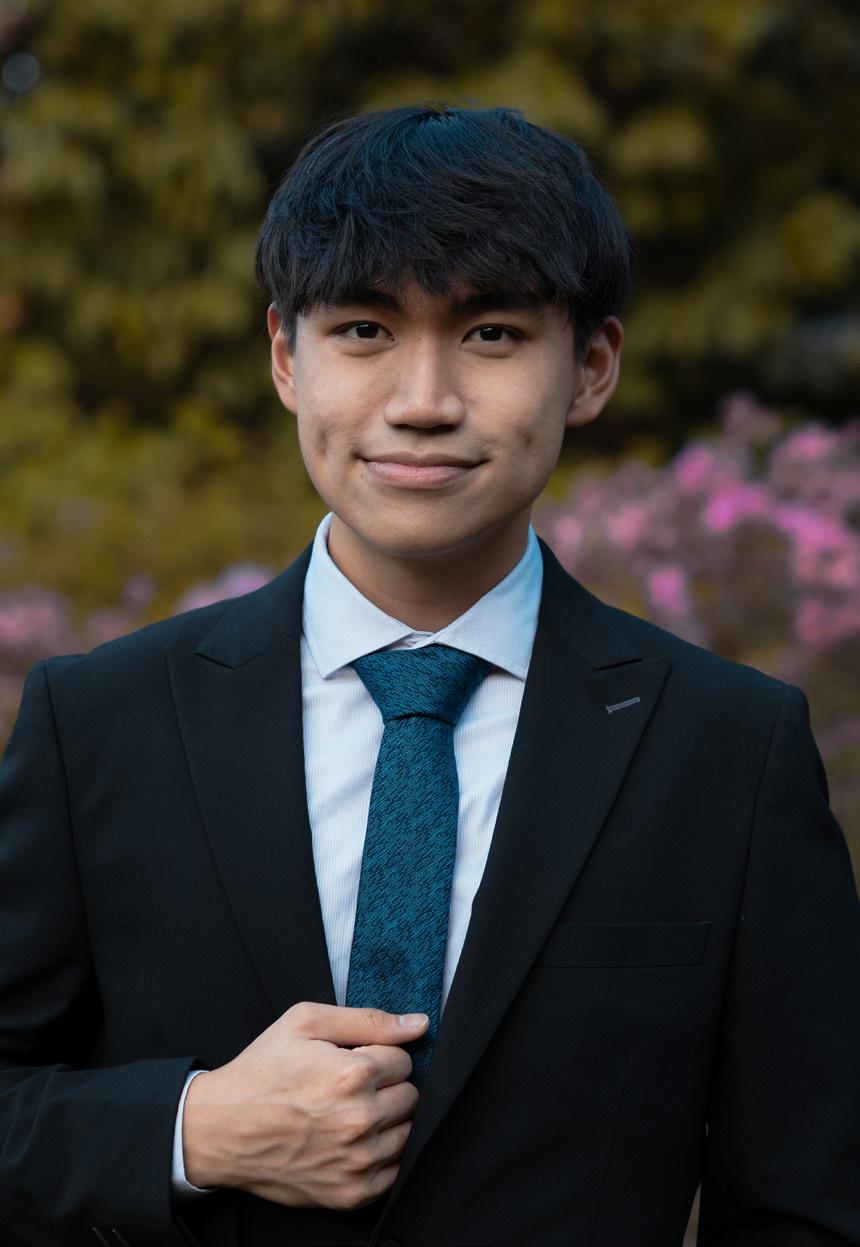
Adrian Tang is a Singaporean pianist who previously studied at the Yong Siew Toh Conservatory of Music, under Head Professor Albert Tiu. In 2024, he made his concerto debut with the Singapore Symphony Orchestra as a President’s Young Performer, performing Prokofiev’s First Piano Concerto.
Adrian is a prizewinner of numerous competitions, including the National Piano & Violin Competition (2023), Young Talents Project (2019), Steinway Youth Piano Competition (2018), PIARA Hamamatsu International Piano Competition (2018), and the Singapore International Festival of Music Competition (2017).
Alongside his pianistic training, Adrian was an MOE Music Elective Scholar and served as Principal Double Bassist and Vice-President of his school’s Philharmonic Orchestra. He is an alumnus of the Singapore National Youth Orchestra and continues to perform with the Orchestra of the Music Makers.
Beyond the classical stage, Adrian plays the electric guitar and bass with his band High Places, founded through charity concert initiatives. He is also actively involved in the worship ministry at Rock of Ages Church.
Adrian will be pursuing Economics (BA, Hons) at the University of Cambridge, while seeking to continue sharing the transformative power of music through performances, outreach initiatives, and social media platforms.
“Seldom has someone this young left such an indelible imprint on a tried-and tested warhorse, supremely confident yet highly nuanced was his memorable reading. Technically unimpeachable, he dispatched the harp-like Variation 11 and treacherously difficult runs of Variations 15 with seeming effortlessness. Furthermore, the manner in which he built up the famous Variation 18, with restraint and no little rubato before the collective outburst of emotion, was the touch of a master.” (The Straits Times, 14 September 2024 on the Concert Review: Ebullient show by pianist at President’s Young Performers Concert).
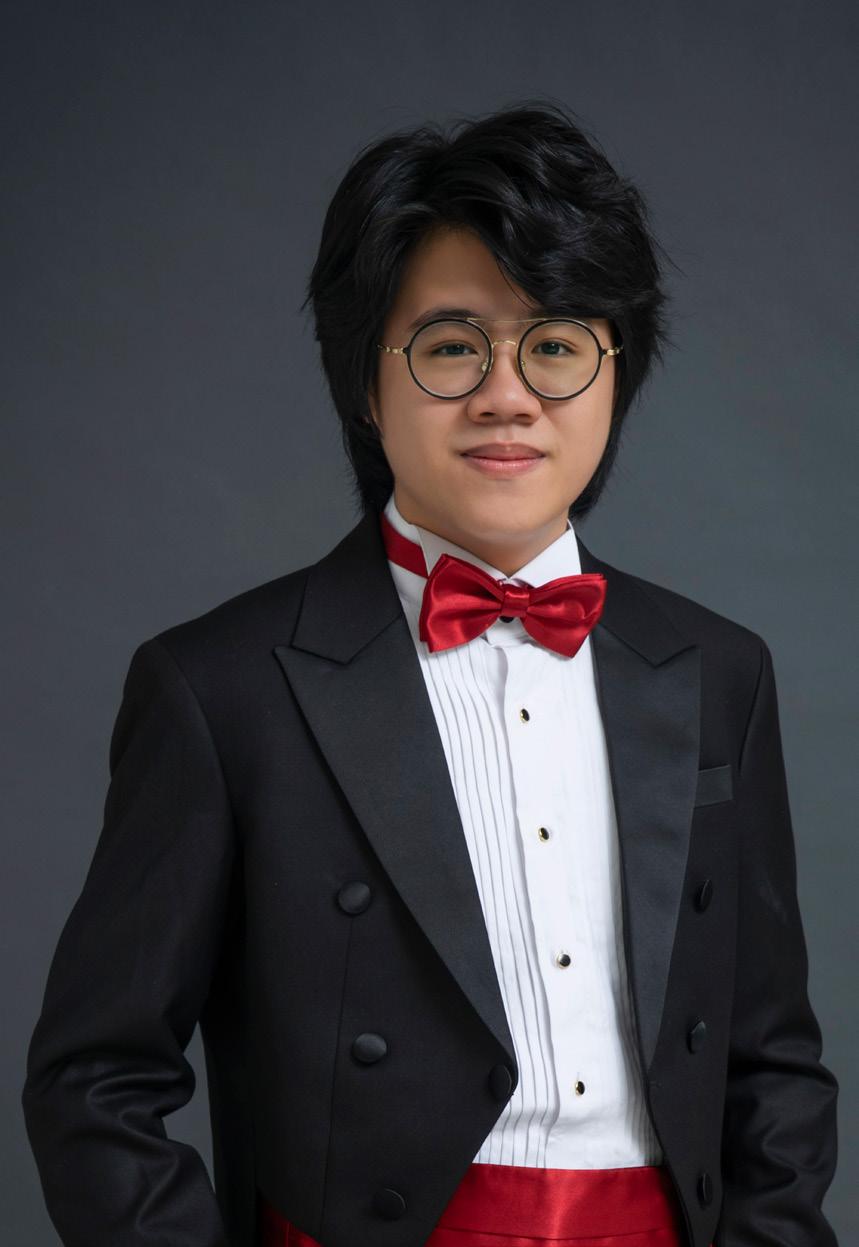
Born in 2008, Toby was the SSO President’s Young Performer to perform Rachmaninoff’s Rhapsody on a Theme of Paginini in 2024. He has been an active soloist since his concerto debut at ten with South Korea’s Soliall Philharmonic, Salzburg Chamber Soloists, Virtuosi Brunenses, Maestoso Chamber Orchestras, T’ang Quartet, Ding Yi Music Company, Kids’ Philharmonic and GeorgFriedrich-Händel-Gymnasiums. He was invited to perform at Berliner Philharmoniker, Suzhou Bay Grand Theatre and Suzhou Art Culture Centre for Bicultural Exchange.
In 2023, he won First and Carl Nielsen prize at the Aarhus International Piano Competition (Denmark) and Second prize at the Zhuhai Mozart International Piano Competition (China). In 2024, he was presented a Second prize by Dang Thai Son at the 6th Piano Island International Competition (Singapore) and Third prize at the Vigo International Piano Competition (Spain) where Martha Argerich is one of the semi & finals juries.
Currently, he is a student in the Young Artist Programme at the Yong Siew Toh Conservatory of Music under Albert Tiu, and studying privately with Armen Babakhanian.
tenor
Born in Leningrad in 1986, Boris Stepanov graduated from the Glinka Choral School in 2005 and later from the Saint Petersburg State Rimsky-Korsakov Conservatoire in 2010. In 2015, he furthered his studies at the Accademia Teatro alla Scala in Milan.
Boris has toured extensively across the globe, collaborating with many renowned conductors and orchestras. His diverse repertoire spans opera roles from the Baroque era to the 20th century. He is particularly noted for his performances of Bach’s Passions and Cantatas, as well as operas by Mozart, Rossini, and Donizetti.
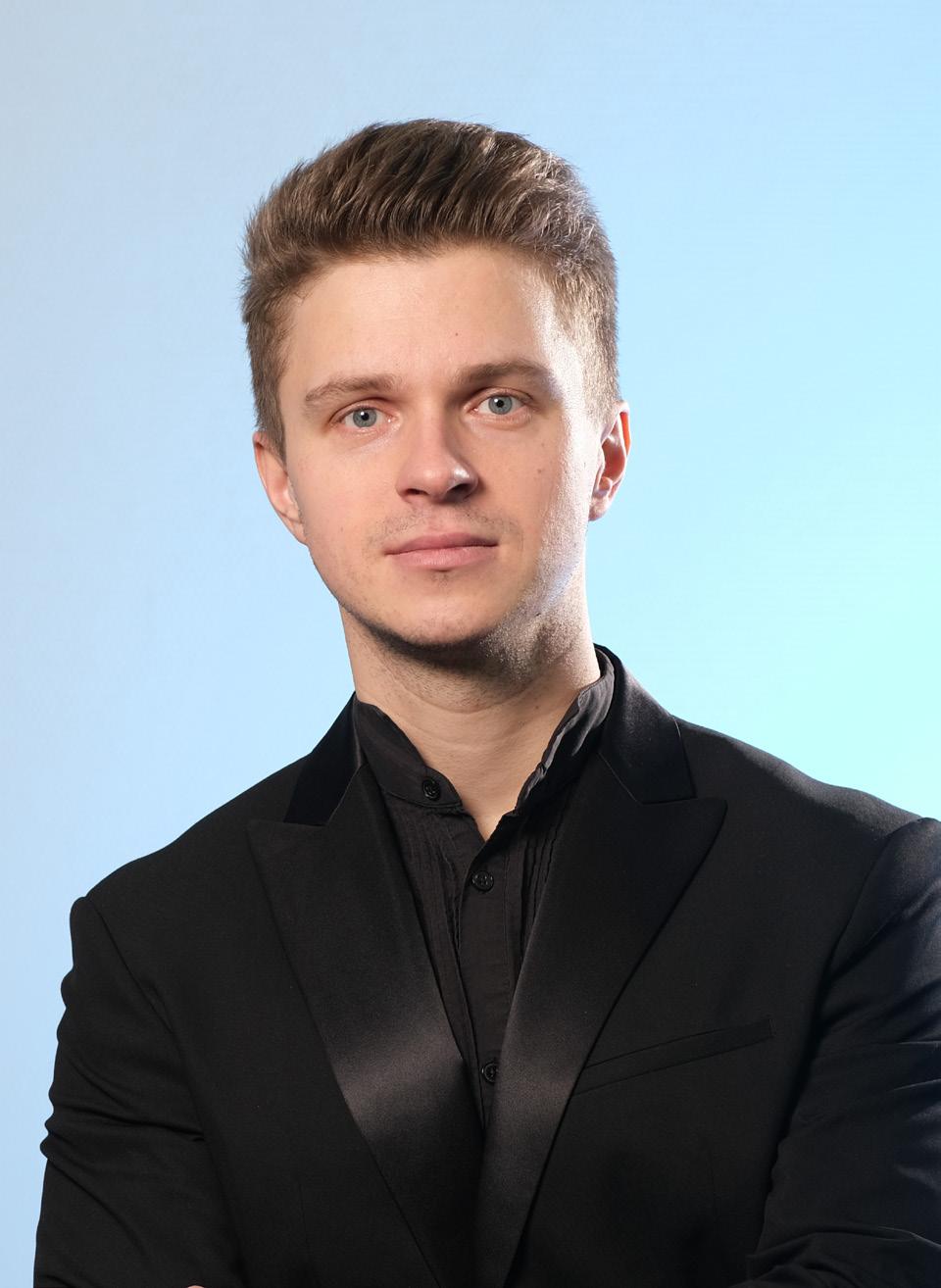
Currently a soloist with the Mariinsky Theatre in Saint Petersburg, his roles with the company include Ernesto (Don Pasquale), Nemorino (L’elisir d’amore), Lindoro (L’italiana in Algeri), Almaviva (Il barbiere di Siviglia), Ramiro (La Cenerentola), Tamino (Die Zauberflöte), Belmonte (Die Entführung aus dem Serail), Idamante (Idomeneo), Gérald (Lakmé), Lord Arturo Talbo (I puritani), lopas (Les Troyens), Tsar Berendey (The Snow Maiden), and the Astrologer (The Golden Cockerel).
In 2023, the Czech label Supraphon released a recording of Stravinsky’s Les Noces featuring Boris Stepanov in the tenor part. The following year, in 2024, Pentatone released a recording of Osip Kozlovsky’s Requiem, performed by Olga Peretyatko, Olesya Petrova, Boris Stepanov, Christoph Seidl, and the Singapore Symphony Orchestra.
Boris Stepanov is a laureate of several international competitions, including The Three Centuries of Classic Romance International Competition, the Georg Ots International Competition, the Hans Gabor Belvedere Singing Competition (Special Prize), and the Onegin National Opera Award.
The distinguished bass Mikhail Svetlov is known for the remarkable range and beauty of his voice, as well as for his outstanding dramatic ability. Opera News described him as “an astonishing performer,” while La Presse (Montreal) wrote: “Mikhail Svetlov was a sensation.”
Mikhail Svetlov’s international career began with a successful debut at the Wexford Festival Opera. He is a prize winner of the Viotti International Competition and was nominated for a Grammy Award. He was also honored with two Télérama Awards for recordings on the Le Chant du Monde label.
A principal soloist of the legendary Bolshoi Theatre in Moscow and the Metropolitan Opera, he has appeared to great acclaim in leading roles on many of the world’s most prestigious stages, including Royal Opera House, Carnegie Hall, Deutsche Oper Berlin, Teatro Colón, and at the Edinburgh Festival, Bregenz Festival, Santa Fe Opera Festival, and Britten Festival.
Recent engagements include appearances at the Metropolitan Opera in Die Meistersinger von Nürnberg and The Queen of Spades, as well as performances of Nabucco in Erfurt, The Miserly Knight in Boston, Petite messe solennelle in Washington, and Symphony No. 14 at Lincoln Center in New York.
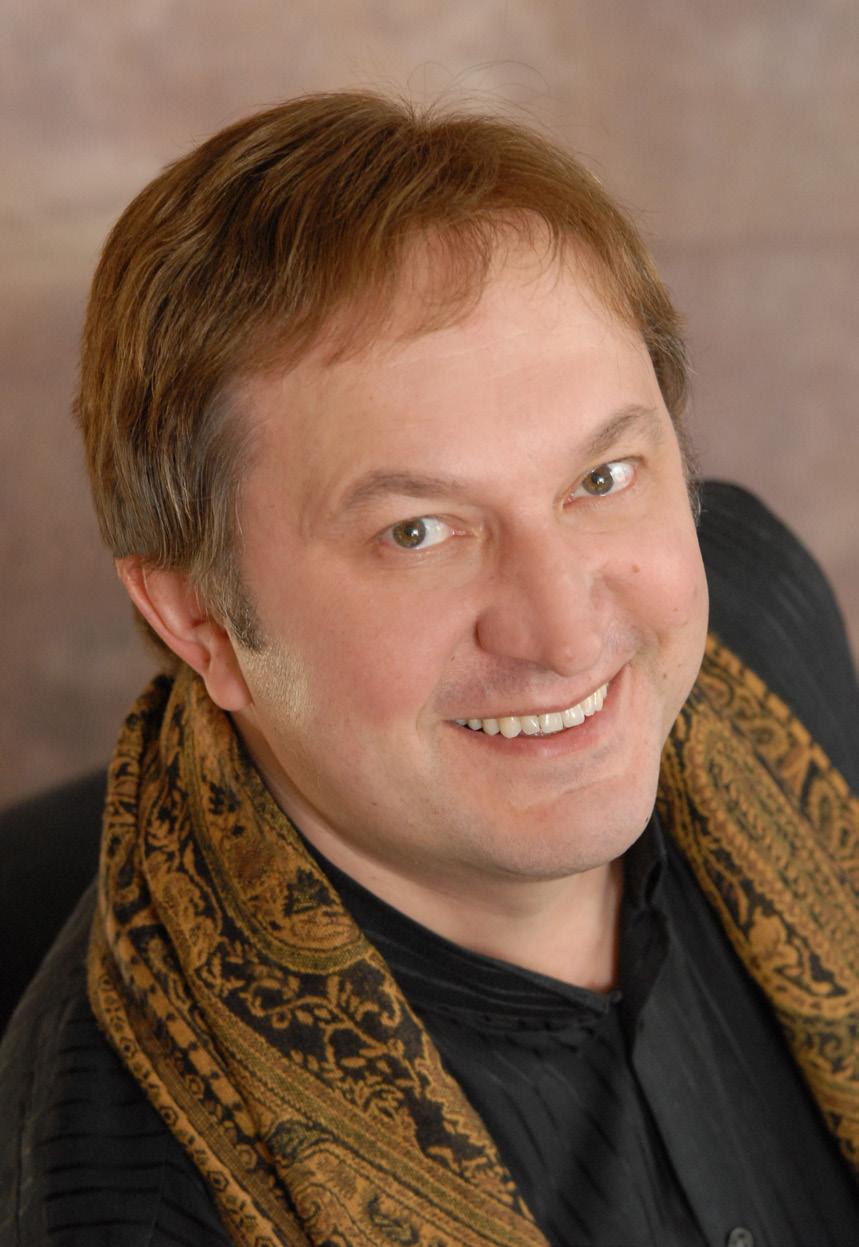
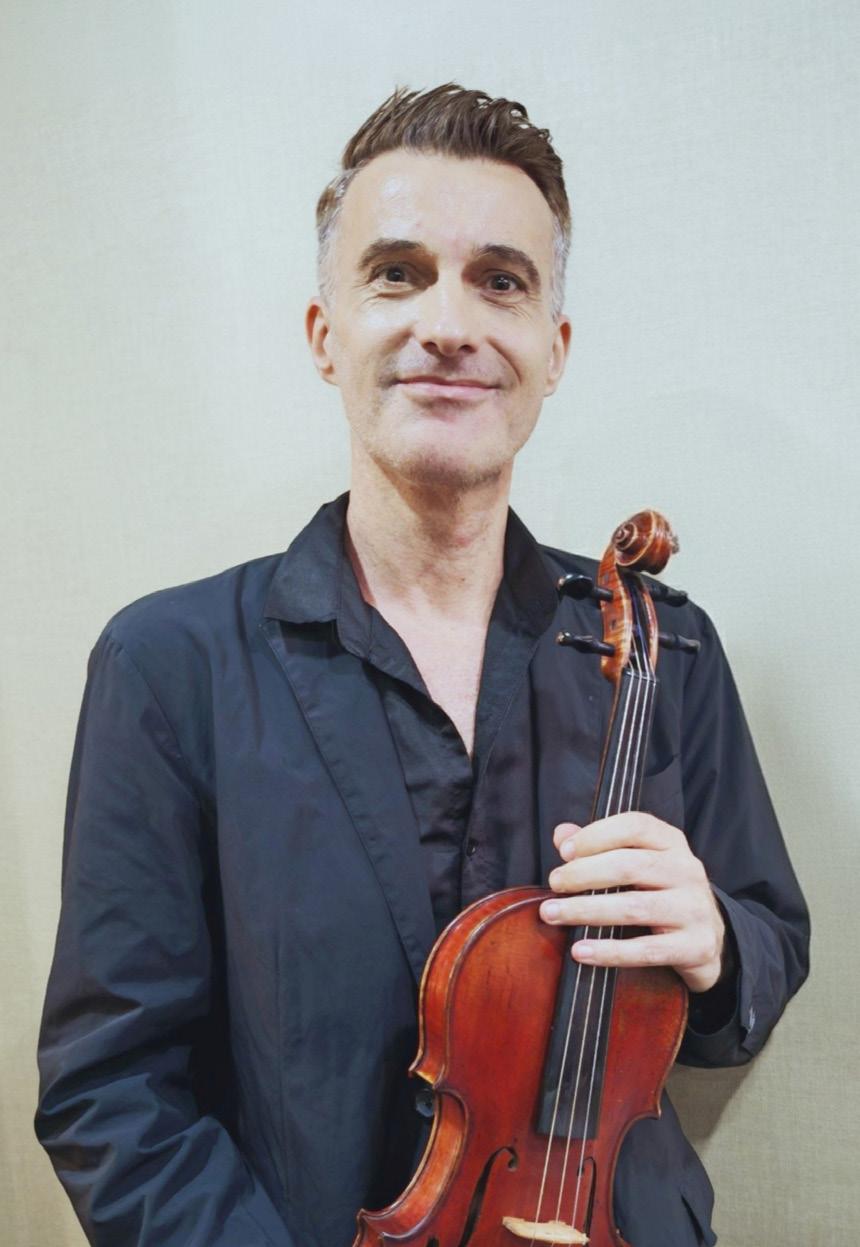
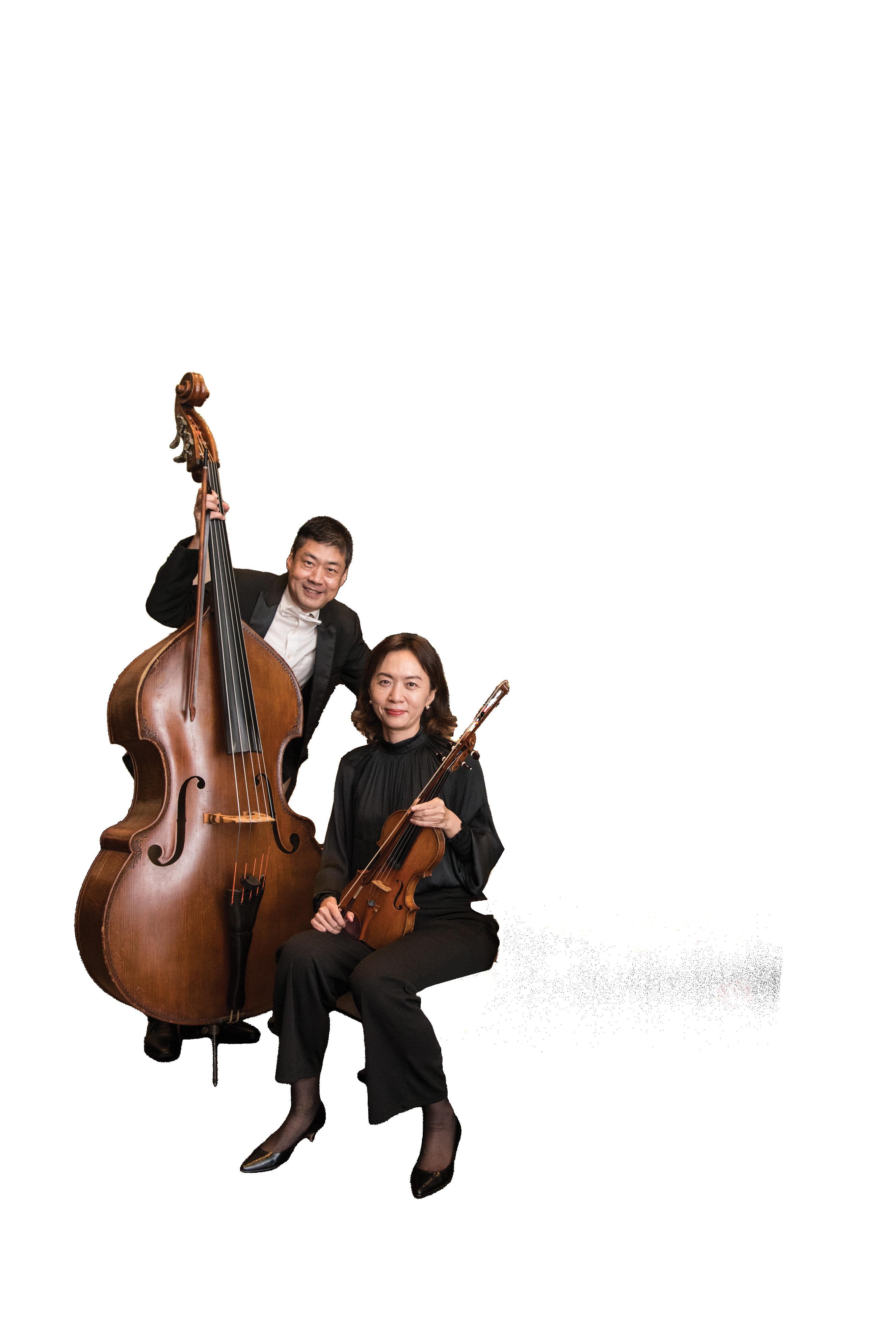
German-born violinist and violist Matthias Oestringer studied at the Akademie für Tonkunst Darmstadt, Germany, where he graduated with the Künstlerische Reifeprüfung. Before relocating to Singapore in 2002, he taught violin and viola at the Emmerich Smola Musikakademie Kaiserslautern in Germany.
Active in Singapore for more than two decades, Matthias maintains a vibrant freelance career, performing regularly with a wide range of orchestras, chamber groups, and productions. His work has included serving as Principal Violist for Base Entertainment’s Asian premiere of Andrew Lloyd Webber’s Sunset Boulevard as well as the Singapore season of The Phantom of the Opera.
A founding member of the Concordia Quartet, Matthias performed extensively on the viola with the ensemble until 2022. He is also a lecturer for principle studies violin at the Nanyang Academy of Fine Arts (NAFA) and the founder of Fidelio Music Studio, where he mentors young musicians who have received prizes in both local and international competitions.
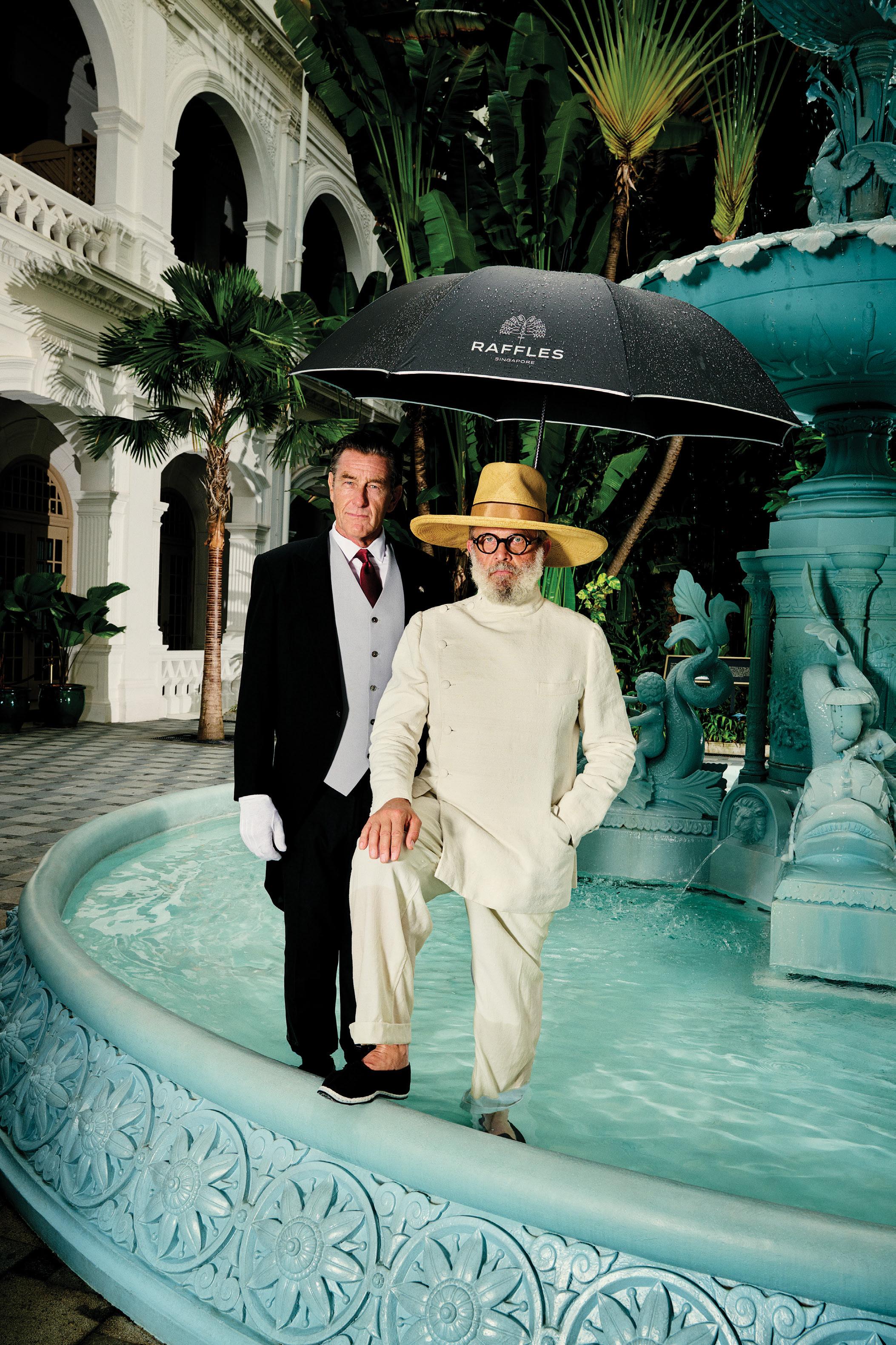
In addition to his musical career, Matthias has appeared as a model and actor, including portraying Sir Stamford Raffles in a 2019 MediaCorp documentary about Singapore. He has served on jury panels for Jugend Musiziert in Germany, the International Liszt Ferenc Competition in Malaysia, and the 4th Singapore International Music Competition (2025). He remains active as both performer and educator.
27 Feb – 1 Mar
26 – 29 Mar
27 – 31 May
31 Jul – 1 Aug
5 – 8 Nov
9 – 13 Dec

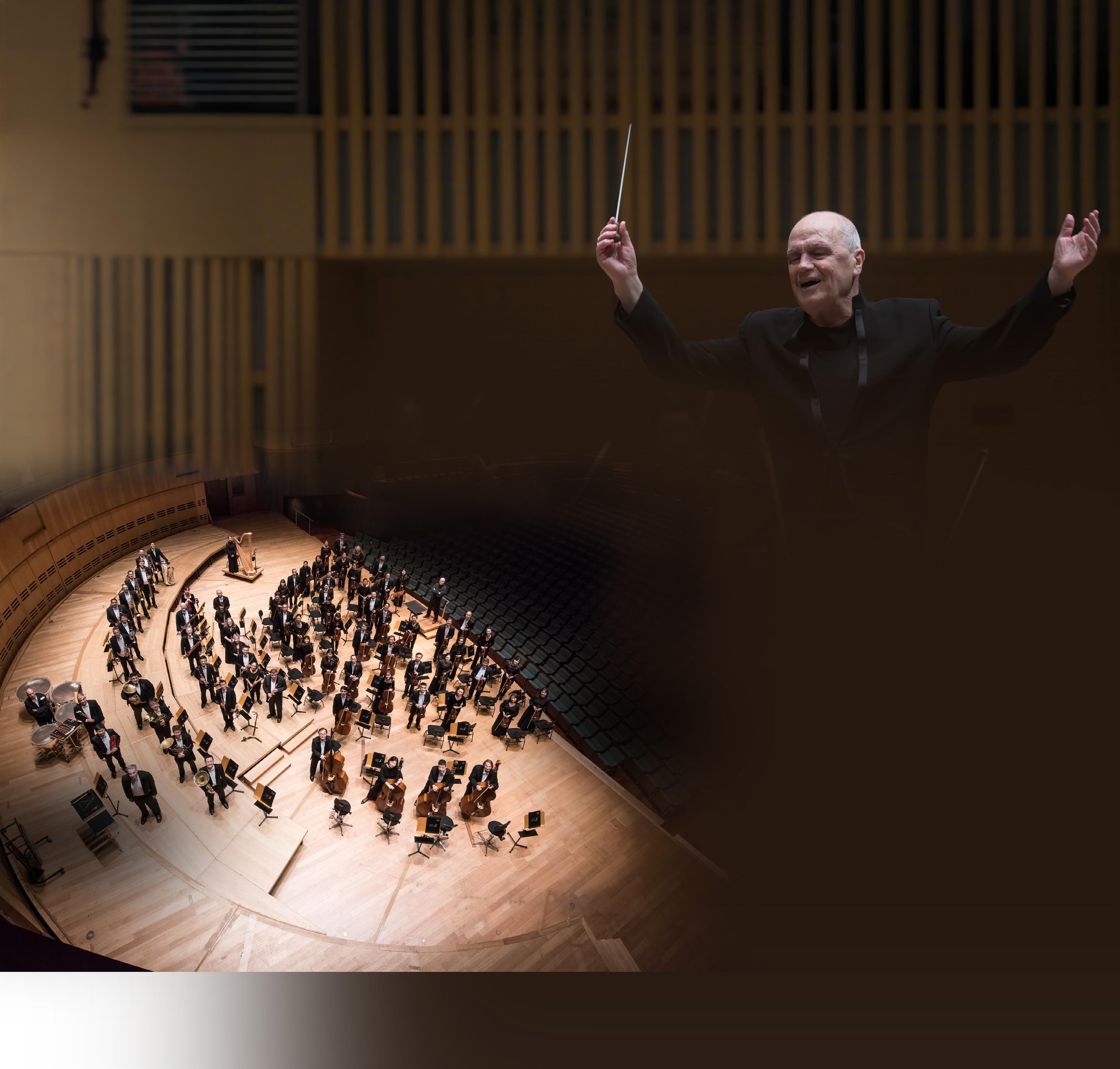
From the bottom of our hearts, we extend our deepest gratitude to Maestro Hans Graf, as he takes his leave from the SSO at the close of this season.
Maestro, thank you for a decade of leadership and close artistic collaboration. From guiding the orchestra through the challenges of the pandemic, to deepening our connection with Singapore audiences and expanding our international presence, your guidance has shaped us in lasting ways.
Join us next year for Maestro Hans Graf’s homecoming concert
5 & 6 Mar 2027
Esplanade Concert Hall
Hans Graf & Benjamin Schmid
– Proko ev and Paganini
Singapore Symphony Orchestra
Hans Graf conductor
Benjamin Schmid violin*
Hindemith
Symphony: Mathis der Maler
Prokofiev
Violin Concerto No. 1 in D major, Op. 19*
Kreisler
Violin Concerto in One Movement (after Paganini)*
Respighi
Pines of Rome
Thu & Fri, 7 & 8 May 2026
Esplanade Concert Hall
Singapore Symphony Orchestra
Hans Graf Quantedge Music Director
Leticia Moreno violin*
Erik Heide Guest Concertmaster
Rachmaninoff
The Rock, Op. 7 18 mins
Szymanowski
Violin Concerto No. 2, Op. 61* 23 mins
Intermission 20 mins
Rimsky-Korsakov
Scheherazade, Op. 35 42 mins

Concert Duration: approximately 2 hrs (including 20 mins intermission)

Check-in to tonight’s concert
Scan this QR code with the Singapore Symphony Mobile App.
In the 19th Century, nationalism was trending in Russia after Emperor Nicholas I adopted the motto of “Orthodoxy, Autocracy, and Nationality”, leading to a whole movement of ‘Russianness’ expressed in literature, art and music. In music, composers sought to incorporate Russian history, mythology and fairy tales; at the height of this movement were Rimsky-Korsakov and his four comrades (who would later come to be known as “The Mighty Handful”, whether sincerely or ironically). Wanting to deviate from the academic constraints of Classical forms, they wrote native and authentically Russian compositions that embraced freer forms and colourful orchestration.
This tradition was continued a generation later by Rachmaninoff who, despite the 20th-century modernist styles developing around him, chose to continue in the Romantic style and was considered the last of the Romantic composers. Today’s concert is bookended by music from Rachmaninoff and Rimsky-Korsakov.
1873 – 1943
The Rock, Op. 7 (1893)
Rachmaninoff had long admired RimskyKorsakov, and a fragment of an interview he gave in 1927 makes the importance of RimskyKorsakov’s legacy clear:
“When I had to leave my home and beloved Russia after the Bolshevik Revolution, my family and I were allowed to take only 500 roubles per person, and of all the music I owned, I opted to take only Rimsky’s Coq d’Or.”
It is no surprise, then, that Rachmaninoff dedicated his first symphonic poem to RimskyKorsakov in 1893. The piece is based on two literary sources: a poem of the same name by Russian Romantic poet Mikhail Lermontov, and Anton Chekhov’s short story On the Road. Rachmaninoff added Lermontov’s words as an epigraph to his score (as did Chekhov at the beginning of his story): “Upon the breast of a giant rock / A golden cloudlet rested for one night.”
In Lermontov’s poem, a cloudlet rests for a night on a giant rock; when it is blown away in the morning, it leaves a touch of moisture behind,
giving us the visual of an old rock ‘gently weeping’ after its departure.
Chekhov’s story tells this in a more literal way: a young girl and an older man meet while seeking refuge from a violent storm at a roadside inn. The man shares his life story with her, revealing his joys and sadness. The girl sympathises with him for it, but when morning comes, she continues on her way, leaving the man standing in the snow staring after her.
Rachmaninoff’s symphonic poem depicts this encounter in music: opening with the lowest voices of the orchestra in unison, a slow and heavy tune represents the gruff old man / the rock. The young girl / cloudlet enters as a joyful flute melody supported by the strings. Rachmaninoff creates the dialogue through the different tempi and registers of the instruments; no words are needed to express the emotions of the characters. When the woman leaves, Rachmaninoff brings back the opening musical theme combined with a funeral march in the brass, as if the old man is mourning her departure. The music ends the same way
Hans Graf Farewell Series: Scheherazade | 7 & 8 May 2026
it began: a lonely and sad line by the bass instruments.
Instrumentation
2 flutes, piccolo, 2 oboes, 2 clarinets, 2 bassoons, 4 horns, 2 trumpets, 2 trombones, bass trombone, tuba, timpani, percussion (triangle, cymbals, tam-tam, bass drum, tambourine), harp, strings
World Premiere 20 Mar 1894, Moscow
First performed by SSO 22 Mar 2013
1882 – 1937
Violin Concerto No. 2, Op. 61 (1933)
I II
Moderato – Molto tranquillo
Andantino sostenuto
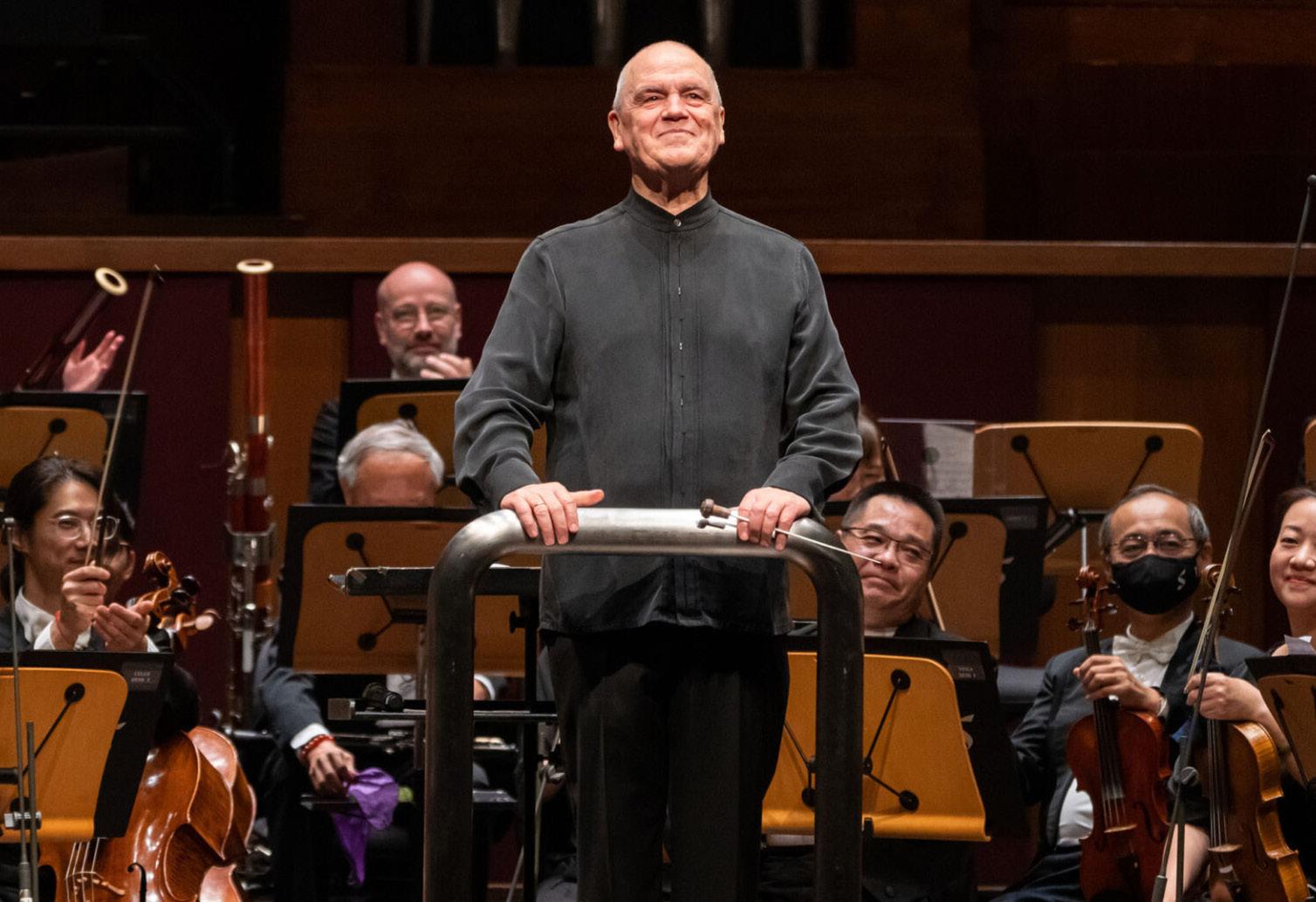
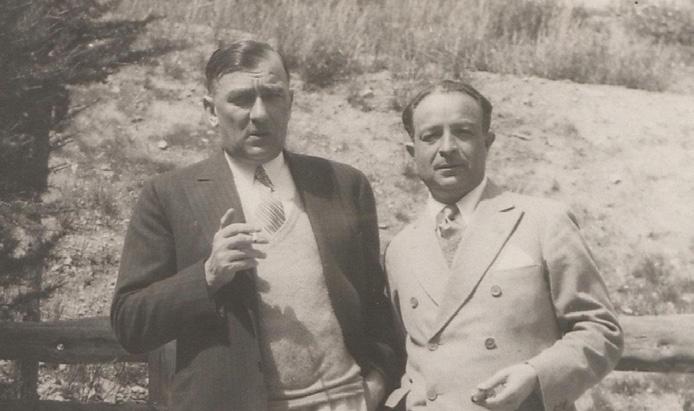
Karol Szymanowski was born with a silver spoon: his family owned a profitable estate in Tymoszówka, as well as properties in Elisavetgrad (in Ukraine) where they spent summers and winters. At the age of 19, he moved to Warsaw to study music, and met the violinist Paweł Kochański, who was 14. The two would form a lifelong musical friendship, and like the friendship between Brahms and Joachim, Kochański inspired both of Szymanowski’s violin concertos, contributing cadenzas to both of them.
The reunion to write the second concerto was hardly a happy one: after finding fame (Glazunov, Bax, Prokofiev and Stravinsky had all dedicated works to him) and working abroad for a period, Kochański, ill with cancer, visited Szymanowski in 1932, asking him to write another violin concerto. Szymanowski was hardly well either, having been afflicted with tuberculosis. Both worked on the violin part of the music and structure, Kochański wrote the cadenza. Szymanowski was only able to complete the orchestration in September 1933, his illness preventing him from working too much at it.
The concerto is structured as a single movement with two sections separated by a cadenza, and is deeply rooted in Polish folk music of the Tatra Mountains that Szymanowski loved. In the music we hear interwoven melodic lines supported by open fifth drones. After a lyrical episode and its climax the cadenza appears, charging in like a raging bear from the mountains that soon calms
Andantino – Molto tranquillo III IV
Allegramente – Molto energico
down, and breaks out into a joyful dance. The orchestra joins in the merry celebration of the second half, rhythmic and buoyant.
The concerto was premiered in October 1933 with Kochański as soloist; that was to be his final stage appearance before succumbing to cancer in January 1934. After his passing, Szymanowski added the dedication “To the memory of the Great Musician, my dear and unforgettable Friend, Paweł Kochański” to the published score.
solo violin, 2 flutes (1 doubling on piccolo), 2 oboes (1 doubling on cor anglais), 2 clarinets (1 doubling on E-flat clarinet), 2 bassoons (1 doubling on contrabassoon), 4 horns, 2 trumpets, 3 trombones, tuba, timpani, percussion (triangle, cymbals, suspended cymbal, snare drum, bass drum), piano, strings
World Premiere 6 Oct 1933, Warsaw
Scheherazade, Op. 35 (1888)
The Sea and Sinbad’s Ship
The Tale of Prince Kalendar I II 1844 – 1908
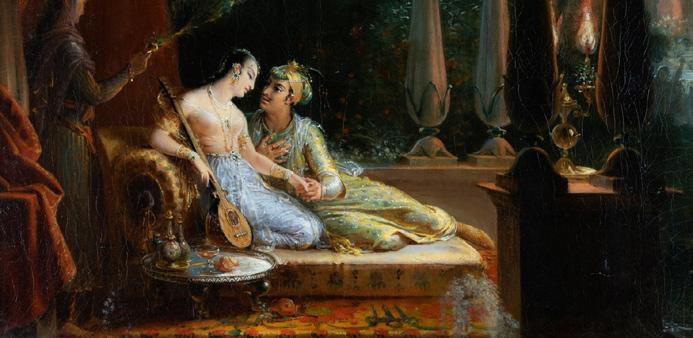
The orchestral suite Scheherazade was based on the Arabic tales from One Thousand and One Nights about Sultan Shahryar who, convinced that women were unfaithful, spent each night with a new bride only to murder her afterwards. The young Scheherazade outwitted the Sultan by telling him an exciting story ending with a cliffhanger to be continued the following night. This carries on for a thousand and one nights, until the sultan was gradually cured of his madness, and the couple lived happily ever after.
Just as Scheherazade captured the Sultan’s attention, Rimsky-Korsakov captures ours with his colourful orchestration. The music opens with the mighty voice of Sultan Shahryar, terrifying in its seriousness, and soon after we hear Scheherazade’s gentle voice, represented by the concertmaster as a violin soloist and accompanied by the harp, as she spins out her stories in gentle, sinuous lines.
In the music, we follow the two protagonists as Scheherazade tells stories of Sinbad the sailor, the adventures of a prince-turned-Sufi mystic, a tale of young love between a prince and a princess, and brings us through a bustling bazaar.
Having a naval career, Rimsky-Korsakov harboured a lifelong love of the sea and travelled to various exotic ports of call. The sea features largely in the music, the wild waves represented by the rising and falling accompaniment in the cellos, and the timpani’s intense roll.
The Young Prince and the Princess The Festival at Bagdad; The Sea; The Ship Goes to Pieces on a Rock
Rimsky-Korsakov’s adventures are resplendently recreated in Scheherazade, incorporating textures and sounds not often heard in Western music up till then. In the first edition of the score, RimskyKorsakov included fragments of the story as an audience guide to listening, but soon removed them, wanting to leave “an impression that it is beyond a doubt an Oriental narrative of some numerous and varied fairy-tale wonders and not merely four pieces played one after the other.”
Instrumentation
2 flutes (1 doubling on 2nd piccolo), piccolo, 2 oboes (1 doubling on cor anglais), 2 clarinets, 2 bassoons, 4 horns, 2 trumpets, 3 trombones, tuba, timpani, percussion (triangle, cymbals, suspended cymbal, tam-tam, snare drum, bass drum, tambourine), harp, strings
World Premiere 28 Oct 1888, St. Petersburg
First performed by SSO 4 Sep 1981




Fri, 15 May 2026
Victoria Concert Hall
Singapore Symphony Orchestra
Hans Graf Quantedge Music Director
He Ziyu violin1
Mystère de l’instant for 24 Strings, Cymbalum and Percussion 18 mins
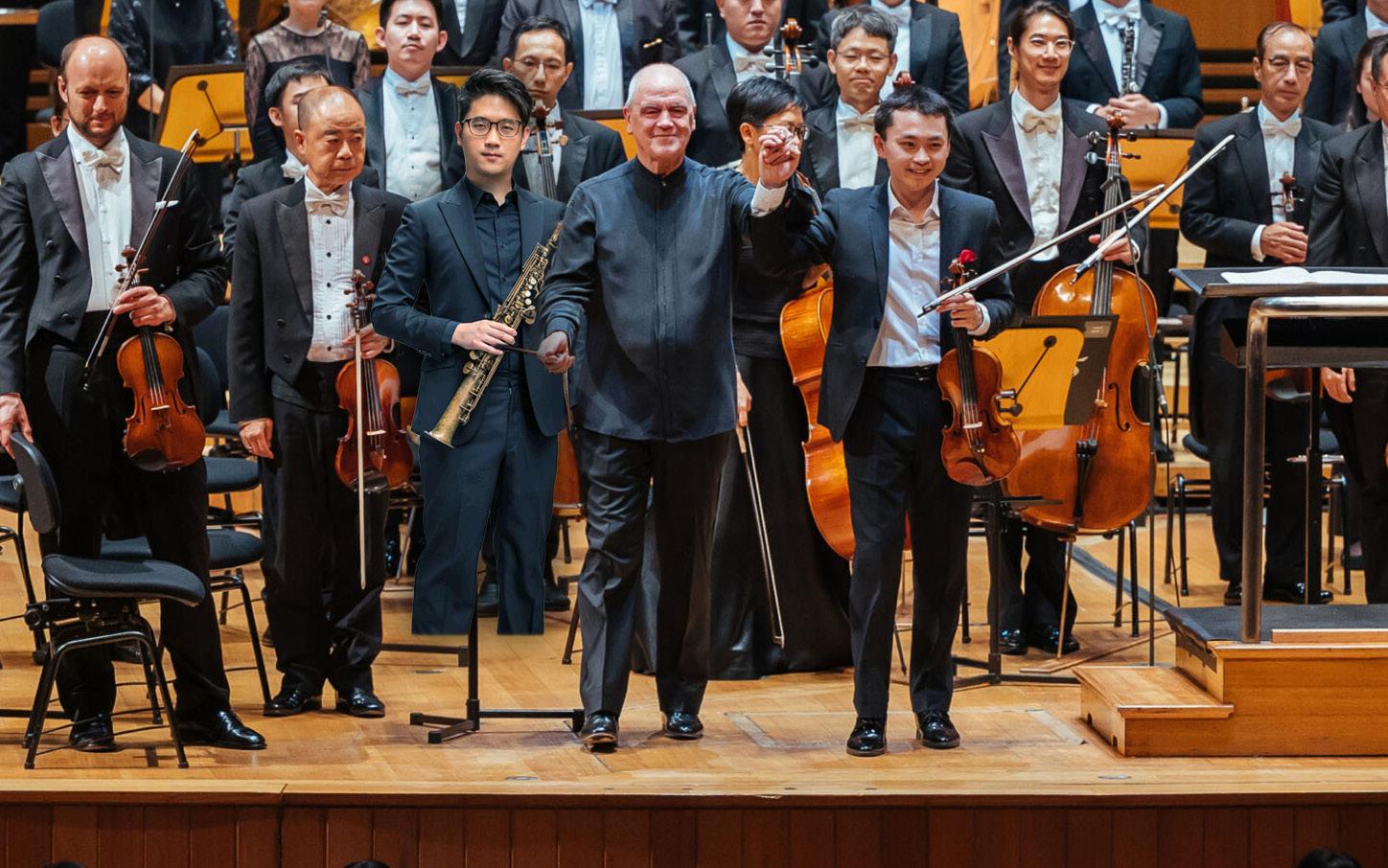
Samuel Phua saxophone2
Chan Yoong-Han
Acting Associate Concertmaster

Check-in to tonight’s concert
Scan this QR code with the Singapore Symphony Mobile App.
Introduction and Rondo Capriccioso, Op. 28¹ 10 mins
Ravel
Tzigane¹ 9 mins
Intermission
20 mins
Milhaud
Scaramouche, Op. 165c² 9 mins
Poulenc
Sinfonietta 29 mins
Concert Duration: approximately 1 hr 50 mins (including 20 mins intermission)
Mystère de l’instant for 24 Strings, Cymbalum and Percussion (1989)
Appels
Échos
Prismes
Espaces lointains
Litanies
An uncompromising perfectionist, Dutilleux’s output was modest in numbers yet sophisticated in its aesthetic originality. His style is distinguished by sensual timbres and textures, and a kind of rhythmic and formal freedom that placed him firmly within the lineage of modern French composition established by Debussy and Ravel. Yet he remained independent of the dominant schools and “-isms” of the 20th century, instead drawing inspiration from literature, painting, and personal experience.
Dutilleux described Mystère de l’instant as a series of “snapshots”. One summer evening near the Loire and the Vienne, the composer came across a medley of birdsong—hundreds of birds, each with distinct timbre and rhythm, producing a texture that was captivating precisely because of its apparent lack of organisation. Inspired by the link between nature and the unaccountability of artistic creation, Dutilleux stepped away from his usual process of continuous organic growth and wrote a ten-section work unfolding as a sequence of spontaneous, self-contained impressions. Each title reflects either a compositional process or a defining musical gesture, and the inclusion of the cimbalom—also featured in his Violin Concerto— introduces an “exotic” timbre.
Inspired by the birdsong phenomenon, Appels (Calls) draws us into a beguiling atmosphere, with fragmented violin lines set against shimmering harmonics as they descend and thicken. In Échos, clusters morph within a hushed stasis, exploring
Choral
Rumeurs
Soliloques
Métamorphoses (sur le nom Sacher)
Embrasement
subtle colouristic transformations. Prismes refracts an inquisitive cimbalom figure across the strings’ pizzicato, as though heard through an auditory prism.
In Espaces lointains (Distant Spaces), extremes of register unfold with the time signature changing nearly every bar. All temporal grasp is surrendered to a feeling of suspension. Litanies introduces a unison melody reminiscent of Gregorian chant, with delicate cimbalom interjections. This leads to Choral, richly harmonised for four cellos. With restless motion, Rumeurs (Murmurings) builds its texture from layered glissandi.
Soliloques provides a moment of introspection through a sequence of overlapping solo cadenzas, highlighting individual instrumental voices. In Métamorphoses, a six-note motif derived from the name of Paul Sacher (using German and Italian musical nomenclature) appears in varied guises. Finally, Embrasement (Conflagration) brings the piece to a fiery conclusion.
Instrumentation
timpani, percussion (suspended cymbal, tam-tam, gong), cimbalom, strings
World Premiere 22 Oct 1989
| 15 May 2026
1835 – 1921
Introduction and Rondo Capriccioso, Op. 28 (1863)
As a 15-year-old, the violinist Pablo de Sarasate approached Saint-Saëns and asked him “in a most amiable manner and as if it were the simplest thing in the world” to write a concerto for him. He would become the dedicatee of Saint-Saëns’s third violin concerto and the enduringly popular Introduction and Rondo Capriccioso
This connection explains the “Spanish” essence of the piece in its rhythmic vitality and melodic turns. The structure resembles the recitative–aria–cabaletta sequence of Italian opera. A languid, improvisatory Introduction gives way to the spirited Rondo Capriccioso, whose infectious themes and brilliant passagework showcase the soloist’s flair.
1875 – 1937
Tzigane (1924)
The great-niece of violinist Joseph Joachim, the Hungarian violinist Jelly d’Aranyi was known for her extensive collaboration with Béla Bartók, among other composers. In 1922, she performed Ravel’s Sonata for Violin and Cello with cellist Hans Kindler at a private soireé in 1922. Maurice Ravel was part of the audience, and he was so charmed by her playing that he asked to hear some Hungarian gypsy tunes. D’Aranyi obliged, playing tune after tune late into the evening. “You have inspired me to write a short piece of diabolical difficulty, conjuring up the Hungary of my dreams. Since it will be for violin, why don’t I call it Tzigane?”, he wrote to her shortly after their meeting.
Instrumentation
solo violin, 2 flutes, 2 oboes, 2 clarinets, 2 bassoons, 2 horns, 2 trumpets, timpani, strings
World Premiere
4 Apr 1867, Paris
First performed by SSO
9 Oct 1981 (Aaron Rosand, violin)
For the next two years, Ravel buried himself in Hungarian folklore and music, studied Liszt’s Hungarian Rhapsodies and Paganini’s Caprices, and consulted with d’Aranyi on technical matters. The result, delivered to d’Aranyi just four days before the premiere in London on 26 April 1924, was what Ravel called a “showpiece à la hongroise”.
The first half of Tzigane (a variant form of “gypsy” but offensive to the Romani people) sees the violinist playing alone, using every technical trick possible, in a free rhapsodic cadenza of sorts. Then the piano comes in, as if a cimbalom (in the original version Ravel specifies the use of a luthéal – an iron mechanism that, when mounted on a piano, makes the
piano sound like a Hungarian cimbalom), in a wild dance that is sparkly, playful and slightly manic. Ravel subsequently worked on an orchestral version, which premiered in Amsterdam by the Concertgebouw and Samuel Dushkin half a year later.
Farewell
Instrumentation
solo violin, 2 flutes (1 doubling on piccolo), 2 oboes, 2 clarinets, 2 bassoons, 2 horns, trumpet, percussion (triangle, suspended cymbal, glockenspiel), harp, celesta, strings
World Premiere 26 Apr 1924, London
First performed by SSO 16 Jul 1983
Scaramouche, Op. 165c (1937)
I 1892 – 1974 II III
Modèrè
Brazileira
A central figure of musical modernism, Milhaud is best known for his distinctive use of polytonality and his engagement with popular and global idioms. Scaramouche emerges from his work for stage and screen in the 1930s: its outer movements derive from incidental music for Molière’s Le Médecin volant (The Flying Doctor), while the central movement draws on material from his score to Jules Supervielle’s Bolivar. The title alludes to Scaramouche, the quick-witted stock figure of the Italian commedia dell’arte, an art form known for “thumbing its nose at authority”.
Lively and compact, Vif opens with melodic fragments reminiscent of the childhood song Ten Green Bottles. This humorous idea is animated by syncopation, brilliant octave writing, and flashes of polytonal colour. A contrasting central section introduces a march-like idea. The tresillo (a 3+3+2 rhytmic pattern commonly found in music from the African diaspora, Latin America, and modern pop music) and moments of three-against-four polymetre offer much rhythmic vitality.
With a lullaby-like atmosphere, Modéré proceeds with three main ideas: an exchange in dotted rhythm, a lyrical theme, and a 6/8 passage reminiscent of a barcarolle. These are woven together with subtle variation. The finale, Brazileira, takes the form of a samba associated with Brazilian Carnaval. Its energetic drive reflects Milhaud’s experiences in Rio de Janeiro and his encounter with composers such as Ernesto Nazareth. The result is a brilliant conclusion that exemplifies his flair for musical montage.
Instrumentation
solo alto saxophone, 2 flutes (1 doubling on piccolo), 2 oboes, 2 clarinets, 2 bassoons, 2 horns, 2 trumpets, 2 trombones, percussion (triangle, cymbals, snare drum, tenor drum, bass drum, castanets, tambourin provençal, tambourine, wood block), strings
World Premiere
1 Jul 1937, Paris (Op. 165b, piano duo version)
First performed by SSO 6 Aug 2004 (Claude Delangle, saxophone)
Molto vivace I II 1899 – 1963
Sinfonietta (1948)
Allegro con fuoco
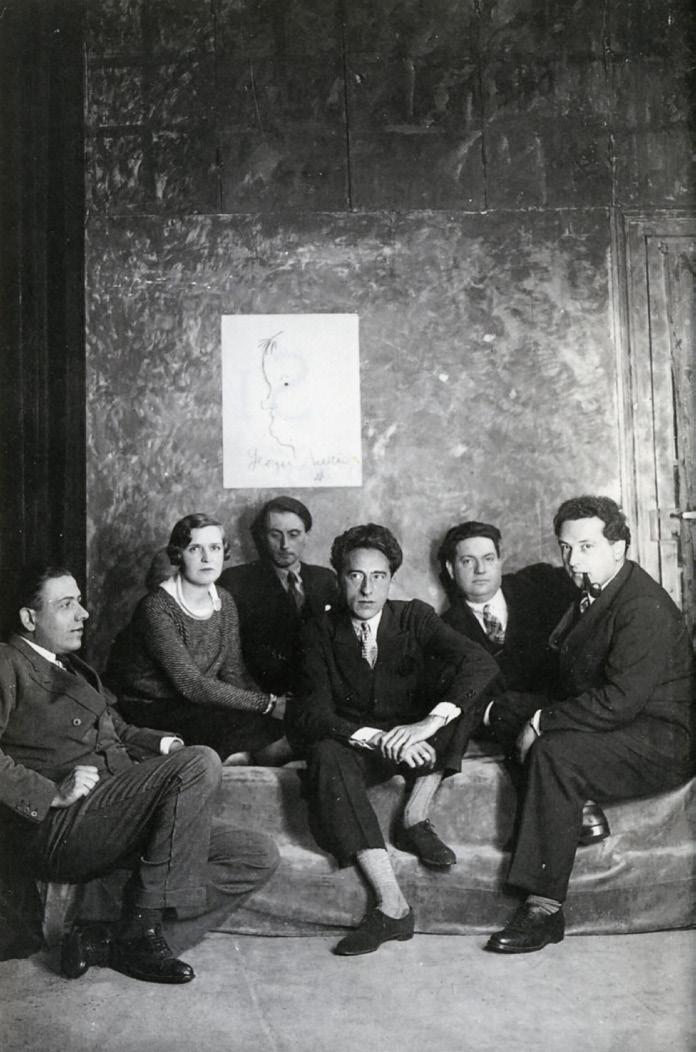
A member of Les Six—who themselves preferred the name Les Nouveaux Jeunes (The New Youth)— Poulenc cultivated a style marked by wit, elegance, and an instinct to entertain. Drawing on Parisian music hall, jazz, and Latin idioms, his music often carries a certain “sassiness”, even as his later works deepen in expressive scope. His crowning achievements lie in song and sacred music, while his orchestral output is comparatively modest, favouring suites, miniatures, and concertante works.
The Sinfonietta, his only symphonic-scale work, arose from a BBC commission to celebrate the first anniversary of the Third Programme. The commission was for a work lasting around fifteen minutes, along the lines of Prokofiev’s Symphony No. 1 “Classical” (1917). In a familiar musician’s conundrum, Poulenc was hampered by a period of little inspiration, his prioritisation of his opera Les Mamelles de Tirésias, and some recitals with Pierre Bernac. The Sinfonietta recycles “three pretty themes” from a string quartet which received only a private performance before Poulenc tossed it into a Parisian gutter. The work soon grew beyond its intended proportions and, as a selfprofessed “slowcoach”, Poulenc failed to meet the deadline. Worried that the BBC would be irritated by the delay, Poulenc sent a postcard on 1 October 1948: “I offer to the BBC all my heart and the world première of my Sinfonietta in exchange for a simple kiss of peace.”
Andante cantabile
Finale: Prestissimo et très gai
The title Sinfonietta signals a lighter ambition: to entertain rather than wrestle with what he saw as the “dreary, pedantic” weight of the AustroGerman symphonic tradition. The composer himself was somewhat shocked by the easygoing result and thought that he might have “dressed too young for his years” (he was 48).
With the wind instruments lifted into prominence by frequent solos, Poulenc adds a harp, a rather French touch in the symphonic genre. It is a vivid synthesis of his style: melodically generous, structurally fluid, and unified through recurring ideas and self-quotation from earlier works.
The Allegro con fuoco juxtaposes a taut, rhythmically driven minor-key idea with a succession of lyrical major-key melodies. Although it loosely follows sonata principles, its character is more mercurial, reflecting Poulenc’s own injunction: “Don’t analyse my music – love it!” Recurrent material is instead propelled by shifts in orchestral colour rather than traditional thematic development. A light-footed scherzo in 6/8 follows, breezy and direct, while the slow movement (Andante cantabile) unfolds as a seamless flow of melody, at times glancing towards a surprisingly Brahmsian warmth.
The finale (Prestissimo et très gai) begins with a pointed, Stravinskian gesture before launching into a high-spirited, classically inflected main theme with echoes of Mozart (in particular the finale of Eine kleine Nachtmusik). Though it hints at a grand apotheosis, the music ultimately sidesteps grandeur with an abrupt, playful close.
Instrumentation
2 flutes, 2 oboes, 2 clarinets, 2 bassoons, 2 horns, 2 trumpets, timpani, harp, strings
World Premiere
24 Oct 1948, London
Notes by See Ning Hui (Dutilleux, Saint-Saëns, Milhaud and Poulenc) | See Ning Hui is a pianist, researcher, and lecturer passionate about integrating music by lesser-known composers. www.ninghuisee.com
Notes by Natalie Ng (Ravel) | Natalie Ng is a music history geek who plays music, dances to music, and tells stories about composers and their music in her writing.
Thu & Fri, 21 & 22 May 2026
Victoria Concert Hall
Singapore Symphony Orchestra
Singapore Symphony Chorus
Hans Graf Quantedge Music Director
Eudenice Palaruan Choral Director
Adrian Tang piano¹, ³
Toby Tan piano²
Boris Stepanov tenor³
Mikhail Svetlov bass³
Matthias Oestringer blind violinist³
Markus Tomasi Guest Concertmaster
Evelyn Handrisanto repetiteur³
Melina Quek makeup³
Lynette Yeo surtitles operator³

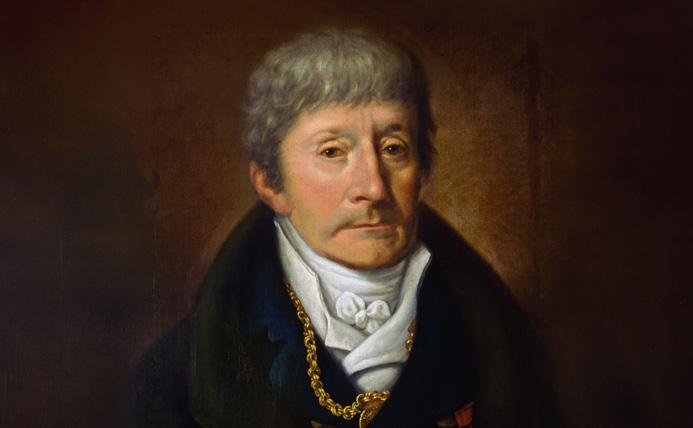
Salieri
Piano Concerto in C major¹ 20 mins
Mozart
Piano Concerto No. 14 in E-flat major, K. 449² 21 mins
Intermission 20 mins
Rimsky-Korsakov
Mozart and Salieri³ 50 mins
Concert Duration: approximately 2 hrs (including 20 mins intermission)
Check-in to tonight’s concert
Scan this QR code with the Singapore Symphony Mobile App.
Hans
“Salieri murdered Mozart with poison.”
It is a tale widely told through 18th century gossip, which gave rise to a 19th century play, then an opera in 1879; followed a century later by a 1979 play, then a 1984 film, which perhaps led you to this 21st century performance.
But simply put: it is untrue. There is no concrete evidence that Salieri ever despised or hated Mozart, let alone poisoned him. No adversarial rivalry between the two – in word or in action – exists in any historical record. On the contrary, Salieri actively attended, endorsed and even conducted Mozart’s music before and after his death. The slander is the real poison, and its only victim: Antonio Salieri.
1750 – 1825
Piano Concerto in C major (1773)
Allegro maestoso
Larghetto
III
Andantino (Rondo)
For a time after his death in 1825, Antonio Salieri found a figurative peace from the accusations, as his music and name faded from the repertoire in the 19th and most of the 20th century. His music has made a comeback only recently, not least due to the popularity of the 1984 film Amadeus.
Although Salieri is mainly associated with the Habsburg court of the Austrian Empire, he was Italian by birth. He was a paramount figure in the opera houses of Europe, conducting, writing and seeing his operas successfully performed during his heyday. Among his many illustrious students were Beethoven, Liszt and Schubert. Suffice to say, he enjoyed fame and respect aplenty in high places.
Salieri wrote over 40 operas and numerous sacred works. Besides a small oeuvre of symphonies and serenades for orchestra, he also left behind six concertos, including two for keyboard.
Salieri’s Concerto in C major is scored in a familiar layout: pairs of oboes and horns, plus strings. The first movement and Rondo finale are suffused with lyrical charm in the vein of Haydn and Mozart. A 5-bar phrase from the concerto’s Larghetto (a melancholy siciliana with strings pizzicato) makes a subtle cameo in the “pizza scene” in the 2008 film Iron Man, played on piano by the villain Obadiah Stane. Stane, a senior authority figure who sees himself more fitting to lead Stark Industries, cannot come to terms with the irreverent, cocky genius Tony Stark/ Iron Man, and tries to kill him. Sound familiar?
1756 – 1791
Piano Concerto No. 14 in E-flat major, K. 449 (1784)
Allegro vivace
Andantino cantabile
Allegro ma non troppo I II III
“The one in E-flat does not belong at all to the same category,” wrote Mozart to his father, “It is a concerto of an entirely special manner.” As much as he had written by 1784, even Mozart recognised something special in this work. It compelled him to start a personal catalogue of his own compositions, and K449 was its first entry. He called this Verzeichnüss aller meiner Werke vom Monath Febraio 1784 bis Monath ____ 1 , which translates as “Catalogue of all my works from the month of February 1784 to the month of ____ 1 ____”. Mozart left blanks for the date at the end, naturally, but included the number 1 to denote the year. We can only ponder in poignant hindsight that at age 28, he would not have expected the next digits to have had to be 791, a date just seven years later.
We owe this priceless document an immense debt. Not only does it date Mozart’s works, it also records his occasional commentary on various works, notes that continue to inform musical scholarship today.
K. 449 is widely regarded as one of Mozart’s finest piano concertos. In the first movement, Mozart’s melodic musings glide smoothly between its effervescent home key of E-flat major and its relative C minor. This is music of supreme assurance, ingenious to the point of casual, with the solo piano fitting seamlessly into the orchestral picture. After a glittering cadenza, a joyous gallop of horns brings the movement to its finish.
A gentle Andantino lets the piano float dreamily on strings sotto voce. The finale’s sunny main theme appears in the beginning on strings, a nimble, jagged tune that the piano solo effortlessly shapes into numerous brilliant variations, all in sparkling counterpoint bearing the composer’s whimsical humour. Like out of a comic opera, the pianist does a little solo flourish just before the coda takes over in 6/8 time, succinctly taking the music to a final Mozartian wink and an orchestral “The End!”
Mozart and Salieri (1897)
Soon after Mozart’s premature death on 5 December 1791, gossip began to spread about the cause. A Berlin newspaper, riding on the rumour mill, even published speculative reports that he was poisoned. This was just the beginning. Considering how easily people mistake gossip for fact at any point in human history, it should not surprise you what manner of slander this led to.
The notion that Salieri murdered Mozart persisted for decades, through numerous, often contradictory tales and theories. In 1823, 32 years after Mozart’s death, the beleaguered 73-year-old Salieri suffered a physical and mental breakdown. Hospital accounts claim both scenarios: that a delusional Salieri confessed to killing Mozart, and that a lucid Salieri also in good faith swore that he did not.
Mozart himself contributed to the rumour mill. His wife Constanze recounted how her husband repeatedly became possessed by the notion that he had been poisoned, even going so far to say that the anonymous commissioner of the Requiem was responsible.
Salieri died in 1825. Only five years later, Alexander Pushkin (1799–1837) produced his play Mozart and Salieri in 1830. It is this drama that Nikolai Rimsky-Korsakov used, almost word for word, as a basis for his opera of 1897.
Why did Pushkin write this? Pushkin was a great admirer of Mozart, of the composer’s verve, wit and spontaneous ingenuity. As a celebrated writer who was also known for his impulsive temperament, intellectual charm and poetic finesse, Pushkin likely saw in Mozart a kindred spirit in a familiar situation. He may have been intrigued by the 1844 – 1908
argument of hardworking craftsmanship versus natural-born genius. He may have found it a dramatically fascinating study of human jealousy, of one man’s argument against God’s unfair distribution of talent. Or perhaps he knew no better than the rumours?
There are only three characters in this sparse, intimate opera: Salieri, Mozart and a blind fiddler with no lines. Everything unfolds over just two scenes.
Scene 1. Salieri, just like in the film, basks in his respected status as a composer, outwardly confident of his art. However, inwardly he is anxious and jealous of Mozart. In a Macbethian soliloquy, Salieri recounts his hard work in the name of music. He has never been affected by “despicable envy” – until now. Where is justice when the “sacred gift [of] immortal genius” is not rewarded to those who have passionately worked and sacrificed for their art, but instead is granted to “a fool, a reveler, and empty-headed idler”?
Just as he finishes his lament, Mozart arrives on the scene. He has brought a blind fiddler and bids him to play for Salieri. The blind fiddler screeches out the aria, “Batti, batti, o bel Masetto” from Don Giovanni, much to Mozart’s amusement. Salieri is appalled at this “tasteless parody”. Whereas Mozart can laugh at himself, all Salieri sees is how he desecrates his divine gifts from God. “Mozart! You are not worthy of yourself”, he exclaims, a mock compliment for Mozart’s talents while berating him.
Mozart plays a newly composed piano piece for Salieri, asking for his thoughts. It begins Allegretto semplice – classic Mozartian lyricism – before
descending into a dark, ominous Grave section. Rimsky-Korsakov channels Mozart’s style, producing music interpreted from the eyes (and ears) of a 19th century Russian composer. This gloomy conjecture soon turns appassionato – is this a projection of Mozart as a Romantic composer, if he had lived longer? Is it a foretelling of what is about to happen?
Salieri rationalises his plan by offering the twisted logic that if Mozart lives on and achieves greater heights in music, subsequently these standards will only decline after he is gone. Mozart’s genius only provokes “wingless desires in us” that cannot be fulfilled. Thus, the sooner Mozart disappears, the better. “I’m the one chosen to stop him or all of us are lost”.
Salieri contemplates his weapon – a vial of poison he has owned for 18 years, which he once considered using on himself.
Scene 2. Mozart and Salieri are dining at an inn. Mozart confides in Salieri that a stranger in black has commissioned him to write a Requiem. Salieri tries to dismiss Mozart’s gloom by citing how his friend and celebrated French playwright Beaumarchais would advise him to drink or to read his play The Marriage of Figaro to lighten the mood. But Mozart brings up the rumour that Beaumarchais poisoned his own wife to claim her inheritance. “Genius and crime cannot go together. Isn’t that true?”
While Mozart is distracted, Salieri poisons his wine and bids him to drink. As Mozart does so, there seems a moment of doubt in Salieri as he exclaims in alarm, “You drank it! ... without me?”
Mozart begins to play at the keyboard, a lonely sound made more heartbreaking by the (sur) real accompaniment of the orchestra. It is the opening of his Requiem, and voices begin to fill the air.
Salieri weeps to the music. He has “fulfilled a heavy duty” and describes the murder in contradictory, cauterising terms: “It hurts, yet soothes”, as if “the healing knife” has chopped off a “suffering member”. Poisoning Mozart is both a dutiful burden as well as an act of merciful amputation. Or is it? As the scene concludes, Salieri casts doubt again by alluding to the rumour that Michelangelo Buonarotti murdered a model so that he can paint the face of suffering more realistically. But again: can genius and criminal exist in the same person? What if I’m not a genius….?
Mozart’s death in Pushkin’s 1830 play / Rimsky Korsakov’s 1897 opera differs from the events portrayed in Miloš Forman’s 1984 film Amadeus. In fact, the 1979 play by Peter Shaffer also differs in this respect. In the film, instead of the inn, Mozart lies sick in bed at home, desperate to complete his Requiem. Salieri, with pen and manuscript in hand, badgers Mozart for more notes, just as eager to finish the work. When a distressed Constanze discovers them, she forbids Salieri from aggravating Mozart further and bids him to respect her wish that he leave the premises. Salieri’s reply is “Madame, I will respect his [wishes]”. But poor Wolfgang has expired in exhaustion, and it is implied that Salieri may have pushed him too hard.
Rimsky-Korsakov’s opera and Peter Shaffer’s film thus diverge on their account of the Salieri’s role in Mozart’s death. However, in both cases, Salieri seems to arrive at the same stricken conclusion: what have I done?
What did Salieri do? It is your turn now to ponder.
Instrumentation
solo voices (tenor, bass), offstage chorus, flute, oboe (also doubling on cor anglais), clarinet, bassoon, 2 horns, 3 trombones, timpani, piano, strings
World Premiere 7 Dec 1898, Moscow









We would like to express our deepest appreciation to the following individuals and organisations who support our mission to create memorable shared experiences with music in the past year. Without your support, it would be impossible for the SSO to continue to strive for artistic excellence and touch the hearts of audiences.
PATRON SPONSOR
Tote Board Group
(Tote Board, Singapore Pools & Singapore Turf Club)
MAESTRO CIRCLE
Mr & Mrs Goh Yew Lin
Stephen Riady Foundation
Temasek Foundation
The HEAD Foundation
Anonymous
CONCERTMASTER CIRCLE
Bowen Enterprises Pte Ltd
Dr Thomas & Mrs Mary Zuellig
Dr & Mrs Antoine & Christina Firmenich
Mr Christopher & Mrs Rosy Ho
Anonymous (2)
S YMPHONY CIRCLE
Andreas & Doris Sohmen-Pao
Christopher Fussner
DBS Bank Ltd
De Miguel Solaguren Family
Kris Foundation
Madeleine Cheok & Wong Hong Ching
Mind the Gap 200 Fund
Ms Paige Parker & Mr Jim Rogers
Prof Chan Heng Chee
Yong Ying-I
Anonymous (2)
Andrew & Stephanie Vigar
Andy, Raymond, Bubble & Breton Tan
Bernard Ryan & Michael Rowe
Cara & Tamara Chang
Colin Lee
Dr Geh Min
Dr Kevin T Yap
Elaine and Eduardo Saverin Foundation Ltd
Far East Organization
Frans & Marie-Pierre Mol
Geoffrey & Ai Ai Wong
Guy Hentsch & Geoffrey Yu
Holywell Foundation Limited
Mavis Lim Geck Chin
Miriam & Merle Hinrich
Neo Group Limited
Patek Philippe Southeast Asia
Paul & Lena Ng
Priscylla Shaw
Robert & Vivian Chandran
UOB
Anonymous
Alan Chan
Ayesha Aziz Khan
Azeeza Aziz Khan
Bernhard Michael Steiner
BinjaiTree
Blossom Hing
Cavazos Tinajero Family
Chen Xiaoyan
Chloe Lee En Yi & Family
Colin & Janet Leong
Dennis Au
Devika & Sanjiv Misra
Dorian Goh & Rathi Ho
Dr & Mrs Adrian Koh
Dr & Mrs Choy Khai Meng
Dr Karen Soh
Dr Kieron Lim
Embassy of France in Singapore
Eva & Nilay Patel
Geraldine Lim & Lim Him Chuan
Hong Leong Foundation
Indosuez Wealth Management
Jacqueline Yeh
JCCI Singapore Foundation
John & Eliza Bittleston
Jonathan Stona
Joy & Han Li Toh
Julien Willeme
Kenneth Kwok
Kevin & Carrie Burke
Kris Foundation - Ms Lim Kang Ning
Krishnan Family
Lee Hsien Loong
Leong Wai Leng
Liew Wei Li
Lito & Kim Camacho
Martin Siah & Wendy Long
Mr & Mrs Choo Chiau Beng
Mr & Mrs Mak Hoe Kit
Mr Xu & Mrs Cairong Ren
Mrs Hemal & Mr Paritosh Thakore
Pavilion Capital
PCS Pte Ltd
Poh Khim Hong
Prima Limited
Prof Gralf & Silvia Sieghold
Sameer Sain
Sing Lun Group
Tan Meng Cheng Ivan
The Anjuman & Aziz Charitable Trust
Tiffany Lim
Tony & Melanie Chew
Vanessa & Darren Iloste
ZDR Investments
Anonymous (7)
Aadarsh Baijal
Anthony & Chloe Tan
from ACE Team Foundation
Anthony Tay
Bloomberg Singapore Pte Ltd
Chuin Wei Yap
Clarissa Chow
Cubeassociate Pte Ltd
Dr June & Peter Sheren
D-Y Lin
Farhana Sharmeen
Francoise Mei
G L Wee
Goh Swee Chen
Grace Fu
Hartley & Hong Lynn Clay
Adeline Ang
Adrian TL Chua
Aileen Tang
Ang Jian Zhong
Belinda Koh
Benito Ting
Benjamin Ma
Bettina Lieske
Chan Ah Khim
Charles Robertson
Charmaine Lim
Cheng Eng Aun
Choo Lim
Clara Lim-Tan
Claudia & Henning Figge
David Chan & Sarah Chan
David Leung
Dr Peter Chew
Isaiah & Suwei
Jesher Loi
Jocelyn Kum
John & Pauline Foo
Kenneth Kan
Keppel
Kim Hae Hyun & Heo Soomin
Lai Siu Chiu
Lau Leok Yee
Lee Yeow Wee David
Lilian Loke
Liwen & Steven Holmes
Lorinne Kon
Madeleine Lee
Maisy Koh
Marcelo V Achoa & Silvia Bordoni Meng
Michael Brenninkmeijer
Mr & Mrs Ong Kong Hong
Nicole & Edoardo Prina
Patricia Lim
Prof Arnoud De Meyer
Prof Cham Tao Soon
Suzanne Lim
Tan Wan Chi
Tantallon Capital Advisors Pte Ltd
The Linh Tinh Family
Wayne & Kim Giap Khoo
Anonymous (2)
Evelyn Chin
Faith Chia
Hwang Chih Ming
Ian & Freda Rickword
In Memory of Timothy Kok Tse En
Jeanne Lee
Jennifer & Alexander Chan
Jennifer Lee
Jerry Gwee
Jinny Wong
Julian & Jane Tan
Julien Brousseau
Kasch Kimmy Kimberly
Kirk Tay
Kok Leong Lim
Kris Wiluan
Lawrence & Celeste Basapa
Michael & Katherin Puhaindran
Natalia & Alex Galinovskii
Pierre Colignon
Ren QiMei
Sam & Claire Loh
Singapore Pools (Private) Limited
Tang See Chim
Valerie Thean
Wang Pei Zhong
Warburg Pincus Singapore Pte Ltd
Winston Hauw
Winston Kwek & Valerie Cheah
Wong Yan Lei Grace
Xinyi Ong
Xu Yixin
Anonymous (9)
A T Teo
A.R.
Adi F & Hui Shi
Akihiro Nemoto
Alexey Filimonov
Alvin Lim Cheng Hin
Alwyn Loy Suan Mao
Andre Francis Maniam
Andrew Cheong
Ang Hui Tiong Eugene
Ang Seow Long
April Mak
Aw Jia Yu
Brenda Ang
Bryan Carmichael
Casey Tan Khai Hee
Chang Chee Pey
Chen H W
Chong David
Chong Mi-Li Pamela
Chong Sien Thye Albert
Chong, Wai Ying Ruby
Christopher Chen Li Hsian
Chua Saw Lan
Cindy
Claire & Ian Jones
Colin Lang
Cynthia Chee
D Cheong
D.N.C.H
Daniel Yong
DCP
Deborah Chee
Deepa Chatrath
Denis Tenchurin
Denise Wong
Derek Lim HK
Dr Anne-Marie Schleich
Dr Chong Shin Min
Dr Kong Tze Yean & Cristina Prado
Dr Lien Boon Hua
Dr Norman Lee
Dr Tan Lay Kok
Dr Teo Kien Boon
Dr Yap Zhu Li
Edith & Sean Lim
Emma Lexi Ng
Ernest Khoo
Esther Fang
Gallery NaWei Pte Ltd
Gan Chee Yen
Ghislain Olagne
Giles Tan Ming Yee
Goh Chiu Gak
Goh Jun Yi
Heinrich Grafe
Henry & Tiffany
Herman Felani MY
Ho Jun Yi & Family
In loving memory of Jasper Irina Piano
Jason & Jennifer Chew
Jay Ganapathy
Jeanie Cheah
Jean-Pierre Felenbok
Jessica Cheam
Jiang Wenzhu
Joanne Lim
Johannes Yap & Family
Joseph Wolpin
Joseph Yoong
K Goh & Family
Kelvin Ho
Kelvin Wong
Khoo Ken Hui
Kianyew
Koh Ruizhi
Kyra Teo
Leonard Augustine Choo
Lily Low
Lim Boon Kong Andrew
Lim Shue Churn
Lim Yin Yin, Jaime
Lim Yuin Wen
Lisa Lee
Low Boon Hon
Maggie Dong
Manski-Nankervis Jo-Anne Elizabeth
Marcel & Melissa Xu
Marcel Smit & Hanneke Verbeek
Marian Goh
Mark Cranfield
Maxim Yanchenko
Michelle & Eric Anziani
Michelle Loh
Michelle Tan & Soo Yixin
Michelle Tay
Min Tan
Minwei
Mr & Mrs Jeremy Ee
Mr & Mrs Kevin
Mr Gareth Tan & Dr Roweena Yip
msm-productions
Naserah Tyebally
Ng Shien
Ngiam Shih Chun
Nguyen Quoc Khanh & Vu Phuong Nhi
Nicolas Pascale Rouveyre
Nicole Ng
Nikki Padilla & Sebastian L. Sohn
Nishioka Hiroyuki
Nurture With Love Suzuki Music School
Ong Chee Siong
Ong Wee Shiang
Parthesh Gulawani
Patrick Lee
Pauline Ang
Prof Goh Suat Hong
Prof Gungwu Wang
Richard Hartung
Robert Khan & Co Pte Ltd
Ronald & Janet Stride
Sangeeta Razu
See Chai Geok
Serene Yeo
Shamim Chowdhury
Shermin Teh
Siveraman K Pillai
Soh Leng Wan
SY Lee
Sylvie Gleises
Tan Kok Huan
Tan Yi Bin
Teo Eng Chai
The McCann Family
Tiffany Choong & Shang Thong Kai
Timothy Leong
Ting Tay
Tom Szetu
TseTsean
Tsou Lei Shirley
Victor Huang Kuan Kai
Viktor & Sonja Leendertz
Virna Machado-Ashish Goyal
Vivien Goh
Voon S Leong
Wang Lei & Gao Bo
Wendy Leong Marnyi
Wennie Wong
Wicky Wong
Wong Lai Foon
Xiao Li
Yang Tian
YC Chen
Yee Deng Tan
Yong Chuk Kwin
Yong Ning & Candice Foo
Yong Seow Kin
Zeng Qiao Jia
Zhai, Yuxiang
Zheng Hongbo
Zhihong Chen
Zhu Yulin
Anonymous (42)
This list reflects donations that were made from 1 Apr 2025 to 31 Mar 2026. We would like to express our sincere thanks to donors whose names were inadvertently left out at print time. The Singapore Symphony Group is a charity and a not-for-profit organisation. Singapore tax-payers may qualify for 250% tax deduction for donations made. You can support us by donating at www.sso.org.sg/donate or www.giving.sg/sso.

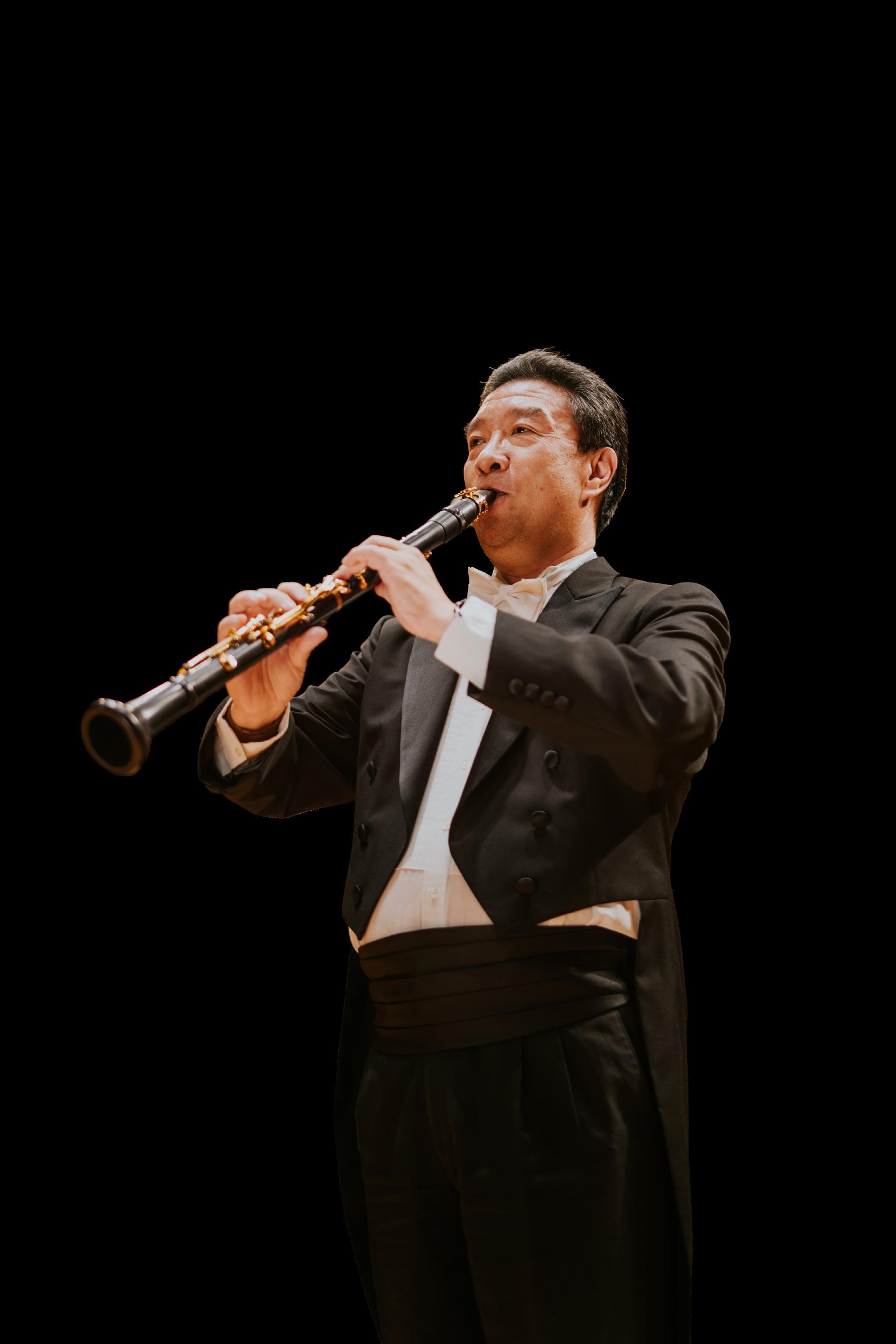

The Singapore Symphony Orchestra extends its heartfelt gratitude to Principal Clarinettist Ma Yue, who retires from the SSO this month after 33 years of service and beautiful music.
From your soulful, lyrical leadership of the Clarinet section to your breathtaking solo performance of the Finzi Clarinet Concerto, we have been deeply moved by your artistry and dedication.
DONOR RECOGNITION & PUBLIC ACKNOWLEDGEMENT
Concert booklets and website
Patron of the Arts Nomination
Donors’ Wall at Victoria Concert Hall Subscription/Chamber and
OTHER BENEFITS
Invitation to special events
Donations of $250 and above will entitle you to priority bookings, and discounts2 on SSG Concerts. For tax residents of Singapore, donations may be entitled to a tax deduction of 2.5 times the value of your donation. Donations are non-refundable.
1Complimentary
To find out more, please visit www.sso.org.sg/support-us, or write to Nikki Chuang at nikki@sso.org.sg
4
As a valued donor of the SSO, you will receive many benefits. How can you help?
While SSO is supported partially by funding from the Singapore government, a significant part can only be unlocked as matching grants when we receive donations from the public. If you are in a position to do so, please consider making a donation to support your orchestra – build the future by giving in the present.
We provide our Corporate Donors with impressive entertainment and significant branding opportunities. Through our tailored packages, corporates may benefit from:
• Publicity and hospitality opportunities at an SSO concert or your private event,
• Acknowledgement and mentions in SSO’s key publicity channels,
• National Arts Council (NAC) Patron of the Arts nominations,
• Tax benefits.
Packages start at $10,000 and can be tailored to your company’s branding needs.
We partner with various corporates through tailored in-kind sponsorship and exchange of services. Current and recent partnerships include Official Hotel, Official Airline, and we offer other exciting titles.
For more details, please write to Sarah Wee at sarah.wee@sso.org.sg
We recognise major gifts that help sustain the future of the Singapore Symphony Group. The recognition includes naming of a position in the SSO or in our affiliated performing groups such as the Singapore
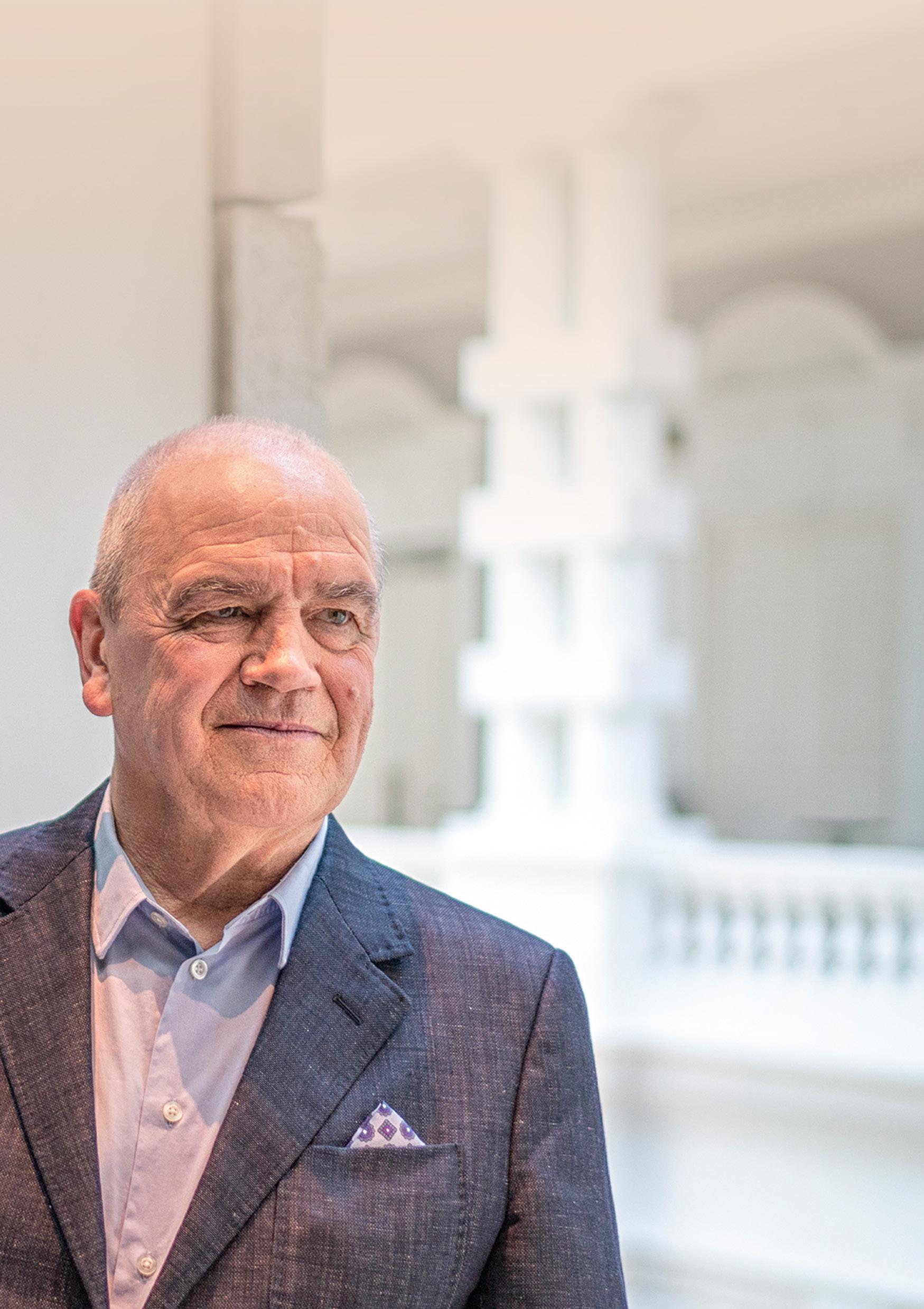
In January 2025, the SSO Quantedge Music Director position was named in recognition of a major donation by an anonymous donor.
The position is currently held by Maestro Hans Graf, who has inspired the SSO and its audiences since helming our 2020/21 season as Chief Conductor. As he bids farewell this season and passes the title to Hannu Lintu, we thank him for his leadership and artistry.
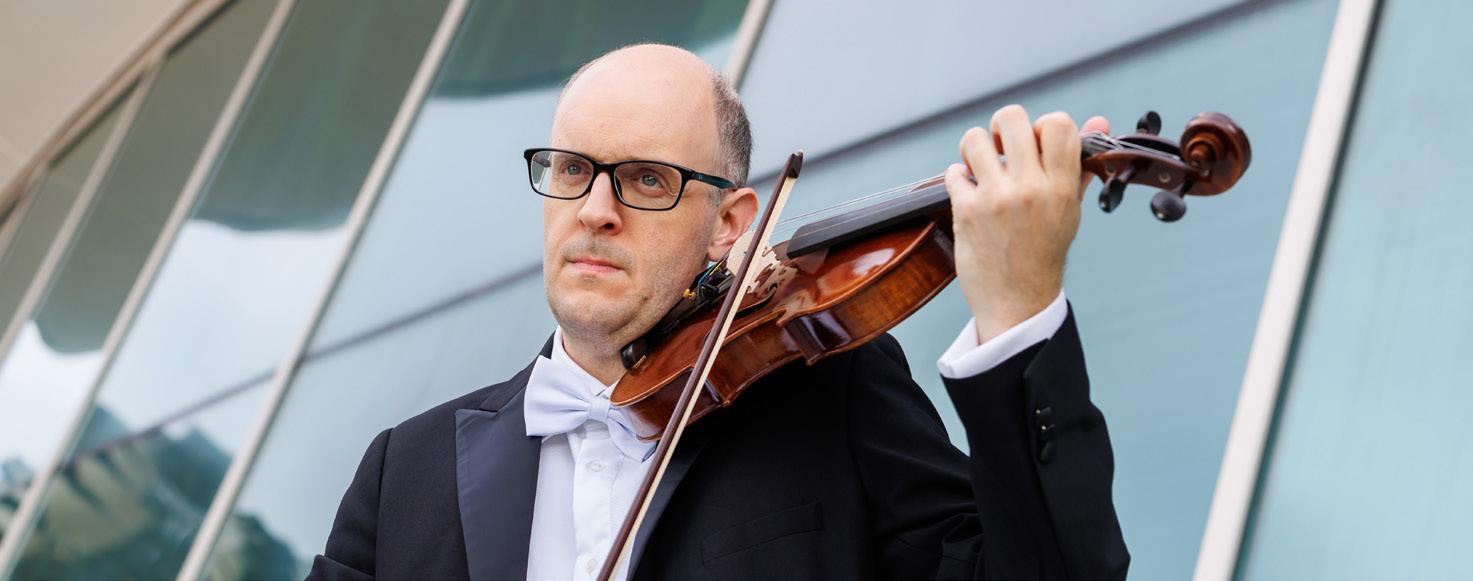
SSO Concertmaster
GK Goh Chair
Established in July 2017, the SSO Concertmaster, GK Goh Chair honours Mr Goh Geok Khim, and celebrates his enduring contribution to Singapore’s cultural landscape. We extend our gratitude to the Family and Friends of Mr Goh, and especially to Mr and Mrs Goh Yew Lin, for their generosity.
The position will be held by Andrew Beer from the 2026/27 season.
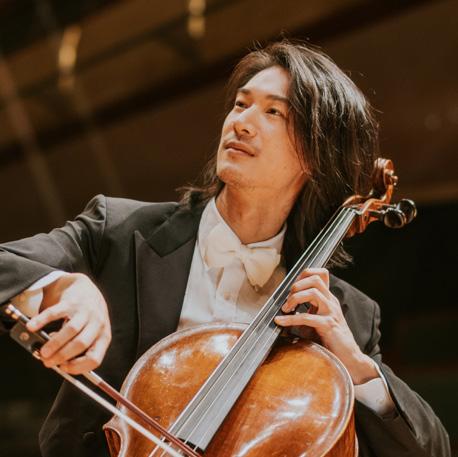
SSO Principal Cello
The Head Foundation Chair
In recognition of a generous gift from The HEAD Foundation, we announced the naming of our Principal Cello, The HEAD Foundation Chair in November 2019. The position is currently held by Principal Cellist Ng Pei-Sian.
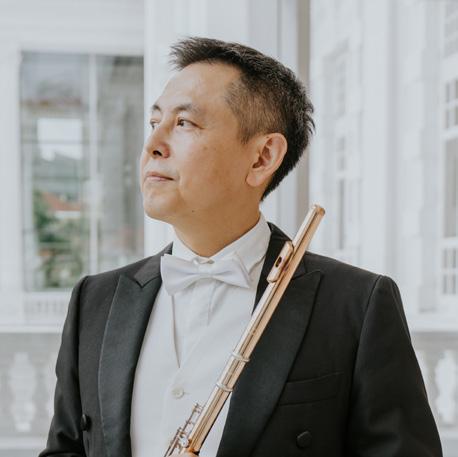
SSO Principal Flute Stephen Riady Chair
In recognition of a generous gift from Dr Stephen Riady, we announced in May 2022 the naming of our Principal Flute, Stephen Riady Chair. The position is currently held by our Principal Flutist Jin Ta.
SSO Principal Viola Tan Jiew Cheng Chair
In recognition of a generous gift from the Estate of Tan Jiew Cheng, we announced in February 2024 the naming of our Principal Viola, Tan Jiew Cheng Chair. The position is currently held by our Principal Violist Manchin Zhang.
Chair
Goh Yew Lin
Board of Directors
Chang Chee Pey
Chng Kai Fong
Andress Goh
Kenneth Kwok
Clara Lim-Tan
Jesher Loi
Lynette Pang
Prof Qin Li-Wei
Jovi Seet
Farhana Sharmeen
Doris Sohmen-Pao
Prof Peter Tornquist
Geoffrey Wong
Andrew Yeo Khirn Hin
EXECUTIVE & NOMINATING COMMITTEE
Goh Yew Lin (Chair)
Chng Kai Fong
Lynette Pang
Geoffrey Wong
SSO Council
Alan Chan (Chair)
Odile Benjamin
Prof Chan Heng Chee
Prof Arnoud De Meyer
Dr Geh Min
Heinrich Grafe
Khoo Boon Hui
Liew Wei Li
Lim Mei
Sanjiv Misra
Paige Parker
Dr Stephen Riady
Priscylla Shaw
Prof Gralf Sieghold
Prof Bernard Tan
Dr Tan Chin Nam
Wee Ee Cheong
Yong Ying-I
HUMAN RESOURCES COMMITTEE
Doris Sohmen-Pao (Chair)
Jesher Loi
Prof Qin Li-Wei
Heinrich Grafe*
Carmen Wee*
FINANCE & INVESTMENT COMMITTEE
Geoffrey Wong (Chair)
Andress Goh
Chua Keng Hong*
Alex Lee*
DEVELOPMENT COMMITTEE
Prof Chan Heng Chee (Chair)
Odile Benjamin
Dr Geh Min
Heinrich Grafe
Khoo Boon Hui
Lim Mei
Leonard Ong
Paige Parker
Priscylla Shaw
Dr Tan Chin Nam
AUDIT & RISK COMMITTEE
Jovi Seet (Chair)
Prof Peter Tornquist
Andrew Yeo Khirn Hin
Ryan Siek*
COMMUNITY & YOUTH ENGAGEMENT COMMITTEE
Clara Lim-Tan (Chair)
Chang Chee Pey
Farhana Sharmeen
Asst Prof Kat Agres*
Cecilia Pang*
*co-opted member
Symphony Ball Committee
Paige Parker (Chair)
Celeste Basapa
Geoffrey Wong
Kris Tan
Joy Tan
Dr Karen Soh
Kim Camacho
Lim Kang Ning
Farhana Sharmeen
SSO Musicians’ Committee
Hoang Van Hoc
Austin Larson
Li Xin
Christopher Mui
David Smith
Elaine Yeo
Zhao Tian
Chief Executive Officer
Kenneth Kwok
Deputy CEO
Programmes & Production
Kok Tse Wei
CEO OFFICE
Shirin Foo
Musriah Bte Md Salleh
ORGANISATION DEVELOPMENT
Lillian Yin
A rtistic Planning
Christopher Cheong (Head)
A RTISTIC ADMINISTRATION
Jodie Chiang
Terrence Wong
Jocelyn Cheng
Michelle Yeo
Operations
Ernest Khoo (Head)
L IBRARY
Wong Yi Wen
Cheng Yee Ki
Ng Yi Xiu
ORCHESTRA MANAGEMENT
Chia Jit Min (Head)
Kelvin Chua
P RODUCTION MANAGEMENT
Noraihan Bte Nordin
Nazem Redzuan
Leong Shan Yi
Asyiq Iqmal
Khairi Edzhairee
Benjamin Chiau
Syed Muhammad Idris Bin Ramli
DIGITAL PRODUCTION
Avik Chari
Deputy CEO
Patrons & Corporate Services
Jenny Ang
Community Impact
COMMUNITY ENGAGEMENT
Kua Li Leng (Head)
Whitney Tan
Lynnette Chng
Chua Xu Yang
Darren Siah
C HORAL PROGRAMMES
Kua Li Leng (Head)
Lu Heng
Chang Hai Wen
Mimi Syaahira
SINGAPORE NATIONAL
YOUTH ORCHESTRA
Ramu Thiruyanam (Head)
Tang Ya Yun
Tan Sing Yee
Ridha Ridza
ABRSM
Patricia Yee
Lai Li-Yng
Joong Siow Chong
Freddie Loh
Corporate Services
F INANCE, IT & FACILITIES
Rick Ong (Head)
Alan Ong
Goh Hoey Fen
Loh Chin Huat
Md Zailani Bin Md Said
HUMAN RESOURCES & ADMINISTRATION
Valeria Tan (Head)
Janice Yeo
Fionn Tan
Netty Diyanah Bte Osman
D EVELOPMENT
Chelsea Zhao (Head)
Nikki Chuang
Sarah Wee
Samantha Lim
Eunice Salanga
Kevin Yeoh
C OMMUNICATIONS, DIGITAL & MARKETING
Cindy Lim (Head)
Communications
Ong Shu Chen
Nikki Loke
Elizabeth Low
Tan Li Ying
Data & Digital Projects
Calista Lee
Lim Wen Jie
Marketing & Content
Chia Han-Leon
Hong Shu Hui
Myrtle Lee
Jana Loh
Kashmira Kasmuri
Carrie Woo
CUSTOMER EXPERIENCE
Randy Teo
Dacia Cheang
Joy Tagore
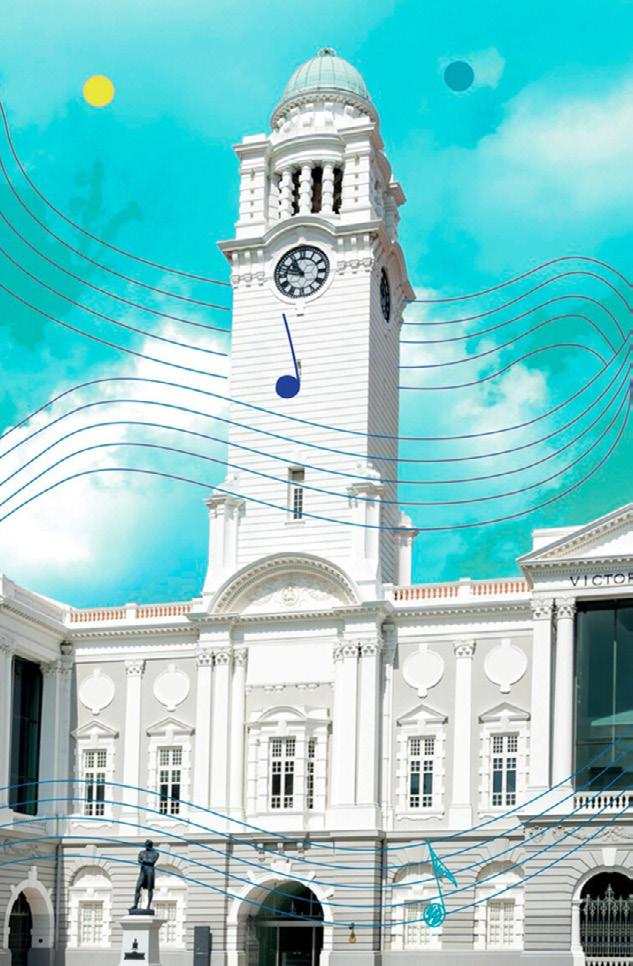

www.sso.org.sg/whats-on
31 May 2026
Victoria Concert Hall
Join us at the iconic Victoria Concert Hall for SSO Open House 2026! This year’s highlights include an exciting mix of performances, interactive workshops and backstage tours for those eager to glimpse the musical world’s inner workings. Whether you’re a music enthusiast, an intrigued first-timer or simply looking for a fun family activity, there’s definitely something for everyone!
6 Jun 2026
Victoria Concert Hall Tickets from $20
SSO ORGAN SERIES
Fairy Tales & Fantasy
Tchaikovsky
Sleeping Beauty Waltz
Tom Scott
How a Pipe Organ Works
J.S. Bach
Gigue Fugue
Ravel
Mother Goose Suite Grieg
Trolltog
Mussorgsky
Pictures at an Exhibition (excerpts)