President’s Message / David L. Diehl, MD, FACP, FASGE
@DavidDiehlMD
The Importance of Mentoring
www.pasg.org
As we “spring” forward into the year, I am pleased to reflect on the continued growth, engagement, and momentum within the PSG community. In my previous message, I highlighted our mission and strategic goals, none of which would be achievable without the support of the team. I want to take the opportunity to recognize the individuals and initiatives to help bring that vision to life.
I am fortunate to have a strong and dedicated leadership team guiding PSG forward. I am serving alongside:
The PSG is launching a mentorship program for GI Fellows and early career GI physicians. We will be reaching out to those of you who would like to participate in this project.
attending physicians at one’s own training program work very hard to train GI fellows, but this is generally different from a mentoring relationship.
• Karen Krok, MD – Immediate Past President
Many of us have benefitted from mentors. Perhaps some of us have suffered for the lack of a mentor during our education or training. Mentors can have a lifelong impact on their trainees, but the relationship does not go in only one direction. Mentors can get as much benefit and satisfaction as their mentees can.
Each of these individuals brings exceptional expertise and commitment to advancing our organization and supporting our members.
I am also pleased to announce new leadership within our committees. Michael Georgetson, MD has accepted the role of Chair of the Training Task Force, Joyann Kroser, MD will serve as Chair of the Practice Management Task Force, and Holly Greenwald, MD in her capacity as Program chair of our annual course will be part of the Annual Scientific Planning Committee. We are all grateful for their leadership and their dedication to advancing education and operational excellence within PSG.
Our Fellows in Training continue to play a vital role in shaping the future of our organization. With nine outstanding trainees serving on the board, PSG remains deeply committed to fostering the next generation of leaders in our field. We are fortunate to have such engaged and thoughtful voices contributing at every level:
• 1st Year FIT’s: Vishali Moond, MD; Talwinder Nagi, MD; Abraham Ifrah, MD
I have been lucky enough to have some important mentors in my medical career. The first was assigned to me when I was a firstyear medical student. His name was Eugene “Skip” Felmar, MD and he was a Family Practice attending in the San Fernando Valley area of Southern California. I enjoyed going out to his office and shadowing him closely while he saw outpatients, rounded on inpatients, and did office procedures. Beyond gaining valuable insight into the practice of medicine, I found out why his nickname was “Skip” after he took me out on his sailboat which he kept docked at the Los Angeles harbor. Skip Felmar became a role model for me, and the mentor-mentee relationship was mutually rewarding.
Gastroenterology, like other areas of medical training is akin to a “guild”, where the experienced take the novice under their wing to train them in the arts of their chosen field. All GI fellows, including us way back when, had trainers and coaches that typically were staff gastroenterologists at our program. Many medical schools provide for mentor relationships, but this is less common in GI training. Certainly,
• 3rd Year FITs’: Brittney Shupp, DO; Jason Farrell, DO; Nicholas Noverati, MD
Another highly impactful mentor that I had was someone that I chose myself. Dick Kozarek, MD was (and
continued on page 2
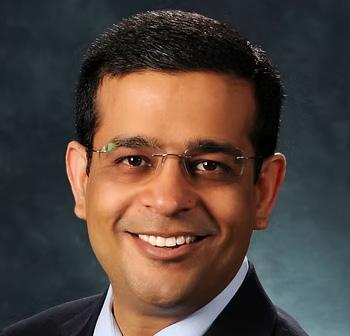
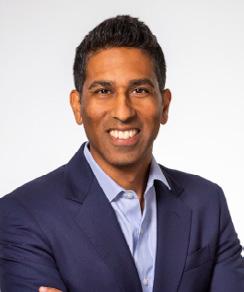
Manish Thapar, MD, AGAF, FAASLD, FACG
President’s Message
continued from page 1
Their participation ensures that PSG remains forward-thinking, inclusive, and responsive to the evolving needs of our profession.
Looking ahead, we are excited to once again partner on the 3rd Annual Medtronic Capsule Course, scheduled for August 7th. Dr Harshit Khara is leading the charge, and I am pleased to report that this collaborative educational opportunity continues to grow each year. The planning committee is actively finalizing details, and we encourage you to stay tuned for registration—this is an event you will not want to miss “rain or shine”.
Our Annual Scientific Meeting returns to beautiful Hershey, Pennsylvania, at The
Hotel Hershey, from September 18–20, 2026. Please mark your calendars and plan to join us for another exceptional meeting filled with high-quality education, research, and networking.
Dr Greenwald has a fantastic line up of speakers with a diverse array of topics. As a reminder, we do have the family fun night planned for Saturday evening at the hotel Hershey. I look forward to seeing many of you there.
I want to thank our wonderful support team Dawn Swartz, Jessica Winger, and Lauren Newmaster. Please reach out to them at the annual meeting and take a moment to thank them for all the hard work behind the scenes.
They are responsible for all the magic that happens.
As we continue through the year, I am inspired by the collective energy, professionalism, and dedication of our members. PSG’s strength lies not only in its leadership, but in the shared commitment of all who contribute to its success. Together, we continue to advance our mission, strengthen our community, and elevate the standards of care within our field.
Thank you for your continued engagement and support.
Warm regards,
Manish Thapar, MD, AGAF, FAASLD, FACG
PSG President
September 18-20, 2026
Michael Bretthauer, MD, PhD Clinical Effectiveness Research Group, University of Oslo, and Department of Transplantation Medicine, Oslo University Hospital, Oslo, Norway.
Spring 2025, in a hotel in downtown Kansas City, Missouri. I was invited to give a talk about colorectal cancer screening to U.S. gastroenterologists.
In the elevator, I met a group of young gastroenterologists who were attending the meeting. As we were riding downward, one of them looked at my badge and exclaimed: “Oh, it’s you! The enemy!”
The elevator was silent for a second. Her friends looked at me, read my name tag, nodded. It seemed they all recognized who I was.
I was taken aback, unprepared. It had been almost 3 years. It took a split second before I fell into my rehearsed mode. Smiled, tried to act friendly, got ready to discuss, encourage, explain.
But as suddenly as it started, it was over. The elevator doors opened, and everybody exited into the conference hall. The session started, and I began my talk.
In October 2022, my coworkers and I published a research article in The New England Journal of Medicine reporting the results of the NordICC (Nordic-European Initiative on Colorectal Cancer) study, a randomized trial on the benefits of colonoscopy for colorectal cancer screening (1). The study showed that colonoscopy screening reduced colorectal cancer incidence by about 30% and that its effect on mortality was uncertain (1). The article got a lot of attention worldwide.
The Enemy
We had invested more than 15 years into the trial and were excited to publish it. Obviously, we had known the results for some time before publication, and we anticipated that colleagues in countries where colonoscopy screening is widely promoted may be disappointed with the results. Especially in the United States, colonoscopy has been touted as being up to 90% effective in preventing colorectal cancer for many years, without randomized trial evidence (our trial was the first).
In the days and weeks after the publication, there was worldwide media coverage and many discussions with screening experts, patient representatives, and decision makers, sometimes emotional rather than fact-based. As principal investigator, I spent a lot of time explaining the results of the trial. I participated in podcasts, roundtables, and meetings about the benefits of colonoscopy screening according to the study results. I conveyed that I do not think colonoscopy screening should be abandoned but that patients deserve honest and quantified information about what they can expect from a screening colonoscopy: a reduction in risk for colorectal cancer of about 30%. Not bad, I explained, but not the 90% some had promised. I explained that our goal as trial investigators was not to prove that colonoscopy reduces colorectal cancer risk but to investigate if it reduces colorectal cancer risk. In other words, although we were devoted to the best possible
conduct and reporting of the trial, we were consciously not devoted to any particular outcome. We were determined to accept any results, and we tried to report the findings transparently and dispassionately. Some screening proponents thought that the benefit was too small and got emotional: “There must be something wrong with the study, and with the researchers who did the study.”
In our research team, we frequently talk about how we would feel about a certain result in the trials we do. We have this conversation before we start a new trial. We try to prepare for all results, in any direction. These conversations are sometimes tough, but always necessary; if we are not ready to accept any result, we do not start the trial.
When a trial is over and we prepare the results for publication, we discuss potential reactions from the audience (clinicians, academia, the public, policymakers, the media) and how we would engage in them. Such preparations, which require conscious work, good leadership, and involvement of the whole team, are important to prevent stress, disappointment, and anxiety.
As clinicians, we are committed to our patients. We recommend the clinical tests and treatments we believe are best for them to provide good care. As researchers, however, we go beyond current beliefs for best practice. We formulate new, innovative, and sometimes provocative questions and try to answer them, preferably
in clinical trials. Whether the trial confirms or rejects our prior beliefs or whether its results fit into the current clinical consensus of the field is irrelevant. The main motivation to do clinical research is “to find things out,” not to confirm beliefs or support collegial consensus (2). Indeed, many transforming discoveries originate from unexpected observations (3).
After publication of the NordICC trial results, we discovered that active participation in scientific debate, traveling to conferences, and engaging in talks, media events, and podcasts were important (1). Avoiding debate and hiding would not have been a good strategy. We believe that timely, direct, and nonemotional engagement has helped to overcome some of the most emotional reactions. We found that the keys to constructive conversation (not necessarily agreement) are openness and friendliness.
I still have friends in my community of gastroenterologists, but I lost some. I am still invited to some meetings and conferences but not to others. Other physician researchers have not been so fortunate. They were bullied over research findings, experienced career barriers, and were pushed out of their field (4).
Good research answers important questions that we don’t have answers to—in either direction. Good research does not aim to confirm consensus or beliefs; it questions them and sometimes disrupts them. Research findings that challenge comfortable consensus are painful to accept, but let us embrace scientific discourse to advance medicine and improve patient care.
Smiling, asking questions, and engaging in facts, numbers, and priorities have helped me to overcome skepticism and unfriendliness. Many conversations
with people who were hostile and unfriendly at the start have ended constructively and with understanding—but not all. Obviously, even after almost 3 years, I am still the enemy for some.
References
1. Bretthauer M, Løberg M, Wieszczy P, et al; NordICC Study Group. Effect of colonoscopy screening on risks of colorectal cancer and related death. N Engl J Med. 2022;387:1547-1556. [PMID: 36214590] doi: 10.1056/ NEJMoa2208375
2. Hernán MA, Greenland S. Why stating hypotheses in grant applications is unnecessary. JAMA. 2024;331:285286. [PMID: 38175628] doi: 10.1001/ jama.2023.27163
3. Nobel Prize Outreach. The Nobel Prize in Physiology or Medicine 2005. Accessed at https://www.nobelprize. org/prizes/medicine/2005/7693the-nobel-prize-in-physiologyor-medicine-2005-2005-6 on 12 November 2025.
4. Johansson M, Kalager M, Agarwal A, et al. Difficulties faced by early career researchers engaged in overdiagnosis research and solutions for overcoming them. BMJ Evid Based Med. 2022;27:A29. doi: 10.1136/ bmjebm-2022-PODabstracts.59
Michael Bretthauer, MD, PhD https:// orcid.org/0000-0001-9653-6886 Clinical Effectiveness Research Group, University of Oslo, and Department of Transplantation Medicine, Oslo University Hospital, Oslo, Norway (M.B.).
By: Shivani K. Desai, MD 2nd-Year Fellow
The Voice Behind the Scope: Reflections of a Female GI fellow
Gastroenterology is a rewarding field that combines clinical medicine with procedural expertise. Historically, women have been underrepresented in gastroenterology compared with other internal medicine subspecialties. Fortunately, this is changing. I can see this change actively at my fellowship at St. Luke’s Hospital in Bethlehem, PA where a majority of the GI fellows are women and about 25% of our network GI physicians are female.
Looking back, I realize I may have been preparing for this moment long before fellowship began. As a Chemical Engineering undergrad student at NYU, my class was composed of only 12% women. This taught me not to let numbers define or intimidate me. Rather, I learned to move forward with confidence and finding comfort in my own skin.
Procedural environments, whether it be engineering or the endoscopy suite, can still feel intimidating for trainees learning to find their voice. For women in GI fellowships, developing technical confidence and a personal “presence” in the endoscopy room are as important as mastering the procedure itself.
Understanding the Learning Curve
I still remember my first month of fellowship. Navigating the scope through the esophagus or colon while simultaneously interpreting mucosal findings and responding to guidance can at times feel overwhelming. For many female trainees, another layer exists beneath the technical
learning curve: overcoming the internal hesitation to speak up, ask questions, or assert control of the procedure when the room is full of experienced staff. The internal thought of “who am I to say something?” is omnipresent.
However, endoscopy is a team sport. Nurses, technicians, anesthesiology staff, and attending physicians all play essential roles. As we develop procedural skills, we should also learn to lead the room by directing equipment adjustments, communicating procedural steps, and ensuring patient safety. It takes time to find the confidence to do so.
Learning to Lead the Room
In the beginning it felt intimidating to speak up, which is common early in fellowship for men and women alike. The nurses and technicians have spent years performing procedures and possess knowledge about workflow and equipment that far exceeds my own. I soon came to realize that rather than it being intimidating, it was actually an asset. Experienced staff are invaluable
teachers during procedural training. Asking questions and fostering respect can transform the learning environment.
At the same time, fellows must gradually learn to step into a leadership role. This involves clear communication whether it be procedure needs or advocating for your patient. Developing that voice is a critical step in becoming a Gastroenterologist.
The Importance of Mentorship and Representation
Seeing women in leadership roles within GI can have a powerful impact on trainees. I am blessed to train at an institution where both my program director and associate program director are women. They serve as mentors who not only guide me to be a confident proceduralist and physician but also act as leaders who demonstrate that success in the field is both achievable and sustainable along with having a fulfilling family life. They challenge the notion that one must sacrifice one’s personal lives for work.
I have been able to gain perspective on navigating career decisions, balancing professional and personal responsibilities, and developing confidence within procedural environments. As more women enter GI, mentorship networks should continue to grow to create stronger support systems for future trainees.
Finding Your Voice and Managing Interpersonal Communication
Finding your voice in the endoscopy suite does not happen overnight; it develops gradually through experience. For many fellows, including myself, it begins with small steps: asking questions during procedures, communicating clearly with staff, or taking ownership of
clinical decisions. Over time, these actions build confidence and establish professional presence.
I initially underestimated the importance of interpersonal communication. This can come up when discussing a complex patient with the anesthesia staff before a procedure, or making sure any intraprocedural concerns are communicated with the whole team. As the fellow we serve as frontline advocates for our patients. We take full ownership of their care ensuring every minute detail is addressed. Ultimately, the goal is not simply to become a technically skilled endoscopist but to become a physician who leads with clarity, confidence, and respect for the entire procedural team.
Looking Forward
The landscape of gastroenterology continues to evolve as more women enter the field and contribute as clinicians and educators. With increasing representation comes the opportunity to reshape procedural culture and foster environments where all trainees feel empowered to learn and lead. For women in gastroenterology fellowship, finding one’s voice in the endoscopy suite is part of the journey, combining technical mastery with confidence, collaboration, and leadership. As more women step into these roles, the path will become clearer for those who follow.
By David L. Diehl, MD, MASGE, AGAF
Use of overtubes in colonoscopy; what was old is new again!
I was first exposed to the use of colonic overtubes during my second year of GI fellowship. I was rotating at the West Los Angeles VA Medical Center, and one of the seasoned gastroenterologists who had teaching duties that day at the asked me, “Do you want to learn how to use a colonic overtube?” Back when he started doing endoscopy (with fiberoptic endoscopes), colonoscopies were frequently done with an overtube and also with fluoroscopic assistance! The overtube was often necessary due to the floppiness of the early colonoscopes, a problem which has been overcome with the availability of the new colonoscopes which have their stiffness carefully tuned. Fluoroscopy was used to make sure that colonic loops were straightened and that the overtube tracked the scope when inserted.
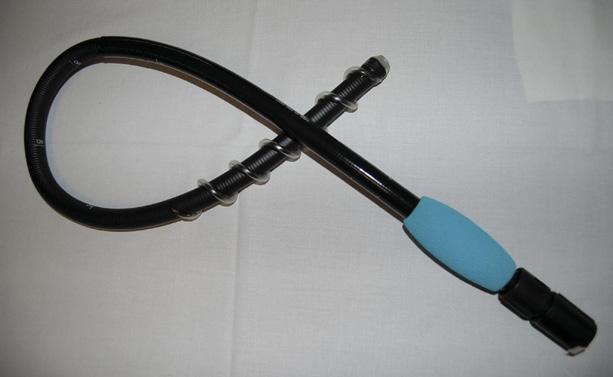
So that was my first exposure to colonic overtubes. We did the procedure under fluoroscopic guidance, and he showed me how to insert the 40cm long Olympus overtube (FIG 1) to prevent looping.
The overtube worked quite well, eliminating looping of the colonoscope in the left colon. Since that day, I have continued to have an intense interest in the overtube-assisted colonoscopy.
However, it is clear that endoscopists these days often do not have even a basic awareness of colonic overtube.
The Two Types of Difficult Colonoscopy
When you really break it down, there are 2 categories of difficult colons that make it hard to complete the colonoscopy. These are: 1. those with tight angulations, and 2. those with redundant loops. For angulations, you should identify this and downsize the endoscope early, but you usually have to go smaller than the pediatric colonoscope. It’s usually better to reach for a gastroscope to be able to negotiate those tight turns. There is an unusual endoscope not available in most endoscopy units, which is the diameter of a gastroscope but the length of a colonoscope, which you can use if you have it. I also advise use of copious amounts of water infusion into the lumen (and not CO2) during scope advancement which will make it easier to figure out which way to turn through the angles. It turns out that even with the shorter endoscope, the angulation prevents looping, and more often than not, the cecum can be reached. If you still fail to negotiate through the angulation, call up the CT department and ask them to do a CT colonography the same day. This will save the patient from having to do a second bowel prep.
To solve redundant loops, most endoscopists rely on external pressure and patient repositioning. Those usually work, but if they do not, it makes sense to reach for an overtubes to help to straighten those loops. In many cases this will save time and effort.
A brief history of colonic overtubes
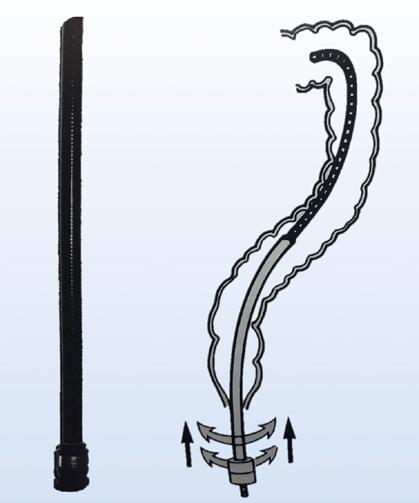
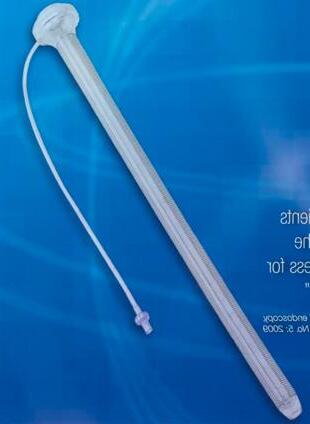
There used to be a rather unusual spiral overtube (FIG 2), called the Spirus (Spirus Medical, West Bridgewater, MA).
This device was mainly used for deep upper enteroscopy (upper or lower), but it could be used on occasion for loopy colons. Eventually the IP rights for spiral endoscopy were sold to Olympus, who were working on a motorized spiral enteroscope. Due to some complications during early use, the pathway to clinical introduction world-wide was interrupted. Hopefully the motorized spiral endoscope will eventually be released for clinical use in the United States.
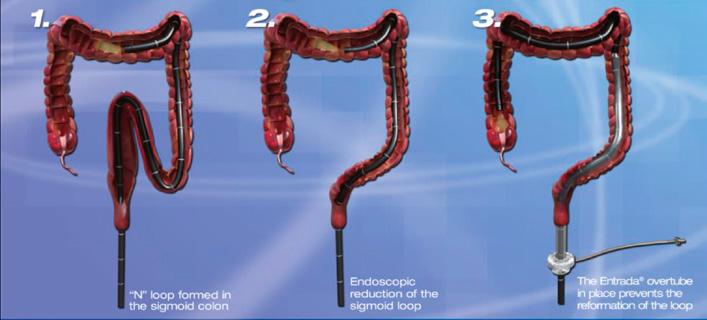
US Endoscopy (now Steris, Mentor, OH) marketed the “Entrada” colonic overtube (FIG 3, 4), very similar in construction to the upper GI overtube that is in common use for sharp foreign body extraction from the upper GI tract.
Figure 1
Figure 2
Figure 3
Figure 4
The length of this device was 30cm, and it worked quite well for me; Unfortunately, the company decided to stop manufacturing it due to low sales. I remember ordering 3 years’ worth of devices as the company announced the production halt. But alas, I eventually ran out of stock.
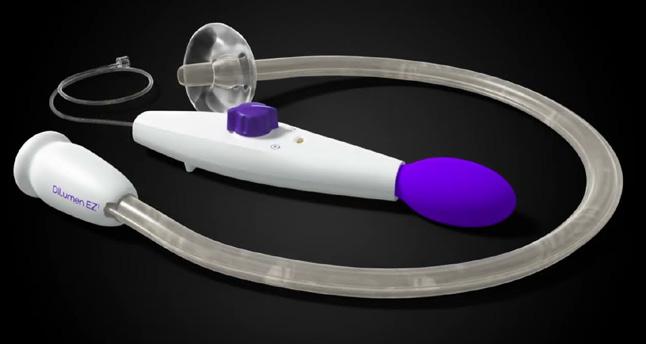
After the Entrada left the market, I was left without an overtube for colonic work until Lumendi (Westport, CT) introduced the DiLumen overtube. The original had two balloons (a “fore” balloon, and an “aft” balloon) and was introduced just like a single or double balloon enteroscope. It was in essence a balloon assisted colonoscopy. One just needs to remember the mnemonic “STIR” (“Scope – Tube –Inflate – Reduce”) to remember how to advance this overtube in the colon. The company has since developed an overtube using only one balloon (DiLumen EZ1) (FIG 5).
I have found this very beneficial to reduce difficult loops in a redundant colon. If I do use it for a loopy colon, I make sure to leave a comment in the colonoscopy note to consider overtube use for the follow-up procedure to save time and effort.
Other advantages of the DiLumen EZ1 are that you can remove the colonoscope and then reinsert it through the overtube and return to where you left off. This can be done, for example, to allow removal of large polypectomy fragments, cleaning the lens of the scope, or even inserting a different scope. For example, an echoendoscope can be advanced through the overtube to characterize subepithelial lesions that may be discovered. It is very difficult, if not impossible, to introduce an EUS scope to the right colon due to the oblique optics of that instrument.
The DiLumen stabilizes colonoscope position, making it a valuable tool to use during endoscopic submucosal dissection (ESD). The overtube also is handy to use for defect closure using the Overstitch endoscopic suturing system. The Overstitch device would be hard to advance up the colon because the sewing device protrudes out from the colonoscope almost an inch.
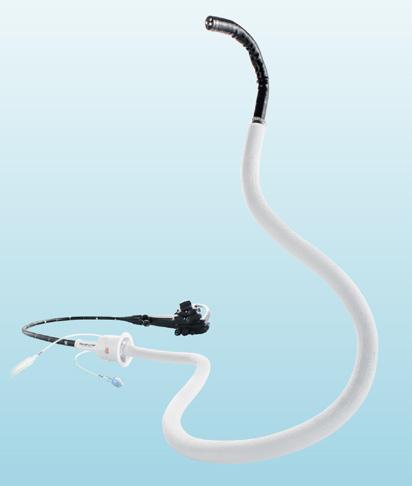
Soon thereafter, the GI Pathfinder overtube (FIG 6) from Neptune Medical (Burlingame, CA) was introduced.
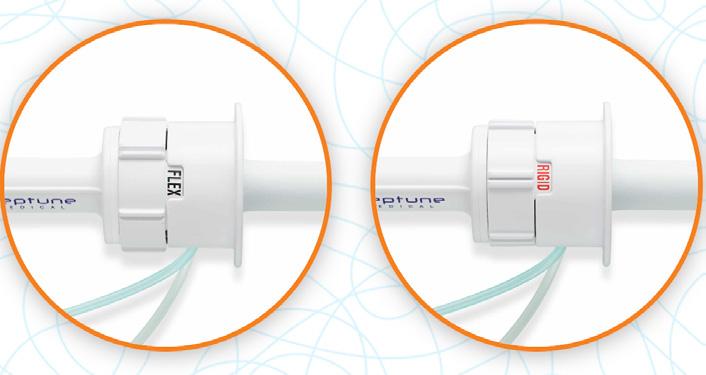
These overtubes are flexible but can be rigidized with vacuum (FIG 7).
The Pathfinder comes in short and long lengths (85cm and 110cm) and two diameters (14mm and 16mm) to accommodate pediatric and adult colonoscopes. I have found that rigidization of the overtube in the left colon is quite helpful with tortuous colons.
I have used both the Pathfinder and the DiLumen, and I recommend giving them both a try so that you can get used to their different features. I feel strongly that every GI lab should stock colonic overtubes that can be used in cases of significant colonoscope looping. Even though I do not use them in every case, they
clearly have important use cases that prove their worth in increasing efficiency of diagnostic and therapeutic colonoscopy.
Colonic overtubes have had a long history in endoscopy, and these newer versions are very useful in challenging situations. We can expect to see even newer overtube designs in the near future, including ones designed to accommodate additional instruments like retractors or even robotic endoscopes. Even though colonic overtubes date back to the first days of flexible endoscopy, they appear to be experiencing a resurgence of use. I strongly urge all endoscopists to become familiar with them!
Disclosures: I have been, or am currently, a consultant/speaker/adviser to all the companies mentioned in this article (Steris, Olympus, Neptune, Lumendi).
Moreels TG, Macken EJ, Pelckmans PA. Renewed attention for overtube-assisted colonoscopy to prevent incomplete endoscopic examination of the colon. Diseases of the colon & rectum. 2013 Aug 1;56(8):1013-8.
Othman MO, Diehl DL, Khara HS, Jawaid S, Yang D, Draganov PV. Multicenter prospective evaluation of an overtube endoluminal interventional platform for colorectal polypectomy. Endoscopy International Open. 2023 May;11(05):E519-26.
Farha J, Othman MO, Hage C, Mehta A, Mony S, Mercado MO, Jawaid S, Samarasena JB, Chang KJ, Friedland S, Ngamruengphong S. Use of novel rigidizing overtube for endoscopic submucosal dissection (ESD) of colonic lesions: a multicenter matched study. Gastrointestinal Endoscopy. 2022 Jun 1;95(6):AB157-8.
Figure 5
Figure 6
Figure 7
Anish A Sheth, MD
Life, Seen Through a Colonoscope
Anish A. Sheth, MD, is chief of gastroenterology at Penn Medicine
Princeton Health and is the author of several books on gut health including the best-seller, “What’s Your Poo Telling You?” He is a mid-career physician who loves practicing medicine and is looking for ways to keep the fire burning!
Who would have thought one could learn so much about life from a colonoscopy?
Now, I know what you are thinking — this GI doc has stared at the inside of one too many colons (this may be true). But hear me out.
Here are a few of the life lessons I have learned from over a decade of colonoscopies.
1) Every colon is different. After 10,000 colonoscopies, it may seem like all colons are the same. But, in truth, every colon is different in some way. Some are straight, some are twisted, some are pink, some are black. Some are long and tortuous, others short and sweet. Prep quality, diverticulosis distribution, blood vessel pattern, polyps, hemorrhoids — you name it, there is always variation.
We are quick to assume our daily clinical experiences lack variety. Colonoscopies remind us that every colon, and more importantly, every patient, is unique (and should be treated as such).
2) Progress is not always linear. The first thing we learn as GI fellows is to reduce our loops, in other words, to pull back and straighten the scope to eventually successfully move forward through the colon.
As trainees, our instinct is to continuously push the scope into the patient — pulling back to straighten the scope seems preposterous. I finally got through this pretzel twist of a sigmoid colon and you want me to do what?!
When we finally master the art of reducing loops, it is downright Zen-like. There is no better feeling for an endoscopist than when our scope effortlessly glides forward through the colon while we pull back on the shaft. In colonoscopy, as in life, progress is not always linear. Sometimes you have to pause, back up, and reorient before you can truly move forward.
3) Prepare to be humbled. What a day! You have banged out eight colons before lunch, removed a dozen or so polyps, and are running 30 minutes ahead of schedule. You are feeling good. The next case on the schedule looks to be another straightforward colonoscopy — a 45-year-old, thin, healthy male for a screening colonoscopy. Fifteen minutes into the case, you are still floundering in this patient’s tangled sigmoid colon. You have tried every trick you know — turned the patient, asked the nurse for abdominal pressure, even switched to a thinner, more flexible scope — but your position in the colon has not changed. In fact, the only thing that has changed is the sweat running down your brow and the anesthesiologist’s growing frustration with the amount of propofol being infused.
Life is like that, isn’t it? Always knocking us down a peg, or two, when we get a little full of ourselves.
4) Go with the flow. Performing a colonoscopy can be meditative. There is a rhythm to inserting, withdrawing, twisting, and straightening the scope as you make your way through the colon. In the background is the reassuring hum of the suction machine. On a good day, all of this can put an endoscopist in a trance-like state. Athletes often describe entering “the zone.” Physicians, too, can relate to entering a flow state. There is a sense of harmony that comes with skillfully doing something repeatedly.
5) Who you work with matters almost as much as what you do. The conversation and energy in an endoscopy room can make or break your day. Sure, we GI doctors love to do procedures, but let’s face it, not every endoscopy is exciting. The pleasant back-and-forth banter between GI docs, anesthesiologists, and nurses helps keep the mood light and the energy up. The endoscopy suite is where I learn about the latest TikTok trends and Netflix shows, but more importantly, where I catch up on the lives of my colleagues. The list of topics covered in an eight-hour day is comprehensive — family matters, recent travels, new recipes, etc. The conviviality adds color to my day — I anticipate it is one of the things I will miss the most when I eventually hang up my scope.
6) The end is really just the beginning.
Ask any first-year GI fellow their goals for fellowship and they will say “to consistently get to the cecum.” We become obsessed with being able to advance the scope to the promised land and grow despondent when we realize how easily our attendings achieve this goal while we flounder in the sigmoid colon. Even many experienced attendings view cecal intubation as the most important aspect of colonoscopy (cecal intubation rate is, in fact, one of our quality metrics). In fact, many endoscopists pride themselves on reaching the cecum as quickly as possible.
Reaching the cecum does not, however, prevent colon cancer. Careful examination of the colon and meticulous polypectomy technique are far more impactful but often get lost in the desire to perform more procedures in a given day.
Colonoscopy reminds us to remain mindful of what really matters. We owe it to our patients to deliver high-quality care. We also owe it to ourselves.
In the end, isn’t it our commitment to what really matters that keeps us coming back, day after day?