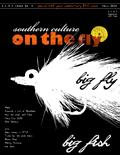
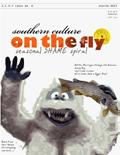
selected articles from back issues inaudiomagformat
click here to HEAR the mag
click here to HEAR the mag
click here to HEAR the mag
click here to HEAR the mag
click here to HEAR the mag
click here to HEAR the mag
click here to HEAR the mag
click here to HEAR the mag
click here to HEAR the mag
click here to HEAR the mag
click here to HEAR the mag
click here to the mag
click here to the mag
click here HEAR the mag
click here to HEAR the mag
click here to HEAR the mag
click here to HEAR the mag
CAST
issues now available format
click here to HEAR the mag
click here to HEAR the mag
click here to HEAR the mag
click here to HEAR the mag
click here HEAR the mag
click here to HEAR the mag
click here to HEAR the mag
click here HEAR the
click here to HEAR the mag
click here to HEAR the mag
click here to HEAR the mag
click here HEAR the
click here to HEAR the mag
click here HEAR the
click here to HEAR the mag
click here HEAR the
click here to HEAR the mag
click here HEAR the
click here to HEAR the mag
click here HEAR the
click here to HEAR the mag
click here HEAR the mag
click here to the mag
click here to the mag
Photo
Photo Essay by joseph clark
96 a day with the banjo builderwill leggett by brother swagler
104 Broyhill's Basschelor Bash
photo essay by alan
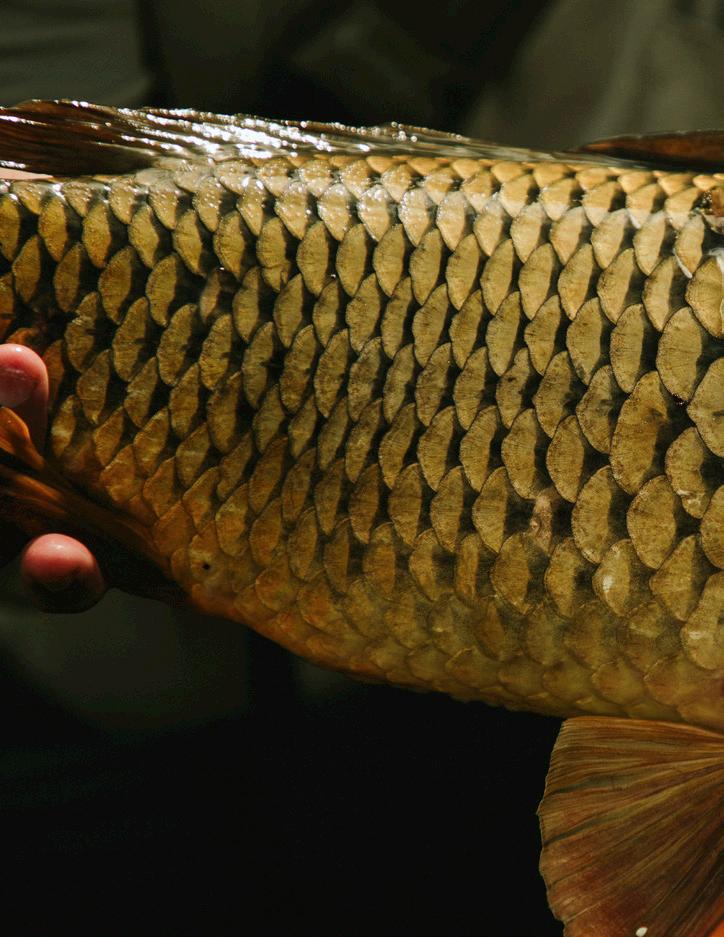
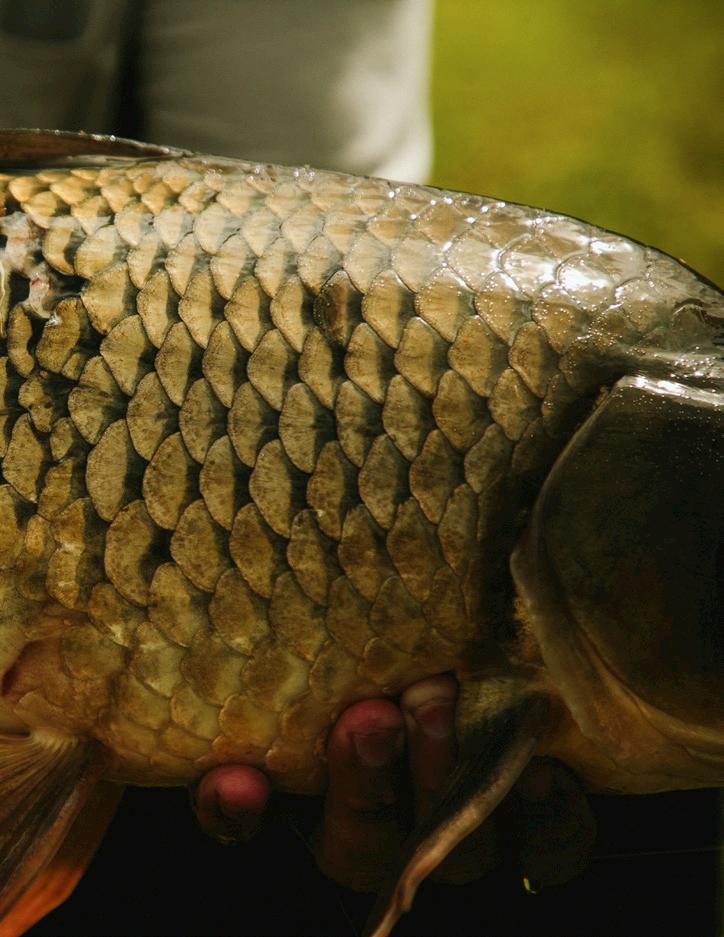
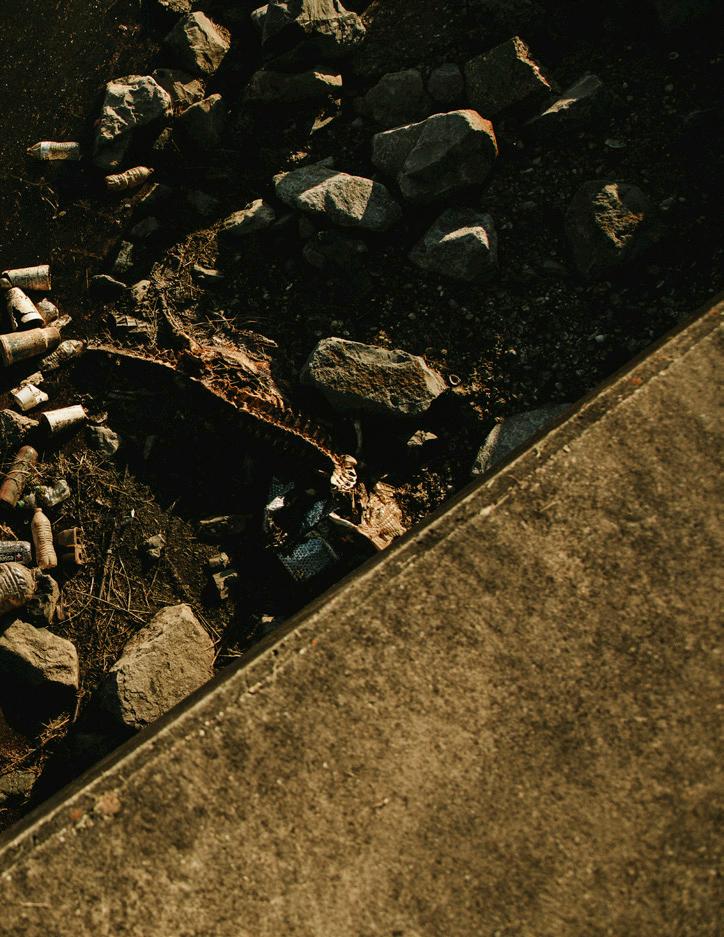
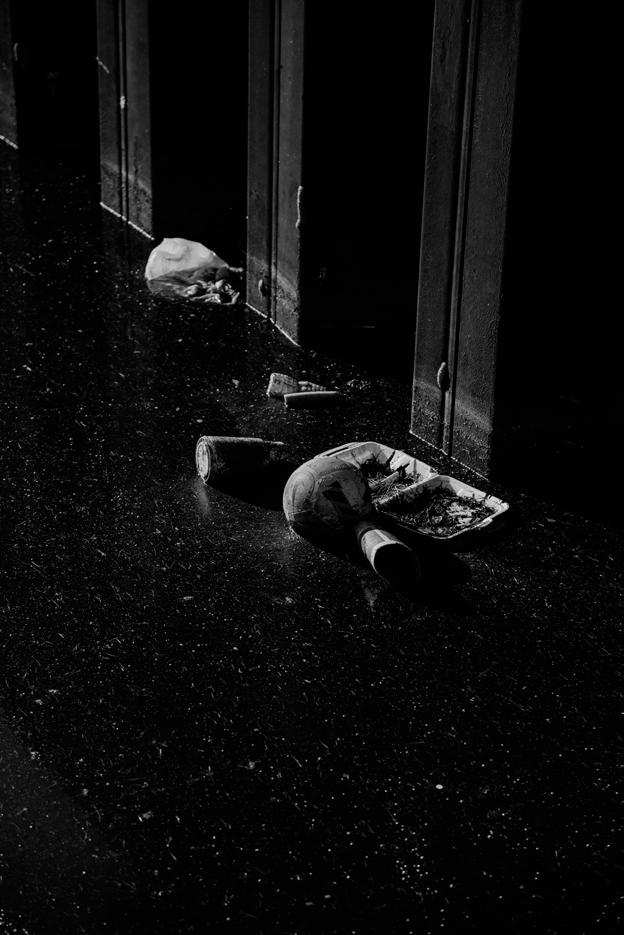
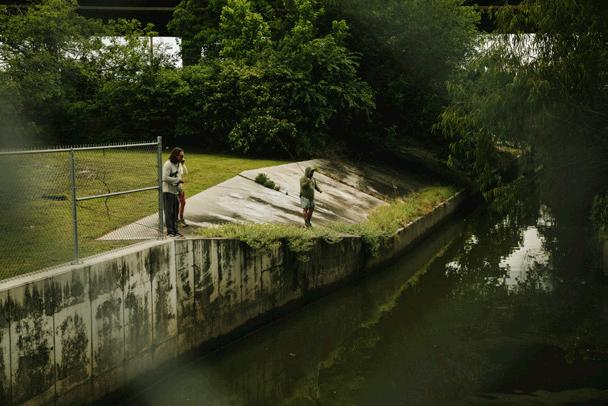
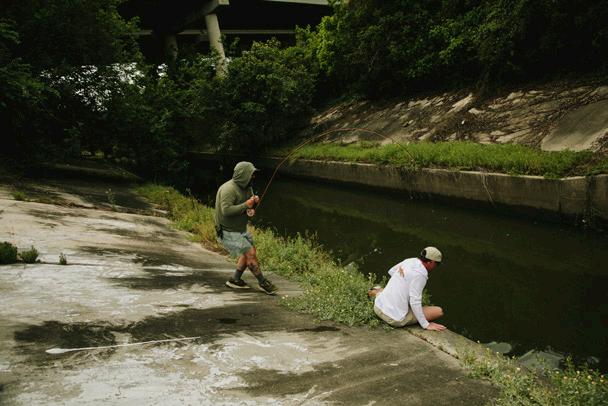
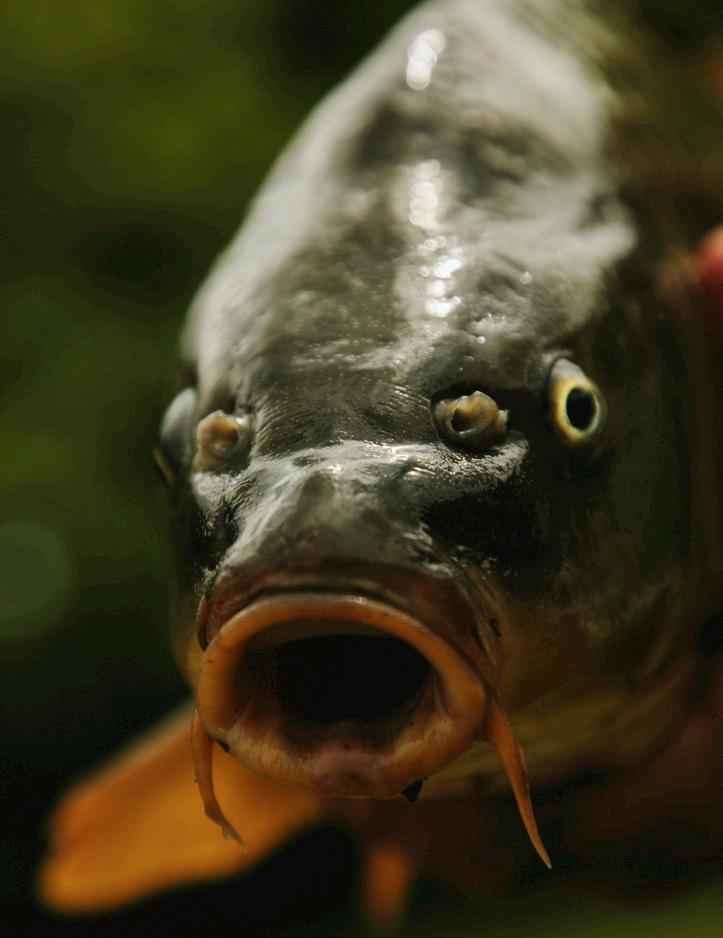
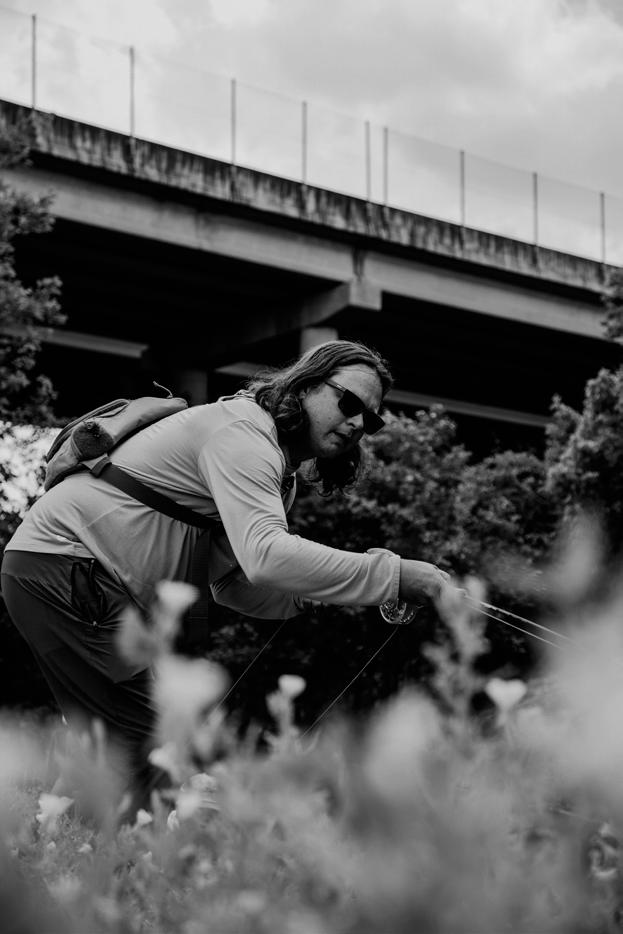
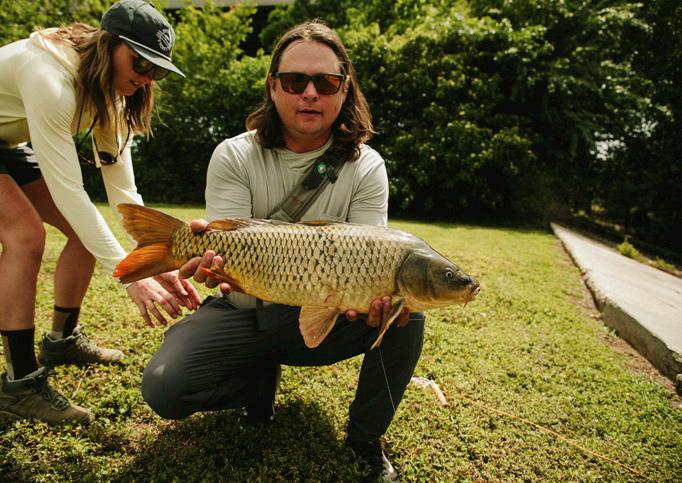
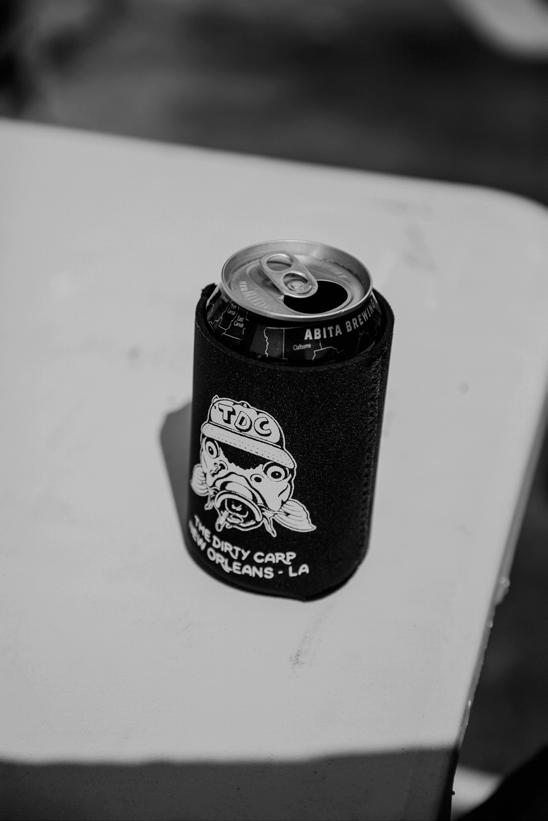
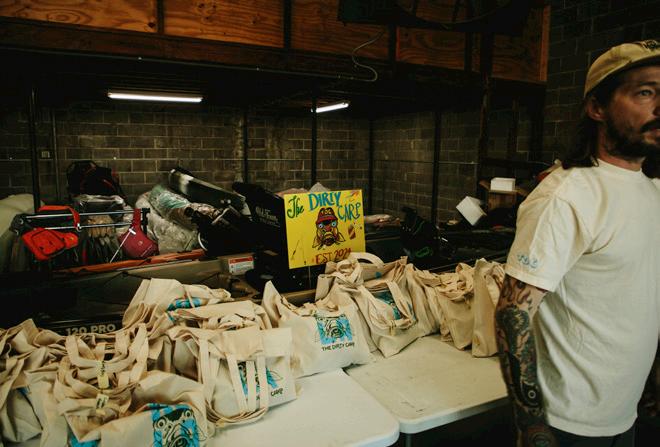
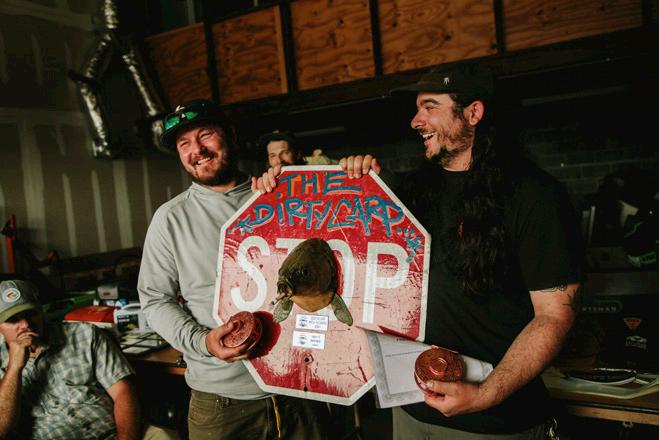
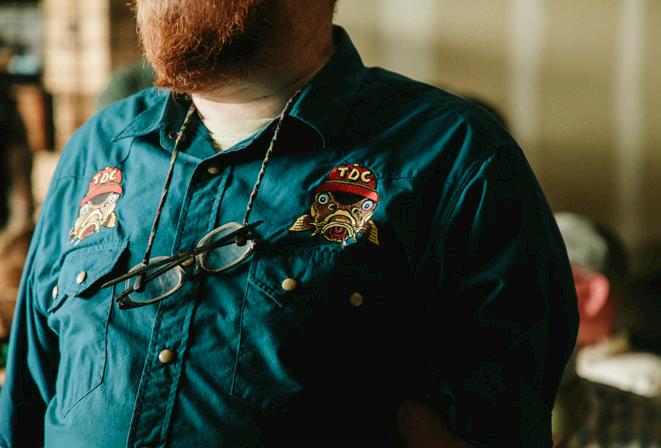
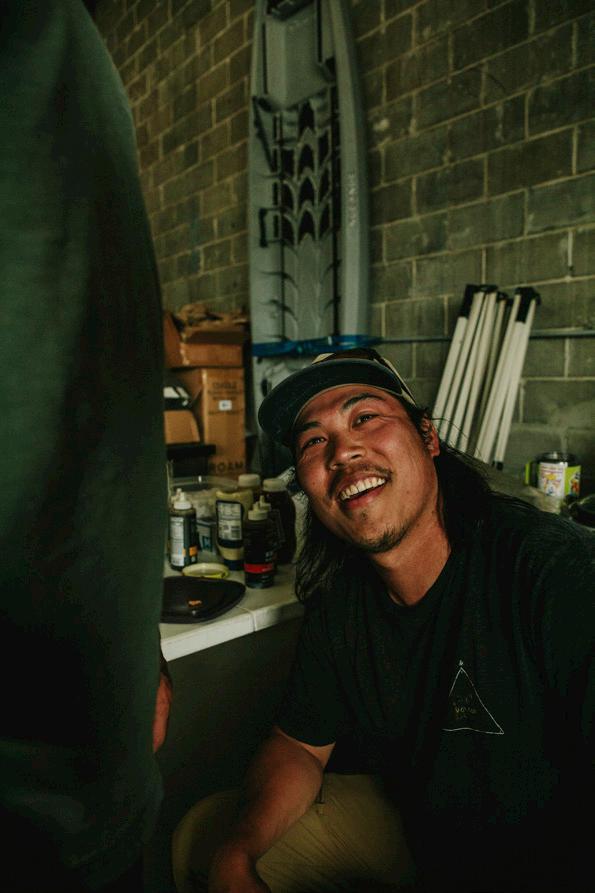
116 The dirty carp feature photo essay by wes frazer
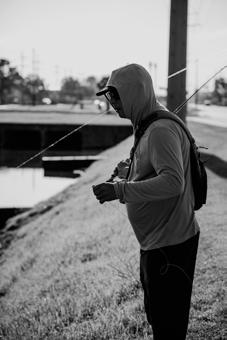
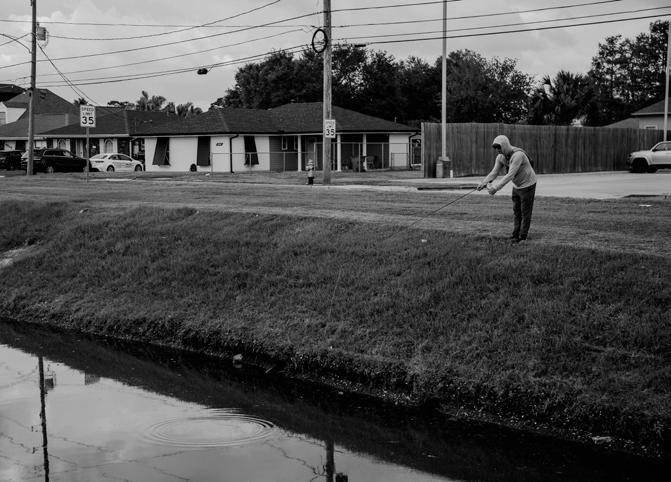
152 Tuesday Night in the Ditch by Shane Behler 155 tortuga madre - chapter 4 by Hank
162 Sistine Key by Jacob Sotak
168 THe silver road by Kyle HUmphrey
photos by kyle Humphrey and wes frazer
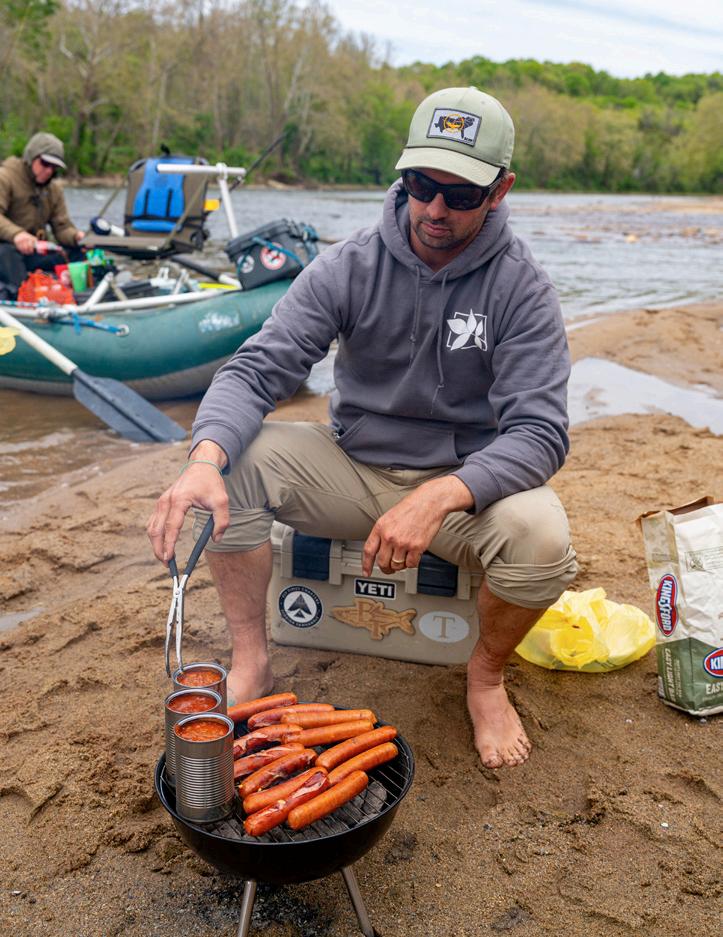
196 gamgam's recipe box
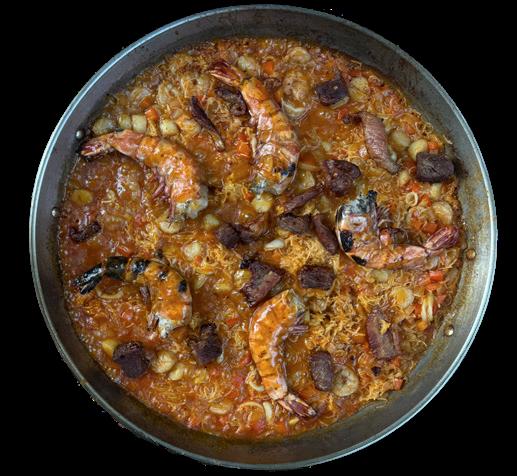
brother's braised pork and crawfish fideua
198 The back page scott stevenson
broyhill
photo by Alan Broyhill
THE CARP STARS
Interim
Creative
Guest
Jacob
Managing
Creative
copy
photo by Alan Broyhill
Focus groups don’t fish.
We don’t chase trends. We chase hatches, tides, moon phases, weather windows, and risers. High-performance apparel designed for better days on the water.
Built To Fish
A Letter From the Creative Director
Dear Readers,
My friend Scott (back page big dog, and master of merchandise) bought and inscribed for me a copy of The Dog Stars a few years ago. He gave it to me on my wedding day, but I waited to read it until my wife was pregnant. Huge mistake. Peter Heller's book is about a poet whose wife and unborn child die in the apocalypse so he has to fish for radioactive carp in the piss-warm alpine to warm the cockles of his heart. I won't tell you what happens to the dog. The book shook me up a little bit, which I think was the point. If the movie adaptation (out this August) focuses too hard on the bullets and sex, I worry that the poetry in Heller's work will rot. It's hard to make poetry cinematic. I'm not saying that poetry is necessarily docile or unexciting. Sometimes it's ecstatic in a way that only words can be. One of the goals of this magazine is to show you that. I think a good magazine should be the constellation that guides your imagination. In the last issue, we focused on fiction to inspire the wordsmiths in our readership. In this one, we've got photos that tell stories just as well.
In this issue, we've gathered up a thick frothy wad of photography and prose that will tantalize even the most jaded of wasteland anglers. Jake Lancaster and Jacob Sotak show us what does or doesn't happen when you do or don't listen to the ancestors. Our feature photo essay by Wes Frazer makes us feel like we should start charging people for access to these juicy pages. (I promise we won't). Wes also snuck a few in for Kyle Humphrey's wild Cahaba Saga, one of the most interesting and artistic trip reports I've ever read.
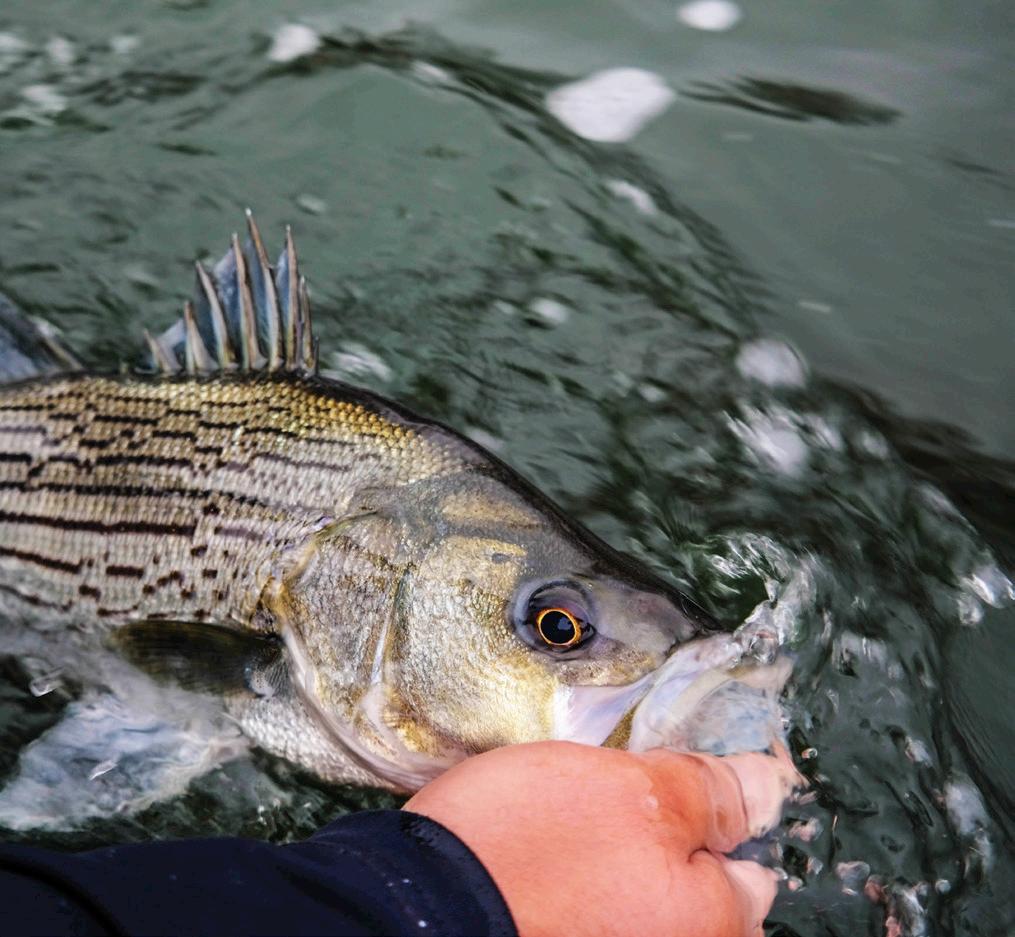
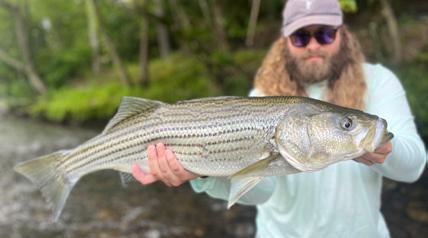
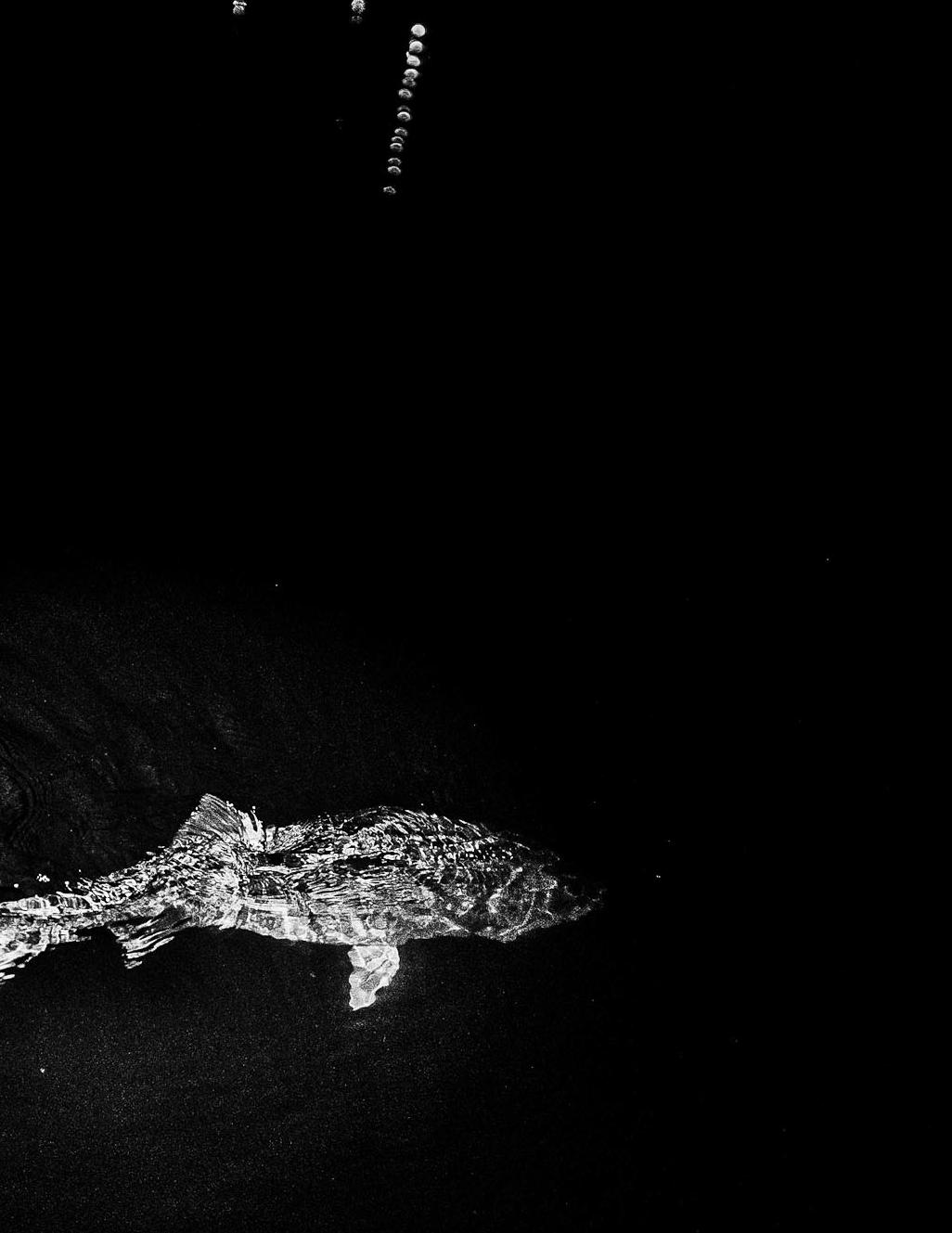
In the "shorts" department, a few stories stand firm at attention. Gecko is back with a memory from the before-times, and Shane Behler gets his kicks among the spandex cyclists of the Capital. Joseph Clark's monochrome striper fight is a master class in photo essayism, and a sexually confused seagull sent us a first-hand account of the Southern Striper Open on Lake Lanier. Alan Broyhill's photography is the mortar in all our cracks.
In closing, it's okay if your fishing doesn't feel like a movie. Movies tend to suck anyway.
- Dr. Hank
P.S. This is the first issue of SCOF that David Grossman, our cofounder and first editor, will never read. Dave passed away on April 4th of a sudden heart attack. He's the person we wanted most to be proud of us, and now he's gone. This summer, we'll be publishing a tribute issue for him, featuring memories, photographs, drawerings (sic) and selected works of his that encapsulate who he was, who we'll always remember as the original. "Dave Magazine" will be excellent.
Haiku
by Jay Thaw
dispatches
From the Mind of the poopy poet
Tails at two o’clock
Northeast gale, fly line collects
Tall boy encircled
Loop arcs heavenward
Hops and barley and nylon
Careen entagled
A glance, a trag’dy
Tin echoes in waters rings
Slack kisses the tide
Limp retrieve - soul dark
Suddenly taut, line escapes
A cloud of copper
Reel clicks to life - drag!
The brute submits to the beast
Time for a new beer
THE DIRTY
CARP - FEATURE PHOTO ESSAY BY WES FRAZER p. 116
Gomorrah
by Jake Lancaster
My friend arrived late, in darkness. He’d driven to Iowa all the way from Clark, Colorado. He looked like a lost son of Charles Manson. It was early December, damp and cold, but I was camped out on my crooked porch, avoiding an essay that was due the next morning, Innocent Images of Evil (On The Use of Photography in Michael Ondaatje’s The Collected Works of Billy the Kid)—of which I really only had the title. I was chaining Camel Wides and drinking mead brewed by my upstairs neighbor, a lonely calligraphist. We held each other in a deep embrace, our overripe scents commingling and strengthening. Our friendship was the old kind, forged on farm ponds over Copenhagen longcut and stocked largemouth. I’d gone to college in-state. He’d gone off to the West.
“This is some Beowulf shit, right” he said, sipping the mead from a plastic cup.
“How’d you know that?”
“I read, man, just not for a degree.” He slipped a Neurosis CD from the pocket of his hoodie. “Play that, man.”
I went inside and turned the speakers to the open window. The music was as dark as the night. A bedroom light in the sorority house across the street turned on, a prim yellow glow. We sat on a greasy couch embroidered with purple peonies. His truck parked on the street was something to admire, a cancerous ’78 Dodge Power Wagon with a pristine white topper.
At the bottom of my mason jar was a sludge of shiny gold. “Must be the honey,” I said, “the remains”.
“Must be. Do it down,” he implored.
I drained it all, then lit a cig as a clump of drunk college girls tumbled their way to the bars downtown, shooting us smiles.
One of them, in a Hawkeyes Starter jacket, solemnly laid to rest an empty wine cooler in the brown grass.
“Let’s go that-a-way,” he said.
“I got a paper due tomorrow.”
“A what?”
“An essay. For my Postmodern Fiction class.”
He laughed his feral laugh. “We’re going out, dude. I’ve been living on a goddamn sheep farm with a Percocet junkie for the last eight months. Just tell your professor you had some living to do. Postmodern Fiction? What even is that?”
“Well”, I said, fully aware of my intellectual limitations, “I don’t really know.”
We parked in front of the Deadwood, a spot with a broken meter. Behind the bar there was a chewed-up skin mount of a decent musky filthy with dust. We each took a stool. I kept bending forward and twisting around, something in my spine was off. “I feel kind of funky,” I said.
“I’ll bet you do.”
“What do you mean?”
“Bear with me here. I knew you wouldn’t be up for it so I dosed your beverage with a cube of acid. That honey you were licking up was LSD. Good stuff, though.”
“So I’m tripping?”
“You will be.”
“Hey, barkeep”, he said. “Where’d that musky come from?”
“Macbride.”
“It’s a good one. Leech Lake strain.”
“We found a dead mouse in its jaws last year.”
“They’ll eat those.”
I chose not to resist the oncoming voyage. I needed Dan to know that I was just like him, unconcerned with the civilized world’s expectations of young men—college, work, family, all-around uprightness. I let the poison in my spine do its rearranging. Soon enough, the musky had things to say. She couldn’t talk but she brain-waved me through all the smoke and noise. She told me to stay close to the water, no matter what. Skinny water, stillwater, big water, tailwaters, flats, and the black endlessness of cold seas. She bought me another High Life. Dan had disappeared. I almost cried. Then I saw him on the dance floor, swinging a shiny silver hula hoop around on his hips to the sounds of The Supremes. He was in some kind of duel with a hippie girl wearing a corduroy hat
and a neon green bikini top. By the time I floated over to the hubbub he’d won, outlasting the hippie girl.
“This is Juniper”, he said. “She’s coming fishing with us.”
“What? When?”
“Whenever we get kicked out of here.” He had his arm around Juniper. When she smiled I saw that she was missing a tooth, an incisor. Her eyes were like marbles that had long been buried in dirt.
I found myself stuck on the checkerboard dance floor, one foot on black, the other on white. One false move and I’d be a goner. The last time I ate LSD I became captive to a waterbed in Dubuque. The gal who owned the bed raised track dogs, salukis and greyhounds.
Two puppies, sharks, circled me on the wavy mattress until the sun came up. It was only when Dan took an arm, Juniper the other, that I was able to navigate myself back to the relative safety of the bar. I told Juniper about the musky, her powers of telepathy. She said we were likely acquainted with each other in past lives, when we were both different animals. “Keep her near to you”, she said.
I wandered out of the bar first, followed by Juniper and Dan, ambling in haste and secrecy. We loaded up into the Power Wagon. Dan drove with his window rolled down. The night poured in. Juniper sat in the middle with her legs swung out my way to avoid the stick shift. There was a hole in the floorboard and I thought it possible that I might get sucked through, banished to another dimension.
“What’s your deal, then?” Juniper asked.
“I’m trying to write a paper about Billy the Kid. It’s due tomorrow.” I laughed and the laughter kept building.
“The murderous outlaw?”
“Yeah, that one.”
“What do you have to say about him?”
“That he was a legend. That he made his own legend. All legends do. And that when the West died, he lived on through his legend. He became immortal.”
“Do you want to live forever?”
“Hell no,” I said. “But I want someone, anyone, to know I was here.”
“Well, I know. So, mission accomplished. What’s your name, man? You look like a Johnny.”
“It’s Dan. We’re both Dan.”
“Far out.” A backwards cigarette dangled from her lips. “Let’s write that paper.” From the dash she procured a pad of hot pink Post-its. “You got a pencil?”
I opened the glovebox. It was complete with cruddy hopper dropper rigs, a Vice Grips, an apple core, a rabbit’s foot, two more Neurosis CD’s, a condom, and one of those short pencils from a golf course. She sharpened it with a bone-handle pocket knife.
“What’s your thesis?”
“That Billy the Kid was a legend.”
“That’s not really a thesis.”
“Ok, maybe that the images in the novel portend the death of the written word, that ultimately what will be remembered is what we can see.”
“Words are better than pictures”, she said as she wrote it down on the pink paper, in a girly grade-school script. She stripped the note from the pad and stuck it to my forehead. “There’s your paper. A-fuckingplus.” When I rolled my window down to suck in some cold air, and enjoy a smoke, the Post-it whipped off my face and into the dead country, the barren trees and fields of hacked off corn stalks, the farmhouses with their one light on, the ditches with their cattails and switchgrass and trash.
Somehow Dan knew exactly where he was going.
Below the dammed-up lake was a spillway gushing with dirty white spume. The mist caked our faces. The booming sound tremored all our hearts. Dan gave us both 7-weights. At the end of the short leaders were mangy old mouse patterns, the rabbit fur and deer hair mostly fallen out. Juniper had covered up with a fur coat. “Is that real?” I asked, petting her arm.
“It’s real warm”, she said.
We moved downstream, hopping between broken pieces of concrete. The gushing sounds receded. We heard owls plotting against us, twigs cracking in the woods. I wasn’t so sure I had a body or a mind,
what was real and what was not. The earth was frosty but it felt like a warm peat bog beneath my feet. I worried about sinking down and turning into a bog man. From both reels I stripped out line.
“Just kind of hold it out there”, I said. We’re in no condition to get tricky with things.
“The fish eat the mouse?”, she asked.
”In theory, yes.” Dan had climbed up onto the truck’s topper, where he’d reclined to take in the stars. Who knows how long we stood there. Ten minutes? Two hours? Long enough for the water to replace my blood. We caught nothing but the frigid air in our lungs.
With a big stick I excavated two fox holes in the sandy beach, thinking it would be warmer a little further down. Between the pits I built a fire from scavenged driftwood, junk from Dan’s truck for kindling. The Post-its burned a greenish blue. Juniper tossed Dan an army blanket for his loft atop the truck, then settled into the sand, the fire between us. The smoke turned the stars yellow. She sang us to sleep, Dead songs, the ones everyone knows.
I woke up to a fall of wet snow, the whole world painted white. The thick flakes melted in the black river. Juniper was gone, her footsteps ghostly in the snow. In her place, her bed in the sand, was the musky from the bar. There was a tarnished gold placard drilled into the wooden backing, the fish’s name, I presumed, etched by some kind of engraving tool—“gomorrah.”
I was all kinds of emptied out. There was one Post-it left, damp and curdled. The pencil was in the pocket of my jacket. I
could still write my paper. But I was cold, so I held the pink paper to the fire, the coals that were still hot. A flame grew, some warmth. I waited for gomorrah to kick me some wisdom, some knowledge. She had nothing to say. She was just borax, salt, and wood. Her soul was in the river. I got up, grabbed a reel, and plopped my mouse back down on the black water, mending now, skittering and stripping, focused, serious about this life.
Fish Before the Phones
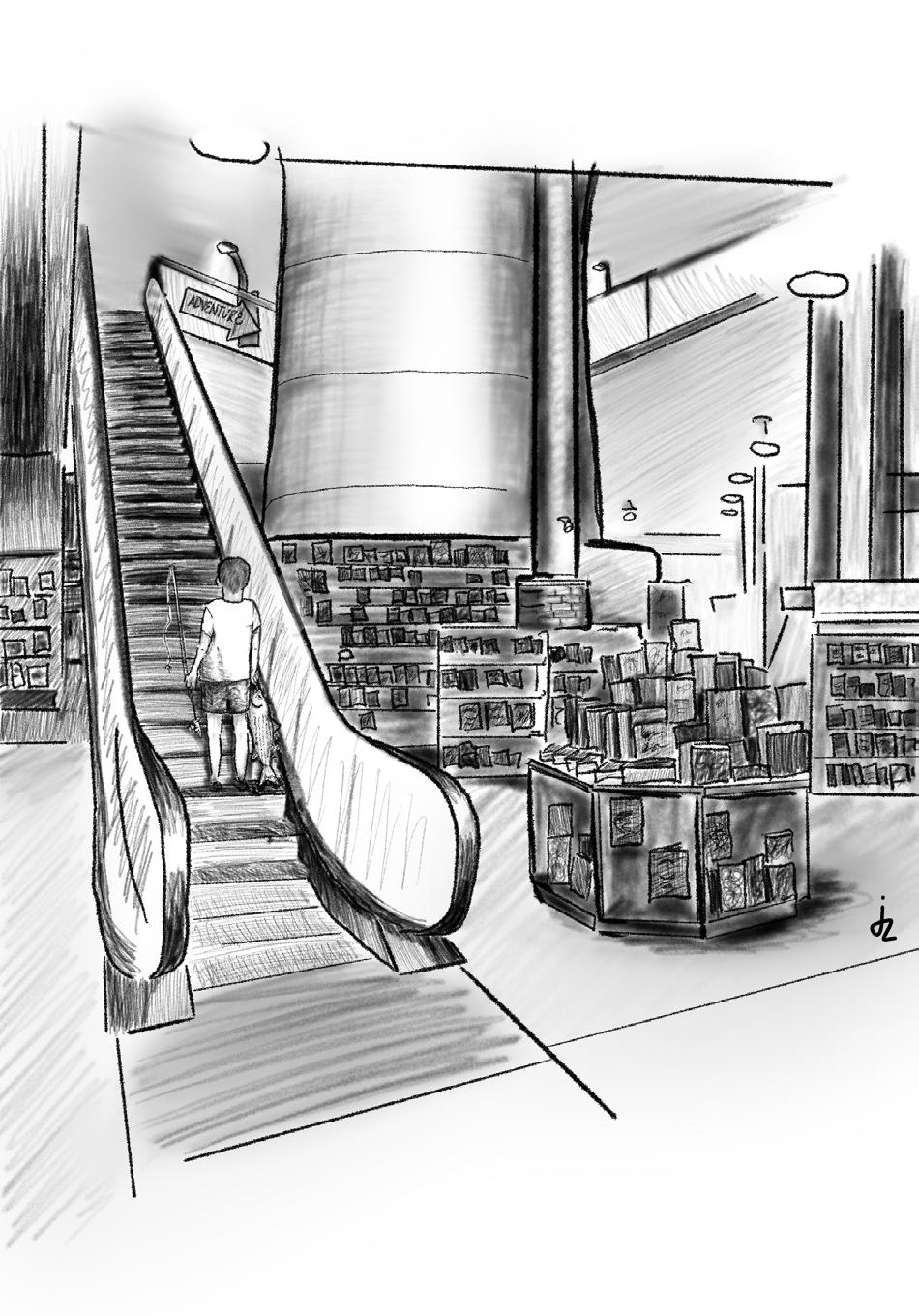
by Gecko illo by Jessica Zacher
There was a time we didn't all have cameras. You couldn’t just prove your salt with an Instagram page, a phone background, or a profile picture. You had to show people. You had to lay fish on the dock, get your name in the paper, your Polaroid on a wall. Those days are over, but I caught the tail end. Some poor security guard caught the tail end.
It was 2005, I was seven, and we had planned a family outing to Baltimore Harbor. I was obsessed with fish, fishing, and building out my professional portfolio as the world's best seven-year-old angler. I had species to catch, and I didn’t care how I got them. I was a nightmare child to raise in a big city.
My mom always carried a huge handbag; it wasn’t a status symbol, but a necessity. I made her tote a 32-oz bottle of Heinz ketchup (got forbid the restaurant ran dry) and a collapsible fishing rod with any lure I might need. I believe there was a laminated fish identification chart as well. Pre iPhone, you were only as good as your on-hand infographics.
Anyhow, we were marching around, doing things I didn’t like, and my worst fear had come true. There was a bookstore. Not just any old bookstore, but a two story Barnes & Noble. A detention facility for a divergent like myself. My mum was an English teacher, so this was her Super Bowl. I prayed to the creator to spare me from a book signing or activation inside. It wasn’t looking good from where I stood.
Before speeding through the doors, my mother handed me my collapsible pole, pointed to a pond, and said we’ll be right back. They slipped up the escalator as I sprinted for the bank.
Baltimore Harbor is a brackish historical shipping site. It had been bled dry by hundreds of years of commercial use, coal barges, and big boats. The city was in the process of restoring its natural beauty and had planted floating vegetation in an attempt to promote aquatic life.
I flipped a bloodworm under a flotilla of staged hydrilla and boom! A striped bass smoked it. This was the first striper I’d ever come across. Species 32 on my list, and the official Maryland state game fish. You could say I was excited. I battled him out and flipped him onto shore.
This is when the fun starts. I had to show my Dad, did I mention this was the official state game fish? Big deal. I grabbed the poor fish, and fled to prison holding my family. As I ran through the double doors, the officer on duty pushed his head forward, “Is that a live fish?”
I was seven, so I hadn’t yet learned to obscure the truth. “Yes, this is a striped bass fish, the official state game fish of Maryland.”
By the time he remembered what state we were in, I was halfway up the escalator.
My dad and I were probably reading at the same level in 2005. In 2006, I think I passed him. He's an infographic guy too, so I knew he’d be in the magazine section.
He was planted on the ground, readers on, studying the newest Kawasaki 600 halfway through an issue of Cycle World.
“Dad, Dad, look... Striped Bass.”
He took his readers off his nose, looked up. And after about three seconds, he said, ”Dude, what the f***!”
Not the response I was expecting, but fair. *Fish is not flipping/flopping*
“Take the thing outside, Dude, what the f***”
I ran back outside past the same cop, and chucked the bass back into the restoration site, but now with a crowd.
Two bike cops, the security guard, my Dad, and my poor mother, with a few new hot reads in her hand.
I collapsed my pole, confidently looked to the side, and let my parents handle the rest.
The next time we went back, the boardwalk was littered with “no-fishing” signs every 9 feet.
I imagine kids these days just snap a picture on their phones. Post it, send itverified.
I know, my parents know, and the security guard knows.
There were fish before phones, and man, you had to work a little harder to prove it.
The Premier Fly Shop in Blue Ridge, GA
N O
T A N O T A N N N N O T
SMALLMOUTH
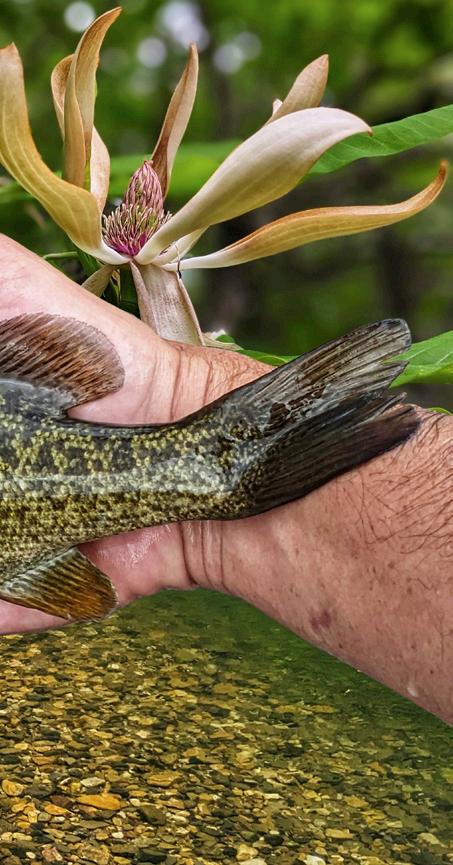
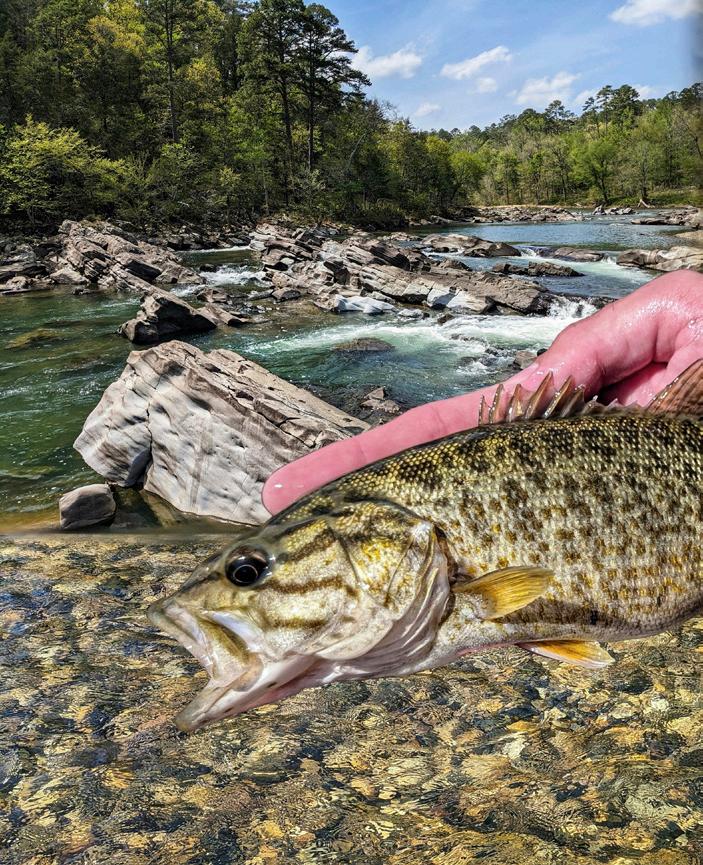
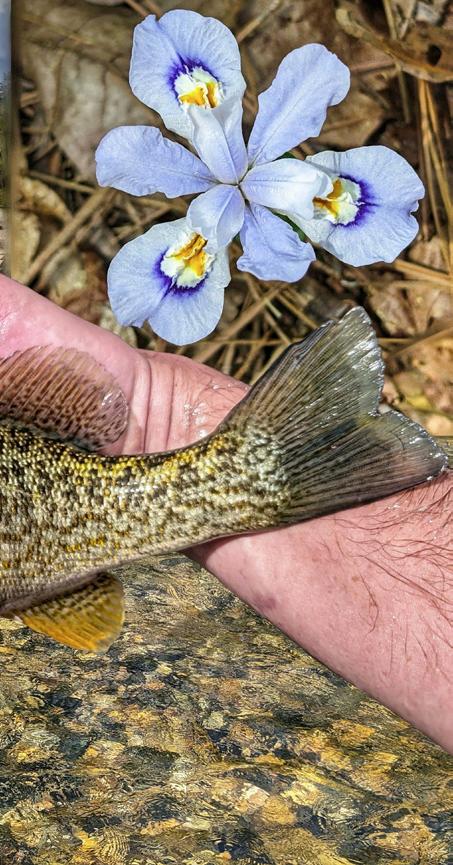
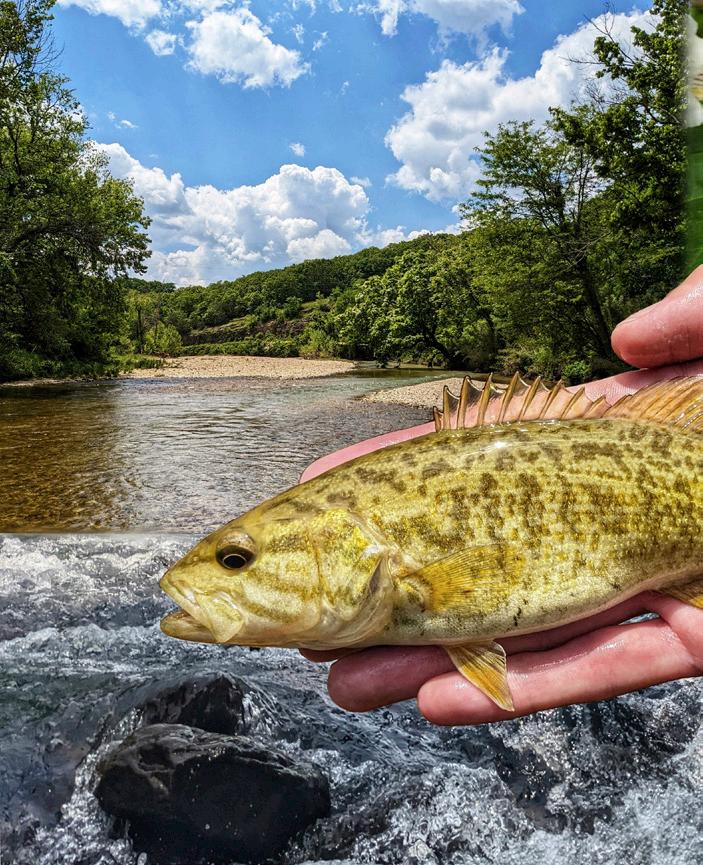
photo essay by ethan dodson
U A C H I T A
R I V E R L I T T L E
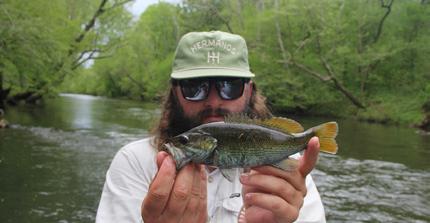
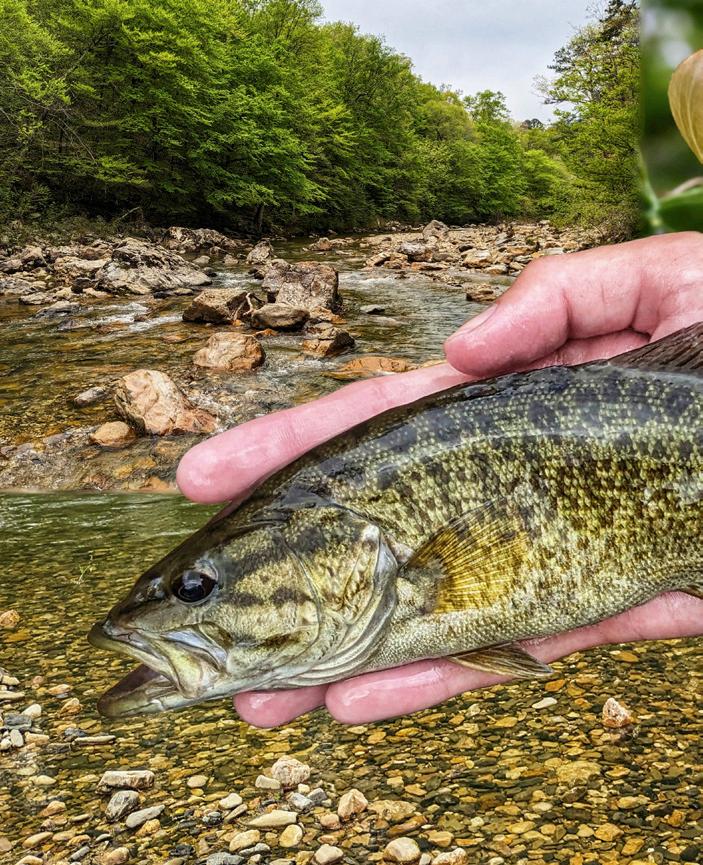
OHSON EEthan Dodson is an avid fly angler, photographer, and biology graduate student currently based in Tennessee. His work aims to showcase the remarkable diversity of native fishes, free-flowing waters, and wild landscapes of the Southeast, particularly in Southern Appalachia and the Ozark and Ouachita Mountains of Arklahoma. Follow his adventures on Instagram.
The Heart of the Evening
by Jess Whitmire photos by Alan Broyhill & Lydia Dann
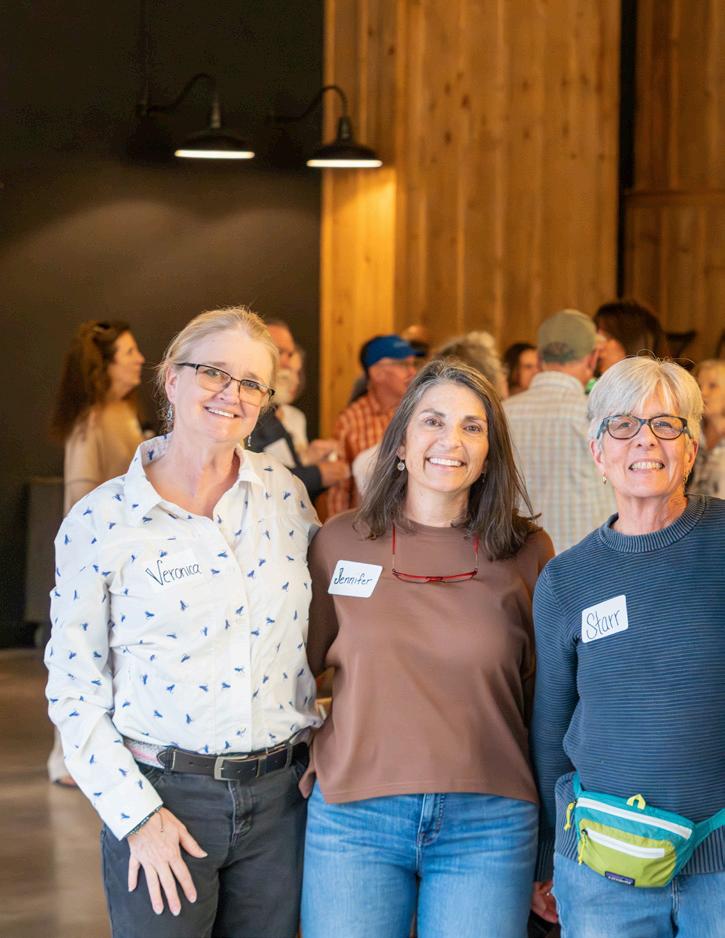
Seventy-something anglers, three powerful stories, and one Appalachian evening that proved the fly fishing community is strongest when everyone feels welcome.
The frogs started singing. That’s how spring evenings settle in along the French Broad River valley. The light dwindles slowly across the mountains, the ponds around Deerwoode Reserve come alive with that steady Appalachian chorus, and somewhere out in the grass my kid is usually running around covered head to toe in mud trying to catch the biggest tenor in the choir.
For a long time I had wanted to host an evening like this. Something that felt less like an event, if that makes sense. I always imagined it happening at Deerwoode Reserve, because evenings here need to be felt by many. This time of year, the air carries that early spring warmth that tells you winter has finally loosened its grip on Western North Carolina.
Everything about this place resonates with my soul. So when we started planning the North Carolina DIY Fishing weekend with Heather Hodson and the iFishiBelong team, deciding to move it to the same weekend as the Women in Fly Fishing Celebration and our Forks of the River Fly Fishing & Music Festival, was a no brainer. Immediately the energy around the event grew quickly. Hannah Overgaard, Lydia Dann, and I started to believe we could really make something special happen here, and with Mollie Boaz, Heather and the iFishiBelong team with us, our confidence grew!
Still, when we started planning the Women in Fly Fishing Celebration, I’ll admit I was nervous.
Inviting three powerhouse speakers felt like a big swing. What if the room wasn’t full? What if we couldn’t sell enough tickets?
Our goal had been thirty, we had hopes for 50. “75 tickets y’all, did we just sell out?!! Hell yes!” Deerwoode was about to be filled with anglers from across the country, gathering not to prove anything—but simply to belong. Not just another fly fishing event. Not another speaker series, lecture or gathering of anglers to focus on catching fish. Something quieter. Something deeper.
At that point there wasn’t much left to do but trust the plan and hope the evening unfolded the way we imagined.
In Appalachia we like to gather and swap stories — So that was the goal, create a space where new friendships could form and old ones could grow deeper. A place where people could talk about fishing without pressure or expectation. No one there cares if you are a seasoned guide or if you just picked up a fly rod last month. No one cares if you can double haul into the wind or name every subspecies of mayflies. We just wanted people to leave feeling a little more excited about being part of the fly fishing community than when they walked in.
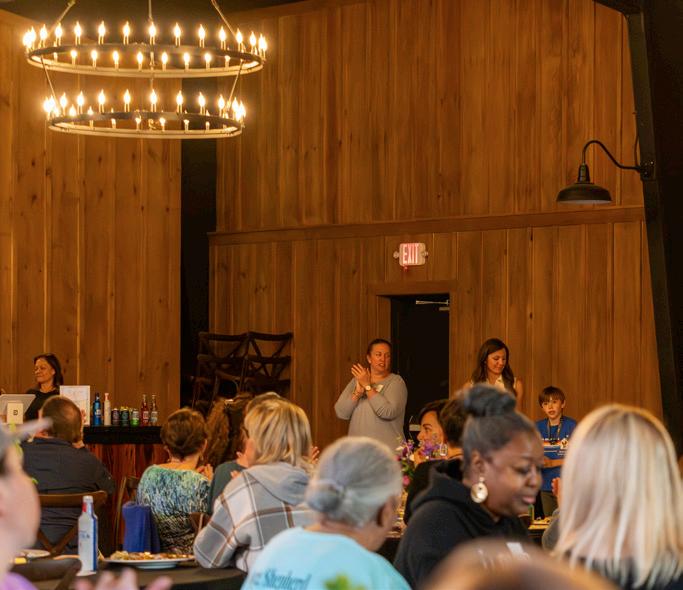
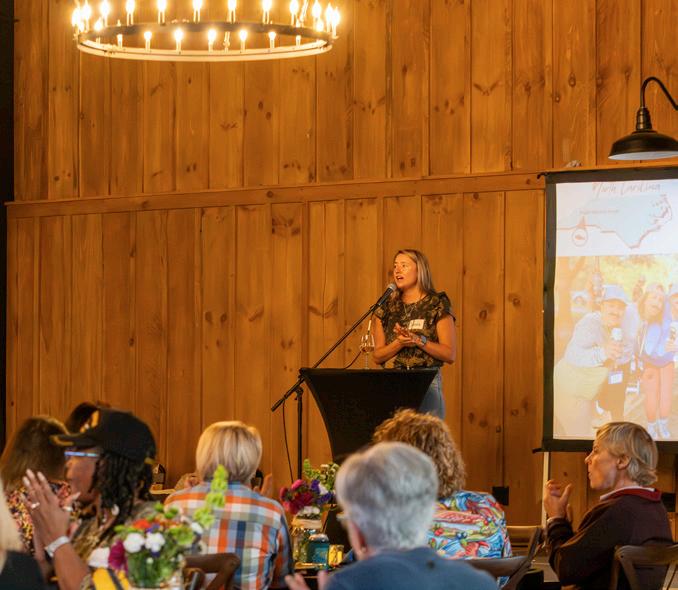
The heart of the evening came from the stories shared by three incredible women whose paths into fly fishing could not have been more different.
Brita Fordice, a Pacific Northwest guide and product developer for Sage Manufacturing, brought decades of experience and a lifetime of curiosity about the craft of fly fishing. She spoke about grow-
ing up fishing rivers in Washington, tying flies as a kid, and eventually helping design the gear and flies anglers now trust around the world.
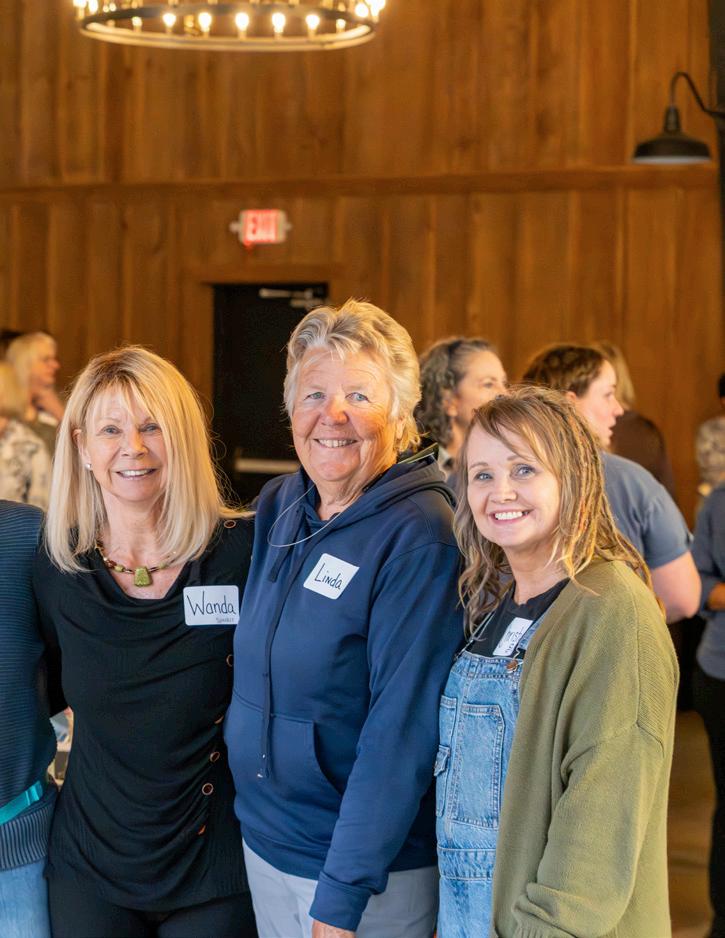
Then came Wanda Taylor, widely known as the First Lady of Fly Fishing in the South. For generations of anglers, Wanda has been the person who taught them to cast — not just technically, but confidently. The first woman certified as a Master Casting Instructor by the International Federation of Fly Fishers, her legacy stretches across decades of teaching anglers to trust themselves on the water.
And then there was Dr. Yolanda Edwards. Her story brought laughs, tears and even quiet stillness to the room. After the loss of her life partner, Edwards found herself searching for a path forward. With her spirituality in one hand, she found a path that unexpectedly led her into a river with a fly rod in the other. What began as curiosity quickly became something deeper — a place of healing and renewal. Today, through her nonprofit Remain Hooked Outdoors, now known as Her Waters, she works to introduce women, girls, and veterans to fishing as a pathway toward confidence, restoration, and connection.
Three stories. Three different journeys. All connected by the same belief: that fly fishing can change lives.
After the talks, we had some round table discussions planned. But one thing I can normally do well is read the room. Everyone was ready to talk and enjoy each other’s company and the warm early spring air around the fire. So we asked everyone to make their way around at some point in the evening, to just jot down some answers to the table questions. Here are some highlights:
"When do you feel most confident
“I felt most confident when I trusted myself could. It opened the door for me to fish more.”
“I wanted to quit one time, so I decided to quitting. Today I am teaching others.”
"What advice would you give
“There is no need to be perfect, take it slow,
“Just be you, that is all you need.”
“You are enough.”
"What drew you to fishing and belonged?"
“My grandfather taught me to fish with a peaceful and we just sat there and had real
“Nature tends to give me peace and makes So I guess mother nature makes me feel welcome.”
“I have always been drawn to nature. Now be with him on the water. It is something we me there with him, I felt welcomed”
"What are your hopes for the community?"
“As the community grows, protect the authenticity. want to be perfect, and it doesn’t have to be. it real. Keep it honest. Imperfection is what
“Keep smaller local groups within the larger things strong as they grow.”
confident on the water?"
myself and just did it all by myself. Then I knew I more.”
be persistent. I gained confidence for not give your younger self?" slow, enjoy the journey.”
and who made you feel you
cane pole on the St. Johns River, it was real conversations.”
me feel welcome, it is my spiritual church. welcome.”
that my husband likes to fly fish, I want to we can do together, so I learned. He wanted
the future of the fly fishing
authenticity. Social media makes everyone be. Don’t make this community elitist. Keep what makes it beautiful.”
larger ones. Small grassroots connections keep
A meaningful part of the evening was seeing so many organizations in the room working to expand access to fly fishing and support anglers through any journey. Groups like Casting Carolinas, Casting for Recovery, Trout Unlimited, Reeling in Serenity, iFishiBelong and Ubuntu Fly Anglers continue to introduce new anglers to the water while building strong communities. Helping people heal one cast at a time.
And much of the momentum behind this weekend came from the tireless work of Heather Hodson and the iFishiBelong team. Heather has spent years connecting people across the country through grassroots gatherings, educational programming, and national campaigns focused on helping anglers fish independently and confidently. In return creating the conservationist of tomorrow.
It was also incredibly special to have Joyce Shepherd in the room. Joyce has spent decades mentoring anglers, supporting youth programs, and opening doors for others in the sport. Her presence alone carried a sense of quiet respect and gratitude from everyone who understands how much she has given to the fly fishing community. She has opened the door for so many people, but most importantly, women of color. Many have followed her steps into the river.
In Appalachia, this is what happens when people gather. You tell stories. You listen. You laugh. You stand around a fire and realize you’re no longer among strangers. You Dance.
The Pisgah Playboys played some bluegrass. The garage doors of the event center all opened. The fire crackled, and the circle around it grew. Standing there watching conversations unfold, I realized
the night had become exactly what we hoped it would be.
A place where people felt welcome.
A place where stories mattered.
A place where no one had to prove they belonged.
Because the truth is something every angler eventually learns. The river doesn’t ask for credentials. It just asks that you step in. And judging by the energy in that room, there are a whole lot more people ready to step into the current, and bring
others with them. Conversations, the way fishing stories always seem to do, lasted well into the evening.
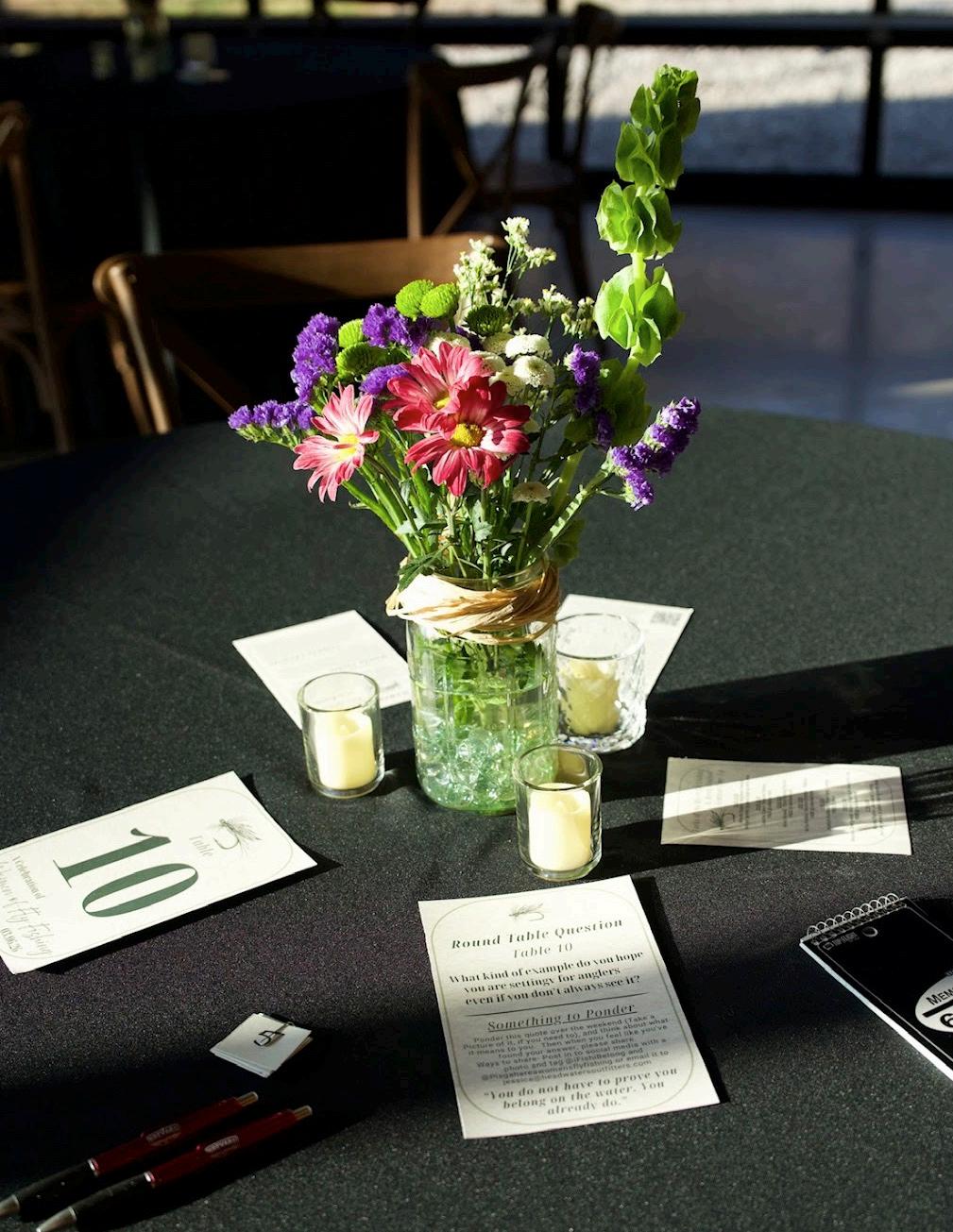
I sat down at one of the tables to respond to a round table question. What does belonging within the fly fishing community mean to you?
“Belonging to me is knowing that I am a pebble in a creek. There are many of us here — rolling around finding our pace at different speeds and on different paths. But we shape those around us as we move. We must sense and feel the responsibility
of that. Our actions shape others and in return we also shape ourselves. Tonight in this room, I feel a calmness knowing that as I am being pushed around and shaped by this thing called life, in a current that I have little control over, I am in a community of some incredible people. Some of us are smoother with age, others still a little rough around the edges. All of us are part of the river. All of us belong.”
I am incredibly thankful for the people who helped make this night possible. The iFishiBelong team, Deerwoode
Reserve, The Pisgah Area Women’s Fly Fishing team, Greer the graphic guru, and my co-workers, who are also my dearest friends. To Hannah, Lydia and Danielle, thank you for standing by my side and for your willingness to make things happen. And to my mom, thank you for being there. Thank you for trusting me to carry on a brand, a business, and a community that you tirelessly worked many decades to build.
LEADING THROUGH INNOVATION.
SA Pro Ben Paschal
For over 80 years, we have been at the forefront of innovation. Sharpened by experience. Pushing the boundaries of material science to make our lines stronger and more durable. Then testing in the most demanding environments with the world’s best anglers. Those who demand the best choose Scientific Anglers.
It's Pronounced "Chile" by
Forrest Neyman
Stop Guessing. Start Catching.
• Find access along 50,000 trout streams
• Stay in the right water with onX Maps public land boundaries
• Go offline with your maps – download and leave cell service behind
Scan for 3 months of PRO for FREE
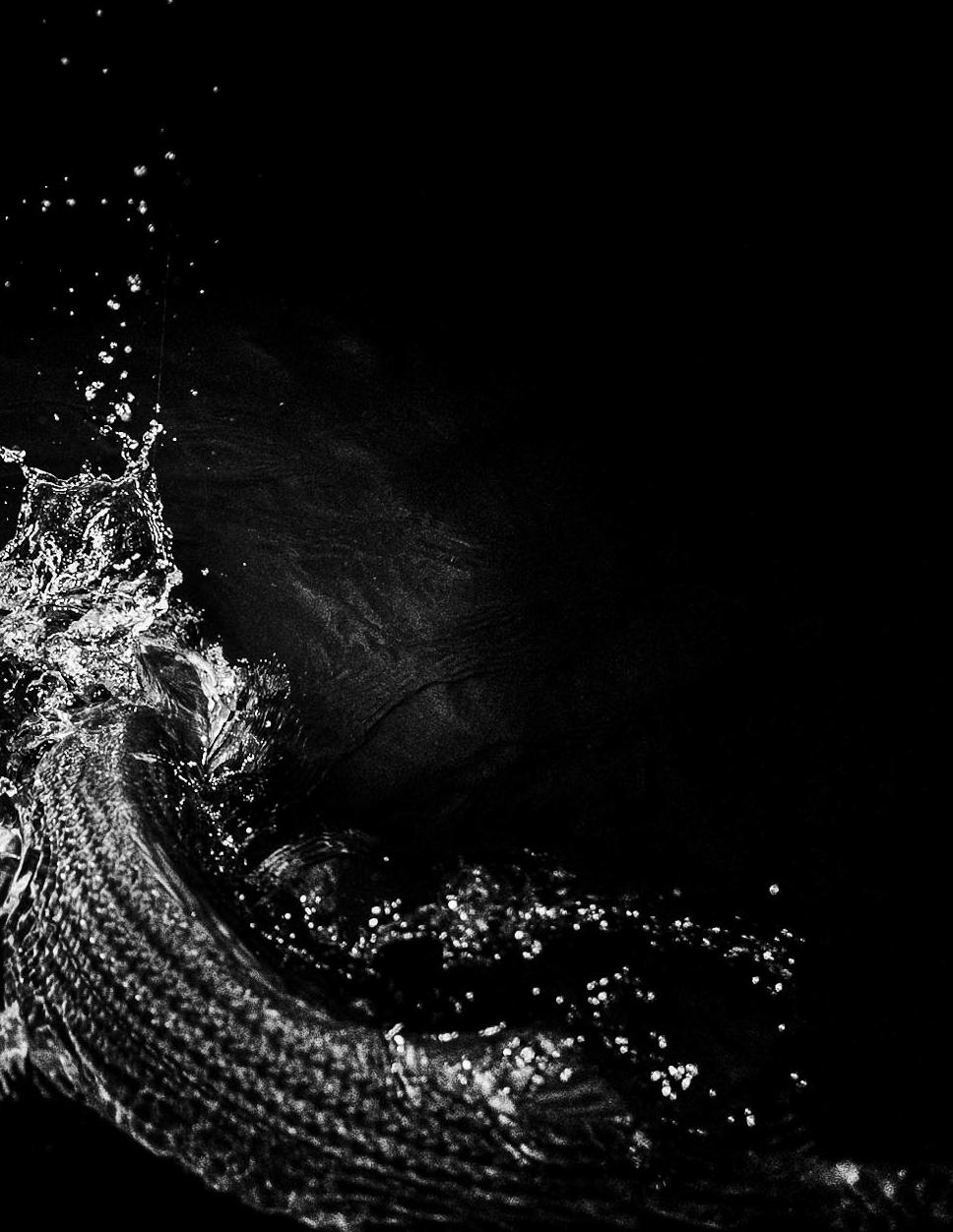
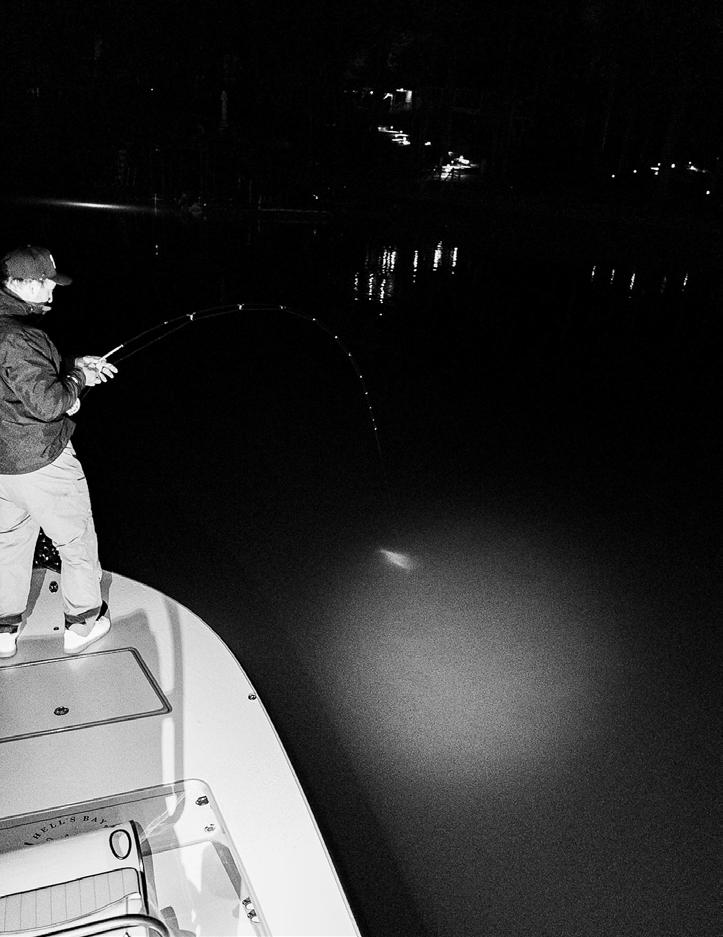
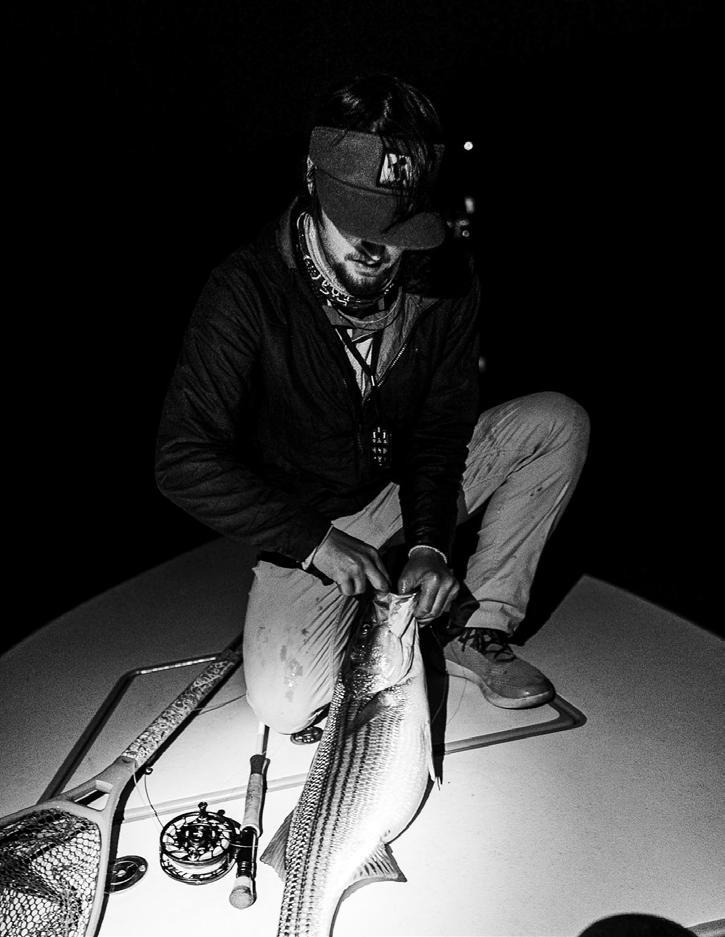
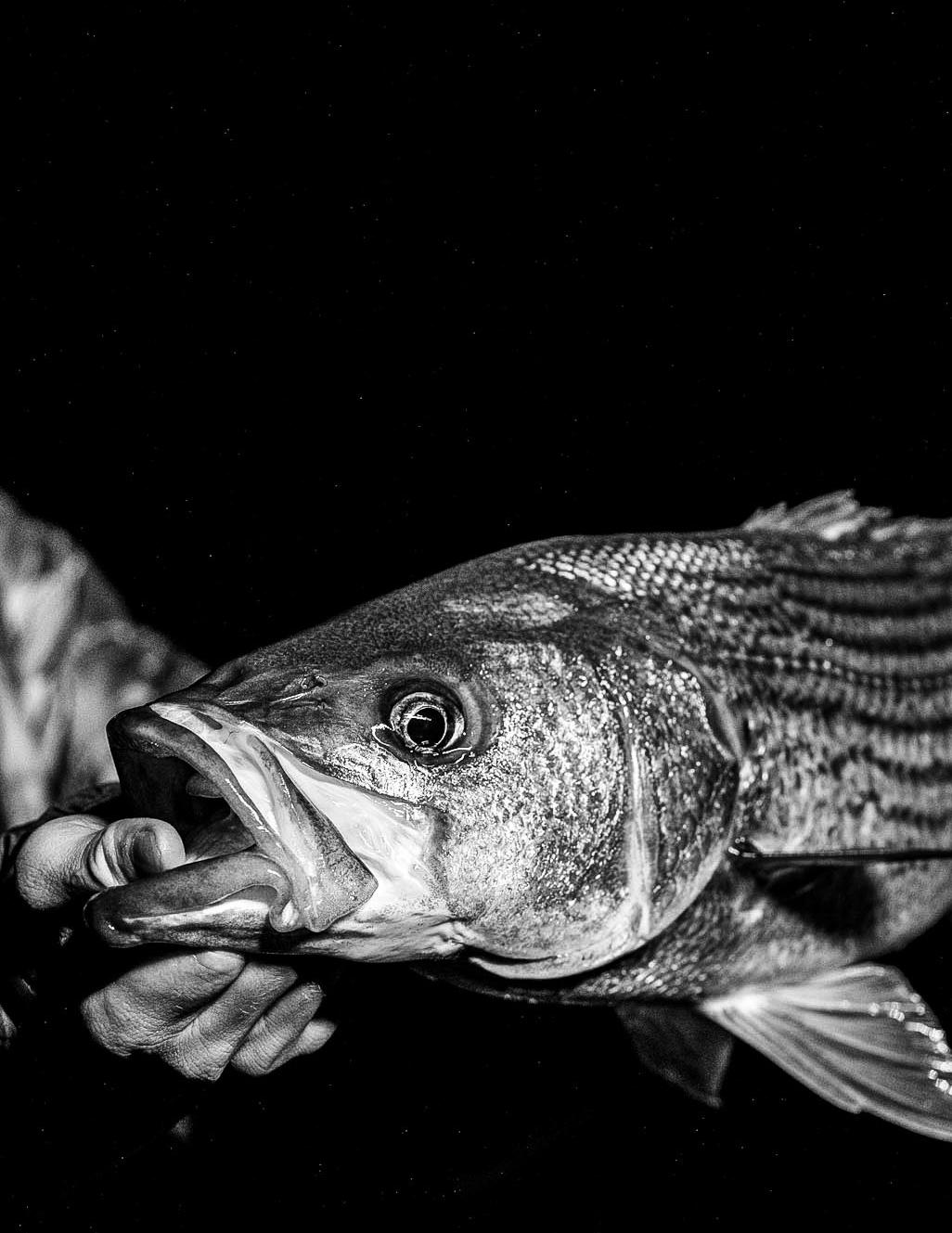
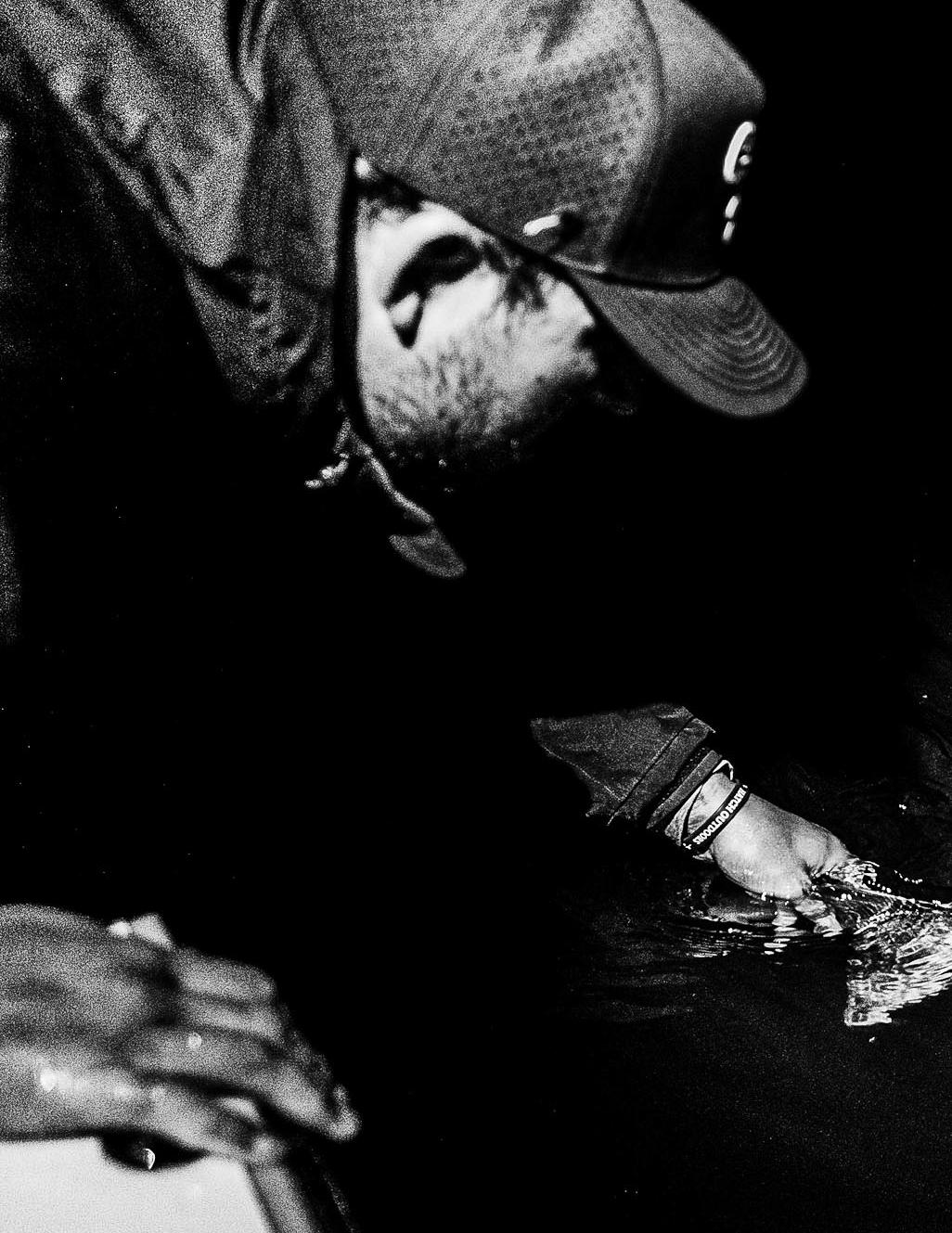
NIGHTCRAWLERS by Joseph Clark
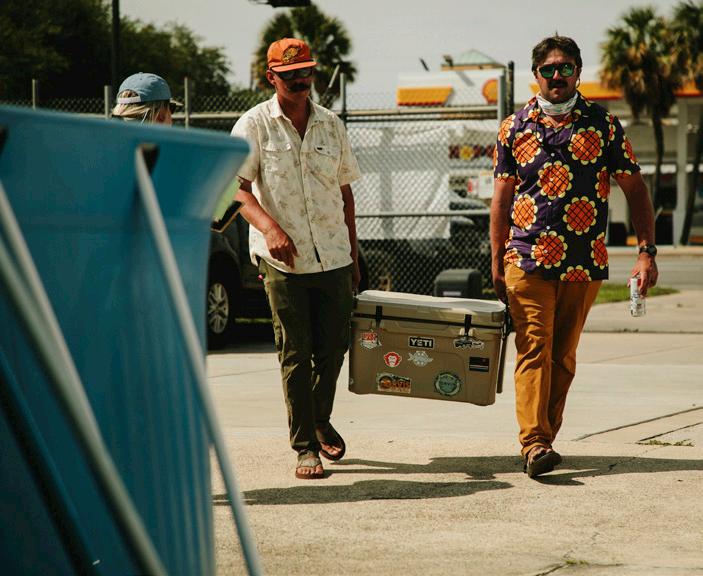
photos by Alan Broyhill
It’s been three hours since anybody’s dropped a french fry in this parking lot and I’m about to lose my mind. Normally, you can count on one of the apron people in black shoes fumbling a tray or a paper sac on their way to a parked car, but all I’ve seen drop is a few cigarette butts and a pacifier. My ass itches and I want to go home.
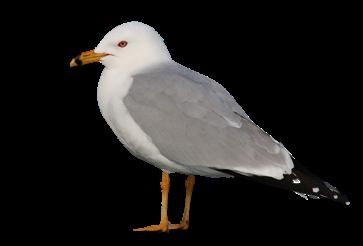
There are only a few ways a bird like me can make a living down here in the southern highlands. Most of us come only to avoid the neck-wringing, tooth-cracking cold of homeland winters. We subsist here on shad until it warms up, but very few stick around long enough to see the azaleas bloom. Seems like a waste to leave before the fish come up shallow to spawn, but just like every other species I know of, we birds have such little power over the raging clamor of our swollen gonads. For seemingly everyone but me, it’s time to head back north and make the bird with two backs. I’m gonna stick around to see how this story ends.
Last night, I saw two guys get out of a truck towing a black Xpress bass boat here in the parking lot. They looked almost as ragged as the poor bastards who go
inside to feed the color machines. I guess the vest on the taller one was some kind of protection device, but it didn’t look like it protected him from anything. His hair stood up straight off his head and his skin was redder than a dog pecker. It looked like a science experiment had gone off in his face. The shorter one put the gas nozzle in his boat and kicked his wheel hubs while the tall one went inside the gas station. What he came out with nearly caused me to dive bomb his ass.
I’ve only gone kamikaze a few times in my life. Besides the dip and flutter routine we execute with some element of grace on the winter bait balls, we gulls typically don’t abandon our wits for food. The one reckless time that comes to mind was for a dead herring the size of my ex mother in law. It would have had me gut sprung for a week. I love herring. I watched some repugnant osprey drop it from about forty feet and I didn’t even think. I dove, and he was on my back in half a second. I’ve still got the scars.
Anyway, this mad scientist looking honkey (they don’t think we know that word but we do) comes strolling out of the gas station with a plastic bag swinging heavy, fecund. He reaches into it and grabs up a white plastic package with a red stripe and some blue on it. Booyah. It’s the oatmeal creme pie. It’s the only thing he could have brought out of that gas station that I would consider dying for. I cant control myself. I shriek with pure exhilaration. Then, to my amazement, he lobs it. The idiot actually threw it into the air. I drop down off my perch and wing it full speed to intercept its trajectory.
But alas. I’m not an osprey. The shorter one snatches it out of the air before I can get my beak open. Bad luck. I beat it back to my perch and listen for a while.
“I don’t know why they moved the tournament to April” the shorter one says. “It’s way harder to find fish with no birds around.”
“Yeah I guess they’re gone. That one must have missed the memo." He points right at me and spits. "Cool to see those loons though. You wanna try going up north tomorrow? Maybe the striper are in the rivers,” the tall one asks. I fucking hate loons, though he might be right about the memo. What am I doing here?
“I dunno” says the shorter one. “We saw a few really good marks today, I think we should just stick to the game plan. I think we’ll get on em in the morning if this cold front doesn’t screw everything up.”
“Don’t leave fish to find fish.”
“That’s right.” Says the shorter one, mouth full of delicious oatmeal crème pie. I’m seething.
“Well, I’ll be curious to see how Sam and Alan did. Maybe they let Woody cast, too.” The tall one seems a little dejected, if still hopeful. “I can’t believe the size of those spots we caught today. If we had caught those on the Tal we wouldn’t be complaining.”
“That’s right.” says the shorter one again. He seems to have trouble speaking.
“Maybe at first light let’s just go sit where we saw all that bait and hope they play the game.”
Game? I think. This isn't a game. This is life or death! Show me where the bait is, you assholes! The shorter one squeezes some blue juice into the hole where the gas nozzle was and I think about my swollen gonads again. The two guys get into the truck and pull out of the lot. I follow.
I follow them up the road a ways to a lake house on a cove that I know well. It’s where I’ve seen this type of honkey before. They stand on platforms on their boats and let fly these brightly colored plastic ropes, wind be damned. It looks like they’re trying to sign their names in the atmosphere. But sometimes, their lines get tight, and they use them to pull in striped bass. For the past couple years, the cove has been packed with these types. On some weekends they get too drunk and they scream at each other. I saw one try to drown a jet skier once. They’re crazy.
At the lake house, the guys park and repark their black boat a few times in the narrow driveway, and I notice a white boat parked in the woods. And then another one, a tan one that looks like it’s made of plastic, is behind a Jeep Grand Wagoneer. The only reason I know the make and model of that truck is because their owners never miss an opportunity to say what they are. I spend a lot of time in parking lots. The honkeys go inside and join three other ones to sit in front of microphones for a while. I take the chance to look through their boats for oatmeal creme pie crumbs.
I find none. I cry a little bit, but not so much that the mockingbirds will hear. I’m so hungry. I perch in a pine tree and try to pinch one off on the Jeep, but my tank is empty. I’ll have to wait til morning.
I shivered in that wind-whipped tree all night. When the men finally came out of the house rubbing their eyes and asses, I followed the same two guys from the day before to the boat ramp and watched them stare at loons for an hour. They were right about the cold front. All the shad stayed down deep because the stripers weren’t around to push them up. I thought about going upriver to see if anyone else was on fish, but I stuck around hoping for another shot at that sweet heavenly sandwich. I know the tall one bought at least two. It was a tough decision, but with a limited energy budget you gotta make some gambles. Don’t leave crème to find fish.
They cast for a while in the cove, but I only saw them pull up a spotted bass, and it looked like it was pretty deep. The tall one fought it for a while.
“Not quite as good as all yours from yesterday, but that’s a day-maker for me, man,” he said.
The shorter one opened the cooler and tossed him a can. I swear I saw a creme pie in there but he shut the lid so fast, I couldn’t get a good look.
After another hour of waiting, the white boat pulled up with three guys on it. One had a camera, one was driving with what looked like his legs, until I saw that they were just oversized arms. I get limbs confused
sometimes with these bipedal creatures. This specimen was majestic. The third one must have been the one with the Grand Wagoneer because he was by far the most handsome, and handsome honkeys, I've learned, don't drive ugly cars. There go my gonads again.
The white boat pulled up beside the black one, and the men exchanged some notes. The white boat had gone upriver to look for fish, but found none. The black boat had done the same thing the white boat had done the day before with very different results. The camera man and the leg-armed man apparently caught four or five stripers that were still milling around in the cove. Apparently those were the last ones.
Then, my moment finally came. The camera man opened up a plastic box, he rummaged through some lens caps and koozies, and pulled out the cellophane wrapped object of my dreams. Like a hero, he arched his back and heaved the creme pie towards the black boat. I was not going to miss my chance this time. I swooped. I tucked my wings to gain speed. I opened my bill, and at the last second, I flared my wings. Once I felt that ecstatic crinkle against my tongue, I slammed my bill shut, and for a moment I was home again. My bill pierced the wrapper, and I was in the sweet by and by. A vision flashed in my mind’s eye of lobster rolls and endless fornication. Predators bowed at my webbed feet. A long line of fellow gulls, terns, pipers, plovers, and even pelicans waited in line to kiss my silver ankle band. A striped bass winked at me, and with tattered old wing, I wiped the sweet everlasting crème from the corner of my orange bill and turned northward.
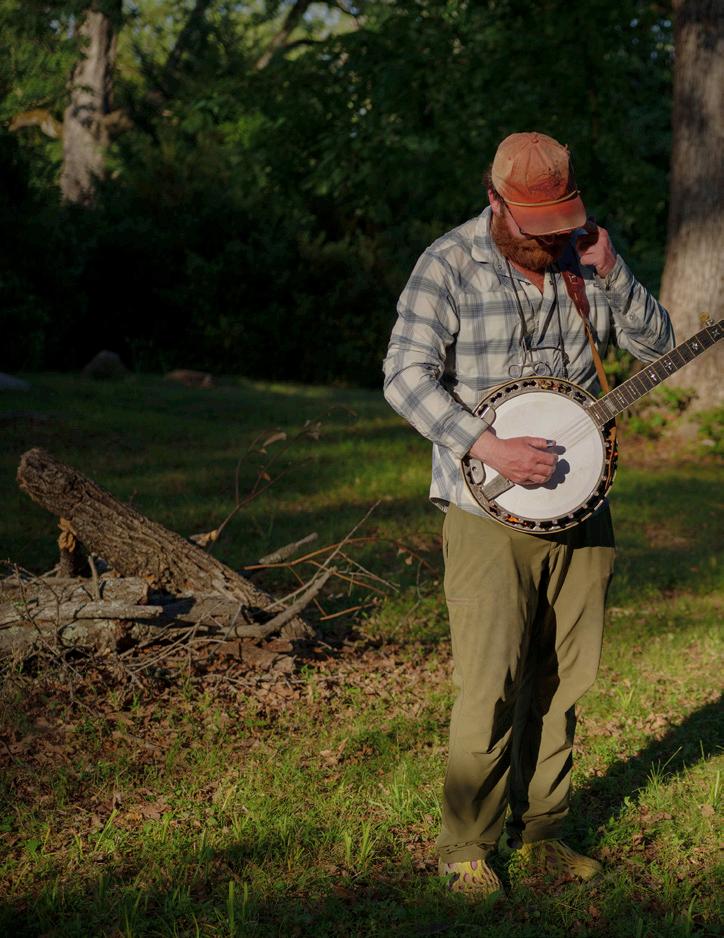
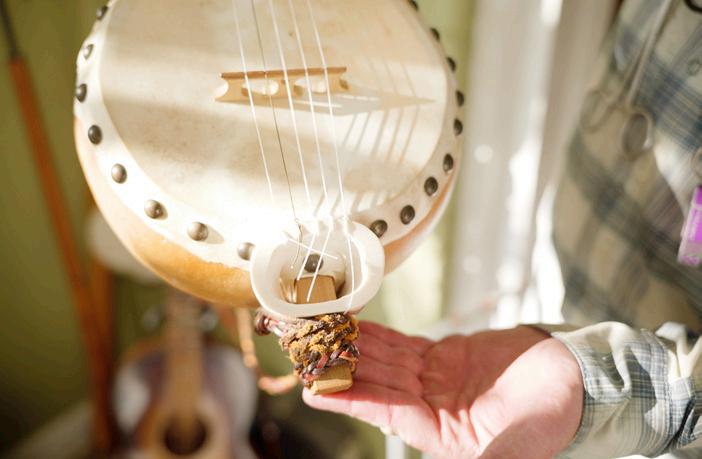
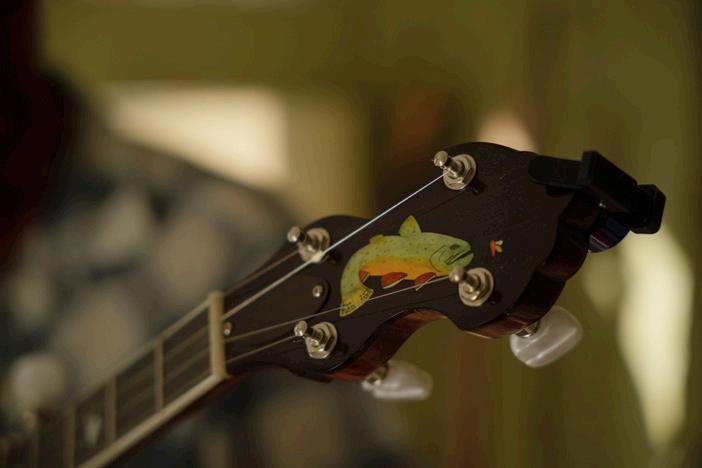
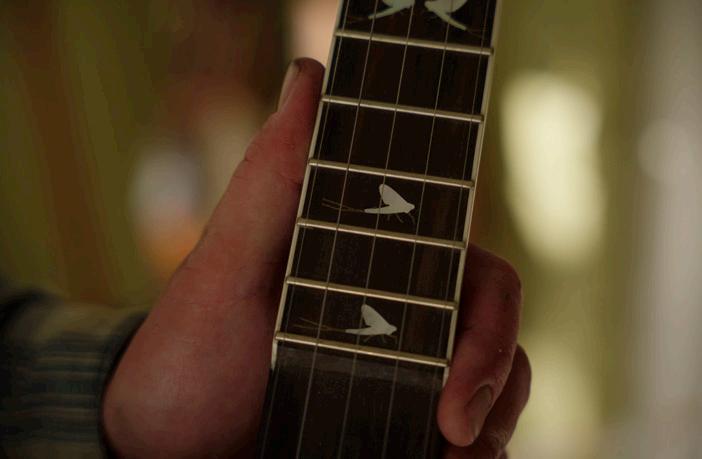
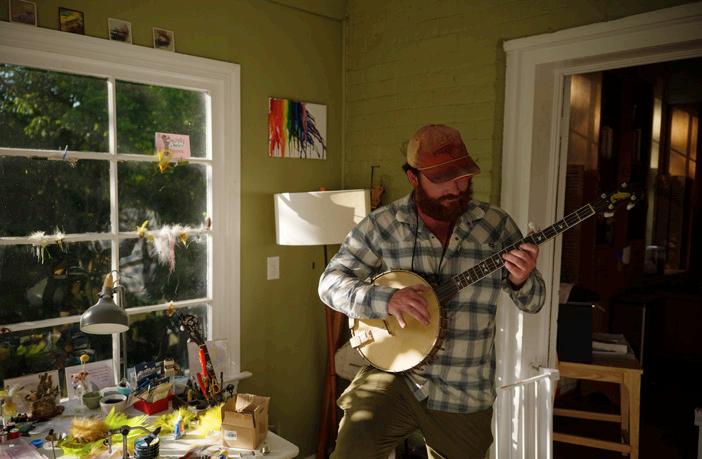
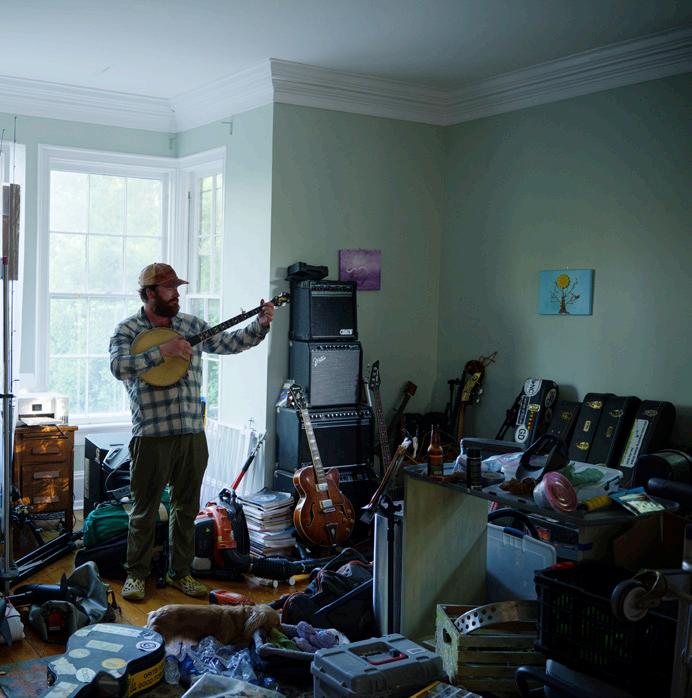
a day with the banjo builder ~
Will Leggett shot by Brother Swagler
Will Leggett is a Charlottesville, Virginia native, fishing guide, banjo builder and player, and owner of the Albemarle Angler Guide Service. Will lives his life one day at a time, Fishin’ and Pickin’. His friends, loved ones, and clients describe him as a joy-seeker. When you are in the boat with Will, it’s hard not to have a good time. Will runs a unique program in Virginia, fishing throughout the entire year. Changing target species, watersheds, and gear to match current conditions and clients’ preferences. A couple of nights a month, he can be found playing at the Whiskey Jar in downtown Charlottesville. When he’s not guiding, he’s probably floating one of Virginia’s many beautiful rivers, with some buddies, a few beers, and his Dachshund, Midge.
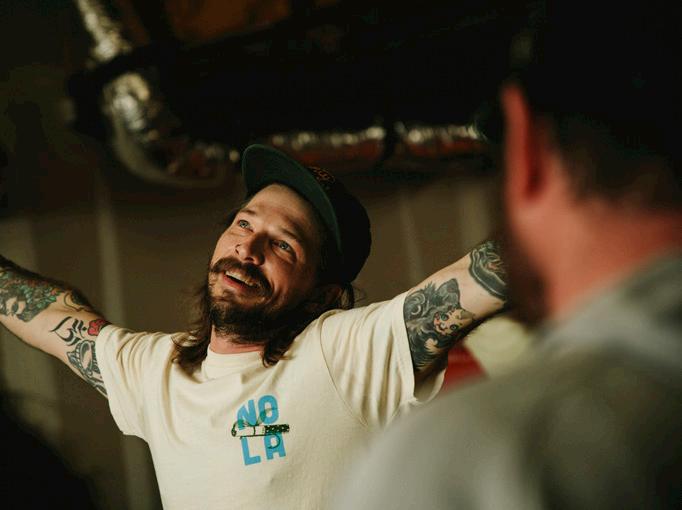
BROYHILL'S BASSCHELORBASH
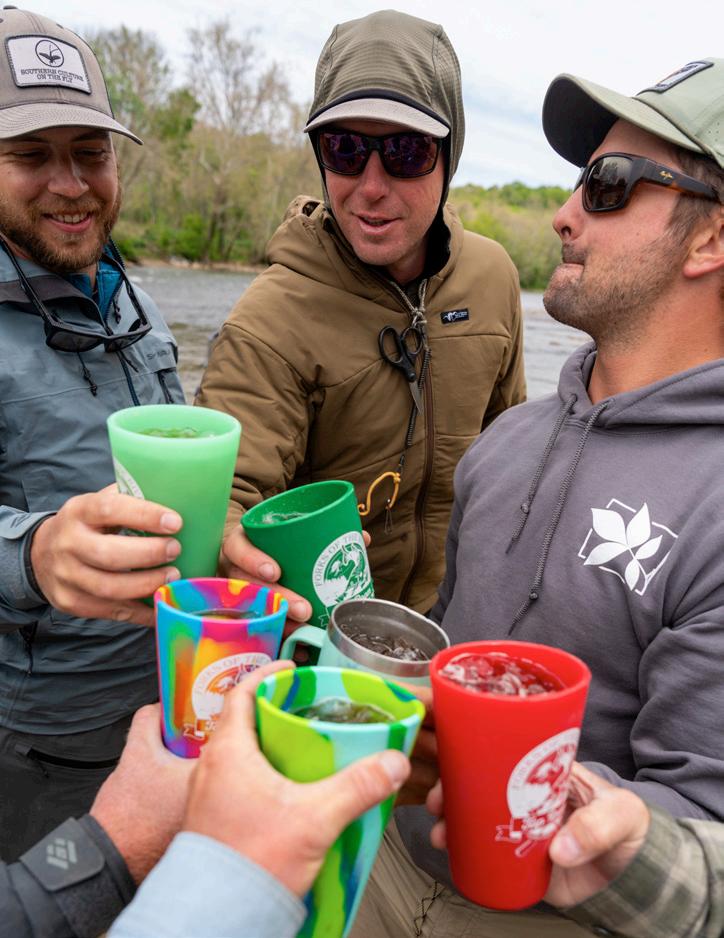
to the groom!
CHEERS!
THE DIRTY
DIRTY CARP
a
photo essay by Wes Frazer
Tuesday Night In The Ditch
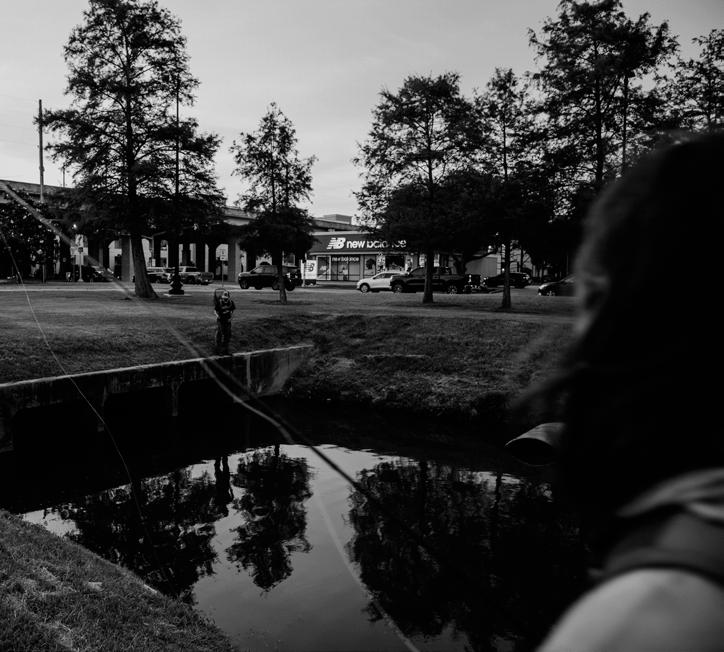
by Shane Behler
The strike zone is a cubic foot, maybe smaller, and the nerves don’t help. If Jake and I had a dollar for every carp we’ve lined, we would have shipped our happy asses to Belize a long time ago. We’ve seen the ads for the lodges we can’t afford, have read too many stories that start on the bow of a skiff.
When Jake or I do manage to make a decent cast, we drag the fly in front of the fish’s nose and pause, let it fall, then quiver it back to life like a crayfish or hellgrammite or whatever other benthic creature that’s been unearthed to face its doom. Nearly every time the result is the same: the carp pivots its vacuum cleaner face around the fly and continues hoovering up God knows what off the bottom, leaving us standing there with a slack line and slumped shoulders looking like the last pick for a recess football game.
Carp are bastards. There’s no other way to put it. I don’t know how a fish that reminds me of a barnyard pig can be so discerning.
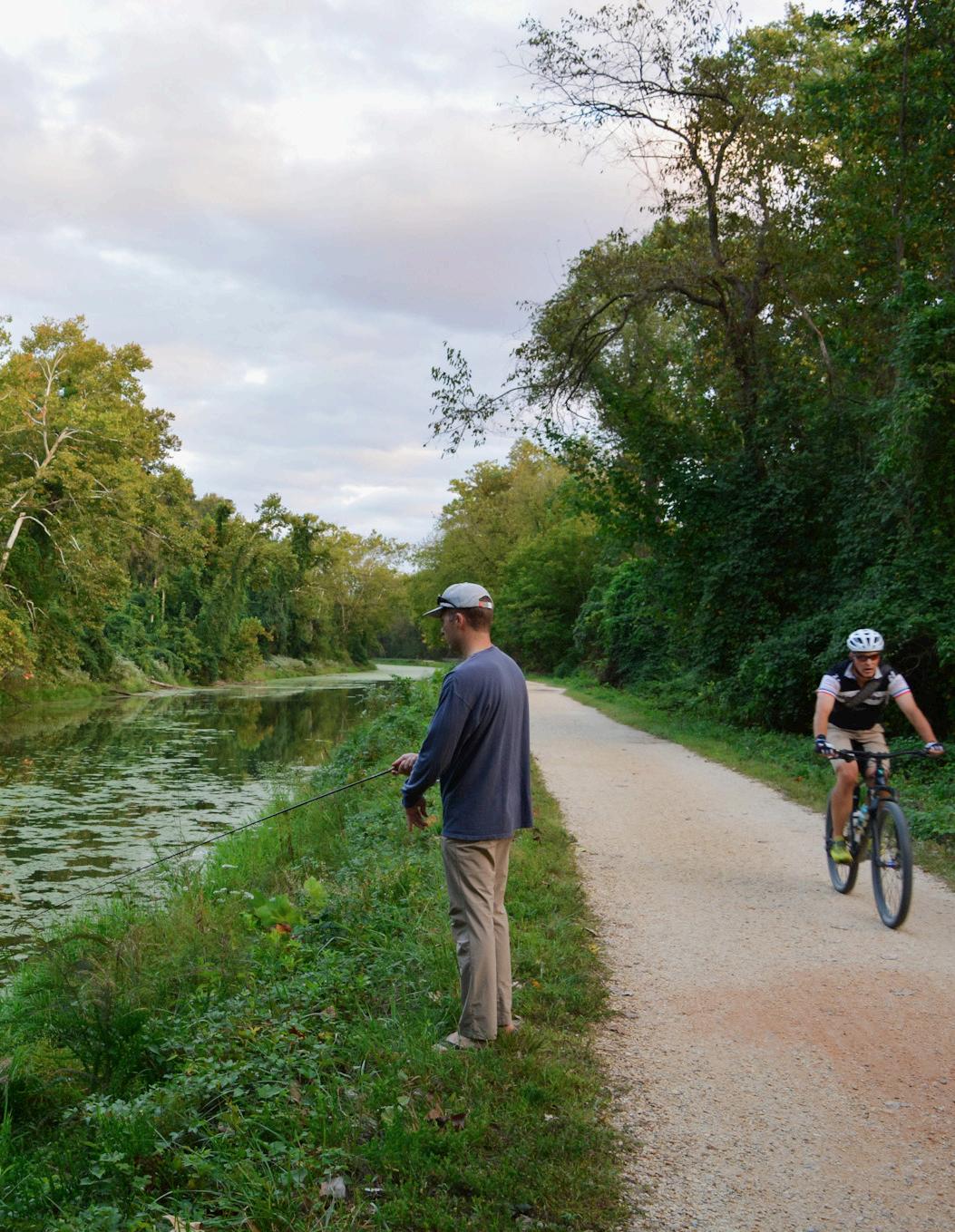
The carp Jake and I harass live in a ditch, a tepid trough of unsanitary water dug through the city where we live. A bike trail follows one bank, and a traffic-choked parkway hides behind a thin veil of trees on the other. We fish off the bike trail, slowstepping like the herons that sometimes fish here too, staring into the ditch seeking waving tails and cumulus clouds of stirred silt.
But the ditch can be as fickle as its carp. After a decent rain it turns Yoo-hoo brown. Summer heat waves scum it over with algae so bad we can’t even throw poppers for dinky bream that live here too, let alone find a carp. Hellish clouds
of mosquitoes spawn from its depths to descend on our calves and forearms like thousands of blood-sucking demons sent to guard against us.
We’ve been close to giving up on the ditch, to writing off its unforgiving carp and predatory insects and relegating our fishing to weekends and dumber quarry (yes, that would be trout). But the ditch is like a toxic lover teetering on the bounds of our forgivingness. Right when we’re at our breaking point, we’ll resign to give her one more whirl and arrive to find a clearwatered jubilee of tailing carp.
Tonight is one of the good nights. The carp are still bastards—that never changes—and our casting hasn’t improved. However, just often enough, the fly lands where intended, the leader ticks when it should, the ditch boils with the strip set, and the reel croaks its sweet song. If feeding a carp is a ballet, fighting one is a slug fest. Jake and I jump off the bike trail like we’ve never heard of E. coli and wrestle the SOB to shore.
When the moment comes, I forget that it’s a Tuesday, forget about the eight hours I spent staring at a laptop today, the blaring car horns, the maddening urbanity. We’re no longer two kids stuck in a city trying to figure out this whole career thing. We’re no longer worried about making rent, tomorrow morning’s Zoom meeting, all that we’re putting our long-distance girlfriends through. One of us is pulling on a fish we didn’t think would eat while the other watches from the bike trail shouting unheeded instructions and laughing like the screws need tightening. Maybe it’s best to leave the screws well enough alone. As it stands in my cityaddled state, tonight, it is my turn on the bow. One o'clock, twenty-five feet. Watch out for the biker on your backcast, Jake says.
Tortuga Madre - Chapter 4
by Hank
deep shuddering breath eased her into a shock induced trance.
link to Chapter 1
link to Chapter 2
link to Chapter 3
Tish was driving west on Flagler with some extra weight in her foot. On slow days in the summer, she would sneak out early from the skin clinic and get a burger and a mojito at her favorite little esquina on the way home. These days happened often enough that the esquina’s owner knew her order, and this became most of the reason why she liked the place. With one hand on the steering wheel, Tish unlocked her phone to check for a text from Bill and see how the move-out was going. Before she could tap the icon, her old Volvo bucked her head into the barely cushioned ceiling, and her phone ricocheted into the floor boards.
Right where it had always been, a pothole the size of a kiddy pool had finally bested the botox technician. The annoying sound Tish heard right before, she realized, was the metrobus driver in the lane beside her warning her with the horn. She yanked the wheel to the right and rolled into the bike lane. Then, she screamed with anger so loud that she frightened herself and the pitch of her scream rose to one of terror. A
Not wanting to check for Schrodinger’s insurance claim right away, Tish remained in the car, delaying the inevitable. She watched the cars pass her, some slowing, some carrying on at full speed. Another bus passed and the sudden gust rocked the car like a stilted house in a hurricane. Tish just blinked. She wondered how many of these commuters were inches away from disaster. One glance at a phone, one M&M dropped into cleavage, one pittmix’s backseat incontinence, all different routes to the final destination.
Some more honking snapped Tish out of her mortal trance. She got out of her car carefully and snuck up to the front bumper, hoping not to startle whatever damage she may or may not have caused. Instead, she got startled by a bicyclist who came skidding to a halt behind the car and shouted her name.
“Oyé Tish!” called the man from his saddle. He was wearing a loose fitting shirt with a wide collar and a massive gold chain. From the chain hung a diamond and sapphire studded letter “M”. “You having some problems?” He asked with a smile.
“Marty! What a surprise!”
“The surprise is mine! What are you doing en mi barrio? Besides blocking my bikepath with that ugly ass car?”
“I was just hoping to get a snack on my way home. I come here sometimes when work is slow.”
Marty dismounted the bicycle and approached the car. “Ah, playing hockey, I see. You want me to call someone for you? My nephew has a tow truck.” “No, it’s not as bad as it looks. I’ll be fine.” She knew the car would start back up, so a tow truck wouldn’t be necessary. Some more zip ties for the front bumper probably wouldn’t have hurt, though.
Marty bounced down to a squat and checked the front suspension. He squinted up at TIsh and said, “If you can drive it, then let’s go get some picadera. I know a good place.”
Tish said, “So do I…” with a flush. Suddenly, she felt self conscious about how flirty that sounded.
Marty chained his fixed gear bike to a piece of conduit on the boarded up storefront beside them and plucked Tish’s keys from her hand. “Vamos” He said as he slumped into the driver’s seat. Tish, mildly put off by the Dominican’s domineering, circled around to the passenger side. The car cranked right back up, and the blast of air conditioning filled the cabin with the smell of Marty’s deodorant. He adjusted the rearview mirror before turning back into traffic, and Tish cleared her throat when he patted her thigh.
“This will be fun,” he said.
• • • “Come on, it’ll be fun!” Sam chimed. Tish had just put baby Boat down for a nap and was too tired to fish, but her mother was sitting in their living room and knew the
drill. It wouldn’t be a big deal to jump out for a few hours and leave the baby with his grandmother.
“Alright, let’s go.”
Sam used the crinkled foil sheet that covered the brownie plate to wrap up the last gooey chunks for the walk. They strolled down the old wooden steps off the back deck and pulled a few fly rods down from their wall mounts in the garage. Tish liked the 10-weight for these types of excursions, and tried to get Sam to do the same, but he was obsessed with his new fiberglass 7-weight.
“I don’t know how you can call yourself a conservationist.” Tish said.
Sam was a research biologist at Florida Atlantic and had a few projects funded by the Tailwalker Foundation. He blew off the comment. “Sabalitos are sturdy, they can handle a little longer fight. Plus, it’s November. If it were hotter, I’d feel a little worse about it.”
“But you’d still do it.” Tish said as they turned the corner towards the canal. It was just a few blocks away.
“I’ve spent my whole career protecting these fish, I’m sure they’ll forgive me.”
Tish sighed.
Then Sam, suddenly hot, asked, “Why do you insist on yanking my chain every time we go fishing? If you really cared about the fish you wouldn’t try to catch them at all! Don’t be a hypocrite.”
Tish dropped it and changed the subject. “What fly do you got on?”
Sam let the steam in his lungs cool and depressurize before responding. “It’s a bunny toad thing I tied last night. Try it in black and chartreuse this time.”
“Always the scientist.”
“You want me to crimp the barbs?” “Just drop it, Sam. I’m sorry, okay?”
“Sorry.” Sam said.
They crept up over the railroad track to their usual spot to watch for boils and bait. There was a school of finger mullet pushing in and out of the alligator weed on the bank, adding some breath to the otherwise slacked out canal. It was high tide and the long, narrow waterway was flat for miles in both directions.
“Looks like a little six pack or something headed this way. Jeez, they’re hauling ass.” Tish said. The tarpon were making their way down the railroad like bandits chasing a locomotive on horseback. Bait was starting to scatter.
Without speaking, Sam made a pile of line at his feet and launched his fly with the cool of a pro-golfer on the putting green, measured, precise, and quiet. The toad landed at the right time, and was immediately dog-piled by all six of the juvenile tarpon.
“Damn! The little one got it! Throw in
there!” Sam shouted, snapping out of his zen focus immediately upon hook-set. Tish flicked her EP minnow into the corral and watched the biggest of the six banditos hammer it. Gleefully, the precariously (though still legally) married couple shared a moment that to Tish, would remain the last happy memory she had with her ex-husband. They were due in court the following week, and it all went to shit after that. For months, they had tried to make it work while she was pregnant, but after baby Boat was born, it was impossible to tolerate his affairs. Tish had to keep her mother at the house, not so that she could watch the baby, but so that Sam would stop bringing his students over for “extra credit opportunities”. Serving him divorce papers the day of his cancer diagnosis was not part of the plan, but it had to be done. Tish still felt so guilty that she thought about ripping up the court summons when it arrived at their little bungalow in Hialeah. But it was too late for Sam. Tish had to chant to herself a new mantra. He was a piece-of-shit adulterer, with an unstoppable hankering for teens in bikinis, and baby Boat would never know him.
two ice-cold mojitos.
“I haven’t seen Carajito in a while! What’s Boat been up to?”
Tish stirred her boozy slush with the mint stem. “He’s been fishing mostly, with Davion.”
“Nice, nice. Staying out of troubles?”
“I honestly couldn’t tell you.”
Marty tested the water, “Probably not.”
“Probably not.” Tish smiled.
“Are you sad he’s going away?”
“Sad, worried, proud as hell. I dunno, it’s a lot.”
“Sure, sure. I was hoping we could keep him here! I need him at the shop!”
Tish looked down at him over her nose and pursed her lips. “We both know that’s not gonna happen, Marty.”
“I know, I know. I fucked it up. He’s a good kid. I just wish he could listen to me.”
The hanging bells in the esquina jingled against the plate glass as Tish squirmed past the heavy door behind Marty. He ordered in Spanish, and the owner asked why she’d never seen her two favorite customers together before. It was surprising, thought Tish. They sat down at a table for pairs against the wall, and their food was served promptly. Tostones, empanaditas, and
“You did a lot for Boat, Marty. He knows that. You’ll always be like a dad to him. One little fight doesn’t change that.”
WOODY IS COOL. WOODY WEARS
WEARS SCOF MERCH. BE LIKE WOODY.
The Sistine Key
Jacob Sotak
Two men drifted, their panga drowned in heavy silence.
Leland stood on the bow with a fly rod in his right hand, a sparse brown fly in his left. His long frame was bent and tense, craned with the queasy posture of a man too long under the sun, the knobs of his vertebrae poking through his sweat-stained shirt. Thin lips pursed beneath a sunburned nose. His only movement was to smear away the sour foam that gathered at the corners of his mouth with the back of a grimy sleeve.
From the elevated platform at the stern, Miguel maneuvered the low-slung boat along the edge of a tangled mangrove forest. Decades of muscle memory moved the long push pole in a steady rhythm. He scanned, searching for nervous water, hidden clues, shadow beyond shadow.
A flash of wet scale and a knifing dorsal fin cut the surface just off the bank— tarpon. Before Miguel could react, Leland
laid out a cast and began stripping the fly back toward the boat. A long shadow surged after it.
“Leave it,” warned Miguel. Leland stripped the fly again and the tarpon peeled off, vanishing back into the sea. “Goddamnit,” barked Leland. “I told you that fly’s no good. Switch it out.”
Leland tucked the fly rod under his arm and lit a cigarette. The metallic action of the Zippo ricocheted through the quietude, and as the boat slid along Miguel was enveloped by Leland’s exhale hanging stale in the humid air. The sound of the lighter and the acrid smell brought Miguel’s mind back to the night before.
It was almost midnight. A funeral and a wedding, both postponed due to a string of unseasonable storms, collided on the beach beside Miguel’s home and had given birth to a bawdy celebration. Mourners locked arms with the families of the newlyweds and swayed to local ballads thrown skyward by a trio of maudlin pallbearers. Someone started a bonfire. Tall green bottles of sweet wine were pulled from a wooden crate and passed
around. Lovers drifted away to shadowed depressions in the sand, returning redcheeked and disheveled, like the waves that crashed rhythmically onto the shore. Thunder grumbled in the distance, and Miguel could smell another storm coming— the twelfth hundred-year squall in as many months.
That’s when he first noticed Leland: tall, white, wiry and weaving through the party holding a bottle of cheap tequila in one hand and two glass tumblers in the other. His jeans were greasy and the olive drab field jacket he wore was ripped and faded. Leland spotted Miguel and slithered through the revelers toward him.
“You’re Miguel Balam.”
Miguel nodded.
“Leland Grant. I hear you’re the man to speak to about tarpon. Big ones.” Leland slouched onto the sand next to Miguel, flicked open a gold lighter and lit a Marlboro Red. “You don’t mind if I smoke, do you, amigo?”
Leland fished a bruised yellow mango from his field jacket and flayed it open with the antler-handled knife he drew from a sheath on his belt. Then he began talking, mouth full, juice glossing his stubbled chin, the cigarette still smoldering. He claimed he’d been up and down the coast of Quintana Roo chasing a trophy tarpon.
"Doscientas libras", he lisped between wet bites and drags of the Marlboro. Then he listed off the other guides he’d hired and pantomimed tales of close encounters, all of which had come up short. The stories were disjointed, manic, full of half-remembered violence and ego, and he waved the blade dangerously close to Miguel’s face. Every so often he’d laugh, slap his thigh with a sticky hand and pick the threads of mango
from his teeth with the gleaming blade. The bonfire painted the party in shadowy caricatures on sand. The singing and waves and the breathless grunts of lovemaking merged into a single throbbing din that paralyzed Miguel.
“So whaddya say?” Leland asked, punctuating the air between them with the tip of his knife. “Two grand for a day’s work?”
“There’s another storm coming in. Too dangerous to fish tomorrow.”
“Negotiating now, huh?” Leland wiped his hands on his jeans, pulled a wad of money from his jacket and began leafing out the bills into a stack on the sand. It was more money than Miguel had seen in years. “There’s a tarpon out there, I can feel it. A big bitch, pushed into the mangroves by that storm. If you’re as good as they say you are, you could be a wealthy man by lunch.”
Miguel could feel the eyes of the partygoers on them and looked down at his feet to avoid meeting their gaze.
Leland shuffled more bills onto the stack. “Fuck it. Four thousand for the day.”
Miguel knew men like Leland. They saw the rural coast of the Yucatán as a lawless playground where enough cash could unlock any desire. Men like Leland were a poison, and Miguel wanted nothing to do with him. He thought about punching Leland in the face, or creating a scene that might cause the partygoers to drag him away. But instead, Miguel scooped up the money.
Leland grinned and uncorked the tequila. He tilted the bottle into the first glass, then the other, which he handed to Miguel.
“It took Michelangelo four years to
paint the Sistine Chapel. Did you know that? Four years. And most people think he did it laying on his back, but that’s not right. He stood on a wooden scaffold and reached up over his head to paint. For four years he picked up that brush and killed himself. And you know why? Because he didn’t have a choice. He was called to it.” Leland stubbed the cigarette out into the sand and threw the pit of the mango into the surf.
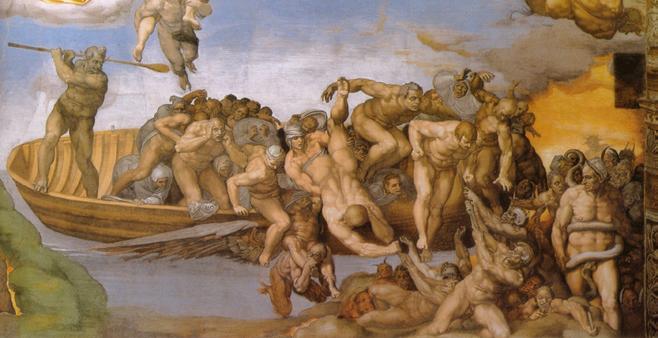
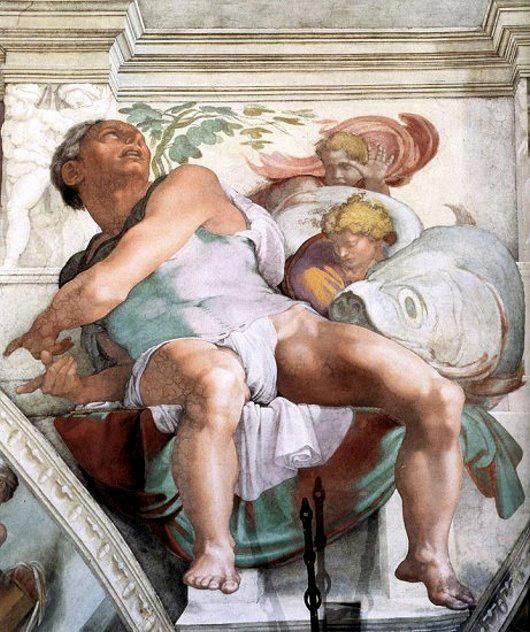
“And did you know he put the fresco of Jonah and the Whale above the High Altar? A position of honor, that is. Yeah, ol’ Michelangelo musta been a fisherman, because of all the fish in the whole goddamned sea he could have picked to be that whale, he picked a tarpon. A goddamn tarpon.”
Leland swilled the drink, leaned over and whispered in Miguel’s ear, so close that the stubble of his chin pricked Miguel’s cheek as he spoke.
“We’ve been doing this dance for a long time, amigo.”
Now, standing on the bow, Leland looked gaunt and pale, eyes sunken behind a pair of mirrored sunglasses whose finish had peeled off years ago. Miguel could smell the tequila oozing from his pores. He wondered where the man had slept, or if he’d slept at all. He tied on the new fly and noticed Leland’s rod and reel, once top-of-the-line, were burnished and discolored, mirroring Leland’s nicotinestained fingernails and teeth. A knot gnarled in Miguel’s gut.
“Been thinkin’,” Leland started, turning toward Miguel. “Maybe I get myself a little place along the beach down here.
Find a chiquita to keep me company. Claim a piece of paradise for myself.”
“Paradise?” scoffed Miguel, tossing the re-rigged fly into the water. “Ya te tragó la tierra. The earth has already swallowed you.”
They fished along the edge of the bay, Miguel poling, Leland sucking on cigarettes and tossing the butts into the water. Small waves tongued the unseen labyrinth of mangroves. Offshore, the storm thickened, pushing a bruised sky over the horizon and blotting out the sun. The panga began to rise and fall on unruly swells.
Miguel saw a tarpon roll off the bow; Leland was already casting. The fly plopped into the water, a perfect shot, and Leland stripped it back, pulsing the line in short retrieves.
“Big fish,” said Miguel from the back. The small shadow of the fly disappeared and Leland set the hook hard into the jaw of the tarpon.
Muscles and the rod flexed, and the fish was impossibly airborne and running. Leland snatched at the loose line as it ripped over the side of the panga, coils of slack shocked into a flailing, hissing loop that licked at the air next to his body. One loop cinched the handle of his knife and tried to yank it from its sheath, but Leland tore it free just as the last yard of slack snaked into the chop. When he came tight to the tarpon the line tugged back in shuddering yanks that bit into his wet fist before searing onto the reel and down and out and away.
The blood came, then the rush. The fish was running hard, and Leland felt the cocktail of anger and adrenaline running
unchecked through gaping veins and thrumming down into his engorged crotch. He tightened his knuckly hands around the cork of the rod, as if choking the fish itself. The rod quivered and pulsed, the last of the line and then the backing ripping off the reel, shrill against its mechanical drag.
A hundred yards away the bay exploded in a shimmering fountain of scales and salt. A hulking armored flank rippled and flashed as the massive tarpon shook its head, desperately trying to throw the hook, before slapping down broadside and kicking away again with frenzied sweeps of its wide forked tail.
Miguel had seen only one two-hundredpound tarpon before that moment. Fish like this, the great ocean dwellers, were wise and wary of the shallow bays and flats where they were dogged by sharks and fishermen. And yet here she was. The storm surge had pushed the bait in, and she’d followed. Disoriented by the scrambled ocean currents and shifting salinity, searching for food along the shallow edges of the ancient mangrove forest, the cradle of her youth. Just as Leland had predicted.
He hated the prophecy in it, that the storm would deliver a monster, and that Leland would be waiting. And now she was hooked, fleeing for her life, fleeing this hunter, this conqueror, his guest. Miguel felt sick.
Leland whooped and danced on the bow of the panga. This was his fish, the one he’d been hunting. The one that would finally bring him redemption. He was the type of man who got things done, no matter what, he reminded himself. Now everyone— the doubters, the critics, his boss, his exwife, his kids—would see what he was truly
capable of. He’d kill the tarpon, he decided, and mount it over the bar in the cabana, fixed in an endless leap. They’d see this leviathan and finally understand him, understand the magnitude of his investment. He’d do interviews with the great glossy magazines and regale readers with his exploits. He could almost hear ice clinking against crystal in the great room of his father’s fishing club, where they’d beg him to join. Land this fish, he told himself, and all would be well again.
The hook was in the hinge of the tarpon’s jaw and Miguel knew there was no way she could throw it. He pictured her racing for the open ocean and hated himself. His mind raced for an answer, an escape. But none came. So Miguel did the only thing he knew how to do. He revved the outboard until the panga hatcheted through the unruly waves in pursuit of the great fish, right into the oncoming storm.
Leland kept tight to the fish as they gained on her, surfing the bow like a whaler and laughing at the spray and the rain and the chase. “You’re mine!” Leland shouted at the fish. Madness streaked across his face. Miguel overtook the tarpon and tried to herd it back into the bay, but the tarpon kept running.
Leland jammed the butt of the rod into his hip socket and cocked it to the side, heaving back against the fish. He growled, then screamed with rage, globs of spittle frothing from his mouth. The huge fish turned. Leland pawed at the reel frantically. Wind howled across the boat. Waves sloshed over the gunwales. Leland reeled in hard and hauled the tarpon up. It surfaced ten feet from the boat, its flank looking dull and leaden under the darkening sky. It began to rain.
The tarpon floated on her side, broken and spent. Miguel twisted the leader around his hand and dragged her toward the boat. He wanted to throw up.
“She’s mine!” hissed Leland. Miguel grabbed the fish’s lip and freed the fly from her jaw. She shuddered and flapped her tail listlessly. He pulled the tarpon forward and backward in the water, keeping water flowing through her gills. Rain raked sideways through the air. The tarpon thumped against the hull of the boat, twitched and began moving her tail.
Miguel locked eyes with the fish. Her golden iris swiveled in its socket and looked squarely at him, and he fell into the black pupil that beckoned. Peering into it he saw the endless coils of time and the long line of his ancestors tracing back to Xmucane, the first grandmother. He saw the pristine forests of the Yucatán brimming with life, and the great Mayan cities of Cobá and Xcaret. He felt the plague of the conquistadors and the desecration of sacred lands. He saw the shackles worn by generations of his own bloodline, felt the ache of decades of subjugation and servitude from the sugarcane plantations to cruise ships. He became aware, for the first time in his life, that he and the tarpon were echoes of each other, casualties of the same unquenchable desire to conquer.
Miguel let go of her lip.
“Dale,” Miguel whispered. “Go.”
The fish’s eye glimmered with a flash of movement, the terrible reflection of Leland’s arms slashing downward, driving his knife deep into the flesh of her flank. Once, twice, three times, splashing spray. The fish thrashed violently. Miguel watched in horror as blood sloshed into the water. The tarpon writhed in agony, shaking its head in fear and
fury before settling into a rigid curl around the pain.
Miguel spun and hurled himself at Leland, who fell backward into the rapidly swamping boat. Miguel landed on top and began throttling him, bashing Leland’s head against the rigid fiberglass hull. Leland squirmed and kicked but Miguel clamped down even tighter, riding the man as they both screamed into the storm that had overtaken them.
The knife plunged again, this time into Miguel’s gut. The blow sent Miguel sprawling over the side of the panga and into the chop.
Leland struggled to his knees, cupping the jagged scraps of skin already puckering around a spongy spot in the back of his skull. The tarpon floated nearby, bleeding out. He leaned out and grasped its enormous bottom lip with both hands and, pressing his feet into the gunwale, heaved the tarpon up and back into the panga.
Leland’s prize lay across the altar of the boat, its muscles sagging under a gravity never known in life. He raked his hand down the fish’s side, groping the slick bulk with trembling hunger, bracing for the white-hot wave of ecstasy to crash over him. It did not come.
Tears and rain and sea spray and blood streamed down his cheeks and dripped from his mouth. The strands of his beleaguered brain screamed for their fix, a chorus rising over the deafening orchestra of the sea. The vile liturgy of his life’s work shrieked in withdrawal and ruin. Leland’s legs gave out. He folded over the tarpon, clutching it to his chest as they slid into the bloodstained belly of the boat.
Then I dreamed I saw a river running swift into the hills
And it pulled me and it called me 'till I couldn't stand its goad,
So I dusted off my duffle and I packed the old canoe
And I paddled down that luring, silver road. Oh, the freedom that engulfed me as the miles were left behind
Rejoiced my heart and soothed it 'till I felt I most could weep,
As the riffles in the water and each pull of paddle blade
Caressed my soul and woke it from its sleep.
John Foshee
The Silver Road
Road
by
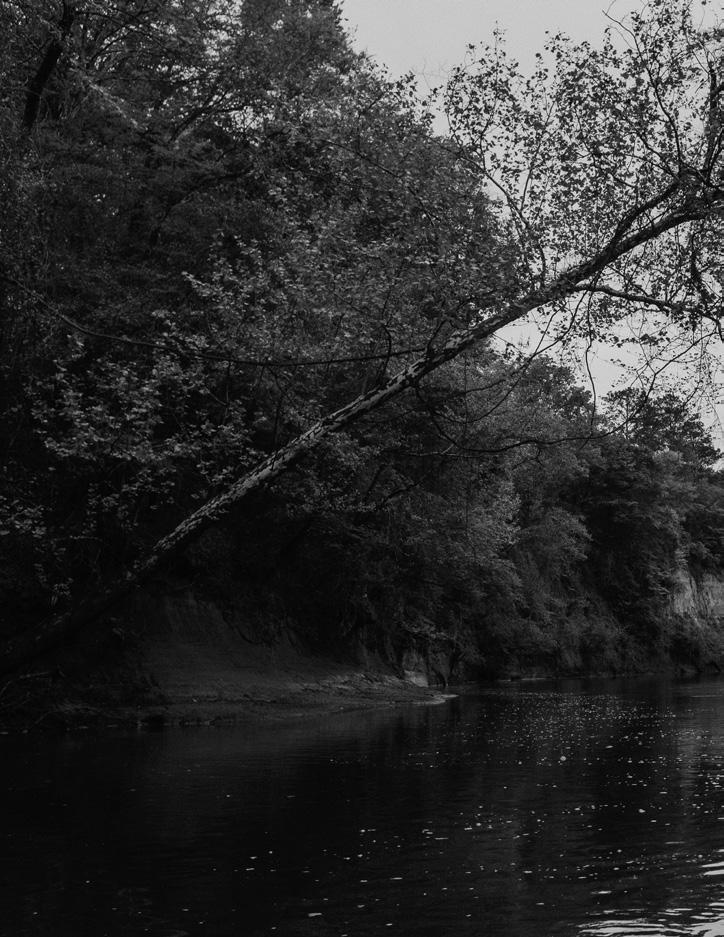
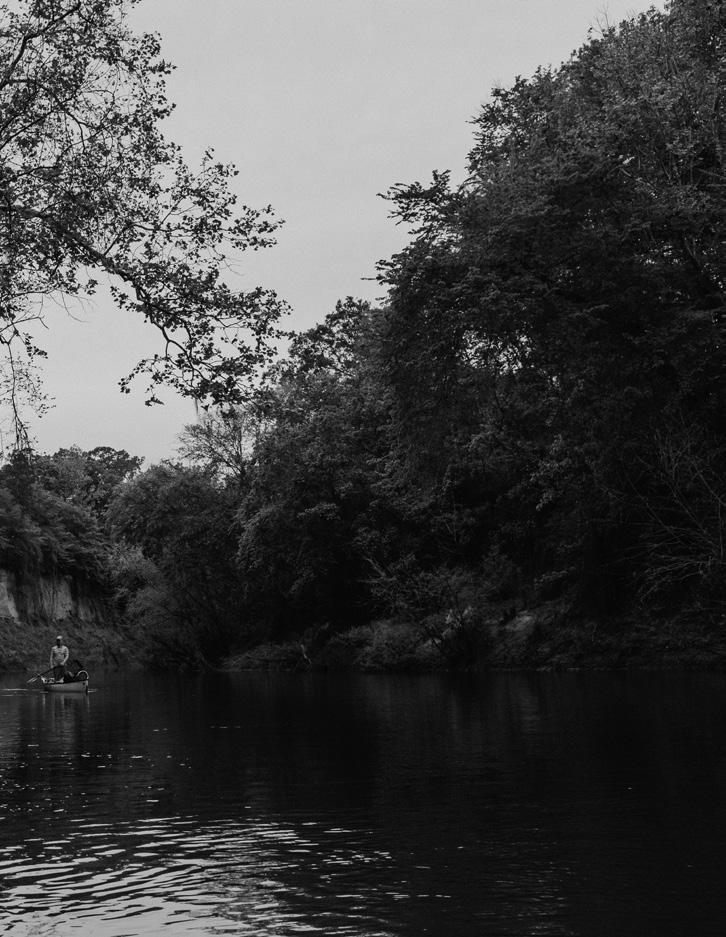
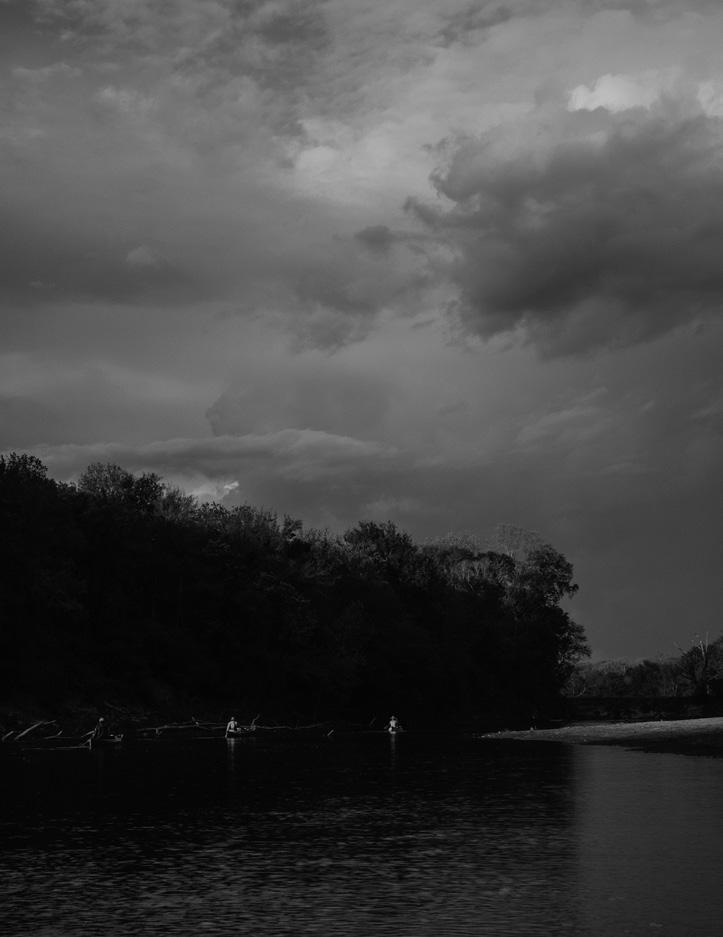
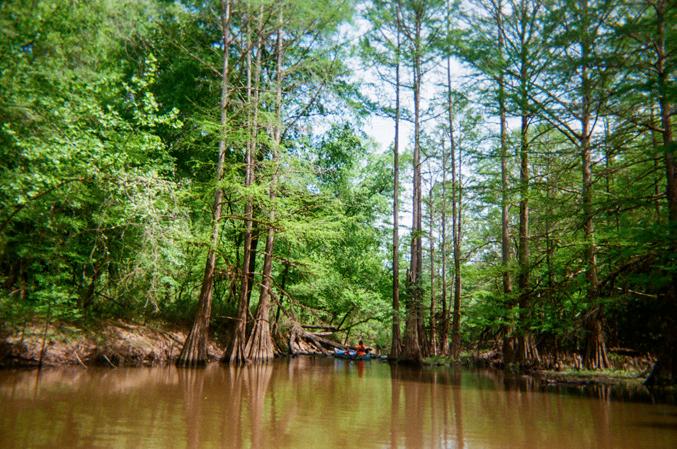
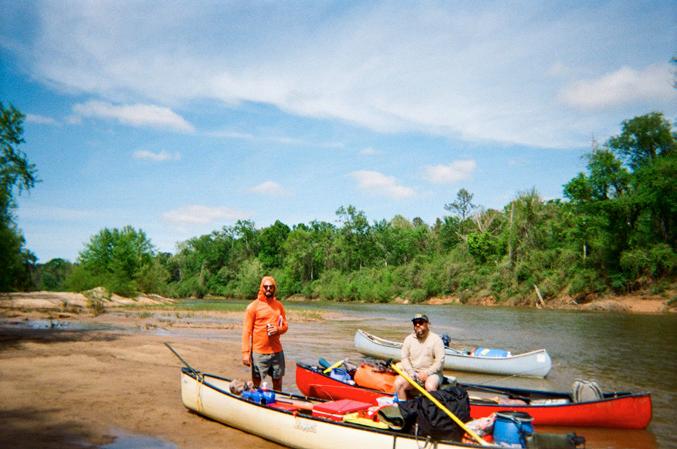
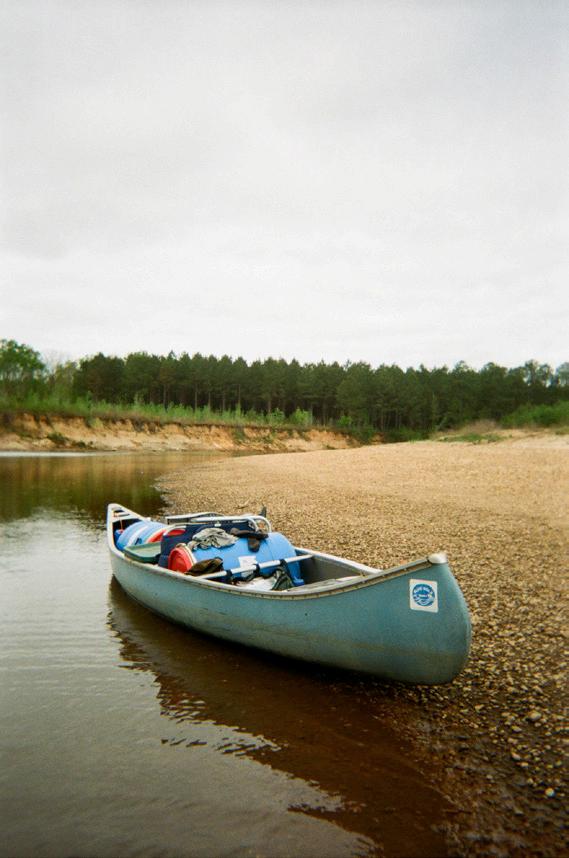
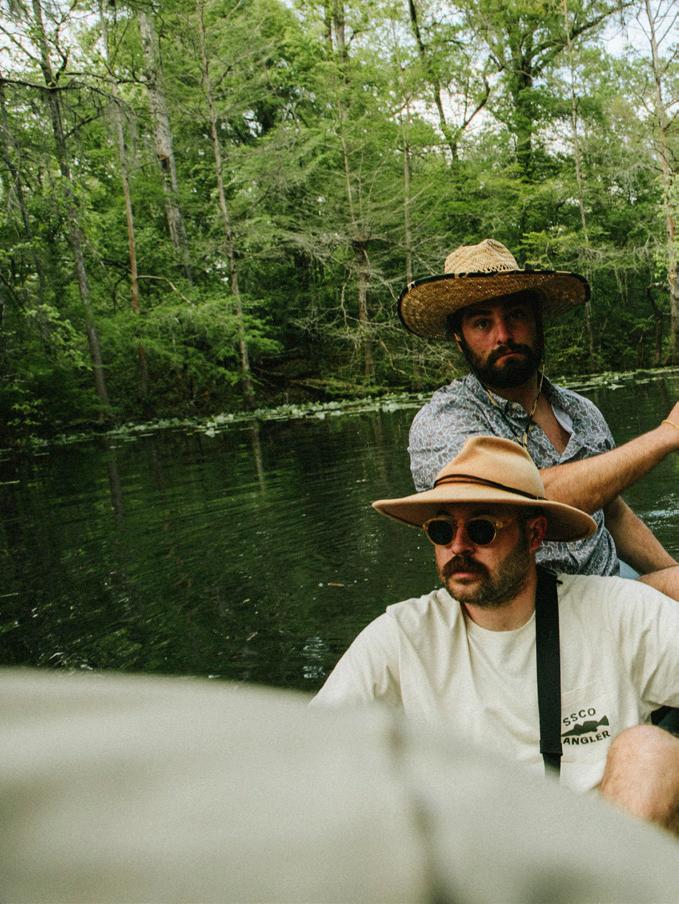
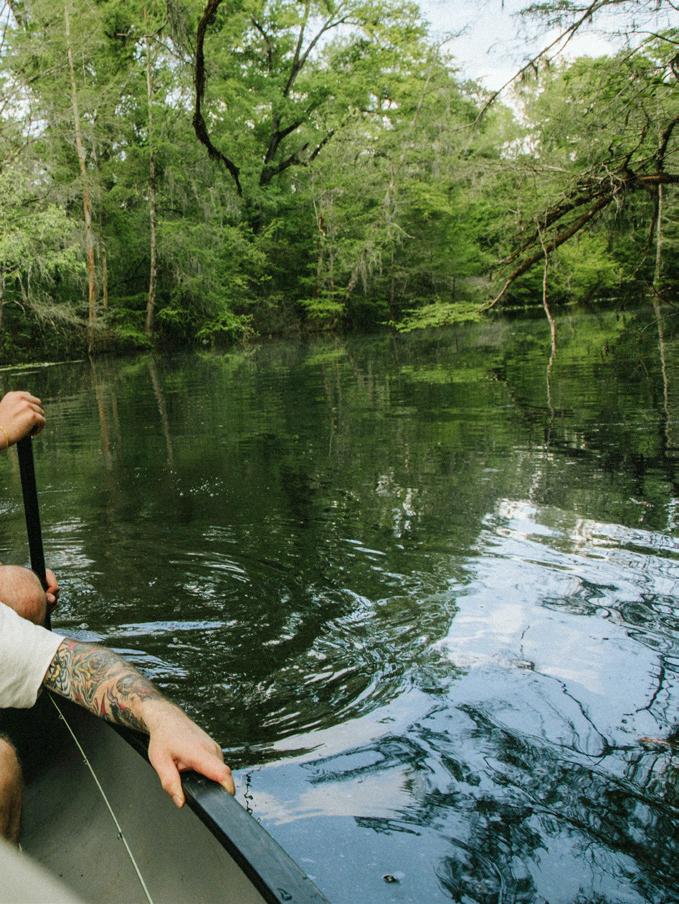
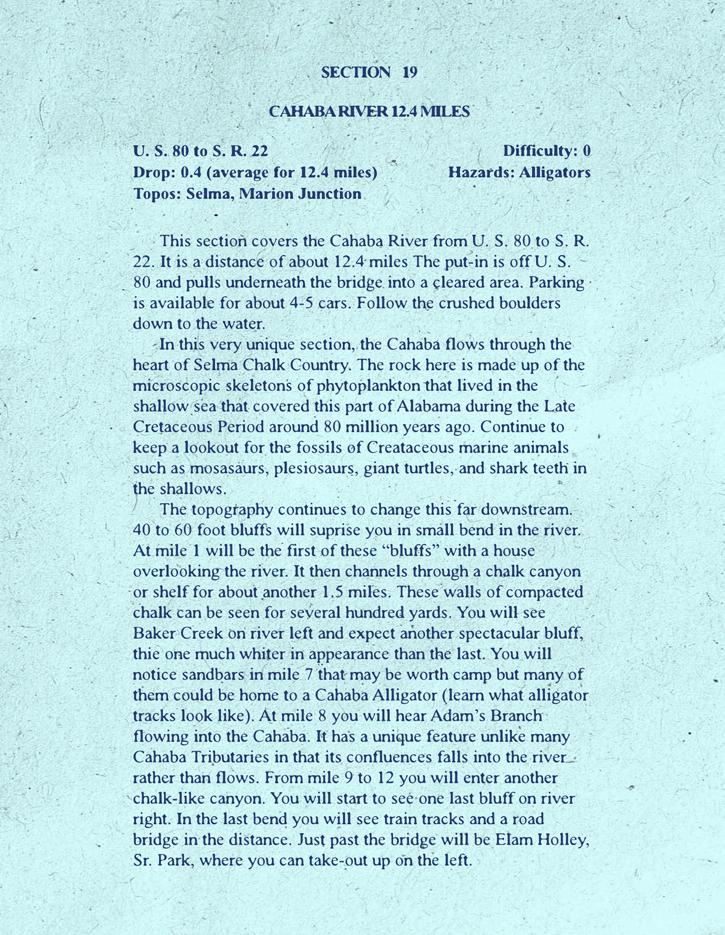
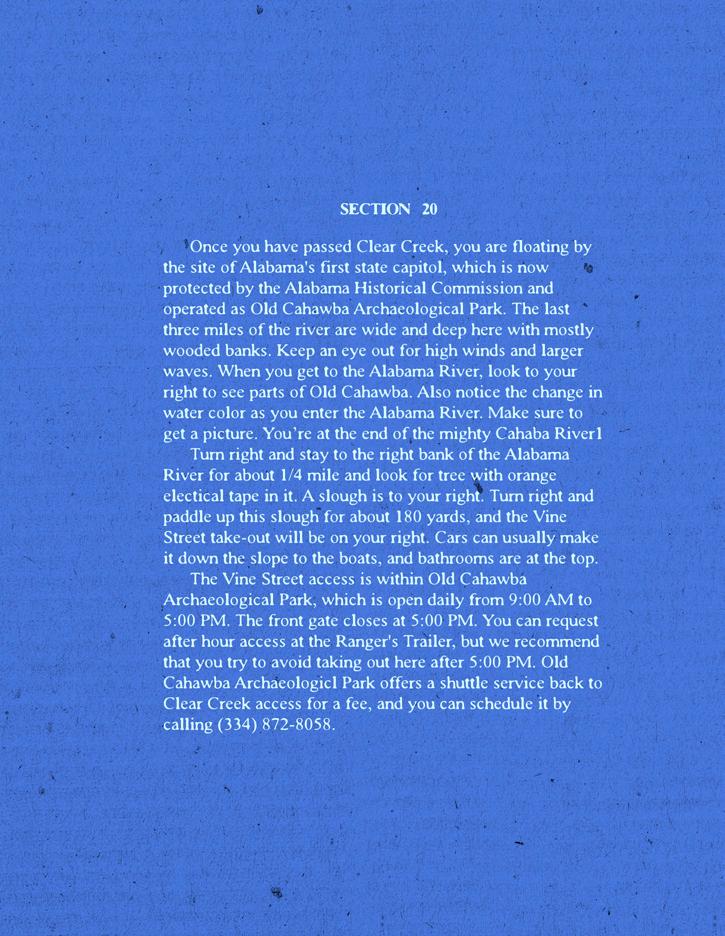
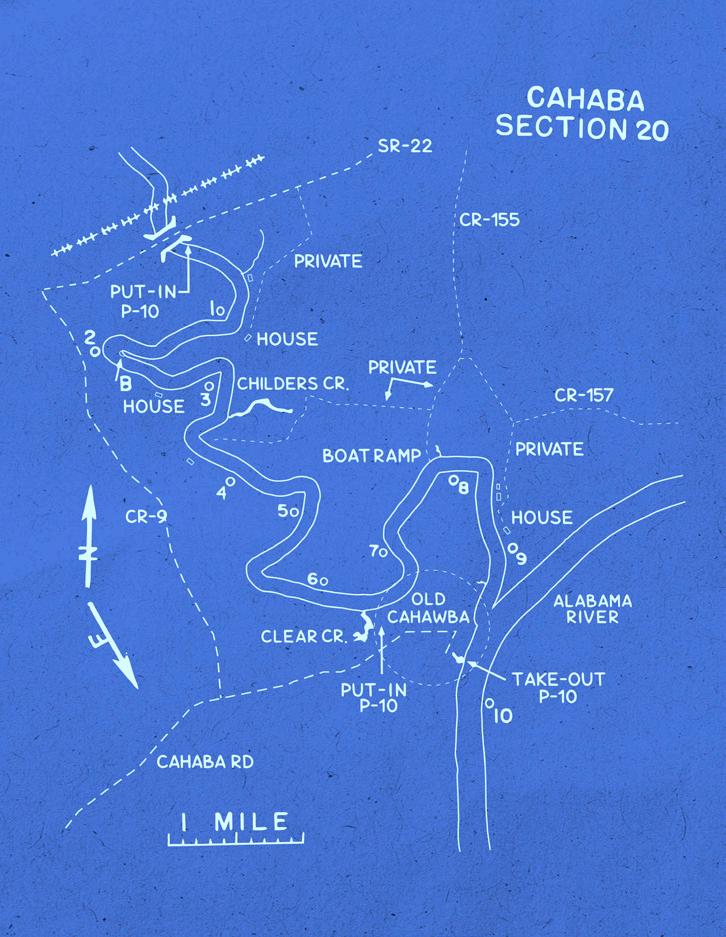
On April 1st of 2026, Year of the Horse, two fools and I (a third fool) loaded up three canoes and two weeks worth of camping gear and headed to the ghost town of Old Cahawba, Alabama. There, my companions and I dropped off a car and said hello to the groundspeople, who oversee the ghosts, and a cat.
“We’ll show back up here in 10 days or so with our boats,“ one of us said.
A worker scratched his head. “Hell, 10 days? Where y’all gonna start at?”
We had wanted to start in Trussville and traverse the entire 194 miles of the Cahaba River. But because of a lack of rain and our less than impeccable timing, “Centreville” was our answer.
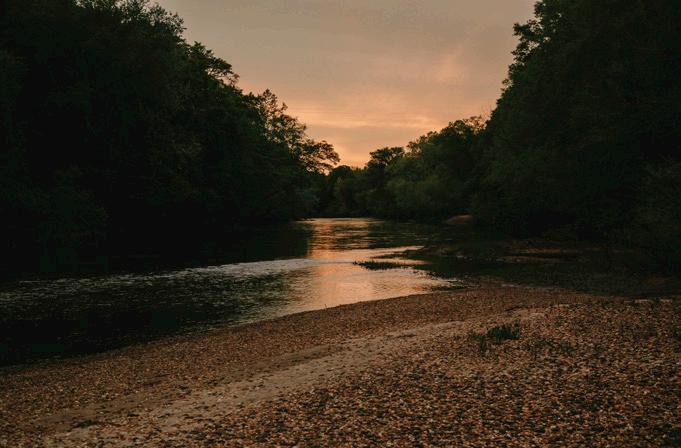
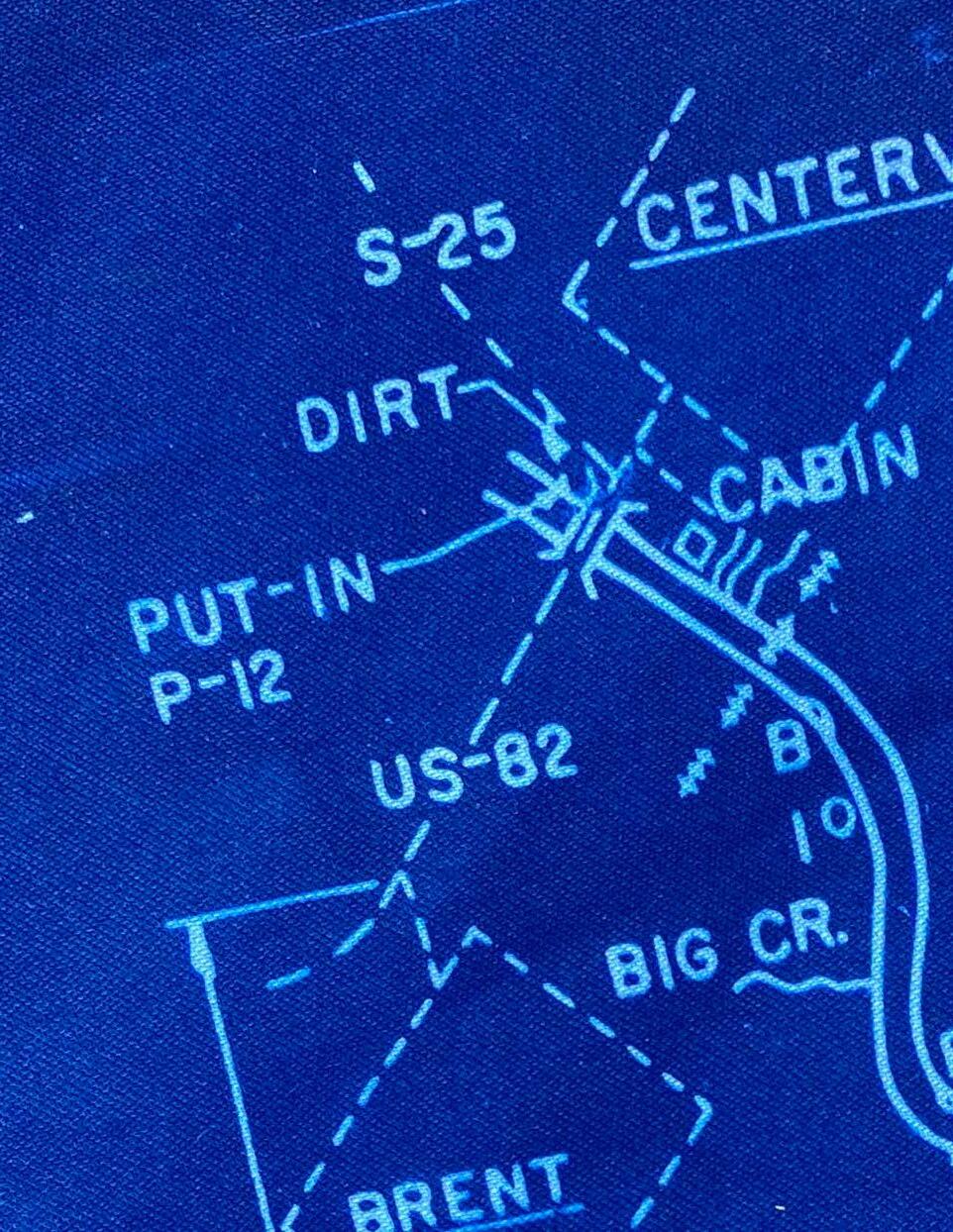
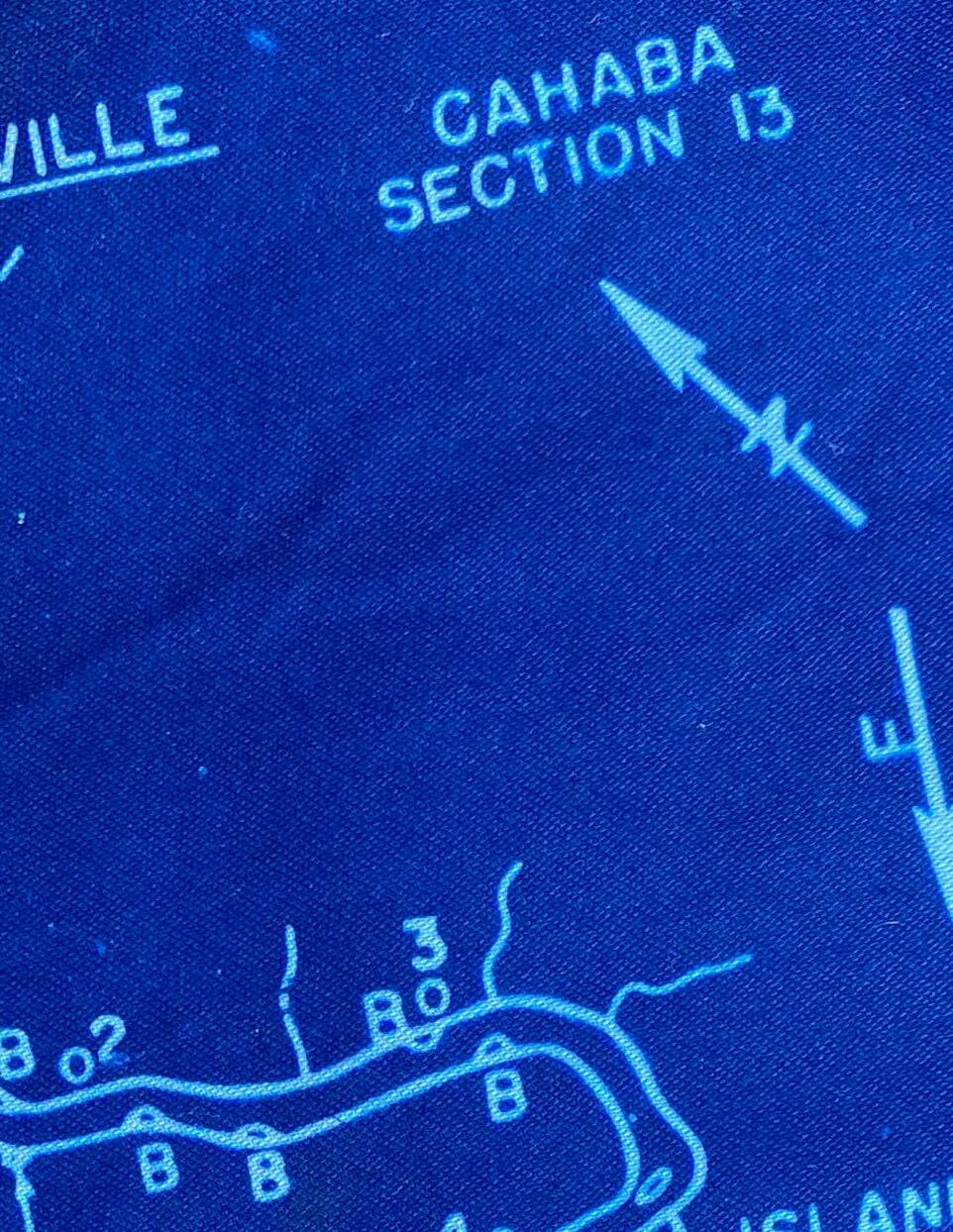
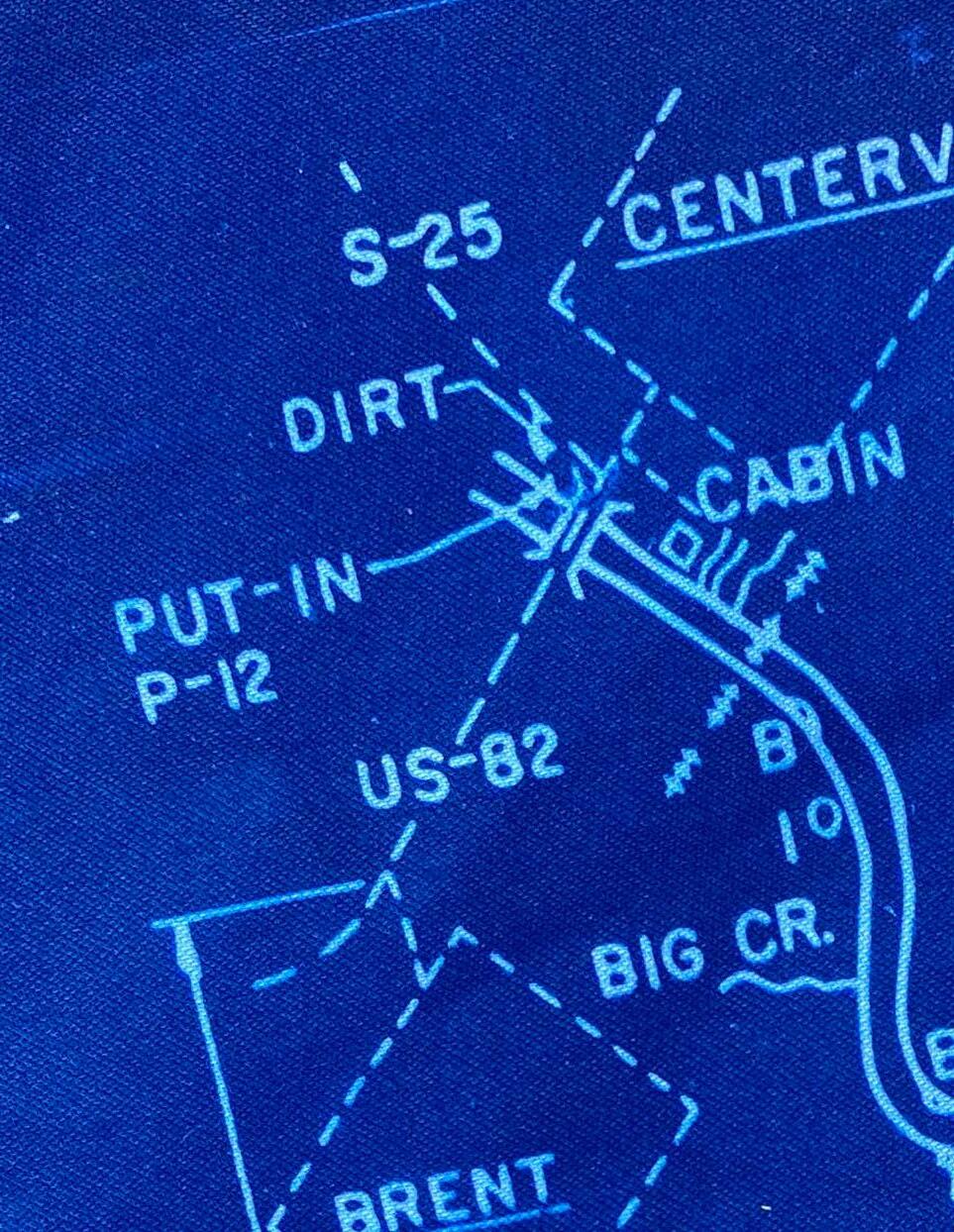
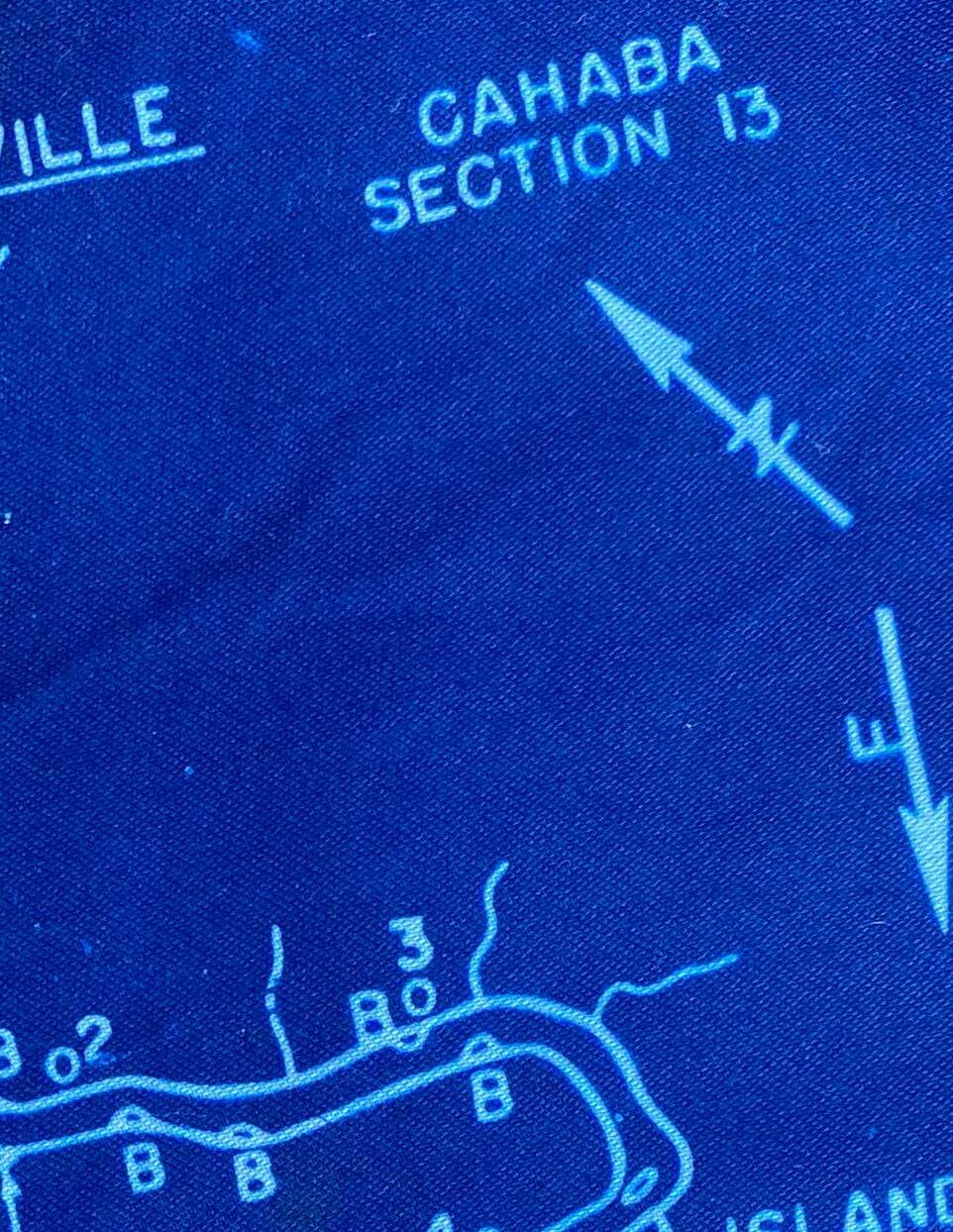
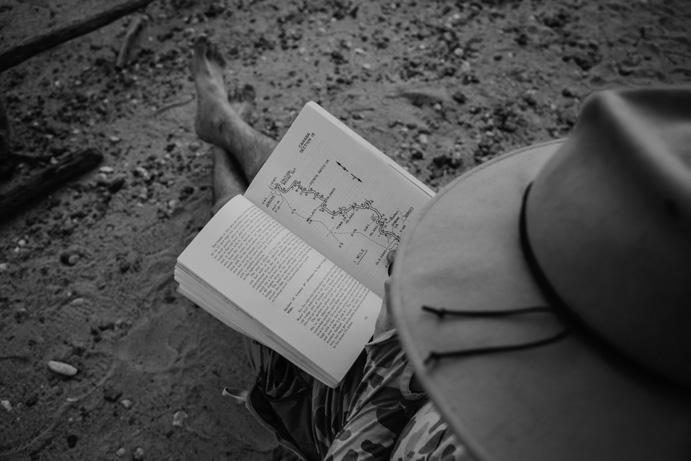
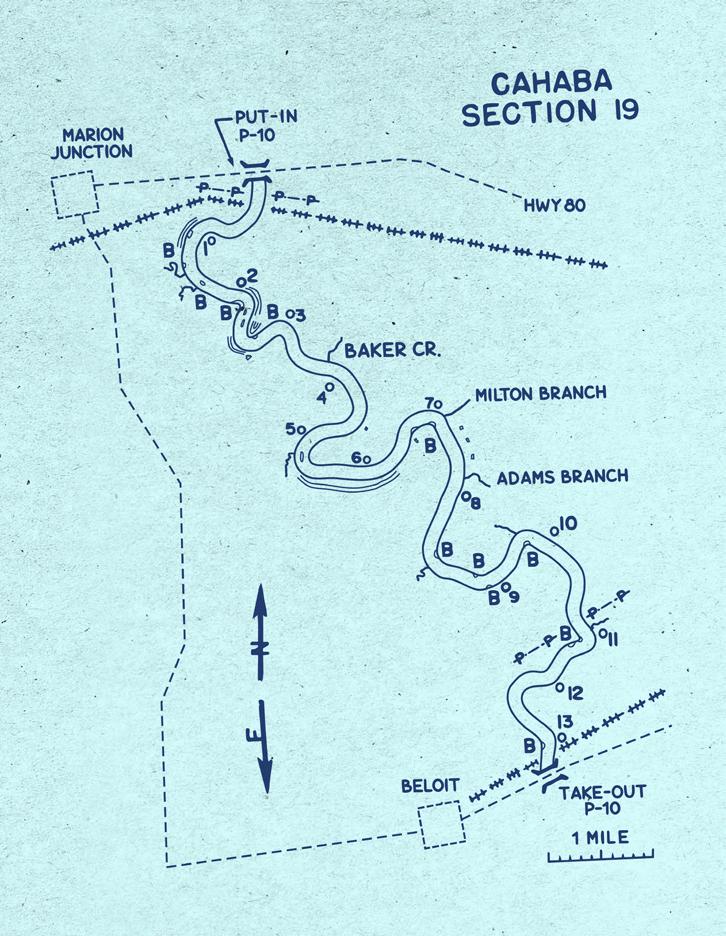
The town of Centreville, Ala. sits quietly beside Highway 5 and straddles the unassuming Cahaba River at the fall line. From the north, the “Upper Cahaba” has danced its way down over 100 miles through the Ridge-and-Valley Appalachians and at Centreville, the “Lower Cahaba” begins its long meander through the ancient coastal plain. Resting behind a rural high school, the canoe launch sends paddlers through the river’s last rocky shoal. From there, the river cuts through old Alabama pasture country and slowly mingles with several geological features that hide in the state’s poorest counties. Eighty-four miles later, it converges with the Alabama River, and disappears. According to John Foshee’s Alabama Canoe Rides and Float Trips, paddling the entire length of the Lower Cahaba is doable with little to no rain, but his maps stop at around mile 177. So we gave it a shot.
The first day was, like most launch days, slow and lacking in organization. The three of us, plus a few friends who came to
Kyle Humphrey
photos by Wes Frazer and Kyle Humphrey
escort us on the send-off stretch, didn’t put our first blade strokes in until 3 o’clock. No sooner had we taken those strokes than the clouds started gathering, and we met our first obstacle. We had 9 miles to cover, which originally seemed doable at our average expected pace, but at the first gravel bar, a wise old creature, a redneck, introduced us to our first distraction.
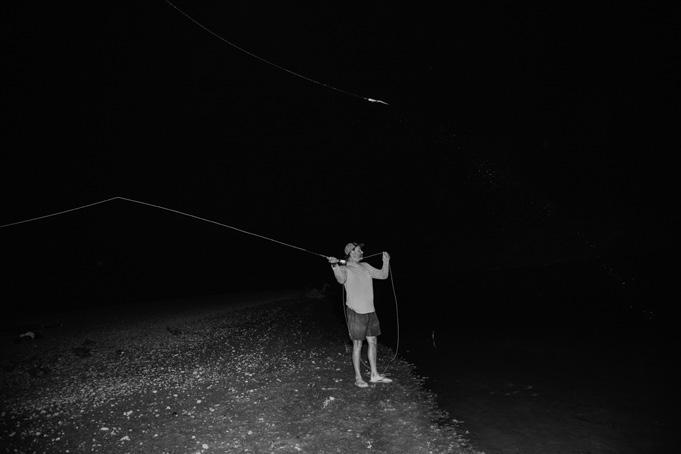
As we approached the bend, we could hear him give out a whistle. “Y’all missed the party!” he shouted from shore as he hoisted up an eight-pound striper. “I wasn’t prepared for that. I ain’t never seen ‘em this far upstream!” He held the fish up high, tantalizing us. “Throw a plopper and a prayer!” Suddenly, 9 miles seemed like an eternity away. We were about to fish our asses off!
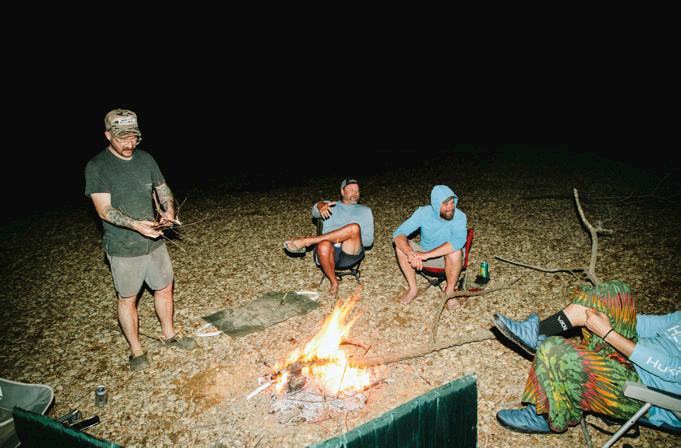
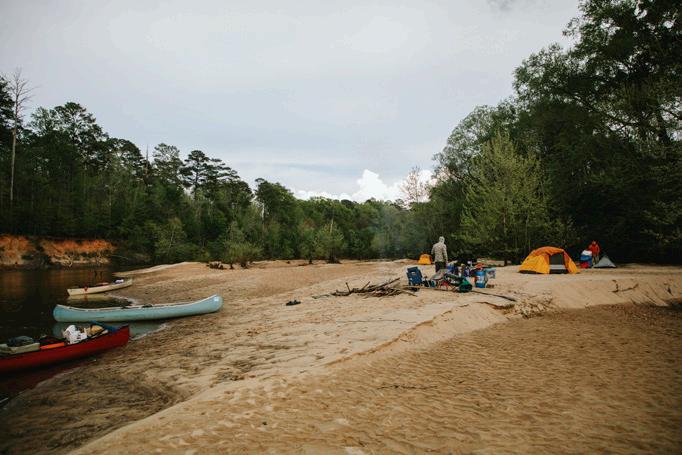
But lightning in the distance does something to the body. A puckering of sorts. Our anuses, tingling with atmospheric electricity, were telling us that 8 ft graphite rods may not be the best thing to be handling. So, we paddled at the mercy of the storm; a storm that ultimately would whisper at us all day, but only so much as spat on us. By dusk, the storm had turned into a low lying sunset, and we paddled to the sounds of the frogs. We made camp at Cooper’s Island, where the river meets an old cut it must’ve made years ago. Our island was 70 yards from the nearest tree line and easily 300 yards long, a common feature on this first part of the Lower Cahaba. As most first day paddles go, it was steaks and a campfire for dinner.
In the morning, our escorts were gone, but their breakfast rations remained. Well fed, and satiated on fishing, our attention turned towards the feathered fish of the sky. Red-eyed Vireo, Northern Parula,
birds more often heard than spotted. We started a list that quickly reached over 60 species. This all distracted us from the 14 miles we paddled on a day we only needed to make 6. We arrived at Barton’s Beach and circled the canoes on the sand for camp.
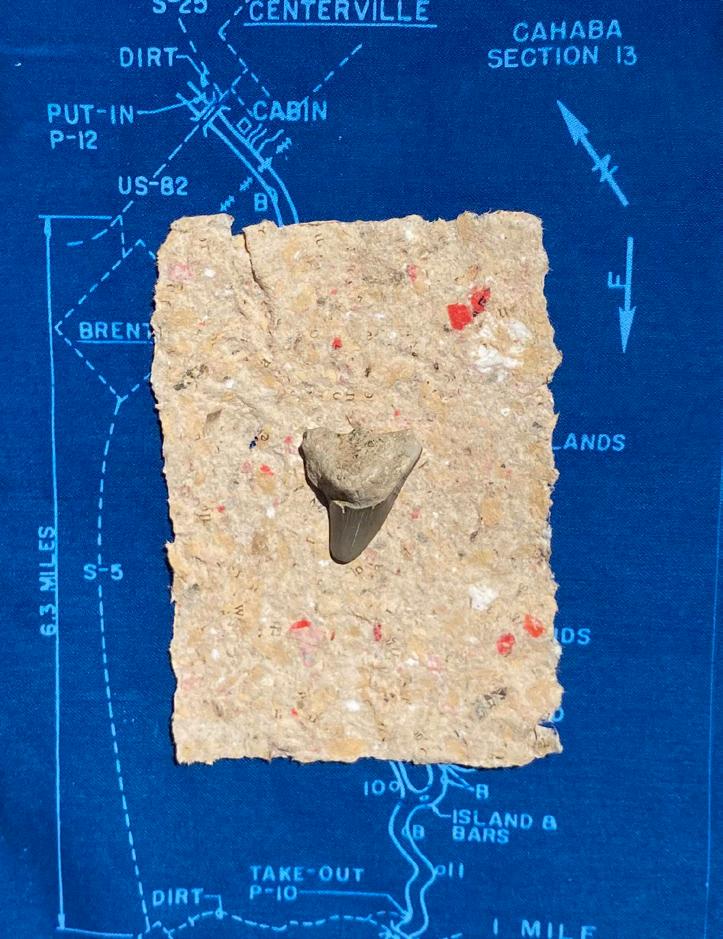
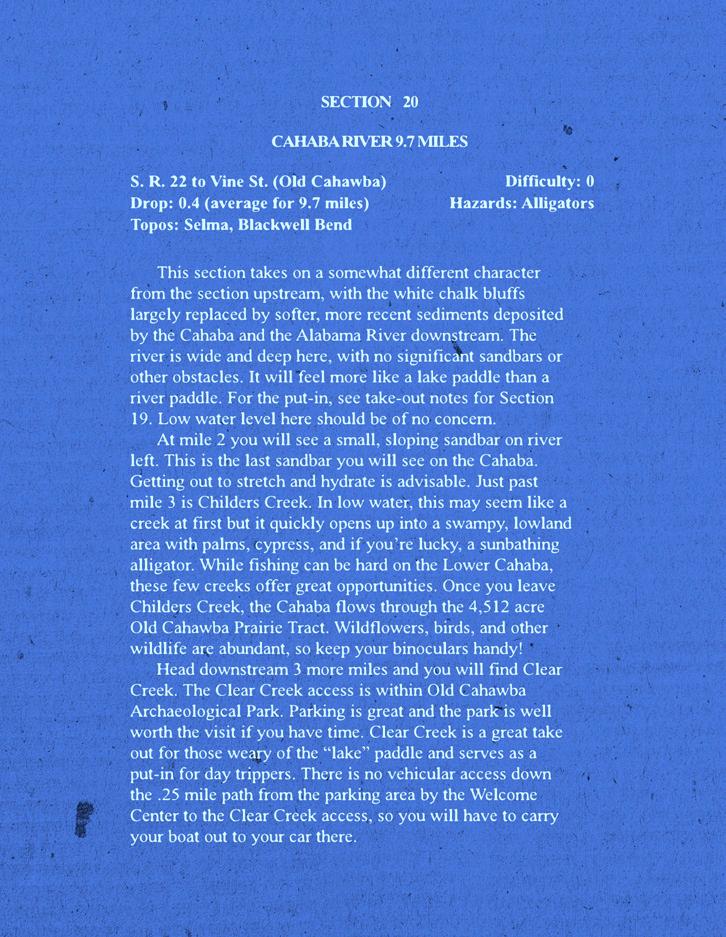
To zero out a day here, getting back on schedule after overpaddling the day before, meant that we could take time to explore an area not many get to see. Barton’s Beach sits near Perry Lakes, a protected oxbow swamp just a 20-minute walk through the woods from the river. After a coveted lazy morning, we portaged into the lakes, which offer a boardwalk around the swamped area and an observation tower that the writer cannot (legally) suggest you climb. Although nothing was biting, the lakes teemed with life. A new creature that we hadn’t yet added to the species list had come into play. An alligator. Canoeing and fishing become different sports altogether when alligators are around. Cutting back on fishing helped us see even more creatures in the wild. With nothing else to do, you can easily trade the thrill of a catch for the thrill of identifying a bird or a native plant. In this flow state you can toss a line but instantly be disrupted by your peripheral; a flower over here, a flash of color on the wing over there. A palm that is far from the ocean. A mussel that dwarfs your hand. All these finds started to feel like the real reason we were here. To meet the whole river.
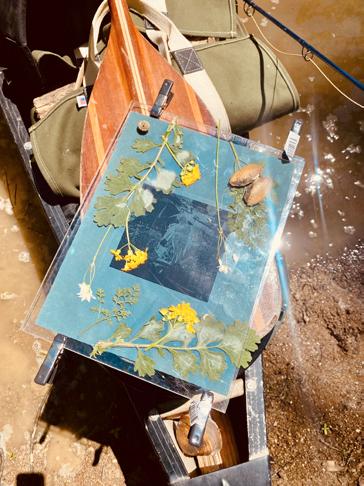
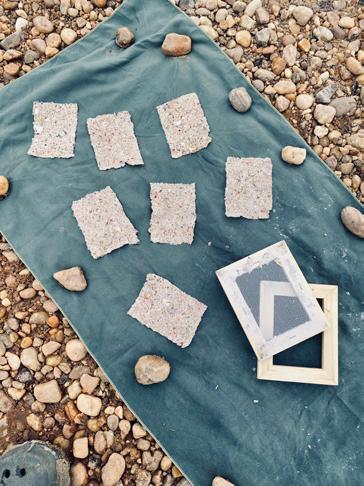
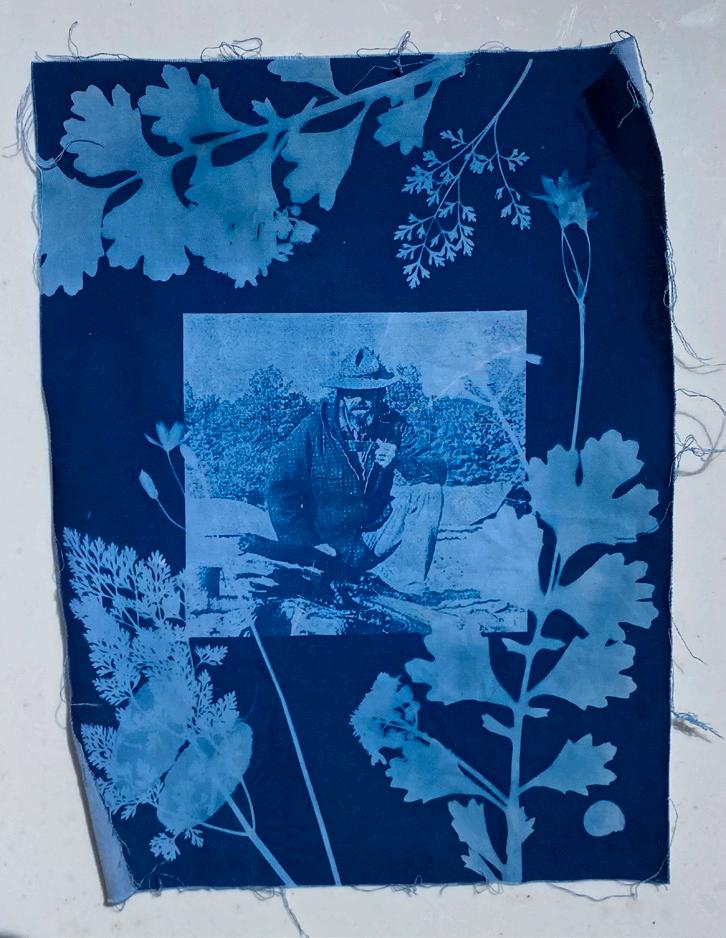
We went back to camp along Barton’s Beach and prepared for another storm that we knew was headed our way. While we waited, I was able to carve out time for a few art projects. Some
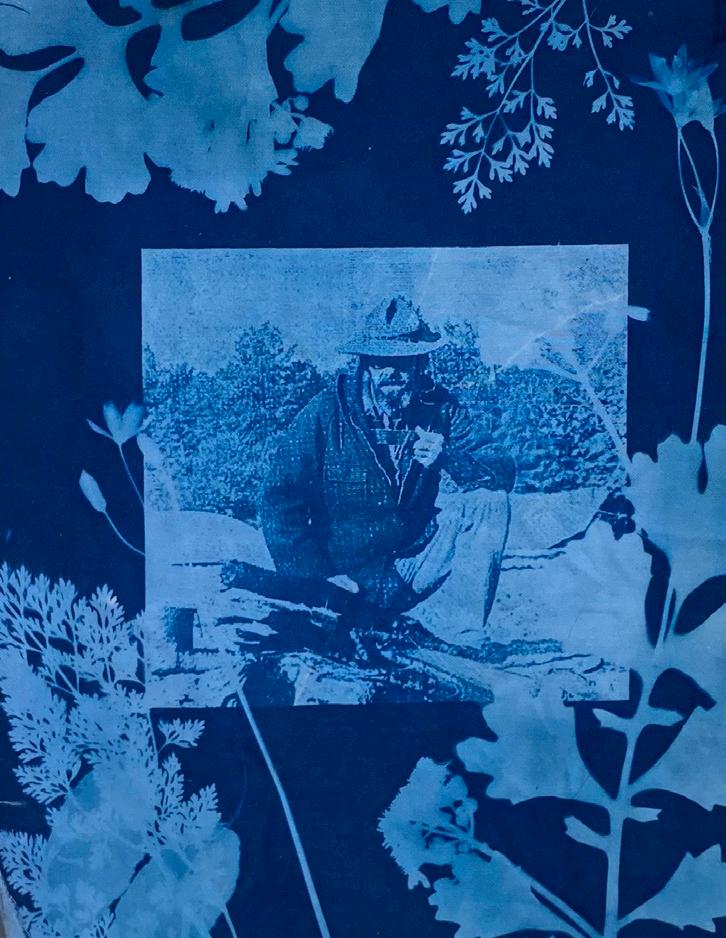
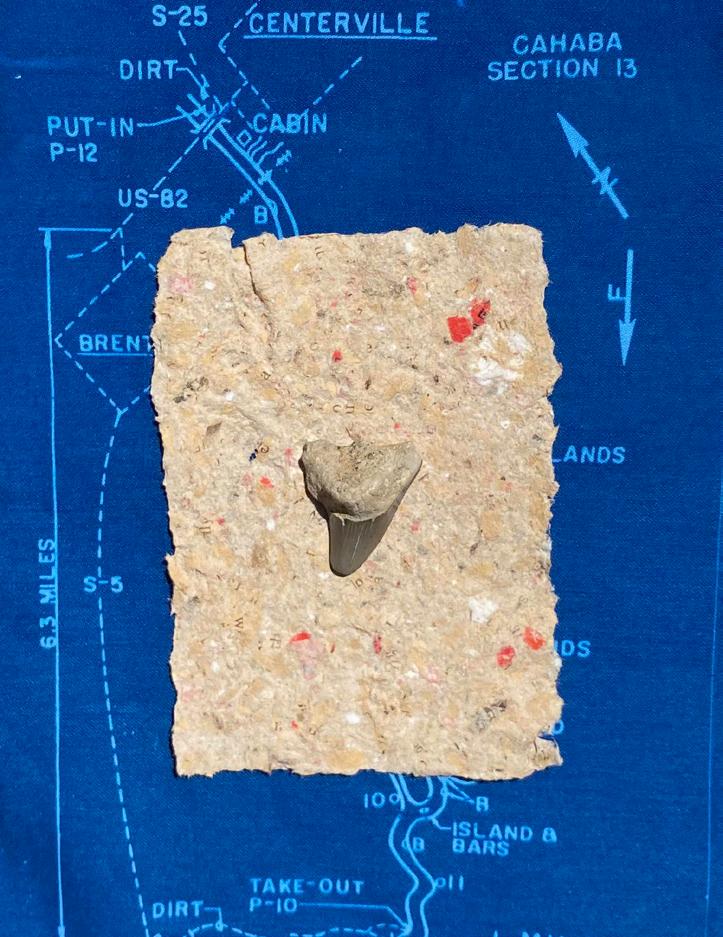
people bring books or bottles of whiskey, I brought cyanotype fabric. A mold and deckle for paper making. Sumi ink for a potential gyotaku print. And beer. Why I had brought these things was merely to prevent boredom. It’s hard to teach people how to play Cribbage and we were all tired of getting skunked. I was glad to have my little projects with me.
On the night of April 4th, we decided to bust out our finest meal of the trip, Wes Frazer’s homemade gumbo. A dark, frozen block in his cooler, the gumbo came alive in our dutch oven (you can bring a LOT of shit in canoes) and once it hit the rice, was immediately deemed worth saving for later meals on our trip. We packaged it back up in the cooler and settled in for the rainy night ahead, our bellies full of dark sludge
and hot sauce.
What sounded at first like an aquatic assault only ended up being about an inch of rain, and by first dark purple of early morning it had subsided. The rain had washed our previous night’s ashes to nevermore, but our main tarp had held up through the night and our fire wood was dry. Once our bones were finally acclimated to the soft grey sky around us, one of us broke the silence. “What y’all want for breakfast?”
“We have a ton of gumbo left…and I’ve got grits” It was at this moment, a thought occurred to all of us. Grits plus gumbo equals Grumbo. Recipe to follow.
On Easter Sunday, April 5, we received a special supply drop from my buddy Ben Leopard, who made sure we
were stocked up on ice, beer, and Peeps. As the day went on we wondered when the rain upstream would finally hit us. We were entering a section with endless gravel bars and islands that could all be underwater by nightfall, and if we weren’t mindful, our campsites, too. We worried that the fresher water and fishing opportunities provided by the side-creeks we’d come to enjoy would disappear. These shallow-bedded creeks were delicate compared to the larger gush of the Cahaba. In each one, the water brightened and we saw fish, particularly bass, that we could target. Wes was more successful in finding the bite, so Wil and I would wander off into the woods to look for wildflowers, or to possibly spook a deer.
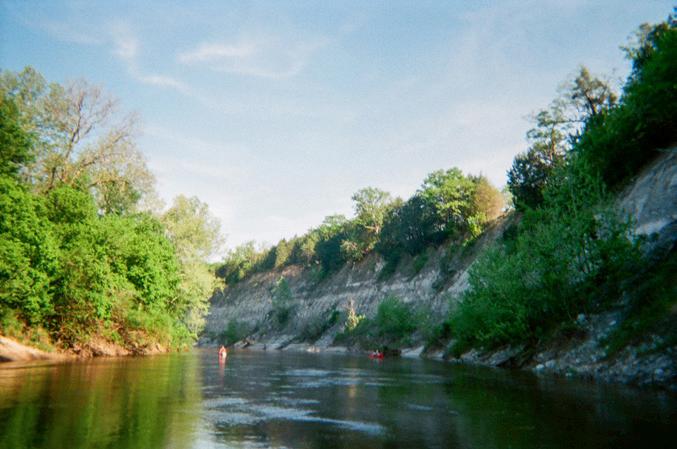
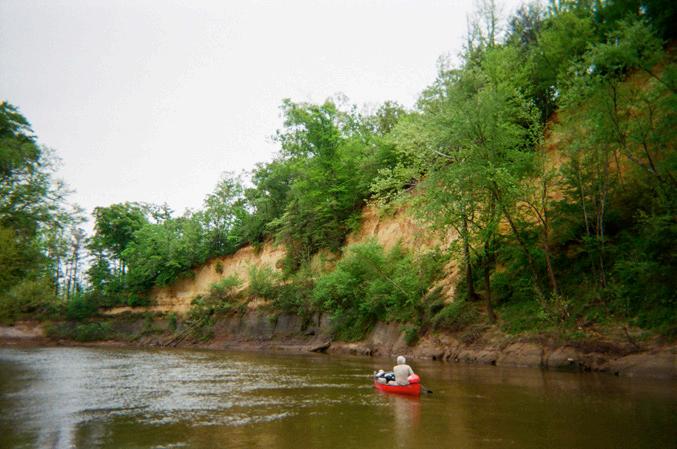
By Day 6, the water had still not risen. We later came to learn that rainfall from Birmingham takes two whole days to travel the 150+ miles it took to reach us. Yet ignorant of this fact, our minds were at ease just as the river was. Calm and steady, the water continued to carry us southward, but geologically, the banks of the river started to become unfamiliar. Bluffs on river-right began to rise 50-70 feet high, with large swaths of red earth revealing their compacted layers. At one section, old car bodies were strewn down the bank, apparently put there for erosion control. Nature clearly had no problem camouflaging them after years of change. Who had put these cars here was irrelevant now. The river had claimed them.
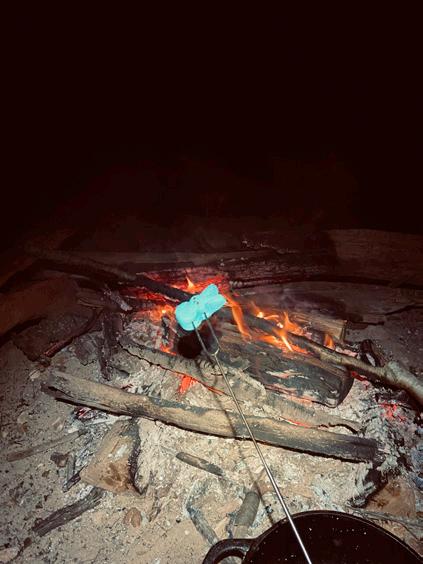
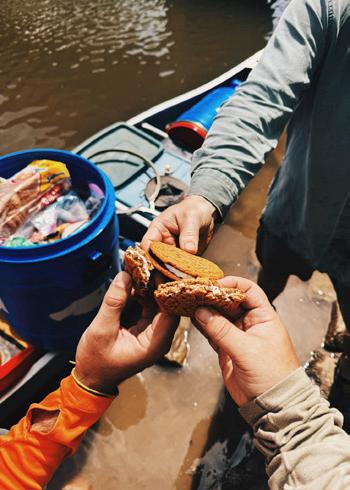
That night, as we camped high on a gravel island in the middle of the river, we made spaghetti sandwiches and called to barred owls with half-baked hoots. We felt their keen eyes fixed on the little blue bunnies we had skewered in the fire, the day-old Easter Peeps. Were they mallows
or mere chemical reactions wrapped in sugar? Our delightful answer came when we squashed them between two grahams with a chocolate bar.
On the morning of Day 7, the rainfall from Birmingham finally met us, and Wil, our expert paddler, made a startling calculation. We had gained almost 2 whole days on our trip’s itinerary, even with the zero day. We had entered the last leg of the Cahaba earlier than anticipated. On top of that, the rising water was now inundating potential campsites. What this ultimately meant was that we needed to enjoy every second and every flavor of the rest of this river, and we had to start right away. After a final helping of Grumbo, we set off to stretch the day out as long as possible. At this point in the river, geographical changes were happening by the mile. It seemed that every ecosystem in the region wanted to play its part in this microcosm, and the wildlife continued to amaze us. Huge schools of migrating redhorse could take as many as several minutes to pass by, while gar and damsel flies yinned and yanged at the water’s surface. On the banks, towering sycamores rubbed knees with ancient cypress, and youthful birds took no note of us as they screamed across the span. Hogs, beavers, and wood ducks all made startling commotions if we got close enough, and of course, more alligators took the stage, entering river-left at one sandy bend, while across the stage tall, ash-white bluffs broke through the vegetation and took skyward. Alligators love a good view, we learned. Among all these sights, Wil was eager to reach one spot in particular. The Mooreville Chalk. This formation emerges on the banks of the Cahaba River near
Selma, and juts out from a low sloping hill where it falls straight down into the water, creating a ledge to walk on. Here, we pulled over and made our usual lunch, sandwiches that combined snacks from our barrels with whatever bread-like material we could find. Wil wandered off with a cheeto-filled hotdog bun, walking the thin line of grey edge that leaned out over the Cahaba. “There’s fossils everywhere here. Snails, oysters, worm shit, I think. I’ve envisioned myself finding the rib bone of an ancient whale. I’d better start digging.” We walked the ledge with him, “sandwiches” in tow, and beheld prehistoric shapes we had never seen before, scattered like forgotten dust, all seeping out of the chalk. It was just as I finished my last lunch bite that I saw a peculiar shape, one I only knew right away because of how often I’d seen pictures of it. “Shark tooth!” I said, mouth still chewing. We all quickly huddled around and crouched at the site, and I slowly dug my already dirty fingernails into the formation. The tooth slid out of the chalk as if it were supposed to be found. We stood silent, all of us amazed at once by this river. How could secrets like these be kept so well? How could a river contain all the fish that we see everyday in our section of the Upper Cahaba, and still hold this alien river bank, full of mystery, all in the same breath? “Well, I’m not leaving here til I find a shark’s tooth.” a weary traveler said. We hunched, like bugs, crawling over the chalk for hours. We finally broke free from the chalk’s grip when we felt like we’d taken enough relics. Our daylight was sinking into the side of the treeline when we realized we had several more miles to go
before our last campsite of the trip. The river offered up nothing to stop and rest at but was too beautiful to simply pass by. The compacted chalk banks seemed to create chambers for the river, with long overhanging walls of dripping moss and unusual shrubbery. Every so often, a large bluff would slowly crescendo to 60ft and then fall back down to a 10ft embankment that only a small creature could enjoy camping on. We pressed on and our bodies began to bulge and twist with each paddle. At points, the changes in scenery were overwhelming. Pictures were useless in a space where perspective was the art form. We started passing features that we couldn’t stop to identify because the next one was even more astounding. And then the next one. And the next.
At sundown on Day 7, we finished our 18th mile of paddling and came to Highway 22, the last infrastructure we would see until we reached the end of our journey. A mist of red shot up from the horizon and met a darkening blue sky, and the cliff swallows that had taken home underneath the bridge began their nightly ritual. A swarm began to develop and soon the sky was swaying softly above us. It could have easily put us all to sleep. But we knew that camp had to be made, and we wanted to make it before an alligator did. To the tune of the far off highway and what little sounds cliff swallows make, we made camp on our last night and made plans for landfall. Most of those plans included drinking what beer was still floating in iceless coolers, eating not 1 but 2 little Debbies, just to get rid of the weight, and deciding if Grumbo can last for 4 days. We offered up the last of our firewood, and soaked
in the dwindling stars. The last night is the most bittersweet of nights.
Day 8 started as any day would when you’ve been gone from civilization this long. We made coffee and rekindled the fire. The last servings of Grumbo n eggs were scraped off our pots and pans and we rallied to do our final morning ritual of dishes, housekeeping, and organizing the boats. Our final haul was only 6 miles of paddling but we knew we could drag it out, if for no other reason then to not get home too early. At this portion of the river, our maps from Alabama Canoe Rides and Float Trips ceased to give us any heads up. I had made some of my own to supplement Foshee’s to get us through these last few miles, but there was no
need. What we really needed was a motor. Here on the Cahaba, the Alabama River creeps in only a few miles away, which makes the paddling more lacustrine than riverine. To the flatwater, our luck added headwinds, so our last day of paddling was the hardest.
With a few moments to spare, we explored Childers Creek, a natural swampy area with what looked like fishy water. But as had become our habit, we quickly shifted from fishing to observing the bird life, concerned that maybe catching a fish here would attract other creatures hidden on the banks. The cypress knees rose up like robed monks stranded on the water, all facing the eternal tree trunk. A cattle egret soared above us taking its chances
with the wind we were battling all day. The swamp was still and our arms were allowed to rest, but the canopy all around us swayed like a dance rehearsal. Soon we’d have to be back on the main water.
For a few more miles we put our heads down and paddled against the wind, against God. Deep down we were ready to be finished but at the slightest hint we could have all given in to staying another night out there. The alligators here would just have to deal with us. We kept pushing, not paddling, our way to the confluence, and without celebration, without fanfare or ribbon finishline, our time on the Cahaba River came to an end. The Cahaba eased out into the Alabama River in a rather unremarkable way, slowly folding over its olive-brown self to disappear into a cloud of bruised water, the darkest of blues. Whereas the Cahaba had not stretched its chest wider than 150 feet across at any point along its traverse, the Alabama River swallowed the confluence in an open maw of choppy water. The same egret we saw earlier appeared across the Alabama and seemed to be a whole state away.
On April 8th of 2026, Year of the Alligator, 3 men and 3 canoes and a few more days of gear floated into a small swamp off the Alabama River, and made landfall on a steep, clear cut bank in the ghost town of Old Cahawba, Alabama. There, my companions, Wil Rainer and Wes Frazer, along with myself, tallied up the 8 days and 84 miles we had just paddled together. We laid eyes on the shuttle car, which we had left over a week ago, and all was fine and well. No ghosts or ghouls had broken into the Ridgeline. The trip was complete. The instinct to survive
on a wild river for 8 days had prevailed, and instantly, the stories started to free flow out of aching bones. Our favorite day, the best campsite, who had the most sweets left, and of course, our favorite species on the species list we had kept. Little blue heron, southern pigtoe mussel, the mighty alligator, the ancient crow shark. Creatures and ghosts of creatures had let us come into their home and take a small part in the much larger act of life that goes on down this way. And that’s why I think we do it. To be a creature for a few days and see if anything cares.
GAMGAM'S RECIPE BOX
Crawfish & Pork Fideua by Brother
Swagler
Camp Chef at Bristol Bay Lodge, Alaska
Former Jack Browns Burger Flipper
Last fall I spent a couple months post-Alaskansummer hopping around Europe with my wife. While living in Barcelona for a few months, I began to pick up on the idiosyncrasies of the Catalan people. In more ways than one, their devotion to tradition and stubborn attitudes reminded me of my home in the American South. In between Estrellafueled benders, I managed to learn a few new techniques in the kitchen. This recipe is a homage to my time in Spain and my love of southern comfort food.
Fideuà (FID-OO-AH) is a lot like paella, it's an impressive, yet simple one pan pasta dish. This recipe is best suited for family dinners or small dinner parties. Bonus points if you can cook it over an open fire, that’s how you get the extra tips.
we dive in, there are a couple things you might need. For starters, the pasta, fideo, is hard to find in the U.S. Don’t worry though, you can take spaghetti noodles and break them into 1” pieces. It takes a while, but it gets the job done all the same. A paella pan is recommended but you can also use a large cast iron pan, the bigger the better.
Ingredients:
1lb Fideo Pasta
Salt & Pepper
1 Tbsp. Smoked Spanish Paprika
¼ Cup Quality Olive Oil
1 Cup of White Wine
1 Large Red Bell Pepper
4 Cloves Garlic
1 Large White Onion
Directions:
1 Small Tomato
1 Lb Crawfish Tail Meat
4 Cups Chicken Stock
4-6 Pork Shanks or Trotters (½ lb per guest)
The Pork. The shanks or trotters are best done braised or smoked. Dealers choice. Braise or smoke until they are falling from the bone, this should take 3-4 hours done low and slow.
2. Prep your other ingredients. Start with the veggie sofrito. Dice the large bell pepper, dice the onion, and mince the garlic, add all this to a bowl and grate the tomato over it all. Mix it well and you have sofrito.
3. On a cookie sheet, spread your pasta and put in a 350º oven for about 5-8 minutes. You are just browning the pasta, if it burns you’ll have to start over or buy more, so pay attention during this step.
4. Add the olive oil to the pan and bring to medium heat. Add the whole bowl of sofrito (veggie mix) and season with salt, pepper and all the paprika. This should reduce into a somewhat dry mixture in the pan.
5. Add the wine to the pan to deglaze and stir the sofrito mixture around making sure it doesn’t stick to the pan and burn. Let this reduce and burn off the alcohol, after a minute or so add the crawfish tail-meat, juices and all.
6. Simmer the crawfish tails for a few minutes and then add the pasta. Begin adding broth one cup at a time, reserving one cup for later. Reduce heat to low ensuring a smooth, slow bubbling simmer. Cook until the pasta has absorbed the broth and is al dente. If it is too wet, increase heat slightly to steam off some broth. If it is too dry and the pasta is undercooked, add a little more broth until it gets there. This step requires you to be on your toes checking the pasta and adjusting if necessary. This should take only 10-12 minutes. The final product should be moist with firm pasta, not soupy and not bone dry.
7. Arrange the braised pork on top of the pasta. Put the whole pan in the oven on broil for a few minutes. Check in the oven window for the telltale sign your dish is done. The fideos should be sticking up straight and crisping up slightly. This is a nice touch for presentation. Don’t let it burn.
8. Serve family style with lemon wedges and garlic aioli if you want to be traditional, or douse it in tabasco sauce like the cajun heathen you are.
The Back Page
SCOTT STEVENSON
“That guy will be one of the first ones taken out. You can hear him coming a mile away. He ain’t sneaking up on anyone… Deader n’ shit”
That’s what my wife told me the other day when a truck with an obnoxiously loud muffler blew by our place. I love that she goes there. Our homestead is on a quiet county road and if you’re driving too fast (or too slow) you’ll get the death stare from us. Used to, the railroad bridge just down from our homestead was out and we basically lived on a dead-end road. It was glorious.
We talk about the what-ifs of a societal collapse from time to time. We are not preppers. We talk way more than we prep. But we want to eat less stuff from the grocery store because prices are higher than giraffe nuts and half the stuff has a recall ongoing, not to mention glyphosate. They had a recall on blueberries. Fucking blueberries.
Plus, we have this land. If the collapse does happen, I don’t have enough bullets to keep you from eating off my pear trees in the orchard. Just don’t eat them all. Save me a few. We did buy some walkie talkies a few years back. They’re still in the box. These were intended for daily communication when one of us was somewhere on the property, not for recon checks around the perimeter. I would be lying there wasn’t a small inclination to get these for, well you know.
My wife wants an El Camino for her farm truck (cough EMP-proof) slash chore vehicle. First time I heard her mention it I did a double take. She really wants one. We inherited a 1931 Model A two years ago that we are trying to sell and take back some precious garage space. That thing is as basic (cough EMP-proof) as it gets. I could have her drive us into the DMZ with me in the rumble seat keeping the zombies at bay with my trusty 3030 at my side. I want a 60 or 62 series Cruiser not for any other reason than I have always wanted one. I owned an 80’s series back in the 2000’s that I still miss. I want roll-up windows if I can get em and a tape deck. No bells. No whistles. My boss was telling me about driving his wife’s new SUV that will ask if you need to pull over if it sees any yawning on camera. Yea, El Camino it is.
I was thinking about what rod I would want for the collapse and it’s gotta be a seven weight. It’s always been my favorite weight. The perfect bass stick that has the strength to lasso most stripers and enough versatility that can make panfish still fun to catch. Winston’s 8’6” 7 weight Air 2 Max wizard stick would be it. Second choice would also be green, an Air 2 6 weight, a popper tossing workhorse. Us east coasters can appreciate a good western six weight. Everyone should have a western six.
Dog Stars came out in 2012 and I think I discovered it the following year. I listened to the audiobook the first time and then proceeded to read it three times since. And then did another listen a few years back. Mark Deakins, the narrator, does a perfect Bangley. I can’t read Bangley’s dialogue without hearing that voice. I can’t talk about the homestead without hearing that voice. Now, when my wife or I bring up something logical for our place like ordering more seeds for the garden, what gun we need to own, or if the El Camino needs an oil change, I hear us both talking in Bangley’s low raspy growl.