UNH College of Life Sciences and Agriculture's Magazine THRIVE Spring 2026
Thrive
News from the College of Life Sciences and Agriculture
Spring 2026
Protecting NH Wildlife
About 1,500 wildlife-vehicle collisions are reported in New Hampshire every year. Learn what our scientists are doing to reduce accidents in the Granite State — 13
Research made delicious
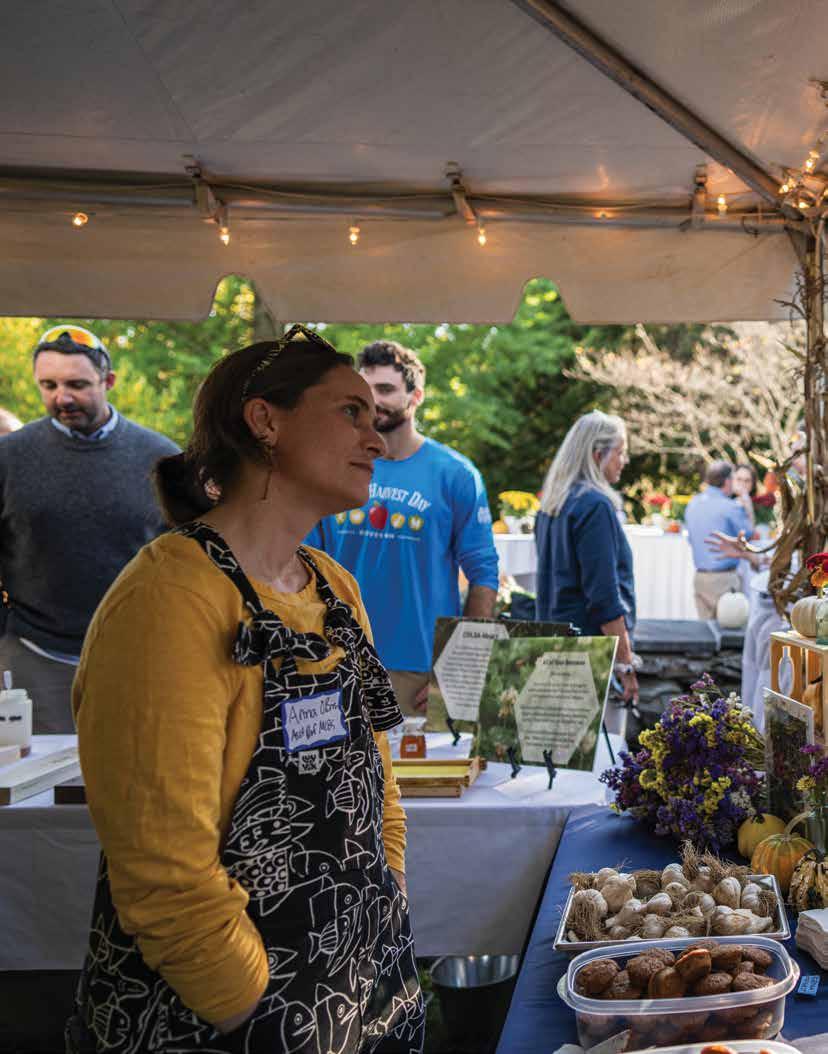
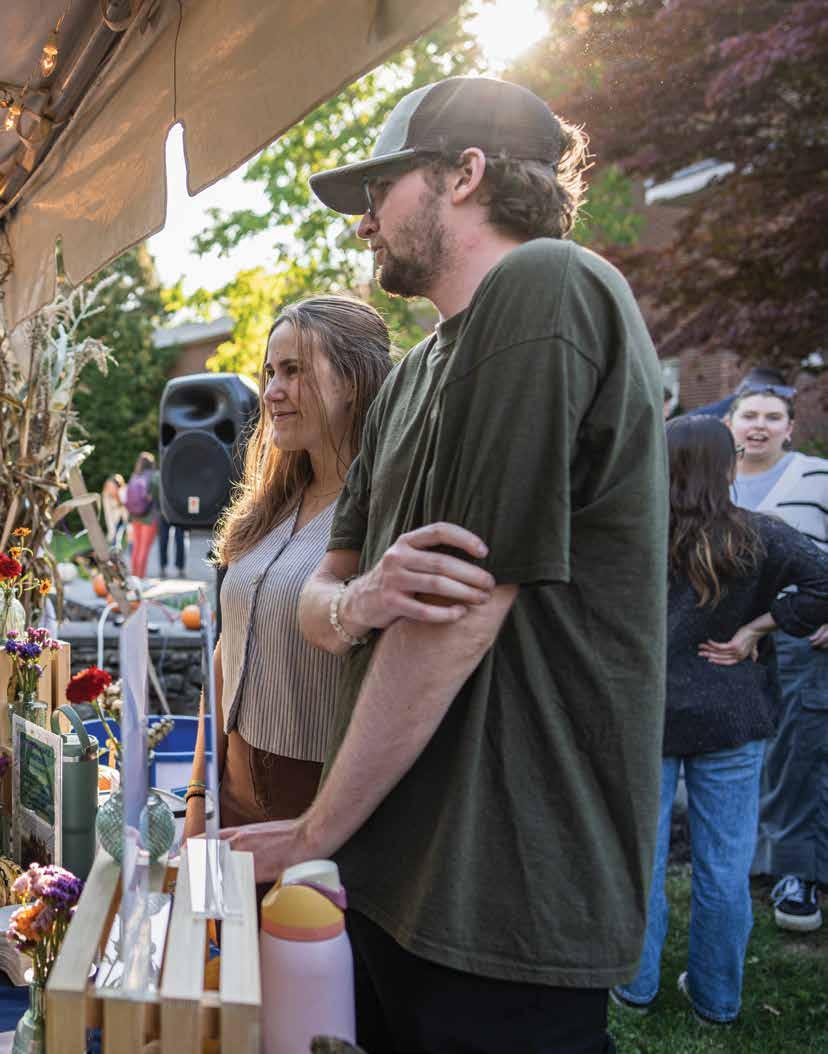
On the Friday of UNH Homecoming Weekend, the College of Life Sciences and Agriculture erects tents and tables on the lawn adjacent to Barton Hall and invites alumni, friends, faculty, staff, and students to gather.
Strings of lights twinkle in the late afternoon autumn sun, pumpkins grown as part of UNH’s long-standing cucurbit research program are displayed on tables and bales of hay and spill onto the grass, and cornstalks cut from silage fields dress up the tent poles.
Since it was first held in 2021, the Taste of COLSA has become a celebrated and anticipated event — and 2025 marked five years of gathering the work of our scientists and students into something attendees can hold and taste. Guests arrive with brisk excitement, eager to see the
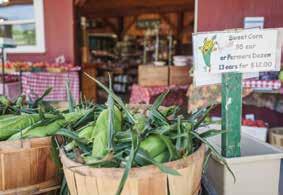
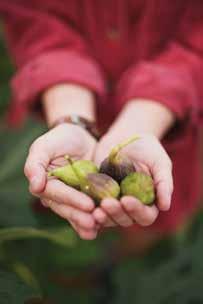
college’s work made edible: sumptuous desserts containing milk from the Organic Dairy Research Farm, delectable soup and fritters made from squash harvested at Kingman Research Farm, fresh vegetables provided by the Farm to You NH program, and sweet grapes and kiwi berries from Woodman Horticultural Research Farm. These are just a few of the treats on offer at an event that has become a feast not just for the tastebuds, but also for the mind and spirit.
Faculty and students staff tables, happily describing their work and answering questions. Alumni and friends of COLSA listen, recognizing some things and learning about others. The event is a demonstration of scale: how something as large as our land-grant mission can be simply represented by scientists and students explaining their work and its value — and offering something delicious to eat.
Peer-led team learning New program is transforming the student learning experience in introductory
courses
roads, connected habitats UNH-led research is helping New Hampshire reduce wildlife-vehicle collisions by identifying hotspots and enhancing animal-friendly crossings statewide
enduring connection to UNH and the land
Coppelman ’76G reflects on the power of giving back and the importance of environmental stewardship
FROM THE DEAN’S DESK
Stories that inspire
It is always a pleasure each time an issue of Thrive is published. Its stories remind me why I am continually moved by and proud of the students, staff, and faculty who create such a dynamic community of teaching, research, and service — and I hope they serve the same role for you.
I’ve always loved storytelling. Around the campfire, at family dinners, while visiting my grandparents; I replay so many of those stories and think about how the world has changed, and how it hasn’t. My father, who often wrote for local papers (building on his experience as editor of the student newspaper in college), reinforced to me how important it is to share stories with as wide an audience as possible.
I’m also inspired when I think of my great aunt and uncle, war correspondents and journalists, who told important stories, interviewing their subjects and bringing facts to light. They both had a sense of adventure and derring-do that challenged others to “dare to do” more. As you leaf through these pages, which cover topics from the deep roots Glenn Coppelman ’76G forged in Rockingham County (p. 16) to the UNH student changemakers working to address deforestation in Cambodia’s Keo Seima Wildlife Sanctuary (p. 15), I hope that you, too, are inspired by the complex problems our community members face, the collaborative approaches they use, and the meaningful change they drive.
Along with our stories, I hope you like the new look of Thrive — a change that aligns the magazine with UNH’s new brand standards and includes revised colors, typefaces, and requirements for the size and paper stock used for our print publications.
There is much to celebrate, and as we enter our sixth year of Thrive, I look forward to the stories that are yet to be imagined and told — and to highlighting the many reasons to be proud to be part of our COLSA community. Thank you for your support of our college.
Anthony S. Davis Dean UNH College of Life Sciences and Agriculture
SAVE THE DATE
April
7 - 10
The (603) Challenge is a fantastic time to support COLSA because matching and bonus funds allow your gift to make an even bigger impact.
We invite you to embrace the Challenge in support of COLSA and strive to make this the best (603) Challenge ever!
In 2025, more than 500 donors contributed to raising $198,839. The money supports scholarships, research, and hands-on learning essential to the COLSA experience.
For more info or to give early:
unh.edu/603
Building a resilient food system
Only about 3 percent of the food consumed in New Hampshire is produced within the state. Analena Bruce, assistant professor of agriculture, nutrition, and food systems, led research funded by the NH Agricultural Experiment Station that explored the perceived obstacles to local food acquisition and consumption and developed strategies for engaging stakeholders and the public to address the issues. The team surveyed more than 2,000 New Englanders and conducted 35 in-depth interviews with New Hampshire residents about food-shopping habits and attitudes.
The findings, released in a series of research briefs, provide information about what local people prioritize when purchasing food and the obstacles that must be overcome to help local food producers attract more consumers. The briefs offer timely insights into how communities, institutions, and individuals can help create stronger, more sustainable food systems within New Hampshire.
“We are excited to release the briefs, which offer actionable findings grounded in real-world applications,” says Bruce. “We welcome feedback from anyone involved with the food system or who simply cares about where their food comes from.”
Securing our energy future
New Hampshire residents have among the highest electricity costs in the U.S., but belowaverage reliability. An emerging UNH research program funded by the NH Agricultural Experiment Station is making it its mission to overcome the problem. Constantine Spandagos, assistant professor of natural resources and the environment, is leading research aimed at improving options for New Hampshire residents and businesses. His work explores strategies such as agrivoltaics, a practice that combines agriculture and solar power generation within the same space for the benefit of both.
The best energy systems balance three essential goals: energy security, energy affordability, and environmental sustainability. Prior technologies required a lot of compromises, but recent innovations are providing the ability to achieve that balance. Spandagos integrates advanced energy technologies with behavioral psychology, community policy, and economics to develop solutions and feasible pathways for their implementation.
“It’s a very exciting time, because we now have the tools — sustainable energy sources such as solar, wind, and advanced biofuels, as well as emerging technologies like enhanced storage and green hydrogen — to advance our energy goals,” says Spandagos.
Smarter feed, stronger returns for NH fish farmers
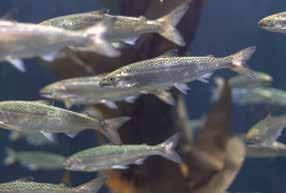
UNH scientist Karolina Kwasek is studying how to make nutrition for farmed fishes less costly and more sustainable — work that could have important implications for the predominantly small-scale aquaculture operations in New Hampshire, which struggle to be profitable.
The work, funded by the NH Agricultural Experiment Station, could lead to a welcome expansion of aquaculture in the state, which would both help sustain the appetites of regional seafood customers and support a thriving recreational fishing industry, as many hatcheries stock streams for recreational fishing.
Kwasek is investigating how to meet the nutritional needs of larval fishes with food that is more efficient and dependable than the live food that hatcheries currently feed, such as food pellets that can be stored until needed. She is also looking to broaden nutritional options once the larvae mature and begin transitioning to their adult diets. This approach will help the industry utilize more cost-effective ingredients and reduce reliance on natural resources.
“I’m working with local producers and New Hampshire Fish and Game to learn more about the nutrition and feeding problems they’re facing,” says Kwasek. “We hope [our findings] will provide more options and encourage diversification in local aquaculture.”
Beech leaf disease threatens NH forests
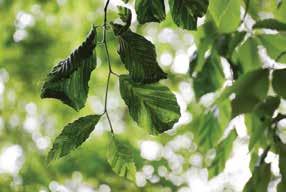
Beech leaf disease may be the biggest problem facing New Hampshire forests that you’ve never heard of.
To say it’s spreading quickly is an understatement. First detected in Ohio a mere 13 years ago, the disease reached New Hampshire in 2022 and was found in College Woods the following year.
“Now almost every beech tree in College Woods is affected, and we haven’t found any consistent patterns of resistance,” says Jeff Garnas, associate professor of natural resources and the environment, who is studying the impact of the disease with funding from the NH Agricultural Experiment Station. “It may eventually hit all of them.”
Beech leaf disease is caused by a tiny invasive worm called a nematode. Nematodes are well known for causing plant diseases, but most are soil- and root-based. The nematodes that cause beech leaf disease are found far above ground level, and their rapid spread from west to east indicates that they move on the wind.
“The situation is dynamic, and the trees may still be able to establish a new equilibrium, but it’s a very concerning disease,” says Garnas.
Sweet success
How Cooperative Extension educators helped turn a dream into a thriving business
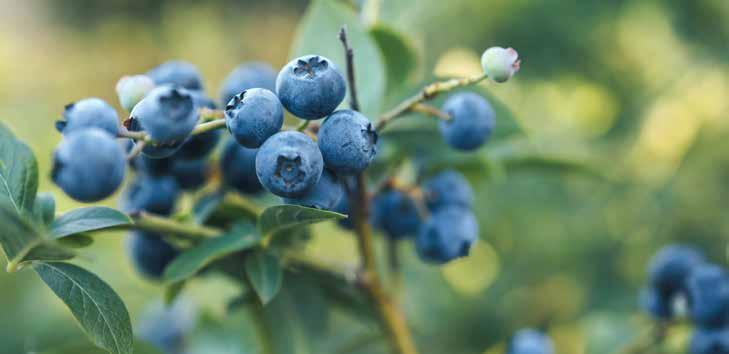
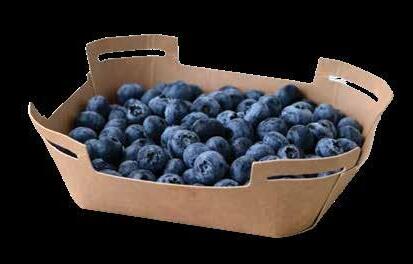
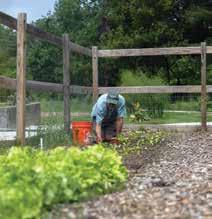
Stark Farm is one of the few producers of organic pick-your-own blueberries in New England. It enriches the greater community by hosting a farmer’s market on its property and serves as a real-world classroom for groups of schoolchildren who visit. But it would be none of those things if not for critical help from Extension specialists.
Chip and Maria Donnelly operate Stark Farm in a quiet corner of Dunbarton. They set their first blueberry plants in 2011 as a change in life was looming.
“Both my wife and I were looking ahead at retirement and saying, ‘What’s going to keep us busy?’” Chip explains. They both liked the idea of being a “no-spray” berry farm and reached out to Extension for guidance.
The Donnellys were initially planning to grow several kinds of berries, but George Hamilton, a since-retired Extension field specialist, talked them into winnowing their plan.
“He said, ‘Focus on one fruit because of this invasive fly that’s come into the country,’” Chip says. That fly was the spotted wing drosophila (SWD). Typically, it’s considered
prudent to plant a diversity of crops to hedge one’s bets. In this case, limiting their production to blueberries would allow the Donnellys to focus their mitigation strategy.
So they kept planting blueberry plants, adding irrigation as they went, until they had 350 bushes across two-thirds of an acre.
Stark Farm opened to pickers in 2018. The bushes were still young, but the Donnellys encouraged visitors to “grow with us,” as Chip says, and return in subsequent seasons to see how the bushes matured.
But the winter of 2018-2019 was brutal, and when spring came, the young plants never came out of hibernation because they were dead from the ground up.
“We had 80-90 percent loss,” Chip recalls.
Instead of greeting returning customers, the Donnellys spent their second season as farmers pruning back their bushes, cutting them nearly to the ground.
They didn’t quit, though, because of Jeremy DeLisle, Extension field specialist, who assumed support of Stark
Farm after Hamilton retired. DeLisle reminded Chip and Maria of their dream. He knew when to commiserate and when to cheerlead, and he promised that the bushes had strong root systems and would quickly rebound. He was right.
That same year, the Donnellys learned that productive fruit farms need a strategy for preserving their produce for paying customers. They put up nets to keep out the birds and fences to ward off the deer, bears, and turkeys. The system worked — for about a year.
“At the end of 2021, we discovered what every other farmer was talking about,” Chip says, referring to the SWD.
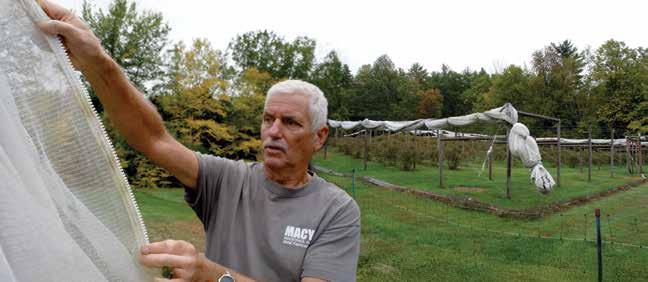
With Extension’s help, Stark Farm set traps to monitor the arrival of the fly, which lays eggs on berries for the larvae to eat when they hatch. Their life cycle is alarmingly rapid, and each female can lay so many eggs that the Donnellys knew it was already too late for that year’s crop. They closed for the season and called DeLisle.
“Quitting was high on the list,” Chip says. “We chatted with Jeremy and said, ‘This is the crossroad we’re at.’ He came back in the fall and said, ‘I think I’ve got an opportunity for you.’”
The opportunity was a Conservation Innovation Grant to purchase fine netting that would keep out the tiny flies with federal money routed through the Rockingham County Conservation District. With so few organic berry farms in New England, the efficacy of the exclusion netting hadn’t been verified locally. DeLisle said that
Stark Farm would make for a great test case, and the grant would cover 75 percent of materials and installation.
It was an experiment for Extension and a gamble for Stark Farm. In addition to paying a quarter of the cost, the Donnellys spent the fall and winter making a plan they could send to the manufacturer — the netting is custommade — and then preparing their field to be completely enclosed in netting before the SWD arrived.
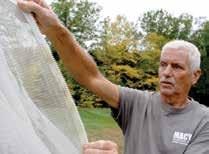
The bet has paid off. The Donnellys now start the season with the netting gathered into bundles running the length of the field. When Extension reports that the SWD has been spotted in monitoring traps in New Hampshire, the bundles are unrolled and the panels zipped together, creating an envelope around some of the only organic blueberry bushes in New England.
“The netting is 100 percent successful for us,” Chip reports. “We just completed our fourth year.”
He says their farm wouldn’t be where it is today without Extension’s well-timed help.
“It’s really hard to be successful. You have to work hard and learn a lot,” Chip says. “That’s what Extension does: They’re out there providing expertise to all types of farms, small, medium, and large, and backyard farms.”
In the case of Stark Farm, that expertise has made it possible for the Donnellys to stay true to their original organic vision.
“My wife likes to say, ‘The only thing that hits our blueberry bushes is raindrops,’” Chip says. “And that’s the truth.”
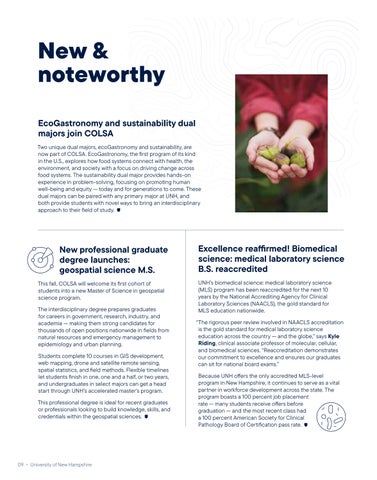
New & noteworthy
EcoGastronomy and sustainability dual majors join COLSA
Two unique dual majors, ecoGastronomy and sustainability, are now part of COLSA. EcoGastronomy, the first program of its kind in the U.S., explores how food systems connect with health, the environment, and society with a focus on driving change across food systems. The sustainability dual major provides hands-on experience in problem-solving, focusing on promoting human well-being and equity — today and for generations to come. These dual majors can be paired with any primary major at UNH, and both provide students with novel ways to bring an interdisciplinary approach to their field of study.
New professional graduate degree launches: geospatial science M.S.
This fall, COLSA will welcome its first cohort of students into a new Master of Science in geospatial science program.
The interdisciplinary degree prepares graduates for careers in government, research, industry, and academia — making them strong candidates for thousands of open positions nationwide in fields from natural resources and emergency management to epidemiology and urban planning.
Students complete 10 courses in GIS development, web mapping, drone and satellite remote sensing, spatial statistics, and field methods. Flexible timelines let students finish in one, one and a half, or two years, and undergraduates in select majors can get a head start through UNH’s accelerated master’s program.
This professional degree is ideal for recent graduates or professionals looking to build knowledge, skills, and credentials within the geospatial sciences.
Excellence reaffirmed! Biomedical science: medical laboratory science B.S. reaccredited
UNH’s biomedical science: medical laboratory science (MLS) program has been reaccredited for the next 10 years by the National Accrediting Agency for Clinical Laboratory Sciences (NAACLS), the gold standard for MLS education nationwide.
“The rigorous peer review involved in NAACLS accreditation is the gold standard for medical laboratory science education across the country — and the globe,” says Kyle Riding , clinical associate professor of molecular, cellular, and biomedical sciences. “Reaccreditation demonstrates our commitment to excellence and ensures our graduates can sit for national board exams.”
Because UNH offers the only accredited MLS-level program in New Hampshire, it continues to serve as a vital partner in workforce development across the state. The program boasts a 100 percent job placement rate — many students receive offers before graduation — and the most recent class had a 100 percent American Society for Clinical Pathology Board of Certification pass rate.
Peer-led team learning
Transforming the introductory COLSA experience
In large introductory STEM courses, students often face two challenges: mastering demanding material and finding their footing in a new academic environment.
COLSA’s Peer-Led Team Learning (PLTL) program tackles both by bringing students together in small, collaborative groups guided by trained peer leaders. The result is a more active, engaging, and community-oriented learning experience.
PLTL groups typically consist of 8 to 12 students working through
discipline-specific activities with an upper-level student leader who previously excelled in the course. PLTL is not tutoring. As Megan EnosFournier, senior lecturer in biological sciences, explains, “It’s students collectively working through activities, thinking about the course material from a different perspective. It’s way more active.”
The leaders facilitate discussion, pose questions, and help students “make
their thinking transparent” — a core goal across UNH’s STEM education initiatives. “The leaders might bring a problem to the students, but the students have to work together
to solve it,” says Melissa Aikens, associate professor of biological sciences. “The leader’s not stepping in to tell them where they’ve gone wrong.”
This innovative structure fosters academic confidence and lowers the social barriers common in large first-year courses. Many students arrive at UNH from small high school classrooms and suddenly find themselves in lecture halls with 200 peers. PLTL offers an immediate, small-scale community within those courses. “There’s an element of peer mentoring in this process,” says Aikens. “Students are more likely to listen to a peer who has done it and been successful in that course.”
Funded in part through a National Science Foundation grant supporting innovations in STEM gateway courses, PLTL is one of several collaborative learning models being expanded
across campus. Faculty see early evidence that it boosts engagement and supports stronger learning outcomes. Students routinely report that PLTL helps them better understand the “hows” and “whys” of complex problems, not just the final answers.
The program also benefits peer leaders themselves. They gain public speaking experience, deepen their mastery of foundational concepts, and develop metacognitive skills that strengthen their performance in advanced coursework. “If you can explain it to somebody else, you can be confident that you really understand it,” says Enos-Fournier.
Demand continues to grow — some semesters bring 30 to 40 applications from students eager to become leaders. And semester after
semester, student feedback echoes the same message: PLTL works. As one student told Enos-Fournier, “PLTL is amazing. Everyone should do it.”
Why do we lose cognitive ability as we age?
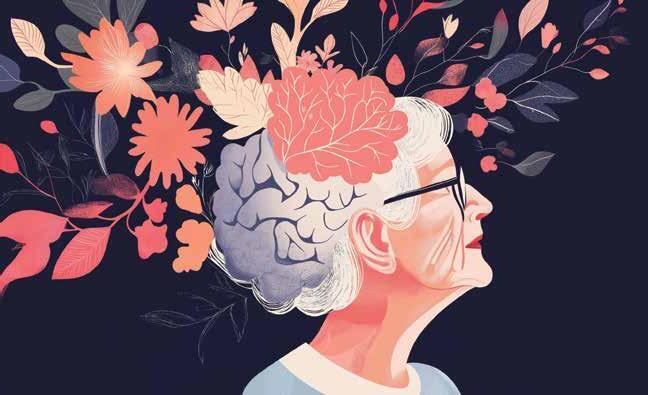
About two-thirds of Americans experience at least some cognitive impairment by the time they reach age 70. In New Hampshire, where the population is the second oldest in the United States, agerelated illness is a particularly salient public health issue. Recent research from Adam Brockett , assistant professor of biological sciences, clarifies part of this neuroscience puzzle by revealing that two different types of cognitive abilities — those acquired through lifelong experiences and those developed to adapt to new information — exhibit different levels of decline as we age.
“Research has suggested that what’s called ‘crystallized intelligence,’ a base of information gained with
experience throughout life, is well maintained,” says Brockett, whose research was published in the journal Frontiers in Aging Neuroscience
“‘Fluid intelligence,’ which involves quickly processing and adapting to new information or changes in circumstances, tends to be what is lost over time. To stop or delay impairment, you need to know which neural processes are changing and which are holding steady.”
The results of the study, which looked at rats’ performance of cognitive tasks, support the earlier research finding that aging does not affect different neural processes in the same way. The rats performed progressively worse with age on the test that demanded rapid behavioral
adaptation and fluid intelligence. Performance on the test involving self-control and crystallized intelligence, however, remained consistent.
The researchers also hypothesized that any observable changes in cognitive function likely began far earlier, at the molecular level. They found that rats with high levels of a protein called a histone deacetylase, which shuts down some genes and has been found at high levels in the brains of some people with cognitive impairment, did slightly worse on the fluid intelligence test, suggesting that reduced gene activity in brain neurons may play a role in losing full cognitive function.
As our population ages, the need to help older adults stay mentally sharp grows more urgent. Understanding how neurological functions change over time is critical to helping scientists develop effective strategies and interventions that will help them do just that.
Got a gardening question?
Don’t ask Siri, ask Thelma!
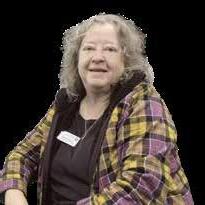
Thelma Brown, a UNH master gardener, volunteers for the Yard and Garden Infoline at UNH Extension’s Education Center in Goffstown. When people with home horticulture questions contact the Infoline — by telephone, web portal, or the occasional walk-in — the responses are generated by an analog computer located between two human ears.
“It’s fun and challenging. Sometimes people have multiple questions or want to delve deeper into what they’ve called about. Sometimes they want to tell stories,” says Brown, who can spend up to half an hour helping people get the information they’re looking for.
What people want to know
What will be the most common question this spring? It largely depends on the weather, says Brown. However, here are a couple that are sure to come up:
Q
We have a lot of dying and standing dead beech trees, some of which are leaning very dangerously, and we are concerned about safety. How should we deal with the dead trees?
Q I just recognized jumping worms in our garden (soil like coffee grounds, worms with the clitellum encircling the body). What do I do now?
AA Beech Leaf Disease (BLD) is a serious and emerging threat caused by the nematode Litylenchus crenatae that leads to defoliation and mortality. An injectable treatment of thiabendazole has been approved for treatment in New Hampshire. To assess the overall health and safe removal of your beech trees, we recommend reaching out to a NH certified arborist.
— There are currently no approved chemical methods for controlling jumping worms, which cause damage that hinders plant growth and increases soil erosion, but soapy water or diluted vinegar will kill them. Hand-picking worms is unlikely to eradicate them, but it can reduce the population.
Research shows that heating soil, mulch, or compost to a temperature of 104 degrees F or higher for three days kills all life stages of the worm. This can be achieved by placing the material between two layers of clear plastic and leaving it out in the sun.
While it may be challenging to eliminate jumping worms, you can play a part in preventing their spread. Do not share compost, topsoil, or plants with other gardeners if you have jumping worms.
Got questions?
Contact the Yard and Garden Infoline through their online form or give them a call.
Monday through Friday 9am–1pm
877-EXT-GROW (877-398-4769) extension.unh.edu/ask
Habitats Safer
UNH-led research is helping New Hampshire reduce wildlife-vehicle collisions by identifying hotspots and enhancing animal-friendly crossings statewide
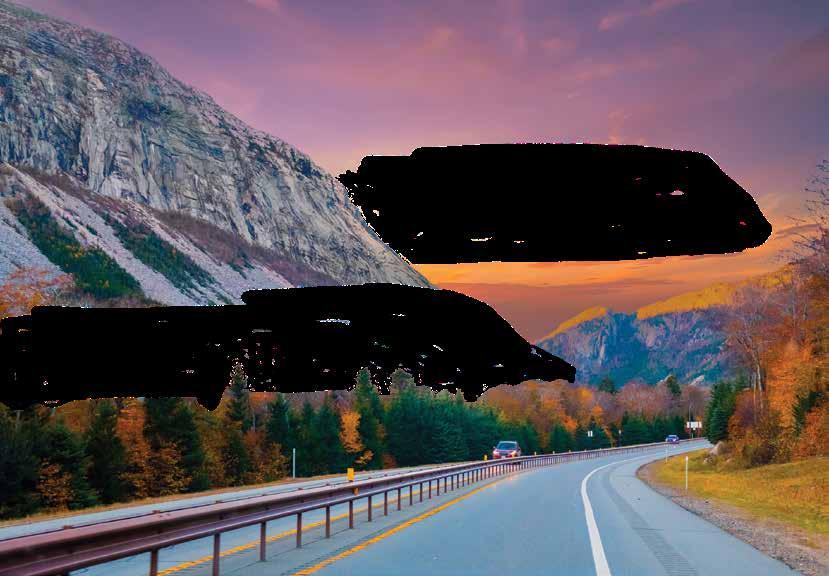
When the preferred routes of medium-sized and large animals intersect with roads, the results can be severe for both animals and drivers. Efforts to reduce the approximately 1,500 wildlife-vehicle collisions (WVCs) reported annually in New Hampshire have been limited by a lack of understanding of WVC hotspots — sections of road where WVC rates are particularly high. UNH research, funded by the NH Agricultural Experiment Station, shows that while knowing where WVC hotspots are is critical to tailoring better management practices, accounting for adjacent wildlife habitats and different animals’ interactions with roads is also key to lowering WVC risks.
“Reducing WVCs in New Hampshire is a two-part effort,” says Rem Moll, associate professor of natural resources and the environment. “We first need to identify the sites that present the biggest problems for drivers and wildlife. We then need to prioritize the most effective actions we can take despite limited resources, such as making existing structures like culverts and bridge underpasses more usable for animals.”
Research published in the journal Environmental Management focused on the role of connectivity — linkages that allow animals to move easily between habitats — in predicting WVC hotspot locations. Subsequent work monitored hotspots and assessed WVC mitigation strategies. Moll
and Clara Dawson ’25G led the work in collaboration with Amy Villamagna of Plymouth State University.
The role of connectivity in collisions
Fueled by New Hampshire’s recent rapid population growth, wildlife connectivity has been impacted by the development of roads and buildings that can fragment previously continuous habitat. The researchers combined collision data with measures of connectivity across the Granite State to assess hypotheses regarding how connectivity, traffic volume, and habitat contribute to WVC frequency.
The findings emphasized that generalized connectivity models and maps currently do not provide sufficient nuance for predicting WVC hotspots. In fact, the results indicate that, in New Hampshire, greater connectivity did not lead to more active WVC hotspots as other studies had suggested it would. Instead, the highest WVC rates were observed at hotspots in areas with moderate connectivity, for reasons that are still being investigated.
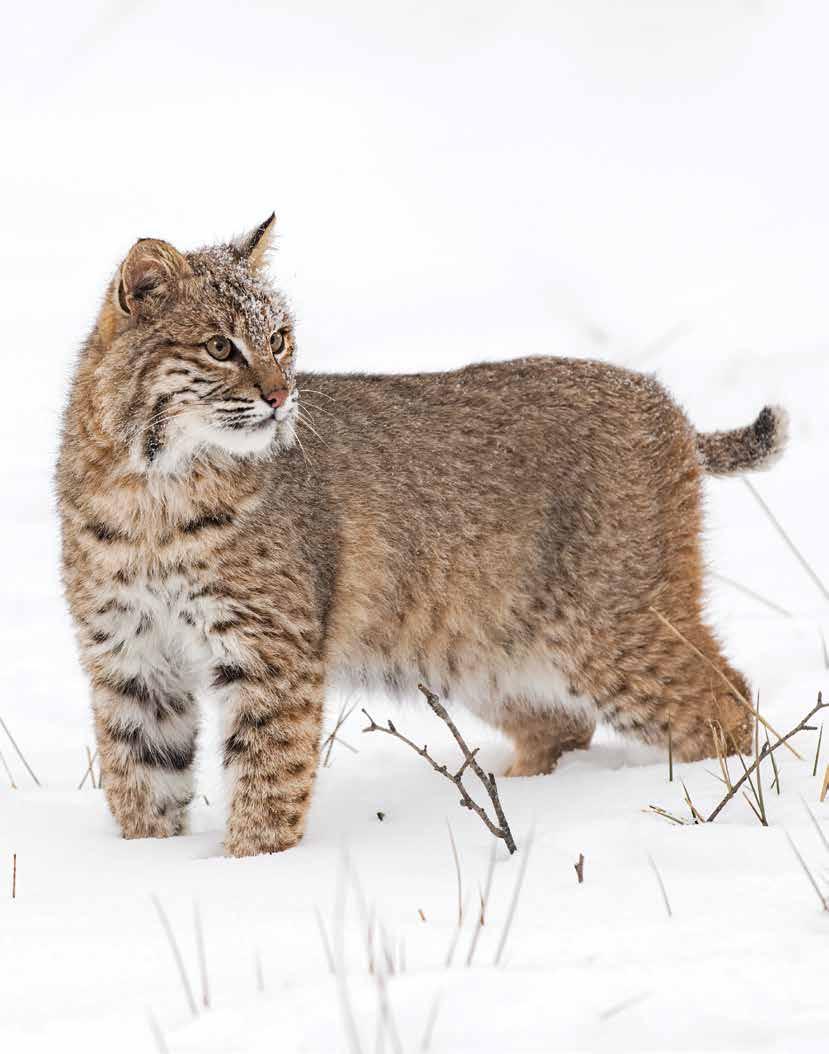
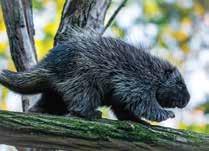
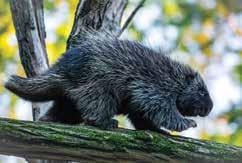
These differing results suggest that the ecosystem and habitat differences between rural and heavily fragmented landscapes play key roles in shaping hotspot occurrence and activity. Additional complexity can come from the number and diversity of animal species present within a landscape. For example, the movement behaviors of deer, bobcats, and porcupines differ, and these animals all seek different resources, so species-specific analyses are needed.
Monitoring hotspots and avoiding collisions
Once hotspots are identified in existing and planned infrastructure, what can be done to reduce WVC risks? Purpose-built wildlife corridors — bridges or underpasses constructed with surfaces resembling the surrounding countryside — are appealing, but their costs and land requirements make them unrealistic for New Hampshire. To understand cost-effective, landscape-appropriate strategies, Moll and his team have been investigating known hotspots to learn more about exactly why collisions happen at a high frequency at these specific locations. They also studied how adjacent culverts and small bridges can be modified and maintained as safe, wildlife-friendly crossing spots.
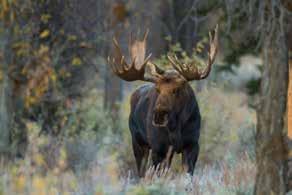
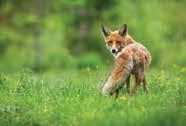
With support from the New Hampshire Department of Transportation, the researchers monitored 14 hotspots throughout the state, including the 125 corridor in Epping and Barrington, I-89 in Concord, and New Hampshire Route 110 near Berlin. Through two falls and one spring, they used wildlife cameras to capture deer, moose, gray and red fox, bobcat, coyote, black bear, raccoon, porcupine, and turkey movements. Prior research usually monitored only the crossing sites, such as at the bridges and culverts, but Moll and his team wanted a fuller picture of how wildlife interacts with roads.
“We developed a new approach that worked well, using cameras at the crossings themselves as well as at the roadsides and in adjacent habitats,” says Moll. “In some cases we didn’t record a species at the crossing but we saw a lot of them at the roadside, and they would have been missed entirely with a single camera. The situation indicates that the crossing needs to be more appealing to wildlife so they will use it.”
The early results indicate that there are several ways animals can be encouraged to use crossings that avoid putting themselves and vehicles in harm’s way. In culverts, a “critter shelf” can be added so that smaller animals are able to stay dry while passing through. Under bridges, streams can often be made shallower or the stream bed made more easily navigable by various animals.
“Low-cost, easily maintainable, and wildlife-friendly crossings are a win-win,” says Moll. “They provide more connectivity between habitats and more safety for animals, and they mean that fewer drivers will experience a potentially costly and dangerous collision.”
The New Hampshire Agricultural Experiment Station, which funded this research, has been an elemental component of New Hampshire's land-grant university heritage and mission since 1887. Our scientists manage more than 50 research projects at any one time, partner with state and regional farmers, growers, and producers, and collaborate with leading scientists worldwide to directly benefit New Hampshire and New England.
Mapping change
How UNH Changemakers are tackling deforestation and sustainability
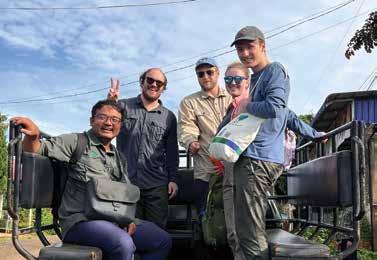
Last summer, thanks to a donor-funded International Changemaker Grant from the UNH Sustainability Institute, a three-student interdisciplinary team from COLSA and the College of Engineering and Physical Sciences traded the classroom for Cambodia’s Keo Seima Wildlife Sanctuary. Collaborating with the Wildlife Conservation Society (WCS), they used their education and satellite imagery and spatial analysis skills to map deforestation in this nationally protected area. Their work will help find lasting solutions for ecosystem degradation and declines in soil and water quality, biodiversity, and habitat — and will also have social and cultural consequences.
Contributing long-term value to communities is a key value of the grant program, and the team also led a workshop in Cambodia for NGOs, government agencies, and businesses to build technical capacity for conservation efforts among local leaders. As a bonus, students saw rare wildlife and learned about the centuries-deep connection the Bunong people have with Asian elephants.
Because of the program’s interdisciplinary focus, students outside of traditional sustainability fields often discover new ways to think about sustainability and their future careers — and the program’s impact will continue.
The team’s faculty adviser, Benjamin Fraser, plans to grow the collaboration with WCS and bring the work back to the classroom, utilizing UNH Sustainability Seed Grant funding to develop an openaccess tutorial on mapping deforestation trends that will benefit others worldwide and serve as a hands-on class exercise. Fraser also plans to join a WCS project recognizing Indigenous knowledge as vital to biodiversity management and environmental stewardship.
“I learned about the complexities of conservation work, requiring contributions from policymakers, computer scientists, environmental scientists, and more. I once thought the only career path for me was in software engineering, but this trip taught me that I can use my skill set for a career in environmental science, conservation, or sustainability. The experience fundamentally changed how I think about the world.”
Jaren Unzen ’26, computer science major
“The opportunity to take my research and what I learned in the classroom and apply it in real-world settings, working with partners outside the U.S., was invaluable. Engaging with locals and Indigenous communities offered critical insight into how different groups perceive, use, and relate to their landscapes and deepened my understanding of how environmental management must be informed by cultural, not just scientific, knowledge.”
— Hunter Moore ’25G, doctoral candidate, natural resources and Earth systems science
“Not only did this experience advance my remote sensing and geospatial science skills, but it taught me how to connect with experts across the world who strongly prioritize sustainable environmental practices.”
Maeve Kelley ’25, wildlife and conservation biology major
SUSTAINABILITY INSTITUTE
An enduring connection to UNH and the land
Glenn Coppelman ’76G reflects on the power of giving back and the importance of environmental stewardship
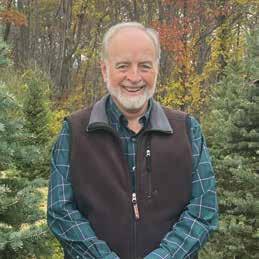
Glenn Coppelman ’76G has done his fair share of traveling during his career, but his heart and soul have never strayed far from UNH. One of the first students to graduate with a master’s degree in what was then a new interdisciplinary natural resources program, Coppelman is an active and proud member of the college community and has been a member of COLSA’s development board since 2023.
After being a regular donor who gave in “small ways” for many years, he began to think about doing more in 2019, after talking with thencolleague and fellow alum Pauline Ikawa ’77
“At a certain point, people start thinking about their legacy. Talking with Pauline made me realize I could make an impact now,” he says.
That was how the Glenn Coppelman Graduate Scholarship came to be established in 2021. The scholarship is for students who are New
Hampshire residents and studying in the department of natural resources and the environment.
“Any role I can play in helping to support the next generation of individuals who will be carrying on the work to address our environmental challenges is important,” Coppelman says.
The path to UNH
Raised in Framingham, Massachusetts, Coppelman earned his bachelor’s degree in Earth science from Framingham State University and graduated knowing he wanted to pursue an advanced degree in natural resources. UNH presented an irresistible opportunity: work with Richard Weyrick , then associate professor of forestry and environmental sciences, to establish a new master’s degree in resource administration and management within the natural resources program.
Aside from Professor Weyrick, whom Coppelman considered a mentor, two others at UNH were significant influences: Professor Paul Bruns and Lecturer Charlie Tucker. Both
men introduced him to ideas and knowledge that helped to shape his life.
“Paul opened a whole new world of technology to me,” Coppelman says of Bruns, a professor of forestry who is credited as a driving force behind the designation of the College Woods Natural Area. He was assessing land use patterns and changes in New Hampshire’s agriculture and forest lands over time, based on remotely sensed data such as satellite and high-altitude aerial imagery.
“Charlie offered a class in land use law, and it just fascinated me,” he says. “When I moved to Kingston, I was so interested in the issue of land use that I volunteered to serve on the planning board — and stayed involved for 38 years. Now I chair the select board in town.”
A foundation for a rewarding and interesting career
After completing the requirements for his degree in June 1976, Coppelman worked briefly as an
“Ever since I was a kid, I’ve been interested in the natural world. All of that is reflected in the programs at COLSA."
agricultural land use specialist for COLSA Dean Harold Keener. In this role he completed a full inventory of agricultural, forest, and related land uses in New Hampshire, a project funded by the NH Agricultural Experiment Station.
“When I finished my coursework and research, the degree still hadn’t been approved, so I didn’t graduate,” says Coppelman. “I stayed and worked for Dr. Keener. During that time the degree did get approved, and in December of ’76 I graduated.”
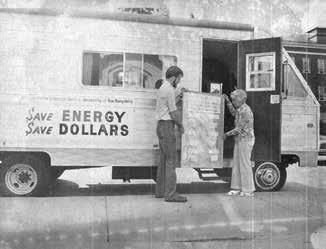
He then joined UNH Cooperative Extension as an energy agent. In the middle of an oil embargo that sent
energy prices in the U.S. soaring, Coppelman worked on a new program created to promote the virtues and rewards of conserving energy. After that program concluded he pivoted to the private sector, drawn by the emerging field of digital imaging technology. Over the next two decades he worked in marketing and business development for Optronics International, Eastman Kodak, and Intergraph Corporation.
“The private sector fulfilled me in many ways,” says Coppelman. “It was fascinating work, and it afforded me a lifestyle that I probably wouldn’t have had if I’d started in the public sector.”
In 1985 Coppelman started Evergreen Farm in Kingston, where he grows cut-your-own Christmas trees, to reconnect with his interest in natural resources. He describes the enterprise as “a rewarding labor of love that’s deeply rooted in my time at UNH.”
A return to his roots
Coppelman had an opportunity to return to public service in 2001, first with the New Hampshire Office of State Planning and then, two years later, with the New Hampshire Community Development Finance Authority. There he met fellow COLSA alumni Pauline Ikawa ’77, who eventually chaired the college’s development board. That relationship got Coppelman thinking more about ways he could support his alma mater and its students.
“Ever since I was a kid, I’ve been interested in the natural world,” he says. “All of that is reflected in the programs at COLSA. I live it day to day because the Christmas tree operation keeps me connected to the land, keeps me connected to agriculture, and keeps me connected to what COLSA is all about.”
To his fellow alumni, Coppelman has this advice: “Invest in higher education. The environmental and technological challenges we face today are greater, in many respects, than ever before. It has been incredibly gratifying to support COLSA’s work and mission — to provide knowledge and assistance that improves the quality of our collective lives and to produce graduates who are informed, active stewards of the planet. You might say that our very existence depends on it.”
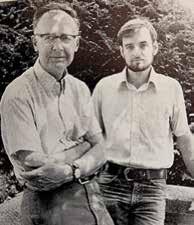
Glenn Coppelman, top right, and the late Paul Bruns, former UNH professor of forestry and chair of the forestry and wildlife management department, in 1975.
Bottom: Glenn Coppelman and former Cooperative Extension housing specialist Anne Nickerson with the Save Energy-Save Dollars mobile exhibit in 1977.
Feeding families, fueling good health
UNH researchers are working to uncover barriers to SNAP in the Granite State
The Supplemental Nutrition Assistance Program (SNAP) is known for its role in decreasing food insecurity and supporting healthy eating in the U.S. But participation rates in New Hampshire are among the lowest in the country.
Maria Carlota Dao is investigating why. An assistant professor of agriculture, nutrition, and food systems, Dao is leading the SNAP Enrollment and Enhancement of Nutrition (SEEN) study, funded by the New Hampshire Agricultural Experiment Station.
Q - W hat does the SEEN study entail?
A
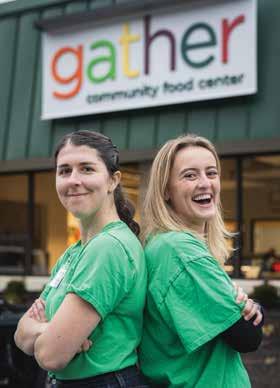
- At this time we’re collaborating with Gather, a food pantry in Portsmouth, to recruit participants. We’re collecting information about perceived obstacles that lower SNAP participation, and those who enroll in the study receive a health screen and report their dietary habits and food security status. In the second phase, next summer, we’ll roll out a SNAP-Ed evidence-based curriculum that we are currently adapting for people with a high risk of diabetes. The goal is to improve nutrition security and SNAP enrollment, and support community members at risk for type 2 diabetes in managing their blood sugar through diet and physical activity.
Q - Who is working with you on SEEN?
A - It’s a great team, with Gather, Extension, and other UNH nutrition faculty all contributing to the development and execution of the study. In my lab it’s being spearheaded by a couple of excellent graduate students, master’s student Whitney Fitzgerald ’26G and doctoral student Francesca Schembri.
Q - What are the major barriers to SNAP participation in New Hampshire?
A - A lot of factors contribute. People are generally aware of the program, but it’s complicated to apply for and stay in SNAP. There’s some stigma around it, people may qualify but not participate because they think others need it more, and so on. Our study is one step of the many needed to capture what the barriers are and how they can be overcome at a statewide level.
Q - About the stigma, do some people who qualify think they’ll be a drain on the economy if they participate?
A - That may be an issue. Participating in SNAP is good for the local economy and local agriculture, but that message doesn’t get through to many people. The USDA has reported that for every SNAP dollar spent, $1.50 is returned to the local economy. Also, food insecurity and chronic disease often coexist, so increasing nutrition security and access to chronic disease screening and wellness programs for people in the state can help reduce healthcare costs.
Francesca Schembri (left), doctoral student, and Whitney Fitzgerald ’26G , master's student, in front of Gather's food pantry in Portsmouth, New Hampshire.
Celebrating 25 years of EcoQuest: Aotearoa
A legacy of field-based learning and cultural exchange
When you think of the UNH College of Life Sciences and Agriculture, what comes to mind? Exploring nature in College Woods? Conducting experiments in Spaulding Hall?
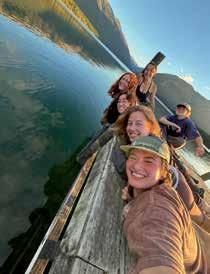
What about traveling nearly 9,000 miles to Aotearoa — the Māori name for New Zealand — to study conservation ecology alongside local experts?
Every year since 1999, students from UNH and other universities have gone to Aotearoa to participate in the Ecology in Action program. In partnership with UNH, the EcoQuest Centre for Indigeneity, Ecology and Creativity (formerly the EcoQuest Education
Centre) has welcomed more than 1,200 students for immersion in field research, ecology, and Māori culture.
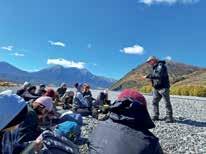
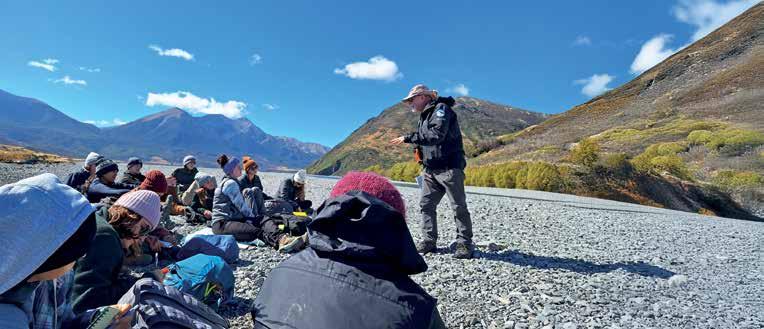
For 15 weeks, students live and learn together, creating a vibrant community. They are embedded in the small coastal settlement of Whakatīwai Kaiaua and steeped in the local culture, and they travel through many parts of the North and South Islands, experiencing ecosystems from the mountains to the sea. The curriculum is grounded in not just Western science but in the cultural context of Aotearoa, and students have opportunities to contribute to local conservation and resource management initiatives.
Donna Dowal, director of EcoQuest admissions, has been with the program since its inception. “It has been a privilege to work with such amazing students over the years,” she says.
“Students return from the program and go on to do impactful work. They inspire me to help the next students start their EcoQuest journey.”
The culminating weeks of the Ecology in Action program are spent working on directed research projects that contribute to real-world conservation initiatives. Recent projects include conducting acoustic surveys to locate the roosts of the critically threatened pekapeka (long-tailed bat), testing
fish-passage devices to help native freshwater fishes navigate modified waterways, and assessing the impacts of climate change on migratory shorebirds at the Pūkorokoro coastal wetland. This is education with muddy boots, rain gear, and a profound connection to the landscape.
“I love the fact that our students are involved in real-world conservation projects,” says Kimberly J. Babbitt ’84, COLSA’s associate dean of academic affairs, who has been the UNH academic program coordinator for EcoQuest for most of the program’s existence. “They are able to give back to the country that hosted them for the semester, and they leave knowing they have made a tangible difference.”
EcoQuest marked its 25th anniversary in December 2025 with a two-day celebration, starting with a pōwhiri (traditional Māori welcome) and a look back over the last quarter-century,
including the history of how the relationship between EcoQuest and COLSA started. Students led the group in several waiata — traditional Māori songs — and presented poster papers on their research projects.
The second day, led by Dr. Te Ahukaramū Charles Royal, EcoQuest director, looked forward at what’s to come. The day featured entertainment by Māori poets and traditional puppeteers and performances by members of Songwriters for Climate Change. The celebration closed with a conversation with Dame Anne Salmond, worldrenowned anthropologist and professor of Māori studies at the University of Auckland. Considered a national treasure in Aotearoa, she shared her journey into Te Ao Māori — meaning the Māori world — and what it offers for a unique pathway for sustainability in Aotearoa.
The appreciation the audience had for what EcoQuest has accomplished across 25 years was palpable, as was the deep appreciation that EcoQuest has for the partnership with UNH and COLSA.
Christopher Meaney ’00
After Christopher Meaney ’00 received his bachelor’s degree in environmental conservation and sustainability from UNH, he earned his Master of Environmental Management degree from Yale University. He is now a project leader with the Gulf of Maine Coastal Program.
What stands out most about your EcoQuest experience?
I was fortunate to learn early the importance of getting out into communities and the benefit of meeting people where they are. Doing so taught me to listen, learn, and think critically
about our natural resource challenges. To be welcomed into the Māori family (whanau) was incredibly special. Being part of their interconnectedness with the natural world influences my spirituality and approach to stewardship to this day.
How did the program shape your perspective on sustainability and global environmental challenges?
We had the rare opportunity to compare and reflect on our approaches in the United States to those of New Zealand. It profoundly influenced my approach to problem orientation and solution
development. Ultimately, what became clear is that people are an intrinsic part of our ecosystems, and including people with different backgrounds and experiences is how we best address our environmental challenges.
What would you say to a student who’s considering EcoQuest but isn’t sure if it’s the right fit?
I’d share that I had similar thoughts, and that EcoQuest ended up being one of the most impactful experiences of my lifetime.
ALUMNI SPOTLIGHT
UNH researchers uncover a gut-level clue to opioid addiction risk
Butyrate-producing microbes may help maintain opioid pain relief and reduce the risk of tolerance
Despite their wide use and effectiveness, opioid pain medications carry a risk of addiction. Cheryl Whistler, professor of molecular, cellular, and biomedical sciences, is investigating why opioid response and addiction susceptibility differs between individuals and whether microbes in our guts play a role. She believes the answer could help in developing healthcare strategies to reduce opioid addiction risks.
Whistler is working with a research team that includes Izabella Sall ’25G , who earned her doctorate at UNH in molecular, evolutionary, and systems biology. Their most recent findings, published in the journal Gut Microbes, suggest a possible strategy to help prevent the development of opioid tolerance — a condition that can lay the foundation for addiction.
“Patients who need pain relief often find that a prescribed opiate no longer works as well over time, and more is
needed to have the same effectiveness,” says Whistler. “We demonstrate that administering butyrate, a simple intervention that can be added to the diet, could prevent analgesic tolerance to opioids, which is an early step to opioid addiction.”
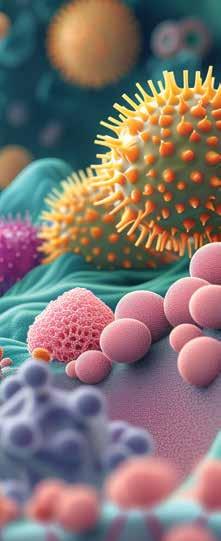
Whistler and her team are focusing on gut microbiota, an important player in a wide range of functions. It is well recognized that opioids disrupt gut microbe balance. Prior research has suggested that the disruption may contribute to increased tolerance to opioids, lessening their painkilling effectiveness. Working with mice, Whistler and her team delved deeper, fully characterizing their gut microbe populations prior to morphine ingestion and how morphine affected them over time.
In cases in which the drug’s effectiveness waned, the researchers observed that microbiota instability developed more quickly, and the population of beneficial
“Our findings provide evidence that gut microbiota have important effects on opioid response and the development of tolerance.”
microbes were depleted earlier. But what most distinguished the mice that did not develop morphine tolerance was the retention of microbes associated with the production of butyrate, a short-chain fatty acid.
Butyrate has several beneficial functions, serving as an anti-inflammatory and enhancing intestinal barrier integrity. The researchers also found that dietary butyrate supplementation blocked opioid tolerance when compared with a control supplement.
“Our findings provide evidence that gut microbiota have important effects on opioid response and the development of tolerance,” says Whistler. “More research is needed to further explore the mechanisms involved, but butyrate, whether produced by microbes or added to the diet, may provide protection from opioid tolerance. If so, clinicians can apply these findings to use opioids more effectively for pain management, with lower associated risks.”
THRIVE MAGAZINE - SPRING 2026
DEAN
Anthony S. Davis
EDITOR-IN-CHIEF
Sarah Schaier
EDITORIAL ADVISORY COMMITTEE
Anton Bekkerman
Jesse Stabile Morrell ’99, ’04G, ’13G
Beth Potier
CONTRIBUTORS
Adam Drapcho ’05
Derek Edry
Cathy Meyer
Sarah Schaier
Mark Wanner
DESIGNER
Sandra Hickey ’04
PHOTOGRAPHERS
Adam Drapcho ’05
Jeremy Gasowski
Stephanie Steele ’22
ADOBE STOCK CREATORS
Artem
Chor muang
CK
Claudio Divizia
Daniel
David
David Jeffrey Ringer
Deemerwha
Elena
Emiliia
FourLeafLover
geoffkuchera
John
marylia17
Northern Owl
Olena
Parbat
Rosen Graphic
Shine.graphics
SkyLine
WildMedia
YandiDesigns
THRIVE is published by the UNH College of Life Sciences and Agriculture. Our goal is to inspire and inform our alumni, friends, faculty, staff, and partners by sharing college news and celebrating faculty, alumni and student achievements as we work to continuously strengthen our commitment to research, teaching, and public service. We appreciate the generosity of alumni and friends who have funded this publication.
Sign up for a free subscription at: colsa.unh.edu/thrive-subscription
Questions?
Contact:
Sarah Schaier
Director of Community Engagement colsa.thrive@unh.edu
College of Life Sciences and Agriculture
46 College Road
Durham, NH 03824
The Forestry Field Activity Center at
the Thompson School
In New Hampshire, where nearly 80 percent of the landscape is forested, trees shape far more than the scenery. They sustain more than 16,000 jobs, support local businesses, and contribute billions of dollars to the state’s economy through forest products and outdoor recreation. Forests are also woven into the identity of the Granite State; they are places where people work, learn, and find connection to the land.
Yet for many, the practice of forestry remains something of a mystery. While countless residents and visitors enjoy our woodlands year-round, far fewer understand the thoughtful, long-term management that keeps forests healthy, productive, and resilient.
The new Forestry Field Activity Center at the Thompson School (Forestry FACTS) aims to deepen that understanding.
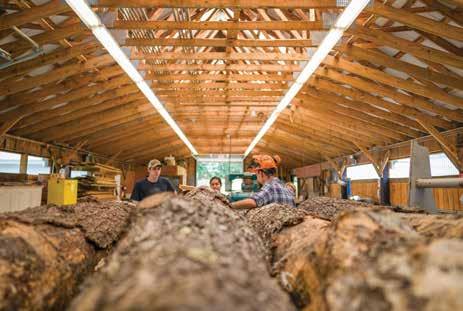
Located at the UNH Sawmill, Forestry FACTS will build on the university’s long history of hands-on training and applied research and recognize the important role of UNH’s Thompson School of Applied Science in preparing New Hampshire’s forest workforce. By pairing state-of-the-art facilities with faculty and Extension educator expertise, the center will offer meaningful, career-focused programming for a wide range of learners.
When complete, the center will include — among other resources — a maple sugaring facility, a Christmas tree management demonstration area, a newly updated forest products
production facility, areas highlighting best practices in sustainable forest management, and career and technical education programs connected to New Hampshire’s forestry and forest products workforce. Together, these spaces will form a place-based learning environment where business owners, employees, industry partners, and lifelong learners can connect and immerse themselves in the many dimensions of forest management in New Hampshire.