SRUC offers a choice of campus locations. You can read more about each location by visiting our website www.sruc.ac.uk/campuses and you can find virtual tours of each location on our Virtual Student Experience site www.sruc.ac.uk/experience
1. Inverness Rural and Veterinary Innovation Centre (RAVIC)
2. Aberdeen Craibstone
3. Elmwood Cupar, Fife 4. Edinburgh The King’s Buildings 5. Oatridge West Lothian
6. Barony Dumfries & Galloway
Whether you’re leaving school, switching careers or pursuing a lifelong passion, our courses provide you with the knowledge, skills and confidence to take the next step in life.
We have welcomed beauty therapists who have moved into agriculture, accountants who have swapped spreadsheets for studying the environment – even former police officers who have picked up a pair of secateurs and entered the world of horticulture.
When you decide to study at SRUC, you are not only choosing to study at a unique institution which can trace its history back over 100 years, but one at the forefront of tackling some of the world’s biggest challenges.
Our role is to equip our students to address these challenges, and to give you the opportunity to make a real difference.
Through our schools of Natural and Social Sciences and Veterinary Medicine and Biosciences, we offer a distinctive, practiceled education grounded in world-class research and delivered across Scotland’s diverse rural and urban settings.
In a rapidly changing world, innovation is at the heart of everything we do.
Our students benefit from close links with industry, access to specialist facilities and an award-winning education programme that embeds sustainability, enterprise, equality and diversity into everything we teach.
Our forward-looking courses include everything from an NC in Racehorse Care, giving you the skills you need to work in the thoroughbred racehorse industry, to an NC in Horticulture focusing on Garden Design, which is designed by subject specialists to offer a unique focus on the art and science of creating sustainable and aesthetically pleasing outdoor spaces.
Once you’ve finished your course, you may want to enter – or re-enter – the world of work, or there are multiple pathways for further study.
So, whether it’s via distance learning or at one of our beautiful campuses in Aberdeen, Dumfries & Galloway, Edinburgh, Fife or West Lothian, you will be joining a community that is collaborative, supportive and outward looking, and you will make friendships to last a lifetime.
Professor Wayne Powell BSc, MSc, PhD, DSc, FLSW, FRSE Principal and Chief Executive
The SRUC School of Natural and Social Sciences brings together experts from a wide range of subjects to help tackle some of the biggest challenges facing society today.
Covering expertise across a range of areas, such as landbased engineering, countryside management, agricultural, rural and horticultural management, we take a joined-up approach to solving real-world challenges.
Whether it’s growing food more sustainably, responding to climate change, protecting biodiversity, or rethinking how communities live and work, our courses and research equip students to understand and solve complex problems. By looking at these issues you can help to find practical, joined-up solutions that work for both people and the planet — in Scotland and around the world.
Our work supports policy change in Scotland, strengthens communities across the globe, and connects students directly with innovations happening on the ground. From AI and vertical farming to practical innovative and entrepreneurial thinking towards farming, horticulture and
the environment, our students don’t just study change –they learn how to lead it.
At SRUC, you’ll benefit from hands-on learning, access to world-leading research, and strong links with real businesses through our national Consulting network. You’ll learn from academics and professionals at the forefront of change, gaining practical skills and systems thinking that are increasingly sought after across sectors.
Through groundbreaking courses, we harness the power of innovation, and our pioneering research doesn’t stay locked within the walls of academia. It drives change across continents – from the plains of Sub-Saharan Africa to the food on your plate.
With curiosity, purpose, and passion, the School of Natural and Social Sciences prepares you to turn global challenges into meaningful career opportunities.
Whether
working with machinery, livestock, plants or trees, you’ll find your campus fully equipped for the practical elements of your course.
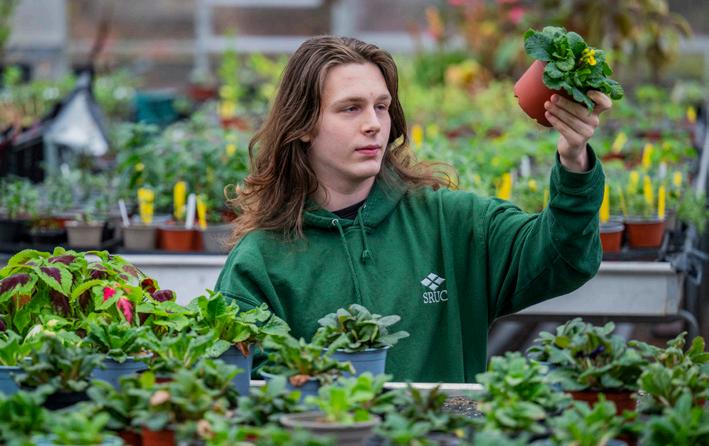
Horticulture students can take advantage of our glasshouses, polytunnels, potting sheds, landscaping workshop, orchard and allotments, while our engineering workshops and forge will give you vital, hands-on skills to take into the workplace.
We also have an array of high-tech simulators to get you used to operating complex machinery.
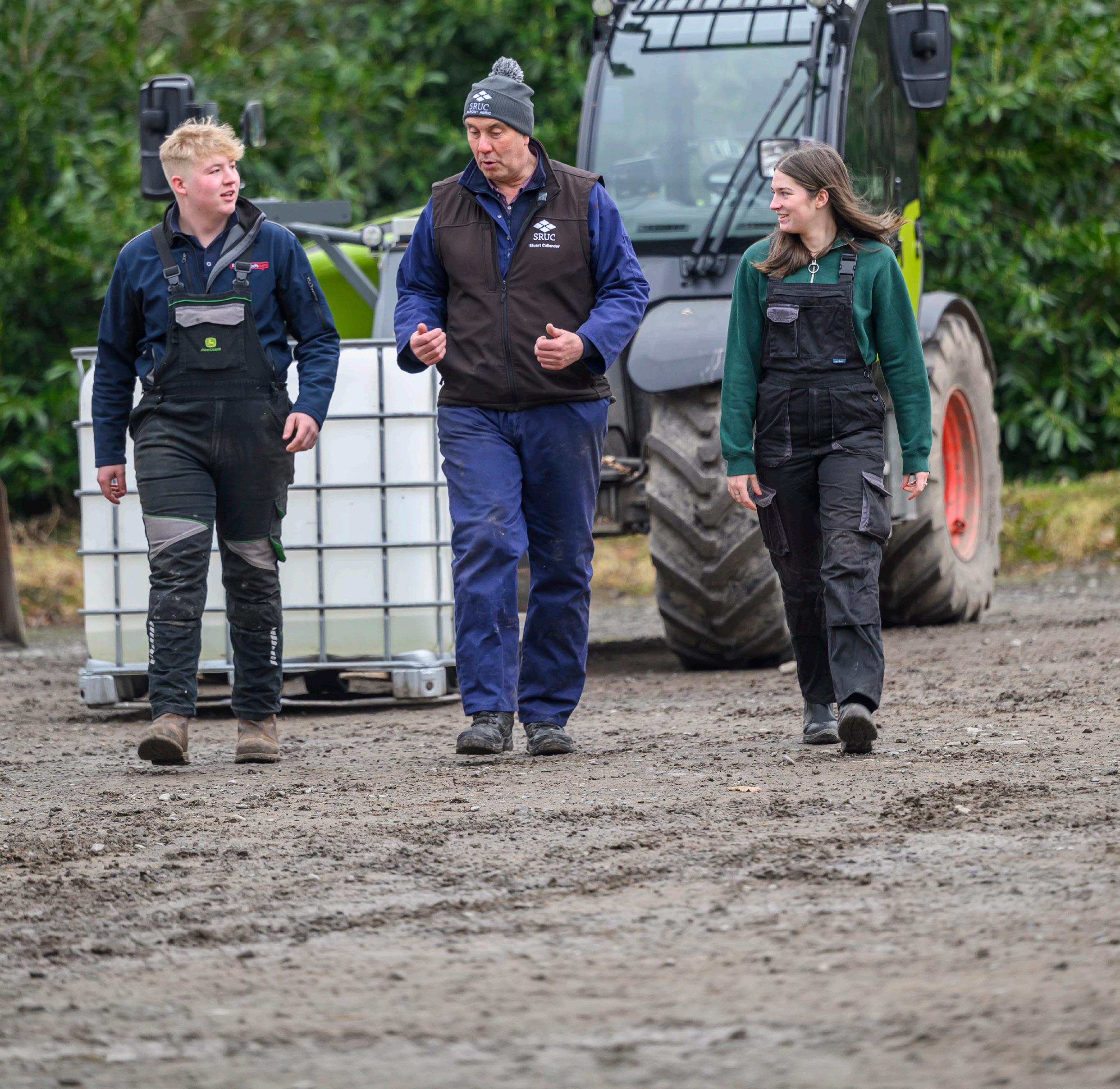
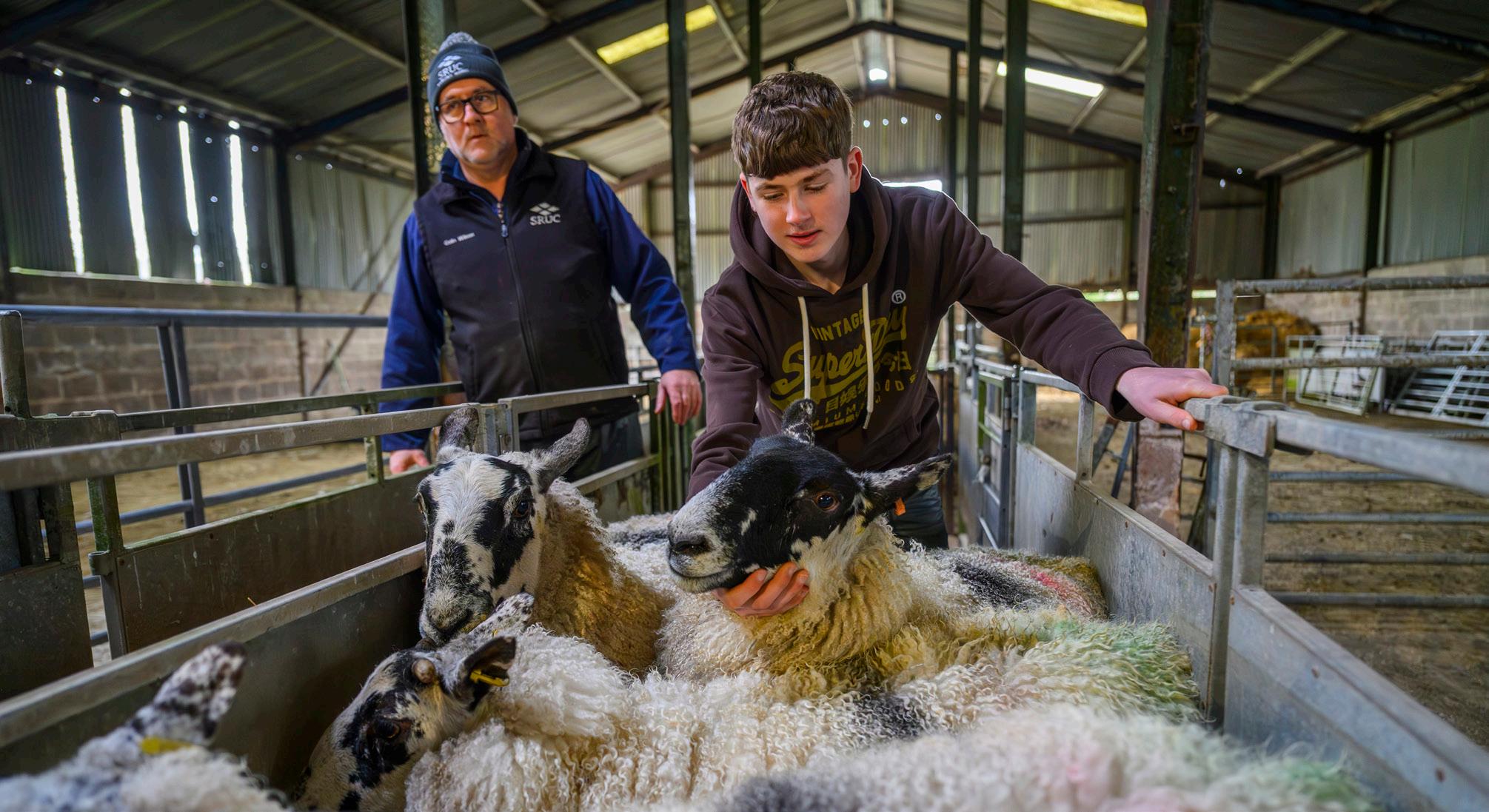
Our farms, meanwhile, cover over 4000 hectares across Scotland, with everything from mountain-top sheep enterprises to intensive grassland, beef, dairy and pigs, and you can hone your on-farm skills at Oatridge, Aberdeen and Barony.
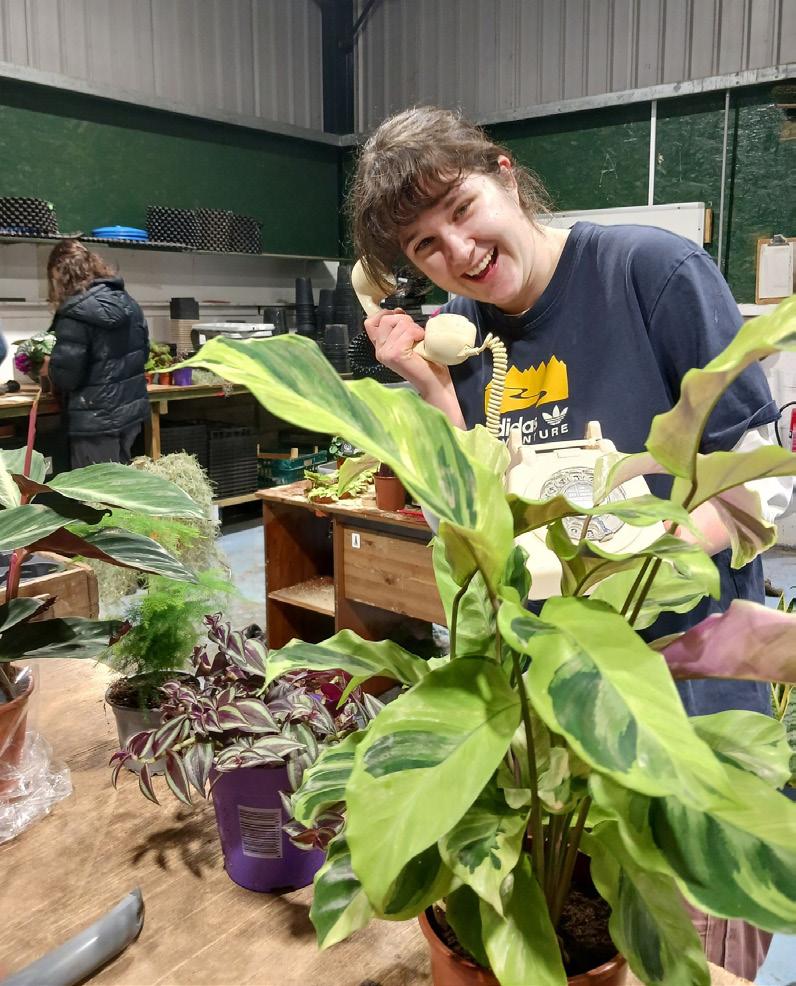
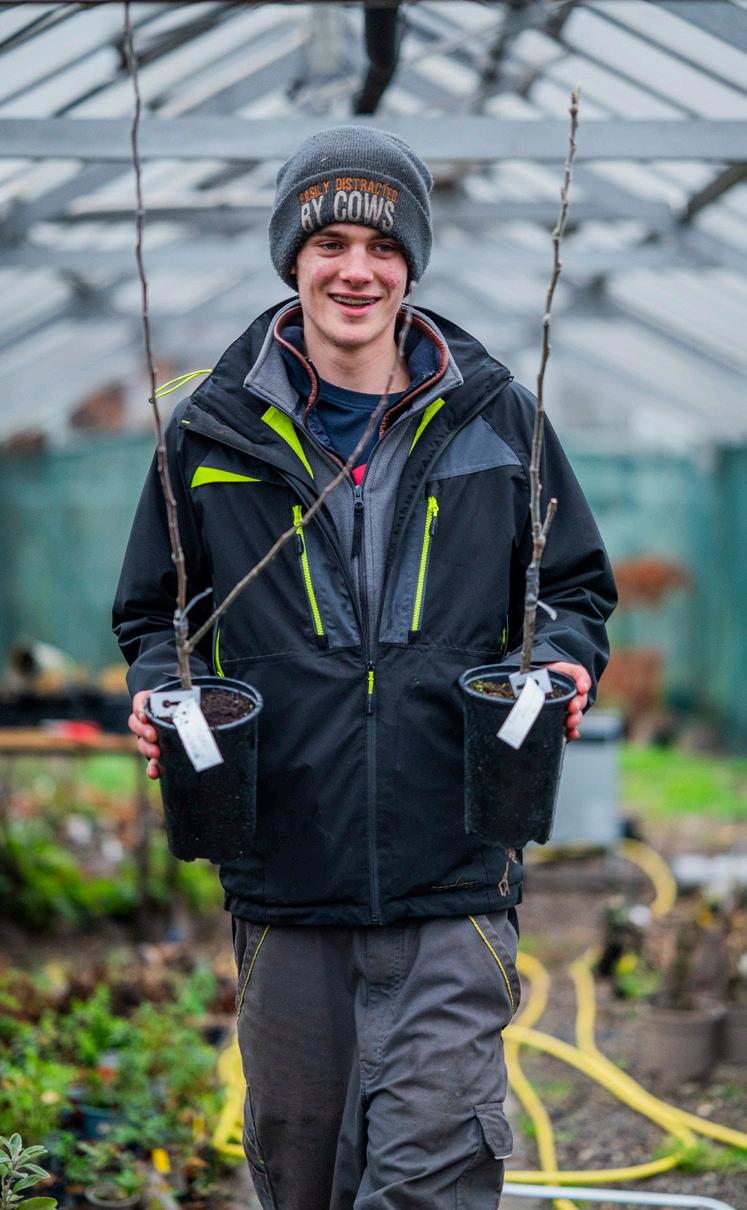
Our Horticulture students benefit from excellent facilities at our Edinburgh, Elmwood and Oatridge campuses, including glasshouses, polytunnels and outdoor plots.
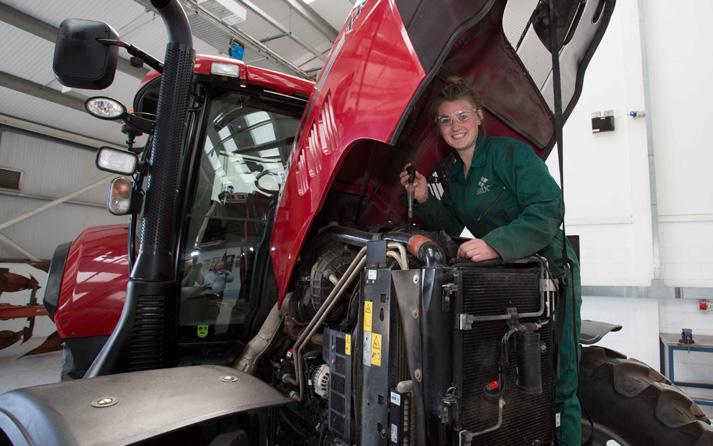
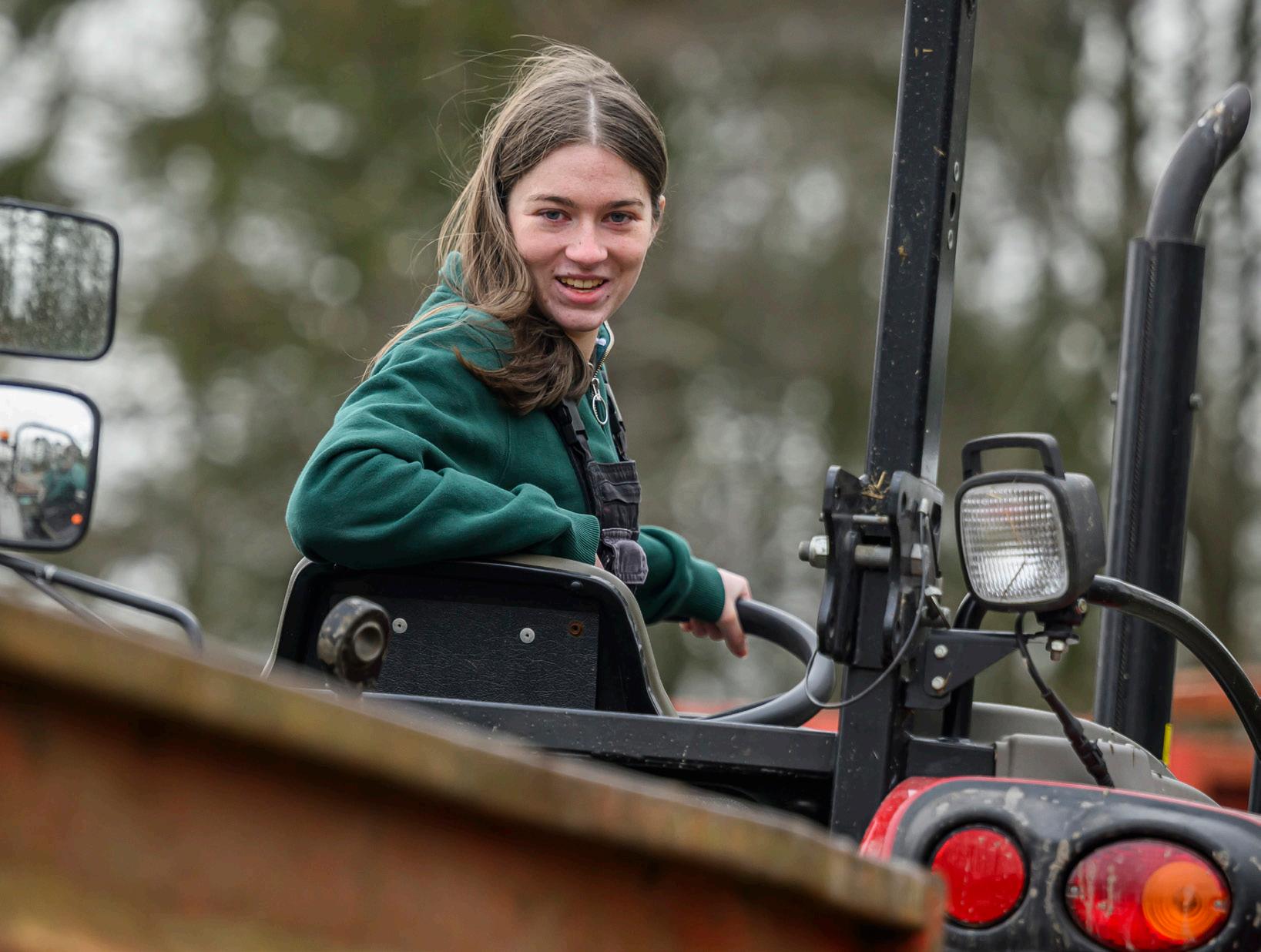
Whether you’re studying Land-Based Engineering or Land-Based Engineering (Agriculture), you’ll find fully kitted-out workshops at our Barony and Oatridge campuses. Here, you’ll get to grips with the practical elements of your course, making sure you have the know-how to fix the machines that keep the rural economy moving.
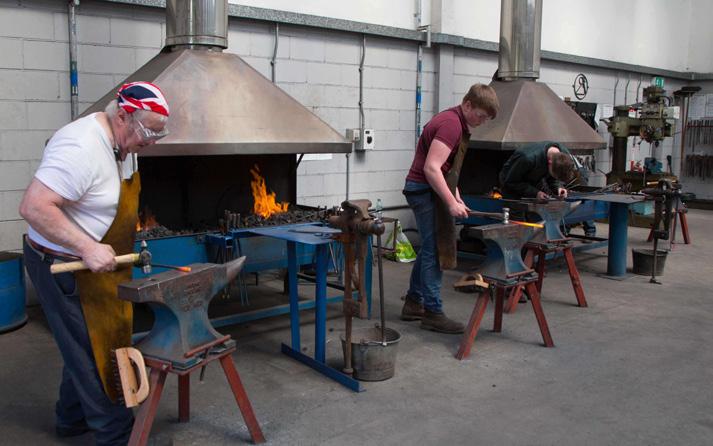
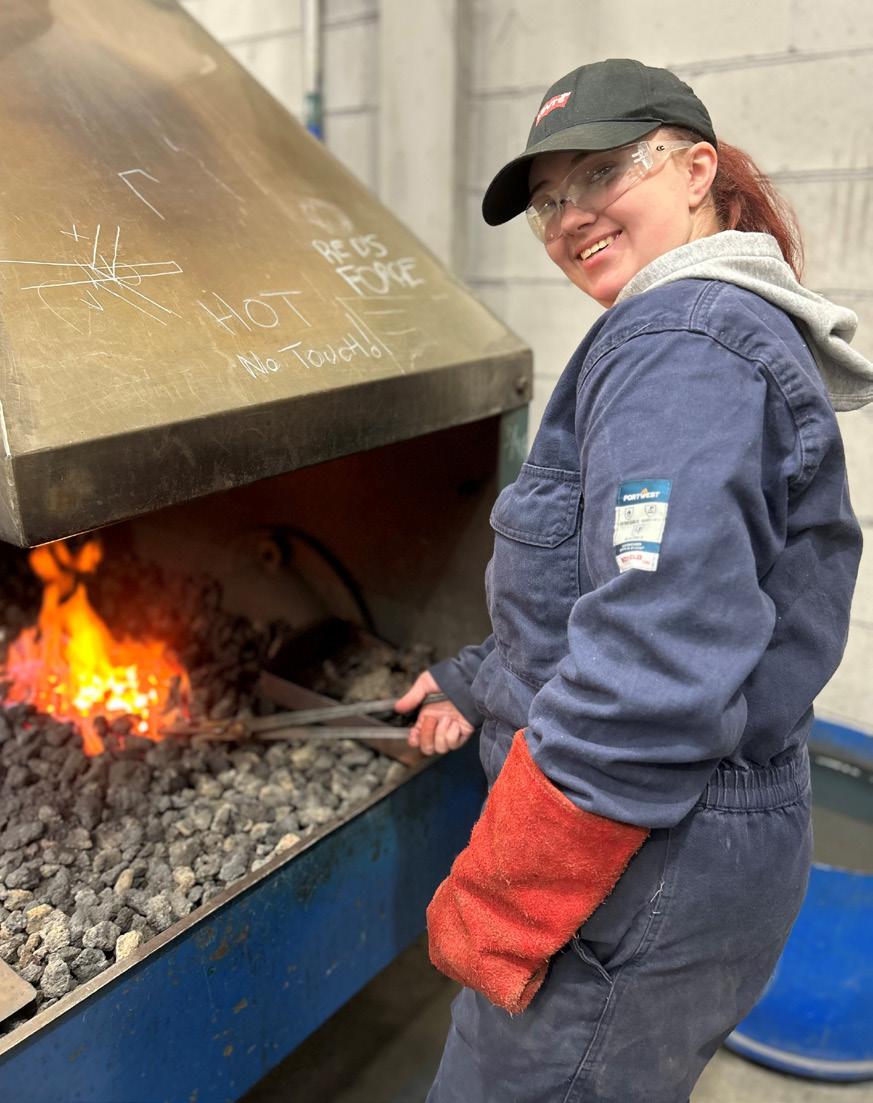
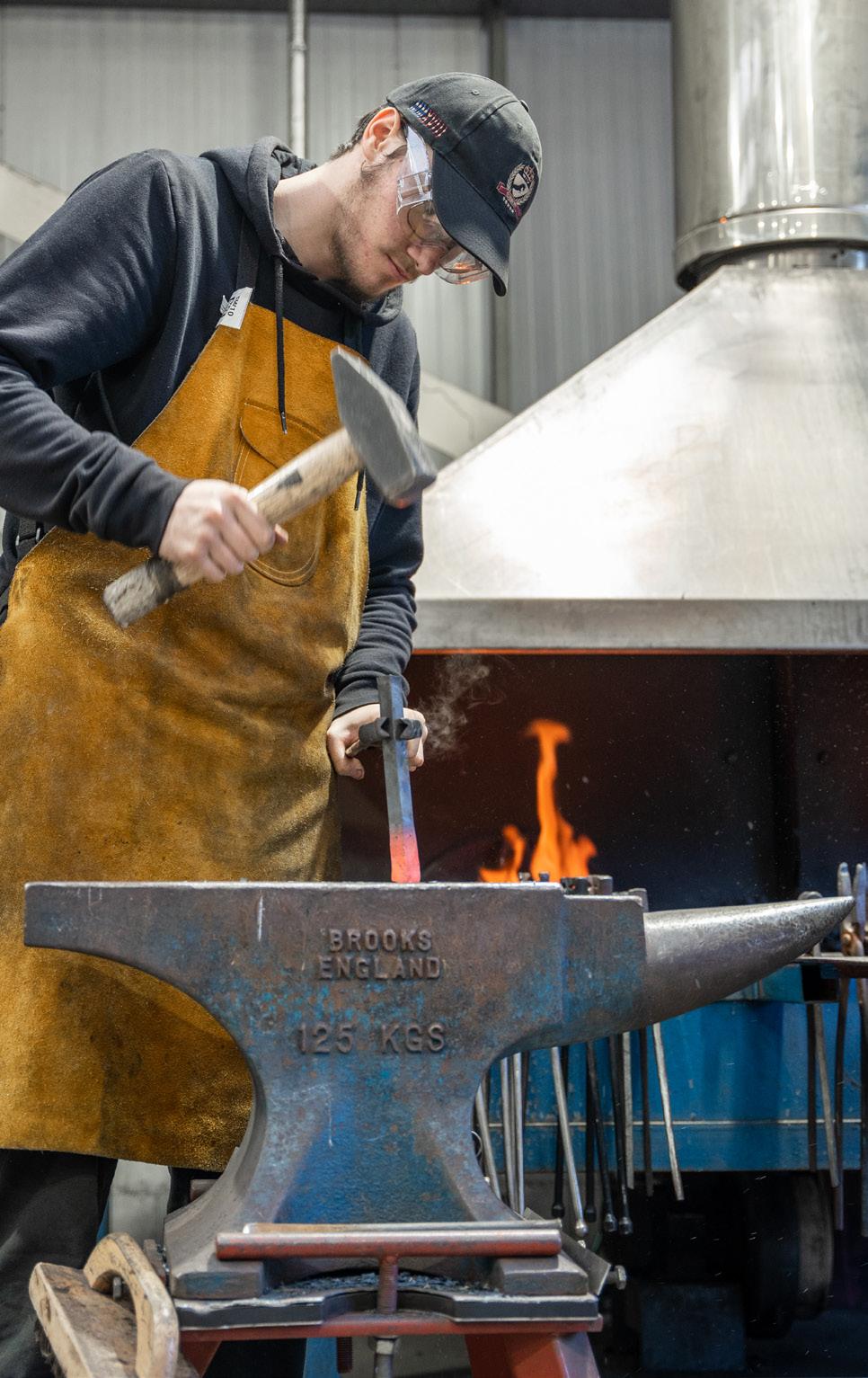
Oatridge is home to a forge workshop with four side-blast forge hearths, two propane gas furnaces and 11 125kg anvils with a wide array of cutting and joining equipment available with blacksmithing and metalwork in mind.
FACILITIES
Agriculture
SRUC has been educating and helping the agricultural industry for over 125 years, and our courses continue to be dynamic and allied to the needs of the industry.
In today’s agricultural environment it is more vital than ever that tomorrow’s farmers and their staff have the training to face the future as both food producers and guardians of the countryside.
That's why this course aims to increase your knowledge of agriculture, and give you sound practical skills and up-to-date technical experience.
Student Spotlight
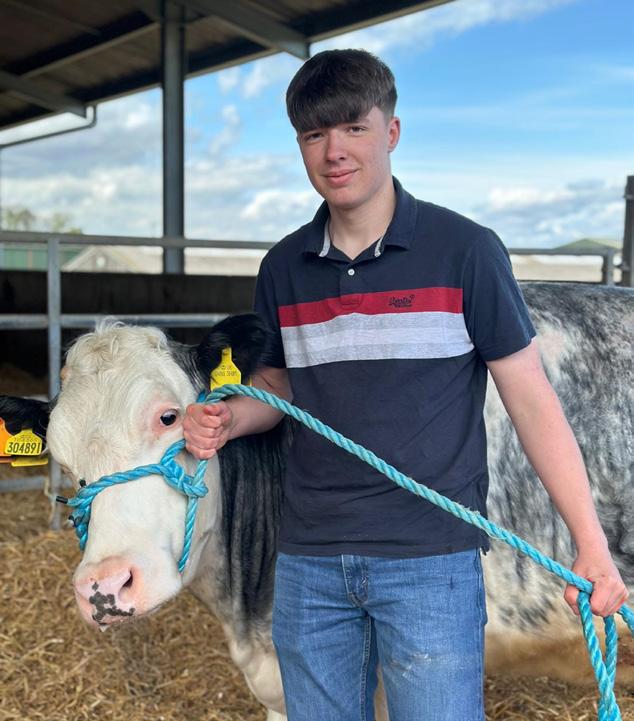
Finlay Scott NC Agriculture
I chose to study NC Agriculture because I wanted to learn the theory side of agriculture while also being able to gain practical experience. I chose to study at SRUC because my dad studied here when he was younger and created a great career for himself. I think he was able to because of his experience at SRUC. I lost my dad during my studies, which has been hard as we were very close, but I know he would be proud of what I’ve achieved.
You'll develop both independent learning skills and team-working skills which will provide a strong foundation for future study and/or employment in the industry.
Successful completion of this course results in the award of an SCQF Level 6 qualification.
Careers
SRUC is well connected in the agricultural industry, providing plenty of employment opportunities for students upon completion of their studies. Our associated Consulting services also means that students don’t have to look far for possible employment. The ability to tailor your course to your areas of interest, as well as the practical industry knowledge gained through study visits, equips you for a variety of jobs in agriculture and related industries.
Many of our students who come from a farming background choose to go back to their family farms and help diversify the business after completing their qualification. Other areas students have gone on to include:
• Agronomy
• Animal Nutrition
• Agri-business
• Auctioneer
• Farm Manager
• Agricultural Consultant
• Poultry Production
I’ve made friends for life on this course and that’s been one of my main highlights during my time at SRUC. Life on campus is always a good laugh and there’s always something to talk about, so I’d always advise any new students to be sociable.
After I’ve completed my NC I hope to do my HNC and HND and eventually complete a degree in poultry sciences.
Entry requirements
Applicants are expected to have a minimum of Core Skills at SCQF level 4 and preferably two National 5s.
Practical agricultural experience will be considered favourably.
For a full list of entry requirements see centre pages.
Countryside Management
Conservation is the protection and care of Earth’s resources: air, minerals, plants, soil, water and wildlife, preserving them for future generations.
This course is designed for anyone interested in a career in any aspect of countryside services, like estate maintenance, environmental projects or wildlife conservation, or for communitybased or voluntary countryside and environmental projects.
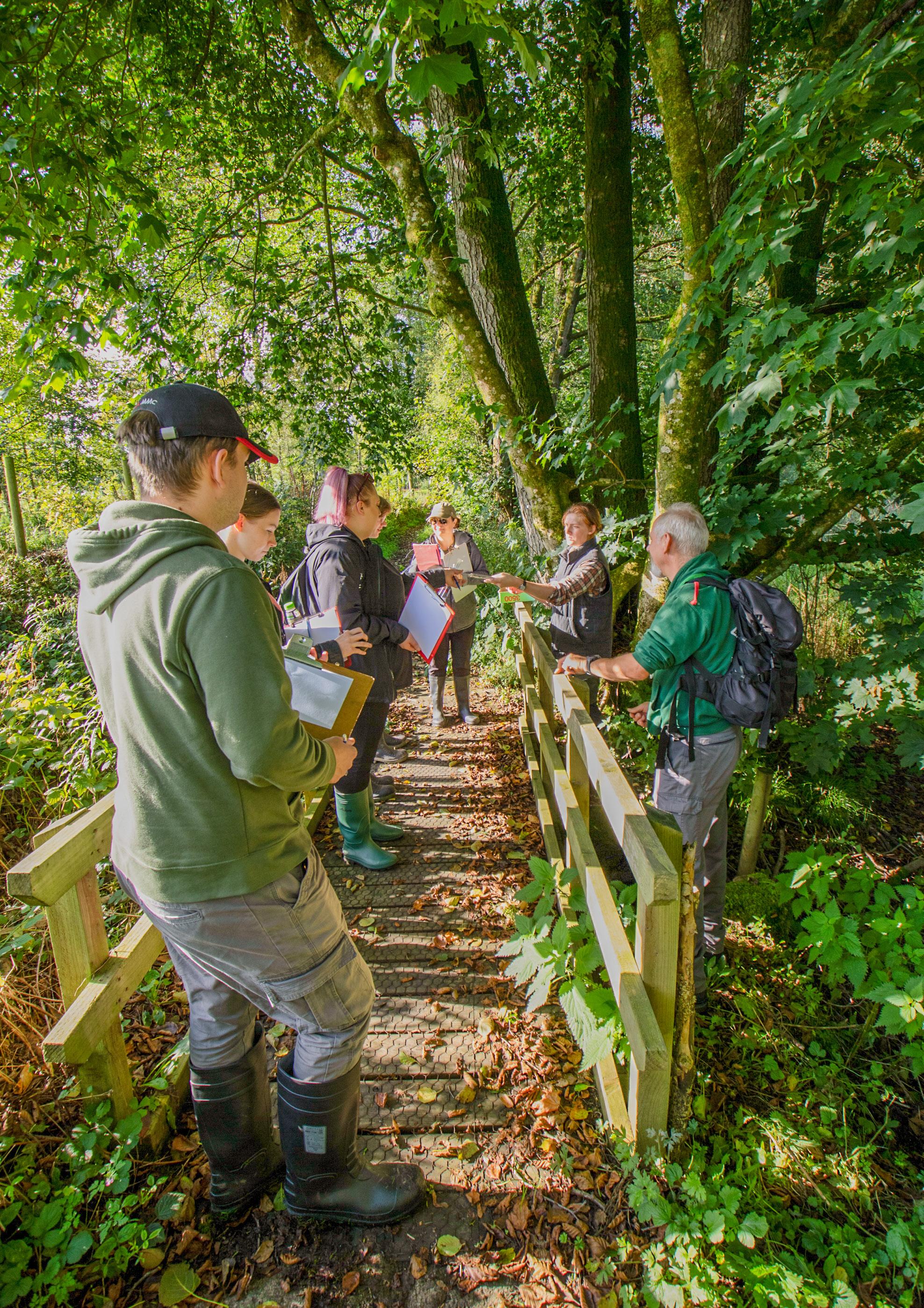
You'll learn about conservation management and sustainability, ecology and wildlife identification, habitat protection and access to the countryside.
Our industry partners:
Student Spotlight
Zac Hirst
Previously, students have had the opportunity to undertake a study tour, including visits to Kenya, Kruger National Park in South Africa and Costa Rica. Other study trips in Scotland have included Aviemore and the Balmoral Estate in Aberdeenshire.
All study trips are subject to the availability of funding. Where necessary, student contributions will be required. The delivery of any trip cannot be guaranteed.
NC Countryside Management
I love the outdoors, everything from hill walking to camping, fishing, wildlife watching and water sports. I wanted to do something that meant I could keep these places healthy and wild so that future generations could enjoy the things I was lucky enough to.
As soon as I started exploring the courses and culture at SRUC, I fell in love with the idea of studying here. Lecturers are kind, helpful and always looking out for you and I am yet to have a negative experience. There are plenty of resources and I’ve always felt welcome, supported and encouraged to do my best, to be myself and, most importantly, to care about nature the way it deserves to be cared for.
For a full list of entry requirements see centre pages.
Careers
Graduates from our courses have gained employment with a wide range of organisations such as National Park Ranger Services, Forestry and Land Scotland, Scottish Woodlands, NatureScot, Community Development projects, planning departments, RSPB, Scottish Wildlife Trust (SWT) and the National Trust for Scotland (NTS). They have been employed in posts such as:
• Countryside Ranger / Trainee Ranger
• Countryside Worker / Officer (Entry level)
• Assistant Reserve Warden
• Conservation Trainee
• Outdoor Activities Assistant Leader
• Environmental Educationalist
• Footpath Worker
• Estate Assistant
• Visitor Services Assistant
Such expertise is needed in both the private and public sector.
Land-based Engineering
Land-based engineering is a career for anyone with an interest in machines and how they work, a desire to learn practical skills and a fascination with new technology.
Today’s engineer must be self-motivated and highly trained to meet the demands of working with modern tractors, machines and equipment and must have strong analytical skills and an innovative approach to problem solving. Highly skilled people are needed to design, develop, operate and maintain the land-based technology and tools of the future. Our engineering workshops, which include welding and fabrication
areas, provide you with an optimum learning environment for practical work.
We have close working relationships with a range of machinery manufacturers, giving you access to modern equipment. We have a wide variety of machinery onsite on which you can hone your skills and increase your technical knowledge for fault-finding, diagnostics, repair and maintenance.
Applicants are normally expected to have a minimum of two National 4s including English and Maths, and two National 5s in any subject.
For a full list of entry requirements see centre pages.
Student Spotlight Ramsey Dalglish
C&G Extended Diploma
Land-based Technology (CNH Apprenticeship) Year 3
I wanted to become a qualified engineer so that I could work in my family’s business, maintaining and selling tractors. Case IH, the tractor company my family works with, have a partnership with SRUC and they wanted me to come here because of the college's reputation.
It’s a very hands-on course and, if you put in the effort, it really helps you develop. If you’re determined to get a career you like, don’t let anything stop you.
Careers
There are numerous career opportunities for people with landbased engineering qualifications. Some technicians may specialise in a certain field, which could be ground care, tractors, combine or forest harvesting. A technician would be employed by a manufacturer and main dealers or could be independent and self-employed. An experienced technician can work towards:
• Diagnostic Technician
• Master Technician
• Workshop Manager
• Service Manager
• Demonstration Driver
• Sales Role
• Parts Demonstrators
• Contractor
Student Spotlight
Derighan Mackie
City and Guilds Level 2 Forgework
Forgework
The Certificate in Forgework course teaches the technical skills required to lead on to becoming a competent blacksmith or farrier.
Our Oatridge Campus has a large, airy forge workshop with four side-blast forge hearths, two propane gas furnaces and an IS Forge Induction Forge along with 11 125kg anvils. We also have a wide array of cutting and joining equipment available specifically with blacksmithing and metalwork in mind.
A blacksmith or farrier is a metalsmith who works predominantly
I decided to take the course because I’ve always enjoyed metalwork at school, and I wanted to follow in my grandfather’s footstepshe was a blacksmith for over 50 years.
Transitioning from high school to college has been a completely different atmosphere. Being in a more mature environment has felt like a breath of fresh air. The lecturer always has time to help, and I’ve met some really interesting people here too.
Careers
Once I complete the Forgework course, I’m hoping to go into a career in mechanics or blacksmithing.
If you’re thinking about doing this course, I’d say build up the muscles in your armsespecially your forearmsand bring insoles for your boots. But also go in with an open mind and stick with it. It can be tough and challenging at times, but it does get easier as you go, and it really is a great course with a very patient lecturer who’s always willing to help.
Employment for people who have studied in this area can be in:
• Blacksmithing
• Metal Fabrication
• Welding Trades
with mild steel. Good hand-eye co-ordination is necessary to master the hammer, anvil and fire to create precision pieces that are up to industry standards. Blacksmiths and farriers frequently progress to further education, work with other smiths, gain apprenticeships and often go on to trade in their own right.
Course Entry Requirements
Forgework Certificate (SCQF 5) Oatridge
Minimum three National 4s, including English and Maths.
For a full list of entry requirements see centre pages.
• Sculpture
• Fine Art & Craft
• Farriery
Forestry & Arboriculture
Forestry involves sustainably managing trees and woodlands in rural areas for commercial, social and a range of other benefits. Arboriculture is the management and work in caring for individual trees or groups of trees in more urban areas.
Forests and woodland in Scotland cover around 19% of our total land mass, but that figure is going to increase markedly over the next few years. The Scottish Government is aiming to increase forest cover as trees have an important role to play in mitigating the effects of climate change. Forestry in Scotland is worth £1 billion a year to the economy with an ambition to increase this to £2bn over the next decade. This translates to plentiful employment opportunities in a wide range of areas within forestry,
Courses
Forestry Certificate (SCQF 5)
Barony
including tree planting, maintenance and as tree officers for local authorities.
A forestry or arboricultural qualification has opened doors for many students to develop wide ranging and interesting careers such as skilled craftspeople, technically proficient arborists, ground workers, team leaders, tree surgeons, forest machine operators and forest managers. Forests and urban forests also provide job opportunities in areas such as recreation, adventure tourism and health and wellness.
Entry requirements
Arboriculture Advanced Certificate (SCQF 6)
Barony
Forestry Advanced Certificate (SCQF 6)
Barony
For a full list of entry requirements see centre pages.
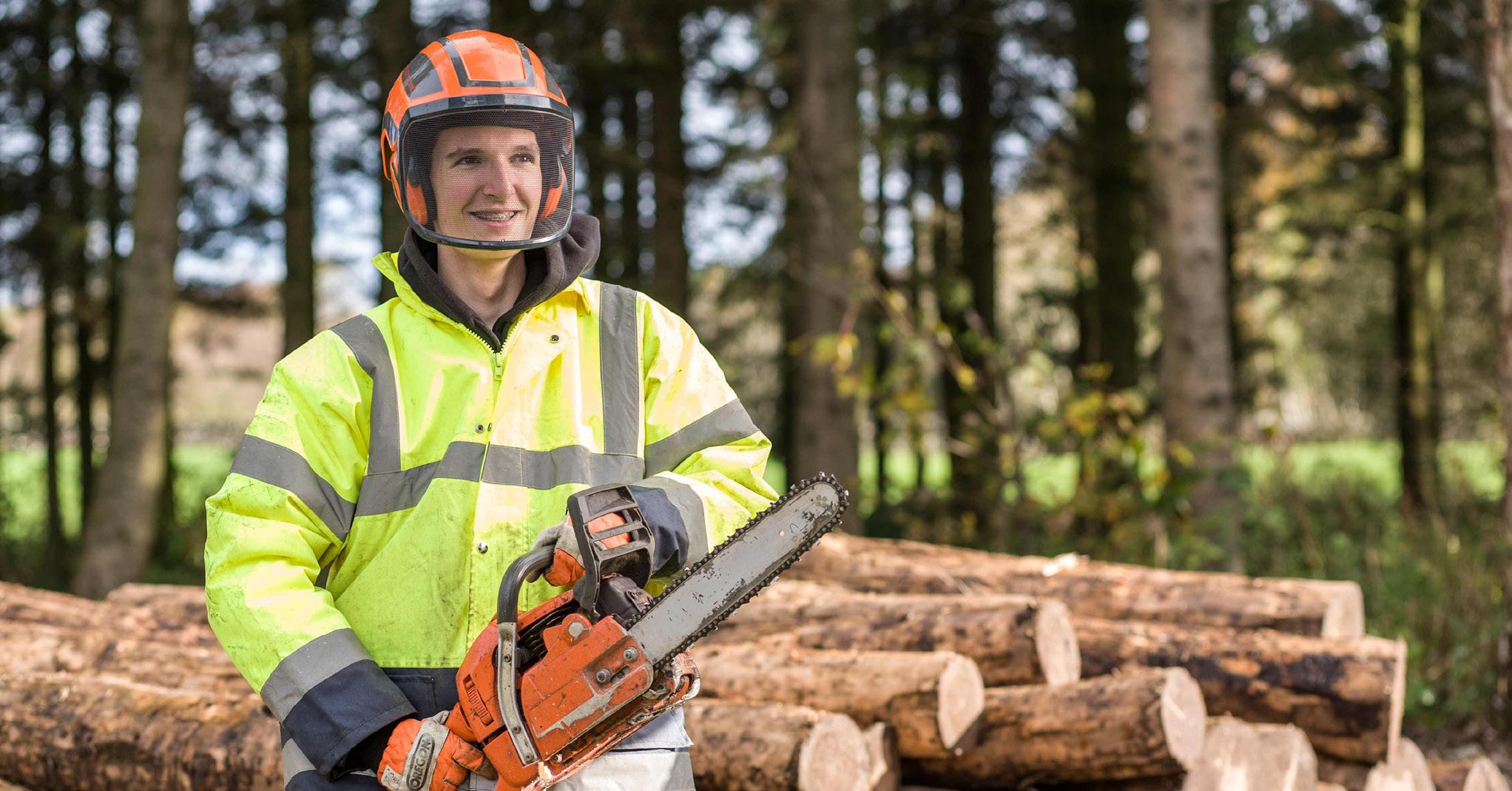
We have excellent facilities and equipment, including our forestry engineering workshop, forwarders, chainsaws, climbing equipment and simulators. In Arboriculture, you will also learn how to use advanced tools, such as the PICUS and IMLRESI Drill to investigate tree decay. We also work closely with public and private forest estates for invaluable practical experience.
Ideally three National 4s, preferably including English and Maths and one National 5 in a science subject.
Relevant college or work experience may also be considered. You'll be expected to show your commitment to the course at interview.
Admission to this course is either through the satisfactory completion of the Certificate in Forestry or via direct entry with appropriate experience in other employment sectors.
Applicants are normally expected to have a minimum of three National 5s including English, Maths, Geography or a science subject. You should be 17 or older to start this course.
Admission to this course is either through the satisfactory completion of the Certificate in Forestry or via direct entry with appropriate experience in other employment sectors.
Applicants are normally expected to have a minimum of three National 5s including English, Maths, Geography or a science subject. You should be 17 or older to start this course.
Student Spotlight Keir McClure
Advanced Certificate in Forestry and Arboriculture
I have a passion for the outdoors and the wilderness, and this course gave me the opportunity to learn practical and academic knowledge and skills. The staff I met at the open day were very welcoming and explained everything really well.
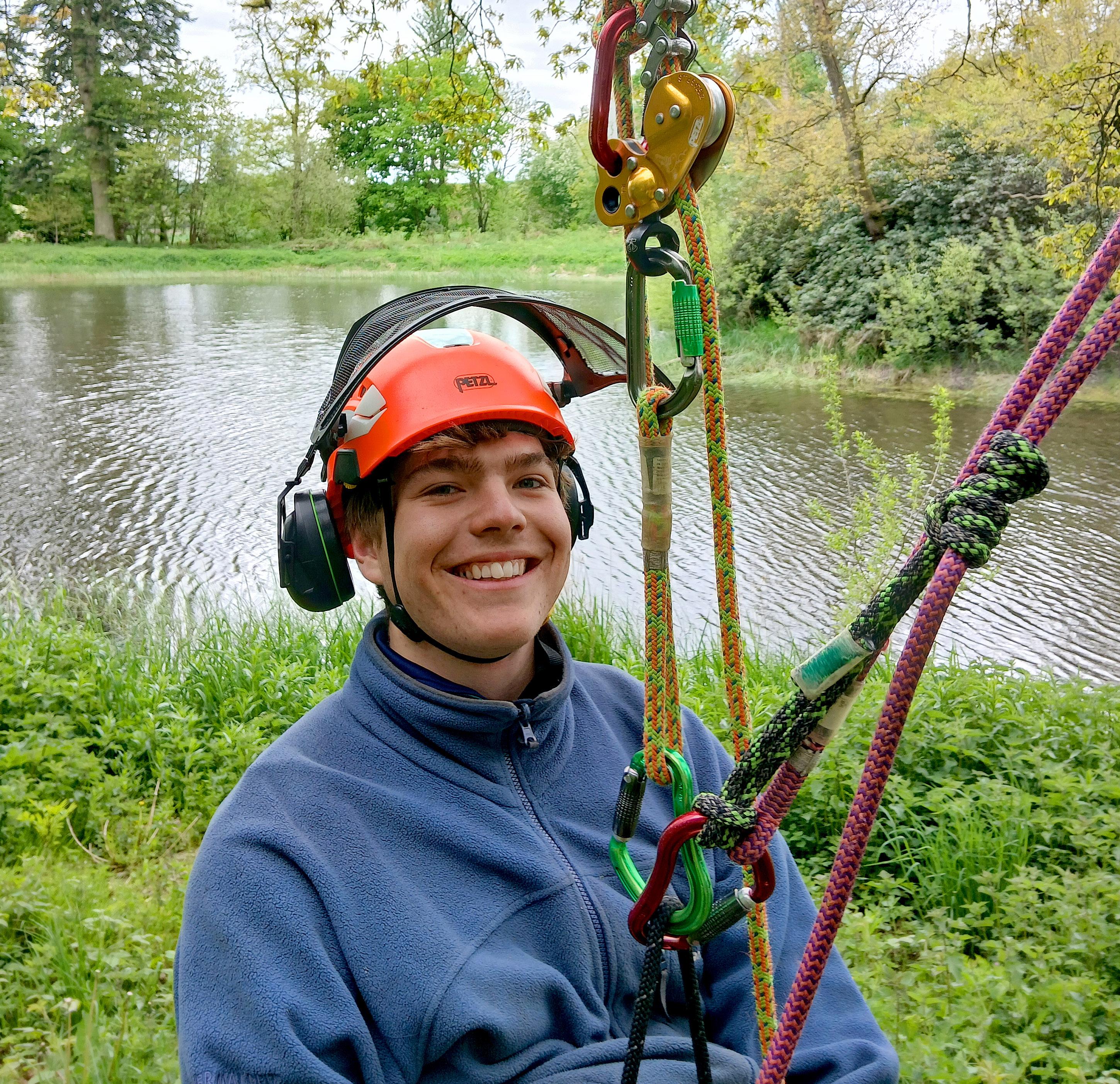
I really enjoy the tree climbing and aerial cutting parts of the course. It’s physically challenging and makes me push myself each time. SRUC has a great amount of kit and I’ve learned a lot, from knot tying to different methods of climbing.
We get to use a variety of saws, tractors, chippers and learn how to fix and
maintain them. There is something for everyone and I have gained a lot of knowledge in all areas of forestry.
We also get the chance to do real jobs which has helped hone my skills and it’s been great learning how to prune, reduce and dismantle trees. The instructors are very encouraging and allow us to develop at our own pace while keeping us moving forward.
I would like to progress to the HNC in Forestry and then bring my skills and knowledge into the workplace.
SRUC has a great amount of kit and I’ve learned a lot, from knot tying to different methods of climbing.
Careers
A forestry or arboricultural qualification has opened doors for many students to develop wide ranging and interesting careers such as:
• Skilled Forest Craftsperson
• Technically Proficient Arborists
• Ground Workers
• Team Leaders
• Tree Surgeons
• Forest Machine Operators
• Forestry Supervisors
Gamekeeping
Manage a local estate and learn a mixture of practical skills, training and background knowledge in gamekeeping.
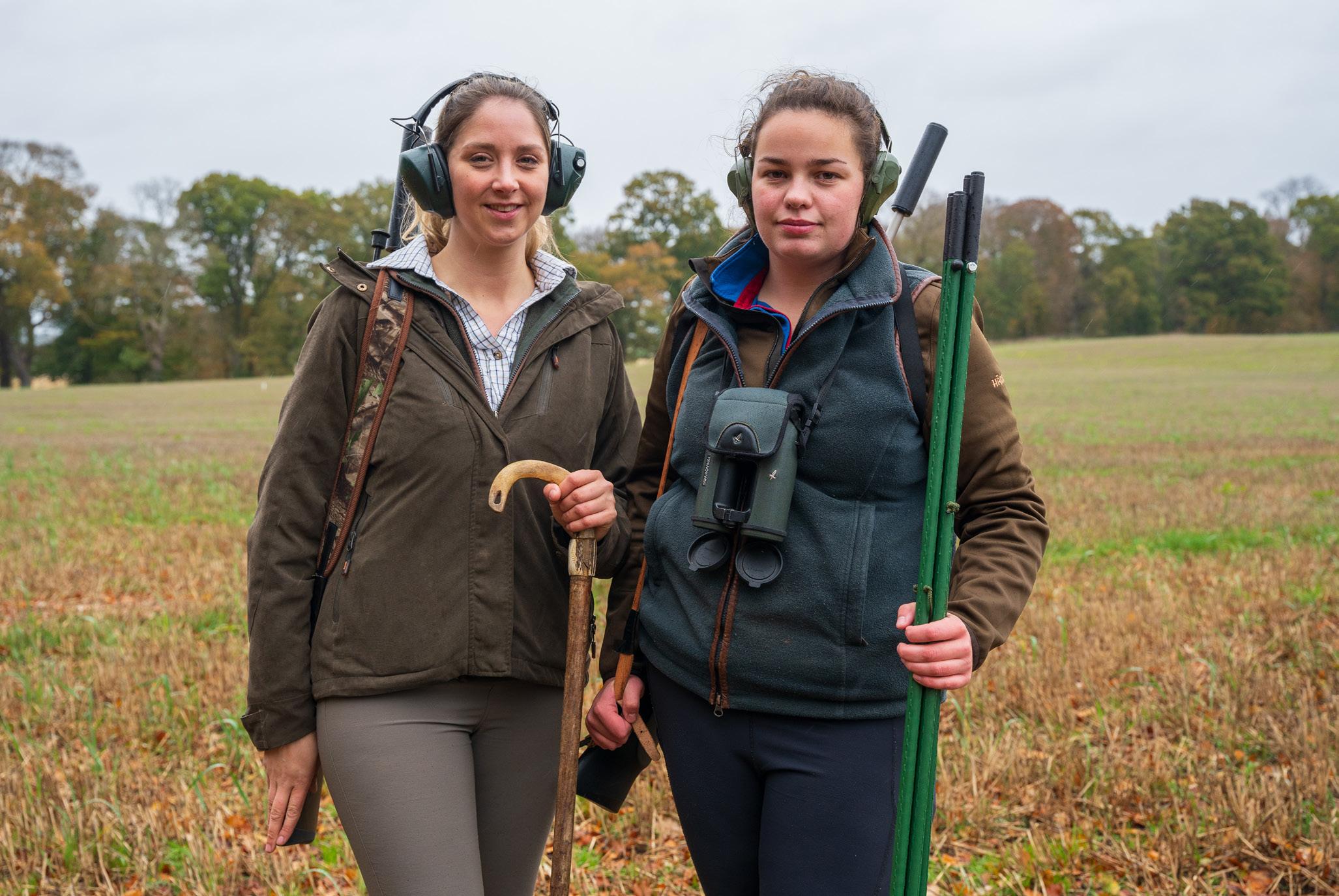
Gamekeeping courses cover deer biology and identification of game species, use of shotguns and sporting rifles, shoot day skills, wildfowl identification, pest and predator control, gamekeeping health and safety, incubation & hatchery, gamebird rearing and release, game meat hygiene and gundog care. To consolidate your
I was working in marketing for a couple of years before this, and I just really struggled with the office environment.
I’d love to be a head ranger or go into land management. I think being a good ranger means understanding all sides of rural industries and there’s a lot of crossover with this course, especially around deer management and stalking, and it’s an area I didn’t know much about before.
knowledge and understanding, there are opportunities to attend field trips and site visits to local and Highland estates. You will also have the chance to take industry certified courses such as the BASC safe shot award, ATV training, and attend BASC and NatureScot best practice events.
SRUC is the best place to get that mix of practical experience and industry knowledge. You’re not just in a classroom; you’re out on estates and seeing how things work.
Getting out on to different estates and being involved in shoot days has been really interesting, just seeing how everything comes together but I’ve really enjoyed the classroom side as well, which really helped me understand the terminology of the industry.
I’d like to go back into ranger work, ideally somewhere a bit more remote like the Highlands or the islands. I’m
Course Entry requirements
Gamekeeping NC (SCQF 5) Elmwood
For a full list of entry requirements see centre pages.
Careers
• Underkeeper
• Beat Keeper
• Forest Ranger
• Deer Stalker
• Field Assistant
• Pest and Predator Controller
• Game Farmer
also planning to work through my deer stalking qualifications so I’m in a better position when jobs come up.
I think being a woman in quite a maledominated industry can be a bit of a challenge sometimes – you do feel you have to prove yourself a bit more but the estates we’ve worked on have been really good.
It also doesn’t matter what age you are or what you’ve done before, there’s such a mix of people here, even people in their 60s. If you’re not happy in what you’re doing, it’s definitely worth making a change.
Minimum three National 4s, including English. Applicants may be invited to attend an interview.
Student Spotlight
Sorcha Scott NC Gamekeeping
Field
Trips and Visits
Learning at SRUC isn’t confined to the classroom. Whether it’s the stunning Highlands, the vast plains of Africa, or lush and diverse golf greens, study tours, field trips and real-life case studies form an important part of your educational experience. Our smaller teaching groups mean that we are able to arrange regular visits to relevant industry locations to meet with experts working in your field.
Horticulture
Horticulture is a dynamic and wide-ranging industry that influences both the food we eat and the environments we enjoy. It includes the commercial production of fruit, vegetables, flowers and ornamental plants, as well as the creation and management of parks, gardens, sports grounds and public landscapes. As a profession, it offers diverse career paths suited to a variety of interests and skills, from hands-on growing and design to research, technology, marketing and management.
At SRUC, you’ll gain a strong foundation of expert knowledge alongside the practical skills and industry connections needed to build a successful career. We believe that employability comes from
combining academic understanding with real-world experience. Through work placements, practical classes, industry visits, and guest speakers, you’ll develop the confidence and capability employers are looking for.
Studying at an institution recognised for its research and consultancy ensures your learning is informed by the latest developments and grounded in industry practice.
Courses Entry requirements
Horticulture NC Introduction (SCQF 4)
Elmwood
Horticulture NC (SCQF 5)
Elmwood
Horticulture with Garden Design NC (SCQF 5)
Oatridge
Horticulture with Landscape Construction NC (SCQF 5)
Oatridge
For a full list of entry requirements see centre pages.
Entry by interview.
No formal qualifications are required.
You'll be expected to have a minimum of three National 4s, including English.
Applicants with a mature attitude who are seeking a change in career will be assessed individually.
GARDEN DESIGN
The course provides sound practical experience in a wide range of horticultural and propagational skills together with elements of design and its application. It is comprised of the NC Horticulture with additional subjects selected and tailored to provide a more thorough skill set, affording greater flexibility in the workplace.
Careers
A qualification in Horticulture can open up a wide range of career possibilities, at all levels of the industry including:
• Entrepreneur and small business owner
• Gardener
• Design and build operative
• Contract manager
• Retail & garden centres
• Fruit and crop production
• Production horticulture and nurseries
• Scientific research
• Conservation
Some graduates will work in the maintenance and management of public and private green spaces such as parks, gardens, National Trust properties, botanic gardens and community gardens. Other opportunities include journalism, television, teaching, advisory work, restoration of historic gardens, landscape reclamation, marketing and horticultural therapy.
LANDSCAPE CONSTRUCTION
The course provides sound practical experience in a wide range of landscaping skills with the knowledge of construction principles and their application. The course is comprised of the NC Horticulture with additional subjects selected and tailored to provide a more specialist skill set for those wanting to move into hard landscaping.
It’s a real mix of practical and theory and lets you work both the body and the brain.
Student Spotlight
Jill Doyle NC Horticulture with Landscape Construction
I needed a new challenge in my life, had a real interest in the garden and had loved doing my own small outdoor projects at home. I wanted to develop and enhance skills I already had, learn new ones and work with a different set of colleagues. You’re never too old to learn new skills and it’s invigorating and energising to do so. It’s a good idea to challenge some long-held beliefs about yourself and, sometimes, the mindsets of others too.
As soon as I saw that I could combine Horticulture with Landscape Construction and that I would be creating paving, building fences and brick walls I knew it was the course for me. It’s a real mix of practical and theory and lets you work both the body and the brain.
Initially, I was worried about whether I’d be out of my depth and how other students would perceive me, but I’ve been so lucky with the people I study
with and learn from. My fellow students are almost all a lot younger than me but they have been really welcoming and inclusive and I have learned a lot from them. There has been a lot of laughter and they’ve helped me not to treat everything quite so seriously, and also to see things from another perspective. I particularly enjoyed the bricklaying module - I didn’t realise I would become quite so hyperfocused on margins and tolerances in brick building, removing layers and starting again in the quest for a better version of my models for each of the learning outcomes.
It’s been a great year, and I have learned a lot - far more than ‘just’ the course content. Thanks to my fellow students and my tutors for making learning interesting and enjoyable, for not putting me into any kind of box and for ensuring that I am glad that I had the courage to apply.
The SRUC School of Veterinary Medicine and Biosciences offers a wide range of courses for anyone interested in animal health and related careers.
This includes programmes in Veterinary Science (our veterinary surgeons training programme), Veterinary Nursing, and specialist postgraduate study, as well as training for the wider veterinary team. The School also supports careers across animal-related industries, with programmes in areas such as Animal Science, Equine Science, Animal Care, and animal-related business and research — providing the skills and knowledge needed to thrive in a growing, evolving sector.
Programmes and study pathways are offered at our SRUC campuses across Scotland. This allows SRUC to offer an innovative and unique way of learning that brings different professions together, even for students who are spread out geographically.
SRUC’s teaching is supported by an internationally recognised team of animal and veterinary scientists,
with a national network of veterinary hubs and partner training practices providing a basis for a distributed model of clinical consolidation for our BVSci, Veterinary Science programme and placements for our trainee Veterinary Nurses.
Our research is ranked as the best in the UK, and our Consulting offices and Veterinary Services give us unparalleled links to real rural business and animal health.
We believe in producing well-rounded graduates. Our programmes combine practical experience with education across different subject areas, so students leave with the confidence to adapt, problem-solve and work well with others. Whether you want to work with animals, support the wider veterinary field, or make a difference in the rural economy, SRUC gives you the foundation to build a strong, future-ready career.
The SRUC School of Veterinary Medicine and Biosciences boasts outstanding facilities, providing you with cutting-edge equipment and technology with which to learn the skills and competencies required to work as a veterinary professional.
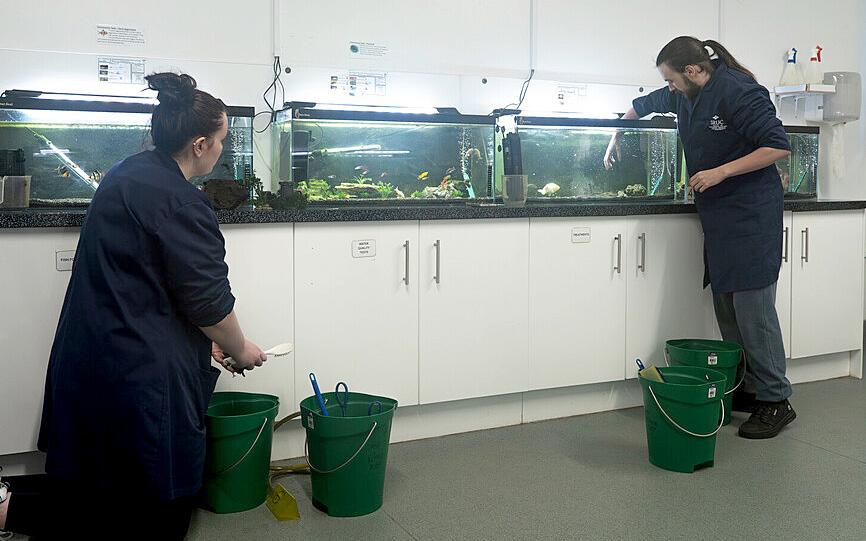
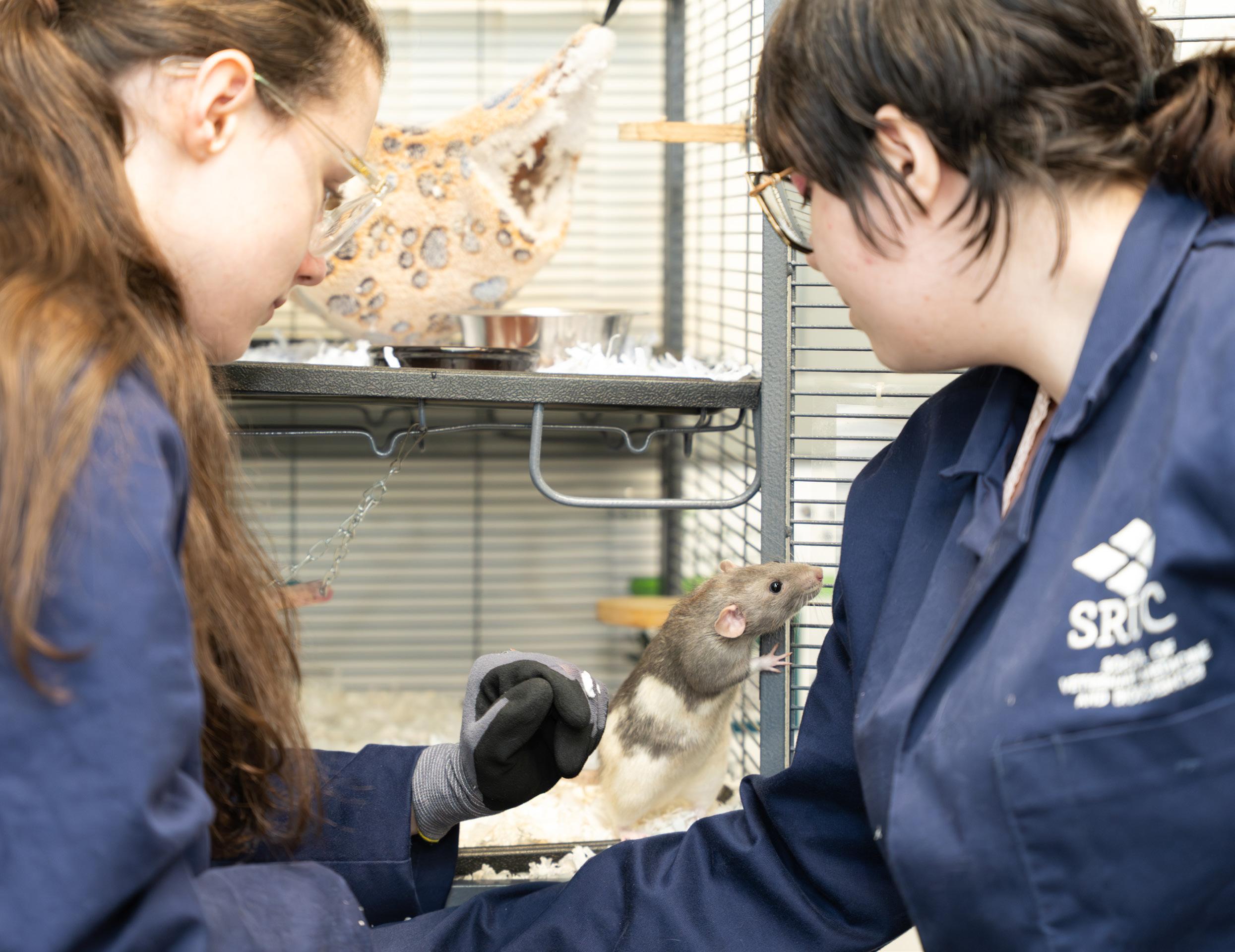
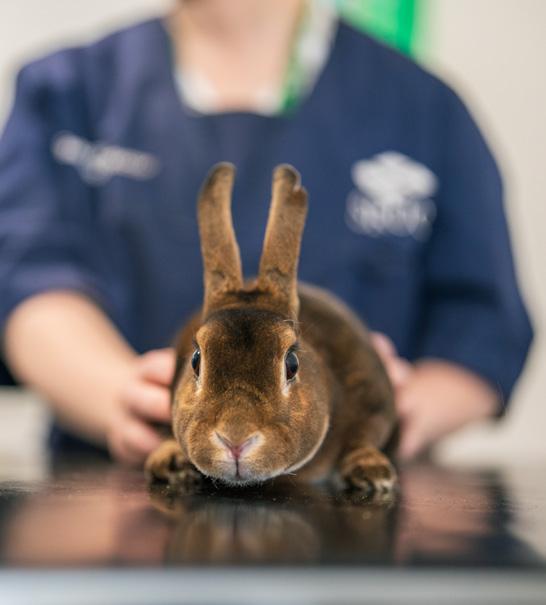
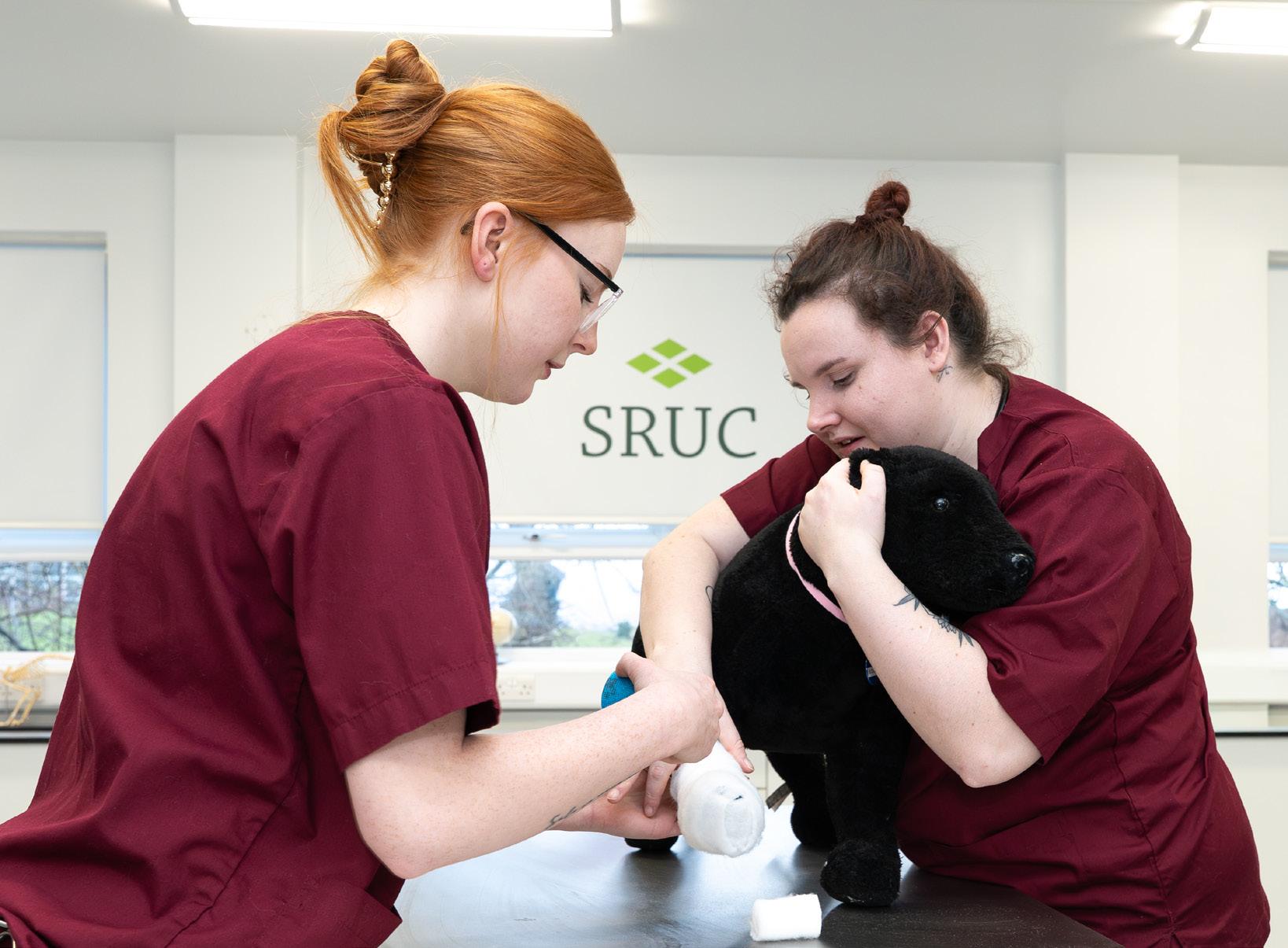
The School also has purpose-built small animal training units at Aberdeen, Barony and Oatridge, featuring a range of animals, from rabbits, guinea pigs and gerbils to snakes, lizards and fish, which give students the opportunity to work with a variety of small mammals and exotics.
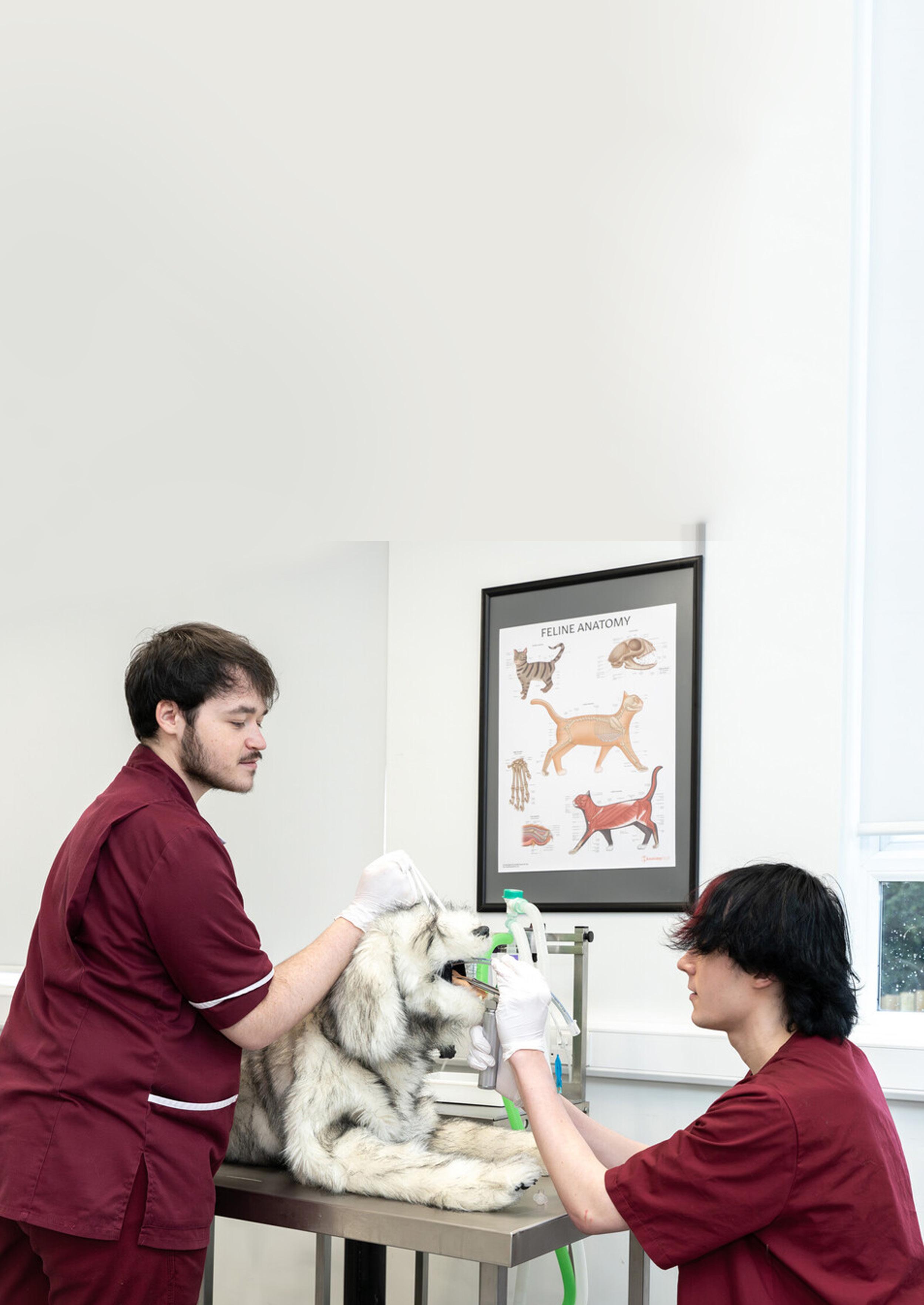
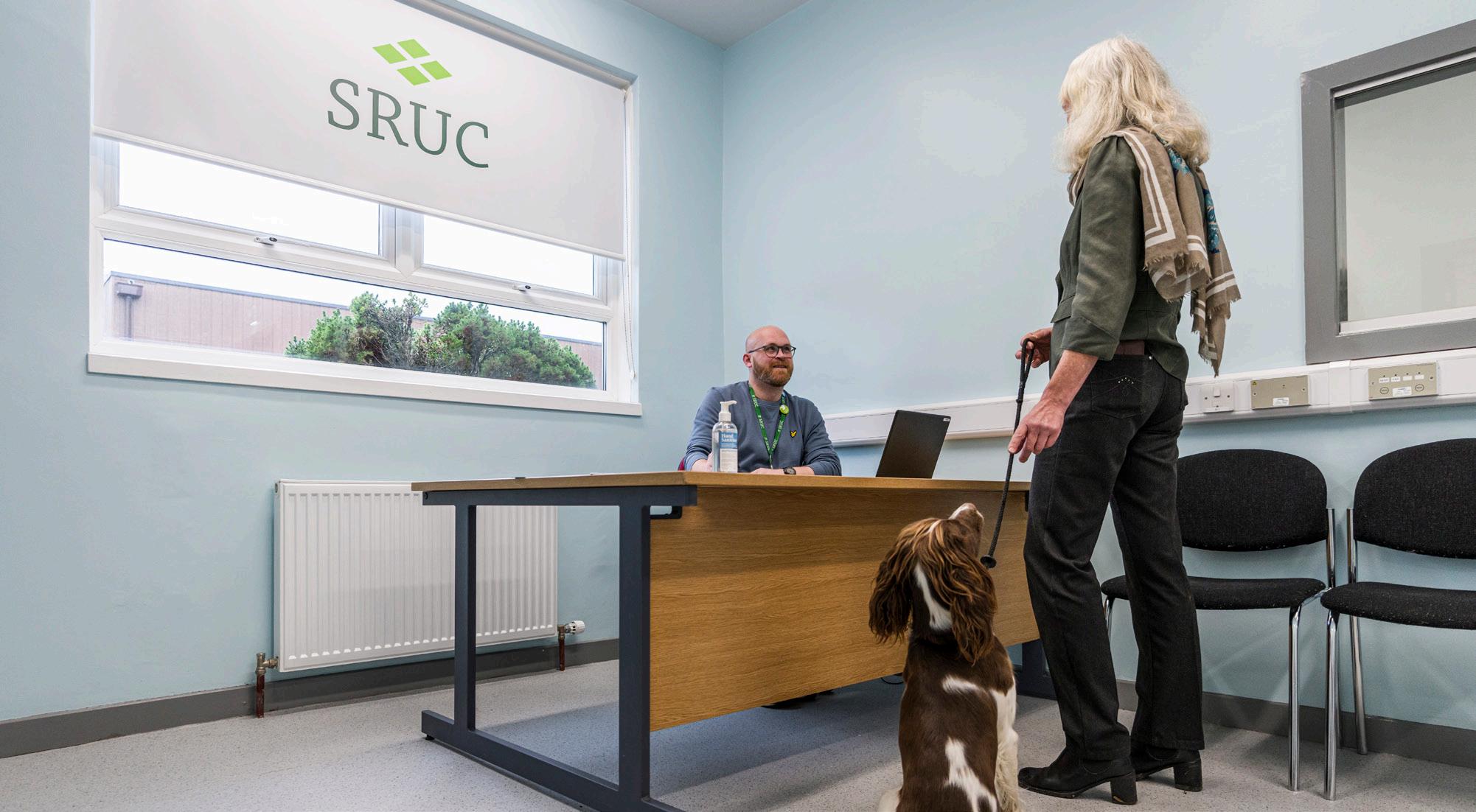
At the Aberdeen Campus, you’ll find the Veterinary Clinical Skills Centre, which is fully kitted out with the latest technology and mock consultation and reception facilities to boost your communication skills and teach you how to interact with clients, colleagues and other members of the veterinary industry.
At nearby Sunnybrae Farm, the focus is on rural with our Large Animal Clinical Skills Unit, stables and Ruminant (cattle and sheep) Handling Facility.
We also host the Scottish National Equestrian Centre at Oatridge, offering wide equine experience and a range of high-profile, veterinary and animal research facilities at our Edinburgh and Aberdeen campuses.
Practical sessions give you the vital hands-on experience you’ll need across the different types of species, complementing theory work learned in the classroom.
FACILITIES
Animal Care
If your ambition is to work with animals, our Animal Care courses are a perfect choice.
The ability to care for animals is a skill which is in demand from a variety of organisations and nationally recognised qualifications are now required by most employers. Our courses offer a clear progression route, enabling you to gain further qualifications after completing your course to help improve your career prospects.
Courses
Animal Care NC Introduction (SCQF 4)
Aberdeen
Animal Care NC (SCQF 5)
Aberdeen, Barony, Oatridge
Our Animal Care courses give you the opportunity to gain valuable, hands-on experience of interacting with a wide range of species in our modern facilities, provide you with the confidence and ability to work with others in the industry and provide the highest standards of care and welfare for the wide range of animals that you may one day be responsible for.
Our Introduction and NC courses will help you increase your knowledge of animal care and handling and may even equip you with the skills to start your own business.
We offer Animal Care courses at a number of levels, and some require work experience as part of the entry requirements.
Entry requirements
National 4 (Pass) in English and in Maths, or equivalent qualifications or experience.
Some experience of working with animals, even if those animals are your own pets, is an advantage.
Minimum three National 4s (preferably including English and Maths), one National 5 (preferably in a science ) at C or above, and one week of work experience.
Successful completion of the Principles of Animal Care/NC Introduction to Animal Care will also be considered.
For a full list of entry requirements see centre pages.
Careers
There are numerous opportunities for people with Animal Care qualifications, such as work in:
• Boarding kennels and catteries
• Charity organisations
• Welfare centres
• Animal welfare
• Animal rescue
• Local authorities
• Pet shops
• Farm parks and zoos
Other career opportunities may be available in the areas of animal science, poultry or agriculture.
Animal Care Facilities
We have purpose-built Animal Care facilities and a wide variety of animals to work with.
Our facilities enhance the student experience by providing the opportunity to work with a range of reptiles, mammals, birds, fish and, on some campuses, farm animals.
Practical sessions provide the vital hands-on experience you will need in the working world, across the different types of species, and complement theory work learnt in the classroom.
Student Spotlight Summer Nickson NC
I’ve always been fascinated by animals, so I wanted to understand the different needs and requirements of different species, learn how to do health checks and to understand their habitats.
SRUC gives you so many opportunities to work with different animals. The large and spacious campus made me feel really welcome, the tutors were lovely to talk to and made the course seem very easy going with loads of reassurance that they will help you if you get stuck.
I loved working on the farm on campus. It’s very hands-on, working with the cows and doing different challenging
Animal Care
jobs each time you visit. With every task you have to problem solve and communicate as a group.
After my course, I'd like to go into the rescue side for animals, for example with the SSPCA. I’m also thinking of going into the equine side of the job.
Life on campus is very engaging. When all the lessons are over, we get to play games like badminton, rounders and dodgeball. All the staff are really friendly and great to talk to; there are many walk routes if you want from fresh air after a lesson.
I loved working on the farm on campus. It’s very hands-on and doing different challenging jobs each time you visit.
Horse Care
SRUC’s Horse Care courses prepare you for a range of exciting career opportunities in the growing equine industry. They also provide a great platform to continue your studies at a higher level.
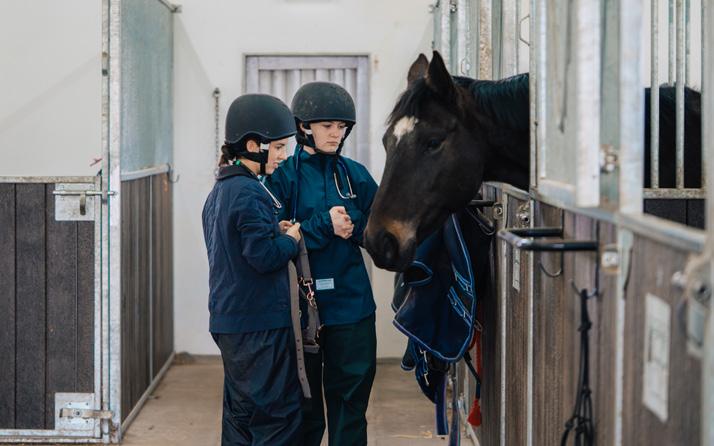
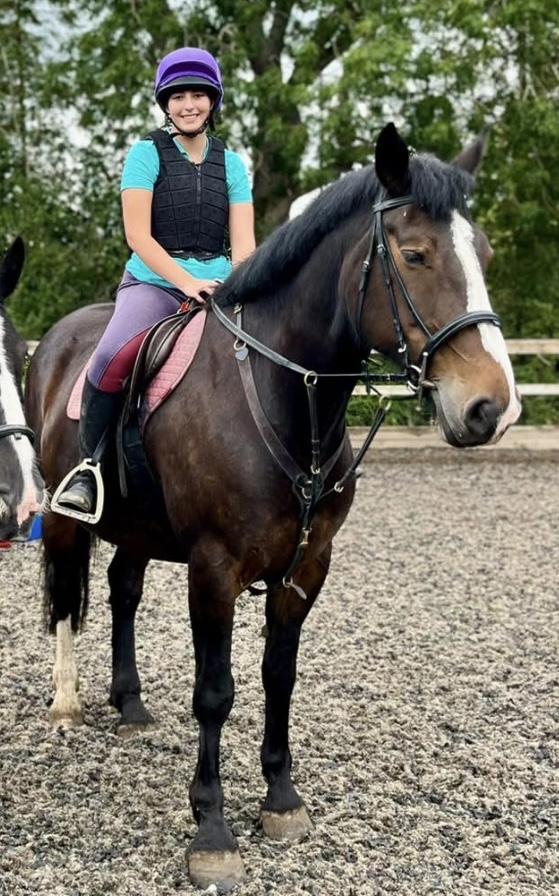
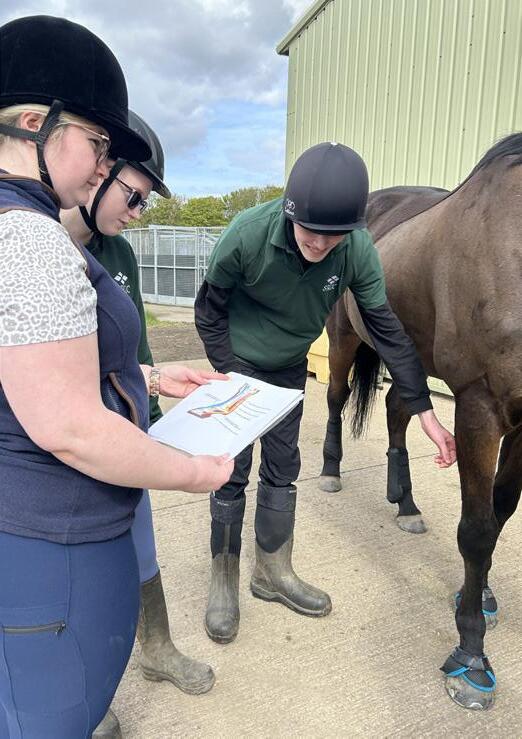
We offer a unique blend of practical, skills-based learning combined with the development of theoretical knowledge. This approach produces skilled and knowledgeable students able to make an effective contribution in the workplace. You are also involved in the day-to-day care of the horses, with a large proportion of learning and teaching taking place at our stables and riding arenas.
Courses Entry requirements
Horse Care NC (SCQF 5) Oatridge
Horse Care (Racehorse Care) NC (SCQF 5) Oatridge
Horse Care Advanced Certificate (SCQF 5/6) Oatridge
Three National 4s (preferably including English and Maths).
Evidence of two weeks relevant equine work experience required.
Evidence of riding ability, to include a minimum of walk, trot, canter and jumping.
Three National 4s (preferably including English and Maths).
Evidence of two weeks relevant equine work experience.
Evidence of riding ability, to include a minimum of walk, trot, canter and jumping.
Minimum of three National 4s and two National 5s, preferably including English and Maths.
Evidence of two weeks relevant equine work experience.
Recorded evidence of riding ability, including a minimum of walk, trot, canter and jumping.
Riding is not a compulsory part of the courses. Applicants wishing to be considered for a riding option need to submit evidence of ability to walk, trot and canter. For horse welfare we have a weight limit of 14 stone for riding. For a full list of entry requirements see centre pages.
HIGH-TECH LEARNING
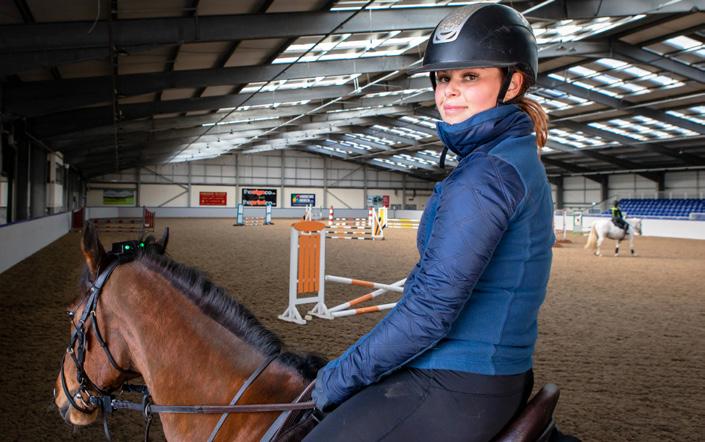
Learning and teaching on our Horse Care courses is at the forefront of digital innovation, including a top-of-the-range mechanical horse which can jump 1.2 m and perform advanced dressage movements to support rider development and build confidence. Alongside this we also integrate hightech equipment such as biomechanical jackets and robotic cameras into riding sessions to aid learning and support skill development. Our advanced use of digital technology to support learning and teaching was recognised in 2023 when SRUC was shortlisted as a finalist in both the the Times Higher Education Awards and the Herald Education Awards.
THE SCOTTISH NATIONAL EQUESTRIAN CENTRE (SNEC)
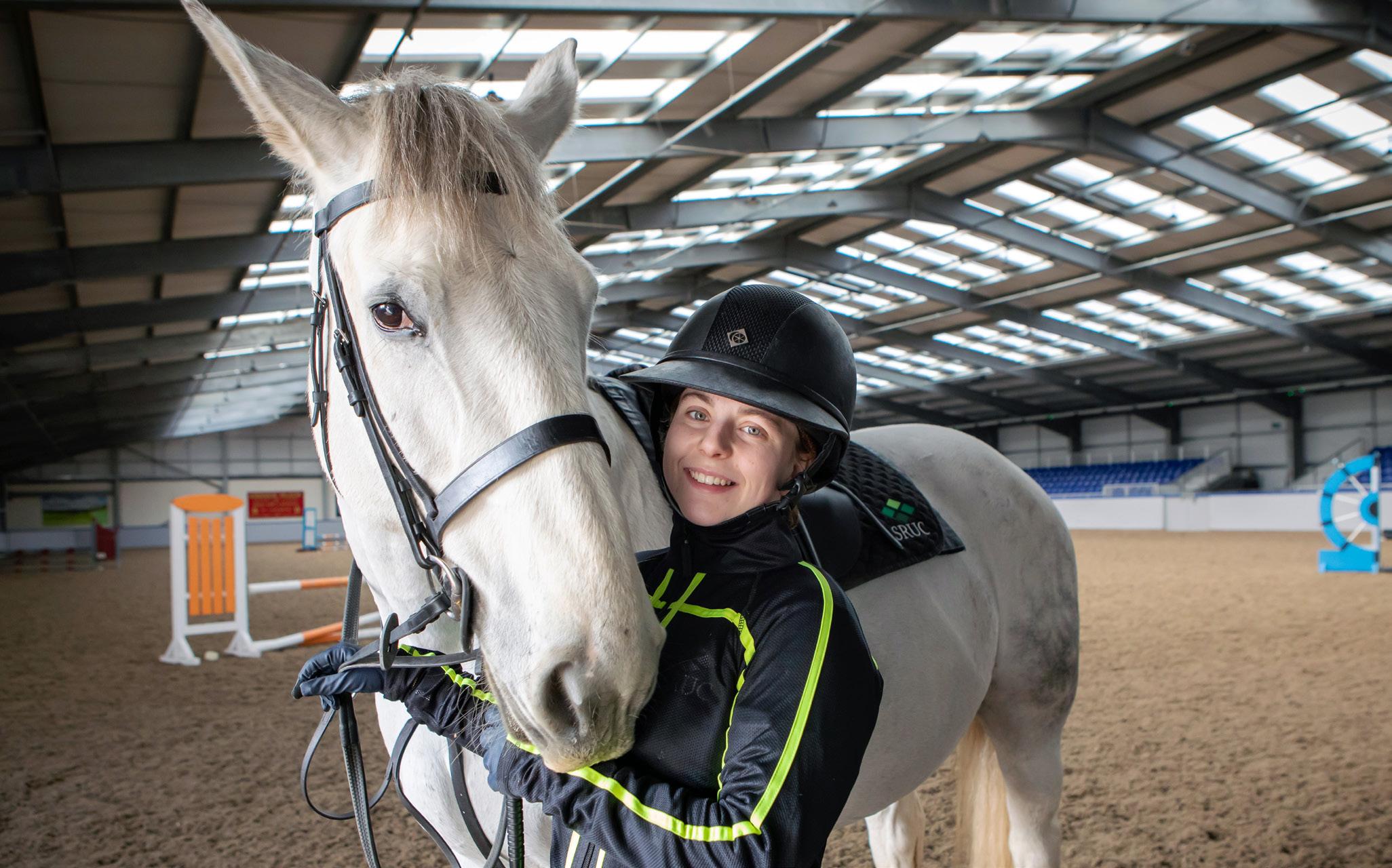
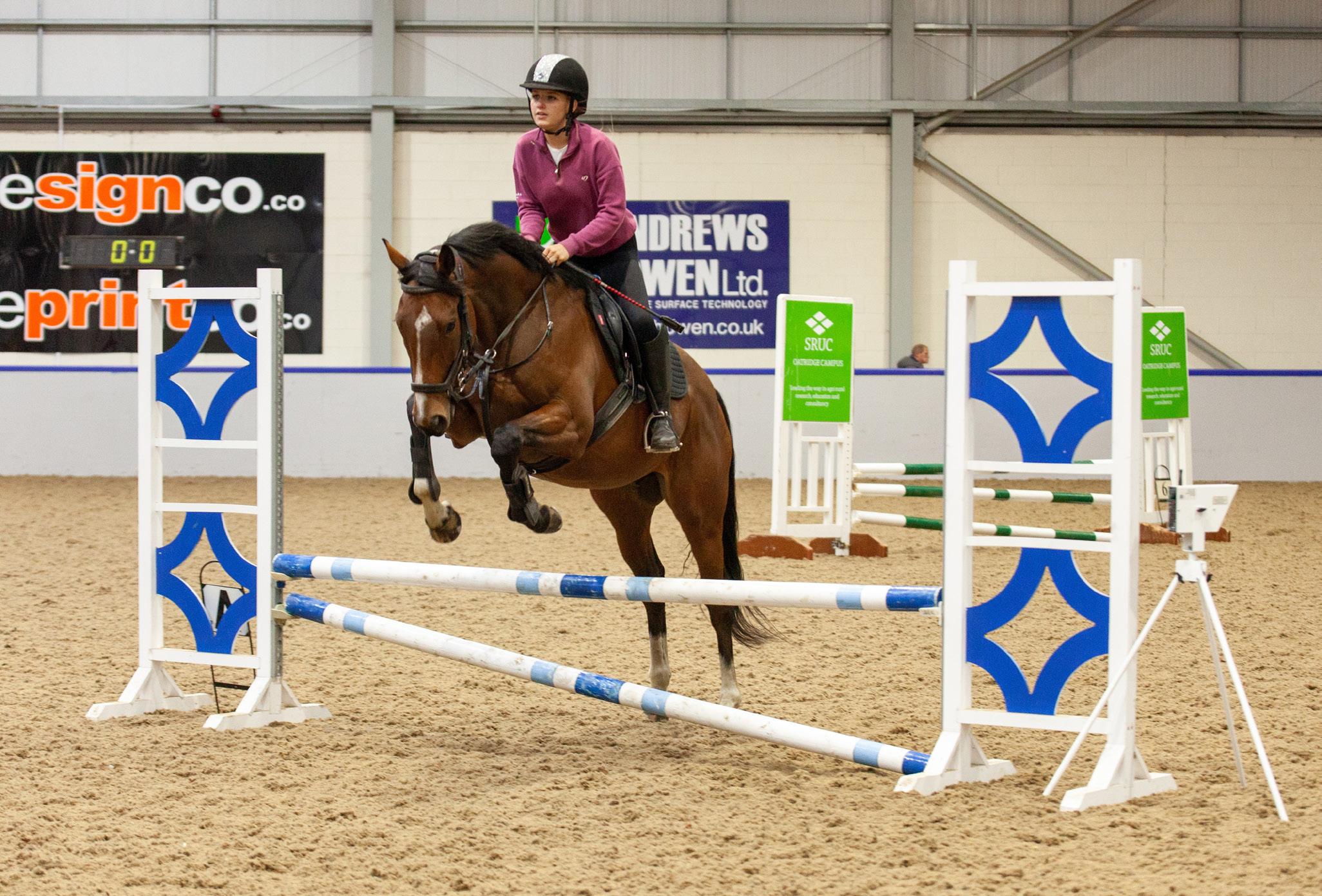
SRUC Oatridge Campus is home to SNEC, providing students with stateof-the-art horse facilities. SNEC features indoor riding arenas which seat up to 400 spectators, outdoor all-weather gallops and a large indoor stable block that includes a horse walker, weigh bridge and horse solarium, which uses infrared to relax muscles and improve circulation. You can use these facilities for your own horse through our livery service, which also includes a daily turnout and access to clinics. You will also have regular opportunities to engage with competitions and events, such as the annual Oatridge Horse Trials and the Pony Club Area Qualifiers, as well as work alongside industry leading bodies so you can start to develop your own professional networks. We also offer extra-curricular activities, including opportunities to gain additional industry qualifications such as British Horse Society assessments and Scottish Coaching Qualifications.
I grew up around horses and I’ve always had the passion to work in the equine industry.
SRUC has a range of courses that suits everyone. Its reviews are amazing and it has fantastic facilities for my course. For various aspects of the course we had the pleasure of using SNEC, which is an amazing arena.
But one of the highlights is the social aspect. I have made friends for life over
my two years at SRUC. They also hold dances at the campus for different holidays, which is great for people who have not got the chance to meet people. Life on campus is amazing if you have the right friends around you – there is never a dull moment.
Once I complete my course I will be heading off to work in the equine industry full time. My long-term plan is to do my Horse Scotland coaching certificates and go into teaching.
For various aspects of the course we had the pleasure of using SNEC, which is an amazing arena.
Careers
The Equine sector has huge diversity in its employment opportunities. Examples are:
• Competition Groom
• Livery Yard Groom
• Racing Yard Groom
• Stud Assistant
• Assistant Yard Manager
• Equestrian Sales
There is also a range of employment opportunities in the Horse Racing & Tourism sectors.
Student Spotlight
Milly Gallagher AC Horse Care
Veterinary Care and Animal Welfare
Careers
There are many opportunities to develop your career in Veterinary Care and Animal Welfare, providing an excellent introduction for those wishing to progress to further training such as veterinary nursing.
• Veterinary Care Assistant
• Animal Welfare Assistant
• Animal Day Care Assistant
• Pet Retail Assistant
• Kennel/Cattery Assistant
• Veterinary Receptionist
• Pharmaceuticals
• Pet/Animal Food and Nutrition
Veterinary Care and Animal Welfare is a rewarding profession centred on planning and delivering high-quality care to a wide range of animal species. While much of the work involves dogs, cats, rabbits and other small mammals, you may also care for birds, reptiles, and in some roles, horses and farm animals.
Veterinary Care and Animal Welfare Assistants are trained to operate within health and safety and animal welfare legislation, ensuring the wellbeing and protection of animals, you and others in the workplace. This course develops your ability to recognise and monitor animal behaviour, to support the health and welfare of animals in your care. You will learn how to care for companion animals such as cats, dogs, and rabbits, including selecting appropriate nutrition for their different life stage. The course also covers the
safe handling, storage, disposal and administration of veterinary medicines. In addition, you will build a knowledge and understanding of the biology of small animal species through study of basic anatomy and physiology.
Our Veterinary Care and Animal Welfare courses equip students with the knowledge and skills needed to work in veterinary practice as animal nursing or care assistants. These roles involve supporting veterinary surgeons and qualified nurses in the day-to-day care and treatment of patients.
Courses Entry requirements
Veterinary Care and Animal Welfare Diploma (SCQF 5)
Aberdeen, Barony, Oatridge
Students benefit from access to blended learning with a range of theory teaching on campus and online with practical learning and a proportion of time in practical placements. There are dedicated Animal Care Training Centres housing a variety of small animals, reptiles and birds.
This LANTRA Diploma at SCQF Level 5 provides those wishing to work in the veterinary and land-based sectors a nationally recognised qualification to enhance your ability to work safely, effectively and efficiently in the workplace.
You'll be expected to have a minimum of four National 5s (A-C) (preferably English, Maths and a science – equivalent qualifications will be considered).
Desirable but not essential - a minimum of two weeks work experience in an animal related environment.
For distance learning, it is essential to be employed in a veterinary practice before submitting an application.
For a full list of entry requirements see centre pages.
Student Spotlight
Kristie
King
Veterinary Nursing Level 3 Diploma
I fell in love with the industry while working as an Animal Care Assistant. The course allows flexibility to work alongside learning, which was a huge positive for me.
I was worried when I started the course that, because, I was an older student, I would struggle with revision and work compared to the others. However, the well-structured course provides great support, a variety of classmates and a chance to make connections with others in the industry.
SRUC offers a good work-lifecollege balance, in a good, accessible area. The class sizes are good and there is a range of different students from different backgrounds that all bring great experience with them.
I’ve enjoyed the learning blocks and the practical days and there are online days that help break up any travel so you can do them from the comfort of your own home. The course also offers added benefits of becoming a first aider and even an opportunity to go on a trip to Africa.
After I complete my course I’ll continue on with my current practice as a full-time Registered Veterinary Nurse.
Apprenticeships
A Modern Apprenticeship is a nationally recognised qualification that combines the opportunity to earn a salary while gaining valuable on-the-job experience.
To do a Modern Apprenticeship you must be 16 or over, in full-time employment and it will take between one-four years to complete depending on the level of the qualification. The apprenticeship programme is a three-way agreement between you, SRUC and your employer. Our specialist team and strong industry links will tie together these opportunities so that you can develop your skills and knowledge through a package of learning at work or off-thejob learning at college. Visit www.sruc.ac.uk/apprenticeship to see the range of apprenticeships we offer. Modern Apprenticeships are supported by Scottish Government and could be eligible for 100% funding depending on age and eligibility criteria.
MA Land-Based Engineering (SCQF 7) (Asset lifecycle and maintenance)
MA Land and Nature (Nature Restoration) (SCQF 5 and 6)
MA Veterinary Nursing (SCQF 7)
MA Trees and Timber (SCQF 5 and 6)
Accommodation
Our campuses are located across Scotland, each offering a distinctive setting and excellent accessibility.
Our Edinburgh facilities are based on the University of Edinburgh’s King’s Buildings campus on the south-side of the city.
SRUC Barony sits within a 260-hectare working estate, situated in the rolling landscape of Dumfries and Galloway, while SRUC Aberdeen is located on the Craibstone Estate, five miles from the city centre, with strong transport links.
SRUC Elmwood, in North-East Fife, features teaching spaces and extensive grounds and gardens which provide an ideal training ground for our horticultural and wildlife and conservation students. There is also a nearby 18-hole golf course.
Our Oatridge Campus, set within a 283-hectare estate in West Lothian, includes a working farm and is home to the Scottish National Equestrian Centre (SNEC).
You can read more about each location on our website www.sruc.ac.uk/campuses and find virtual tours of each location on our Virtual Student Experience site www.sruc.ac.uk/experience
Accommodation provision is slightly different at each campus with some offering student accommodation and in other locations we work with local providers and partners.
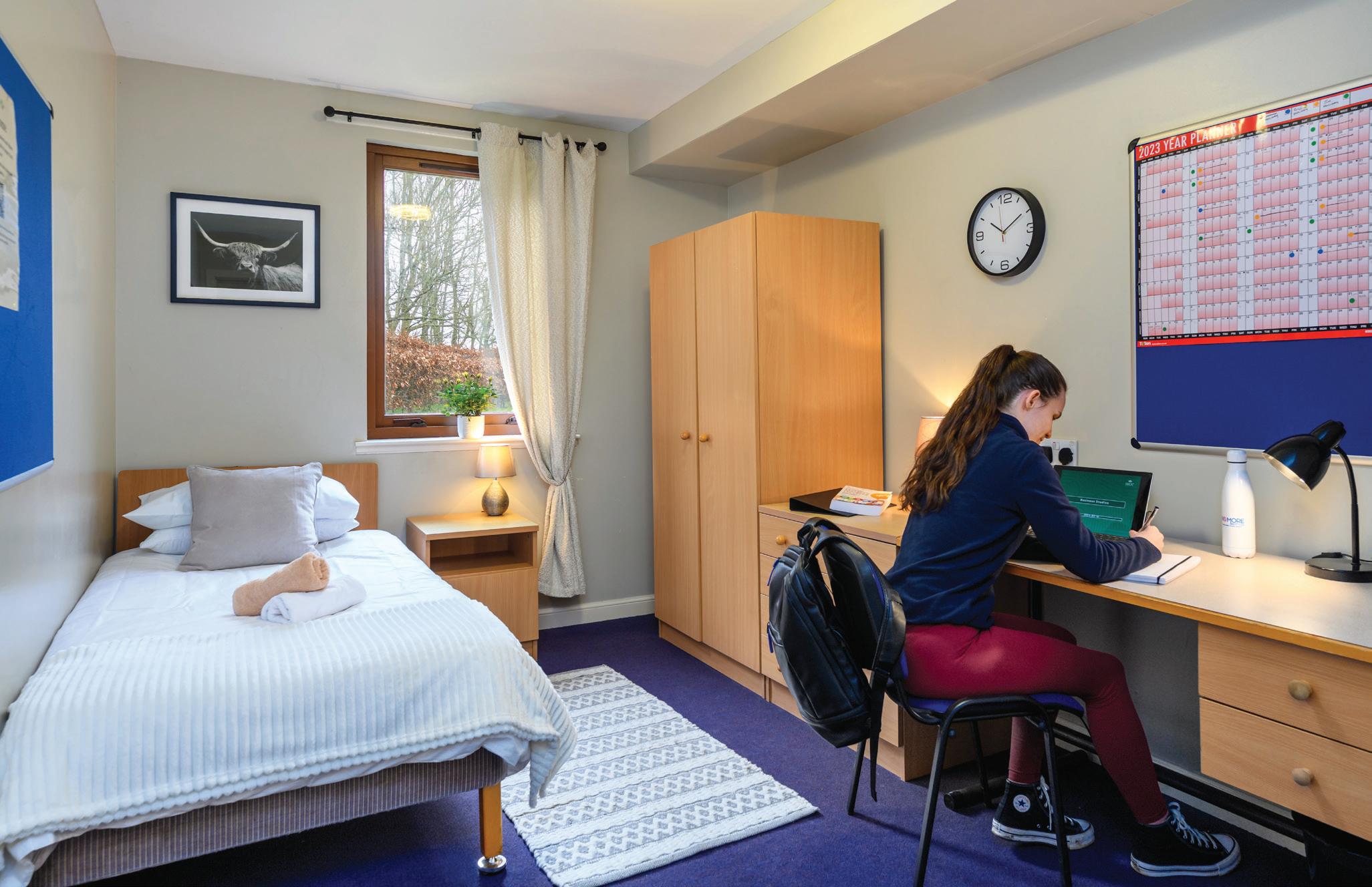
Student accommodation at our Oatridge Campus
Campus Life
SRUC offers a close-knit, friendly student experience set within distinctive rural and urban campuses across Scotland. You will benefit from modern facilities, supportive staff and strong links to industry, creating a practical and engaging learning environment.
With green spaces, specialist learning facilities and smaller class sizes, you quickly feel supported and part of something. Beyond learning, campus life at SRUC is about balance. Getting involved in activities, building friendships and enjoying life beyond the classroom, whether that’s exploring nearby towns and cities or the surrounding countryside. Practical, inclusive and community-focused, SRUC offers a student experience grounded in real-world learning.
Student Support
We understand that every student’s journey is different. That’s why we offer a wide range of support to help you thrive academically, personally and practically.
Our friendly Student Support teams are available across all our campuses and online, offering guidance on everything from settling into college life to maintaining your wellbeing. If you need someone to talk to, our wellbeing services provide confidential support in a safe and welcoming environment.
You’ll have access to academic support tailored to your needs, including help with study skills, assignments and progressing through your course. We support students from a wide range of backgrounds, including those returning to education, and offer flexible learning options to fit around your life.
To support your studies, you will benefit from access to digital tools, IT support and online learning platforms, ensuring you can study effectively whether on campus or remotely.
We also have five campus libraries, each offering study spaces, computing facilities and holds resources on a variety of subject areas.
All students with any support needs, whether these relate to a diagnosed or suspected disability, or caring responsibilities, are encouraged to complete our student support form. This will be shared with the student support team at your campus who will use the information to help ensure you receive any support you may need.
Visit www.sruc.ac.uk/studentsupport for further information and contact details.
CAREERS SERVICES
Your future matters to us. Our careers service is designed to help you develop the skills, confidence and experience you need to succeed in your chosen field.
You can access one-to-one careers advice throughout your studies, helping you explore your options and plan your next steps. We also provide practical support with CV writing, applications and interview preparation, so you feel confident when applying for jobs.
You’ll benefit from strong links with industry, particularly across Scotland’s rural, environmental, agricultural and animal care sectors. This means access to job opportunities, work-related learning and employer insights that are directly relevant to your course.
We don’t just help you find your first job – we help build your career. With progression pathways, further study options and lifelong learning opportunities, you’ll be equipped for long-term success.
To find out more, visit www.sruc.ac.uk/careers
Your Students’ Association (SRUCSA)
When you join SRUC, you are not just starting a course – you’re becoming part of a community.
At the centre of that community is SRUCSA - your go-to for getting the most out of your student experience.
SRUCSA makes sure student voices are heard loud and clear. From improving your course to shaping campus life, your elected student officers and reps work behind the scenes to create real change. This is your chance to speak up – and be listened to.
Make the most of your time at SRUC. Join clubs and societies, take part in events and activities and connect with students across campuses. However you choose to get involved, SRUCSA helps you build friendships, confidence and new skills.
For more information, visit www.sruca.org.uk or connect with @SRUCSA on social media.
www.sruc.ac.uk/admissions
SRUC offers courses at different academic levels and delivery formats – the way you apply is different for each and are summarised as follows:
Do you want to study...
Your Application Timeline
OTHER COURSE: NOT DEGREE, HND OR HNC COURSE
Locate your course online at www.sruc.ac.uk/courses and apply using the online form (or contact us for a paper copy)
DEGREE, HND OR HNC COURSE
Locate your course on the UCAS website www.ucas.com and apply using their application system
To apply, you’ll need qualifications (as defined in the entry requirements on our website), a personal statement saying why you would like to study the course, and a reference from someone who knows you, such as a teacher. For some courses you may also need to come in for an interview or provide evidence of relevant work or practical experience.
If you are applying for a degree or other Higher Education course, you should apply by the UCAS January deadline. The exception is the BVSci Veterinary Science programme, which uses the UCAS October deadline. Visit www.ucas.com for guidance. We do accept “late” UCAS applications but some of our courses may already be full once the first round of applications has been processed. For other courses, you apply directly through the SRUC website. Other courses may also have application deadlines; these will be clearly marked on the course pages on our website.
Once you have submitted your application, the Admissions team will review it and decide whether they are able to offer you a place.
You may have to wait a little while for a decision as SRUC likes to consider groups of applications together as places on courses are often limited. You may also be called to an interview. Your decision will be sent to you via SRUC or UCAS (whichever route you applied through) and if you have been made a conditional (for example: dependent on exam results) or unconditional offer, you may also receive further information from us inviting you to attend an offer-holder day. Offer-holder days are much more hands-on than open days, and are normally held in April. If you apply or get your decision later, don’t worry; if you haven’t had a chance to visit the campus we continue to have open days in May/June and August, so please come along to one of those.
Virtual Experience
Check out our Virtual Experience platform and discover what life at SRUC is really like before you apply. Explore a wide range of videos showcasing our courses, campuses and specialist facilities, take virtual tours, and hear from students about their experiences studying at SRUC.
You can also find helpful information about student life, the application process and learning support, giving you everything you need to start exploring your future with confidence. You can tailor your experience to the subject area you’re most interested in, allowing you to explore the courses, facilities and opportunities that matter most to you.
Finance and Funding
We know that finances are an important part of choosing where to study and we’re here to make the process as simple and stress-free as possible.
Fees and funding arrangements vary greatly depending on your personal circumstances, your nationality and where you live, and whether you have had funding to study before.
If you are an eligible Scottish resident, you will be able to apply for funding directly from SRUC. There are two funds students can apply for: Education Maintenance Allowance (for students under 18) and Further Education Bursary Fund.
In addition, SRUC offers a range of financial support options. Subject to eligibility criteria, these include discretionary funds for students experiencing financial difficulties as well as help with essential costs such as travel, study materials and accommodation.
Our teams can guide you through the funding process, from understanding what you are entitled to, to completing your application. We also provide advice on budgeting and managing your money while studying.
Open Days
Open days are a fantastic opportunity to experience life at SRUC and discover what makes studying with us unique. Whether you attend in person or join one of our virtual online events, you’ll have the chance to explore our campuses, meet our friendly staff and students, and gain a real insight into the courses and facilities available to you.
Attending an open day can help you feel more confident about your next step. It’s your chance to see where you could be studying, ask questions about courses, careers and student life, and find out what support is available throughout your time with us. You’ll also be able to speak directly with course tutors, who can explain what you’ll learn, the hands-on experience you’ll gain, and the career opportunities your course could lead to.
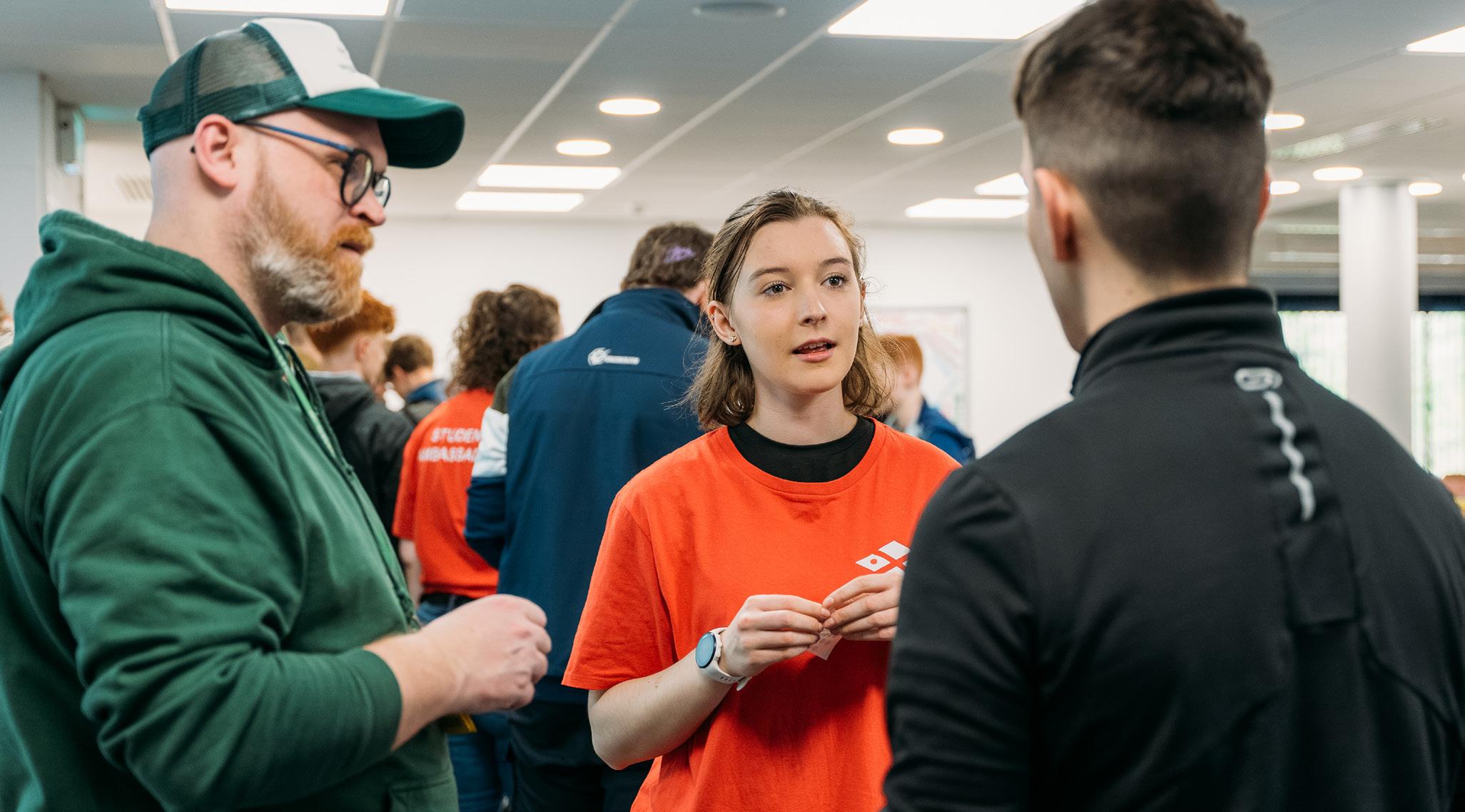
You’ll hear from current students and Student Ambassadors about their own experiences, giving you an honest insight
into life at SRUC both inside and outside the classroom. Open days are also a great way to meet like-minded people, explore facilities and support services, and get a feel for the welcoming community that makes SRUC such a great place to study.
Find out how studying with us can give you the practical skills, knowledge and industry experience needed to progress along your chosen career path, while helping you make informed decisions about your future.
For dates of our next open day events, visit www.sruc.ac.uk/opendays
ACCESSIBILITY
Our intention is to be as inclusive as possible. We will make reasonable adjustments to support attendance at open days and provide access to open day materials after an event, including the use of captioning and BSL translation. If there is an adjustment that would improve your experience of an open day event or related materials, please contact us on study@sruc.ac.uk. You can find out more about how we're making our digital content accessible at: www.sruc.ac.uk/ connect/about-sruc/policies-compliance/compliance/accessibility
Pathways and Progression
We offer courses at a wide range of levels, from access courses to PhDs. We try to offer you as much flexibility as possible in your studies; many of our courses are offered part-time as well as full-time and some by online distance learning.
If you are unsure which level of course is right for you, please contact us for advice. You can also look at the Entry Requirements pages for comparable qualifications. Further information about all the below can be found on our website: www.sruc.ac.uk/study-with-us/study-options
Full-Time
The time commitment and number of contact hours for full-time study varies by course. If you would like further detail, such as example timetables, please contact us and we will put you in touch with the course leader.
Part-Time
As a part-time (on campus) student you study alongside full-time students but take fewer modules/classes each year. Typically, part-time students study at half the rate of full-time, so a Diploma course would take you four years instead of two.
Distance Learning
We offer a number of distance learning courses which are studied at home and usually part-time. On some courses, you may need to attend occasional weekend or one-day study schools, where field work, case studies and practical assessments can take place.
Progression
Returning to Learning
We know there's no such thing as a typical student. Returning to education after a break from being in a learning environment can be a little daunting. We have a supportive and flexible approach to learning, and our students come from a range of backgrounds. We particularly welcome the diversity of life experiences that mature students bring into the learning environment and are delighted with the interaction and group bonding that emerges between those who join SRUC straight from school or college, and those who have taken a break from formal learning.
Advanced Entry
If you have appropriate qualifications such as HNC/HND, CertHE/DipHE, or a Foundation Degree, you may be able to apply for advanced entry into our degree courses, to avoid unnecessary repeated years. Contact our admissions team for advice.
Those who have the appropriate higher level school qualifications can apply for a degree course and will study with us for three-four years until they graduate. Some of our students, however, may take different routes through the courses offered.
Some students may apply initially for an HNC / CertHE or HND / DipHE and then continue on to a degree once they have completed those first one-two years. Others begin on college level qualifications, such as National Certificates, and decide to stay with us progressing from one level of study to the next.
“Learning to be a student again has definitely been a challenge but SRUC has a really supportive and encouraging atmosphere, whether you’re coming straight from school or a little later in life.”
Emily Willing Wildlife and Conservation Management
* Subject to validation ** Under SRUC’s Contextual Admissions Policy, we will relax our standard entry requirements for some students depending on their circumstances. More information on our Contextual Admissions Policy can be found on the website.
• National 5 / GCSE pass grades in English and Maths. Alternative entry qualifications, such as a related National Certificate, are also accepted.
• Four Highers (BBCC) OR three A-Levels (BCC) including a science subject or Geography.
BSc/BSc (Hons)
Agriculture
BSc/BSc (Hons)
Equine Science and Management
A science subject or Geography.
• National 5 / GCSE pass grades in English and Maths. Plus two weeks of practical work experience and recorded evidence of your riding ability.
including a science subject.
• Four Highers (BBCC)
OR three A-Levels (BCC)
A science subject.
BSc/BSc (Hons)
Horticulture (Plantsmanship)
BSc/BSc (Hons)
Science and Technology)
Horticulture (Plant
• National 5 / GCSE pass grades in English and Maths. Alternative entry qualifications, such as a related National Certificate, are also accepted.
including a science subject.
• Four Highers (BBCC) OR three A-Levels (BCC)
A science subject.
BSc/BSc (Hons)
• National 5 / GCSE pass grades in English, Maths and a science. Applicants are recommended to have undertaken a minimum of 140 hours (four weeks) experience of working within a veterinary practice. We appreciate that gaining this amount of work experience in a practice may be difficult and challenging. Therefore, we would also be keen to know if you have undertaken any other animal related work experience. Applicants are asked to provide evidence of completed and any planned work experience.
• Four Highers (BBBB) OR three A-Levels (BBB) including a literary subject (preferably English) and a science (Biology, Human Biology, Chemistry or Physics)
Veterinary Nursing BSc/BSc (Hons) English and a science.
• National 5 / GCSE pass grades in English and Maths. Advanced entry into Year two is possible with higher qualifications.
• Four Highers (BBCC) OR three A-Levels (BCC) including Biology, Human Biology or Chemistry.
Minimum Entry Requirements:
**
• National 5 / GCSE pass grades in English and Maths.
BSc/BSc (Hons)*
Veterinary Biosciences
• Four Highers (ABBB) OR three A-Levels (BBB) including Biology, Human Biology or Chemistry.
Standard Entry Requirements:
BSc/BSc (Hons)
Animal Welfare Science
Biology or Chemistry.
• Recent and relevant vocational/work experience is also required. Comparable Qualifications: three A Levels at ABB including one science (Biology, Chemistry, Physics, Maths), plus five GCSEs (Grades A*/9-C/4) including English (C/4) and Maths (B/6) JCPA with five subjects including English (Merit or above) and Maths (Merit or above) plus five Irish Leaving Certificate subjects at Higher level (H1, H2, H2, H3, H3) including at least two science subjects (Agricultural Science, Biology, Chemistry, Physics, Maths)
• Five National 5 (Grades A-C) including Maths/Applications of Maths (B) and English (C).
• Five Highers at BBBBB including at least two science subjects (Chemistry, Physics, Biology, Human Biology, or Maths/ Applications of Maths) plus
• Two Advanced Highers at BB including one science subject (Chemistry, Physics, Biology) plus
Minimum Entry Requirements:
**
• Recent and relevant vocational/work experience is also required.
• Five National 5 (Grades A-C) including Maths/Applications of Maths (B) and English (C).
BSc/BSc (Hons)
* Wildlife and Conservation Management
Sustainable Golf Management
BA/BA (Hons)
Rural Business Management
• National 5 / GCSE pass grades in English and Maths. Other equivalent qualifications are accepted and mature applicants with alternative qualifications and/or work experience should seek guidance from the college.
• Four Highers (BBCC) OR three A-Levels (BCC)
No specific subjects required.
PROGRAMME TITLE ENTRY REQUIREMENTS
BSc/BSc (Hons)
Environmental Management
• National 5 / GCSE pass grades in English and Maths.
• Four Highers (BBCC) OR three A-Levels (BCC) including a science subject, Geography, or Psychology.
A science subject, Geography or Psychology.
PROGRAMME TITLE
ENTRY REQUIREMENTS
Specific entry requirements can be summarised as below:
For more information on comparable qualifications and entry requirements search
Comparable
Degree qualifications will always require formal evidence of literacy and numeracy, usually in the form of National 5 (Grade A-C)/GCSE (A*/9-C/4) English and Maths.
Degree Programmes BA (Hons) / BSc (Hons)
For full detail, please refer to the website.
Veterinary Science BVSci
• Five Highers at AABBB including at least two science subjects (Chemistry, Physics, Biology, Human Biology, or Maths/ Applications of Maths) plus
• Two Advanced Highers at BB including one science subject (Chemistry, Physics, Biology) plus