Week 13, Semester 1, 2026
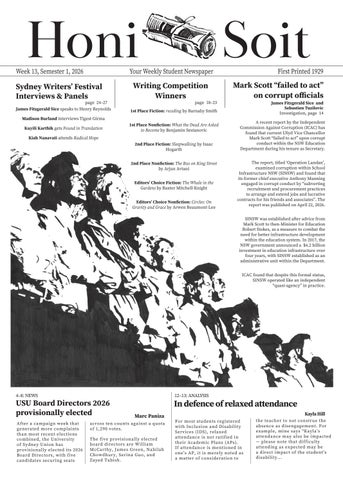
Sydney Writers’ Festival Interviews & Panels
page 24–27
James Fitzgerald Sice speaks to Henry Reynolds Madison Burland interviews Tigest Girma
Kuyili Karthik gets Found in Translation
Sydney Writers’ Festival Interviews & Panels
page 24–27
James Fitzgerald Sice speaks to Henry Reynolds Madison Burland interviews Tigest Girma
Kuyili Karthik gets Found in Translation
page 18–23
1st Place Fiction: receding by
1st Place Nonfiction: What the Dead Are Asked to Become by Benjamin Sestanovic
2nd Place Fiction: Sleepwalking by Isaac Hogarth
James Fitzgerald Sice and Sebastien Tuzilovic Investigation, page 14
A recent report by the Independent Commission Against Corruption (ICAC) has found that current USyd Vice Chancellor Mark Scott “failed to act” upon corrupt conduct within the NSW Education Department during his tenure as Secretary.
The report, titled ‘Operation Landan’, examined corruption within School Infrastructure NSW (SINSW) and found that its former chief executive Anthony Manning engaged in corrupt conduct by “subverting recruitment and procurement practices to arrange and extend jobs and lucrative contracts for his friends and associates”. The report was published on April 22, 2026.
SINSW was established after advice from Mark Scott to then-Minister for Education Robert Stokes, as a measure to combat the need for better infrastructure development within the education system. In 2017, the NSW government announced a $4.2 billion investment in education infrastructure over four years, with SINSW established as an administrative unit within the Department.
ICAC found that despite this formal status, SINSW operated like an independent “quasi-agency” in practice.
After a campaign week that generated more complaints than most recent elections combined, the University of Sydney Union has provisionally elected its 2026 Board Directors, with five candidates securing seats
across ten counts against a quota of 1,290 votes.
The five provisionally elected board directors are William McCarthy, James Green, Nabilah Chowdhury, Serina Guo, and Zayed Tabish.
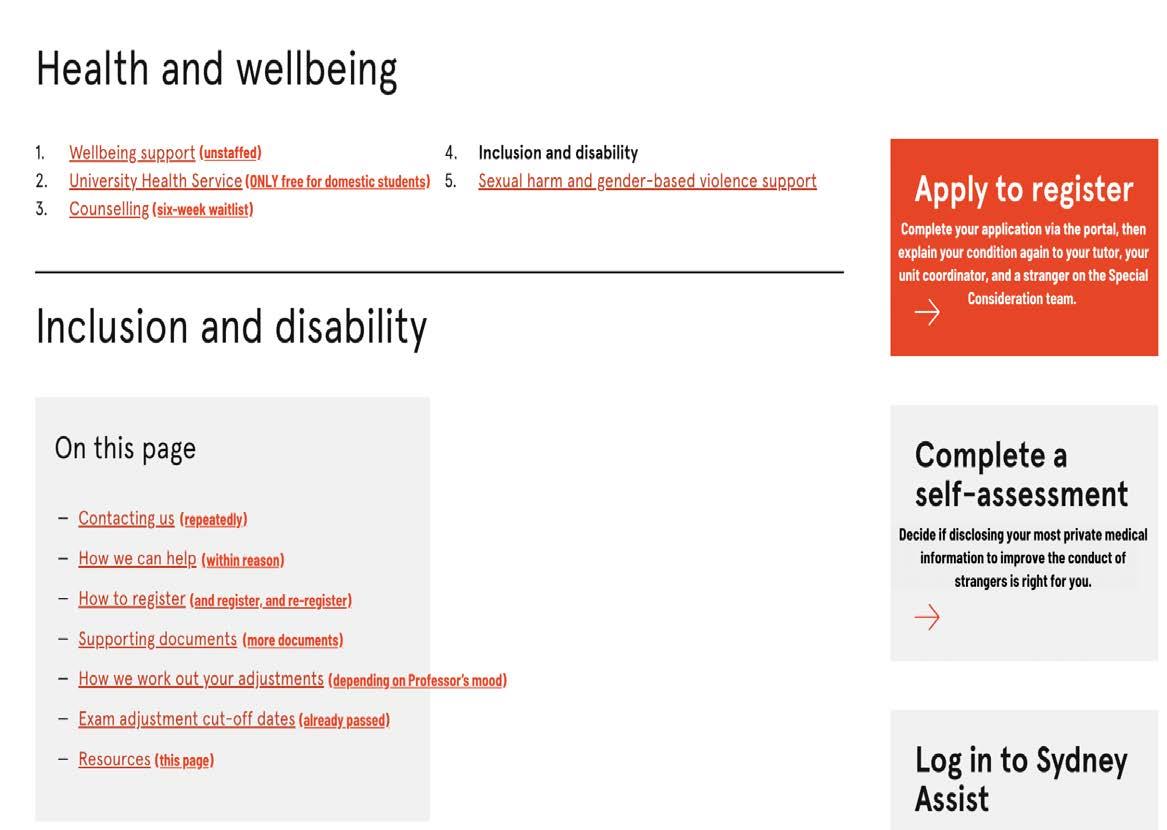
For most students registered with Inclusion and Disability Services (IDS), relaxed attendance is not ratified in their Academic Plans (APs). If attendance is mentioned in one’s AP, it is merely noted as a matter of consideration to
the teacher to not construe the absence as disengagement. For example, mine says “Kayla’s attendance may also be impacted — please note that difficulty attending as expected may be a direct impact of the student’s disability...
Madison Burland
Anastasia Dale
James Fitzgerald Sice
Kuyili Karthik
Kiah Nanavati
Firdevs Sinik
Sebastien Tuzilovic
Sophie
Honi Soit publishes on stolen Gadigal land. Sovereignty was never ceded. The University of Sydney is a colonial institution that upholds Western knowledge as superior to First Nations knowledge systems. We reject this hierarchy.
As student journalists, we recognise that mainstream media has been complicit in silencing and misrepresenting Indigenous voices since invasion.
We commit to centring First Nations perspectives in our reporting, to challenging the colonial structures embedded in journalism, and to amplifying the voices of those resisting ongoing dispossession. We pay our respects to Elders past and present, and to all First Nations students and contributors.
Always was, and always will be Aboriginal land.

Arjun
Arwen Beaumont-Lee
Madison
James
Kayla
Isaac
Aya
Kuyili
Marc
Benjamin
Firdevs
Barnaby
Ananya
Sebastien
Ava
Wendy
Kiah




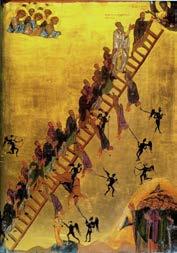


The end of the beginning. It’s a phrase that sounds like a finish but isn’t one, and that’s exactly the shape of semester’s end. Thirteen weeks, done. At least some readings read. But it only looks like a finish line. Exams are still ahead. A whole winter awaits. The degree runs on past the horizon, and the world beyond the sandstone hasn’t paused for our STUVAC. We haven’t finished. We’ve only finished beginning.
We feel it ourselves. A semester ago we didn’t know how to make this paper. We’re still not entirely sure how, but we’ve at least learned the shape of our own notknowing, which is its own small kind of graduation.
This edition asks contributors to look back at the beginning: to take stock of the semester, and to grade the university. Feel free to be a harsh marker!
James and Sebastien report what ICAC found about our own Vice-Chancellor’s years running SINSW. Kayla Hill argues that attendance shouldn’t be mandated for disabled students.
We give you the latest USU & CAPA news. English and Education degrees are put under the microscope. Euphoria and a new Mark Fisher movie are thoughtfully critiqued.
We’re proud to print the amazing winners of the 2026 Honi writing
Dear Editors,
I am replying to a letter in last week’s edition criticising my article ‘On AI “Artists”’, the author of which took issue with my (or rather, Marx’s claim) that ‘humanity begins “to distinguish themselves from animals as soon as they begin to produce their means of subsistence”. In response they provided an exhaustive list of animals engaged in ‘farming’.
I refer the author of that letter to the word ‘begins’. It is an


essential moment commencing the process of humanity consciously transforming nature, and thus augmenting our own needs and abilities. The self-productive character of humanity which emerges from this, creating our “actual material life” by consciously mediating between ourselves and nature via production is actually the essential ground for the distinction. Producing our means of subsistence begins this history; for the termite or crab, it does not.
Which iconic traitor are you?
Aries: Anakin Skywalker. Try taking the high road sometimes. And don’t go to the beach this week!
Taurus: Walder Frey. You nasty and old! Please RSVP no to that wedding you’ve been invited to.
Gemini: Marcus Brutus. “ Et tu, Brute?” You can be a little pointy, but only ever for the noblest reasons. Put the knife down this week.
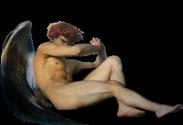
Cancer: Judas Iscariot. Consumed with biblical guilt perhaps, but you are an icon nonetheless. I forgive you!
Leo: Lotso from Toy Story 3 You may seem cuddly, but cross you once and its straight to the incinerator.

Libra: Edmund from Narnia. You’re a sucker for sweet treat, sue ya!
competition: Barnaby Smith’s receding , where Warragamba exhales and a whole basin dissolves and returns, and Benjamin Sestanovic’s What the Dead Are Asked to Become , a deeply human essay on grief and the violence of being made useful.
Elsewhere the Sydney Writers’ Festival rolls into town, and the rest we’ll let you find for yourselves.
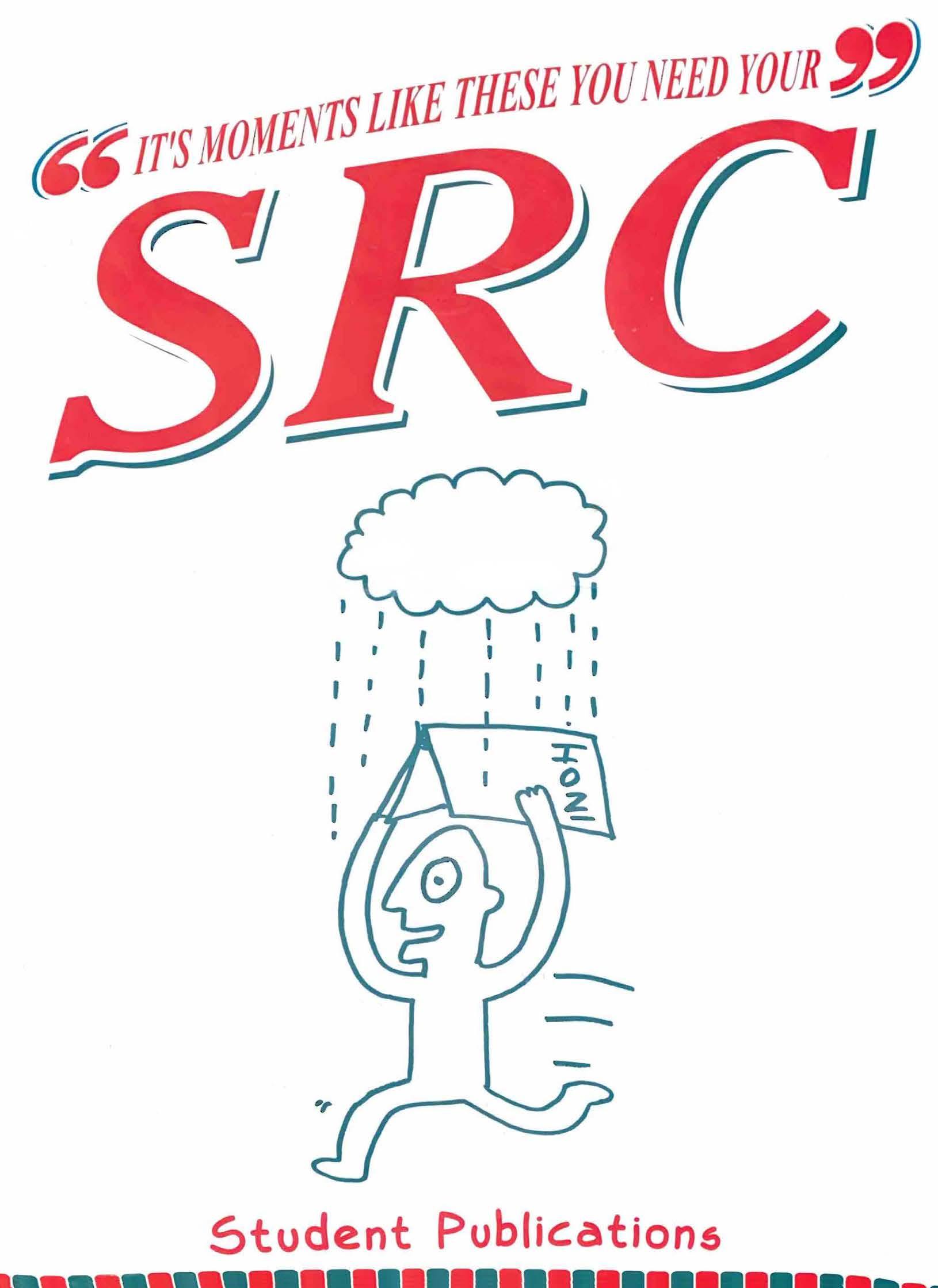
The end of a beginning is just where the real thing starts. Remember to be kind. We’re so glad you began with us. And yes, you can use Honi as an umbrella.
Burn for Honi
Conversely, if you search for identity in the immediate concrete appearance, then “men can be distinguished from animals by consciousness, by religion or anything else you like.” You equally might have claimed that humanity is distinguished by its capacity for abstract thought, complex language, or whatever else. I am reminded of Plato’s definition of humans as ‘featherless bipeds’, to which Diogenes raised a plucked chicken and cried out “Behold! A man.”
Alastair Panzarino





Virgo: Scar from Lion King. Hot and queer-coded, sure, but you’d shove a family member off a cliff to get what you want. We see you.
Scorpio: Iago. If you’re going down, lord knows you’ll take everyone with you!
Sagittarius: Lucifer himself! You’ve been knocked down but you’ve made a place for yourself in the world.
Capricorn: Peter Pettigrew. You little rat, sniff sniff. Loyalty under pressure is hard, and you survived. Treat yourself, you’ve earned it.
Aquarius: Gollum. Lover of jewellry, collector of trinkets, drop the hair care routine please!
Pisces: Guy Fawkes. You love to plot, succeful or not, you’re known to go out with a bang.


Adjusted accounts, “gaslighting” allegations, and a professorial revolt: The seventh NSW university sector hearing
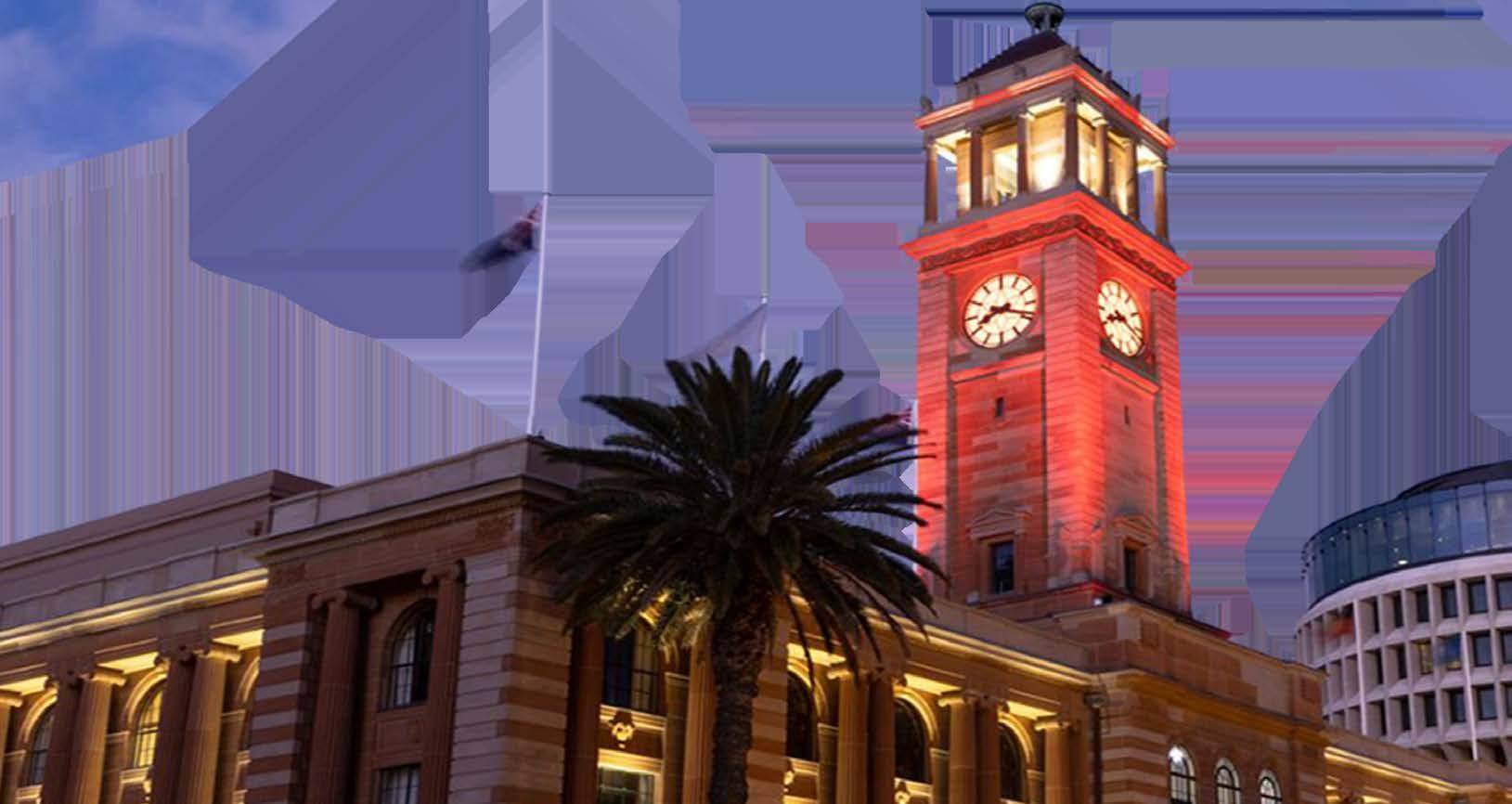
The seventh hearing of the NSW parliamentary inquiry into the university sector heard evidence at the Newscastle City Hall, on the University of Newcastle’s (UoN) Business Improvement Program, the composition of its university council, and psychosocial safety conditions at UoN and Charles Sturt University (CSU). The Committee took testimony from UoN senior management, the National Tertiary Education Union (NTEU), and the Australia Institute. It also heard from the University of Newcastle Students’ Association (UNSA) and NTEU representatives from CSU.
The Business Improvement Program and the “adjusted” accounts
Alex Zelinsky told the Committee on the 30th of April that the Business Improvement Program had identified a target of $26.6 million in ongoing savings, with the net reduction in full-time equivalent staff being “under seven.”
Committee chair Sarah Kaine questioned Zelinsky on the university’s use of an “adjusted operating result” that had been reported separately from its audited accounts, asking whether the methodology had been peer reviewed or audited by the Auditor-General. Zelinsky directed detailed questions to chief financial officer Paul McCubbin.
Denniss disputes the figures
Australia Institute co-CEO Richard Denniss appeared by video conference and told the Committee that, according to UoN’s audited accounts, the university was “not having a financial crisis.” Denniss told the Committee that the adjusted figures “are not in the audited accounts” and that “no CEO of a company would get away with this.” He pointed to page 34 of UoN’s 2024 annual report, telling the Committee that the adjustments excluded commercial operations revenue and investment revenue but did not exclude corresponding expenses, contrary to evidence given by Zelinsky and McCubbin earlier in the day.
Denniss told the Committee that UoN’s total equity had risen from $1.3 billion to $1.8 billion between 2015 and 2024, with retained earnings increasing from $0.7 billion to $1.1 billion. Committee member Taylor Martin was called to order twice by the Chair during his questioning of Denniss after raising the Australia Institute’s funding sources.
Workload, wellbeing, and a professorial revolt
Senior Deputy Vice-Chancellor Belinda Tynan confirmed under questioning from Committee member Anthony D’Adam that UoN had not conducted a risk assessment of its academic workload model, which staff had raised as a psychosocial hazard. D’Adam put to Tynan that the absence of a risk assessment “would constitute a form of negligence under work health and safety law.” Tynan said the policy was currently under review.
The Committee heard from a panel including UoN NTEU Branch President
Marc Paniza reports.
Aydos told the Committee that the university had assessed her risk as “insignificant or minor” despite letters from her GP and oncologist, and that a “Well at Work” meeting she was invited to included the university’s industrial lawyer without prior notice. Dastoor told the Committee that the professoriate had taken unprecedented joint action to raise governance concerns with the council, with nine senior academics tabling a formal letter to the Chancellor. He said the Chancellor’s written response, received the day before the hearing, asked the group to “communicate through normal channels from here on.”
Students and CSU
UNSA chair and President Imogen Reid told the Committee that UoN’s 2026 academic calendar had been approved by the Deputy Vice-Chancellor (academic) under delegated authority, bypassing a vote at the Academic Senate. Former UNSA president Jennifer Lowe told the Committee that systems for reporting sexual assault on campus had previously been reported to the office of one executive, raising a “conflict of interest” concern.
NTEU CSU branch president Anna Corbo Crehan told the Committee that CSU was partway through a change program aimed at saving $35 million between June 2025 and the end of 2026, and that 82 per cent of CSU respondents to the Australian University Census on Staff Wellbeing had been identified as experiencing significant psychosocial risks.
The final witness, associate professor Patricia Pender of UoN, told the Committee that she was on medical

After a campaign week that generated more complaints than most recent elections combined, the University of Sydney Union has provisionally elected its 2026 Board Directors, with five candidates securing seats across ten counts against a quota of 1,290 votes.
The five provisionally elected board directors are William McCarthy, James Green, Nabilah Chowdhury, Serina Guo, and Zayed Tabish. Voters appeared to decide that Will would, as promised, “fix it,” delivering McCarthy exactly 1,290 first preferences and electing him outright in the very first count. James Green, whose slogan invited students to “touch grass and vote Green,” was elected at count nine alongside Nabilah Chowdhury, who campaigned on the line that “Nabilah is necessary” and whom the count ultimately proved necessary to the result. Serina Guo, who asked students to “speak up with Serina,” was elected at count ten, while Zayed Tabish, running on the promise that students would “get ahead with Zayed,” got ahead in the most procedurally unusual way available, having been excluded at count eight before being elected by default to the final seat once no continuing candidates remained.
McCarthy’s first preference tally is the highest any candidate has recorded since before the pandemic, a figure more reminiscent of the comparatively high participation contests of the late 2010s, and it raises the genuine question of whether student politics at the University of Sydney has finally recovered to its pre-COVID condition.
candidates committed to integrating BDS into the USU.
Issak, described on those posters as a Liberal Party staffer and Vice President of the USU Conservative Club, did not respond to Honi’s requests for an interview, did not complete the candidate quiz, and was also absent from Soapbox, which left voters with comparatively little on which to assess him beyond the material his opponents produced. The election attracted considerable attention on Reddit, where one post titled “Whats up with the USU” asked why a Liberal was “running on Mamdani campaign graphics” before adding approval of the six candidates who support BDS and an intention to vote for them, a reaction that captured both the visual confusion of the campaign and the genuine support the BDS
the F23 administration building.
A further Reddit post described an encounter with a campaigner in a yellow shirt, understood to be associated with Will McCarthy’s campaign, who continued to press a student to take out their phone after three separate refusals and then invoked the candidate’s mental health platform as leverage. The author of the post, who disclosed their own hospitalisation and discontinued studies, condemned the campaigner’s attempt to weaponise mental health for electoral purposes.
The complaint speaks to a broader tension across the week between candidates eager to demonstrate ground presence and students who simply wished to attend their classes.
The post garnered significant traction in the days that followed, and the thread it generated became a focal point for a broader unease about campaigner conduct on Eastern Avenue across the week. The walk-and-talk tactic of falling into step beside a target was a hallmark of several campaigns and of McCarthy’s in particular, and Honi can confirm the technique was deployed at length on multiple members of this masthead’s own editorial team by a campaigner who did not appear to recognise who they were talking to.
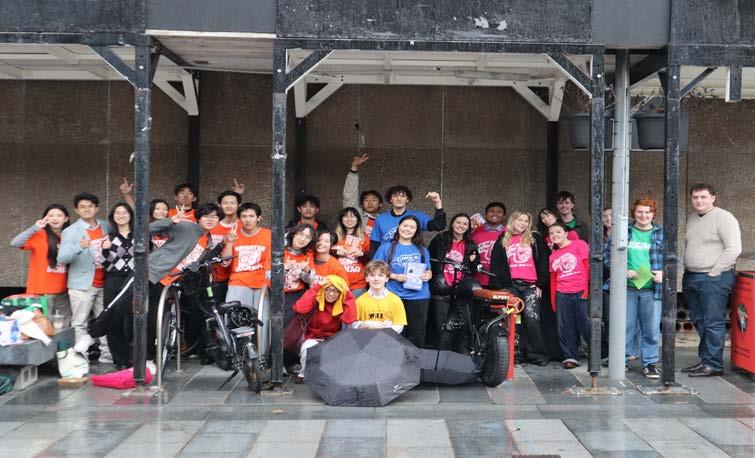
All five provisionally elected directors campaigned as part of the broader left grouping that promised to deliver Boycott, Divestment and Sanctions on the Board, appearing together on the yellow “Vote for Justice” material that urged students to support six candidates committed to what the posters described as an apartheid-free zone. Five of those six were elected, the only exception being Bohao Zhang, whose campaign team spent the week wearing headpieces shaped as orange arrows pointing downward at their own heads.
Whether a Board now containing five directors who each pledged to integrate BDS will actually deliver on that commitment is a question that the coming two years, rather than the campaign just concluded, will answer, and we shall see whether it comes to fruition.
Notably absent from the six was Anton Issak, who instead became the subject of much of the opposing material plastered on the Eastern Avenue noticeboards. The posters reproduced an original photograph posted by the Student Representative Council’s Autonomous Collective Against Racism (ACAR) that featured the six
platform attracted.
Campaign week was contentious. A source told Honi that the USU received one hundred complaints on Wednesday alone, and Honi understands that most if not all candidates received some form of complaint or campaign ban over the period. Several of the incidents acquired their own nicknames. In what has become known as Xie Xie Gate, a campaigner in a pink shirt, believed to be Zayed Tabish, entered a Korean language class in the Quadrangle at around eleven in the morning and greeted the room with “ 谢 谢 ” (xie xie) despite Korean text being displayed on the classroom screen, an episode that prompted a widely shared Reddit post objecting to the assumption that the Asian students present were Chinese and noting that the campaigner had been forgettable in every respect except that one.
In a separate matter dubbed Chicken Nugget Gate, Kevin Hua was alleged to have distributed chicken nuggets to students during Wednesday’s campaigning, which falls outside the rules governing inducements. That same afternoon, within metres of the campaigning, Students Against War held a protest that gathered at the Fisher Library and marched towards
The visual presentation of the campaign was colourfully diverse. Emily Boxall contested with a cubic fabric “box” corflute that played on her surname, James Green deployed an A-frame corflute of “Green Flags,” and Bohao Zhang’s campaign team wore the downward orange arrows already described. The final day of campaigning was rained on, and across the week the candidates with factional backing, namely Zayed Tabish, James Green and Bohao Zhang, fielded the largest numbers of campaigners on Eastern Avenue and around campus, while Serina Guo, Will McCarthy and Nabilah Chowdhury maintained a consistent and visibly dedicated presence on the ground through both rain and freezing wind.
These five directors will serve twoyear terms, and they constitute the first Board elected under the newly incorporated USU, an arrangement that subjects them to stricter fiduciary duties than their predecessors faced. Whether those duties prove compatible with the BDS commitments on which all five campaigned, and whether the promises made during one of the more eventful campaign weeks in recent memory are honoured once the directors are seated, will be tested over the coming two years.
Nidzam Shah Hussain, 2022 and 2023 President of the Council of Australian Postgraduate Associations (CAPA), has been arrested and charged with making and presenting misleading documents to financial institutions, in relation with allegations of inappropriately obtaining official CAPA funds.
Shah’s tenure as President was marked by controversies such as another CAPA member claiming to be “caretaker president”, and the denial of the voting rights of 15 of CAPA’s affiliate student unions, including the University of Sydney’s postgraduate union SUPRA.
According to documents seen by Honi Soit, approximately $53,000 in allegedly unauthorised payments were made from a CAPA bank account, out of a total balance of roughly $200,000.
Allegedly, of that amount, approximately $33,000 was transferred to Shah, $8,000 was transferred to the outgoing CAPA General Secretary, and $12,000 to another individual.
Documents purportedly authorising the closure of the CAPA account were subsequently lodged with the Commonwealth Bank. The remaining funds in the account were then moved to a newly opened account, and the old account was frozen. These documents were allegedly doctored.
The irregularities were uncovered by incoming Board Chair Jesse Gardner-Russell in early 2024 while undertaking routine signatory handovers as authorised by the CAPA Board.
In a June 2024 letter to members, GardnerRussell informed affiliates that the Board had uncovered “concerning discrepancies involving the submission of potentially doctored documents to financial institutions by CAPA and potentially unauthorised payments made by CAPA”. The matter was referred to Consumer Affairs Victoria, which directed CAPA to report it to Victoria Police.
On the 9th of April, 2026, CAPA sent a letter to its members informing them Shah “has
been arrested and charged with creating false documents”.
Following Shah’s removal at the December 2023 ACM, five constituent members formally requested a Special General Meeting in June 2024. At that meeting, all proposed resolutions were carried, including constitutional amendments tightening governance procedures and the appointment of an independent returning officer.Jesse Gardner-Russell, current CAPA President, told Honi: “We are proud that CAPA still exists. That it is independent. What is most important to highlight here, is that postgraduate student governance was able to follow all of the correct procedures, work with law enforcement, improve our internal regulations and policies, and also deliver increased operational performance, all at once. Student governance is not glamorous. It operates without the resources of a professional organisation and without the limitless access to legal support. But it matters. This process has strengthened our internal governance capabilities immensely.”
Public sector nurses and midwives across New South Wales have secured a significant pay rise following a ruling by the NSW Industrial Relations Commission, in a decision welcomed as historic, but criticised as insufficient to address long-standing workforce pressures in the state’s health system.
The Full Bench of the Commission handed down a three-year wage determination effective from the 1st of July 2025, delivering a 16 per cent increase for registered nurses and midwives, with the increase staged as a 10 per cent rise in the first year, followed by 3 per cent increases in each of the following two years. Enrolled nurses will receive an 18 per cent increase over the period, while assistants in nursing and midwifery will receive a 28 per cent rise, reflecting concerns about pay compression across sector roles.
The decision was made from a major industrial case lodged in early 2025 by the NSW Nurses and Midwives’ Association (NSWNMA), which included more than 17,000 pages of evidence.
The Union argued that nursing and midwifery have been historically undervalued, in part due to gendered assumptions around care work and systemic inequities in public sector wage structures.
The Commission acknowledged nursing and midwifery as “essential” and “historically undervalued” professions, while also citing broader economic constraints affecting wage outcomes across
the public sector.
NSWNMA General Secretary Michael Whaites said the decision delivered significant increases but fell short of the structural reform needed to stabilise the workforce.
“Registered nurses and midwives are the backbone of this workforce,” he said. “We recognise the outcome, but we had hoped for stronger recognition of their professional value.”
He said improvements for enrolled nurses and assistants were a positive step, but did not resolve broader issues of pay equity and workforce retention.
Assistant General Secretary Katrina Bough said the decision is unlikely to ease ongoing cost-ofliving pressures or staffing shortages in public hospitals.
“Today’s decision is unlikely to assist in attracting and retaining experienced nurses and midwives,” she said, warning that continued workforce shortages could place further pressure on the system.
She added that many nurses remain under financial strain and that disparities between nursing and higher-paid public-sector roles continue to raise concerns about workforce equity.
A statement from the University of Sydney Nursing Society quoted that the outcome reflected
Firdevs Sinik reports.
ongoing concerns among students and emerging health professionals about the value placed on nursing work, stating that the pay rise does not meet the scale of change sought by the Union or fully address long-term workforce challenges.
“As nursing students, we are entering a profession that is already under pressure from cost-of-living challenges and systemic issues in healthcare,” the spokesperson said.
They noted that nursing remains comparatively lower-paid than other public sector roles and said this raises broader questions about how the profession is valued.
“The burden on the public health system continues to rise alongside demand for nurses.”
The NSWNMA has called for further government action on workforce planning, retention strategies and long-term reform, arguing that wage increases alone will not resolve systemic pressures in the health system.
The ruling marks the conclusion of a two-year campaign by the NSWNMA involving thousands of nurses and midwives across metropolitan and regional health services. While the pay rise has been described as a breakthrough in wage justice, unions and stakeholders say sustained reform will be required to address ongoing staffing and retention challenges.

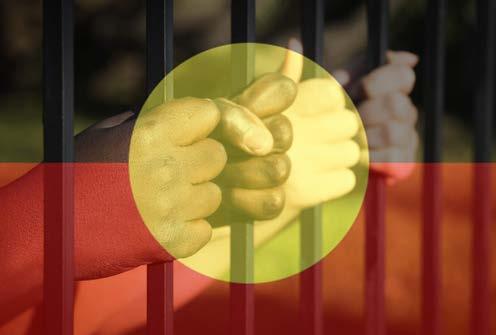
The United Nations (UN) has delivered a scathing assessment of Australia’s treatment of Indigenous children in the criminal justice system, warning that the extreme overrepresentation of Aboriginal and Torres Strait Islander young people in detention reflects “systemic and structural racial discrimination”.
The findings, handed down this week by the UN Committee on the Elimination of Racial Discrimination (CERD), have intensified pressure on Prime Minister Anthony Albanese and state governments to confront what Indigenous legal advocates describe as a national crisis.
The Committee’s statement followed a complaint lodged last year by Indigenous international law experts, Professor Megan Davis and Associate Professor Hannah McGlade, who argued Australia was failing to uphold its obligations under International human rights law.
In its response, the Committee expressed “grave concern” that Indigenous children and communities continue to experience racial discrimination in areas including education, housing, healthcare, and social security, while also being disproportionately targeted by the justice system.
Particular concern was directed at the treatment of Indigenous children in detention facilities, including reports of inadequate healthcare, solitary confinement, illtreatment, and the continued use of spit hoods. The Committee also raised alarm over reports of Indigenous children being detained alongside adults and incidents of self-harm and suicide in custody.
The findings come against the backdrop of stark national statistics. Although Indigenous children account for only 6.5 per cent of Australians aged between 10 and 17, they make up approximately 65 per cent of the youth prison population.
The National Aboriginal and Torres Strait Islander Legal Services (NATSILS) said the UN’s assessment confirmed what Indigenous communities and advocates had been warning for years.
Nerita Waight, chair of NATSILS, stated to National Indigenous Times that the findings should serve as a “warning flare” to the federal government.
“This is yet another warning flare to the Prime Minister that Australia is heading down a dangerous path,” Ms Waight said.
“Aboriginal and Torres Strait Islander children are being sacrificed so that state and territory governments can score political points.”
The Committee specifically criticised what it described as “racial profiling in law enforcement operations and the overpolicing” of Indigenous communities. It also pointed to legislative changes in states, including Victoria and Queensland, where tougher sentencing laws have resulted in harsher penalties for children, including the possibility of life imprisonment in some circumstances.
Recent reforms in Victoria, Queensland, and the Northern Territory have also removed detention as a last resort for some offences committed by children — a move widely condemned by legal and human rights organisations as being contrary to recommendations from the Royal Commission into Aboriginal Deaths in Custody.
Indigenous advocates contend that the current policy direction across multiple jurisdictions is not only ineffective but also actively harmful, especially for vulnerable young people already experiencing disadvantage.
Associate Professor Hannah McGlade, an expert member of the UN Permanent Forum for Indigenous Issues, said to the National Indigenous Times that the Committee’s findings exposed serious breaches of international obligations designed to prevent racial discrimination.
“We say we are a country that condemns racism, yet it is evident that the criminal justice systems and laws are racially discriminatory,” Dr McGlade said.
“The Albanese Government can’t simply neglect its obligations under international law.”
Dr McGlade urged the Prime Minister to assume a stronger leadership role in addressing the issue at the national level, despite criminal justice policy traditionally being the responsibility of state and territory governments.
“We want to see leadership from Prime Minister Albanese, who must lead with integrity and ensure that racism is resoundingly rejected for First Nations children,” she said.
Pressure on the federal government has intensified where in the previous month, over 200 lawyers, academics, Indigenous organisations, and advocacy groups signed an open letter urging the Prime Minister to declare the over-incarceration of Aboriginal and Torres Strait Islander children a national emergency.
The signatories argued Australia’s youth justice policies are incompatible with both international human rights standards and the nation’s own Closing the Gap commitments.
In response to the criticism, a federal government spokesperson reiterated that youth justice laws are primarily determined by
Firdevs Sinik reports.
states and territories.
“Only states and territories can set justice policies,” the spokesperson said.
“Where we can, we are working to support early intervention, diversion and, importantly, reduce recidivism.”
However, that position has been challenged by legal experts who argue the Commonwealth has both the constitutional power and international responsibility to intervene.
Legal advice obtained last year by the Justice and Equity Centre from barristers Kate Eastman AM SC and Emma Dunlop concluded the federal government could rely on Section 51(xxix) of the Constitution — the external affairs power — to legislate in order to meet Australia’s international human rights obligations.
According to Indigenous legal advocates, the debate has shifted from whether the Commonwealth can act to whether it is willing to do so.
Ms Waight said the federal government had both “the legal authority and the moral obligation” to respond decisively.
“The world watchdog for racial discrimination is calling Australia out for its blatant disregard for children’s rights and its persistent racism. This is shameful,” she said.
“The Prime Minister cannot ignore this. In years to come, he can’t say he didn’t know.”
NATSILS is now calling on the federal government to convene an emergency national summit on youth justice, bringing together Indigenous leaders, legal experts, community organisations, and governments to develop a coordinated response.
Advocates say meaningful reform must include raising the age of criminal responsibility, ending the use of solitary confinement and spit hoods on children, investing in diversionary programs, and addressing the broader social inequalities that contribute to youth offending.
The latest UN findings add to mounting international scrutiny of Australia’s treatment of Indigenous peoples, particularly within the criminal justice system. Human rights organisations have repeatedly warned that punitive approaches to youth crime risk entrenching cycles of incarceration, and disadvantage rather than improving community safety.
For many Indigenous leaders, this issue goes beyond legal reform, as the over-incarceration of children reflects deeper structural inequalities that successive governments have continuously failed to address.
As calls for action intensify, the Albanese Government faces increasing pressure to determine whether to continue deferring responsibility to the states or to pursue a national response to what critics identify as one of Australia’s most urgent human rights challenges.
At 11.30am on May 12, approximately 100 students protested outside Parliament House ahead of the 2026 Federal Budget, demanding the Labor government overhaul the Job-ready Graduates scheme and end $50,000 arts degrees.
The protest was organised by the National Union of Students (NUS), the peak representative body for Australian students, which represents 1.6 million students nationally.
NUS president Felix Hughes stated that “students are sick of being told to wait while university costs spiral further out of control.”
“The Job-Ready Graduates Package was a disaster from day one. It hiked fees, cut funding, and slammed the door on students from working-class backgrounds.
“Young people are being told to accept a future defined by debt, insecure work, and unaffordable housing, while the Government refuses to fix one of the most damaging higher education policies in decades. If the Government is serious about tackling inequality, it cannot keep delaying action on a policy that punishes students for getting an education.”

James Fitzgerald Sice and Sebastien Tuzilovic report.
The protest came amid renewed parliamentary scrutiny of the Job-ready Graduates scheme, with a Senate inquiry currently examining the Higher Education Support Amendment (Reverse Job-Ready Graduates Fee Hikes and End $50k Arts Degrees) Bill 2025. The bill, introduced by the Greens, seeks to unwind the fee hikes imposed under the Morrison government’s JRG package and reduce the cost of degrees in fields including arts, law, commerce, society and culture, and communications.
The inquiry was referred in February, received submissions in April and is due to report in June, placing additional pressure on the Albanese government to respond before the next wave of students enrol. Critics have used the inquiry to argue that JRG has failed to achieve its stated aims and has instead increased student debt while reducing funding for universities.
Greens Senator for NSW and spokesperson for Higher Education, Mehreen Faruqi, spoke at the protest. “Five years of JRG has resulted in $52,000 arts degrees, billions of dollars of added debt burden on students and funding cuts from universities.”
“No one is happy, but students are on the frontlines of the terrible consequences of

this reckless policy that has met none of its objectives.
“The Albanese government must stop making excuses for failing to take action. There is every reason to take the first step in today’s budget - reverse the fee hikes and fund universities for the shortfall.
“It says a lot about this Labor government’s priorities when there is always money for war, always money for tax breaks for wealthy property investors and subsidies for fossil fuel companies, but no money to properly fund higher education.”
Independent Senator David Pocock, who also spoke at the protest, similarly criticised the scheme. Ahead of the Budget, Pocock pointed to Treasury analysis suggesting some humanities and creative arts graduates could take more than 25 years to repay their bachelor’s degree debt.
The government’s own Universities Accord also found the JRG scheme required urgent remediation, stating that its price signals had failed to meaningfully shift student choices. However, despite those findings, the 2026 Federal Budget did not deliver the structural reform demanded by students and activists to end $50,000 degrees.
“Defend Waterloo”: overnight occupation rallies to save public housing from demolition
Construction companies are beginning the demolition of Waterloo Public Housing Estate, one of the biggest public housing projects in the Southern Hemisphere, on Monday, 25 May. The night before, community members and protesters rally in defense of Waterloo’s soon-to-be evicted community in an overnight occupation of the area. Signs read: “Housing is a human right,” “Stop demolishing public housing,” and “Housing for people, not for profit”.
While more than 65,000 people remain on the waitlist for public housing and 300,000 homes lie empty in NSW, current residents of public housing in Waterloo are being evicted.
Action for Public Housing (A4PH) wrote in a press release: “Waterloo tenant letterboxes are awash with letters from Homes NSW declaring the demolition will begin of 150, perfectly liveable apartments. Fifteen residents are still living within apartment blocks, set to be demolished.” The $4 billion development of high-rise buildings is expected to take between ten and 15 years.
Wendy Thompson spoke to Karyn Brown and Arlo on the occupation’s ground.
Karyn Brown, who has lived in Waterloo South for 35 years, more than half of her life said she was attending in solidarity with the homeless. Brown lives in housing across the road from some of the demolished buildings, and says she will “lose the support” of her neighbours if they are evicted. She says the demolition will begin even though there are “15 people living in there who haven’t been found places to live. [sic]”
“A total of 750 tenants will be evicted to make way for private developer Stockland to build 3300 homes - 50% or 1650 of them will be over-priced, luxury homes. They’re saying 20% will be ‘affordable’ housing, and 30% will be “social” housing. Only 7% of this affordable housing is in perpetuity,” Brown said.
“It’s insane to demolish public housing or any housing, really, when there’s a housing crisis and there is vacant land around the place, so we’re occupying it.”
“They made it vacant. There’s nowhere to move to, and people are terrified, and everyone’s going to lose their friends and their neighbours, and all their connections. It’s just brutal, and so we want them to stop.
“We want them to fix up the housing, so that there are 750 homes instead of waiting like 10 years or five years until they build something, and there’s no guarantee of that anyway— we know that because we’ve seen it in Redfern. There’s a block of land there where they’ve obviously had plans, I’ve personally heard promises, and they haven’t built anything.
“On top of the metro, there’s supposed to be another 26 stories of housing — not public, private. There’s 75,000 or something housing developments approved across New South Wales that haven’t even been started, so we don’t really need another vacant block of land waiting to be valuable.”
Further, the demolition was criticised by A4PH as “environmentally irresponsible” because it risks Waterloo’s thriving natural environment. Samuel Cooper, a botanist and biologist who has recorded the plant, native grass, and wildlife of Waterloo South said the Stockland demolition and development would normally warrant
“a rigorous biodiversity development assessment report (BDAR),” but the government “granted a waiver” based on “a highly questionable ecological consulting report” funded by the developer which states: “The proposed development does not impact upon any locally occurring vegetation community.”
An occupation participant, Arlo, is a community member living in the Inner West. Arlo said they were there “to defend Waterloo” against the demolition of its public housing. Arlo shared their background growing up in a Housing Commission: “it’s an issue that’s important to me. When my mum finally did manage to buy a place that was up in Lismore, which then got flooded and completely destroyed, around the corner from Pine Street, where a lot of other housing action has happened.”
Jenny Leong, Greens MP, spoke at the Waterloo rally and march. Earlier in May, Leong spoke to parliament about Waterloo’s privation. She recalled that in 2021, the local Labor MP objected to the demolition and privatisation plans of Waterloo, describing it as “disgraceful” and “social cleansing.” Leong demanded why Labor “backflipped” on this position. In the lead up to the 2023 election, Ron Hoenig, the state MP of Heffron, sent letters and text to tenants urging them to vote Labor to keep “Hands off Waterloo”. After the election, Minns said he would freeze public housing privatisation, proceeding with Waterloo’s redevelopment, maintaining that it is still in line with the government’s election policy.
Brown said: “The solution to the housing crisis is beautiful public housing. That’s why we need to save Waterloo.”

If you’ve ever seen a healthy Tasmanian reef, then you would know that kelp turns the seafloor into a moving forest. To paint you a picture, brown fronds lift and sway in the surge as they filter sunlight into shifting green-gold patches. You can see small fishes shelter in the surrounding canopies while abalone graze along rock ledges, and rock lobsters tuck themselves into crevices. Unlike most ecosystems, it is not a quiet forest, however, it has the same feeling of shelter that is layered, productive, and alive.
On an urchin barren, the forest is gone. As a contrast to a picturesque reef, this reef is now pale and exposed, scratched back to rock. Instead of kelp, there are longspined sea urchins: black, round bodies armed with brittle spines, moving slowly across the seafloor in grazing fronts. In plain sight, you can’t see anything dramatic happening in just a singular moment, there is no crash, no plume of smoke, no sudden collapse that can be caught on the evening news.
The damage is silent but virulent: the urchins simply eat, and keep eating until the underwater forest cannot grow back.
The species at the centre of this transformation is the long-spined sea urchin, Centrostephanus rodgersii. It is native to New South Wales, but it was not traditionally part of Tasmania’s marine ecosystems.
The first Tasmanian record was in 1978, and evidence links its southward expansion to the strengthening influence of the warm East Australian Current, under the force of climate change. As warmer water pushes further south, the urchin’s larvae can survive and settle in places that were originally too cold for large populations to establish.
You would think this makes the longspined sea urchin a strange kind of environmental villain. In truth, it is not an introduced pest. It is a native Australian species that belongs in warmer waters off New South Wales.
The problem is that climate change is helping it move further south into Tasmania, where the ecosystem is not used to having so many of them. In small numbers, urchins are a normal part of reef life. But when their populations grow too large, they can graze kelp faster than it can regrow. It is safe to say that the changing ocean conditions is the issue rather than the urchin itself in places where kelp forests are already under stress.
The science is brutally simple. Longedspined sea urchins graze on seaweeds, including kelp. At low numbers, grazing is just one relationship among many on
a reef. But once urchins’ densities rise, they can chew young kelp before it has a chance to form a canopy. The first patches of bare rock are called “incipient barrens.” If grazing pressure continues, those patches can expand into extensive barrens where kelp recovery becomes difficult. IMAS research describes this progression as increasing urchin density leading from small bare patches to wider reef areas stripped of canopy-forming algae.
A common misconception is that kelp is considered as “seaweed”, but you can describe it more like marine architecture as kelp forests create habitat, food and shelter for fish, abalone, rock lobster, and countless smaller organisms. They soften water movement, support fisheries and help hold the ecological identity of temperate reefs together. Without kelp, the reef loses its structure.
That simplification is already visible in Tasmania. The spread of long-spined sea urchins along the Great Southern Reef, the temperate reef system stretching across southern Australia, was serious enough to trigger a Senate inquiry into climate-related marine invasive species. The inquiry focused particularly on Centrostephanus rodgersii and its effects on biodiversity, habitat, fisheries and coastal communities.
The most unsettling part is how ordinary the process looks.
An urchin does not seem powerful. It has no speed, no teeth in the mammalian sense, no obvious menace beyond its spines.
Yet an army of slow grazers can do what storms cannot: hold a reef in a damaged state year after year. Once the kelp canopy disappears, new kelp must grow through a gauntlet of hungry mouths. If it is eaten at the seedling stage, the forest never returns. The barren becomes selfmaintaining.
Management, then, becomes a race against thresholds. Remove enough urchins early and kelp may recover. Wait too long and the reef may need far more intensive intervention. This is why divers, fishers and scientists have increasingly turned to direct removal.
In Tasmania, commercial harvesting has removed millions of long-spined sea urchins from affected reefs, supported in part by subsidy programs designed to make ecological removal economically viable. But harvesting is not a magic fix. Urchins from barrens may be poor in roe quality, remote reefs are expensive to reach, and seafood markets alone may not reward removal from the places where ecological need is greatest.
This is where the story becomes about people as much as urchins. For the divers
Kiah Nanavati unravels the disappearing kelp forests.
working on these reefs, removing urchins is hard, physical work. More than just collecting seafood, they are also swimming through damaged kelp forests by pulling out the animals that are stopping those forests from growing back. On land, processors try to turn the urchins into something valuable by selling the roe as seafood. When it works, everyone gains: divers are paid, businesses have a product, and the reef gets some breathing space. But it is a fragile system. Some urchins are not worth much because their roe is too poor. Some reefs are too remote or expensive to reach. And if government support disappears, the work can quickly become uneconomical. The problem is that the ocean needs help even when the market does not make that help profitable.
There is another answer, and that lies within predators. In Tasmania, large southern rock lobsters are considered important natural predators of long-spined sea urchins.
Research discussed by the University of Tasmania notes that while eastern blue gropers can be major urchin predators around Sydney, large southern rock lobsters are especially important in Tasmania, where blue gropers are rare. Protecting large predators can therefore strengthen the reef’s own resistance to urchin expansion.
But predator recovery is not quick. A lobster must survive long enough to become large enough to matter.
Fishing rules, marine protection, habitat condition and time all shape whether predator populations can rebuild.
Nor is predation identical everywhere. Some studies have found overlooked predators such as Port Jackson and crested horn sharks eating large urchins, while other research suggests large fish may not always provide the expected control. A solution that works in one place may fail in another if the cast of species is different.
Ultimately, the urchins do pose a threat but they are a direct result of how quickly climate change is changing the ocean. Yet Tasmania’s kelp forests are not beyond saving. Early detection, targeted urchin removal, stronger predator populations, and kelp restoration can still make a difference, especially if action happens before reefs become permanent barrens. The challenge is that much of this change happens underwater, slowly and quietly, far from public view.
Most people will never see the moment a kelp forest disappears, but that does not make its loss any less serious. The spread of the long-spined sea urchin asks Australia to notice these hidden changes and act while there is still enough of the forest left to help it grow back.
In my final year of high school, my history teacher wrote us a note. He sent it at the end of the school term, and there was something in the way he had typed it, slightly hurried, slightly raw, that made me read it twice before I understood what he was telling us. He said he had not been the teacher for us that he had been for previous years.
He said his life was difficult. He said we deserved better. He said he hoped we would remember some of what he taught us and maybe even him, while also acknowledging that life is long and that memory of him would fade. He told us to forget what happened yesterday and keep moving forward.
He told us to be willing to sacrifice material gain for our principles. He said God bless. He said love you all.
I was not doing well that year. I had arrived at the end of school with the dim sense of being slightly outside the shape my life was meant to take, watching other people complete their applications and their goodbyes with a competence that felt foreign to me.
I read his note and felt something briefly loosen in my chest. He was telling us he had been struggling, and that he had still tried, and that we should pay attention to the difference between speed and direction. He passed away not long after and I think about that note more often than I would have predicted.
I am studying Arts in Sydney now, and after this I will do a Master of Teaching. I want to be a primary generalist, which is a strange ambition to announce in a student paper, because it tends to be received either with a sentimental approval or with the assumption that I have lowered my expectations of myself.
The honest answer is that primary school is the place where the architecture of a person is still being laid down, and the people who do that work are deciding, often without noticing, what a child will later believe about their own intelligence, their own belonging, their own right to ask questions. I would like to do that work.
I went to primary school in Indonesia. My parents had moved from Bangalore for my father’s job, and we lived in the halfforeign rhythm of an expatriate childhood that was not entirely expatriate, because we were brown, and because the country we had left was close enough that its presence still pressed at our windows.
I will not catalogue what happened at school, however, I will only say that the air in certain classrooms carried something I learned to recognise before I had a word for it, a pressure that adjusted itself when I walked into a room. I was a child, and I assumed this was simply what school was. It took me years to understand that some children walk into classrooms without that pressure, and that the difference is not small.
I do not write about this to lodge a grievance. I write about it because it shaped my understanding of what a teacher is.
A teacher is a person who decides, every day, what the weather of a room will be. Most do not think of their work this way. Most are exhausted, underpaid, and managing a curriculum designed by people who have not been in a classroom for some time. The weather is still being made, whether or not anyone is paying attention to it, and a child who walks into a room where the weather has been thoughtlessly arranged learns something about the world that is very difficult to unlearn later.
I arrived at teaching through tutoring, which I picked up at university because I needed the money. What surprised me was that I would finish a session and feel more, not less, than when I started. Other work emptied me.
This filled me, in a way I distrusted at first because it seemed too easy to be useful.
I kept waiting for the catch. The catch did not come. I would walk home thinking about what a student had said, why a particular moment had landed and another had not, and the thinking did not feel like labour. It felt like the activity my mind would have chosen for itself.
Ananya Thirumalai goes back to school.
I am still working out what kind of teacher I want to be. I am drawn to alternative education models, though I cannot yet tell you exactly which ones, because every time I read about a different framework I find something true in it and something I cannot accept. I would rather sit with that incompleteness than adopt a position I have not earned.
What I know is that the standard model produces a great deal of suffering for children whose intelligence does not arrange itself in the shapes the system expects, and those children are disproportionately the ones who already have the worst weather in their rooms. I would like to learn how to teach in ways that do not require a child to disappear in order to succeed.
I am aware this is a difficult time to choose teaching. The profession is widely regarded as a backup plan, and the working conditions are bad enough that even those who love it often leave. I have heard the arguments from people who care about me and would prefer I do something with what they call my potential.
I only want to say that the work I would be choosing to abandon, for the sake of something more impressive, would not produce the feeling my late history teacher had produced, where a tired man told a roomful of teenagers that he had not been at his best and that we still mattered, and meant it.
The note ended with the instruction to do the right thing, to be a good person, to sacrifice material gain for principles. I am still figuring out which principles are mine and which I have absorbed without examining.
The broad outline of his instruction has stayed with me, and I find that the work I want to do is the work he was describing, even though he was not telling us to become teachers. He was telling us to pay attention to the weather we make in the rooms we enter, and to make it carefully, even on days when our own lives are hard.
That is the work I would like to do. I am not certain I will be good at it.
I am only certain it is the work that does not drain me, and that this seems, after some years of paying attention, like information worth following.
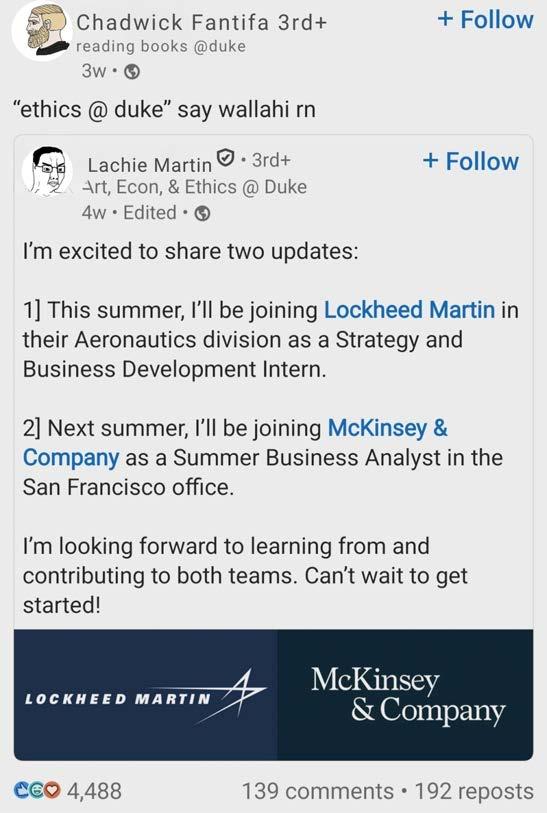
There is perhaps no sentence more capable of producing simultaneous admiration and existential dread in university students than the phrase “thrilled to announce.”
Thrilled to announce I have accepted a position.
Thrilled to announce I have completed this leadership program.
Thrilled to announce I am excited to begin this new chapter.
Open LinkedIn during assessment season and you will quickly discover that every 19-year-old apparently possesses a passion for “driving innovation,” “leveraging interdisciplinary solutions,” and “creating meaningful impact in dynamic environments.” Nobody simply attends university anymore. Everyone is a founder, strategist, consultant, analyst, or aspiring thought leader. Even people studying degrees they once loved now sound as though they were generated by a corporate communications department.
The easiest response is to mock this culture. Many people already do. Entire corners of the internet are devoted to mocking LinkedIn posts and the bizarre emotional performance of professional networking. However, reducing the phenomenon to “cringe” misses the point entirely. Students are not speaking this way because they are uniquely narcissistic or superficial. They are speaking this way because they are terrified.
University students today exist in a strange contradiction. We are constantly told to follow our ‘passions’ while being reminded that passion alone is economically useless. We are encouraged to pursue meaningful work despite being bombarded with warnings about employability, debt, networking, automation, graduate oversaturation, and an increasingly unstable job market. Somewhere between career fairs and unpaid internships, many students begin to internalise the idea that they themselves are projects, requiring constant optimisation.
The modern university student is no longer expected to solely study. They
are
expected to market themselves.
A degree alone no longer feels sufficient. Students now feel pressure to accumulate internships, extracurriculars, leadership positions, volunteer experience, personal projects, networking connections, and “industry engagement” before graduation. Even hobbies increasingly require professional framing. Reading becomes “research.” Writing becomes “content creation.” Volunteering becomes “community leadership experience.” Nothing is allowed to remain personal for very long before it must justify itself economically.
Graduate insecurity is real. Tuition fees continue to rise. Rent is unaffordable for many students. Casual work is unstable. Entire industries appear increasingly precarious and even taken over by AI.
Of course, students are anxious. Of course, they are trying to maximise opportunities wherever possible. The student obsessively updating LinkedIn at 2 am is not the villain of this story. They are often responding quite rationally to a culture that constantly reminds young people they are replaceable.
Still, something unsettling happens when every aspect of personhood becomes reframed through employability.
University begins to feel less like an intellectual environment and more like a long audition.
Students increasingly speak about themselves in the language of branding. We discuss “building networks,” “curating experience,” and “developing personal brands” before many of us have even figured out who we actually are. Networking events often feel less like genuine human interaction and more like mutually agreed-upon professional theatre. Everyone has confidence, ambition, and certainty about their future.
Meanwhile, underneath this performance, many students admit they are exhausted.
The irony is that LinkedIn culture often presents itself as inspirational. Scroll through your feed and you will encounter endless declarations of gratitude, resilience, productivity, and achievement. Yet the emotional atmosphere surrounding contemporary university life feels increasingly bleak. Students are burnt out before mid-semester and many feel disconnected from their degrees. Others no longer know whether they genuinely enjoy their field or simply enjoy the possibility of financial stability associated with it.
Even success has become strangely joyless. Students secure internships they once dreamed about only to immediately worry about the next opportunity. Rest becomes guilt-inducing because somebody else is always completing another certification, attending another networking night, or announcing another achievement. Ambition itself is no longer the problem. The problem is the impossibility of ever feeling finished.
There is also something profoundly flattening about the corporate language students increasingly adopt online. LinkedIn has produced a style of communication so sanitised and performative that individuality becomes difficult to distinguish. The same polished expressions and carefully chosen descriptors repeatedly appear, creating an impression of endless enthusiasm and achievement. Failure, uncertainty, confusion, and ambivalence — all normal parts of early adulthood — disappear beneath carefully curated professionalism.
The tragedy is not that students are ambitious; ambition can be meaningful, creative, and necessary. The tragedy is that ambition increasingly feels inseparable from performance, and academic passion is no longer valued for its own sake but increasingly reduced to its economic value.
Aya Kammoun reloads Linkedin.
Even the language universities themselves use reinforces this shift. Universities increasingly emphasise graduate employment outcomes and salary data when promoting degree programs, often drawing on national surveys such as QILT’s Graduate Outcomes Survey. Students are framed less as learners and more as future workers in need of market preparation. Intellectual curiosity becomes a secondary priority for tertiary education institutions .
But five hundred LinkedIn connections do not guarantee security. A polished résumé does not eliminate economic instability. Constant self-promotion cannot fully resolve the fear underlying it all.
That fear is perhaps what defines this generation of students more than anything else.
Maybe
that is why LinkedIn culture provokes such strong reactions. Deep down, many students recognise themselves within it.
We laugh at corporate buzzwords while quietly updating our own profiles. We mock networking culture while fearing what might happen if we disengage from it entirely. We know the performance is exhausting, yet participation increasingly feels mandatory.
Somewhere along the way, many students stopped asking themselves what kind of life they wanted to build and started asking what kind of person looked employable online.
That perspective change should concern us far more than any “thrilled to announce” post ever could.
In the year following my disabling COVID infection, I made it to less than 30 per cent of my classes. Despite my keenest interests in the content of my classes, it was physically impossible to attend. Between being overcome by profound fatigue, nauseating pain, and paralysing crashes, discussing German Romanticism became a difficult affair. On the rare days I did make it to class, the journey to university itself was often so exhausting that I would collapse and spend the rest of the day recovering in the Khanh Tran Room.
For most students registered with Inclusion and Disability Services (IDS), relaxed attendance is not ratified in their Academic Plans (APs).
If attendance is mentioned in one’s AP, it is merely noted as a matter of consideration to the teacher to not construe the absence as disengagement. For example, mine says “Kayla’s attendance may also be impacted — please note that difficulty attending as expected may be a direct impact of the student’s disability, and not a reflection of disinterest or poor commitment to his studies”. (That I am misgendered in my own AP exemplifies how impersonal this process is.)
Disabled students have reported extremely unaccommodating teachers, fearing referral to the Academic Board because of one too many weeks of flare-ups causing absences. Consequently, students come to class whilst experiencing severe pain and brain fog, unable to meaningfully participate, just to avoid punishment. Luckily, I was granted immense grace from my teachers who, without hesitation, offered me alternative modes of participation.
I was able to attend alternate tutorials, engage in tutorial activities via Padlet, email my weekly reading tasks rather than handwrite them in class, and have catch-up meetings.
Ultimately, I passed these classes — five with distinctions or high distinctions — thanks to understanding and accommodating teachers. To achieve this, though, I bypassed the IDS system and was instead forced to engage in multiple vulnerable conversations about the details of my disability, and relied on informal, burdensome administration from my underpaid teachers.
One’s access to accommodations should not be a matter of selfdisclosure, self-advocacy, or luck. This is completely counterintuitive to the supposed purpose of the IDS, which is to even out the playing field for students with disabilities and chronic illness. As one University of Sydney (USyd) student put it in their NSW university sector inquiry submission, the dilemma that follows from these poor,
inconsistent systems is “trading off my attendance or risk health collapse.”
Students should never be penalised because of illness or disability. A dangerous culture is subsequently endorsed within the university wherein sickness and pain are unreasonable “excuses” to be relinquished of responsibilities to productivity. This notion of “too much disability” is a violent erasure of disabled people’s realities and pushes us out of tertiary education — both students and academics alike. In 2023, for example, Dr Niko Tiliopoulos from the School of Psychology was fired because of his disability requiring him to only teach virtually.
Even students not registered with IDS have been threatened with Absent Fails because their Unit Coordinator would not take their cold or flu as is, and their sick note was rejected by the Special Considerations team three weeks later.
Such a culture is physically dangerous for members of the university community for whom USyd does not provide free flu vaccinations, respirator masks, or air purifiers to. It is neither politically nor physically safe to exist as a disabled student on campus. A commitment to wellbeing by USyd necessitates measures that prevent sick people from feeling compelled to attend class.
The demand for hybrid learning has been long called for since the removal of COVID safety measures. Following the government’s announcement of a return to in-person learning in 2023, disabled students protested outside of then Federal Education Minister Jason Clare’s office. As the circumstances of lockdown have demonstrated, USyd is equipped with the infrastructure to facilitate hybrid learning. This should have set a precedent, rather than been an outlier, in learning delivery.
The common argument of “cheapened education” under hybrid learning is a lazy defence for poor planning, disinterest in evolving teaching models, and ableism.
Hill is staying home.
Hybrid learning is a crucial means of enriching the educational experience. It facilitates greater accessibility for disabled people, sick people, and people in otherwise difficult circumstances, temporary or long-term, that inhibit attendance, and it promotes essential skills of digital literacy and etiquette.
The latter is particularly important amid increasingly common hybrid modes of work. And for so much of the university’s embrace of Artificial Intelligence as a necessary technology to be integrated into educational frameworks, it would be a double standard to not hold the same orientation towards a technology which universally benefits the university community.
Institutionalising these changes in IDS policy, attendance policy, and course reaccreditations is crucial.
Such overhauls require genuine commitments to consultation and codesign with disabled students, and untangling ableist notions of productivity from the university.
Disabled students will continue to participate in tertiary education, and we will continue to have poor attendance. Uncompromising policies will not change this — we will simply become more disabled, be failed more often, and be further rendered invisible. Such harms are already occurring in the backdrop of the Labor government’s cruel cuts to the National Disability Insurance Scheme. Now more than ever, disabled people are desperately seeking rigorous commitments to support, and USyd has a duty to relax attendance measures as a matter of equity, safety, and disability justice.
Treasurer Jim Chalmers and Finance Minister Katy Gallagher handed down the 2026-27 Budget on 12 May, against the background of a global oil shock caused by the US invasion of Iran, which the Government says is pushing inflation up and economic growth down. For regional Australians, the budget is a national cost-of-living response in which regional households are repeatedly identified as the largest beneficiaries, combined with a set of regional and remote measures that are mostly continuations of existing commitments.
The more useful distinction running through the document is therefore between genuinely new spending — of which there is relatively little aimed at the regions — and spending that is either continuing at established levels or being reduced as programs reach their scheduled end.
The fuel excise serves as the budget’s main response to higher petrol prices, and it is the measure the government links most directly to regional households.
Households in regional and outersuburban areas with limited transport alternatives will receive the largest benefit. The tax payable on a 65-litre tank has been reduced by almost $23. The Treasury estimates that a regional motorist driving 50 kilometres a day at around 10 litres per 100 kilometres would save roughly $160 over three months. Two qualifications matter for assessing that figure. The benefit of an excise depends on the extent to which retailers pass the reduction through to the bowser rather than retaining it as margin, a question the budget does not resolve and one that is harder to monitor in regional markets with fewer competing service stations. The relief is also temporary, easing the immediate cost of fuel without touching the structural reason regional households are hit hardest by oil prices, which is their dependence on driving across long distances with little access to public transport.

A reduction of this kind also creates difficulties for the government’s stated inflation objective. The budget argues that fiscal policy is better suited than monetary policy to respond to a supply shock, and that targeted measures can support the economy’s productive capacity while easing adjustment pressures. Cutting the excise nonetheless leaves households with more money to spend, which lifts overall demand across the economy at a time when headline inflation is forecast at 5 per cent through the year um the June
quarter of 2026. The current inflation is being driven by a shortage of supply rather than by excessive spending, and the Reserve Bank is trying to bring it down by cooling demand. A measure that puts more money in people’s pockets therefore pushes in the opposite direction to what the central bank is attempting, and it risks keeping price pressure higher than it would otherwise be. The government’s defence is that the budget overall exercises restraint, funded by savings, reprioritisations and banked revenue upgrades, and that this will take pressure off inflation over time.
The underlying cash balance is forecast to be in deficit by $31.5 billion, or 1.0 per cent of gross domestic product in 2026-27, with the budget not projected to return to balance until 2034-35. This headline figure nonetheless understates the weakness of the position that funds these measures. The more telling figure is the structural budget balance, which strips out cyclical factors such as elevated commodity prices, and which the budget reports is in a larger deficit than the headline number, peaking at 1.6 per cent of GDP in 2025-26 before improving over the medium term.
The government’s own analysis shows that high commodity prices are currently flattering the headline balance in 202526 and 2026-27, and that this contribution will recede/ is receding as prices return to assumed long-run levels. This indicates that the capacity to fund new regional programs rests on a fiscal position that is more constrained than the cash deficit alone suggests.
The dedicated urban and regional development sub-function is projected to fall from $2,056 billion in 2025-26 to $686 million in 2029-30, a decline the budget attributes to the conclusion of the Priority Community Infrastructure Program, the Investing in Our Communities Program and the final grants under the Community Development Grants Programme. A new Community Infrastructure measure worth $734.3 million over five years partially offsets this, but the net direction is a substantial reduction, and the budget does not identify a structural program that replaces the expiring grants.
The Regional First Home Buyer Guarantee, which allowed eligible buyers in regional areas to purchase property with a deposit as low as 5 per cent, concluded on 30 September 2025 without a regional replacement, leaving regional first home buyers dependent on the national housing programs that apply everywhere.
The Better Connectivity Plan for Regional and Rural Australia is retained, although the relevant communications funding will decrease over 2029-30, and the budget adds smaller targeted commitments including $40 million over four years for electric vehicle chargers in regional blackspots and around $12 million for a
Marc Paniza is regional and remote.
weather radar serving regional Queensland. Agricultural support is similarly weighted toward existing facilities. The Regional Investment Corporation continues to offer concessional loans, including Farm Investment, Drought, AgriStarter and a newly opened Drought Hardship Loan, with a loan book of around $3.2 billion at a variable rate of 5.18 per cent in early 2026, and a new Marine Recovery Loan opened in May 2026 for fishing and aquaculture businesses affected by the algal bloom off South Australia. The Future Drought Fund continues to disburse $100 million per year, with $28 million supporting forestry operations under Regional Forest Agreements.
Remote and First Nations communities receive most of the genuinely new spending, in contrast to the broader regional population whose support largely continues at the same levels. The government will provide $299 million to double the Remote Jobs and Economic Development Program from 3,000 to 6,000 jobs.
A further $27.4 million will extend the Low-Cost Essentials Subsidy Scheme to all 225 remote stores, with another $32.7 million to expand a store resilience package. Housing and health receive separate commitments, with $100 million from the Housing Australia Future Fund for remote First Nations housing and $144.1 million for Aboriginal CommunityControlled Health Services infrastructure. In Northern Australia, the Northern Australia Infrastructure Facility, which had $7 billion available and $3.7 billion committed as of June 2025, is being extended by a decade. National health measures also reach the regions, with $1.8 billion to make Medicare Urgent Care Clinics permanent and a target that four in five Australians live within a 20-minute drive of one by July 2026.
The budget’s regional content is concentrated in a temporary fuel subsidy and national programs that extend into the regions by design, supported by new, targeted funding for remote and First Nations communities. Dedicated regional development line contracts and agricultural support largely continue at existing levels. The government has positioned regional Australians as prominent beneficiaries of a national response to the oil shock without committing significant new structural funding to the regions themselves, at a time when its underlying fiscal position leaves limited room to do so.


A recent report by the Independent Commission Against Corruption (ICAC) has found that current University of Sydney (USyd) Vice-Chancellor Mark Scott “failed to act” upon corrupt conduct within the NSW Education Department during his tenure as Secretary.
The report, titled ‘Operation Landan’, examined corruption within School Infrastructure NSW (SINSW) and found that its former chief executive Anthony Manning engaged in corrupt conduct by “subverting recruitment and procurement practices to arrange and extend jobs and lucrative contracts for his friends and associates”. The report was published on April 22, 2026.
SINSW was established after advice from Mark Scott to then-Minister for Education Robert Stokes, as a measure to combat the need for better infrastructure development within the education system. In 2017, the NSW government announced a $4.2 billion investment in education infrastructure over four years, with SINSW established as an administrative unit within the Department.
ICAC found that despite this formal status, SINSW operated like an independent “quasi-agency” in practice. As a result, the usual external scrutiny applying to standalone agencies did not apply directly to SINSW, while departmental oversight remained inadequate.
The Commission found that SINSW spent $344 million on 1,448 contingent workers while under Anthony Manning’s leadership, with one worker receiving the equivalent of approximately $644,000 a year without undergoing proper recruitment processes.
in place which would have had oversight over Manning’s activity. The ICAC report states that Scott told the employee, Chief Financial Officer Gerard Giesekam, that he should concentrate on areas “that he could get established”. The report also states that Scott stated to Giesekam that he would “speak to Manning”, and that Scott only vaguely recollects this conversation, and does not remember dealing with the raised issue in any form later.
ICAC found that the School Infrastructure Advisory Council was not designed as a governance board with responsibility for overseeing Manning. Scott agreed in evidence that, as Department Secretary, he ultimately had responsibility for determining whether Manning was complying with his obligations. According to Advisory Council Chair Robert Rust, Scott assured him that Rust did not need additional powers over Manning because Scott would manage the chief executive. ICAC concluded Scott’s supervision of Manning was deficient.
maintained a clearer focus on risks beyond the risk of failing to deliver projects.
University response to Mark Scott’s “failure to act”
In a statement to Honi , a USyd spokesperson said they “value the important role ICAC undertakes and our Vice-Chancellor fully cooperated with their investigation, giving extensive evidence at the inquiry in May 2025, prior to the Senate unanimously approving his second fiveyear term with the University in September 2025. The Senate and University Executive maintains full confidence in our ViceChancellor, and we note there were no corrupt findings made against him.”
The University failed to answer questions on Scott’s “failure to heed warnings” about Anthony Manning, and did not respond to questions about Scott’s failure to act on warning signs raised throughout his tenure by senior developmental staff. The spokesperson also did not answer questions which sought to find out if governance issues identified by ICAC around accountability and staff warnings were present at USyd.
A key mechanism identified by ICAC was the creation of “shadow functions” inside SINSW, where departmental functions such as human resources, finance, recruitment, and procurement were duplicated within SINSW rather than handled through standard departmental mechanisms. ICAC found this reduced the Department’s visibility over SINSW and enabled Manning’s control over its operations.
The report also described SINSW’s internal culture under Manning as “command and control”. ICAC referred to Manning’s hostility toward ordinary public service processes, including a message to a friend in which he described public servants as “oxygen thieves”.
Mark Scott’s role in SINSW Scott supported the hiring of Anthony Manning as the inaugural chief executive, an appointment which ICAC discovered was made without any members of the recruitment panel contacting Manning’s previous employer, who had recently terminated his employment.
Scott was informed several times throughout his tenure of activity that ICAC later deemed as suspicious, including his failure to intervene when told of the efforts of an employee to put regulatory measures
The pattern of Scott’s inability to act on concerns raised throughout Manning’s tenure continued. Then-Executive Director Projects at SINSW Tony McCabe told Mark Scott that SINSW was spending “exorbitant amounts of money” in the project on consultants and contractors and that he didn’t see any value being derived from that approach. The report states there was “no evidence that action was taken in relation to Mr McCabe’s concerns” and that Scott could not recall said conversation but it “does not surprise [him] that he would have said that”. Peter Riordan, thenDeputy Secretary of corporate services, also warned Scott about “shadow functions” in procurement and finance, saying Scott responded by saying “leave it with me”, but Riordan saw no change.
The findings come less than a year after Scott was unanimously reappointed by the University of Sydney Senate for a second five-year term as Vice-Chancellor. While Scott cooperated with ICAC’s investigation and gave evidence at the public inquiry, the report also states that he received the Commission’s corruption-prevention submissions and elected not to respond.
Scott’s university profile states that, while he was Secretary of the NSW Department of Education, the Department “created School Infrastructure NSW to deliver an additional 160,000 classroom places.” Honi Soit asked a university spokesperson whether USyd would review or amend public materials that credit Scott with creating SINSW, given ICAC’s findings about the governance failures that followed. The spokesperson did not answer that question.
Scott denied allegations about Manning In evidence, Scott said that he did not receive allegations about Manning or “interpersonal matters”, but accepted there had been discussions about SINSW’s shadow functions and its use of consultants. He conceded there may have been too much focus on delivery, telling ICAC that, in hindsight, he wished he had
National Tertiary Education Union (NTEU) NSW Division Secretary Vince Caughley told Honi Soit that the “ICAC findings speak for themselves. Mark Scott “failed to heed warnings” about what was happening inside School Infrastructure NSW. That should alarm anyone concerned with the governance of public institutions.”
“Operation Landan is a warning about what happens when consultants and corporate advisers become embedded in public decision-making, when public money is spent without transparency, and when senior leaders ignore red flags.

“Unfortunately, the NSW university governance inquiry shows these risks are alive in higher education. It has exposed a state-wide governance crisis: tens of millions spent on private consultants, opaque and oversized engagements, restructures pushed through with little transparency, and staff and students left to carry the consequences through job losses, course cuts, casualisation and declining trust.
“The University of Sydney is part of that bigger picture.

Vice-chancellors and senior executives should be on notice: the era of opaque consultant-driven decision-making in public universities is coming under greater scrutiny, and the NTEU will continue relentlessly to hold senior execs to account.”
Many students feel left in the dark when it comes to their first year at university. This is especially true for literature students, for whom there are significant differences between secondary and tertiary studies. A cursory search through past essays in Honi Soit and the USYD subreddit show some of the effects of this transition: there are frequent complaints from students about how English ‘works’ and why they aren’t achieving HDs, as well as criticisms of different disciplinary approaches that aren’t within the scope of high school English. Compounding this problem is the expectation that students are now independent adult learners who no longer need such scaffolded support to study.
If the teaching of how to be a student is only supplementary in high school, then it is nearly non-existent in university. While there have been attempts to make this teaching more explicit, one Honi Soit article points to the limited degree to which this is addressed. Ariana Haghighi notes that the little support that students receive, such as through essay-writing sessions, “are often poorly attended due to a lack of awareness”. In another article, Cetrola judges the attempts by university teachers as “meaningless one-liners attempting to equip students with the skills to objectively analyse texts most of us didn’t finish reading”. One has to ask, then, if one is not reading the books — a bare minimum for an English degree — then how does one expect to do well?
Yes, teachers should equip students better, but this is restricted by material and market conditions of labour, which can and should be challenged, albeit in different forums than harsh student feedback appraisals and complaints to Reddit, which often lay fault on the precariouslyemployed tutor rather than the limits of institutional support. Still, learning is a two-way street, and students must be responsible for their own learning. In light of this, to make a particularly cringe paraphrase, you should not ask what your degree can do for you, but what can you do for your degree?
As a former high school teacher, long-time university student, and now a casual academic, I present here a quick reference
guide for what you should be doing to do well in your English degree.
Peggy McIntosh’s essential 1989 essay, “Unpacking the Invisible Knapsack”, highlights just how much a person’s experience, background, and identity influence their performances in education. This means that educators ought to consider the wide variety of student backgrounds and privileges that influence their academic and self-regulation skills. Students can interrogate their own backgrounds and privileges to continue to improve these skills and become a good learner.
Harper Boon is tired of repeating herself.
But how do you become a good learner? You must first adjust your mindset so that you are focusing on the process of improvement, and not just the grades or the end goal. You must be critically reflecting on your process throughout the entire semester, year, and degree. Schedule times throughout the semester to reflect on your efforts and process. You may like to compare marks from previous semesters, but if you do this, then it is important to keep three things in mind:
1. A mark or grade is reflective of one specific task completed at one specific time. It does not take into account if you were ill or having a bad day. It is not a complete reflection of your abilities.
2. Focus on the feedback. Marks and grades are usually the first and only thing that students see. Engage with the feedback for each criterion. Brainstorm some ways that you could have improved in these areas. Revisit these ideas for the next similar assignment.
3. Only compare alike criteria. Comparing your presentation skills mark to an academic writing/structure mark is like comparing apples and oranges. Track your marks throughout your degree, if you’d like, but make sure you are comparing essays with essays, and not with short answer quizzes, etc. Think about the different factors at play in different assessment tasks. In a similar way, consider that second-year classes are harder than first-year classes. Achieving a distinction in both means that you have indeed achieved some progress.
How do you approach assessments and course readings now? Do you leave them to the night before only to complete them in a blaze of coffee and energy drinks? Or, do you cut your tasks into bite-sized pieces and schedule these in manageable timeframes in your planner?
Any electronic calendar is good for this, as you can visually see the time you have available and when you need to complete a task (or a chunk of it). At the beginning of your semester, you should place all your readings and assessments into your calendar or planner with a due date at least one day before the actual due date. This allows you to account for when you’re sick or have last-minute plans. The next step is to stick to these mini-deadlines you have provided for yourself.
When I talk about bite-sized pieces, I mean chunking your work up into more manageable portions. If you have a 300page novel to read in seven days, then you should aim to read at least 43 pages, or about an hour of reading, per day. You may find that you get particularly drawn in at certain points and keep reading, which eases your reading load on future days.
The same chunking can be done for assessment tasks. If you have three weeks to complete an essay, divide that time between research, close-reading of the text(s), and the actual writing. If it is a 1000-word essay, then at 100-words per day, you will be making great progress and not feel rushed to complete it.
For assessment tasks in particular, it is important to try to ‘de-code’ the task requirements and the rubric. What exactly is the task asking of you? What is the end product? What are the skills you need to demonstrate? Some tasks may come with a guide to structure your essay, but these are, more or less, suggestions. Use it if it helps, but if you’re beyond that level, then try experimenting with your writing. Just keep the task in mind.
When you look at the rubric, consider what the difference between each grade level is. What is the difference between “insightful and original” and “highly-detailed”; what is the difference between some key cognitive verbs such as “evaluate”, “analyse”, and “explain”. This should clue you in to what the marking expectations are, but without an example of each, how can we really know? Look back at secondary readings, journal articles, you may have read in the course? What made them good? What made them excellent? What made them difficult to follow? Highlighting, reflecting on, and trying to replicate these features will improve your writing.
Check in on yourself and your progress throughout the course, not just after assessments or at the end of the unit. Consider not only what you’ve done, but your processes for achieving it. What did you do that didn’t really help? What did you do that went well? What did you do that needs to change? Set new goals for yourself and monitor your performance before reflecting every couple of weeks. These don’t have to be purely academic; think about changing your study environment, what motivates you, and what your needs are. Every student is different and needs to experiment to find what works best for them.
Remember to seek extra support. Yes, this may include asking for clarification of feedback from an assessment, but it doesn’t start and end there. Go to academic writing workshops, look at the university’s academic writing page, search the internet and library for university learner skills (such as SRL), and read introductory works to literature (such as the Very Short Introduction series). Always keep in mind the process of learning and not the end goal. Every essay, every study routine can be improved on, but first, you must find the right fit for you.
Finally, continue reading for pleasure in your spare time or in between semesters. Griffiths reminds us that “[r]eading for its own sake is a tool of self-education”. Don’t feel restricted by literary movements or set text lists. Read widely and read often.

Mark Fisher, a FASS2100 darling, is certainly a thinker who should not be forgotten. Not ever, but particularly not today. It is rare and beautiful that a philosopher escapes the academic confines of philosophy to become a public figure in the way Fisher did, even if it curses them to eventually become the subject of a shallow, bloated, and boring movie with a postmodern hack title.
We Are Making A Film About Mark Fisher , a collaborative documentary made via Instagram with no budget, is exactly that, and at times its shallowness seems almost insulting. It’s being screened in one-off sessions at art schools and galleries around the world, with over 100 showings so far, but the film is yet to make it to Sydney ––you all are spared, for now. I became aware of it via the movie’s Instagram account, @markfisherfilm, and saw it was showing at Weißensee in East Berlin. I decided to go, lured by the chance to see a free film about a writer and critic I admire.
The developers, Sophie Mellor and Simon Poulte, described the film as “not nostalgia… [but] an evocation of failed promised futures.” I agree. It is not nostalgia, but only because madeleines have affect and the film has none; it is an evocation of failed promised futures, if you take a failed promise to be one of the film’s many metafictional intrusions into itself.
We Are Making A Film About Mark Fisher ends up being not much at all. It is about him, I suppose, but it does not really do anything as a critical work, or as a work of art. It dodges what one would want from a film like this; an examination of the legacy and evolution of Fisher’s thought, the role it plays today, the way it might no longer hold up. One would hope the above to be done well and done beautifully, but no, everything is surface level; descriptive rather than analytic, and aesthetically repugnant.
There is a crisis of purpose that bleeds out of the film that I think stems from its move beyond biopic.
Fisher is thankfully not destined for the Bohemian Rhapsody treatment, but instead he gets strange metafiction, a film narrated by a time travelling professor with zero charm, ability, or intellect. The professor is a truly lazy and crude narrative device that happens to physically resemble a character. This gets spliced up with footage of anti-Thatcher protests, purple toned clips of Fisher in a basement, and thinkpiece interviews with academics vaguely aligned with Fisher’s thought.
What emerges is a jumbled mess, incoherent in style and subject, but
Carpenter asks why we are making a film about Mark Fisher.
critically this is not a direct result of the collaborative nature of the filmmaking. While it is jarring to see so many styles pushed up against each other, it is jarring only because each is done poorly in isolation, and inconsistently as a whole.
It is, at the least, impressive that there now exists an example for the antonym of gestalt. Academics spout truly bizarre things over the aesthetics of the future left, as if the problem facing the left today is that it isn’t cottagecore enough, between paraphrases of Capitalist Realism . At one point, the narrator talks over scenes of a protest, describing the arrest of a young white attractive student as such, and labelling it as a turning point in UK politics due to the aforementioned qualities –– the movement is real now, because hot white guys are doing it. Great.
The obsession with aesthetics of protest, which is covered in the film through footage that manages to alienate the viewer from identifying with any cause depicted, is at odds with Fisher’s writing. “What if you held a protest and everyone came”, a chapter in Capitalist Realism , heavily referenced in the movie, contains Fisher’s critique of interpassivity; the notion that the culture industry portrays revolution in a sterile manner for us à la repressive desublimation in Marcuse’s work, and hence the chapter closes with a call for revolution on the level of desires. We need to change our wanting, because it is that which makes us complicit.
In the film, we see the opposite in the discussion of protest in terms of aesthetics and identity politics.
It is presented as spectacle, as optics, where the white attractive student is a stand-in for the “everyone” in the title, and this is meant to mesh with a shift in mass desire. Here I recalled Exiting the Vampire Castle , a Fisher essay treated terribly by the movie in a different scene. I will avoid covering the essay in detail here because of its legacy and flaws, but in it Fisher heavily critiques the supplantation of class by other identity markers. We Are Making A Film About Mark Fisher does exactly what Fisher warns against –– whiteness, in choice of footage (dare I say also in choice of academics?) takes the focus over class, as the audience looks at the surface of these protests.
This sort of disregard for the claims Fisher advances is mirrored in the movie’s style, which seems like a parody of the features that distinguish Fisher as a critic. He often makes deep and genuine use of popular literature, film, and music, but here the care has vanished, and been replaced with the very emptiness Fisher critiques elsewhere. What can one say about trace and hauntology, the methods Fisher borrows from Derrida, when the visuals of the film are a patchwork of signifiers that serve as their own referents, with no clear link to signification systems and processes?
The film opens with a clip from his blog, k-punk, overlayed on an animated bookshelf stuffed with titles associated
with Fisher; his own work, that of the CCRU, musicians like Burial & Kode9, Deleuze & Guattari, everyone who has ever cared about the Frankfurt school and so on. But these books appear as titles and only as titles. They are never addressed. There’s no analysis, explicit or implicit, on why they are there. It never gets beyond the name; you see something like Fanged Noumena and a little twitch happens in your skull that represents the link between Land and Fisher, but then what? It’s just a reference, and a reference to itself.
We deal with signs swollen with themselves, substituting themselves for their subjects, stopping the trace of signifiers before they even takes shape, extracting other eras from our own before we notice their spectral presence, and avoiding any real discussion of how other thinkers have shaped Fisher, his world, and our own.
Intellectual laziness is the name of the game; speakers and academics pop up on the screen with little google boxes accompanying them, pointing one out of the film, to technology, to find out more, and it’s vapid shit as well; like what is Hauntology or Acid Communism. I’m not really sure who the movie is for, and neither are the creators. Of course, Fisher is beloved by pop philosophy and uni reading lists, but I feel as if the audience who comes in knowing and admiring Fisher will leave disappointed for the shallowness of the film, and the audience who comes in with nothing will be forever turned off by that same shallowness.
The google pop up will never lodge in the brain, at least in the intended way, of someone who really likes Fisher, and it is so ugly and ridiculous that I can’t imagine it tempting someone who really would like to know more. The movie opens and closes with repeated refrains of “we are making a film about Mark Fisher, and now you are too”, which just cannot be taken seriously. I did not feel as if I played a role in the discursive production of meaning in the film, and a pop up to google something doesn’t exactly cut it. I didn’t do anything –– I watched, and I felt like the film was doing something to me –– the relationship of making was the other way around, and what was made was, bluntly, bad.
This goes beyond the relation of the viewer to the objet d’art, because of course there are ways in and outside of film, to close this gap and draw the viewer in. They just simply weren’t used. The role the viewer occupies through the camera in the film is not that of a participant; we watch the protests, look down the tunnel, at the interviews or across the beach, as something outside of it; a security camera, a voyeur, impotent and still.
What is good is that this film should really deter no one from creating work about Fisher. It is all open and possible. We Are Making A Film About Mark Fisher is best viewed as a command for someone out there to do better in realising the potential latent in his work. For now, there is no alternative, but hopefully not for long.
Do you remember where you were in 2019? I was in high school, watching Sam Levinson’s Euphoria . I was the target audience, working through feelings about my own drug use, being sort of fat, sort of horny, and sort of gay. The show had its issues, but it undeniably captured something real, something young people were feeling. It was a moment, it was controversial, it was ruining the kids, et cetera.

Cut to 2026. Season 3 of Euphoria is airing. Everyone online seems to hate it, a consensus that seems to have been reached before the first episode even aired. I want to offer a balanced review of what I think of the season so far, and how it (and our culture) has evolved since the show’s initial airing seven years ago.
Look, I get it, it was hard to be optimistic after season two. Euphoria 2 was rushed and unsure of itself; it didn’t know how to address how much teen life had changed post-COVID. It failed to capture nearly anything dynamic or genuinely interesting, aside from creating a few TikTok audio bites.
the heavy lifting, particularly through improv and script input in Euphoria S1. What Levinson does possess, however, is the ability to capture the spectacle of the current epoch. It doesn’t hurt that this contemporary painting is pressed against a canvas of good music and fun movie references. He’s sort of doing a Tarantino-for-TV meets Werner Herzog’s Grizzly Man (but the bear is our phone or whatever).
The most pleasantly surprising part of Season 3 is undoubtedly Sydney Sweeney. The problem with Sweeney is that, since her meteoric rise to fame, she has been exclusively playing these leading ladies in romcoms and drama. In Euphoria 3, she’s right where she should be, giving her all to campy character acting. A good trait for succeeding in comedy is the ability to tolerate extreme levels of embarrassment and self-deprecation. Some of my favourite comedies, from Peep Show to Girls , feature actors who unabashedly put themselves in some of the most humiliating scenarios I can think of. Sweeney is balls-tothe-walls in Euphoria 3; there’s nothing she won’t do in the name of entertainment. Truly, we could be looking at our generation’s Jennifer Coolidge.

Ava Woodard gets a little titillated.
kind of performances. Schafer seems to have only signed on for the minimum amount of work hours available, with her scenes being notably short and primarily taking place in her apartment. Schafer mumbles all her lines as though embarrassed of them. Apatow plays one note, uptight, in every scene. Angus Cloud, who passed away shortly after Season 2, is still present as a voice over the phone, which I find odd. Disrespectful, even.
sequence of the first episode, where Rue crosses the TexasMexico border, is a fantastic short film in and of itself. And, heck, I can’t help but be charmed by TV that cares about how it looks.
What I think Euphoria does most interestingly is actually its fencesitting. Sam Levinson refuses to ever make a point about anything, but I kind of love it. There are constant clashing visuals of sex and religion, the beautiful against the disgusting, the wealthy and the poor. But that’s all it is, just contrast; he’s never able to take that extra step into a point, never says something is good or bad. I can’t tell if Sam Levinson thinks OnlyFans is the death of society or if he’s a porn addict, or both!
The beauty of this is that when you watch the show, it reflects how you already feel about these topics.
on.
But when they announced the final season would take place after a big time jump, I actually got excited. The show was stuck in the stagnant water of high school and needed to move
We needed a whole new arena. Let’s be honest, Sammy Levinson has very little to say about anything. He stole the first season’s aesthetic from a
The most recent episode (as of writing) pays homage to 1950s sci-fi blockbuster The Attack of the 50ft Woman as we watch a gigantic Sweeney reign terror on downtown Los Angeles before destroying an office block with her breasts. It’s campy, shocking, and fun for the whole family. John Waters would love it, I’m sure.
Season 1 of Euphoria was applauded (and criticised) for its rich and unique visual style, which was largely stolen from the much more interesting cinematographer Petra Collins. Season 3 has finally come into its own, managing to maintain an over-the-top style, but instead of the glittery haze of high school, we’re dumped in this twisted La La Land meets Valley of the Dolls meets spaghetti western. The opening

We’ve covered the good, so let’s get on to the bad and the ugly. There are so many moments in this show where something happens, and I think, “Yeah, Sam Levinson made this”. In the first episode, we see a Mormon girl being played by one of the most plumped-up LA faces I’ve ever seen, which is… distracting to say the least. There is a sex scene that takes place in front of a giant Nazi flag, white people saying the N-word, and a whole lot of nudity. To be honest, it’s not that much more shock-factor than what you should be expecting from an HBO show; it just has that extra Levinson poor taste and carelessness.
However, despite the constant sex, Levinson seems to be afraid of lesbians.
Riddle me this: why, in a TV show so much about sex, with a lead character who is a lesbian, do all the lezzo sex scenes happen off-camera? Sam Levinson, this is your final warning. I expect scissoring in these final two episodes.
Unfortunately, some of the character plots are just straight up boring. Hunter Schafer and Maude Apatow are hardly memorable and give these halfbaked, I-don’t-want-to-be-here
In conversations about Euphoria, the show is often a scapegoat for how people just feel about sex, social media, drugs, porn and everything about our culture right now.
My advice? Allow yourself to have your own unique thoughts about it, let it titillate your mind, have conversations with your friends about it; be part of ‘the moment’ as it’s happening, and don’t be ashamed of that. Treat it like a documentary about our current times.

1st Place Fiction
normality in freshwater unravels when Warragamba exhales & perception becomes creatural across recoiling porches / animals & children are revealed & then hidden behind nocturnal hands & feet / abstract thoughts return on the air for any organism’s offspring — but we’re only attending to functional suffering now
wake up in textures of thin water & find seeing & hearing stretched to new crevices, irrational colours & collapsed temporal distances / it’s now a slow idea — the shelter myth stained, holed, historicised — as slow as the hovering whirr from the phone tower / still flying in unreal time / everything is drifting & contained otherwise

ultimately it’s a statement of fertility / the quick swagger of a river is a mere flight of fancy, considered random & lowbrow / it has a simple life, the Sydney Basin, promiscuous, a creeping procedure against the ordinary objects of a world / against the hands that held them, the mouths that mourn them / the streets are in a stale trance, waiting for the low percussion of excavation
with a blue sky the snails return, new sticky things on a floodplain that breathes like an empty & resting womb / the morning glows with repetition & restoration & everything is explainable again / to the children & the animals whose eyes blink at the sun & the invented terms — it’s words now that are flowing fast / & the known universe is digesting, digesting all
1st Place Nonfiction
There is a sentence-form that appears with indecent haste after death. It arrives in hospital corridors, over kitchen benches, in condolence messages, in the anterooms of coronial proceedings. Its syntax is always neat; its sentiment always tender, or trying to be. At least something good will come of this. At least it might save someone else. At least now people will learn
The sentence is offered as consolation, but it is also a demand. It asks grief to become useful. It asks the dead to consent, retroactively, to pedagogy.
My brother died under involuntary psychiatric detention. Later there were the familiar Australian afterlives of institutional death: forms, findings, recommendations, the careful choreography of official sorrow. In New South Wales, coronial findings are archived, searchable, and indefinitely available to the public; the state quite literally keeps a database of narrated death. The point of an inquest, formally, is modest enough: identity, cause, manner, recommendations. But anyone who has sat through one knows that another expectation circulates in the room, unminuted and therefore harder to challenge. The facts, once assembled, are supposed to confer something softer than justice and harder than knowledge. Call it closure. Call it legibility. Call it the fantasy that chronology, properly arranged, might console.
The fantasy is old. Aristotle made it canonical. In the Poetics , catharsis names the purgation or purification of pity and fear through tragic form: suffering enters art and leaves it clarified, bounded, made bearable. Even now, in secular and bureaucratic settings far removed from Athenian theatre, we remain embarrassingly loyal to that model. We still want the turn, the hinge, the intelligible sequence by which disturbance yields meaning. A death must not merely occur; it must become apprehensible in the right genre. It must produce an ethical dividend.
Australia is particularly adept at this conversion. We do not simply mourn; we operationalise. We have protocols, inquiries, recommendations, awareness campaigns, memorial panels, media packages, parliamentary language, infographic grief. If the death involved drugs, the lesson arrives pre-written. If it involved mental illness, there is another script waiting. If it involved both, public culture barely has to improvise. Stay away from this. Watch for the signs. Get help sooner. Fund the service. Reform the ward. Raise awareness. Tell the story properly. Make sure the pain circulates in a socially licit form.
This is one reason the language of institutional aftermath feels so chilling. It is not only that it abstracts. It is that it abstracts with moral authority. Reasonable care. No single act or omission. Multifactorial circumstances. The phrases are antiseptic, but they are never innocent. They perform what Elaine Scarry identified, in a different register, as the translation of pain into public language: suffering must be rendered in terms that survive administration, even if the rendering itself deforms what was suffered. Scarry’s argument that pain destroys language, or at least radically exceeds it, has become almost axiomatic in criticism; Virginia Woolf made a related complaint in On Being Ill , where bodily suffering exposes the poverty of ordinary idiom. The institution solves this problem not by finding a truer language, but by substituting a governable one.
The result is a peculiar violence. The inquest does not only investigate; it edits. Then public culture completes the abridgement.
What follows a death like this is a moral pressure placed on the bereaved: narrate it, yes, but narrate it responsibly. Not
too angry. Not too private. Not too ugly. If you speak, make sure it helps. Make sure your grief can be excerpted
into advocacy. Make sure your dead can withstand symbolic use.
It sounds almost perverse to object. Why reject reform? Why resist “awareness”? Why not let one death save another? Those are the questions asked by people who have never had to watch someone they love flattened into what I can only call useful tragedy.
I am not arguing against scrutiny. Quite the reverse. Coronial systems matter. Recommendations matter. Institutional review matters. The recent NSW inquest into Allyson Bailey’s death, for example, examined the death of an involuntary patient in seclusion and under periodic observation, and produced recommendations directed at hospital systems and transfer practices. That work is necessary. So is broader scrutiny of custodial and carceral death in Australia, where official datasets continue to record thousands of deaths in custody over the last four decades. But it does not follow that the dead owe us their usefulness. Reform is not the same thing as posthumous moral conscription.
Benjamin Sestanovic writes.
My brother was not a public service announcement. He was not an exemplary warning arranged by fate to improve the conduct of strangers. He was not, in any ethically interesting sense, “content”. He was funny in the wrong moments, difficult to summarise, occasionally impossible, often brilliant, never reducible. The official record can tell you a statutory section. It can tell you an address, an observation interval, a cause of death. It can tell you, with brisk confidence, that a body stopped. It cannot tell you what it means that, before all this, he turned up at an airport with no luggage and some cash folded into his trousers, as if departure itself might suffice. It cannot tell you why an avocado requested in a locked ward feels more truthful to those who loved him than any recommendation ever drafted in his name.
That is what I mean by refusal. Not denial. Not anti-politics. Something narrower and more exacting. A refusal to let grief be redeemed only by utility. A refusal to accept that a crisis which does not culminate in public catharsis has somehow failed in its duty.
A refusal, finally, to confuse consumption with care.
We ask an extraordinary amount of the dead. We ask them to become evidence, parable, argument, funding rationale, newspaper angle, moral infrastructure for the living. We call this honouring them. Often it is only a more cultivated form of appetite.
The most faithful response I can imagine is smaller and harsher than that. It is to let the dead remain singular. To resist the pressure to sand a life into lesson. To allow a person, even now, to exceed the uses to which institutions, publics, and even loving survivors would like to put him.
Aristotle can keep his arc. The state can keep its findings. The culture can keep its consoling scripts.
The dead are asked to become so much. Sometimes the only mercy is to let them remain difficult.
I hadn’t slept for some time, probably coming up on a week. No particular reason why; just couldn’t drift off. On the third night I began taking long walks until the sun came up, disappearing into an increasingly thick and hazy nighttime within which odd things happened, as odd things tend to, between the hours of 00:00 and 06:00. When the vast majority of eyes are closed, and the nocturnal Earth shows its blue belly to the moon, reflecting on the strange visions of its sleep, dreams of thirty-kilometre-long traffic jams like enormous winding serpents, muffled sounds of industry, doctors turn the life support off, a baby gets born, etcetera, and so forth, till the Earth grows exhausted with introspection and once again rolls over restlessly to its other hemisphere to try sleeping on that side instead.
One night, I was out walking, and a storm rolled in around 3am and didn’t roll out again; the sky ruptured in treelike wounds of blue lightning, bleeding a heavy flow of grey rain, so I took cover beneath a shopfront awning and there sat on the steps and waited it out. The roads became slick with rain, glistening starry beneath the streetlights. It was a weekday in Winter, so the streets were deserted and dead after midnight. That’s why I took it as strange that an old man was walking across the road toward me, toward the shelter I was beneath. Stiffly he took a seat on the stairway, a few steps below me. He was bald and liverspotted and scraggily bearded, a bit of a caricature. Probably ten minutes passed in silence before he mumbled this:
i’m sleepwalking
Then I didn’t know what to say. Besides the unquantifiable rhythm of the rain, there wassilence again for a long while. A car went by soundlessly, muffled by the deluge, hovering past like a bright-eyed ghost, dark windows, as if nobody was in there behind the wheel. Finally, I responded to the old man. I said:
but, you look wide awake
but really i’m sound asleep
I noticed he was barefoot. I was noticing things, now. I guess he was wearing, like, linen pyjamas or something. No pockets. He didn’t have any of his personal belongings, it looked like, besides the clothes on his back.
the rain is letting up.
i’ll be continuing on my walk, now, and you’re welcome to join, that’s what you were doing anyway, right?
part of town. I inquired about his curious ‘condition’. He was very forthcoming. it’s episodic, sometimes it won’t happen for years. it’s totally unpredictable, in theory in theory?
i practically sleepwalked through my daughter’s entire infancy. i slept through my wedding day, don’t remember a thing.
my own theory is that i sleepwalk through life’s most special moments though my doctor tells me that is logically improbable.
in any case, it makes me wonder what special thing will happen tonight?
He had lived his entire life in this city. He and his wife had been married for 35 years but said that there had always been a lot of strain because of his condition. When his wife first learnt about it she was really upset, cuz some of her best memories of them together she figures he wasn’t even really there for. I asked him if the two of them were happy these days.
i’m unmotivated by ‘being happy.’ the pursuit of happiness is an engine, by which our bodies implore us to remain in motion.
i’m far more interested in finding a new way to be
a new way to be?
He didn’t answer; there was silence again, for a long while. He hummed tunes that I didn’t recognise; there was an eerie quality to them like the surreal songs you hear in dreams, the ones you swear you know but are never able to find upon waking. A pair of headlights were hovering completely still at the end of this street; I assumed someone was sitting in their car. As we approached, I saw that the car was empty; someone had left their headlights on overnight, it seemed. The old man tutted disapprovingly.
the second worst thing you can be is negligent what’s the first?
overly conscientious
moderate ambivalence. why don’t i call an uber to get you home or something?
no, no
it’s not time to go home whatever is supposed to happen hasn’t happened yet.
The old man had led me into an enormous grassy field. Here the darkness was thick and bloated and all-consuming. In a cleft between two bulging clouds I saw the moon appear like an enormous white eye wrenching open. Then the world was thrashed with lightning, and the streetlights went off, and the moon disappeared once more behind the clouds, and all the power in the city shut down, and it was so dark and starless that I could hardly make out the old man some four or five steps in front of me except for the glistening whites of his eyes looking right at me.
Long fingers of lightning scraped against the cloudcover in wild serpentine motions. There in the stuttering illumination of the thunderstorm I had a kind of aching purgatorial sensation in my throat, this scene like a strange mimicry of existence in general, a long peaceful sleep with intermittent moments of bright frightening wakefulness. The old man was shouting at me over the noise of the rain and the thunder.
we spend an indeterminable amount of time in a deep and dark sleep in the incredibly pleasurable stasis of an eternal dream. this is before ‘birth’, of course in which we are excised from the dream and implanted into a body
The storm had become so agitated, the sky was shivering and feverish and its swollen veins were pulsating with hot blue blood. Wind blew ferociously and gave the rain a sort of painful solidity, like fragile glass teardrops shattering against my body. In a flicker of lightning-light I saw the old man turned from me and standing a little further away.
living a life is an enormous favour we do for our bodies, inert matter given a chance to see, think, and feel.
We crossed through several different neighbourhoods. I didn’t recognise this
oh
your best option is unfortunately the third worst thing;
the necessity of nightly sleep is a small recompense offered by our bodies...
Read Isaac’s full piece online
I was learning how to sound like them when it happened.
Earphones in, three rows from the back of a 370 heading down King Street, mouthing along to a podcast where a woman from Adelaide explained the difference between “dance” and “dahnce.” I’d been doing this for months. I hated every second of it. But I’d learned early that in this country, the first thing people hear isn’t what you say— it’s the shape your mouth makes saying it. My accent walked into rooms before I did. In lectures. In job interviews. At the café counter where the barista would repeat my order back to me slowly, leaning in, as if I’d been speaking underwater.
So I was sanding down the vowels my mother gave me. Practising someone else’s mouth. The worst part is I was getting good at it.
The bus was half full. That dead weekday afternoon—passengers mostly old, mostly quiet, mostly white. A man sat a few seats ahead, sixty-something, red-faced, legs stretched into the aisle like he’d paid for two seats and gotten one.
Two girls got up to leave. Indian, both of them. You learn to clock your own—it’s not solidarity, it’s something older, closer to counting. They moved toward the exit and his leg shot out, stiff and sudden, and one of them went down. She caught herself on the rail, bag swinging forward, hitting the floor. Nobody moved.
She stood up and looked at him. “You know you didn’t have to do that.”
He gave her this smile. Loose, wet, impossible to pin. Could’ve been guilt. Could’ve been the face a person makes when they’ve been caught and haven’t decided whether they’re sorry. She left. Her friend left. The doors hissed shut.
And I sat there.
Earphones still in. Mouth still half-shaped around a vowel that wasn’t mine. And for the next twenty minutes, something dark and hot filled every corner of my head.
I should have said something. I was right there. But I’d already done the calculation— the one you learn to do fast when you’re brown and temporary in this country. A man on a student visa making a scene on a public bus doesn’t get to be righteous. He gets to be a problem.
So the anger turned inward, and it found years of room in there.
I thought about that girl. She’d tried to get off a bus. That’s it. She was moving through a space someone else decided wasn’t fully hers, the way I move through most spaces here—elbows in, trying to take up less room than I’m owed. I thought about the group project where I pitched an idea and nobody responded, and then Josh said the same thing forty seconds later and it became a good idea. The landlord who asked where I was “originally” from. A classmate who told me my English was “really good, actually”—that word, actually, hanging between us like a small, polite knife.
And then my mind went home. My brother graduated three months ago. I watched on a video call at 2 AM, clapping on mute so I wouldn’t wake my housemate. He looked for me in the audience—my mother told me later, gently, the way she delivers things she knows will cut. She still calls to ask how to pay a bill online and I walk her through it from seven thousand miles away while she reheats dal in the kitchen, and some nights I swear I can smell it through the phone.
Then I open my eyes and I’m in Newtown and it’s cold and nobody’s cooked for me in months.
Nobody made me come here. That sits in my chest like a stone I can’t cough up. I chose this. I wanted more. And now I ride buses practising how to reshape my mouth into something this country will listen to, and some days I believe it’s worth it and some days I’m lying and most days I can’t tell the difference.
Here is what my mind did next, and I need to say it plainly because it shames me. I looked at that man—his slack body, his unwashed jacket—and I started keeping score. I pay full international tuition. I pay GST on every meal, every bus tap. I work the maximum hours my visa permits and I cannot access a single welfare payment. And him? Does he work? Is he on Centrelink, pulling from a system I fund but am locked out of? I caught myself ranking a human being by his economic output on a ledger that exists only in the poisoned part of my brain. Because that is exactly how certain people here measure me. And now I was doing it from the other direction.
For twenty minutes I stared at him. Building a case. Constructing a theory of this country from one outstretched leg and twenty-two years of being looked at sideways.
Then it was my stop. I stood. He stood. He gripped the rail and stepped down and his left leg buckled. Then again on the footpath. A limp—heavy, uneven, the kind your body does when a muscle locks
without warning and you have to drag yourself forward on the parts that still work. Spasms. The leg wasn’t a weapon. It was a malfunction.
I stood on that pavement and felt everything I’d built drain out of me like water from a cracked glass.
His leg had straightened because that is what his leg does. The smile was embarrassment. I had spent twenty minutes prosecuting a man for something his own body did to him.
I walked to my shift at McDonald’s. That evening it was me behind the counter, and a girl from Nepal, and a guy from Vietnam. I put on the uniform, the visor, the voice. “Hi, how are you, what can I get you today?” Same accent I’d been rehearsing on the bus an hour earlier.
So here is the question I carry home every night and put down on my bedroom floor like a bag I can’t unpack: was the catharsis the moment I saw him limp and understood I’d been wrong—that sick, clarifying instant where my rage collapsed and I was left holding nothing but my own ugliness?
Or was the catharsis the twenty minutes before? The hot, uncontrolled flood of fury. The only twenty minutes in my day where I let myself feel the full, undiluted weight of what it costs to be here. Where I didn’t sand anything down. Where I wasn’t performing.
The crisis was never that man. The crisis is what this place has done to my thinking. I see threat where there is fragility.
I see malice where there is a medical condition. The daily friction of being foreign here has ground me down until I can no longer tell the difference between someone who wants to hurt me and someone whose leg doesn’t work.
Tomorrow I’ll get on the same bus. Earphones in. Keep practising.
I don’t know whether that makes me resilient or broken. I don’t think anyone here wants to hear the answer.
On the first morning after the storm no one was eager to step outside, weary of the violence whirling up again, of the volcanic cries, of the guns cracking like Perdition’s rain, of the blood that stalked the streets and haunted their front patios, until the whale was reported several miles upshore in the Ilier Gardens. It was first spotted by Martin Tucker, who had trudged down from the sleeping quarters above his café wrapped in blankets and was scraping the leftover rain off the windows. At first he thought the behemoth was a sluggish cement mound left from a capsized truck; then he wondered if it were some abstract work of art; then he saw it under the yellow sunlight oozing through the dawn clouds and reported the sight to the news stations and then to the police. Thank God, his business would not suffer from the tragedy. He spent the next half-hour picking up the silverware and sweeping out the rainwater filled with leeches and silverfish, pots and plates, all while trying to keep his trousers above his knees. Veins ran up his limbs, his hands water-wrought, his heart full of sleep. He was exhausted, partly from the nostalgia of senescence and partly from his bones that were coated with lichens.
Neither the police nor the tabloids took the reported whale seriously until the sun was a few hours higher and others flooded in, though some claimed it was a seal or serpentine dog. Indeed, the lack of blubber made it resemble, to Tucker, an exceptionally long sausage. The sun slid waterily off his grey body, tapering at the fluked tail. Still wet, his skin flared magnesium. His left fin had been torn off, and hot gas and blubber were retreating from the wound. Vestiges of a bygone life manifested as grey scars across his body. From a distance, it resembled submarine hulls peaking above the harbour. Yes, Martin thought. You are a funny-looking thing, but you are magnificent.
Like a frenzy of ravenous sharks, the townspeople, enchanted by what they perceived to be the arrival of a sea serpent, soon flooded Martin Tucker’s café, sweating to glimpse what they perhaps viewed as some sign of God. Some rowed in small boats from the more flooded squares to see the whale. Sporadic photographers snapped images, creating a river of light in the air. Children played atop the whale’s corpse and slid down to the tail, while adolescents picked at barnacles with penknives and pulled out its teeth. The women walked around like turkeys, dressing the whale with a wristwatch on the remaining fin and trying to pierce gold rings on the tail fluke, and the men crowned his head with a basin, compassed the direction the whale was facing, and believed that he pointed to the lost city of the Lemurs. Hot gas furnaced from the maw and forked up in the sulphurous fumes, igniting pagan gales of panic. Amidst the palaver, there was disagreement over what to do with the carcass; some thought it should be elected mayor; others
fancied it could translate the voice of the stars; others advocated that they should cast it into the harbour and leave its fate to the sea. A journalist named it ‘The Sea Wolf’, both because the divot in the lip uncovered huge canines and because the name sounded like a comic book. Martin stood in the world outside of them. After a great deal of coffee brewed, he felt the sloth in his liver and groaned to himself about why so many jars of holy bread and Persian tapestries for a corpse. Inasmuch as he knew, the whale belonged to the deepest parts of the sea, where fish walk and divers rot from nostalgia and where the blind sharks could chew him.
He looked round. The dew water resembled tiny porcelain pearls on the elms and poplars. Cobalt covered the sky; the clouds moved like a sheet of silk over a seascape. Those in the west had darker underbellies that foretold a light storm, which the carnival avoided because they felt inexplicable discomfort at the thought of taking shelter in the plazas. At once vast images troubled Martin’s memories: children with their heads in their knees and crows already playing with their blooddrenched clothes. Regardless, Martin continued to serve on account of the hysterical tips. He watched them wander in procession; with each look at the whale they were breathless, for it could not fit in their imagination.
No one went to work that day, as news of the whale spread across town like a sickness. Lost in the solitude of discovery and a sensational amnesia, the people had lost their direction on some supernatural passage. To them, the whale was at once agent and principle; that thing hidden behind the city’s name and within the blood of its history, the veins of its roads, revealed itself and heaped itself upon the corpse. Thus the city lay vacant, and the rustic pathways became trade routes for the various ant colonies. At times the wet sun would pull away the clouds for a moment, and the bricks glinted like slabs of blood. A light downpour: everyone would stiffen and fall silent in a forlorn consternation, which they could never put their finger on, until the rain ceased. Days later, the national government quelled the unease by declaring all anniversaries of its discovery as a national holiday. Meanwhile, its providential appearance and hybrid description intrigued scholastic circles, whose curiosity had been so idle and on the verge of boiling over that they had begun investigating the chemistry of dental floss. The whale measured a monstrous 18 metres, yet it seemed malnourished due to lacking the girth of other whales, notwithstanding its elongated, snake-like body. At three o’clock, a biologist jubilantly shot out among the crowds, recognising it as a Basilosaurus based on the yoke-shaped molars at the back of its jaws and its pathetic hind flippers. This only confused the masses further, who now thought it was indeed a dinosaur or a sea serpent.
He noticed too that the whale bore its death in serene wisdom, distinct from the haggard, lonely look of whales beaching themselves and waiting for death on their doorstep just before dusk. “He must have died of silence,” said the biologist, and the crowd sighed with tears and tossed coins over their shoulders.
You are magnificent and wise, whale, Martin Tucker thought.
But by sundown the whale’s skin had lost its pearly iridescence; it had begun to putrefy and flake off like matted fur. Its jaw melted away, revealing the monstrous skull underneath. Seen obliquely from a distance, the ancient creature was devoid of all wisdom, its savage maw and exposed vertebrae propped up by gigantic muscle strings resembling a ship from hell. Once intoxicated by the weeds and the oceanic dust and the promise of the whale, the people now groaned at the odour and left after realising that they had failed to protect it from the relentless entropy of death. The whale’s clothes and jewels and blackening bruises oozed away the once magic vastness of its stature and exposed a repressed spite in them. The visible footprints, pungent odour, and channels of blood vessels under the transparent skin still clinging to the body led to complaints to the council about the hazardous atmosphere in the Ilier Gardens. Martin started tallying his fingers, hoping that it won’t be too terrible a net loss to get the thing out.
It will cost me at least two grand to remove you!
By seven o’clock the terrace was deserted. Martin Tucker picked up the debris from the carnival, shovelled up the silverfish in the shelves, and threw them out onto the drenched terrace. He watched the stars row with the moon across the sky like pilot fish with a shark and thought about the whale having exiled its curiosity to become an untimely but minimal blemish in the destiny of the city. Its perception of the sun would be filtered by the sea, insubstantial, less vital, at odds with the sea—a small white flame that rowed across the surface until darkness fell; and it would drift through a void that was indifferent towards fickle things like stars and gravity. He came to understand the severity of its last agony, no less agonising for its unconsciousness of its collapsing skeleton; the whale’s existence in exile and ruin and its undead nostalgia for the sound of the waves reconfigured its once graceful beauty into a pasteboard mask that concealed a more universal exhaustion. Mortified by his prior austerity for the creature, Martin emerged from his chair and approached with a poppy in hand. In its ceaseless metamorphosis, a newfound macabre afterlife had afforded him this moment of intimacy...
Read Baxter’s full piece online.
Editors’ Choice Nonfiction
Simone Weil proposes the idea that most movements of the human soul obey the law of gravity. We are pulled not only physically but spiritually, toward habit, self-interest, and emotional reflex. What feels like freedom is often compulsion. We react rather than select, fall rather than move. Only grace, in her formulation, interrupts this pattern. It does not arise from effort or intention, but arrives from somewhere else, briefly suspending the laws that otherwise govern us.
To understand this, it helps to think in images rather than abstractions. Consider the experience of being caught in some system that will not release you. A failed scan. A declined transaction. The bridge disappears. A small, practical problem, perhaps trivial, bureaucratic, absurd, begins to expand. Instructions cannot be satisfied. The criteria to fulfil the task are just out of reach. What should take seconds stretches into minutes, then longer, until the situation is total. The body tenses. Attention narrows.
This escalation reveals something Weil considers fundamental: the self, when obstructed, becomes denser. The world revolves around the friction between desire and reality.
What might otherwise be insignificant becomes overwhelming because it is experienced in relation to the expectations of the self. Gravity, in this sense, is not merely external pressure but an internal law. The tendency is to collapse inward, interpreting everything through the lens of “I”.
Repetition is one of its clearest signs. We cycle through problems, thoughts, emotions, without resolution. The same patterns recur: anguish, reaction, temporary catharsis, return. These loops feel active, even urgent, but they do not lead anywhere. They are closed systems. The energy expended within them only acts to reinforce their structure.
Weil contrasts this condition with something far rarer: a state of attention that is not driven by wanting. In certain spaces– religious, aesthetic, or just unfamiliar– this possibility becomes visible, even if it is inaccessible. Environments designed for transcendence often present a paradox. They contain symbols of release, offerings left behind, gestures of surrender, rituals that direct the mind away from itself. Yet, the more one tries to enter this state intentionally, the more elusive it becomes. The desire to transcend is itself a form of gravity. It originates in the same self that seeks to escape. The result is a heightened awareness of one’s own inability to let go.
Every step, every breath, becomes selfconscious. Instead of dissolving, the self hardens.
Grace cannot be produced through effort. This is what makes it so hard to grasp. In a culture that values intention, discipline, and achievement, the idea that the highest form of spiritual experience cannot be pursued directly feels offensive. But for Weil, Grace belongs to a different order. It is not the result of striving, but of a kind of suspension, a waiting without demand.
This does not mean that nothing prepares the way. Certain experiences begin to loosen the hold of the self, even if they do not constitute grace themselves. Physical discomfort, for example, can have this effect. When the body is pressed, by fatigue, pain or fear, attention is forced out of habitual loops. Thought slows. The constant narration of the self is harder to sustain. In such moments, perception may sharpen. The world appears with a kind of clarity that is not mediated by constant interpretation. This is not grace, but it creates the conditions in which grace might occur. The self, momentarily weakened, no longer occupies the entire field of attention.
Repetition, too, can transform under these conditions. There is a difference between the closed loop of despair and the open rhythm of movement that expands outward and returns. The former traps, while the latter creates space. In certain forms of motion, like ritual, performance or play, repetition does not confine but release. It becomes a pattern that the body can enter without self-consciousness.
Within such spaces, brief moments of connection can emerge. They are often simple, even mundane. A shared song, a gesture of generosity, a moment of mutual recognition that bypasses language. These acts are defined by a lack of effort which is not achieved or constructed. They happen, and then they pass.
For Weil, this passing is essential. Grace cannot be held. The moment one tries to preserve it, to turn it into something stable or repeatable, it disappears. This introduces another key aspect of her thought: the importance of loss.
Loss, in Weil’s philosophy, is not merely negative. It creates a kind of openness.
When something cannot be completed, possessed, or fully understood, it resists being absorbed into the patterns of the self. It remains external, other. This resistance is crucial because it allows for true attention.
To attend, for Weil, is to remain present without grasping. No more analysing.
Arwen Beaumont-Lee writes.
It is a form of waiting. In this state, the self does not impose meaning but receives it. Absence plays a central role. What is missing, broken, or unfinished draws attention precisely because it cannot be resolved.
Objects marked by damage or incompleteness often carry this quality. A figure with missing parts, a surface marked by time, an image that resists clarity. These things do not offer themselves fully. They require a different kind of engagement which does not seek to dominate or possess. In their incompleteness, they point beyond themselves.
In contrast, environments saturated with excess, too many reflections, too many repetitions, too much symmetry, can produce the opposite effect. They trap perception within a closed circuit. Everything is visible, but nothing opens outward. This is another form of gravity: the endless multiplication of the same.
The tension between holding and releasing runs through all of these experiences. The impulse to keep things and make them permanent is deeply ingrained. It offers a sense of control and continuity. But it also reinforces the self’s centrality.
To let go, by contrast, is to accept a kind of vulnerability. It is to allow meaning to exist without being secured.
Weil describes this process as a kind of undoing. The self does not disappear entirely, but it loosens. Its boundaries become less rigid. In rare moments, something enters that does not belong to it, a clarity or stillness that is not attached to personal satisfaction. This is what she calls grace.
It cannot be summoned or repeated at will. It appears unpredictably, often in the spaces opened by failure, or loss. And it leaves just as quickly, returning the individual to the ordinary conditions of gravity.
The challenge is not to escape these conditions, but to recognise them. To see the patterns of repetition, the reflex of self-centering and the ways in which attention collapses inward. Within this recognition, we must remain open, waiting for the moment when something interrupts the cycle.
When it does, it will not announce itself. It will be brief, almost imperceptible. A subtle shift in perception. The mind goes quiet. A sense that, for an instant, the world is no longer organised around you. Oneness. The feeling will pass but the fact does not. The circle resumes.
Tigest Girma is a #1 New York Times Bestselling Ethiopian author based in Melbourne, Australia. She is a primary school teacher, and a writer. The third installment of her bestselling series, Immortal Dark , is expected in January 2027.
Immortal Dark follows orphaned Heiress Kidan Adane, as she has to venture into the very world she has despised from her youth to find her kidnapped sister, June. In a world where human bloodlines are inextricably linked with vampires, to find June, Kidan must venture to the center of Uxlay University: a University where humans and vampires must live amongst each other in order to inherit their family house. Kidan is convinced a vampire stole her, the very vampire bound to their family, Susenyos Sagad.
As the threads of mystery start to unravel, Kidan must risk her very soul to get to the centre of a dark threat looming over the University, and question everything she has learned, and everything else she has set out to do.
As a part of Honi ’s ongoing coverage of Sydney’s Writers Festival, Honi sat down with Tigest Girma to discuss her novels, her writing practises, and what she plans to do next.
Madison Burland: On being a debut author in fantasy; I feel like fantasy can be a really difficult starting genre for young authors. What was your experience like, starting with the genre?
Tigest Girma: The first thing you have to remember is that Immortal Dark isn’t the first book I ever wrote, it’s my fourth one. The first ever book I finished was fantasy. So, I felt like I had a bit of practice with that genre, because by the time I got to Immortal Dark , I was four fantasy books in. I felt like I was quite familiar with the tropes and conventions of the genre, so it didn’t feel like too much of a stretch. I actually would say Immortal Dark was actually one of the easiest to start, because it’s sort of grounded in our world, so it’s not completely high fantasy, whereas my previous books I wrote were high fantasy with a lot more world building.
MB: Yeah that makes sense.
TG: I feel like that definitely helped me. I would say my Black Panther series as well, had the sort of familiar sense of this world, and there’s just when you pick a little aspect of reality and then there’s this hidden smaller world within our world. I feel like that’s that dynamic, and that setup really is easier to sort of practice, building up your own world, while you’re still really safe within the conventions. You also don’t have to explain what kind of clothing we’re wearing, like we get it, the only thing I really had to focus on was what kind of education, what kind of philosophy classes are we going to have in this, and then even the fact that people were familiar with vampires, made that easy. I didn’t have to come up with a whole new monster, right? So all these things sort of helped me ease into the story.
MB: Yeah ok, that’s better than if it was from scratch. Did you ever query your previous books when you were trying to get into publishing?

TG: The two books before Immortal Dark , I definitely did try. Unfortunately, they didn’t do well in their query trenches. By the time I got to Immortal Dark , I was very disheartened with the publishing industry. I was about to give up — well not quite — but I was reaching that limit where I was like, is there no room for better stories anymore? Is it the content of what I’m writing? Because all of my books were heavily centered around African culture and African mythology mythology, I was like, is it the work, is it the writing? I was really confused until Immortal Dark , sort of broke through, and I’m really glad that it did because it renewed my face again. I was like, okay, so there is room for us. We just have to try twice as hard.
MB: Interesting. On that as well, can you speak any more to what your experience has been like in the publishing industry? You’re a woman of color and you’re writing a series that’s centered in Ethiopian and African history, what has that been like for you?
Madison Burland interviews.
TG: Yeah! As much as we need authors of color, we also need editors and publishers that are also people of color.
MB: Definitely.
TG: That’s who’s going to be judging who gets published or not, as well. So that holds more power than everyone you know. We really need those people to be hired, and stay, and not leave those jobs. Once those young authors of color come up, they are protected and shielded in the industry as well.
MB: Wow, yeah, definitely. So you graduated with a Bachelor of Education, are you still teaching?
TG: Yes I am, primary school teaching! Right now I’m doing substitute teaching, so I can balance my writing. I only go in a few times every other week, but I still love how it gives me like a break from the writing side of things, which is very different, and you go into this class where no one knows who you are, you know, 9-12 year olds, and they don’t care who you are, which is quite great and humbling to be always humbled. It’s also fun to catch them at that young age where they’re just like discovering what books are, and really like falling in love. I’m also always curious to see what a 10-year-old girl’s reading right now, and what a 12-year-old girl is reading. I’m just like, “Keep going!”, I like to force the reading agenda on them.
MB: Good, you should definitely. It’s important! It’s good that they’re at primary school age, because, like, of course, Immortal Dark isn’t marketed as a young adult or anything book, so it would kind of be more alarming if you had seen one of the kids reading it
TG: I would definitely not like to see that!
MB: Have any of the other teachers mentioned the fact that you’re an author?
TG: I launched myself really early on into a kind of Game of Thrones level worldbuilding. I don’t know what I was thinking, but I was looking at things like what kind of economy, what kind of magic system, specific kinds of clothing and weather types. I did a lot of that early on, so I think that prepared me really successfully for Immortal Dark , which was a bit more of a grounded fantasy in our world where the only part that is different is the university setting, and that’s where I could really world build it a little bit but it wasn’t like from scratch.
MB: Yeah okay, because you’ve talked a bit about in the past, about the Black Pantheresque series and stuff like that. So, was the main difference between those series for you, the fact that the Immortal Dark World was more built in reality?
TG: I would say, quite pleasant, which is a rare thing to say, because I do have a really good team around me. So, my publishing team, they’re based in the US and they are brown. My editor is a black woman. I also felt quite safe working with her, and you know there’s just some things you don’t have to explain when you’re editing a book that has such a diverse cast of characters in it. She was also looking for specific black fantasy books. I felt like it was a match, we both sensed there was a big gap in the bookshelves, in the media, where you know, we’re not really seeing black girls lead fantasy stories. So it felt like I didn’t need to prove anything to her, we were just like, “Yes, let’s do this”. We already know we need this story, I didn’t need to do a whole big pitch to say that this is a story worth telling. You only believe in it.
MB: That’s amazing to hear, and thank God she was interested because the series is amazing.
TG: I switch schools often, because when you’re a substitute teacher, you just go where they tell you to, so because of that they never quite get the chance to know me enough to discover what I do. When I introduce myself, I automatically say I’m a teacher. I don’t really go with the author part. I lead very different lives and do two different roles. Sometimes they do cross, but often, they really stay in their own boxes. When someone does occasionally recognise me, it’s a bit of a shock.
MB: Has that ever happened to you? Someone mentioning your books in the classroom?
TG: Luckily no.
MB : I think that’s honestly a good thing. If I was in your position, I don’t know how I’d handle that On Immortal Dark specifically, the series has a really lush and dark world of vampires. What drew you to the vampire specifically?
Read more online.

“They should be ashamed of themselves”: Henry Reynolds on colonisation,
and University Management
There is a version of Australian history many were taught: one of hardy pioneers, empty land, and peaceful settlement. Henry Reynolds has devoted his life to proving it wrong. Over more than fifty years and nearly twenty books, the Nipaluna/Hobartborn historian has undertaken a public reckoning with the realisation that he, like generations of Australians, grew up with a distorted and whitewashed version of the past. The colonisation of Australia was built on, and continues to depend on, a scale of violence and dispossession that we have still not come to terms with.
Now 87, Reynolds has just published Looking from the North: Australian History from the Top Down , a ground-breaking exploration of how colonisation north of the Tropic of Capricorn differed fundamentally from what unfolded in the south. There, pastoralists desperate for labour relied on First Nations peoples who became indispensable to an industry that was simultaneously dispossessing them.
In this interview, Reynolds discusses the Israeli occupation of Palestine, the post-Voice political landscape of land rights and decolonisation in Australia, and the suppression of free speech on University campuses such as USyd.
Reynolds will be at this year’s Sydney Writers Festival on Saturday, 23 May, to discuss the retelling of Australian colonisation and the frontier wars.
James Fitzgerald Sice: Your most recent book, Looking from the North: Australian History from the Top Down , is a reexamination of Australian colonisation. What inspired this? Do you find it surprising that you can still write histories of colonisation in Australia that shock us?
Henry Reynolds: When I began, what I was saying was absolutely revolutionary and dreadful… One thing that the referendum for The Voice showed us was that a substantial percentage of the population had indeed come to see Australian history in quite a different way. But there was an equally large number of people who simply had not been changed by the way in which history has changed. But that doesn’t surprise me because the old version of Australian history has been taught to generations of Australians, two or three generations, and by and large. People tend to continue to hold the views that they learned when they were young. The point about the referendum was that… we got a pretty good idea of what the whole community thought. And a substantial number of them had not been particularly affected by the sort of history I’ve been writing, that John Howard called “blackarmband history”.
I lived for over 30 years in North Queensland in the tropics, which was quite
different, particularly in relation to the demography with the strong presence of Indigenous Australians and historically,the influence of Pacific Islanders, Japanese, and Chinese. But what became obvious, and should have been obvious all along, was that we had had two different periods of colonisation that were quite different. That is, the first era of colonisation from 1788 up to the 1850s to 1860, was basically colonisation by the British Empire, funded by the British Empire largely, and directed from London, from the colonial office.
The obvious thing to me now is that the colonisation of the rest of Australia, that is, north of the Tropic of Capricorn, was profoundly different. By 1861, the south of Australia was successfully colonised. There were over a million colonists. Within a few years, the Australian-born population would be larger than the migrant British population. Melbourne was already a large city, even by world standards. The Aboriginal population in that part of Australia, South Australia, Victoria, NSW and Tasmania, was only about 30,000 or 3 per cent or so of the population. Quite a few of those were of mixed descent. Now, at the same time, by 1861, the whole of the north, that is, north of the Tropic of Capricorn, 45 per cent of the landmass had no people, no colonists at all. That is an astonishing thing. This was over 70 years of colonisation that had been so successful in the south, it hadn’t begun to have any influence north of the Tropic of Capricorn.
The colonisation of the north was not a product of the British Empire, because the British had given self-government of the Australian colonies, except Western Australia, before 1860. That is, the settlement of the north, the whole of Queensland, the whole of the Northern Territory, was under the control of the colonial governments, with politicians sitting in their own parliaments. It is an utterly different story. That is why what was obvious only occurred to me much later than it should have done.
James Fitzgerald Sice interviews.
there are no convicts. So there were never enough people, and in a sense, that dramatically changed the situation.
In 1861, Queensland had only had its parliament for a year. There were only about 80,000 colonists in the far south. They decided to begin the colonisation of the north by establishing a small community at Bowen, still a small town, because there was a good port there, and they opened up a whole area around the Burdigan River and its tributaries for land settlement. People came from the south in particular and selected land. They got a very large area of land for a very small price, a lease, but they had to get stock for it, and they had to find labour for it.
The problem was that it was very difficult to get labour. It was very expensive, and they came to the realisation, after a few years, that they had to change their attitude to the local Aborigines. Initially, they’d said, you’ve got to keep them out. Don’t let them come anywhere near your stock, don’t let them come anywhere near your small barc huts. Keep them out. But within a few years, they realised, no, you’ve got to let them in… They became great horsemen and women. They knew the country as a white boss didn’t have a hope of knowing. They could find lost sheep and cattle. So they became very, very important for the workforce. But the significant thing is they stayed on their Country. And they had no idea that the white boss, that they had to look after, that the white boss actually owned the land. And he didn’t actually because he only had a lease.
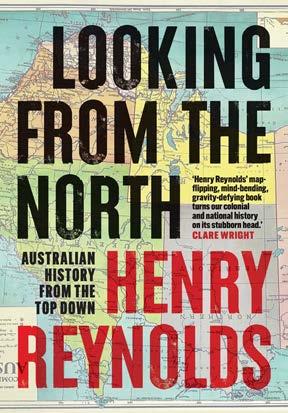
JFS: Your book discusses the history of Indigenous Australians being employed in cattle stations, which reminded me of the Wave Hill Walk-Off (WHW). The WHW was one of the first major land rights victories for First Nations people in Australia. Were those exceptional circumstances, or is there something in the WHW that we can learn from?
HR: The demography was so different. In the south, that is, particularly NSW and Tasmania, the British government sent 150,000 convicts. Young men and women with no dependents could go straight into the workforce, and sheep labour could be sent anywhere, so that even the most remote cattle, sheep and cattle stations in NSW could get convict servants. Once you get into the period of colonial colonisation,
So that’s the important part that Aborigines played in the cattle industry right across north Australia. And that system went on right through into the 1960s. And the other thing about it is that it was, it was up in the tropics, wet season, dry season. In the dry season, the average young Indigenous person worked very hard. But in the wet season, there was no more work, so the boss would say, “Alright, Jackie, you can go off now and come back in two moons”. So they’d go off into the bush, resume their traditional life and wait till the wet season was over. And then you come back to work on the cattle station again. So it was a very interesting and different pattern of settlement.
JFS: After the outcome of The Voice, do you hold out hope that our national stories will reflect the true histories of colonisation? And what will it take, in your opinion?
HR: Well, it’s gradual, as I say, people tend to continue to have the views that they developed when they were young. It’s a matter, and quite clearly, all the statistics also showed that young people and bettereducated young people were far more likely to support Indigenous rights than older, poorly educated people. I think time is on our side. And because there’s also the whole world changing...
Read more online.
On the Track 8 stage at Carriageworks, four eminent writers and translators with a depth of cross-linguistic experience gathered to discuss the intricacies, aporias, and challenges of translation.
Daniel Hahn opened the panel by asking the writers what their first exposure was to translated media and what awakened their awareness to the fact of works existing in translation. Matt Alt, a translator of video games from Japanese to English, described his childhood encounters with “horribly translated” Nintendo games and realising how difficult translation could be. However, he also encountered Murakami translated by Alfred Birnbaum, impressed by the fluidity of the prose.
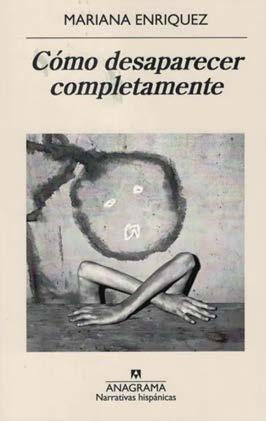
of language for Enriquez. “We use words we don’t understand,” said Enriquez to describe how Argentines translate themselves to be intelligible to other dialects of Latin America. She offered the example of reading a line in a Spanish book “He put the cazadora on,” and being perplexed that someone could wear a female hunter, which is what the word means in Argentine Spanish. Hahn offered that it is difficult for translation to capture the historically rich and contextual meanings which are all wrapped into a single word such as peronismo (Peronism), which has its roots in the legacy of former president Juan Domingo Perón and his wife, Eva Perón.
The
intricacies of that single word can’t be captured in a footnote, let alone succinctly captured in the flow of a novel.
In his youth, Alt consumed Japanese media “at a very healthy clip,” and emphasised that today Japanese media is easily accessible everywhere, from Marie Kondo’s cleaning guides to anime and manga. Alt commented that his career has witnessed a shift in the style of translation demanded from Japanese media. Since young people are increasingly familiar with Japanese culture, they want more “literal” translations, said Alt, who wrote Pure Invention: How Japan’s Pop Culture Conquered the World.
Mariana Enriquez’s reading repertoire in childhood was half Spanish and half translated into Spanish. The acclaimed horror writer of Somebody is Walking on Your Grave writes in Spanish, and said of her tastes: “I liked dark things when I was a child, Bronte and Bradbury.” The Argentine Buenos-Aires-born writer of The Dangers of Smoking in Bed, which was shortlisted for the International Booker Prize, spoke of the Argentine tradition of ‘special’ translations. She says humorously that Jorge Luis Borges “made everyone Borges” in his prolific translations.
When she read Faulkner translated by Borges, she was struck by its creative infidelity: “This is not Faulkner! [Borges] cleaned it, because he didn’t like it.”
Within Spanish, too, there are translation difficulties between Spain and Argentina, creating a very malleable understanding
Bora Chung, horror and sciencefiction writer of The Midnight Timetable and Cursed Bunny (shortlisted for the International Booker Prize), said of her childhood that the translated works she read from Japanese to Korean were of an especially heavy feel. This classical type of translation, which Chung cherishes, is something her editors hate. She intimated this to us in her characteristically wry and humorous manner before breaking into laughter.
As a translator of Russian and Polish into Korean, Chung was uniquely positioned to recount reading an exquisite translation of a Nikolai Gogol novel, only to find out that the reason for its brilliance was that the translators were survivors of Soviet prison camps during the post-WWII Soviet Civil Administration, and learned what she called ‘survival Russian’.
“That’s why the translation was so magnificent. They were held hostage.”
Both the writers of horror on the panel turned their macabre and uncomfortable anecdotes into witty moments of humour.
The audience learned much about nuances in gender and expletives between languages. Argentines love their expletives, says Enriquez with a tone of affection and pride. A word that means something more obscene than ‘motherfucker’ is regularly used to express awe and wonderment at something beautiful, like a sunset, says Enriquez. Hahn, as a translator of Spanish, expresses the difficulty in preserving this casual and even poetic use of crassness.
Kuyili Karthik is found in translation.
One striking difficulty which inflects itself in both the reproduction and translation of certain Russian works is the period of persecution by the Bolsheviks which forced literary circles underground. Chung’s descriptions of Russian party culture, which involved gathering around a trusted friend’s apartment to read banned books and sing banned songs, were so absorbing I felt I was talking to her with a glass of wine in my hand at a party. Due to the impossibility of publishing works, Russian partygoers would read their works aloud while other guests copied it by hand. The last chapter of Mikhail Bulgakov’s Master and Margarita, sometimes entitled “Forgiveness and Eternal Refuge” is elsewhere titled “Farewell and Eternal Refuge,” due to a minor vowel difference between the words in Russian прощение and прощание.
Like any Sydney Writer’s Festival event at Carriageworks, there was a sense of collaboration and shared experiences in the writing industry despite the diverse experiences of the authors who developed their voices in various different corners of the world. The writing endeavours seem often solitary, but the panels and speakers divulge that they belong to a tapestry of reading lists, conversations, friends, and histories which influence their works. For example, Enriquez developed in her locale which Alejandro Zambra, and Samantha Schwebling belonged to. A translator who developed a close working relationship with these writers was Megan McDowell, whose skill grew very much alongside Enriquez’ own.
In closing, Enriquez emphasised the importance of writers embracing their ‘localisation’ and not specifically writing for international audiences.
“You can easily tell,” said Enriquez, when a writer is writing for the international market.
Enriquez described this “getting away from very local things” as “disturbing”.
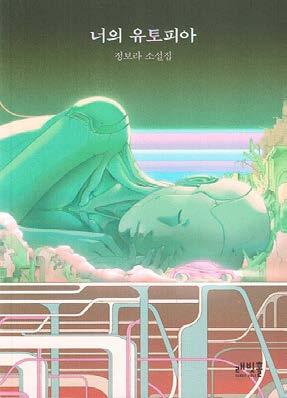
At this year’s Sydney Writers’ Festival panel Radical Hope, hope was centered around its emotional affect rather than a calculated, deliberate act of resistance. Hosted by James Bradley and featuring Natalie Kyriacou, Jack Toohey, and Anne Beate Hovind, the conversation moved across themes of climate grief, empathy, masculinity, activism, art, and the internet’s colonisation of attention. Despite the heavy scale of these topics, the panel never collapsed into hopelessness. Rather, it became an argument for connection, with nature, communities, and each other.
Kyriacou, an Australian environmentalist, social justice advocate, and author, opened the discussion by reframing environmentalism as an act of humility. “We are not the centre of this world, we are just part of it,” she said, arguing that humans have forgotten their dependence on the ecosystems around them. Her reflections were grounded in stories and not just abstract environmental rhetoric. Discussing India’s vulture decline, she explained how veterinary drugs poisoned vultures that feed on livestock carcasses, causing populations to “plummet by 99%”. The consequences, she then noted, far extended beyond biodiversity loss: “the loss of vulture populations in India cost the economy $350 billion and led to the deaths of half a billion people.”
Vultures, she reminded the audience, are “nature’s cleanup crew.” Their disappearance revealed how fragile systems built upon humanity become when ecological systems collapse.
What compelled the audience was Kyriacou insisting that environmentalism is not about catastrophe but also wonder. “We are also not looking away from the wonder,” she argued later in the panel. “There is so much wonder, there is so much to be grateful for.” Her stories about conservationists transformed activism into something deeply personal. She spoke about interviewing a twelve-year-old girl protecting Tasmanian masked owls, wildlife rescuers spending “23 hours a day” saving burnt animals during bushfires, and ordinary people building communities around care. “How dare we give up on those people with such defeatist language?” she asked. “It’s so unfair to them.”
disconnection has profound emotional consequences.
She suggested that social media alienates people from each other as well as nature, which in turn is deteriorating the meaning of having a childhood.
Toohey, a content creator, author, and activist, pushed this idea further, speaking candidly about online radicalisation and masculinity. Having gone viral discussing housing insecurity, climate anxiety, and mental health, he described hope itself as “counter-cultural.” He introduced the idea of “hope punk,” calling it “a hopeful version of the future” where trying to improve the world becomes an act of rebellion. Protest, in general, he reflected, attracted him because “it was real.” In a world where people are emotionally guarded, collective action becomes one of the few spaces where genuine feeling still

The discussion around masculinity became one of the panel’s strongest sections.
Toohey described how social media algorithms feed “toxic masculine influences” that are “rewiring young boys’ brains,” but contrasted this with another online culture he had discovered: birdwatching communities.
He described young male bird photographers sharing their discoveries online with “a certain kind of softness,” adding that these boys were “doing good things on social media because they’re out spending 10 hours in nature trying to find these birds.” Birdwatching, unexpectedly, became symbolic of an alternative masculinity built on curiosity and care, more than what people construe as domination.
The panel repeatedly returned to the question of “empathy” particularly how modern technology erodes it.
Kyriacou described young people spending “less than 30 minutes outdoors with nature and over six hours a day on their screens,” arguing that this
Toohey’s critique of digital culture grew sharper as the panel continued. Reflecting on the internet’s transformation, he argued that “the internet has been colonised” by “a handful of billionaires” controlling “brain hacking algorithms that are designed to pull us apart.” When people become disconnected “from nature and from each other,” he warned, they become “way easier to control.” Yet even here, the conversation resisted fatalism. Toohey argued that the “radical act” is refusing to participate in endless outrage cycles: “Maybe that is to keep posting bird pictures and post our passions and post things and not get pulled into the tit for tat.”
Kiah Nanavati hopes.
The emotional honesty of the panel gave these ideas weight. Toohey admitted that constantly fighting misinformation online had “burnt me out.” He confessed that arguing online had “become part of my brand,” but recognised that endless conflict was unsustainable. “I think there’s another way where we can just embody and model empathy and care and connection,” he said, suggesting that emotional openness itself has become politically radical.
Hovind brought a different perspective entirely, discussing her Future Library project, where authors contribute manuscripts that will remain unread for 100 years. The project sounds almost impossible in a culture built on immediacy. Bradley joked about the absurdity of pitching politicians a forest “you will never see,” but Hovind argued that this long-term thinking is precisely the point. “The radical hope for me is to act every day,” she explained.
Her stories about convincing Oslo officials to support the project revealed the strange persistence required to imagine futures beyond election cycles. Recalling an early meeting with city officials, she admitted, “The first meeting was a catastrophe. I ended up leaving the room crying.” Yet one official eventually responded to her proposal simply by saying, “Why not? We need ‘why not’ people.” That line quietly became one of the panel’s defining ideas, that being that, Radical hope depends on people willing to imagine things beyond practicality or profit.
The panel’s most intellectually engaging moments arrived when Bradley connected these ideas to broader political failures. Modern politics, Toohey argued, exists entirely on a “24-hour news cycle,” trapping society on a “hamster wheel” where nobody has time to imagine the future. “If we had been thinking about future generations,” he said, “we wouldn’t be in the mess that we’re in now.”
The speakers consistently returned to the theme of imagination as simply just a solution. Hovind quoted Margaret Atwood, who told her, “the world’s changing. We need new strong narratives about how the world is changing and how we can change with it.” Art, she argued, matters because it creates spaces where people can envision different futures. She described Atwood’s idea of “practical utopias”, futures close enough to feel achievable rather than abstract fantasies. “Visions are too far away,” Hovind explained. “We need something within reach.”
By the end of the panel, Radical Hope had turned its gears from optimism to attention. Attention to birds, forests, strangers, communities, and future generations. The speakers never denied the severity of climate collapse, political division, or technological alienation. But they repeatedly insisted that despair is not politically useful. Hope, as the panel framed it, is not a passive belief that things will improve on their own, it’s something you work, and care for before you actually make a change, no matter how small it is.
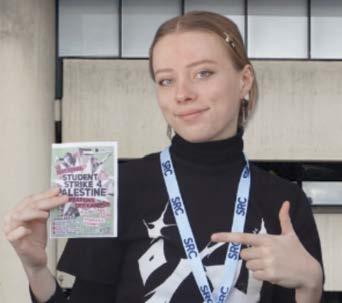
Good luck to all for your end of Semester 1, 2026! This is my last Honi Soit report for a few months, but there will be lots of updates on our Instagram and in the fortnightly newsletter I started. Here are a few recent updates to provide:
• I’m trying a new form of our monthly Council recaps to provide information and transparency to those who don’t venture to filter through the minutes on our website (fair)
• Following the University, SUPRA and SRC announced that after this week the Laneway $5 lunches will be closed but will be replaced by a new $5 meal canteen in J03 from semester 2
• I’ve been working on organising a coalition to counter-protest an anti-abortion bill on 2 June 2026. Check out the @usydwoco Instagram for more details and
make sure to get organised against people trying to repeal our rights!
• Our SRC office continues to suffer in the Wentworth basement with a crumbling roof and leaking water �� I hopefully will be back in my next report with some good news
• Following on from my W12 report, the proposal to remove StuVac from intensive units has not been approved in the Academic Standards and Policy Committee following intervention from myself, SUPRA, and a few staff members regarding the lack of consultation of students and the Disability Inclusion Action Plan. I’ll keep you posted
Check out some cool SRC events this Friday evening – at 4pm there is a film screening of ‘5 broken cameras’ by ACAR, SFP, FilmSoc, and ArabSoc (location TBC), before a 6pm Enviro Collective event ‘last drag on earth’ (Hermann’s Bar) featuring drag kings and environmental justice
Over the break, make sure to follow @src_usyd and sign up to our newsletter via the SRC website to stay up to date.
In solidarity, Grace
Imane Lattab (Grassroots) and Pimala Leo (Grassroots)
The Ethnocultural Officers condemn the abduction and abuse perpetuated by soldiers of the Israeli state towards the latest participants of the Global Sumud Flotilla and the Freedom Flotilla. At least 30 cases of broken bones and 15 cases of sexual violence have been reported, as well as serious bruising and gunshot wounds. Those abducted were also forced to watch graphic displays of torture on screens while made to kneel. This violence reinforces how brutality is embedded into the foundations of the apartheid state of Israel. Over 9000 Palestinians are imprisoned in Israeli jails and continue to be subjected to exactly the same horrific conditions, if not worse, that the participants have experienced. We call for the immediate release of all Palestinian prisoners now!
We are excited to see that all individuals elected to the University of Sydney Union board ran on proBDS platforms! More than ever, we are committed to fighting for the USU to become an apartheidfree zone, especially with election results showing it is a priority for the general student population.
The Autonomous Collective Against Racism (ACAR), in collaboration with ArabSoc, FilmSoc, and Students For Palestine, are holding a film screening of “Five Broken Cameras” this Friday, at 4pm, location to be determined. If you are free, come along to watch and learn about the experiences of individuals organising protests in Bil’in, a Palestinian village in the West Bank. Follow ACAR at @usydacar on Instagram for the location announcement, further event information, and other posts related to anti-racist causes!
Jaseena Al-Helo (Grassroots), Eva Sutherland (SAlt), Emma Searle (SAlt), April Howison (NLS)
Social Justice Officers did not submit a report.
In the first USU board meeting of the year, the current USU president Phan Vu said it was “really important to hear” the SRC’s criticism of the partnerships, but added: “I don’t know if the wider student body has objections to [it].” (March 4 2026, Honi Soit)
With the top 6 candidates of the USU elections all running on antiapartheid platforms, the ‘objections’ of the student body could not be clearer.
Whilst only 5 spots were up for election, we congratulate all 6 candidates for working together as a left-bloc and locking out Liberals. It may feel like a small win in the grand scheme, but think of other students across the world who see injustice and push for BDS on their local and community levels too. Keep fighting.
Vince Tafea (Grassroots) Ava Cavalerie (NSWLS)
All of this sits within a wider context of repression of pro Palestine activism from universities. Handala is a drawing of a 10 year old Palestinian refugee that has been targeted by USyd in documents revealed by Students Against War. Demonisation of Handala feeds into rising anti-refugee and xenophobic sentiment fueled by One Nation and The LNP.
We reiterate the demands of the recent statement by SRC x SRC Collectives x SFP for an apology for racism and an end to the weaponisation of the complaint system to intimidate pro-Palestine activists.
FREE PALESTINE.
In solidarity, Vince & Ava
Shovan Bhattarai (SAlt), Bohao Zhang (PENTA)
Vice President Office Bearers have not submitted a report.
Welfare Officers did not submit a report.
Connie Wong (PENTA) Deaglan Godwin (SAlt)

Are you at risk of missing a meal because of your financial circumstances?
The SRC has a limited number of $20 vouchers for use at the on-campus Micro Markets.
To apply, complete the SRC Contact Form (bit.ly/contact-a-caseworker or scan QR code below) and select “Grocery Voucher”. Please note these vouchers must be used on campus before 31 July.


Exams are a stressful, yet normal part of university life, It is understandable to feel a little bit anxious in the lead-up. Luckily there are steps you can take to make your exam experience less stressful.
Before your exams, find out what topics will be covered in the exam, and what kind of exam you will be sitting. Remember; an open-book exam does not mean you can use the Internet! Usually, it means that you can use paper or locally saved (no internet needed) notes only. Carefully read the specific rules for your exam on Canvas and any uni correspondence sent to you, If you are unsure, ask your unit coordinator. The library runs an “exam ready” program with lots of helpful tips and resources.
Exam Logistics
• It is important to know where your exam will be, and how you will get there. Have a look at the doors for the room so you can get to another door if the first one is locked.
• Check the date, time, and location of the exam in your exam timetable, which was released on 4th May. If you miss an exam because you misread the timetable it is unlikely that you will get the chance to do a supplementary exam instead.
• You will need to bring or show a valid form of photo ID, ideally your student card.
• Check your seat number and what you need to bring into the exam room. Check, what you are not allowed to bring in, and what materials you need to have approved (E.g., a calculators must have an approved sticked from the Student Centre). The SRC has approved calculators that you can borrow. You can also ask the exam invigilators if they have one you can borrow.
• Before you get into the exam room, turn your phone off (not
silent, completely off) and put it in your bag. Make sure your pockets are empty and you are not wearing headphones or a smart watch. Place your bag where you are told.
• You should not start writing until you are told you can, and you must stop writing immediately, when the invigilator says to stop. Failure to do so can lead to an allegation of a breach of Academic Integrity.
If you cannot attend an exam or your performance is impacted by an illness, injury, or misadventure that was unexpected and beyond your control, you can apply for Special Consideration, even if it is a replacement exam.
Special Consideration applications must be submitted within three working days of the exam date, and you must provide appropriate supporting documents. Usually this is a Professional Practitioner’s Certificate covering the dates you were impacted, including the date of the exam.
Please note that you should see a doctor on or before the day of the exam.
If you were impacted by misadventure, it is helpful to focus on the way that it impacted you, not the event itself. For example, if your grandparent died, get a PPC from your doctor for the grief you are experiencing, rather than focusing on the death of your grandparent.
See the SRC’s website for more information about Special Consideration.
If you are accused of academic dishonesty, the SRC can help you with your response. You can use the contact form on our website, or you can call the office on 9660 5222.
SRC Caseworker Help Q&A
Special Consideration

If you are sick for an assessment apply for Special Consideration within 3 working days.
Dear Abe,
I’ve been very sick, and I am struggling to finish my final assessment. It’s worth 60%, so I can’t afford to not hand it in. I am also scared that I am going to be too sick to prepare for my exams. What should I do?
Very Sick
Dear Very Sick,
If you are too sick to complete an assessment, you should apply for special consideration. If you are too unwell to attempt your exam,
or if you become unwell while you are doing your exam, you should also apply for special consideration. You must provide supporting documentation from a doctor, psychologist, psychiatrist, who you have seen in person or through telehealth. Online medical certificates will not be considered. You should do this on the day or before the day of the exam or the assessment due date. Apply within 3 working days of the assessment, as late applications might not be considered.
Abe
If you need help from an SRC Caseworker start an enquiry on our Caseworker Contact Form: bit.ly/contact-a-caseworker



1. Norse thunder god (4)


Dusting Off the CObwebs
3. Exodus leader; City planner subject of “The Power Broker” (5)
6. Blind burrower (4)
8. Renaissance (7)
9. Cut into (6)
10. Big-billed bird (7)
14. Falls on the US border (7)
16. Someone might have this to grind (2,3)
17. Croc’s cousin (5)
20. Holey roll (5)
21. Tofu source (3)
22. Wet, salty expanse (5)
23. PC key combo for “copy”, abbrev. (5)
26. Radium discoverer (5)
28. Western Syd suburb, location of Ramadan markets (7)
30. Expertise (7)
33. Luke’s mentor (6)
35. Speak to (7)
36. Antlered animal (4)
37. Piece of cake? (5)
38. In addition (4)

From the August 19, 1997 edition of Honi.
2. Neigh sayer (5)
3. Fishy guy (6)
4. London, Manhattan, trendy suburbs (4)
5. Star Wars and Star Trek genre (5)
6. ___ and cheese (3)
7. Treatment that reduces wrinkles (5,4)
10. Rotund, pink animal (3)
11. To rent out (3)
12. Automobile (3)
13. Odysseus’ princess rescuer (7)
14. Big apple (7)
15. Beanstalk residents (5)
18. Clankers in customer service (2,4,3)
19. Tribe in Killers of the Flower Moon (5)
23. Corpo bigwig (3)
24. “Ruh ___ Raggy” (3)
25. Moo-er (3)
27. Suitable for rainy days (6)
29. Boringly unoriginal (5)
31. Brit band, reunited recently (5)
32. ____ pad. Frogs might rest on these (4)
34. Tail movement (3)
1. Who was elected to USU Board with the most votes?
2. When was the first Sydney Writers’ Festival?
3. How long has Putin effectively been in power?
4. How many Australians bought tickets to Candance Owens’ now-cancelled tour?
5. Which disgusting former SRC President spoke at Sydney Writers’ Festival?
6. Who ripped up last week’s Honi? 7. Who is the treasurer of Australia?
Last week’s crossword answers


The Dark Lord Sauron has reached out to Honi to notify them of alleged “inaccuracies” and “misrepresentation” over its depiction of the barren wasteland of Mount Doom.
Sauron built his infamous chamber inside the iconic mountain, utilising its geothermal heat to fuel his dark sorcery. The mountain is imbued with an ancient destructive power.
Sauron took to Honi’s DMs and his Instagram to call out the “foul impishness” of the Honi editorial team, stating that it was a “complete lie” to insinuate that Mount Doom was in any way “evil” or even “bad”.
“Where is their proof, even? Evil and dark are totally subjective! Fuck Honi.” Sauron screamed in a video posted to his story.
Sauron was also clearly angered by Honi’s depiction of him as “Satanic”, contradictorily stating he was “nothing like that” but also that “Honi should be pro-that anyway, aren’t they a bunch of Satanist freaks over there?”
Sections of the roof of the SRC building have been caving in since Sauron began his tirades, with molten hot magma erupting from the ceiling cavity. Honi cannot speculate as to the correlation of the two events.

In a radically new vision for Honi’s role on campus, University of Sydney management have announced that next year’s Writing Competition will be replaced with a Looksmaxxing Competition.
Entrants will submit a video of themselves mogging to the editors, who will then select a shortlist which will be judged in-person by a panel of looksmaxxing experts.
Management stated their position is that “this writing thing is kind of over” and “in the future, all that will matter is how you look”.
This is a worrying development, with many students concerned as to what this outlook will mean for the future of tertiary education at USyd.
The 2027 Looksmaxxing Competition theme will still be Crisis / Catharsis.

Anonymous is overstimulated.
The other day I was walking along campus, just minding my own business. All of a sudden, I was accosted by the thumping beats of “Party Rock Anthem” by LMFAO, a song I haven’t heard in years. There were flocks of strangers in USU shirts attempting to hand me propaganda printed on slips of paper. There were even more strangers in USU shirts playing comically large versions of games like Connect 4 on the Law Lawns. They were screaming and yelling at each other.
There was also a protest occurring nearby. The speakers made good points but they were pretty loud which is actually a bit disruptive :// Not sure if the organisers considered that element.
Then I saw campus security near the Socialist Alternative stall getting into a loud argument with a pompous blonde gentleman. Someone with a rabid look in their eyes asked me if I had ever heard of socialism. I made the hand signal for “No Deal” until they left me alone.
The shrilling of the SAlt member had hardly left my ears before I was aurally assaulted by the raving of a lunatic performing an amplified sermon at the entrance of Eastern Avenue. Campus security told me they’re “technically not on USyd property” so there was nothing they could do. A Lime bike hit me in the ankle and was gone before I could see the culprit. I hopped on the bus. There were transport officers at the next stop. They pushed me out of the bus and curbstomped me. I live in Hell.