The Squirrel Hill Urban Coalition gives voice to the hopes and concerns of our residents, institutions, businesses and visitors and works to preserve, improve, and celebrate the quality of life in our vibrant urban Squirrel Hill neighborhood.
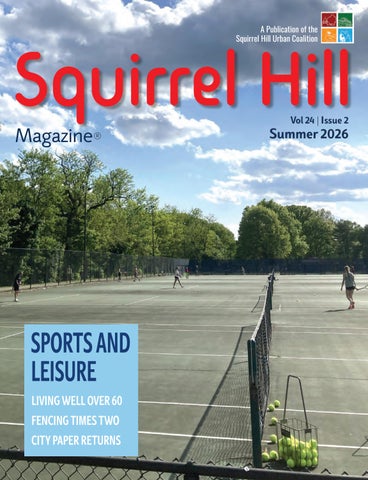
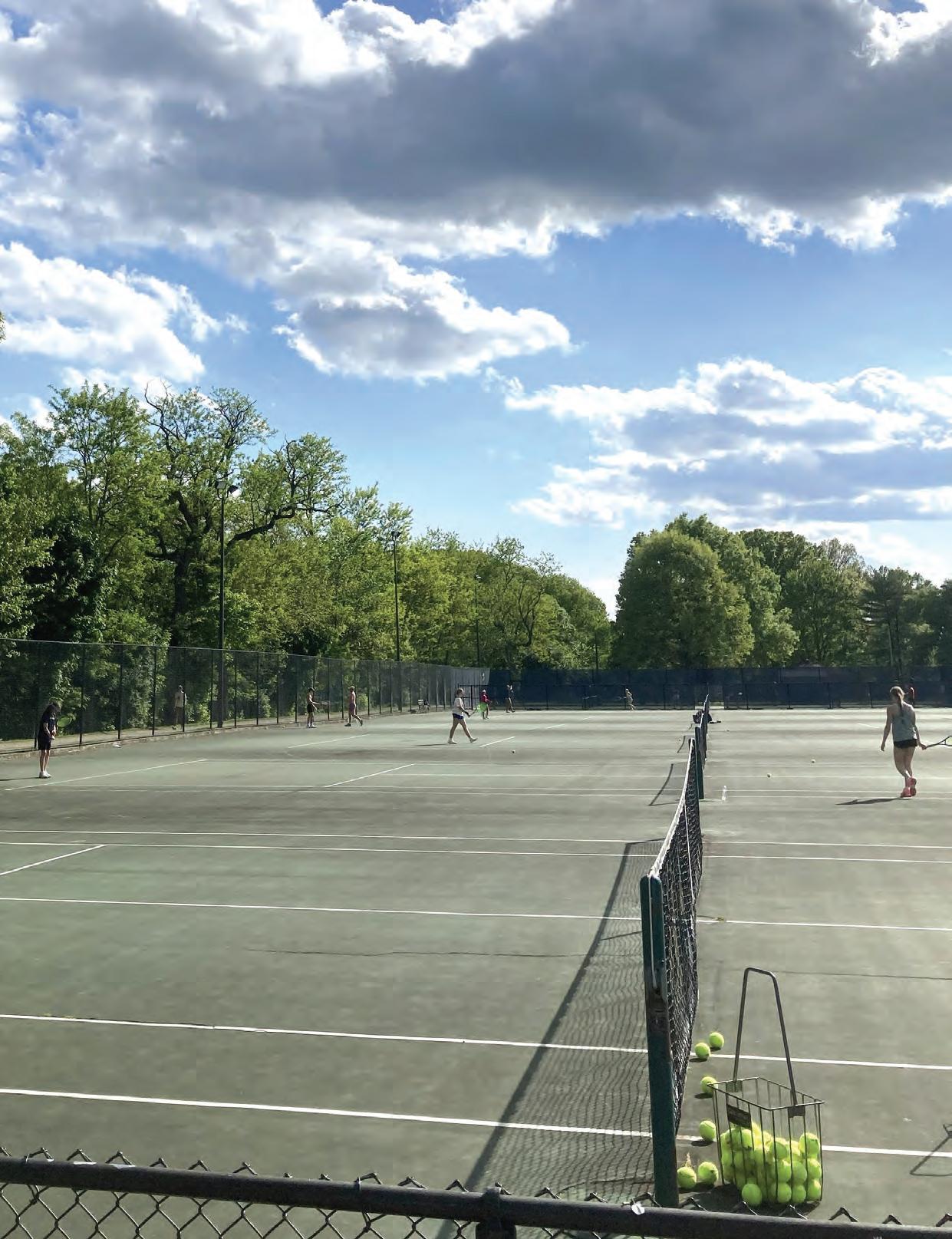
ON THE COVER: Tennis at Schenley Park. Photo by Melissa Eppihimer. FOR ADVERTISING INQUIRIES Contact marketing@shuc.org. FOR ALL OTHER MAGAZINE COMMUNICATIONS Contact editor@shuc.org or (412) 422-7666.
In this issue, we explore some of the sports and leisure activities in our neighborhood and the people whose passions and talents keep them going.
Tennis, pickleball, running, hurdling, jumping, soccer, swimming, golf, disc golf, baseball, basketball, flag football, figure skating, cycling, deck hockey, and two kinds of fencing (both of which you can read about in the pages that follow).
Starting with my favorite, and the rest in no particular order, this list includes all of the sports that I’ve seen in Squirrel Hill. If yours isn’t included, it just means I haven’t seen it—yet!
MELISSA EPPIHIMER Editor, Squirrel Hill Magazine
SQUIRREL HILL URBAN COALITION OFFICERS
PRESIDENT Dalia Belinkoff
VICE PRESIDENT Lisa Murphy
VICE PRESIDENT Erik Wagner
SECRETARY Raymond N. Baum
TREASURER Justin Berk
IMMEDIATE PAST PRESIDENT Mardi Isler
BOARD OF DIRECTORS
Guy Costa, Jacquelyn Cynkar, Lori Fitzgerald, Nolan Grimes, Natalie Hall, Marshall Hershberg, Melissa Hiller, Mardi Isler, John Katz, Jeremy Kazzaz, Rachel Lecrone, Karen Oosterhous, Vida Passero, Rivkee Rudolph, Mary Shaw, Lisa Steindel, David Vatz
The Squirrel Hill Magazine is a publication produced by the Squirrel Hill Urban Coalition (SHUC), a nonprofit organization. As a non-profit 501(c)(3) organization, donations to SHUC are tax-exempt, and SHUC complies with all 501(c)(3) rules and regulations.
CONTRIBUTORS
Dalia Belinkoff, Pat Callaghan, Maria Cohen, Melissa Eppihimer, Luke Gellad, Lawrence Gerson, Linda Gruskiewicz, Helen Wilson
EDITOR Melissa Eppihimer
DESIGNER Karen A. DeTurck
EXECUTIVE DIRECTOR Maria H. Cohen
Squirrel Hill Magazine, Vol. 24, Issue 2, is provided by the Squirrel Hill Urban Coalition as a free publication for the residents and businesses in the 15217 zip code. Subscriptions are available for $25/year. No portion of this magazine may be reproduced without permission.
Greetings from the SHUC President
By Dalia Belinkoff, SHUC Board President
HELLO SQUIRREL HILL,
DO YOU KNOW ABOUT THIS LITTLE GEM HIDING IN PLAIN SIGHT IN THE HEART OF SQUIRREL HILL? You’ve probably walked past it a hundred times without really noticing it.
For years, I have been walking through the passageway beneath the library from the parking lot to Forbes Avenue.
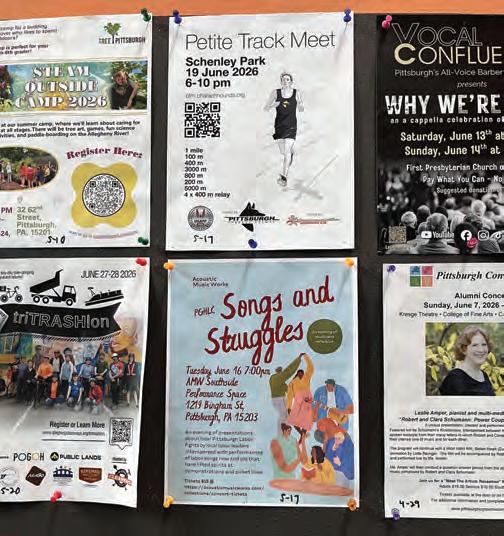
As I walk, I see the posters lined up on the wall. Then one day I had a eureka moment and realized that the wall wasn’t just an old-school public notification system—it was an accidental art gallery.
The posters, most of which are the size of an 8.5 x 11 inch piece of paper, are arranged in an even row on a black background. It reminds me of an art gallery—probably because I was once a docent at the Carnegie Museum of Art. So, let me put on my docent tam again, and we’ll take a look.
In honor of this issue’s theme—Sports and Leisure—we’ll start with a poster for a track meet, noticing first how it is arranged. Look at how the poster is neatly hung with three tacks attaching it to the black background.
Now, let’s look at the poster itself. We can see that this is an informational notice of a track meet. Not just any track meet, but a “Petite” track meet. What does THAT mean? Maybe only petite adults run? There is a prominent QR code that might provide an answer to that question. The rest of the poster tells us it’s a local track meet in Squirrel Hill’s backyard (Schenley Park) on June 19.
Just to ask a few docent questions: Take a closer look at the image of the runner. What might that runner be feeling as they run on the track? Have you ever run in a track meet? How did you feel?
The printed poster also has a handwritten date on it. I can tell you that this is the date it was installed in the “art gallery.” The Carnegie Library hangs approved posters about community events, educational resources, concerts, and more in this hallway. To keep “track” of things, they mark the date the poster went up. The posters are then taken down when the event is over.
There’s a lot of information packed into this one piece of paper! You just had to take a walk to see it, and it didn’t cost a dime!
Then one day I had a eureka moment and realized that the wall wasn’t just an old-school public notification system—it was an accidental art gallery.
The library gallery has notices about theater and music performances. There’s information about help you might need or help you might give. There are posters for a trash triathlon and yoga classes, and a warning that sex trafficking happens in Pennsylvania but help is available.
The 20–30 informative pieces hanging in the passageway are useful in their own right, and they communicate some important things. All these entities, all these different endeavors, have chosen to make Squirrel Hill aware of what their organization is currently doing. Why is that?
It’s because they think friends in our neighborhood, who have a huge variety of interests, will come, will participate, and will listen. We might want to watch Hamlet or know about the Hazelwood Food Recycling Site. To me, that’s a pretty special view of Squirrel Hill! An ode to our neighborhood perhaps?
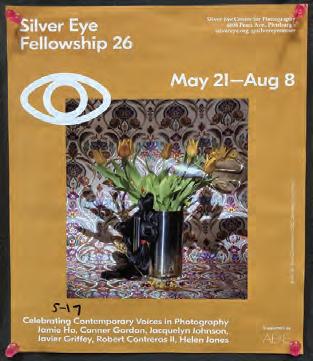
We have time for one more exhibit. Note the color, the typeface, the four carefully placed pushpins holding this piece to the wall. What’s this poster about? It says “Silver Eye Fellowship 26.” What’s a silver eye? Which kind of fellowship do they mean? Look closer. There’s a beautiful photograph of a jug with flowers in the middle. Why might the designer of the poster have chosen that image? What’s that oval thing on the left side of the poster? Is it the CBS logo? It’s actually the emblem for the photography center that is advertising an exhibit with this poster. You can find that out in the text at the bottom.
So, as I’m looking—not wasting time exactly, but not doing my errands, either—I notice that something is missing from the gallery. There is a poster about a Yiddish Day of learning and a sign that Asian performers are needed (and must love K-Pop!). But there is nothing in Mandarin, or Korean, or Spanish. Why is that? We are a diverse community, so why no outreach here?
Our art gallery provokes a lot of questions! I find myself standing there much longer than I mean to!
I’ve asked the staff at the Squirrel Hill branch of the Carnegie Library and was told there had not been a request for a foreign language poster in years. We are a welcoming community, and I hope that maybe someday this gallery will speak in more languages—and tell even more neighbors that they belong here and are welcome to participate in our shared cultural, social, and educational opportunities.
Frankel
Announcing the 2026 SHUC Treasures
The Squirrel Hill Urban Coalition is honored to announce our 2026 Squirrel Hill Treasures!
These four individuals and one institution represent the best of our community and will be celebrated at the 2026 Treasures Dinner on Thursday, November 5 at The Pittsburgh Golf Club.
We hope to see you there! For tickets and sponsorship information, visit shuc.org or e-mail info@shuc.org or call 412-422-7666.
Meryl Ainsman,
Executive Director of
the Philip Chosky Charitable & Educational Foundation
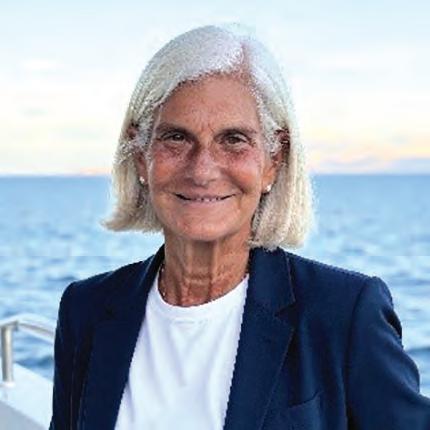
Meryl Ainsman is the Executive Director of the Philip Chosky Charitable & Educational Foundation, a local nonprofit focused on education and community. She is retired as the business manager of the law firm Ainsman Levine, LLC. Additionally, she has spent most of her adult life as a volunteer and leader in the Pittsburgh Jewish community. Her public service has included periods as a Board Member of the Pittsburgh Jewish Community Center and of the Jewish Federation of Greater Pittsburgh, including terms as Board Chair for each, and of the national Jewish Community Centers Association.
Meryl’s most important roles are as a mother to her four children and their spouses and as Mimi to her eight grandchildren, most of whom reside in the neighborhood of Squirrel Hill.
Gregg Perelman, CEO of Walnut Capital
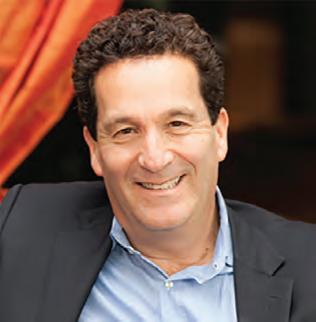
As CEO of Walnut Capital, Gregg Perelman has brought his vision of innovation to bear in a city that is becoming synonymous with urban rebirth. Perelman has been instrumental in creating and implementing Walnut Capital’s aggressive acquisition and development strategy. He jointly oversees the company’s property management arm, leading a staff of more than 100 people with vision and enthusiasm throughout the day-to-day operations, marketing, and management of all the firm’s residential, office and commercial properties.
Perelman built his career around a philosophy of marketing, customer service, and attention to detail. Long before the words “corporate social responsibility” or “social entrepreneurship” existed, Perelman lived by those principles. He wants to change the landscape of the city he calls home: “You start with an idea, a seed. You nurture it, and you see the whole cycle. Legacy is very important to me.”
Richard Piacentini, President & CEO of Phipps Conservatory and Botanical Gardens
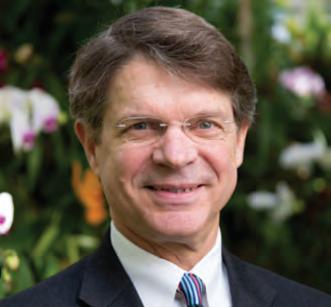
Since 1994, Richard Piacentini has led the Phipps Conservatory and Botanical Gardens from public to private management, restoring the original conservatory and expanding its flower shows, exhibits, and educational programs. He is responsible for Phipps’ green transformation, including the Center for Sustainable Landscapes and other LEED®-certified spaces on the Phipps campus. These sustainability efforts recognize the vital connections between people, plants, health, and the planet.
Beyond Phipps, Piacentini led the creation of The Climate Toolkit to assist museums, gardens, zoos, and aquariums to address climate change. He has also served the International Living Future Institute, the American Public Gardens Association, the Biophilic Cities Network, the Global Commission for Healthy Indoor Air, the Global Network for Zero, the Mission and Community Needs Committee for Magee-Womens Hospital, and the Pennsylvania One Health Task Force and Biophilic Design Initiative.
Piacentini holds a MS in Botany from the University of Connecticut, an MBA from Virginia Commonwealth University, and a BS in Pharmacy from the University of Rhode Island.
Todd Reidbord, President of Walnut Capital
Todd Reidbord has expertise in real estate and corporate law, specializing in commercial real estate acquisition, financing, leasing, and development. He jointly oversees the operations and staff at Walnut Capital Management that coordinates all aspects of development, management, and brokerage services. He is also the point person for Walnut Capital’s many investor and lender relationships. As a member of City of Pittsburgh’s Planning Commission for eight years,
Reidbord learned from the inside out how public policy shapes development. There, he forged the network that would help him understand the impact of his work on future generations and the value of public-private partnerships.
Reidbord is a graduate of the Wharton School of the University of Pennsylvania and the University of Pittsburgh School of Law. He is a long-serving member of the Board of Directors of the Pittsburgh Jewish Community Center and has served on the Boards of The Greater Pittsburgh Literacy Council, Phipps Conservatory, Jewish Federation of Greater Pittsburgh, and the Shadyside Chamber of Commerce.
Squirrel Hill Health Center
Squirrel Hill Health Center (SHHC) is a federally qualified community health center (FQHC) providing primary and preventive medical, behavioral health, and dental care to anyone who needs it, regardless of insurance status or ability to pay. Created through the efforts of the Jewish Healthcare Foundation in 2006, SHHC is a completely independent nonprofit governed by a patient-majority board of directors. In 2025, SHHC cared for nearly 9,000 patients.
With offices in Squirrel Hill and Brentwood, SHHC partners with community organizations and agencies to bring its mobile medical unit to sites across Allegheny County. SHHC further increases access via telehealth and house calls to homebound patients. Since its inception, SHHC has valued its role in helping all area residents live healthier, happier, and more productive lives, regardless of who they are or what their background may be. SHHC is proud to be rooted in the Squirrel Hill community, playing a role in ensuring that our vibrant, diverse, and welcoming neighborhood continues to thrive and grow into the future.
Photo Courtesy of Walnut Capital.
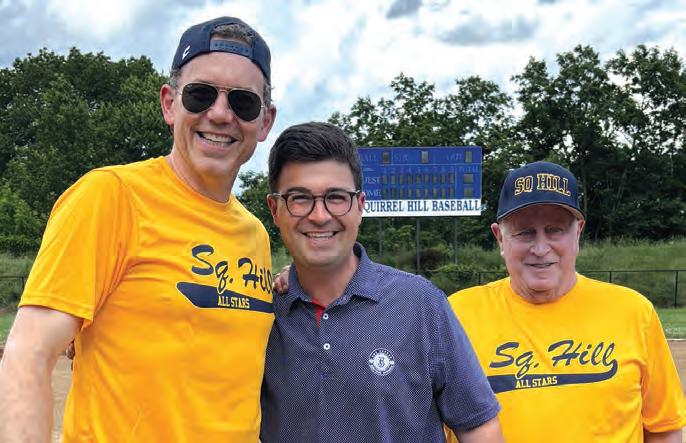
Randy Frankel (r) and Tad Conlin (l), of Squirrel Hill Baseball, with Mayor Corey O’Connor, one of the organization’s alums
COMMUNITY CHAMPION:
Randy Frankel
By Linda Gruskiewicz
MUCH HAS BEEN WRITTEN ABOUT RANDY FRANKEL, AND RIGHTLY SO. He has given 38 years of his life to the Squirrel Hill Baseball Association. There are thousands of former Little Leaguers who can throw better, hit better, catch better—skill sets that kids develop by having a good coach—because of Frankel. But player development is just one part of who Randy Frankel is and how he has changed lives and our Squirrel Hill community.
In case you missed the numerous press articles, honor events, plaque dedications, and other swirls of Randy Frankel admiration and gratitude over the years, here are a few of his career highlights. He
• started a fall league impacting not only Squirrel Hill but kids throughout the city
• got a WPXI helicopter (twice!) to dry off the field after a bad rain threatened to cancel opening day
• built schedules so Orthodox Jewish teams could play
• adopted an early version of the Miracle League for kids with physical and intellectual challenges
• added girls’ softball
• developed a COVID-19 safety plan for youth baseball, which was shared with the City and other leagues as a model.
Clearly, Frankel is a guy who likes his baseball and loves people.
I could feel this warmth and welcoming spirit as soon as I pulled into his driveway to talk with him. He is, of course, wearing a Squirrel Hill Baseball sweatshirt. He extends his hand and invites me in. We prepare to talk as Terri, his wife, wheels up to the table. Terri is living with MS and now needs a wheelchair. She stays active with volunteer work and her Mahjong group.
Terri offers me something to drink. She and Randy play off each other. Tease each other. Praise each other. You want to be adopted by them. Both have traveled the world. They show me mementos from Turkey, Greece, Italy, China—a whole wall of memories.
I come away from our conversation with an understanding of how Randy Frankel has used baseball to change an entire culture within the Squirrel Hill community.
In 2026, an estimated 30–50 million children (ages 6–17) are participating in organized sports across the United States. Studies consistently show that youth sports offer significant benefits to participants. Sports build healthier
Photo courtesy of Randy Frankel
bodies, sharper minds, and stronger emotional foundations, according to Science Insights
Studies also show those benefits extending into adulthood and into the broader community. Little League brings neighbors and families together. This builds a connected network of adults who have a stake in the community’s children. It even has a positive economic result, driving traffic to local businesses and the purchase of uniforms and equipment.
Although Frankel may be aware of all the studies showing the benefits of Little League to kids and communities, his conclusions are drawn by personal involvement and observation.
He created a culture. He is what’s good about society.
“I’d see the kids have more self-esteem, more confidence,” he shared. “They learned about camaraderie, teamwork. They got to meet other kids that they might never get a chance to meet.” He loves to tell the story of the exchange between his team and one from Australia. The Australian team got Terrible Towels, and the local team got boomerangs. Both teams, one could surmise, got an experience to remember and an expanded appreciation for others.
Frankel added, “The parents also got chances to be involved in something bigger.”
One of those parents is William Pietragallo II, the founding partner and Chairman of Pietragallo Gordon Alfano Bosick & Raspanti, LLP. He is recognized as one of the top lawyers in the country. He is also one of the many individuals Frankel says have been instrumental in his and Squirrel Hill Baseball’s success, and through that he’s joined the Randy Frankel Hall of Fame, an informal list of Frankel’s helpers.
“I coached with Randy some 30 years ago when my son played. I was with him during the building of the League,” remembered Pietragallo. “Randy made it special. He engaged people. He welcomed everyone and was joyful in their participation.”
Pietragallo’s grandson now plays, which is a good example of the generational involvement and effect Frankel has had. “He created a culture. He is what’s good about society,” Pietragallo noted.
How did Frankel do this? “You have to have chutzpah. Be persistent. You have to be open-minded. Listen to everyone. Keep in touch with people,” Frankel explained. “Most of all, you have to care about the kids. It’s all about the kids.”
Frankel is technically retired, but one gets the feeling baseball is still and forever will be in his blood. He speaks highly of his successor, Tad Conlin, who has taken over as President of Squirrel Hill Baseball Association. “Tad has determination. He doesn’t give up.” Frankel will remain involved with the Association Board and helps Conlin with some behind the scenes work.
The accolades continue to come Frankel’s way, even as he moves into retirement. He recently received a City of Pittsburgh proclamation from former Squirrel Hill Baseball player and current mayor Corey O’Connor. The proclamation recognized Frankel for having “enriched the lives of generations of young people and families.”
Being recognized is, of course, rewarding to Frankel. Still, he always thanks those who helped him along the way. As he always says, “This was a job of love.”
State and City Council Corner
State and City Council Corner shares reports submitted by the elected members of Pittsburgh City Council and the Pennsylvania Legislature that represent Squirrel Hill.
STATE SENATOR JAY COSTA
The Pennsylvania Senate Democratic Caucus is laser-focused on raising wages, lowering costs, and making PA more affordable for our families. Already over 145,000 Pennsylvanians have lost access to healthcare because Trump and his enablers in the federal legislature opted not to extend a key tax credit. And according to a Jan. 20 report from Democratic members of the congressional Joint Economic Committee, Pennsylvania families spent $1,734 more in 2025 due to inflation under the Trump administration.
Families are struggling to make ends meet, and these troubles are facing Pennsylvanians of every party, ZIP code, race, age, and faith. This crisis is not sparing anyone, no matter how they voted.
While Republican leadership is failing and floundering at every level, the Shapiro Administration, House Democrats, and Senate Democrats are ready to enact commonsense, bipartisan legislation that will put money back in the pockets of Pennsylvania’s families.
Our members have introduced and championed an Affordability Action Plan that will not only reduce cost burdens for Pennsylvania’s families but also expand their economic opportunities so that their take-home pay goes up.
Senate Democrats stand ready to work on ending the affordability crisis and more as we engage in budget negotiations, legislative initiatives, and constituent services.
STATE REPRESENTATIVE DAN FRANKEL
The April 20th Commonwealth Court decision in Allegheny Reproductive Health Center v. Pennsylvania Department of Human Services marks a major victory for reproductive rights in Pennsylvania. The Court affirmed that reproductive autonomy is a fundamental right under our constitution and struck down the longstanding ban on using Medical Assistance funds for abortion care. For decades, this policy denied coverage to those with the fewest resources, creating a clear inequity in access to care. By eliminating the ban, the court affirmed that constitutional protections apply regardless of income and that denying coverage is discriminatory. This decision moves Pennsylvania closer to a more just and equitable health care system—one where individuals, not the government, make decisions about their care.
From Top to Bottom:
State Senator Jay Costa; State Representative Dan Frankel; City Councilperson Erika Strassburger; City Councilperson Barb Warwick.
As founder and former co-chair of the Legislative Women’s Health Caucus, Rep. Frankel has long fought to protect abortion access and for families to make their own decisions. The Commonwealth Court’s decision is a monumental step, but there remains work to be done in the legislature. Rep. Frankel will continue to fight for legislation that champions reproductive freedom, including repealing the Abortion Control Act and expanding the types of healthcare providers who can perform abortions.
CITY COUNCILPERSON ERIKA STRASSBURGER
On Sunday mornings this summer, Pittsburghers can slow down and enjoy one of the City’s most beloved seasonal traditions: Bach, Beethoven, and Brunch at Mellon Park. Running from June 21 through July 26, the longtime concert series transforms the lawn at Fifth Ave and Shady Ave into a gathering space for music lovers, families, and neighbors looking to spend time outdoors. This free concert series offers live classical performances from 10:30 AM to noon each Sunday. Guests are encouraged to bring blankets, enjoy brunch in the park, and take part in the crowd-favorite “Best Brunch” competition during intermission.
Bach, Beethoven, and Brunch arrives as Pittsburgh’s public pools reopen for the summer season. This year, many pools include lawn chairs and loungers, giving residents more space to spend the day outside with family and friends. Whether it is an early morning concert in Mellon Park or an afternoon at the pool, there are plenty of ways for folks to enjoy their neighborhoods this summer and make the most of the warmer months.
CITY COUNCILMEMBER BARB WARWICK
This spring, Councilmember Warwick, in collaboration with Councilmember Gross and Councilmember Strassburger, introduced four bills which limit the City of Pittsburgh’s cooperation with federal immigration enforcement agencies. All four bills have now passed unanimously.
In summary, the legislation:
• Prohibits City investigations or City law enforcement action based on a person’s citizenship or immigration status
• Prohibits City employees and agencies from providing access to a person in City custody to federal immigration enforcement agencies
• Requires City contractors and lessees of City property to adhere to the same nondiscrimination requirements as the City
• Prohibits the City from entering into any 287(g) agreements, which allow the federal government to partner with local law enforcement agencies on immigration enforcement
• Requires the City to submit a report to City Council and the public on all City departments’ use of surveillance technologies
Councilmember Warwick is grateful for the collaboration and support of local and statewide immigration advocacy organizations who lent their expertise and support to the bills.
She looks forward to continuing to work legislatively and within the community to ensure City resources are used to keep Pittsburghers safe, rather than support federal actions which lead to fear and violence.
Living Well Through AgeWell at the JCC
By Melissa Eppihimer
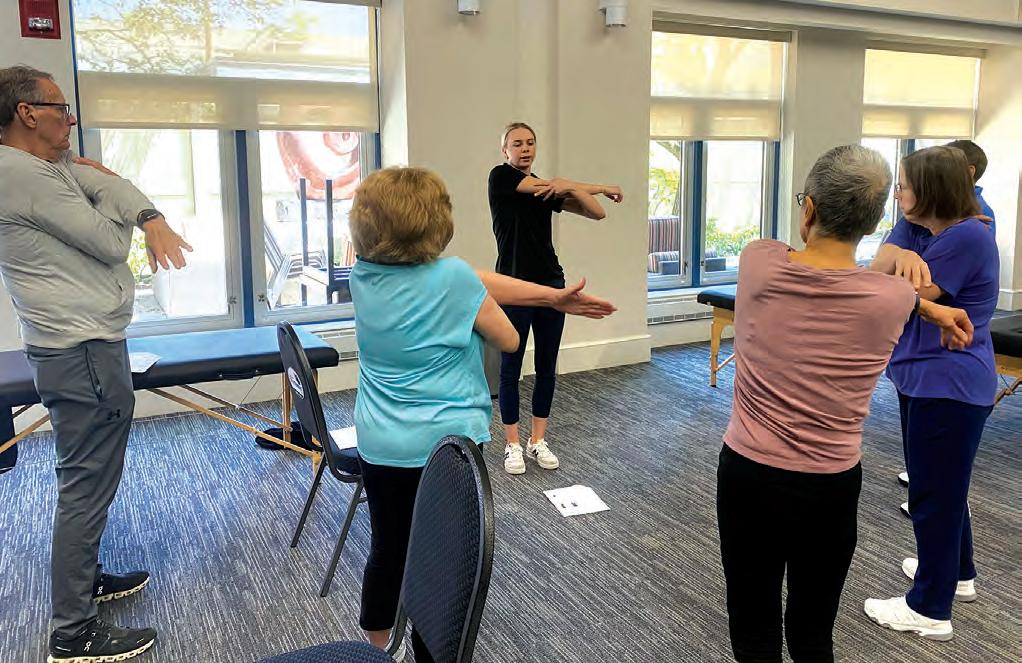
ON MONDAY MORNINGS, MARSHA MULLEN CAN BE FOUND LEADING A LIIT CLASS IN THE WEIGHT ROOM OF THE SQUIRREL HILL JCC. An adaptation of the HIIT (High-Intensity Interval Training) workout, Mullen’s LIIT modifies the intensity level but maintains the periodic bursts of activity. Upstairs in Levenson Hall, Holly Mihm is helping others improve their strength, endurance, and balance in a class called Boom using light weights and intentional movements. Both LIIT and Boom are offerings from AgeWell at the JCC, a senior center within the community center.
Founded more than four decades ago, Squirrel Hill’s AgeWell at the JCC has developed into a senior center accredited by the National Institute of Senior Centers, part of the National Council on Aging. Senior Centers connect older adults with services and opportunities that can help them maintain their independence.
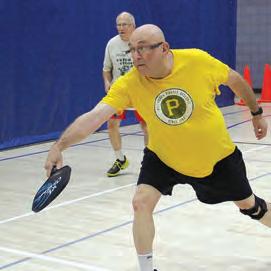
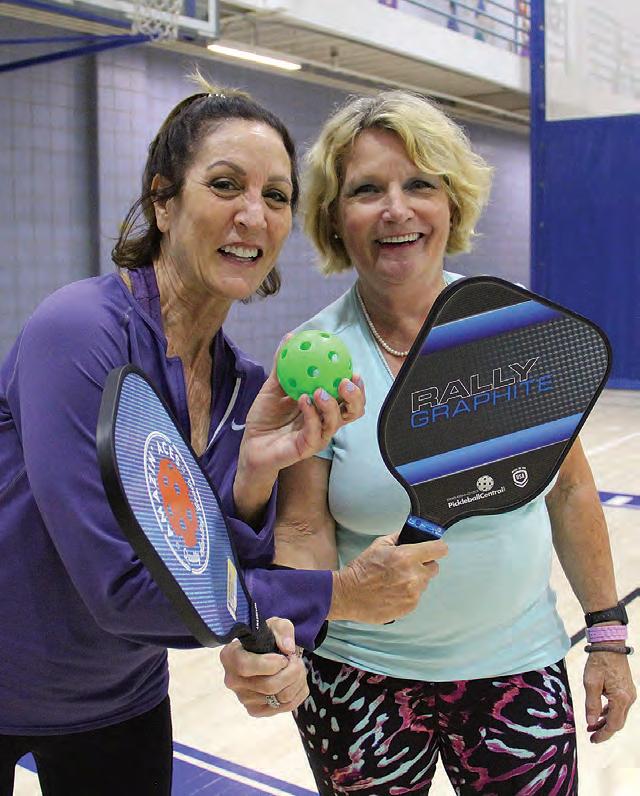
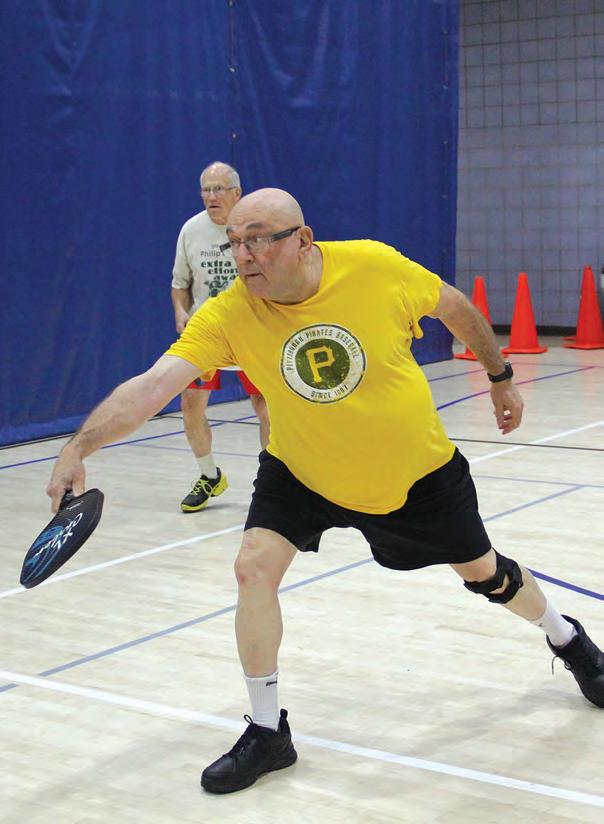
Pickleball is hit at AgeWell at the JCC.
Keeping the body active is key to good health at all ages.
“That’s the goal of AgeWell, to keep people aging in place independently, and it definitely is working,” said Mullen, the JCC of Pittsburgh’s Program Coordinator for Healthy Aging.
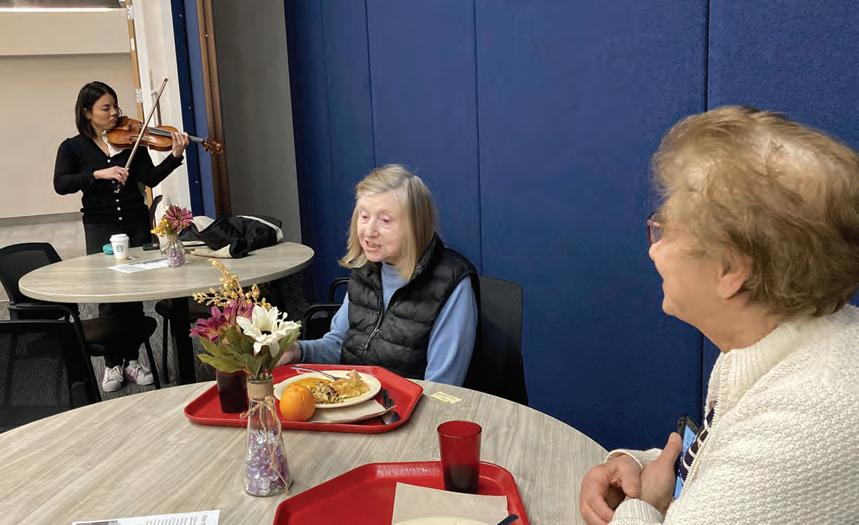
The JCC is a hive of activity for AgeWell members. It’s possible to stay busy throughout the day with a fitness class in the morning, lunch at the J Café (for a $1.50 suggested donation), and then an art class in the afternoon. Membership is free for anyone living in Allegheny County who is 60 years of age or older. Registration requires only demonstrating proof of age and residency. There is no charge for classes.
Sharon Guberman of Braddock Hills prefers morning classes as a way to start her day. She’s been amazed by how much she’s enjoyed the AgeWell classes since joining two years ago after retiring. “The program has helped me immensely, and not just physically. It’s a mind-body connection,” she said.
is not old.
These people move!
Many AgeWell classes inspire social engagement and intellectual exchanges between members. Current language classes include French, Spanish, and Yiddish, while Scrabble, Rummikub, Mah Jongg, chess, and bridge meetups promise friendly competition. There are also opportunities to explore and discuss Jewish history and religious and cultural traditions.
Some AgeWell programs address the needs of specific populations. The monthly Memory Café welcomes individuals
living with cognitive changes and their care partners into a non-judgmental space to explore art, music, and movement together. In the fitness realm, PWR! Parkinson’s Wellness and Recovery! classes feature exercises for individuals with Parkinson’s disease or other neurocognitive disorders, and the Arthritis Foundation Exercise Program helps people with arthritis manage their pain, improve their mobility, and reduce joint stiffness. Those two fitness classes illustrate the evidence-based approach that underlies much of AgeWell’s programming. Both were developed by nonprofit organizations and require instructor certification.
Finding instructors for AgeWell’s fitness classes is a challenge that Mullen acknowledges. “I call them unicorns if they have time during the day but are certified to teach,” Mullen said. The demand for classes is high, but there are not enough qualified instructors. Mullen is ready to help interested fitness instructors take the necessary steps to qualify. “I’m willing to work with people if they want to become certified,” she said.
As a member, Guberman appreciates the quality of the instructors that lead the classes. She describes them as professional, knowledgeable, encouraging, and responsive to individual needs. Any class can be modified to match
the level of any participant, whether that is adding reps and weights to make it more challenging or incorporating a chair to lower the intensity of the workout.
Guberman also enjoys the community as a whole. “There’s just a camaraderie,” she said. “People are always joking around— it’s a nice atmosphere with a friendly community. We share in our inability to keep up, but we’re equally proud of ourselves when we succeed.”
The positive outlook on senior living that AgeWell and its members operate with goes a long way towards combatting the stereotypes and biases that negatively affect older adults. “At the JCC, it’s like the fountain of youth,” Mullen said. “A lot of our members are older, but they’re fit, and they move every day. It’s because they are moving, they are stimulated intellectually, and they are socializing.”
In response to demand, AgeWell is adding Zumba Gold classes this fall. Zumba puts dance at the heart of fitness, with the Gold classes tailored to the needs and abilities of older adults. The movements may be simpler, but the joy felt when moving to the music is the same.
Another by-popular-demand AgeWell offering is pickleball. The sport is in such demand that beginner lessons are
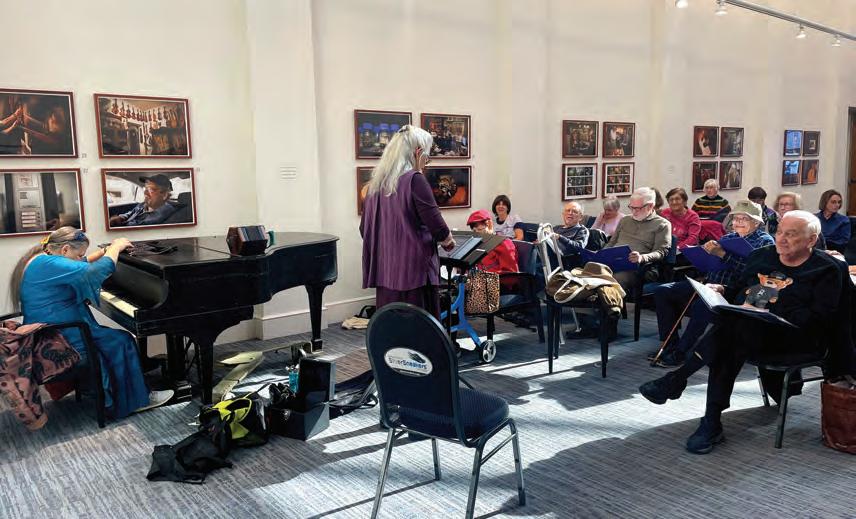
Members of the choral group rehearse together.
Lunch at the J Café offers good food, company, and sometimes entertainment.
offered every Tuesday, and open play is scheduled from 8:00 am to 12:30 pm every Friday in the Kaufmann Gym. As the sport grew in recent years, so did the number of pickleball-related injuries. In response, AgeWell has started offering pickleball injury prevention clinics that draw upon sports medicine expertise to help make sure that players’ bodies are ready for the pickleball court.
While fun and fitness are pickleball’s most notable draws, the sport can also improve balance. “Anyone after the age of 25 starts losing their balance if they are not working on it. Exercise is a great way to try to improve your balance,” said Mullen.
Balance is also a key component of preventing falls, which are a known risk for older adults. To help its members minimize their risk, AgeWell recently offered a 10-week falls prevention workshop called Bingocize that combines exercise and education with the game Bingo. The June iteration filled up quickly, and a second run is planned for the fall. The workshops are funded through the Jewish Healthcare Foundation.
AgeWell is ready to help participants identify an activity that helps keep them healthy and happy. As Mullen puts it, “60 is not old—these people move!”
Are you 60 years of age or older?
Do you live in Allegheny County?
If the answer to both of these questions is yes, you are eligible to join AgeWell. Call or stop by the AgeWell office to make an appointment: Squirrel Hill JCC Room 201, 9 am-5 pm, MondayFriday. 412-697-3514.
HILT & HELM A FENCING FAMILY GROWS AT
By Melissa Eppihimer
T’S LIKE A FAMILY REUNION WHERE YOU’RE SUPPOSED TO FIGHT WITH EACH OTHER.”
If you’ve ever imagined what it feels like to attack an opponent with a steel longsword, Chris Shelton’s description of Historical European Martial Arts—better known as HEMA—might surprise you. As he emphasizes, friendship and respect are the foundations of the sport. Shelton’s club Hilt and Helm, which has been based on Forward Avenue in Squirrel Hill for the past two years, welcomes anyone and everyone into its family of swordfighters.
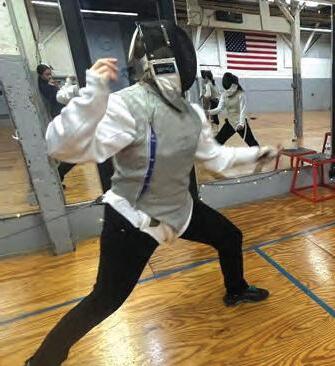
From teenagers to retirees, fencers at Hilt and Helm work with a variety of traditional weapons such as daggers, rapiers, and sabers. Contrary to their original purpose—to mortally wound an enemy—the weapons are now used only for sport. Participants appreciate the skill of how a fencer handles the blade rather than their ability to physically harm the opponent.
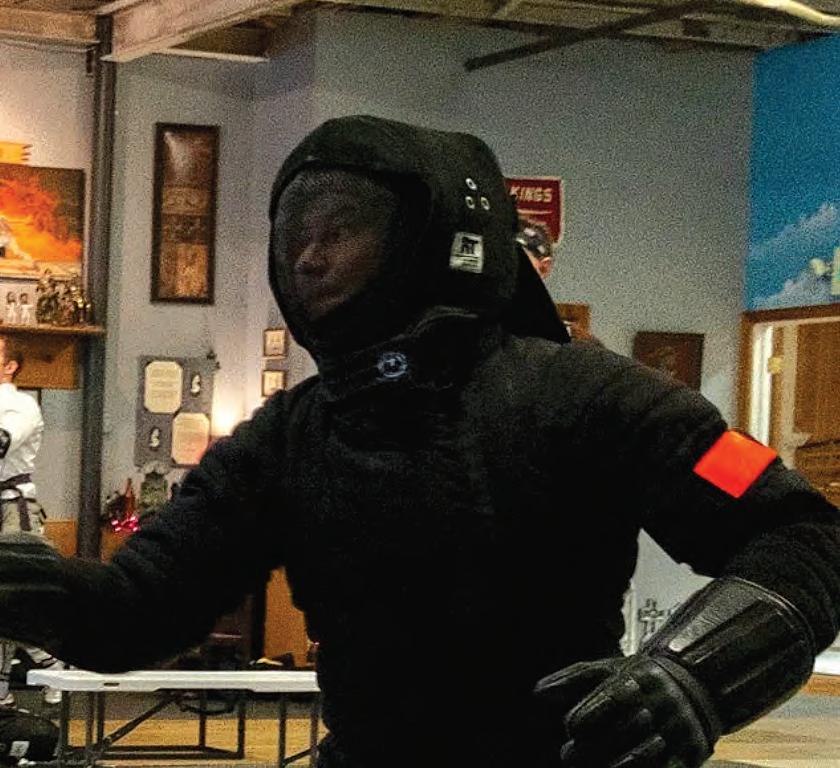
Safety is paramount at Hilt and Helm. New members must pass an in-house safety test, and all fencers must wear appropriate safety gear. “We want people to leave as happy and healthy as they were when they showed up,” said Shelton.
Hilt and Helm brings a modern sensibility to HEMA’s historical fighting techniques, which are primarily
based on European traditions from the medieval and Renaissance periods.
“Some fencing clubs are more geared to the historical studying of it. They practice didactically to preserve history,” said Shelton. “At Hilt and Helm, we take a more modern approach: read from the manuals but then have creative freedom to bring in modern understandings of steel, physics, and psychology.”
Running Hilt and Helm is a labor of love. Each of the club’s instructors has a day job that does not involve dressing in protective layers and wielding a blade. The work has paid off. Since opening five years ago this December, the club has grown consistently and now offers classes and lessons six days a week at the Squirrel Hill studio. In addition to in-house competitions, some members travel to compete throughout the tristate region.
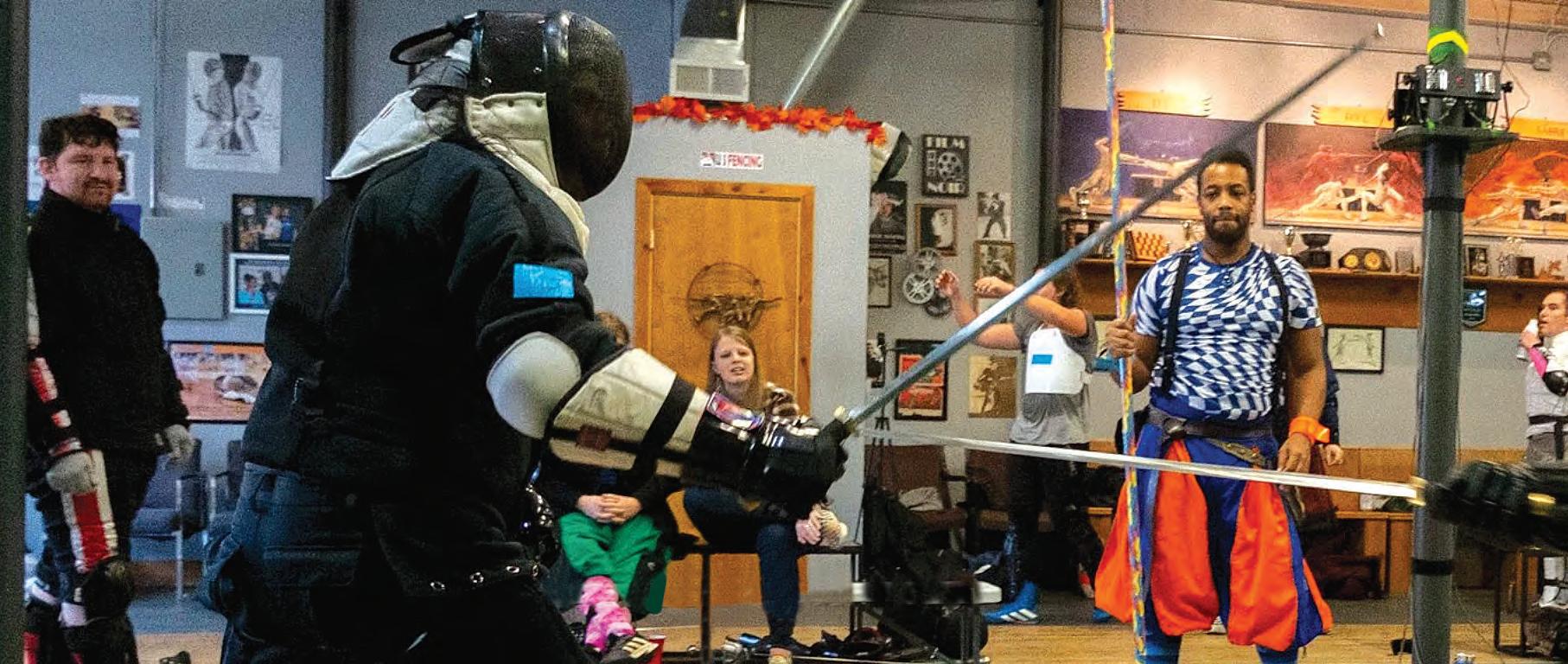
Spectators are welcome to watch the bouts at Hilt and Helm. They’ll see competitors tap swords at the beginning and hug at the end. This is a reminder, according to Shelton, that “you still love each other” despite having just fought intensely. In between are displays of strength, intelligence, and fearlessness.
Bouts vary based on the type of weapons involved. As Shelton describes it, saber feels really swashbuckling
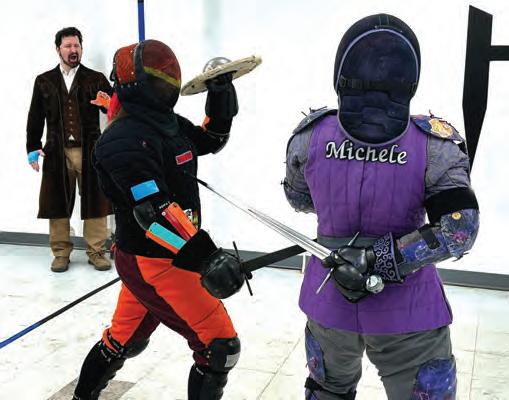
with a lot of back and forth, while rapier can be more “hit or miss,” with a need for an immediate backup plan if the intended hit misses. The club has a signature move called the Bee Sting, a behind-the-back thrusting action. Pulling off the Bee Sting during a competition is an exciting achievement, but the club makes sure to keep competition fun by awarding a Bee Sting sticker to the opponent.
Newcomers can quickly become devoted to HEMA. Since taking a beginner course two years ago, Hilt and Helm member Sarah Sager has been enthralled by the sport, adding roles as the club’s volunteer manager and instructional assistant in longsword. Sager sees many personal benefits from fencing. “I love that I have gotten stronger. I love that I am learning and getting faster and meeting new people,” she said.
Experienced HEMA fencers often own personalized gear, with some adopting historical garments, but everything needed to compete is available at Hilt and Helm. Clothing is sized from XXSmall to XXLarge, a sign of the club’s commitment to being inclusive.
“Hilt and Helm has done such active and meaningful work as far as inclusivity,” said Sager. “Everyone is welcome through that door.”
With all of the gear and a supportive family of swordfighters on site, picking up a sword at Hilt and Helm is a chance to satisfy one’s own swashbuckling curiosities.
A fencer (in purple) finishes the Bee Sting move during a sword and buckler bout.
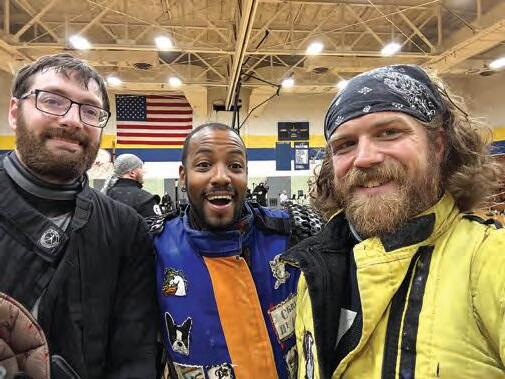
Hilt and Helm’s Chris Shelton (center) joins JW Pugnetti and Ryan Leonard at a tournament in Michigan.
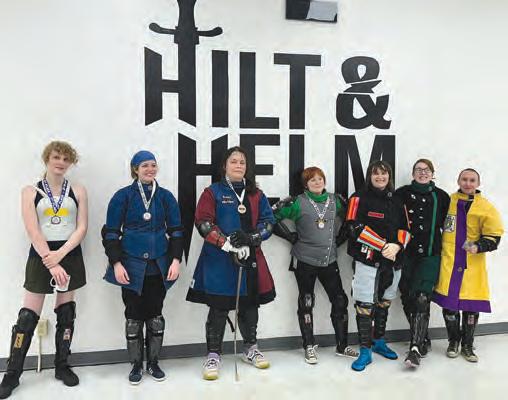
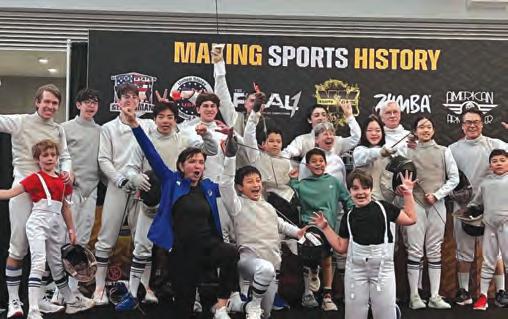
Champions line up at Hilt and Helm’s Alicorn Cup tournament last year.
Building a Sport in Pittsburgh: Iana Dakova and Olympic Fencing
By Luke Gellad
PITTSBURGH PLAYS BASEBALL. HOCKEY. FOOTBALL. BUT MANY PITTSBURGHERS COMPETE IN THE MORE UNUSUAL SPORT OF FENCING. In modern fencing, two athletes face each other on a narrow playing field called a strip. The goal is to stab your opponent with your blade more than they stab you with theirs (wearing proper protective gear, of course).
The roots of the local fencing community rest with Squirrel Hill resident and internationally recognized fencer and referee Iana Dakova.
Dakova discovered fencing accidentally (or perhaps it was fate) when she was twelve and living in Bulgaria. She originally wanted to do gymnastics but was told her body type was not right for the sport. The coach suggested that she try volleyball. Dakova got, in her words, “lost on the way from one room to another” and ended up in the fencing room. (In Bulgaria, kids took themselves to their sports.) She was instantly “addicted” to the sport “because it was so unusual,” she said.
Another factor that ignited her curiosity was the “mystery or anonymity in the whole thing,” as she described it. She was shocked to see girls with long hair when the fencers removed their masks. “I thought that this is only for men,
and I thought that it’s very clear who is fencing, but with a white uniform and with a mask on, somehow, at the moment, it was not clear,” Dakova said.
There began an incredible career in women’s fencing. Dakova was on the Bulgarian national team from 1983 to 1990, winning the team Bulgarian and Balkan championships. She also was the Bulgarian individual national champion.
In 1997, Dakova moved to the US. She came to Pittsburgh to visit an old coach of hers at Carnegie Mellon Fencing Club. By that time, she hadn’t fenced for nearly seven
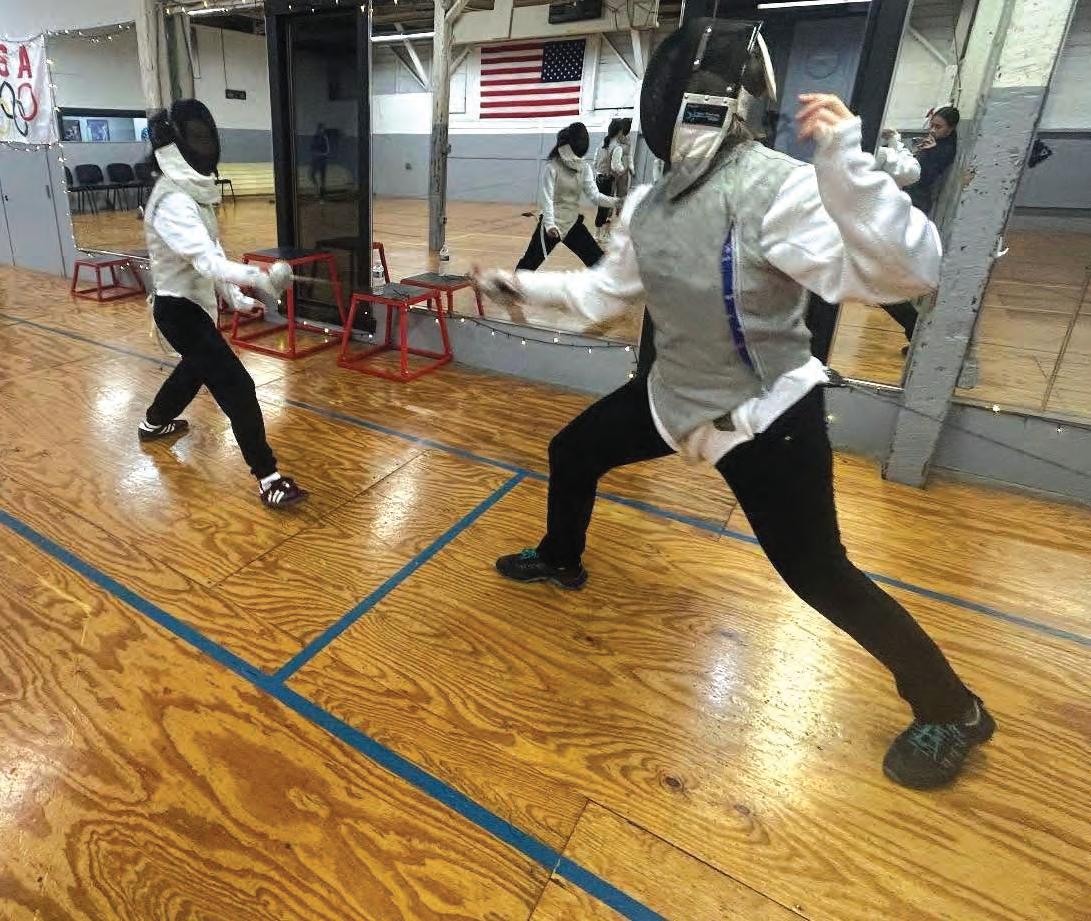
Dakova (in blue) with members of Pittsburgh Fencers Club.
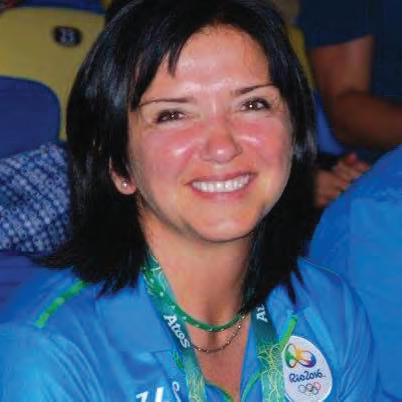
Iana Dakova helped run the fencing competition at the 2016 Rio Olympics.
years. But when she suited up again, she realized she missed it. “I had a really good time—although I was barely moving and breathing. I remember feeling very sick but very excited,” she recalled. A graduate student suggested she start a fencing club.
So Dakova founded a fencing club in Pittsburgh to continue her passion and to stay in the US. Over the next twenty years, the club went through different iterations and locations. It operates today as Pittsburgh Fencers Club in Point Breeze with training opportunities for youth and adults.
Throughout this process, Dakova has brought fencing into Squirrel Hill. She has afterschool programs at Community Day School and St. Edmund’s Academy. She has coached or assisted the Allderdice boys and girls fencing teams for many years. Another important part of Dakova’s outreach are programs in community organizations. For many years, Dakova had a program at the JCC that brought a good number of kids to the sport.
While other coaches often question these programs, saying there is no development possible with kids who won’t follow up, Dakova disagrees. “You cannot imagine how many of my kids actually continued in the club for many years after the high school program or the afterschool program was over.”
Beyond Squirrel Hill, Dakova is a highly accomplished member of the national and international fencing community. Nationally, she serves USA Fencing—the national organization—as a member of committees on international relations, nominations for the Board of Directors, and the development of women in fencing. Internationally, she works as a high-level referee and, until last year, was on the Refereeing Commission for FIE, the governing body for international fencing. Notably, she was on the bout committee (the group that runs a competition) for the 2016 Rio Olympics.
With an incredibly accomplished advocate like Iana Dakova leading the sport in Pittsburgh, it looks like fencing is here to stay and will continue to thrive.
NEIGHBORHOOD NOTES
NEW BUSINESS NOTICE
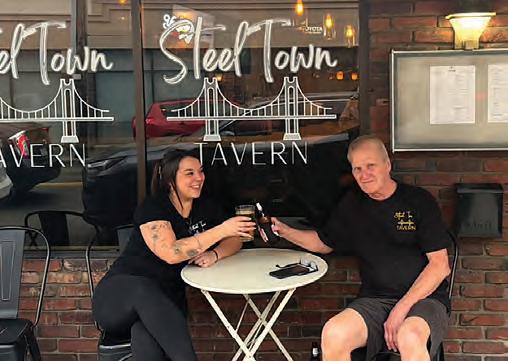
STEEL TOWN TAVERN
1720 MURRAY AVE.
By Pat Callaghan
If you ask 29-year-old Autumn Janosov about her vision for Steel Town Tavern, it’s immediately clear that the establishment (located in a renovated space formerly occupied by Murray Avenue Grill) is in passionate hands. “I care. I really do ... It’s my whole life,” she said. “This isn’t just a paycheck to me. This is like my baby.”
Born and raised in West Mifflin, Janosov grew up watching her aunt and grandfather—“Pap”—run businesses in the service industry. She was just 14 when she first cut fries in Pap’s French Fry Factory. “It’s kind of … in our blood,” she said. Janosov earned a Surgical Technologist degree, but her love for the food service industry kept her in it and drove her to become general manager of two restaurants simultaneously.
Owning her own place was the next logical step—a goal strengthened with the birth of daughter Giavonna in 2020. It was around that time that she and Pap began searching for a location that would enable her to develop the tavern she’d long envisioned.
“I loved this place so much because it is so homey [and] cozy,” said Janosov of Steel Town Tavern’s Squirrel Hill spot. While she recognizes that the tavern’s direction
might be a change from Murray Avenue Grill, Janosov is intent on maintaining a high standard of “good food, [a] welcoming atmosphere,” and providing for everybody. Homemade, from-scratch dishes, old family recipes on a reasonably-priced menu, and wholehearted dedication leave one confident Janosov will maintain that standard.
“I want you to feel like you’re walking into your family’s house,” she said. Knowing that she prepares the tavern’s cared-for dishes side-by-side with Pap brings the welcoming comfort of a home-cooked meal. And when Janosov—a single mother—describes Steel Town Tavern as a way to continue Pap’s legacy while building something her daughter might one day carry on, that welcoming comfort grows into something only a family’s love can provide.
Stop in at Steel Town Tavern to try one of their sandwiches, dinners, or daily specials. (Janosov highlights the Italian beef, a family recipe.) If you’re not hungry yet, settle in at their bar and grab a beverage.
REBUILDING UNDERWAY AT TREE OF LIFE
After years of planning and consideration, reconstruction work has begun at the Tree of Life building on Wilkins Avenue. After the tragedy that occurred there in 2018, much of the existing campus was demolished, with only the main sanctuary of the synagogue preserved. This structure is now the starting point for the project, which will see the sanctuary fully renovated and add exhibition space, classrooms, and a social hall. The work will restore the site as a place for Jewish worship and add a cultural and educational facility focused on combatting antisemitism. The complex will also be home to a memorial garden honoring the 11 lives lost in 2018.
In a Community Update released in April, representatives from the site’s design and construction groups previewed plans for the architecture and landscape and outlined the construction calendar. The completed building will be smaller than what was initially planned back in 2022, allowing for more green space. Reopening is anticipated for spring of 2028.
DOMI SAFETY ENHANCEMENTS IN SQUIRREL HILL
Pittsburgh’s Department of Mobility and Infrastructure (DOMI) is actively working to enhance the safety of roads, sidewalks, and crosswalks for drivers, bikers, and pedestrians. Their projects are part of the Vision Zero initiative, which is aimed at reducing serious injuries and traffic fatalities on our city streets. A number of DOMI projects will bring changes to Squirrel Hill this summer and in the coming years.
A $5,000,000+ grant announced this spring set in motion long-term changes on Murray Avenue. Funding from the Highway Safety Improvement Program through PennDOT and the Federal Highway Administration will support traffic signal replacements, bumpouts, bus stops, bus shelters, and more from Forward/Pocusset to Darlington. The goal is to make the intersections along Murray safer for all who pass through. Work is expected to begin in 2028.
Further down the avenue, traffic calming efforts are already underway in the area of the Murray Avenue Bridge over Beechwood Boulevard. Painted bumpouts, center islands, curb extensions, and flex-posts will transform the roadway and sidewalks between Morrowfield and Welfer.
A project on Hobart Street is adding speed humps between Murray and Wightman (the block with the Davis Playground) plus the stretch of Hobart heading into Schenley Park. Painted bumpouts will appear at the Hobart/Wightman intersection.
In Squirrel Hill North, the Beechwood-Wilkins-Linden intersection, a site of earlier DOMI interventions, will acquire more permanent infrastructure this year, including new signals, a left-turn lane on westbound Wilkins, and enhancements to protect pedestrians and bikers.
NOTABLE ANNIVERSARIES
Change is inevitable, but thanks to long-term commitments to the community, several Squirrel Hill mainstays recently celebrated milestone anniversaries.
In April, the Frick Environmental Center (FEC) marked its 10th anniversary. After a fire destroyed the park’s nature center in 2002, Pittsburgh Parks Conservancy put forth an ambitious plan for a transformative structure to take its place. The FEC that opened in 2016 embodied the principles of sustainable design and construction. Ten years on, this certified Living Building remains a hub for park visitors and staff and an inspirational entry point to Frick Park.
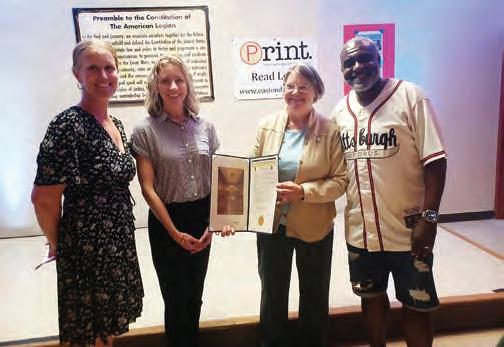
2016 was also when Print newspaper debuted. Operating with a community journalism model, Print features news from East Liberty, Homewood, Larimer, Point Breeze, Shadyside, and Squirrel Hill. Print is available via subscription or purchase at various local merchants. This ink-and-paper approach is reminiscent of traditional news practices, but Print ’s work is squarely focused on the here and now. The three City Council representatives whose districts encompass Print ’s coverage area joined Ann Belser, the paper’s founder and owner, for an official proclamation recognizing the paper’s 10 years of local news coverage.
Another homegrown success is Sunburst School of Music, celebrating 15 years of music. Its founder, Alex Stanton, started a small guitar studio in 2011 that quickly grew into a music school for multiple instruments and genres and all ages. Through its band program, Sunburst brings people together to enjoy the process of making music, and its performers regularly share that joy with audiences at Night Markets and other Squirrel Hill events.
NEIGHBORHOOD NOTES
FROM TEN THOUSAND VILLAGES TO UNDER ONE SUN
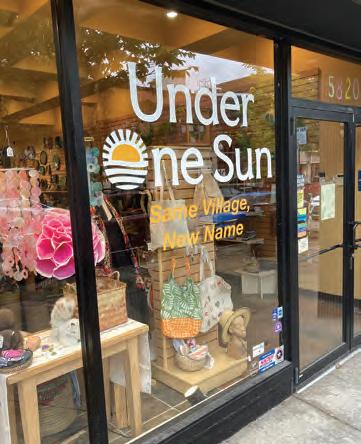
If you are wondering why our “New Business Notice” above didn’t include Under One Sun at 5820 Forbes Avenue, it’s because the shop is not a new business at all. Rather, Under One Sun is the new name for Ten Thousand Villages in Pittsburgh.
After the national Ten Thousand Villages organization pivoted to an online and wholesale model, the local nonprofit decided to keep its retail footprint in Squirrel Hill and adopt the name ‘Under One Sun.’ Customers won’t notice any major changes beyond the name. The store continues to offer the same fair-trade products and is operated by the same staff and volunteers. As the storefront signage reads, “Same Village, New Name.”
In many ways, it’s a return to their roots. Before partnering with Ten Thousand Villages, the store was independent. That trailblazing spirit is leading Under One Sun into its next chapter and maintaining its focus on distinctive handcrafted goods from global artisans.
Returns
By Melissa Eppihimer
W
HEN IT WAS ANNOUNCED IN LATE 2025 THAT PITTSBURGH CITY PAPER WOULD STOP PUBLISHING, THE LOSS TO LOCAL JOURNALISM WAS CLEAR. In an increasingly digital world, the alt-weekly and its mix of news, opinion, and arts and entertainment coverage was a connection to the real world.
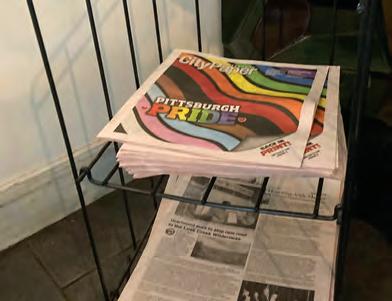
But it was thanks to real-world connections that the paper, founded in 1991, was quickly reborn. Now, from offices above the former Rite-Aid in Squirrel Hill, a team of journalists is overseeing the return of City Paper.
REBUILDING THE PAPER
“None of this would be happening without the Media Hub,” said Chris Maury, City Paper ’s President.
Before its pending closure, the paper was operating out of the Pittsburgh Downtown Media Hub, a workspace
sponsored by Point Park University’s Center for Media Innovation. The Media Hub was also home to InformUp, a news group focused on local government founded by Maury. In fact, the two organizations shared a floor at this “critical piece of infrastructure for the community,” as Maury describes the Media Hub.
Upon learning of City Paper ’s closure, Maury developed a plan to bring it back and set it up for sustainable success.
At the core of the plan was the paper’s acquisition by LocalMatters, a new, Pittsburgh nonprofit dedicated to community journalism. City Paper would be LocalMatters’ first opportunity to impact the news landscape.
While City Paper continues to operate as a for-profit entity, it is implementing operational and technological innovations using LocalMatters’ support. According to Ali Trachta, City Paper ’s Executive Editor, this arrangement and the resources that come with it allow the relatively
MAKING NEWS IN SQUIRREL HILL
Maury is also a big reason why City Paper moved its offices to Squirrel Hill. Maury wanted to be involved fully in the work of the paper. He is legally blind, so being able to walk from his home in Squirrel Hill to the paper’s offices makes this possible.
Trachta also has connections to Squirrel Hill as a graduate of Allderdice High School. “It’s kind of remarkable for me to be on the corner of Forbes and Murray where I spent the first eighteen years of my life,” she said. “I think I read City Paper at 61C when I was in high school, so this is very full-circle for me.”
small paper to shift from a scarcity mindset to an abundance mindset. It also promises innovations that will help other local news outlets.
“It’s a very forward-thinking approach,” said Trachta. “The idea is that we’ll be building tools that are more useful to journalists, that help free up their time, are more streamlined.”
Readers will also benefit from the technological upgrades. “We at City Paper will be creating new features and products that leverage the great editorial work that the paper does to create experiences for readers that they might not expect from a local print publication,” said Maury, who is now Pittsburgh City Paper ’s President.
Technology is very much within Maury’s wheelhouse. He began his career designing accessible applications for the blind and visually impaired. After Apple acquired his Pittsburgh startup Conversant Labs, he worked for the company in California before moving back to Pittsburgh to open an Apple office here. In 2024, Maury left Apple to establish InformUp, setting the stage for his involvement with City Paper.
The paper’s move has also brought new faces to the neighborhood. Stacy Rounds, City Paper ’s Director of Community Engagement, is a relative newcomer. Her previous visits involved some of Squirrel Hill’s noteworthy food culture, like a journey through the international imports of Vendor Bender. Staying true to her roots, Rounds is now getting to know the neighborhood through its eateries.
“I am obsessed with really good food, and if you are going to have really good food anywhere in Pittsburgh, this is probably the place to try everything,” said Rounds.
Rounds is chronicling her workday lunch adventures in the paper’s “Stacy Eats Squirrell Hill” series. Her first stop? Allegro Bakery, where she was overjoyed by the abundance of avocado in the avocado sandwich.
The City Paper staff, which currently numbers nine but is expected to grow as the paper settles into its new phase, is excited to be part of the Squirrel Hill community.
“We are a newspaper that focuses a lot on community voices—and community can mean a lot of things: a geographical community, a neighborhood, even a block; it can also mean a social community, a socio-economic community, race, or gender—and Squirrel Hill is one of many neighborhoods that has a real community identity and feel,” said Trachta. “I think it’s a great fit for us in that way.”
City Paper’s Executive Editor Ali Trachta holds a copy of the first return-to-print edition.
READING CITY PAPER
With their large office windows overlooking the heart of Squirrel Hill, the City Paper staff can see their potential readers transiting the Forbes and Murray intersection. Those readers will soon be able to grab a print copy of City Paper from the distribution boxes that once graced the streets.
“Print is City Paper ’s essence,” Trachta wrote when announcing the paper’s return. “A real-life, free, physical newspaper that keeps you informed and entertained with feature-length storytelling is the antidote we all need to noisy, meme-filled algorithms.”
Currently, the printed City Paper appears monthly. Describing the first print edition before its arrival in late May, Trachta said, “It will be very familiar and recognizable.
It is going to be very similar to what we did weekly, only a little bit more concentrated into a monthly version.” A few changes are positive ones: the monthly issue is longer than previous print editions of the paper and will have more copies distributed. The paper hopes to return to a weekly print schedule in the future.
Another thing that remains the same? The paper is free for all readers. In addition to the distribution boxes, which are in the process of being reinstalled, the paper can be picked up from sites like Giant Eagle and Commonplace Coffee in Squirrel Hill. Online readers can access all of City Paper ’s content without a paywall.
One of the paper’s most appreciated features is its event listings. The listings are user-generated, with the main requirement being that the event takes place within an hour of Pittsburgh. The event listings reinforce City Paper ’s focus on the real-world communities that make up metro Pittsburgh.
“We want to facilitate people getting out of their homes, into the community, meeting each other,” said Trachta.
“That’s the reason the paper exists, that is to make the city better, more fun, and more able to express itself,” said Maury.
From Squirrel Hill to Troy Hill, it’s nice to have City Paper in hand once again as a window into this city and all of the people and places within it.
The monthly print edition is available at Commonplace Coffee on Forbes and other Squirrel Hill locations.
shuc snapshots
NOTES FROM YOUR SQUIRREL HILL URBAN COALITION STAFF
An Update from SHUC Executive Director, Maria Cohen
AS I SIT DOWN TO WRITE WHAT WILL BE MY FINAL EXECUTIVE DIRECTOR’S REPORT for the Squirrel Hill Magazine —more on that below—I find myself reflecting on the incredible generosity, resilience, and community spirit that have always defined Squirrel Hill.
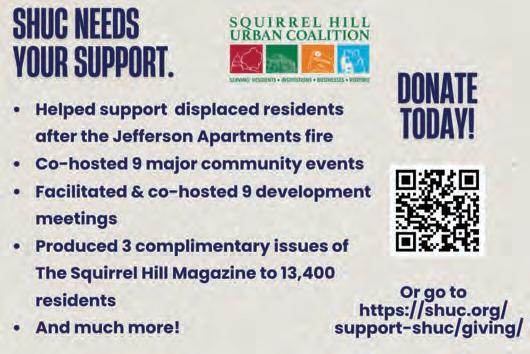
Earlier this year, the Squirrel Hill Urban Coalition faced one of the greatest challenges in our organization’s history. Like many community nonprofits, we found ourselves confronting difficult financial realities that threatened our ability to continue the programs, events, advocacy, and neighborhood-building work that so many residents value. In response, we launched an emergency fundraising campaign and asked our community for help.
And once again, Squirrel Hill showed up and raised an incredible $65,243.35!
I am deeply grateful to share that 115 neighbors, friends, and supporters answered our call. Many members of our Board of Directors contributed personally, demonstrating their commitment not only through their leadership but through their generosity. We were fortunate to receive extraordinary support from board member Ray Baum, whose encouragement and contributions helped strengthen our efforts. Likewise, our neighbors Debra and Bill Demchak gave to the campaign and found ways to encourage others to do the same.
Most importantly, longtime community champions Robert Levin and Dr. Kerry Bron stepped forward with an extraordinary $20,000 matching challenge. Their leadership inspired others to give and reminded all of us what is possible when neighbors invest in the future of their community.
To every person who donated—whether it was $10, $100, or more—please know that your contribution mattered. Together, you reaffirmed that the Squirrel Hill Urban Coalition is not simply an organization. It is a community of people who care deeply about this neighborhood and are willing to step forward when that community needs them most.
Because of your support, SHUC can continue its mission of bringing people together through community events, supporting our business districts, advocating for thoughtful planning, preserving our neighborhood’s history, celebrating our diversity, and fostering the connections that make Squirrel Hill such a special place to live.
Because of your support, SHUC can continue its mission.
This issue also marks a personal transition for me.
After much thought, I have resigned from my position as Executive Director of the Squirrel Hill Urban Coalition to join my husband in our chiropractic practice and focus on the next chapter of our family’s journey. While this decision was not an easy one, it is the right one for me at this time.
Serving as Executive Director has been one of the greatest privileges of my professional life. I have had the opportunity to work alongside extraordinary volunteers, board members, business owners, community leaders, and neighbors. Together, we have celebrated Lunar New Year, Day of the Dead, Earth Day, community cleanups, business district events, neighborhood planning initiatives,
and countless moments that brought people together and strengthened the fabric of our community.
I have also been fortunate to collaborate with many local neighborhoods, neighborhood organizations, nonprofit partners, universities, students, city departments, and elected officials. Some of the most rewarding work has come through these partnerships, where people from different backgrounds and organizations came together around a shared goal of improving Pittsburgh and supporting our residents. Whether advancing neighborhood planning efforts, activating business districts, preserving local history, welcoming new immigrants, supporting students, or creating opportunities for neighbors to connect, these collaborations have demonstrated the power of working together in service to community.
What I will remember most, however, is not any single event or project. It is the people. It is the neighbor who volunteers year after year. The business owner who sponsors community events. The student who brings a fresh perspective. The nonprofit partner who shares resources. The public servant who listens and helps solve problems. The resident who takes the time to attend a meeting and share an idea. Time and again, I have witnessed the kindness, generosity, and determination that make Squirrel Hill such an extraordinary neighborhood.
Squirrel Hill has always been a place where people come together in times of celebration and in times of challenge. We are a neighborhood that values diversity, welcomes newcomers, supports local businesses, preserves history, and cares deeply about one another. That spirit has inspired me every day and gives me tremendous confidence in the future of our community.
Although I am stepping away from this role, I am not leaving the community I love. You will still see me around the neighborhood, at events, supporting local businesses, walking our streets, and finding ways to contribute as a resident and volunteer. Squirrel Hill has been an important part of my life, and I look forward to continuing to support it in new ways.
We are excited to announce Alexandra Garay Sandoval as our next Executive Director. Ale will transition into the role upon my departure on July 17th. She has been a graduate intern for the Coalition for two years, taking a break last summer to work with the Allegheny County Department of Sustainability to support the County’s Climate Action Plan. Ale recently earned her Master’s in Public Policy Management from Carnegie Mellon University. Ale and I are working hard to ensure that this is a seamless transition. I am confident, and I appreciate that you, our gracious community members, business owners, volunteers, and partners, will be welcoming and supportive to Ale as she takes up her new role.
As I close this final column, I simply want to say thank you.
Thank you for your trust. Thank you for your support. Thank you for your ideas, your volunteer hours, your donations, your partnership, and your belief in the importance of community.
Most of all, thank you for reminding me, again and again, what can happen when neighbors come together.
With gratitude,
Maria Cohen Executive Director Squirrel Hill Urban Coalition
SUMMER SEASONS UNDERWAY
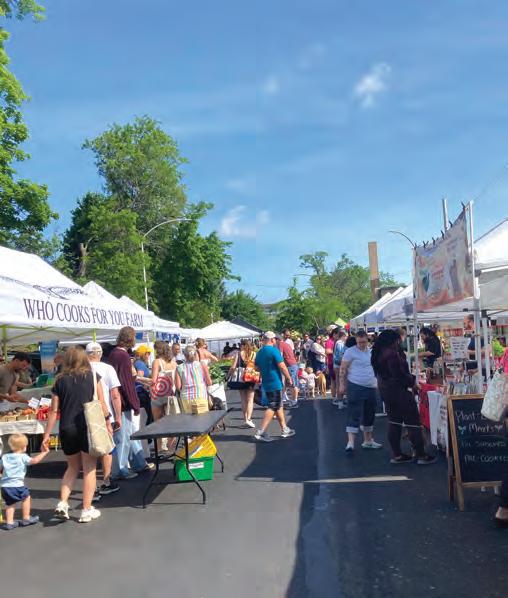
The superb Squirrel Hill Farmers Market, operated by the City of Pittsburgh, opened on May 10—just in time to pick up fresh flowers, pastries, and spring vegetables for Mother’s Day brunches.
Every Sunday until mid-December, 9 am to 1 pm, vendors will be in the Beacon-Bartlett parking lot off Murray Avenue. (The market will be closed on Sunday, November 29.) The market accepts cash as well as SNAP benefits and debit and credit card payments, which can be exchanged for tokens via the Fresh Access program from Just Harvest.
There are many new vendors for 2026, including BEEBOY Honey, Cafe Chocolade, Cityscape Designs (art), Community Cultures (fermented products), Fraser Livestock, Green Forks (plant nursery), Lemmon Bros Farms (maple syrup), New Era Farming (microgreens), PieBird, The Rooted Garden (microgreens), ShadoBeni (Trinidadian vegan cuisine), Third Space Bakery, and Two Acre Farm (sauces and jams).
The Squirrel Hill Night Market has returned with its first scheduled event on June 27. The remaining Night Market dates are Saturday, August 22 and Saturday, September 26, both from 6 pm to 10 pm along Murray Avenue between Forbes and Beacon. Come and enjoy dozens of I
Made It! Market artists and craftspeople, food trucks and stalls, live performances, and a fun atmosphere.
The Night Market series is sponsored by Key Bank with support from Littles, Brandywine Communities, Sunburst School of Music, Marvista Design + Build, Furbes Avenue Pet Supply, and the Squirrel Hill Urban Coalition and is organized by Uncover Squirrel Hill.
There are only a few weekends left to catch live music at Mellon Park’s Bach, Beethoven, and Brunch. The classical music series featuring local performers runs Sunday mornings from 10:30 am to 12 pm. On July 12, hear young musicians from the Three Rivers Young Peoples Orchestra. On July 19, members of the Pittsburgh Symphony Orchestra will appear. For the final event on Sunday, July 26, the chamber music group Academy Concerts brings “HaydnBurgh” to the stage. Bach, Beethoven, and Brunch is presented by Citizens Bank and supported by Classical WQED-FM 89.3.
SPRING EVENTS RECAP
SPRING CLEAN-UP
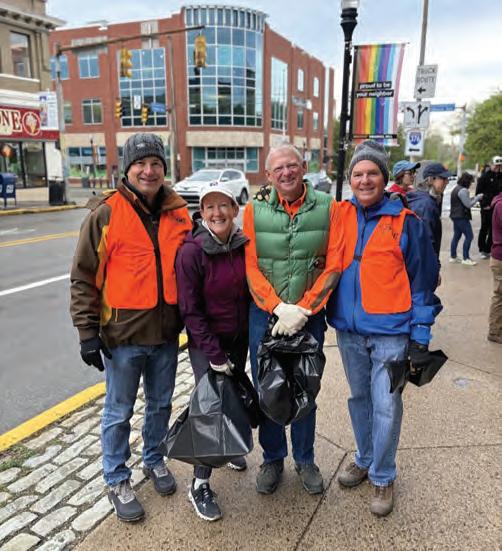
Beyond the excitement of seeing some football stars, the NFL Draft brought a flurry of clean-up activity to Pittsburgh in April. April is always the time when Squirrel Hill comes out for a community litter pickup, so this year’s combined NFL Draft Redd Up and Earth Day-inspired clean-up week was, unsurprisingly, a huge success.
The in-person event on Sunday, April 19 saw 54 participants collect 40 bags of garbage from the business district to quiet side streets. Groups including Colfax K-8 School, St. Edmund’s Academy, Starbucks, CITY Connections East, the Cynkar Family, and the Murphy family all helped with extra support and clean-ups in specific areas. We appreciate everyone’s participation and want to send a very special shout-out to Suzanna Styles, who spearheaded this event!
ARBOR DAY AT MELLON PARK
Friends of Mellon Park’s annual celebration of Arbor Day took place on a cool and drizzly Saturday, April 25. The weather didn’t put a damper on the activities. James Snow, VP and CAO at the Pittsburgh Parks Conservancy,
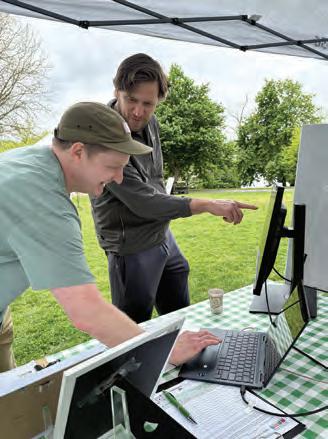
was honored for his ongoing efforts to make the outdoors accessible to everyone in the region. At the SHUC table, Tree Committee Chair Scott Bluman, Mardi Isler, and Anna Holmquist engaged guests on the importance of tree canopy coverage, demonstrated the impact of canopy loss and gains across Pittsburgh using the Pittsburgh Tree Canopy Explorer, and collected Tree Request Forms from visitors.
LITTER PATROL OPPORTUNITIES
If you missed April’s clean-up, the SHUC Litter Patrol has more ways for you to get involved.
The two remaining Night Markets need volunteers before and after on August 26 and September 22. Sign-up details will be included in the August and September “In a Nutshell!” SHUC e-newsletters.
The Adopt-a-Block initiative asks residents to commit to picking up litter on a specific block at least 3 times in a year. If this appeals to you, e-mail Suzanna Styles at styles. suzanna@gmail.com. Indicate which block you’d like to be responsible for, and we’ll be happy to name you the “Block Captain.”
Pop-up Pickups respond to more immediate needs. If someone notices an area of Squirrel Hill with a lot of litter, we will notify the Pop-up Pickup group. The group members can then coordinate an impromptu litter pick-up (usually 30-45 minutes) at the convenience of those who are able to volunteer. It’s a chance to meet other Squirrel Hillers and keep the neighborhood cleaner between formal Litter Patrol events. Since this is a new program, we’re looking for volunteers to pilot it during its early stages. Contact Suzanna Styles (styles.suzanna@gmail.com) to participate.
HELPING STUDENTS AFTER SCHOOL
The end of the school day is a moment of stress release for students, but it can sometimes lead to stressful situations. SHUC Secretary Ray Baum has been volunteering his time to support Allderdice students as they wait for their PRT buses after school.
Baum has spent many afternoons visiting students in the area near the Starbucks and GetGo on Lower Murray Avenue, joining police, public safety officers, and representatives from the REACH program in their goal of reducing youth violence. POORLAW, a Hazelwood nonprofit supporting children and their families, has held cookouts for the students as well, with REACH helping them out.
Baum aims to “to be a consistent presence” for the students, with a broader goal of encouraging communication and coordination between the different organizations involved. Many thanks to Ray and everyone involved in this effort!
GOOD NEWS FROM OUR SCHOOLS
ST. EDMUND’S ACADEMY
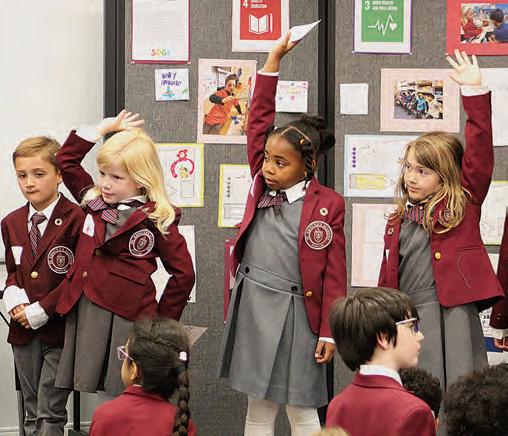
On Thursday, April 30, 2026, all St. Edmund’s Academy students presented and participated in the school’s second annual Sustainable Development Goals Symposium, featuring the project-based learning that each grade completed throughout the year centered around the United Nation’s 17 Sustainable Development Goals.
As the first United Nations Global School in western Pennsylvania, SEA is committed to learning about the UN Sustainable Development Goals, part of The 2030 Agenda for Sustainable Development, adopted by all United Nations Member States in 2015, providing a shared blueprint for peace and prosperity for people and the planet, now and into the future.
To kick off the Symposium, SEA welcomed Alice Mitinger, a local attorney and member of the Zoning Board of Adjustment for the City of Pittsburgh, who shared, “Upholding the value of service to others means being the helpers. We all have ways to be the helpers.”
Throughout the morning each class shared how they embraced being helpers by presenting the purpose and findings of their SDG project, with a special emphasis on the Capstone Projects of the members of the Class of
2026. Projects ranged from Early Childhood partnerships with Grow Pittsburgh, where the school’s youngest learners planted a vegetable garden and learned about growing food, to the 7th Grade’s study of the impact of plastic on local and global environments.
Most importantly, students took the lead for the morning, sharing their learning experiences with each other and hearing from their friends in other classes about their work.
PITTSBURGH ALLDERDICE HIGH SCHOOL
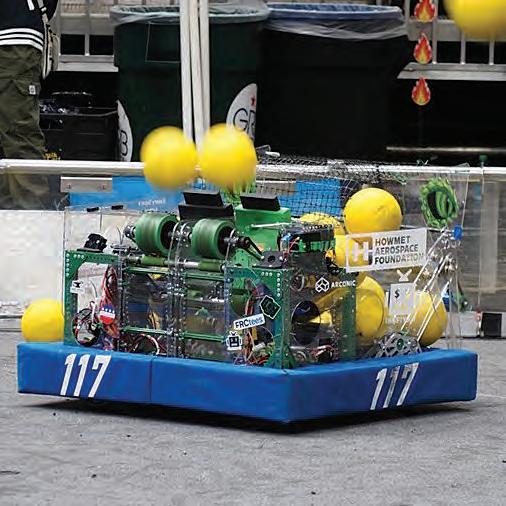
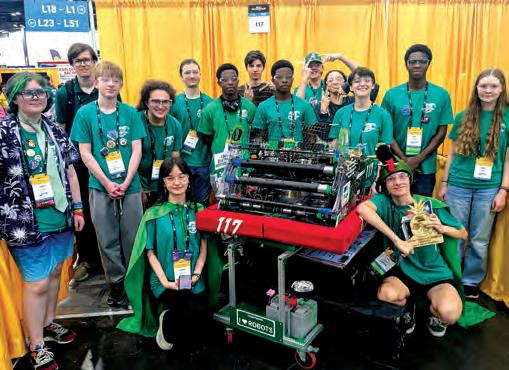
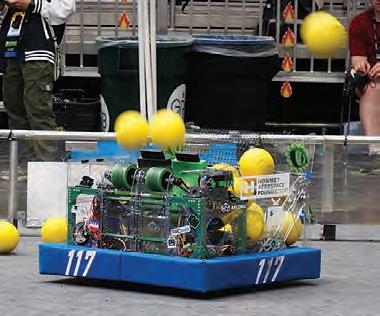
This spring, Pittsburgh Allderdice High School celebrated major milestones in academics, student leadership, and innovation. The school’s nationally recognized robotics team, the Steel Dragons (Team 117), completed a historic run at the FIRST Robotics World Championship in Houston, Texas. Competing against 74 international teams in the Johnson Division, the students secured fifth place and earned the role of Alliance Captain during the playoff rounds. Their performance marked the farthest advancement in team history since the program’s founding in 1998, placing the Steel Dragons among the top 3% of robotics programs worldwide and second in Pennsylvania. Students credited the success to the combined efforts of the pit crew, strategy team, drive team, mentors, sponsors, and community supporters.
More information about the Steel Dragons can be found at www.steeldragons.org or on Instagram @ steeldragons117.
In addition, Allderdice’s spring musical, Curtains, earned six Gene Kelly Award nominations, recognizing the
outstanding work and talent of the school’s student performers and production team.
Allderdice also celebrated the accomplishments of more than 340 graduates in the Class of 2026, including 20 valedictorians. Graduates will pursue a wide range of postsecondary opportunities, including enrollment at institutions such as Harvard University, the University of Pittsburgh, and CCAC, as well as careers in the workforce and military service.
Looking ahead, Allderdice is preparing to welcome more than 400 students in the incoming Class of 2030 this fall, continuing the school’s tradition of academic excellence, student achievement, and community engagement.
For more information about Pittsburgh Allderdice High School, call 412-529-4800 or visit www.pghschools.org.
DOGS and SPORTS
By Lawrence Gerson, VMD
Humans first domesticated wild canines some 20,000 to 40,000 years ago. By sharing meat with wolf-like creatures, hunting brought early man and dogs together in a symbiotic relationship. Modern dogs have evolved into breeds who help hunt birds, foxes, and other species. Golden Retrievers, Labrador Retrievers, Spaniels, and Pointers are breeds that were originally and currently involved in hunting.
Most modern dogs, however, are primarily “working” as pets. Before purchasing or adopting a new dog, a responsible breeder and owner will carefully match the personality and lifestyle of the prospective family to an appropriate breed or mix. A large, powerful dog might not be the right fit for a fragile senior, and a family with active kids might think twice before getting a miniature or toy breed.
One benefit of dog ownership besides protection and companionship is the physical activity that comes with exercising your pet. Walking a dog helps keep you moving, and few exercise activities are easier and better than a stroll in the neighborhood or a walk in the park.
Some pet owners take an active lifestyle with their pet to a whole new level. Agility competitions, where dogs go through an obstacle course, give both the owners and their dogs
Photo by Michal Petráš
an outlet for physical activity. I love watching the intensity of the canine companions as they race through the different stations to the delight of the crowd.
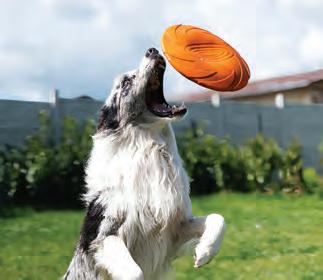
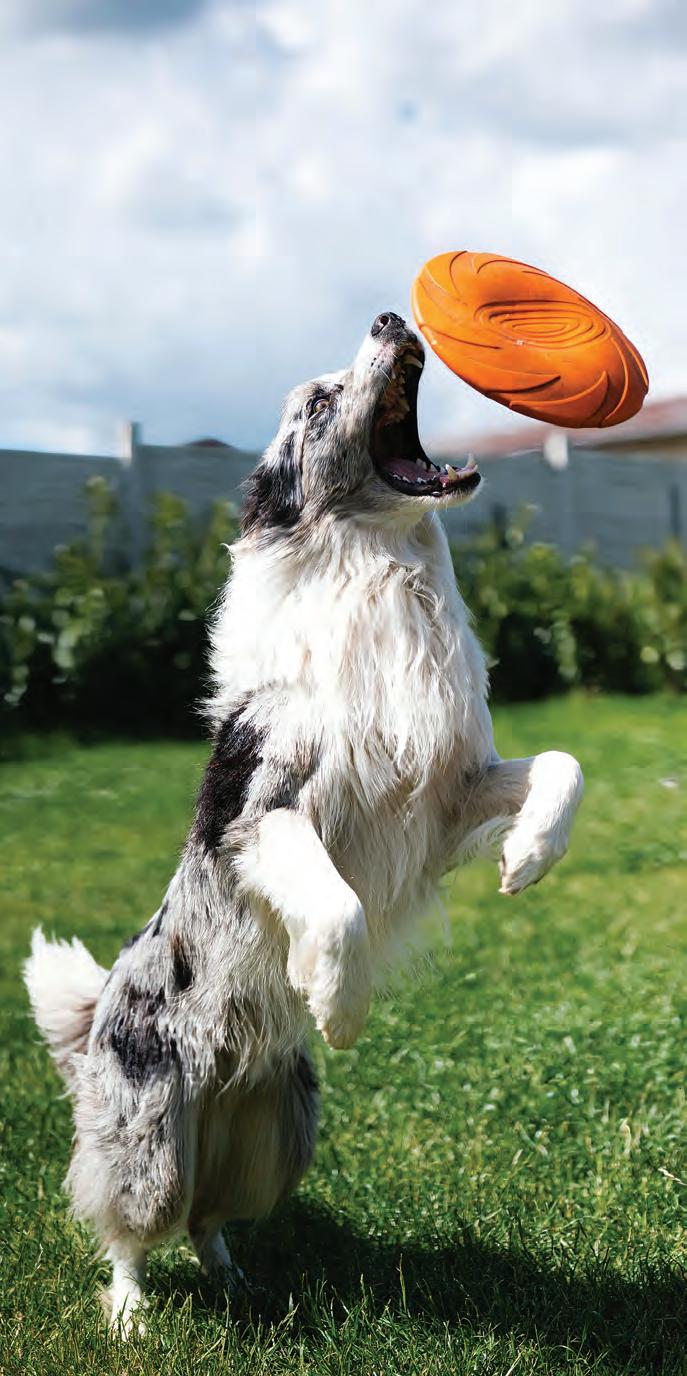
Flyball and frisbee competitions are high-action activities that take “fetch” to a new level. Dock diving highlights water sports with intensity beyond compare. Some breeds, like the Newfoundland, will practice water rescue. Freestyle competition
getting off the couch, grabbing a leash, and going for a walk
combines canine obedience training and dance. I can only imagine the time and patience it takes to perform.
Working dogs like a Bernese Mountain Dog are trained to pull carts and perform routines that mimic their original function. Tracking, racing, and sheep herding are all activities that people can enjoy alongside dogs. To join the fun with canine companions, start by researching a local breed club.
Everyone benefits by enjoying sports and other activities with their pets. It can also be a social activity; many pet owners love interacting with others and sharing time, conversation, and exercise. Even if you just want to spend more quality time with your own dog, anytime is the right time to start a new exercise routine by getting off the couch, grabbing a leash, and going for a walk.
Uphill, Downhill— Sports and Leisure in Squirrel Hill’s Past
By Helen Wilson, Vice President, Squirrel Hill Historical Society
In the 1927 silent film Metropolis, the athletic upper class is shown enjoying recreational activities in expansive sports venues above ground while the overworked lower class lives and labors in the dismal tenements and factories below. In a way, those divisions reflected real life in Pittsburgh’s East End at the time the movie was made. Schenley Park—on high ground—opened in 1889 with the express purpose of giving workers a chance to experience nature for their health and mental well-being, but since they worked six days a week, they had precious little time to spend communing with nature. Instead, the park was used mostly by the well-to-do, who had the leisure time to enjoy its amenities.
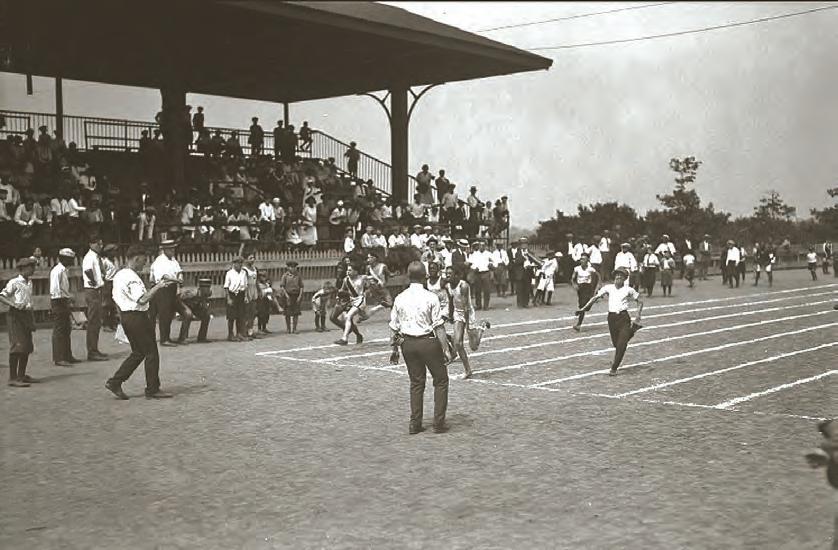
Track and field events eventually took over the horse racing track at the Schenley Oval.
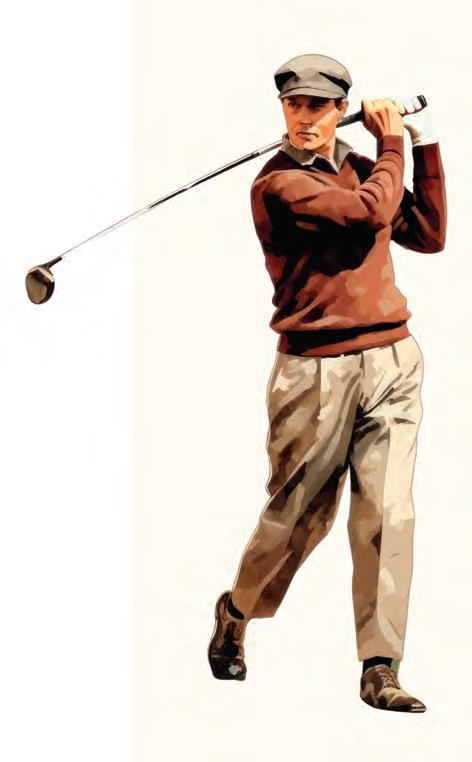
One of those amenities was golf. In the book So Much to Remember, The Centennial History of The Pittsburgh Golf Club (1996), Hax McCullough writes that the game of golf became a passion for the wealthy in the United States around the same time Schenley Park opened, so a group of society women requested permission from the first Director of Public Works, Edward M. Bigelow, to have a golf course constructed in the park. The game originated in Scotland, where it was the tradition to build a clubhouse on private property and use public land for a course, so in 1896, The Pittsburgh Golf Club purchased land adjacent to the park for the clubhouse and built the course on public land.
Protests soon arose over the use of the park for a private golf course, so the club ceded it back to the city in 1910. The public course opened in 1912. Although anyone could now play, the course was mainly used by those who had the time and money to do it. The Pittsburgh Golf Club is still private, with a swimming pool and tennis and squash courts but only proximity to the public golf course, which is now run by the nonprofit First Tee –Pittsburgh, with the Arnold Palmer Learning Center as its clubhouse. First Tee focuses on teaching life skills and character education through the game of golf to all children and teens.
Another exclusive golf course, the Pittsburgh Country Club, was located on the land that became Frick Park. It moved several times after it was founded downtown in 1888, ending up in a grandiose clubhouse at the top of Country Club Hill beyond the Blue Slide Playground. Its fairways became the sweeping fields around the playground in 1936, when the golf course was sold and added to Frick Park, which had opened in 1927.
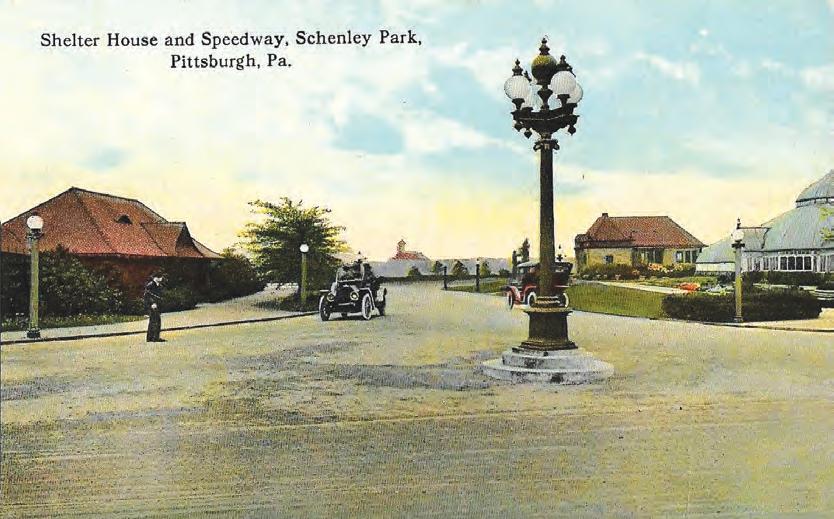
As seen on this vintage postcard, Schenley Park’s roads were paved in the early 1900s, giving drivers the opportunity to enjoy pleasure drives through the park.
“Shelter House and Speedway. Schenley Park, Pittsburgh, Pa.” I. Robbins & Sons, ca. 1910.
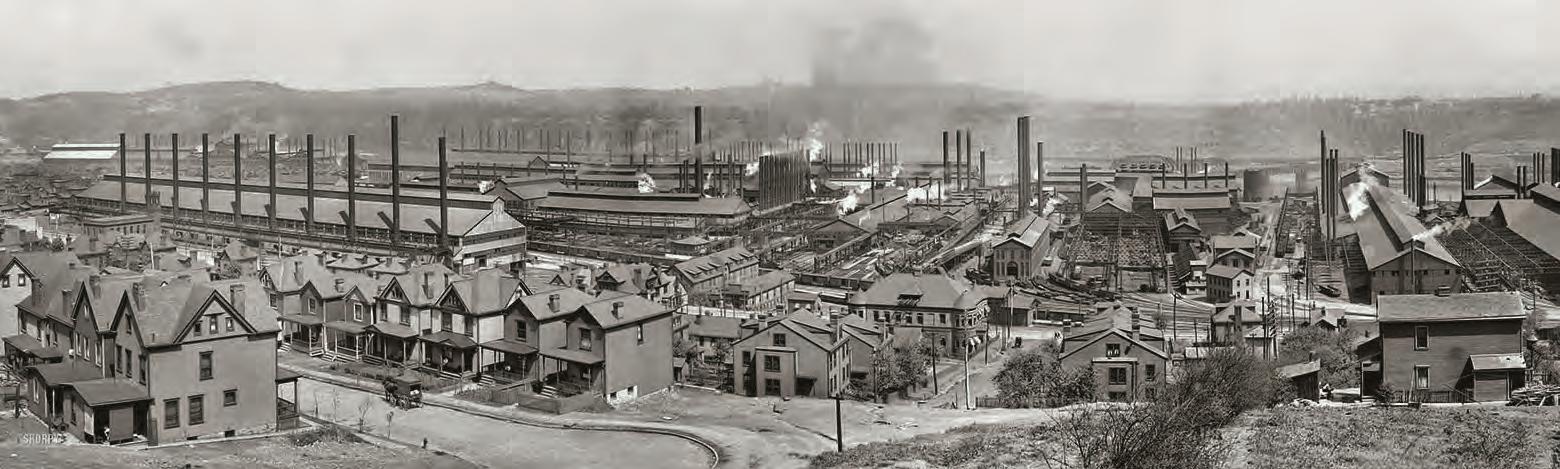
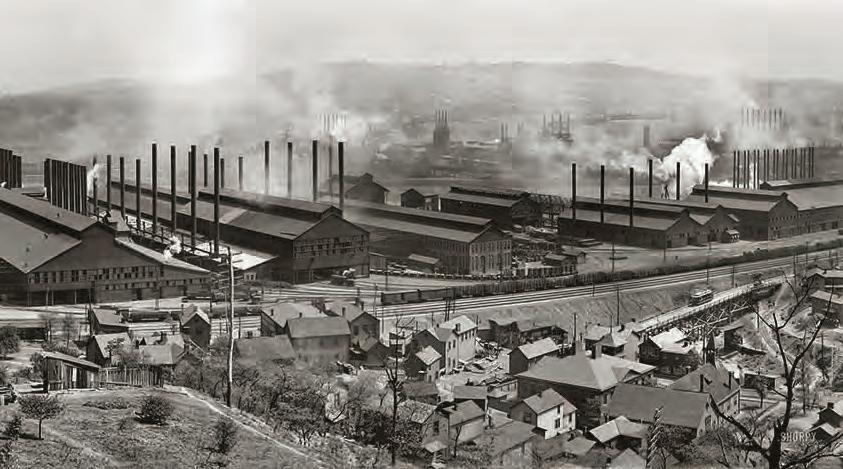
The contrast between the polluting steel mills on the other side of the Monongahela River in Homestead and the elevated greenery in Frick and Schenley parks was hard to miss.
UPCOMING EVENTS
SQUIRREL
HILL HISTORICAL SOCIETY
Anyone interested in learning more about Squirrel Hill history is invited to attend the programs of the Squirrel Hill Historical Society, held on the second Tuesday of each month at 7:30 p.m. Programs are live at the JCC, 5738 Forbes Ave., and are also on Zoom. Go to www.squirrelhillhistory.org to request a link to the Zoom program and for updates and announcements of upcoming lectures and events. Please consider joining the SHHS. Membership is only $15 per year ($25 for families). There is no charge for attending the meetings.
TUESDAY, JULY 14
“The Histories of Congregation Rodef Shalom & Temple Sinai”
ERIC S. LIDJI, Director of the Rauh Jewish History Program & Archives at the Senator John Heinz History Center, will discuss the histories of Congregation Rodef Shalom and Temple Sinai.
AUGUST
No program. Enjoy your summer vacation!
TUESDAY, SEPTEMBER 8
“Beyond Rust—Pittsburgh Brownfields and Renewal”
Professional geologist RICK WICE explains the concept of brownfields (reused industrial sites) and why their clean up and reuse is important to our economic, social, and environmental wellbeing.
TUESDAY, OCTOBER 13
“Superstitions and Occult Practices of 18th-Century Irish Presbyterians in the Ohio Valley”
PETER GILMORE, historian, author, and lecturer at Carlow University, Carnegie Mellon University, and the University of Pittsburgh, will explore the superstitions and occult beliefs held by Irish Presbyterians in the Ohio Valley.
At first, both Schenley Park and Frick Park had riding stables and bridle trails for the sport of horseback riding. Schenley Park’s riding stables lasted into the 1970s, using the stables of the old Schenley Oval harness-racing track that opened in 1893 and had its heyday in the first quarter of the 1900s. By 1914, that sport was winding down, and track and field events were beginning to be held at the Oval.
Horse-drawn vehicles were the norm when Schenley Park opened in 1889, and at first the park’s winding roads were used as pleasure drives for carriages and bicyclists. Cars began to replace horses in the early 1900s, and driving the roads of Schenley Park and Beechwood Boulevard, which opened in 1898, continued to be a favorite pastime for the well-to-do, but in cars instead of carriages. In winter, sleigh races were held on Beechwood.
At the same time, at the other end of Squirrel Hill—far closer to the level of the steel mills along the Monongahela River—there was a sandlot baseball field on the Squirrel Hill side of Nine Mile Run valley just across the creek from the small community of Duck Hollow. This little field was used mainly by teams put together by steel mill owners, and they played each other on several fields in and around Homestead. Trolleys had come to Squirrel Hill in 1893, and the teams crossed the river on the 1895 Brown’s Bridge, which was the predecessor of the 1936 Homestead Grays Bridge, named for the Negro League team whose players sometimes came to play at the Duck Hollow field. No trace of the field remains. It was covered by slag.
Then as now, residents of the East End valued sports and leisure activities when they had the time to pursue them. Squirrel Hill’s two great parks were prime places for such activities. People camped in a campground next to Schenley Oval, swam, boated, and ice-skated on Panther Hollow Lake, attended balloon races on Flagstaff Hill, and so much more!
“Homestead, Pa.” Homestead Works of Carnegie Steel Company. Four 8x10” glass negatives from the Detroit Publishing Company, circa 1910. Image distributed to donors, Carnegie Library of Pittsburgh.