TED BERROW
1932 – 2026
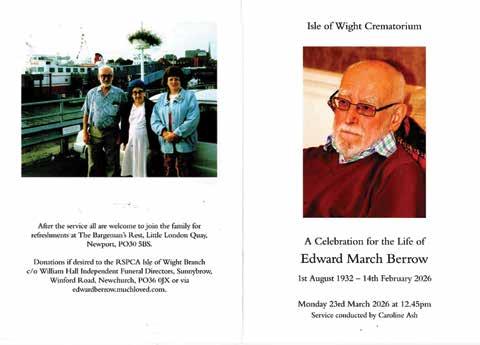
Many members attending our AGM, or the conferences of the Society of Civil and Public Servants (SCPS) and the National Union of Civil and Public Servants (NUCPS), will remember the larger-than-life Ted Berrow. Once seen, never forgotten. Ted passed away on 14 February and will be fondly remembered. He was a political campaigner all his adult life, after joining the youth wing of the Labour Party. He worked at Ordnance Survey in Southampton and became a trade union activist in the SCPS in the 1970s. Rising through the ranks there, he was elected to the National Executive Council and later become a Vice President, a post he held for 10 years. While in the role, the union merged with the Civil Service Union to become the NUCPS.
Ted was a servant of the people, a campaigner for others all his life
CSPA Annual Report 2025
Last year, we made several efficiency savings to ensure that members’ subscriptions were best used. These included reducing the number of magazine supplements –the Annual Report and AGM Report are now being made available to members in other ways, including online and in the post on request. This has worked well and saved the organisation several thousands of pounds, so we are doing the same again this year, still providing a report produced to professional standards, but with a much smaller print run.
This year’s Annual Report is available online or can be sent by post
We were full-time officials with the union and knew Ted well. He was an extremely knowledgeable, dogged and determined campaigner, but also warm and empathetic – somebody you could always approach for advice and guidance, which he would gladly give.
Ted retired in 1992. He had moved to the Isle of Wight and immediately became active in the CSPA, becoming Secretary
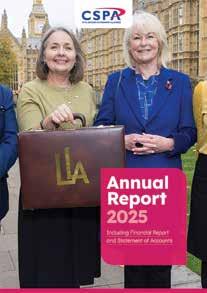
The CSPA Annual Report 2025 is now available to members at www.cspa.co.uk/annual-report or you can ask for a printed copy to be sent in the post by emailing enquiries@cspa.co.uk or by calling us on 020 8688 8418.
of the Isle of Wight Group and attending the AGM while he could. He continued in the role of Secretary, supporting our campaigns, until he died.
The CSPA was represented at his funeral by Regional Representative John Clarke. Ted was a servant of the people, a campaigner for others all his life and will be sorely missed. May he rest in peace. Mike Sparham and John Clarke
Do you want to go to the AGM?
The CSPA’s rules permit any member to attend the AGM, but usually at their own cost. The Executive Council recognises that, as a residential event, the cost is not insignificant and that many members aren’t based in areas covered by active groups or branches. We are offering up to 12 subsidised places for members this year. The CSPA will meet the full cost of food and accommodation, excluding travel costs but with free shuttle buses to and from Coventry rail station.
Any member interested in the opportunity to take up a supported place at the AGM should contact CSPA HQ by emailing enquiries@cspa.co.uk or calling 0208 688 8418 before the end of August.
The way to incorporation
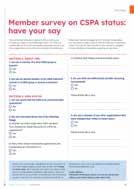
Last year, an AGM motion called on the Executive Council to investigate the costs, risks and benefits of changing the CSPA’s legal status and to consult with all members, groups and branches on it.
The EC had no pre-determined outcome in mind, but the most obvious was to become incorporated as a company limited by guarantee, as many of our partner organisations have done.
Charitable status has proved unviable as the CSPA is unlikely to meet the Charity Commission’s criteria for acting in the wider public interest. Becoming a charity is also likely to limit our ability to campaign on matters deemed ‘political’.
We sought your views in the last issue of The Pensioner via a questionnaire. Meetings in Glasgow, Belfast, Reading, London and Manchester were also held to consult CSPA groups and branches.
We were pleased to receive survey responses from 780 readers and would like to thank all those who took time to do this. More than half (55%) of the responses were from members who are not part of an active CSPA group or branch, and more than 90% are not postholders in any of the CSPA’s democratic structures.
There was a clear majority view that the CSPA should become incorporated, as expressed by 91.5% of respondents.
The EC is considering this feedback, alongside discussion points from the meetings with group and branch representatives, and will look at how to take things forward. Any final decisions will be made at the forthcoming AGM.
If you would like a copy of the full report on the member survey and the round of meetings, please contact CSPA HQ on 020 8688 8418 or email enquiries@cspa.co.uk and we will email or post one to you.
Capita faces more questions from MPs
The Public Accounts Committee (PAC) and the Public Administration and Constitutional Affairs Committee are to jointly question Capita’s administration of the civil service pension scheme.
The two watchdogs have been separately investigating the execution of the scheme, which has seen many pensioners not paid or given inadequate information. And CSPA HQ has continued to deal with many calls from recently retired civil servants wanting help. The CSPA was recognised for its work at a PAC meeting earlier this year.
It is hoped the joint meeting will go ahead in July before Parliament breaks for the summer recess.
Capita took over administration of the scheme from MyCSP in December after an 18-month preparatory period. However, the PAC warned that Capita was not sufficiently prepared before it took over the contract.
In April, Capita’s contract for the Royal Mail pension scheme was terminated
In January, HMRC Deputy Chief Executive Angela MacDonald was brought in to lead an urgent recovery plan, adding 150 extra staff and offering short-term financial support for people suffering hardship.
In April, the government terminated Capita’s contract for managing the Royal Mail pension scheme after it “failed to deliver numerous milestones”, said Cabinet Office minister Nick Thomas-Symonds.
The minister told the Commons that the decision followed repeated concerns over delays and a lack of confidence in Capita’s ability to deliver the new operating model.

Former minister at NI CSPA AGM
MLA and former Northern Ireland justice minister Claire Sugden spoke at the CSPA NI’s AGM in April, highlighting CSPA NI’s work. “The role you play in representing retired civil
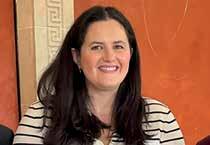
servants is incredibly important. You have not just the lived experience but a real understanding of how government works, how decisions are made, or not made, and how those decisions actually affect people’s lives,” she said.
She spoke of long hospital waiting lists, delays in accessing GPs, transport barriers and isolation for older people, and finished with a call for action.
“Progress will not happen on its own,’ she said. ‘It will happen because people continue to make the case, challenge where needed and work together... That is why your voice matters so much.”
Finance Report for 2025
Mike Sparham, CSPA National Treasurer, highlights the key financial points
The financial statements for the year ending 31 December 2025 are now available to members, including the balance sheet and profit and loss account. This report is a summary of the outturn. For the year ending 31 December 2025, the CSPA made a gross loss of £31,773 after depreciation. When taking into account an increase in the value of the CSPA investment in the aberdeen MyFolio Multi-Manager fund, the net loss for the year was £7,920 before taxation. Corporation tax due is calculated as £3,207, thus giving a loss for the financial year of £11,127.
Comparative figures for 2025 and 2024 are set out in the table. A small loss was expected in 2025, following two years in which a profit was made. The main reason for this is the loss of subscription income, but there are other factors.
Key points to note from the financial results are:
• Total income for the year was £956,342 compared with £989,311 in 2024. Subscription income fell and the VAT payment increased due to a change in the formula for apportionment (the amount of the subscription that is zero rated). Income from advertising in The Pensioner remained broadly the same, whilst income from CSIS commission on
travel insurance policies sold increased.
• The aberdeen investment performed well and the valuation rose from £444,835 to £478,669 (the historical cost of the investment was £380,000).
• The largest item of expenditure (apart from salaries and PAYE) remains The Pensioner, but the cost fell in 2025 as only one supplement was produced.
• The contract with Parliament Hill was not renewed, leading to a significant drop in membership support costs.
A small loss was expected in 2025, following two years in which a profit was made
• There was a significant saving in the cost of the AGM. The gross cost fell from £50,469 to £39,104.
• HR fees rose from £3,150 to £7,450 because two members of staff left during the year and agency support was needed to find replacements for them.
• Office rental and service charge costs are higher following the move to Falcon Road. However, this is partly offset by savings in accommodation costs elsewhere as items previously paid for (for example, cleaning) are now included in the rent.
• Travel and subsistence expenditure fell by £4,618.
• The cost of group newsletters rose due to increased postage rates and the increasing size of groups which have enlarged their geographical area of coverage.
• Total expenditure for the year was £987,112. The depreciation assessment was £1,003.
Finally, the balance sheet shows that total reserves stood at £1.15 million.
If there are any questions, please email me at M.Sparham@cspa.co.uk


Watch out for hackers
David Owen, our tech savvy London Regional Rep, offers some advice
Relaxing one Sunday, one of our smartphones pinged thrice. Puzzled, I picked it up. The messages started to reveal a wide attack on accounts with financial, retail and subscription services. Four intense days of telephone calls followed. It then took more than two months to resolve follow-up attacks and re-establish near normal activity.
So how did the hack succeed? Most services require password reset processes, but if you use an email or phone number that’s publicly available, you have a potential weak spot. Hackers use this public information to attack those service providers, which may have lower security than a bank.
If they succeed in compromising the account, they can glean further data, as well as using the account to reset passwords on higher security services. Gaining access to Microsoft and Google accounts, which can synchronise with many devices and the cloud, can be particularly useful to hackers.
Don’t be unnerved
Try to stay calm in this stressful situation. Hackers exploit panic. In many cases, the bank is obliged by the Financial Conduct Authority to reimburse losses. It is unlikely the hacker will ever appear in person. Promptly contact the organisations messaging you using the genuine phone number that you will have on your card or records. Never rely on any number in the message. Hackers generate false alerts with fake contacts to trick you.
Hackers spoof banks’ contact numbers. So look at the message: if it requests
personal or security details, it is the hacker not your bank.
Accounts that the hacker appears to have missed? Alert the relevant organisations to protect accounts in advance of a possible future attack.
Unexpected authorisation or mobile PAC codes received? Do not reveal them to anybody but alert the provider on their genuine number. Consider joining Cifas, a not-for-profit membership organisation that works to eliminate fraud and financial crime (£30 for a two-year registration). More than 750 UK lenders use Cifas to see if additional checks are needed before credit approval. Hackers hate Cifas.
Try to stay calm in this stressful situation.
Hackers exploit panic
Compromised email? Check settings with provider before resetting your password. Remember, some email accounts will not prevent simultaneous multiple log-ins.
If your devices have been disabled, or they work but may still be insecure, give BC Technologies a call during office hours, stating that you are calling from the CSPA (tel: 0330 800 1010 or email: cspa@bc-group.co.uk). They may be able to establish whether you need a simple tweak or the support of your local IT specialist. And when possible, warn your personal contacts to be alert.
In England, Wales and Northern Ireland, get in touch with Report Fraud – https:// www.reportfraud.police.uk/ – if you
have a clear understanding of what has happened. If not, get clarification first. In Scotland, call 101.
Look out for communications from lenders or retailers that have dealt with the hackers and promptly respond where appropriate.
Reduce your exposure
Avoid using your public numbers or emails as account recovery contacts. Avoid using your name in a recovery email address. See my introduction!
Never disable two-factor authorisation on account log-ins, even on your own home devices. Leave any ‘trust this device’ box unticked.
Avoid saving card details to website accounts unless mandated. Retailers love saved cards because you buy more. No saved card makes it less useful to hackers.
Paying online? Use credit cards rather than debit cards whenever possible, and avoid using Faster Payments, particularly to a new and unknown party.
Use the default robotic voice on your voicemail. A personalised message could be copied, AI-processed and used to fool voice ID.
Smartphones use wifi Bluetooth and near-field communication in addition to a mobile signal. Multiple apps enable data transfer. We rarely use some functions. Consider turning unused items off.
Finally, be aware of the potential security implications of passkeys, which bypass traditional passwords on an increasing number of websites, and AI assistants, which may require access to all areas of your device.
General Secretary's
Report
Sally Tsoukaris
Hello! As I write, still contemplating the English local election results, and those of the Scottish and Welsh parliaments, I am enjoying some welcome rays of sunshine across my desk.
I am so proud of our dedicated team at CSPA HQ, who have worked very hard, with passion and empathy, over the first half of this year to help CSPA members affected by the chaos since the transition of pensions administration to Capita.
An unprecedented number of new members have joined recently, and we welcome them with open arms, but all too many have needed our help, support and advice to resolve pension-related issues.
It’s shameful that after decades of service, so many retiring civil servants have been let down and had to endure hardship while waiting for their pensions, often with no communication from Capita.
The word ‘unacceptable’ has been uttered time and again – by Capita, Cabinet Office, ministers and MPs,
After decades of service, so many retiring civil servants have been let down
even those chairing the influential Public Accounts Committee and Public Administration and Constitutional Affairs Committee. But all this is cold comfort for those trying to make ends meet.
We also have members in the process of retiring, or planning retirement, who have no access to the online tools needed to estimate what their pension income might be or any of the paperwork they need from the administrators.
I salute CSPA members who have shared their stories with the media, enabling us to maintain pressure on Capita, the Cabinet Office and ministers to get members’ issues resolved.
The end-of-June deadline to which Capita is committed for delivering its contractual service obligations is fast approaching. If this cannot be achieved, questions must be asked about how the service can be retrieved, delivered by others or brought in-house, with the latter option the obvious longer term solution.
These issues cut to the core of the CSPA’s reason for being – “protecting what you’ve earned”. So be assured: we will not rest until an acceptable solution has been found, however long that may take.

Collaborative efforts
We continue to work closely with and support our partners the Charity for Civil Servants, the Civil Service Retirement Fellowship (CSRF) and the Civil Service Insurance Society (CSIS).
This mutual support was demonstrated recently when we collaborated with the Charity and the CSRF to get our income streams from member payments from pensions flowing again. These had ceased for a couple of months after the Capita transition in December – causing our national Treasurer to have sleepless nights!

CSPA Annual General Meeting 2026
Our CSPA HQ team is hard at work preparing for the 2026 AGM. The event, to be held again at the Chesford Grange Hotel in Warwickshire (pictured) on 7-8 October, gives members a chance to make and renew friendships, hear updates and participate in debates. Each year, groups and branches submit motions, suggest rule amendments and enter nominations to Executive Council posts for their members. Under our rules, individual members who are not part of active

local groups or branches can also attend the AGM, make nominations and submit motions for debate. Please get in touch if you would like to be involved, as support and advice is always available.
The deadline for submission of all AGM motions, constitutional amendments and
nominations is Friday 3 July, with our AGM delegate lists finalised in early September. Please contact us if you would like the forms for submitting nominations, motions or amendments to be sent to you in the post or by email. This year, for the first time, it is possible to make these submissions easily online if you wish to.
Ballot papers for any contested EC posts will be issued with the September edition of The Pensioner, so please look out for these and return your votes.
Campaigning on AGM priorities
The CSPA, along with our Later Life Ambitions partners, continues to campaign vigorously and to be quoted in the press in support of:
• The state pension
• The need to maintain the triple-lock to increase it in line with the cost of living and average earnings
• The differences between the basic and full ‘new’ state pension
• The need to combat the erosion of pensioners’ income through taxation – particularly for those on lower incomes – due to the frozen personal income threshold.
In a recent report, the Tony Blair Institute called for the state pension to be abolished and replaced by a new system – known as the Lifespan Fund
The Tony Blair Institute has called for the state pension to be replaced
– which would require some people to work an additional five years to receive the same payout. Sir Tony Blair has called the current system “outdated, rigid and increasingly unaffordable”.
Whilst the CSPA stands resolutely in support of the state pension, official figures show that the number of retirees is set to rise from 12.6 million today to nearly 19 million by 2070, potentially increasing the cost of pensions to 8% of GDP.
However, campaigners have warned political parties that they face being “annihilated” at the ballot box if they fail to commit to the state pension triple-lock, with polling showing that only one in 20 people would contemplate scrapping it.
There is a clear generational divide, with more than two thirds of babyboomers (68% of those aged 62 to 80) supporting the triple-lock, compared with just 14% of those aged 18 to 29.
Support the WASPI cause
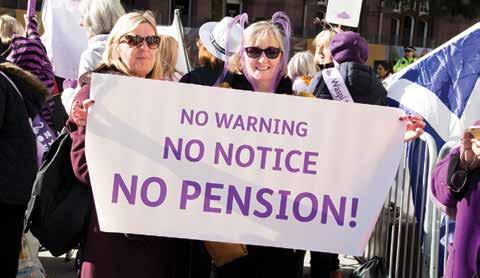
There has been no change in the government stance – that women were adequately informed of the rising state pension age all along, and that any form of compensation would be unaffordable. Constituents contacting their MPs can have an impact, however. If this matters to you and you haven’t done so already, we encourage you to write to your MP to
ask them to take up the issue with work and pensions minister Pat McFadden.
The WASPI (Women Against State Pension Inequality) website – www. waspi.co.uk – has resources to assist you, including details of WASPI women in your constituency, to help you point out the potential impact in terms of votes cast in future elections.
Social care reform: the wait continues
Our hopes for prompt government action on a national social care framework integrated with the NHS were lowered by the announcement of the Casey Review’s terms of reference, suggesting a phase 1 report to be delivered this summer and a phase 2 report in 2028.
The CSPA is one of more than 60 organisations affiliated to the Care and Support Alliance (CSA), which aims to raise the profile of social care on the political agenda. On 2 March, the CSA published an open letter to Baroness Casey to share its priorities, aspirations and insights on adult social care, feeding into phase 1 of the Adult Social Care Commission’s work.
The Commission is expected to launch its “national conversation” in late spring. We understand this will involve a series of events over a year, gathering insights to shape the final report.
The Commission is expected to publish a “0.5 report” this summer, expanding on the priorities identified in Baroness Casey’s set of recommendations announced in March. This interim report is separate to the full phase 1 report, which is expected to be published later this year.
The CSPA is also involved in the Carer Poverty Coalition of more than 100 organisations campaigning to end carer poverty, improve support for unpaid carers and end Carer’s Allowance overpayments.
The CSPA was a co-signatory to its Allowance 50th anniversary open letter to the secretary of state on 2 April, to which social security minister Sir Stephen Timms responded. We are pleased the minister recognises the need to modernise the benefit and is exploring options for reform.
He said: “As we celebrate the 50th anniversary of the introduction of CA, the next few years will see some of the most significant reform since it was introduced, reflecting the importance we attach to supporting unpaid carers.”
We will monitor progress on this and call for a comprehensive review of the benefit.
The Care and Support
Alliance aims to raise the profile of social care
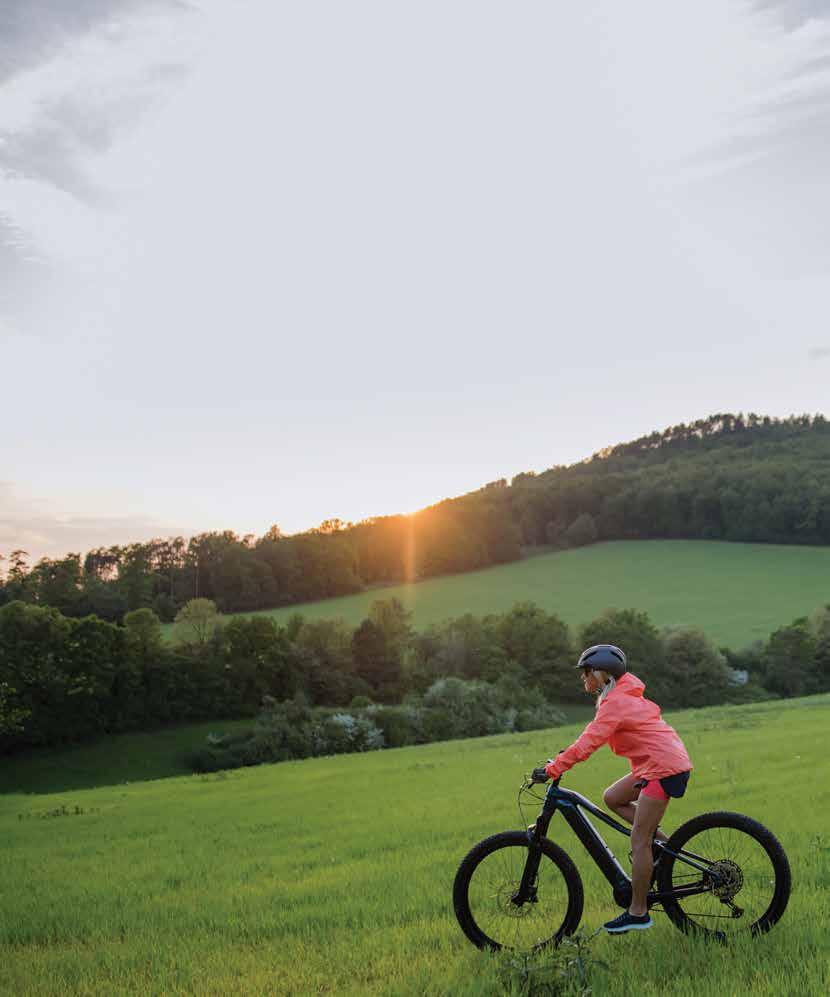
Making the case for cycling evokes strong feelings among some drivers and pedestrians. I don’t defend bad cyclists, but I refrain from responding to all the usual accusations levelled at cyclists, as it will prevent me from getting to the purpose of this article.
There is a perception that cyclists cause the most accidents to pedestrians. I accept there is a serious issue for pedestrians of cyclists riding illegally on footways, but Department for Transport statistics reveal that more than 99% of fatalities to pedestrians on footways are caused by motor vehicles. For minor and serious injuries, the figure is 98-99%.
It doesn’t excuse the cyclists – even if they don’t cause accidents, thoughtless riding is frightening for pedestrians – but an informed perspective is important.
Since May 2014, the charity Cycling UK (CUK), which I represent, supported by pedestrians organisation Living Streets, the AA and RAC, has called for a review of the traffic laws for all road users.
We accept that includes cyclists – for example, there is no clear definition of what constitutes careless or dangerous cycling – but we maintain it is unclear for driving too. The review has been continually promised but delayed. So it’s galling for us when politicians keep raising issues about cyclists, who cause the fewest injuries and fatalities by massive margins.
My reason for this article is because it’s
tragic that the issue of illegally adapted e-bikes (which effectively become e-motorbikes) overshadows the great good done by legal e-bikes (whose motors cut out at 15.5mph).
Positive pedalling
First let’s look at the advantages of cycling generally, then I’ll explain how e-bikes fit in. One obvious benefit of more cycling and less driving is the colossal reduction in carbon emissions. Less traffic congestion also makes life easier for everyone.
Most people accept that cycling has significant health benefits, but it represents a highly beneficial, low-impact exercise for adults over the age of 65, offering a mix of physical, mental and social advantages that can improve the quality of life and increase independence.
Regular cycling helps manage agerelated physiological decline, strengthens muscles and joints, and offers substantial cardiovascular benefits without the impact on joints of running or jogging.
Anyone of any age who cycles regularly potentially saves the NHS money. The Walk Wheel Cycle Trust (formerly Sustrans) reports that active travel (cycling, walking and wheeling) saved the NHS £2 billion in 2025, and Bristol’s cycling infrastructure saved the local NHS £15 million.
On your bike!
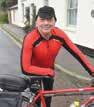
John Thompson enthuses about the many benefits of riding a bicycle – especially as we get older
It would be interesting to know how many CSPA members own legal e-bikes, as they are popular with older people.
CUK has many reports of older people with mobility issues who have found a new lease of life using e-bikes. An unassisted bike would be too much for them but an e-bike is manageable.
There are reports of many older people using e-bikes to aid recovery from
Anyone of any age who cycles regularly potentially saves the NHS money
serious illness or operations – see https:// electricbikeblog.com/case-studies-3seniors-electric-bikes/. Of course, many older people use them simply because they’re not as young as they were, so find hills and headwinds more difficult.
Economic benefits
Cycling helps the economy too. Those who shop by bicycle spend less on individual trips than those shopping by car, but
make more trips, so spend more overall. In London and Newcastle, where car parking spaces are being reduced to enable cycle paths, retailers found business improved. This is partly because those on bicycles are able to stop and window-shop.
Shopping by bike is not as limiting as is often assumed. Much can be carried in panniers, and even more in a cargo trailer. Some people do their weekly food shop by bike and trailer.
Studies in London have found that walking and cycling improvements have increased retail sales by up to 30% –because cyclists carry less, they tend to spend more in shops than other tourists.
Supermarket chains Co-op, Asda and Sainsbury’s and online retailer Amazon use e-cargo bikes for deliveries in high-density urban areas because they’re quicker –which means better customer service –and cheaper than using vans. This might also contribute to a healthier workforce.
And two NHS ambulance trusts –London and East of England – send out paramedics on e-bikes, reaching incidents in congested areas more quickly.
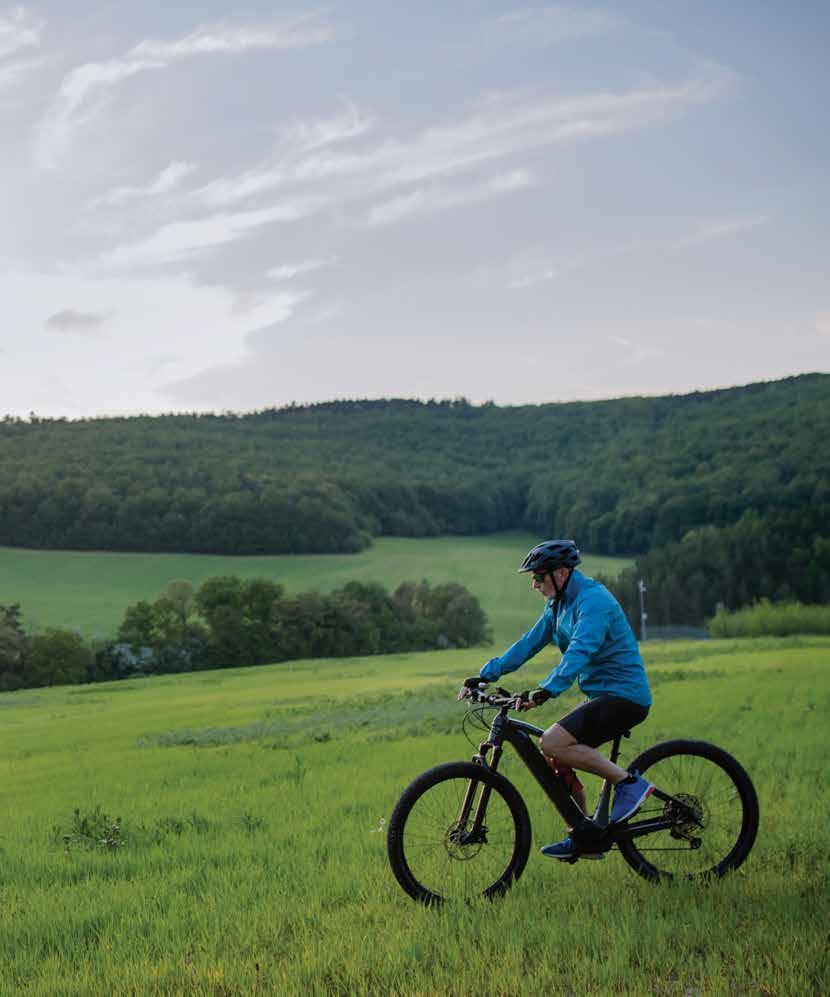
I hope this article has persuaded some readers to consider cycling. And if you feel you aren’t fit enough to cope with an unassisted bike, perhaps you’ll invest in an e-bike. The initial outlay may be expensive, but good models are available for less than £1,000.
And consider what you’ll save in the long run by not nipping to the shops in your car – no petrol or parking charges, no hassle finding a parking space, less wear and tear on your car. As one motor mechanic told me: “Cars don’t like short journeys.”
CUK offers comprehensive advice on choosing the right e-bike, so take a look at our website – cyclinguk.org – and enter “electric bikes” in the search.
Floating bus stops
You might feel daunted by the thought of cycling in today’s traffic conditions. That is why good cycling infrastructure is important. This leads us to the issue of floating bus stops.
CUK believes they can be safe, including for the blind and partially sighted, if they are sensibly designed, as they have
been in several European countries. It’s important that such facilities are safe for pedestrians too.
It was CUK that started the campaign for the new Highway Code rule for a hierarchy of road users. We accept that pedestrians should be at the top.
Our only quibble is that we would have preferred a hierarchy of responsibility, which, ironically, would put pedestrians at the bottom – but for the same reason they are at the top of a road user hierarchy.
If you feel you would need some help returning to cycling, CUK provides a ‘buddy’ scheme. And in some areas there are affiliated Community Cycle Clubs that are dedicated to helping those who have never cycled, or have not been on a bike for a long time, to become confident.
In his article in The Pensioner Spring 2026 edition, David Luxton commented that it’s great the Rolling Stones are proving there can be an active life after 80. Well, Mick Jagger likes cycling.
So, if any readers enjoy the benefits of better health as a result of this article, I will be very happy.
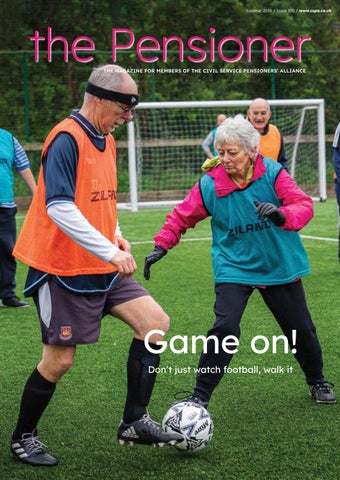
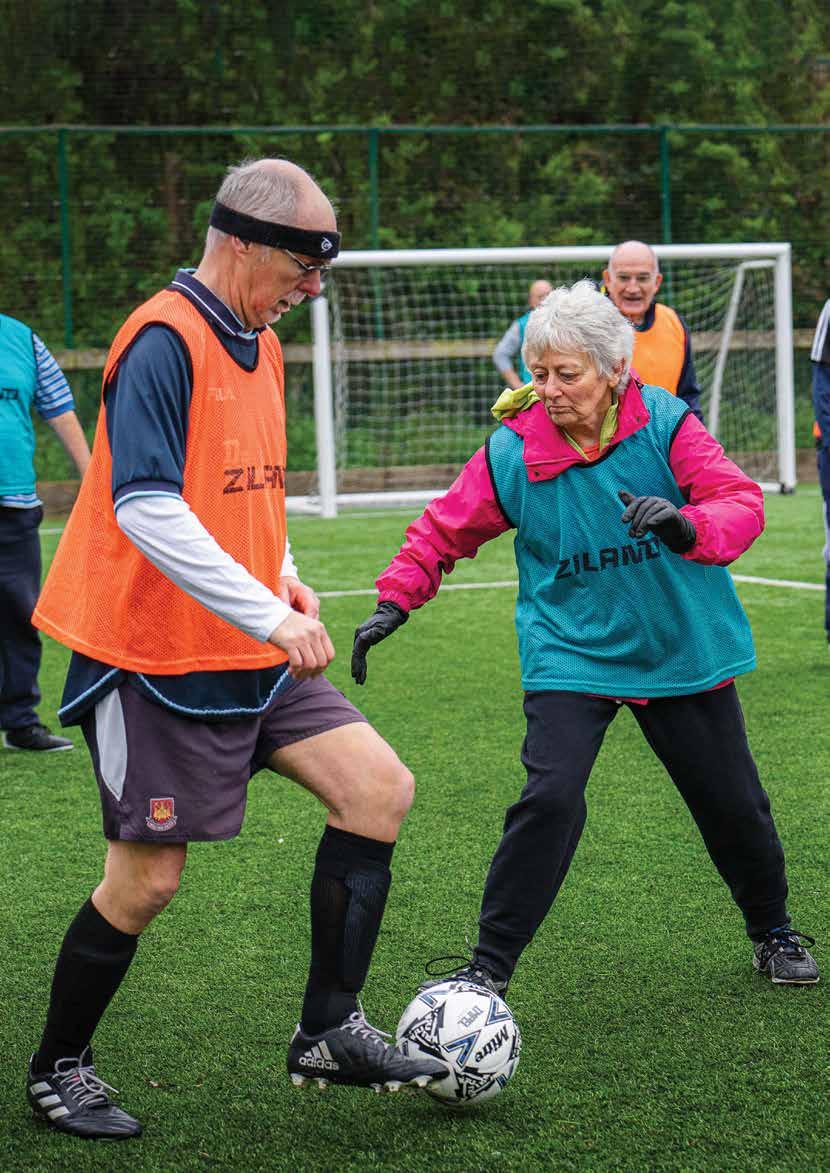
Fifteen years ago, it didn’t exist. Now more than 100,000 people play walking football at clubs across England. And the sport’s World Nations Cup is now held every two years.
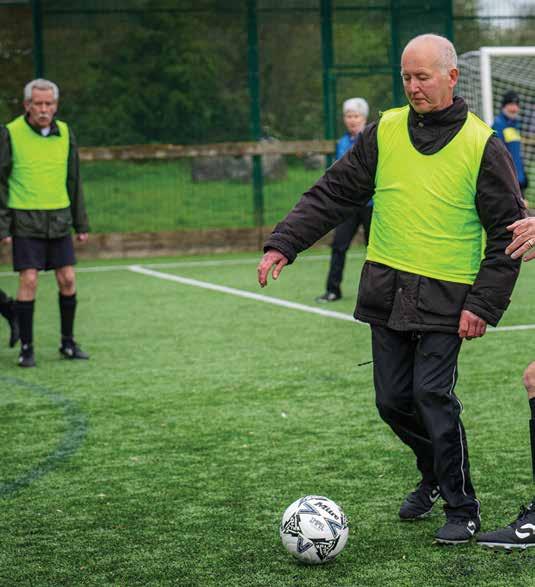
While football fans will be glued to the FIFA World Cup this summer, there won’t be any headers or sliding tackles in walking football matches. Physical contact is prohibited, the ball must remain below head height, and running is not allowed.
Stuart Langworthy is the England manager for the over-60s walking football team and a director at the Walking Football Association. He says the rules are built for safety, including no tackling from behind, because most players are over 50, many with long-term health conditions.
“Most of it is played for fun and friendship at local clubs,” he says. “People turn up, put their money in a pot, grab a bib and play. There’s a cup of tea or coffee afterwards, which is just as important as the game. It’s the mental health and the sense of belonging to a group.”
In its current format – six-a-side on a smaller pitch, about 20 minutes each way – walking football is played in more than 80 countries. It was invented by John Croot in 2011. “John Croot was a director for Chesterfield Football Club [he is currently CEO],” Langworthy explains. “His older members in the community went to him and said they wanted to carry on playing a version of football, and they came up with walking football.”
Today, there’s a multitude of walking football England teams – over-40s, 50s and 60s for women, and over-50s, 60s, 65s, 70s, 75s and 80s for men. There is also a Parkinson’s England team, as well as a Kicking Cancer team, for men and women.
Langworthy, a retired teacher, is a double World Nations Cup winner. “The over-60s England team won the World Nations Cup last year and in 2023. We have the European Championships in
Walking into fitness
Helen
Nugent hears about the
many
benefits of staying active in older age
November this year and the next World Nations Cup the following year.”
Langworthy’s passion for the sport is clear, as is his gratitude for trips to Hong Kong, Malaysia, Singapore, Rwanda and Brazil. “Sometimes you have to remind yourself how lucky we are to still be playing the incredible game at our age,” he says. “Fifteen years ago it didn’t exist.”
Pace of change
Other walking sports have sprung up too – rugby, netball, cricket, tennis and hockey. It’s not surprising older people want to continue to play the sport they love, albeit at a slower pace. Just witness the demand for activity in later life with u3a, one of the UK’s largest membership organisations. With more than 400,000 members, u3a offers groups and activities for people in retirement or semi-retirement. This includes a wide range of sports, from walking football, table tennis and yachting to netball, archery and laughter yoga.
A u3a spokesperson says: “The benefits of exercise are obviously physical, but mentally the benefits are off the scale. A lot of people have been widowed or they’re divorced and they’ve moved to an area on
their own. With u3a, they get a social life and a group of friends they can tap into when they need to.”
A report by u3a in 2024, Learn to Live, said social isolation and loneliness have become increasingly widespread among older people, shortening lives and harming mental and physical health.
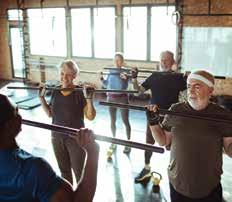
James Hilton understands the importance of exercise and wellbeing as people age. He founded Jim’s Gym, an online gym and community for over-55s, offering live online classes for a monthly fee of £12.99. At present, a wide variety of classes include seated fitness and pilates.
Jim’s Gym is mainly aimed at older people who know they should be doing something to keep fit and healthy but don’t know where to start.
Hilton explains how classes are tailored to the over-55s. “The most powerful thing is helping people build confidence in what they’re able to do. That’s really important. So, the classes have varying degrees of intensity levels to suit all members. In a lot of my classes, I do seated options. But it’s also about putting emphasis on getting people to take part and do what they can.
“The most important thing about
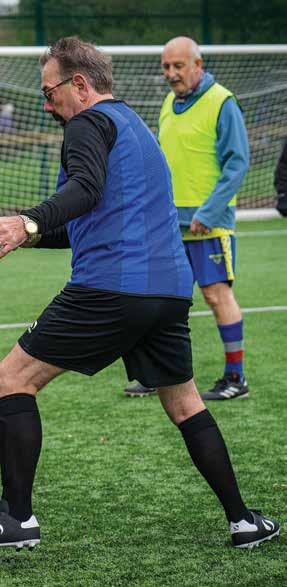
“How lucky we are to still be playing the incredible game at our age”
keeping active is trying to work out why it’s important to the individual. This might be enjoying as much time as they can with their grandchild or pursuing their passion for gardening. If you can stay active, the health benefits are a knock-on effect.”
Glenys Adkinson, a member of Jim’s Gym, recently celebrated her 80th birthday. “It’s important for me to stay fit and healthy to maintain my independence and keep up with my interests, which include walking. Doing James’s selection and variety of classes means I’m at the front of walking groups, my stamina has improved, and I feel stronger and fitter.”
Ivan Baxter is also aware of the importance of staying fit. At 86, he leads hikes for two walking groups in Northern Ireland. One of his favourite walks is a sixmile route in Crawfordsburn Country Park, County Down, which takes in a waterfall and the shoreline among other things.
“You get withdrawal symptoms if you can’t get out,” he says. “Apart from the

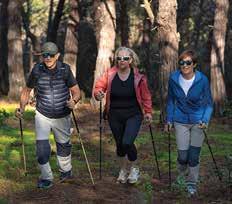
exercise, you have the social aspect. Normally we go for a meal or a coffee afterwards, or we bring our own lunches and have a chat. People talk to each other when they’re walking. It’s important you don’t get isolated in your own home.”
Health benefits
NHS guidelines suggest adults over 65 should aim to be physically active every day, completing at least 150 minutes of moderate activity each week or 75 minutes of vigorous activity for those already active.
If running rather than walking is more appealing, ease in gently with a slow jog. Many people use lamp posts as a guide, jogging between two, then walking between two, and slowly increasing the number.
Tina Chantrey, running coach and fitness editor of Women’s Running magazine, highlights the many benefits of running as you age. “They include improving bone density, which can decline as you age, helping to protect yourself

from fractures. You will also be boosting your cardiovascular [heart and blood vessel] health. If you start to run regularly, you may find you start to lose weight, too. Running and strength work can also improve your mobility and balance, which reduces the risk of falls.
“As important are the mental health benefits: exercise may boost your brain function and improve your sleep. And getting outside to run may massively impact your sense of wellness, reducing anxiety.”
Back on the football pitch, 63-year-old David Hodgson says walking football makes him feel 19 again. Hodgson retired from work “after a bout of bowel cancer”. He’d heard of walking football, searched the web for local groups, and now plays for the Whitehaven Strollers.
“It’s great fun,” he says. “The spin-offs are making new friends and physical and mental fitness, but more importantly, being in a group who can talk about being old. On the pitch, we can forget our ailments or sorrows and be 19 again.”
England Men’s Over-60s World Nations Cup winners 2025 THE WALKING FOOTBALL ASSOCIATION

Fast forward
Jonathan Safir on a busy introduction to his job
Since beginning in my role in February, it has been a frenetic but rewarding few months. I’ve had the privilege of meeting CSPA members across the country, attending group and branch AGMs and working with partner organisations on shared campaigns.
Alongside this, the CSPA has been holding weekly meetings with the Cabinet Office to advocate on behalf of members experiencing difficulties with the civil service pension scheme, particularly following the transition to Capita. These are vital in ensuring members’ concerns are heard at the highest levels.
Significant progress has also been made behind the scenes. We have been reviewing our approach to member recruitment and assessing the range of benefits we offer, ensuring they remain relevant and valuable. None of this would be possible without the dedication of colleagues at headquarters, whose professionalism and commitment underpin everything we do.
These early months have unfolded against a backdrop of political and
economic uncertainty, with intense public debate and cost of living pressures affecting many of our members, particularly those on fixed incomes.
On 7 May, voters across Great Britain took part in elections for the Scottish Parliament, Senedd Cymru and local authorities across England. In England, results from more than 130 councils showed a clear shift in voter sentiment, with notable losses for Labour and the Conservatives and significant gains for Reform UK. The Liberal Democrats and Greens also increased their representation.
In Scotland, the SNP remained the largest party but fell short of a majority, with smaller parties gaining ground. In Wales, the Senedd election produced a dramatic shift, with Labour losing ground after decades of dominance and Plaid Cymru and Reform UK emerging as the leading parties, but neither with a majority.
We have been reviewing our approach to member recruitment and benefits
The results show growing electoral fragmentation and increased support for parties outside the two-party system.
Later Life Ambitions’ election toolkit explained why these elections mattered and how devolved and local decisions affect issues such as social care, housing and transport. Its Budget for Later Life also outlined priorities and provided tools such as template letters to help members raise concerns with candidates.
The toolkit emphasised the importance of ongoing engagement, offering guidance on contacting newly elected representatives, reinforcing priorities and contributing to wider discussions through media and social platforms.
Pension rises
In April, civil service pensions increased by 3.8%, reflecting CPI inflation from September 2025. This brings the average pension to about £10,478 a year in 2026/27. In Northern Ireland, the average civil service pension is higher, at £12,415.
With inflation currently around 3.3% and potentially rising, this increase compares favourably with last year’s 1.7% uplift, which lagged behind inflation. Even so, rising everyday costs continue to erode financial security. Food inflation has slowed but remains well above historic norms, adding strain on households where essentials form a large share of spending.
The Bank of England’s base rate was held at 3.75%, but policymakers have been clear that this position depends on global developments. Escalation in the Middle East and sharp rises in oil prices have introduced significant uncertainty. With oil briefly reaching $126 a barrel, the Bank has modelled scenarios ranging from inflation easing later this year to exceeding 6% and substantial interest rate rises.
The risks are clear. Higher energy and food costs would disproportionately affect lower income households where finances are already stretched.
Energy bills fell by around 7% in April, reducing average household annual costs
Jonathan with the CSPA in Northern Ireland
to £1,641 under Ofgem’s price cap. This respite may be brief. Analysts expect a sharp rise from July, with the price cap potentially rising by almost £300 as wholesale prices feed through. In Northern Ireland, where no equivalent cap exists, typical combined electricity and gas bills are nearing £1,900 a year.
Other household bills are rising too. With water bills in England and Wales up by an average of 5.4%, the CSPA is supporting Independent Age’s petition on social water tariffs. Many councils are raising council tax close to the maximum permitted level, with some permitted to go further. For millions of households, these increases compound existing financial pressures.
Housing costs are one of the biggest pressures on household budgets. From 1 May, England’s Renters’ Rights Act marks a significant overhaul of private renting. Fixed term tenancies are abolished in favour of rolling agreements, ‘no fault’ evictions ended, rent rises restricted and discrimination against tenants on benefits or with children outlawed.
While council enforcement powers have been strengthened, concerns remain about court capacity and housing supply. Reports suggest that the Chancellor is considering a one-year rent freeze as part of a wider cost of living package. Supporters see this as urgent relief; critics warn it could deter new supply unless matched by large-scale housebuilding.
Looking ahead
During these first few months in post, I have been struck by the commitment, insight and support that run through the CSPA and I look forward to building on this. There’s no doubt there will be challenges, but I’m confident in the difference we can make by focusing on what matters to members.
Above all, I hope to ensure that members’ experiences and concerns are listened to and understood, and I look forward to working with many more of you as we do just that.

Pensions issues
The future of the state pension and triple-lock have again been in the headlines. Proposals range from means-testing to scrapping the triple-lock, but the government has committed to maintaining the policy for the remainder of this Parliament.
For the CSPA, this reinforces the importance of campaigning, as many people approaching retirement rely on the state pension.
Age UK has highlighted the scale of the issue. More than three million pensioners are struggling financially, with 28% reporting difficulty making ends meet. At the same time, frozen tax thresholds mean rising pensions are drawing more pensioners into income tax. In 2023/24, 8.16 million taxpayers were aged over 66, a million more than the previous year.
Another area under scrutiny is the gender pension gap. The civil service pension scheme does not report on this, though mandatory reporting is being introduced in the local government pension scheme in England and Wales. In Northern
More than three million pensioners are struggling financially
Ireland, the average civil service pension is £12,415 but with stark differences. Retired male civil servants receive on average £15,382, women £9,613, a gap of about 37.5%.
Prospect research shows the average gender pension gap across schemes was 32.9% in 2023/24, down from 44.9% in 2011/12. While this is encouraging, the UK still has the second highest gap in the OECD, equivalent to £7,200 per year.
This varies widely, ranging from 60.5% in the NHS pension scheme (England and Wales) to 44.5% in the UK civil service pension scheme, and 26.5% in the teachers’ pension scheme (England and Wales).
The phased increase in the state pension age from 66 to 67 is under way. While this saves public finances billions, previous increases have been linked to sharp rises in poverty among those just below pension age, especially those with ill health.
People in the UK now spend fewer years in good health than a decade ago, with stark disparities between affluent and deprived areas. Healthy life expectancy for men and women fell by two years in the last decade, with poor health increasingly forcing people out of work.
Your member benefits
Here are some of our most popular benefits – find out more in the members’ area of the website at members.cspa.co.uk
• Help and support with your pension
Our pensioner case worker can help if members have problems with their civil service or related occupational pensions. How to claim: email enquiries@cspa.co.uk with a brief outline of your query and your membership ID
• Free initial legal advice Consultation for 30 minutes maximum, membership number must be provided. England and Wales: Lyons Davidson Solicitors, 01752 300 584 quoting CSPA. Northern Ireland: McCartan, Turkington & Breen, 02890 329801
Scotland: Thompsons Solicitors, email advicecentre@thompsons-scotland.co.uk or call 0800 801 299
• Discounted conveyancing Gordon Brown Law Firm offers discounts in England and Wales. How to claim: email sales@gblf.co.uk or call 0191 389 5160
In Scotland: Thompsons Solicitors, email advicecentre@thompsons-scotland.co.uk or call 0800 801 299
• Pet insurance
CSIS, in association with ManyPets, is offering a range of lifetime vet fees
cover from £3,000 to £20,000 – one of the UK’s highest. For more details, visit https://csis.co.uk/additional-insuranceproducts/pet-insurance
• Free initial consultation on wills, trusts and powers of attorney
Solicitor Harvey Howell is offering members a free private consultation by phone or video. View the Harvey Howell video podcast by logging on to the CSPA website and members’ area. How to claim
In England and Wales: email cspa@ harveyhowell.co.uk or call 0330 175 9959 quoting CSPA
In Scotland: email advicecentre@ thompsons-scotland.co.uk or call 0800 801 299
In Northern Ireland: email marie-anne.mcveigh@ mtb-law.co.uk or call her at McCartan, Turkington & Breen on 02890 329801
• Financial services you can trust Free initial consultation with an expert from Quilter Financial Advisers to find out how you can benefit from financial advice. How to claim: Members can book their free, no-obligation initial consultation by calling 08000 858590 quoting CSPA or find out more on our website www.quilter.com/cspa
• IT help and support
Free help and support on personal computer problems. How to claim: call BC Technologies on 01369 706656 quoting CSPA
TRAVEL INSURANCE FROM CSIS
•
Designed specifically for members
This annual travel insurance plan from the Civil Service insurance Society (contact details below) offers a European or worldwide option for an individual, couple or family. You must be medically fit to travel, UK resident and a CSPA member (and remain so for the life of the policy) aged between 50 and 79 at the time of joining (thereafter no upper age limit will apply) and comply with the eligibility criteria.
• Home and motor insurance*
CSIS offers a 10% discount to members taking out a home insurance policy over the phone and 10% off car insurance for
those in England, Wales and Scotland.
• For details on all insurance offers from CSIS, including travel insurance above, visit: csis.co.uk/partners/cspa
New benefit from APT CSPA members can enjoy an exclusive bonus saving of 10% on all APT and Travelmarvel cruises and tours on 2026 and 2027 departures, whether it’s a cruise through Europe, Asia or Egypt, an escorted tour across Canada or a yacht adventure along Croatia’s coastline. How it works
• Quote CSPA10 when booking
• Travel window: 2026 and 2027 departures
• Book by: 31 December 2026
• Fred. Olsen We have teamed up with Fred. Olsen Cruise Lines for up to £200pp free on-board spend. How to claim: call 0800 0355 108 quoting CSPA26A. For details visit fredolsencruises.com/ affinity/cspa
• Wendy Wu tours Wendy Wu tours and cruises cover Asia and the Far East. We have a 5% discount on all trips and up to 10% off Mekong River cruises.
How to claim: visit www. wendywutours.co.uk or call 0800 035 5091 quoting CSPA5
SAVINGS HUB
• For great deals on shopping discounts, motoring, travel, lifestyle and discounts on the high street, visit our Savings Hub via members.cspa.co.uk/discounts/
FIND OUT MORE
• Have a listen to our podcasts with guest speakers from CSIS and Harvey Howell by visiting cspa.co.uk/listen
* Only available when calling CSIS for a quotation. Discount only applies when cover is offered with provider Salvation Army General Insurance Corporation.
Making systems work
Matthew Boyd, Senior Account
Executive at the CSPA’s public affairs consultancy Connect, on putting policy into practice
Governments of all stripes are often better at announcing change than delivering it. Last month’s King’s Speech gave Westminster its latest setpiece moment, with ministers keen to show purpose and direction. But for pensioners, and for those representing them, the more important question at such times isn’t what is announced but whether it works.
Many pressures facing older people are no longer about grand political arguments. They’re about whether essential systems function properly, support is accessible, and public institutions deal fairly and competently with those who rely on them.
In that respect, the period between the King’s Speech and summer recess is less about political theatre than about delivery. Cost-of-living pressures remain. Older people, particularly those on fixed incomes, continue to feel the effects of higher household costs and energy prices. The conflict in Iran has reinforced concerns about how quickly global instability feeds through to bills and living costs.
The government’s response is likely to focus on growth, energy security and public service reform. But for many pensioners, the issue is more immediate. Can essential costs be met confidently? Can services be accessed without undue stress? Financial security in later life isn’t just about the headline value of a pension; it’s also about whether systems are reliable, comprehensible and fair.
Pensions issues
That sense of uncertainty doesn’t stop with day-to-day bills. Pension taxation fears remain in the background too. Even without a defining announcement, concern about how pensions and retirement income may be treated by the tax system can be unsettling for those trying to plan with confidence in later life.
That is one reason why the problems surrounding the civil service pension scheme (CSPS) have been so damaging. The difficulties linked to the transition to Capita have persisted long enough now to become more than an administrative embarrassment. Delays, poor
communication and uncertainty have caused real frustration and, for many, genuine distress and hardship.
Pension administration shouldn’t be an abstract matter of process. It’s about whether payments arrive when they should, whether questions are answered clearly, and whether people who have given years of public service are treated with efficiency and respect. When those standards aren’t met, trust suffers. Once that’s lost, it isn’t easily restored.
Older people don’t need constant declarations; they need services that work
The same concerns can be seen well beyond the CSPS. The CSPA and its Later Life Ambitions (LLA) partners have continued to campaign on access to banking services, digital exclusion and the return of winter fuel payment concerns through HMRC’s recovery programme. Different issues though these are, they all raise the same practical question: are older people being expected to navigate increasingly complex systems without proper support?
Access to banking is an obvious example. As branches close and services move online, many older people are left with fewer options for managing their money in the way that suits them. For those who rely on cash, face-to-face contact, telephone support or trusted local provision, this isn’t a question of nostalgia. It’s about independence, confidence and security. LLA has been right to keep pressing this issue: access to cash and banking shouldn’t be a partisan issue; it’s a practical one.
Digital exclusion raises much the same
challenge. Too often, “digital by default” becomes “digital or nothing”. That may look efficient to a large organisation, but it can be alienating and unfair for those who aren’t online, don’t feel confident using digital services, or just prefer another way.
Whether the issue in question is banking, healthcare or council services, the principle should be straightforward: modernisation can never mean exclusion.
The same applies to the winter fuel payment. It has returned to attention because the government is proceeding with the recovery of payments from those above the income threshold. Where recovery, entitlement or communication become muddled, anxiety follows. A policy that may be defensible in theory can still create problems if administration is poor.
Reasons for optimism
There have, however, been encouraging signs. LLA’s engagement with the Welsh government and the Greater London Authority shows older people’s concerns are being heard in a variety of settings. That matters because the issues affecting later life include housing, transport, digital access, community services and health.
The question isn’t whether the government has a new slogan or a fresh dividing line; it’s whether the systems older people rely on are becoming more dependable, accessible and humane.
For the CSPA and its partners, that’s what matters. Older people don’t need constant declarations; they need services that work, institutions that communicate clearly, and policymakers who understand that administration is how policy is felt.
In politics, announcements are often the easy part. For pensioners, what counts is what’s next.

Something else that annoys me…
Cat owners should be less selfish, grumbles Chris Proctor
Not enough people have cats. My perfect cat is friendly, likes sitting on laps, does stretching tricks, rubs herself against my leg – and lives in a house down the road, not mine.
See, I really like cats’ dignity, confidence and independence. But I don’t want one living with me. The moment they share your address, you’re occupying space in their house – a food-providing tenant.
The ideal solution is for more people to have a cat I can befriend. Retired people are in pole position for this task. Sadly, however, grandmothers these days spend their time running marathons, climbing mountains and swimming in chilly ponds. They increasingly ignore their cat ownership responsibilities.
Years ago a neighbour moved out of our block of flats, taking all their belongings with them apart from a cat named Karli, who, despite resistance, moved in with us. She proved an ungrateful guest, prone to hissy fits and scratching, prowling the premises like a malignant prison guard.
She finally left when another neighbour enticed it into her home with John West salmon on a china platter. For a time, a battle ensued. My daughter outbid the JW tins with home-made poulet à la grecque, organic cat treats and eclairs, eventually giving up when she realised Karli was costing her more than her fare to work.
I was delighted. I could coax Karli into the house at times I desired, chat to her as I passed her in the street and sleep soundly knowing she wouldn’t physically attack me in bed. It was ideal.
A cautionary tale of cat ownership was related to me by another neighbour, Charlotte, whose cat Felix disappeared

over a year ago. The family had affixed signs to trees and lampposts but without response. Eventually they reconciled themselves to their loss. Then she received a phone call from immigration at Heathrow: they’d apprehended a cat attempting to enter the UK from Bulgaria, located an identification chip and discovered it belonged to Charlotte. Would she like it back?
The fact is that after a 12-month absence, our neighbours had adjusted to life without Felix. They’d replaced him with Tiddles for one thing.
And what was it doing trying to enter the UK from Bulgaria? It seems when it left home it was taken in by a family of Bulgarian origin about a mile away. They became so attached to Felix they took him on holiday to Sofia with them. They were in the process of repatriating it when Heathrow discovered the chip.
Once you get a cat, it seems, you can’t get rid of it, confirming my view that the best cats belong to someone else.
This story encouraged my friend Marissa to report on her husband’s recent trauma. He is, as a rule, a man who defines stoicism. Marissa says he is a stranger to emotion, a man
Once you get a cat, it seems, you can’t get rid of it – confirming my view that the best cats are the ones that belong to someone else
whose face sets but whose eyes do not moisten. But what happened when their cat took ill and expired? He changed utterly as, overcome with grief, he passed the day dampening the sofa his tears. She says it went on so long that she became involved, resulting in the two of them sitting sobbing until the early hours.
Their habit of dying is actually my main reason for not wishing to give house space to a feline. I can just about cope with pee on the carpet (I mean, we all do it), hairs on the settee, even occasional breeding with unsavoury passers-by. But all in all, cat ownership is folly.

This is why I urge others to do it. Why should I be excluded from cat company just because others are not prepared to make some sacrifice? In fact, their failure to do so is only one aspect of a growing selfishness I detect in modern society. I often notice bus seats taken up by pensioners, so I have to stand. And why do people have to position themselves in front of me in Post Office queues? None of them thinks of queuing behind me where they would be more convenient.
I have no time for the ‘Me’ society. More thoughtfulness and I would have a ready-tostroke cat on every doorstep. And don’t start me on house cats, which means I don’t get to see them at all. Sometimes I think the whole country’s just going to the dogs.