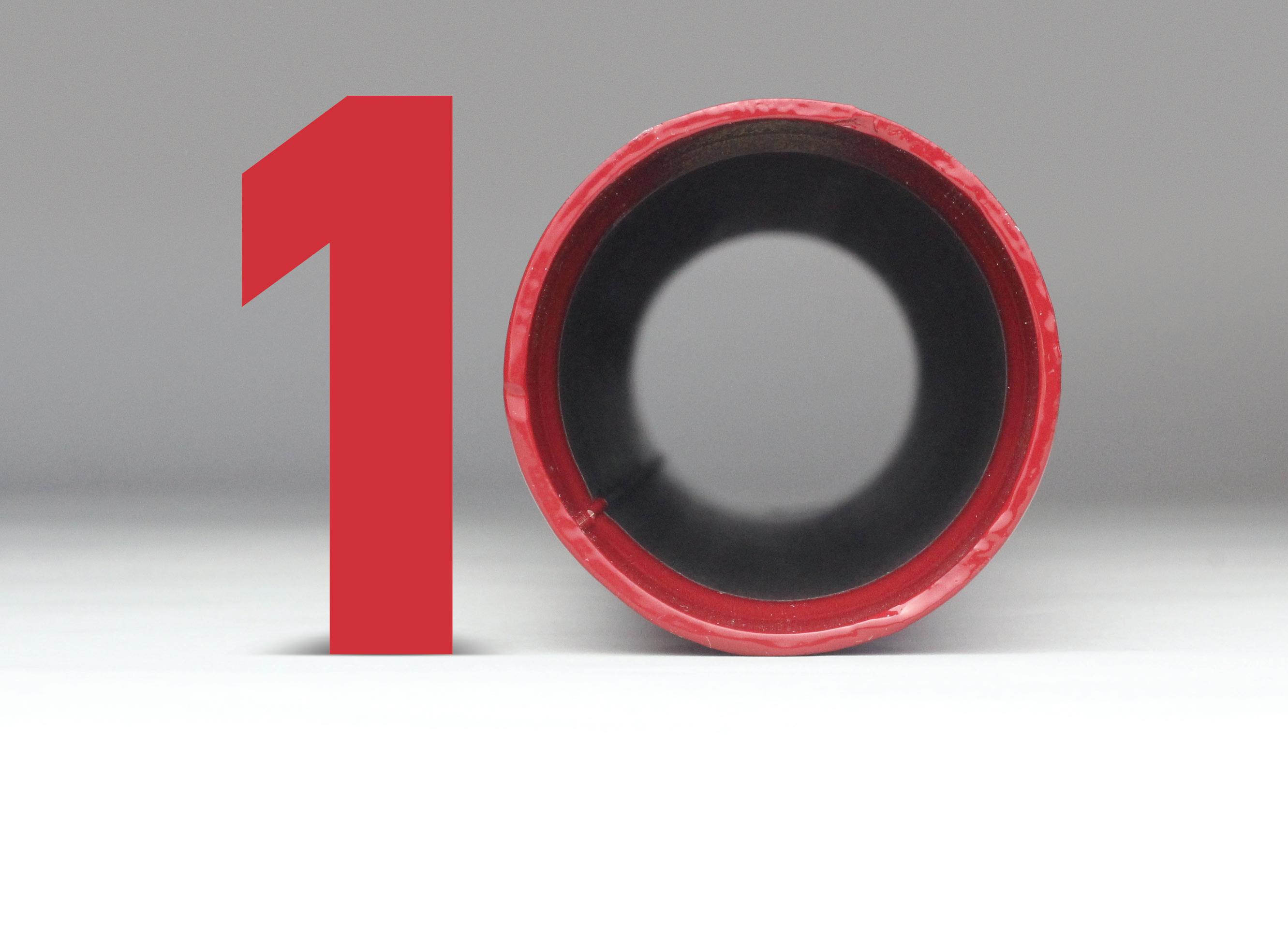
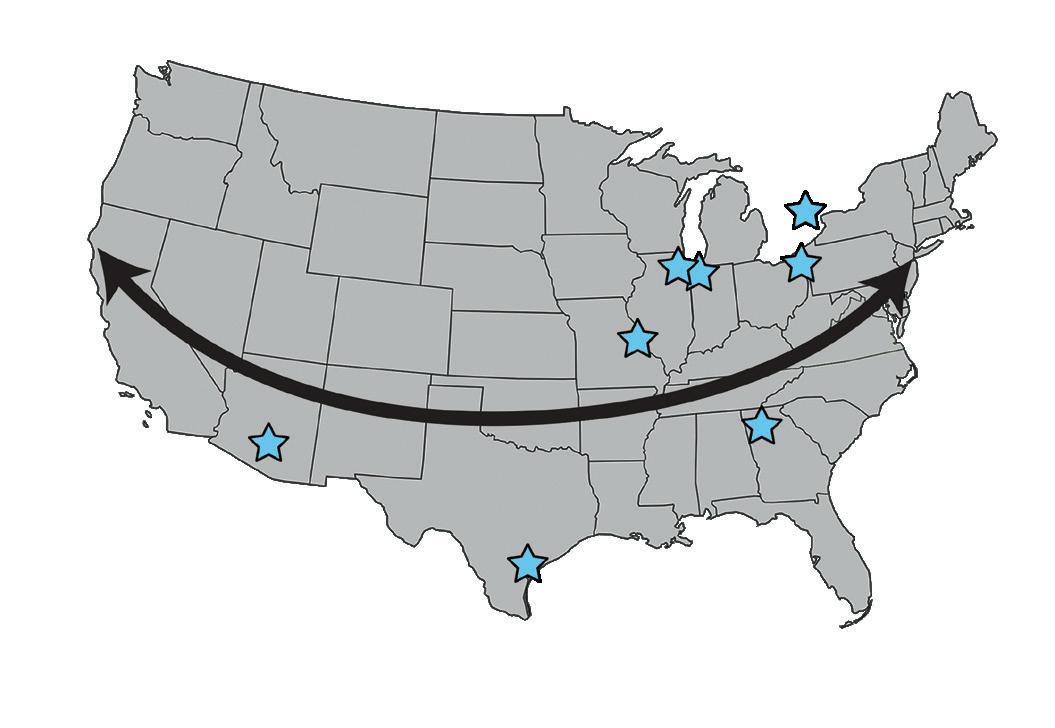
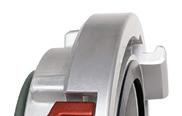
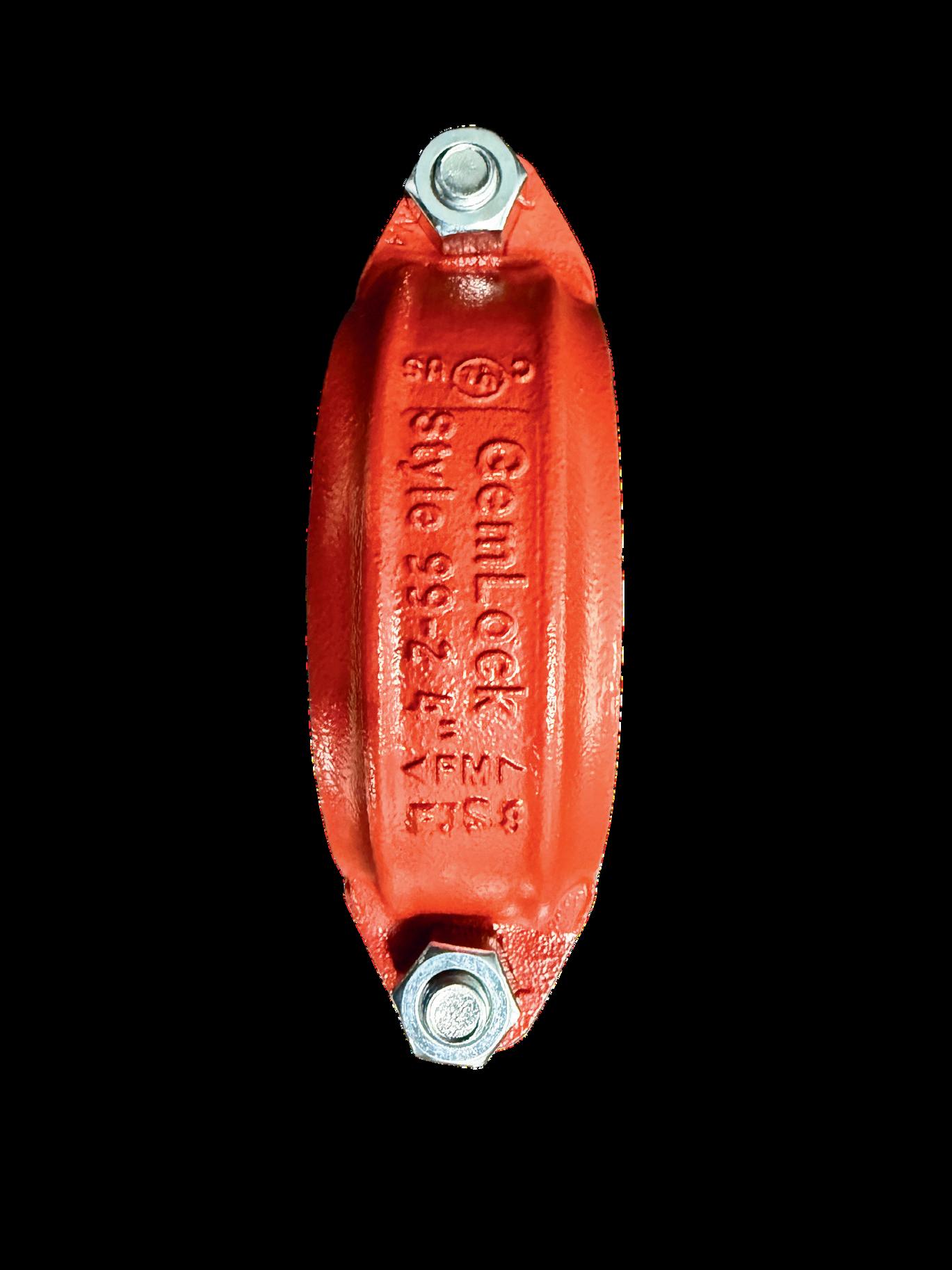
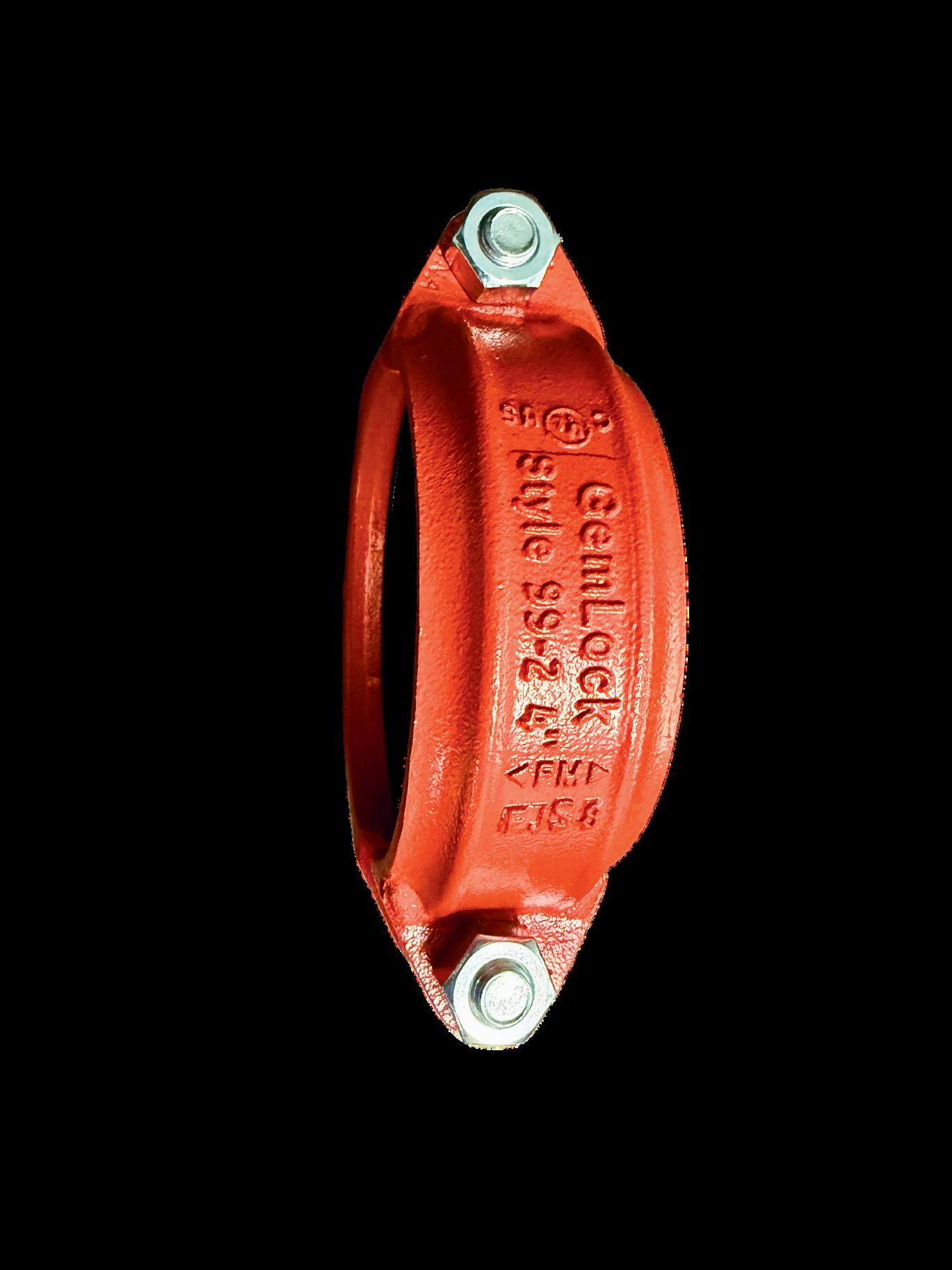
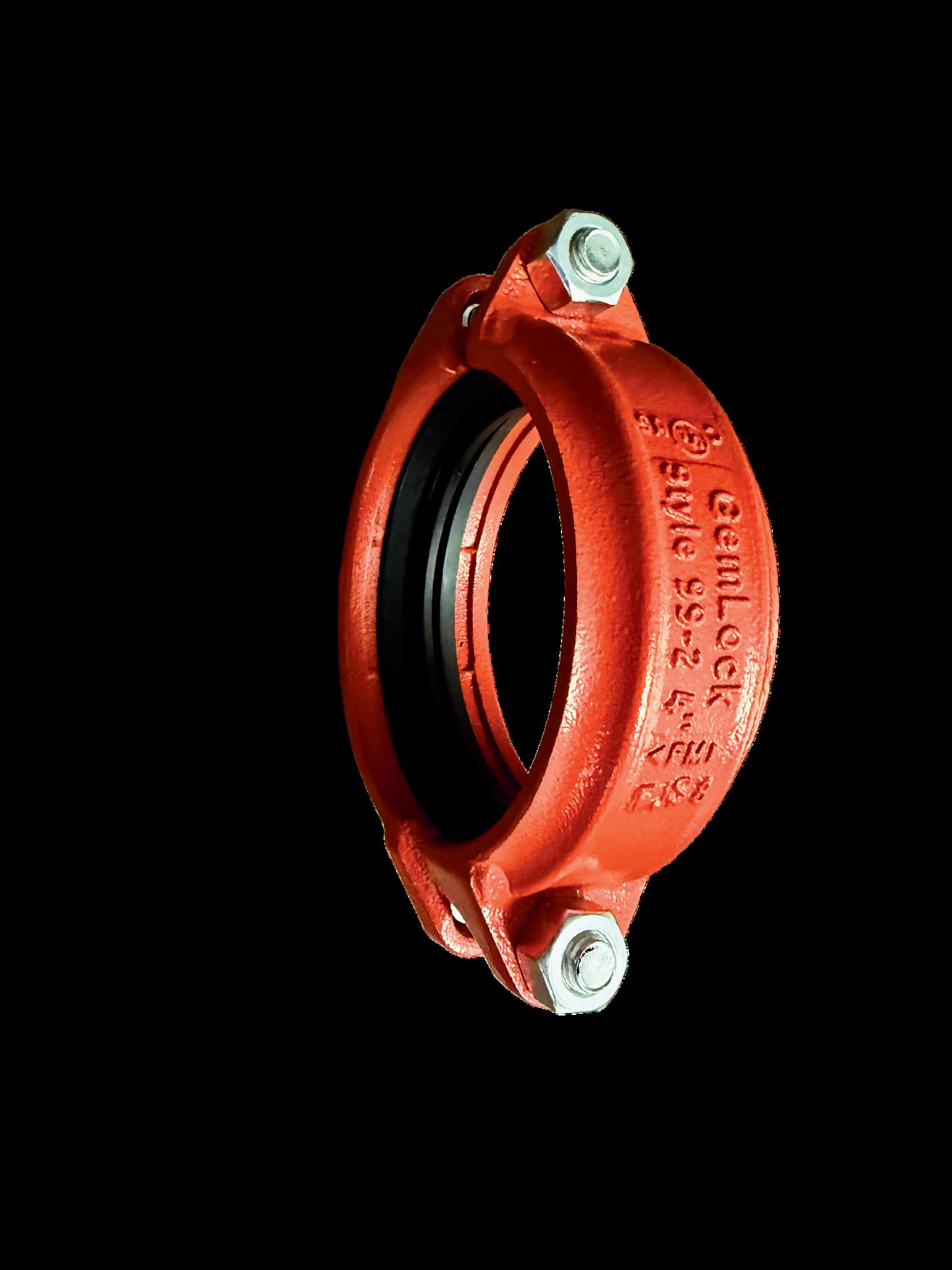
Our new mill expands our overall product capabilities, giving us the most comprehensive range of sprinkler pipe in the industry:
• Diameters from 1” to 10” NPS.
• Schedule 10, 30, 40, and Eddy Flow (size dependent)
• Lengths up to 25’, with custom lengths available
Plus a variety of finishing options — not to mention our exclusive EddyGuard II® MIC antimicrobial coating to help ensure reliable flow for years.
It’s all available to you from a single, responsive supplier…making your pipe selection job much easier.
The best-in-class tool for in-air or power driven field fabrication of 1 – 12" OGS and 1" IGS pipe in various pipe materials.
INCREASED PRODUCTIVITY
› Groove diameter adjustment
› Manual or power driven
› Interchangeable roll sets
› Simple depth setting procedure
› Adjustable ratchet
COMPACT
› Lightweight and portable
› Collapsible for tight spaces
DURABILITY
› Rugged design
› Plastic tool case protects the tool and organizes accessories
› Strong enough for field fabrication
Includes a full package of components for operation and service
ENTS
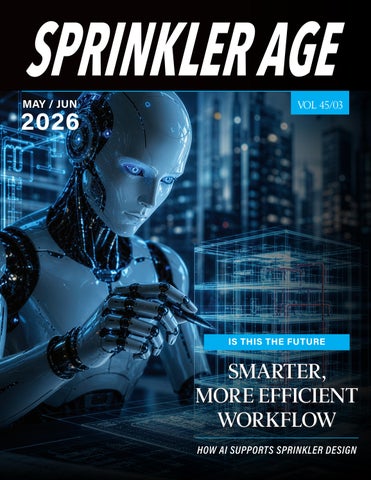
AI in the fire sprinkler industry—smarter, more efficient workflow. Also in this issue: project management.
AFSA is the voice of the merit shop fire sprinkler contractor. We educate and train the industry while promoting fire protection systems to save lives and property.
and
CHAIR’S MESSAGE
At the beginning of my career as a fire protection contractor, I became an estimator/ project manager. I had a company crash course in the fabrication shop, field, and engineering department. As a project manager, I attended jobsite meetings so the foreman and his helper could keep piping. I had to convince the general contractor (GC) that this college kid knew what was going on. Often, I had to convince the foreman as well, and some of them resented my position, given my lack of field experience. Fortunately, I had a great boss, Alan Murphy, who was the sales and engineering manager. He was my mentor, but I didn’t consider him one at the time. Alan had hung pipe for many years, often installing them from his own plans. He enjoyed saying he sold the job, drew the job, fab’d the job, and piped the job. The athlete in me saw Alan as my coach who would take me from the freshman team to varsity. He was a patient teacher, and he empowered me with new challenges. I studied NFPA 13, NFPA 20, NFPA 231,and construction documents. I was at job sites regularly. I figured out all types of projects. We celebrated new contracts. He pushed me to get contract extras for project changes and to defend our work in the field against other trades and the GC. I gained respect from the foreman. The company made money.
Who are the teachers, coaches, or mentors in your company? They are the leaders who share insights and skills to develop young designers, project managers, and new foremen. Those developing young people will become your front-line managers, and they will regularly make decisions that determine the project’s profitability and the company’s well-being.
A valuable method to develop front-line managers is to have them work as apprentice sprinkler fitters. With field experience, they gain firsthand knowledge of system components, installation techniques, and job-site challenges. This practical experience bridges the gap between theory and practice, and deepens their understanding of how design decisions impact installations. It fosters respect for skilled tradesmen and the teamwork required in the field. When
leaders integrate field apprenticeship into the learning process, they empower young managers to become the next generation of well-rounded fire protection professionals.
AFSA’s VP of Engineering John Denhardt is a leader and mentor to our accomplished staff of fire protection engineers. I am pleased to share that John had our new Engineer in Training, Mr. Hayden Stoll, work as an apprentice sprinkler fitter for six months at Strickland Fire Protection, Inc. in Forestville, Md. Hayden went from a college kid with no field experience to a meaningful installation contributor who earned the foreman’s respect. Strickland Fire’s generosity set Hayden up for success. That was well done by all.
Effective front-line managers require strong support from the business owner, division manager, department managers, and superintendents. Those leaders, like John, prioritize ongoing education for their front-line managers and their teammates. AFSA has quality programs, led by nationally recognized instructors, to develop your fire protection professionals. Those programs include design schools, hydraulic calculation workshops, ITM inspector development, NFPA 25 ITM workshops, and sprinkler fitter apprenticeship training in the virtual instruction path or employer-led path. AFSA, along with your mentors, can help develop and grow your team to be successful.
PAUL DELORIE AFSA
BOARD CHAIR
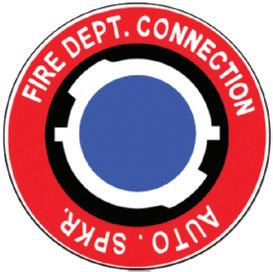
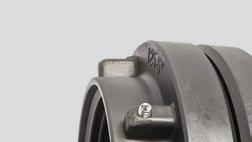
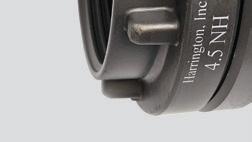
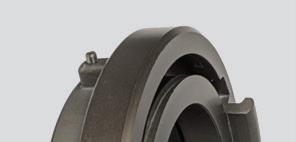
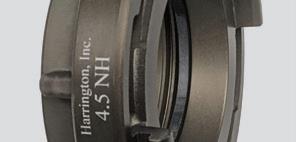
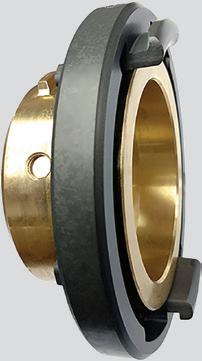
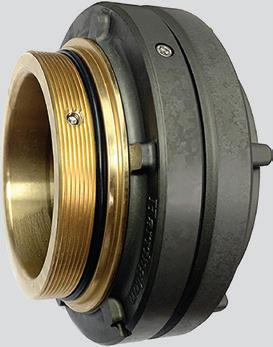
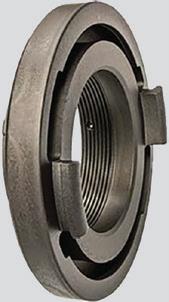
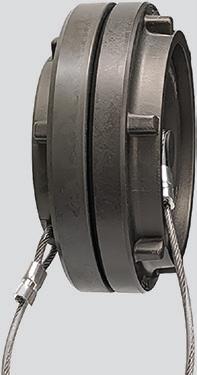
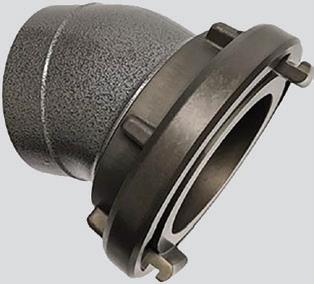
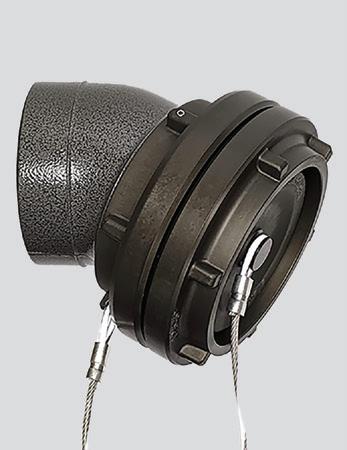
The Storz Adapter with Locking Device and Rubber Gasket Face IS NOT designed for permanent outdoor/ public installation - both will fail at the hands of time, or vandals.
The METAL FACE Storz Adapter WITHOUT locking device IS designed for permanent outdoor/public installation.
PRESIDENT’S REPORT
BOB CAPUTO, CFPS AFSA PRESIDENT
As most of our members know, the stated mission of AFSA is “to be the voice of the merit shop fire sprinkler contractor. We educate and train the industry while promoting fire protection systems to save lives and property.”
This mission statement is a living, breathing mantra that reminds us of who we are and why we are here, and, more importantly, it is the primary focus driving our team toward constant improvement in the programs we offer and the way they are delivered. Over three years ago, AFSA launched our virtual classroom training to make it easier for your enrolled sprinkler fitter apprentices to complete their required 200 classroom hours without having to show up after a long workday. This distance learning program provides training twice each month, with two starting times each day (East/West coast), featuring live virtual training with an assortment of subject matter experts, exposing your apprentices to unsurpassed training and perspectives. Our trainers bring enthusiasm, experience, and cautionary tales to make training more than a check box, helping others learn from the best.
As of this writing, our VIP program has over 280 apprentices enrolled in courses covering all four Sprinkler Fitter books, but the success of this program is a continuing story; we cannot rest on our laurels and expect to fulfill the mission or earn your support and membership.
Our industry is continuing to change, clearly driven by mergers and acquisitions, with more sprinkler contractors expanding their services and geographic reach. Many of our AFSA members are no longer
just in the water-based fire protection business, but are now in the fire and life safety business. To help our members navigate this changing landscape, AFSA is expanding its training catalog and our training facility. We recently signed an agreement to take another 6,000 ft² of lease space to build out classrooms and labs for low voltage (fire alarm) and special hazards systems training programs. Beginning in early 2027, we will offer training programs for the inspection and testing of all fire and life-safety-related equipment, including fire doors, fire dampers, portable fire extinguishers, kitchen hood systems, and fire suppression systems.
This is a shift from isolated courses to connected learning ecosystems, blending live and on-demand training and education programs in support of your growing business model. AFSA training and education focus on the outcomes and the skills needed to build a well-trained, prepared workforce for our industry. Training and education go a long way toward limiting liabilities and ensuring that the systems we install, test, and inspect will do the job when a tragic event occurs. Our training courses go well beyond providing certificates or CEUs. As we say every day, send us your people, and we will send them back better.
If you have not yet visited the AFSA training center, we have developed a world-class facility with the help of our manufacturers and suppliers, along with help from a team of fitters from a few member contractors. Our lab space provides hands-on opportunities for layout technicians, fitters, inspectors, and others to see, touch, feel, and play with every
type of system valve from every major manufacturer. Attendees get to perform fire pump and fire hydrant flow testing and see over 40 different sprinklers and nozzles flow water without having to mop up after pulling a sprinkler from a live system.
Attendees who fly into DFW airport can board the DART Silver Line train and, for about $6.00 roundtrip, be within a two-block walk of our sponsored hotel in less than 40 minutes. The Drury Inn offers a special rate for AFSA training, along with free breakfast and dinner. (Not to mention two adult beverages per night.) The hotel is a 10-minute walk from the office, and they also provide a free shuttle service to and from our facility. Of course, AFSA provides lunch, snacks, coffee, and soft drinks for every class. These conveniences and amenities are intended to make our training programs as streamlined as possible, because we understand the real cost of sending people for training includes your loss of production and revenue while they’re here, rather than performing their normal work routines.
While we think we “get it,” the only way we really know we’re getting it is to ask for feedback from our customers—you, the members. So, please reach out to us and let us know what we’re doing, or not doing well. Let us know what programs matter to you and how AFSA can continue to earn your membership.
As we move into summer, the months fly by, and AFSA45 will be upon us before we know it. This year’s convention will return us to San Antonio, Texas, at the beautiful JW Marriott Hotel in the heart of Texas Hill Country. If you missed this one a few short years ago, you missed one of the best conventions ever, so don’t miss this one. No suits and ties here, folks...this one is cowboy boots, jeans, and hats. It will be a full lineup of seminars and a full house of expo booths showing you the latest and greatest our industry has to offer! Don’t forget to join us to crown this year’s winner of the National Apprentice Competition and see who takes home that $10,000 prize. Lookin’ forward to seein’ y’all in San Antonio!
BOB CAPUTO, CFPS, Publisher, ext. 124 | bcaputo@firesprinkler.org
D’ARCY G. MONTALVO, Editor, ext. 115 |dmontalvo@firesprinkler.org
Sprinkler Age is devoted to the professional development of the fire sprinkler industry. Deadline is 1st of the month preceding publication.
Published by American Fire Sprinkler Association, 1410 East Renner Road, Suite 150, Richardson, TX 75082. Call (214) 349-5965, FAX (214) 343-8898, or email sprinklerage@firesprinkler.org for information.
Sprinkler Age is a membership benefit, provided free of charge to AFSA members. For information on non-member and/or foreign subscription rates, call (214) 349-5965.
AFSA annual membership dues are a sliding scale for Contractors and Associates and a flat fee for Authorities Having Jurisdiction. (Members receive a free subscription to Sprinkler Age.) Write or call AFSA for membership information. See AFSA’s website at firesprinkler.org.
FLASH POINT
Whoever said that “you can’t have it all” was spot on when it comes to evaluating purchases. A rule exists that never changes—quality, cost, and speed—you can only pick two. The customer cannot have all three. This rule applies to all areas of my life. As a consumer, I usually look for the lowest cost but also the best value. Is the material or service I need available with the quality I want and at a cost I’m willing to pay? Think about the average vehicle. Replacement brakes are needed on your spouse’s minivan. Do you do the work yourself? If you do, are the parts available locally, and at what price and quality? Or do you order the parts online, so you get the price and quality you want? But now the parts won’t be here until next week, and you have to make time to do the work. Or, I can take the minivan to the dealer and obtain quality and speed, but sacrifice cost. Finally, I can find a local repair shop that offers a “special” on brake replacement. The price might be great, and the speed might work, but is the quality as good as I desire? Especially if this is your spouse’s vehicle with your granddaughter in the baby seat.
Fire protection work can be viewed similarly. Many individual tasks go into a particular project. For discussion, let’s assume you have landed a large project that requires a dry pipe sprinkler system to protect an outdoor loading area. The job also includes a fire pump system. Preliminary design has been completed for establishing the proposal. Due to the project schedule, shop drawings and submittals need to completed within three weeks. Your design staff is fully committed to other projects, so you obtain proposals from three outside design firms.
Proposal 1 is the highest cost, but they committed to the schedule, and you have past positive experience
JOHN AUGUST DENHARDT, P.E., FSFPE AFSA VICE PRESIDENT OF ENGINEERING
SERVICES
with them. They produce quality work that aligns with your company’s installation methods. But the cost is over your estimate by 30%.
Proposal 2 is in the middle of the other two proposals. They will not commit to the schedule and are stating that a six-week schedule is required. You also have worked with them before and have had good results. Their cost is in line with your estimate.
Proposal 3 is the lowest cost. They committed to the schedule, but you have never worked with them. You contacted a few friends who have experience with them. What you are hearing is not reassuring. They promise the world but deliver low-quality drawings and submittals that require a large effort of rework. The great news is they are 30% below your cost estimate.
Your choice of which design firm to select can make or break this project. An experienced project manager needs to consider all the factors and options. The lowest cost might negatively impact your company’s reputation and the ability to receive future work. The highest cost might be detrimental to the project’s budget, but could lead to a successful job if the extra cost can be offset by other budget line items. Proposal 2 could be selected to keep within the project’s budget, but the time for the submission will not be met.
This approach works with material, fabrication, and many other things in a sprinkler protection project. Always consider the three factors: quality, cost, speed, and remember that you can only pick two. Personally, I know what I will not compromise on is quality, so I must give up on cost or speed.
PROTECTING THOSE WHO SERVED
AFSA AND HOMES FOR OUR TROOPS SAFEGUARD HOMES
CLARISSA RIOS | AMERICAN FIRE SPRINKLER ASSOCIATION
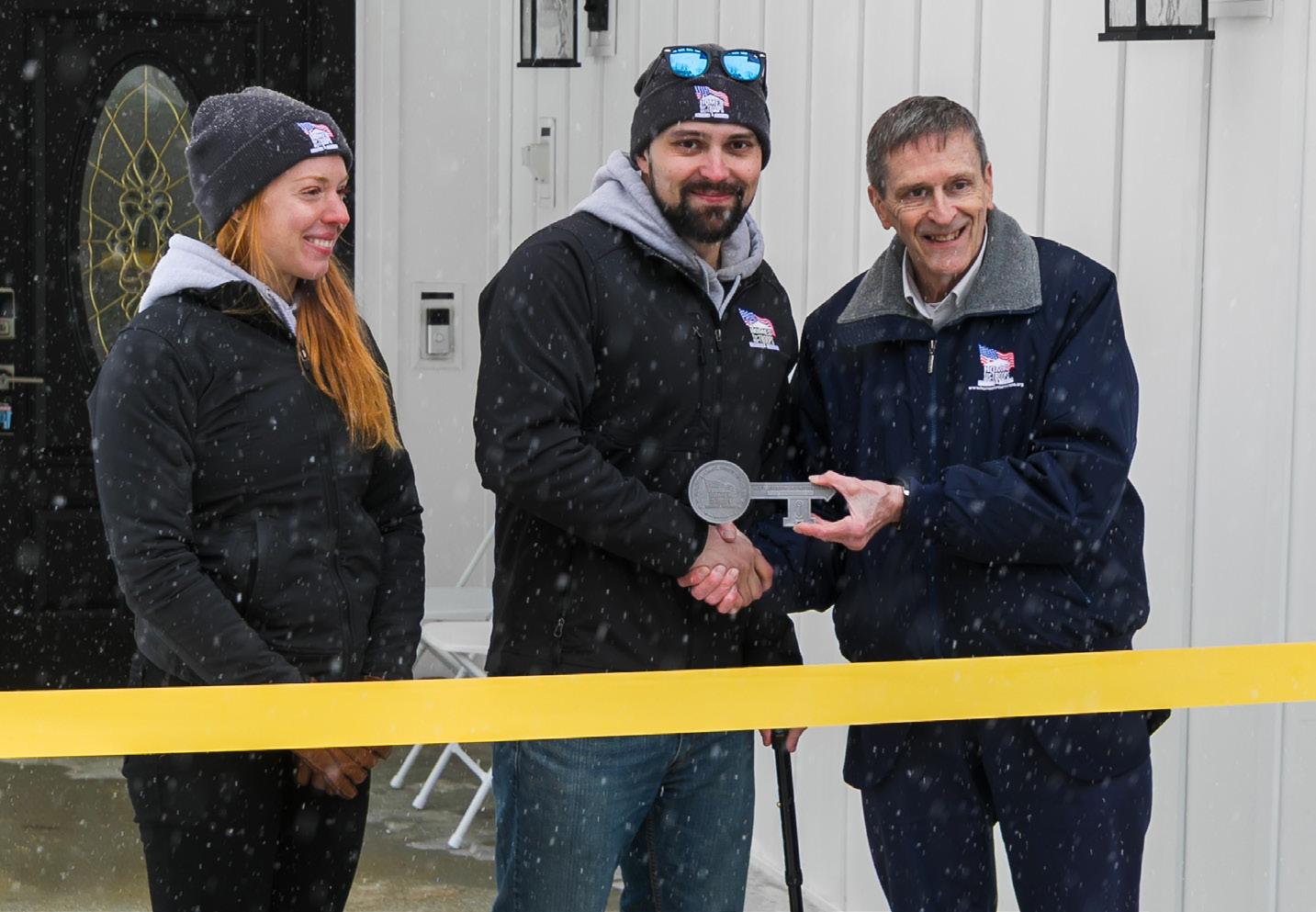
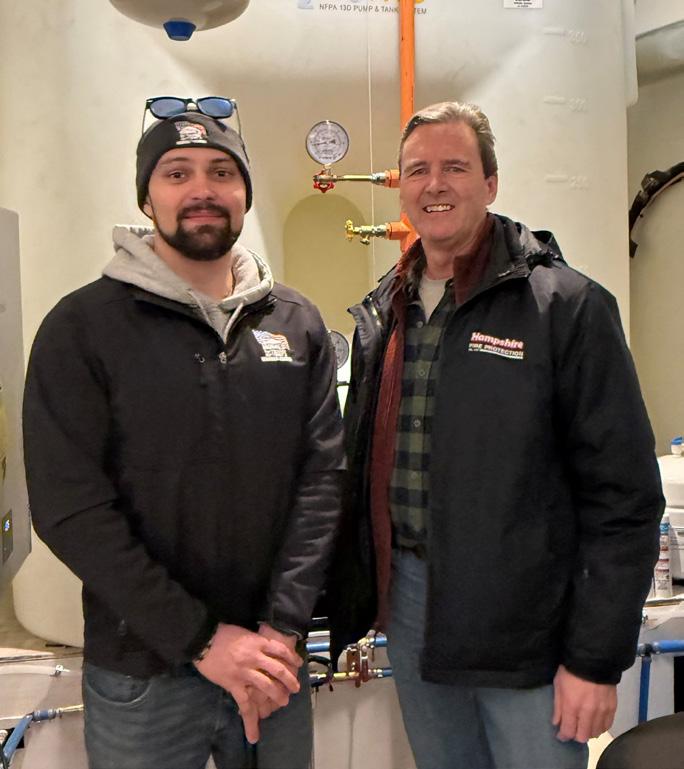
Army CPL Paul Hedge recently received the keys to his specially adapted custom home in Tuftonboro, N.H., providing him with independence, safety, and stability after service. An essential life-saving component of his home is a residential fire sprinkler system, made possible through the collaboration between American Fire Sprinkler Association (AFSA) Contractor member, Hampshire Fire Protection Co. LLC, and Homes For Our Troops (HFOT). As the exclusive fire sprinkler partner of HFOT, AFSA, and its members play a vital role in ensuring that these homes are accessible and protected.
Homes For Our Troops builds and donates specially adapted custom homes nationwide for severely injured post-9/11 Veterans, to enable them to rebuild their lives. Since 2004, HFOT has built over 430 homes nationwide. AFSA is among several associations, businesses, and Veteran foundations that partner with HFOT. “We’ve been honored to partner with AFSA since 2020,” says HFOT President/CEO Brigadier General (USA, Ret) Tom Landwermeyer. “They are an ex-
ceptional and deeply patriotic organization, consistently supplying our homes with residential sprinkler systems over the years. The association’s passion for assisting injured Veterans and their families significantly helps us advance our mission of building homes and rebuilding lives.”
This project marks the first fire sprinkler design and installation that Hampshire Fire Protection has donated to HFOT. “It was easy for me to step up and say, ‘My company will take care of this in my hometown, where I’m located. We’ll take this on and be proud to do the work,” says
Protection Co., LLC. He also emphasized that the project was a collective effort, made possible by a dedicated team and generous industry partners.
The true value of these homes is the safety they provide, and how they’re designed for Veterans like Hedge to move with ease and feel comfortable in their homes. DeLorie describes how this house is, “...arranged to accommodate mobility issues—things like wider hallways, wider doorways, kitchen counters, windows, and
hannah KING, CPL PAUL HEDGE, and HFOT Executive Director Bill Ivey were all smiles at the key ceremony.
Paul DeLorie, AFSA Chair of the Board and senior vice president of Hampshire Fire
how they swing out to open instead of up and down.” That reality shaped the design and installation of the sprinkler system in Hedge’s home. “If a Veteran has limited mobility, escaping during a fire becomes even more difficult,” DeLorie says. “That’s why fast-acting fire suppression systems are so important—they can control or extinguish a fire before it becomes life-threatening.”
Every HFOT build comes with its own challenges, and Hedge’s home was no exception. Built in rural New Hampshire without ac-
“AFSA
the work. Robert DeStefano [who supervised the design], my supervisor, Mark Dukette, and foreman, John Sullivan; they’re the ones who genuinely worked on the job.”
From designers to installers, the opportunity to apply their trade in service of a Veteran created a strong sense of purpose across the company. “I kept an eye on the project, talked about when we needed to be there, and scheduled my guys to go in and install pipe. I organized the entire installation to make sure we stayed on schedule,” Dukette explains. “We took a
hesitation. General Air Products Company donated the H2home NFPA 13D pump and tank system; Reliable Automatic Sprinkler Company donated fire sprinkler heads, pipe, fittings, and hangers; and Independent Pipe and Supply Company donated the antifreeze solution for the fire sprinkler system. DeLorie describes this as “the power of a good network and a strong shared mission.”
Hampshire Fire Protection’s work on Hedge’s home is part of a greater national effort. Through AFSA’s partnership with HFOT,
MEMBERS ARE DOING THIS WORK ALL OVER THE COUNTRY.”
cess to municipal water, the project required a custom tank and pump system. “You have to provide a tank and a pump system, and that’s part of our engineering coordination with the builder to make accommodations for this. They were clever and resourceful with their ability to integrate into the architect’s plans.” Northern New England’s cold, snowy winters also required special consideration to prevent maintenance issues. “Because of the cold, we had to route and insulate the piping to keep it from freezing. That was another engineering challenge we worked through closely with the home builder to ensure the system was protected.”
The fire sprinkler industry is known to unify with a shared passion for saving lives and property. From start to finish, all aspects of the project were a team effort. “It’s the other people who actually did
lot of pride in it. My daughter is also in the Army, so I take pride in doing stuff for our troops.”
While Hampshire Fire Protection led the design and installation, the project was made possible through a network of industry partners who donated materials and expertise. Key contributors included manufacturers and suppliers who stepped forward without
member companies across the country regularly donate fire sprinkler systems for specially adapted homes. “This isn’t a oneoff thing; AFSA members are doing this work all over the country.” That collective effort ensures that Veterans like Paul Hedge receive a safer home. Currently, AFSA is working on residential installations in 16 Veterans’ homes across the country.
As HFOT continues to build homes nationwide, the need for industry participation remains strong. To get involved, contact AFSA/HFOT Volunteer Liaison Paulene Norwood at paulenesacvalleyafsa@gmail. com or AFSA Public Relations Manager D’Arcy Montalvo at dmontalvo@firesprinkler.org. To read more about Hedge’s story, visit hfotusa.org/building-homes/ veterans/hedge.
CPL PAUL HEDGE WITH DeLORIE.
SEMINARS SET FOR SAN ANTONIO
AFSA45 SET TO MAKE A TEXAS-SIZED IMPACT
This year, the American Fire Sprinkler Association (AFSA) is rounding up the top technical and business management experts in the fire protection industry to present at AFSA45: Convention, Exhibition, and Apprentice Competition, to be held at the JW Marriott San Antonio Hill Country Resort and Spa in San Antonio, Texas, Sept. 27-30. This year’s event offers expert-led seminars, valuable networking opportunities, and a dynamic expo hall showcasing the latest innovations in fire and life safety.
More than 80 seminars will provide over 90 hours of education, CEUs, CPDs, and Contact Hours, including ICC hours for Authorities Having Jurisdiction (AHJs) where applicable.
FEATURED SEMINARS
Seminars are organized by specialty, covering topics such as special occupancy, NFPA standards updates, business management, ITM, design, pumps, alarms, and corrosion. Highlights of several seminar tracks are highlighted below.
AFSA’s ITM sessions focus on limiting liability; sprinkler testing, obstruction investigations; and NFPA 25. “NFPA 25 Reports: Questions to Include & Ones to Avoid” will describe both the questions a contractor should include in their reports, as well as questions that should be avoided, and the reasons why. NFPA 25 requires many inspection and testing activities that building owners often hire sprinkler contractors to perform. The inspection reports that contractors use range from homegrown versions in Excel spreadsheets to off-the-shelf, prepopulated programs. There is little consistency between the various reports being used, except almost all of them include questions that can expose the contractor to unnecessary liability when something goes wrong. Many of the reports also omit needed details to make sure the inspector is looking for the details that NFPA 25 requires.
are stuck fighting the hottest fire of the moment rather than planning ahead and ensuring their long-term success. Without a plan, company performance is highly volatile, making profitability uncertain, and leaving their business value up to chance. But there is good news: contractors can overcome these challenges by deliberately enacting a strategic planning process. This seminar helps companies establish strategic clarity, leadership alignment, and operational discipline—the foundation of lasting success.
OVER 80 SEMINARS... 90+ HOURS OF EDUCATION
Business management seminar topics will include apprenticeship registration, tax and legal strategies, contracts, operations, labor relations, expansion, artificial intelligence (AI), workforce development, and conflict management. One seminar will be “Build a Company That Thrives in Any Market”— Most construction companies
Those attending the Special Occupancies seminars will learn about cold storage, data centers, and parking structures. One seminar, “Supporting Fire Alarm Testing as a Sprinkler Technician,” will bridge the gap between fire alarm technicians and sprinkler contractors by providing sprinkler fitters with a deeper understanding of fire alarm testing requirements. Often, fire alarm technicians rely on the assistance of sprinkler contractors to effectively perform certain tests, such as system actuation,
AFSA45 has designed a full day of education and exhibits for Authorities Having Jurisdiction (AHJ). On Wednesday, Sept. 30, the day features seminars “An AHJ Guide for Inspection and Testing Fire Sprinkler Systems” and “Installation Practices—Enforcement vs. Application.” Afterwards, AHJs in attendance are provided a free lunch and entry into AFSA45’s Exhibit Hall.
The AFSA45 Exhibition showcases nearly 200 booths featuring the latest products and services in the fire protection industry and AFSA’s 33rd National Apprentice Competition (NAC), which will be held inside the exhibit hall.
valve supervision, water flow alarms, fire pump supervision, and water level monitoring. The session will outline the specific instances where sprinkler contractors play a role, providing insight into the fire alarm technician’s perspective and what they’re looking for during the testing process. By the end of this presentation, sprinkler contractors will be equipped with the knowledge to effectively collaborate with fire alarm technicians, ensuring seamless testing and maintenance of these integrated fire protection systems.
Attendees of Design and Project Management seminars will learn about modernizing fire sprinkler design with Revit, navigating ESS sprinkler design, working with independent designers, seismic protection, flow control, hazards class, and building information modeling (BIM).
A common question today is whether artificial intelligence (AI) will be able to perform the tasks that are part of an industry professional’s job description. What is AI, and what role might it play with respect to designing and reviewing sprinkler systems? How close are we to being able to design or review sprinkler systems using AI? What are the ethical considerations in using AI to replace trained technicians and engineers? What will be the role of design technicians and engineers in the future? In “Will I be Replaced by AI?,” participants will learn answers to these questions and more.
The best technical minds in the industry will be tested as AFSA
once again presents “Ask the Experts” panel discussion. It can be challenging to keep up to date with dozens of applicable standards on a constant three-year update cycle. This panel of experts wrote the books and will be on hand to discuss all of your burning technical questions. They can help with questions ranging from understanding actual updates to decoding intent and the historical framework of the standards. This interactive seminar will help you find answers to questions that are otherwise hard to find. Submit your questions in advance via the QR code below or bring them to the seminar to try and stump our experts!
SAN ANTONIO SPLENDOR
Amid spring-fed rivers and rolling hills, San Antonio’s rich culture flourishes with a repertoire of artists, historic legacies and culinary delights that will tempt travelers of all tastes. From the River Walk to Hill Country vineyards and golf resorts, San Antonio embodies the charm of an authentic American city.
AFSA45 attendees will relish their stay at the JW Marriott San Antonio Hill Country Resort and Spa, site of this year’s convention. Guests can relax in upscale hotel accommodations with expan-
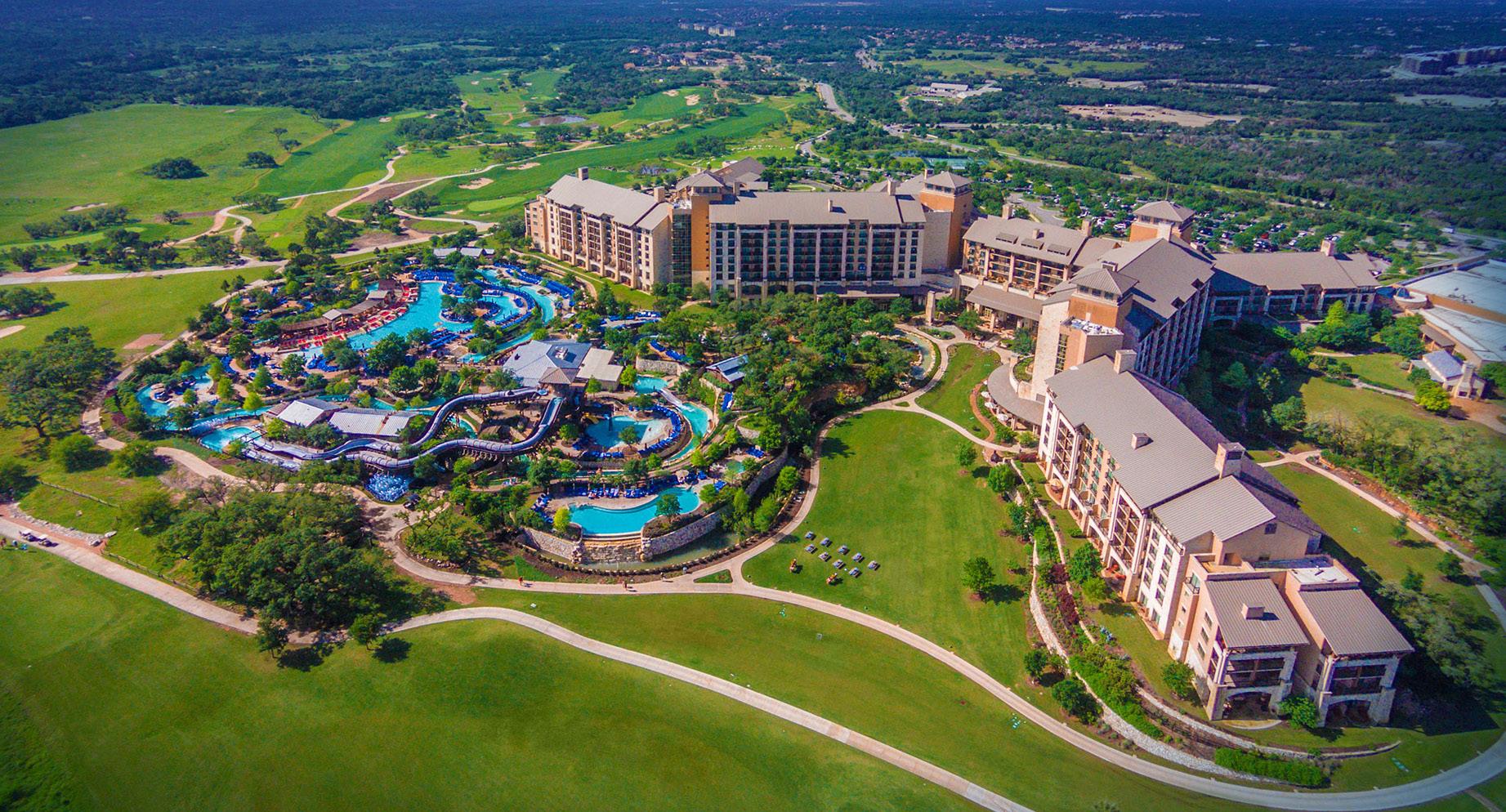
sive floor plans, lavish furnishings, top-tier amenities, and awe-inspiring views of Texas Hill Country. Enjoy the River Bluff Water Experience, a nine-acre water park with a 1,100-ft lazy river. Indulge in delectable cuisine at six exceptional resort restaurants or rejuvenate with a body treatment or massage at the luxurious spa. Guests can also immerse themselves in renowned attractions nearby, including wineries, SeaWorld, Shops at La Cantera, Natural Bridge Caverns, and Six Flags Fiesta Texas.
The AFSA group rate for the JW Marriott San Antonio Hill Country Resort & Spa is $259 per night plus tax and a daily resort fee. Reservations may be made online during the convention registration process at firesprinkler.org/book. Group rates are available for stays from September 27-30, 2026. To receive full AFSA hotel benefits, attendees must book directly with the hotel by phone or use the link found on AFSA’s convention website, firesprinkler.org/AFSA45.
AFSA is not represented by travel agencies or housing companies, such as Global Housing, that
may try to book your room outside of our room block. Be aware of third-party vendors soliciting AFSA exhibitors and attendees posing as our housing vendor. These companies mislead you into thinking they are working on our behalf, but are NOT endorsed by or affiliated with AFSA. Book directly with the JW Marriott San Antonio Hill Country Resort and Spa using the links on AFSA’s website to ensure your reservation is guaranteed.
LAST CHANCE TO EXHIBIT
At press time, a few booth spots remain available for the AFSA45 exhibit hall. The convention’s schedule is specifically designed to maximize opportunities for attendees to visit the exhibit hall and network. This gives exhibitors ample time and as much face-to-face interaction with customers as possible. How does AFSA ensure traffic through the exhibit hall?
• Unopposed exhibit hours. AFSA carefully schedules each day of the convention to avoid seminars and social events conflicting with exhibit hall hours.
• National Apprentice Competition. AFSA’s NAC will be held
in the exhibit hall. This popular event draws convention attendees to view the installation portion of the competition and puts them within your reach.
• Exhibition Grand Opening Reception. AFSA’s Chair of the Board hosts this popular evening event, allowing convention attendees to tour the exhibit hall, which features hors d’oeuvres and several bars.
• Free passes are available on the second day of exhibits, as AFSA invites local sprinkler contractors and exhibitorinvited guests to visit the hall.
For all the details, download the exhibitor kit at firesprinkler.org/ AFSA45 or contact AFSA’s convention team via email at convention@firesprinkler.org or phone: (214) 349-5965.
REGISTRATION NOW OPEN
Stay informed, stay connected, and stay ahead by attending AFSA45! Connect with the people and products driving the fire protection industry forward. Registration is now open at firesprinkler.org/AFSA45. Great people, valuable insights, and a little Texas hospitality—it’s all waiting for you at AFSA45!
Get real-time updates by subscribing to or following AFSA social media.
THE JW MARRIOTT SAN ANTONIO HILL COUNTRY RESORT & SPA WILL HOST AFSA45 GUESTS THIS FALL.
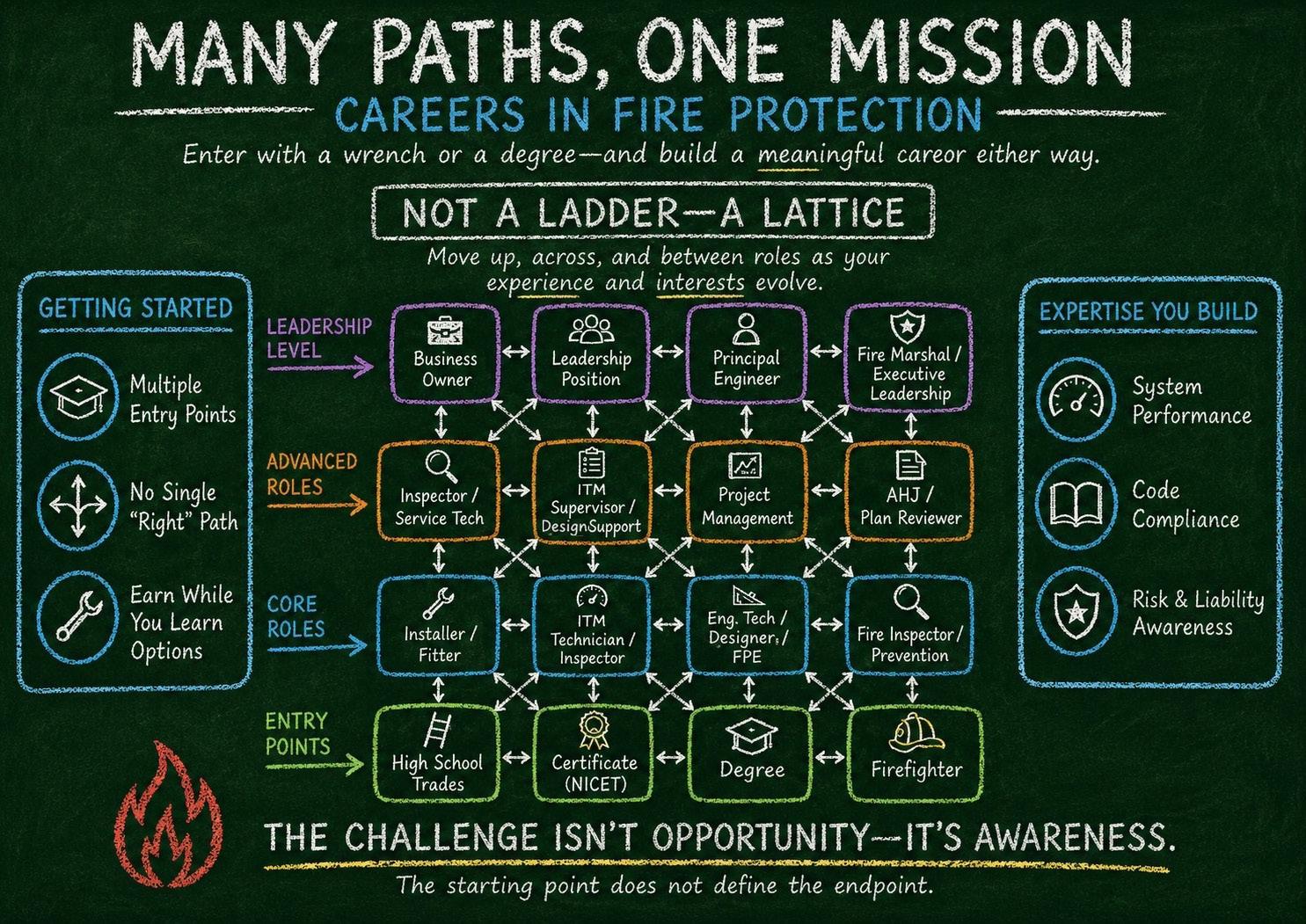
MANY PATHS, ONE MISSION
CAREERS IN FIRE PROTECTION
JACQUELINE R. WILMOT, P.E. | BROOKS SAFETY SOLUTIONS
The fire protection industry stands apart not only for its many entry points, but for the flexibility it offers to move between them. Rather than a traditional, linear career ladder, this field operates more like a lattice, providing opportunities for both upward and lateral growth. Whether you enter with a wrench and a high school diploma or with a fire dynamics model and a college degree, the industry is accessible, mobile, constantly evolving, and purpose-driven.
The challenge isn’t a lack of opportunity—it’s a lack awareness. As workforce development becomes a growing priority, it’s critical to highlight the wide range of career paths available and how individuals can shape their future based on their interests, experience, and goals.
For those with a high school diploma or equivalent, a fulfilling and successful career is entirely achievable— without a college degree. Many begin in the skilled trades, earning while they learn through installation and fieldwork. Roles such as sprinkler fitter, installer, entry-level technician, or fire protection laborer are in high demand. These positions build hands-on skills and a deep, practical understanding of how systems perform in real-world conditions—knowledge that becomes invaluable over time.
From there, career growth can lead to roles such as inspector, service technician, foreman, superintendent, estimator, supervisor, entrepreneur, or even business owner. The combination of job stability, career mobility, and the ability to avoid student loan debt makes this path especially attractive.
With a high school diploma and NICET certifications, individuals can move into roles such as fire sprinkler inspector, inspection, testing, and maintenance (ITM) technician, lead technician, or backflow/fire
pump specialist. These roles build expertise in system performance, code compliance, and documentation— skills that require significant responsibility and liability awareness. Certifications serve as a force multiplier, transforming experience into technical authority and opening doors to senior inspector roles, ITM supervision, design support, consulting, operations, and leadership positions.
Those with an associate degree or technical education can pursue careers as fire sprinkler designers, engineering technicians, estimators, or ITM supervisors. These roles bridge the gap between fieldwork and engineering, requiring the ability to read plans, perform hydraulic calculations, apply codes and standards, and coordinate with architects and engineers. With experience, individuals can advance into senior design roles, project management, business development, or transition into engineering positions.
A bachelor’s degree in engineering or a related field opens the door to careers as fire protection engineers, consulting engineers, or risk engineers. These professionals focus on fire dynamics, system design, performance-based solutions, advanced code analysis, and
risk assessment. This path leads to complex problem-solving and system-level design, with opportunities to become licensed Professional Engineers (PEs), senior consultants, technical directors, or Authorities Having Jurisdiction (AHJ) plan reviewers and subject matter experts in specialized designs.
Graduate-level education further expands opportunities into specialized and leadership roles. Individuals with advanced degrees may work as senior fire protection engineers, researchers, scientists, or codes and standards developers. These roles involve advanced modeling, testing, and analysis, and often influence the future direction of the industry. Career progression can lead to positions such as principal engineer, technical director, and C-suite roles.
The fire service also represents a significant entry point into the industry. Many individuals are drawn in through personal connections or a desire to serve. Starting roles may include firefighter, fire inspector, or prevention officer. These positions build expertise in emergency response, fire behav-
ior, and code enforcement. From there, professionals can transition into roles such as an AHJ, plan reviewer, consultant, or risk engineering roles. The fire service plays a critical role in connecting system design, inspection, and prevention.
For an industry dedicated to protecting lives and property, we must do a better job telling our story and inviting others to be part of it. Fire protection offers a place for anyone willing to learn, grow, and contribute. Careers don’t stop at technical roles; they evolve into project management, operations leadership, business development, and even ownership. The starting point does not define the endpoint. This is an industry built on mobility, opportunity, and purpose—and what unites every role is a shared mission: protecting lives and property.
ABOUT THE AUTHOR: Jacqueline R. Wilmot, P.E., is a licensed Fire Protection Engineer and the director of industry relations at Brooks Safety Solutions. She is a member of the NFPA 915 Technical Committee and has 15 years of experience in consulting, codes and standards development, suppression and detection research, and industry engagement. Wilmot is an industry leader, content creator, and approved NFPA instructor.
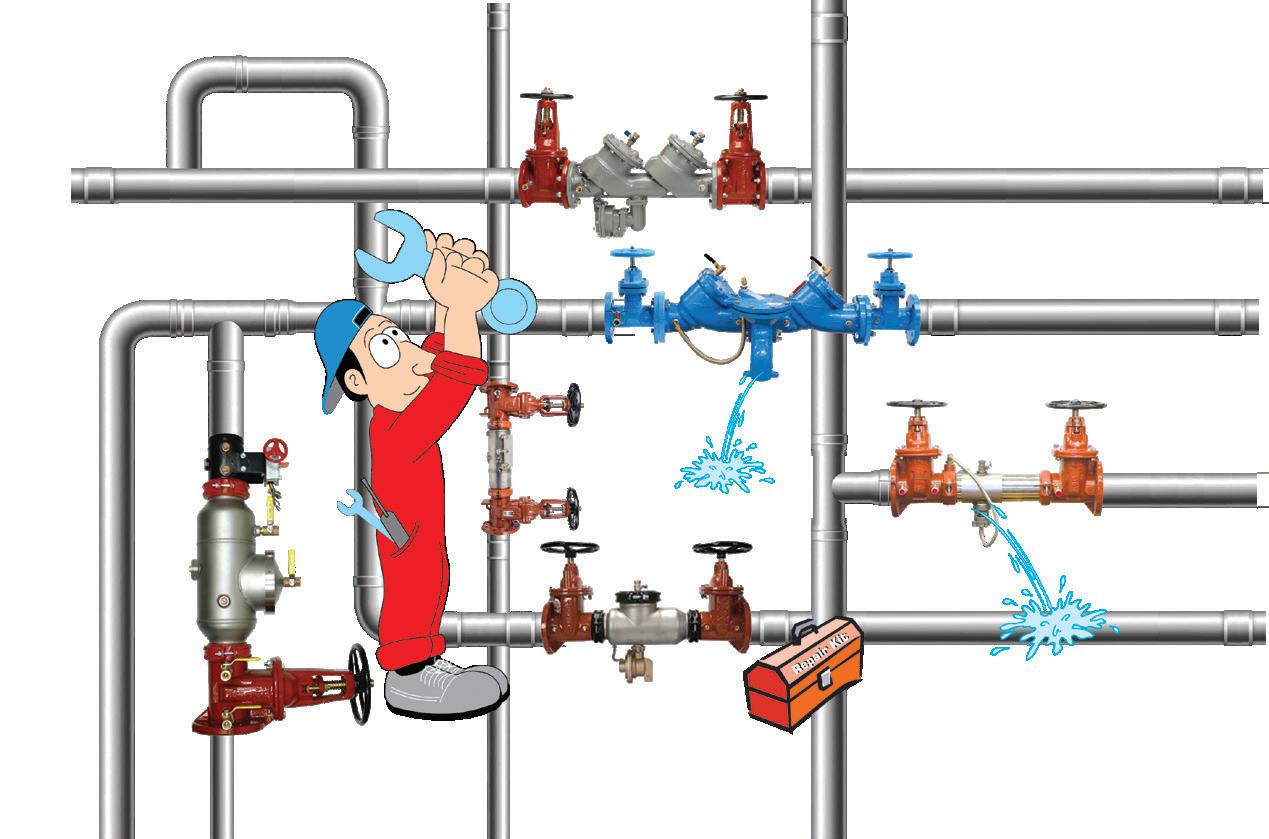
Need Backflow Repair Parts?
• Same Day Shipping
Visit Us On-Line www.bavco.com • www.bavcostore.com
West Coast - Long Beach, CA (800) 458-3492 • info@bavco.com
Central - San Antonio, TX (866) 318-0274 • txinfo@bavco.com
East Coast - Charlotte, NC (844) 202-1618 • ncinfo@bavco.com
PROJECT MANAGEMENT
BRINGING A PROJECT IN UNDER BUDGET
BOB CAPUTO, CFPS | AMERICAN FIRE SPRINKLER ASSOCIATION
What is project management? I like to consider things in their simplest form, especially with fire sprinkler work and especially for new construction projects. Individually, each step is relatively simple, whether bidding work on the open market or pricing work for a negotiated project with a trusted owner or general contractor. Let’s break it down.
First, we get a set of plans and project specifications (in most cases, otherwise it’s survey time). Next, lay out a rough system sketch, or we factor a takeoff in favor of a scientific wild guess at a good number. Factoring means we look at the type of work and the geographic location, and we (hopefully) use empirical data from similar projects we’ve completed in the past to use the completed cost per sprinkler, per square foot, or some other measurable and applicable analytic I’ve not yet heard of. Assuming we’ve done a layout and gotten a comfortable headcount, it’s time to get water supply data for the site from the local water district and maybe do some rough hydraulics to give us a feel for pipe sizes and structural concerns. One very simple approach here is to calculate the starting pressure of a remote sprinkler: (A x D = Q) then P = (Q/K)²
Add the starting pressure to your elevation loss (.433 x height) and add the fixed loss from a backflow preventer plus 10% to the total. If your flow test residual pressure isn’t greater than the residual pressure, you’ll want to get more specific about pipe sizes and additional labor costs for the larger pipes.
Now that we have a decent sprinkler count, we can start considering labor. There are many factors that impact labor, including site location, parking requirements and costs, warehouse building height, and the number of floors in high-rise buildings. Challenges in material de-
liveries and lay-down areas. Talk to your project manager, field labor superintendent, or experienced foreman to get perspectives on special needs, such as tools or man-lift equipment, or on problems you may have had with a specific GC. Is this a prevailing wage project? Center of tile sprinkler locations? Have we read the project specifications, Buy American Act requirements, that sort of thing? Remember, estimators got to be in this role because they were usually designers who couldn’t make things fit.
If you’re still reading this, you may be wondering why the previous paragraphs discuss the estimating process rather than managing the work. Well, everything starts with a good estimate, which serves as the basis for the job cost report and provides the game plan for the work. It establishes the goals we need to achieve to meet our expectations for a profitable outcome.
Once we get a price together and land the job, the fun begins. We pass the project along to the layout technician (aka designer) and hope they work quickly, since the job is already underway and is progressing on schedule without us. Next, we submit plans for approval, stock list materials, and send them off for fabrication. Depending on your AHJ’s policy, you start installing and hope no changes will be required when the delayed plan review comes back. Otherwise, you wait to install until plans are approved, while the construction continues without you. If all of this sounds familiar, welcome to Project Management 101.
Managing projects is like coordinating with other trades; we need a single point of contact who can take all the individual pieces and put them together with a purpose. That is to say, one single purpose: which is to complete the work having spent fewer dollars than the original estimated cost. No matter what. It doesn’t matter if we got the job late, or the design isn’t perfect, or if we’re
missing branch line #47 when the truck shows up. How can we plan the work and monitor its progress to keep us on track with field labor, material, and related job costs?
We call it project management. Frankly, we can run the job or let the job run us and see how it turns out in the end. I’m sure you’ve heard the old saying, “When we aim at nothing, we usually hit it.” How about the one where the squeaky wheel gets grease? In other words, we focus on the worst problems until jobs that were going well suddenly aren’t. Worse yet, projects that were doing well are suddenly trending in the wrong direction because we didn’t stay engaged. We need a plan for when and how we’re going to get started, how we’ll distribute materials, and who our foreman will be. Can we get the plans into the foreman’s hands before the day we deliver materials, and maybe have a meeting with the project designer, who just spent months working on this and might have some ideas or comments to share that may not be conveyed by looking at the shop drawings?
Speaking of which, a great start includes having the layout technician visit the site and field-verify details like where the lead-in (spigot) is and whether the mains are below the structural members we planned to hang from. Trapeze hangers take a lot more time to install than hanging the main piping in the right place.
Depending on the size of your company, the project manager might be the designer, the estimator, the owner, or an actual project manager responsible for multiple projects at various stages of progress. In some cases, your field labor manager may be the only person visiting jobs in progress to verify that the hours and dollars spent to date match the percent of work completed and to project the cost to complete the remaining work. For most fire sprinkler contractors, field labor accounts for about 30% of the direct cost of the work and is the only phase of the project that we can really improve to achieve better outcomes. We’re never going to save 10% on materials, design, or rental equipment. But consider that if we are doing $5 million worth of work (direct cost) and 30% of that is about that, that’s about $1.5 million in direct labor cost, and if we could find ways to improve that by 10%, we would add $150,000 to our annual bottom line. That means we could do $1.5 million less work to make the same profit, or better yet, we could buy more
trucks and more tools, give people incentive bonuses, raises, and better benefits, all of which would make your company the destination employer in your market. Good people would be knocking on your doors for work instead of you having to look for them, which means you can book more work. Sounds good?
Project management is the key to all of this and more! Planning projects in finite detail, like the head coach of a professional team. Having and sharing a game plan and executing it reduces stress and allows your team to accomplish predetermined goals. This engenders team spirit and team building. Everyone will be proud of their work and their affiliation with your team. A solid game plan identifies weaknesses and problems earlier in a project’s timeline, allowing you to pivot when circumstances dictate. Understanding that every $100 bill matters, no matter what the decision. Tracking the work daily and weekly and comparing results to the job cost reports, with no excuses, no witch hunts, no blame game. Reviewing projects after their completion to discuss what could have gone better on the last one, so we can apply what we learned to the next one. Even when a project was successful and made good money, it could have been better. There is always something to learn.
AFSA offers programs to help improve your team. Seminars, webinars, and live events are available to share tried-and-true processes and procedures that can help your leaders improve. Remember, even Tiger Woods was taking golf lessons with a swing coach between all those tournament wins! Leaders and managers need coaching, too. Visit firesprinkler.org/education to learn more.
ABOUT THE AUTHOR: Bob Caputo, CFPS, is president of the American Fire Sprinkler Association (AFSA). He is the chair of the NFPA 24 and NFPA 291 technical committees and a member of multiple NFPA technical committees, including NFPA 13 and NFPA 25. Caputo has contributed to the NFPA 13 and NFPA 25 Handbooks, the NFPA Inspection Manual, and the 21st edition of the Fire Protection Handbook. Caputo has written and presented seminars worldwide on fire protection and life safety systems and is a regular speaker at AFSA and NFPA conventions. Caputo is an instructor at the National Fire Academy and is a member of the Oklahoma State University School of Fire Protection Engineering & Safety Industry Advisory Board. Caputo’s industry distinctions include “Fire Prevention Officer of the Year” from San Diego County in 1994, “Man of the Year” from Fire Protection Contractor magazine in 1997, and the Henry S. Parmelee award from AFSA in 2017. Caputo attended the University of Albuquerque, New Mexico, and is a U.S. Navy veteran and former volunteer firefighter.
IT’S DESIGN’S FAULT IT’S ALWAYS A DESIGNER’S FAULT; JUST ASK ANY FITTER
MATTHEW J. WILLIS | FERGUSON FIRE DESIGN, INC.
If I had just one penny for every time I heard this, I would be writing this article from a privately owned beach with an umbrella drink in my hand, and not much else.
Over my years in our industry, I have had a chance to evaluate this statement from all sides of the coin. And I have concluded that this statement is 100% true. It is ultimately design’s fault for the product that is produced.
That caused me to wonder. Why is this so? I do not know exactly how many fire sprinkler designers there are on this planet. But I have had the opportunity to know and work with and train many of them. And, they are extremely dedicated, intelligent, and passionate people. So, how could all of these professionals be responsible for repeatedly and seemingly producing the same mistakes over and over?
To fully understand the answer, it is important to know exactly what design is, what it takes to produce a qualified, self-operating fire sprinkler designer, and what is required for them to be successful. This process takes years of time and a lot of money. The learning curve is very steep,
and, in this day and time, operating at the speed of business makes it even more difficult. And I know there is a concern about spending all this time and money only to have the designer move to a different job offering. While this is true, I have found it to be the exception and not the norm.
The first part of this consideration and process is whether we equipped the designer with the tools and knowledge required. In this modern age, everything is done with computers and highly sophisticated software. I understand; we are all aware of the costs associated with advanced computers and software. But, if we consider the costs of the designers’ pay, the difference in savings in lost time working with less than adequate equipment costs us far more per year than the equipment and software itself. We should be mindfully conscious of this as we consider these costs.
Then there is the knowledge. If we think about this, designers are required to learn a large variety of things in a highly compressed schedule. Among these are a new language, highly sophisticated software, constructability, codes and standards,
and their relationships to each other. The list goes on.
The traditional method of bringing in someone from the field with a couple of years’ experience helps with a few of these items. But more and more, we are bringing on completely green individuals, and in many cases, with a level of higher education. This produces an even greater upfront cost. But the returns are well worth the price of admission.
How do we train these individuals? What is the best approach? Did we hand the new designer a computer and a copy of NFPA 13 and expect them to learn it? In my early days of training, there were not very many resources to help with this. The learning was one-on-one. Today, there are great organizations and schools specifically dedicated to reducing training time. While the costs of participation and use may seem high, I cannot stress enough how beneficial they are!
Will we ever close the gap that exists between the designer and the field? I do not think so. And honestly, I hope not. I think some level of accountability is very healthy. But there are steps we can take to close this gap.
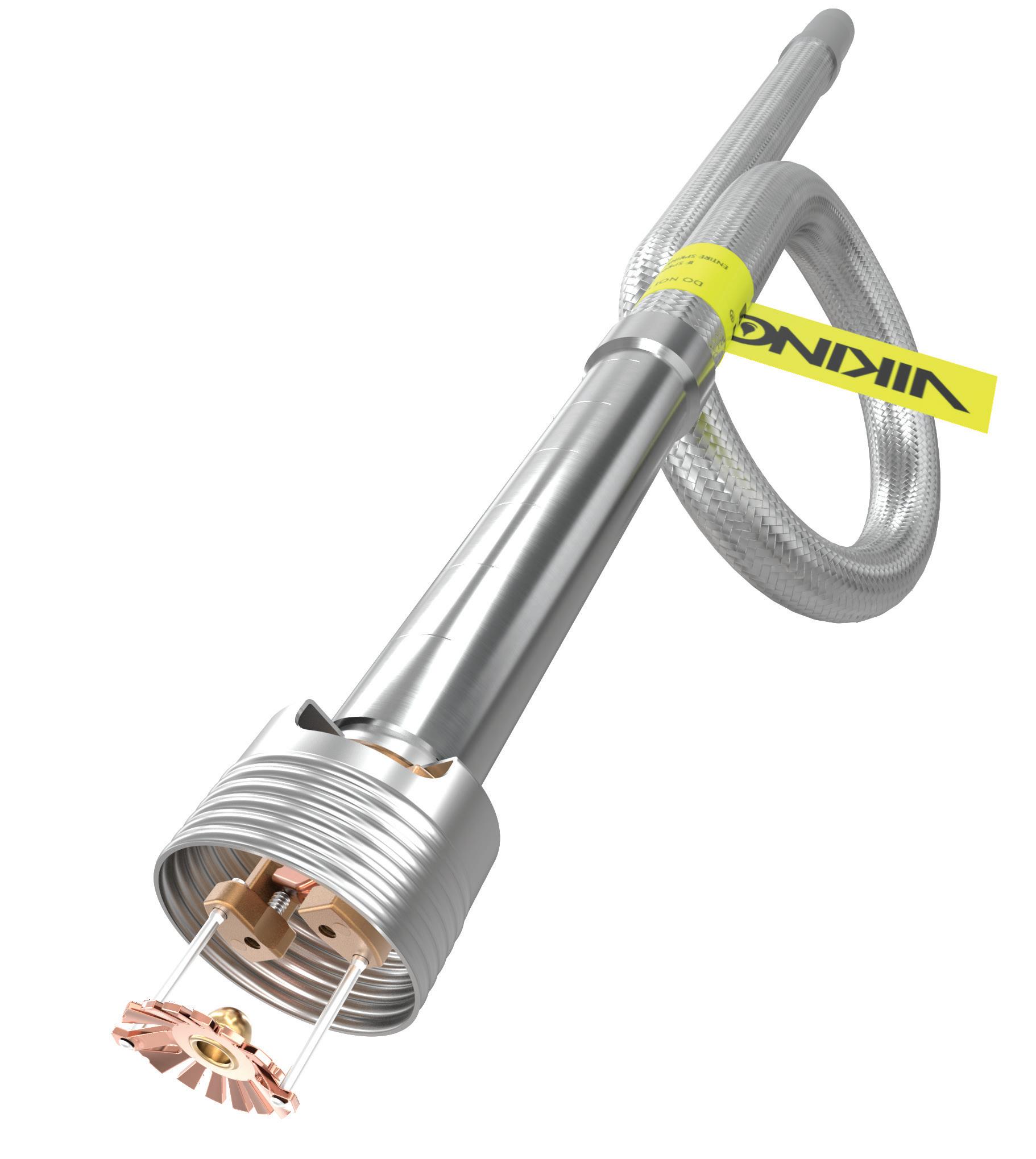
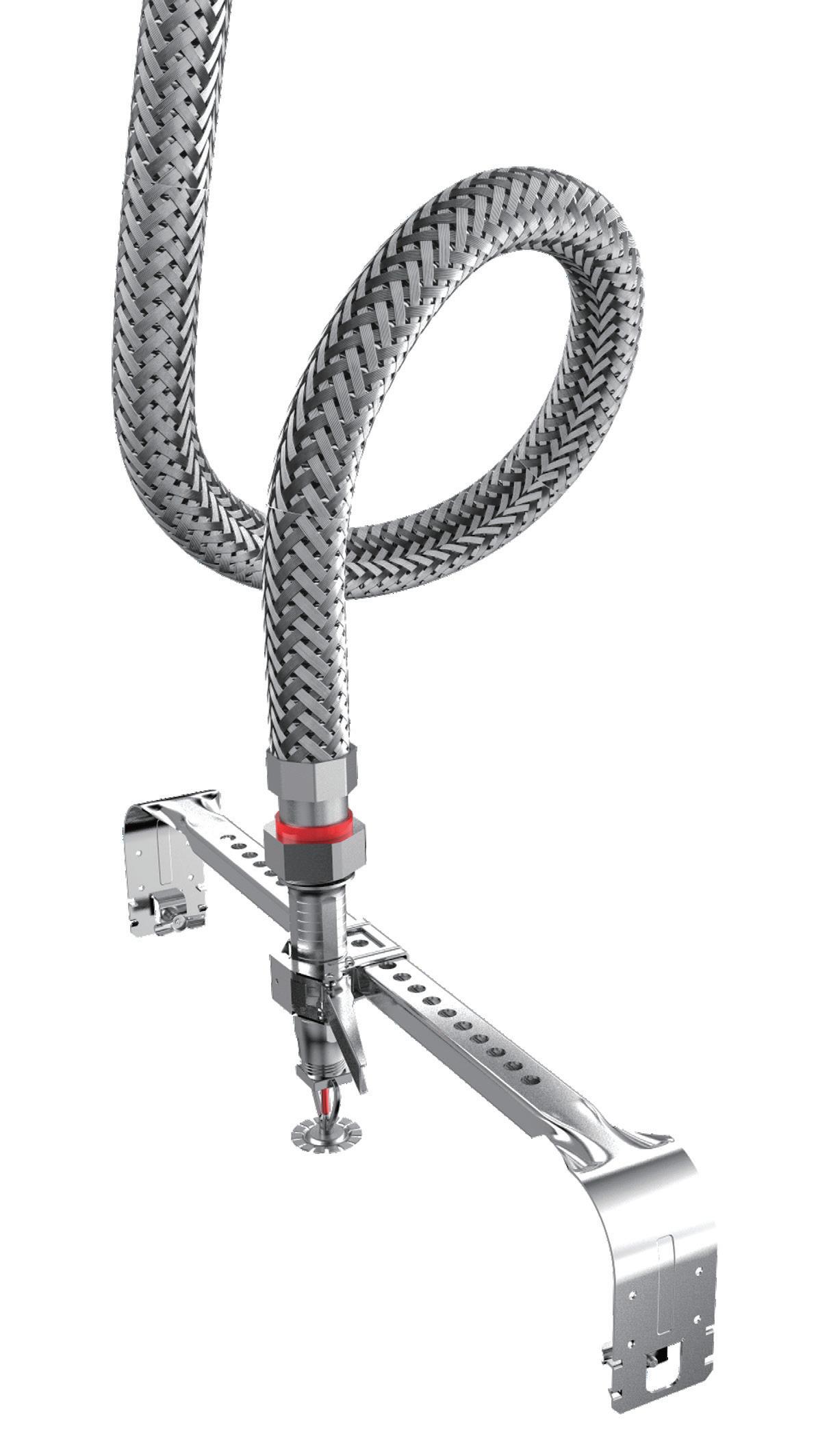
UL Listed Flexible Sprinkler Assemblies Make Retrofit a Breeze
cULus Listed for installations in accordance with NFPA 13 and 13R
No friction loss is required to be calculated through the length of the hose
Features a pre-calibrated K-factor of 5.6 (80.6 metric)
Available in hose lengths of 48” (1.2m) and 60” (1.5m)
Packaged in boxes of five
2” minimum bend radius and may have up to four bends
Offered in a variety of temperature ratings and finishes to meet design requirements
Are you a foreman who consistently gripes about the designer running the pipe into the steel? Or did you sit down and explain to the designer how they were hitting the steel and what steps to take to avoid it? I often say that meetings are among the most inefficient things we do. But I did not say that they were not beneficial, because they are. To that end, there are a couple of meetings you can hold that produce not only great training for the designer but also far better results for your bottom line.
The first is a job turnover meeting. Have the designer and foreman sit down together and go over the project. The designer can explain their approach and why, while also identifying
any areas of concern. The next meeting should be after the job is installed. Do like the military and have an after-action report. Go over what worked. Go over what did not work. The designer craves this feedback. It cannot be overemphasized how beneficial this training is for the designer. Remember, many of these young designers have never even held a tape measure, much less a wrench.
How about a drawing review?
A big part of my training was my mentor reviewing my drawing, redlining, and then going over it with me. Do you take the time to fully review the designer’s drawing and then sit down and go over the observations with them? I realize this takes time.
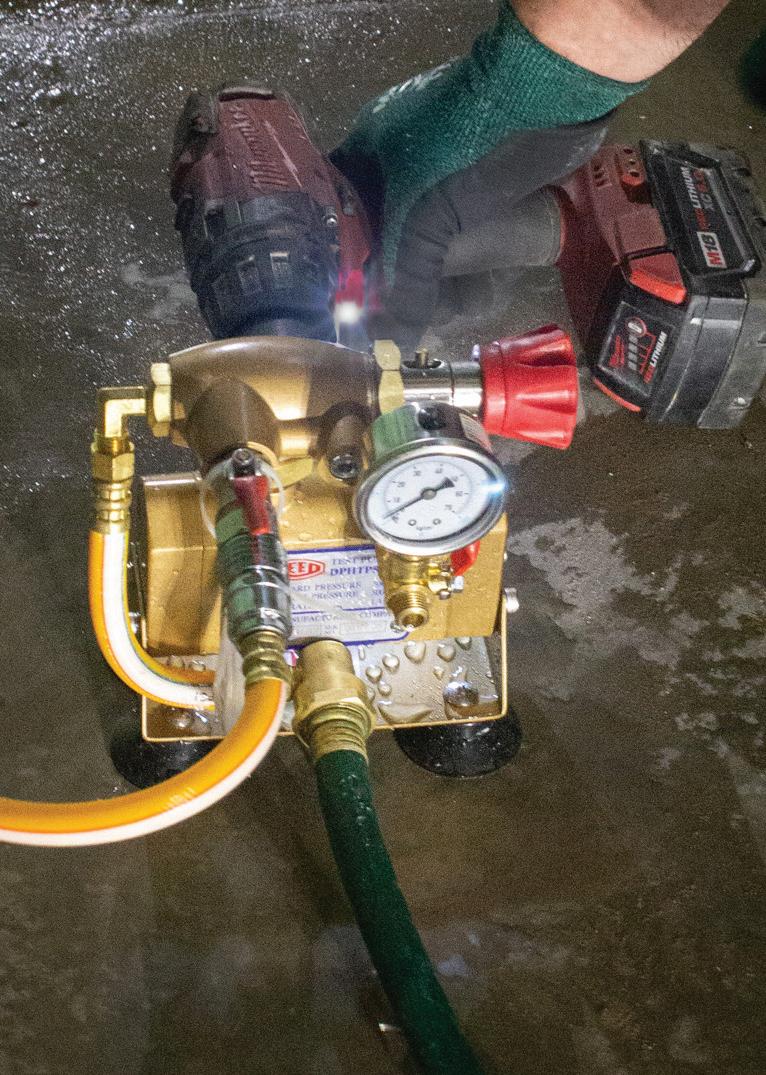
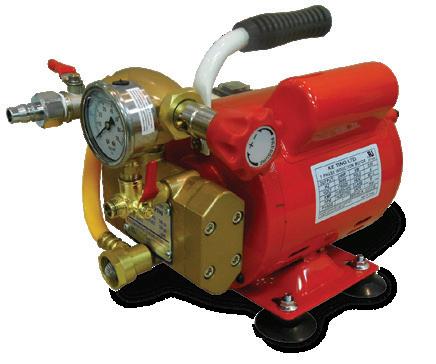
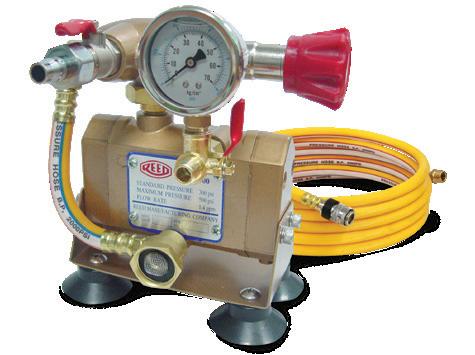
PERFORMANCE UNDER PRESSURE
HYDROSTATIC TEST PUMPS
But it is highly effective in producing a successful designer.
I always tell my new designers, “You are here to learn. I am not here to teach you.” Once they fully understand this concept, their learning deepens. When a new designer asks me a question, my response is always the same. “That is an excellent question! What does the book say?”
I require my new designers to come up with a solution to a problem they are asking about. I also require them to come with the book open to the appropriate section. This gives you insight into how they arrived at their decision. This helps you finetune the training to each different individual. Remember, every person learns differently.
Next, did we give the designer everything they needed to make decisions and produce a working design? I am speaking about construction documents—a full set of drawings, not the five pages that were used to estimate the project. If the designer does not have this information, how can we then expect them to make proper decisions?
It is imperative, even at the speed at which we operate, to get this information. Often, we are in such a rush that we force the designer to deliver a design with limited information. This normally results in a very upset labor superintendent and/or job foreman.
How about background files? Did we just get the reflected ceil-
ing plan to use in the software? Then the designer just starts putting circles in squares? While it may seem like a waste of time, let’s keep in mind that much of this stuff is done in 3D today. Having these files loaded into the software allows the designer to make informed decisions on a global level. So, please do not just dismiss the importance of getting everything we can for the designer. We are paying for these expensive computers and software. We might as well use them.
Lastly, and this one is the most important one, did we equip the designer with the time to do the job properly? Did the designer have time to thoroughly review the construction documents? Were they able to spend time and drill down into the details? Study the elevations of the steel and duct so they can decide where and how high to run the pipe. Or, did we throw them a design, tell them it is hot, and expect them to produce something in a couple of weeks? Do
we hand a foreman a new job with 300 heads and tell them it must be roughed in in one week? Sure, maybe it can be done. But are there going to be any mistakes and or leaks? So, why would we expect anything different when we rush a designer to do their job?
So yeah, it is ultimately the designer’s fault. But why? The words of the great Sun Tzu keep ringing in my head. “If words of command are not clear and distinct, if orders are not thoroughly understood, the general is to blame. But if his orders ARE clear, and the soldiers nevertheless disobey, then it is the fault of their officers.” Simply put. We, as managers, are solely responsible and accountable for the success or failure of our soldiers (aka designers), not the soldiers themselves.
ABOUT THE AUTHOR: Matthew J. Willis is the engineering manager for the southwest region of Ferguson Fire Design, LLC, A Wholly Owned Subsidiary of Ferguson Fire & Fabrication, LLC. He is a long-time frequent contributor to the AFSA SprinklerFORUM and an alternate committee member for NFPA 170. Willis has served as a life safety inspector for the state of Louisiana, and worked within all areas of inspections, testing, and maintenance including fire sprinklers, fire alarms, extinguishers, hood and pre-engineered systems. He is a former shipboard fire marshal in the U.S. Navy. Willis can be reached at matthew.willis1@ferguson.com.
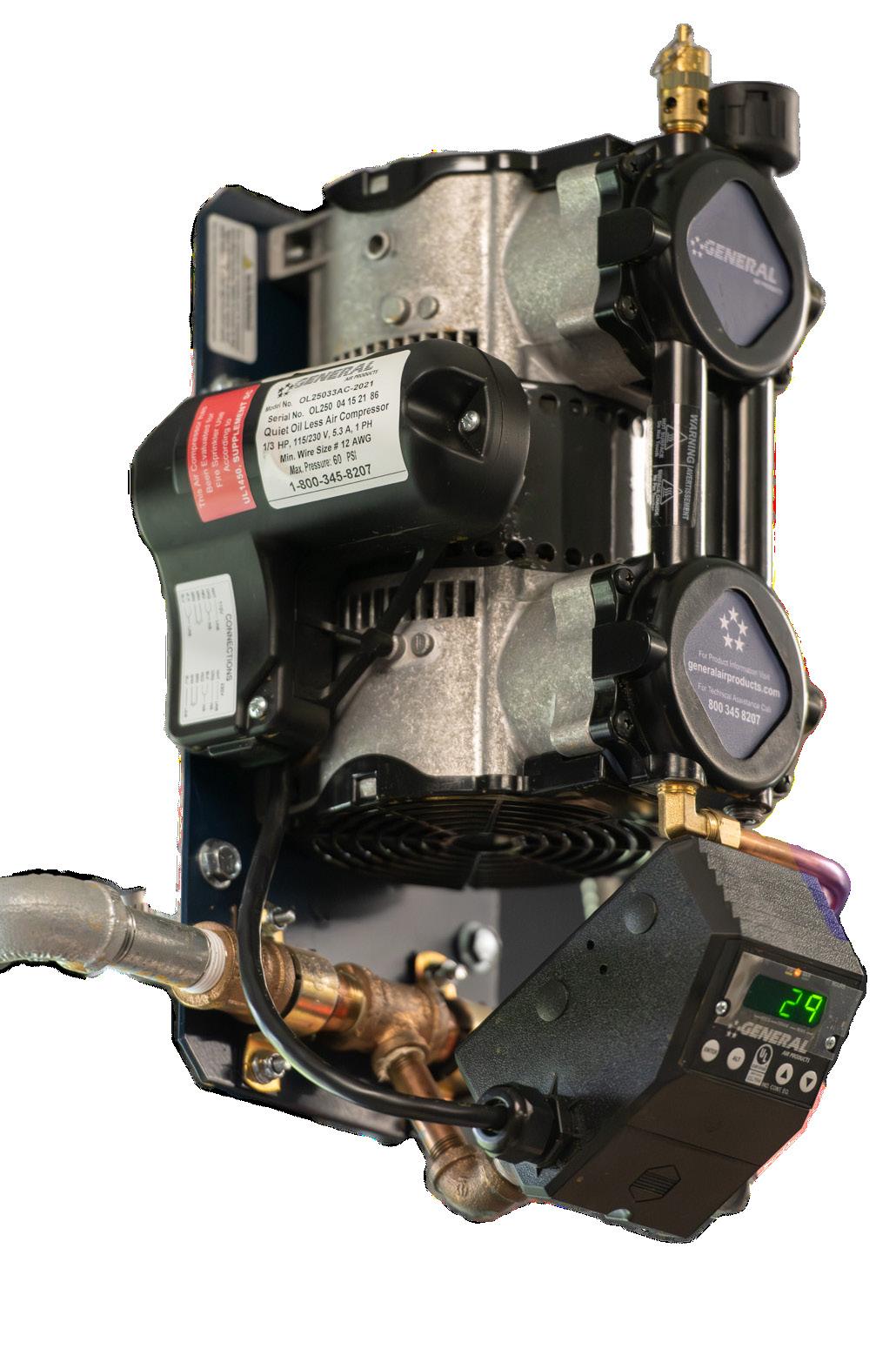
NFPA 13 (2025) now states:
“8.2.7.5.2 - Where an air compressor is dedicated for the sprinkler system, the air compressor shall be listed for fire protection.”
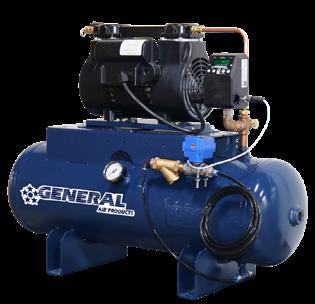
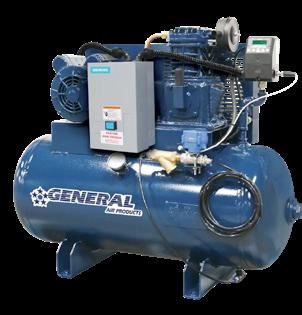
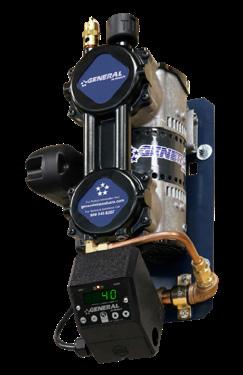
Because of the NFPA 13 update, UL added UL 1450, Supplement SC to clarify and standardize what qualifies as a listed Fire Protection Air Compressor.
Going forward, listed Air Compressors for Fire Sprinkler use will be marked as follows:
“This
Air Compressor Has Been Evaluated for Fire Sprinkler Use According to UL 1450, SUPPLEMENT SC”
Compressors that are not tested to UL 1450, Supplement SC cannot imply suitability for use in Fire Sprinkler Systems.
Provided with a means to be hardwired and permanently connected (No plug in cord)
Pressure-regulating control switch (pressure switch) must operate for 100,000 cycles under rated load
Relief valve tested at 5x maximum setting
HOW AI SUPPORTS SPRINKLER DESIGNERS
SMARTER, MORE EFFICIENT WORKFLOWS
Daniel Price, P.E., Caident & Engineered Fire Systems
Fire sprinkler contractors are facing growing pressure. Project designs are becoming more complex and experienced designers are harder to find. As a result, firms are forced to look for practical ways to improve productivity without lowering quality or increasing risk.
In this environment, artificial intelligence (AI) is beginning to emerge as a tool fire sprinkler design teams need to carefully consider. Fire sprinkler design is governed by strict codes, reviewed by Authorities Having Jurisdiction (AHJs), and directly tied to life safety, so any new technology must earn trust through careful and responsible use. When applied in a focused manner, AI can help design teams work faster, reduce rework, and improve consistency while keeping engineering judgment firmly in human hands.
THE CURRENT DESIGN ENVIRONMENT
Across the industry, the pace of work is accelerating and margins for error are shrinking. The shortage of qualified sprinkler designers has become a recurring discussion point in Sprinkler Age, AFSA, and the industry as a whole. Many firms are facing the same challenge: demand is rising, but the talent pipeline is struggling to keep up.
Tools that can increase efficiency are not just about convenience, they are becoming a business necessity.
APPLYING AI RESPONSIBILITY TO SPRINKLER DESIGN
How can artificial intelligence be applied to fire sprinkler design in a way that is both efficient and responsible? To answer this, Caident brought together NICET-certified sprinkler designers, fire protection engineers, and software developers with experience in machine learning and AI. Caident has also partnered with fire sprinkler designers and installers to test new tools in real project environments. All development has been guided by real-world design conditions and shaped by how design teams actually work day-to-day.
The goal is to help designers do more work, faster, while maintaining, and in many cases improving, overall quality. AI can be used to take over repetitive tasks that slow teams down, allowing designers to spend more time on system-level thinking and technical judgment. The sections that follow highlight where thoughtful deployment of AI is delivering real value in sprinkler design workflows.
WHERE AI CAN BE USED TO SUPPORT SPRINKLER DESIGN WORKFLOWS
AI has shown the most success in sprinkler design when it is applied to focused tasks with clear rules and clear outcomes. Today’s most practical AI use cases support documentation, validation, code research, and information management.
Checking Occupancy-Specific and JurisdictionSpecific Requirements: One of the strongest use cases for AI is speeding up code research. Designers often need to identify sprinkler design criteria, hazard classifications, fire pump requirements, standpipe triggers, and special protection features based on a building’s occupancy, code edition, and local amendments.
AI tools can quickly surface relevant code sections, tables, and amendments for a given occupancy and code year. This helps engineers narrow down where to look and identify possible code paths faster. These results must always be verified against the adopted codes and official amendments, but when used consciously, AI can reduce hours of manual research to minutes, allowing engineers to focus more on interpretation and application instead of flipping through documents.
FULL SERVICE, START TO FINISH
When facing tight physical and logistical windows, it helps to have a dedicated hand at the wheel to ensure everything goes smoothly. Our Project Management service provides expert support and organization at every step of the process; from design to fabrication to the complete package arriving on the jobsite, we’ll anticipate your needs and provide focused, experienced assistance.
Creating Institutional Memory Through Project Metadata: Another useful application of AI is building internal knowledge bases from past projects. This makes it easier for teams to find relevant design examples, see how certain conditions were
Stop Payroll Problems Before They Spark
Offer your company a comprehensive, all-in-one workforce management solution—designed to reduce administrative burden, ensure compliance, and support growth.
handled previously, and learn from prior outcomes. Over time, this creates a shared tool across the design team that improves consistency and reduces the need to reinvent solutions on every job. Designers can quickly locate relevant information without relying on ad hoc file searches in the company archives.
Understanding Project Costs Earlier in the Design Process: AI can also help teams understand system costs earlier in design. Tools that estimate material costs can give designers and engineers early visibility into how design choices affect an entire project.
With cost feedback, designers can more carefully aim for, and often beat, material estimates used when bidding a job. Teams can spot unusually expensive layouts, over-designed sections, or opportunities to simplify the system while it is still being developed. Over time, this also builds stronger institutional knowledge, improving the accuracy of material bids on future projects and reducing pricing risk across the business
Managing Material Submittals and Product Documentation: Material submittals remain an administrative effort in each sprinkler design project. Each job requires gathering product data sheets, compliance documents, and organized submittal packages that match the approved equipment schedule.
AI-assisted tools like Caident’s Submittal Generator can automate much of this work—mapping selected components to manufacturer documents, organizing files into AHJ-ready formats, and generating structured submittal packages. The result is less manual effort and fewer instances of missing or mismatched documentation.
Accelerating Training and Consistency for New Designers: AI can also improve training and consistency for new designers by embedding firm-specific standards directly into daily workflows.
As designers work, these tools can flag missing items, non-conforming layouts, and documentation issues before drawings reach senior review. This shifts routine corrections earlier in the process and reduces rework. It also allows senior engineers to spend more time on high-value technical review instead of repetitive formatting checks.
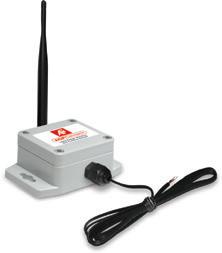
Sensors
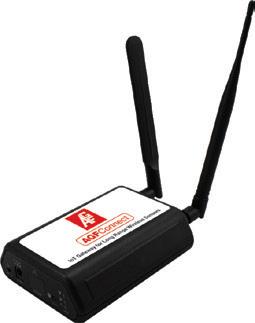
Gateways
GROWING THE ABC FIRE SPRINKLER
MORE FITTERS COMPETE IN THIS YEAR’S NCC
DAVID VICTOR | VSC FIRE & SECURITY, INC.
On March 18, 2026, 204 craft apprentices and professionals arrived at the Salt Lake City, Utah, Salt Palace Convention Center to participate in the annual Associated Builders and Contractors’ (ABC) National Craft Championship (NCC). They represent the best of the best, nationwide, of 15 different construction crafts.
This year, there were six competitors in the Fire Sprinkler competition. That is two more than last year and four more than 2024. So, we are moving in the right direction. On the day of their arrival, the ap-
prentices went through a short orientation and then took a 50-question test based on their NCCER apprenticeship curriculum.
That afternoon, the competitors went down to the convention center floor to see the area they would compete in and receive some training on the threading and grooving machines. This year, a safety task was added for a scissors lift. JLG supplied the scissors lift as well as the lift certification that was needed on competition day.
Once they completed the training, apprentices were free to take part in the trade show and refreshments, also located on the convention floor.
THE COMPETITION
ABC’s National Craft Championships is very similar to AFSA’s National Apprentice Competition, but it is not fire sprinkler-centric. It is general, construction-based. Bright and early on March 19, the fire sprinkler apprentices met on the convention floor for a hot breakfast provided by ABC. At 8:00 a.m., the starting horn sounded, and apprentices began their practical craft competition. Competitors had six hours to build a wet system riser, install heads in the competition platform, trim out an alarm valve, and put water on the project to check for leaks.
The competitors are judged by two volunteer judges on several factors: organization, safety, project assembly, completion of work, and compliance with the project specifications.
Each competitor had to fill out a safety task analysis. There was a separate safety award for each trade. At some point in the morning, each competitor had to perform a safety check of the scissors lift in the competition area. After the 11:00 a.m. lunch break, they went back to work. The competition went down to the wire. By 3:00 p.m., when the horn blew, three of the competitors had completed their project,
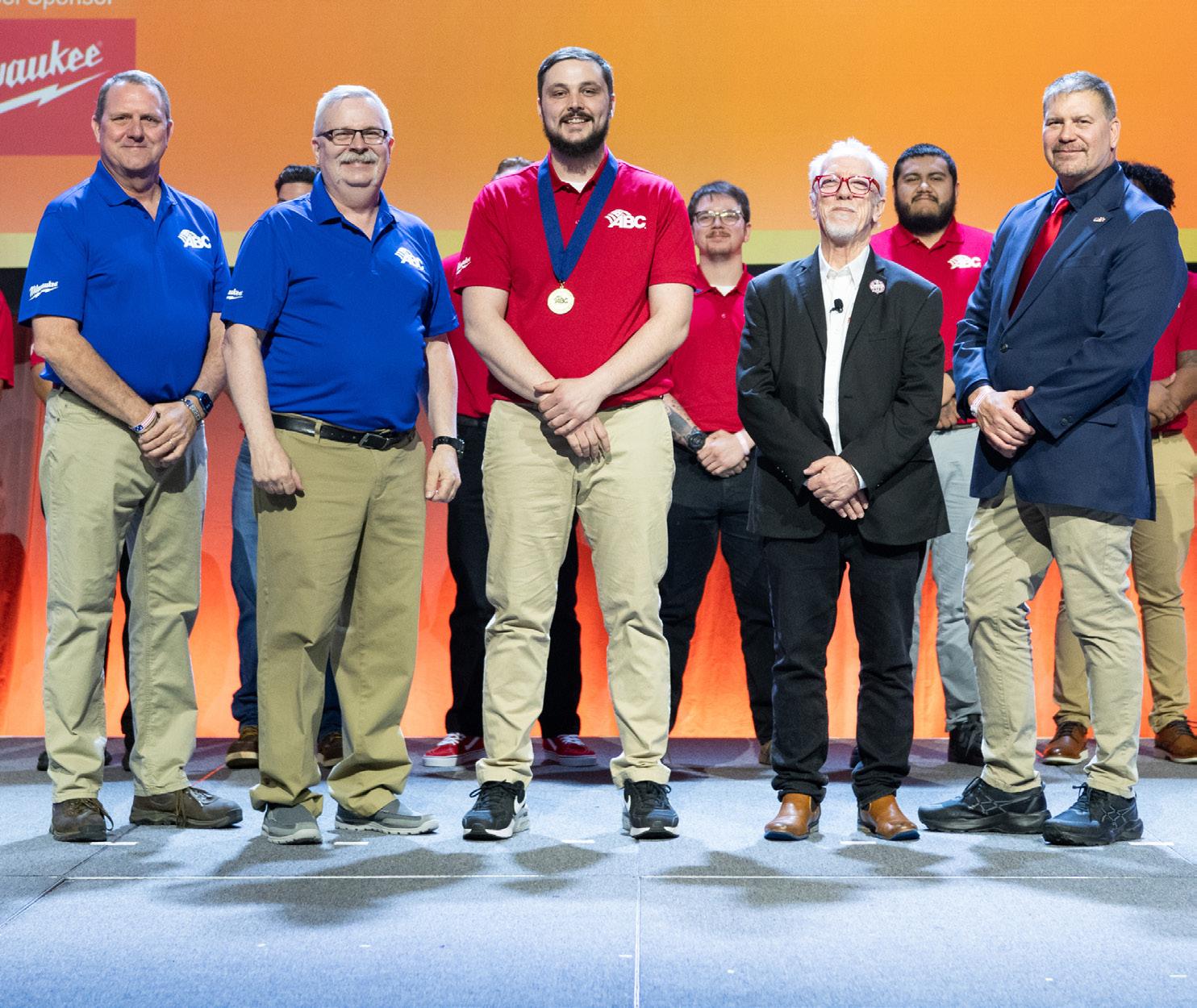
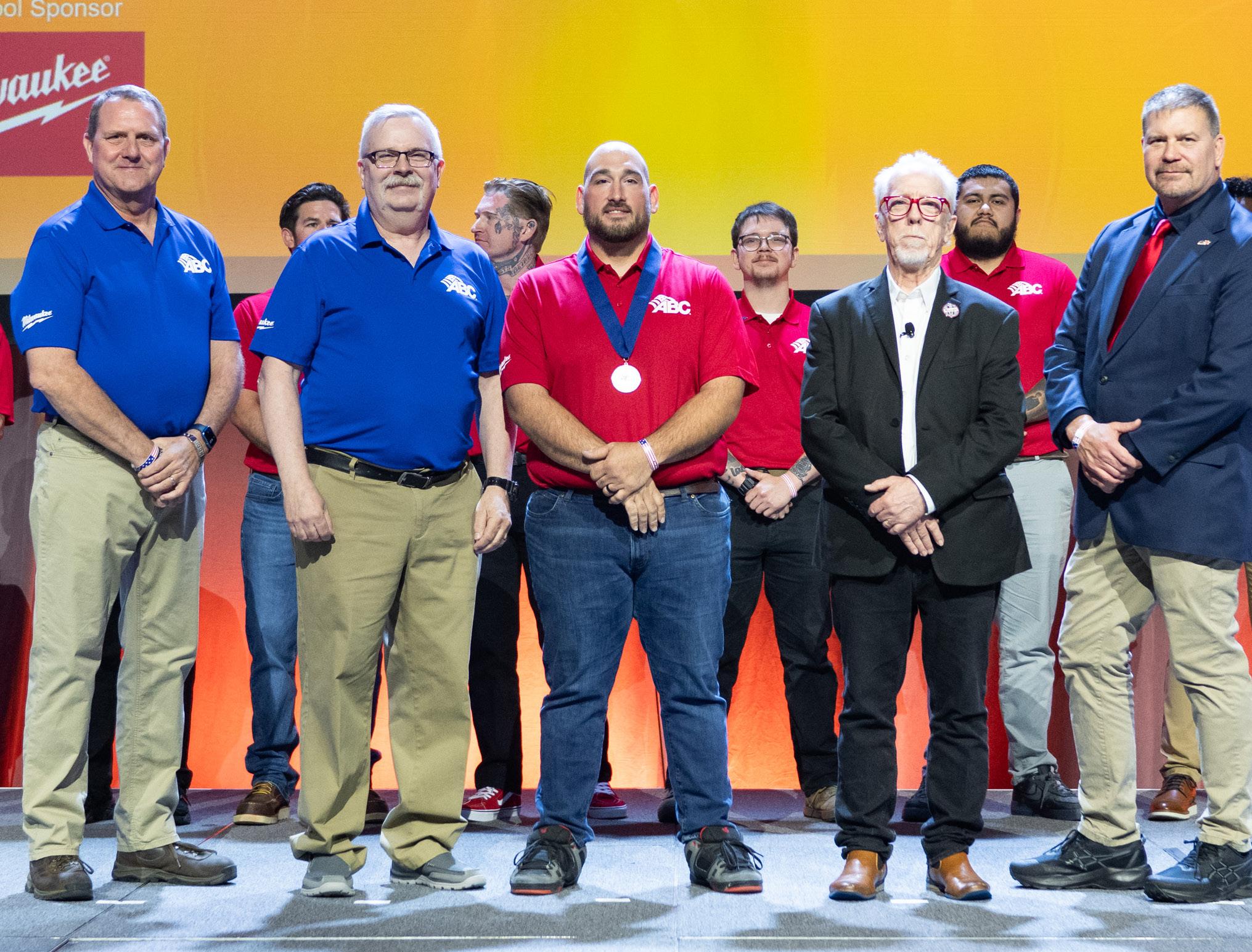
Joe Montney, Jr. of Total Fire Protection won Gold at the abc ncc.
COMPETITION
which included applying water pressure to the system and ensuring there were no leaks. At that time, all competitors took an hour-long break to eat some ice cream and relax. At 4:00 p.m., everyone returned to their competition area to begin breaking down in two hours what the project managers had taken three days to set up.
Many competitors spent the rest of that evening enjoying dinner with their chapters, handlers, family members, or simply relaxing.
On Friday afternoon, all of the competitors reconvened for a round-up session before attending the awards ceremony. At 5:00 p..m., they all entered the main ballroom to an energetic audience.
By 7:00 p.m., the awards were handed out. For the fire sprinkler championship, two AFSA Contractor members placed: Joe Montney, Jr. of Total Fire Protection, representing the ABC Western Michigan Chapter, won gold, and Zachary Carter with Piper Fire Protection, representing the ABC Florida Gulf Coast Chapter, won bronze. Edwin Medina of Sprinklermatic, representing the ABC Florida Gulf Coast Chapter,, won the silver and safety awards.
Immediately following the awards ceremony, a closing party was held to celebrate all of the apprentices’ accomplishments. A great time was had by all.
“We are incredibly proud of Joe for this outstanding achievement,” says Ryan Goossens, president, Total Fire Protection. “In our industry, the details matter, and he takes that seriously every day. This award reflects the care and craftsmanship he brings to his work, and the pride he has in doing it right. We’re honored to have him on our team.”
“We are incredibly proud of Zach—not just for the bronze medal, but for how he competed. He carried the weight of Piper’s past success with confidence, not pressure, and stayed calm and methodical throughout the entire competition. That kind of focus and discipline is what leads to success at the highest level,” remarks Chris Johnson, president and
co-founder at Piper Fire Protection. “Beyond the competition, it was a great opportunity to spend time with Zach and his wife, Felisha, in Salt Lake City. They embraced the full experience—from the ABC events to exploring the city—and it was a pleasure getting to know them better and hearing about their family. Those moments are part of what make weeks like this so memorable and impactful to our company culture.”
The 2027 ABC National Craft Championships will take place in Denver, Colo., March 9-11. We hope to see your fire sprinkler apprentice there showing off their skills and competing for that gold!
ABOUT THE AUTHOR: David Victor is the operations manager for the Baltimore division of VSC Fire and Security, Inc., and is NICET IV certified in Water-Based System Layout. He has served as the ABC Greater Baltimore Chapter Craft Competition project manager since 2008 and the ABC NCC project manager since 2016. Victor has served as AFSA’s Chesapeake Bay Chapter treasurer since 2008.
Zachary Carter with Piper Fire Protection WON BRONZE.
TRADE SHOW REACHES A NEW LEVEL
SACRAMENTO VALLEY CHAPTER DRAWS CONTRACTORS AND VENDORS
Morgan Barlow | Marquee Fire Protection
with Bryan Tilos | Core & Main
On Thursday, March 5, 2026, the Sacramento Valley Chapter of the American Fire Sprinkler Association (AFSA) hosted its 14th Annual Training & Trade Show at The Venue at Thunder Valley Casino Resort in Lincoln, Calif. The Sac Valley AFSA Trade Show continues to be a premier event for fire protection suppliers and contractors, offering unparalleled networking opportunities.
“IT’S BECOME A KEY PART OF HOW WE STAY ENGAGED AND CONNECTED WITHIN THE FIRE PROTECTION COMMUNITY.”
Attendees can connect with potential partners while rekindling existing relationships in an atmosphere that rivals national trade shows. This year, the expanded layout hosted a wealth of industry knowledge, bringing together everything a contractor needs under one roof. The event remains the top conference in the area, proving essential for those in the fire protection industry.
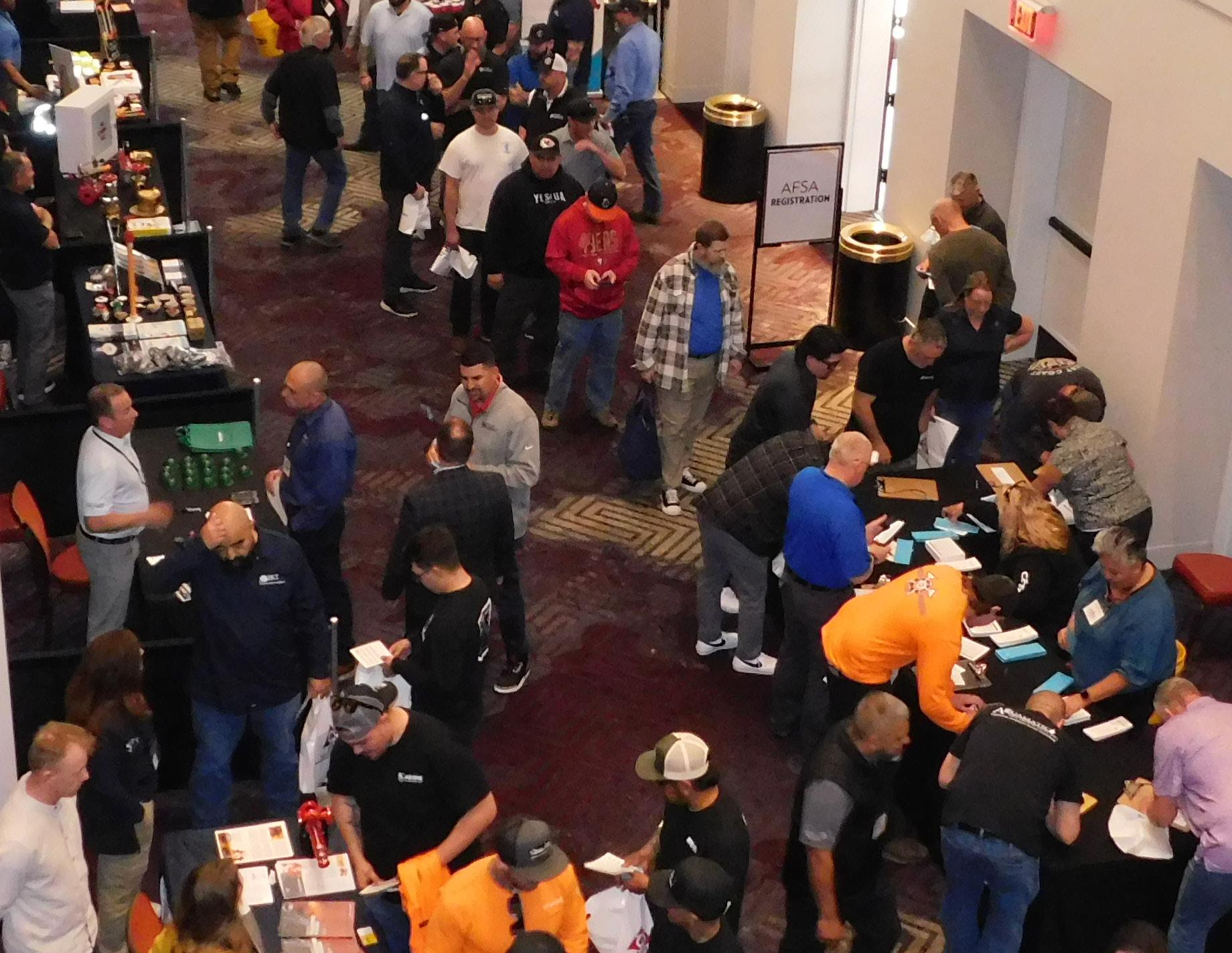
The momentum of the trade show continued to build in 2026, with attendance reaching approximately 700 industry professionals. This year’s show expanded to the second floor of The Venue, accommodating a growing exhibitor presence that increased from 52 to 57 exhibitors. The expanded footprint allowed for even greater engagement, broader product exposure, and more opportunities for meaningful interaction across all sectors of the industry.
The trade show once again brought together a diverse and engaged cross-section of the fire sprinkler community. The show floor remained active throughout the evening, with demonstrations, new technologies, and valuable conversations across old and new connections.
Exhibitors consistently highlighted the value of in-person engagement and the strength of the event’s turnout. “We had a great time exhibiting at this year’s SVC AFSA Trade Show. Connecting in person with industry peers is always valuable. We look forward to next year,” shared Ken Wohl of Ember Software. Echoing that sentiment, Adolfo Wurts of Arbiter Fire noted simply, “Another great show from AFSA, definitely worth your time and money.”
For many vendors, the quality of interactions stood out just as
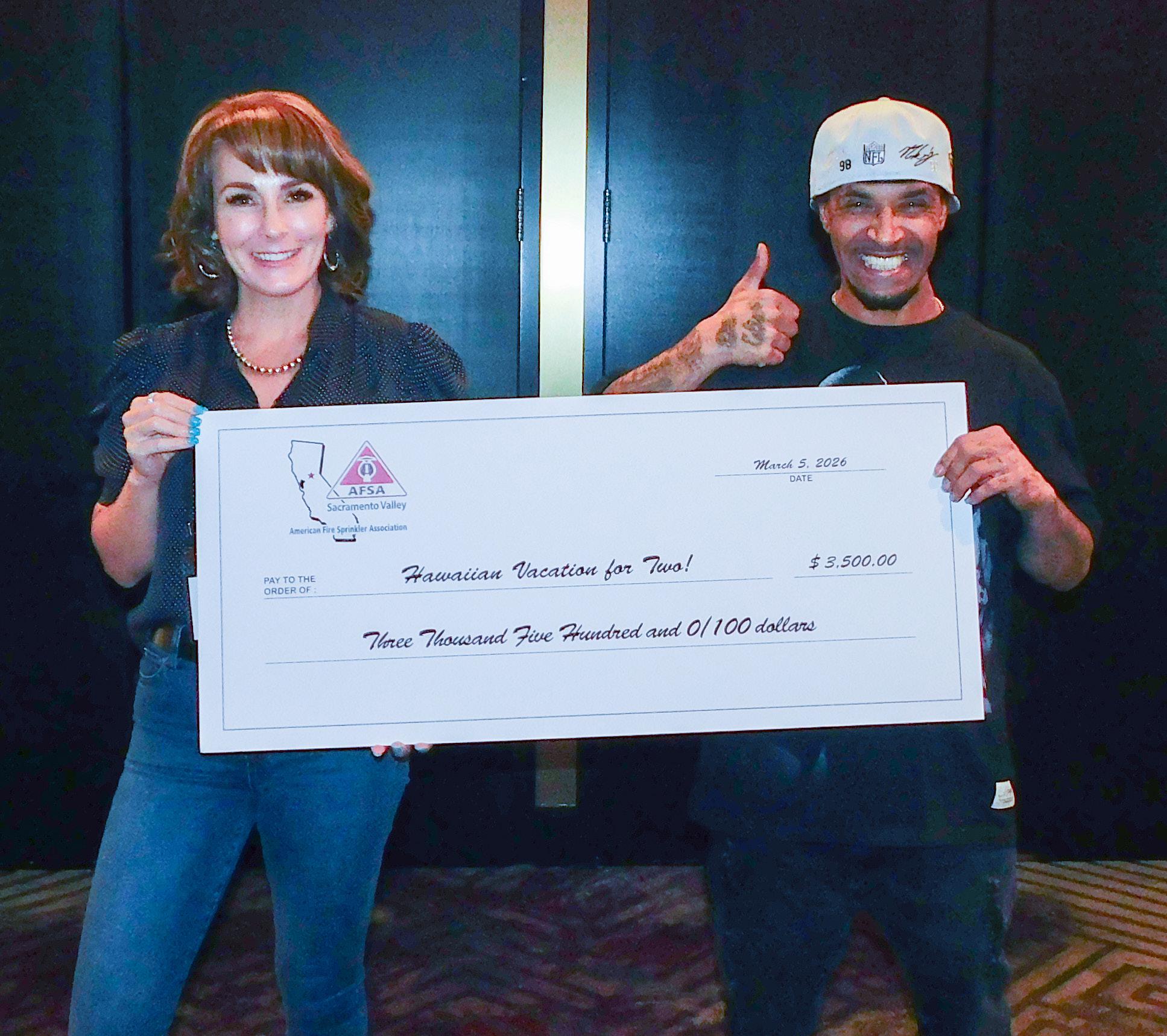
Holly Gray-Salmon, Chairwoman of the Sac Valley AFSA chapter, (left) presenting the Hawaii Trip to winner Daniel Lahaye of Foothill Fire Protection, LLC.
much as the quantity. “The 2026 SVC AFSA Trade Show proved worthwhile with good traffic at [our] booth. Attendees included both long-standing contacts and some new ones,” said Will Fassler, Technical Services Representative at Spears® Manufacturing Company. Don Smith of Gallagher added, “Another great show with strong attendance and lots of good conversations. Big thanks to AFSA and the organizers for another well-run event—always a pleasure to be part of it.”
Longtime participants continue to view the show as a cornerstone industry event. “We’ve been attending the SVC AFSA Trade Show since 2019, and each year it continues to be one of the most valuable events for our team,” said Jared Van Gammeren, owner & CEO of Driven Fire Consultants. “We consistently meet new potential clients while also reconnecting with the relationships we’ve built in previous years… It’s become a key part of how we stay engaged and connected within the fire protection community.”
The event’s reputation continues to grow beyond the region. Martin Tomasic, director of sales at Tornatech, described it as “one of the top regional conference events in the United States.” First-time and returning vendors alike praised the overall experience, with Kim Previti of Steven Brown & Associates, Inc. sharing, “The attendance, food, and structure of the event on the whole was top-notch! We look forward to being a vendor at your next event!”
AFSA’s Vice President of Engineering & Technical Services, John August Denhardt, P.E., FSFPE, returned to deliver two classes before the trade show, continuing the chapter’s commitment to bringing high-quality education to fire protection professionals throughout the region.
Denhardt’s seminars, “Fire Pumps—The Good, The Bad, & the Ugly” and “Inspection, Testing, and Maintenance of Fire Pump and Standpipe Systems” had high attendance and drew interest as CAL FIRE-accredited training sessions.
The Sacramento Valley AFSA Trade Show remains more than just an annual gathering—it is a cornerstone event for the region that highlights the innovation, resilience, and growth of the fire sprinkler industry. As participation continues to increase, so does its impact on fostering relationships, sharing knowledge, and supporting the next generation of professionals.
The Sacramento Valley Chapter looks forward to welcoming attendees and exhibitors again in 2027. For more information on the trade show or other upcoming events, visit sacvalleyafsa.org or
Behind the continued success of the event is the leadership and dedication of Paulene Norwood, Executive Director of the Sacramento Valley AFSA Chapter. Her commitment, along with the support of the chapter and its volunteers, ensures each year builds on the last and continues to exceed expectations.
contact Chapter Executive Director Paulene Norwood directly at paulenesacvalleyafsa@gmail.com.
attendance REACHED near 700 industry professionals and 57 exhibitors this year.
PREVENT OPERATIONAL BOTTLENECKS
AI CAN HELP TURN OBSTACLES INTO REVENUE
ServiceTrade, an AFSA Associate member that is a field service management platform built to help commercial service contractors, has announced the launch of Stella, a suite of AI agents that eliminate the manual coordination bottlenecks costing contractors revenue every day.
“Our approach to AI is rooted in automating work throughout the entire service lifecycle that compounds value across the business,” says Brook Bock, chief product officer at ServiceTrade.
These AI agents work directly inside ServiceTrade workflows—not as a standalone tool or bolt-on feature—executing the multistep coordination work that falls on already-stretched commercial service teams. Stella runs on Trade Intelligence, a proprietary data layer built on more than 14 years of commercial service history and 48 million managed assets. Every decision is grounded in real operational context—pricing rules, asset history, technician skills, compliance requirements— specific to commercial fire, life safety and mechanical contracting.
“We built Stella on the same operational foundation that 1,300 contractors use to run their businesses today,” added Bock. “That means it carries the asset history, service patterns, and operational context that commercial service teams actually run on—and applies that intelligence directly inside the workflows where work gets done. Technology puts that knowledge to work automatically so that commercial service teams can spend more time growing revenue and scaling more profitably.”
DEFICIENCIES TO REVENUE
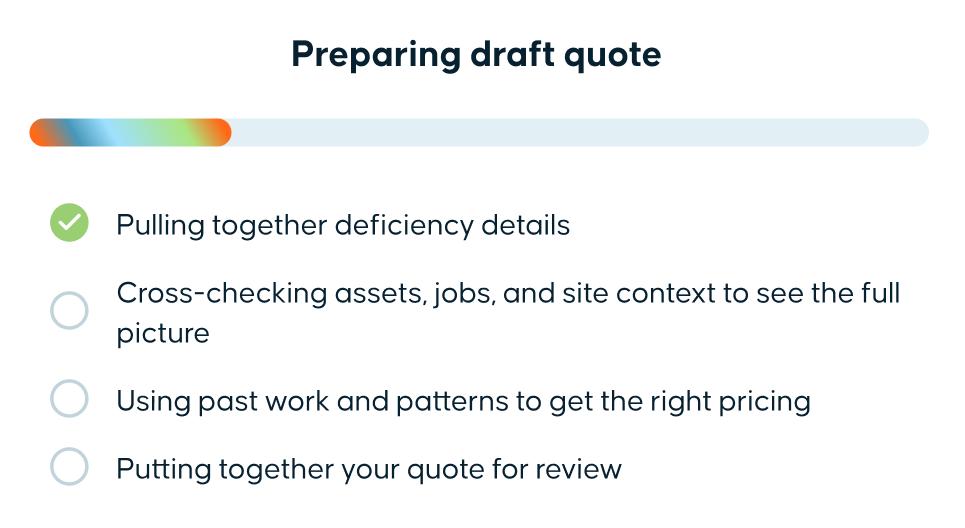
Stella Quote cuts deficiency quote turnaround from days to minutes by assembling a structured draft in-
side the ServiceTrade workflow, including asset details, parts, labor and scope language, with standards enforced consistently across the business.
With AI agents, contractors win more revenue without adding to the team’s workload. ServiceTrade data shows that cutting quote turnaround from weeks to minutes increases approval rates by 33%—turning more open deficiencies into revenue. “Instead of rebuilding scope or relying on memory and manual workarounds, Stella can help take a lot of the repetitive work off the team, create a more consistent starting point and speed up turnaround. This can allow us to move work forward faster and convert more of it.” says Ashley Rude, service manager at Envelop Group.
MAXIMIZE BILLABLE HOURS
Stella Schedule creates dispatch-ready schedules that balance business priorities with operational realities— accounting for technician skills, availability, travel time, service-level agreement deadlines, workload balance and priority jobs. Hours of manual coordination become a system-driven process that automatically improves utilization, reduces travel time and maximizes billable hours per shift—while preserving the decision context so nothing gets lost as plans change. Visit servicetrade.com/stella to learn more.
plan, coordinate, and execute core tasks across the field service lifecycle.
VIP COURSES GOING STRONG
EDUCATING OUR NEXT FITTERS
VICTORIA B VALENTINE, P.E., FSFPE | AMERICAN FIRE SPRINKLER ASSOCIATION
Virtual Instruction Path (VIP), have you heard of it? AFSA launched this training option for sprinkler fitting apprentices early in 2023, but we are excited to announce that courses are now available for all four levels. Each level provides 10 months of education to accompany the On-The-Job Learning (OJL) conducted by the employer and meet the related technical instruction (RTI) for Registered Apprenticeship Programs (RAPs).
The education is based on the Sprinkler Fitting series, 4th edition. This series coordinates Level 1 and Level 2 with NFPA 13, Standard for the Installation of Sprinkler Systems, 2019 edition, and Level 3 and Level 4 with the 2022 edition of NFPA 13. These are the same textbooks issued with the AFSA Employer-Led Path (ELP), but with VIP AFSA provides the accompanying instruction.
Each course provides education for one level of apprenticeship. VIP includes the Sprinkler Fitting textbooks for that level, two live sessions each month, performance tasks to reinforce the modules, self-study components, and assessments. The live lessons are instructed by AFSA staff and industry subject matter experts. Each live lesson runs for two hours and includes time for discussion. Performance tasks reinforce the material that is being taught. These are overseen by the apprentice’s supervisor
with confirmation being sent to AFSA as part of the student record. This reinforces the partnership of AFSA and employers in developing an apprentice to become a qualified sprinkler fitter. Each 10-month schedule is provided with registration.
VIP participation has grown! In the first quarter of 2026, each of the four levels launched a new class of students. With about 300 students currently enrolled in VIP, AFSA has added new staff this year to support the growth, allowing each course to have a dedicated coordinator to assist with their journey. Another Level 1 course will begin on Thursday, June 15, 2026. Yet don’t fear, there is still another launch for each of the levels in the second half of 2026 (and more on the horizon for 2027). Please check the website for dates and registration periods.
Now, if you are looking to dive into the details, have questions, or just learn more about VIP, there will be a webinar on June 18, 2026. The panel will include staff along with one of our current apprentices, an employer, and an instructor so the audience can hear about the program from a variety of perspectives. This discussion will highlight some benefits of VIP including providing structure to achieve course completion, aiding in motivating apprentices, and bringing subject matter expertise to your classroom. Bring your questions!
Success has been easily seen within companies that support their apprentices. What does this mean? Employers that show the importance of education within their company foster apprentic es that see value in participating in class, completing their assign ments, and putting effort into their assessments. Continued learning throughout apprenticeship and across their career creates quali ty sprinkler fitters that benefit the entire industry.
There is also an update coming soon to our apprentice manage ment software. In the near future, employers will be able to access the progress of their students through a portal. This will be available to both VIP students and ELP students. This tool should help employers stay in volved, assist their apprentices if there are any challenging subjects, and know what topics are being re viewed to coordinate their OJL and reinforce the subject matter.
Last, but not least, as AFSA con tinues to grow the program, we are seeking more subject matter experts to share their knowledge with the next generation. If you are interest ed, send your information through the online form at firesprinkler.org/ trainers. Questions should be di rected to AFSA Technical Program Director Victoria B. Valentine, P.E., FSFPE, at (214) 349-5965 ext. 125 or email valentine@firesprinkler.org.
Some would call that unstoppable
We call it
HIGHER STANDARDS
The NFPA standards development process is often discussed in terms of public inputs, public comments, committee statements, certified amending motions, and votes at the NFPA Technical Meeting. Those steps are important, but the real impact of the process is seen later, when the language developed through that process is applied to an actual project. That is especially true when one NFPA standard brings another NFPA standard into the design through reference.
NFPA’s process gives contractors, designers, manufacturers, Authorities Having Jurisdiction, insurers, owners, and other stakeholders an opportunity to participate before the language becomes part of the next edition. Public inputs begin the process. Technical committees review those inputs and develop first revisions. Public comments provide another opportunity to address the proposed language. The second draft process follows, and any remaining certified amending motions may be presented to the NFPA membership at the Technical Meeting. Final action is then taken by the Standards Council. That process matters because changes made in one document do not always stay confined to that document.
A clear example is Chapter 27 of NFPA 13, Special Occupancy Requirements. This chapter directs users to additional requirements for occupancies and hazards that cannot be fully addressed by the general sprinkler requirements alone. These include ignitable liquids, aerosols, dry cleaning facilities, spray application using flammable or combustible materials, dipping and coating operations, laboratories using chemicals, compressed gases, LNG facilities, information technology equipment rooms, telecommunication facilities, ovens and furnaces, exhaust systems, mining operations, rail systems, sound stages, animal housing facilities, cooling towers, marine terminals, semiconductor fabrication facilities, hazardous materials, aircraft hangars, airport terminal buildings,
aircraft engine test facilities, nuclear power plants, and other special conditions.
That list is important because Chapter 27 is not merely informational. It is part of NFPA 13. When a sprinkler system is required to be designed and installed in accordance with NFPA 13, the special occupancy requirements referenced by NFPA 13 must be reviewed and applied where applicable.
This is an issue that can be easy to overlook. A local building code or fire code may not specifically list every standard referenced in Chapter 27. However, that does not mean those standards can be ignored. NFPA 13 brings referenced documents into the sprinkler system design by reference. If the adopted code requires compliance with NFPA 13, then the applicable requirements referenced by NFPA 13 become part of the compliance path unless the adopting ordinance specifically modifies them.
It is also important to understand the relationship between NFPA 13 and the special occupancy standards. NFPA 13 provides the base installation requirements for sprinkler systems. The occupancy or hazard-specific standards provide additional requirements for conditions that require more detailed treatment. NFPA 30 addresses ignitable liquids. NFPA 33 addresses spray application. NFPA 45 addresses laboratories using chemicals. NFPA 75 and NFPA 76 address information technology and telecommunication facilities. NFPA 409 addresses aircraft hangars. NFPA 318 addresses semiconductor fabrication facilities.
Where those documents contain applicable requirements, they need to be followed. The more specific occupancy standard takes precedence over the general sprinkler provisions where the two overlap.
For contractors and designers, the practical takeaway is simple: identify special occupancies early. Do not wait until plan review, fabrication, or final in-
spection to discover that a project includes materials, processes, storage arrangements, equipment, or operations that trigger another NFPA standard. Ask the owner how the space will actually be used. Ask about commodities, quantities, future expansion, gases, liquids, and tenant operations that may not be obvious from the architectural drawings.
This is also why participation in the standards development process matters. A change to one referenced occupancy standard can affect sprinkler design criteria, system type, water demand, sprinkler selection, spacing, supervision, drainage, inspection access, and coordination with other protection systems. Those changes can reach a sprinkler project through NFPA 13 even if the local code does not separately list the occupancy standard by name.
As the NFPA Technical Meeting approaches this June in Las Vegas, be on the lookout for an AFSA voting guide addressing any Certified Amending Motions (CAMs) that will be moved at the meeting. At the time of publication, the Motions Committee had not yet published the full list of CAMs. Once that information is available, review it carefully. The standards development process only works when the industry shows up, understands the issues, and participates.
KEVIN HALL, M.ENG, P.E.,ET, CWBSP, PMSFPE
AFSA
DIRECTOR OF ENGINEERING
E. PARKS MOORE, P.E., CHAIR (National Scope) Pye-Barker Fire & Life Safety
Alternate: Phillip Clemen, Rapid Fire Protection Group
ROBERT ANDERSON (Region 6) Silco Fire & Security
CHRIS CAMPION (Region 9) Eastern Fire and Safety
Alternate: Thomas Carlock, Eastern Fire and Safety
KEVIN GALLIGAN (National Scope) Johnson Controls Fire Protection
JASON GILL (Region 8) Crews and Gregory Fire Sprinkler, Inc.
Alternate: Griff Brinkley, Old Dominion Fire Co.
CHRIS JOHNSON (Region 7) Piper Fire Protection
Alternate: Steven Helkin, Piper Fire Protection
CHRIS KACHURA (National Scope) VSC Fire and Security
Alternate: Andrew Hafner, VSC Fire and Security
ADAM LEVINE (Region 9) Capitol Fire Sprinkler
Alternate: Chris Ribando, Approved Fire Protection
JEFF LEWIS (Region 8) VSC Fire and Security
Alternate: David Victor, VSC Fire and Security
DALE LINDH (Region 4) Summit Companies
Alternate: Paul Szafranski, Summit Companies
ERIC RIEVE (Region 10) Rieve Fire Protection
Alternate: Connor Rieve, Rieve Fire Protection
CHRIS RUSSELL (Region 1) Security Solutions NW
Alternate: Cody Sharp, Security Solutions NW
STEVEN SCANDALIATO (Region 5) SDG, LLC
Alternate: Michael Newell, Belvedere
JOHN SCHOTZ (National Scope) Davis Ulmer Sprinkler Co. (APi Group)
Alternate: Noah Koski, Reliance Fire Protection (APi Group)
TAYLOR SCHUMACHER (Region 4) Security Fire Sprinkler
Alternate: Calen Schumacher, Security Fire Sprinkler
BYRON WEISZ (Region 2) Cen-Cal Fire Systems, Inc.
Alternate: Erik Weisz, Cen-Cal Fire Systems, Inc.
JASON WILLIAMS (Region 3) Telgian Corporation
Alternate: Tracey Bellamy, Telgian Corporation
KEVIN HALL, M.Eng, P.E., ET, CWBSP, PMSFPE (Staff Liaison) AFSA
EX-OFFICIO MEMBERS
AFSA MANUFACTURERS/SUPPLIERS COUNCIL CHAIR Andy Kaempfer, Safe Signal
Alternate: AFSA Manufacturers/Suppliers Council Vice Chair Dave English, General Air Products
JOHNSON CONTROLS Melisa Rodriguez
RELIABLE AUTOMATIC SPRINKLER CO. Cary Webber
Alternate: Brandon Telford
UL SOLUTIONS Kerry Bell
Alternate: Jeff Hebenstreit
VICTAULIC Kevin Kelly
Alternate: Alaina Schwall
VIKING CORPORATION Martin Workman
Alternate: Josh Overholt
ABOUT THE TAC TAC meetings are open to all AFSA members in good standing. Contact your regional representative to discuss any issues that the TAC should hear. While the number of voting members on the TAC is currently restricted to 20 contractor companies, there are other opportunities for interested AFSA members. If you are interested in serving on an NFPA or UL technical committee, email technical@firesprinkler.org. All technical committee appointments are made by the TAC.
UNCLE RUSS
Lou Holtz passed away on March 4 of this year. He was 89 years old. He was a longtime college football coach who led Notre Dame University to a perfect 12-0 record and the national championship in 1988. He is the only coach to take six different programs to bowl games. But he was more than just a coach. He helped mold the lives of countless young athletes as they made the transition to adulthood. Like many coaches, he was not a high achiever as a young athlete. Lou was undersized, slow, and not particularly skilled. One way he made himself valuable was to learn all the field positions, and this started his path towards coaching.
In the years after retiring as a coach, he was a highly sought-after motivational speaker. Using his experience in coaching and developing top-notch athletic talent, he shared his philosophies with audiences around the globe.
For example, WIN was his acronym for, What’s important now?” If you want to win at anything, what sacrifices will you make to get the result? Even easy answers can demand pain and hard work. He often spoke about people who look to blame others for their personal failures. He counseled against being bitter. We all have a reason to be bitter. We have all suffered injustices from society, a spouse, or a friend, but you cannot go through life bitter. His philosophy was to stop blaming someone else. Wherever we are, it is because of the choices we make.
I especially like his advice about dealing with setbacks. Lou’s path to a professional coaching slot included a job as a hospital custodian. He could not even get a job as a high school coach at first. Later, when he thought he had landed a spot at the University of South Carolina, the new athletic director fired him within an hour of their first meeting. “Have you thought about going into a different profession?” the director
RUSS LEAVITT, CFPS, S.E.T.
TELGIAN HOLDINGS EXECUTIVE CHAIR AFSA COMMITTEE MEMBER & SPEAKER
asked him. However, Lou persevered and finally landed a job as an assistant coach at William and Mary in 1961. After serving as an assistant coach with several programs, he returned to William and Mary in 1969 to serve as head coach.
Lou believed there were four things any person or organization needs to be a winner. First, you must make a commitment to excellence. When you are just interested in something, you do it when circumstances permit. However, when you are committed to something, you accept no excuses, only results.
Second, pay attention to detail. He believed that only teams that pay strict attention to little things win. His attention to detail was an obsession. It must be part of a company’s culture or an individual’s mindset. You cannot just talk about it. You must practice it every day.
Third, you must develop sound fundamentals. You cannot be bored with basic things like blocking and tackling. Whatever it is you do, you can be better at it if you focus on mastering the basics.
Fourth, find discipline. He believed that nothing is impossible if you put your mind to it. Discipline gives us the wherewithal to finish the job.
Finally, Holtz also had a list of four things you need in your life.
• Everyone needs something to do.
• Everyone needs someone to love.
• Everyone needs someone to believe in.
• Everyone needs something in their life to hope for.
Useful information for us individually and as companies to consider. Holtz was straightforward and used simple, easy-to-understand language. Read the lists again and give them some thought on how we might use his ideas in our organization and our lives.
#MEMBERSMATTER
What’s in a name? “That which we call a rose/By any other name would smell as sweet.” Okay, so I’m not writing about Shakespeare; however, I am writing about a recurring challenge we encounter at AFSA; AFSA profiles! Whether you are an AFSA member or not, anyone can create and maintain an AFSA profile. No special invitation required. Similar to the episode of “Oprah” where everyone received a car (I’m not giving out cars!), everyone gets a profile!
What’s in a profile? It’s more than just your name, and it’s more than just an account. Your AFSA profile serves as a centralized hub for tracking Continuing Education Units (CEUs), professional credentials, AFSA involvement, and employment history, and monitors your professional growth. Your AFSA profile automatically tracks CEUs earned through AFSA training, seminars, webinars, and events. This makes it easy to verify your education history when renewing licenses, meeting compliance requirements, or advancing your career.
With a few clicks, you can access a clear summary of your completed courses, credits earned, and progress toward continuing education goals. This level of organization not only saves time but also ensures accuracy when reporting your credentials.
Your AFSA profile is unique to you. Whether you change companies, relocate, or take on new roles, your profile remains constant. Therefore, it’s essential to keep your information up to date. Updating your employer, contact details, or even your name ensures our records remain accurate and you stay connected to relevant training opportunities and local chapter activities. You can also add your professional credentials or license number to your profile. Updated profiles are highly important for helping AFSA maintain proper records of CEUs and prevent gaps or discrepancies.
MEDA MERRITT, CAE
AFSA VICE PRESIDENT OF MEMBERSHIP & CHAPTER DEVELOPMENT
One common misconception is that only members can create an AFSA profile. Anyone can create a profile. However, if your company is an AFSA member, you are eligible for a wide range of benefits. Hopefully, you have taken advantage of them! Benefits include but are not limited to member-exclusive training and resources, technical advice, and member discounts. Many employees of members miss out on their AFSA benefits simply because they haven’t activated their individual profile.
Haven’t created your profile yet—or unsure whether one already exists? No problem! AFSA provides clear, step-by-step instructions to help you create or locate your profile. Simply scan the QR code below to get started.
If you’re uncertain whether your profile information is current, there’s no need to create a duplicate account. Instead, contact our Membership Department for personalized, hands-on assistance to review and update your existing profile.
Your AFSA profile doesn’t just track your past; it connects you to your future. It unlocks multiple opportunities while keeping track of what matters most to you. The bottom line is that your career is evolving every day. Your AFSA profile should be evolving with it. It should be accurate, complete, and ready to support whatever comes next.
Complete Fire Protection for Storage Occupancies
When it comes to protecting storage facilities, Viking has you covered. From high-performance sprinklers to innovative valves and systems, we deliver a safety solution you can trust. Whether you are protecting a warehouse, a freezer or manufacturing plant, we have products that are FM Approved and/or UL Listed to just that.
• ESFR & Storage Sprinklers – Complete storage protection solutions, include control-mode and suppression sprinklers, with K-factors from 5.6 to 28
• Valves & Systems – Customize a valve & system solution to meet your specific needs
• Accessories – Sprinkler guards and shields, cold storage brackets and insulating boots, wrenches and more, we got them
• Expert Support – Our team is here to help tailor a solution to meet your storage needs
Learn more on our website at vikinggroupinc.com.
Viking’s revolutionary Sprinkler Selector ensures that you can find the right sprinkler for the job — every time. Get started by visiting webtools.vikingcorp.com/sprinklerselector.
AFSA NEWS
AFSA’S VIP TEAM GROWS
JULY
CALENDAR
STATEN
The American Fire Sprinkle Association (AFSA) is pleased to welcome Shakira Staten as a VIP coordinator. Staten manages the day-to-day operations of the program and oversees online course development. She serves as the primary point of contact for apprentices from onboarding through program completion. She keeps employers informed through detailed reporting and ensures all enrollment data, credits, and fees are maintained. Staten moderates live sessions and supports instructors to ensure seamless delivery. She brings a diverse background in education, corporate training, and student support across a variety of learning environments.
FIRE SPRINKLER LAB RESERVATIONS
Facility requests for AFSA’s fire sprinkler playground are rolling in, with many users requesting regular training throughout the year. The 2026 calendar is filling up quickly. If you are interested in renting the facility or providing customized training to support your organization’s educational and training needs at the sprinkler playground, complete the request form at firesprinkler.org/facility-request-form. Get your request in as soon as possible!
SCHOLARSHIPS EDUCATE PUBLIC
AFSA’s Second Chance School Scholarship Essay Contest was created by AFSA’s Public Education & Awareness Committee to raise awareness about fire sprinklers, the fire protection industry, and its careers. Eligible high school graduates can enter to win one of five $1,000 scholarships for a college or trade school education. For more details and to enter, visit afsascholarship.org/secondchance.
The Louisiana Chapter held its first meeting of 2026 on February 3 in Baton Rouge. AFSA President Bob Caputo, CFPS, was the speaker for three seminars: “Enforcing NFPA 25: Deficiencies, Impairments, and Observations,” “NFPA 25: Beyond the Annual Inspection,” and “Freeze Protection for Water-Based Fire Protection Systems.” Breakfast, lunch, and CEUs were included. A membership meeting was also held. Visit lafiresprinkler.org.
TENNESSEE
The AFSA Tennessee Chapter held a sporting clay shoot on March 19, 2026, at the Memphis Sports Shooting Association in Lakeland. There were 17 different companies represented within the 40-plus shooters and 11 companies stepping up to sponsor shooting stations and lunch. The third place team was from VSC Fire and Security, HNA Engineering took second place, and IronSmith Fire won first place. The two highest indi-
vidual shooters were Cody Stewart from HNA’s team in second place and Conner Smith from IronSmith’s team claiming first place.
It was a lot of fun with everyone enjoying the food, networking, and shooting things! This was the chapter’s second time to have an event of this type and plan on continuing it every year. Visit afsatn.org.
The REPAIR PARTS Experts
the IronSmith fire team won first place at the tennesee chapter clay shoot.
AFSA CHAPTERS
ALABAMA
Lee Seewald – Pres. 202-252-5101
Greg Willis – Exec. Dir. 334-567-4257
ARIZONA
Jason Williams – Chair 480-421-8411
Denniece Cooper - Exec. Dir. 480-282-5393
ARKANSAS
Randy Gilliam – Chair 479-391-4523
Stephen Bitely – Exec. Dir. 501-605-3495
CHESAPEAKE BAY
Jason Martin – Chair 240-848-2710
Danielle Fowler – Exec. Dir. 410-972-1122
COLORADO
Roger Wallace – Chair
719-337-6550
Kim Cook – Exec. Dir. 704-213-4368
DALLAS-FORT WORTH
Talon Hernandez – Chair 214-575-2000
Merle Hittle – Vice Chair 214-282-0350
FLORIDA
Aaron Jones - Chair 813-695-1082
Jessica Cox – Exec. Dir. 813-784-3624
GEORGIA
Allen Cagle – Chair 770-554-5285
Tracy Williams – Exec. Dir. 770-355-0774
GREATER BAY AREA
Dave Karrick – Chair
925-417-5550
Angelica Ramirez – Exec. Dir. 408-680-1875
GREATER KANSAS CITY
Mark McKenzie – Chair 913-432-6688
Brett Heinrich – Exec. Dir. 785-825-7710
ILLINOIS-INDIANA
Skyler Bilbo – Chair 217-342-2242
LOUISIANA
Randy Laguna – Chair
504-464-6236 ext 224
Ellen Ballard – Exec. Dir. 318-393-9565
MICHIGAN
Doug Irvine, Jr. – Chair 616-784-1644
MINNESOTA-DAKOTAS
Marc Haug – Chair 701-232-7008
Tina Hoff – Exec. Dir. 701-709-1899
NEW ENGLAND
Lisa DiRienzo – Chair 508-298-2134
Alison Desmond – Exec. Dir. 774-278-3260
NEW JERSEY
Thomas Bowlby, Jr. – Chair
908-226-5313
Victor Lugo – Exec. Dir. 201-635-0400
NEW MEXICO
Paul Chavez – Chair
505-898-9197
Renee Nix - Exec. Dir. 505-690-0913
NORTH CAROLINA
Drew Jester – Chair
336-469-0382
John Turnage – Exec. Dir. 919-624-3456
OHIO
Mike Hiatt – Chair 937-859-6198
ORANGE COUNTY/INLAND EMPIRE
Henry Fontana – Chair 914-497-6316
Michelle Rossmann– Exec. Dir. 951-644-9247
PACIFIC NORTHWEST
Brandon Stewart – Chair 971-235-9608
Cameron Kammers – Exec. Dir. 425-343-9793
SACRAMENTO VALLEY
Holly Gray Salmon – Chair 916-296-9913
Paulene Norwood – Exec. Dir. 916-296-0635
SAN DIEGO
Jonathan Joseph – Chair 619-588-6364
Rhonda Gudger – Exec. Dir. 951-326-4600
SCHUYKILL
Dan Hinkle - Chair 215-778-5484
Alyssa Capko – Exec. Dir. 610-754-7836
SOUTH CAROLINA
Tyler Blume – Chair 864-909-2643
Kari Miller – Exec. Dir. 843-415-5452
TENNESSEE
Justin Smith – Chair 901-664-5930
David Pulliam– Exec. Dir. 901-484-0605
UTAH ROCKY MOUNTAIN
Mark Winder, Jr. – Chair 385-630-8064
Brent Heiner – Exec. Dir. 801-544-0363
VIRGINIA
Timothy “Hooper” Loscomb – Chair 804-620-3735
Danielle Fowler – Exec. Dir. 410-972-1122
OKLAHOMA FIRE SPRINKLER ASSOCIATION (AFFILIATE)
Tim Hollon – Pres. 918-851-2416
FIRE SPRINKLER CONTRACTORS ASSOCIATION OF TEXAS (AFFILIATE)
Paul McKenna – Pres. 281-741-1006
Sarah Kiefer – Exec. Dir. 512-844-6632
AFSA NEW MEMBERS
New members as of April 16, 2026
CONTRACTORS
Active Fire Protection, Sutton, MA
Arman Plumbing, Inc., Chicago, IL
Fire Tank Pros, New Braunfels, TX
Immediate Fire Protection Inc., Anaheim, CA
L & Y Fire LLC, Miami, FL
Red Star Fire Protection, Alta Loma, CA
Tele-Plus Corporation, Hagerstown, MD
ASSOCIATES
Collings & Associates, LLC, Ventura, CA
US Bank, Dallas, TX
DESIGNERS
Integrated Fire Designs, LLC, Stafford Springs, CT
Kenneth Alvarez, West Milton, NY
Jeremiah Carbaugh, McConnellsburg, PA
Robert Nyukuri, Marietta, GA
Michael Rushman, West Milton, NY
AFSA
AHJS
Adeline Wright, West Sacramento, CA
Zarek Anderson, Georgetown, DE
Martin Botello, Hutto, TX
Raven Byrd, Winston-Salem, NC
Katlin Carey, Truckee, CA
Pascal Caron, Montreal, QC
Stephen Christian, Lawrenceville, GA
Ronald Cunningham, Austin, TX
Mark DiRusso, Georgetown, DE
Curtis Doerr, Overland, MO
Joel Edwards, Lake Buena Vista, FL
Josh Elliott, Tracy, CA
Jimmie Ellison, Atlanta, GA
Marcia Fimbres, Riverside, CA
Yesenia Galvan, Vista, CA
Joseph Hernandez, Spotsylvania, VA
Kyle Stephens, Holbrook, NY
Daniel Stowe, Tracy, CA
Katie Strickland, Oceanside, CA
Gabriel Velasco, Commerce, CA
James Verner, Royse City, TX
John Vincent, Tucson, AZ
Andrew Wilson, Oviedo, FL
Jared Ziegler, Stevens, PA
LATIN AMERICA AHJS
Luis Gerardo De Leon Hernandez, Lima
Arturo Del Castillo Herrera, Lima
Wandy García Villavicencio, Lima
Andrés Nicolás Lastre Cárdenas, Lim Rovee Francis Meléndez Morales, Lima
U.S. CONSTRUCTION REPORTS
CONSTRUCTION STARTS SLOW BY 13% IN FEBRUARY
Total construction starts declined 13.2% in February to a seasonally adjusted annual rate of $1.08 trillion, according to Dodge Construction Network. Nonresidential building starts rebounded by 17.8%, residential starts improved 8.3%, and nonbuilding starts declined 49.4% over the month. On a year-to-date basis, total construction starts were down 1.9% through February. Nonresidential starts were down 2.0%, residential starts were down 12.4% and nonbuilding starts improved by 9.9% over the same period. For the 12 months ending February 2026, total construction starts were up 5.2% from the 12 months ending February 2025. Residential starts were down 6.3%, nonresidential starts were up 6.1% and nonbuilding was up 17.0%.
CONSTRUCTION STARTS REBOUND 13% IN MARCH
Total construction starts rose 12.8% in March to a seasonally adjusted annual rate of $1.22 trillion, according to Dodge Construction Network. Nonresidential building starts grew by 6.3%, residential starts improved 2.6%, and nonbuilding starts rebounded 37.9% over the month. On a year-to-date basis, total construction starts were down 0.5% through March. Nonresidential starts were down 0.2%, residential starts were down 7.2% and nonbuilding starts improved by 6.4% over the same period. For the 12 months ending March 2026, total construction starts were up 5.4% from the 12 months ending March 2025. Residential starts were down 5.3%, nonresidential starts were up 6.5% and nonbuilding was up 15.8%.
PEOPLE IN THE NEWS
ARMSTRONG APPOINTS ELEZ AS CEO
Armstrong Fluid Technology announces the appointment of Danilo Elez as chief executive officer. In this role, Elez will lead the company’s next phase of growth and innovation. Elez brings extensive experience in the HVAC and building technologies industries, with senior leadership roles at Trane, KONE, and Johnson Controls. He has led global organizations and is known for driving sustainable growth, strengthening operational performance, and integrating engineered products with services, digital capabilities, and system-level solutions. His leadership approach and experience align closely with Armstrong’s strategy and values. Visit armstrongfluidtechnology.com.
VIKING BROADENS SFFF WITH FM APPROVALS
Viking announces the successful completion of fire testing at FM Approvals laboratories, resulting in new FM Approvals for Synthetic Fluorine Free Foam (SFFF) suppression of well-known challenging fuel hazards requiring protection for MEK and miscella fuels. This milestone expands Viking’s foam system capabilities into applications within the edible oils industry and further bolsters the robust SFFF offering. The newly obtained FM Approvals apply to SFFF systems protecting solvent-rich fuels such as hexane, methane, ethanol, methanol, methyl ethyl ketone (MEK), and miscella. The addition of MEK and miscella is particularly significant due to the unique challenges these fuels present in fire protection design. Visit vikinggroupinc.com.
PRODUCT NEWS WHERE COMPLIANCE MEETS CONFIDENCE.
VSC ACQUIRES ST. PETE
VSC Fire & Security, Inc. (VSC) of Richmond, Va., has acquired St. Pete Fire Protection of Tampa, Florida. Made effective April 1,2026, this partnership expands VSC’s presence in the state of Florida and gives customers of both companies’ additional service offerings, increased standardization of services and an enhanced network of support staff.
“SPFP has been a leader in the Florida market since their inception in 2010. Suzanne’s reputation speaks for itself. She is incredibly well-respected in the Southeast Market, involved in legislative efforts statewide to better our industry. SPFP’s values of knowledge, experience, commitment, and integrity fully align with what we’ve built our business on at VSC. The team at SPFP are at the top of their market, and we look forward to giving them the tools and support so that they can continue to excel while exploring new opportunities,” said Tommy Clements, president of VSC Fire & Security. “With the SPFP acquisition, we continue to attract people with a shared vision of what great companies look like and how they act.”
St. Pete Fire Protection employees can also expect a broader network for support, alongside additional training advancement, and growth opportunities.
“This isn’t just a business transaction; it’s a joining of like-minded individuals, a strengthening of bonds & values within our industry,” said Jeff Riddle, COO at VSC Fire & Security. “Together, we’re poised to deliver even greater value and
service to our clients and communities. I’m incredibly excited about this next chapter in our journey and having Suzanne on board.”
“After 16 years of owning and growing my own fire protection company, St. Pete Fire, I made the decision to merge with VSC — the very company I originally left to start my business. St. Pete Fire was more than a company to me; it was a family, built around trust, commitment,
and pride in protecting our community”, said Suzanne Saults. “Coming back to VSC felt like coming home. The leadership had evolved, and it was clear that the culture now reflected many of the same values that drove SPFP. This merger created tremendous opportunities for our team, while keeping the heart and family atmosphere that defined who we are. I am excited to lead a new team that blends the best of both worlds:
INDUSTRY NEWS CONT.
the close-knit, values-driven spirit of St. Pete Fire and the scale, resources, and support of VSC.”
All 25 St. Pete Fire Protection employees will be retained, and no personnel changes are planned. For more information, visit VSCFire.com.
NFPA CONFERENCE & EXPO
The National Fire Protection Association® (NFPA®) will host its annual Conference & Expo at the Mandalay Bay Convention Center in Las Vegas on June 22-24, 2026. This comprehensive event brings together thousands of the industry’s leading professionals who will attend more than 130 educational sessions addressing the latest issues, challenges, and trends in the world of fire, electrical, and life safety, including code compliance, emergency preparedness and response, emerging technologies, global safety issues, public education, building and construction safety, fire protection systems, industrial hazards, electrical safety, and more.
The NFPA Expo will feature more than 420 exhibitors, showcasing the latest products and services available to help meet and maintain compliance with prevailing codes and standards in the design, construction, and operation of buildings and facilities of every kind. Attendees will have access to three specialty theaters: the Facility Manager Theater covering fire protection system inspections and testing, implementing AI, reducing nuisance alarms, safety with pyrotechnics, and wildfire preparedness; the Responder Theater with an update on the Firefighter Cancer Cohort Study,
insights into high-rise firefighting tactics, leadership accountability, and AI in fire apparatus and aerial platforms, cleaning efficacy of firefighter PPE, and fires involving lithium-ion batteries; the NFPA Products and Solutions Theater will provide an overview of products and resources NFPA offers. Visit nfpa.org.
WINSUPPLY EXPANDS
The Winsupply Family of Companies is expanding again with a recent acquisition in the Midwest. Winsupply Inc. has closed on the acquisition of Central Corp., an HVAC equipment and parts wholesaler, located at 330 N. Woods Edge Drive in Appleton, Wis. Central Corp. is doing business as Winsupply of Appleton under the leadership of Cory Pelisek. He and the team are poised to become minority owners in the entity alongside majority owner Winsupply, Inc.
The Winsupply Family of Companies has also welcomed its latest addition of a new Local Company with the opening of Winsupply of Clayton. At the helm is experienced Winsupply Local Company President Brendan Recchia. This is the fourth Winsupply Local Company that Recchia has led.
Serving the Plumbing and HVAC industries, Winsupply Clayton NC is operating at 61 Harvest Mill Lane, Unit B, Clayton, NC 27520. The company officially opened its doors at the end of November, but will plan a grand opening celebration for the spring.
Finally, The Winsupply Family of Companies has welcomed a new Local Company with the opening of Winsupply of East Jacksonville.
President Troy Klein and the East Jacksonville staff—Tommy Klein, Sammy Klein, and Mike Klein— often rely on spreadsheets, gener ic CRMs and document tools that were never built for fire-code-driven workflows. An expansion of ServiceTrade’s SalesManager platform, SalesManager reduces proposal creation time by up to 80% and has demonstrated improved gross margins by 15% through more accurate quoting.
Built on proven capabilities with mechanical service teams, SalesManager for fire contractors adds:
•Fire-native quoting with compliance guardrails.
•Seamless sales-to-service handoff.
•A unified proposal creation platform.
To learn more or request a demo, visit servicetrade.com.