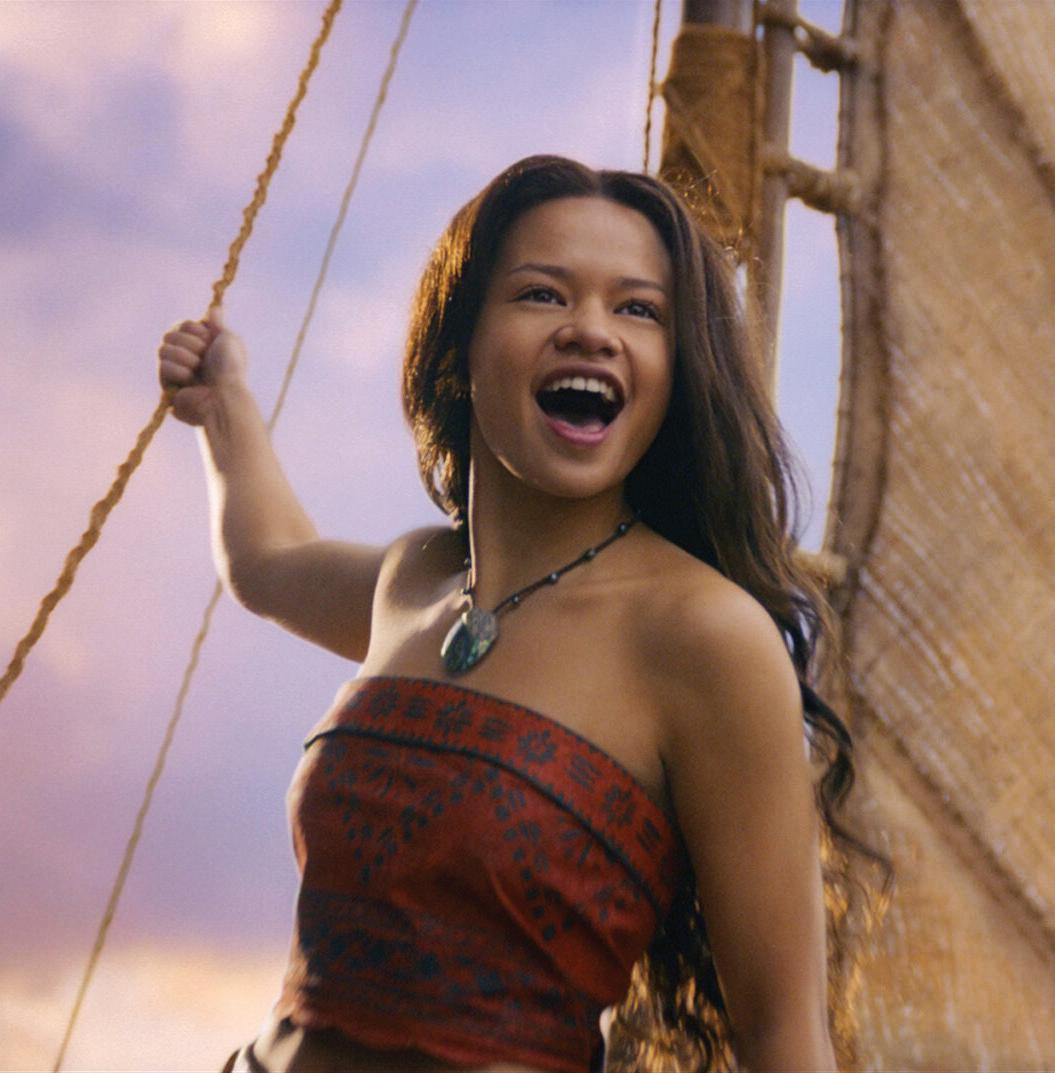
CO150 Film Festival spotlights state’s place in moviemaking. 27
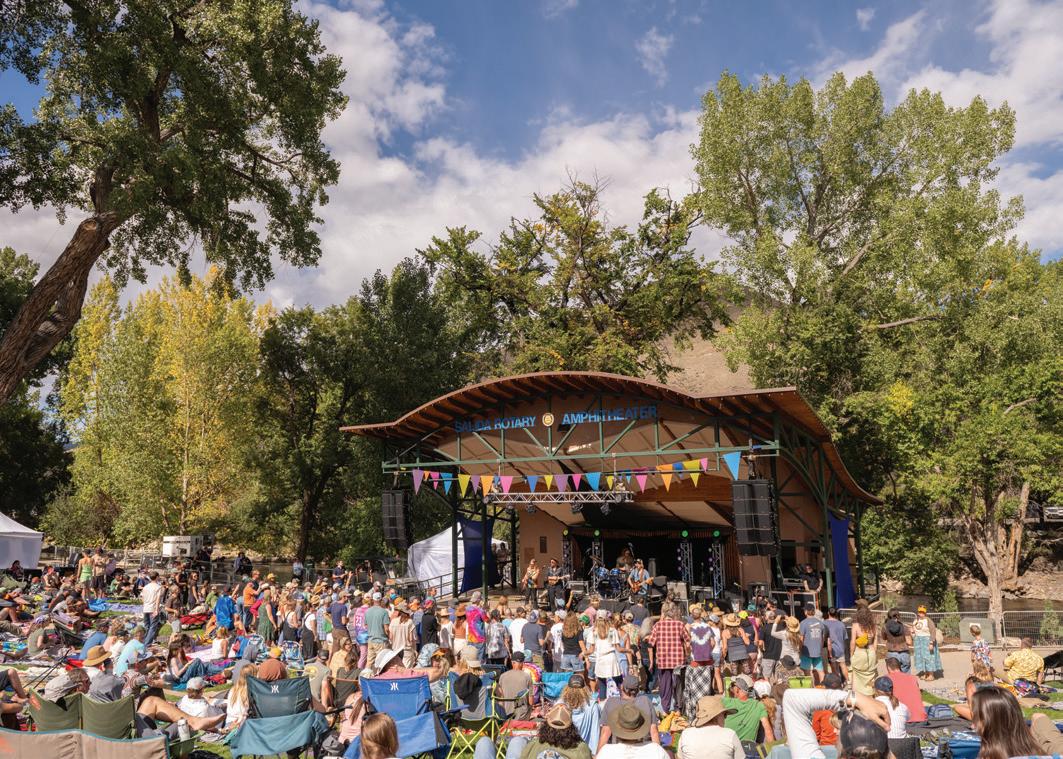
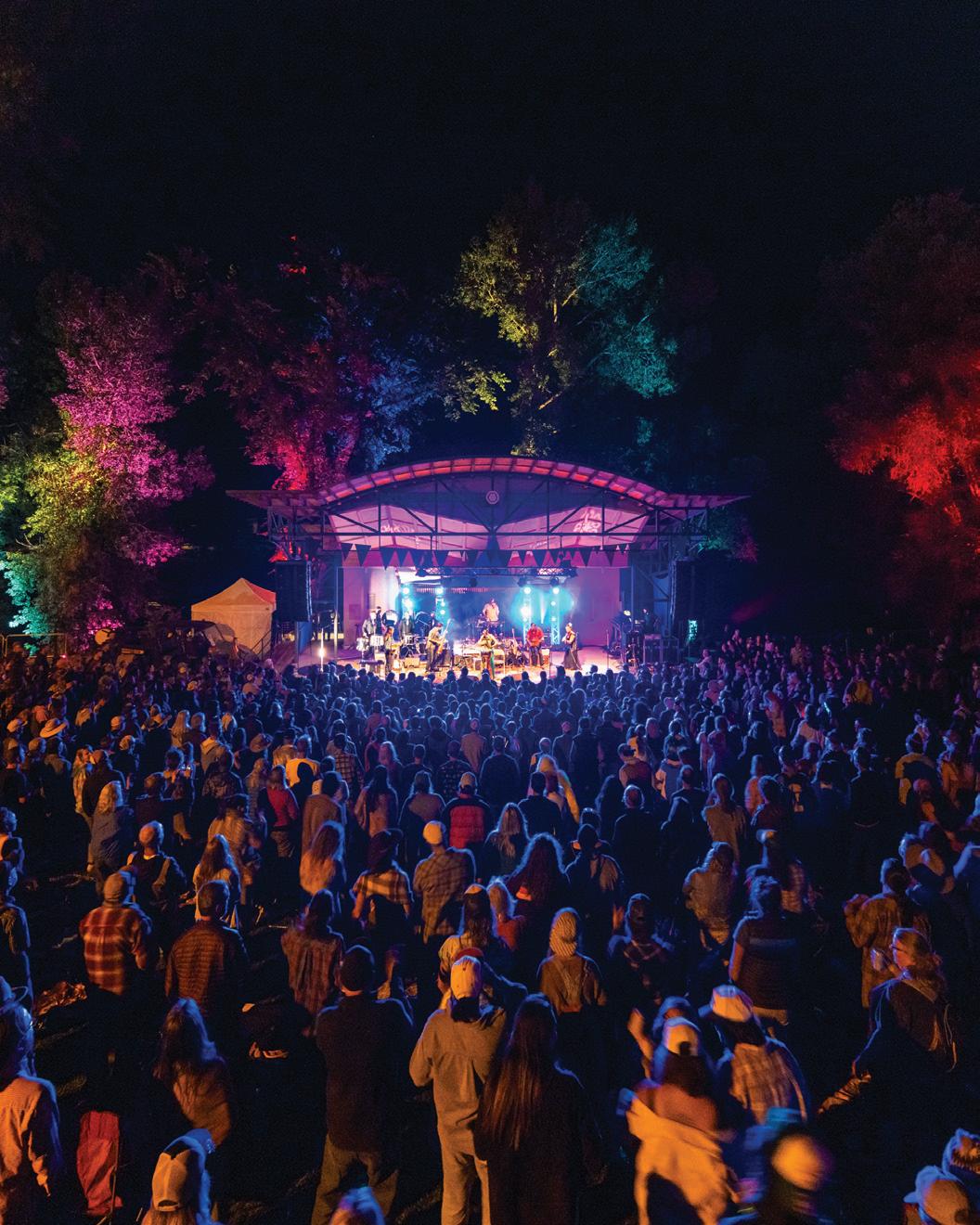
These festivals ooze Colorado
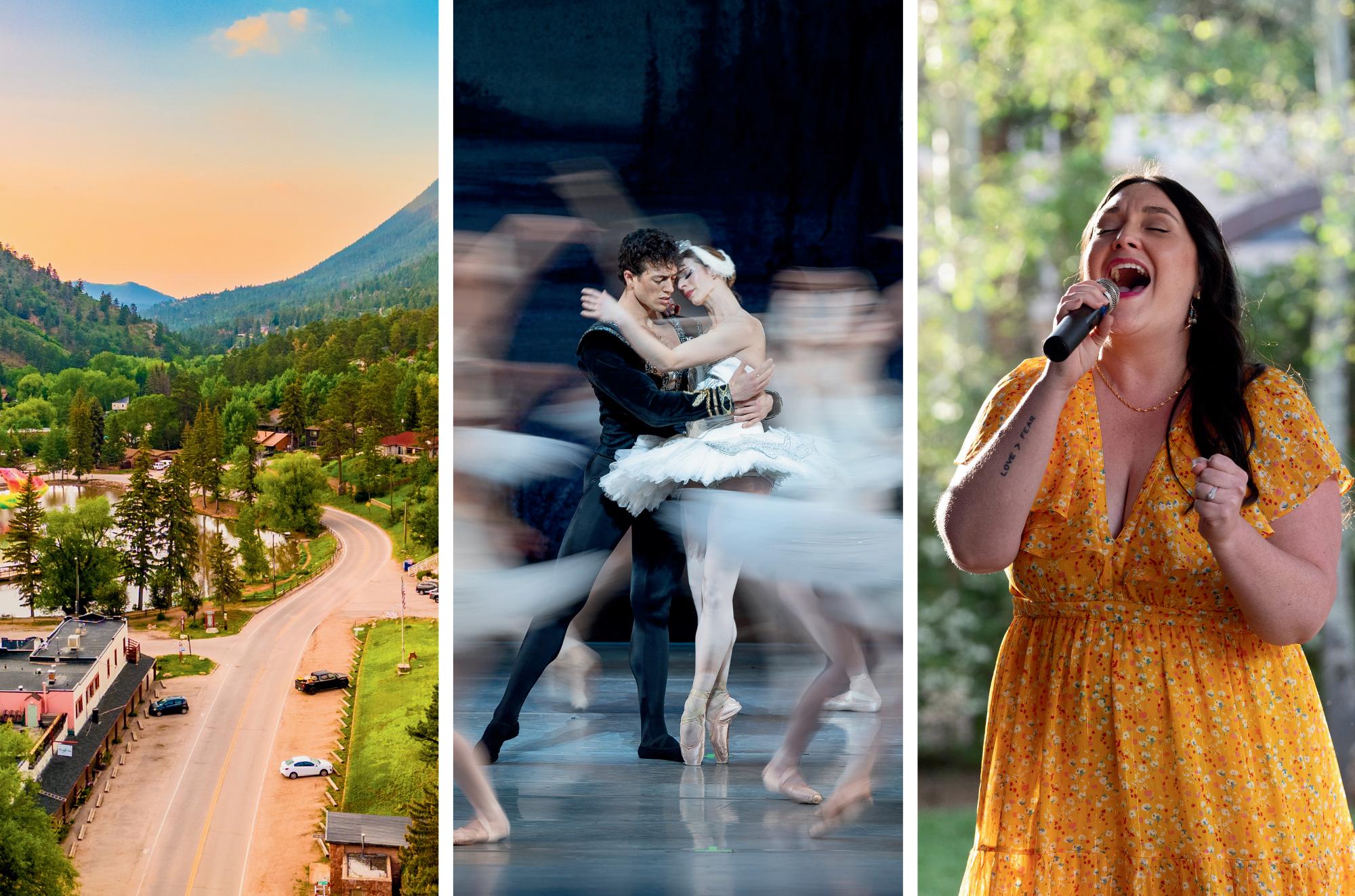
Plan your summer calendar around fun, one-of-a-kind events. 30
Tis the season for musical acts
Check out some of the prized names coming to iconic stages. 64
Eateries worth tracking down
Seven hidden gems serving quality food in Colorado Springs. 59
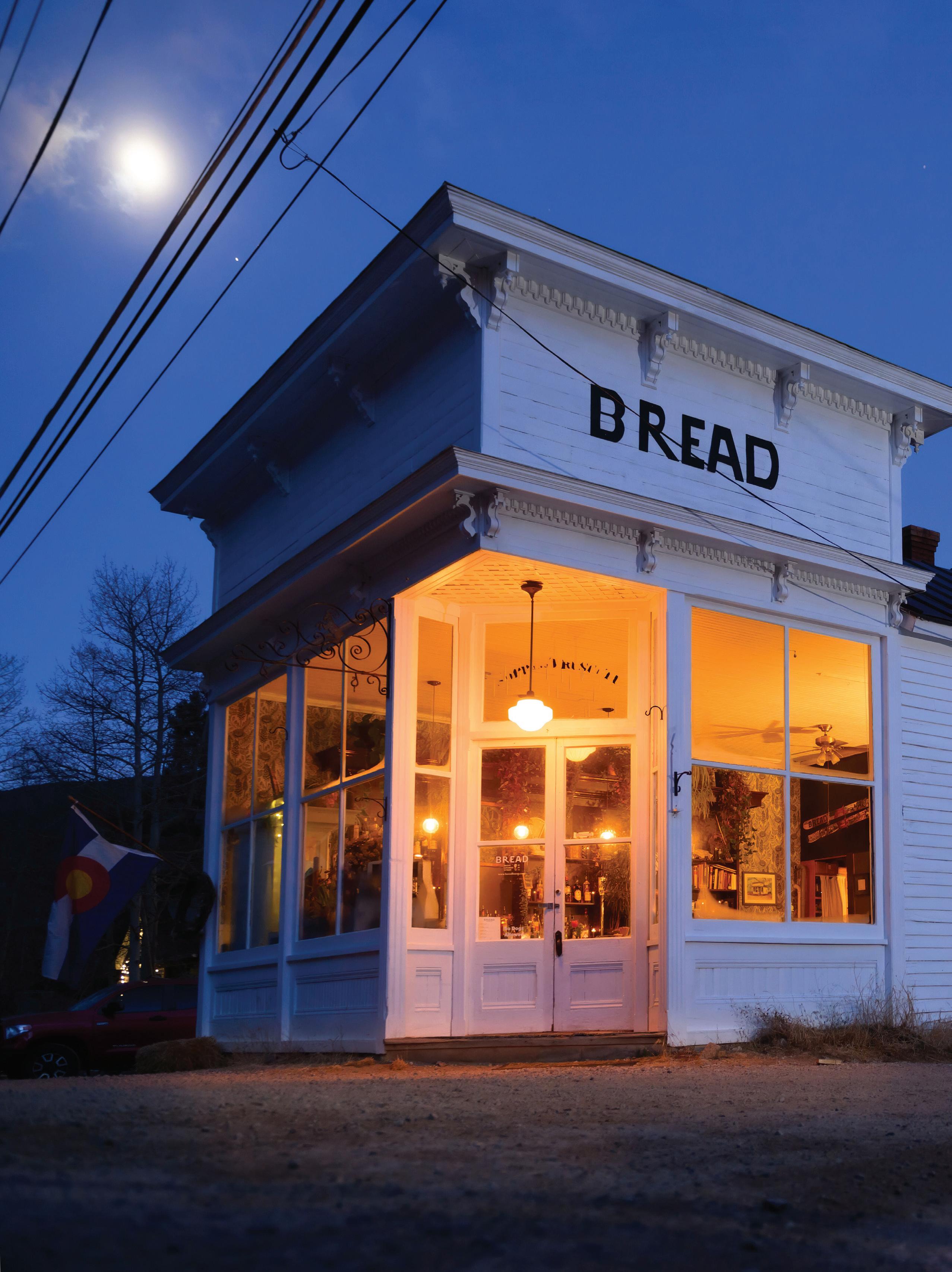
Cocktail bar in a prized setting
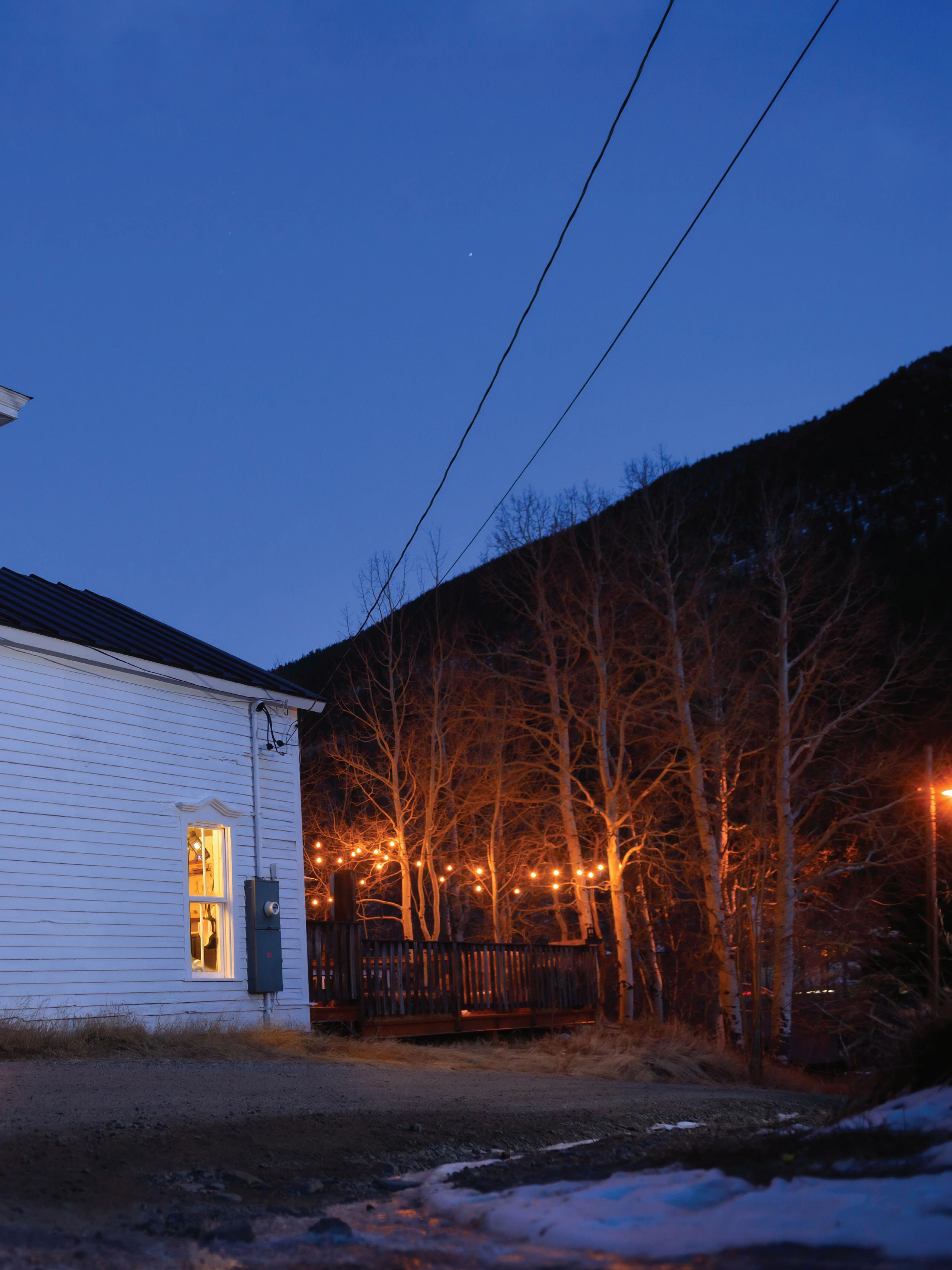
Former bakery in mountain town is now a perfect hideaway. 66
Ice cream isn’t same old treat
Denver artisans find a niche with pint-sized sweet creations. 80
Elevated
byway open once again
Scenic road up Mount Blue Sky welcomes guests after closure. 32
Blooms
coming to high country
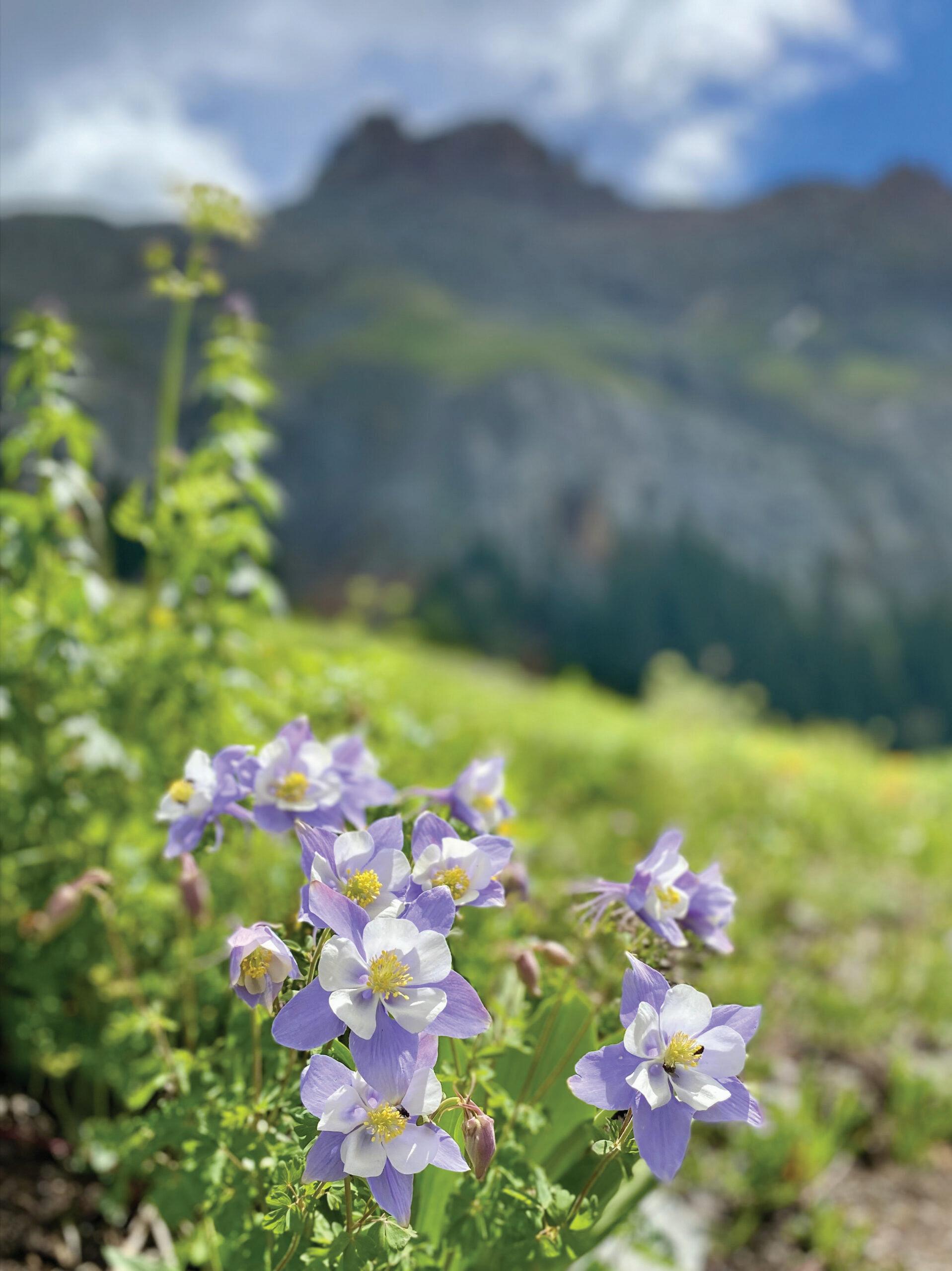
A handful of locations that boast incredible wildflower displays. 72
Hang
on tight, enjoy the ride
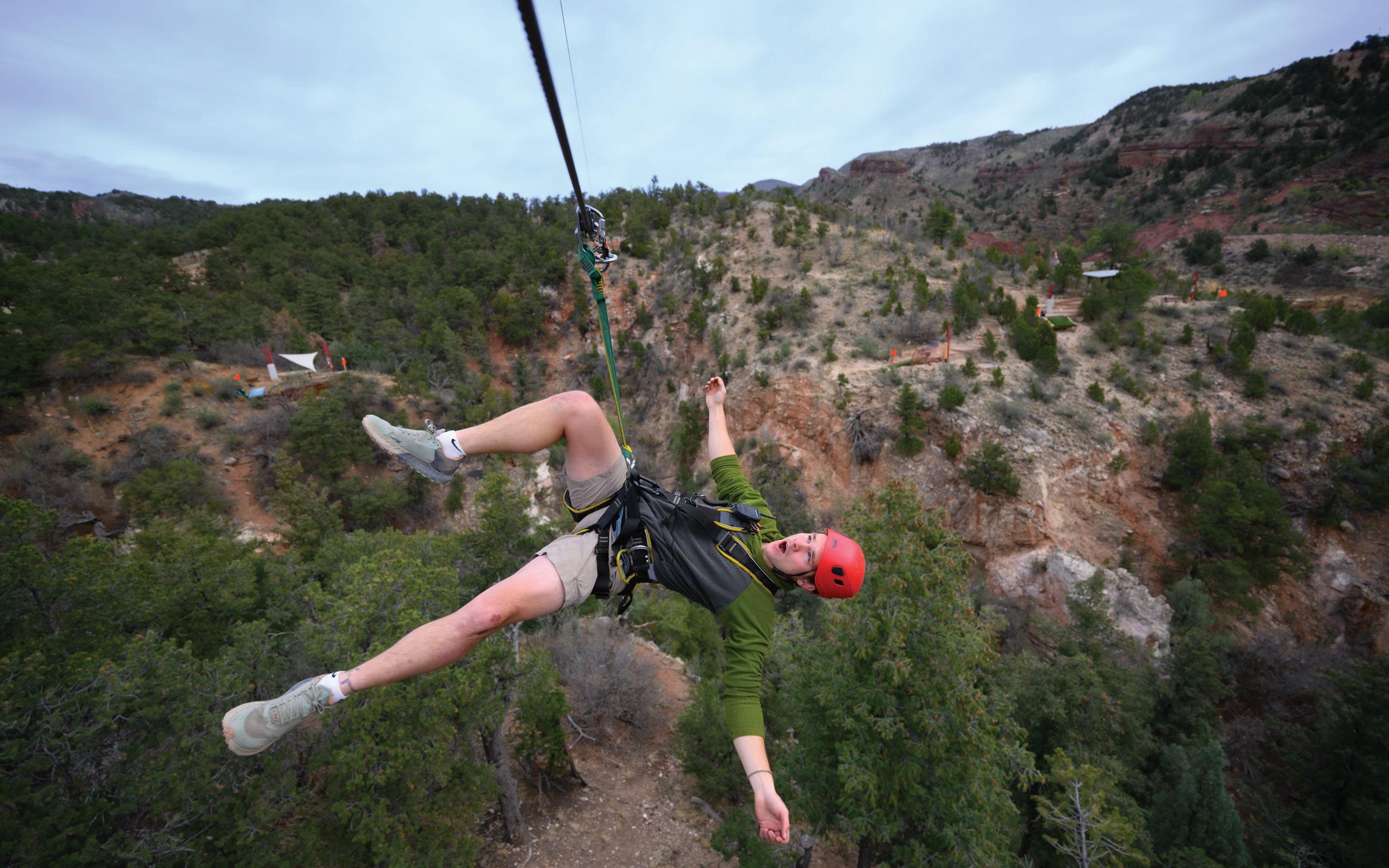
Zip lines littered throughout the state boast thrilling experience. 78
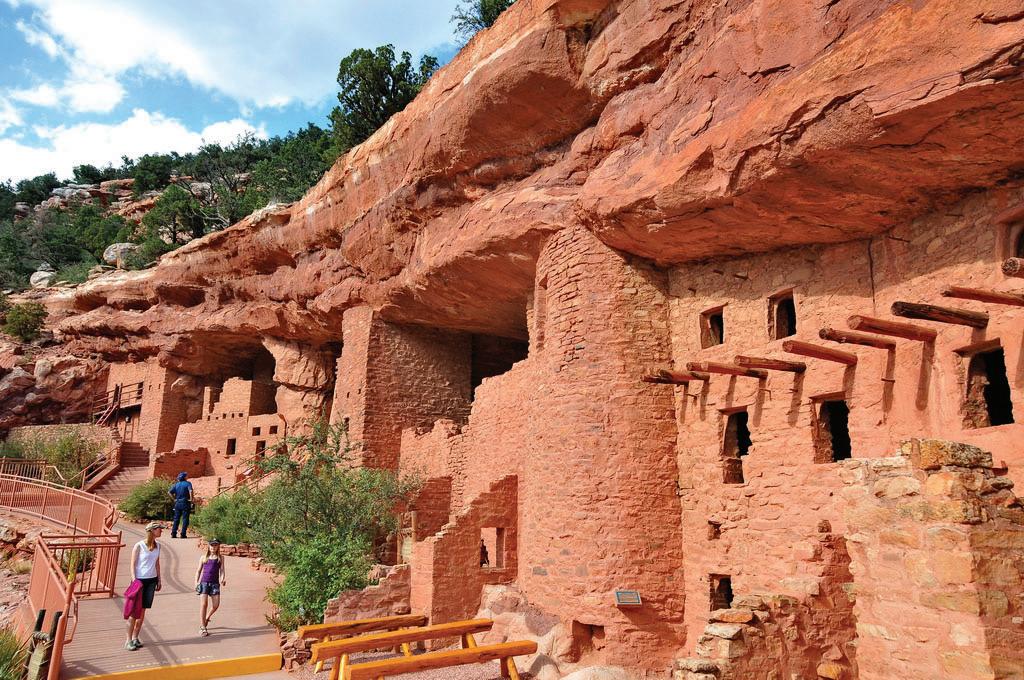
If these walls could talk ... 8
HIGH IN THE SKY
TEXT BY SETH BOSTER PHOTOGRAPHY BY STACIE SCOTT
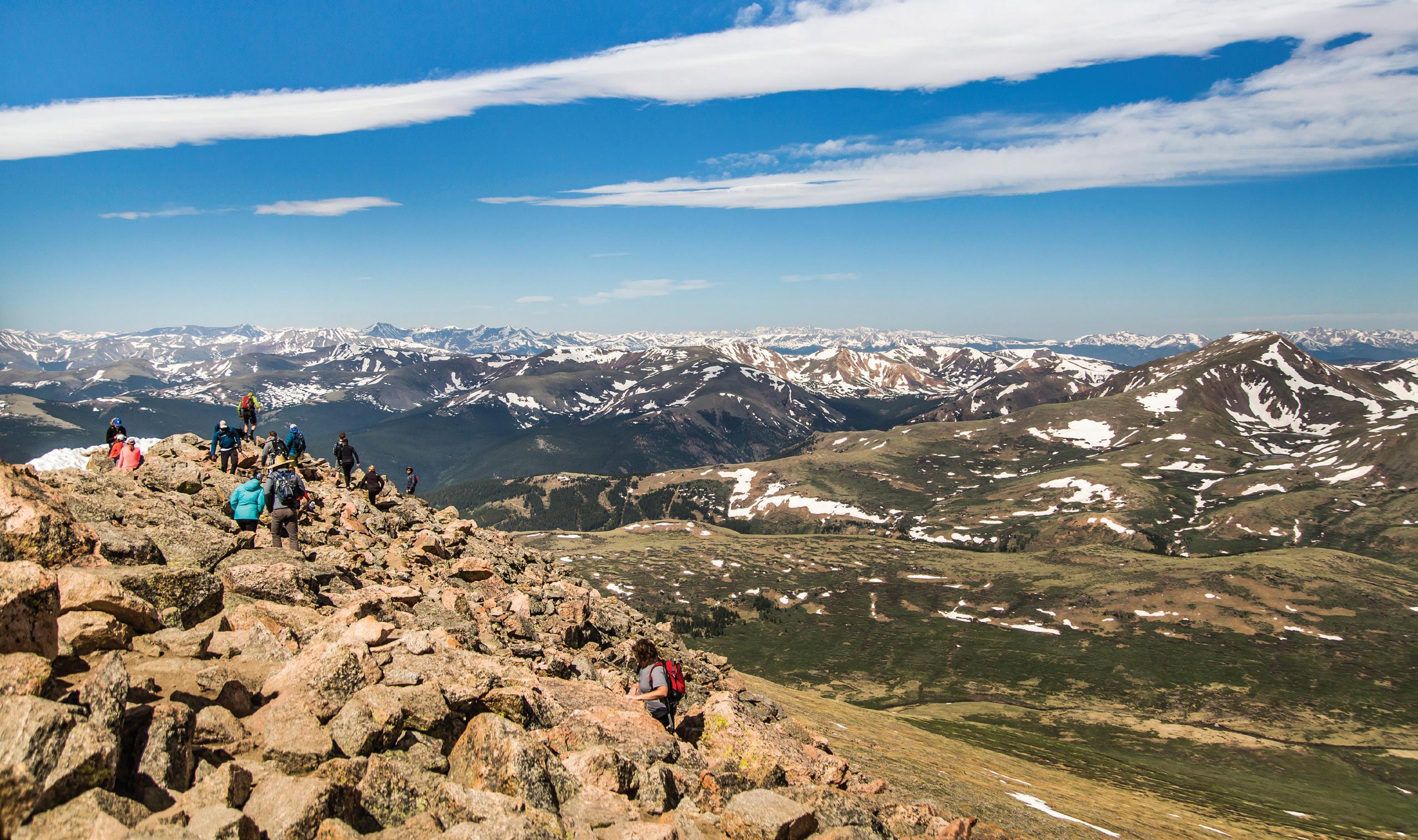
Rare air awaits atop state’s tallest peaks
No 14,000-foot peak could be called easy.
As we heard once from Colorado Fourteeners Initiative executive director Lloyd Athearn: “Understand that these are extremely high mountains, and even doing some of the ‘easiest’ fourteeners involves a lot of physical ability.”
Some are more forgiving, however — often called “beginner” peaks. Breaking in this summer? Here are a few to consider:
Mount Bierstadt: Many Denverites are made fourteener lovers from Bierstadt. That is thanks to the mountain’s proximity to Interstate 70. One exits for Georgetown and proceeds up Guanella Pass to the start of the trail, which remains well-defined until some brief Class 2 scrambling toward the top. Bonus for beginners: The parking lot is in view throughout the hike.
Grays and Torreys peaks: While many start their fourteener bagging journeys on Bierstadt, many more start by ticking off two. The scenic summits of Grays and Torreys are connected by a fairly mild ridge. Also conveniently accessed off I-70, the route is considered Class 1.
Mount Sherman: Here is one granting you relief from I-70, taking you to a less busy range beyond Fairplay. To be clear, Sherman is often still busy. That is because it is relatively friendly for a fourteener. And proper vehicles can drive to a starting point close to 12,000 feet.
Handies Peak: Handies is a more adventurous option deep in the San Juan Mountains of southwest Colorado, reached along the rough and rugged Alpine Loop outside Lake City. The drive is not exactly for newbies, but for those getting their fourteener legs under them, Handies is recommended. In his seminal “Colorado’s Fourteeners” guidebook, Gerry Roach ranks the standard route a “classic” and considers it Class 1+.
Mount Bierstadt.
ALIVE AGAIN
TEXT BY SETH BOSTER PHOTOGRAPHY BY CHRISTIAN MURDOCK
Historic Hotel St. Cloud serving as centerpiece of Cañon City revival
ight years ago, Stan Bullis stood here looking at the natural beauty: the mountains sought by hikers and bikers and rock climbers, the Royal Gorge and Arkansas River sought by boaters and anglers.
And he stood here looking at dark, vacant buildings up and down Main Street.
“It was sort of mystifying,” Bullis recalled.
It seemed to him that Cañon City had everything a thriving mountain town in Colorado had, minus the thriving part. Equally mystifying to Bullis after all his years living in Denver: “I didn’t know where Cañon City was.”
Maybe there were too many people like him, he got to thinking. Maybe people on the Front Range were only coming and going here.
Yes, that was Bullis’ ultimate conclusion — explaining why businesses always seemed to be coming and going:
“The only reason people aren’t staying here is because they’ve never been given a reason to stay here.”
Now, on a transformed corner of Main Street, they have a reason.
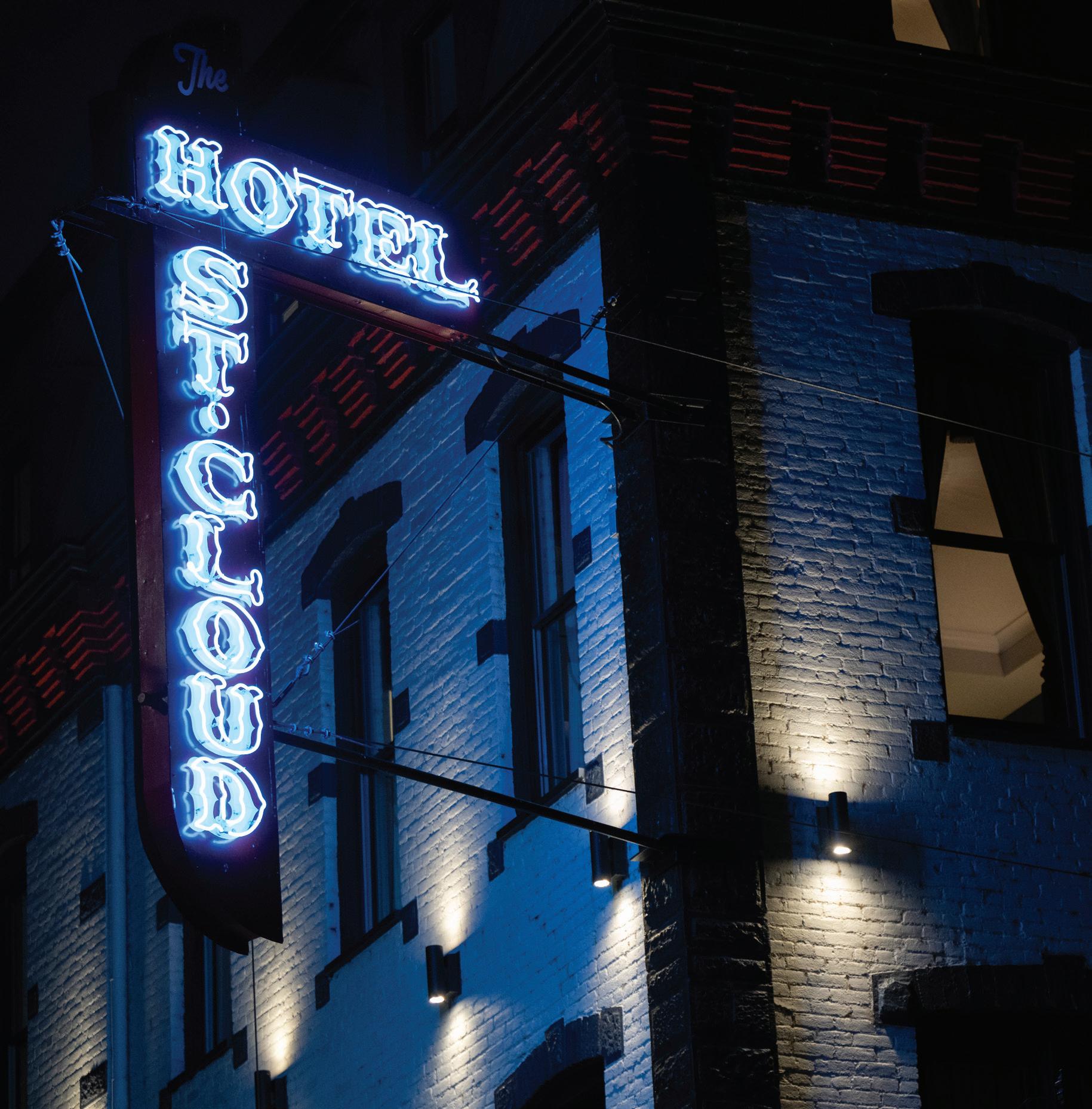
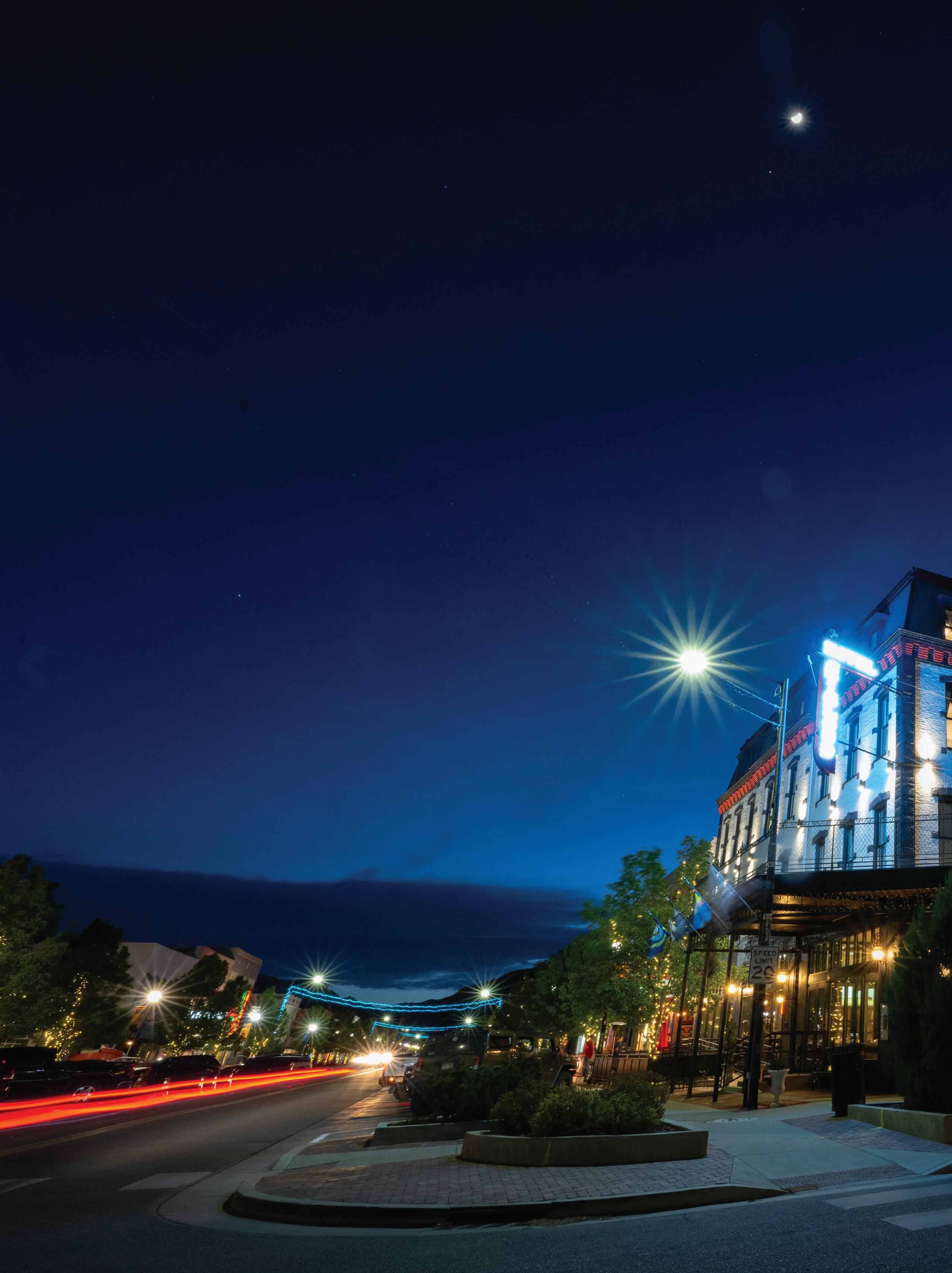
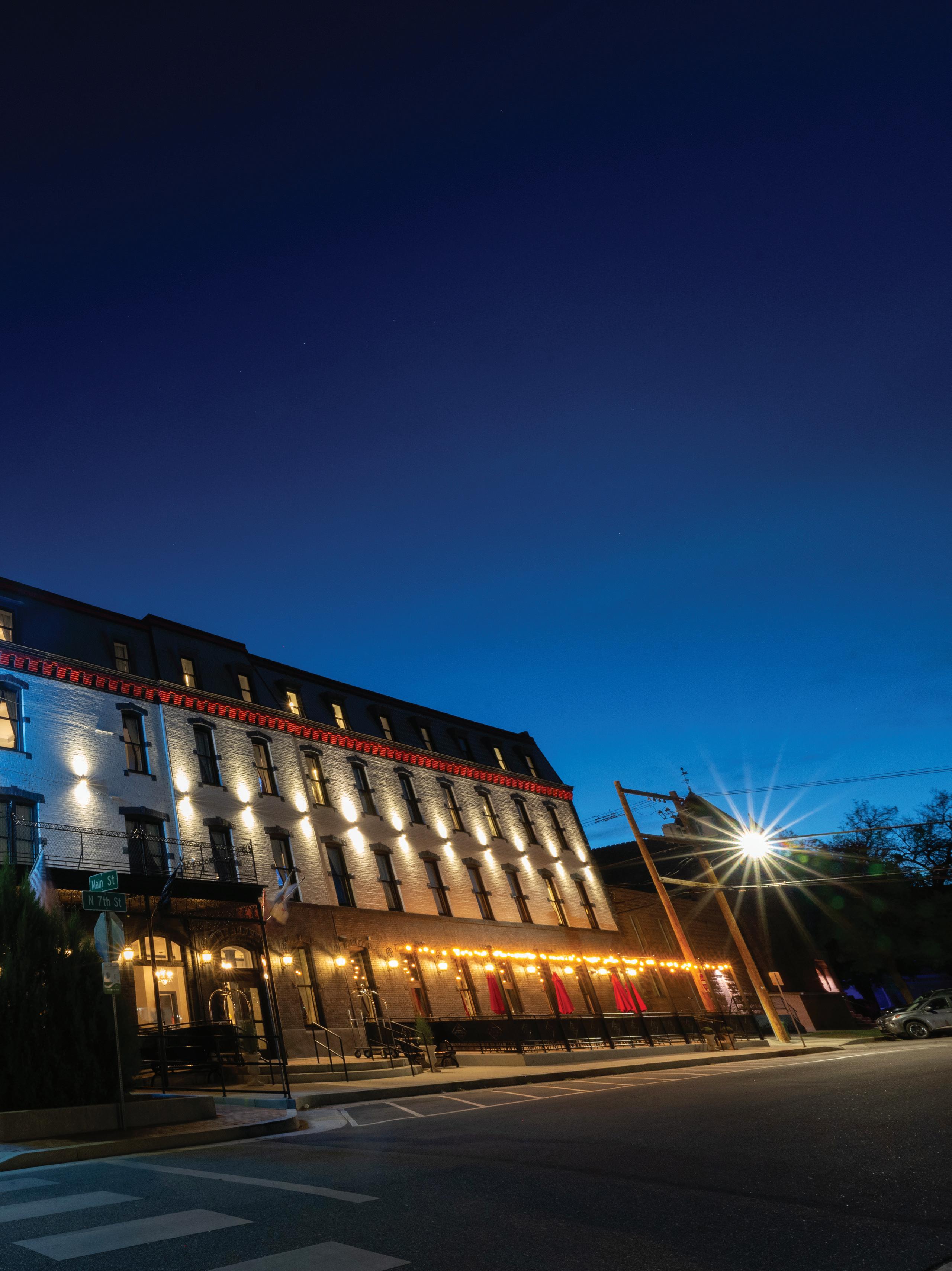
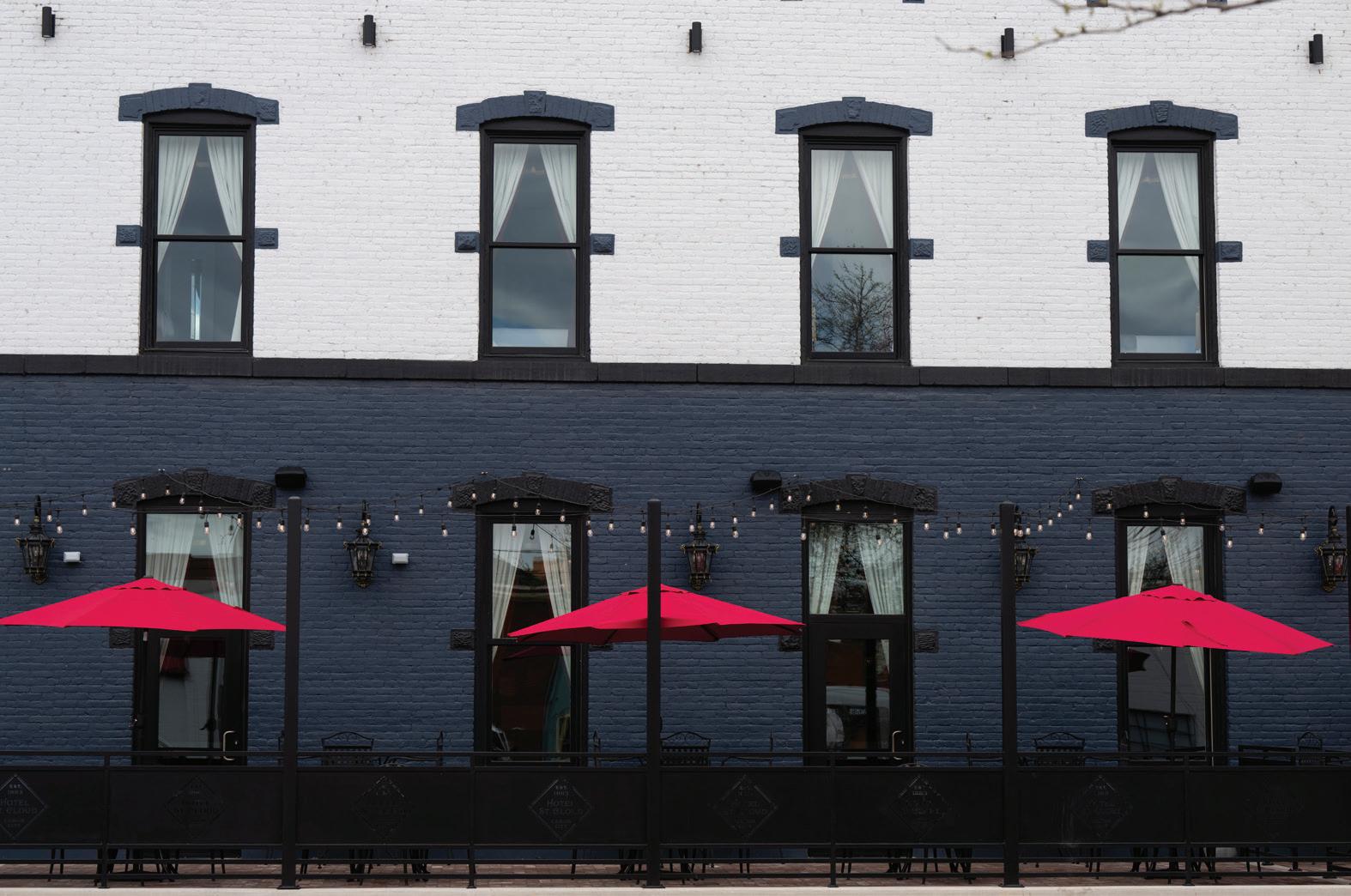
Where the historic Hotel St. Cloud long crumbled and leaned, it now stands regal and proud, its former glory reclaimed.
Under Bullis’ vision, the 1887 landmark has been reborn. July will mark a year open after decades closed.
“It’s pretty impressive to see the life it’s brought,” said Greg DiRito, a Cañon City native who owns a restaurant on Main Street.
This once-silent, once-dilapidated corner now bustles with visitors who have been increasingly drawn to Cañon City, where more than a hotel has been transformed. Trail options have steadily expanded, officials continue talks about riverfront development and outsiders who once only knew this town for prisons have been moving in.
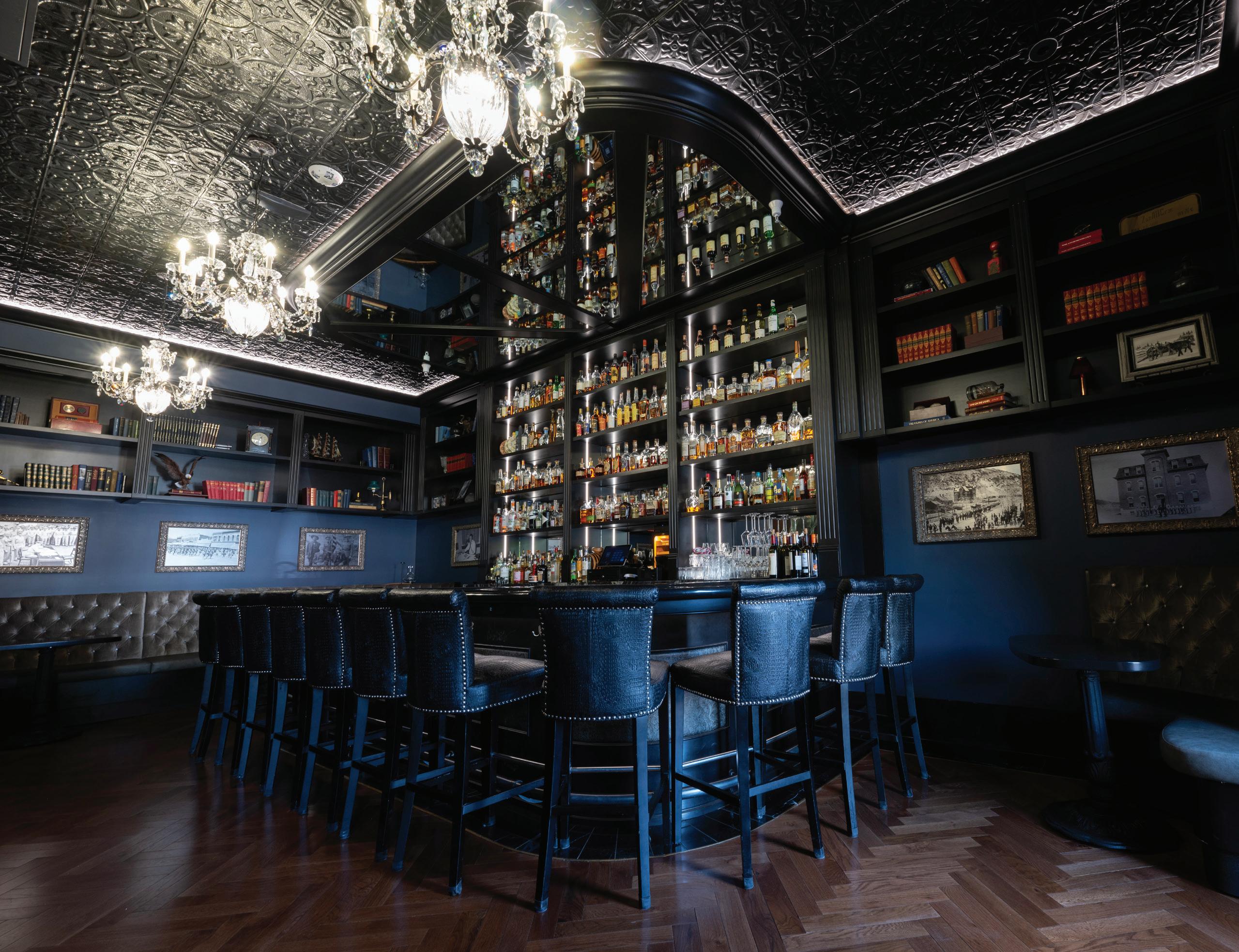
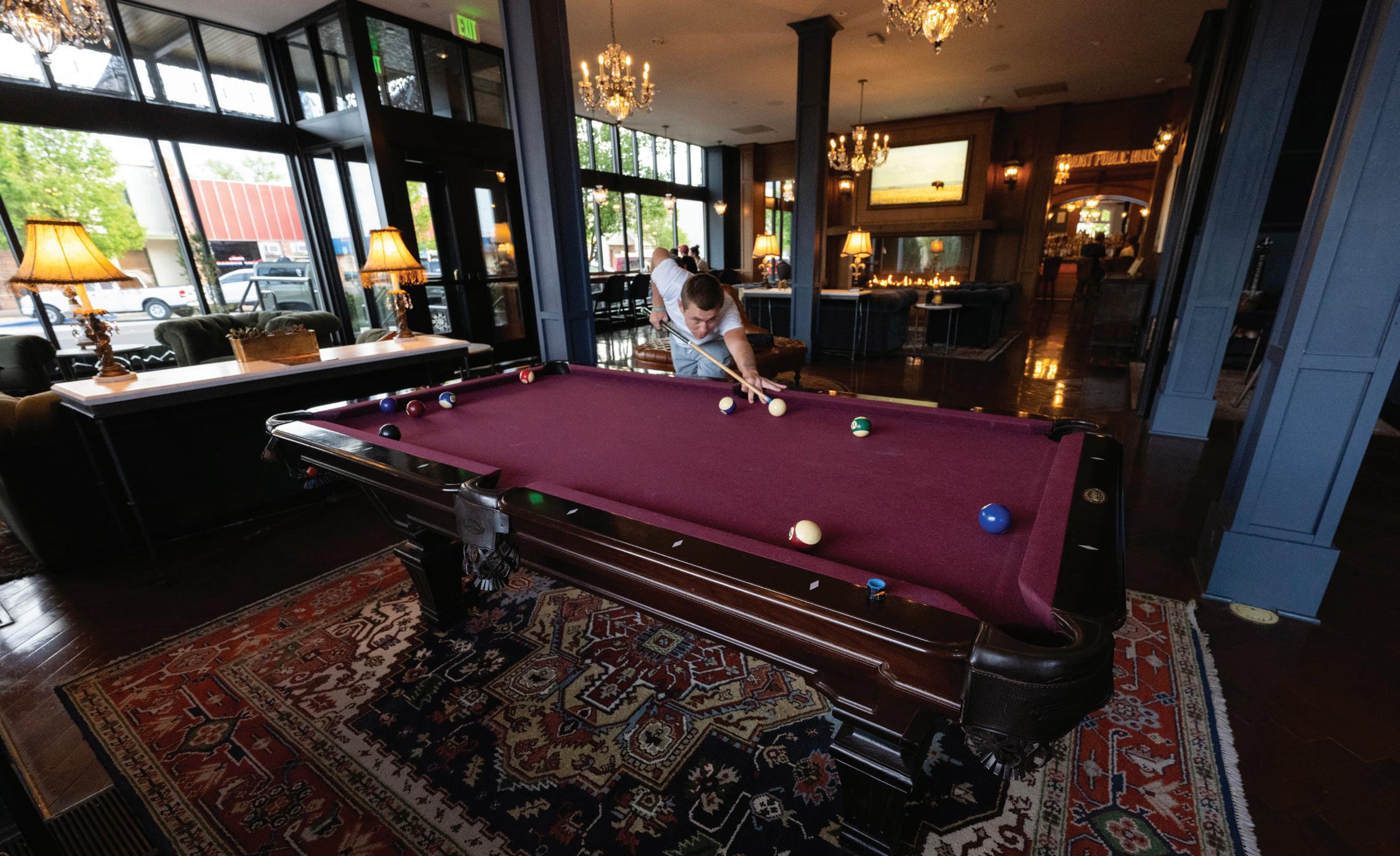
At this corner of Main Street and 7th Street, locals and tourists have been converging at the adjacent, hotel-owned coffee shop and at sunny patios perfect for cocktails. Or people grab a drink inside, eating as
well at the bar with its original wood arches or at the sleek, cozy restaurant beside the lobby of shimmering chandeliers, hardwood, marble and velvet. Against the back wall of the restaurant, an unassuming bookshelf swings open to a dark and glassy, speakeasy-style lounge.
Surprises abound at Hotel St. Cloud. That’s part of the appeal, according to general manager Lindsay Wyss.
“People want something to discover, they want to feel like they found it,” she said. It’s like how a friend finds new music and eagerly shares it, Wyss said: “It’s that same idea. ‘I found this hotel in this random little town in Colorado, and you gotta check it out.’”
Check it out — “a stately hotel with a storied past,” by its own billing.
The story actually starts elsewhere in southern Colorado, in the old mining town of Silver Cliff. Hotel St. Cloud opened there in 1883.
“Of course, Silver Cliff was having a silver boom,” Bullis said, “and then it busted.”
Cañon City, meanwhile, was booming. The railroad boosted an economy fueled by coal mining, farming and the state penitentiary. Off the hotel went on that railroad, brick by brick, to be rebuilt in but one stunning chapter of a storied past indeed.
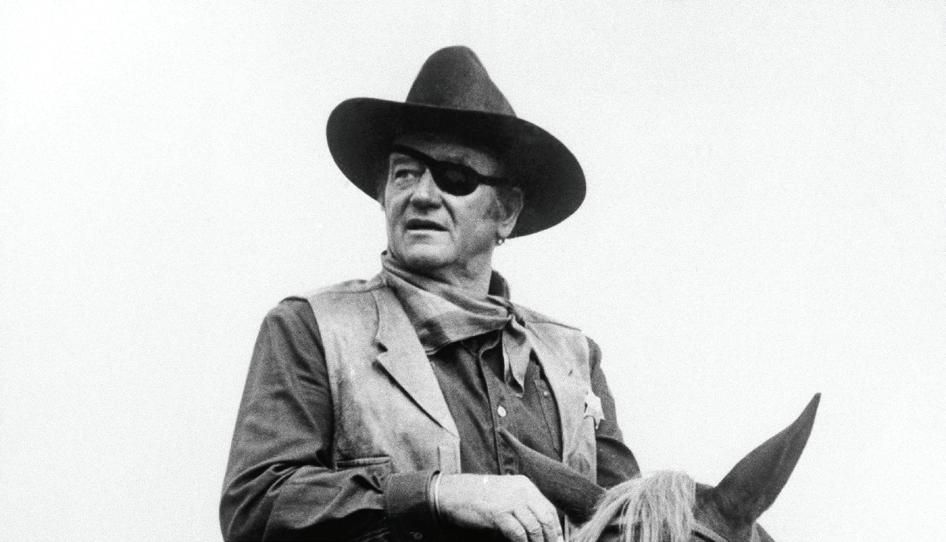
Other chapters feature movie stars. Stars of the silent era are said to have stayed at Hotel St. Cloud during the early 1900s, followed by the cowboy likes of John Wayne. “Stagecoach” and “True Grit” were among Western films that were shot around the Royal Gorge.
In between those colorful scenes, a darker one played out.
In the 1920s, the Ku Klux Klan infamously took root in Cañon City, rising against the influx of Catholic Italian immigrants. Klansmen made Hotel St. Cloud
their headquarters. They stashed their funds behind a vault door still seen today.
Other historic aspects also remain: the wood railing and carpeted staircase ascending four floors; the stained glass above the room doors; the ceiling mimicking old tin.
The inspiration, Bullis said, was The Ramble Hotel in Denver’s River North Art District, built to be hip yet feel historic. “It was built new to look old,” he said.
The Ramble Hotel was new, while Hotel St. Cloud was old, requiring a historic restoration of the sort that Bullis’ Unbridled Companies achieved at Denver’s Grant Street Mansion and Bosworth House. These ventures expanded the organization’s worldwide event space portfolio.
“Then we were like, ‘Let’s tackle a hotel,’” said Wyss, Bullis’ longtime assistant.
A hotel in a town on the verge of potential that Bullis observed. He bought the St. Cloud at auction in 2018.
DiRito, the Cañon City native and nearby restaurant owner, was sitting on the City Council around that time.
“Everybody was pretty skeptical,” he said.
Here was another outsider with another “grandiose plan,” as DiRito put it — fairly common over the decades into this century, as the hotel sat dark and the town struggled for an economic footing beyond the state and federal prisons.
Bullis came up with a careful pitch.
“Our whole vision was hope through hospitality,” he said. “Hope, meaning give the town a reason to believe in something beyond prisons and all that. If we create the right kind of hospitality experience, people would come because there’s so much to do here, and they would stay and choose to spend their money here.”
First, though, came the restoration.
Bullis estimated the project at $8.8 million. “We ended up at $20 million,” he said.
While Bullis carried confidence from those restored mansions in Denver, the hotel proved different. Much different.
“We were in way over our heads,” he said. “We had no business doing a project like this.”
Asbestos wasn’t exactly surprising; there were three
rounds of removal. More surprising was the river rock foundation that was hardly a foundation.
The ultimate surprise showed up after pulling out lath and plaster from a wall.
“We came back the next day, and the hotel had sunk eight inches,” Bullis said. “We had a massive problem.”
The building needed to be jacked and then suspended in a complex job that led to another complex job: The walls needed to be fortified and essentially pulled in before falling down.
“Somewhere in there, we ran out of money,” Bullis said.
In 2021, he sent a letter to the city pleading for help. Help came in the form of state grants and tax credits.
And help came from locals — those who plowed and shoveled around the hotel, those who kept a watchful eye out for vandals, another who did the woodworking and another who did the bathroom tiling. They are among several who now drink for cheap in the speakeasy, including guys who cut hair at the barbershop nearby.
As the restoration seemed in doubt, “we were just trying to believe in the town,” Bullis said. The town, he said, had a way of returning that belief.
And now it seems Main Street is returning to a kind of bustling era that first met Hotel St. Cloud in the 1880s.
Bullis sees more storefronts filled. He sees more outdoor destinations being realized and more cars pulling off to park downtown. Last year, the county reported record lodging and sales tax collections — a sign of people staying and spending money, as Bullis hoped.
Those staying at Hotel St. Cloud can flip through an inroom booklet on local history. Historian Larry Thomas Ward is quoted on the first page:
“Throughout good times and bad, it seems the St. Cloud Hotel has always been a valued and vital member of the community, long in our memories and historically irreplaceable.”
The pages flip through the eras — eras of mining, railroading and farming, of moviemaking gone by and sightseeing still to do — before a message at the end: “The next chapter is yours to write.”
WE TRAIN ALL YEAR FOR THIS
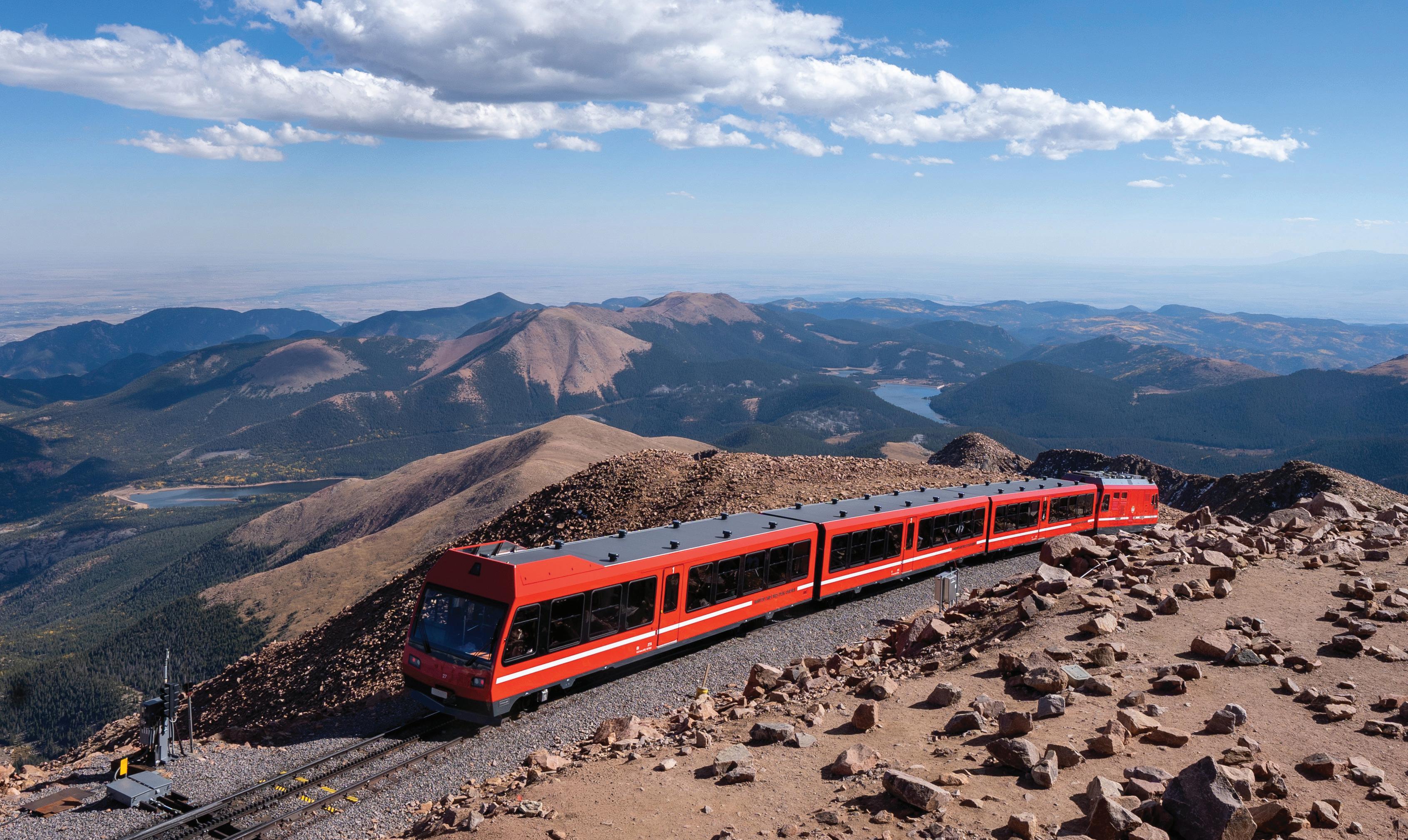
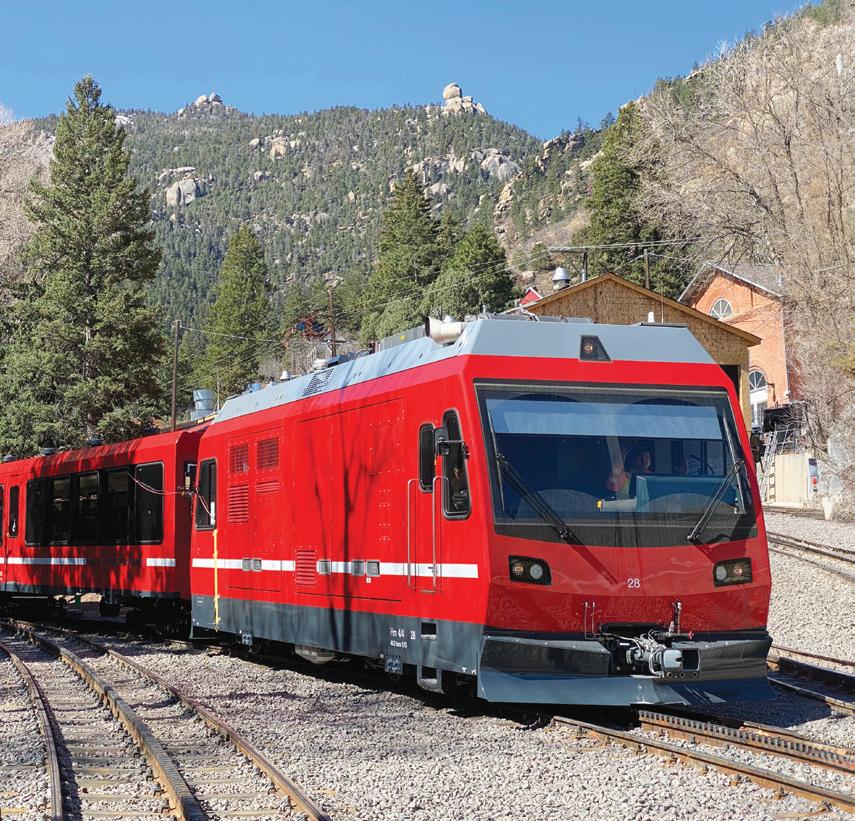
All aboard the most state-of-the-art cog railway in the world. While the entire experience of riding the railway has been enhanced, the journey itself and the iconic, breathtaking views as you ride to the summit of America’s Mountain remain the same. Visit CogRailway.com to purchase your e-ticket today.
NEW LEASE
Mellow Moon. Stephanie Buehler
ON LIFE
TEXT BY DALIAH SINGER
Venerable motels transformed into boutique accommodations
Forget the old, stodgy motels of the last century. These roadside destinations are being reimagined as boutique, yet still affordable, accommodations. Here are nine of our favorites across Colorado.
All Inn Hotel, Denver
The four-story property at the corner of East Colfax Avenue and Milwaukee Street has been reinvented into a mid-century modern boutique hotel with 54 rooms, a cozy lobby with terrazzo floors and, soon, a relaxing wine garden out back. Originally built in 1959, the property stays true to the era with vintage bar carts in each of the three suites, earthy hues that change depending on the floor and a menu of classic cocktails suited for the “Mad Men” era.
While you’re there: Belly up to the curved bar at Fino, the Mediterranean–inspired lobby restaurant, for one of the best margaritas in town (courtesy of hospitality vet Steven Waters) and shareable items such as anchovy toast.
Amigo Motor Lodge, Salida
Minimalist Southwestern chic is the best way to describe this redone 1958 motor lodge just off U.S. 50. Each of the 17 queen and king rooms has a slightly different aesthetic, but expect modern comforts such as Tuft & Needle mattresses and Malin+Goetz bath products. Adventure travelers will love the outdoor hot tub, dog-friendly rooms and option to stay in one of the vintage Airstream trailers.
While you’re there: In the colder months, steer toward Monarch Mountain, which debuted 377 acres of lift-served terrain with its No Name Basin expansion in January. In the summer, rafting the Arkansas River is a must.
or
www.latigowinery.com
facebook.com/latigowinery
@latigowinery
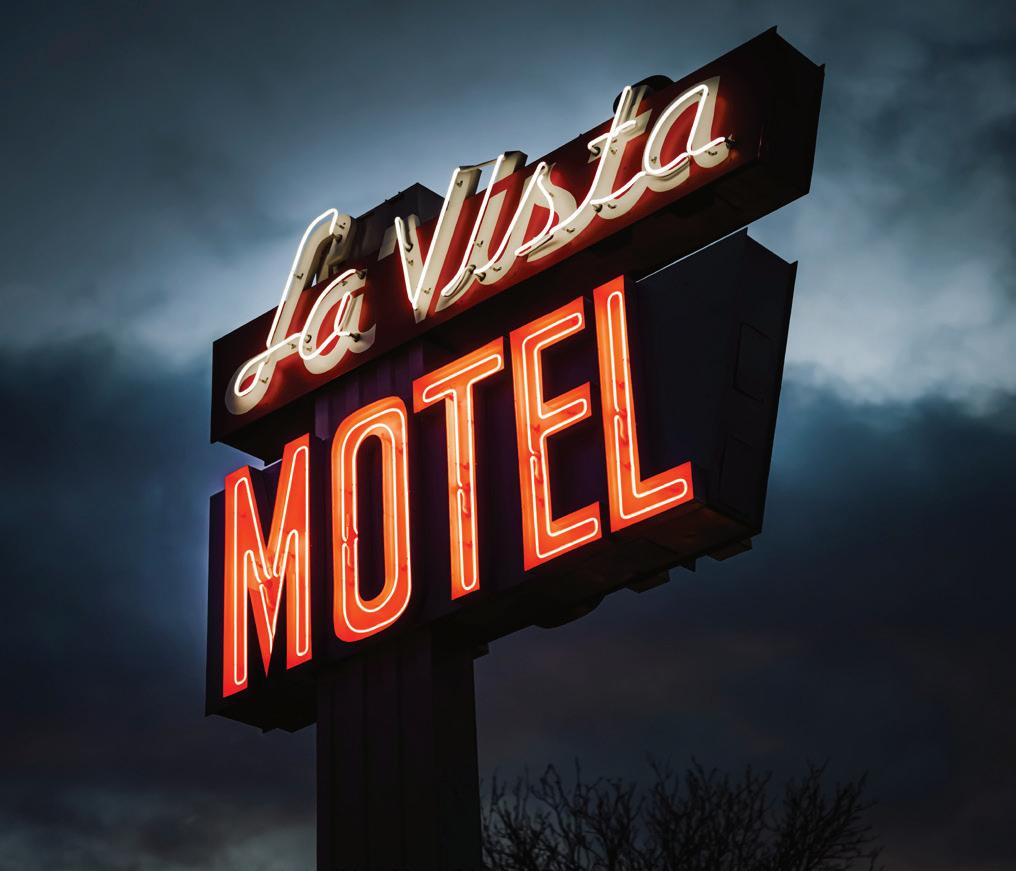
La Vista Motel, Denver
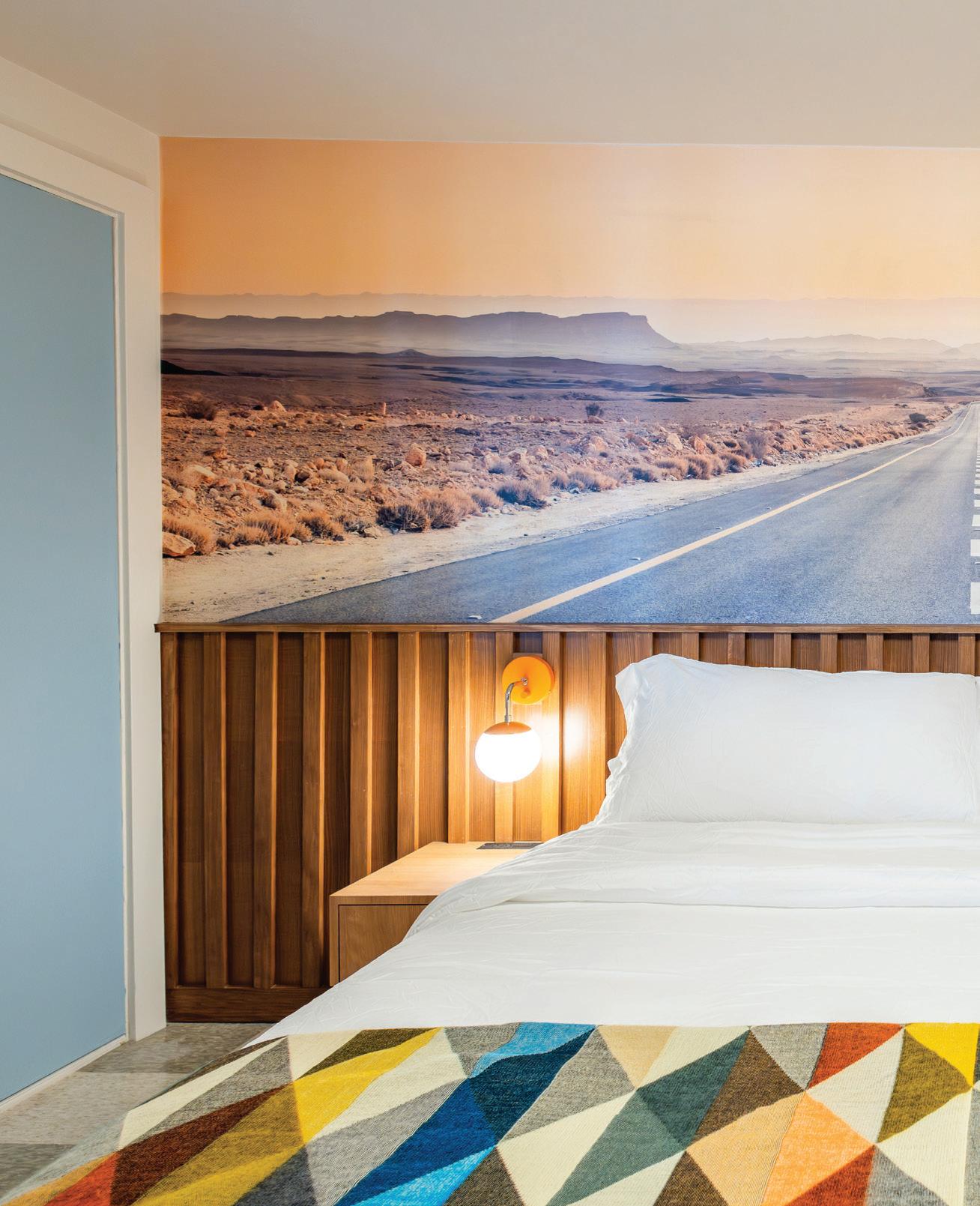
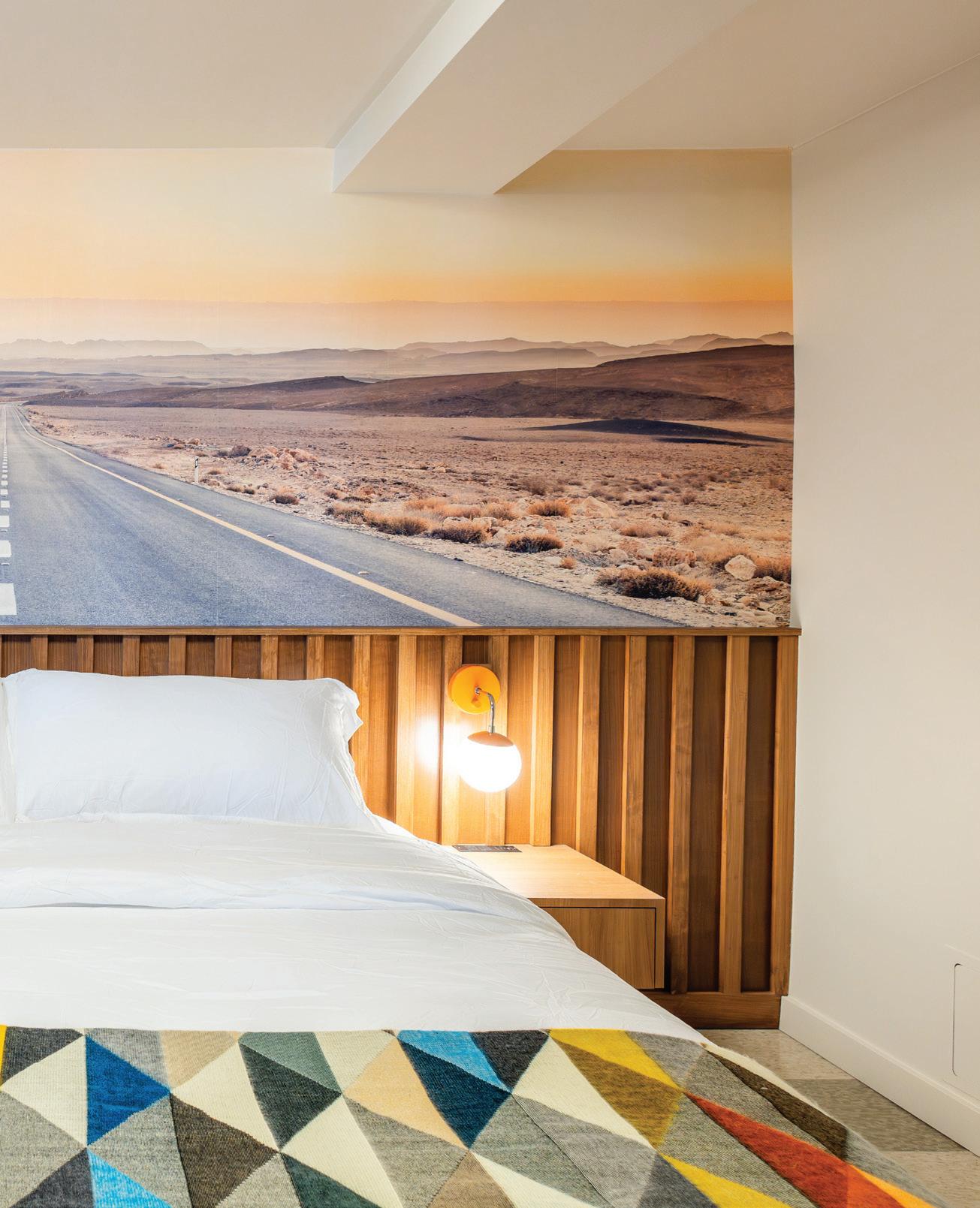
One of East Colfax Avenue’s famed neon signs is shining bright once again: the 1956 property — which was recently added to the National Register of Historic Places — and its 23 rooms were restored with a nod to the 1960s (antique furniture, tiled bathrooms in pastel hues) alongside modern amenities and artistic flourishes, including colorful, handwoven alpaca blankets on every bed and an exterior mural by Denver artist Emma Friday.
While you’re there: Retreat to Grandma’s Basement, the wood-paneled downstairs lounge at El Piñon, the on-site café and bar, to listen to vinyl with a martini in hand.
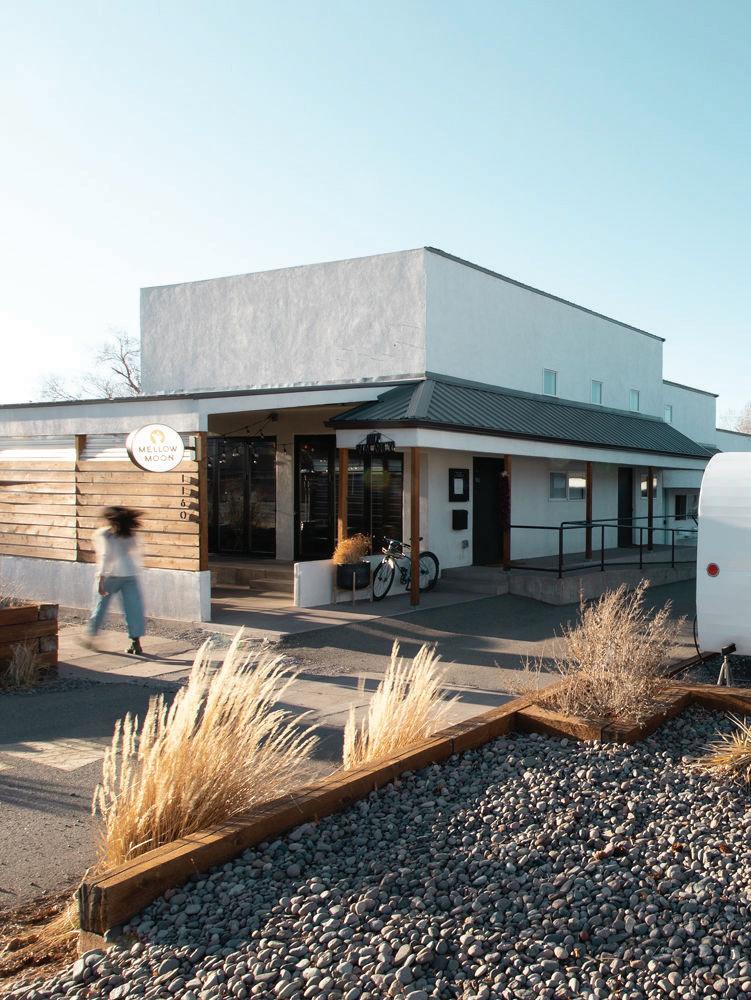
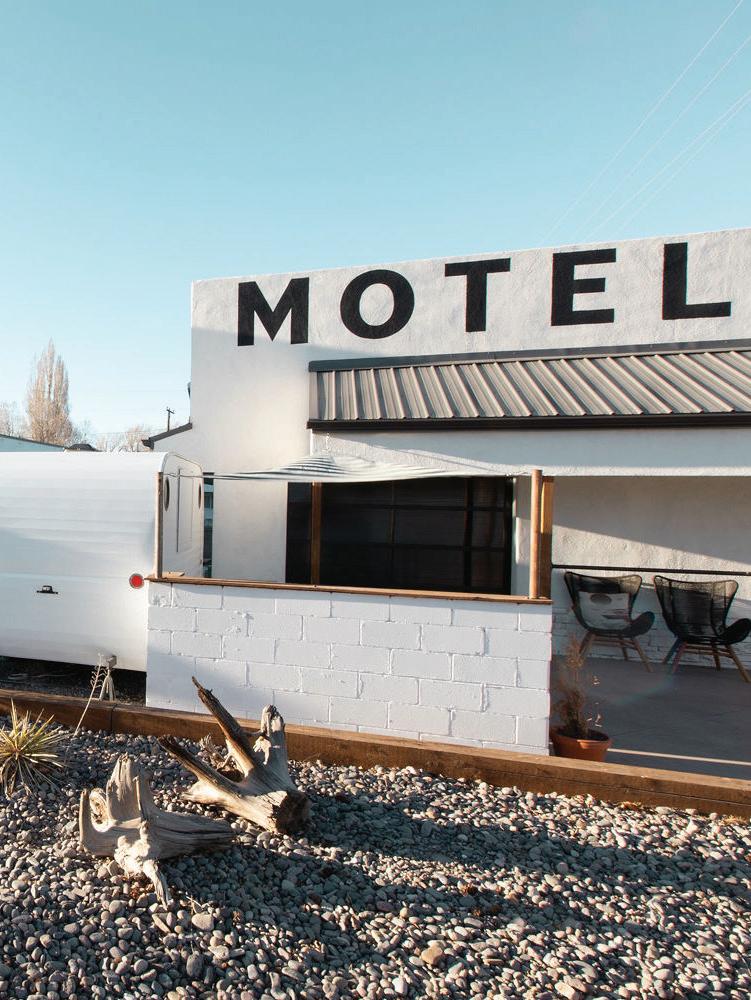
Mellow Moon, Del Norte
From abandoned, 1940s-era motor lodge to 15-room, modern motel, Mellow Moon is a place where locals gather as often as those just passing through the San Luis Valley. The contemporary Americana vibe invites lounging with organic linens, patterned bathrobes, custom furnishings that differ from room to room, southwest-inspired textiles and locally sourced amenities (including an on-site mercantile).
While you’re there: Lunar Lounge, the property’s coffee shop and “bake house” (grab a doughnut if you’re visiting on the weekend), provides the necessary fuel for a day trip to Wolf Creek Ski Area or Great Sand Dunes National Park & Preserve.
Mesa Verde Motel, Mancos
Cowboy core is brought to beautiful, quirky life at this Mancos rest stop. The 16 ground-level rooms (ranging from doubles to a family suite) are light and bright and accented by hand-painted murals. Lean into the fun by booking Room 13, a galaxy-themed king room with outof-this-world decor. A coffee shop and cocktail lounge keep guests hydrated.
While you’re there: Visit the cliff dwellings for which the region is known: the motel sits seven miles from Mesa Verde National Park. Or drive an hour southwest to stand in multiple states at once at Four Corners Monument.
The Nightingale Motel, Pagosa Springs
Standing since 1898, The Nightingale Motel has finally been brought into the 21st century. Each of the 17 modest rooms is inviting without being fussy, and the wood-paneled Cabin Suite feels particularly mountain-esque. Pour-over coffee stations come standard so you can prepare for a day of exploring. In the evening, visit The Neon Mallard Cocktail Lounge for creative drinks and a limited selection of bites.
While you’re there: Soak in the soothing, mineral-rich waters that give the town its name with a day pass to the recently expanded Springs Resort.
Spoke And Vine, Palisade
Explore Colorado wine country to the max, then sleep it off in the comfortable confines of Spoke and Vine, a low-key, pet-friendly accommodation originally built in 1955. We love the complimentary breakfast delivery, cycling-themed decor, spacious bathrooms in all 17 rooms and local tipples available at the Motel Bar.
While you’re there: Mountain bikers have plenty of singletrack to explore, but Colorado National Monument is just as appealing for those who are more interested in driving. For a taste of Western Colorado grapes, don’t miss Ordinary Fellow, from award-winning winemaker Ben Parsons.
The Timberline, Leadville
Situated in the historic heart of Leadville, The Timberline was refurbished in 2021 to serve as a true base camp for the many adventurers who visit the high-elevation town. All of the king and double-queen rooms are pet-friendly; Parachute bedding is a luxury for sore muscles; and there’s an outdoor firepit with free s’mores. There are also four kitchenettes for those who want to do their own cooking and a three-bed, three-bath loft for larger groups.
While you’re there: Plan ahead and book an appointment to shop the full selection of Melanzana’s micro grid hoodies, which are produced in limited supply right in town.
Western Lodge, Steamboat Springs
One of the newer additions to the state’s modern motel lineup (if a property from 1942 can be considered new in any way) is the completely remodeled Western Lodge. King and queen beds welcome singles, families and pups to downtown Steamboat with cowboy-themed art, a modest black-and-white palette and 35 comfortably appointed rooms.
While you’re there: Spend a casual afternoon perusing the boutiques that pepper Main Street (aka Lincoln Avenue) before enjoying a soak at the expanded Old Town Hot Springs a few blocks down the road.
COLORADO CHRONICLE
Memories of a lost town cannot be washed away
Their feet leave prints on the floor of Blue Mesa Reservoir, the land they know as Iola, their town that was here before the dam and flood starting in 1962.
Bob Robbins and Bill Sunderlin were among hundreds of ranching families whose homes would be submerged by Colorado’s largest body of water. Iola was swallowed along with the bigger Sapinero and smaller Cebolla.
The towns are gone, but reminders remain.
In historic drought years such as these, old foundations reveal themselves, along with semblances of fence lines and country roads from days almost forgotten.
Robbins and Sunderlin remember.
The fields of hay. The school. The fishing resorts such as Tex Lodge Ranch, where Sunderlin grew up, upstream from the ranch Robbins’ family homesteaded in the 1870s. Best known was the Sportsman’s Home, which hosted the likes of John Wayne and President Herbert Hoover.
Along with fishing, the railroad put Iola on the map. As boys, Robbins and Sunderlin would load cattle for a nickel, which they’d take to the store for a candy bar.
Along came the prospect of hydroelectricity and water storage for much bigger populations beyond. Along came the machines. “Chopped the trees,” Sunderlin says.
Down went the trees and everything else. Up went the dam.
“They thought this would cover up so fast that nobody would ever come out and see it,” Robbins says.
When the water drops, Iola’s sons return. They leave prints in the ground, soon to fade.
SETH BOSTER
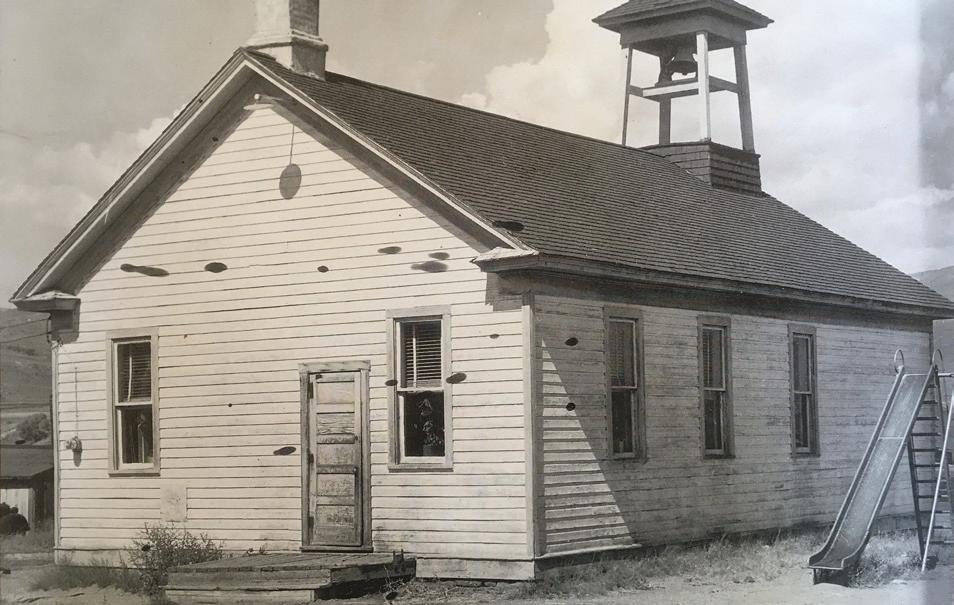
The old Iola schoolhouse in 1949. Bill Sunderlin.
TEXT BY SETH BOSTER ILLUSTRATION BY NICHOLE MONTANEZ
ardship would greet Colorado’s early visitors — the likes of John Frémont, a famed explorer whose party was often outmatched by the harsh elements and treacherous terrain. In the early 1840s, tired and hungry in the stormy mountains west of modern-day Colorado Springs, it seemed the next morning was not promised.
And yet the morning was “beautiful and clear,” Frémont journaled, “and, all the people being anxious to drink of these famous waters, we encamped immediately at the springs and spent there a very pleasant day.”
Those were Manitou’s springs, as they came to be known. To Native people, Manitou was a “Good Spirit” that “breathed into the water the breath of life,” Dr. Edwin Solly wrote as the town rose in the 1870s.
Manitou Springs rose as a health retreat. As historian Marshall Sprague wrote: “Tuberculosis patients came to the Pikes Peak region to get well, not to die.”
And so we still come to Colorado — to get well.
Manitou Springs, of course, was not alone with its mineral waters. There were Glenwood Springs and Pagosa Springs, two more health retreats of that day that remain incredibly popular destinations decades later.
Today, we know Colorado’s benefits to be far-reaching. Is it any wonder the state is regularly ranked as one of the healthiest in the nation?
One list is by U.S. News & World Report, which in 2024 found Colorado’s obesity rate as the lowest among top 10 states: 24.9%. The rate was also noted by World Population Review.
Read the study: “This is likely caused by the high rate of physical activity of the state’s residents, with over 83% reporting regular physical exercise.”
How could we sit with the mountains calling?
One could point to Leadville as the birthplace of the ski industry as we know it. This area was where World War II-era soldiers of the 10th Mountain Division trained for alpine combat, and later returned to establish Aspen, Vail and Arapahoe Basin ski areas, to name a few.
Come summer, thousands are bound for the highest of peaks. But most are bound for some-
thing more mild.
“Most activities occur at local parks and trails, with walking, hiking and picnicking being the most popular,” Colorado Parks and Wildlife reported while announcing findings from a recent survey.
The results: 72% of Coloradans play outside weekly, “with 81% citing it as vital for their well-being.”
But it’s not just the outdoors making us feel better. Not just the fresh air, the views and the sunshine.
It’s a natural way of life seen at several apothecaries around the state. A metaphysical way of thinking seen at other shops dealing crystals and charms. It’s a sense of stillness, seen at regular yoga sessions. It’s a sense of spirituality, seen at Buddhist Drala Mountain Center in Red Feather Lakes, or any number of churches in Colorado Springs, which came to be called the “Vatican of the West” amid the evangelical movement of the 1980s and 1990s.
On the southern Front Range, a former campground represents something else. Squirrel Creek Canyon is the site of what the U.S. Forest Service considers its first developed campground, the creation of Arthur Carhart in 1920. Just as Colorado could be called the birthplace of Forest Service camping, it is also often called the birthplace of the Wilderness Act. That’s another credit to Carhart: In 1919, he embarked to Trappers Lake, where he famously remarked on protecting places “where man himself is a visitor who does not remain.”
Carhart’s reflections came at a time marked by an increasing interest in the outdoors, as people recovered from a world war and a pandemic. A century later, Coloradans seem to follow his words:
“Perhaps the rebuilding of the body and spirit is the greatest service derivable from our forests …”
Colorado boasts
a long history of health, wellness
WINE WEDNESDAYS
Make Wine Wednesday your new midweek tradition at Pamela’s.
Join us every Wednesday and enjoy 50% off select bottles of wine with the purchase of food, inviting you to linger a little longer and savor what matters.
Rooted in the spirit of Americana and inspired by the beauty of Colorado, Pamela’s brings people together over thoughtful dishes, quality ingredients and genuine hospitality. Whether it’s a spontaneous evening or a long-overdue night out, your table is waiting.
Pamela’s at Hotel Polaris. Pull up a chair. Stay awhile.
Start Sipping
COLORADO CLOSE-UP
Festival shines light on state’s moviemaking history
TEXT BY JENNIFER MULSON
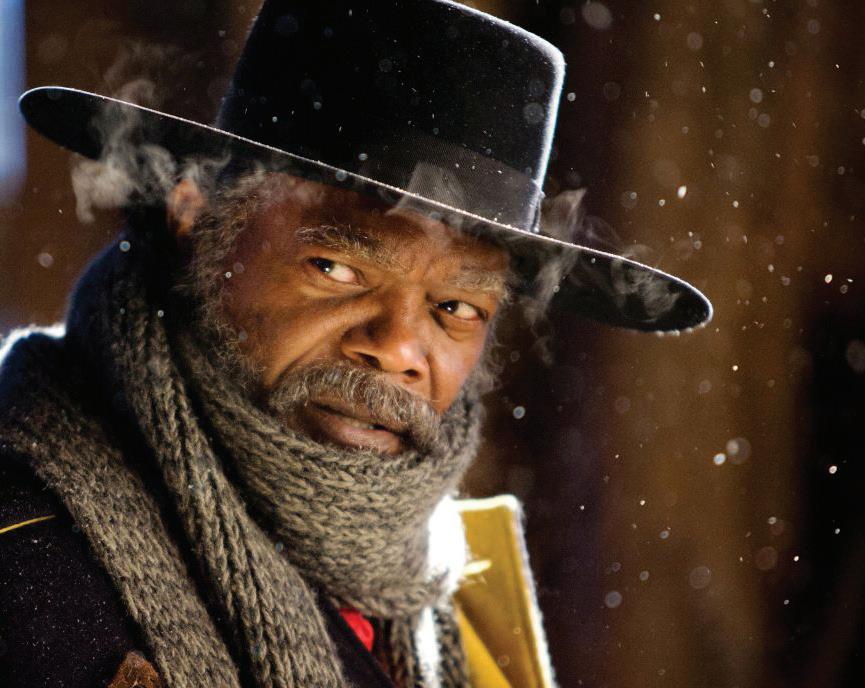
Robert Redford, Samuel L. Jackson, Jane Fonda, Kevin Bacon, Jim Carrey and Christie Brinkley all have at least one thing in common: They have graced the streets, mountains and plains of Colorado while filming movies.
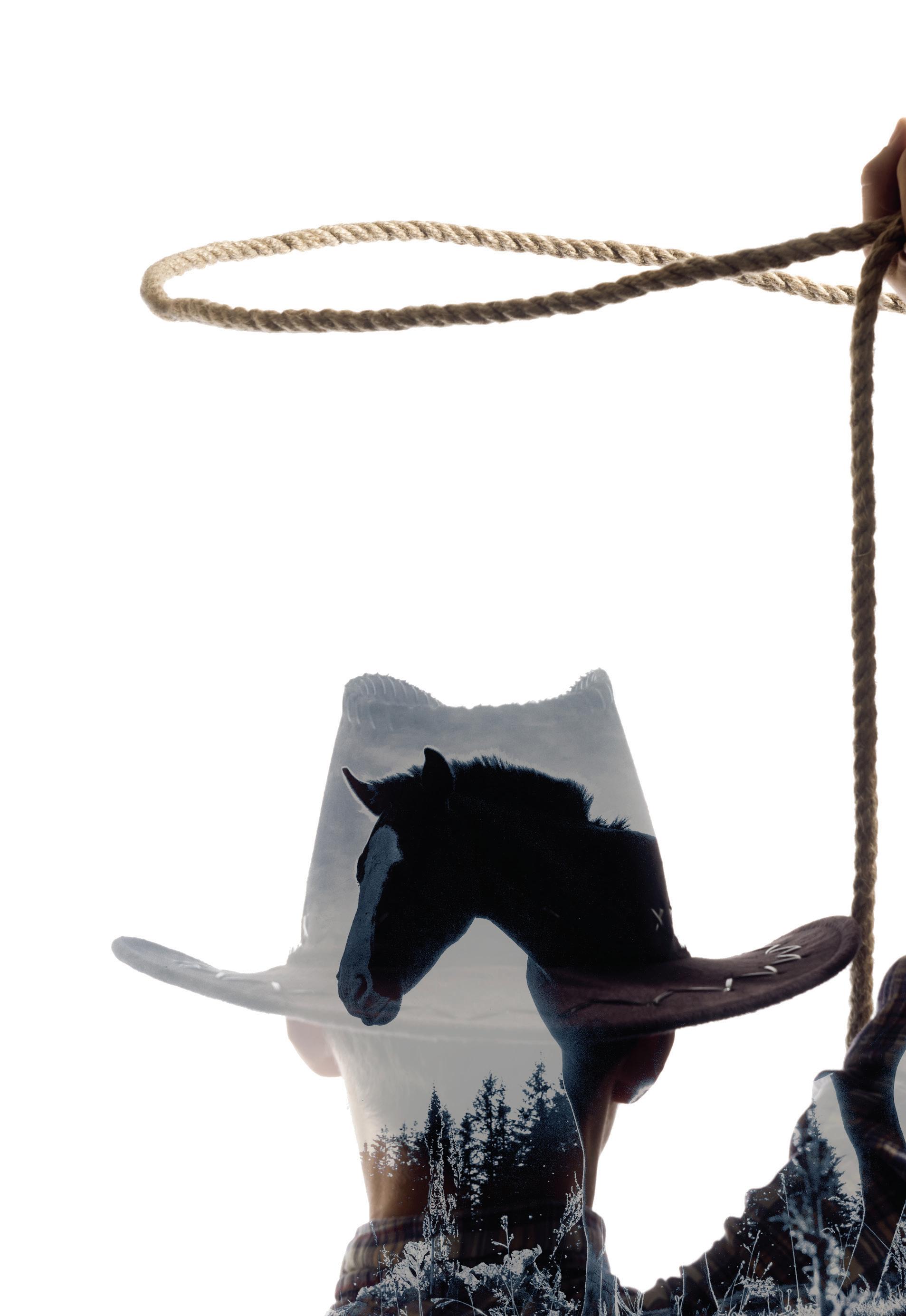
To celebrate the state’s 150th anniversary and the nation’s 250th anniversary, the CO150 Film Festival this year will feature 150 flicks during 150 screenings at dozens of iconic venues, including Frontier Drive-Inn in Center, The Eclipse Theater in Breckenridge, Wright Opera House in Ouray, The Lyric in Fort Collins and Colorado Springs Pioneers Museum. All the movies were either made in Colorado, about Colorado or by Coloradans.
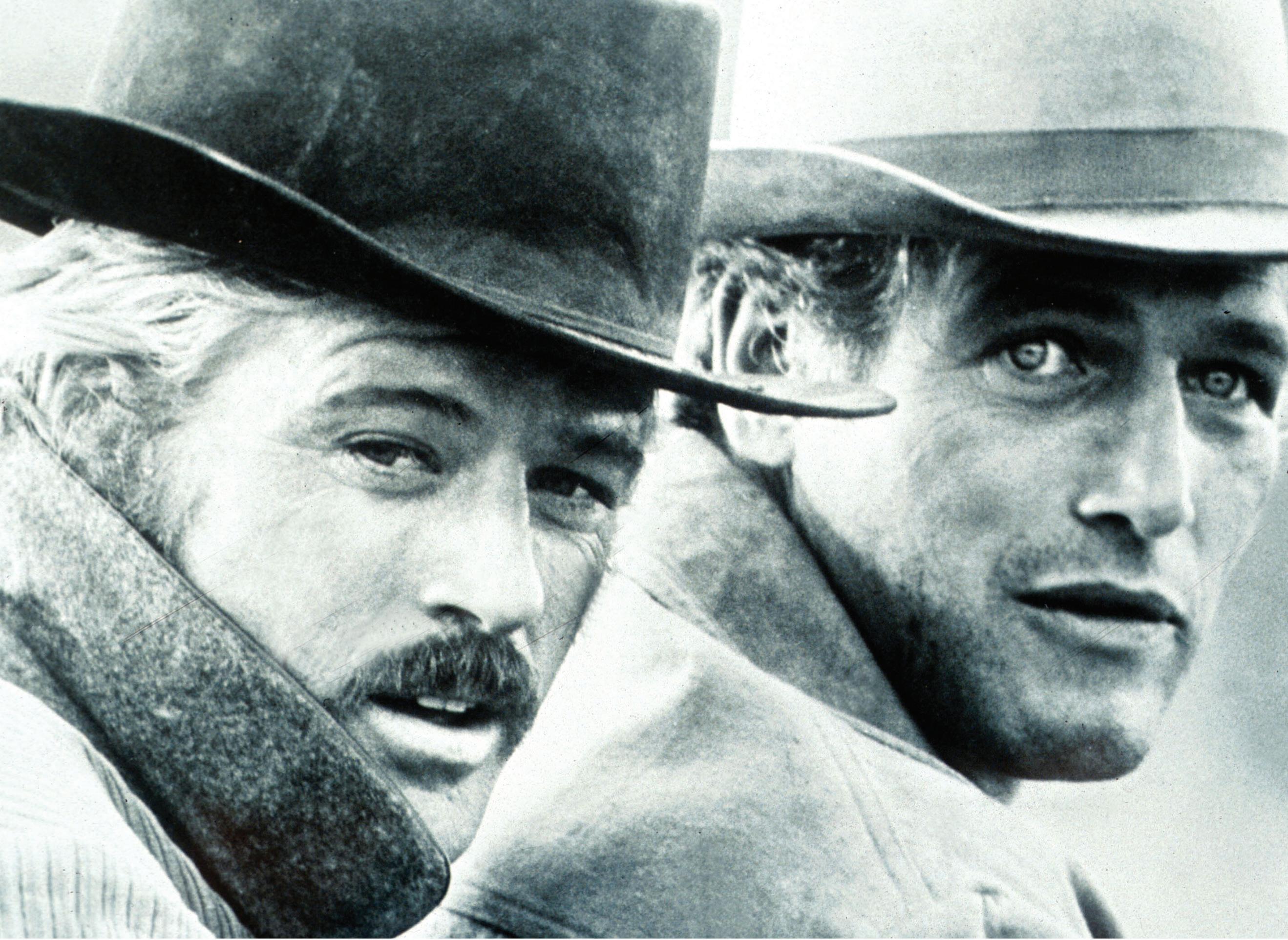
The selections cover a long period from the initial days of filmmaking in the early 1900s to modern-day productions, and include “Stagecoach,” “Around the World in 80 Days,” “In Cold Blood,” “Butch Cassidy and the Sun-
dance Kid,” “The Hateful Eight,” “City Slickers,” “Thelma & Louise,” “Fargo” and “Mr. & Mrs. Smith.”
“It’s a once-in-a-lifetime opportunity to bring people together,” said Rob DuRay, chief executive officer of Switchboard Strategy, a Denver-based marketing group that is co-organizing the festival with Denver Film. “Each of the 150 films has a cool story, and when you hear them, that’s when you build pride in the place you live.”
Colorado was a popular place to film in the early days of moviemaking, DuRay said. Its scenic backdrop made it ideal for Westerns as well as films requiring railroad iconography, mountain ranges or landscapes of the Southwest. These days, film interest is often military-oriented, such as using the North American Aerospace Defense Command (NORAD) as a setting.
While compiling the list of films, DuRay stumbled across entertaining trivia, such as the actor who played Bernie in the 1989 film “Weekend at Bernie’s” now lives in Ouray. And the swimming pool scene in “National
COMING TO COLORADO SPRINGS
July 7: “A League of Their Own,” Lulu’s
July 9: “The Shining,” Lulu’s
July 14: “BlacKKKlansman,” Lulu’s
July 17: “Indiana Jones and the Last Crusade,” Lulu’s
July 21: “WarGames,” Lulu’s
July 22: “True Grit,” Lulu’s
Aug. 13: “The Incident,” Colorado Springs Pioneers Museum
Sept. 3: “Dr. Strangelove,” Ent Center for the Arts
Sept. 10: “South Park: Bigger, Longer & Uncut,” Ent Center for the Arts
Lampoon’s Vacation” involving Chevy Chase and Brinkley was shot outside Pueblo.
The connections with Colorado are seemingly endless and perfectly suited for the sesquicentennial. The festival starts in June and runs through October. A complete schedule, as well as trailers, stories and content from each movie’s original release, is available at colorado150film.com.
Screenings will feature a half-hour of local programming from experts, artists, speakers, organizations or businesses. Examples could include short films from Youth Documentary Academy or Rocky Mountain Women’s Film, or a comedian dissecting an episode of the animated TV comedy “South Park” before a screening of the 1999 movie “South Park: Bigger, Longer & Uncut.”
Military leaders might hold conversations before screenings of the 1983 film “WarGames” and the 1964 film “Dr. Strangelove,” which used aerial footage filmed in the Rocky Mountains.
“The festival is a social experience,” DuRay said. “With talks and shorts and local tie-ins, it will be an experience you can’t get streaming from your couch. And depending on people’s ages, there are lots of films people may not have seen that tie into our region.”
More than half a dozen films will be screened this July at Lulu’s in downtown Colorado Springs, including “The Shining,” “A League of Their Own” and “True Grit.” And the Ent Center will host “Dr. Strangelove” and “South Park: Bigger, Longer & Uncut.”
Colorado Springs Pioneers Museum will host a screening of “The Incident,” a 1990 movie starring Walter Matthau that was filmed around the Springs, with scenes from the historic courthouse in the museum.
Similar associations will be explored from Flagler to Grand Junction and many locations in between.
“When people gather and have moments together, that’s where community is built,” DuRay said. “This is 150 opportunities to create community.”
COMING TO DENVER
Aug. 13: “Dr. Strangelove,” Denver Museum of Nature and Science
Aug. 20: “Indiana Jones and the Last Crusade,” Denver Museum of Nature & Science
Aug. 23: “City Slickers,” Denver Botanic Gardens
Aug. 31: “Stagecoach,” Denver Botanic Gardens
Sept. 6: “Butch Cassidy and the Sundance Kid,” MCA Denver at the Holiday Theater
Sept. 13: “Things to Do in Denver When You’re Dead,” MCA Denver at the Holiday Theater
Sept. 20: “BlacKKKlansman,” MCA Denver at the Holiday Theater
Oct. 4: “True Grit,” MCA Denver at the Holiday Theater
Oct. 11: “Jackie Brown,” MCA Denver at the Holiday Theater
Note: Films, dates and venues subject to change.
THE LARGEST RV SUPPLIER IN SOUTHERN COLORADO
Colorado capsules
TEXT BY SETH BOSTER
The best way to celebrate Colorado’s 150th birthday on Aug. 1? Perhaps by joining a historic celebration that showcases the Centennial State’s heritage.
Add these to your calendar:
June 18-21: FIBArk, Salida
Mining and ranching kick-started Colorado’s economy in the late 1800s. Recreation tourism grew in the decades to follow. And while there are several festivals celebrating that outdoorsy heritage, nothing is quite like FIBArk, which stands for “First in Boating on the Arkansas.” The downriver racing and adjoining festivities started 78 years ago. You don’t have to get wet to enjoy.
June 19-21: Strawberry Days, Glenwood Springs
The 129th Strawberry Days will continue one of Colorado’s oldest festivals. It’s also one of the state’s most colorful festivals — in one of the state’s most colorful regions — filled with art, live music, craft beer and food. And, yes, free strawberries and ice cream — the time-honored tradition dating to 1898, when the first festivities launched around the sweet fruit.
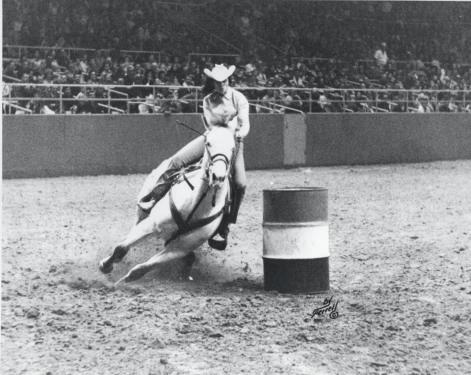
June 26-27: Deer Trail Rodeo, Deer Trail
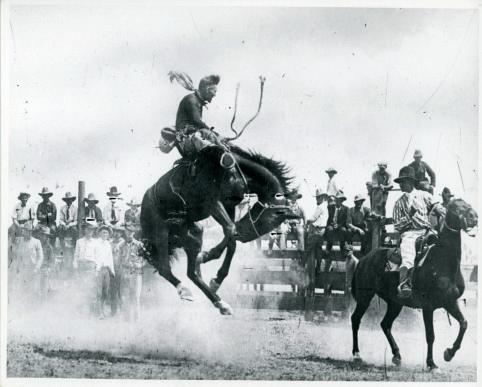
Blink, and you might just miss the town of Deer Trail as you drive Interstate 70 through the plains east of Denver. Pull off, and you might just discover a bold claim here. The town calls itself the “Home of the First Rodeo,” pointing to July 4, 1869, when local ranchers got together to show off their skills and finest animals. So they do today, joined by other traditions and live music.
July 9-11: Cattlemen’s Days, Gunnison
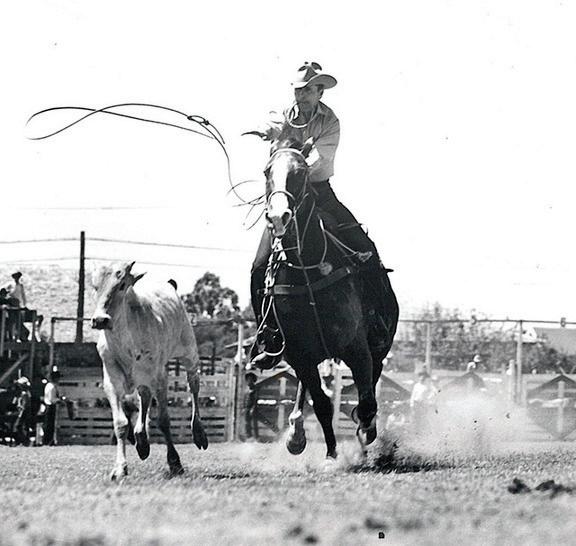
Deer Trail claims to be the home of the first rodeo, while Gunnison claims to be the home of Colorado’s longest continuing rodeo, going strong since 1900. The town is another fitting place to celebrate the state’s cowboy culture. And the town knows how to celebrate all right, with a parade and all the rodeo action you’d expect and not expect. How about a golf tournament?
July 16-18: Manassa Pioneer Days, Manassa
You know about the San Luis Valley — the sand dunes, the alien watchtower, the alligator farm and such. Maybe you even know about San Luis, Colorado’s oldest town. But do you know about the town of Manassa? Go find out at one of the state’s oldest festivals, dating to 1879. The packed weekend schedule includes a carnival, a rodeo, a demolition derby and fireworks.
August 5-9: Boulder County Fair, Longmont
We’d be remiss not to mention Colorado State Fair, which was inaugurated in 1872 and returns to Pueblo Aug. 28 through Sept. 7. But we’d also be remiss not to mention a county fair with slightly deeper roots. In 1869, Boulder area ranchers put on the old territory’s first fair. Cattle, sheep, pigs, goats and horses still figure prominently, but there’s also a demo derby and tractor pull.
August 7-9: Leadville Boom Days, Leadville
Leadville seemed on its way to state capitol status in the 1870s, as people from around the world rushed to this town near 10,200 feet, looking to strike it rich on silver. Silver, of course, went bust. But the boom appears alive and well during this three-day weekend featuring proper Victorian attire, a burro race, dancing, mining contests and a street lined with vendors.
August 21-22: Palisade Peach Festival, Palisade
It’s not the only festival celebrating Colorado’s produce. But compared with festivals for the green chile (Sept. 18-20 in Pueblo) and sweet corn (Aug. 22 in Olathe), the peaches have drawn fans for many decades more, dating to 1887. Farmers then found just the right climate for growing. And here in this idyllic, riverside town, festival goers find just the right scene for lasting memories.
ROAD TRIP
TEXT BY SETH BOSTER PHOTOGRAPHY BY JERILEE BENNETT
There’s much to see and experience as Mount Blue Sky Scenic Byway reopens
After a nearly 21-month closure for construction, one of Colorado’s most acclaimed roads is reopening this summer.
Mount Blue Sky Scenic Byway is the highest paved road in North America, climbing to a pinnacle of 14,130 feet. But as the saying goes: It’s not the destination, it’s the journey.
Here are six reasons why we can’t wait to get back on the road again.
Lovely lakes
Picturesque Echo Lake greets guests near the entrance kiosk at 10,600 feet. Many a Denverite and tourist come for this shimmering scene, backdropped by a teeming forest and Rocky Mountain majesty. A suggestion for the fit and adventurous: Chart a course from here to Chicago Lakes, deep in Mount Blue Sky Wilderness. Or simply continue up the road, up to Summit Lake, tucked in an alpine cirque decorated by wildflowers.
Amazing animals
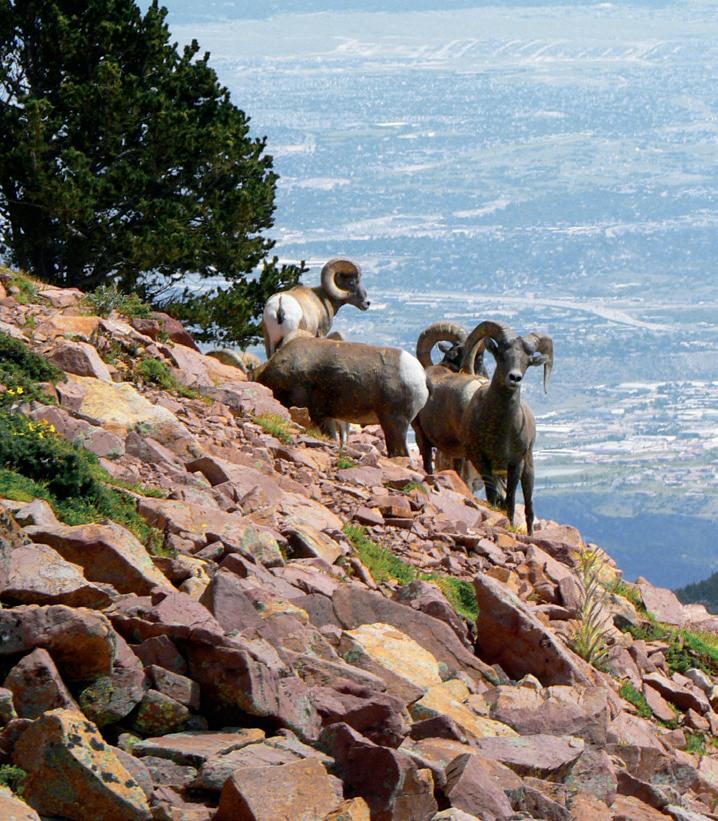
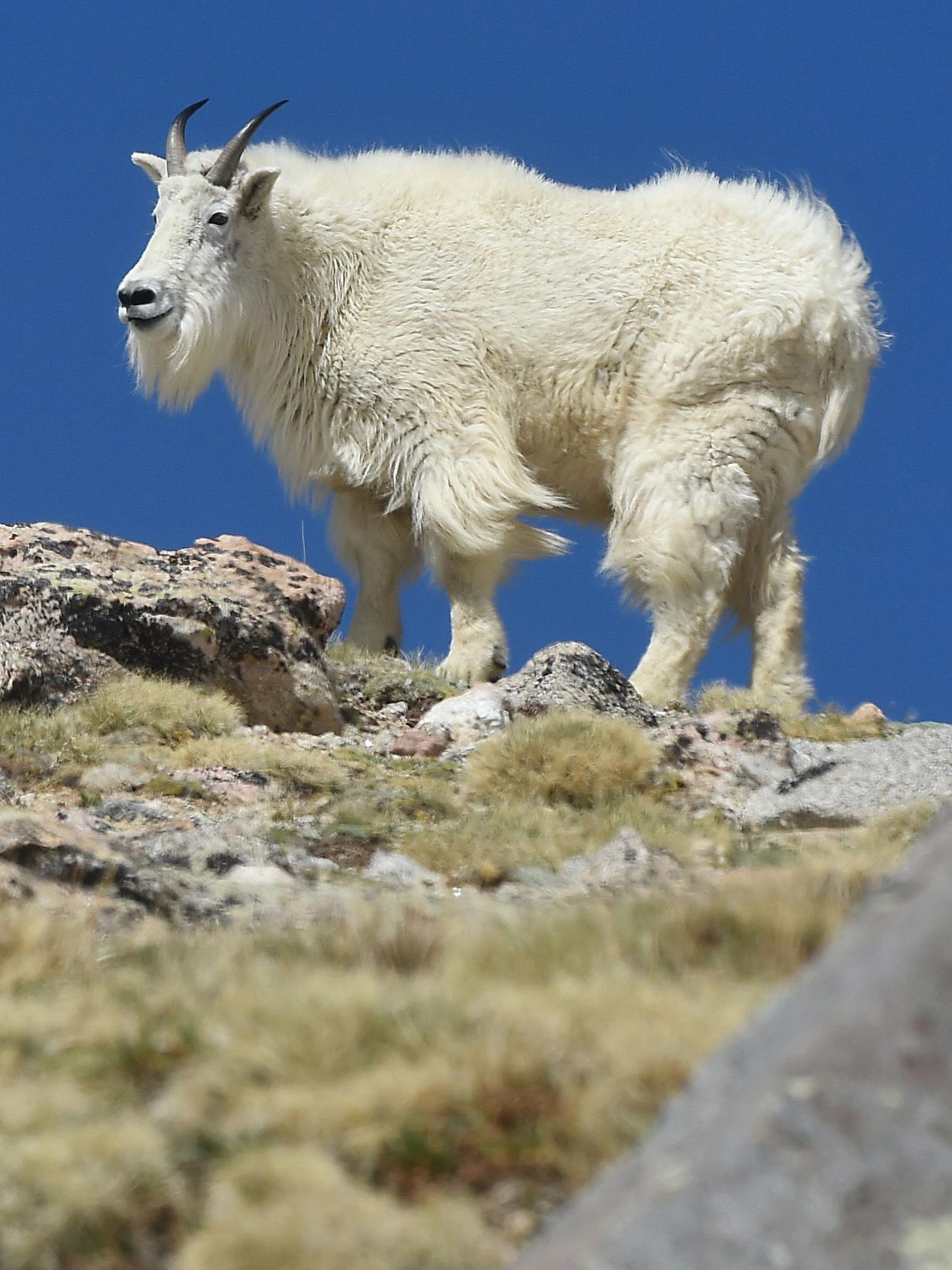
Mountain goats are synonymous with Mount Blue Sky Scenic Byway. They are the woolly, unofficial greeters on the mountain, quick to lick the salts off your vehicle — much to the concern of Colorado Parks and Wildlife and other officials who fear potential conflicts. But how can we not love to watch them from a distance? Same goes for the bighorn sheep and marmots that also call the mountain home.
Time-tested trees
By ancient, we mean really ancient — more than 1,000 years old, making them some of the oldest trees known in all the world. And they just so happen to be clustered at Mount Goliath Natural Area, found right off the road. Welcome to a living laboratory of bristlecone pine. Trails roam the gnarly, twisty forest that has stood the test of time and extreme, windy conditions above 11,500 feet.
Cycling challenge
For hardcore road cyclists, Mount Blue Sky Scenic Byway has been a longtime rite of passage. Hence, a longtime tradition: the Bob Cook Memorial Blue Sky Hill Climb, the 27-mile race to the top set to return July 25. But individuals can take on the road at any point during the summer, churning 6,700-plus feet up before the thrilling descent. Most embark early, aiming to avoid heavy traffic and afternoon weather risks.
Friendly fourteener
The upper parking lot actually sits below the summit. So you have to walk a little way to reach the top — meaning you can say you climbed a fourteener. Maybe just don’t say it around people who know the actual, hard-earned climb up Mount Blue Sky from Echo Lake. Or you don’t have to say anything at all. You can simply enjoy the stunning, panoramic view that spoils all who come by car, foot or bike.
Victorian village
Idaho Springs is the idyllic gateway to Mount Blue Sky. The old mining town retains its historic Victorian charm while adding some modern delights. Most modern: the firstyear Mighty Argo Cable Car ferrying guests up to a scenic mountaintop for food, drinks, trails and entertainment. And then there are the old reliables found downtown on Miner Street: pizza at Beau Jo’s and beer at Tommyknocker Brewery.
WILD ORIGIN
TEXT BY SETH BOSTER
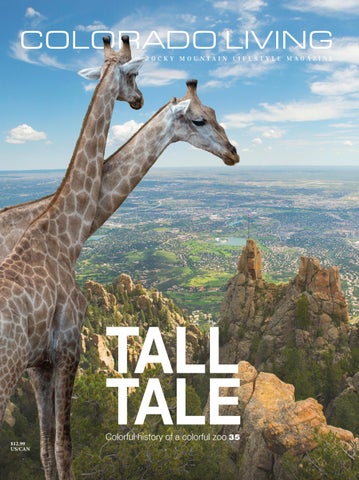
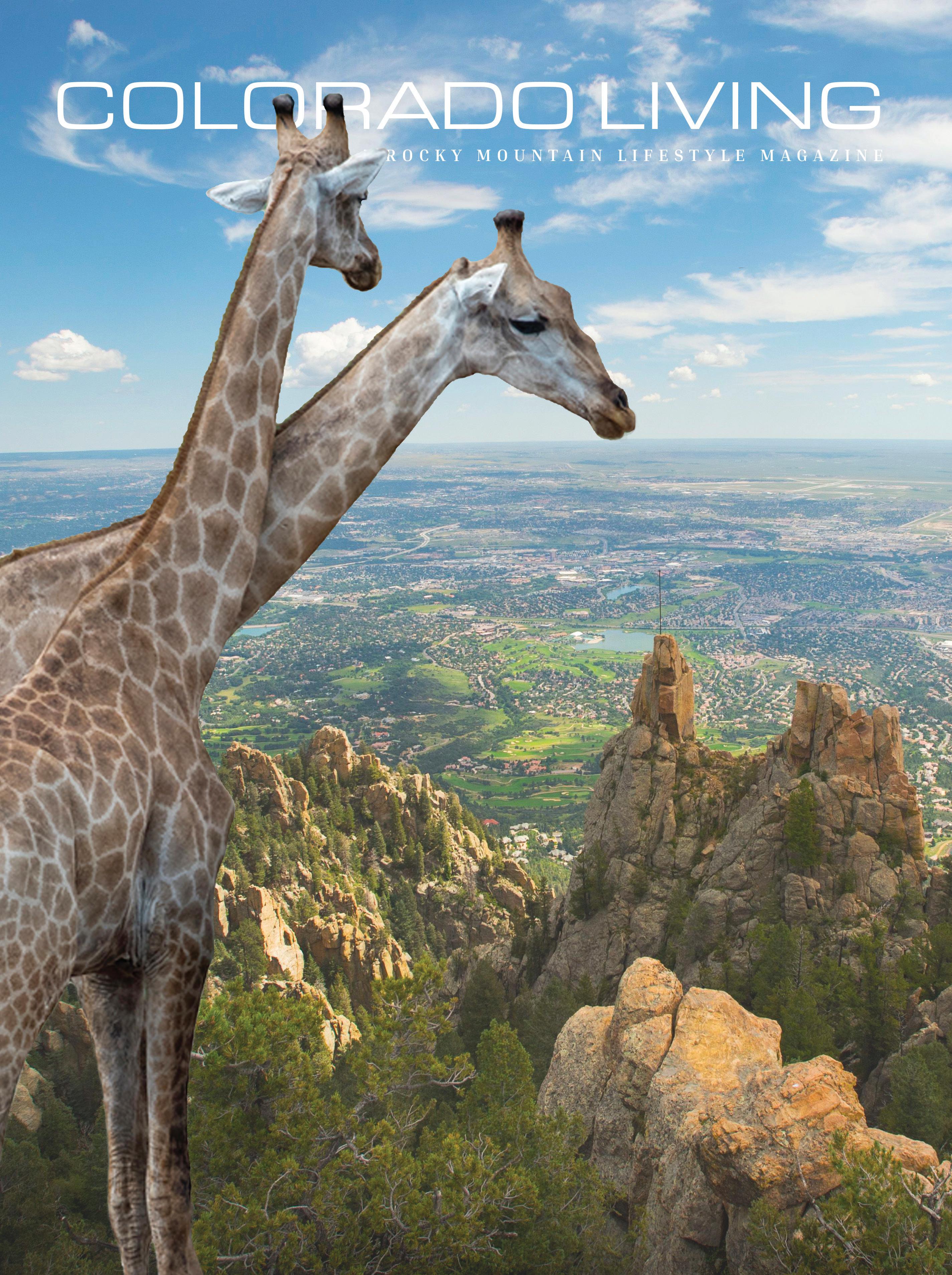
Cheyenne Mountain Zoo evolved from exotic animals kept at The Broadmoor
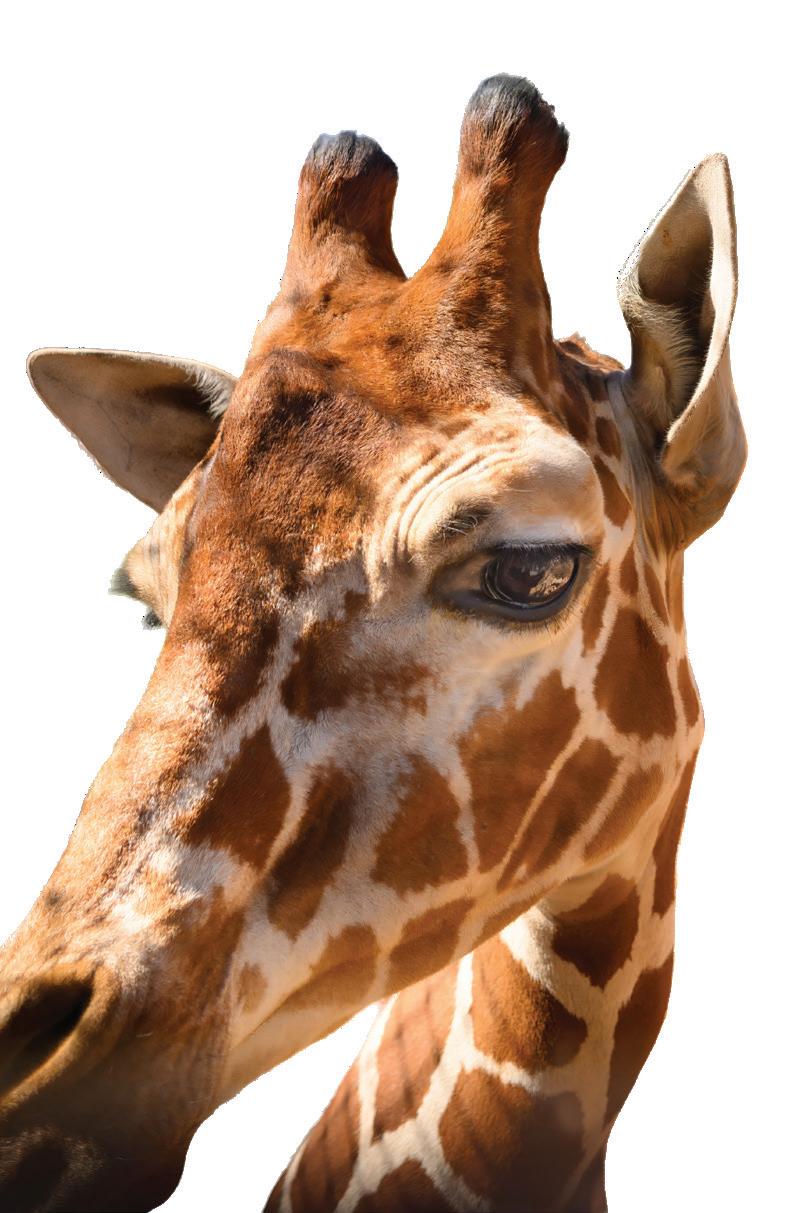
Ahead of its much-anticipated debut at Cheyenne Mountain Zoo, construction continued this spring on a state-of-the-art facility for giraffes, the treasured animal in the zoo’s logo and in the hearts of visitors, who soon will be able to interact with the herd in a whole new way. And high on the mountain overlooking the progress stood the Will Rogers Shrine of the Sun, overlooking as ever since 1939. That’s when Spencer Penrose
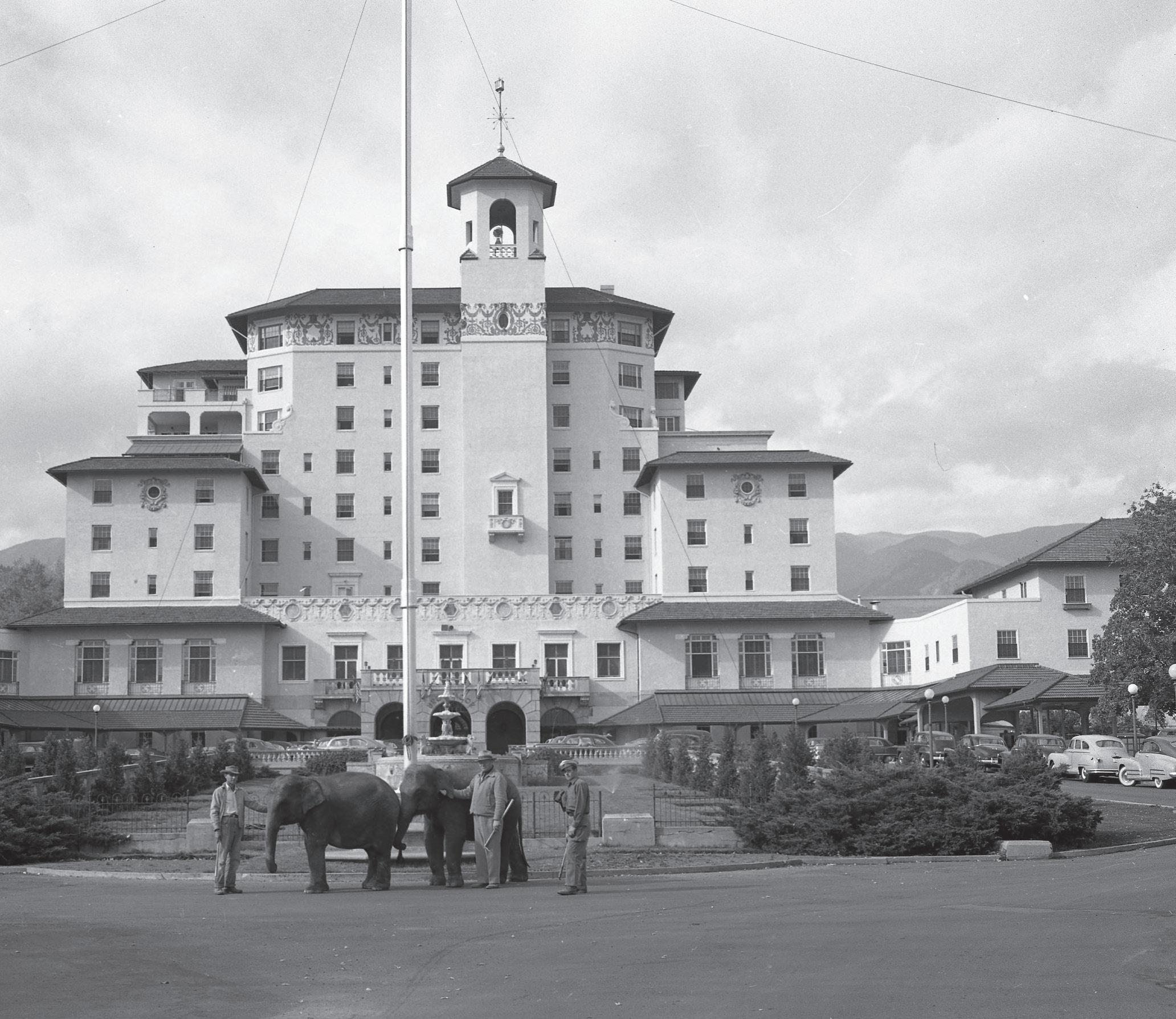
1926: Animals living at The Broadmoor — among hotel visionary Spencer Penrose’s menagerie, including his beloved Tessie the elephant — begin to move up Cheyenne Mountain along the road Penrose built. The zoo gets established with black bears, mountain lions and more.
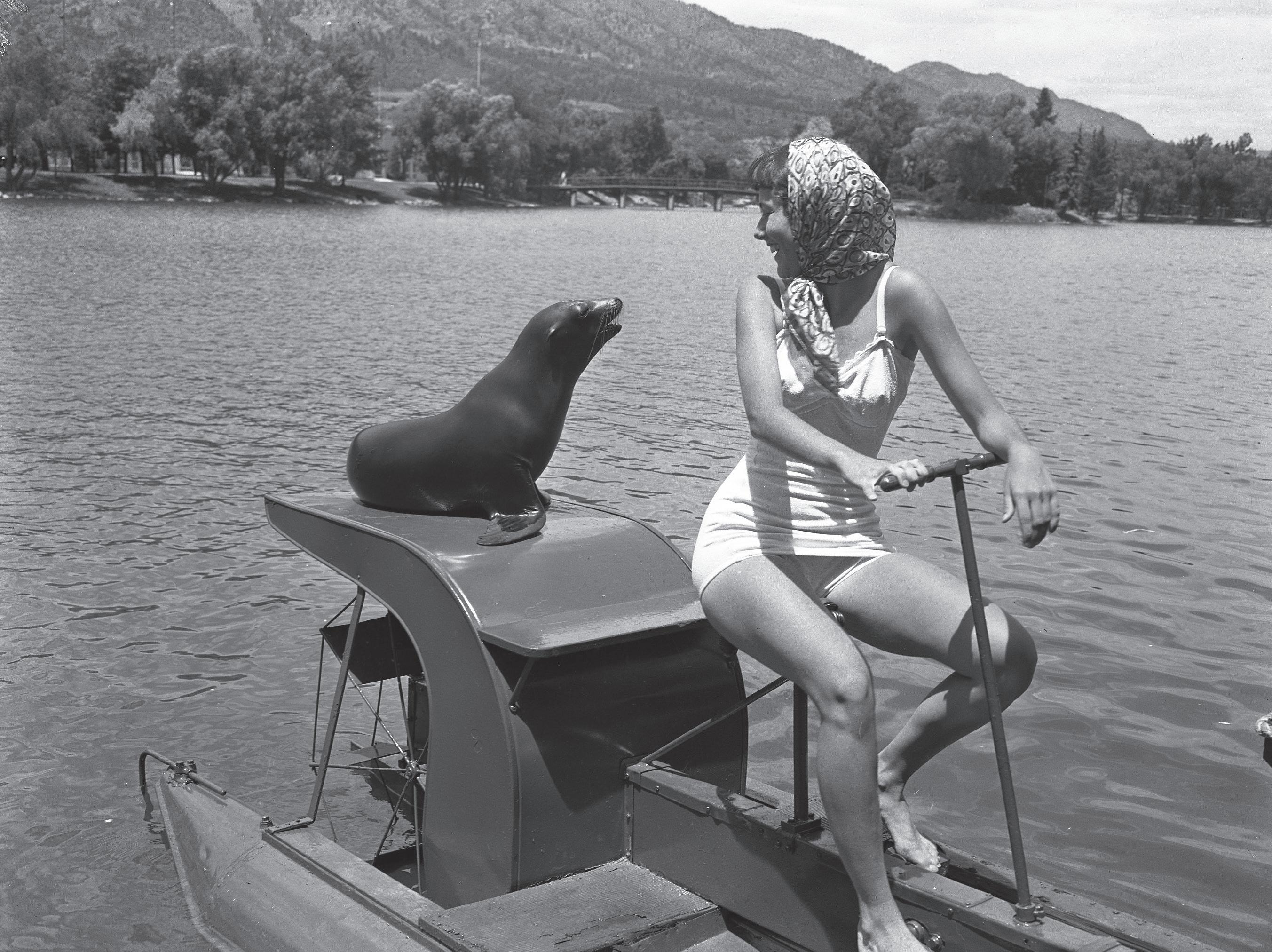
1927: Charles Tutt Jr. brings two sea lions from the San Diego Zoo to The Broadmoor’s lake, where they greet guests while their zoo home is under construction. The year also sees a monkey house built at the zoo, along with the granite-walled keep for bears still seen today.
1928: A polar bear cage is built near the center of the zoo.
1932: Llamas are rare at zoos, but Penrose by this year “was successfully breeding them and found them to be cold hardy animals,” according to an exhibit at Penrose Heritage Museum. The exhibit also details successful breeding this decade among lions and musk oxen, which had never been bred at any other zoo.
1937: The Zoo Special, a miniature railway, transports guests from the zoo entrance to the upper carousel. The next year sees another train, the Mountaineer, run from The Broadmoor to the zoo. The Zoo Special would run until 1957, while the Mountaineer continued until 1974.
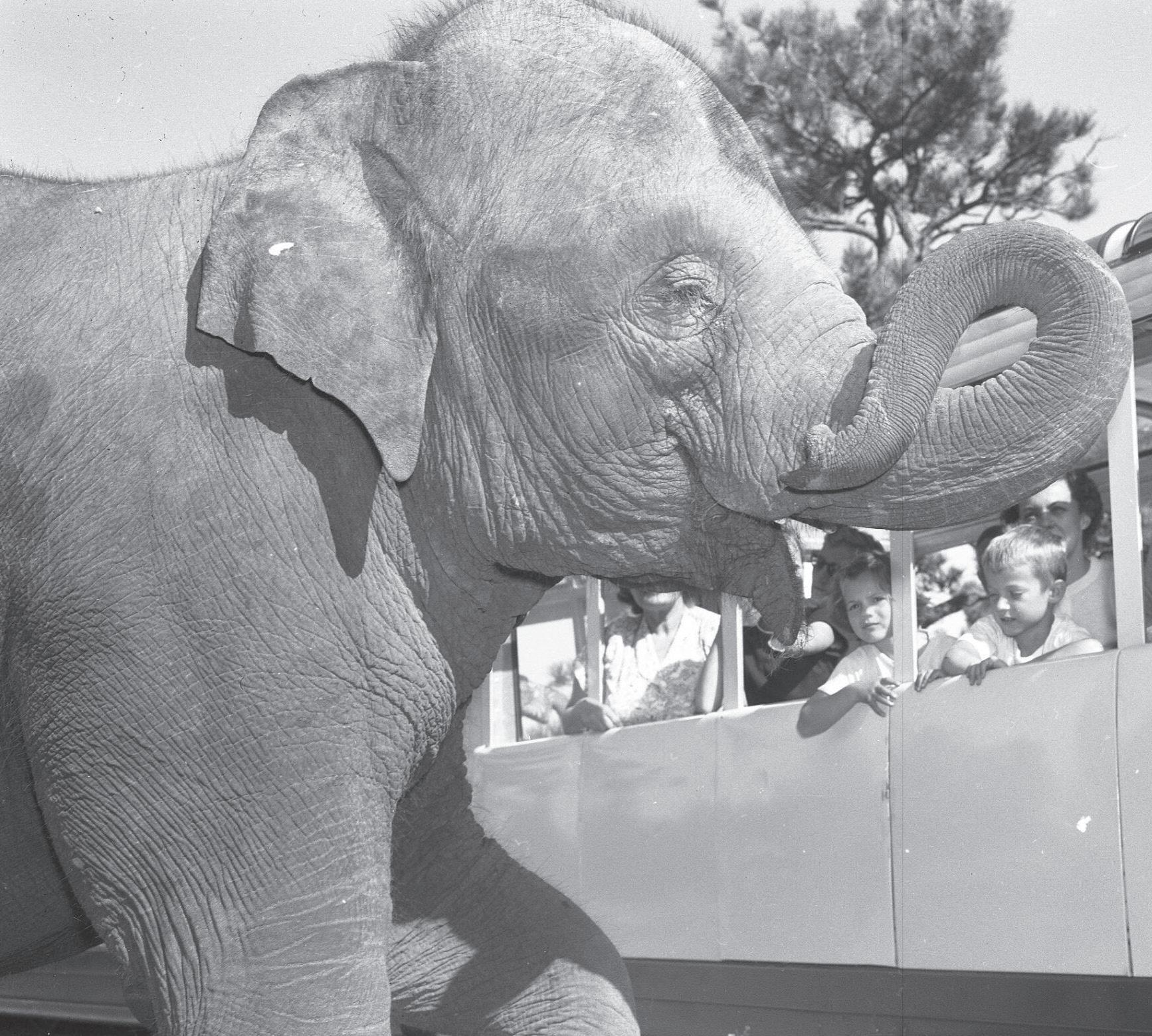
1938: Shirley Temple the elephant is visited by a young movie star of the same name.
1939: Penrose dies soon after establishing the nonprofit that continues to operate the zoo. His wife, Julie, would chair the board and remain active at the zoo. Before her death in 1956, she saw the arrival of giraffes and several structures that housed felines, hippos and primates.
1951: The zoo entrance had been little more than a tollgate, but now it is defined by Thundergod Gift Shop, a building adorned with artwork detailing the Native American story of Cheyenne Mountain.
1960: An aquatics building opens for hippos, penguins and more. A Komodo dragon would be one visitor over the years.
1965: A massive flood damages exhibits and closes the zoo until the summer of 1966.
1976: The giraffe herd is counted at 27, in large credit to Pet, one of the original three that arrived in 1954. Zoo history recalls Pet as “one of the most prolific giraffes in human care,” with a great-grandcalf living at the zoo today, among several descendants across the nation and Mexico.
1988: Susan Engfer becomes the zoo’s first female president and CEO and creates the zoo’s first master plan, setting the stage for more development. Over the next decade, this would include the Conservation Center for researching and breeding endangered species; Wolf Woods for Mexican gray wolves; and Asian Highlands for today’s tigers, leopards and red panda.
2008: Rocky Mountain Wild is established to house mountain lions, moose, grizzly bears and more. Also this year, the Mountaineer Sky Ride chairlift opens.
was entombed in the tower, forever to watch over his creations that continue to be popular destinations in Colorado Springs: The Broadmoor and the adjacent mountainside home of the animals he loved.
The prevailing sight of the tower is not lost on the man who has long been in charge at Cheyenne Mountain Zoo.
“I often feel like I still work for Penrose,” said Bob Chastain, the president and CEO who is nearing retirement after about 30 years here.
“And I often like to believe this would have exceeded his expectations.”
Penrose could not have expected something like the International Center for the Care and Conservation of Giraffe — the latest and greatest development for Cheyenne Mountain Zoo in this milestone summer.
The center is set to open just in time for the zoo’s 100th anniversary.
While the road Penrose built through the entrance has been relocated for the center and reimagined plaza, what the visionary built has not been forgotten. Not by Dave Ruhl, the zoo’s incoming president and CEO.
“How it all got started with Spencer Penrose, it’s an interesting story for sure,” Ruhl said.
It’s a story that predates 1926, when the zoo opened with pens of deer, elk, bears and more lining the Cheyenne Mountain Highway that rose to a lodge frequented by Broadmoor guests. It’s a story that might predate the hotel’s opening in 1918, going somewhere back to the builder’s love for animals.
Well known is Penrose’s love for horses, explaining the local rodeo and polo history. Lesser known is the love he had for far more exotic creatures, a fact made clear from Ashley Arimborgo’s research over the years.
Arimborgo spent years at Cheyenne Mountain Zoo before her current post at Penrose Heritage Museum. The jobs have given her access to letters in which Penrose made such inquiries as to the diet of a polar bear and the availability of an emperor tamarin (a peculiar Amazonian monkey) and of a cassowary (an ostrichlike bird native to the tropics of New Guinea).
“He’d do his research,” Arimborgo said, “and from there, he’d be like, I like that animal …”
Penrose liked horses, cattle, mules, hogs and sheep — hundreds of which occupied his Turkey Creek Ranch by 1923, as detailed in a new exhibit at Penrose Heritage Museum.
2018: Not since the 1965 flood had the zoo endured a natural disaster like the hailstorm this year, leading to an estimated $4.5 million in damages and forcing an almost weeklong closure.
2022: The zoo announces the International Center for the Care and Conservation of Giraffe — a $40 million initiative that will expand space for the animals. The complex is set to open this summer.
The exhibit notes: “Over the next few years, with guidance from his brother, Dr. Charles Penrose, who served as president of the Philadelphia Zoological Society, Spencer Penrose created his own personal menagerie — a collection of wild animals kept for entertainment.”
So began a colorful chapter at The Broadmoor. Just as travelers from afar got to know an emerging city, they also got to know surpris-
ing animals that lived around the hotel’s lush, opulent grounds.
On the golf course, Tessie the elephant was “well-loved, occasionally serving as a golf caddy,” according to history compiled by the zoo. That history also records Johnny the boa constrictor living in the basement, “near the water pipes to stay warm during the winter.”
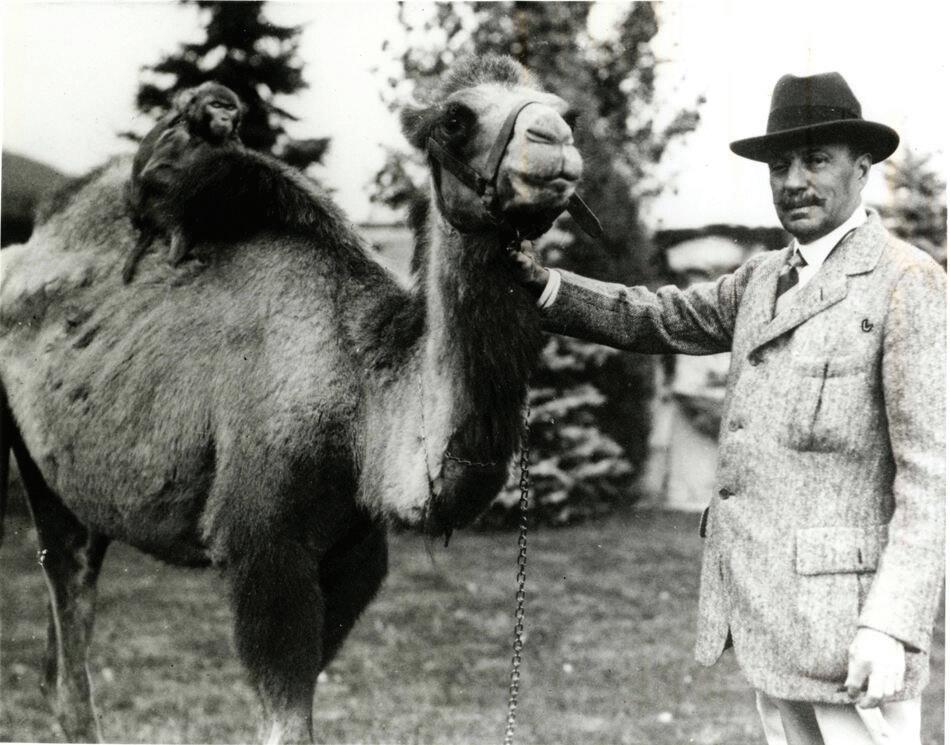
One picture shows Penrose with Ethel the camel. Another shows a leashed black bear cub scaling a tree on the hotel lawn. On the lake, another shows sea lions greeting guests on boats. And other images over the years show Penrose and his wife, Julie, with water buffalo, llamas, lions, tigers, monkeys and more from an animal kingdom stretching far beyond Colorado.
As his old letters suggest, Penrose’s menagerie grew through connections that the high-powered, world-traveling businessman made over the years. Though, no, Tessie the elephant was not a gift from a maharaja of India, as Penrose claimed, ever the showman.
But, yes, it does appear that the retired circus animal was welcome on The Broadmoor’s golf course — until she wasn’t, along with other animals kept along the greens. It was determined that their presence would not be suited for the 1927 Trans-Mississippi Tournament. That prompted the animals’ move to the Cheyenne Mountain Highway in 1926. (As to claims that a monkey biting a boy’s nose at the hotel led to the move, Penrose Heritage Museum refers to this as “part of the lore that defined the zoo’s early years.”)
The early years saw Penrose often riding his horse up to the zoo to “make sure the animals looked good and were eating good,” Arimborgo said. He hired people to ensure this, but indeed, “he was very hands-on.”
So much so that at his house, Penrose bottle-fed “three baby antelope,” as he called the pronghorns in a letter to a Fish and Game commissioner in 1932. This was while “yesterday I put a new man in charge of the zoo, and I want him to get broken in before I give him any new responsibilities,” the letter said. The former superintendent, Penrose added, “was fairly good with
the lions and elephant, etc., but he was very shiftless and ignorant, and I have been considerably provoked since he lost the last antelope.”
That was Penrose — “very direct,” Arimborgo said. And also very caring of the animals, she noted — perhaps a credit to the lions breeding 16 cubs between 1929 and 1934, and the zoo reportedly being the first in the country to breed musk oxen in 1937.
That decade saw Penrose seek other advancements. He sent the zoo’s superintendent to Detroit to study innovative lion and bear exhibits. And he hired specialists from American Museum of Natural History and Denver Museum of Nature and Science to conduct fieldwork and research that was not all that common for zoos at the time.
By then, Penrose’s health was declining. He succumbed to throat cancer in 1939.
Before his death, he incorporated the zoo into the nonprofit it is today. This ensured the zoo would not be run by owners of varying intents, but rather by a board continuing his vision. His widow would chair that board and continue to welcome new residents.
Julie went to the Denver airport to pick up Jiggs the baby orangutan in 1948. That same year, she met Bud the baby gorilla — said to be the first of his kind at a zoo west of the Mississippi. The zoo celebrated more additions over the decades, leading to today’s population of about 750 animals.
Perhaps the most celebrated, the giraffes, joined the scene in 1954. Julie died a couple of years later, but not before stipulating that the philanthropic arm set up to preserve the Penrose legacy and fortune continue to support the zoo.
So El Pomar Foundation does today. What would Penrose think in this 100th anniversary year?
“He’d really appreciate the continued values for excellence and innovation, and continuing that trend of being ahead of the curve,” said Erin Hannan, El Pomar’s senior vice president of communications.
Perhaps that’s best symbolized by the Interna-
Music Director DUFRESNE
tional Center for the Care and Conservation of Giraffe.
Where visitors have long met giraffes face-to-face with lettuce in hand, now they’ll get to roam varying elevations to also feed the animals from overhead and below near their hooves. The giraffes will get to roam more freely as well, in and out of the facility with a high-tech, see-through roof, heating and rain systems, and wideopen passage to another sweeping “environment” built outside.
The design is meant to foster healthy movement and living, explained Ruhl, who has overseen the project over the years as the zoo’s vice president of operations. But “it’s really Bob’s legacy project,” he said, referring to the retiring president and CEO.
Over nearly 30 years, Chastain led several projects that made the zoo what it is today. Annual visitation more than doubled during his time, to 800,000-plus counted in recent years. But he sounds most proud about advancements in care, science and conservation at the zoo, where quarter-collecting kiosks he started have raised $6 million toward wildlife initiatives.
“I understand the dynamic between wanting animals in the wild and free, but I’ve also been around enough to know being in the wild is not always fun. It’s hard,” Chastain said. For threatened species seen here, “I also know the zoo can be the only place for people to learn what their plight is, and how they might be able to help.”
And just as much as it’s always been about animals, he said, Cheyenne Mountain Zoo has been about people — from Penrose to caretakers to volunteers and board members over generations. “It’s like a giant social experiment,” Chastain said, involving many backgrounds and personalities. “But we can all come together and work for the benefit of the animals.”
People and animals have come and gone over the years, but leadership has hardly changed. Ruhl will be the seventh president and CEO.
As he looked around at the scenic mountainside that Penrose settled, at that tower looking over smiling visitors, Ruhl too smiled. “Once you get here, you want to stay forever.”
CITY GOLF
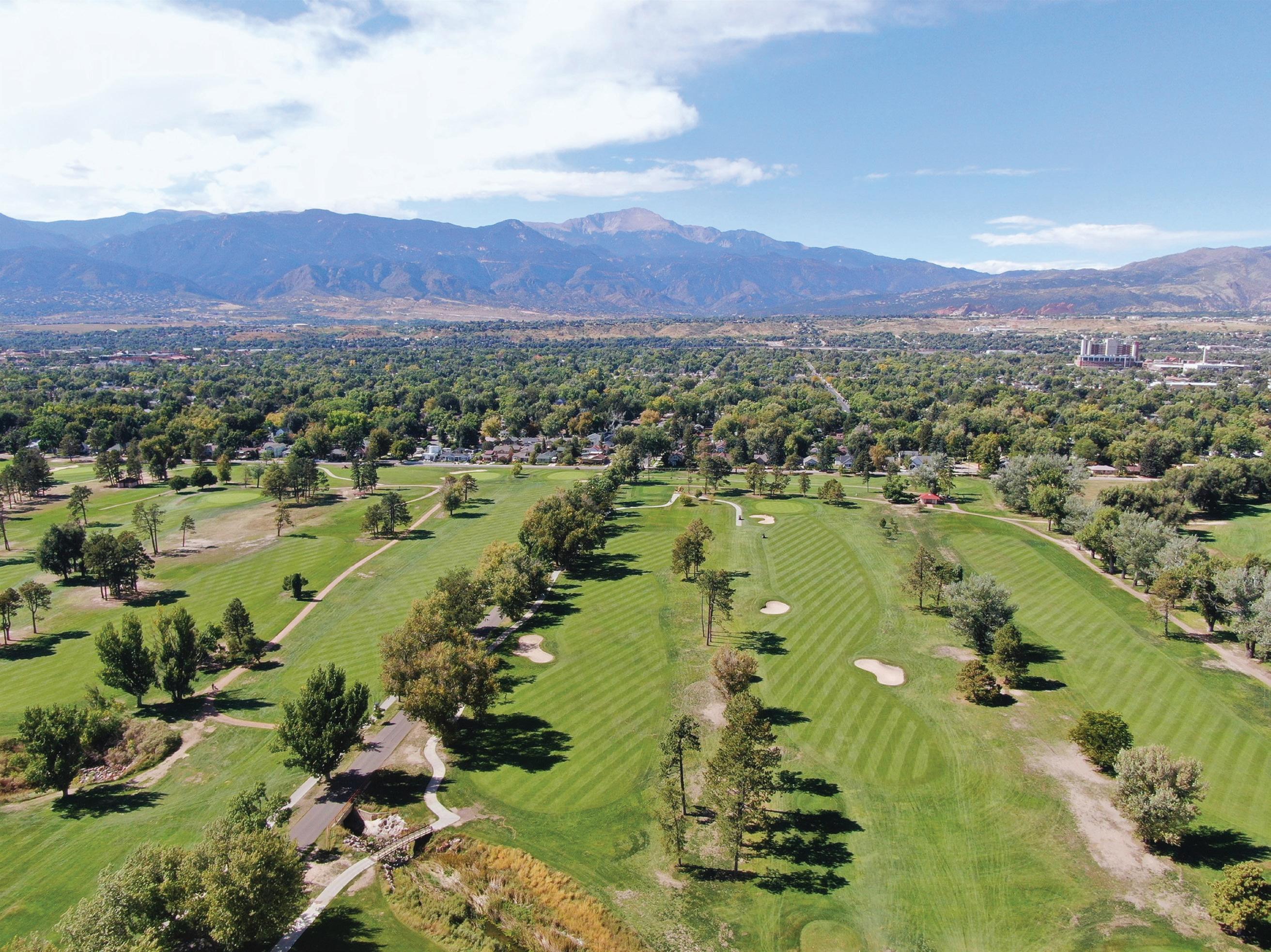
PATTY JEWETT GOLF COURSE
Experience the historic crown jewel of Colorado Springs. Built in 1898, this golf course is one of the oldest west of the Mississippi. This par 72 can challenge even the most experienced golfer, and a separate 9-hole course is also available.
900 East Espanola Street
Colorado Springs, CO 80907
719.385.6934
coloradosprings.gov/pattyjewett
VALLEY HI GOLF COURSE
The finest views in Colorado Springs are nestled right in the heart of Valley Hi Golf Course. Tee off surrounded by the scenery of Pikes Peak and Cheyenne Mountain. This course has hidden challenges for all levels and offers discounts to our veterans.
610
719.385.6911
coloradosprings.gov/valleyhi
TEXT BY JENNIFER MULSON PHOTOGRAPHY BY MARK REIS
t wouldn’t be a visit to Cheyenne Mountain Zoo without the purple tongue of a giraffe unrolling in your face, collecting your proffered leaves of lettuce.
The long-necked beauties are among the hundreds of animals you can see while at the zoo, which is marking its 100th anniversary this year.
The zoo, which encompasses almost vation above 6,500 feet, was ranked No.
USA Today’s 2026 10Best Reader’s Choice Mountain Wild was named second-best
As you plan your next trip to the zoo, be sure 10 things:
GRIZZLY BEAR DEMONSTRATION IN ROCKY MOUNTAIN WILD
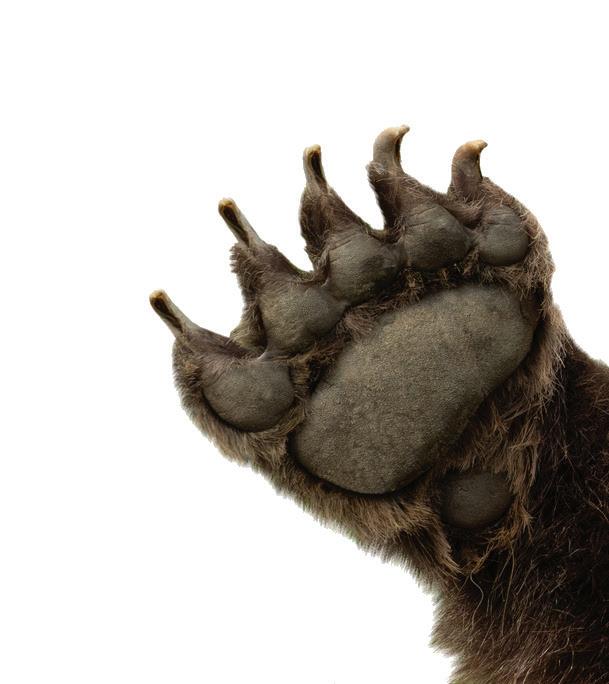
Digger and Emmett, the pair of beloved 750-pound roommates, put on quite a show every Saturday and Sunday at 2:45 p.m. unrelated males hail from Montana, where they were labeled nuisances in the wild and brought to the zoo instead of being euthanized. Visitors can watch while keepers ask them to cooperative behaviors — actions that benefit the bears’ care. They are trained to open their mouths so that keepers can their teeth, and also to hold up their paws so keepers can their nails and examine the pads on their feet. Emmett, who recovering from cancer in his tail, will also present his hind to keepers, who can check and clean the surgical site.
NILE HIPPOPOTAMUS EXHIBIT IN WATER’S EDGE: AFRICA
Four hippos, three of which are related, live in the humid environment where you can watch them above ground or in the water. Omo is the newest, born in 2021 to Zambezi, a 28-year-old, 3,000-pound first-time mama. Omo’s father is Biko, who arrived in 2020 as a breeding recommendation for Zambezi and her younger sister, 22-year-old, 3,700-pound Kasai. If you’re in the building at the right time, you can hear them communicate, which sounds a lot like an old-time car horn, said Rachel Wright, communications and marketing director. Their keepers give a daily talk at 4:15 p.m.
MOCHI, THE MOUNTAIN TAPIR, IN MOUNTAIN TAPIR & OKAPI
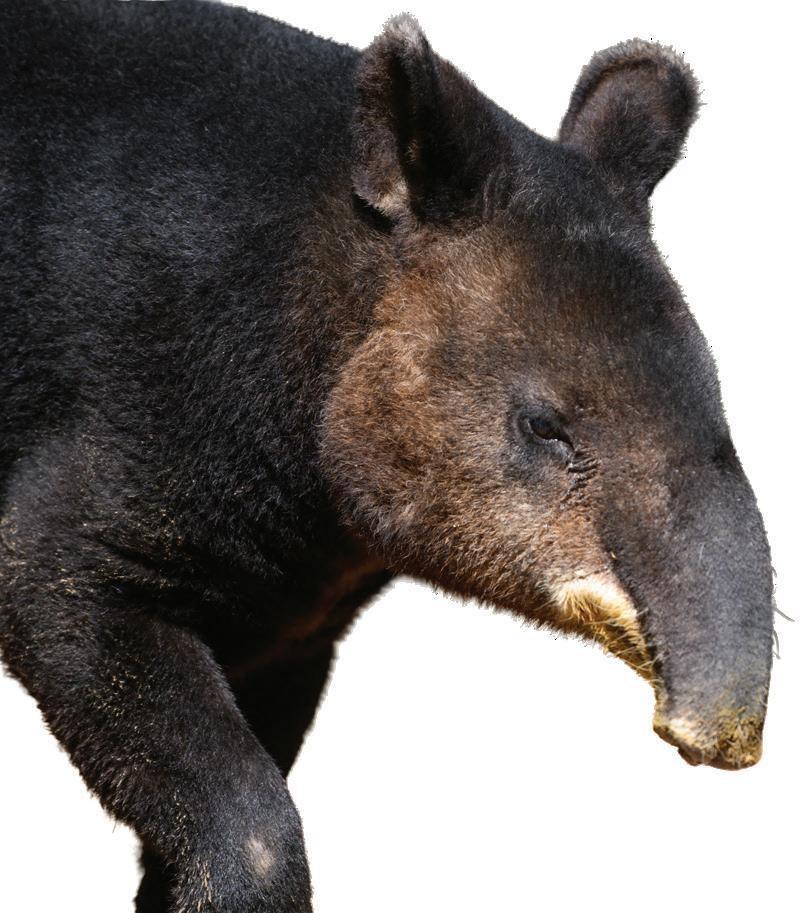
If a bear mated with an anteater, you’d have a tapir. Mochi, with his prehensile snout, is one of three mountain tapirs in the U.S. The other two reside at Los Angeles Zoo, where Mochi lived before relocating in 2023. Raised with human care, the mild-mannered animal is an extrovert and one of the few animals at the zoo that are safe to share space with. The 370-pounder loves a scratch and will often flop on his side for a belly rub.
AUSTRALIA WALKABOUT
Inside Budgie Buddies Aviary, guests can buy a seed-covered stick for $1 and feed more than 100 free-flight Australian birds, including budgies, cockatiels and princess parrots. Or get to the zoo as the gates open at 9 a.m. for the red-necked wallaby parade, when the mob comes bouncing out, eager to greet the day. They hop along the walkway to their grassy yard area, where they graze, do zoomies and nap. Visitors must stay on the walkway and off the grass, but the social wallabies love to meet new people, and if they’re within reach and willing, you can say hello and stroke their backs.
MOUNTAINEER SKY RIDE
The views from this chairlift-style ride will feed you for days. Enjoy a different perspective on the zoo, Cheyenne Mountain, Colorado Springs and the plains beyond. The ride takes visitors to Mountaineer Summit, where they can eat a picnic lunch or check out a yurt and playground before riding back down.
SULLY, THE WESTERN LOWLAND GORILLA, IN PRIMATE WORLD
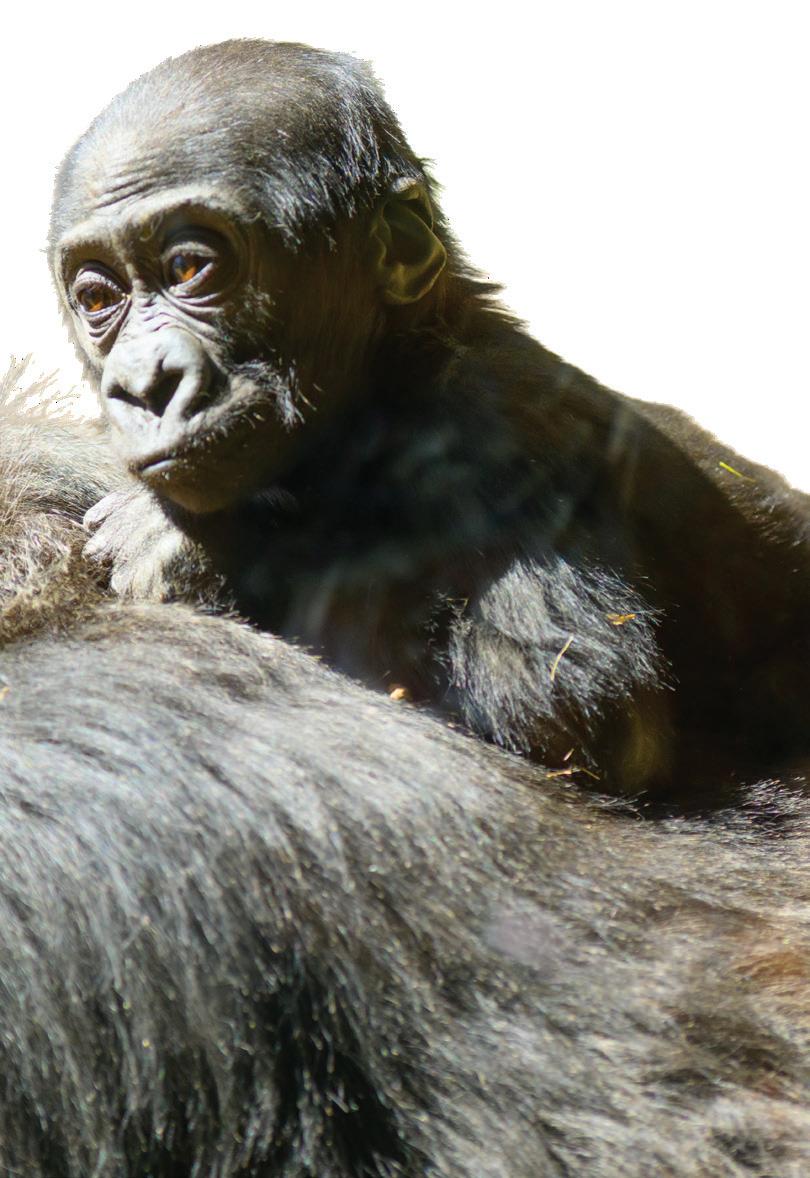
The adorable tyke was born in July of 2025 to 32-year-old Asha, marking the first time in 13 years that a gorilla has been born at the zoo.
“He’s still mostly hanging onto his mom, but he’s getting to the age where he’s curious about the world,” Wright said. “He’s starting to swing on the fire hose vines and reaching out to his dad, Goma. Mom’s comfortable with it.”
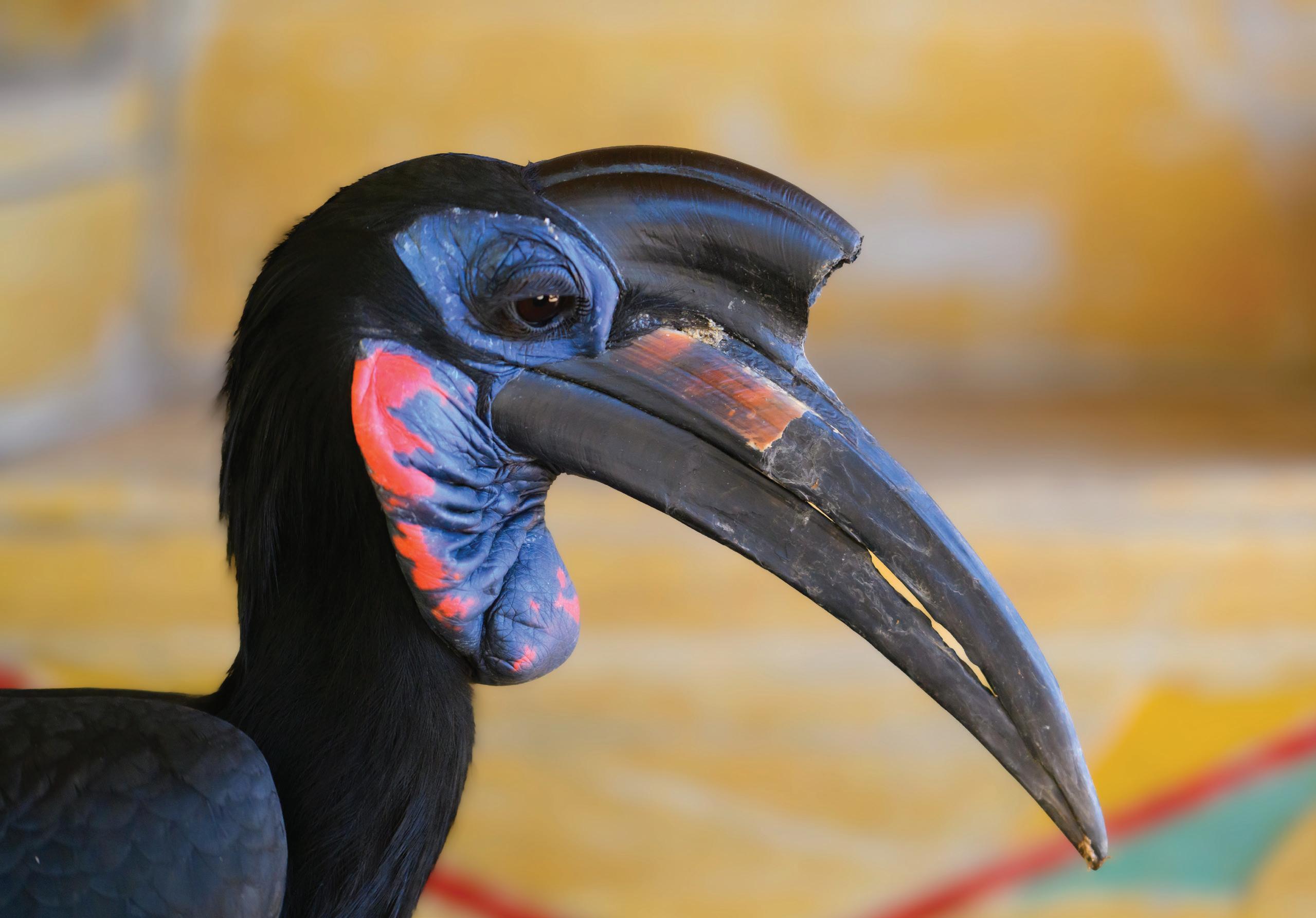
NORTHERN ABYSSINIAN GROUND HORNBILLS IN ENCOUNTER AFRICA
You cannot avoid falling in love with Petrie and Layla, the charismatic African birds that make up one of the zoo’s most interesting exhibits, modeled after a real-life shop in Kenya. The curious birds, with their extra-large beaks topped by a bony prominence called a casque, love to roam their shop, knocking stuff on the floor and opening drawers.
MEXICAN WOLVES IN ROCKY MOUNTAIN WILD
At the zoo’s wildest habitat — a large portion of the natural forest at the top of the property — you can see the wolves, but the wolves can’t see you. The one-way glass in the viewing area is designed to keep the wolves as wild as possible because they and their offspring could potentially leave the zoo at some point to enter the wild, as has happened with other wolves around the country. Watch keepers feed them at 11 a.m. Tuesdays and Thursdays.
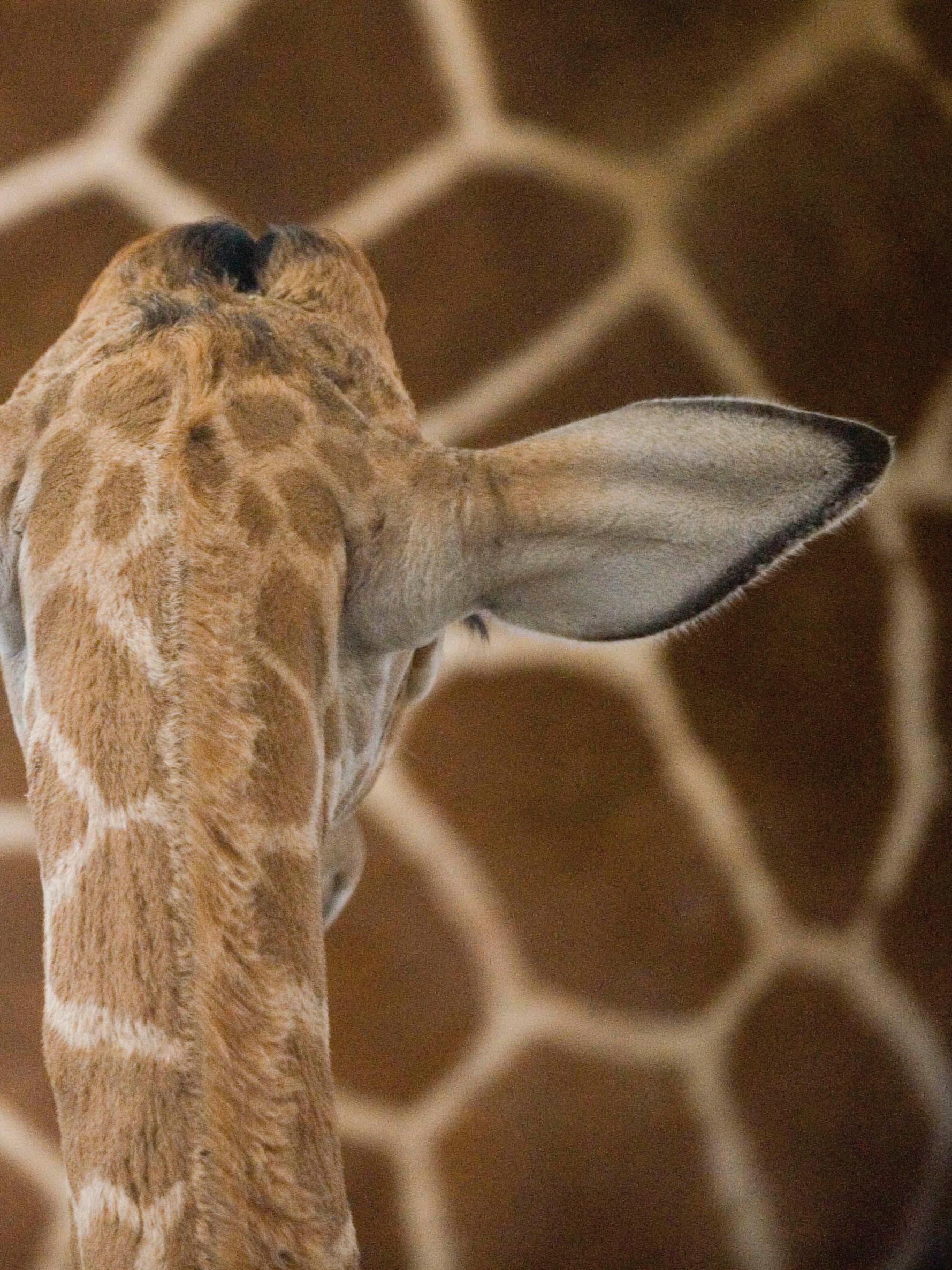
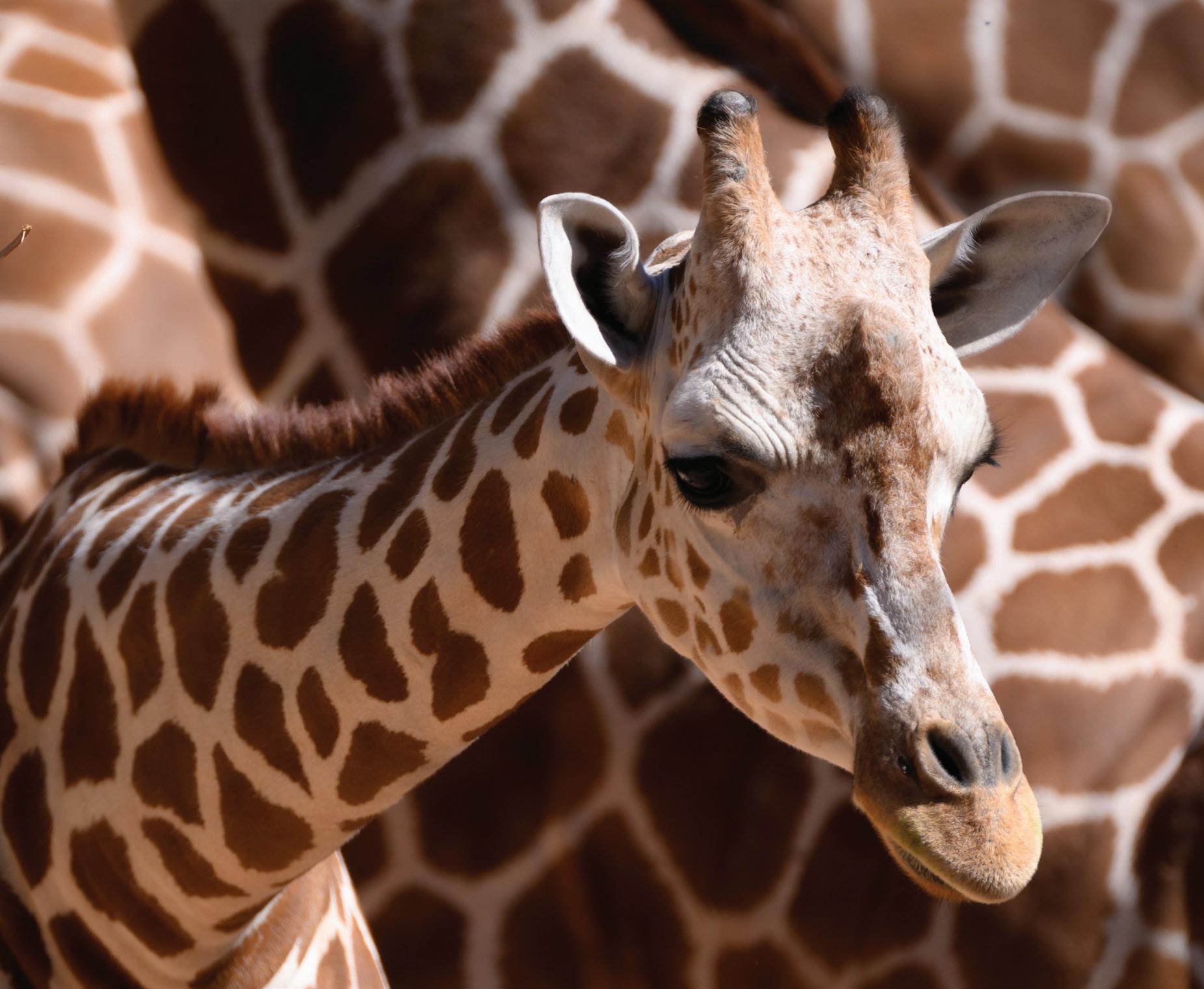
FEEDING THE GIRAFFES IN AFRICAN RIFT VALLEY
This summer, the zoo will open the International Center for the Care and Conservation of Giraffe, which will offer 11 feeding areas and brand-new perspectives of the animals, from foot to eye level. The new center will expand the animals’ space by 25%.
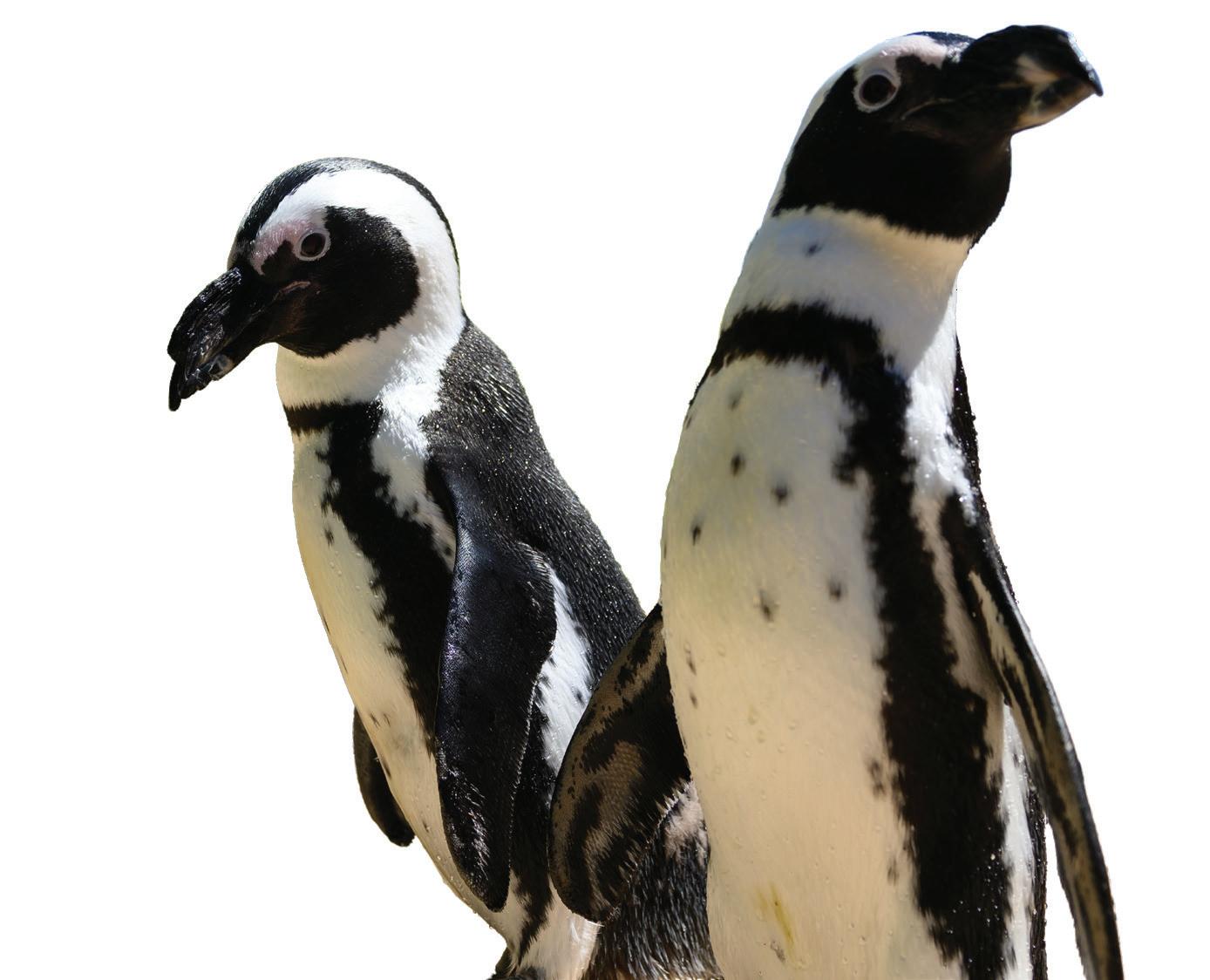
AFRICAN PENGUINS IN WATER’S EDGE: AFRICA
The little waddlers have the most diverse habitat at the zoo, with nesting rocks inside their building, indoor and outdoor pools, and a beach. On warm days, visitors might be treated to a penguin walkabout, as keepers let them perform a sidewalk shuffle and mingle with guests. Keepers give a daily talk at 9:30 a.m.
Room to roam
Cheyenne Mountain Zoo set to expand giraffe site
TEXT BY SETH BOSTER PHOTOGRAPHY BY MARK REIS
In its 100th anniversary year, Cheyenne Mountain Zoo will have something big to celebrate: a new home for its most celebrated animal.
The International Center for the Care and Conservation of Giraffe will open this summer — a $40 million project meant to benefit the hooved residents and human visitors who have long fed them by hand.
It will all begin from the zoo’s entrance, which has been under transformation while the state-ofthe-art center has been rising above the giraffes’ familiar yard. From the entrance, guests will now walk into a newly landscaped plaza of trees, boulders and giraffe sculptures. They will follow the path into a new, sleek gift shop and cafe.
The path then goes into a sweeping complex said to be unlike anything else in the world. The sun shines through a roof that doesn’t look like a roof, the sky in clear view through a “pillow” material more common in Europe. Now giraffes will be able to experience the sun and moon cycles, when previously at night they were transferred from their open-air yard into a barn.
The International Center for the Care and Conservation of Giraffe’s 12,000-square-foot barn expands the herd’s interior space, complete with a heating and “rain” system. And the zoo reports the giraffes’ outdoor space will grow by 25%; they can
freely walk outside to a reimagined “habitat.”
The concept is “about choice for giraffes and guests,” the zoo has explained.
Guests will still be able to feed giraffes nose to nose. But now they will move across 11 zones, including a platform above the giraffes. Or they will take a path down toward the hooves — allowing the possibility to feed babies for the first time.
The possibilities will continue outside, where giraffes previously limited to flat ground will have the option to go uphill — what promises to be another new, memorable sight for visitors.
But it’s not just about visitors, the zoo has emphasized: “The goal is to fill each giraffe’s day with positively reinforcing activities, such as exploring new spaces, munching on leaves and twigs, or taking advantage of some quiet time.”
The center was designed in collaboration with the zoo’s staff of behaviorists, trainers and veterinarians who have continued to build a rare knowledge base since the 1950s. That’s when giraffes were introduced and started growing families at Cheyenne Mountain Zoo.
The center was designed to improve their well-being — and provide insight that could be shared far beyond Colorado Springs, explained Bob Chastain, the zoo’s longtime president and CEO.
It’s all about continuing and spreading a 100-year mission here, he said: “Giving animals a home worthy of being in human care.”
kingdom
TEXT BY APRIL BORJON
Nine more places to find animals across Colorado
One doesn’t need to travel far in Colorado to feel like they’ve stepped into the wild. Across the state, you can spend mornings watching hippos, afternoons feeding giraffes and evenings surrounded by tropical fish. And no passport is required. Here are nine venues that showcase the animal kingdom:
Butterfly Pavilion
This tropical conservatory north of Denver offers a unique experience with hundreds of free-flying butterflies. Guests can also explore exhibits featuring insects, marine life and even a tarantula. As the first stand-alone nonprofit insect zoo in the U.S., the butterfly house is open daily from 9 a.m. to 5 p.m.
Colorado Gators
Alligators in Colorado? Indeed, as well as crocodiles, caimans and tortoises. All visitors to this geothermal park in the San Luis Valley get “the opportunity to pet, hold and take pictures with a small alligator.” You can also feed the alligators or pet and feed the tortoises. Open daily from 9 a.m. to 5 p.m.
Colorado Wolf & Wildlife Center
Nestled in the mountains west of Colorado Springs, this sanctuary focuses on rescuing wolves, wolf dogs, coyotes and foxes. Guided tours offer an up-close look at these animals while educating visitors on conservation efforts. Visits are by reservation only, with scheduled tour times throughout the week.
Denver Zoo
The zoo spans more than 80 acres in City Park and features habitats for elephants, tigers, hippos and more. Visitors can explore immersive exhibits and attend special events throughout the year, with more than 1,800 animals ready for viewing. It’s open daily, with hours generally from 9 a.m. to 4 p.m.
Downtown Aquarium
This Denver aquarium holds more than 1 million gallons of water and boasts 500-plus species of animals, from sharks and exotic fish to stingrays. Guests can walk through underwater tunnels and explore themed exhibits. Open 10 a.m. to 8 p.m. Sunday to Thursday and 10 a.m. to 9 p.m. Friday and Saturday.
Kangaroo Ranch
Offering a one-of-a-kind experience in Colorado, Kangaroo Ranch in Wheat Ridge allows visitors to interact directly with kangaroos in a relaxed, open setting. The ranch offers meet-and-greet sessions, bottle feeding and yoga classes with kangaroos. Upcoming plans call for birthday parties as well.
Pueblo Zoo
Home to 400-plus animals — including lions, penguins and giraffes — from around the world, the zoo offers interactive experiences such as feeding opportunities and a train ride through the grounds. Open daily, it’s available to the public from 9 a.m. to 4 p.m., with hours varying based on the season.
Rocky Mountain Arsenal
Once a military site, this national wildlife refuge northeast of downtown Denver is now home to bison, deer, bald eagles, raptors and other species. Guests can drive the wildlife loop, hike trails or stop by the visitor center to learn about conservation efforts. Open sunrise to sunset (8 p.m. in summer).
The Wild Animal Sanctuary
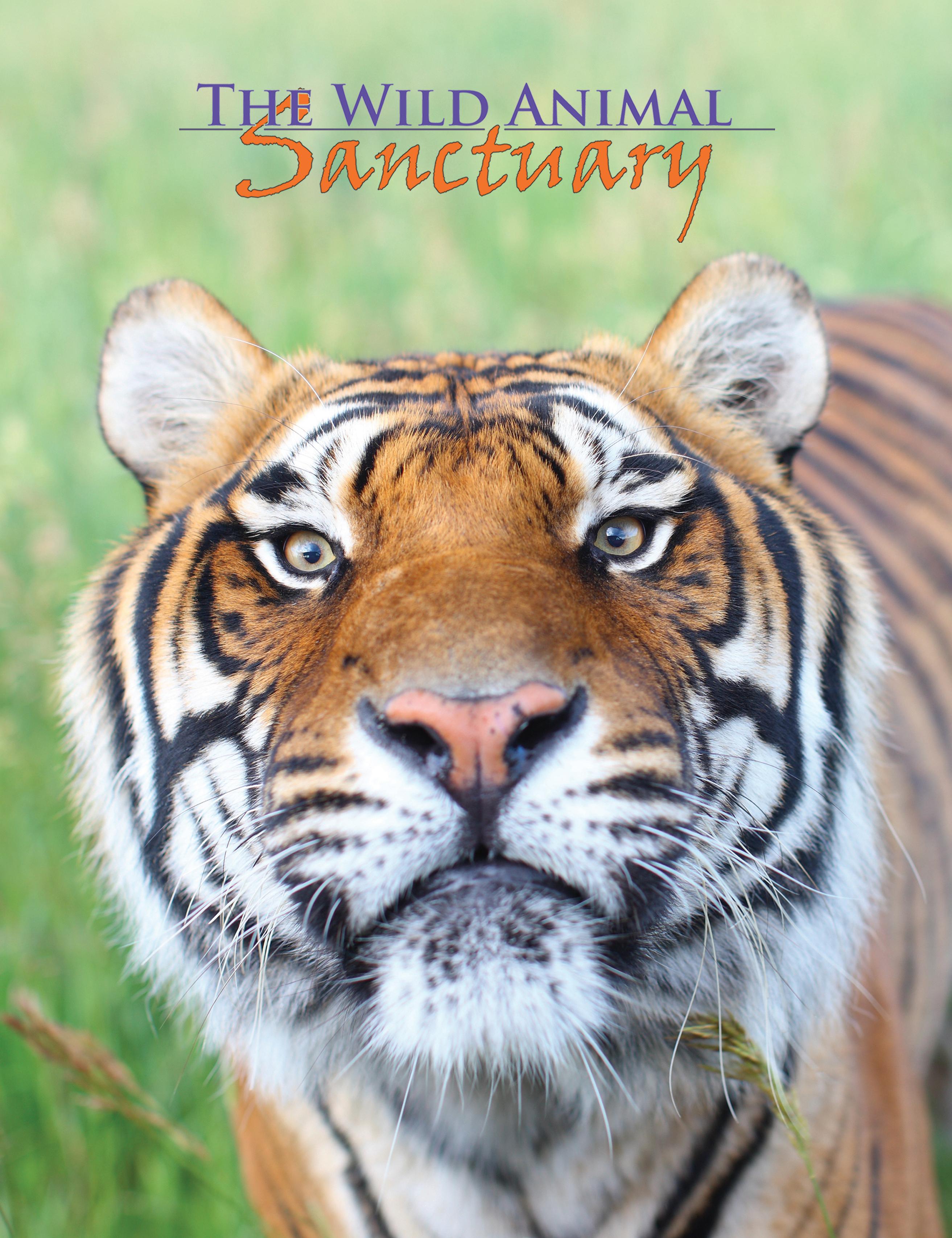
The Keenesburg sanctuary spotlights rescued carnivores such as lions, tigers and bears. Visitors can walk an elevated pathway that stretches more than 1.5 miles to see the animals below. Open daily from 9 a.m. to sunset. There are also rescue facilities in Springfield and Craig that are not open to the public.
BY MARK REIS
Driven by da Vinci
TEXT BY O’DELL
Pueblo museum to spotlight creativity, imagination of renowned Italian artist
Joe Arrigo’s vision is now only days away from becoming reality.
Leonardo da Vinci Museum of North America will open its doors June 12 in the heart of downtown Pueblo.
I have been reporting on the museum’s progress for months, since before the Colorado Economic Development Commission granted final approval for the project. So Arrigo, the museum board president, recently invited me to take a sneak peek.
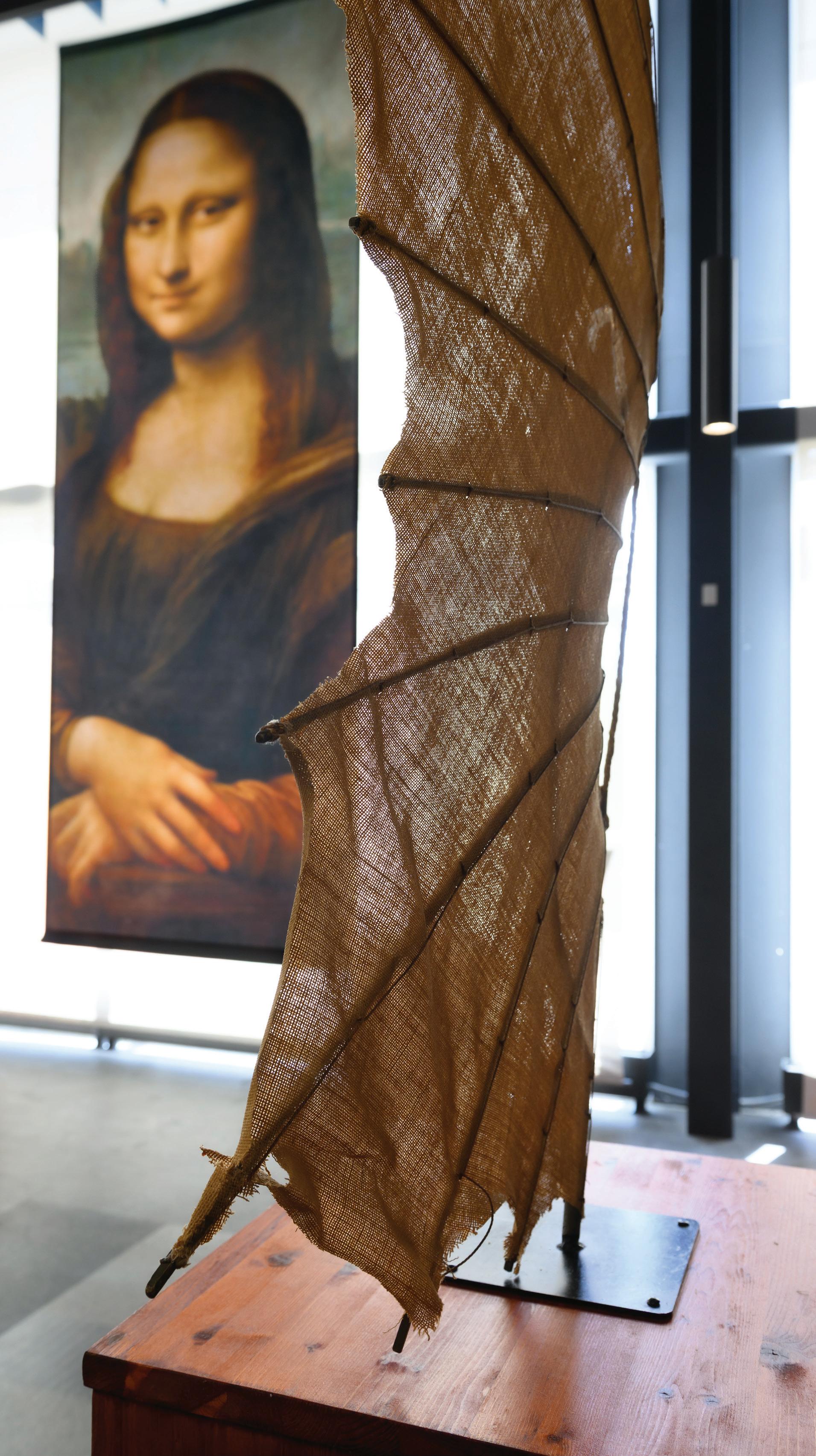
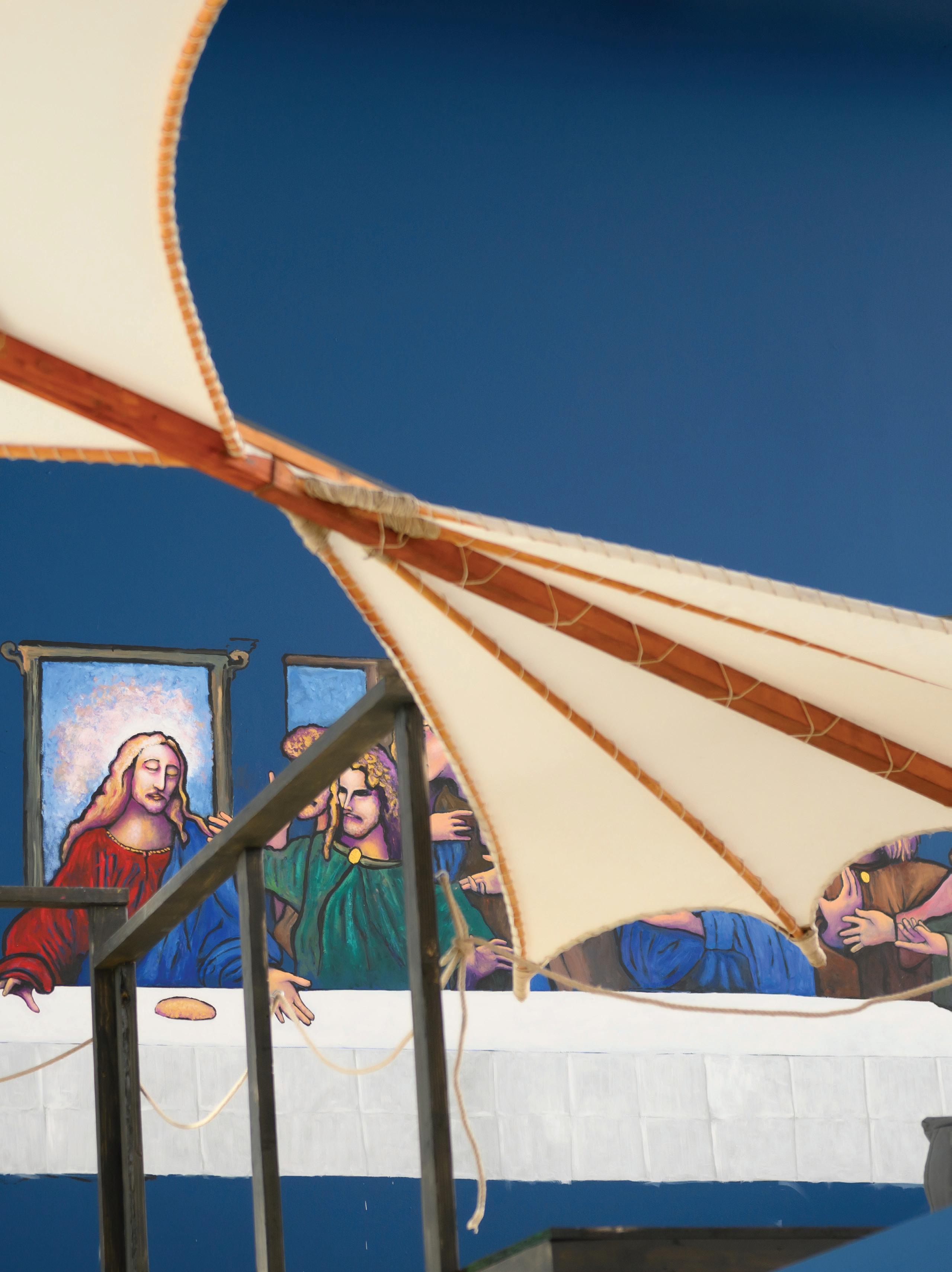
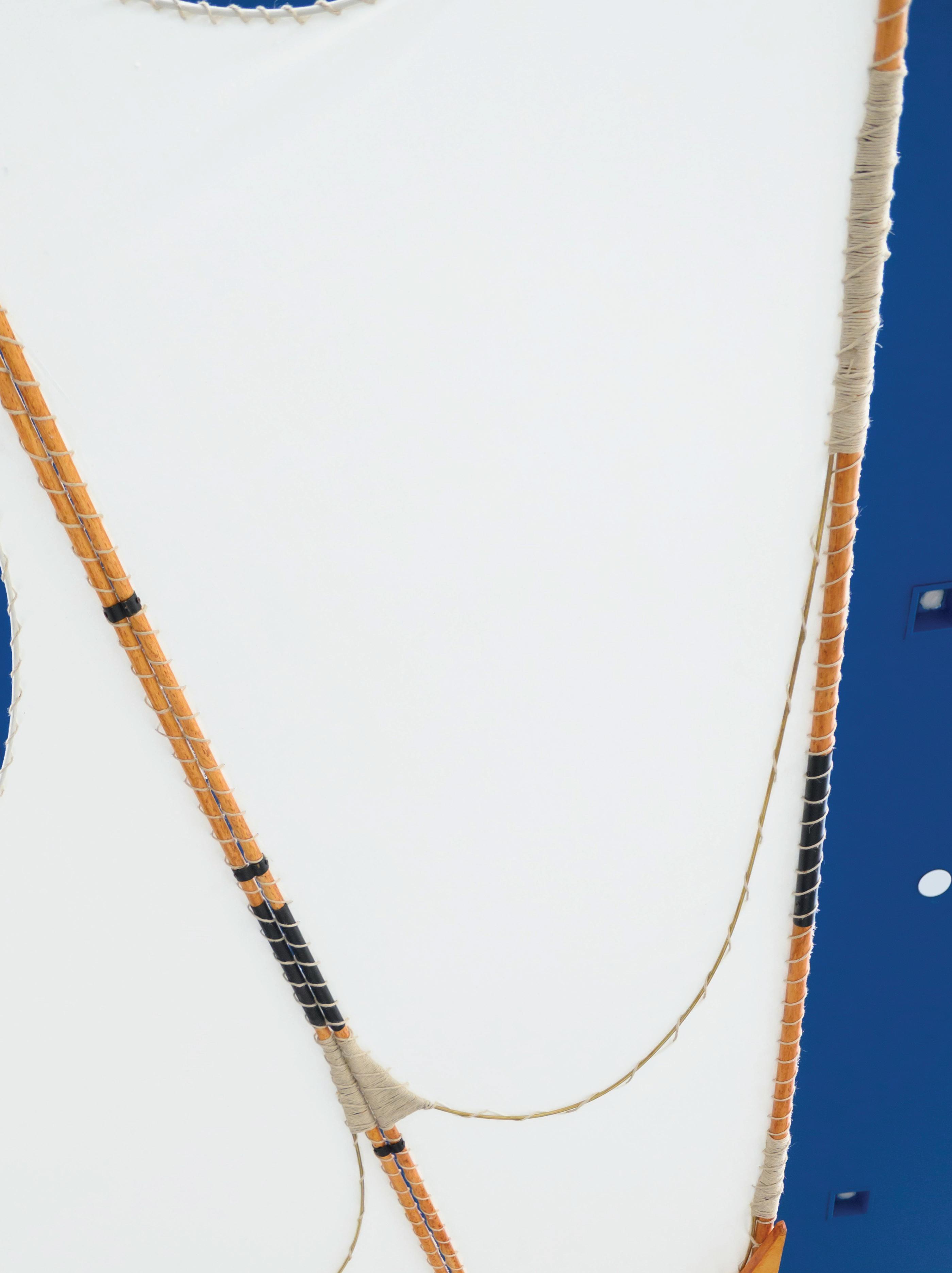
When I entered, I was greeted by one of da Vinci’s most famous conceptual designs — the flying machine, or ornithopter, a human-powered glider with 33-foot wings designed to flap like a bird.
Transfixed, I stood and stared. I could not help but consider the mind that designed it more than 400 years before the invention of the airplane. In the late 15th century, horses
were still the primary means of transportation. But da Vinci envisioned a time when man would soar above the earth.
I wondered aloud if anyone might have looked at this drawing back then and dismissed it as the doodling of a crazy man.
“I’m sure some people thought he was crazy,” Arrigo acknowledged. “But he always believed that man could fly. He spent years studying the physiology and movement of birds.”
When I asked Arrigo if people thought he was crazy for believing Pueblo was the ideal home for the only permanent da Vinci museum on the continent, he laughed.
“Probably,” he said. “But I’m not crazy. Just determined.”
In 2022, Pueblo’s Sangre de Cristo Arts and Conference Center hosted “Da Vinci Machines and Robotics,” an exhibit of more than 60 contraptions and reconstructed art pieces based on da Vinci’s work. After the show, Pueblo kept many of the models, distributing them to other exhibits across the U.S. Impressed by the show’s popularity, Arrigo began to wonder if a permanent museum in
Pueblo was possible. When the Professional Bull Riders relocated to Texas, Arrigo and other city leaders felt the suddenly vacant building would be an ideal spot to showcase da Vinci.
After years of discussion and planning, the state’s Economic Development Commission granted final approval for the 20,000-square-foot museum in February 2025.
“It’s been a long journey,” Arrigo said. “But we’re almost there.”
Da Vinci was primarily known as an artist, and replicas of his work — most notably the Mona Lisa and The Last Supper — are highlighted in the Pueblo museum. But most of the exhibits are dedicated to re-creations of the Italian polymath’s wide variety of scientific and mechanical designs.
There are five other Leonardo da Vinci museums — in France, South Korea, Australia, Brazil and, of course, the artist’s homeland. But according to the Artisans of Florence, the Italian organization that operates the museums, some of the exhibits can only be seen in Pueblo.
An interactive experience
Years ago, when I was serving in the Navy, I was fortunate enough to visit the Louvre and see the Mona Lisa, but I never got close to it. It’s not possible, as the painting is protected by stateof-the-art security, including armed guards. You can take a photograph of her, but not using a flash.
In the new museum, there is a stunning replica of that famous painting, and I got almost face-to-face with her just because I could.
During my visit, I saw and touched dozens of items, including a self-propelled cart, a robot drummer and a cam hammer operated with a hand crank. Each has been painstakingly re-created by the Ar-
tisans of Florence using materials that would have been available in the 15th century.
I could not keep my hands off the exhibits, and Arrigo did not seem to mind.
“That’s the whole point of coming to a place like this,” he said. “We’re hoping kids look at these machines, think about the time they were invented, and start to believe that anything is possible.”
The war machines
A seldom-discussed aspect of da Vinci’s career is the time he spent designing military weapons, such as an armored tank, a giant crossbow, steam-powered cannons and a precursor to the machine gun.
Like da Vinci’s flying machines, many of these inventions were well ahead of their time. Unlike the glider and the aerial screw, however, these were killing machines. Several of the re-creations are displayed at the museum.
I found myself drawn to a chariot that looked particularly gruesome, with spinning blades at its front, designed to cut through anything in its path, including horses and humans. Wall-sized sketches behind the chariot depict the kind of damage it was designed to do.
“Like most of our exhibits, this was built based on da Vinci’s drawings,” Arrigo told me. “It was never built back then. If it had been …”
Arrigo didn’t finish his thought. He didn’t need to.
What’s left to do
Finishing touches are underway as the official opening nears. A gift shop is in the works, as is a library, which will house copies of da Vinci’s drawings and notes — more than 13,000 pages in all.
Additionally, a large-scale reproduction of the Vitruvian Man — a pen drawing showing a male figure in two overlapping positions — will greet guests outside the main entrance. On the day of my visit, workers were clearing space for it.
Arrigo leaned in toward me, as if to share a secret.
“It’s going to be big,” he said.
SALVATION ARMY
“Thanks
~ SADEHA, DENVER
Food finds
TEXT BY SETH BOSTER PHOTOGRAPHY BY MARK REIS
Brother Luck knows a little something about food. And the celebrity chef likes what he sees (and tastes) around Colorado Springs.
Four by Brother Luck is just one of several fine dining sites dotting downtown. But quality food can be found all over the city. It just requires searching.
“If you want good food in this city, beyond your downtown or Old Colorado City or Manitou Springs, you need to go to South Academy, you need to go to Fountain, you need to go to Widefield,” Luck said. “You’re gonna find some culture. You’re gonna find some stories.”
Here’s what I discovered:
Black Forest Foods: Between the fridges stocked with take-home soups and the cases packed with pastries, there’s hardly room for sitting inside this Monument cafe. Patrons opt for the patio, where my nose led me. I could smell the smoker of prime rib nearby.
It was but one meat being stacked among carefully curated breads and cheeses, fresh veggies and housemade sauces.
Black Forest Foods is the creation of Romanian chef Dragos Matache, who’s proudly “infusing a European touch into American classics,” the website reads.
Locals know the burgers as the best around. And people near and far have come back for the sandwiches; I counted nearly 20 varieties written behind the counter this visit.
My order: The Tri-Lakes Club, with ham, turkey, bacon, cheddar, lettuce, tomato and a garlic aioli on toasted sourdough, and the Pastrami Panini, with a similarly generous portion of meat between sourdough.
The Chuckwagon: Hide as it does on the city’s east side — between an industrial zone and a neighborhood — the word is getting out. Started as a food truck in 2023, fans have followed the Texas barbecue to its small brick home, where the line spills out the door come feeding time.
In line, I asked the guy behind me what to get; like everyone else, I took him as a regular. “My first time was yesterday,” he replied. With brisket, ribs, an armsized beef dino bone and more surprise specialties, The Chuckwagon lures people back.
My order: The brisket — and more brisket. The Texas Twinkie is a bacon-wrapped jalapeño that’s stuffed with cream cheese and brisket and then smoked. Also recommended: the creamy corn elote topped with brisket and a tangy sauce.
Luchals: I got to know the Southern soul food at the downtown CO.A.T.I food hall, at the stall that was the next stop amid a long, winding journey for chef Chantal Lucas. Now she’s at a corner of a strip mall in Fountain, in a large, art-filled space that feels like a celebration of a woman who has earned her way.
Lucas went from teenage work at McDonald’s to Army bases, where she worked as a cook and met her husband. They started a food truck and catering business before the food hall, all while she honed skills at a Boulder culinary school. The location has changed, but the mission remains: Cajun flavors that meet catfish, shrimp, wings, tacos and more.
My order: Fried and seasoned catfish — with red beans and rice as well as greens — and honey garlic shrimp and hand-cut fries. Another go-to: crab cake.
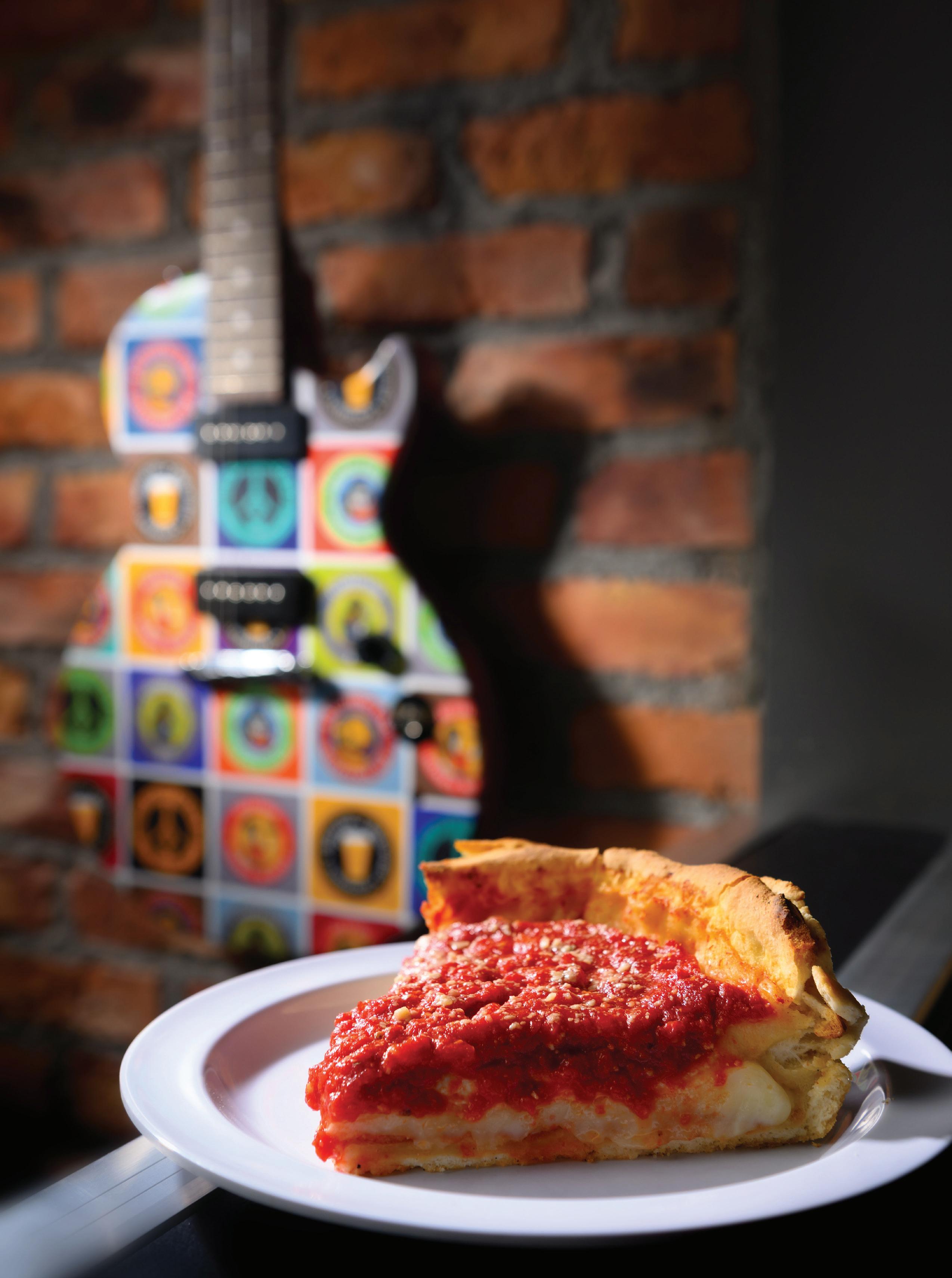
Rock’s 24 Pizzeria: I grew up in the Chicago area, and I love deep dish pizza. So imagine my delight when I heard about a new Chicago pizza joint in town, easy to miss near the U.S. 24 bridge over Fountain Boulevard. And imagine my delight when I took that first bite — just right.
The crust that is a thick, buttery wall holding a river of cheese and a lake of sauce is not for all, I recognize. Chicago’s lesser-known “tavern style” is more approachable — a savory, thin-crust antithesis. Rock’s 24 nails that as well.
The name, I was told, comes from the owner’s love for rock ‘n’ roll. I was jamming out to every slice.
My order: “Stuffed” deep dish with sausage and the thin-crust Italian Stallion, with Italian beef and Giardiniera peppers.
Stellina: Starting in the early 1900s, the building at the corner of the historic Middle Shooks Run neighborhood served as a market. It served the community — and it still does, in a different and most delectable way.
Stellina means “little star,” as seen from the shining logo above the door. It’s a North Star, calling to those in the neighborhood and beyond who know some of the Springs’ best, freshest Italian is hiding here.
It’s a fitting logo for Blue Star Group, whose ownership alongside Chef Will Merwin toured Rome and brought back the flavors they studied. Yes, it’s Roman-style pizza here — rectangular, crispy yet airy — and it’s much more.
The house-made pasta and accompanying aged ingredients are what you’d expect at a fine dining scene. Stellina keeps it casual, however, true to the neighborhood: Walk in, order at the counter, and don’t leave without gelato.
My order: Rocket pizza: mozzarella, ricotta, aged Parmigiano-Reggiano, arugula and lemon vinaigrette; kale and sausage pasta: orecchiette tossed with spicy Italian sausage, kale, garlic, Aleppo pepper and cheese; pistachio gelato.
Tacos El Amigo: The friendly name can be found east of downtown off Platte Avenue, off Fillmore Street, in Fountain and in Woodland Park if you know where to look. I’ve frequented the spot off Platte, where Boulder Street curves past a parking lot of used cars, a massage parlor and neighboring storefronts that look abandoned. Perhaps an odd place for my favorite tacos in town.
It’s simple and authentic every time.
You can find chimichangas and green chile-smothered burritos here, too. You can also find menudo, the traditional stew you don’t find everywhere. And you can find a burger you won’t find anywhere else: Hamburguesa Estilo Juares, topped with hot dog, ham, guacamole, lettuce, tomato, onion and cheese.
My order: Birria, carne asada, carnitas and pastor tacos.
Thai Taste Cuisine: I looked all over for my next go-to Thai in town. I found it in the Union Square shopping center. Some stop into the pet supply store next door, and others stop and stare at the menu plastered on the window here — a long list of classics from owner Tina Pascua’s native land.
It’s a warm, inviting space with cushioned chairs, begging you to sit down and chow down on flavors both familiar and unfamiliar. Perhaps you know Pad Thai, but maybe you don’t know pad see ew, which “can be found easily among street vendors” in Thailand, the menu reads.
A basil-accented stir-fry, pad kra pao, is listed as “one of the most popular Thai dishes,” while a papaya salad, Thum mak hoong, is called “one of the national dishes of Laos.” The colorful array of noodles, fried rice and curries demands a return.
My order: Pad Thai, green curry and curry puffs — fried pockets stuffed with spiced chicken and potatoes and served with a sweet cucumber sauce.
TEXT BY JENNIFER MULSON
June 5: Yo-Yo Ma with the Colorado Symphony, Ford Amphitheater, Colorado Springs — The world-renowned cellist has released more than 90 albums.
June 12-13: Paul Simon, Red Rocks Amphitheatre, Morrison — The Grammy Award-winning singer-songwriter has won album of the year three times. His hits include “Graceland” and “Loves Me Like a Rock.”
June 20: Tim McGraw, Falcon Stadium, Colorado Springs
The Grammy Award-winning country singer will perform during the PBR Space Cowboys rodeo event. He has 25 No. 1 singles, including “Live Like You Were Dying.”
June 27: AJR, Ford Amphitheater, Colorado Springs — The pop band, formed by three brothers, is known for hits such as “World’s Smallest Violin,” “Sober Up” and “Bang.”
July 2: Dierks Bentley, Ford Amphitheater, Colorado Springs — The country star’s hits include “What Was I Thinkin” and “Settle for a Slowdown.”
July 10-12: The Avett Brothers, Red Rocks Amphitheatre, Morrison — The folk rock band, with hits such as “I and Love and You” and “Ain’t No Man,” is back for its annual visit to Colorado.
July 25-26: Olivia Dean, Ball Arena, Denver — The Grammy Award-winning British singer-songwriter is known for tunes such as “Man I Need” and “Nice to Each Other.”
July 30: Jelly Roll with Justin Moore and Ashley Cooke, Weidner Field, Colorado Springs The Grammy Award-winning country rock star took home a 2026 Grammy for his 10th album, the 2024 “Beautifully Broken,” with its hits “I Am Not Okay,” “Liar” and “Heart of Stone.”
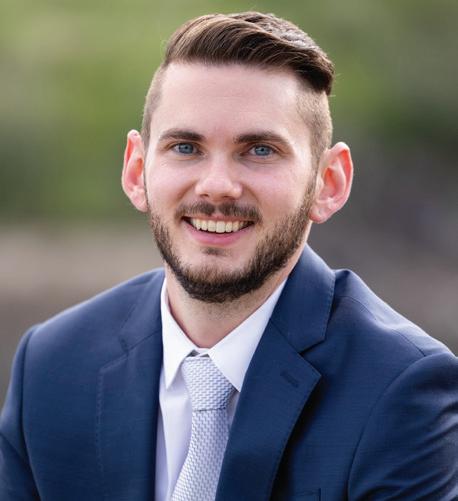
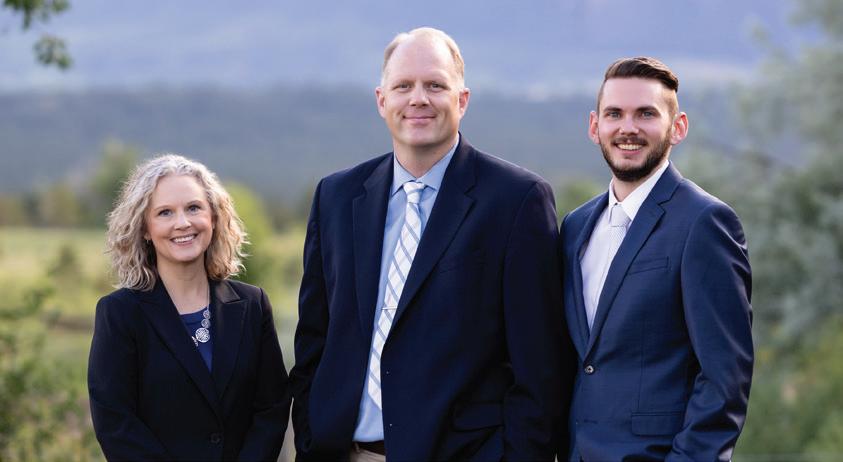
In 2020, Matthew was admitted to practice law in Colorado and has found his passion in estate planning. He combines his education, legal knowledge, and sense of humor with his love of service to his community. His education-focused approach to estate planning offers peace of mind to his clients, who feel at ease while they plan for and navigate one of the most stressful challenges of life.
July 31: Shinedown with Coheed and Cambria, Weidner Field, Colorado Springs -— The 25-year-old rock band recently released its eighth album, “Eight,” and is known for the hits “Second Chance” and “The Sound of Madness.”
Aug. 1: The Black Crowes and Whiskey Myers, Ford Amphitheater, Colorado Springs — The Black Crowes’ Southern rock hits include “Remedy,” while country rock band Whiskey Myers is known for “Die Rockin.”
Aug. 6: Sublime, Ford Amphitheater, Colorado Springs
The ska punk band, known for its hit “What I Got,” reformed in 2023 after breaking up in 1996.
Aug. 7: Steve Earle, Phil Long Music Hall at Bourbon Brothers, Colorado Springs — The Grammy Award-winning singer-songwriter’s hits include “Guitar Town” and “Copperhead Road.”
Aug. 8: Lindsey Stirling, Ford Amphitheater, Colorado Springs — The violinist presents choreographed performances in genres ranging from classical to rock.
Aug. 14: Alison Krauss & Union Station featuring Jerry Douglas, Ford Amphitheater, Colorado Springs — The Grammy Award-winning bluegrass and country band’s hits include “When You Say Nothing at All” and “Down to the River to Pray.”
Aug. 29: Ty Myers, Ford Amphitheater, Colorado Springs
The singer-songwriter went viral with “Thought it Was Love” and “Ends of the Earth.”
Sept. 5: Brantley Gilbert, Ford Amphitheater, Colorado Springs — The country singer’s hits include “Country Must Be Country Wide” and “You Don’t Know Her Like I Do.”
Phone: 719-575-9690 Fax: 719-325-7043
RUSTIC REFUGE
TEXT BY SETH BOSTER PHOTOGRAPHY BY MARK REIS
Cocktail bar surprises off beaten path
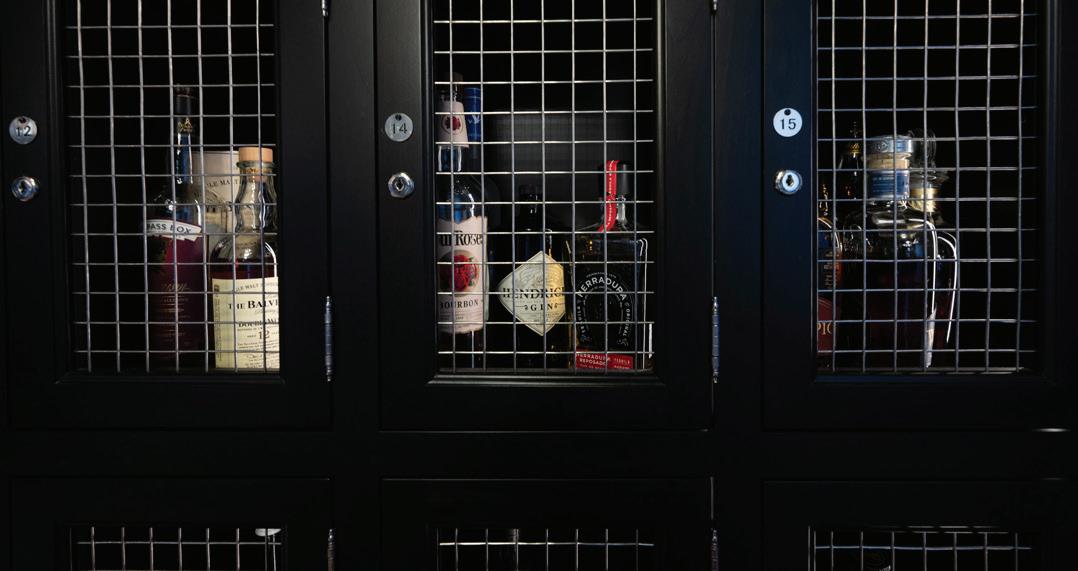
The people who know the cocktail bar hiding off a dirt road in the mountains use the word “magic” often.
How else to explain Bread Bar?
The bar manager, Jeff Wilkins, got married at this former bakery in Silver Plume, the old mining town perched high along Interstate 70. He’s been working here since 2019.
“And the magic of Bread hasn’t gone away,” Wilkins says. “It still feels really, really special.”
There’s something about the little building that appears just as it did in the late 1800s. Something about the winter, when snow gently falls, the windows fog up, and there’s a glow inside — warm like the drinks sipped by skiers stopping on their way back to Denver. There’s something about the fall, when the aspens glow around the deck. There’s something about summer nights on that deck, where music is played as the stars shine bright above.
“That part does feel magical to me,” says one of Bread Bar’s owners, Rob DuRay.
Says another owner, Steve Fenberg: “You go in, and time stops a little bit.”
Time has gone on; this summer marks 10 years of Bread Bar, or Bread, as it’s simply known by Fenberg, DuRay and other Denver-area friends who opened the place.
Ten years later, people are still discovering the magic.
There’s something about the little building, yes — something about finding it when the lights are on (only Fridays, Saturdays and Sundays).
“It’s just kinda tucked away,” Wilkins says. “It’s a secret, but it’s not a secret.”
The word is out about Bread — a cocktail bar unlike any other in Colora-
do, the owning friends are proud to say. There’s something about “that piney smell of getting up in the mountains away from the city,” DuRay says. “The light feels different. The air feels different.”
Bread, he says, “touches all these senses in a way that other bars don’t.”
That includes taste, of course.
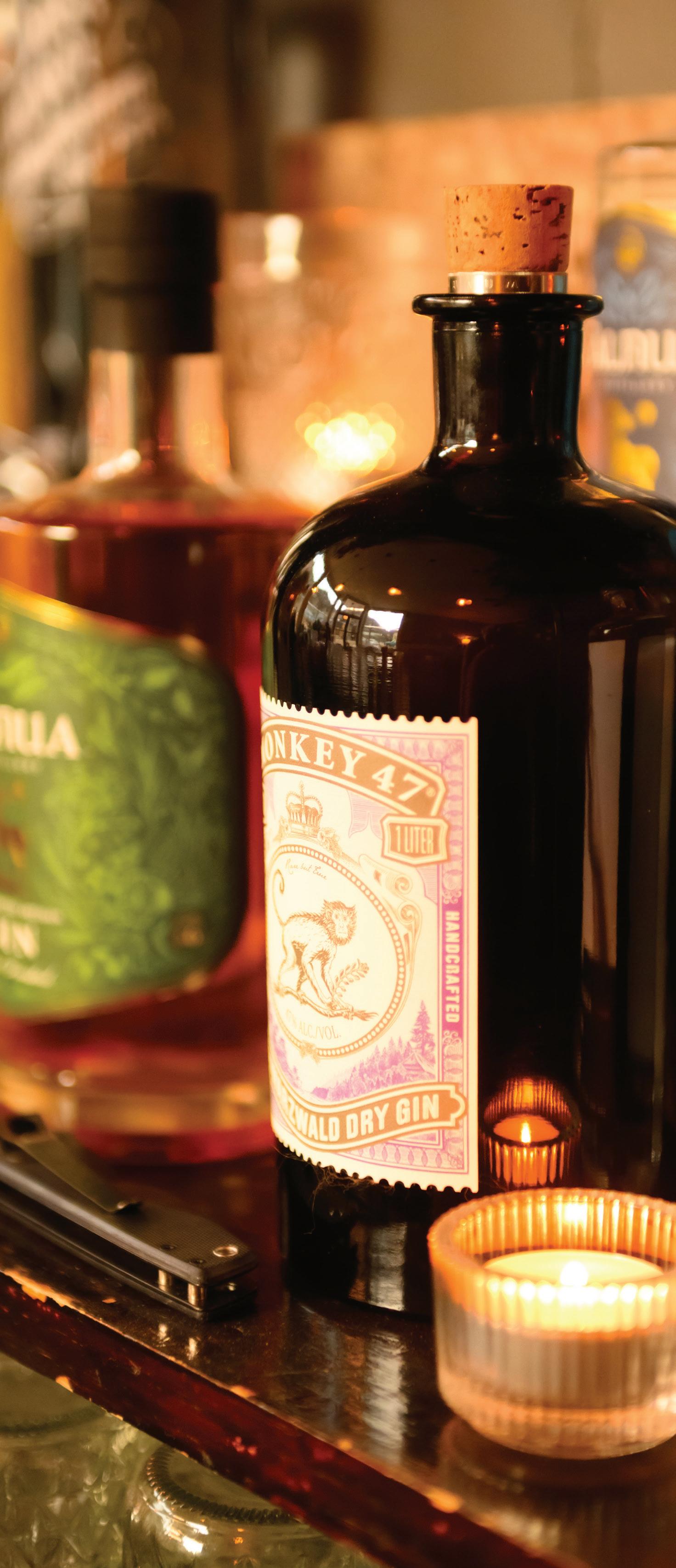
One popular cocktail is Baby Doe Tabor, which blends vodka with a blackberry sage jam, citrus and soda. The Leavenworth blends tequila with passionfruit liqueur, sweet and spicy gingercello, tangy lime and fragrant bitters. Another standout on the menu: Half Past Seven, which features a very rare Patagonian spirit called Träkál, distilled from the region’s apples, pears and berries.
The cocktail names honor the local mining history, which Fenberg got to know over the years before Bread.
He got to know Silver Plume as “this old mining town that’s largely preserved and never turned into a true ghost town.” It was the kind of town “you’d think would be way off the beaten path,” he says, “but it’s literally just sitting off I-70.”
Fenberg came to love Silver Plume. “And I always loved this little building at the end of the road,” he says.
When he saw it for sale in 2016, the former state Senate president was just starting his political career. Fenberg was in his 30s and between jobs — “where I could do stupid things and take risks,” he says.
Better to do so with friends, he figured. He called his pal from college back in Boulder.
“I thought it was crazy,” DuRay recalls.
Fenberg drove DuRay to Silver Plume, where the sun hung high across a blue sky. Snow was melting. Plants were blooming. “That promise of spring sort of thing,” DuRay says.
They proceeded up the dirt road to the old bakery remembered by a faded word above the door: “BREAD.”
“I was immediately sold,” DuRay says.
He and Fenberg met with a couple of other friends later that evening and hatched a vision.
They envisioned “a place that folks on their way to the mountains or coming up from Denver felt like was this secret little gem they stumbled upon,” Fenberg says. “But at the same time, we didn’t want it to feel like a tourist stop. We wanted people in town to feel like it was theirs.”
The idea was “refined but accessible,” he says. That’s seen on the menu of refined cocktails that are listed with another option called Bread & Butter: a Coors Banquet and shot of whiskey.
And the locals, indeed, are seen at the bar.
“One of my favorite Bread moments,” DuRay says, “is when somebody who’s in from the city or traveling from a different state sits down and starts asking questions and happens to be sitting next to a local who gives them all the history and lore.”
Now it seems Bread Bar is part of that lore — a seemingly magical place. How else to explain it?
It can’t be explained as much as it must be experienced, the bar manager suggests. Come this summer, Wilkins implores.
“There might be nothing better than Bread Bar on a summer night,” he says. “Everyone’s laughing, having a good time and playing cards and listening to music. I don’t see a lot of cellphones. It feels like everybody just slows down.”
- Thomas Jefferson
Imagine living in an apartment where your neighbors — that include the property’s management and maintenance staffs - become your friends. Such a place exists, at Arvada Court Apartments, near Olde Town Arvada and just five rail stops away from Denver!
Flower power
TEXT BY SETH BOSTER PHOTOGRAPHY BY JESSICA VAN DYNE
Coming off a dry spring and record-low snowpack, it remains to be seen how Colorado’s wildflowers will be affected.
Peak blooms typically occur in July and August across the high country, with the 40th anniversary of the Crested Butte Wildflower Festival set for July 10-19. Travel to any elevated region of the state, and you are bound to find flowers. But Crested Butte has proven dependable with its annual displays of vibrant color. Here are four other recommendations:
American Basin: This is a magical stop along the Alpine Loop, which will require a high-clearance, four-wheel-drive vehicle. It is a feast for the eyes along the rugged track, commonly ventured from Lake City. The basin is a splash of color, surrounded by dramatic peaks and fed by a cascading creek.
Indian Peaks Wilderness: Perhaps make Nederland your base, the hamlet through the canyon west of Boulder. The Hessie Trail is heavily trafficked — go on a weekday if you can — and for good reason. The flora captivates en route to Lost Lake and Devil’s Thumb Lake farther afield.
Summit County: Whether your path is easy or difficult, you cannot go wrong here. An easy option is Lily Pad Lake Trail, through a lush forest perfect for plants. The hike along Saw Mill Creek is also good for kids. For something higher and more demanding, look to Wheeler Lakes and South Willow Falls.
Yankee Boy Basin: Like American Basin along the Alpine Loop, Yankee Boy is another southwest Colorado basin of regular pilgrimage for flower admirers. Along with Indian paintbrush, columbines and bluebells — to name a few — you will get the intrigue of historic mining sites along the steep, rocky road.
Tee it
high
Seven golf outings that are memorable and affordable
TEXT BY NATHAN VAN DYNE
Copper Creek Golf Course. Copper Mountain
Golf in Colorado comes with many perks. Consistent sunshine, stunning views and abundant wildlife are three that quickly come to mind. There’s the increased distance on every shot, with balls traveling up to 15% farther than at sea level. And there are the dramatic elevation changes enjoyed from many a mountain tee box. Golf season here is special, to be sure, and it’s in full swing across the state. Here are seven relatively affordable courses to consider this summer. Each will test your game without necessarily testing your wallet.
Copper Creek, Copper Mountain
Summit County is home to a handful of impressive golf courses, but none rises to the level of this one — at least in terms of elevation. Billed as the highest 18-hole golf course in North America, with the signature 14th tee box at 9,863 feet, this experience will take your breath away. The track is fun and challenging, and the prices are the most affordable in the county.
Devil’s Thumb, Delta
It is dry and desolate on this patch of the Western Slope, and the short drive from town to the golf course is far from remarkable. Soon, though, lush fields of grass and shimmering water features come into view. The layout is fair but challenging, with quality views of the namesake rock formation. The signature hole comes early at No. 3, a reachable par 4 loaded with risk.
Divide Ranch & Club, Ridgway
This is a postcard venue because Mount Sneffels is a postcard peak. Indeed, the San Juan Mountains dominate this peaceful sanctuary dotted with all types of wildlife. It is not easy for the course to measure up in terms of awe, but it too proves capable with its design — particularly on the finishing holes. The approach on the par-5 12th is not one you will soon forget.
Four Mile, Cañon City
The claim is an experience “like no other course you have played.” And the claim is accurate. Think miniature golf on a grand scale; the only thing seemingly missing is putting through a clown’s mouth on the 18th hole. Undulating greens, blind tee shots, a rolling landscape and wild elevation swings are common. Average players can find success, and experts can be humbled.
Grand Elk, Granby
There is something about the place that just feels like Colorado. Maybe it is the mountains in every direction. Maybe it is the cool, crisp air. Maybe it is the natural beauty immaculately maintained on every inch of the semi-private golf club. “Not your typical mountain course,” the website says. That is because of the thought and creativity required for every single shot.
Lakota Links, New Castle
It is a long drive, but it is a beautiful drive. And once you reach the course, you will not be disappointed. The challenging layout demands your attention from the opening hole, one of several elevated tees on the mountain course. The surrounding beauty demands your attention as well, especially on the back nine. So focus on the golf or the scenery; you can’t go wrong.
Riverdale Dunes, Brighton
Never heard of Brighton? Well, here is at least one reason to plug the town into your GPS. The golf complex is home to a pair of 18-hole layouts: Riverdale Dunes and Riverdale Knolls. The Dunes is a Scottish-style links course. Players can expect deep pot bunkers, a bevy of water hazards and a myriad of mounds. The highly rated course is well-designed and well-maintained.
TRUETASTE SINCE 2008 OFCOLORADO
Water World development celebrates the outdoors with a splash
Water World is planning to give you the ride of your summer.
Summit Canyon, the Denver-area park’s largest development since 1986, is on track to open in June.
“It’s called Summit Canyon to reflect this outdoorsy state park/national park theme,” said Kellie Flowers, Water World’s community relations manager. “It’s celebrating Colorado’s great outdoors.”
To make room for the new area, the park closed 40-year-old Calypso Cove at the end of last season.
“It gave us great memories, but it was reaching its end-of-life phase,” Flowers said.
The 2.5-acre Summit Canyon will be anchored by the 60-foot Lookout Tower, now the highest point in the park and the base for four new waterslides: two tube rides and two body flume rides.
In Aspen Falls, the metro area’s first drop-capsule waterslide, a rider enters an enclosed capsule where, after a countdown, the floor drops out and the rider plummets down the slide.
Half of Columbine Cascade, a body flume ride, is made of clear fiberglass so it feels like you’re “flying through space,” Flowers said.
Marmot Mayhem, a tube ride and one of the first of its kind in the country, features two corkscrew elements and a 360-degree panoramic view.
Runoff Rapids, another tube ride, offers high velocity and quick changes in direction. Both tube rides can be ridden solo or as a pair.
The new area includes seating for 700 people, a leisure pool, two activity pools — one with an on-water obstacle course and the other with in-water basketball hoops and a 7,500-squarefoot children’s play area with five slides.
Pikes Peak Ziplines.
Soaring Adventure, Colorado Springs
It’s one thing to see Seven Falls and Cheyenne Canyon from the ground. It’s another to see Colorado’s so-called “Grandest Mile of Scenery” from the sky. The Broadmoor’s high-altitude tour includes multiple zip lines as long as 1,800 feet and a thin suspension bridge between the canyon’s rocky promontories.
Pikes Peak Ziplines, Manitou Springs
A leader in guiding, Adventures Out West hosts a tour among the varied wilds of Pikes Peak. The company bills it as a choose-your-own adventure tour, allowing one to run, jump or crawl over cliffs and hang upright or upside down along five zip lines. The journey awaits atop a rough road reached via Jeep.
Treehouse Adventure Park, Bailey
West of Denver, the park “closely resembles an Ewok village or a Swiss Family Robinson treehouse,” by its own description. The imagination can run wild as kids and kids at heart navigate a “treehouse” beyond their dreams. They zip between ponderosa pines, scale ladders and walk across rustic bridges.
Royal Gorge Zipline Tours, Cañon City
It’s not just America’s highest bridge crossing the Royal Gorge. There’s also a gondola, which recently added a see-through floor. But nothing matches the thrill of the zip lines, nine of them here over one of Colorado’s greatest natural marvels. The tour ends with a side-by-side racing line running 1,000 feet.
Captain Zipline, Wellsville
Lost Canyon was worthy of the zip line that claims to be the first in Colorado. Six lines roam the remote and rocky realm east of Salida, with features called “Leap of Faith” and “Eagles Roost” overlooking the Arkansas River and distant Sangre de Cristo peaks. The canyon is also home to a massive ropes course.
Top of the Rockies Zip Line, Leadville
Of course there’s a zip line in Leadville, North America’s highest incorporated city near 10,200 feet. And of course the zip line is named Top of the Rockies, alluding to the highest Rockies in view as the wind rushes on the face. From a deck above 11,000 feet, three side-by-side lines kick off the elevated tour.
Glenwood Canyon Zipline, Glenwood Springs
The Colorado River-carved Glenwood Canyon is another of the state’s top postcard landmarks. And it, too, is fittingly home to an aerial adventure. The “express zip” starts with a climb up a tower, atop which one steps off to fly over the river and meet a suspension bridge, which leads to another zip.
Durango Adventures, Durango
Here’s another way to admire the San Juan Mountains of southwest Colorado — via zip lines that fly over stately, evergreen treetops. The 12-line tour also sells the chance to “conquer a rope bridge” and free-fall 45 feet from a tower. The rewards continue for about three hours after a short hike to the course.
Denver artisans finding success with pints of small-batch ice cream
TEXT BY ALLYSON REEDY
Sadboy Creamery.
2020 will be remembered for a lot of things, but let’s add two more to the list. First, it became a golden year for entrepreneurship, and second, it might be the year we ate more ice cream from the carton than at any point in history.
Combine those trends with a wave of young, ice cream-curious Denverites suddenly laid off from their jobs, and we had an ice cream renaissance, a frozen dairy uprising, a pintsized revolution! Or, at the very least, we had much, much
Like everything else post-pandemic, though, we now must pay even more for it, with many of the handcrafted pints going for $12. But what is $12 when it comes to a freezer full of emotional insurance?
David Right and Caitlin Howington, owners of Right Cream and Pint’s Peak Ice Cream, respectively, helped start the small-batch ice cream boom in Denver. Right was a tech salesman with a serious interest in ice cream who found himself with a lot of time on his hands in the spring of 2020. So he started experimenting, selling pints via an Instagram page and delivering straight to homes.
Word spread quickly, and soon came business in parking lots with a model that felt like a secret club: watch Instagram, reserve your pint, show up at the appointed time and find the guy slinging ice cream from his trunk. Weird, yes, but when you’re making the best pints in town, life finds a way.
Right Cream then outgrew the trunk, expanding to alley and pickup windows downtown before settling into a shop near University of Denver, where fans line up for flavors that often blur the line between pastry case and freezer.
Howington started Pint’s Peak around the same time after being laid off from her catering job. Rather than waiting around for the world to open again, she decided to build the dessert dream she’d been imagining — smallbatch pints in inventive flavors.
She also started with home delivery, and then began selling her pints from a cooler at Cheesman Park. That evolved into a cart at farmer’s markets and
The preorder-and-pickup system that became common during the pandemic remains successful today. Michael Kimball uses it at Sadboy Creamery, which sells fancy pints with punny names. Since launching in 2023, he’s leaned into weekly flavor drops, each one a mini event. On Mondays, he posts a handful of creative flavors, and customers race to claim them for pickup later in the week.
The system works because it keeps things small and fo-
“You can control your inventory a lot better,” Right said. “You can focus on doing a couple of unique flavors, execut-
And maybe that’s part of why we’re still eating so much ice cream. We want interesting desserts that feel like rebellion against the ordinary, and we’re willing to drive to random
FRIDAY, SEPT. 4
SATURDAY, SEPT. 5
SUNDAY, SEPT. 6
Red
Summer blockbusters
Strays
“Toy Story 5,” June 19: Pixar keeps going back to this well, but, to be fair, the “Toy Story” movies are pretty great. Can it possibly pull this off one more time? Tom Hanks, Tim Allen and Joan Cusack lead the familiar voice cast in a story in which the toys deal with the arrival of an electronic interloper.
“Supergirl,” June 26: This year’s obligatory origin-story superhero movie features Kara Zor-El (Milly Alcock) and the DC Comics universe. The most important development is that Krypto the dog will be back. Director Craig Gillespie (“Lars and the Real Girl,” “I, Tonya”) makes his superhero debut.
“Moana,” July 10: The latest live-action adaptation of a Disney animated hit is this tale, set in ancient Polynesia and featuring a woman (Catherine Laga’aia) who leaves her island in search of a demigod (Dwayne Johnson, reprising his role from the animated version) who can help her save her people.
“The Odyssey,” July 17: Christopher Nolan seems like the right filmmaker to tackle Homer’s ancient Greek epic, which follows Odysseus through a series of travails on his return from the Trojan War. The cast includes Matt Damon, Anne Hathaway, Tom Holland, Zendaya, Lupita Nyong’o and Charlize Theron.
“Spider-Man: Brand New Day,” July 31: Tom Holland and the very busy Zendaya headline the latest Spider-Man romp, directed by Destin Daniel Cretton (“Shang-Chi and the Legend of the Ten Rings”). It centers on Peter Parker’s attempts to balance saving the world with attending college.