












































































For over six decades, our customers have relied on us as their trusted source for wire and strip solutions. At Gibbs Interwire, we’re consistently investing in our equipment, products, processes, and people to meet the
of our customers, now and in the future.









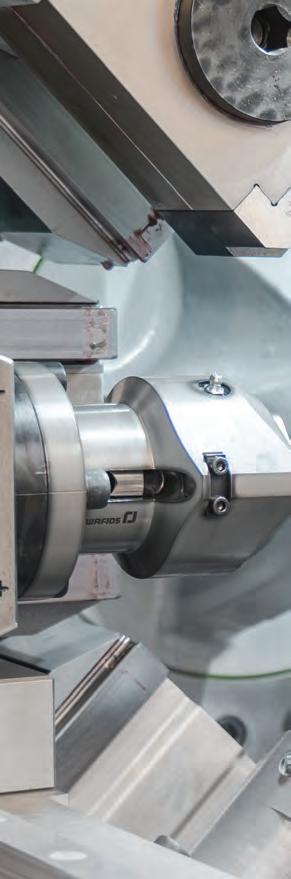
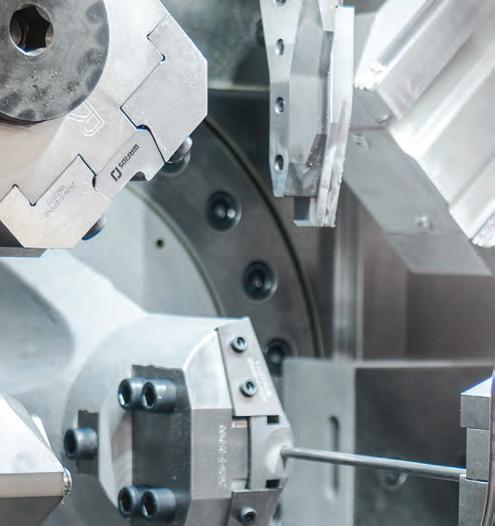

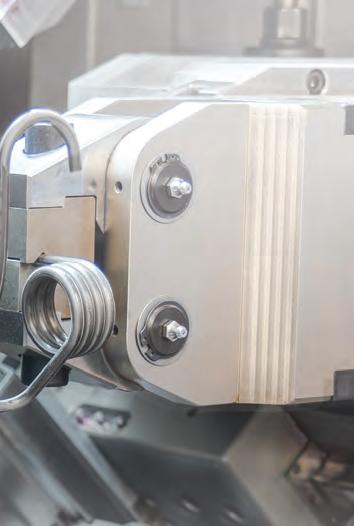

Up to 10 % higher Production Speed



Improved geometric programming and simulation
Automatic Generation of programs with iQspring+





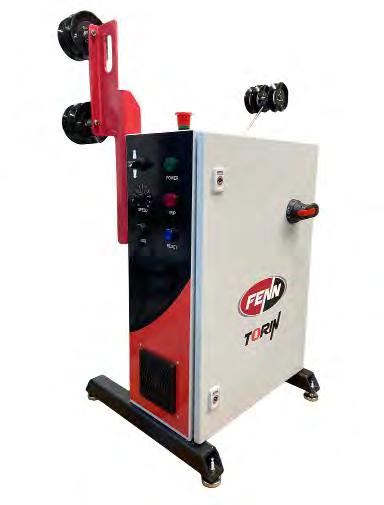
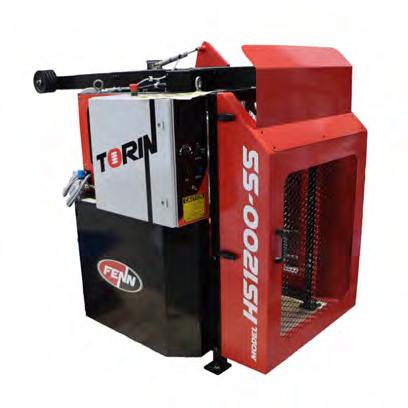
Discover the »PLUS« for your production. The new generation of FMU machines for all types of torsion springs from 0.8 to 10 mm Wiredesigned to meet the highest quality standards.

David DeVoe
Thank you to everyone who attended our annual meeting in Puerto Rico. Our 2026 event marked the largest turnout I’ve seen in recent years and it was encouraging to see so many members come together again.
Also, my sincere gratitude to Don Jacobson III for his outstanding leadership over the past two years and for his tremendous support to our association. His dedication has strengthened SMI and set a strong example.
My goal as your new president is to build on that momentum, particularly by developing future leaders and encouraging greater involvement from women in manufacturing. Their contributions are essential to our continued growth and long-term success. I’m committed to helping expand opportunities for them within our association.
I’ve been involved with SMI for more than a decade. In that time, I’ve seen our organization as far more than a professional network. We’re the experts in our field. We’re fortunate to have some of the most talented people in the spring industry — individuals who generously share their knowledge for the benefit of the entire community. This collective expertise has made SMI the go-to organization for anyone seeking insight into spring manufacturing. We should all take pride in being part of such an exceptional group of professionals.
I invite every member to engage more deeply in SMI’s work and take full advantage of the resources and benefits designed to help your company thrive. Your active participation drives our success.
I’d also like to thank our sponsors, whose support makes our events possible. With rising costs, your continued commitment allows us to bring members together year after year.
Finally, we can do more to promote our associate members who provide essential products and services to our springmakers. Strengthening these connections benefits our entire industry.
I am deeply honored to serve as your president and look forward to an outstanding year ahead. Thank you for your trust and support.
Committed to our shared success, David DeVoe
John Evans’ Sons
dbd@springcompany.com
Contact Us
Spring Manufacturers Institute
PO Box 5668
Elgin IL 60121
Main phone z 847-450-6848
Gary McCoy z 847-450-6240
Gaby Carrasco z 847-857-6432
SMI Executive Committee
President: David DeVoe, John Evans’ Sons
Vice President: Dave Deerwester, The Yost Superior Co.
Secretary/Treasurer: Joe Devany, Betts Company
Past President: Don Jacobson III, Newcomb Spring
At-Large: TBA
Executive Director: Gary McCoy, SMI
SMI Board of Directors
Julie Arenz, R&L Spring/Medicoil I Markus Arnold, WAFIOS I Tim Bianco, Iowa Spring I Jodi Boldenow, IDC Spring I Adam Jacobson, FENN/Torin I Chris Kozka, MW Components I Sanjeev Rivera, Lee Spring I Timo Roeger, Kern-Liebers USA I Monica Shaffer, Novi Spring I Jason Sicotte, Associated Metal Forming Technologies (AMFT) I Bernie Taylor, Hoosier Spring
Springs Magazine Staff
Gary McCoy, Executive Director/Publisher, gary@smihq.org
Phil Sasso, Managing Editor, phil@smihq.org
Gaby Carrasco, Associate Editor, gaby@smihq.org
Lisa Plefka Haskin, Art Director, lisahaskin95@gmail.com
Communications Committee
Chair, Keith Porter Jr., Newcomb Spring I Reb Banas, Stanley Spring & Stamping I Hale Foote, Scandic Springs, Inc. I Patrick Gillum, Gilco Spring of Florida, Inc. I Adam Jacobson, FENN/Torin I Lucas Karabin, Acme Monaco I Gary McCoy, SMI I Phil Sasso, SMI I Michael Shapiro, Gibraltar Corporation I Bill Wynn, Gardner Spring, Inc.
Advertising Sales I Japan
Ken Myohdai, Sakura International Inc.
Head Office: 3F,4F, ENDO Sakaisuji Bldg., 1-7-3, Bingomachi, Chuo-Ku, Osaka 541-0051, Japan
Phone: 81-6-6624-3601 I Fax: 81-6-6624-3602
Tokyo Global Office: 5F Kamei No. 2 Bldg., 2-17-13, Kiba, Koto-Ku, Tokyo, 135-0042, Japan
Phone: 81-3-5646-1160 I Fax: 81-3-5646-1161
E-mail: info@sakurain.co.jp
Advertising Sales I Taiwan
Charlie Yu, Worldwide Services Co. Ltd.
11F-B, No 540, Sec. 1, Wen Hsin Rd. Taichung, 408 Taiwan
Phone: +886-4-2325-1784 I Fax: +886-4-2325-2967
E-mail: marketing@acw.com.tw
Springs (ISSN 0584-9667) is published quarterly by SMI Business Corp., a subsidiary of the Spring Manufacturers Institute: PO Box 5668, Elgin IL 60121 Phone: 847-450-6848; Website: smihq.org
Address all correspondence and editorial materials to this address.
The editors and publishers of Springs disclaim all warranties, express or implied, with respect to advertising and editorial content, and with respect to all manufacturing errors, defects or omissions made in connection with advertising or editorial material submitted for publication.
The editors and publishers of Springs disclaim all liability for special or consequential damages resulting from errors, defects or omissions in the manufacturing of this publication, any submission of advertising, editorial or other material for publication in Springs shall constitute an agreement with and acceptance of such limited liability.
The editors and publishers of Springs assume no responsibility for the opinions or facts in signed articles, except to the extent of expressing the view, by the fact of publication, that the subject treated is one which merits attention.
Do not reproduce without written permission.
Cover designed by Lisa Plefka Haskin utilizing Shutterstock imagery.
Please




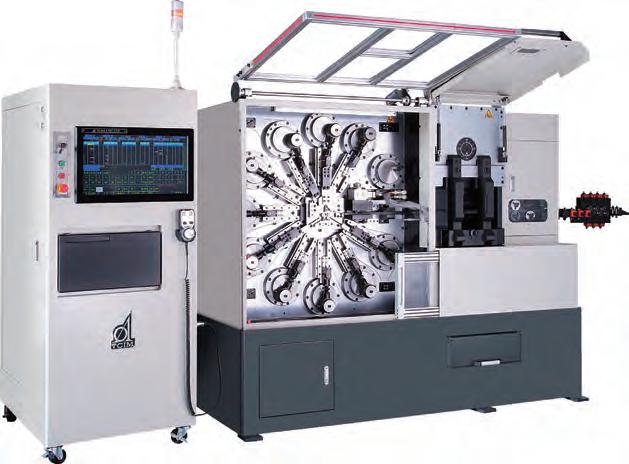

CNC Multi-Slide Machine TCIM-50T
*Wire 1.0-5.0mm
*Strip 2.0T×60mm

CNC Spring Former NX-250F
*Wire 0.5-2.5mm
*Strip: 0.15T-12mm
*Three plates plus one bottom slide for easy setup.
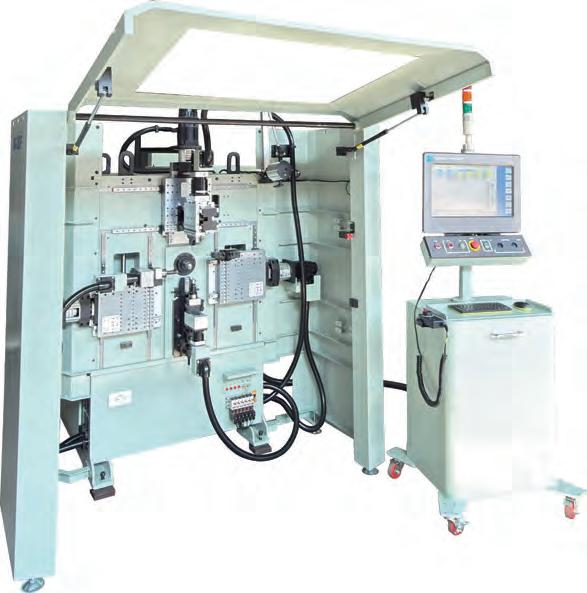


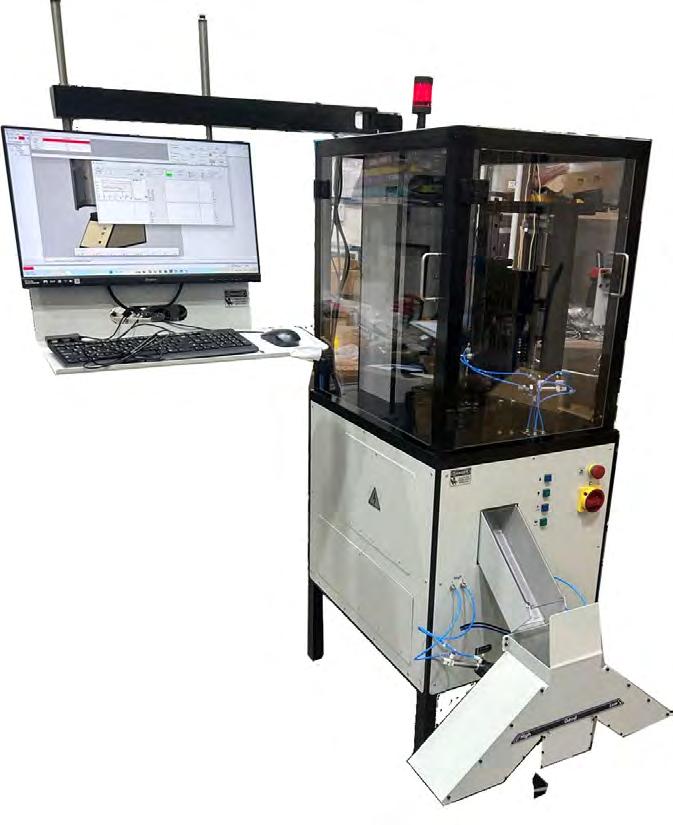
• Fully automated feeding, setting, testing and sorting compression spring testers.
• Standard load testing ranges up to 1124 lbf, setting loads up to 2697 lbf.
• All motion axes use full servo control providing for easy operator setup and quick part change-out.
• Options for testing spring IDs.


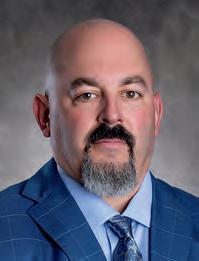
The Wire Association International (WAI), Inc. has appointed David M. Fisher as its 73rd president. Fisher will chair the board of directors of the Madison, Connecticut–based association for a one-year term.
Fisher is president and CEO of James Monroe Wire and Cable Corporation in Lancaster, Massachusetts, a role he has held since 2005. A second-generation business owner, he brings 37 years of experience in the wire and cable manufacturing industry, having progressed through plant and office roles including sales, purchasing, process engineering and administration.
An active WAI member since 2008, Fisher joined the board of directors in 2018 and the executive committee in 2023. His service includes leadership roles on multiple committees and within the New England chapter.
WAI is governed by a global network of industry volunteers. Joining Fisher for the 2026 term are members of the association’s executive committee: First Vice President Raúl García Martínez, Viakable Manufacturing; Second Vice President Keith Albers, Fort Wayne Metals Research; Immediate Past President Eric P. Bieberich, Fort Wayne Wire Die; and Executive Committee Member Drew Richards, RichardsApex Inc.
United Wire Company marked a significant milestone in 2024 with a strategic expansion into the medical wire sector, supported by a seven-digit investment and the completion of a new medical wire mill. Despite early economic challenges, the family-owned company achieved strong momentum and is now supplying multiple medical-industry customers.
To support this expansion, United Wire invested in advanced equipment capable of producing ultrafine, precision-shaped wire, including flat, rectangular and square profiles designed to meet stringent medical standards. The transition required overcoming technical challenges, including working with specialized materials such as 304V stainless steel.
The company also strengthened its market presence by exhibiting at major medical trade shows and hiring an experienced industry sales representative. While expanding into medical wire, United Wire continued to grow its flat wire offerings for the stamping industry.
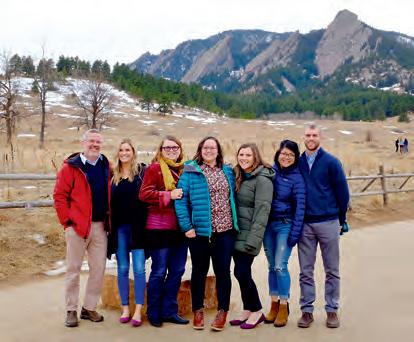
Scandic Springs, Inc., based in San Leandro, Calfornia, has appointed Andrea Foote as president and elected Hale Foote as chairman.
Founded in 1969, Scandic Springs is a custom manufacturer of stampings, fourslide parts and coil springs.
Andrea Foote’s preparation for the role included five years of progressively increasing responsibilities, ongoing professional development and an early internship with a Precision Metalforming Association (PMA) member company.
Hale attributed the successful leadership transition to a structured five-year succession plan — adapted during the COVID-19 pandemic — the guidance of an external family business consultant and insights gained through participation in PMA Executive Networking Groups.
Read more about the Scandic Spring transition in Springs Summer 2020 (www.smihq.org/go/spr59-3p57).

Larry Lieberum, 66, a longtime wire industry professional, died Feb. 3, 2026.
Lieberum was known throughout the industry not only for his professional contributions, but also for his generosity, kindness and lasting friendships. Wire ran in the family — his father, Al Lieberum, also spent many years in the wire industry.
During his career, Lieberum worked at several wire companies before spending many years in sales at Industrial Steel and Wire (ISW). He retired in 2023.

Thomas GrenierDesbiens, 35, died Dec. 20, 2025 following a courageous two-year battle with brain cancer. He was the son of Pyromaitre’s founder and a valued member of the company’s sales team. He played an important role in supporting customers and contributing to the organization’s growth. GrenierDesbiens was known for his dedication, professionalism and genuine kindness.
He is survived by his partner, Myriam L’Heureux; his son, Arthur Grenier; his parents, Mario Grenier and Danielle Desbiens; his brothers, Alex Grenier-Desbiens and Jérôme Grenier-Desbiens; and his extended family. Grenier will be fondly remembered by colleagues, friends and all who knew him.
Widely regarded as a people person, Lieberum built strong relationships with customers, co-workers and industry peers, many of which continued well beyond his retirement.
Outside of work, Lieberum was a gifted musician and composer. He performed with several bands over the years, including a Billy Joel/Elton John tribute band. He also wrote a wide range of original music, which remains available on Spotify, Apple Music and other streaming services. He completed his last two original albums: Illumination in December 2025 and Ying and Yang in January 2026.
He is survived by his wife, Terrie.

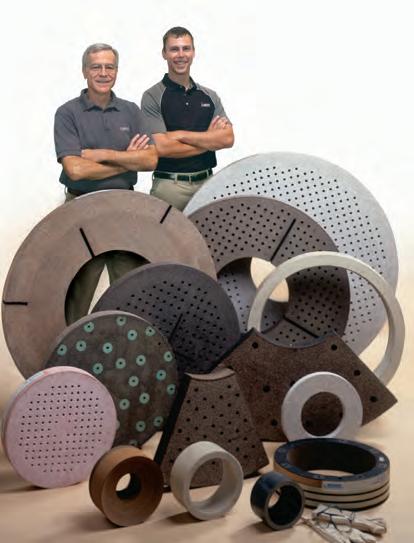

in our modern manufacturing facility, we are
continue our tradition of innovative quality products and unmatched customer service. For more information contact Anchor Abrasives Company, 7651 West 185th Street, Tinley Park, IL 60477 U.S.A. Phone: 708-444-4300; Fax: 708-444-1300.
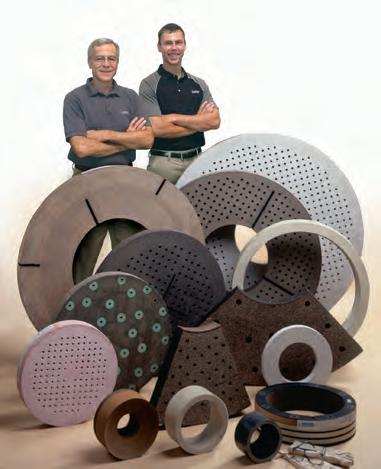
At Anchor Abrasives we specialize in the design and manufacture of resin, epoxy and oxychloride bonded nut inserted discs and cylinders...plus centerless and rollwheels. Today, in our modern manufacturing facility, we are ready to continue our tradition of innovative quality products and unmatched customer service. For more information contact Anchor Abrasives Company, 7651 West 185th Street, Tinley Park, IL 60477 U.S.A. Phone: 708-444-4300; Fax: 708-444-1300.
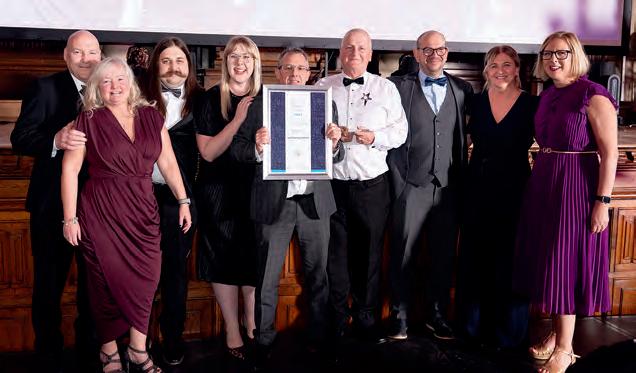
Lee Spring Limited, a United Kingdombased manufacturer of precision springs and components, was named Business of the Year in the £5 Million+ Turnover category ($6.8 million USD) at the 2025 Rochdale Business Awards. The award recognizes the company’s strong business performance, innovation and positive contribution to the local economy. For more about Lee Spring Limited, visit www.leespring.co.uk.
Selected from a competitive field across the Rochdale borough, Lee Spring was recognized for excellence in business growth, customer service and operational performance.
Managing Director Tracy Humphreys credited the achievement to the dedication of the company’s team and its continued investment in quality, customers and the local workforce.
With more than 100 years of experience, Lee Spring serves a wide range of industries, including aerospace, defense, medical and industrial manufacturing. The Rochdale Business Awards celebrate organizations that demonstrate financial strength, innovation, customer satisfaction and community engagement.


In other news from Lee Spring, Lee Spring Company India Pvt. Ltd. has earned AS9100D certification, the aerospace industry’s internationally recognized quality management standard. The certification builds upon ISO 9001 requirements with additional controls specific to aviation, space and defense sectors.
“This initiative was purely driven by our customer focus and our vision to grow in the defense and aerospace segments,” said Janardhana Ramaswamaiah, managing director of Lee Spring India.
The certification validates the company’s ability to consistently meet customer and regulatory requirements while demonstrating commitment to continuous improvement and risk management. While designed for aerospace applications, the enhanced quality systems benefit clients across all industries through improved documentation protocols and process controls.
Lee Spring India offers more than 25,000 stock spring options and custom manufacturing capabilities. For more information visit www.leespring.in. z

Johnny Alvarsson has been appointed Acting President and CEO of Beijer Alma AB, the parent company of the Lesjöfors Group, and will also serve as CEO of the Lesjöfors Group.
Johnny Alvarsson is a member of the Beijer Alma board of directors and will hold these roles while the recruitment process for a new President and CEO is underway.

By Chris Kozka, MW Components, CASMI President
The Chicago Association of Spring Manufacturers (CASMI) is proud to announce the 2026 Scholarship Program is now open. This year marks an exciting milestone, CASMI is on track to surpass $1,000,000 in total scholarships awarded since the program’s inception in 1989. These scholarships are possible through the support of CASMI members and SpringWorld exhibitors, whose contributions directly impact deserving students and their families. The CASMI Scholarship Program is administered by Scholarship America, a nationally recognized not-for-profit foundation. To view the 2025 recipients, and information on donating to or applying for a 2026 scholarship, email info@casmi-springworld.org.


April CASMI Webinar
Date TBD
May Plant Tour
Location, Date TBD
June 24 CASMI Golf Outing Ruffled Feathers Golf Club Lemont, Illinois
Events are subject to change. Visit www.casmi-springworld.org for the latest information.
CASMI members came together in festive style at the annual holiday party at Cooper’s Hawk Winery in Arlington Heights, Illinois. We celebrated the accomplishments of 2025 while enjoying great food, wine and camaraderie. The evening gave a chance to reflect on a successful year and an opportunity to give back — raising over $1,200 for the Alzheimer’s Association through the generosity of attendees. It was a memorable night that perfectly captured the spirit of celebration, community and philanthropy that defines CASMI.
The next SpringWorld Expo and Symposium will take place Oct. 7-9, 2026, at the Donald E. Stephens Convention Center in Rosemont, Illinois. SpringWorld brings together spring-related business professionals with attendees and exhibitors from around the world. Want to exhibit at SpringWorld 2026 or be a sponsor? Contact Bob Timmins at r.timmins@ casmi-springworld.org. For details visit www.springworld.org.

Get ready for an unforgettable day on the greens at Ruffled Feathers Golf Club in Lemont, Illinois, Wednesday, June 24, 2026. Join CASMI as we strive for our biggest golf outing yet. The course features pristine fairways, challenging holes and first-class amenities set against a stunning natural landscape. Whether you’re a seasoned golfer or simply enjoy great competition, networking and camaraderie, this is an event you won’t want to miss. To register contact CASMI at info@casmi-springworld.org.
CASMI is now on Facebook and LinkedIn. Follow our pages for up-to-date information and event happenings.
Facebook: www.smihq.org/go/casmi-fb
LinkedIn: www. smihq.org/go/casmi-li
Want to learn more about CASMI events, sponsorship, involvement or anything related to CASMI? Reach out to us!
Tessa Disch, Executive Director t.disch@casmi-springworld.org
Nicole Kuhnz, Association Specialist n.kuhnz@casmi-springworld.org
By David DeVoe, John Evans’ Sons, NESMA President
The New England Spring and Metalstamping Association (NESMA) enters 2026 with strong momentum and an ambitious calendar of events designed to engage members, strengthen industry connections and support the continued growth of the spring and metalstamping workforce. With a balanced mix of professional development, networking and social interaction, the year ahead reflects NESMA’s ongoing commitment to members and the broader industry.
A key initiative is the 2026 NESMA Scholarship Program. These scholarships underscore NESMA’s dedication to education and workforce development and represent one of the many ways the association continues to invest in the future of the industry workforce. Applications closed on March 6 and winners will be announced later this year.
Education remains a central focus for NESMA through its broader springmaker training initiative, which helps ensure NESMA is actively working toward the development of a comprehensive springmaker curriculum exceeding 200 hours. This long-term initiative is designed to combine classroom instruction with hands-on, practical training to support skill development at multiple experience levels and help address ongoing workforce challenges across the industry.
NESMA’s Annual Tabletop Trade Show and Trivia Game Night, March 24, 2026 at Clocktown Brewing Company in Thomaston, Connecticut. This cornerstone event brings together members, suppliers and industry partners in a relaxed yet energetic setting for collaboration, conversation and business growth. Exhibitors showcase products, services and innovations while strengthening professional relationships.
Following the tabletop show, attendees will enjoy trivia games, adding an interactive way to close the evening. This year’s trivia night also launches a new NESMA competition featuring a traveling trophy, which will be defended at future games and events, fostering friendly rivalries and increased engagement.
On May 12, 2026, NESMA will host its 6th Annual Yard Goats Baseball Game Night Out at Dunkin’ Park in Hartford, Connecticut. This popular social event allows members and guests to relax, network and enjoy a night of baseball in an informal setting. It regularly draws strong attendance.
On Aug. 31, NESMA will host its renowned Annual Golf Outing, recognized as one of the industry’s most prestigious event. Held at the beautiful Farmington Country Club, the tournament is consistently a sold-out event that brings together industry leaders, suppliers and colleagues for a day of competition and connection.
The golf outing offers a premier course, outstanding prizes and unmatched networking, making it a highlight of the NESMA calendar. From the first tee shot to the final awards, the event delivers a perfect blend of camaraderie, business development and fun.
Additional events, seminars, classes and funding opportunities will take place throughout the year, supported by strong online marketing that delivers valuable visibility for sponsors. Members are encouraged to stay connected through the NESMA website and social media channels for the latest updates.
With growing participation, expanded educational initiatives and continued member support, NESMA is well positioned for another successful and impactful year.
For event registration, sponsorship or more information about NESMA membership, visit www.nesma-usa.com. z
March 24 Tabletop Trade Show and Trivia Game Night Clocktown Brewing Co. Thomaston, Connecticut
May 12 Yard Goats Baseball Night Out Dunkin’ Park Hartford, Connecticut
Aug. 31 NESMA Golf Outing Farmington Country Club Farmington, Connecticut
For an updated calendar of NESMA events, visit www.nesma-usa.com.
SMI helps members meet OSHA requirements, reduce injuries and avoid costly fines with expert audits, tailored training and free safety webinars led by Dr. Laura Helmrich-Rhodes, CSP, Ed.D., SHRM-SCP.
Give your team the tools to work smarter and safer with SMI’s trusted compliance support—and protect your people and your bottom line with our comprehensive regulatory resources.
Visit www.smihq.org/regulatory-compliance or contact Gaby Carrasco at gaby@smihq.org.
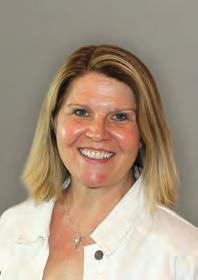
Laura Helmrich-Rhodes, CSP, Ed.D., SHRM-SCP
For decades, workplace safety has been treated primarily as a compliance obligation — a necessary cost of doing business to satisfy regulators, insurers and auditors. I once had a hospital administrator tell me it was a “necessary evil.” While compliance is essential, this mindset unintentionally limits the value safety can deliver. When the administrator said, “necessary evil,” I knew I had some convincing to do. My best bet was to look at it from a business perspective. When safety is viewed only as a regulatory burden, organizations do the minimum required. When it’s treated as a business strategy, it becomes a driver of performance, resilience and growth. As I recently said on the “Springs are Everywhere” podcast (Season 2, Episode 6), safety works best as an integral part of business activities.
As a safety professional and business consultant for almost 40 years, I’ve had the opportunity to get to know many business sectors. Across industries from healthcare, construction, gas and oil to utilities, transportation, warehousing and manufacturing, the most effective organizations recognize that safety outcomes are deeply connected to operational outcomes. Injuries are not isolated events. They are errors that disrupt staffing, slow production, degrade service quality, increase turnover and introduce risk into every layer of the business. A safe operation with strategic systems in place is more predictable, productive and profitable. That is true regardless of the operation’s size.
Strong safety performance often signals strong management systems. Both leading and lagging indicators highlight the effectiveness of those systems. Leading indicators include, but aren’t limited to, clear procedures, assigned responsibilities, wellmaintained equipment, effective training and engaged leadership, all of which are critical to both productivity and injury prevention.
Some ISO certified manufacturing companies have made the transition to ISO 45001, Occupational Health and Safety Management Systems, thus embedding safety procedures into the overall quality and/or environmental processes. Over the years, I have seen many manufacturers dedicated to ISO standards most notably from my perspective, the 9000 series for quality and the 14000 series for environmental management. Occasionally I encountered companies using the risk management series, specifically 31005 until the more modern 45001 creation. These proactive systems can be indicators of operational health as well as a strong safety culture.
According to BSI, an ISO certifying organization, implementation of the ISO 45001 process can also lower insurance premiums, enhance company reputation and provide a competitive edge in the market. I encourage any company already in the mindset of ISO processes, especially those with informal safety efforts, that they consider implementing an ISO approach to risk management, environmental health and safety. It is an easy fit into an already working system and takes a company well beyond a compliance mentality.
Conversely, relying on the most often used lagging safety indicators, injuries, illnesses and other incidents, to motivate environmental health and safety efforts can be a losing battle. A deep dive into those data often reveals deeper operational issues — poor communication, understaffing, rushed work, aging assets or inadequate supervision. Waiting for the data to reveal those issues means downtime, lost productivity, turnover and even a negative impact on reputation.
In healthcare, for example, worker injuries and patient safety events frequently share the same root causes: staffing shortages, fatigue, workflow breakdowns and equipment misuse. In construction, some job-site injuries can be linked to inadequate training, schedule pressure, incentive pay and basic planning or coordination failures.
In warehousing and transportation, near misses often precede costly service delays and asset damage. These examples from different sectors can be lessons learned for manufacturing. Used strategically, this information can be early-warning signals that your operational and safety efforts are struggling. The key is to create risk assessment processes, assigned EHS responsibilities and accountabilities, regular audits (not the same as inspections) to avoid loss and to make EHS a part of manufacturing.
“Old school” safety programs focus heavily on lagging indicators: injury statistics, losttime, time of day, length of service, time on task and regulatory citations or costs. While important, these metrics measure failure after the error or multiple errors in the system have occurred. A strategic, systematic approach to safety emphasizes leading indicators. It’s still data-driven but focuses on a different kind of metric. For example, the number of pre-job risk assessments completed, the number of safety trainings completed, supervisor “toolbox talks” given, near miss reporting, equipment condition inspections and behavioral trends — allowing organizations to intervene before loss of people, equipment, materials, products or company reputation happens. Technology is accelerating this shift. Wearables, machine monitoring, computer vision and data analytics are enabling realtime visibility into risk reduction. At the 2026 SMI Annual Meeting I discussed smart safety. Forward moving manufacturing, construction, healthcare and transportation companies are implementing different forms of advanced technology to enhance their safety
SMI offers safety and regulatory compliance audits to help members prepare for Occupational Safety and Health Administration (OSHA) inspections. Members who participate have experienced fewer lost-time injuries, reduced workers’ compensation costs and avoidance of significant regulatory fines.
In addition to audits, SMI offers in-house safety training sessions and seminars. These can be scheduled in advance to meet specific organizational needs. For details, contact Gaby Carrasco at gaby@smihq.org.
performance while improving employee performance and product or service delivery. When leaders use these tools not just to enforce rules but to improve systems, safety investments begin to yield returns in uptime, quality and workforce stability.
Workers are more likely to be loyal to an organization that prioritizes their well-being. Safety is one of the clearest signals leaders can send that they care about their people. When employees believe their safety is valued, engagement rises, effort increases and turnover falls. I think we can all agree that this is particularly critical in laborconstrained markets like springmaking.
Strategic safety is not about spying, collecting data or eliminating jobs to punish employees. We know that employees can be inherently suspicious of monitoring and perhaps rightfully so. The late 1800s and early 1900s marked the advent of “Taylorism” (Fredrick Taylor), which included monitoring in factories. Some consider Taylor the “Father of Industrial Engineering.” His efficiency experts used stopwatches to time work and eliminate tasks in the name of efficiency.
Some technology today can be seen as “surveillance.” This goes beyond the efficiency expert with a stopwatch and moves into the number of steps an employee takes, their heart rate and their stress while performing a task. While the safety and health benefits may be substantial, employee privacy issues have arisen and need to be addressed with these new technologies. Wearables can keep workers safe and even help monitor their overall wellness.
We need to design or redesign workflow to be efficient and sustainable. We have seen the workplace evolve through an emphasis on ergonomics over the last 30 years. Designing worktables and tools to fit the employee has been key in driving down musculoskeletal workers’ compensation claims. The human factor is emerging in research and literature. Organizations collaborate with their team to identify all work-related hazards and improve conditions consistently outperform those that rely solely on rules and enforcement.
“Safety through Design” is another concept that’s being embraced by the safety professionals. It emphasizes applying hazard control methods in the concept, planning and design phases so that safety products as well as hardware such as guards, light curtains and presence sensors, don’t have to be retrofitted and ultimately are infeasible and a burden to workers.
The key leadership question is no longer, “Are we compliant?” but rather, “Is our
operation designed to fail safely — or not fail at all?”
When safety is integrated into operational planning, capital investment and performance measurement, it stops being a cost center and starts functioning as a competitive advantage.
Reframing safety as a business strategy does not eliminate regulatory requirements. It transcends them. Compliance is built into the system. Strategic safety makes businesses stronger and more competitive. z
To purchase the ISO 45001 standard: Occupational Health and Safety Management Systems www.smihq.org/go/iso45001
Technical report by the American Society of Safety Professionals (ASSP/ISO TR-45002 technical report), which help establish, implement, maintain, and continuously improve occupational health and safety management system so it conforms to ISO 45001. www.smihq.org/go/assp-iso45001
BSI Group introduction to ISO 45001: Occupational Health and Safety Management Systems on YouTube www.smihq.org/go/bsiyt-iso45000
ISO 45001 Planner by BSI www.smihq.org/go/bsipdf-iso4500
John Kotter, Leading for Change: Why Transformation Efforts Fail, Harvard Business Review. This 1995 article outlines a framework Kotter and James Hasket use in their modern safety and operations writings. www.smihq.org/go/kotter95
Safety Management Systems: Safety First-Success Follows Integrating Management Systems in Business www.smihq.org/go/fc-safe
Laura Helmrich-Rhodes, CSP, Ed.D., SHRM-SCP, is SMI’s regulatory compliance consultant. She is an associate professor in the Safety Sciences Department at Indiana University of Pennsylvania, teaching graduate and undergraduate classes. Contact Rhodes at SMI: 847-450-6848 or laurahrhodes@gmail.com.

















By Rodney Poore
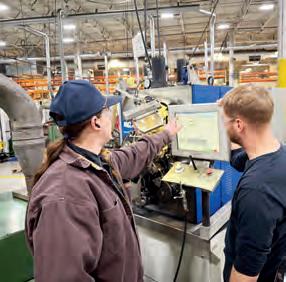
Informal job shadowing is a good way to get operators up to speed quickly and keep machines running, but it rarely builds consistent problem-solving skills. A formal fundamentals-based training program creates understanding, minimizes mistakes and builds a foundation for safe, repeatable performance. Cross-training should be a structured plan. Winging it is not a practical option.
Every successful training program starts with a defined purpose. You should identify your goals, such as shortening time to competency, improving setup consistency, reducing reliance on tribal knowledge and enabling workers to rotate between machines and departments. Defined objectives clarify which skills to cover and how to measure progress.
Effective cross-training should focus on core skills that apply across most machines and spring types. Key fundamentals include reading prints, using measurement tools, basic machine principles, process awareness and inspection techniques.
It is also important that training covers basic spring functionality and materials.
Note SMI offers two free, on-demand videos that can provide “basic training” on springs to your coilers. Spring Fundamentals 101 explains basic spring types and terminology while Spring Design 103 covers various spring materials and properties.
Building this core competency creates a common understanding and technical language for compression, extension, torsion and other spring forms.
Before training begins, conduct a practical skills assessment using written or oral questions, hands-on demonstrations and supervisor evaluations supported by a standardized skills matrix. See a sample at www.smihq.org/matrix.
The goal is not perfection but insight — identify each operator’s strengths and gaps
and use the results to set priorities and sequence the learning modules.
Training works best when it’s modular and manageable. Keep modules short — between 30 to 60 minutes. Pause often to answer questions and take occasional, brief breaks to help students keep focused.
Follow classroom lessons with guided machine rotations, structured shadowing and targeted mentorship. Each module should specify what the trainee must understand, explain, demonstrate or perform to show competency.
Depending on your training and corporate culture you may want to use written or
Poore, training manager at R&L Spring Company in Lake Geneva, Wisconsin, has more than 48 years of experience in spring manufacturing. He’s created onboarding and training curriculum for R&L covering coiler operations, blueprint reading, precision measurement, tolerances, CNC techniques, CNC coilers and Baird fourslide machines.
For 11 years, Poore has also taught technical classes at McHenry County College in Crystal Lake, Illinois.
digital quizzes or tests to measure progress and competency. Instead of grades, you could use target percentages.
It’s best to plan your training sessions during slower production periods whenever possible. This not only maximizes productivity but also avoids the urge to rush trainees along under the pressure to start up production again.
Strive to document progress consistently. Use training logs or skills matrices with supervisor signoffs as operators demonstrate proficiency.
Simple certification levels such as Operator I, II and III can help standardize expectations, encourage advancement and recognize achievement. Think of how boys and girls in scouting programs are motivated by earning merit badges or martial artists by advancing in belt levels. Improved levels might also be linked to increases in pay grade or performance bonuses.
Safety must remain the top priority, especially when operators move between machines. Every training module should
include instruction on machine-specific hazards, guarding, emergency stops, lockout/ tagout and stored energy risks.
Each rotation should begin with a brief pre-task safety check that confirms PPE, guards and interlocks, correct tooling and basic housekeeping. Training roles must be clear and trainees should have full stop-work authority at any time during instruction.
No one should operate unfamiliar equipment independently until completing a documented safety orientation, supervised run time and sign-off by a qualified trainer or manager.
A fundamentals-based cross-training program doesn’t require complex systems or excessive downtime, but it does take structure. Clear goals, prioritized skills, measurable progress and consistent reinforcement turn cross-training from a reactive practice into a proactive strategy.
When operators understand the entire process from prints to production, not just how to push buttons and run a specific machine, the result is a more professional, productive and profitable workplace. z

C. Richard (Rick) Gordon
Introduction
The subject of austempering of springs first appeared in Springs Oct. 1975.1 Austempering is an important metallurgical heat-treating process for springs. It is defined by both the process and the resultant microstructure.
In Springs Fall 2019,2 I discussed the engineering concept known as the materials design philosophy which can be used as a tool to better understand compositionproperty relationships. Briefly, the materials design philosophy shows the relationship between the material composition and the final product properties (Figure 1).
A material with a specific composition is processed in a given operation. The combination of the material and the processing results in a particular structure (metallurgical microstructure). The microstructure in turn results in specific material properties. In reality, the process of design occurs from right to left. Engineers are interested in specific material properties, which in turn are dependent on the structure, which is a function of designed processing of a material with a specific composition.
When it comes to the austempering heat treatment, we can rewrite the figure as shown in Figure 2.
The goal of the austempering heat treatment process is to produce the metallurgical microstructure known as bainite. This structure was discovered by E.S. Davenport and E.C. Bain in the 1930s. It wasn’t until the 1960s that the technology to produce the metallurgical structure commercially was developed.3
The bainitic microstructure is characterized as a dark-etching-acicular structure when observed by optical microscopy.3 The temperature range where bainite forms is about 400°F (205°C) — 950°F (510°C). The bainite structure has exceptional toughness at relatively high hardness and strength. Due to the nature of the transformation, there is less distortion in the parts as compared with quenched and tempered martensite.
The original investigators, Davenport and Bain, were looking to learn the rate of austenite transformation at various temperatures, along with the microstructures of the transformation products and their accompanying
Coarse
Fine
Upper
Lower

mechanical properties. It was through this process that they discovered bainite.
Figure 3 shows the type of mechanical property test data that was produced in this type of study for a eutectoid steel transformed at descending temperatures. The combined strength and ductility of bainite is demonstrated. Davenport and Bain received patent US 1,924,099 in 1933 for the process. Isothermal transformation diagrams, (also known as time-temperaturetransformation [TTT] diagrams) show where metallurgical constituents form during cooling as a function of temperature and time (log scale), Figure 4.
Readers may be more familiar with the patenting heat treatment used for wire that is then drawn to high tensile strength spring wire and music spring wire. A schematic of the patenting heat-treating process is shown in Figure 5.
In patenting, the first step is to heat the steel to a temperature to produce austenite and hold (soak) at that temperature long enough to homogenize the microstructure. A key point for process development is to characterize the microstructure of the austenite. This is because austenite grain size can have an impact on the transformation kinetics or the position of the transformation lines on the time-temperature-transformation (TTT) diagram. Larger austenite grains produced at higher temperature shift the curves shown in Figure 4. That is why published TTT diagrams will typically show the austenite grain size with the diagram.
For our discussion, we will focus on the TTT diagram after the heating and soaking parts of the process.
For patenting, the goal is to produce a pearlitic microstructure as shown in Figure 6. Pearlite is a microstructure of alternate layers of microstructure constituents ferrite and cementite (Fe3C). The darker layers are ferrite, and the lighter layers are Fe3C. This is included for comparison with bainite microstructures.
Figure 7 shows a schematic diagram for the austempering process. After austenitizing, the steel is cooled quickly to miss the nose of the curve and then isothermally transformed to bainite. The two curves shown during cooling represent the surface and center of the specimen.

The microstructure of bainite is dependent on the transformation temperature. Figures 8 and 9 show the bainitic microstructures transformed at 454°C (850°F), 371°C (700°F) and 260°C (500°F).
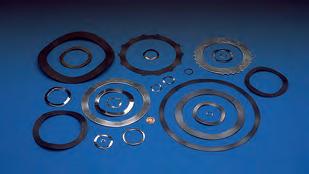
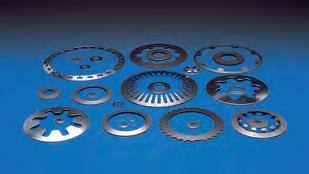
Several austempered spring products are shown in Figures 10, 11 and 12.
In this article, the austempering heattreating process was described. Bainite is the metallurgical microstructure produced from this heat-treating process with a combination of high strength and ductility with minimum distortion. This makes it the heat treatment of choice for a wide variety of spring applications in automotive, aerospace, industrial machinery, medical devices, electronics and consumer products. z
References
1. Keough, W.R., Austempering of Springs, Springs, V14, No. 2, October 1975, p. 49.
2. Gordon, C.R., Spring Making Materials/Materials Design Philosophy, Springs, V58, No. 4, Fall 2019, p. 23. www.smihq.org/go/spr-58-4p24.
3. Grossmann, M.A. and Bain, E.C., Principles of Heat Treatment, American Society for Metals, 1964.
4. The Making, Shaping and Treating of Steel, (10th ed.). (1985). AISE, Pittsburgh, PA: Herbrick & Held.
5. ASM Handbook V.4A, Steel Heat Treatment, Fundamentals and Processes, ASMI. 2013, p11.
6. Ferrous Wire Handbook, The Wire Association International, Inc., 2008 — Ch 21, p. 522.



Reprinted with permission, Association for Iron & Steel Technology).
C. Richard (Rick) Gordon is SMI’s technical director. He has more than 50 years’ experience in the steel and wire industries and is available to help SMI members and non-members with metallurgical challenges such as fatigue life, corrosion, material and process related problems.
Contact Gordon at 574-514-9367 or c.richard.gordon@gmail.com.
See our upcoming classes. Scan the QR code or visit www.smihq.org/ go/tech-classes.
hat do you think when you hear the phrase “Multifaceted Skilled Workforce?” Many think of workers with a range of skills. Others think of employees from a range of cultures and backgrounds.
In this issue of Springs, we examine both. There’s a wide array of topics here — from cross-training to cross-cultural communication and from early talent development to long-term workforce strategies. Our coverage isn’t a linear progression. Feel free to jump around and read this issue in any order that’s relevant to you and your operation.
“More than 67% of manufacturers said the inability to attract and retain employees is their primary challenge,” says 2026 SMI Annual Meeting speaker and long-time Springs contributor Raquel Chole in “The Multifaceted Skilled Workforce” (p. 24).
“Many SMI members have found creative ways to buck this trend… The springmakers spearheading these initiatives are flourishing.”
Along with interviewing six leaders at different SMI companies about their workforce, she offers her perspective on leading diverse employees in “Thoughtful Coaching” (p. 29).
“Good coaching is essential for cultivating a workforce that has a diverse range of skills and perspectives,” Chole says. “Effective coaching not only

contributes to the growth of individual team members but also helps build strong leaders who can collaborate with you to drive the company forward.”
In “Leading the Multifaceted Workplace” (p. 30) writer and college professor Jennifer Goodrich explores managing teams of different generations and genders.
“While understanding differences is important, recognizing similarities is essential,” Goodrich writes. “Employees across generations and genders want many of the same things.”
“Research on generational differences is extensive, but managers should proceed cautiously,” Goodrich warns. “While each generation has broad characteristics, not every individual fits the profile.”
Using the analogy of connective tissue like tendons, ligaments and cartilage holding our bodies together and people holding our business operations together, SMI Executive Director Gary McCoy poses an interesting question to readers in his “A Message from Gary” column (p. 47).
“Do you need more generalists — the connective tissue — or more specialists who focus on specific, detailed assignments?” McCoy asks. “Generalists tend to connect, coordinate and adapt, while specialists master, refine and execute.”
Lifelong springmaker and trainer, Rodney Poore, makes the case for structured, fundamentals-based cross-training in “Trainer’s Desk” (p. 18). Informal job shadowing may keep machines running, but it doesn’t build problem-solving skills.
“When operators understand the entire process from prints to production, not just how to push buttons and run a specific machine, the result is a more professional, productive and profitable workplace,” Poore concludes.
In “Developing the Next Generation of Manufacturing” (p. 32), fifth-generation springmaker and first-time contributor, RJ Froehlich describes his company’s learn-and-earn partnership with a local technical high school. Rather than waiting for skilled workers to enter the market, the program
engages students early with paid jobs and rotates them through departments to expose them to the full operation.
“Developing talent is not a side initiative — it is a strategic investment in the future of our operation and our industry,” Froehlich writes.
By Phil Sasso

Our Flashback “Cross-Training for Success” (p. 34) takes us back to the “jobless recovery” of 2003 following the dot-com bubble burst and the resulting recession. Springmakers and many other companies had to lay off employees.
“It is no secret companies that have downsized to save dollars often don’t achieve their goal — cut costs and make money,” writer Mary Bresnahan states. “Even though their expenses are lowered, they don’t make more money as a result.”
In turn, Bresnahan advocates cross-training so employees can learn new skills, keep their jobs and help the company stay stable in good and bad times.
After reading this issue, you may see your multifaceted workforce a little differently. Instead of seeing someone who can run a coiler, you may now see someone who reads prints, understands wire, spots defects and communicates clearly. And as more veteran coilers retire, you will likely see more women, generations and ethnic groups changing the face of your springmaking operation and our industry’s future. z
By Raquel Chole
In a recent survey by the National Association of Manufacturers (NAM ) more than 67% of manufacturers said the inability to attract and retain employees is their primary challenge.
Many SMI members have found creative ways to buck this trend. The outcome is refugees finding productive careers, young people being drawn by technology and women taking a role on the shop floor. The springmakers spearheading these initiatives are flourishing.
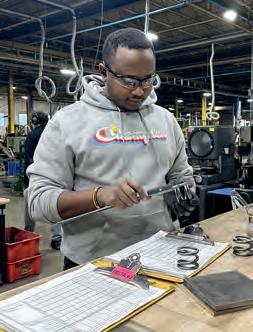
control on a series of springs.
Uganda, Congo and Burma are not the places you would expect to be feeding the U.S. industry’s appetite for springmakers but at Midstate Spring in Syracuse, New York, President Alex Melnikow has engaged with local refugee support groups to tap into the work pool these groups champion.
“We’re leaning into the refugee communities that have organically grown in Syracuse,” Melnikow says. “The refugee resettlement agencies are doing the heavy lifting in supporting the immigration process and ensuring that everyone can work legally and we are filling the gap in providing an environment where language is not a barrier.”
To ensure that the refugees would be able to assimilate well, Melnikow put some key strategies and resources into play. He focused on using the new team members to build his second shift and supported that process by having a translator and an anchoring technical leader in place as resources.
Something like this doesn’t come without challenges, explains Melnikow. But, by having a cohesive group like this, they can get comfortable without having to assimilate fully. This has led to a group that has pride as a team in what they accomplish. The competitive advantage comes from figuring out how to be the best possible workplace for the team you are trying to attract and support.
The current apprentice program at MW Components ensures candidates are on a solid path to becoming the best springmakers they can be. It starts with understanding a candidate’s aptitude and that often has to do with a good grasp of basic math and mechanical skills, says Chris Kozka, MW product manager and CASMI president.
“If there is a problem, they need to know what will help them correct the issue,” Kozka says. “The biggest struggle they are likely to experience is achieving proper spring forces in a spring. We try to give them the tools to address this.”
“In the past, we hired by connections,” Kozka says. “Now, postCOVID-19, we use aptitude testing, focused on basic math and practical mechanical skills. We don’t look for perfect scores, but it really helps if someone can demonstrate they understand things like inches/pounds or converting inches to millimeters. If they show promise in the test, we know they are mechanically inclined and then HR determines whether they are a fit for our culture.”
While fewer candidates are coming from outside the industry, Kozka says those who do are shown a clear path for growth.
At the Newcomb Springs North Carolina plant where Keith Porter Jr. is the general manager, he says attracting young workers is all about making manufacturing sexy. A lot of people in younger generations think manufacturing is a dirty business, he explains.
“But it’s not. Modern springmaking has evolved. It’s no longer primarily mechanical. Modernizing our manufacturing equipment and processes helps us attract young workers,” Porter says.
Having multiple plants is an asset for the associates at Newcomb. Porter cites an example of a valued team member who wanted to take a break and travel. As he was exploring different cities on his journey, he discovered he really liked Dallas, Texas and wanted to consider staying there.
“I was able to pick up the phone and help him get hired at our Texas facility,” Porter says.
“That’s a nice benefit that our associates have: the ability to transfer within the company. They don’t lose their tenure; they don’t lose their wage; they don’t start all over; and they don’t lose their class system. It’s a pretty cool option.”
A differentiator on the Newcomb shop floor is the number of women. In North Carolina, they have more female springmakers than men. In fact, when an engineer came to visit from one of their major clients, the first thing she said was: “I am surprised you have so many women springmakers.”
“Our women associates are smart, articulate and communicate well,” Porter responded. “They don’t have to be micromanaged if they know what they’re supposed to do and you give them a clear path on how to get there.”
Similarly, Julie Arenz, president of R & L Spring Company and Medicoil in Lake Geneva, Wisconsin, is proud of the ratio of men versus women on their shop floors. Overall, women make up about 45% of the company employees but on the Medicoil side of the business, focused on the medical market, the team is more than 60% female.
“Recently I convened a group of our women springmakers and our technical experts in a room and it was awesome,” Arenz says. “We’d never done that before.”
“They shared that they felt accepted,” she explains. “They felt comfortable coming in, even though this can be a male dominant environment,” explains Arenz.
When Arenz first started at R & L, there were no women setting up machines or leading departments and now there are quite a few. After talking with other women leaders in the industry, Arenz realized she had something unique at play.
“After sitting down and talking with these ladies, I was just kind of blown away. It was like: Wow! Without even realizing it, we’re just doing these things,” Arenz says.
How does she identify someone who will fit well into the manufacturing space? While it’s unlikely they ever touched a spring machine or even been in a manufacturing plant before, it is likely they’ve done creative things and enjoyed it like, say, making candles.
“We’ve got a lot of great talent, and I want to make sure women feel they’ve got a safe space and that we’re fostering their careers, she says. “But, still, I know there are things we can learn and continue to build on and do better.”
Arenz credits her father, Scott Forsythe, with empowering the women of the team. Forsythe took over the business from his father, who was the founder. R & L’s first female springmaker recently told Arenz that Scott took the time to train her when she started 30 years ago. He’d come out with his toolbox because nobody else was giving her a chance. He made a big deal about that. He gave some people — who needed it — a talking to.
“But he didn’t see anybody differently,” says Arenz. “You know, I thought that was really neat and he really set an example: If you are open-minded and willing to invest and train, and you get a few good people that can see a path and an opportunity, then it just kind of builds from there.”
“So, I don’t see it as a women-specific thing, but just in general how we’re treating all employees. More than ever now, we’re putting an emphasis on our training program and our leadership development,” Arenz concludes.






Julie Arenz President R&L Spring Co. and Medicoil
Andrea Foote President Scandic Springs
Chris Goering Manager Precision Coil Spring
Chris Kozka Product Manager MW Components
Alex Melnikow President MidState Spring
Keith Porter Jr. General Manager Newcomb Spring North Carolina
At Precision Coil Spring in El Monte, California, Chris Goering is finding his footing as a new manager and preparing to eventually run the family business. Goering is on a quest to improve intergenerational team member relationships by meeting the needs of each individual generation represented on the shop floor.
“I’m coming at it from a millennial’s perspective,” Goering explains. “I love working across teams with a variety of generations, so I feel I am able to come from the perspective of what the next generation of talent might be looking for and how we’re trying to adapt our business to what the talent pool is requiring and what actually speaks to them.”
People entering the workforce are not really looking to find a job but rather a career path with opportunities to learn new skills and grow. They really want to join organizations where they see
“We’re just not going to get someone off the street who has applicable experience,” explains Andrea Foote, president of Scandic Springs in San Leandro, California, who took over leading the family business in December 2025. She finds it challenging in Northen California to find workers who have experience due to a decrease in the number of manufacturing companies in the area. So, there is not a local talent pool to draw from.
“We have a multi-generational, multi-ethnic workforce with people who have worked here less than a year and some who have been with Scandic for almost 50 years,” she says. “As is common for many manufacturers these days, we’re facing a big generational shift in the next five to seven years with folks who will retire”
As a result, Scandic focuses on evaluating the people in the building to understand who has critical knowledge so that expertise is passed on.
potential for upward mobility and the opportunity to grow with the organization.
“The shift I’ve seen is that they’re looking to their job to provide more of a sense of purpose and fulfillment to their career and to them as individuals,” Goering says, “I don’t just go to work to make a salary. I go to work to make a career and a life for myself and that job is part of my life.
“We’re not quite there yet though. While I do see a larger shift towards flexibility, in a manufacturing environment you are required to be physically present to make a tangible product. I see a greater need to accommodate flexibility, both in flex hours and remote opportunities,” he says.
A big part of the equation for Goering is identifying what is important to the team members of every generation and building good communication bridges.
“I see that they really take care and pride in what they are producing and we need to set up an environment for them to achieve that success from providing clear work instructions to ensuring well-maintained machines.”
The gap she identified is their ability to onboard new team members. Historically, Scandic has had low turnover. So, they are expanding their scope to include training that might not be applicable to someone’s new job but will also help them understand the company, which will create a more engaged workforce. By providing more detailed onboarding or training upfront, they are learning more about a team member’s existing skillset which leads to enhanced utilization on the shop floor.
Foote prioritizes proactive measures to ensure solid staffing on the shop floor. For example, during COVID19, the management team opted to ask departments to cross-train rather than reduce the workforce.
“I have to find a balance. AI exists and it could be a tool in helping in these kinds of things but also, there is inherent knowledge that is not, knowledge that needs to be shared person to person. So, finding how we can use technology to build on the old ways or the traditional knowledge is key,” concludes Foote.
These springmakers don’t all share a single solution, but they share a mindset. Resilient springmakers recognize workforce development is not a short-term objective and are becoming more intentional about recruiting and training. Whether through refugee partnerships, aptitude-based hiring, job flexibility or a more inclusive shop floor, these leaders are building workplaces designed for the future, not quick fixes.
As the industry faces eminent retirements, evolving automation and shifting employee expectations, adaptability becomes a competitive advantage. Successful SMI members see their workforce as their most important asset. So, they aren’t just filling jobs, they’re investing in people and shaping a manufacturing culture that preserves knowledge, embraces growth and attracts the next generation of springmakers. z

Raquel Chole is president of Global Leadership Resources, a Crestcom company. The Crestcom LEADER program helps manufacturers throughout North America and around the globe face leadership issues and equips them to manage for better profitability, cost savings, risk avoidance, increased customer satisfaction and improved company morale. Contact Chole at raquel.chole@crestcom.com, 630-212-7679 or www.crestcom-chicago.com.
Download a free PDF chart of “Business Processes that Promote Great Team Dynamics” at www.smihq.org/go/chole1.
Good coaching is essential for cultivating a workforce that has a diverse range of skills and perspectives. Effective coaching not only contributes to the growth of individual team members but also helps build strong leaders who can collaborate with you to drive the company forward. A great coaching experience centers on key elements that support team member development. These elements help uncover strengths, address concerns, overcome roadblocks and recognize potential for success.
Start by Setting Expectations
• Set the stage by clearly stating the purpose: “Today we’re going to talk about xyz.”
• Establish support with your “coaches” by letting them know you value them and that you’re there to help them be successful. Identify things they’re doing well.
Identify the “Coaching Target”
• Ask for information from their side to clearly identify the challenge (which will then become the target of the coaching): “Tell me how it’s going with xyz.”
• Ask questions to uncover additional challenges, for example: “What obstacles are you running into?” “What is preventing your success?” to identify barriers.
• Do your best to understand their motivations by asking them
questions “Why is accomplishing this important to you?”
Brainstorm Solutions to Accomplish Their Coaching Goal
• Start out by defining success. Ask: “What does success look like for you?” or “How will you know if you are successful?”
• Review past efforts: “What has worked and what has not?”
• Ask questions to encourage creative thinking: “What is another way to look at the problem?”
Mirror: Reflect what you are hearing from them to ensure clarity.
Confirm Next Steps
Create a verbal and written agreement on goals and next actions.
By Jennifer Goodrich
Managing people once seemed simpler. Organizations had differences between departments — engineers were reserved and analytical, marketing teams were outgoing, finance professionals were detail-oriented and intense. Within departments, however, employees were relatively similar.
Today, managers must consider additional facets such as generation and gender.
The era in which employees are born influences behavior. People born around the same time experience similar parenting trends, educational systems, pop culture and historical events — recessions, school violence, terrorism — that shape patterns of thought and behavior. So, each generation differs in meaningful ways.
The phrase “OK Boomer” became shorthand for dismissing older perspectives as outdated. In 2026, however, most Baby Boomers — born 1946 to 1964 — are retired. Generation X, Millennials and Generation Z now dominate the workforce.
Research on generational differences is extensive, but managers should proceed cautiously. While each generation has broad characteristics, not every individual fits the profile. If the stereotype that Boomers are computer illiterate were true, Bill Gates, Steve Wozniak and Steve Jobs would not have built the digital age.
Generation X
Generation X employees, born 1965 to 1980, are sometimes described as the “forgotten” generation. Many grew up as latchkey children, often without parents at home after school. They came of age during economic uncertainty and entered the workforce during downturns.
Gen X employees are typically characterized as independent, skeptical and focused on efficiency. They value autonomy and measurable outcomes. To work

effectively with Gen X employees, respect their time. Avoid unnecessary meetings and excessive check-ins. Clearly define the goal, explain how results will be measured and allow them to execute. They are results-focused and often prefer to work independently.
Millennials, born 1981 to 1996, were raised largely by Baby Boomers and entered adulthood during rapid technological expansion. They grew up with social media, the Harry Potter phenomenon and heightened social awareness.
Often labeled the “entitled” generation, Millennials are typically ambitious and eager to advance. They process information quickly and expect their responsibilities to reflect their capabilities. Having been exposed to global challenges and social issues, many prioritize work that contributes to a broader purpose.
When leading Millennials, explain the “why.” Do not assign tasks without context. They are motivated by understanding how their work benefits customers, the organization, colleagues or their own career development.
Generation Z employees, born 1997 to 2012, are the first true digital natives. Many were raised by Gen X parents who emphasized resilience and independence. They experienced disruptions such as school closures during the COVID-19 pandemic, economic volatility and the rapid integration of artificial intelligence into education and daily life.
The nickname “Zoomers” emerged during the pandemic as schools and workplaces shifted to Zoom. Gen Z approaches problems through technology and

tends to be comfortable collaborating in groups. Many express concerns about job security and seek to build adaptable skill sets.
To lead Gen Z employees effectively, focus on growth and skill development. They require more frequent feedback than Gen X but value autonomy appropriate to their experience. Provide meaningful work that builds capabilities and advances their careers.
Behavioral and motivational differences in the workplace may also reflect gender differences rather than generational ones. While not all individuals align with statistical trends, research suggests patterns exist.
Men tend to be more energized by task-focused environments, while women may be more influenced by workplace culture, including relationships and shared values.1 Men often prefer dominant, performance-oriented leadership styles, while women respond more positively to leaders who demonstrate credibility, passion and influence through respect rather than authority.2
Managers should structure work to promote engagement by providing clear goals, appropriate training and sufficient resources. At the same time, leaders should intentionally cultivate a positive team culture to attract, retain and motivate employees.
Leadership styles also vary. Male leaders are often described as more task-focused and directive. Female leaders are more likely to emphasize collaboration and democratic decision-making. Effective managers should assess their natural leadership style, consider the composition and preferences of their teams and adapt accordingly.
While understanding differences is important, recognizing similarities is essential. Employees across generations and genders want many of the same things: a respectful work environment, meaningful work and the opportunity to perform well.
Managers who acknowledge differences, invest in their staff and provide challenging, purposeful work are more likely to build cohesive, high-performing teams. z
1. Yuwono, H., Kurniawan, M. D., Syamsudin, N., Eliyana, A., Deddy Eduar, E. S., Alvin, P. E., & Nurul Iman, A. J. (2023). Do psychological capital and transformational leadership make differences in organizational citizenship behavior? PLoS One, 18(12) www.doi.org/10.1371/journal.pone.0294559
2. Engstrom, H. R., Laurin, K., Zuroff, D. C., & Schmader, T. (2025). Do people lead men and women differently? multimethod evidence that group gender affects leaders’ dominance. Journal of Experimental Psychology: General, 154(7), 1960-1980. www.doi.org/10.1037/xge0001735

Jennifer Goodrich is president of Benchmark Leadership Training and a faculty member of the University of Tennessee at Chattanooga. She trains on topics including multigenerational workplace, emotional intelligence, customer service, team building, employee development and communication effectiveness.
Goodrich has worked for Moen Faucets, Avery-Dennison and Newell-Rubbermaid. She holds a bachelor’s degree in economics, an MBA and a doctorate in industrial and organizational psychology. Contact her at Jennifer-GoodrichOl@ UTC.edu or 423-280-6604.
Like many springmakers, at Ace Wire Spring and Form in McKees Rocks, Pennsylvania we face an ongoing challenge of attracting and retaining skilled workers in an increasingly competitive labor market.
In recent years, we’ve found part of the solution begins earlier than traditional hiring timelines — by engaging students while they’re still in high school and introducing them to real-world manufacturing careers.
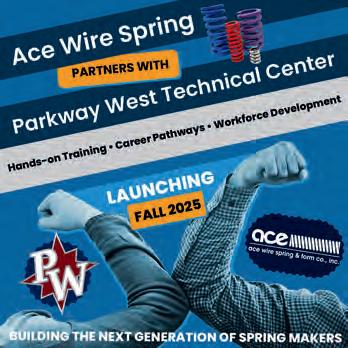
Through partnerships with local trade and technical education programs, our company has joined a learnand-earn program that benefits the students, the schools and our business.
Our Involvement with career and technical education programs began organically. Our facility is less than 15 minutes from several high schools with trade and technical programs and has long supported them through
By RJ Froehlich
sponsorships, career fairs and community engagement. These schools promote hands-on technical education and connect students with local manufacturers.
Younger employees who attended area high schools recognized alignment between their programs and daily shop operations. Those connections led to facility tours and conversations with instructors, confirming a strong mutual fit.
After touring the schools and meeting students and faculty, it became clear how critical technical high schools can be to the future of springmaking. What stood out most was not only the equipment and curriculum but the students themselves.
Students consistently demonstrated the soft skills valued on the shop floor: reliability, communication, curiosity and a genuine interest in learning a skilled trade. These qualities are essential in manufacturing and can be hard to instill later in a career.
Seeing those traits made creating in our learn-andearn program an easy decision.
Learn-and-earn is structured and selective. Only upperclassmen are eligible, and students must meet attendance, GPA and graduation track requirements before participating. Once the school approves a student, they look over open positions with participating employers.
Each company conducts its own interviews. While the school ensures students meet academic and workplace-readiness standards, our leadership confirms that each candidate understands the work environment and that there is a mutual fit. The process has proven effective.
This is not an unpaid internship. Students are employed part time and paid a competitive hourly wage, often higher than they’d earn elsewhere while still in school.
There is no rigid time commitment beyond legal working limits. The program encourages students to begin at the start of a semester, and the student or company may end the arrangement at any time if it’s not the right fit. To date, the experience has been overwhelmingly positive, with students choosing to remain throughout their schooling.
Our long-term goal is retention. Ideally, students complete their education and transition directly into full-time roles.
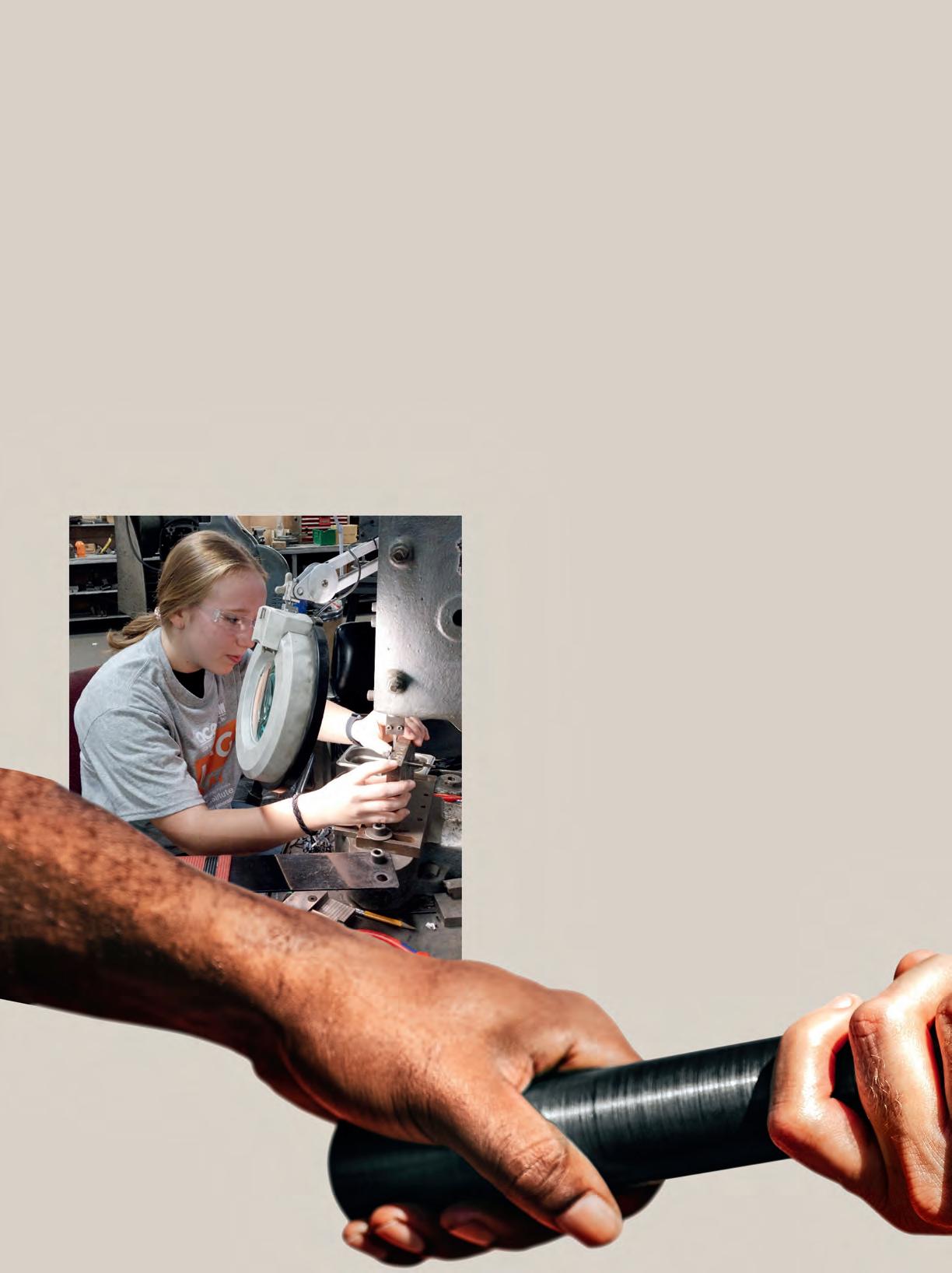
Training is one of the program’s most important components. The student begins with a structured rotation through multiple departments. This exposes each student to the full scope of our operations. They get to see how each area contributes to a finished product.
After completing the rotation, the students meets with our factory managers to discuss which departments they’d like to explore. They then receive deeper hands-on training alongside experienced technicians. Students are not confined to a single role and may shift focus later as their skills and interests evolve.
These students are permitted to work around manufacturing equipment because they’re enrolled in accredited trade programs. The primary limitation involves the number of hours they may legally work while in school, and our operations remain well within those guidelines.
Students report to the factory supervisor, work directly with floor technicians on assigned tasks and have access to department supervisors for guidance. They are treated as contributing members of the team.
We don’t measure success by headcount alone. Progress is evaluated by how much each student grows from the first day on the shop floor. Trade students often arrive with a strong mechanical foundation, allowing them to contribute quickly while building more advanced skills. These students are still exploring their futures. Some may choose to pursue additional education after graduation. While the goal is full-time employment, leadership considers it a success if students leave with meaningful experience, confidence in their abilities and a strong recommendation.
Providing a positive first manufacturing experience and maintaining long-term relationships with these students remains a core value.
While our participation in the program is still new, we have already produced meaningful results. Several students have successfully integrated into operations and we’ve begun interviewing more students. We can see learn-andearn becoming a dependable pipeline for emerging talent and as a commitment to our local community.
More importantly, it reflects a shift in mindset. Rather than waiting for skilled workers to enter the job market, we are reaching out early — exposing students to real shop-floor expectations, structured training and defined career paths.
As every springmaker knows, manufacturing offers stability, interesting technical challenges and longterm opportunities. But students need to be exposed to those opportunities early to make good career decisions. Building relationships with high schools and trade schools and investing in students while they are still in the classroom, strengthens the workforce from the ground up.
If manufacturers want a capable workforce five years from now, we can’t rely solely on traditional hiring models. We need to take an active role in shaping it. Developing talent is not a side initiative — it is a strategic investment in the future of our operation and our industry. z

RJ Froehlich is the inside sales account manager at SMI member company Ace Wire Spring and Form and a fourth generation springmaker. The company is dedicated to educating the world about the critical role springs play in everyday life and industrial innovation. Contact Froehlich at RJFroehlich@acewirespring.com or 412-331-3353. For more information, visit www.acewirespring.com.

By Mary Bresnahan
Editor’s Note:
This Flashback revisits Springs February 2003, which explored “Training for Success.” In 2003, the U.S. had a “jobless” economic recovery following the 2001 recession which may have sparked this article. While the 2026 economy may be different, crosstraining is equally as relevant.
What is cross-training? For the purposes of this article, cross-training is teaching someone to do specific tasks so they can fill in for others when the need arises.
When companies evaluate staffing needs, they often focus on filling specific roles or reducing labor costs. But only looking at headcount misses a critical opportunity. Cross-training equips employees to support multiple functions, creating flexibility when business conditions change.
Many companies have recently had layoffs. For the remaining employees, the burden often increases as they’re asked to cover multiple responsibilities. When a position is eliminated, the work rarely disappears.
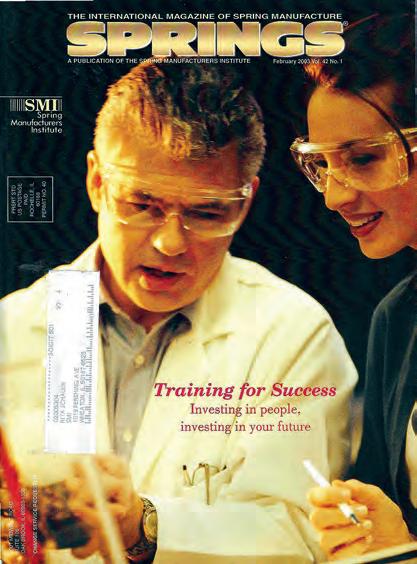
Without cross-training, essential tasks can grind to a halt simply because no one else knows how to do them.
The same challenge arises during growth periods. When business volume increases or a key employee leaves, cross-trained workers can quickly step in because they know the job. In both scenarios time is scarce, people are stretched and productivity suffers when knowledge is concentrated in too few hands. In either case, when shifts in business volume or workforce occur, time is at a premium and people are multitasking. How much can you ask someone to do before they become stressed and less productive? There has been much talk in recent years about knowledge management and knowledge capital. Just as you have capital management, which refers to the management of equipment, facilities and other items that equate to hard dollars, you should have knowledge management. Knowledge capital refers to the knowledge any one person has in his head when he has worked for a company for a while. Knowledge management refers to how it is managed.
It is a huge loss to a company when a person who has accumulated a great deal of knowledge walks out the door. No one could be so naive as to think that, if you give someone their walking papers, they will cheerfully share the years of knowledge they have gained. However, the knowledge they have can be captured when it is written down in some form, or it can be transferred when the person possessing the knowledge passes it on through cross-training.
It is no secret companies that have downsized to save dollars often don’t achieve their goal — cut costs and make money. Even though their
expenses are lowered, they don’t make more money as a result. Rather, they are typically in far worse situations three years later than companies that do not downsize.
According to the U.S. Bureau of Economic Research, manufacturers that downsize are less likely to see productivity gains than those that do not. In a study of manufacturing companies, the 250,000 manufacturers that downsized had an average 4.7% return on assets vs. 34.3% for those that did not. What does all this mean? Several things:
1. Downsizing is a knee-jerk reaction that has proved not to be a wise move, both in the short and long term.
2. When looking at staffing numbers, or your human resources, there should be more of a strategic, long-term approach.
3. People should be trained to satisfy current and future production needs. This means cross-training in other jobs, or portions of jobs, along with grooming for future growth within the company or, at the very least, within that person’s career.
I’m sure none of this is news to you; you should have heard it all before. However, the big challenge is to break the habit of doing things the way you always have, even though those methods have served you well. Repeatedly, it has been shown
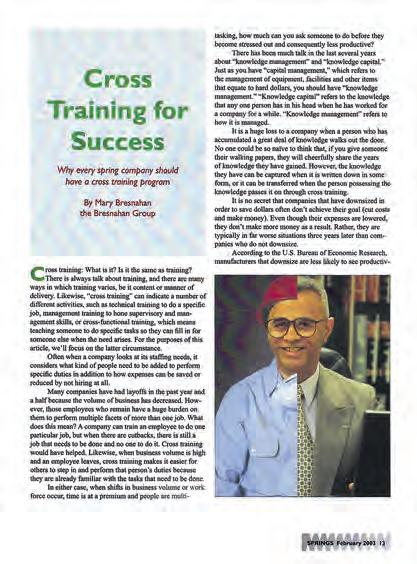
a well-thought-out change is necessary for survival. This can be the role of cross-training.
The Missing Link
A few years ago, I was involved with a situation in which a key person for processing orders to be forwarded to production was absent. Having already realized it was important to have a backup for this person, the company had taught parts of the job to four different people. Unfortunately, these four people did not perform the function they had learned on a regular basis, much less in the presence of the person who did the job every day.
The day came when the order processor was absent for a week. The company found that none of the four people who had learned parts of the function knew enough of the job to do it, nor was there sufficient clear and specific documentation to take them through the steps of their tasks. They each knew bits and pieces, which they had not practiced since they were initially given instruction. Needless to say, production came to a grinding halt while the order processor was absent. Do you see dollar signs running through your head? Can you imagine stopping production for a week because of one person? Not only did this company fail to conduct effective cross-training, but it also
did not maintain the skills of those who were initially taught.
Upon the return of the order processor, the company decided to rectify the situation and have the order processor, plus one other person, learn how to train others in a complete and accurate manner. They hired a training consultant to teach them how to effectively conduct cross-functional training and help them set up a complete program.
Another example is the American Kennel Club, which found itself in a difficult position when it had dog shows to put on. There is much to be done behind the scenes to put on a dog show. Many areas of competition must be organized and coordinated. The group of people who planned the event had little to do while the event was taking place, while those who worked the actual event were overwhelmed and shorthanded.
Additionally, each group possessed different behavior styles. Some were good with people and others were good with numbers. Because people were trained only to do their specific jobs and nothing more, there were undiscovered skills in both groups.
Out of necessity, the American Kennel Club decided to try cross-training. In the process, the staff uncovered new skills. Staff members liked cross-training because it provided additional career development, sometimes in supervision. The organization benefited because it no longer had to hire outside staff to run the actual show. The staff was better utilized.
As you know, cross-functional training is no easy task. It takes time, patience and commitment. However, the results are often an energized, enthusiastic and more effectively organized workforce.
In your facility, cross-training can be easily affected by training someone in a strategically important skill. Develop someone in an entry-level job to perform a task in another area that will be a horizontal expansion of duties. For example, if someone is responsible for bringing wire to a workstation, in slow times have them learn to package the finished product for shipment to the customer. It is important to keep in mind you cannot train someone in a task and then not let him continue to perform it. For example,
you teach someone to thread a machine and once he has learned this task, he goes back to performing his regular job. Because the need doesn’t arise again for a while, the person does not thread a machine for another three months. He cannot do it because he only vaguely remembers how.
To prevent this, set up a regular schedule once the initial training is done so the person can reinforce what he has learned and practice threading machines for several more days. The newly trained person should continue threading machines on a regular basis, perhaps once a week or once every two weeks. Next, move on to teaching another task, perhaps setting the tension.
No matter whether you are cross-training in specific tasks or training for an entire job, the commitment still needs to be there. The commitment has to come from the top, as with so many initiatives. We are experiencing interesting and challenging times. Having top-notch people, both technically and attitudinally, in your employ who buy in to what you are doing is important.
An article in the November 2002 issue of TD magazine, formerly Training and Development, states change does not happen for two reasons: A belief if something different is introduced, it will be adopted and take hold and there’s no continuing energy put into the change effort until it is institutionalized and a way of life.
We typically don’t have the stamina and commitment to make things happen. We want immediate results. Keep in mind, however, you didn’t get where you are in business overnight. It was a long, slow process. The same is true of any training effort. You must have a plan for how you will implement cross-training and then follow through to make sure it is happening. Make the necessary adjustments during the process. Many of you are not risk-takers, but you are tenacious — after all, you’re in the springmaking industry. Cross-training and training are not risks; they are investments. Business is not done the way it was 10 or 20 years ago and never will be again. Everyone is struggling to adapt to globalization, a different work ethic and a diminishing workforce. You know you need to be competitive. Training and cross-training will help you be just that. z




By Gary McCoy, Executive Director
A Profile of David DeVoe
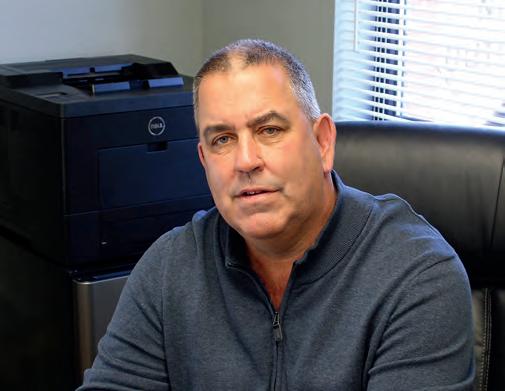
When David DeVoe talks about the spring industry, he does it with the calm confidence of someone who has lived every chapter of its evolution. His story begins in a trade school classroom, where he learned tool and die work as a teenager. It winds through shop floors, boardrooms, acquisitions and now the presidency of one of the oldest spring companies in America.
At SMI’s 2026 Annual Meeting in Puerto Rico, he entered a new phase as he stepped into the role of SMI president.
DeVoe’s journey is a reminder that the industry still rewards those who learn it from the ground up. “I started as an apprentice tool and die maker,” he says. “That’s how I came into this industry.”
He describes himself as a very “hands-on person.” Instead of becoming a tool and die maker, he went to work at Dayon Manufacturing in 1985 to learn coiling and later became a coiler there before joining Plymouth Spring in 1994. DeVoe initially started out as a foreman in the coiling department, later becoming the plant manager and vice president of manufacturing.
DeVoe’s journey is a reminder that the industry still rewards those who learn it from the ground up.
In 2017, then owner and president Richard Rubenstein promoted DeVoe to become president of the company, turning over the day-to-day operations to him for all areas of the company, including manufacturing, personnel and finance.
Plymouth Spring grew by acquiring small businesses whose owners were ready to retire. “We purchased sales,” he explains. “We brought in the machines we needed, absorbed the work and kept the company profitable.” It was a disciplined, methodical approach that positioned the company well when Rubenstein decided to sell in 2021.
The buyer was Lesjöfors Group, a Swedishbased nonequity acquirer with a simple philosophy: buy strong brands and keep them running the way they already have been.
For DeVoe, the transition opened a new chapter. He stayed on as president of Plymouth Spring until February 2025 when he was asked to lead John Evans’ Sons — the 175-year-old company known as America’s first springmaker.
He continues to run John Evans’ Sons as president and was recently asked by Beijer Alma AB, the parent company of the Lesjöfors Group, to oversee the entire North American region as vice president of North American operations. The company has four U.S. locations, one in Mexico through its Pittston, Pennsylvania operations, but nothing yet in Canada.
One moment stands out above the rest. When DeVoe departed to lead John Evans’ Sons, he promoted his son Joe to succeed him as president of Plymouth Spring.
“There’s nobody harder on a son than a father,” he says. “With employees, we give them the benefit of the doubt. When it’s your son, you pretty much tell it like it is. It’s a little tougher for a son to work for his father. I appreciate everything and his loyalty to me. He’s somebody I can trust and that means everything in the world to me. It was one of the proudest moments of my life.”
Four Companies, Four Cultures
Lesjöfors Group U.S. operations now include Plymouth Spring, John Evans’ Sons, Inc., Tollman Spring Company LLC and Lesjöfors Springs America Inc. Each brings its own strengths and challenges. Bristol, Connecticut is home to Plymouth and Tollman and sits in a dense cluster of springmakers, creating a competitive labor market but also a deep pool of skilled workers. Lesjöfors Springs America in Pittston, Pennsylvania and John Evans’ Sons in Lansdale, Pennsylvania, by contrast, require more employee training and development due to their geography.
In terms of employees, which can vary at times based on workload, Tollman Spring has 70, John Evans’ Sons has 65, Lesjöfors Springs America has 50 and Plymouth Spring has 45.
The product mix varies as well. Plymouth and Tollman focus on coiling and fourslide work, while John Evans’ Sons and Lesjöfors Springs America specialize in constant force
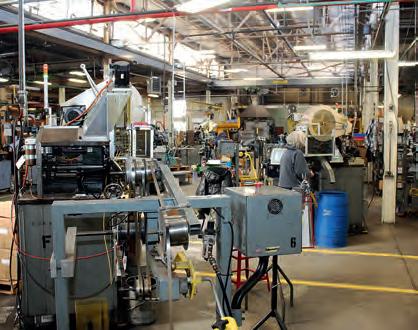
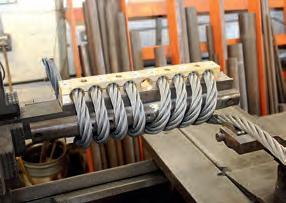
and power springs — a niche with fewer competitors but also fewer total applications.
“Springs are everywhere,” DeVoe says. “But constant force and power springs are maybe 10% of the opportunities. Still, it’s a niche, and we’re all looking for niches.”
DeVoe says the Lesjöfors Group in North America hopes to continue to grow through acquisitions. “We’re looking at companies that do anywhere between 14 and 30 million in sales.”
Over four decades, DeVoe has watched the industry shift from guarded secrecy to open competition. “When I first got into this industry, everybody thought they had black magic,” he says. “Blankets over machines, closed-door plants. Today, competition is everywhere. You must keep up.”
Over four decades, DeVoe has watched the industry shift from guarded secrecy to open competition.
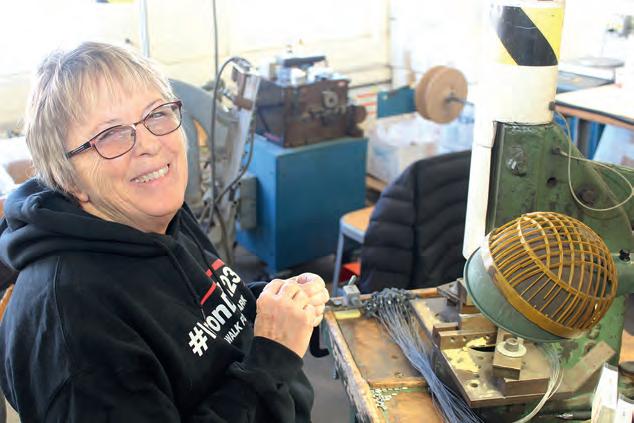

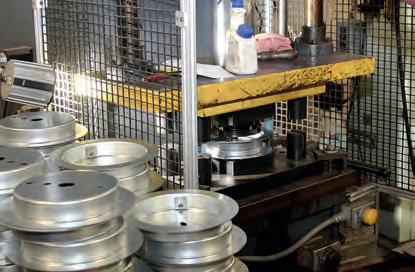
Technology has accelerated the pace of change. Coiling and wireforming machines continue to advance rapidly, while fourslide equipment still relies heavily on 1970s-era machines and the skilled toolmakers who keep them running.
“Then you jump into power presses where you have the technology that can produce things quicker and faster with a large tool fee,” says DeVoe.
But for DeVoe, the biggest constant is the importance of relationships. “The best relationships, with employees and customers, create the best companies,” he says. “That hasn’t changed.”
Consolidation, however, has reshaped the landscape. Large groups like Lesjöfors, MW Industries and Lee Spring, among others, are buying family businesses whose owners lack
a succession plan. The total volume of spring work hasn’t changed, but the number of players has shrunk. That creates opportunities for smaller companies when customers become dissatisfied with large, consolidated suppliers. “If you don’t satisfy customers, you’re buying business that won’t be there long term,” he warns.
DeVoe is passionate about the next generation of springmakers.
“College isn’t for everyone,” he says. “Skilled springmakers — coilers, torsion specialists, CNC wireformers, press operators — can make six figures without student debt. It’s a great life.”
“When I look at springmaking, I think with all the friends and companies that I see, we’ve employed a lot of people and made their lives better,” he says. “There are great opportunities for skilled people in our trade.”
He sees workforce development as both the industry’s greatest opportunity and its greatest responsibility.
As the current president of NESMA, DeVoe has helped grow membership by focusing on value: grants, funding, legislation updates and networking. “Competitors make each other better,” he says. “That’s the strength of a regional group.”
DeVoe served many years on the SMI technical committee and during his time on the association’s board of directors he served a short stint as the magazine chair. He joined the SMI executive committee in 2020, which involves a ten-year commitment of moving through the various chairs.
His long involvement with SMI has shaped his view of the national association. “SMI is a group of experts,” he says. “We dictate the tolerances the industry uses every day. Without SMI, someone else would dictate them for us.”
He is especially proud of SMI’s regulatory compliance program, led by Laura HelmrichRhodes. At Plymouth Spring, her guidance helped reduce the company’s workers’ comp
The best
relationships, with employees and customers, create the best companies. That hasn’t changed.
mod rate to 0.6, saving 40% in premiums while improving employee safety.
“There’s no dollar amount you can put on keeping people safe,” he says. “We need our employees to run our business. The only way to do that is to keep them safe every day.”
DeVoe recommends that everyone in the spring industry call Rhodes.
As incoming SMI president, DeVoe’s priorities are clear. He wants to keep SMI strong as the industry’s technical authority, grow the Emerging Leaders and Women in Springs groups and elevate associate members by creating more opportunities for meaningful engagement. He also wants to increase member involvement. “Too many companies pay dues but don’t participate,” he says. “We need more people involved. It starts with conversations.”
Above all, he wants SMI to listen and act. “We’re going to listen to the needs of the members and act on those needs,” he says.
DeVoe’s leadership philosophy is grounded in humility and collaboration. He keeps his door open at John Evans’ Sons and invites employees to come chat with him at any time, about whatever is on their minds. He also frequently walks the plant floor to greet employees, to see how they’re doing and offer any assistance they may need.
He often speaks about the unusual dynamic of the spring industry: fierce competitors who are also close friends, willing to help each other solve problems. “We compete and we cooperate,” he says. “It’s a world I’ve never seen anywhere else.”
DeVoe reiterated this in a 2020 article in Springs. “The people I deal with, my competitors, are probably the best people I’ve ever worked with in my life,” says DeVoe.
“We don’t talk about our own work; we just talk about our problems and help each other understand how we can solve them together. I don’t know any other industry that does that.”
DeVoe has two children. His daughter, Michele McGraw and her husband, David, have two children, Aubrey and Landon. His son, Joe DeVoe and his wife, Jessica, have three boys, Cayden, Mason and Logan.
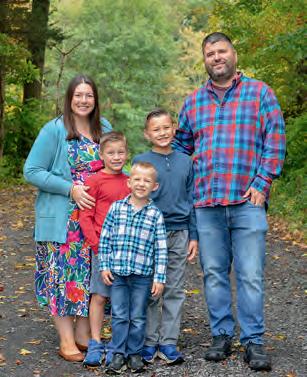


DeVoe remarried Dawn Murphy. She died in Feb. 2024. He has two stepdaughters, Madison and Olivia Murphy.
For DeVoe, the exciting part of his installation as SMI’s new president was all his family planned to join him in Puerto Rico. “It’s costing me a lot of money,” he joked. “But well worth it.”
When not working, DeVoe enjoys golfing and spending time with his grandchildren.
“I enjoy dinners and movies and of course, I love to play golf,” says DeVoe. “But family time is the best.”
As he steps into the SMI presidency, he brings with him a lifetime of hands-on experience, a deep respect for the craft and a commitment to strengthening the community that shaped his career. His story is not just about where he has been, but about where he believes the industry can go and grow together. z

By Sara Scullin
Tina Malley Fosters a Culture of Support and Transparency

Our workforce represents a multifaceted talent pool, bringing together different backgrounds and specialized skills to drive our success
In 1990, Tina Malley left a job she loved in nursing at a skilled care facility and began working as an office manager at Springfield Spring & Stamping in East Longmeadow, Massachusetts. That evolved into a career spanning more than 35 years.
Over that time, Malley progressed from managing the computerization transition to full-time co-ownership. While working at the company, Malley furthered her education. In 1996, she earned a Bachelor of Science in Business from Bay Path University in Longmeadow.
When the company went up for sale a decade after she started, Malley and current president, Norm Rodriques, watched prospective buyers come and go. Eventually, the two decided to buy the business themselves. In 2000, a very pregnant Malley signed the papers to co-own the then 58-year-old spring, wireform and stamping company.
“Norm and I weren't about just making money,” Malley recalls. “We wanted to give back to the people who helped us. And we had established a solid banking relationship because we were actually working in the business, and we knew what it needed.”
“That was a crazy year,” she says. “We went backward a little. I thought, ‘What did we do?’”
“But we pulled through, we hired the right people, we went full steam ahead with our marketing and developed strong customer relationships.”
She’s witnessed plenty of change since signing those papers, including new equipment and an expansion to the company’s
Bristol, Connecticut facility, as well as another expansion into a larger building in East Longmeadow.
For Malley and the team, change is good. At the time of acquisition, Malley says Springfield Spring was doing about $3 million in business, adding they are now projected at more than $14 million.
She attributes growth to three key things: branching out across industries (particularly medical), organic sales and marketing initiatives and leveraging technology and innovation.
Malley and Rodriques work hard to cultivate a fun and informed environment. They recognize employee birthdays, anniversaries and celebrations.
As a carryover from her nursing days, Malley still sees herself as a caregiver looking after her team and her customers. She is famous for making breakfasts, from egg bakes to waffles, for her employees.
“They love it when I do that,” Malley says. “It’s just who I am. I’m a caregiver by nature. It’s what I enjoy.”
They also regularly bring everyone together to talk numbers and strategy.
“Our workforce represents a multifaceted talent pool, bringing together different backgrounds and specialized skills to drive our success,” Malley says. “As business increased through COVID-19, we required additional employees to meet the increased customer demand. We connected with a temp agency that found great candidates who have become permanent employees.”
She says transparency is key to a healthy work culture and employee retention. They share numbers with all employees at their monthly “all-hands business games” at both locations, in East Longmeadow and in Bristol.
“We share our income statement, our revenue, our expenses, all the way down so that all staff understand when we’re doing well and when we’re not doing well,” she says. “We try to educate so everyone knows that what they do matters … that they matter to the organization.”
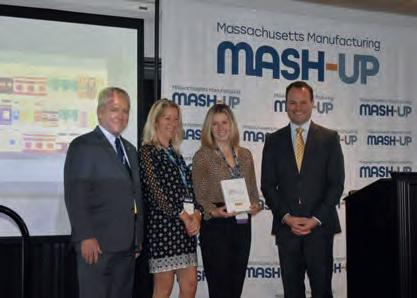
Springfield’s largest clients include firearms, medical, automotive and industrial components industries. Malley says this diversity has been their savior at times, adding “If one went down, another one held us together.”
And as the company branches out, Malley anticipates they will hire new talent, which she says can be tricky but also a huge opportunity.
“As the technology changes, you’re at a crossroads where you have the talented springmakers who know the craft of it and then you have the kids who are technically inclined,” Malley explains. “You want to have the two intersect and the challenge right now is getting those two to intersect and to work well together and appreciate what each other has to offer.”
Malley never expected to grow with the company for as long as she has. She’s embraced it all: the challenges, the wins and her leadership role.
Looking back, Malley says thirty-five years have passed in a flash, a journey defined by her dual roles as a mother and a co-owner. By bringing her children to work throughout her career, she turned the business into a second home where her family and her career grew up together.
“I am proud of all that we accomplished as a team. I’m thankful that I was able to share this journey with my husband, children and my mother,” Malley says. z
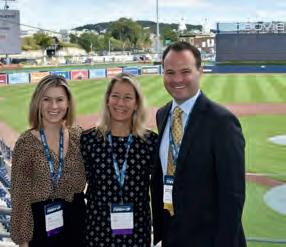






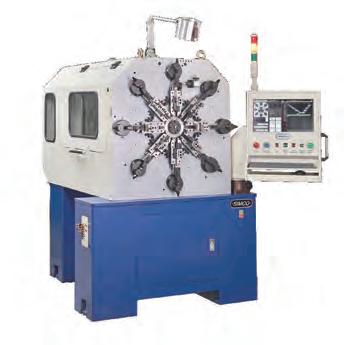


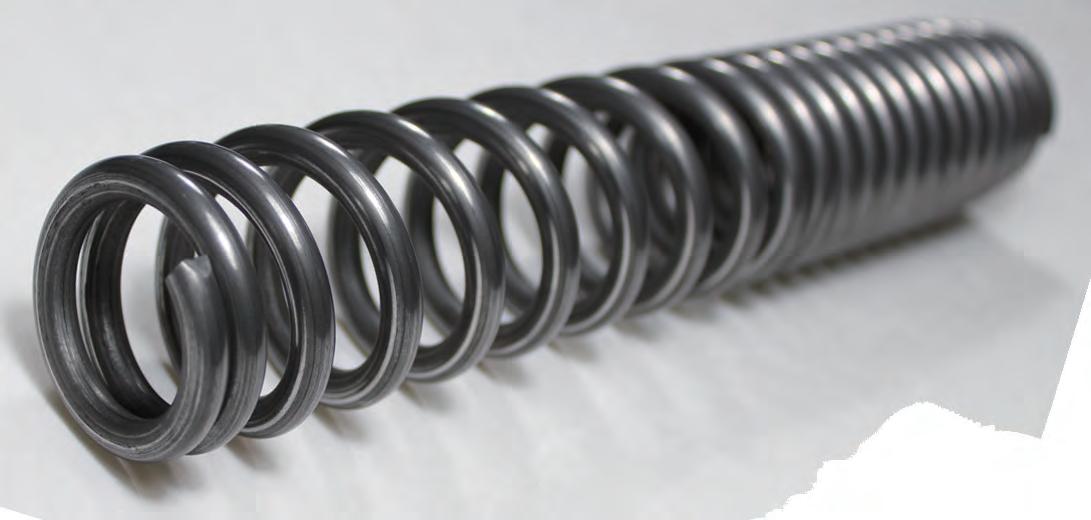
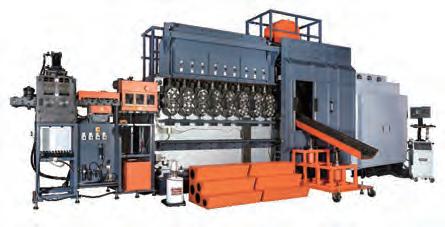


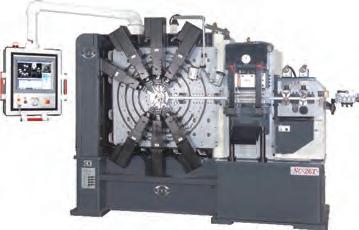


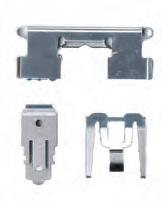


Gary McCoy
I was never a highly accomplished athlete, but I’ve been a sports fan all my life. So I know, in the heat of competition injuries happen and they often involve connective tissues like tendons, ligaments and cartilage. If you’ve ever suffered one of these injuries, you know exactly how painful and disruptive they can be.
According to the Cleveland Clinic, “Connective tissues form the vital connections, supports and links that your body systems need to work together. It’s literally what holds your body together.” Applied to the workplace, the metaphor is clear: Some people serve as the vital links that hold an organization’s parts together.
Our issue theme, “The Multifaceted Skilled Workforce,” raises an important question: Do you need more generalists — the connective tissue — or more specialists who focus on specific, detailed assignments? Generalists tend to connect, coordinate and adapt, while specialists master, refine and execute.
To me, it is not an either/or decision because both skill sets bring tremendous value to any organization. The strongest ones understand how to blend them strategically.
As David Epstein argues in his book “Range: Why Generalists Triumph in a Specialized World,” you should never underestimate the value of a generalist.
“Plenty of experts argue that anyone who wants to develop a skill, play an instrument or lead their field should start early, focus intensely and rack up as many hours of deliberate practice as possible,” Epstein says. “If you dabble or delay, you’ll never catch up to the people who got a head start. But a closer look at research on the world’s top performers, from professional athletes to Nobel laureates, shows that early specialization is the exception, not the rule.”
Epstein goes on to note that generalists “often find their path late, and they juggle many interests rather than focusing on one. They’re also more creative, more agile and able to make connections their more specialized peers can’t see.”
I believe specialists will always be essential. But the connective tissue of a generalist is just as vital. Used properly, together they can help you build a resilient, future-ready multifaceted skilled workforce.
Gary McCoy Executive Director
The bimonthly podcast, hosted by SMI Executive Director Gary McCoy, features leading experts discussing issues especially relevant to manufacturers of springs, wireforms and stampings. Apple https://apple.co/3OJODed

SMI’s Advanced Spring Design (ASD7) program entered a new era in 2026 with the introduction of its first cloud-based version.
The new online platform gives users the flexibility to access ASD through any modern browser — on smartphones, tablets, laptops or desktops — while storing and retrieving spring designs in the cloud. It’s designed to complement, not replace, the traditional desktop software and both versions work together seamlessly.
The new online version is bundled as ASD premium. SMI members who are current ASD standalone license users may upgrade to the premium version by paying a one-time fee of $250. Those who purchase ASD premium standalone for the first time will pay an initial price of $900. The annual subscription after that is $250, plus the regular renewal rate of $190.
Nonmembers can upgrade their standard ASD standalone license for a one-time fee of $250. For those purchasing ASD premium standalone version the initial purchase price is $1,150. The annual subscription after that is $600, plus the regular renewal rate of $490.
In addition, a new ASD for Excel add-in is now available, allowing users to embed
ASD calculations directly into spreadsheets. Inputs update dynamically, and a dedicated ASD tab in Excel includes the Spring Explorer tool for building linked design scenarios. The add-in is priced at $685 per user.
SMI’s four-volume Encyclopedia of Spring Design is now available as a digital subscription. Written for design engineers, the encyclopedia provides practical guidance for creating effective spring designs — even without specialized software — and includes both U.S. and metric data.
The electronic format allows SMI to update tables and technical content in real time as part of the ASD Help system.
SMI members can subscribe for $29 per year. Existing ASD users can add the digital encyclopedia to their subscription for $15 annually, with the option to purchase multiple copies.
SMI members can purchase the ASD cloud-based version, the Excel add-in and the digital Encyclopedia of Spring Design at SMI’s enhanced online store. Visit www.smihq.org/shop/.
Join your spring industry colleagues in Rosemont, Illinois, for the 2026 edition of SpringWorld, presented by the Chicago Association of Spring Manufacturers Inc. (CASMI), including the second annual educational Symposium, presented by SMI. This year’s event will take place Oct. 7–9, 2026, at the Donald E. Stephens Convention Center.
In addition to the CASMI-hosted exhibit hall, SMI will host an opening keynote
presentation Oct. 7. Two days of business and technical content will follow Oct. 8 and 9.
Exhibit hall hours will be similar to prior years, and the Technical Theater will again offer presentations on the show floor. Two receptions are scheduled at the end of the first and second days of the show. Don’t miss this comprehensive educational and networking event to learn the latest from suppliers and educators.
Learn more at www.springworld.org.
SMI’s Annual Market Summary is an industrywide report profiling the financial and operating performance of spring manufacturers. Participants receive the Annual Market Summary in both PDF and Excel dashboard. Management commentary explains the meaning and importance of key statistics and ratios.
Each participant who returns a completed questionnaire receives an individual Financial Performance Report delivered in an Excel dashboard analyzing their company. The report provides an interactive, dynamic look at benchmarking data.
Mackay Research Group, SMI’s exclusive survey partner, sends reports directly to participants and follows strict guidelines to ensure confidentiality of company data.
April 2 Annual Market Summary survey sent to all regular members
May 31 Published cutoff date for return
July 15 Annual Market Summary report sent to SMI
July 31 Individual Financial Performance Report sent to each participant
SMI regularly conducts member surveys to help companies understand their performance in relation to the broader industry. We also take participant privacy seriously and handle all submitted information with strict confidentiality. No company data is shared with SMI members, SMI or any third parties. 2026 Schedule: Surveys and Reports
Key Business Trends (regular and associate members)
First Quarter 2026
Second Quarter 2026
April 7, 2026
April 17, 2026 April 18, 2026
July 7, 2026 July 17, 2026 July 18, 2026
Third Quarter 2026 Oct. 4, 2026 Oct. 14, 2026 Oct. 15, 2026
Fourth Quarter 2026 Jan. 6, 2027 Jan. 16, 2027 Jan. 17, 2027
Wages & Benefits
(every other year — regular member contacts)
2026
2027
Industry Report to SMI
3, 2026
1, 2027
2, 2026
15, 2026
30, 2027 Nov. 29, 2027
31, 2026 July 15, 2026
Individualized Reports to SMI Members July 31, 2026
For more information about participating in SMI’s benchmarking programs, contact Gaby Carrasco at gaby@smihq.org.
We’d love to hear from you! Springs welcomes your notes and comments on the contents of our publication. Please email Phil Sasso, managing editor, at phil@smihq.org.
SMI is committed to training and supporting North American springmakers with outstanding technical assistance.
SMI’s spring design training program continues to grow and is highly rated by both members and nonmembers.
The upcoming 2026 training schedule is shown below. In addition to webinars, SMI plans to offer an in-person class at the 2026 SpringWorld Expo and Symposium, sponsored by CASMI and SMI, Oct. 7–9, 2026 (subject matter to be determined).
As a component of SMI’s Advanced Spring Design (ASD7) software, SMI offers training programs for industry newcomers and veterans seeking to increase their knowledge. Training is available to both members and nonmembers.
206 Snap Ring Design
201 Compression Spring Design
202 Extension Spring Design
203 Torsion Spring Design
205 Power, Constant Force, Spiral, & Torsion Bar Spring Design
In Person Class at SpringWorld 2026 (subject matter TBA)
201 Compression Spring Design
300 Strength of Materials and Spring Material Manufacturing
202 Extension Spring Design
203 Torsion Spring Design
Webinars are scheduled from 1–5 p.m. EST. *Dates are subject to change.
16
23
21
18
10
6
15
12
19
17
For more information and to register for classes, visit www.smihq.org/go/tech-classes or contact Gaby Carrasco at gaby@smihq.org.
SMI members receive priority placement for their product, company, personnel and events announcements in the magazine. Your news releases should be roughly 50 to 100 words and may be accompanied by color photos (high-resolution .JPEG photos at 300 dpi preferred). Send to gaby@smihq.org.
SMI is pleased to welcome our newest member.
Associate Jowitt & Rodgers
Steve Rodgers 215-824-0400, ext. 335 stephenrodgers@jowittandrodgers.com www.jowittandrodgers.com
2026
April 13–16
wire 2026 — International Wire and Cable Trade Fair Fairground Düsseldorf Düsseldorf, Germany www.wire-tradefair.com
May 5–7
WAI WireExpo 2026 Milwaukee, Wisconsin www.we26.wirenet.org/home
Sept. 16–17
ISO/TC227 — Springs Warsaw, Poland
Oct. 7–9
2026 SpringWorld Symposium and Expo
Donald E. Stephens Convention Center Rosemont, Illinois www.springworld.org
Oct. 21–23
2026 Fabtech Expo

Las Vegas Convention Center Las Vegas, Nevada www.fabtechexpo.com
2027
April 12–15
2027 SMI Annual Meeting
Omni Rancho Las Palmas Resort & Spa Rancho Mirage, California www.smihq.org/annual-meeting
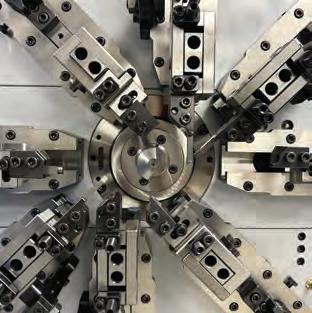
RK Trading’s CSX-20 Herdon former has a new feature!
Now the top and bottom 3 slide faceplates can be shifted horizontally; so you can adjust them up to 35mm to each side of the wire line for even more flexibility and customization.
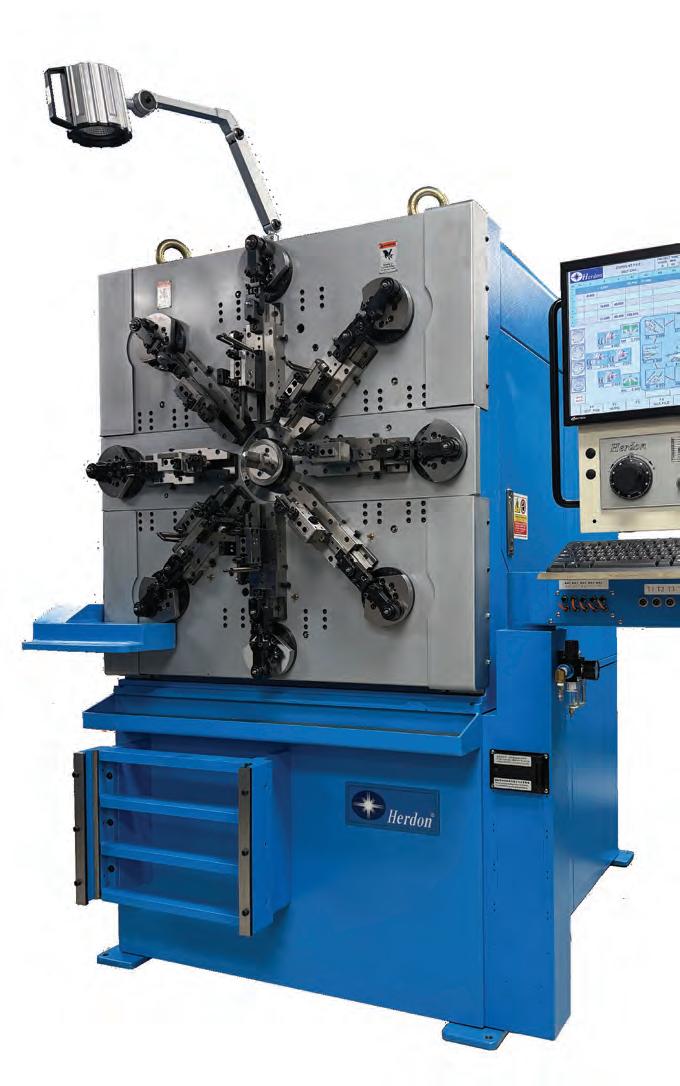
With a next-generation processor and a large touch-screen monitor, this enhanced operating system provides increased versatility and faster production speeds so you can make more parts complete in less time.
CSX-35 will be available Fall 2026.



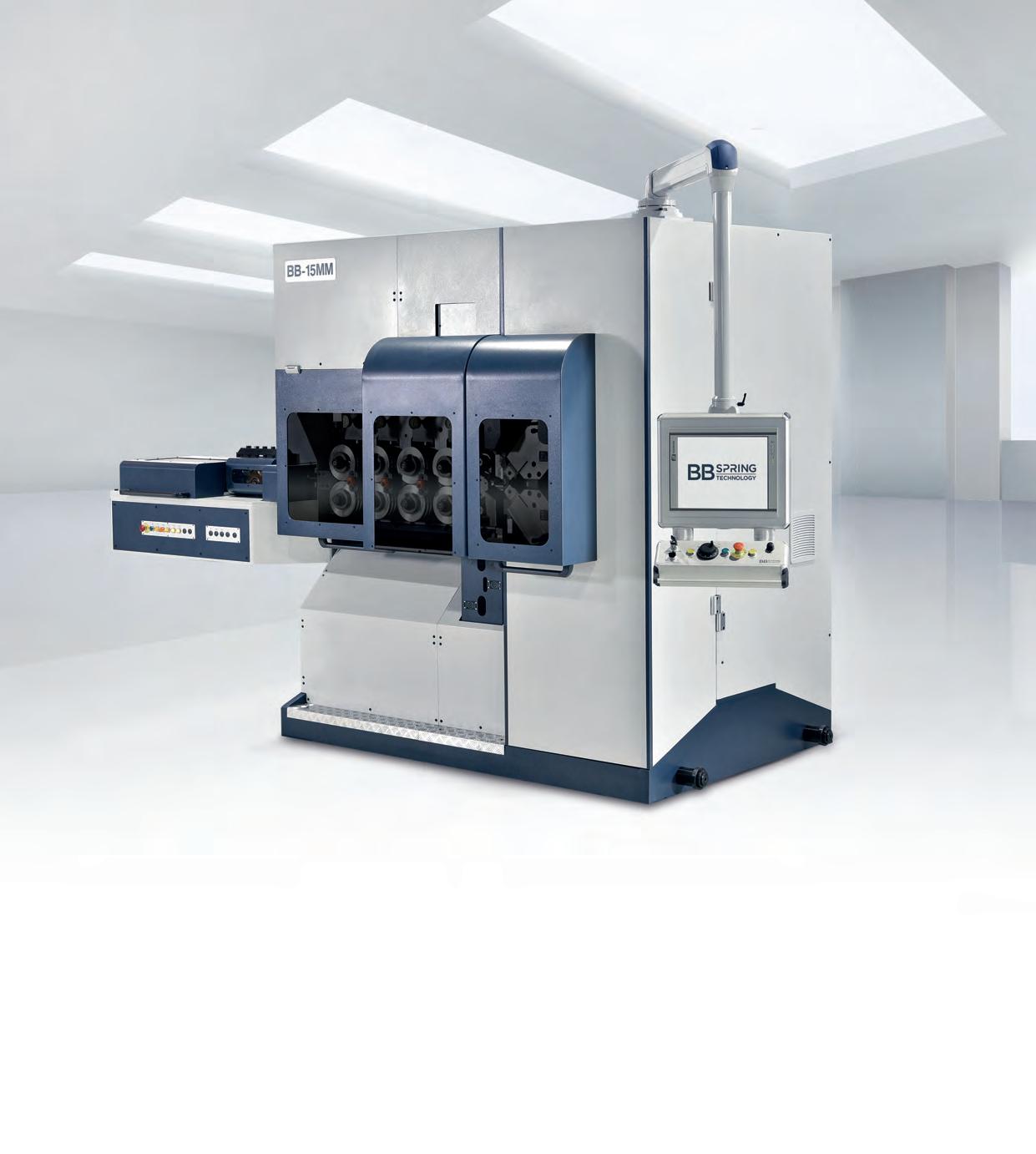
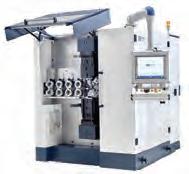


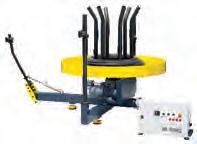

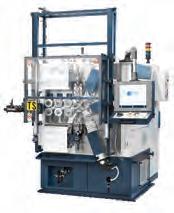

Gaby Carrasco
Episode 253 | Dec. 30, 2025 | 22 min.
I remember telling my parents I chose communications as my major at Bradley University. Their immediate response was, “You’re already a good speaker. Why would you study that?”
That’s an easy assumption to make. After all, our daily lives revolve around communicating with others. But strong communication isn’t just instinctive, it’s a skill you can refine. Learning the right techniques can elevate your communication style and help you become a better leader, colleague and overall human.
This issue’s podcast review explores communication tips drawn from a podcast dedicated to concise, practical strategies for becoming a more effective communicator. Let’s dive into the takeaways:
Facilitation works best with structure and flexibility: Plan thoughtfully but allow conversations and events to unfold organically to encourage meaningful participation.
Avoid toxic productivity: Focus on what truly matters. Prioritize realistic projects and celebrate completed tasks instead of obsessing over what’s unfinished.
Dialogue drives synergy: In difficult conversations, lead with open questions and paraphrase to build shared understanding before you advocate your view.
Trust requires action: Demonstrate reliability through follow-through and communicate results to reinforce trust.
Communication is audience-first: Effective messaging requires empathy and curiosity. Content should be tailored to the audience’s knowledge, concerns and motivations. Prepare to be spontaneous: Practice and deep listening to improve performance in real-time speaking situations like questionand-answer sessions.
Memorable language is concrete, emotional, and informal: Word choice significantly affects retention and impact.
|
Persuasion involves identity: People accept messages more readily when they can imagine themselves embodying the desired change.
Meaningful life equals consistency, purpose and significance: Use these three elements as a filter for decisions and time allocation. Negative emotions are useful signals: Instead of avoiding them, acknowledge, validate and address them with an action plan.
Strong communication isn’t about one perfect technique, it’s about making small, intentional improvements over time. By listening more deeply, choosing words carefully and keeping your audience in mind, you can make a meaningful impact.
This podcast delivers practical strategies you can start using right away. Try one or two tips and build from there — your future conversations will be stronger for it. z
Want to share a business development podcast for me to review? Please send your suggestions to gaby@smihq.org.





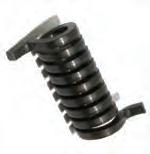
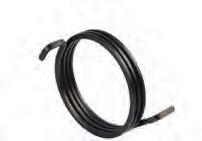





As the voice of the spring industry, SMI members benefit from:
• Valuable technical support for failure analysis, fatigue life, corrosion, spring design and the use of materials when manufacturing springs
• Helpful regulatory compliance webinars, audits and training programs
• Reduced member pricing for our popular spring design software (ASD7) and training classes designed to help students increase their spring design knowledge
•
and

Reviewed by Phil Sasso
My brother gave me “The Let Them Theory” by Mel Robbins for Christmas. He often gives books — he’s a high school English teacher — but I’d never heard of the book or the author, so I did some homework. Robbins is a personal development maven whose 2011 TEDx talk launched her 2017 bestseller “The 5 Second Rule” and her popular “The Mel Robbins Podcast.”
In “Let Them” Robbins shares a simple idea: you can protect your time, energy and focus by not letting others get to you.
“The source of your power is not in managing other people; it’s in your response,” Robbins writes. She also says you also need to flip the phrase to gain the full impact. “When you say, ‘Let Me,’ you’re tapping into that power by taking responsibility for what you do, think or say next.”
That’s all good, you may be thinking, but how is this relevant in the workplace?
“According to research, work is the number one cause of life stress for most people — and your manager has as much impact on your mental health as your spouse,” Robbins says.
In this scenario, you may be the team member, the manager or both.
As a team member, the book is written for you.
“The Let Them Theory teaches you to protect your energy by not allowing minor irritations to control your life, so you can focus on what truly matters,” Robbins writes.
But if you’re a manager, how does Let Them work?
“You might be thinking, You can’t just let your team do whatever they want — they need to be managed. True. But there is a difference between guiding your team and controlling every move they make,” Robbins writes in an appendix. Micromanagement stifles innovation, trust and growth.

She also offers a downloadable bonus chapter called “Leading with Let Them” co-authored with former Sirius XM/Pandora COO, David Gerbitz. In it they argue most leadership failures are not due to lack of talent, resources or strategy, but from unchecked emotional reactions, control instincts and unclear expectations.
“The Let Them Theory” isn’t a traditional management guide, but it can be read through a leadership lens. It’s an interesting personal empowerment book with a professional growth overlay. z
Have a favorite business book you would like us to review? Email your suggestion to phil@smihq.org.
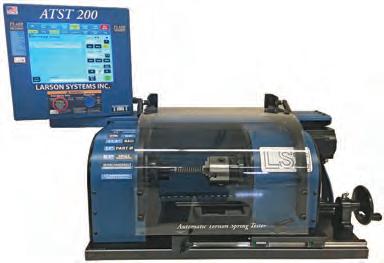


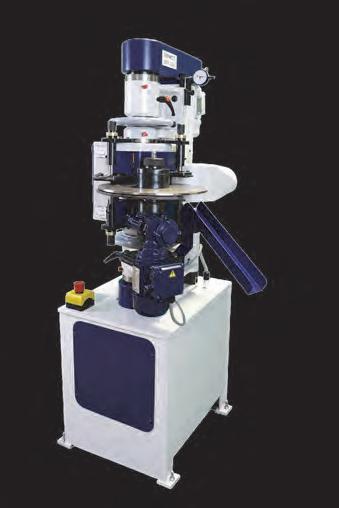







Forming Systems, Inc. (FSI) has announced the introduction of the HBU450 box oven from HSI, designed for batch stress relieving and heating applications up to 500°C (930°F). The oven features optimized air circulation and integrated heating power to support efficient and consistent temperature ramp-up across a range of components.
The HBU450 offers standard temperature uniformity of ±4°C, with an optional ±3°C uniformity (TUS3). Additional features include a digital diagnostic display to support troubleshooting and a direct-driven fan system designed to reduce maintenance requirements while providing stable, quiet operation.
Optional configurations include enhanced temperature uniformity, HMI-based temperature controls with programmable stages, CQI-9 and AMS2750H compliance capabilities and trolley or stainless-steel tray systems.
For more information, contact Forming Systems at info@formingsystemsinc.com or call 269-679-3557.
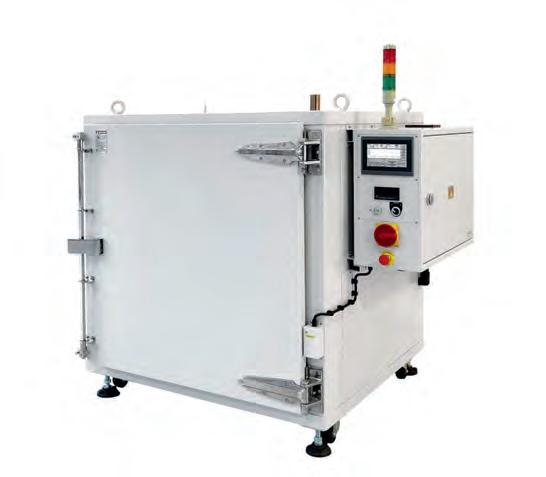
Brass Knuckle has released the SmartFlex™ BK360 gloves, designed for use in cold and chilly work environments where hand protection and dexterity are critical. The gloves feature a layered construction, including a 13-gauge nylon shell and a 7-gauge napped acrylic liner, to provide insulation and comfort during extended wear.
A seamless knit wrist helps limit the entry of cold air, dirt and debris, while a foam latex coating on the fingers, palm and partial back remain flexible in low temperatures. The coating also enhances grip in both dry and wet conditions by drawing moisture away from contact surfaces.
The black-on-black design helps conceal dirt. The glove’s fit balances insulation with dexterity. Intended to support worker comfort in cold conditions, the BK360 aligns with general cold-stress considerations outlined by NIOSH for occupational environments. For details, contact Brass Knuckle at www.brassknuckleprotection. com or call 770-674-8930. z

Send us Your News
SMI members get priority placement of their product news. News releases should be roughly 50 to 100 words and may be accompanied by color photos (HiRes .JPEG at 300 dpi preferred). Send to gaby@smihq.org.

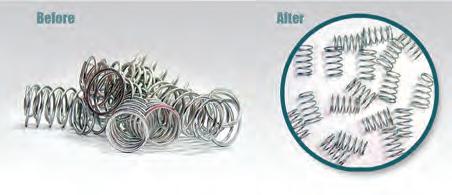





At Admiral Steel, we understand that your product is your reputation. That’s why we take pride in specializing in premium quality high carbon steel that meets specs such as AMS, QQS, and ASTM certified. Our commitment to providing certified material means that you can trust that you are receiving the highest quality steel available. Don’t settle for seconds and rejects. Choose Admiral Steel for the assurance of premium quality steel products. Call us at 800-323-7055 or email sales@admiralsteel.com
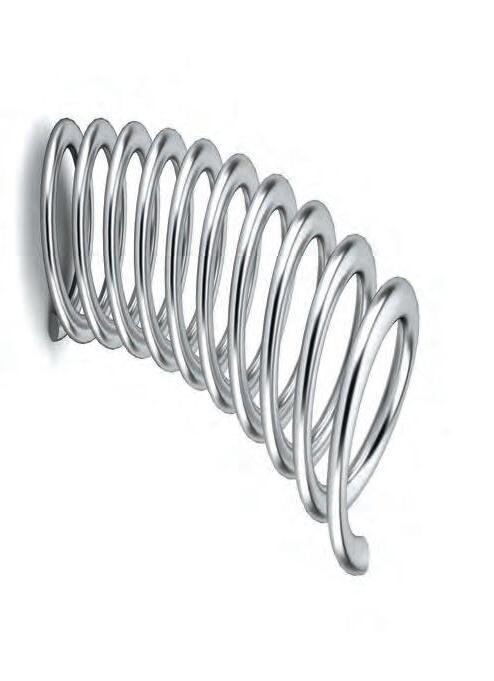






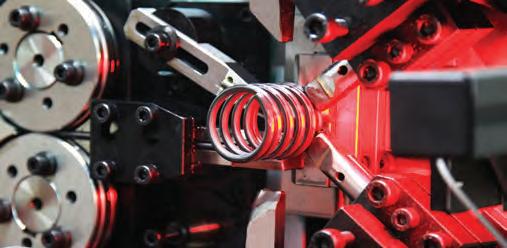


Name: Bernie Taylor.
Company name and city: Hoosier Spring, South Bend, Indiana.
A brief history of your company: Founded in 1954, Hoosier Spring is a third generation family business owned by the Suth family.
Job title: Quality manager.
What I like most about being a springmaker: Knowing the many applications where our parts are used which are unknown to almost everyone else.
Spring industry affiliations: SMI Board of Directors, Technical and Benchmarking Committees.
Birthplace: Pittsburgh, Pennsylvania.
Current home: Granger, Indiana.
Family: Wife Graceann, four daughters, four grandchildren, one dog and 10 chickens.
Favorite food: Medium rare ribeye.
Favorite song/musician: The Cure.
Hobbies: Golf, hunting and hanging out with my grandchildren.
Favorite places: Pittsburgh and Rome, Italy.
What podcast and/or music are you currently listening to: Is there any other answer than the “Springs are Everywhere” podcast?
What is on your bucket list: Visiting Ireland.
Aside from necessities, what is one thing you could not go without: Remote start on the car.
Favorite actor/actress: Kevin James.
Best times of my life: The births of my children and grandchildren.
A really great evening for me is: Having a big family dinner.
The one thing I can’t stand is: People cutting corners to save time.
My most outstanding qualities are: Affable, trustworthy and loyal.
I knew I was an “adult” when: I was handed my oldest daughter, Therese, and I realized someone else was totally reliant on me.
If I weren’t working at my company, I would like to: Travel with my wife.
The most difficult business decision I ever had to make was: When I decided to change careers and join the spring industry 16 years ago.
Role models: My father, Bernie Taylor Sr. I would like to be remembered in the spring industry for: Helping customers work through issues to give them the best springs for their application.










More than just wire & strip. Here’s what’s new:





Springmakers, we’ve got more than just top-tier wire and strip— Gibbs Interwire now offers Shot Peen in Cut and Cast, delivering enhanced durability and performance for your springs. Get the quality, strength, and precision you need—all from your trusted supplier.













Gibbs Interwire is proud to offer the complete Elgiloy Specialty Metals Wire Product line, bringing even more high-performance options to our customers. Your mission-critical applications have never been in better hands.