







STRATEGIC PROGRESS

How is The FA delivering on its grassroots strategy?




LEADING THE CONVERSATION






SAPCA looking to further strengthen its role









GAME ON!






Could the longawaited report be a turning point for community sport?

How is The FA delivering on its grassroots strategy?
SAPCA looking to further strengthen its role
GAME ON!
Could the longawaited report be a turning point for community sport?




2026 marks the fi nal year of the LTA’s three-year strategy – so how successful has it been?























































Agoal without a plan is just a wish”, said French poet and aviator, Antoine de SaintExupéry. He believed that in order to achieve large aspirations, you need a set of actionable steps.

That is pretty much how strategies should work. They should map out a route to an end destination, with station points and a plan on how to reach each of them. In this issue, we look at three strategies which all have similar end goals – to make it easier and safer for more people to play and engage in sport.
From page 76 onwards, we look at how the LTA has delivered on the aims it outlined in its Tennis Opened Up document. It is an opportune time to do so, as 2026 marks the final year of the three- year strategy.
Meanwhile, the FA recently published a progress report on its Inspiring Positive Change Through Football strategy for 2024-2028. To read about the report’s findings – which suggest football is thriving, but challenges remain when it comes
to inclusion – turn to page 42. Elsewhere, we detail the Sports and Play Construction Association’s (SAPCA) new three-year strategy, which sets out to ensure the industry body leads the conversation on safe, high-quality and sustainable sports and play facilities. For this, we sat down with the association’s leadership team to find out more about the document and the association’s future plans (p. 46).
We also turn our gaze to the recently published and long-awaited Game On report (p. 34). The document is one of the most comprehensive assessments of the UK’s grassroots sport and physical activity landscape. The report’s recommendations could, if adopted by government, represent a turning point for our sector.
Drawing on evidence from across the industry, it delivers a clear message: demand for sport is strong, but the system underpinning it is fragmented, underfunded and too often overlooked in national policy. Time for another strategy, perhaps?
Tom Walker, Editor












56 A movement for change
“She Thrives” initiative boosting women’s participation
62 Review: ESTC Annual Congress 2026 Seville event held with the theme of “impact” 64 Network of excellence
A look at UK Sport’s Elite Training Centres
76 Sport in focus: tennis
A detailed look at how the LTA’s grassroots strategy has hit its targets for facilities and participation
84 Built for impact
Latest developments in shockpad technology 92 SAPCA Showcase SportsNation





















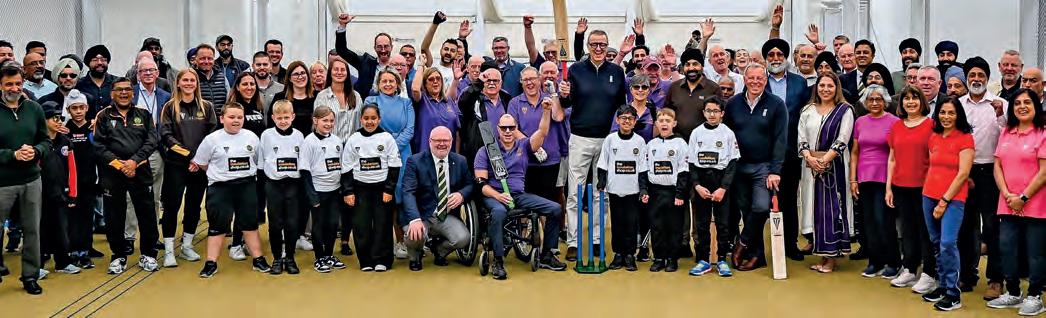
The country’s third indoor cricket dome has opened its doors, giving access to cricket and community activities all-year-round and creating opportunities for thousands more people to play the sport.
The facility at Sporting Khalsa FC in the West Midlands has been funded by the cricket’s national governing body, ECB, and follows two similar domes in Bradford and Darwen, Lancashire. Offering three lanes of cricket, the facility
will be operated by Sporting Khalsa FC, a Sikh charitable organisation which is expanding its community offer into cricket.
The club was recently awarded the FA’s 3-Star accreditation for its community sport operations. It serves a large ethnically diverse population in an economically underprivileged area, providing opportunities for people from all backgrounds to play the sport. The opening of the facility also marks
the official launch of the new £45m Building Belonging in Cricket Fund, which will use money from sales of The Hundred teams to invest between £50,000 and £1m into grassroots cricket projects across England and Wales. Projects which will receive monies from the fund will need to be focused on growing the game and benefit underprivileged communities, as part of the ECB’s plans to make cricket the most inclusive team sport.
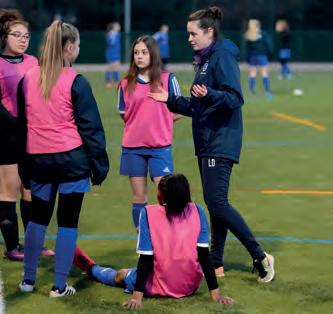
Sport England is investing an extra £3m to support women and girls’ football through The Lionesses HERe to Play Fund. The new funding has been earmarked to help the formation of more clubs or organisations that give women and girls a safe, welcoming and accessible space to play.
The FA’s women and girls’ football strategy, Inspiring Positive Change, shows the number of girls playing football has increased by 56% in the past four years. The Lionesses HERe to Play Fund was launched in 2025 to capitalise on the interest sparked by the England women’s team’s UEFA Women’s Euros victory.
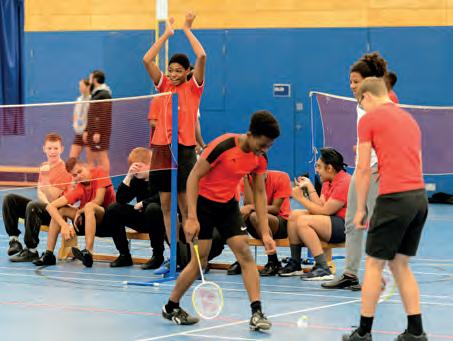
The UK government will invest £1bn in PE and school sport over the next three years, as part of plans to “end the fitness postcode lottery” and ensure more young people will have access to high quality physical activity. The investment will see targeted improvements being made to school sports facilities, support for primary schools and also include funding for the new Partnerships Network.
Backed by £580m and set to be fully up and running from Spring 2027, the Partnership Network will replace the existing PE and Sport Premium. The government says the network will “put an end to the one-size fits all model” that has “failed too many children for too long”. Around £200m will be spent on improving school sporting facilities, alongside a oneoff £100m PE Premium payment to support primary schools during the transition year.
Government data shows that less than half of young people get the 60 minutes of activity a day they need – with girls, those with SEND and those from disadvantaged backgrounds impacted the most. By the time children reach the end of primary school, 1 in 5 are living with obesity, despite successive governments investing billions through the PE Premium over the past decade.
The people, places and policies that build active communities
SportsNation is the single, authoritative voice for the provision, delivery, maintenance and management of sports and physical activity facilities. Published bi-monthly, the magazine focuses on the people, places, policies and products that help to build active communities throughout the UK. Subscribe now and we will email you a complimentary copy of the magazine every two months.
As the official magazine of SAPCA (the Sports and Play Construction Association), every issue of the magazine will also include information about technical guidance, funding, standards and product innovations.
www.sportsnation.uk
Advertising opportunities Contact John E: john@nationmedia.uk www.linkedin.com/company/sportsnation


SportsNation is published by SportsNation Ltd in association with the Sports And Play Construction Association (SAPCA). www.sapca.org.uk
This publication is protected by copyright and no part may be reproduced, transmitted or stored in any print or electronic format without the written permission of the publisher. Every effort has been made to ensure the accuracy of the contents of this publication and SportsNation accepts no responsibility for any error or misrepresentation. Opinions expressed by the contributors and advertisers are not necessarily those of the publisher and we do not accept responsibility of losses or damages arising from them. Printed by BCP Media Group Ltd. ISSN 2755-0621 (Print) ISSN 2755-063X (Online)
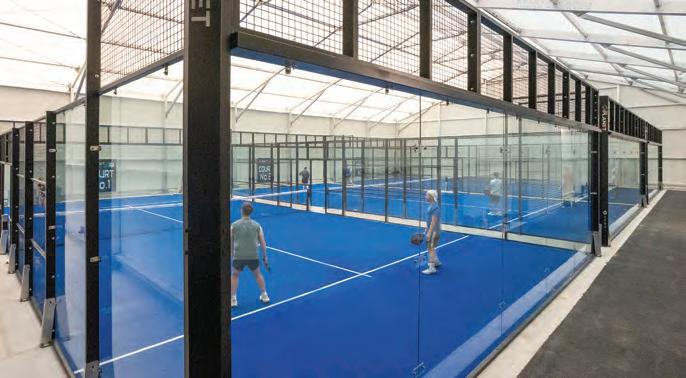
Pure Padel has opened a new fourcourt facility at Moseley Cricket Club in Solihull. It is the first site in what the company intends to become a cluster of sites across the West Midlands, as it looks to further grow its presence in the UK market.
With a site already secured in Warwick, subject to planning, and a seven-court indoor facility due to open in Hockley, Birmingham, the company is assembling a connected network of premium facilities across the region.
The Solihull venue features three premium covered panoramic courts and one uncovered court, a bespoke clubhouse, licensed bar, pro shop and free on-site parking.
Courts are available on a payto-play basis, bookable via the Playtomic app, with pricing starting from £28 per hour. Coaching, leagues and social events will be available on site for players of all
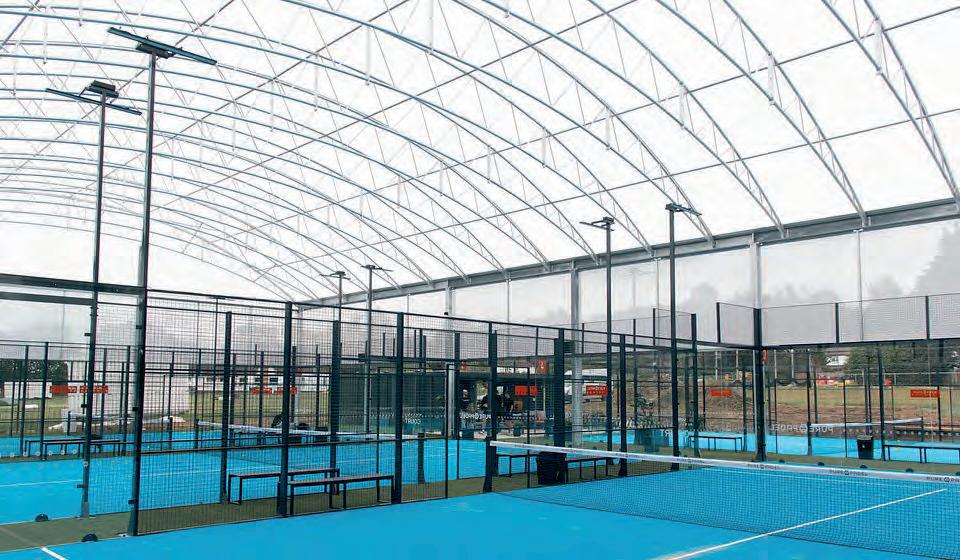
levels, giving the local community not just a place to play, but a full sporting and social destination.
The venue is also expected to attract strong interest from local businesses, with its clubhouse, bar and court facilities making it wellsuited to corporate events, private
hire and client entertainment.
Sammy Arora, Founder and CEO of Pure Padel, said: “Solihull is the start of something we have been planning carefully. The West Midlands presents one of the most exciting opportunities for UK padel right now and the demand here is real.”
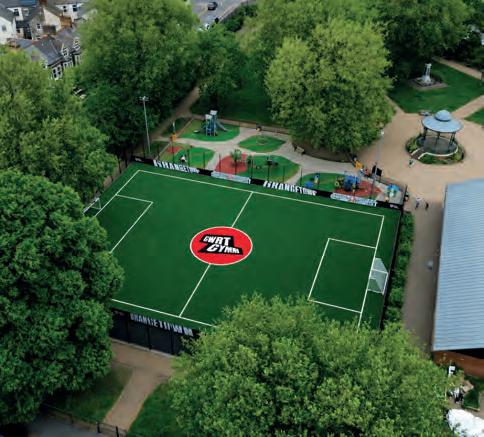
Cymru Football Foundation (CFF) has opened the inaugural Cymru Court at Grange Gardens in Cardiff.
The innovative facility, funded by a “six-figure investment” by the foundation, has been designed to bridge the gap between structured club football and recreational play, providing a highquality, yet accessible space for people of all ages. The facility features a small-sided football pitch with a non-infill artificial turf playing surface, rebound fencing, kick boards and floodlighting.
The Grange Gardens venue is the first of several Cymru Courts planned across Wales.
Aled Lewis, Director at the Cymru Football Foundation said: “This investment will provide a high-quality, inclusive space, helping to remove barriers to participation in football.”



Work has started on the replacement of a number of synthetic sports pitches as part of a major investment programme by Armagh City, Banbridge & Craigavon (ABC) Borough Council in Northern Ireland. Contractors, Kompan and Haffey, will carry out the resurfacing and enhancement works at Ardmore 2G hockey pitch and Cathedral Road 3G pitch in Armagh, which are included in Phase 1 of the Synthetic Pitch Replacement Programme.
The upgrade of the sporting facilities under Phase 1 are part of an investment by ABC Council of just under £2m, which represents a significant commitment to deliver improved facilities. Later this year, further projects to be carried out under phase one of the Synthetic Pitch Replacement Programme include MUGAs in North Lurgan, Ardowen, Scotch Street and Churchill Park. Other playing
surfaces being renewed include tennis courts at Lurgan Park.
Deputy Lord Mayor, Councillor Jessica Johnston, said: “This is the start of a very significant programme of works which will deliver real and tangible improvements to the community.
The upgrade are part of an investment by ABC Council of just under £2m Following the pilot, those who
“Investing in these facilities is vital in supporting our local sports clubs and encouraging more people to get active. As we know, sport not only brings health benefits, but also brings people together and, as a council, we are delighted to be able to deliver this support.”
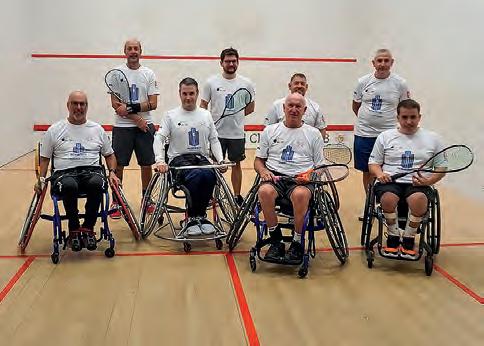
Tennis Wales and Squash Wales have partnered to launch a joint wheelchair sport programme. The six-week pilot scheme offering both newcomers and existing players improved access to wheelchair sports. The collaboration between the two sporting bodies brings participants together for weekly sessions of 90-minute games of both squash and tennis, hosted at Rhiwbina Squash and Racketball Club and Rhiwbina Tennis Club. There are also supported and guided warm-ups, as well as chair movement and skill development drills.
At the end of the six week pilot, participants are given the chance to put what they’ve learned to the test in a friendly tournament-style competition. From there, those who wish to continue playing can join either club (or both) to keep playing.
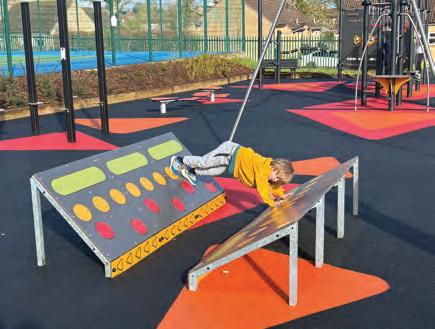
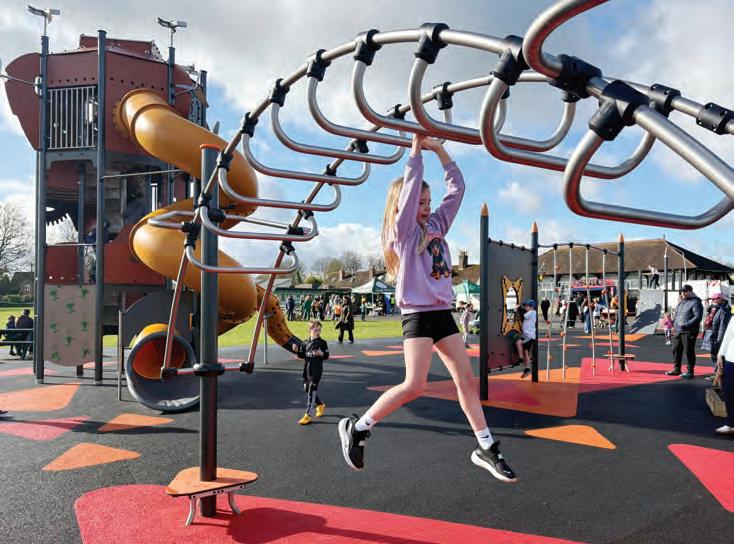
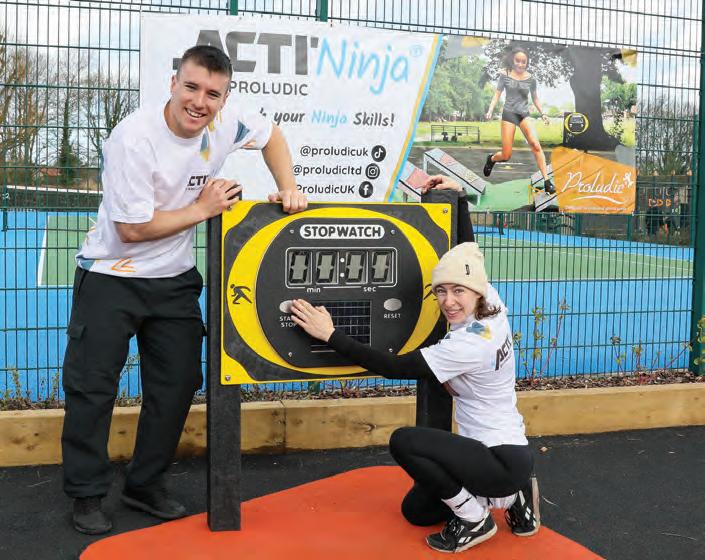
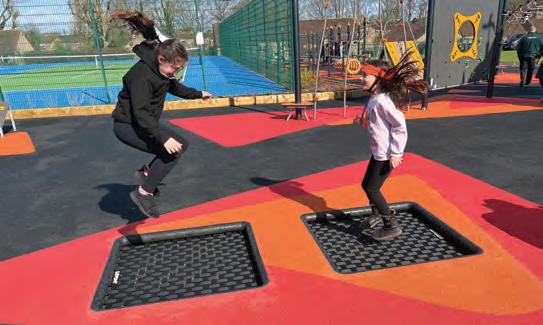
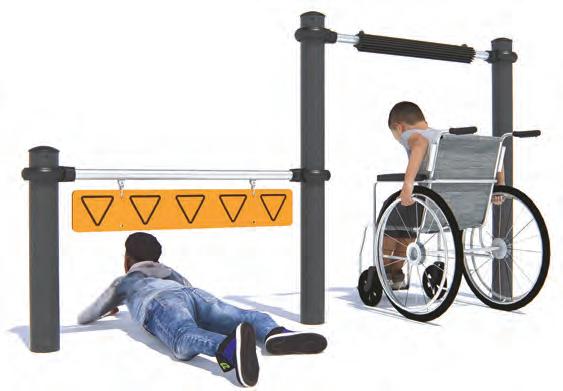
Fun-filled outdoor challenges that spark adventure, activity and test agility.
“We










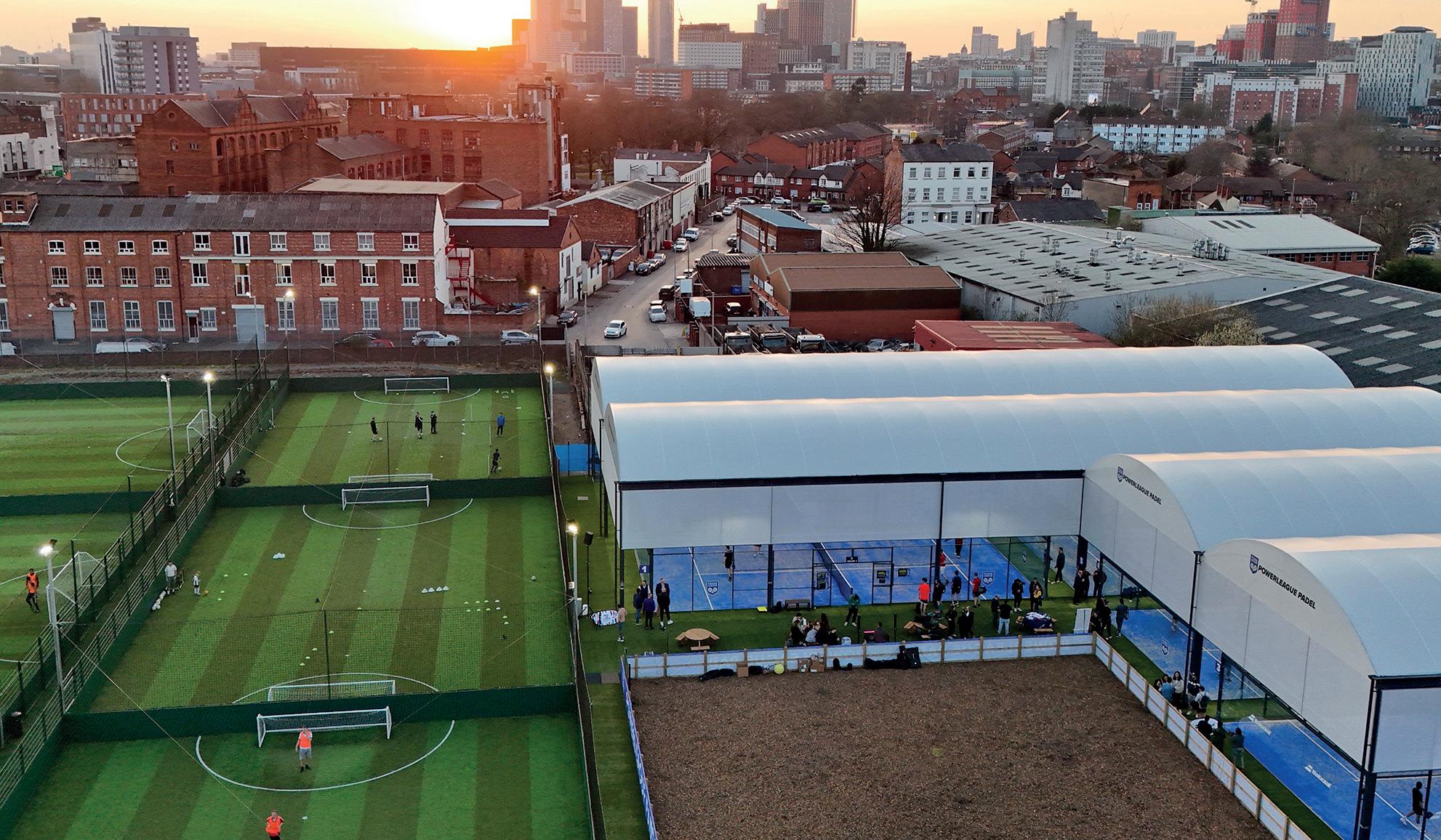
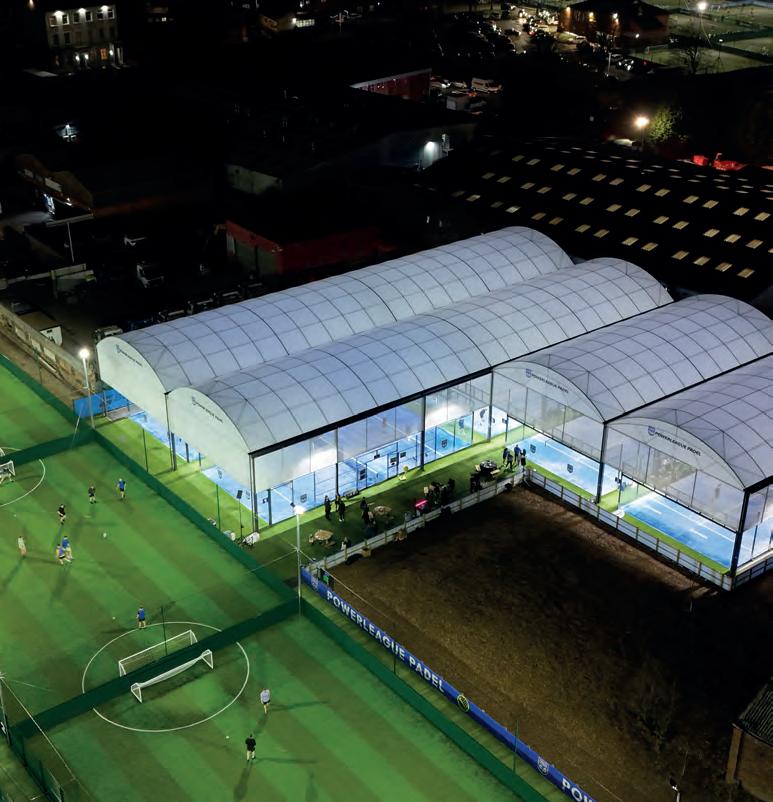
Powerleague operates 44 clubs across the UK, Ireland and the Netherlands
Powerleague Fives has secured a £22.5m refinancing package from Barclays to support the expansion of its rapidly growing padel business. Some of the funding will also be invested in its football facilities.
Powerleague – the UK’s largest operator of small-sided football venues – said it will use the funding to develop new padel courts, regenerate existing football pitches, enhance off-pitch facilities and “improve the overall player experience” at sites nationwide.
Michael Evans, CFO of Powerleague Fives, said: “We have

been working with Barclays – and specifically its hospitality and leisure team – for the past four years. They have been incredibly supportive of the business’s growth plans as Powerleague has transformed from a company emerging from a CVA into a business now facilitating more than 150,000 games every week.
“This investment will enable us to continue expanding access to grassroots sport, encouraging greater participation and supporting not only the physical but also the mental wellbeing of our customers.”
Musco Lighting has been named the Official Sport Presentation and Broadcast Lighting Provider of the LA28 Olympic and Paralympic Games and Team USA. The appointment will see Musco deliver field of play lighting, broadcast lighting and sport presentation entertainment lighting for the 2028 Games in Los Angeles.
With more than 50 years of experience in sports lighting, Musco will support one of the most technically ambitious major event environments in world sport. Its role will focus on helping create high-quality conditions for athletes, broadcasters, spectators and venue operators across the Games.
“Musco’s first involvement with lighting Olympic venues was the 1984 Games in Los Angeles,” said Jeff Rogers, CEO, Musco Lighting. “Forty-four years later, our team is enthused about the opportunity to partner with LA28 and Team USA.”
The Grounds Management Association (GMA) has announced the appointment of Jason Booth as its next CEO. He will take over from Geoff Webb, who announced he will be stepping down from the role in March 2027.
Booth has spent the past 12 years with the GMA, during which he has
held a range of senior roles and made a significant contribution to the organisation’s development.
He will formally take over the role from Webb in April 2027.
“This approach will ensure continuity and stability while supporting a smooth leadership handover,” the GMA said.
The Forest Sports Zone in Nottingham is set to undergo a significant transformation, thanks to a £1.9m investment that will modernise and enhance the community facility.
The project includes the replacement of both existing synthetic turf pitches. The current 3G pitch will receive a brand‑new playing surface, upgraded infill and improved LED lighting. The adjacent sand‑based pitch will be completely rebuilt and upgraded to a full 3G surface, providing a high‑quality, year‑round training and match environment.
This will enable improved access to high quality sports facilities for local residents, schools and community groups. It will support continued participation in physical activity and help ensure the site remains a key community asset for Nottingham. The investment
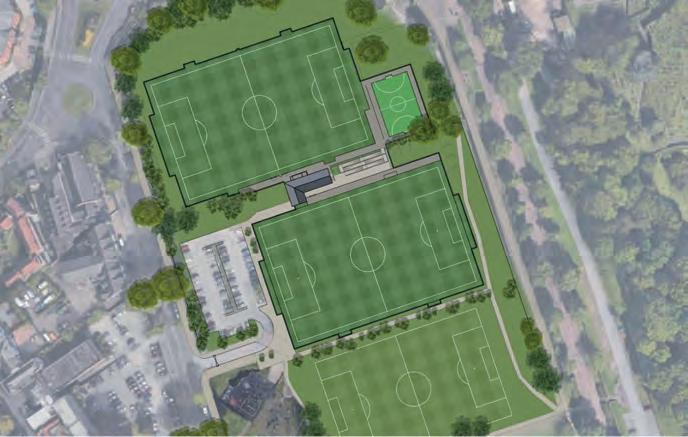
The project will see the upgrading of two synthetic playing pitches and new, improved LED lighting
is being made possible through a funding package comprising £1m from the Football Foundation, £625,000 from Nottingham Forest Community Trust and the rest from Nottingham City Council.
In addition to the pitch upgrades, the redevelopment
will also include an extension to the existing changing room building. This will feature a new two‑storey entrance, expanded office space and a dedicated community area, creating a more welcoming and functional hub for local clubs, groups and visitors.
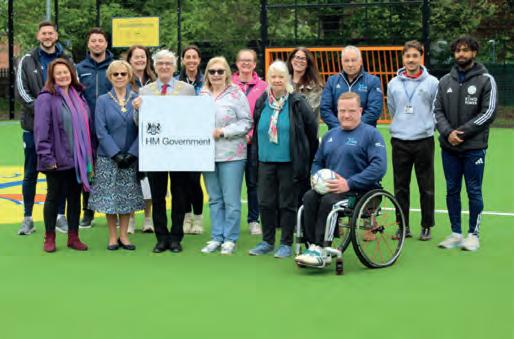
The pitch was developed in partnership by a group of partners
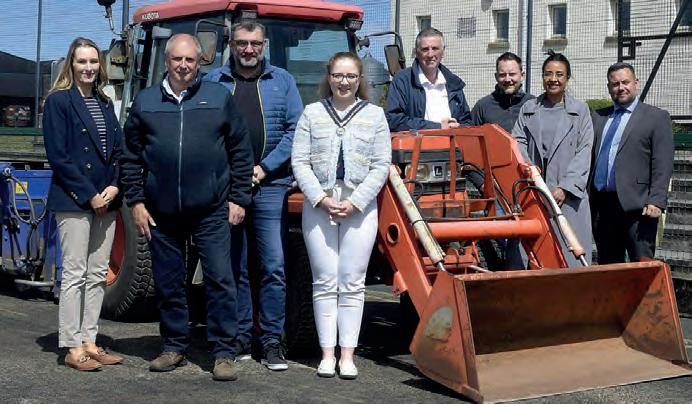
A new multi use sports pitch has officially opened at Southfields Park in Loughborough.
The Cruyff Court was developed in partnership by Charnwood Borough Council (CBC), Leicester City in the Community and the Johan Cruyff Foundation. The project has been funded through the UK Shared Prosperity Fund (UKSPF), the Johan Cruyff Foundation and through Section 106 contributions.
The pitch is free to use during the park’s opening hours and has been installed with floodlights and safety cameras. The total cost of the project was £235,000 with the UKSPF providing £100,000 in funding.
Matt Bray, Senior Community Manager at Leicester City in the Community, said: “The court delivers an important space for people to play sport.”














info@obriencontractors.co.uk www.obriencontractors.co.uk/sport





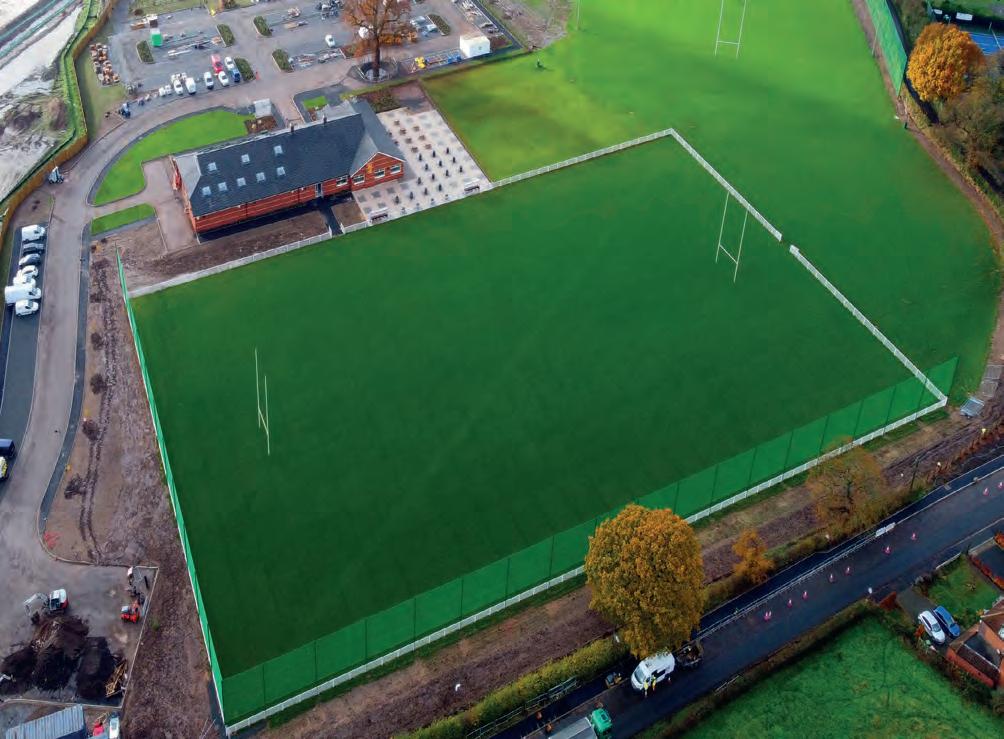

















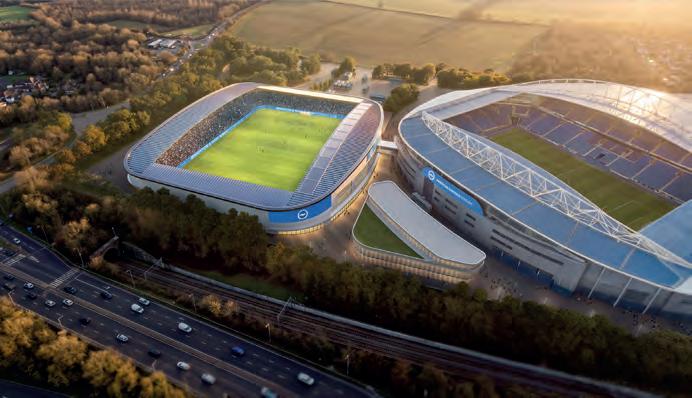
The venue will be designed around the needs of female athletes and the distinct needs and culture of the women’s game
Brighton & Hove Albion FC has announced plans to build the UK and Europe’s first purposebuilt women’s football stadium.
The design of the stadium will be based on a “built for her” approach, providing bespoke facilities for Brighton’s women’s team, its staff and the club’s supporters. It will be one of only three such stadiums in the world and is part of the club’s aim to be at the forefront of the women’s game globally.
The venue will be designed around the needs of female athletes and the distinct needs
and culture of the women’s game, rather than be an adaptation of a venue that was designed for male athletes historically and typically supported by a maledominated audience. From pitch standards and performance environments, such as changing rooms and recovery spaces, every element of the new stadium will support elite female players. Reflecting a different demographic of supporters, the matchday experience will be designed to be especially welcoming for families and first-time attendees with easy access for families.
The UK Sport and Institute Group has appointed Mike Cavendish as the new Managing Director of the UK Sports Institute (UKSI).
Cavendish has been the Performance Director of British Triathlon since 2018, overseeing sustained success across two Olympic and Paralympic Cycles, including the return of 14 Olympic and Paralympic medals. Before joining British Triathlon, Mike was the Deputy Performance Director at UK Athletics where he was responsible for the strategic delivery of the Olympic and Paralympic World Class Programmes and the operational delivery of prep camps and major competitions across successive Olympic and Paralympic cycles.
A sports scientist by trade, Cavendish has a background in physiology and a strong history of working within multidisciplinary teams. Throughout his career, he has also taken on numerous other leadership roles within the Olympic and Paralympic community in the UK.
Pairing GLP-1 therapy with regular, exercise improves long-term health outcomes, reduces downstream costs and generates positive economic returns. The findings come from a white paper, titled From Weight Loss to Lasting Value: Structured Exercise and the Economics of GLP-1 Therapy. The paper analyses research
that examined the long-term clinical and economic value of the use of structured exercise in tandem with GLP-1 treatments. Developed by FTI Consulting’s Center for Healthcare Economics and Policy, the white paper compares impacts of GLP-1 therapy as a standalone obesity treatment with GLP-1 therapy combined with exercise.
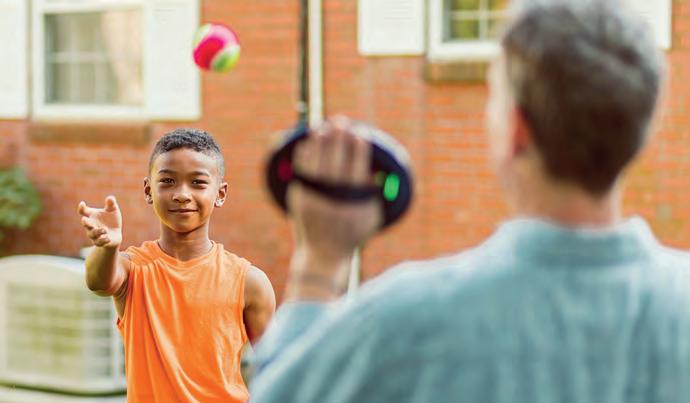
Young children are more likely to own a smartphone than be able to throw a ball, according to a new report.
New research from a think tank, the Centre for Social Justice, reveals that while a range of studies show fewer than half of English 10-year-olds meet a basic level of competence in throwing a ball, over 70 per cent now own a smartphone.
The report, Inactive Nation, warns that England is raising a generation of children where only a small minority of children are mastering the basic movement skills they need to participate confidently in sport and physical activity. Around half of the pupils in every single primary school classroom today fail to meet basic activity levels for a healthy life, the analysis revealed.
The displacement of outdoor play with screen-based activity is leading to the rise of a generation
Only a “small minority of children” are mastering the basic movement skills
of so-called “iPad kids”, who are missing out on vital physical development and contributing to ballooning obesity rates.
By Year 6, pupils are spending 3 hours a day online – the equivalent of over a month each year – according to CSJ analysis of Ofcom data.
The report highlights the “resounding” evidence of the benefits of an active childhood. Yet, over half of primary school age pupils are insufficiently active – averaging less than 60 minutes of at least moderate physical activity a day.
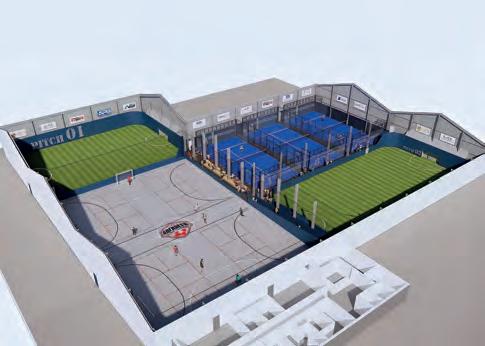
Strikers, an indoor sports centre in Aberdeen, is undergoing a £400,000 phased refurbishment programme aimed at enhancing facilities and strengthening its role as a multi-use sport and wellbeing hub. The initial phase of work has been designed to focus on Strikers’ core sporting offer and includes the introduction of a dedicated, multi-use indoor sports court. A third padel court will also be added, building on the venue’s existing provision for the sport.
David Booth, director at Strikers, said: “This £400,000 phased refurbishment is about improving the overall experience at Strikers and opening the facility up to a much wider range of sports and activities. It allows us to create a more inclusive, multisport environment for people of all ages and abilities.
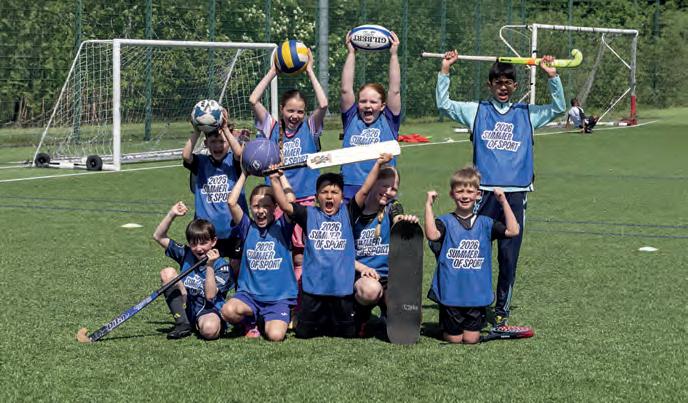
A Scotland-wide summer programme of free and low-cost sporting activities – including football, rugby, padel, swimming, cycling, athletics – has been launched.
Backed by Scottish Government investment from a £20m fund, administered by sportscotland, the Summer of Sport programme will give children and young people the chance to get active in their local communities through events and activities hosted by schools, clubs, sporting bodies and local authorities. Under the campaign theme ‘Game On’, the initiative

has been designed to harness inspiration from a landmark summer of international sport –including Glasgow’s hosting of the Commonwealth Games.
The Deputy First Minister, Jenny Gilruth, kicked off the programme at Pollok United in Nethercraigs, Glasgow, one of the organisations benefiting from Summer of Sport investment.
“This innovative programme will offer free and inclusive sporting activities for children and young people – encouraging a new generation to take part in sport and physical activity,” Gilruth said.
Sport England has appointed Nick Percy and Amy Rice to its executive leadership team. Percy has been named Executive Director for Investments, while Amy Rice has been appointed Executive Director for Resources. Percy took up his role on 11 May, while Rice started on 1 June. Percy spent the last 15 years of his career at BBC Studios, where he held a variety of senior leadership roles across commercial and strategy functions. Most recently, he served as President, Global Markets, overseeing international distribution activities across Europe, the Middle East, Australia and New Zealand, Africa and Asia. Rice joins from Seetec Group, where she was Executive Director, leading major transformation programmes in organisations including the Ministry of Justice and as CEO of St Margaret Clitherow Catholic Academy Trust. She brings more than 20 years of leadership experience across public, private and third sectors.
IAKS UK & Ireland will host a twoday conference and venue tour in Manchester this September, exploring how sports-led regeneration can create long-term social, sporting, and economic impact.
Taking place from 22-23 September 2026, the event will focus on Manchester Sportcity and the transformation of Eastlands from a derelict part of the city into one of the UK’s most significant sport and entertainment destinations.
The conference will include a day of seminars and a stadium tour at the Etihad Stadium. Delegates will also take part in guided venue tours at several facilities.









• • Manufactured with end of life synthetic grass
• • Formula meets or exceeds all football governing body standards including
• • Structured high bond strength
• • Versatile, solvent-free adhesive

















Steve Mills, General Manager, Nottingham Tennis Centre


Working with Fordingbridge was a breath of fresh air! One of the most professional, respectful, diligent contractors we’ve ever worked with.”

















Fordingbridge brings real sector expertise to the table. Their product is strong, their team is comfortable with complex national programmes, and we’ve had complete trust in them every step of the way.”




Sean McNicholas, Director of Estates & Facilities, The Bannatyne Group







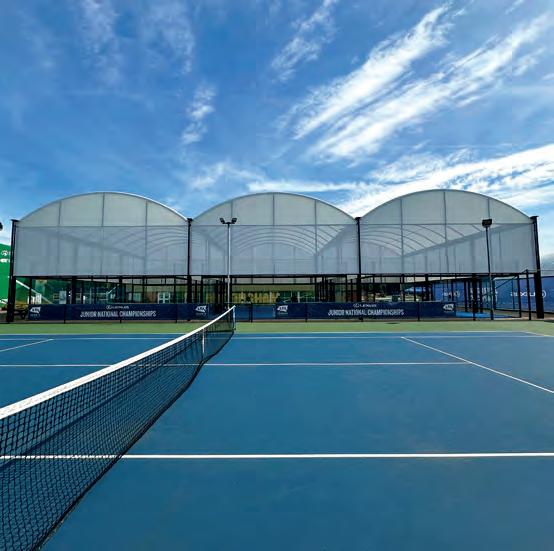
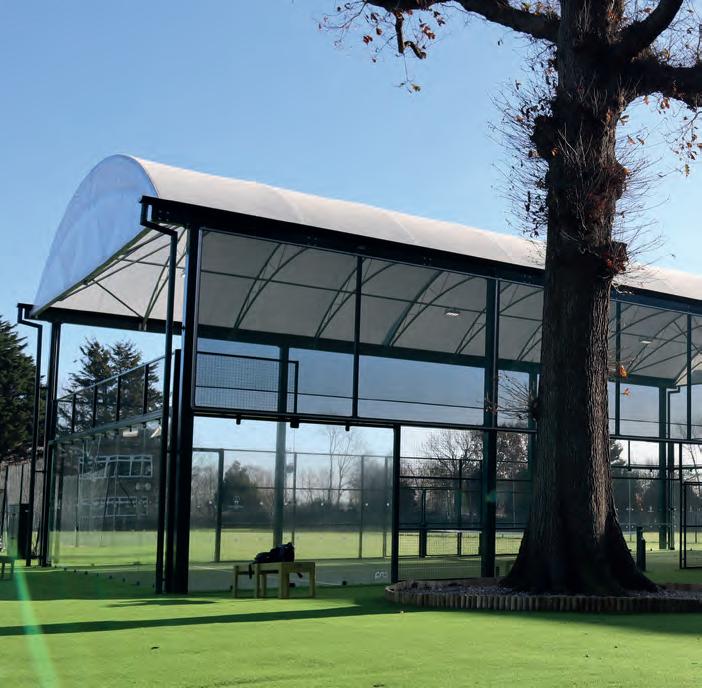
The padel court canopies Fordingbridge have designed for us have been beautiful and we’re thrilled with the finished product. The player experience is now excellent, regardless of the weather.
The team’s attention to detail and commitment to meeting our needs was impressive.”
Freya Tringham, Head of Padel, Powerleague


At every step of the development we felt assured that the advice, technical specifications and delivery of Fordingbridge’s product would be to the highest standards. The finished canopies not only look amazing but have received excellent feedback from our players.”

Carole Naunton, Director, West Worthing Tennis Club

The Sport and Physical Activity Employability Academy – the sector-specific career initiative – is being rolled out nationwide to drive employability across the country
The Sport and Physical Activity
Employability Academy is a partnership between the Department for Work and Pensions (DWP) and the Chartered Institute for the Management of Sport and Physical Activity (CIMSPA), and will now be made available across the UK following several successful pilot programmes.
Recently published figures from the government show that the number of young people not in employment, education or training (NEET) have risen above one million, and projected to rise to 1.25 million in the next 5 years. Appetite for employment however remains high, with 84% of surveyed NEET young people stating that they want to be working or in education but are currently unable to.
The Employability Academy connects jobseekers with real employment opportunities by aligning training, work experience, and employer demand. It provides a flexible, locally adaptable model that brings together education providers and industry employers to address workforce needs, provide young people with employment and training opportunities, and support economic growth.
The pilots demonstrated the impact of a sector focused approach, helping individuals
to build confidence, develop relevant skills, and secure sustainable roles within the sport and physical activity sector. With the first pilot taking place in Scotland, it saw 70% of participants becoming qualified and advancing into either a gym instructor or personal trainer role. Building on this success, the national rollout will expand access to the programme, enabling more people and employers to benefit across the country.
flexible, partnership-driven approach
Rather than a single programme, the Employability Academy operates as a framework that can be tailored to local labour market needs –and will be rolled out (and driven) by local employer demand. The iniative integrates:
Pre-employment engagement and sector insight
Sector-specific training aligned to professional standards
Work experience, job placements, and direct routes into employment
As access to employment is often influenced by wider barriers, the Employability Academy can incorporate wrap-around support tailored to individual needs. This may include health and wellbeing support such as occupational therapy, mentoring, career guidance, or even practical assistance such as travel, childcare and digital support.






This national launch marks a significant step forward in how we can support more people into meaningful careers within the sport and physical activity sector
Dame Diana Johnson DBE MP, Minister of State for Employment said:
“Our mission is to Get Britain Working – and this initiative is exactly what that looks like in action, helping people turn potential into real jobs. By bringing together employers, training and support, we’re creating clear pathways into meaningful work.
“From strong results in Scotland to new programmes in Merseyside, our partnership with CIMSPA is opening doors to rewarding careers, boosting local economies and helping to build the workforce the sport and physical activity sector needs for the future.”
The Employability Academy supports employers by reducing recruitment risk and ensuring candidates are prepared for the realities of the workplace. At the same time, it contributes to wider social and economic outcomes by tackling unemployment, supporting economic inactivity, and strengthening local workforce pipelines.
Tara Dillon, CEO of CIMSPA said: “With the UK unemployment rate rising to 5% and NEET figures for young people hitting one million, for many, finding long term economic security is a top priority. This national launch marks a significant step forward in how we can support more people into meaningful careers within the sport and physical activity sector. Through our partnership with the Department for Work and Pensions, we have demonstrated through successful pilots that when employers, education providers and employment support services are aligned, we can create clear, accessible pathways into work.
“The Employability Academy provides a scalable, flexible model that responds to local need while maintaining a consistent focus on quality and professional standards. By bringing together training, wrap-around support and real job opportunities, we are not only helping

individuals to enter the workforce, but also supporting employers to build a skilled, diverse and sustainable workforce for the future.”


The Employability Academy is designed to maximise impact as well as ensuring sustainability by drawing on a range of funding sources. These include DWP provision at both national and local levels, including Sector-based Work Academy Programmes (SWAPs). Funding will also be sourced from devolved adult education and skills funding through combined authorities, further education college provision and adult learning funding, as well local authority investment, including economic development and public health funding.


Stephanie Peacock MP, Sport Minister said: “Sport has profound benefits for young people’ mental health, building confidence and helping them be part of a community, which is why we’re investing so every person has the facilities they deserve on their doorstep.
“It is also a thriving £39 billion industry with rewarding and diverse careers that are very appealing to young people. Through this new programme we’re matching that ambition with the opportunities they deserve.
“This partnership will help break down the barriers so that young people who want to pursue a career in sport have the opportunity to do so and maximise their potential.”
Employers operating in the sport and physical activity sector can get involved by speaking to their local CIMSPA workforce development manager.
If you are a jobseeker and would be interested in a career in the sport and physical activity sector, you can find out more about the Employability Academy through your local Jobcentre Plus.
In June, ukactive launched the next phase of its Digital Futures programme, supporting organisations across the physical activity sector to develop their digital capability. Delivered in partnership with Sport England and supported by our strategic partners Gladstone, EGYM, Xn Leisure and PerfectGym, Digital Futures has become the sector’s leading digital maturity initiative since its launch in 2021.
More than 335 fitness and leisure operators, national governing bodies of sport, Active Partnerships and sector organisations have taken part to date, using the programme to better understand their digital capability, identify areas for improvement and receive recommendations to support planning and investment. We have now enhanced the programme to provide a clearer and more practical consultation experience, alongside the introduction of a new AI-supported assistant to help organisations interpret their results and understand what steps they can take next.


Whether an organisation is building its digital foundations or refining an established strategy, Digital Futures is designed to support progress at every stage
The AI-supported assistant has been developed to explore how personalised digital guidance can support decision-making in practice, helping organisations strengthen their digital capability with clearer, more tailored recommendations. Whether an organisation is building its digital foundations or refining an established strategy, Digital Futures is designed to support progress at every stage. The programme is not about prescribing a single pathway, but enabling organisations to make confident, evidence-led decisions based on their own context, priorities and level of maturity.
Digital Futures continues to evolve with the needs of the sector and this next phase is about making our support clearer, more practical and more personalised. Every organisation, regardless of size or maturity, can take meaningful steps forward, and those that participate consistently are able to build confidence, strengthen capability and make more informed decisions about the future.
Over the coming months, we will be introducing new partnerships, resources and opportunities for collaboration, ensuring organisations have access to the support, insight and expertise they need to accelerate progress.
Additionally, through design activities Digital Futures is committed to continue building robust data pathways with NHS, providing cybersecurity and responsible use of AI guidance as well strengthening the need for data standards alongside The Open Data Institute. l Get your digital maturity score here: https://digitalfutures.ukactive.com




The Culture, Media and Sport Committee has published its long-awaited Game On report, which makes a series of recommendations to the government with the aim of strengthening grassroots sport and physical activity. The report’s recommendations could, if adopted by government, represent a turning point for the sector’s future across England
The publication of the Culture, Media and Sport Committee’s Game
On: Community and School Sport report marks one of the most comprehensive recent assessments of the UK’s grassroots sport and physical activity landscape. Drawing on extensive evidence from across the sector, it delivers a clear message: demand for sport is strong, but the system underpinning it is fragmented, underfunded and too often overlooked in national policy.
The inquiry itself was wide-ranging. MPs gathered written and oral evidence from governing bodies, charities, operators, academics and delivery organisations, alongside local partnerships and community groups. Submissions came from organisations including national bodies, grassroots networks and advocacy groups, reflecting a sector rich in expertise but facing shared structural challenges.
The result is a report grounded in realworld experience—one that captures both the strengths of the system, such as committed volunteers and successful local initiatives, and its persistent weaknesses: ageing facilities, financial pressures, and a lack of strategic coordination.

A system under strain
At the heart of the Committee’s conclusions is a stark assessment: community and school sport in England is delivering in spite of the system, not because of it. The report identifies a “mixed picture”, with strong participation demand and local innovation offset by long-term underinvestment and policy inconsistency. Facilities are unevenly distributed and often outdated, schools face competing curriculum pressures, and delivery is fragmented across national and local bodies.
Perhaps most critically, the Committee highlights the absence of a coherent national approach. Responsibility for physical activity is spread across
multiple departments – health, education, culture and transport – without a unifying strategy or clear accountability. The result is a system that struggles to scale success or address inequalities effectively.
Against this backdrop, the Committee sets out a wide-ranging package of recommendations aimed at fundamentally reshaping how sport and physical activity are delivered. The centrepiece recommendation is the creation of a crossgovernment “Movement for Health” strategy for physical activity, positioning it as a key driver of health, wellbeing and economic productivity. This would bring together departments under a shared
framework, aligning policy on education, planning, transport and healthcare. Crucially, it would also establish clearer leadership and accountability – something the sector has long called for.
One of the most eye-catching proposals is a call to significantly increase public investment in sport and recreation by nearly £4bn over the next decade. The Committee argues this would bring the UK closer to international comparators and reflects the strong return on investment associated with physical activity, from reduced NHS costs to improved productivity. It also calls for a move away from short-term funding pots towards multi-year settlements, enabling long-term planning and delivery.
Facilities are a central theme throughout the report, with MPs highlighting the ageing stock and uneven distribution of provision across the country. The Committee recommends the development of a national facilities strategy, underpinned by better data on condition, access and need. Investment should be targeted at underserved communities, where the gap between demand and provision is most acute. This has clear implications for the construction and supply chain, with a renewed focus on quality, sustainability and long-term asset management.
Beyond formal facilities, the report also focuses on access to informal spaces for activity.
Recommendations include removing unnecessary “No Ball Games” signage and making better use of public spaces to encourage everyday physical activity. The planning system is also highlighted as a key lever, with support for maintaining protections for sport within development decisions.
The report is equally forthright on the state of physical education in schools. It calls for renewed prioritisation of PE within the curriculum, supported by improved teacher training and a broader, more inclusive offer. Barriers to participation, particularly for girls and less active pupils, are singled out, including restrictive kit policies and limited activity choice. The Committee also stresses the importance of stronger links between schools and community clubs to create lifelong participation pathways.
A consistent thread running through the report is the need to address disparities in participation.
The Committee urges targeted interventions for underrepresented groups, including disabled people, women and girls, and those in deprived communities. Evidence submitted to the inquiry highlights that the greatest health and economic gains come from engaging the least active, reinforcing the importance of inclusive design and delivery.

Finally, the Committee calls for improved coordination across the sector. This includes rebuilding local partnerships, reducing duplication, and better aligning national governing bodies, local authorities and delivery organisations. Volunteers – described as the backbone of community sport –should also be better supported through reduced administrative burdens and clearer pathways.
Responses from across the industry suggest strong alignment with the Committee’s findings. Organisations have broadly welcomed the emphasis on long-term investment, crossgovernment coordination and facility development. There is also clear support for recognising physical activity as a driver of wider policy outcomes, from health to economic growth. However, the report also raises expectations. For many in the sector, the recommendations
reflect long-standing priorities. The challenge now lies in translating them into policy and funding commitments.
For operators, local authorities and the supply chain, the Game On report provides both validation and opportunity. It validates the sector’s longstanding case for investment, strategic alignment and recognition of sport’s wider value. At the same time, it points towards a future in which delivery is more coordinated, outcomes-driven and embedded within broader public policy.
As with all Select Committee reports, the Game On report does not in itself create policy. Instead, it sets out recommendations to which
the Government must formally respond. The Government typically has two months to issue its response, outlining which recommendations it accepts and how it intends to act. The report may also be scheduled for debate in Parliament, where MPs can scrutinise its findings and press ministers on next steps, with scheduling listed via the UKParliament’s “What’s On” system.
In parallel, the report is likely to influence ongoing policy development across government departments, particularly as physical activity is becoming increasingly linked to the UK’s health and economic agendas.
The question now is not whether the sector has been heard – but whether the government will match that insight with action.
Richard Shaw CEO, SAPCA
Among the recommendations made in the wide-ranging Game On report is for the UK government to double its investment in sport and physical activity, in order to gain the full benefits of a physically active nation. The report also identifies the importance of modern, sustainable and well-designed sports facilities and the impact they have on getting the nation active. It is a timely and welcome intervention that recognises the fundamental role high-quality facilities play in getting more people

active. As the UK’s trade body for sports and play construction, SAPCA strongly supports the call for a long-term, cross-government strategy backed by sustained investment and clear accountability. In particular, the recommendation to increase Government investment in sport and recreation by nearly £4 billion over the next decade is a significant and positive step. Bringing the UK closer to international benchmarks would not only address ageing infrastructure, but also unlock substantial returns in public health, community wellbeing and economic growth.
We are also encouraged by the recognition of the planning system’s importance, including the call to maintain Sport England’s role as a statutory consultee. This is vital to ensuring that sport and physical activity are properly embedded and protected in development decisions. Delivering accessible, durable and high-quality facilities requires expertise, standards and collaboration across the sector. SAPCA and its members stand ready to support Government and partners in turning these recommendations into lasting, impactful change on the ground.
Lisa Wainwright MBE CEO, Sport and Recreation Alliance
We contributed both written and oral evidence to the inquiry last year and thank the Committee for its work in producing this comprehensive report. It is encouraging to see many of our recommendations reflected in its findings. Our research shows the UK is currently lagging behind comparable nations on activity levels, with important implications for public health and the economy. This report therefore provides a valuable foundation for progress. We particularly welcome the explicit

recommendation to maintain Sport England’s statutory consultee rolesomething we have campaigned hard for over the last year - and the calls to maintain investment in PE and school sport and assess the impact of rising business rates on sport.
We stand ready to work with the Government, our National Governing Bodies and our wider members and partners to ensure these recommendations are taken forward given the important role they will play in tackling inactivity, easing pressure on public services, and unlocking the wider social and economic benefits of sport and recreation.




















































Sarah Brown-Fraser Head of Communications and Policy, Activity Alliance
The report rightly points out that people are held back by the way the system works, not by personal choice or ability. Uneven provision, unstable funding and inaccessible facilities all add up. Hearing this acknowledged is reassuring.
The Committee’s call for a cross-government “Movement for Health” strategy is especially important. It gives us the opportunity to embed accessibility and inclusion from the outset. Disabled people are more likely to be inactive, not through lack of desire, but because systems are not designed with them in mind. A coordinated approach across sport, health, education, transport and planning is essential if this gap is to be closed rather than continually managed around.
We strongly support the Committee’s focus on schools and teacher training. The decline in PE curriculum time, alongside inconsistent training in inclusive practice, is contributing to negative early experiences of activity for disabled children and beyond their school years. This must be addressed through improved teacher training and resources like the inclusive education hub are vital. With secure funding, inclusive design and disabled people involved throughout, the Game On recommendations offer a real chance to ensure that everyone feels like they belong in sports and activities.

These recommendations could have a huge impact, especially for women and girls
Hilborne CEO,Women
Women in Sport welcomes the vision and ambition shown in this report. If taken up in full, these recommendations could have a huge impact on sport and physical activity in England, especially for women and girls.
We are thrilled to see the Committee recognise the value of Big Sister, our partnership with Places Leisure which supports teenage girls to stay active at a time in their lives when so many fall out of love with sport. We know that Big Sister works and the recommendation in the report that the Government should provide funding and support for it is a vindication of that. Our door is always open should the Government wish to have that conversation.
More money for sport and physical activity would of course be welcome. And while we recognise that this is unlikely to happen in the immediate future, the report is correct to make the point that more money spent on sport now would lead to a cost saving for the wider Government budget, and especially the NHS, in the future. Support for local authorities would also be a positive step. We know that women and girls are disproportionately likely to make use of their local leisure centres and that any closures or reduction in services would affect them more. We welcome the recommendation to require local authorities to provide sport and leisure, but this cannot happen without proper support from central government.
We have long argued that there must be much better crossdepartment cooperation in Westminster to maximise the potential benefits of sport to women and girls – and indeed the whole of society. We have seen good examples of this in practice having a real impact in specific policy areas; for example, the cooperative work between the Department for Culture, Media and Sport and the Department for Education on school sport. But it must go further than this and in particular, given the huge potential benefits to the NHS, the Department for Health and Social Care should be more involved in sport and physical activity policy. It is noteworthy that the Government doesn’t currently have an overall strategy for sport and physical activity. We agree that they should.




































































































The report’s recommendation for a comprehensive cross-Government strategy represents a vital step
The Game On inquiry report underscores the importance of physical activity for people at all stages of life. Investing in community sport and physical activity achieves significant social and economic returns, from increased productivity to mental and physical wellbeing improvements.
In our written submission and during our oral evidence last June, we highlighted the need for

Government to support health and fitness facilities properly to maximise the benefits of physical activity in reducing pressure on the NHS and supporting economic growth. We are pleased to see the Committee recognise many of ukactive’s arguments and adopt our recommendation to use existing Government funding strategically to unlock greater private investment streams. This will be crucial in protecting and enhancing the provision of physical
activity for children to ensure their wellbeing now and into the future. There remains a clear need for a broader and deeper understanding of the importance of physical activity in delivering the Government’s missions across educational, workplace and healthcare settings.
The report’s recommendation for a comprehensive cross-Government strategy represents a vital step and we will continue to work with the Government to ensure the role of our sector is recognised fully.
Helen Rowbotham CEO, Access Sport
We’re proud to see Access Sport’s evidence submission recognised alongside many of our partners across the sector. It’s no surprise that the report highlights persistent inequalities in access to community sport. Where you grow up, your income, and whether you have a disability still shape your opportunity to participate. What stands out is that while the challenges are well documentedunderfunded facilities, pressure on grassroots clubs, and fragmented support - the solutions are already being demonstrated at a local level.

what the report calls for: working directly with disadvantaged and disabled young people, supporting community clubs and organisations, and breaking down barriers to participation. So the question is: if we know what works, why aren’t we scaling it?
Sport isn’t just about activity - it shapes health, life chances, community engagement and a sense of belonging.
Addressing unequal access isn’t a “nice to have”, it’s fundamental.
Organisations like Access Sport are doing exactly
The opportunity now is to turn intent into action. We stand ready to work with national and local partners to scale what works and close the gap between policy and practice - because the cost of inaction is continued inequality, and that is no longer acceptable.





The FA has published its first progress report on its Inspiring Positive Change Through Football strategy for 2024-2028. Covering the strategy’s first full year, it shows how the game is thriving, but challenges remain on participation and inclusion
The Football Association (FA) has reported strong early progress for the first year of its 2024-2028 strategy, Inspiring Positive Change Through Football. The report, covering the 2024-25 season, highlights major advances in grassroots infrastructure, women and girls’ football and commercial revenues, while acknowledging that significant work remains to tackle discrimination, improve access and sustain participation growth across all communities.
The governing body’s report marks the first formal assessment of its four-year strategy, which is built around four priorities: winning tournaments, creating a game free from discrimination, providing equal opportunities for women and girls, and transforming England’s pitch landscape.
Among the clearest successes identified by the FA is its progress on facilities. The organisation reported that it exceeded its target for “quality grass pitches” during the first year of the strategy, with more than 9,600 pitches that meet the FA quality standards now available nationwide, surpassing its target of 8,840. According to the FA, this capacity supports up to 18,000 additional grassroots matches each week. Meanwhile, the number of 3G pitches (of all sizes) that either received upgrades – from resurface
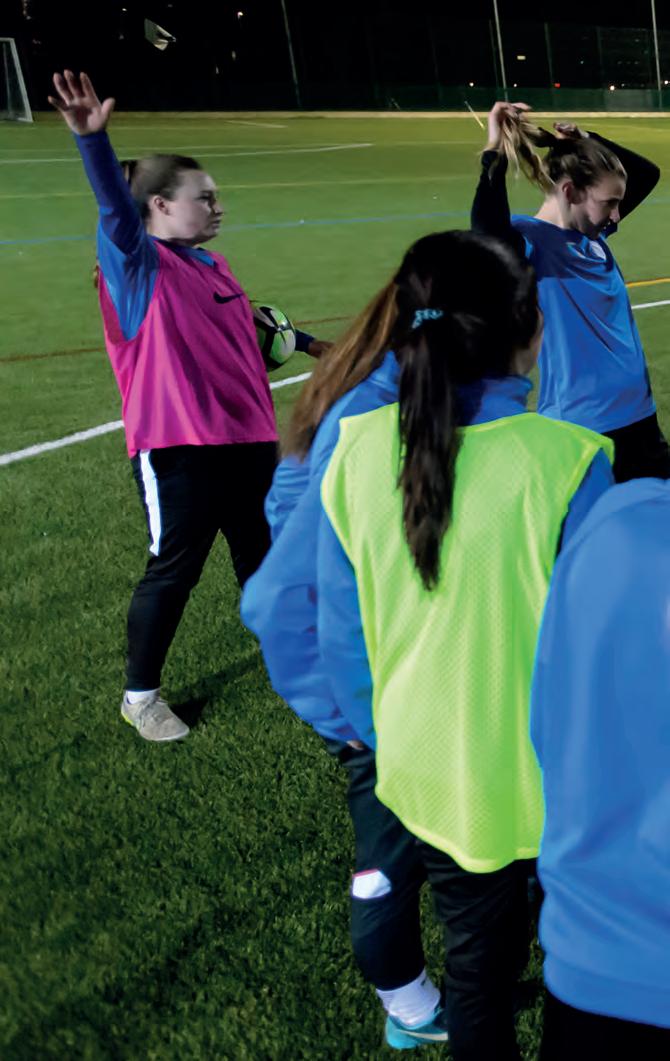
projects and new goalposts to lighting – or were new installations stood at 1,900, enabling “around 50,000 grassroots matches every week”.
The report also points to continued Government support, with £82 million allocated to the Football Foundation for 2025-26. For a governing body that has repeatedly identified poor facilities as one of the biggest barriers to participation and retention, the scale of infrastructure delivery represents a significant early milestone.
The FA’s Reaching Higher strategy for women and girls also appears to be generating momentum. Between 2023 and 2025, the number of female teams increased by 14.3%, while the Barclays
The FA’s own figures shows that girls’ football participation has more than doubled since 2020-21
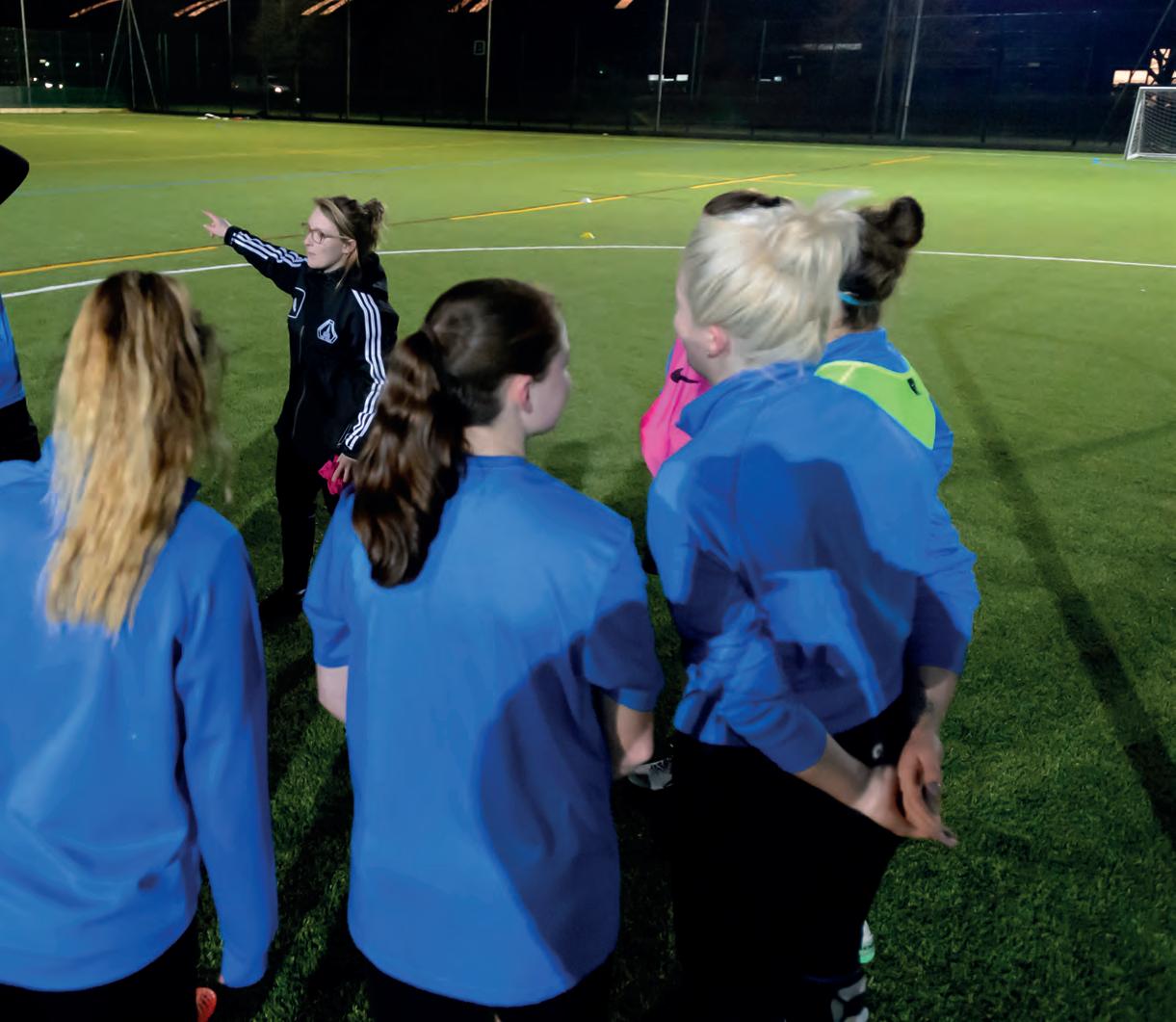
Girls’ Football School Partnership now reaches more than 90% of schools, providing equal football access through PE lessons to 2.6 million girls. The FA also completed applications for its Lioness Futures Fund programme, which will see 35 new 3G pitches and female-friendly facilities being delivered across England. As the fund has concluded its grant cycle, it has been succeeded by the Lionesses HERe to Play Fund. This active followup programme provides smaller grassroots grants (ranging from £1,500 to £25,000) to help local clubs create brand-new female teams or upgrade existing local structures to be female-inclusive.
Participation data from outside the annual report supports the view that the women’s game is growing. Sport England data shows that women’s football participation has risen
substantially over the past decade, while the FA’s own figures shows that girls’ football participation has more than doubled since 2020-21.
The continued success of the Lionesses has undoubtedly helped. The report highlights England’s successful defence of the UEFA Women’s EURO title in 2025, alongside growing commercial interest in the women’s game. As an example of the latter, the FA said it had secured its first stand-alone, threeseason broadcast deal for the Women’s FA Cup.
“The deal ensures that matches from each round of the Women’s FA Cup are being shown live on TNT Sports and Channel 4,” the FA said.
“This new partnership delivers a significant uplift in the number of guaranteed live matches, from three to 19, showing the impressive growth and appeal of the competition.”
Financially, the FA remains in a strong position.
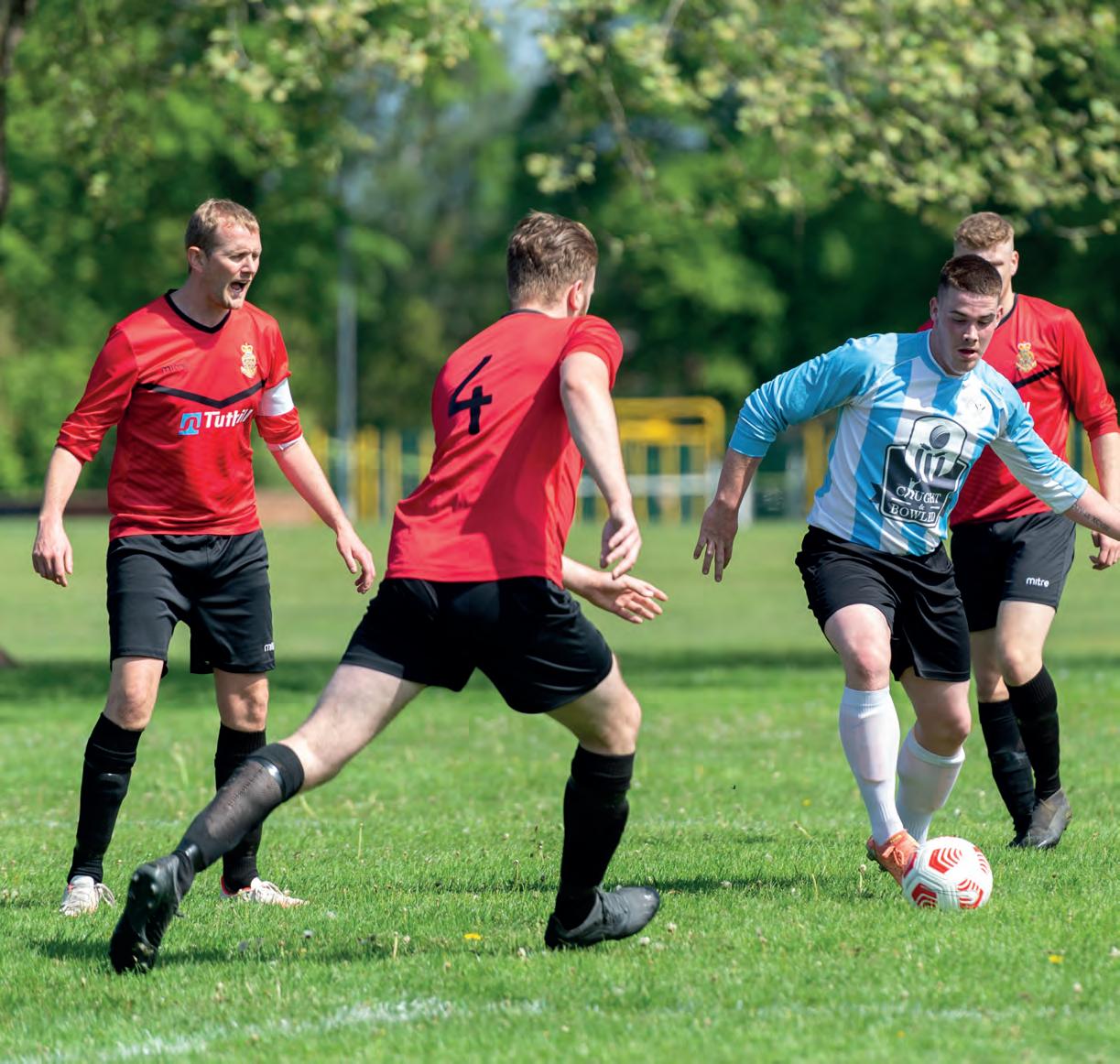
Although turnover fell from £551 million to £516 million, largely because of anticipated changes to broadcast revenues, the organisation still generated an operating profit of £6 million and reinvested £158 million back into football during the year. The FA says this represents a £12 million increase in investment compared with the previous season. Record sponsorship levels, long-term broadcast agreements and continued success at Wembley Stadium have given the governing body confidence that it can continue funding its strategic priorities over the remainder of the cycle.
Perhaps the clearest area where the FA recognises more work is required is discrimination and representation. The annual report highlights the launch of a new Equality, Diversity and Inclusion strategy and the introduction of mandatory diversity reporting across professional football.
However, the need for these measures reflects the continuing challenges facing the game.
Discrimination incidents, under-representation in leadership positions and unequal participation rates among some ethnic and socio-economic groups remain issues that the governing body has committed to addressing during the remainder of the strategy period.
“We hosted the inaugural Pan Football EDI Leadership Summit, which brought together
leaders from across English football to help enhance representation, foster inclusion and challenge discrimination in our game,” The FA said. “We also introduced an important landmark new rule to bring in mandatory diversity reporting across English professional football to help drive positive change in representation.”
The FA’s first progress report presents a largely positive picture. Infrastructure targets have been exceeded, women’s and girls’ football continues to expand, major tournament success has strengthened the profile of the game and commercial performance remains robust enough to support significant reinvestment.
Yet the report also highlights the scale of the task ahead. Participation inequalities persist and the ambition of creating a truly inclusive game remains a long-term challenge rather than a completed objective.
FA Chief Executive, Mark Bullingham, said: “We have already made strong progress across many of our key targets outlined in the strategy. To support our goals, we reinvested £158 million across all levels of the game this year – a £12 million increase on the previous season.
“The pinnacle of the year was the Lionesses historic achievement of winning their second consecutive UEFA Women’s EURO, ending our year with another major trophy.
To support its goals, the FA reinvested £158 million across all levels of the game this year – a £12 million increase on the previous season
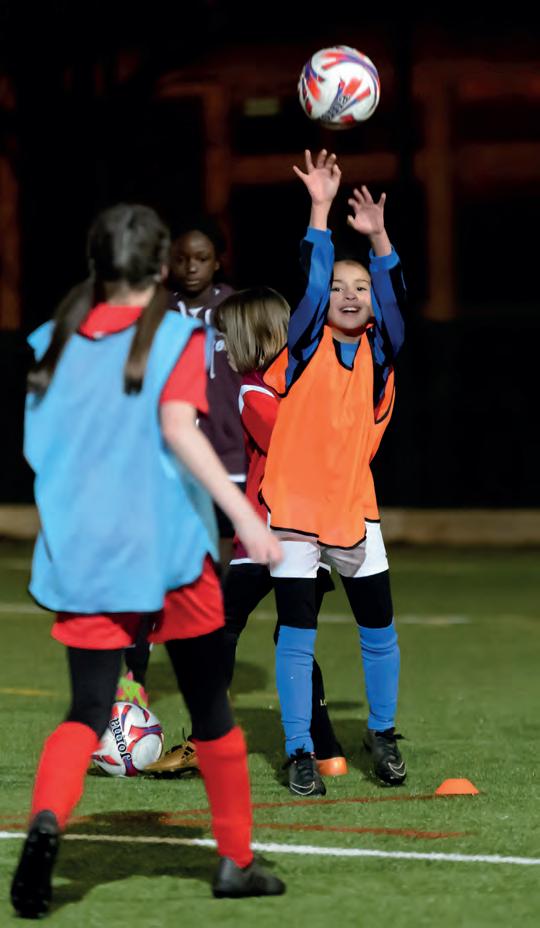
“Our strong commercial performance in broadcast and sponsorship, combined with our continued success from events at Wembley Stadium, allows us to invest in our key priorities and infrastructure. Work is already underway to enhance and develop St. George’s Park to ensure it remains a world-class home for England teams and coach development, and we are taking important steps to modernise our digital programmes to improve fan engagement and strengthen the way we serve our game.
“Our achievements and financial performance outlined in this report highlight the strong position of our organisation and of English football as a whole. We are proud of the progress we’ve made across the 2024-25 season, and we remain focused on delivering even greater results in the years ahead.”
For the FA, the first year of the strategy has delivered encouraging progress. The more difficult test will be whether those gains can be sustained and shared more evenly across every part of English football by 2028.



SAPCA has launched its new three-year strategy which sets out a roadmap to ensure the association leads the conversation on safe, high-quality and sustainable sports and play facilities. SportsNation sat down with the association’s leadership team to find out more about the document and the association’s future plans
As the trade association and professional standards body for the UK’s sports and play construction sector, SAPCA (The Sports and Play Construction Association), sits at the intersection of sport, construction, facilities and physical activity. It represents the companies that design, build, maintain and supply the UK’s physical activity and play facilities, everything from playgrounds and MUGAs to artificial turf pitches, athletics tracks, tennis and padel courts, to major sporting venues.
A membership organisation, SAPCA brings together more than 280 contractors, manufacturers, consultants, testing laboratories and specialist suppliers. Members are independently vetted and must meet strict criteria relating to technical competence, financial stability and professional conduct.
SAPCA also develops technical guidance, publishes industry standards, provides training and education, works with governing bodies and funding organisations, and acts as an independent voice on issues affecting sports facilities and play infrastructure. It also operates inspection and quality assurance programmes designed to ensure facilities are built and maintained to recognised
standards. SAPCA’s role as a standard bearer for the industry is guided by its Quality System. At the heart of this sit the SAPCA Codes of Practice (CoP), which summarise the current requirements of installation and maintenance across a range of sports surfaces and associated equipment.
The growing number of CoPs currently stands at 11, covering a wide range of facility types and projects – from the construction of padel courts, synthetic sports pitches and athletics tracks to the fitting of sports lighting and the design and testing of bases for outdoor synthetic sport areas.
When creating the CoPs, SAPCA works closely with the relevant governing bodies of sports and any other relevant organisations. The aim is simple: to provide guidance that ensures that sports and play facility projects are completed competently and safely from the ground up.
Crucially, each member is required to comply with the SAPCA Codes of Practice and quality assurance processes. This means that, for those looking to fund, build and develop sports or play facilities, this acts as an added guarantee.
By using a SAPCA member, those developing facilities and venues can ensure that their sports and play projects will be built according to the latest industry standards.
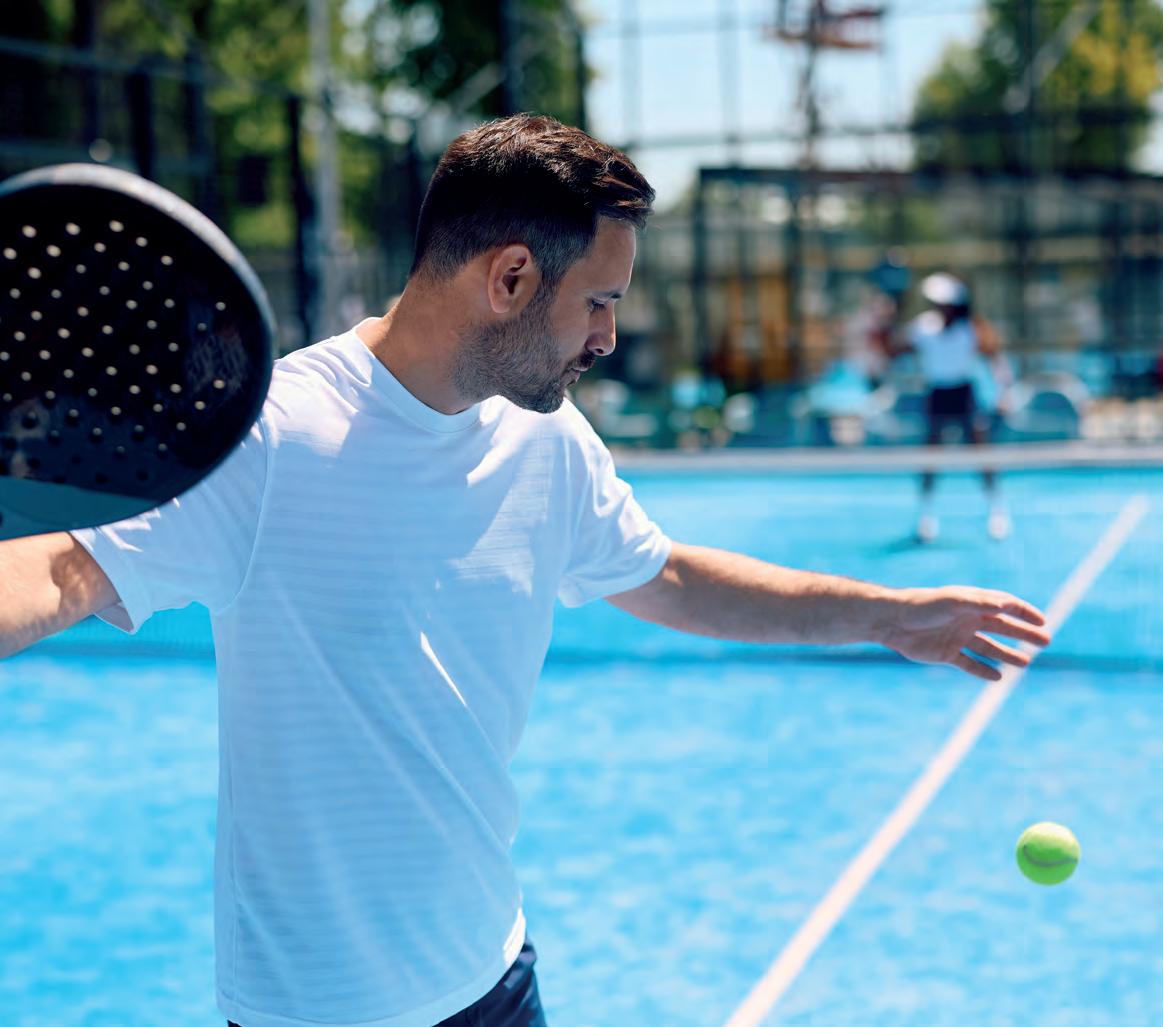
The industry is changing rapidly and the association and its members shouldn’t be bound by what has been done in the past. Rather, it should be directed by what the future demands
In February this year, SAPCA revealed its new three-year strategy. The plan represents the next phase in the organisation’s development and aims to build on the foundations established since its launch in 1997.
At the heart of the strategy is the aim for SAPCA to lead the wider conversation on sports and play facilities and to drive forward the agenda towards safe, high-quality and sustainable venues. This overarching vision is based on four guiding principles, which range from emphasising the collective strength of the SAPCA membership, and reinforcing its commitment to maintaining high industry standards to leading on key issues affecting the sector.
The strategy also recognises that the industry is changing rapidly and the association and its
members shouldn’t be bound by what has been done in the past. Rather, it should be directed by what the future demands. The best example of this is, perhaps, the rapid growth of the padel sector and the way SAPCA and its members have reacted by creating the industry standards for courts.
Together, the four principles will continue to position SAPCA as the trusted, independent voice for the UK sport and play construction sector, while ensuring the association continues to champion quality, innovation and collaboration across the industry.
SportsNation sat down with SAPCA’s leadership team to find out about the new strategy, the association’s direction of travel and also their views on the wider sports and play construction sector – including the padel boom and the challenges and opportunities it presents.
Dr. Kathryn Severn CHAIR, SAPCA
Could you describe the main points of SAPCA’s new three-year strategy, launched earlier this year?

The new three-year strategy aims to build on the previous strategy and define how we will lead the wider conversation on sport and play. The strategy is based on four guiding principles. The first one is to recognise that we are more than the sum of our parts. Our strength lies in our collective impact — the knowledge, experience, and credibility of our members working together.
Second, we are a self-regulating professional body. We have always held high standards, but this is about leading on industry issues with authority.
Third, we want to move from custodians to leaders. Our industry is evolving rapidly and new technologies and new sports are changing expectations. We need to be proactive, ready to recognise both problems and opportunities and act decisively.
Finally, the fourth guiding principle highlights that we are owned by our members. This has always been our foundation and that won’t change, but now we’re making it even more meaningful. We will build transparency and accountability into everything we do.
How were the four guiding principles identified and agreed on?
The previous three-year strategy, launched in February 2022, reflected an organisation that needed internal change – with a desire for these changes to be seen in the wider market. We have achieved that and, moving forward, we now have the internal infrastructure to be bolder, push further and do more for our members.
The four guiding principles were identified to build on the previous strategy, but with a focus on our role in the “wider world”. We want to play a more active role in driving the agenda of sport and play forward, while not forgetting the things that we have got right.
SAPCA will act as a coherent, independent voice for the industry – one that shapes rather than reacts
One of the principles is to shift the association’s mindset from custodianship to leadership. What does that mean in practice?
Because our industry is evolving rapidly, we can’t be bound by what’s been done in the past – we must be directed by what the future demands. SAPCA will act as a coherent, independent voice for the industry – one that shapes rather than reacts.
We aim to put in place work streams that respond to challenges within the industry – through the launch of leadership courses, linking to education and also through our Women in SAPCA networking group. In addition, we want to position SAPCA as the association for the play construction industry. We also want to see facility operator-led working groups when we create codes of practice, to ensure we include the end-user voice within them.
The purpose is to be able to speak with authority about the size of our industry, the impact that we make to the nation and the return on investment of money spent within the industry.
The strategy also calls for SAPCA to utilise its collective strength to influence decisionmakers. How do you look to implement this?
We will use this strength to influence the wider agenda of sport and play — engaging more closely with purchasers, showing them the true value of the SAPCA badge, and deepening our partnerships with governing bodies who can rely on us as a key strategic partner. We will proactively approach companies who we deem to be desirable to have within SAPCA and work with NGB’s at a strategic level as a partner in their development plans. The aim to be the go-to voice for sports and play construction, regularly quoted and commented upon by national media and consulted and engaged with national government.
The one-day conference will take place on Friday 9 October 2026 at The Slate, University of Warwick. The night before, on Thursday 8 October 2026, the same venue will also host the rst ever National Play Awards.
The conference will provide a unique national forum for everyone involved in creating, enabling and advocating for play, from designers, playworkers, contractors, manufacturers and local authorities to educators, playground operators and policymakers. Through a carefully curated programme of keynote addresses, panel debates and practical learning sessions, the event will explore the most pressing issues shaping play today and into the future.
Delegates will hear from an in uential speaker line-up, which includes policymakers, sector specialists from a range of industries and innovators connected to play.
For anyone working in, or alongside, the UK play sector, the National Play Conference will be an essential date in the diary.


https://sapca.org.uk/events/national-play-conference/
Richard Shaw CEO, SAPCA
How would you describe the past four years for SAPCA, since you were appointed CEO in June 2022?

I think the first two years of my time at SAPCA was a time of making sure there weren’t any holes in the ship, followed by the last two in setting a new course for it. The fundamentals of SAPCA will never change, it’s an amazing organisation whose influence is of great benefit to its members, the industry and the country. We need to, however, consistently challenge ourselves to ensure we use this influence. The new strategy is to do exactly that – to keep driving forward change without compromising what makes SAPCA great.
What are the biggest changes the association has undergone in the past four years?
I think the perception was that SAPCA was an old boys’ network for contractors. From what I have seen, this was never actually true, but people’s perception is their reality – and in order to overcome those views we’ve become more inclusive, more welcoming to new members and also become more transparent. If you have nothing to hide, then hide nothing, so I think the association is now more open. This makes relationships with our wider sector partners – such as the NGBs – easier, as there is now a clear criteria for membership and clear processes in place.
SAPCA has grown significantly in the past four years. What do you put that success down to?
The vast majority of members want to join SAPCA as a quality mark – and then they find out all of the work we do “behind the badge”, to ensure that the badge stands for quality. Although we have grown 40% when compared with four years ago, it is important to contrast that with our rejection rate, which is currently about 80/90% of applications. So we only let in a small percentage – around one in 10 – of those who apply. This is entirely due to the standards we have set.
Young people are increasingly spending less time in pubs and see sport and leisure as their ‘third space’
At the same time it would also be wrong to not point out how the market conditions, which mean more money is being invested in sports, both old and new (like padel), has helped. We sit at an interesting time for how people spend their leisure time. Young people are increasingly spending less time in pubs and see sport and leisure as their ‘third space’. This is a fantastic opportunity for SAPCA to play a huge part in ensuring our members are able to provide for the demand.
When it comes to padel, how has SAPCA reacted to the boom?
In reflection I think we weren’t really geared up well for padel as it is fundamentally different in its set up than other sports we deal with. While we did the things that have worked well in other sectors such as Codes of Practice, the investment in padel comes from the private market rather than our initial expectation that it would be tennis club-led. This has meant SAPCA dealing with operators and investors far more than we would in other sports, which adhere more to the guidance of NGBs and other sector organisations. We have had to make the case for quality and our Codes of Practice in terms of return on investment, rather than simply on facility quality. We have a lot of work still to do in padel and there is much being built that we are concerned about but the market is maturing and we need to continue to make the case for good practice being adopted.
While most applicants come for the quality badge, they stay for the information, networking, events and updates. What I think they don’t often see are the harder parts to talk about.

Our members directory on the website is an easy to use guide for clubs/operators and developers to use to get details of companies that they can trust. This gets a lot of hits and we know we drive business to our members through this.
Our dispute resolution system ensures that unhappy customers can get an opinion on issues they believe they have. We are able to advise on issues and are able to stop many issues at source through advice and mediation.
We also increasingly engage with sporting bodies to set standards external to SAPCA. A recent example of good has been the work we have done with Sport England on end of life turf where we engage with DEFRA, environment agencies and governing bodies to represent the views of our members and the wider sector.
What is the process for companies wanting to join SAPCA – what are the requirements?
The process for membership is an initial form, which can be accessed via our website. Following this there is an informal conversation followed by a number of forms to be completed.
From these forms and the information provided, we check companies house, credit checks, director
checks and compliance alongside ensuring all of the SAPCA criteria is satisfactory. Once that is done, we organise a visit to see the company in person, alongside assessing projects that the company has been involved in. The nature of the visits depend on the membership category applied for. At the same time we take references from previous clients and ask for SAPCA members that have worked with the applicant for their views.
Once we are satisfied with all of that, we send out a message to all existing SAPCA members for comments. The last stage is for the SAPCA Board to assess the application for final approval. and following that to the Board for their approval.
Throughout the process there is a back and forth as questions arrive to ensure that the Board are informed as possible in making their decision.
To demonstrate leadership around a number of issues within the industry and show that SAPCA and its members can self-regulate, are responsive to public concerns and mature enough to adapt to change. End of life turf, recycling, infill mitigation and planning concerns will all feature heavily in this.
Using SAPCA contractors that are part of an annually audited quality system means that their construction work and their professional expertise are regularly assessed
Colin Corline TECHNICAL LEAD, SAPCA
SAPCA is the industry standard bearer for sports and play construction.

Could you describe the Quality System which sits at the heart of it?
The SAPCA Quality System ensures that only specialist companies that consistently deliver high standards of sports and play facilities can join SAPCA and then remain as members. The Quality System underlines the benefits of choosing members of SAPCA for sports and play projects and gives greater peace of mind to clients that their funds have been invested wisely in companies with a proven track record in delivering highquality products and projects in this area.
The main elements of the Quality System are:
● Strict membership criteria which ensures that only specialist contractors with a proven track record and trading history can be admitted.
● High level of customer service and good business practices.
● Inspection of principal contractors’ projects and working practices.
● Financial stability checks made by SAPCA.
SAPCA carries out an inspection programme on members’ construction projects. How many checks do you carry out each year?
The SAPCA Quality System, developed in 2014, assesses the quality of work undertaken by our 72 principal contractors across all elements of sports
construction including football, rugby, hockey, tennis, padel, netball and multi-use games areas (MUGA) to name but a few. Originally set up through the tennis contractors division, SAPCA now carries out an audit of our principal contractor members which ensures that all 72 members work is audited over a three-year rolling period. The inspections assess the quality of sports facility construction and include a programme of site assessment inspections to ensure that companies continue to meet the requirements for membership in relation to their standards of work and to ensure that all facilities are constructed in accordance with SAPCA’s Codes of Practice.
The programme also assesses the company’s internal quality process in relation to each project, thus ensuring all relevant information is supplied and documented for each project and that clients and purchasers do not only end up with an excellent facility but that throughout the process the service they have received is excellent.
What happens if the quality of work is deemed not up to SAPCA standards? And does it happen often?
The assessment process includes a defined number of criteria that are assessed and critiqued to ensure that a standardised approach of projects and internal quality processes is made. If a member was found to be constructing facilities below the required level, then this would be flagged with them and discussed to ensure that the standard of work was improved. As a follow up, the member would be inspected again the following year to ensure that the working practices had improved to the required standard.
Fortunately, this rarely happens, which highlights to SAPCA that the level and standard of work being undertaken in the sports and play construction industry is at a high level.
Making public leisure sustainable and building healthier communities.
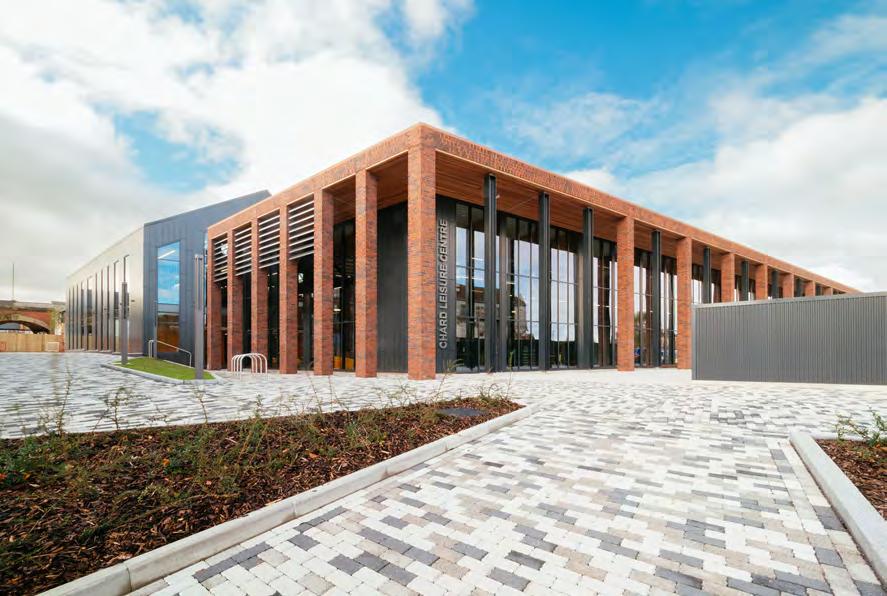
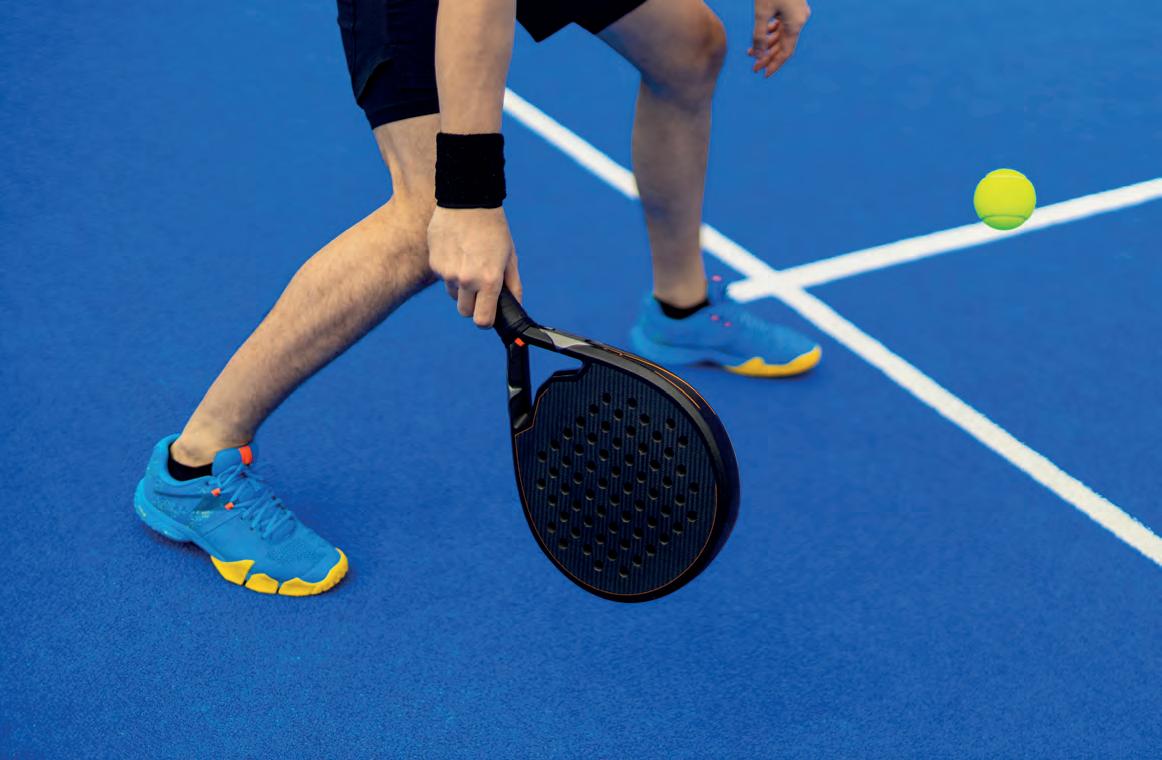
310+ completed projects
81% of clients choose us for further projects
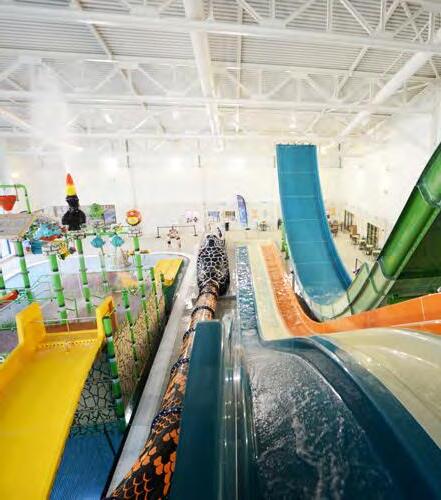
£520m+ investment in local authority leisure
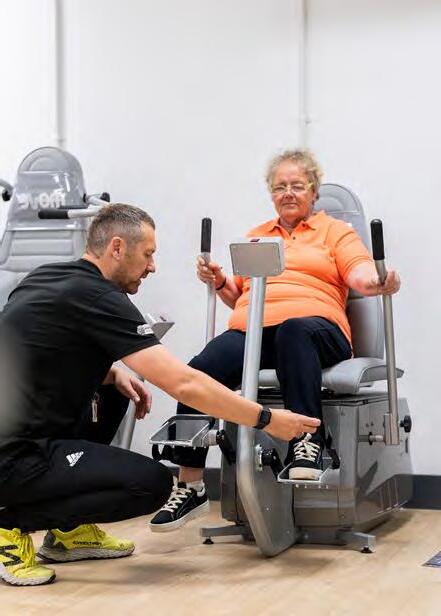
Alliance Leisure are a trusted and experienced leisure development partner, with over 25 years’ experience transforming leisure facilities for local authorities.

SAPCA also offers a Mediation and Advisory Service for Complaints, which allow clients to approach SAPCA directly when they think that they have an issue with the technical quality of work being delivered by a SAPCA member.
The UK is experiencing a padel boom. How has SAPCA reacted to it?
We reacted quickly at the start by developing guidance and a set of minimum standards for our members involved in padel court development and construction. During 2020, we worked with a number of SAPCA members and the sport’s governing body, The LTA, to oversee the development of a Code of Practice for Padel Court Construction to set the standards for construction of padel in the UK.
The CoP was published in 2021, initially as a minimum construction standard which, among other areas, highlighted the need for site specific foundations for the enclosure along with the more basic design guidance for our members to adhere to. It should be taken into consideration that in 2020 there were less than 100 padel courts, whereas in 2026 the number is around 2,000 courts. As the market has developed and the type of facilities have developed, SAPCA has moved with the market and has enhanced the CoP to its fifth edition. The annual update of the document has included additional information on things like: ● Better guidance on the requirements for planning applications including noise assessments, ecology assessments, lighting pollution and consideration for Biodiversity Net Gain.
● Enhanced information on the use of canopy structures to cover courts and their potential impact on the environment.
● Maintenance requirements for the padel enclosures and, covered structures and the playing surface.
● Enhancements to the details outlining the need for site specific, structural engineered foundations for both court enclosures and canopies, in the light of structures failing in UK coastal locations during storms.
This year (2026) will see a sixth edition of the document, based on discussions with padel court suppliers and contractors working in the UK.
Probably the biggest threat to the development of padel in the UK is that SAPCA’s reach can only directly influence SAPCA members. That’s why expanding our reach to the private investors and facility operators in the padel world can really extend our influence to ensure that everyone is investing in the correct, high-quality, fit-for-purpose padel enclosures, court covers and lighting systems. Furthermore, using SAPCA contractors that are part of an annually audited quality system means that their construction work and their professional expertise are regularly assessed, along with holding a strong financial position.











Durham County Council has successfully increased women’s participation in sport and physical activity through a highly targeted campaign. SportsNation finds out more about the initiative

Durham County Council has successfully engaged around 900 women in sport and physical activity in a month-long campaign helping to boost women’s health, wellbeing and community connection. The “She Thrives” campaign combined local storytelling, targeted programming and partnership working to raise awareness of opportunities for women to get active across the county. In addition to increasing participation, the campaign increased visibility for the council’s leisure services and the wider network of local activity providers, resulting in new provision.
According to Karen Allison, the council’s cabinet member for leisure – and one of the people driving the initiative – a key strength of the month-long campaign was the depth of partnership working with local grassroots clubs and national governing bodies of sport, which helped deliver a diverse and high-quality programme. “The She Thrives campaign has shown what’s possible when we work together to create welcoming, visible and meaningful opportunities for women to be active,” she said.
“By strengthening our partnerships with local clubs and national governing bodies, we’ve been able to expand our offer, reach new audiences and build confidence across our communities. Ultimately, this is about creating lasting change and ensuring everyone has the opportunity to thrive.”
Ultimately, this is about creating lasting change and ensuring everyone has the opportunity to thrive

The campaign has engaged new audiences and built confidence across communities through sport
Driving participation
Building on an approach last year which focused on social media storytelling, the council delivered this year’s campaign by working more strategically with partners and expanding the programme of activities to reach more women, offer greater variety and create clearer pathways into ongoing participation.
A wide range of taster sessions were delivered through local clubs allowing women to try new activities in welcoming and supportive environments, while also creating clear and sustainable pathways into ongoing community provision. These sessions provided an important first step for many participants and strengthened connections between leisure services and local sport.
Golf taster sessions at Ramside Golf Club, rowing tasters with Lambton Rowing Club and table tennis sessions with Topspin Table Tennis Club were among the clubs participating, with several clubs expressing interest in delivering similar sessions in the future.
The campaign showcased emerging activities such as Roller Derby, which attracted strong engagement from women trying the activity for the first time.
Several of the council’s leisure centres offered women-only sessions, including bowling, spinning and Boogie Bounce. There was also a virtual fitness challenge, delivered in partnership

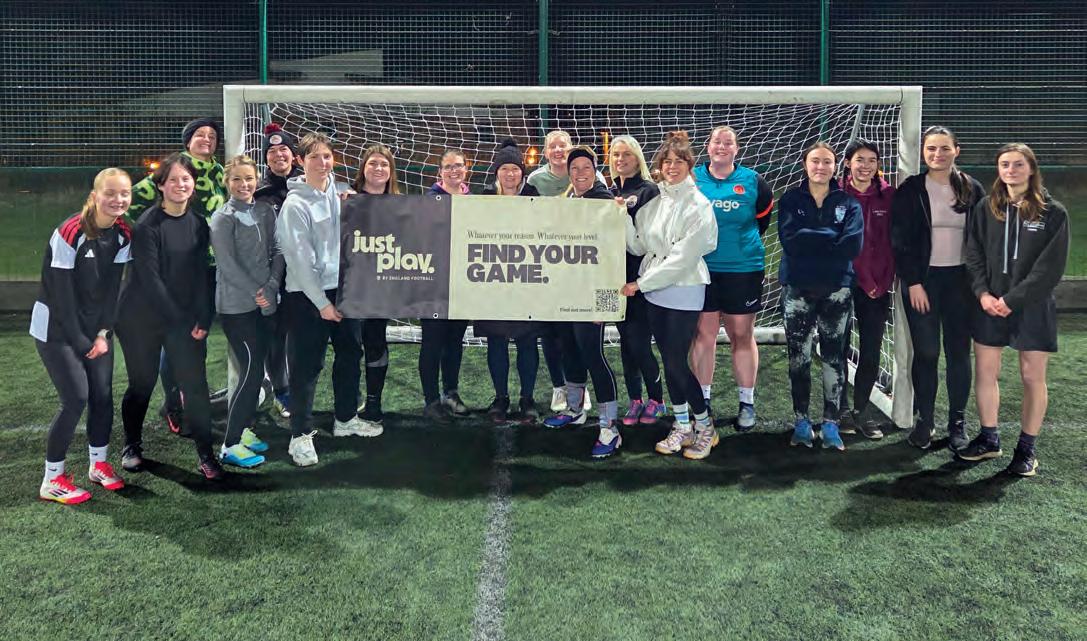













with gym equipment giant Technogym and the offer of free, seven-day gym passes.
A Back to Netball week created opportunities for the council’s staff to re-engage with sport in a relaxed environment. The week culminated in a staff netball tournament involving approximately 100 staff in friendly competition across departments. Following its success, a new lunchtime netball session is set to launch at Meadowfield Leisure Centre for council staff in partnership with England Netball to support wellbeing and sustained participation.
Another example of new sustained provision developed as a result of the campaign is a new recreational football offer for women delivered in partnership with Brandon Football Club.

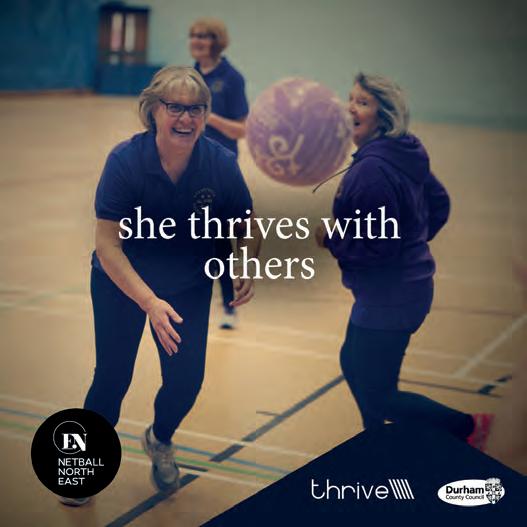



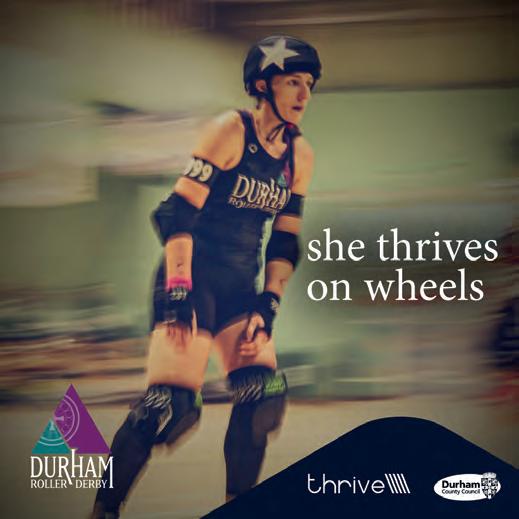






The programme aims to tackle the barriers to sport that women and girls face
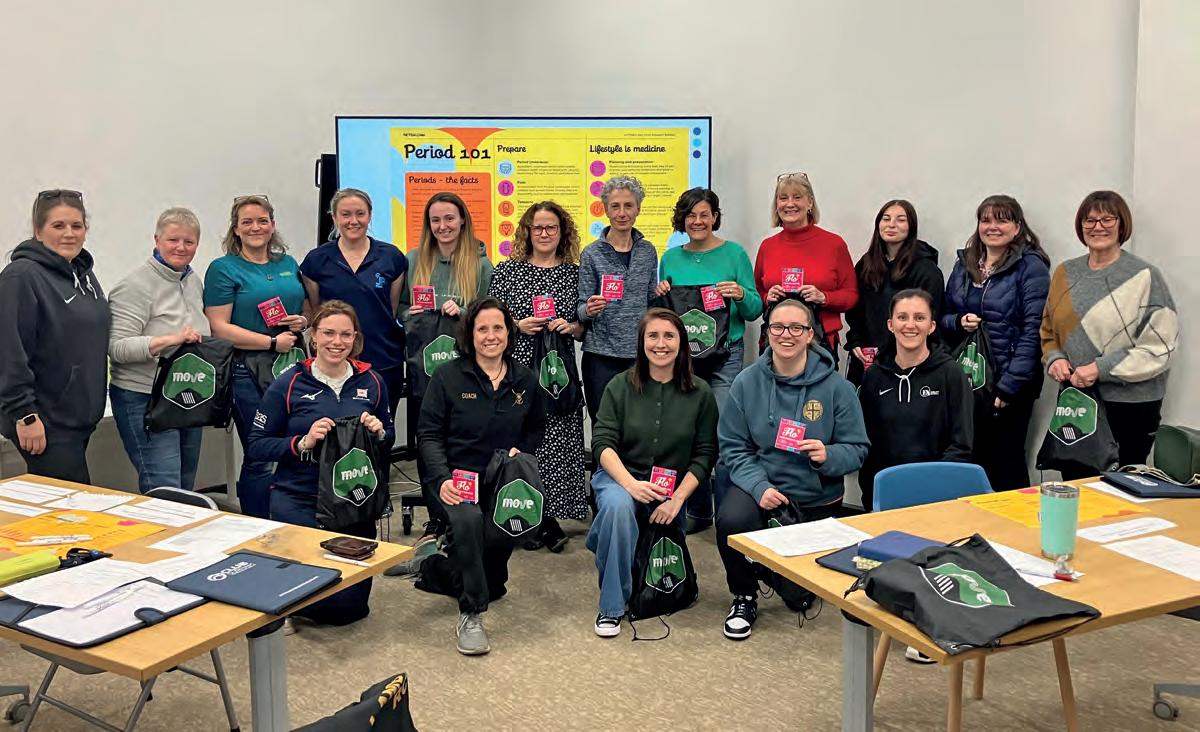









The campaign placed strong emphasis on creating inclusive and welcoming environments that better support the needs of women and girls. A Club Durham networking event brought together women from across grassroots sport to address real-life barriers to participation, while encouraging collaboration and shared learning across clubs. Delivered in partnership with JP Physio Durham and England Netball through the NetballHER programme, the session included discussions around female health, including menopause, menstrual health, relative energy deficiency in sport (RED-S) and pelvic floor health. Following positive feedback, Club Durham plans to host another network event later in the year, inviting men to join the discussion and support the development of women and girls in sport. The campaign also delivered a practical legacy in the form of Court Short Kits. These emergency sanitary product kits were distributed to local sports clubs, with discussions underway to explore similar provision across leisure centres to remove a simple but significant barrier that can affect confidence and participation.
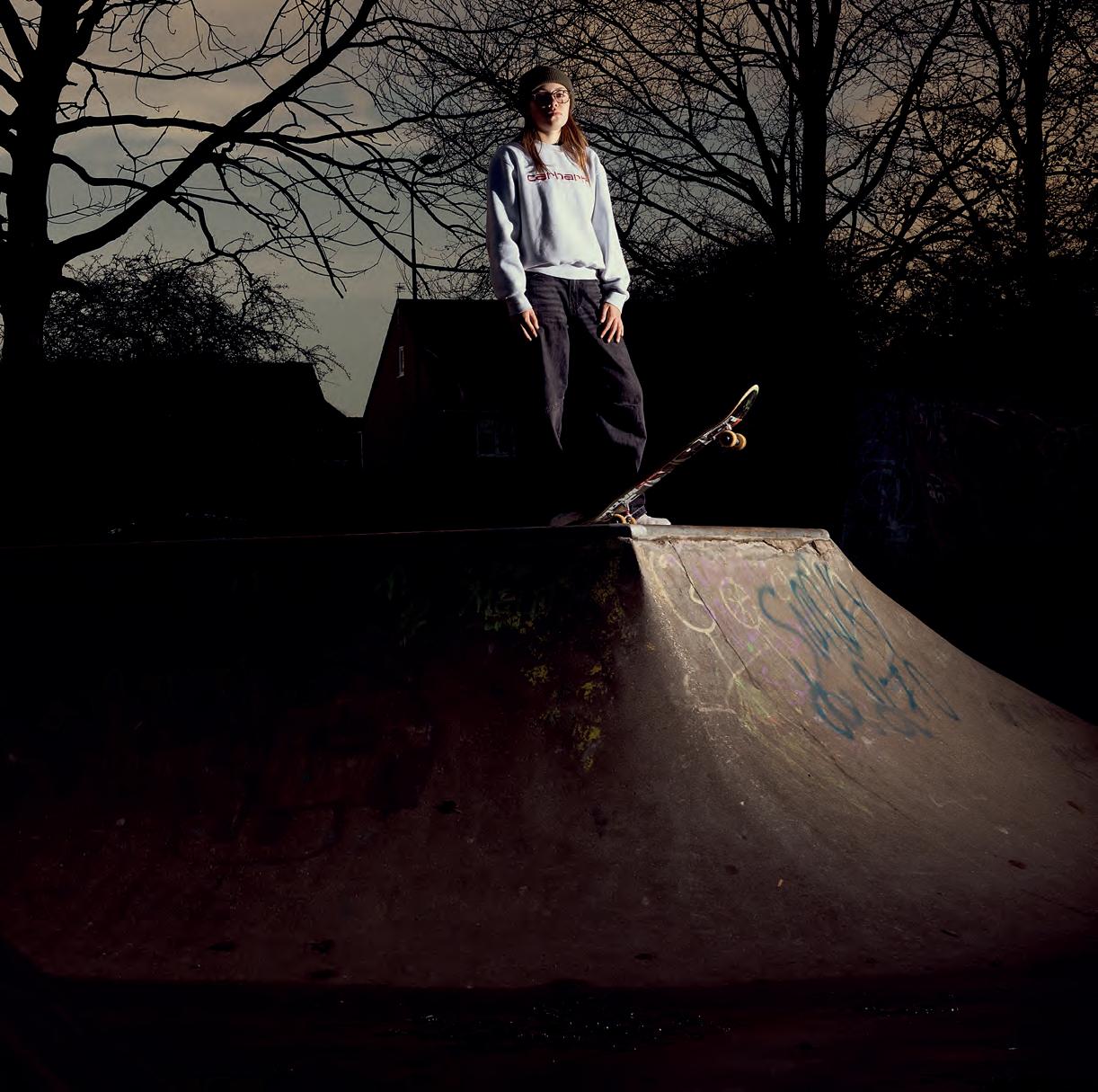
Our she thrives campaign shows that when opportunities are visible, welcoming and relevant, women will take part
Timed to coincide with International Women’s Day in March, a central feature of the she thrives campaign was the focus on local storytelling. Real women from across County Durham were at the heart of the campaign, sharing their experiences and demonstrating the positive impact of movement on confidence, health, wellbeing and everyday life.
This has been brought to life through the she thrives Photography Exhibition. Captured by local photographer Lee Dobson, the exhibition celebrates women of all backgrounds being active in their communities and has been displayed at venues including Bishop Auckland Town Hall and Freeman’s Quay Leisure Centre. This storytelling, combined with strong social media engagement, extended the reach of the campaign well beyond formal sessions and helped build a stronger local identity around women’s participation.
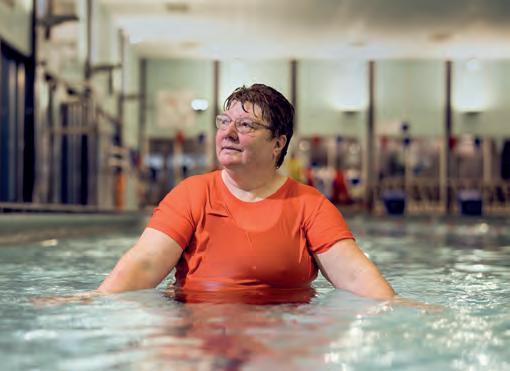
Allison added: “Our she thrives campaign shows that when opportunities are visible, welcoming and relevant, women will take part. The scale of engagement we’ve seen gives us a strong foundation to build on, and we’re using these insights to shape future programmes that continue to grow participation and deliver lasting impact.”
SportsNation reports from the EMEA Synthetic Turf Council (ESTC) Congress, which this year was held in Seville
The theme of EMEA Synthetic Turf Council’s (ESTC) Congress this year was “impact”, which was reflected in presentations that highlighted the beneficial effects achieved by the synthetic sports turf industry. However, the theme also served as a reminder that valuable outcomes always go hand in hand with a responsibility to limit or mitigate possible side impacts
No other sports surface has made such an impact on sports, sports participation and the financial bottom lines of venue owners and operators around the world than synthetic turf. While Social Return on Investment (SROI) calculations for sports and sports facilities do not necessarily factor in the positive effect of synthetic turf surfaces, it is clear that their ability to handle significant footfall is a major reason why it is that at clubs that are increasingly investing in them – to guarantee that games and training can take place and to bring in revenue.
In the same week that the ESTC hosted its annual congress in Seville, Spain, the Dutch Government was presented with the result of a year-long study that concluded that the SROI for every Euro (¤) it invests in sports and sports infrastructure is tenfold. Closer to home, Sport England estimates this to be £4 for every pound spent, translating to around £122.9bn in 2023-24 alone.
A growing number of municipalities are now investing in synthetic turf fields that capture heat as an alternative to gas-powered water heaters in domestic settings
A great example of the impact synthetic turf can have was presented by keynote speaker, Niels Meijer of the Johan Cruyff Foundation. “We continue what Johan started,” Meijer said, referring to the legendary football player who passed away in March 2016. Among its various programmes, the foundation has been building approximately 25 synthetic, multi-sport courts per year since 2004. The Cruyff Courts project utilises synthetic surfaces to provide opportunities for physical activity, with a focus on health and wellbeing, gender equality and sustainable cities and communities.
“Lately, we have started using a new type of surface that doesn’t use any infill,” Meijer added. “In doing so, we contribute to societies without impacting the local environment.”
Meijer estimates that the network of courts attracts around 4 million visitors each year – and the foundation is now planning to notch things up. “The water harvesting and purification system we incorporated in the two synthetic turf courts we built in South Africa now provide the community with potable water,” he said. “This is something we would like to roll out further.”
During the Congress, Leander Lignac of the Dutch Knowledge Centre for Sport and Physical activity presented another additional impact synthetic turf can achieve. “A growing number of municipalities are now investing in synthetic turf fields that capture heat as an alternative to gas-powered water heaters in domestic settings,” he said. “The first installations have proven that one football field can capture enough heat to replace water heaters in between 150 and 300 households.”
According to Lignac, no fewer than 1,250 fields in the Netherlands have been identified for this purpose. “The bigger picture is that this could reduce CO2 emissions from 1.37 megaton per year to 0.07 megaton per year,” he added.

Both speakers demonstrated the important role that synthetic turf can play in creating SROI. In addition, it is also positively impacting on not just when (and how much) sport is played, but also how it is played.
“The introduction of synthetic turf in hockey as an alternative for grass has changed the sport forever and for the better,” Professor Alastair Cox said in his presentation in his capacity as Facilities Manager of the International Hockey Federation (FIH). This year marks the 50th anniversary of the first hockey game played on synthetic turf.
“It has made the game safer and more attractive,” Cox added. “To date, hockey is being played in over 140 countries. Some 106 nations even participate in international competitions.”
The FIH has now set its eyes on reducing the reliance on water. “Thanks to improved synthetic turf carpets the reliance has come down from 38,000 litres per game during the London Olympics in 2012 to just short of 7,500 litres we project for the fields used for the Olympics in Los Angeles,” Cox said.
As well as the positive impacts, conference delegates were also frequently reminded of the effects that the synthetic industry needs to continue to address and tackle. One of these is the issue of maintenance.
The chair of the ESTC Working Group on Maintenance, Alex Bobeica, guided delegates through the maintenance principles for long and short pile synthetic turf sports surfaces that the working group has now put down in a maintenance guideline. Like many other important documents, this guideline can soon be downloaded from the ESTC website.
To date, hockey is being played in over 140 countries. Some 106 nations even participate in international competitions
In a similar vein, Barney Weston of Sport England and Professor Paul Fleming of Loughborough University both addressed the issue of end-oflife turf. Weston explained that Sport England estimates that 35% of the surfaces currently installed will soon come up for replacement.
“This is why we are actively participating in forums to work out a proper plan to limit the impact of endof-life turf,” he said. In his presentation, Professor Fleming showed the audience the plans for ReSurface, a research initiative that aims to establish new recycling technologies as well as develop an infrastructure model that can be used UK-wide. The project has received £1.7m from the government to give it a head start.
Commenting on the two-day event, ESTC CEO Stefan Diderich was pleased with the positive developments in the sector. He also reminded the audience, however, not to become complacent. “We have to continue to get out there and to make an impact,” he said in his closing remarks.
“ESTC frequently participates in talks with sports governing bodies, NGOs and national governments. It has even become the go-to partner for lawmakers in Brussels.” A sign, he added, that the synthetic turf industry is viewed as mature enough to make an impact.

In April, UK Sport expanded the number of its accredited Elite Training Centres to 11. SportsNation sat down with some of the teams responsible for running the centres to find out more about how the network of high performance facilities works
UK Sport’s Elite Training Centres (ETC) play a central role in the UK’s high performance sport ecosystem. The network of worldclass training environments serve as hubs for Olympic and Paralympic athletes, providing bespoke facilities, cuttingedge equipment and expert support services.
In April this year, UK Sport announced that it was increasing the number of accredited ETCs to 11, with four new facilities added to the network, in recognition of their critical role in preparing Olympic and Paralympic athletes for success on the world stage. Building on the first cohort recognised in 2023, the four new facilities – University of Wolverhampton, St George’s Park (The Football Association), sportscotland National Centre Inverclyde and Lee Valley White Water Centre – reflect the network’s evolution, as new centres join to further enhance the UK’s high performance system.
To achieve accreditation, organisations must demonstrate excellence across a range of areas including facilities, people, partnerships, and organisational culture, alongside a clear
commitment to continuous improvement. All accredited centres will continue to work closely with UK Sport and partners across the system to enhance their environments and contribute to a shared, high-performing network that supports sustained success for Team GB and ParalympicsGB.
The networked approach to the ETCs is designed to improve access, foster collaboration across sports and create environments where innovation and shared learning can flourish. The approach includes regular meetings involving each facility’s leadership teams, where expertise and learnings are shared and discussed.
The centres provide permanent or semipermanent bases for national governing bodies of sport and World Class Programme athletes and grant access to UK Sports Institute practitioners, from coaches, physiotherapists, performance psychologists to nutritionists
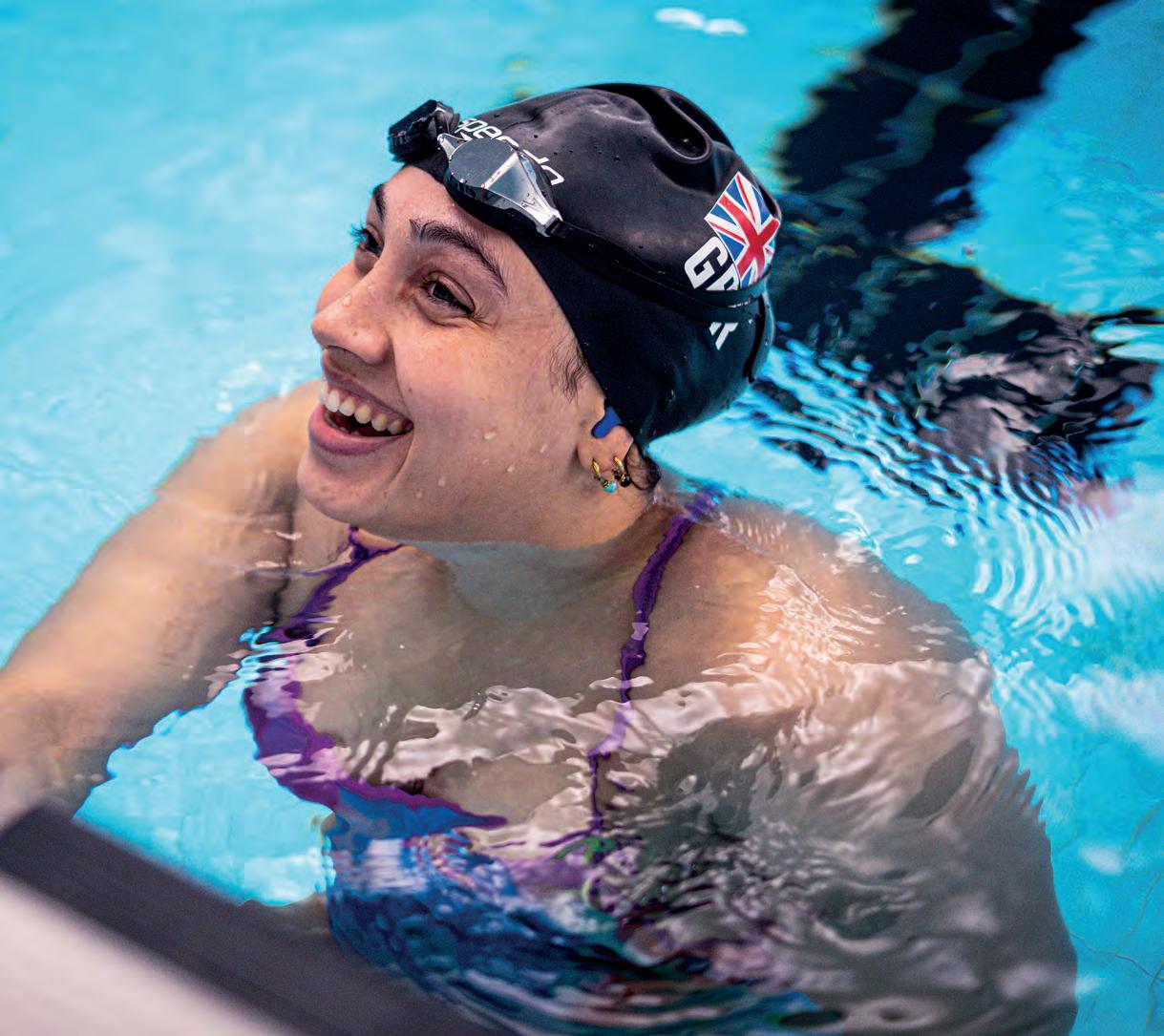
and biomechanists. They also equip athletes with highly specific infrastructure – such as altitude-controlled environments
According to Dr Kate Baker, Director of Performance & People at UK Sport, the ETCs are at the heart of the UK’s high performance system. “They are where athletes and teams do the hard work every day, supported by outstanding people and expertise,” she says.
“We are incredibly grateful to work with our ETCs and together we are shaping the greatest decade of extraordinary sporting moments in which they are playing a huge part, creating thriving environments where sports, athletes and coaches can perform at their best.
“As we look ahead to Los Angeles 2028, French Alps 2030 and beyond, we continue to evolve this network, strengthening the connections between centres and creating even more innovative, inclusive and high performing environments for athletes and staff.”
The ETCs that secured a reaccreditation in 2026:
Loughborough University
University of Bath
Lilleshall National Sports Centre
Bisham Abbey National Sports Centre
National Taekwondo Centre, Manchester
Aquatics Centre and the National Cycling Centre (Manchester City Council)
English Institute of Sport Sheffield
Milton Keynes National Badminton Centre
The newly accredited centres are:
University of Wolverhampton
St George’s Park (The Football Association)
sportscotland National Centre Inverclyde Lee Valley White Water Centre (GLL)
SportsNation spoke to some of the leadership teams of both reaccredited and new facilities to gauge how the ETCs operate and work together to drive excellence in high performance sport.
Owned by: Manchester City Council
Operated by: GLL, GB Taekwondo
NGBs/sports organisations associated with: Aquatics GB, GB Taekwondo and Great Britain Cycling Team
Emma Foden
Head of Elite Sport and Events (Manchester) GLL
What does the status of being an ETC mean to GLL and the three facilities?
It’s important for Manchester to be recognised as a leading global sporting city and the ETC accreditation helps to underline the city’s international credentials. Alongside the global profile generated by football, it reinforces that Manchester offers a diverse range of world-class sporting excellence across multiple disciplines.

For GLL and the three accredited centres, it provides formal recognition of elite-standard facilities, strengthening their appeal to governing bodies, squads and international training camps. It also aligns strongly with the city’s strategy to invest in world-class facilities, attract elite sport and position Manchester as a global sporting hub. Importantly, ETC status helps connect elite sport with community pathways, supporting a visible
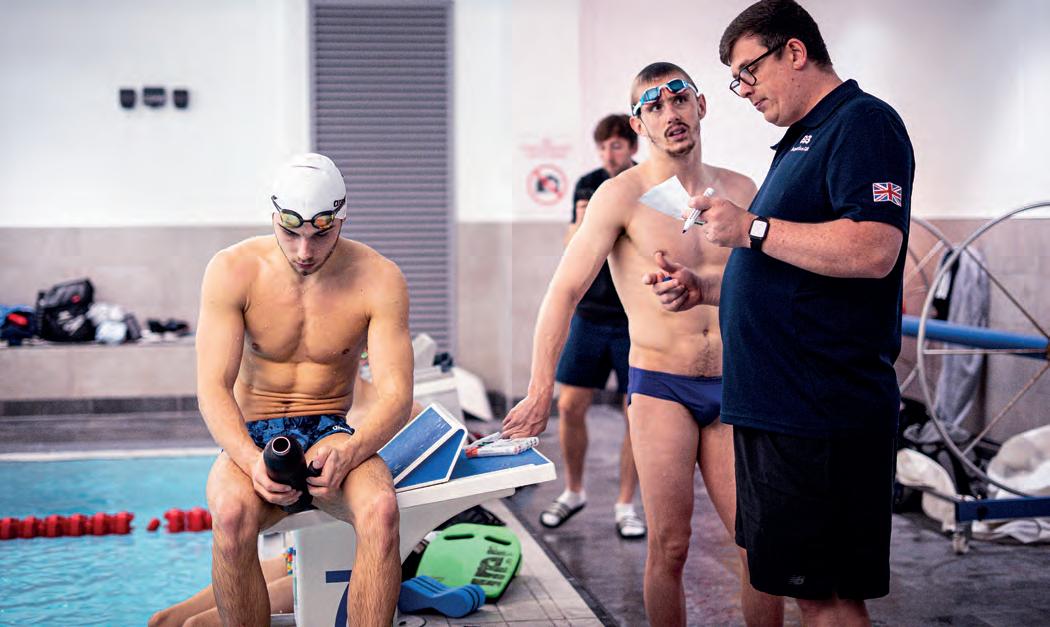

talent system, inspiring residents, and demonstrating progression from grassroots to podium.
What makes Manchester facilities unique is that they’re truly shared spaces. They’re used not only by elite athletes, but also by the public, local clubs and the wider Manchester community. While there are a small number of specialist areas – such as strength and conditioning spaces with dedicated equipment that are reserved for athlete use – the majority of the facilities, including the Velodrome, BMX track, swimming pool and matted taekwondo area, are accessible and regularly used by everyone. That mix creates a really inclusive and dynamic environment.
How does GLL and the three facilities work with other ETCs?
The network is undoubtedly the most powerful element of the ETC. In most other environments, organisations like ours would naturally be positioned as competitors - whether that’s university against university or leisure provider against leisure provider. However, within the ETC network, that dynamic shifts completely. We operate as one team.
The facilities are used not only by elite athletes, but also by the public, local clubs and wider Manchester community
There’s a genuinely supportive culture across the network. A good example of that is when we’re looking at specialist equipment, such as contrast baths. Rather than working in isolation, we can tap into the network to understand who is already using them, gather honest feedback on different suppliers, and learn from their experiences - right down to practical considerations like installation. That shared knowledge is incredibly valuable and helps us make more informed decisions.
As GLL also operates the Lee Valley White Water Centre, which is an accredited centre in its own right, it’s been really positive to collaborate with colleagues across the organisation – supporting one another through the process and collectively reinforcing the importance of ETCs within GLL.
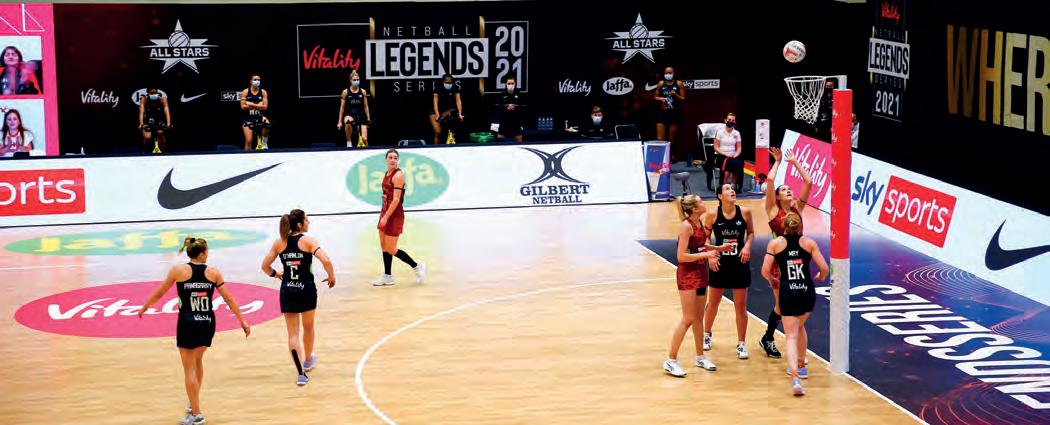
Loughborough University
Pro-Vice-Chancellor for Sport
Loughborough University
What does the status of being an ETC mean to Loughborough University?
We’re extremely proud to have been reaccredited as a UK Sport Elite Training Centre (ETC) and it reinforces something we have worked hard to build over many years – an environment where world-class sport, research, coaching and education all come together in one place. We have supported the Olympic and Paralympic ecosystem for more than 75 years, supporting over 440 medals. Sport is at the heart of Loughborough University, and our outstanding teams continue to foster a world-class environment where athletes and staff can excel through research, elite performance sport, and broader participation.
Achieving









Which NGBs and sports’ elite athletes do you work with?
In the UK Sport network, we partner with UK Athletics, Aquatics GB, British Triathlon and British Para Powerlifting on an everyday training home basis. We also run immersion camps for GB Boccia and support British Wheelchair Basketball’s office staff on our Sport Park complex on campus.




Achieving accreditation reflects the work we have done to support and enhance our environment, the strength of our partnerships, and the vital role we play in supporting the progress of Olympic and Paralympic sport across the UK.



In addition to the Olympic and Paralympic programmes, we are also a home site for the ECB, England Netball, the LTA’s National Tennis Academy, and the NFL through the NFL Academy. We’re also the event home for England Volleyball.
In addition to our partner NGBs being on site throughout the year, as part of the ETC network – and as a supporter of our high-performance system –we welcome any World Class Programme athlete to campus. This can be for convenience with an athlete’s individual training schedule, or for a specialist performance application. We work with one of the home venues, NGB, or UKSI to ensure we are expecting the athlete(s) to enable a seamless training experience.










with



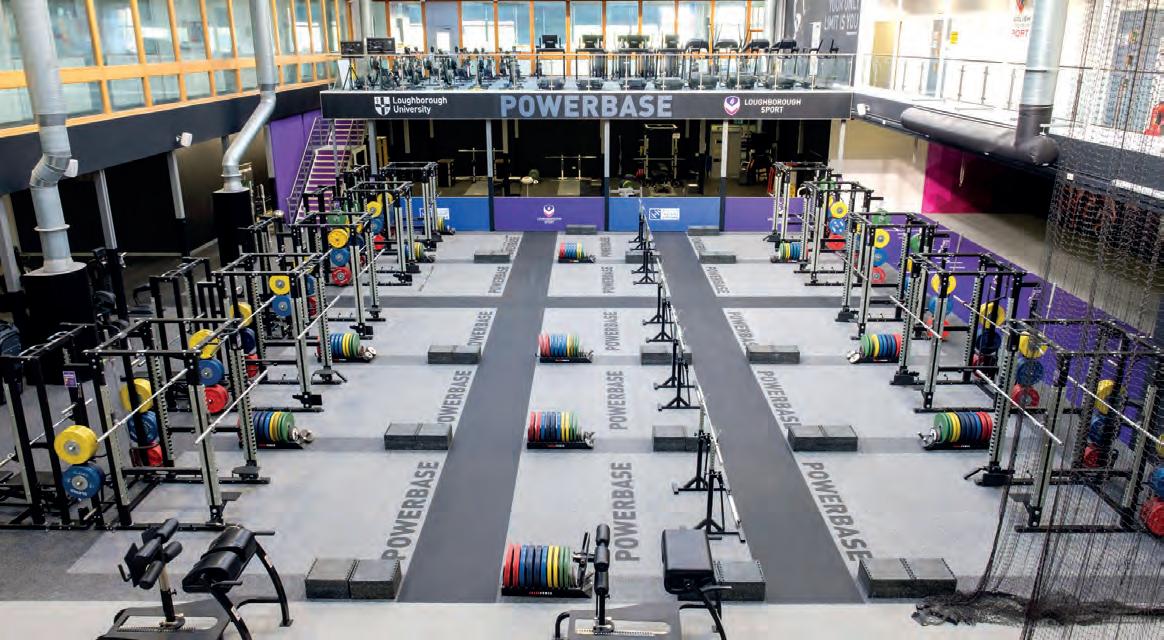
How closely do you work with the other ETCs in the network?
Collaborative working across the network is a huge benefit to being a part of the group. We regularly reach out to each other seeking advice in various areas. An example of this is when we were exploring the possibility of building a temporary structure at Loughborough to create a new sports hall. The team at Lilleshall had previously built something similar and we were invited to visit their facility for best practice. We are working as a group to create a selection of ‘away day’ opportunities across the network for our teams. This will make the most of the different spaces that we all have and gives our colleagues an opportunity to learn from other centres operating in this space.
How much does being an ETC help attract staff and students – and also athletes/teams to train?
For students, it is a real attraction point. Whether they are elite athletes themselves or interested in areas such as sport science, coaching, physiotherapy, psychology, sports engineering or performance analysis, they know they will be studying and often accessing industry placements, in an environment connected directly to elite sport and some of the best athletes and practitioners in the country. It is also important in attracting staff. Academics, coaches and support specialists want to work
Sport is at the heart of Loughborough University, and our outstanding teams continue to foster a world-class environment
somewhere they can collaborate closely with elite athletes and sports organisations, and where research can have a direct impact in highperformance settings. Having elite sport so closely connected to day-to-day university life also creates unique opportunities for research, innovation and knowledge exchange.
Being an ETC is equally valuable in attracting governing bodies, teams and athletes to train at Loughborough. The combination of facilities, expertise, sports science support and the wider sporting culture on campus is a huge draw. There is a reason so many national governing bodies and elite athletes choose to base themselves here.
The status has value as a recruitment and marketing tool, and it is something we reference across student recruitment, partnerships and external communications. But importantly, it is not just a badge or accreditation – it reflects what people experience when they come to campus. You can see immediately that elite sport is part of the University’s identity and culture.
NGBs/sports organisations associated with: GB Judo
Associate Professor in Sport and Exercise Science
University of Wolverhampton
You are one of the new additions to the ETC network. What does the status of being an ETC mean to the university and its Judo Centre specifically?
The accreditation marks a significant milestone for both organisations and recognises the strength of the long-standing partnership between the University and GB Judo (since 2013). The ETC status celebrates the quality of the daily training environment provided to athletes, including coaching, sport science, medicine, rehabilitation, strength and conditioning, and performance lifestyle support.
For the University, the recognition further strengthens its growing reputation within highperformance sport and demonstrates its ability to combine academic expertise with realworld impact. The ETC status also creates new opportunities for research, innovation, student engagement, and collaboration with national governing bodies and industry partners.
For GB Judo, the accreditation reflects the quality of the performance environment supporting athletes preparing for major international competitions, including Olympic and World Championship events. Importantly, the accreditation is not simply recognition of existing success, but a commitment to ongoing development and collaboration.
Collaboration with other ETCs is an important part of ongoing development



What facilities does the Judo Centre house?
The GB Judo National Training Centre at the University of Wolverhampton’s Walsall Campus provides a world-class high-performance environment designed to support athletes competing at national and international level. As part of the ETC network, the facility combines elite coaching, sport science, medicine, and athlete support services within an integrated performance setting.
At the heart of the National Training Centre is a dedicated judo dojo capable of supporting daily technical and tactical preparation for elite athletes. The facility is designed to accommodate both individual athlete development and full national squad training camps. The dojo features two fullsized 10m x 10m Olympic-standard sprung floor contest areas, creating a training environment aligned with international competition standards. Surrounding the dojo are state-of-the-art interactive performance analysis systems, enabling athletes and coaches to access instant video feedback and detailed technical analysis during training sessions.
Athletes also benefit from access to an extensive strength and conditioning suite equipped for highperformance training, alongside specialist recovery and rehabilitation facilities. Integrated sport science and medicine support includes physiological testing, performance monitoring, injury management, and return-to-play services delivered collaboratively by coaches, practitioners, and researchers.
The Centre further benefits from the wider resources available across the University of
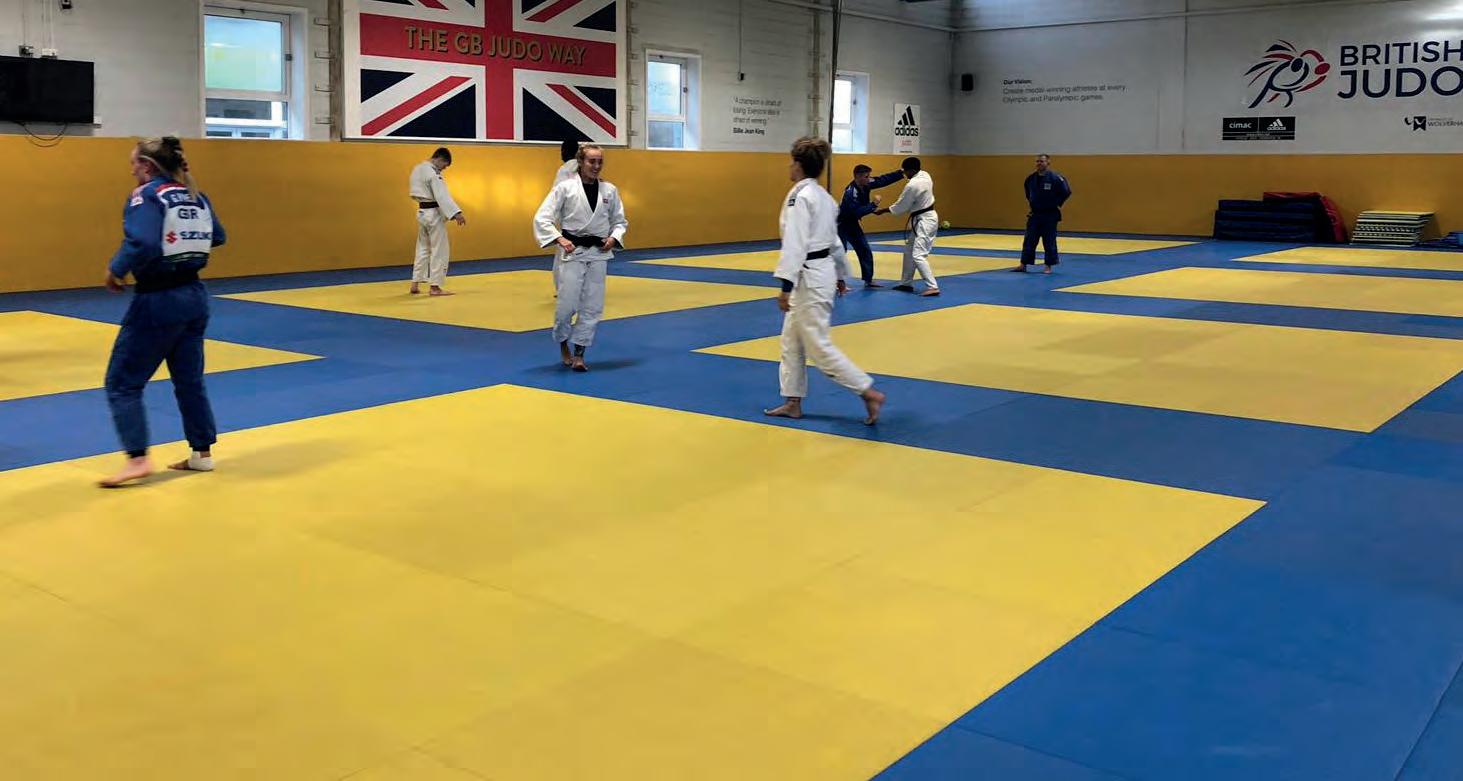
Wolverhampton, including specialist laboratories, teaching spaces, and applied research expertise. This close integration between academic knowledge and elite sport delivery ensures evidence-based practice is embedded directly into the daily training environment, supporting both athlete performance and long-term development.
How will the university/Judo Centre collaborate with other ETCs?
In several ways. Formal mechanisms include peer review and accreditation visits, where practitioners and leaders from different ETCs observe other environments, engage in discussion with staff, and contribute to consistent national standards. Themed workshops also bring centres together to focus on shared priorities such as sustainability, performance lifestyle support, and athlete wellbeing.
For us, collaboration with other ETCs is an important part of ongoing development. This includes sharing expertise from a combat sport environment, particularly in integrated sport science and medicine, while also learning from other high-performance settings such as football, badminton, and multi-sport centres.
A practical example of this collaboration occurred during the refurbishment of the gym and performance spaces, where visits were made to other training sites that had recently undergone similar developments. These visits provided valuable opportunities to share ideas on layout, equipment selection, athlete flow, and integrated support
The facility is designed to accommodate both individual athlete development and full national squad training camps
environments, ensuring that the final design reflected best practice from across the ETC network.
Do you think the ETC status will help attract students/staff/members? Can it be used as a marketing or recruitment tool? Yes, it can support recruitment.It is also actively used in marketing and communications to showcase the University’s role in elite sport.
For students, ETC status signals that the University operates within a nationally recognised highperformance environment linked to Olympic and Paralympic sport. This strengthens recruitment by offering direct exposure to elite athletes, applied sport science, and real-world performance settings.
For staff, it enhances the University’s appeal as an employer by demonstrating a strong applied, impact-driven environment with high-level external partnerships such as GB Judo. This helps attract and retain high-quality academic and practitioner staff.
For partners and athletes, ETC status provides external validation that the environment meets national standards for elite performance support, strengthening trust and engagement.
sportscotland National Centre Inverclyde
Pauline Kerr
Development Manager
Inclusive National Sports Training Centre Inverclyde
As another of the new ETCs, what does the accreditation mean for you?
It is a really important milestone for us. The accreditation recognises the quality of the facilities, services and support that we provide to high-performance athletes and teams. More importantly, it places Inverclyde within a UKwide network of venues that are helping athletes prepare for major international competitions.
The centre has been supporting elite sport for many years, but accreditation from UK Sport helps raise awareness of what is available here and reinforces our reputation as a destination for performance sport.
What makes Inverclyde unique within the network?
Inverclyde is a residential, camp-based centre, which means athletes can live, train, recover and access support services all on one site. That creates a really focused training environment. The centre reopened in 2017 following a £14.5 million

redevelopment and offers 60 twin accessible bedrooms, a 400sq m fitness suite, indoor sports facilities, outdoor pitches and a range of meeting and support spaces. Teams can come here for short training camps or longer periods of preparation and have everything they need in one place.
That residential element is particularly valuable because it enables athletes and support staff to spend time together away from day-to-day distractions, creating an environment that is conducive to performance.
Accessibility is one of the things that truly sets Inverclyde apart. The centre was designed with accessibility at its core and can accommodate up to 120 wheelchair users at any one time, which is believed to be unique within the UK high-performance network.
That has made it an important training base for para-sport programmes and for athletes with physical impairments or more complex medical needs. We have worked hard to ensure that athletes can focus on performance rather than having
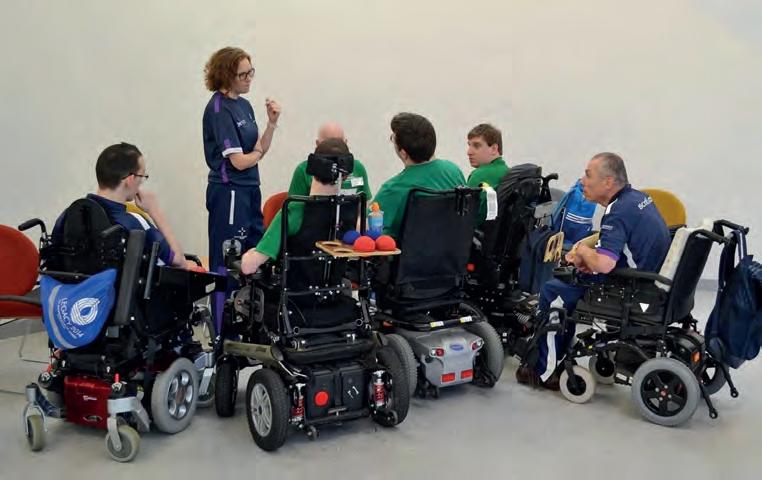

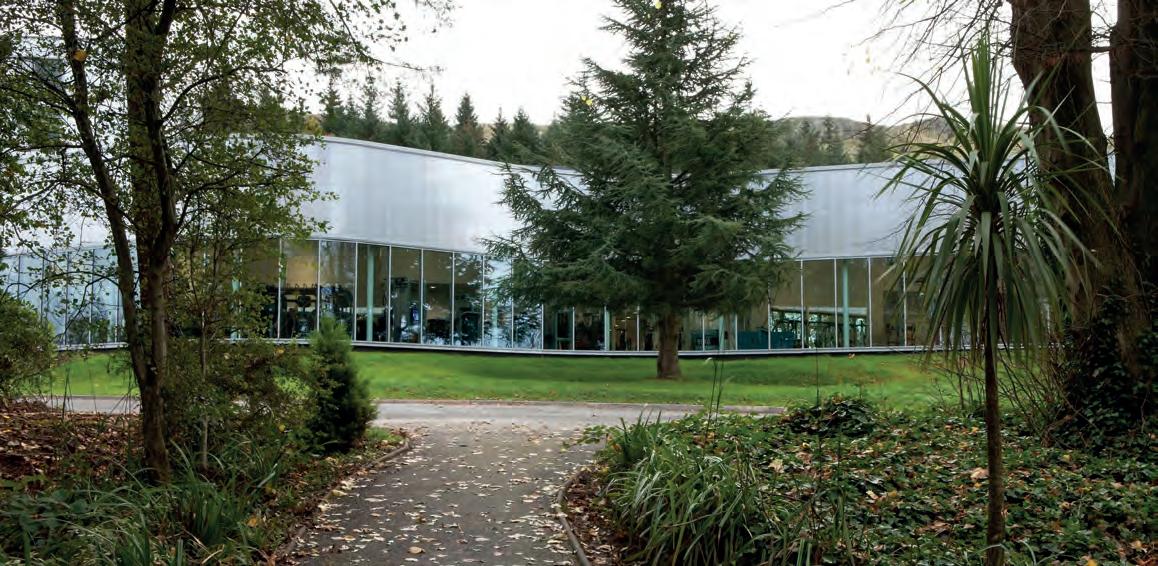
to think about barriers or limitations within the environment. As a result, we have welcomed a wide range of para-sport teams and athletes over the years, and we know how important it is to provide facilities that genuinely meet their needs.
What impact do you hope the accreditation will have?
We hope it will raise the profile of the centre both across the UK and internationally. We already attract national governing bodies, elite athletes and performance programmes, but this accreditation gives us an additional platform to showcase what Inverclyde can offer. Ultimately, we want more teams and athletes to discover the centre and consider it as a place to prepare for major competitions.
How does this fit into sportscotland’s wider ambitions?
One of sportscotland’s key roles is to provide environments where athletes can achieve their potential. Inverclyde is a great example of that. Whether it is supporting Olympic and Paralympic athletes, national squads or emerging talent, the centre plays an important role in Scotland’s contribution to the UK’s high-performance sport system. This accreditation is recognition of the work that has already taken place, but it is also an opportunity to build on that success and continue developing Inverclyde as one of the country’s leading training environments.
The centre was designed with accessibility at its core and can accommodate up to 120 wheelchair users at any one time, which is believed to be unique within the UK high-performance network
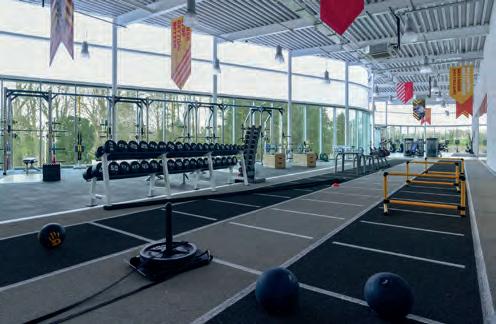
Owned by: Sports Council Trust Company
Operated by: Serco
Head of Strategic Partnerships
Serco
How important is it for Bisham Abbey and Lilleshall to be part of the ETC network?
ETC status recognises the important role that Bisham Abbey and Lilleshall play within the UK’s high-performance sport system. These are not simply sports facilities; they are environments that support athletes, coaches and performance programmes at the highest level.
From a Serco perspective, it provides independent recognition that we are operating the sites to standards expected within elite sport. For the centres themselves, it reinforces their position as nationally significant training environments and reflects the quality of the facilities, services and partnerships that exist across both sites.
The accreditation is also a reflection of the commitment shown by our teams and partners every day to create environments where athletes can train, develop and perform.
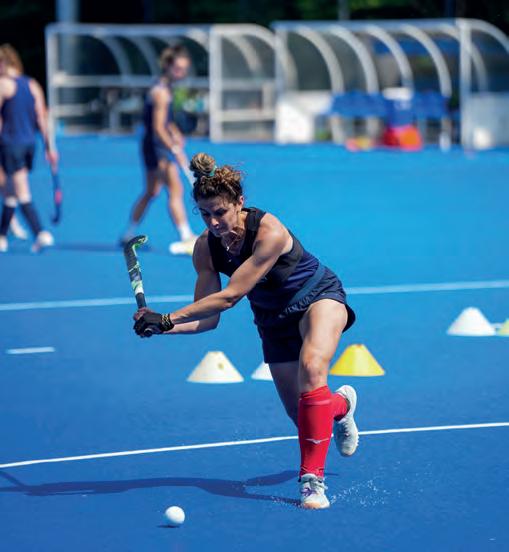

Which NGBs do you have partnerships with at the two facilities?
We work closely with several national governing bodies across both sites. Including partnerships with England Hockey, Archery GB, British Gymnastics and Wheelchair Rugby all of whom have long-standing connections to the National Sports Centres.
Alongside those core relationships, we support a much wider range of sports through training camps, competitions, talent pathways and specialist facility provision. A key part of our role is working with governing bodies and performance partners to ensure the facilities continue to meet their evolving needs and to identify opportunities for further collaboration.
Can any Team GB or ParalympicsGB athletes train at the facilities, or are there specific sports that they cater for?
Bisham Abbey and Lilleshall are known for particular sports, but they are not exclusively limited to those sports. Where the facilities and environment are appropriate, a wide range of high-performance programmes can access the centres for training camps, competition preparation, recovery, strength and conditioning, meetings and specialist support activities.
Our role is to work with coaches, governing bodies and performance partners to understand their requirements and provide the most suitable environment possible.
One of the aspects of the network is that the ETCs share learnings with each other –could you give some examples of this?
The collaborative nature of the ETC network is one of its greatest strengths. We have been involved with the network since its inception, including supporting the development of the accreditation
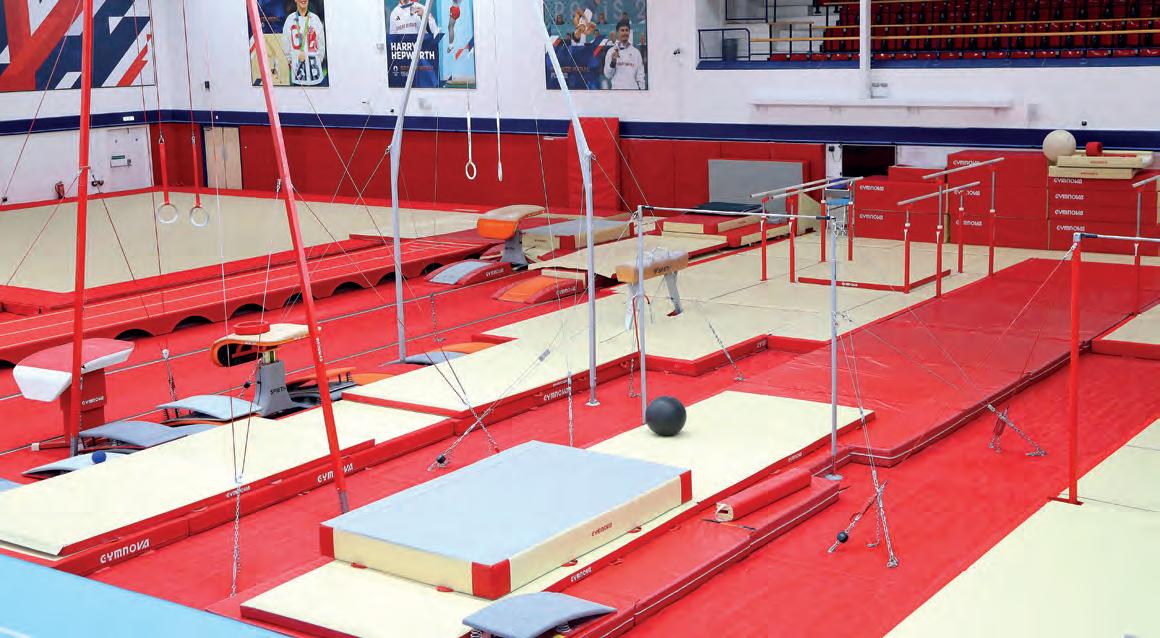
The network creates opportunities for centres to share practical learning and challenge each other to continually improve
framework and participating in peer review activity. The network creates opportunities for centres to share practical learning and challenge each other to continually improve. Examples include sharing approaches to athlete experience for example when developing athlete lounges, operational management for sports specific equipment, accessibility, sustainability and facility development, supporting the changing needs of high-performance sport. The peer review process is particularly valuable, allowing centres to learn directly from each other’s experiences and innovations.
What stands out most is that the network recognises elite training environments as being about much more than facilities alone. Successful centres are built on strong partnerships, excellent operational standards, skilled people and a genuine understanding of all partners needs.
Bisham Abbey and Lilleshall have supported generations of Olympic and Paralympic athletes while continuing to serve governing bodies, community users and future talent. Being part of the ETC network helps ensure those facilities continue to evolve, improve and remain among the UK’s leading training environments.
How much does being an ETC help attract staff and users to the centres?
ETC status provides a recognised mark of quality and credibility. For athletes, coaches and governing bodies, it offers assurance that the centre understands the requirements of highperformance sport and operates to recognised standards. For staff, it creates a framework that helps them understand the specific requirements of elite sport and better support our partners and performance programmes. The benefits extend beyond elite sport. Community users, clubs and aspiring athletes also gain access to facilities and environments that have supported Olympic and Paralympic preparation, helping to inspire participation and demonstrate clear pathways from grassroots involvement through to high-performance sport. It is certainly a valuable recruitment and marketing asset, but its greatest value lies in the reputation and trust that underpin the accreditation. The status helps open conversations, while the quality of the facilities, services and partnerships is what ultimately attracts and retains athletes, governing bodies and community users alike.


As 2026 marks the final year of the LTA’s three year strategy, SportsNation looks at how the NGB has delivered on the goals and aims outlined in the Tennis Opened Up document
When the Lawn Tennis Association (LTA) launched its three-year, 2024-2026 strategy, it did so from a position of strength.
Participation was at record levels, major investment programmes were underway and the governing body had articulated a clear vision: to make tennis “relevant, accessible, welcoming and enjoyable” for more people across Britain.
Two years later, with the strategy approaching its conclusion, the evidence suggests the LTA has delivered strongly against many of its key objectives. Participation has continued to grow, public facilities have been transformed at an unprecedented scale, inclusion programmes have expanded and padel has emerged as one of the biggest participation success stories in British sport.
At the heart of the strategy was a commitment to grow participation across all demographics.
The latest figures suggest that objective is being achieved. According to the LTA’s 2025 Annual Report, adult annual tennis participation has risen to 5.8 million players, the highest figure ever recorded. Children’s participation also reached a record level, with more than four million children playing tennis annually. Regular play among young people is rising particularly strongly, with monthly participation increasing by 15% to 1.8 million and weekly participation increasing by 26% to 800,000 players.
These figures build on the post-pandemic momentum that underpinned the 2024-2026 strategy and suggest tennis has successfully retained many players who first engaged with the
Regular play among young people is rising particularly strongly, with monthly participation increasing by 15% to 1.8 million

sport during that period. Importantly, the growth is not confined to traditional club environments. Much of the increase has come through community programmes, public park facilities and more flexible participation opportunities.
Perhaps the most visible achievement of the strategy has been the LTA’s investment in public courts. The governing body’s Park Tennis Project, delivered in partnership with the UK Government and the LTA Tennis Foundation, has become the largest public tennis facility investment programme ever undertaken in Britain.
By mid-2025, more than 3,000 public park tennis courts had been refurbished across England,
Scotland and Wales through investment exceeding £45m. The project has also introduced digital booking systems, gate-access technology and a network of free organised sessions through Barclays Free Park Tennis, making courts easier to access and more sustainable to operate.
Importantly, more than half of the renovated courts were located in areas of highest social deprivation. This aligns closely with one of the strategy’s central ambitions: reducing barriers to participation and reaching audiences who may never have considered tennis before.
The impact has been immediate. The LTA reports that the programme has helped generate more than 500,000 additional park tennis players, when compared with 2022 participation levels. Around a quarter of users booking refurbished courts had not previously played tennis.
The Tennis Opened Up strategy placed significant emphasis on ensuring tennis reflects the communities it serves. One of its flagship programmes is LTA SERVES, which uses tennis as a vehicle for social development in underserved communities. The programme helps young people across Great Britain get active and experience the physical, social and mental benefits of tennis.
“It’s all about having fun with friends, keeping mentally and physically fit all the while learning new skills beyond the tennis court,” the LTA says. “Through the power of tennis, we want to help more children and young people build their self-confidence, community cohesion and knowledge around health and wellbeing.
“We empower and equip over 1500 Tennis Activators throughout Britain. We offer volunteers, leaders and youth workers the training and skills they need to run fun and engaging tennis sessions for children and young people in their communities.”
The programme now operates in around 1,000 venues and supports more than 35,000 young people to participate regularly.
Meanwhile, the governing body’s Open Court programme continues to expand opportunities
An example of the impact the the LTA’s “Served” programme is having on communities saw more than 100 Muslim women and girls take part in Ramadan and Eid tennis events – with many picking up a racket for the very first time. Delivered by a group of community partners and supported by the LTA, the sessions took place across England.
The largest event took place at Lee Valley Tennis Centre, hosted by Hijabi Serves and She Can Serve.
The session welcomed women and girls of all ages, including mums and children. It created a space designed specifically to reflect the needs and preferences of Muslim participants,
We want to help more children and young people build their self-confidence, community cohesion and knowledge around health and wellbeing
for disabled people and those with long-term health conditions. The initiative now reaches a record number of venues and enables nearly 25,000 participants to play tennis regularly.
Alongside these programmes, the LTA has continued to implement its “Belonging in Tennis” inclusion strategy, focusing on women and girls, ethnically diverse communities, disabled people and lower socio-economic groups.
“Through our Ethnically Diverse Communities Plan, we continue to work with partners who understand the cultural, social and practical barriers that can limit access,” the LTA says.

including women only delivery and culturally relevant environments.
Bakhtaver Mohammed, Hijabi Serves Founder, said: “Through Hijabi Serves, we’re intentionally building spaces that centre access,
belonging and representation. It’s encouraging to see that work supported at an institutional level, and we look forward to continuing this collaboration to open up tennis to more Muslim women and girls.”

One of the more innovative aspects of the strategy has been the move away from viewing tennis solely through the lens of club membership. Instead, the LTA has invested heavily in flexible participation opportunities.
An example of these is the Barclays Free Park Tennis sessions, which provide free weekly opportunities for people of all ages to play, with equipment supplied and volunteers helping participants get started. Local Tennis Leagues create informal competitive opportunities for players who may not wish to join a club. Digital booking systems have made casual play easier than ever before.
In addition, the LTA Serves programme has a “no court, no problem” approach. It has been created so sessions can be delivered in community centres, youth clubs, faith venues
and other places. This reflects broader changes in consumer behaviour, recognising that many participants want flexibility and accessibility, rather than traditional membership structures.
While it is a separate sport, no review of the LTA’s strategy would be complete without acknowledging the impact of padel – as the LTA also acts as the governing body for the booming sport. Padel participation more than doubled during 2025, rising to 860,000 players, with the LTA reporting that the figure has since surpassed one million. At the same time, the number of courts has increased to around 2,000 nationwide. The growth has been remarkable. In 2023, the sport attracted around 129,000 players. By 2024, participation had reached 400,000. Twelve months later it had more than doubled again.
Advantage membership programme grew by 25% during 2025, reaching 2.5 million members
The LTA has embraced padel as a complementary racket sport, rather than a competitor to tennis, viewing it as a way of attracting new audiences and broadening participation across the wider racket sports landscape.
The strategy also committed to improving facility infrastructure beyond public parks. Through the LTA Tennis Foundation, the governing body has supported the development of new covered courts and floodlit courts across tennis facilities. These projects are helping clubs expand yearround participation opportunities while growing membership and community outreach programmes. One of the programmes making a wide-spread
impact is the LTA’s Quick Access Loan Scheme.
In 2024 alone, the investment in new facilities through the Quick Access Loan Scheme saw £3.5m spent across 31 projects, increasing court facilities and driving participation growth. Clubs and venues taking up the Quick Access Loan agreement have to make a commitment to the development of a community outreach programme – supporting the Tennis Opened Up vision.

In 2025 the scheme committed a further investment of £2 million across a variety of projects, including 14 covered tennis and padel courts and 34 floodlit tennis and padel courts.
A prime example of what the Quick Access Loan has achieved can be seen in Edinburgh. The Grange Club, a leading sports facility based in Stockbridge, just a short walk from the city centre, now has two

covered indoor tennis courts, along with two covered padel courts, after expansion on the existing site.
The LTA and LTA Tennis Foundation have also been working closely with partners in Scotland to offer more chances to play the game all year round. The Transforming Scottish Indoor Tennis Fund will see a significant investment into Scottish tennis facilities over the course of the next 10 years, with £15m committed by this partnership, for the development of indoor tennis centres in Scotland.
Tom Gibbins, Head of Programme and Property Strategy and Foundation Development at the LTA, said: “Our investment in high-quality tennis and padel facilities is transforming communities across Britain. By creating modern, accessible places to play, from covered courts and floodlit facilities to revitalised park sites and new indoor centres, we’re opening doors for thousands of people to get active, connect with others, and enjoy these sports year-round.
“These facilities are not just improving how people play; they’re strengthening local programmes, inspiring new players of all ages, and ensuring that tennis and padel truly are open to everyone.”
Another important measure of success for the strategy has been audience engagement. The LTA’s Advantage membership programme grew by 25% during 2025, reaching 2.5 million members.
For the governing body, this growth is strategically important. It provides a direct relationship with participants, enabling more targeted communication, improved understanding of player behaviour and greater opportunities to promote participation initiatives.
The strategy also sought to strengthen the visibility of elite tennis and the return of women’s professional tennis to Queen’s Club in

Our goal today is to take tennis forward into a new age, and ensure it is embraced by many more people

2025 proved particularly successful, attracting more than 62,000 spectators and helping raise the profile of the women’s game. According to the LTA, television audiences and digital engagement also increased significantly.
When the LTA published its 2024-2026 strategy, it promised to open up tennis to more people than ever before. As the strategy nears its conclusion, the evidence suggests meaningful progress towards that goal. Record participation, major investment in facilities, significant advances in inclusion, a thriving parks programme and the explosive growth of padel all point to a governing body successfully translating strategic ambitions into practical outcomes. Challenges remain, particularly around sustaining long-term growth and ensuring participation gains are shared equally across all communities. Yet by almost every major measure, the LTA can point to a strategy that has delivered tangible results – both on and off the court.
TENNIS BY NUMBERS
5.8 million adult annual tennis players
4 million+ children playing annually
800,000 children playing weekly
1.8 million children playing monthly
2.5 million Advantage members
£45 million Park Tennis Project investment
3,000+ refurbished park courts
500,000+ additional park players
35,000+ participants through LTA SERVES
25,000 Open Court participants
“Our goal today is to take tennis forward into a new age, and ensure it is embraced by many more people,” the LTA said. “We’re here to transform communities through tennis. To do this, we’re focusing on making tennis welcoming, enjoyable and inspiring to everyone.”
your needs we’ve got you covered…
Whether you’re gearing up to enter the padel game, are a university or school looking to enhance your sports offering, or are an established player looking to roll out top-of-range facilities, our allweather structures turn big ambitions into exciting realities.
Four simple steps to a gamechanging transformation
Get in touch
Drop us a line or pick up the phone – our expert team loves hearing new ideas and helping shape what’s possible.
Book your complimentary site visit
We’ll walk your space with you, explore options, spot opportunities and give you the insight to get the most from every square metre.
Let the transformation unfold From design and engineering to installation, we look after the entire process. No stress. No complications. Just a smooth journey from concept to reality.
Reap the benefits for decades to come
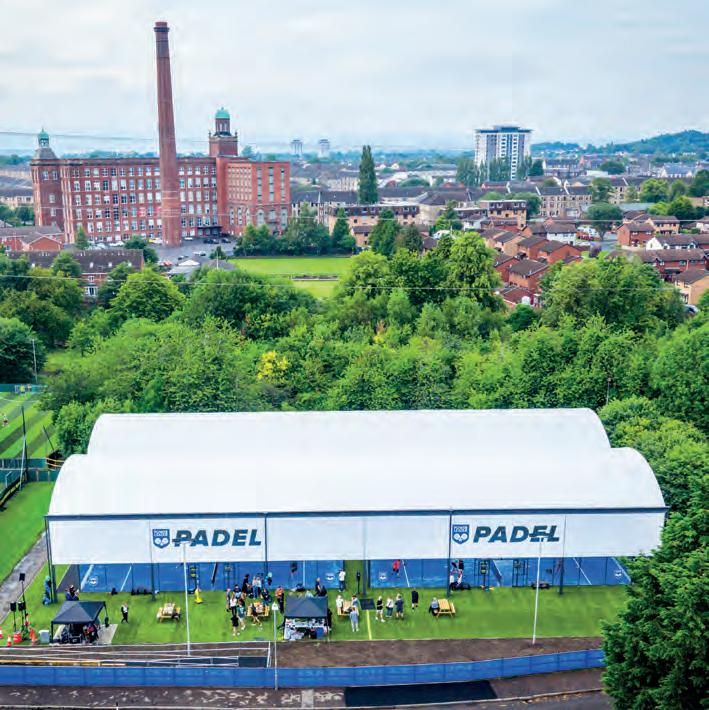
Why cover your facilities? Three standout wins...
✔ Turn seasonal spaces into year-round assets
✔ Watch occupancy rates, revenue opportunities and memberships soar
✔ Create a training and playing experience people love
Every one of our canopies is built to exceptional standards and backed by industry-leading 25-year guarantees. It’s an investment that keeps paying dividends. Contact us to start your transformation today!
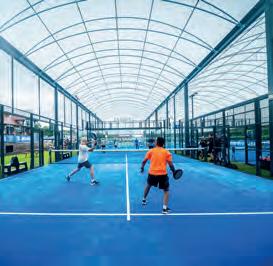
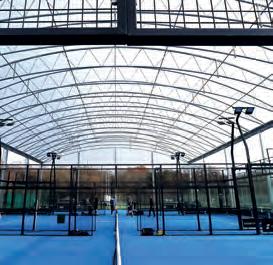
Shockpads are a crucial element of 3G pitch systems. SportsNation spoke to some of the leading suppliers in the field
hock pads are impact-absorbing underlays installed beneath the synthetic carpet in modern 3G turf pitch systems. They act as a resilient cushioning layer, designed to provide vital shock absorption, enhance player safety and extend the lifespan of the synthetic surface. Crucially, they also deliver uniform bounce and ball roll across the entire pitch, helping to prevent the playing surface from compacting and hardening over time. SportsNation spoke to three leading shockpad suppliers to gauge their views on the latest industry trends and to gain insight into their latest product innovations.


Regupol’s systems provide uniform force reduction and consistent ball behaviour


The quality of a synthetic turf system is largely determined by its structural buildup. As requirements for durability, playing comfort and consistent performance continue to increase, the shockpad is becoming an increasingly important focus in system design.
With Regupol turfpad SP, Regupol offers a prefabricated shockpad for synthetic turf systems designed to deliver stable performance. Manufactured from high-end granulates, it ensures uniform force reduction and consistent ball behaviour across the entire playing surface.
Factory production allows for defined material properties and a high level of uniformity across the surface. This results in reproducible sports functional characteristics that can be precisely integrated into the overall system design. For planners and contractors, this means a high level of installation reliability and a dependable basis for the implementation of demanding sports surfaces. As part of the overall system, the shockpad plays a key role in the durability of the pitch. It helps to maintain mechanical properties even under intensive use and thus supports the long-term quality of the facility.
Regupol turfpad SP is suitable for a wide range of artificial turf systems and meets the requirements of modern sports facilities in terms of functionality, safety and longevity.
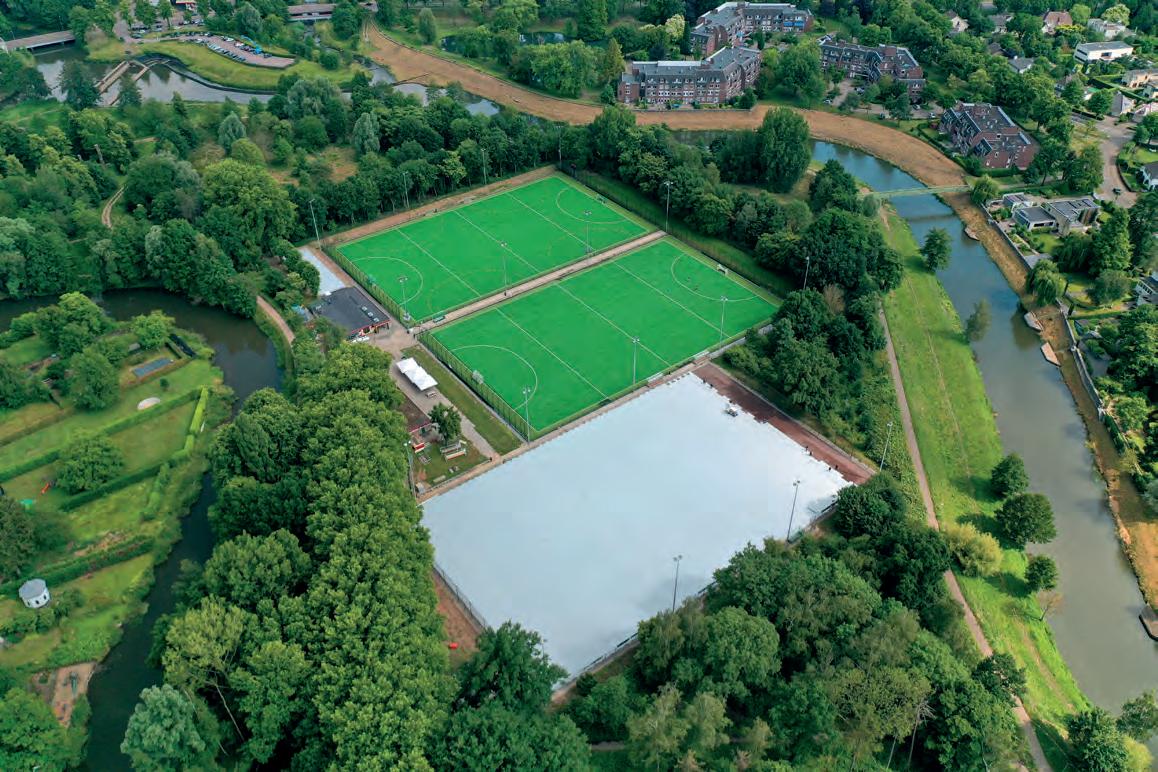
Foam: Circular economy shock pads deserve more recognition
The transition toward more sustainable sports infrastructure is accelerating worldwide.
Environmental product assessments are becoming increasingly important in procurement and specification processes across the synthetic turf industry. Schmitz Foam says it supports this development – but feels that environmental assessment methods should better reflect true circularity.
“Transparent environmental data is essential to building a more sustainable future”, the company says. “Our latest Life Cycle Assessment (LCA) results have highlighted an important challenge: today’s environmental scoring systems do not always reflect circularity as expected.”
For decades, Schmitz Foam has focused on circular production methods for shock pads, an integral part of sustainable synthetic turf systems. Its flagship product, ProPlay, is manufactured from repurposed cross-linked polyethylene foam sourced from industrial residual streams. Every year, Schmitz Foam gives more than 10 million kilograms of reclaimed foam a second life through its circular production process, from its Roermond facility alone.
Designed for durability, player comfort and sports performance, ProPlay combines premium performance with responsible material use. Yet recent reassessment in line with the latest EN 15804 framework and registration in the Dutch National Environmental Database (NMD) revealed the complexity of evaluating circular products within existing environmental models.

Schmitz Foam believes transparent environmental assessments are essential for the future of sustainable sports
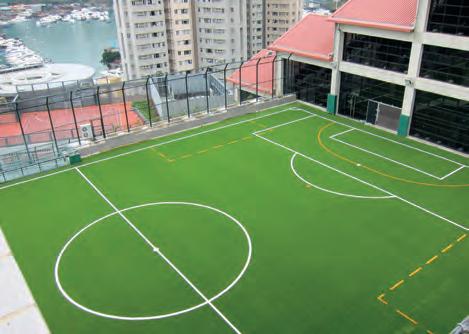
“Current LCA methodologies strongly weigh factors such as product mass and transport impact,” the company says. “As a result, products manufactured from reclaimed materials are not always fully recognised for their contribution to waste reduction and material reuse, while products based on virgin raw materials may receive environmental credits later in their lifecycle.”
Schmitz Foam believes transparent environmental assessment methodologies are essential for the future of sustainable sports infrastructure. The industry should continue refining these systems to ensure circular material use is properly recognised.
Because sustainability is not only about reducing emissions, it is equally about preserving valuable materials, extending product lifecycles and ensuring that circular products remain viable, so resources can stay in continuous use for future generations instead of becoming waste again.
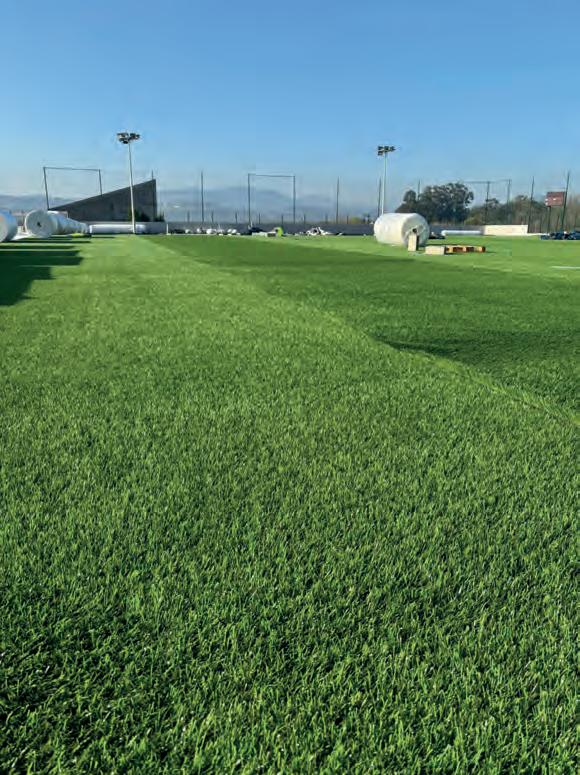


In Vizcaya, Northern Spain, a newly completed football pitch is setting the standard for modern sports infrastructure – combining performance, durability and smart system design beneath every step of the game.
As part of an extension project for a private school, the 5,594sq m installation integrates Trocellen’s ProGame shock pad beneath a synthetic turf system, installed on a solid asphalt base. While invisible to the eye, the shock pad plays a decisive role in how the pitch performs – day after day, match after match.
At the heart of the system, ProGame 5010 XC is engineered to do more than just absorb impact. It delivers consistent force reduction and controlled energy restitution, creating a balanced playing surface that supports athlete safety while enhancing comfort and performance. The result is a field that feels reliable underfoot, reduces player fatigue and maintains its playing characteristics even under intensive use.
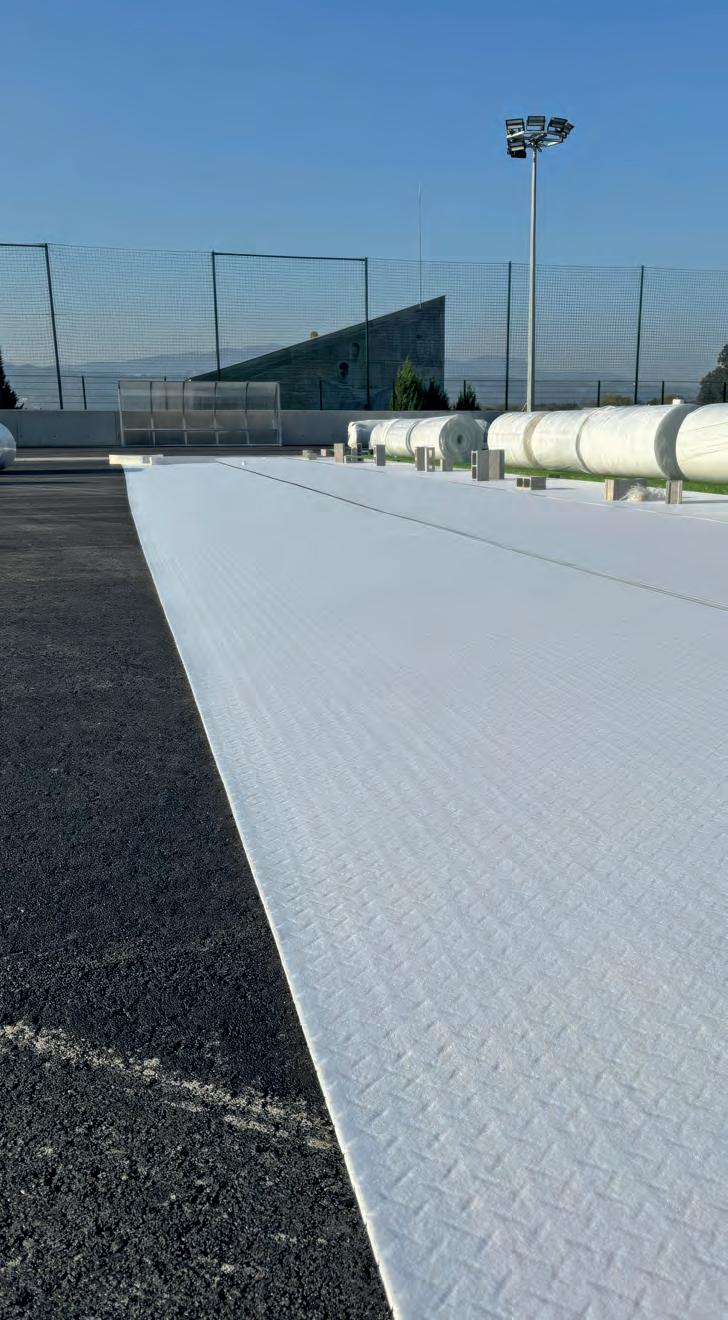
While invisible to the eye, the shock pad plays a decisive role in how the pitch performs – day after day, match after match
surface behaviour across the entire pitch – an essential factor for both training environments and competitive play. Its robust structure also contributes to long-term resilience, helping facilities meet performance standards over time without compromising on quality.
Designed specifically for synthetic turf applications, the shock pad ensures uniform
More than just a single project, the field in Vizcaya reflects a broader trend: the growing demand for high-performance, future-ready sports surfaces. At the same time, it highlights ProGame’s expanding footprint in Spain, supported by strong local partnerships and increasing regional presence.
Why has Trocellen expanded ProGame production to Spain?
As demand for high-quality Shock Pads continues to grow, ProGame has expanded its European manufacturing network by introducing licensed production at Trocellen Ibérica in Spain for the Iberian Peninsula, Morocco and Latin America.
This strategic step brings ProGame closer to customers and partners in these regions, enabling shorter supply chains, faster lead times and more efficient customer support. Local production also reduces transport distances and CO2 emissions while maintaining the high performance and quality standards ProGame is known for worldwide.
Rather than simply increasing production capacity, the expansion strengthens ProGame’s ability to respond more quickly and flexibly to regional market requirements.

Why Spain?
Spain was a natural choice for this expansion thanks to its strategic location, strong industrial infrastructure and close connection to both European and Latin American markets. It is also one of Europe’s most important markets for artificial turf systems and sports infrastructure.
At the same time, the existing Trocellen plant in Spain builds on decades of experience in manufacturing cross-linked polyolefin foams. This expertise provides an excellent foundation for producing high-quality ProGame Shock Pads while maintaining the consistent quality standards expected from Trocellen. Together with our production sites in Germany, Italy, Malaysia and, most recently, Hungary, Spain is now an integral part of ProGame’s growing global manufacturing network. This multi-site approach provides greater supply security, increased flexibility and regional proximity to customers.
Does the plant only produce ProGame Shock Pads?
No. The Spanish production facility continues to manufacture cross-linked polyolefin foam solutions for a wide range of industries, including construction, automotive and footwear.
The site’s long-standing experience in foam production and converting has now been successfully transferred to ProGame. This allows the same manufacturing expertise, process know-how and quality standards developed over many years to support the production of ProGame Shock Pads. By combining multiple product lines at one site, Trocellen makes efficient use of its manufacturing capabilities while continuing to serve customers across different business sectors.
By producing ProGame Shock Pads locally, we are able to respond more directly, more flexibly and more efficiently to market requirements

Since January 2026, Trocellen Ibérica has been responsible for the licensed production and commercialization of ProGame Shock Pads for the Iberian Peninsula, Morocco and Latin America.
This regional setup enables dedicated technical support, shorter delivery times and closer collaboration with customers, installers, designers and sports authorities.
At the same time, the recent start of Shock Pad production in Hungary further strengthens ProGame’s European manufacturing network, creating additional flexibility and improving regional supply capabilities across Europe.
The Spanish production site is equipped with state-ofthe-art manufacturing technology designed to ensure efficiency, reliability and consistently high product quality. In addition, ProGame XC-Cut and XC-Cut Plus technologies are fully operational in Alcalá de Henares, enabling the production of advanced Shock Pad solutions that meet the demanding performance requirements of modern artificial turf systems. By combining proven foam expertise with advanced converting technologies, Spain has become another important production hub within the growing ProGame network.



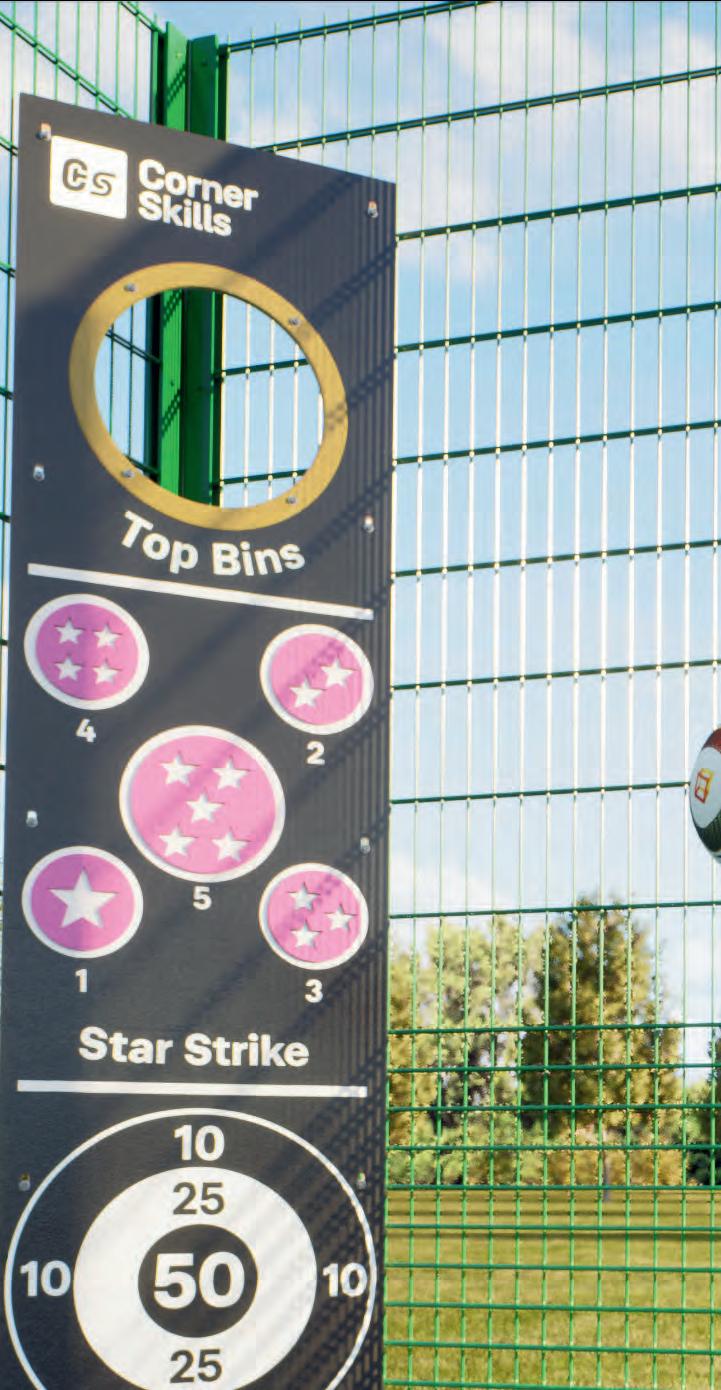







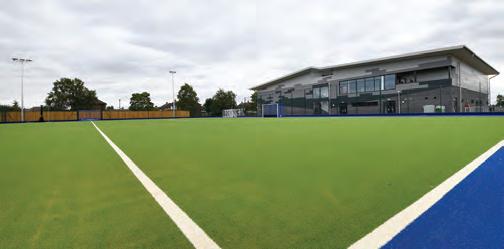
















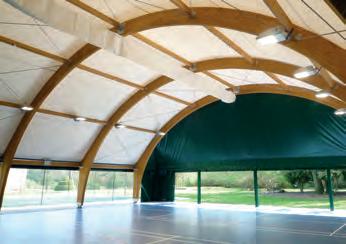






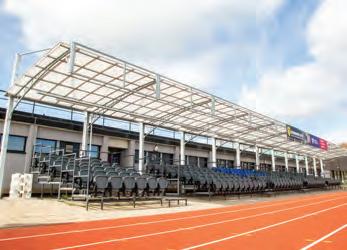


















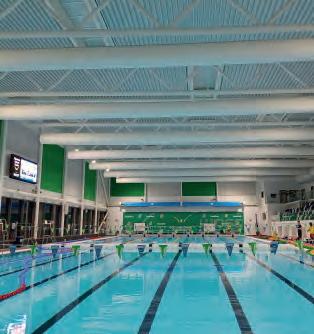






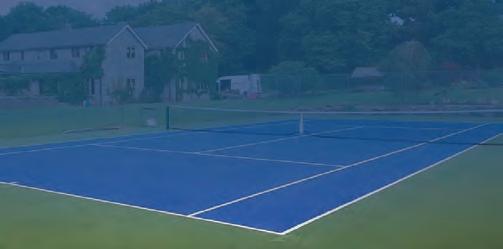



































































































New taskforce looking to transform school swimming
London Aquatics Centre improving access to swimming
Why a career in aquatics could be the answer to youth unemployment
How using research could be critical for drowning prevention
Reframing swimming pools as health and economic accelerators
Swim England sets a new standard of excellence in swimming teacher training with the NEW SEQ Level 2 in Teaching Swimming.

This means:


Learners qualify faster
Our new qualification delivers quality without compromise combining a streamlined pathway with flexible entry routes to attract and retain the best talent.
Developed in line with CIMSPA’s updated Swimming Teacher Professional Standard and delivered by licensed educators, our qualification ensures learners and employers can trust the training to meet the highest industry standards.
Learners qualify faster with all the skills they need to teach confidently from day one.
Improved delivery model
Licensed educators benefit from an improved delivery model, supported by modern assessment technology.
Poolside-ready teachers
Providers get poolside-ready teachers equipped with the skills and confidence to deliver exceptional learn to swim lessons.
Flexible pathways to success
Whether learners start directly, begin as a Learn to Swim Helper, or upgrade from Level 1, there’s an option that’s right for every individual.
us in shaping the future of swimming teaching.
Swimming teachers have always played a role that extends far beyond teaching front crawl, breaststroke or butterfly. For children and adults alike, they often become role models, helping to overcome fears, build confidence and develop a lifelong relationship with water. For many they are the first person to instill the belief that they are capable of achieving something they once thought impossible
Alliance on industry leavers – those who have left the aquatics sector for roles elsewhere. The results suggest that, while the sector is a great one to work in, low pay and limited progression opportunities mean that people will sometimes look elsewhere to further their careers. Read more about this – and how the sector might want to tackle the perception – from page 48.
Another vital profession, lifeguarding, has a similarly extended function. For many young people, becoming a lifeguard represents their first step into the world of work. While the role is centred on safety, it also provides an opportunity to develop a range of transferable skills that can prove invaluable throughout a person’s career. Llifeguarding teaches responsibility, develops decision-making and improves teamwork, communication, leadership and situational awareness. It can also teach a crucial lifeskill – the ability to remain calm and solve problems under pressure.
As a result, swimming teaching and lifeguarding continue to provide rewarding and meaningful career pathways, while forming the backbone of an industry that helps millions of people stay active, safe and healthy. Yet, both roles are often seen as temporary or as “second jobs” and not necessarily as long-term career options. This is reflected in a survey conducted by the Swimming
Elsewhere in this issue, we find out how the countdown is now on for the RLSS UK’s flagship national water safety campaign, Drowning Prevention Week. This year’s campaign will see new resources for teenagers, one of the groups most at risk of accidental drowning. The campaign follows the tragic half-term heatwave, where 12 children and five adults drowned in just one week. For more, turn to page 26.
We also look at how a new taskforce, led by the Swimming Alliance, will look to improve school swimming attainment and tackle the challenges impacting delivery (p. 44) and review the recent One Swim England Summit (p. 56).
As always, we also celebrate the people, organisations and innovations helping to shape the future of aquatics. The resilience shown by the sector in recent years – despite the welldocumented challenges, from energy prices to cuts in funding – demonstrates not only its importance, but also its determination to ensure that swimming remains accessible for generations to come.
Tom Walker, Editor
Tom Walker
Editor
T: +44 (0)7796 512769 E: tom@nationmedia.uk
John Challinor
Publisher
T: +44 (0)7971 043396
E: john@nationmedia.uk
Register for your free subscription at www.swimnation.uk




SwimNation is at the heart of the UK’s swimming and aquatics sector. Published in partnership with the Swimming Alliance, it is the go-to publication and news website for anyone involved in swimming and aquatic provision across the UK. From facility development and operations, research and technology though to sustainability, training and programming, SwimNation covers it all. SwimNation is published three times a year as a standalone title, with each issue also included within SportsNation
The Swimming Alliance advocates for equity, sustainability, and strategic investment in swimming as a lifesaving skill, public health priority and as a national development asset. You can find out more about the Swimming Alliance at www.theswimmingalliance.org
Subscribe today to receive your complimentary copy https://swimnation.uk/subscribe
https://www.linkedin.com/ company/swimnation
Advertising opportunities
Contact John E: john@nationmedia.uk

SwimNation is published by SportsNation Ltd.
This publication is protected by copyright and no part may be reproduced, transmitted or stored in any print or electronic format without the written permission of the publisher. Every effort has been made to ensure the accuracy of the contents of this publication and PadelNation accepts no responsibility for any error or misrepresentation. Opinions expressed by the contributors and advertisers are not necessarily those of the publisher and we do not accept responsibility of losses or damages arising from them. Printed by BCP Media Group Ltd.





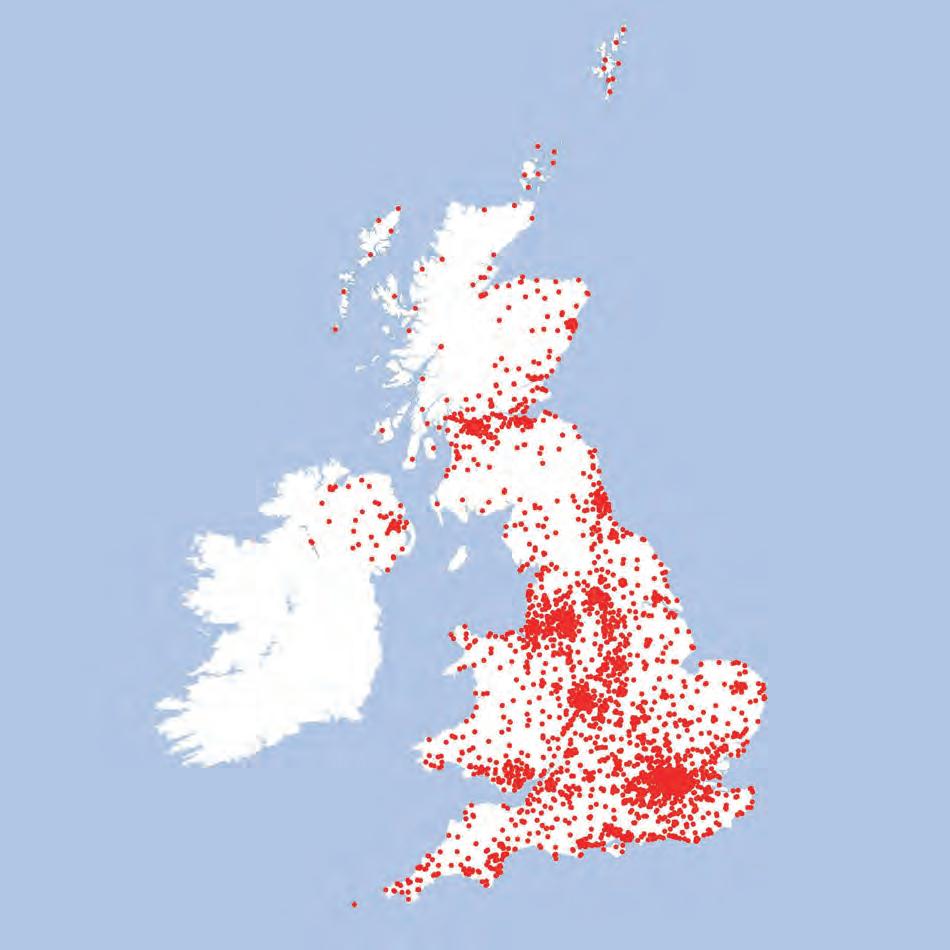
The historic open-air pool in Portishead, Bristol, has reopened after a major £1.7m refurbishment.
The redevelopment, funded in part by the government’s Community Ownership Fund, included replacing the ageing boiler system and upgrading the changing rooms.
First opened in 1962, the open air, 33m-pool was threatened with closure in 2008, when North Somerset Council produced a report in 2008 that determined that the pool was a financial liability and that it should be closed.
A group of six local people then formed a company limited by guarantee – which then became Portishead Pool Community Trust – in order to save and run the pool. The Trust managed to convince the Council that it had a feasible business plan to run the pool, and in early 2009 a 99-year lease was agreed with the Council, securing
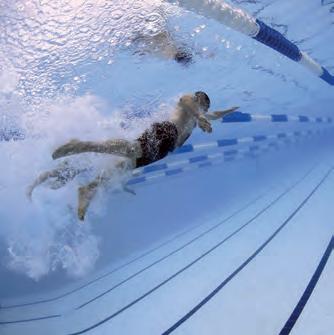
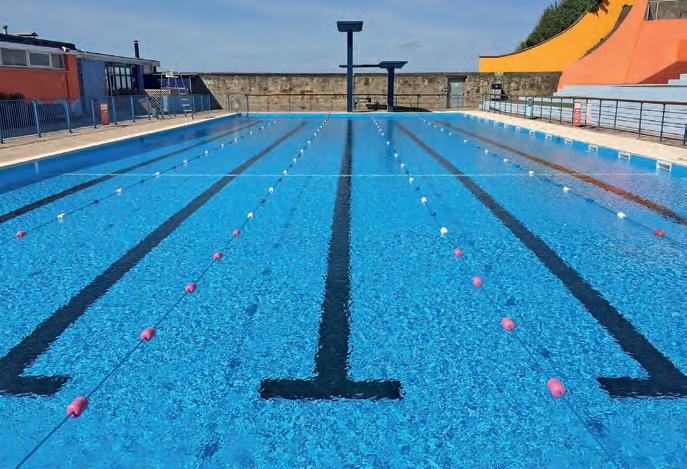
the pool’s long-term future.
The pool was shut last year to enable the works, which also included making it more environmentally sustainable –such as the installation of solar panels to cut energy costs.
“Our pool refurbishment is complete and we are open for the heated season,” a spokesperson for the trust said.
“The Café has re-opened following refurbishment and is now open Monday to Sunday.”
The spike in energy prices following events in Iran and across the Middle East has shown the financial risks to swimming pools – and the need for support.
That is the message from the Swimming Alliance, after the price of gas in the UK surged by more than 46%, pushing it to its highest price for three years.
“With 76% of the publicly accessible water space lost in the past 15 years disappearing since 2020, the impact of huge increases in costs on pool operators is clear,” the Alliance said in a statement. “
“The previous spike in energy costs required the government to step in with the Swimming Pool Support Fund.”
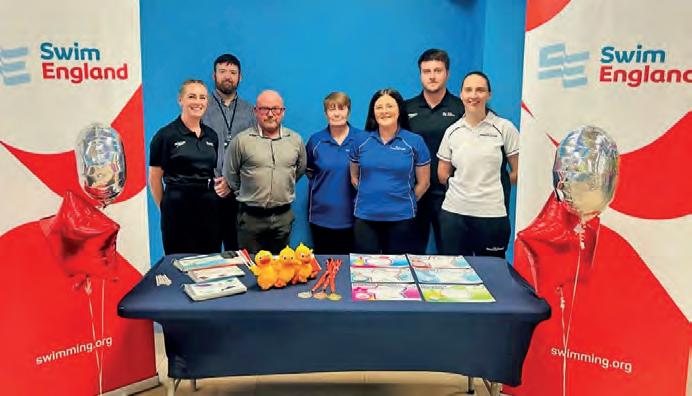
Stoke-on-Trent City Council is partnering with Swim England to deliver a Learn to Swim Programme across the city, strengthening opportunities for local residents to develop vital life skills in the water.
Through the adoption of Swim England’s Learn to Swim Programme, Stoke residents will benefit from a structured pathway from first entering the water through to developing lifelong aquatic skills.
The delivery of the Learn to Swim programme will be supported by Swim England’s
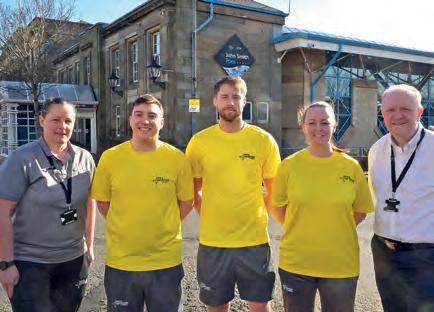
teams, who will work closely with members of Stoke-on-Trent City Council across its leisure facilities, including Fenton Manor Sports Complex, Dimensions Leisure Centre and New Horizons Sport and Leisure Centre. The partnership will provide workforce training, ongoing technical guidance and support.
Jane Ashworth, leader of Stoke-on-Trent City Council, said: “Swimming is a vital skill and this partnership supports our wider ambitions to improve health outcomes for all and ensure all can participate in physical activity.”
“Major step forward” for £35m leisure centre
Kirklees Council has begun developing detailed proposals for a new leisure centre to serve the towns of Dewsbury and Batley in West Yorkshire.
Described as a “major step” for the plans, the work comes after the project secured £35m worth of funding at the council’s budget meeting on 25 February 2026.
“The next stage will include engaging experts in sports, leisure and health to help us to shape a facility that delivers long-term benefits for local communities,” the council said in a statement.
“That work will make sure the centre has the right mix of facilities to make a real and lasting difference to health and wellbeing for people in Dewsbury, Batley and across North Kirklees.”
The facility mix will include a swimming pool. A health club, featuring a large gym and studios, and an indoor sports provision are also likely to be included. Specialist consultants are expected to be appointed as the next step of the project.
The John Smith Swimming Pool in Airdrie has reopened to the public in April, after the completion of a significant refurbishment programme.
The works have delivered a brighter and more modern facility, with improvements including the replacement of the
movable pool floor, extensive retiling of the pool tank walls and regrouting of the pool floor.
Visitors will also benefit from new accessible pool stairs, a fully refurbished pool filtration system and upgrades to both the water treatment system and the building’s heating system.
Making public leisure sustainable and building healthier communities.
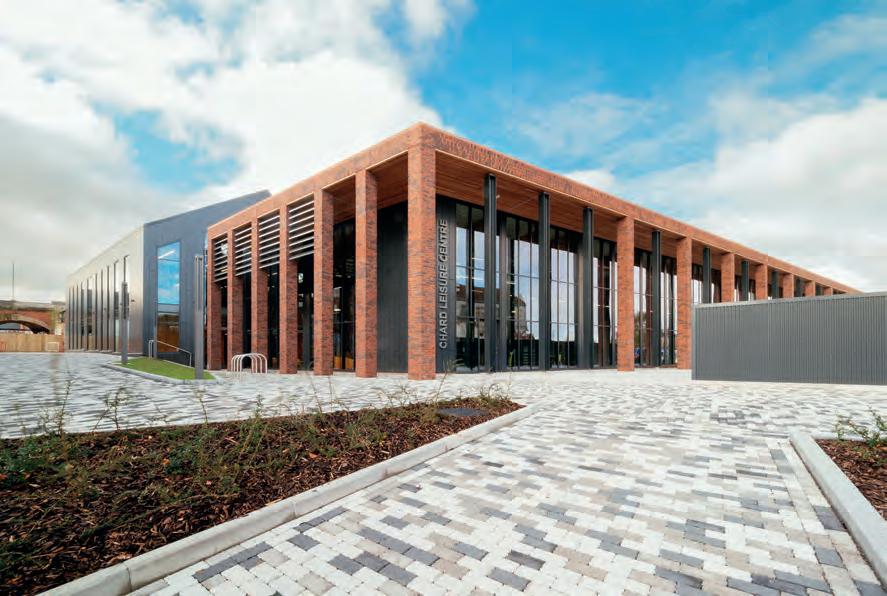
310+ completed projects
81% of clients choose us for further projects
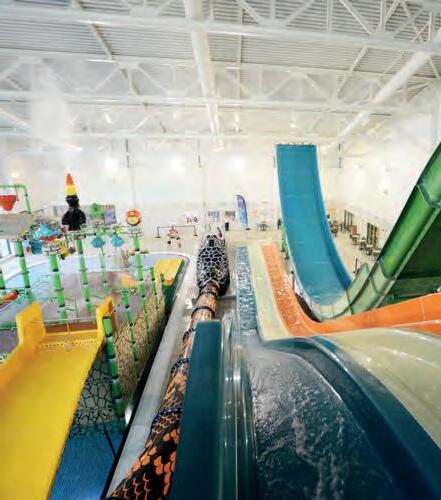
£520m+ investment in local authority leisure
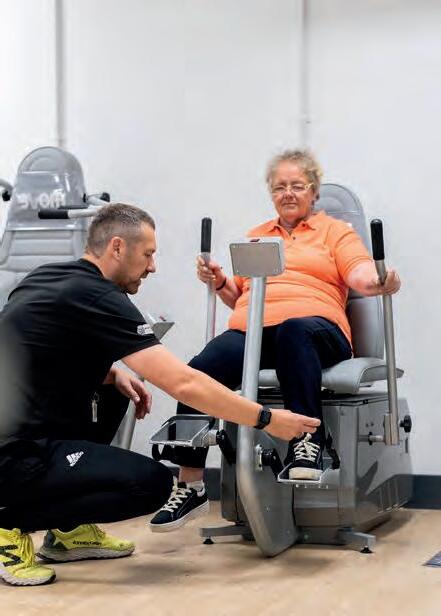
Alliance Leisure are a trusted and experienced leisure development partner, with over 25 years’ experience transforming leisure facilities for local authorities.

Nottingham City Council has announced a free swimming programme for under-16s, providing 22,000 free swimming spaces during school holidays from July 2026 to February 2027. Backed by £197,000 of investment, the programme will help more children and young people across the city to access swimming.
The scheme will run across 49 school holiday days, offering free, structured public swimming sessions at all six Active Nottingham Leisure Centres owned by Nottingham City Council: Clifton, Djanogly,
Harvey Hadden Sports Village, Ken Martin, Southglade and Victoria Leisure Centre.
Sessions will take place on weekdays during school holiday periods (excluding bank holidays). Support will also be available to help children who are nonswimmers or who lack confidence in the water. The scheme is open to Nottingham City resident schoolage children under the age of 16. In line with the Pool Admission Policy, children under eight must be accompanied by a responsible adult or person aged 16+, who will be able to attend at no cost.
Sport for Confidence has launched a new pool lift, known as a ‘Poolpod’, at the Lord Butler Leisure Centre in Saffron Walden.
The installation will give people who face physical, sensory or cognitive barriers the opportunity to access the pool easily, safely and with dignity, enabling more individuals to enjoy the therapeutic and social benefits of swimming.
The centre is owned by Uttlesford District Council and operated by 1Life.
Sarah Wright, Sport for Confidence Senior Occupational Therapist based at the centre, said: “In addition to the wellknown physical benefits of swimming, being in water provides a range of therapeutic advantages, making it an ideal activity for many people with physical, sensory or cognitive difficulties.
Sport for Confidence launched at Lord Butler Leisure Centre in early 2025 and has worked closely with 1Life on activities.
The world’s first International Baby Swimming Teacher Week took place in March, celebrating the professionals who introduce babies and toddlers to the water – and shining a light on growing workforce challenges facing the sector.
The awareness week has been created to recognise the unique role
baby swimming teachers play in early childhood development, helping families build confidence, connection and foundational water safety skills from the very earliest age. It was delivered across a network of baby swimming providers, including Turtle Tots’ nationwide franchise network of more than 180 teachers.
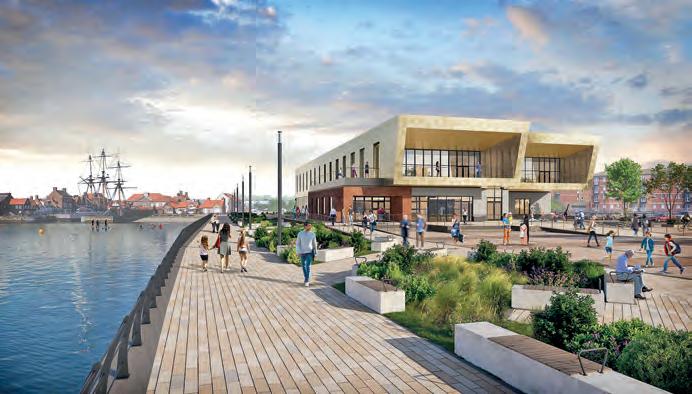
The £35m Highlight Active Wellbeing Hub in Hartlepool is set for a summer opening, after construction of the flagship facility has entered the final fit-out stage.
Located at The Waterfront within Hartlepool marina, the facility will replace the old Mill House Leisure Centre, which opened its doors in 1972 and has now reached the end of its operational life.
Designed by GT3 Architects, the centre will feature three swimming pools: an 25m eight-lane main pool, a 25m

four-lane learner pool with moveable floor and leisure pool with race slide and interactive water play features.
In addition, there will be a large health club with a 100-station gym, two interconnected fitness studios and dedicated indoor cycling studio. Other facilities will include active and soft play areas, function and meeting rooms, a café with panoramic seating overlooking the marina and NHS consultation suites, built as part of a partnership with University Hospitals Tees.
The Royal Life Saving Society UK (RLSS UK) has implemented comprehensive updates to CPR and First Aid training across its qualifications and awards, following the latest Resuscitation Council UK (RCUK) guidelines.
The changes, introduced on 1 May 2026, follow several months of work to update RLSS UK’s training content and support materials.
The revised guidance covers areas including faster early response from bystanders, immediate calls to emergency services, enhanced use of automated external defibrillators (AEDs), and changes to infant compression technique.
RLSS UK said the updates are now an integral part of all relevant qualifications and awards. The organisation worked closely with its Clinical Governance Group and RCUK to understand how the new guidance should be applied across its training portfolio.
The Swimming Teachers Association (STA) has appointed Alex Barrett as its new Head of Aquatics. In the role, Barrett will help lead and develop STA’s aquatic offering, supporting members, enhancing learn to swim products and qualifications and drive the growth and development of STA’s aquatic portfolio and team.
Barrett has 14+ years’ experience across the physical activity and aquatics sectors and joins the STA from Swim England, where he held the role of National Participation and Growth Manager. There, he led work focused on strengthening longterm sustainability and expanding participation opportunities.






























































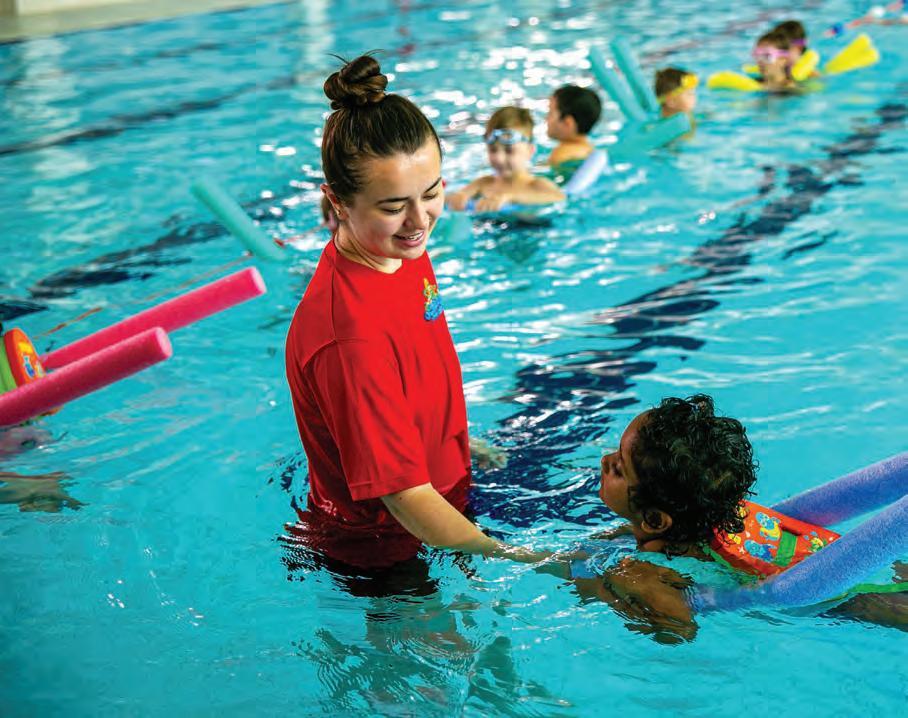




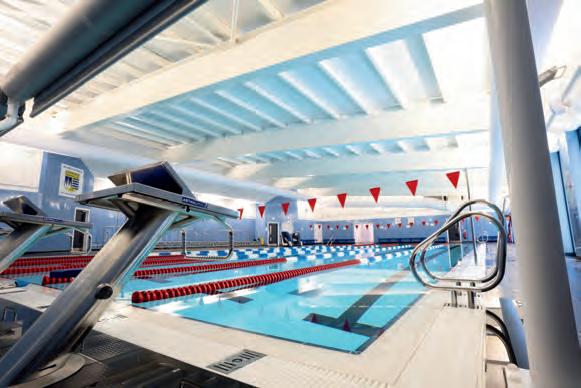
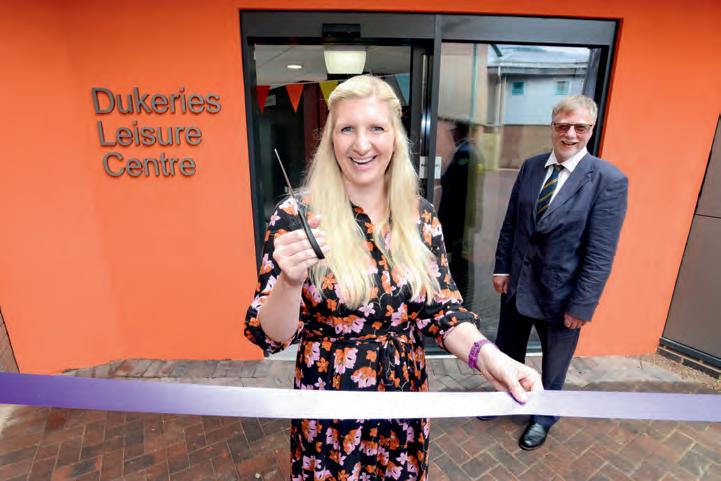
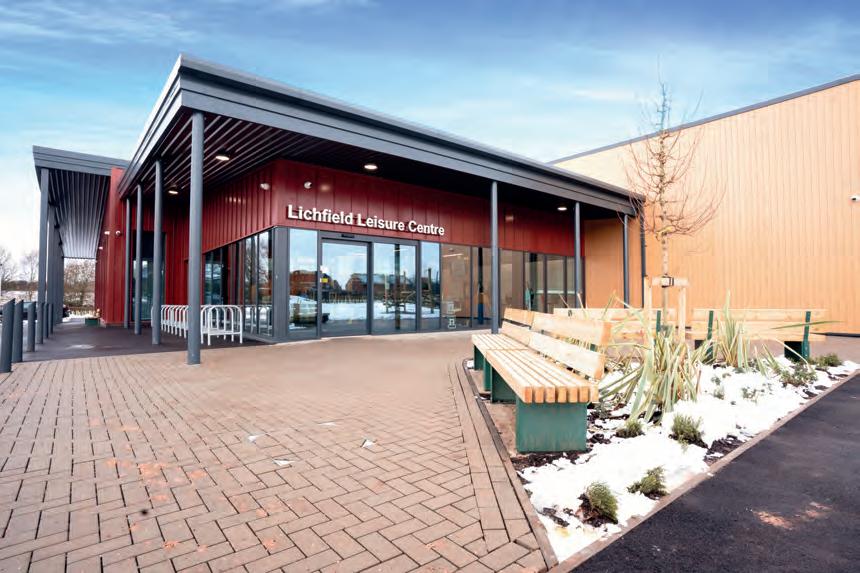

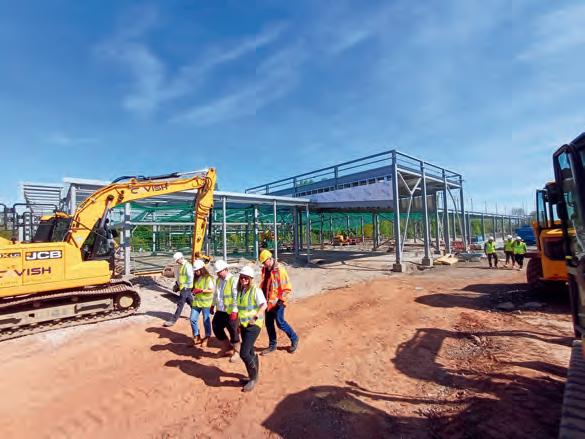

The All-Party Parliamentary Group (APPG) on Swimming has published the findings of its “The Deep End” report, which examines the escalating crisis facing Britain’s swimming pool network and a clear call to government for long term, strategic intervention.
Commissioned to identify the structural, financial and operational challenges affecting swimming pools across the country, the report draws from a comprehensive call for evidence across the sector. More than 200 written submissions were received from operators, membership bodies, governing bodies, clubs and individual members of the aquatic community.
The report shows that the UK’s swimming pool estate is ageing fast and becoming unsustainable without urgent action. More than 1,200 pools are over 40 years old, past their expected lifespan and hundreds of pools have already been lost, limiting access for communities already struggling with few local swimming options.
At the same time, costs continue to rise. Energy prices remain nearly double pre-pandemic levels, staffing costs are increasing, and ageing buildings often require more maintenance. Many councils now face a financial black hole, forcing difficult choices between keeping pools open or cutting other services.
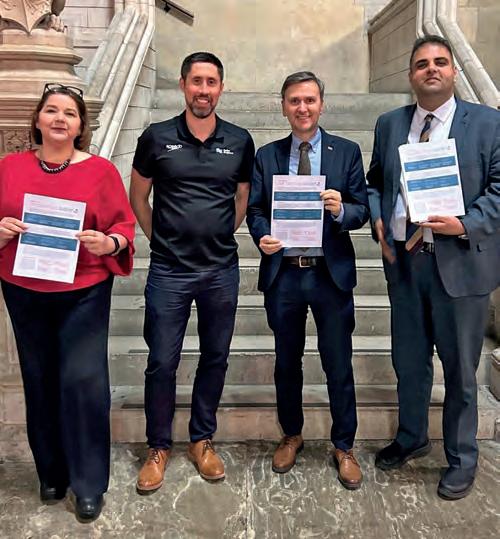

To address these challenges, the report calls for Government to:
Deliver a funded, long-term strategy for aquatic facilities.
Prioritise sustainable, energy efficient, modern design to reduce operating costs and environmental impact.
Guarantee school swimming and water safety, ensuring all children leave primary school with essential life-saving skills.
Formalise the role of pools in public health, by expanding social prescribing and co-locating NHS services within leisure facilities.
The report also highlighted the positive impact strategic investment can make with improved environmental and economic performance from newer facilities. Rebecca Cox, Managing Director at the Institute of Swimming (IoS) responded to the launch, saying, “This report lays bare the scale of the challenge our sector faces, but it also provides a clear, achievable plan for securing a sustainable future for Britain’s swimming pools.
“Swimming is not a luxury; it is a life-saving skill, a cornerstone of public health, and a vital community asset. We urge the Government to act on these recommendations and commit to a long-term strategy that protects and rebuilds the aquatic infrastructure our communities so urgently need.
“A positive immediate action would be to direct the £400 million investment announced for grassroots sport to support our pools and leisure centres.”
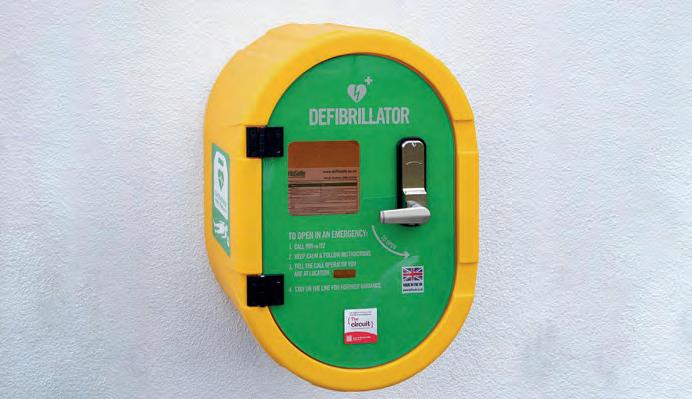
ukactive has published new guidance on defibrillators to help fitness and leisure operators deliver life-saving support for anyone who suffers a cardiac arrest. The guidance has been developed with the British Heart Foundation (BHF) and forms part of ukactive’s commitment to support gyms, swimming pools, leisure centres and other fitness facilities to further improve safety and standards.
Out-of-hospital cardiac arrest survival rates in the UK remain low, with fewer than one in 10 people surviving. However,
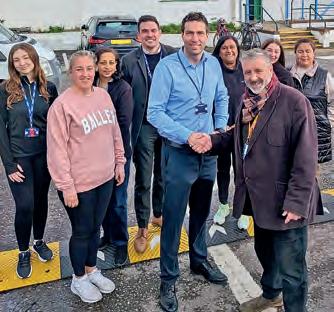
rapid defibrillation within a few minutes of collapse can significantly increase survival rates. The new resource, titled ‘Guidance on Defibrillator Provision in Physical Activity Settings’, provides practical advice on installing, registering, and maintaining a defibrillator, as well as training staff and maximising the devices’ life-saving impact in the physical activity sector. It has been informed and approved by ukactive’s Standards and Legislation Committee, which features leading experts from operators of all types and sizes.
Building work has begun on a new leisure centre in Halifax, following the completion of all preparatory works that first began in October 2025. The works included the partial demolition of the old North Bridge Leisure Centre.
The project is driven by Calderdale Council, which will own the site. The council has secured £12.2m from the government’s Levelling Up Fund to help fund the new facility. When completed, facilities at the new centre will include a six-lane swimming pool with spectator seating, a learner pool, refurbished eight-court sports hall, a 120-station fitness suite, three multi-functional studios, a dedicated cycling studio, a children’s soft play and adventure area and a café and community area.
A wet changing village and a Changing Places facility for disabled people and separate dry change facilities for sports hall and gym use.
BH Live has secured a 10year contract extension to continue to operate leisure and wellbeing services on behalf of Portsmouth City Council (PCC). The charitable trust has operated community leisure facilities in Portsmouth on behalf of the council since 2013. The renewed agreement supports the council’s £40 million investment in sport and leisure facilities, aimed at helping improve residents’ health and wellbeing through enabling physical activity for all abilities.
BH Live currently operates six leisure centres and attractions across the city.

GreenTech International has launched a breakthrough solution to eliminate biofilms and chlorine-resistant pathogens in pools and spas
Anew UK-based company, GreenTech, is entering the pool and spa sector, looking to provide operators with an effective new way to eliminate biofilms and the dangerous pathogens they protect.
The company’s new Hydro Dioxide tablet has been designed to penetrate and break down chlorine-resistant biofilm structures throughout entire systems, exposing and eliminating the bacteria and pathogens hidden within. While chlorine struggles to penetrate biofilms, Hydro Dioxide works through them, removing the protective layer and stopping the continuous cycle of contamination that many operators have come to accept as unavoidable. Delivered in a fast-dissolving tablet, the solution is the result of more than 15 years of specialist research into chlorine dioxide and biofilm behaviour.
Biofilms have been described as one of the most persistent and underestimated risks in wet leisure environments. Forming deep within pipework, filters and surfaces, they can create a protective shield for harmful bacteria, allowing them to survive disinfection, re-enter circulation and repeatedly compromise water quality. This could result in not only poor bather experience – including skin irritation and infections – but also the presence of serious health threats, such as Pseudomonas Aeruginosa, Legionella, E. coli and Cryptosporidium oocysts alongside ongoing damage to plant infrastructure and spiralling maintenance costs.
Despite the threat they can pose, biofilms remain misunderstood across the industry, with many operators unknowingly treating symptoms in the
water rather than the root cause within the system.
GreenTech International is led by pool operations and treatment specialists, James Lee and Steve Martin, who combined bring more than 80 years of experience.
The founders say that the company’s scienceled approach targets biofilms at source, rather than relying solely on traditional sanitisation methods.
James Lee said: “Operators are often fighting a problem they can’t see with tools that were never designed to solve it. Biofilms sit behind the scenes, protecting harmful bacteria and contaminating systems again and again. Until you remove that layer, the problem never truly goes away. Hydro Dioxide changes that by targeting the source, not just the symptoms.”
Designed for commercial pools, spas and hot tubs the solution works within existing systems, removing the need for repeated draining and refilling, reducing water waste and lowering overall chemical demand while improving clarity, air quality and operational efficiency.
performance. It doesn’t produce harmful
Manufactured in the UK and fully compliant with GB BPR, ISO, OHSAS standards and Net Zero 2027, the product aligns with modern sustainability targets while delivering a step change in performance. It doesn’t produce harmful disinfection by-products (DBP’s) such as trihalomethanes (THMs) Chloroform and Haloacetic acids (HAA’s), an increasing concern for both regulators and operators focused on health and environmental performance.




https://greentech-international.com
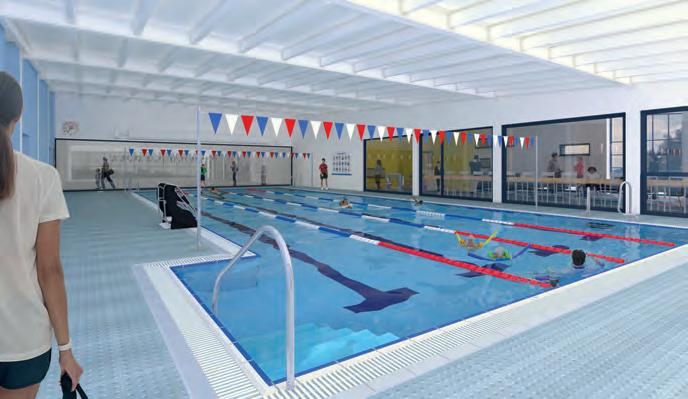
Demolition work is set to begin later this spring on the former Edlington Leisure Centre in Doncaster, paving the way for the building of a new facility on the site. Edlington Leisure Centre closed during the COVID-19 pandemic and never reopened. City of Doncaster Council, which owns the venue, launched a tender for the demolition work, the result of which is anticipated to be announced soon.
The new Edlington Leisure Facility, which received cabinet approval in November 2025, will include a 25m pool and will be

built on the site of the existing Leisure Centre, adjacent to Sir Thomas Wharton Academy. Construction of the new facility – a project led by leisure development specialist, ReCreation and its partners, including Box Architects – follows local feedback from residents and swimming clubs, who made it clear that they preferred a 25m full swimming pool. The estimated cost for construction is just over £6.5m and once the site is cleared, the council will then be able to finalise the construction timeline to build the new venue.
Leisure operator, GLL, has partnered the Royal Life Saving Society UK (RLSS UK) to introduce water safety education into all swimming lessons at the facilities it manages on behalf of local authorities. GLL – which offers swimming lessons through its Better Swim School – has become RLSS UK’s first water safety education partner. The move will see all pupils of all ages, from toddlers to adults, benefit from life-saving skills. Better Swim School currently offers 200,000 adults and children weekly lessons at more than 140 pools across the UK. GLL will upskill more than 2,000 Swimming teachers to share water safety messaging and skills. Emma Lewis, GLL’s National Swimming Development Manager, said: “Our goal is to ensure that every child in the communities we serve gains essential water safety skills. Learning to swim is about far more than mastering a skill – it is about saving lives and fostering safer communities.”
Live Borders has become a new STA Approved Training Centre (ATC) for aquatics. It is also among the first organisations in Scotland to begin delivering STA’s newly accredited Swimming Teacher Qualification at SCQF Level 7. Managing six swimming pools
and leisure facilities across the Scottish Borders, Live Borders will now be able to deliver STA aquatic qualifications in-house – creating greater flexibility to recruit, train and develop swimming teachers locally, while supporting the continued growth of learn to swim provision across its communities.
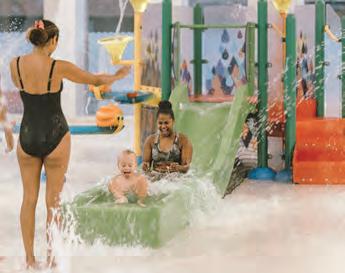
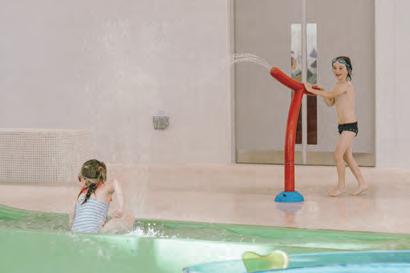
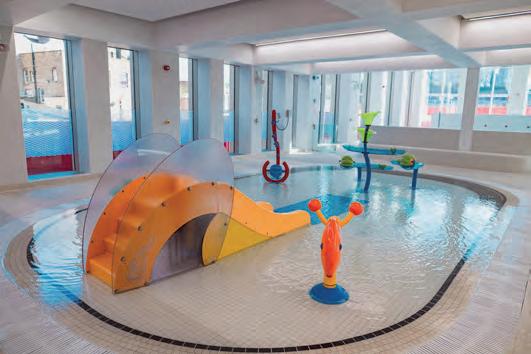






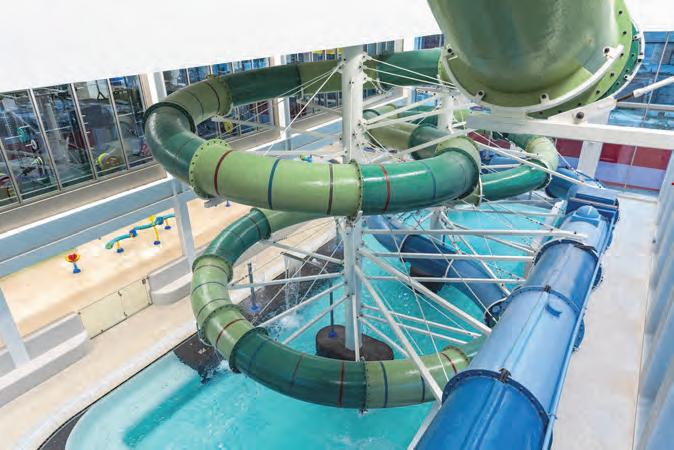





Natalie Gibson, Head of
As part of my recent insight work at Alliance Leisure, I’ve been looking at the age and condition of swimming pools across the UK. It quickly becomes clear that much of today’s provision were built to meet the needs, expectations and operating environments of a different era and are now being asked to deliver far more than they were ever designed for.
My findings are reflected in the recent publication of The Deep End, an All Party Parliamentary Group for Swimming report supported by Swim England. It concludes that ageing facilities, rising costs and a system shaped by short-term decision-making are placing a vital part of our community infrastructure at risk.
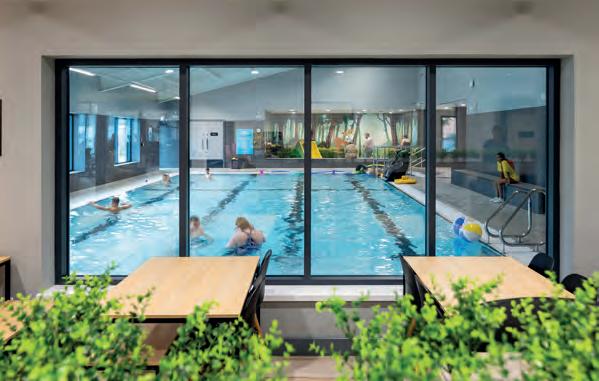
When we view swimming pools solely through the lens of cost and constraint, we risk missing a huge opportunity to unlock decades of sustainable community return. When designed and delivered in response to local need, swimming pools can become powerful drivers of social, health and economic value supporting prevention, reducing inequalities and strengthening communities.
Swimming remains one of the most inclusive and accessible activities available, supporting people of all ages and abilities while delivering a critical life skill. Yet, as highlighted in The Deep End, participation is falling and fewer children are leaving primary school able to swim confidently. This is not about a lack of demand, it reflects a disconnect between what communities need and what existing facilities are able to provide.
According to The Deep End report, more than 1,200 pools are already beyond their expected lifespan. These buildings were never designed to meet modern expectations around energy efficiency, flexibility or integrated health provision. As a result, they are increasingly expensive to operate, difficult to adapt and vulnerable to closure.
This creates a cycle that is hard to break. Local authorities, under significant financial strain, are Affordability
forced into reactive decisions, maintaining ageing assets rather than investing in long-term solutions.
What’s often missing from this conversation is the value that well-placed investment can unlock.
The report highlights that where facilities are modern, well-designed and aligned to local need, they deliver higher usage, stronger financial performance and greater social value, with facilities under 10 years old achieving around 20% higher throughput and impact.
We are seeing this in action. Warsop Health Hub was the first facility delivered through Sport England’s Leisure Local programme, which integrates pools with health and fitness provision with the flexibility to meet evolving local needs. Since the Hub opened, Year 6 school swimming attainment has risen from 40% to 80%. Beyond this, the Hub runs a range of pool programmes targeting the whole community, run by the centre and in partnership with community organisations.
Swimming pools are not just places to be active. They are increasingly central to public health. The Deep End reports that swimming pools already generate an estimated £2.4
billion in social value each year and help prevent over 1.4 million cases of ill health. When embedded within wider health systems, their role expands further – supporting rehabilitation, prevention and community-based care.
Viewed through this lens, the question is no longer whether we can afford to invest in swimming pools, but whether we can afford not to. Affordability, sustainability and access remain real challenges. Pools will always be energy-intensive, and financial pressures on councils are unlikely to ease in the short term. But modern design, smarter technology and early investment in efficiency can significantly reduce long-term risk, both financially and environmentally. What my research and The Deep End makes clear is that the current trajectory is not sustainable. Continuing to rely on ageing infrastructure and short-term funding will only accelerate decline.
But when we invest in the right facilities, in the right places, we are not just maintaining buildings. We are creating needs-based active environments that drive healthier communities, reduce long-term public cost and secure the future of a vital service for generations.
The STA has launched a charity initiative to mark a long-term charitable commitment to training the next generation of swimming teachers
The Swimming Teachers Association (STA) has launched a long-term charitable initiative designed to remove financial barriers into swimming teaching and strengthen access to swimming and water-safety education across the UK. Called ‘The Ripple Effect’, the initiative places workforce development at the heart of improving access to swimming lessons - recognising that learning to swim starts with having skilled, qualified teachers on poolside.
The launch comes at a time when the UK continues to face a significant national shortage of qualified swimming teachers, limiting lesson availability and contributing to long waiting lists in many communities.
The Ripple Effect is a non-time-limited initiative, allowing funding, partnerships and impact to grow over time. At its core is a simple principle: when you train a swimming teacher, you change thousands of lives.
The charitable initiative is intrinsically linked to STA’s new Level 2 Swimming Teacher Qualification

and, in Scotland, the STA Swimming Teacher at SCQF Level 7 qualification accredited by Qualifications Scotland Accreditation. Developed to support the next generation of swimming teachers, the employerinformed, CIMSPA-endorsed programme has been designed to ensure learners build the skills, confidence and competence required to deliver safe, inclusive and effective lessons across the full learn to swim pathway.
As with STA’s wider qualification approach, the programme places a strong emphasis on practical delivery, supported by structured learning, blended learning options and ongoing professional development – helping to build confident, capable and work-ready teachers. Funds raised through The Ripple Effect will be pooled into a ring-fenced bursary fund, supported by a combination of public donations, fundraising bids, commercial partnerships, everyday giving initiatives and additional financial contributions from STA.
Dave Candler, CEO of STA, said: “Swimming is a life skill, but far too many children and families are still facing barriers to accessing lessons - not because the demand isn’t there, but because the workforce capacity isn’t.

By investing in people, we are investing in the thousands of learners they will go on to teach - creating a ripple effect that strengthens water safety, confidence and opportunity in communities across the UK
Dave Candler, CEO of STA
“Through our STAnd Up for Swimming campaign back in 2022, we saw first-hand the impact that targeted bursary support can have in helping people enter the profession. The Ripple Effect builds on that success, creating a sustainable, long-term approach to developing the swimming teacher workforce.
“By investing in people, we are investing in the thousands of learners they will go on to teach - creating a ripple effect that strengthens water safety, confidence and opportunity in communities across the UK.”
STA is inviting the aquatics sector to play an active role in supporting the Ripple Effect. STA Approved Training Centres (ATCs), Swim Academies and Swim Stars can pledge support by offering access to venues and or volunteering tutor time, while corporate partners can contribute through financial donations.
The Ripple Effect has already secured early support from partners across the aquatics and wellbeing sector, including Get More Vits, Seascooter and Course Pro, demonstrating a shared commitment to investing in the next generation of swimming teachers.
STA has also secured regional funding from regional trusts and charities, with the first courses already being planned in Coventry, as part of the funding agreement.
Under The Ripple Effect name, and through its partnership with SEN Swimming UK, STA will also work to improve access to swimming lessons for children and young people with special educational needs and disabilities. This will include supporting more teachers to gain specialist training, alongside developing practical resources and guidance to
help families find suitable swimming provision. All supporting organisations will be recognised through a dedicated Ripple Effect Supporters Page, featuring partner logos and acknowledgements to highlight the collective commitment to strengthening the swimming teaching workforce.
To support participation, STA will provide partners with a free digital supporter badge.
STA has introduced new everyday giving opportunities, including easy fundraising, enabling supporters to raise donations through their normal online shopping at no additional cost.
The Ripple Effect is designed to grow organically, releasing bursaries as funding allows and creating a continuous cycle of opportunity, training and community benefit.
For further information on pledging support or becoming a funding partner, please visit https://www.sta.co.uk/news/2026/04/20/stalaunches-the-ripple-effect-charity-initiative-tostrengthen-uk-swimming-teacher-workforce/
RLSS UK HAS CALLED ON THE LEISURE SECTOR TO BACK DROWNING PREVENTION WEEK 2026 FOLLOWING HALF-TERM DROWNINGS
The countdown is on to the Royal Life Saving Society UK’s (RLSS UK) flagship national water safety campaign, Drowning Prevention Week, with new resources for teenagers, one of the groups most at risk of accidental drowning, emphasised during the recent May halfterm.. The campaign, now in its 13th year, follows the tragic half-term heatwave, where 12 children and five adults drowned in just one week. Running from 13-20 June 2026, the campaign focuses on the Water Safety Code, which is designed to help people make safer decisions in, on and around water. By encouraging individuals to stop and think, stay together, float if they fall in, and call 999, RLSS UK aims to equip children, and their parents and carers, with practical, memorable knowledge and skills that can save lives.
RLSS UK’s new celebrity ambassador, Tom Dean MBE, triple Olympic gold medallist and founder of Tom Dean Swim School, is keen to ensure water safety knowledge and self-rescue skills are integrated into swimming lessons. Dean, who strongly believes “all children should have the opportunity to learn lifesaving water safety skills”, will help the campaign by presenting a major water safety education event for more than 500 schoolchildren

in Maidenhead and by speaking at the All-Party Parliamentary Group for Water Safety Education to encourage the Government to provide consistent swimming and water safety education for all.
This year, RLSS UK has developed a range of materials to specifically resonate with male teenagers, after the latest figures from the National Child Mortality Database (NCMD) show that 13 to 17-year-olds are among the highest risk of accidental drowning. Leisure operators can access these materials alongside a wide range of other free campaign resources, including posters, digital assets, lesson plans, and interactive activities, available on the RLSS UK website.
Jo Talbot, Commercial Director, RLSS UK, says: “Drowning Prevention Week is a collective effort. As the countdown to summer begins, we urge leisure operators to help us reach more communities than ever and move closer to our vision of communities free from drowning.”
Drowning is one of the leading causes of accidental death in the UK, and many incidents are preventable with the right knowledge and awareness. Now in its second decade, the annual campaign engages more than 1,000 leisure operators and swimming

pools across the UK and Ireland who come together to deliver free water safety education to children and young people ahead of the summer holidays. This is historically the period with the highest number of drowning fatalities, according to data from the UK Water Incident Database (WAID).
Driven by a vision to create communities free from drowning, the campaign educates young people, engages families and communities and shares expert guidance on how to stay safe in, on and around water. In 2025 alone, Drowning Prevention Week reached more than 2.3 million children, highlighting the initiative’s scale and impact.
Leisure and swimming pool operators are key to the campaign’s success. As trusted community hubs, they play a vital role in introducing children, young people and their families to water safety skills.
RLSS UK is promoting the wide range of activities taking place during Drowning Prevention Week in lifesaving clubs, leisure centres, swim schools, sports clubs and more across the UK and Ireland. The campaign not only supports water safety education but also helps operators engage new audiences and strengthen their Corporate Social Responsibility (CSR) commitments.
For many operators, it’s also an opportunity to build stronger relationships with local schools and community organisations.
Andrew Clark, Head of Sport & Aquatics at GLL, says: “Our mission is to ensure everyone in our communities has the opportunity to learn how to swim and become safe in and around water. We use Drowning Prevention Week as an opportunity to get into schools and deliver water safety assemblies ahead of the summer holidays. In addition, all our swimming lessons during that week have a water safety focus.”
Incorporating water safety into swimming lessons is another key approach. Throughout the week, instructors can deliver focused sessions using RLSS UK’s lesson plans and teaching resources, ensuring consistent and impactful messaging across all age groups.
Beyond the pool, facilities can host community events such as water safety workshops, Rookie Lifeguard taster sessions, and family activity days. Promotions, discounts and offers on lessons and programmes can also help drive participation, while competitions and fundraising events can raise awareness and attract local media attention. To learn more about Drowning Prevention Week: https://www.rlss.org.uk/dpw















































www.rlss.org.uk/swimming-pools-consultancy-service



















The Swimming Alliance conducted a survey on “industry leavers” – those who have left the aquatics sector for roles elsewhere. The results suggest that, while the sector is a great one to work in, low pay and limited progression opportunities means that people will sometimes look elsewhere to further their careers
The Swimming Alliance has published the findings of a workforce survey carried out by its Workforce Subgroup, providing valuable insight into the experiences, motivations and challenges facing the aquatics workforce across the UK.
Conducted during autumn 2025, the survey gathered responses from individuals who had worked within aquatics roles, including swimming teachers, pool lifeguards, assistant teachers, swim managers and duty managers. The survey received a total of 211 responses. Of those who responded, 80% had worked as lifeguards and 51% as swimming teachers. A quarter (23%) had held other roles – predominantly those of either swim manager or duty manager. Another 7.50% had worked as assistant teachers.
The findings reinforce both the value people place on working within aquatics and the ongoing workforce pressures affecting the sector. Many respondents highlighted the rewarding nature of their roles, with flexibility, making a difference to children’s lives, working within a team environment and contributing to local communities all identified as key positives.
The survey also demonstrated strong levels of long-term commitment within parts of the workforce, with more than 40% of swimming teachers having remained in role for over a decade. The survey also showed, however, that less than a third (30%) of respondents had worked in the sector for more than 10 years.
The results also highlighted several recurring factors contributing to people leaving the sector.
How long did those who left aquatics work in their role?
Pay, limited career progression opportunities and not feeling valued emerged as the most common reasons respondents chose to leave aquatics roles. Nearly two thirds (65%) of swimming teachers said they left due to pay, while the figure is only slightly lower (60%) for lifeguards.
Other reasons for leaving in the two roles included:
Swimming teachers:
49% left due to a lack of career progression
38% leave because they didn’t feel valued
Lifeguards:
47% left due to a lack of career progression
44% left because they didn’t feel valued
30% left to pursue a different career
When asked about the aspects that they had enjoyed – or benefitted from – while working in their role within aquatics, more than half (52%) identified the flexibility of the hours. Access to local leisure facilities (49%), making a difference to children’s lives (45%) and working in a team environment (43%) also rated highly. However, only a quarter (27%) said that they had benefitted from training and development opportunities in their roles – an aspect which might come as a worry to sector organisations.
One of the most interesting findings of the survey was to do with the reasons people left the aquatics sector. Nearly half (42%) left to join another sector entirely, with swimming teachers (45%) particularly likely to find new challenges elsewhere. Less than one in five (17%) left aquatics for a role within the wider leisure/sports sector. On one hand, this could suggest that those leaving the aquatics sector were enabled to do so by the transferable skills they had acquired. On the other, it might be evidence that a large proportion of aquatics sector workers leave because they either feel that there aren’t any further opportunities available to them, or that they didn’t enjoy some other aspect of their experience.
Importantly though, the survey also revealed a significant opportunity for workforce recovery and retention, with 58% of respondents stating they would consider returning to work within the aquatics sector.
The Swimming Alliance Workforce Sub-group, led by Ian Cotton, Group Aquatic and Activity Manager at Everyone Active, is now using the findings to help shape future activity and collaborative sector action. Initial priorities include showcasing clearer career progression opportunities within aquatics, addressing misconceptions around pay and employment, and exploring ways to attract more young people into the sector.
The data will also help inform wider conversations around workforce development, recruitment, training pathways and retention across the leisure and aquatics sector. As the Swimming Alliance continues its collaborative work across workforce, inclusion and school swimming priorities, the survey represents an important step towards building a stronger evidence base to support future sector planning and advocacy.
Learning how to swim is possible, and my friends and I are living proof of this
Inclusive practices help remove barriers to participation and widen access to swimming and water safety education. One example of this can be seen at the London Aquatics Centre, where a growing community of visually impaired swimmers are building confidence, independence and a genuine enjoyment of the water through a dedicated sensory swimming initiative.

Delivered by a team of swimming teachers, led by Louise Wray, Swim Manager at Everyone Active – which operates the aquatics centre and is a member of the Swimming Alliance – the sessions have been designed to create a supportive, structured environment where participants feel comfortable from the moment they arrive. Swimmers are met at reception, guided around the pool to help build a sense of space and familiarity, and supported in the water using clear, precise verbal instruction rather than visual demonstration.
The approach is simple but highly effective, giving each participant the confidence to progress at their own pace.
For Daniel, one of the programme’s first participants, the impact has been significant. “My confidence in the water has increased massively,” he said. “Just putting my head under used to feel impossible - now I can swim short distances on my back without a float. The instructors are supportive, patient and even bring humour to the lessons, which makes learning enjoyable.”
What started as a small trial session with Daniel and one other participant has since grown into a regular group of around 10 swimmers, highlighting both the demand for accessible provision and the value of getting the approach right.
“I want others to know this is possible,” Daniel added. “For me the question isn’t ‘can it be

done?’ - it’s ‘how can it be done?’ At the London Aquatics Centre, everything has been thought through, and that makes all the difference.
“Learning how to swim is possible, and my friends and I are living proof of this. I’d encourage any visually impaired person to come and join the class and see what’s possible.”
Chris Wells, Contract Manager at the London Aquatics Centre, said: “Daniel’s journey reflects what can be achieved when inclusive practice is prioritised. His story shows what can be achieved when barriers are removed.
“We want people with disabilities to know they are welcome here, and that with the right support, they can be active and enjoy the health and social benefits of swimming.”
By combining practical adaptations with a supportive teaching approach, the team at the London Aquatics Centre is not only helping people learn to swim but also demonstrating what inclusive provision can look like in practice.



Across the UK, organisations within the Swimming Alliance are continuing to explore ways to make aquatics more accessible, inclusive and representative of the communities they serve. By sharing examples of positive practice, the Alliance hopes to encourage wider collaboration, innovation and learning across the sector, helping more people access the physical, social and wellbeing benefits that swimming can provide.
The Swimming Alliance brings together national governing bodies, operators, charities, educators and community organisations to advocate for greater equity, sustainability and strategic investment in swimming and water safety education. Through collaborative working groups focused on priorities including inclusion, workforce development and school swimming, the Alliance is helping create a more connected and evidence-led approach to sector challenges. Learn more here https://theswimmingalliance.org/
We believe lifeguards deserve training grounded in evidence, operators deserve qualifications that reflect real-world conditions and the public deserves the safest possible environments
Asking difficult questions, challenging long-held practice, and using robust evidence to shape skills and knowledge are critical for drowning prevention, says Jo Talbot, Commercial Director, RLSS UK
In a sector responsible for public safety, tradition is not enough. Practices that have long been accepted as standard must still stand up to scrutiny and demonstrate that they remain effective, justified, and fit for today’s challenges.
Recognising this need for scrutiny, the Royal Life Saving Society UK (RLSS UK) and the University of Chichester have worked together for more than ten years to challenge long-established water safety practices using robust, real-world evidence.
This partnership is built on shared values and a commitment to high-quality, sector-focused research to develop and evolve water safety training and education. The research team at Chichester have embedded themselves within RLSS UK’s training and qualification activity. Many of the academics have attended National Pool Lifeguard Qualification (NPLQ) courses themselves, some are RLSS UK trainers, while others have worked as lifeguards. That lived experience elevates the quality of the research, ensuring it is grounded in the operational realities of the lifeguard role.
Building on these efforts over the years, this research has directly shaped lifeguard training and qualifications to support the sector and ultimately to save lives. One of the most significant and arguably pivotal changes was the evolution of lifeguard scanning and supervision.
For more than 35 years, lifeguards across the UK, Ireland and much of the world were trained using the ‘10:20 system of bather supervision’. This required lifeguards to scan their entire zone every 10 seconds for 10 seconds and reach any casualty in their zone of responsibility within 20 seconds.
The system was widely accepted and embedded in guidance, including references within Health and Safety Executive (HSE) documentation, Managing Safety in Swimming Pools – HSG179. However, following serious incidents and investigations, questions emerged about whether the 10-second scanning expectation was realistic or even evidence-based.
Dr Jenny Smith, research lead at the University of Chichester, questioned whether scanning an area of up to 250sq m and potentially 80 pool users every 10 seconds, was physiologically and cognitively possible. In 2022, we began a study to determine whether lifeguards could actually meet the 10-second requirement. The findings were clear: lifeguards, even when instructed to, did not scan every 10 seconds for 10 seconds, either because they chose not to or because it was not possible. For the brain to interpret what the eye sees, the eye must fixate. Fixations take time. The coordination between head movement, eye focus and cognitive processing cannot be compressed infinitely. The
If a casualty is submerged or in difficulty, every second counts
expectation of scanning an entire busy pool/zone within 10 seconds, repeatedly, was just not possible.
This was a pivotal moment. We had identified that a globally adopted system, one used for over three decades, was just not achievable in practice.
INTRODUCING NATURAL SCAN: 20
Thanks to robust data, we were able to act confidently. In July 2023, RLSS UK created and introduced Natural Scan: 20 into its NPLQ. Instead of rigid 10-second cycles, Natural Scan: 20 requires lifeguards to continuously scan the pool and/or the zone they are responsible for. Pool operators must also ensure lifeguards can get to any area within their zone within 20 seconds.
Some ask why the 20-second benchmark remains. The answer is simple: survival. If a casualty is submerged or in difficulty, every second counts. Rapid recognition, swift rescue, extraction from the water and the early initiation of CPR and defibrillation dramatically improve survival outcomes. The 20-second reach requirement ensures lifeguards are positioned and deployed so a casualty has the best possible chance.
We presented the change to our customers and our network of more than 7,000 trainer assessors. Importantly, we also worked closely with the HSE, sharing the full research findings and evidence base.
In 2024, the Health and Safety Executive amended Managing Safety in Swimming Pools – HSG179, removing references to 10:20 and incorporating Natural Scan: 20.
To see a method developed by RLSS UK, grounded in research, embedded in national guidance, is something of which we are exceptionally proud. Even more encouraging is seeing Natural: Scan 20 adopted beyond our own qualifications. But most importantly, it means swimming pool lifeguards are better equipped to do their job effectively and confidently.
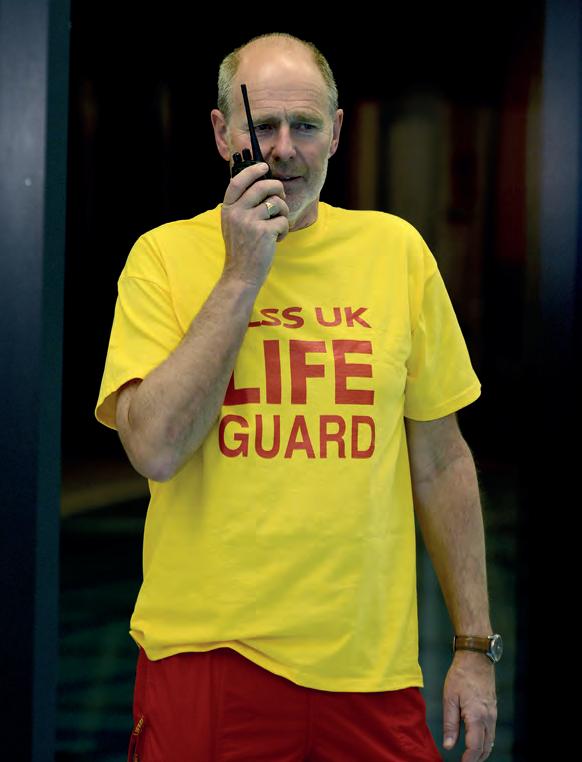
Our future research programme is just as exciting. Working with the University of Chichester, we are currently progressing three major projects: Technology and supervision – exploring how innovation can enhance safety and support for staff.
Public perception of water hazards – examining how people understand risk in outdoor environments such as lakes, rivers and reservoirs, with the aim of preventing future drownings.
Water safety education and children –investigating the impact of water safety education on children’s safety in, on and around water.
Each project is rooted in the same principle: if we better understand behaviour, perception and human performance, we can design training and qualifications that save lives. We believe lifeguards deserve training grounded in evidence, operators deserve qualifications that reflect real-world conditions and the public deserves the safest possible environments.
A commitment to research means being prepared to discover that long-standing methods may not be optimal and having the courage to make the changes required. We’re proud of what we have achieved so far and are even more excited about what comes next, because we know that when research informs practice, lives are protected.
● To view or download the guidance, visit https://www.rlss.org.uk/hsg179


The 10:20 system of bather supervision (or 10:20 protection standard, as known by its creator - Ellis & Associates), had been within the NPLQ for over 30 years. RLSS UK wanted to examine its effectiveness and commissioned a research project to learn more. Due to the results of the research, RLSS UK has replaced the 10:20 standard with the System for Supervising Swimming Pools (Natural Scan: 20) within the NPLQ. This means that lifeguards must continuously scan the zone they are responsible for, using their preferred scanning pattern tailored to the pool users, hazards, and risks.
The pool operator element remains unchanged, and pool operators are still responsible for ensuring that where they position lifeguards, the lifeguards can get to any pool user in any area of their zone within 20 seconds.

Warsop Health Hub – delivered by Alliance Leisure on behalf of Mansfield District Council – was developed to address long-standing health inequalities, inactivity and poor access to local leisure and wellbeing services in Warsop, North Nottinghamshire. Before the Hub opened, limited access to facilities contributed to multiple preventable drownings. Since introducing the new pool and structured swimming programme, the percentage of children able to swim 25 m has risen from 43% to 76%.
In just the first two months, over 4,000 children and spectators attended lessons, and 172 nonswimmers accessed intensive confidence-building courses. Five local primary schools now walk to weekly sessions, reducing transport costs by 40% and enabling 300 children to join regular lessons.
ReCreation’s above-ground approach to designing and construction swimming pools is changing how aquatic facilities are delivered


or decades, the delivery of public swimming pools has followed a familiar model: excavation, reinforced concrete tanks and lengthy construction programmes carrying significant cost and programme risk.
That traditional model is under pressure. Capital budgets are constrained, carbon reporting expectations are increasing and much of the UK pool estate, much of it built before 2000, is approaching the point where major refurbishment or replacement is unavoidable.

Against this backdrop, ReCreation, a leisure development partner founded by Olympians Adrian Turner, Steve Parry and Rebecca Adlington, is challenging the default “dig and pour” assumption.
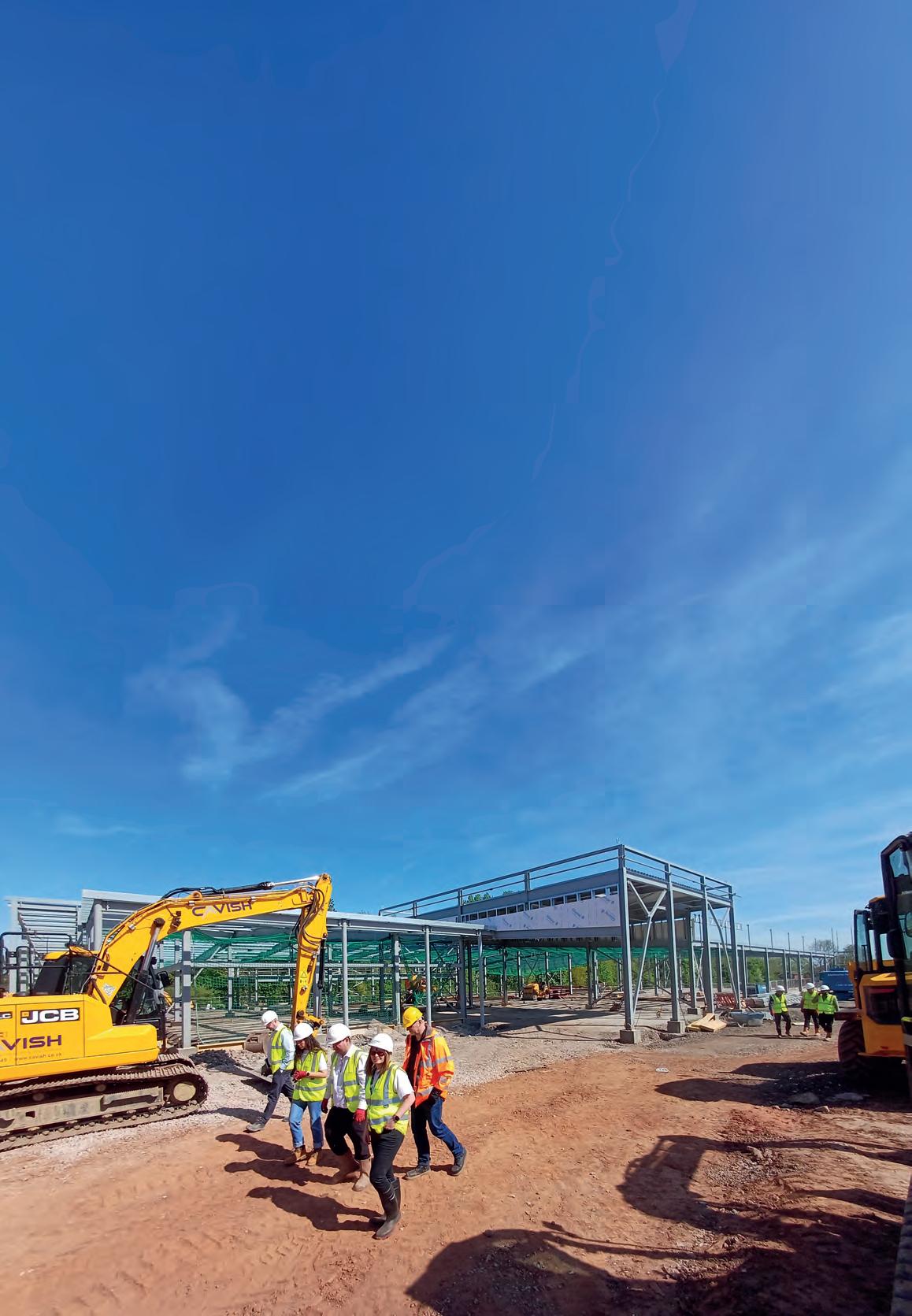
By combining end-to-end development expertise with above-ground modular pool technology supplied by AstralPool UK, ReCreation is delivering high-quality aquatic facilities with shorter programmes, reduced construction risk and, in many cases, a lower carbon footprint.
For Adrian Turner, the case for above-ground pools is both professional and personal. As an Olympian and Commonwealth swimmer, he has competed in some of the world’s leading above-ground facilities and understands first-hand that performance and user experience need not be compromised. That perspective underpins ReCreation’s approach: making it easier for communities to deliver and sustain high-quality water space—not only for elite performance, but for everyday public use.



Why above ground? An alternative to the traditional concrete tank
Above-ground pools have historically been associated with temporary or lower-spec installations. However, modern modular steel-panel systems, such as AstralPool’s SkyPool technology, are engineered as permanent structures capable of meeting both commercial and competition standards.
These systems use hot-dip galvanised steel panels and are designed for long-term operation, with manufacturer warranties of up to 20 years on structural components. For ReCreation, this fundamentally changes the risk profile of delivery by reducing reliance on deep excavation, complex ground conditions and extensive concrete works.
In practice, the advantages over traditional in-ground construction often include:
● Reduced capital costs, driven by lower groundworks and material requirements
● Shorter construction programmes, limiting disruption and exposure to inflation
● Lower embodied carbon, through reduced concrete use and site disturbance
● Greater site flexibility, particularly in constrained or challenging locations
● Long-term durability, suitable for permanent public leisure facilities
These benefits are already being realised across a growing number of UK projects.
A common misconception is that modular or aboveground pools are temporary. In reality, modern steel-panel systems are engineered for long-term use, with corrosion protection, defined structural warranties and maintainable design principles.
ReCreation’s approach also prioritises accessibility for maintenance, simplified structural interfaces and reduced reliance on hidden elements – addressing many of the long-term challenges associated with ageing concrete pool infrastructure.

adoption by Swim!
This approach was adopted early by Swim!, reflecting confidence in the model from an operator focused on learn-to-swim and pathway provision. Through Swim!, the focus remains on access, participation and long-term community benefit—an emphasis that aligns with ReCreation’s aim to protect, enhance and futureproof the UK’s swimming infrastructure.
A partnership-led model
Central to this approach is collaboration.
ReCreation acts as an integrator, aligning funding, design, planning and delivery, while AstralPool UK provides specialist modular systems and water treatment expertise.
This partnership model enables a more efficient route to delivery, demonstrating that new aquatic facilities do not need to be prohibitively expensive, high-risk or environmentally intensive.
The future of pools is already here!
As local authorities and operators respond to ageing facilities, rising construction costs and increasing demand for accessible water space, the need for alternative delivery models is clear.
ReCreation’s above-ground approach offers a practical, scalable and lower-risk solution – balancing cost, programme, carbon and whole-life performance.
For Turner, it is ultimately about protecting the future of swimming itself: widening access to high-quality facilities and ensuring that the next generation has the opportunity to participate, compete and thrive.

Discover how ReCreation can support your next leisure project:
● info@therecreationgroup.co.uk
● 0161 764 2224
● www.therecreationgroup.co.uk
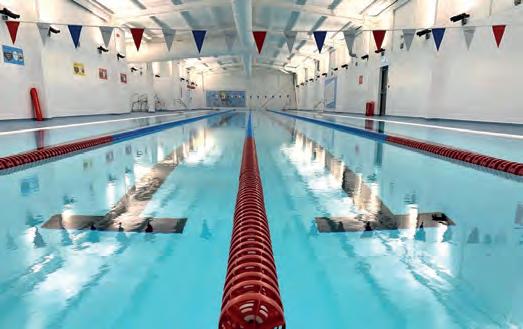
Becontree Heath Leisure Centre (Barking and Dagenham): 50m annex pool
A well known example is the 50m annex pool at Becontree Heath Leisure Centre. ReCreation designed and delivered an above-ground 50m pool alongside the existing centre, allowing the main building to remain operational during delivery.
The annex pool was delivered for less than £2.5m and included the pool hall plus supporting areas (including plant and changing provision). It is often referenced as an early UK example of using modern modular methods to deliver an Olympic length pool at a cost point that would be difficult to achieve with a conventional in-ground concrete tank.
Astral Pools UK provided the modular pool structure and supported water treatment design and delivery, working with ReCreation through design, manufacture and installation.
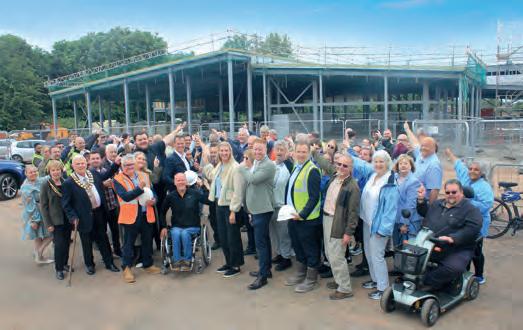
Lichfield Leisure Centre and The Dukeries: repeatable delivery
At Lichfield Leisure Centre and The Dukeries, ReCreation has applied the same core principles: reduce construction risk, shorten delivery timescales where possible and plan for long-term operational sustainability.
The wider takeaway is that above-ground modular pools can be delivered as a repeatable solution, adaptable to different sites, budgets and community needs.



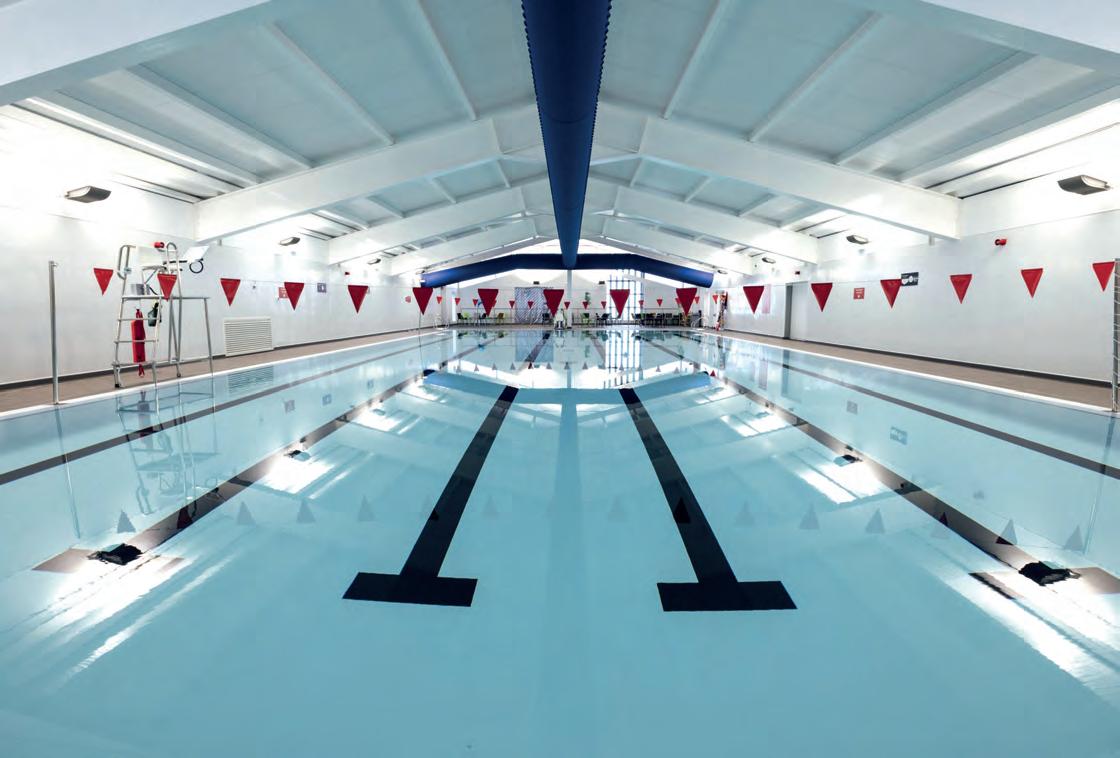
At Rainham Leisure Centre, ReCreation delivered an integrated community facility for around £8m, bringing together a range of elements often seen on higher value schemes. The approach contributed to the project achieving a BREEAM Excellent rating, highlighting the impact that design choices and construction approach can have on operational and environmental outcomes. While the scheme is not an aquatics-only project, it is a useful reference point for how ReCreation applies modern methods and specialist partners to manage cost, energy and programme.




SwimNation looks at how the National Schools Swimming Taskforce, led by the Swimming Alliance, will look to improve school swimming attainment and tackle the challenges impacting delivery and access
Currently, 40% of UK children leave primary school unable to swim the minimum curriculum standard
The aquatic sector has launched a major offensive against the “postcode lottery” and inconsistent outcomes of school swimming through the formation of the Schools Swimming Taskforce. Operating under the Swimming Alliance, the taskforce is developing a single, national school swimming framework designed to ensure every child leaves primary school with essential water competence.
The reform comes at a critical juncture. Currently, 40% of UK children leave primary school unable to swim the minimum curriculum standard. The taskforce’s mission is to move beyond “arbitrary distance-based performance metrics” and reclaim school swimming as a core life skill centred on survival and inclusive delivery.
The taskforce, led by Swimming Alliance Vice Chair, Andrew Clark, has moved from a strategic group, who agreed on the scope and focus, to a technical group, with Schools Swimming technical leads from Alliance members along with invited experts
The taskforce’s technical groups have identified several “entrenched challenges” that have historically hindered progress, identified in the table on the following page. Current data suggests that more than 70% of primary schools receive swimming instruction to external providers and operators. This has led to what sector observers describe as a “rabbit hole” of varying standards, where the definition of competence varies. The taskforce aims to correct this and ensure Schools Swimming has a stronger focus on developing water safety skills and a love for water with a more consistent approach. It will also publish best practice guidance for Schools and operators.
A central pillar of the emerging framework is the introduction of “Lesson Zero.” This concept aims to transform the inefficient “first lesson” model, where time is often wasted on individual testing and rule-

The ultimate goal is to move away from a “compliance exercise” and toward a lasting cultural shift where swimming is viewed as a joyful, inclusive, and essential life skill
Category Primary Barriers Identified
Operational Transport costs, inconsistent facility access, and facility closures
Instructional Low active learning time in pools, large group sizes, and weak differentiation
Systemic Fragmentation between school swimming, "learn-to-swim" frameworks, and water safety standards
Workforce An aging workforce, lack of SEND (Special Educational Needs and Disabilities) training, and a lack of teacher confidence
reading while the majority of the class remains inactive, and also support the addition of Classroom Water safety lessons which are a new addition to the curriculum.
Lesson Zero is a “dry-side” orientation delivered in the classroom or on the poolside before pupils ever enter the water. Its objectives include:
Physical Literacy Integration: Focusing on the pillars of “Think” (purpose/safety), “Feel” (confidence-building), “Move” (land-based concepts), and “Connect” (peer relationships).
Psychological Safety: Removing barriers and building readiness to maximize active water time during Lesson One.
Operational Efficiency: Completing safety briefings, changing procedures, and identifying SEND or cultural needs early.
Choice and Autonomy: Utilising a “Play Your Way” model that allows pupils to share learning preferences. By shifting non-water preparation to Lesson Zero, the taskforce aims to ensure that Lesson One is highly active, structured, and progression-focused from the first minute.
The taskforce is advocating for a shift in how success is measured. While the current National Curriculum requires pupils to swim 25 metres, the sector is increasingly prioritising “water competence” and survival skills over stroke perfection.
A new set of suggested outcomes – to be completed in full-reach depth water– is being proposed to clarify the “minimum standards of capability”:
This framework also emphasizes the “5th Stroke”– the Lifesaving Stroke– as a vital addition to the traditional four competitive strokes (front crawl, backstroke, breaststroke, and butterfly).
The taskforce has already initiated several workstreams to support the rollout of this national model. These include the following:
External Sector Engagement: The group is collaborating with all the relevant key stakeholders and is even engaging with other sectors to explore how gamification and motivation principles can be applied to swimming progression.
Teacher Support: Development of “Activity Cards” to serve as practical lesson plans and a new CPD (Continuing Professional Development) framework to support teachers in delivering the “5th stroke” and safety intent.
Research & Pilots: Scoping for Year 7 testing feasibility is underway to assess the long-term retention of skills.
Alternative Environments: Exploring “bolton” lessons delivered in open-water or alternative environments to reinforce skills learned in the pool.
The emerging framework and the taskforce’s progress will be showcased at the Elevate Conference (17–18 June at ExCeL London), co-funded by RLSS, Swim England, and the STA.
The ultimate goal, as outlined by the Swimming Alliance, is to move away from a “compliance exercise” and toward a lasting cultural shift where swimming is viewed as a joyful, inclusive, and essential life skill for every child, regardless of their background or geography.
SwimNation sits down with industry experts to discuss why aquatics is bucking the trend to become the ultimate ‘first-time’ career and how the sector is successfully tapping into a young, motivated talent pool
The current landscape for young jobseekers is fraught with obstacles, from the cost of university and student debt to the shrinking availability of entrylevel roles. For many young people, the barrier to enter the job market feels as psychological as it is financial.
Youth unemployment has hit an 11-year high, with a 14% surge among 18 to 24-year-olds at the start of 2026. With one in six young people who wanted to work unable to find a job, experts fear a ‘lost generation’ as the traditional gateways of retail and hospitality contract. This decline is driven by a convergence of rising overheads, including the April 2026 National Minimum Wage hike and a shift toward AI-driven automation.
In response, there has been a significant surge in young people seeking ‘human’ AI-proof careers. For example, UK applications for school teacher training have risen by 13% this year alone. Aquatics offers a similar ‘people’ role. AI proof, but without the academic barriers or heavy debt of a degree. So, while the national outlook is challenging, the aquatics industry is diving in to help. By stepping onto the poolside, young people aren’t just escaping unemployment statistics; they are entering a sector defined by mentorship, a sense of self value, career pathways and social connection. Whether teaching a child to swim or maintaining the safety of a pool, these roles build a foundation of confidence and professional resilience for their life.
Rebecca Cox
Managing Director of the Institute of Swimming (IOS)
“This generation is looking for secure environments where they feel genuinely respected and heard. They want flexibility to balance their lives, competitive salaries that reflect their hard work, and a real sense of responsibility and purpose from day one. Young people are deeply invested in their own wellbeing, and I truly believe working in leisure offers the perfect intersection of all these needs.

Between 2024 and 2025 we saw a 16% increase in the number of 16 to 18-year-olds qualifying with the IOS – 48% of all our learners in 2025 were in this age bracket. It’s a trend driven by a number of factors that set the sector apart. The financial aspect is of course a major draw, with starting pay for swimming teachers significantly outpacing the National Minimum Wage. It’s also an AIproof role paired with unmatched flexibility. Perhaps most importantly, at a time when nearly a third of young people not in education or employment cite mental health as a barrier to work, teaching swimming is actively improving it, addressing the mental health crisis head-on. Teaching swimming has boosted overall wellbeing and self-esteem for 90% of our members aged 18 to 24; 90% make meaningful friendships on the job too.
For young people who might lack self-confidence, becoming a swimming teacher is a high-value stepping stone
For young people who might lack selfconfidence, becoming a swimming teacher is a high-value stepping stone. More than three quarters of our 16 to 18-year-old teachers tell us they found work immediately upon qualifying and 87% say the role gave them significantly more confidence when applying for further education or other careers.
Our new one-step Swim England qualification also simplifies the learning journey and reduces the cost of qualifying, while maintaining high professional standards. Trainees don’t need to come from a swimming background, and there are no educational requirements to enter the training. Once qualified, they’re poolsideready and highly employable. For those who aren’t quite ready for the full qualification, our new one-day Learn to Swim Helper CPD is a fantastic entry pathway for anyone aged 14+.
Across every discipline, the leisure sector has a shared responsibility to open doors and inspire the next generation. By coming together with CIMSPA, we can shine a brighter light on the diverse and rewarding routes into our industry. Collectively, we have the power to raise the profile of this incredible sector and create meaningful opportunities for the future.”
Jo Talbot Commercial Director, RLSS UK
“Lifeguarding has always been a profession powered by young people, and that hasn’t changed. Between April 2025 and March 2026, 71% of those achieving their National Pool Lifeguard Qualification (NPLQ) were aged 16 to 18. For many this is a flexible way to support themselves through school or university, and we embrace that. Whether they stay with us for a season or a decade, the NPLQ is a fantastic launchpad. It’s also worth eight UCAS tariff points; so an even more valuable asset for those heading toward higher education. However, the real value of lifeguarding goes far beyond the qualification itself; it’s about the life skills gained. We found that 93% of lifeguards feel the role enhanced their communication skills and 89% reported a significant boost in self-confidence. Some young people find public interaction scary, which is why our training is so hands-on. We use structured role-play and real-world scenarios to teach young people how to handle sensitive or challenging situations professionally. By the time they step onto the poolside, they aren’t just trained in safety; they are mentored in the art of communication.

While many use lifeguarding as a stop-gap, there is also a clear pathway for those who want to go further, naturally progressing into roles like Duty Manager, Swim School Manager or Lifeguard Trainer. Our Rookie Lifeguard and National Lifesaving Academy programmes support these pathways, taking children as young as seven and building their water safety competence step-by-step. By the time they’re old enough to work, they have a foundation of discipline and knowledge that makes them incredibly employable, in any industry. Ultimately, our goal is to develop confident, capable individuals and help them prepare for the realities of the working world. Whether they use those skills to save a life or simply carry themselves with more confidence in a future interview, the pool is where that transformation begins.”
By the time they step onto the poolside, they aren’t just trained in safety; they are mentored in the art of communication
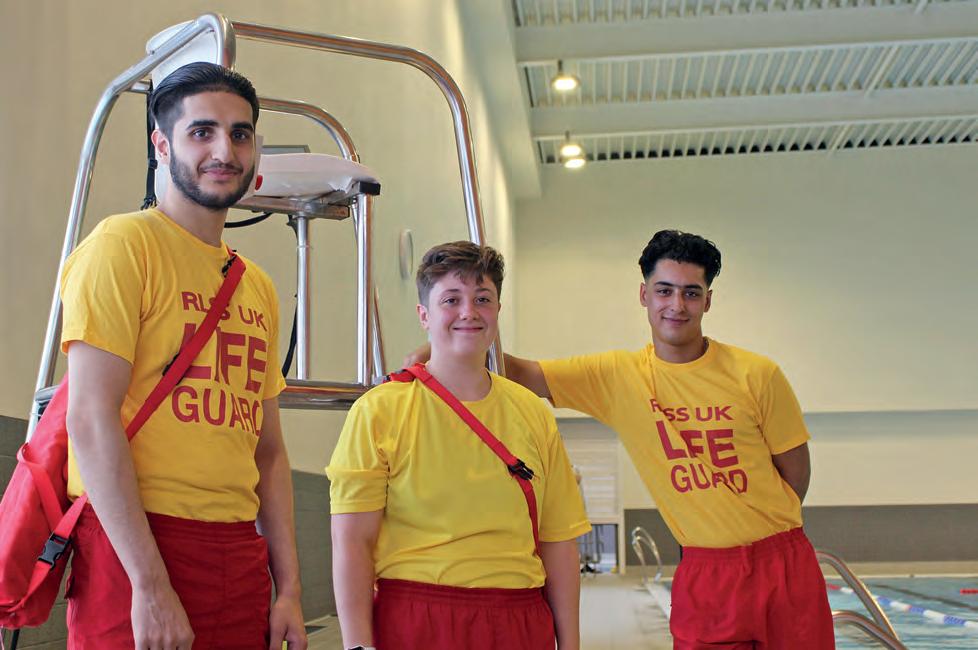
Kaylë Brightwell Director of Education, STA
Aquatics is playing an increasingly important role in supporting young people into employment. Swimming teaching offers flexibility around education and part-time work, alongside a meaningful career with transferable skills and competitive pay.


Over the last 12 months, 23% of swimming teachers qualifying through STA were aged 16-18, with a further 42% aged 18-24. We expect this to accelerate with the introduction of our new Level 2 Swimming Teacher Qualification, designed to create a clearer, more accessible route into the profession.
Learner needs have changed and it is essential we continue to evolve in response. Today’s learners expect flexibility, accessibility and support, and through collaboration with tutors, learners and employers, we have evolved our delivery models to include blended learning, digital resources and more flexible pathways that reflect this.
We also offer stronger entry routes into the sector. Our Aquatic Helper programme engages
At just 25 years old, Joe Dobb is taking the helm as the new Centre Manager at Mytime Active’s Orpington Golf Centre.
Joe’s journey with Mytime Active began four years ago after he graduated from Buckinghamshire New University with a degree in Accounting and Finance.
As a competitive swimmer for the Bromley Swimming Club, he originally began lifeguarding at Mytime Active as a practical way to earn money while he applied for graduate schemes and internships.
However, Mytime Active quickly recognised Joe’s potential. He gained his Level 2 swimming teacher and coaching qualifications

13 to 15-year-olds, while apprenticeship pathways, including the Leisure Team Apprenticeship supported by Excel Me, provide a structured route into sustained employment. Across our Approved Training Centres, innovative outreach in sporting and community environments is also helping broaden access to more diverse audiences. CPDs such as STA’s People Developer course also support teachers to better engage younger learners, while partnerships like Bold Waters are creating more inclusive pathways. Cost continues to remain a barrier, which is why we are launching a new charity campaign called The Ripple Effect, which builds on the success of STAnd Up for Swimming, where 900 teachers were trained and 86% secured employment. This introduces a sustainable, long-term bursary model that widens access while strengthening the future workforce. Ultimately, it’s about listening, evolving and adapting to meet young learner needs, while aligning with professional standards and employer expectations.
with the Institute of Swimming and was soon promoted to Swimming Coordinator at West Wickham Leisure Centre. He also gained his RLSS Trainer Assessor course and delivered multiple lifeguard NPLQ courses for Mytime Active.
Since then, his rise through the ranks has been remarkably rapid. He was promoted from Swimming Coordinator to Operations Manager, overseeing multiple sites, before becoming Centre Manager at Orpington Golf Club.
Joe explains: “I didn’t plan my career this way, but I am extremely pleased with how it’s fallen into place. I originally wanted to go into finance, but my work with Mytime






Active is much more varied and interesting. I love the training I’ve received and feel valued in my work. Every day is different, which keeps me both motivated and on my toes. I really enjoy what I do, and there is a great team around me.
my toes. I really enjoy what I do, and there is a great team around me.







“Although working area management


“Although working in leisure started as a part-time stop gap, it has transformed into my full time career, with many possible pathways to explore. Ultimately, I hope to move into regional area management and then beyond!”




Ahead of the new industry guidance led by RLSS UK, SwimNation looks at how inflatable water play is helping to drive participation, boost revenue, and transform pools into exciting activity spaces
Step into any swimming pool during an inflatable water play session, and the earsplitting shouts and shrieks of delight from children and youngsters scrambling over the slippery structures instantly tell you how popular they are. But it’s not just kids who are fans; pool operators are increasingly seeing the benefits of including inflatables in their pool programming.
RLSS UK is supporting the industry in the safe delivery of these experiences. The organisation is leading the development of new guidance on the safe operation of pool inflatables to help facilities manage risk effectively while continuing to offer safe, engaging and enjoyable aquatic activities.
Inflatables are becoming an increasingly attractive option for operators, says John Wilkes, Director at Airspace Solutions. “A pool inflatable will attract more users and generate much-needed income. They also provide a safe, structured environment for water-based fun, introduce new audiences to facilities, and help develop water confidence. A swim manager recently told me how she likes watching the smaller kids grow in confidence as the inflatable sessions go on.”
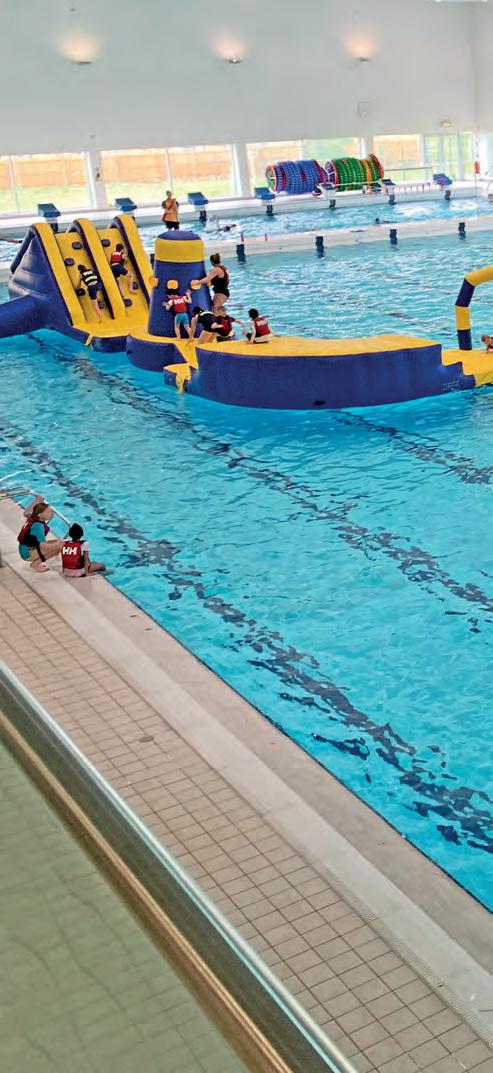
Public sessions, along with private hire and parties, can typically generate £25,000 a year for an average pool. With larger installations, operators can expect that to increase to £50,000 to £60,000 a year. But figures can vary considerably.
“We’ve seen small operators make up to £49,000 per annum from a £4,000 investment, and some larger sites make £120,000 to £130,000 per year. The business case is easy with venues often seeing a return on investment within a few months.”
Providing the leisure sector with inflatable play for more than 35 years, Airspace Solutions works with a wide range of operators, from those responsible for multiple sites to independent operators. Wilkes says most operators face tough choices about what they
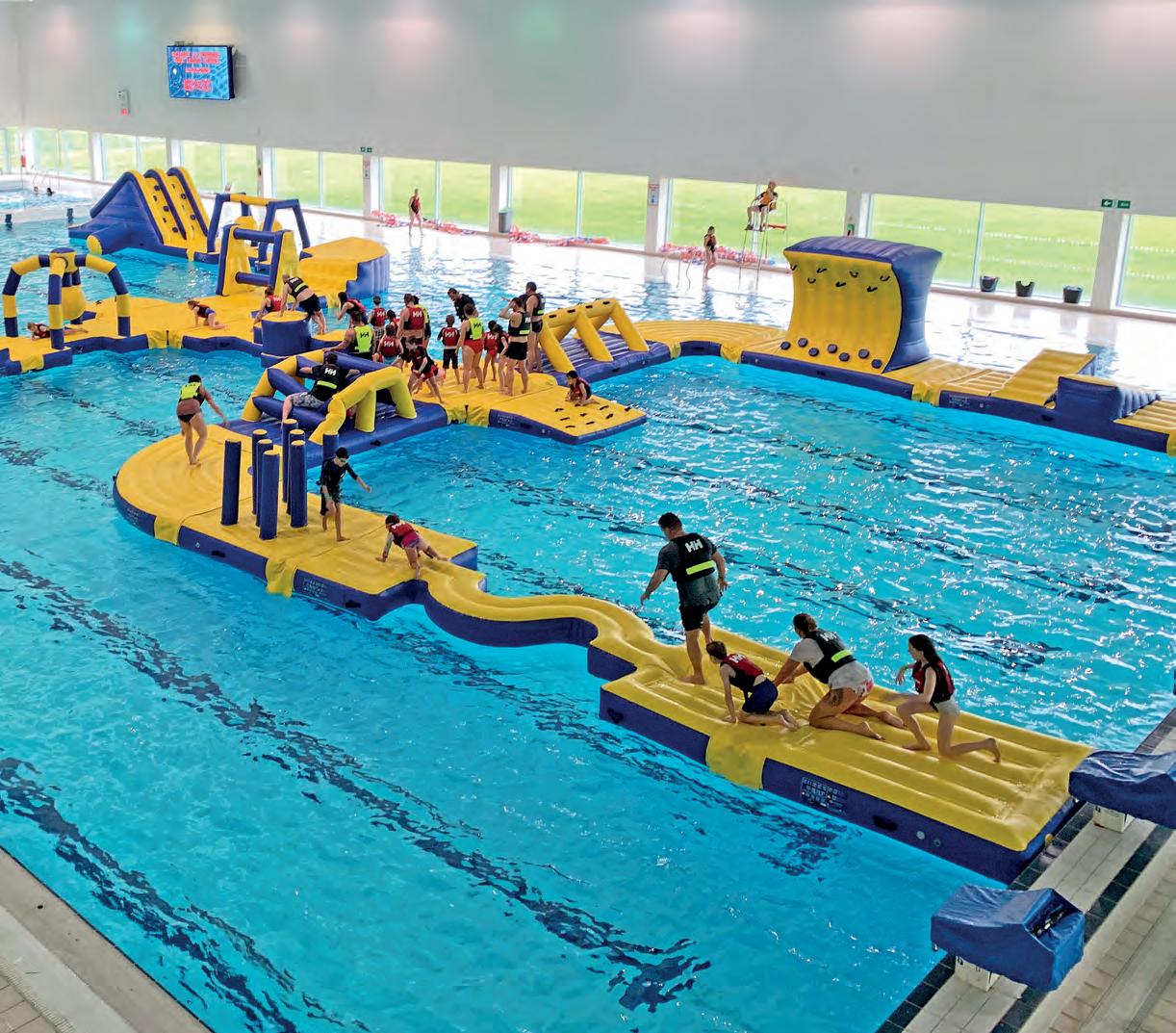
offer, but there are usually sessions that aren’t as busy as they could be, creating opportunities for water play.
“Inflatable sessions don’t have to take over your entire pool; they can be designed to fit the space available. We’ve helped pools utilise a section within the pool for inflatable play. It’s about working with the operator to make it practical and safe,” says Wilkes.
He also stresses the importance of programming: “You don’t need to completely overhaul your timetable. Look at when and how you can fit in inflatable sessions to attract more users, while making sure the public knows they’re available. Accessibility and affordability are key.”
Operators often cite storage as a potential hurdle to offering inflatables, but when packed according to supplier instructions, this shouldn’t be an issue. When it comes to staffing, operators generally need three to four lifeguards per session.
Public sessions, along with private hire and parties, can typically generate £25,000 a year for an average pool
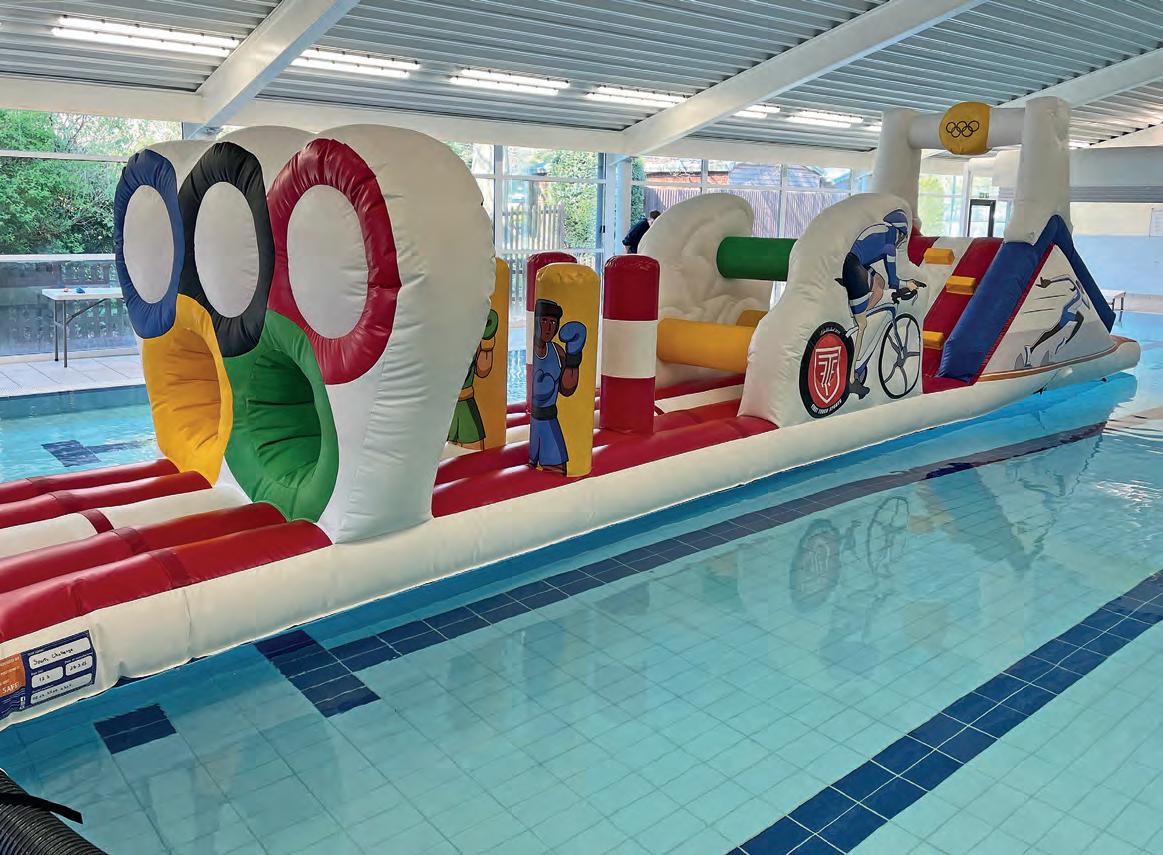
Before making an investment, Wilkes urges operators to do their research and not to buy on a whim.
“Arrange a site survey prior to investing. Make sure the unit suits your pool, fits your programme, can be effectively supervised by lifeguards and that staff are happy to use it. If it sits in a cupboard, it’s worthless.”
RLSS UK is bringing together operators, safety professionals, and industry partners to strengthen safety standards for pool inflatables. As part of this, it is leading a working group collaborating with CIMSPA,

Inflatable sessions provide a safe and fun activity for children to enjoy water
experienced operators, inflatable specialists and organisations including Airspace Solutions, an RLSS UK water safety partner, to update and strengthen industry guidance for the safe operation of pool inflatables.
The work reflects the evolving needs of the sector, incorporating new insights, safety considerations, and best practice approaches to support operators in delivering fun, highquality, and safe aquatic experiences.
Anticipated to launch later this year, the guidance will provide clearer operational standards, improved risk management recommendations, and practical resources for facilities of all sizes.
There’s no doubt that inflatables are fun, but most operators will tell you they are also a great way to build water confidence, helping youngsters to learn safety boundaries in a structured environment.
Jo Talbot, Commercial Director, RLSS UK, says: “Inflatable sessions provide a safe and fun activity for children to enjoy water. I’d much rather children enjoy inflatables in a pool than risk unsafe play in lakes or rivers.”
At a time when pool operators are dealing with rising costs, inflatable water play is a win-win for both operators and the public. As Wilkes says, “Every pool in the UK should be offering this. It’s fun, it’s safe, and it makes business sense.”
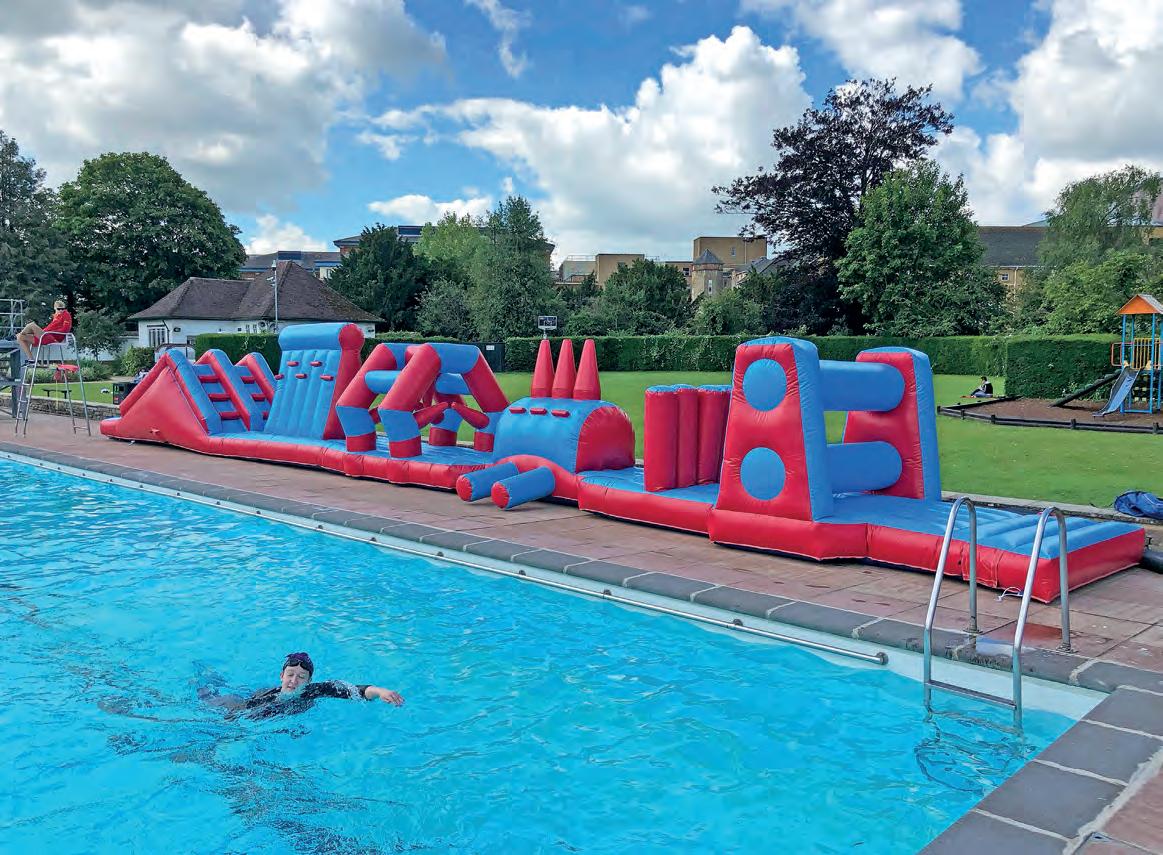
Birtley Community Aquatic Centre is a charitable trust formed to save the former Birtley Swim Centre from permanent closure following its closure in 2023 due to rising energy and operational costs.
Now known as Birtley Community Pool, the notfor-profit centre has become a thriving community hub, attracting more than 16,000 visitors each month, including around 6,500 children.
To enhance its appeal and create additional income streams, the trust invested in an Atlantis modular aqua inflatable system. “Being a new charitable trust, it was vital that the swimming pool inflatable would generate attendances, income and be energy efficient,” says Lewis Herbertson, Senior Operations Manager at Birtley Community Aquatic Centre.
The modular design of the Atlantis system allows the team to adapt the layout to suit different sessions and customer needs. Individual modules can be repositioned, and additional units can be purchased over time as demand grows. Energy efficiency was also a key factor in the decision, says Herbertson.
“The sealed design of the unit ensures energy efficiency. Once inflated, they support the entire session without requiring additional energy. Given the high programming usage, it was critical that we were not creating extra demands on energy usage.”
Penlan Leisure Centre in Swansea has a longstanding partnership with Airspace Solutions. The Aquarun inflatable has become a key attraction, providing a value-for-money leisure activity for local residents. Offering a variety of obstacles and challenges, the inflatable obstacle course supports open swim sessions and birthday parties. Demand is high with the centre running six party slots every weekend at £215 each.
“The fun variation of activities keeps bringing children back again and again,” says Jim Kelly, Regional Director for Freedom Leisure, which operates the site. The centre also rotates an additional Aquarun to keep the offer fresh and exciting. The impact of the inflatables extends beyond the pool, contributing to driving significant secondary spending in the café.
The One Swim England Summit brought together over 500 leaders, coaches, teachers, exhibitors, speakers and volunteers from across the aquatics sector, delivering a clear and compelling message: collaboration is central to the future success of aquatics in England
Held as a flagship event in the aquatics calendar, the One Swim England Summit provided a platform to share ideas, align priorities and inspire a renewed sense of purpose across the sector to deliver great experiences for all.
At its heart, the Summit reinforced Swim England’s “One Swim England” vision – an approach aimed at breaking down silos and creating a more connected, inclusive aquatics community. Whether from swimming, diving, artistic swimming, water polo, or open water, attendees were united by a shared ambition to grow participation and improve experiences at every level.
Educational sessions were split across the themes of “Lead”, “Learn” and “Inspire” and covered a wide range of challenges and opportunities currently
facing the sector. From how facilities can future proof themselves by embracing AI and innovating for sustainability, performance and value to how to put children at the heart of coaching to the opportunities a place-based approach to swimming and aquatics can offer, speakers acknowledged the realities the sector is navigating. However, the tone throughout remained optimistic, with practical solutions and case studies highlighting resilience and innovation.
Helen Marney, Director of Community Participation and Health at Swim England said: “Our vision at Swim England is great experiences in water. For all. For life. We know we can only achieve this by working in partnership with organisations and individuals from every part of the aquatics community and it was great to have the opportunity to bring people together at the Summit around that shared purpose.”
“A huge thank you to everyone who came along and we’re already looking at how we can come back bigger and better next year.”


A particularly strong theme of the day was workforce development. With recruitment and retention continuing to challenge many organisations, the Summit showcased initiatives designed to support and upskill the aquatic workforce.
Inclusion and diversity also featured prominently. Sessions explored how swimming can better reach under-represented communities, ensuring that opportunities in aquatics reflect the diversity of the population it serves. Attendees heard powerful examples of programmes breaking down barriers, underlining the role swimming can play in improving both physical and mental wellbeing.
For operators and partners, the Summit provided valuable networking opportunities and practical insights. Collaboration between clubs, leisure providers, and local authorities was highlighted as essential to sustaining and growing aquatic activity— particularly in a challenging financial landscape.
Ultimately, the One Swim England Summit succeeded in reinforcing a simple but powerful idea: the future of aquatics depends on collective effort. By working together, sharing expertise, and maintaining a clear focus on delivering great experiences, aquatics is well positioned to thrive.
For SwimNation readers, the message is clear – be part of the conversation, embrace collaboration, and help shape the next chapter of aquatics in England.






The 30th edition of the UK’s dedicated water leisure exhibition attracted the highest number of exhibitors and visitors at the Coventry Building Society Arena
Professionals from across the aquatics and leisure sectors descended on Coventry for the annual SPATEX event, which acts both as an educational event and a showcase for the latest products and innovations. From swimming pools, ice baths, spas and saunas to steam rooms, hot tubs, enclosures and swim spas, the hall was brimming with new solutions.
“The event illustrated just how integral water leisure has become to 21st century life,” said SPATEX Organiser, Michele Bridle.
“The industry’s overwhelmingly positive response to SPATEX was this year rewarded with a fantastic turnout of 1,749 unique visitors – which is up 14% on last year.”
SPATEX’s double seminar programme, with leading industry speakers addressing topical and current issues and giving vital health and safety guidance, also recorded an impressive increase in attendance figures – up nearly a quarter (23%) to 737. This included a highly informative Pool Plant
Theatre for commercial pool operators, plus the ever-popular CPD-accredited ISPE (Institute of Swimming Pool Engineers) technical workshops.
The Industry Hub was launched this year with great success. Free impartial advice was provided by the BSPF (British Swimming Pool Federation) representing SPATA (Swimming Pool & Allied Trades Association) and BISHTA (British & Irish Spa & Hot Tub Association), RLSS UK (Royal Life Saving Society UK), IOS (Institute of Swimming), PWTAG (Pool Water Treatment Advisory Group) and STA (Swimming Teachers’ Association).
Visitor Kushal Vyas of Humidity
Solutions: “We spent the day meeting a range of pool and spa experts, from installers and consultants to engineers and manufacturers. It was a great opportunity to further understand the challenges the industry faces with regards to humidity control.”
Visitor Anthony Jackson, Project Manager: “Always worth stepping away from site to see what’s new, what’s changing, and what’s coming next in the pool and spa world. Plenty of good chat, new ideas, and a few sore feet by the end of it.”
Sarah Morley of Water Hygiene Centre Ltd: “A great opportunity to connect with industry professionals, share insights, and keep up to
date with the latest developments across the sector.”
Jordan Lemon of Superior Wellness: “An incredible few days packed with great conversations, increased momentum and exciting new opportunities. One clear highlight: sauna enquiries were through the roof. A strong signal of where the market is heading.”
Experts from LCA (Legionella Control Association) and WMSoc (Water Management Society) were also on hand to give keynote talks in the seminar arenas.
With the “who’s who” of water leisure gathered under one roof, networking was to the fore. The BSPF hosted an entertaining Wet Leisure Industry Gala Evening & Awards, highlighting exemplary projects and honouring winners who continue to raise industry standards and deliver exceptional results. This year’s ceremony was made even more special by the presence of the Guest of Honour, Anna Hopkin MBE, Olympic champion and one of Great Britain’s most accomplished sprint swimmers.
The following evening, SPATEX hosted a special anniversary edition of the now famous SPATEX Networking Party. Visitors and exhibitors enjoyed challenging and cheering on colleagues with a variety of interactive games and fantastic prizes. With the night still young, the fun continued with a Bandeoke Curry Night, with many taking to the stage, complete with a lively audience providing an exuberant support act.






Exhibitor Robert Smits Poolstar: “What an incredible experience. Celebrating 30 years of the pool and spa industry in the UK was the perfect backdrop for what turned out to be one of our most successful shows yet.”

SAVE THE DATE: The 31st edition of SPATEX will take place from Tuesday 2nd to Thursday 4th February 2027 at the Coventry Building Society Arena


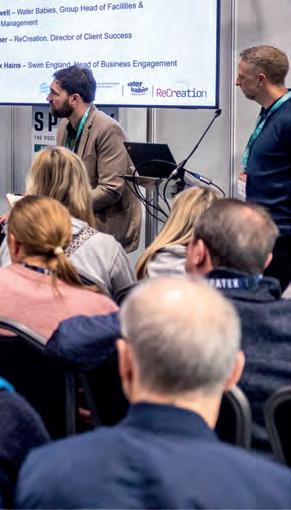



The 2026 edition of Elevate will mark both the event’s 10th anniversary and the return of the Active Aquatics Stage for the third year
What began as an ambition to bring together fitness, sport and physical activity has grown into the UK’s flagship industry event – a meeting place for leaders, innovators and practitioners committed to improving the nation’s health and wellbeing. A decade on, the sector looks very different. Collaboration is stronger, standards are higher, and the connection between physical activity and overall wellbeing has never been more central to how we live. From community-based prevention pathways to rehabilitation programmes, physical activity’s role in shaping healthier, happier communities is clearer and more influential than ever.




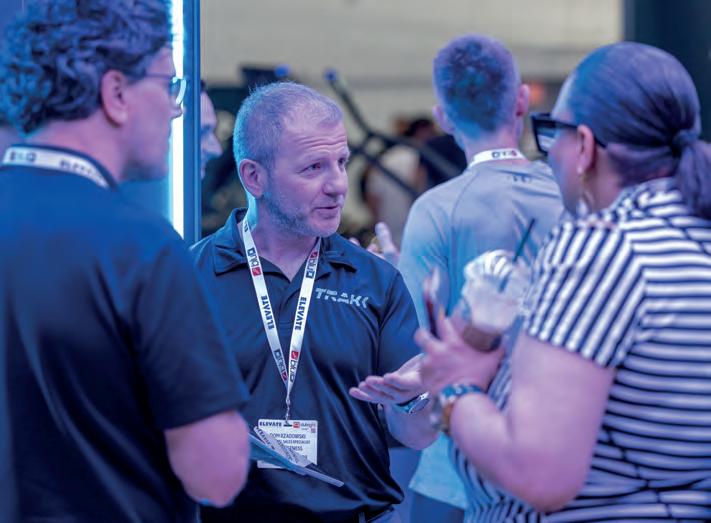



Elevate remains the standout event for education & professional development in our sector
Rob Johnson, Founder and CEO of Future Fit
Elevate 2026 will honour this progress through dedicated Legacy Sessions that will revisit key themes and speakers from the 2016 programme, reflecting on how far the industry has come and what lies ahead.
This year will also mark the third year that the event will host The Active Aquatics Stage, bringing together two days of dedicated aquatics content designed to inspire, educate and connect the sector. Created in partnership with Swim England, STA and RLSS UK, the programme will explore the latest opportunities, challenges and innovations across aquatics, swimming and water safety. From the impact of AI on aquatics, the future of swimming teacher training and latest innovations in pool technology to using swimming in healthcare pathways, the programme features topics for all areas of the sector. Highlights include a Leadership in Aquatics panel session, which will offer delegates the opportunity to learn about the The Swimming Alliance and its work. The panel will feature Simmy Akthar, CEO of RLSS UK; Andy Salmon, CEO of Swim England; Dave Candler, CEO of STA and Andrew Clark Vice Chair of Swimming Alliance and Head of Sports & Aquatics at GLL.
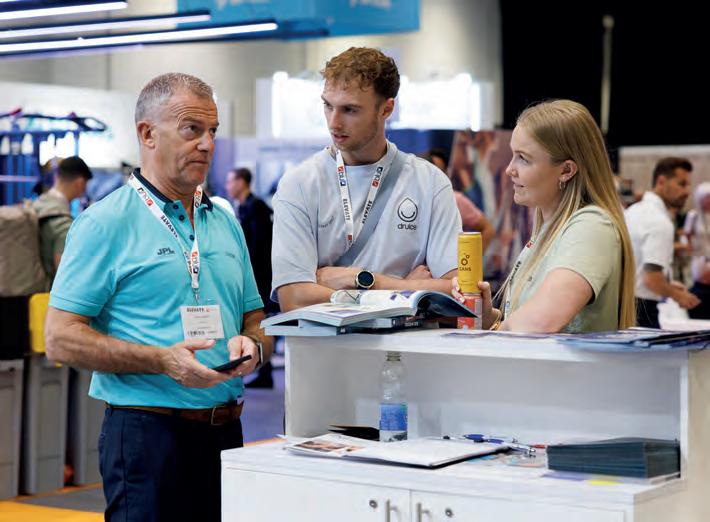



“I’ve been attending Elevate for the last 10 years and have loved being able to contribute to discussions and the programme, as well as showcasing our services and sponsoring various elements of the show. I’m sure the next 10 years will be even more successful than the last, as the show builds on what has been created by Lucy and the team.”
Sarah
Watts, CEO, Alliance Leisure

Other topics and sessions include:
Shaping Futures: AI and the Next Generation of Swim Teacher Training Community pools as extensions of healthcare pathways
The Aquatics Workforce: Pathways, Governance and Growth
Inclusion in Practice: How Specialist Training Transforms Teachers and Learners
Whether you are looking to integrate AI into your teacher training or position your pools as vital healthcare hubs, these two days offer the evidence-led strategies needed to ensure your facility thrives. Don’t miss the opportunity to connect with over 6,500 peers and set the standard for the next decade of aquatic excellence.
Central to Elevate’s wider commitment to championing innovation and raising standards across the physical activity sector, the 2026 programme will once again be free to attend and will give delegates access to more than 200 speakers in a full agenda of expert-led sessions across four curated theatres: Debate, Generate, Accelerate and Collaborate.

New for 2026, each of the four curated theatres will be hosted by an industry specialist, adding their insight to content, introducing panels, posing questions and encouraging audience engagement. Hosts will be named nearer to the event.
Also new for 2026, the education programme will be peppered with thought-provoking Legacy Sessions – a reappraisal of topics first tackled in the inaugural 2016 event – some featuring the same speakers who addressed the audiences 10 years ago. A real chance to reflect on how far the industry has come in the past decade – and to share views on where the next 10 years will take it. Delegates will also see some of the event’s most popular speakers return to the stage, including Sarah Watts (CEO, Alliance Leisure), Tara Dillon (CEO, CIMSPA), David Stalker (Chair, ukactive), Davina Deniszczyc (Medical Director, Nuffield Health) and Katherine Knight (Director, Intelligent Health). These experts will be delivering content on a wide range of topics designed to spark conversation, share best practice and explore the ideas and trends influencing the future of physical activity.
VENUE: Excel London (Halls S1 - S3)
DATE: June 17-18, 2026
OPEN TIMES: Wednesday 9.30am – 5.30pm Thursday 9.30am – 4.30pm
“We’re proud to have been part of Elevate for 10 years. It’s always a great chance to meet new and existing customers, deliver meaningful workshops, and showcase our services. It’s the key moment each year to connect with the whole sector and network with leading suppliers and providers.”
Jo Talbot, Commercial Director, RLSS UK