PlayNation UK





Could CMS committee report be a turning point?
Driving participation through in atable water play
Play England campaigns for all children and young people to have freedom and space to play throughout childhood.
We work with national partners and other organisations with shared aims to raise awareness about the importance of play. We lobby government to make fundamental policy changes to protect and promote play, and encourage everyone who has an impact

on the lives of children and young people to recognise and plan for children’s play.
Play England has also built up considerable experience and resources to help support individuals and organisations that work in these particular areas:
Government
Local Authorities
Schools
Playwork

We need your support
The new UK government is making positive noises about understanding the importance of play. However, against this positive backdrop, Play England is suffering from a lack of funds to pay for our essential work campaigning for children’s right and freedom to play. Donate today to support our work. www.playengland.org.uk/donate

www.playengland.org.uk





The play industry has welcomed the government’s decision to cut VAT on family leisure activities over the summer period.
Ticket prices for families at soft play centres, adventure parks and other family-focused attractions will be lower thanks to a temporary reduction in VAT from 20% to 5%.
The cut applies for the period from when schools break up in Scotland at the end of June until children return to classrooms in England, Wales and Northern Ireland on 1 September.
The discount, which will be up to businesses to pass on to customers, will also apply to children’s meals in restaurants and cafés. The VAT cut – part of a series of government policy announcements designed to tackle cost-of-living pressures –has been seen as the government recognising the importance of play and has been universally welcomed by the play sector.

Play England launched its 10-year strategy in 2025

Tom Hayes MP, Chair of the AllParty Parliament Group (APPG) on Play, told PlayNation: “This is a really positive step and one that will help families over the summer holidays. Reducing the cost of soft play creates more opportunities
for children to play, be active and spend time together as families.
The Association of Indoor Play (AIP) also welcomed the move.
Maria Cantarella, CEO of AIP, said: “This is an important win for the indoor play industry.”
Play England is looking to strengthen its board through the appointment of an Independent Director (Trustee) – Treasurer.
The organisation is looking for someone with a strong background in finance, accountancy, audit, investment, or financial governance, ideally with senior experience
within the charity and/or public sector. Those with formal financial qualifications and experience of financial governance, audit, risk and organisational sustainability are particularly of interest.
The deadline for applications is 30 June 2026. For more info, visit: www.playengland.org.uk
The Local Government Association (LGA) is asking the Government to extend proposed smoking and vaping bans to cover all children’s playgrounds to protect children from harmful tobacco and vape exposure.
In its response to the Government’s consultation on smoke and vape-free places in England, the LGA said it supports plans to expand smokefree, heated-tobacco free and vape-free outdoor spaces in children’s playgrounds, health and social care, and education settings across England.
However, it warned the proposals exclude publicly accessible playgrounds that are not managed by local authorities, creating gaps in protection that could expose children to smoking and vaping.
There are a growing number of play areas constructed
as part of new housing developments, not formally adopted by councils, as well as those in national parks, country parks, amusement parks, and privately owned leisure settings – all outside of local authority control.
The LGA is also calling for mandatory minimum standards for signage, guidance on the siting of designated smoking and vaping areas (to minimise concentrated exposure at entrances and boundaries) and an extension of the vaping exemption to include all commissioned smoking cessation services.
Dr Wendy Taylor MBE, Chair of the LGA’s Health and Wellbeing Committee, said: “No child should be exposed to second-hand smoke or vapour clouds in public spaces designed for their health, education, and play.”




The importance of play and physical activity for young people
PlayNation, in partnership with Play England and SAPCA (the Sports And Play Construction Association), is dedicated exclusively to the dynamic and growing sector of play and physical activity for children and young people. Published bi-monthly, the magazine focuses on the policies, people and places that help young people to play and be more active. Subscribe now and we will email you a complimentary copy of the magazine every two months.
Subscribe today for regular news & updates
http://www.playnation.uk
http://www.linkedin.com/ company/playnationmag
Advertising opportunities
Contact John E: john@nationmedia.uk
PlayNation is published by SportsNation Ltd in association with Play England (www.playengland.org.uk) and the Sports And Play Construction Association (www.sapca.org.uk) This publication is protected by copyright and no part may be reproduced, transmitted or stored in any print or electronic format without the written permission of the publisher. Every effort has been made to ensure the accuracy of the contents of this publication and PlayNation accepts no responsibility for any error or misrepresentation. Opinions expressed by the contributors and advertisers are not necessarily those of the publisher and we do not accept responsibility of losses or damages arising from them. Printed by BCP Media Group Ltd.





Booking has officially opened for the first-ever National Play Conference, a landmark event delivered in partnership between SAPCA and Play England. Taking place on Friday 9 October 2026 at The Slate, University of Warwick, the conference will bring together professionals from across the play sector to explore the future of play provision, design and policy in the UK.
The National Play Conference aims to create a dedicated platform for knowledge-sharing, collaboration and innovation, uniting stakeholders from across the public, private and voluntary sectors. With a programme featuring expert speakers, panel discussions and networking opportunities, the event will address the challenges and opportunities facing play today – while championing its vital role in supporting healthier, more active communities.
Eugene Minogue, Executive Director of Play England, said: “This conference marks an important moment for the play sector. Following the launch of Play England’s ambitious 10-year strategy in 2025, this event reflects our commitment to putting play firmly on the
national agenda. We’ve already seen significant momentum build in parliament, including the formation of the APPG on Play, and this conference is a natural next step in bringing the sector together to drive forward that ambition. Play is fundamental to children’s development.”
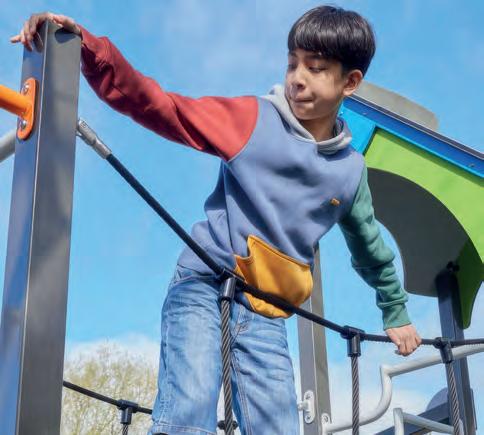
Employee-owned playground designer and manufacturer, Sutcliffe Play, has launched its new junior range, focused on the thrill of the climb. Featuring 11 new units, the Altitude range has been designed to offer youngsters expanded horizons and heights scaled!
In a compact and budget-friendly footprint, Altitude’s 1.5m and 1.8m high decks are surrounded by design features to help develop children’s balance, coordination and stamina. The range also features aesthetic mountain-themed routing on panels, as well as feature flags and grey ridged roofs.
All upright posts and poles are square, zinc-rich powder coated mild steep, 80mm x 80mm with a 3mm wall. The 19mm thick HDPE panels are supported by mild steel powder coated box steel posts.
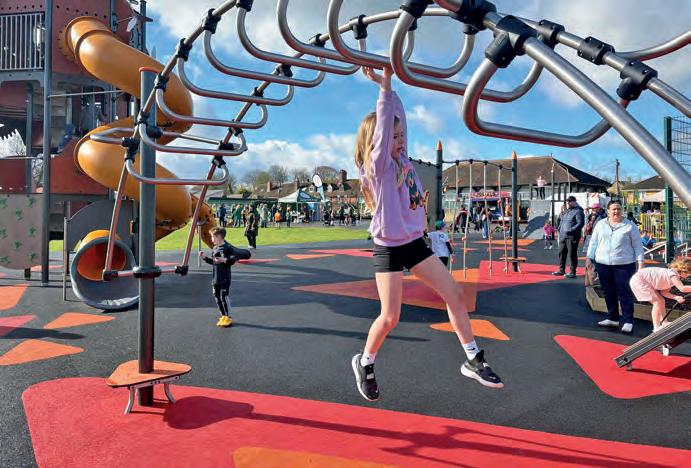
The ACTI’Ninja trail promotes strength, balance and agility
Calne Town Council has invested in the creation of a vibrant community destination at Calne Recreation Ground, aimed at inspiring active play and encouraging families to spend more time outdoors together. Designed to capture the excitement of adventure and obstacle-course experiences, the space promotes confidence, social interaction, and physical activity, offering something distinctly different from traditional play equipment and strongly appealing to older children and teenagers while
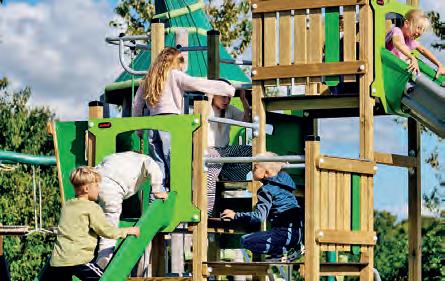
The range is designed to allow play in smaller footprints
remaining inclusive for families.
The development of the ACTI’Ninja play and activity space began with an ambitious vision from early collaboration between Proludic and the council explored holistic approaches to play, recreation and community wellbeing.
Inspired by Ninja Warrior–style challenges, ACTI’Ninja is a modular obstacle course that promotes strength, balance, agility, and endurance for users aged 6 and above. The Calne course is also the UK’s largest public ACTI’Ninja course.
Construction of a new play park has begun at Owenkillew Community Centre in Gortin Village, Northern Ireland.
Driven by Fermanagh and Omagh District Council (FODC), the project forms part of the council’s Outdoor Recreational Capital Programme, included in the PEACEPLUS Local Action Plan.
The plan will see 10 outdoor community spaces transformed across the district. Developed through a collaborative co-design process with the local community, the Action Plan aims to create more welcoming, accessible and inclusive community spaces.
The new play park in Gortin will provide opportunities for play, recreation and community gatherings, promoting social interaction, physical activity, and cross-community engagement. The programme is funded by PEACEPLUS with matchfunding provided by FODC.
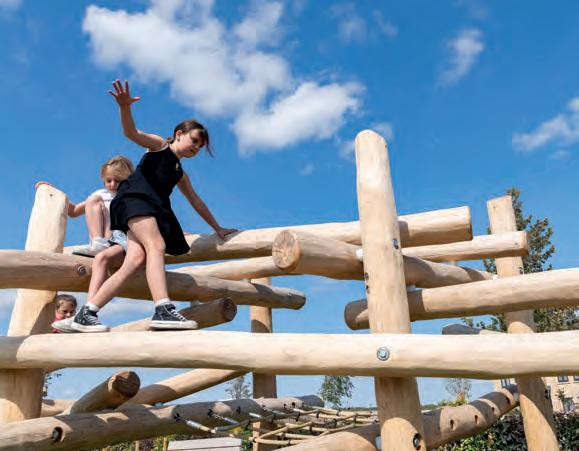
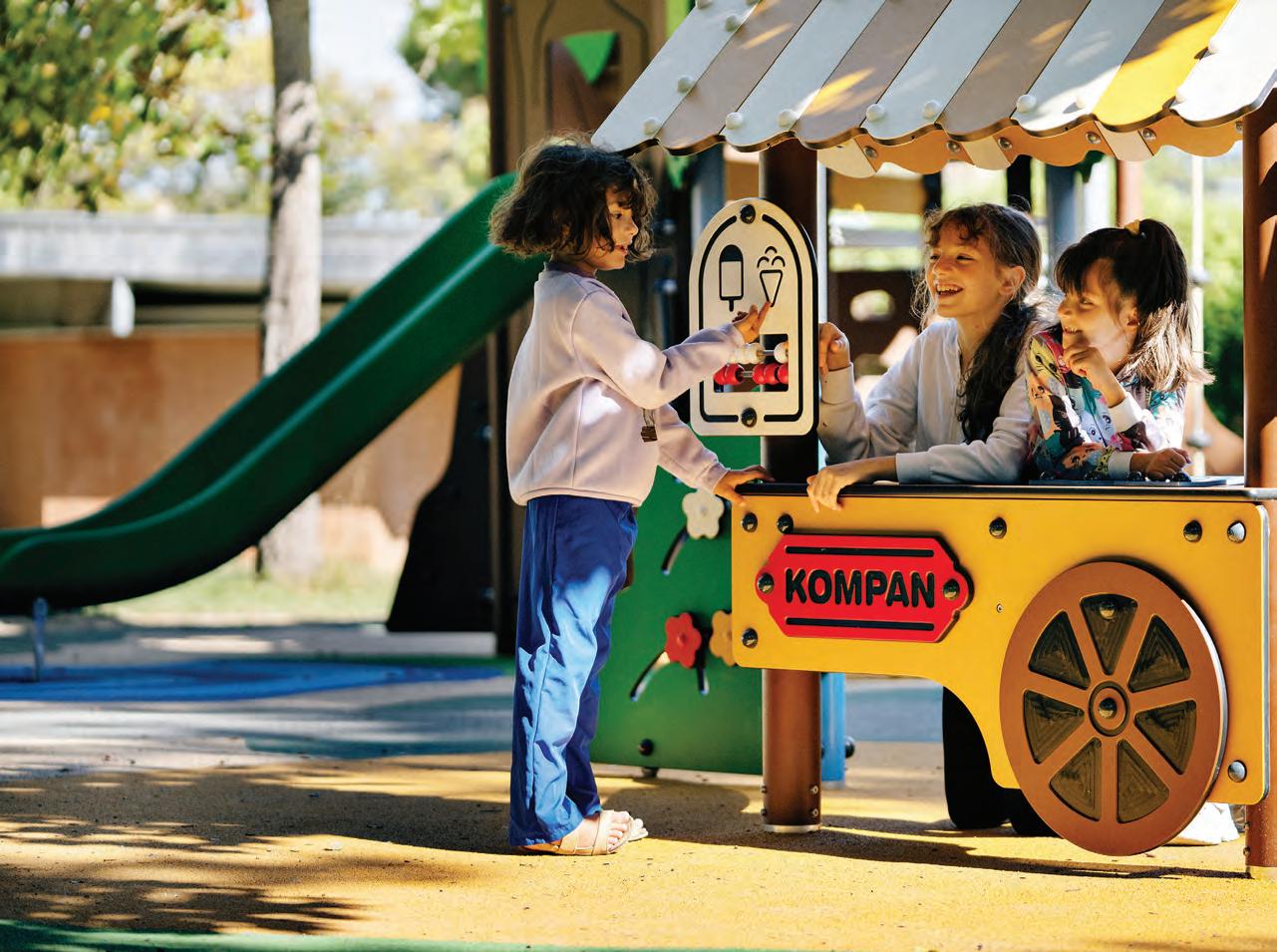
Play equipment supplier, KOMPAN, has introduced its Northland Play Structures range, a collection of wooden playground equipment designed to bring Nordic-inspired play into parks and spaceconstrained environments.
The range combines minimalist Nordic design with classic
playground features, offering compact multi-platform towers and configurable structures for public play spaces.
Positioned as a “no frills” classic wooden play platform with a contemporary look, Northland has been developed to blend into natural surroundings.
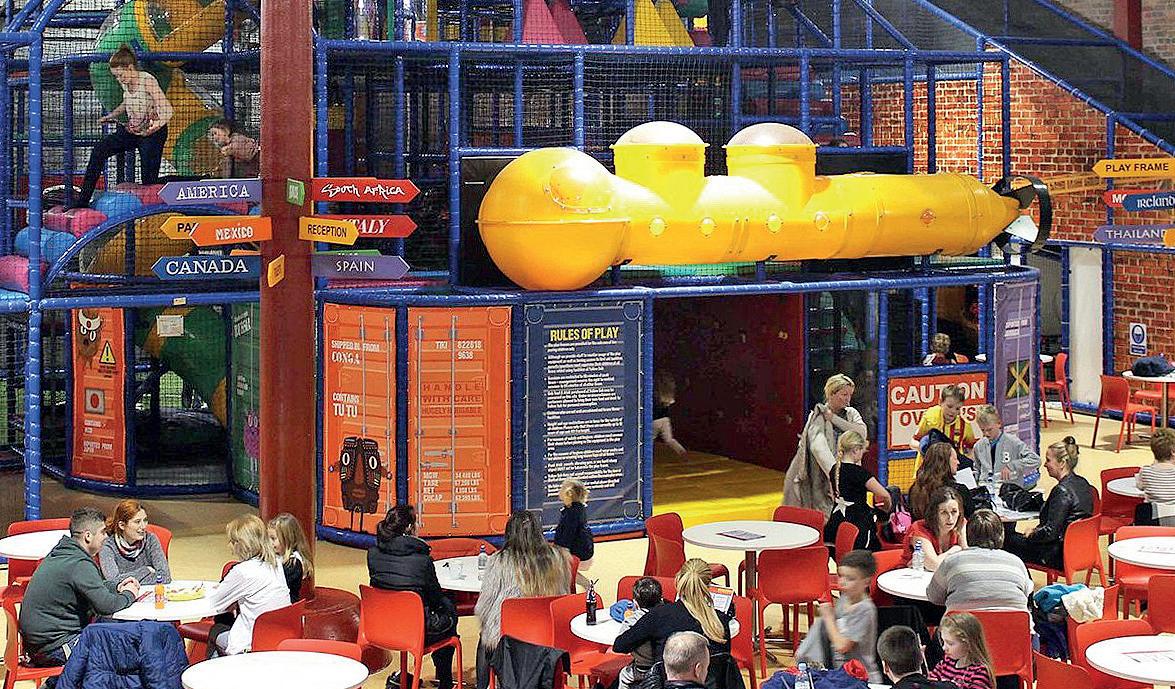
Following the acquisition of Rascals Party and Play Centre in Preston mid-2025, leading European indoor playground brand, Monkey Town –operated by Dutch leisure group 24 Indoor – has acquired its second UK site, Yellow Sub in Liverpool. This marks another step in the brand’s growing presence in the UK.
Yellow Sub is a well-known destination for families on Liverpool City’s waterfront. The site will continue to operate in the short term before closing in summer 2026 for a full refurbishment and transformation into Monkey Town Liverpool, bringing the brand’s distinctive themed environments, food and beverage offer and signature play experiences to the city.
Peter van Wijk, CEO of 24 Indoor, said the addition of the Liverpool site represents continued momentum for Monkey Town’s UK rollout and
reinforces the group’s confidence in the region as a key area for growth. He noted that the North West has a strong indoor play market potential and excellent family demographics.
Josh Buxton, UK Country Director, added, “The refurbishment will transform the site into a city
Monkey Town location while building on the strong foundations already established by Yellow Sub as a destination for local families and visitors to the waterfront.”
The acquisition forms part of a wider strategy, with further sites already progressing across England.
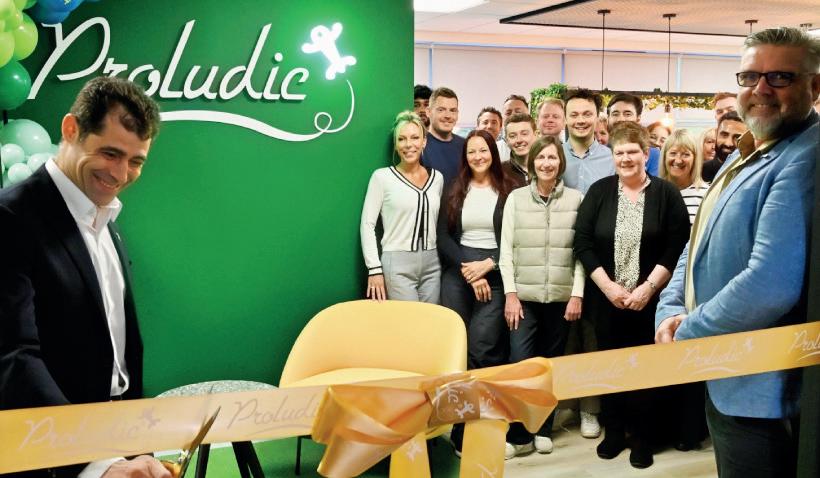
Proludic has completed the refurbishment of its Play Hub, creating a modern and flexible workspace designed to support its people, creativity and longterm growth. Proludic works with local authorities, housing developers, leisure providers, charitable trusts and communities to deliver playgrounds, sports facilities and recreational spaces.
The newly refurbished Play Hub features openplan offices, co-working areas, upgraded meeting rooms and improved communal spaces. The redesign also includes playful details that reflect Proludic’s identity and connection to the play sector.
Sustainability formed a key part of the refurbishment, with energy-efficient lighting, recycled materials and repurposed furniture incorporated throughout the workspace.







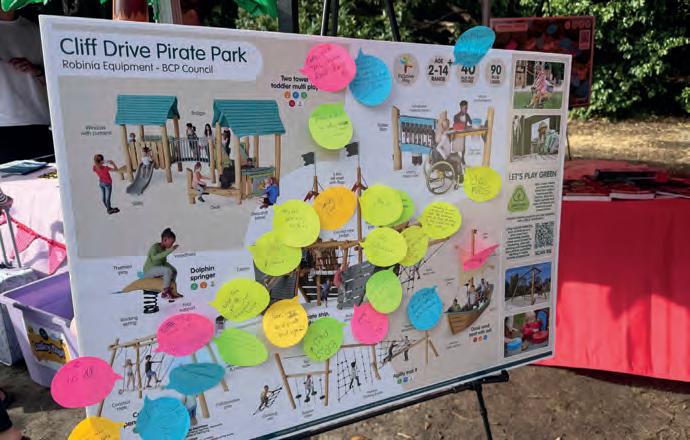
Treasure Island park in Canford Cliffs – known locally as Pirate Park – will be getting a brand-new pirate ship along with upgrades to climbing equipment, slides, sensory play and a miniature zip-wire.
Zones around the park will encourage climbing, balancing and exploring with equipment such as a rope swing and rocking springers. For younger children a play tower will be installed alongside balance beams, and a communication panel. Adapted swings, resurfaced paths, and enhancements to existing equipment will enhance accessibility and fitness equipment will boost wellbeing.
BCP (Bournemouth, Christchurch and Poole) Council’s parks and green spaces team will carry out the work, with Kompan UK supplying the equipment and taking care of kit out. Works began in April and will take between four and six weeks.
Canford Cliffs ward Councillor,
John Challinor said: “While this playground was not part of the council’s initial tranche of projects, thanks to the generosity of the Canford Cliffs Land Society and the use of the neighbourhood ward fund, we’ve been able to work with BCP Council officers and the
local community to design a great new play space for all to enjoy.
“As ward councillors, myself and Gavin Wright are very much looking forward to this project being completed in the summer and providing a fun area for children to play in for years to come.”
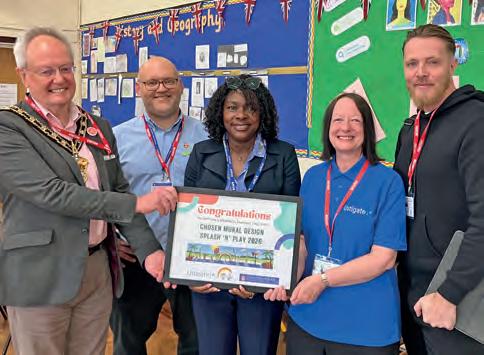
Mary Bassett Lower School was among the winners of the Splash n Play splash pad floor competition for Parson’s Close Recreation Ground, organised by play specialist, Ustigate. Ustigate’s Michelle Minns-Sykes joined the Town Mayor of Leighton-Linslade, Cllr David Bligh, on a special visit to the school, which celebrated creativity and community spirit. Accompanying them on the visits were Cat Lowman, Grounds Administration Officer for Leighton-Linslade Town Council, and Rich Davis, Head of Grounds and Environmental Services.
The other winner, Beaudesert Lower School, also received a similar visit (pictured left). Both schools, in Leighton Buzzard, demonstrated outstanding creativity and enthusiasm, helping to bring colour, imagination and joy to shared community spaces.


Some projects call for creativity that cannot be achieved from off the shelf products. That’s where our bespoke design service ‘Crafted’ comes into play!
We’ll bring your visions to life through custom designs and our Global Partner Programme. The only limit is your imagination!
Design-led Approach
RIBA Plan of Work Framework
Bult & Risk Assessed to EN1176




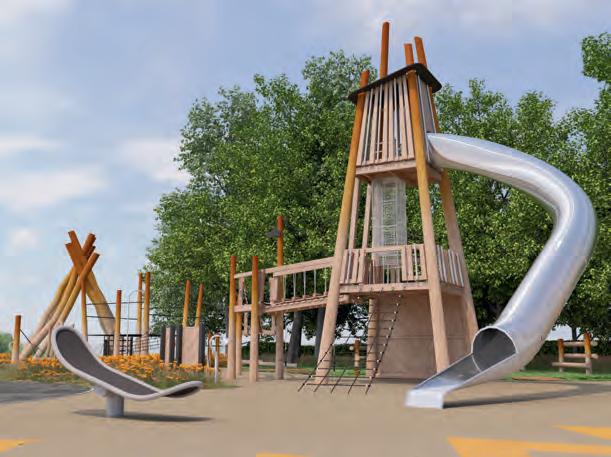
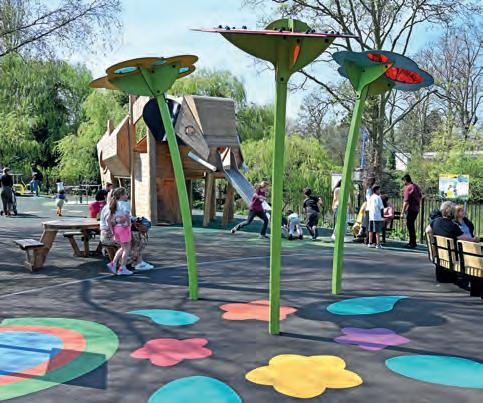
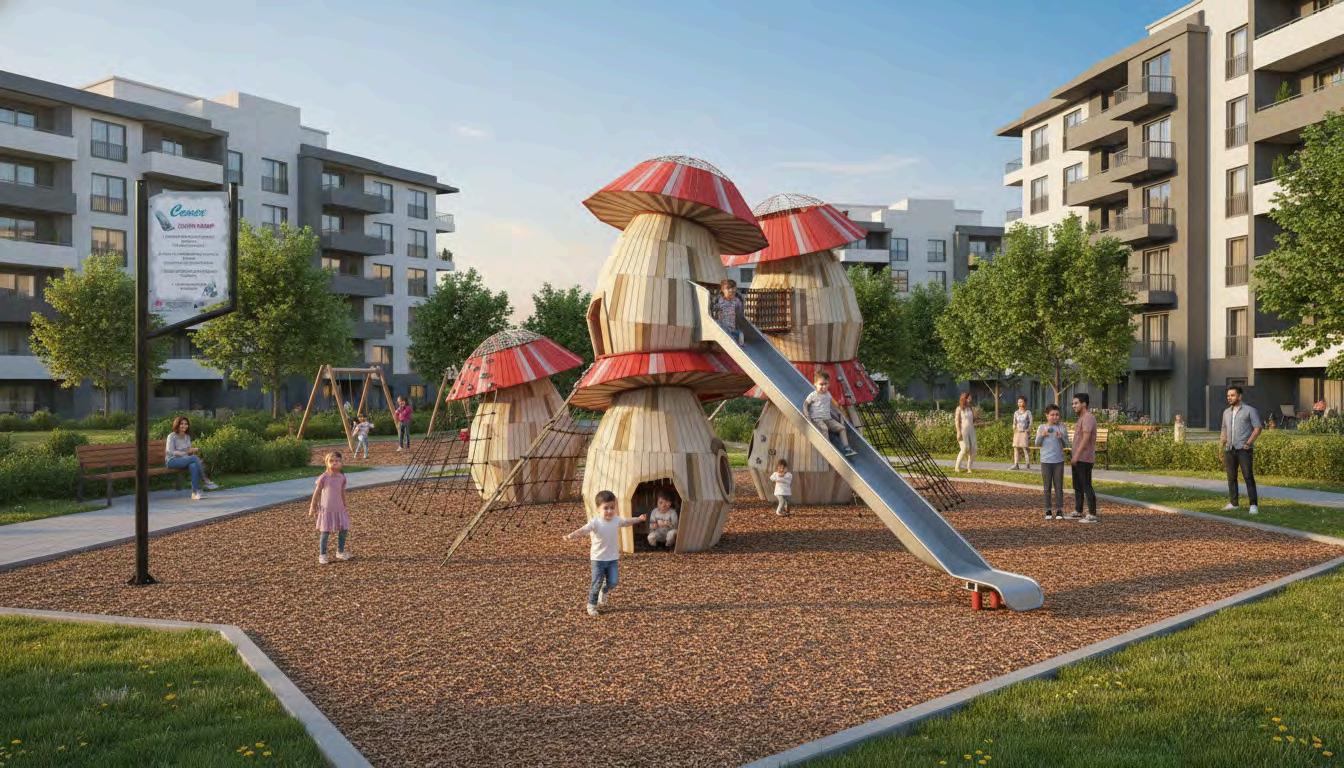
Jupiter Play & Leisure, in partnership with Landsec, has transformed Bluewater Shopping Centre’s Wintergarden Play Area in Dartford. The site has been reimagined as an immersive, mushroom-inspired destination designed to spark curiosity, movement and play for families.
Opened in April 2026, the revitalised Wintergarden brings together inclusive design with imaginative play and subtle touches of a garden in bloom. The space creates opportunities for children to explore, connect and let their imaginations run wild.
The vision for the new Wintergarden Play Area began with a design competition among year 6 pupils at Temple Hill Primary School in Dartford. The winning sketch became the seed of the design, initially created by 100 Architects, and was brought
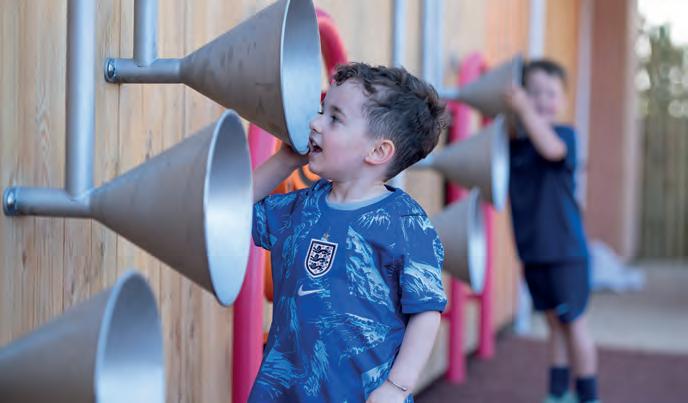
to life by Rachel Stanley, Jupiter Play’s Senior Designer & Quantity Surveyor. The pupil’s influence can be seen throughout the final design, with playful shapes, natural textures, and gentle references to the blooming garden inviting storytelling across the site.
James Waugh, Centre Director at Bluewater, said: “The new play park has significantly enhanced our family offering, giving an inclusive play experience that transforms a key area of the centre into an engaging hub for children of all ages and abilities.”
The design celebrates local identity
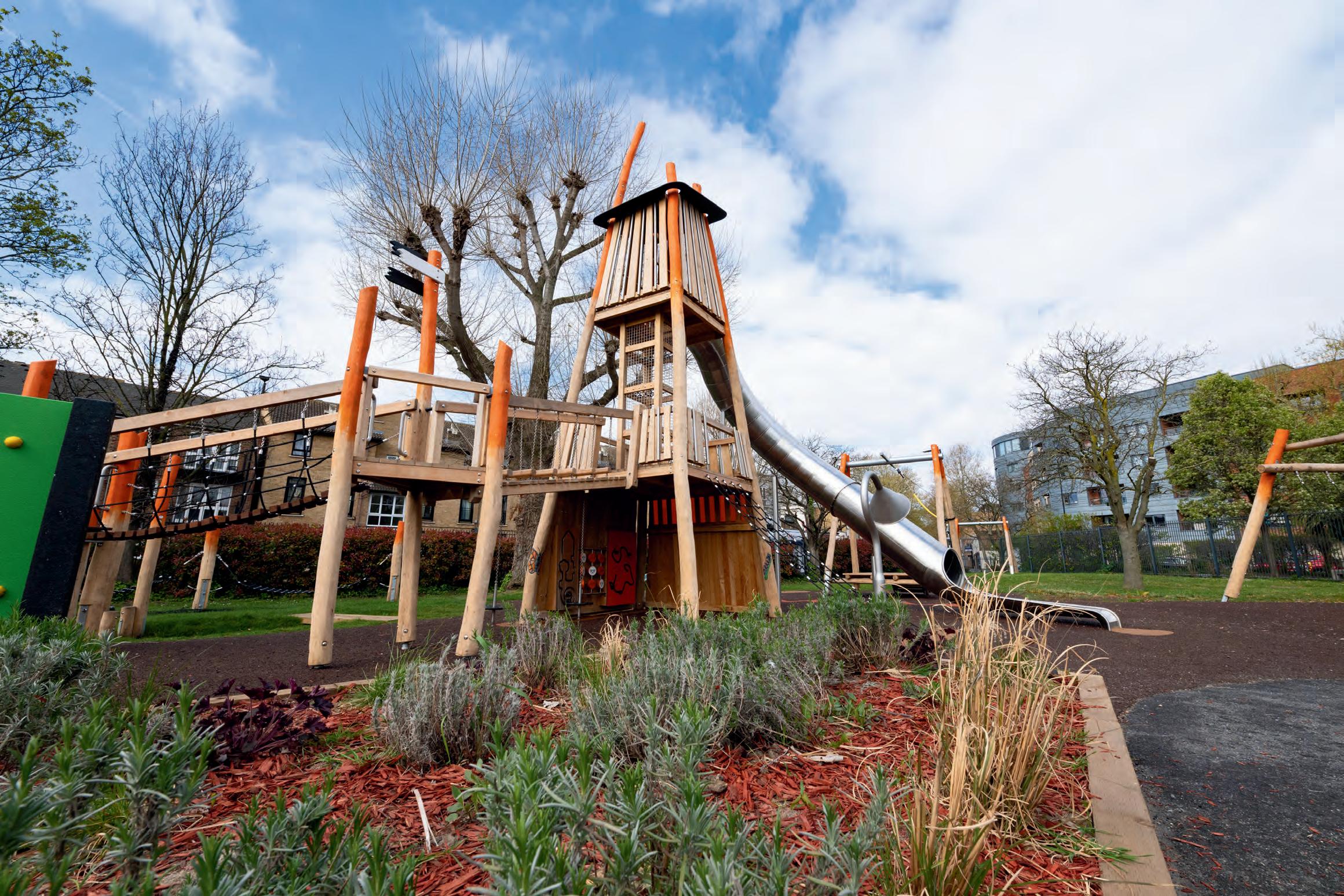
Located beside the River Leam, Mill Gardens is a much-loved green space in Royal Leamington Spa, celebrated for its lawns, botanical planting, boating lake and central play provision. Its heritage is equally distinctive, with Samuel Lockhart’s performing elephants, Wilhelmina, Trilby and Haddie, once local icons who walked through the town and bathed in the river.
Warwick District Council’s brief for the redevelopment of the park called for a replacement that would reflect the park’s setting, celebrate local identity and create a memorable family destination.
Proludic transformed the initial elephant theme into an ambitious bespoke design. At its centre stands a 4-metre-high Robinia elephant, providing a sculptural focal point as well as opportunities for play.


Fiona Kirkland, Play Pedagogy Lead at Play Scotland, shares how the UK’s most northerly school is leading the way through the Play Scotland Play Pedagogy Award
Across Scotland, more schools are asking what it would look like if play was embedded across the whole school, not just in early years, but as part of everyday life, learning and culture.
As the national expert for play in Scotland, Play Scotland works to ensure play is valued, protected and prioritised. This commitment sits at the heart of the Play Scotland Play Pedagogy Award, which I developed and now lead, supporting schools to embed play pedagogy through self-evaluation, professional dialogue and evidence of impact. Over 65 schools across 22 local authorities are involved, each with their own context and starting point.
One of those schools sits right at the top of the UK. Baltasound Junior High School, on Unst in Shetland, is the most northerly school in the UK and serves a small island community. The school describes itself as a ‘peerie’ school with big ambitions for its children and young people, and their journey shows that play pedagogy can be meaningful in any setting.
At Baltasound, play is not treated as something extra to squeeze in when the ‘real work’ is finished, it is part of how children learn, connect, explore and make sense of the world. From Early Years through to Secondary, learners have time and space to follow their ideas through flexible learning opportunities both indoors and outdoors, where creativity and relationships flourish.
The children explain it better than we ever could. Anya in P4 said, “If we had nothing to play with, school would be really boring. I would hate school. We wouldn’t even be able to learn.” Nula in P5 put it simply too, “Play helps us learn. We are lucky to be able to play.”
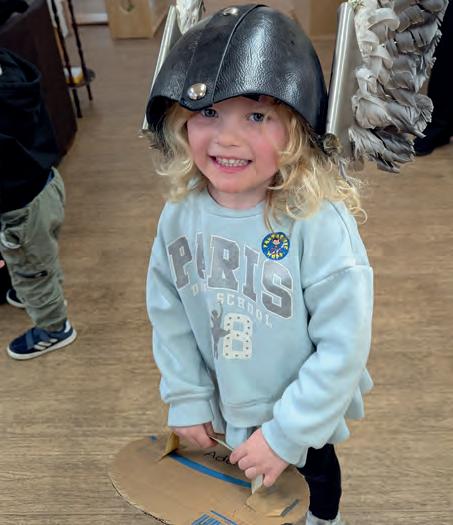
Through the Award process, Baltasound has used observation, pupil voice, self-evaluation and data to shape next steps. Staff have thought carefully about the adult role, knowing when to step in, step back, or join children in the moment, while the school’s environments have been shaped with children too, giving them real ownership of the spaces where they learn and play.
On 11 June, UN International Day of Play, I’ll visit Baltasound to present their Award, making them the first school to achieve Play Scotland Play Pedagogy Award status. It feels very fitting that this milestone will be celebrated on a day dedicated to recognising the importance of play in children’s lives. Baltasound’s journey reminds us that meaningful change happens when children’s voices are taken seriously, staff are supported to reflect and grow, and play is understood as a right, a pedagogy and a vital part of learning. As Anya and Harper in P4 remind us: “Never say we just play, because play is our learning.”

For over a third of operators, Food and Beverage now accounts for between 30 and 39 percent of total turnover,
Maria Cantarella CEO, Association of Indoor Play
In March 2026, the Association of Indoor Play carried out its first dedicated sector-wide Food and Beverage survey, and the results confirm something many operators have sensed for some time: café performance is no longer secondary income. In a growing number of venues, it is central to the business model.

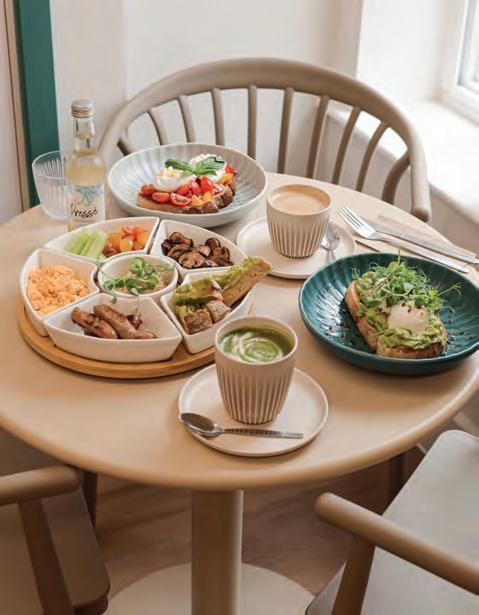
The purpose of the survey was not simply to compare prices. We wanted a clearer picture of how operators are structuring their offer, managing margins and responding to customer expectations in what remains a demanding trading environment. The response was strong and broadly representative across indoor play centres, hybrid leisure venues, farm attractions and play cafés. What emerged is striking. For over a third of operators, Food and Beverage now accounts for between 30 and 39 percent of total turnover, while another third generate more than 40 percent from café operations alone. A small but significant proportion report figures above 60 percent. That shifts the narrative completely. Food is no longer an add-on. It is a commercial pillar. Encouragingly, profitability remains resilient despite continued pressure from ingredient costs, staffing challenges and customer price sensitivity. Two thirds of operators report café performance has either held steady or improved over the past year. Operators are clearly becoming more confident in pricing and more deliberate in protecting margin. Pricing itself has moved on decisively. The days of sub-£3 coffee and £4.50 children’s meal deals are largely behind us. National averages now sit closer to £3.20 to £3.50 for an Americano and £5.25 to £6.25 for children’s meal bundles. Regional gaps still exist, but they are narrowing, and operators across the country are showing greater confidence in holding sustainable price points.
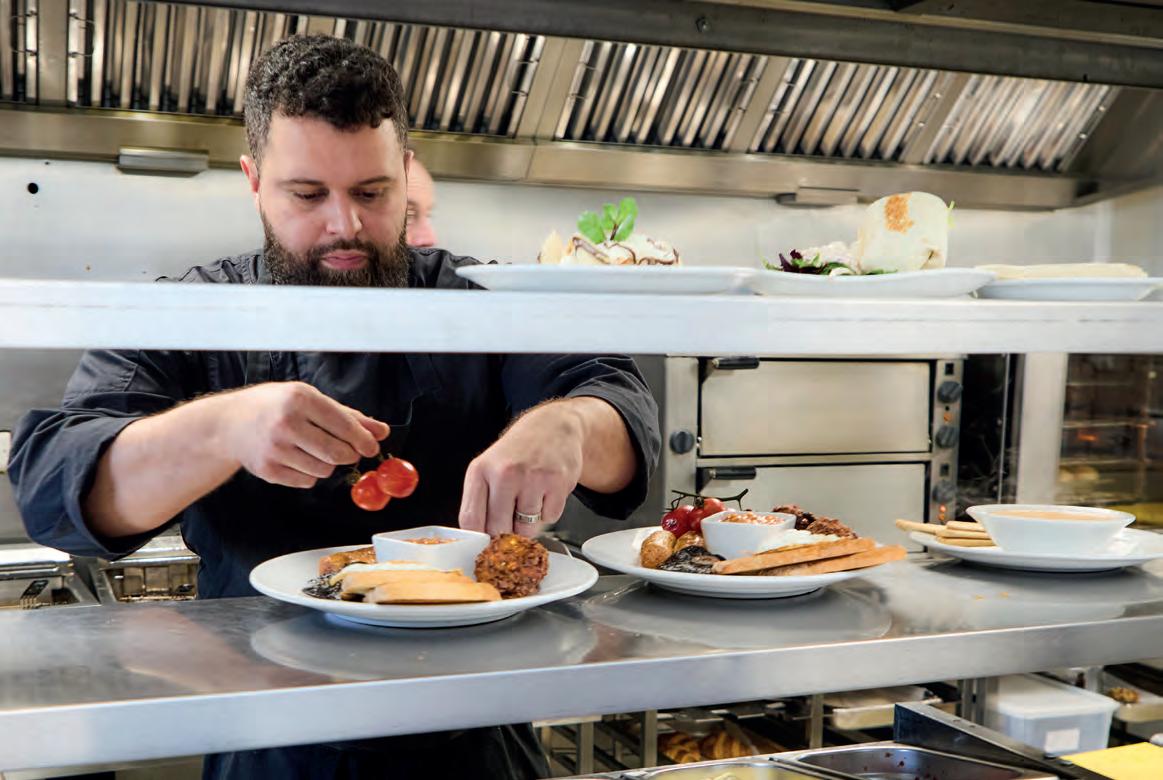
Food and beverage in indoor play has entered a more mature and commercially confident phase
One area where the sector still has work to do is performance tracking. Nearly a third of operators are not measuring average spend per head in their cafés. Sites achieving £6 or more per visitor show what is possible when Food and Beverage is treated as a strategic revenue stream rather than simply an operational necessity.
Perhaps most importantly, 59 percent of operators now believe their food offer actively influences customers’ choice of venue. That represents a genuine cultural shift. Food has become part of the experience and part of competitive positioning.
At AIP, we see this evolution reflected not just in the creativity across the sector but in the standards operators are now setting. It is exactly why we recognise excellence through two dedicated annual awards: Excellence in Food and Beverage and Best Coffee and Cake Experience. This year’s finalists are Head Over Heels Chorlton, Hockerhill Playbarn, Ollie Polly Play Café, Safari Adventure Play Peterborough and Stockeld Park in the Excellence in Food and Beverage category, and Playtrain, Scribbleton and Tiny Tots Town in Best Coffee and Cake Experience. The winners will be announced at the AIP Conference and Play Industry Awards Dinner on 4 June at the Royal Armouries in Leeds.

The message from the survey is clear. Food and Beverage in indoor play has entered a more mature and commercially confident phase. The opportunity now is to keep building on that momentum with stronger benchmarking, sharper tracking and continued investment in quality.



The Culture, Media and Sport Committee has published its long-awaited Game On report, which makes a series of recommendations to the government with the aim of strengthening play, physical activity and grassroots sport. The report’s recommendations could, if adopted by government, represent a turning point for the future of play and community activity across England




rom active travel to more childfriendly urban design, there has been an increased drive in recent years for children’s physical activity opportunities to be shaped as much by the spaces around them as by formal provision.
The UK Parliament’s new Game On: Community and School Sport report suggests those arguments are finally gaining significant political traction.

Published by the Culture, Media and Sport (CMS) Committee, following a year-long inquiry into grassroots and school sport, the report is broad in scope. It examines everything from PE provision and school sport partnerships to facility funding, planning reform and health policy. Yet, among the headline recommendations are several proposals that directly align with long-running campaigns from the play sector.
Most notably, MPs have called for the removal of unnecessary “No Ball Games” signs, stronger planning protections for playing fields



and renewed investment in opening school facilities for community use. For organisations working across play, recreation and community activation, the report represents one of the clearest acknowledgements in recent years that informal play spaces are a crucial part of the nation’s physical activity infrastructure.
The Committee’s inquiry gathered evidence from a wide range of organisations across sport, leisure, health and education, including play-focused bodies and community activity organisations. MPs concluded that while there is strong demand for sport and physical activity, participation is being constrained by ageing facilities, inconsistent funding and a lack of coordinated national strategy.





Among the report’s most eye-catching recommendations is a proposal for legislation requiring local authorities and housing associations to limit the use of No Ball Games signs in public spaces. The Committee stated: “We recommend that the Government legislate to require local authorities and housing associations to remove unnecessary ‘No Ball Games’ signs, to make public spaces more usable for children’s play.”
For many in the play sector, that recommendation marks a significant cultural shift. Campaigns against restrictive signage have intensified in recent years, led by Play England and London Sport through the “More


Ball Games” initiative. Advocates have long argued that negative signs send a message that children are unwelcome in public space and disproportionately affect young people living in higher-density urban environments with limited access to formal recreation facilities.
The Game On report suggests that MPs have recognised that enabling children to be active is not solely about building new sports infrastructure, but also about ensuring that everyday streets, estates and green spaces remain available for spontaneous play and informal recreation.

London Sport welcomed the recommendation, describing it as support for “practical, scalable solutions” that can remove barriers

The Committee explicitly recognised the importance of creating and preserving everyday spaces where children can be active, play and socialise close to home
to physical activity. The organisation argued that unlocking everyday spaces for play could have a particularly important impact in underserved communities where access to organised sport is often more limited. The recommendation also reflects a broader shift in how policymakers increasingly view physical activity. Rather than focusing purely on organised sport participation, the report acknowledges the importance of play, informal movement and accessible local environments.
For the play sector and its providers – from operators and suppliers to designers – that change in tone matters. It suggests that the policy conversation has recognised play as an essential contributor to public health and community wellbeing, rather than simply a supplementary leisure activity.
The report also delivers a strong warning over the future of community recreation land and playing fields. MPs concluded that any future planning reforms must include “a robust and enforceable mechanism to protect playing fields and sports facilities”.
That recommendation comes amid continuing concerns across both sport and play sectors regarding the loss of accessible open space, particularly in urban and high-growth areas. The Committee heard evidence that ageing facilities, uneven provision and the continued pressure on local authority budgets are already restricting opportunities for participation. The issue is particularly significant for the play industry because informal recreation spaces are often vulnerable within wider planning and regeneration programmes. Smaller neighbourhood play areas and open spaces may lack the formal protections attached to


larger sports venues, despite being heavily used by local families and communities. Fields in Trust welcomed the Committee’s stance, particularly its support for retaining Sport England’s role as a statutory consultee in planning decisions affecting playing fields. The charity warned that weakening existing protections could place valuable recreational land at greater risk. Importantly, the report goes beyond traditional organised sport facilities. The Committee explicitly recognised the importance of creating and preserving everyday spaces where children can be active, play and socialise close to home. For play professionals, that acknowledgement reinforces the growing overlap between play policy, planning policy and public health strategy.

Opening schools to communities again

Another key recommendation likely to resonate strongly across the sector concerns the future of the Opening School Facilities (OSF) Fund.
The previous programme invested £57m over three years to help schools make sports facilities available to pupils and local communities outside normal teaching hours. Delivered through organisations including the Youth Sport Trust, StreetGames, ukactive and the Active Partnerships network, the scheme ended in March 2025.
While the Committee acknowledged mixed views about the programme’s implementation, MPs expressed concern that the closure of the fund had left facilities underused despite clear community demand.

The report therefore recommends that Government reinstate support for opening school facilities, but through a longerterm, place-based funding model designed around local need and sustainability.
That recommendation has significant implications for the play and activity sector.
In many communities, school sites represent some of the best-quality outdoor spaces available. Yet access outside teaching hours can remain limited due to staffing pressures, safeguarding concerns, funding challenges or operational barriers.
The Committee’s findings suggest there is increasing recognition that maximising existing assets may often be more effective than relying solely on major new capital investment.
London Sport said the report’s recognition of initiatives like the OSF Fund demonstrates “the value of making better use of the spaces we already have to support more people to be active”. That principle is likely to resonate across the play industry, particularly among operators working in densely populated urban environments where access to land for new provision is increasingly constrained.
SAPCA welcomes long-term infrastructure focus
The response from the Sports and Play Construction Association (SAPCA), has been particularly supportive of the report’s wider infrastructure agenda. The organisation welcomed the Committee’s recognition that facilities remain one of the biggest barriers to participation and supported calls for longer-term investment planning, protection of community spaces and more sustainable approaches to facility development.

For SAPCA members, who operate across sport and play construction, the report reinforces the importance of treating recreation infrastructure as an essential public asset rather than discretionary spending.
SAPCA CEO, Richard Shaw, said: “The Game On report is a timely and welcome intervention that recognises the fundamental role highquality facilities play in getting more people active. Delivering accessible, durable and highquality facilities requires expertise, standards and collaboration across the sector. SAPCA and its members stand ready to support Government and partners in turning these recommendations into lasting, impactful change on the ground.”
As with all select committee reports, the Government is not obliged to accept every recommendation. However, the report carries political weight, particularly given the breadth of evidence gathered during


The report repeatedly positions play, recreation & informal activity as central components of national wellbeing infrastructure


the inquiry and the increasingly prominent public debate around inactivity, children’s wellbeing and community health.
For the play sector, the significance of Game On lies not only in its individual recommendations, but in the broader shift it represents. The report repeatedly positions play, recreation and informal activity as central components of national wellbeing infrastructure. It recognises that children’s physical activity is shaped not just by formal sports participation, but by whether neighbourhoods are designed to support movement, freedom and social interaction.
From removing unnecessary “No Ball Games” signs to protecting playing fields and reopening school spaces, the Committee’s recommendations collectively point towards a more play-friendly approach to public policy.
Whether the Government now translates those recommendations into legislation and funding will determine whether Game On becomes merely another parliamentary report — or a genuine turning point for the future of play and community activity across England.
PlayNation looks at the forthcoming Association of Indoor Play (AIP) Conference and Awards, taking place in early June this year
The Association of Indoor Play returns this June to the Royal Armouries for its third annual Conference, Trade Show and Play Industry Awards since the pandemic, bringing together more than 200 professionals from across the indoor play sector, including operators, suppliers, designers and industry partners. What began as a much-needed opportunity for the sector to reconnect has quickly established itself as a key annual gathering for the industry.
This year’s conference is titled The Wonders of Play, reflecting the completion of the first stage of new research on the benefits of play led by Dr. Amanda Gummer. The work brings together evidence around the role indoor play environments have in supporting children’s physical development, social confidence, creativity and wellbeing.
The Conference programme reflects how the priorities of indoor play businesses are evolving. Increasingly, operators are looking beyond traditional operational considerations towards digital engagement, customer experience and the long-term sustainability of their offer.
One of the headline sessions will be delivered by Matt Baker, CEO of Destination Marketing exploring Digital First: Winning Customers in the Age of Social and AI. As family decisionmaking becomes more influenced by social discovery and emerging artificial intelligence tools, understanding how venues position themselves online is becoming central to success.
Food and beverage is another area receiving renewed strategic attention across the sector.
Katie Moses, MD of Kam who will present “More Than Coffee and Cake: Rethinking Food and Beverage as a Strategic Driver in Leisure Venues”,
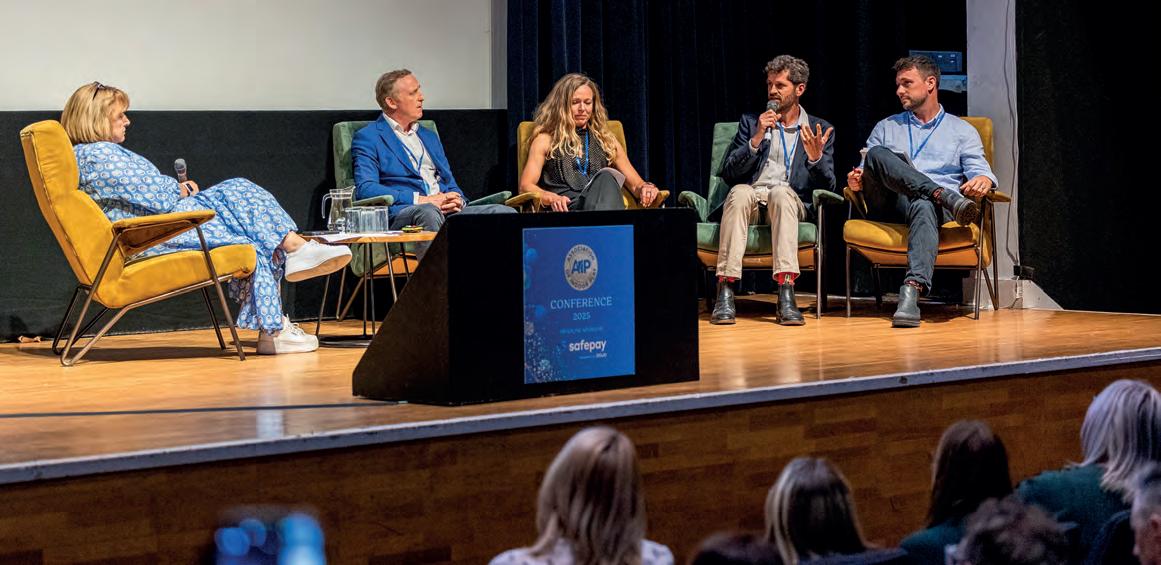
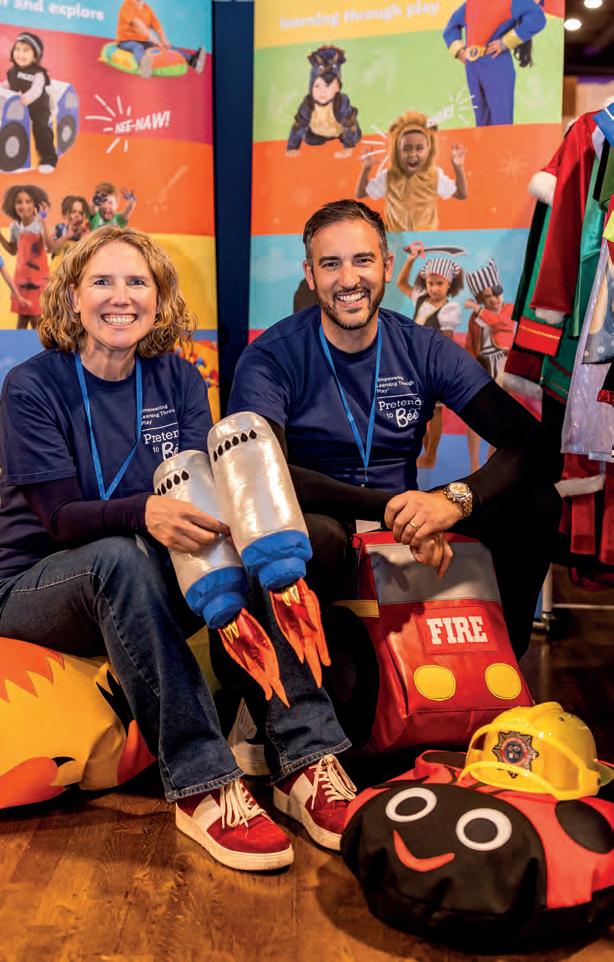
examining how indoor play food offerings are increasingly shaping dwell time, customer satisfaction and overall commercial performance.
The Conference will once again be guided by Rachael Haslam as master of ceremonies, helping to bring together a programme designed to balance practical operational insight with longer-term strategic thinking. Alongside the sessions, a 50-strong trade exhibition will feature many of the leading suppliers working across indoor play, including equipment manufacturers, designers, technology providers, catering specialists and professional services.
The day concludes with a Gala Play Industry dinner and the presentation of the Play Industry Awards, which have become an important moment of recognition for standards and innovation across the UK indoor play community. The awards are open to all operators, not only AIP members, and reflect the full breadth of the sector, including traditional indoor play centres, role

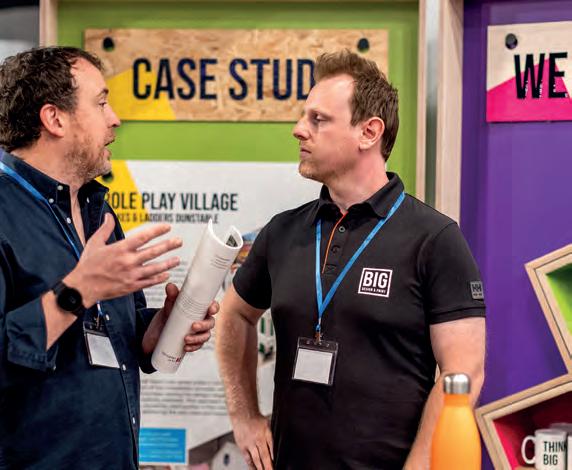
play venues, play cafés, sensory environments, inflatable parks, laser tag arenas and mixedactivity family attractions. Entrants are assessed specifically on their indoor play offer, ensuring consistency and fairness across a diverse market.
There are 11 award categories in total, with the Best Indoor Play Centre awards – of which there are 4 categories based on size of play offering being the most closely watched. These are presented across four size bands, recognising excellence from smaller neighbourhood venues through to some of the largest attractions in the country. Additional categories highlight areas that are increasingly shaping the future of the sector, including Excellence in Food and Beverage, Most Inclusive Operator, Best Role Play, Innovation Award, Trade Supplier of the Year, Employee Spotlight and Best Coffee and Cake Experience.
Shortlisted finalists this year reflect the strength and diversity of the sector, ranging from independent neighbourhood venues such
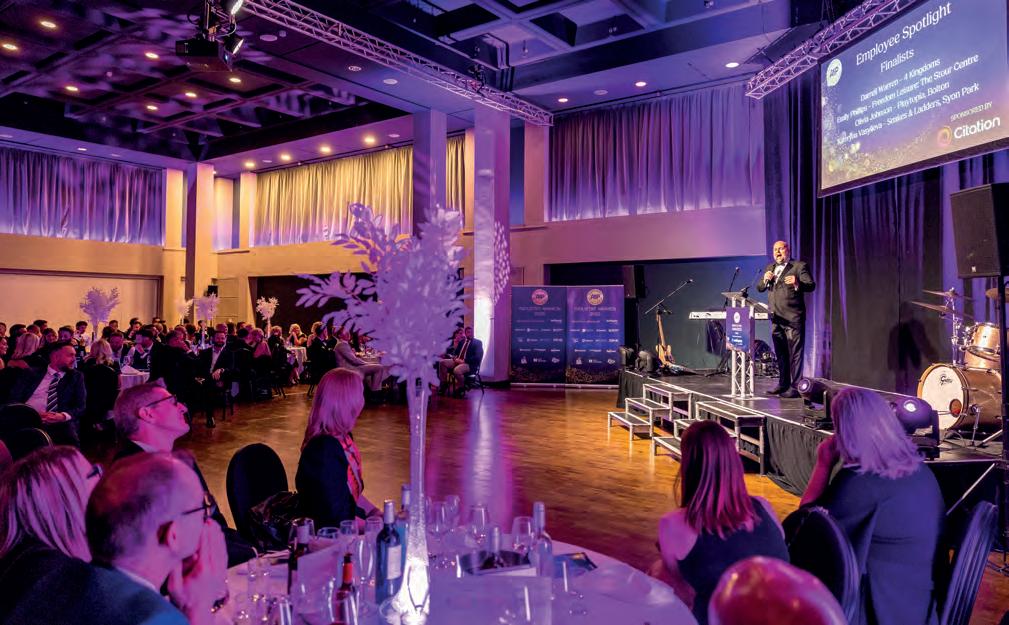
as Little Olive’s Play Café and Scribbleton through to larger regional destinations including Safari Adventure Play Peterborough, Stockeld Park and Web Adventure Park. The awards are independently judged against clear criteria covering operational standards, customer experience, innovation and impact on families and communities, with winners announced during the Gala Dinner on the evening of 4 June, hosted by Hollyoaks celebrity actor Ross Adams. Entries are assessed by an independent judging panel drawn from across the children’s activities, play and leisure sectors, ensuring that decisions reflect both operational expertise and wider strategic understanding of the industry. The panel is led by Sam Godfrey-Moore, founder of What’s On 4 Kids and the Children’s Activities Association, whose long-standing contribution to recognising quality across the children’s activity sector brings valuable perspective as Head Judge. She is joined by Robin Mills, widely known across the international indoor play community for his insight into gamified play experiences; Eugene Minogue, whose leadership at Play England brings a strong policy and wellbeing dimension to the process; and Ian Kearney, a highly respected industry veteran and former operator with deep practical knowledge of multi-activity family entertainment venues. The Best Coffee and Cake Experience category is judged by Ian Noble of
The Conference, Trade Show & Awards Dinner now play an important role in bringing the sector together at a time when indoor play is changing rapidly
Dancing Goat coffee whose specialist expertise in café quality and delivery reflects the growing importance of hospitality within indoor play environments. Together, the panel ensures that finalists are assessed against meaningful criteria that recognise both operational excellence and wider contribution to the sector.
The Conference, Trade Show and Awards Dinner now play an important role in bringing the sector together at a time when indoor play is changing rapidly. With new formats emerging, higher expectations from families and increasing pressure on operators to strengthen commercial performance, the event provides a practical opportunity to share experience, recognise strong operators and highlight where the industry is heading next. As the sector continues to develop, gatherings like this help ensure standards remain high and that indoor play continues to be recognised as an essential part of the UK’s family leisure landscape.

360° wrap-around branding Printed with your design







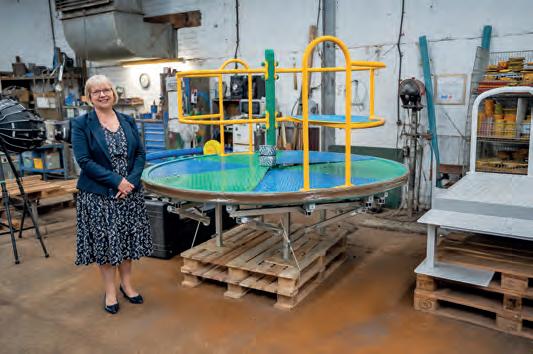
PlayNation speaks to Katherine Perkins, Managing Director of Wicksteed, on the company’s past, present and future – and how the sector she has served for nearly 40 years is changing
For nearly four decades, Katherine Perkins has watched the UK play sector evolve from a niche industry into one increasingly recognised for its importance to childhood development, wellbeing and community life. Now Managing Director of Wicksteed Playgrounds, Perkins has spent almost her entire working life with one of the most historic names in British play provision. Her career has mirrored the changing fortunes of the sector itself – from a time when playgrounds were often viewed simply as optional amenities to an era where play is increasingly understood as essential social infrastructure.
Speaking about her journey into the industry, Perkins admits she never expected a temporarylooking role at 19 to become a lifelong career. “I’ve worked in the play sector for 39 years, which still surprises me when I say it out loud,” she says.
“I joined Wicksteed as an order processing clerk and, honestly, I never imagined then that I’d still be here decades later as Managing Director.”
From customer services through to senior leadership, Perkins has risen through the ranks while remaining deeply connected to the company’s wider mission. “What kept me in the industry was the fact that play
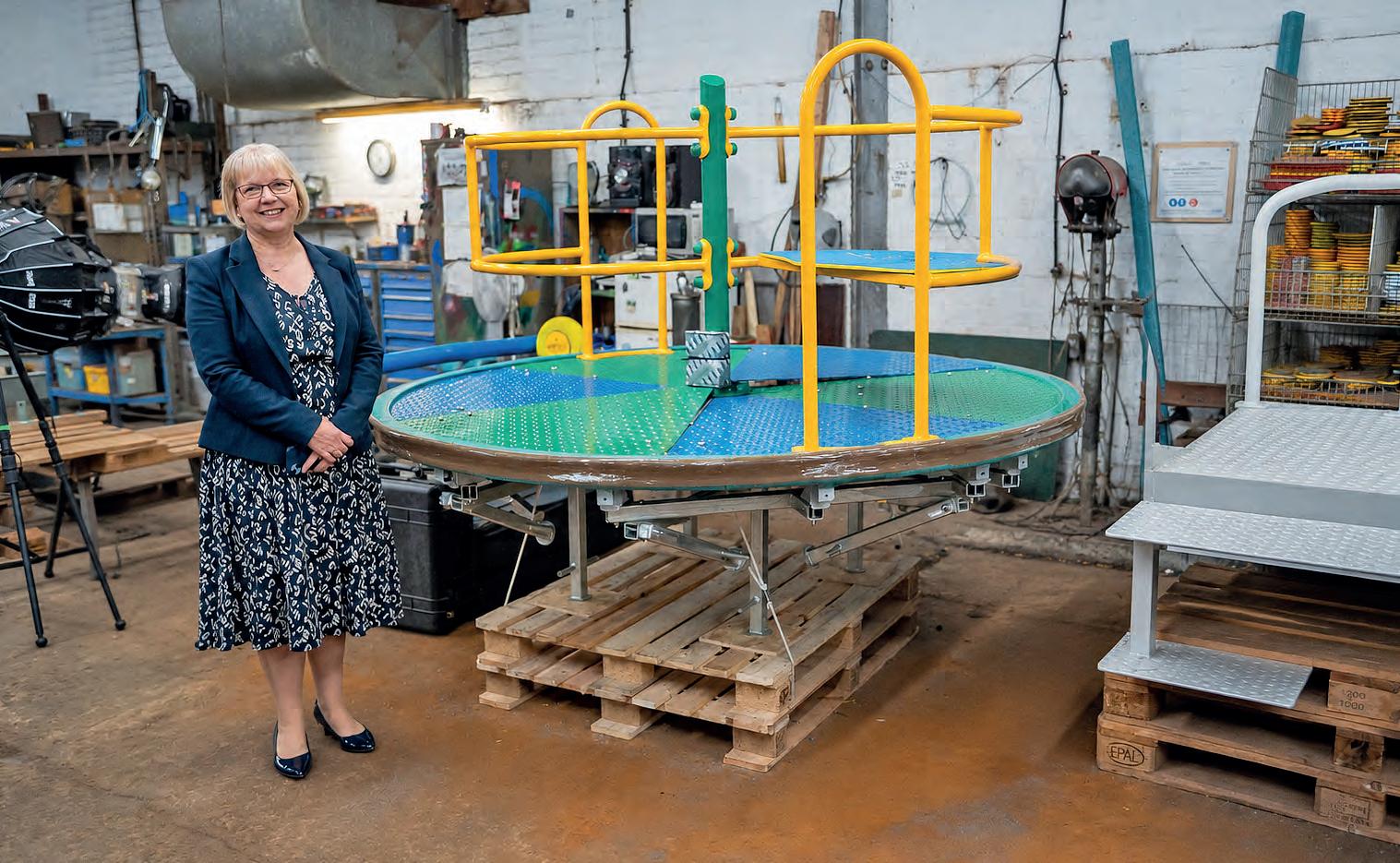
Perkins joined the play sector when she was 19 and has gone from customer services to senior leadership
really matters,” she explains. “Throughout all of that I’ve stayed passionate about what we do because we’re creating spaces that children genuinely benefit from.
“It becomes more than a job – you become emotionally invested in the importance of play and the difference it makes to children, families and communities.”
For Perkins, that connection is also intensely personal. The Wicksteed story has intertwined with her own family history across generations. “On a personal level, I have a great deal to thank Charles Wicksteed for,” she says. “My parents met while working at Wicksteed Park – my father on the water chute and my mother in the changing rooms. Years later, I met my husband while both working at Wicksteed.
“That journey has given me not only a lifelong career, but also two wonderful children and four grandchildren. Wicksteed is more than a business to me; it’s been a defining part of my family’s story.”
That sense of legacy perhaps explains why Perkins speaks so passionately about the wider play sector and the challenges it currently faces. Having entered the
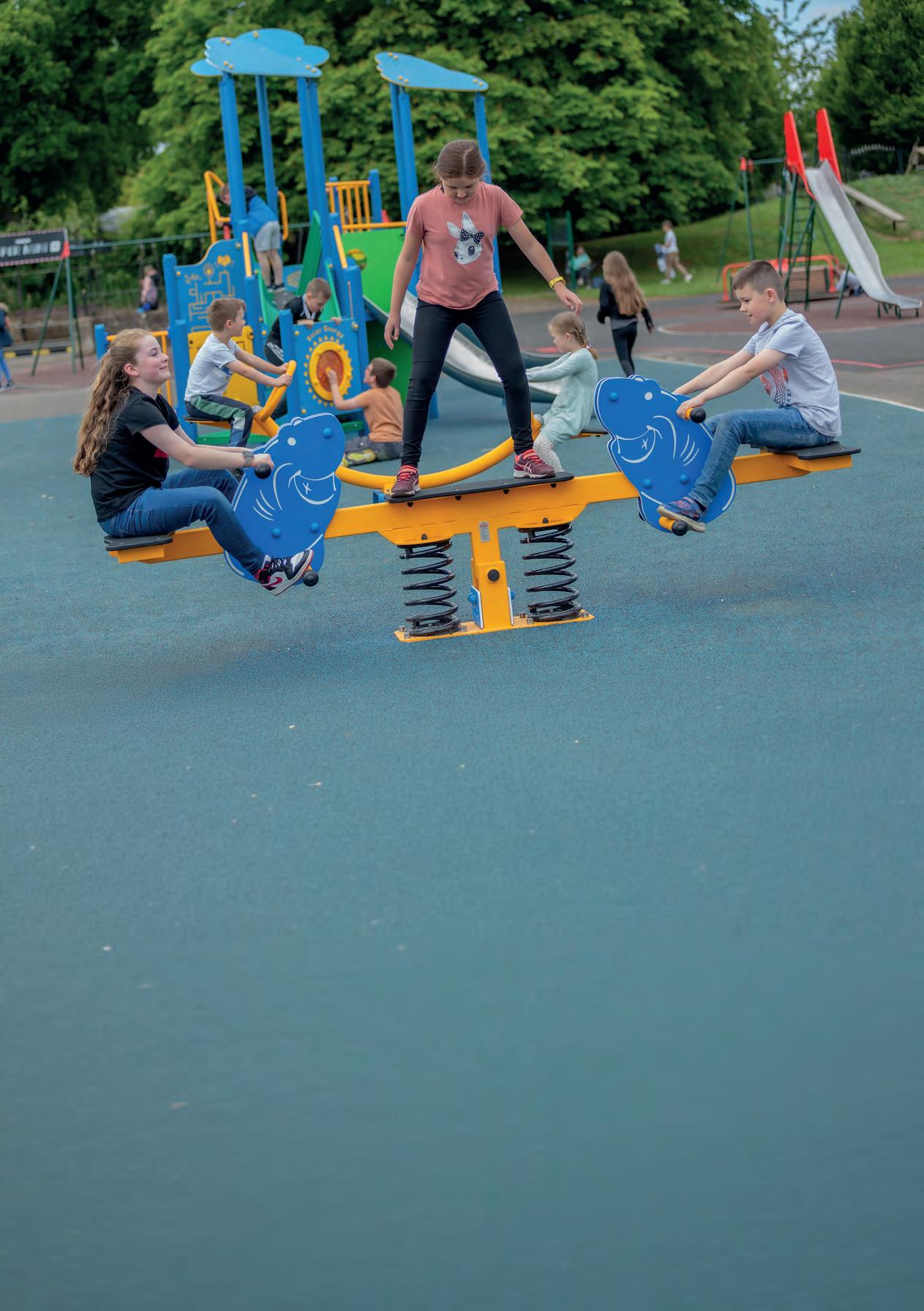
industry during the 1980s, she has witnessed dramatic changes in both public attitudes and children’s lifestyles.
“When I first started, play was often seen as something ‘nice to have’,” she says. “Today there’s much more understanding of the role it plays in children’s physical health, emotional wellbeing, confidence and social development.”
However, despite growing awareness, Perkins believes inequalities in access to play remain one of the biggest issues confronting the sector. “One thing that concerns me is that children’s right to play increasingly feels like a privilege rather than something every child should simply expect to have access to,” she says.
“Access to quality play spaces can depend too much on where you live or the funding available locally, and that’s something the industry continues to fight hard for.”
While technology and social habits may have changed dramatically during her career, Perkins insists children themselves still fundamentally seek the same things from play. “They still want to climb, explore, socialise, challenge themselves and use their imagination,” she says. “But the world around them has changed dramatically.
“They’re growing up with screens, structured schedules and less freedom than previous generations, which makes outdoor play more important than ever.”
That reduced freedom, she argues, has made playgrounds and community play spaces increasingly valuable as places where children can safely explore independence and social interaction.
“The more we can get families out in communities, the safer those communities become,” she adds.
Perkins believes the sector has responded positively to changing expectations, particularly around inclusivity and wellbeing. “Inclusivity is probably one of the biggest and most positive developments we’re seeing,” she says. “There’s far more focus now on creating spaces where children of all abilities can play together rather than separately, which is incredibly important.”
She also highlights the growing recognition of play’s role beyond simple recreation.
“Playgrounds are increasingly recognised as spaces that support both physical and mental health – not just for children but for families and communities as a whole,” she explains.
Alongside inclusion and wellbeing, sustainability has become another major consideration for manufacturers and operators alike.
“Sustainability is becoming a key consideration, both in the materials we use and in designing products that stand the test of time,” she says.
Perkins believes the Covid-19 pandemic marked a particularly important moment for
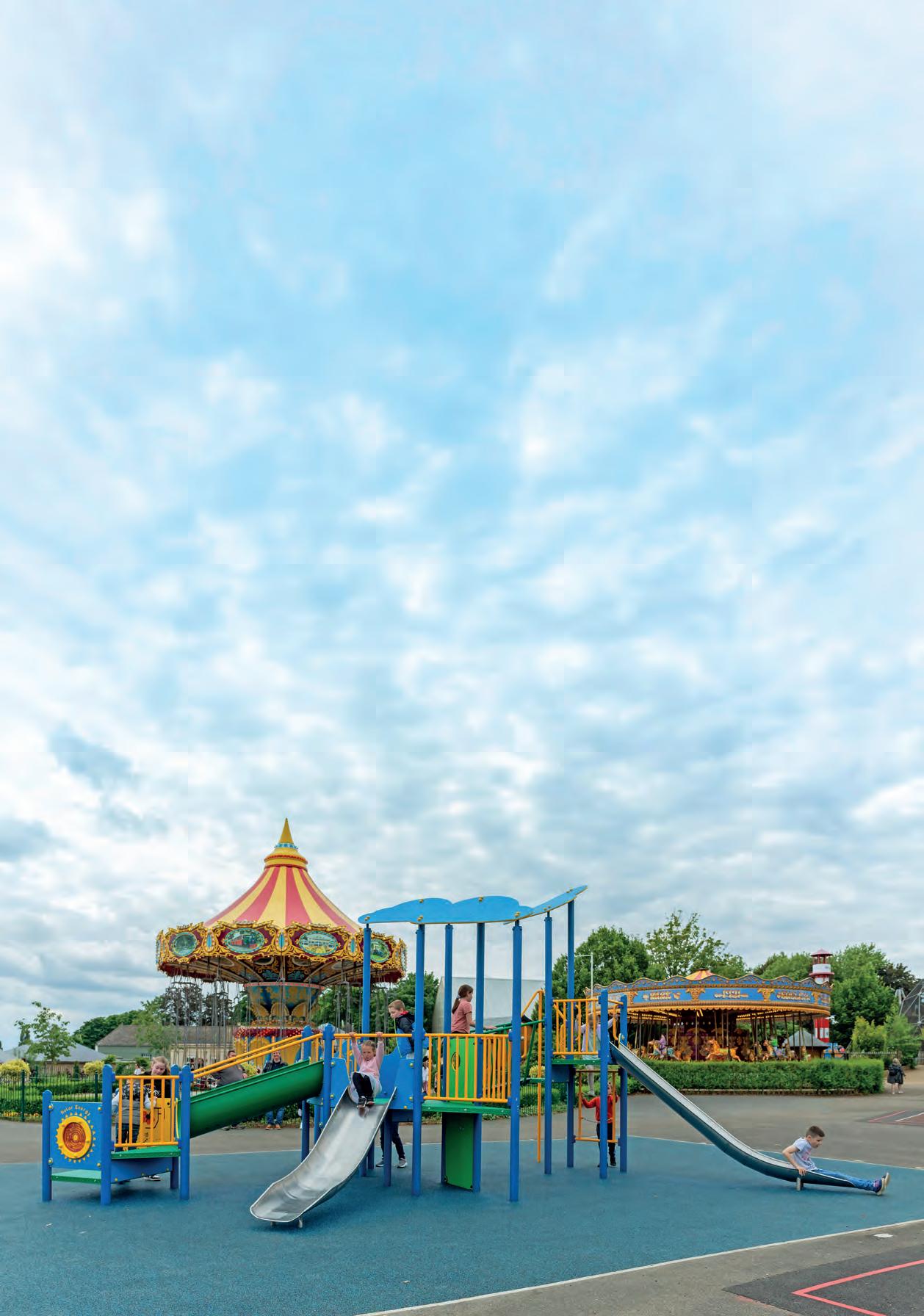
For too long, play has sometimes been overlooked despite the enormous benefits it brings to children and communities
the sector’s profile nationally. “I do think there’s more acknowledgment now than there used to be, particularly since the pandemic, when people really saw the value of outdoor spaces and the impact they have on wellbeing,” she says.
“There’s definitely greater awareness at government level around the importance of play, but we still have a long way to go.”
The challenge, she argues, lies in translating that awareness into long-term policy and consistent investment.
“The industry has worked incredibly hard to raise the profile of play,” says Perkins. “The more we can collectively demonstrate the social, educational and health benefits of play, the stronger the case becomes.”
She views recent initiatives – including the establishment of the All-Party Parliamentary Group (APPG) for Play, the forthcoming National Play Conference and campaigns to make play statutory within England’s Key Stage 1 curriculum – as vital steps forward. “They’re hugely important because they help move the conversation forward and keep play visible at a national level,” she says.








“For too long, play has sometimes been overlooked despite the enormous benefits it brings to children and communities.”
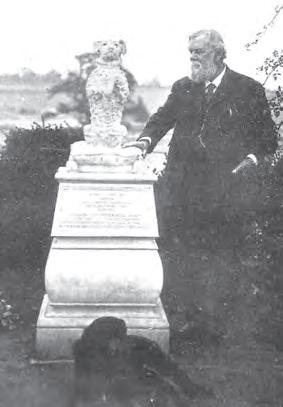


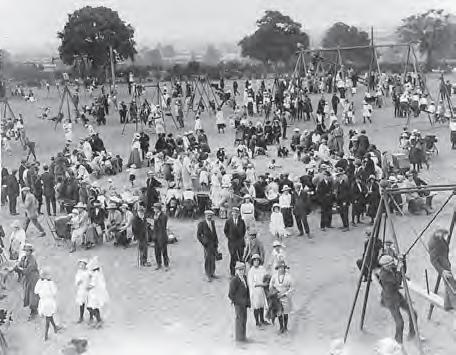

Wicksteed has played an extraordinary role in the history of the UK play sector


In particular, Perkins believes embedding play within education policy would represent a landmark cultural shift. “Making play part of the Key Stage 1 curriculum would be a significant step because it formally recognises something many of us in the industry have always known: children learn through play.”
Any conversation about Wicksteed inevitably turns towards the company’s extraordinary heritage within the British play sector. Founded by Charles Wicksteed in Kettering in 1876, the company originally manufactured and repaired agricultural machinery before diversifying into engineering products and eventually playground equipment.
The company’s journey into play provision began shortly after the First World War.
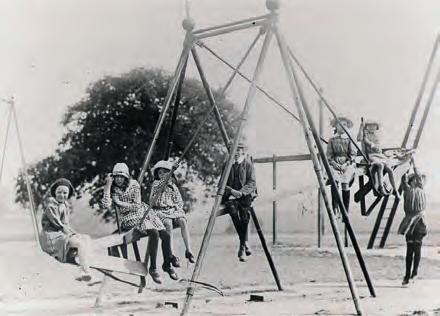
“At the end of the First World War in 1918, Charles Wicksteed created swings for children as a celebration of peace and optimism for the future,” Perkins explains.
“That simple idea sparked something much bigger and ultimately led to the design and manufacture of playground equipment and the installation



of what became one of the UK’s first children’s playgrounds at Wicksteed Park in 1921.”
Perkins describes Charles Wicksteed as “a true visionary” whose belief in accessible recreation continues to shape the business more than a century later. “He believed outdoor recreation and play should be accessible to everyone, and those values still sit at the heart of the business today,” she says.
Although Wicksteed’s history is one of its greatest assets, Perkins is keen to stress that the company is equally focused on innovation and modernisation.
“I think one of Wicksteed’s biggest strengths is that we combine genuine heritage and experience with a very modern approach to play,” she says. “Our heritage gives us credibility, experience and a deep understanding of what makes great play value, but we’re constantly evolving in terms of design, inclusivity, sustainability and innovation.”
The company’s continued UK manufacturing presence also remains central to its identity.
“We’re proud to be a British manufacturer, with our products manufactured here in the UK, and we’re also members of the Made in Britain organisation,” Perkins says. “That reflects our commitment to quality, craftsmanship and supporting British manufacturing.”
In a challenging economic climate, Perkins
The
believes durability and long-term value have become increasingly important factors for customers.
“Customers want equipment that is built to last and delivers long-term value, particularly in today’s challenging funding environment,” she explains. Equally important, she says, is the culture within the company itself.
“There’s a real passion within the business,” she says. “Many people here have spent years in the industry — our longest serving employee has been with us for 49 years — and they genuinely care about creating spaces that make a difference.”
The Wicksteed name also remains intrinsically linked to Wicksteed Park, one of the UK’s best-known historic leisure parks. “Wicksteed Park is an incredibly important part of our history and identity because it reflects Charles Wicksteed’s original vision about recreation, wellbeing and access to play for everyone,” Perkins says.
Today, the park operates separately under the Wicksteed Charitable Trust, although Perkins says the emotional and historical connection remains strong. “For many people, Wicksteed Park is where their memories of play and childhood were created, so it continues to hold a very special place within the wider Wicksteed story,” she says.
Looking ahead, Perkins says the company’s future strategy centres on balancing innovation with the core principles that have defined Wicksteed for generations. “Our focus is very much on continuing to innovate while staying true to the values Wicksteed has always stood for — quality, durability, safety and creating meaningful play experiences that stand the test of time,” she says. “That absolutely doesn’t mean standing still or relying on heritage alone.”
We’re focused on helping customers create spaces that deliver genuine long-term social value, whether that’s supporting physical activity, wellbeing, inclusion or community connection
Future investment will focus heavily on inclusive design, sustainability and creating more imaginative and engaging play experiences. “We’re continuing to invest heavily in new product development, particularly around inclusive play, sustainability and more engaging, imaginative play experiences,” Perkins explains.
The company is also increasingly focused on helping customers demonstrate measurable social value through playground investment. “We’re focused on helping customers create spaces that deliver genuine long-term social value, whether that’s supporting physical activity, wellbeing, inclusion or community connection,” she says.
Ultimately, Perkins believes the sector’s future depends on maintaining momentum around advocacy and ensuring play remains visible within public policy discussions. Despite ongoing funding pressures, she remains optimistic.
“There’s far greater understanding now of the importance of play than there was when I started,” she says. “That’s encouraging. “But we can’t become complacent. We still need stronger long-term investment, stronger policy support and a recognition that play isn’t an optional extra — it’s essential.”
For Perkins, the future of the sector lies in continuing to champion play not simply as recreation, but as a vital contributor to healthier, happier and more connected communities.
And after nearly 40 years in the industry, that mission clearly remains as personal as ever.
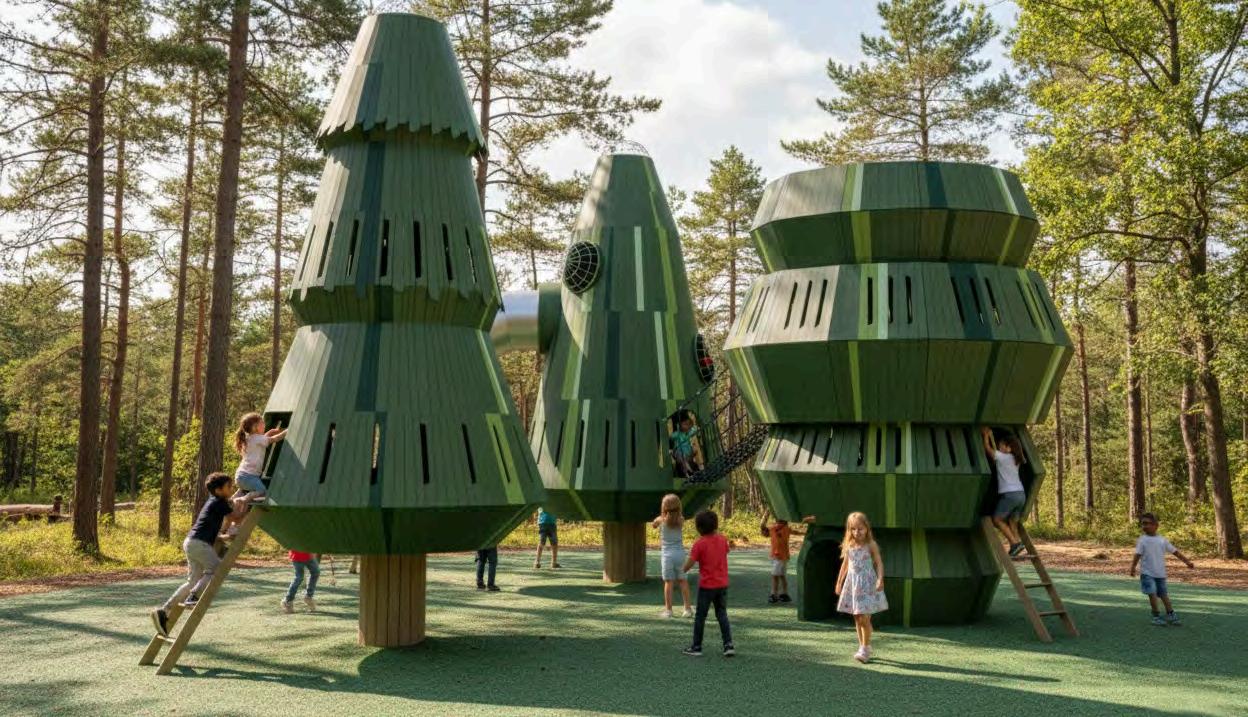
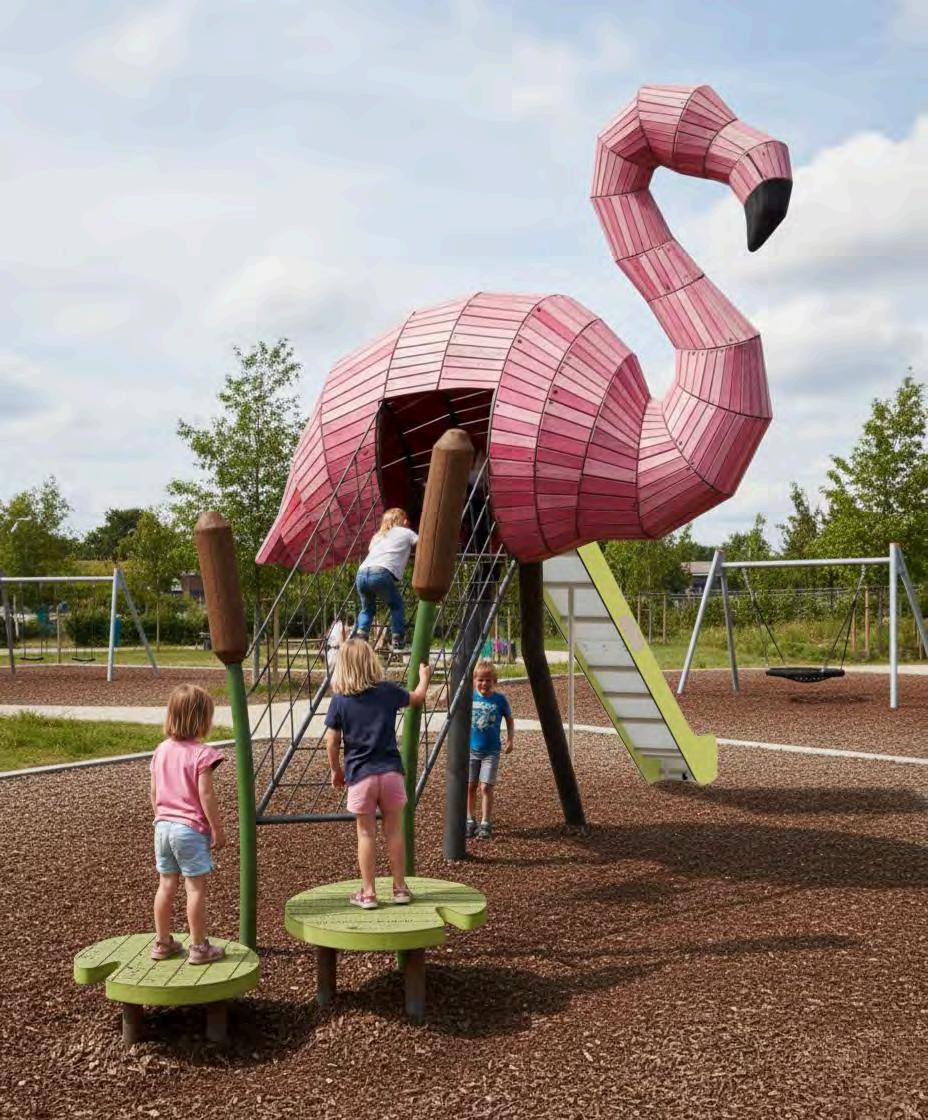
Naturaltimberformsdesignedtocomplement theirsurroundingsandinviteexploration.


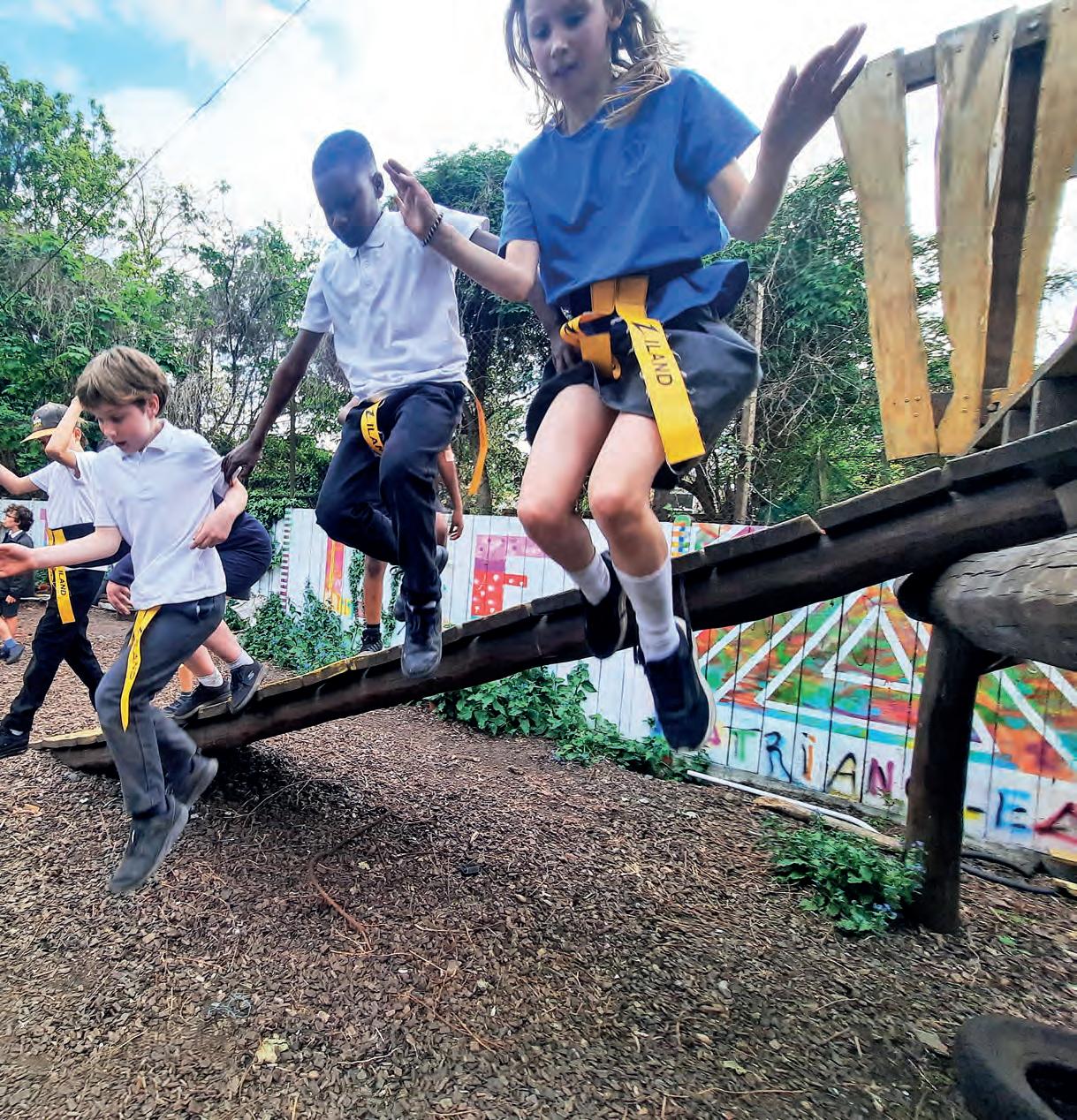
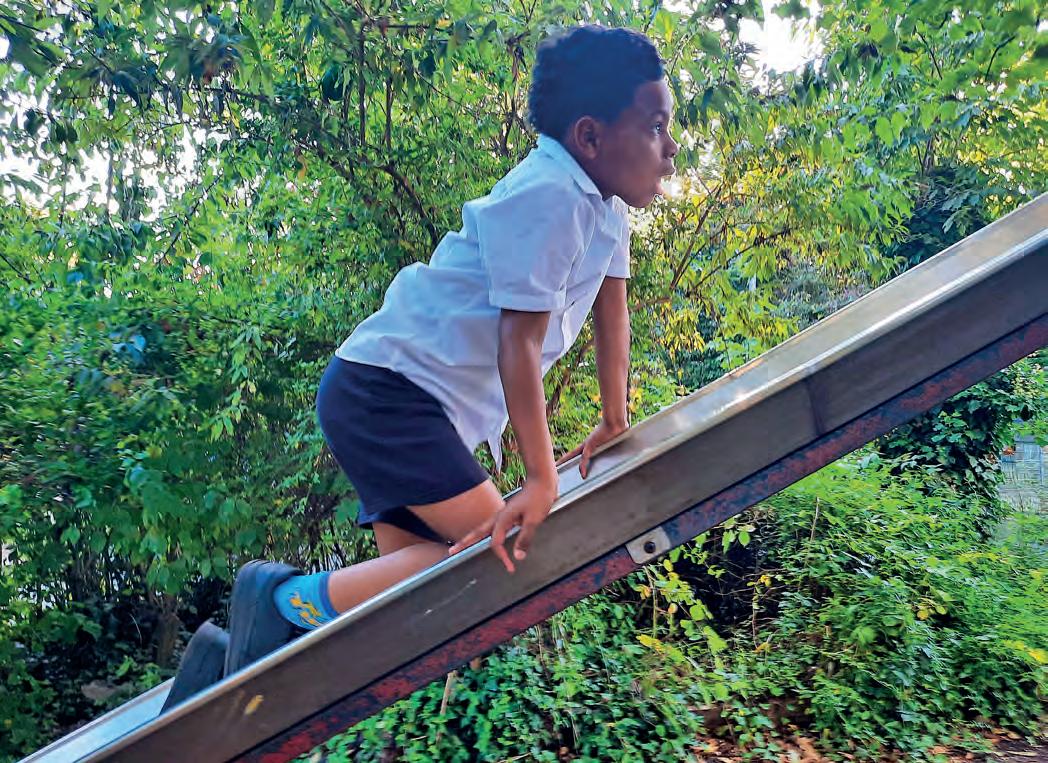
Triangle Adventure Playground in London will next year celebrate its 70th anniversary. The historic site, which uses the power of inclusive adventure play to grow self confidence, plays a unique role in the heart of the community it serves
Founded in 1957 by Marjorie Porter, The Triangle is considered London’s oldest adventure playground still located on its original site. Based in Oval, South London, it has provided 69 years of play to generations of London children.
Since its very beginning, the playground has been in the heart of the community – some of the children who have attended in 2026 have parents and grandparents who also played at Triangle. The site is owned by Lambeth Council and is operated by a registered charity, The Triangle Adventure Playground Association.
An open access adventure playground catering mainly for children aged between six and 17, The Triangle follows a child-led ethos of play. This is guided by “Three Frees” – the belief that all children are free to attend, free to come and go and free to choose their play.
Last year, 831 individual children made a total of 16,265 visits to The Triangle. Of those, more than 80% declare free school meals and/or family declare income support – and 84% are of a “global majority background” (people from ethnic minority backgrounds). In addition, 15% declare SEND.
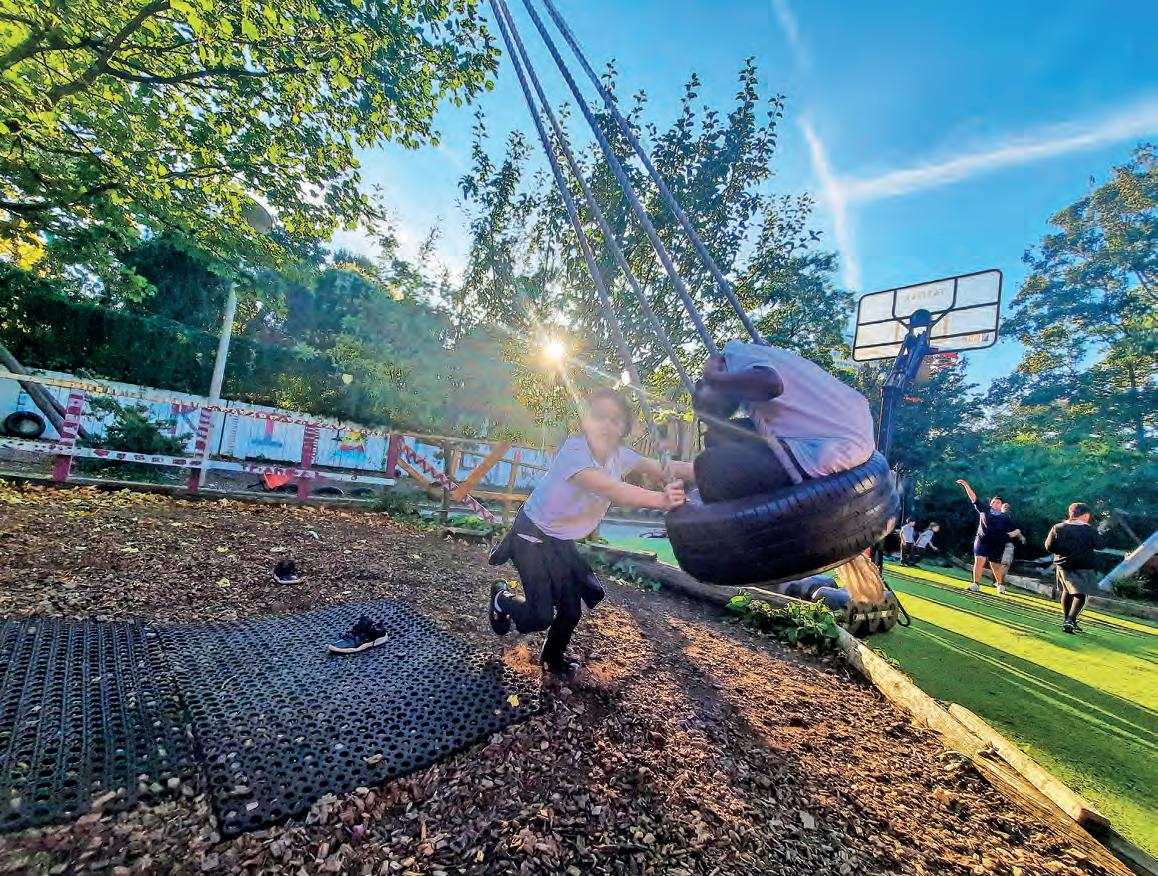
The site offers an extensive range of activities to cover all sixteen recognised play types and differing interests for different ages. There is a large platform, tango and tyre swings, a zipline and aerial walkway, as well as basketball, badminton and football at a neighbouring MUGA – enabled by a short-term licence from Duchy of Cornwall, who owns the adjoining site. There are also construction projects, cycling & bike maintenance, skateboarding and rollerskating on a half pipe, group chase games, cooking in a kitchen and on fire, bushcraft, tree climbing, extensive arts and crafts, sensory play and role play imagination games. In addition, the Triangle Nature Club offers environmental play, music and dance, pool and table tennis.

Sporting, creative and cultural trips and specialist arts workshops are offered throughout the year, enhancing new opportunities. Free hot lunches are provided during holidays, snacks and fruit in after school sessions. The Triangle also supports young adults/ex Triangle attendees into employment via a volunteer to playworker graduate scheme.
PlayNation spoke to Alan Sutton, Chair of Triangle Adventure Playground Association about the success of the site.
What makes Triangle a special place? What is its USP?
The Triangle has a unique place in the history of London (and the UK play movement, dating back to the 1950s). It is special for many reasons. These include our dedication to free high quality adventure play, a consistent and holistic approach to supporting young people (often for up to 10 years of their lives) and our experienced and skilled playworker team that is relatable – not least because it includes five former “Triangle kids”. Another USP is our amazing range of structures, activities and opportunities.
There are other aspects too, which make us unique, such as our ability to bring together the incredibly diverse Oval community and our green and nature filled playground, which is home to wild fruit trees and a thriving biodiverse ecosystem of insects and urban animals. Also, the lack of indoor central heating means a different approach –children have to either stay active or build a fire!
Since its very beginning, the playground has been in the heart of the community
The modern day Triangle’s success is led by Jonathan Choo and Gabriel Green. The foundation for this success comes from the incredible work of Jim Clancy, who was Chair of Triangle for 30 years.
How do you work with the local community?
What programmes do you run?
The Triangle is at the heart of the Oval, Vauxhall and Kennington community. Providing 190 after school sessions, 55 holiday sessions, 38 lunchtime visiting school sessions and 16 youth club sessions. In total, we provide 859 hours of exciting and engaging adventure play each year. Each session is led by one senior playworker supported by four seasonal playworkers.
Our after school sessions (Monday to Friday, 3.30-6.30pm) average 50+ children per session.
Our holiday sessions (Monday to Friday 12pm to 6pm) offer hot free lunches – we provide around 2,200 meals per year – as well as special holiday play and trips like Camping Week and Seaside community day out.
Our lunchtime school sessions (weekly 1.30pm - 2.30pm term-time) provide 1 hour of play for primary schools as part of their PSHE curriculum.
Our Youth Club sessions (16 x Friday evenings in Spring/Summer 6.30pm - 8.30pm) were founded in response to the requests of young people aged 11+ who wanted Triangle time without younger children. A great chance to develop life skills and bond over a shared cooked meal.
We are an active promoter of adventure play through our partnerships and connections with local schools, even advising one school on how to improve their playground through loose parts and traditional adventure play activities. We retain
close ties with London Play and the Adventure Playground Network as well as a member of the North Lambeth Youth Consortium.
What are your future plans for the playground?
Post-COVID-19 we have made great progress in refreshing our site through a series of capital works, new structures, landscaping projects and a new kitchen in our on-site hut. We hope that when the Duchy of Cornwall finalises its plans for the adjacent residential development we get some extra space to play ball games, as our site is small for an adventure playground.
Regarding our service, we aim to continue delivering our full range of play sessions and potentially expand to Saturdays too. We hope to celebrate our 70th anniversary in 2027 with a heritage project event, which engages and connects our current Triangle generation with those from the 1950s to 2000s through a shared oral history project and exhibition at Lambeth Archives.
THE TRIANGLE

Instagram: https://www.instagram.com/triangle_adventure_playground/ Donate page: https://cafdonate.cafonline.org/10232#!/DonationDetails Website: https://www.triangleadventureplayground.com/

How do you fund all your operations?
It costs us £225,000 each year to run our service. Our Deputy Senior Playworker combines their role with fundraising duties three to four days a week. Our income comes primarily from grants obtained via applications to trusts and foundations, private and statutory bodies. We receive no statutory funding but have successfully applied to Lambeth/Dfe HAF programme to support our provision of meals over recent years.
Supplementing the grants are donations from our local community, including a core regular 80 - 100 donors who donate c. £20,000 per year. Community events, such as our recent Polling Day Cake Sale, also contribute. We encourage and have had fruitful corporate partnership in the past and actively seek ways to diversify our income.
How much do you think play has increased its profile in the “corridors of power” – ie. government level, in the past couple of years?
From 2007 to 2010 we saw National Lottery funding and government money being invested in play improvements, spearheaded by ministers Chris Smith and Ed Balls. Play England was created, every English District Council produced a play policy and 25 new Adventure Playgrounds were created. All was lost after the 2010 general election. This could easily be recreated.
We hope to celebrate our 70th anniversary in 2027 with a heritage project event
While the recent play commission report (2025) was a step in the right direction, it was disappointing to see not much acknowledgment and reference in the report to the impact and power of adventure playgrounds.
How important do you think the APPG, the forthcoming National Play Conference and the drive to make play statutory in England’s Key Stage 1 Curriculum are in delivering the positive message that play is crucial and needs investment? These are all important, as is proper enforcement of planning regulations to ensure adequate play facilities in all new developments. On National Government level, a strong play champion is crucial. On a local level, councillors must differentiate between play and antisocial behaviour as too often they are wrongly conflated.
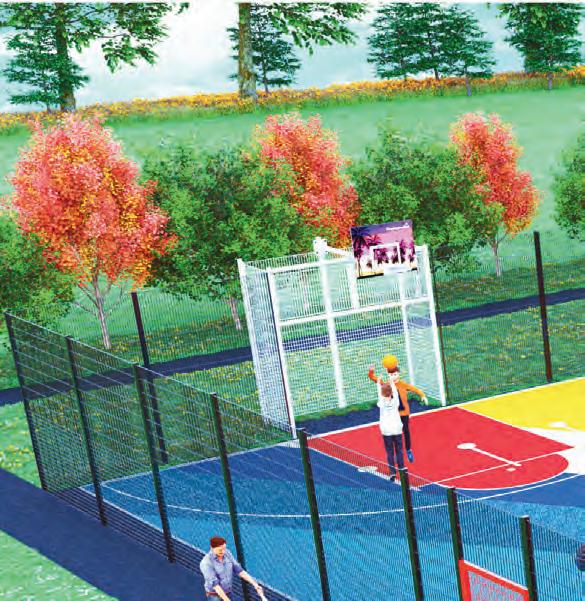
We Transform tired spaces into vibrant, inter generational community hubs.
Activation kits from just £1,999 - Full MUGA options available for all budgets

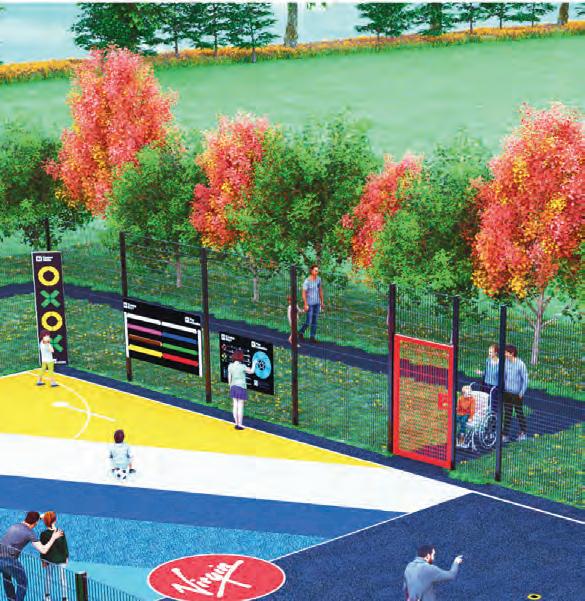

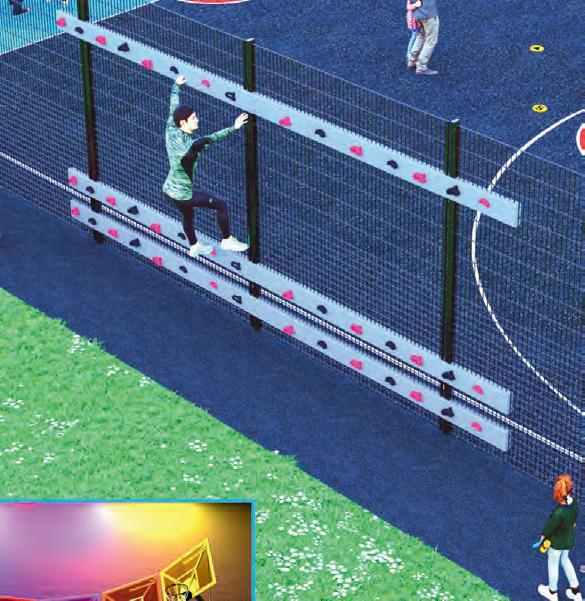




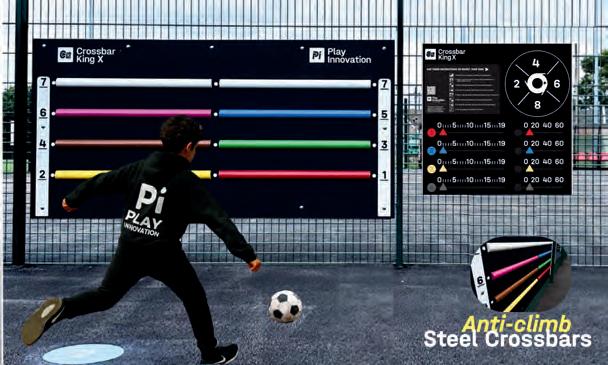
Patented games designed to tackle inactivity and mental health issues.
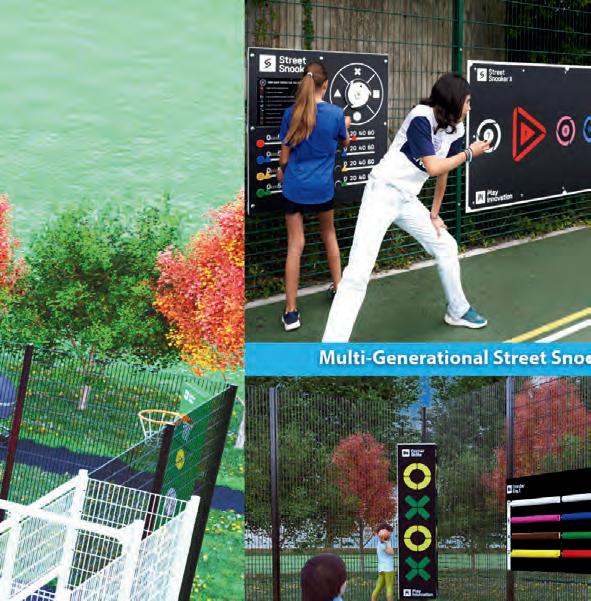
inter-generational, low maintenance games

90–95%Inclusivedesignstandardsresultin useracceptanceacrossage&abilitygroups.


90–95%Inclusivedesignstandardsresultin useracceptanceacross
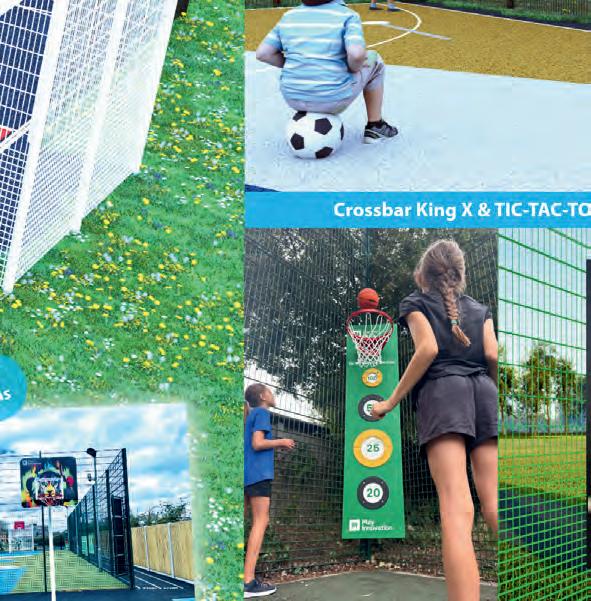

Ask about the Corner Skills range today!



Ahead of the new industry guidance led by RLSS UK, PlayNation looks at how inflatable water play is helping to drive participation, boost revenue, and transform pools into exciting activity spaces
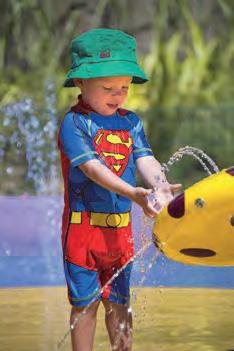
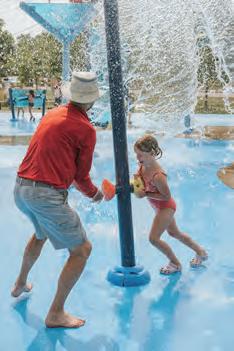
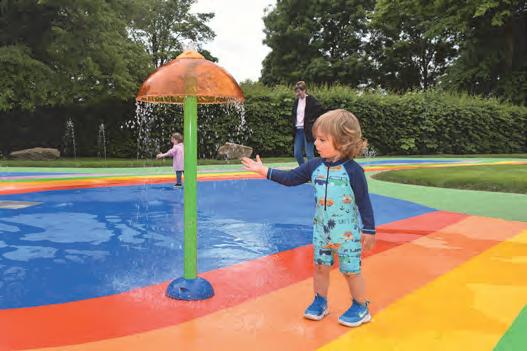
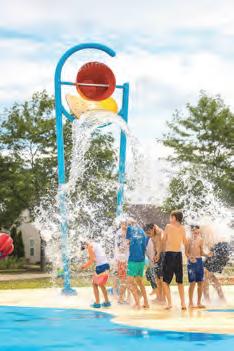
Step into any swimming pool during an inflatable water play session, and the ear-splitting shouts and shrieks of delight from children and youngsters scrambling over the slippery structures instantly tell you how popular they are. But it’s not just kids who are fans; pool operators are increasingly seeing the benefits of including inflatables in their pool programming.
RLSS UK is supporting the industry in the safe delivery of these experiences. The organisation is leading the development of new guidance on the safe operation of pool inflatables to help facilities manage risk effectively while continuing to offer safe, engaging and enjoyable aquatic activities.
Inflatables are becoming an increasingly attractive option for operators, says John Wilkes, Director at Airspace Solutions. “A pool inflatable will attract more users and generate much-needed income. They also provide a safe, structured environment for water-based fun, introduce new audiences to facilities, and help develop water confidence. A swim manager recently told me how she likes watching the smaller kids grow in confidence as the inflatable sessions go on.”
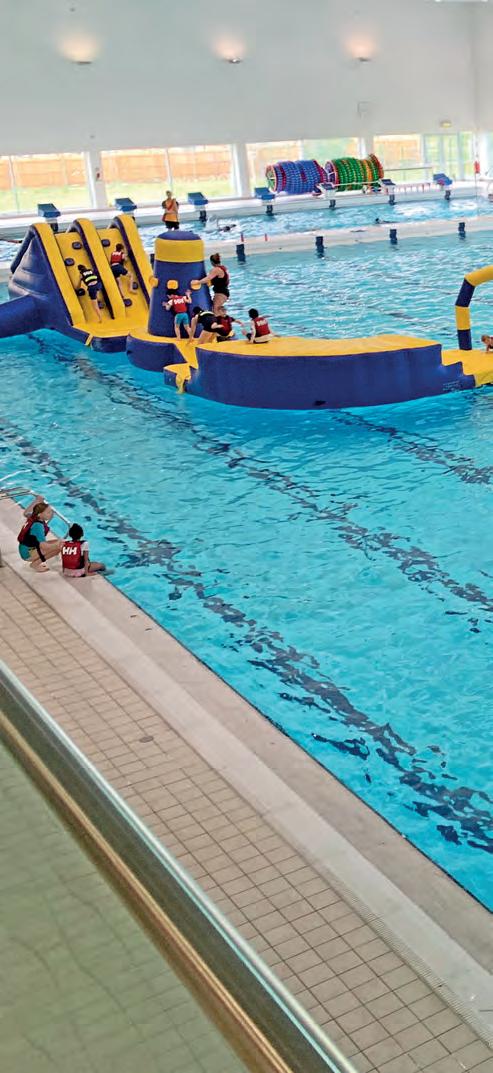
Public sessions, along with private hire and parties, can typically generate £25,000 a year for an average pool. With larger installations, operators can expect that to increase to £50,000 to £60,000 a year. But figures can vary considerably.
“We’ve seen small operators make up to £49,000 per annum from a £4,000 investment, and some larger sites make £120,000 to £130,000 per year. The business case is easy with venues often seeing a return on investment within a few months.”
Providing the leisure sector with inflatable play for more than 35 years, Airspace Solutions works with a wide range of operators, from those responsible for multiple sites to independent operators. Wilkes says most operators face
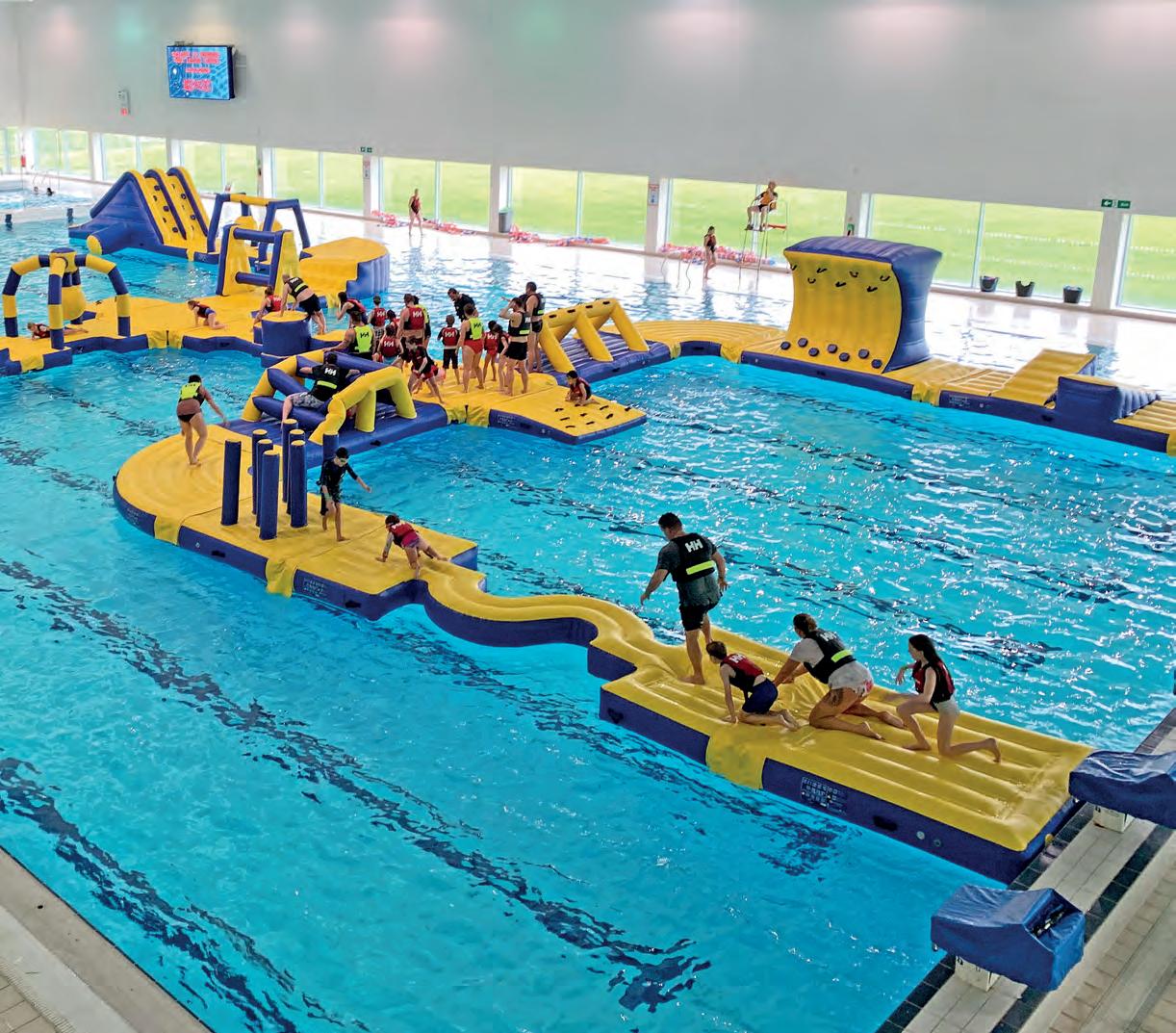
tough choices about what they offer, but there are usually sessions that aren’t as busy as they could be, creating opportunities for water play.
“Inflatable sessions don’t have to take over your entire pool; they can be designed to fit the space available. We’ve helped pools utilise a section within the pool for inflatable play. It’s about working with the operator to make it practical and safe,” says Wilkes.
He also stresses the importance of programming: “You don’t need to completely overhaul your timetable. Look at when and how you can fit in inflatable sessions to attract more users, while making sure the public knows they’re available. Accessibility and affordability are key.”
Operators often cite storage as a potential hurdle to offering inflatables, but when packed
Public sessions, along with private hire and parties, can typically generate £25,000 a year for an average pool
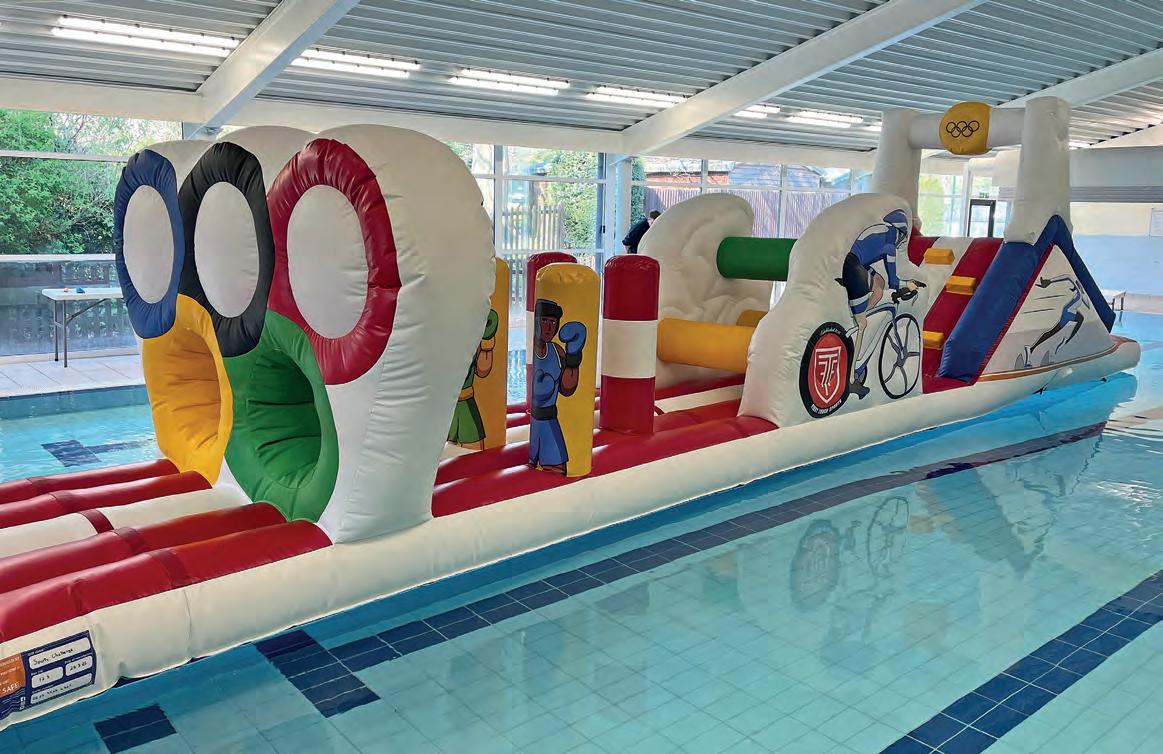
according to supplier instructions, this shouldn’t be an issue. When it comes to staffing, operators generally need three to four lifeguards per session. Before making an investment, Wilkes urges operators to do their research and not to buy on a whim.
“Arrange a site survey prior to investing. Make sure the unit suits your pool, fits your programme, can be effectively supervised by lifeguards and that staff are happy to use it. If it sits in a cupboard, it’s worthless.”
RLSS UK is bringing together operators, safety professionals, and industry partners to strengthen safety standards for pool inflatables. As part of

Inflatable sessions provide a safe and fun activity for children to enjoy water
this, it is leading a working group collaborating with CIMSPA, experienced operators, inflatable specialists and organisations including Airspace Solutions, an RLSS UK water safety partner, to update and strengthen industry guidance for the safe operation of pool inflatables.
The work reflects the evolving needs of the sector, incorporating new insights, safety considerations, and best practice approaches to support operators in delivering fun, highquality, and safe aquatic experiences.
Anticipated to launch later this year, the guidance will provide clearer operational standards, improved risk management recommendations, and practical resources for facilities of all sizes.
There’s no doubt that inflatables are fun, but most operators will tell you they are also a great way to build water confidence, helping youngsters to learn safety boundaries in a structured environment.
Jo Talbot, Commercial Director, RLSS UK, says: “Inflatable sessions provide a safe and fun activity for children to enjoy water I’d much rather children enjoy inflatables in a pool than risk unsafe play in lakes or rivers.”
At a time when pool operators are dealing with rising costs, inflatable water play is a win-win for both operators and the public. As Wilkes says, “Every pool in the UK should be offering this. It’s fun, it’s safe, and it makes business sense.”
Birtley Community Aquatic Centre is a charitable trust formed to save the former Birtley Swim Centre from permanent closure following its closure in 2023 due to rising energy and operational costs.
Now known as Birtley Community Pool, the notfor-profit centre has become a thriving community hub, attracting more than 16,000 visitors each month, including around 6,500 children.
To enhance its appeal and create additional income streams, the trust invested in an Atlantis modular aqua inflatable system. “Being a new charitable trust, it was vital that the swimming pool inflatable would generate attendances, income and be energy efficient,” says Lewis Herbertson, Senior Operations Manager at Birtley Community Aquatic Centre.
The modular design of the Atlantis system allows the team to adapt the layout to suit different sessions and customer needs. Individual modules can be repositioned, and additional units can be purchased over time as demand grows. Energy efficiency was also a key factor in the decision, says Herbertson.
“The sealed design of the unit ensures energy efficiency. Once inflated, they support the entire session without requiring additional energy. Given the high programming usage, it was critical that we were not creating extra demands on energy usage.”
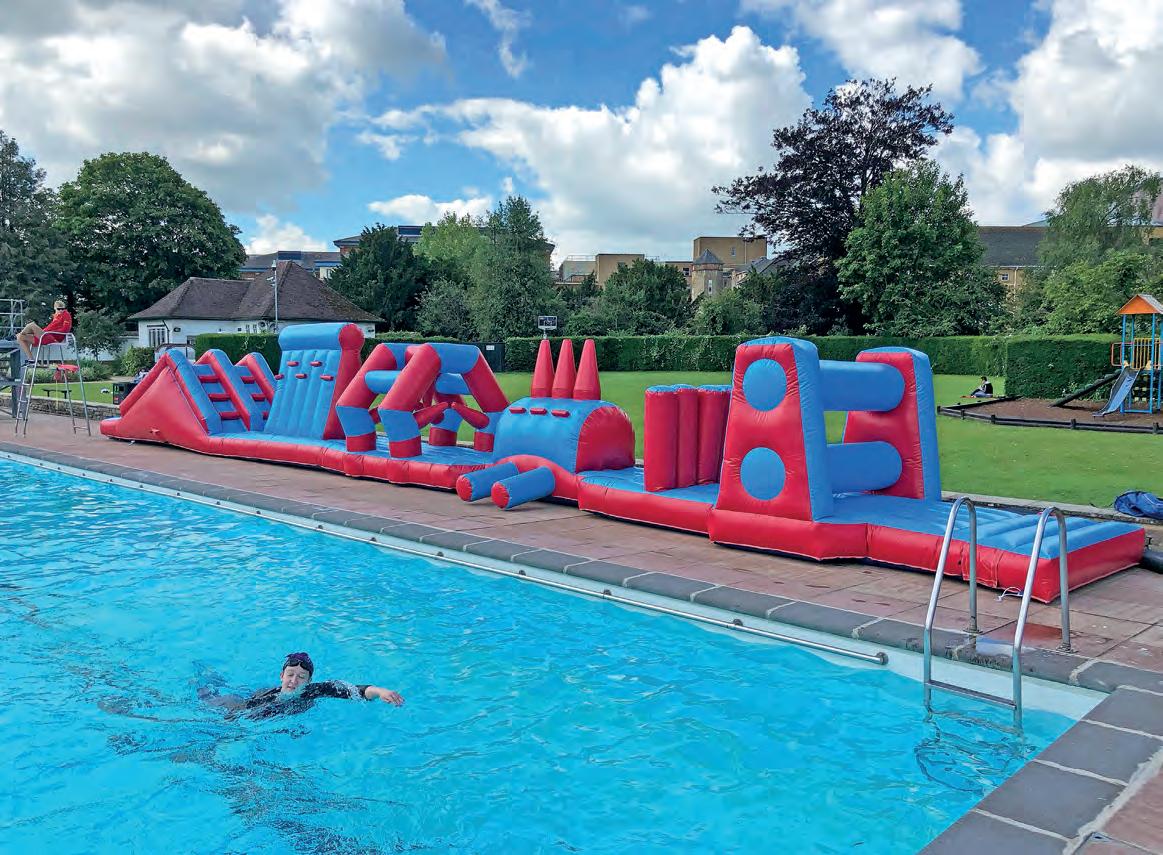
Penlan Leisure Centre in Swansea has a longstanding partnership with Airspace Solutions. The Aquarun inflatable has become a key attraction, providing a value-for-money leisure activity for local residents. Offering a variety of obstacles and challenges, the inflatable obstacle course supports open swim sessions and birthday parties. Demand is high with the centre running six party slots every weekend at £215 each.
“The fun variation of activities keeps bringing children back again and again,” says Jim Kelly, Regional Director for Freedom Leisure, which operates the site. The centre also rotates an additional Aquarun to keep the offer fresh and exciting. The impact of the inflatables extends beyond the pool, contributing to driving significant secondary spending in the café.
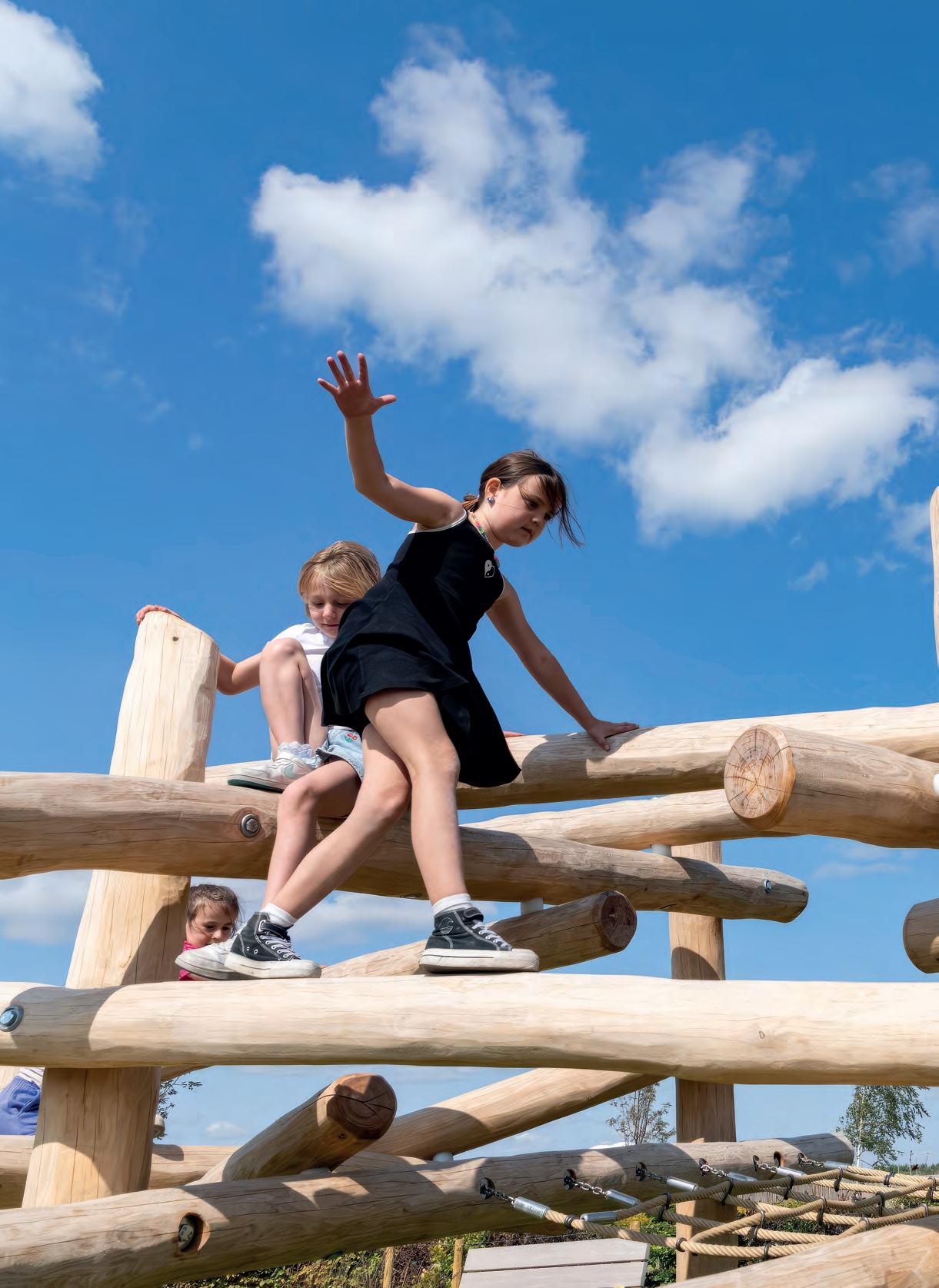

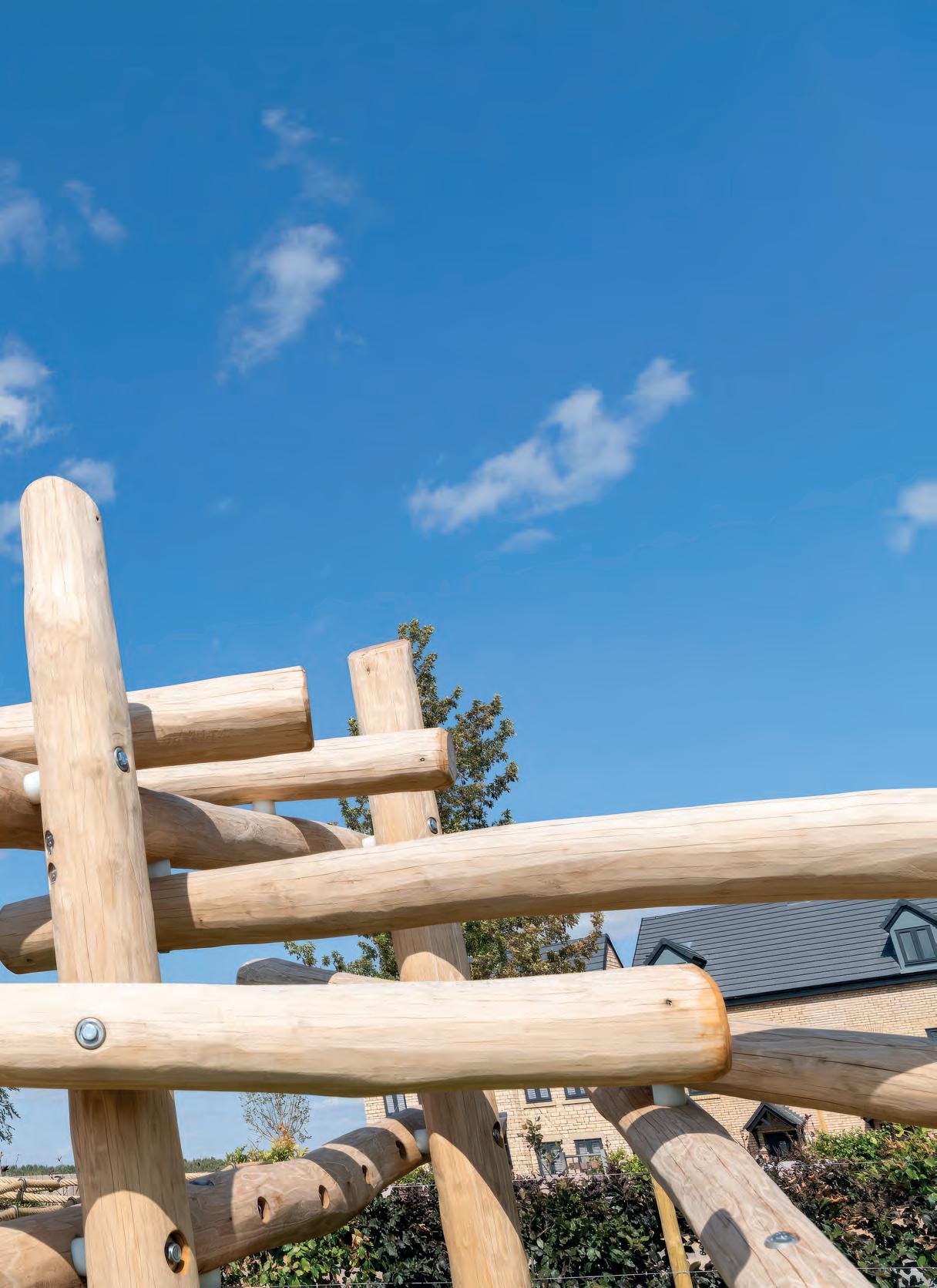
At Priors Hall, play isn’t a place
– it’s the whole plan
At Priors Hall Park in Corby, play has been designed as part of the fabric of the community from the very beginning. With eleven play spaces – designed to reflect 4 distinct landscape character themes – already delivered by Timberplay, and further areas still to come, the growing development reflects a wider placemaking approach where play, landscape and everyday life are closely connected.
The project was recently discussed on Play Attention, the new podcast from Timberplay, during a conversation with Scott Chalmers, Head of Green Infrastructure at Urban&Civic, the Master Planners behind Priors Hall Park. In the episode, Scott explores how large-scale residential developments can embed play into neighbourhoods from the earliest planning stages, rather than treating it as a fencedoff destination added later in the process.
Throughout the discussion, Scott describes an approach where green infrastructure, housing, movement and play are seamlessly integrated across entire developments. At Priors Hall Park, this has resulted in a network of playable spaces that encourage exploration, connection and everyday interaction across generations.
The conversation also highlights how inclusive play is not only about equipment provision, but about creating environments where people of all ages feel welcome to spend time. Natural boundaries, accessible landscapes, integrated walking routes and spaces designed for lingering all help support intergenerational use and stronger community connection.
Timberplay specialise in natural, inclusive and landscape-led play environments. The full episode of Play Attention featuring Scott Chalmers is available on Spotify and all major podcast platforms.

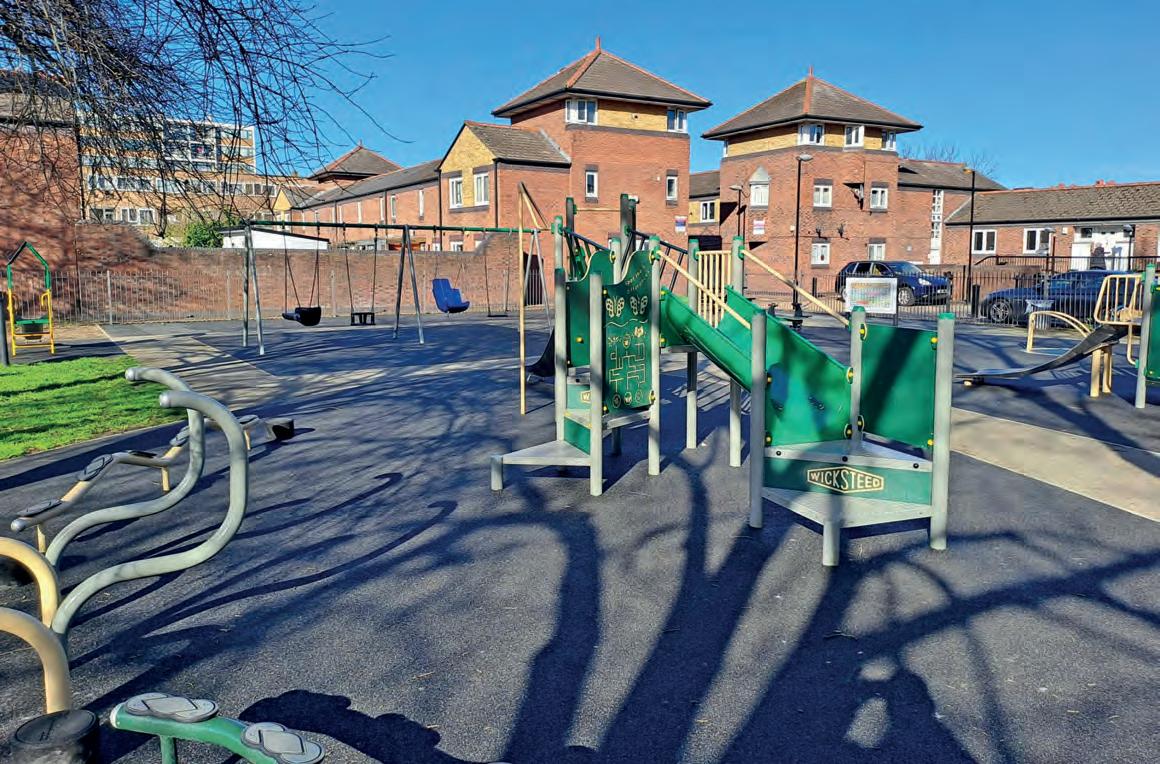
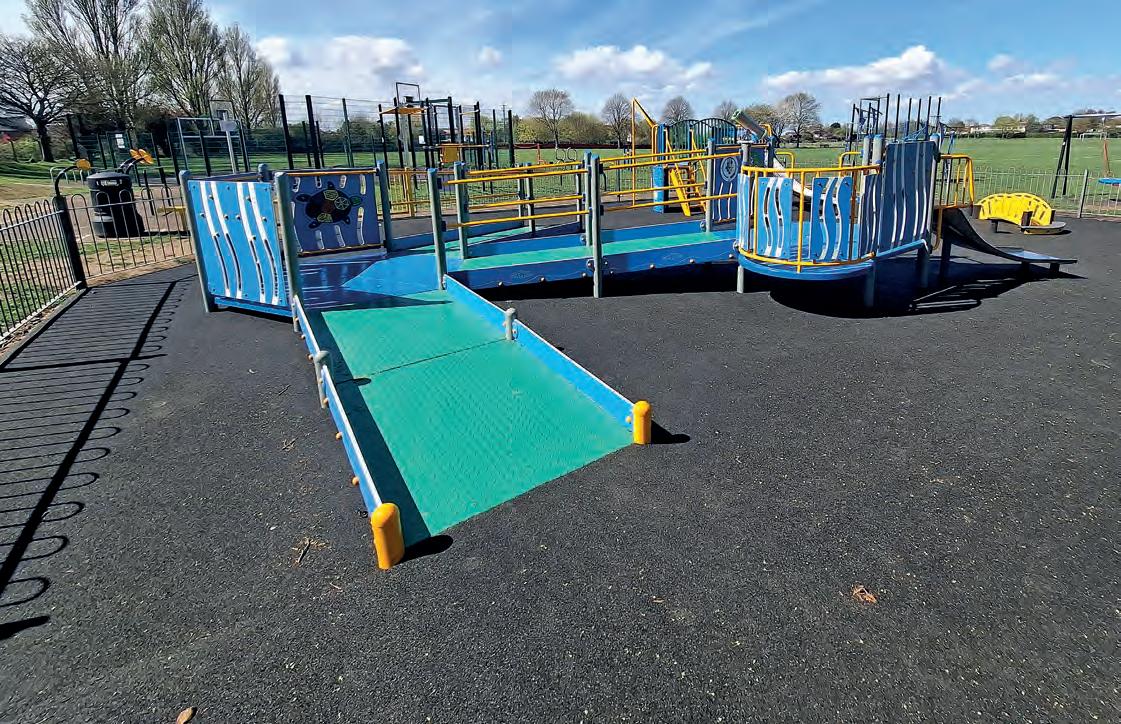
The play area at Ropewalk Gardens had been well loved by local families and nearby schools, and the time had come to give this much-used space the upgrade it deserved. The London Borough of Tower Hamlets approached Wicksteed to help realise that vision, collaborating to create a fully inclusive environment where children of all ages and abilities could play together, with accessible equipment, varied play experiences and a natural, rural aesthetic.
Wicksteed delivered a thoughtfully zoned play space that exceeded the brief. Three multiplay units were installed across the site, each offering a different level of challenge and accessibility.
A dedicated inclusive zone, centred around the bespoke Boron multiplay unit, encourages sensory
Family entertainment centre equipment specialist, Airparx, has completed a trampoline park transformation project at GLL Barking Sporthouse and Gym in Dagenham. The development was the result of a collaboration with The Play Company, integrating Rugged Interactive products for an enhanced multizone activity area that the whole family can enjoy.
“This project has been a true labour of care and collaboration, bringing together partners who share a commitment to supporting our community whilst keeping children engaged and active,” explains
and imaginative play at both ground and elevated levels, complemented by an inclusive roundabout, Communication Panel, Whirlypop and Badger 4-Way Seesaw. For older children, the Cromarty multiplay unit provides a more physically demanding experience with both ramped and stepped access, supporting confidence-building, coordination and inclusive play.
A two-bay swing set offers cradle, flat, inclusive and Tango seats, allowing users of different ages and abilities to play side by side. A dedicated toddler area features the Simple Simon multiplay unit alongside an inclusive springy and sensory panels, while a trim trail zone adds further opportunities for balance, agility and coordination.
Natural tones, animal-themed detailing and a green fleck wetpour surface tie the space together, creating a welcoming, nature-inspired setting where children of all abilities can play, explore and grow together.
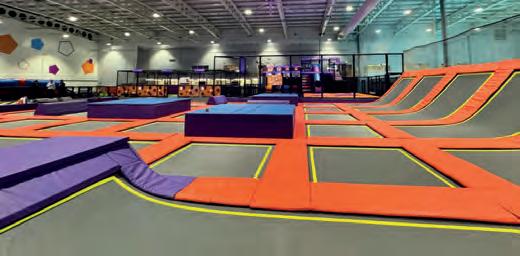
Daniel Laight, Junior Products Manager at GLL.
“It’s incredibly rewarding to see something that will make a real difference. Creating opportunities for families and community groups to come together, stay active, and enjoy these shared moments with us.”




















Mumbles
As part of the Mumbles Coastal Protection Project, the City & County of Swansea undertook essential upgrades to the promenade’s sea defences—protecting homes, businesses, and public spaces from the increasing challenges of climate change and rising sea levels.
Recognising the opportunity to go beyond infrastructure, the project also set out to enhance the seafront as a destination. eibe Play was appointed to design and deliver a bespoke play experience integrated directly into the new promenade, creating a vibrant, family-friendly environment that encourages exploration, activity, and social interaction.
The play scheme draws heavily on the natural and cultural identity of The Mumbles, with a strong oyster and coastal theme reflected throughout.
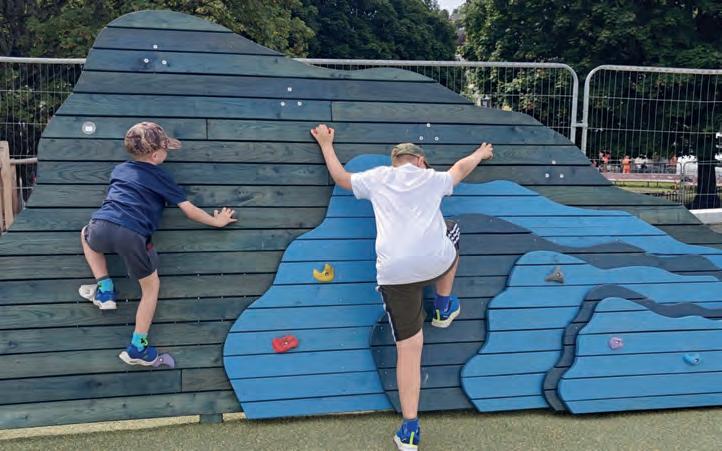
Sculptural timber forms, inspired by oyster shells and wave patterns, create a visually distinctive landscape. Layered climbing structures echo the organic shapes of shells, while curved forms and flowing lines mirror the movement of the sea. A palette of blues,
greens, and natural timber tones reinforces this connection to the coastal environment. Vertical timber posts, reminiscent of sea grasses or coastal markers, are used throughout the space to create rhythm, movement, and a strong visual identity along the promenade.
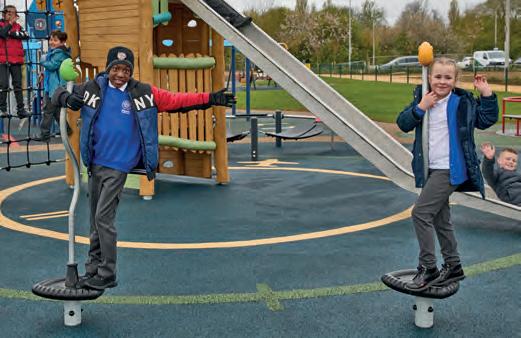
Luton Rising has completed major new facility upgrades at Wigmore Valley Park, designed to enhance the visitor experience. Improvements at the park include a new skatepark and children’s play area. The large play area is inspired by themes of travel and aviation and has been created to bring younger and older children of all abilities together in one shared space. The playground encourages imagination, exploration and social interaction, with equipment featuring colourful swings, slides, zip lines, seesaws and climbing structures. There is also inclusive playground equipment designed for universal use, making it a welcoming and accessible space for everyone. Meanwhile, the skatepark provides space for all skill
Luton Rising is the trading name for London Luton Airport Ltd, a company owned by Luton Council that owns London Luton Airport and manages it to deliver social and economic benefits to the local community.





A wide range of junior-focused features to help children develop their balance, co-ordination and stamina as they reach for the skies – challenging and exhilarating, our NEW junior range is now available.




















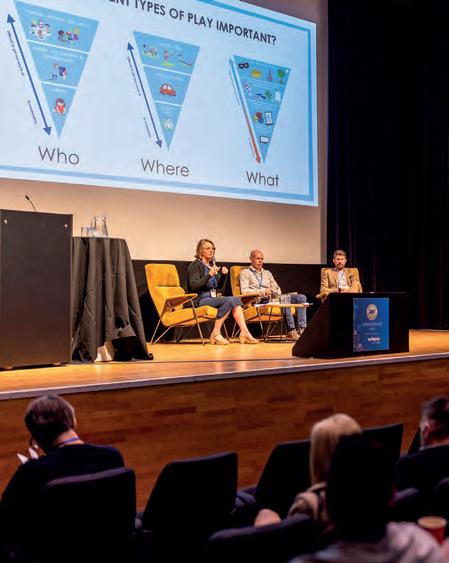
The one-day conference will take place on Friday 9 October 2026 at The Slate, University of Warwick. The night before, on Thursday 8 October 2026, the same venue will also host the rst ever National Play Awards.
The conference will provide a unique national forum for everyone involved in creating, enabling and advocating for play, from designers, playworkers, contractors, manufacturers and local authorities to educators, playground operators and policymakers. Through a carefully curated programme of keynote addresses, panel debates and practical learning sessions, the event will explore the most pressing issues shaping play today and into the future.
Delegates will hear from an in uential speaker line-up, which includes policymakers, sector specialists from a range of industries and innovators connected to play.
For anyone working in, or alongside, the UK play sector, the National Play Conference will be an essential date in the diary.


https://sapca.org.uk/events/national-play-conference/