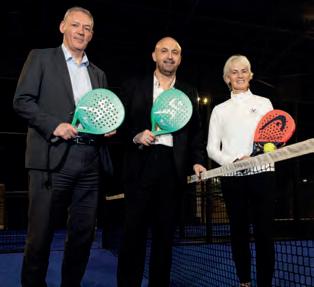
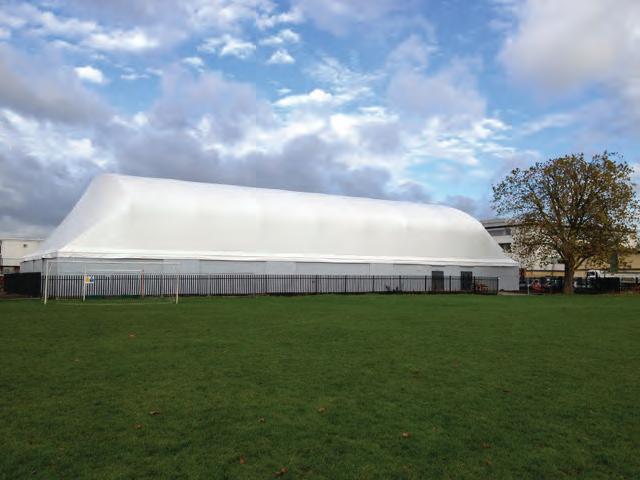
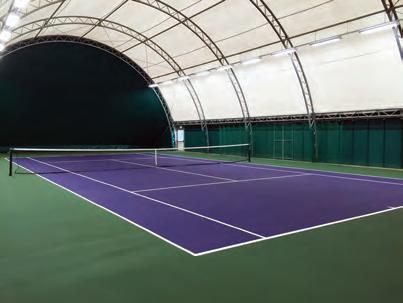
Steve Mills, General Manager, Nottingham Tennis Centre
Working with Fordingbridge was a breath of fresh air! One of the most professional, respectful, diligent contractors we’ve ever worked with.”
Fordingbridge brings real sector expertise to the table. Their product is strong, their team is comfortable with complex national programmes, and we’ve had complete trust in them every step of the way.”
Sean McNicholas, Director of Estates & Facilities, The Bannatyne Group
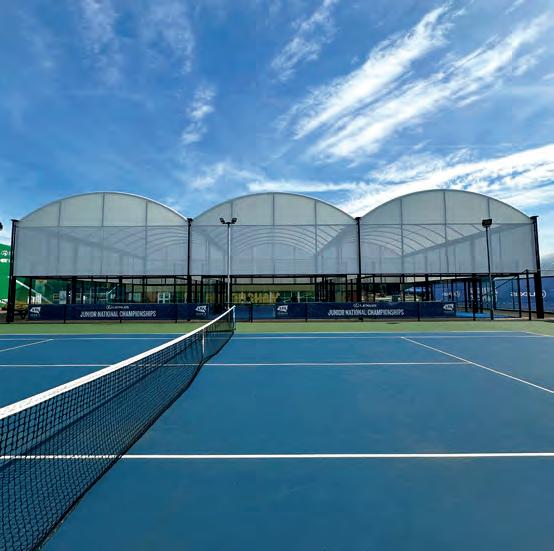
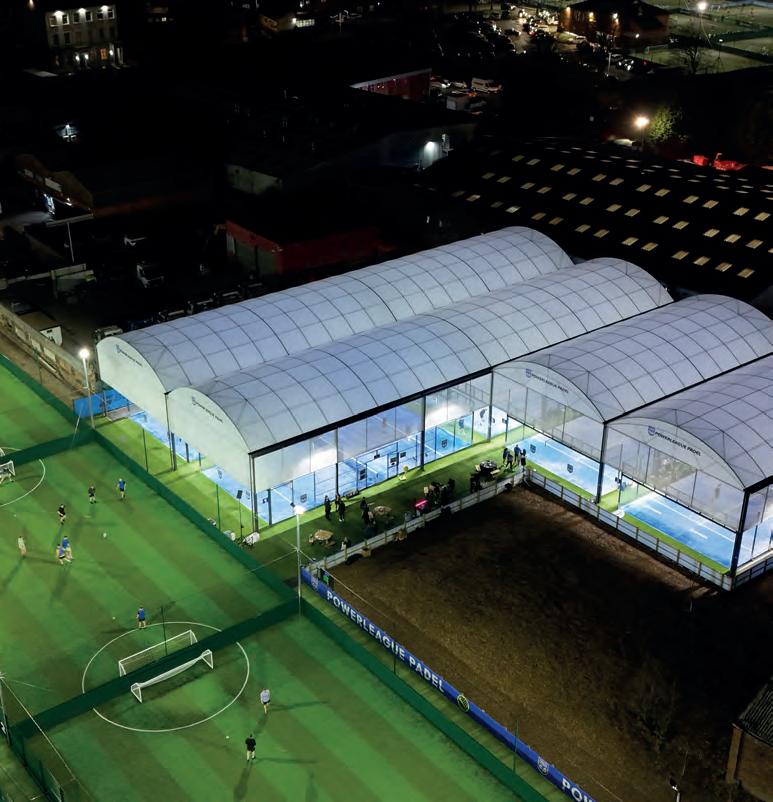
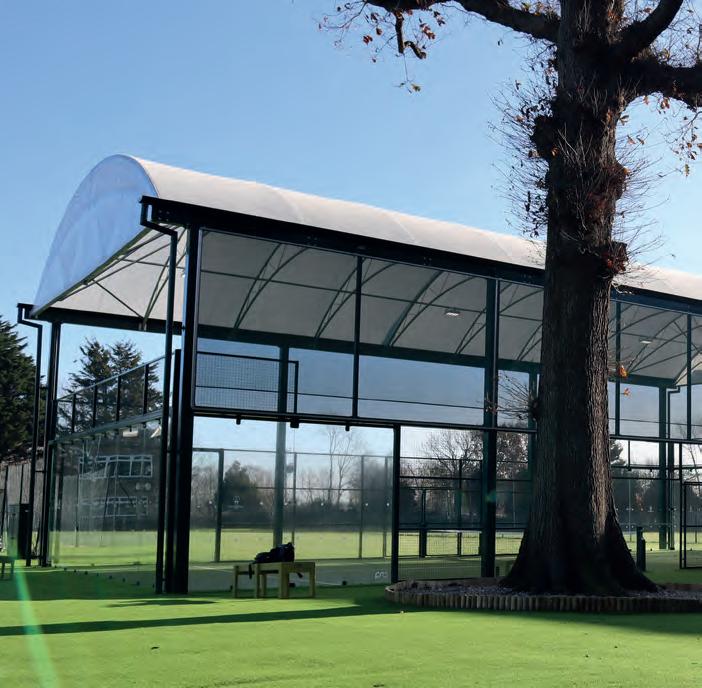
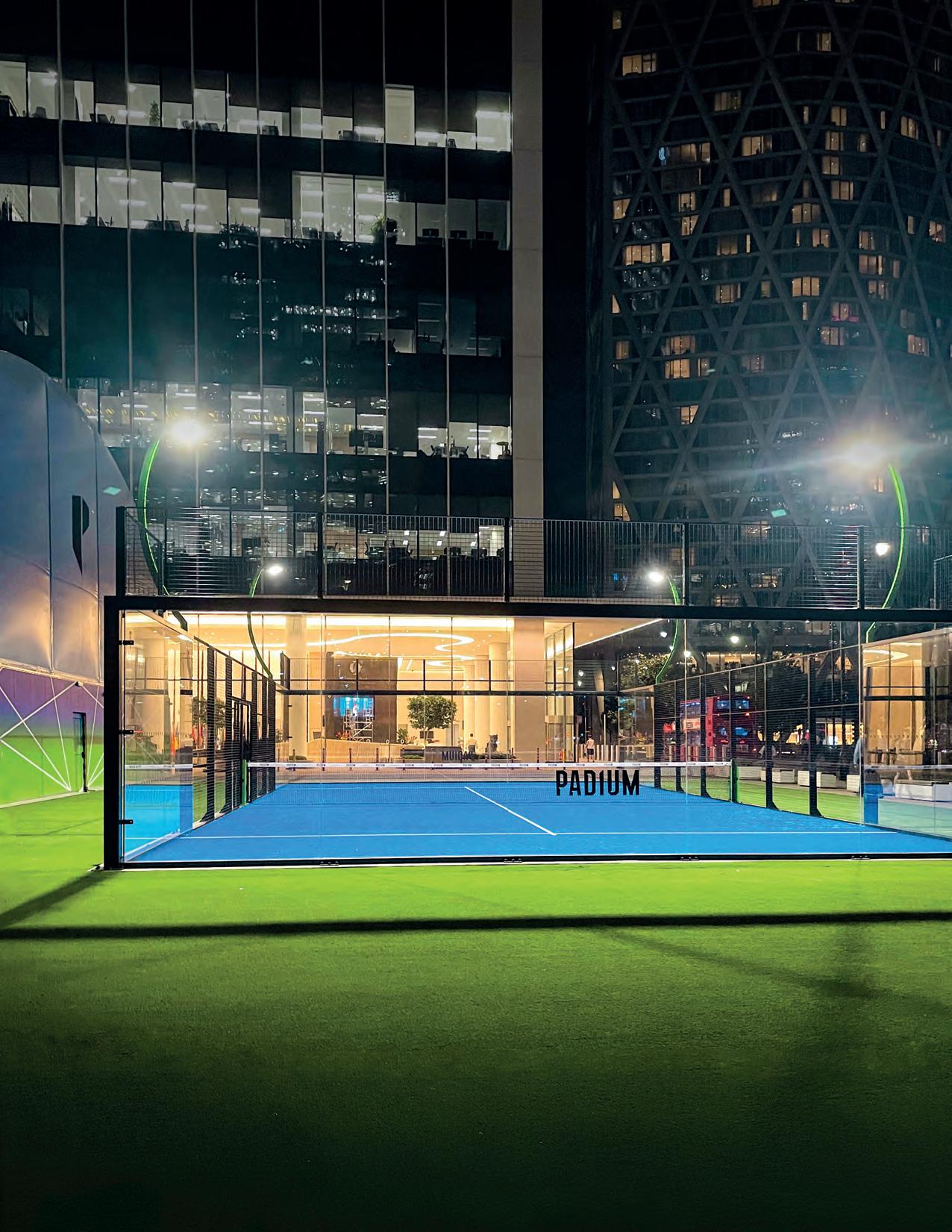
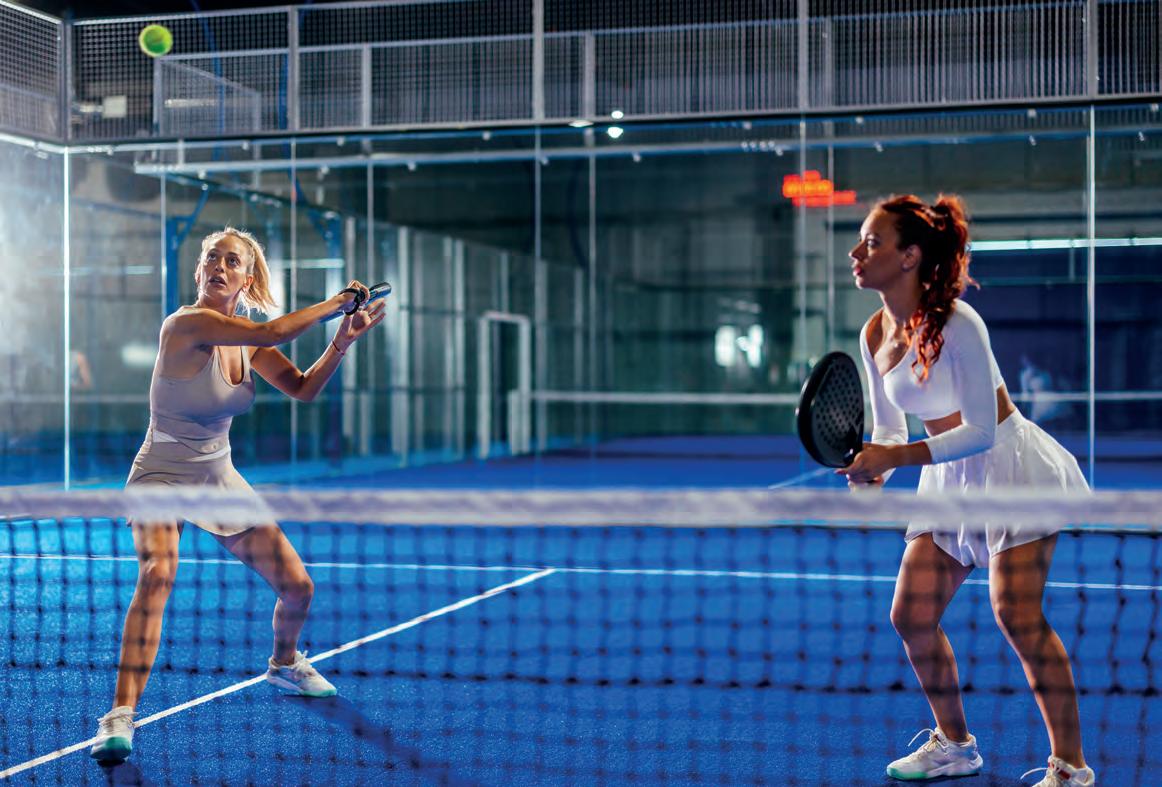
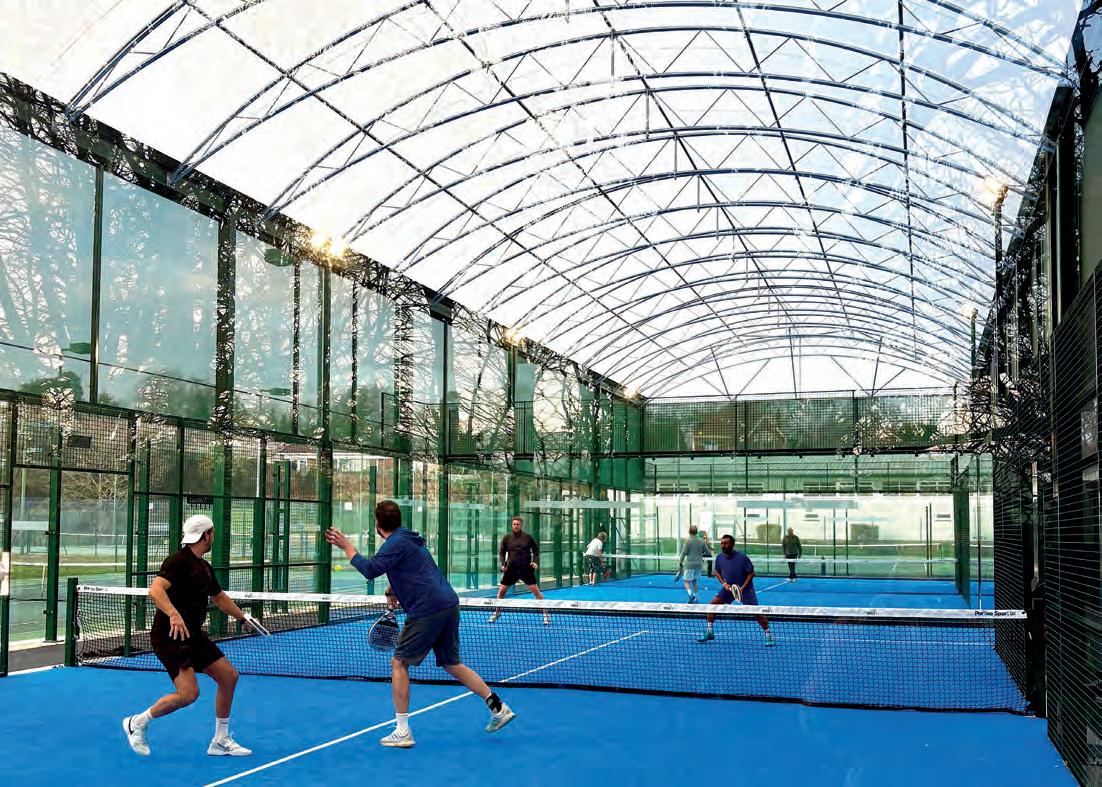
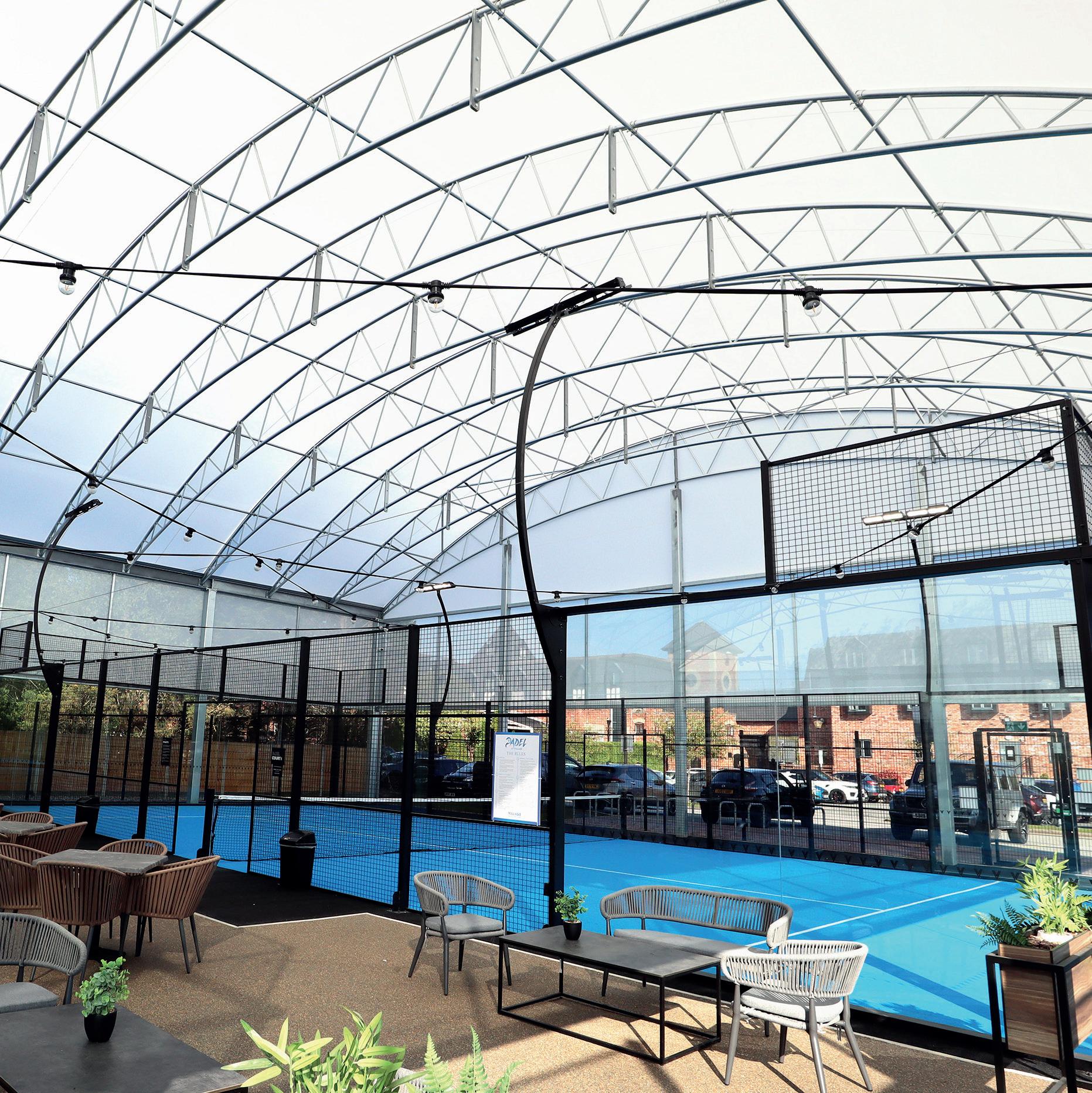
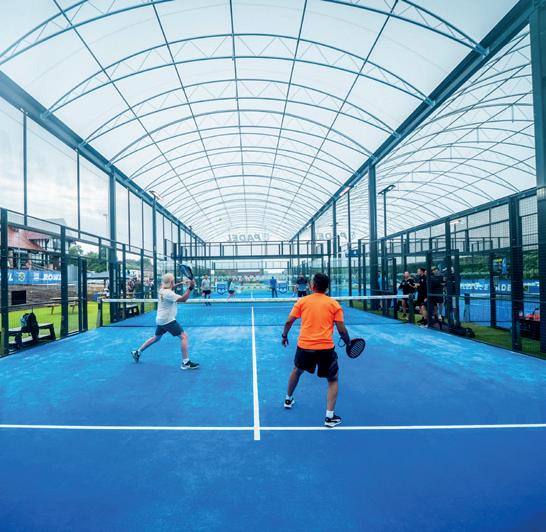
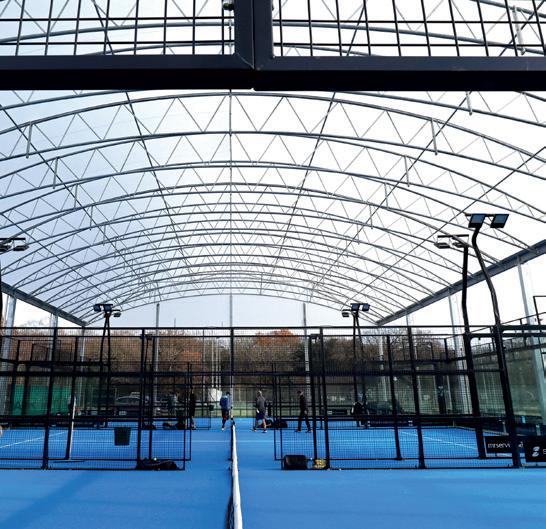
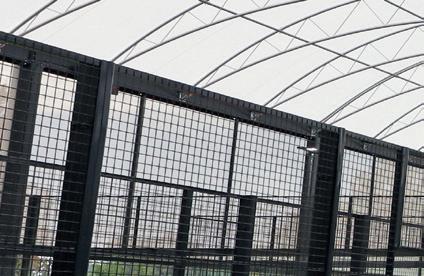
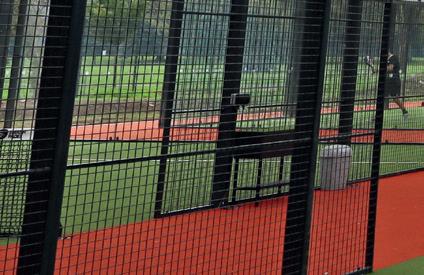
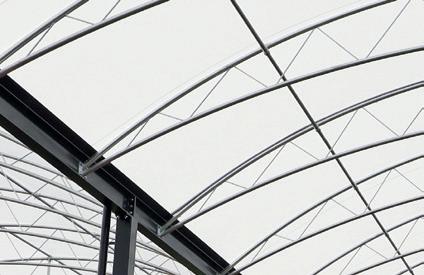
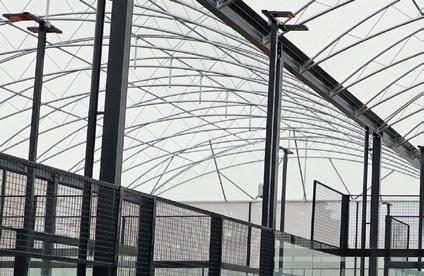
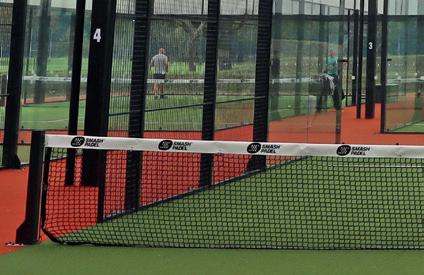
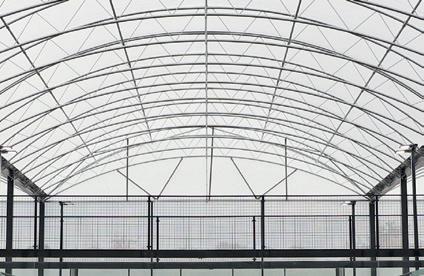
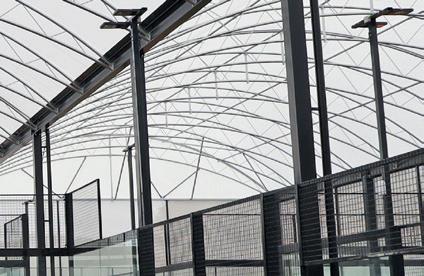
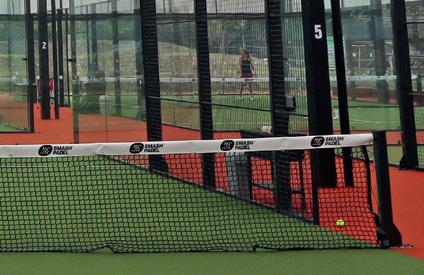
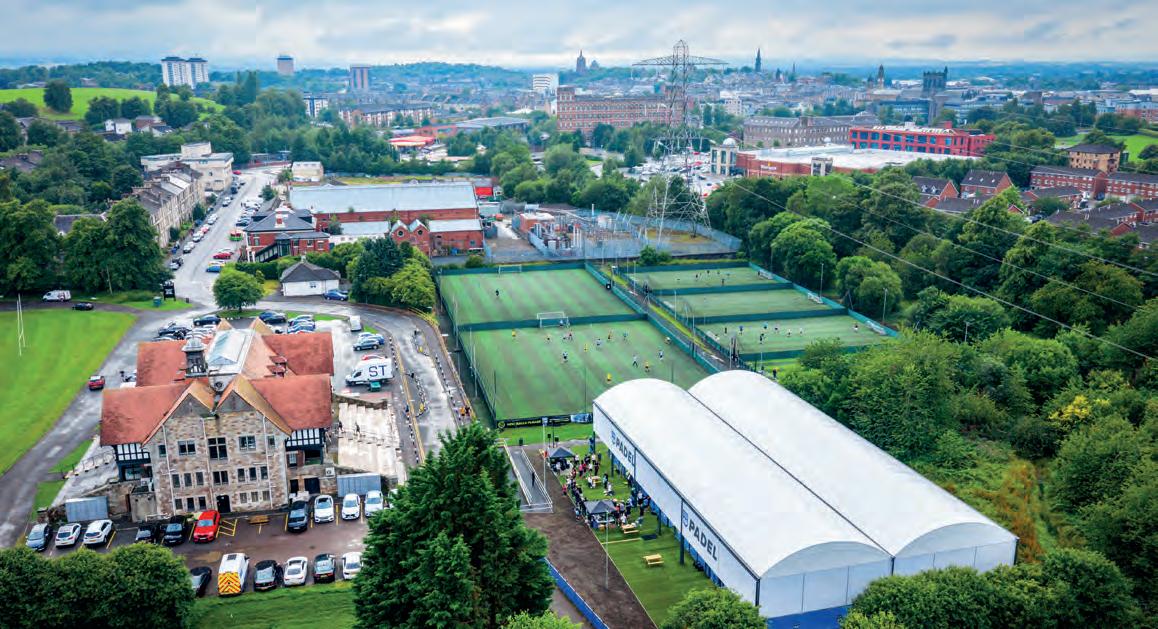
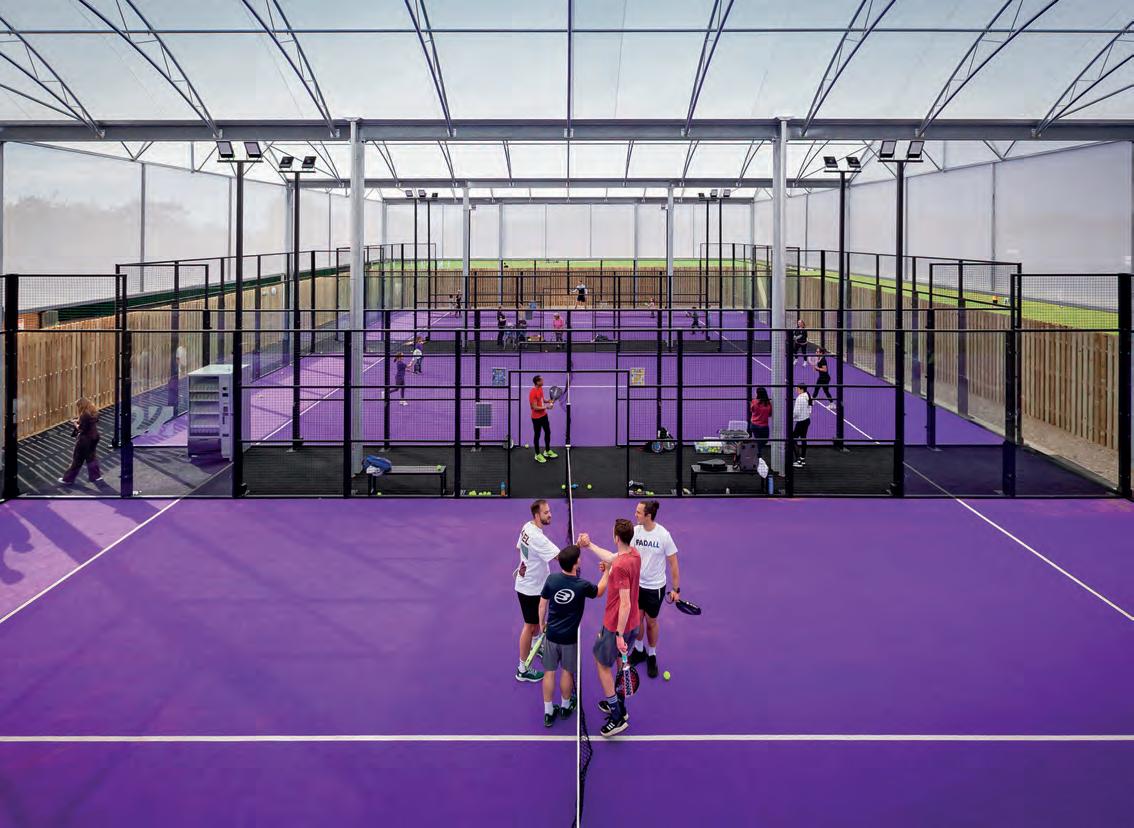
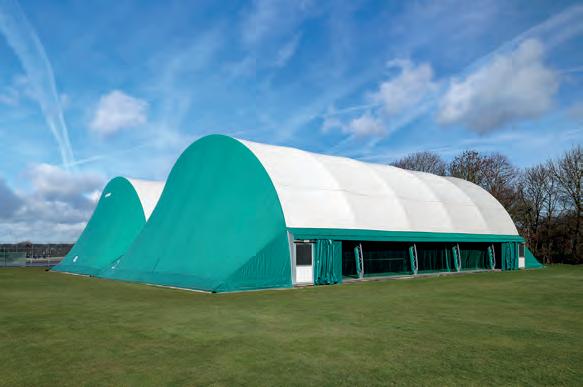
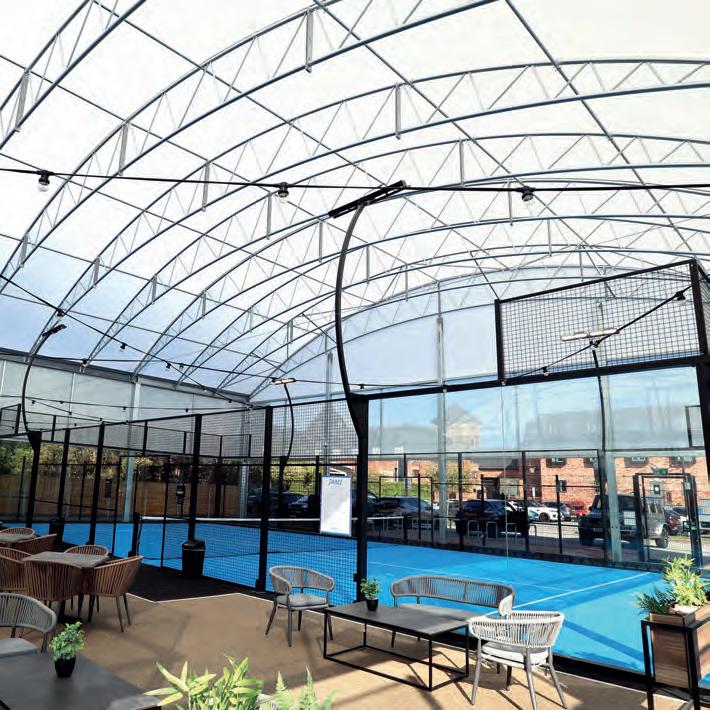
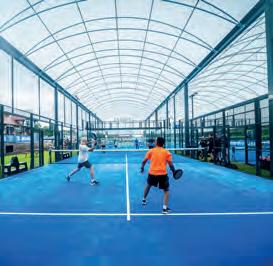
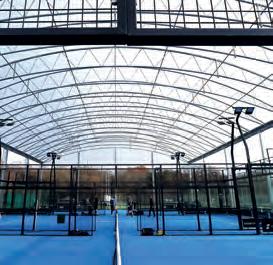
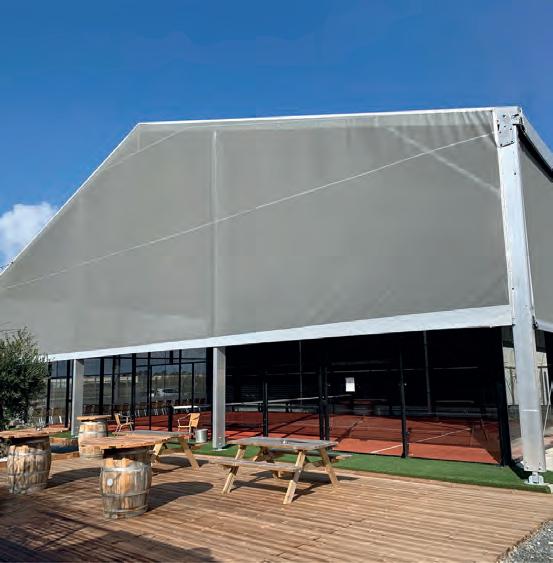
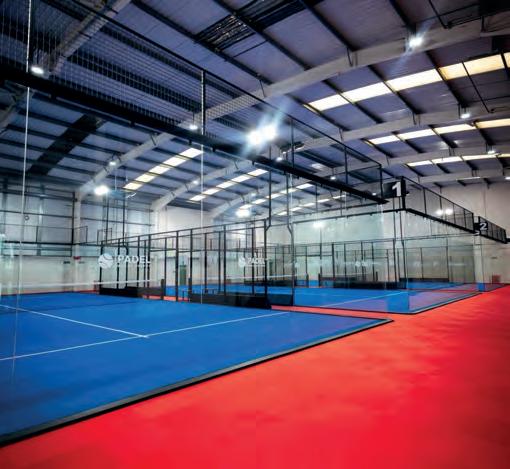
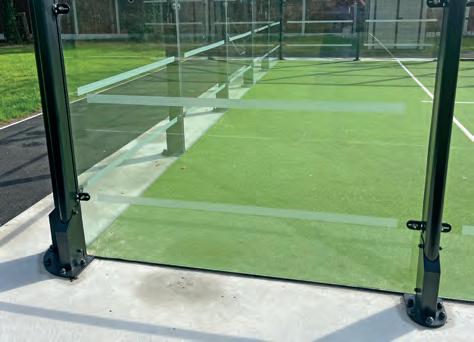
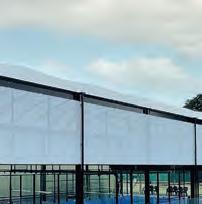
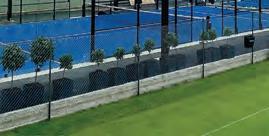
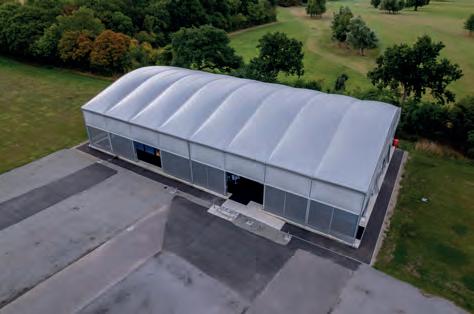
The padel court canopies Fordingbridge have designed for us have been beautiful and we’re thrilled with the finished product. The player experience is now excellent, regardless of the weather.
The team’s attention to detail and commitment to meeting our needs was impressive.”
Freya Tringham, Head of Padel, Powerleague
At every step of the development we felt assured that the advice, technical specifications and delivery of Fordingbridge’s product would be to the highest standards. The finished canopies not only look amazing but have received excellent feedback from our players.”
Carole Naunton, Director, West Worthing Tennis Club
Welcome to The Padel Book
A lot has happened in padel in the past 12 months, since the first edition of The Padel Book was published. The UK market is maturing fast, both in terms of consumer demands and expectations, as well as the professionalism of operators and suppliers. Innovations are shaping the way the sector engages with players, while customers are more defined in what they are looking for in their padel experience.
For this year’s edition of The Padel Book, we have brought together the latest research, technical expertise, market intelligence and industry perspectives, alongside examples of the innovations influencing the continued growth of padel in the UK. Our goal is to provide valuable insights for everyone involved in the sport – from operators, designers and court builders to researchers, marketers and passionate players – helping them make well-informed decisions about the future of their padel projects and facilities.
As with last year’s edition, we have also included the latest version of the SAPCA Code of Practice for the Construction of Padel Courts. The document was updated in September 2025 and offers all the technical guidance to ensure padel courts are built to UK standards. Produced by SAPCA (the Sports and Play Construction Association) in partnership with the sport’s national governing body, the LTA, it is the definitive reference for anyone planning, developing or investing in padel infrastructure.
Producing The Padel Book is a significant undertaking – but a task we love. It is published by the team here at PadelNation, in collaboration with the LTA and SAPCA, with the support of a carefully selected group of industry partners, including lead sponsor Fordingbridge.
Our aim for The Padel Book is to produce a resource that will help you make informed strategic decisions about your padel business. We hope you enjoy the read.
Together, let’s continue to grow strong and sustainable padel communities.
IN ASSOCIATION WITH Tom Walker, Editor tom@nationmedia.uk
PADEL BOOK PARTNERS
The Padel Book 2026 CONTENTS
011 RESEARCH
012 A sport moving into real estate, wellness & global investment
018 A maturing market
023 STRATEGY
024 LTA: Growing the sport
030 SAPCA: Building quality venues that last
033 EVENTS
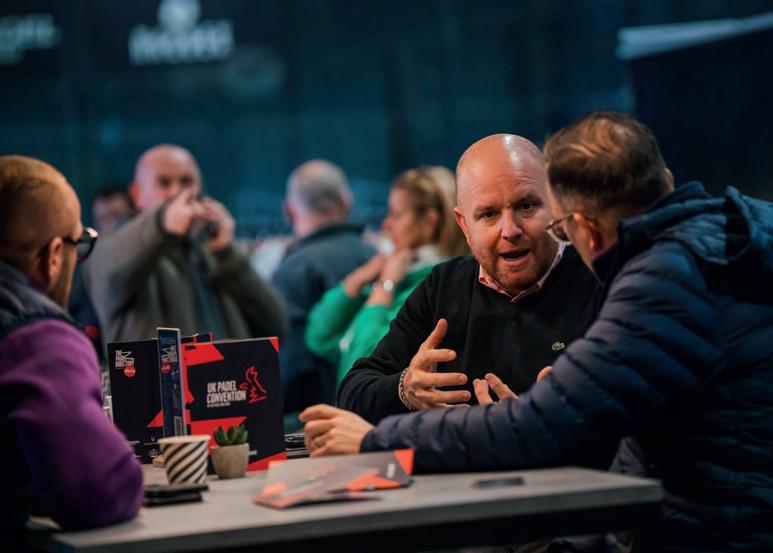
034 UK Padel Convention – a meeting point
038 Padel World Summit 2026
044 Going global – Hexagon World Series
048 LTA Padel Competitions Calendar
049 OPINION
050 Thought leaders
061 GROWING PADEL
062 The importance of competition
066 Armed forces padel
068 What are Soul Mates?
070 Engagement through competition
074 The power of connection
076 Community assets
The Padel Book asks industry professionals from across the sector for their views on trends, innovation and the future of padel
078 Beyond the commodity frontier
080 Court communities
086 The reality of accessibility
090 Jack Binstead interview: the importance of inclusivity
095 DEVELOPMENT
096 SAPCA: Planning for success
100 active-net Padel: charting sector growth
102 Where true value lies
104 The increasing popularity of co-location
108 Trend watch: what does the future hold for padel developments?
110 Building a greener future
114 Lighting: go bespoke, avoid generic
116 Designing padel facilities with sustainability in mind
119 OPERATIONS
153 PADEL CLUBS
Padel Book speaks to some of the leading UK operators:
154 Slazenger Padel Clubs
156 Soul Padel
158 Surge Padel
160 Project profiles: Spotlight on facility projects
165 SUPPLIERS
Views and opinions from some of the UK’s leading padel suppliers
166 AFP
168 Bookaball
170 Copri
172 Fordingbrige
120 Financial sustainability: Avoiding the “Swedish experience”
190 SAPCA padel member directory Choosing a SAPCA member ensures that a padel project will be designed and built to industry standards
140 A turning point for padel ratings?
144 Secondary spend: bringing in additional revenues:
150 Electric charging
192 SAPCA CODE OF PRACTICE
The SAPCA Code of Practice for the Construction of Padel Courts Setting out the industry standards for padel court design and construction
A sport moving into real estate, wellness & global investment
The Global Padel Report 2026 by Playtomic finds that padel is evolving beyond the court into a global investment category, with the UK emerging as Europe’s most in-demand market and clubs transforming into holistic wellness destinations
Playtomic, the world’s largest racquet sports community, and Strategy&, PwC’s strategy consulting arm, have released the 2026 Playtomic Global Padel Report, widely referred to as the “Bible of Padel”. The report confirms padel’s continued global expansion and documents how the sport is transforming from a fast-growing leisure activity into a recognised investment category, a real estate asset class and a holistic wellness destination.. Global growth remains strong. Nearly 5,000 new clubs and almost 8,000 new courts were added worldwide in 2025 alone, bringing the global total to more than 20,900 clubs, 58,300 courts and 19.4 million players. The global market is forecast to reach approximately 91,000 courts by 2028.
PADEL CONTINUES TO SCALE GLOBALLY
Padel’s global expansion remained strong in 2025, with 7,898 new courts and 4,969 new clubs added worldwide, bringing the total to 58,334 courts. While padel continues expanding, its development unfolds in varied and nonlinear ways. Markets follow different adoption patterns, growth rates and structural dynamics, making headline comparisons potentially misleading. To address this complexity, this report adopts a five-archetype framework that categorises countries based on shared characteristics and stages of market evolution. These are “Padel Heartlands” (mature and established ecosystems, such as Spain and Argentina); “The Sweet Spot” (well-balanced markets with sustainable growth, such as Belgium and France); “The Hot Spot” (developing markets with demand driving
growth, such as the UK); “Diamonds in the Rough” (early-stage markets, such as Poland); and “Post Boom Adjustment” (where expansion has outpaced demand, resulting in overcapacity, such as Sweden).
Key implications across all market archetypes
Sustainable value comes from demand aligned growth and execution, not scale alone. As padel matures, growth shifts away from court expansion toward extracting greater value from the existing base. Mature markets illustrate this shift through greater emphasis on utilisation, refurbishment, premiumisation and professionalised operating models.
There are lessons to be learnt from post-boom adjustment markets. Rapid, supply-led expansion often leads to a period of slowdown; sustainable growth emerges when it is realigned with player demand. Markets that scaled fastest are no longer the engines.
The report also highlights that professionalisation is structural, not optional. As courts become a commodity, professional execution and quality of service increasingly drive returns, steering investments toward premium club models. Scale makes professional demand and utilisation management crucial.
Meanwhile, digitalisation has become what the report calls “the invisible infrastructure”. As the padel market scales, access to real data and reliable information is increasingly critical to operational efficiency and investor confidence. Digitalisation for optimising time slots, pricing and occupancy becomes essential.
UK: the hotspot deep dive
The UK operates as a demand-led Hotspot, with persistent supply constraints despite rapid chain expansion. The UK’s strong court growth is
underpinned by structural demand–supply tension, with demand consistently outpacing new supply.
A broad and socially-driven player base is sustaining very high utilisation levels, supported by: Strong social participation and low barriers to entry Engagement across age groups, reflecting padel’s cross-generational appeal
Very high playing frequency and repeat usage across core urban markets
Multiple indicators confirm the depth and persistence of underlying demand. The average court occupancy across major UK padel clubs at peak hour stands at around 85%, while around half (50%) of UK players report difficulty securing court time during peak hours.
In response, chain operators are expanding rapidly to address persistent demand–supply imbalance, rolling out large, experience-led indoor venues through replicable, automated multi-site formats, where suitable sites can be secured.
The UK’s operator landscape comprises three categories:
Pure padel chains, scaling dedicated padel formats
Multi-sport/ fitness operators, embedding padel into broader experiences
Branded/ sportsled operators who are entering and then expanding their reach selectively
Global court growth outlook
Looking ahead, the report predicts that global padel growth continues, but expansion becomes increasingly maturity-driven. Expansion dynamics are diverging: mature markets slow and optimise, while growth concentrates in selected hotspots and emerging markets. As scale increases, value creation shifts from speed of expansion to execution
The UK’s strong court growth is underpinned by structural demand–supply tension
quality, utilisation and capital discipline. The report predicts that, by 2028, there will be 91,200 courts globally – up 56% from the 58,334 in 2025.
CLUB-LEVEL VALUE CREATION
Club-level value creation is driven by how effectively each court-hour is monetised, combining utilisation, pricing power, indoor coverage and product mix. Padel clubs are evolving from court-booking utilities into holistic wellness destinations, driven by growing player demand for social connection, recovery and community.
Business models are shifting from transactional to holistic, layering, monetisable touchpoints across the full player journey, with technology as the key enabler.
According to the report, club economics are not driven by the number of courts alone, but by what it calls the ˝court-hour engine”, which can be viewed from either the asset (supply) side or the player (demand) side. From a supply perspective, the gross merchandise value (GMV) per court is driven by the formula of operating hours x utilisation x price per hour From a demand perspective, GMV per court is driven by another: players per court × frequency × average ticket
The key implication is that the framework explains why clubs, or entire markets, with a similar number of courts can deliver very different economics. What differentiates performance is not asset count, but the ability to maximise utilisation, pricing and monetisation of each court hour.
For example, the share of indoor courts is a key performance indicator – and varies widely across markets. It stabilises demand, reduces seasonality and unlocks the feasibility of holistic, year round programming with stronger pricing power and more predictable utilisation.
GMV per court is an outcome metric, driven by the combined effect of utilisation intensity and pricing power, with indoor coverage acting as a key structural enabler. Across markets, court bookings remain the core revenue driver, accounting for an average of 68% of GMV, with open matches and academies emerging as the main differentiators.
Towards experience-led models
With demand increasingly shaped by wellness, community and experience, clubs are transitioning from court-booking utilities to holistic, experience-led models. Demand shifts underpinning holistic club models.
Player expectations are increasingly shaped by wellbeing, enjoyment and escape, shifting focus beyond performance or simple court access toward experience-led propositions. Atmosphere and social energy are becoming central to repeat visitation, positioning ˝vibe” as a core driver of engagement rather than secondary attribute.
The report suggests that “community is the product”. This is based on demand being reinforced by social connection and group participation with clubs that foster community – converting play into recurring routines and longer-term loyalty.
Strong growth across key metrics
7,898 new padel courts were built globally in 2025, averaging nearly 22 new courts per day
The global padel equipment market reached 598 million euros in 2025, growing at a 34% CAGR since 2019
There are now more than 20,900 clubs, 58,300 courts and 19.4 million players
There will be 91,000 courts globally by 2028
Nine in 10 top-performing clubs now offer holistic experiences beyond the court, from social events to instructor-led activities
There is also evidence that younger generations of customers are setting the standard, as they prioritise variety, experience and belonging, accelerating expectations for more holistic, socially embedded club models.
As a result of this overall trend, the report states that nine in 10 top-performing clubs now offer holistic experiences beyond the court. These vary from social events and instructorled activities to access to wellness services.
PADEL AS A REAL ESTATE ASSET
Sports-related real estate has, over the past 25 years or so, evolved from a niche leisure use into a recognised investment area, driven by demand for experiential assets and wellness-oriented lifestyles. Investors are increasingly exploring different real estate strategies involving sports.
As part of this trend, padel is emerging as a relevant and scalable use, typically integrated within broader sports and wellness mixes, supporting activation and asset enhancement while offering clear potential for further growth as the sector matures. In short, padel is attracting new forms of real estate capital.
Alternative asset managers are increasingly sourcing and pursuing deals involving padel and other sports. Meanwhile, venture developers are initiating sports-branded development concepts.
Padel shows strong uptake among younger demographics, which developers and real estate investors have recognised as footfall-driving asset. As a result, developers are complementing or replacing traditional amenities with uses that show higher engagement and frequency of use.
Padel courts are also increasingly incorporated into residential, resort and mixed-use developments, particularly in lifestyle-oriented locations. The inclusion of padel supports differentiation and positioning of developments.
Download the full Playtomic report at: https://playtomic.com/global-padel-report
Maturing into a Market
Research from Evolve shows that padel in the UK has transitioned from an emerging sport to a scalable market
Adecade ago, padel was virtually unknown in the UK. Today, it is one of the fastest-growing participation sports, with courts appearing everywhere, from health clubs, tennis venues, schools and golf clubs to specialist facilities across the country. What began as a small number of experimental installations has quickly evolved into a developing national market attracting attention from operators, property developers and investors. The sport’s combination of accessibility, sociability and relatively compact facility requirements has created an attractive proposition for both players and venue operators.
Evolve’s ongoing research into the UK padel landscape shows a sector expanding rapidly but still taking shape. New facilities are appearing across a growing range of venue types, while operators continue to experiment with different development models.
The result is a market that has clearly moved beyond its experimental phase but still retains many of the characteristics of an emerging sector: fragmented ownership, evolving venue formats and considerable room for expansion.
From early experimentation to national growth
The development of padel facilities in the UK has followed a recognisable growth pattern.
The earliest courts were installed within established clubs during the mid-2010s, when a handful of pioneering operators introduced the sport as an additional activity. Growth during this phase was modest and highly localised, reflecting cautious experimentation.
The next phase began as specialist operators entered the market and demonstrated that padel could support dedicated commercial venues. These operators helped validate the sport’s commercial potential and began to build the foundations of a broader infrastructure network.
Over the past few years, the market has entered a more accelerated stage of expansion. New venues are appearing across multiple regions as awareness grows and investment increases, signalling padel’s transition from emerging sport to scalable leisure concept.
A diverse operator landscape
One of the defining characteristics of the UK padel market is the wide range of organisations involved in its development. Facilities are currently operated by specialist padel brands, private health and fitness operators, tennis clubs and leisure centres. Dedicated padel operators have been particularly influential in driving early expansion, while established leisure brands have helped introduce the sport to wider audiences through their existing club networks.
Despite the presence of several well-known operators, the overall landscape remains highly fragmented. Dozens of organisations now operate padel courts across the country, each pursuing different development strategies and venue formats.
As the sector continues to grow, this diversity is likely to remain a defining feature of the market for the foreseeable future.
The UK padel sector currently resembles the early infrastructure phase seen in other successful participation sports: a broad mix of operators testing different venue models before a more consolidated market structure eventually emerges.
Over the past few years, the market has entered a more accelerated stage of expansion
THE CONSTRUCTION BOOM
Operational reality vs the 2026 pipeline
OPERATIONAL
The foundation
MARKET VELOCITY
About the research
This article draws on research from Leisure DB, a UK-based market intelligence provider specialising in the health, fitness and sports facility sectors. Leisure DB tracks the development of the UK padel market through ongoing analysis of operator activity, new site openings, planning applications and venue expansions.
PLANNED The 2026 pipeline
In addition to its UKPadelMulti-SiteOperatorsReport (published in November 2025), Evolve produces a Padel
INSIGHT: The volume of ‘planned’ sites - including major developments by Slazenger, Padel Vault, and Court de Padelindicates a massive construction bottleneck cleared in late 2025
MonthlyMarketTrackerReport, which monitors recent developments across the sector. Each edition highlights newly opened venues, planning applications and courts being added to existing facilities, providing a regularly updated view of how the UK padel landscape is evolving. Further information about Evolve’s research can be found at https://weareevolve.io. Organisations interested in exploring the UK padel market in greater depth can also contact Jamie Buck, Head of Research at Evolve.
BEYOND THE CAPITAL Heat clusters
THE SCOTTISH BELT
Key sites:
Edinburgh (David Lloyd Corstorphine)
Glasgow (ouken Glen)
THE NORTHERN POWERHOUSE
Key sites:
Manchester (Trafford City)
Liverpool (Game4Padel)
Alderley Park (Pure Padel)
THE SOUTH EAST STRONGHOLD
Key sites: David Lloyd Raynes Park
The Padel Hub Slough Padel United Bushey
MARKET MATURITY: The North West has emerged as the UK’s second engine of growth, breaking the London-centric mold
Designing for Year-Round Play and Larger Venues
As operators gain more experience with the sport, the design and scale of new padel facilities is beginning to evolve. Many early UK courts were installed outdoors, often as extensions to existing tennis or leisure venues. This approach allowed operators to test demand while limiting initial investment, resulting in a large number of relatively small installations with just a handful of courts. However, more recent developments suggest the market is entering a new phase. A growing number of projects now feature larger multi-court venues designed specifically around padel, rather than treating the sport as an add-on to an existing facility. These larger clubs are typically planned with higher court capacity, expanded social areas and programming space to support leagues, coaching and events. At the same time, operators increasingly favour indoor or covered courts. Weather-protected facilities allow more reliable programming, longer operating hours and more consistent utilisation throughout the year, making them an increasingly common feature in new developments.
This combination of larger venue formats and indoor infrastructure reflects a broader shift in how operators view padel: not simply as a complementary activity, but as a scalable leisure concept capable of supporting dedicated destination clubs. Recent facility openings and projects in development suggest the average scale of new UK padel venues is beginning to increase. Larger multi-court clubs which are capable of supporting leagues, coaching programmes and events are becoming more visible within the development pipeline.
Expansion Beyond Early Adopter Regions
Early growth in UK padel facilities was concentrated in London and the South East, where dense populations and strong leisure markets helped accelerate adoption. More recently, development activity has begun to spread more widely across the country. New projects are appearing in regions including the Midlands and the North of England, reflecting a broader national rollout of padel infrastructure. This widening geographic footprint is an important step in the sport’s evolution, helping padel move
from a regionally concentrated activity into a genuinely national participation market.
In more mature European padel markets, larger multicourt venues often act as community hubs supporting leagues, coaching programmes and tournaments. As participation grows in the UK, similar destination-style clubs are likely to play an increasingly important role.
A Market Still in Its early chapters
Padel’s rise in the UK is still unfolding. The sport has already established a meaningful presence across the leisure sector, with facilities appearing in a growing range of venues and regions.
Yet several structural indicators suggest the market remains in an early stage of development. Venue formats continue to evolve, the operator landscape remains highly fragmented, and many parts of the country still have limited access to courts.
At the same time, the profile of new developments is beginning to change. Larger venues, indoor facilities and multi-site operator expansion all point toward a more structured phase of market growth.
Leisure DB continues to track these developments
The widening geographic footprint is an important step in the sport’s evolution, helping padel move from a regionally concentrated activity into a genuinely national participation market
through its ongoing research into UK padel facilities. As new projects are announced and delivered, the Padel Monthly Market Tracker Report will highlight emerging patterns in venue scale, operator strategy and regional expansion, offering a near real-time view of how the market is evolving. If current development trends continue, the coming years could see padel firmly establish itself as one of the most significant new participation sports to emerge in the UK leisure landscape.
Our insight is built around you. From member behaviour to market demand, EVOLVEʼs Strategic Insight Services adapt to your business needs, helping you make data led decisions, with confidence.
Our insight explore:
Members
Understand who your members are and how they behave.
Population
Know your local market and true catchment.
Competition
See your landscape clearly and identify gaps.
Demand
Uncover opportunity and growth potential.
Our insights powered by real industry intelligence
30+ years of insight
850 million data points
7,000+ UK fitness sites tracked
Why it matters
Reduce risk
Identify real opportunity
Make confident decisions
STRATEGY
Growing the sport
LTA, padel’s national governing body, published its five-year strategy for the sport in September 2024. Set to run until 2029, the plan reaches its halfway point during 2026. The Padel Book looks at the progress made since the strategy’s launched and how the goals outlined in it have been met
The LTA , which oversees padel in the UK, launched a five-year strategy for padel in September 2024. The vision outlined in the new strategy was to open the sport up to more people across the country and to grow it by making it more accessible, welcoming, enjoyable and inspiring. The focus was to grow the infrastructure of padel, increase and diversify the coaching workforce and build on the performance pathway as well as increasing visibility and driving participation.
A NUMBERS GAME
Among the targets set out in the strategy’s first phase, running to the end of 2026, was to to increase the number of players who play at least once a year from 129,000 to 400,000 and the number of monthly players from 65,000 to 200,000. In an update in March 2025, the LTA announced that it had exceeded those targets.
At the end of 2025, 860,000 adults and juniors played padel at least once in the last year, which has more than doubled since 2024. LTA data recorded 400,000 players at the end of 2024, 129,000 at the end of 2023 and 15,000 in 2019, highlighting the sport’s extraordinary growth trajectory.
From a facility point of view, the strategy set out a goal of increasing the number of padel courts from 350 to 1,000. That goal has already been met, nearly three years ahead of time. According to the LTA, there were 1,553 padel courts available across 559 venues at the end of 2025. This figure is up from 870 courts across 293 venues at the end of 2024. Strikingly, when LTA took over the governance of the sport in 2020, the number of courts was just 69.
Another interesting figure released by LTA in March was that an average off-peak court booking costs £7 per person per hour – based on a £27 per hour doubles booking.
The plan is clear – to invest in areas and projects which deliver on the strategy’s vision of making the sport more inclusive
NEW FACILITIES AND ACCESSIBILITY
The increase in the number of courts has been rapid. And while the growth has been driven largely by private investment and commercial operators, the LTA and LTA Tennis Foundation have played a part too. Together they have invested more than £7.5 million into padel court construction to date, which has supported a further £10.5 million investment, delivering over £18m for the creation of 112 courts at 57 venues – all of which have an obligation to provide accessible provision for their local communities.
The LTA continues to engage with the UK Government on facilities funding, particularly in respect of developing community-focused, covered tennis, padel and multi-sport hubs in areas which lack access. The UK Government have invested at least £2.5 million in 2026/7 in covered facilities for padel and tennis and the LTA will continue to engage on plans for a nationwide rollout, to help ensure access for all communities.
The plan is clear – to invest in areas and projects which deliver on the strategy’s vision of making the sport more inclusive.
“We are committed to making padel accessible to a broader and more diverse audience, particularly individuals from underserved communities across Britain, so more people can enjoy the physical and mental health benefits of staying active,” the LTA says.
“This commitment is supported by the padel venue landscape with over 81% of all venues,
STRATEGY
responding to the LTA’s survey, involved in community outreach initiatives, ranging from school partnerships, reduced cost for certain sessions and complimentary coaching for underserved groups.”
RAISING AWARENESS
Another key goal outlined in the strategy was to grow the visibility of padel and to increase awareness of the sport from 20% to 40% of the population – and the interest in playing from 7.5% to 15%. This is another area in which the targets have already been met.
New figures at the end of 2025 show the awareness of padel among adults reached 57% of the British population (approximately 31 million individuals), representing a significant increase from 38% (20 million) by late 2024. Interest in playing padel across Britain continues to increase, with over 10 million Britons expressing a desire to try padel, a rise of 3 million since the end of 2024, reflecting its accessible, social nature and appeal to all age groups.
WOMEN AND GIRLS
As the national governing body, the LTA is committed to opening up padel and creating meaningful opportunities for women and girls to play and thrive. Through the She Rallies initiative, the LTA works with venues to promote inclusive environments, including women and girls-only sessions. From grassroots programmes to national junior girls’ camps and visible role models, the aim is to inspire long-term participation and clear pathways in the sport.
COACHING
The LTA has developed new LTA Youth Padel coaching resources, set to launch later this year. The current resources focus on secondary school aged young people, creating opportunities to increase youth engagement and encourage more players to try padel through its fun and social appeal. By supporting operators to introduce engaging junior programmes, the LTA aims to expand opportunities for young people to play and help venues grow participation. The LTA is creating a structured padel coaching qualification pathway aligned with tennis, progressing through levels from Assistant to Director. Each level supports career progression and formally qualifies coaches for specific industry roles. The course has been developed with leading international padel experts, players, and coaches, including Icíar
“2026 marks a major milestone as the Premier Padel P1 comes to London”
Tom Murray LTA Head of Padel “With 860,000 people playing in 2025, over 10 million expressing interest in trying the sport, and around 1,600 courts now in place across hundreds of venues, padel’s momentum is undeniable.
“2026 also marks a major milestone as the Premier Padel P1 comes to London, a huge opportunity to showcase the sport at the highest level, inspire new audiences, and give fans the chance to experience worldclass professional padel here in Britain.
“Increasing visibility and access remains central to our strategy, as we seek to grow the sport sustainably. With strong partnerships and new platforms, we’re making it easier than ever for people to discover and get involved in the sport.”
● The strategy can be downloaded and viewed here: https://www.lta.org.uk/4a6b3b/ siteassets/news/2024/september/ltapadel-strategy-2024-2029.pdf
Montes, the LTA’s International Performance Coach, ensuring high-quality, globally relevant coach education, and will be rolled out this year. To date, 1,676 coaches have completed the Intro to Padel Coaching CPD since its launch, while 427 coaches have completed the Padel Instructor Core Training. The LTA has also redeveloped Activator training for both tennis and padel, giving venues access to relevant online and face-to-face courses for the first time. The padel activator programme has been developed in response to requests from operators. Activators support participation growth by delivering fun, engaging facilitated play. The course develops key skills including communication, group management, and adapting sessions to meet players’ needs.
THE VIEW FROM THE TOP
STRATEGY
GOVERNANCE
The LTA now works in close partnership with padel operators across Britain. This is because it has recognised that collaboration is central to the sport’s sustainable growth. Initiatives such as the National Padel Operator Forum, launched in 2024, provide a structured and strategic platform for operators and key delivery partners to engage directly with the LTA, share insight, and help shape the future direction of padel. Through ongoing dialogue and partnership, the LTA and operators are working collectively to sustainably grow the development of the sport nationwide.
“Nothing is more important than the safety and wellbeing of those who play tennis and padel,” the LTA says. “As part of venues registering with the LTA, we offer tailored support to help operators keep their venues safe, including dedicated venue safeguarding support visits undertaken by our safeguarding team, supporting venues to understand areas of risk and develop best in class safeguarding policies and procedures.”
PERFORMANCE
The LTA also has a role to support and develop the professional game in Great Britain. In 2026, British players, including juniors, open, and seniors, will have 35 weeks of international and domestic playing
opportunities to earn valuable prize money and ranking points. This includes five FIP Tour events (four silver and one bronze), seven LTA Padel British Tour Grade 1 events, 21 LTA British Padel Tour Grade 2 events, and three FIP Promises tournaments for aspiring juniors. The LTA Padel National Championships is set to return later this year.
In August, the Qatar Airways Premier Padel Tour will arrive in London, marking a pivotal moment in the international expansion of professional padel to Britain. The LTA, as the national governing body for padel, will collaborate with Sela, the tournament promoter, to support the event as part of our ongoing work to grow and develop padel in Britain. Staged as a P1 tournament, the second-highest tier on the Premier Padel circuit, just below the Majors, the London event will showcase world-class competition and further elevate the sport’s profile across the country.
“As the national governing body for both tennis and padel, we are seeing both sports growing together and complementing each other and the choice of opportunity they provide to help more people enjoy the benefits of being physically active,” the LTA says. “Our goal is to ensure padel and tennis complement one another by attracting new audiences, strengthening clubs and venues, and contributing to the overall health of racket sports across Great Britain.”
The UK Padel Convention is our flagship event, connecting the key people shaping the future of the sport. From club operators and investors to brands and industry leaders, it's where ideas, partnerships, and growth happen.
Year 1 had over 750 attendees, 45 exhibitors and 20 live showcase community sessions. Year 2 returns on 4th November 2026 and you can register interest on The Padel Directory websitewww.thepadeldirectory.co.uk/tpd-events
Building high quality venues that last
In a booming industry like padel, it is in everyone’s interest that standards are maintained – especially when it comes to the design, construction and maintenance of facilities. Richard Shaw, CEO of SAPCA – the official trade body for the sports construction industry – explains how the association works tirelessly with the sport’s governing body, LTA, to ensure that the official industry standards are kept up to date
Since the early days of SAPCA, our Codes of Practice have been at the very core of the Association and key to our work within sport and play. In our 28 years I’m not sure there has been a code that has necessitated the revisions that the padel one has. We see no end in sight as the padel market within the UK continues to change and flex to greater demand from consumers.
The origins of SAPCA exist in setting standards for the construction of tennis surfaces and have widened over time to cover a much wider array of sports and play. They were initially created by the industry, for the industry as a way of regulating and creating consistency across SAPCA members.
As these practices were normalised and became standard practice, the documents were used more by governing bodies, facility operators and clients as a way of understanding what they should be asking of the industry. We have adapted to this change by making the Codes more easily accessible, with a greater emphasis on diagrams and pictures, and the use of checklists and design suggestions for consideration.
In September 2025 we launched the 5th edition of our Padel Code of Practice and less than 6 months later we have already held a meeting of our Padel Working
Group to agree on the amendments for the forthcoming 6th edition. Manufacturers, contractors, suppliers and consultants discussed issues with the market, current trends and how practices have developed. Its then looked at to decide if SAPCA can add value to the sector by adding it to the Code of Practice. There were a number of areas that the group decided should be added. This will be the 6th edition in 6 years, far more than any other Code of Practice has been updated.
There are a number of reasons for this, primarily we are seeing a growth of a sport at a rate that is unprecedented in recent times. Growth that is expanding the offering of the sport – indoor, outdoor and covered, high-end clubs and council parks, temporary structures and fully constructed padel facilities.
There is also the fact that the growth has been led by an entrepreneurial spirit that is often not seen in many sports and certainly not within the emergent stages of sports. This is constantly redefining padel and its environment in response to a customer prepared to pay high prices and operators able to pivot quickly to accommodate.
With any new and emerging market there are always those seeking to cash in and make a quick
profit before getting out before they are found out. At SAPCA we have seen many of these stories with operators and investors left with poorly constructed courts. The maturity of the market and a more knowledgeable consumer will hopefully reduce the number of cases.
Growth has been led by an entrepreneurial spirit that is often not seen in many sports
So, looking to the future what potential changes are we considering for the 6th edition later this year?
SAPCA has had several enquiries about single courts, training courts and children’s courts, of varying sizes and dimensions. These questions have often come from operators concerned they can’t see any reference in our Code of Practice and hence make the assumption SAPCA wouldn’t support their inclusion. The reality is that we think these are a great idea for clubs and would actively encourage them rather than trying to squeeze courts into a site footprint that will mean insufficient spacing between courts. If these are constructed well, they offer a great alternative and anecdotally can be busier than standard courts during daytime when finding four people to play can be difficult.
There has also been much discussion about the design of the padel enclosure foundations (normally a concrete ring beam) and while we stick to our principle that this should be designed by a structural engineer, we believe that when there is a tendering
exercise, this should be done pre tender so that contractors are competing on a level playing field.
The nature of the weather in the UK and the wind loading mean that panoramic courts are less suitable for outdoor courts. Posted systems offer an increased stability and still allow the sport to be visible. Padel courts in the main are aesthetically pleasing and away from the professional end of the sport, are the best option for courts in the UK.
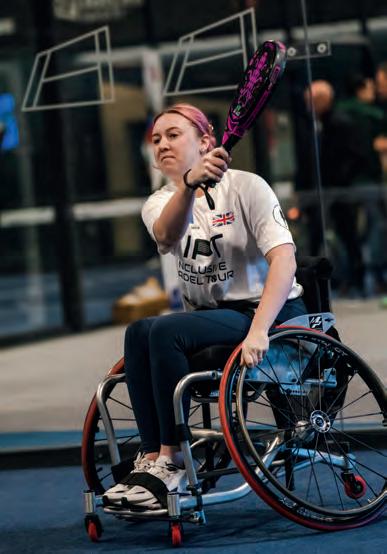
After some hearing examples of accessibility difficulties wheelchair users have experienced with both courts and also clubs we will be looking to recommend better access solutions. These will include levers at wheelchair level to open hinged doors and more accessible toilet and mezzanine areas.
We will be strengthening existing statements around maintenance being key to ensure the correct level of health and safety at facilities. We will also be adding additional information on the potential unsuitability of ‘instant padel courts’ with plastic tile flooring and perspex surrounds to play padel.
As the market continues to move so will the codes, we are sure that a 7th edition will be be required at some point in the future. If you have any thoughts on what this should contain, please feel free to get in touch.
University Padel comes alive
The inclusive and social nature of padel is hitting a spot with students and young people. A sign of this can be seen the way universities and further education institutions have embraced the sport
Padel is growing in every area of the UK – including within educational settings. The rate of expansion and growth in interest has been particularly rapid within further and higher education settings.
In February 2026, players from across the country came together in Bristol for the UK PADEL University Championships, with 67 teams from 23 universities competing across men’s, women’s and mixed events. The Championships highlighted not only the rapid growth of padel within higher education, but also the unique culture that makes the sport so appealing to students. Many players already knew one another through UK PADEL’s NUPL or LTA-sanctioned events, creating a sense of familiarity, rivalry and mutual respect that lifted the weekend to another level.
Mark Ayers, Tournament Director, said: “The atmosphere across the whole weekend was exactly what university padel should be about. There was a real raw energy from the players, especially as we moved into the knockout stages, and a great sense of community between teams. What stood out most was how much the standard has improved since last year. Players weren’t just adapting from tennis, they were playing proper padel. Events like this are vital for the growth and longevity of the sport in the UK, because they give students meaningful competition while building communities that last far beyond university.”
AUDIENCE ENGAGEMENT
Spectators were treated to moments of loud celebration, spontaneous singing from the crowd and widespread applause for outstanding rallies and sublime shots –often regardless of which team had won the point. True to the spirit of padel, supporters regularly applauded brilliance from both sides of the court.
After two days of competition, the champions were crowned. They were:
● Mixed Champions: Nottingham University
● Men’s Champions: Nottingham University
● Women’s Champions: Plymouth University
While the trophies went to Nottingham and Plymouth, the Championships proved to be a great leveller. Players from newer or less-established padel universities spoke of how valuable it felt to be “at the same table” as more established institutions – an opportunity not always available in traditional university sport.
Padel societies are now among the fastest-growing student communities in the UK. As an easy-to-learn, highly sociable sport that promotes fitness, wellbeing and fun, padel has become an ideal entry point for students, particularly freshers looking to connect and belong.
Nick Baker, CEO of UK PADEL, added: “The University Championships perfectly capture what UK PADEL events are trying to achieve. We want to create high-quality, inclusive competitions that bring people together and provide a clear pathway from schools to universities and into the adult game. Seeing so many universities represented, the level of play on court, and the sense of camaraderie – it shows that padel is thriving in the university space. The weekend was a powerful example of how the sport is growing in the right way, with community, accessibility and long-term sustainability at its heart.”
UK PADEL also paid tribute to the support of event partners The Padel Loft, Lauralu UK, HEAD and Shandy Shack. Their support ensured the Championships could be delivered in a highly subsidised and affordable way, keeping student participation accessible.
For just £15, players received a full weekend of competition, an event shirt and food and drink at the players’ party – outstanding value and a clear reflection of UK PADEL’s commitment to inclusivity. With participation rising, standards improving, and university padel communities thriving, the UK PADEL University Championships once again proved that this is more than a tournament – it’s a movement.
The event attracted 67 teams from 23 universities
Meeting point
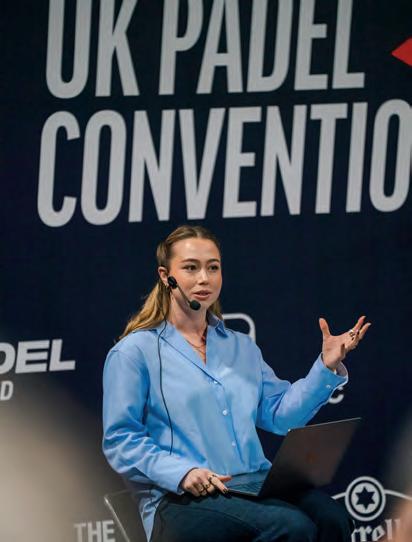
The first ever UK Padel Convention, organised by The Padel Directory, was held in November 2025. George Modler, co-founder of The Padel Directory, says the sold out event is a sign of the maturing nature of the padel sector
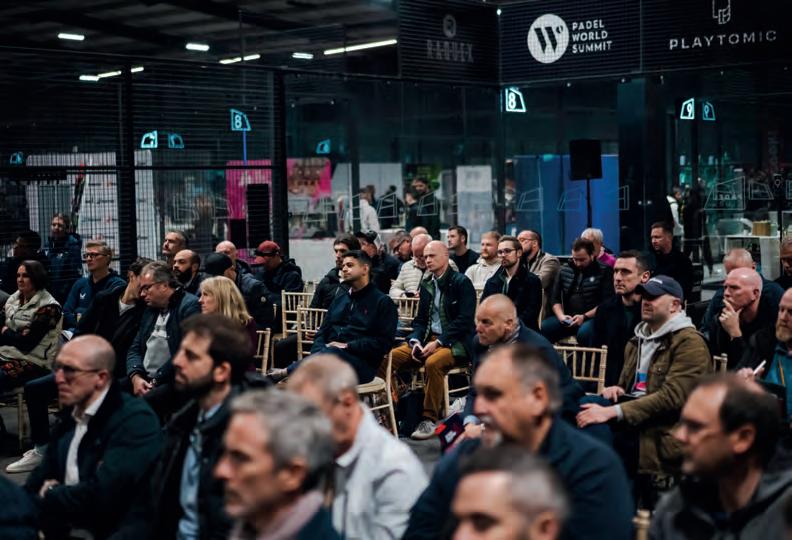
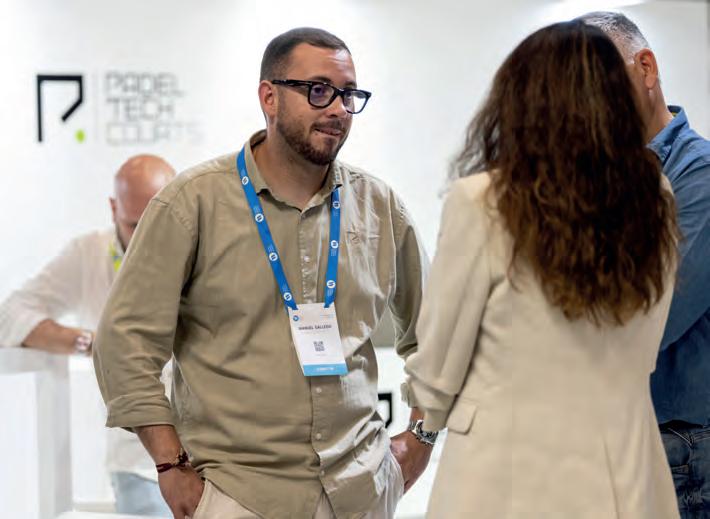
Padel in the UK has grown at remarkable speed. New courts, new clubs and new players seem to appear every month, driven by genuine enthusiasm and a sense that the sport’s moment has arrived. Yet for all that momentum, British padel has often felt slightly disjointed. Plenty of energy, plenty of ambition, but not always enough shared space to bring the whole picture together. The UK Padel Convention helped change that. Organised by The Padel Directory and hosted at The Padel Club in Gloucester, the Convention saw a wide cross section of the UK padel community come together under one roof. Club operators, coaches, investors, suppliers, brands and players all shared the same environment for a full day of discussion, networking and on court activity. That alone made it different from most padel events to date.
Rather than focusing on competition or surface level promotion, the Convention set out to look at the bigger picture. Panels explored topics such as club development, coaching pathways, investment, infrastructure and long term sustainability. Around them, exhibitors showcased products and services that support the sport behind the scenes, from court construction to technology and apparel. On the showcase courts, demonstrations and sessions added a practical edge that kept the event grounded in the game itself. What stood out most was the quality of conversation. Many attendees remarked that it was the first time they had been able to speak openly with others facing the same challenges from different angles. Club owners compared notes on retention and programming. Coaches discussed development structures with operators. Brands and investors listened
directly to those working day to day in venues. These interactions may not make headlines, but they are exactly what a growing sport needs.
The Convention also arrived at a useful moment. UK padel is moving beyond its early growth phase and starting to ask more considered questions about how it develops next. How do clubs remain commercially viable as competition increases. How do new players continue playing once the initial excitement fades. How does the sport balance rapid expansion with quality and accessibility. The Convention did not pretend to have all the answers, but it provided a space where those questions could be addressed honestly and constructively.
Importantly, the tone of the event reflected the sport’s character. While there was serious discussion, there was also a sense of openness and shared purpose. Padel is still a community sport in the UK, and the Convention managed to retain that spirit while taking clear steps towards
UK Padel Convention
The first ever convention attracted 760 attendees and more than 45 exhibitors from across the sport. It has been heralded as the largest padel gathering ever held in the UK and the largest padel industry event in Northern Europe – outside of the Padel World Summit. The 2026 edition will take place during Q4 2026.
greater professionalism. That balance is not easy to strike, but it is essential if the sport is to grow without losing what makes it appealing. Credit is due to The Padel Directory for recognising the need for this kind of platform and delivering it effectively. Bringing together such a broad group of stakeholders is no small task, and the success of the event suggests there is a real appetite for more. It also underlined the role The Padel Directory continues to play in connecting the UK padel landscape, not just through information, but through action. Looking ahead, the announcement that the UK Padel Convention will return in Q4 of 2026 is welcome news. Building on the momentum from Gloucester, the next edition has the opportunity to deepen collaboration, broaden participation and turn conversations into long term progress. Those interested in attending, exhibiting or partnering can already register their interest for the 2026 Convention via The Padel Directory, signalling both intent and confidence in the event’s future: https://www.thepadeldirectory. co.uk/register/the-uk-padel-convention
The UK Padel Convention did not claim to define the future of the sport and it did not need to. Its value lay in bringing people together at a time when connection matters. In doing so, it marked a positive step forward for British padel, and a reminder that sustainable growth is built as much on shared understanding as it is on enthusiasm.
PADEL WORLD SUMMIT 2026
The annual event cements its place as the industry’s show stopper
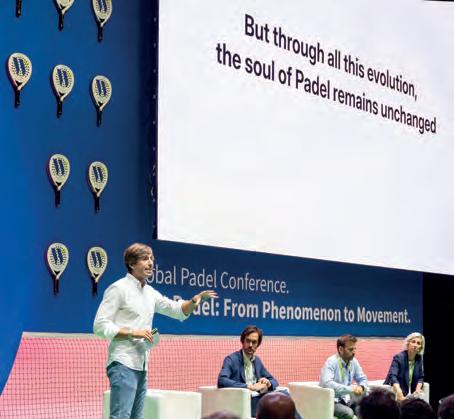
If ain’t broke, don’t fix it. That age old phrase was certainly adhered to by the team behind the Padel World Summit in Barcelona. There were a few tweaks here and there from the 2025 event, but the return to Barcelona for the 2026 edition of the summit had all the hallmarks of last year.
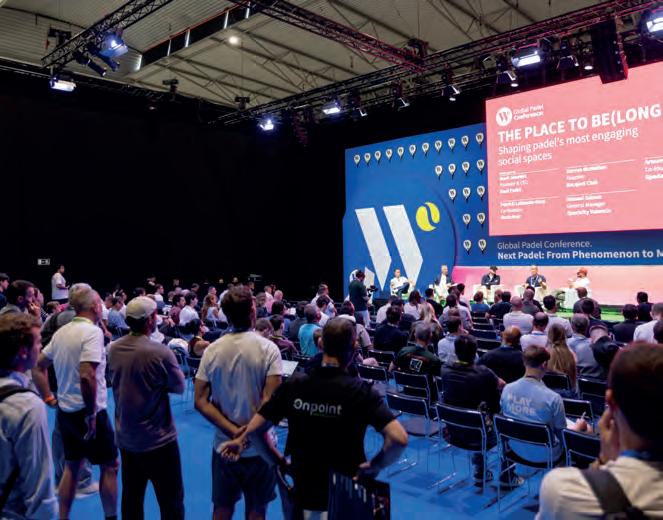
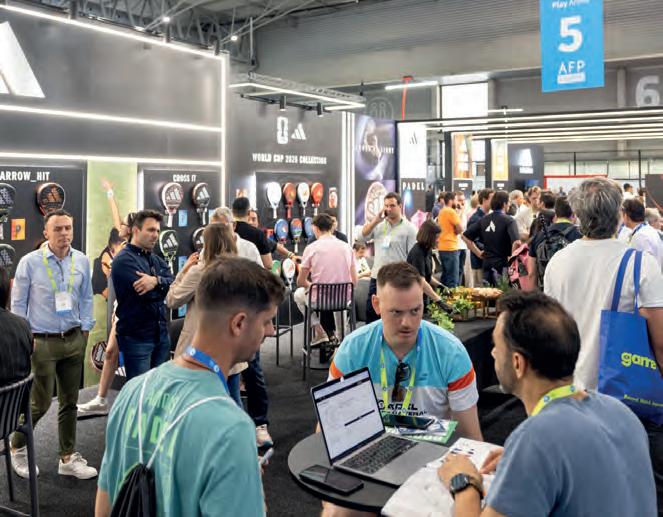
The Summit has now firmly established itself as the industry’s ‘go to’ business event. This year saw a new record attendance of more than 7,200 visitors walk through the doors of Hall 6 (a rise of 20 per cent on 2025), with half being from outside Spain.
As before, the Summit boasted a packed agenda of talks, numerous activations, plus the plethora of exhibitors – not to mention
networking. Consequently, time is a very valuable commodity and it has to be used wisely.
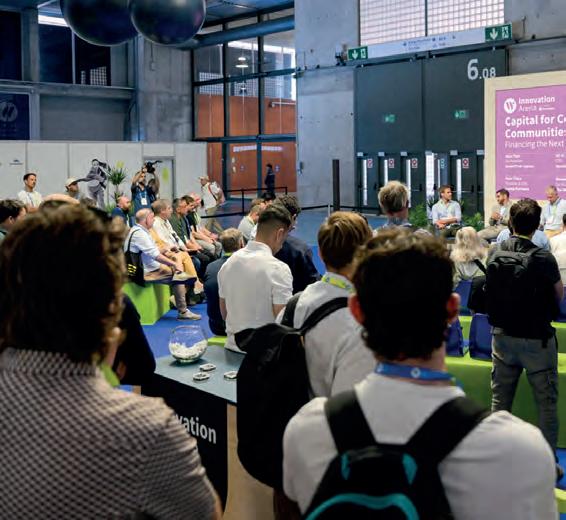
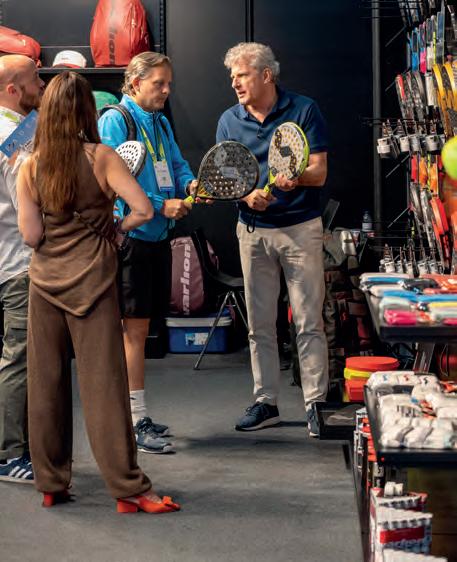
The buzzing innovation arena returned and was complimented by 20 padel start-ups; the expo featured 10 branded courts (an increase of two on 2025) encircling the main floor of around 140 exhibitors from more than 30 countries; plus there was the global conference area – for insights and discussions into the industry’s major talking points.
There was a distinctive set of themes to the ‘activity programme’ with a trio of talks focusing on padel investment; and another trio providing insights into the USA, UK and Dutch padel markets. Growth, governance and the time honoured tradition of the Global Padel Report from Playtomic also featured prominently.
“The first day was incredible and that alone made it worth coming”
The booking platform’s latest study shared data that has had the industry talking. The key stats being a total of 4,969 new clubs were established in 2025 and 7,898 courts were built.
At the conclusion of the Summit, the awards for the best start-up was announced. UK-based VAM-OS, a finance and operations platform for clubs that offers real-time visibility of profitability and cash flow, came first in the vote.
Second place went to booking app aggregator CourtBrain, which is expanding into the UK market, and third place was awarded to Bopa, a ball repressurisation solution designed for club rental use, combining sustainability with operational efficiency.
POSITIVE FEEDBACK
All the signs are positive for the padel sector, which was great news for the organisers of the Padel World Summit – the International Padel Cluster. Michel Gogniat, the recently appointed MD of the International Padel Cluster, provided a reflection of what Cluster members were saying about this year’s Summit.
“There was a thriving atmosphere and members were really happy about the quality of the meetings they had,” he said. “In terms of the Summit, they were saying this is unstoppable. They are convinced that next year is going to be bigger. And that in 10 years, there will be a huge venue here and not one hall, but maybe 3, 4, 5 halls.”
CLUSTER MEMBERS ECHOED THIS SENTIMENT.
Fernando Canovas, general manager of Greenset said: “This year was really good and I’m really happy with all the people coming here. We are doing good deals, good business.
“We were one of the first companies that believed in the summit three years ago and today the people attending are more professional.
Padel is growing, business is growing, and people want to invest. That is the most important.”
The observations of Carlos Sanchez Sierra of JUBO Padel included the change in the demographics of visitors, and the positive impact for the industry. “The Summit is good for business because I think it’s much more for investors, and clients who really want to invest in padel,” he said.
“We are also seeing visitors from many new countries. Countries in Asia, some countries from Africa. So, really good for us.
“This year, the Summit is much better. There are more people and brands, while we have the chance to host our distributors from many, many countries including Australia, Ireland, France and Germany.”
Court manufacturers were certainly in agreement about the business being done at the Summit.
Ray Brinkmanis, CEO of Padel Alba, said: “I have loved the Summit from the first edition. This year hasn’t disappointed as it’s been even better than last year - and we already have a spot for next year. The first day was incredible and that alone made it worth coming.
“The people who come here, they mean business. They come here from all over the world only for this event. When they come here, they know what they want whether that’s courts, or rackets, or something else. Importantly, they don’t come here just to look.
“THE SUMMIT IS A VERY WELLORGANISED BUSINESS EVENT.”
Rackets, apparel and footwear also dominate the expo floor, with many of the big names present.
Spanish brand Joma added star quality to its stand this year with nine-time women’s number one and brand ambassador Carolina Navarro present all week.
Aside from the numerous interviews and photos, Carolina, was also very ‘hands on’ to promote the brand’s products.
She said: “I’m working with Joma and helping them with growing padel everywhere in the world and promoting the new collection of rackets.
“This year I think we are doing a good job and there are lots of people coming and asking for Joma and wanting to know more about the products.”
Making a first appearance at the Summit was major US shoe brand Skechers, which is purposely targeting the padel sector.
Lee Molyneaux, director Technical Performance Europe said: “We already do pickleball footwear because Skechers is from LA. “Pickleball is very more Americanised than padel, which is more European, so there’s a huge want and need for padel shoes in Europe. This is why we’re branching into padel.
“Padel and pickleball shoes have similar traits, so for this year we have changed the outsole of our
“Padel’s future growth will increasingly depend on lifestyle, wellbeing, hospitality, community, and experiences”
pickle shoes to be padel-friendly and then from 2027 onwards, we’ll have dedicated padel-specific shoes.
“We’re a $9 billion global brand and we’re going to put full resources behind it. We’re here in Spain, leading the way in padel. Every country, every continent is going after padel, so we need to be there.”
FUTURE HORIZONS
And while the Summit can celebrate its stature as THE industry’s meeting point, there potentially is work to be done for next year. Selena Pelligrini, one of the cofounders and organisers of this summer’s London Padel Week, noted plenty of positives in a LinkedIn post but also what she called ‘big absences’ with entire categories barely represented or not represented at all including nutrition brands; medical and recovery; design and furniture solutions; experiences and travel.
Pelligrini wrote: “Are courts really the only thing that matters inside a club? What about lounges, hospitality areas, coworking corners, social spaces, retail concepts, or lifestyle design?
“Padel tourism is exploding globally, yet there was very little storytelling around experiences, destinations, retreats, hospitality, and travel packages connected to the sport. I was hoping to dream a little more and feel like I could travel the world, instead, I just felt like I was inside a huge club in Barcelona.
“The feeling I had while walking through the event was clear: padel is still being represented mainly as infrastructure and competition, and many rackets.
“Padel’s future growth will increasingly depend on lifestyle, wellbeing, hospitality, community, and experiences.”
Plenty for Summit managing director Alex Ponseti to ponder ahead of the fourth edition of Padel World Summit which will take place from 4 to 6 May 2027 at Fira de Barcelona.
GOING GLOBAL
A new international tour aims to make padel a global sport, rivalling the likes of football, by delivering a competition to a world-wide audience
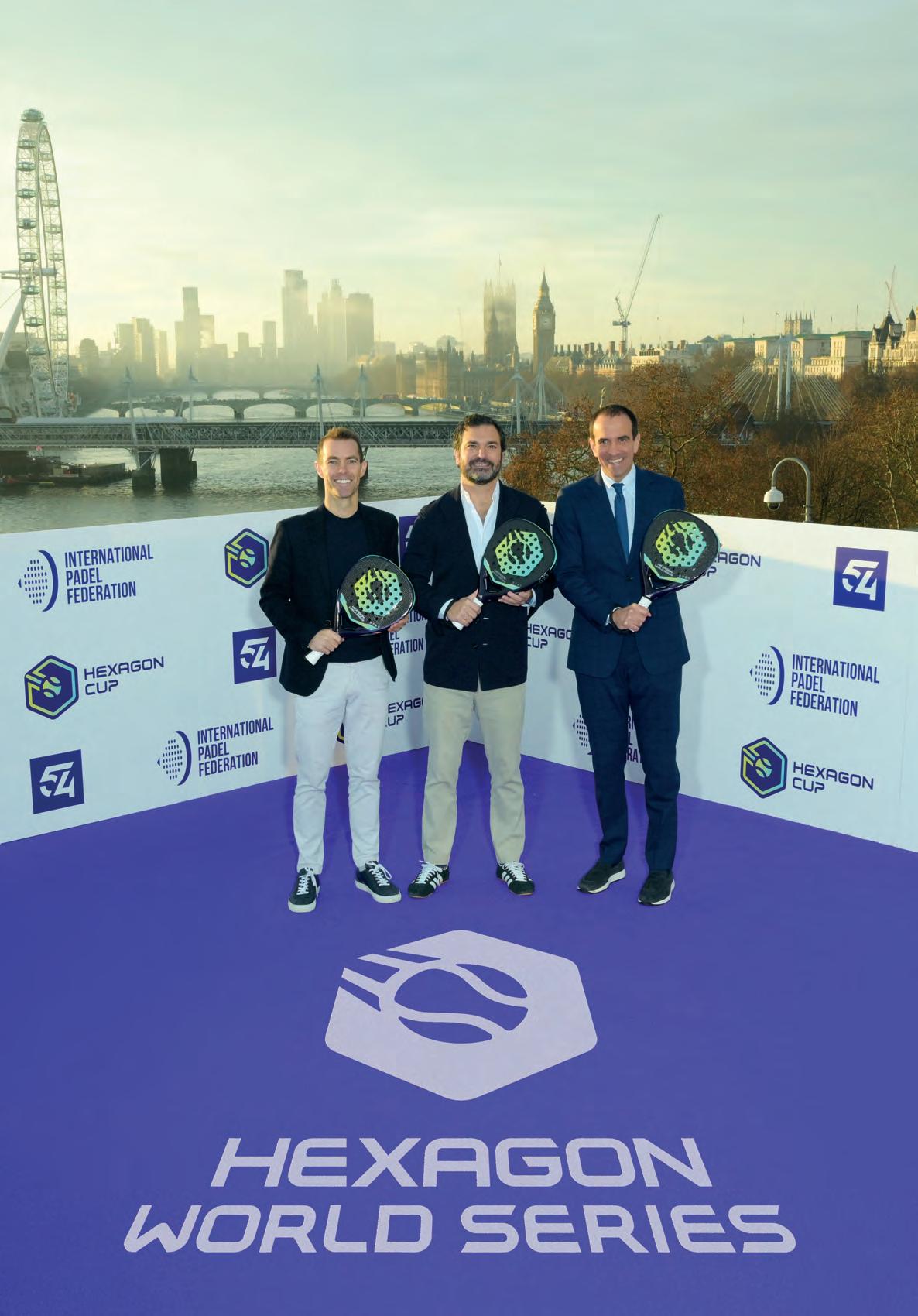
Anew international padel tour, backed by the sport’s world governing body Federación Internacional de Pádel (FIP), has been launched as part of plans to establish padel as a “truly global sport”.
The new Hexagon World Series is a partnership between three organisations – 54, the global sport and entertainment agency behind the creation of LIV Golf; Hexagon Cup, the team-based Padel tournament established in 2024; and FIP. FIP currently governs Premier Padel, the official professional padel tour worldwide which it founded in partnership by Qatar Sports Investments (QSI) and the Professional Padel Association (PPA).
Padel is one of the fastest growing sports globally, and we see an incredible opportunity to help accelerate its professionalisation and global reach
WORLDWIDE APPEAL
Hexagon World Series will be the first team padel tour to be delivered under the governance of FIP and becomes the sport’s official global team circuit. The new tour will feature a teambased format and multiple events per year across new international locations. As an expansion of the Hexagon Cup – and working together with Premier Padel, FIP’s flagship professional tour for individual pairs – the new competition is expected to open fresh commercial opportunities for fans, players and partners, while strengthening the overall FIP ecosystem. Further details of the exact competition format, teams, calendar of events and global host cities will be unveiled later this year.
54 is one of the main investors in the new tour. Other exciting investors in the Hexagon Cup include PadelPark India, the British operator Padel Hub, the US-based Padel operator Epic Padel, as well as investment funds and platforms such as Players Fund (United Kingdom) and LinkinFirm (Brazil), alongside other strategic partners from Mexico, Spain, the US and the Middle East.
A NEW CHAPTER
Enrique Buenaventura, Founder of Hexagon Cup, said: “This partnership marks a new chapter in the history of padel. Together with 54, FIP and the support of Premier Padel, we will build the first truly global team circuit, expanding the vision of the Hexagon Cup and creating something never seen before in our sport. Our mission is to help grow padel worldwide, unlock new commercial opportunities, and contribute decisively to its Olympic journey.”
Luigi Carraro, President of FIP, added that, together, Premier Padel and the Hexagon World
Series will form the global professional circuit for elite players: one tour for the world’s top pairs, and one for team-based competition, both under the governance of FIP.
“FIP’s mission is to develop and grow padel at every level, from grassroots to elite competition around the world,” he said.
Gary Davidson, Group Chief Operating Officer, 54, said: “Padel is one of the fastest growing sports globally, and we see an incredible opportunity to help accelerate its professionalisation and global reach.
“Teaming up with Hexagon Cup and FIP to create the Hexagon World Series is a natural extension of our commitment to building the world’s most exciting sporting properties, molded through modern commercial structures and integrated into the existing ecosystem to deliver the best experiences for athletes and fans, and the best performance for partners and investors.”
OLYMPIC DREAMS
While the Hexagon Cup will bring padel to new audiences, there are also increasing hopes that the sport will obtain the “holy grail” of exposure – by becoming an Olympic sport. Some have predicted that this could happen as early as 2032 and the Brisbane Games.
A step closer to that goal was announced earlier this year, when padel was included on the programme of next year’s European Games in Turkey. It will be the second time the sport will feature at the event, following its successful debut in Krakow in 2023. At Krakow, huge crowds followed the competition and European Olympic Committee officials described padel as a “great success”, leading to its inclusion in the 2027 edition of the games.
TLTA Padel Competitions Calendar
The new LTA Padel Competitions Calendar will provide opportunities for British players on home soil
he LTA has released its 2026 Padel Performance Competitions Calendar, offering enhanced opportunities for British players across junior, open and senior categories. Players will have 35 weeks of prize money and ranking point-earning opportunities across domestic and international competitions, including five FIP Tour events, seven LTA Padel British Tour Grade 1 events, 21 Grade 2 events and three FIP Promises tournaments for juniors.
GROWING OPPORTUNITIES
The calendar has grown since 2025, with five FIP Tour events (one bronze, four silver) compared to four last year. For juniors, 16 weeks of FIP and British Tour events provide international ranking opportunities, supporting the sport’s rising under-18 participation. Seniors have over 20 weeks of competition across Grade 1 and Grade 2 events nationwide.
The LTA Padel British Tour spans England, Scotland and Wales, offering players at every stage a pathway to professional competition.
ELITE COMPETITIONS
London will host Britain’s first-ever Premier Padel event from 3–9 August, a P1 tournament featuring the world’s elite men’s and women’s players, marking a key moment in professional padel’s growth in this country.
The LTA Padel National Championships will also return in 2026, showcasing top British talent and emerging players while offering prize money and ranking points. Together, these events reflect the rapid growth and increasing prominence of padel across Great Britain.
You can find the full LTA 2026 Padel Performance Competitions Calendar on the LTA Padel website.
● Five FIP Tour tournaments (four FIP Silver and one FIP Bronze)
● Seven LTA British Padel Tour Grade 1 tournaments
● 21 LTA British Padel Tour Grade 2 tournaments
● Three FIP Promises tournaments
What does good design look like?
Adam Collier, Sales Director, Fordingbridge
Padel’s rise has been nothing short of meteoric. Demand is soaring and new facilities are springing up at pace. In this environment, it’s tempting to move fast to build facilities and to worry about details later. But the padel facilities that will thrive long term – as competition intensifies and player expectations rise – are those that make thoughtful design decisions from day one.
As the leading experts in creating all-weather padel solutions, Fordingbridge has worked with sports clubs, gym providers, schools and dedicated padel operators at every stage of the padel journey. These are the seven design mantras we return to time and again to create successful facilities – and the one we encourage every padel developer to embrace.
Compliance isn’t a tick box exercise. It’s the foundation.
Do your due diligence early. SAPCA’s code of practice, local planning conditions and site-specific regulations should inform your design, not be retrofitted later. Some sites bring additional complexity, such as those located within Areas of Outstanding Natural Beauty (AONB) or close to residential boundaries. But this needn’t automatically be a huge headache. The key is not to see compliance as a constraint, but as a design framework. With the right specialist partner, planning requirements can be navigated smoothly, allowing you to launch with confidence and avoid costly redesigns down the line.
Are you targeting casual play, commercial memberships, or competitive tournaments?
Design around purpose
Not all padel facilities are created equal. Before you commit to layouts or structures, be clear about how your courts will be used. Are you targeting casual play, commercial memberships, or competitive tournaments?
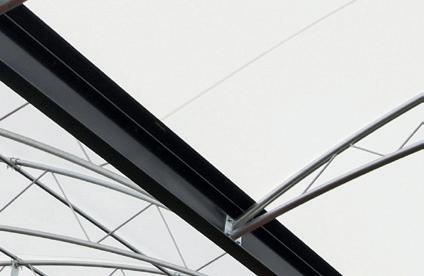
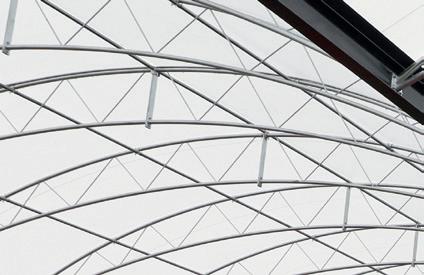
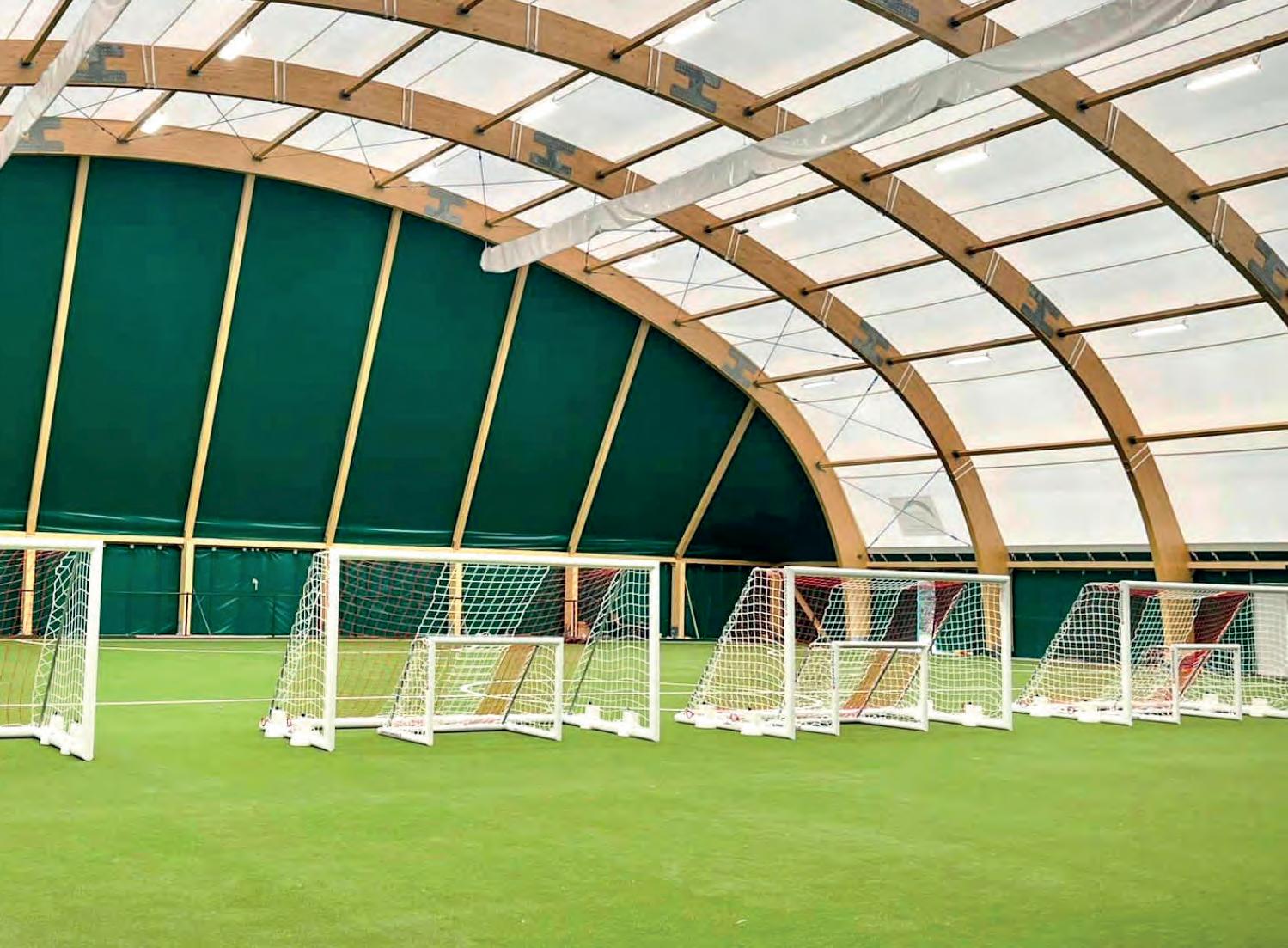
This clarity matters, particularly when considering overhead structures. For example, clear span canopies (where the arch follows the flight of the ball) are less common than barrel vaulted designs (where the arch spans the width of court), but they create cleaner sightlines and more generous playing space, and for competitive facilities that difference can be game changing.
Build considerately
Padel is social, energetic, and can be noisy. If you’re building facilities in built up residential areas, proactive noise management helps keep neighbours on side for a harmonious long-term presence.
Acoustic panels or slim-profile metal elements can be integrated into canopy designs to help soften the sound of racquet on ball. These measures are subtle, but their impact can be significant –and your neighbours will thank you for it.
Think beyond your courts
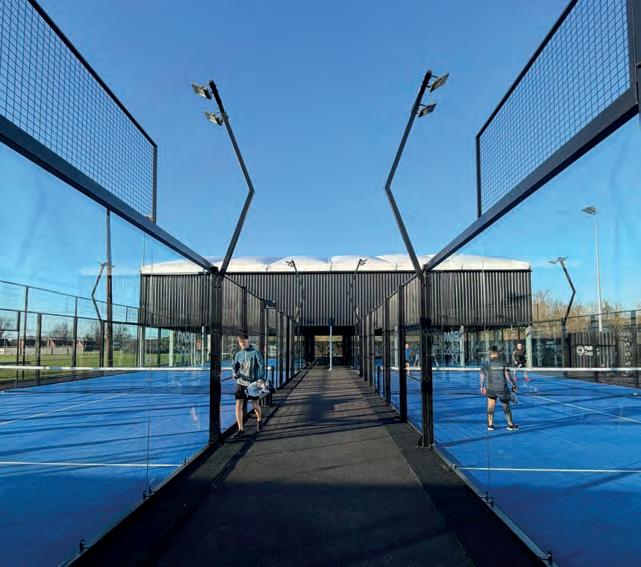
Padel’s appeal lies as much in the social environment it creates as in the game itself. The most successful venues recognise this and design for the wider experience. Covered spectator seating, sheltered social areas, allweather al fresco dining spaces and covered walkways from your car park to your courts all elevate your offer. And these additions don’t just improve comfort. They encourage dwell time, secondary spend, new memberships and repeat visits. In short – good design that extends beyond your courts is good for players and for business!
Be realistic about the climate you’re operating in Padel first took off in countries like Mexico and Spain where outdoor play is a near year-round guarantee. But if you’re going to get the most out of your facilities in the UK you need to be realistic about how frequently they can be used if they’re uncovered.
With precipitation experienced on around 159 days of the year, covered courts are a must. Padel court canopies offer a pragmatic and stylish middle ground – providing the shelter that guarantees play 12 months a year, while preserving the outdoor feel players value. For operators serious about year-round revenue realism pays dividends.
Design with tomorrow in mind
The smartest padel developments are future-ready. Even if budgets and timelines don’t allow everything on your wish list to be delivered in phase one, your longterm ambitions should shape your initial design.
Mention your vision in any design brief. A reputable supplier will be able to propose modular or adaptable solutions that allow structures to be extended or enhanced. This not only saves you cost, disruption and design compromise later down the line, it ensures your facilities can grow in line with your ambition.
In a sport moving as fast as padel, longevity provides the ultimate competitive edge every operator needs to aim for
Choose partners, not just suppliers
Finally, surround yourself with people who understand padel – not just as a construction project - but as a rapidly evolving sport and lifestyle trend.
Strong partnerships allow ideas to be challenged, solutions to be refined over time, and opportunities that might otherwise have been missed to be identified. The best results come when clients and suppliers work collaboratively with shared understanding and mutual trust. Padel facilities built in haste may meet today’s demand. But those shaped by clear design principles today will be those still thriving years from now. Thoughtful design, realistic planning and trusted partnerships don’t slow progress; they secure it. And in a sport moving as fast as padel, longevity provides the ultimate competitive edge every operator needs to aim for.
Whatever
your needs we’ve got you covered…
Whether you’re gearing up to enter the padel game, are a university or school looking to enhance your sports offering, or are an established player looking to roll out top-of-range facilities, our allweather structures turn big ambitions into exciting realities.
Four simple steps to a gamechanging transformation
Get in touch
Drop us a line or pick up the phone – our expert team loves hearing new ideas and helping shape what’s possible.
Book your complimentary site visit
We’ll walk your space with you, explore options, spot opportunities and give you the insight to get the most from every square metre.
Let the transformation unfold From design and engineering to installation, we look after the entire process. No stress. No complications. Just a smooth journey from concept to reality.
Reap the benefits for decades to come
Why cover your facilities? Three standout wins...
✔ Turn seasonal spaces into year-round assets
✔ Watch occupancy rates, revenue opportunities and memberships soar
✔ Create a training and playing experience people love
Every one of our canopies is built to exceptional standards and backed by industry-leading 25-year guarantees. It’s an investment that keeps paying dividends. Contact us to start your transformation today!
Sustained growth
Tom Murray, Head of padel, LTA
Padel continues to grow and 2025 was an exciting year for padel across the country. We hit a landmark in July, when we announced that there were 1,000 courts available across 325 venues nationwide – a figure that is still on the rise.
As participation increases, the focus is now shifting from rapid growth to sustainable, long-term development. For padel to thrive, growth must be underpinned by robust infrastructure, a skilled workforce, inclusive competition pathways and a clear performance structure that supports players at every stage of the journey.
Sustained investment in facilities remains key, alongside targeted strategies to close gaps in provision across Britain. While private investment has driven much of padel’s growth, the next phase of growth lies in partnering with local authorities to unlock new sites and open up the sport to local communities. Collaboration with councils and local authorities means padel can become embedded within local sport and physical activity strategies, reaching new audiences and areas that are currently underrepresented.
For padel to really thrive, the sport needs people just as much as places. Workforce capacity remains below infrastructure growth levels and has been addressed through the launch of an Activator course this year, alongside the introduction of the Level 3 Padel Coach Qualification, strengthening the coaching pathway. Together, these initiatives aim to build a diverse, confident and professional coaching workforce capable of sustaining growth.
Competition also plays a critical role in keeping players engaged in the sport. Expanding playing opportunities across every level of padel remains a major focus, with a clear commitment to growing the women’s and girls’ game. Supporting female players at every stage of their journey is crucial, not only to drive participation, but to ensure the sport’s long-term growth is built on inclusivity and equal opportunity.
As padel grows, safeguarding must remain a nonnegotiable priority. Strengthening safeguarding frameworks and embedding best practice across clubs, coaches and competitions is vital to building trust and ensuring padel is a safe environment for all.
There is significant opportunity to activate the sport within wider sporting and entertainment
environments. Major tennis events such as the Lexus Nottingham Open offer a natural crossover audience, while broader sporting and cultural events present untapped potential to introduce padel to new demographics in high-footfall settings.
Performance pathway development continues through a network of performance venue hubs and a pipeline of national coaches, alongside sustained support for national teams and leading players competing internationally. These hubs, supported by a growing pipeline of national-level coaches, will provide structured pathway opportunities for players of all ages, bridging the gap between grassroots participation and elite performance.
Representing Great Britain internationally not only raises the sport’s profile at home and abroad, but also firmly establishes the nation’s growing influence and credibility on the international padel circuit. 2026 will see the British juniors, open and senior categories compete internationally, aiming to continue building on last year’s results and position. 2026 will also see the Qatar Airways Premier Padel Tour landing in London in August, a landmark event that signals a step forward in padel’s international development in Britain.
A multi-year partnership between Premier Padel and Sela will see the tour make its British debut from 3–9 August, bringing a P1-level tournament to one of the world’s most influential sporting capitals. For the first time, London will host the sport’s elite men’s and women’s players competing at the very highest professional level. As padel’s national governing body, the LTA will work alongside Sela to support the tournament as part of its broader commitment to accelerating the growth of British padel. These flagship events help position padel as a premium, professional sport while creating aspirational moments for players and fans alike.
Attention is turning to the long-term growth of padel, making it accessible to a broader and more diverse audience. Alongside continued investment in infrastructure, expanding and diversifying the coaching workforce and delivering a performance pathway that supports today’s British players while creating opportunities for the next generation are building momentum. This is an exciting moment for padel, and the perfect time for people of all ages and abilities to get involved and enjoy the sport.
Consumers are driving up standards
Richard Shaw, CEO, SAPCA
Just like every middle aged bloke, it seems, I’m on my own padel journey. Playing once a week, I’m slowly –very slowly – improving (2.7 for those in the know).
When our group first started playing, we searched the internet for anywhere close to us that “did padel”, without much success or options. The courts that we could find were booked up quickly by regular players and people like us wanting to try out the new sport. Had you given us an outdoor, instant padel court with plastic click flooring and perspex sides and we’d have happily paid you over the odds! Covered courts with a nice surface were only a dream.
Informed choices
Today, it’s a different story. As more centres and courts have been built, we’ve tried and tested several. Like everyone else, we’ve become informed consumers – making decisions about where we play, how much travelling is involved and what the cost is. Earlier this year, while driving home from a padel session and organising the following week’s session, we discussed everything from the price of the court and how cold the centre was to the roof height and even the quality of the drinking water. The site we have settled on is an extra 20 mins drive, but we’re happy to do it, to get what we wanted.
Shifting demands
Conversations with padel operators recently have suggested that consumer demand – and therefore club differentiation – is shifting. The days of “build
Like everyone else, we’ve become informed consumers –making decisions about where we play, how much travelling is involved and what the cost is.
The choices of consumers and the longer term prospects of padel as a sport, have brought together more operators to focus on quality and consider the longer term implications of their investment
it and they will come” was only ever partly true and never had much longevity as supply caught up with demand. A much greater focus is now being placed on building facilities that people want to be part of, rather than a necessity to play the sport. Quality of courts, roof height and surfaces all have a significant impact on the playability of the game. As standards increase and players demand more, these are the factors that will have long term consequences for operators.
At SAPCA, in the early days of padel, we spent a lot of time trying to convince operators of the need for having good courts and good installations on the basis of player safety, performance and longevity. All true, all correct, of course – but we didn’t really talk about return on investment based on consumer preferences. Simply put, we don’t really talk that language with any other sport. This is because the growth of padel has been very different to anything we have seen – it has been rapid because of its appeal to private capital. The lexicon of the sport is different, more entrepreneurial and more sensitive to differentiation of clubs.
The choices of consumers and the longer term prospects of padel as a sport, have brought together more operators to focus on quality and consider the longer term implications of their investment. Long may this continue and, hopefully, bring much needed stability to the world of padel, both literally and figuratively!
Into the mainstream
Stuart Perrin, Managing Director, Slazenger Padel Clubs
The UK padel market experienced a landmark year in 2025, moving decisively from early adoption into a phase of accelerated growth and broader mainstream awareness. Compared with 12 months earlier, the landscape today is markedly more mature. Participation has increased rapidly, the number of courts across the UK has grown significantly, and there is greater interest from investors, property developers, sports operators and brands looking to enter the space.
We are now seeing a transition from “introduction” to “infrastructure” – meaning more permanent, highquality clubs, stronger programming, and a clearer longterm vision for the sport’s place within the UK sporting ecosystem. One of the biggest developments has been the scale of new club openings and the growing sophistication of the venues themselves, with operators focusing on full club experiences rather than simply installing courts.
Over the past 12 months, several trends have come to the fore. Firstly, the demographic appeal of padel in the UK is proving extremely broad. Families, young professionals and corporate groups are all engaging with the sport, which is reinforcing its reputation as one of the most social and accessible racket sports available. Secondly, we have seen a strong shift towards destination clubs that combine padel with hospitality, fitness and community programming. This reflects a wider leisure trend where consumers want experiences rather than just facilities. Finally, demand for coaching, leagues and organised play has grown quickly, which is essential for converting first-time players into regular participants. Innovation has also played an important role in shaping the UK market. Advances in court construction and installation are making it easier and faster to develop both indoor and outdoor facilities. Digital booking systems, integrated coaching platforms and community-building apps are also helping operators manage demand and create more connected playing
communities. From a club perspective, the integration of padel with lifestyle offerings such as cafés, wellness spaces and social events is becoming a key innovation in how the sport is presented to new audiences.
Looking ahead, the market is expected to continue expanding rapidly whilst also becoming more structured. The next phase will likely include increased professionalisation, stronger junior pathways and more competitive events that elevate the sport’s visibility in the UK. Continued investment in high-quality indoor facilities is also anticipated, which will be crucial for sustaining year-round participation given the UK’s unreliable weather.
For Slazenger Padel Clubs, the next two years represent an exciting period of expansion. Our strategy is focused on building premium padel destinations that combine world-class courts with vibrant social environments. Alongside physical expansion, we are investing in programming, coaching frameworks and partnerships that help develop the player pathway from beginner through to competitive play.
Currently we have three active sites including Blackburn, Leeds and Swindon and a growing development pipeline, with plans to open over 10 multiple new locations across the UK in 2026 and over the next few years. Our ambition is to significantly increase the number of courts available within the Slazenger network while ensuring each club maintains a consistent level of quality and experience.
What differentiates Slazenger Padel Clubs in a rapidly growing market is our commitment to creating complete padel communities. We are not simply building courts; we are developing clubs where sport, community social interaction and lifestyle comes together. With the heritage of the Slazenger brand and a clear long-term vision for the sport in the UK, our goal is to lead from the front and help shape the future of padel, whilste delivering exceptional experiences for players at all levels.
The road is paved for experience-led venues
Bogdan Leniuc, Club Manager, Surge Padel
How would you describe the past 12 months for the UK padel market?
The biggest shift we’ve seen is the move from “early adoption” into a more structured, competitive market. There are more operators, more courts, and more players – but also more expectation. Players now expect quality facilities, well-run socials, good coaching and a strong community feel, not just a court booking.
The rise of multi-site operators and more premium venues has also pushed standards up across the board, which we see as a positive. It’s no longer just about building courts – it’s about building great padel environments.
What emerging trends have you seen over past 12 months?
The biggest trend we’ve seen is the shift towards experience-led venues. The most successful clubs are the ones creating a full social offering – events, socials, leagues, coaching – rather than relying purely on pay-and-play.
We’ve also seen a clear move towards more structured programming. Social tournaments, club nights and organised formats are becoming key drivers of both participation and retention.
Another major trend is the growing importance of yearround playability. Operators are realising quickly that in the UK climate, relying purely on outdoor courts limits both revenue and player experience – so there’s been a noticeable shift towards covered or indoor solutions.
Finally, the level of player has improved significantly. We’re seeing more competitive play, stronger coaching demand, and a more engaged player base overall. That is reflected in the rise of structured coaching academies not just ad hoc group sessions. The need for long term developing programs is present within the adult age groups and under-age.
And what about innovations – have you seen anything that you think have shaped the UK market?
The biggest innovations have been around how the sport is delivered, rather than the sport itself. Platforms like Playtomic have been key in making padel accessible – from booking courts to organising
matches and connecting players. That’s been a big driver in growing participation quickly.
We’ve also seen innovation in event formats and social play. Things like structured socials, rotating tournaments and themed events are helping bring new players into the sport in a more engaging, less intimidating way.
On the facility side, covered court solutions have been a big step forward in making the model more viable in the UK – giving operators a middle ground between fully indoor and fully outdoor setups.
Another innovation worth highlighting is the growing presence of technology within padel centres. From AIpowered cameras and specialised recording systems designed for padel, to ball-feeding machines and racket-testing devices, the sector is rapidly evolving–driven by a wave of retailers and manufacturers competing to innovate and gain a competitive edge.
Looking ahead at 2026 and beyond, how do you see the market developing?
We expect the market to continue growing, but with more focus on quality over quantity.
There will likely be more competition between operators, which will naturally push standards higher – particularly around coaching, events, customer experience and overall venue quality.
We also expect to see more emphasis on community and retention, not just acquisition. The venues that succeed will be the ones that keep players engaged longterm through leagues, socials and strong club culture.
There may also be some consolidation as the market matures, with stronger brands and operators continuing to expand.
What are Surge Padel’s plans in the market over the next two years?
At Surge, our focus is on building high-quality, experience-led padel environments rather than just increasing court numbers.
We’re continuing to develop venues that prioritise:
● Strong social programming and events
● High-level coaching across all abilities
● Developing our Kids Academy
● A welcoming, community-driven atmosphere
● Consistent, year-round playability
Still room for significant growth
Peter Gordon, Commercial Director, Game4Padel
How would you describe the past 12 months for the UK padel market?
It has been another massive growth year for padel in the UK. Demand for the sport increased significantly over the past 12 months; all of our venues now have really healthy occupancy year round, some of them operating at 100% throughout the summer months. Padel is now also penetrating deeper into the UK - at the beginning of 2024 although there had been a bit of a spread outside London, there were still pockets of padel in places like Bristol, Yorkshire and Edinburgh, but by the end of 2025 there was more of a geographical spread for the sport. We opened clubs in Cheshire, Dundee, Hull, Staffordshire and Glasgow, as well as London.
What trends have you seen emerging over the past 12 months?
We are seeing more of a shift towards covered and indoor venues as demand for court space increases and people don’t want to be stopped from playing because of the weather. At Game4Padel we have been, and will continue to, add canopies to some of our existing venues this year and have several indoor projects in the pipeline for 2026. Padel continued to become more mainstream in 2025 - the accessibility of padel has meant that those outside traditional sport have picked it up. We added rapper Aitch to our list of investors in 2025 as he is a huge padel fan, and we were part of an exciting project with THG Studios creating the first fully interactive, content creation court in the country in partnership with YouTube and Google. Projects like this will continue to extend the sport’s awareness and reach and encouraging those who don’t think they are traditionally ’sporty’ to try it out for themselves.
And what about innovations – what will shape the UK market?
The biggest developments are in padel tech. Players have more expectations about how tech can not only make their padel journey easier with things like booking courts, finding partners, etc but also understanding the game better with things like cameras to map shots, speed trackers and even tools to provide tactical advice whilst on court. There is still a lack of data
available on padel players in the market but this is also changing and by the end of 2026 I think we’ll all have a much clearer picture of who plays padel in the UK, what motivates them, what they need to stay engaged and how we can bring new players to the sport.
The market is segmenting into three venue types: indoor centres, outdoor covered courts and outdoor uncovered courts. What are the threats and opportunities for each type?
Indoor centres are definitely becoming more popular and they can really attract a dedicated base of players, but as one of our competitors has seen this year, getting the membership and pricing structure right is complicated. If you get it wrong you not only alienate members, but you get a lot of bad PR too! Indoor venues are obviously more costly, and so finding spaces that make financial sense isn’t as easy as it seems.
Outdoor covered courts are a popular alternative. You can also retro-fit canopies to existing venues and that’s something we’ve been doing at Game4Padel, where we have an existing thriving membership base. There’s definitely still lots of opportunities for outdoor uncovered courts; we see really healthy occupancy at our venues that only have uncovered courts. It can be easier to find locations to install outdoor courts, as planning requirements can be less challenging. But the risk for outdoor venues is if an indoor venue opens nearby it can significantly impact revenue during the winter months.
What are Game4Padel’s plans in the market over the next two years?
We are now at 26 open venues in the UK, and will continue to support and improve those venues. We have a great pipeline for 2026 so will be opening new spaces in Brighton, Glasgow, Birmingham and Wiltshire among others, and hope to add at least another 30 courts in 2026. We are investing heavily in the brand and in tech. We will continue to grow our coaching network - we have, to date, trained over 250 coaches and are very proud of the impact they have on growing the game in this country. And this year we are really focussed on female engagement in padel, and have a series of specific programmes aimed at encouraging women and girls to try this sport for the first time.
Membership models becoming a focus for many
Sammy Arora, Founder & Managing Director, Pure Padel
How would you describe the past 12 months for the UK padel market?
It’s been a huge growth year for padel in the UK, particularly in terms of the number of courts being built. Twelve months ago the sport was still relatively early in its development phase, but today there is significant investment going into new venues across the country.
From an operator’s perspective, one of the biggest changes has been the number of new entrants into the market. When landlords bring a site to tender now, it’s not uncommon for there to be eight to twelve different padel operators competing for the same location. That shows just how much interest there is in the sector.
However, it also means the market has become far more competitive. In some cases we’ve walked away from deals because less experienced operators are offering extremely aggressive terms or rents to secure sites. It’s a sign of how quickly the sector is evolving.
What emerging trends have you seen?
One interesting trend we’ve noticed is that as the player base becomes more experienced, expectations around facilities are changing. When padel first arrived in the UK, players were happy to play outdoors in almost any conditions because simply having access to a court was exciting.
However, as players improve and play more regularly, they are increasingly seeking out indoor or covered facilities where they can play consistently regardless of the weather.
We’ve seen this first hand at our outdoor club at Alderley Park. In 2024 the courts were often full even during sleet, snow and heavy rain. This past winter we saw a noticeable drop in occupancy during poor weather, with players actively choosing to travel to indoor venues instead. It reflects how the market is maturing and player expectations are evolving.
Social matchmaking has been hugely important in helping the sport grow quickly
Which innovations are shaping the UK market?
Technology has played a major role in accelerating the growth of padel. Booking platforms such as Playtomic have made it incredibly easy for players to find courts and organise games. In most cases a court can be booked in just two or three clicks on a mobile phone, which removes a lot of the friction that traditionally existed with racquet sports.
These platforms also make it much easier for players to connect with others at a similar level, join open matches and discover new clubs. That social matchmaking element has been hugely important in helping the sport grow quickly, because people don’t necessarily need to organise a full group of four players themselves.
Looking at 2026 and beyond, how do you see the market developing?
We expect to see a greater focus on membership models as national padel operators begin to scale. At the moment the market is still relatively fragmented, and because booking platforms make it so easy to play at different venues, there isn’t a huge amount of customer loyalty between clubs.
As larger operators grow their networks, memberships will likely become a key way to build stronger relationships with players. Offering benefits such as booking priority, discounts and access across multiple venues will encourage players to stay within a particular network of clubs rather than simply booking wherever a court is available.
What are Pure Padel’s plans over the next two years?
At Pure Padel we’re currently in a strong growth phase, with eight clubs expected to be open by the end of 2026. That will see us grow from operating 33 courts today to around 80 courts across the UK.
With that level of expansion, our focus is on scaling sustainably rather than simply growing as quickly as possible. It’s important that new openings don’t come at the expense of the experience at our existing clubs. A big part of that strategy is investing in a strong team and operational structure that can support a larger national network while maintaining the quality and community feel that our clubs are known for.
Beyond the land grab
Rupert Taylor, CEO, Smash Padel
The UK padel narrative is changing. For the past few years, the industry’s pulse was measured almost exclusively by the “land grab”—the rapid-fire installation of courts to meet an insatiable demand for adult social play. But if we look back at the last 12 months, the most significant shift wasn’t just in infrastructure; it was in the extension of padel into the grassroots that will ensure sustained growth. 2025 has emerged as the definitive year of Junior Padel. We are seeing a strategic evolution from a “leisure trend” to a permanent sporting staple, underpinned by three clear market shifts.
From “Turn-up-and-Play” to Structured Academies
The UK has moved beyond incidental youth participation. We are seeing a move toward structured, term-based academy models that mirror the developmental rigor of established sports like tennis or football.
The market is now rewarding operators who provide consistent, high-volume programming over those who simply offer court time. At Smash Padel, for example, our census now shows over 200 youngsters aged 4–16 committed to structured training. This isn’t just about participation numbers; it’s a signal that parents now view padel as a primary sport for their children’s development, rather than a novelty weekend activity.
The Narrowing Gap: Domestic Training vs. International Performance
Perhaps the most startling trend of 2025 is the speed at which the “performance gap” has closed. British juniors are no longer just participating on the international stage; they are competing for titles. The FIP Promises tour in Europe has become a vital litmus test, and the results speak to the professionalisation of UK coaching. The impact of this pathway was evident at the World Championships in Spain this past September. Despite many of the squad being relatively new to the
sport, the GB Juniors were remarkably competitive, narrowly missing out on a top-eight finish.
Equally important is where that talent is nurtured. We’ve reached a point where world-class training is now available domestically. At Smash we are very fortunate that 6 of the 12 boys and girls in the under 14 and under 16 GB squads train with us. This means that the majority of the squad now lives and trains in the UK, rather than in more established padel geographies like Spain. This shift from “exporting talent” to “building talent” is a massive milestone for GB padel.
Padel as an Educational Asset
The final trend shaping the landscape is the integration of padel into the UK educational infrastructure. Schools are increasingly identifying padel as an obvious candidate for curriculum inclusion due to its low barrier to entry and high engagement across the ability spectrum.
Commercially, the “Tenant-Operator” model has matured. It allows schools to host world-class facilities without the capital expenditure, as operators fund the project and pay rent for the land. We are seeing this blueprint come to life through our current build at Queen’s College Taunton and another site in the planning process at Eltham College.
This model solves two of the greatest challenges in the UK market: finding viable land and maximising daytime court utilisation. It turns school campuses into community hubs, creating a sustainable financial and social ecosystem.
The Long View
The data from 2025 makes one thing clear: the industry is moving away from the “fad” narrative. By centering the junior game, we are moving toward a permanent, multi-generational legacy.
For those of us leading the charge, the message is clear: the junior market is no longer a secondary consideration. It is the engine of the industry’s next chapter.
Market begins its move to indoors
Freya Tringham, Head of Padel, Powerleague
What emerging trends have you seen in padel in the past 12 months?
I believe we’re seeing far more of a movement towards indoor or at least canopied courts. Players are willing to pay a premium for that consistent experience not hindered by the weather. We’re also noticing that players have higher expectations when it comes to competitions and tournaments. They want these events packaged as a full experience, not just a fixture, everything from the atmosphere to the format matters. And importantly, they expect a standard of play that aligns with their own level. Another noticeable trend is growing selectivity around venues. Players are prioritising quality more than ever before. Over the past year, we’ve seen customers become far more critical about court surfaces, maintenance, and overall facility standards. The volume of positive feedback we now receive about court quality and upkeep is significantly higher than it was 12 months ago.
Which innovations are shaping the UK market?
Booking platforms are likely to play a significant role in shaping how the market evolves. At present, most operators rely on platforms such as Playtomic or Padelmates, which encourage players to move freely between clubs. As a result, player loyalty remains relatively low, and a pay-and-play model has proven effective. As more clubs begin to develop their own proprietary booking platforms, this dynamic is likely to continue evolving. We are also seeing growing demand for game-recording technology across our clubs. As the sport matures and players become more discerning, it will be interesting to see whether access to this technology becomes a meaningful factor in players’ venue choice.”
How do you see indoor centres, outdoor covered courts and outdoor uncovered courts developing as markets?
Indoor centres offer a better and more consistent customer experience and predictable revenue, there’s no avoiding that. However, the high costs of operation require a premium price point and high utilisation. For Powerleague, outdoor covered courts present a strong middle ground which fits our proposition to keep padel accessible. We’re seeing limited seasonality with players still choosing to play in the worst of weather,
and the health and wellbeing benefits of playing outside cannot be undersold. We do operate some outdoor uncovered courts, and they absolutely have their place in the wider market. With lower build costs and an easier planning pathway, they can play an important role in early stage growth or in areas where space and budgets are tight. They simply need to be priced appropriately and managed with conditions in mind.
All three options contribute to the overall padel ecosystem, and as the market matures, each will continue to serve different needs and audiences. The strength of the UK padel landscape comes from that variety.”
Looking at 2026 and beyond, how do you see the market developing?
Growth will continue at pace, and we expect to see the game reach regions that are currently underserved, including Scotland. The foundation built over the past two years means the market is now ready to grow more evenly across the UK. I also hope we’ll see a stronger pipeline of qualified coaches coming through. As more people take up the sport, coaching will become increasingly important, both in helping beginners progress and in raising the overall standard of play. If that momentum continues, coaching should become a much more visible and established part of the UK padel landscape.
What are Powerleague’s plans in the market over the next two years?
We’re focusing our expansion within our existing Powerleague clubs. We see a real opportunity to use our current estate to create multisport hubs, introducing communities across the country to padel for the first time. By building from the sites people already know and trust, we can scale quickly while keeping the sport affordable and accessible.
With our established offer of kids’ camps and children’s parties, we’re also in a strong position to grow junior participation. Padel is incredibly inclusive, and it lends itself well to young players. It’s easy to pick up, sociable and confidence building. Integrating it into our existing programmes will help introduce the next generation to the game.
More broadly, we’re committed to making padel a sport that everyone in the local community can enjoy.
DESIGNING
COMPETITION
that players want to belong to
Competitions that cater for all players – whatever their level, background or individual reason for playing padel – are a great way to develop an engaged network of regular players.
Sam Kemp from R3 Sport highlights how, for clubs and court operators, events can be effective community creators
Thanks to padel’s rapid participation growth and courts being built at pace, many operators are now well past the initial challenge of attracting players to their venue. The challenge has now become ensuring that they retain and engage these players and make them part of the padel community.
Competition is core to the sports success and remains one of the most effective and widely used tools available to clubs. However, having worked across multiple venues and events, one of the most common mistakes that clubs are still making is believing that competitions start with a tournament.
In truth, the success of a tournament can sometimes be decided before the entries have even opened. The foundations of competition are
less related to match formats and results and more about social connection, community and trust.
CREATING THE CONDITIONS FOR COMPETITION
For many players, particularly those new to the sport, competition is not intimidating because of standard or ability. It is intimidating because of uncertainty. Internal monologue such as ‘Who will I play with?’, ‘Will I fit in?’, ‘Will I feel out of place?’ ‘Will I enjoy it?’ plays on repeat as their finger hovers over the enter button.
I have experience of venues delivering consistently well run weekly competitions but struggling to grow beyond the same familiar group of players. The tournament was full, and from the outside looked very successful, yet new faces rarely appeared and it had limited impact on the atmosphere and feeling at the club.
Truly successful competition comes when events stop feeling like something organised by the venue and starts feeling like something owned by the community
The venues that succeed don’t alter the playing level or structure of the competition, but instead address the environment around it. Crystal clear communication about who the event is aimed at, a relaxed arrival process and supporting players to connect with others from the club before stepping onto court. This leads to new players trying competition through socialising, new members being introduced to competitive opportunities from the beginning and a club event that truly brings the community together in a safe and welcoming manner.
The lesson is the competition works best when players feel part of the community and trust the environment before they test themselves within it.
DESIGNING COMPETITION AS A JOURNEY, NOT A MOMENT
The most effective competition programmes treat competition as a journey rather than a single event. Opportunities are varied, entry points are clear, progression is layered and players are not pigeon-holed or rushed to move along.
Venues that achieve this best, consistently position socialising and community alongside competition. New players are bought into competitive opportunities from the beginning - using competition to meet new players where partners are rotated regularly and results are secondary. From here, they offer a wide range of competition to cater for players of all abilities offering players the opportunity to progress as they become more comfortable not just with the sport, but with each other.
Larger, more structured competition follows often from player demand and interest in competing in, and spectating, competitions of a higher level grows as understanding of competition becomes ingrained and the community understand the competitive environment and trust the people delivering.
Competition, when designed properly, doesn’t push players forward. It allows them to move at their own pace.
WHEN THE COMMUNITY TAKES OWNERSHIP
Truly successful competition comes when events stop feeling like something organised by the venue and starts feeling like something owned by the community.
Non-participants coming to watch, players arriving early and staying late, conversations about competition extend beyond the court.
Promotion of events happens organically rather than needing to be driven by staff. This is when competition becomes more than just a sporting activity. It becomes the social anchor of the venue. The community is built around it and it keeps the community thriving. This change also impacts the engagement of partners and sponsors. Carefully selected, commercial involvement can feel natural, with brands not just buying into a format but into a community that is engaged and invested.
COMPETITION AS CULTURE
Competition will always be central to sport. In padel, however, one of its greatest values lies in its ability to bring people together rather than set them apart. When competition is placed at the heart of a venue and treated as a cultural tool, built on trust, understanding and shared ownership,
Competition, when designed properly, doesn’t push players forward. It allows them to move at their own pace
it becomes one of the most effective ways to create a sustainable, engaged community. The clubs that succeed long-term will not necessarily be those running the biggest tournaments (although of course there is very much a place for this within the community), but those that understand that competition does not start with a tournament and end with a winner. It starts with people.
MILITARY SPORT
Ben Hanley, a Royal Air Force Flight Lieutenant, explains the background to UK Armed Forces Padel and how the organisation is developing the sport across the military
Padel wasn’t something I ever expected to play – let alone be responsible for introducing into the British Armed Forces. But after first picking up a racket in Spain, I saw its potential immediately and pushed, largely alone at the outset, for padel to be formally recognised within UK Armed Forces sport. That persistence paid off, and today I oversee UK Armed Forces Padel, supporting players across the RAF, Army and Navy.
What immediately struck me about padel was how naturally it fits military life. It’s fast, tactical, and built on communication. You can’t succeed without trusting your partner – something every service person understands instinctively. But unlike many traditional military sports, padel is also highly accessible. People can pick it up quickly, enjoy it straight away, and progress together.
More importantly, I saw padel as a way to bridge gaps between service personnel, their families, and the civilian communities that surround military bases. Military life can be transient and isolating; padel creates a shared space where everyone belongs, regardless of rank or background.
It’s also one of the few sports I’ve encountered that genuinely champions women. In a profession where women are often underrepresented, particularly in sport, padel offers a level playing field. Mixed sessions, mixed competition, and equal visibility aren’t an afterthought; they’re built into the culture. That mattered to me from day one.
As interest grew, it became clear that padel needed structure to survive. That led me to complete my M3 coaching qualification in Madrid – not to chase personal performance, but to ensure safe, sustainable growth within the forces. Coaching also took on deeper meaning during my own recovery from a serious knee injury, when padel became both a physical outlet and a mental reset.
Since then, padel has taken me far beyond anything I expected. I’ve worked at events on
the PremierPadel circuit, supported delivery roles at the Hexagon Cup, and found myself working alongside elite players, high-profile athletes and celebrities – all drawn together by the sport. Those experiences reinforced how padel transcends background and status; on court, everyone speaks the same language.
Looking ahead, my ambition goes beyond competition alone. We are opening communitybased padel clubs around the UK and overseas –hubs that bring together service personnel, veterans, families and local communities. Places where padel supports wellbeing, inclusion and connection, while also creating sustainable pathways for coaching, competition and rehabilitation.
I believe padel has the potential to become one of the Armed Forces’ most impactful modern sports – supporting recruitment, retention and community cohesion in equal measure. For me, padel has never just been about the game. It’s about people, purpose, and building something that lasts – on and off the court.
Turning courts into communities
Mark Hewlett, Founder and CEO of Soul Padel, explains why participation, not transactions, will shape padel’s next chapter
If the UK padel sector is serious about sustainable growth, then the conversation has to move beyond acquisition and towards belonging.
At Soul Padel, our Soul Mates programme was designed as a community architecture, not simply a loyalty overlay. Its core mechanism is intentionally simple and deliberately inclusive. Regardless of who books the court or pays for the session, if you step onto court and play, you can earn Almas, our name for points. Participation, not purchasing power, is what is recognised.
That distinction matters. In many sports environments, the person who controls the booking holds the value. We wanted to remove that hierarchy. By rewarding every player on court, Soul Mates reinforces that padel is a team sport built on shared experience. It ensures that new players, juniors, social participants and competitive regulars are all equally visible within the ecosystem of the club.
Returns of engagement
The response has been significant. More than 8,000 players have now joined Soul Mates, with up to 65% of customers enrolling from day one of a club opening. That early adoption tells us that players are not simply looking for court time, they are looking for connection. Streak the Court sits within that broader framework. By encouraging Soul Mates to complete four playing days within a month, it reinforces consistency and habit. In January over 2,000 players across Stockport and St Helens engaged with Streaks, with almost 400 completing a full four-day streak. The numbers are encouraging, but more important is what they represent, a shift from occasional participation to structured routine.
Routine is where community takes root. When players return weekly, they form partnerships, recognise faces and begin to feel that they belong.
Crucially, Soul Mates also gives us insight into our community in a way traditional models cannot. Because Almas are earned through participation, we can analyse patterns of play across different demographics, ensures analyse
Clubs stop being transactional spaces and become social anchors. In a sport as accessible and communal as padel, that transformation is powerful.
Patterns of play
markets and ability levels. With 84% of Soul Mates choosing to complete their full personal profile, we now have a far clearer understanding of our players’ gender balance, age distribution and postcode spread. That insight allows us to avoid a one-size-fitsall approach. In established markets, the challenge may be maintaining engagement in a competitive landscape. In emerging areas, it may be building confidence and lowering the barrier to return. Insight allows us to respond intentionally, not generically. The reward structure is equally community-focused. Almas can be exchanged for free play, making it easier to get back on court and reinforce habit. They can also be donated to What’s That Racket?, helping introduce more children to padel and extending the impact of each player’s participation beyond their own game. When Soul Mates unlock new tiers, they receive a Soul Padel T-shirt that celebrates their milestone, creating a visible symbol of belonging within the club.
More than 8,000 players have now joined Soul Mates, with up to 65% of customers enrolling from day one of a club opening
Our recent free-play-for-a-year prize in Stockport demonstrated how seriously we value consistent participation . Yet the bigger ambition is cultural. As the UK padel market becomes more crowded, clubs that recognise every player, reward the right behaviours and use insight to serve their communities thoughtfully will be the ones that endure. For us, Soul Mates is not about points. It is about creating environments where people feel seen, valued and motivated to return. That is how courts become communities.
ENGAGEMENT COMPETITION THROUGH
The PadelBook editor, Tom Walker, shares some top tips for setting up club competitions to engage players and members
As UK operators are now discovering – through increased competition for players – courts alone do not build successful clubs. The facilities and centres that thrive are those that turn participation into habit and habit into community. One of the most effective (and scalable) ways to do this is through well-designed club competitions.
From informal socials to structured leagues, competitions provide rhythm, purpose and connection. For padel operators looking to grow membership, boost retention and create an engaged player base, getting competition right is now a commercial as well as sporting priority.
Design competitions for everyone – not just the best players
A common early mistake is assuming competitions are only for advanced or tournament-ready players. In reality, inclusive programming is what unlocks volume and long-term engagement.
The most successful clubs run parallel competitions for different ability bands, often clearly labelled as beginner, improver, intermediate and advanced. This gives new players the confidence to take part without fear of being outmatched, while allowing stronger players to find meaningful challenge.
Many UK operators now use rating systems within booking platforms to manage this, ensuring competitive balance without heavy administration. The result is better on-court experiences, closer matches and a greater likelihood that players return week after week.
AD-HOC TOURNAMENTS CAN BE FUN, BUT SUSTAINED ENGAGEMENT COMES FROM CONSISTENCY
Importantly, this approach also widens the funnel. Players who start in beginner competitions are far more likely to progress into leagues, ladders or box competitions as their confidence grows – keeping them within the club ecosystem rather than drifting away.
Community first, competition second
Padel’s social DNA is one of its biggest assets, and competitions should amplify that rather than undermine it. Formats that encourage rotation, mixing and conversation tend to outperform rigid knock-out tournaments when it comes to engagement and retention.
Short-form events followed by food, drink or informal social time are particularly effective. Several UK clubs now deliberately schedule competitions to flow into café or bar usage, turning matchday into a wider club experience.
By framing competitions as social occasions with a competitive edge – rather than high-pressure sporting events – clubs can attract players who may not normally enter tournaments but are keen to meet others and feel part of something.
Competitions drive inclusivity and networking
Well-structured competitions are one of the easiest ways to break down social barriers within a club. By pairing players with different partners, or rotating teams throughout an event, organisers can encourage interaction between members who might never otherwise play together.
Americano and Mexicano formats, widely used by padel operators of all sizes, from Rocket Padel to single-site businesses, are popular precisely because they remove fixed pairings. Players arrive individually, compete in multiple short matches with different partners, and leave having met a dozen new people.
This has clear commercial value. Players who build social connections at a club are significantly more likely to become regulars, join membership schemes and recommend the venue to others.
EXPERIMENT WITH FORMATS & THEMES
Many UK operators are experimenting with creative competition concepts to keep programming fresh. It pays off to try out different formats to see what works best for each club or court
SOME POPULAR EXAMPLES INCLUDE:
● Social Americano nights: Aimed at beginners and improvers
● Level-based box leagues: Teams play in specific skill tiers to ensure competitive matches and motivation
● Mixed-ability team events: Pairing stronger and developing players
● Women-only leagues and socials: Supporting inclusivity and confidence
● Workplace leagues: Tapping into weekday demand
● Season finales or finals nights: Turning competition into spectacle
● Themed & social events: “Mixed & prosecco” or “retro” nights to add fun
● Corporate/charity tournaments: Effective for engaging new demographics and utilising courts during off-peak times.
Even where formats are familiar, thoughtful presentation – music, prizes, themed branding or charity tie-ins – can elevate participation and differentiate a club in a competitive market
For operators, competitions can also be a subtle networking tool. Corporate leagues, industry socials and themed events have been used successfully by London-based clubs to attract professionals who see padel as both exercise and relationship-building.
Create structure and consistency
Ad-hoc tournaments can be fun, but sustained engagement comes from consistency. Regular leagues, ladders and box competitions give players a reason to return and a sense of progression over time.
Box leagues, where players compete within a small group over a fixed period before promotion or relegation, are increasingly common. They are easy to administer, flexible around player availability and naturally encourage competitive balance.
Ladders offer a similar benefit, particularly for more competitive players, while seasonal leagues aligned to school terms or calendar quarters provide clear entry points for new members.
The key is clarity. Clear start and end dates, simple rules and visible outcomes (tables, rankings, finals nights) all help players feel invested.
Make technology work for you
Most courts and centres now operate with digital booking and management platforms and competitions are an ideal way to maximise
their value. Automated fixtures, result input and live tables reduce staff workload while improving the player experience.
Push notifications, league updates and reminders help maintain momentum, while post-competition surveys can provide valuable feedback on what players enjoy most.
Clubs that actively communicate around competitions – through email, social media and in-centre signage – consistently see higher participation rates than those that rely on passive promotion.
Measure what matters
Ultimately, competitions should be judged not just on entries, but on outcomes. Retention rates, repeat bookings, membership uptake and secondary spend all provide insight into what is working.
Operators who treat competitions as a strategic engagement tool – rather than a bolton activity – are finding they deliver tangible commercial returns alongside social value.
As the padel market matures, the clubs that succeed will be those that move beyond simply providing courts, and instead curate experiences that keep players connected. Well-run competitions, designed with inclusivity, consistency and community at their heart, are proving to be one of the most powerful ways to do exactly that.
GROWING PADEL
The power of connection
Padel is a global sport, booming locally in a number of countries and geographies. One of the connecting tissues between those is the PadelBizNetwork, set up by padel ambassador, John van der Draai. He explains how the network focuses on connecting the corporate world with the sport of padel, bridging business automation with padel community management.
If you’ve stepped onto a court in the last five years, you already know: padel isn’t just a sport anymore; it’s a global phenomenon. From local neighbourhoods to international tournaments, the game is growing at a breakneck pace. But with explosive growth comes a unique set of challenges for the business side of the sport. How do club owners, retailers, and brands stay connected in such a fast-moving, rapidly expanding industry? Enter PadelBizNetwork.com.
WHAT IS PADELBIZNETWORK?
At its core, PadelBizNetwork is the ultimate digital hub and networking platform designed specifically for the padel industry. We are incredibly proud to be the world’s leading padel community, currently uniting 332 clubs and 140 padelshops under one roof.
We recognised early on that while players had plenty of apps to book courts and find matches, the business of padel needed a unified home. Whether you are an entrepreneur looking to build your first club, a retail shop sourcing the best gear, or an established brand wanting to expand your reach, PadelBizNetwork is the bridge that connects the industry’s key players.
WHAT DO WE DO?
Our mission is simple: to empower padel businesses to thrive through collaboration, innovation, and shared resources. Here is a look at what we do on a daily basis:
Fostering Industry Connections: We bring together club owners, shop managers, court constructors, and equipment manufacturers. By breaking down geographical barriers, we create a global marketplace
where businesses can forge profitable B2B partnerships. Driving Growth and Solutions: Navigating the padel business landscape can be complex. We provide a centralised platform for everything from court leasing and financing to finding the right management software and event promotion tools. If your club needs a operational solution, our network has the answer. Knowledge Sharing: The heart of PadelBizNetwork is our active community. Through our forums and event boards, we host discussions on industry trends, share best practices for club management, and promote upcoming padel events. It’s a place to ask questions, share your wins, and learn from the pioneers of the sport.
Marketplace and Visibility: For the padelshops and clubs in our network, we offer a massive boost in visibility. Members can showcase their apparel, equipment, and unique club experiences to a highly targeted, engaged audience.
THE FUTURE OF PADEL IS COLLABORATIVE
The days of operating a padel business in isolation are over. The most successful clubs and shops are those that lean into community, share insights, and adapt to the changing demands of modern players. At PadelBizNetwork, we aren’t just watching the sport grow; we are actively providing the foundation that supports that growth.
We are building an ecosystem where everyone— from the grassroots local club to the premium international padel shop—can succeed together.
Are you ready to elevate your padel business, expand your network, and be part of the sport’s most dynamic ecosystem? For more, visit: PadelBiznetwork.com.
Guy Gri ths, founder of
Padel Partners Networking
and GGFit, o ers his insights on how creating sustainable communities can ensures successful, healthy clubs
Community assets
Community” has become a buzzword across sport and leisure, and for good reason. In padel clubs, a strong sense of community is critical to both growth and retention. It drives repeat bookings, fills quieter court times, increases secondary spend, and turns casual players into long-term advocates.
Most padel clubs will proudly say they have a great community. Some genuinely do. However, many are drifting towards a familiar model seen in gyms: catering primarily to the most committed, competitive players and treating them like royalty. While this core group is important, it represents only a small slice of the potential padel audience.
INCLUSIVENESS
One of padel’s greatest strengths is its accessibility. It is inclusive by design; easy to learn, social, mixed-gender, and suitable for a wide range of ages and abilities. Yet too often, clubs unintentionally build communities around performance, rather than around participation.
A community is simply a group of people who share interests, attitudes, or experiences. Creating a community of highly competitive padel players is relatively easy. The real opportunity lies in serving wider, often underserved groups: beginners, students, over-50s, women, ethnic communities, and the like, who may want to be active but struggle to find welcoming entry points.
Clubs that run simple, fun beginner sessions, combining light coaching with friendly Americano-
style games, do this particularly well. These formats lower the barrier to entry, remove fear of “not being good enough,” and create shared experiences that naturally lead to conversation and connection. Follow this with informal meet-ups or themed sessions, and you quickly move from attendance to belonging.
A great example is PadelHub Fleet, where General Manager Steve Cutler regularly fills all six courts on a Monday morning with Monday Madness, a pre-booked, all-abilities session. Players rotate courts and partners every 20–30 minutes, creating energy, variety, and plenty of social interaction. Coffee afterwards is part of the routine. Alongside this, the club has built a thriving WhatsApp ecosystem, with sub-groups for open matches, ladies’ sessions, events, and even pre-loved padel kit.
In Bristol, Will and The Padel Team have taken a similarly community-first approach. By actively welcoming local ethnic groups, particularly women, they’ve made padel feel more accessible than many traditional sports. Small touches make a big difference: ice lollies after summer games, warm cookies alongside winter coffees. Without a formal membership model, the club relies on retention and repeat visits, and community has become their strongest asset. Ultimately, community is not about competition; it’s about cooperation. You need to listen to your members and customers, create space for connection, and make more people feel welcome, on and off the court. Build courts and they might come. Build community, and they’ll keep coming back.
The UK Padel Renaissance BEYOND THE COMMODITY FRONTIER
Alessandro Corti, Co-Founder & CEO of Padel Consulting, describes how the UK sector is evolving. He predicts that by creating community-centric hubs, operators can future proof their ROI
he UK’s padel sector is undergoing a profound structural metamorphosis. While still in its nascent stages, Britain has rapidly ascended to the world’s fifth-largest market, distinguished by the highest global ratio of “open matches.” This is a clear indicator of a market starving for social connectivity. To dominate this new era, developers must execute a quantum leap: moving beyond the obsolete “court-forhire” commodity model toward the creation of relational hubs engineered for hyper-connection.
SOCIAL INFRASTRUCTURE AS A PERFORMANCE DRIVER
By definition, padel is a social catalyst, a collective experience often described as “four players and a party.” Clubs that embrace this ethos do not merely build facilities; they cultivate high-density loyalty. The metrics are definitive: Spanish hubs equipped with avant-garde social infrastructure report a 30% delta in member retention. A vibrant, inclusive atmosphere transforms
the transient user into a brand ambassador. For the forwardthinking landlord, community is the engine of resilient ROI, driving consistent occupancy, increased on-site ancillary spend, and an exponentially extended Lifetime Value (LTV).
THE HIGH-TECH STACK: PHYGITAL ARCHITECTURE & AI INTEGRATION
To lead the market, technological integration must transcend basic utility and become part of the club’s DNA:
● The AI Social Engine: The court is reimagined as an intelligent broadcast set. Automated scoring, real-time high-fidelity streaming, and AI-driven production engines generate instantaneous highlights for members’ social ecosystems. This visibility transforms players into content creators and the club into a high-value asset for sponsors seeking high-engagement digital inventory.
● Data Sovereignty via Proprietary CRM: The future does not belong to third-party booking aggregators, which are often data-extractive
Centres that prioritise uid programming, proprietary technology, and premium hospitality unlock
resilient and diversified revenue streams
and fee-heavy. Instead, we are importing proven technological excellence from mature markets like Italy. This involves bespoke Mobile Apps and CRM architectures that fuse facility management with sophisticated loyalty programming. In this economy, owning the data means owning the market.
A successful hub anticipates needs both on and off the court through meticulous design:
● Scalable & Inclusive Programming: From corporate “post-work” mixers to junior academies and off-peak silver leagues. We focus on asset optimisation; every demographic represents a revenue stream, transforming technical progression into a shared social journey.
● Hybrid Hospitality Hubs: We are designing gravitational centres. Tech-enabled lounges and premium hospitality turn a match into an event. Whether via gourmet culinary offerings or high-speed coworking zones, the objective is to position the club as a “comfort multi-space”, maximizing dwell time and diversifying income.
GLOBAL CONNECTIVITY: THE BORDERLESS CLUB
The visionary club extends its reach far beyond its physical perimeter. Through strategic partnerships and the deployment of immersive on-site interactive totems, the facility becomes a portal to the global padel elite. Curating international clinics and travel experiences via a seamless “online-to-offline” pipeline integrates the community’s desire for adventure with the stability of the physical hub.
STRATEGIC INCLUSIVITY AS AN ROI CATALYST
For the sophisticated investor, a modern padel club is a multi-functional asset class. Centres that prioritise fluid programming, proprietary technology, and premium hospitality unlock resilient and diversified revenue streams. As industry benchmarks confirm, this is our vision: “We also believe that court rentals alone cannot sustain a break-even trajectory, they fail to foster stable growth. Real profitability is found in the architecture of belonging. By investing in culture, AI, and bespoke digital ecosystems, we secure a growth trajectory capable of outperforming global market fluctuations.”
COURT COMMUNITIES
Engaging players, building loyalty and creating communities will become increasingly important for operators looking to generate long-term value
Accessibility, sociability and a relatively low barrier to entry. On those three pillars, padel has been able to build an impressive market that is thriving and growing. “Build it and they will come” has worked. So far.
But as more courts come online and competition for players inevitably increases, simply offering somewhere to play is no longer enough. The most successful padel centres are those that go beyond transactions and actively build communities – turning first-time bookers into regulars, and regulars into advocates.
For operators, this shift sometimes requires a mindset change. Engagement will no longer be an add-on or simply a marketing tactic. It will become a core operational principle that
influences programming, staffing, pricing, technology and even facility design.
Venues that focus on player experience, inclusivity and clear progression pathways are better placed to retain players and grow participation sustainably. The “new best practice” will be defined by operators who successfully translate padel’s social DNA into long-term loyalty.
Design for belonging, not just utilisation of space
Maximising court occupancy is important, but community building starts with how players feel when they arrive. Centres that succeed tend to think carefully about the non-playing experience: welcoming front-ofhouse staff, clear signage, comfortable social areas and visible activity on and off court.
Even modest facilities can foster this sense of belonging by creating natural meeting points. It might sound obvious, but shared seating, coffee areas or viewing zones encourage players to stay before and after games. These informal interactions are often what transform a booking platform into a community hub.
Operators should also consider how branding, tone of voice and on-site messaging reinforce inclusivity. Padel thrives on its social reputation; facilities should reflect that in both look and feel.
Make it easy for new players to become regular ones
One of padel’s biggest opportunities – and risks –lies with casual players. Many try the sport once, enjoy it, and then struggle to find a clear route back. Removing friction at this stage is critical.
Clear onboarding journeys help. That might include beginner-friendly sessions, post-game followups, simple explanations of how to book again, or signposting to social play at the right level. The goal is to ensure that a first visit never feels like a one-off.
Operators that track first-time users and proactively guide them towards suitable sessions, leagues or coaching tend to convert more effectively from curiosity to habit.
Segment players and programme accordingly
Not all padel players want the same thing. Some are competition-driven, others are purely social; some want coaching and progression, others flexibility and fun. Treating the entire customer base as one group risks underserving all of them. Successful centres use programming to reflect different motivations and life stages. That could mean beginner socials, women-only sessions, lunchtime leagues, junior pathways, corporate leagues or flexible pay-and-play options alongside memberships. Crucially, these strands should feel connected rather than siloed — allowing players to move between formats as their confidence, availability or ambitions change.
Many try the sport once, enjoy it, and then struggle to find a clear route back.
Removing friction at this stage is critical
Create visible progression pathways
Engagement increases when players feel they are improving or moving towards something. Clear progression does not need to mean elite performance; it can simply be about confidence, consistency or social integration.
Operators that utilise Playtomic have a great tool at their hands, as it ranks players accordingly. But there are also locationbased ways you can achieve this. Structured leagues, ladder systems, box leagues or themed competitions give players a reason to return regularly and a sense of momentum. When combined with light-touch coaching input or feedback, they also reinforce the idea that the club is invested in player development. Progression should be visible and communicated clearly — not hidden in back-end systems or informal conversations.
Use competition as a connector, not a divider
Competition is a powerful engagement tool when deployed carefully. Well-designed formats encourage social mixing, repeat attendance and friendly rivalry without intimidating newer players. Short-format leagues, mixed-ability events and team-based competitions often outperform traditional knockouts in terms of retention. The emphasis should be on shared experience and consistency rather than elimination.
Operators should also think about how competitions fit into the wider calendar, ensuring there are entry points throughout the year rather than isolated events.
Thriving padel communities tend to be shaped with players, not just for them
Empower coaches and staff as community builders
Staff are often the most under-utilised engagement asset. Coaches, reception teams and activators are uniquely placed to connect players, spot disengagement early and foster a welcoming atmosphere.
Training staff to recognise different player types, make introductions and encourage participation can have a significant impact on retention. A simple recommendation from a trusted coach or manager can be more effective than automated marketing.
Importantly, staff should feel aligned with the club’s community ethos — not pressured to prioritise throughput at the expense of relationships.
Balance technology with human touch
Booking platforms, apps and CRM systems are now essential to padel operations, but engagement should not become overly transactional. The most effective operators use data to enhance personalisation rather than replace it.
This might include targeted communications based on playing habits, reminders about sessions players enjoy, or tailored offers that feel relevant rather than generic. Technology should support dialogue, not automate it away.
Clubs that combine smart use of data with visible, human interaction tend to build stronger emotional loyalty.
Extend the experience beyond the court
Community does not stop when the match ends. Social events, informal gatherings, themed evenings or partnerships with local businesses help deepen connections and broaden the club’s role in players’ lives.
Food and beverage offers, even at a basic level, can play a surprisingly large role in retention by encouraging players to linger and socialise. Likewise, non-playing events give injured players, family members or supporters a reason to stay engaged.
These touchpoints reinforce the idea that the club is more than a booking venue.
Top tips for building a thriving padel community
01 Design your venue to encourage social interaction, not just court turnover.
02 Create clear, friction-free pathways for first-time players to return.
03 Segment your player base and programme for different motivations and abilities.
04 Offer visible progression through leagues, ladders and structured play.
05 Use inclusive competition formats that prioritise connection over elimination.
06 Train staff and coaches to act as active community connectors.
07 Use technology to personalise engagement, not replace human interaction.
08
Extend the padel experience with social events and off-court activity.
09 Regularly gather feedback and adapt programming with your players.
10 Focus on long-term relationships rather than short-term bookings.
Listen, adapt and co-create
Thriving padel communities tend to be shaped with players, not just for them. Regular feedback – formal or informal – helps operators stay responsive and avoid stagnation.
Inviting input on session formats, league structures or event ideas can increase buy-in and surface insights that data alone might miss. When players see their ideas reflected in programming, loyalty follows.
Adaptability is particularly important in a fast-growing sport where player expectations are still evolving.
Think long term, not transactional
The most engaged padel centres share a longterm view. They prioritise lifetime value over short-term yield, recognising that loyalty is built through consistency, trust and experience.
This means resisting the temptation to overcommercialise early relationships, maintaining fair pricing structures and communicating transparently. In a competitive market, reputation travels fast — and community-led clubs are often the ones that grow most sustainably.
Breaking the glass walls
The reality of accessibility
Andrew Simister, GB Adaptive padel player
Padel tennis is frequently hailed as the world’s most inclusive sport. With its enclosed glass courts, smaller playing area, and emphasis on strategy over raw power, it bridges the gap between ages and abilities unlike any other racket sport. For many, it is a game of social connection and rapid improvement. However, as a disabled player navigating the UK’s burgeoning padel scene, I have come to a frustrating realisation: while the game itself is inherently accessible, the infrastructure surrounding it is often anything but. My journey into padel began at a crossroads in my life. In 2022, following a traumatic road traffic accident, I underwent the amputation of my right leg. The physical and emotional recovery was a mountain to climb, but a few months later, my son and a close friend introduced me to padel. The court’s walls provided a sense of security, and the reduced need for cross-court sprinting compared to traditional tennis made the game feel navigable. I didn’t just play; I fell in love. By January 2024, I had progressed enough to join the Inclusive Padel Tour (IPT) – a global community of disabled players who compete at a high level alongside able-bodied partners.
The Gold Standard vs. the reality
In September 2024, the UK hosted its first Inclusive Padel Tour event at Padel Maidenhead. This venue stands as a beacon of what the industry should strive for. It wasn’t just “compliant”; it was welcoming. The courts were level, the facilities were thoughtfully designed, and the atmosphere was one of genuine inclusion. Unfortunately, the excellence of Maidenhead highlights a systemic failure elsewhere in the country. Under the Equality Act 2010, sports clubs and service providers have a legal “anticipatory duty” to make reasonable adjustments for disabled people. This means they shouldn’t wait for a disabled person to show up before they think about access. Yet, across the UK, I have encountered barriers that range from the thoughtless to the outright discriminatory.
I have seen “accessible” toilets that require navigating a step to enter—a physical impossibility for a wheelchair user. I have seen facilities left broken for months, treated as a low priority by management. When I questioned a club in York about their lack of accessible toilets, the response was a polite but dismissive, “No, but maybe in the future.” For a person with a disability, “maybe in the future” translates to “you are not welcome in the present.” It is not just an inconvenience; it is a demeaning reminder that our participation is viewed as optional.
The barrier of low expectations
The most heartbreaking barriers are those that feel like a deliberate shut-out. Last year, while scouting London venues to host an IPT event, I was told bluntly by one club that hosting a large group of wheelchair players simply “wasn’t feasible.” They cited space constraints and, most shockingly, admitted they had no showers for disabled players—despite having full showering facilities for able-bodied members.
This is the definition of a “hostile environment.” When a club builder or operator decides that a disabled shower is a “luxury” rather than a necessity, they are making a value judgment on who deserves to be clean and comfortable after exercise.
Furthermore, accessibility is often misunderstood as merely “getting through the door.” True inclusion encompasses the social heart of the sport. At one club, the courts and toilets were accessible, but the social mezzanine and viewing gallery were up a flight of stairs with no lift. While my able-bodied peers gathered to share a drink, dissect the match, and build community, I and other disabled players were left on the ground floor, literally and figuratively “below” the rest of the club. If you cannot join the postmatch social, you are only half-playing the game.
The architect’s dilemma and the operator’s choice
In my efforts to change the landscape, I and a colleague from the IPT have engaged in extensive dialogues with padel architects. These professionals are the visionaries designing the next generation of UK hubs. While they are often keen to incorporate universal design principles, they highlighted a cold reality: the architect proposes, but the operator disposes.
In many cases, an accessible lift is categorised as a “nice to have” rather than an essential component of the build. When budgets get tight, the features that ensure dignity for disabled players are often the first to be “value-engineered” out of the blueprints. This is why we must shift the conversation. Accessibility should not be a line item that can be deleted; it should be the foundation upon which the license to operate is granted.
The path forward: accountability and visibility
Since September, I have contacted dozens of new clubs opening across the UK. The stories are wearyingly similar. One club in the Southwest boasts on its website that every aspect of the facility is accessible. However, upon calling them, I discovered the mezzanine lift was missing a part and had never worked. It remains non-functional to this day. In my own hometown, a club located on the first floor had a broken lift for seven months. My “access” involved being escorted around the back of the building. We are not asking for special treatment. As I often say: we don’t want anything different; we just want the same. To combat this, we are developing an “Accessible Padel Club” directory. This will be a definitive resource where disabled players can find clubs that have been verified for their accessibility. We are calling on all clubs to be transparent: post your blue badge parking, your accessible toilet and changing facilities, and your lift status clearly on your website. Transparency saves a disabled person a wasted journey and the humiliation of being turned away.
A global vision for 2026 and beyond
Despite the hurdles, the momentum of the Inclusive Padel Tour is unstoppable. This year, we are expanding our horizons with nine major tournaments. For the first time, the tour headed to Shanghai in May, showcasing the international demand for inclusive sport. We will return to the gold standard of Padel Maidenhead on July 11th, and we are currently scouting regional locations in Nottingham and Leeds. However, our criteria are now non-negotiable: we will only hold events at clubs that are 100% accessible. We will no longer lend our presence to venues that treat us as an afterthought.
We have a golden opportunity to build this sport correctly from the ground up
To reach the next level, we are actively seeking corporate sponsors in the UK. Support from the business community would allow us to subsidise equipment, lower the barrier to entry for new disabled players, and increase the visibility of what we do. We also have a “Dream Event” in the works: an IPT & Legends Sport Charity Event. The vision is simple: pair a disabled player with a sporting legend for a pro-am tournament, with all proceeds going to disability charities.
If there are any sporting legends—from football, rugby, tennis, or beyond—reading this: the court is ready. We just need you to pick up a racket.
An accessible future
Padel has the potential to lead the global sports industry in social reform. It is a young, vibrant, and flexible sport that isn’t yet weighed down by centuries of “that’s how it’s always been done.” We have a golden opportunity to build this sport correctly from the ground up.
My hope is that the UK padel community looks at players like those on the IPT not as a “niche group” to be accommodated, but as an integral, vibrant part of the sport’s DNA. The walls of a padel court are made of glass so that people can see in. It’s time we made sure that everyone, regardless of how they move, has the chance to step through the door and play.
Jack Binstead
The UK’s leading wheelchair padel player has a pragmatic view on improving inclusiveness and accessibility – “if someone wants to play, they should find a way”
As padel continues its rapid rise across the UK, questions around accessibility, inclusion and opportunity are increasingly shaping the sport’s development. Few voices in this conversation are as direct, or as optimistic, as Jack Binstead, widely regarded as Great Britain’s leading wheelchair padel player and a passionate advocate for growing the adaptive game.
A former actor and lifelong wheelchair user, Binstead discovered padel almost by chance. Today, he is not only competing internationally and coaching full-time, but also helping to build a pathway for future players through the Inclusive Padel Tour and wider UK initiatives. His outlook is refreshingly simple: rather than focusing on barriers, he encourages disabled players to engage with the sport immediately – to “get out there and do it”. For operators, governing bodies and investors navigating padel’s growth, Binstead’s perspective offers a grounded view of both the sport’s accessibility challenges and its significant opportunities.
Discovering a new sporting passion
Binstead’s sporting journey began long before padel entered the picture. He competed as a wheelchair racer for many years, representing Team GB pathways, before exploring strength training and powerlifting. Alongside sport, he built
a successful career in acting and comedy, starring as Rem Dogg in BBC Three’s Bad Education.
Padel entered Binstead’s life through a personal connection. A friend working as a coach at Rocks Lane Padel in Chiswick encouraged him to try the sport, recognising his strong chair mobility and hand-eye coordination.
The impact was immediate. “I fell in love with the sport straight away,” Binstead explains. “Even if it was just for health, I knew it was something I wanted to keep doing.”
Within weeks of playing regularly, he noticed something striking: there were virtually no wheelchair players participating seriously in the UK. Seeing an opportunity to grow the game, he began training intensively and working with coaches, supported by sponsorship that funded a year of development.
His progress quickly attracted international attention. After sharing videos online, Binstead was invited to compete abroad by the Inclusive Padel Tour, exposing him to a much more developed adaptive scene than existed in Britain at the time.
“That’s when it became a mission,” he says. “To find other wheelchair users in the UK who wanted to give padel a go.”
Through outreach, networking and coaching, a small but committed community has since emerged, with several players continuing to compete domestically and internationally.
GROWING
From participant to pioneer Padel is now central to Binstead’s professional life. He has spent the past two years working as a coach and currently manages padel operations at a London venue, delivering coaching programmes and building participation.
Beyond coaching, his ambitions are farreaching. He wants to see padel recognised as a Paralympic sport and ultimately hopes to help establish a formal Team GB pathway.
His long-term target aligns with wider international ambitions for the sport, though he recognises the structural work required – particularly around funding, governance and participation numbers.
“There’s zero doubt in my mind,” he says. “If a Paralympic team is built, I’ll compete and I’ll get a medal.”
For now, much of the adaptive game remains self-funded, placing significant pressure on players seeking to compete internationally. Binstead argues that earlier investment from sponsors and governing bodies would accelerate development and create stronger long-term returns for stakeholders.
The Inclusive Padel Tour (IPT) provides visibility for players with disabilities
A pragmatic view on accessibility
As padel infrastructure expands rapidly across Britain, accessibility in facility design remains a frequent topic of debate. Here, Binstead’s views differ from many in the disability sport community.
While he supports improvements, such as wider court entrances and better facilities, he takes a notably pragmatic stance. Padel, he says, was not originally designed with wheelchair players in mind. For him, the focus should be on participation first and structural change second.
“I don’t believe in ‘no access’,” he explains. “I believe in trying a bit harder.”
Binstead says his philosophy is rooted in personal experience. “My view is to go, ‘right, this is my situation’,” he says. “These are my cards and I’m going to get ahead of the game and make my life better by doing something.”
Drawing on personal experience – navigating public transport and everyday environments as a wheelchair user – Binstead emphasises resilience and adaptability. If minor adjustments, such as removing a wheel or adjusting entry angles, enable participation, he believes players should embrace those challenges while the sport evolves.
The objective is clear: build a visible, supportive community that proves wheelchair padel is both viable and sustainable
He is eager to stress that this perspective, however, does not dismiss accessibility improvements. He welcomes innovations in court design and supports discussions around minimum access standards, particularly through national governance frameworks such as The LTA. However, he also highlights commercial realities for operators.
“With relatively few wheelchair players currently active in the UK, large-scale infrastructure investment remains difficult for venues to justify without clear regulatory requirements or growing demand,” he says. “So my message to anyone – disabled or not – is that if you want to play, find a way!”
For operators, his message is straightforward: as the sport grows, improving access where feasible is becoming increasingly valuable. “Participation growth will, ultimately, drive change,” he says. “And the operators who get there first with accessible venues will have a huge advantage.”
The role of facilities and operators
Binstead acknowledges that some UK venues are already taking meaningful steps. Clubs built with accessibility in mind – including accessible changing facilities, level access and wider entry points – demonstrate what future design standards could look like.
However, he believes the most effective route to widespread change would be clear regulatory guidance from governing bodies, supported by enforceable standards for new developments.
Until such frameworks are consistently applied, progress is likely to remain uneven, shaped by commercial priorities and market demand.
At the same time, Binstead stresses that padel’s appeal itself is not a barrier to wheelchair participation. The sport’s shorter rallies, smaller courts and social format make it highly accessible from a gameplay perspective.
There’s zero doubt in my mind. If a Paralympic team is built, I’llcompete and I’ll get a medal
“The excitement and enticement of padel doesn’t exclude wheelchair users,” he says. “It’s as exciting for someone in a chair as it is for anyone else.”
Inclusive Padel Tour & community growth
A major driver of adaptive padel’s development is the Inclusive Padel Tour (IPT), which provides competitive opportunities and visibility for players with disabilities. Binstead has been actively involved in the tour, competing internationally and helping to raise awareness of wheelchair padel in the UK.
The tour’s expansion into Britain represents a significant milestone, creating structured competition pathways and encouraging grassroots engagement.
Alongside this, new domestic initiatives –including inclusive events, training sessions and community outreach – are beginning to strengthen participation. Binstead has supported efforts led by fellow players and organisers to introduce inclusive sessions at UK clubs, helping new participants access coaching and competition.
For him, the objective is clear: build a visible, supportive community that proves wheelchair padel is both viable and sustainable.
Padel’s growth and future challenges
Binstead’s insights extend beyond accessibility to the wider economics of the sport. He has witnessed the rapid growth of UK padel participation, fuelled largely by social media exposure and word-of-mouth enthusiasm. He believes the sport’s accessibility for beginners and families has been central to its expansion. However, he also anticipates rising costs could eventually limit participation, potentially shifting padel towards a more premium market position.
“Court hire, equipment costs and coaching fees are all increasing as demand grows and facilities expand,” he says. “It reflects commercial maturity, but also raises questions about longterm affordability and accessibility – both for disabled and non-disabled players.
“I think that, for operators, the challenge will be balancing commercial sustainability with broad participation.”
A message to the industry – and future players
Throughout the conversation, Binstead’s underlying message remains consistent: participation drives progress. Infrastructure, investment and governance will follow engagement.
“I would encourage any disabled individuals interested in padel to take the first step, reach out to the growing community and experience the sport for themselves,” he says.
At the same time, he calls on sponsors, investors and operators to support adaptive players earlier in their journeys – not only as a social responsibility but as a strategic opportunity within one of the world’s fastest-growing sports.
A catalyst for inclusive growth
As the UK padel sector continues to scale, accessibility and inclusivity will remain central to its long-term success. Binstead represents a powerful example of how individual drive, community support and industry collaboration can shape emerging pathways.
His vision is not defined by limitations but by momentum — building participation, strengthening competition and ultimately securing recognition for adaptive padel on the global stage.
For a sport still defining its identity in Britain, that mindset may prove one of its most valuable assets.
DEVELOPMENT
PLANNING for SUCCESS
Identifying and addressing planning risks is becoming one of the padel sector’s defining commercial challenges. The Padel Book looks at some of the most common planning issues and how to tackle them
While demand for courts remains strong, operators and developers are discovering that successful projects increasingly depend not simply on funding and a suitable site, but on how effectively schemes address planning concerns from day one. Noise, lighting, ecology and visual impact are now shaping the design of modern padel developments as much as sporting functionality.
In response, developers are moving towards more acoustically controlled, carefully landscaped and operationally managed facilities in order to secure approval. The lesson emerging from a growing number of recent disputes is clear: planning mitigation has to be part of any project from day one.
NOISE: THE DEFINING ISSUE
As a large number of courts are still built outdoors, noise is the single biggest planning obstacle facing UK padel developments – and it one of the primary reasons applications are delayed, conditioned or refused.
The distinctive racket impact and “ball-to-glass” sounds, combined with enclosed court acoustics
and player interaction, has triggered mounting concerns among residents and local authorities. The issue hasn’t been helped by some of the reporting in the media around the topic. The most puzzling case, perhaps, being that of residents in a Hampshire village claiming that the sound from padel courts would “give them diabetes”.
The UK’s National Planning Policy Framework dictates that developments should avoid significant adverse impacts on health and quality of life, mitigate noise pollution and protect residential amenity. In addition, local authorities can investigate padel noise under statutory nuisance powers – such as the Environmental Protection Act 1990 – if noise is judged excessive or unreasonable. Many councils also now require acoustic consultants to undertake assessments using BS 4142:2014 + A1:2019. Professional Noise Impact Assessments are now effectively mandatory for most sites within 30–50 metres of housing, in some cases even up to 100m.
The response to sound concerns in the UK has increasingly been design-led. Best practice now includes positioning courts further from residential
boundaries, orientating court openings away from housing and installing acoustic fencing and absorptive wall systems – as well as using landscaped earth bunds and dense planting. In some cases, restrictions have been placed on evening operation and limits on coaching amplification and music. A growing number of operators are also favouring warehouse conversions and brownfield commercial sites where ambient background noise is already higher and residential conflict lower.
FLOODLIGHTING AND LIGHT SPILL
Lighting is emerging as the second major planning battleground. Because padel is heavily reliant on evening participation, operators frequently seek extended floodlit operation throughout winter months. However, similar to other outdoor sports facilities, local authorities are scrutinising light spill into neighbouring homes, glare affecting roads or pathways and the ecological impact on bats and wildlife. As a result, all padel courts use modern LED directional lighting. Developers are also increasingly using lower-height lighting columns and shielded
Securing planning approval for padel projects is becoming an increasingly sophisticated business
luminaires, as well as automatic dimming systems. Furthermore, detailed lux contour plans are now standard within planning submissions.
VISUAL IMPACT AND SCALE
Although relatively compact, padel courts can be considered visually intrusive structures. Glass walls, high mesh fencing, floodlight columns and canopies can be seen to alter local character – particularly within Green Belt, conservation or suburban settings. An example of a project where this issue contributed to the rejection of planned courts was the Eashing Lane scheme in Milford, Surrey, where planners cited “harm to Green Belt openness and visual impact”. Guildford Borough Council refused the four-court plans
Projects that once focused primarily on participation and revenue modelling must now demonstrate environmental sensitivity, acoustic control and long term operational management from the outset
despite receiving significant support from residents, including more than 400 letters in favour of the plans.
To reduce visual massing, developers are increasingly sinking courts below ground level, using darker, recessive materials and incorporating cladding and green screening. The aim is to reduce the fencing bulk and break up lighting infrastructure, while also using landscaping to soften boundaries.
Covered outdoor courts can face even greater scrutiny. Canopies can trigger strong community opposition if poorly integrated into surrounding environments. To counter this, operators should look to work with specialist companies with a track record of providing covered outdoor courts. The “find a member” service on the SAPCA website will help with this (https://sapca.org.uk/members/).
ECOLOGY AND BIODIVERSITY
Biodiversity Net Gain requirements are now materially affecting sports developments in England. Floodlighting near bat corridors, tree removal and increased hard surfacing can all delay or jeopardise applications.
Developers are therefore embedding ecological mitigation much earlier in the design process through measures such as native landscaping strategies, wildflower planting, sustainable drainage systems (SuDS) and permeable surfacing systems. In specific cases, bat-friendly lighting design and habitat enhancement zones can also help tackle any concerns.
Some padel schemes are now actively using biodiversity gains as part of community engagement strategies and planning narratives. This is advisable as the recognition of BNG increases among the public.
Biodiversity Net Gain requirements are now materially affecting sports developments in England
TRAFFIC, PARKING AND OPERATIONAL MANAGEMENT
Operational intensity is another growing concern. Padel can often generate high-frequency turnover of users – and social activity – throughout the day and evening, more so than other sports.
Therefore, councils are increasingly assessing peak-time vehicle movements, parking capacity and clubhouse activity. Spectator space and food and beverage operations are also under scrutiny – especially if there is an element of late night court times or aspects of evening socialising.
Developers are responding through formal transport assessments and focusing on active travel plans – especially in urban settings. Having controlled booking systems can help allay concerns, but in some cases there might be a need for timelimited sessions and managed operating hours.
For larger clubs, operational management plans are becoming increasingly important planning tools.
THE SHIFT TOWARDS “PLANNING-FIRST” DESIGN
Securing planning approval for padel projects is becoming an increasingly sophisticated business. As local authorities and planning officials – as well as the general public – are becoming more experienced in dealing with padel projects, there is both more support and more potential red tape to clear. Projects that once focused primarily on participation and revenue modelling must now demonstrate environmental sensitivity, acoustic control and longterm operational management from the outset.
For operators entering the market, the commercial implications are significant. Poorly planned projects can face redesigns, delays, legal disputes or outright refusal. Conversely, schemes that integrate planning mitigation early – and use design, construction and other specialist companies experienced in padel – are increasingly securing smoother approvals. As the UK padel market matures, planning strategy is rapidly becoming just as important as court design itself.
active-net Padel charts sector growth
active-net Padel is establishing itself as one of the UK padel markets most important B2B events. The single day event brings operators and suppliers together for insightful panel discussions and focused, pre-arranged one-to-one meetings
The latest edition of active-net Padel took place on 12th May 2026 at Eastwood Hall, Nottingham, bringing together more than 70 delegates from across the rapidly expanding padel sector. The one-day event welcomed a diverse mix of court owners and operators, clubs, representative bodies and partner suppliers, all coming together to share insight, explore opportunities and strengthen connections within one of the UK’s fastest-growing sports markets.
As with all active-net events, the format combined education, networking and structured business meetings, creating an environment where operators and suppliers could engage in meaningful conversations designed to support long-term growth and collaboration across the sector.
EXPERT INSIGHTS ON THE FUTURE OF PADEL
The day opened with a lively and thoughtprovoking panel discussion chaired by David Monkhouse, Director of Active Insight, focused on the question “How is padel changing to sustain participation levels?” Joining David on the panel were Dave Wright, sector entrepreneur and founder of MyZone, Jo Patterson from Connect 2 Padel, and Paul Bennett from the LTA. Together, the panel explored the evolution of the sport, discussing how operators and governing bodies
can continue to build momentum while ensuring long-term participation and engagement.
With padel experiencing significant growth across the UK, the session highlighted the importance of accessibility, community engagement and sustainable business models in supporting the next stage of development for the sport. Delegates were given valuable insight into both the challenges and opportunities emerging within the marketplace as demand for courts and facilities continues to rise.
DATA, INNOVATION AND ENTREPRENEURSHIP
Following the opening panel, delegates had the opportunity to choose between two focused workshop sessions, each designed to provide practical insight into different aspects of the Padel landscape.
The first session, “The Data and Insight Behind the Opportunity,” was chaired by Julie Allen from Active Insight and featured contributions from Paul Bennett (LTA) and Jethro Binns (LevelTech). This workshop explored participation trends, market insight and how data can help operators make informed decisions around investment, programming and facility growth.
Running alongside this was “Padel Entrepreneurs – Building a Business in Padel,” featuring Chloe Hughes (Name That Ball), Dave Wright, and Steve McClory (Equinox Padel Club). The session focused on entrepreneurial journeys within the sector, sharing experiences around launching businesses, building
communities and creating engaging customer experiences in an increasingly competitive market.
Together, the workshops offered delegates a blend of strategic thinking and realworld experience, helping attendees better understand how to navigate and capitalise on the continued expansion of padel in the UK.
MEANINGFUL NETWORKING AND BUSINESS CONNECTIONS
A key feature of the active-net series is its structured one-to-one meeting programme, and the Nottingham event once again delivered valuable opportunities for attendees to connect directly with relevant businesses and decision-makers.
Throughout the afternoon, operators and partner suppliers took part in a series of 12 pre-arranged meetings, each lasting 20 minutes. These sessions enabled delegates to explore new partnerships, discuss operational challenges and identify solutions that could add real value to their organisations.
Supplier categories included kit providers, insurers, and specialist service providers, ensuring attendees could engage with businesses capable of supporting every aspect of their Padel operations. Among the organisations represented at the event were HireBOB, Active Insight, Baseline, 4 Leisure Recruitment and Risk HQ, alongside operators including The Dome, Active Wirral, LLeisure and Ramsay’s. The combination of
established industry names and emerging businesses created a dynamic atmosphere throughout the day, with conversations focused on innovation, collaboration and future growth.
LOOKING AHEAD TO 2027
The event concluded with high tea and informal networking, giving delegates the chance to continue conversations and strengthen relationships in a more relaxed setting.
Following another successful event, plans are already underway for the next edition of active-net Padel, which will take place on 19th May 2027 in Northampton.
In an exciting development for the series, the 2027 event will, for the first time, incorporate on-court activity, including one hour of expert coaching and two hours of free Padel play. The expanded format will create even greater opportunities for active networking, kit trials and some friendly competition between delegates.
As the Padel sector continues to evolve at pace, active-net Padel is rapidly establishing itself as an essential event for operators, suppliers and stakeholders looking to shape the future of the sport in the UK.
● To find out more about next years event, and book, please visit https://active-insight.org/events/active-net-padel/
Where true value lies
Operators who believe all padel courts are equal are discovering just how true the old adage of “buy cheap, buy twice” is
Sas Palframan, Head of Sales & Marketing, Copri Systems
The padel court construction market is getting more congested and cost is no doubt always going to be a primary deciding factor for investors. We appreciate that the bottom line is important when comparing quotes but the lowest price does not always equate to the best value.
The reality is that we cannot match the price of some courts being imported from mass overseas manufacturers. However, we can offer value that has a greater chance of contributing to a successful project delivery and long-term business plan.
Here are a few reasons you might want to consider whether importing a second hand court which isn’t designed for the UK climate, while cheaper, might not be the best idea.
LEAD TIMES: Our operation is slick and so far, has not been impacted by spikes in demand. We do not want to leave you hanging. We are ready! From the time of order, we can mobilise a team, complete the groundworks and install a padel court within four to five weeks. Add another two weeks for the construction of an indoor structure to house it and away you go.
THE DREAM TEAM: It’s our own! We have increased the number of people working for us significantly in recent years. We know them, we trust them and we can vouch for them.
TURNKEY: As a SAPCA approved Principal Contractor, we can manage and carry out the whole project ourselves from the initial site surveys to the final fit-out. Less people involved ensures consistency and efficient project delivery.
BESPOKE: Tell us your vision. We can design a solution that is tailored to your club/brand/personality and usage requirements. First impressions are where you start gaining that competitive edge.
QUALITY: That competitive edge will last if you have the courts and structures in place that will withstand the elements and constant use. Players will soon enough be spoiled for choice but if the courts are great and the facility has been built to the highest standards, your venue will continue to be their first choice.
SAFETY & DURABILITY: Nothing to say or see here. It’s simple. We are not prepared to cut any corners where this is concerned.
COMMUNICATION: Our dedicated project management teams choose phone calls over email and face-toface, in person, on site over Teams meetings. You will get to know the faces as well as the names and we know that good communication is king!
Before committing capital to a padel project, invest in a strategy
The UK padel market is maturing. The initial “build it, and they will come” phase is ending. As supply increases, players will gravitate toward venues that deliver the best experience and value, rather than simply choosing the nearest available court.
For investors, this means success now depends on professional market positioning and pricing strategy – not just novelty.
Oxygen Consulting researches and publishes the annual UK Padel Report. We leverage this deep market data to help organisations make the right build-and-operate decisions.
We help organisations build the right version of padel for their site before capital is committed:
● Rapid feasibility studies
● Strategic experience design – building a sense of place and belonging that fosters player loyalty
Arrange a 30-minute confidential discussion. oxygen-consulting.co.uk ray@ oxygen-consulting.co.uk
Oxygen Consulting – strategic insight that moves people
RE-ENERGISING TRADITIONAL SPORTS VENUES THROUGH PADEL CO-LOCATION
Ray Algar, founder of Oxygen Consulting outlines how the padel boom can, through locating courts within existing sports facilities, be harnessed to benefit other sports too
Walk into The Saffrons, a multisports club on England’s south coast established in 1886, and it is easy to assume it has always been secure. During 2020, the committee held an emergency meeting about the club’s future: rising costs and ongoing sinking-fund commitments meant the traditional mix of on-site team sports was no longer enough to sustain the finances. The chair later described the legacy ‘sports club’ business model as ‘broken’. Their response was to rebuild the club around padel, using it as a new engine for players and a broader hospitality proposition. In 2025, a new Padel4all four-court, covered and outdoor venue opened, which also stimulated investment from new food and beverage operators, benefiting from the influx of new players. The lesson from Saffrons is not that padel always ‘saves’ clubs. It is that colocation outcomes vary and leisure leaders need a way to explore how padel could add new players, improve retention, tap into new revenue streams, while also managing new demand pressures that can squeeze the core offer, especially at peak times.
The always-on advantage: how padel expands the venue operating window
When padel re-energises an established venue, it usually does so by changing the site’s operating cadence. Many legacy sports estates experience structural dead times: weekday daytime underutilisation, demand concentrated into a narrow peak, and irregular hospitality. Padel can expand the daytime trading window because it attracts play throughout the day rather than only at peak periods. Inter-player coordination, active programming (socials, ladders and coaching), and booking or match-making apps reduce the friction of getting four people onto
a court, while covered provision lowers weather risk and increases booking confidence. In a world of more flexible working patterns, that combination can create daytime utilisation that adjacent, largely self-organised sports courts struggle to replicate.
Padel changes the venue’s heartbeat, but this additional activation energy can create unintended consequences: pressure on shared facilities, tension over prime-time access, and, in some clubs, the emergence of two sports ‘tribes’, padel-first players and the legacy membership. Sport and leisure leaders, therefore, need a simple diagnostic before they undertake any development.
Co-location Impact Matrix
The matrix (see page 45) explores how padel will be integrated in a venue. Here’s an explainer to it: The demand substitution risk axis explores how much demand will come from existing members? The Peak Time Pressure axis examines how close to capacity the venue is during peak times and which shared facilities will be further constrained. Substitution risk (motives) – The simplest indicator is why people play. In my research on UK padel players, five motivations emerged: enjoyment, competence, fitness, social connection and physical appearance. Use these as a practical checklist. If
The club demonstrates that padel can reinforce a broader repositioning rather than initiate it
padel and the core venue offer share the same or similar motivations, expect some substitution or switching. If they have different motivations, padel is more likely to create incremental demand
Peak-time pressure (shared constraints) – Ask where demand will land and what it will compete for. The peak bottlenecks typically occur on weekday evenings and weekends, and the limiting assets extend beyond courts to include parking, coaches, changing rooms, the clubhouse, and other hospitality and dwell spaces.
Community impact check (permission to operate) – Even when predicted demand appears attractive, increased car movements, noise, extended operating hours, light, and neighbour sentiment can become significant considerations. Consequently, many venues are now applying their own internal rules on how close to build to residential and commercial neighbours, in addition to acoustic solutions that minimise disturbance.
The matrix aims to answer a simple question: if we add padel, will it increase overall venue capacity, or merely shuffle existing demand and create friction?
If you plot Saffrons on the matrix, it falls in the Expanders quadrant, which helps explain why padel
has acted as a regeneration lever, drawing in a new audience and supporting wider venue renewal.
David Lloyd Leisure is rapidly expanding padel across its estate and now ranks as the UK’s largest padel operator (Oxygen Consulting research). The move creates managed substitution: some members shift racquet time from tennis to padel, which can ease peak pressure on constrained tennis supply, especially on indoor courts. Because switching occurs within the same membership ecosystem, this substitution can be value-creating, improving visit frequency, which should translate into longer membership retention.
At the club level, padel and tennis can overlap strongly on motivations and peak-time demand, so leaders should manage substitution deliberately — Oxygen Consulting’s research found that 26% of padel players intend to reduce tennis to accommodate the new sport. The opportunity is to protect tennis peak access while creating clear pathways that encourage progression across a wider racquet offering through programming and coaching.
Once you know which quadrant you are in, the next decision is scope. Do you add padel to increase capacity, or to reshape the broader venue offering?
The Bottlenecks
Demand increases, but peak capacity constraints cap upside and increase operational friction
The Expanders
Padel adds net new demand and revenue with limited substitution of the core offer
Rugby club repositioning: towards a ‘sporting village’
Birmingham Moseley Rugby Club, founded in 1873, is one of England’s oldest rugby union clubs. Rugby is an episodic experience; padel is an always-on product, which helps stabilise demand between matchdays. The club demonstrates that padel can reinforce a broader repositioning rather than initiate it. It has been repositioning from a matchdayled venue towards a broader ‘Sporting Village’ proposition. In 2025, partnering with Connect Padel to open four canopy-covered outdoor courts extended that strategy by adding repeat weekday utilisation that supports hospitality, coaching and events. In the Co-location Impact Matrix, this is best interpreted as an Expander: largely additive demand, with peak-time pressure manageable if the site designs flow and shared capacity well.
That is why rugby clubs across the UK are increasingly embracing padel and other ‘always-on’ sports: they smooth the demand curve between matchdays and make the wider venue economy more resilient. Once the matrix clarifies the likely integration
Peak Substitutuion
Demand shifts from the core offer into padel in peak slots, increasing substitution pressure and member friction
Managed
Substitutuion
Some demand shifts from the core offer, but the club protects peak access and preserves retention and satisfaction
DEMAND SUBSTITUTION RISK
outcome, the next strategic choice is scope: are you adding courts, or reshaping the wider venue offer? A courts-only approach is compelling because it creates operational simplicity. A destination model aims to convert demand into a broader venue economy through complementary wellbeing, social spaces and hospitality. However, additions should earn their place, so ask four questions:
1. Will this strengthen the organisation’s core purpose, or dilute it?
2. Will it materially lift the member/player experience?
3. Will it change behaviours that drive value, such as attendance, dwell time, spend and retention?
4. Will it build belonging across the venue, rather than a separate silo?
If the answer is ‘no’ to any of these, consider it a sign of complexity, not differentiation. Scarcity fills courts; integration keeps them busy. As more padel courts open and occupancy and price levels normalise, the winners will be venues and operators that use padel to reinforce the organisation’s core purpose and enhance the broader venue offering, rather than just creating another revenue stream.
TREND WATCH
FAs padel has proved it is no fad and has become a permanent fixture in the UK’s sporting landscape, the industry is keen to identify trends that will shape the market in 2026 and beyond. Adam Collier, Sales Director for Fordingbridge – the leading provider of all-weather padel solutions – shares his perspective on what the sector can expect
ew would argue with the fact that padel was THE breakout lifestyle sport of 2025. Pre 2020 it was a sport few had heard of in the UK. Fast forward five years and it’s become the sport everyone’s talking about, playing and wanting to offer. But is padel a trend with longevity, or just enjoying a fleeting moment in the sun? And where does the sport go next?
HAVE WE SEEN THE PINNACLE FOR PADEL?
Absolutely not! 2025 was the year padel became a mainstream sport and lifestyle trend, but I believe we’ll see it take even more of a centre stage in 2026. Until now growth has been led by dedicated padel and racquet clubs alongside a few big gym and sports providers. But in the years to come we’ll see padel facilities appearing in far more varied settings. Hotels, councils, schools, universities, golf clubs and even garden centres are recognising padel’s broad appeal and wanting to tap into it. In 2026, padel won’t just belong to one type of operator. It will belong everywhere.
WHAT WAS THE SINGLE BIGGEST INNOVATION WE SAW IN THE PAST YEAR?
I’ve obviously got an interest in saying this, but I genuinely believe 2025 was the year the padel industry woke up to the importance of year-round play.
As the number of facilities has grown, so too has player choice – and with that player expectation. Reliable play has become a defining factor. Players want to know their game won’t be cancelled due to rain, wind or fading light and operators want to maximise court utilisation. Covered courts have moved from being seen as a premium add-on, to a standard expectation, particularly for operators serious about securing long-term revenue. This shift will only accelerate as competition increases and clubs look for differentiation that truly matters to players.
WHAT TRENDS WILL WE SEE MORE OF IN 2026 AND BEYOND?
We’ll continue to see an explosion of facilities across the country, to the point that in a few years’ time most people in the UK will be able to find padel facilities in driveable range. With saturation, the ‘build it and they will come’ model is diminishing and it will come down to who offers the best all-round player experience. That increased provision will come with a step-up in player expectation. So, expect a greater focus on the wider player experience. We’ll see more covered viewing terraces and spectator areas, as well as facilities that recognise the social nature of the game. Clubs are increasingly investing in tournament hosting infrastructure to build that all-important sense of community, and we’ll see more allweather dining areas and premium lounging
and hospitality spaces, which encourage players to stay longer and come back more often.
PADEL STILL HAS QUITE A PREMIUM FEEL.
WILL THAT START TO SHIFT IN 2026?
Yes, and in a healthy way. As padel provision becomes more mainstream, we’ll see a broadening of price points and formats. For instance, no membership is required to book the covered padel facilities we recently helped create at Wrexham Tennis & Padel Centre. Community-focused facilities and cross-sport membership models will become more common, particularly as multi-sport operators integrate padel into existing offers. We’re already seeing this with big sports names like Powerleague rolling out facilities nationwide. Players there are training for their usual five-a-side football game and discovering a love of padel by default. We’re going to see a lot more of this kind of organic exposure in the future and it will be crucial to padel’s long-term growth.
HOW CAN OPERATORS PROTECT AGAINST PADEL BEING A PASSING FAD?
The most forward-thinking providers are already doing more to futureproof their facilities and to look beyond today’s core audience. We’ll see increased investment in junior programmes, kids’ clubs and partnerships with schools and universities. Building
future player bases is vital for the sport’s sustainability. As the sector grows, padel related apprenticeships will also become increasingly sought after.
As part of the premiumisation of the player experience we’ll also see greater investment in smart tech. Expect more performance analytics, smarter court booking platforms and richer digital communities that deepen engagement on and off court.
WHAT IS YOUR PERSONAL HOPE FOR 2026?
I’m passionate about padel and looking forward to the game continuing to go from strength to strength, so that even more people can experience the enjoyment it brings.
Professionally I’m looking forward to helping more sectors discover the revenue growing potential all-weather padel facilities bring. I’m also excited about forging even deeper partnerships with our existing clientele. Many of them have huge ambitions in the space and it’s a privilege to enable national roll outs at pace and scale.
For all padel operators 2026 represents a huge opportunity. The winners will be those who recognise the sport not as a trend to ‘hop on’, but who invest in experience and design with longevity in mind. If you’re planning your next move, now is the time to start the conversation.
Want to discuss your padel plans? Get in touch: https://www.fordingbridge.co.uk/contact-us/
DEVELOPMENT
2025 was the year padel became a mainstream sport
BUILDING A GREENER FUTURE
Environmental sustainability is rapidly becoming a commercial and operational priority for padel. The Padel Book Editor Tom Walker looks at some recent innovations in sustainability and how the sector is building a greener future
s participation surges and court development accelerates across Europe and the UK, operators are facing increasing pressure from planners, investors, local authorities and consumers to reduce environmental impact. From embodied carbon in court construction to floodlighting energy consumption, synthetic surfacing waste and equipment manufacturing, the sport’s environmental footprint is coming under growing scrutiny.
For venue operators, sustainability is no longer simply a reputational consideration. More environmentally conscious developments can improve planning outcomes, reduce operational costs, strengthen ESG (environmental, social and governance) credentials and enhance long-term commercial resilience. This is particularly important
in the UK, where biodiversity requirements, energy costs and planning sensitivity around sports developments are all intensifying.
The past two years have therefore seen a growing wave of sustainable innovation emerge across the padel supply chain, from recycled-carbon rackets and recyclable aluminium courts to lowerenergy lighting systems and circular economy initiatives focused on balls and equipment.
MAKING A RACKET
One of the examples of sustainability driving innovation has come from Decathlon’s Kuikma brand, which has partnered with low-carbon composite specialist Fairmat to develop a racket made of recycled carbon. The collaboration aims to reduce reliance on virgin composite materials while maintaining elite-level performance characteristics.
Carbon fibre has historically posed major sustainability challenges within racket sports
DEVELOPMENT
because of the energy-intensive manufacturing process and the difficulty of recycling composite waste. The Fairmat initiative represents efforts within padel to establish a circular manufacturing model for high-performance equipment.
Meanwhile, Portuguese manufacturer Cork Padel has continued to gain visibility for its handmade rackets which incorporate natural cork technologies and durability-focused construction. The company’s emphasis on long product life cycles and artisanal manufacturing has resonated with environmentally conscious players seeking alternatives to fast-turnover equipment models.
GREENER COURTS
Court infrastructure is also evolving rapidly. Manufacturers have introduced new aluminiumbased court systems using recycled aluminium, marketed as fully recyclable and designed to improve long-term corrosion resistance. The selling point is that aluminium construction will reduce lifecycle environmental impact, when compared with more traditional steel-heavy systems. Using aluminium in outdoor settings could also potentially extend structural longevity.
In competition padel, manufacturers have developed modular courts that can be disassembled,
relocated and reused multiple times, reducing concrete consumption and construction waste.
LIGHT IT UP
Lighting is emerging as one of the most commercially important sustainability areas for operators. Modern LED floodlighting systems now consume significantly less electricity than older metal halide solutions while also reducing maintenance requirements and light spill. Increasingly, operators are integrating smart controls, timed shut-offs and dimming systems to lower energy use during quieter operating periods.
Several new UK padel developments are also incorporating solar generation into wider leisure schemes, allowing clubs to offset evening electricity demand from floodlit operation. While solar integration remains relatively limited within the sector, it is becoming more attractive as operators seek long-term energy resilience.
DRAINING WORK
Sustainable drainage systems are also becoming standard within many modern padel developments. Permeable base construction, rainwater management systems and biodiversity planting strategies are increasingly being
Clubs that integrate lower-carbon construction, energy efficiency and circular economy principles into their facilities are likely to be better positioned both operationally and reputationally
incorporated not simply to satisfy planning requirements, but to improve environmental performance and long-term site resilience.
OPERATIONAL SAVINGS
Operational sustainability is becoming just as important as physical infrastructure and clubs are increasingly adopting measures that both improve sustainable practice and provide cost savings.
Digital booking systems are being used to optimise court occupancy and reduce unnecessary lighting usage. Intelligent lighting controls can automatically dim unused courts, shut lights off entirely after bookings end and use motion sensors in circulation areas.
Water management is also a focus for many, with rainwater harvesting. The collected rainwater can be reused for landscape irrigation, toilet flushing and even court cleaning. Water efficiency is also important and facilities increasingly utilise low-flow tap, sensor-operated fixtures and dual-flush systems.
Another prominent issue for facilities to solve is ball waste. Online discussions among players increasingly highlight concern over the disposal of pressurised balls and synthetic materials, with many questioning how clubs can reduce waste streams associated with high-frequency play. As
a result, many operators are now partnering with tennis/padel ball recycling programmes or collect used balls for coaching sessions. Older balls can also be donated to schools or community groups. There is also value in adopting traditional sustainable practices from other sporting – and non-sporting – venues, such as replacing disposable cups, plastic water bottles and single-use catering packaging with reusable or compostable alternatives. Energy-efficient facility design – from smart HVAC systems, heat pumps and iImproved insulation to timed ventilation systems – also play a part.
DIRECTION OF TRAVEL
For operators, sustainable design is moving from optional enhancement to commercial expectation. As planning scrutiny intensifies and consumers place greater emphasis on environmental responsibility, clubs that integrate lower-carbon construction, energy efficiency and circular economy principles into their facilities are likely to be better positioned both operationally and reputationally. For a sport still in an early growth phase, padel has a significant opportunity: the chance to embed sustainability into the foundations of its expansion rather than retrofitting it later.
Go bespoke, avoid generic
As players are becoming more discerning about the facilities they choose to play in, the emergence of padel-specific lighting solutions could be the deciding factor for many. Philip Pereira, Co-Founder of Target Sports, explains why generic lighting often fails in padel – and what really matters on court
Padel is one of the fastest-growing sports worldwide, yet many installations still rely on lighting systems designed for other sports and disciplines. At first glance, a generic solution may seem sufficient: the court is illuminated, visibility appears acceptable and the game can be played.
But from a player’s perspective, the difference between generic lighting and a solution designed specifically for padel is immediate – and decisive.
The player’s perspective: where lighting becomes performance
Padel players rely on split-second reactions. The ball travels at varying speeds, often changes direction after contacting glass walls and frequently moves above eye level through lobs and overhead shots.
Lighting directly affects how players perceive the trajectory and speed of the ball, the depth and distance within the court and the contrast against the background. This means that lighting has a big impact on reaction times in fast exchanges. Poor uniformity, glare or inconsistent light distribution do not just reduce comfort – they alter the game itself.
Why padel is different
Unlike other racquet sports, padel introduces unique visual challenges. The enclosed court, the use of glass and the vertical dimension of the game require lighting that performs consistently across the entire playing volume – not just at ground level.
Standard floodlighting systems, originally designed for open-field sports, often create uneven light distribution, excessive glare at certain angles and shadows or darker zones near walls and corners. These issues may go unnoticed in static environments, but become critical in a fast-paced sport like padel.
From club courts to centre court
Lighting requirements vary significantly depending on the level of play. At club level, the objective is to ensure a comfortable and consistent playing experience across all courts. Uniformity and visual comfort are key to player satisfaction and retention. On centre courts or show courts, the demands increase considerably. Higher lighting levels, stricter uniformity ratios and precise control of glare are essential – not only for players, but also for spectators and broadcast quality.
Lighting designed for professional environments must also be ready for television, with flickerfree systems capable of supporting slow-motion capture and high-definition broadcasting.
Indoor vs outdoor: adapting to the environment
The context of the installation also plays a crucial role. Indoor courts allow for greater control over lighting conditions, but require careful design to avoid reflections, excessive brightness or visual fatigue. Outdoor courts introduce additional challenges. These include the interaction with
Uniformity and visual comfort are key to player satisfaction and retention
ambient light, control of light spill and pollution and resistance to weather conditions.
In neither case can a solution be completely standardised. Rather, the type of lighting must be adapted to the specific characteristics of the facility.
The technical fundamentals that define quality
Designing lighting for padel is not about achieving a certain number of lux. It is about how that light is delivered.
There are several key factors to consider. These include:
Uniformity, ensuring consistent visibility across the entire court
Glare control, eliminating visual discomfort and preserving player focus
Sport-specific optics, designed to match the geometry and dynamics of the game
Flicker-free performance, essential for both playability and broadcast
Compliance with international standards, such as UNE-EN 12193, UNE-EN 147201 and ETL certification. These elements define whether a court simply has lighting – or whether it offers a true playing experience.
Lighting as part of the game
In padel, lighting is not an accessory. It is part of the infrastructure that shapes how the game is played, perceived and experienced. As the sport continues
to grow globally, expectations around quality, performance and visual experience are rising. Clubs, promoters and federations are no longer looking for generic solutions, but for lighting systems that respond to the specific demands of the sport.
With experience across more than 7,500 sports installations worldwide and involvement in leading international competitions, LED Projects has developed a specialised approach to padel lighting – one that translates elite-level requirements into everyday playing environments.
This expertise is now also being delivered in the UK market through its distribution partnership with Target Sports, supporting the development of high-quality padel facilities aligned with international standards. Because in padel, how you see the game defines how you play it.
Target Sports is the global distributor for Led Projects lighting systems. Led Projects was appointed the Official Lighting Supplier of the International Padel Federation (FIP) for 2026. The agreement will see the company provide lighting solutions for courts across FIP international circuits, supporting optimal conditions for players, spectators and broadcast environments.
PLAYING THE LONG GAME
Designing padel facilities with sustainability in mind
One of padel’s greatest strengths is its unique blend of energy, escapism and connection to people and environment. With connection to the outdoors increasingly valued sustainability is no longer just a ‘nice to have’. For the people that count when planning a new facility – from players to planning authorities – commitment to sustainability is becoming a marker of quality and credibility in an increasingly competitive sector.
As padel facilities roll out at pace, forward-thinking operators have a real opportunity to reflect this mindset in their site designs and to achieve coveted standout in the process. But embracing sustainability can feel like a minefield if you don’t know where to start – especially when the need to achieve a return on your investment is also key.
So, how can padel operators protect tomorrow, without compromising performance, playing experience or profitability today? Embracing these four mantras is a great starting point…
1 Start with structures that work harder, for longer…
Covered courts remain fundamental to the success of UK padel facilities. They protect play, extend the playing season and dramatically improve return on investment. But they’re also highly visible structures that shape how a site feels, so it’s vital they sit comfortably within their environment. Material choice plays a big role here. Timber structures, when responsibly sourced, bring warmth and a natural aesthetic that complements outdoor settings while offering strong sustainability credentials. Where steel is preferred, it can be powder coated in colours that blend sympathetically with natural surroundings. The durability and end of life recyclability of any structure should also be part of the conversation from day one. Building to last is one of the simplest and most effective sustainability decisions an operator can make. Look for suppliers with the confidence to offer decades long guarantees.
2 Think about where your structure is made
Where and how structures are manufactured also counts. Local design, manufacture and pre-assembly can substantially reduce transport emissions, costs and carbon footprint before a canopy even reaches its site. Teaming up with local UK based suppliers that use predominantly UK sourced materials ensures padel facilities start on the very best sustainability footing.
3 Design for e iciency, not just appearance
Smart design choices can quietly reduce energy use and operating costs over the lifetime of a facility. For example, high performance canopy systems like our unique Opal 60 roofing, allow generous daylight penetration, so significantly cut the need for artificial lighting during daytime play.
Rainwater management is another often-overlooked opportunity. Thoughtfully designed drainage and harvesting systems can reduce run-off to cost-effectively support landscaping and ease pressure on local infrastructure – benefits that matter to both planners and local communities.
4 Think beyond courts
The most forward-thinking padel operators are now widening their sustainability lens to include their entire site, not just the playing spaces that take centre stage.
Covered social and spectator spaces offer an ideal opportunity to introduce sedum or living green roofs, boosting biodiversity, improving insulation, and softening the visual impact of buildings. These features can also help meet planning requirements and visibly demonstrate your club’s environmental commitment.
Solar panelled car ports and walkways from car parks to club houses are also gaining traction. As well as providing valued shelter for members each of these solutions generate renewable energy that can offset clubhouse and court running costs. A practical solution that turns necessary infrastructure into a sustainability asset.
Living walls, cycle shelters and nature-led landscaping further reinforce your commitment, creating environments that feel calmer, greener and more considered.
THE FUTURE: SUSTAINABILITY AS STANDARD, NOT STATEMENT
What’s changed in recent years is intent. Sustainability is no longer an optional box-ticking exercise. It’s becoming embedded in how forward-thinking operators plan facilities from the outset.
Operators who take a holistic approach - thinking about longevity, surroundings, energy, biodiversity, community and whole-site performance - won’t just futureproof their facilities. They’ll create places players feel good about visiting and returning to for decades to come.
Material choice plays a big role in a padel venue’s sustainability
AVOIDING THE “SWEDISH EXPERIENCE”
Padel has grown from just 70 UK courts in 2019 to more than 2,000 in 2026. And, as participation growth keeps outpacing supply, there seems no immediate end to the fast-paced expansion. But how can the UK market avoid the cautionary Swedish example, where a boom-and-bust cycle led to bankruptcies and the closure or conversion of hundreds of facilities?
Padel’s rise in the UK has been extraordinary. Over the past five to six years, the sport has evolved from a niche curiosity into one of the fastest-growing participation activities in British sport. New clubs are opening at pace, private equity and institutional investors are entering the market and operators are racing to secure sites before supply catches up with demand.
Yet beneath the optimism lies a growing question increasingly being asked across the sector: could the UK eventually face the same market correction that hit Sweden?
What happened in Sweden?
The so-called “Swedish experience” has become one of the defining cautionary tales within global padel development. Between 2018 and 2024, Sweden experienced a dramatic boom-and-bust cycle after rapid, pandemic-era expansion fuelled aggressive investment and speculative growth. Hundreds of courts were developed in a short period, often supported by optimistic participation projections and relatively cheap capital.
At its peak, Sweden became one of the world’s most saturated padel markets outside Spain.
Investors rushed into the sector, warehouse conversions accelerated and operators competed heavily to establish dominant regional footprints. However, by 2023 and 2024, the consequences of over-expansion became increasingly visible.
Participation growth slowed, court supply significantly outpaced demand in some regions and pricing pressure intensified. A wave of operators faced financial distress, while numerous facilities entered restructuring or bankruptcy proceedings. Courts were closed, repurposed or sold at reduced valuations, with some Swedish clubs struggling to maintain sustainable occupancy levels outside peak evening hours.
Lessons
The issue was not a collapse in interest in padel itself. Participation remained relatively strong. The problem was that too many facilities had been built too quickly, often with highly leveraged financial models that depended upon consistently high utilisation rates and premium pricing.
For UK operators, the parallels are impossible to ignore. The British market is currently experiencing many of the same characteristics seen in Sweden several years ago: surging participation, investor enthusiasm, rapidly rising court numbers and
intense competition for prime sites. Yet there are also important structural differences that could help the UK avoid the same outcome – provided operators remain disciplined.
The UK model
Perhaps the most important distinction is that the UK market remains significantly underpenetrated relative to Sweden during its expansion peak.
Britain still has comparatively low court density per capita, particularly outside London and major metropolitan areas. Large areas of the country remain underserved, and participation growth continues to outpace supply in many regions.
The UK’s climate and property environment may also encourage more sustainable development
Swedish operators discovered that premium occupancy assumptions across all trading hours were often unsustainable once market competition intensified
patterns. Indoor and covered facilities are often essential because of weather conditions, creating higher barriers to entry and slowing speculative oversupply. Planning constraints around noise, lighting and residential amenity are also more restrictive in many UK locations, limiting uncontrolled expansion.
However, these same factors also increase development costs. UK operators face higher construction expenses, expensive industrial rents, energy volatility and increasingly complex planning processes. As a result, poorly structured projects can quickly become financially vulnerable if utilisation projections are not achieved.
The lesson from Sweden is therefore not that padel is unsustainable. Rather, it is that undisciplined expansion can become unsustainable. Those who cut corners in design and construction, for example – opting for cheaper court options instead of quality ones – are likely to fall first when a market begins to show signs of saturation.
Location, location, location
For operators entering the UK market, site selection is becoming increasingly critical. Successful facilities are likely to be those located within densely populated catchments, with strong transport links and limited nearby competition. Operators must understand not simply headline population figures, but actual playable demand, local demographics and participation habits. Too many courts within a single catchment was one of Sweden’s major problems. In some areas, operators effectively cannibalised each other’s customer base. UK developers must therefore avoid assuming that demand is infinite simply because participation is currently booming.
Operations
Operational strategy will also be crucial. Facilities reliant purely on pay-and-play bookings may struggle long-term if pricing pressure increases. The strongest operators are increasingly building broader ecosystem models incorporating coaching, leagues, hospitality, fitness, corporate bookings and community programming in order to diversify revenue streams and improve retention. Occupancy modelling also needs to be realistic. Peak evening demand can create a misleading impression of profitability. The challenge is often daytime and off-peak utilisation, particularly at larger venues with high fixed costs. Swedish operators discovered that premium occupancy assumptions across all trading hours were often unsustainable once market competition intensified.
The sector is no longer judged simply on participation momentum; it is increasingly assessed on operational sustainability, utilisation resilience and long term market balance
Cost bases
Energy and financing structures are another major consideration. Many Swedish facilities were developed during a period of relatively low borrowing costs. Rising interest rates later exposed weak financial models. In the UK, operators need to stress-test business plans against fluctuating energy prices, financing costs and slower-than-expected participation growth.
There is also growing recognition that expansion speed itself may become a risk factor. Multi-site rollouts can create economies of scale, but they also amplify exposure if market conditions soften. A more measured growth strategy may ultimately prove more resilient than aggressive land-grab expansion.
Powering ahead
None of this means the UK is heading inevitably towards a Swedish-style correction. In fact, many industry observers believe the British market still has substantial room for growth. Participation remains relatively early-stage, awareness continues to rise and court supply is still limited compared with more mature European markets. But the Swedish experience has fundamentally changed how serious investors view padel. The sector is no longer judged simply on participation momentum; it is increasingly assessed on operational sustainability, utilisation resilience and long-term market balance.
For UK operators, that may ultimately be a positive development. The next phase of British padel growth is likely to favour disciplined businesses with robust financial modelling, quality courts built to SAPCA standards, realistic occupancy assumptions and carefully targeted expansion strategies.
INSURING for the FUTURE
The padel boom is attracting a number of entrepreneurs to set up their own venues. Neil Adebowale from Risk HQ – an insurance and risk management firm specialising in leisure and padel – o ers his insights into what insurance policies new operators to the market should be looking at, to mitigate risks
Padel clubs are popping up all over the UK as its popularity steadily grows. While the returns can be impressive, opening a new facility comes with a long list of things to consider. The last thing you want to stop you from opening the doors to your facility are insufficient insurances. At Risk HQ, we have put together an essential guide to what insurances you need, and when you need them.
Contract works
Insurance isn’t just important for your employees and customers playing Padel. When installing the courts it is crucial you consider who is doing the work, and ensure the right insurance for them is in place. Appointing a contractor in? Make sure you get evidence of their insurances too!
Employers liability
As soon as you employ staff members, Employers Liability must be in place. This even includes directors working in the business if you are a limited company and there is more than one director. Employers Liability is a legal requirement so make sure you are covered from day one, so unexpected injuries don’t lead to losses!
As soon as your website is active or you gather customer data, you must look into cyber Insurance
Public
liability
As soon as you take possession of your premises, public liability is something you should have in place. Even small activities such as handing out flyers, or conducting tours that include only holding a padel racket can pose a risk. Although the risk is small, it is not worth taking!
Contents
The arrival of the first equipment is an exciting event! Be safe and cover all your contents - right from the first delivery! We recommend you get specific court cover specified on the policy.
Tenants improvements
Your fit out should be insured by the contractors, so double-check they have Contract Work Cover. As soon as they sign off practical completion of their work, you become responsible for any damage.
Business interruption
Business Interruption will cover you for loss of revenue following an insured event, such as a
fire, a flood, or a storm. You should be covered for this as soon as you start trading. Normally, insurers won’t cover business interruptions pretrading. However, you are exposed to risk already, as delayed site opening results in revenue loss. If you want to be extra safe and cover the preopening risk, it would be beneficial to look into specialist covers for Advance Loss of Profits.
Cyber insurance
Cyber Insurance is becoming more and more relevant as data breaches are becoming more threatening with the rise of AI. Any data you hold, even if it is held in 3rd party software, you are responsible for. Protect your customer’s datawhether they are already playing padel, or only expressed interest through a form on your websiteyou have to keep it safe. You are responsible for costs of legal obligation following a cyber breach, such as ICO notifications, but also the cost of business interruptions or ransom demands for your company. As soon as your website is active or you gather customer data, you must look into cyber insurance.
Management liability
Everyone can make mistakes. Even the management team. Just like any other fitness facility, padel courts can pose a lot of health and safety risks, and sometimes not everything goes to plan. Make sure you are covered for any investigations against your business. Even employment tribunal – these things happen when you least expect them!
Every padel court is different!
No two padel venues are the same and it’s important to recognise what makes you different. Do you have outdoor courts? If so, are they insured against storm damage? Yes, storms might be the biggest threat to outdoor facilities, but often they are automatically excluded from policies.
Do you want to organise a holiday camp for children during the summer? Again, make sure you are insured properly if there are children without parental supervision!
Opening a padel court requires much thought and consideration, make sure you get your insurance right to avoid disappointment.
SUPPORTING FACILITIES
The LTA’s Venue Registration scheme offers support packages designed to assist standalone padel venues across Great
Britain
As padel continues to grow across Great Britain, venue operators are encouraged to deliver safe, well-run and sustainable venues. From safeguarding expectations to operational efficiency and insurance requirements, running a venue is about far more than courts and coaching.
LTA Venue Registration is the national governing body’s official scheme designed to support padel and tennis venues across Britain, at every stage of their development. LTA Venue Registration offers a comprehensive package of practical, financial and operational benefits that help venues run smoothly, professionally and safely.
At its core, LTA Venue Registration is also the LTA’s commitment to ensuring that padel and tennis are Safe to Play, supporting venues to implement safeguarding, inclusion and welfare standards that protect players, staff, volunteers and the long-term operation of the sport.
Safe to play: protecting people and protecting your venue
Safeguarding is no longer optional. Players, parents, partners and local authorities increasingly expect venues to demonstrate clear standards around welfare, inclusion and safety. Through LTA Venue Registration, venues receive guidance and support to meet safeguarding requirements and become recognised as a ‘Safe to Play’ venue. This not only helps protect children, adults at risk and participants of all ages, but also reduces operational risk for venue operators. By embedding best practice around safeguarding and inclusion, registered venues demonstrate professionalism, credibility and a commitment to providing an enjoyable and secure environment for everyone involved in the sport.
For venues looking to grow, protect their operations and meet expectations, LTA Venue Registration is fast becoming essential
A practical support package for day-to-day operations
LTA Venue Registration is designed to make life easier for venue operators by offering tools and services that save time, reduce costs and improve efficiency. One of the most significant benefits is public liability insurance. Registered venues receive a leading public liability insurance package through Howden Insurance, offering essential protection for clubs, volunteers and organised activities. Howden Insurance is one of the largest insurance brokers in the UK and has been providing insurance policies and quotes for over 30 years. For many venues, this alone represents a substantial operational and financial advantage. Venues also gain access to ClubSpark, the LTA’s venue management system. While standalone padel venues may not always use the full functionality, ClubSpark provides powerful tools for court bookings, membership management, coaching administration and payments, helping venues streamline processes and deliver a better customer experience.
What are the benefits of the LTA Padel Venue Registration?
Public Liability Insurance package through LTA partner Howden Insurance
A range of business services that help save time and money
The ability to host and enter LTA padel competitions
Access to the LTA’s Venue Support Toolkit
An individual LTA Membership package for venue members
Access to a suite of LTA products and programmes for members and players
Business services that add real value
Registered venues also benefit from a suite of business and operational support services designed specifically for sports venues. These typically include access to the LTA Buying Group, enabling venues to benefit from collective purchasing power, as well as a tax and legal helpline to support day-to-day business queries. In addition, venues can access template policies and best practice guidance through the Venue Support Toolkit, reducing the burden of creating documents and procedures from scratch.
Unlocking competitions, programmes and visibility
LTA Venue Registration opens the door to official LTA-sanctioned competitions and programmes, including padel competitions and league opportunities. This enables venues to attract new players, retain existing customers and position themselves as recognised hubs within the sport. Registered venues can also benefit from increased
visibility and promotion, with the ability to list their facility through LTA platforms. This helps increase player reach, drive player awareness, grow court bookings and strengthen connections with the wider tennis and padel community. In addition, venue members gain access to LTA Advantage, the LTA’s official membership scheme, adding further value to a venue’s offer.
A smarter way to future-proof your venue
In an increasingly professionalised sports landscape, LTA Venue Registration provides a clear framework for venues to operate safely, efficiently and sustainably. By combining safeguarding support, insurance protection, business tools and promotional opportunities, it helps venue operators focus on
what matters most: delivering great tennis and padel experiences. For venues looking to grow, protect their operations and meet expectations, LTA Venue Registration is fast becoming essential. The LTA are now open for renewals and new registrations for the 2025-2026 registration year. To register your standalone padel venue, you’ll need a personal LTA Advantage account to access LTA Venue Registration. If you’re registering a standalone padel venue and looking for a step-by-step guide on how to become an LTA Registered Venue, then check out the LTA’s handy onboarding guide on the LTA Padel website. Or, if you’re a registered tennis club who have recently added padel courts, you can simply add your padel courts to your existing registration in the LTA Registration portal.
PRESERVING COURTS
Maintaining a padel court is crucial to ensure its performance and longevity – aswell for the safety for players. Nick Harris from Replay Maintenance, a specialist in the field, outlines some of the most important aspects of court maintenance
Proper and regular maintenance ensures that the padel court remains in optimal condition for players and lasts longer. It involves routine cleaning, repairs, and checks for all court elements, including the surface, net, glass panels, structure and lighting. By staying proactive in maintenance, you can maintain a safe, long lasting and high-quality playing environment.
While basic checks and maintenance can be carried out by the owner or club, more specialised maintenance should always be completed by trained and experienced operators and contractors.
Over the next pages, we offer a breakdown of what should be included in any good padel court maintenance regime.
SURFACE MAINTENANCE
● Regular cleaning: The court surface should be cleaned to remove dirt, debris, leaves and any other substances that can affect playability. Use brooms, mats or specialised sweepers to clean the surface regularly.
● Fibres and infill: Ensure the artificial carpet fibres are standing upright by brushing them regularly. Also, brush any displaced sand from court edges to the central areas. Check the infill (sand) levels and de-compact or top it up as needed to maintain good playing conditions, particularly in the high-use areas.
● Repairs: Over time, the surface will age and wear. Check for splits in the joints and lines, uneven spots or damage and repair them promptly.
NET SYSTEM
● Tightness: Regularly check the net for tightness and adjust it to the correct height. Verify the net is at 88cm height at the centre and 92cm height at the net posts (tolerance of 5mm). A loose or sagging net can negatively impact gameplay. Always keep the tensioning mechanism lubricated.
● Repairs: Check the net for any holes, tears, or fraying, and replace damaged sections promptly to avoid further deterioration.
● Posts and support: Ensure that the net posts are secure and stable. Tighten any bolts or fasteners that may become loose over time.
GLASS PANELS AND WIRE MESH
● Cleaning: Clean the glass or mesh walls to maintain visibility and prevent dirt build-up. Use appropriate cleaners that won’t damage the surface or create streaks.
● Repairs: Inspect the panels for any cracks, breaks, or loose sections. If the glass panels are cracked, replace them immediately to avoid safety risks. For mesh or wire walls, check for any loose wires or gaps.
● Seals: Ensure that the glass panels are well-sealed to avoid water or dirt penetration. Check the rubber seals around the glass and replace them if needed. Tempered glass has a high linear expansion coefficient, so adjoining panels need a min. 3mm gap thus preventing them knocking into each other and breaking unexpectedly. Adjust the glass panels if they have moved.
STRUCTURE, FENCE AND PERIMETER
● Check for damage: Inspect the fence or boundary mesh for damage or wear. Look for broken sections, loose posts or bent wiring.
LIGHTING
● Clean: Clean the metallic structure with a damp cloth (no chemical products) every month to remove any dust and dirt; take particular care with bird excreta as this must be cleaned as soon as it is found.
● Fixings: Regularly check the nuts and bolts on the anchor plates and support posts. Do not tighten unless the bolts are loose.
● Rust prevention: Check for scratches, scuffs and rust spots and apply protective coatings or rust-resistant treatments as needed.
● Clearing obstacles: Keep the area around the court free from obstacles, such as rocks, debris, or overhanging branches, which can create safety hazards and potentially damage the glass panels and structure.
● Check bulbs and fixtures: Inspect the lighting system regularly to ensure that all bulbs are functioning. Replace any burnt-out bulbs and check the wiring for signs of wear or malfunction.
● Cleaning light fixtures: Dust and clean the light fixtures to ensure maximum brightness and visibility on the court.
● Adjusting angles: Ensure that the lights are positioned correctly to provide uniform illumination across the court. Adjust the angles if necessary to avoid dark spots.
WINTER MAINTENANCE
● “Winterising”: In colder climates, special care should be taken during the winter for outdoor courts. Unless necessary, frost, ice and snow should be left to thaw naturally as trying to remove may cause damage to the surface and structure.
● Covering: Consider using a cover or net to protect the court from harsh winter conditions, such as heavy snow, ice or frost.
Digital booking platforms are becoming far more than simple reservation tools. Increasingly, they are emerging as the operational backbone of the sport itself – connecting players, clubs, coaches and communities through a single digital ecosystem
In many ways, booking technology has become one of the key enablers of padel’s explosive growth. Unlike other, “older” racket sports, padel is highly social, fast-moving and participation-driven. Matches are commonly organised between friendship groups, mixed-ability players and flexible social communities rather than fixed club memberships. That creates a constant need for frictionless scheduling, player discovery and real-time communication – something digital platforms are uniquely positioned to provide.
As a result, platforms such as Playtomic, MATCHi, Bookaball and Padel Mates have become central infrastructure within the padel ecosystem. For operators, the operational advantages are significant. Automated booking systems dramatically reduce administrative workload by handling court reservations, cancellations, payments, coaching schedules and customer communication through integrated platforms. Many systems also offer dynamic pricing, occupancy analytics, membership management and customer retention tools, helping venues maximise utilisation and revenue.
This is particularly important in padel because court occupancy is critical to financial sustainability. Unlike larger leisure facilities with multiple income streams, many padel operators rely heavily on maintaining consistently high booking volumes across relatively compact facilities. Digital platforms therefore allow operators to monitor demand patterns in real time and optimise scheduling accordingly.
Digital platforms allow operators to monitor demand patterns in real time and optimise scheduling accordingly
USER-FRIENDLY
The convenience for players is equally important. Most booking platforms provide 24/7 access to court availability, allowing users to organise matches instantly without relying on reception teams or traditional club structures. This flexibility aligns closely with how modern consumers increasingly expect to access sport and leisure activities. However, the real differentiator is social connectivity. Padel’s popularity is closely tied to its community-driven nature, and booking platforms are increasingly functioning as social networks as much as reservation systems. Features such as player matching, open games, rankings, chat functions and in-app communities allow users to find opponents, join sessions and build playing networks quickly.
This is particularly valuable for new players entering the sport. Unlike tennis, where participation can sometimes depend upon already having established
playing partners, digital padel platforms reduce barriers to entry by helping users connect with compatible players and organised sessions. Playtomic has been especially influential in this area, developing a platform that combines booking, social matchmaking and performance tracking within a single ecosystem. The company has expanded rapidly across Europe and is now deeply embedded within many UK clubs.
Meanwhile, MATCHi has built a strong presence through club management functionality and competition integration, while Padel Mates has focused heavily on community engagement and player connectivity. Other providers are also entering the market as the sector matures. Platforms such as SportyHQ and CourtReserve are increasingly being adopted by racket sport venues seeking integrated digital management systems.
ADDED VALUE
The data generated through these platforms is becoming increasingly valuable as well. Operators can analyse participation trends, identify underused hours, personalise marketing and improve customer retention strategies based on real behavioural insights.
As competition within the UK padel market intensifies, this level of operational intelligence is likely to become increasingly important.
Ultimately, booking platforms are succeeding because they solve one of padel’s biggest challenges: turning a highly social, fast-growing sport into a seamless user experience.
For players, they remove friction. For operators, they create efficiency. And for the wider sector, they are helping transform padel from an emerging participation trend into a scalable, digitally connected industry.
When players can find where to play easily, clubs thrive and the sport grows
PLAYSKAN LAUNCHES “SKYSKANNER FOR PADEL”
One of the newcomers to the padel booking market is Playskan, a London-based startup that aims to bring all padel courts, open matches and tournaments together in one, real-time view. Until now, padel players have had to jump between multiple booking platform apps and websites to find availability, with clubs spread across booking systems such as Playtomic, Padel Mates, MATCHi, Clubspark and MyCourts.
For regular players who want to play at various venues, this can prove inefficient and tricky, while the variation of platforms can put off newcomers to the sport. Playskan wants to change that by aggregating live availability into one place, allowing players to discover nearby clubs, compare options, join open matches and sign up for tournaments quickly and for free.
Playskan says the system will support clubs and booking platforms by increasing visibility, helping them reach players who are actively looking to play, and improving court utilisation without replacing existing systems.
According to Sara Farzanehfar, co-founder of Playskan, the platform is built not only for players, but for the wider padel ecosystem.
“Playskan is about removing friction from padel,” she said. “When players can find where to play easily, clubs thrive and the sport grows.”
Henri Happonen, co-founder, added:
“Padel’s growth isn’t just happening in the UK, it’s global. We’ve already started expanding Playskan into select international locations, and we’re building the platform to scale alongside the sport as more players, clubs, and competitions come online.”
WHO OWNS YOUR PLAYERS?
Tomas Bozon from Bookaball argues that choosing a booking platform could be one of the most important decisions an operator will make
Every padel club owner faces the same choice, often without realising it. We see this in almost every conversation we have. You choose between two fundamentally different models – a marketplace or a white-label system.
MARKETPLACE
Marketplaces work like Booking.com or Funda. Your club becomes visible on a central platform. You benefit from traffic and short-term traction without investing heavily in marketing. That sounds attractive, especially in the early days. But there is a trade-off. Your players are constantly shown alternatives. New clubs. New courts. New concepts. In a fast-growing market like padel, loyalty is fragile. One newer, shinier location nearby can be enough for players to switch. In this model, the platform owns the relationship. You have bought the house, but you didn’t receive the keys. White-label systems work differently. They live on your website, under your brand. Your players are not actively confronted with competitors. You own the relationship, the experience and the data.
In a fast-growing market like padel, loyalty is fragile
This gives you the foundation to build loyalty. Many systems claim you have access to data. We always ask the same question – what do you actually do with it? And more importantly. Do you have a partner who actively helps you turn data into better occupancy and stronger engagement?
RECOGNISING THE CHALLENGES
Let’s look at reality. The average padel club runs between four and eight courts. Evenings and weekends are full. Prime hours are not the challenge. In many of the countries that Bookaball is operative, courts are booked weeks in advance. This results in an average occupancy of around 40 to 50 percent. That means at least 50 percent of your potential is still untouched. Clubs that perform better all share one focus. They build a community. The number one buzzword in padel. It means you facilitate interaction between players. Think open matches and entertaining events. Moments where strangers meet and become regulars. We know this because we work with clubs across countries and continents. We see patterns. We test ideas. Inside the Bookaball Club Community, clubs actively share what works and help each other improve.
CHOOSE WISELY
At some point, booking software stops being a tool and becomes a partner. That moment usually defines which clubs keep growing. If you are choosing more than just a booking system, you already understand where this story leads.
THE ALL-IN-ONE ENGINE FOR UK PADEL
Playtomic is one of the leading booking platforms in the UK. Alan Douglas, Playtomic’s regional manager for UK and Ireland, says the app-based system builds on three pillars
For over five years, Playtomic has been the UK’s heartbeat of Padel, with a core focus on working tirelessly to bridge the gap between world-class club management and a frictionless player experience. This mission is delivered through a dual-ecosystem: Playtomic Manager, the specialised management software that automates club operations, and the Playtomic App, the social marketplace where players connect.
In the UK, this synergy has reached a defining milestone. Today, we support 80% of the UK padel market, with almost 90% of all padel bookings nationwide flowing through our industry-leading app.
Efficiency driven by technology
The UK is currently leading the world in a crucial metric: occupancy. Our clubs’ data reveals that the UK boasts the highest court occupancy rates globally, with occupancies averaging up to 95% for a lot of clubs in 2025. While this is a testament to the passion of British players, we believe our technology is also a catalyst. By removing the administrative hurdles of court management, we allow operators to focus on what matters—building their community.
The scale of this activity is staggering. In February 2026, we recorded nearly half a million app sessions in the Manchester area alone. This level of engagement demonstrates the sheer magnitude of the digital activity we handle, ensuring that as demand grows, the infrastructure remains rock-solid.
The UK boasts the highest court occupancy rates globally, with occupancies averaging up to 95% for a lot of clubs in 2025
The three pillars of the Playtomic app
Our app is designed specifically for the modern racket player, focusing on three core attributes:
Open Matches & Social Connectivity: We turn individual bookings into social movements. Players can find games, follow friends, and message other players directly, fostering connections between people who have never met.
Matchmaking & Level Accuracy: Our sophisticated levelling system ensures players find the right game at the right level, giving them the confidence to step onto any court.
The “Three-Click” Standard: We have made booking effortless. In just three clicks, a player can organise a match, join a tournament, or register for a major club event.
Disciplined growth for a lifetime sport
We believe the UK is currently in a “mid-growth” phase—moving away from explosive expansion toward sustained and disciplined growth. This is a healthy evolution for the industry. Our ambition isn’t just to provide tools; it’s to make padel a lifetime sport in the UK by ensuring every interaction is high-value and low-friction.
We measure our success through five player-centric values:
Ease: Booking and joining without hassle.
Variety: New opponents, formats, and experiences.
Confidence: Knowing exactly where your skill level stands.
Progress: Seeing yourself improve through data and play.
Belonging: Feeling part of something much bigger than a court booking.
We allow operators to focus on what matters –building their community
A global partner with a local heart
With more than 4.7 million players across 6,500+ partner clubs worldwide, Playtomic is the engine powering the world’s premier racket facilities. Yet, our impact remains deeply personal. Our dedicated UK and Ireland team is growing and providing on-theground support to operators from Dublin to Glasgow and London to Manchester, ensuring that global innovation is always paired with local insight. Our vision remains simple: to inspire and facilitate the social joy of racket sports for absolutely everyone.
A TURNING POINT for PADEL RATINGS?
Could a partnership between Playtomic and DUPR signal the end to a regular issue for padel players – the di culty in finding suitable opposition to play when scheduling a game with strangers? Jethro Binns, co-founder of LevelTech and PadelLevels, explores how to build a working ratings system
Here is a question padel hasn’t answered yet: if you play at a club in Bristol, travel to Barcelona for a week, and want to book a game with strangers, how does anyone know what level you are?
Right now, the honest answer is: it depends which platform you’re on. And even then, it only works if the club in Barcelona happens to use the same platform as the one in Bristol. Play somewhere else and the number stays behind. And even when it does travel, ask anyone who’s tried it and the same word comes up: calibration. The number doesn’t quite mean the same thing in both places.
That might sound like a minor inconvenience. It isn’t. It’s one of the most important structural problems the sport needs to solve before it gets much bigger.
SOLVING A PROBLEM
A signal appeared recently in racket sports that mostly went unnoticed outside the industry. Playtomic, one of the largest booking platforms around, announced a partnership with DUPR — the dominant ratings system in pickleball. On the surface it looked like a routine business collaboration. What it actually signals is something bigger: the ecosystem is beginning to separate into layers. Booking platforms manage courts and payments. Competition platforms run leagues and tournaments. And ratings are emerging as their own independent infrastructure — sitting underneath the sport rather than inside any single product.
This has already happened in squash, where SquashLevels provides portable ratings used across federations, clubs and competitions in dozens of countries. For the significant number of padel players in the UK who came from squash, this isn’t a theoretical concept — it’s something they’ve already lived. They know what it feels like to turn up at an unfamiliar club, share a number, and get into a competitive game. They know the difference it makes. Padel deserves the same.
It’s happened in tennis too, with UTR and WTN providing portable ratings across clubs, tournaments and regions. And most recently in pickleball, where DUPR has become the common language of player level – significant enough that Playtomic just announced a formal partnership with them.
In each case, players carry one number with them wherever they go. Padel hasn’t got there yet. But it will. And how it gets there matters enormously.
TOO MUCH CHOICE?
The problem today is fragmentation. Almost every platform entering padel builds its own rating system. It’s an understandable instinct — if you’re running a booking or competition product, attaching a number to a player profile feels like a natural feature. But ratings are much harder to build properly than most people expect. And when every platform creates its own version, the sport ends up with multiple versions of reality.
One system says you’re a 3.5. Playtomic says you’re a 4. Padel Mates calls you something else entirely. A tournament platform has its own scale altogether. Players quickly ask the obvious question: which one is real?
For a while, inconsistent ratings feel like a minor annoyance. But the effects compound. Padel works because it is open and social. One of the genuine joys of the sport is turning up at a club, booking a match, meeting strangers, and having a competitive game without knowing anyone beforehand. That openness depends on trust. Players trust that the match will be roughly balanced. They trust that the numbers next to names actually mean something. When ratings become unreliable, that trust erodes quietly and quickly.
If players start experiencing more mismatches, it means court time can get wasted. Matches can also become one-sided or uncomfortable. As a result, behaviour often shifts in a way that’s hard to reverse – people retreat into closed WhatsApp groups, organising games only with people they already know are at a similar level. Open matches become less appealing. New players struggle to break into established networks.
This can all lead to sport becoming less accessible, less social and less “itself”.
The fix isn’t complicated in principle, even if it’s hard in practice. Ratings work best when they are neutral – when they sit underneath the ecosystem rather than inside a single product. Even the largest and best-resourced platforms in the sport have found this hard to solve alone. That’s not a reflection of effort or ambition. It’s a structural problem. A rating system owned by one platform will always be limited to that platform’s network. The moment a player steps outside it, the number stops meaning anything.
A player moving from Bristol to Barcelona should arrive with a number that still makes sense in the new environment
KEEPING THINGS OPEN
The solution isn’t building a better walled garden. Rather, it is an independent infrastructure that any platform can plug into. When that layer works properly, a match played through a booking app, a league fixture and a tournament result can all feed into the same number. Players carry that number between clubs, cities and countries. It still means something when they arrive somewhere new. That portability is what keeps the sport open. It’s what lets a player book a game with strangers in Barcelona and have a reasonable match, not a mismatch. It’s what lets clubs run open sessions without chaos. It’s what lets new players enter the ecosystem without needing personal introductions to find a game. The open approach means ratings stop being a feature – they become a foundation. Building a system that works at scale is genuinely hard. A good rating needs to be stable enough not to swing wildly after one result, but responsive enough to reflect real improvement. It needs to recognise the difference between expected
and unexpected outcomes – beating someone you were already supposed to beat shouldn’t inflate your rating, but a strong performance in defeat should still count for something.
Context matters too. A national championship match should carry more weight than a local league game. And padel adds extra complexity because it’s a doubles sport –partner strength changes expectations, and any serious model has to account for that.
Most critically, ratings need to stay calibrated across geography and time. A player moving from Bristol to Barcelona should arrive with a number that still makes sense in the new environment. Without that, the numbers eventually mean nothing at all.
TIME TO ACT
Padel is still early enough in its growth to build an efficient and working rating system properly. Other racket sports have already learned that ratings are infrastructure, not features. The Playtomic-DUPR partnership is one sign that even the largest platforms are starting to
A rating system owned by one platform will always be limited to that platform’s network
accept this. Proprietary rating systems create walled gardens. Independent ones create a sport that can grow while staying connected.
Get this right and padel grows together –players moving freely between clubs, cities and competitions with a level that travels with them. Get it wrong and the sport quietly fragments into disconnected pockets, each with their own language for competitive level, none of them compatible.
Ratings are not just numbers. They shape behaviour. And in a sport built around openness and spontaneity, they may turn out to be the most important piece of infrastructure padel builds.
PARTNERING WITH BRANDS
For indoor and multi-court padel operators, a great F&B offer can be key to driving both retention and profitability
As padel continues its strong growth across the UK, success is no longer defined by court utilisation alone. Leading venues are evolving into experience-led destinations, where food, beverage, and social connection are as important as the sport itself. With more than 860,000 people now playing padel in Great Britain, operators have a valuable opportunity to engage a highly captive and social audience.
Elevating the offer: why F&B matters
A well-curated food and beverage (F&B) proposition is one of the most effective ways to unlock a venue’s full commercial potential. Padel is inherently social, naturally creating occasions for post-match drinks and shared experiences, something players increasingly expect.
Venues investing in strong F&B offers benefit from increased dwell time, higher secondary spend, and a more compelling customer journey. As wellbeing and sport become central to socialising, operators can successfully blend sport, hospitality, and events to drive year-round revenue.
Padel is inherently social, naturally creating occasions for post-match drinks and shared experiences
The role of a premium brand partner
In a competitive and fast-growing market, brand alignment matters. An increasing number of operators are striking deals with food and beverage brands to elevate their offering. Equally, food and drink brands are seeing an opportunity to reach a rapidly growing consumer group through the sport.
One of the brands utilising its heritage is Spanish brand, Estrella Galicia. “As Spain’s No.1 preferred beer brand, authentically brewed in Spain, Estrella Galicia aligns naturally with padel’s origins while reflecting the sport’s social and aspirational culture,” a spokesperson for the brand said.
He added that, for operators, partnering with a premium beer brand such as Estrella Galicia signals quality, consistency, and authenticity, key factors in attracting and retaining a discerning customer base.
“Beyond the product, premium partners add value through staff training, activation support, elevated serve rituals, and brand storytelling. This enhances the overall perception of the venue, positioning it as a destination rather than simply a place to play.”
From a commercial perspective, simplicity and premiumisation are key. A focused drinks range anchored by a high-quality beer reduces operational complexity while protecting margins.
Rather than offering extensive lists that encourage trade-down, leading operators curate tighter selections that prioritise quality over quantity. This approach streamlines service, reduces waste, and increases average spend per head.
Alignment with sport
Including a no- or low-alcohol option also demonstrates inclusivity, particularly in a sporting environment, ensuring that spend is not limited by lifestyle or situational choices.
The wider leisure sector reinforces this approach: premium experiences drive profitability. Facilities that invest in high-quality environments consistently see increases in both membership and spend, validating a premium-led strategy.
An example of a non-alcoholic partnership is the one between energy/nutrition brand, NOCCO, and The Padel Club. As well as fueling players with NOCCO products, the collaboration features highenergy activations, including NOCCO-powered tournaments, leagues, and product sampling to support the rapidly growing padel community.
Building community and loyalty
Padel’s rapid growth is driven by its social nature, a sport built around connection as much as competition. This creates a powerful opportunity for venues to foster community and long-term loyalty.
A well-designed bar and social space encourages players to stay longer, interact more, and
Food and drink brands are seeing an opportunity to reach a rapidly growing consumer group through the sport
return frequently. Whether through post-match drinks, leagues, or events, these touchpoints are essential in building a sense of belonging.
“As beverage partners, Estrella Galicia can support this through glassware, activations and stock, enhancing the overall experience,” the spokesperson for the brand said.
“For membership-based venues, this translates directly into stronger engagement and retention. The more time customers spend on-site, the more embedded they become, increasing lifetime value.”
By combining a strong F&B offer, a premium brand partner, and a focus on community, operators can create vibrant, high-performing venues that stand out in a rapidly expanding market. In today’s padel landscape, the bar is no longer an add-on, it is central to success.
YOUR NEXT BIG REVENUE WIN
Simon Coulter from Taylor Made Designs reveals how every padel visit can be turned into a profitable retail opportunity
The UK padel scene is on fire: 1,000+ courts nationwide, 400,000 active players, and bookings filling faster than ever.
Centre operators are riding an incredible wave of growth, and the smartest venues are discovering something exciting: there’s serious money to be made beyond the court booking.
Players can buy rackets and balls anywhere online. The real retail, secondary spend is offcourt leisurewear, the stuff the players actually want to wear when they’re not playing.
Introducing
The Padel Collection
While court hire drives consistent revenue, progressive operators are tapping into something even more lucrative: secondary spend. And the numbers tell a compelling story. Premium venues like Pure Padel generated £1.6m within eight months by creating multiple revenue touchpoints. The secret? Give players more reasons to open their wallets.
The off-court lifestyle opportunity
Here’s what makes padel different from traditional racket sports: it’s inherently social. Players arrive early, hang around after matches, grab coffee, and chat in the clubhouse. They’re spending time at your venue, and they’re ready to spend money too. Sound familiar?
The retail opportunity is massive, but it’s not about stocking another wall of technical gear.
This is where The Padel Collection opens exciting new possibilities for UK padel centres.
Created specifically for the padel market by uniform specialists Taylor Made Designs, this exclusive leisurewear line delivers everything operators need: premium hoodies, sweatshirts and t-shirts that players genuinely love.
We’re talking bold, playful designs, conversationstarters that capture padel’s fun, social spirit.
The styling hits the spot between activewear and streetwear. Modern colourways like sage, lilac, champagne and jade green look fantastic on everyone. These are pieces players want to wear to the supermarket, to the pub, anywhere, which means they’ll happily buy them from you at an affordable price and with great quality. Retail Made Simple, Margins Made Strong!
Curated simplicity
To make things as easy as possible for Court Operators, products arrive in smart packs of 6 (1xS, 2xM, 2xL, 1xXL) covering the sizes players actually need and buy.
Launch bundles: The Deuce (66 pieces) and Full Court (90 pieces), give you instant retail presence with zero merchandising experience needed. Every sale delivers genuine margin straight to your bottom line, for space that currently delivers very little.
Flexible reordering. Popular items restock fast. No capital tied up in slow-moving inventory. It’s retail without the risk.
Display-ready presentation. Everything arrives ready to merchandise beautifully. Your retail corner looks professional from day one.
The viral effect: when players become advertisers
The magic of branded leisurewear is what happens next: players wear the gear around your venue, conversations spark, and others take notice. That £35 hoodie becomes an impulse purchase fuelled by genuine desire. The sweatshirt someone’s wearing in your café drives tomorrow’s sales. Unlike technical equipment that players compare-shop online, branded lifestyle pieces create instant desire in the moment. Your venue. Your customer. Your profit.
Building tomorrow’s winner today
The UK padel market is beginning to mature. As the sport embeds itself in British leisure culture, the venues thriving five years from now will be the ones who’ve built complete experiences, not just court booking systems.
Secondary spend – retail, coaching, F&B, events – represents the difference between good revenue and exceptional profitability. Forwardthinking operators are already building these layers. Game4Padel monetises partnerships and branded merchandise. The Padel Club network is creating destination experiences with retail spaces integrated from the start.
The Padel Collection puts this opportunity in your hands right now. Desirable products. Strong economics. Zero inventory risk. A plugand-play model that works from launch day. Your changing rooms could be micro -profit centres. Your social spaces could drive margin. Your players could become walking billboards for your venue. Ready to unlock your secondary spend potential? Visit: www.thepadelcollection.co.uk
SMASH, SNACK, REPEAT
Padel players often stay at their chosen venues long after their games. The social aspect of the sport provides operators with a great opportunity to secure secondary spend. According to Craig Twigg, Digital & Brand Strategy Leader at protein bar brand YuBi, this is an open goal for protein bars
Padel players typically remain on site after a session, physically depleted, socially engaged and receptive to purchasing. By offering grab-and-go products, operators can utilise this and monetise peak traffic without increasing queues or staff pressure. Operationally, protein bars are simple to introducethey require minimal counter space, no preparation and long shelf life. The category aligns naturally with padel, too, though product choice matters. At YuBi, we have found that sitting between traditional protein bars and confectionery appeals broadly, offering the nutritional value that athletes seek without intimidating casuals.
Accessibility drives conversion
It goes without saying that products perform best when they are accessible to everybody. Dietary requirements such as gluten intolerance, veganism, allergies and halal preferences are on the rise, with an estimated 18% of the population affected. Many players self-exclude when options are limited. Inclusive products widen the conversion pool, reduce hesitation at the counter, allowing operators to serve a broader demographic with a single range.
The business case
The protein bar market is forecast to rise from its current value of £7.29 billion to £17.5 billion by 2034. Bars typically deliver margins of 30–50% with minimal operational overhead. Many clubs see 5–10% of players purchasing post-game. For a club hosting 100 players weekly, converting just 7% at £1.99 per bar equates to over £7,200 in annual revenue. Minimal storage requirements & flexible MOQs let operators scale stock to demand.
For a club hosting 100 players
weekly, converting just 7% at £1.99 per bar equates to over £7,200 in annual revenue
Beyond the transaction
The most effective supplier partnerships extend beyond product placement. At YuBi, we provide multi-touchpoint support to help operators maximize conversion: clear point-of-sale materials, sampling days at clubs, social media collaborations, player activations at tournaments, presence across padel publications and partnerships with players, tournaments and clubs alike. This approach builds familiarity before players see the product at the club, reducing purchase friction and enhancing the overall environment. For operators wanting hands-off solutions, padel specific vending solutions such as Swoop Vending provide consistent availability without operational strain.
The opportunity
Padel’s rapid growth offers first-mover advantage. Players default to existing routines if convenient purchasing isn’t available, making early adoption key. The goal is to make F&B as natural a part of the padel routine as the game itself, embedding the habit early while the sport’s rituals are still taking shape. Smash, snack, repeat.
Yubi is one of the brands owned by UK-based Bar1Brands, co-founded by Patrick Mroczak and Adam Hodgkinson.
ELECTRIC REVENUES
Ross Mabon, Zapgo’s Chief Operating Officer, outlines how Zapgo works with leisure and retail destinations where people already love to spend their time. From padel centres to heritage sites, the company’s EV chargers give customers one more great reason to visit
By installing Zapgo chargers, you can make your venue more appealing, encourage visitors to stay longer, and unlock a new revenue stream - all without cost, risk or hassle. Partnering with Zapgo is simple, all you need is a car park. We take away the complexity and cost commonly associated with EV charger installation. With a bespoke installation team, we take care of everything. From the initial enquiry right through to design, installation and management, you’ll be supported by our friendly team. And once installed, our relationship continues as we own, operate, maintain, and monitor your chargers meaning you can sit back and let us do the hard work for you. We make things hassle free for your customers with clear straightforward pricing, a simple per kWh tariff and no membership or connection fees. Plus, a 24/7 support team easily reachable through phone, email and WhatsApp to resolve any issues they may have when charging.
Partners start earning from the moment they host their first charging session and chargers can be used even when your business is closed
With a focus on safety and accessibility, we actively monitor our chargers and can deliver nationwide maintenance. We can also add features such as improved lighting and 24-hour CCTV to provide safer, more welcoming environments.
Partners start earning from the moment they host their first charging session and chargers can be used even when your business is closed, meaning a round-the-clock opportunity to earn that extra revenue for your business. Our job is to remove the friction, so partners get the upside without the hassle. Reliable charging is essential infrastructure. Zapgo is helping destinations and communities get there faster, with a model that works for our partners. For more: www.zapgo.co.uk
Padel is the world’s fastest-growing sport and Slazenger Padel is leading the way with its portfolio of premium, state-ofthe-art padel clubs across the UK. Boasting a 140-year heritage in racquet sports, Slazenger is bringing its legacy of excellence to one of the most exciting sports on the planet. Through its nationwide network of padel clubs, Slazenger is building a padel community and making it more accessible to players of all abilities across the country. Following the success of its recently opened clubs in Leeds, Swindon and Blackburn, Slazenger Padel has announced ambitious plans to open 10+ new clubs in 2026, creating a network of approximately 150 courts across the UK.
PROVEN PERFORMANCE: LEEDS NORTH
The foundation of Slazenger’s growth is its flagship Leeds North club, which has now been open for over a year and continues to set the benchmark for padel performance in the UK.
With 12 indoor courts, Leeds North operates at an exceptional 90%+ occupancy on a weekly basis, demonstrating both the strength of demand for padel and the effectiveness of Slazenger’s operational model. This success is driven by a comprehensive offering that includes structured coaching programmes for all abilities, daily socials, competitive leagues, and a vibrant club community.
Designed with members in mind, Slazenger Padel Clubs are more than just a court. They provide a place to play, train, relax and socialise whilst benefitting from worldclass courts, premium facilities, expert coaching and welcoming communal spaces to create the ultimate padel experience.
As the sport continues its rapid international growth, Slazenger Padel is at the forefront – investing in facilities, communities and the future of the game.
With a history rooted in elite sport, and a vision firmly set on the future, Slazenger is set to become the powerhouse of padel in the UK.
Leeds North has also become a destination venue for the sport, hosting elite tournaments, Pro-Am events, and exhibition matches featuring top UK and international players, alongside appearances from high-profile sporting celebrities. These events have played a key role in elevating padel’s profile while reinforcing Slazenger’s reputation as a leader at both grassroots and elite levels.
PADELCLUBS
PADELCLUBS
PADELCLUBS
PADELCLUBS
WHAT’S SETTING THE STANDARD FOR PADEL IN THE UK
WHAT’S NEXT: SCALING AT UNMATCHED LEVEL
As padel continues its rapid rise across the UK, Slazenger Padel Clubs has firmly established itself as one of the country’s largest and most influential padel operators, delivering what many now recognise as the highest standard of padel facilities, programming, and player experience nationwide.
Slazenger Padel Clubs’ expansion plans are among the most ambitious in the UK.
Two major developments are already confirmed:
MANSFIELD
expansion into key UK cities, including:
PROVEN PERFORMANCE: LEEDS NORTH
Slazenger plans are in the UK.
Two major already confirmed:
MANSFIELD
LEEDS SOUTH
set to become the largest padel club in the UK, with an industryleading 14 courts
Beyond these flagship locations, Slazenger has outlined further
PROVEN PERFORMANCE: LEEDS NORTH
PROVEN PERFORMANCE: LEEDS NORTH
• Exeter
The foundation of Slazenger’s growth is its flagship Leeds North club, which has now been open for over a year and continues to set the benchmark for padel performance in the UK.
• Hull
• Liverpool (Ellesmere Port)
• Newport
12 indoor padel courts, designed to replicate the proven Leeds model
With 12 indoor courts, Leeds North operates at an exceptional 90%+ occupancy on a weekly basis, demonstrating both the strength of demand for padel and abilities, daily socials, competitive leagues, and a vibrant club community.
The foundation of Slazenger’s growth is its flagship Leeds North club, which has now been open for over a year and continues to set the benchmark for padel performance in the UK.
The foundation of Slazenger’s growth is its flagship Leeds North club, which has now been open for over a year and continues to set the benchmark for padel performance in the UK.
• York
• Gillingham
With 12 indoor courts, Leeds North operates at an exceptional 90%+ occupancy on a weekly basis, demonstrating both the strength of demand for padel and
With 12 indoor courts, Leeds North operates at an exceptional 90%+ occupancy on a weekly basis, demonstrating both the strength of demand for padel and abilities, daily socials, competitive leagues, and a vibrant club community.
12 indoor replicate LEEDS SOUTH set to become club in the leading 14
Leeds North has also become a destination venue for the sport, hosting elite tournaments, Pro-Am events, and exhibition matches featuring top UK and international players, alongside appearances from high-profile sporting celebrities. These events have played a key role in elevating padel’s profile while reinforcingSlazenger’sreputationasaleaderatbothgrassrootsandelitelevels.
abilities, daily socials, competitive leagues, and a vibrant club community.
Beyond these Slazenger
Leeds North has also become a destination venue for the sport, hosting elite tournaments, Pro-Am events, and exhibition matches featuring top UK and international players, alongside appearances from high-profile sporting celebrities. These events have played a key role in elevating padel’s profile while reinforcing Slazenger’s reputation as a leader at both grassroots and elite levels.
Leeds North has also become a destination venue for the sport, hosting elite tournaments, Pro-Am events, and exhibition matches featuring top UK and international players, alongside appearances from high-profile sporting celebrities. These events have played a key role in elevating padel’s profile while reinforcingSlazenger’sreputationasaleaderatbothgrassrootsandelitelevels.
Each new club will follow the same core principles: premium indoor facilities, elite-level court quality, comprehensive coaching pathways, community-led programming, and the flexibility to incorporate additional racket sports such as pickleball where demand exists.
DEFINING THE FUTURE OF UK PADEL
From elite competition and celebrity Pro-Ams to accessible grassroots participation, Slazenger Padel Clubs is not simply growing — it is defining what best-in-class padel looks like in the UK.
With proven performance, rapid expansion, and a clear long-term vision, the brand continues to lead the sport’s evolution nationwide.
Want to get on court? Scan the QR code to book your session.
Soul Padel
Bartle House, 9 Oxford Court, Manchester, M2 3WQ
Tel: 07961 310078 www.soulpadel.co.uk
Soul Padel invites everyone onto the court through a simple idea: Meet, Play and Connect. It’s more than a tagline; it’s the rhythm behind everything we do. We believe sport should bring people together, break down barriers and create moments that matter, whether it’s your first rally or your hundredth match.
Our focus is clear: building a network of vibrant padel clubs across the UK where communities come to life through play. By keeping our courts accessible and affordable, we open the door to everyone: curious beginners, social players and those chasing a competitive edge. At Soul Padel, there’s always a place for you.
Today, you’ll find us in Stockport, St Helens, Loughborough University and Braehead, with new courts planned in Ayr United, Irvine, Wigan, Rochdale, Washington, Warrington, Salford University, Preston, Lancaster and Deeside. Every new location strengthens our national footprint while staying rooted in local energy –because growth is about more connections, more communities and more shared experiences.
We champion competitive socialising: where sport meets connection. It’s about playing hard, laughing harder and leaving the court feeling part of something bigger. To support this, we’ve created a clear and welcoming pathway into the game, helping people start, stay and grow with padel over time.
Mark Hewlett, Founder & CEO
soul-padel-ltd
@soulpadeluk
Beyond the court, we’ve built Soul Mates, our loyalty platform connecting over 10,000 players. It rewards you for doing what you love: playing and showing up. Points unlock rewards or can be donated to support What’s That Racket?, our initiative helping children discover padel for the first time.
Our programmes are designed to meet people where they are. What’s That Racket? gives schools free weekly court access, opening the game to young players. Soul Sisters grows the women’s game through inclusive, welcoming spaces. Soul Timers brings players aged 50+ together through regular matchplay, blending social connection with structured competition. We extend this impact through Play it Forward, working with charities, local authorities and community organisations to deliver programmes focused on youth engagement, wellbeing and inclusion, because the power of sport goes beyond the glass and the gage.
Collaboration is key to our journey. We’re proud to work with partners like Decathlon, Alliance Leisure and Loughborough University to deliver high-quality facilities and experiences at scale. Padel is growing fast for a reason. It’s easy to pick up, social by nature and open to all abilities. At Soul Padel, we’re building something lasting—a sport that belongs to everyone, and a community where everyone belongs.
Since launching its first club in 2021, Surge Padel has established itself as one of the UK’s leading operators in one of the country’s fastest-growing sports. With thriving venues in Bristol (8 courts) and Harrogate (6 courts), the business has built a reputation for delivering high-quality facilities, strong utilisation and vibrant, community-led environments.
Surge specialises in the design, funding, development and operation of padel venues, creating sustainable destinations that combine sport, social connection and commercial performance. With a growing pipeline that includes partnerships with leading leisure and hospitality operators, the business is now focused on scaling its footprint across the UK.
A Smarter Way to Deliver Padel
A key part of Surge’s growth is its fully funded partnership model. The company takes on the capital investment, planning, build and day-to-day operation of each venue, allowing partners to unlock the value of underutilised space without the need for upfront investment or operational involvement.
Flexible structures including lease agreements and revenue-share partnerships ensure alignment with site owners while delivering professionally managed facilities that generate long-term footfall and revenue.
Rich Wingfield, Managing Director
Surge Padel surgepadel_uk
Expanding the Surge Network
Surge Padel is actively seeking new opportunities across the UK, particularly in high-footfall locations with available land or underused space.
The business is working with a wide range of partners, including:
● Local authorities and leisure trusts
● Schools, colleges and universities
● Hotels, resorts and country estates
● Golf and sports clubs
● Retail parks, car parks and mixed-use developments
Typical site requirements include:
● Indoor units of 20,000–46,000 sq ft with 6m+ clear height
● Outdoor sites of 0.3–1.2 acres
● Strong regional towns and cities with good catchment
Community and Growth
Beyond the courts, Surge is committed to growing the sport at a grassroots level. Through junior coaching programmes, school partnerships and inclusive programming, each venue is designed to engage its local community and make padel accessible to a wider audience.
By combining premium facilities with a strong community ethos, Surge is helping to drive the continued growth of padel in the UK — activating underused spaces, increasing footfall and delivering long-term value for partners and communities alike.
The Padel Book presents a snapshot of recently completed padel facility projects
Collaborative partnership enables ambitious national rollout
Padel’s rise has been nothing short of meteoric and few have embraced that rise more fully than sports facility provider Powerleague. A market leader in five-a-side football, the operator has now set itself the ambitious goal of becoming a leader in another famously community building sport – padel. The company chose leading all-weather padel solutions provider Fordingbridge as its partner to power forward their ambitions and in the space of just 12 months have created 27 new covered padel courts across seven of their most popular sites. Newly covered courts – that guarantee year-round play – now span the length of the UK from Portobello in Edinburgh down to Romford in the South-East. And each of the sites
has been such a success that Powerleague is planning covered padel courts for many more of its sites in 2026.
With 90%+ booking rates across all seasons, the club’s year-round padel facilities demonstrate just how powerful canopied courts can be in creating a playing experience that attracts members, boosts loyalty and ensures a significant return on investment.
Freya Tringham, Head of Padel, Powerleague comments: “The padel court canopies Fordingbridge have designed for us have been beautiful and we’re thrilled with the finished product. The player experience is now excellent, regardless of the weather. The team’s attention to detail and to meeting our needs has been impressive.”
Championship-level Ignite Padel courts open in Liverpool
Ignite Padel has grown its Liverpool portfolio with championship-level indoor and outdoor courts on 34,000 square feet in Hunts Cross. The latest development comes in addition to Ignite Padel’s facilities in Queen’s Drive, Ellesmere Port, and Speke, and will feature indoor and outdoor courts, a licensed bar, and a specialised coffee shop showing Sky Sports and TNT Sports.
Leading the expansion, Stephen Broad and Chris Watson, partners at Ignite Padel, are also looking to continue the brand’s growth with an additional site by the end of 2026.
“We are excited to announce our fourth padel site in the region,” explains Chris. “The game is going from strength to strength and it is great to see players of all ages and levels taking up the sport.
“We will also soon be announcing details of our fifth site as we complete the Hunts Cross site.”
Padall goes purple with help of Sterling Turf
Sterling Turf, one of the UK’s leading padel surface manufacturers, has successfully delivered three bespoke purple padel turfs for Padall in Haverhill, creating a visuall striking facility that combines highperformance playability with a bold identity. Designed to align with the Padall brand, the vibrant courts have been designed to provide a “wow factor”, while maintaining a premium quality playing experience.
Manufactured using Sterling Turf’s premium PadelPro surface, produced with high-quality yarns from Schramm, the courts offer durability, consistency and playability.
The project highlights the growing demand for sports surfaces that not only perform at the highest level but also help venues stand out in an increasingly competitive market. The finished installation showcases how innovation, colour and quality can work together to create a memorable player experience both on and off the court.
Padel Society opens its second club
Padel Society has opened its second club, Kingfisher Padel Club, at the Kingfisher Country Estate in Templepatrick, Ireland. The launch marks Padel Society’s second club, following its first site at Muckamore Cricket Club in Antrim, where the brand opened in July 2025.
The new club is being delivered in partnership with DoubleTree by Hilton and will operate under the co-branded identity: Kingfisher Padel Club by Padel Society.
The Kingfisher Country Estate is one of Northern Ireland’s leading hospitality destinations, home to a championship golf course, luxury spa, gym, and a DoubleTree by Hilton hotel.
The addition of padel will further enhance the estate’s
active lifestyle offering for hotel guests, estate members and the wider public.
Padel Society said its first club at Muckamore has “exceeded expectations” and has established itself as a social and sporting hub for the local community.
The company was cofounded by David McCann and James Palmer and is backed by multi-millionpound private investment.
PADEL CLUBS
Racketeer Padel’s opts for custom courts
As padel continues to grow across the UK’s sports industry, the choice of playing surface is becoming increasingly important in shaping new facilities and helping them stand out from the rest. The recently completed Racketeer Padel development – one of London’s largest padel venues – offers a clear example of how material choice and collaboration can support large-scale padel construction.
The venue comprises 11 padel courts finished in a bespoke burgundy surface, supplied by Sterling Turf using its PadelPro system. Sterling Turf worked closely with fellow SAPCA member, Hexa Padel, throughout the project to support delivery of the customised surface specification. The surface was custom RALmatched to burgundy to align precisely with the
Glasgow’s Scotstoun padel club opens its doors
A new indoor padel facility has opened at Glasgow Club Scotstoun. Glasgow Life, the charity which delivers culture, events and active living in Glasgow, has converted two of the venue’s eight indoor tennis courts into three padel courts. The introduction of padel strengthens the venue’s multi-sport programme.
To celebrate the opening, Glasgow Life organised a special event together with partners Alliance Leisure, Doe Sport and Sports Labs. The
club’s overall branding, ensuring a consistent visual identity across the courts and the wider facility.
Paul Schurrer of Sterling Turf notes that demand for bespoke finishes is increasing across the sector. “Colour customisation is becoming far more prevalent within padel developments,” he says. “The interest in bespoke surface colours is really taking off, with many enquiries now asking what’s possible. The good news is that the answer is effectively anything.”
The Racketeer Padel project highlights a wider trend in the industry, where surface choice is now a key part of planning rather than an afterthought. For professionals, it demonstrates the importance of aligning design, materials and delivery— especially on large, multi-court developments.
event was attended by Judy Murray and featured exhibition matches starring some of Scotland’s best padel players.
Judy Murray said: “There’s been a massive spike in interest in padel across Scotland in recent years, so it’s fantastic to see courts opening at Glasgow Club Scotstoun. Padel is massively popular in Europe and is best described as a mash-up between tennis and squash. It’s mostly played as doubles and it’s fun, doable, sociable and inclusive. It’s easy to get started in padel and I think it’s a great way into –or out of – other racquet sports.
That’s certainly the case for me, as the tennis court is way too big nowadays! Having local facilities like this will give many more adults and children in Glasgow the chance to try this captivating new sport.”
AFP Courts
Suite 41, 4-5 Lochside Way, Edinburgh, EH12 9DT
Tel: +44(0)131 581 8683
Email: info@afpcourts.com www.afpcourts.com
With two decades of experience, AFP Courts has established itself as a leading expert in designing, manufacturing, and exporting padel and other sports courts, making a lasting impact in the padel industry. We have been the official manufacturer and licensee for adidas padel courts for more than 10 years and have been manufacturing redsport courts for two decades. We are dedicated to craftsmanship and innovation, refining our skills and techniques with unmatched precision. Our passion for courts goes beyond construction; it’s about crafting spaces where athletes can excel and sports communities can thrive.
adidas has played a prominent role in the world of sport for more than 75 years, applying technology and innovation to maximise results in countless sports. It is thanks to this culture of innovation and continuous product improvement that adidas courts are able to guarantee the success of a project, meeting the highest expectations of sportspeople. We boast the very best technology, materials, and services to ensure we always provide added value. In addition to the universal brand recognition, this guarantees maximum visibility and an all-round good investment.
Paul Ross, director
AFPCourts.es
afp_courts
@AFPCOURTS
For 20 years, redsport has been a worldwide pioneering padel court brand engineering the evolution of padel through industrial innovation, premium design and high-performance courts built for the future of the game. Redsport is not only a padel court, it is the future of padel All models of redsport padel courts have been designed with optimum returns for investors in mind. They are also guaranteed to be highly durable and easy to maintain, as well as being economical. These features have allowed us to remain at the cutting edge of padel courts, meeting the demands of players of this magnificent sport while fulfilling the expectations of investors and project managers. We have successfully established redsport padel courts as a benchmark brand in more than thirty countries.
When your booking platform becomes your biggest competitor
Racket sports are booming. Across the UK and beyond, clubs are expanding courts, welcoming more players and investing in the future of padel, pickleball, tennis and more. But behind this growth lies a question many clubs are only beginning to ask: who truly owns the relationship with your players? Many venues rely on marketplace-style booking platforms designed to attract players across multiple clubs. While convenient, these platforms often sit between clubs and their communities, controlling the booking journey and capturing valuable player data along the way.
The hidden risk behind convenience
At first glance, marketplace platforms seem like a simple solution to manage bookings and attract players. But over time, they can reshape the relationship between clubs and their members. Players interact with the platform, not the club. Communication flows through third-party channels and the insights that could help clubs better understand their community, booking habits, engagement patterns and preferences, are often held by the platform itself. In a crowded and fast-growing market, this creates a real limitation. Clubs may find themselves competing for visibility on someone else’s platform, where growth depends on algorithms, listings, pricing and marketplace dynamics rather than the strength of the club’s own brand and community.
Nicola Robert, UK Sales Manager
Taking back control
bookaball was built to solve exactly this challenge. Rather than operating as a marketplace, bookaball provides clubs with a fully white-label digital platform designed specifically for racket sports environments. The system enables clubs to manage bookings, communicate directly with players and streamline operations, while maintaining full ownership of their brand, their players, and their data. Each club operates through its own branded booking experience and dedicated mobile club app, ensuring that every interaction strengthens the club’s identity and community while providing the club the tools to drive its own growth.
Technology that works for clubs
Through their own branded mobile app, clubs can engage players directly with push notifications, sharing news, promoting events or filling last-minute court availability in real time. Beyond reservations, bookaball equips clubs with powerful tools and insights to optimise court occupancy, including strategies to increase utilisation during off-peak hours, promote targeted offers and better understand player behaviour. By helping clubs maximise the use of their facilities throughout the day, the platform supports stronger revenue and a smoother player experience. In a rapidly evolving market, clubs that control their digital experience will be the ones that stay ahead. Don’t wait until it’s too late to take back control of your players and your growth. Clubs adopting the right technology today are already building a significant competitive advantage for tomorrow.
bookaball
CopriSystems Ltd
CDL Business Park, Lower Road, Erlestoke, Devizes, Wiltshire
SN10 5UE
Tel: 01380 830 697 www.coprisystems.com
With over 35 years’ experience designing, manufacturing and installing sports facilities, it is no surprise that the boom in padel has been on CopriSystems’ radar for some time and they have become captivated by the passion to play in recent years. Tennis, cricket, football and multiuse facilities have always been at the core of the sports construction sector for CopriSystems but since installing their first padel court five years ago at a private residential property, the interest from investors in this highly sociable, dynamic sport has taken on a life of its own and the enquiries for courts, both with and without covered structures, are continuing to grow at pace. It became clear to Director, Rafe Colenso, that padel was taking off and reinforcements were needed in order to keep up with demand. He explains, “As sports fans, we have been drawn into playing padel and are fascinated by the rate at which its popularity is soaring. As sports construction experts, we are excited to be involved in the development of new venues and our business has had to grow quickly in order to keep up with the pace.”
In 2023, CopriSystems announced the launch of a new division of the family business with its own dedicated team of padel experts. The introduction of PadelSystems is a clear sign of the company’s commitment to the world’s fastest growing sport and they share CopriSystems’ commitment to use the highest quality materials, crafted to exceptional standards. Together, CopriSystems and PadelSystems are able to offer clients a full
Rafe
Colenso, Director
coprisystems coprisystems
Interconnecting domes at Peterborough Tennis Club. The introduction of indoor courts saw adult & junior membership numbers soar to full capacity
turnkey project, from planning and design to groundworks and installation, that includes a wealth of reliable experience and fresh enthusiasm.
CopriSystems have a bespoke approach to all their sports construction projects and padel is no different. There is no one-size-fits-all solution and they take great care in ensuring that their padel proposal suits the specific site and surrounding environment, as well as your usage requirements and vision.
For further information or a free consultation and site visit, email sales@coprisystems.com
Discover what a game-changing partnership could do for you
Investing in padel is a long-term commitment, so finding the right partner to be by your side throughout is one of the most important decisions you’ll make. From the very first conversation, our expert team works alongside you to uncover the full potential of your site. We design and manufacture bespoke padel court canopy solutions using the highest quality materials and manage installation in-house to ensure a premium result with minimal disruption.
We’re proud to be the UK’s most experienced provider of all-weather padel solutions and have supported major leisure operators and ambitious independent venues to deliver standout facilities across the UK.
End-to-end expertise – built around you
Whether you’re new to padel, enhancing existing courts, or looking to deliver a nationwide rollout of new facilities, you can trust our teams to deliver:
● Expert guidance through complex planning and compliance requirements
● Canopies engineered to meet the highest UK technical and quality standards
● Fully bespoke solutions, from structure and materials to frame finishes
● Long-lasting performance, with all canopies backed by industry-leading 25-year guarantees
Adam Collier, Sales Director
fordingbridge-plc
fordingbridge.db
The di erence that truly delivers Quality all-weather padel covers don’t just protect courts. They transform how clubs perform. Many of our customers see immediate uplifts of over 50% in court bookings, driven by reliable year-round play and a consistently high-quality playing experience.
And we don’t stop at shelter. We help clubs deliver the details that turn a good venue into a truly memorable one:
● Our unique Opal 60 roofing creates bright uplifting play environments, while screening out harmful UV rays and delivering meaningful energy savings
● Sustainability-led features, from living walls and rainwater harvesting to solar-integrated canopies and car ports help deliver stand out spaces
● Covered social spaces, al fresco dining areas and all-weather outdoor gym facilities attract members and drive loyalty
● Future-ready designs allow your site to grow with your ambition
Ready to bring your vision to life? Get in touch today
We believe in collaborative partnerships –not transactional relationships. Combining technical expertise, creative thinking and a deep understanding of what makes padel facilities succeed, we’re as committed as you are to making your facilities ones that will bring enjoyment for decades to come.
Whatever
your needs we’ve got you covered…
Whether you’re gearing up to enter the padel game, are a university or school looking to enhance your sports offering, or are an established player looking to roll out top-of-range facilities, our allweather structures turn big ambitions into exciting realities.
Four simple steps to a gamechanging transformation
Get in touch
Drop us a line or pick up the phone – our expert team loves hearing new ideas and helping shape what’s possible.
Book your complimentary site visit
We’ll walk your space with you, explore options, spot opportunities and give you the insight to get the most from every square metre.
Let the transformation unfold From design and engineering to installation, we look after the entire process. No stress. No complications. Just a smooth journey from concept to reality.
Reap the benefits for decades to come
Why cover your facilities? Three standout wins...
✔ Turn seasonal spaces into year-round assets
✔ Watch occupancy rates, revenue opportunities and memberships soar
✔ Create a training and playing experience people love
Every one of our canopies is built to exceptional standards and backed by industry-leading 25-year guarantees. It’s an investment that keeps paying dividends. Contact us to start your transformation today!
Lauralu UK & Ireland
Measham Business Park, Measham, Leicestershire, DE12 7HA
Padel is one of the fastest-growing sports in the UK, and the clubs winning the most aren’t just those with the best courts, they’re the ones with the longest playing hours. Every hour your courts sit empty due to rain or sun is revenue walking out the door.
At Lauralu, we help padel clubs unlock their full earning potential with bespoke canopies and covers that keep players on court 365 days a year.
A smarter way to get covered
Our rental model means no large upfront investment and no lengthy procurement process. You simply rent the structure, we handle everything, and your courts start earning immediately. Minimal capital outlay. Maximum return. Revenue from day one.
Every Lauralu canopy is fully bespoke; designed, manufactured and installed by our own team, built around your exact requirements:
● Customisable design, membrane colours and branding
● Lighting, heating, groundworks and stormwater management
● Rapid turnaround with minimal disruption
● 10-year structural frame guarantee as standard
● SAPCA members & Safe Contractor accredited
Results that speak for themselves
When Padel United UK needed canopies across multiple venues, they turned to Lauralu. We delivered in just six weeks from order to completion, including planning.
Andy Gates, UK and Ireland sales director
lauralu-uk-ireland
@lauralu.uk.ire
“We are delighted with our 3 court canopies supplied and installed by Lauralu. From the moment they came to measure up they were extremely professional and helpful.”
Richard Smith, Padel United UK
You’re in safe hands
All Lauralu structures carry a 10-year structural frame guarantee and are built to the highest UK standards. As proud SAPCA members and Safe Contractor accredited, you can be confident you’re working with one experienced, accountable team from first conversation to installation.
Ready to cover your courts and grow your club? Get in touch today.
You’ve invested a lot in your outdoor sports courts, it’s time that you see an ROI on them regardless of the weather.
With a Lauralu sports canopy, your customers can pay and play in the heaviest rain or the strongest sun; it’s the perfect, lightweight and fully customisable solution that will dramatically boost your courts’ usability.
PadelLevels
30 Glenavon Park, Bristol, United Kingdom, BS9 1RW
Tel: 07890882215
Email: jethro@squashskills.com www.padellevels.io
PadelLevels is a global rating system designed to drive participation, increase player engagement, and improve the quality of competition across padel.
At its core, PadelLevels provides every player with a dynamic, accurate rating based on real match results. This allows players to be consistently matched with others of a similar level, leading to more competitive matches and a significantly better on-court experience.
Crucially, PadelLevels is a portable rating that travels with the player. It is not tied to a single venue or platform, creating a shared standard that works across clubs, competitions, and booking systems.
Built as a neutral ratings layer, PadelLevels integrates with existing infrastructure to unify fragmented player ecosystems. By aggregating results from multiple sources, it delivers a consistent and reliable measure of player ability across regions and formats.
The platform is already being adopted by federations and major booking platforms, supporting a more connected and scalable approach to player development and competition.
For clubs and operators, PadelLevels provides a clear commercial upside. Level-based matchmaking, box leagues, and competition formats increase player retention, improve utilisation, and drive repeat bookings.
For federations and partners, it offers a scalable solution to standardise competition, improve player pathways, and unlock deeper data insights across the sport.
PadelLevels is part of the LevelTech ecosystem, alongside SquashLevels, one of the world’s most widely adopted squash rating platforms.
The outcome is simple: more matches, better matches, and a more connected padel ecosystem.
cost s you ti t me, m . players coming back. gement and retention.
Playtomic
Headquarters: Madrid, Spain
www.playtomic.com
Playtomic: The Digital Pulse of UK Racket Sports
Founded in 2017, Playtomic is the UK and the world’s leading platform dedicated to helping clubs and players grow racket sports globally. We believe that padel transcends the court; it is a healthy lifestyle activity built on the simple joy of playing together. We bring this vision to life by connecting the largest global community of players with clubs through modern club management technology and our industry-leading app. This makes access to the court simpler, more enjoyable, and inclusive for everyone.
For Clubs: Streamlining Growth and Operations
As the global leader in racket sports, we combine worldwide expertise with a dedicated UK-based team focused on your club’s success. We work side-by-side with local operators to streamline operations, manage record-breaking demand, and turn sports venues into bustling community hubs. Our platform processes circa 90% of all UK and Ireland padel booking hours, and club data shows that UK padel participation rose by 125% in 2025, a surge we are proud to support as the industry’s digital backbone. Specifically, our powerful platform simplifies daily operations such as court bookings, payments, classes, tournaments, leagues, and memberships, alongside a growing range of integrated third-party systems through our open API. By enabling clubs to access their data in real time, we help our partner clubs analyse and understand player behaviour, build loyalty, and drive club health, growth, and success.
Alan Douglas, Regional Manager, UK & Ireland
Playtomic
@playtomic
@playtomic_app
For Players: More Than Just a Booking
Playtomic transforms the way players experience racket sports by making it effortless to find and participate in games, tournaments, classes, courses, and leagues. Our platform allows players to discover new venues, book courts, and connect with vibrant local communities. Through our matchmaking technology and “Open Matches,” we remove the friction of finding playing partners, fostering strong social connections and a sense of belonging. Whether playing in their home city or travelling, we help players take their love for the sport wherever they go.
Ready to play? Let’s build the future of the UK padel community together. www.playtomic.com
Raquex
Pinketts, Larkfield, Wick, WR10 3PA
Tel: 07398 537 140 www.raquex.com
Since 2019, Raquex has been driven by one passion: helping players perform at their best. Our founder played competitive squash from a young age and has been immersed in racquet sports for over 25 years – experience that shapes everything we do. We obsess over the details, driven to create what’s truly unique, never just more of the same.
We’re proud to support talent that inspires – including our player, Junior #1 Ben Phillips – and to bring world-class padel closer to home with our Padel Arena in Stafford. From selecting the right racquet to offering expert advice, we focus on the small details that make a big difference on the court.
Raquex, it’s not just about products. It’s about changing the way you play, the way you win, and the way you experience every racquet sport. Outplay Ordinary.
Olly Rose, Founder
raquex
@raquex
Risk HQ
41 Park Street, Thame, OX9 3HR
Tel - 0118 3701 914
Email: hello@riskhq.co.uk www.riskhq.co.uk
At Risk HQ, we’re being told that we are changing the negative perception that many have of the insurance world. We work alongside you to make the process simple, collaborative and genuinely helpful. As renown specialist brokers in the fitness and leisure sectors, we have become increasingly entrenched in the rapidly expanding padel sector. We bring deep industry knowledge and real insight into the day-to-day risks you face—so you get advice that actually fits your world.
We’re proud to be firmly part of the UK Padel community. We don’t just insure the game—we’re part of it. From playing regularly to hosting our own well-supported events, we understand the sport from the inside out. That’s why so many Padel clubs, operators and organisations trust us for expert guidance, practical support and a friendly, knowledgeable service.
To support the growing Padel sector, we’ve even created a simple Risk Management Guide – a clear roadmap to best practice for clubs and operators.
Neil Adebowale, Managing Director
RiskHQ
@risk_hq
With the sport expanding rapidly, no two businesses are the same. That’s why we tailor every policy to suit your specific needs. While we always keep pricing competitive, we never compromise on the quality of cover or the insurers we work with. Our extensive market access means we can recommend the best options available – giving you confidence as well as value.
Friendly, reliable and highly experienced, our team is here to make insurance feel easy. So yes, insurance may be essential—but working with Risk HQ should be anything but a chore. Insurance doesn’t have to feel like a “necessary evil.”
With the right partner, it can be straightforward, supportive—and even a positive experience. Talk to us today and see the difference for yourself.
SG Padel
Unit 6 Honywood Road Business Park, Honywood Road, Basildon, SS14 3HW Tel: 01268 205 646
At SG Padel, we are proud to be a leading services provider of padel in the UK. Padel is the most exciting and fast-growing athletic pursuit - and we are proud to be leading that charge as a team of passionate sportspeople ourselves.
Founded in 2022 by Ross Chaplin, SG Padel was established to introduce the world’s best padel courts to the UK. We quickly secured the exclusive UK distribution rights with MejorSet Padel, the global leader in padel court manufacturing, known for their unmatched quality, design, and safety. This partnership was born from a shared vision - to support the growth of Padel by delivering courts that exceed expectations and offer players the highest quality of court to enjoy.
SG Padel are a SAPCA approved principal contractor, officially recognising our commitment to excellence in sports construction. This certification not only confirms our quality of work but also reinforces our standing as a trusted supplier for clubs, councils, and private facilities alike.
A Turnkey Solution for Your Padel Vision
Every location is unique. Every client’s goals are different. That’s why SG Padel offers a comprehensive, end-to-end service tailored to your specific site and business model. Whether you’re building a single court or a full-scale facility, our goal is to make your padel project seamless, successful, and future-ready.
Ross Chaplin, Founder
Sterling Turf Ltd
Unit 2, Harbour Road Trading Estate
Portishead, Bristol
BS20 7BL
Email: Paul@sterlingturf.com www.sterlingturf.com
Who Are Sterling Turf?
Sterling Turf is a UK manufacturer of artificial sports surfaces, specialising in padel and tennis court systems. The company also manufactures MUGAs, full-size hockey and football pitch surfaces, and is recognised as a market leader in customised turf solutions for the UK gym and fitness sector.
ead i ng Pade l tu rf | Manufactured in Britain
Elevate Your Game with PadelPro™
Trusted by clubs, operators, contractors, and private court owners nationwide, PadelPro™ has established itself as one of the UK’s leading padel surfaces. Whether you’re developing a new multicourt venue, refurbishing an existing facility, or creating a private court, PadelPro™ is engineered to deliver exceptional performance, durability, and year-round playability. Combining premium materials, British manufacturing, and proven oncourt performance, it provides a surface players can rely on and venue owners can be proud of.
Why Choose PadelPro™?
Paul Schurrer, Sales Director
sterling-turf-group
sterlingturf
sterlingturf
outstanding performance and a premium playing experience throughout the year.
Customisation Without Compromise
Looking to create a court that reflects your brand? PadelPro™ can be manufactured in virtually any colour, allowing clubs, operators, and developers to create a truly distinctive playing environment. Whether you prefer traditional blue or green courts, or a completely bespoke colour scheme aligned with your brand identity, Sterling Turf can bring your vision to life without compromising on performance.
From subtle brand integration to bold statement courts, PadelPro™ offers the flexibility to create a unique visual identity that stands out both on and off the court.
The Complete Court Solution
Proudly manufactured in the UK, PadelPro™ is a premium padel surface developed specifically for the demands of the modern game. Produced using high-quality texturised LLDPE monofilament yarns, it delivers excellent ball response, secure player traction, and long-lasting consistency. Its high-density construction creates a reliable, all-weather playing surface suitable for both indoor and outdoor courts, ensuring
A great padel facility is about more than just the playing surface. From custom entrance logo mats and branded walkways to premium landscaping turf for social, spectator, and hospitality areas, Sterling Turf offers a complete range of complementary products to help bring your vision to life. Our solutions are designed to create a seamless, professional environment that enhances the player experience and leaves a lasting impression on every visitor. Whether you’re developing a single court or a multi-court venue, Sterling Turf can provide everything needed to create a facility that looks as good as it performs.
Principal Contractors
Adsum Sport and Play Ltd
adsumsports.co.uk
07517 470852
Blakedown Sport & Play Ltd
blakedown.co.uk
01295 738238
Carrick Construction Limited carrickconstruction.com
+44(0)141 370 5762
Chiltern Sports Contractors
chilternsportscontractors.co.uk
+44(0)1494 766673
Cleveland Land Services (Guisborough) Ltd
cls-sports.co.uk
+44 (0)1642 488 328
CopriSystems Ltd
coprisystems.com
+44 (0)1380 830 697
Courtstall Services Ltd
courtstallservices.co.uk
+44 (0)1454 889944
Doe Sport (North) Ltd doesport.co.uk
+44 (0)1333 422205
DW Padel
dwpadel.co.uk
+44(0)1702599023
En Tout Cas Tennis Courts Ltd tenniscourtsuk.co.uk
+44 (0)1832 274199
ETC Sports Surfaces Ltd etcsports.co.uk
+44 (0)1621 858686
SUPPLIERS DIRECTORY
Fosse Contracts Ltd
fossecontracts.co.uk
+44 (0)116 246 0500
Leisure Surfaces (Cheshire) Ltd
leisuresurfacesuk.co.uk
+44 (0)1270 812112
Lightmain
lightmain.co.uk
01142821259
Lofthouse Padel Court Specialists lofthousepadelcourtspecialists.co.uk
+44(0)7913862208
MW Supplies Ltd
mwsuppliesltd.co.uk
+44 (0)1622 850085
On Point Sports Surfaces onpointsportsurfaces.co.uk
+44 (0)1536 234 924
Padel Specialists Ltd
padelspecialists.co.uk
+44 (0)1625 315057
Padel Tech
padeltech.co.uk
+44 (0) 131 581 8683
Pavescape Sports Surfaces
pavescapesportssurfaces.co.uk
+44 (0)1423 862100
Platt Construction Ltd
plattconstruction.co.uk
+44 (0)1244 533184
Portico Sport UK porticosport.uk
+44 (0)1619899843
Premier Sports Surfaces Ltd premiersportssurfaces.co.uk
+44 (0)1245 380158
S&C Slatter Ltd sandcslatter.com
01635 34521
SG Padel sgpadel.co.uk
+44(0)1268205646
SIS Pitches sispitches.com
+44 (0)1900 812796
Smith Construction (Heckington) Ltd smithsportscivils.co.uk
+44 (0)1529 461500
South Wales Sports Grounds Contractors Ltd southwalessportsgrounds.co.uk
+44 (0)1633 880493
Taylor Riding Construction Limited taylor-riding.co.uk
+44 (0)1257254662
Trevor May Contractors Ltd trevormay.co.uk
+44 (0)1233 740574
Verde Recreo weareverde.co.uk
+44 (0)1225 891864
Padel Courts
Favaretti Srl
favarettigroup.it
+39 049 538 0535
Hexa Padel
hexapadel.co.uk
+44(0)1342 894 508
J B Corrie and Co Ltd
jbcorrie.co.uk
+44 (0)1730 237 100
Orange Padel International orangepadel.nl
+31621660259
Portico Sport UK porticosport.com/uk
+44 (0)1619 899 843
PRO Padel Courts
propadelcourts.com
+44(0)7957 959675
Ream Padel Sport reampadelsport.com
+44(0)1423876329
Canopies and covered structures
Fordingbridge plc fordingbridge.co.uk
+44 (0)1243 554455
Lauralu UK
lauraluindustry.co.uk
+44 (0)1827 215217
Losberger De Boer UK Ltd
losbergerdeboer.com/uk
+44 (0)1280 846 500
SUPPLIERS DIRECTORY
Neptunus
neptunus.co.uk
+44 (0)1604 593 820
Smart Space
smart-space.co.uk
+44 (0)1827 330000
Fencing
B&L Fencing Services Limited
blfencing.co.uk
+44 (0)1527 882101
IAE Fencing iae.co.uk
+44 (0)1782 339320
Lee Brothers Ltd lee-brothers.co.uk
+44 (0)1509 268368
Playing surfaces
Cheshire Artificial Grass Ltd
cheshireartificialgrass.co.uk
+44 (0)1625 860 601
JUTA a.s. jutagrass.com
+420 725 423 344
Notts Sport nottssport.com
+44 (0)1455 883 730
Playrite playrite.co.uk
+44 (0)1924 412488
SIS Pitches sispitches.com
+44 (0)1900 812 796
Sterling Turf
sterlingturf.com 01275 235133
TigerTurf (UK) Ltd tigerturf.com/uk
+44 (0)1299 253 966
Affiliate Members
Padel4all
padel4all.com
+44(0)07770 643618
Powerleague
powerleague.com
+44(0)7425817440
Surge Padel surgepadel.co.uk
+44(0)1423222055
Wrexham Tennis & Padel Centre wrexhamtenniscentre.co.uk
+44(0)1978 265260
Architecture, consultancy and project management
gcp Chartered Architects gcparch.co.uk
01179676286
iLex Project Management ilexpm.co.uk
+44 (0)7522728871
Morested Ltd
morested.co.uk
+44 (0)7917487743
KEEPING UP STANDARDS
The SAPCA Code of Practice for the Construction of Padel Courts lays out the industry standards for designing and building padel facilities. Colin Corline introduces the document, which was produced in partnership with padel’s governing body, the LTA
adel originated in Mexico in the 1960s but the growth into the international sport that is played today really took off in Spain in the 1970s and has led to over 20,000 courts being built in Spain. In the 1990s a number of ex-pats introduced the sport in the UK. It has only really, however, grown significantly in the UK during the past five years. And the pace of growth has been impressive. At the start of 2020, there were fewer than 50 courts in the UK. Today, it is estimated that there are in excess of 2,000 – and the number keeps growing exponentially year on year.
PREPARING FOR GROWTH
standards, in 2020 SAPCA began working in conjunction with the LTA and a number of SAPCA members to develop the Code of Practice for the Construction of Padel Courts. The first edition was published in March 2021 and a series of updates have followed over the past four years, as the padel market in the UK has matured. The updates have been linked to specific developments in the UK market, such as the use of canopies and other covered structures. More importantly, they have also covered the design and safety standards for the elements used in enclosures, such as the quality of steel and aluminium, as well as the required thickness of the steel and glass.
When the LTA became the national governing body for padel in 2019 it was clear that, with the expected growth of the sport in the UK, there would be a need for some technical guidance in the design, construction and maintenance of padel courts. SAPCA’s close working relationship with the LTA meant that it made obvious sense to develop a Code of Practice specifically for padel courts. SAPCA’s Codes of Practice cover a range of different facility types and are not only written to form a basis for a minimum standard for our members to work to, but also act as guidance document for clients, consultants and commissioners alike.
Over the past five years, as demand for padel courts has outstripped recognised supply from within the sports construction industry, SAPCA has seen a considerable increase in the number of nonsport specialist contractors operating in the sector constructing padel courts. This has sometimes resulted in courts being constructed to an unsatisfactory standard. Therefore, SAPCA’s relationship with both the LTA and the wider padel market is extremely important to ensure that those designing padel facilities, along with companies constructing them, are fully aware of the UK’s specific technical, structural and manufacturing requirements in padel court design.
A great example of this is are the specific wind loading characteristics in UK, which differ from other parts of Europe. Along with variations in ground conditions, they lead to the need for padel courts – and more importantly, the padel enclosures – to be constructed with site-specific foundations designed by a structural engineer.
To ensure that padel courts are being designed and constructed to the required construction and safety
Through our continued relationship with the LTA and the expertise of SAPCA members, the fine tuning and updating of this Code of Practice will continue, as we adapt to the changes in market trends.
EXPANDING MARKETS
We forecast that the sport will continue to grow across all markets. The commercial indoor market is growing particularly rapidly and we do not see this changing in the near future. The number of new developments at tennis clubs has been slightly slower, but there is no doubt that this too will gather pace. The other markets in which padel is growing include hospitality and fitness, with hotels and health clubs beginning to add courts to their offer to both members and guests.
There has been a growing trend for venues to use temporary padel courts on sites to ‘test the market’ before making a more significant investment in permanent courts. While this is seen as a positive way to prove a market for the sport, SAPCA has concerns that temporary courts should be exactly that – temporary. They should not remain in use for an extended period of time as this has potential impact on planning regulations – and additional maintenance – due to the structure not being designed for permanent installation.
For anyone considering the development of padel courts, SAPCA can help. We have members spread across the design side, supply chain and construction phase of a padel project. More importantly, on the construction side, our principal contractors that have been approved for the construction of padel courts are assessed regularly, as part of the SAPCA Quality System Inspection Programme.
For more information on SAPCA, our standards and our members, go to www.sapca.org.uk.
THE SAPCA CODE OF PRACTICE FOR THE CONSTRUCTION OF PADEL COURTS
The Sports and Play Construction Association
All rights reserved. No part of this publication may be reproduced in any form or by any means without the prior permission of the Sports and Play Construction Association (SAPCA).
September 2025 (5th Edition)
The LTA
The Code of Practice for the Construction of Padel Courts has been produced in consultation with the LTA and is recognised and supported by the LTA for the construction of padel courts in the UK. The LTA are the officially recognised national governing body for padel.
DEFINITION OF TERMS
The padel court
The LTA provides free advice and guidance on tennis facility development. For further information, please contact the LTA on 020 8487 7000.
Disclaimer
The Sports and Play Construction Association (SAPCA) and the LTA do not accept any liability for the design or construction of any facilities, or the actions of any contractors employed, as a result of, or in connection with, any information provided in this publication.
Some sports surface system/products and designs, available to potential clients, may be covered by patents. Clients should ensure that the use of similar products does not infringe any patents held by manufacturers or installers. The Sports and Play Construction Association (SAPCA) and the LTA do not accept any liability for choice of surfacing systems or padel court enclosures infringing any current or future patents.
A padel court is defined as an area 20.0m long x 10.0m wide enclosed above ground with either solid rebound walls and mesh panels, or more commonly now a combination of glass and weld mesh rebound wall and fence panels, supported on steel or aluminium posts fixed to a concrete foundation with an artificial turf playing surface.
Total playing area20.0m x 10.0m (excluding the ‘out of court’ area)
Out of court area
Formation
Additional playing area outside the playing area within the enclosure adjacent to the net, on both sides of the court, measuring 8.0m long x 2.0m wide.
The prepared natural ground on which the court is built.
Base The foundation of the court, normally formed from graded aggregates over a geotextile membrane.
Drainage
The system of underground pipework designed to remove surface water from the playing surface and sub-base construction to a suitable outfall or external drainage system.
Asphalt binder courseA layer of coarser asphalt that is laid on the base to provide stability and strength to the finer grade asphalt laid on top of it; used to be known as the base course.
Asphalt surface courseA layer of 6mm asphalt laid either as the playing surface or as the receiving layer for a synthetic surface; used to be known as the wearing course.
Artificial turf
International Padel Federation
Enclosure
A sand dressed, or sand filled carpet manufactured from polyethylene or polypropylene yarn, normally of tufted construction.
The world governing body for the sport of padel
The above ground level part of the padel court that surrounds the court.
Preamble
The Sports and Play Construction Association (SAPCA), in conjunction with the LTA, has produced this document to provide prospective clients, designers and specifiers with guidance on the basic construction requirements and specifications currently employed in building padel courts. The standards outlined throughout the document have been recognised and supported as the minimum level for the construction of padel courts in the UK.
The document calls on the experience of SAPCA member companies, who have constructed a wide range of installations for a variety of clients over many years. The requirements of the various sports’ governing bodies and the relevant standards organisations are incorporated, where appropriate, in the document.
While it is not intended that this document should become part of a contract, it is believed that it will prove useful in the selection of an appropriate padel structure and playing surface and form a useful reference in the design and construction process.
SAPCA will keep under review the use of the Code of Practice and will consider any suggestions for amendment, which should be addressed to the Chief Executive, The Sports and Play Construction Association, Units 115 – 119, Fort Dunlop, Fort Parkway, Birmingham, B24 9FE. Revision to the Code of Practice will be made when such action is considered appropriate.
Notes to be read in conjunction with the Code of Practice.
● This Code of Practice is intended for use by tennis and padel court contractors, sports facility design professionals and padel court purchasers and owners. The Code of Practice should not be used as a substitute for carrying out appropriate surveys and obtaining professional advice in individual circumstances. Although the Code of Practice has been produced by reference to padel courts constructed under normal climatic conditions in the United Kingdom, the Sports and Play Construction Association cannot accept any responsibility whatsoever for any loss, damage or injury howsoever caused arising from reliance on the specifications within the Code of Practice.
● The Code of Practice provides a minimum standard of specification and proficiency which members of the Sports and Play Construction Association are committed to meeting. As guideline specifications, however, they do
not supersede a reasonable interpretation of the specification and terms of contract applied in each contract. For individual projects, variations in climate, soil conditions, topography and other site-specific conditions may necessitate standards of specification greater than those recommended within the Code of Practice.
● Parties not experienced in padel court construction are strongly advised to consult qualified contractors and/or sports construction consultants. Details of experienced padel court contractors and sports construction consultants can be provided by the Sports and Play Construction Association.
● Anyone designing a padel court or a structure to cover a padel court must have the structural design calculations signed off by a competent UK structural engineer with the correct level of professional indemnity (P.I) insurance.
● The term “asphalt” is the internationally accepted technical name for all surfaces which are composed of a mixture of bitumen and stone.
● In accordance with common practice within the construction industry, the depth of any individual construction layer is specified within the Code of Practice as the nominal compacted depth. The nominal depth can be regarded as the design depth of a layer of construction within a tennis/padel court, within the applicable tolerances’ margins.
● In the interests of clarity and consistency, the minimum compacted depth is also specified, to define the tolerance on the design depth that is considered acceptable. It is intended that the consistent use together of the terms “nominal compacted depth” and “minimum compacted depth”, by contractors and consultants alike, will help to avoid any confusion when competitive quotations are being examined.
● The information contained within the Code of Practice, while accurate at the time of publication, may be subject to change at a future date. Due to changing technologies and new developments in construction methods, revisions to the recommendations are likely and only the most recent edition of the Code of Practice should be used.
The Sports and Play Construction Association (SAPCA)
As the recognised UK trade association, SAPCA fosters excellence, professionalism and continuous improvement throughout the sports and play construction industry, ensuring provision of high-quality facilities necessary for the success of British sport.
SAPCA’s aims and objectives
● To promote high standards of design, construction and workmanship for sports facilities in the UK.
● To regulate the industry through the vetting and monitoring of SAPCA members.
● To participate fully in the development of British, European and other standards for the construction and performance of sports facilities, for all levels of play.
● To liaise closely with the governing bodies of sport, both nationally and internationally.
● To encourage the use of new technology in the design and construction of sports facilities.
● To provide and support training and education for the industry’s workforce.
● To provide a strong voice for the sports construction industry in the UK.
www.sapca.org.uk
The SAPCA website (www.sapca.org.uk) provides a wealth of valuable information for anyone involved in the development of sports facilities.
Further information
SAPCA operates through its own full-time administration. For further information, including a list of members, please contact SAPCA at the headquarters address below.
The Sports and Play Construction Association Units 115 – 119, Fort Dunlop, Fort Parkway, Birmingham, B24 9FE
Telephone: 0121 698 2187
E-mail: info@sapca.org.uk Web: www.sapca.org.uk
Introduction
From the first considerations regarding the construction of a padel court through to completion, a clear understanding is required of the process. The processes and decisions that need to be made can be complex and will depend upon many contributing factors.
● Section one details some key principles to consider when developing a padel court project and also includes a checklist of specific points to consider when designing and constructing a padel court.
● Section two details the construction guidelines for a padel court from design through to construction. It covers such detail as dimensions, orientation, topography, drainage, base, foundations for the enclosure and type of playing surface that should be considered when constructing a padel court. It also specifies the requirements for the enclosure and the combinations of glass panels, weldmesh and rebound fencing. The general requirements of the playing surfaces are also detailed, including evenness, porosity, shock absorption and rotational friction. The diagram on the following page outlining the development of the project is designed to help potential clients make the correct decisions at the right times by looking at the ideal routes a project may take from proposal to completion and the information required at each stage.
● Section three details the sports lighting requirements for padel courts.
● Section four details the requirements for indoor structures or coverings for padel courts such as a canopy.
● Section five details the maintenance schedules that are required to ensure that the padel court, the enclosure, the lighting and where applicable the court covering is maintained in a good condition to ensure that the facility remains at the highest possible standard but most importantly safe to use.
CONSTRUCTION OF A PADEL COURT
Project brief
Project feasibility
Site investigation
Design specification
This phase reviews the project brief and considers factors such as location, usage, funding, procurement and project management.
This phase can include the development of a business plan, planning application and, if required, funding applications. A consultant can be appointed during this phase if required – this will normally be for a large project.
Prior to the design phase a detailed site investigation is required. This includes topographical, geotechnical, electrical and drainage surveys. This may not all be necessary on a small project.
This phase includes the production of full design specifications and technical drawings.
Appointment of contractorIn this phase a review of submissions is undertaken. This includes evaluation and contractor selection.
Construction period
Project completion
Aftercare
This phase includes the construction of the facility. If required, independent quality control is undertaken to assess build quality and design specification conformity.
This phase includes handover of the completed project. If required, performance testing may be undertaken to ensure compliance. A maintenance regime should be provided by the installer.
Includes the ongoing maintenance programme and warranty period of the installation. If required, performance tests are undertaken to monitor surface behaviour.
1 CONSIDERATIONS FOR DEVELOPING A PROJECT
Project checklist
Key principles to consider when developing a padel court project
● It is key that site specific designs for the padel court foundations need to be developed for each project by a suitably qualified UK structural engineer with Professional Indemnity (P.I) insurance. Specific padel court foundations and concrete ring beam dimensions need to be calculated to suit the local ground conditions and regional wind loadings which can vary considerably depending on the location within the UK.
● The impact of the facility on drainage and the surrounding area should be considered in line with planning requirements and the need for sustainable urban designs. Planners are now considering the impact of the constructed facility and its drainage capacity on the surrounding urban area and often the constructed area will need to have a positive drainage capacity uplift in the area the facility is constructed.
● Within UK planning regulations, all construction projects need to be designed in accordance with biodiversity net gain (BNG) requirements. BNG is a way of creating and improving natural habitats. BNG makes sure development has a measurably positive impact (‘net gain’) on biodiversity, compared to what was there before development. In England, BNG is now mandatory under Schedule 7A of the Town and Country Planning Act 1990 (as inserted by Schedule 14 of the Environment Act 2021). Developers must deliver a BNG of 10%.
● The use of temporary structures can be considered, if they are planned to be used for a temporary period of time based on the recommendations set out by the relevant enclosure manufacturer. It is likely that temporary structures will require more regular structural maintenance than permanent installs.
● The use of temporary padel court structures beyond a specific time frame is questionable. The legal definition of temporary is a 12-month period. Temporary structures also need to adhere to the relevant UK structural engineer design requirements to ensure that enclosure failures do not occur. Furthermore, the use of temporary structures for an extended period of time will involve additional maintenance and potentially require planning consent. As they are likely to be fixed to ensure structural integrity, then planning consent will be required.
● Temporary structures may still require planning approval based on their impact on noise to the surrounding area. If a temporary structure is being considered, planning advice should be sought from a specialist consultant or the local planning authority.
● The use of second-hand structures and enclosures should not be considered without an assessment of the condition of the court and the required structural calculations being designed and met by a UK structural engineer. There have been numerous second hand padel enclosures erected in the UK using non-galvanised metal and non-structural design calculations. These enclosures maybe prone to rusting and/or damage due to not being designed and installed for outdoor use in the UK climate.
● The use of ‘steel plate’ padel enclosures can be considered, however, they will still require a site-specific structural design. The steel plate design affectively uses the weight of the steel plate bolted to the substrate below to offer the required stability. This design will only be acceptable if the structural calculations combining the steel plate enclosure and the underlying substrate are signed off by a UK based structural engineer.
● The use of ‘platform’ padel enclosures can be considered, however, they will still require a site-specific structural design. The platform design is used locate the padel enclosure in an area where the underlying ground is not level (car park or other hard standing area) and uses the weight of the structure to maintain its structural stability. This design will only be acceptable if the structural calculations combining the platform enclosure and
the underlying substrate are signed off by a UK based structural engineer.
● Where facilities are being developed with court coverings, if the design incorporates the sides and ends being fixed to the ground, the structure is therefore deemed to be a building and therefore is required to comply with UK Building Regulations.
● Where facilities are being developed with multiple court numbers, consideration should be given to the layout and spacings between courts to ensure sports wheelchairs safe access and movement and Equality Act (2010) compliance.
● Different playing surfaces can be considered for temporary venues for more sustainable working practices.
Specific points to consider before proceeding with a padel court project
● Planning consent for the construction and installation of a padel court and/or covered structure will be required.
● Location for the proposed padel court should be considered in relation to noise and light disturbance to the surrounding environment and neighbourhood. A detailed lighting design will always be required as part any planning application for the construction of padel courts. If the location of the proposed court(s) is adjacent to residential properties (30m – 50m away) then SAPCA recommends that these reports are produced for a planning application for the construction of padel courts
● Position of the padel court and its surrounds should be suitable for player access (including sports wheelchair users) and ongoing maintenance, including maintenance of the playing surface and cleaning of the glass on both faces.
● The ‘Out of court’ play area and the potential need to include it needs to be considered in the design. Is it needed? Is there sufficient space? What is the impact on the design of the facility? The requirements for the ‘Out of court’ play area may well be impacted by the level of play at the facility or the need for specific levels of competition and advice should be sought from the LTA.
● The potential future or current requirement for the padel court to be covered, should be considered as the need for additional footprint and access to the area may become challenging once the project has been completed. There could be a significant impact on the layout of the courts, the canopy or indoor structure and the footprint required where future plans may include covering the courts.
● Based on the increased noise generated by the introduction of padel courts, an acoustic assessment will normally be required to support the planning application.
Consideration should also be given to the use of noise dampening designs where the residential properties adjacent to the court(s) are considered to be sensitive to noise. SAPCA recommends that acoustic reports are produced for padel court planning applications in this type of locality
● In relation to acoustic issues with padel courts, SAPCA and the LTA have been made aware of padel courts that have been closed down through environmental health concerns due to the intensity of noise created by the courts. All developers of padel court projects need to be aware of and consider the implications of noise to the local environment where the courts are being constructed. Even where noise assessments have been made and agreed in the planning consent, post construction, additional issues could be raised on environmental health concerns with noise
● The design of the sports lighting system to achieve the required performance criteria for the level of usage will need to be considered, along with the details for the type and specification of the luminaire being used and the mounting height. On the basis that lighting will be required for the padel court, a lighting data pack will need to be produced by a specialist consultant or contractor to support the planning application.
● All metalwork components used in the padel enclosure and/or covered structure should be designed and manufactured for the UK climate with sufficient warranty from manufacturers in place.
● The design of the concrete foundations for the padel court and/or the covered structure or canopy must have the structural design calculations signed off by a competent UK structural engineer with the correct level of professional indemnity (P.I.) insurance
● The glass forming the padel enclosure must be 12mm thick for all outdoor courts or those covered by a canopy, kitemarked and must be specified within the design. For courts constructed indoor consideration can be given to 10mm glass.
● The arrangements for player access (including disabled and sports wheelchair access) to the court (on one side or both) should be considered in design. The use of hinged access points can offer a good solution to accessing the padel court.
● The court surfacing product should be a product designed for padel. On the majority of padel courts the playing surface will be a short pile sand filled/dressed synthetic turf product. Where temporary courts are being installed consideration can be given to other prefabricated surfaces that can be lifted and re-used.
● The source of padel enclosure fabricator / manufacturer should be established before an order is placed, with certificate of origin to be provided prior to completion of the project. The padel enclosure should be confirmed as being fit for purpose for use in the UK, with considerations given to both the climate and wind loading requirements that prevail.
● Care should be taken in selecting a padel court manufacturer. In some cases, their warranties may not always cover structural failure of the enclosure, only failure of the individual components from the perspective of wear and corrosion. A minimum 10-year warranty should be established for all installations in respect of structural failure of the enclosure.
● The maintenance requirements for padel courts and the associated enclosures and court coverings need to be considered. For additional information, the manufacturer’s guidance should be sought on the maintenance requirements for all aspects of the padel facility developed.
2 CONSTRUCTION GUIDELINES
Site considerations
General
Selecting the correct site for a padel court is a major factor in determining not only the costs of construction, but also the quality of the playing experience and the maintenance needs of the court. Where possible, the location of the court should be sympathetic to its surroundings and adjacent infrastructures. Ideally, it will be sited on relatively flat land that is not too close to boundaries or trees. Access should be easy for players (including disabled players) and suitable for maintenance and construction equipment (all courts will require resurfacing at some point; a factor often overlooked).
If a padel court is to be installed on an existing tennis court or hard standing area, an assessment of the subbase construction should be made by a competent designer to ensure that the base is suitable.
Padel courts can be constructed both indoors and outdoors and can be defined into five main facility types in terms of their construction:
● Outdoor new build padel court – Where the court construction and enclosure have been constructed in an area designated for a padel court.
● Covered new build covered padel court – Where the court construction and enclosure have been constructed in an area designated for a padel court with a canopy or fully enclosed structure.
● Outdoor padel court constructed on an existing tennis court and its foundation – This could be covered or a standard court construction.
● Indoor padel court constructed within an existing building – Often constructed with multiple courts and social areas.
● Temporary padel court – Where the court is used in a temporary setting, either for an event or in some cases to assess whether there is a market for a permanent court (see previous notes on the use of temporary structures).
Where multiple courts are being constructed, consideration needs to be given on access points to each of the padel enclosures and the impact of the access routes on the space available. Where facilities are floodlit or in some cases covered, the location of columns, roof supports, drainage channels access paths along with the perimeter supports for the enclosure need to be factored into the facility design to ensure the best use of the available space, but also ensuring that the required access is available.
The other element to consider when constructing a multiple court facility is to ensure that the overall design allows the required space between courts for player access, sports wheelchair access and access to allow the required maintenance procedures. Compliance with the Equality
Figure 1 - Examples of standard padel court arrangements
Act (2010) is an obligation for all designers, constructors and managers of padel facilities. Consideration should be given during the design stages of a project as to how disability players will be able to use the organisation’s courts.
Where covered facilities are being constructed consideration should also be given to egress routes in order to comply with Building Regulations.
Due to the complexities of designing padel courts for outdoor use and the impact of wind loading on both the enclosures and any covered structure, it is essential that the structural calculations for the design of the padel court are undertaken by a competent UK structural engineer with Professional Indemnity insurance.
Planning
The construction of a padel court requires formal planning consent to be sought from the relevant local authority. The glass wall or mesh fencing (3.0m and 4.0m in height) and proposed sports lighting posts and fittings (6.0m above the playing surface) will require planning consent prior to the commencement of the construction work. The site owner or client are responsible for obtaining planning consent and may wish to appoint a consultant to prepare and submit the application on their behalf.
Careful consideration for the proposed location of the padel court should be given in relation to the impact of noise on adjacent residential properties. If a residential property is within 30.0m of the padel court, then it is essential that a formal noise assessment is undertaken by a specialist consultant prior to making a planning application. Based on the findings of this report, mitigation measures may be required within the scheme design, such as acoustic fencing or barriers to reduce the travel of sound down to an acceptable level. It may even be a requirement from the Planning Authority to move the court to a more appropriate location. In some contentious locations adjacent to residential properties, planning authorities may stipulate a planning condition that a further noise assessment is carried out once the court is in use.
The impact of sports lighting, drainage, environmental disturbance and the need to consider Biodiversity Net Gain requirements on the area being developed also need to be considered for all padel court planning applications. If this information is not provided as part of the planning application then there is a risk that the application will be rejected.
Ground conditions
The cost of constructing a padel court can be greatly influenced by site conditions. Costs will be much higher for engineering a difficult site (e.g. poor ground conditions, high clay content or historical landfill) and it should be recognised that some sites are not cost effective to develop. A designer should consider several factors, including topography, access, site drainage and trees when choosing a location.
Before commencing with a detailed design, the designer will require as much information as possible about the site and its surroundings. Allowing sufficient resources for initial information gathering greatly reduces the risk of unforeseen problems (and increased costs) during construction or post construction. While on many sites an experienced contractor will be able to assess the requirements of the ground, on more complex projects a specialist geotechnical survey is the best way of ensuring a full understanding of the site.
Trees
Trees and their roots can constitute a threat to the court itself (by distorting or cracking of the surface), especially strong-rooted varieties such as poplar, sycamore and willow. Where such a threat exists, preventative action will be necessary, such as tree surgery and/or the construction of a root barrier to inhibit the ingress of tree roots onto the padel court site. This is usually done by digging a trench, cutting any roots in the process, and removing them as far as possible to a depth of at least 500mm, but more commonly 1.0m or more. The wall of the trench is then lined with suitable material, such as root control sheeting before backfilling. Alternatively, the trench can be filled with concrete and the excavated material removed.
Branches that overhang a padel court are usually a cause of various problems, such as the continuous dripping of water, secretions, and bird droppings. It is strongly recommended that overhanging branches be pruned back beyond the court fence line and kept trimmed back as part of the maintenance programme.
HOWEVER: Before cutting any tree roots it is important to check that this is not going to destabilise the tree such that it might fall. And prior consent will need to be obtained from the local authority before any branches or roots are cut if the tree is protected (TPO) or within a Conservation Area. It is illegal to undertake any works to a tree, its branches or roots without first obtaining such consent in these circumstances.
Services
When selecting the location for a court, consideration should be given to the existing services around or under the court area and the utility services that will be required for the court.
Many sites will require some form of drainage, and the design should consider if the ground is suitable for a soakaway or if there is a suitable storm water sewer, ditch or other outlet that can be used. For an area the size of a padel court, perimeter drainage would normally be considered acceptable and be preferable to a series of lateral drains. Typically, the perimeter drain would run at or below formation level along the lowest long side of the court and discharge through the foundation or ring beam for the enclosure in a pipe to a suitable outfall.
The LED sports lighting for a padel court will require a single-phase electrical supply and ideally the location of the court(s) will be as close to the supply as possible. Dependent on the system of lighting installed, the power requirements will typically range from 1.2 – 2.4kW per court. For multiple court layouts, consideration may need to be given for the need of a three-phase electrical supply.
Other design considerations
Based on the experience of padel court designers, constructors and users the following points should be considered when installing a padel court or a padel centre.
● It is key that site specific designs for the concrete foundations need to be developed for each project by a suitably qualified UK structural engineer with Professional Indemnity insurance. Specific concrete foundations and concrete ring beam dimensions need to be calculated to suit the local ground conditions and wind loadings.
● The impact of the facility on drainage and the surrounding area should be considered in line with planning requirements and the need for sustainable urban designs. Planners are now considering the impact of the constructed facility and its drainage capacity on the surrounding urban area and often the constructed area will need to have a positive drainage capacity uplift in the area the facility is constructed.
● The use of temporary structures can be considered, if they are planned to be used for a temporary period of time based on the recommendations set out by the relevant enclosure manufacturer. It is likely that temporary
structures will require more regular structural maintenance than permanent installs.
● The use of temporary structures beyond a specific time frame is questionable. The legal definition of temporary is a 12-month period. Temporary structures also need to adhere to the relevant UK structural engineer design requirements to ensure that enclosure failures do not occur.
● The use of structures adopting a steel base plate fixed to an existing tennis court or hard standing area can be used, however, this type of design should not be considered without the required structural calculations being designed and met.
● The use of weighted platform systems are also feasible as a padel court design, however, they should not be considered without the required structural calculations being designed and met.
● The use of second-hand structures and enclosures should not be considered without the required structural calculations being designed and met.
● Where facilities are being developed with multiple court numbers, consideration should be given to the layout and spacings between courts to ensure safe access and movement and Equality Act (2010) compliance.
● Different playing surfaces can be considered for temporary venues for more sustainable working practices.
Dimensions & arrangement
The padel court’s internal playing area is 20.0m long x 10.0m wide and should be marked with two service lines and a centre line that crosses over the service line by 200mm. The two halves of the court should be symmetrical. All line markings should be 50mm in width and should be coloured white.
It is likely that most padel courts will be constructed where out-of-court areas are not included in the court layout. Access points to the court can either be on both sides or a single side adjacent to the net. Consideration should be given regarding sports wheelchair access to the court. To facilitate sports wheelchair access there should be a minimum distance of 1.20m between the net post and the enclosure.
Padel court dimensions in mm (out of court area not included)
Padel court dimensions in mm (out of court areas included)
The use of hinged gates should be considered and where applicable used to ensure that access for sports wheelchairs is possible.
For out-of-court play each side of the court should have two central access points (one to each side of the court). There should not be any obstacles outside the court within a distance of 2.0m wide and 4.0m long on either side of the court and a minimum of 4.0m high.
Where there are shared side runs, the distance between the courts should allow for the required space for the out-of-court play areas for each court. (ie 2.0m wide out-of-court areas for both sides of each court, giving a total side run of 4.0m as a minimum between each court).
Again, the use of hinged gates should be considered and where applicable used to ensure that access for sports wheelchairs is possible.
There should be a clear unobstructed height above the enclosed playing area of a minimum of 6.0m, including to the underside of any sports lighting overhanging the playing area.
A secondary option is a total unobstructed height above the enclosed playing area of 8.0m, which can also be considered if this is a feasible option from the perspective of both planning approval and cost. Subject to any restrictions within the space above a court, it is recommended that unobstructed height is maximised wherever possible, in particular above the net line.
All padel courts have a requirement for the inclusion of rebound ends at either end of the court to a total height of 4.0m. The first 3.0m, from playing surface level, can comprise any transparent or solid material (glass, bricks, etc.) which does not affect ball rebound, with the upper 1.0m comprising weldmesh fencing 50mm x 50mm mesh with the inner face being the horizontal mesh. The mesh should be either 3mm or 4mm diameter for consistent rebound properties. The transition between the glass internal surface and the metal fencing should finish flush and neither surface should protrude further than the other to prevent irregular ball rebound response and minimise risk of injury to players.
Construction guidelines
The padel court is an area 20.0m long x 10.0m wide, enclosed above ground with either solid rebound walls and mesh panels, or more commonly a combination of glass and weld mesh rebound wall and fence panels, supported on steel or aluminium posts fixed to a concrete foundation with a synthetic turf playing surface. In a community setting such as a public park, consideration could be given to constructing the enclosure using rendered block work.
The construction of a new padel court, up to and including the playing surface, follows the methodology of the construction of a tennis court, built in defined stages from the formation layer through to the playing surface. For a padel court, the construction of the concrete foundation to the enclosure and the erection of the enclosure needs to be factored into the construction stages.
Padel court end wall example
Padel court – end wall example (panoramic)
These various stages can be outlined through the following reference points:
● the formation: this is the prepared natural ground on which the court is built.
● the enclosure foundation: this is the in-situ reinforced concrete ring beam or suitably designed alternative (like the use of concrete pads), that the padel enclosure is secured to. This also forms the perimeter of the padel court construction.
● the sub-base: carefully graded aggregates which are laid to provide load bearing and stability for the playing surface and to protect, as far as possible, the formation from the effects of rain and frost.
● asphalt base: bitumen bound aggregate that forms the base on which the playing surface is laid or in the case of an asphalt court, forms the playing surface. Asphalt to be porous on all outdoor courts.
● padel enclosure formed by the erection of support posts with glass and weld mesh infill panels (normally) or a rendered block work structure.
● playing surface is sand-dressed or sand filled synthetic turf. Note: other surfaces may be considered, especially for temporary courts where prefabricated surfaces are sometimes used.
Excavations
Turf, vegetation and topsoil should be removed to a depth of at least 75mm. If greater depth of topsoil is present, containing significant quantities of vegetable or organic matter, then all such soil should be removed.
Excavations to achieve the required gradients (if any at formation level) are normally carried out on the “cut and fill” principle, i.e., excavating in the higher areas and using the resulting excavated material to fill the lower areas. When using this method, all filling should be carried out in layers not exceeding 150mm, each layer being thoroughly compacted.
When excavating the site by “cutting to the solid”, excavated material is removed from the area of the works and not reused. Any filling that may be necessary should be achieved using selected, suitable material, which can be readily compacted and will not be subject to future settlement.
The formation should be fully compacted and accurately levelled to a tolerance of +25mm/-50mm and should provide a stable base for the foundation layer. Any soft spots that are evident should be removed and backfilled with appropriate compacted material as described above.
It will be necessary to excavate and remove additional material (or add a subbase of suitable aggregate) when there is a requirement for the playing surface to be at a specific level. In such circumstances the formation level (top of subbase) will be the playing surface level, less the combined depth of the court construction. This may be lower (or higher) than the level resulting from a simple topsoil strip and subsoil levelling exercise.
Tree roots should be removed during excavation and the resulting holes from these or other underground obstructions should be carefully backfilled with suitable material, as described above.
The gradient of excavated or filled banks should not exceed the angle of slope suitable for the excavated material (rarely more than 1:2). Should limitations of space dictate steeper angles, and/or reduced shoulders at the top of banks, then suitable support should be provided such as retaining walls or buttressing.
Weed killing
Residual acting weed killers are no longer acceptable on environmental grounds.
Weeds visible prior to excavation works should be pretreated with a systemic weed killer.
It is not possible to guarantee that all weeds have been killed, nor that re-growth will not occur after construction. Some weed growth may occur, but this usually represents little more than a temporary inconvenience.
Wind-blown seeds can land on any tennis or padel court surface, wash into the porous construction and then germinate. If weeds appear on finished surfaces, they should not be pulled out if they have penetrated the asphalt surface, but treated immediately with weed killer, allowed to die, and then removed.
Surface drainage
In general, drainage from an outdoor court’s playing surface is provided by percolation through the porous construction (artificial grass/ asphalt/ aggregate base). Where a non-porous construction is used, this should be set to a suitable fall to allow surface drainage. Where canopies or enclosed structures are being used, consideration needs to be given to the collection and disposal of surface water from the roof. The drainage system for the court surface and the roof should ideally be integrated to ensure that the water can be removed into a collection system so as to not impact on the use of the padel court.
Surface gradients
When constructing a new court(s) the playing surface and enclosure foundation (ring beam) should be constructed level (flat). This ensures that the bottom of the glass panels can finish flush with the ring beam asphalt layer with no requirement to step the panels.
To assist the drainage of the area, if required, new build padel courts may be constructed to level with a gradient of 1:100 established to the formation level. This should ensure that water percolating through the surface will find the perimeter drainage outfall.
Where a padel court is being constructed over an existing tennis court, careful consideration of the existing gradients, surface tolerance of the existing surface and the accurate positioning of the new padel court is required. As such, a detailed gradient survey of the existing tennis court would be required prior to proceeding with the project.
To aid the construction of the enclosure and the potential change in levels between the existing court construction, the enclosure foundations, and the new playing surface, where applicable, the enclosure foundation and new playing surface should be constructed level. Where this is not possible, very minor stepping of the enclosure panels may be achievable but is not a desired solution. The contractor should highlight the impact of any potential gradient issues with the existing court at the time the design is being developed, therefore ensuring that the client is prepared to accept the consequences of this compromise.
Sub-court drainage
Perimeter drains located inside a perimeter ring beam (if this is the enclosure foundation design) with an outlet through the ring beam are necessary on poorly draining sites.
Porous foundations should be constructed to allow egress of water into the perimeter drain. UK outdoor padel courts should be constructed with porous sub-base construction. The perimeter drain should be connected to an outfall pipe running through the concrete ring beam to ensure that water can pass away from the padel court and not be retained within the confines of the ring beam.
The impact of the facility on drainage and the surrounding area should be considered in line with planning requirements and the need for sustainable urban designs. Planners are now considering the impact of the constructed facility and its drainage capacity on the surrounding urban area and often the constructed area will need to have a positive drainage capacity uplift in the area the facility is constructed.
Permanently covered courts with side protection, to prevent ingress of driven rain (so not to include open sided canopies), may be constructed with non-porous sub-base construction.
Catchwater drains should always be installed wherever there is a danger of water flowing onto the court from surrounding areas. They are particularly important for canopies and at the foot of cut banks formed during the levelling operation.
Drains should consist of perforated plastic pipes, laid in the bottom of well-formed trenches, backfilled with clean, graded stone aggregate or similar suitable material. Drains should be laid to falls of not less than 1:200 and be connected to soakaways or other suitable drainage system.
The drainage trenches should be lined with a geotextile membrane.
Catchwater drain trenches should be filled with clean stone to the surface.
Design of the foundations for the court enclosure and
perimeter edging
The foundations for the court enclosure must be designed by a UK structural engineer (with a suitable cross section profile) with due consideration given to local ground conditions and more importantly the wind loads for the locality of the site, especially in coastal environments or exposed locations. Any other relevant localised site conditions that may impact on the potential loads should also be considered in the design.
Weather extremes specific to the UK climate need to be considered when designing padel court and court covering foundations, to ensure that designs are sufficient to prevent structural damage.
The need for the foundation to have a site-specific design from a UK structural engineer with the relevant level of Professional Indemnity insurance is a requirement whatever foundation design is chosen. The most commonly used are:
● Perimeter in-situ formed reinforced concrete ring beam.
● Concrete pad post foundations.
Where a perimeter in-situ formed reinforced concrete ring beam is used, it provides a solid surface for securing the base plates of the enclosure’s support posts for the glass panels, weldmesh fencing and the net posts. The ring beam will also act as the retainer for the court construction, with the porous asphalt surface course finishing flush with the ring beam, allowing the synthetic turf playing surface to be confined within the glass and mesh panels.
The use of concrete pad foundations to secure the base plates of the enclosure can also be an option. If this design is adopted, consideration should be given to retention of the sub-base material and the synthetic turf playing surface between the pad spacings.
Concrete slabs formed with a reinforced concrete ring beam can also be used as a foundation. If this is the design, then consideration then needs to be given to the drainage solution. If impervious concrete is used, the slab should be set to a suitable fall to ensure that the area suitably drains as water will not be able to pass through the impervious concrete layer.
Relationship between the top of the foundation / perimeter edge detail, the enclosure, and the court surface
The foundation should be designed with suitable reinforcing incorporated, to exceed the expected wind load calculated, and to allow the enclosure to be fixed down with bolts using suitable anchors, securing it in line with the UK structural engineer’s calculations. The design must be backed by the UK structural engineers’ professional indemnity insurance.
If a client employs a contractor for both the design and construction (or where this is implied), then the contractor should also carry their own professional indemnity insurance in relation to the design foundation.
Maximum wind loadings applicable to the surrounding enclosure should be stated by the padel court manufacturer to aid the design of the foundations.
Court surface foundations
A correctly designed and well-engineered sub-base is essential for the performance and durability of a padel court. Failure to provide a suitable foundation layer may result in severe undulations, cracking or premature breakup of the playing surface.
Certain sub-soils are far more prone to the two main causes of serious problems – frost heave and clay shrinkage – and clearly it is important to determine site conditions before designing the construction.
The stone foundation layer should be constructed using hard, clean, well-rounded, non-frost-susceptible aggregates. These are typically a reduced-fines grading of the MOT Type 1 aggregate mix or a 28mm - 50mm clean stone material, capped with a 10mm chipping as a blinding layer. If recycled material or other variations in
the stone foundation material are to be considered the designer or contractor should be requested to provide technical reasoning for this choice and ensure the material is both suitable and free of contaminants.
The depth of the stone foundation layer should be determined using the guidance defined in Clause 2.12 of the SAPCA Code of Practice for the Construction and Maintenance of Tennis Courts (4th Edition, July 2023). If site-specific geotechnical information is available, then this should be considered when designing the depth of the base. If this information is not available, the ’soil type’ table in clause 2.12 can be used as a guideline.
Geotextiles
Geotextiles are recommended when installing new padel courts. These are water-permeable fabrics that are laid in sheet form beneath the foundation to provide several benefits, including:
● isolating the foundation and preventing infiltration and contamination by a silt or clay sub-soil.
● increasing of the load-bearing and structural strength of the foundation.
● the provision of a “slip sheet” to help to prevent cracks from transmitting from the sub-soil to the surface.
● Inhibiting, but not eliminating, possible weed growth from the sub-soil zone.
Sports lighting ducts
Ducting should take the form of either a partial or fully ducted system, depending on the layout of the padel court(s) and any surrounding structures.
Sports lighting to padel courts would usually be facilitated by extended support posts from the enclosure. In some cases, however, there will be a need to erect the sports lighting on stand-alone columns located outside the perimeter of the enclosure. In both cases the structural design of the foundation for the enclosure or columns should be carried out by a UK structural engineer or an expert in padel court design.
Padel court lighting should be cabled on the basis of one or two looped circuits, with the ducting either positioned totally outside the perimeter foundations or cast into the ring beam and run under the playing surface depending on the circuit arrangement.
Ducting should be formed from plastic pipework with consideration given to installing the ducts at a depth of at least 450mm beneath the court surface to avoid damage if drainage holes are installed during subsequent resurfacing work.
Draw-pits may be required to allow the future cabling and re-cabling of the lighting posts. If required, they should comprise prefabricated plastic sections that link together to form the chamber with the cover of the draw-pit finishing flush with its surrounding surface level.
Porous base
General
Typically, in the UK, asphalt is the most commonly used porous base, however, alternatives such as porous concrete are sometimes used, however, they are not commonly used in the UK, where there is a general preference given to the use of porous bases.
Porous asphalt base
Asphalt is laid over the stone foundation layer. This will form the platform base on which the synthetic surface will be laid. For new build padel courts the asphalt should be laid in two courses, a binder course followed by a surface course. If a padel court is being constructed over an existing tennis court or hard standing with a suitable base, a single surface layer may be sufficient, although two layers will almost always be preferable. Open graded porous asphalt should be used.
Asphalt Binder and surface course
The asphalt binder and surface courses should be produced, transported and laid in accordance with clause 2.14 of the SAPCA Code of Practice for the Construction and Maintenance of Tennis Courts
The binder course should be laid to a compacted depth of 40mm and the surface course laid to a compacted depth of 25mm.
If the padel court is a new construction (on virgin ground) it should be built with two asphalt layers to satisfy the necessary drainage, stability and regularity requirements for artificial grass playing surface in full accordance with this Code of Practice.
If an existing tennis court is being converted to locate a padel court some preparatory works are likely to be required. The base on which the padel court is to be laid should be checked for regularity and drainage. To aid the drainage of the new surface, the existing asphalt tennis surface will need piercing to improve drainage for the padel playing surface. Piercing involves punching holes through the asphalt surface to form a drainage link to the sub-base and underlying ground. The holes, typically 25mm diameter, are back filled with chippings or pea gravel. The surface should be pierced at 450mm centres across the total area of the padel court.
Piercing the base will, however, result in small holes and there is a possibility that these holes will reflect through to the new playing surface. If this occurs, the aesthetics of the court can be damaged and, more importantly, ball rebound may be unpredictable as a result of the ball striking the edges of holes.
As a minimum scope of works, a new single layer surface course would be required as a suitable base to lay the new padel court synthetic turf surface with the enclosure constructed on the engineer designed foundation set into the surrounding court surface.
Porous concrete base
A mixture of small grade gravel (typically ranging from 2mm to 6mm) and cement, based on the cement manufacturer’s recommendation, can be used in certain circumstances to replace the asphalt binder and surface courses. Expansion gaps should be incorporated if this construction is used. The depth and the composition of the porous concrete layer needs to be designed by a structural engineer in accordance with the requirements stated in Clause 2.7.
Playing surface – general requirements
The correct installation of the playing surface is essential if a court is to provide a satisfactory playing environment and meet players’ expectations.
Regularity or evenness
The surface regularity of a new or resurfaced padel court should conform to the following:
At no point on the court area should there be any bump, hollow, ridge, joint or textural variation sufficient to cause reasonable expectation that a ball in play might be deflected from its true path; or expose a player to a significantly increased risk of injury within the perimeter of the court. Subject to the above, the surface should be laid to a tolerance of ±6mm as a maximum permitted undulation under 3m straight edge.
Ideally there should be no undulations greater than 6mm at any point on the court area. If two layers of asphalt form the sub-base, however, then two permitted deviations are allowed and on a single asphalt later up to four deviations are allowed. Undulations more than 1000mm in length are considered to be multiple deviations (e.g., a 1.8m long ridge is considered to be two deviations – one of 1m length and one of 0.8m length).
Notes:
Regularity should be measured in accordance with BS EN 13036 Part 7 by placing a 3m straight edge at any position on the surface of the court (excluding and the area around court fittings such as net posts) and measuring the gap at any place between the points at which the straight edge is in contact with the surface.
The variation in allowable tolerances reflects the relative difficulty of achieving superior surface levels with certain types of surfaces and construction, such as single layer asphalt.
Water permeability
Porous surfaces when newly laid (but after an initial period of weathering) should be free draining and can be expected to be clear of surface ponding within fifteen minutes of rain ceasing. BS EN 12616 defines a method of test for assessing the in-situ water infiltration rate of sports surfaces. Suppliers will typically design and test around laboratory values for vertical permeability as in EN13108.1.13.
Artificial grass
General
Padel can be played on any hard surface, however, the majority of installations and tournaments are played on artificial grass both in the UK and around the world. Generally speaking, the padel court playing surface should comprise a single tone sand-dressed or sand filled artificial grass (with a preference for monofilament yarn) loose laid onto the asphalt base and dressed/filled with silica sand in accordance with the manufacturer’s guidance. The artificial grass surface should be designed specifically for padel and should have the following product specification or similar.
The playing surface should comply with UNE 147301: 2018 Sports surfaces for the practice of padel (Requirements) for the sports performance requirements shown in the table below. This standard is a Spanish National Standard, and the requirements have been adopted by the International Padel Federation. Padel surfacing products should be tested in the laboratory for these requirements to ensure compliance with the standard in both dry and wet conditions. It would not normally be considered a requirement to carry out these tests on an installation unless specified within a tender document.
Product Specification
Characteristic Property
Pile Height 10 mm – 15 mm
dtex > 8,000
Yarn Type Monofilament (preferred), Texturised, Fibrillated (acceptable)
Infill Material Silica Sand
Stitch rate 35,000 – 60,000
Primary backingPolypropylene
Secondary backingLatex or Polyurethane
Weather considerations Property
Shock Absorbency (Force Reduction) EN 1480815 – 25%
Rotational Resistance EN 15301-1 25 – 50Nm
Ball Rebound EN 12235 >80%
Water Permeability EN 12616 >500mm/hr
Artificial grass surfaces can only be laid in certain weather conditions. This is because the adhesives used to join the rolls of carpet may not fully bond if laid in very cold or wet conditions and the need for the carpet and sand infill to be dry to allow the sand to flow into the pile of the carpet. Surfaces should only be laid when conditions satisfy those stipulated by the adhesive and carpet manufacturers. This is very much a case of the experienced contractor knowing best and they should not be pressurised to lay a surface in less-than-ideal conditions just to complete the work on time.
Carpet installation
Prior to laying out the artificial grass carpet the base should be swept to ensure there are no loose stones or other debris lying on it. The artificial grass carpet should then be rolled out in the configuration shown on the seaming plan and the rolls checked for any signs of damage or defects.
Following the checking of the roll, the edges should be overlapped by an amount sufficient to allow trimming and the edges trimmed to produce a good butt joint. After trimming, the gap between the edges should be no more than the distance between each tuft row.
The carpet should then be turned back from the trimmed joint and a carrier tape positioned on the joint line. The tape should be positioned centrally to give a bond width in accordance with the manufacturer’s instructions. A water-based “tacky” adhesive may be used under the tape to prevent movement.
Sand application
The surface will not perform, and its durability will be compromised, if the carpet is not correctly sand dressed or filled prior to play. This part of the installation is, therefore, crucial.
Before infilling, it is recommended that the entire surface is brushed to aid the turf fibre to stand upright.
The correct grade of sand should be applied evenly in stages, ensuring that the sand is brushed into the pile in such a way that the pile remains upright. Extreme care and attention should be taken when applying the sand. The dressing must be finished to a constant depth
within the base of the pile. Experience has shown that some grades of sand used in continental Europe would be considered too fine for the UK climate. Therefore, suppliers and installers should ensure that a suitable grade of sand infill is used for the UK climate.
If using a wheeled vehicle to transport sand across the surface, make sure that the tyres are smooth – tyres with treads, such as herring bone tyres, will permanently mark the playing surface. The recommended ground pressure of tyre to turf surface is between 8 and 11 pounds per square inch. Drive with care over previously sanded areas and do not make sharp turns or stop suddenly.
It may be necessary to return to site to top up sand levels after installation. The amount needed for top dressing can only be determined on an individual basis.
Other playing surfaces
Other playing surfaces can be considered, especially where temporary courts are being used. For installation guidance for these surfaces please consult the SAPCA Code of Practice for the Construction of Outdoor Multi-Use Games Areas, (1st Edition, September 2021).
Surrounding enclosure and rebound walls
The surrounding enclosure and rebound walls to a padel court should be formed of a combination of a transparent or solid material (glass, rendered blockwork) which does not affect ball rebound. The transition between the glass (solid) internal surface and the metal panels should finish flush and neither surface should protrude further than the other to prevent irregular ball rebound response and minimise risk of injury to players.
Supporting posts
The enclosure should be supported using steel or aluminium posts. The UK experiences higher corrosion rates than in Continental Europe and in some areas, this can be considered severe. In addition, prevailing wind conditions vary significantly across the UK. Selection of the padel court enclosure should therefore be made on a site-specific basis to ensure that the structure is suitable to meet anticipated corrosion rates and wind loadings.
Supporting posts come in different designs and can be constructed using different thickness of materials with or without additional reinforcing features to withstand different wind speeds. Reinforced post sections should be considered to give enhanced wind loadings in coastal or exposed locations in accordance with the structural engineers design. SAPCA recommends a minimum thickness of 3mm for any steel profiles
The court manufacturer should advise what maximum windspeed the court is built to withstand. The court should be selected based on the specific location and site conditions where it will be installed.
Similarly, different finishes and treatment of materials can be selected for steelwork according to the corrosion rate of a specific location.
As a minimum requirement for the UK market, SAPCA recommends steelwork should be pre-galvanised with subsequent zinc electroplating after fabrication and an anti-corrosive epoxy primer resin treatment should be applied. For areas with particularly high corrosion rates such as a C5M category as defined in ISO 12944-1 the use of non-ferrous metals, such as aluminium, should be considered or when using steelwork, a hot dipped galvanisation to BS EN ISO 1461:2009 should be used. The galvanising process MUST be applied after all the steel posts, panels etc have been fabricated, holed, and welded. If any onsite adaptation is required, a suitable zinc-based paint should be applied to the affected area.
The warranty for the materials used in the supporting posts should be for a minimum of 15 years.
For aesthetics and additional longevity, materials are often powder coated to a suitable RAL colour in accordance with BS EN 13438. During delivery and installation, powder coating can be scratched, therefore any affected area needs to be painted or sprayed with a suitable colour matched paint. If zinc rich powder coating is used instead of galvanising and powder coating, it is important to ensure all scratches and pin holes are over painted with the same zinc rich paint to prevent corrosion.
The posts should be fabricated with suitable base plates to allow the posts and the subsequent enclosure to be fixed to the concrete (ring beam) foundation using fixing bolts, with consideration also given to the use of resin secured bolts.
When designing the concrete foundation detail, the design needs to ensure that the size (width) of the foundation is sufficient to house the base plates for the enclosure. Where canopies or other court covering structures are also being constructed, consideration should also be given to the required sizes of those base plates.
Glass rebound panels
Glass rebound panels should comprise 12mm toughened glass to give a solid structure with high quality ball rebound characteristics on outdoor courts or those covered by a canopy structure. For the UK wind loading requirements which are substantially different to mainland Europe the use of 10mm thick glass should not be considered. On indoor court the use of 10mm thick glass can be considered.
Glass rebound panels should incorporate counter sunk fixings to prevent irregular ball responses. Toughened (or tempered) glass panels should be used as the glass is treated so it will break into small blunt pieces under pressure making it much safer than shards of normal glass.
All glass panels should be individually kite marked to the relevant European Standard. Glass manifestations should be included at the bottom of the panels and at a height of between 850mm and 1000mm for health and safety reasons. The manifestations should take the form of small spots or balls and should not take the form of larger stickers or advertisements which may compromise the toughened glass shattering.
If further information is required, please refer to Part K of the building regulations.
Weldmesh fencing
The weld mesh sections of the surround walls should comprise weldmesh fencing 50mm x 50mm mesh with the inner face being the horizontal mesh within the mesh. The mesh should be either 3mm or 4mm diameter for consistent rebound properties. The fabrication of the weldmesh should also follow the principles specified in section 2.15.1 for corrosion protection.
Openings (court entry point)
The side elevation(s) should incorporate a central opening for player access on one or both sides of the padel court with access to both ends of the court from the central location. For competition courts the ‘out of court play area’ 4.0m x 2.0m (or 4.0m x 3.0m) either side of the net (8.0m x 2.0m or 3.0m overall) should be incorporated into the design of the enclosure on both sides of the court and the playing surface should be the same as the actual playing area of the court.
Sports wheelchair access is required to either side of the court. The spacing between the net post and the padel enclosure should be a minimum of 1.20m on either side of the net and court.
Hinged gate access points should be considered to ensure Equality Act compliance for sports wheelchair users at all access points.
Nets and posts
The net should be 10.0m in length, 0.88m high at the centre, rising to 0.92m at the ends, with a maximum tolerance of 5mm.
The net should be suspended by a metal cable with a maximum diameter of 10mm and the ends attached to net posts. It is considered the norm that most padel court designs will use base plated posts rather than using the enclosure to support the net. The net should comply with BS EN 1510.
3 SPORTS LIGHTING
Layout and design
Padel courts should be floodlit using one of three methods to support the required luminaires to light the court. On outdoor courts the luminaires can either be fitted to an extended part of the padel enclosure (common) or housed on stand-alone lighting columns, a method more frequently used on tennis courts and sports pitches. If the courts are being covered then the luminaires can also be fitted to the frame of the roof support structure, however, this would be dependant of the type of structure and location of the roof support trusses.
When developing the lighting design, considerations should be given to the number of padel courts to be lit, the complexities of the site and whether there are residential properties near the court location. These site-specific requirements can often dictate which luminaires can be used in the design to potentially control lux level spillage or reduce glare.
All light fittings should be manufactured to the relevant British and European standards with the associated CE marking. If the padel court is being supplied as a ‘package kit’ from the manufacturer of the enclosure, then all the electrical components should be detailed with a suitable lighting design prior to placing any order for the works.
All light fittings should be installed ensuring a 6.0m high clear space above the padel court playing area.
Padel court lighting designs should be produced using dedicated software by competent persons (designers, consultants, manufacturers, or contractors) with relevant experience in lighting designs and local authority planning policy.
Extending the padel enclosure to support the luminaires
The posts supporting the court enclosure are extended and a bracket is fitted to the top of the post to mount either one or two luminaires depending on the lighting design. The extended posts should be configured such that the luminaires are located 4.0m from the back wall of the padel enclosure into the side elevations to give a side lit lighting arrangement.
This is the preferred option for lighting padel courts as the lighting layout and design becomes an integrated part of the enclosure and allows the cabling to be attached and housed within the supporting posts for the enclosure. It also means that where multiple courts are being lit there is no need for additional columns located within the walkways between courts.
Stand-alone lighting columns to support the luminaires
The stand-alone floodlight columns should be located outside of the padel court enclosure to mount the luminaires, adopting a more traditional sports lighting layout. The columns should be located 4.0m from the back wall of the padel enclosure into the side elevations to give a side lit lighting arrangement.
Using the roof support structure to support the luminaires
The luminaires should be located at the 6.0m eaves height, attached to the roof support structure 4.0m from the back wall of the padel enclosure above the side elevations to give a side lit lighting arrangement. It should be noted that where clear span covered structures (see Clause 4.1.2) are used to cover multiple numbers of courts this design solution may be feasible.
Power supply
The LED sports lighting for a padel court will require a single-phase electrical supply and preferably the location of the court(s) will be as close to the supply as possible. Depending on the system of lighting installed, the power requirements will typically range from 1.2 – 2.4kW per court. For multiple court layouts, consideration may need to be given for the need of a three-phase electrical supply.
Lighting performance requirements
The lighting performance standards for padel courts in the horizontal plane at ground level are defined below.
Outdoor and indoor courts requirements:
Minimum illumination at ground level (Z=0)
National and International Competition
Regional competition, school & recreational use, indoor courts
500 lux (E av) with 0.7 uniformity
300 lux (E av) with 0.5 uniformity
A 10% over-performance should be taken into consideration when undertaking the initial design (i.e. 0.9 maintenance factor).
General design points to consider
When a lighting design is being produced, the designer should use a suitable calculation grid spacing over the playing area centred on the net line position of the court. This removes the potential for any ‘dark or over lit’ patchy areas to be located within the overall playing area of the court.
The calculation grid spacing for the overall area affected by the floodlighting should be at a maximum spacing of 5.0m.
A detailed lighting design using this type of software and design grid is particularly important when considering the use of low cost, low wattage LED fittings. These fittings commonly use a symmetrical (rather than asymmetric) optical distribution as they are designed for lighting general amenity areas and are not sport specific products.
Lighting designs for padel courts should provide calculations for both lux and candela when adjacent to domestic dwellings. This will ensure that the design is in accordance with the requirements of the ILP Guidance Notes for the Reduction of Obtrusive Light 2021.
On padel courts – as play involves the use of the ends and side walls – additional vertical lighting calculations may also be requested by planning authorities.
Where padel courts are to be incorporated into existing floodlit areas then consideration should be given to maximise the existing lighting provision in relation to the current positions of columns, fittings and potential conflict with underground service cabling.
Structure types
There are two main types of structure used to cover padel courts: modular and clear span structures. Both types of structures come in a range of closed-sided or opensided structures and can be used to cover padel courts at a more economical cost than a traditional building or an air inflated structure. Typically, they comprise steel, aluminium or timber frames and are constructed with a single or double skin membrane roof. Some structures come with a fully enclosed roof and walls, others as a canopy type design. The size and shape of the structure can also have an impact on their suitability for a certain venue or location.
Modular structures
The modular type of structure shown in the photograph below is designed to cover padel courts individually; where more than one court is being covered, columns sit between courts, creating a singular larger structure. The main advantage of this type of structure is that due to the relatively short span for the roof, the costs can often be kept lower and also the modular nature covering single court spans, allows the structure to be fitted into the tight confines of existing facilities.
Typically, these modular structures are designed with a 6.0m eaves height, across a span of 11.0m, ensuring a minimum roof height along the centre line down the length of the court of nominally 8.0m, with the roof height falling to just over 6.0m along the perimeter of the padel enclosure. For covering a single court or a layout comprising a number of ‘end on end’ located padel courts, the modular structure shown in the picture below may offer the best option with a simple design.
Clear span structures
The clear span type of structure shown in the photograph above is designed to cover a block of padel courts in the same way that a similar structure would cover a block of tennis courts. If your project is looking to cover more than a single padel court, a clear span canopy could potentially be considered the more suitable option. The structure would typically cover the courts orientated with the highest point above the net line.
For multi-court covers, it is prudent to consider court spacing and column positioning, so as not to interfere with out of court play or restrict the provision of sports wheelchair access. Where structures are to be fully enclosed either at construction stage or at any time in the future, a minimum of 1.20m of clear unobstructed corridor space should be established between courts (which excludes padel court fixing baseplate arrangement if exposed at surface level). This ensures building control Part M compliance.
Dimensions of structures
The overall dimensions of structures used to cover padel courts can vary depending on the structure type. Furthermore, the available space or the need to incorporate other ancillary facilities within the structure will have an impact on the overall size. Another consideration when designing and selecting a suitable structure to cover padel courts is whether professional competitive play is planned either at a national or international level.
Depending on the type of structure, consideration needs to be given to compliance with UK Building Regulations. If the canopy has fitted sides then the structure requires additional space for emergency egress routes and hence would need a larger footprint.
Example of a modular canopy structure
Example of a clear span canopy structure
If the intent is to provide professional level competition play within the structure, it is advised to seek guidance from the specific federation on correct building dimensions required for that level of padel. In the UK, this would be the LTA.
Design criteria
It is essential that all structure types are designed by a UK structural engineer with professional indemnity Insurance. A supporting design calculation document should be produced which allows for site specific loading calculations, including wind and snow loadings and specific local ground conditions. Structures should be designed and constructed to building regulations requirements. This should include the foundation & drainage detail along with all structural components.
Sports lighting can be fixed to the structure as part of the design for the padel facility and if this is case it should be factored in at design stage. If the design includes fully enclosed or retractable sides on any or all elevations, emergency lighting must be installed in accordance with local building control requirements.
Planning approval will be required for the development of an indoor structure or canopy in line with UK planning laws. Building control will be required for fully enclosed indoor structures and may also be required for canopies, to sign off the design and installation of the structure and its foundations.
Conformance with construction product regulation
It is advisable that structural frame components conform to CE Marking. This ensures the free movement of products that conform to the Construction Products Regulation (CPR). All steel or aluminium materials should meet all safety, health and environmental protection requirements within the European market and is a key indicator of compliance with EU legislation.
In addition to CE Marking, UKCA relates to products being placed on the market in the United Kingdom. In the case of padel canopy/building structures, UKCA ensures structural components comply with UK declaration requirements regarding the manufacture and use of products that are made and supplied into the market. It is appropriate to ensure manufacturers apply all designated standards to products from import of raw materials, right through to the export of specialist components.
Supporting posts
All steel supporting components for structures and canopies in the UK should be hot dip galvanised to specification for BS EN ISO 1461:2009 for maximum longevity and protection against the climate.
If opting for a polyester powder coated finish to steelwork, shot blasting is advised as the ideal preparatory operation for achieving the best surface adhesion for paint or thermal spray, with a recommended thermal zinc spray to ensure longevity. For coastal locations, marine grade powder coating is advised.
Further details for the use of steel supporting components can be found in section 2 (Construction Guidelines).
Roof and side cladding materials
There are a range of different cladding materials available on the market. If the design includes fully enclosed or retractable sides on any or all elevations, emergency lighting must be installed in accordance with local building control requirements.
Fabric membrane
Fabric covered structures involve the use of a tensioned membrane, to cover the structure with either a single or double skin typically. It is vital to have a sufficient radius on the roof to ensure suitable tension on the roof sheet. Insufficient tensioning could lead to ponding and a potential failure of the membrane.
Solid roof material
Hard roof structures typically adopt the use of a polycarbonate or metal profile sheet to cover the structure.
Warranty
Based on the types and specification of structures supplied, different structures will have different warranty periods offered by the manufacturer. A minimum structural warranty period of 15 years is recommended.
The warranties for structures range from 10 – 25 years based on those currently being supplied into the UK market.
5 MAINTENANCE
Overview
As with any facility type, the maintenance of a padel court, the enclosure, the lighting and, where applicable, the court covering is essential to ensure that the facility is maintained to the highest standard, but also that it remains safe to use. This section gives an overview of the maintenance regimes required to ensure that your padel facility remains in good order and safe to use and outlines the specific things to do along with the frequency that they are required.
The maintenance regimes for the padel court surface, the enclosure comprising the glass and the supporting posts, the lighting and covered structures are outlined within this section of the Code of Practice.
These guidelines and maintenance regimes are based on permanently constructed padel courts and enclosures. Where temporary court structures and base plate weighted structures are being used the maintenance guidance from the supplier should be followed.
This Code of Practice outlines a set of minimum maintenance requirements. The site-specific requirements should be tailored to the frequency and intensity of usage and local weather conditions. The correct level of maintenance will extend the lifespan of the court, the enclosure and lighting system and will deliver a better facility and player experience.
Court surface
The synthetic turf playing surface requires a combination of general cleaning and litter picking along with periodic sand top ups and brushing.
Cleaning and general site management
General cleaning should comprise the collection of litter including drinks bottles and cups, along with small debris like paper and leaves. This should be performed with a sweeping brush or an air blower to remove the debris.
● This basic cleaning should be done at least weekly but at a busy venue increasing the frequency to daily.
● Special focus should be given to the corners, along the walls and around the net where debris will tend to accumulate.
Sand top ups and redistribution
Regular brushing of the court surface not only keeps the court clean but also redistributes the sand infill, which ensure a more consistent performance. The more intensively the court is used, the more the sand infill will require regular brushing. If required, additional sand should be brushed into the carpet as the glass should prevent the sand from exiting the courts.
● Use a sweeping brush with medium-strength nylon fibres.
● Sweep opposite to the turf fibres’ direction to lift and spread sand.
● Collect excess sand from corners and edges and redistribute.
● If there is sand loss, top up with fresh sand before redistributing.
Padel enclosure
The padel enclosure comprising the metallic structure and the glass panels requires ongoing checks for the structural integrity of the installed system. This will ensure that not only the enclosure will remain in its optimum playing condition but that it also is safe to use. Where fixings are allowed to loosen, the structural integrity of the enclosure cannot be guaranteed which could compromise the installed system.
Metallic structure
Inspection of the anchor points
The anchoring points and base plates fixing the metallic structure to the concrete foundation supporting the enclosure should be checked on a monthly basis. After a storm or severe wind, the inspection should also be undertaken.
Inspection of the fixing screws
All fixings for the metallic structure should be checked on a monthly basis with the torque of the fixings being assessed. Where screws have worked loose they should be tightened to ensure that structural integrity of the enclosure.
Protecting the metal works
The metal coating layer protects the metal work from corrosion and therefore if the metal work has been exposed, prompt touch-ups will prevent the metal from rusting.
● If the exposed metal has not started to rust then touch up the area with paint of the same RAL colour and manufacturers specification.
● If the exposed metal has started to rust then sand down the area, apply a suitable metal sealant and then touch up the area with paint of the same RAL colour and manufacturers specification.
All metal work should be cleaned monthly with a damp cloth to remove dirt, grease or bird droppings, ensuring that no chemicals are used during the cleaning process.
Net and tensioning mechanism
Monthly net inspections will guarantee play with the net at the correct heigh and will also ensure that the equipment lasts longer.
● Confirm net height is 88 cm at the centre and 92 cm at the posts (± 5 mm tolerance)
● Keep the tensioning mechanism well lubricated to ensure smooth adjustments.
Glass
Cleaning the glass
Use glass-specific cleaning products to maintain clarity and safety.
Inspection of the fixings screws
All fixings for the glass panels should be checked on a monthly basis with the torque of the fixings being assessed. Where screws have worked loose they should be tightened to ensure the structural integrity of the enclosure.
Inspecting the glass separation
The tempered glass can expand and contract with temperature changes. Maintaining the correct gap prevents glass breakages and potential finger traps and also ensures an uninterrupted ball rebound.
● The gap must be at least 3mm to avoid panels striking each other.
● Do not exceed 6 mm, as excessive spacing can cause finger entrapment and affect ball rebound characteristics.
● Ensure the gap is uniform along the entire joint.
One preventive measure that can be done is to insert 100mm long silicone strands between each pair of panels, one at the top and one at the bottom, to warn of any lateral movement and maintain consistent spacing.
Sports lighting
The lighting system should be tested on completion of the works to confirm that luminaire alignment and performance of the lighting system is compliant with the design. It is essential that the lighting system is maintained to ensure that the performance remains high. In order to do this the following should be considered:
● Regular (annual) cleaning of the fittings.
● Annual assessment of the orientation of the fittings and if required retightening of all mounting screws. After storms and strong winds, additional checks may be required to be made.
● Where re-alignment is required the lighting system should be re-tested to ensure compliance with the design requirements.
Court covering structures
The structure covering the padel court(s) also requires the relevant maintenance regimes to ensure that the structural integrity of the covering remains in its optimum condition. Anyone carrying out maintenance of the structure needs to be aware of the requirements to maintain the structure and should be considered competent to carry out the work.
Structural frame
Inspection
of the anchor points and fixing bolts
The anchoring points and base plates fixing the frame of the building or covering to the concrete foundation should be checked on an annual basis. After a storm or severe wind, the inspection should also be undertaken.
Cleaning and protecting the structural frame
Where powder coated steel is forming the structural frame clean with warm water and mild detergent. Do not use abrasive materials as this may scratch the coated finish. In a normal environment this should be done on an annual basis, however, in coastal areas bi-annual cleaning should be considered.
● If the exposed metal has not started to rust then touch up the area with paint of the same RAL colour and manufacturers specification.
● If the exposed metal has started to rust then sand down the area, apply a suitable metal sealant and then touch up the area with paint of the same RAL colour and manufacturers specification.
Where galvanised steel is used then the finish is generally maintenance free.
Roofing materials
A maintenance inspection should be carried out at least annually to determine the condition of the roof or canopy. This inspection may need to be more frequent depending on the proximity of the building to trees, (gutter blockages) or environmental pollutants (air borne grit or chemicals) which could degrade materials and hence require additional maintenance.
Roof maintenance
Canopies have fragile roofs, and care should be taken working on them. Furthermore, operatives carrying out the work need to consider the ‘Work at Height Regulations 2005’. It is best practice to use a mobile elevating work platform (MEWP), for example a scissor lift or articulated boom to allow safe access to the roof, by competent persons. Alternatively, a tower access scaffold could be used by competent persons.
Gutter maintenance
A maintenance inspection should be carried out at least once a year to ensure that the gutters are clear. The frequency of this task is dependent upon on the proximity of the building to tree, (gutter blockages) or environmental pollutants (air borne grit or chemicals) which could degrade materials. It is also recommended that all nuts and bolts be checked for tightness and security. A Safe System of Work must be implemented during this process.
Steve Mills, General Manager, Nottingham Tennis Centre
Working with Fordingbridge was a breath of fresh air! One of the most professional, respectful, diligent contractors we’ve ever worked with.”
Fordingbridge brings real sector expertise to the table. Their product is strong, their team is comfortable with complex national programmes, and we’ve had complete trust in them every step of the way.”
Sean McNicholas, Director of Estates & Facilities, The Bannatyne Group
The padel court canopies Fordingbridge have designed for us have been beautiful and we’re thrilled with the finished product. The player experience is now excellent, regardless of the weather.
The team’s attention to detail and commitment to meeting our needs was impressive.”
Freya Tringham, Head of Padel, Powerleague
At every step of the development we felt assured that the advice, technical specifications and delivery of Fordingbridge’s product would be to the highest standards. The finished canopies not only look amazing but have received excellent feedback from our players.”
Carole Naunton, Director, West Worthing Tennis Club