
FOCUS TRAIL
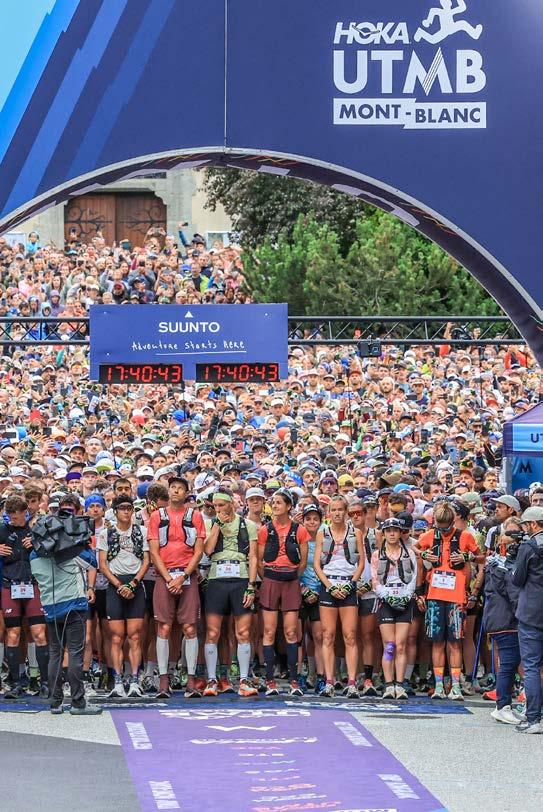
UTMB MONT-BLANC FEATURE FANSOMETER
The latest news on the 2026 edition
How is the trail running market doing? The rankings of athletes and brands
FOCUS TRAIL
UTMB MONT-BLANC FEATURE FANSOMETER
The latest news on the 2026 edition
How is the trail running market doing? The rankings of athletes and brands
FEATURE
How is the trail running market performing? Brands weigh in
#INSIDETHERACE
Records and performances by the Italian team
PEOPLE
An interview with Daniel Pattis
FANSOMETER
Social media rankings for athletes and brands
DATA & STATISTICS
Data Crunch figures for the Garda Trentino Trail
INTERVIEWS
Vittorio Barrasso: inside the La Sportiva team
Elena Di Salvo: Vibram and UTMB, a 19-year partnership
EVENTS
What’s new at UTMB Mont-Blanc 2026
AI comes to TORX
Marco De Gasperi and the Ortles Haute Route Trail dream
The Kima Trophy never goes out of fashion
The inaugural edition of “The Great Wall 260K”
Results from the 2026 100 Miglia Monviso
La Sportiva Lavaredo Ultra Trail by UTMB
PRODUCT INSIGHT
La Sportiva
NNormal, ASICS
Ande, Nat’s Merrell, Rossignol
BV Sport, Dynafit
The North Face, Suunto

Publisher: MagNet Srl SB - Managing director: ANGELO FRIGERIO
Editorial Director: CLAUDIO PRIMAVESI
Contributors: TATIANA BERTERA, BENEDETTA BRUNI, SARA CANALI, KAREN POZZI, MATILDE MARELLI, SILVIA BERLENDIS
Art Director: ROSANGELA BARNI
Italy Editorial Office: Corso della Resistenza, 23 - 20821 Meda (MB) Via Tertulliano, 68 - 20137 Milan
Tel. +39 02.87245180 Fax +39 02.87245182 redazione@outdoormagazine.it - outdoormagazine.it
Editorial Supplement to Outdoor Magazine, Volume 19 - No. 6/2026
Printed by: Ingraph - Seregno (MB)

Monthly magazine - Registered with the Court of Milan, No. 186 dated March 20, 2007.
Poste Italiane SpA - Postal Subscription Service under Decree-Law 353/2003—converted into Law 46/2004, Article 1, Paragraph 1—LO/MI
The publisher guarantees the strictest confidentiality of the data in its possession. This data will be used to manage subscriptions and to send marketing information. Pursuant to Article 13 of Law No. 196/2003, your data may be corrected or deleted at any time by writing to: MagNet Srl SB
Data Controller: Benedetto Sironi
Closed at the editorial office on July 28, 2026

How is trail running changing, and what are the trends in this inherently mountain-based sport that is attracting more and more urban participants?
by Benedetta Bruni
Once a phenomenon confined to the world of mountains and elevation gain, trail running is now establishing itself as an alternative—if not a natural progression—for mountain enthusiasts who want to take their road running to the next level. Over the years, it has found fertile ground to thrive, from the urban-born “gorpcore” trend to the use of lighter shoes with high-traction soles for multi-day hikes and light hiking. And it is often cities themselves that serve as the catalyst for off-road running, where running clubs are springing up and multiplying—clubs that have made trail running a social and accessible phenomenon, introducing many newcomers to their first pair of “gravel” or “door-to-trail” shoes, and strength-
1. As of now, the trail segment still accounts for a smaller share of the brand’s total revenue, given that we have a strong winter component (ski mountaineering) that includes equipment with a significantly higher value per item. Given this context, in addition to being a segment that is growing both in percentage terms and in value as a share of revenue, trail running is of great significance as it is the main non-winter segment and encompasses all product categories (footwear, apparel, accessories).
2. It is difficult to quantify sales of footwear designed for specific uses, given that the current trend
ening the sense of belonging to the sport through the community effect. But it is the versatile nature of this type of footwear—which, in addition to being stylish, provides grip and comfort on mixed terrain while remaining very lightweight—that allows it to appeal across multiple segments simultaneously and also cater to the habits of those who go on quick hikes, long hikes, or casual outings—without necessarily being used solely as part of an urban aesthetic, even though that is a significant trend. This is the picture that emerges from our survey, which involved some of the industry’s leading players, who confirmed that trail running is a thriving and growing sport throughout Italy.
1. What percentage of your revenue comes from the trail running segment? Have you seen an increase in the number of trail runners and in demand for products related to this sport?
2. How significant is the “gorpcore” trend—or, more broadly, the use of trail running shoes for other activities like light hiking? How big is the gravel segment?
3. How significant is the role of the community and running clubs in the growth of the sport and, consequently, in product development?
4. How did the 2026 sell-in perform, and what are your expectations in terms of sell-out?
is to use trail running shoes for light hiking and other activities as well. We can confirm that this is a widespread practice that is driving significant sales, particularly for gravel running; for this reason, we launched the Trail line, which has achieved excellent sales results precisely by targeting this specific type of runner.
3. Indeed, we can confirm that this is a rapidly growing phenomenon, especially in urban areas. Dynafit has always been a brand created by athletes for athletes, so it’s in our mindset and DNA to work closely with professional and amateur athletes alike, listening to them and observing them, and in-

volving them in product development and testing.
4. 2025 marks the end of a series of post-pandemic years characterized by declining footwear sales, during which the market became saturated with product due to overlapping shipments and overstock; consequently, sell-in was also affected by retailers’ tendency to make more cautious purchases. As for us, we have launched two major new products that have been well-received and are currently selling well in stores, so we are confident that sell-in for 2026 and the corresponding sell-out will be on the rise.
1. The trail segment accounts for a significant portion of our revenue, with a major share during the summer season and a slightly smaller share during the winter months. This is especially true for the Italian market, where the category plays an important role within our product lineup. If we broaden our perspective to the brand as a whole—that is, on an EMEA or global scale—the segment’s share is slightly smaller. What we clearly observe, howev-
er, is a steadily growing interest among consumers and, consequently, among retailers as well. Trail running is increasingly perceived as a cross-cutting category, capable of appealing to very diverse audiences—in terms of age, geographic area, and usage patterns. It is not just a product tied to performance or pure athletic pursuit, but an increasingly broad offering that meets different needs and fits naturally into various outdoor contexts.
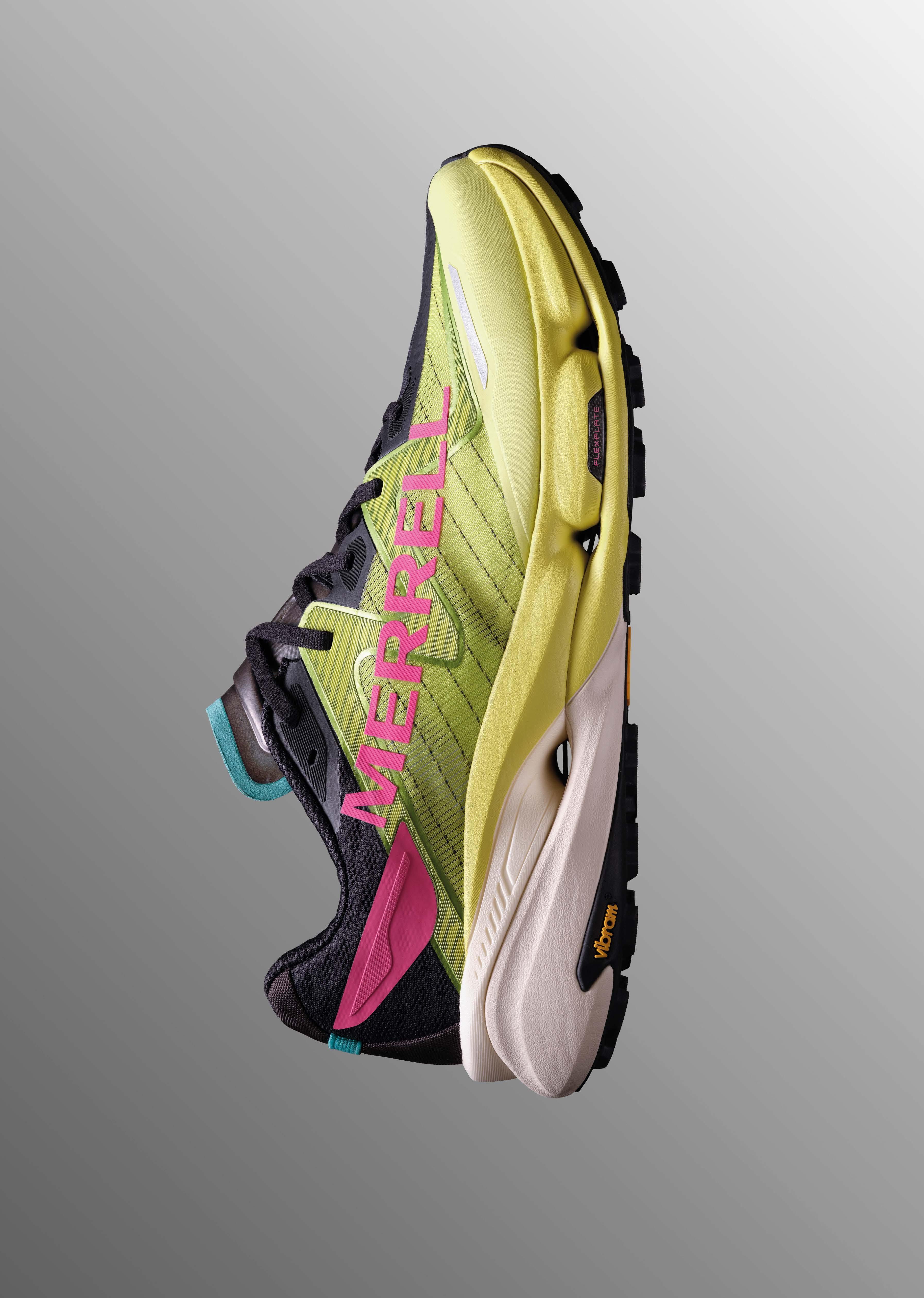
2. Personally, I believe that the versatility of the product is one of the central themes in the development of the category. The ability to use a trail shoe in different contexts—not only in outdoor settings, such as light hiking, but also in more urban situations—is becoming an increasingly important factor today. At Merrell, rather than “outdoor” in the strict sense, we prefer to talk about “outside”: everything you experience beyond your front door.
It could be a hike, a music festival, a trip, a camping experience, or simply everyday use in the city. Of course, it also depends on the brand’s positioning and identity. There are brands with a more race-oriented, performance-focused approach, and others—like Merrell—that take a more democratic and accessible approach, designed to cater to a broad audience across various usage scenarios. In this context, we also see significant growth potential among hikers and, in particular, in the gravel segment. For a couple of years now, we’ve included specific models in our collection, designed to meet the needs of the vast majority of average users. The challenge today is primarily cultural and communicative: for retailers, it means knowing how to explain these products correctly; for brands, it’s about positioning them and clearly communicating their value within the store; and for consumers, it’s about fully understanding their features and appropriate uses. In this sense, an educational effort involving all market stakeholders is necessary.
3. It’s interesting to note how sports that are, by their very nature, individual—such as running and trail running—are now increasingly driven by
genuine communities. In recent years, we’ve witnessed a significant shift toward socializing sports: running clubs, local groups, and digital communities have become important hubs for athletes— and, consequently, for companies as well. I believe the role of communities is particularly significant, especially from the perspective of communication and the ability to foster engagement around the brand. As for product development, however, our primary focus remains direct collaboration with a team of professional athletes, which allows us to gather highly specific, performance-related technical feedback. A concrete example is the MTL (Merrell Test Lab) line, which includes four race models designed to cover different distances and race types, from vertical races to ultras. These products were developed thanks to the input, advice, and needs of our athletes, including Frederic Tranchard, the world champion in short-distance trail running.
4. The 2025 sell-in for the 2026 season in the trail running segment posted double-digit growth: a decid-
1. Every year, trail running accounts for an ever-increasing share of footwear sales. On the one hand, this is due to the increase in participants and the resulting demand for more general-purpose products, but also—as the numbers show—to the greater credibility and trust placed in the Joma brand on a technical level, a result of consistent efforts in branding and visibility, as well as ongoing research and development of materials, first and foremost our new JOMA GRIP outsole. As someone who attends the racing scene weekly, I’ve noticed that the number of trail runners at all levels is skyrocketing.
2. We’ve seen growth in both the “general” and “sports” markets, so I’d attribute equal weight to the influence of gorpcore and the improved perception among the more technical and discerning audience. The range of uses, aesthetics, and market trends—
edly positive result that was by no means a given, even though we believe there is still significant untapped potential, both relative to our expectations and the brand’s goals. The most encouraging sign, however, comes from sell-out figures, which show a positive trend and a growing response from end consumers. For us, this is an important indicator, as it confirms that Merrell is beginning to be perceived as an increasingly credible brand in the trail running category as well. Of course, there’s still a long way to go, especially in a highly competitive segment dominated by players with a long history. We can say we’ve just started our “ultra”: we’re only in the first few kilometers, but the signs are positive.
"Trail running is increasingly seen as a cross-cutting category […] It is not just a product tied to performance or pure athletic pursuit, but an increasingly broad offering that meets different needs and fits naturally into various outdoor contexts."
whether driven by fashion or influencers—are undoubtedly a boost, but another equally valid factor concerns hikers, many of whom prefer trail shoes both in the mountains and on actual hiking trails.
3. I believe we cannot overlook the unifying, social, and cultural significance that running is taking on. For the growth of the sport in terms of numbers, the community is the primary driver of development: as is only natural and right, as the base of participants grows, the elite level will also improve in terms of both quality and quantity. Given these two premises, product development must be tailored to an extremely diverse audience, ensuring that our product lines are as broad and varied as possible to meet all (or at least most) of the end user’s needs. For us at Joma, the more we are able to engage directly with the public, gather feedback, and identify needs,
GIAN LUCA FARINAZZO, HEAD OF SALES ITALY AND EXPORT MANAGER
1. Having launched a trail running collection just three years ago, sales figures are growing rapidly, even though they still account for a limited share of total revenue. The goals are ambitious, and the new collections unveiled for the SS 27 season represent an important benchmark from a technical standpoint. Among these, the Paceterra Pro model stands out—it is likely the lightest competition shoe on the market, weighing just 206 grams in UK size 8, achieved through innovative construction methods and the use of extremely high-performance and durable materials. The number of participants is constantly increasing; we can also gauge this through the many events
we sponsor, which are seeing a growing number of registrants.
2. The use of footwear designed for running on uneven outdoor terrain—whether in the mountains or elsewhere—for recreational purposes accounts for the lion’s share of the business. These shoes are chosen by people who want comfortable footwear with excellent traction, good support, lightweight construction, and perhaps an appealing design; which category they fall into is a matter of market segmentation. Each user must then be able to assess which shoe is best suited for their outdoor activities. For SS 27, Lowa introduc-
the better we will be able to tailor our decisions to meet the demands of the market and retailers. For this reason, over the past two years, our presence at retailers and events has been growing exponentially through product testing, training initiatives, and collaborations with running groups and elite and worldclass athletes.
4. The data is encouraging and shows that we’re heading in the right direction; we’re continuing to develop technically our footwear, and this is positioning us with some of the more specialized retailers, where we’re seeing the greatest growth. We’ll continue to support our retailers by collaborating with communities and bringing our shoes to local areas through test runs and social runs—a strategy that has so far proven successful in boosting sell-out.

es Flowterra, a model that has received extremely positive feedback precisely because of the features mentioned above.
3. They are certainly important for building credibility and connecting with a technical audience that can appreciate the product’s details— which ensure its performance—as well as for receiving feedback and input.
4. The SS 27 campaign is in full swing, and the strong growth in orders for the new models in the trail running collection confirms the quality of Lowa's offerings.
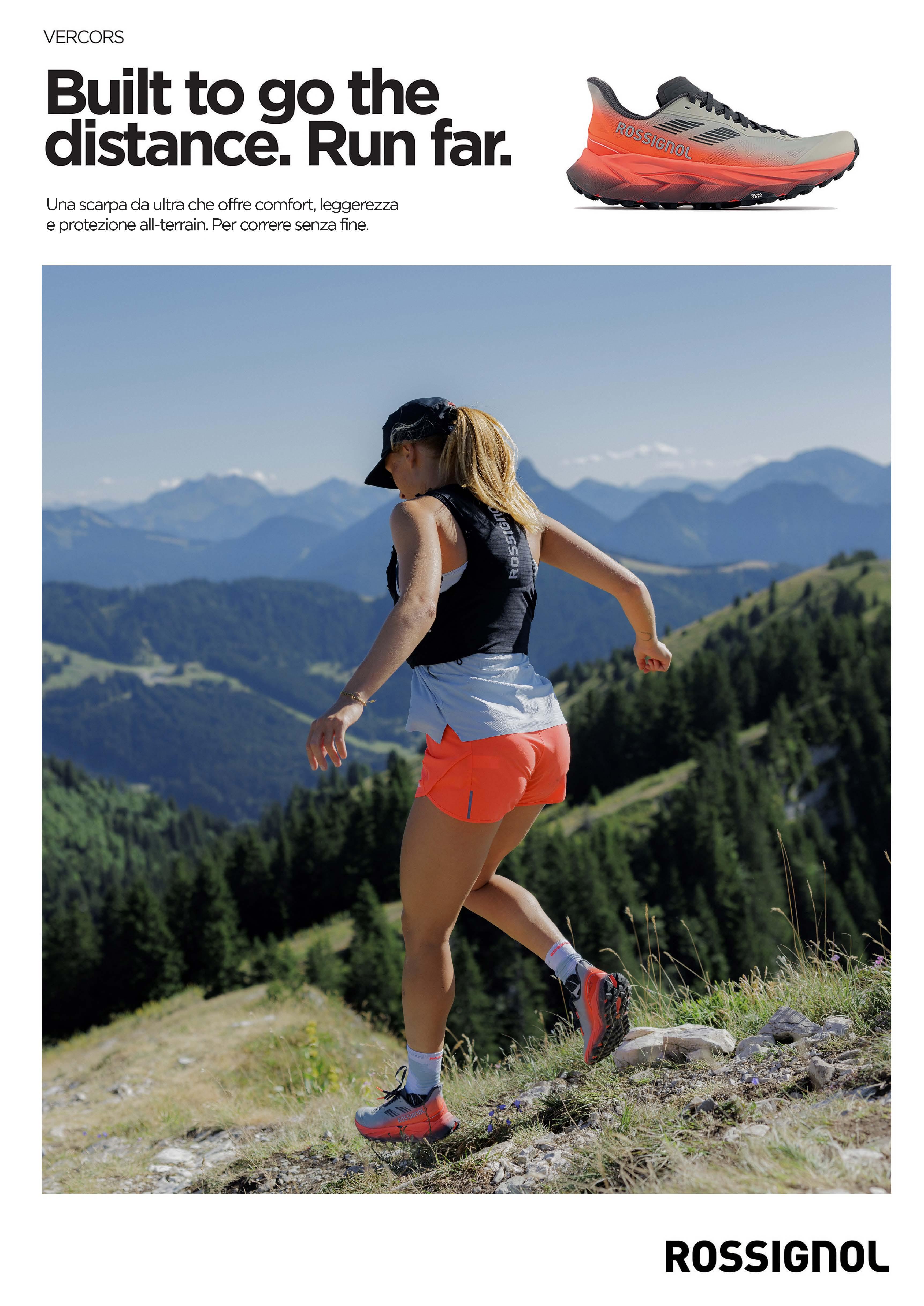
1. For Rossignol, SS 26 marks its second season in the world of trail running with a dedicated footwear collection designed and developed entirely in Italy. So, while we have a proven track record in the mountaineering world spanning over a century, we are relative newcomers to off-road running; consequently, revenue is still modest compared to our core business, which remains firmly rooted in winter sports. In any case, the outlook is excellent— during this period we’ve nearly doubled our distribution in Italy, and there’s also momentum and interest in the market for the 2027 season, thus confirming that trail running is a sport with untapped potential and a growing number of trail runners—or at least summer mountain hikers and walkers.
2. Our response to this trend is clear: Rossignol has entered the trail running market with an extremely technical approach, offering cutting-edge technologies that are perfectly aligned with the industry’s top players. But we’ve also paid close attention to trends like gorpcore and light hiking, which expand the market to include those seeking style and everyday comfort. A perfect example is the Vercors, our new ultra-trail shoe launched for SS 26: a highly technical yet extraordinarily comfortable shoe. Feedback gathered during numerous field tests conduct-
ed throughout Italy since last April confirms that, in addition to its performance on the trails, users also greatly appreciate it in urban settings precisely because of its design and exceptional comfort. Furthermore, Rossignol has been successfully establishing itself in the gravel segment for two years now with our Venosk, a shoe defined as “door-to-trail” and designed for maximum versatility and comfort during training. The Venosk was created to seamlessly accompany runners from their front door to the trails,
"Communities and running clubs are the driving force behind trail running: they've made it social and accessible, attracting many newcomers thanks to segments like gravel running"
offering perfect transitions across mixed terrain. It’s the ideal shoe for running on dirt roads, in parks, on bike paths, and along forest trails, handling asphalt sections with ease without sacrificing the protection and grip needed for light off-road running.
3. Communities and running clubs are the driving force behind trail running: they’ve made
1. Trail running still accounts for a small portion of our revenue, but it is a high-potential category in which we are investing heavily. For SCARPA, it is not just a growing segment, but a strategic pillar that fully reflects our DNA: innovation, performance, and a deep connection to the mountains. In recent years, we’ve seen steady growth in the number of enthusiasts, with an increasingly broad and diverse user base. Confident that this trend will continue, we’re continuing to evolve our product line to strengthen SCARPA’s leadership in this market.
2. The impact of the gorpcore trend, the cross-category use of footwear for light hiking, and the growth of the gravel segment are real and significant macro-trends. For SCARPA, however, they do not represent the primary strategic focus around which the new collection was designed. That said, the product specifications offer inherent versatility that allows for tactical use in these areas as well, ensuring potential coverage of these segments without impacting the priority development roadmap.
"It's a key factor—probably the most decisive one. The growth of trail running in Italy depends more on clubs, gatherings, and actual athletes than on traditional advertising."
3. The community aspect and the run club phenomenon serve as an exponential catalyst for the category’s growth, increasing market penetration and consumer engagement. While recognizing the high strategic value of this market trend, SCARPA’s product
1. Trail running is currently one of the fastestgrowing segments in our portfolio in Italy. Over the past few seasons, we have seen a steady increase in both the number of trail runners and the demand for specialized technical gear. We view this as a structural trend—not a seasonal one—and it has prompted us to continue investing in the Kailas FUGA line and its community of athletes across Italy.
2. We’re definitely seeing trail shoes being used in a crossover way even outside of racing contexts, particularly for light hiking. We view this phenomenon more as a natural consequence of the product’s technical qualities (grip, protection, comfort on mixed terrain) than as a “gorpcore”
trend in the strict sense: Kailas FUGA remains a “mountain-rooted” brand—not an urban lifestyle brand—and its technical positioning is the reason it works well even outside of racing. Gravel, for now, is an adjacent segment that we’re watching with interest but that has only a marginal impact on our specific business.
3. It’s a key factor—probably the most decisive one. The growth of trail running in Italy depends more on gatherings, and actual athletes than on traditional advertising. That’s why we dedicate a significant part of the Kailas FUGA story to the community: the FUGA Mountain Club, Italian ambassadors, and local events and races. This direct feedback from the

it social and accessible, attracting many newcomers thanks to segments like gravel running. For Rossignol, this connection is a vital testing ground for product development. Direct feedback from runners is vital to us, as demonstrated by the numerous tests conducted in collaboration with retailers: since April 2026, we’ve organized nearly 30 events throughout Italy to showcase and let people test our products, particularly the new Vercors shoe. These activities are also essential for building retailer loyalty, allowing them to better understand the products they sell and conveying the company’s commitment and vision in this sector.
4. As mentioned, this is Rossignol’s second season in trail running. Last year’s sell-in went very well compared to the first season (SS 25), although our numbers are clearly still small since we’re new to this sport. Sell-out is progressing quite well, especially in certain regions of Italy, such as the northwest, while it’s slower in major cities. In any case, we’ve put all our resources into this effort—for example, through a “sales support” initiative featuring our technically trained staff, who spent a total of nearly 100 days at key dealers in Lombardy, Valle d’Aosta, and Tuscany to showcase the product to end consumers, thereby boosting sales.
roadmap remains firmly guided by an athlete-first approach. The primary focus in product development continues to be meeting the technical and performance needs of athletes and professionals in mountain environments.
4. The 2026 sell-in results were positive and in line with expectations. The strong response from our business partners confirms the growing confidence in SCARPA’s positioning in the trail running segment. Looking at sell-out figures, the outlook is good and gives us reason for optimism: the discipline’s steady growth leads us to anticipate a solid trend in the end market as well. The high quality of our products, our collaboration with retailers, and the growing brand awareness in the category form the foundation for achieving strong performance throughout the season.

field also influences product development, not just our communications.
4. The 2025 sell-in confirmed the growth trajectory of the trail segment in our portfolio. We are moderately optimistic about sell-out: first and foremost, we expect demand to stabilize, as well as further growth, driven primarily by the replacement of gear among active athletes and the entry of newcomers attracted to the sport. At this stage, word of mouth among trail runners is positioning Kailas FUGA as one of the most sought-after brands on the market, and this is a trend we intend to continue and support through targeted campaigns and dedicated activations.
1. From B-Factory’s perspective, the analysis of the trail sector should be viewed through the lens of dynamic growth rather than historical absolute volumes. Since NNormal is a young brand—almost a startup at this stage of the market—our strategic priority is focused on expanding and consolidating the brand’s presence in the region, rather than simply maximizing sales volumes immediately. That said, the revenue generated is starting to become quite significant and shows a steady, upward trend over time. Although it has not yet reached the levels of the established or more mature brands in our portfolio, the growth rate is impressive. This achievement is a direct result of a clear and objective increase in the number of trail runners and enthusiasts. We’re seeing strong demand for trail-specific products, driven primarily by a new type of user seeking technical performance combined with versatility. The market is expanding rapidly, and our challenge is precisely to capture this ever-increasing demand by positioning the brand as the benchmark for the future of the sport.
2. Being able to look beyond the niche of specialists is essential for a brand’s growth. The gorpcore trend and the expansion of trail footwear into urban settings, light trekking, or simply walking are no longer exceptions, but cornerstones of product development and revenue strategies. Today, sales volumes— both for us and for the market as a whole— are clearly skewed toward less extreme uses of the shoe: consumers are looking for a high-performance yet versatile product, suited to a more playful and carefree lifestyle. In this scenario, the brand’s aesthetics and storytelling are key to sparking the public’s imagination, while word of mouth and objective feedback on the product’s comfort and value do the rest. As for the gravel segment, the situation is similar: it perfectly embodies this logic of “hybridization.” Just as in cycling, users are looking for a “transitional” shoe capable of moving seamlessly from pavement to light off-road terrain. It’s a segment of growing importance, because it appeals to those who aren’t fond of the technical challenges of pure trail running but don’t want to limit themselves in their daily explorations or outdoor adventures.
3. The community factor and the boom in running clubs are among the main drivers of the movement’s growth, especially because they redefine running not just as a performance but as an opportunity for socializing, sharing, and absolute freedom. From a brand perspective, however, the dynamics are complex and must be carefully analyzed. In the early stages, these communities often form around specialized brick-and-mortar stores or specific events. Gradually, however, they tend to seek independence, creating their own strong identity that breaks away from the traditional retail outlet. The real risk is that the physical store—if it does not play an active and operational role in the local community beyond its own four walls—will become almost “subordinate” to or excluded from the club’s dynamics. This emancipation inevitably drives consumers toward digital channels
and e-commerce to meet their purchasing needs. For a brand, therefore, running clubs must absolutely be encouraged and supported, but with an omnichannel strategy: the community serves to generate brand awareness and a sense of belonging, but we must be ready to capture commercial demand wherever the consumer decides to make a purchase, especially online. On the product development front, this phenomenon is driving the creation of increasingly versatile footwear, capable of handling different paces (from advanced runners to those who participate purely for social reasons) and featuring a strong aesthetic, suited to being “lived in” and showcased within the group.
4. The 2025 sell-in for 2026 went very well, showing significant growth. The key factor behind this success
was the launch of a new model, the Cadi, a very comfortable shoe with a generous fit. This product marked a strategic turning point: it allowed the brand to evolve from a perception tied purely to extreme performance toward a positioning that remains technical but is more accessible, complemented by highly appealing color variations.
As for sell-out, we’re in the middle of the season and the feedback so far has been positive. A key factor for us is maintaining the brand’s value: as a matter of company policy, we do not allow our products to be discounted during the sales period. The fact that sales are going well at full price is objective proof of the brand’s and product’s value.
The Italian runner makes history by narrowly missing victory at the Western States, but at the LUT and the Marathon du Mont-Blanc as well there’s a strong Italian presence and records broken thanks to stratospheric performances
Torri
We have often pointed out that, with a calendar so packed with events, it is difficult to see direct comparisons and high-calibre races. The last weekend in June, however, treated us to three spectacular events where scale and quality went hand in hand: the Lavaredo Ultra Trail, the Marathon du Mont-Blanc and the Western States. The common thread linking these major events is very clear: trail running has never reached such heights. From the feats of Bouillard, Lichter, Alexandersson, Budha, Bonnet and Namberger… to the Italian podium finishes secured by Puppi, Pattis, Reiterer, Geiser and Minoggio, what stands out is the ever-increasing technical standard and an Italian contingent capable of playing a leading role on all terrain and over all distances.
The most technical and intense race on the Cortina programme confirmed that Italian trail running continues to produce top-class talent even in the fastest events. Andrea Rostan dominated the field; following his success in 2025, he repeated the feat with a race in which he led from start to finish. Behind him, Isacco Costa and Luca Pescollderungg completed an
MAURIZIO TORRI
Freelance journalist, founder of the website sportdimontagna.com, photojournalist and communications consultant for some of the most iconic events in trail running, skyrunning, and ski mountaineering by Maurizio
all-Italian podium, both representing Team La Sportiva. There was also an important confirmation in the women’s race, with Anna Hofer winning for the second year running ahead of Slovenia’s Klara Velepec and Britain’s Sonia Samuels. This result highlights the depth of the Italian trail running movement in short, technical races.
The 50-kilometre race produced one of the most significant performances of the entire weekend, courtesy of Daniel Pattis. The race confirmed that Italian middle-distance specialists are now competitive at the very highest international level. The South Tyrolean from the Brooks Trail Runners team set an impressive pace right from the start, engaging in a top-class duel with Nadir Maguet all the way to Passo Giau. In the second half of the race, Pattis pulled away, going on to win with a time just 51 seconds over the four-hour mark. Maguet finished second, whilst Lorenzo Rota Martir completed an all-Italian podium. In the women’s race, the victory of Spain’s Malen Osa Ansa confirmed the pre-race predictions, as she crossed the line ahead of Patricia Pineda Cornejo and Slovakia’s Silvia Schwaiger.
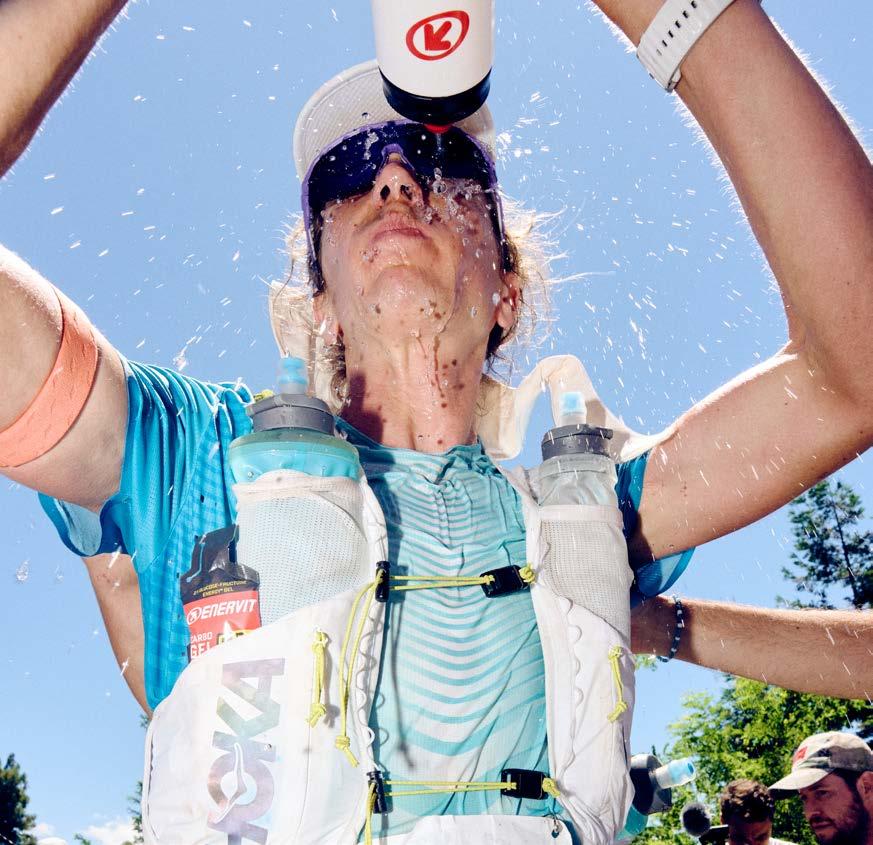
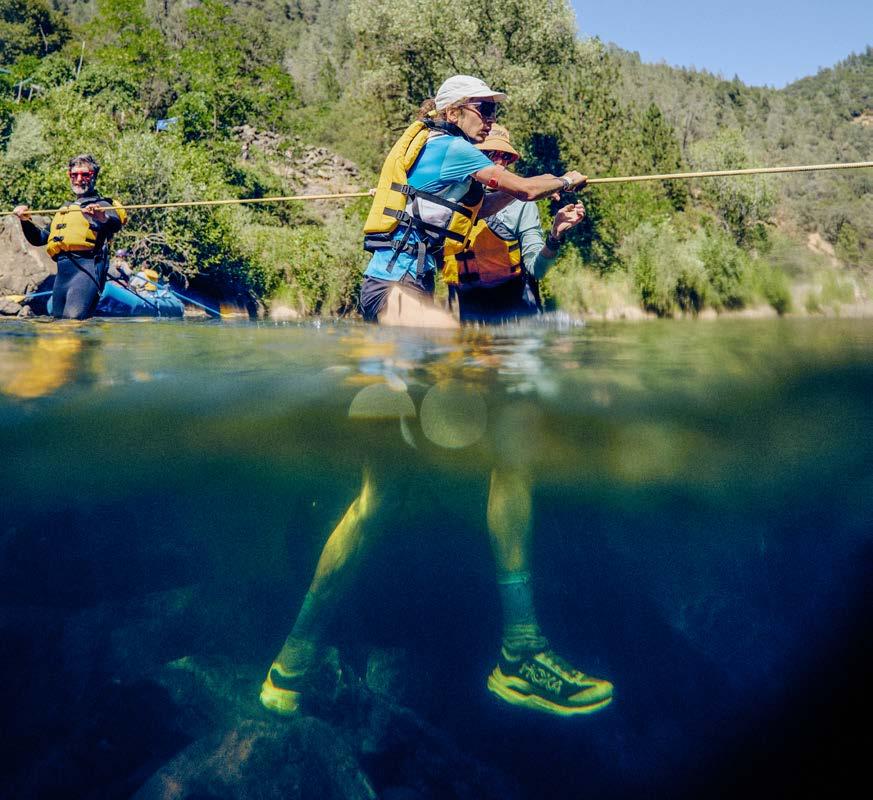
The flagship race of the Dolomites delivered one of the most spectacular editions in its history, with over 1,500 athletes at the start and the race record broken in both the men’s and women’s categories. In the men’s race, Hannes Namberger secured his fourth consecutive victory in Cortina, finishing in 11h45’31”, a new competition record. For much of the night, the German ran alongside Andreas Reiterer and Tobias Geiser, protagonists of a top-class battle that culminated in a thrilling hand-in-hand finish, with both athletes sharing second place. For Italy, Reiterer’s performance represents yet another confirmation of an athlete who has now firmly established himself among the world’s best ultra-trail runners. Geiser’s steady progress was also confirmed. The women’s race saw a triumph for Nepal’s Sunmaya Budha, who staged an extraordinary comeback against the Australian favourite Lucy Bartholomew. Budha clocked a time of 13h33’18”, breaking a historic record that had stood since 2015. Bartholomew finished second, whilst third place went to Ireland’s Emma Stuart.
90 KM: MINOGGIO IN THE MIX
The longest race of the weekend in Chamonix reaffirmed its status as the undisputed benchmark for European alpine trail running. Over a course of 88 kilometres and more than 6,100 metres of elevation gain, a memorable battle unfolded between France’s Louison Coiffet, the American Ben Dhiman and Cristian Minoggio. The three
ran together for much of the race before the Frenchman made his decisive breakaway, with Minoggio securing a prestigious third place. The result achieved by the Piedmontese runner from Team Kailas FUGA represents one of the finest Italian performances of the weekend. Making his debut over this distance, Minoggio proved he could compete on equal terms with the best international specialists, remaining in contention for victory right up to the final climbs. In the women’s race, victory went to the Frenchwoman Candice Fertin-Baccon, ahead of Audrey Tanguy and Ekaterina Mityaeva.
MONT-BLANC MARATHON 42 KM, ALEXANDERSSON IN SPECTACULAR FORM
The French marathon showcased two true stars of international mountain running: Rémi Bonnet and Tove Alexandersson. Bonnet confirmed his dominance on long Alpine climbs, prevailing at the end of a gruelling battle with France’s Frédéric Tranchand. Spain’s Manuel Merillas finished third. Even more impressive was the performance by Sweden’s Tove Alexandersson in the women’s race. The Scandinavian champion became the first woman in the history of the Marathon du Mont-Blanc to break the four-hour barrier. This achievement was made all the more remarkable by her eleventh place overall and the fact that she crossed the finish line before the men’s winner, thanks to her early start. It was a disastrous day for the Italians, with withdrawals from Davide Magnini, Andrea Prandi, Mattia Bertoncini, Elisa Desco and Fabiola Conti.
WESTERN STATES: PUPPI’S BREAKTHROUGH
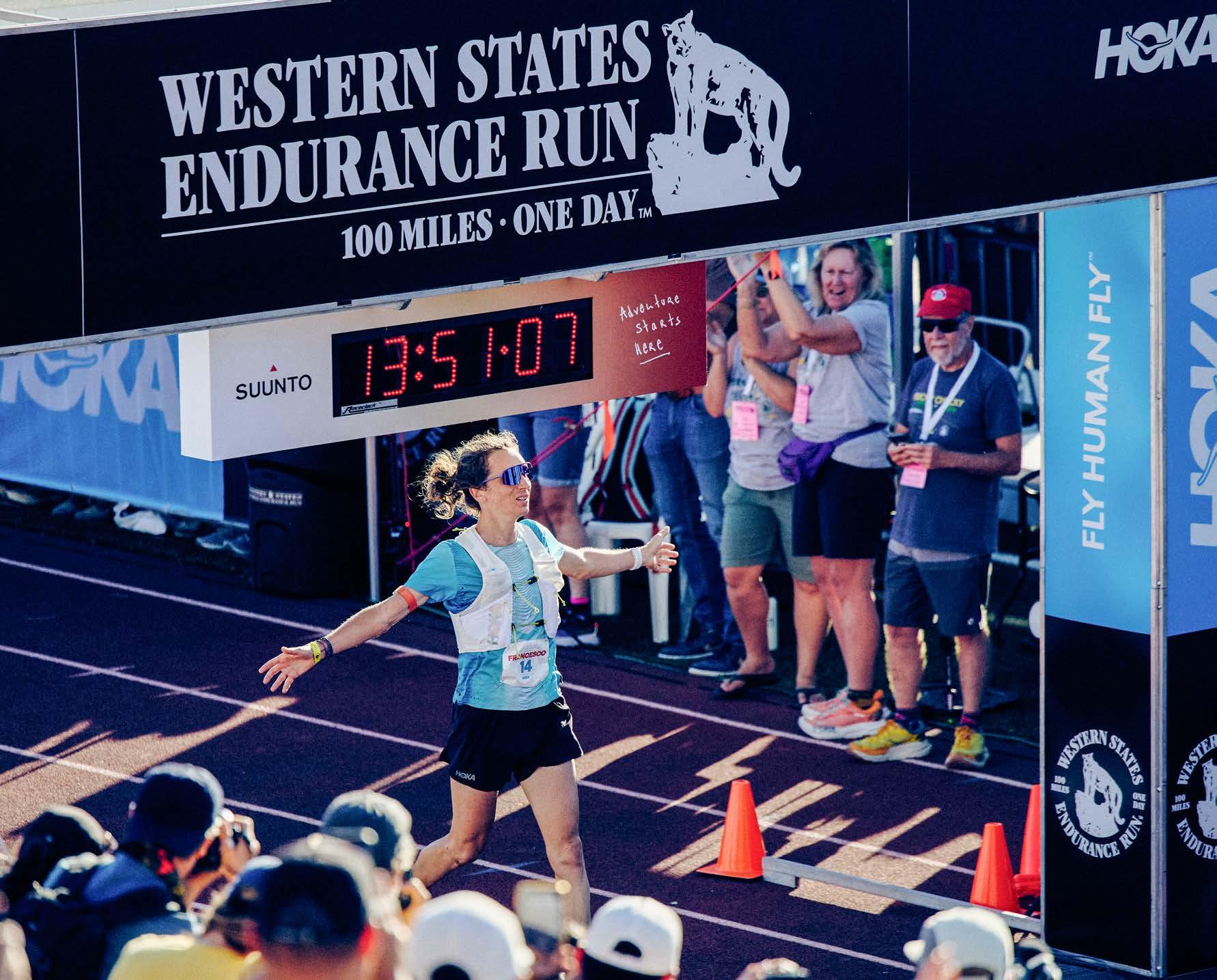
The historic Californian 100-mile race was arguably the highlight of the entire world trail running weekend. The most iconic race in international ultrarunning enjoyed a record-breaking edition, with the top three men all breaking the race’s previous record. The winner was France’s Vincent Bouillard in 13h46’15”, a new course record, ahead of an extraordinary Francesco Puppi. Making his debut over 100 miles, the runner from Como led the race for much of the way, took the lead at key points along the course and only faltered in the final stages, finishing second in 13h51’08”. Third place went to the American Ryan Montgomery. Puppi’s performance represents one of the most significant results ever achieved by an Italian athlete in international ultra-trail racing. Not only because of his placing, but also because of the way he achieved it: against a field that included champions of the calibre of Kilian Jornet, Jim Walmsley, Adam Peterman and Zach Miller, the Italian ran to win right up until the final kilometres. The women’s race also made history. American Jenn Lichter, making her debut over this distance, won in 15h28’05”, breaking the record previously held by Courtney Dauwalter.
Given this backdrop, the Italians will be aiming to play a leading role at the UTMB Mont-Blanc in the last week of August. A few years ago, our athletes would not have got beyond a placing in the OCC; now we have runners who can aim for the podium in each of the three transalpine finals. The specialisation programme undertaken by our athletes is bearing fruit, particularly among the men. In the women’s race, with the exception of Martina Valmassoi and Fabiola Conti, we still have plenty of room for improvement… Let’s give it time.
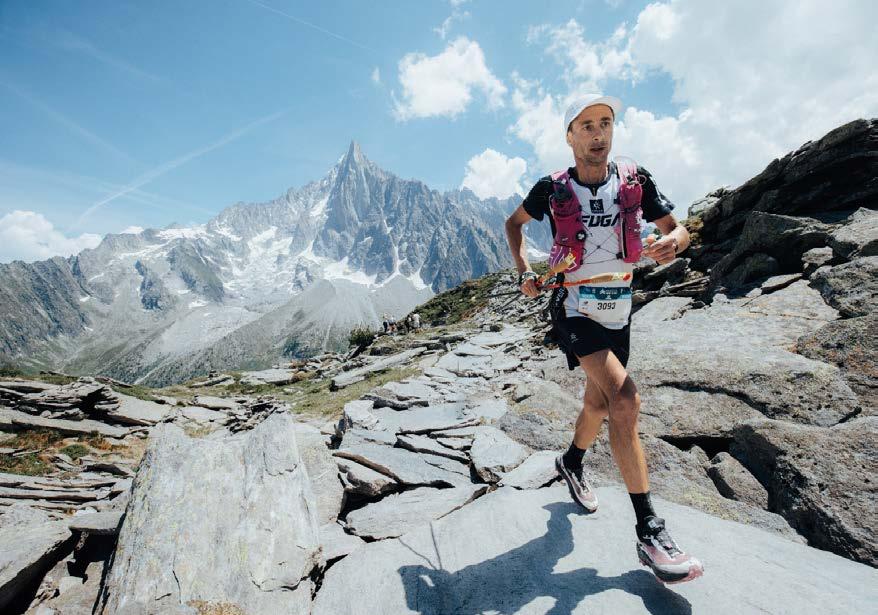
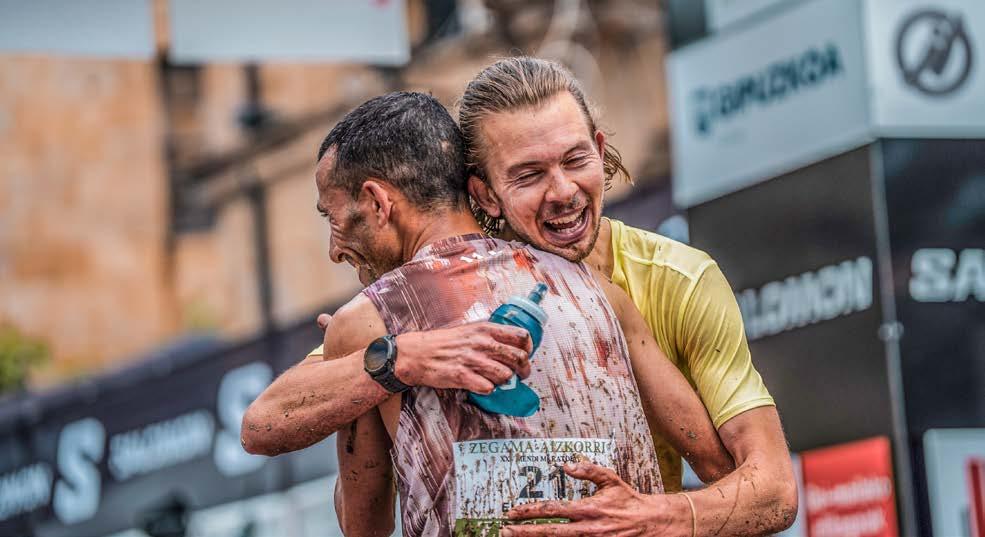
Face to Face with the South Tyrolean from the Brooks Team who set a new 50K record at the LUT and came close to a historic victory in Zegama
by Claudio Primavesi
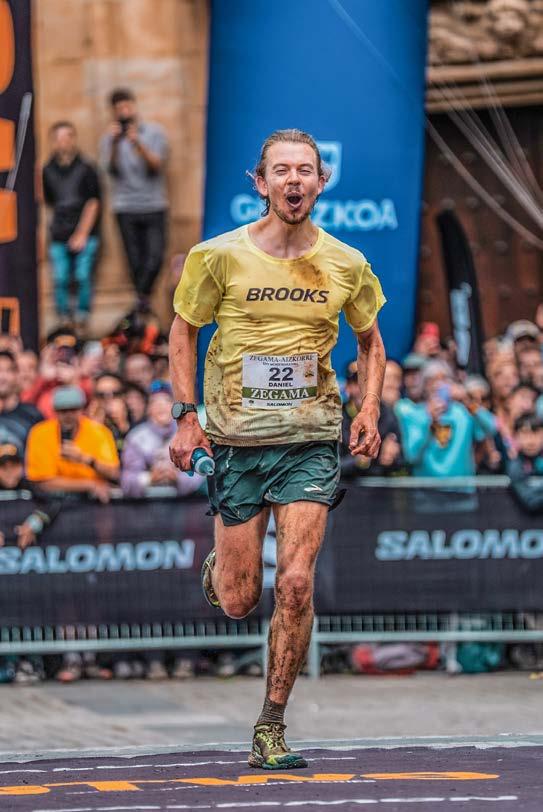
His recent record-breaking victory in the 50K race at the Lavaredo Ultra Trail is just the icing on the cake of a season that is establishing Daniel Pattis as one of the world’s top trail runners at distances up to 50 kilometers. Before Cortina came Zegama, where he finished second, just 20 seconds behind Elhousine Elazzaoui; a silver medal in the 52-kilometer trail race at the European Championships in Kamnik; and a second-place finish in the Chianti Marathon Trail behind Puppi.
You come from mountain running and in recent years you have won the 20-50 kilometer trail, with important results in the last season. Are these the distances you're best at?
Yes, right now I’m really comfortable running distances between 30 and 50 kilometers. Over the past two years, I’ve slightly adjusted my training to stay competitive at these distances as well, focusing heavily on endurance during the final stages of races: more strength sessions at the gym and longer runs, without giving up my speed workouts—like five-minute intervals—so I don’t lose my speed. This year I’ve also run shorter races—under an hour—maintaining a high pace: I think I’ve benefited from the short races I’ve run in the past, which get my body used to fast paces and serve as a good foundation for longer distances.
What are the next goals for the season?
This year, my goal was to transition to 50-kilometer races and consistently perform at a high level over this distance. I think I’ve succeeded, with results like Chianti, Zegama, Lavaredo, and the European Championships—I’m proud of them. An important goal is the OCC in Chamonix at the end of August, which I’ll be running for the first time. Beyond the races, my goal is to not lose the joy of running on the trails and to reach the end of the season in good health, while maintaining a lighthearted mindset: it’s not always easy, because at a certain level, you tend to put pressure on yourself.
Which race gave you the most confidence—Zegama?
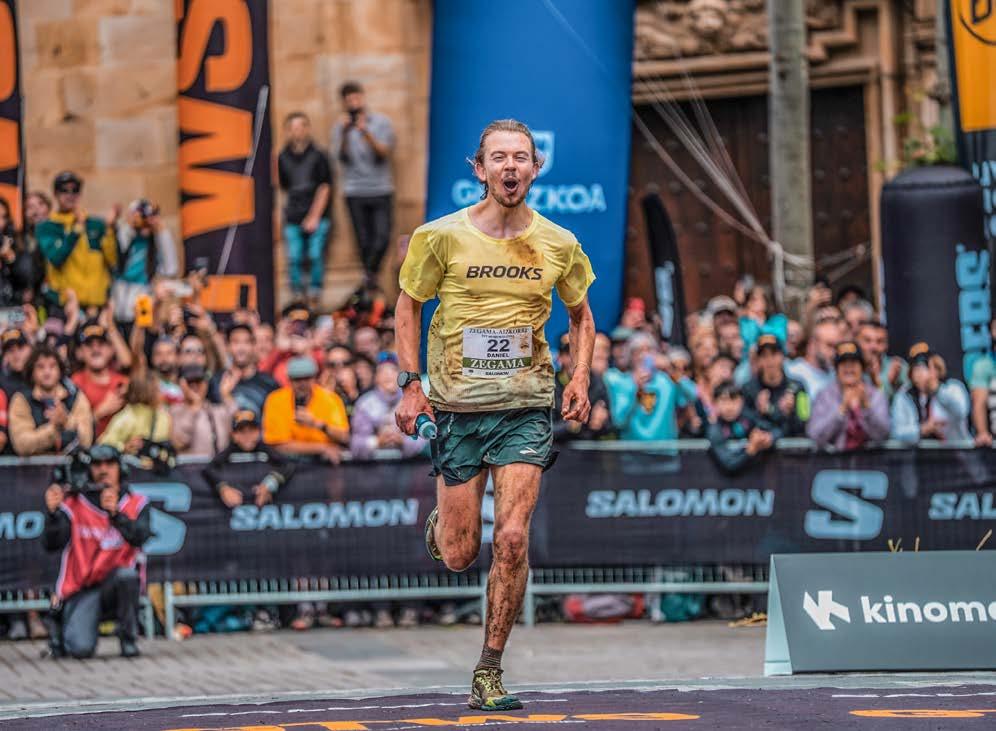
This year at Zegama, I felt in great shape—maybe the best I’ve ever been: I found my rhythm right away and kept it up all the way to the finish line. I came very close to winning: only Elhousine Elazzaoui was slightly faster. I was thrilled to make it onto the podium at such an iconic race.
Kilian has always said, "Zegama is Zegama": What does it mean to run the race in Spain?
Zegama is something special: no other race has so many fans lining the course. Halfway through the race, at Sancti Spiritu, you run through a sea of people: the noise is deafening and the atmosphere is like a huge party—a truly unique experience. What often makes it even more special is the pouring rain, which turns Zegama into a battle in the mud.
What does it mean to wear the blue jersey again and win a medal at the European Championships?
I’ve already competed in several European and World Championships, but being part of the national team always makes me happy: I’ve known the staff and my
teammates for a long time, and there’s mutual trust among us. When we wear the blue jersey, we want to give it our all, partly because there’s a team standings category— we’re not just running for ourselves. The national team supported me even when I was young, back when trail running wasn’t as widespread as it is today, and I want to give something back through my performances. The second-place finish I earned this year at the European Championships meant a lot, because my international results hadn’t gone as I’d hoped recently.
The World Cup is next year: what are your goals?
I'll mark the World Championships in South Africa in red on my calendar: they'll be my main goal for the season. I hope to stay in shape until then and qualify, so I can compete for a spot in the top 10 or even the top five.
You grew up on the Brooks team: what does it mean to be part of that family?
Brooks is my first and only sponsor: they showed faith in me even before I reached my current level, and I'm very grateful to the brand. Over the years, we've developed a wonderful and fruitful partnership, and many people in that community have become friends.
Will you be running longer distances in the future? Will we ever see you in a 100-mile race?
Long-distance races attract a lot of attention from the media, sponsors, and athletes, but I don’t feel ready to tackle them yet. As a professional, however, I’d like to compete against the world’s best, and many of them are now running 100-mile races as well: we’ll see what my journey has in store.
The toughest opponent?
I’ve been lucky enough to compete against true legends, such as Kilian Jornet, Rémi Bonnet, Elhousine Elazzaoui, Patrick Kipngeno, Davide Magnini, and Francesco Puppi—it’s hard to pick just one. In Zegama, Elhousine holds a special place in my heart: this year, just like last year, he ran alongside me for most of the race, only to pull away from me in the final stretch.
What was the best moment of your career?
When I was younger, I was always incredibly nervous before races, and just as happy and relieved when they went well. I fondly remember finishing as runner-up at the Under-20 World Championships in Premana—a special moment at the World Championships on home soil: everyone was happy for me. Even my 14th-place finish at my first Sierre-Zinal, in 2022 at age 24, came as a bolt from the blue, and I look back on it fondly.
What's your VO2 max?
I've measured it several times with varying results, so I wouldn't read too much into the number: it was around 80 anyway.
Do you listen to music when you work out?
I like the peace and quiet of training outdoors, so I usually run without music. I only listen to music or podcasts during strength training at the gym.
Do you read? What was the last book you read?
Yes, I really enjoy reading, both non-fiction and fiction, as well as flicking through climbing and high-mountain hiking guides. The last book I read was Love in the Time of Hate by Florian Illies, which I’d recommend without hesitation.
7
2
3
1
5
4
1
2

The social media rankings of the world's top trail runners and the industry's leading brands on Instagram
by Matilde Marelli
We analyzed the Instagram accounts of leading international trail runners—both men and women—taking two metrics into account: the number of followers and the engagement rate. The results paint a picture
that shows how popularity does not always go hand in hand with the ability to engage one’s community. For brands, we looked at the number of followers for 26 companies involved in the trail running industry.

The most striking statistic concerns the athletes’ popularity. Among the men, Kilian Jornet reigns supreme, with 2 million followers—a figure that puts him far ahead of all other trail runners. Behind him are Jim Walmsley (284,000) and Rémi Bonnet (237,000), while the top Italian is Francesco Puppi, in sixth place with over 63,000 followers. Among women, however, Courtney Dauwalter takes first place with 745,000 followers, followed by Sara Alonso (165,000) and Katie Schide (124,000).
However, an analysis of the engagement rate tells a different story: among men, Tom Evans has the highest engagement rate (7.46%), ahead of Daniel Jones (6.96%) and Rémi Bonnet (6.92%). While it’s true that smaller profiles generally tend to achieve higher engagement rates, it’s surprising that Kilian Jornet—despite being by far the most-followed athlete—is stuck at 0.54%, placing him at the bottom of the ranking.
Even among female athletes, the engagement rankings do not align with follower counts. The top performer is Malen Osa Ansa, who achieved 12.92%, ahead of Tove Alexandersson (8.01%) and Sara Alonso (5.42%). Courtney Dauwalter recorded 2.67%, which is lower than that of several athletes with much smaller followings.
By number of followers
For the brand rankings, we decided to take a different approach than we did for the athletes. The situation is more complex because the trail running shoe segment includes global brands, for which trail running is just one part—more or less significant—of their business; outdoor brands, which range from trail running to hiking and mountaineering; and brands that are highly specialized in trail running. Furthermore, major global brands often have local accounts or accounts dedicated to running, and in some cases even accounts specifically dedicated to trail running. For this reason, we decided to limit ourselves to the follower rankings, expanding the list to 26 brands and reporting data for the global account only when no more specific accounts for running or trail running exist.
It’s clear that brands like ASICS and Merrell also have global accounts with a significantly larger number of followers, but the very decision to create a specific account reflects a clear philosophy that we’ve chosen to follow.
If readers notice any omissions or inaccuracies, please report them to redazione@outdoormagazine.it
Data as of July 28, 2026
How I went from being a data point to collecting data (at the Garda Trentino Trail)
A long, winding line of runners snakes past my eyes, rapidly drawing closer. The leading group has already passed. What I see in the distance is the heart of the race. And just like a heart, it beats at a relentless pace, fueled by the passion of the athletes who make it up. These are the runners who train in their spare time and whose favorite social media platform is Strava. Last year, I, too, was just an indistinguishable speck within that tangle of runners winding along Lake Tenno.
I DIDN'T REALIZE THAT I went back to the Garda Trentino Trail this year with Data Crunch. And instead of running, I stopped to watch: over a thousand athletes spread across three distances, 32 nationalities, and 265 shoe models from 41 different brands. But how many of them chose to wear the same shoes I had worn? Are they Millennials like me? Are there different preferences based on nationality? Data Crunch gave me the answers I was looking for.
Top 5 italian brands
La Sportiva
HOKA
Kailas
Top 5 non-italian brands
HOKA
La Sportiva
Salomon
Brooks Brooks
NNormal
New Balance
La Sportiva HOKA La Sportiva - Prodigio Pro
HOKA Salomon New Balance - Fresh Foam Hierro v9
New Balance La Sportiva HOKA - Speedgoat 6
NNormal Brooks La Sportiva - Prodigio Altra adidas NNormal - Tomir 02
Top 5 models for millennials
La Sportiva - Prodigio Pro
HOKA - Mafate 5
HOKA - Speedgoat 6
Brooks - Cascadia 19
NNormal - Tomir 02

La Sportiva HOKA La Sportiva - Prodigio Pro HOKA Salomon HOKA - Speedgoat 6 Salomon La Sportiva HOKA - Mafate 5 ASICS ASICS ASICS - Gel-Trabuco 13 New Balance Dynafit Salomon - Genesis
CONSIDERATIONS - The first thing that struck me was how much runners’ nationality influences their preferences within the same brand, with differences of up to 10 percentage points. The second thing is that, even though it’s only been a year since my 30-kilometer race, not a single runner competing in 2026 wore the exact same shoes I had run in. Only 17 out of more than 1,000 chose the model I’m racing in now. Which ones are they? I’ll leave that up to you. If you can’t stop thinking about it, write to us and try to answer: datacrunch.running@gmail.com

Data Crunch is an innovative tech startup that analyzes the brands and products used by athletes during competitions by integrating artificial intelligence into the shoe-counting process. By combining this data with participants’ sociodemographic information, it offers concrete and detailed insights into product adoption during competitions. It’s not just about which shoes are
worn, but also who wears them and how they perform. The primary area of application is endurance sports, but the technology is adaptable to any sporting context, with the goal of providing brands with analytical tools based on objective data to better understand the market and their target audience.
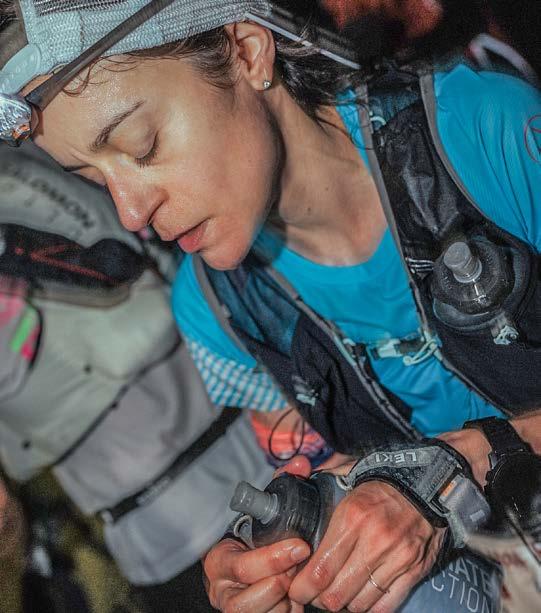
The bond between La Sportiva’s roster of athletes and the team working behind the scenes goes beyond mere technical support
by Benedetta Bruni
First, just individuals; then, a full-fledged team under the name La Sportiva. The athlete team of the Ziano di Fiemme-based brand has a long history, though its collaborations were mostly on an individual basis. In 2024, the brand decided to provide its professional athletes with a shared framework
>> THE INTERVIEW
VITTORIO BARRASSO
BRAND AND COMMUNICATION CORPORATE MANAGER
What was the process that led to the creation of La Sportiva’s new team of international athletes, and how is it growing over time?
We’ve built on an existing team, evolving from individual collaborations into an international team that shares our experiences, vision, and the same understanding of the mountains and our sport. The athlete team thus became “official” in 2024—not because we didn’t have one before, but because we formalized the connections that had previously existed only on an individual basis; now they are part of a community under the umbrella of La Sportiva.
What are the values that unite your athletes?
We’re looking for people who share our history, our craftsmanship, and the pragmatic approach that sets us apart. We’re not interested in being just another sponsor that provides gear; we want a shared vision and a relationship that feels almost like family. Furthermore, anyone who decides to join the La Sportiva team must be a “product fanatic” just like us. Athletes are fundamental to our research and development process focused on professionals. They must challenge our designs and be the first to test them alongside us. This exchange fuels the virtuous cycle of ideas that develops between the professionals and our expertise. They must feel like they’re part of something—even on an emotional level—and that’s what sets us apart.
How would you like an athlete to feel when they join your team?
Our goal is to make them feel part of a project we call “total care”: in addition to providing them with the most advanced product possible, we also support them during the most critical stages of the competition. In this way, all the elements form part of a single system; the athletes don’t feel alone, and the La Sportiva team is fully integrated into their performances. That’s why we also help them with their sports, athletic, and communications planning, serving as a platform to amplify their achievements.
What is the main goal of the Athletes Meetings and training camps?
Athletes Meetings build relationships: they allow us to bring athletes into our world to put a face to the people behind the La Sportiva brand and, at the same time, create a relationship they can trust. Furthermore, events like these
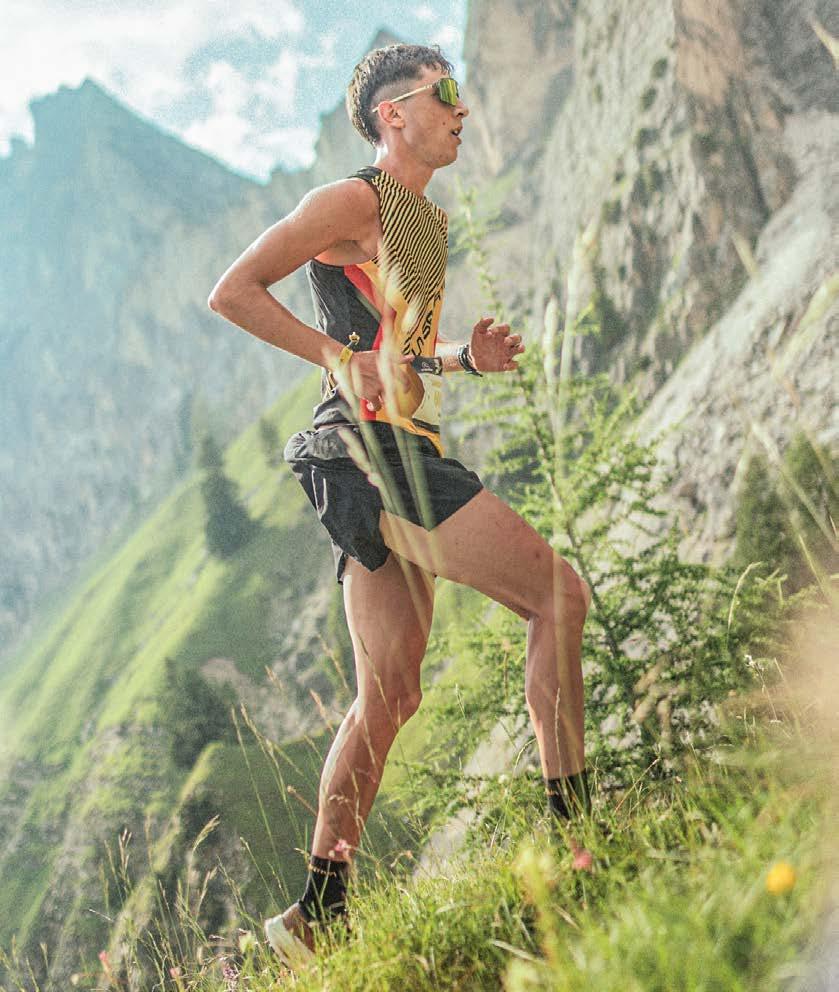
capable of facilitating the exchange of strategies and product feedback, both among the athletes themselves and with the company. Another way to define its role: not merely an equipment supplier, but a consultant, a key supporter, and, above all, a friend.
allow athletes to get to know one another. This time of deep connection fosters a team spirit that goes beyond the brand’s role, even as we recognize that the brand itself is the very set of values that unites them. Finally, these meetings allow us to gather feedback for product development, which is very important to us.
In the relationship that La Sportiva has with its team of professional trail runners, how significant is it to be a sponsor of a major race like the Lavaredo Ultra Trail?
We experience it in every way as our home race: the athletes are aware both of the brand’s connection to the local area and of the importance of an event that serves as one of the international stages for trail running, regardless of our presence. This creates a strong desire to participate, combined with the awareness that the performance will also be a collective representation of the team. It’s an aspect that shouldn’t be underestimated because it’s great to know that, even though we end up running alone, we start out lined up as a team. Finally, for us, it’s a time of great unity thanks to all the side events that take place throughout the week. From a human perspective, it’s a powerful opportunity to build the relationship we mentioned earlier—one that goes beyond simply supplying a product.
How are you preparing for the UTMB Chamonix alongside the athletes?
The UTMB is a highly coveted showcase, approached with the right competitive spirit by both the brand and the athletes. We’re preparing to provide behind-the-scenes personal and logistical support to those who will run it, so that the athletes can focus solely on their athletic performance without worrying about the peripheral aspects. This is part of the aforementioned “total care service,” which encompasses product consulting, apparel, strategies, and more—all within a delicate balance where we always respect each athlete’s personal space. In addition, this will be a year of firsts, starting with our team, which will feature some very prominent names—especially in the main distance and in terms of female participation. It will also be a debut edition for several athletes, such as Nadir Maguet, who will be taking on the CCC for the first time, and Andreas Reiterer, who will be competing in the 170K.
Vibram, a partner of UTMB for 19 years, is doubling its presence in Chamonix with a more intimate and authentic space designed to foster opportunities for connection and deeper engagement. A theme we discussed with Elena Di Salvo, Sport & Outdoor Event Coordinator
How many years has the agreement between Vibram and UTMB been in place? Does it apply to all UTMB World Series races or just the one in Chamonix?
The collaboration between Vibram and UTMB is a historic partnership that began in 2007. This year, the renewal of the agreement for an additional three years was announced: this means that in 2027 we will celebrate a very significant milestone—20 years of collaboration between two organizations that share common values such as innovation, performance, a passion for the mountains, and a commitment to the athletic community.
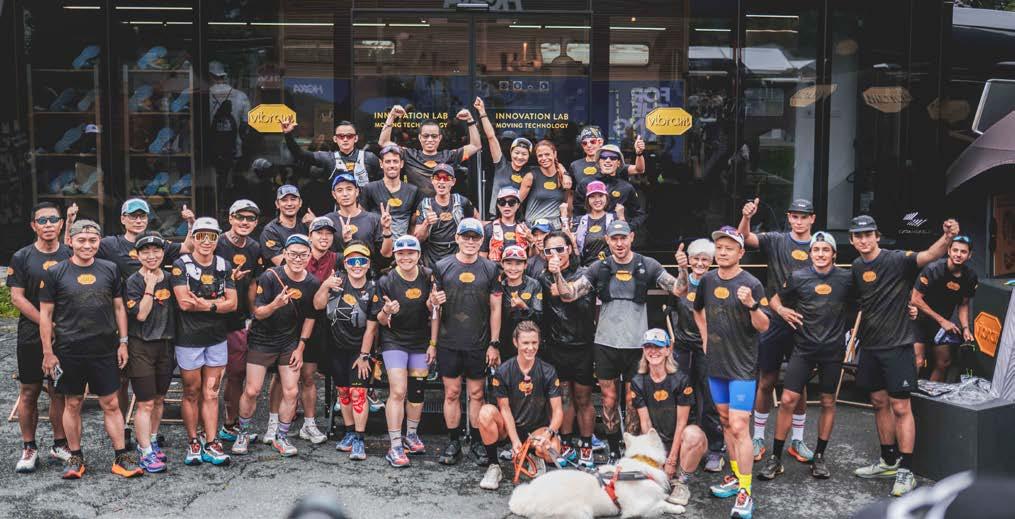
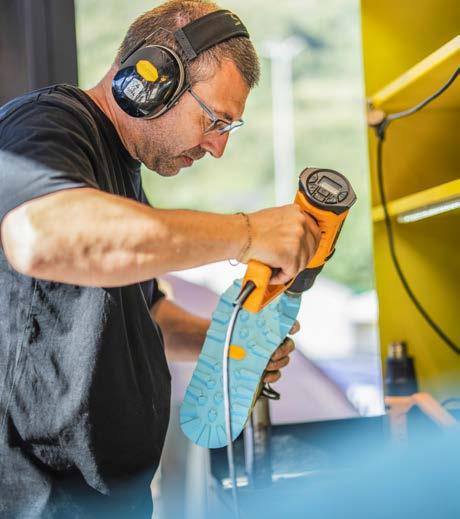
This is a global partnership that encompasses the entire UTMB World Series circuit, within which Vibram serves as the Official Supplier—not just for the Chamonix event. Our presence therefore extends to the circuit’s major international events, through activities dedicated to the community, athletes, and partners. Among these is the Vibram Innovation Mobile Lab, our traveling lab that brings Vibram innovation directly to the field, offering runners and outdoor enthusiasts the chance to discover our technologies and test our products firsthand.
The UTMB Mont-Blanc has changed a lot over the years: how has Vibram’s communication strategy for the event evolved?
Over the years, the UTMB Mont-Blanc has grown tremendously, evolving from an iconic ultra-trail running race into a true international hub for athletes, brands, the media, and mountain enthusiasts.
At the same time, Vibram has also evolved its approach to communication to reach an increasingly broad and diverse audience. From the most experienced trail runners to those exploring the trails and the outdoor world for the first time, we strive to engage with everyone, promoting a mountain culture based on preparation, awareness, and the importance of tackling every challenge with the right gear.
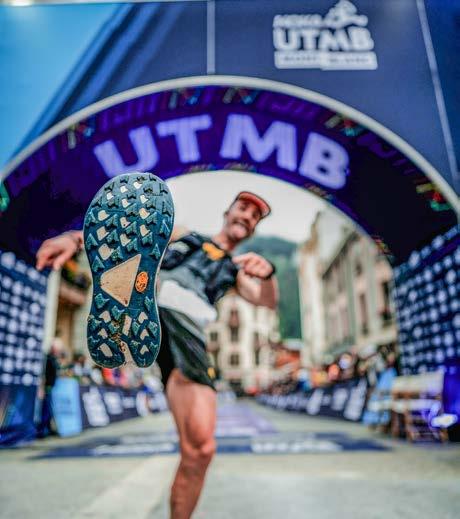
authentic space that fosters opportunities for connection and deeper engagement, while also offering community-focused experiences in a setting entirely designed by Vibram.
It will be an exclusive chalet located just a short walk from downtown Chamonix, where visitors can discover the latest Vibram technologies for trail running, attend talks and meet-and-greets with our athletes and brand partners, learn about and test the Vibram FiveFingers, and take part in other experiences designed to let them get up close and personal with the brand. The full program will be announced in the coming weeks via our social media channels.
What activities do you plan to offer at CASA VIBRAM?
It will be a dynamic and welcoming space throughout UTMB week, with a schedule of activities designed to engage athletes, the media, partners, retailers, and enthusiasts from the outdoor community.
There will be sessions dedicated to the media, featuring interviews, in-depth discussions, and storytelling sessions with elite athletes and representatives from the Vibram world, to highlight innovation, performance, and real-world experiences.
The program will also include activities focused on well-being and connecting with nature, such as Forest Bathing sessions with Vibram FiveFingers, community runs, and outdoor experiences designed to help participants explore the area in a more mindful and authentic way.
Over time, our communication has become increasingly focused on building authentic relationships with the community, highlighting the values we share with runners. At the same time, we have invested in creating tangible and engaging experiences that allow people to connect directly with the brand and our technologies.
This year, in addition to our official presence at the Ultra-Trail Village, we’ve decided to create CASA VIBRAM, an immersive and welcoming space in the heart of Chamonix where athletes, partners, media, and enthusiasts can meet, share experiences, and get an up-close look at the Vibram universe through activities, stories, and opportunities for discussion.
Can you tell us more about what's going to happen at CASA VIBRAM?
CASA VIBRAM was created with the aim of offering an experience that complements the main stage of the Ultra-Trail Village, where Vibram will continue to be present with the Vibram Innovation Mobile Lab and the Airstream, offering numerous activities open to all runners and enthusiasts in Chamonix.
The idea behind CASA VIBRAM is to create a more intimate and
Meetings will be organized in collaboration with several partner brands, along with discussions on innovation, materials, and sustainability, complemented by evening events featuring storytelling, screenings, and networking opportunities. Finally, there will be plenty of opportunities to socialize.
Among these are the opening aperitif on Tuesday evening and the Sunday brunch for Team Vibram athletes, staff, and family and friends: an opportunity to celebrate the week that has just ended together and share the spirit that drives the Vibram community.
Will the shoe-resole truck always be there, too?
Absolutely. The Vibram Innovation Mobile Lab will be at the Ultra-Trail Village all week, offering runners and enthusiasts the opportunity to get an up-close look at Vibram’s latest trail running technologies and to enjoy an immersive experience in the brand’s world of innovation.
Among the activities available free of charge—upon registration— you’ll be able to have a 3D foot scan and a baropodometric analysis, which are useful tools for gaining a deeper understanding of your own biomechanics and better understanding the role of the sole in outdoor performance.
In addition, a limited number of runners will have free access to the trial resole program for their trail running shoes, featuring the new Vibram Megagrip Elite rubber soles. Selected participants will become actual product testers, and after approximately 45 days of use, they will be invited to share their feedback, contributing to the development and continuous improvement of our trail running solutions.
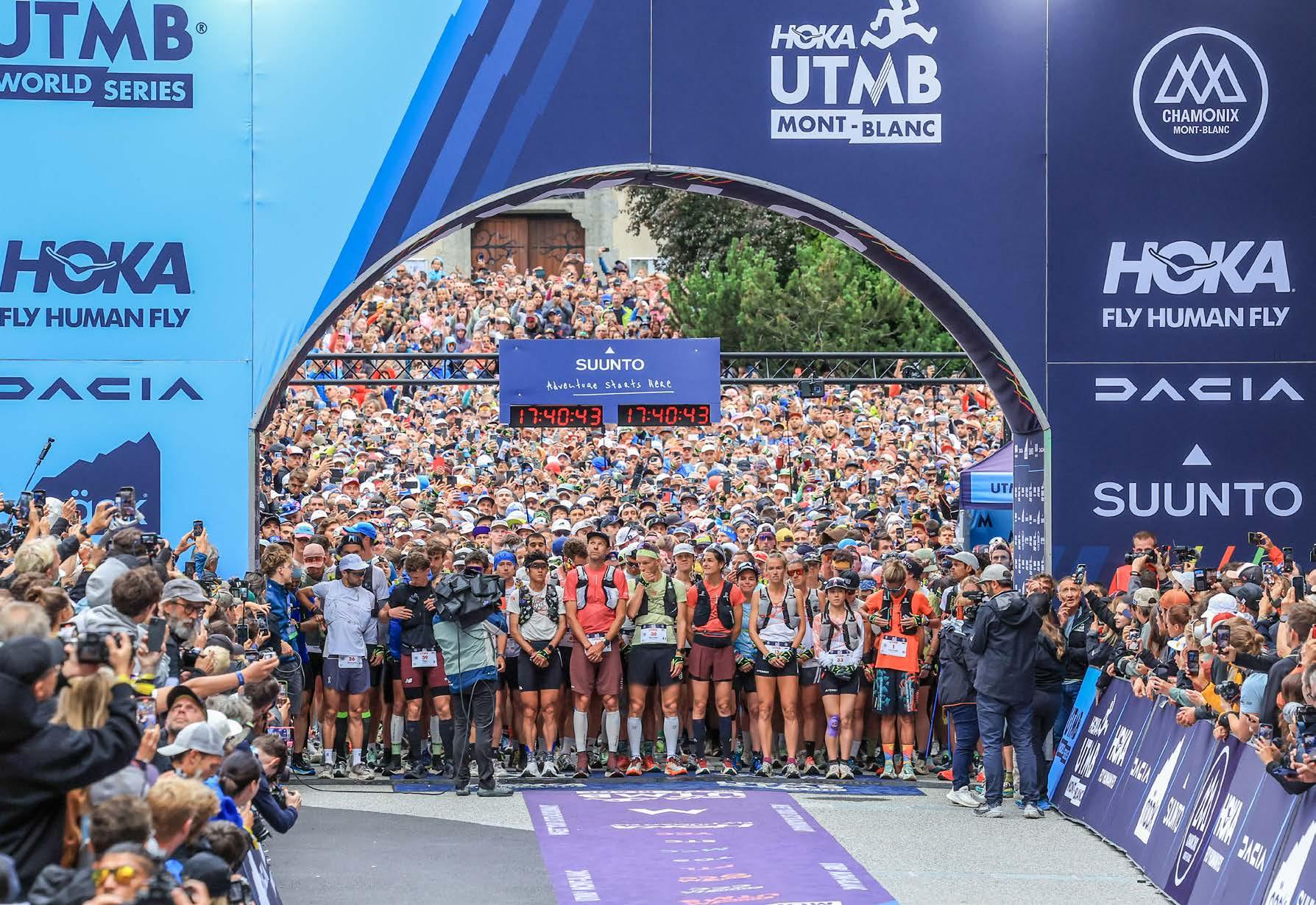
A few route changes, new pre- and post-race shuttles, initiatives promoting inclusion and health: a brief guide to help you navigate the most important week of the year for the world of trail and ultra running, August 24–30 in Chamonix
by Claudio Primavesi - photo by UTMB
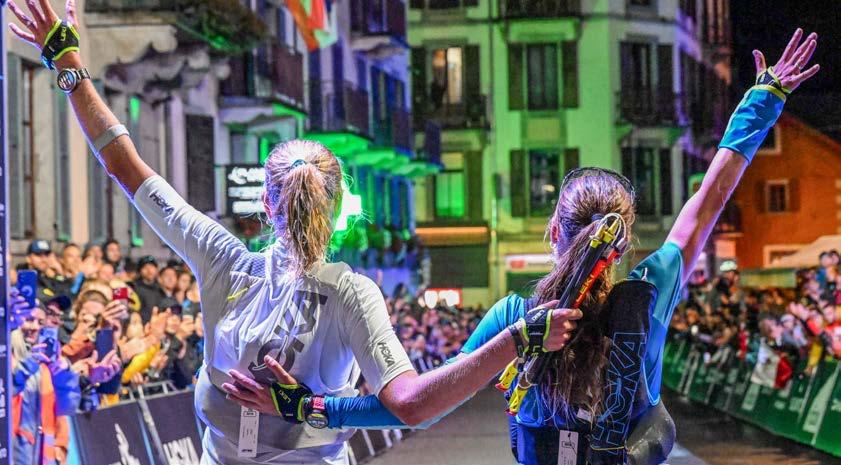
RACES: NEW OCC AND HEADLAMPS IN RED MODE
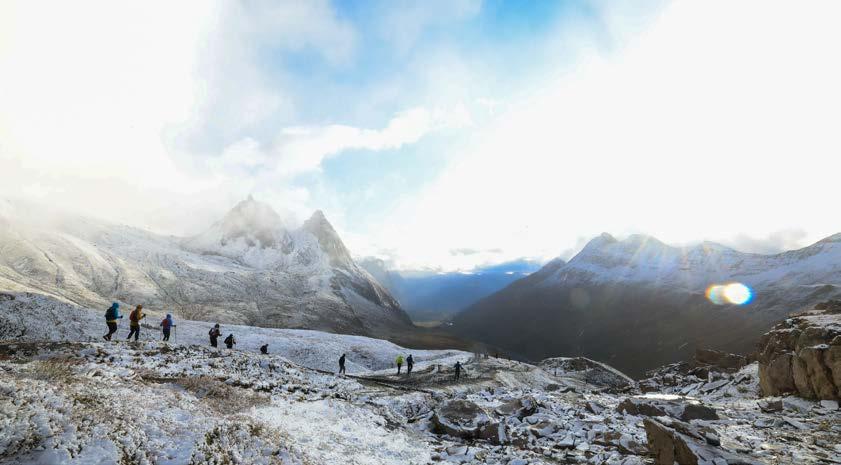
The OCC route has been revised to better distribute the flow of runners across the terrain without compromising the quality of the race: the route now includes more sections in the Flégère and Tête de Balme area (2,321 m). Team support at Trient has been discontinued for both the CCC and the UTMB, to reduce congestion in the village and promote fair play. A ‘life bag’ will be available at Champex-Lac, designed to ensure equal treatment of athletes and reduce stress for support teams should they fail to meet up with their runner. For the UTMB, the use of the red light mode on headlamps is now mandatory within the Les Contamines-Montjoie Nature Reserve; this measure was decided in conjunction with the protected area’s managers to safeguard biodiversity.
ENVIRONMENT: MORE FREE SHUTTLES AND SPECIAL TRAINS
The 2026 sustainability report will be published after the race. On the transport front, two-thirds of participants opted for the ‘travel boost’, generating over 250,000 euros in contributions towards CO2 offsetting. The expansion of UTMB Mobility continues: pre-race shuttle services will operate for all races from the hubs at Cluses, Sallanches, Le Fayet and, new for 2026, Les Contamines. Post-race transport from Chamonix to these same destinations is also making its debut – a service that was not available in 2025. Thanks to the partnership with SNCF, new special trains will run between Chamonix and Saint-Gervais in both directions on Friday 28 August, with free travel for everyone. The partnership with Borini/Arriva on the Chamonix–Courmayeur route will, meanwhile, allow free travel for holders of a valid UTMB Mobility pass and for runners wearing their race bibs.
INCLUSION: 67 ATHLETES WITH DISABILITIES AND BREASTFEEDING FACILITIES
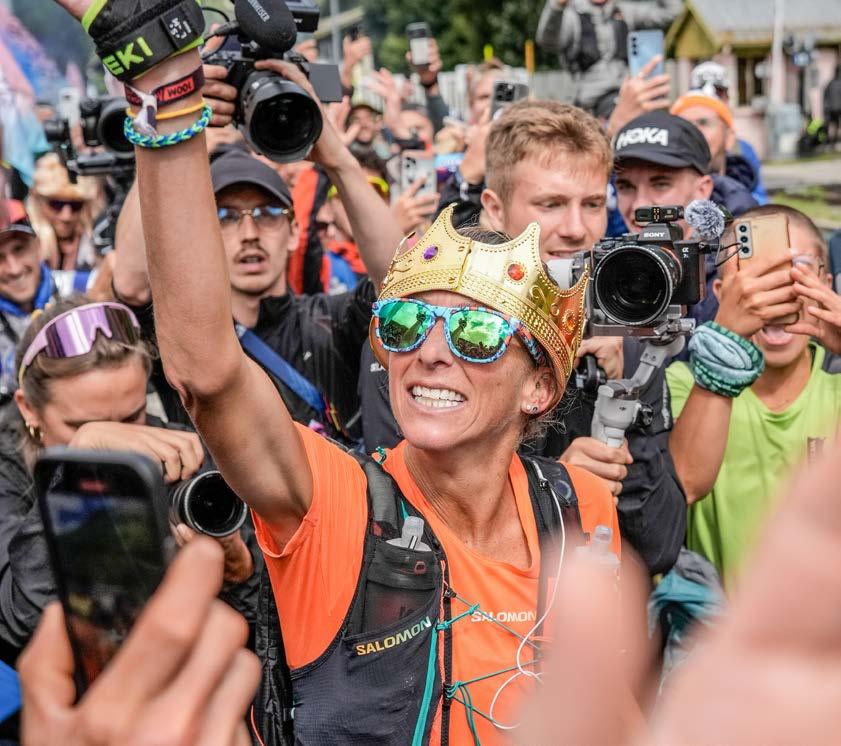
The Team Adaptive by UTMB returns for its third edition: 15 athletes with disabilities will take on new challenges, including Jonathan Naboulet, who aims to become the first athlete in a joëlette to complete the UTMB; Julien Veysseyre, competing to become the first amputee to cross the finish line of the flagship race; and Travis Warwick-Oliver, set to start in the PTL. In 2026, a total of 67 athletes with disabilities will be welcomed, compared with 37 in the previous edition. The Women in Trail programme also continues to grow, with equal live coverage of women’s and men’s races on UTMB Live, balanced content production (50% women, 50% men), dedicated toilets and changing rooms along the route, feminine hygiene kits at every refreshment point, staff trained in women’s specific needs at every aid station, private facilities and breastfeeding facilities available on
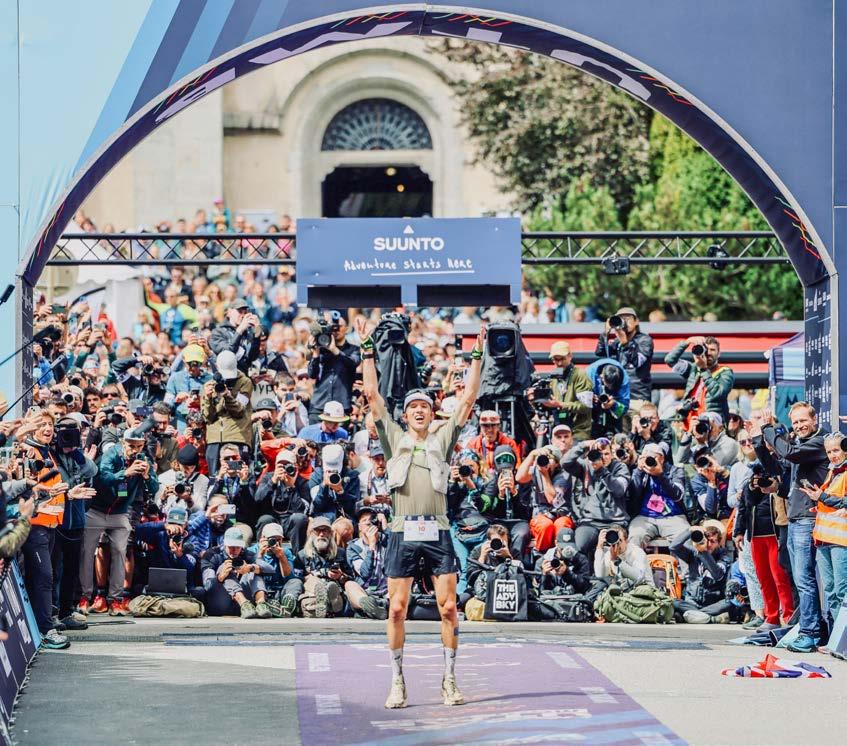
request. On Thursday 27 August, the Women’s Health & Ultra Endurance Congress will take place at the Majestic, featuring the presentation of research studies, as well as new talks and panels for fans.
HEALTH: NEW POLICIES AND RESEARCH
Two new policies are being introduced: the “Path to Parenthood Policy” and the “Health Policy”. Health prevention initiatives are also being strengthened, with medical guidelines updated by the Medical Commission, a video awareness campaign on responsible self-medication and a stand dedicated to prevention in the Ultra-Trail Village. Finally, UTMB’s commitment to scientific research, which began in 2007, continues: among the new initiatives for 2026 are the “0 to 100” research project and a sleep study expanded to include a larger number of participants, alongside an information stand on UV exposure.
A platform that supports healthcare professionals’ decisions during mountain races, without, however, taking their place. VDA Trailers has launched a partnership to implement the safety and rescue system, starting with the premier race
by Tatiana Bertera
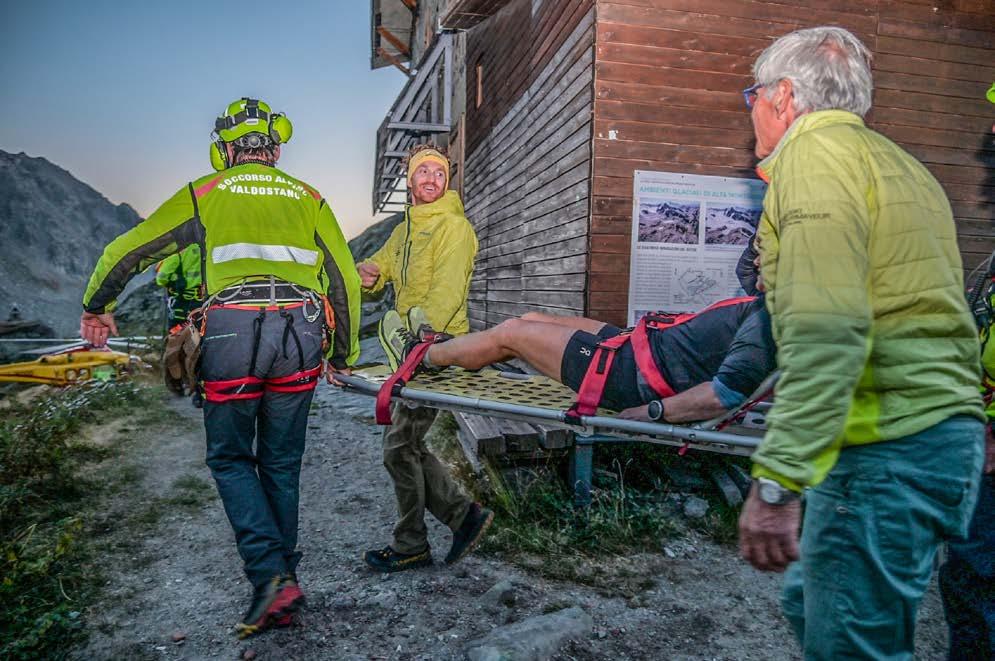
Robotic healthcare workers capable of solving any problem instantly? No, that’s science fiction, and fortunately, we’re still a long way from that kind of “strategy.” Instead, we’re going to talk about the collaboration between VDA Trailers and EMSy, which introduces artificial intelligence into the medical management of the Gran Trail Courmayeur 2026 and the TORX with Kailas 2026. These two races in the Aosta Valley are becoming a testing ground for innovation in international trail running. The new EMSy Events platform does not replace the tried-and-true safety system built up over the years with doctors, first responders, volunteers, and institutions, but rather enhances it through the digitization of interventions, real-time monitoring, and decision support. Thanks to the integration of AI, the goal is not only to manage emergencies but to anticipate them, offering athletes one of the most advanced standards of medical care in the world. The collaboration stems from the field experience of emergency physician and trail runner Damiano Presciani, co-founder of EMSy, who developed the platform specifically to meet the needs of running races in complex environments such as the mountains. The system will be operational at all races on the VDA Trailers circuit starting in July 2026, following a phase of training for medical staff and field testing.
As an emergency physician and trail runner, you’re very familiar with the challenges of mountain races. What specific problem prompted you to develop EMSy Events?
I’ve been fortunate enough to serve as a doctor at many endurance events: the Tor des Géants and the UTMB, above all. Sometimes at remote stations where you have no information about the patient in distress standing right in front of you. Not knowing whether an athlete has already been examined along the course, whether they’ve already taken medication, or whether they suffer from other medical conditions or allergies makes the job very challenging. EMSy Events solves this critical issue because, even without a network connection, you can access all this information right from your smartphone.
There's a lot of talk about artificial intelligence these days, but it's often discussed in abstract terms. In a race like the TORX with Kailas, how can AI really make a difference?
At TOR, EMSy’s AI doesn’t “think for the doctor”: it provides an automated second opinion on every medical record as soon as it’s closed by the paramedic—whether in the mountains or at night—when the dispatch center can’t review them all in real time. It doesn’t make any decisions or override human judgment, but it provides a check that no dispatch center can guarantee on a case-by-case basis for dozens of scattered incidents. Every consultation is logged.
tical tool that your colleagues in the field use with satisfaction. The tests we conducted at the Gran Trail Courmayeur and the Monterosa Walserwaeg by UTMB confirmed that we were on the right track. I can’t wait to use it and see it in action at the TORX.
Artificial intelligence can raise some concerns. Is there a risk that it will replace the judgment of doctors or healthcare professionals? What, then, will the relationship between technology and human experience be?
Artificial intelligence never makes decisions in place of a doctor. It cannot determine the severity of a patient’s condition; that is always a human judgment. It never makes choices for you; it simply provides a second opinion for you to consider. The first responder can also ignore it entirely, without any restrictions. Its sole purpose is to issue a warning when a case appears more serious than what’s been recorded—never the other way around.
ciani
Looking ahead, do you think tools like EMSy could become the standard at major trail running races and, more generally, at outdoor events? What is your vision for race medicine in the coming years?
You said that the goal is to “anticipate problems, not just manage them.” Can you give some examples of situations in which the system will be able to support the decisions made by the operations center?
AI is much better than humans at sifting through thousands of data points and finding connections that aren’t obvious to us. EMSy Events can cross-reference health and weather data: Imagine a system that immediately realizes the temperature on the trail is rising and that three patient records with symptoms similar to heatstroke have appeared; it sends a pre-alert to the control center and instructs all healthcare professionals in the area to prepare to treat dehydration and other similar issues.
For years, you’ve been experiencing the TORX from the inside as a doctor, overseeing the medical management of one of the most complex races in the world. How does it feel to return today with a technology you helped develop—one that could represent a new step forward in athlete safety?
It’s wonderful to see something you’ve imagined in your head and created step by step on your computer take shape and become a prac-
Today, EMSy is still an exception: internationally, few organizations approach a sporting event in this way. But I’m convinced it will soon become the standard, because sports medicine is moving away from being a volunteer-based, improvised activity and is becoming a serious discipline, with its own protocols, data, and responsibilities. Races are growing in scale, becoming longer, and venturing into increasingly remote areas: sooner or later, they will all need to equip themselves with tools designed specifically for this purpose—not ones adapted from other contexts.
The GTC was our very first hands-on experience with EMSy. Can you tell us how it went?
It’s true, it was the first time we’d used it. Actually, it was a bit of an unusual session—very few patients to treat: almost a disappointment, but in a good way, because people were feeling well and we would have liked to test it more. The best part, though, was something else: seeing different people use EMSy in real time, each with their own perspective. Each person noticed aspects that I hadn’t seen, and that sparked ideas for modifying the platform. During the breaks between sessions, I’d jump on the computer to implement the suggestions coming in real time on the spot. It was fascinating to discover how a perspective different from your own can spot things you’d never see on your own.
A full 120 kilometers and 9,000 meters of elevation gain between Valtellina and South Tyrol: a new ultra race that promises to be a spectacular event. We spoke with the organizer, the six-time world champion in mountain running
by Claudio Primavesi - photos by Maurizio Torri
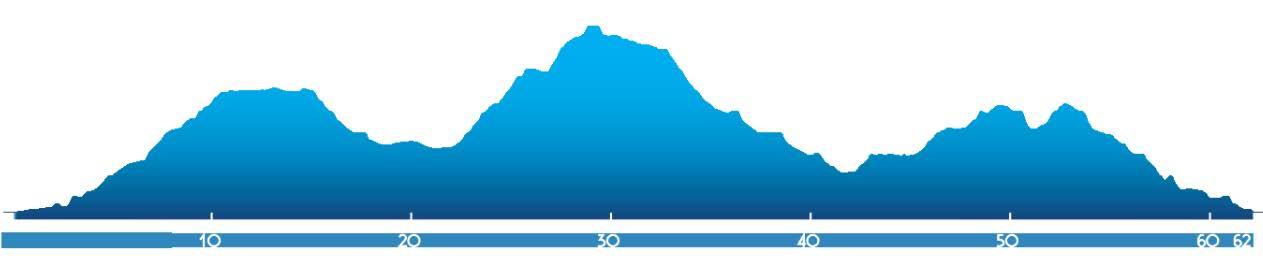
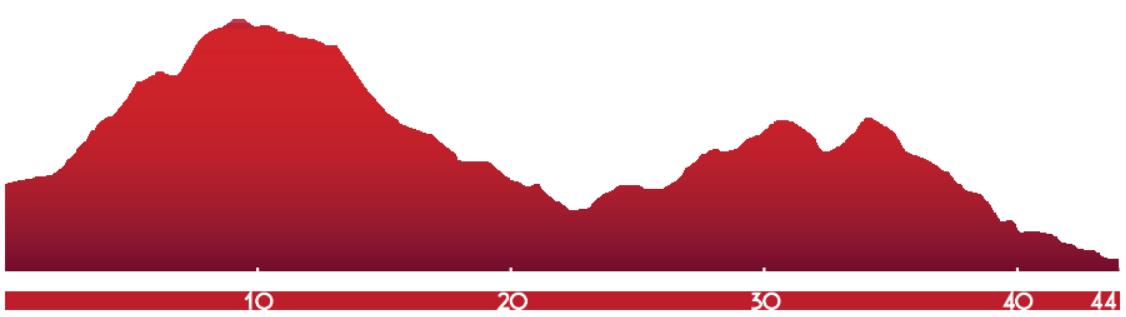
The dates to mark on your calendar are September 11 and 12, 2026. Whether you call it Edition Zero or One (it’s hard to imagine it’s the former with 800 race bibs up for sale), the Ortles Haute Route Trail (ortleshauteroute.it) has an excellent chance of becoming a major classic. Take Marco De Gasperi’s word for it. The new ultra race (120 km, 9,000 m of elevation gain), starting and finishing in Bormio, in Valtellina, was born from an idea by the six-time world mountain running champion. And it winds around the mountain where he set the record for the ascent and descent. “The idea came to me in 2020, shortly after the Alta Via dell’Ortles was established between Valtellina and South Tyrol, but I had other commitments, and a lack of time turned it into the classic ‘dream on the back burner,’” Marco begins. That dream remained on the back burner for a few years, but it didn’t fade away, so last year Marco, along with some friends and his partner Elisa Desco, set out to test the route over four days. “Even though I was familiar with many of the places, I was amazed, because there are areas with unique landscapes—such as, the section above Solda or the Val Martello.” The Alta Via is fairly well-known on the South Tyrolean side, where it’s hiked every year by tourists from all over Europe, but less so on the Lombardy side. The idea is precisely to promote it beyond the competitive aspect, including for those who might want to hike it at their own pace, whether faster or slower. “It’s usually hiked clockwise, starting and ending at the Stelvio Pass, but the race will start and finish in Bormio and proceed counterclockwise, so that everyone crosses the glacier above the Casati Mountain Hut (3,269 m) before dark, in addition to being able to rely on a tourist destination like Bormio as an ideal operational base.” This ultra race has all the makings of a highlight of the end of the season, with its fantastic single tracks, forests made magical by fall colors, and no fewer than three mountain passes over 3,000 meters in elevation: Zebrù Pass (3,005 m), Casati Mountain Hut (3,269 m),
and Madriccio Pass (3,123 m). All of this takes place within the Stelvio National Park. However, it won’t be the only race: participants can also choose the 35-kilometer Raethia Trail (2,300 mD+) and the 12-kilometer OH Short Trail (600 mD+). What kind of time can be expected for the ultra? “There are already several FKTs; the fastest is held by Daniel Jung,
“Even though I was familiar with many of the places, I was amazed, because there are areas with unique landscapes, such as the area above Solda or the Martello Valley”
Marco De Gasperi
at about 19 hours, who in turn beat the previous record set by Peter Kienzl and Jimmy Pellegrini; considering that Jung ran the course clockwise in October, under less-than-ideal weather and lighting conditions, I think we can expect a time between 17 and 18 hours,” says Marco. It will also depend on the caliber of the athletes at the start: “There are several top runners who have shown interest, but since it’s right before the UTMB, it will depend on how the season goes, and they’ll decide at the last minute.” Marco has run all distances and in every corner of the world—what race could the new ultra be compared to? “First of all, you have to consider that the elevation gain is 9,000 meters over 120 kilometers, and there aren’t many races with this ratio of distance to elevation gain—just think that the LUT has less than 6,000 meters of elevation gain,” Marco begins. “In some ways, it might resemble the Matterhorn Ultra Race, because it’s run at high altitude on similar terrain, but our course also descends into valleys at 1,000 meters. Perhaps I’d compare it to the Adamello Ultra Trail and the VUT, though every race has its own character.” The opening section will likely stretch out the line of runners right from the start, as it consists of 32 kilometers that are almost entirely uphill. Registration is open, and the response in the first few months has been good: there are 300 bibs available for the ultra, 300 for the 35-kilometer race, and 200 for the 12-kilometer OH Short Trail. Now all that’s left is to wait for September 11 and 12. The first editions are always the most challenging, but also the most eagerly anticipated. “Dega” and his team know this well, and the experience they’ve gained—not only on trails around the world but also in organizing a successful race like the Valtellina Wine Trail—is an excellent calling card.
ortleshauteroute.it
450 race bibs sold out and revised start times for the women’s race: on August 21 and 22, the Grande Corsa sul Sentiero Roma returns by Maurizio Torri
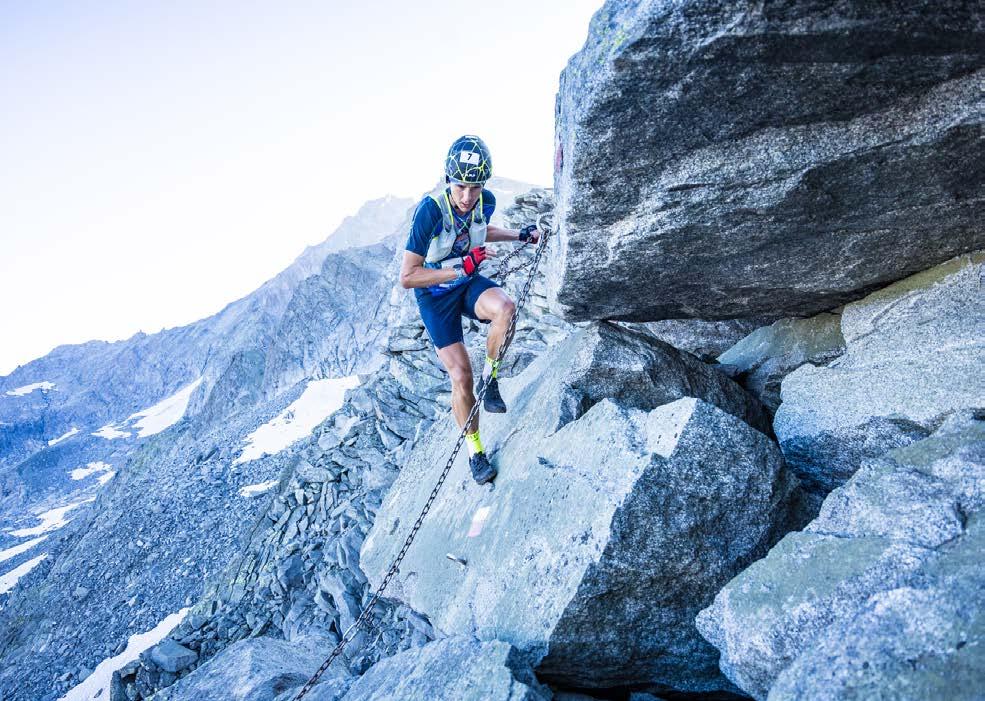
The event takes place on 21 and 22 August. On the second to last weekend of August, the Merrell Skyrunner World Series will return to the granite peaks of Valmasino for a race that, over the years, has become a myth, a tradition and a legend. Despite its proximity to the UTMB Series finals, this year’s Grande Corsa sul Sentiero Roma once again sold out its race numbers immediately. Although it requires a suitable sporting CV and a specific ITRA score, the 450 available places were allocated with a long waiting list. Following its glorious beginnings, what has made this event one of the most iconic and coveted in the world was the description given by the Catalan phenomenon Kilian Jornet: “The Kima is the most beautiful and technical of all skyraces. It is not a running race, but a race in fast mountaineering. At the Kima, you don’t run; at most, you jump from one rock to another, always keeping your wits about you.”
The Grande Corsa sul Sentiero Roma was born from the visionary dream of Pierangelo Marchetti, known to everyone as “Kima”. This young Alpine guide from Val Masino, who died in 1994 during a helicopter rescue operation, was convinced that it was possible to run on the granite slabs of the “European Yosemite”. A visionary project – perhaps even a little mad – which, at the time of his death, his sister Ilde refused to let fall by the wayside. Supported by skyrunning pioneers such as Adriano Greco and Fabio Meraldi, in 1995 she brought her brother’s dream to life. Many years on, the gruelling nature of this route continues to thrill skyrunners from all over the world.
Earning a degree at the ‘university of sky-high racing’ is no easy feat, as anyone who regularly has to contend with the strict time barriers at Bocchetta Roma and the Allievi and Gianetti mountain huts knows all too well. The Kima is a veritable race against time over particularly rugged terrain. To take home the coveted finisher’s medal, you must first conquer those 52 highly technical kilometres with a total elevation gain of 8,400 metres and seven Alpine passes, all above 2,500 metres (the highest being the Cameraccio Pass at 2,950 metres). Making history
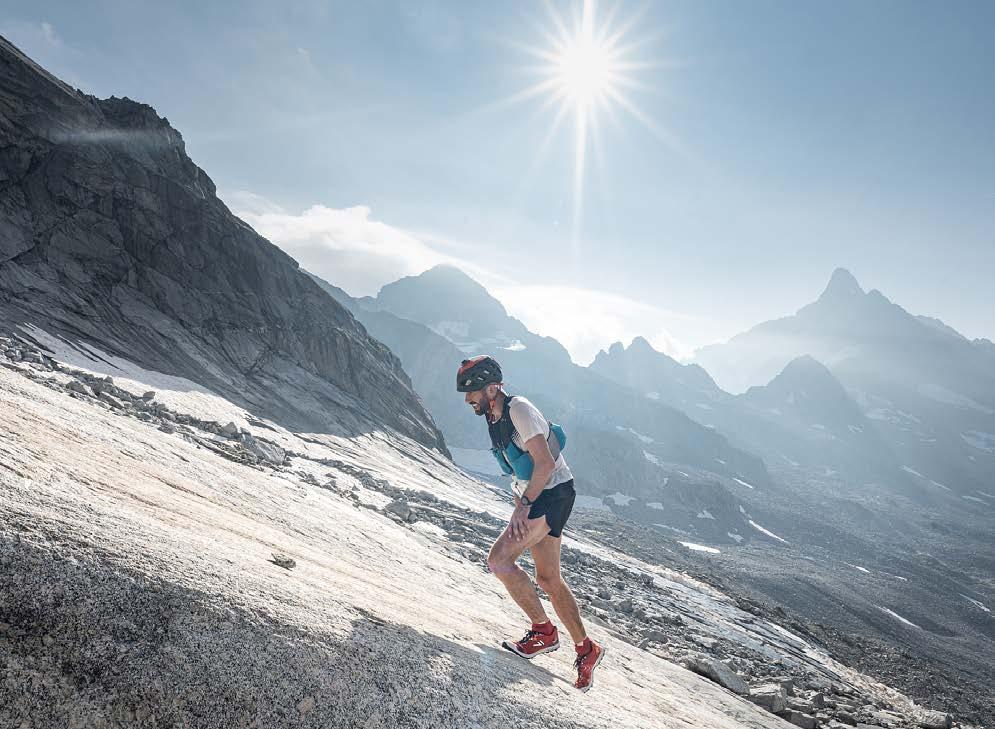
is no mean feat: just consider that the records on the original route (50 kilometres with 3,800 metres of elevation gain) remain unbroken (Marco Gatta 5h49'10‘ and Gloriana Pellissier 7h48'27’). Following the latest tweaks, which have made the Grande Corsa sul Sentiero Roma even longer and more challenging (52 kilometres with 4,200 metres of elevation gain), the times to beat are held by the Scot Finlay Wild (6h05’54‘) and the American Hillary Gerardi (7h30'38’).
Compared to previous years, the time limit for the women’s race at the Gianetti refuge checkpoint will be extended by half an hour. “In the early years, the women set off half an hour before the men and therefore had more time to complete the race,” said Ilde Marchetti of the organising committee. “In recent editions, the start times and time barriers have been standardised, but we realised they were particularly restrictive for the women’s race. Following a careful selection process at Bocchetta Roma and Allievi, our skyrunners will therefore have a greater time margin to achieve their sporting dream without taking excessive risks on the most technical sections.”
To ensure maximum support along the most challenging sections, the organisers deploy around ten Alpine Guides, 25 Alpine Rescue technicians and members of the SAGF (Alpine Rescue Unit of the Guardia di Finanza) every year, stationed at strategic points along the route.
In line with this, the compulsory use of helmets has been confirmed; this rule was previously introduced for the flagship race and has now been extended to the Kima Extreme Skyrace from this year onwards. In the Sky Marathon, helmets must be worn from Preda Rossa to Bagni Masino, whilst in the Sky race, they must be worn from the Gianetti Mountain Hut to the same assembly point as the longer race.
Alongside the World Cup race in Filorera, three further competitions are scheduled, giving everyone the chance to get involved.
KIMA EXTREME SKYRACE
Don’t be fooled into thinking this is just a side event: this Skyrace is extreme in name and in reality, covering 27.5 kilometres with 1,890 metres of elevation gain. It features the climb to the Gianetti mountain hut, the passage over the legendary Passo Barbacan (2,570 metres, the race’s GPM) and the descent to the Omio mountain hut. A little taste of the Kima Trophy, offering the chance to test yourself in the final stretch of the most legendary of the Ultra Skymarathons. The records to beat are held by Luca Del Pero (2h58’42‘) and Giulia Marchesoni (3h30’38’).
MINI KIMA & KIMA TRAIL RUNNING
These two non-federation events showcase the valley floor and are truly accessible to everyone: the first is a very easy six-kilometre loop along the cycle and footpath, ideal for beginners, people with disabilities and parents with children in tow. The second is a real gem: 14 kilometres to run, taking in the most picturesque and panoramic spots in the Val di Mello.
trofeokima.org
June saw the edition zero of the event that will make its debut in 2027. Registration opens in September
by Tatiana Bertera
It will make its debut in less than a year with a course of approximately 260 kilometers and 17,000 meters of elevation gain through some of Piedmont’s most spectacular mountains, but it’s already generating a lot of buzz. The Grande Muraglia 260K will be international from the start and aims to become a new benchmark in the world of ultradistance running. Registration will open as early as September 2026, when the 150 race bibs allocated for the first edition will be made available.
The official announcement came during the “L’Anima delle Valli” event, organized as part of Pomaretto’s Mountain Week, which presented a project designed to combine sports, the local area, and the promotion of the Alpine valleys. Prior to the official launch, from June 8 to 10, 2026, a test run was held involving some of the discipline’s best-known athletes, confirming the technical quality and scenic beauty of the course. Among them was Luca Papi, one of the most recognizable figures in international ultra-endurance, who has already announced his participation in the first edition.
The race will start in Pinerolo and end in Fenestrelle, with 95% of the route taking place on trails, mule tracks, and historic paths. The athletes will mainly traverse the Val Chisone and Val Germanasca, with sections also passing through the Val Troncea, Val Sangone, Val Pellice, Val Noce, and the Vallone di Massello, passing through four protected areas in Piedmont. The route will pass through the Strada dell’Assietta, Europe’s highest military road; the famous Colle delle Finestre; and the Fenestrelle
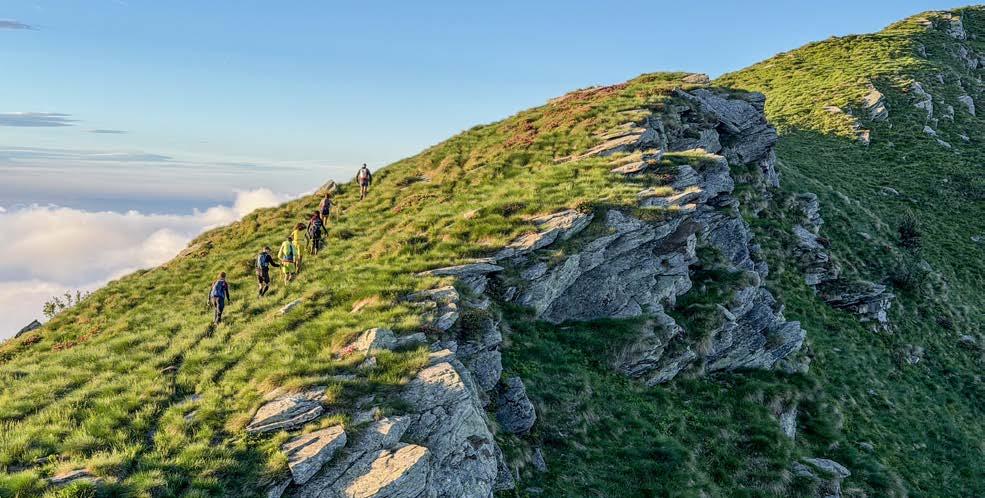
Fortress—from which the race takes its name, inspired by the “Piedmontese Great Wall”—as well as alpine huts, the Prali mines with their spectacular geological tunnel, the heroic vineyards of Ramìe, and numerous sections of the “Le Strade dei Forti” trail, which will be inaugurated in 2025.
Designed for experienced runners, the Great Wall 260K will be run on a semi-self-supported basis using GPS navigation, a format inspired by major international ultra-endurance races. Competitors will have between 50 and 92 consecutive hours to complete the course, relying on three support bases—Fenestrelle, Massello, and Pomaretto—and 15 aid stations.
The project is now entering its operational phase. The exact date of the race, the rules, and all technical details will be announced in the coming months, while the race to secure one of the 150 available bibs will officially begin in September 2026 for what is set to become one of the most fascinating races on the Italian scene.
260 km 150 5% 17,000 m 95%
lagm260k.it
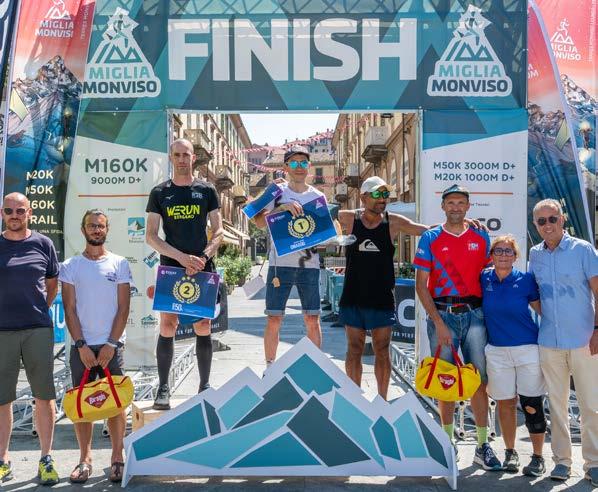
The 100 Miglia Monviso, held from July 17 to 19, showcases the region through the race and related events
by Matilde Marelli
From July 17 to 19, the valleys at the foot of Monviso hosted a new edition of the 100 Miglia Monviso, which over the years has established itself as one of the premier events in Italian trail running. The event featured three distances—160, 50, and 20 kilometers—attracting both seasoned ultratrail runners and those seeking an authentic running experience in nature, without worrying about the podium. The routes wind through the region, passing through villages, mountain huts, and some of the most picturesque landscapes within the Monviso Park and the UNESCO
92 hours
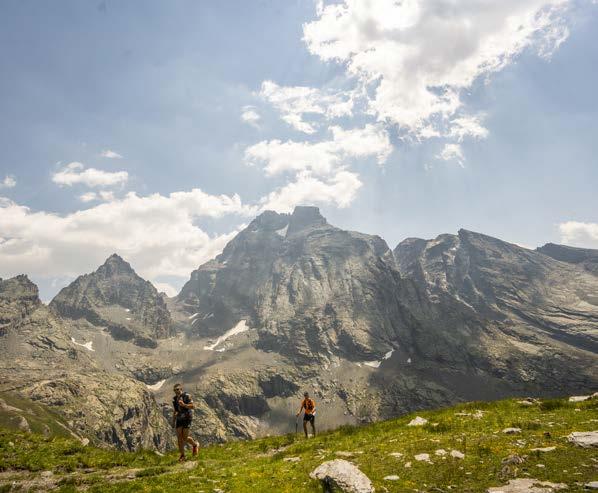
Monviso Transboundary Biosphere Reserve. Beyond the competition itself, the 100 Miglia Monviso has a specific goal: to use trail running to highlight the beauty of the Piedmont region, promoting slow, sustainable tourism that is deeply connected to local communities.
15 3 4 development Available bibs asphalt Elevation gain Podium trails and mule trails the maximum time allowed to finish the race places to eat along the route life bases (Fenestrelle, Massello and Pomaretto) naturaltraversedparks
M160K
• Men's Podium: Daniele Calandri, Mattia Barbaglio, David Anca Saturnino
• Women's podium: Enrica Dematteis, Valentina Michielli, Sara Bruno
M50K
• Men's podium: José Luis Montoya, Stefano Signori, Matteo Cesano
• Women's podium: Luisa Dematteis, Eline Cox, Paola Nodari
M20K
• Men's podium: Elia Mattio, Massimo Galliano, Davide Preve
• Women's podium: Alessandra Alliney, Chiara Magnino, Denise Pascal
Among the standout performers in this year’s race were sisters Enrica and Luisa Dematteis, both of whom claimed victory: Enrica won the 100 Miglia for the third time, while Luisa took the 50K. On the men’s side, Daniele Calandri returned to victory following his triumph in 2024, crossing the finish line first in the flagship race after running much of the course alongside Danilo Lantermino, who was forced to withdraw but demonstrated great sportsmanship by encouraging his rival along the route.
What makes this event unique is not only the athletic achievements, but also the collaboration among the 18 municipalities, over 500 volunteers, 30 organizations, and various sponsors—including Vibram, Mico, and Ferrino—who have succeeded in transforming the entire region into a welcoming network for athletes and their companions. This philosophy will continue on August 30 with the traditional Monviso Trail, a 26-kilometer race with 1,900 meters of elevation gain, starting and finishing in Crissolo, the birthplace of the historic Monviso Guides.
Designed for fast hiking, NAT’S Lavaredo Series combines stability and support in a single structure that follows the foot’s natural movement. More on Off—road by design.
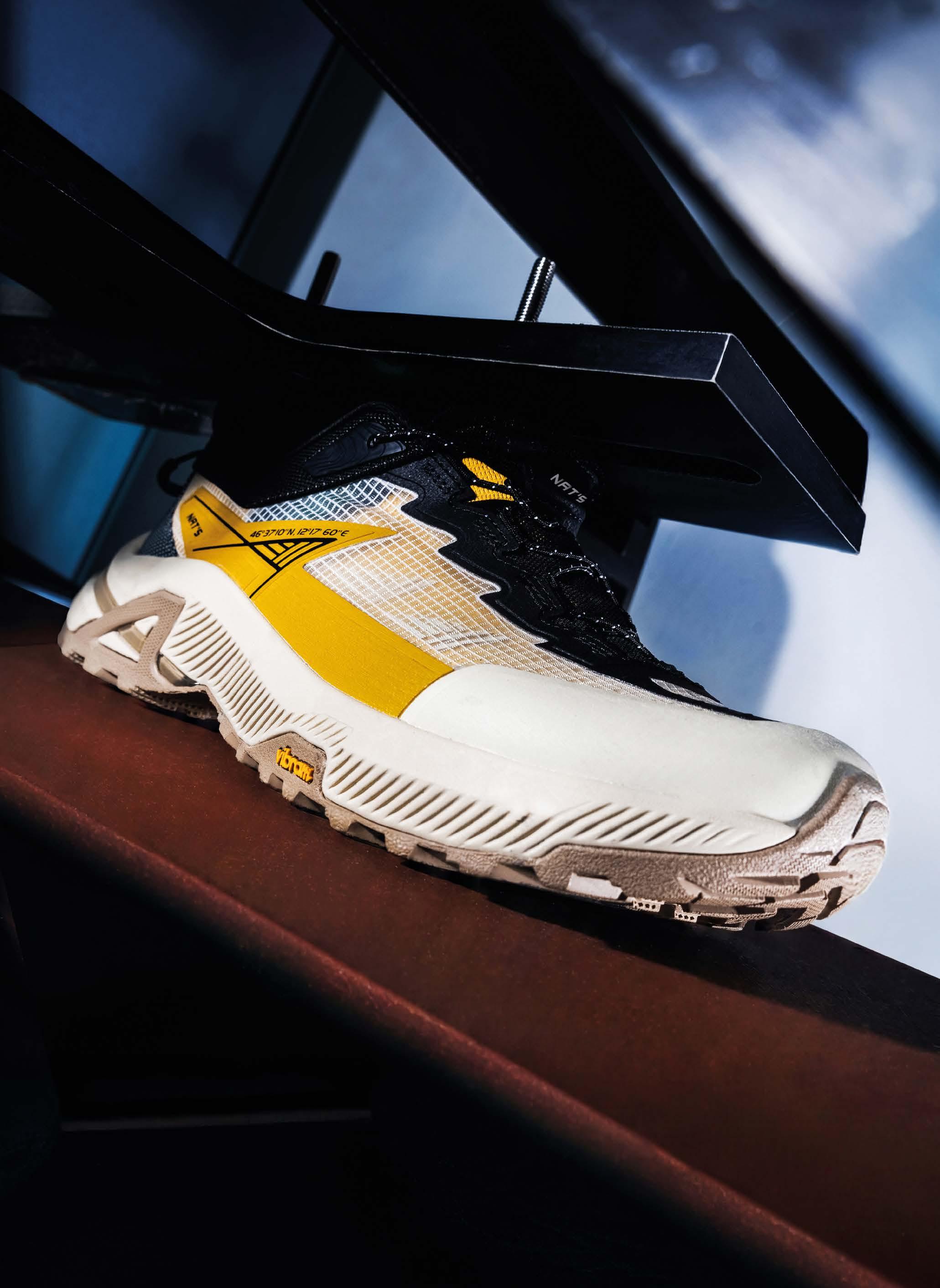

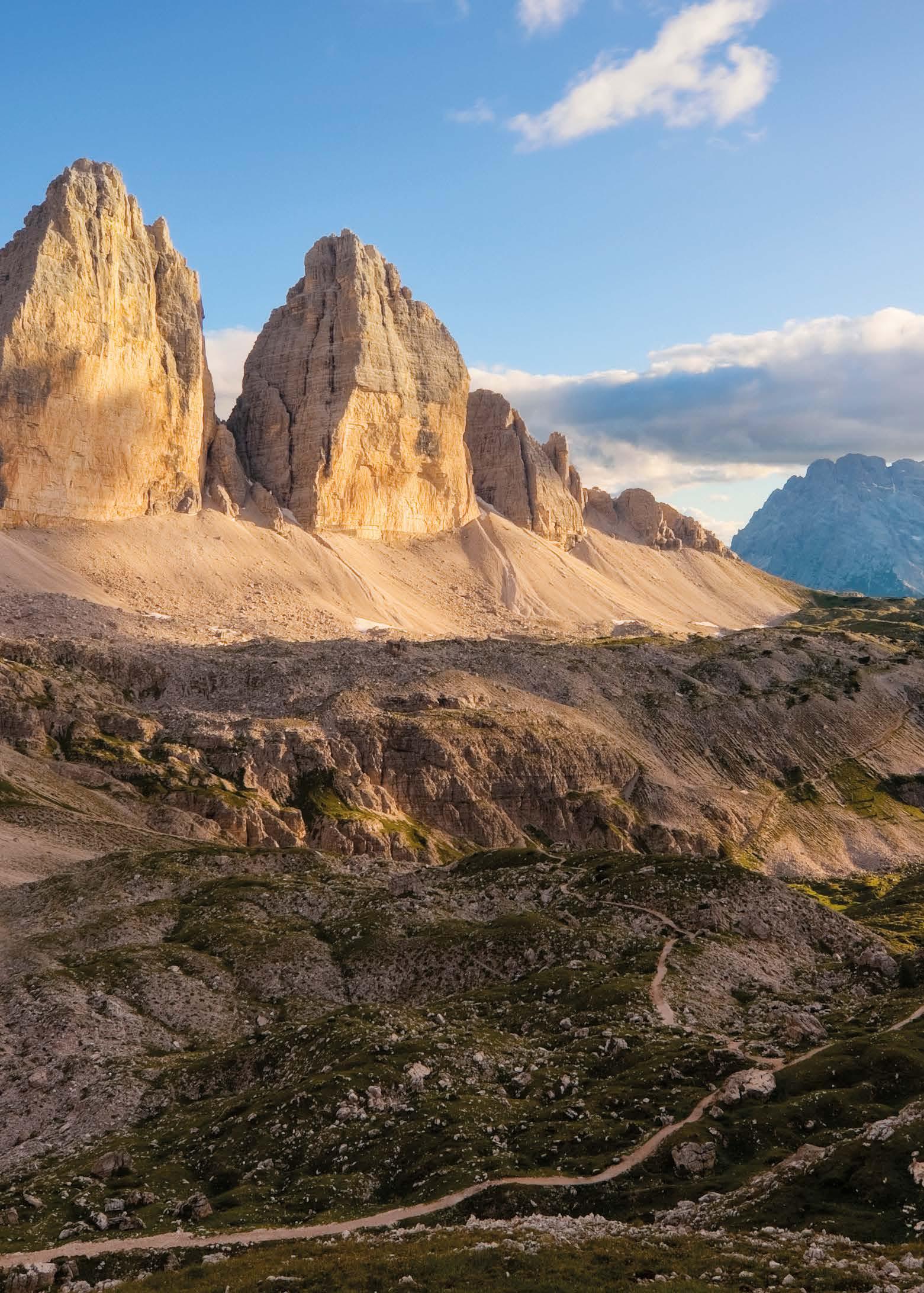
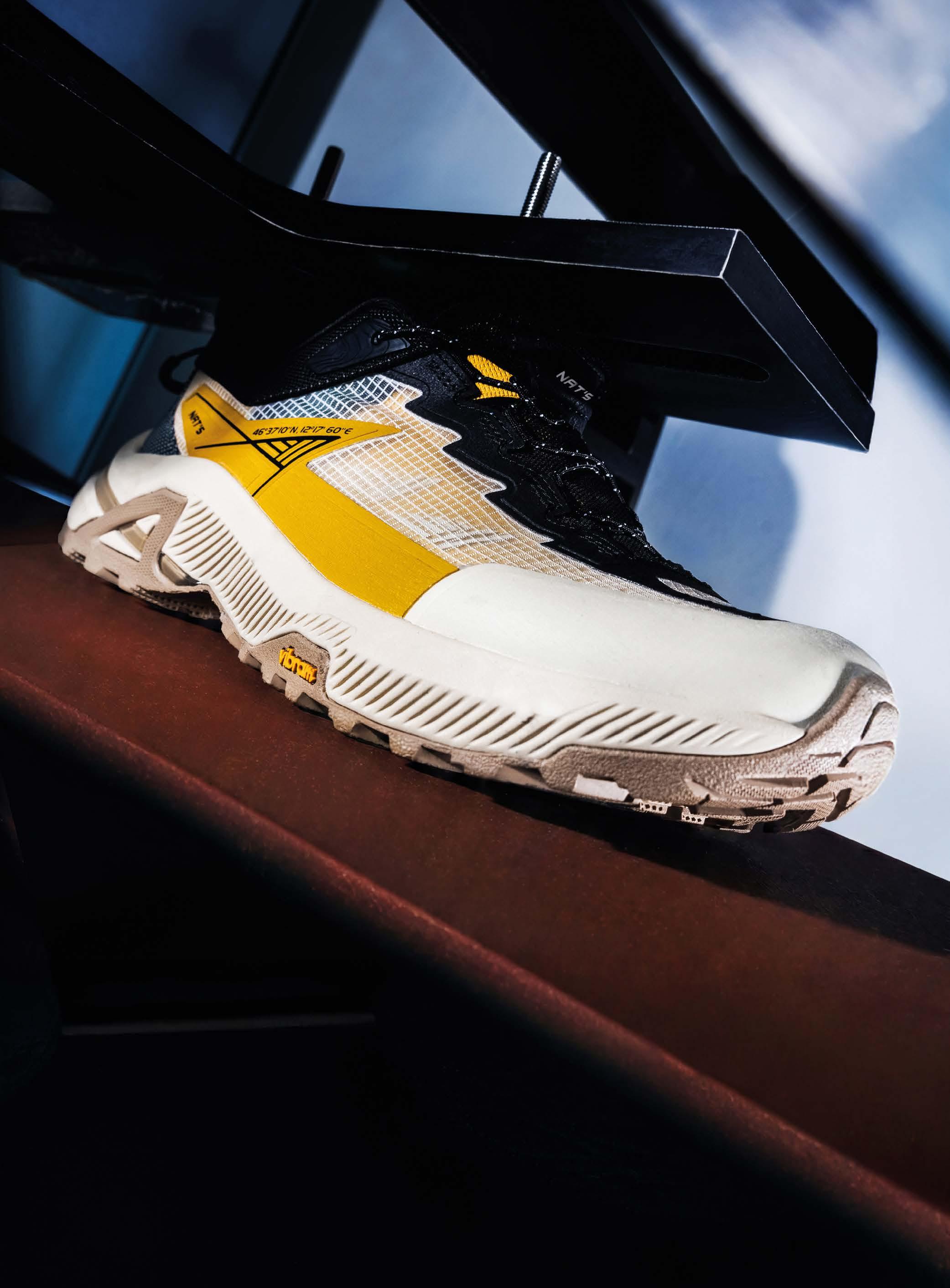
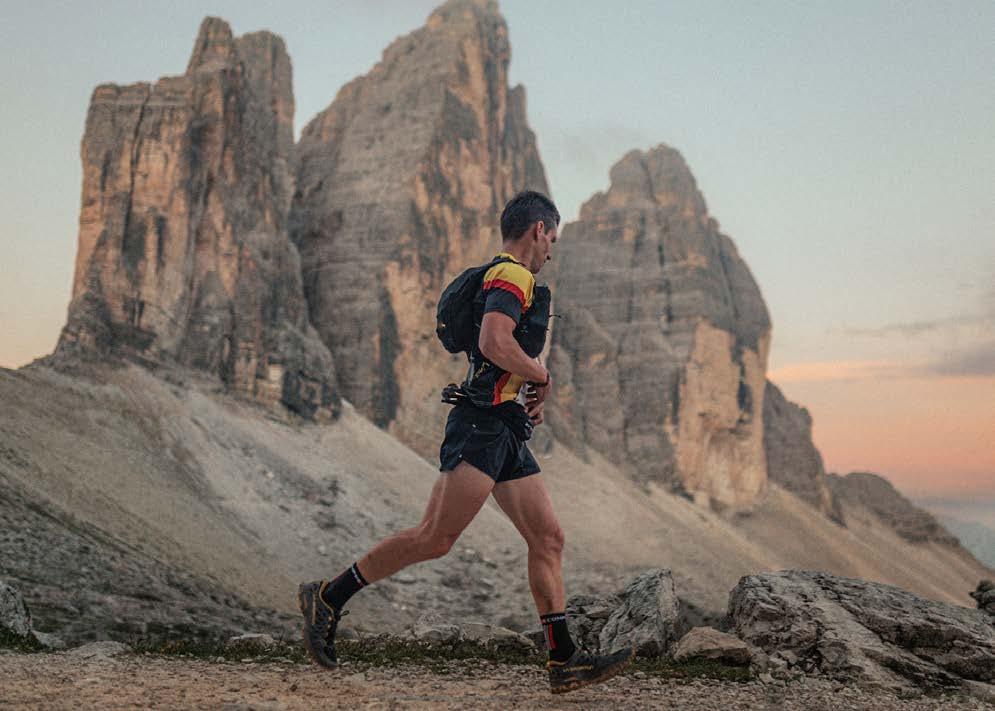
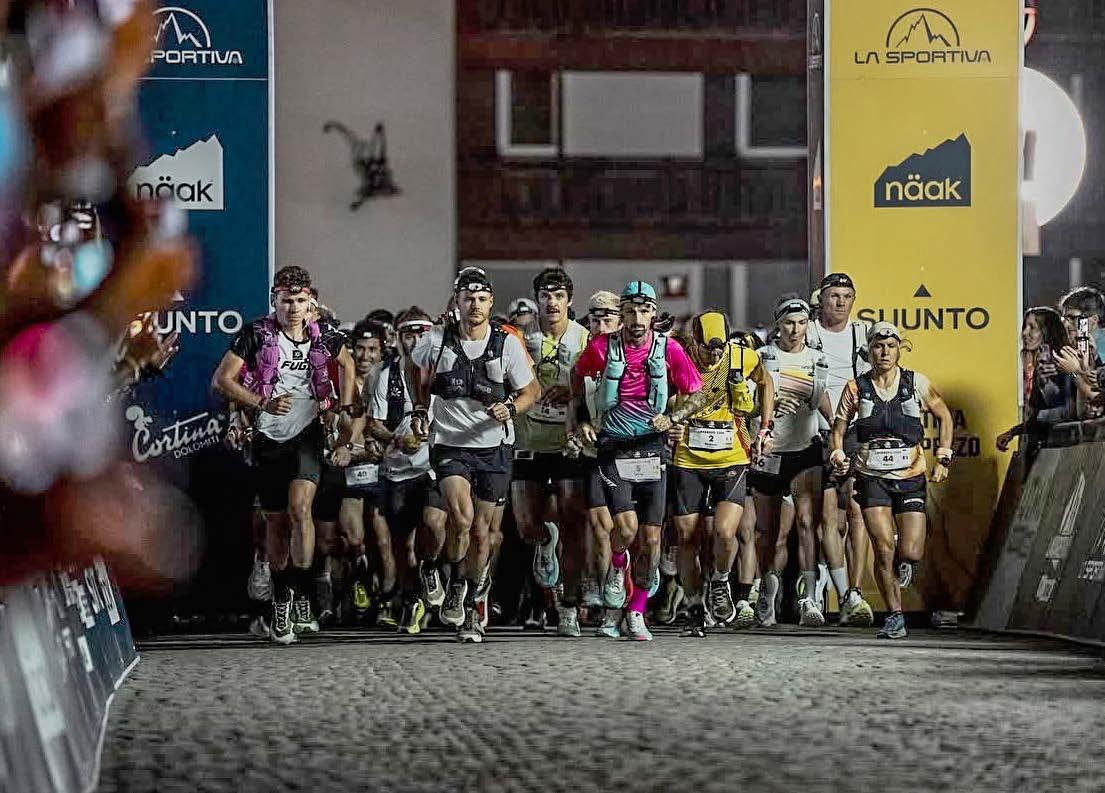
Everything revolves around this concept when it comes to La Sportiva. Whether it’s the company’s structure, in terms of its relationship with athletes or the trail running community. But also the atmosphere that the brand is able to create every year as main title sponsor of the Lavaredo Ultra Trail
by our correspondent Karen Pozzi - Photo courtesy of La Sportiva Lavaredo Ultra Trail by UTMB
Once again this year, La Sportiva served as the main title sponsor of the Lavaredo Ultra Trail by UTMB, the premier mountain running event, which took place in Cortina d’Ampezzo from June 24 to 28. The partnership between the Trentino-based company and the event reaffirmed a bond forged over time around a shared passion for the mountains, sports, and the desire to offer meaningful experiences to the international trail running community.
Over the years, this partnership has evolved into a significant opportunity for mutual growth, allowing La Sportiva to showcase and field-test its innovations in close collaboration with elite athletes and enthusiasts, while also strengthening its dialogue with the community and gathering valuable feedback for future product development.
We spoke with Vittorio Barrasso, corporate brand and communications manager at La Sportiva
What are the key strengths of La Sportiva’s strategy for the Lavaredo Ultra Trail?
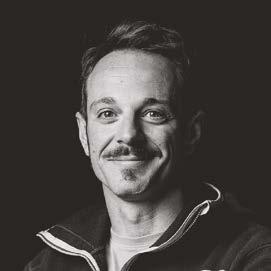
One of the highlights of the brand’s presence was the Prodigio Tech Hub, a space dedicated to innovation in the heart of Cortina. Following the success of the Prodigio line, which marked a significant evolution in the mountain running segment, La Sportiva unveiled the new Prodigio 2, featuring greater responsiveness and stability compared to the version launched two years earlier.
Within the area, professionals and enthusiasts had the opportunity to get an up-close look at the entire Prodigio lineup and to test the Prodigio Pro, Prodigio Max, and Prodigio 2 models on the trails of the Dolomites through numerous Test&Feel sessions.
The company’s commitment wasn’t limited to product testing. Throughout the week, there was a packed schedule of community-focused activities. On Thursday and Friday mornings, community runs set off from the La Sportiva Store, followed by workshops on nutrition and training.
La Sportiva’s presence was also felt along the race course, thanks to the cheering sections set up at strategic points in Cimabanche and Col Gallina. Once the competitions concluded, the festivities moved to downtown Cortina with the After Race Parties and the final concert on Saturday evening, hosted at the La Sportiva bar—set up for the occasion in the space of Bar Caffè Sport.
La Sportiva Radio, the event’s official web radio station, was also back for the entire duration of the event, providing live coverage of the races through updates, interviews, and in-depth reports dedicated to the world of mountain running.
On the competitive front, the brand has fielded a top-tier international team across all major distances.
For us, being here has two main benefits. On the one hand, there’s brand visibility; on the other, the opportunity to continue learning through direct contact with the trail running community. Observing the athletes, gathering feedback, and engaging with those who use our products is one of the most important aspects. Our presence is built on three pillars. The first is technical: a product needs to be explained and, above all, tested in the field, together with athletes and product experts. The second is communication and the ability to amplify what happens during the week. The third is our closeness to the athletes during the race, through our support of them and the community’s involvement along the course.
Does La Sportiva Radio also fit into this context?
La Sportiva Radio was created to let people experience the atmosphere of the Lavaredo race even if they aren’t physically present in Cortina. Over time, however, it has become something more: a platform that explores trail running through the race itself. We bring together athletes, journalists, organizers, coaches, and enthusiasts. We’re not just interested in reporting what’s happening during the race, but in analyzing the evolution of the sport during what is, for Italy, the most important week of the year for trail running.
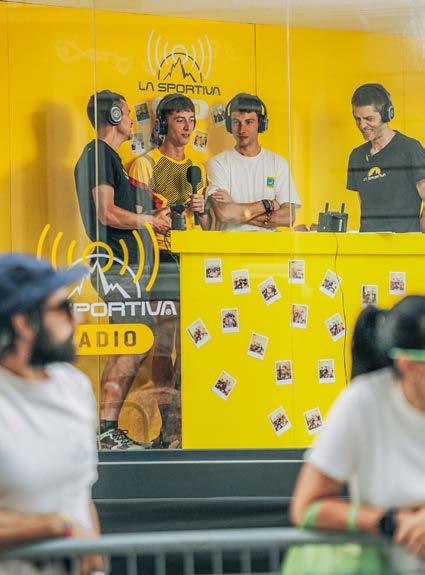
Thanks to a program packed with initiatives, networking opportunities, and activities designed for both athletes and enthusiasts, La Sportiva reaffirmed its leading role at the Lavaredo Ultra Trail by UTMB, further strengthening its ties to one of the most prestigious events on the international trail running calendar.
What were the main new features of the 2026 edition?
The real turning point came in 2025, when we further expanded our presence with morning runs, trail activations, and the Prodigio Tech Hub. This year, we focused primarily on refining a system that had already proven to work very well.
La Sportiva Radio is certainly one of the initiatives that has evolved the most. We also introduced several installations along the course designed to support athletes during the most challenging moments of the race, especially from a mental standpoint.
Over the years, you’ve seen the trail running market change. How have the athletes coming to Cortina changed?
The trail running community has certainly become much more diverse. Four or five years ago, there was greater homogeneity, especially in terms of age. Today, the audience is much broader, and that’s a positive development.
Traditionally, trail running was a sport practiced mainly by people over 35. Today, we’re seeing many younger generations join in, drawn both by the epic beauty of the Dolomites and by the challenge of running in nature. A second aspect concerns the international nature of the event. Cortina has always been a very international race, but today this trend is even more pronounced. We see athletes coming from countries far away: New Zealand, Japan, Canada, South Africa, and many others. Finally, I see runners preparing more thoroughly than ever, both in terms of training and in terms of nutrition and race strategy. This trend has also been driven by the evolution of the market, which now offers a much wider variety of specialized products.
In the shoe count statistics for major races, La Sportiva now consistently ranks among the top brands. How did this growth come about?
Our roots in mountain running run much deeper than people often realize. The first shoe designed specifically for mountain running dates back to the mid1980s. In recent years, we’ve managed to combine the credibility we’ve built in the mountains with a faster pace of innovation that’s more attuned to runners’ needs. The Prodigio platform represented a pivotal step, and the results we see today are the fruit of that journey. Looking ahead, 2027 will bring Talento, a new platform designed for shorter distances and technical terrain.
What role do athletes play in your strategy?
Our strategy stems from our desire to build long-term partnerships. Joining the La Sportiva team means, in a way, becoming part of a family. We’re not just looking for brand ambassadors. We’re looking for people who share our values and can make a tangible contribution to product development. Our athletes test the shoes, provide us with ongoing feedback, and actively participate in the evolution of our collections. In this sense, the relationship is much more like a long-term partnership than a traditional sponsorship.
GIULIA DELLADIO
CHIEF STRATEGY OFFICER
Among the major companies in the industry, you are one of the few that is still family-owned. What does that mean to you, and why do you continue to choose this structure?
Being a family-owned business means being able to keep the heart of our company in Val di Fiemme, where we were founded. Although we operate as a professionally managed, international company, we continue to design, develop, and manufacture our products in the mountains, in close contact with the local community. This is a value that allows us to better understand the needs of those who live in the mountains and to turn them into innovation. Staying here involves some logistical challenges and makes it more difficult to attract talent, but more and more professionals are choosing this valley precisely because of its quality of life.
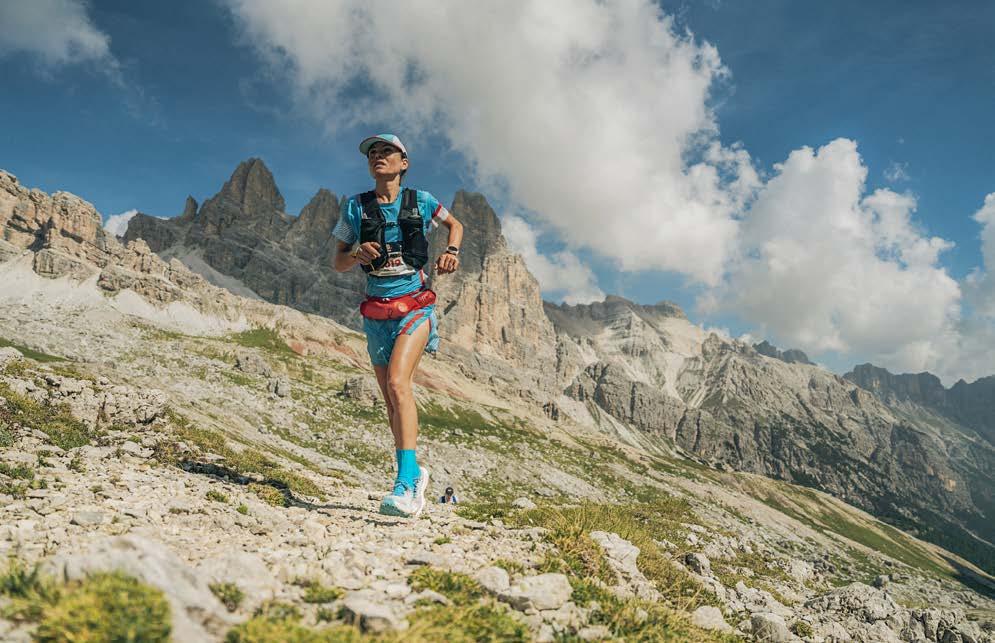
2027 will be the final year of the current title sponsorship agreement. How important is it for La Sportiva to continue being a part of the Lavaredo Ultra Trail?
It’s still too early to talk about the future of the partnership, but the Lavaredo Ultra Trail means much more to us than just a sponsorship. It’s an event that allows us to connect with the community, engage with the athletes, and experience the evolution of trail running firsthand. Cortina holds a special place in La Sportiva’s history, and we’re looking forward to seeing what happens after 2027. In 2028, we’ll be celebrating the company’s centennial, and it would be wonderful to mark this important milestone right here in Cortina as the main title sponsor.
How would you describe the outdoor market today?
Do you think moving the company elsewhere would cause you to lose your identity?
Yes. It would be easier from a logistical standpoint, but we would lose a fundamental part of our DNA. That’s why we’ve decided to continue investing here, with a new building that will be ready in 2027, our centennial year. We want to keep growing without straying from our roots.
There are two different generations on the board. What did your father's generation bring to the table, and what did yours?
My father’s generation opened La Sportiva up to international markets and gave a strong boost to product innovation. My generation has focused primarily on the brand’s evolution: events, athletes, apparel development, and new ways of communicating. My brother, on the other hand, is very focused on the product and complements this vision with a technical approach.
One of the most important projects was the logo redesign. How did you experience this change?
It was a shared journey, though we approached it with different perspectives. My father immediately appreciated the new mountain symbol, but he had a harder time letting go of the previous logo, which had been created under his leadership. In the end, we chose to look to the future, with the goal of reaching the centennial with a new visual identity. It was a truly intergenerational project.
It is a complex and constantly evolving market. The United States remains our largest market, but it is going through a period of instability, while raw material costs continue to rise. That is why we must offer not only quality products, but also services and experiences. The various disciplines follow different trends: climbing continues to grow thanks to indoor gyms, mountaineering remains a pillar of the brand, and trail running is experiencing a very positive moment. In recent years, we’ve managed to strengthen our position, and today we’re being chosen more and more often—even over brands with larger budgets.
What are the main challenges?
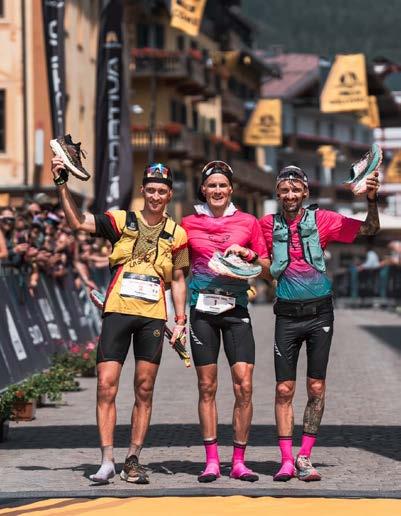
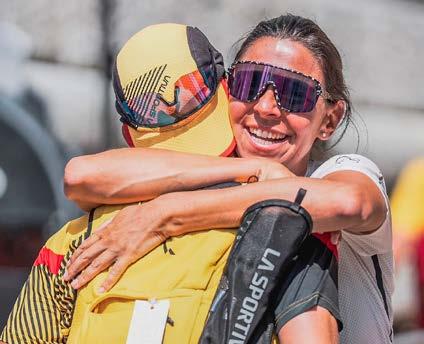
Today’s market is much more competitive than it used to be. We have to compete with large corporations without having the same resources, relying instead on our unique identity. We also feel a responsibility to preserve the legacy built by previous generations: that is why we prioritize long-term sustainable choices over immediate results.
Are there any new markets or fields you'd like to explore?
Geographically, we want to strengthen our presence in Asia. We have a very long history in Japan, while Korea and China are markets where we still have room to grow. In terms of product categories, however, we will continue to invest in our traditional areas, developing them consistently and without straying from the identity that has made La Sportiva recognizable around the world.
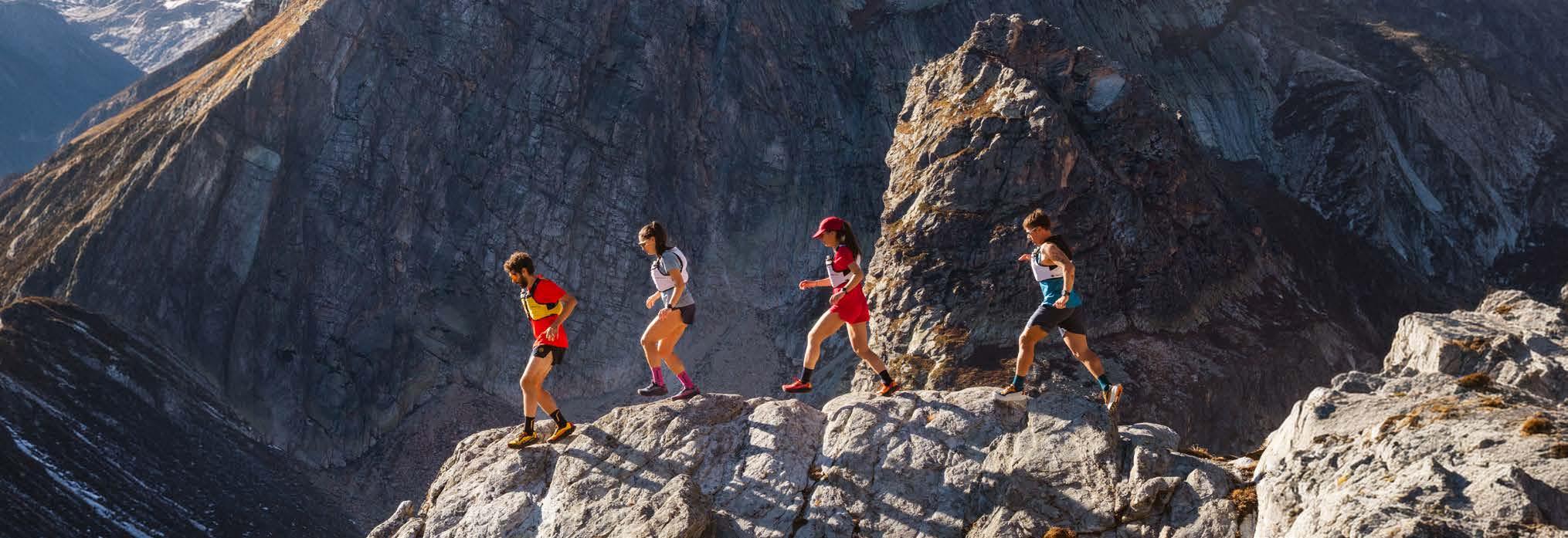
The Prodigio 2 embodies the very essence of mountain running at La Sportiva: experiencing the full thrill of off-road running across every terrain and distance
by Benedetta Bruni
Two years after the debut of the first model, in early 2026, La Sportiva launched the Prodigio 2, the most versatile member of the family. With a universal fit capable of adapting to any runner, terrain, and distance, the latest addition to the Prodigio Series embraces an even broader interpretation of off-road running—one that isn’t tied to a specific environment, difficulty level, or distance. For this reason, the Prodigio 2 embodies La Sportiva’s philosophy of mountain running, as it is a tool that allows you to experience the full spectrum of mountain adventures without limits—from rocky terrain to mule trails, from steep climbs to more leisurely training runs.
We spoke with Tobias Gramajo, product manager for mountain running and hiking.
Prodigio 2 is the latest model in the same line: how does it differ from the other models, and what is its main application?
The Prodigio Series is the perfect collection of shoes for any mountain runner who loves long distances. Its launch was a true milestone for La Sportiva: it allowed us to enter a new dimension of mountain running and, above all, to gather valuable feedback from the off-road running community. Within the family, the Prodigio Pro is designed to maximize performance and efficiency during races; the Prodigio Max emphasizes cushioning, protection, and stability over ultra-distances; finally, the Prodigio 2 is now the heart of the collection, best embodying its philosophy. It’s the right shoe for any run, from short runs to longer ones, from smooth trails to technical routes, thanks to a universal fit that adapts to a wide variety of runners.
What features should a shoe like the Prodigio 2 have, given that it was developed as part of a long-distance running platform while also striking a good balance between speed and comfort?
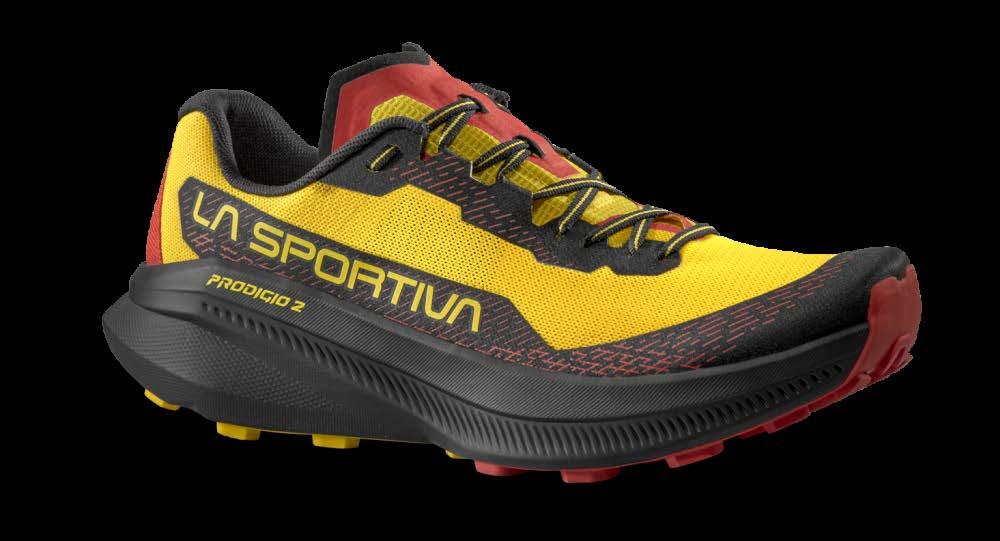
nes comfort, protection, and dynamism, while always maintaining that sense of precision and control that defines La Sportiva’s DNA.
La Sportiva talks more about mountain running than trail running: what does that mean to you? And how does this approach to mountain running specifically translate into the Prodigio 2?
As in any sport, there are various categories in outdoor running that help better describe participants and their needs. For us, mountain running and trail running essentially refer to the same type of athlete, but the former term more fully captures the variety of environments one might encounter: from forest roads to more technical trails, all the way to high-altitude routes characterized by steep ascents and challenging terrain. We like to identify with the full spectrum of the mountain experience, including the most technical and extreme terrain. That’s why we develop footwear that’s truly capable of tackling any type of trail. The Prodigio 2 perfectly embodies this philosophy: it offers comfort and a smooth ride over long distances without sacrificing precision, control, and safety when the terrain becomes more challenging.
Looking ahead, what are the possible developments for the line?
We developed the Prodigio 2 with a very clear goal in mind: to create the most versatile shoe in the Prodigio Series and set a new benchmark in the mountain running segment. We focused on a universal fit, balanced cushioning, and a smooth, natural ride to offer a product capable of adapting to any run, regardless of distance or trail difficulty. The result is a shoe that combi-
Our goal is to keep the Prodigio Series constantly up to date and aligned with the evolving needs of runners. That’s why we’ve established a renewal cycle of approximately two years for each model. This allows us to progressively incorporate the best innovations in materials, technologies, and construction, ensuring that every Prodigio model continues to set the standard for comfort, performance, and functionality in the world of mountain running. Meanwhile, we continue to invest in research, field testing, and gathering feedback from our community of mountain runners. This ongoing dialogue allows us to identify new opportunities and envision the future evolution of the line. In fact, we’re currently evaluating the introduction of new models within the Prodigio Series to meet increasingly specific needs. All I can say is: stay tuned!
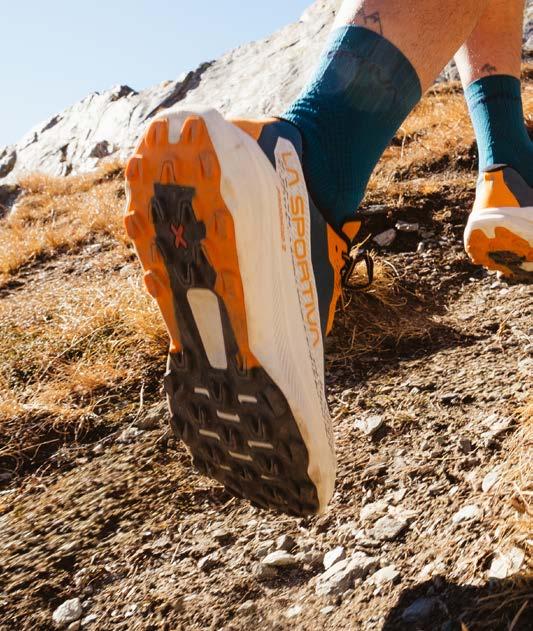









NNormal's offerings represent a constant evolution in terms of design, with the goal of meeting the needs of ultra running today and tomorrow
NNormal has two new products that were tested directly by Kilian Jornet at the Western States and promise major innovation for the world of trail running. These are the NN202 shoe prototype and a cooling vest—products not yet available to the public but currently being tested in preparation for their launch: the shoe in 2027, while the vest is scheduled for 2028. This is because, for NNormal, innovation is an ongoing process aimed at improving comfort and performance over long distances, with a focus on field testing under the most extreme conditions.
NN202: NO MORE PRESSURE ON THE TOP OF THE FOOT
Designed for ultra-distance running, the NN202 features a lateral lacing system that shifts foot support from the top to the sides of the shoe. The goal is to eliminate pressure on the instep—one of the most sensitive areas while running—without sacrificing stability and a precise fit. The result is a shoe that adapts more naturally to the runner’s movements and changes in terrain, improving comfort and circulation over long distances.
With temperatures rising steadily, body heat management has become a key factor in endurance and performance. The new cooling vest prototype developed by NNormal was created specifically to help athletes keep their bodies cool during prolonged exertion in extreme environments. The vest offers a practical solution to the climatic challenges facing the future of ultrarunning.
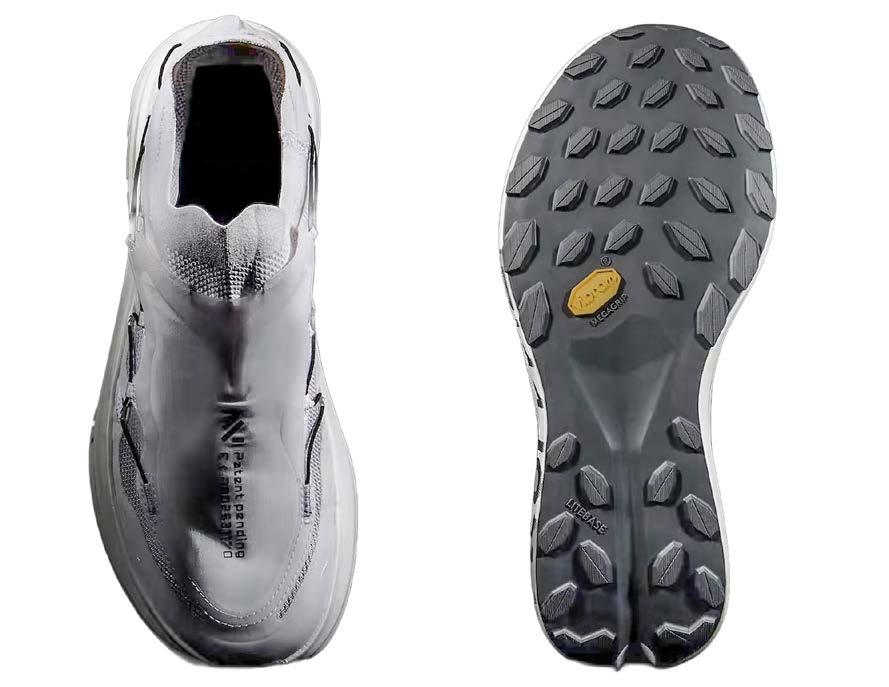
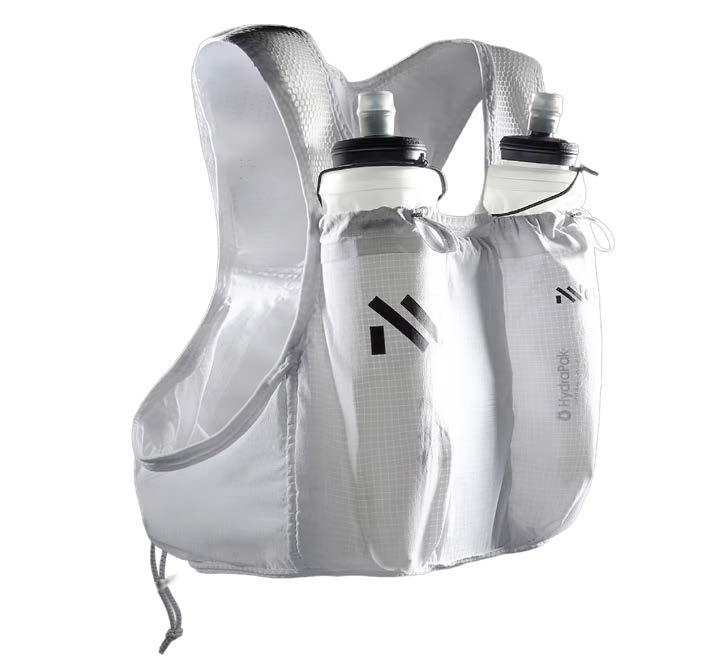
B-Factory - +39 039.9193830 - info@b-factory.it
With the Fujitrail Collection, ASICS focuses on lightness, breathability, and a wide range of motion. The essentials for long-distance trail running
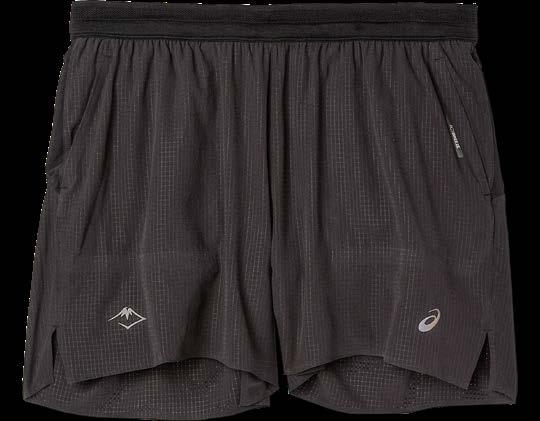
Lightweight, flexible, and breathable, these shorts are ideal for everyday trail running. The new phone pocket makes it easier to carry the smartphone without any discomfort while on the move. There are also additional pockets for storing essentials. Reflective details ensure visibility in low-light conditions. This garment is also made with at least 50% recycled material in the main fabric.
Materials and Technologies
• Actibreeze TECHNOLOGY: improves breathability and keeps cool
• Lightweight, quick-drying fabric
• Easily accessible, anti-bounce and anti-sweat phone pocket
• Mesh pockets on the sides for storing additional essentials
• Flat, ventilated waistband
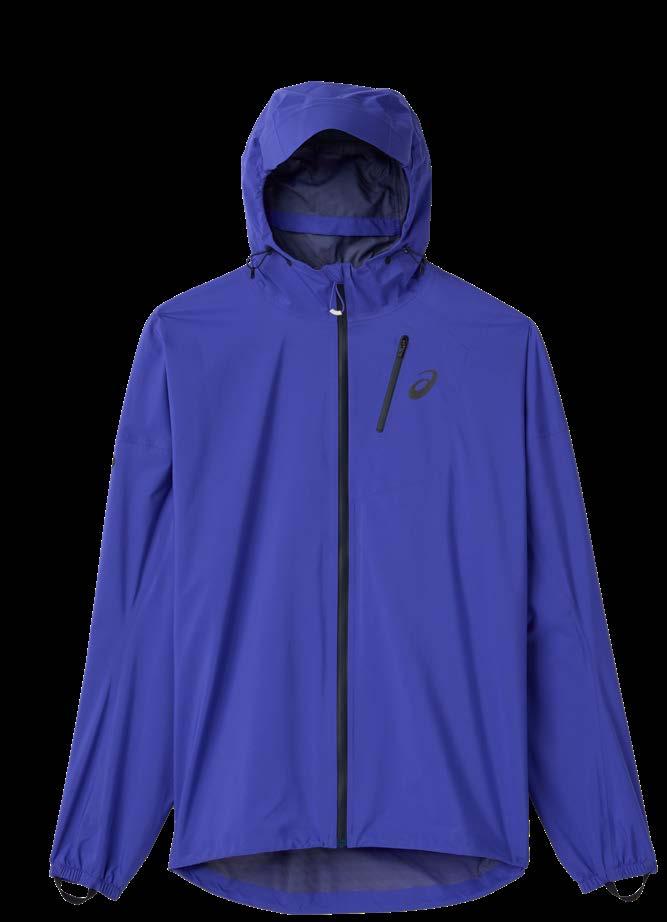
Inspired by off-road running adventures, this trail jacket (available in men’s and women’s versions) is versatile and highquality, designed to protect against rain and wind even in unpredictable weather. It is waterproof, lightweight, breathable, and offers excellent freedom of movement. It features reflective details designed for low-light conditions. The high collar and thumb loops provide added protection from the elements, while the hood, adjustable via a rear drawcord, allows for a customized fit. The chest pocket can be used to store running essentials or to secure the jacket. At least 50% of the main material in this garment is recycled to reduce waste and carbon emissions.
Materials and Technologies
• 2.5-layer PERTEX Shield fabric, waterproof (20,000 mm), breathable (20,000 g) and windproof
• Water-repellent coating (DWR) and taped seams
• The compact design allows you to fold the jacket into the chest pocket
ASICS Italy – +39 0171.416111 – info@asics.com
With its “We Are Outsiders” campaign, Ande presents a seamless technical line, developed based on its ambassadors’ long-distance running experience and designed to pair perfectly with the Thunder 2.0 shoe
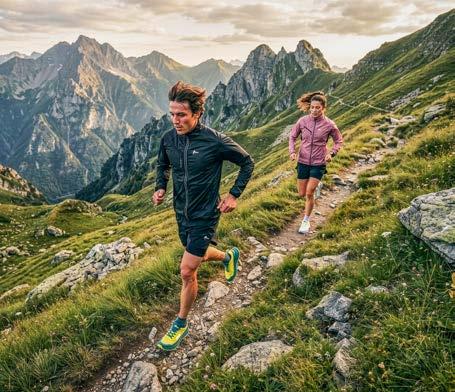
After three years of development and testing, Ande’s new trail running line perfectly embodies the brand’s tagline, “It’s All About Balance”—a principle that shapes every aspect of the product, blending functionality, high-quality materials, and affordability. Designed for all runners seeking lightness and comfort, the collection is showcased through the “We Are Outsiders” marketing campaign—an ode to freedom, nature, and pushing one’s limits.
Each garment has been designed to eliminate any discomfort associated with prolonged use and has been field-tested alongside our Ande ambassadors— athletes who compete year-round in races ranging from 10 to 200 kilometers.
• The Kima T-shirt is the perfect garment for any outing, offering total freedom of movement. Made from an ultralight, highly breathable fabric, it keeps the skin cool and dry, while its seamless construction, combined with laser-cut details, minimizes chafing and ensures quick drying.
• The Icaro Shorts are the new men’s technical shorts designed to deliver maximum performance. They feature a micro-perforated stretch polyester outer fabric with laser-cut edging and are equipped with an elastic waistband with a drawstring, a silicone insert for maximum stability, and a stretch mesh panel with stretch nylon that includes five open pockets and a zippered security pocket.
• To round out the line, Ande introduces the Thunder 2.0 shoe, a reimagining of the classic Thunder model. Designed for highly technical trails, it features
a Vibram Bayu XS Trek EVO outsole engineered to provide excellent grip on all types of terrain and a technical mesh upper that ensures breathability and flexibility without compromising durability. Furthermore, the tapered shape and precise fit make the Thunder 2.0 a reliable choice even on the most technical trails. Weighing 335 grams (in size 42) and featuring an 8-millimeter heel-to-toe drop, the Thunder 2.0 performs best over short and medium distances.
In addition to the Thunder, Ande has also updated the Panther and Spitfire models.
The collection also includes the Trail JKT, Trail Vest, Running Pro Lady Skirt, and Running Cap.
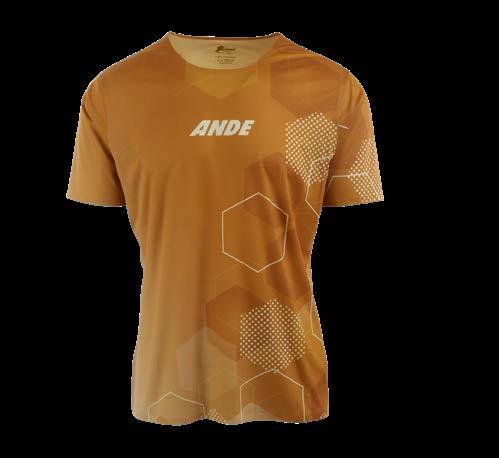
Avantgarde - +39 0341 288573 - info@avantgardelecco.it
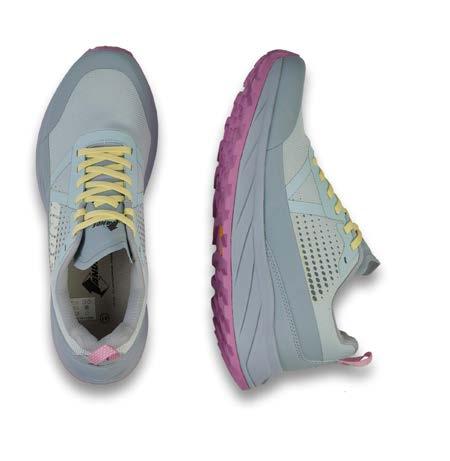
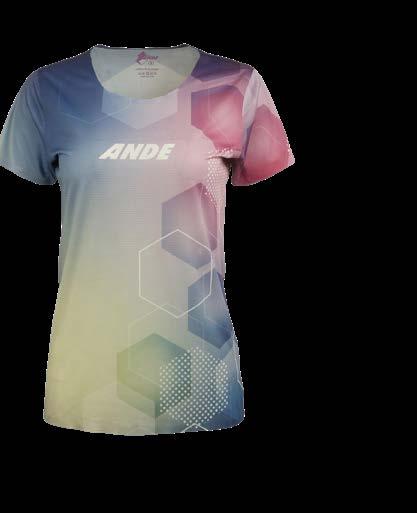
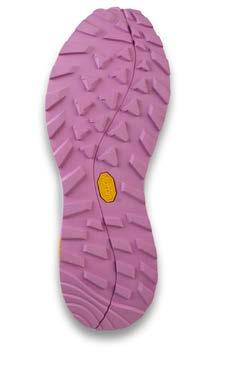
Designed for those who love to move quickly outdoors, the Lavaredo X by Nat's combine advanced technologies and ultralight materials without compromising on protection
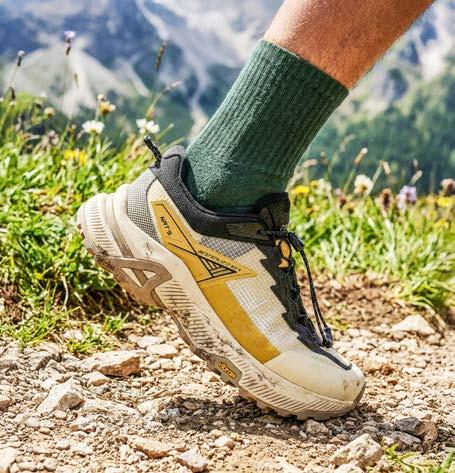
Inspired by the Tre Cime, the Lavaredo series embodies Nat's philosophy: to develop footwear that respects the foot’s natural biomechanics, offering comfort, stability, and high performance. Advanced materials, anatomical construction, and functional design work together to promote fluid movement, reduce fatigue, and enhance control even on the most uneven terrain.
Designed for those who alternate between fast hiking, quick hikes, and short trail runs, the Lavaredo X is the most protective and technical model, developed for those seeking the ultimate in support, stability, performance, and safety during the most dynamic outdoor activities.
LAVAREDO X
Thanks to its Dyneema upper—an ultralight and extremely durable fiber—the Lavaredo X ensures high durability against abrasion and impact while maintaining excellent freedom of movement. The side reinforcements and TPU toe cap enhance protection against rocks and roots, while the Nifco Fast Lace quick-lacing system is designed to provide fast and precise adjustment to the foot even while on the move.
The Vibram Megagrip outsole with Shark-Tooth technology ensures traction and control on all types of terrain, whether dry or wet. The 4-millimeter tread pattern enhances grip on various surfaces, while the sole’s geometry widens the lateral contact area, providing greater stability. The midsole features Gait Control Technol-
ogy, with a dual-density construction that combines a softer, more responsive core with a stiffer outer layer to enhance support and durability. The ergonomic TPU plate limits foot torsion and returns energy during activity, while the 6-millimeter heel-to-toe drop and 15° forefoot curvature promote a smooth stride.
TECHNICAL FEATURES
• Tread blocks: tt
• Drop: 6 mm
• Weight:
To round out the system, the PU insole with arch support and the Artificial Cartilage Foam (ACF) cushion absorb over 97% of the impact on the heel, improving comfort and cushioning.
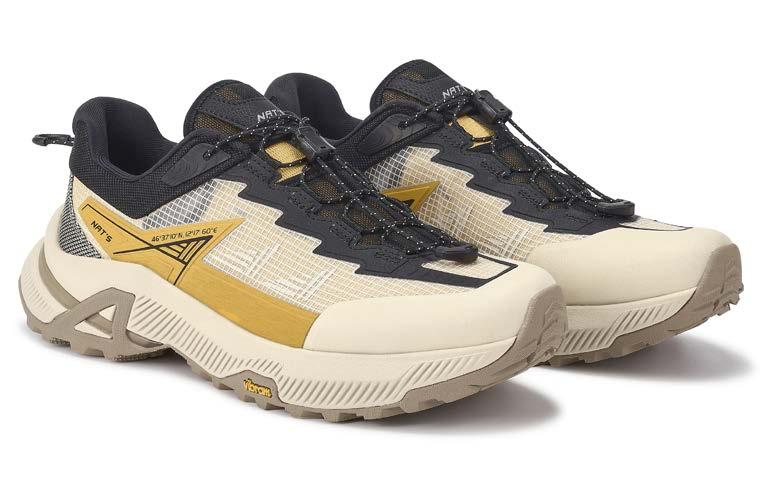
natsfootwear.com
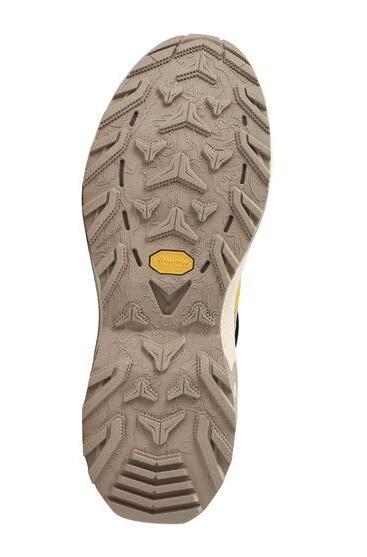
The Merrell MTL SpeedARC Peak offers speed, stability, and top-level performance to help trail runners compete at their full potential
With the launch of the MTL SpeedARC Peak, Merrell solidifies its presence in the most technical trail running. This shoe was developed at the Merrell Test Lab (MTL) through a five-year innovation process during which Merrell’s product experts collaborated with the brand’s team of elite athletes. This collaboration gave rise to an intensive testing program involving prototypes, components, and materials, which helped refine the MTL SpeedARC Peak. A total of 154 prototypes were evaluated over more than 20,000 kilometers, with athlete feedback and laboratory validation helping to define every detail of the product. The result is a racing shoe designed to deliver speed, precision, and confidence on the most challenging technical trails. Merrell will unveil the new MTL SpeedARC Peak at two of Europe’s most important trail running events: the UTMB Ultra-Trail Village in Vielha and the UTMB Ultra-Trail Village in Chamonix during the 2026 season.
At the heart of the MTL SpeedARC Peak is the innovative SpeedARC midsole system, the brand’s award-winning technology designed to deliver optimal performance on any terrain thanks to a three-layer structure engineered to combine comfort, efficiency, and responsiveness. The top layer of PEBA-based FloatPro
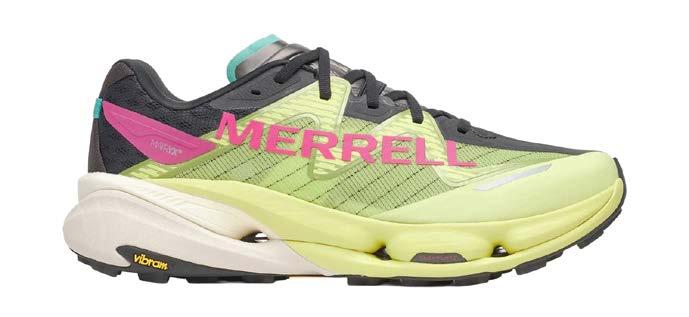
foam provides lightweight, responsive cushioning, ideal for long distances, while the bottom layer of FloatPro foam offers greater stability and durability even on the most technical and uneven terrain. Between these two layers lies the Carbon Fiber FlexPlate, an ultralight carbon fiber plate designed to optimize energy return during the run. Its bifurcated structure is one of the most interesting elements of the design and allows the forefoot to adapt independently to uneven terrain, improving balance, control, and agility. The MTL SpeedARC Peak also incorporates two industryleading technologies. The Matryx upper with Kevlar combines lightness, breathability, and high abrasion resistance, while the Vibram Megagrip Elite outsole ensures excellent grip on both dry and wet surfaces, offering maximum traction even in the most challenging conditions.
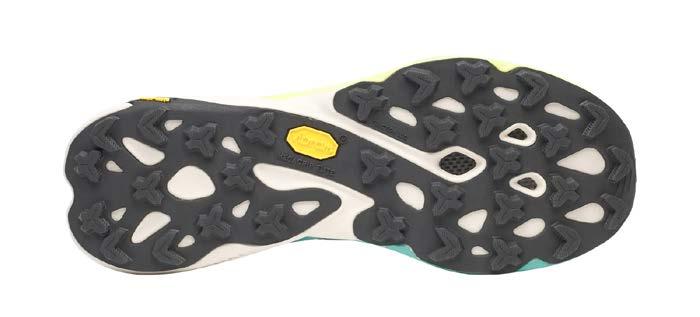
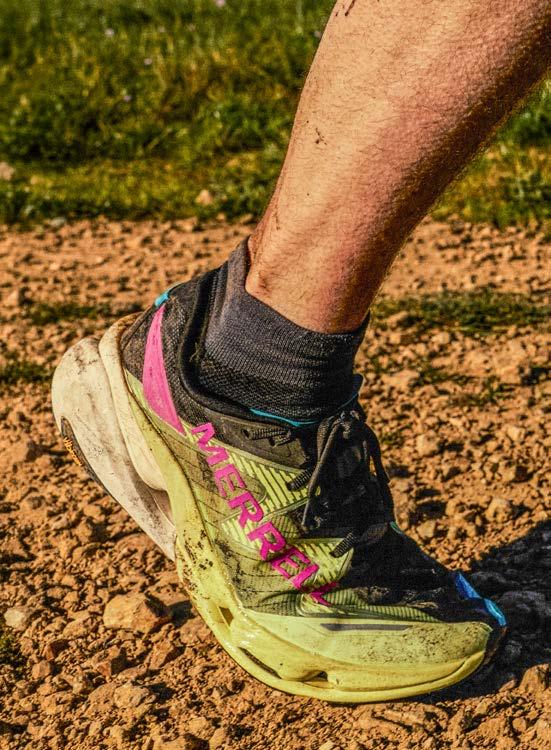
Always striving for performance, Rossignol is expanding its outdoor lineup with a complete range of trail running apparel and accessories to pair with its shoes
Rossignol remains committed to trail running and is expanding its product line by investing in the sport that most naturally embodies the relationship between people and the alpine environment. The French brand, drawing on its extensive experience in developing technical products for winter sports, brings its expertise to the summer season with a collection designed to support both runners new to trail running and more experienced athletes, featuring garments engineered to ensure lightness, comfort, breathability, and flexibility on every run. This new category rounds out the Spring-Summer lineup—which also includes a range of shoes for running in nature—and reinforces the brand’s positioning as one dedicated to all aspects of the outdoor lifestyle.
Men’s packable jacket designed for trail running and hiking. Ultralightweight and windproof, it’s designed to handle sudden changes in mountain weather. It folds into its own chest pocket and can be easily stowed in a backpack or running vest. The breathable 15K fabric ensures comfort during prolonged exertion, while the PFC-free DWR water-repellent treatment protects against light rain and moisture. The Regular Fit offers freedom of movement and the ability to layer. An essential and versatile piece, designed for those seeking lightness, practicality, and protection during high-intensity outdoor activities.
Designed for trail running and the most challenging outdoor adventures, the Rossignol Motion 10L Vest is an ultralight storage vest designed to keep all your essentials within easy reach. Featuring six elasticated front pockets for snacks and water bottles and three back pockets for a jacket, spare clothing, and accessories, it allows an efficient organization of the gear during longer
Wolverine Italia SRL - +39 0423 012558 - merrellitcsteam@wwwinc.com Rossignol Italia Group +39 0161 855513 - info.italia@rossignol. com - grupporossignol.it
runs. The stretch mesh fabric moves with your body, while the Quick-Fit straps allow for a precise and secure fit. The vest includes two 500-milliliter Rossignol Hydrapak water bottles and is available in sizes S–L.
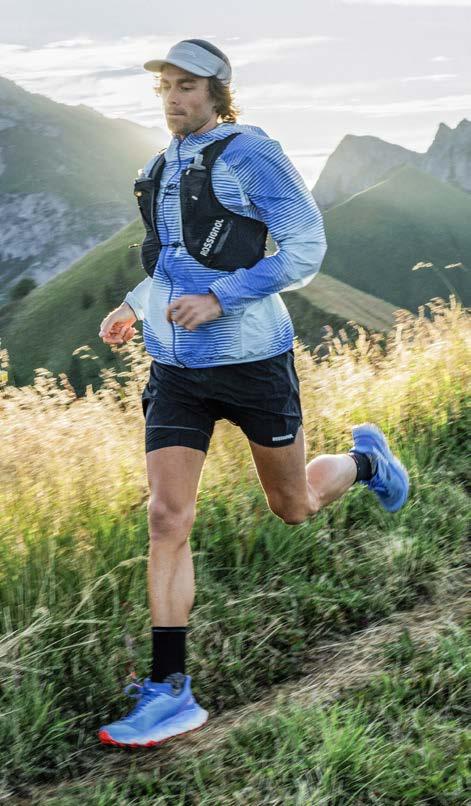
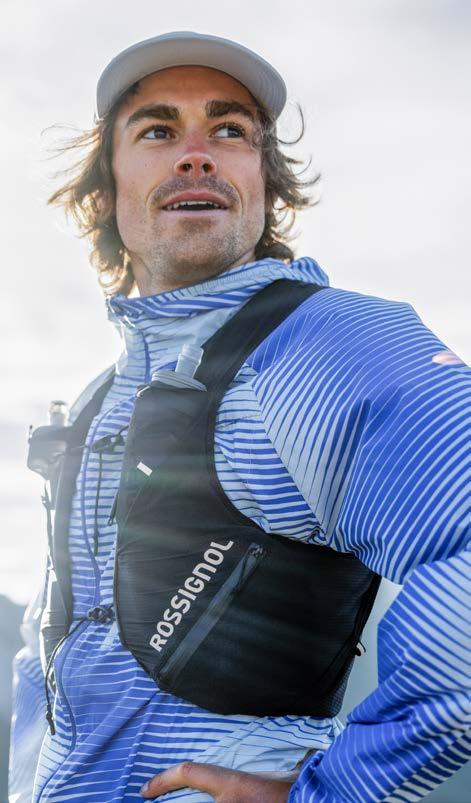
BV Sport socks, in collaboration with Matthieu Forichon of Des Bosses et Des Bulles, bring a touch of humor to trail running without compromising the support needed for long distances
A leading French brand in technical sports equipment, BV Sport has long been recognized for its expertise in performance compression socks and appar el. Its mission is to design, develop, and manufacture products designed to support athletes before, during, and after physical exertion.
In collaboration with Des Bosses et Des Bulles—the comic project launched in 2012 by Matthieu Forichon to poke fun at the misadventures of off-road running—the Ultra High DBDB socks feature a design that contrasts two dia metrically opposed types of trail runners: the urban runner, who runs on asphalt and only gains elevation by climbing stairs, and the mountain run ner, who has nothing to vent his frustrations on but nature and high-altitude trails. This parallel comes to life through BV Sport’s technical trail running socks, which com bine comfort, support, and technical performance in a design built to last for many kilometers—all while maintain ing style—to reflect the runner’s personality on every trail, wheth er it’s concrete or rocky terrain.
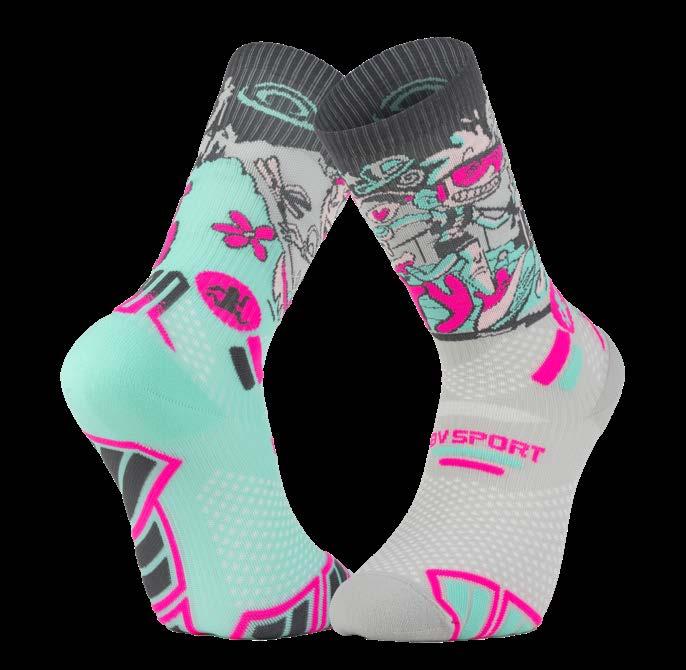
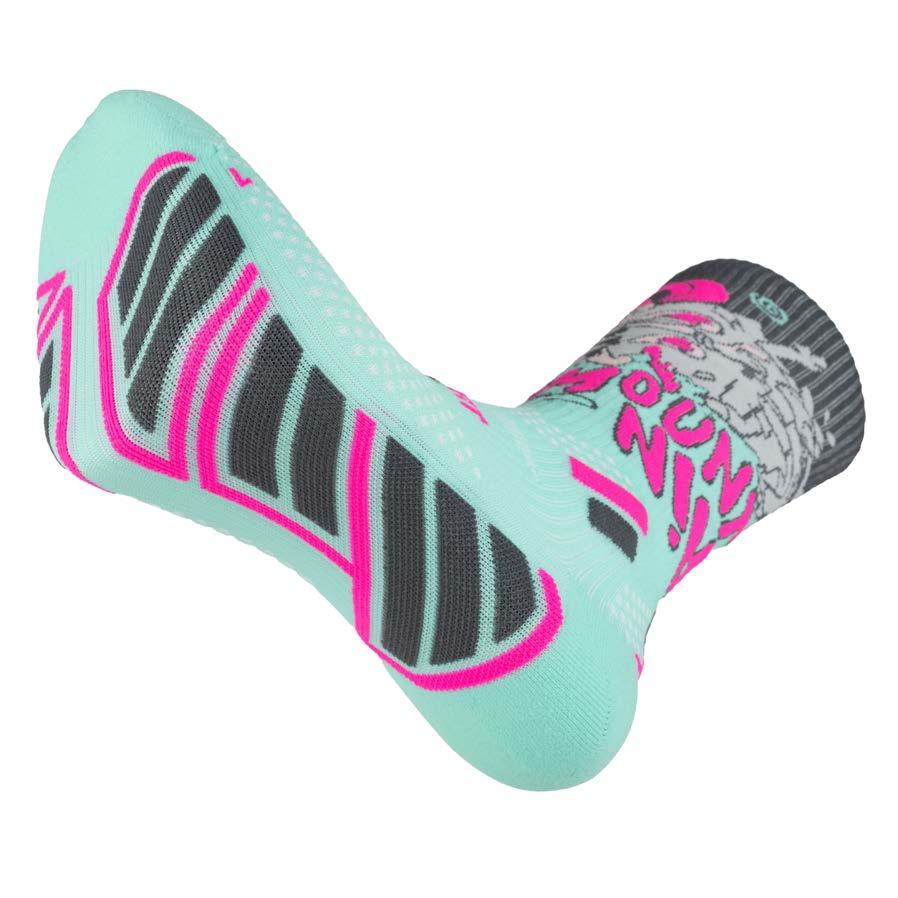
This collaboration, which also marks the start of “Made in France” production of BV Sport socks, brings the fun and unconventional world of Des Bosses et Des Bulles to technical products that are essential for trail runners during races, training, and even in everyday life.
Lightweight and offering excellent traction on any terrain, the Ultra 100 V3 is the Dynafit shoe that lets runner raise the bar
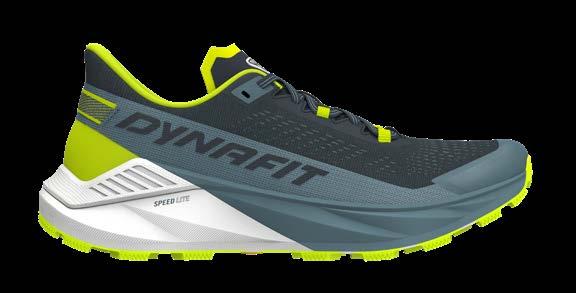
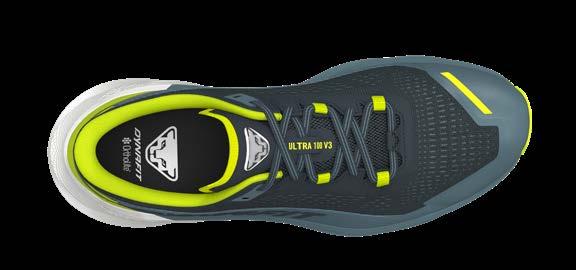
Ultra running is much more than just a run—it’s an extreme challenge for both body and mind. The Ultra 100 V3 shoe was designed to provide maximum support to athletes as they push past their limits, thanks to a combination of superior cushioning, protection, and comfort, paired with exceptional energy return and a lightweight design. In addition to being the lightest shoe in its category, the Ultra 100 V3 impresses with reliable grip and excellent traction on any terrain—from fast-paced trails to technical sections in alpine environments, and from steep climbs to fast descents.
Compared to the previous model, the third generation of the Ultra 100 is even lighter, more dynamic, and more durable. All of this is made possible by the use of the latest high-performance materials, primarily supercritical foam in the midsole, which ensures exceptionally high energy return while keeping weight to a minimum. Despite its generous cushioning and sole height, the shoe delivers a precise ride,
ideal for technically demanding trails. The 6-millimeter heel-to-toe drop is designed to suit the preferences of most ultrarunners and promote a natural stride. The pronounced rocker geometry of the outsole also ensures a dynamic and smooth roll. The classic lacing system with flat laces allows for precise and personalized adjustment. The breathable knit upper keeps feet dry and comfortable even over long distances.
CUSHIONING
The newly designed midsole with Supercritical Foam delivers a dynamic and responsive ride and is about 20% lighter than traditional EVA soles. At the same time, it provides superior cushioning for lasting comfort over ultra-distance runs.
RELIABLE STABILITY
The stabilization elements built into the midsole sup port the foot on both the inner and outer sides, proving ef fective at preventing sprains on technically challenging trails.
PRECISE GRIP
Manufactured in France, it features an ultra-reinforced 3D anatomical design for optimal stability and shock absorption. Thanks to its 360° support, it provides perfect support for the ankle and foot, ensuring safety and comfort over all distances. Targeted reinforcements positioned in strategic areas—the Achilles tendon, malleolus, lacing area, heel, and toe— protect against chafing and repeated impacts, even on the most challenging terrain. Its lightweight, breathable knit ensures excellent moisturewicking, keeping the feet dry and cool. Thanks to the high leg and wide, non-constricting cuff, this sock stays perfectly in place without constricting, while flat seams reduce chafing and irritation. The asymmetrical design conforms perfectly to the shape of Sizes: UK 3–9 (women) / UK 6–13 (men)
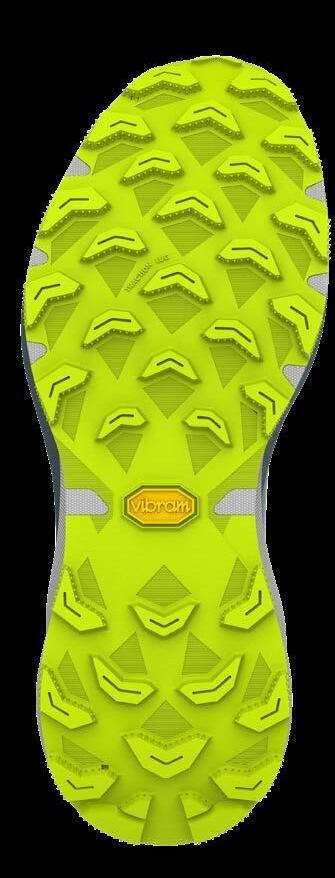
The Vibram Megagrip outsole with Traction Lug treads provides maximum grip and superior performance, even in wet conditions. The 4-millimeter lug design ensures excellent traction and safety on a wide variety of surfaces.
Oberalp - +39 0471.242900
Offtrail Ultra is The North Face's trail running shoe, designed for runners looking for a lightweight, fast-paced run without compromising on performance

With the Offtrail Ultra, The North Face is expanding its trail running lineup by introducing a shoe designed for anyone who wants to hit the trails with lightness, responsiveness, and speed. At the heart of the design is the DreamBound midsole, made of dual-density super foam, featuring a stiffer structure on the outer side and a softer one on the inner side—engineered to deliver high energy return and ensure stability even on the most technical trails.
Weighing just 259 grams, the Offtrail Ultra features an ultralight, seamless Dual Warp upper that precisely wraps around the foot, while TPU inserts provide enhanced support and protection even on the most challenging terrain. The ribbed laces ensure a secure and reliable fit, reducing the risk of the laces coming loose while running, while the Ortholite insole helps improve breathability and cushioning, ensuring comfort throughout your activity.
The DreamBound dual-density midsole, made of nitrogen-infused TPU, with a
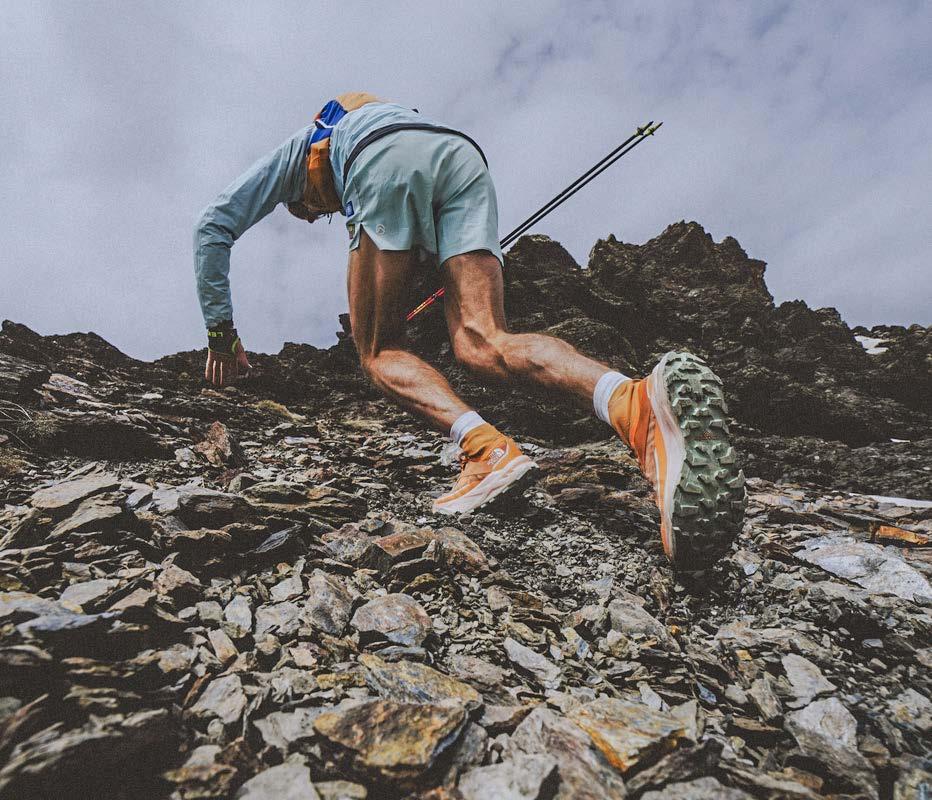
height of 24/18 millimeters and a 6-millimeter heel-to-toe drop, ensures an optimal balance between stability and a natural feel during each step, promoting a smooth and dynamic run.
Rounding out the technical package is the Surface Ctrl outsole, which—equipped with 5-millimeter lugs and a dedicated climbing zone in the forefoot—enhances grip and precision both on ascents and on rockier sections, making the Offtrail Ultra a particularly well-suited choice for confidently tackling mixed terrain and uneven surfaces.
TECHNICAL SPECIFICATIONS
• Ortholite: Breathable, shock-absorbing insole
• DreamBound: dual-density midsole
• Outsole: Surface Ctrl with climbing zones
• Midsole height: 24/18 mm
• Drop: 6 mm
• Weight: 259 g
The Suunto Race 2 and Spark earbuds come together to form a system that transforms data into useful guidance, without losing touch with the surroundings
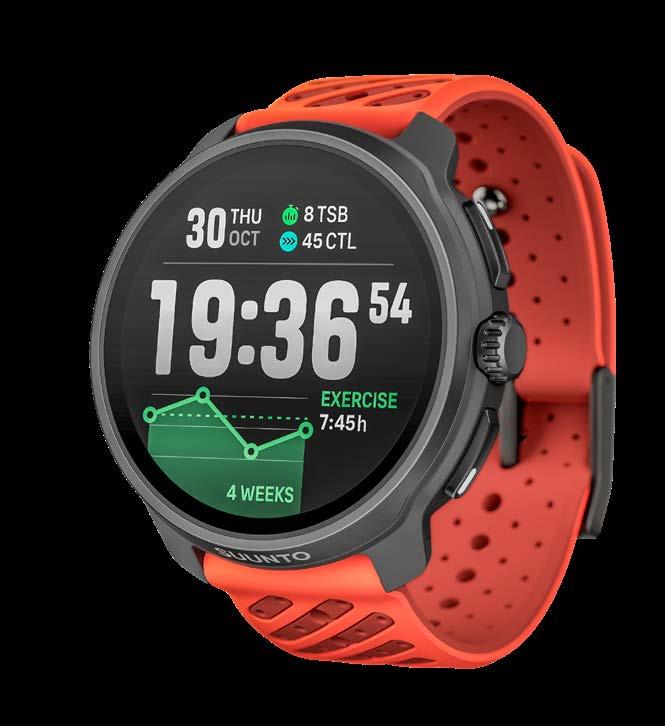
The Suunto Race 2 is one of the most significant new releases from the Finnish brand, which has always been committed to developing wearable technologies designed to support athletes in every workout and outdoor adventure. Making their debut alongside it are the Suunto Spark earbuds, designed for runners and active people who want to listen to music, receive guidance, and remain aware of their surroundings at all times. Together, Race 2 and Spark create a connected ecosystem that combines performance tracking, voice guidance, and safety.
SUUNTO RACE 2
Lighter and thinner than the previous generation, the Suunto Race 2 features an even larger AMOLED display, a new optical heart rate sensor, a more powerful processor, and a battery life of up to 12 days with daily use and over 50 hours of high-precision GPS tracking. With over 115 sport modes, offline maps, navigation, recovery features, pace management, and Suunto Coach support, it’s a comprehensive tool for both training and outdoor activities.
SUUNTO SPARK
These open-ear headphones use air-conduction technology to keep the ear canal clear and allow you to remain aware of your surroundings at all times. Designed primarily for those who run or work out in the city, they weigh just 9 grams per earbud, are IP55-certified for protection against dust and sweat, and offer up to 36 hours of total battery life with the charging case.
THE COMBO
The integration between Race 2 and Spark adds another layer to the training experience. Through voice guidance, people can receive updates on pace, distance, heart rate, and other metrics directly in the headphones, without having to look at the watch while exercising. The Spark also includes features dedicated to running analysis, such as monitoring cadence and stride dynamics, as well as a system that helps to monitor posture and neck fatigue.