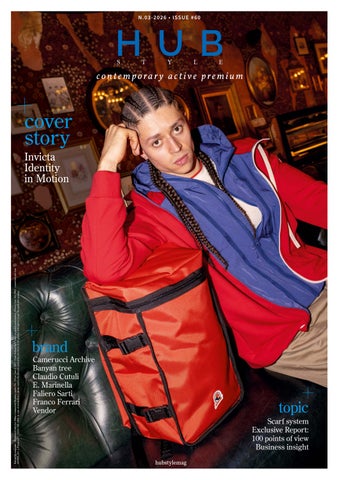
Curation, identity, new value models. If we had to choose three words to describe the latest landscape of the fashion industry, these would be our picks. As evidenced by the themes of this issue and the second part of our exclusive survey “100 Points of View”—the most anticipated analysis of Italian distribution in our sector. It remains a useful and valuable tool for understanding the current market, with real data collected in the field. 100 operators, 100 different perspectives, yet a surprisingly consistent message: the physical store remains central, provided it evolves. No longer just a showroom, but a place for relationships, service, and expertise. The importance of after-sales service, customer loyalty, and the shopping experience is growing. And at the same time, a shared concern is emerging strongly: the constant promotional pressure, between early sales and Black Friday, continues to be one of the most destabilizing factors for the system.
Overall, the summary paints a picture of a highly selective 2025. Following the long post-pandemic expansion phase, the luxury sector has firmly entered a period marked by greater discipline, retail rationalization, and a growing focus on experience over product. Data-driven and AI-powered personalization, the expansion of the second-hand market, and the redefinition of demand geographies are reshaping brands’ strategic priorities.
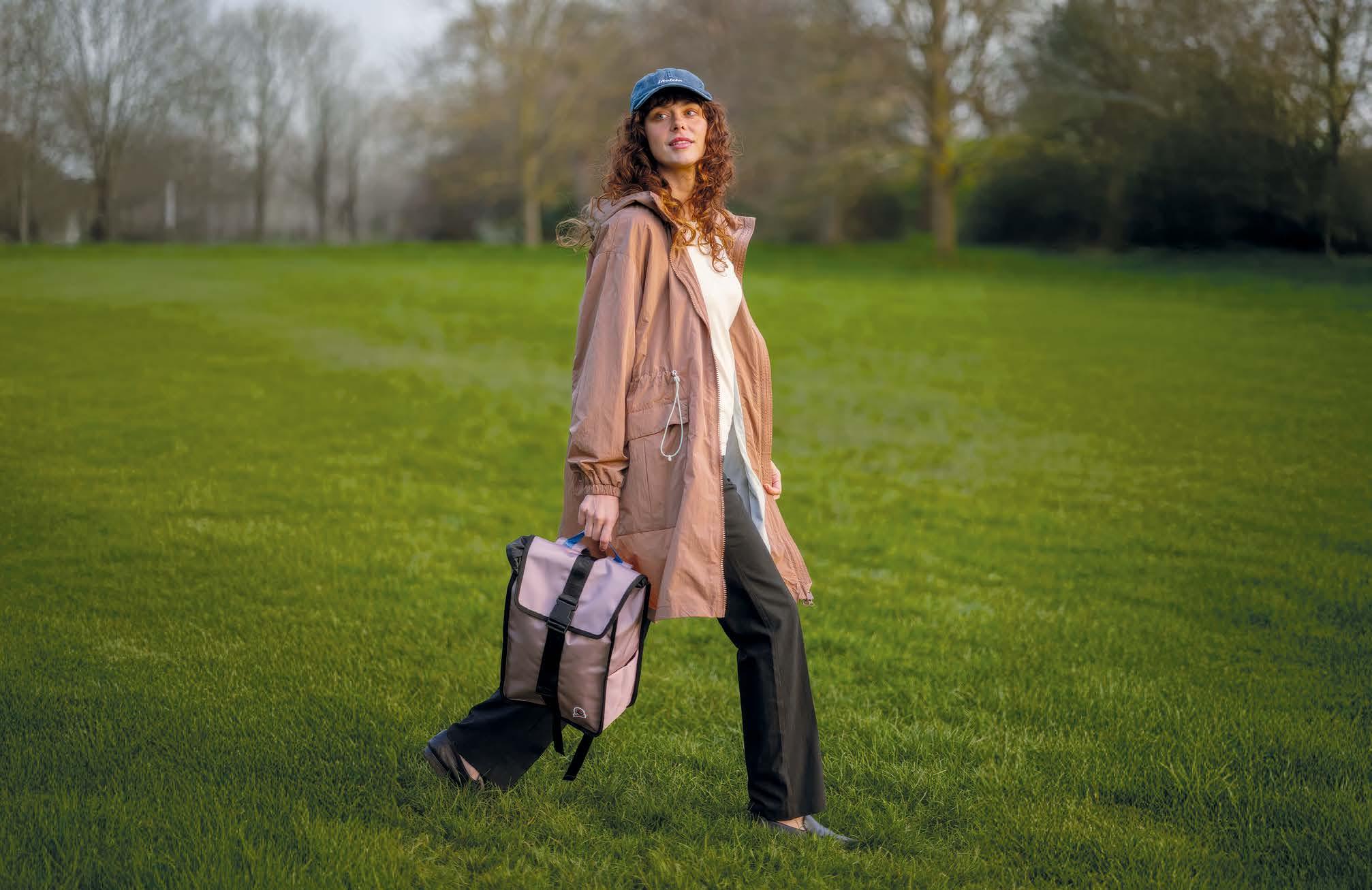
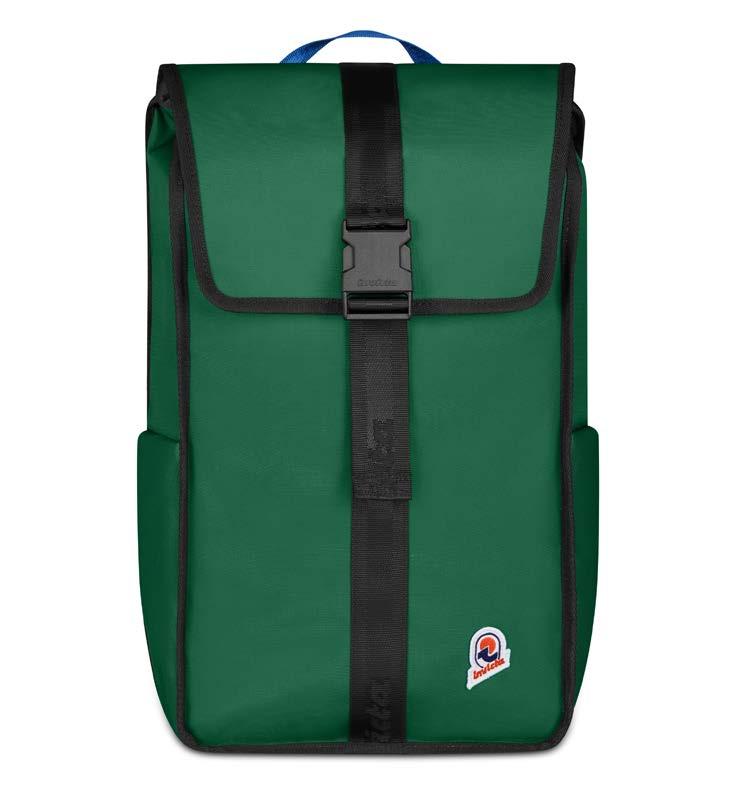
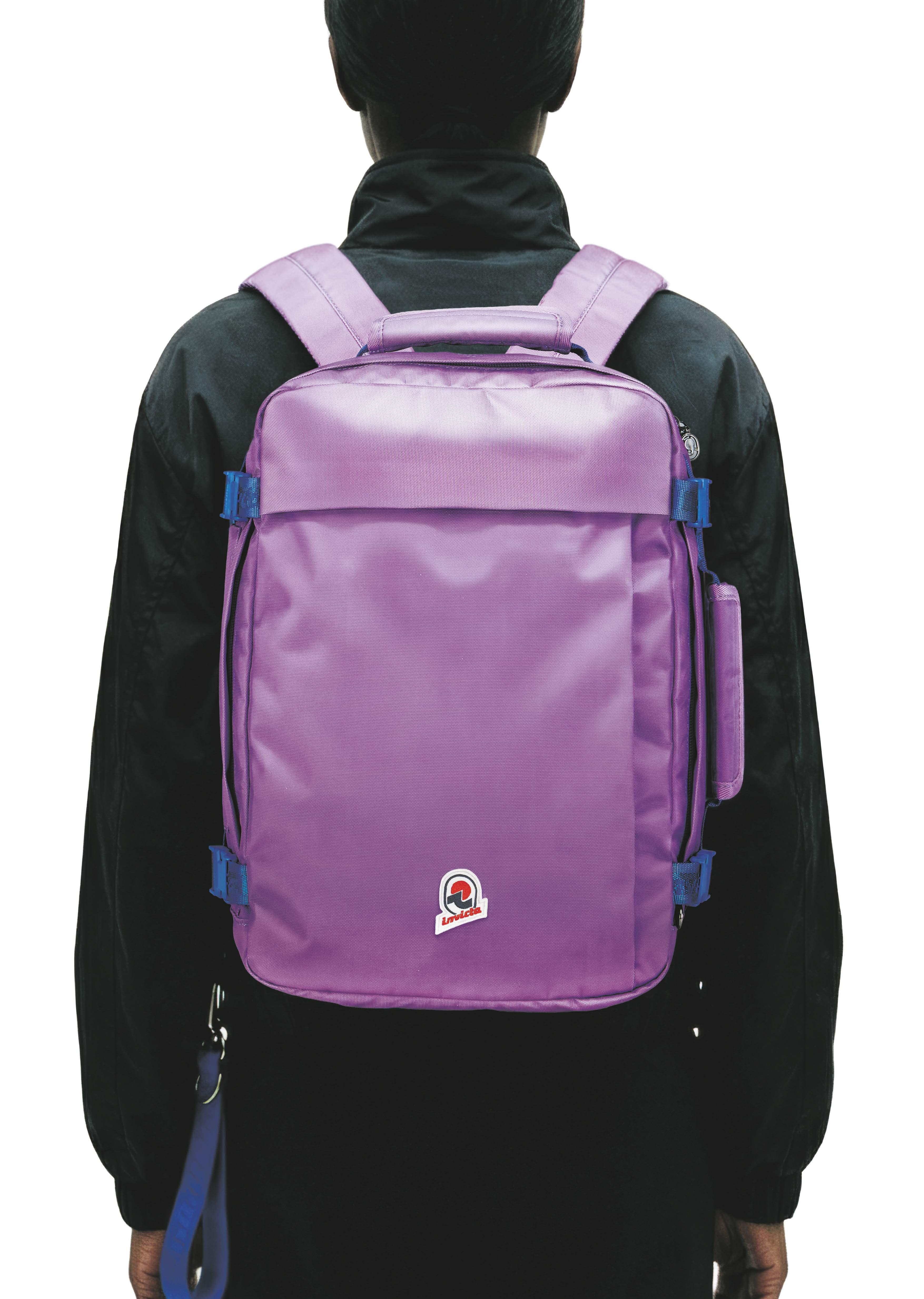
In any case, and despite all the challenges, Europe continues to play a key role as a hub for production and culture, bolstered by international tourism and the strength of its supply chains. This central role is made possible by the brand’s strong positioning. This is a theme we often encounter when sharing entrepreneurial stories in the pages of HUB Style. A prime example is the cover story dedicated to Invicta: a clear demonstration of how a brand can span different generations while maintaining consistency and recognizability, evolving from a technical product into a contemporary lifestyle platform.
We also see this trend in the special feature dedicated to the scarf, which today is less of an accessory and more of a structural element of stylistic expression, with a global market that is growing steadily and a projected CAGR (Compound Annual Growth Rate) of around 6% in the coming years. This trend confirms the centrality of categories that combine heritage, freedom of use, and identity, supported by a very strong European supply chain, particularly in Italy. During Design Week, we also interviewed Maria Porro, president of the Salone del Mobile, a global event that is quintessentially Italian and increasingly “hybridized” between fashion and style. This confirms Milan as a cultural and economic hub capable of connecting industry, creativity, and an international vision. The event generates nearly 300 million euros in direct economic impact on the city: a figure that clearly illustrates how value today is no longer measured solely by the product, but by the ability to foster relationships, markets, and the broader ecosystem.
However, it would be difficult not to reinterpret these factors in light of the international situation over the past few weeks. Geopolitical tensions in various strategic regions, instability in energy markets, currency volatility, and uncertainty regarding trade routes are introducing a degree of unpredictability on several fronts.
And it is precisely in these historic moments that the flexibility of businesses and distribution networks—as well as the ability to anticipate and manage market shifts—become even more critical. In an era marked by recurring instability, it may be best to set aside any sense of absolute certainty. Instead, we must learn to interpret change with greater attention and awareness—from multiple perspectives.
Use the QR Code for the english version follow us on hubstylemag hubstylemagazine


Publisher: MagNet S.r.l. SB Editor-in-Chief: ANGELO FRIGERIO Managing Editor: BENEDETTO SIRONI
Project Manager: CRISTIANO ZANNI Editors: ValeriA ONETO, SARA FUMAGALLO, MICAELA PANZINI, ALESSANDRO MARRA
Art Director: RICCARDO RECCAGNI Contributors: MARCO RIZZI ANGELO RUGGERI
Editorial Office: Via Tertulliano 68/70 - 20137 Milan - Tel: 02.87245180 23 Corso della Resistenza, 20821 Meda (MB) - redazione.hubstyle@mag-net.it - www.hubstyle.it Published by: Ingraph - Seregno (MB). One copy for 1 euro
Volume 10 - No. 03 / 2026 Bimonthly journal - Registered with the Milan Commercial Registry under No. 178 on June 9, 2017 - Registered with the Regional Commercial Registry under No. 16155 on November 23, 2007
The publisher guarantees the strictest confidentiality of the personal data in its possession. This data will be used to manage subscriptions and to send commercial information. Pursuant to Article 13 of Law No. 196/2003, the data may be corrected or deleted at any time by writing to: MagNet S.r.l. SB Data Controller: Benedetto Sironi - Corso della Resistenza, 23 - 20821 Meda (MB) Finalized in the editorial office on April 16, 2026


NEWS 08-1 2
Collabo, capsule & opening
COVER STORY 14-16
Invicta : Identity in Motion
INTO THE DESIGN WEEK 18-21
Not just form, but living matter
Temporary Geographies
FOULARD SYSTEM 22-2 5 The accessory shift
NEW TALENT 26
Fresh Breeze
RETAIL STORY 2 8
The Loft Shop : A Milanese Institution
ANALYTICS 30-31
Italian luxury is gaining momentum, while the giants slow down
MARKET 32
A turning point
FROM FASHION 34
The runway is no longer a dream: it's a strategy
EXCLUSIVE INQUIRY 36–43
100 Points of view
INSIDE SHOWROOM 44
Severini Showroom : A Bridge Between Creativity and Business
EVENTS 46
Impact Summit : no excuses
FOCUS ON 48
BIRKENSTOCK : The New Definition of Comfort
INTERVIEW 50
Space 2000 : Industry 4.0
FOCUS ON 52
Jeanne Baret : A Story with Deep Roots
SHOWCASE 54-61
Dress the moment
The art of knotting
FOCUS SNEAKER 62
The fashion industry has learned its lesson
SNEAKER NEWS 63
SNEAKER SHOWCASE 64-65
SNEAKER RETAIL 66
The tip of the iceberg
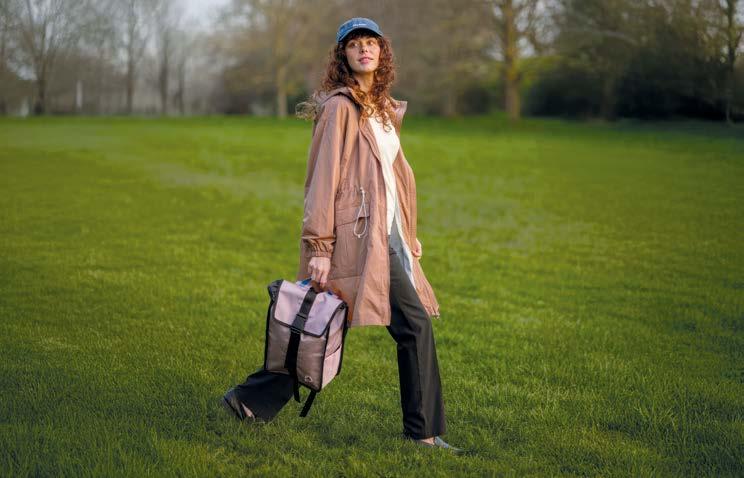
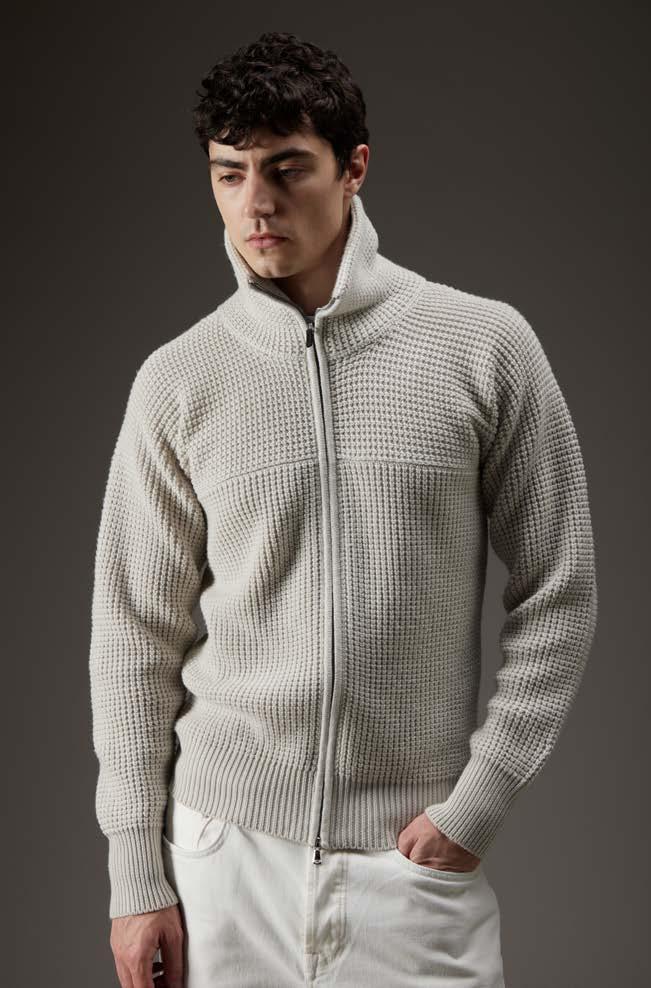
This zip-up jacket in extra-fine merino wool, featuring a unique knit pattern and straight sleeves, boasts a clean design that transforms knitwear into lightweight outerwear. Designed by KANGRA, it embodies a subtle sophistication rooted in comfort, precision, and texture. A garment that doesn’t show off: it accompanies, protects, and moves with the wearer.
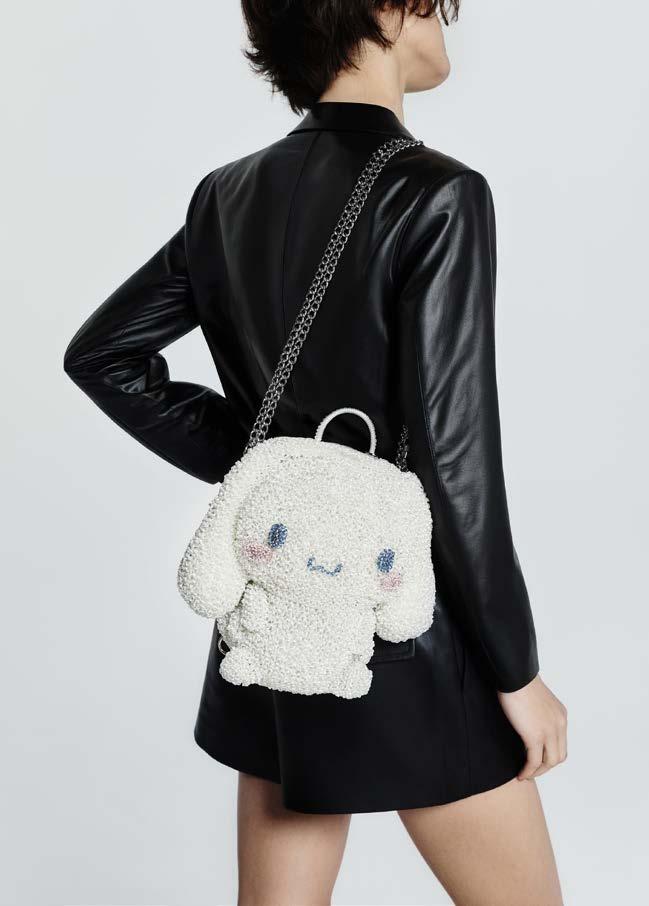
ANTEPRIMA meets the world of Cinnamoroll, the famous character created by Sanrio, in a capsule collection that blends craftsmanship with a playful spirit. The collaboration reimagines his iconic figure in three accessories from the Wirebag line: a 3D bag, a Confetto shoulder bag, and a pouch. With knitted details, three-dimensional accents, and luminous textures, the design transforms the kawaii aesthetic into refined accessories with a pop spirit.
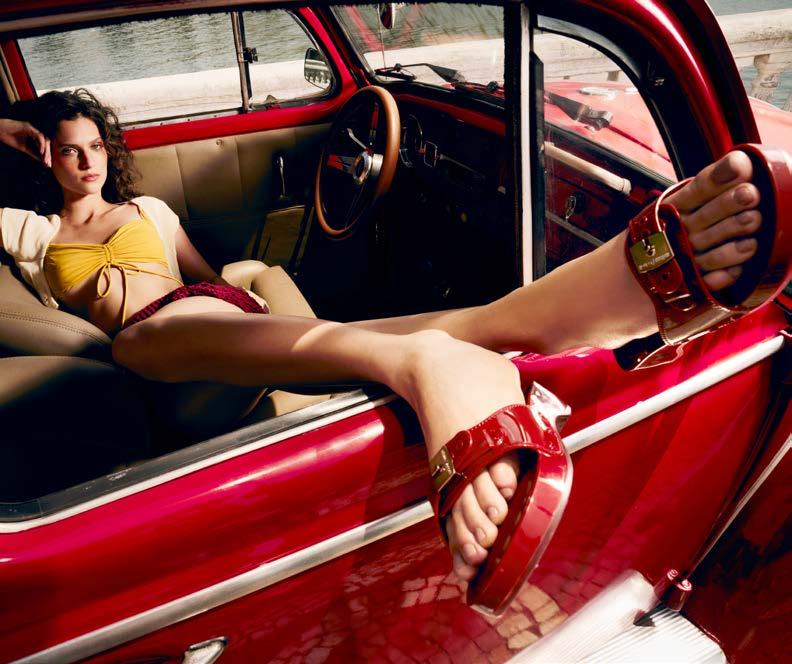
Two footwear legends come together in a capsule collection that blends aesthetics and functionality. Melissa and Scholl merge their respective stylistic codes by reinterpreting the Possession sandal and the iconic Pescura Heel, which celebrates its 70th anniversary in 2026. The result is the Melissa Possession Pescura, a model that combines Melissa’s flexible, translucent Melflex with Scholl’s anatomical sole. The result is a contemporary silhouette that blends a playful spirit, ergonomic comfort, and design heritage.
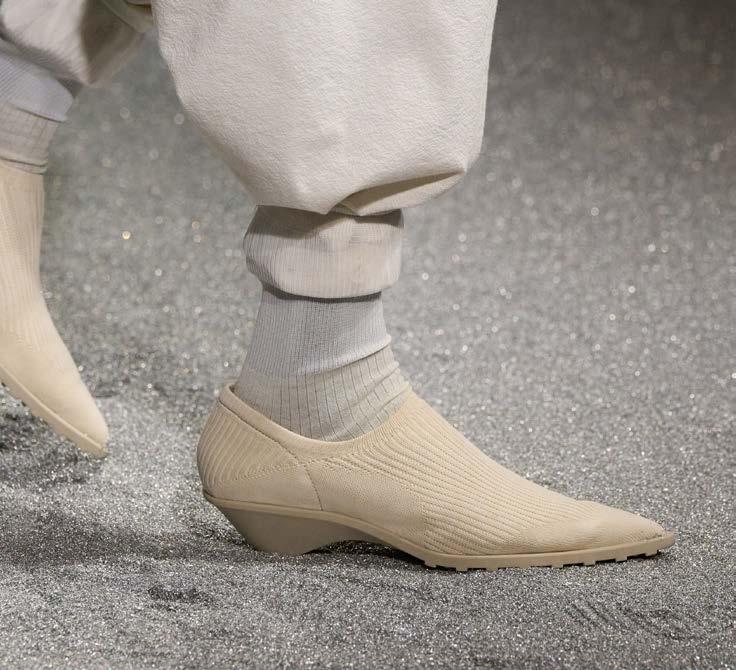
For Fall/Winter 26/27, Issey Miyake renews its collaboration with Camper by introducing Anna, a new footwear collection unveiled on the runway during the “Creating, Allowing” fashion show. The design stems from the idea of wearing shoes like socks: a stretch knit upper naturally wraps around the foot, contrasting with the tapered, sculpted sole. Minimalist and sensory, the model marks the first heeled design from the partnership between the two brands.
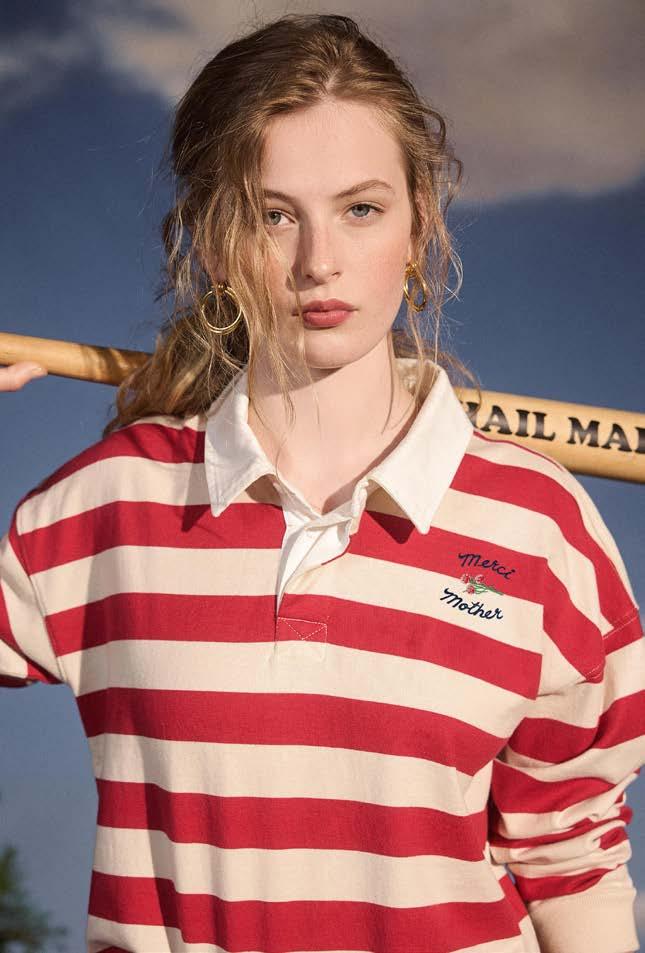
MOTHER brings its Hail Mary capsule collection to Paris in collaboration with Merci: 11 pieces that blend athleisure, vintage-prep details, and feminine embroidery. In addition to the ready-to-wear pieces, the iconic Merci totes are reimagined with co-branded patches. The popup transforms the courtyard and lobby into a playground featuring baseball, a Wall of Fame, and theatrical locker rooms, celebrating sports, style, and shared creativity.
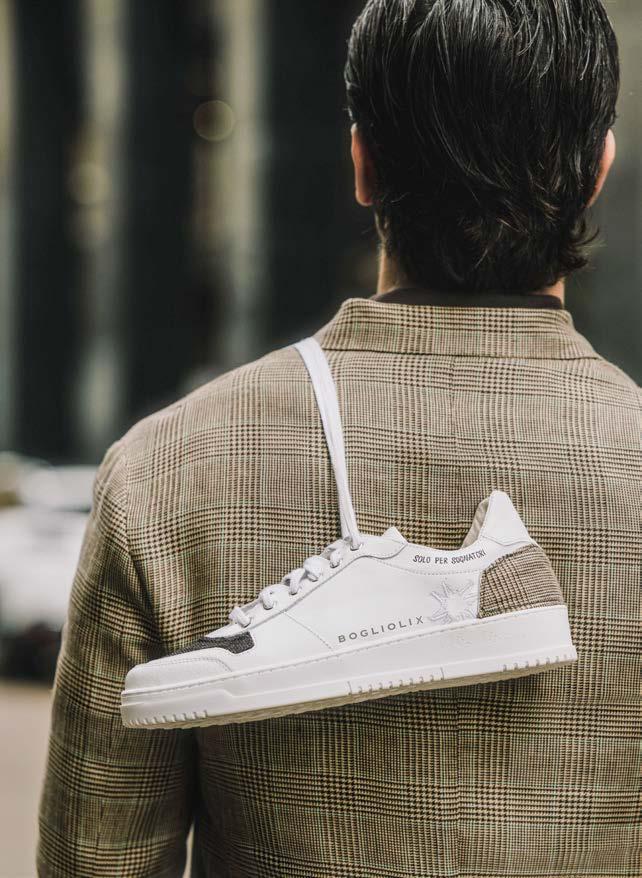
My Mancini and Boglioli combine design and craftsmanship in a unique collaboration: the iconic My Mancini sneakers are reimagined using three premium Boglioli fabrics—two linen Prince of Wales checks and one houndstooth wool—resulting in fully customizable pieces. Each customer works side by side with the artisans, choosing materials and details, transforming the shoe into a one-ofa-kind creation that blends sartorial elegance, innovation, and Italian craftsmanship.
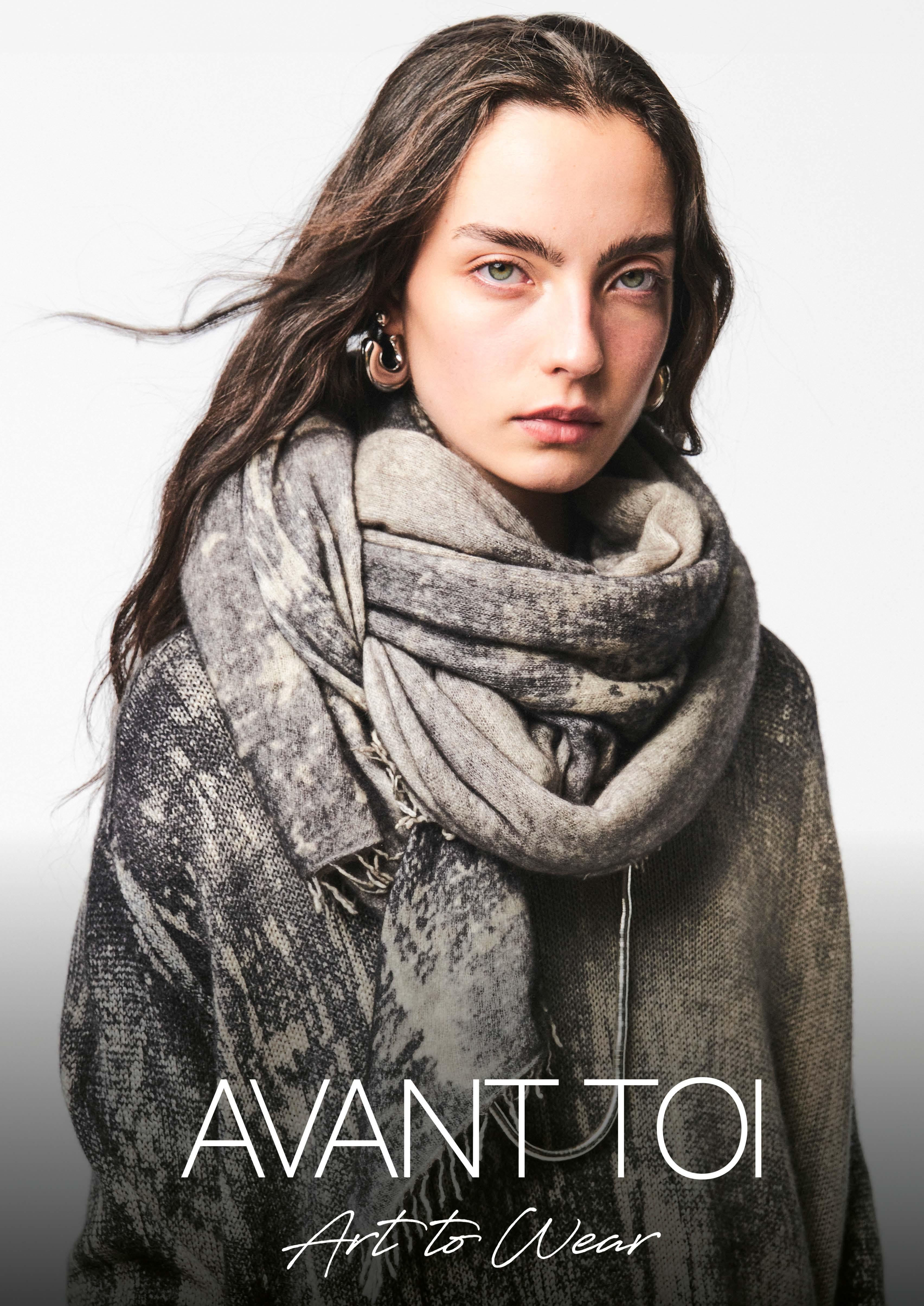
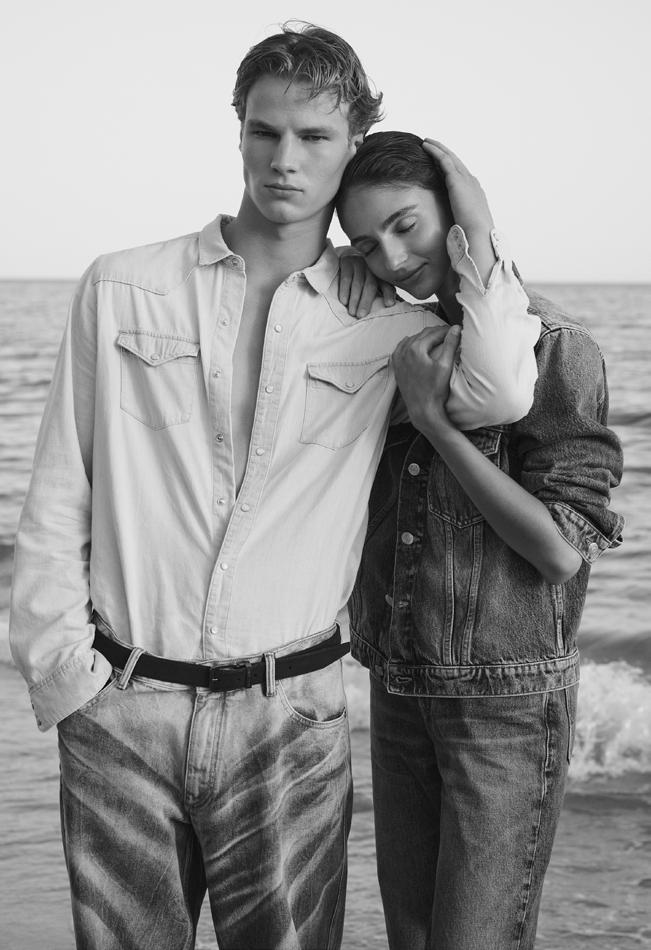
Emporio Armani pays tribute to Armani Jeans with a men’s and women’s capsule collection that reinterprets the iconic codes of the line launched in 1981. Denim takes center stage, featuring jeans and jackets in light and dark washes that evoke an urban aesthetic. The collection focuses on timeless, recognizable pieces, designed for those looking for classics to bring back into their rotation.
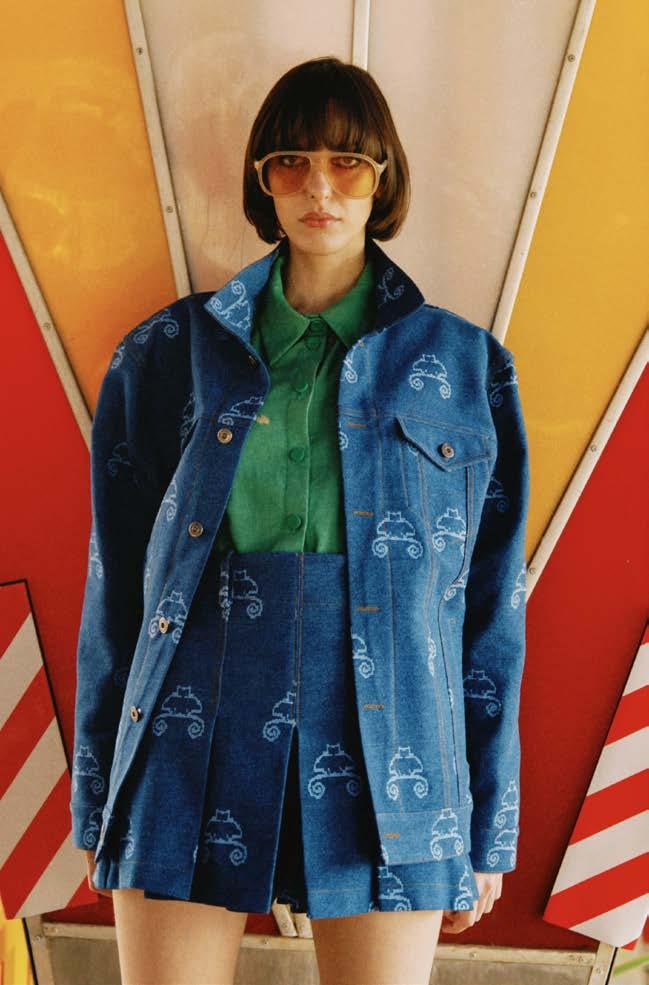
'ergon launches a capsule collection that blends instinct and memory without succumbing to nostalgia. Jeans and denim jackets become dynamic canvases: cross-stitch embroidery, patches, and graphic motifs adorn the garments with a spontaneous, almost instinctive energy. The lines remain clean, but the spirit is raw, with an ’80s rock attitude.”

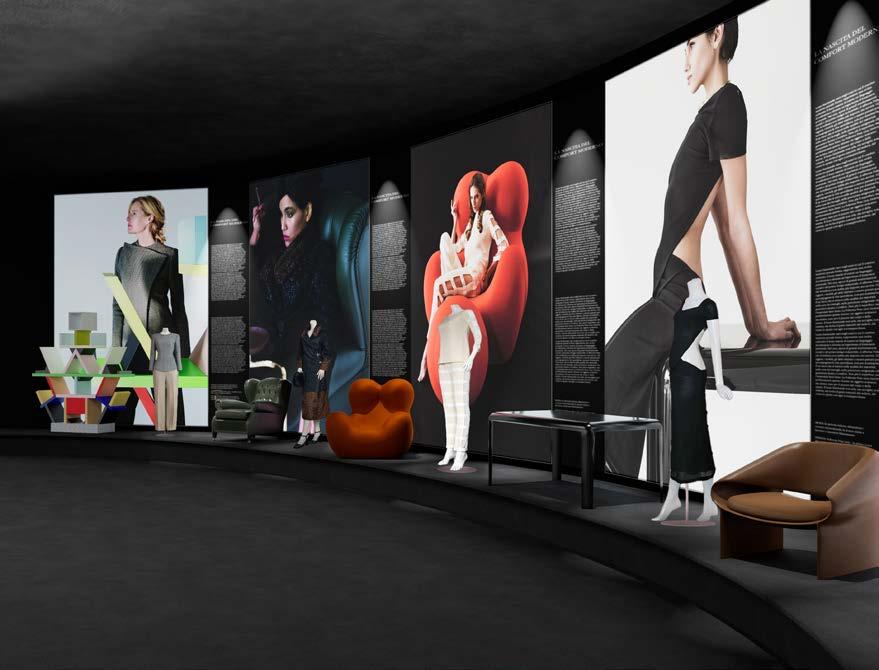
“ABITO,” a traveling exhibition curated by Palomba Serafini Associati and sponsored by the Ministry of Foreign Affairs and International Cooperation, makes its debut at the Salone del Mobile. From April 16 to 21 at Rho Fiera Milano, the project’s first stop explores the dialogue between fashion, design, and the role of women, bringing together historic garments and icons of Italian craftsmanship in a dynamic cultural narrative.
OBEY and Paraboot combine counterculture and French craftsmanship in the Montana capsule collection. At the heart of the collection are 1970s-style climbing shoes made of textured leather, featuring the Icon Face logo on the tongue and chartreuse details inspired by the mountains of the same name. The line is rounded out by a modern take on American baseball, including embroidered Bochy shirts, Kranks T-shirts, and Lanceur pants.
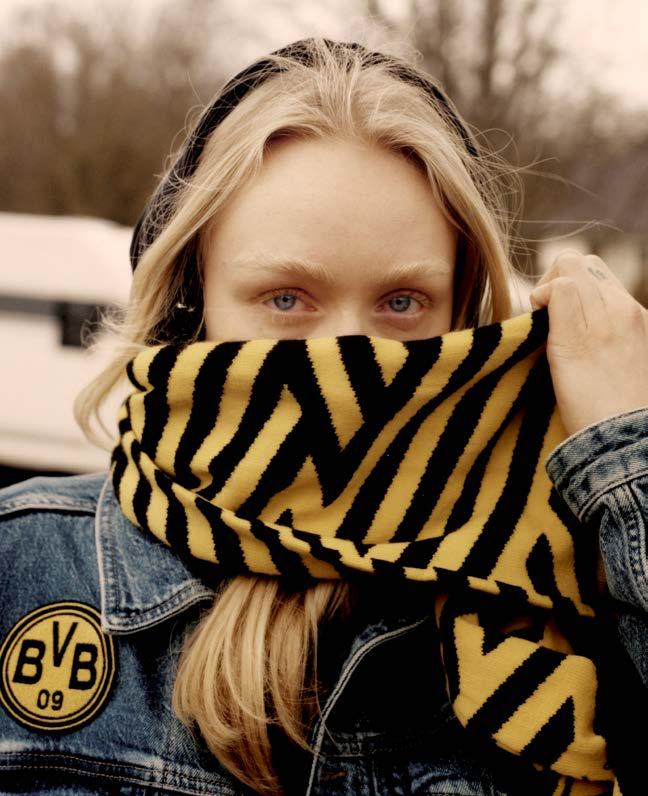
GUESS JEANS teams up with Borussia Dor tmund to take soccer beyond the stadium. The capsule collection reimagines the team’s yellow-and-black DNA in denim: jackets, jeans, and hoodies are infused with club-inspired details without veering into mere merchandise. The result is a hybrid wardrobe—blending streetwear and matchday style—designed for fans and non-fans alike, where identity and style play on the same team.
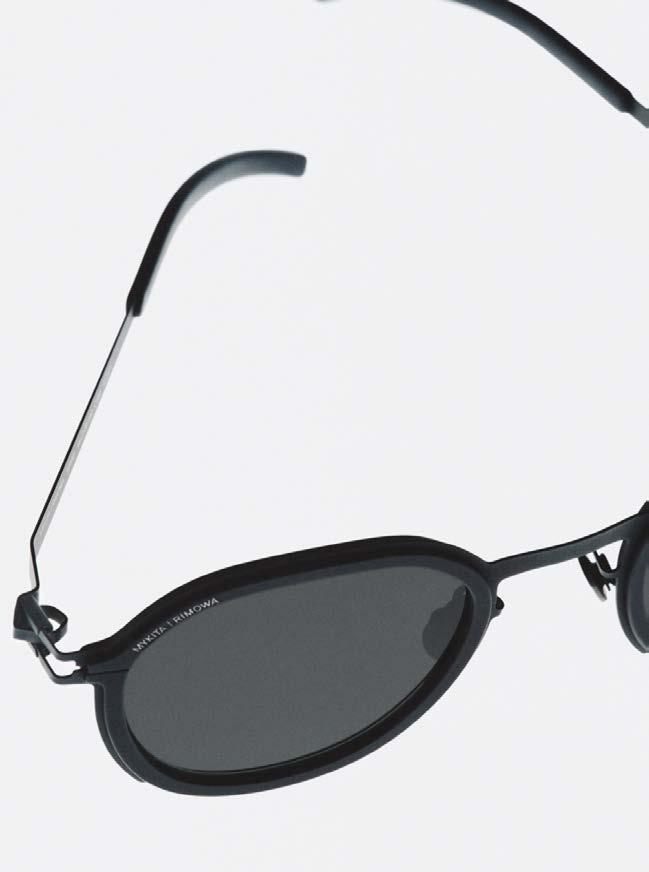
The MYKITA | RIMOWA collection welcomes the new Black/Shadow Black model: an elegant monochrome design featuring polarized mineral lenses that combine optical precision with absolute comfort. A fusion of craftsmanship, lightness, and German design, where steel and aluminum come together in reinterpreted classic silhouettes that echo the iconic finishes of the luggage.
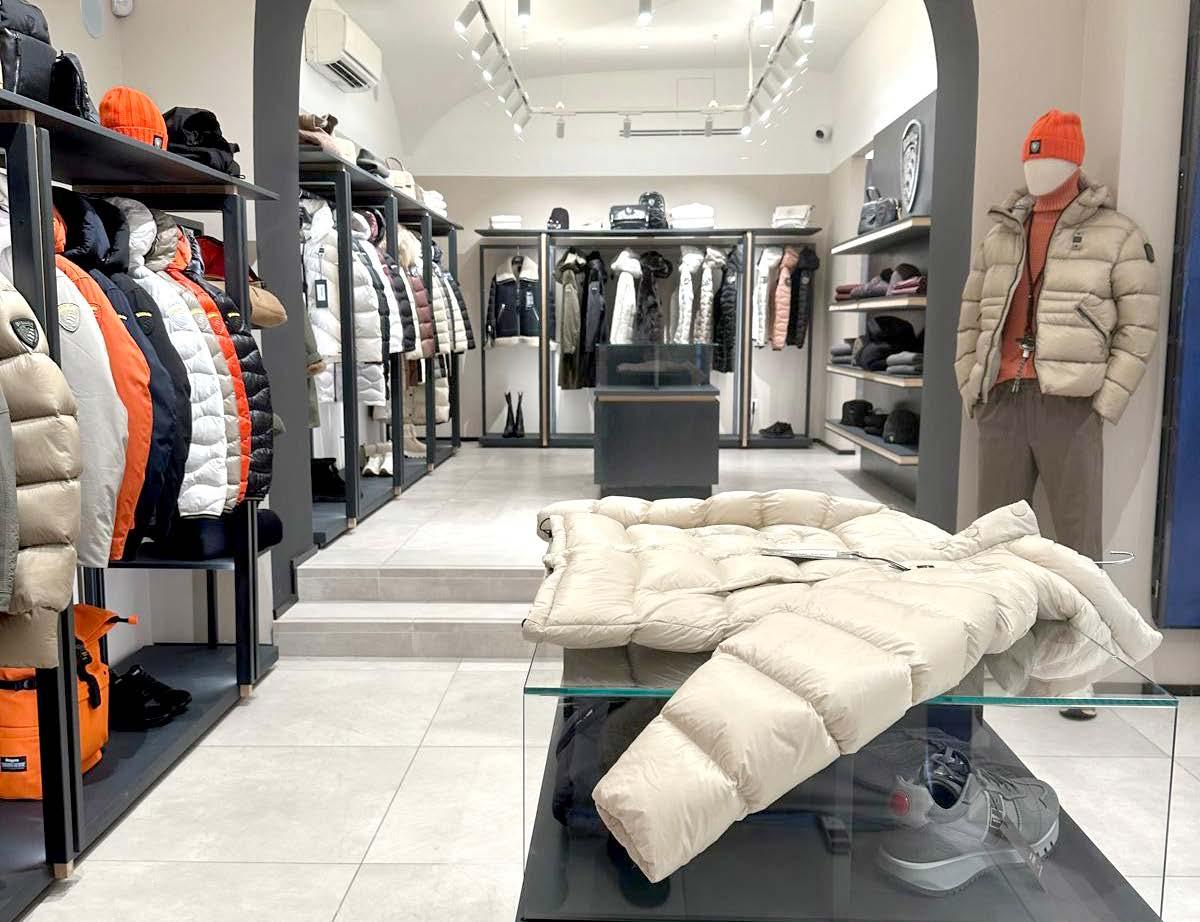
Blauer is opening a new 100-square-meter concept store at Corso Palestro 2 in Brescia, transforming retail into an immersive experience. The space’s design reflects the brand’s identity, combining industrial materials such as oxidized iron and steel with authentic surfaces in concrete and natural oak. The interior and exterior interact seamlessly, while the layout highlights the SS 26 collection and showcases the brand’s heritage, urban style, and modern vision.
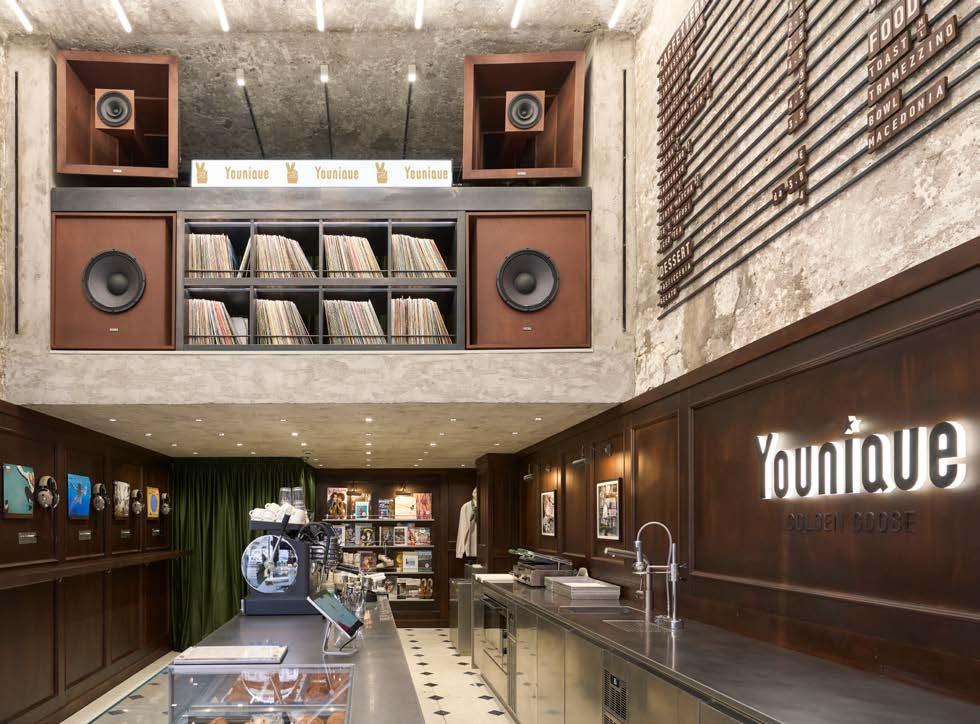
Golden Goose is opening Europe’s first Younique Caffè in Milan’s Cusani district, blending design, culture, and community. Inspired by vintage Italian cafés, the space combines concrete, wood, and gold accents with contemporary industrial elements. The menu celebrates Italian coffee culture and the ritual of the aperitif, while weekly events and live music curated by Futura make Younique a dynamic and inclusive place where individuality and creativity flourish in the true spirit of Milan.
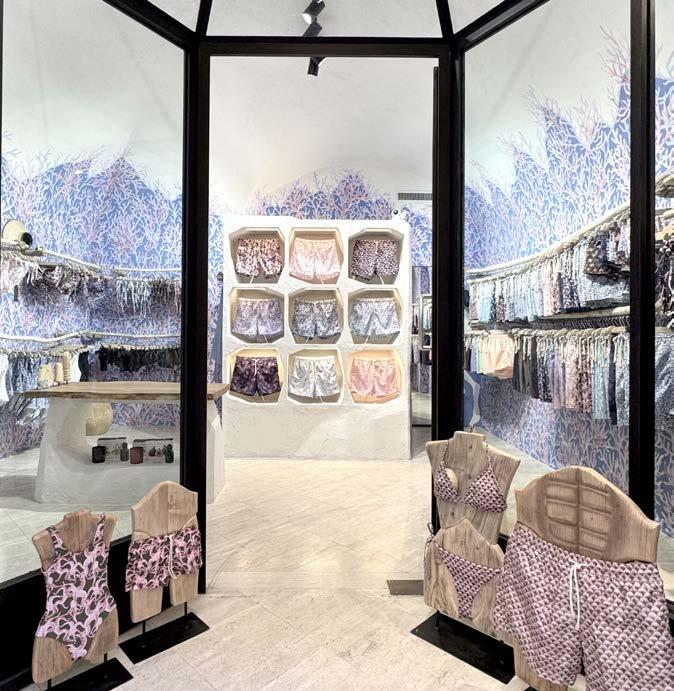
KAMPOS brings the sea to the city, offering an urban vacation experience all year round. The Italian-made luxury beachwear brand is opening its first boutique in Rome, at Via Bocca di Leone 89, in the heart of the city’s shopping district. The 30-squaremeter space, elegant and minimalist, is embellished with the iconic Coral Red print, evoking light, freedom, and the brand’s deep connection to Mediterranean culture, transforming shopping into a moment of escape.
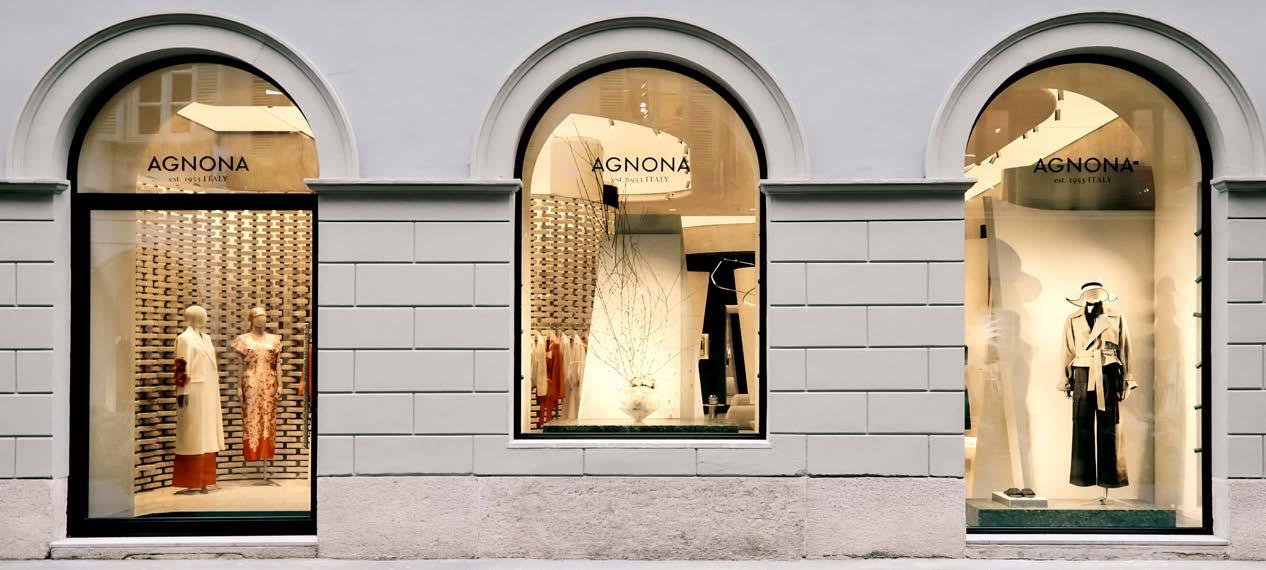
Agnona is opening its new flagship store in Milan at Via Santo Spirito 14, in the heart of the Fashion District. An immersive space where light, materials, and fabric come together in a minimalist and sensory architectural narrative. Amid white marmorino plaster, brass details, and references to Piedmontese textile tradition, the brand celebrates its heritage by reinterpreting it in a contemporary key. An opening that marks a new era blending elegance, memory, and vision.
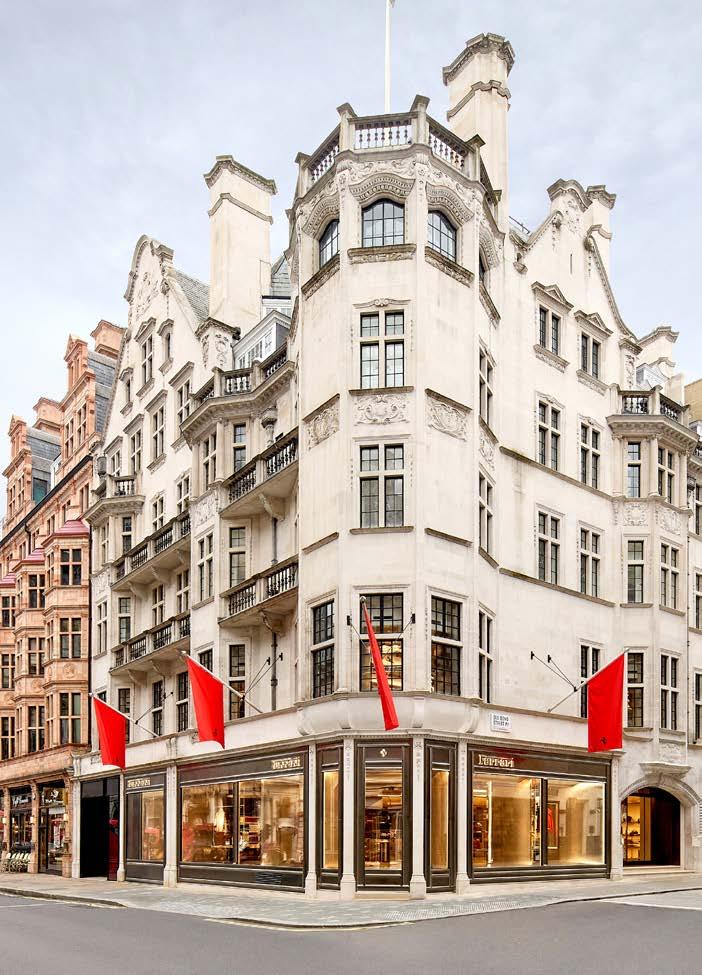
Ferrari Style unveils its new flagship store in London, a dialogue between heritage and innovation in the heart of Piccadilly. Designed by Rocco Iannone in collaboration with Gonzalez Haase AAS and Formafantasma, the 850-square-meter space combines Ferrari craftsmanship and engineering. The historic Queen Anne-style façade contrasts with contemporary interiors featuring brushed steel and concrete floors. Men’s, women’s, and Ferrari Collectibles collections coexist in a curated display, while the Tailor Made Atelier offers bespoke creations, embodying luxury, design, and experimentation.
A journey through the world of Invicta, blending heritage and innovation, where the brand traces its evolution. A story that weaves together memory and the future, featuring icons, new directions, and an international vision
by Valeria Oneto and Cristiano Zanni

Invicta is one of those names that stand the test of time without needing to reinvent itself every season.
Founded in Turin in the early 20th century as an artisan workshop, the brand built its identity around technical products, eventually evolving into a company capable of going beyond function and design, until it became a recognizable presence in the daily lives of multiple generations. From the mountains to the city, from school desks onward, Invicta has accompanied the lives of those who have chosen it, becoming over time something that goes beyond a simple brand: a familiar object, part of the habits and experiences of those who have worn it. It is here that its continuity is measured—in its ability to remain present in very different contexts without losing coherence or recognizability. Over time, products like the Jolly backpack or the Minisac have helped define a precise, immediate, almost instinctive image. Alongside this iconic dimension,
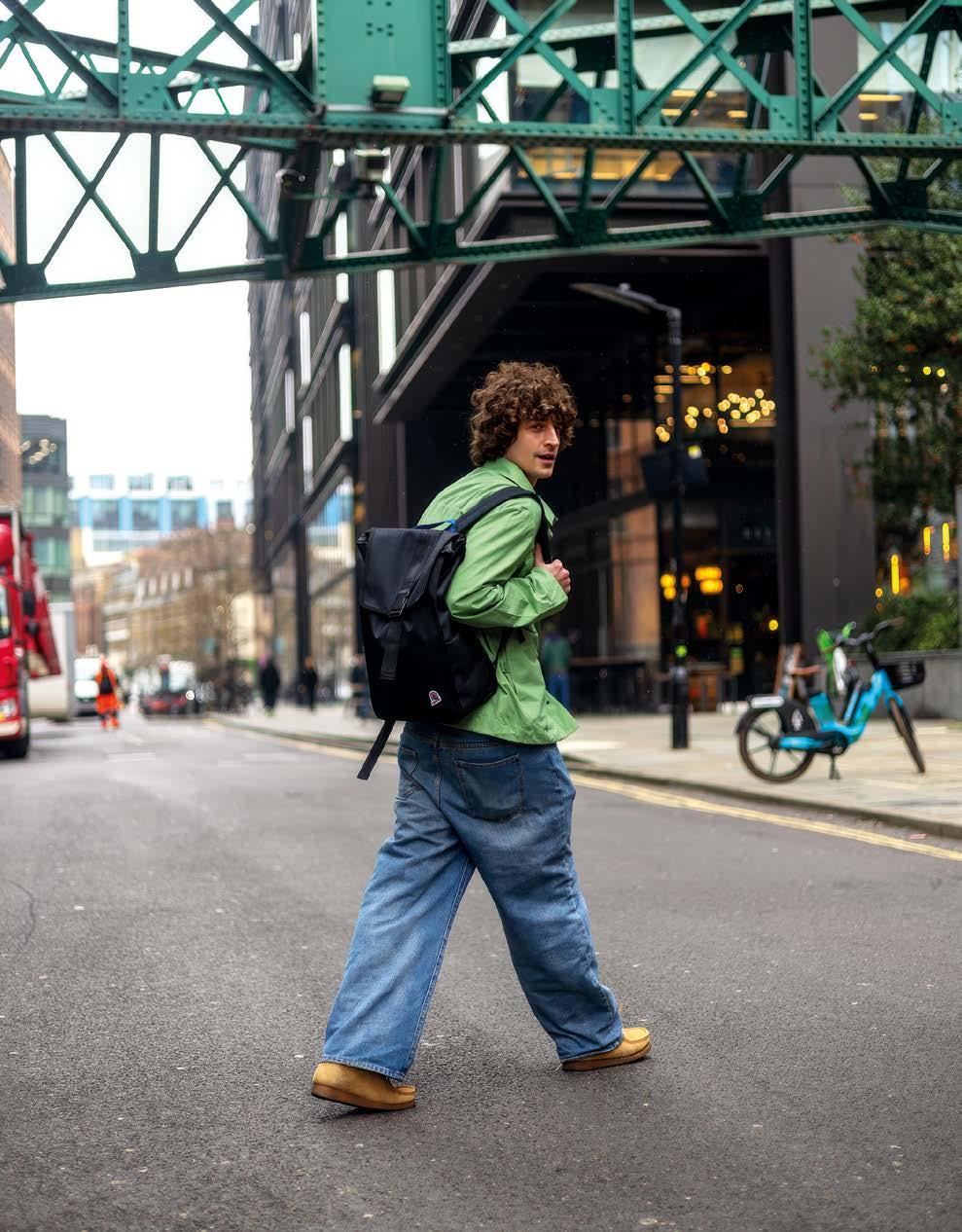
the brand has continued to evolve, expanding its design language, materials, and categories, extending into apparel as a natural extension of its universe. Today, Invicta operates within a broader contemporary landscape, encompassing international expansion, sustainability, and new product trajectories. Dialogue with industrial partners and innovative entities opens up new perspectives, while the core idea remains that of a brand that does not chase trends but navigates them with continuity, staying true to what it has always been: a discreet yet constant companion in everyday life. We met with Aldo Di Stasio, CEO of Seven, a central figure in the company’s leadership and its evolutionary path in recent years. His work is part of a history spanning more than a century, helping to guide the company between heritage and modernity, maintaining a strong connection to its original identity while simultaneously opening up new directions for development.
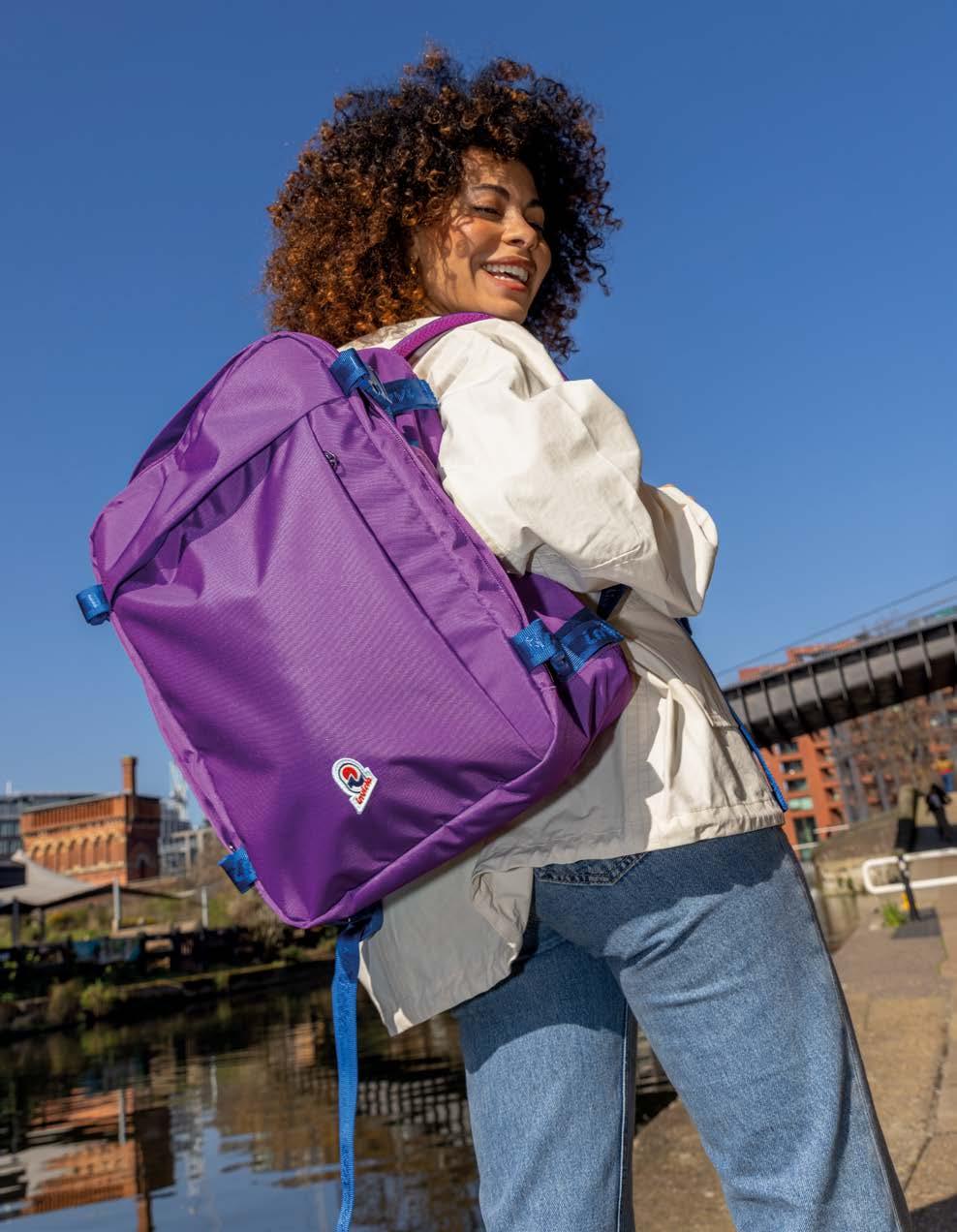
The name “Invicta” evokes strength and continuity. What is the story behind this choice, and what meaning does it still hold today?
Strength and continuity remain inseparable characteristics of the brand, thanks to innovation and the constant presence, in the products, of elements that best represent its identity and ensure its recognizability over time and across generations.
Starting from the artisan workshop in Turin, how has Invicta managed to maintain its authentic spirit without sacrificing innovation and modernity?
Invicta has maintained its authentic spirit without ever compromising its history and the cultural heritage that sets it apart. In every product, it manages to combine innovation and modernity while preserving the distinctive traits that define its identity.
You have led the brand for years, guiding it through acquisitions and international challenges (such as the acquisition by SevenZ in 2006): to what extent has managerial continuity influenced Invicta’s growth and global positioning?
Managerial continuity has been fundamental because it has ensured a consistent vision over time, while adapting to an ever-evolving target audience. This has allowed the brand to maintain its distinctiveness intact.
Looking back, when did you realize that Invicta would not just be a technical product, but a cultural icon capable of telling stories of life and adventure?
Thanks to its heritage, Invicta has always been a cultural icon and a symbol of Italian style around the world. Over time, it has become a point of reference for entire generations, helping to build strong brand recognition and awareness based on solid, shared values.
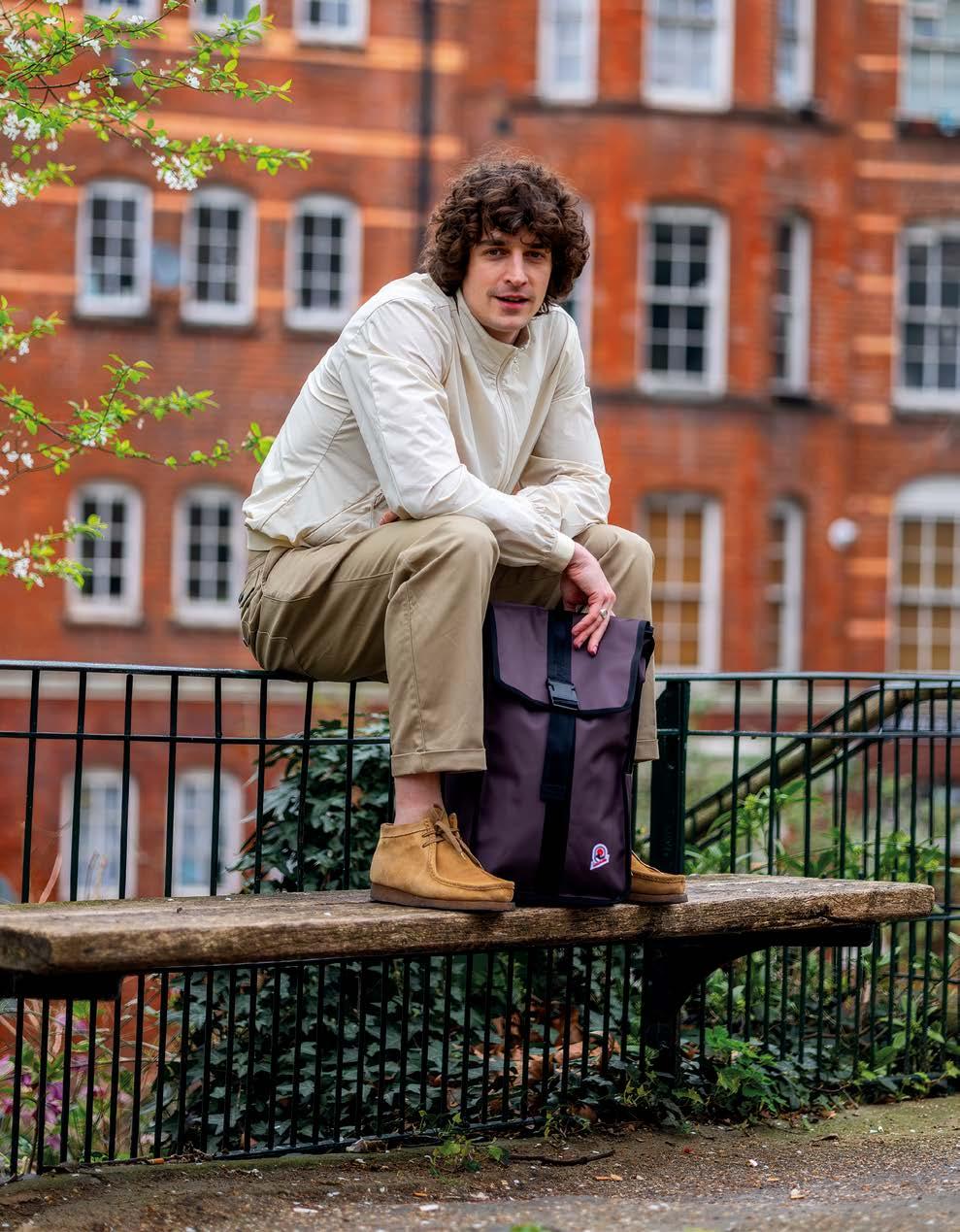
From the famous Jolly and Minisac backpacks to the latest urban models, how do you balance functionality, aesthetics, and lifestyle in every new collection?
Aesthetics are essential for capturing the target audience’s attention, but today even younger consumers are very attentive to functionality. That’s why we strive to balance these elements, ensuring that innovation and quality remain central, without losing alignment with contemporary trends.
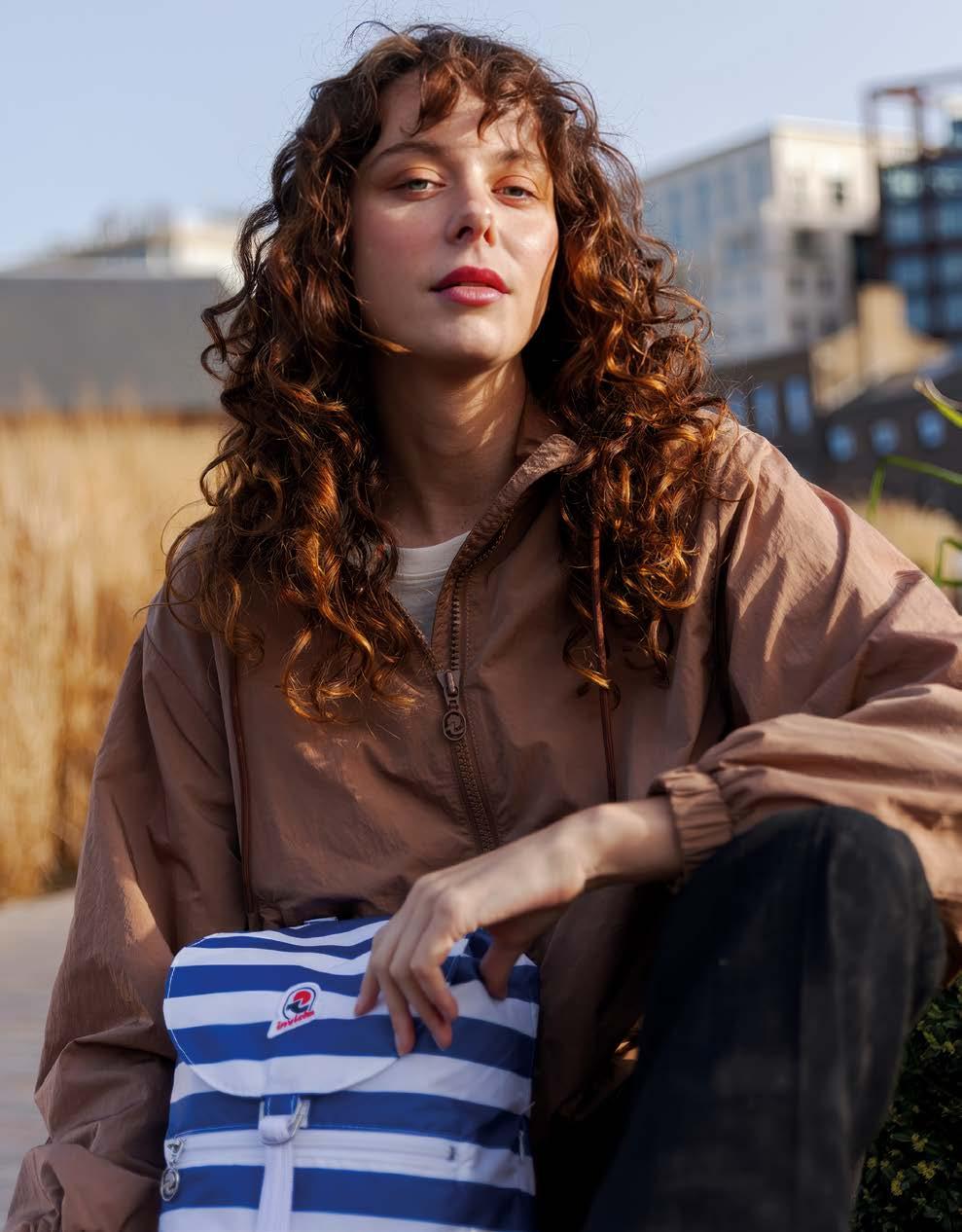
Heritage, Legacy, and Trend represent the three pillars of the brand: how do you manage to bring together tradition, innovation, and a desire for modernity without losing stylistic coherence?
Invicta has always known how to balance tradition and innovation, following the evolution of trends without losing its historical values. This is possible thanks to a strong and well-established identity. For us, innovating means keeping the brand’s DNA alive, ensuring its continuity and recognizability.
Collaborations with brands like Diesel and Dsquared2 have redefined Invicta’s urban appeal: can you tell us how these partnerships come about and what stories they aim to convey?
The collaboration with Diesel developed around the convergence of the brand’s values and an iconic product like the Jolly backpack. With Dsquared2, on the other hand, Invicta has more strongly expressed themes related to travel and freedom, central elements in its brand identity.
With projects like Re-ordinary and Monviso X Eco Project, Invicta is tackling sustainability: to what extent is this commitment an integral part of the brand’s identity, and to what extent does it become a competitive driver?
These projects demonstrate that sustainability is an essential and strategic component. Attention to the environment and its protection is an integral part of the brand’s mission and represents one of the fundamental assets for its future development.
Behind every recycled fabric and plastic-free packaging lies a strategic choice. How do you manage to combine
quality, environmental responsibility, and cost control throughout the entire supply chain?
Innovation and know-how are key elements that allow us to develop sustainable projects while optimizing our impact throughout the supply chain.
Looking ahead, what opportunities do you see for Invicta over the next ten years, spanning fashion, performance, sustainability, and new retail experiences?
The opportunities are numerous. The brand is working on a contemporary positioning, with a communication strategy centered on experiences, travel, and personal expression. At the same time, the apparel collections will be fundamental to strengthening our retail presence.
Invicta started with backpacks but is now evolving toward an increasingly defined total look: what strategic role does outerwear play in the brand’s future development and in the balance between functionality and style, especially in light of the collaboration with an innovative company like Space 2000?
The backpack remains the most iconic element in Invicta’s history, but apparel has always been a natural extension of the brand, capable of generating value and interesting development opportunities.

The 2026 Salone as told by Maria Porro, the president, exploring design culture and the power of design. Milan emerges as a global hub of industry and contemporary vision. At the intersection of industry, value, and new geographies
by Valeria Oneto
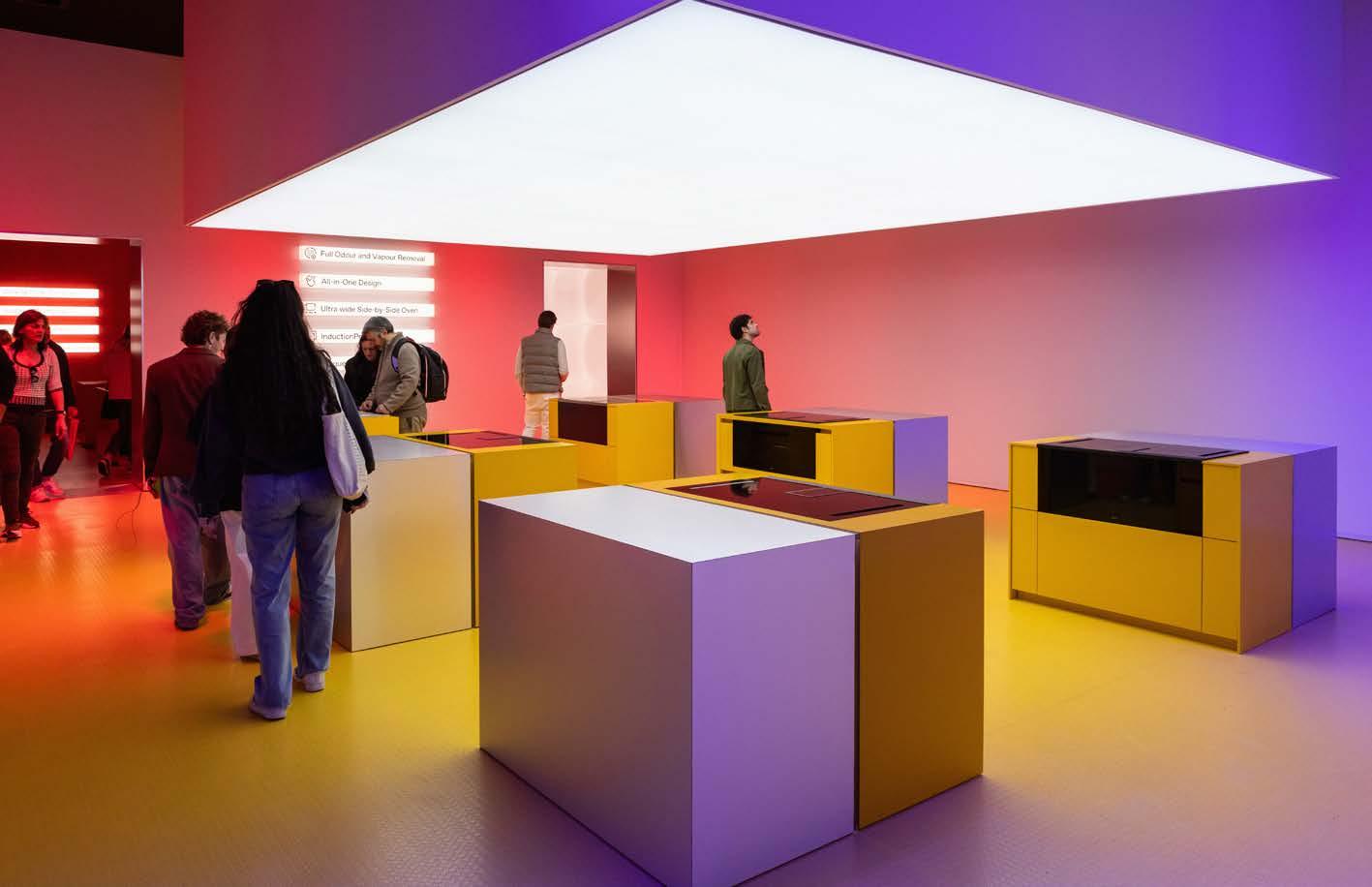
Within the confines of the Salone del Mobile, design is never just about form. It is a system that conveys a vision of the world. Milan becomes a cultural and economic hub that reshapes global design. The 2026 edition brings matter back to the heart of the project with the “A Matter of Salone” campaign. At the center is Maria Porro, president of the Salone, a young and talented figure who bridges business and cultural vision, capable of interpreting design as an economic, political, and creative language all at once. Interviewed during the event.


“A Matter of Salone.” In an era dominated by AI and virtual reality, the Salone campaign brings the conversation back to materials: stone, wood, and living surfaces. Is this a statement about what design means today? It’s not just visual language. It’s a statement. In an age of digital abstraction, bringing materiality back to the forefront means remembering that design stems from gesture, responsibility, and transformation. Materiality is not a backdrop but the subject itself: it embodies origin, geography, labor, environmental impact, and memory. This is the kind of design that interests us today: evolutionary, conscious, and non-decorative.
The Salone is a cornerstone of the global design industry: how much business does it actually generate, and what role does it play in today’s international market? The Fair is a cultural and economic hub that connects companies, buyers, architects, and investors. In just one week, deci-
sions are made and relationships are forged that will continue to develop over time. More than just a showcase, it is a catalyst. It is a place where value shifts from the product to the system: production, services, sustainability, and execution capabilities.
Milan becomes the temporary capital of the creative world. How are audiences and the maps that define global design changing?
Milan doesn’t simply host an event; it fosters an ecosystem, creating a unique synergy between trade shows, showrooms, schools, cultural institutions, research, hospitality, and urban spaces. The audience has expanded to include not only buyers, developers, and investors but also new international communities. New markets are emerging—India, the Middle East, Turkey, Morocco, and Portugal—and bridges are being built between design, art, and culture.
The new “luxury” of design: what does value mean in design today?
We’ve moved beyond mere fusion. Space is part of the brand’s narrative. Fashion and design operate on the same ground: creating experiences and habitable worlds. The Salone is the place where this shared language comes to life.
Is Fuorisalone more of an urban narrative or an extension of the Salone system?
It is a natural extension of the Salone. The difference lies not between the fair and the city, but between activation and po-

tential. Milan already has everything; the Salone brings what already exists to life. For a week, the city comes alive: spaces open up, and disciplines engage in dialogue. The fair brings business together, while the city spreads the story. Together, they form a unique system.
Materials, technology, and new supply chains: is this the new reality of design?
Yes, it’s inevitable. There are no longer any clear-cut distinctions between craftsmanship, industry, and technology. Today, design brings these elements together. Supply chains, materials, data, and sustainability all matter. Many Italian companies already integrate artisanal and industrial processes. Design becomes a competitive advantage when it transforms materials into systems.
Emerging designers: What is really changing in their design work?
SaloneSatellite is our observatory on the new generations. It highlights not only aesthetics, but also—and above all— awareness. Young designers tackle environmental and social challenges and focus on the fundamentals of design: materials, supply chains, processes, and the life cycle. The value lies in responsibility and feasibility. SaloneSatellite transforms insights into real opportunities.
Design has become a form of Italian soft power. To what extent does the Salone serve as a tool for cultural and industrial diplomacy?
Yes. Design is one of the most effective expressions of Italian craftsmanship because it brings together culture, industry, and quality of life. It’s about relationships more than just image. The Salone exports a model of supply chains and expertise, and builds trust over time. It is industrial and cultural diplomacy.
Milan After Milan: How Can It Remain the Global Hub
"THE FAIR IS A CULTURAL AND ECONOMIC HUB, WHERE VALUE SHIFTS FROM THE PRODUCT TO THE SYSTEM. IT IS NOT A SHOWCASE; IT IS A CATALYST."
MARIA PORRO, PRESIDENT OF SALONE DEL MOBILE.MILANO
of Design?
Evolving. The challenge is not so much to defend a position as it is to move forward. Milan is a dynamic ecosystem; it should not be viewed as a one-off event. It remains the epicenter of design because it operates as a cohesive whole: businesses, schools, research, industry, culture, and the city itself. And it continues to expand without losing its intensity, avoiding self-referentiality.
The economic value of design: How much is the Salone worth? The economic value of the Salone is tangible and measurable: it has a direct economic impact of approximately 278 million euros on the city. Its true value is built over time: through contracts, markets, and the growth of the industry. It acts as a multiplier for the entire Italian design ecosystem.
Will the future of design be increasingly digital and tech-driven, or will it remain rooted in materials and craftsmanship?
Il valore economico del Salone è concreto e misurabile: circa 278 milioni di euro di impatto diretto sulla città. Il valore reale si costruisce nel tempo: contratti, mercati, crescita del sistema. È un moltiplicatore per l’intero ecosistema del design italiano.
Design Week 2026. Milan absorbs fashion and design, transforming them into a single urban organism composed of installations and narrative pathways. And the city becomes a map in constant transformation
by Valeria Oneto
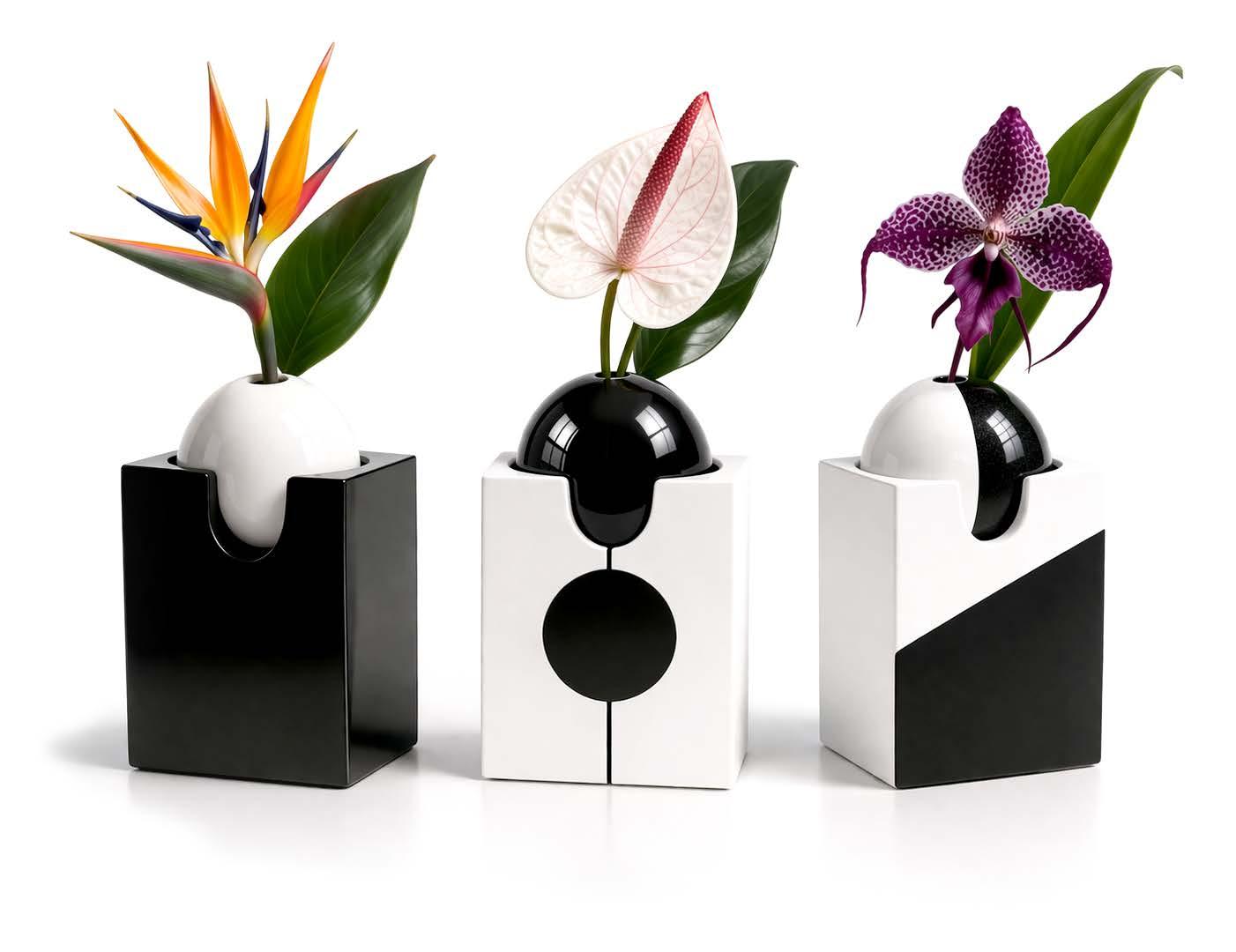
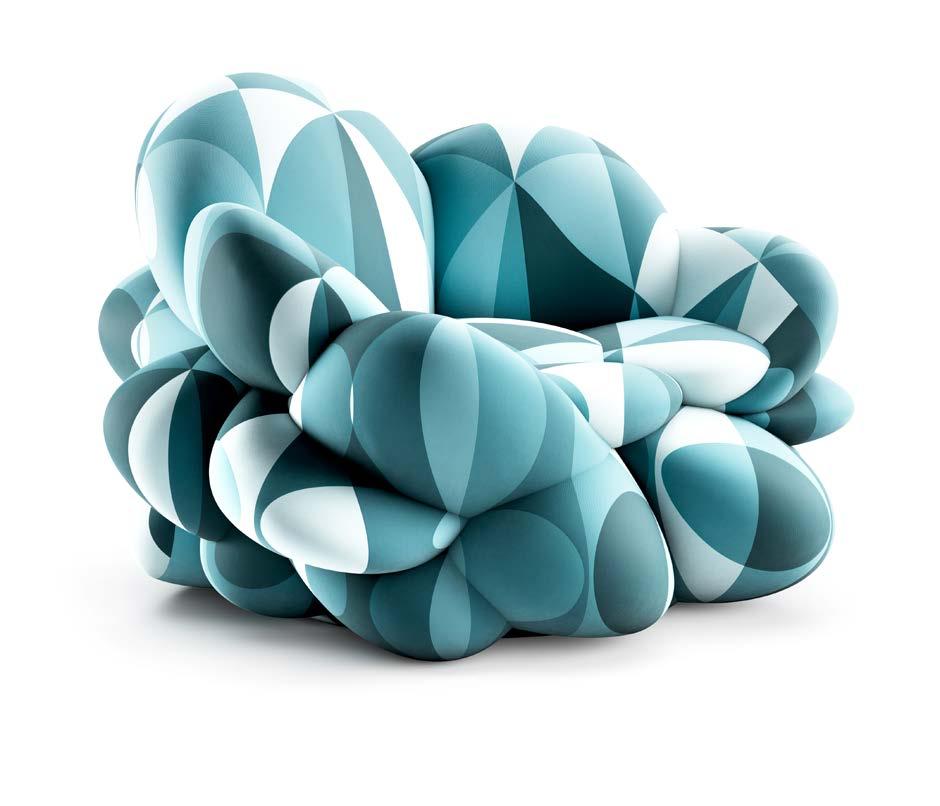
Milan returns to the international spotlight with Design Week and the Salone del Mobile in Rho, from April 19 to 26, 2026. During this week, the city does more than simply host events: it absorbs and reworks them, transforming itself into a living organism where fashion and design operate on the same ground—that of constructing livable spaces and imaginaries. Fuorisalone becomes a widespread infrastructure, an urban fabric that traverses Brera, 5Vie, Durini, Tortona, and Porta Venezia as nodes of a single narrative in motion. Here, fashion is no longer a fusion but a design language that intertwines with the city’s layout and reshapes its perceptions. The fashion houses construct a parallel Milan made up of installations and temporary environments: not a sum of places, but a continuous sequence of thresholds that light up and fade away over the brief span of the week. In the heart of the city, Armani/ Casa presents the Origins collection & Armani/Casa Icons at Corso Venezia 14, while Borbonese Home showcases its new 2026/2027 collection at Corso Venezia 5. Dolce&Gabbana Casa stages a dual presentation between Corso Venezia 7 and Via Durini 23, featuring new collections and live performances. Fendi Casa occupies Piazza della Scala at the corner of Via Verdi with its new collection, while Versace Home unveils the 2026 collection at Via Durini 11. The domestic dimension opens up to more intimate narratives with Luisa Beccaria Home, presenting “Celebrations” at Via Medici 15 in dialogue with Anne de Carbuccia, and with Roberto Cavalli, interpreting “Mediterranean Heritage” at Tommasi Milano in
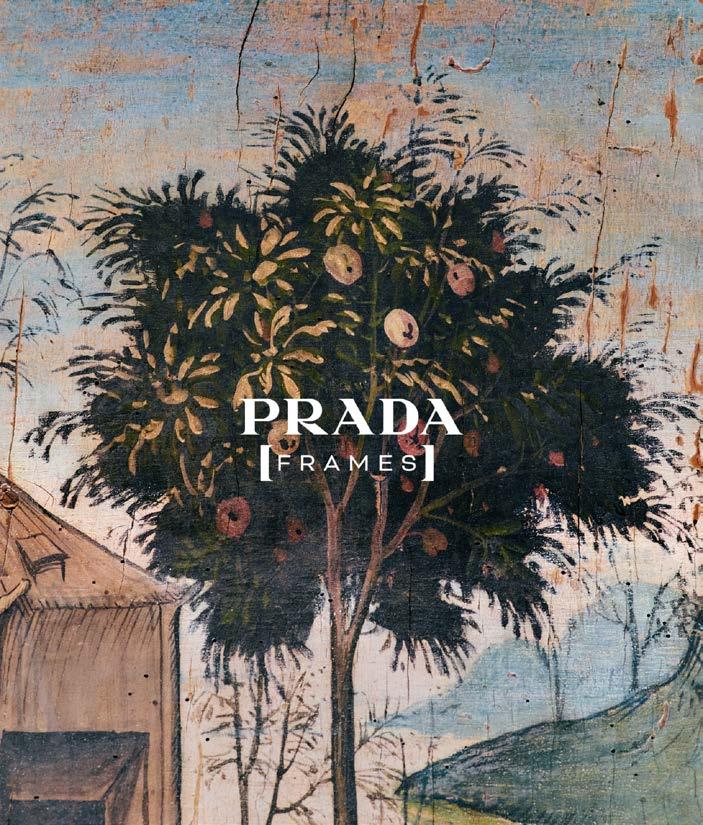
Piazza Giovine Italia 2. DoubleJ transforms its flagship store at Via Sant’Andrea 10/A with “Size Matters,” where the staircase becomes a language. PRADA presents PRADA FRAMES – In Sight at the Santa Maria delle Grazie complex at Via Caradosso 1, a symposium curated by Formafantasma dedicated to the relationship between environment and contemporary imagery. Gucci brings Gucci Memoria to the Chiostri di San Simpliciano at Piazza Paolo VI 6, an exhibition curated by Demna that reinterprets the Maison’s 105-year history. The widespread network of 10 CORSO COMO reaffirms itself as a cross-cutting hub with Moncler Gallery, Linde Freya Tangelder with Cassina, Visionnaire, Imperfettolab, Kinraden, and Garage Italia Customs with Mariaflora, extending its presence throughout the urban space. In the more experimental segment, Alessandro Enriquez presents Il Giardino di Carta between Cappellini at Via Borgogna 8 and the Franco Parenti Theater, while Giada collaborates with Ella Art Gallery at Via Monte Napoleone 15. ECCO opens its first Italian pop-up at Via Borgogna 5, presenting a preview of ECCO. Kollektive AW 26, a project with Craig Green, Yosuke Aizawa (White Mountaineering), and Natacha Ramsay-Levi, blending craftsmanship, innovation, and design experimentation. Kris Van Assche, in collaboration with Laffanour Galerie, presents Nectar Vessels Bronzes at the Fondazione Sozzani at Via Tazzoli 3. Anteprima presents Link of Moments × Link of Existence at Via Borgospesso 23. Material exploration runs through Valextra with Objects of Common Interest at Via Manzoni 3, while Bottega Veneta entrusts Kwangho Lee with a light installation at Via Sant’Andrea 15. Fratelli Rossetti concludes this axis with Atlantico at Corso Magenta 17. Furla Casa presents Bubble Up
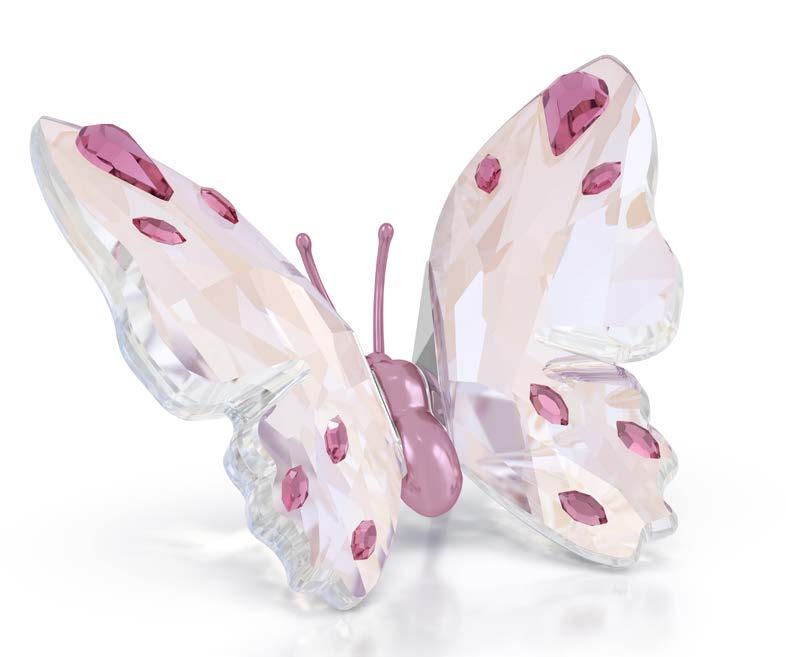
On the left, the new Objets Nomades collection by Louis Vuitton. Below, a Swarovski figurine
between UNA|Esperienze Hotel and the store at Piazza Duomo 31, featuring an installation and cocktail experience.
Sprawling city
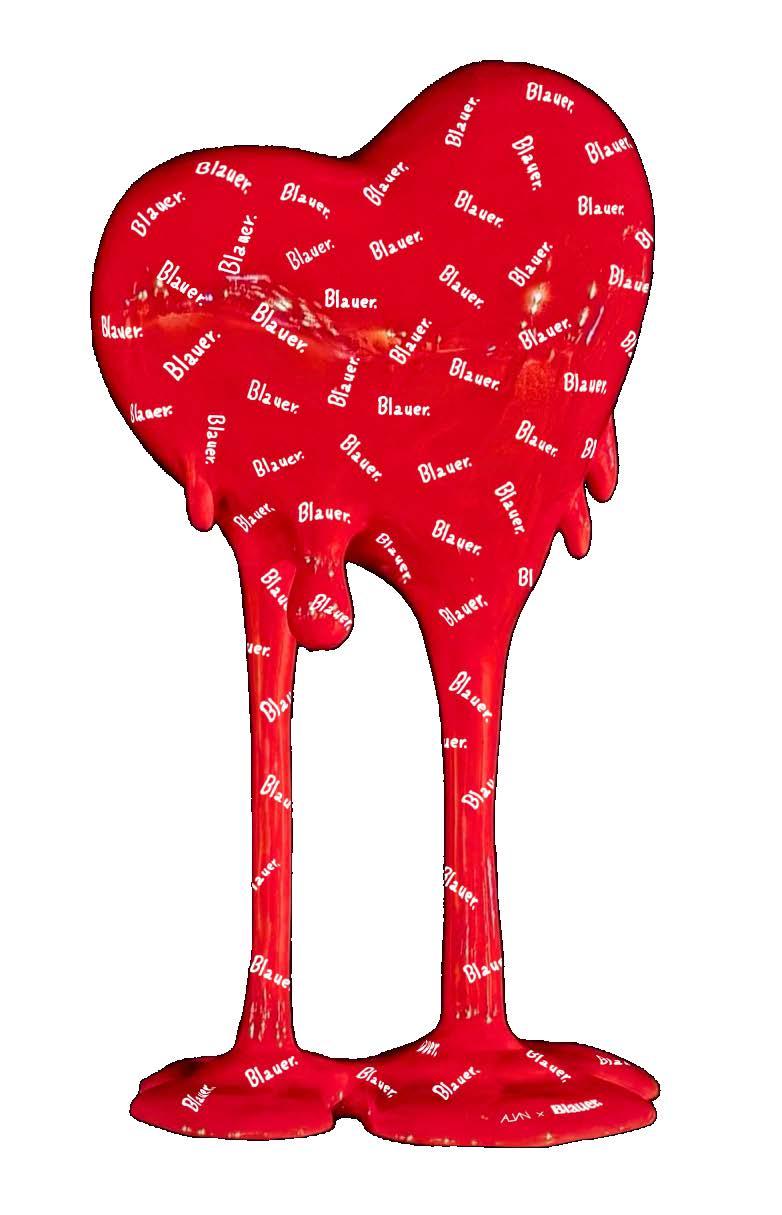
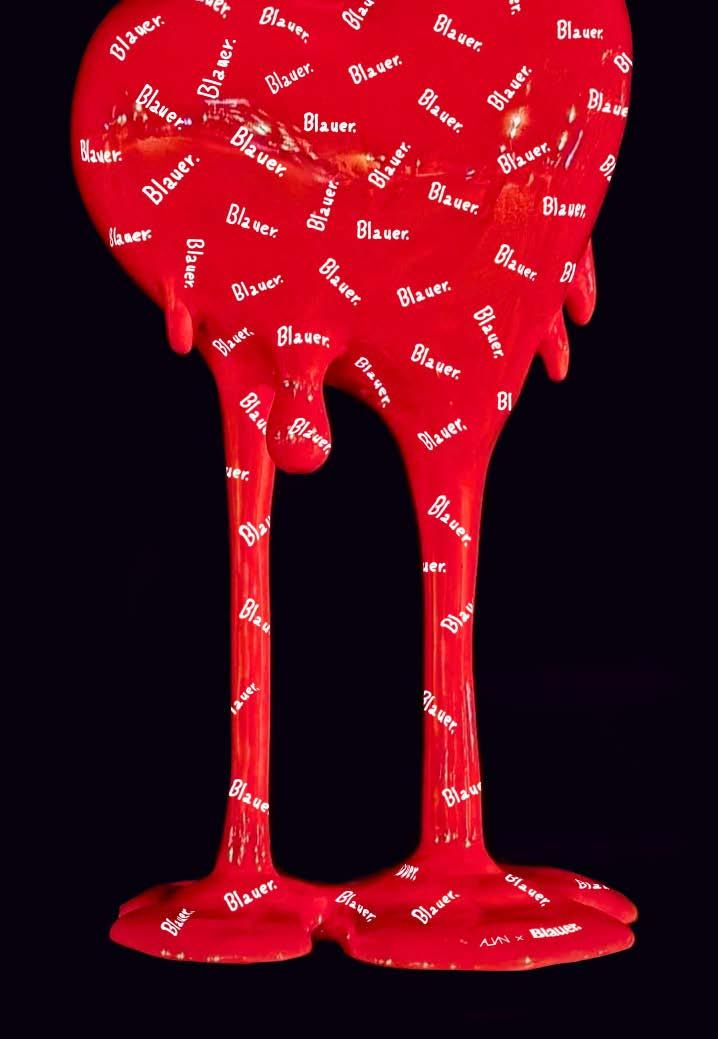
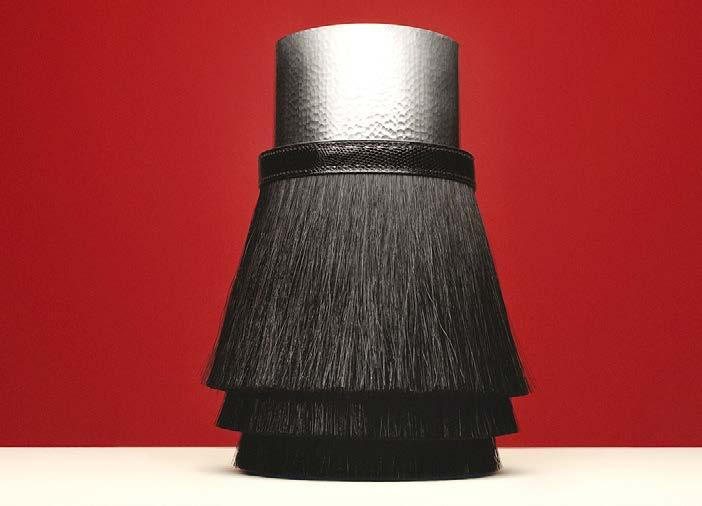
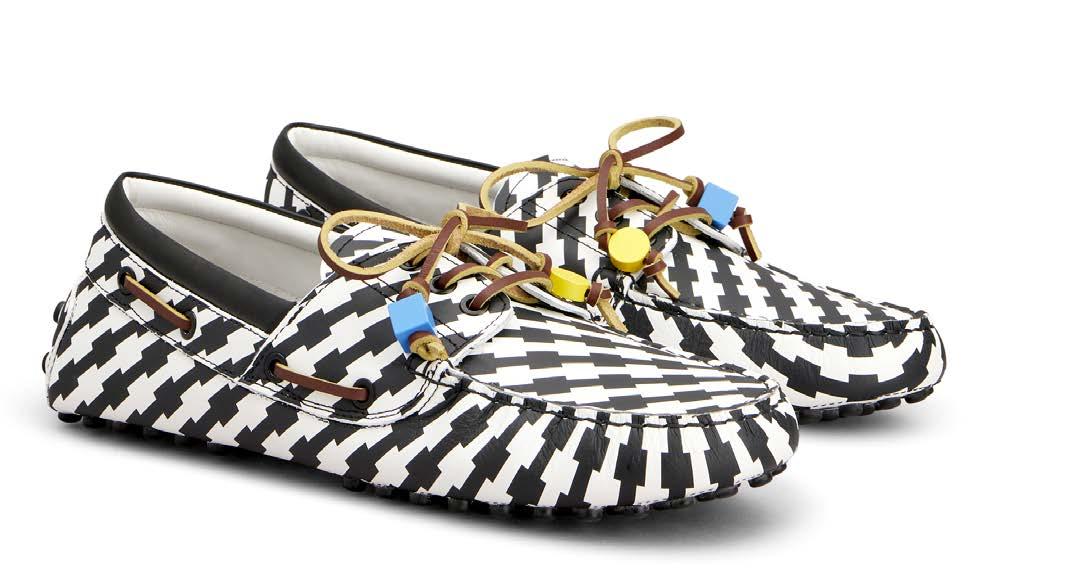
The city then turns its attention to immersive and hybrid installations. Hermès presents a light installation at La Pelota, 1 Via Palermo. Buccellati presents Aquae Mirabiles in Piazza Tomasi di Lampedusa. Louis Vuitton exhibits Objets Nomades at Palazzo Serbelloni, 16 Corso Venezia. Tod’s dedicates its project to the Gommino at 56 Via Savona, reinterpreting it through the works of Joe Colombo, Gaetano Pesce, Michele De Lucchi, and Achille and Pier Giacomo Castiglioni. In the district between Brera and Tortona, Aesop presents The Factory of Light and Aposē in the spaces of Santa Maria del Carmine, while Swarovski celebrates 50 years of home décor with the illustrated book The Quest for Light. IQOS is launching a series of installations across Brera and Tortona, while DONE! takes over Turbo Moka at 38 Corso Garibaldi. Roseto and Jarvés present the group exhibition Optical Art, Vasarely and Beyond, curated by Milo Goj, at Spazio Roseto at 95 Corso Garibaldi. Piantala returns to Fuorisalone with a green partnership with Seletti, featuring plants in the vases of the Magna Grecia collection by Antonio Aricò x Seletti within the experiential installation BUILDING DESIGN LTD. at the flagship store at Corso Garibaldi 117. The everyday dimension intertwines with the experiential: Trussardi launches The Gentle Society at Via Burlamacchi 4, while Martino Midali develops Orbita – F205 / In Relazione at Via Mercato 6. Blauer presents Overflow with artist Alvin at Piazza XXV Aprile 1. ASICS SportStyle presents Kinetic Playscape at Garage 21, Via
Archimede 26. TRC presents the Glacier Edition and Mineral Collection at the Candiani Corner, Piazza Mentana 3
Mobile maps
In the dialogue between design and lifestyle, Valentino Beauty presents the Born to Rome fragrances through the artistic vision of Taboo at Via Capelli 5. K-Way presents Architecture of Freedom at Corso Garibaldi 30. Persol and Cassina launch their collaboration at Via Durini 18. Among other events, Manuel Ritz, in collaboration with IMOLARTE, presents The Art of Color at Via Solferino 1. Eleventy hosts an event at Via della Spiga 7 dedicated to the dialogue between fashion and design. D.A.T.E. presents Super Giunto 0,0,0 at the Ponte Vetero store with CARA\DAVIDE and 70Materia. Simone Guidarelli x Weissestal and Coin present King of the Roses in the storefronts of Piazza Cinque Giornate. Antonio Marras creates PicNic at Le Vasche di Ciu’ Peppì by NonostanteMarras at Via Cola di Rienzo 8. Sesia&Co. x My Style Bags brings Palazzo Bocconi to life with cross-disciplinary collaborations on color. CUPRA interprets Essere Progetto at the Garage on Corso Como 1. Loro Piana presents Studies Chapter I: On the Plaid at Via della Moscova 33. Diego M, with Lisa Pessotto and Linea Zero, opens the boutique at Corso Venezia 8 with an event blending fashion and design. Within the Salone’s perimeter, ABITO—a project curated by Palomba Serafini Associati and promoted by the Ministry of Foreign Affairs and International Cooperation—debuts in Rho as an exploration of the transformation of living.
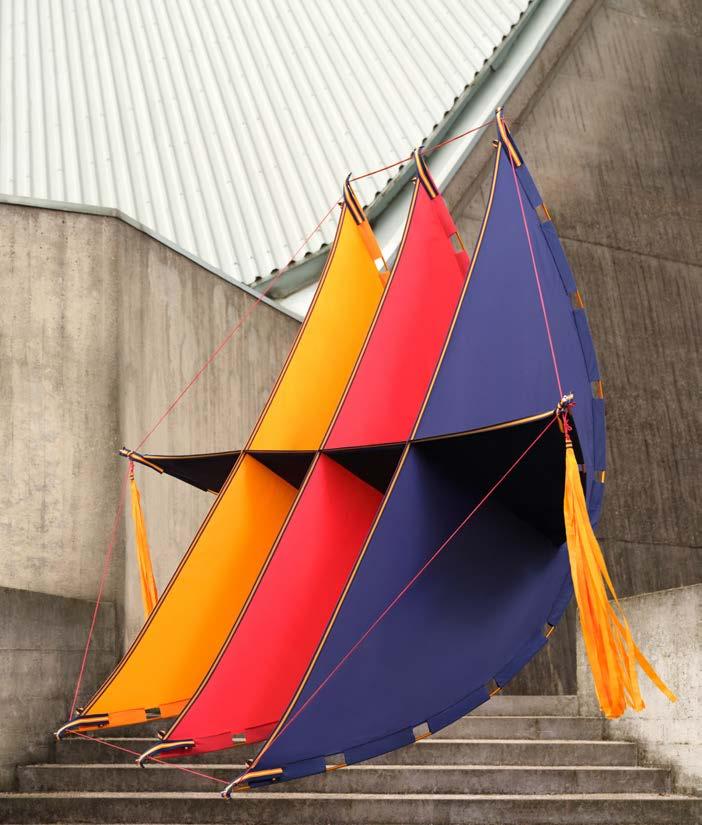
From top, clockwise: “Architecture of Freedom” by K-way. The “Overflow” installation by Blauer. “Prada Frames In Sight” by Formafantasma.
A piece from the Hermès Maison collection
Seven industry leaders discuss the evolution of scarves, shawls, and bandanas: from seasonal accessories to new style codes, blending textile heritage, innovation, and global growth
by Valeria Oneto
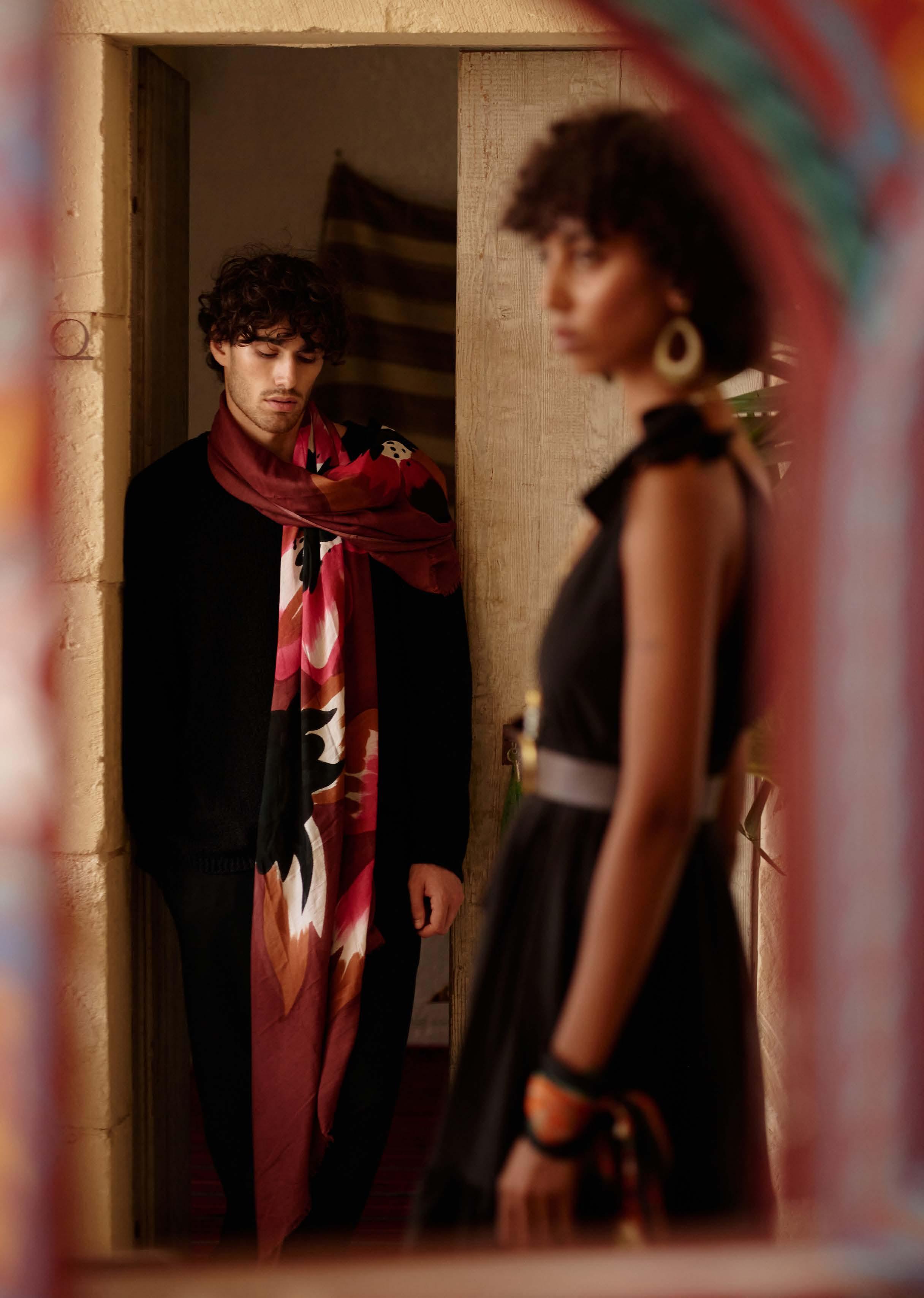
There is a specific moment in recent runway seasons when the scarf ceases to be merely an accessory. It no longer complements the look—it defines it. From Paris to Milan, from the most famous runways to avant-garde brands, silk is once again taking center stage on the body—tied, layered, or transformed into a top or bandana. It’s not styling; it’s structure. The phenomenon is not merely aesthetic. The global market for silk scarves and accessories is currently operating in a segment estimated to be growing steadily, with a value of several billion dollars and a projected CAGR of around 6% in the coming years (Future Market Insights, Luxury Scarves Market Report, 2024). Within this trajectory, Europe remains a central production and cultural hub, with a silk supply chain still strongly tied to Italy and the Como district. But it is from interviews with the seven players analyzed—Claudio Cutuli, Faliero Sarti, E. Marinella, Mantero, Bahobab, Archivio Camerucci, and Franco Ferrari—that the real key to the change emerges: the scarf is no longer seasonal or merely decorative, but a narrative object.
1 For a brand that places luxury and sophistication at the heart of its identity, how has the role of scarves, shawls, and stoles evolved over the years? Today, how do these accessories shape the brand’s strategy and support its growth?
2 Have you noticed any changes in the way customers choose and wear scarves, stoles, and shawls?
To what extent do preferences vary across markets, generations, or sales channels, and how do they influence your approach?
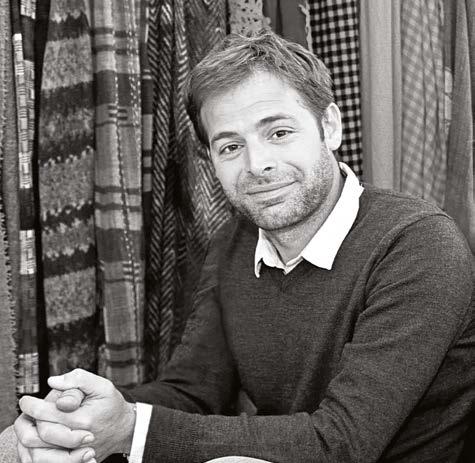
FEDERICO SARTI commercial director
FALIERO SARTI
1
3
Silk remains the signature material for accessories in this category, but new fabrics and yarns (cotton, cashmere, linen, etc.) and alternative materials are increasingly entering the market. How do you decide which materials to use, and what factors—such as positioning, price, sustainability, or innovation—guide your choices?
4
To what extent does the manufacturing tradition—for example, iconic centers like Como— influence the design of your products? And, at the same time, how much
Each brand interprets it as a distinct language, blending heritage, experimentation, and textile research, yet the direction is singular: value shifts from material to meaning, from accessory to identity. The second key point is freedom of use. All players are witnessing a progressive breakdown of conventions: the scarf, in all its forms, is no longer tied to gender or season, but enters everyday styling as a free expression. The bandana, in particular, becomes one of the most versatile styles, a bridge between street culture and luxury, capable of spanning audiences and generations. Geographically, the picture is equally clear. Europe remains stable and structured, but the most dynamic momentum comes from Asia, with Korea, Japan, and China at the forefront of growth and aesthetic experimentation. It is here that the accessory increasingly takes on a cultural as well as an aesthetic function. In this scenario, scarves, shawls, and bandanas are no longer merely accessory categories within the wardrobe. They have become an autonomous system of language, where the fabric does not merely complete the look: it defines it.
emphasis do you place on modern technologies, such as digital printing or new fabric treatments, in striking a balance between heritage and innovation?
5 In recent years, scarves and bandanas have taken on new forms in contemporary fashion, becoming increasingly creative and surprising. How has this trend influenced your approach to design and product development?
6 Is the concept of the genderneutral scarf/foulard/bandana
satile way, often transcending seasons and gender. Differences between markets and generations remain stark: younger consumers seek experimentation and versatility, while others prioritize quality and uniqueness. Digital technology has accelerated this trend, making the product more accessible and immediate.
3
Silk remains central, but today materials speak a broader language. Cashmere, linen, cotton, and innovative blends do not replace silk, but expand the range of expressive possibilities. These choices stem from a balance between aesthetics, innovation, and responsibility. A premium positioning demands excellence, but also continuous evolution, with a growing focus on sustainability and traceability.
4
Over the years, Faliero Sarti scarves have evolved from simple accessories into defining elements of the brand. Today, they are no longer mere accessories, but expressive tools that showcase textile innovation, craftsmanship, and a contemporary vision. They are at the heart of the brand’s strategy: iconic, timeless products that evolve through innovative materials, exceptional craftsmanship, and artistic collaborations. The balance between tradition and experimentation underpins the brand’s growth and positioning in the luxury sector.
2 The main change concerns the customer, who today is not just buying an accessory but a narrative object. Scarves, stoles, and shawls are worn in a free-spirited, ver-
Italian manufacturing tradition is in our DNA. Places like Como represent a unique heritage of textile culture that continues to inspire our collections. At the same time, innovation and technology—such as digital printing and new treatments—expand our creative possibilities. Our approach strikes a natural balance between the past and the future.
5
Today, scarves and bandanas are narrative tools rather than mere decorative accessories. This has led us to design more versatile products, intended to be worn in different ways, without strict rules. Dimensions, weights, and patterns become tools for fostering freedom and creativity in contemporary styling.
6
Moving beyond gender categories is a natural evolution. Scarves and bandanas are versatile accesso-
now an established trend, or is it still taking shape in the market and within your brand?
7 What factors are currently driving global market growth for these accessories? And which geographic regions are performing the best?
8 Looking ahead, how do you envision the evolution of this category?
Do you foresee growth in the luxury segment, an increase in sales volume, or new ways of using these products that could redefine their role?
ries that have always been designed to enhance individual expression beyond traditional norms.
7
The growth of this category is driven by several factors: accessories playing an increasingly central role in personal expression, trends gaining momentum through social media, a growing focus on quality and sustainability, and the product’s great versatility. Gifting and the search for iconic pieces also play a role. Europe remains a key market, but Asia is experiencing strong growth.
8
Looking ahead, scarves, shawls, and bandanas will gain traction in the high-end segment thanks to innovative materials, sustainability, and artisanal craftsmanship. However, they will remain lightweight and personal items, with growth driven by conscious consumption and a search for iconic, durable pieces.
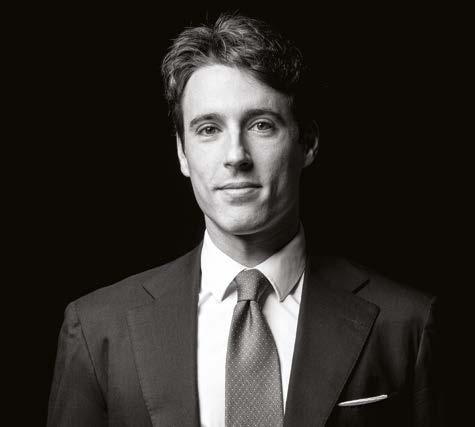
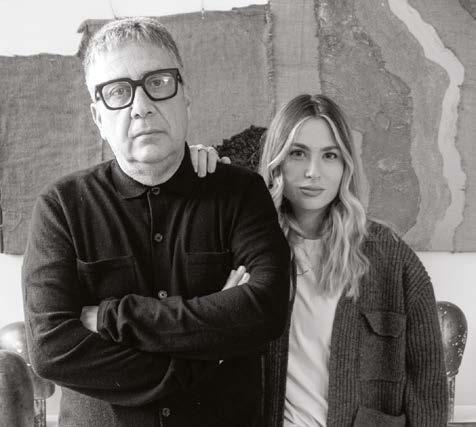
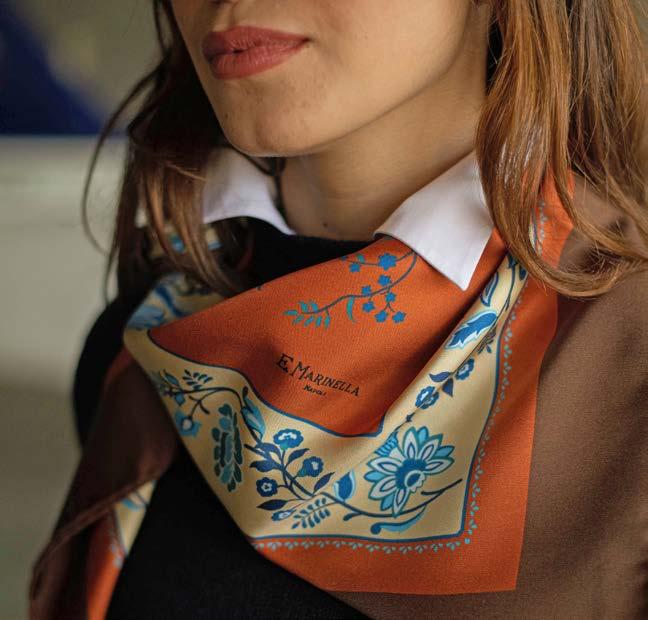
ALESSANDRO MARINELLA general manager
E. MARINELLA
1
Scarves, shawls, and stoles have always been a form of artistic expression in the luxury sector, and today this aspect is more central than ever. The brand has a long-standing connection to ties and silk, and these accessories offer the greatest freedom to transform fabric into a narrative canvas. Prints become works of art, brought to life by advanced production techniques that ensure ever-higher levels of quality and detail. The result is an accessory capable of giving the wearer an immediate sense of identity.
2
The way customers choose and wear these accessories has changed. Faster-paced lifestyles have altered how fabrics are used: people leave home in the morning and often return in the evening, so there is a growing demand for lightweight, versatile materials. Warmer climates have also driven a shift toward more technical and breathable fibers
FRANCESCA CUTULI sales manager
CLAUDIO CUTULI
1
The role of scarves and shawls has clearly evolved in recent years. They are no longer mere accessories, but elements capable of transforming an outfit. Today, a scarf doesn’t just complete a look: it shifts it, defines it, and in some cases builds it from scratch. It has become a true styling tool.
2
Right now, the bandana is undoubtedly the most versatile and recognizable accessory. It’s a must-have that’s here to stay. Its strength lies in its freedom: it doesn’t impose any rules, but leaves room for personal interpretation. It is precisely this openness that makes it so timeless.
3
Today’s customers are much more attuned to the balance between quality and price. This awareness has grown significantly over the past year. In this con-
rather than heavy wool and cashmere. The result is a brighter, more vibrant color palette, in stark contrast to the dark tones of the past. The change is evident in Italy, but even more so in markets such as the United States and the United Kingdom.
3
Silk remains our signature material, but research into hybrid yarns is opening up new possibilities. The combination of cashmere and silk creates soft, lightweight, and breathable fabrics. Sustainability is key: we collaborate with Orange Fiber, a Sicilian company led by women that produces a fiber from orange peels. It’s a project that combines innovation and responsibility, while keeping the focus on products that are a pleasure to wear.
4
In terms of manufacturing, we have taken a non-conformist approach. We have always printed our silks in England, our main production hub, which has only a marginal connection to Como. This decision stems from our respect for tradition and our desire to preserve craftsmanship. We do not rely on digital printing or invasive processes: innovation comes through color research, using plant-based dyes and lighter prints that respect the fabric.
5
The evolution of contemporary style has left us thoroughly satisfied. Scarves and bandanas are now worn in a more free-spirited and creative way, allowing us to express our essence, rooted in Neapolitan flair and identity. It is a trend that enhances the versatility of the product and its expressive potential.
6
The concept of gender-neutral fashion is now well established. Scarves, shawls, and bandanas have transcended gender distinctions, opening up an almost limitless creative landscape. It is increasingly fascinating to see how
customers reinterpret these accessories, giving the product a different meaning each time.
7
The global growth of this category is driven by the blurring of boundaries between men’s and women’s fashion. This has expanded the market and opened the door to new styling possibilities. The main driving force today comes from Asia, with Korea, Japan, and China leading the way in terms of performance and aesthetic experimentation.
8
Looking ahead, this category will grow and become increasingly central to the fashion ecosystem. The tie is also evolving, and with it the entire range of related garments—such as jackets, shirts, and collars—designed to showcase these accessories. This is not a static segment but a dynamic field that is becoming increasingly integrated into the language of fashion.
text, our strength lies in our in-house production, which allows us to oversee every stage of the process and maintain a consistent level of quality. Quality remains our top priority.
4
Our identity stems from the art of dyeing and a distinct textile tradition. Over the years, we have worked to keep it alive without letting it become rigid. With the arrival of the new generation in the company—represented by my daughter Francesca— we have combined tradition with new techniques and experimentation. The goal is simple: to evolve without losing sight of our roots.
5
The bandana wasn’t a belated response to market trends. On the contrary, it was a forward-thinking interpretation of the trend. We introduced it into our collections about seven seasons ago, before it had become a widespread phenomenon. For us, it was a natural evolution of the brand’s aesthetic.
6
Today, rather than a trend, we can speak of a consolidation. Scarves and bandanas have become a permanent fixture in the contemporary wardrobe, playing an increasingly central role in styling.
7
On the market front, we are witnessing a very strong resurgence in Asia. South Korea and China are now among our most important customers in terms of interest and spending power. In these countries, “Made in Italy” is seen as a cultural value even before it is viewed as an aesthetic one. This recognition should
be preserved, not diluted.
8
We have never pursued volume as our primary goal. Our approach is different: we prefer to focus on the customer, building a direct, ongoing, almost personal relationship. It’s a slower model, but one that’s consistent with who we are.
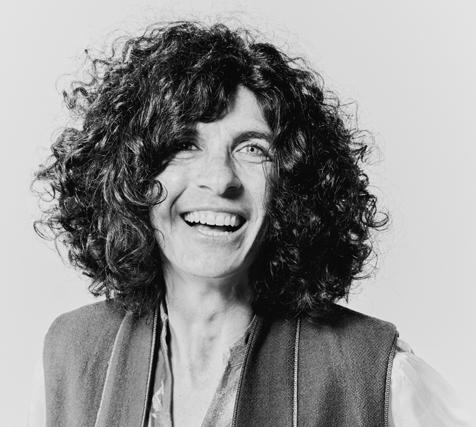
LUCIA MANTERO product management & development director MANTERO
1
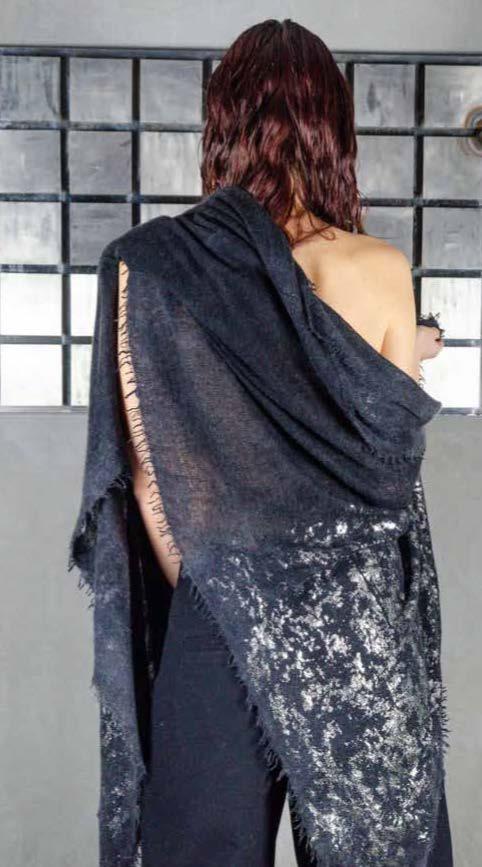
Textile accessories have remained a constant feature in collections over the years. For many brands, they serve as a true gateway to the brand. For those who work with prints, they offer a space for continuous experimentation: patterns, colors, sizes, and uses change every season. They are also the ideal product for experimenting with details such as fringes, embroidery, and appliqués, while remaining an affordable investment. For Mantero 1902, the scarf is the starting point: this is where the prints that define the brand’s identity are born and extend to apparel.
2
The category is following current trends: classic scarves are giving way to more compact styles such as bandanas, bandeaus, and diamond-shaped scarves, which are more accessible. The traditional scarf, however, remains a staple and is being reinterpreted by younger consumers in

LISA ULIASSI creative director FRANCO FERRARI
1
The role of scarves, shawls, and stoles has shifted from a purely practical function to an increasingly decorative one. Today, they are no longer just functional accessories, but elements capable of enriching and defining a look, becoming a true stylistic “plus.” For Franco Ferrari, the scarf plays a central role, because the brand was founded precisely on the concept of 90x90: a “mother” element from which all creative development takes shape.
2
The scarf is now a versatile accessory. While it was once associated with a more mature clientele, today it is also chosen by a younger audience. Above all, the way it is worn has changed: creativity is on the rise, with uses ranging from a belt or a bow tie to a top tied around the body. Layering has become a key trend, and the scarf plays a leading role, aided by increasingly unpredictable weather that encourages the
a casual style, even for men. This opens the door to greater creative freedom, with patterns and colors that are increasingly diverse.
3
A more casual approach to the product leads to lighter, everyday fabrics, such as cotton and linen, often blended with silk. Silk remains the standard for iconic products like the 90x90, but for other styles, the fabric compositions vary widely, including the use of wool and cashmere outside of their typical seasons. The price is significant for an entry-level product, but it must never compromise quality: the scarf, seemingly simple, requires complex processing on delicate fabrics, where every flaw is visible.
4
Como’s craftsmanship is unique and continues to set the standard for the industry. Heritage and innovation go hand in hand: hand-drawn designs and screen printing are combined with digital techniques that offer greater flexibility and new effects. True innovation lies in the combination of these tools. Added to this is the issue of responsible production, which requires balancing aesthetics, sustainability, and timelines.
5
New styling trends have prompted us to look beyond our archives for inspiration. Our recent acquisitions— bandanas, Hawaiian shirts, and kimonos—bring distant materials and styles into our world, serving as new starting points for our designs.
6
The concept of gender-neutral fashion is gaining traction, but it is still evolving. We are seeing growing interest in versatile, gender-neutral products, and we are working to figure out how to incorporate them into our col-
lections while maintaining the right balance between style, quality, and brand identity.
7
Textile accessories remain a key category, sometimes standing alone and sometimes integrated into the collection, as is the case with us. Our customer base is increasingly global: Asian and Middle Eastern customers are particularly attentive to the product, but the category appeals to a wide range of consumers. It also remains a strong segment in the gifting market.
8
Looking ahead, we foresee growth in a broader product range, including home textiles, knitwear, and scarves enhanced with distinctive details. The revival of traditional techniques, combined with new technologies, is a key driver. Sustainability is now the norm, and we are working to optimize every stage of production. Mantero 1902 remains our laboratory for experimentation with formats, techniques, and applications.
creation of flexible, adaptable looks throughout the day.
3
All these factors guide Franco Ferrari’s design choices. Climate change, layering, and cost-consciousness are steering the collection toward increasingly versatile products. Cotton and linen are suited to warmer climates, wool to colder ones, while cashmere—often used in blends—serves as a year-round solution. Silk remains the signature material, featured in every season.
4
The Achille Pinto Group’s tradition forms the foundation of the brand’s development. Nearly 100 years of expertise guarantee quality and proven technical skills, combined with ongoing research focused on in-
novation and competitiveness. All of this is rooted in the “Made in Italy” ethos, a central element of the company’s identity.
5
New approaches to styling have opened up new avenues for experimentation. Today, scarves are designed in more creative and versatile ways, with a variety of uses that make them more adaptable in terms of target audience, function, and price.
6
Franco Ferrari was conceived with a feminine aesthetic, but this does not preclude a gender-neutral interpretation of the product. This fluidity is not dictated by the brand, but by the customer, who interprets the scarf in their own personal way. It is not uncommon to see it worn by both men and women during sales campaigns.
7
Market growth is driven by several factors: the search for an accessory capable of transforming an outfit without excessive expense, the need to adapt to an increasingly variable climate, and the rise of layering. Geographically, the United States remains one of the strongest markets in terms of purchasing power, followed by Spain, which is very receptive to color and accessories. “Made in Italy” remains a key driver.
8
The category has now matured and is set to become even more established. It has evolved into a cross-category luxury segment that has carved out its own niche in the market. Steady demand allows the brand to continue developing, innovating, and experimenting, while maintaining a strong competitive edge.
MARZIA MASSARO brand manager ARCHIVIO CAMERUCCI
1 Camerucci’s strategy is to maintain its identity by reinterpreting the textile traditions of the past: classic colors, prints, and embroidery are reworked and modernized through artisanal techniques and new finishing processes. Scarves, foulards, and stoles take on a new role each season: from functional accessories, they become elements that distinguish and personalize the look. Each collection evokes different moods, with color palettes and textures that resonate with current trends.
2
The evolution of these accessories closely follows fashion trends and influences choices regarding printing, embroidery, shape, and, above all, size. Whereas in the past scarves were narrow and long, today they have become large rectangles to be wrapped or reinterpreted in ever-changing ways. Even the way they are worn has become part of the design.

MARINOSCI founder & ceo BAHOBAB
1
Over the years, these accessories have completely transformed their role. From complementary elements, they have become central tools for expressing identity. For Bahobab, they represent an immediate synthesis of design, color, and material: products that communicate instantly, without mediation. In an increasingly crowded market, being recognizable within seconds is crucial. From a strategic standpoint, they also serve as a gateway to the brand, helping to build relationships, purchase frequency, and aesthetic consistency.
2
Today’s customers no longer buy a scarf for a single purpose. They buy an item open to interpretation. There is no longer a “correct” way to wear it, but rather a personal one. The younger generations seek versatility and freedom, while a more traditional segment conti-
3
Our choices are rooted in our textile expertise and the production context spanning India and Nepal. We work exclusively with natural fibers, featuring prints and embroidery crafted by hand by artisans. The ability to weave our materials in-house allows us to ensure lightness, softness, and sustainability while minimizing waste. Our design inspiration also draws from international trade shows and vintage stores, which provide us with new textures and unique designs every season.
4
The Como tradition played an important role in the early days, when Camerucci began as a tie manufacturer. Today, it accounts for only a small portion of our production, partly due to competitive pressures and the breadth of our product range. Alongside this, we utilize digital printing, new treatments, and finishes, while maintaining traditional printing as a hallmark of our identity.
5
In recent years, the scarf has taken on new forms: we’ve introduced the 120x120 cm square as a bandana, a silk scarf, and small cotton accessories that serve almost as “jewelry,” to be worn not only around the neck but also on the wrist, in the hair, or on bags. The latest evolution is the triangle, which can also be worn as a belt or as a side accent to an outfit.
6
Camerucci began as a men’s brand and, even after expanding into womenswear, has retained a masculine edge. Many of its products are, in fact, gender-neutral, but the market is not yet fully ready for a complete absence of gender distinctions, especially
when the media continues to play a leading role.
7 Market growth is driven by fashion trends and the role of the cardigan or turtleneck, which directly influence demand for scarves and shawls. Price remains a decisive factor: since this is an emotional, non-essential purchase, it must remain affordable for the target audience. The strongest performance comes from Europe, Asia—particularly Japan—and Arab countries, where shawls and scarves are an integral part of everyday style.
8 Looking ahead, we foresee a return to small-scale Italian production, featuring niche collections crafted from fine fabrics and boasting Made in Italy details. At the same time, the goal is to strengthen the apparel segment: Camerucci prints are already being transformed into dresses, shirts, and shirtdresses made from lightweight fabrics rich in texture and embroidery.
nues to prioritize quality and timelessness. Our approach is to reconcile these two needs by designing pieces that are cohesive yet flexible.
3
The choice of materials is not ideological, but strategic. We always start with the final result we want to achieve—both aesthetic and sensory. Silk remains a benchmark, but today we need a wider range of materials to meet diverse requirements in terms of positioning and use. The issue of supply chain responsibility is also central, as it has become an integral part of the product.
4
In Europe, we have a very strong manufacturing culture, which is reflected in the quality and attention to detail of our products. But we aren’t romantics at all costs. The market demands speed, flexibility, and the ability to adapt. The point isn’t to choose between tradition and innovation, but to make them coexist. We need balance: a solid foundation and a dynamic approach, because in the end, what matters is what works today.
5
Contemporary styling has made these accessories much more dynamic. We no longer design just the surface, but also the product’s behavior. The scarf becomes an active part of the styling, expanding creative possibilities.
6
For Bahobab, the versatile nature of these items was a natural direction to take. Scarves and shawls lend themselves to versatile, unconventional use. This means designing without rigidity, leaving
room for individual interpretation.
7
Today’s market is more selective. Those who succeed are those who can build consistency, quality, and brand recognition. Accessories work because they combine perceived value with affordability. Both in Italy and abroad, we have seen strong interest in our brand, with demand increasingly focused on identity.
8
The future will be about depth rather than volume. These products will become increasingly versatile and central to styling. The focus is on developing high-quality garments that reinforce the brand’s identity and expand their range of uses, both in the luxury sector and for everyday wear.
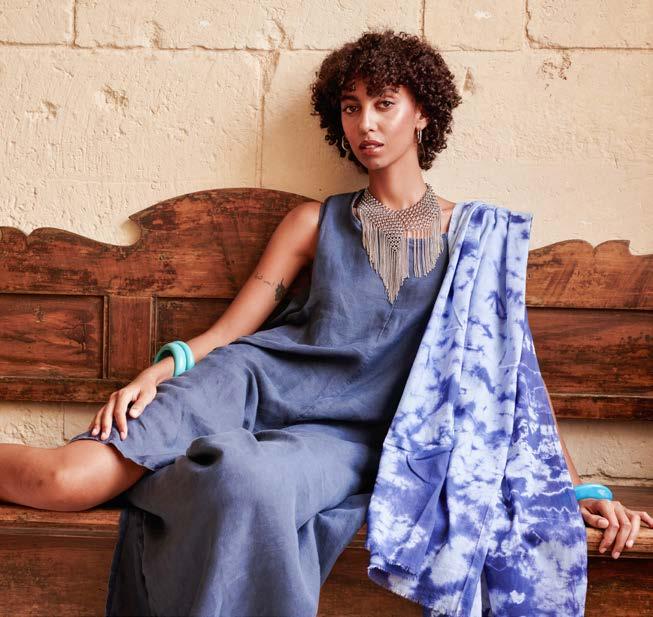
In an increasingly saturated and repetitive landscape, where creativity often struggles to carve out a genuine space for itself, it is precisely these young talents who are emerging, breaking the mold and bringing a breath of fresh air
by Sara Fumagallo
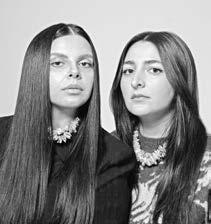
MISENITHE does more than just dress people; it defines a way of being. Born from the shared vision of Lucia Borini and Anna Lardì, two young designers, the brand reinterprets Italian haute couture through a contemporary language characterized by clean lines, fine materials, and a minimalist aesthetic. Inspired by art, minimalist architecture, and photography, the brand constructs a refined yet profound aesthetic, where Italian tailoring and accessories become tools for personal expression. Compact wools, soft mohair, structured poplin, and fluid silks define garments that blend tactile quality with formal precision, while the silhouettes effortlessly transition from day to evening. The “zero collection” marks the beginning of the project founded in 2025 by the two designers, both of whom trained at the Istituto Marangoni and have experience at leading Italian fashion houses such as N°21, Alberta Ferretti, Philosophy by Lorenzo Serafini, and Moschino. The result is an essential yet sophisticated wardrobe, designed for a diverse clientele seeking garments that reflect identity, elegance, and freedom of expression.
misenithe.com Instagram. @misenithe
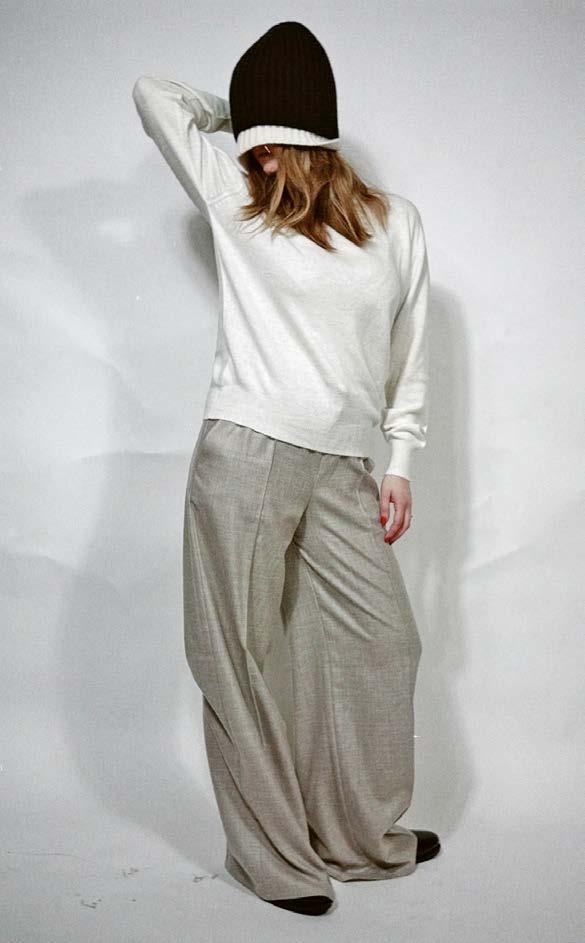
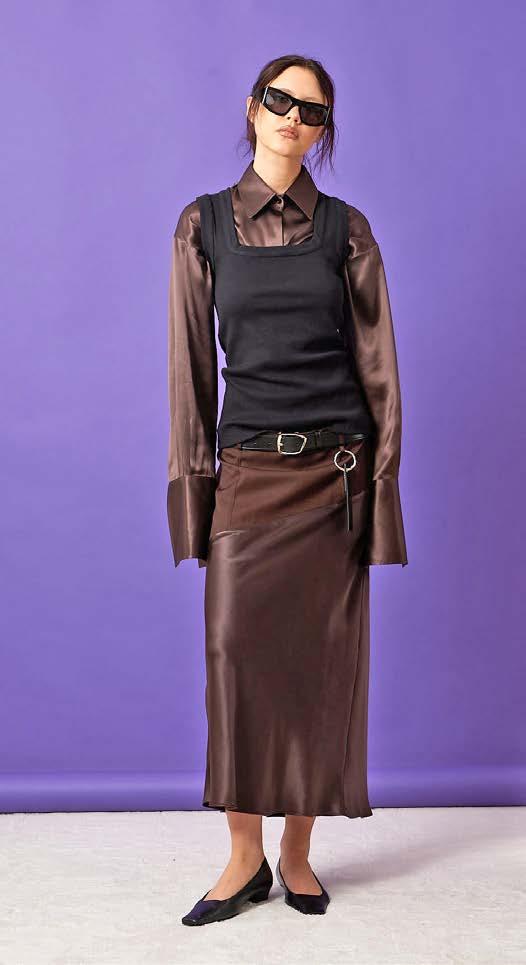
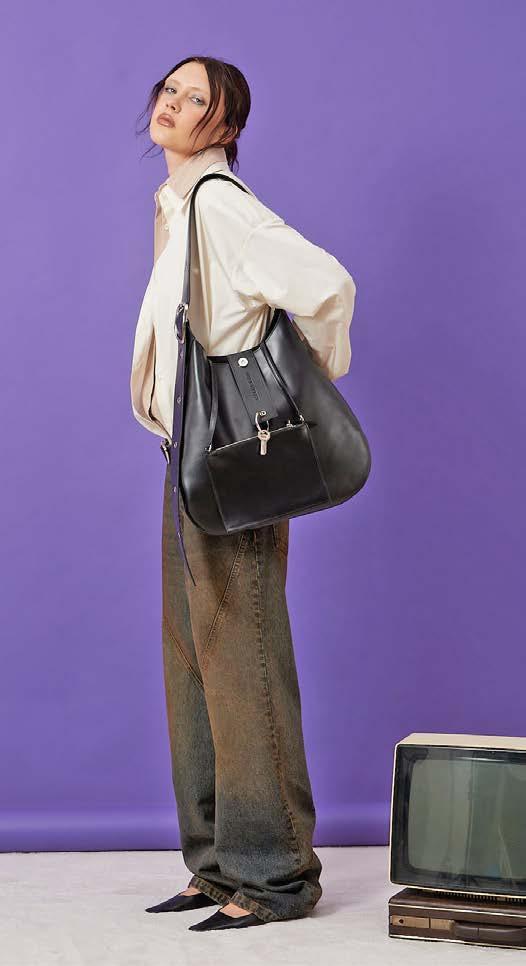
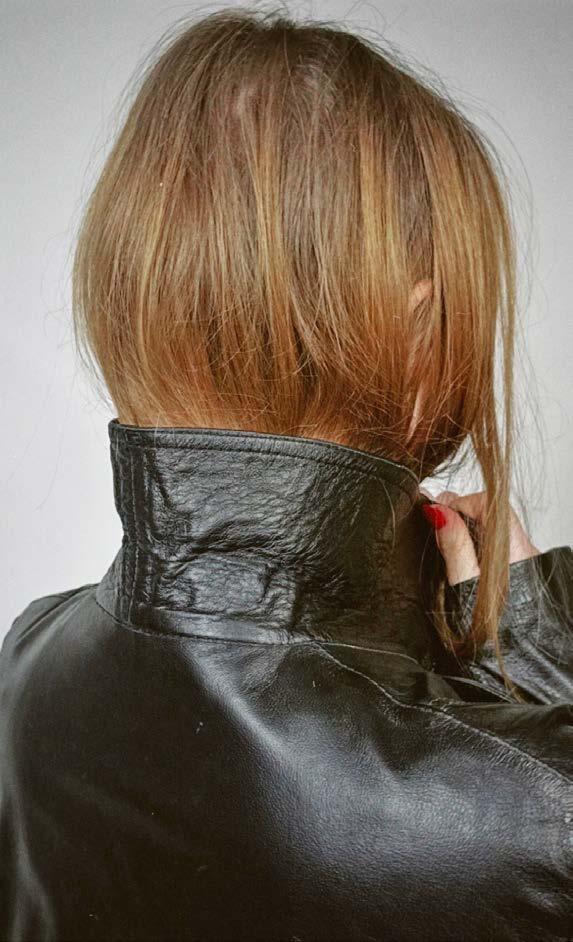

GOROD 1965 emerged from a creative tension that developed within the world of bespoke tailoring—a realm governed by strict rules and established codes—which the brand chooses to deconstruct without ever rejecting them. The result is a minimalist and disciplined aesthetic, where silhouettes are clean, lines are refined, and seams are reduced to the point of becoming almost invisible, allowing garments conceived as seamless compositions to emerge. At the core lies an obsessive pursuit of balance between elegance, comfort, and absolute quality, supported by artisanal craftsmanship and fabrics sourced from the finest Italian manufacturers. A distinctive signature is the double stitching, a structural element that runs through every garment as a symbol of precision and permanence.
Instagram. @gorod_1965
Back when Porta Venezia wasn’t yet a creative hub, The Loft Shop was born out of a visionary idea. Today, it stands as a symbol of style and innovation, reflecting Milan’s evolution through fashion and identity
Years ago, Porta Venezia was not yet the vibrant, international hub that today defines one of Milan’s most sophisticated districts, but there were already those who saw its potential. In an urban setting still far from the spotlight of fashion and lifestyle, 25 years ago Alessandro Tramarin made a bold decision: to open his boutique on Via Malpighi. Thus was born The Loft Shop, a 140-square-meter space that over time has become much more than just a store. It is a place of identity, where aesthetics, research, and everyday life coexist in harmony. At first, there were no big names or a constant stream of customers, and that is precisely why his decision seems so revolutionary today. His was a true intuition that gave rise to a space where his personal taste became the focal point and starting point for a selection of brands built over time without compromise, guided by instinct and consistency. “I’ve always chosen what represented me,” the founder says today. And it is precisely this authenticity that has defined the store’s DNA. From the heritage pieces of Manifattura Ceccarelli to the iconic lines of Ralph Lauren RRL, through niche brands like Tellason, Tela Genova, and Rakkì Wear, all the way to accessories by Sebago, Luigi Gentile, and Fausto Colato belts: every offering is part of a precise narrative, never random. Over the years, as Porta Venezia transformed into one of the city’s most dynamic and inclusive neighborhoods, The Loft Shop cemented its role as a pioneer. It not only anticipated change but actively helped shape it, becoming a go-to destination for a discerning, diverse, and often international clientele. A place where retail meets urban culture, where time seems to slow down to make room for discovery. Today, talking about The Loft Shop means telling a story of vision and resilience, but also of a deep connection to the local community. Because while it is true that Milan is evolving rapidly, it is equally true that certain entities set the pace. And The Loft Shop is one of them.
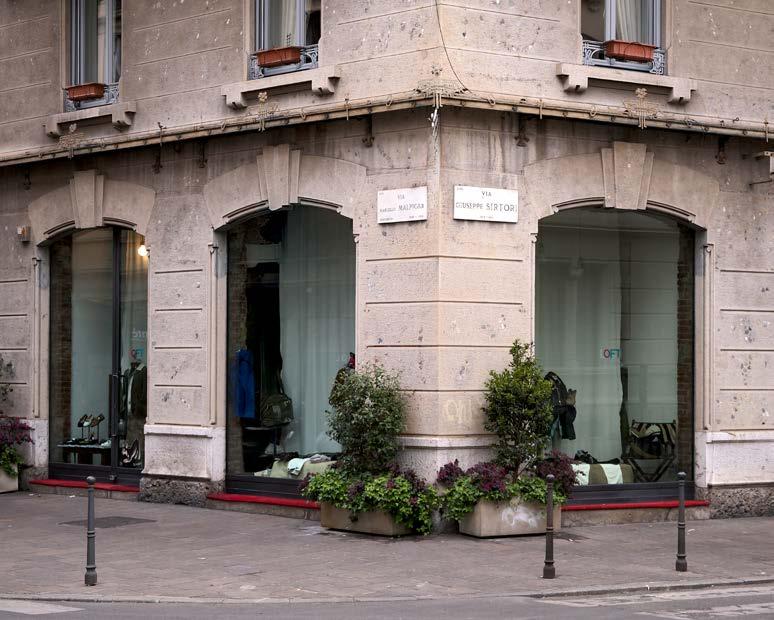
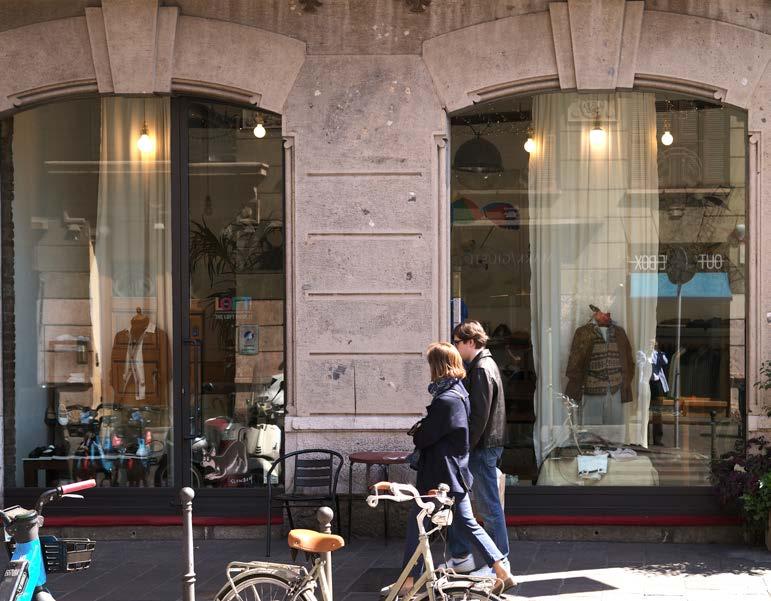
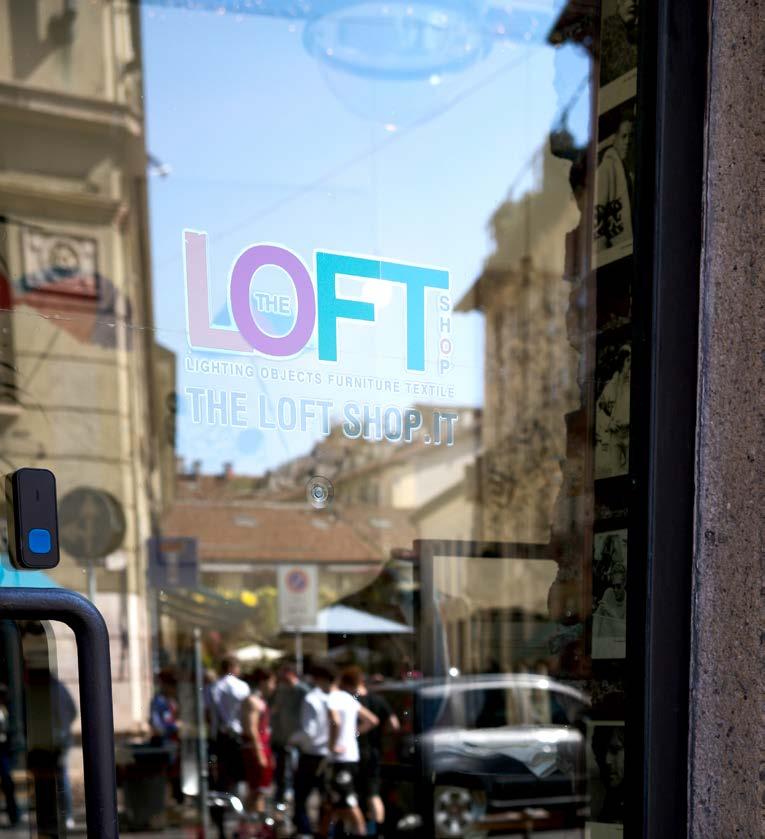
Nome boutique: The Loft Shop
Owner: Alessandro Tramarin
Store address: Via Malpighi 8, (20129) Milan Square meters: 140 Website: theloftshop.eu/it
Some of our best-selling brands include: Manifattura Ceccarelli, Ralph Lauren RRL, Tellason, Sebago, Rakkì Wear, Tela Genova, Luigi Gentile, and Fausto Colato belts
PREMIUM YARNS KNITWEAR
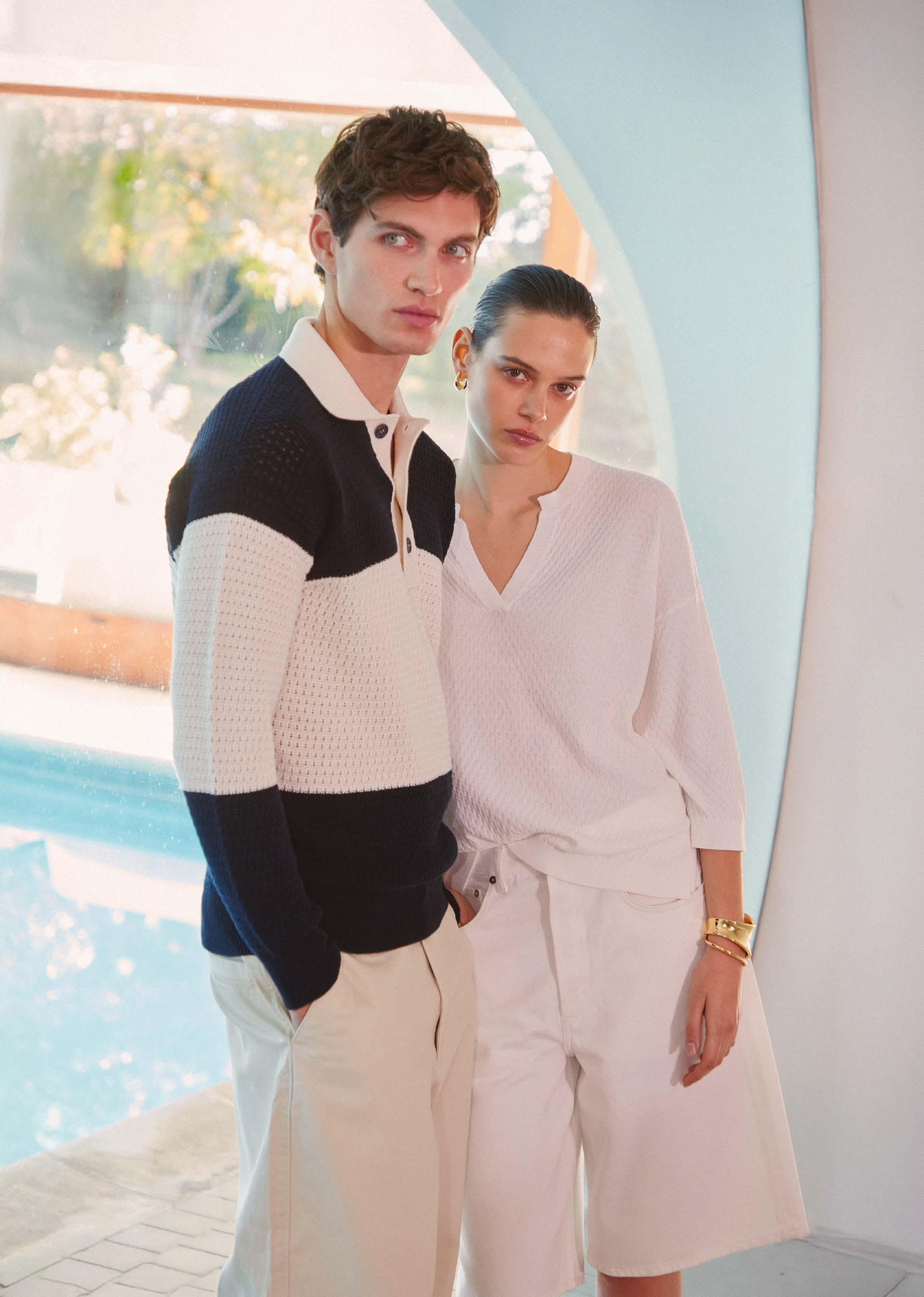
SINCE 1967
Kangra turns the world’s finest natural fibers into timeless expressions of elegance and authenticity. Each piece reflects the art of Italian craftsmanship, where material becomes emotion, and beauty endures through time.
Prada soars, Moncler surprises, and the fashion industry proves it can still grow even in a more uncertain global market
by Angelo Ruggeri
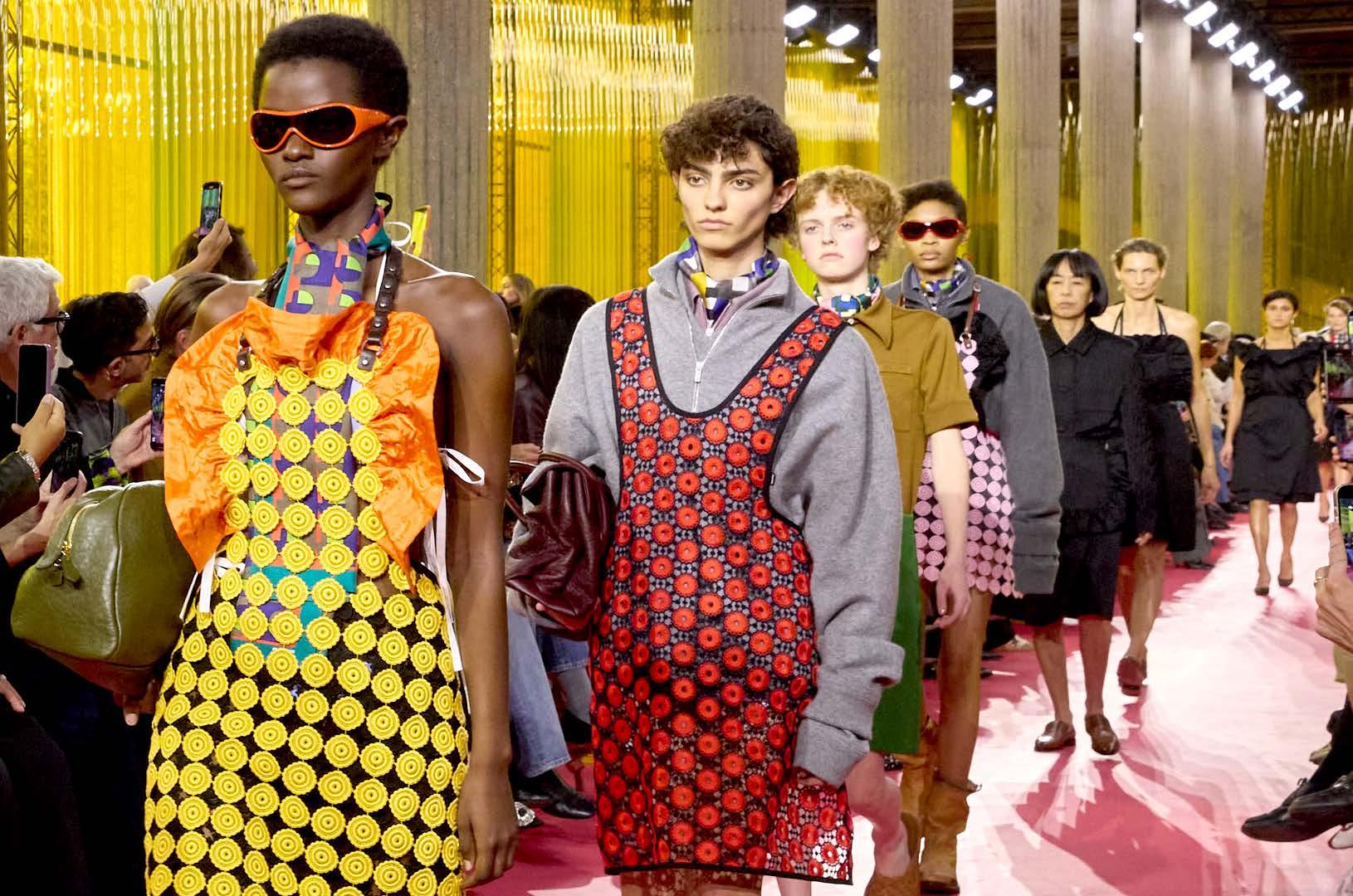
The year 2025 confirms an increasingly evident transformation in the global luxury landscape. After years of sustained growth, the sector is entering a more selective phase, in which not all groups are able to maintain the same pace of expansion. Geopolitical tensions, economic uncertainty, and the slowdown in certain key markets are reshaping the balance of a sector that nevertheless remains one of the most dynamic in the global economy. Against this backdrop, the fashion industry is once again demonstrating a strong capacity for adaptation. While some international giants are beginning to show signs of slowing down, other groups are managing to consolidate their growth trajectory thanks to targeted strategies, strong brands, and a well-distributed global presence.
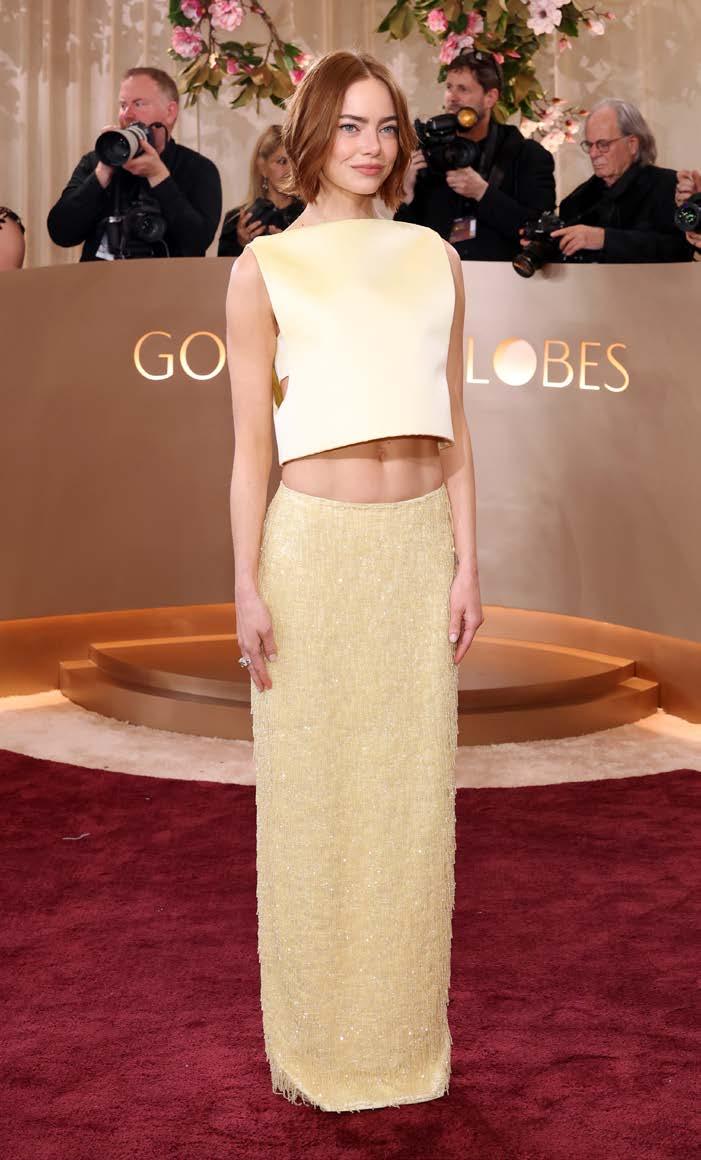
Prada leads the luxury market 2025 closes with figures that tell a story far beyond that of a simply good year: for the Prada Group, it confirms a solid and steady growth trajectory, outpacing an industry that has shown signs of slowing down in recent months. Net revenues reached €5.718 billion, up 5% at current exchange rates and 9% at constant exchange rates. This figure also includes Versace’s contribution—which officially joined the group’s scope on December 2—amounting to €65 million. Excluding the Versace effect, organic growth remains robust at 8%. This result places Prada among the
top-performing luxury groups alongside EssilorLuxottica and Brunello Cucinelli. Even more significant is the continuity of growth: 20 consecutive quarters of growth and five years of uninterrupted progress. These figures, as CEO Andrea Guerra points out, confirm a solid performance against challenging multi-year benchmarks and reinforce the group’s ambition to continue growing faster than the market average.
The Miu Miu Effect
The real driving force behind this growth remains Miu Miu. The brand led by Miuccia Prada continues to experience a period of extraordinary expansion, with retail sales up 35% at constant exchange rates for the full year 2025. While this growth is less explosive than the sensational +93% recorded in 2024, it remains impressive in terms of scale and consistency. In the fourth quarter, growth stood at 20%, with balanced performance across product categories and markets. Miu Miu now accounts for 32% of the group’s total revenue, a sign of how the brand has become a strategic pillar of the Prada ecosystem. The trend is different for the Prada brand, which remained essentially stable in 2025: retail sales recorded a slight -1% at constant exchange rates, but the fourth quarter showed signs of improvement with a +0.4% increase. At the group level, however, the retail channel remains the core of the business, with 9.3% year-over-year growth, driven primarily
by like-for-like sales and an increasingly full-price-oriented strategy.
The French are slowing down
A comparison with the major French players makes the results even more interesting. LVMH closed out 2025 with revenues of €80.8 billion, down 5% at current exchange rates, and profits down 13% to €10.9 billion. The slowdown was particularly evident in the Fashion & Leather Goods
segment, which posted an 8% decline. Other divisions also showed signs of weakness: the Perfumes & Cosmetics segment declined by 3%, while Wines & Spirits recorded a 9% contraction. Europe, in particular, saw a decline in the second half of the year, while Asia showed signs of recovery only in the final part of 2025.
Moncler surprises the market
The Moncler Group’s performance also fits into this more complex landscape, having closed out 2025 with sales of €3.13 billion, up 1% at current exchange rates and 3% at constant exchange rates. The fourth quarter surprised the market positively with revenues of €1.29 billion and a 7% increase at constant exchange rates, driven primarily by the Americas and Asia. Asia, in particular, continues to be the brand’s growth engine, accounting for over half of total revenue. Specifically, the Moncler brand generated €2.72 billion for the year, up 3% at constant exchange rates, while Stone Island contributed €123 million in revenue in the fourth quarter alone.
The role of premium
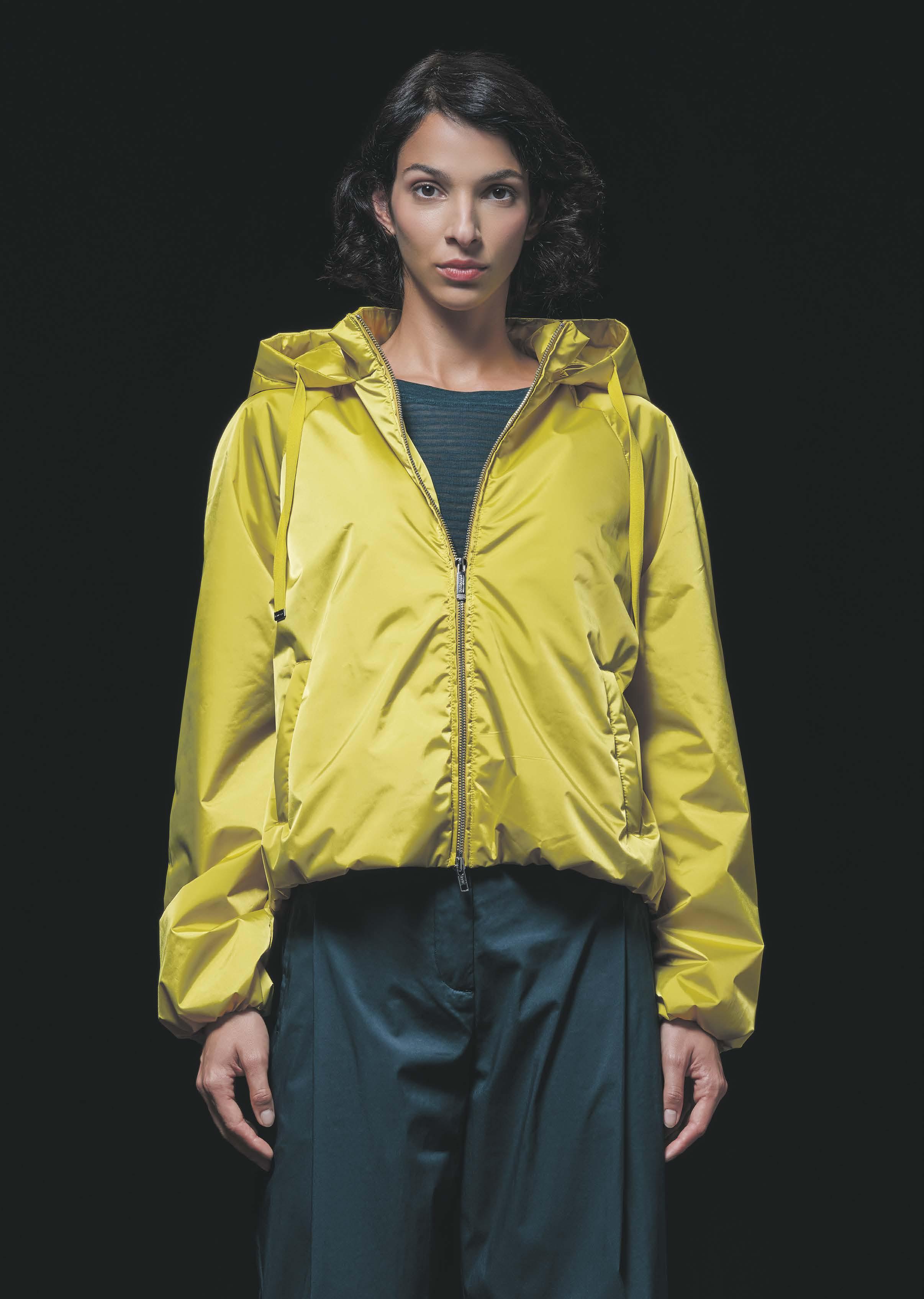
The picture that emerges is one of an increasingly selective and polarized luxury sector. Some brands are managing to maintain steady growth, while others are entering a phase of normalization after years of boom. In this context of heightened volatility, the premium segment could take on an increasingly central role. When uncertainty rises, in fact, many consumers begin to reconsider the relationship between price, quality, and perceived value. The premium segment represents precisely this balance: products with a strong identity, high quality, and aspirational positioning, but with prices that are less extreme than those of the most exclusive luxury brands. For a growing number of customers, it therefore becomes a rational as well as an emotional choice, capable of offering status, style, and quality without reaching the spending levels required by the most elite brands. In a phase of market transformation, it could become one of the new safe havens for global fashion consumption.
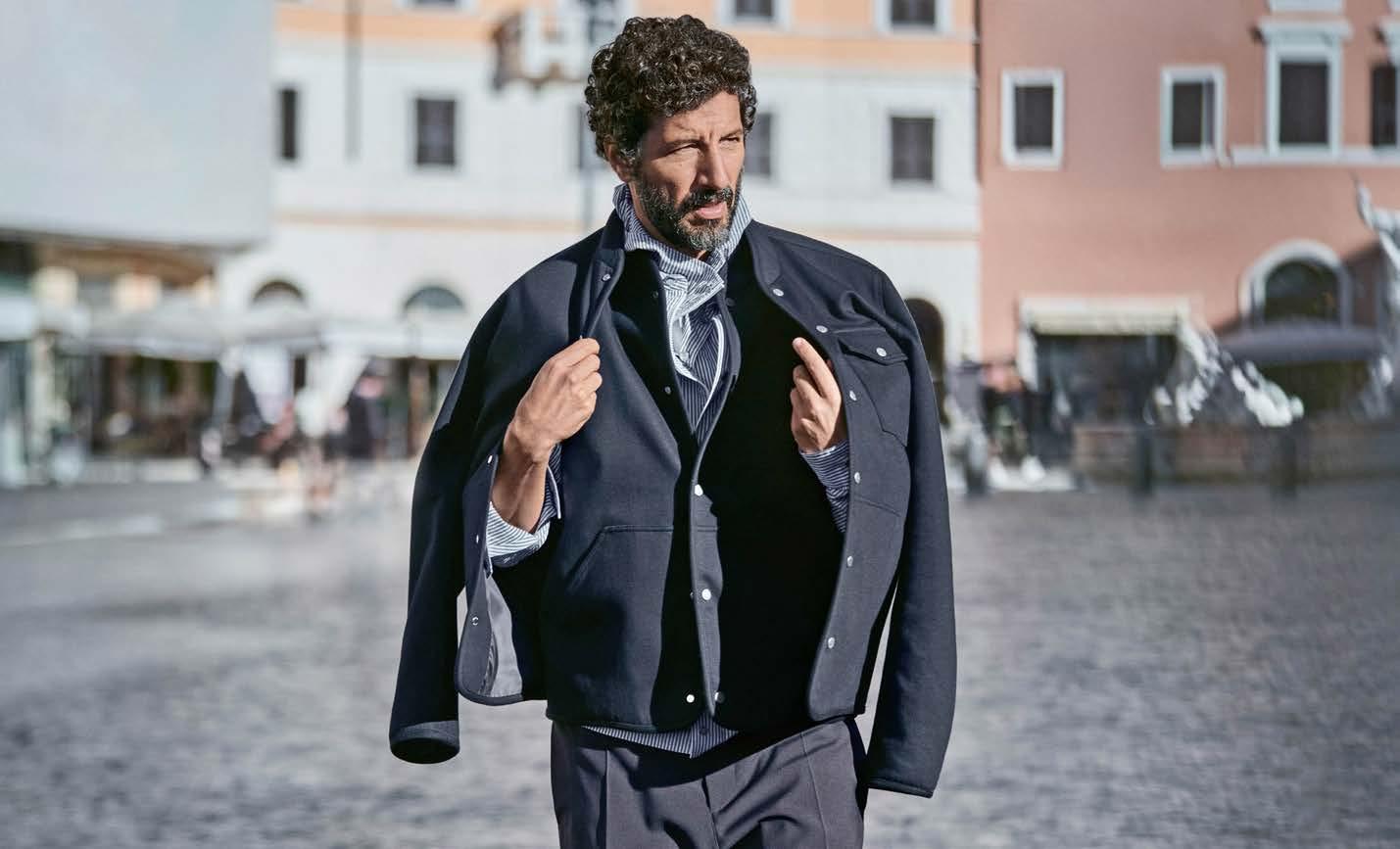
Selective, relationship-driven, tech-savvy, and responsible. According to Deloitte’s “Global Powers of Luxury 2026” report, after years of rapid growth, these are the qualities that will define the luxury sector in 2026. Less quantity, more quality
Following the slowdown caused by the pandemic, the rebound in 2021–2022 led to explosive growth. Today, however, that cycle has come to an end, and 2026 looks set to be a year of transition: less euphoria, more discipline. According to Deloitte’ s “Globa l Powers of Luxury 2026” report, the industry is entering a new phase, characterized by a profound shift in how value is created. Amid inflation, geopolitical tensions, rising interest rates, and global uncertainty, the macroeconomic environment has become more complex, and consumer behavior is changing—particularly among aspirational consumers, who have historically been fundamental to luxury growth. Yet, the sector is not in crisis. From a geographic perspective, the landscape is diverse: China remains central despite a recent slowdown, the Middle East is emerging as one of the most dynamic markets, India stands out for its high potential, and Europe continues to benefit from international tourism, consolidating its role as the epicenter of global luxury.
Luxury as an ecosystem
One of the most noticeable changes concerns the very nature of luxury. Whereas in the past it centered on the object itself, today it is increasingly shifting toward the experience. This brings travel, hospitality, and immersive retail into play, leading many companies to invest in experiential flagship stores, exclusive events, cultural collaborations, and narrative spaces, rather than traditional goods. At the same time, the demand for personalization is growing significantly. Customers expect tailor-made experiences built around their own tastes. And this is where technology plays a decisive role. Thanks to data, artificial intelligence, and advanced CRM systems, brands are able to anticipate customer desires, offering highly personalized products, content, and services.
An industry that is slowing down, but not coming to a halt: it is evolving
This shift toward value is also reflected in operational decisions. Many companies are cutting back on investments and optimizing their retail networks. More than a third of executives anticipate a decrease in capital investment, while about 40% expect a streamlining of their store networks. With this in mind, priority is being given to iconic, high-impact locations capable of strengthening the brand’s image and generating long-term value. And customer-centricity plays a fundamental role: after years of rapid expansion, companies are rediscovering the importance of relationships. This means that future growth will depend less on acquiring new customers and more on increasing the value and loyalty of existing ones. The result? Higher purchase frequency, an increase in average transaction value, and strengthened loyalty. Another key theme is artificial intelligence, particularly generative AI. The sector is still in an intermediate phase where many companies are experimenting, some have begun implementation, and a few others have already fully integrated these technologies. AI has significant potential to transform the entire value chain; however, the main challenges are investment, the demand for specialized skills, and a fundamental overhaul of operational models. Finally, an increasingly significant trend is the growth of the second-hand market. Pre-owned luxury goods are no longer a niche but a structural segment, poised for rapid growth in the coming years. And companies are responding positively, developing internal certified resale programs and/or collaborating with external platforms. Looking ahead to the next five years, the luxury sector will be profoundly transformed by technology and sustainability—two forces that, on the one hand, drive efficiency and personalization, and on the other, redefine production models and the relationship with consumers.
Fashion show sets are no longer just about creating atmosphere; today they are designed to generate viral images and reinforce brand identity
by Angelo Ruggeri
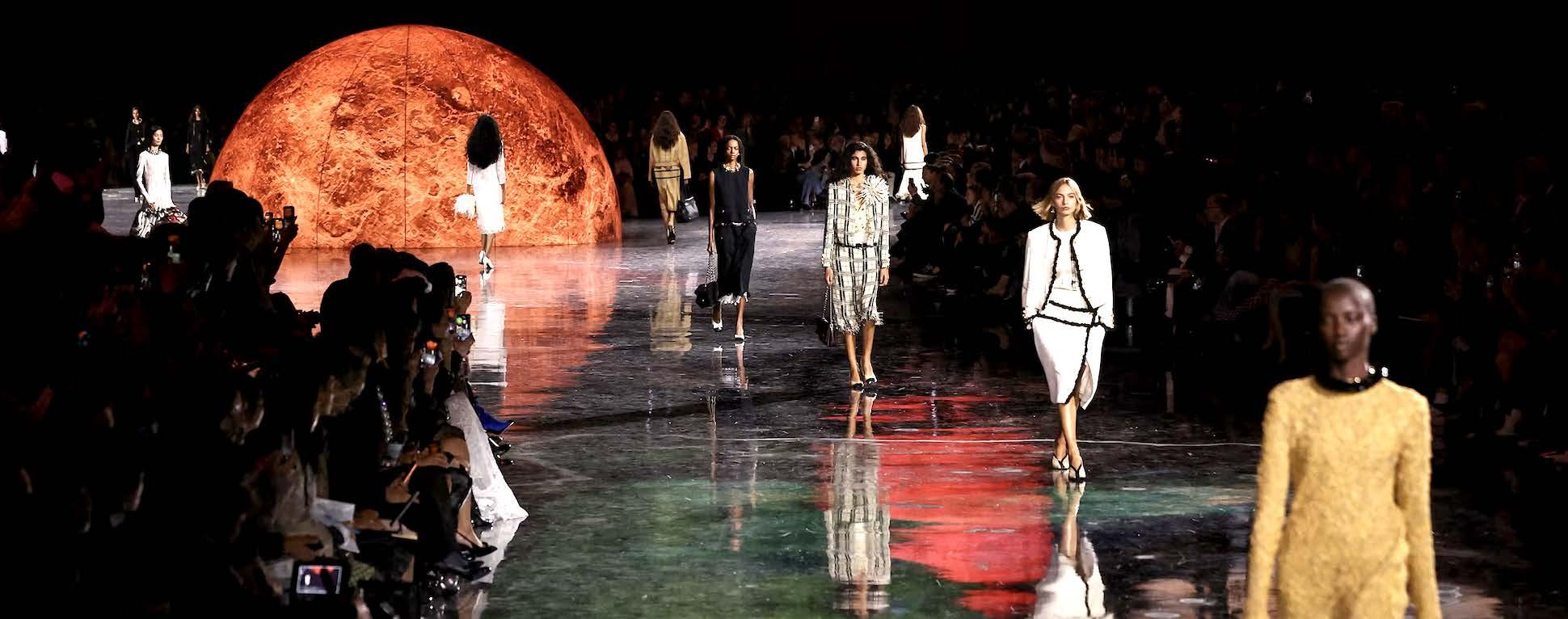
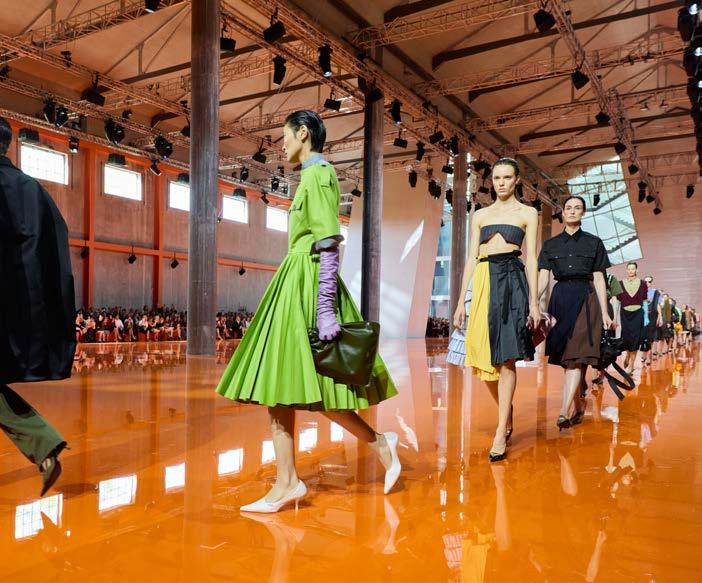
For years, fashion shows have been a place of dreams. Soft lighting, theatrical sets, and that almost mystical aura that transformed a few minutes on the runway into an aspirational narrative. Today, however, something has changed. Locations and setups are no longer merely an aesthetic choice, but a genuine marketing tool. In the contemporary fashion system, the goal remains to wow the guests in the room, but this is now joined by the quest to capture the smartphone screen. Every set must become “photogenic,” shareable, and viral. The runway thus transforms into content designed for Instagram, TikTok, and the global circulation of images. Prada has demonstrated this repeatedly with deliberately jarring and conceptual settings. In some seasons, the runway space was reduced to an almost industrial, minimalist setting, where the minimalist staging became a statement of language. Not just aesthetics, but positioning: intellectual rigor, modernity, control. Gucci, on the other hand, chose the opposite path, transforming its shows into truly immersive spectacles. Amid conveyor belts, mirrored environments, and circular runways, the brand has built scenarios designed to multiply perspectives and generate iconic images. Every guest, every phone, thus becomes a small director’s chair. Chanel remains a master at constructing recognizable narrative worlds. From the supermarket recreated at
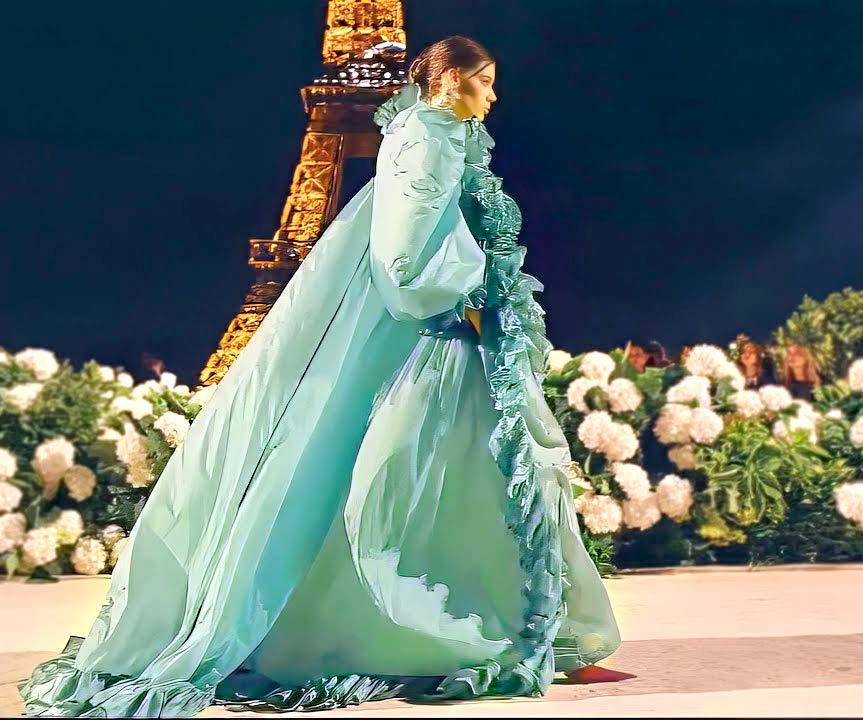
the Grand Palais to the artificial beach of the past, all the way to the planets of today’s universe, every set is a cinematic backdrop. The message is clear: the fashion show is not just about fashion, but a total experience. Saint Laurent, on the other hand, has focused on the symbolic power of locations. Catwalks in front of the illuminated Eiffel Tower or in monumental Parisian settings transform the city itself into a visual manifesto of the brand. In short, the fashion show is no longer just an event for industry insiders. And the result is evident. It is a global narrative device, designed to produce memorable images. The dream hasn’t disappeared; it has simply been transformed into a strategy. Here, the set design becomes almost more important than the clothes for the initial media impact. Images of the set circulate hours before the looks and often remain more deeply etched in the collective memory. The public remembers “the fashion show in the illuminated city,” “the one with the moving floor,” “the one inside a supermarket.” It is visual branding in its purest form. For luxury brands, the runway is now an editorial stage; it conveys values, aesthetics, and identity with the same precision as an advertising campaign, but with the power of a live event. And it is precisely this fusion of spectacle, architecture, and communication that defines the new grammar of contemporary fashion. Everything is perfectly orchestrated, down to the smallest detail.
The fifth edition of HUB Style’s exclusive survey, which analyzes market sales trends in 2025 and forecasts for 2026, has reached its second and final part. Now it’s the retailers’ turn to speak
Edited by the Editorial Staff
2025 has proven to be a complex year, marked by encouraging results but also significant challenges. This is what emerges from the first installment of our exclusive survey, “100 Perspectives.” The first 50 industry leaders surveyed paint an overall positive picture, despite a context marked by challenges related to the earlier-than-usual start of sales, the impact of Black Friday, and a global landscape that remains uncertain. Amid this balance of opportunities and difficulties, a gradual return to physical stores is taking shape—albeit cautiously—with these spaces increasingly integrated with e-commerce and social media, which are now indispensable tools and true digital storefronts for most boutiques. However, the in-store experience remains central, continuing to represent the main distinguishing factor for retailers. It is precisely on this front that operators are
SENTIMENT: 21 19 10
1. YEAR-END FINANCIAL STATEMENTS AND FORECASTS
a) What was the trend in in-store sales in 2025?
b) What were the main factors that influenced the trend?
c) What percentage of your total revenue did your online sales account for?
d) In terms of sales, what are the forecasts for 2026?
2. CONSUMER
a) Was 2025 the year of the thoughtful purchase? Were customers more selective or more impulsive?
b) Have you noticed any new trends in purchasing behavior over the past 12 months?
c) Who is your typical customer?
d) How is your audience changing?
3. SHOPPING EXPERIENCE AND PURCHASING TRENDS
a) Customers are increasingly seeking a personalized shopping experience. How do you respond to this demand?
b) Do customers tend to search online before visiting a store, or is the in-store shopping experience still the norm?
c) Did you participate in official promotions during Black Friday and the sales, or did you choose not to? Why?
d) Do you think Black Friday is compatible with the image of a premium-luxury multi-brand store?
4. SOCIAL MEDIA
a) Which social media platforms do you use most often?
b) Do you use them for direct sales, promotions, or to build your community?
5. TREND
a) What were the main fashion trends of 2025 that generated the most interest and influenced product sales?
b) What, on the other hand, will the trends be in 2026?
6. THE BEST-SELLING BRANDS IN 2025
a) What are your top 3 women's clothing brands, in order?
b) What are your top 3 men's clothing brands, in order?
c) What are your top three brands of men’s and women’s accessories, in order?
d) What are your top three brands of men’s and women’s footwear, in order?
7. BRAND BEST SELLER PART 2025
8. OTHER COMMENTS
focusing their efforts: a growing emphasis on the shopping experience and comprehensive customer service, designed to build solid and lasting relationships. It is no coincidence that many businesses are investing in in-house after-sales services, such as repairs and tailoring, further strengthening the bond with their customers. Product offerings, research, and reliability remain strategic levers, especially during key times of the year such as the holiday season. Looking ahead to 2026, some operators aim to consolidate the results of the past 12 months, while others see room for growth. The general sentiment remains cautious, far from unwarranted enthusiasm, but the sector, together with retailers, is demonstrating resilience and determination. And once again this year, we at H UB Style have chosen to give them a voice. With the second part of the fifth edition, we present the final 50 feedback responses.
YEAR-END FINANCIAL STATEMENTS AND FORECASTS
1a) It has remained stable compared to 2024.
1b) Initiative, research, and professionalism pay off, especially during key times of the year such as the holiday season. Late deliveries and discounts have a negative impact on seasonal performance.
1d) Hopefully excellent, but we’ve learned to keep our eyes open, buy the right items, let go (sometimes reluctantly) of what doesn’t work, and focus on restocking.
CONSUMER
2a) In our case, since we deal with men’s, women’s, and children’s clothing, we can say that purchases in the men’s and children’s categories are more selective, while those in the women’s category are more impulsive.
2b) The trend, at least for half of our sales, is clearly for customers to first browse our e-commerce site—which primarily serves as a showcase—contact us, and then come in ready to make a purchase, which in some cases results in a pickup.
2c) We are a long-established store that carries a wide range of products, so we have a very diverse customer base. The average age is 40; our customers include both men and women, as well as male and female entrepreneurs, who are interested in fashion, stylish clothing, and travel.
2d) Our shop is celebrating its 43rd anniversary this year, and of course, our customers have changed and grown alongside us. We can count on a loyal, long-standing customer base that has been with us for years—many of whom started out as “kids” and are now all grown up—as well as many new customers, whether they’re just passing through Franciacorta or visiting us after discovering us on Instagram. Our customers have come to know our ways and know exactly what to expect.
SHOPPING EXPERIENCE AND PURCHASING TRENDS
3a) It is essential—and we’ve been doing it for years—it is the heart of a retailer’s work: selling begins with listening and dedicating time exclusively to the customer.
YEAR-END FINANCIAL STATEMENTS AND FORECASTS
1a) An increase of 8–10%.
1b) Positive: promotional periods. Negative: Mid-Season Sale and Black Friday.
1c) We do not have an e-commerce site.
1d) In March, we performed well thanks to the almost sudden arrival of warm weather. The formalwear segment, however, has been more subdued, experiencing a lackluster period: the outlook is not yet positive, but we remain confident that the trend will reverse in the coming months. Looking ahead, year-end estimates point to growth of between 5% and 8%.
CONSUMER
2a) Impulse buying remains prevalent, but it is increasingly shifting toward niche products, moving away from mass-market trends. Otherwise, consumers are adopting a more selective and informed approach to their purchasing decisions.
2b) No. More focus on quality.
2c) Working men and women with an average age of 35 and diverse interests.
2d) Our audience has remained the same, but we have noticed an increase in the number of young adults (aged 20 and older).
SHOPPING EXPERIENCE AND PURCHASING TRENDS
3b) These two aspects are inextricably linked: customers often arrive already very well-informed, but it’s in the store where the magic happens.
3c) Black Friday is the most spectacular own goal in the fashion world. We haven’t participated in the past, and we never will. If someone had told me six years ago that an event in late November could disrupt holiday sales, I wouldn’t have believed it. On the other hand, for the past three years we’ve decided not to discount the current season, and we’ve explained this to our customers.
3d) No. Luxury, whether high-end or not, doesn't go on sale.
SOCIAL MEDIA
4a) Instagram and Facebook.
4b) We mainly use them to build our community—or rather, to bring customers into our store and showcase our work. We like to explain the reasoning behind our choices, as well as showcase outfits, curated selections, new arrivals, and so on.
TREND
5a) There has been a lot of interest among teens in Polo Ralph Lauren and the preppy style in general.
5b) Personally, I’m hoping for a return to the minimalist style of the ’90s; the series *Love Story*, about John F. Kennedy and Carolyn Bessette, has provided some interesting inspiration.
THE BEST-SELLING BRANDS IN 2025
6a) RALPH LAUREN, HERNO, FABIANA FILIPPI
6b) STONE ISLAND, POLO RALPH LAUREN, BARBOUR
6c) ORCIANI, research accessories
6d) FLOWER MOUNTAIN, POLO RALPH LAUREN, REEBOK
BRAND BEST SELLER DEL 2025
7) RALPH LAUREN POLO SHIRT
ALTRE OSSERVAZIONI
8) Da circa due anni abbiamo implementato l'offerta nell'ambito della profumeria artistica che sta dando ottimi risultati.
3b) No.
3a) We, too, offer a personalized shopping experience that often results in a deep understanding of the customer and tailored recommendations.
3c) I view every scenario as an opportunity, provided it is approached with a clear-headed and strategic mindset.
3d) Yes, if done thoughtfully.
SOCIAL MEDIA
4a) Instagram and Facebook.
4b) Community, product knowledge.
TREND
5a) Comfortable items for everyday wear. We’re also rediscovering the shirt, technical fabrics, and—unfortunately—the return of real fur.
5b) Shirt.
THE BEST-SELLING BRANDS IN 2025
6a) BARBOUR, VICOLO, KAOS
6b) WOOLRICH, ROY ROGER'S, BLAUER
6c) We do not sell this category.
6d) We do not sell this category.
BRAND BEST SELLER DEL 2025
7) WOOLRICH
GASTE MILANO - MILAN (MI)
RUDOLFO STEFANI, OWNER
YEAR-END FINANCIAL STATEMENTS AND FORECASTS
1a) A 20% increase.
1b) Pros: We chose brands that reflected the store’s image and that we believed in right from the start.
1c) We do not have an e-commerce site.
1d) The spring season has gotten off to a strong start. Our strategy remains to make fewer purchases, but with greater quality and precision—an approach that allows us to look to the future with confidence.
CONSUMER
2a) It depends on the customer.
2b) Quality, always.
2c) Average age 45; working men and women who seek comfort in everything.
2d) Lots of new people, including some young people. SHOPPING EXPERIENCE AND PURCHASING TRENDS
3a) Yes, we offer repair services.
3b) While many people browse products online first, the in-store shopping experience remains the most important factor.
3c) No, we are against Black Friday.
3d) Absolutely not: in line with this approach, we have
CORNER - ALESSANDRIA (AL)
MASSIMO CASTELLI, OWNER
YEAR-END FINANCIAL STATEMENTS AND FORECASTS
1a) A decrease of approximately 15–20%.
1b) Today, dressing with style—through high-quality or designer clothing—no longer seems to be a priority for some people. Ease of purchase also plays a role: with a simple click, you can have any product delivered to your home in no time. In this context, fast fashion—which can quickly replicate trends and make them accessible to everyone—ends up undermining the work of independent stores, which invest time, expertise, and research each season to build a distinctive offering.
1c) Less than 10%.
1d) I’m not sure, because since I opened the boutique, there hasn’t been a single year when we’ve met our projections—for various reasons.
CONSUMER
2a) More selective.
2b) Brands that highlight their ethical commitment are well-regarded. The origin and quality of materials are very important.
2c) Our store attracts a wide range of ages: from very young people to older adults. The average age is probably around 30. They are men and women with a classic lifestyle who are interested in soccer, food, travel, and music.
2d) A very diverse crowd. We’ve noticed a few more young people coming in—the children of our customers.
gradually phased out numerous brands from our outlet stores.
SOCIAL MEDIA
4a) Instagram and Facebook.
4b) To build a community and serve as a showcase.
TREND
5a) This winter saw a strong focus on high-end wool outerwear, complemented by technical materials with a leather-like finish, such as nubuck. The collection is rounded out by well-crafted knitwear, sneakers, and denim in both loose and more fitted silhouettes.
5b) Technical fabrics, a variety of cottons and lightweight fabrics, T-shirts, and polo shirts.
THE BEST-SELLING BRANDS IN 2025
6a) MASON’S, MAX MARA, CIRCOLO 1901
6b) RRD HOUSE PALTÒ
6c) We do not sell this category.
6d) PREMIATA, ASH, NO MAP SOCIETY BRAND BEST SELLER DEL 2025
7) RRD
SHOPPING EXPERIENCE AND PURCHASING TRENDS
3a) The shopping experience is important; I have been offering a wide range of in-store services since 2019.
3b) Some do.
3c) I shopped the sales, but not Black Friday.
3d) Black Friday devalues the product and the work we retailers do, and shows a lack of respect for our customers.
SOCIAL MEDIA
4a) Instagram and Facebook.
4b) A bit of everything.
TREND
5a) Oversized fit.
5b) Always an oversized fit.
THE BEST-SELLING BRANDS IN 2025
6a) UNIVERSAL WORKS, BOTTEGA CHILOMETRI ZERO, ALPHA INDUSTRIES
6b) UNIVERSAL WORKS, BOTTEGA CHILOMETRI ZERO, SEADOG
6c) DANEFÆ, 47 Bredford
6d) We do not sell this category.
BRAND BEST SELLER DEL 2025
7) UNIVERSAL WORKS
BEWILD STORE - COURMAYEUR (AO)
CINZIA DUCOURTIL, OWNER
YEAR-END FINANCIAL STATEMENTS AND FORECASTS
1a) A 25% increase.
1b) The bright spot was the influx of tourists.
1c) Less than 10%.
1d) We expect this to be a strong year in terms of sales.
CONSUMER
2a) Impulsive.
2b) Pay attention to the product’s ingredients and look for products made in Italy.
2c) Average age 50, men and women with an interest in cars and a taste for the finer things in life. Their lifestyle is exciting and full of adrenaline.
2d) It isn't changing.
SHOPPING EXPERIENCE AND PURCHASING TRENDS
3a) Rather than "customized," I'd say "exclusive"—not for everyone.
3b) Predomina la shopping experience in boutique.
3c) Absolutely not; it's counterproductive. 3d) No.
SOCIAL MEDIA
4a) Instagram and Facebook. 4b) Both.
TREND
5a) Leather jackets and handmade-style sweaters. 5b) Minimum.
THE BEST-SELLING BRANDS IN 2025
6) We are anti-brand; we base our purchasing decisions solely on quality and sophistication. This means we don’t focus on which brand sells the most, but rather on which one offers added value.
BRAND BEST SELLER DEL 2025
7) Nessuno in particolare
YEAR-END FINANCIAL STATEMENTS AND FORECASTS
1a) Stable.
1b) Positive aspects: an increase in foreign customers, particularly at the store on Via Solferino, right in the city center and strong customer loyalty at the Pagano location.
1c) We do not have an e-commerce site.
1d) The forecast depends on many external factors. At the moment, despite a decline in foreign customers, we are maintaining a certain degree of stability.
CONSUMER
2a) Discerning, both in terms of price and style: they
YEAR-END FINANCIAL STATEMENTS AND FORECASTS
1a) Stable.
1b) Negative: global economic crisis.
1c) Less than 10%.
1d) A 10% increase.
CONSUMER
2a) More selective.
2b) Greater focus on products made in Italy.
2c) Average age 40, a man and a woman with an upper-middle-class lifestyle.
2d) Upper-middle class.
SHOPPING EXPERIENCE AND PURCHASING TRENDS
3a) We also offer a personalized shopping experience. It’s essential.
3b) Boutique sales are still the dominant form of retail.
3c) Yes, we participated.
3d) We believe that the market is now heavily influen-
ced by promotional incentives; a situation that, despite ourselves, requires us to adapt in order to remain competitive.
SOCIAL MEDIA
4a) Instagram and Facebook.
4b) As a showcase.
TREND
5a) None in particular.
5b) A slightly more laid-back style.
THE BEST-SELLING BRANDS IN 2025
6a) RALPH LAUREN, AUTRY, MC2 SAINT BARTH
6b)
BRAND
7)
CHICCHI GINEPRI - MILAN (MI) LODOVICA DAVOLI, OWNER
YEAR-END FINANCIAL STATEMENTS AND FORECASTS
1a) This year has been moderately positive, with growth of about 5%. Unfortunately, the spring saw a decline, mainly due to Easter falling close to the long weekends at the end of April; the winter season was positive, though not without its challenges.
1b) Our online store is growing; we primarily serve customers who already know us. Times are changing, and remote work, for example, doesn’t always allow for an in-person visit. Our social media profiles—both Instagram and Facebook—are growing steadily.
1c) Less than 10%.
1d) We anticipate modest growth, which, at this juncture, is the key to maintaining the presence and appeal of our stores.
CONSUMER
2a) Highly selective. Our collections are carefully curated and produced in limited quantities. This makes the garments we offer very special and truly exclusive.
2b) More and more customers who start their shopping online are coming to visit us in our stores.
2c) Average age: 45. Professional women with an interest in culture.
2d) It is always renewed.
SHOPPING EXPERIENCE AND PURCHASING TRENDS
3a) Our sales associates provide personalized service to
our customers, often as a result of a loyal clientele frequenting our boutiques and the development of a friendly and sincere relationship.
3b) The shopping experience remains the dominant factor.
3c) We don’t participate; Chicchi Ginepri doesn’t do Black Friday. We remain committed to our mission of dressing our customers in high-quality, thoughtfully curated pieces. We do our work with great passion.
3d) No.
SOCIAL MEDIA
4a) Instagram and Facebook.
4b) There are also loyalty programs, newsletters, and text messages used to promote events.
TREND
5a) Our style is distinct and timeless, featuring small but meaningful updates each season.
5b) Same as in 2025.
THE BEST-SELLING BRANDS IN 2025
6a) A.B., FRIDA ZAZOU, SUZUSAN
6b) We do not sell this category.
6c) We do not sell this category.
6d) Non commercializziamo la categoria.
BRAND BEST SELLER DEL 2025
7) A.B
BILLIARDS - MIRANO (VE) GIOVANNI ZARA, OWNER
YEAR-END FINANCIAL STATEMENTS AND FORECASTS
1a) A 10% increase.
1b) Customers are happy to return to the store and appreciate the carefully curated brand mix. On the downside, we found that the timing of the sales needs to be completely rethought.
1c) We do not have an e-commerce site.
1d) We expect a positive trend with a 6% increase. CONSUMER
2a) Selective.
2b) There is a growing demand for unique products that evoke emotion.
2c) A 40-year-old man who travels more and more often and enjoys spending time on vacation. He is interested in fashion, sports, and music, and leads a healthy lifestyle.
2d) With consumers increasingly turned off by an oversaturation of discounts, they are instead seeking out unique products.
SHOPPING EXPERIENCE AND PURCHASING TRENDS
3a) Direct, personalized sales remain the most effective approach, as well as the one customers expect.
3b) Pre-purchase research on footwear, although on the decline.
3c) Regular sales. Black Friday no longer attracts the public; on the contrary, it unsettles them.
3d) Absolutely not.
know what they want and are looking for innovative options that don’t fit neatly into any category.
2b) No, always keep an eye out for new developments.
2c) A 50-year-old working woman who appreciates well-made products.
2d) Nothing has changed: our boutique has always been a family affair, with mothers bringing their daughters along.
SHOPPING EXPERIENCE AND PURCHASING TRENDS
3a) We organize custom events, selecting clients to participate in experiences that we personally curate. Pro-
fessionalism is our top priority: we guide the client from start to finish, building a relationship of trust.
3b) The in-store shopping experience remains paramount. I firmly believe that online sales are not a decisive factor: e-commerce can provide added value, but it requires time and resources that are inevitably taken away from in-store operations.
3c) No, never; sales, yes.
3d) Absolutely not. Black Friday, like sales, only leads to a loss of customer trust and a devaluation of the product.
SOCIAL MEDIA
4a) Instagram and Facebook.
4b) Social media is a key part of our sales activities. TREND
5a) Sportswear dominates the menswear sector, characterized by comfortable silhouettes, particularly in pants and tops. A pseudo-classic pant style is gaining popularity, paired with loafers and sophisticated knitwear, along with overshirts made from fine fabrics.
5b) Dress, overshirt, and boxy-cut pants made of solid-colored fabric with a color-block effect
THE BEST-SELLING BRANDS IN 2025
6a) We do not handle this category.
6b) BARBOUR BARENA VENEZIA
CARHARTT WIP
6c) CAMPOMAGGI, BAGSINPROGRES NEW YORK, CARHARTT WIP
6d) SALOMON NEW BALANCE SEBAGO
BRAND BEST SELLER DEL 2025
7) BARBOUR
ALTRE OSSERVAZIONI
8) Il commercio necessita di una rivoluzione e di una visione meno provinciale. Servono lungimiranza e dedizione per cambiare radicalmente il modo di fare business.
SOCIAL MEDIA
4a) Instagram. 4b) Come vetrina e per creare community.
TREND
5a) Non esiste più un unico stile né colori dominanti.
5b) Idem, ognuno si costruisce il proprio mondo.
I MARCHI PIÙ VENDUTI NEL 2025
6) Ci siamo allontanati dalle griffe.
BRAND BEST SELLER DEL 2025
7) Nessuno
PESSINA CLOTHING - MONZA (MB) SIMONA PESSINA, OWNER
YEAR-END FINANCIAL STATEMENTS AND FORECASTS
1a) Stable.
1b) A carefully curated product selection and a brand mix designed to offer excellent value for money, combined with personalized customer service, form the cornerstones of the strategy. These are complemented by a quick ability to interpret customer preferences and a targeted use of social media.
1c) Between 10% and 30%.
1d) Unfortunately, given the current situation, it is impossible to make any predictions; we will certainly be very careful with our purchases to ensure greater flexibility and adapt to market developments.
CONSUMER
2a) They are certainly more selective when it comes to quality, but they still chose pieces that evoke emotion.
2b) Omnichannel retailing has seen significant growth: today’s customers seek speed and inspiration on social media, but then want to enjoy an authentic, personal experience in-store.
2c) Average age: 40. Men and women with interests in travel, culture, food, and sports, who work in dynamic environments and enjoy switching between formal and informal settings.
2d) In general, the public is becoming increasingly discerning and well-informed.
SHOPPING EXPERIENCE AND PURCHASING TRENDS
3a) Founded in 1900, customization and bespoke craftsmanship are part of our DNA. Over the years, we have placed increasing emphasis on our customers’ needs.
3b) Our customers undoubtedly love the boutique
experience because it offers a personal touch that online shopping simply can’t provide.
3c) We have never participated in Black Friday, and during the official sales period, we offer a selection of our regular products at no discount.
3d) Absolutely not; in fact, I think it’s demeaning to the store, the companies, and the brands themselves.
SOCIAL MEDIA
4a) Instagram and Facebook.
4b) For sales and community.
TREND
5a) Women: special capsule collections and one-of-akind pieces. Men: contemporary classics and heritage styles.
5b) Women: special products offered in innovative mixand-match combinations. Men: contemporary classics and heritage styles.
THE BEST-SELLING BRANDS IN 2025
6a) CLOSED
6b) PAOLO PESSINA (per tutto il su misura),
TAGLIATORE, BARBOUR
6c) Piccoli brand di ricerca
6d) PURAAI, FLOWER MOUNTAIN, SEBAGO
BRAND BEST SELLER DEL 2025
7) Nessuno.
ALTRE OSSERVAZIONI
8) Quello che la nostra clientela ha apprezzato è il brand mix tra marchi noti e di ricerca con proposte fresche e accattivanti.
MULINO DOCKSMART - MILAN (MI) FABRIZIO ELIA, OWNER
YEAR-END FINANCIAL STATEMENTS AND FORECASTS
1a) A 6% increase.
1b) Positive factors: targeting an upper-middle-class demographic that responds well and values quality. The negative factors stem from Milan: it is an expensive city, and as a result, the middle class is shrinking steadily.
1c) Less than 10%.
1d) On the rise; 2026 got off to a good start, but it’s too early to draw conclusions.
CONSUMER
2a) Selective.
2b) Greater emphasis on quality.
2c) A man and a woman in their 40s, employed and self-employed, with an interest in culture and the media.
2d) Unfortunately, there are fewer of them, but they spend more.
SHOPPING EXPERIENCE AND PURCHASING TRENDS
3a) We offer a personal shopper service, color analysis consultations, tailoring, and custom embroidery and printing. We have everything you need.
3b) For us, the shopping experience is everything.
3c) We went along with it because we had no choice,
but we did so wisely. In November, December, and January, sales were excellent.
3d) The retail calendar is unpredictable, but it’s a reality we can’t avoid and must tackle with careful planning and strategy. As far as we’re concerned, the rule is clear: no extreme discounts, but well-thought-out promotions.
SOCIAL MEDIA
4a) Instagram and Facebook.
4b) Build communities.
TREND
5a) Heritage with a nod to vintage. 5b) The direction remains the same.
THE BEST-SELLING BRANDS IN 2025
6a) MANIFATTURA CECCARELLI
DAVIDE CECCARELLI BARBOUR
6b) BARBOUR MANIFATTURA CECCARELLI
ACUPUNCTURE
6c) FILSON RAINS
6d) BLUNDSTONE, handcrafted footwear
BRAND BEST SELLER DEL 2025
7) BARBOUR
MARIO & SONS - SEREGNO (MB) DANIELA PALEARI, OWNER
YEAR-END FINANCIAL STATEMENTS AND FORECASTS
1a) A 15% reduction.
1b) Competition from online shopping and aggressive discounting outside of scheduled sale dates.
1c) Between 10% and 30%.
1d) Stationary.
CONSUMER
2a) More selective.
2b) Purchases are made more thoughtfully.
2c) Average age: 35. A man and a woman who lead a lifestyle centered on nature and leisure and who prefer more exclusive, niche products.
2d) Increasingly focused on quality and price.
SHOPPING EXPERIENCE AND PURCHASING TRENDS
3a) We strive to provide our customers with the best possible service by making ourselves available for appointments outside of regular business hours.
3b) They search online for the products they’re interested in, then stop by a store to make the purchase.
3c) In 2025, we participated for just two days with
small discounts, but we’re convinced that Black Friday isn’t a good way to boost sales. This year, we don’t plan to participate in Black Friday.
3d) No.
SOCIAL MEDIA
4a) Instagram and Facebook.
4b) Yes, we keep our followers updated daily on new arrivals and various initiatives.
TREND
5a) Knitwear.
5b) Definitely a trend toward minimalism and heritage-inspired design.
THE BEST-SELLING BRANDS IN 2025
6a) BARBOUR, CANVAS, A.P.C.
6b) STONE ISLAND, BARBOUR, C.P. COMPANY
6c) PURAAI, A.P.C., HIDESINS 6d) AUTRY, PURAI, SEBAGO BRAND BEST SELLER DEL 2025
7) BARBOUR
GREEN CORNER - LEGNANO (MI) FABIANO COLOMBO, CO-FOUNDER
YEAR-END FINANCIAL STATEMENTS AND FORECASTS
1a) A 10% increase.
1b) Pros: more customers. Cons: margins are too low; sales start too early (especially the summer sales).
1c) We do not have an e-commerce site.
1d) A 5% increase.
CONSUMER
2a) Selective.
2b) More frequent purchases of smaller amounts; the customer is constantly on the lookout for promotions (e.g., Black Friday) and early sales.
2c) Average age: 30. Both men and women with a casual-chic style, often on the lookout for that special piece to wear. Interests include cooking, literature, social life, and a dynamic lifestyle.
2d) We do not see any significant change in our audience.
VIA MILANO - MILAN (MI) - SILVIA MEGGIARIN, OWNER
YEAR-END FINANCIAL STATEMENTS AND FORECASTS
1a) Stable.
1b) Declining attendance, remote work, and the global economic crisis.
1c) Less than 10%.
1d) No increase compared to 2024–2025.
CONSUMER
2a) Selective.
2b) Pay attention to the ingredients and origin.
2c) A 40-year-old woman, a professional and entrepreneur with an interest in travel and culture, who leads a comfortable lifestyle.
2d) More selective.
SHOPPING EXPERIENCE AND PURCHASING TRENDS
3a) We produce exclusive items for our store.
3b) Online searches are primarily conducted by people looking to buy the same product at the lowest price.
3c) We do not participate in promotions or Black Friday sales; we only hold sales during scheduled periods.
3d) Absolutely not.
SOCIAL MEDIA
4a) Instagram and Facebook.
4b) They are also useful for increasing visibility and sharing content, as well as for direct sales.
TREND
5a) Shirt, bandana, and triangle scarf; outerwear
5b) Clothes with more “stitches.”
THE BEST-SELLING BRANDS IN 2025
6a) POMANDÈRE, DANIELAPI, TRUE AVENUE
6b) We do not sell this category.
6c) ALTO MILANO, DESTIN, MIRROR IN THE SKY
CASHMERE
6d) GUGLIELMO ROTTA, I.N.K. SHOES, PASÌ MILAN
BRAND BEST SELLER DEL 2025
7) DESTINY
OTHER COMMENTS
8) Per noi è importante valorizzare e tutelare il made in Italy.
MINUSH - MONTEBELLUNA (TREVISO) ALESSANDRO TONELLO, OWNER
YEAR-END FINANCIAL STATEMENTS AND FORECASTS
1a) After years of steady growth, we saw a 3% decline in revenue for the first time.
1b) The decline is affecting the men’s department because, as always in times of crisis, it is the first to cut “non-essential” expenses. Consequently, first and foremost, there has been a drop in in-store revenue. I must also admit that another factor that is now significantly hurting sales is the aggressive online discounting.
1c) Between 10% and 30%.
1d) Revenue remains stable, unchanged.
CONSUMER
2a) Very selective.
2b) Recently, there has been a growing focus on price, especially among online customers. That is precisely why we decided to shut down our website and focus our sales efforts on social media: this allows us to offer a more personalized service, much like in-store, while maintaining direct and personalized contact.
2c) Average age 40, 60% women and 40% men, with an interest in fashion, dressing well, good food, travel, and a dynamic lifestyle. Our customers enjoy the finer things in life.
2d) It is an increasingly discerning and well-informed audience.
SHOPPING EXPERIENCE AND PURCHASING TRENDS
3a) We get to know our customers—or strive to get to know them as well as possible—so we can provide them with the most personalized service possible. This includes those who follow us on social media and shop from afar.
3b) The shopping experience is influenced by many factors; it cannot be limited to just the boutique experience.
3c) Yes, we participate in Black Friday every year, but we are considering discontinuing it.
3d) Less and less compatible.
SOCIAL MEDIA
4a) Instagram and Facebook.
4b) Absolutely yes: essential.
TREND
5a) Trends change so quickly, and others are so well-established, that it’s hard to tell which one is truly the trend. Perhaps the most prominent of all is heritage. 5b) Heritage styles are becoming increasingly popular for both men and women. Knitwear—especially cardigans—is replacing jackets. And then there’s the coat.
THE BEST-SELLING BRANDS IN 2025
6a) SEMI-FINISHED GOODS CUTTER FABRIC
6b) WHITE SAND BRIGLIA 1949 CHESAPEAKE’S 6c) ALBERTO LUTI FEDERICO TOSI COLORFUL STANDARD
6d) FLOWER MONTAIN 4B12 E RED WING BRAND BEST SELLER DEL 2025
7) SEMICOUTURE
OTHER COMMENTS
8) Online regna una forte confusione sui prezzi. Il volume di vendite e-commerce è cresciuto in modo esponenziale, e ci si chiede perché lo Stato non intervenga per regolamentarlo come avviene per i negozi fisici. Serve una normativa chiara, con regole e sanzioni, che garantisca parità di trattamento tra canali: non è accettabile che lo stesso articolo si trovi online a prezzi significativamente più bassi rispetto al negozio. Per tutelare il mercato, sarebbe necessario un intervento deciso.
ISELLA MODA - MEDA (MB) - ANGELO ISELLA, PARTNER
YEAR-END FINANCIAL STATEMENTS AND FORECASTS
1a) Stable, with a very slight increase of 1%.
1b) Negative factors: deliveries and profit margins.
1c) Less than 10%.
1d) Stable, declining.
CONSUMER
2a) A well-considered, thoughtful purchase.
2b) Nothing in particular.
2c) The average age of our customers varies widely because we have many young men and women in their mid-20s to early 30s, as well as men and women in their 50s and 60s. Their interests center on wellness.
2d) A more mature and informed audience.
SHOPPING EXPERIENCE AND PURCHASING TRENDS
3a) I confirm this trend; we respond by ensuring our staff is always well-informed about our offerings and attentive to our customers’ individual needs.
3b) Customers are informed, but the experience still takes precedence.
3c) We do not participate in Black Friday. As for end-of-season sales, we do not have any specific pro-
SHOPPING EXPERIENCE AND PURCHASING TRENDS
3a) We are available to schedule special appointments outside of store hours.
3b) Customers come to us for the quality, the service, and the advice they receive during the sales process.
3c) We participate in Black Friday on a very limited basis; however, for our sales, we participate for the entire period permitted by regional regulations.
motional strategy.
3d) No.
SOCIAL MEDIA
4a) Instagram, Facebook and TikTok.
4b) Community.
TREND
5a) During the winter season, there is greater interest in coats and wool fabrics and less interest in padded garments. For the summer, lightweight fabrics, primarily linen.
5b) A confirmation of the 2025 collections featuring eco-friendly fabrics.
I MARCHI PIÙ VENDUTI NEL 2025
6a) BRUNELLO CUCINELLI, MAX MARA, TAGLIATORE
6b) BRUNELLO CUCINELLI, LARDINI, TAGLIATORE
6c) Non commercializziamo la categoria.
6d) SANTONI MAX MARA
BRAND BEST SELLER DEL 2025
7) MOORER
3d) No. SOCIAL MEDIA
4a) Instagram.
4b) Yes.
TREND
5a) Oversized garments.
5b) We will continue to offer slightly roomier fits and technical fabrics.
THE BEST-SELLING BRANDS IN 2025
6a) ELEH, NINE:IN:THE:MORNING, OTTOD’AME
6b) XACUS, ROY ROGER’S, AMARANTO
6c) We do not sell this category.
6d) D.A.T.E. ANNA F., ASH
BRAND BEST SELLER DEL 2025
7) NINE:IN:THE:MORNING
VENTI5 SHOP - BRESCIA (BS - CATERINA ROVERSI, PARTNER
YEAR-END FINANCIAL STATEMENTS AND FORECASTS
1a) A 2% increase.
1b) Marketing.
1c) Less than 10%.
1d) We would always like to grow.
CONSUMER
2a) Selective.
2b) They look online first.
2c) Average age: 45. Self-employed men and women.
2d) The customer already knows what they want.
SHOPPING EXPERIENCE AND PURCHASING TRENDS
3a) We strive to guide them through the entire sales process, tailoring our approach to each customer.
3b) They look in the store first.
3c) We did not join.
3d) Absolutely. It's counterproductive.
SOCIAL MEDIA
4a) Instagram. 4b) For direct sales. TREND
5a) Shoes and jackets. 5b) Always shoes and jackets.
THE BEST-SELLING BRANDS IN 2025 6a) BARBOUR, AUTRY, CLOSE 6b) BARBOUR, AUTRY, CLOSE 6c) BARBOUR sixth day) AUTRY
BRAND BEST SELLER DEL 2025 7) BARBOUR
RE ARTÙ - MONDOVÌ (CN) CARLOTTA GOVONE AND FEDERICO ARTUSIO, LEGAL REPRESENTATIVES
YEAR-END FINANCIAL STATEMENTS AND FORECASTS
1a) A 15% increase.
1b) Negatives: competition from online retailers and low tourism in our area. Positives: the store is open on holidays and every Sunday.
1c) Less than 10%.
1d) We expect—and hope—to see a recovery in our sector and an increase in online shopping.
CONSUMER
2a) We have seen customers becoming more discerning when it comes to purchasing.
2b) Above all, a focus on the product: less emphasis on the brand, but more on quality.
2c) We have noticed that our customers are more focused on quality, but also on new trends.
2d) Average age: 40; men and women interested in high-quality, durable clothing and with an upper-middle-class lifestyle.
SHOPPING EXPERIENCE AND PURCHASING TRENDS
3a) It doesn't happen often, but we especially appreciate it when we see a customer who is more attentive and interested.
3b) While some customers certainly arrive already informed, the shopping experience accounts for the largest share.
3c) We do not endorse or participate in Black Friday. As for sales, however, we do offer them, with the exception of certain products.
3d) Personally, we believe that Black Friday has nothing
to do with our industry and is not compatible with a multi-brand approach.
SOCIAL MEDIA
4a) Instagram, Facebook and TikTok. 4b) We use Instagram as a sales channel, but primarily to build our brand image and community, as well as to showcase our products.
TREND
5a) Primarily, the trend toward more casual and comfortable clothing, with oversized and relaxed silhouettes.
5b) Let’s imagine a 2026 with similar trends but with a greater focus on the product.
THE BEST-SELLING BRANDS IN 2025
6a) NINE:INTHE:MORNING, 8PM, SCAGLIONE
6b) MANIFATTURA CECCARELLI, TELA GENOVA, NINE:INTHE:MORNING
6c) FILSON, CECCARELLI MANUFACTORY, JEAN DESSEL
6d) COPENHAGEN STUDIO
BRAND BEST SELLER DEL 2025 7) CECCARELLI MANUFACTURING
OTHER COMMENTS
8) Sales, which should be an opportunity to clear out inventory rather than recoup unsold items, should be postponed by at least a month because they are too close to the season and new shipments. Black Friday, on the other hand, helps kill the market.
MICLÒ - BORGO SAN DALMAZZO (CN) OLIVIA CLAUDIA, PARTNER
YEAR-END FINANCIAL STATEMENTS AND FORECASTS
1a) A 3% decrease.
1b) Competition from online retailers and low consumer demand. March and April didn’t go as we had expected for the ceremony.
1c) We do not have an e-commerce site.
1d) We hope to see a slight increase compared to 2025.
CONSUMER
2a) Selective.
2b) Our world has also changed when it comes to direct purchasing.
2c) Average age 45; working men and women with an interest in high-quality clothing.
2d) Our customers used to shop more impulsively; now they are more selective.
SHOPPING EXPERIENCE AND PURCHASING TRENDS
3a) Assisted sales.
3b) They look online first.
3c) No, we are opposed to it. 3d) No, it ruins the entire fall-winter season.
SOCIAL MEDIA
4a) Instagram.
4b) Build customer loyalty.
TREND
5a) Faux fur.
5b) As for spring, our jeans are selling well—a style reminiscent of the English look.
THE BEST-SELLING BRANDS IN 2025
6a) LIU JO IBLUES KAOS
6b) ROY ROGER’S BLAUER MANUEL RITZ
6c) LIU JO
6d) We do not sell this category.
BRAND BEST SELLER DEL 2025
7) LIU JO
SALVINI GROUP - MOTTA (VI) - IVO VOLPON, OWNER
YEAR-END FINANCIAL STATEMENTS AND FORECASTS
1a) 5% increase.
1b) Increased social media presence and the onboarding of new companies.
1c) Less than 10%.
1d) Positive.
CONSUMER
2a) More selective.
2b) Focus on Made in Italy.
2c) Average age: 40. Working men and women with an interest in travel and a comfortable lifestyle.
2d) Clients with very clear ideas.
SHOPPING EXPERIENCE AND PURCHASING TRENDS
3a) Custom-made clothing and personalization.
3b) The in-store experience is paramount.
3c) We don't offer discounts because we can no longer make a profit.
3d) No.
SOCIAL MEDIA
4a) Instagram and Facebook. 4b) Both.
TREND
5a) A less casual Sile.
5b) Back to tailored clothing.
THE BEST-SELLING BRANDS IN 2025
6a) MISSONI, ERMANNO SCERVINO, PESERICO
6b) CANALI, HERNO, BALLANTYNE
6c) CANALI, ERMANNO SCERVINO, SANTONI
6d) SANTONI, ORTIGNI, LEATHER GOODS MANUFACTURERS OF PARMA
BRAND BEST SELLER DEL 2025
7) HERNO
IMARIKA - MILAN (MI) - MARTA MARCONI, BUYER
YEAR-END FINANCIAL STATEMENTS AND FORECASTS
1a) A 10% increase.
1b) New communication strategy.
1c) Less than 10%.
1d) We hope to maintain the trend seen in 2025.
CONSUMER
2a) Selective.
2b) Selectivity, greater attention to materials and fabrics.
2c) Customers used to buy entire outfits, but now they buy individual items.
2d) Working women and professionals with an average age of 50.
SHOPPING EXPERIENCE AND PURCHASING TRENDS
3a) We offer a comprehensive shopping experience: customers can book a personal shopper or choose who will assist them during their shopping trip, ensuring a personalized service. At the same time, we have developed complementary strategies designed to welcome and pamper customers from the moment they arrive in the store, further enhancing the overall experience.
3b) The shopping experience remains the dominant factor.
3c) Yes.
3d) No, absolutely not.
SOCIAL MEDIA
4a) Instagram. 4b) Community.
TREND
5a) Our customers are showing a growing interest in innovative materials and curated selections, rather than the latest trends. This is a high-spending clientele that doesn’t necessarily follow major luxury brands, but is always on the lookout for unique and distinctive pieces.
5b) We are seeing a growing focus on eco-friendly fabrics and natural colors, along with a renewed desire to return to nature, to the essence and purity of things. Customers are showing interest in sustainable products and items that tell a story, tied to specific contexts and meanings, going beyond a mere aesthetic purchase.
THE BEST-SELLING BRANDS IN 2025
6a) TAGLIATORE, SALONI, PERO
6b) We do not sell this category.
6c) DRAGON DIFFUSION, GREVI, ZILLA
6d) FLABELUS, EMMA HOPE, ALEXANDER HOTTO BRAND BEST SELLER DEL 2025 7) PERO
GIANNI ITALIA - MILAN (MI) - MAURIZIO ITALIA, OWNER
YEAR-END FINANCIAL STATEMENTS AND FORECASTS
1a) Stable.
1b) The generally bleak economic climate was a negative factor. On the other hand, customer loyalty was a positive factor.
1c) We do not have an e-commerce site.
1d) Given the current geopolitical situation, I hope for at least some stability.
CONSUMER
2a) More thoughtful, selective purchases.
2b) Nothing.
2c) A 35-year-old working man with an interest in travel and social life, who enjoys an upper-middle-class lifestyle.
2d) Fortunately, customer retention
SHOPPING EXPERIENCE AND PURCHASING TRENDS
3a) We offer in-house services, such as tailoring, and we know our customers very well. This allows us to guide them through every step of the process in an optimal and precise manner.
3b) Certainly, when it comes to certain products, customers seek in-depth information and rely on guidance in assessing quality: a relationship of trust that highlights the value of the personalized advice offered by our team.
- MILAN (MI) - BARBARA CASAZZA AND LUIGIA MOROSIN, CO-OWNERS
YEAR-END FINANCIAL STATEMENTS AND FORECASTS
1a) A 20% increase.
1b) We are focusing on conducting more in-depth product research, prioritizing consistent and transparent value for money. The geopolitical situation is creating market tensions, but thanks to our predominantly Italian customer base, the impact has been limited. Customer loyalty, on the other hand, remains a positive and strategic factor.
1c) We do not have an e-commerce site.
1d) Sales are currently declining, though the drop is still modest; however, the outlook remains open and uncertain. The focus is entirely on product research and selection, which are key tools for stimulating customer interest and standing out in the market.
CONSUMER
2a) Selective.
2b) A commitment to preserving beauty, with a focus on the fabric and the product.
2c) A female entrepreneur and professional, with an average age of
around 40, who is interested in travel, fashion, culture, and art exhibitions.
2d) The customer base is evolving, with a growing number of younger customers joining the ranks. However, this customer segment is currently more inclined to make purchases for specific occasions rather than for everyday use.
SHOPPING EXPERIENCE AND PURCHASING TRENDS
3a) Yes, it’s essential. We offer an in-house tailoring service.
3b) A shopping experience that takes center stage: our customer still enjoys browsing the shelves and getting recommendations from us.
3c) Sales, yes; Black Friday, no.
3d) No, that is not fair to our customers, and, more importantly, it is not necessary for us: our purchases are carefully planned.
SOCIAL MEDIA
4a) Instagram and Facebook.
4b) As a showcase.
3c) We're participating in the sales, not Black Friday.
3d) No, we believe that is unfair to our customers.
SOCIAL MEDIA
4a) Instagram.
4b) As a showcase.
TREND
5a) Colors: shades of blue, earth tones, and white. Casual sportswear.
5b) Nothing out of the ordinary; more or less in line with 2025.
THE BEST-SELLING BRANDS IN 2025
6a) We do not sell this category.
6b) KANGRA, LATORRE TAILORS, FAY
6c) MC2 SAINT BARTH, CLAUDIO ZERBINI
6d) JEROLD WILTON, ORTIGNI
BRAND BEST SELLER DEL 2025
7) RRD
ALTRE OSSERVAZIONI
8) Le scontistiche, come il Black Friday, fatte durante l’anno rovinano il multibrand.
5a) Greater attention is being paid to the jacket, which is no longer confined solely to the workplace but has been reimagined in a more elegant style, making it suitable for formal occasions as well.
5b) There is a return to cool, natural summer clothing, inspired by the English countryside and the California coast. Lace details, delicate flowers, and lightweight fabrics take center stage.
THE BEST-SELLING BRANDS IN 2025
6a) IBRIGU, N°21, MOTHER
6b) We do not sell this category.
6c) BENEDETTA BRUZZICHES, CAMPOMAGGI, research assistants
6d) No. 21, HEIR
BRAND BEST SELLER DEL 2025
7) No one in particular; everyone stood out in their own way.
GUENZATI COMPANY - MILAN (MI)
LUIGI RAGNO, OWNER
YEAR-END FINANCIAL STATEMENTS AND FORECASTS
1a) Stable.
1b) We’ve seen an increase in knitwear sales. Through the end of last year, there was a significant rise in tourist traffic as well as in our regular customers.
1c) Less than 10%.
1d) We got off to a bad start; the Olympics had a negative impact on shopping.
CONSUMER
2a) Informed purchasing.
2b) Greater emphasis on quality.
2c) Average age 30, men and women with an active lifestyle.
2d) The age range has gotten younger.
SHOPPING EXPERIENCE AND PURCHASING TRENDS
3a) Of course, it’s essential. We support our customers throughout every stage of the purchasing process and after-sales service.
3b) Shopping experience predominante.
3c) No, we are not participating.
3d) No.
SOCIAL MEDIA
4a) Instagram and Facebook.
4b) Community.
TREND
5a) We’re very traditional; fashion doesn’t really exist here, but there have been trends influenced by the color and style of certain hats.
5b) It is not possible to make a prediction at this time.
THE BEST-SELLING BRANDS IN 2025
6a) WILLIAM LOCKIE, GLOVERALL
6b) WILLIAM LOCKIE, GLOVERALL
6c) STETSON, JOHN HANLY
6d) We do not sell this category.
BRAND BEST SELLER DEL 2025
7) WILLIAM LOCKIE
LAZZARI CLOTHING - ORZIVECCHI (BS) ALBERTO LAZZARI, OWNER
YEAR-END FINANCIAL STATEMENTS AND FORECASTS
1a) Stable.
1b) There are many factors at play: the global economic crisis, competition from online retailers, and year-round discounting. Positive factors include expertise, courtesy and helpfulness, product quality, and, whenever possible, products made in Italy.
1c) We do not have an e-commerce site.
1d) The hope is to work hard and achieve positive results, even though the first three months of 2026 did not go as planned.
CONSUMER
2a) Both.
2b) No.
2c) Average age 35, men and women with diverse interests and an upper-middle-class lifestyle.
2d) Increasingly attentive and selective.
SHOPPING EXPERIENCE AND PURCHASING TRENDS
3a) It depends on the customer; we offer a customized experience.
3b) The shopping experience still takes center stage.
3c) No Black Friday, but sales are still on, even if the dates would have to be pushed back by a month.
3d) No.
SOCIAL MEDIA
4a) Instagram.
4b) To build the community.
TREND
5a) Volumes and colors.
5b) Volumes similar to those in 2025 and natural shades.
THE BEST-SELLING BRANDS IN 2025
6a) RINO & PELLE, EMME, ECO
6b) XACUS, GRAN SASSO, AT.P.CO
6c) ID.EIGHT, TOMMY HILFIGER, ROSSI
6d) ID.EIGHT, TOMMY HILFIGER, ROSSI
BRAND BEST SELLER DEL 2025
7) GIANNI LUPO
COMME TOI - TURIN (TO) RAFFAELLA CARIGNANO, MEMBER
YEAR-END FINANCIAL STATEMENTS AND FORECASTS
1a) We saw a slight decline in in-store sales and an increase in online sales. All in all, I would say that 2025 saw a stable trend.
1b) Clothing is no longer the top priority, which is why we’re facing a challenge.
1c) More than 50%.
1d) It’s hard to make predictions. The reality is that, even though we’re in a central location, we work primarily with our existing clientele, which we’ve built up over more than 32 years in the area.
CONSUMER
2a) More thoughtful purchases.
2b) Greater focus on quality and price.
2c) Average age: 55. A professional woman who loves to dress well for every occasion: from work to leisure, and even formal events.
2d) An increasingly older age group.
SHOPPING EXPERIENCE AND PURCHASING TRENDS
3a) We have always focused on providing a personalized experience: operating in a city like Turin—a large yet close-knit community—we offer a service built on a direct understanding of our customers, featuring assisted sales and a dedicated representative.
3b) Online research first. Our customers come into the boutique already informed.
3c) Yes.
3d) Yes and no; profit margins have shrunk, and sales are higher during sales.
SOCIAL MEDIA
4a) Instagram. 4b) Community.
TREND
5a) Thanks to the wide variety of options, every customer can create their own look. Among the most notable trends are dark brown, wide-leg jeans, and oversized jackets, although there are still only a few truly standout trends.
5b) Sneakers and leather.
THE BEST-SELLING BRANDS IN 2025
6a) CIRCOLO 1901, OTTOD’AME, ALYSI
6b) We do not sell this category.
6c) GIANNI CHIARINI, CAMPOMAGGI, NEAR MATIÉ
6d) AUTRY, ELENA IACHI, VIC MATIE BRAND BEST SELLER DEL 2025
7) None
YEAR-END FINANCIAL STATEMENTS AND FORECASTS
1a) Stable.
1b) Margins and online shopping.
1c) We do not have an e-commerce site.
1d) Stable.
CONSUMER
2a) Selective.
2b) The joy of assisted selling.
2c) Average age 45, men and women, with an active lifestyle who are health-conscious and image-conscious. Interests include culture,
DOLCI TRAME - SIENA (SI) ELISABETTA TERI, BUYER
YEAR-END FINANCIAL STATEMENTS AND FORECASTS
1a) A slight decrease of 4%.
1b) Discounts.
1c) More than 50%.
1d) We don't make predictions because there's too much uncertainty. We don't even know if tourists will come, and that's a problem.
CONSUMER
2a) Selective.
2b) Much more careful about what they buy.
2c) Women with an average age of 55 and a comfortable lifestyle.
2d) It’s still the same, though we’ve noticed more curiosity. The unique offering is the key to success.
SHOPPING EXPERIENCE AND PURCHASING TRENDS
3a) Let's do it. Let's try to update the look and make it more contemporary.
3b) Predomina la shopping experience. 3c) No.
QUEEN’S - PORDENONE (PN) ELDA PAGOTTO, OWNER
YEAR-END FINANCIAL STATEMENTS AND FORECASTS
1a) We maintained the same average as the previous year, with perhaps a very slight decrease.
1b) Negatives: an uncertain future, a difficult historical moment.
1c) Less than 10%.
1d) They will definitely go down.
CONSUMER
2a) More selective.
2b) They prioritize price over quality.
2c) Average age: 45. Professional women with a social lifestyle.
2d) It is decreasing.
SHOPPING EXPERIENCE AND PURCHASING TRENDS
3a) Total availability and flexibility. Service makes all the difference, just like tailoring.
3b) The shopping experience remains the dominant factor.
3c) No, we don't believe in promotions.
3d) No, partly because some brands have asked not to participate.
3d) Yes, but we're not interested.
SOCIAL MEDIA
4a) Instagram. 4b) Building our community.
TREND
5a) The Maison Margiela tabi. 5b) I don't know.
THE BEST-SELLING BRANDS IN 2025
6a) DANIELA GREGIS, BOBOUTIC, DRIES VAN NOTEN
6b) We do not sell this category.
6c) GHERARDINI, PURAAI, ASICS
6d) ASICS, PURAAI, MAISON MARGIELA BRAND BEST SELLER DEL 2025
7) DANIELA GREGIS
SOCIAL MEDIA
4a) Instagram, Facebook and WhatsApp. 4b) Direct sales and building a community.
TREND
5a) It looks like the coat has won out. Very few dresses; loose-fitting pants are in.
5b) Coats, loose-fitting pants, and less oversized knitwear.
THE BEST-SELLING BRANDS IN 2025
6a) CIRCOLO 1901 EUGHENES 3/B
6b) We do not sell this category.
6c) FETS STUDIO, HERVE CHAPELIER
6d) We do not sell this category.
BRAND BEST SELLER DEL 2025 7) 3/B
UNIVERSAL SHOP - CASORATE PRIMO (PV) ALESSIA VALÀ, CEO
YEAR-END FINANCIAL STATEMENTS AND FORECASTS
1a) A 10% reduction.
1b) Negative: the European economic situation, low interest in fashion, and changes in consumer spending.
1c) Less than 10%.
1d) We hope for an improvement, even if it is modest. CONSUMER
2a) It depends; some customers buy mainly on impulse, while others make more thoughtful decisions. 2b) No new trends. There is definitely interest in green products, but sales are down.
2c) Average age: 40. Men and women with an upper-middle-class lifestyle who are interested in high-quality products that offer good value for money.
2d) We are seeing an increase in younger customers.
SHOPPING EXPERIENCE AND PURCHASING TRENDS
3a) Historically, our stores have always focused on providing a personalized shopping experience, and we still believe that the in-person experience is far more satisfying than online shopping.
3b) In the digital age, I think it’s now common to search for products online. The in-store experience, however, remains the most important factor. How? Thanks to the customer loyalty built up over the years.
3c) We don’t participate in Black Friday: a decision we made years ago. We do have sales, though.
3d) Absolutely not.
SOCIAL MEDIA
4a) Instagram, Facebook and TikTok. 4b) Yes. Not only to boost sales, but also to expand our customer base.
TREND
5a) Everyday items, outerwear, knitwear, and accessories.
5b) It’s not easy to make a forecast for 2026, but we’ve definitely noticed an increase in demand for accessories.
THE BEST-SELLING BRANDS IN 2025
6a) OTTOD’AME, DONDUP, LIU JO
6b) BARBOUR, CP COMPANY, DONDUP
6c) PURAAI, SAINT BARTH
6d) PURAAI
BRAND BEST SELLER DEL 2025
7) BARBOUR
food and wine, and travel.
2d) More focused on value for money.
SHOPPING EXPERIENCE AND PURCHASING TRENDS
3a) Better service and attention to both sales and after-sales support.
3b) Younger people use online search engines.
3c) We have never joined.
3d) No.
SOCIAL MEDIA
4a) Instagram, Facebook and TikTok.
4b) Build communities.
TREND
5a) British style and functionality.
5b) British style.
THE BEST-SELLING BRANDS IN 2025
6a) RALPH LAUREN, BARBOUR, MC2 SAINT BARTH
6b) RALPH LAUREN BARBOUR RRD
6c) GIANNI CHIARINI, HIDESINS, MC2 SAINT BARTH
6d) SEBAGO, FLOWER MOUNTAIN, AWARD-WINNING
BRAND BEST SELLER DEL 2025
7) BARBOUR
PIETRO BARTOLI, DIRECTOR
YEAR-END FINANCIAL STATEMENTS AND FORECASTS
1a) Good, a slight increase of 3%.
1b) Growing tourism, the historic nature of the retail location.
1c) Less than 10%.
1d) Unchanged compared to a record-breaking 2025. CONSUMER
2a) Selective.
2b) No.
2c) Average age: 45. European middle-class men and Italian business professionals interested in products with a story to tell.
2d) More foreigners and fewer Italians. SHOPPING EXPERIENCE AND PURCHASING TRENDS
3a) Yes, but I can't find any specific evidence of that.
3b) Online browsing is growing rapidly, but in my type of store, I believe the shopping experience still takes precedence.
3c) No, I see it more as a trend in the Anglo-Saxon world
and among stores belonging to large chains.
3d) For a family-run shop like mine, absolutely not.
SOCIAL MEDIA
4a) Instagram and Facebook.
4b) Yes, but I could elaborate on them much more.
TREND
5a) Quality and authentic stories behind the final product.
5b) Military style is on the decline, giving way to a more “preppy” 1990s look.
THE BEST-SELLING BRANDS IN 2025
6a) We do not sell this category.
6b) BARBOUR, FILSON, TAGLIATORE 6c) We do not sell this category. 6d) We do not sell this category.
BRAND BEST SELLER DEL 2025 7) BARBOUR
DANDY’S - TAILOR SHOP - ROME (RM)
ALESSIO GIGLIANI, OWNER
YEAR-END FINANCIAL STATEMENTS AND FORECASTS
1a) A 20% increase.
1b) This positive trend stems from our consistent presence and comprehensive in-store service, with a sales approach that caters to every customer need. Our central location in Rome also ensures a steady flow of high-end tourists—a sophisticated, style-conscious clientele— who are drawn to our entirely Made in Italy products.
1c) We do not have an e-commerce site.
1d) The current global situation is not helping our industry. In 2024, we expanded our offerings by launching a “bespoke” service, with a workshop located next to our store.
CONSUMER
2a) Definitely selective, because they are discerning and pay close attention to product quality.
2b) The product shown on social media is preferred over the one available exclusively in stores.
2c) A 45-year-old professional man with an upper-middle-class lifestyle.
2d) It is targeting an older, high-spending demographic. SHOPPING EXPERIENCE AND PURCHASING TRENDS
3a) We are the perfect fit for this clientele.
3
b) Online research is still the norm for us, even though we realize that it helps bring customers into the store.
3c) This is perhaps the most significant issue for our industry. We are opposed to Black Friday; we have never
participated in it. We do not object to sales themselves, but to their timing: they start too early—as early as the first few days of January, right after Christmas, at the very beginning of the winter season. We are, in fact, the only sector that offers discounts when the customer has a genuine need and chooses to make a purchase spontaneously.
3d) Absolutely not.
SOCIAL MEDIA
4a) Instagram.
4b) We are looking for an agency to manage our social media presence.
TREND
5a) Wide-leg pants and outerwear with softer silhouettes.
5b) Double-breasted jacket.
THE BEST-SELLING BRANDS IN 2025
6a) We do not sell this category.
6b) SANTANIELLO, BERWICH, GRAN SASSO
6c) SPRINGS
6d) DOUCAL’S, BOTTI 1913, VALSPORT
BRAND BEST SELLER DEL 2025
7) SANTANIELLO
OTHER COMMENTS
8) It would be a great help to move the sales period back by a month.
MELANIA ZAMBUSI, PROPRIETARIA E BUYER
YEAR-END FINANCIAL STATEMENTS AND FORECASTS
1a) Stable.
1b) Margins were a positive note.
1c) We do not have an e-commerce platform.
1d) We expect a lower flow of Middle Eastern tourists. However, we still hope for stability.
CONSUMER
2a) Selective.
2b) No.
2c) Average age 35, men and women with varied interests and a mid-to-high lifestyle.
2d) Definitely a higher-level clientele.
SHOPPING EXPERIENCE AND PURCHASING TRENDS
3a) We also offer a personalized shopping experience.
3b) Yes, for us.
3c) We did not join because we believe it is counterproductive.
3d) No.
SOCIAL MEDIA
4a) Instagram and TikTok. 4b) Only to build our community.
TREND
5a) Burgundy and brown colors. 5b) Pink shades and still browns.
THE BEST-SELLING BRANDS IN 2025
6a) HERNO, CHIARA BONI, ARMA 6b) TAGLIATORE HERNO BERWICH 6c) ORCIANI 6d) FLOWER MOUNTAIN
BRAND BEST SELLER DEL 2025
7) None in particular
ZETA STORE - GIULIANOVA (TE) MARCO BELLOCCHIO, OWNER
YEAR-END FINANCIAL STATEMENTS AND FORECASTS
1a) +15%.
1b) Summer tourism is on the rise throughout Abruzzo, and online shopping.
1c) Between 10% and 30%.
1d) An increase in revenue of between 5% and 10%.
CONSUMER
2a) Very selective.
2b) Online shopping remains a well-established habit, while there is a return to the product itself: the obsession with brands at all costs appears to be on the decline.
2c) Average age: 35. A trend-conscious professional or entrepreneur with an interest in avant-garde fashion and sneakers.
AGNETTI - MACERATA (MC)
ANDREA AGNETTI, OWNER
YEAR-END FINANCIAL STATEMENTS AND FORECASTS
1a) Stable.
1b) Negative: too many discounts, and at the wrong times.
1c) Between 30% and 50%.
1d) Determine.
CONSUMER
2a) Selective.
2b) Focus on quality.
2c) Men and women with an average age of 45 and a contemporary, upper-middle-class lifestyle.
2d) Increasingly demanding.
SHOPPING EXPERIENCE AND PURCHASING TRENDS
3a) We have not received this request.
3b) The in-store shopping experience is the primary one, but many people browse online before visiting a boutique.
3c) Yes, we have joined.
YEAR-END FINANCIAL STATEMENTS AND FORECASTS
1a) A 3% increase.
1b) It all comes down to service, social media communication, and quality.
1c) Between 10% and 30%.
1d) We got off to a good start, but now we're in a stable position.
CONSUMER
2a) Customers planning a purchase.
2b) No, absolutely nothing.
2c) Average age: 45. A professional man with a strong interest in his work.
2d) We are succeeding in lowering the age.
SHOPPING EXPERIENCE AND PURCHASING TRENDS
3a) Personalized shopping experience: we guide customers through their selection process. Many of them work and don’t want to waste time, but at the same time they want a quality product recommended by experts.
3b) The shopping experience remains the dominant factor.
3c) Absolutely not.
3d) No. Black Friday is the beginning of the end.
-
3d) Yes, provided it is done for no more than three days and based on a clear criterion.
SOCIAL MEDIA
4a) Instagram.
4b) Whether for promotions, direct sales, or building a community.
TREND
5a) Sweaters, jackets, and oversized denim pants. Color: brown.
5b) Suede, wide-leg denim, fringe, low-top sneakers. Color scheme: color blocking
THE BEST-SELLING BRANDS IN 2025
6a) WEEKEND MAX MARA, BARBOUR, ROTATE
6b) C.P. COMPANY, TAGLIATORE, BARBOUR
6c) MC2 SAINT BARTH, A.P.C., BARBOUR
6d) NEW BALANCE, PURAAI, AXEL ARIGATO
BRAND BEST SELLER DEL 2025
7) BARBOUR
SOCIAL MEDIA
4a) Instagram and TikTok.
4b) We use social media as if they were storefronts to the world. Quality comes first.
TREND
5a) Quality.
5b) Ever-higher quality.
THE BEST-SELLING BRANDS IN 2025
6a) Later
6b) TAGLIATORE, CARUSO, MOORER
6c) BARRETT, HENDERSON BARACCO, ORCIANI
6d) BARRETT, HENDERSON BARACCO
BRAND BEST SELLER DEL 2025
7) HERNO
ALTRE OSSERVAZIONI
8) I nostri negozi, di livello medio-alto, devono prestare attenzione alla provenienza dei capi proposti. Se un prodotto è realizzato fuori dall’Europa, va comunicato chiaramente al cliente.
YEAR-END FINANCIAL STATEMENTS AND FORECASTS
1a) A 15% reduction.
1b) Cons: the dress code calls for casual attire (we’re more comfortable with formal wear) and the intense heat.
1c) We do not have an e-commerce site.
1d) We expect better results in 2025.
CONSUMER
2a) Extremely selective.
2b) No, we've had a lot of new customers.
2c) A professional man with an average age of 50 and a work-oriented lifestyle.
2d) Customers shop at multiple stores. We have loyal customers, but many are drawn to certain brands.
SHOPPING EXPERIENCE AND PURCHASING TRENDS
3a) Extremely flexible hours, extended hours.
3b) Shopping experience predominante.
3c) No.
3d) No.
2d) Customers are increasingly focused on value for money.
SHOPPING EXPERIENCE AND PURCHASING TRENDS
3a) Customer service is constantly evolving to meet customer needs, both online and in-store.
3b) It depends on age.
3c) We’ve started offering sales and Black Friday deals because customers now expect them, but without going overboard on the discounts or the duration.
3d) Yes, compatible but not essential.
SOCIAL MEDIA
4a) Instagram, Facebook and TikTok.
4b) We strive to convey our vision and encourage interactions with e-com-
merce.
TREND
SOCIAL MEDIA
4a) We don't have social media accounts.
4b) Let’s focus on the customer, not on social media.
TREND
5a) Casual style, from shirts to knitwear. We’re going back to a more relaxed look.
5b) Comfort.
THE BEST-SELLING BRANDS IN 2025
6a) We do not sell this category.
6b) LARDINI, JACOB COHEN, XACUS
6c) We do not sell this category.
6d) GALLO, LARED
BRAND BEST SELLER DEL 2025
7) JACOB COHEN
OTHER COMMENTS
8) Con73 anni di serietà e attività alle spalle, ispiriamo fiducia e puntiamo su quello. Dare tranquillità d’acquisto al cliente.
5a) For men: fashionable pants and sneakers.
5b) Footwear and accessories.
THE BEST-SELLING BRANDS IN 2025
6a) RAINS
6b) C.P. COMPANY, NINE:IN:THE:MORNING, BARBOUR
6c) RAINS, SPRAYGROUND, CHPO
6d) AUTRY PRO-KEDS 1949 EXTR4
BRAND BEST SELLER DEL 2025
7) C.P. COMPANY
SACCHI FLORENCE 1958 - FLORENCE (FI) RICCARDO SACCHI, PARTNER
YEAR-END FINANCIAL STATEMENTS AND FORECASTS
1a) A 10% increase.
1b) Positive factors: the long-standing nature of the multi-brand store, which has led to increasing customer loyalty.
1c) Less than 10%.
1d) We expect stability.
CONSUMER
2a) They are more selective.
2b) Pay attention to the true value of things.
2c) Average age 50; men and women who lead active lives and appreciate beauty.
2d) More and more young people are visiting boutiques.
SHOPPING EXPERIENCE AND PURCHASING TRENDS
3a) Yes, for quite some time now.
3b) The two things go hand in hand.
3c) No. 3d) No.
SOCIAL MEDIA
4a) Instagram and Facebook. 4b) Community.
TREND
5a) Dress in a sporty, casual-chic style. 5b) Just like in 2025.
THE BEST-SELLING BRANDS IN 2025
6a) BARBOUR, MOVER, ROBERTO COLLINA
6b) BARBOUR ASPESI BRIGLIA 1949 6c) We do not sell this category. 6d) BERWICK 1707
BRAND BEST SELLER DEL 2025
7) BARBOUR
DELL’OGLIO - PALERMO (PA) MARIO DELL’OGLIO, SOLE DIRECTOR
YEAR-END FINANCIAL STATEMENTS AND FORECASTS
1a) An 8% increase.
1b) A temporary downturn in the purchase of high-end goods.
1c) Between 10% and 30%.
1d) Stable.
CONSUMER
2a) They tend to take longer to make a decision, especially when it comes to high-end items.
2b) No. Most consumers still prioritize price, brand, and appearance.
2c) We don’t have a specific target customer, as our stores and products cater to a wide range of people, of both genders and all ages. That said, our typical customer is trend-conscious, values quality, and prefers high-end tailored clothing and prestigious brands.
2d) It hasn't changed.
SHOPPING EXPERIENCE AND PURCHASING TRENDS
3a) We strive to provide personalized service through appointment-based sales and by tailoring our offerings
to meet each customer’s specific needs.
3b) Boutique shopping is very popular right now.
3c) No Black Friday, yes to sales.
3d) Absolutely not.
SOCIAL MEDIA
4a) Instagram.
4b) We use them for promotions and to build a loyal community around our company.
TREND
5a) Burgundy and brown colors, suede, the "quiet luxury" style, maxi bags, and ballet flats.
5b) Quiet luxury.
THE BEST-SELLING BRANDS IN 2025
6a) PRADA GUCCI MONCLER
6b) PRADA, GUCCI, MONCLER
6c) GUCCI, PRADA
6d) RENE CAOVILLA, JIMMY CHOO, PRADA
BRAND BEST SELLER DEL 2025
7) PRADA
RAFFAELE
YEAR-END FINANCIAL STATEMENTS AND FORECASTS
1a) Stable.
1b) Our stability stems from a product that has stood the test of time and from our partnerships with long-established companies.
1c) Less than 10%.
1d) A stable trend compared to 2025, but with ups and downs: weeks showing positive signs alternate with weaker ones.
CONSUMER
2a) Selective in terms of both price and product selection: we realized that certain aspects needed to be reviewed, and as a result, the product range has been updated.
2b) No.
2c) Men and women of all ages: we welcome both young people and adults—whether they are professionals or students.
2d) They are looking for greater security and reliability.
SHOPPING EXPERIENCE AND PURCHASING TRENDS
3a) We have a well-organized tailoring shop and offer our customers attentive, personalized service.
3b) The in-store shopping experience remains the dominant one, even though some customers have recently been coming into the store after having already
viewed the item online.
3c) No.
3d) No.
SOCIAL MEDIA
4a) Instagram. 4b) Community, and to give customers an idea of our brand image online as well.
TREND
5a) A shift in trends is evident in sportswear: what was once purely technical is giving way to a greater focus on fabrics, thanks in part to Barbour’s comeback. There is also a preference for one-piece suits over two-piece suits, along with strong demand for double-breasted styles, signaling a more contemporary and updated take on classic design.
5b) More or less the same as in 2025.
THE BEST-SELLING BRANDS IN 2025
6a) RALPH LAUREN, BARBOUR, TAGLIATORE
6b) RALPH LAUREN, BARBOUR, TAGLIATORE
6c) AUTRY, ZANELLATO, ORCIANI 6d) HENDERSON BARACCO, DOUCAL’S
BRAND BEST SELLER DEL 2025 7) BARBOUR
TORELLO LAB - LUCCA (LU) ANDREA LUPORINI, OWNER
YEAR-END FINANCIAL STATEMENTS AND FORECASTS
1a) A 15% reduction.
1b) There are few tourists, and people only shop during sales.
1c) Less than 10%.
1d) I’m hoping for an improvement, but at the moment the situation doesn’t look promising, with wars, price hikes, rising gas prices, and the overall cost of living going up.
CONSUMER
2a) Much more selective.
2b) No, perhaps the change in modeling.
2c) Average age: 40. A man with a wide range of interests.
DEFLORIO SINCE 1948 - NOICATTARO (BA) GAETANO DEFLORIO, OWNER
YEAR-END FINANCIAL STATEMENTS AND FORECASTS
1a) +5%.
1b) Strengths: product selection, communication, and service.
1c) Between 30% and 50%.
1d) We are confident.
CONSUMER
2a) Moderately selective.
2b) We've seen an increase in visits from new customers and in-store pickups.
2c) A man and a woman who are professionals, with a wide range of ages—around 40—and a dynamic lifestyle.
2d) Much more careful.
SHOPPING EXPERIENCE AND PURCHASING TRENDS
3a) We’ve already prepared for COVID. 3b) Absolutely.
3c) We’ve adapted as well. 3d) No.
SOCIAL MEDIA
4a) Instagram, Facebook and TikTok. 4b) It depends on the time of year.
TREND
5a) Ceremony. 5b) Ceremony.
THE BEST-SELLING BRANDS IN 2025
6a) ELISABETTA FRANCHI, HERNO, FAY
6b) TAGLIATORE, EMPORIO ARMANI, FAY 6c) ETRO, ORCIANI, HOGAN
6d) HOGAN, PREMIATA, DOUCAL’S BRAND BEST SELLER DEL 2025
7) TAGLIATORE
YEAR-END FINANCIAL STATEMENTS AND FORECASTS
1a) Stable.
1b) Positive: profit margins.
1c) Between 10% and 30%.
1d) We expect a 10% increase.
CONSUMER
2a) As always, customers can be categorized by when they shop: at the start of the season, we see the connoisseurs—who are more discerning and passionate— while toward the end of the season and as the sales begin, the customer base shifts toward those who are more price-sensitive than interested in the latest trends.
2b) Certainly a greater focus on the origin and the materials used.
2c) A man and a woman with an average age of 50, with interests in luxury fashion, vintage items, cars, travel, jewelry, and watches. Professionals and entrepreneurs with good taste and an appreciation for beauty.
2d) This year we’re celebrating our 20th anniversary; we’re dressing the younger generations with a more innovative and contemporary spirit, while continuing to set the bar high for quality and craftsmanship in our collection.
SHOPPING EXPERIENCE AND PURCHASING TRENDS
3a) By organizing collaborative events with brands, such as custom-tailoring days, trunk shows, and side events.
3b) I’d say it’s 50/50. Some people start by carefully researching the product online, while others still enjoy coming into the boutique, touching the product, and discovering it in person.
3c) We participated with leftover merchandise from previous seasons.
3d) No.
SOCIAL MEDIA
4a) Instagram, Facebook, TikTok. 4b) Both.
TREND
5a) Tailored clothing is making a comeback, and even young people are showing a growing interest in high-quality garments.
5b) The heritage era has now come to an end. Street style is making a comeback, with a cleaner look than in the past.
THE BEST-SELLING BRANDS IN 2025
6a) TAGLIATORE LANEUS ROBERTO COLLINA
6b) TAGLIATORE, ROBERTO COLLINA, DONDUP
6c) ORCIANI, CAMPOMAGGI
6d) SEBAGO, PURAAI, BIRKENSTOCK
BRAND BEST SELLER DEL 2025
7) TAGLIATORE
SINAGRA - PALERMO (PA) VINCENZO SINATRA, OWNER E BUYER
YEAR-END FINANCIAL STATEMENTS AND FORECASTS
1a) A 5% increase.
1b) A return to the joy of shopping in a physical store.
1c) We do not have an e-commerce site.
1d) We expect to achieve the same result as in 2025.
CONSUMER
2a) Impulsive.
2b) Greater emphasis on quality products and Italian-made goods.
2c) Average age: 45. A professional man who is passionate about high-quality products for both work and leisure.
2d) The audience is becoming more selective, less mass-market, and more of a niche clientele
SHOPPING EXPERIENCE AND PURCHASING TRENDS
3a) As an old-school boutique, we provide exceptional customer service even after the purchase, supporting and pampering our customers every step of the way.
3b) The in-store shopping experience is the main focus, but they also make a point of searching online before visiting a boutique.
3c) No.
2d) It remains the same.
SHOPPING EXPERIENCE AND PURCHASING TRENDS
3a) Sales by appointment are also available.
3b) They look online first.
3c) Yes, but not with excessive discounts.
3d) I would abolish it.
SOCIAL MEDIA
4a) Instagram, Facebook and TikTok.
4b) Community.
3d) No.
SOCIAL MEDIA
4a) Instagram.
4b) Community.
TREND
5a) A return to classic styles, but with a slightly more contemporary twist: jackets, suits, coats, and tailored pants. The focus on an overly casual and streetwear-inspired look is over. The trend is shifting toward sporty chic.
5b) Casual-chic sportswear, fewer sweatshirts and T-shirts—or at least high-quality ones
THE BEST-SELLING BRANDS IN 2025
6a) We do not sell this category.
6b) CUTTER, PT TURIN, FILIPPO DE LAURENTIIS
6c) We do not sell this category.
6d) BARRETT, DOUCAL’S, CROCKETT & JONES
BRAND BEST SELLER DEL 2025
7) CUTTER
TREND
5a) Denim, looser-fitting pants, and sneakers. Technical jackets are on the decline, with cotton and wool gaining popularity.
5b) Same as in 2025.
THE BEST-SELLING BRANDS IN 2025
6a) We do not sell this category.
6b) PAOLO PECORA DONDUP ROY ROGER’S
6c) ORCIANI
6d) D.A.T.E., PHILIPPE MODEL, G.H. BASS
BRAND BEST SELLER DEL 2025
7) PAOLO PECORA
YEAR-END FINANCIAL STATEMENTS AND FORECASTS
1a) Stable.
1b) Installment payment options such as Scalapay and Klarna have increased the average cart value: previously, customers purchased less, but today they tend to buy more thanks to the option to spread out payments. This trend also depends on the local context, which is linked to the agricultural sector.
1c) Between 30% and 50%.
1d) Stable.
CONSUMER
2a) More selective.
2b) They first research the website and various platforms and are better prepared to make a purchase.
2c) Very broad target audience: ranging from 15-year-olds to 70-year-olds. The average age is roughly 40.
Both young men and older men, from entrepreneurs to students with diverse interests.
2d) We have several customer segments.
SHOPPING EXPERIENCE AND PURCHASING TRENDS
3a) We work extensively with artificial intelligence; we have databases containing all customer sizes and details.
3b) Predominante la shopping experience.
3c) Yes.
3d) Yes, but with reasonable discounts.
SOCIAL MEDIA
4a) Instagram, Facebook, and Google.
4b) Both.
TREND
5a) Earth tones, brown, and beige—men are no longer looking for a jacket: less formal, more casual.
5b) Lots of knitwear, fewer outerwear items in the store. Search for new fabrics and patterns.
THE BEST-SELLING BRANDS IN 2025
6a) We do not sell this category.
6b) ROY ROGER’S, BRIGLIA 1949, L.B.M. 1911
6c) SPRAYGROUND ARMANI
6d) CRIME LONDON, BARRACUDA, HEY DUDE
BRAND BEST SELLER DEL 2025
7) DANIELE ALESSANDRINI
RAFFAELE MARAZIA, OWNER
YEAR-END FINANCIAL STATEMENTS AND FORECASTS
1a) A slight decline of 10%.
1b) Undoubtedly, the aggressive promotional and off-season discount policies, starting with Black Friday and continuing thereafter.
1c) Between 10% and 30%.
1d) We expect to maintain our revenue levels in 2025.
CONSUMER
2a) Selective.
2b) Increased online spending.
2c) A man and a woman with an average age of 40 and a normal lifestyle.
2d) Fortunately, that isn't changing.
SHOPPING EXPERIENCE AND PURCHASING TRENDS
3a) By trying to understand the customer and provide the best possible advice.
3b) No.
3c) We had to participate, even though our share was much smaller than that of our competitors, so as not to be left out of the market.
3d) Absolutely not.
SOCIAL MEDIA
4a) Instagram, Facebook and TikTok.
4b) Community.
TREND
5a) Although it is a branded product, Barbour has become a true trend.
5b) More comfortable sizes.
THE BEST-SELLING BRANDS IN 2025
6a) BARBOUR, MC2 SAINT BARTH, K-WAY
6b) BARBOUR, K-WAY, MC2 SAINT BARTH
6c) MC2 SAINT BARTH, MY BEST BAG FIRENZE, SPRAYGROUND
6d) SEBAGO, D.A.T.E., FLOWER MOUNTAIN
BRAND BEST SELLER DEL 2025
7) BARBOUR
STEFANO
YEAR-END FINANCIAL STATEMENTS AND FORECASTS
1a) Stable.
1b) Changes in consumer lifestyles in our sector.
1c) We do not have an e-commerce site. 1d) I hope so.
CONSUMER
2a) Thoughtful. Some people make impulsive, emotional purchases, while others think it over.
2b) Greater emphasis on value for money.
2c) The demographic varies: average age 35. Men and women with an upper-middle-class lifestyle and a strong interest in the brand and style.
2d) It isn't changing.
SHOPPING EXPERIENCE AND PURCHASING TRENDS
3a) We assist them throughout their visit to the boutique. 3b) In Southern Italy, personal relationships remain paramount; we still maintain that warm, welcoming atmosphere so that customers can enjoy a pleasant and friendly shopping experience in our boutique.
3c) Sales, yes. 3d) No.
SOCIAL MEDIA
4a) Facebook and Instagram. 4b) Promotional notices.
TREND
5a) New colors based on natural, soft shades such as beige, offering both comfort and ease—whether in terms of wearing them or the practical aspects of washing and ironing.
5b) The same.
THE BEST-SELLING BRANDS IN 2025
6a) K-WAY, BARBOUR, RRD 6b) K-WAY, BARBOUR, RRD 6c) ORCIANI, K-WAY
6d) SAUCONY, FLOWER MOUNTAIN, SEBAGO
BRAND BEST SELLER DEL 2025
7) K-WAY
YEAR-END FINANCIAL STATEMENTS AND FORECASTS
1a) A 15% reduction.
1b) The winter season is experiencing a slump, particularly in the apparel sector, which has been hit hard by early discounts such as Black Friday and sales that began as early as the first few days of January. 1c) We do not have an e-commerce site. 1d) Further reduction. Discounts are bad.
CONSUMER
2a) Primarily selective.
2b) No.
2c) A working man with an average age of 30, an upper-middle-class lifestyle, and an interest in travel. 2d) It isn't changing.
SHOPPING EXPERIENCE AND PURCHASING TRENDS
3a) In-house tailoring service: we know our customers and can guide them to the right place.
3b) Very few people look online first; many ask us for advice.
3c) No Black Friday, but yes to sales.
3d) No, that doesn't make sense.
SOCIAL MEDIA
4a) Instagram and Facebook.
4b) As a showcase.
TREND
5a) Activewear fabric—it sells well, especially in the summer.
5b) Always active fabric
THE BEST-SELLING BRANDS IN 2025
6a) We do not sell this category.
6b) XACUS, DIKTACT, SATORIA LATORRE
6c) ROOSTER
6d) We do not sell this category.
BRAND BEST SELLER DEL 2025 7) XACUS
YEAR-END FINANCIAL STATEMENTS AND FORECASTS
1a) Stable
1b) The online sector remains a key focus: e-commerce is taking market share, while competition is declining as the number of brick-and-mortar stores shrinks. There is a lack of new offerings: when a brand emerges with fresh ideas, there is a spike in interest, but the market tends toward standardization, fueling widespread dissatisfaction that is also linked to the current situation.
1c) Less than 10%.
1d) Similar to last year.
CONSUMER
2a) Selective.
2b) Pay attention to ingredients and eco-friendly products.
2c) Teenagers and those in their 30s account for 25–30% of the clientele, while the majority are between the ages of 30 and 60. This is a historic boutique specializing in bespoke tailoring, with a clientele consisting mainly of men between the ages of 30 and 60, entrepreneurs, and professionals.
2d) It isn't changing; it's getting older. The long-standing customer base is shrinking, while the new audience is struggling to take root and is drifting away.
SHOPPING EXPERIENCE AND PURCHASING TRENDS
3a) We recommend our meticulous tailoring service.
BOUTIQUE - CERIGNOLA (FG) MICHELE PETRAROLO, MANAGER
YEAR-END FINANCIAL STATEMENTS AND FORECASTS
1a) Stable.
1b) The main issues were the weather and the unresolved matter of the sales.
1c) Less than 10%.
1d) I hope to maintain the same level.
CONSUMER
2a) Selective.
2b) The eco-friendly aspect isn't a factor; the business's long history and the quality of its products have been key.
2c) Average age: 40; a professional man who appreciates beauty and quality.
2d) He takes a different approach; he checks social media first.
SHOPPING EXPERIENCE AND PURCHASING TRENDS
3a) We schedule appointments and set aside time.
3b) The shopping experience remains the key factor: younger people are willing to buy lower-quality products online, whereas as people get older— partly due to a more refined sense of taste—they tend to prefer shopping in stores and direct interaction.
3c) No.
3d) It's wrong and doesn't make sense.
SOCIAL MEDIA
4a) Instagram and Facebook.
4b) Community.
3b) Customers are doing more online research, but in a small town in the South, word of mouth remains strong.
3c) No, I don't believe it.
3d) No.
SOCIAL MEDIA
4a) Instagram and Facebook.
4b) Community.
TREND
5a) Barbour’s shoulder-to-shoulder coat remains a benchmark, reflecting a consistent focus on British style and fine yarns. Alongside cashmere, there is a growing interest in woven fabrics and high-quality wools, particularly in knitwear. There is also a resurgence of the classic wool coat, still with a British twist and crafted from premium materials.
5b) Barbour again: a return to quality, fine garments.
THE BEST-SELLING BRANDS IN 2025
6a) We do not sell this category.
6b) ARMANI, BARBOUR, LACOSTE
6c) ORCIANI
6d) BERWICH
BRAND BEST SELLER DEL 2025
7) BARBOUR
TREND
5a) There is no clear trend: jackets are on the decline.
5b) Oversized fit, but we prefer a more understated and refined style.
THE BEST-SELLING BRANDS IN 2025
6a) We do not sell this category.
6b) RRD, L.B.M. 1911, XACUS
6c) ROSSI ALEXANDER SMITH PANCHIC
6d) ROSSI, ALEXANDER SMITH, PANCHIC BRAND BEST SELLER DEL 2025
7) RRD
OTHER COMMENTS
8) In Italy, they should do away with sales and go back to shopping malls.
Since 1983, Showroom Severini has established itself as one of the most reliable partners in the representation of fashion brands in Italy, having developed over time a model that successfully combines commercial vision with a keen sense of style
by Sara Fumagallo
Based in Rome and with an expanding reach across Lazio and the M.U.A.M. region (Marche, Umbria, Abruzzo, and Molise), Showroom Severini has evolved without losing its coherence. It has transformed over 1,000 square meters of exhibition space into a strategic hub where product, market, and identity engage in a continuous dialogue. Through pioneering initiatives, such as its focus on the Central-Southern region, and a curatorial approach to brand selection, the agency stands out for a clear philosophy: representing only what reflects a precise aesthetic and commercial language. We had a chat with founder Saverio Severini, who today, in a profoundly changed sector, continues to interpret the role of the showroom as an active bridge between companies and retail, keeping quality, relationships, and vision at the center.

onto the sales network and the trade, which is now feeling the strain.
How do you choose the brands you represent? What criteria must they meet to be included in your portfolio?
I look for solid companies—not just in terms of payment reliability but also in terms of their overall structure: a long-term vision, expertise, and reliability. Consistency comes next. In that regard, I select brands that align with my taste and our positioning. This is precisely our strength: offering a cohesive portfolio that allows customers to purchase multiple brands while maintaining a clear identity.
Is a physical space still essential, or are you increasingly incorporating digital tools?
Showroom Severini was founded in 1983: what were the key moments that shaped your identity within the Italian fashion scene?
My meeting with Remo Ruffini and my collaborations with New England, Church’s, and Blanc Bleu marked the beginning of a journey that was true to my personal style. I have always chosen brands I could identify with, from Willis & Geiger to Incotex to Annapurna: I sold what represented me. I was also among the first to develop the Central and Southern regions, starting in the 1980s with Church’s and Peter Scott, through to 2000 with Ralph Lauren Jeans. Today we talk about macro-regions, but for me it was already an established vision.
How has the role of a showroom changed today compared to the 1980s and 1990s? And how important is the relationship with manufacturers?
The world has completely changed. In the 1980s and 1990s, everything sold, with much simpler processes and different seasonal patterns. Today, the showroom is open 12 months a year: it’s not just about sales, but also analysis, merchandising, and ongoing customer support. Relationships with companies have evolved accordingly, becoming more complex. At the same time, however, many companies have gradually brought distribution in-house, shifting part of the workload
Physical space remains essential. Even in a purely online world, direct contact with materials is irreplaceable. Digital platforms are an important tool, especially given that younger generations use them with ease. The real challenge is to bring the quality of the physical experience online, effectively showcasing the product and materials.
What are Showroom Severini’s next goals? Are you exploring new business models or partnerships?
I am always open to new opportunities, whether in launching or repositioning brands. We continue to work on ensuring consistent and uniform distribution, which I consider a key factor for success. At the same time, we are closely monitoring new business models and potential partnerships.
Name: Severini Showroom
Founder: Saverio Severini
Address: Via Cantalupo in Sabina 5, Rome (00191) Mq: 1,000
Website: agenziaseverini.com
List of brands: Abarca, Betta Corradi, Boglioli, Camplin, Caruso, Devoré, Doucal's, Fisico, Fortown, Harris Wharf London, Kangra, Malìparmi, Mc2 Saint Barth, Montecore, Park Place, Rakkì Wear, Universel, Valstar, Waxed
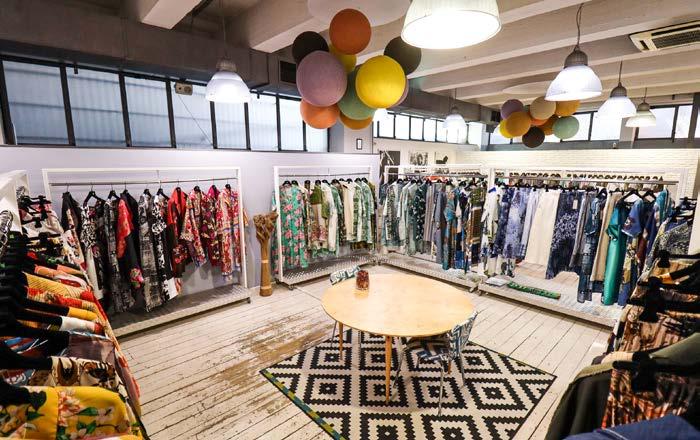

The second edition of the Outdoor Impact Summit 2026 will take place in Riva del Garda on May 14 and 15, bringing together experts and companies to tackle the challenges of sustainability in a practical way
by Sara Fumagallo
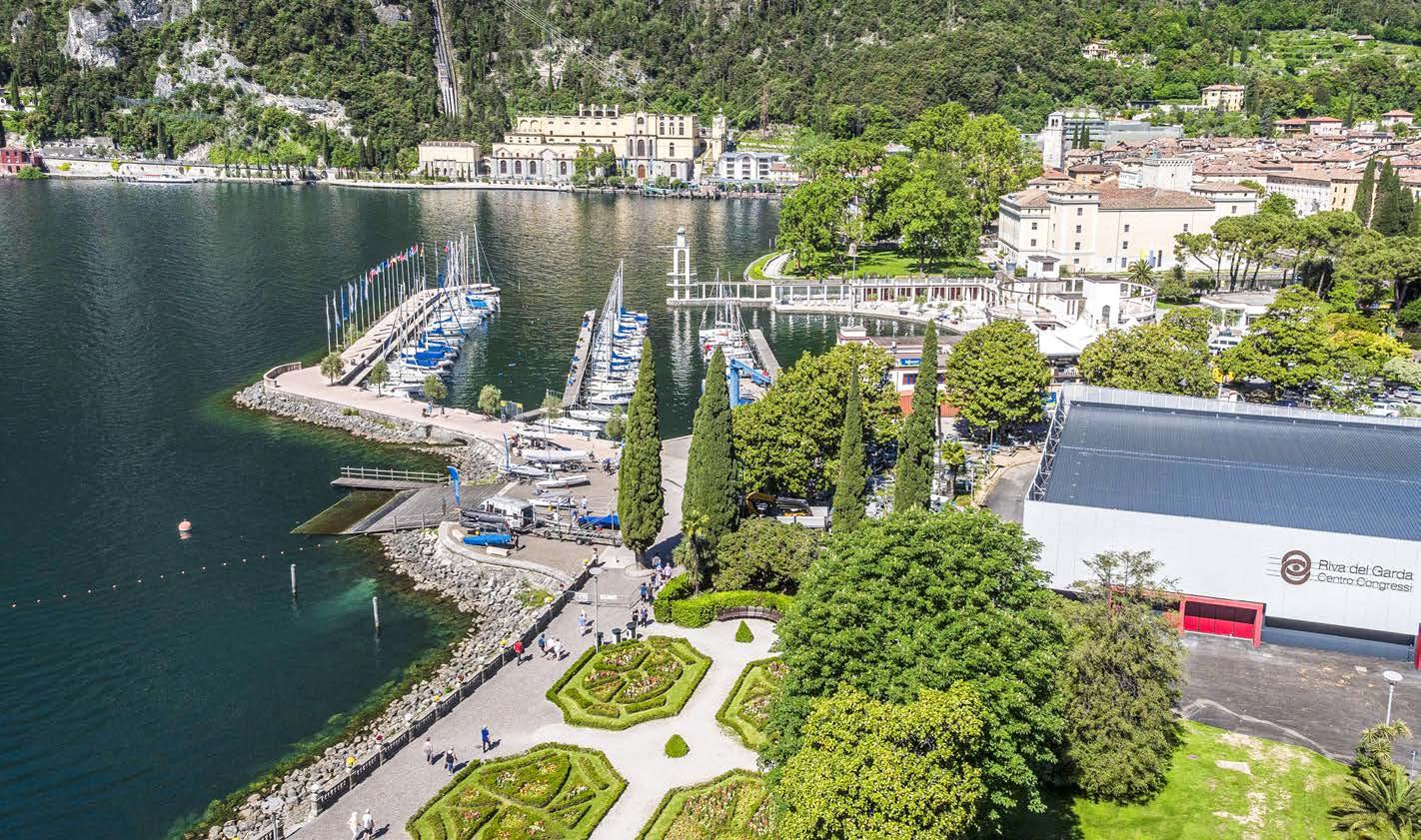
The Riva del Garda Convention Center, where the Outdoor Impact Summit will take place
Following its debut in Monaco in 2025, the Outdoor Impact Summit returns for its second edition in Riva del Garda on May 14 and 15, 2026, under the slogan “No Excuses.” Organized by the European Outdoor Group and the MagNet group, in collaboration with Green Media Lab, the event reaffirms itself as a key forum for the outdoor sector and the sports industry in general to discuss sustainability and its integration into business models. Two days of keynotes, panels, and workshops will offer a structured and actionable agenda designed to address the sector’s main challenges: from the circular economy to traceability, from responsible communication to governance.
The program and the most anticipated presentations
The program will get off to a strong start right from the first day, featuring presentations and discussions aimed at redefining the very concept of “impact” in the outdoor industry, covering corporate strategies, innovation, and responsibility throughout the supply chain. The schedule also includes experiential formats such as “Walk and Talk,” which will take participants outside the conference room to foster a more direct and immersive exchange on the topics of responsibility and communication. Ample space will also be dedicated to sharing concrete experiences, with case studies and projects ranging from environmental protection to the transformation of sporting events, and public-private partnerships for the sustainable management of territories and trails. Among the most anticipated presentations is that of Sylvie Goulard, Professor of Practice at SDA Bocconi, specializing in geopolitics and global issues, and co-chair of the International Advisory Panel on Biodiversity Credits, who will bring the ideas of economist Partha Dasgupta to the fo-
refront of the debate: the biosphere not as an inexhaustible resource, but as natural capital to be preserved. A paradigm shift that directly calls businesses to account, inviting them to reduce their environmental dependencies, minimize negative impacts, and manage physical, transition, and reputational risks to build truly sustainable business models. This is a particularly relevant theme for the outdoor sector, which is intrinsically linked to the health of natural ecosystems. Opening the second day, however, will be Enrico Giovannini, scientific director of ASviS, with a presentation dedicated to the 2030 Agenda and the global challenges of sustainability, offering a systemic analysis of the transformations underway. Inclusive leadership will be addressed in a panel dedicated to women’s empowerment, featuring Nat Jackson (The Outward Bound Trust), Patagonia, and Global Game Shapers, as well as in the keynote “The Culture of Respect” by Arianna Colombari of Tecnica Group. The focus will be on the role of businesses in promoting fair and respectful work environments, where every individual can feel valued, and the need to recognize and overcome the biases that influence behavior and decision-making processes. Other topics on the agenda include circularity as an industrial driver, with in-depth discussions on product end-oflife, extended producer responsibility (EPR), and regulatory implications for brands and retailers, along with a focus on digital traceability, the social impacts of circular transitions, and responsible withdrawal practices throughout the supply chain. A dedicated networking event—a central element for fostering connections and collaborations among industry leaders—will be the dinner on May 14 at Spiaggia Olivi, which will serve as one of the event’s key highlights, offering an informal setting to explore the themes discussed during the sessions and stimulate new initiatives.
Download the full schedule

Sign up here

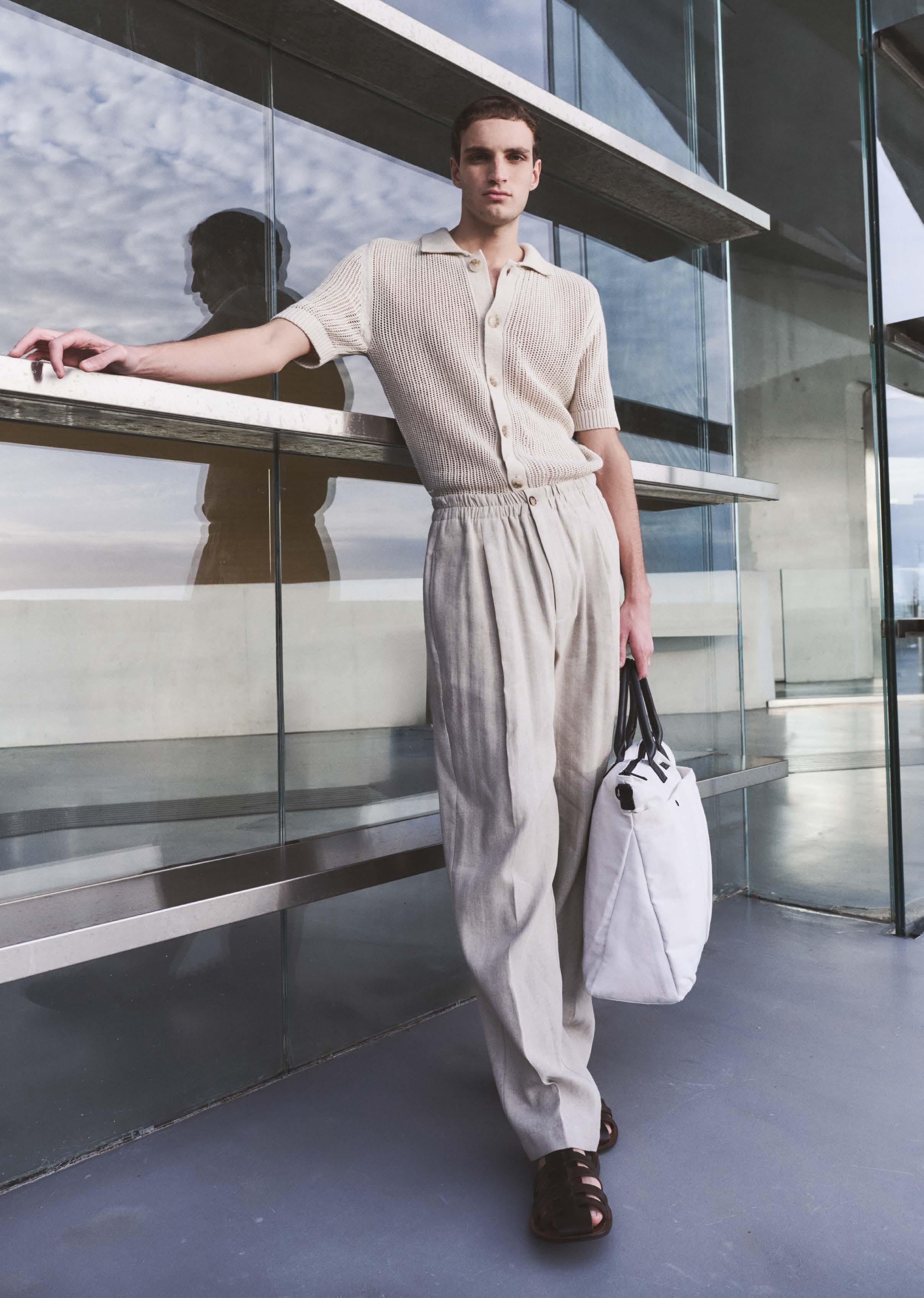
In today’s footwear landscape, where aesthetics and functionality often chase each other without ever truly converging, BIRKENSTOCK reaffirms its identity with the Utti Lace & Icons campaign
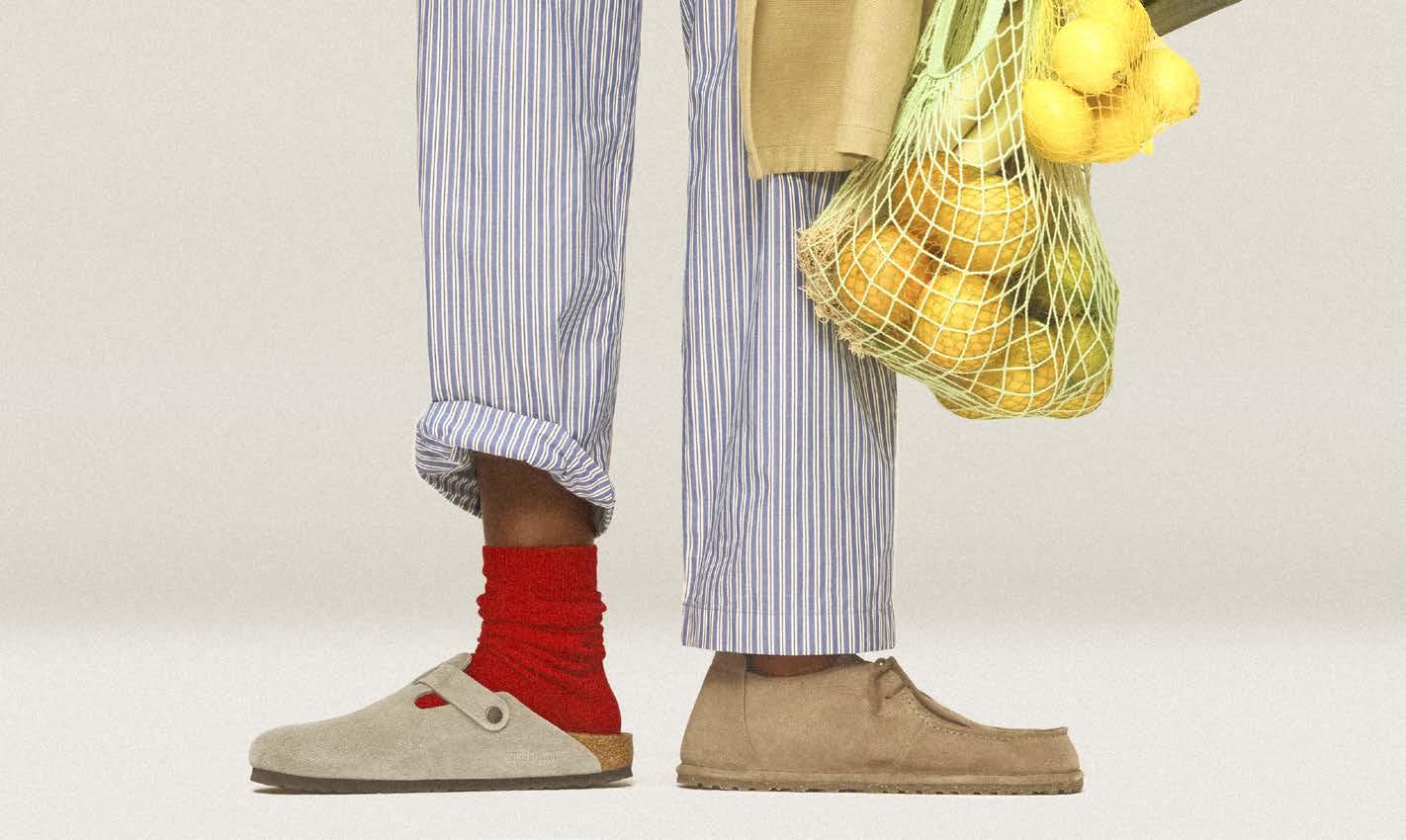
BIRKENSTOCK’s new Utti Lace & Icons campaign bridges the past and the future with iconic styles like the Arizona and Boston
BIRKENSTOCK’s DNA is clear: to be a “universal footbed brand” capable of blending heritage, innovation, and a culture of well-being. And it does so with a new campaign, Utti Lace & Icons, which marks another strategic step toward expanding into the closed-toe shoe segment. At the heart of the narrative is the Utti Lace, a model introduced in 2024 as an evolution of the Utti slip-on and already a new pillar of the brand’s offering. A silhouette that fits naturally into Birkenstock’s design language and CREATES A dialogue between past and future with icons like Arizona and Boston—cultural symbols as well as successful products. The goal? To reaffirm a key principle: the footbed remains the heart of every product.
A Design Manifesto
Developed over a century ago by Konrad Birkenstock, the anatomical footbed remains at the heart of the company’s philosophy to this day. A technical element that has also become symbolic: designed to distribute weight evenly, reduce pressure, and support the foot’s natural movement, the footbed defines a functional aesthetic that has stood the test of time and trends. With Utti Lace, this technology evolves without losing its essence. The model features the Deep Blue Footbed, a multi-layered construction that emphasizes comfort and stability, while the premium suede upper wraps the foot with a “second-skin” effect. The lightweight, flexible rubber outsole completes the design, ensuring traction and freedom of movement. From a stylistic perspective, Utti Lace reinterprets the loafer with a contemporary twist. The lines are soft yet sculptural, defined by visible stitching and minimalist lacing, free of metal hardware. An approach that reflects the influence of an almost brutalist aesthetic, where every detail follows a precise logic. The result is a versatile shoe, capable of transitioning between different contexts, from everyday urban life to more sophisticated styling. And for the 2026 summer season, it is enriched with new shades: New Navy, Pink Clay, and Cork Brown.
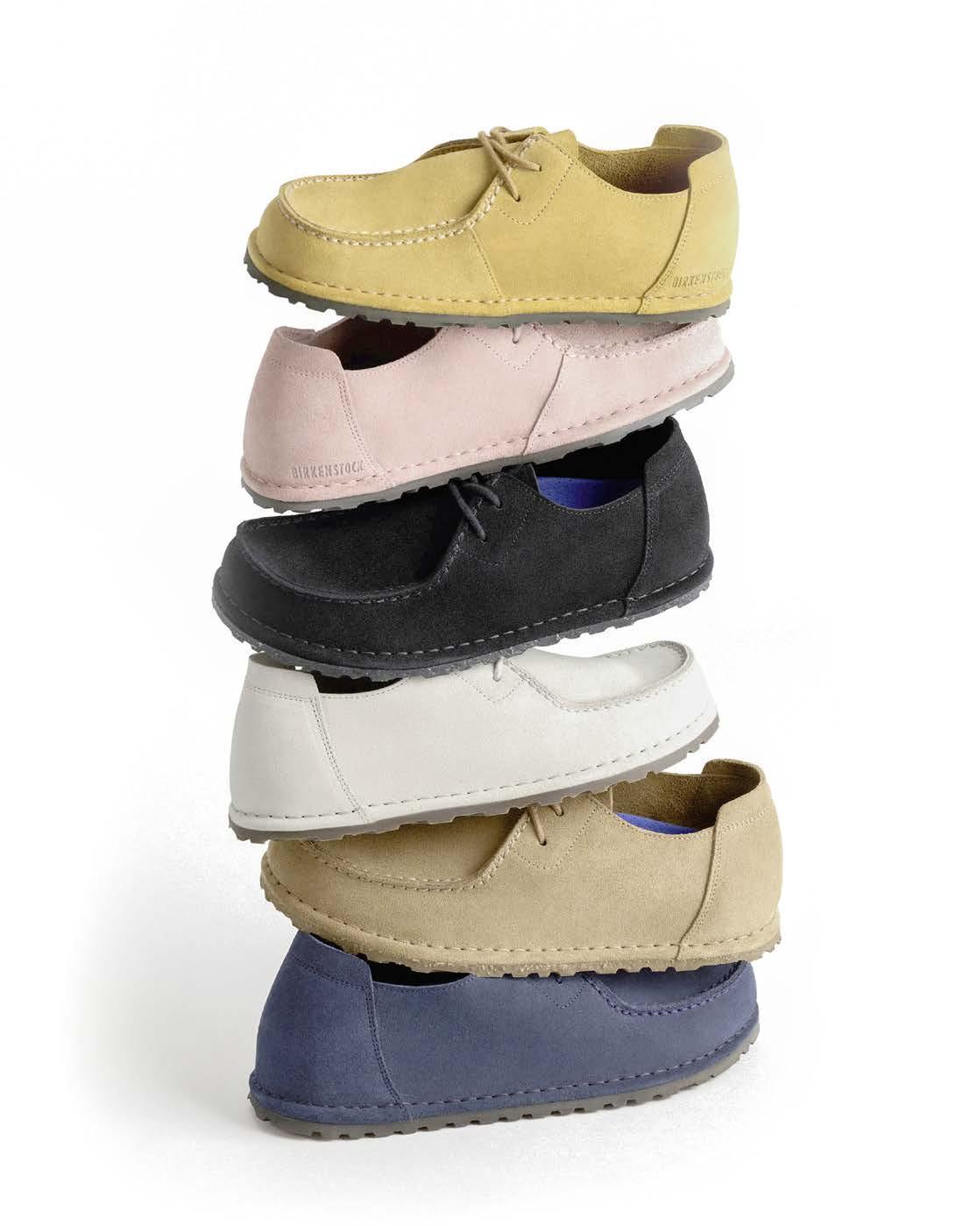
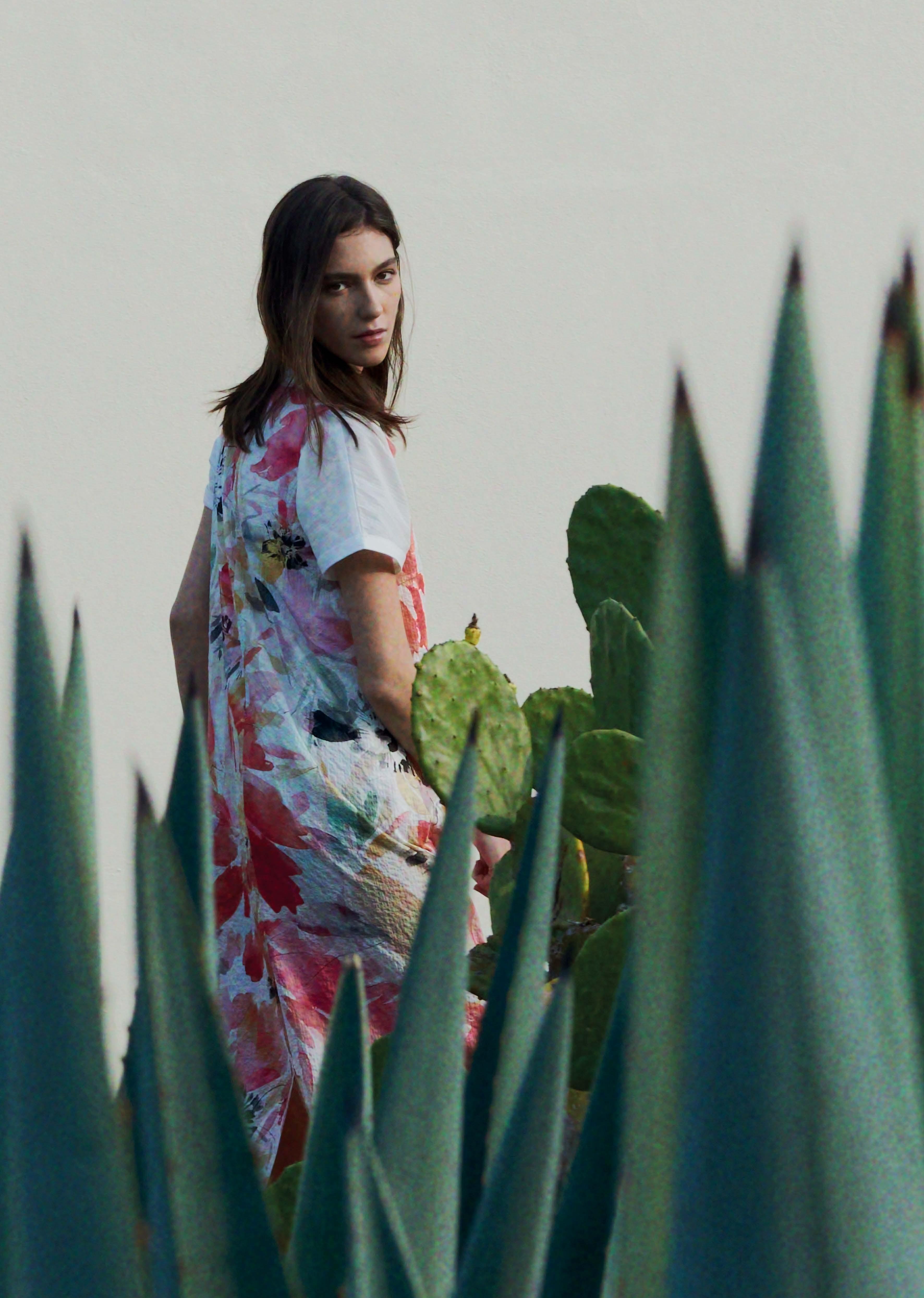
How are technology and vision reshaping the fashion industry? This is the Space 2000 model, as described by CEO Manuele Musso
by Cristiano Zanni
Acomprehensive distribution network, a strong focus on technological innovation, and an industrial vision that integrates creativity and logistics. These are the pillars upon which Space 2000 Spa’s growth model is built, with the company now operating across multiple levels and markets. “We manage approximately 2,200 wholesale outlets, 80% of which are in Europe and the remaining 20% in Asia, with a particular focus on South Korea, which represents a strategic gateway to China and Southeast Asia,” says CEO Manuele Musso. Added to this are company-owned stores, outlets—spread across large hubs and medium-sized centers— as well as approximately 400 consignment corners within department stores and retail chains. The digital channel completes the ecosystem, with four proprietary e-commerce sites and three marketplaces managed by a team of just 10 people. To manage such a complex network, the company has embarked on a decisive path toward logistics efficiency, focusing on increasingly high-performance, autonomous, and multi-channel warehousing. This is where AutoStore comes in, a next-generation system based on a compact, fully automated warehouse designed to respond quickly to requests from all distribution channels. The result is a significant increase in available storage capacity without the need to expand or modify existing facilities. Goods are stored in specialized bins and handled by radio-controlled robots that move across the system’s surface, retrieving containers and transporting them directly to operators. In this way, products come to the people, rather than the other way around, eliminating the need for movement within the warehouse. The benefits are clear: a significant reduction in order fulfillment times, greater operational efficiency, and optimized space utilization. This evolution is part of a broader investment strategy tied to Industry 4.0. In fact, as early as 2018, Space 2000 Spa was among the first European companies in the apparel sector to introduce a vertical storage system with multidimensional containers: a fully autonomous warehouse, managed by central software, capable of processing requests from the five distribution channels and managing merchandise from the nine brands without a fixed location. At the heart of the system is a highly automated warehouse capable of handling hundreds of thousands of garments. Here, robots and RFID readers work in synergy, drastically reducing the margin for error and increasing operational speed. In just a few seconds, the system locates the product and brings it to the operator, indicating exactly what to pick. The logic is that of continuous flow: only a minimal portion of the merchandise is stocked, while the majority follows a dynamic path, optimized in real time. Automation applies not only to handling but also to order preparation. Thanks to the simultaneous scanning of garments and automatic verification via RFID, every shipment is checked in real time, with a level of precision approaching zero errors. At the same time, the company has deve-


loped an industrial model that integrates production and demand. Orders are tracked from the source and accompany the garment throughout the supply chain, from suppliers to final shipment, prioritizing strategic customers and adapting deliveries to market needs. The focus is now on the future, with the integration of artificial intelligence into creative and operational processes. "We are already experimenting with applications in design and development. The goal is not to replace, but to make the system even more efficient."
"ABOUT 15 YEARS AGO, WE INVESTED IN RFID, BY IMPLEMENTING A MICROCHIP IN EVERY ANIMAL. A PIONEERING CHOICE WHICH TODAY MAKES IT POSSIBLE TO MAKE EVERY PRODUCT UNIQUE AND TRACEABLE, ENABLING MANAGEMENT TRULY OMNICHANNEL. IF I KNOW EXACTLY WHERE IT IS A SWEATER—CAN I WEAR IT? AT THE SAME TIME AVAILABLE ON ALL CHANNELS FOR SALE, AS IF IT WERE "DISPLAYED IN MULTIPLE WINDOWS AT THE SAME TIME" MANUELE MUSSO, AD
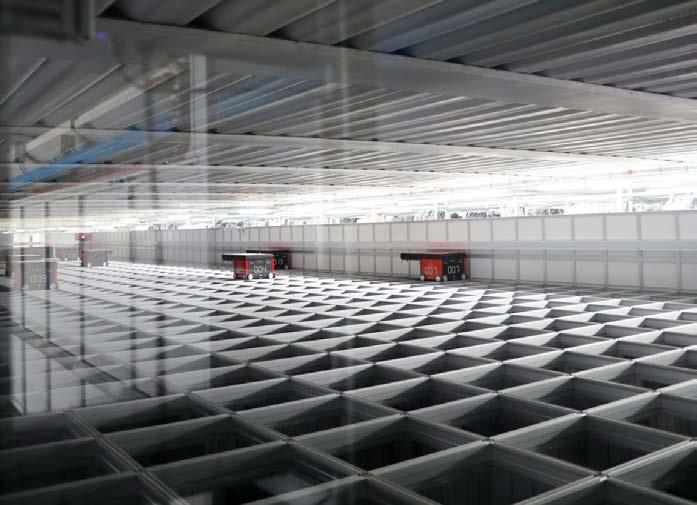
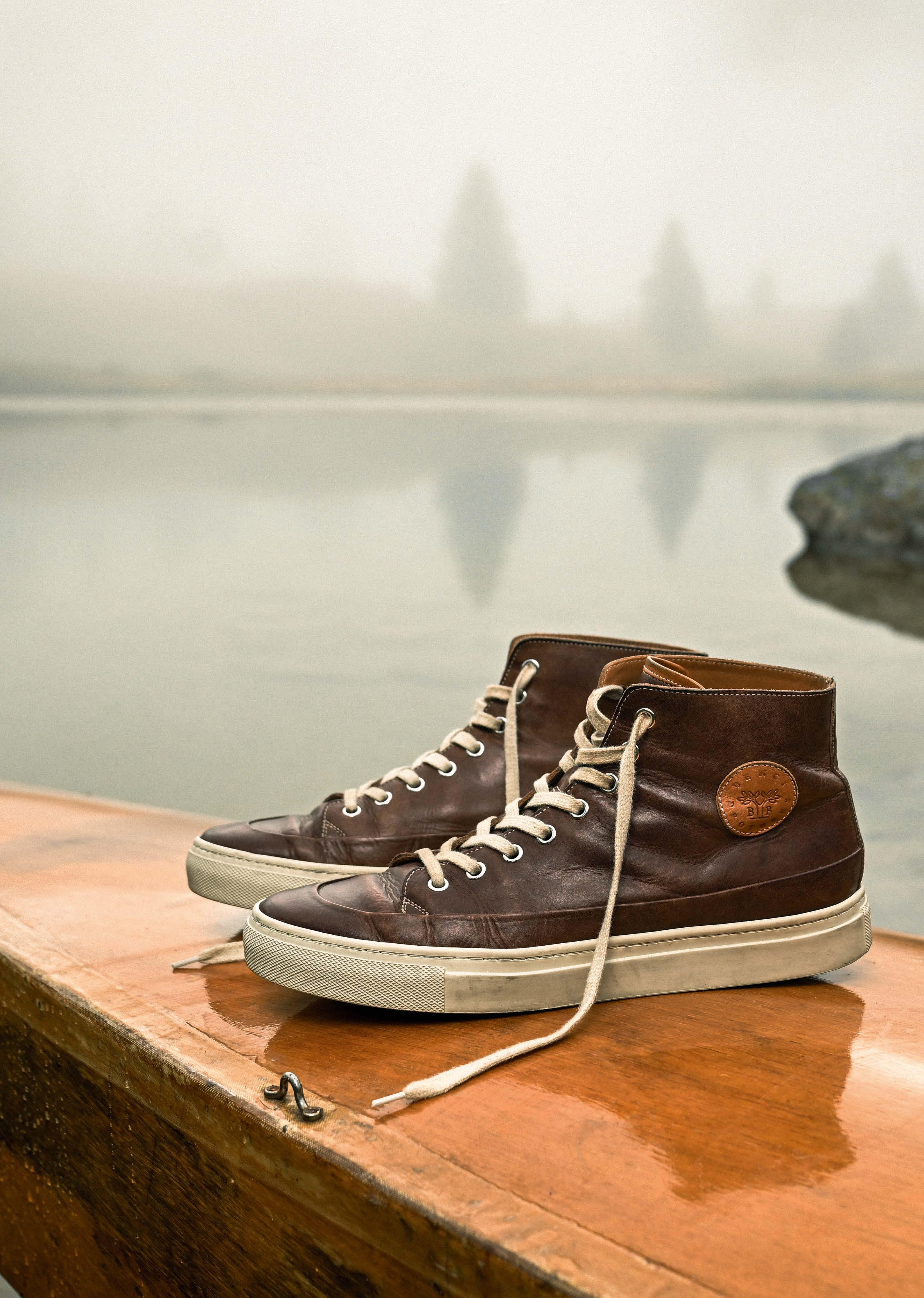
F.lli Campagnolo, the parent company of the premium sportswear brand Jeanne Baret, is an Italian industrial group with a well-established presence in Europe, combining international growth with a commitment to sustainability
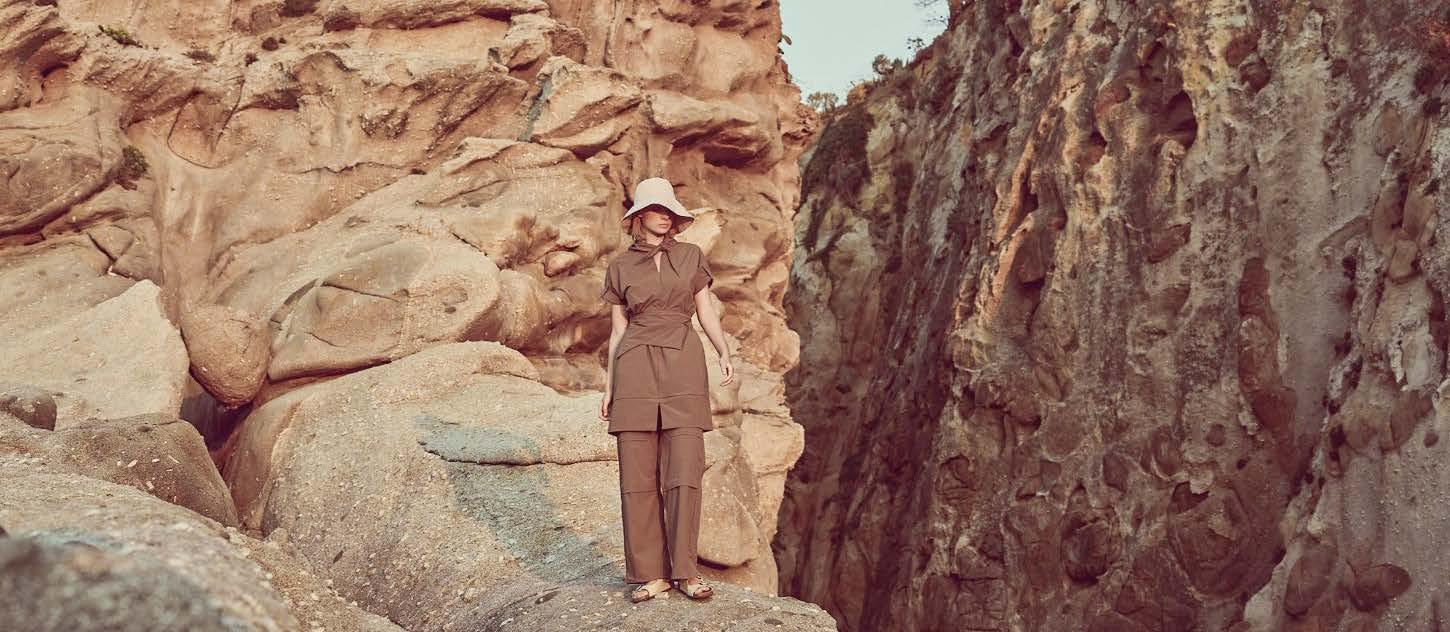
Exploring oneself and the world with the boldness of the first person to circumnavigate the globe in the late 1700s The Jeanne Baret brand draws inspiration from this legacy: the story of the French botanist who defied social conventions by disguising herself as a man to join a scientific expedition. Today, that courage lives on in collections designed for the contemporary, dynamic, and independent woman—a “daily explorer”—who seeks a versatile style capable of combining a strong aesthetic personality with the functionality needed to experience everyday life as a journey. But Jeanne Baret is not just a stylistic vision; it is the flagship of an industrial enterprise that has made practicality its hallmark. Behind the brand stands the F.lli Campagnolo Group, a solid foundation with over 60 years of history. Founded in the post-World War II era thanks to the vision of Maria Disegna, the Group has navigated the key milestones of Italian manufacturing, from its incorporation in 1965 to the establishment of its industrial identity in 1973, up to its international breakthrough in 1982 with its first supplies to the global sportswear giants. Today, it is a global player that closed the 2025 fiscal year with consolidated revenue of approximately 215 million euros, confirming steady growth despite market complexities. International expansion is the true driver of growth: while Italy accounts for 41.7% of
sales, 54% of revenue is generated in European Union countries. Germany leads the way as the top foreign market with a 34.1% share, followed by France, Spain, Austria, Poland, Denmark, and Switzerland. The Group operates three production facilities located in Italy, Tunisia, and Romania, capable of bringing approximately 10 million garments to market each year. This production capacity supports a diversified portfolio of five brands: in addition to Jeanne Baret, these include CMP (a leader in outdoor apparel), Melby (kidswear), Maryhome (home textiles), and FC F.lli Campagnolo. What sets the Group apart in the textile industry is not only its revenue but also its workforce composition. Of the more than 1,000 total employees (670 of whom are in Italy), women account for 73%, a figure well above industry benchmarks. This commitment led, in 2026, to the attainment of UNI/PdR 125:2022 certification for gender equality issued by Bureau Veritas, reinforced in 2024 by the establishment of a dedicated Steering Committee. Corporate welfare translates into direct actions: in 2025, the baby bonus was paid to 25 employees, accompanied by health prevention programs extended to all staff. Finally, on the ESG front, the company is taking proactive steps because, although not yet subject to regulatory obligations, it has been preparing a Sustainability Report for years and, starting in 2024, has begun aligning with European ESRS standards. Among its flagship projects are participation in the Cobat Tessile Consortium for the circular economy and the RELOVE initiative, which will intro
"WITH JEANNE BARET, WE AIM TO REINTERPRET WOMEN'S CLOTHING IN
A CONTEMPORARY
WAY,
WHERE TECHNICAL FABRICS AND STYLE COEXIST SEAMLESSLY. IT IS A STORY OF FREEDOM AND MOVEMENT, DESIGNED FOR WOMEN WHO LIVES EVERY DAY AS A JOURNEY OF DISCOVERY, AND IS INSPIRED BY A GREAT ICONIC FIGURE, SUCH AS THE FIRST WOMAN "TO SAIL AROUND THE WORLD" ALICE TESTI, MARKETING MANAGER
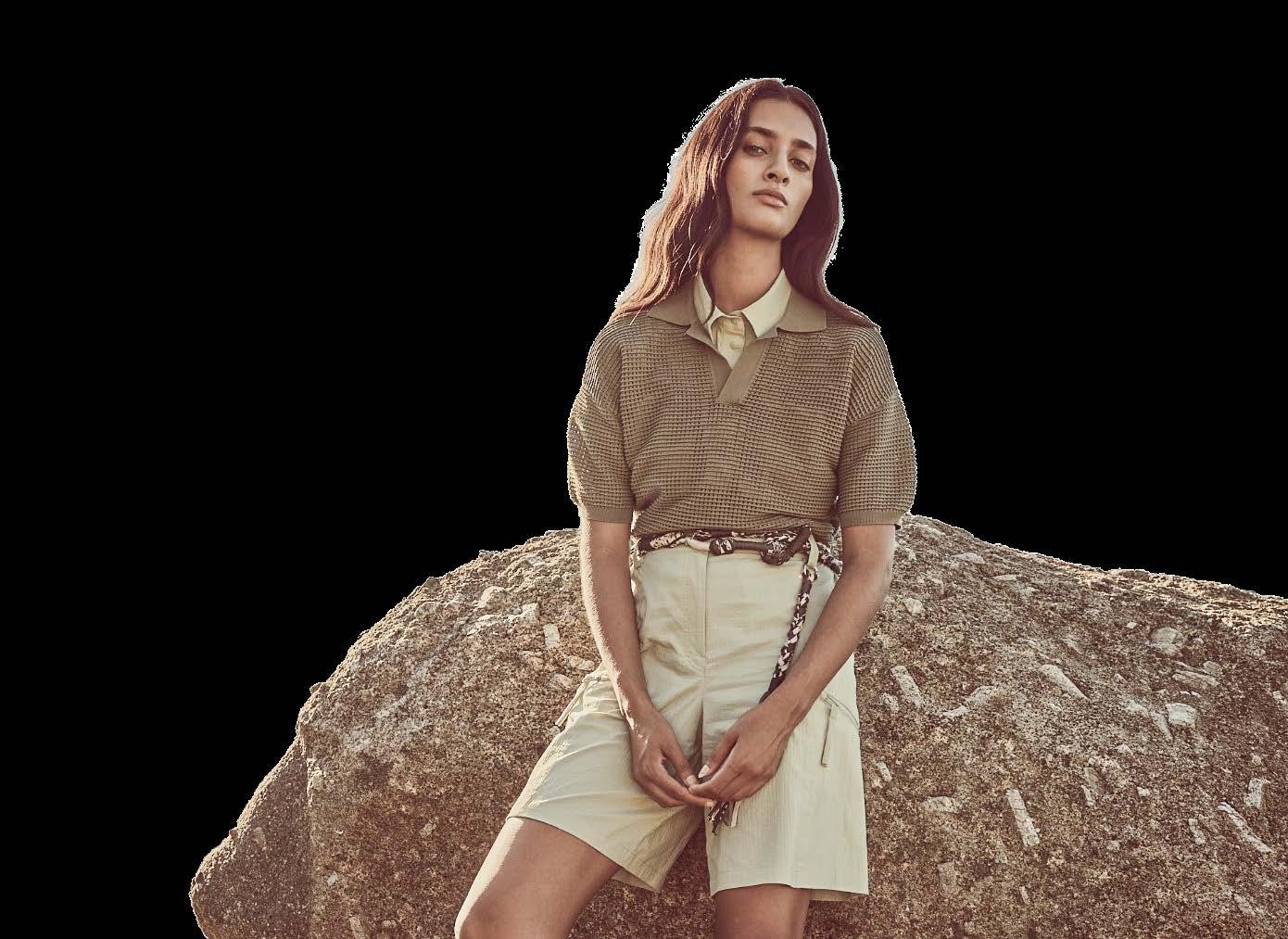
Here are some images from Jeanne Baret’s Spring/Summer 2026 collection, a collection that marks a pivotal moment in the brand’s evolution, reinforcing its position in sportswear through minimalist design, technical performance, and a strong identity
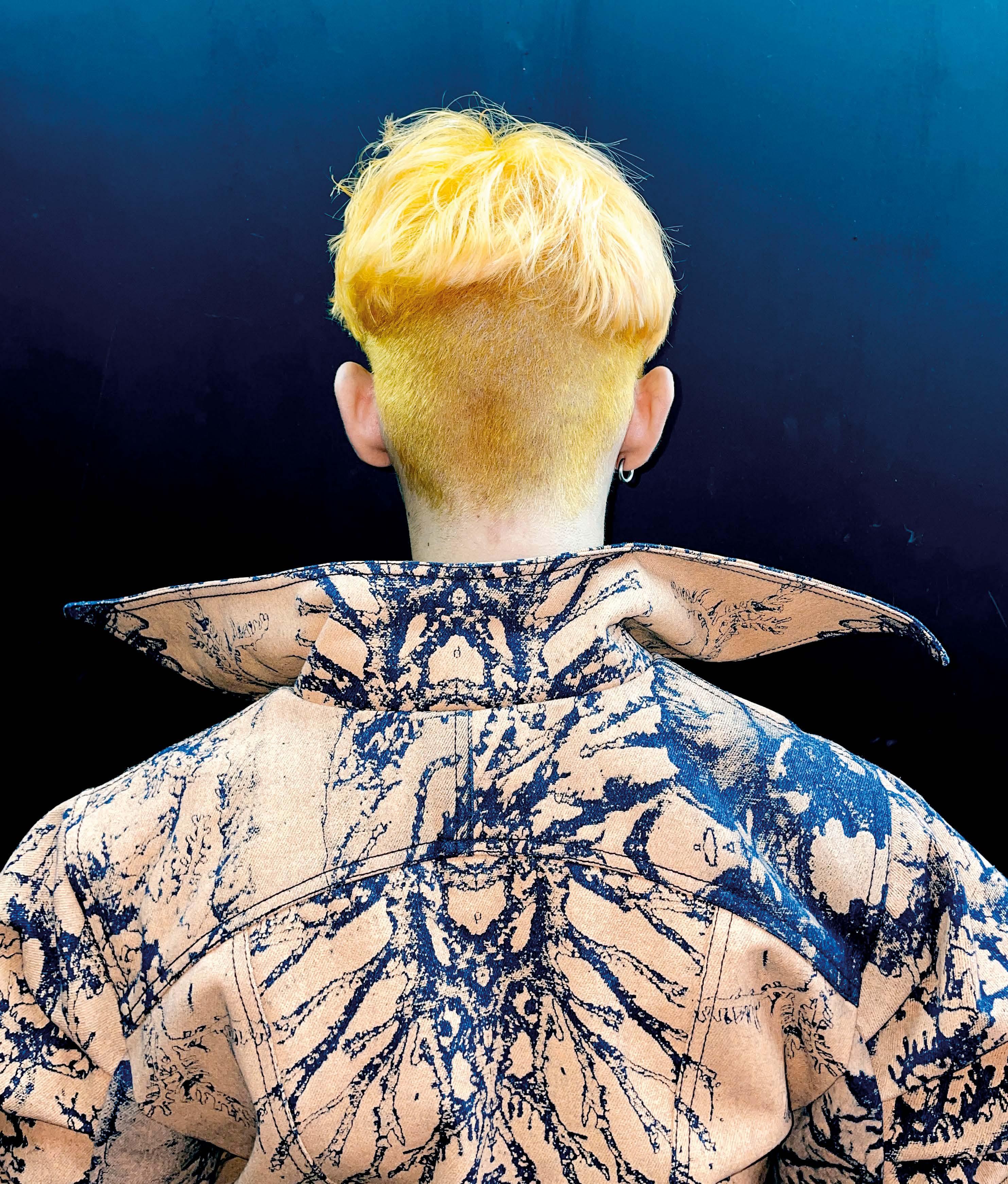
20 / 21 MAY
In this season of special occasions, when events once again set the pace of style, elegance straddles the line between nostalgia and contemporary flair: black and white takes on retro touches, while ethnic styles become urban and sophisticated. Amid natural shades, delicate florals, and vibrant accents, it is the accessories—whether shoes, bags, jewelry, or eyewear—that define every look, transforming it into a story of identity
by Valeria Oneto and Micaela Panzini
Tagliatore creates a wardrobe inspired by movement: travel-inspired motifs, premium materials, and archival details come together to form garments that flow with the rhythm of the day. Through soft silhouettes, deconstructed outerwear, and reimagined crochet, the brand’s tailoring embraces new proportions while maintaining a distinct and recognizable identity.
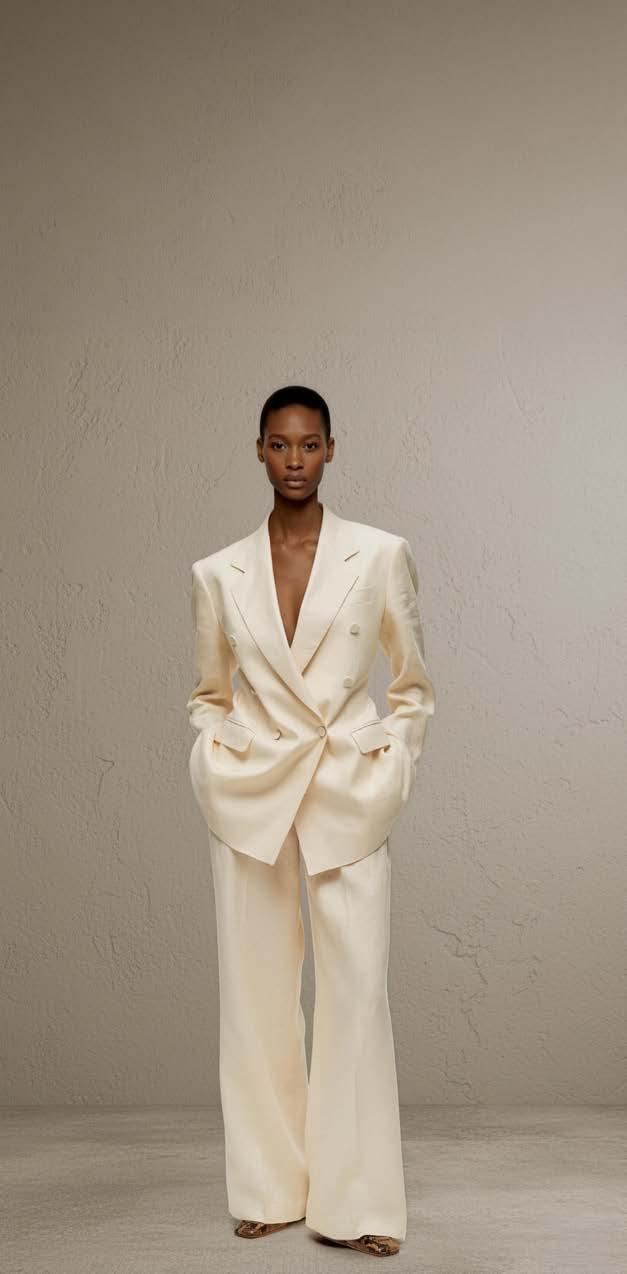
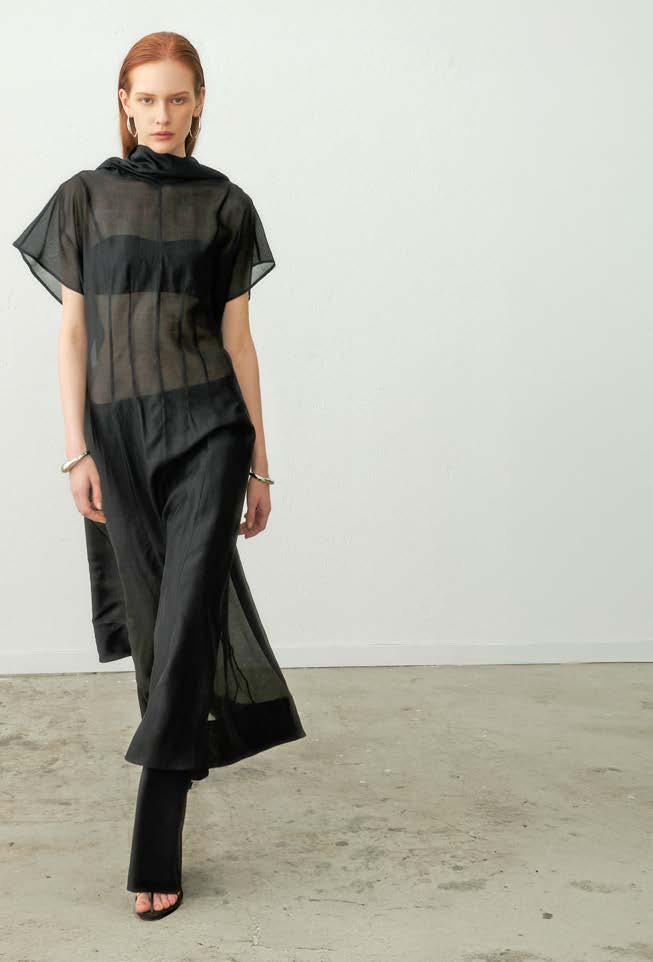
SU transforms natural materials into expressions of style: cotton, linen, and silk intertwine in balanced silhouettes and carefully crafted details, where sheer fabrics and pleats convey movement and harmony. Every piece—from the versatile trench coat to the soft skirts and flowing dresses—becomes a small laboratory of texture and lightness.
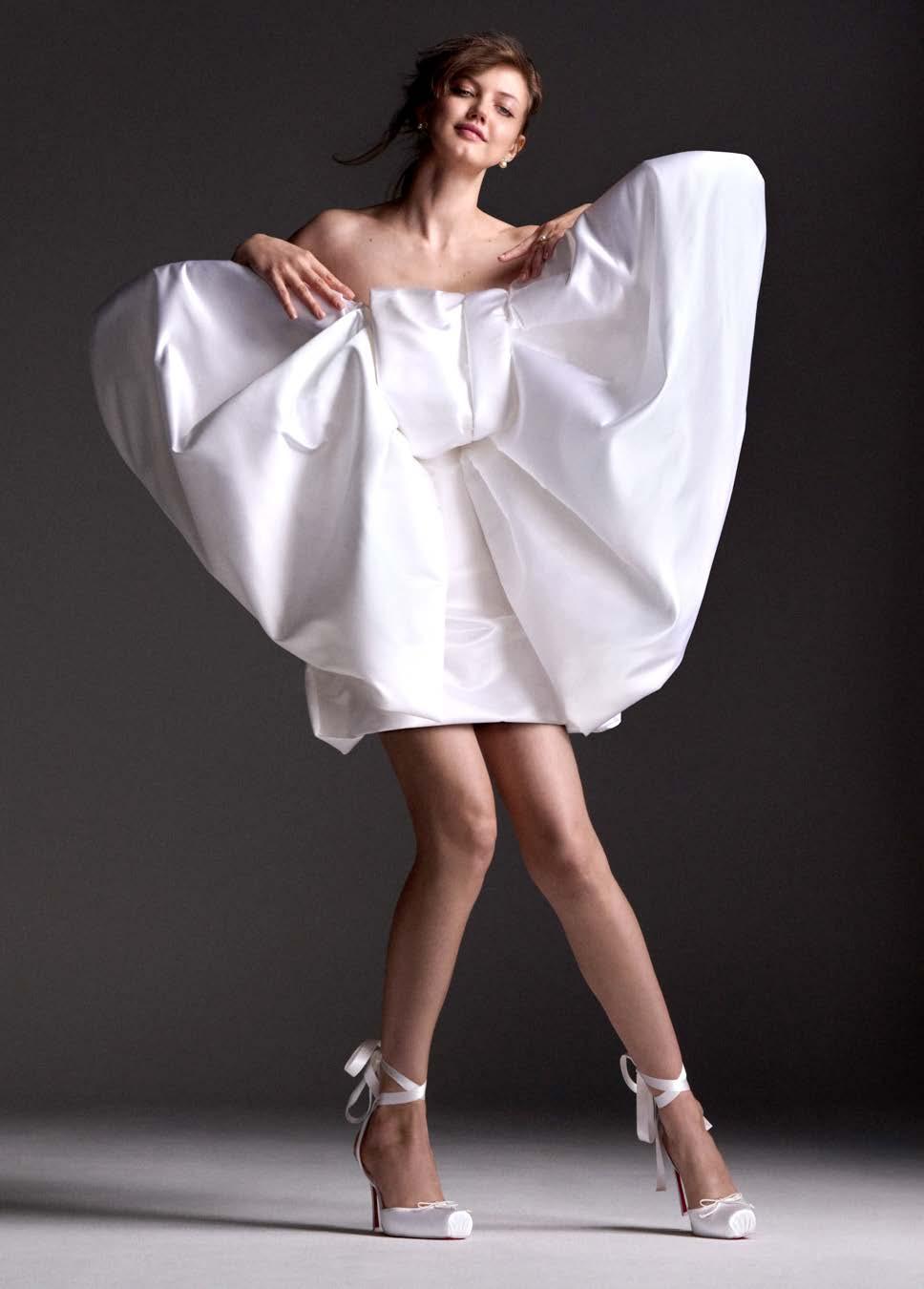
Christian Louboutin’s creations turn every step into an unforgettable memory. With flawless satin, supple leather, and sparkling details, every shoe and accessory accompanies the bride with elegance, style, and that touch of magic that leaves a lasting impression.
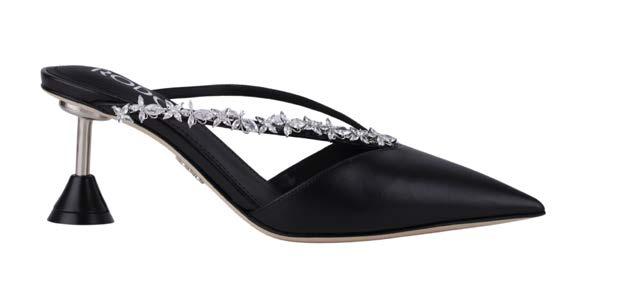
Every Marella piece captures everyday moments with personality: flowing fabrics, surprising details, and silhouettes that move with ease. It’s not just fashion—it’s a lively, vibrant experience, filled with small discoveries and memorable details, embodying an authentic femininity that’s anything but predictable.
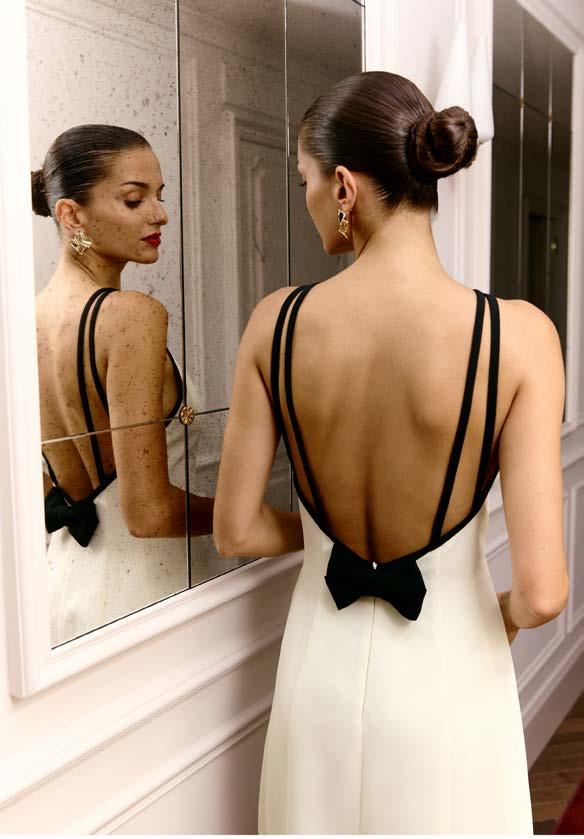
Rodo transforms bags and shoes into small works of art: interwoven metal, crystals, and embroidery create unexpected details that sparkle from day to night. Butterfly wings, flowers, and sculpted shapes bring each design to life, turning craftsmanship into tangible poetry and making every gesture enchanting.
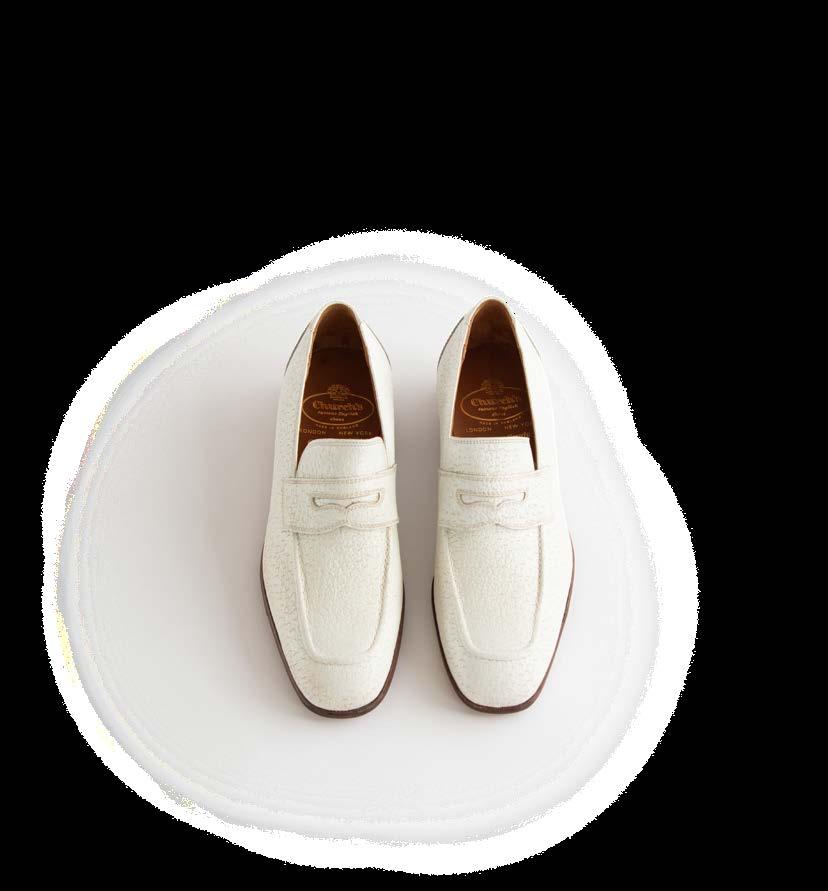
Every piece of ÂGÉE Scouted by LIL Milan jewelry holds a unique story, discovered and cherished with passion among hidden treasures. The imperfections of vintage pieces are not flaws, but the true beauty that makes them one-of-a-kind. ÂGÉE celebrates the charm of time, the thrill of what is rare and precious, and the magic of what lies beyond appearances.
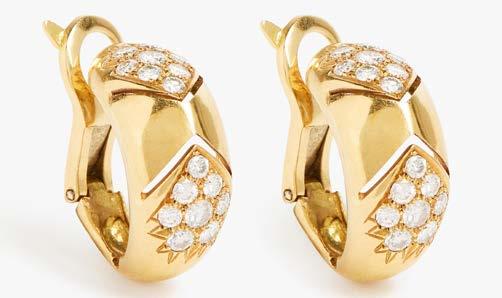
Church’s Chapters is a journey through hidden treasures: iconic shoes, original sketches, and archival materials that chronicle over 150 years of British excellence. Each piece—from the 1922 Derby to the 1950s pumps—bears witness to innovation and master craftsmanship, transforming memories of the past into a vivid, living narrative.
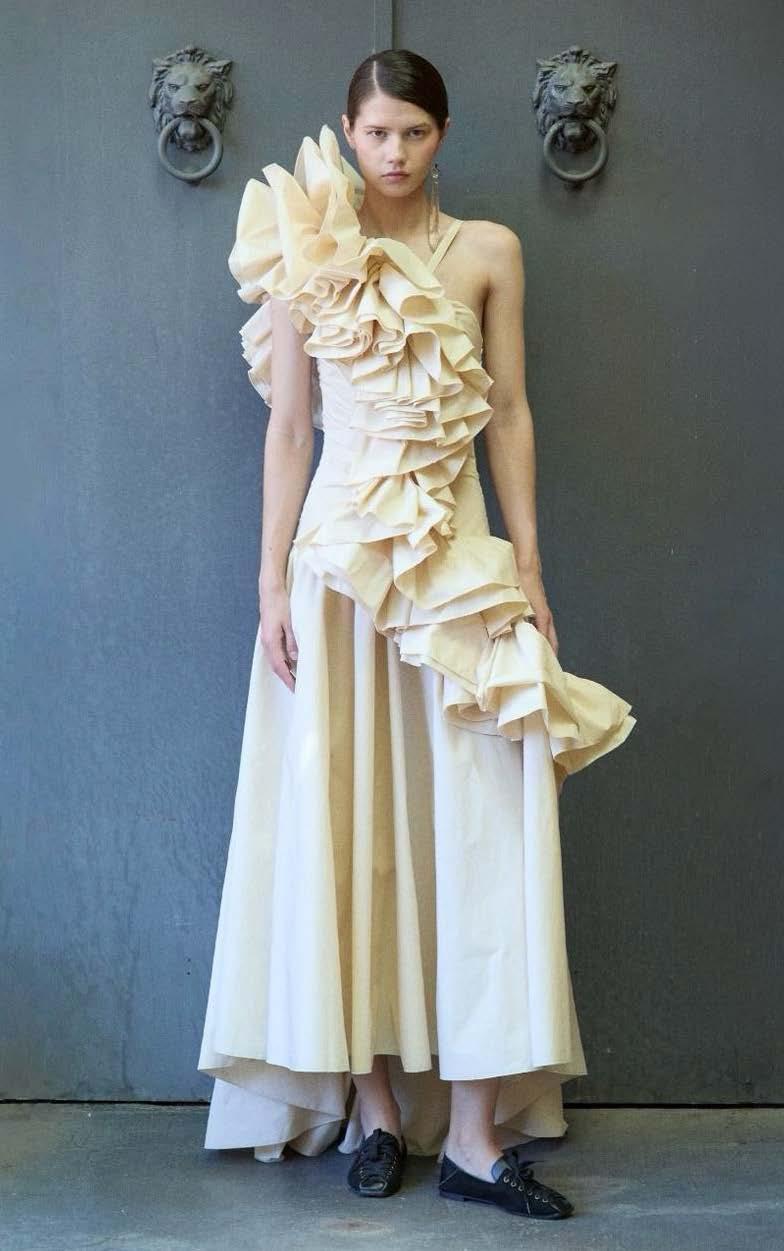
Every Romeo Gigli garment tells a story: lines that flow like poetry, details that catch the eye and surprise. Lightweight fabrics that caress the skin and geometric silhouettes that balance boldness and sophistication, transforming the ordinary into the extraordinary.
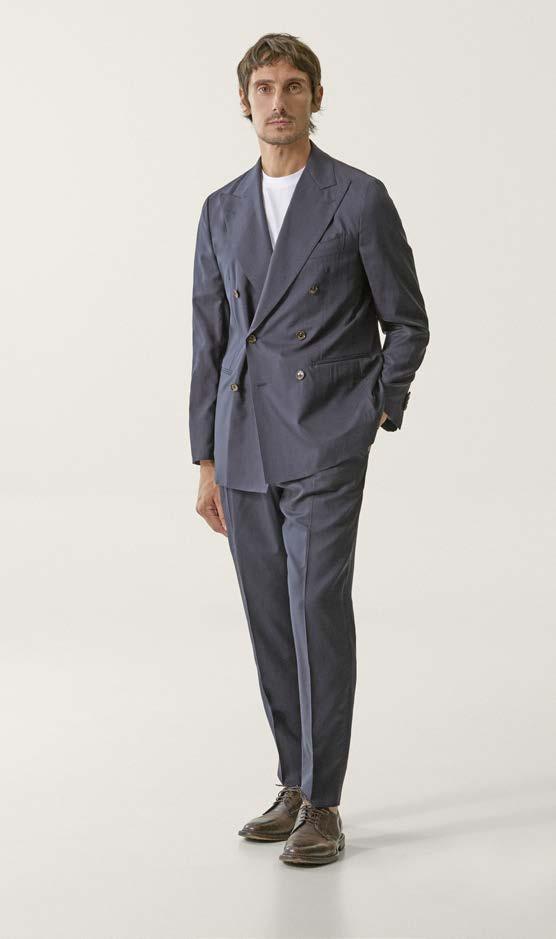
BEYOND TIME
Montecore’s SS 26 collection explores the essence of form through a functional and modern wardrobe. Iconic pieces such as the Peacoat, Trench Coat, and Field Jacket are reimagined in a clean and versatile style, using technical and natural materials. The natural color palette complements every moment of the day, while the “Beyond Time” design transcends trends to stand the test of time.
12 PM interprets jewelry as an expression of personality: dynamic shapes and bold materials come together to create pieces that complement and define any outfit. Wearing them means facing the day with confidence, leaving an elegant, bold, and instantly recognizable impression.

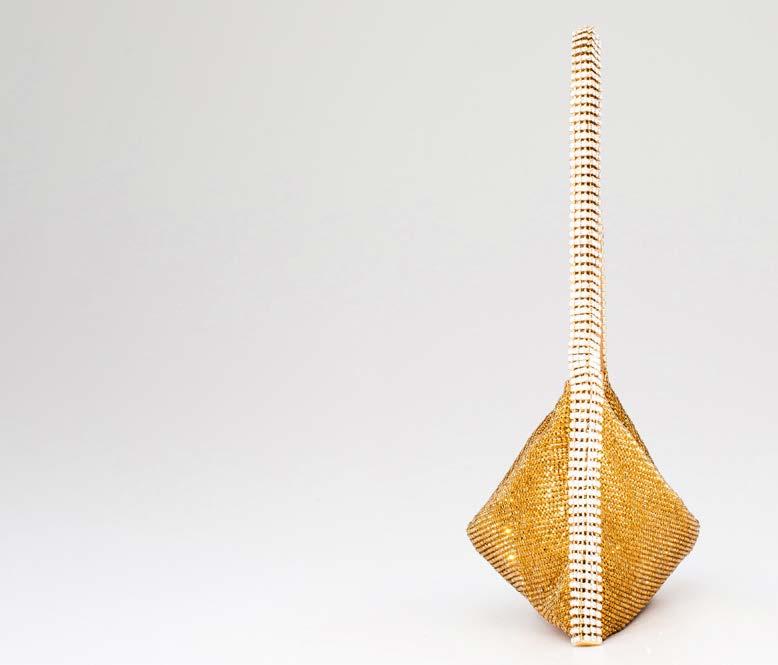
Benedetta Bruzziches transforms the handbag into a theatrical gesture. Crystals, satin, and sculptural volumes capture the light and redefine the concept of an accessory. Each creation is designed to surprise, blending irony and glamour, becoming both a striking presence and a detail that leaves a lasting impression. More than just an accessory, it’s a little show to carry with you.
AGL footwear embodies refined elegance: premium materials and bold design elements transform every step into a statement of character. Sophisticated lines highlight their personality, making them the center of attention at any occasion. Wearing them means walking with confidence, leaving a trail of unique and sophisticated style
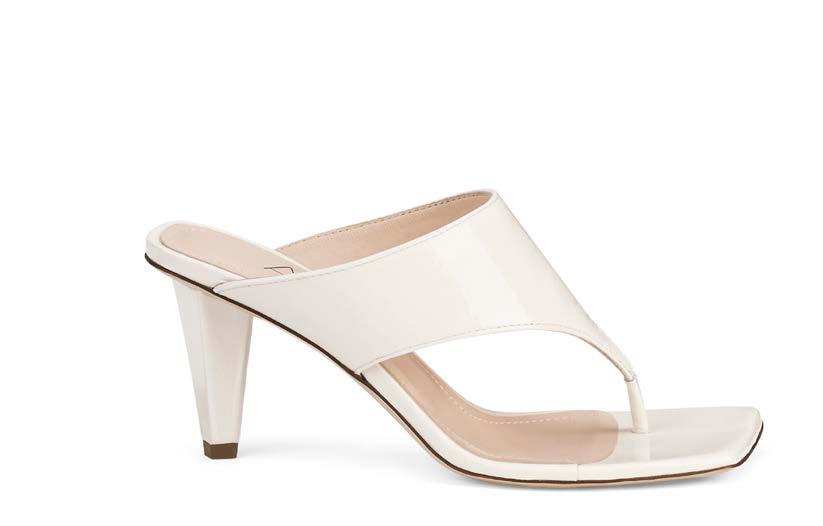
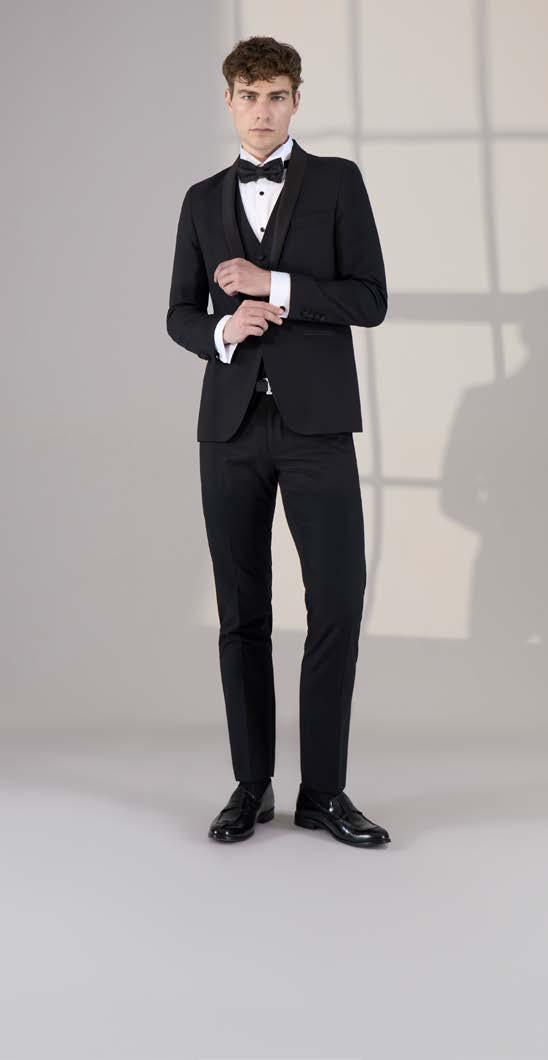
Daniele Alessandrini creates a wardrobe defined by contrasts: discipline and freedom, structure and movement. The garments blend bold cuts with worn-in materials, revealing a spontaneous, unforced attitude. It is a narrative of precarious balance, where every detail seems to have been discovered rather than designed.
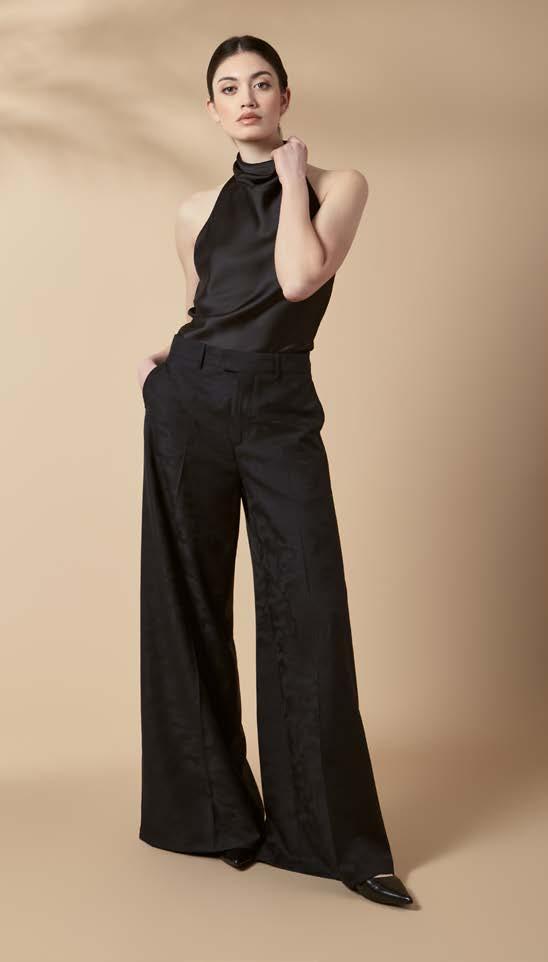
Berwich creates a summer that feels like an emotion. Color sets the tone, shifts the rhythm, and points the way. With breathable fabrics and fluid silhouettes, each piece is designed to be chosen on a whim, mixed and matched, and lived in. It follows no rules, only moods, and gives the wearer the freedom to redefine it every day.
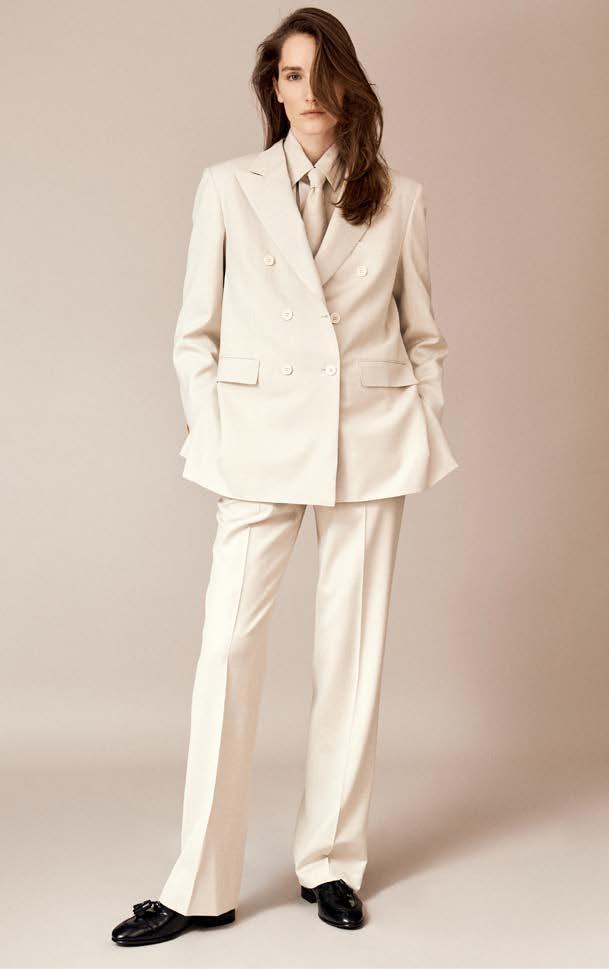
Brioni presents La Donna Atelier, the new "Made-to-Measure" collection designed for women. A personalized service that blends masculine tailoring with feminine sensibility, featuring fine fabrics and bespoke details. An elegant and contemporary wardrobe, designed for the independent woman who seeks understated, timeless luxury.
La Stramberia transforms every headpiece into a personal space: delicate weaves, fine fabrics, and shapes that speak of protection and identity. From Florentine braids to sisal, every design element reveals craftsmanship and boldness. An accessory that holds stories, emotions, and gestures, turning everyday life into a small ritual of style.
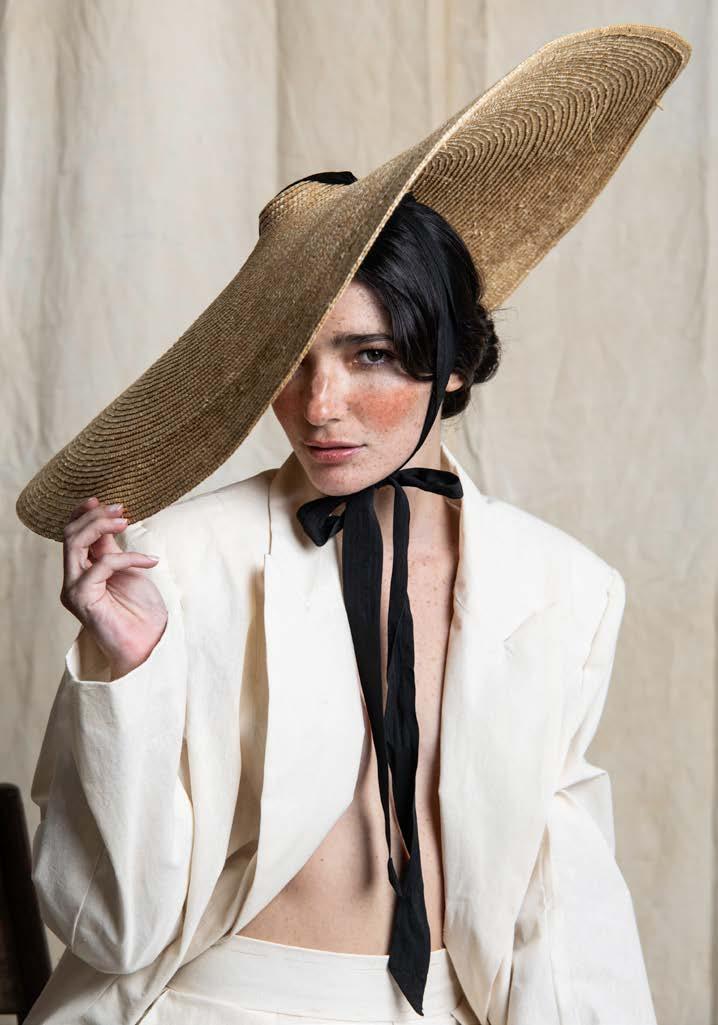
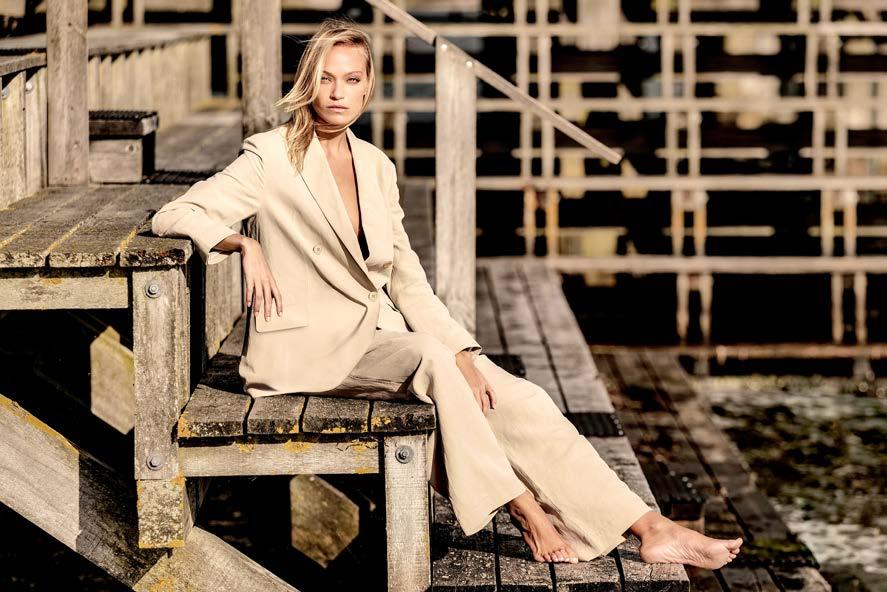
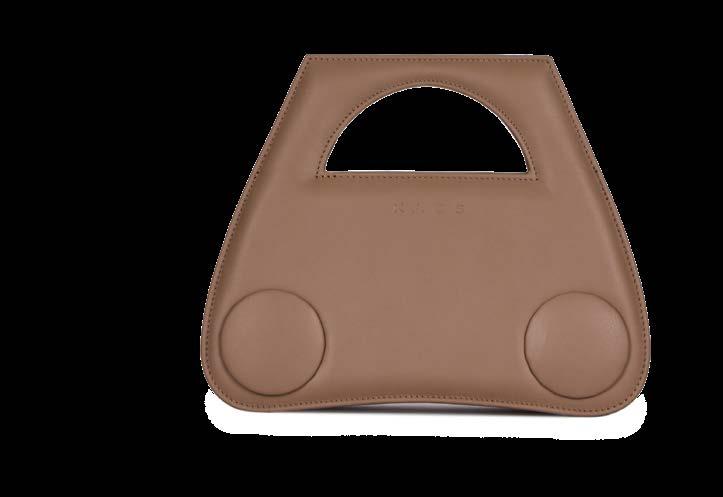
The KAOS Car Bag combines bold design with functionality: a trapezoidal shape, automotive-inspired details, and genuine Italian leather. Compact and versatile, it can be carried by hand or over the shoulder, keeping your essentials organized in style. An eye-catching icon.
DUNO ’s SS 26 collection is designed for those who are always on the go— whether traveling, exploring cities, or enjoying casual moments—in the fluid rhythm of everyday life. Versatility is expressed through lightweight summer pieces that accompany every step, blending comfort and performance with natural elegance. The technical fabrics, with their sophisticated essence, are soft to the touch yet highly functional.
Satorisan transforms the Chracona Metta Linen into a unique creation: premium linen, raffia details, and two shades that make each pair one-of-a-kind. The Metta Love sole makes every step feel light, while sustainable materials reflect a commitment to nature. Style meets responsibility, turning every walk into a sensory experience.
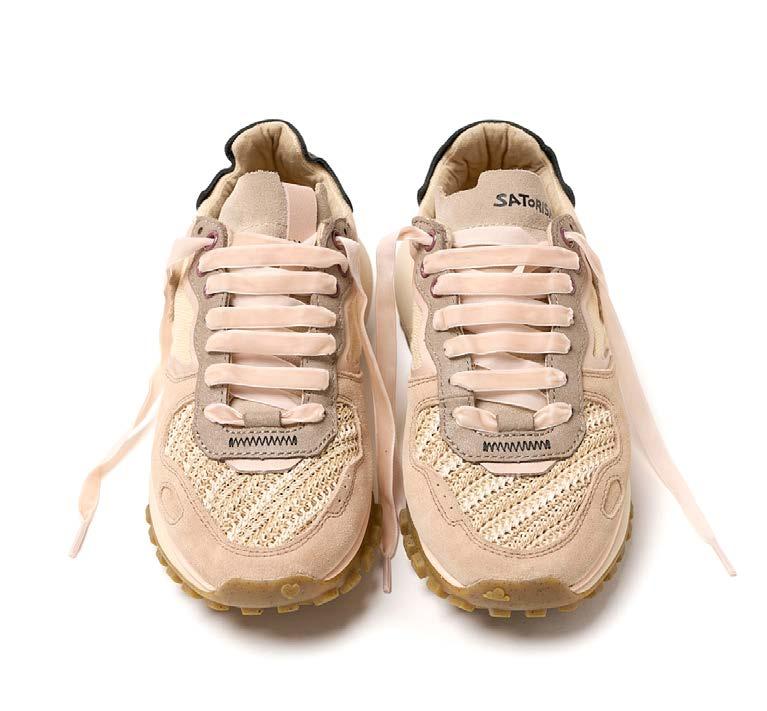
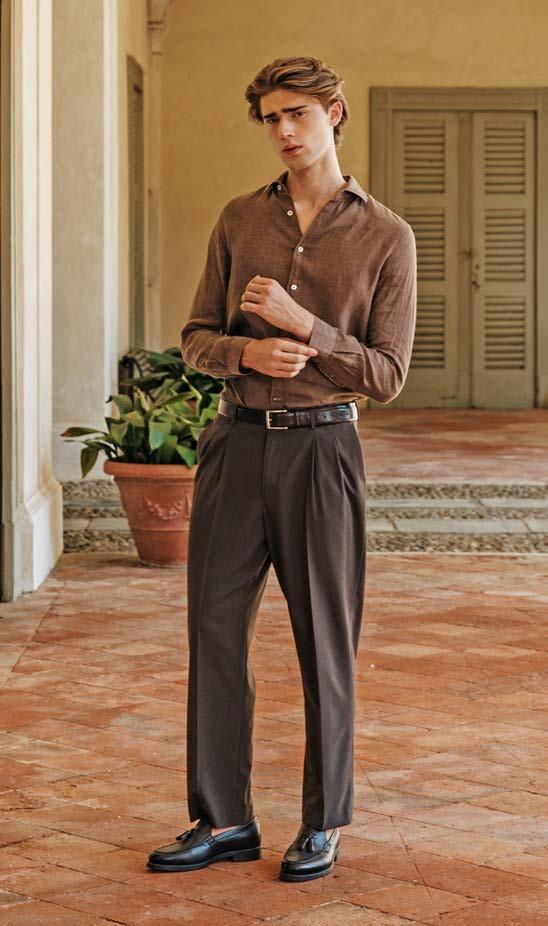
It all happens in an instant: a sheen on satin, a shoulder that defines the silhouette, a step that shifts the rhythm. Alley Docks works with sharp contrasts, clean lines, details that shift the balance, and a presence that commands attention without raising a voice. It’s the kind of energy that can’t be explained, but is instantly recognizable.
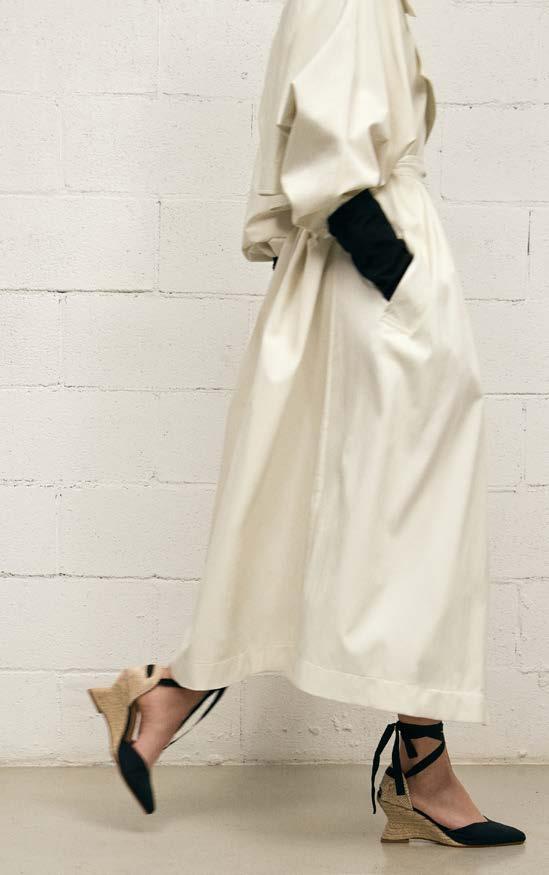
Every pair of Castañer espadrilles is crafted by expert hands and celebrates craftsmanship and timelessness. The 2026 Bridal Collection transforms simplicity and attention to detail into sophistication, offering shoes that speak to authentic connections. From the platinum trim to the delicate fabric, every detail reflects dedication and savoir-faire.
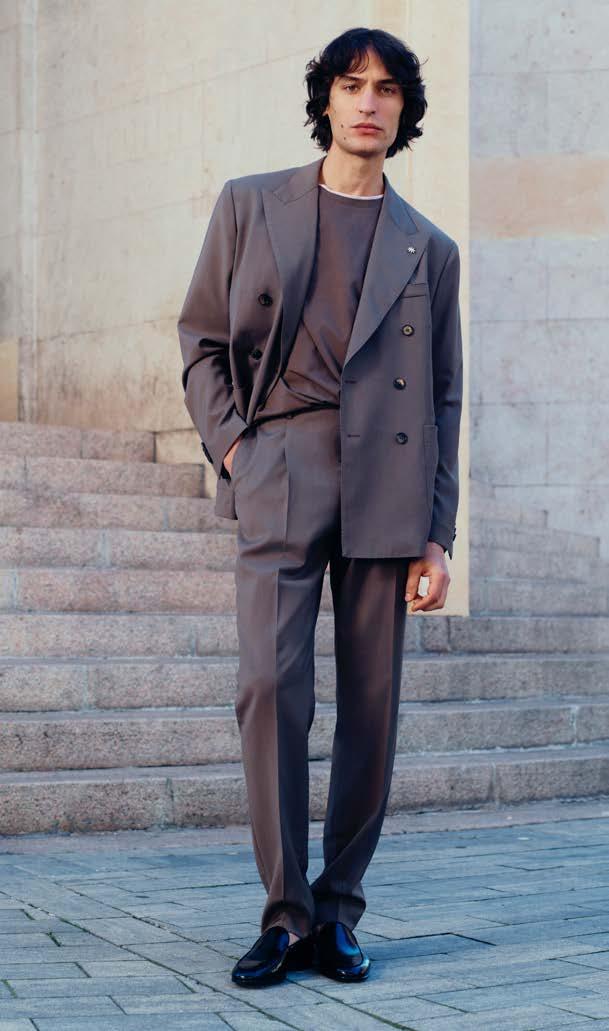
Manuel Ritz reimagines eveningwear for everyday wear: refined tailoring, tone-on-tone satin, and a sophisticated color palette that complements every movement. Versatile and dynamic pieces, designed for pool parties, beach weddings, or evenings out, blending sartorial precision with a modern spirit. A wardrobe that exudes confidence and personality, transforming every occasion into a memorable moment.
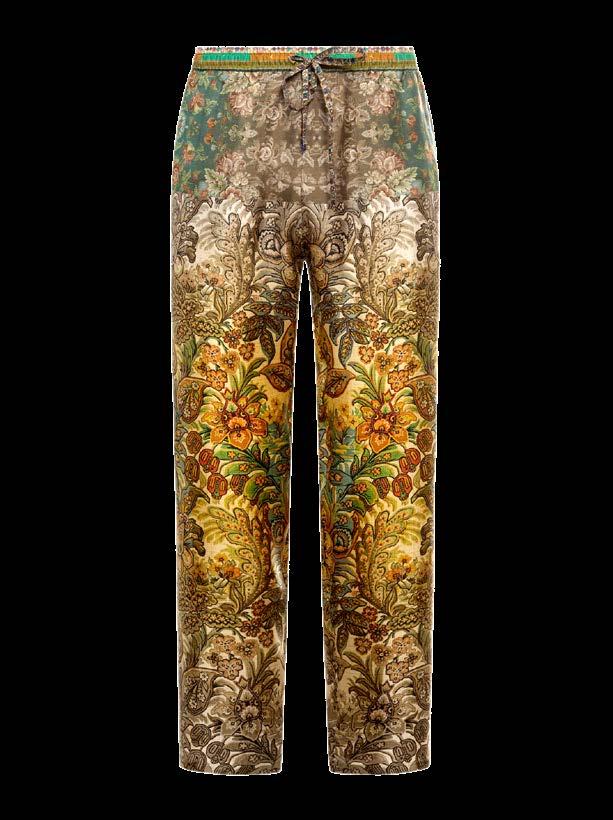
THEATRICAL STORY
Pierre-Louis Mascia’s summer collection unfolds like a theatrical narrative, where silk and prints intertwine in a poetic interplay of memory and imagination. A fluid and sophisticated collection, inspired by the worlds of cinema and the stage, that transforms every garment into a visual narrative in constant motion.
The Archivia collection explores a contemporary, self-assured femininity, characterized by a subtle presence and sensitivity that is expressed through sensation. A summer collection that evokes a sensory elegance, where textures, movement, and perception intertwine in a narrative that unfolds slowly.
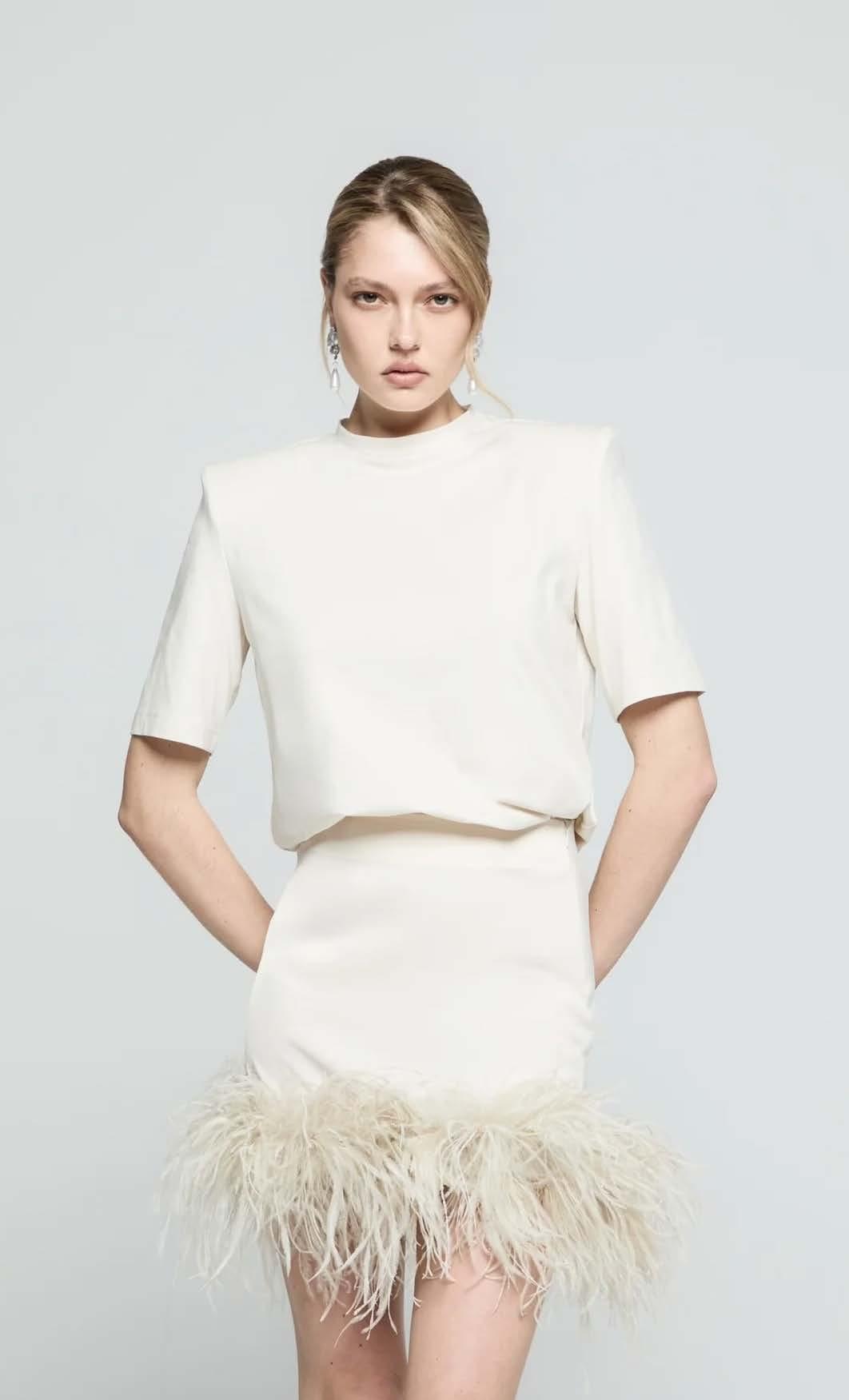
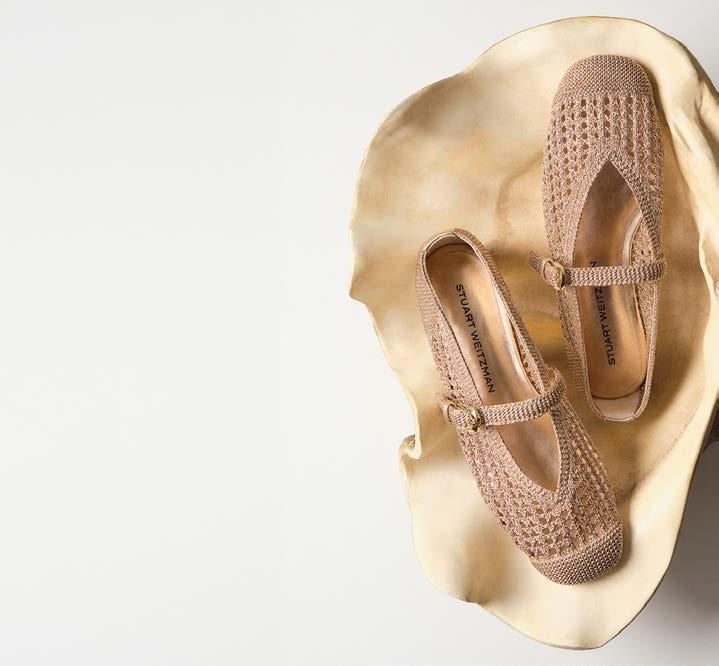
STYLE STATEMENT
Stuart Weitzman embodies a contemporary, elegant, and confident femininity, designed to move effortlessly through city life and everyday routines. A collection that reinterprets the brand’s iconic footwear through clean lines and understated luxury characterized by comfort, precision, and style.
Sodini presents the Tarocchi line, a new addition to the SS 26 Romantic Remembrance collection: Ode to Italian Summer, an emotional journey into the heart of the Italian summer. Inspired by Tuscany—with its beaches, hills, and gardens—the collection weaves together art, nature, and color in a poetic and evocative narrative.
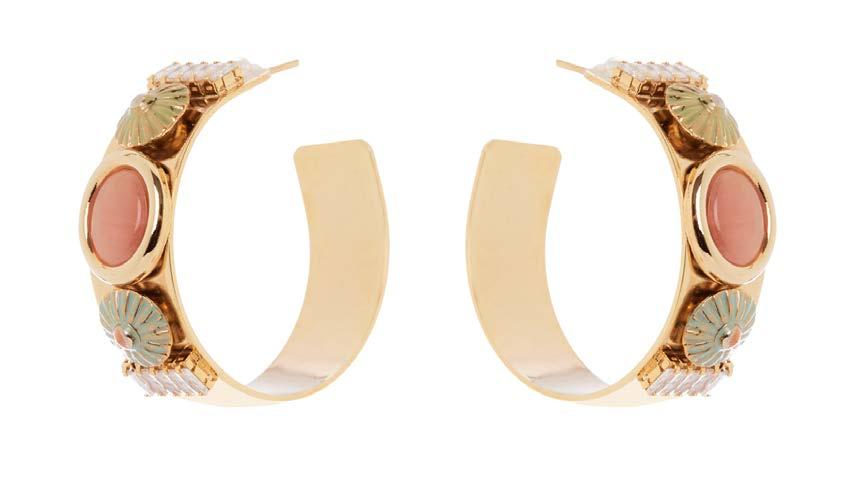
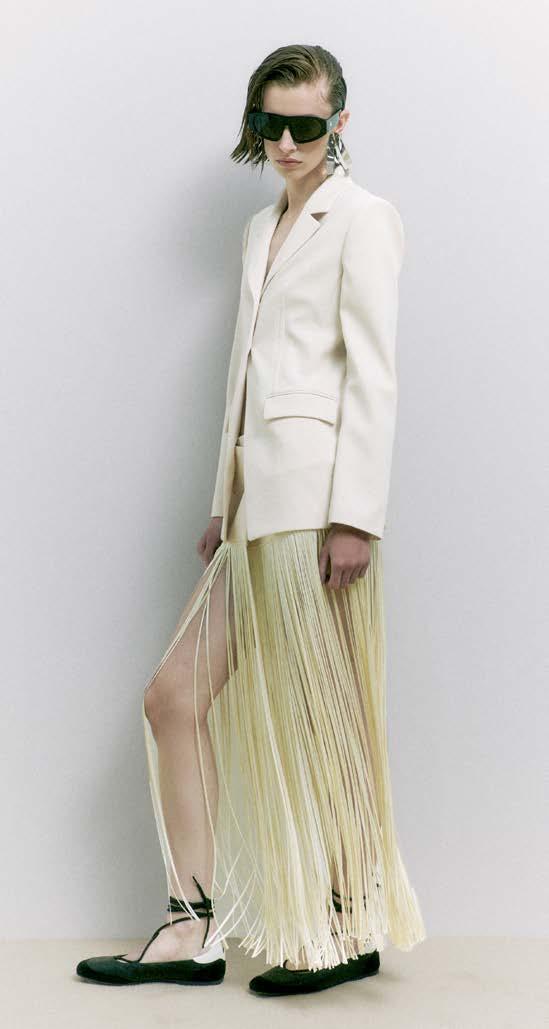
Patrizia Pepe’s summer collection celebrates a deep connection with oneself and one’s emotions, in an increasingly fast-paced world that leaves little room for freedom. The collection invites you to rediscover balance through the clothes you choose to wear every day, transforming the act of dressing into a moment of mindfulness and personal reconnection.
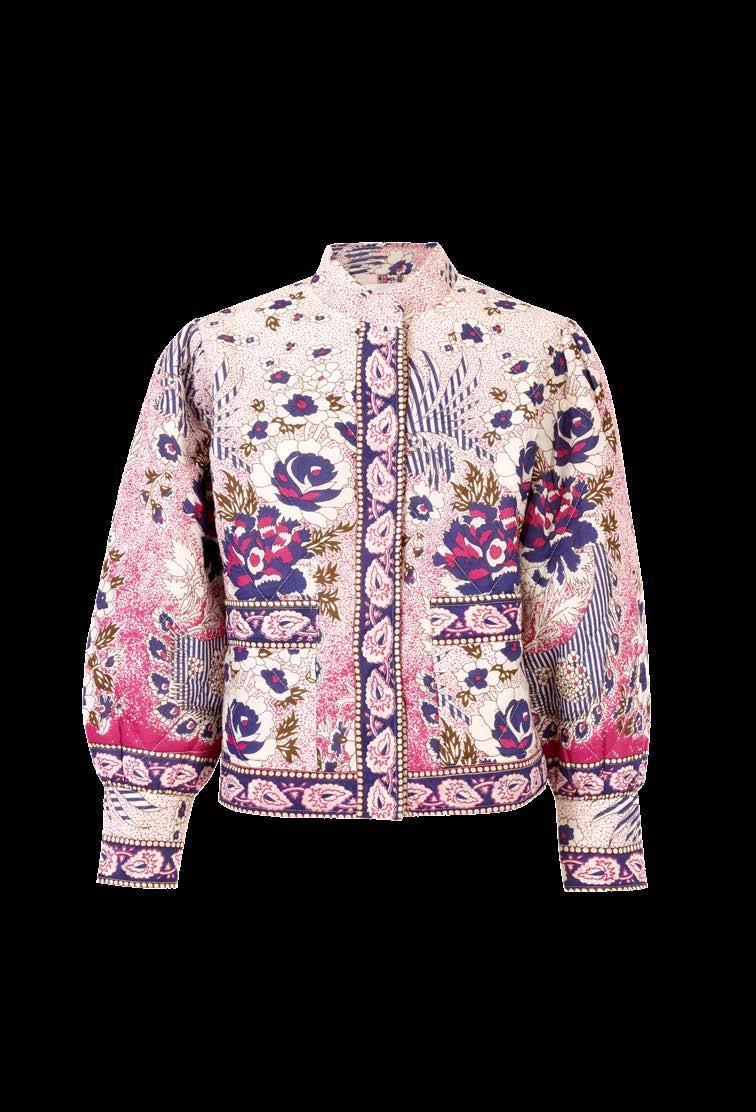
sforming every garment into a little story to wear. Flowing lines and luxurious materials caress the body, while patterns and textures speak of freedom and a bohemian spirit. A wardrobe that turns every movement into spontaneous, unmistakable poetry.
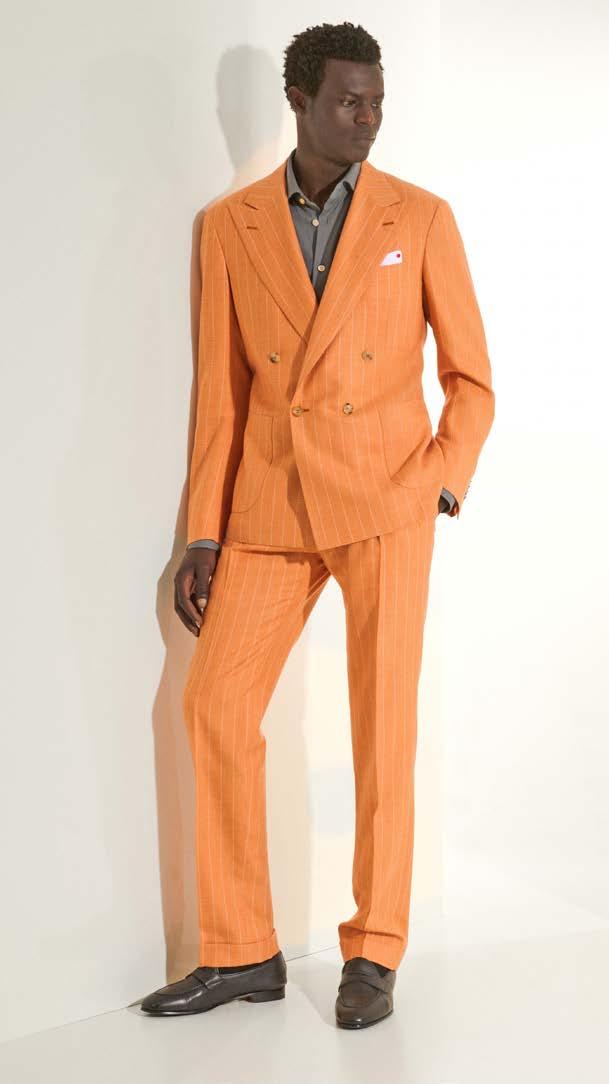
Kiton invites you to slow down and live in the moment. Silhouettes are elongated, lines are relaxed, and the fine, lightweight fabrics drape gracefully over the body without constricting it. A minimalist, refined wardrobe, designed to follow your own rhythm.
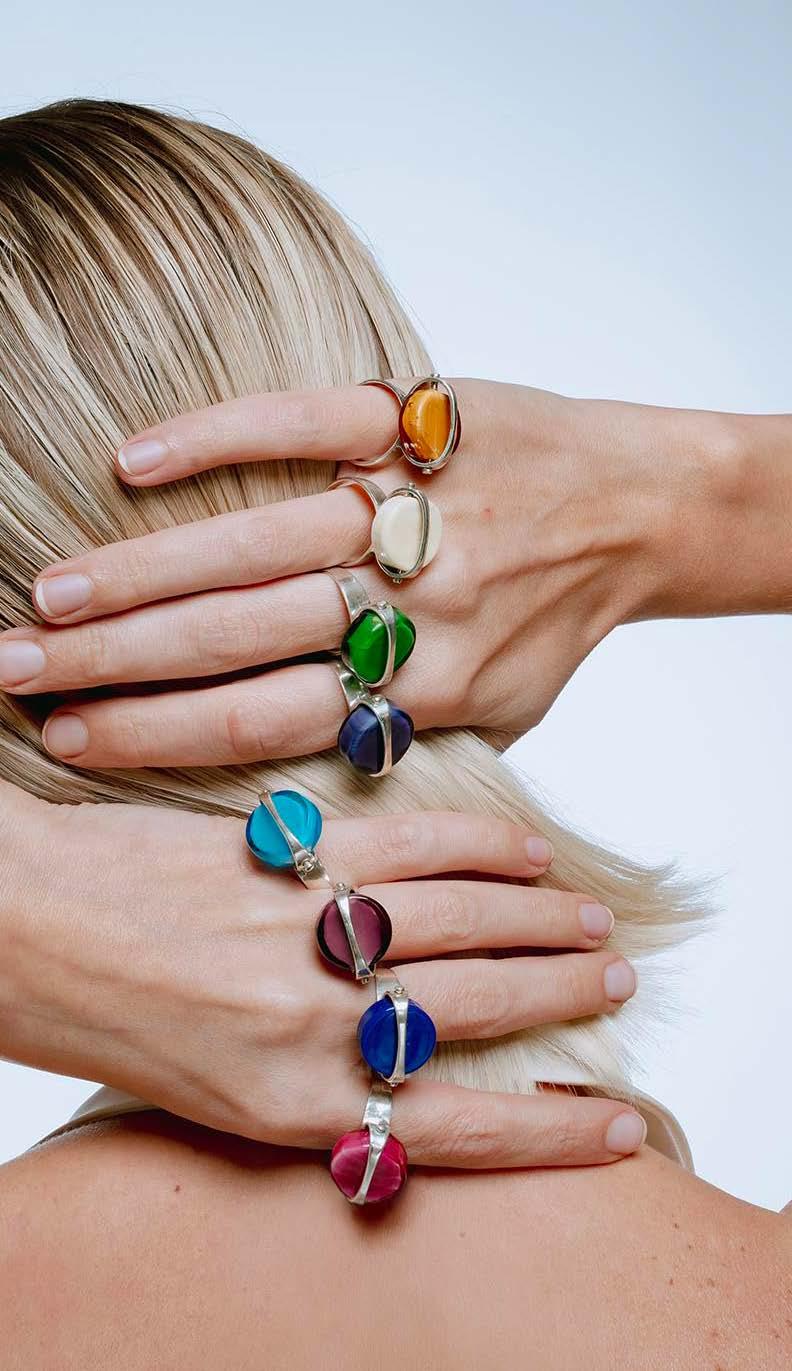
LIGHT AND FORM
Eye-catching transparencies and surfaces that reflect every movement. Corte Glass works at the intersection of material and light to create jewelry defined by a clean yet bold aesthetic. A striking visual interplay that never goes unnoticed.
Skills Milano’s SS 26 collection is like a breath of summer on the skin: water, wind, and light taking shape. A quiet, understated femininity that moves through linen, silk, and silhouettes that gently caress the body without ever constraining it. Whispering neutrals and vibrant accents. A natural beauty, designed to last, like a summer that never ends.
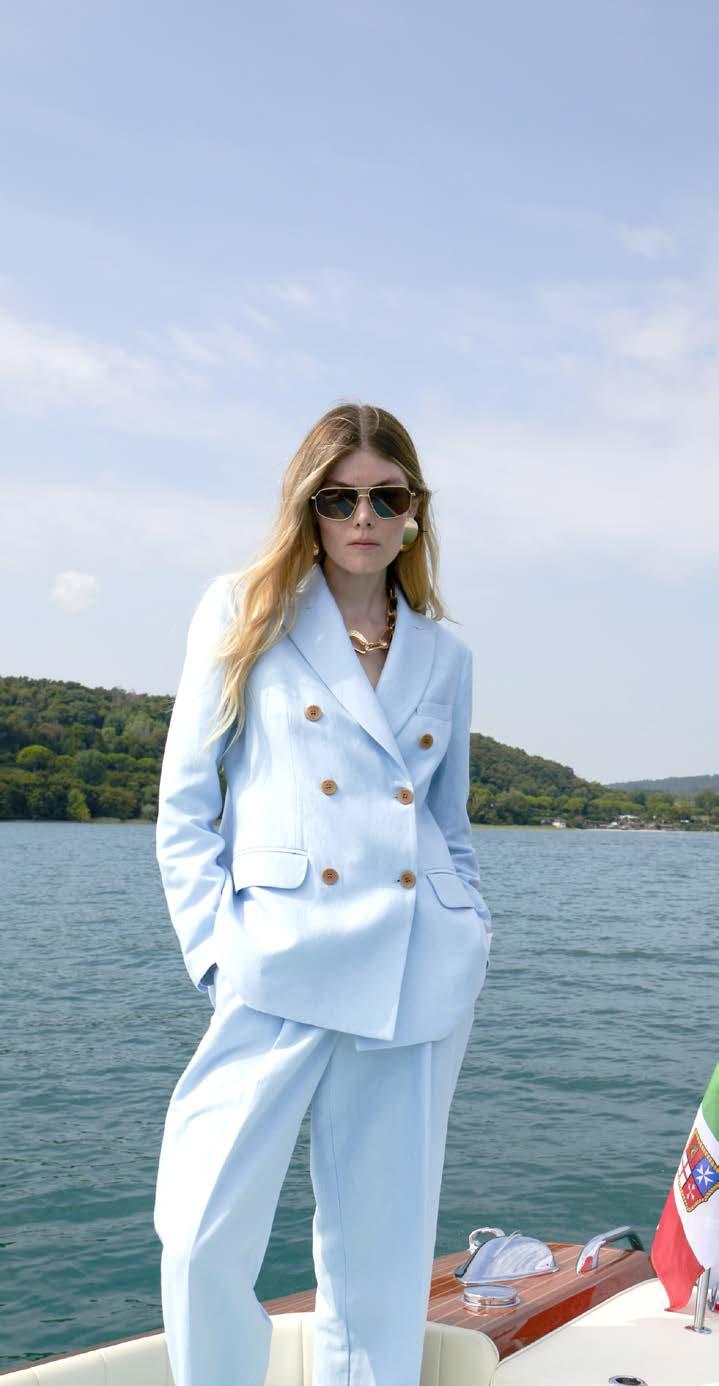
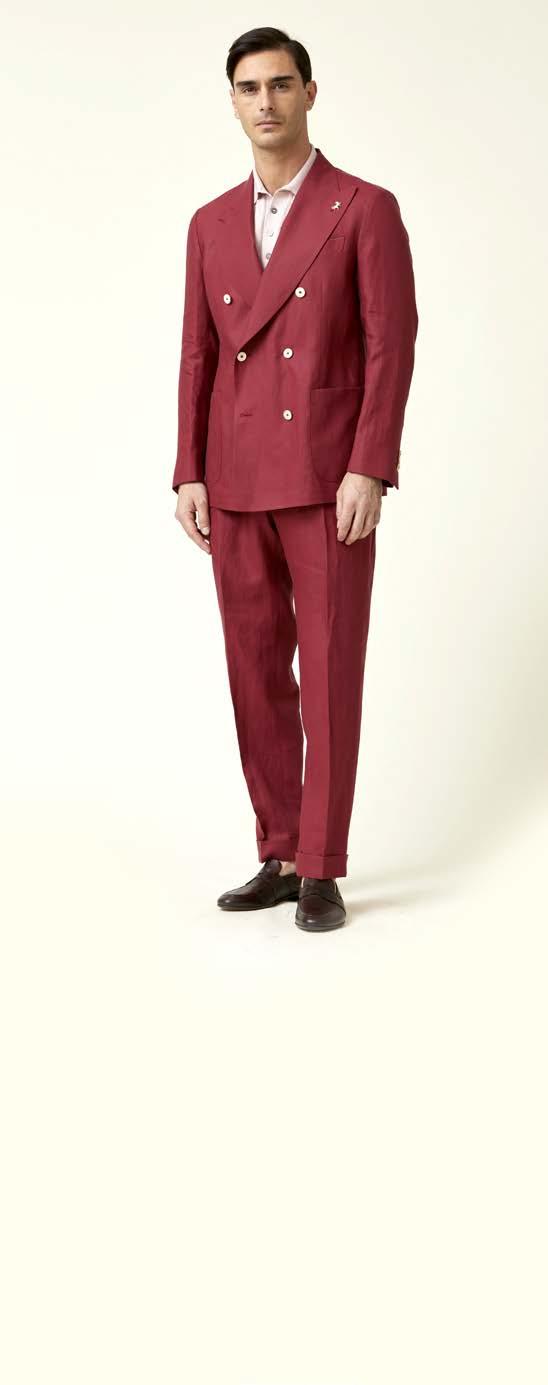
Between slow starts and impromptu weekends, the wardrobe lightens up and keeps pace with the journey. Tombolini designs a vacation characterized by technical lightness and refined freedom, one that never feels burdensome. Airy jackets, functional details, and styles that transition seamlessly from casual to formal without losing their essence.
Studio Tondini presents Valentina, a small bag that embodies a vision of understated beauty with meticulous attention to detail. The calfskin leather and the shimmering chain strike a balance between strength and delicacy. An accessory designed to accompany you through different moments, with natural elegance and character.
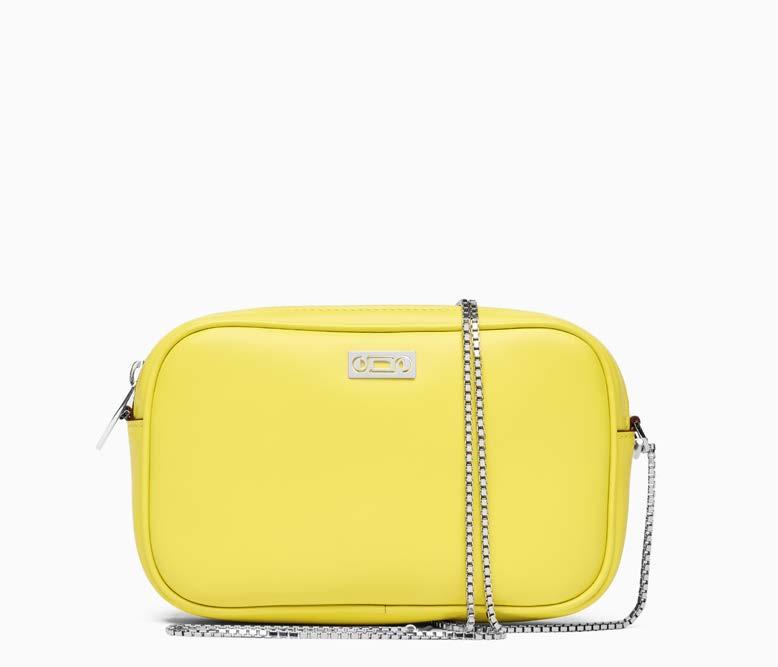
Casadei sets the tone for Spring/Summer 2026 with heels that sculpt the silhouette and catch the light. From metallic Blade heels to woven details that evoke Mediterranean summers, each style strikes a balance between precision and freedom. With crystals, raffia, and 3D designs, the collection transforms every step into a confident gesture.
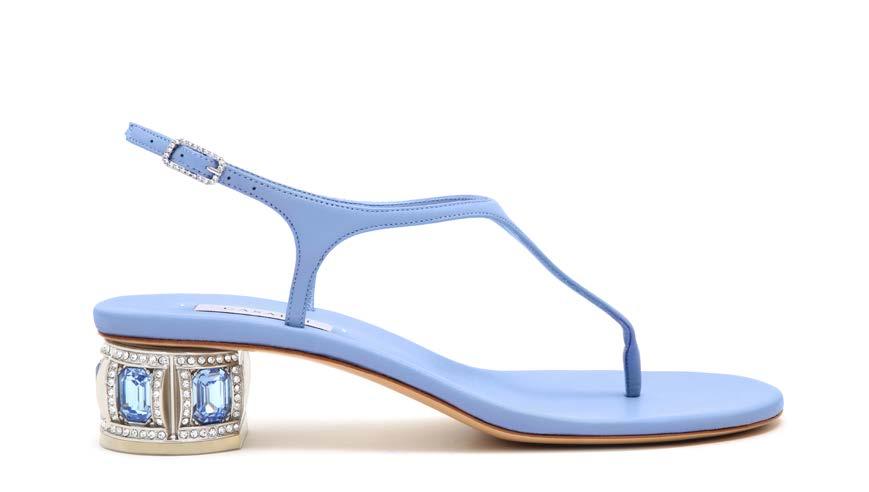
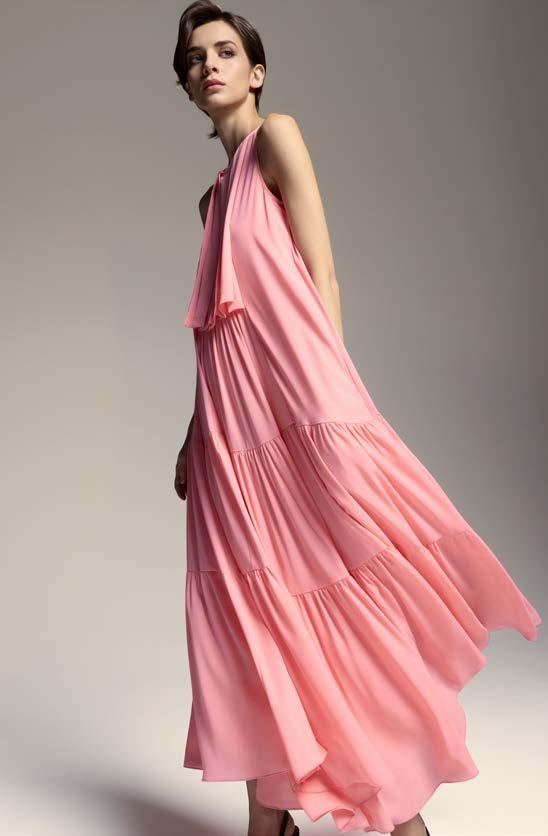
An evening at the opera, a gala dinner, a moment to remember: when the lights come up, style takes center stage. HIGH Moments strikes a balance between sartorial precision and romantic touches. Flowing silhouettes, luminous fabrics, and adaptable volumes give shape to a sophistication that adapts without ever losing its intensity.
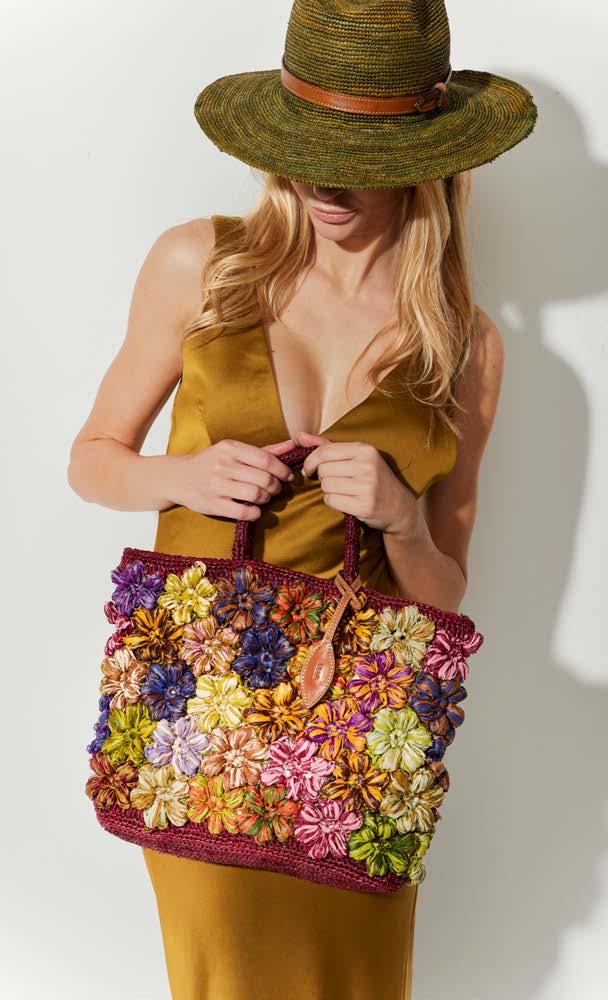
AFAR isn’t just a name—it’s an invitation to set out and feel alive in the world. Every story is a step beyond the ordinary, where the journey becomes pure emotion. Here, you don’t just look at places; you experience sensations and breathe in possibilities. And just when you think you’ve arrived, that’s exactly when the brand encourages you to keep going, traveling light.
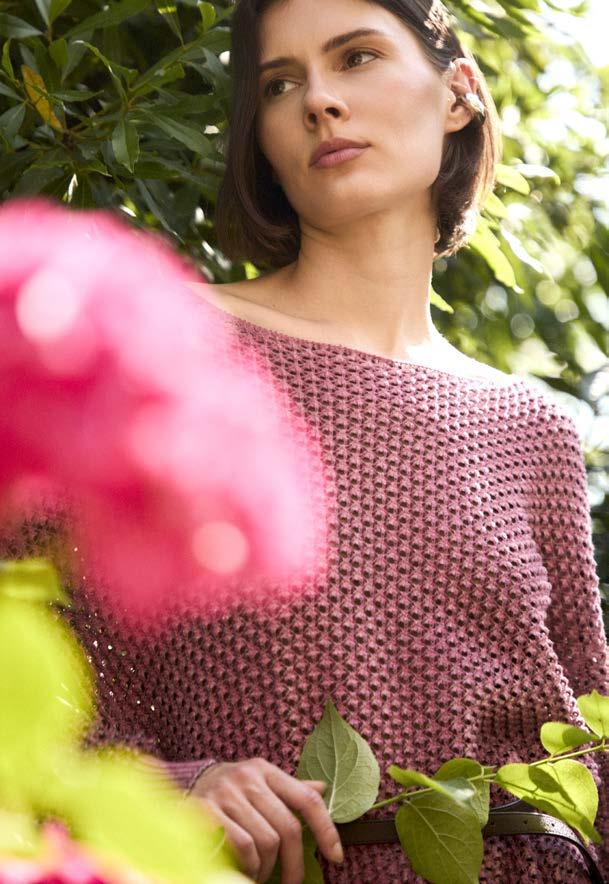
SIGN SUSPENDED
For the SS 26 Arovescio collection, the designer works through subtraction and precision, transforming knitwear into a space that breathes with the body. The knit becomes a form of soft architecture, where movement is an integral part of the construction. The airbrush becomes a unique, painterly form of expression, never repeated, like a trace that fades rather than becoming fixed.
Amid the lights of Milan Central Station, Atelier Emé transforms the runway into an emotional journey. Each dress is a luminous milestone between memory and transformation, where fabrics and embroidery move like a living garden.
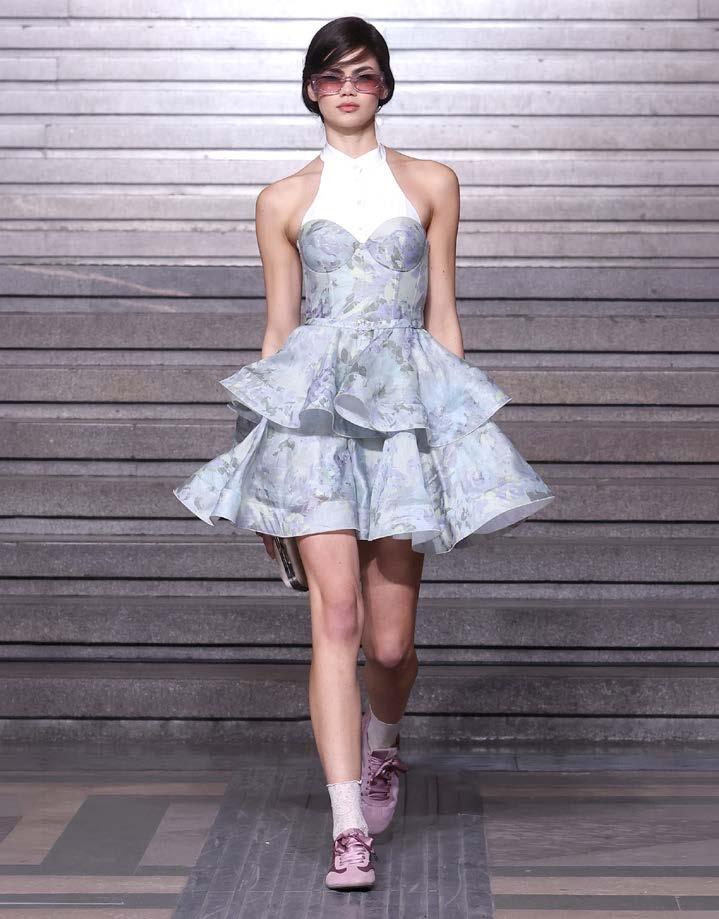
In the golden silence of Marrakech, Giada Curti envisions a desert blooming with light and color. Each dress begins as a petal unfolding amidst sand and wind. Kaftans, silks, and embroidery move like a warm breath against the skin. A femininity that transcends time, transforming it into a blossoming.
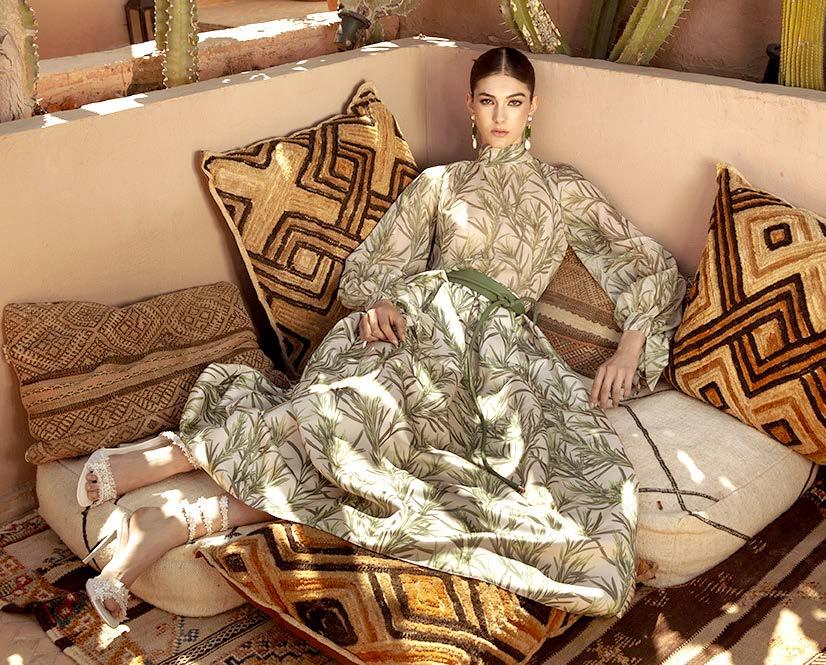
With its Spring/Summer 2026 collection, Rosantica transforms accessories and jewelry into sculptural creations. Crystals, beads, and handcrafted weaves bring to life precious, contemporary pieces. The Koala Bag and the bags from the Main line evoke a warm, sensory Mediterranean. A story that begins with a gesture and comes to life in the details.
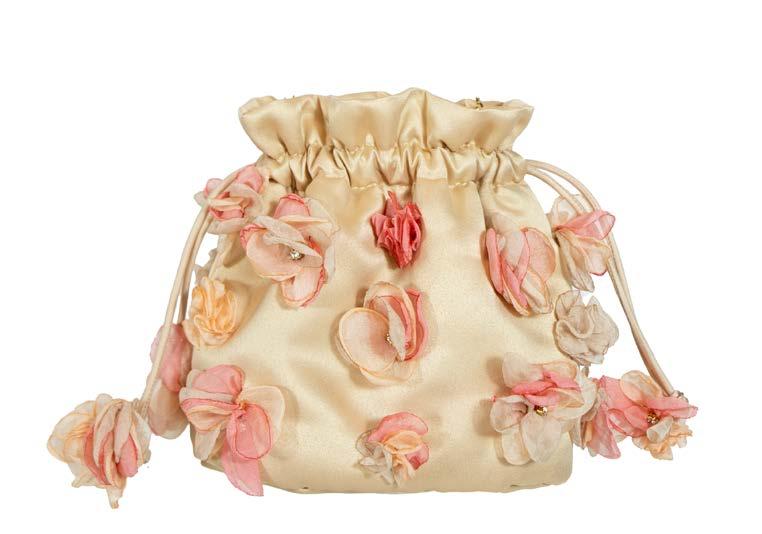
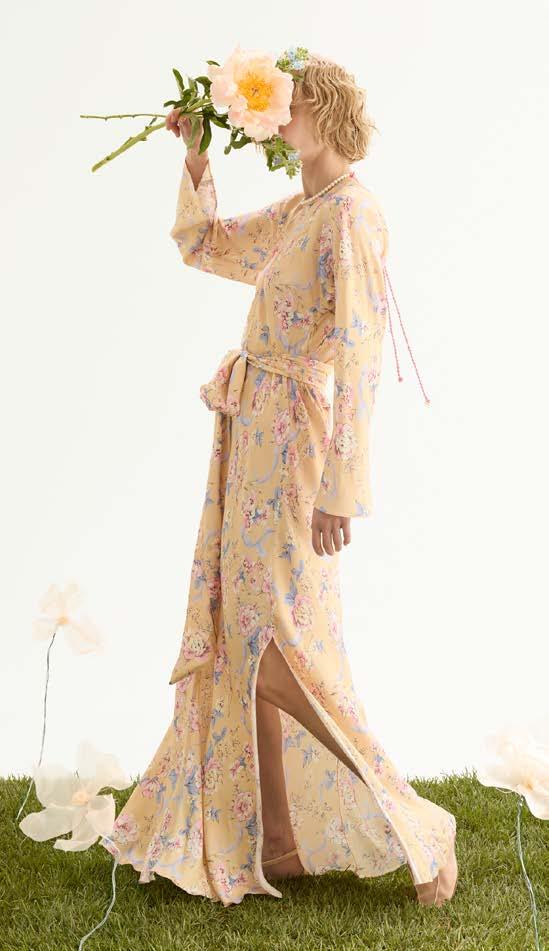
“Bella” is forte_forte’s Spring 2026 collection, an ethereal tale of light, sea, and blossoms, where delicate fabrics and poetic details evoke a spontaneous femininity. An intimate, timeless elegance that weaves together dreams and materials, dressing emotions even before it dresses the body.
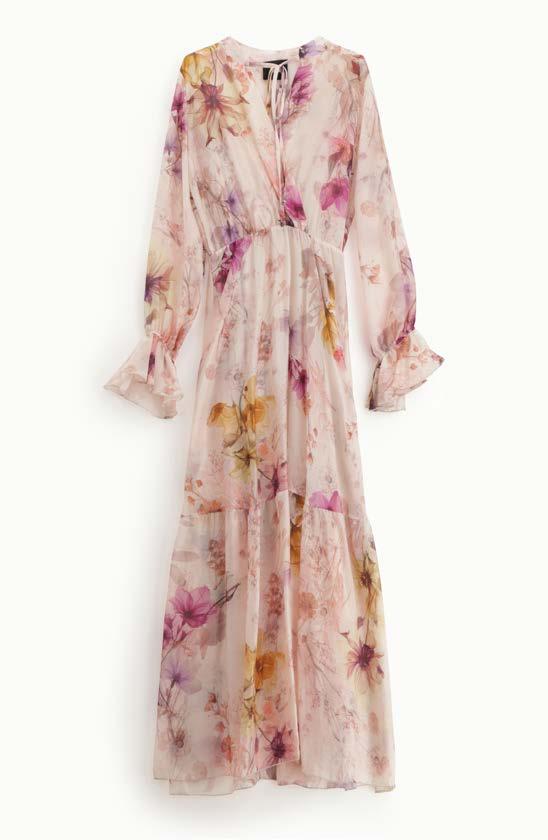
With colors that play off one another and fabrics that tell stories, Dixie embodies a free-spirited, instinctive elegance. Each piece is a fragment of creativity that balances femininity and character. Vibrant patterns and refined details come together to form a personal style that is always unique. A way of dressing that follows emotions, not rules.
The scarf, in all its forms, transcends brands and styles, becoming an accent, a gesture, and a statement. Through prints, textures, and colors, it becomes an element that defines an outfit without ever staying the same by Valeria Oneto and Micaela Panzini
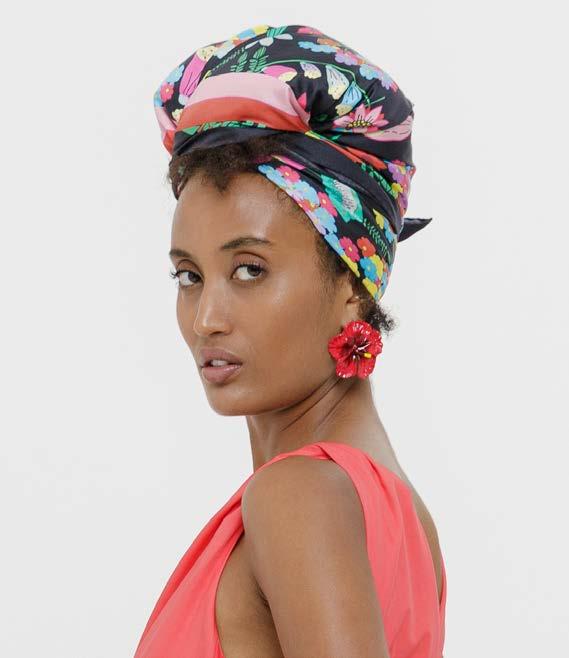
Each piece by Cettina Bucca is a visual story in which silk embraces cultural symbols and influences, giving life to accessories that embody identity and imagination. More than mere ornaments, they are traces of an emotional journey that continues to evolve.
Inoui Editions transforms fabric into a visual narrative, blending etched lines with dreamlike visions. Evocative designs, vibrant colors, and compositions that seem to move like wearable paintings. Sensitive materials and skilled craftsmanship, where every detail holds a sense of wonder.
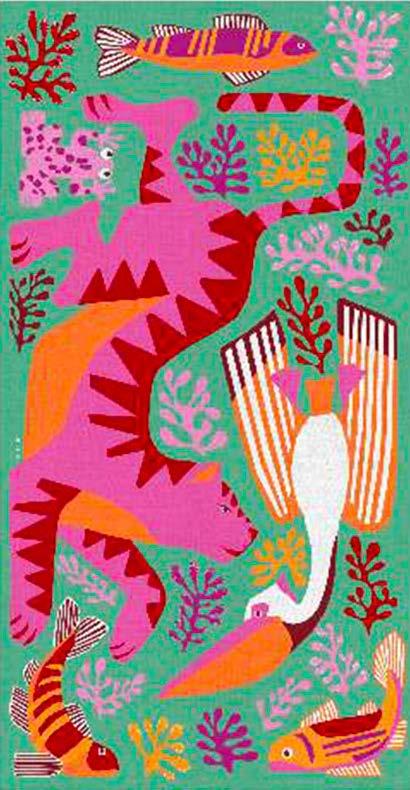
Edoardo Gallorini’s scarves are born from an instinctive, painterly gesture, where color builds in layers and takes on a rhythm. These are vibrant surfaces, almost in motion, that transform the accessory into a direct and dynamic expression.
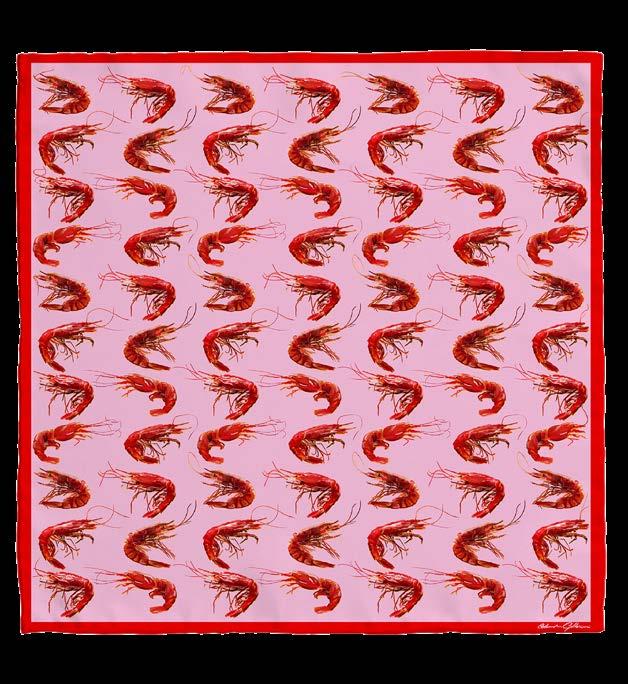
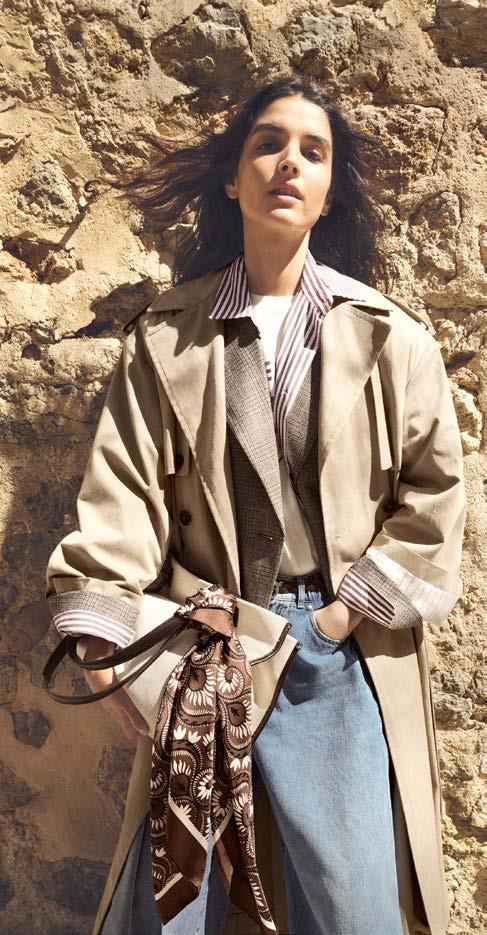
Max Mara transforms the scarf into a subtle statement, built on balance and texture. Soft fabrics, understated colors. An elegance that doesn’t seek attention.
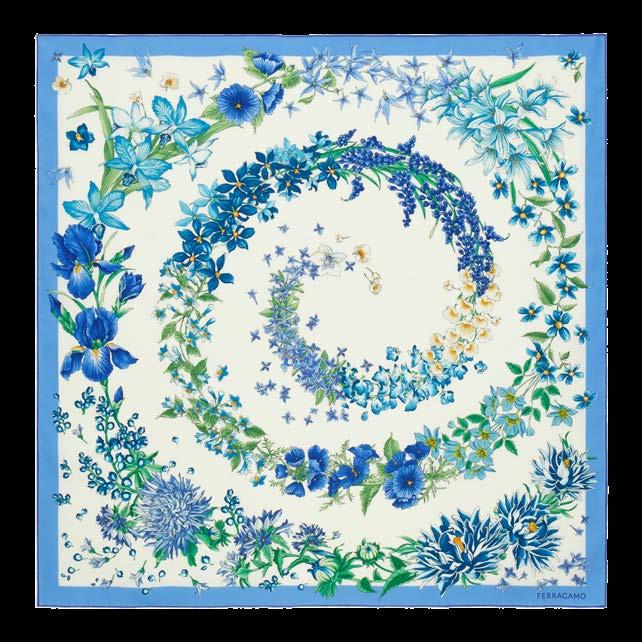
Ferragamo transforms the carré into a hanging garden, where silk becomes air and movement. Floral prints and iconic archives dissolve into the space, amid echoes of memory and vibrant hues. They float like light petals, suspended between gesture and light, giving shape to the brand’s heritage in a delicate way.
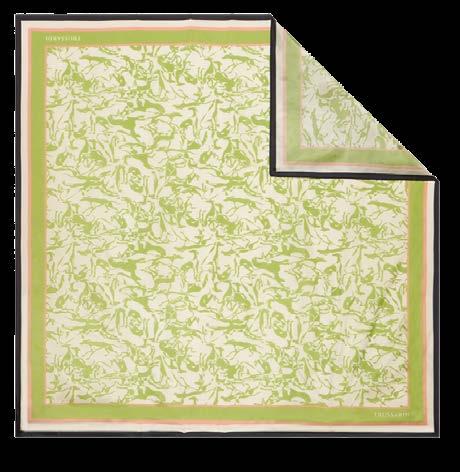
Trussardi reinterprets this classic accessory as a graphic statement that wraps around the body. Clean patterns, subtle color variations, and a sophistication that moves with confi-
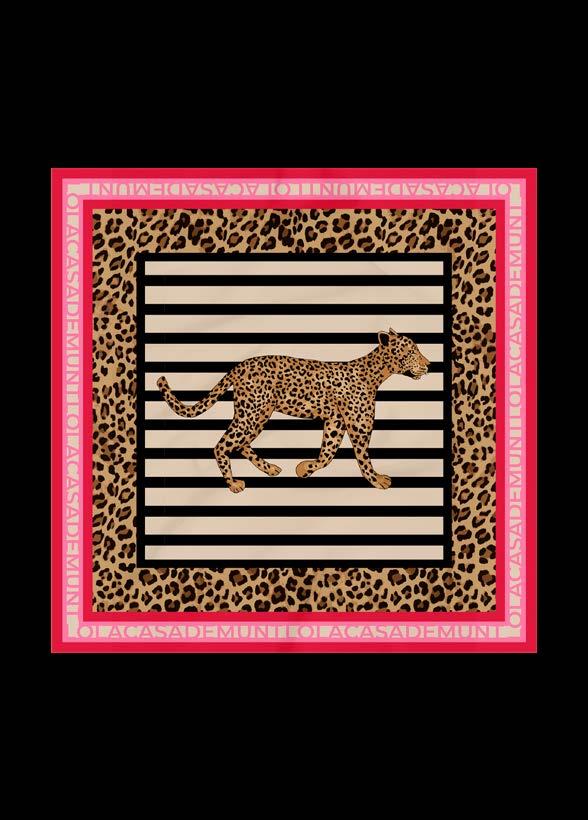
Genny evokes a femininity that glides over the skin: breathable silk, shifting light. Fluid lines, caressing drapes, details that speak without raising their voices.
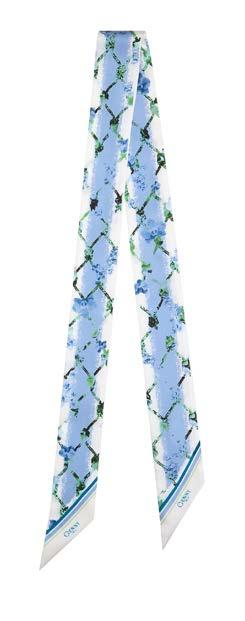
Lola Casademunt reimagines the scarf as a fluid expression of style, never merely a secondary accessory. It can be wrapped, tied, or repositioned: it moves with the body like an instinctive gesture. Here, color and print take center stage.

Misenithe was born from the vision of Anna Lardì and Lucia Borini as a fusion of everyday wear and tailored craftsmanship. Clean lines, balanced volumes, and precise proportions create a minimalist yet refined aesthetic. A project that defines the garment as a conscious choice.
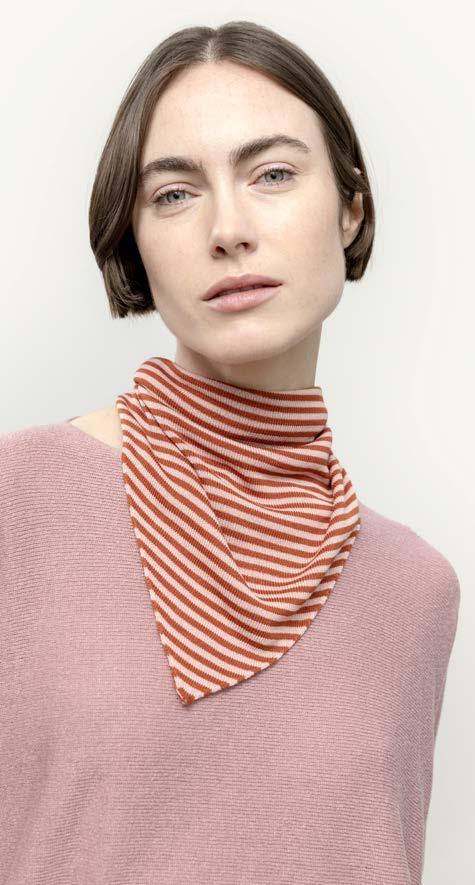
Rifò’s concept of regeneration is one that blends style with responsibility. Reclaimed materials and mindful craftsmanship come together to create essential, authentic pieces. It’s a clean take on fashion, where simplicity is a conscious choice and reuse is a new form of beauty.
Bomboogie builds its look on a clean, functional foundation, where every element is designed to be worn.
The bandana around the neck becomes the standout detail: in deep green, it adds character and identity to an everyday silhouette.
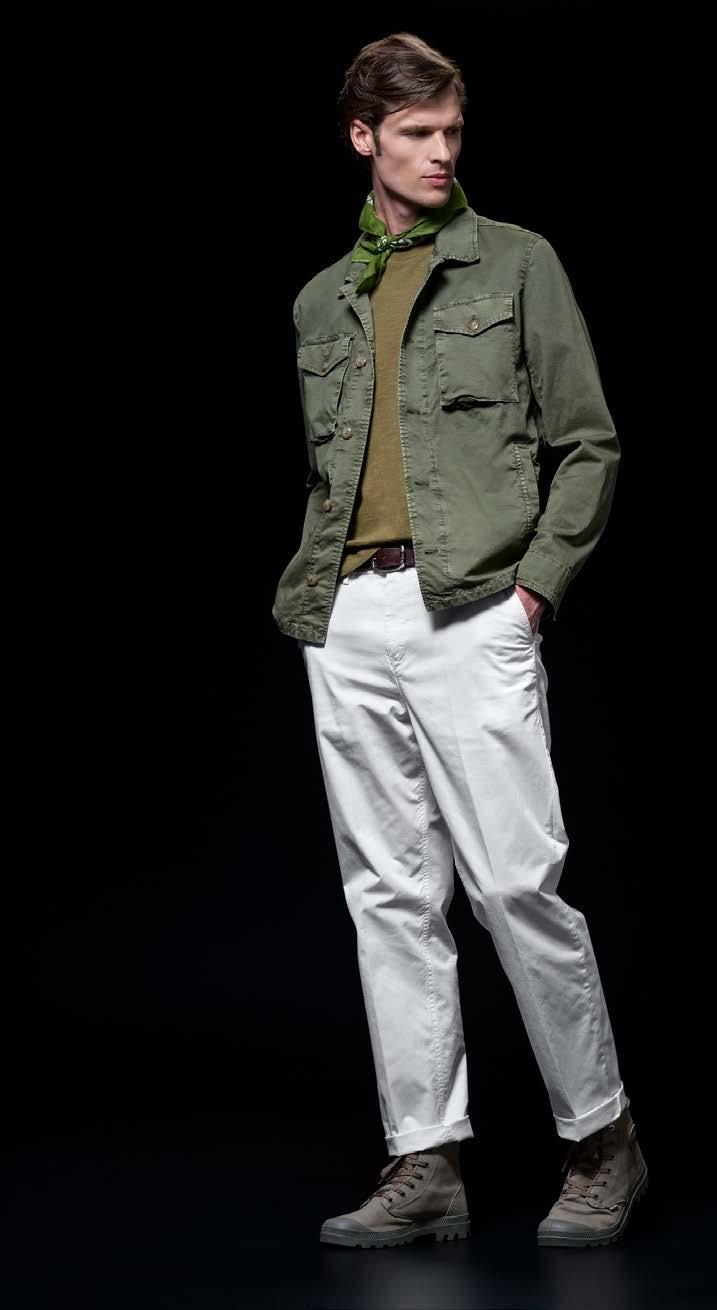
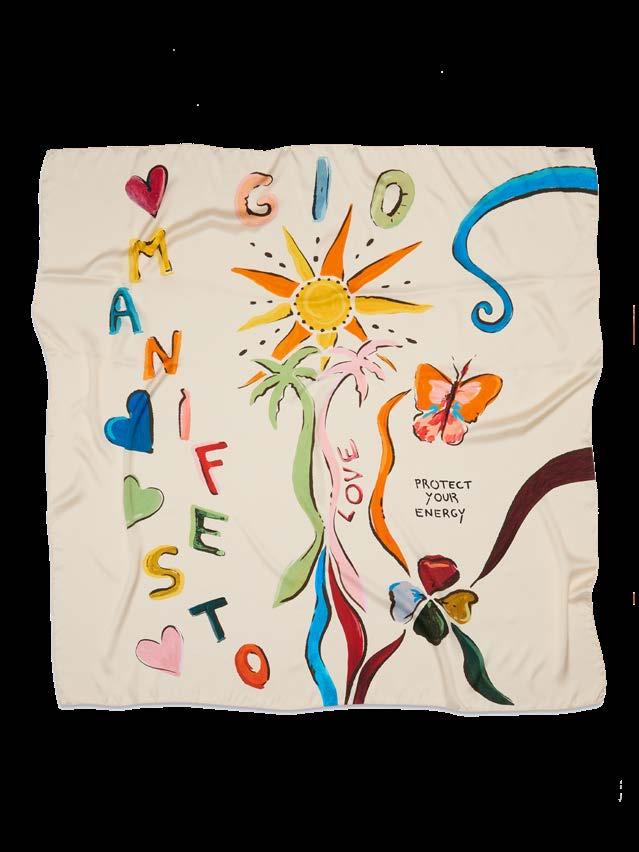
SUBJECT STRUCTURED
Avant Toi reinterprets the vintage scarf as a living canvas, where memory and creative expression intertwine. Cashmere and silk blend into luxurious textures, infused with a misty hue that seems to breathe.
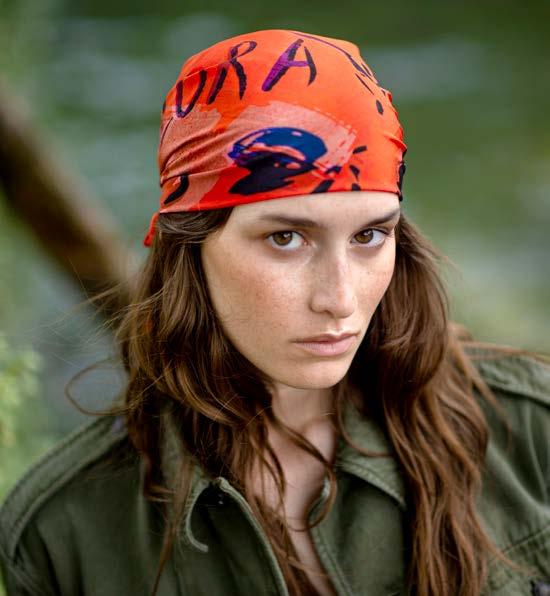
Vert Lago comes to life on Lake Como, where the scarf embodies responsible and mindful luxury. A quality that blends beauty, ethics, and durability, striking a balance between nature and design. A gesture that celebrates Italian craftsmanship and a vision of fashion attuned to the environment and its rhythms.
SIGN AUTHENTIC
Giovanni Gerosa crafts a minimalist vision characterized by balance and coherence. His clean approach ensures that every design choice becomes a distinctive signature and style.
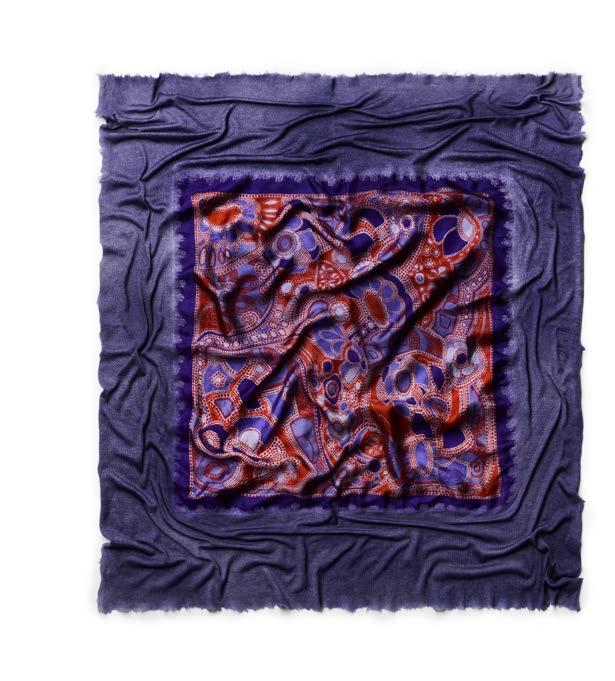
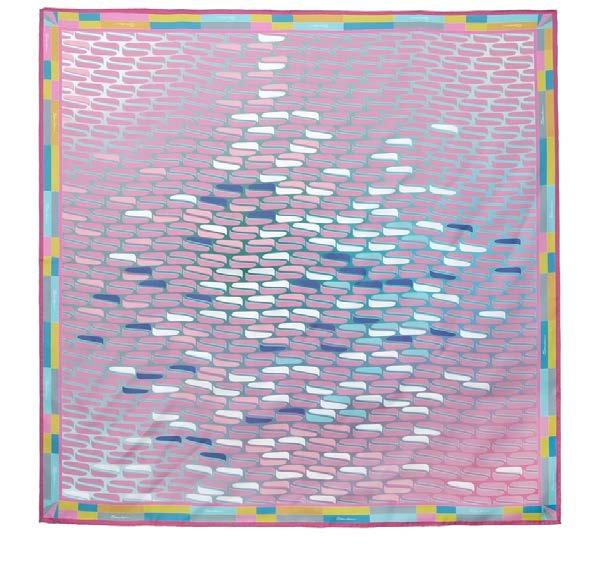
Santoni extends its expertise to silk, where the scarf becomes a masterpiece of balance and texture. Fine fabrics and meticulous craftsmanship transform this accessory into a subtle yet distinctive statement. A measured elegance that stems from attention to detail and expresses itself with natural grace.
The 40WEFT aesthetic is rooted in practical materials and clean lines. Well-worn fabrics, functional details, and a freedom that stems from everyday movement. An understated elegance that is evident in the simple act of putting on the garment.
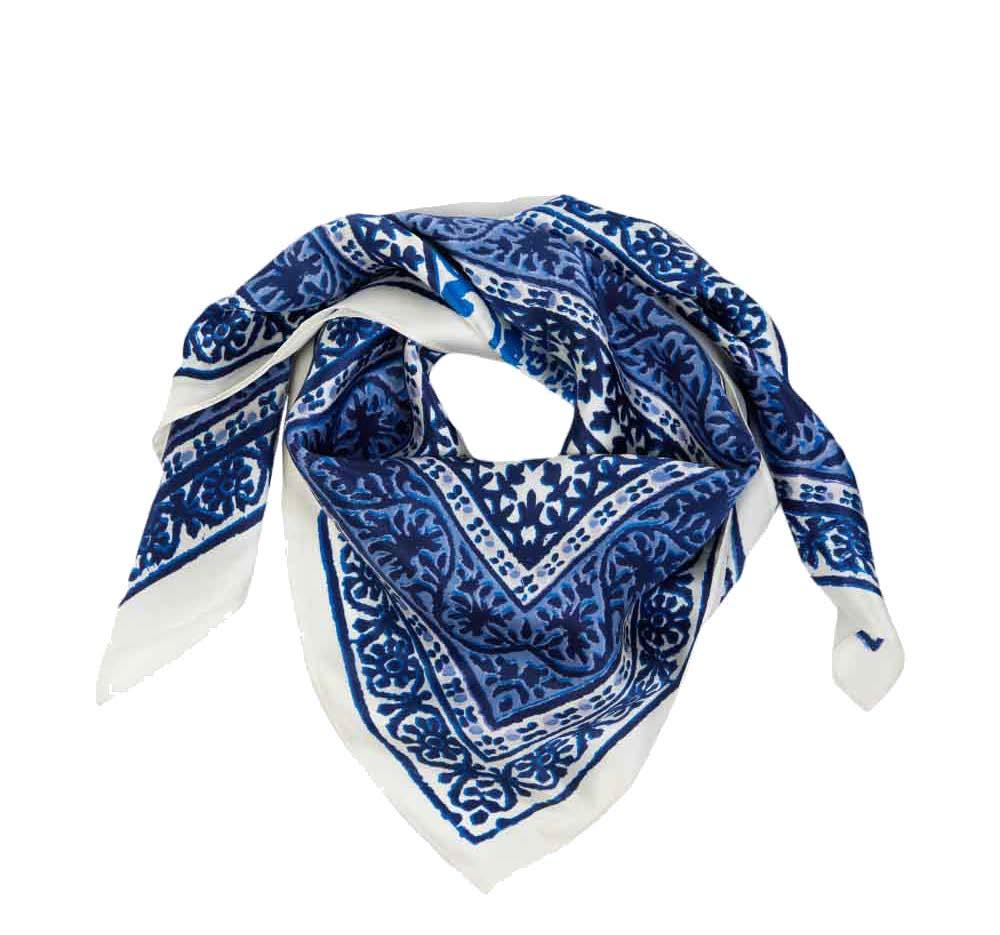
How luxury fashion houses and brands are finally managing to elevate sneakers
by Marco Rizzi
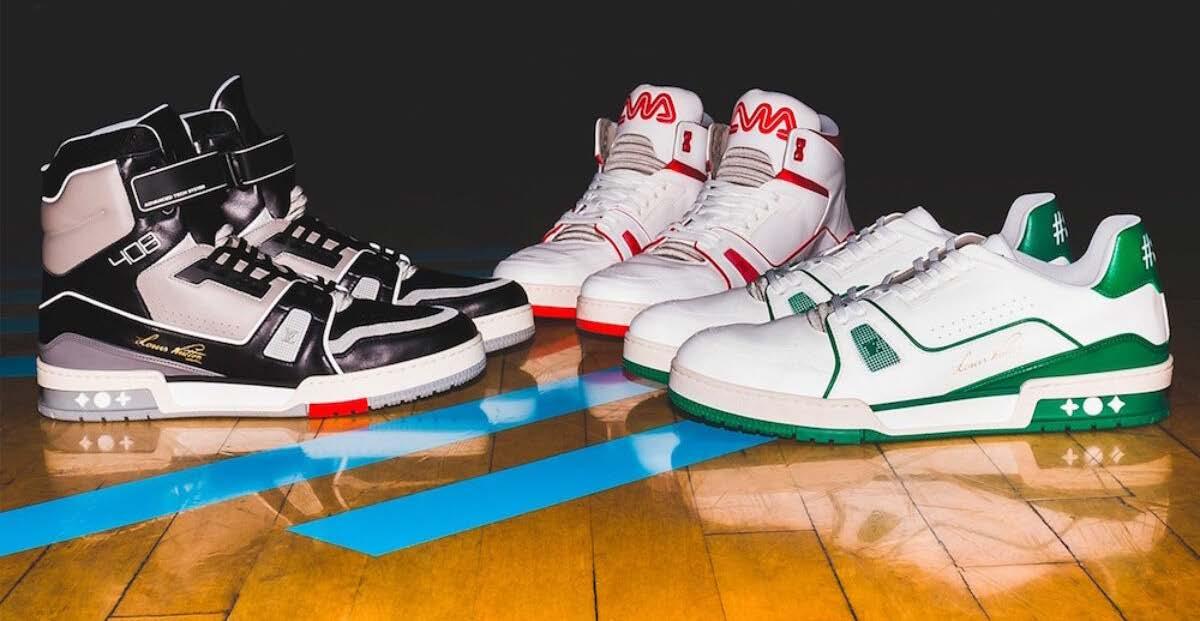
Looking back over the past 25 years, it’s easy to see that the fashion world has had a unique relationship with sneakers. While there have been some highly successful examples of athletic footwear in the past—the Prada World Cup sneakers being a prime example—it’s harder to find instances where major brands have managed to create truly great sneakers while also paying attention to the cultural aspects of the product, its origins, and how it should be marketed. Although the fashion industry drew heavily from street culture at the turn of the 1990s and 2000s, it has always struggled to translate certain elements of it, and sneakers are one of them. For a long time, “luxury sneakers” were, at best, shoes with a somewhat sporty look and exorbitant prices, perhaps justified by the use of some exotic or high-quality material. At worst, however, they were assemblages of elements “borrowed” here and there, under the assumption that simply adding up many attractive sneakers would create a new one. To understand a bit better what needed to be done, it was necessary to go to the source, and in this process, the numerous collaborations between fashion and sportswear proved particularly useful. Among the first was Riccardo Tisci, followed by Kim Jones during his tenure at the helm of Louis Vuitton’s men’s ready-to-wear line. Even in this process, however, the key figure was Virgil Abloh, who brought the culture, experiences, and aesthetics of streetwear into fashion. Hugely successful models like the LV 408 Trainer draw direct inspiration from the lines and proportions of the ultra-high 1980s basketball sneakers from brands like adidas, Nike, and Avia—symbols of street opulence flaunted by rappers of the era on album covers until they became cult classics. With the Triple S, Balenciaga completely revolutionized the way fashion language can interact with sportswear products, while designers like Thibo Denis at Dior demonstrated how materials, textures, and patterns from the luxury world could be integrated with the silhouettes of timeless classics. In recent years, models from
Dior, Balenciaga, and Louis Vuitton have become permanent fixtures on lists of bestsellers and most-desired styles, not only among sneaker enthusiasts but also among younger audiences who previously had little interest in this type of product. Finally, the fashion houses have understood the value of sneakers and found the right approach to incorporate them seamlessly into seasonal looks, as well as using them as a new tool to express the creative direction of stylists and designers. A prime example of this is Balenciaga’s new Radar Sneakers, a far cry from the exaggerated proportions and scruffy look of Demna Gvasalia’s creations, reaffirming—if any confirmation were needed—that Pier Paolo Piccioli is now at the helm.
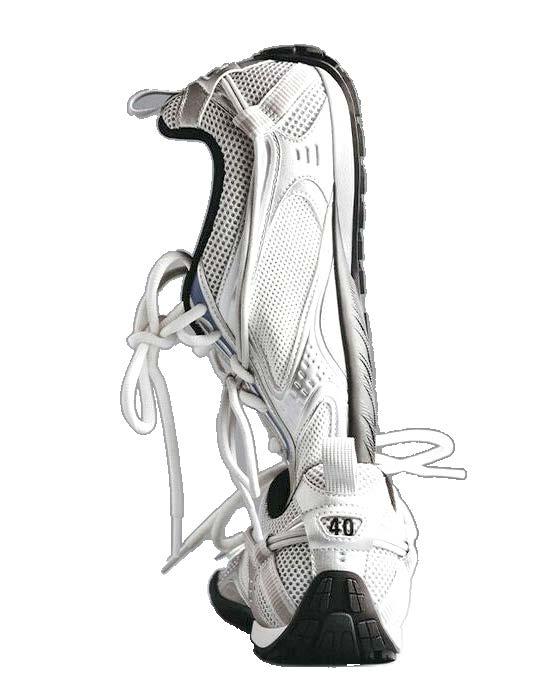

For years now, there has been speculation about Nike’s possible plans regarding an imminent sale of Converse. The brand has been owned by the American company since 2003 and will soon celebrate its 120th anniversary—a major milestone that may, however, be marked under new ownership. As reported by various industry publications at the close of the last fiscal quarter, Nike reported a decline in Converse’s revenue, along with approximately $300 million in expenses related to corporate restructuring and cost-cutting measures, which include the more than 700 layoffs at the brand’s U.S. offices previously announced. Many believe these actions may be a clear sign that the sale of the historic brand is drawing ever closer.
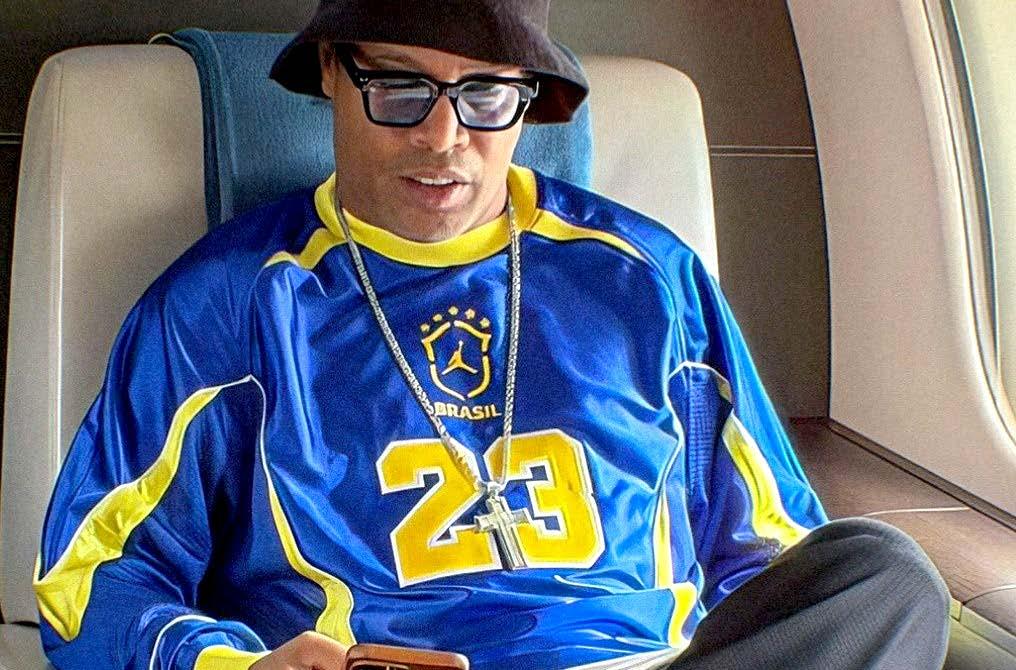
In early March, Sotheby’s New York auctioned off the “Scottie Pippen Collection,” a one-of-a-kind catalog featuring memorabilia, keepsakes, and unique items collected by the legendary Chicago Bulls player over the course of his nearly two-decade-long career. Pippen, a six-time NBA champion and two-time Olympic gold medalist, and Sotheby’s “Modern Collectables” department have assembled a collection never before seen at auction, featuring game-worn jerseys, uniforms, balls, and trophies from the athlete’s college and professional career, as well as many gifts received from his many illustrious teammates, including Michael Jordan. According to ESPN, the auction raised $6.2 million for seventy-one items.
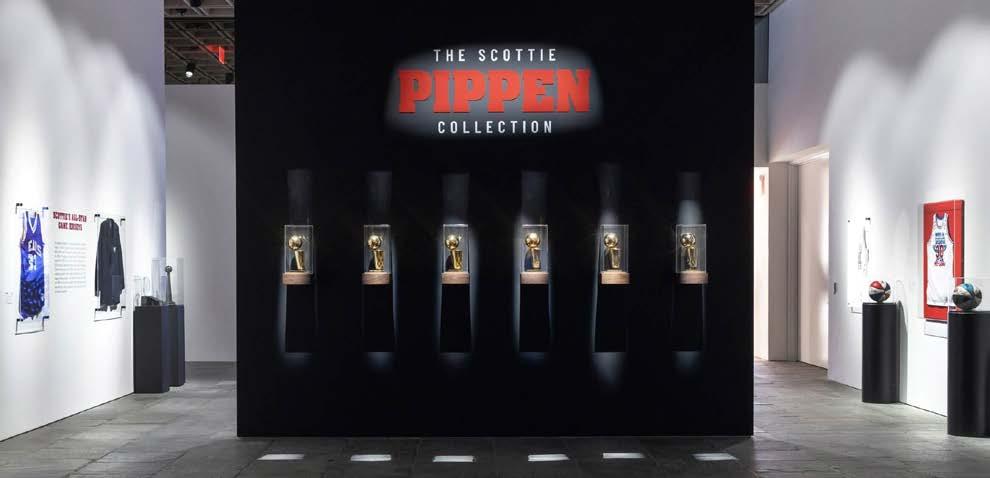
Teddy Santis, founder and creative director of Aimé Leon Dore, is an atypical figure in today’s streetwear scene. In an environment where overexposure often reigns, Santis has chosen to limit his public appearances, communications, and interviews as much as possible. That’s why the statement released in early March to registered users of the ALD program took many by surprise: the New York-based designer of Greek origin shared some reflections on the brand’s current situation, in addition to announcing the launch of a new women’s collection and the opening of a new store in the United States. This is the first retail space to open since the one in London, and the second ever in the U.S. The current store on Mulberry Street in Manhattan opened in 2019 and reopened last year after a brief renovation.
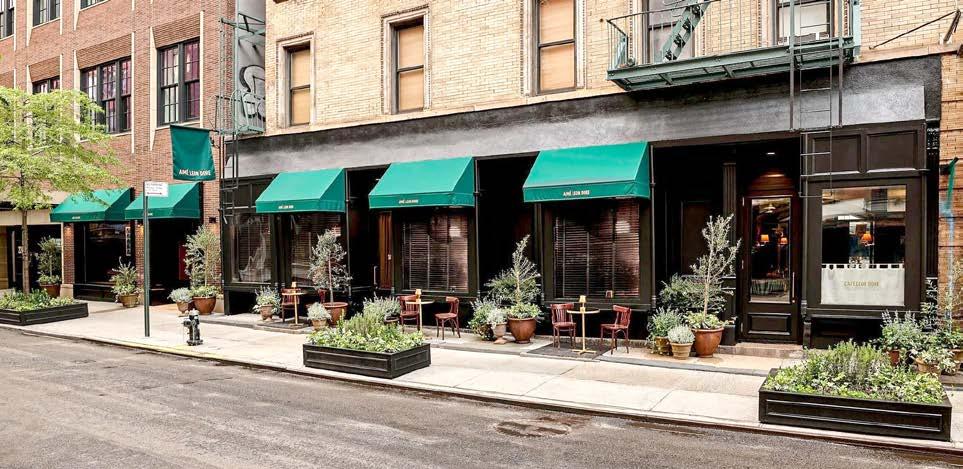
The Brazilian national soccer team chose a grand event to unveil the away jersey it will wear this summer during the World Cup in Los Angeles: the iconic setting of Times Square in New York and the legendary Ronaldinho as the star model, who was the first to wear the new jersey from the “Joga Sinistro” collection, marking Air Jordan’s debut not only in international soccer but also at the World Cup. For several years now, the “Jumpman” has featured on special editions of the jerseys of some of the world’s top teams, including Paris Saint-Germain, but with this brandnew collection, Air Jordan can boast the honor of appearing on one of the sport’s most iconic kits and joining a campaign that dreams of bringing the World Cup back to Brazil after 24 years.
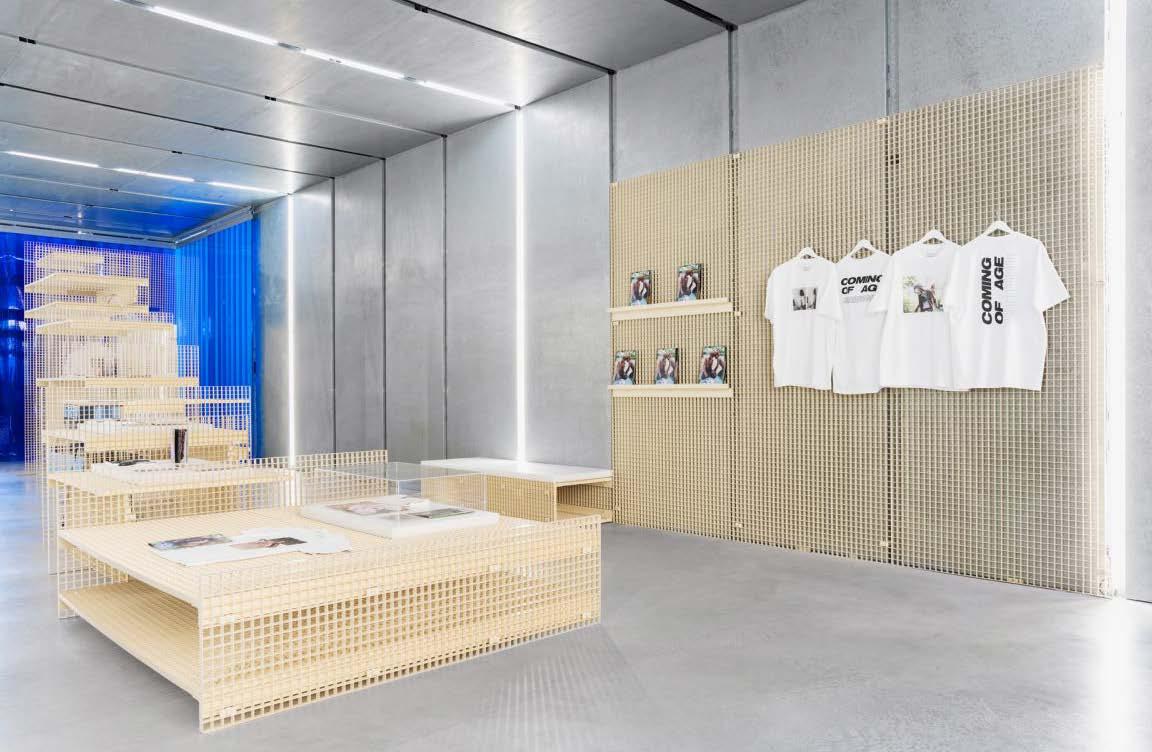
After just under ten years, Slam Jam is leaving its Milan store at Via Lanza 1 to move to the Spazio Maiocchi premises. The announcement came as something of a surprise in late February on the social media channels of the Ferrara-based retailer and distributor, which confirmed that the space just a short walk from Castello Sforzesco will remain open by appointment and for special events, while the store is now open at the hub on Via Achille Maiocchi, in the Porta Venezia area, which opened in the fall of 2017 in partnership with Carhartt WIP to house offices and an exhibition space used for many of the events organized in recent years.
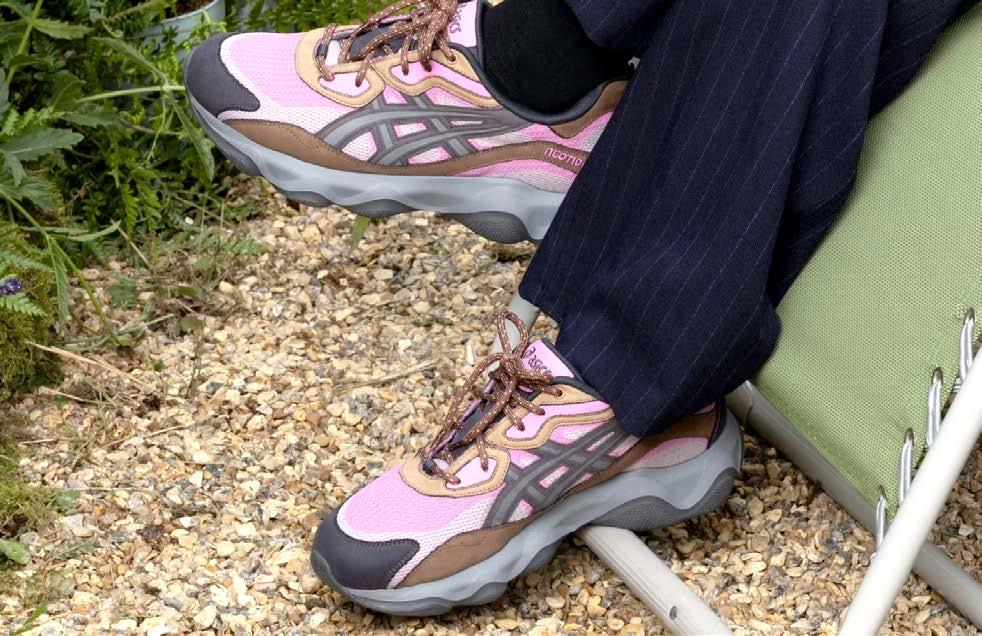
Studio Hagel, the Dutch company founded by Mathieu Hagelaars, has once again joined forces with ASICS less than two years after the launch of the Neocurve project. The new model designed by Hagel is called Neotide and is a natural followup to the 2024 release: a project where ecology, recycling, and the circular economy take center stage, thanks to the recovery of waste materials from production processes across Europe to create a brand-new silhouette. For the upper, Studio Hagel drew inspiration from the GEL-NYC, one of the Japanese brand’s recent bestsellers, and from the complex lines of running models from the ’90s and ’00s. The ASICS Neotide by Studio Hagel was officially launched on March 6 in two different colorways, available at all top European sneaker stores.
The partnership between adidas Originals and Overkill has lasted nearly 20 years, and for its latest exclusive release, the Berlin-based retailer wanted to pay tribute to one of these projects: the 2015 EQT Racing ’93. The Overkill team has taken the colors, patterns, and details from that design and reimagined them on the Spiritain 2000, a Y2K running model that the store previously worked on as part of its 20thanniversary collection. In addition to the champagne-colored version, Overkill has produced a second “night” colorway with a navy blue base—a promotional edition intended for the store’s friends and staff. The adidas Originals Spiritain 2000, however, is available exclusively at Overkill online and in stores in Berlin and Cologne while supplies last.
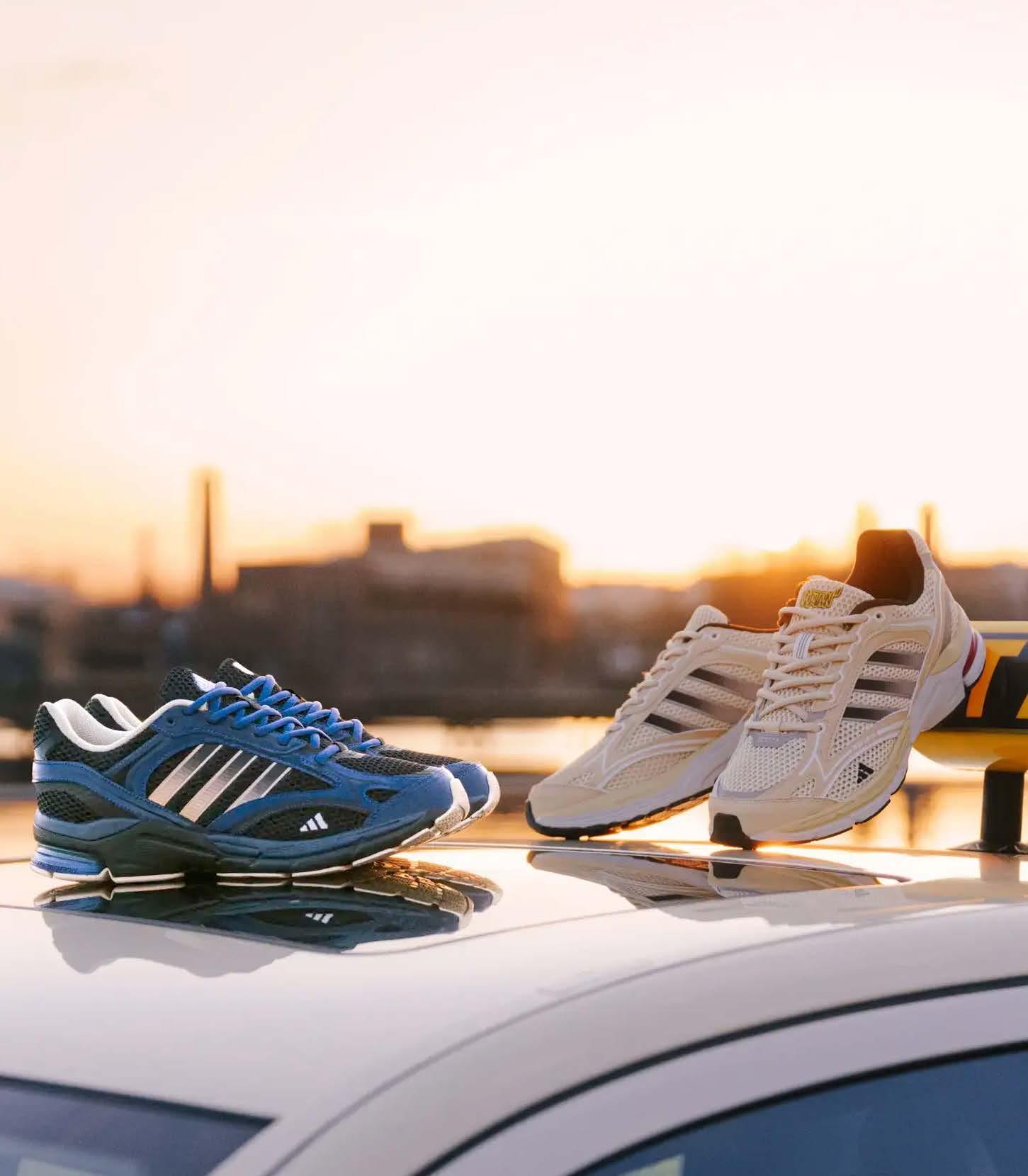
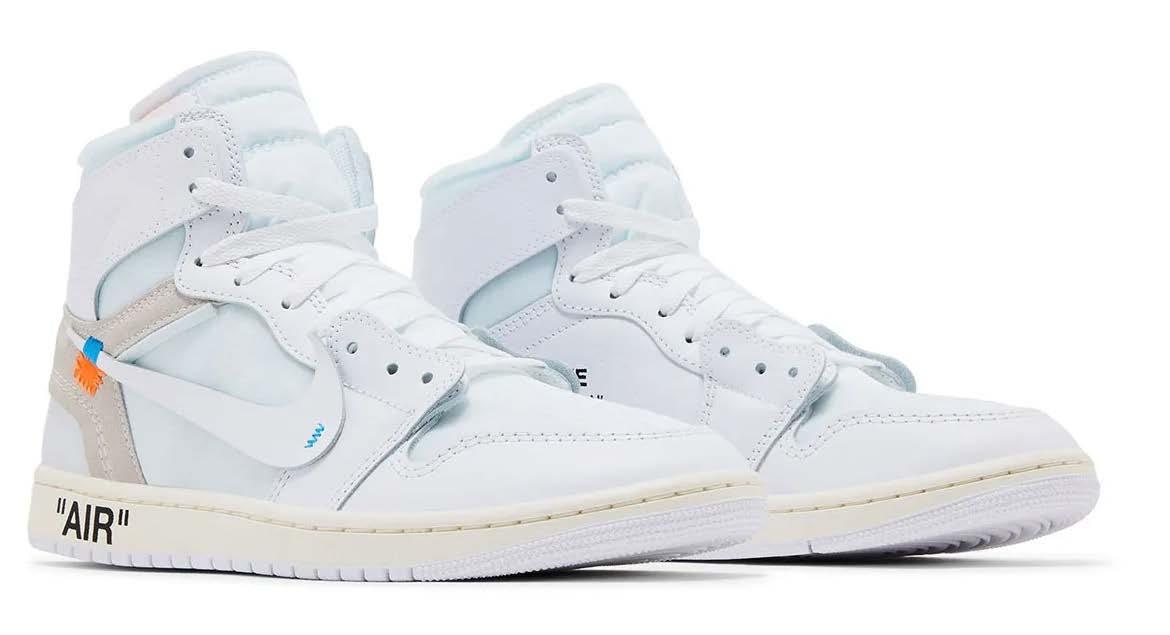
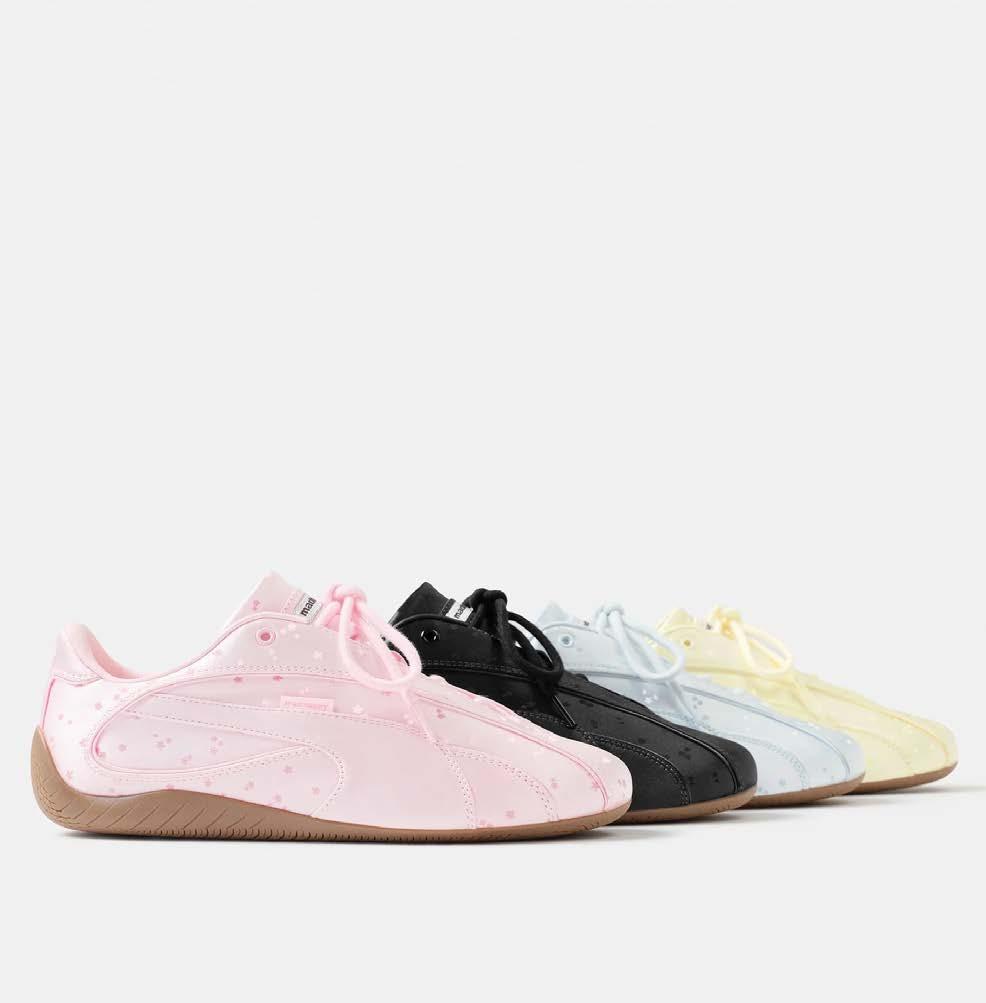
All that was missing was the official announcement: Air Jordan and the Virgil Abloh Foundation will be re-releasing one of the three colorways of the nowlegendary Air Jordan 1 Retro designed by the American designer. The chosen version is the “Alaska,” the new name for the “NRG” released in 2018, and it will be offered as a limited edition collaboration between “Jumpman” and Virgil Abloh Archives. The most observant had already sensed a possible comeback last October during “The Codes” exhibition hosted at the Grand Palais in Paris. We’ll have to wait and see if VAA will focus solely on bringing Abloh’s old creations back to the shelves or if it will also launch new projects.
The Los Angeles-based brand Madhappy has launched the spring collection of its collaborative project with Puma, a capsule collection featuring over 20 apparel items and two pairs of sneakers. It consists of four special colorways of the Puma Speedcat, a lifestyle model inspired by the design of the racing shoes created by the German brand in the early 2000s for Formula 1 teams. This time, however, the synthetic materials typically found on the Speedcat have been replaced with light blue and pink satin embellished with floral embroidery. A radical change that gives the Puma Speedcat a completely new look, contributing to the relaunch of this model, which Puma hopes will replicate the enormous success of other great classics.
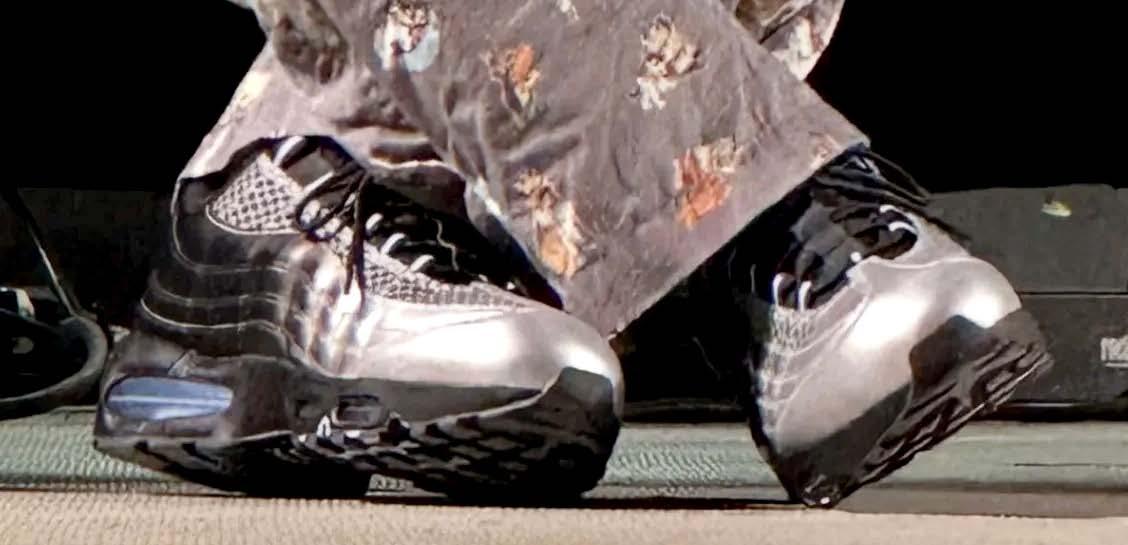
When it was announced in October 2025 that Palace Skateboards had joined Nike’s roster of partners, it caused quite a stir; however, according to some industry insiders, the first “soccer” collection created with the Swoosh fell short of expectations. The second joint project, however, could be much more successful, at least judging by the initial reactions on social media: Lev Tanju, one of the founders of the London-based brand, attended a public event in mid-March wearing an unreleased colorway of the Nike Air Max ’95 “Big Bubble” featuring a silver base and black accents along the sides. Fans immediately began discussing and speculating, and it appears this could indeed be the second chapter of the collaboration between Nike and Palace, likely arriving by the end of 2026.
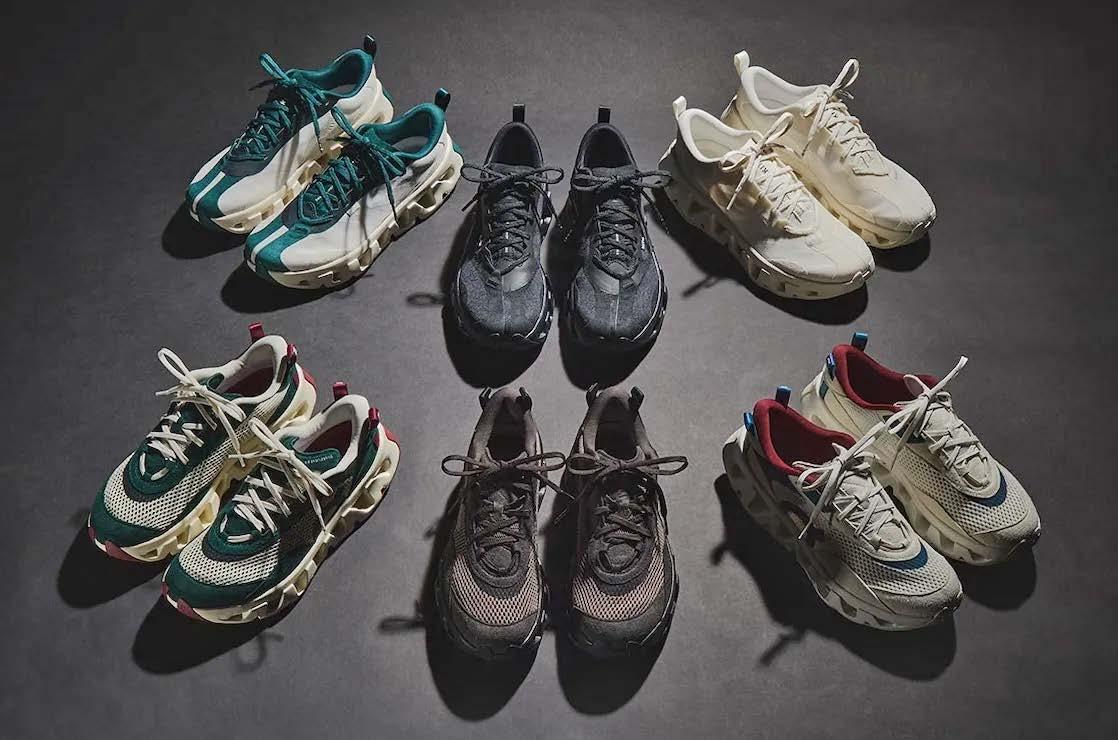
The collaborative partnership between KITH and ON continues, with Ronnie Fieg choosing to include the German brand among the partners participating in the collection celebrating the New York store’s 15th anniversary. In addition to an exclusive apparel collection, there are also two models designed specifically for KITH: the K-Tech 1 and the K-Tech 2, each available in three different colorways. Fieg and KITH have also announced the start of a long-term partnership that will see ON sponsor the new KITH Run Team, a NYC-based squad that participated in the local half marathon in March.
After more than 30 years of a distinguished career, Hiroshi Fujiwara remains one of the most influential figures in the streetwear scene, and just a few weeks after the release of his collaboration with Air Jordan and Union Los Angeles, he is set to launch a new project with Converse. Formally a three-way collaboration, it features the legendary American brand working with Fragment Design— one of the brands founded by Fujiwara—and V.A. Tokyo, his concept store in Harajuku. A Chuck Taylor All Star and a Jack Purcell, both in white canvas with black details and triple branding on the heel; nothing excessive, simply a celebration of two American sportswear classics that have long been revered by Japanese enthusiasts and collectors.
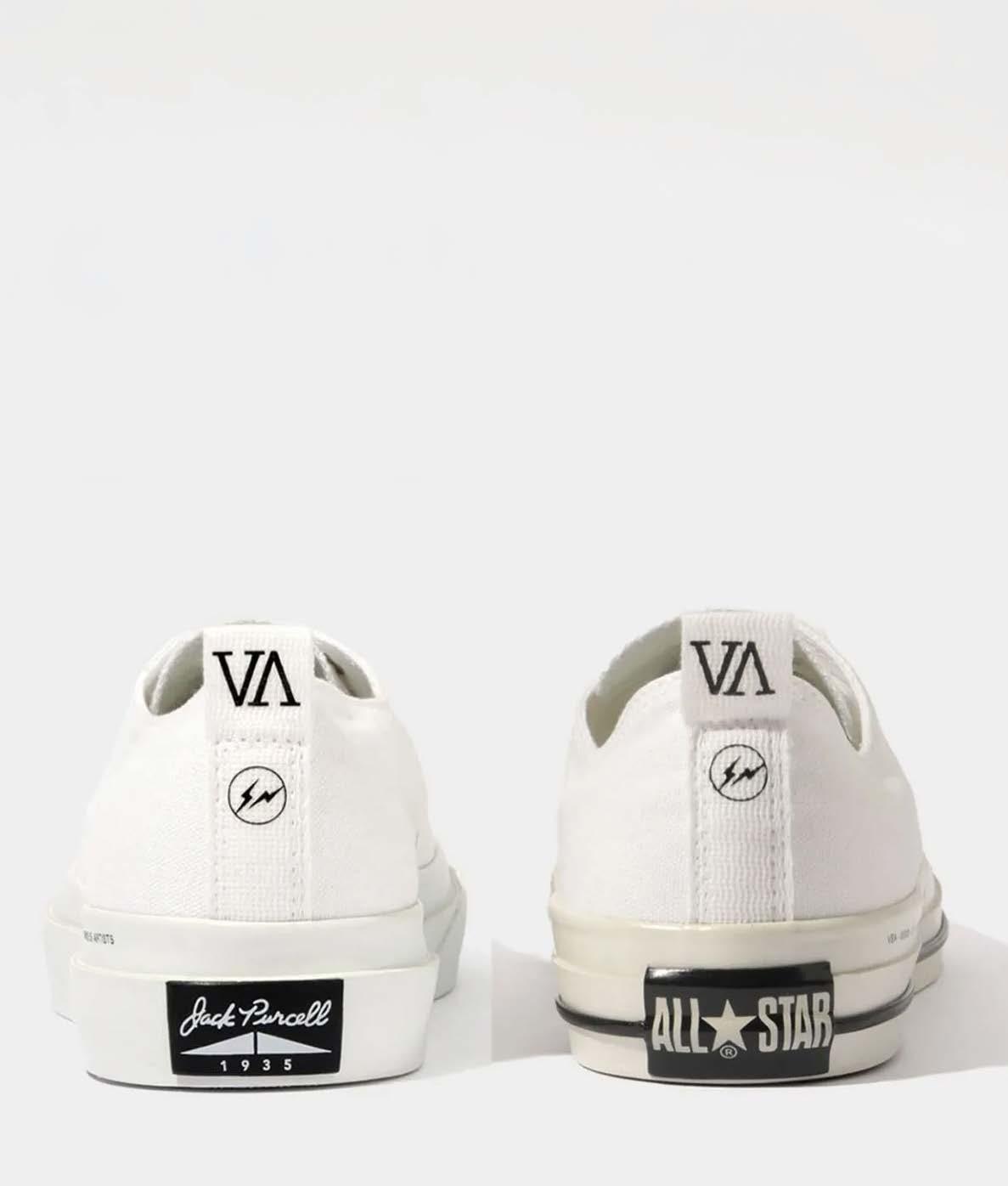
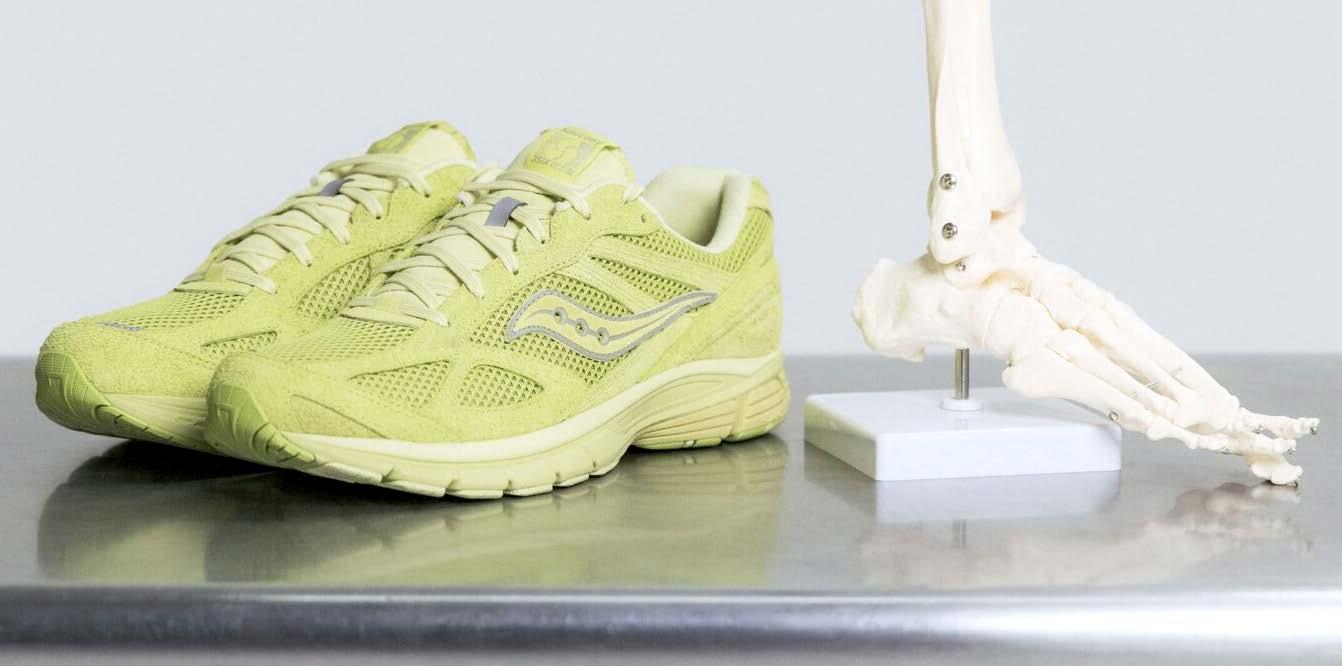
After a two-season hiatus, John Elliott has made his return to the scene, unveiling not only a new collection but also his first collaboration with HOKA. The Californian designer chose the Rocket X 3 as the canvas for his first collaborative project with the brand, working to soften the look of a technical model by using muted colors and taking advantage of the upper’s transparency to create a unique effect with a pattern that’s a cross between tie-dye and camouflage. John Elliott’s Hoka Rocket X 3 was released exclusively through the brand’s online store, priced at $260.
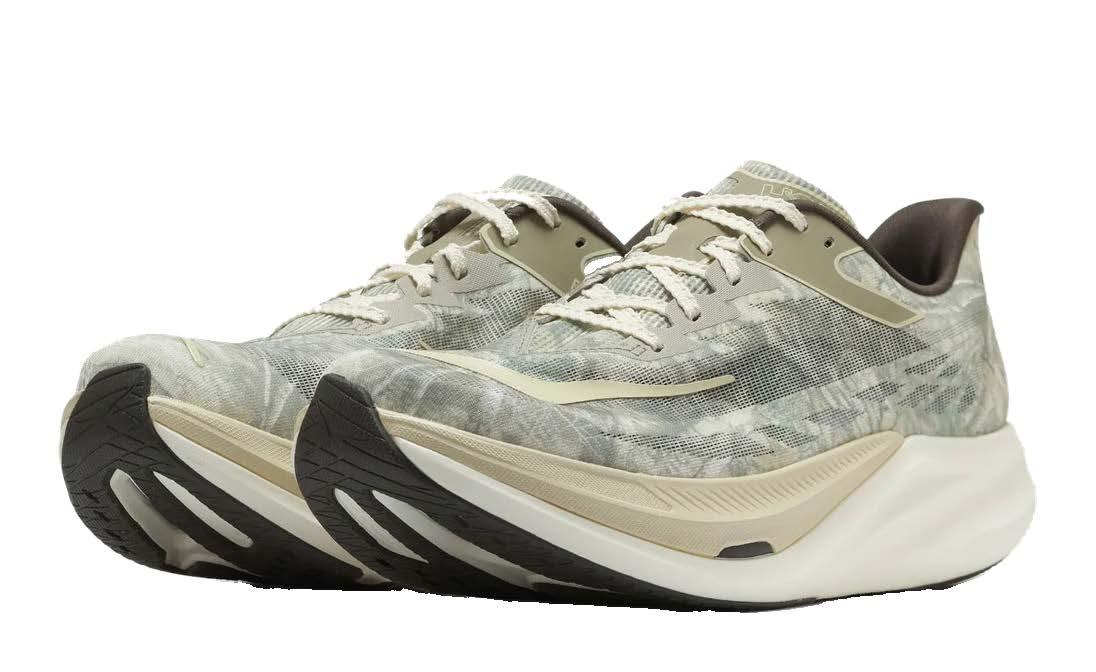
3sixteen is a New York City-based brand that started out producing apparel and later specialized in knitwear and sportswear. In recent years, it has worked closely with Saucony on several special projects in which sneakers were treated using dyeing processes inherited from the world of denim, creating unique effects and distinctive monochromatic colorways that quickly gained popularity online. For this second project with the Boston-based company, 3sixteen has chosen to dust off the ProGrid Guide 7 from its archives, a running shoe that is making a comeback on store shelves for the occasion. Two different colorways, previewed in 3sixteen stores in Los Angeles and NYC and, subsequently, in sneaker stores around the world.
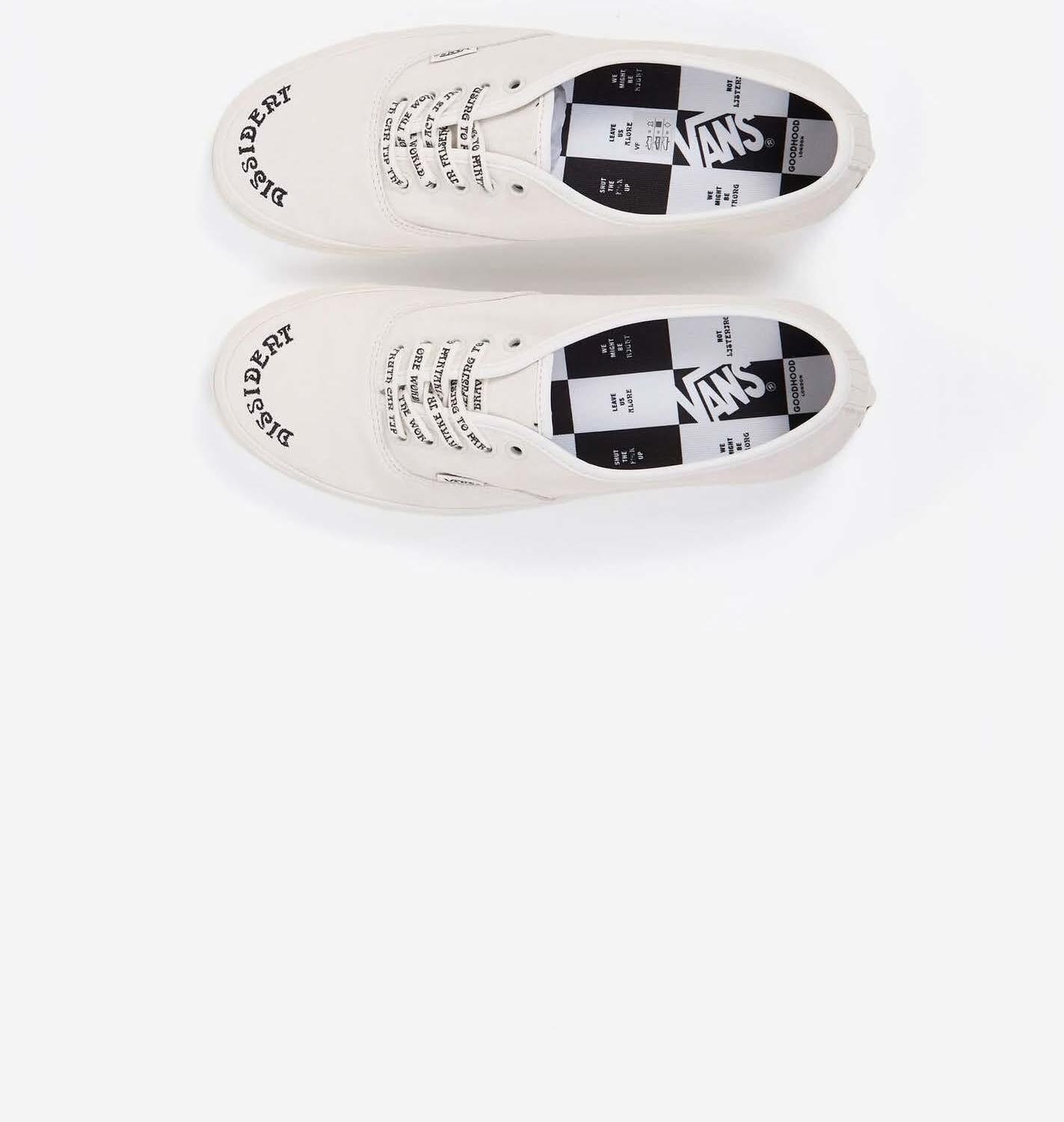
Goodhood and Vans are teaming up again, for the first time since the London store moved to its new location at 15 Hanbury Street in Shoreditch. This time, the chosen model is the classic 44 Authentic LS, available in two mirror-image colorways with a suede base: one white and one black, featuring contrasting details. The word “Dissident” is embroidered prominently on both toes, a political and social statement in these times of great uncertainty. This concept is also reinforced in the social media campaign created for the release and the posters that have covered the store’s windows just a few steps from Brick Lane. Both versions of the Vans 44 Authentic LS “Dissident” are currently available exclusively online and in-store at Goodhood.
Until a few years ago, sneakers were everywhere; where have all the fans gone now?
by Marco Rizzi
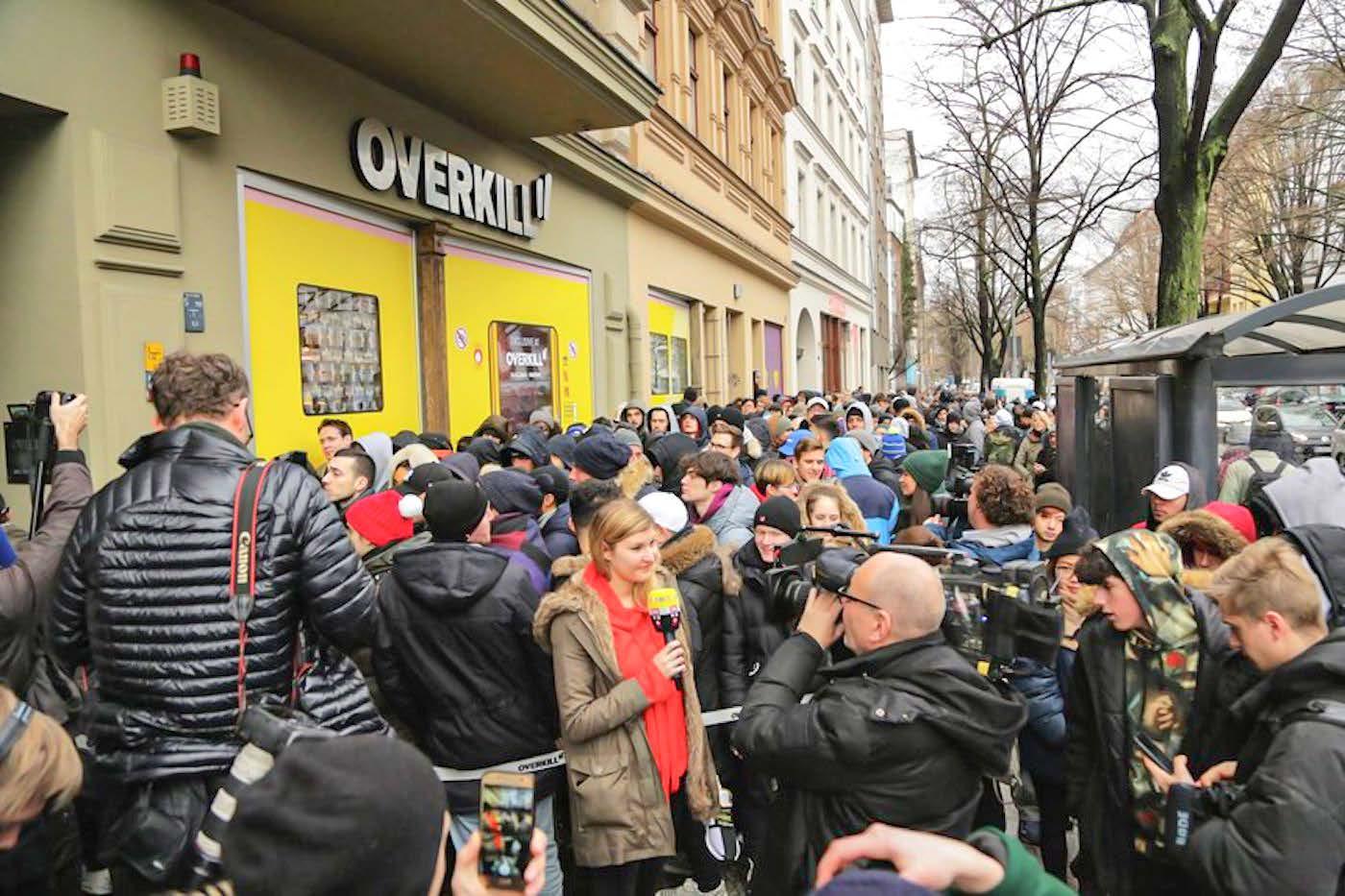
It may seem hard to believe, but in a few months it will have been a full decade since 2017—the year when, according to many, the general public in Italy “discovered sneakers.” For a moment, it seemed like everyone had an expert friend, a collector, or a “reseller”; every week, images of endless lines circulated, and people spent their time on social media and on TV talk shows discussing the morality of certain prices and sneakers as if they were stocks on the market. Then, when interest in sneakers naturally waned in recent years, many used the disappearance of the lines, the crowds, and the crazy prices to ask: but where did all the enthusiasts go? A certainly legitimate question, but one that helps shift the focus away from discussing other issues. Anyone who tried to explain that those lines and crowds outside the stores weren’t a representation of what enthusiasts call “Sneaker Culture” was seen as an outsider. After all, what else but passion could drive young people to spend hours—if not days—sitting in front of a downtown store’s windows or to spend thousands of euros to snag the latest and most coveted release from this or that brand? The reality that many refused to accept is that the shoes themselves had very little to do with it: some tried to justify it all with the “fear of missing out” that dominates current trends, others with the usual superficial talk of empty appearances, and still others with complex economic arguments. Among industry insiders, perhaps the hope that, at least for once, things in retail were going better than expected caused them to lose perspective on a phenomenon that was clearly temporary from the start—if only for those who had the means and experience to assess the situation clearly. Though simple and obvious, the reality is that Sneaker Culture was and is something entirely different. The “buy, sell & trade” aspect that many ended up focusing on will always be part of it, as it is in any collecting context. Perhaps, however, the time has come to reflect and admit that everyone—from brands to mainstream and industry media—may have, perhaps out of superficiality, preferred to sell the public the idea of a business, justify hoarding, and paint a picture of the apparent exclusivity of a “sneaker club” that seemed indispensable to belong to. Shoes, just as much as the cultural aspect tied to them, have quickly become secondary elements, destined to be inevitably replaced by the next rapidly and dizzyingly growing trend or, worse still, the new means of easy profit. The truth is that in recent years, some have grown up, some have shifted their interests, and others have even changed careers. Enthusiasts and collectors are certainly fewer in number, but they’re still out there—they’ve simply stopped telling you about it.