THE ELS CLUB
THE BIG EASY'S EUROPEAN MASTER PIECE UP CLOSE EAR
G DOES THE RIGHT SHOE FIT ADD MORE DISTANCE?
ROYAL BIRKDALE
THE OPEN
WHO IS GOING TO CAPTURE THE FINAL MAJOR OF THE SEASON?

THE BIG EASY'S EUROPEAN MASTER PIECE UP CLOSE EAR
G DOES THE RIGHT SHOE FIT ADD MORE DISTANCE?
ROYAL BIRKDALE
WHO IS GOING TO CAPTURE THE FINAL MAJOR OF THE SEASON?
HARRINGTON THE DEFINING VICTORY THAT SPARKED GOLFING GREATNESS

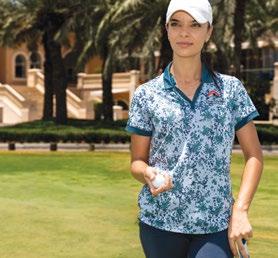
INTISSAR RICH BREAKING BARRIERS AND INSPIRING GOLF › S NEXT GENERATION

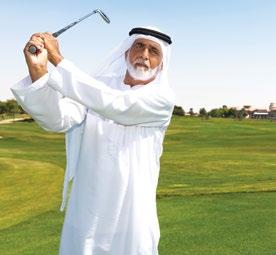
ISMAIL SHARIF THE PIONEER WHO HELPED BUILD UAE GOLF




*Applicable on everything in-store except GTS metals, meta glasses, golf balls, gloves, Callaway, and Taylormade. Cashback valid on a minimum spend of 1000 AED and redeemable on your next purchase. Cashback voucher valid for 7 days. Not to be used in conjunction with other promotions/discounts. Cashback to be used and redeemed at the same outlet once.
















































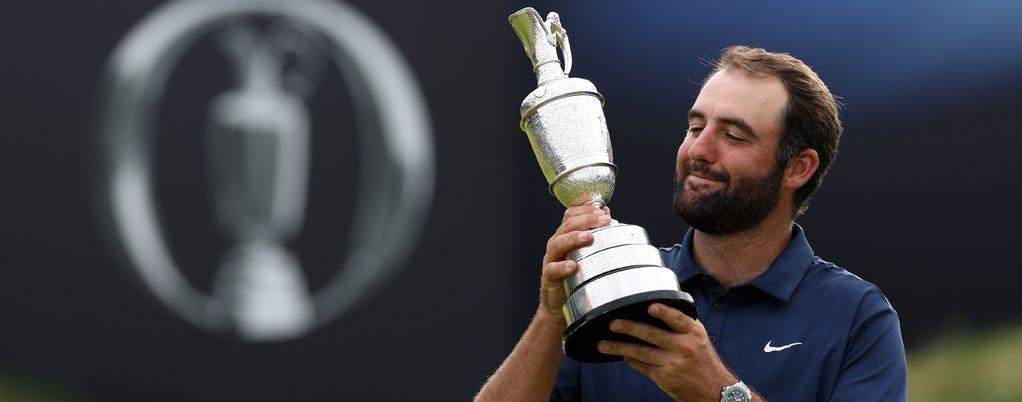
By Alex Gallemore, Editor, Worldwide Golf
There is something rather fitting about the 2026 Major championship season drawing to a close at Royal Birkdale. Few venues ask more honest questions of the world’s best golfers. There are no tricks, no hidden surprises and very few opportunities to get away with anything less than your best. If you drive the ball well, control your trajectory and think your way around the golf course, Birkdale will reward you. If you don’t, it has a habit of exposing every weakness in your game.
It’s exactly the type of examination that makes me believe Scottie Scheffler will once again be the man to beat.
His consistency over the past couple of seasons has been remarkable and, perhaps more importantly, he possesses the patience that links golf demands. Of course, The Open is unique because so much depends on the draw. A favourable side of the weather can completely change the complexion of the Championship, and history has shown that luck with the conditions can sometimes be worth several shots. Should Scheffler find himself on the right side of the draw, it is difficult to see many players living with him over four days.
Whatever happens, Royal Birkdale promises to provide a spectacular finale to another memorable Major season.
One of the great privileges of producing Worldwide Golf is that it constantly gives me opportunities to learn something new about the game I thought I already understood.
That was certainly the case during my recent visit to FootJoy for what I expected would be a fairly straightforward shoe fitting. Like many golfers, I’ve always assumed that if a shoe feels comfortable, that’s job done. How wrong I was.
The level of technology now involved in correctly fitting golf shoes is genuinely fascinating. Watching the force plates analyse how I move through the golf swing and understanding how different shoe designs influence stability, balance and power opened my eyes completely.
But there was one question that mattered more than anything else.
Would correctly fitted shoes actually improve my golf?
Rather than simply accepting the science, I wanted to put it to the test on the golf course with launch monitor data and real-world performance. The results genuinely surprised me, but I’ll leave those for the full feature later in this issue.
Talking of surprises, I recently had the opportunity to experience Ernie Els’ magnificent new course at Vilamoura, and
I can honestly say it has become one of my favourite layouts anywhere in Europe.
Modern golf architecture often falls into the trap of trying too hard. Bigger hazards. Longer carries. Tougher rough. Fortunately, this course takes a different approach.
Instead, it rewards strategy, creativity and intelligent golf. It asks you to think your way around rather than simply overpower it, while the conditioning and presentation are every bit as impressive as the design itself. It’s difficult to imagine many golfers leaving Portugal without wanting to return.
You’ll find our full feature on the course in this edition, including Ernie’s own thoughts on what he set out to create.
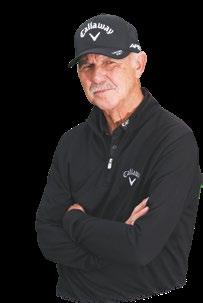
Pete Cowen doesn’t hold back
Elsewhere, Pete Cowen once again delivers a masterclass in simplicity. For decades, golfers have searched for complicated swing theories, miracle tips and quick fixes, yet Pete continues to prove that most improvement comes from getting the fundamentals right.
His latest column focuses on exactly why so many amateurs continue to struggle with the basics and why correcting those small fundamentals can transform your golf far more effectively than chasing technical perfection.
If anyone questions his methods, they only need to look at the remarkable production line emerging from his academy in Rotherham. The recent success of Alex Fitzpatrick is just another reminder that great coaching isn’t about reinventing the golf swing; it’s about helping players maximise what they already possess.
It remains one of the most respected coaching environments anywhere in the world, and Pete’s insights are always worth paying attention to.
Another fascinating conversation in this issue comes from my interview with Ismail Sharif, one of the true pioneers of golf in Dubai.
Having witnessed the region’s golfing evolution almost from the beginning, Ismail offers a unique perspective on just how dramatically the game has changed over the past few decades.
His stories about the early days are captivating enough, but perhaps even more enjoyable are the friendships he has built with some of the biggest names in world golf along the way. It’s a reminder that while the courses, tournaments and facilities have evolved beyond recognition, golf has always remained a game built around people and relationships.











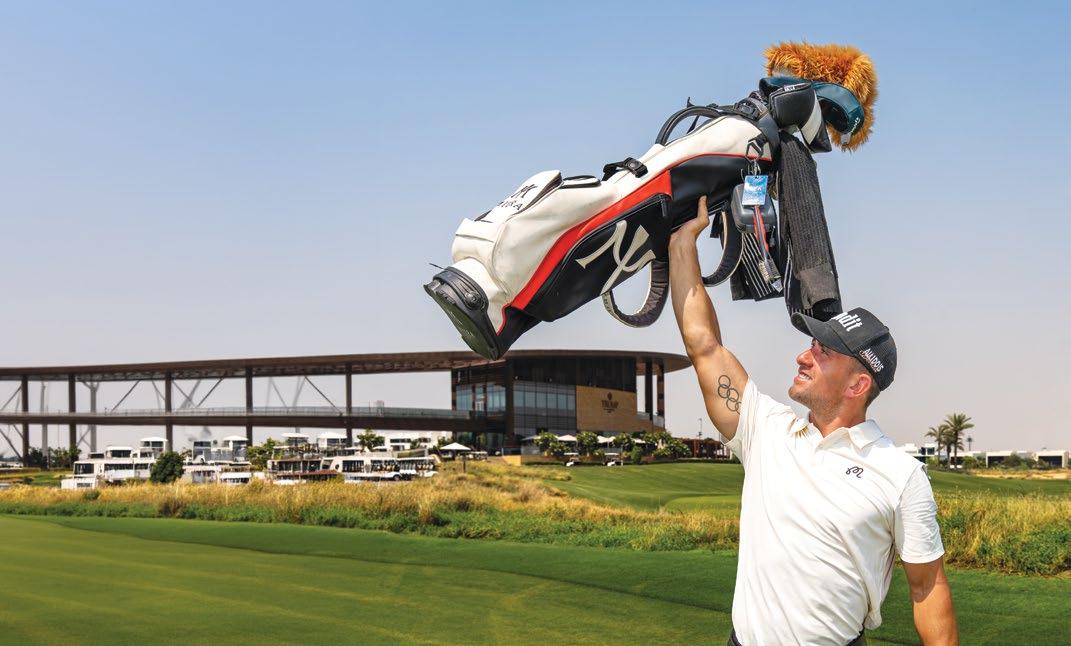
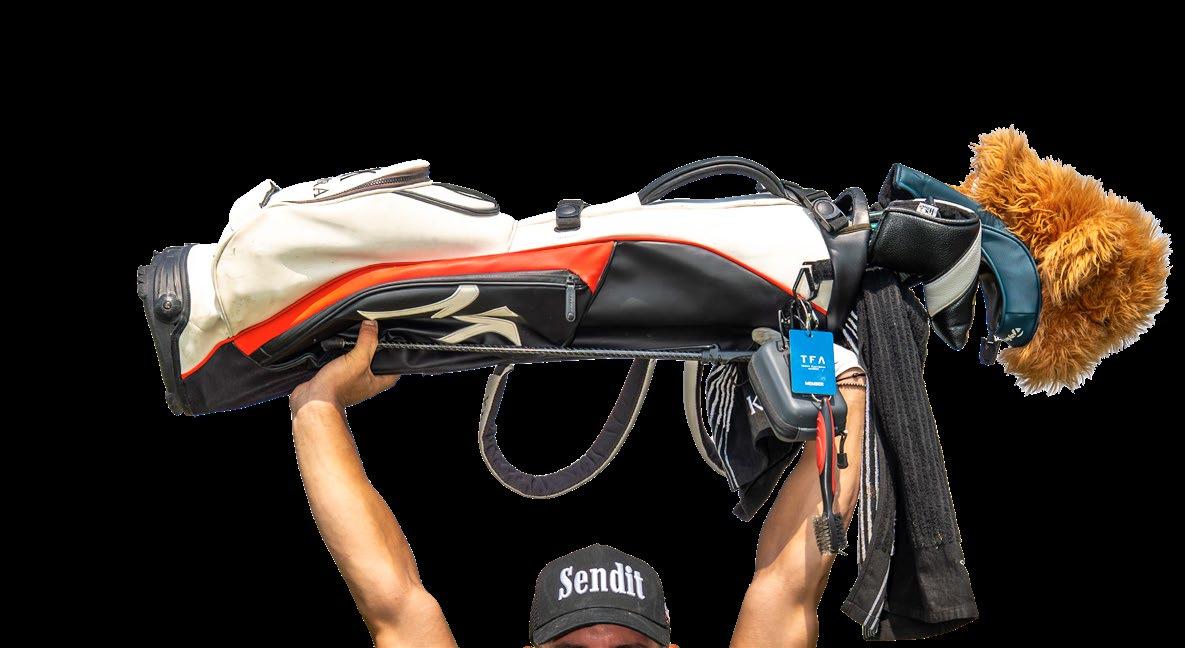
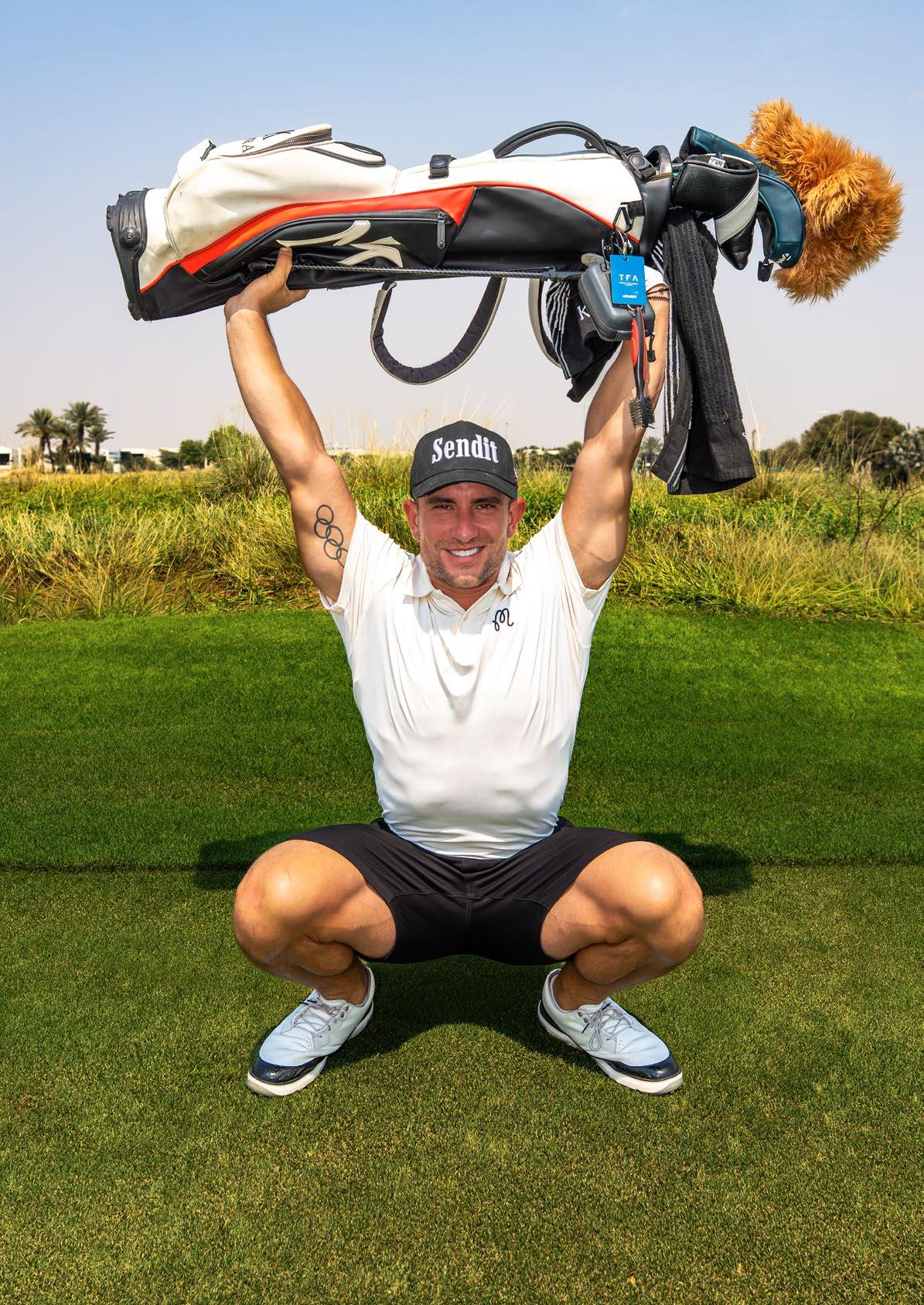
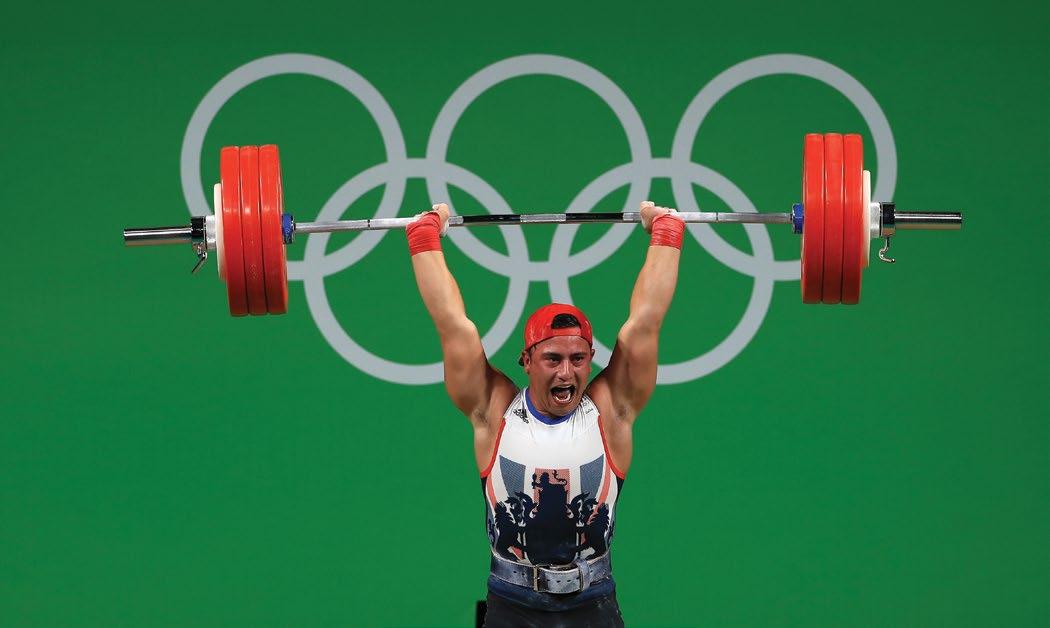
Olympian Sonny Webster reveals how weightlifting transformed his golf, sharing fitness secrets, mindset and a lifelong passion for the game.
12 CONFIDENCE CHANGES EVERYTHING
Pete Cowen explains why confidence wins championships, what amateurs keep getting wrong, and why Royal Birkdale rewards great golf fairly.
16 THE COURSE
Explore Royal Birkdale’s remarkable history, championship heritage and architectural brilliance that have shaped one of golf’s greatest Open venues.
18 CLARK DEFIES HOSTILE CROWDS
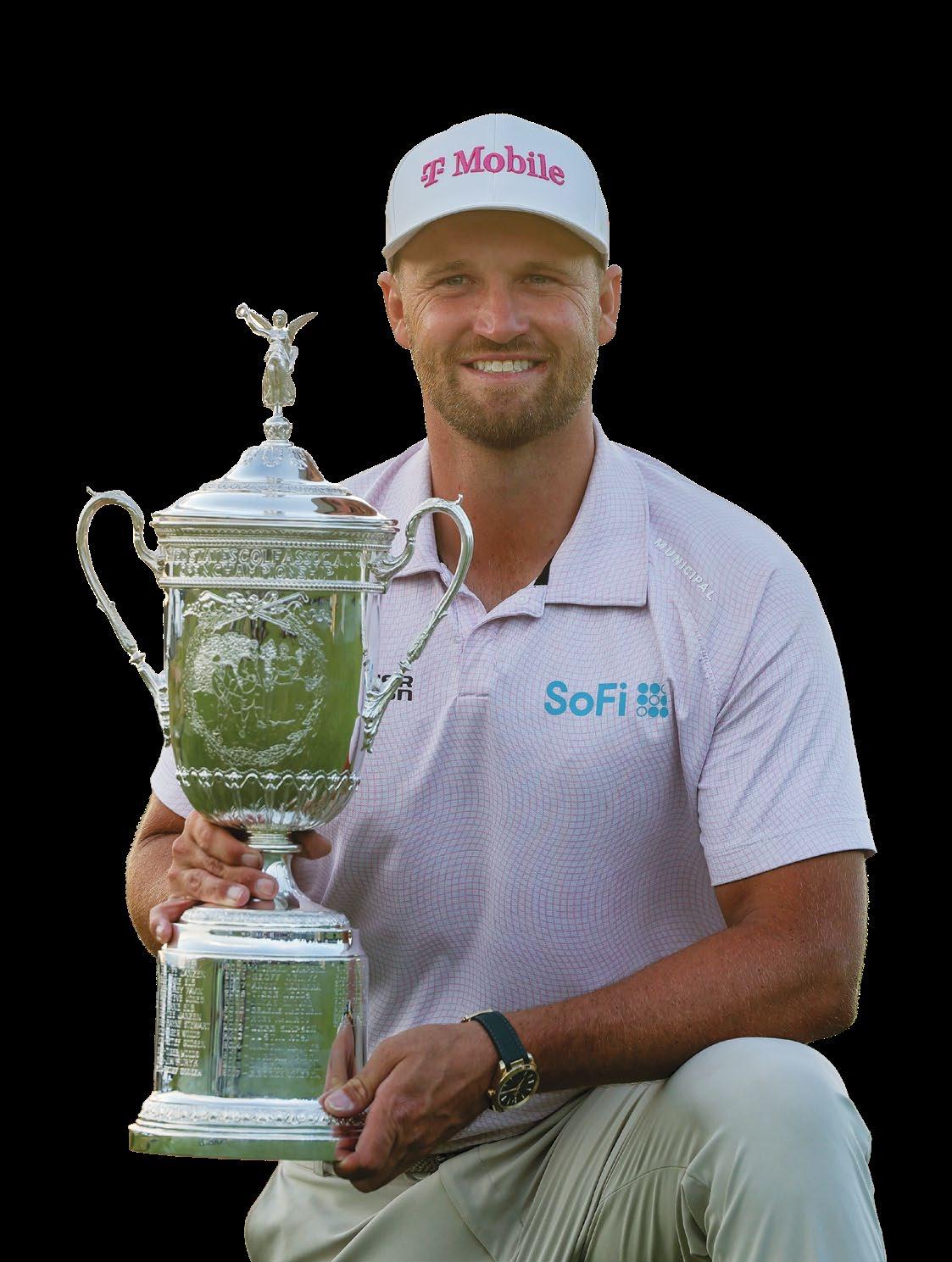
Wyndham Clark overcame relentless crowd hostility, mounting pressure and late challengers to claim a dramatic second US Open title at Shinnecock Hills.
20 THE OPEN PREVIEW
Royal Birkdale welcomes The Open once more as Tommy Fleetwood chases a dream victory on home soil against golf’s biggest stars.
24 PADRAIG HARRINGTON
Royal Birkdale transformed an Open champion into a golfing legend, launching an extraordinary run of major victories that defined a career.
28 GLOBAL PATHWAYS
The MENA Golf Tour unveils ambitious global expansion, new qualification routes and stronger pathways towards the DP World Tour for players.



Healthcare should feel simple, seamless and reassuring. The Clinic has been designed to deliver exactly that.
Begin your care
Schedule a consultation
Primary care, elevated Designed around you
• Experienced family physicians
• Longer, unhurried consultations
• In clinic diagnostics
• Seamless multidisciplinary care
Proactive, personalised care for lifelong health
• Preventive health & screening
• Acute & chronic care
• Women’s, men’s & children’s health
• Lifestyle & metabolic optimisation
• Same-day access when needed
• Continuity with your doctor
• Care tailored to your lifestyle
• Calm, private environment
The
THE BIG EASY’S MASTERPIECE
Ernie Els has transformed Vilamoura into one of Europe’s finest new championship venues, blending strategy, luxury and tournamentwinning pedigree.
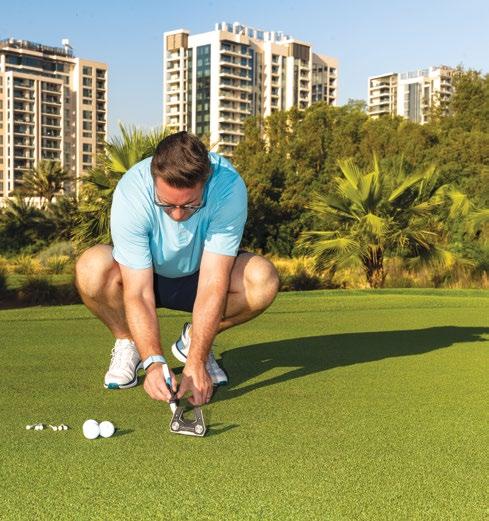
THE IMPACT DRILL
Stephen Dean showcases simple drills with the short stick to help you drain more putts and lower your scores.
One of the questions I’m asked most often is what separates good players from great players. People expect me to talk about golf swings or technique, but more often than not the answer is confidence. When you’ve got confidence, golf becomes a very simple game. When you lose it, even the easiest shots suddenly become difficult.
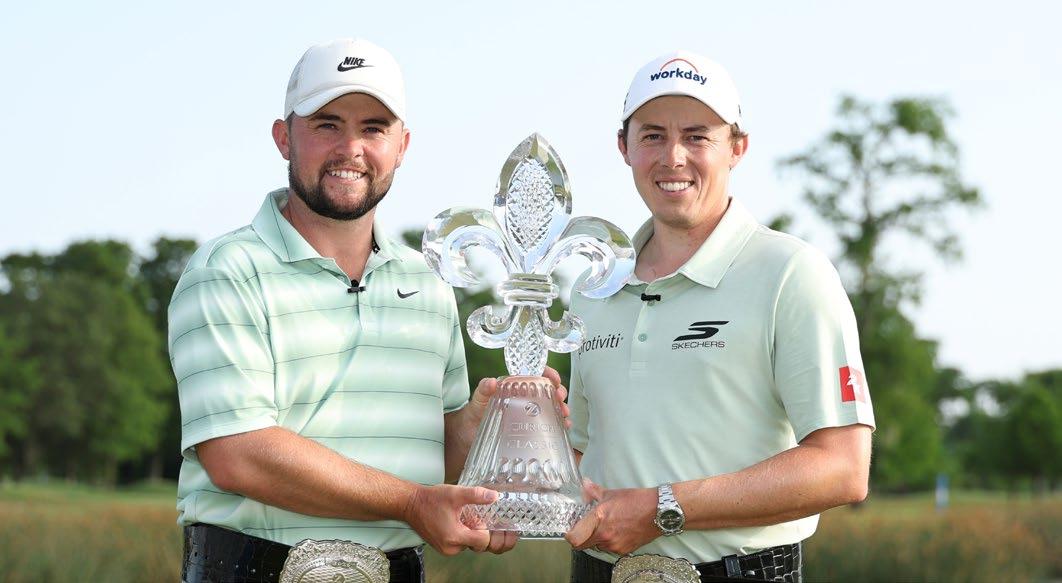
A good example is Alex Fitzpatrick. It’s been fantastic to watch his progress because for years he lived in the shadow of his brother Matt. That isn’t easy for any player, but he’s now creating his own identity. Mike Walker has done a great job working with him, Alex has spent time with Nick Huby as well at our range in Rotherhan, and together they’ve built a player who believes he belongs. That’s the biggest change. Confidence allows your ability to come through.
People often ask whether Alex plays like Matt, but they’re actually very different golfers. Alex has always been naturally longer off the tee and much more aggressive. His biggest weakness was that he simply couldn’t keep the driver on the golf course. We didn’t reinvent his swing. We shortened the driver to around 44½ inches, added a little more loft and suddenly he started finding fairways. Once he saw the ball staying in play, his confidence grew and the results followed. It’s a lesson for every amateur because most golfers are obsessed with chasing distance, when in reality they’d score far better by improving control.
Matt’s game has developed differently. Tee to green he’s always been one of the strongest players around, but this season he’s simply putted better. Sometimes people look for dramatic technical changes when there aren’t any. Quite often the difference between winning and finishing 20th is holing a few more putts and believing you’re going to hole them.
One of the biggest changes we ever made with Matt was introducing cross-handed chipping. At the time it looked unusual and plenty of people questioned it. Matt didn’t care. That’s one of his
greatest strengths. He has never suffered from stage fright or worried what other people think. Mechanically, cross-handed chipping simplifies everything. It stops you manipulating the club through impact and makes it much easier to strike the ball consistently. Matt trusted it completely and when he won the US Open, those cross-handed chips under pressure became one of the defining images of the week. Plenty of players could have benefited from doing the same over the years, but they didn’t have the confidence to use something that looked different.
Talking of confidence, there isn’t anybody in the game who has more than Scottie Scheffler. Technically he’s outstanding, but what separates him is his mindset. Nothing appears to bother him. He doesn’t get frustrated, doesn’t panic and never looks like he’s carrying the weight of expectation. His faith gives him a perspective that many players don’t have. Whether he wins or loses, he believes there’s a bigger purpose than golf itself, and that allows him to play with a freedom very few players possess. That’s one of the reasons he’s the best player in the world by such a margin.
One area that does concern me is the amount of instruction amateurs consume online. Golfers watch a 30-second video, try to copy one movement and wonder why it doesn’t work. Next week they’re watching another coach telling them something completely different. Before long they’ve got half a dozen swing thoughts racing around their heads before they’ve even taken the club away.
That’s why I rarely post technical instruction. The written word, or a short video clip, is very easy to misinterpret. If you want to improve, spend time with a good coach who can explain what you’re trying to achieve and, more importantly, why you’re doing it. Every golfer is different. There isn’t one swing that suits everybody.
The biggest mistake amateurs make is trying
to swing like Tour players instead of learning to become consistent. One of the simplest drills I’ve recommended for years is hitting balls with your feet together. It immediately encourages better balance and more consistent body movement, and poor body movement is responsible for the vast majority of bad golf shots I see. Equally important is getting the setup right. Good posture, proper hip bend, correct knee flex and allowing the arms to hang naturally all create consistency before the club even starts moving. If your setup changes every swing, don’t expect the golf ball to do the same thing twice. I also hear golfers say they hit it brilliantly on the range but can’t take it onto the course. That’s because the range encourages repetition, while the golf course encourages thinking. Amateurs stand over the ball with a checklist running through their minds –move the hands, turn the shoulders, shift the hips. By then it’s already too late. Trust what you’ve practised and commit to the shot. Golf should be played, not over-analysed.
With The Open returning to Royal Birkdale, I couldn’t finish without mentioning the course. I’ve always believed Birkdale is one of the fairest championship venues on The Open rota. You get what you deserve. Good shots are rewarded, poor shots are punished and there are very few lucky breaks. That’s exactly how championship golf should be.
If the weather behaves, the best player usually wins there, and looking at the way the season has unfolded so far, it’s difficult to look beyond Scottie Scheffler. Right now he’s playing with the confidence every golfer is searching for, and in this game there’s no more powerful weapon than that.
Pete Cowen Master PGA Professional



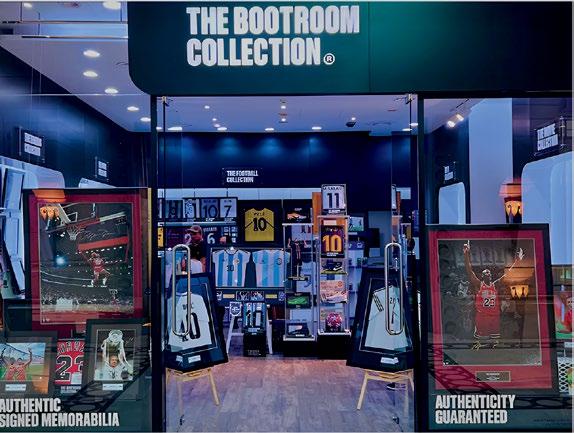
The Bootroom Collection is redefining the memorabilia and collectibles landscape for modern spor ts fans and discerning collectors.
Blending authenticity, storytelling and premium presentation, the brand has become a trusted destination for rare signed memorabilia, elite trading cards and exclusive spor ting collectibles
Known for sourcing authenticated pieces from the world of football, golf and global spor t, the brand blends premium presentation with exper t curation to create a truly elevated collecting experience.

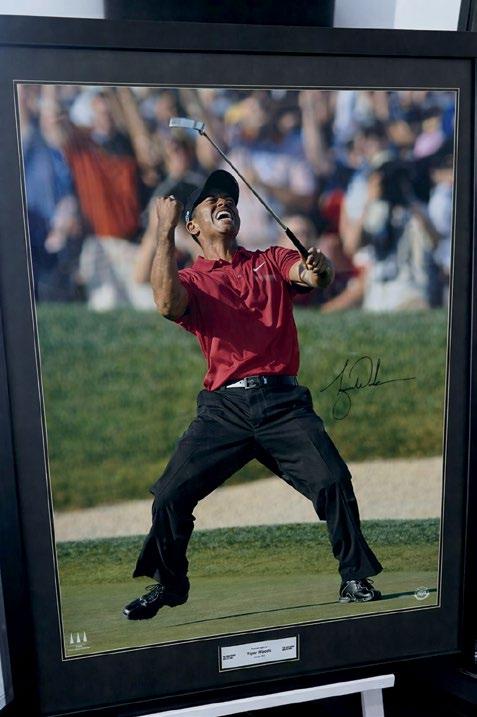
From major championship triumphs to career-defining signatures, The Bootroom Collection offers collectors the chance to own authentic pieces tied to golf’s most iconic moments
With flagship locations in Dubai Mall and Atlantis The Palm, alongside par tnerships spanning world-renowned athletes, clubs and brands, The Bootroom Collection sits confidently at the intersection of spor t, culture and collectability.

BRING OUT THE PLAYER IN YOU.Ahigh-launching, players-styledesignthatcombinesshot-makingprecisionwith score-savingforgiveness.Engineeredforthebestplayersin theworld.Customfitandcustombuiltforyou.
DISTANCE & CONTROL
LowerCGforincreased ballspeedandhigher launch.
PLAYER PREFERRED
Sizedandshaped fortrajectory control.

Game-improvement forgiveness;softerfeel, pleasingsound.
FORGIVENESS WITH FEEL GET FIT. GET OPTIMISED.
FAIREST
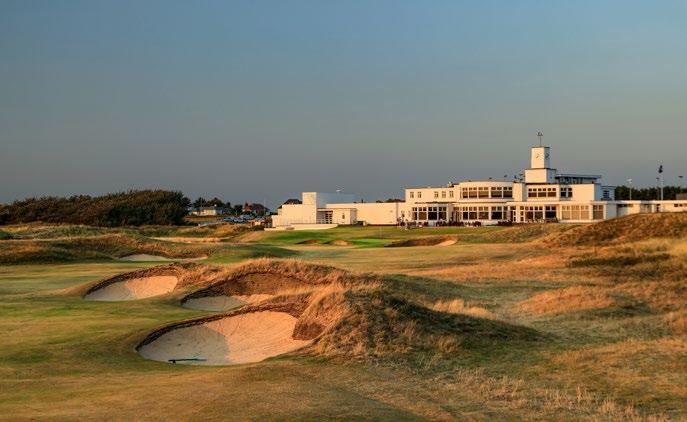
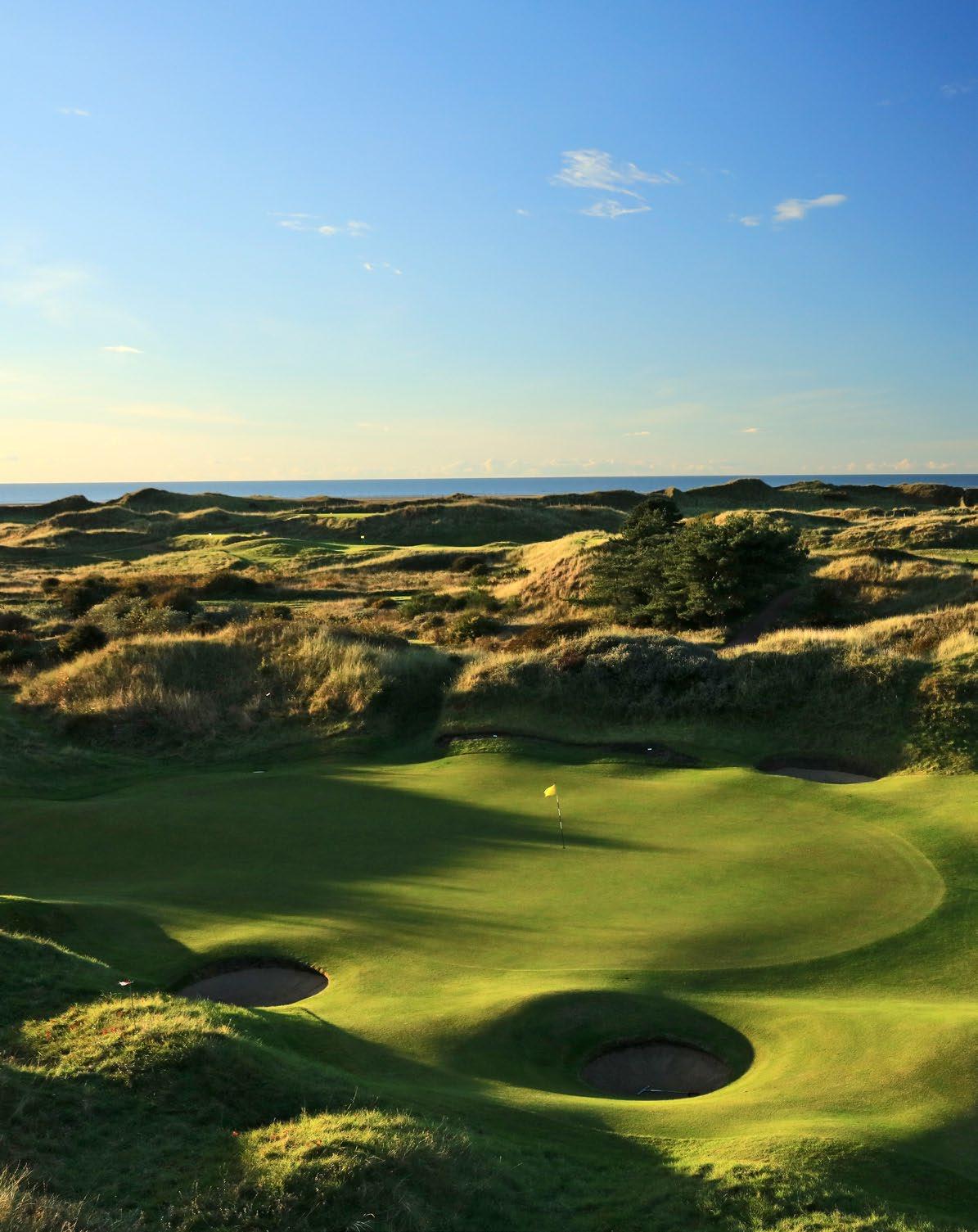
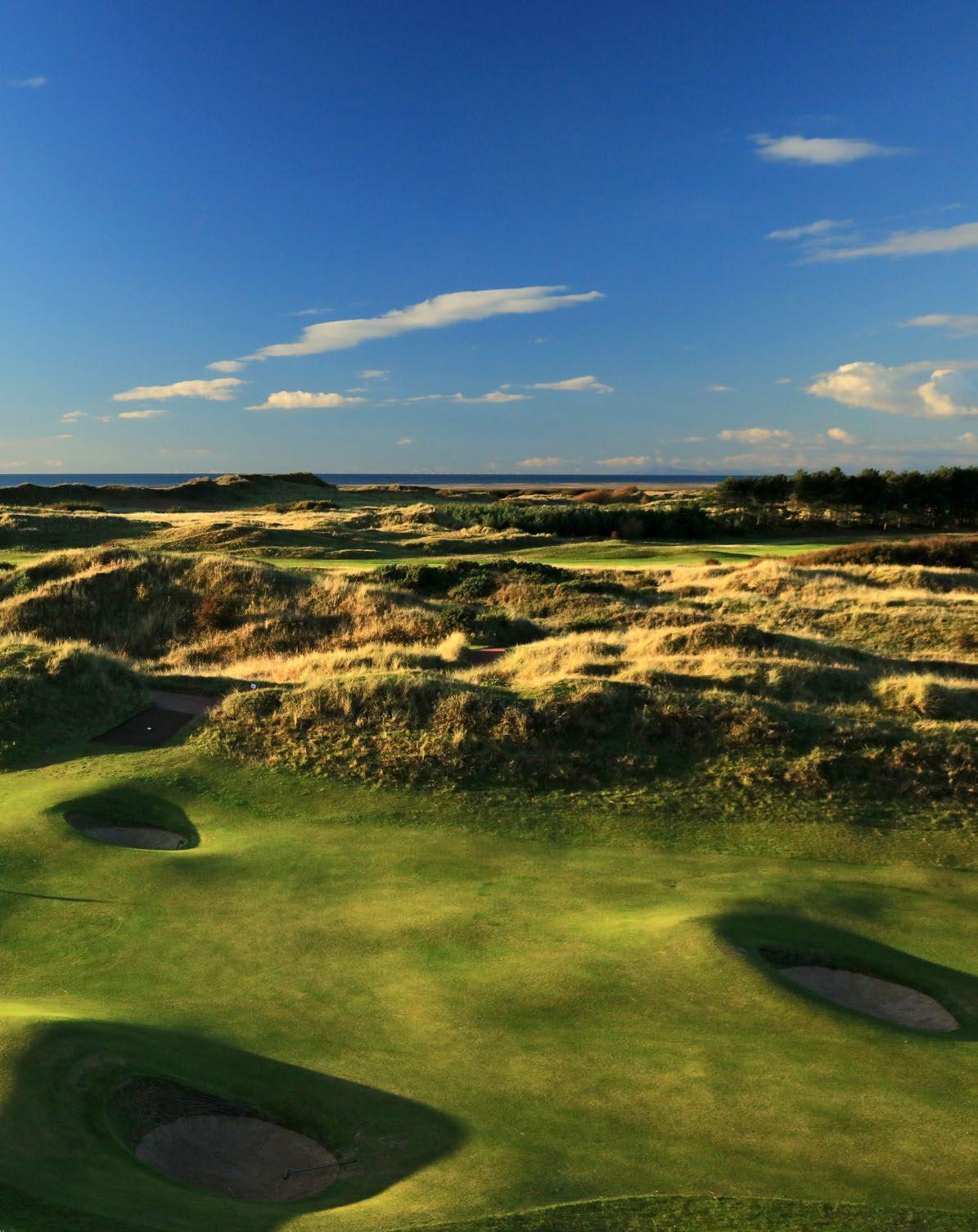
Some golf courses intimidate you before you’ve even struck a shot. Royal Birkdale does it differently. There are no blind drives, no hidden surprises and very few excuses. Widely regarded as one of the fairest championship links in the world, it simply asks one question: can you execute the shot that’s right in front of you?
Founded in 1889, the club moved to its current site among the towering dunes of Southport in 1897 before receiving Royal status in 1951. Just three years later it welcomed The Open Championship for the first time, beginning a love affair with golf’s oldest Major that continues today.
One of Birkdale’s greatest strengths is its routing. Unlike many traditional
links, the holes weave naturally through valleys between the giant sand dunes rather than over them. The result is a course where each hole feels beautifully isolated, spectators enjoy incredible viewing from the surrounding dunes and golfers can usually see exactly what lies ahead. It is this straightforward design that has earned Birkdale its reputation as perhaps the most honest test on The Open rota.
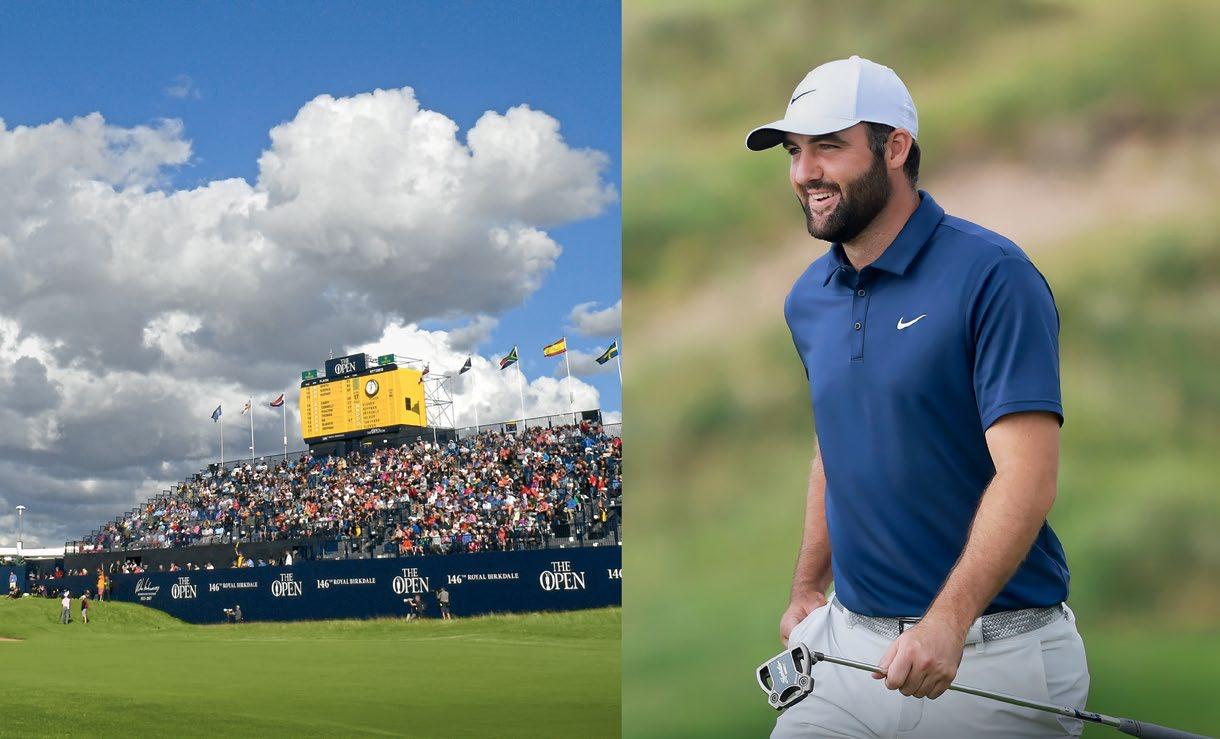
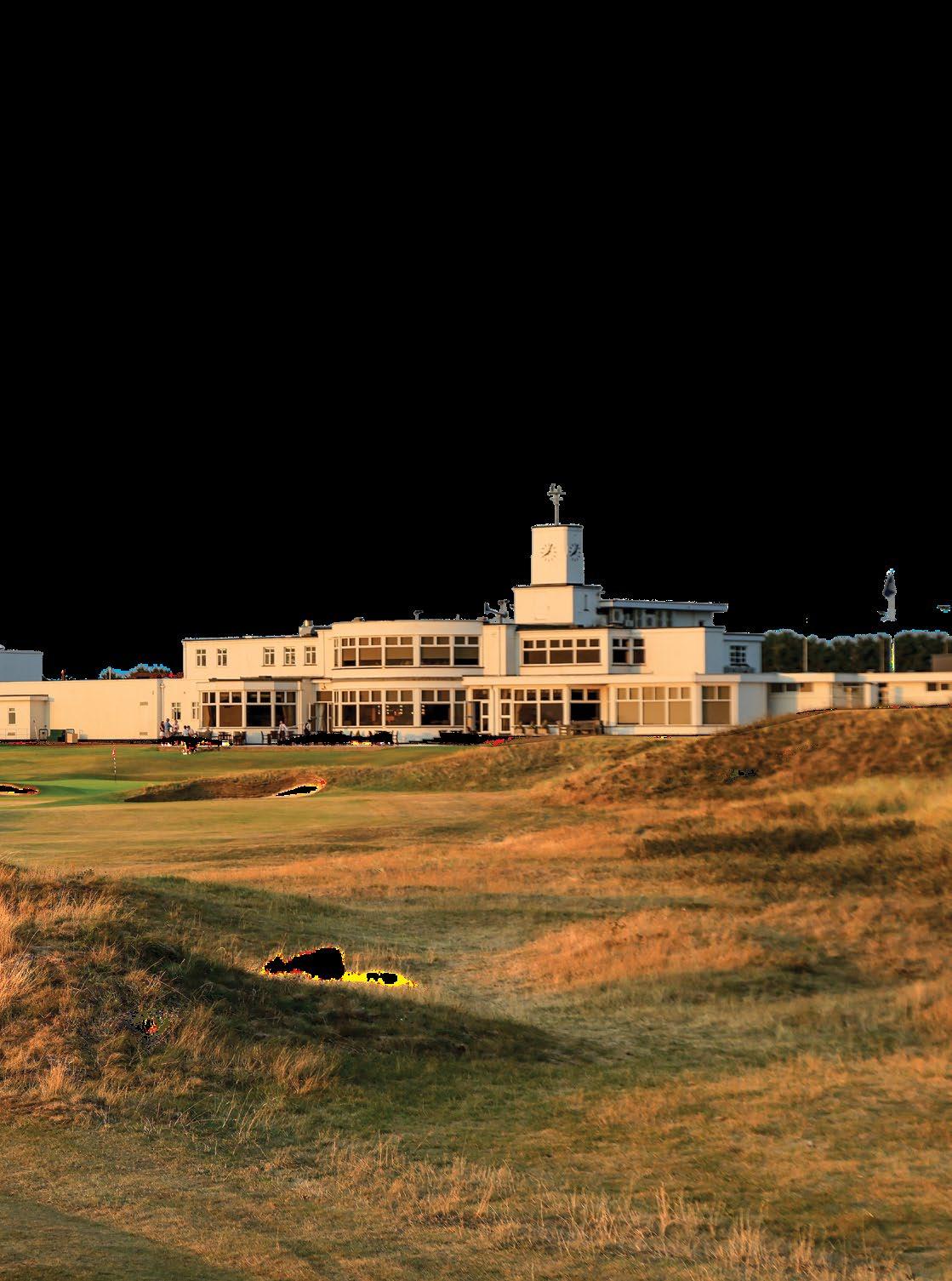
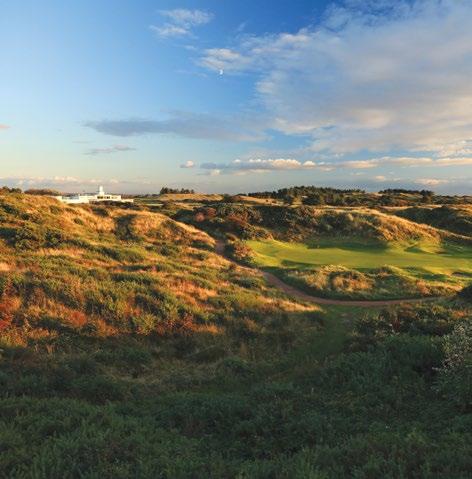
The iconic Art Deco clubhouse, completed in 1935, is another feature unlike anywhere else in championship golf. Its distinctive clock tower has become one of the most recognisable landmarks in the sport and can be spotted from almost every hole.
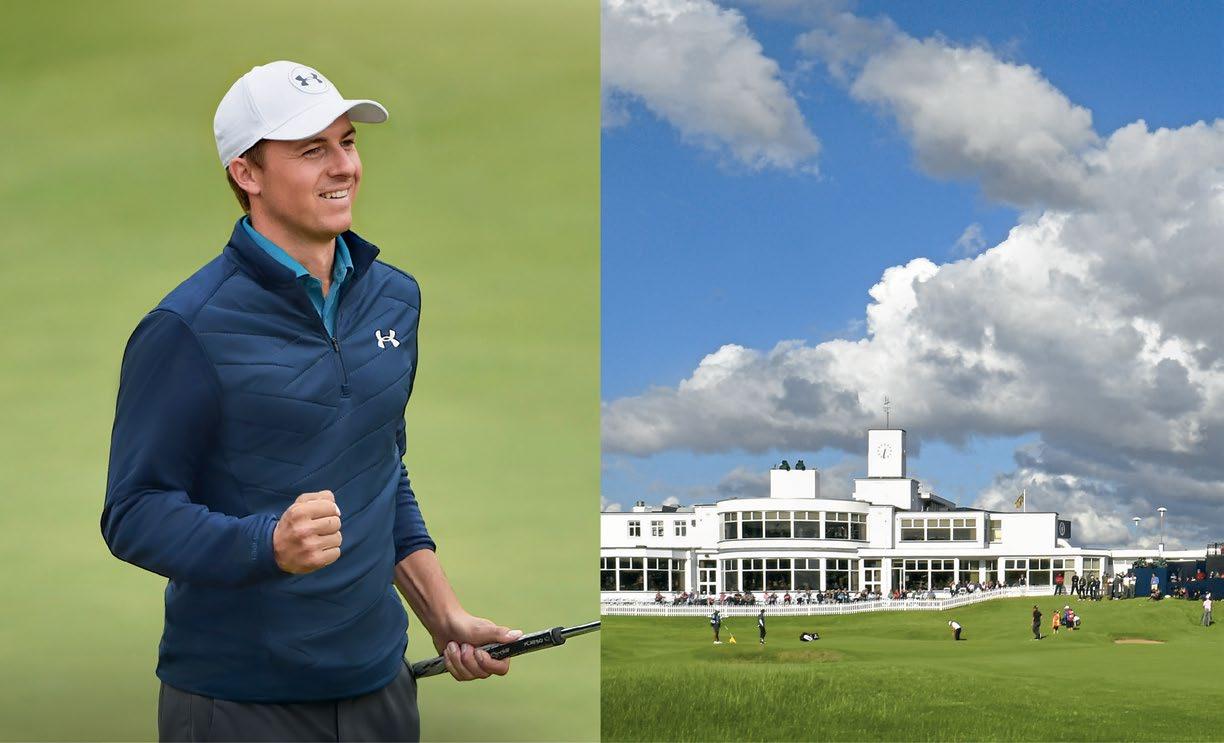
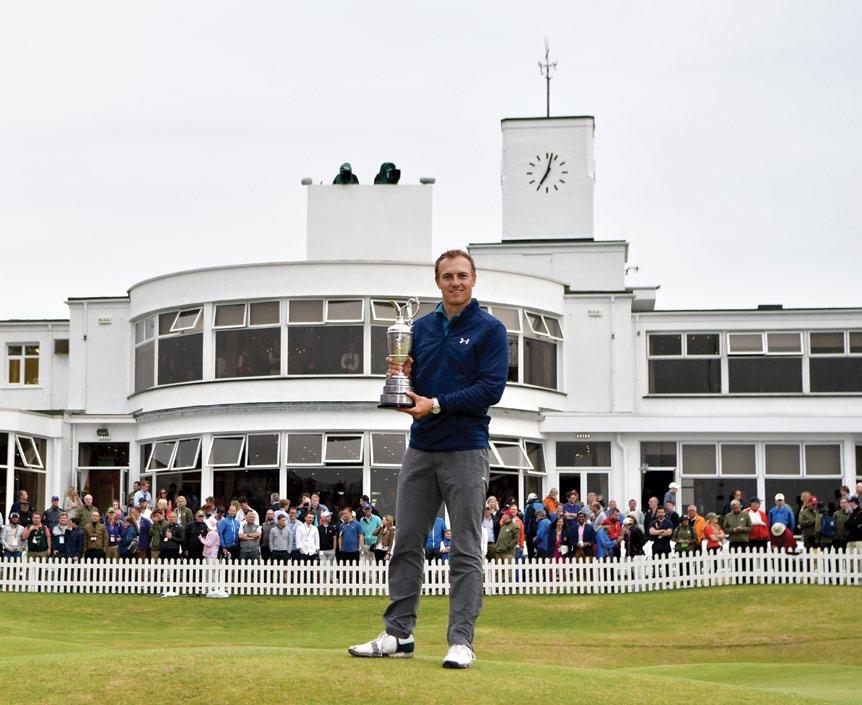
The list of champions reads like a golfing Hall of Fame. Peter Thomson won the inaugural Open here in 1954 before adding another in 1965. Arnold Palmer, Lee Trevino, Johnny Miller, Tom Watson, Ian Baker-Finch, Mark O’Meara, Pádraig Harrington and Jordan Spieth have all lifted the Claret Jug on these fairways, while the course also witnessed Branden Grace becoming the first player to shoot 62 in men’s Major championship history during The Open in 2017.
Did You Know? Royal Birkdale has also hosted two Ryder Cups, six Women›s Opens, the Walker Cup, Curtis Cup and countless amateur championships. Few venues anywhere in the world can match its championship pedigree.
yndham Clark turned up at Shinnecock Hills looking for redemption and spent Sunday finding out that the raucous New York crowd hadn’t read the script.
The 126th US Open was supposed to be straightforward. Clark led after every round, opened with a 64 and carried a six-shot cushion into the final day. Only Greg Norman had ever let a lead that big slip at a Major, back at the 1996 Masters, and nobody seriously thought Clark was about to join him. What nobody, least of all the man himself, quite saw coming…was the noise.
Long Island hadn’t forgiven him for Oakmont. Twelve months ago he missed the cut there by a single shot and took it out on the locker room. The ban, the apologies, the anger management, the cheque for the damage: none of it had cleared the slate as far as this gallery was concerned. There were “get in the bunker” shouts on what felt like every swing. Cheers when his putts stayed out, silence when they dropped. One fan was walked off the fourth for

telling him not to choke, and he was not the last to be removed.
For a while it looked like they might get the collapse they had come for. Clark played the front seven in three over. Sam Burns, who started the day seven back, came flying out with birdies and got to within a shot. Scottie Scheffler, chasing the last leg of the career Grand Slam on his 30th birthday, was in the same group and very much in it.
What kept Clark upright was his unerring consistency with the short stick. He signed a putter-only deal with Ping this year, the first single-club agreement in the company’s history, and before the final round he had holed 47 of 53 attempts from inside ten feet for the week. He kept holing them. A birdie at the 10th steadied things, a 25-footer at the 16th all but finished the job, and even a threeputt bogey at the 17th couldn’t undo the work. He needed a par at the last, missed the fairway, found the green anyway and left a 52-footer stone dead.
He was honest about the rest of it afterwards. “New York didn’t really like me,” he said. “Some of it is self-deserved. I did some unfortunate things last year that I really regret.” He admitted he and his caddie, David Pelekoudas, had taken to joking about it, marking the odd supportive shout with “there’s one person that likes me.” Clark said the atmosphere reminded him of playing a Ryder Cup on foreign soil. An astonishing thing for an American to say at the US Open and it’s hard to imagine a British player coming out with such a statement at Royal Birkdale this month.
Scheffler never found the gear everyone assumed he would. A closing 71 left him level par and four back, sharing fourth with JT Poston
and Keith Mitchell. The slam waits another year. He was generous about Clark and blunt about the support. “Being in the arena is not for everybody,” he said, which is about as close as he gets to losing his patience.
Burns will be replaying this one for a while. Seven back at the start, he shot 67 and somehow got nothing out of it, the second year running he has been in the mix at a US Open and watched someone else lift it. He finished a shot adrift on three under. Tom Kim, who turned 23 on Sunday, took third on his own at one under, a reminder of what he can do when it clicks.
The USGA, so often accused of losing Shinnecock, set it up to be played rather than survived. Seventeen men broke 70 on the final day and the field averaged a shade over 71, the third-lowest closing average in the championship’s history. Mitchell got there his own way, becoming the first player to post four rounds of level-par 70 at a US Open.
The European interest was almost entirely English. Tyrrell Hatton was the pick in a tie for seventh, with Justin Rose, Tommy Fleetwood, John Parry and the new PGA champion Aaron Rai a stroke further back. Rory McIlroy never got going and signed off at six over, conceding that Shinnecock had “won the battle over me.”
For Clark it was a second US Open to sit alongside 2023, and an odd sort of vindication. He climbed from 34th to eighth in the world and banked $4.5 million, though the moment that counted came on the 18th green, where his father Randall, in off a red-eye from Denver, was waiting on Father’s Day. “That’s the toughest round of golf you’ve ever played,” he told him.
He wasn’t wrong. Clark has two Majors now, both of them national championships, both won with his back against something. He may never be the crowd’s pick, and on the evidence of Shinnecock he has stopped waiting for them to come round. He spent Sunday saying it felt like an away Ryder Cup. The next one is in Ireland – it is genuinely away. The United States could do worse than a man who has just learned to win with nobody in the venue on his side.
By Rick Bevan
FEATURES THE 154TH OPEN | ROYAL BIRKDALE | JULY 16–19 2026 Photography:
By Rick Bevan
The Open returns to the Southport coast for the first time since 2017. Scottie Scheffler arrives as the defending champion, Rory McIlroy with a second green jacket on his back, and a strong English line led by ‘local lad made good’ Tommy Fleetwood, will have a hometown crowd behind him and a large chunk of unfinished business to deal with.
The
Open is back at Royal Birkdale. From 16 to 19 July, the oldest Major in golf returns to the Southport coast for the first time since 2017. It is the 11th time Birkdale has staged the Championship. Since it joined the rota in 1954, only St Andrews has hosted more.
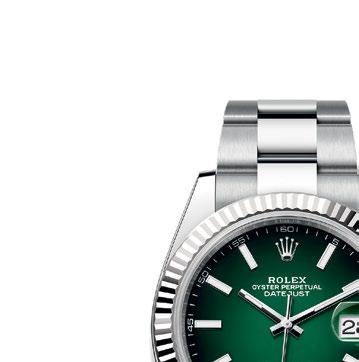
Birkdale first held The Open in 1954, when Peter Thomson won the first of his five Claret Jugs. The names on the honours board since read like a roll call of the game’s best: Arnold Palmer, Lee Trevino, Johnny Miller, Tom Watson, Mark O’Meara, Padraig Harrington. The most recent is Jordan Spieth. This year the field is 156 strong, and plenty of the storylines are already written.22
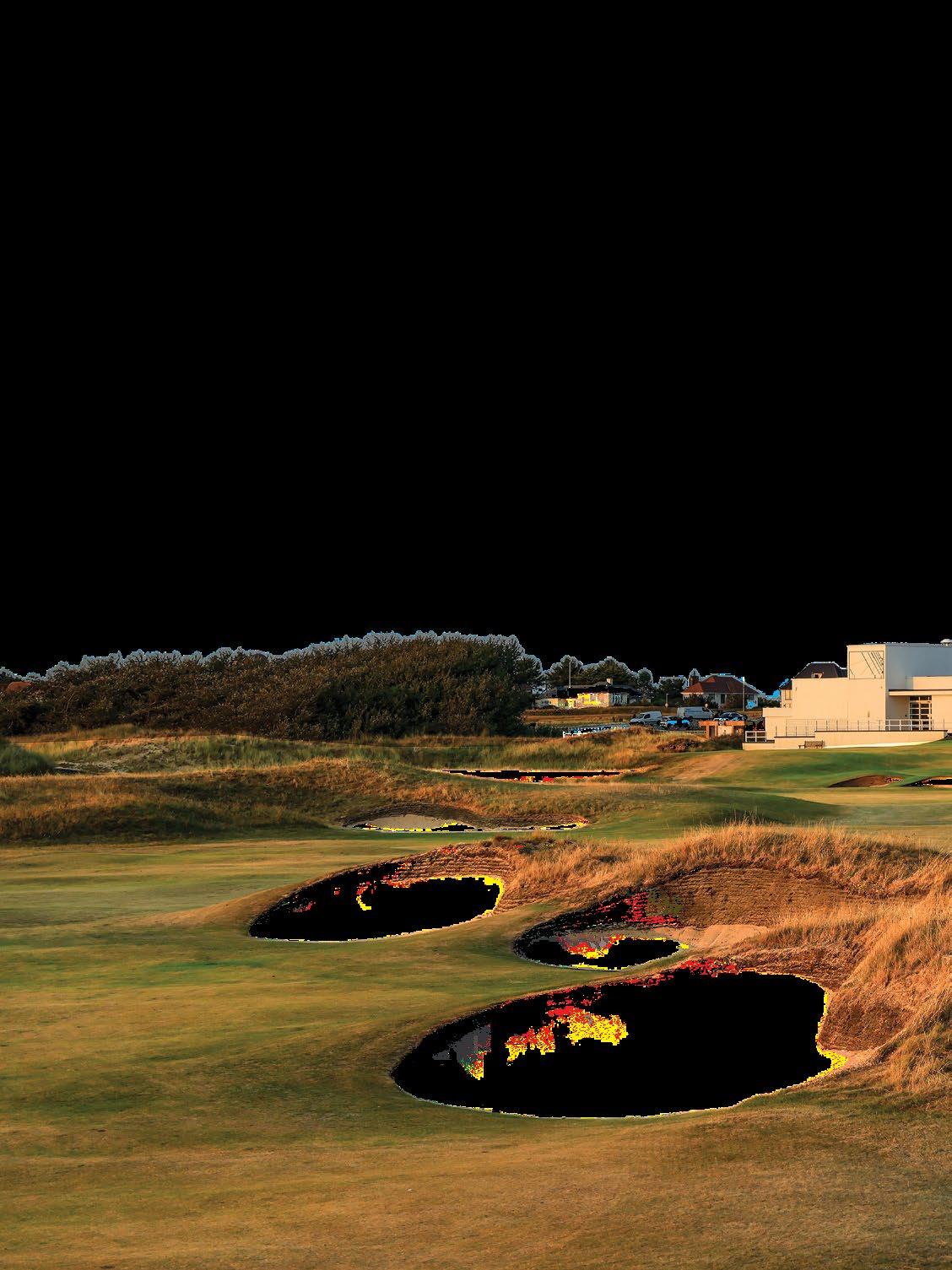
Royal Birkdale is links golf without the lottery. Other links can punish a good shot with a bad bounce. Birkdale tends not to. The fairways sit in valleys between the dunes, the lines off the tee are clear, and the player who drives it straight is rewarded. Miss, and the willow scrub rough and the revetted bunkers do the rest. There’s rarely a way to muscle out of a Birkdale bunker towards the green. Most of the time the only option is sideways.
The greens are small, quick and subtly contoured. The wind comes off the Irish Sea and changes its mind often. Par is usually a good score, and when the weather turns it becomes one of the hardest tests in the game. Tommy Fleetwood, who knows the place better than anyone in the field, put it plainly.
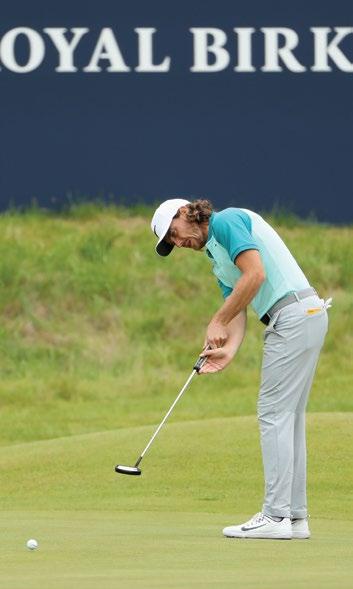
“Birkdale is a driving golf course,” said the Englishman. “You have to know what you’re doing and you need to have a plan before you step foot on the
“Birkdale is a driving golf course, You have to know what you’re doing and you need to have a plan before you step foot on the tee.” –Tommy Fleetwood
No one in the field has a closer tie to this course than Fleetwood. He was born in Southport, three miles from the first tee. As a boy he and his dad would sneak onto Birkdale to play a few holes. The first Open he ever watched was here, in 1998.
In 2017 the dream turned real. Fleetwood arrived as the home favourite, his face on the banners along the roads into town.
“Birkdale was the first Open I had been to as a seven-year-old, and now I was the face of it,” he said.
An opening 76 took the early shine off, but he rallied over the weekend to make the cut and finish tied 27th, calling it a week he’ll never forget.
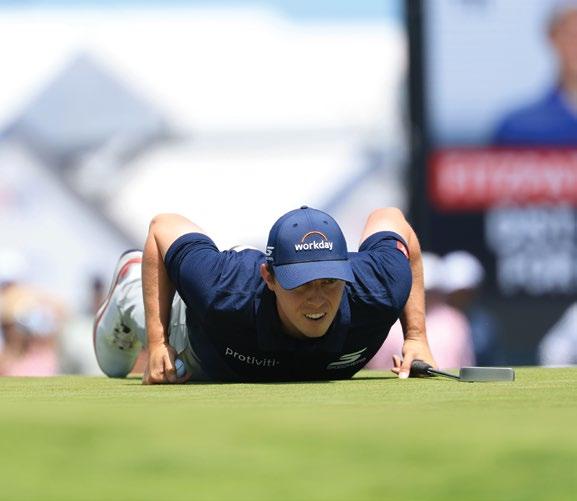
He’s come a long way since. After 164 starts and 30 top-five finishes, more than anyone on the PGA Tour in a century, Fleetwood finally won on American soil at the 2025 Tour Championship, taking the FedEx Cup and its $10 million prize. He added the DP World India Championship in October and was part of the European side that won the Ryder Cup in dramatic style at Bethpage. The 35-year-old arrives at Birkdale ranked World No.7.
He’s gone close at The Open before, most notably as runner-up to Shane Lowry at Portrush in 2019. The Major he wants above all the others has never been in doubt.
“It’s been a dream of mine to win The Open,” he said, “ever since I was a very young kid growing up in Southport.”
There’s history on the line too. No Englishman has won The Open on English soil since Tony Jacklin at Royal Lytham in 1969. There’s been no English Champion Golfer of any kind since Nick Faldo in 1992. A Fleetwood win at Birkdale would settle both, in the town where he learned the game.
Scottie Scheffler returns as Champion Golfer of the Year. He won the 2025 Open and remains World No.1, a position he’s held with a grip few players in the game’s history have managed.
By his own standards, 2026 has been quiet. One win, back in January, and four runner-up finishes,
the Masters among them, where he closed to within a shot of McIlroy. He’s looked frustrated at times. Yet he hasn’t finished outside the top 25 since the summer of 2024, still leads the Tour in the numbers that matter, and remains the man the rest of the field measures itself against. Writing him off at a course that rewards control and ball-striking would be a mistake.
Rory McIlroy comes in as a two-time reigning Masters champion, the back-to-back green jackets confirming the best stretch of his career. The Northern Irishman completed the career Grand Slam at Augusta in 2025, and he already knows how to win this one. His single Open title came at Royal Liverpool in 2014, just down the coast at Hoylake. He’s got the links pedigree, the power and the experience to add another, and will be among the most watched players all week.

Scheffler celebrates with son Bennett and the Claret Jug after winning the 2025 Open Championship at Royal Portrush.
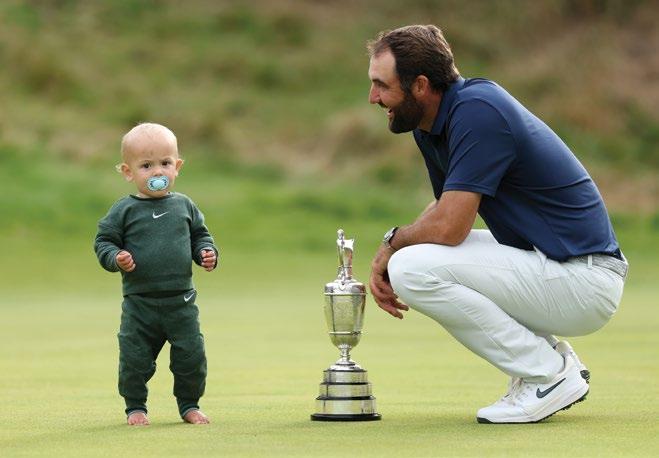
England has strength beyond Fleetwood. Matt Fitzpatrick, the 2022 US Open champion, has been the most prolific winner of 2026 with three PGA Tour titles. Aaron Rai arrives as a Major champion in his own right after a surprise win at the PGA Championship at Aronimink. Tyrrell Hatton, still with the faltering LIV Golf, is among the best ballstrikers in the game. Justin Rose, a Major winner and former World No.1, keeps turning up on leaderboards. Scotland’s Robert MacIntyre has the game for links golf and the temperament to go with it.
Cameron Young opened 2026 by winning the Players Championship and has finally turned a habit of near-misses into wins. Xander Schauffele, the 2024 Open champion, will be keen to remind everyone what he can do after a flatter year. There’s no shortage of players who can lift the Claret Jug come Sunday.
Jordan Spieth hasn’t been the same player of late. But this is where he won the Claret Jug in 2017, and few venues will stir more memories for him.
His final round nine years ago remains one of the strangest and best closing stretches the Open has produced. A wild drive on the 13th sent him miles right and onto the practice ground. He took an age over a penalty drop, made bogey, then played the next five holes in five under to break Matt Kuchar’s heart and win by three. Whether his current form allows anything close to a repeat is another matter. The story of his return is worth following regardless.
The R&A has added a few things to Open week. The headline change is the Last-Chance Qualifier. On the Monday, July 13, twelve players who narrowly missed out through the other routes will play 18 holes at Birkdale for the final place in the field. One round, one spot, winner takes all.
There’s also a Heroes Classic showcase during the practice days, and a new range of ticket and hospitality options called The Open Experiences, with Birkdale the first venue to host them. The R&A expects the week to draw more than 300,000 spectators, which would be a record, from over a million ticket applications.
Birkdale does not give much away. It asks for straight driving, clean iron play and patience when the wind gets up, and it tends to reward the most complete player in the field rather than the hottest putter. Scheffler will defend, McIlroy will chase, and a deep English contingent will fancy their chances.
But the loudest noise all week will be for the man who grew up three miles away. Fleetwood has spent his whole life around this course. From 16 July, he gets four days to finish the story properly.
PADRAIG HARRINGTON
Photography: Getty Images
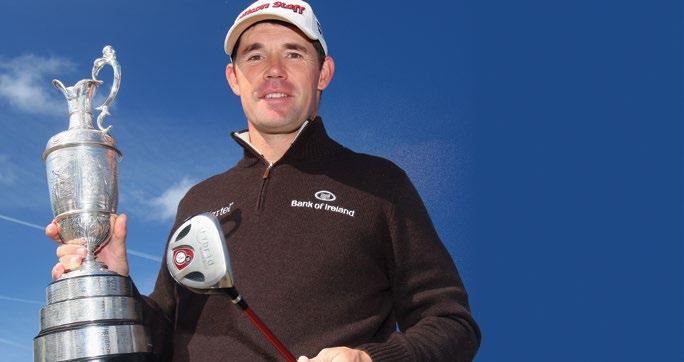
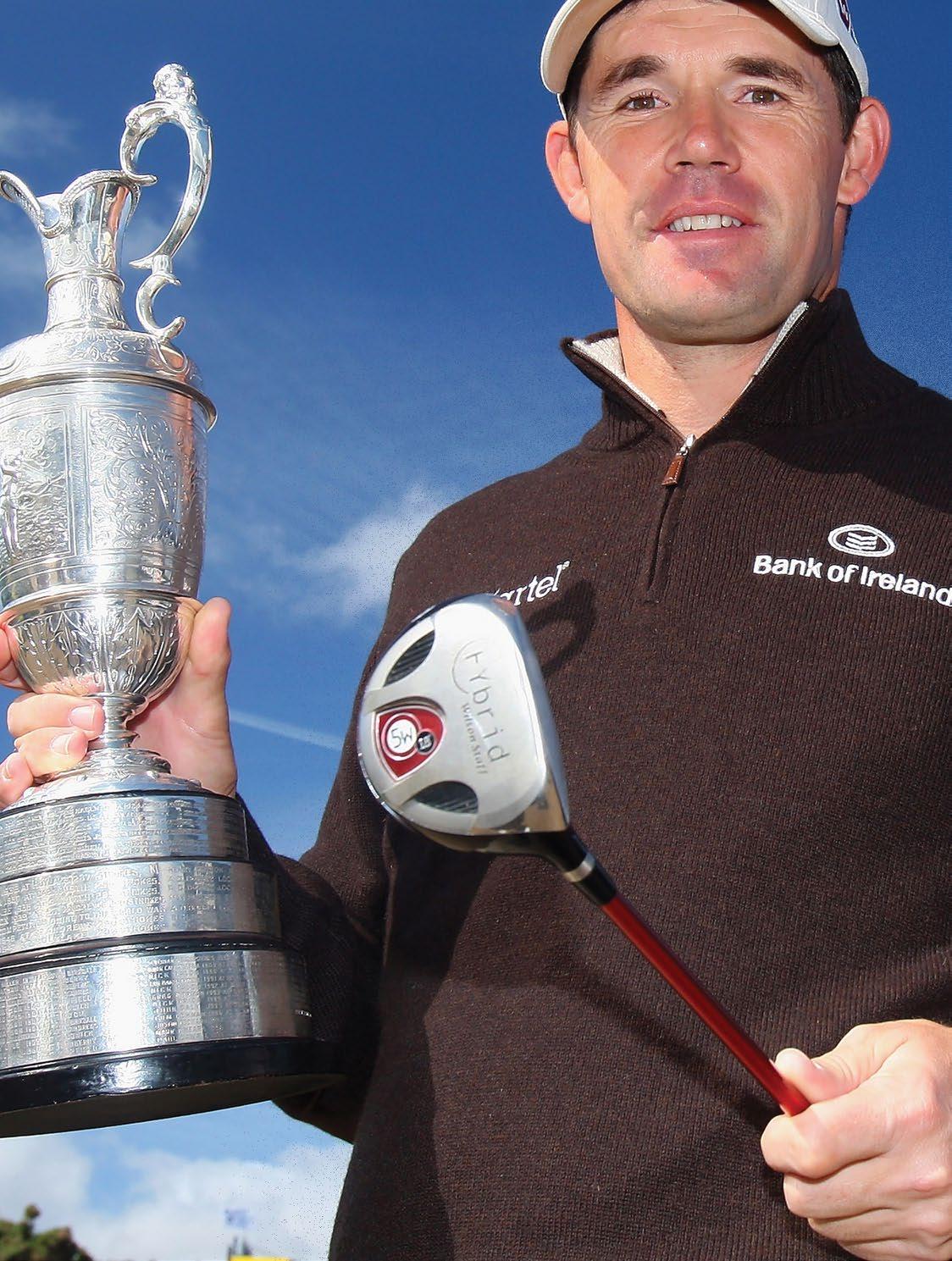
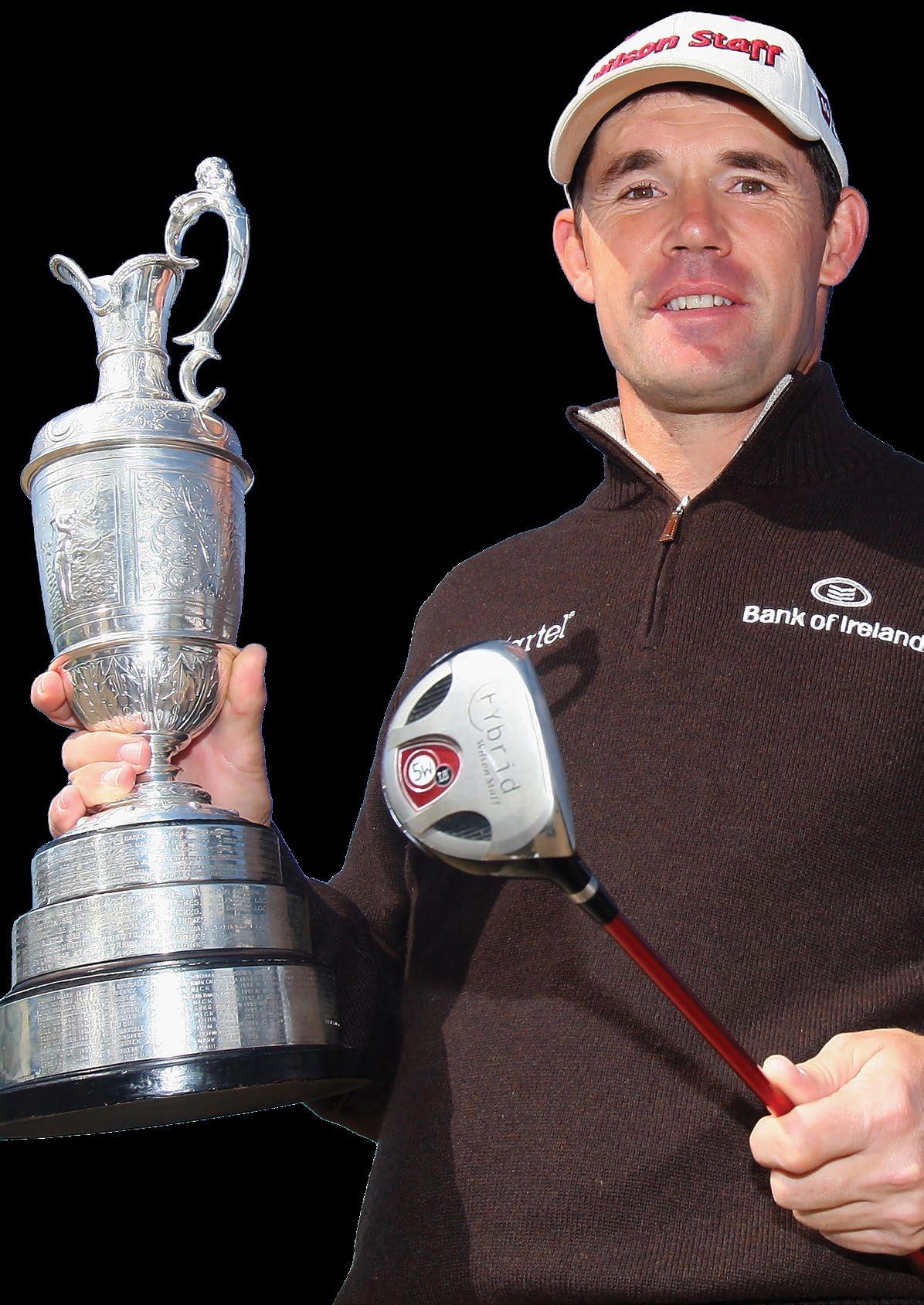
Some shots become shorthand for a career. For Padraig Harrington, that shot arrived on the 17th hole at Royal Birkdale on the final afternoon of the 2008 Open Championship, a 272 yard 5 wood, struck into a swirling crosswind, aimed not at safety but straight at history.
Harrington had a two-shot lead over Ian Poulter with two holes to play. The conservative move was obvious: lay up short of the fairway bunkers, take his medicine, walk away with a par and a healthy cushion. Instead, his caddie Ronan Flood handed him his favourite club and the pair committed to the green in two. “It was 272
to the hole, I think it was about 228 to carry the bunker,” Flood later recalled of the decision. The ball found the putting surface. The eagle putt dropped. And with it, Padraig Harrington became only the second European in more than a century to successfully defend the Claret Jug, and set in motion the most productive stretch of his career.
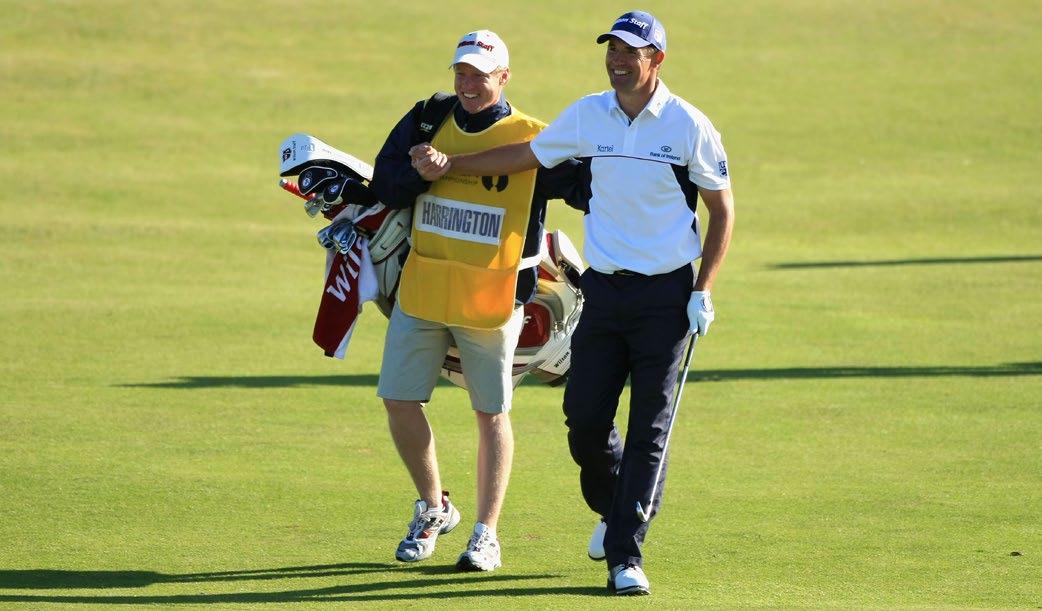
Twelve months earlier, Harrington had announced himself as a Major champion by running down Sergio Garcia in a four hole play-off at Carnoustie, overturning a six shot deficit to become the first golfer from the Republic of Ireland to win The Open. That victory changed everything about how he was perceived, transforming him from a steady, dependable pro into a genuine Major force. But Harrington himself has admitted the Carnoustie win never felt entirely clean, given his double bogey stumble at the 72nd hole. Birkdale, he later said, was different: a title defended in the toughest possible circumstances, with nothing left to argue about.
Getting there was nearly derailed before it began. Eight days before the championship, fresh off winning the Irish PGA title, Harrington injured his wrist in freak fashion while doing speed drills at home. “I decided well, I’ll do a one hander Happy Gilmore into the impact bag,” he explained,
describing the mishap that left him barely able to practise in the run up to Southport. He abandoned a Wednesday practice round entirely and arrived at the first tee genuinely unsure whether he could complete the tournament, let alone defend his title.
Royal Birkdale that week was less a golf course than an ordeal. Horizontal rain and gusting winds battered the Lancashire coast from the opening morning, and Harrington limped to an opening 74. He steadied himself with a battling 68 in round two, a score forged, he said afterwards, through sheer refusal to relinquish his title, telling reporters he wanted the weather to keep testing him rather than ease off. A third round 72, in conditions so severe that not a single competitor broke par all day, left him four over and two shots adrift of an unlikely leader: 53 year old Greg Norman, chasing a third Claret Jug two decades after his first.
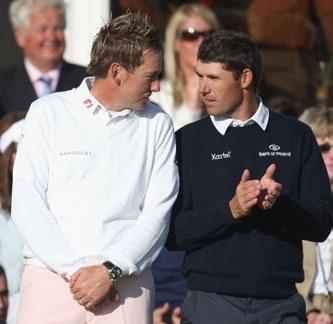
Paired with Norman in the final group on Sunday, Harrington was, by his own admission, wary of the occasion. “I played with Greg Norman on the Sunday and I feared that a lot,” he said. It was the first time in his career he had gone out in the last group on the final day of a Major, and the tension showed early. Three straight bogeys around the turn handed the lead back to the Australian. But links golf has a way of punishing swagger, and Norman’s challenge disintegrated over the closing stretch as Harrington’s game hardened. By the time the field reached the 17th tee, Harrington held a two shot advantage, and that was when the 5 wood came out.
The eagle at 17 effectively ended the contest. A closing par completed a final round 69, the low round of a brutal championship, and a six-shot
“ I felt an edge in terms of my ability to take an opportunity when it comes around.”

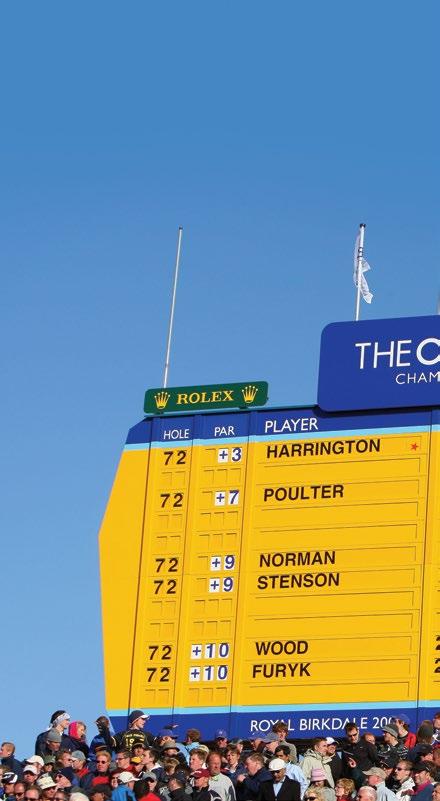
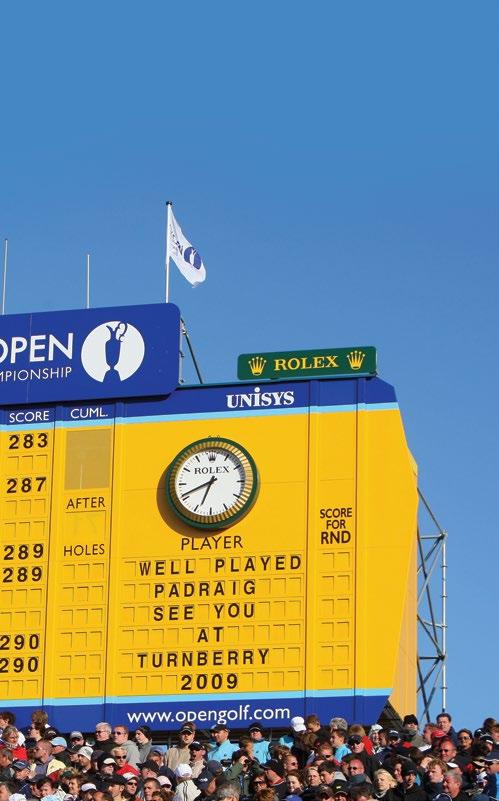
swing over the back nine turned a tight leaderboard into a comfortable four stroke victory over Poulter, with Norman fading to a closing 77. Harrington’s aggregate of 283, three over par, told its own story about the conditions that week; no one had it easy, and Harrington simply endured it better than anyone else in the field.
his moments. He would go on to one putt his final three greens, par, birdie, par, sinking a 15 footer on the 72nd hole to seal a two stroke win over Garcia and Ben Curtis.
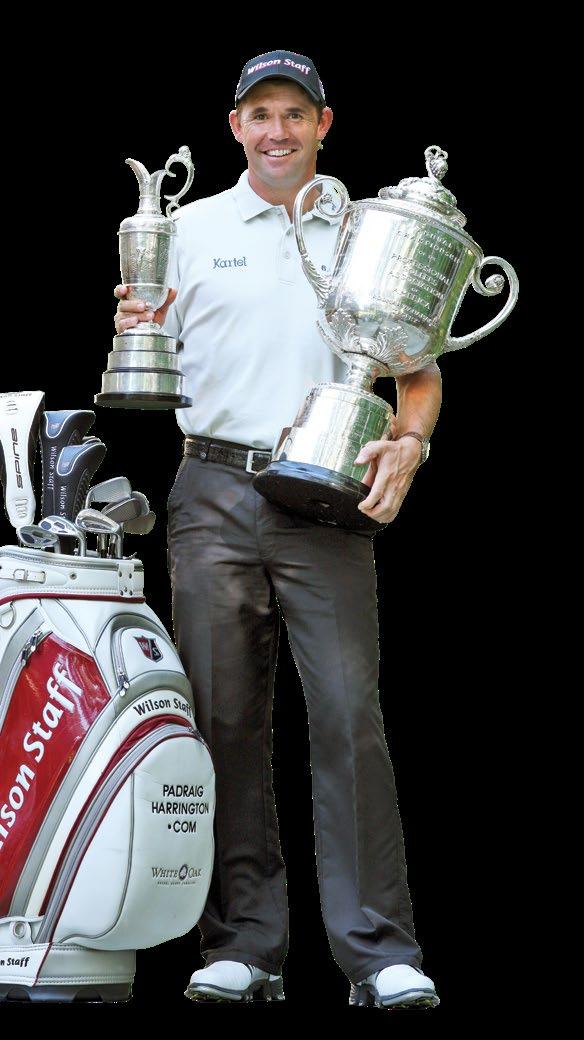
The victory made Harrington the first European to win the PGA Championship in 78 years, since Scotland’s Tommy Armour in 1930, and the first golfer from Ireland ever
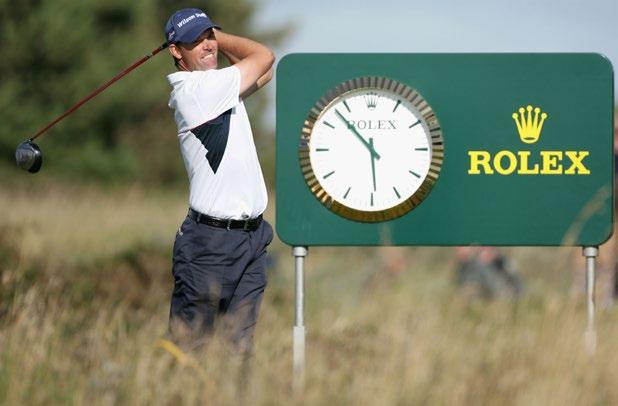
The achievement carried weight well beyond the scoreline. Harrington became only the fifth golfer in the previous fifty years to successfully defend the Open, joining a list that included Tiger Woods, Tom Watson and Arnold Palmer. More strikingly, he became the first European in over a century to retain the Claret Jug, a feat last managed by Scotland’s James Braid across 1905 and 1906. He was also the first golfer from outside the United States or Australia ever to win at Royal Birkdale.
Reflecting on the win years later, Harrington called it the most satisfying of his Major victories, not because it was the biggest margin, but because of the manner in which it was earned, under sustained pressure across two brutal weekend rounds rather than a single hot final round. “For as long as we go on there will be an Open Championship and my name will be on that trophy,” he said in the immediate aftermath, capturing both the disbelief and the permanence of what he had just done.
If Birkdale confirmed Harrington as a Major champion, what followed confirmed him as one of the finest players on the planet. Just three weeks later, at Oakland Hills Country Club in Michigan, Harrington produced arguably the most emphatic closing stretch of his career to win the PGA Championship, his third Major title in thirteen months.
The Oakland Hills week began unpromisingly. Harrington sat five over through 36 holes, well outside the frame. But a weekend of relentless scoring, matching 66s in the third and fourth rounds, hauled him into contention and, ultimately, to victory. Once again, Sergio Garcia was the man standing in his way, leading by a stroke playing alongside Harrington in the final round before a pushed 6 iron found the water at the par 4 16th. “There is no doubt that was the opportunity I was looking for,” Harrington said afterwards, with characteristic bluntness about seizing
to lift the Wanamaker Trophy. Asked what separated him from Garcia in the closing holes, Harrington pointed to hard won experience:
“I felt an edge in terms of my ability to take an opportunity when it comes around.”
Taken together, the six weeks between Carnoustie’s aftermath, Birkdale’s storm and Oakland Hills’ back nine surge transformed Harrington’s career. He finished 2008 as PGA Tour Player of the Year, the first European to receive the honour, and climbed to a career high third in the world rankings. Three Majors from six starts placed him, statistically, among the most dominant Major performers of his generation over that stretch, a run bookended by two head to head victories over Garcia in the biggest moments the sport offers.
What Birkdale provided, more than any statistic, was proof of durability. Carnoustie had shown Harrington could win a Major under pressure; Birkdale showed he could do it again, in worse weather, with a compromised body, while defending rather than chasing. That distinction mattered to him. Years later, preparing to return to Southport, Harrington spoke of the win with clear affection, noting it left him with no lingering doubts of the kind that had followed his breakthrough at Carnoustie.
The 5 wood at the 17th remains the enduring image, a champion refusing to play safe when he had every excuse to. But it was the accumulation that mattered: an injured wrist overcome, a five time Major runner up in Norman seen off, a century old European drought at the Open ended, and, within a month, a 78 year drought at the PGA Championship broken as well. Few stretches in modern golf history compress so much history into so little time. For Padraig Harrington, Royal Birkdale wasn’t just a second Claret Jug. It was the platform from which he confirmed himself, definitively, as a Major champion.
BY RICK BEVAN
A CONFIRMED SET OF EXEMPTION CATEGORIES, A FIRST QUALIFYING SCHOOL IN THE UNITED STATES, AND A DIRECT LINE INTO DP WORLD TOUR Q SCHOOL. THE TOUR HEADS INTO NEXT SEASON IN BETTER SHAPE THAN IT LEFT THE LAST ONE.
Photography: Provided
The regional conflict means it’s been a hard season to operate in, and nobody at the MENA Golf Tour is pretending otherwise. Which makes the plans for 2026/27 worth a look, because they point towards expansion rather than retreat. Three separate moves are behind it: the exemption categories are confirmed, there is a new Qualifying School in America, and the leading players now have a direct line into DP World Tour Q School.
The leading 40 players from this season are exempt for every tournament next year, and the Tour confirmed that early so players could plan around it. Everyone else goes through Qualifying School, and one of those will now be held in the United States for the first time, at Slammer & Squire at World Golf Village in Florida. It is a proper test, a 6,939-yard Bobby Weed design with Sam Snead and Gene Sarazen involved, and it sits among the better public courses in the country, picked out by Golf Pass as one of the best-conditioned layouts in the US. Players get a practice round before three rounds of competition. A European Qualifying School follows in October. At both, the top 10 earn a category that guarantees entry into every event next season, with 11th to 20th, and ties for 20th, picking up further playing rights.
The American venture is the one that stands out. It is the Tour’s first event of any kind beyond its usual territory, run with US partner GSM International, and there is open talk of it leading to a US swing of MENA Golf Tour events further down the line. For a tour built around golf in the Middle East, Florida is a long way from home, and that is rather the point.
“We’ve had a strong response from players and managers since we launched the US Qualifying School, and confirming the categories now gives everyone the clarity they need to plan their season,”
“
We’ve tried to make that as clear as we can, from how you get on to where it can lead. The rest of the detail will follow, but players can already see the shape of it.”
said MENA Golf Tour Chairman and Commissioner Keith Waters. “The Middle East is our home, and it stays that way. But we want to open up as many routes as we can for players trying to make their way in the professional game.”
The category list underneath all this is broad, and that breadth is part of the pitch. Beyond the exempt 40 and the Qualifying School graduates, the Tour pulls players in from the HotelPlanner Tour and the Asian Tour, and takes the leading names from a long line of worldranked feeder circuits, among them the Alps Tour, the Nordic Golf League and the Asian Development Tour. The bigger draw for most of them is where the Tour can take them. The leading three in the final 2025/26 MENA Golf Tour Rankings, to a limit of 10th place and not already exempt by other means, go straight into the Second Stage of the DP World Tour Qualifying School and miss out the First Stage. Positions are taken as they stand on 11 August 2026, and players have to have entered the First Stage by the deadline to take a place up. Anyone already exempt by other means does not count against the three, with the spot passing down the standings. It is a working route from a regional tour onto the main European circuit, and it skips the toughest early hurdle of Q School along the way.
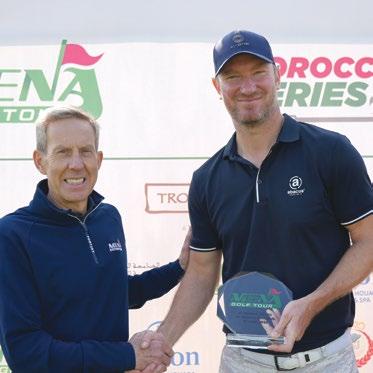
59,320 points from eight events and is now teeing it up for the rest of the season on the HotelPlanner Tour, is the latest player to show what a run on the MENA Golf Tour can do. The same was true long before him. Robert MacIntyre played the Tour early in his career and has since won on the PGA Tour and the DP World Tour, and Matthew Fitzpatrick and Thriston Lawrence both came through it as well.
“This is a proper reward for the players who turn up and perform week in, week out across our season,” said Waters.
“Getting them into the Second Stage of DP World Tour Qualifying School gives them a chance to take the next step, and that is what we are here for. We want to give emerging players a credible path, wherever they happen to come from, and this
The Tour goes into all this with backing behind it. The relaunch for 2025/26 came with fresh investment led by the entrepreneur Donna Benton of The Entertainer fame, alongside the existing leadership, and the season ran across the Middle East and Europe with world ranking points on offer at every stop. None of that erases the regional conditions of the past year, but it does explain why the response has been to build rather than trim.
That is not the only way up, either. The player who finishes top of the Rankings at the end of 2026/27 earns a HotelPlanner Tour card, with full exemption into every event from April 2027, and the Tour is weighing up whether to extend the same to the top three. There are also a further 10 or more HotelPlanner Tour invitations on offer to leading players across the season. All of it sits on the pathway agreement signed earlier this year, which tied the MENA Golf Tour into the DP World Tour structure for the first time and gave the route its formal backing.
Chris Wood, who won the Rankings this season with
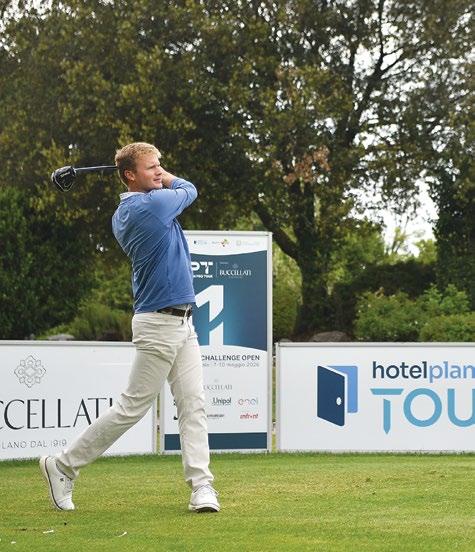
“What matters to me is that a player who has a good season knows exactly what it gets them,” explained Waters. “We’ve tried to make that as clear as we can, from how you get on to where it can lead. The rest of the detail will follow, but players can already see the shape of it.”
A tour shows its hand in how it reacts to a difficult year, and this one has reacted by adding events, reaching into new markets and firming up the way through to the top. Schedule, venues and the commercial detail will land over the coming weeks. The framework around them is set and the 2026/27 MENA Golf Tour season promises to be an enticing spectacle indeed.
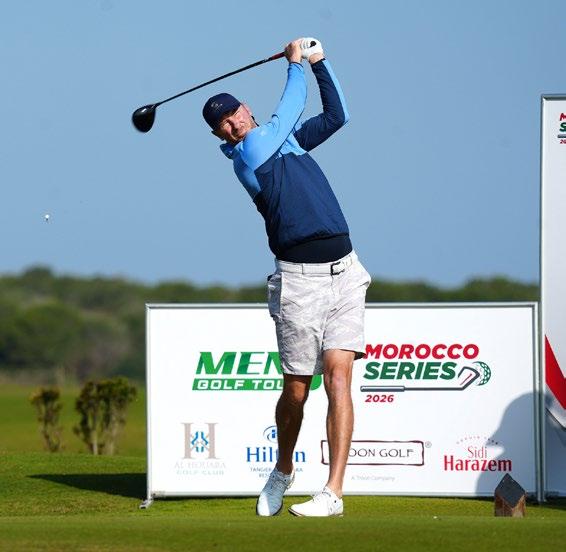
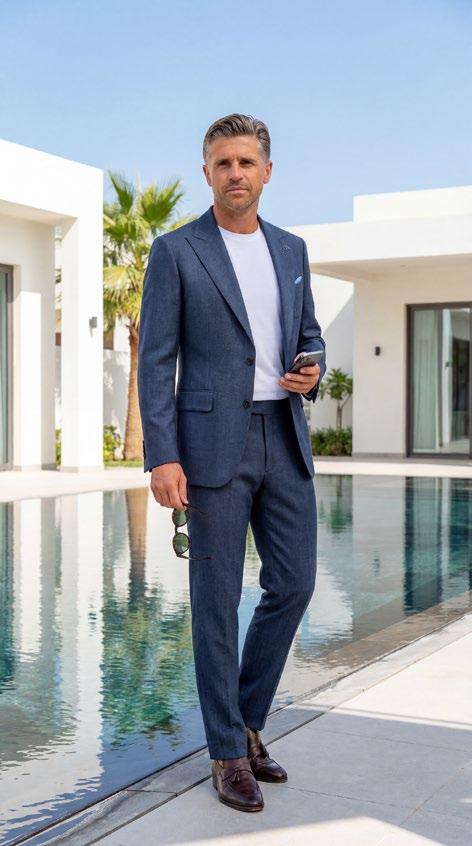
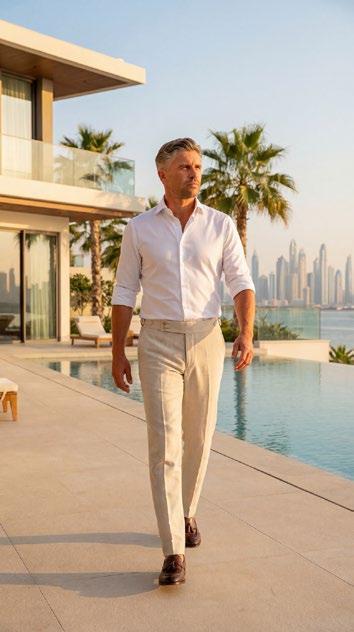
Dubai-based Suited & Booted is redefining modern luxury menswear for the athlete off the field
Blending precision tailoring with a contemporary edge, the brand has become a trusted name among elite sports figures across golf, football, boxing and beyond.
Favoured by high-profile personalities, Suited & Booted crafts sharp, made-to-measure pieces designed for every moment beyond competition - from public appearances to exclusive events
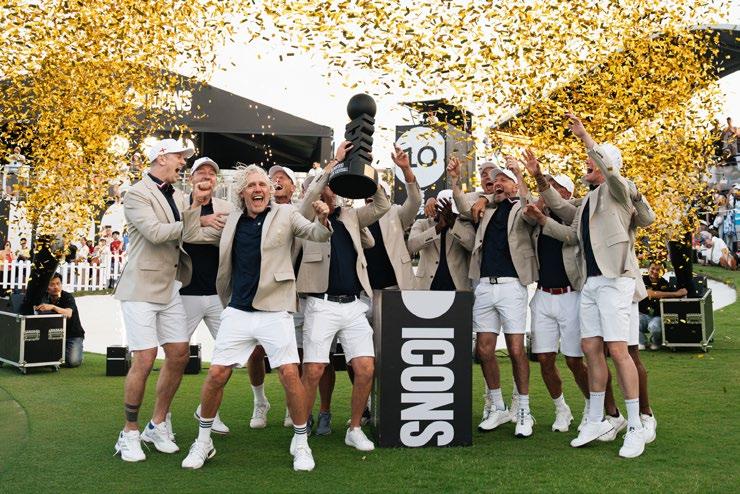
With partnerships spanning the ICONS Series and leading golf clubs across the UAE, the brand sits confidently at the intersection of sport and style.



SONNY WEBSTER
Photography: Alex Leyno / Provided
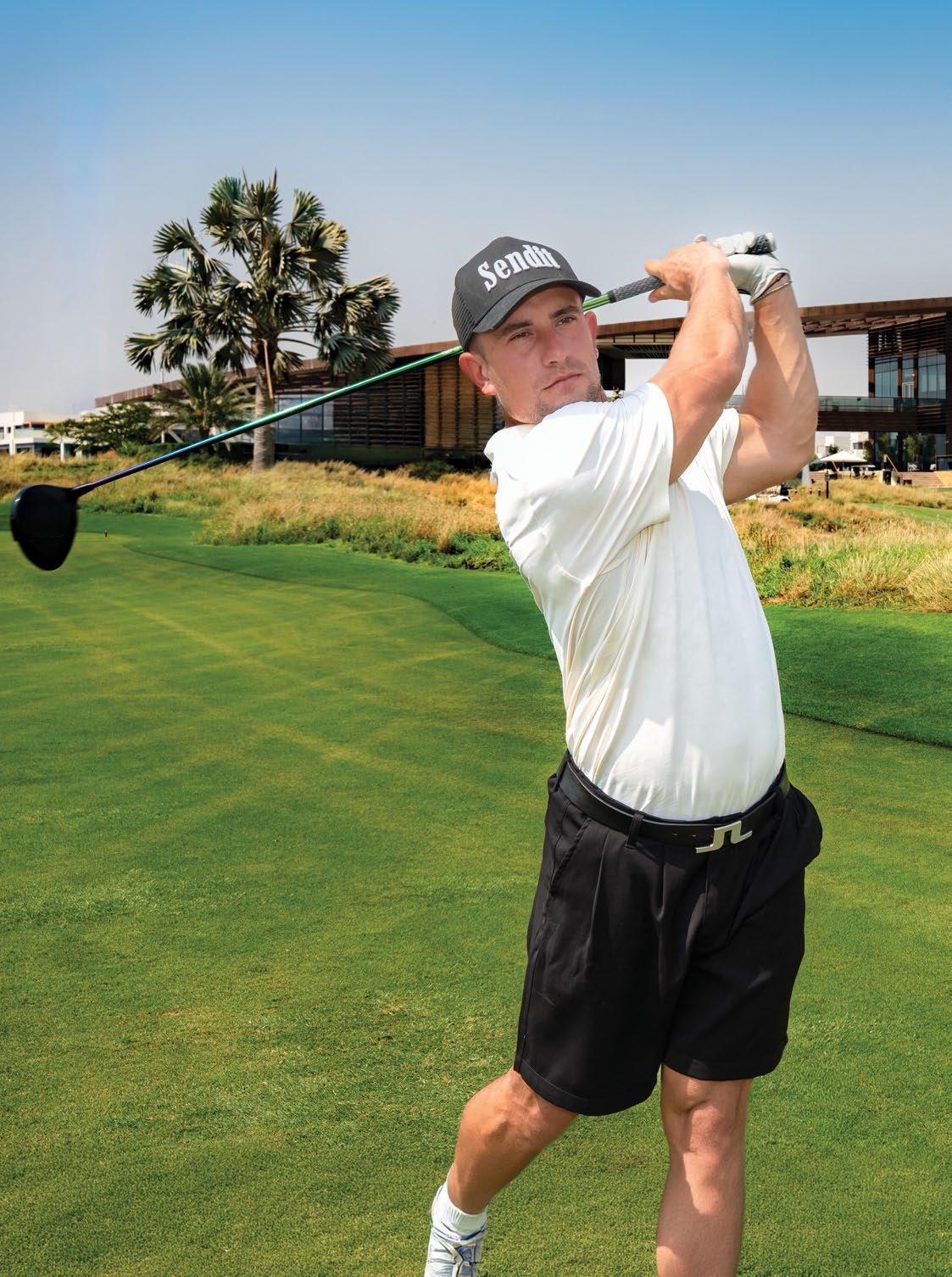
Long before barbells entered the picture, Sonny was already swinging a club. “Golf actually started for me before I even met the sport of Olympic weightlifting,” he explains. “My dad got me into the sport from the age of six, so I played from a very, very young age, and I grew up playing golf down in Devon at Bigbury Golf Club. My dad was a huge fanatic of the sport, so that was very much what my life looked like from a very young age.”
It is a familiar origin story: a parent obsessed with the game, a junior set of clubs, weekends spent on a windswept course by the coast. What happened next is a little less conventional. A change of school threw Sonny
into unfamiliar territory, socially at least. “I’d moved schools down in Devon, and when I started at this new school, I didn’t really know anyone. So, at lunchtime, I used to go and sit in the weightlifting gym.” What began as a way to pass the time, and by his own admission, wind up a few of the lifters, turned into something more. “After about two weeks of sitting there and taking the mickey out of a few people trying weightlifting, the coach came up to me and said, ‘Sonny, look, I want you to come and give this sport a go. You’ve been a nuisance in my class.’”
Sonny was not sold on the idea. Golf was still his first love, but the coach was persistent in a way only a school teacher can be. “The
teacher said, ‘Right, you’ve got detention tomorrow at lunchtime. You have to come and have a go.’ The next lunchtime, I went and gave weightlifting a go.” A reluctant detention assignment turned into an Olympic career.
Golf did not disappear from Sonny’s life during his weightlifting years, but it took a back seat. As a junior, he was seriously good. “When I was younger, I played at the golf academy at Filton. I got down to a two handicap there at the age of 16,” he says, “but there came a point in my life where it was too challenging to do weightlifting at a very high level and golf at a high level at the same time.” Something had
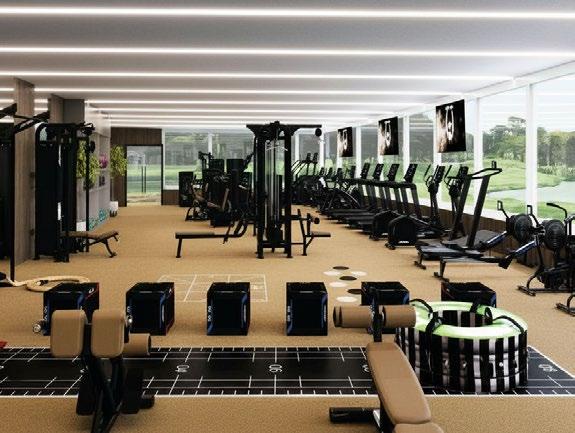
As part of its continued investment in the member experience, Trump International Golf Club Dubai is expanding its wellness offering with a newly renovated, members-only fitness facility, scheduled to reopen later this year. Designed to support both golf performance and overall wellbeing, the modern space will feature premium fitness equipment, dedicated strength and conditioning areas, recovery amenities including an ice bath, and preferred access to fitness classes and personal training.
Country Club Membership enquiries are now open, offering exclusive access to the club’s state-of-the-art fitness facilities, together with unlimited play on the award-winning Par 3 course throughout the day and into the evening.

to give, and for the best part of a decade, golf was shelved in favour of the platform.
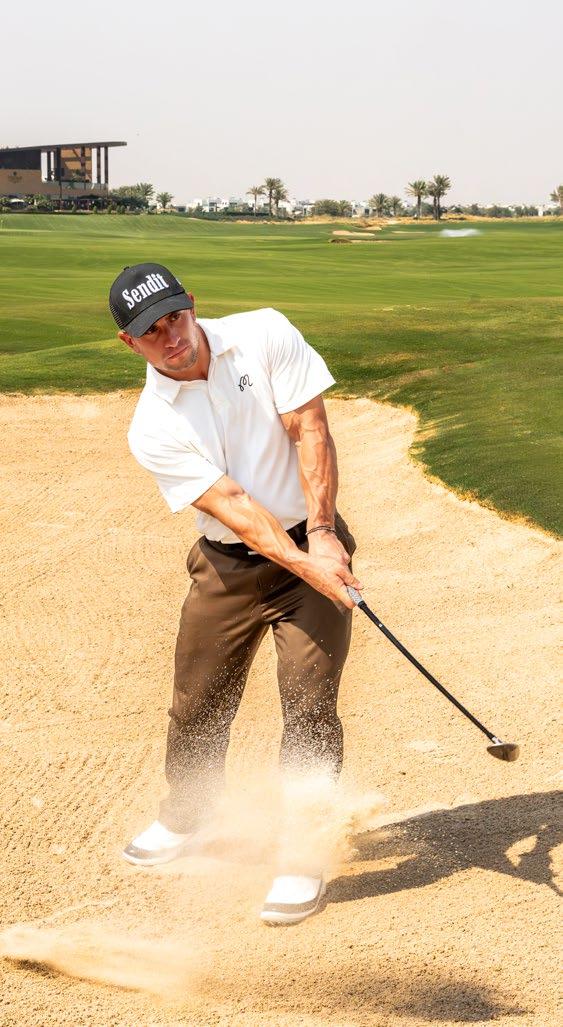
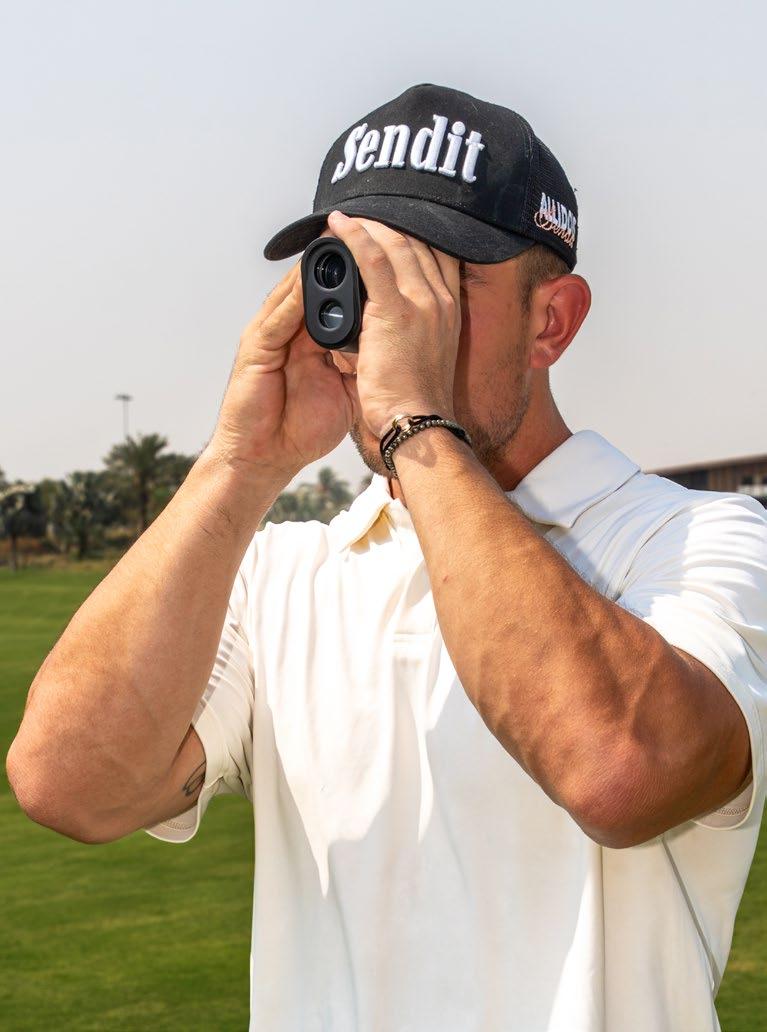
The comeback arrived once Sonny relocated to Dubai. “It’s only been since moving to Dubai in the last two or three years that I’ve picked the game back up and got back into it purely for enjoyment,” he explains. There is a friendly rivalry running through his group of friends too, complete with bragging rights on the line most weekends. Sonny’s current handicap sits at an enviable 0.7.
We met Sonny at Trump International Golf Club Dubai, a course he speaks about with genuine enthusiasm. “Trump is absolutely incredible. It’s one of the best courses here in the UAE,” he says. “It provides a huge challenge, especially around the greens with the tight lies, and it’s always in absolutely immaculate condition.”
Coaching is clearly a big part of the appeal too. “They also have incredible coaches at Trump, and I love going down there to have lessons with the guys.”
The Barbell and the Golf Swing: More Alike Than You Think
Ask Sonny about the overlap between Olympic weightlifting and golf, and he lights up. It is clearly a subject he has thought about a great deal. “Weightlifting and golf are actually extremely similar when you’re training for them,” he says. “Weightlifting requires a huge amount of technical precision, just like golf, and I’ve found a lot of similarities between the two, particularly from a timing perspective.”
The parallels go deeper than most people would assume. “In Olympic weightlifting, we think about extension, timing and strike, and it’s exactly the same in golf. So it really helps being good at Olympic weightlifting and then wanting to play golf, because everything I’ve learned about technical execution in weightlifting carries over to golf as well.”
There is a shared discipline underneath both sports too, one built on control rather than raw effort. “Even the way that you apply force in Olympic weightlifting has to be a controlled aggression, just like golf. A lot of it is about tempo and timing,” he explains. Where the two sports part ways is in their rhythm and duration. “With weightlifting, it’s a sport that happens within a matter of seconds or minutes. In competition, golf is over a much longer period of time, where you have to keep your cool and be a lot more strategic than you do in weightlifting.”
Yet even that difference has its exceptions. “In weightlifting competitions, you do get those same similarities when it comes down to your final lifts. When you have to add one kilo, it’s the same as being on a golf course and taking the trickiest shot because you need to make one up. The same principles apply,” Sonny reflects, drawing a comparison that will resonate with anyone who has ever stood over a five footer with the match on the line.
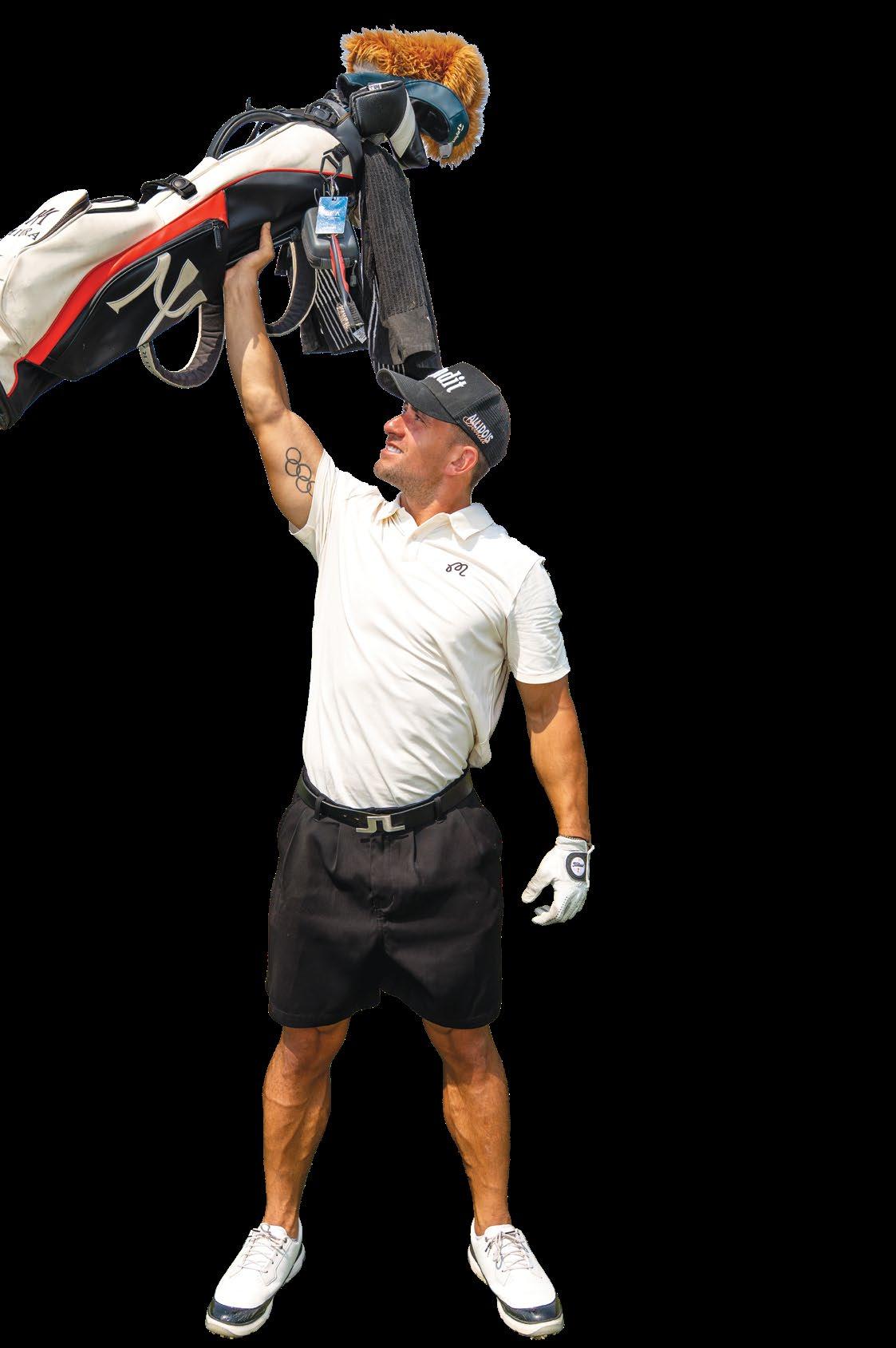
Few interviewees are better placed to talk about the physical side of golf than a former Olympic weightlifter turned strength and conditioning coach. “I think exercise, strength, and conditioning in golf has become something a lot more prevalent over the last few years,” he says. “You see some of the top four guys now spending just as much time in the gym as they do on the golf course, because that’s what gives them the edge.”
Distance has become the currency of the modern game, and Sonny sees fitness as the engine behind it. “It’s important in the modern game now to hit
SONNY WEBSTER
Photography:
Alex Leyno
the ball a long way. Having good mobility, good strength, and explosive power is what allows them to get the ball out there, but also maintain a level of fitness that allows them to keep that up over the period of four rounds.” Longevity matters just as much as power, in his view. “Mobility is probably one of the most important aspects because that’s what helps keep people injury free and gives them longevity in any sport they practice.”
Pressed for a single movement that could transform a golfer’s distance off the tee, Sonny does not hesitate. “I think one of the most important movements, full stop, for anyone is the squat. Building good full body strength, particularly in the lower body, is extremely beneficial when it comes to producing power. A lot of the power in the golf swing is produced from what’s happening with the lower body.” He is quick to point out where the two sports diverge, though. “One of the biggest differences between an Olympic weightlifting
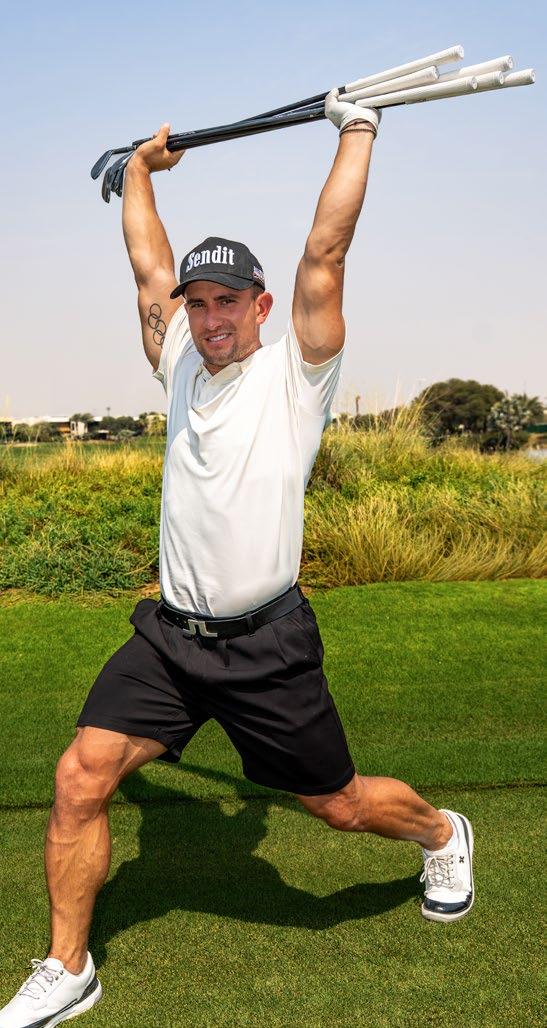
movement and the golf swing is that there’s a lot more rotation involved. Utilising rotational exercises and strengthening movements away from the body is equally as important as squatting through a full range of motion to produce power through extension.”
For anyone wanting to borrow a page straight out of the Olympic weightlifting handbook, Sonny has one more suggestion. “If I was to include one
exercise that’s very much Olympic weightlifting based, it would be something like the Power Clean.”
Golf, more than most sports, is a battle against yourself, and it is a lesson Sonny took straight from his weightlifting career. “When it comes to competing in Olympic weightlifting, you are against yourself at the end of the day, and you can’t have any impact on someone else’s performance. It’s very much a you versus you sport, and that’s something you find in golf as well. When you’re playing against competitors or in a group, you can quickly be influenced by someone else’s shot, the club they hit, and that can impact your own performance. Being able to stay in your own lane and focus on what you’re doing in Olympic weightlifting is extremely valuable when you’re on the golf course too. You’re playing within yourself and playing your own game.”
No golf conversation is complete without talking favourites, and Sonny’s list reads like a tour of the
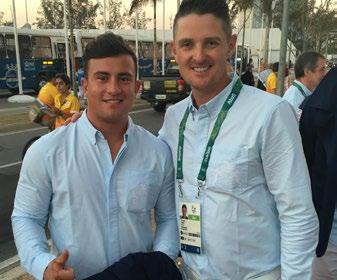
modern game’s biggest characters. “Growing up, for me, Tiger Woods was obviously a huge inspiration. He was part of my era during childhood, and the way that he dominated the sport was so, so inspiring from a very young age. I think now everyone loves to see guys who are a little bit more charismatic, like Bryson DeChambeau. They really make the game enjoyable and accessible to the masses, for sure. I’ve grown to love Rory McIlroy as well, with the way he has been dominant later on in his career. Equally, someone like Scottie Scheffler, who doesn’t have the most clinical swing but hits the ball incredibly well and has been world number one. These guys, alongside Justin Rose, who I had the pleasure of meeting one day at the Olympic Games, are definitely among my top guys.”
Ask Sonny where he would love to play next, and the wish list reads like something out of a golf traveller’s fantasy. “I think one of the golf courses that I’d love to play one day would be Cypress Point. I mean, that’s world class. Pebble Beach as well, anything in and around that part of the world would be incredible.” Closer to home,
though, he does not have to look far for excellence. “Out here in the UAE, I absolutely love Yas Links. We’re absolutely spoiled for choice when it comes to golf courses here. We’re playing world class golf at Trump, at Jumeirah Golf Estates and of course at Emirates Golf Club. We’re very fortunate to be surrounded by amazing courses here.”
Given his background, it is no surprise that Sonny takes real pride in his equipment and driving in particular. “Driving is definitely the strength of my game. I’ve recently swapped back to an old PXG 0211 head, which is a nine degree driver with a HZRDUS 6.5 TX shaft. It’s an absolute beast of a club. I’ve cut it down slightly shorter, and it’s by far my favourite club in the bag. I’d love to upgrade the head because it’s getting old, but I just hit it so well. So, it’s staying in the bag for now.”
The putter tells a story of loyalty with a modern twist. “I’ve always been a big Scotty Cameron fan by nature. I’ve always played a Scotty Cameron Newport Two, but LAB have recently brought out something that looks a lot more classic, like a blade style putter, which is the Link
2.1. I’ve got it with a really thin Pistol Ionic grip on, which I absolutely love. This is a zero torque putter, which feels extremely similar to my Scotty Cameron, and I’ve really been enjoying it lately.”
The most treasured item in the bag arrived recently, a personal touch few off the shelf sets can match. “Probably the most special part of my bag is a very new addition, which was a birthday present, a completely custom set of Makino heads that were made for me. This is their BC2 head, which they engraved with ‘Send It’ on the bottom and ‘SCW’ on the trail of the club. I’ve got my bottom groove painted white, which I absolutely love, and I play an Axiom 105 X shaft. They’ve also got the Sasquatch ferrules, which are absolutely pure. They’re hard to hit, but they look absolutely amazing on the golf course, being full blades.”
The wedges are built for precision around a course like Trump. “I’ve got Titleist Vokey SM10 wedges. I play a 50 degree F grind for my full shots, a 54 degree D grind with 12 degrees of bounce for around the greens, and a 58 degree T grind, which is great off tight lies, particularly when you’re playing around Trump. I use the Axiom shafts in my wedges as well, with the corded grips.”
At the top end of the bag sits a fairway wood built for control, plus one unconventional weapon reserved for tight tee shots. “I play a five wood turned down slightly to 17 degrees, a Qi4D with the same HZRDUS shaft as my driver, just a heavier, 70 gram version. I also play around with a mini driver, the R7 Mini Driver, with the AutoFlex Power Sniper shaft, the new 607. It’s an 11.5 degree head, which I use as a bit of a tee weapon. Anything where I want to hit it around 290 to 300 yards and keep it low, it’s a good safety shot.”
For all the talk of technique, equipment and training, Sonny is quick to remind us why he keeps coming back to the course. “Every round puts you through a completely different range of emotions when you’re going out to play. We’ve got a great group of lads that we play with out here, but I think one of the most special things about playing golf in Dubai is that you meet some absolutely incredible entrepreneurs. Some guys who are really ambitious and motivating. It’s a great place to network, do business, and gain great advice. But that’s one of the beauties of golf, full stop. You come out here in the morning, and it’s such a testing and humbling game. Then you get the luxury and opportunity to, while being humbled, learn from some incredible minds, have a laugh and enjoy yourself before you go and attack your day. I’d certainly say the rounds I’ve had with my friends out here have been incredible.”
Sonny’s ambitions stretch well beyond his own scorecard these days. “I have a clothing brand called Send It, and I’d love to start moving further into that space and produce some really cool, fun clothing for guys to wear in the space.” Coaching remains close to his heart too.
“I’m also a huge advocate for mobility, strength and conditioning through what I do from a coaching perspective, plus I’d love to start working with more athletes to help them hit the ball further, stay injury free and improve their mobility so they can perform better in the game.” His own game is not being neglected either. “In terms of my own personal aspirations with golf, I’d love to get down to a plus handicap, which I’m getting close to now and consistently play around that level.”
From a Devon fairway to an Olympic platform and back to the fairways of Dubai, Sonny Webster’s golfing story has taken more twists than most. Given how close he already is to a plus handicap, do not be surprised if this particular chapter turns out to be his best yet.
IMPACT DRILL!
Photography: Alex Leyno
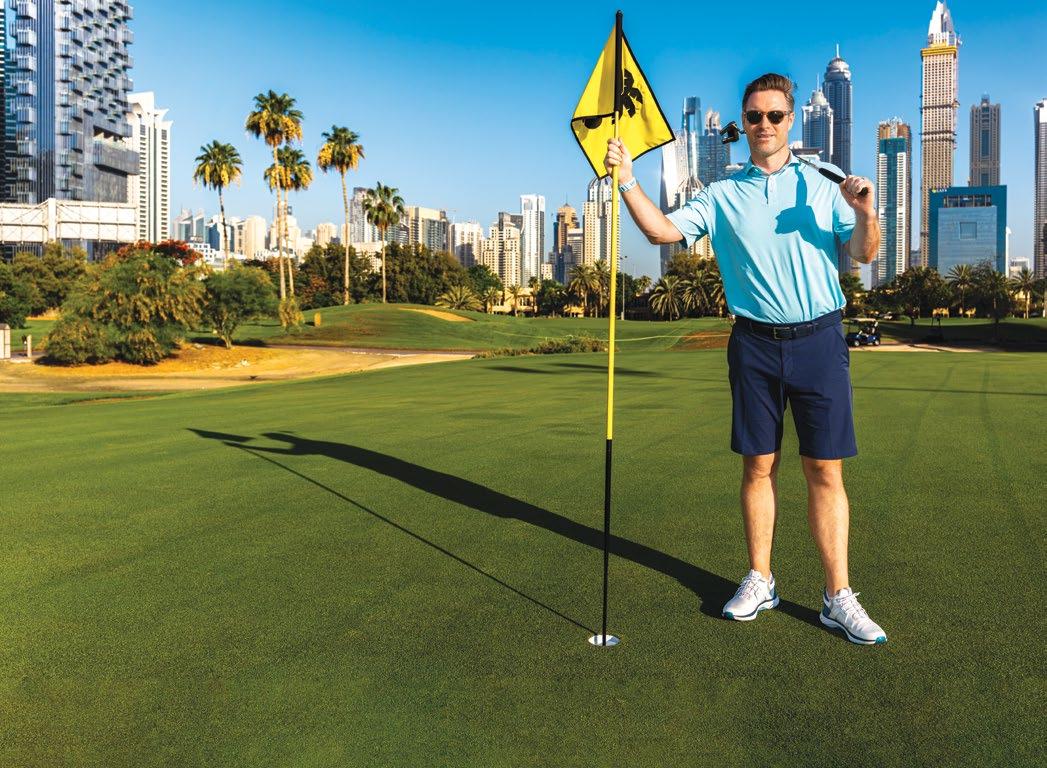
IT’S GREAT THIS MONTH TO FOCUS ON PUTTING. I LOVE USING THIS SIMPLE AND EFFECTIVE IMPACT DRILL WITH MY STUDENTS AS A GREAT WAY TO PRACTICE.
and delivered
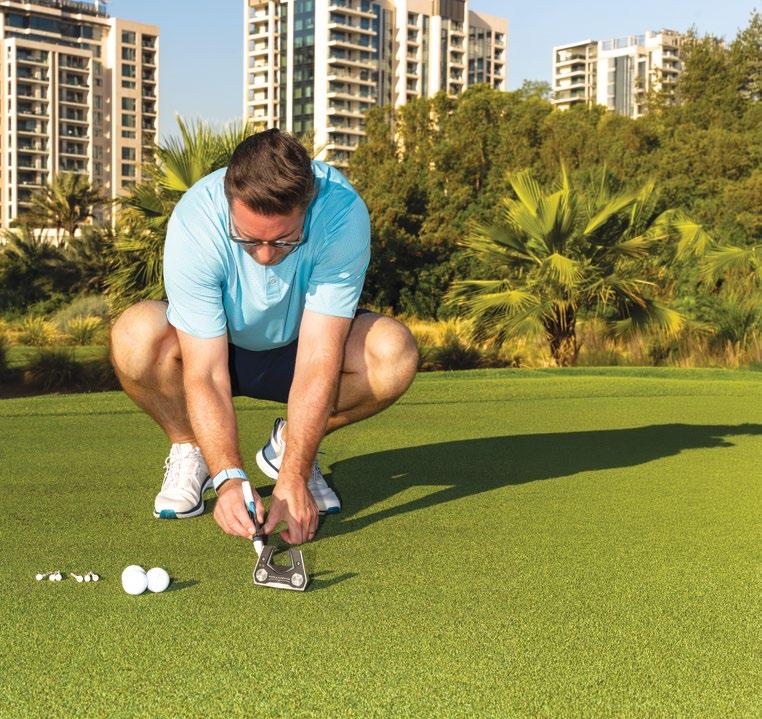
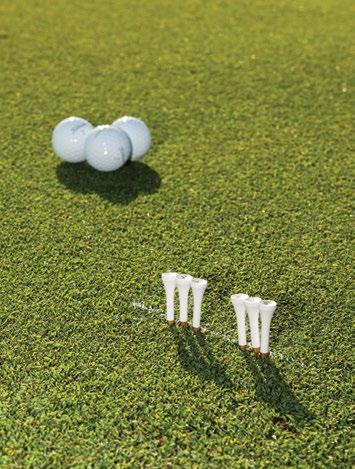
To start acquire a chalk pen and three tees. Simply trace a chalk line slightly longer than the putter head and place three tees in front of the toe and heel end of the putter. (Picture 1)
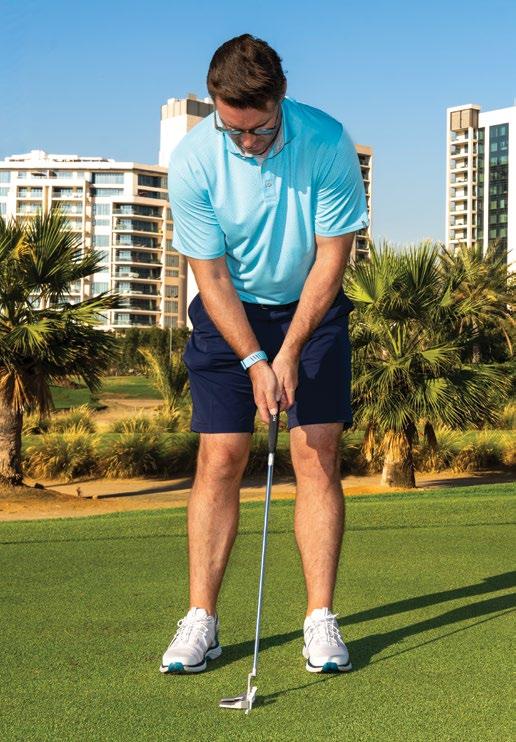
From here align your putter face squarely to the chalk line and make your stroke whilst impacting the tees (Picture 2).
The goal is to create a solid square impact with the tees with minimal bounce back and clubface vibration. If the face doesn’t return square you’ll certainly feel the bounce back and vibration.
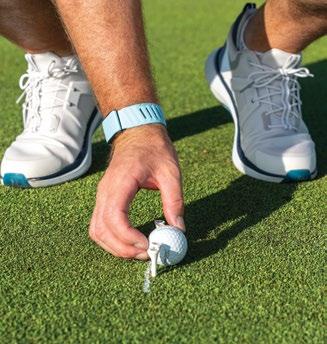
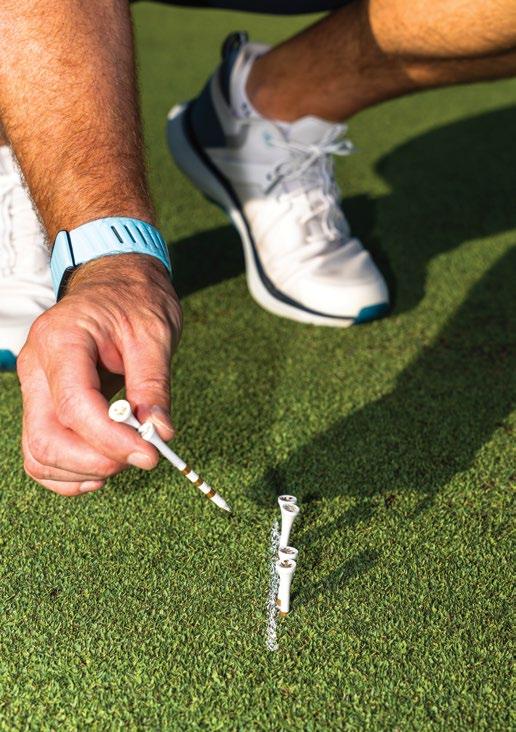
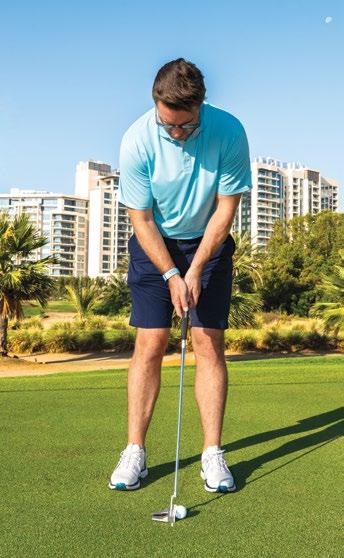
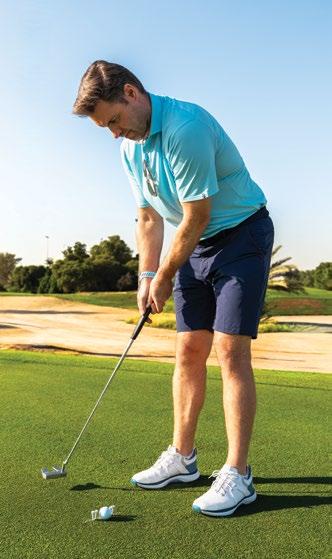
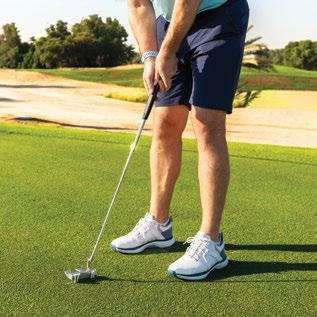
You’ll quickly notice the tees don’t allow acceleration of the putter through impact (Picture 4). This is something which the best putters in the world achieve, they create a constant impact speed and in many instances allow the impact to slow the putter face down. This prevents any late acceleration which promotes unnecessary face rotation and unpredictable speed control.
The drill will encourage enough back stroke length and a smooth calm transition into the ball. Give it a go and i’m sure you’ll see the benefits. Enjoy!


BY ALEX GALLEMORE
consistency and even injury prevention than most golfers realise.
Every golfer wants the same thing: a few extra yards off the tee, a little more accuracy and more consistency under pressure. The search for those marginal gains usually starts with the golf bag. We convince ourselves the latest driver promises another 10 yards, or a new set of irons will suddenly tighten our dispersion. The real answer, of course, is usually less glamorous. Better technique, a little more flexibility and perhaps spending a bit more time in the gym than browsing the equipment aisle. But there is one
piece of equipment that almost every amateur overlooks: their golf shoes.
When was the last time you were actually fitted for a pair? Not simply trying on your usual size in the pro shop, but having your feet professionally measured, your swing analysed and your footwear matched to the way you generate power. If you’re like me, the answer is probably never. For the best part of 30 years I’ve simply bought whatever size I thought felt comfortable. If my previous pair were a UK 9, I’d buy another UK 9. Job done, or so I thought.
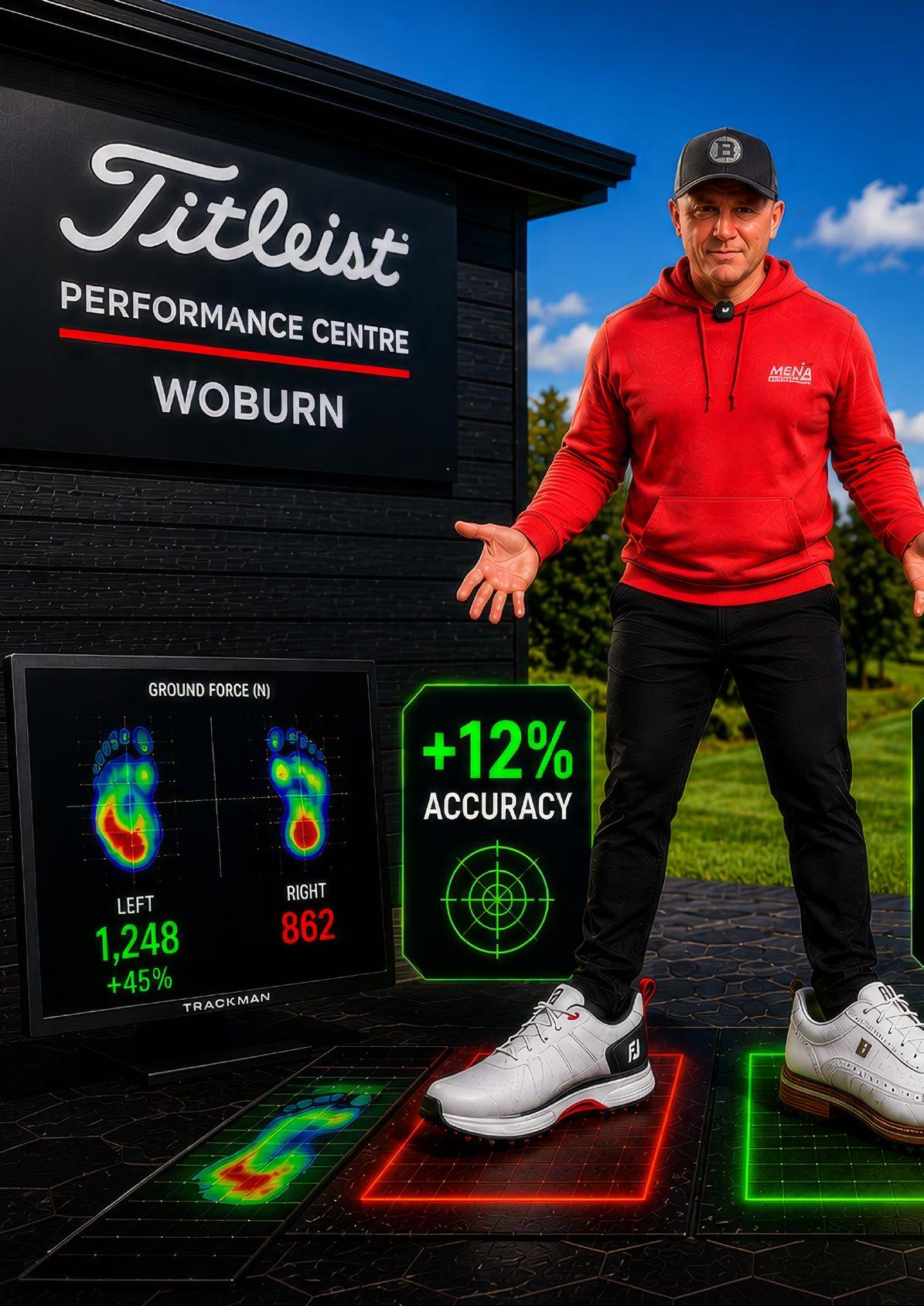
When FootJoy invited me to its Performance Centre for a professional fitting, I wasn’t expecting any great revelations. I’ve worn FootJoy shoes
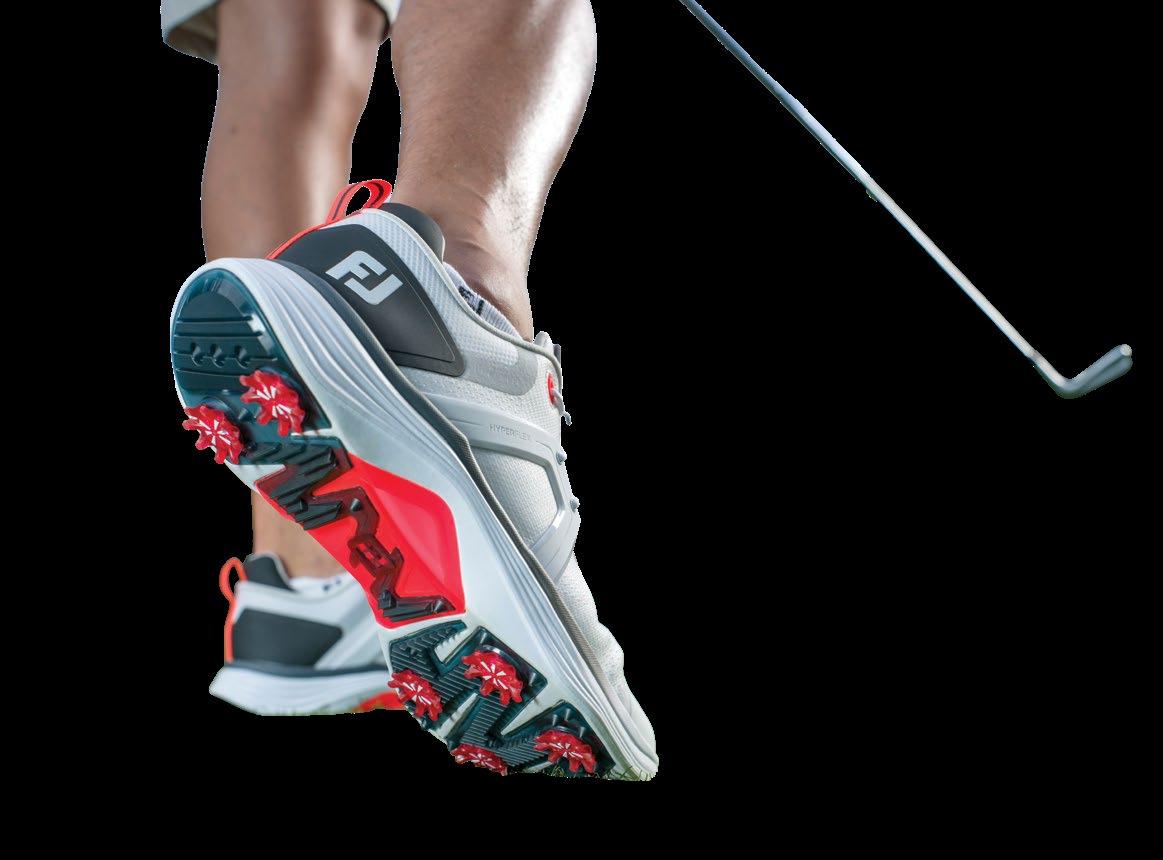
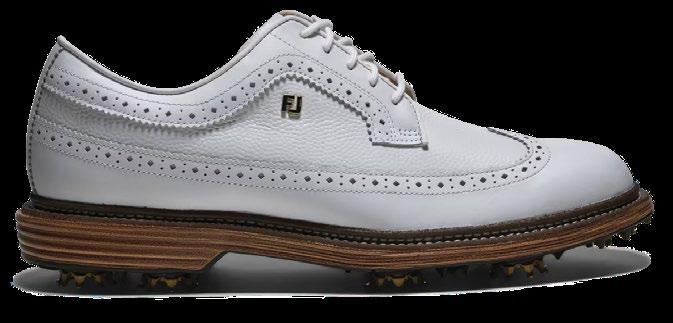
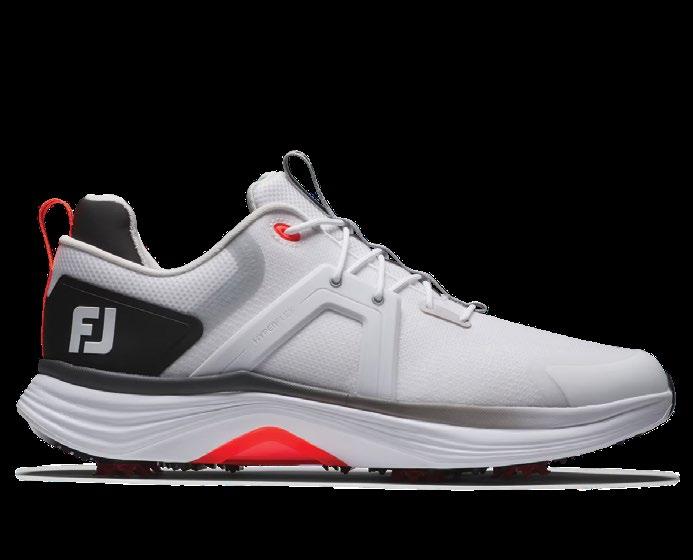
almost exclusively for the last five years, my current rotation consisting of the HyperFlex and the Premiere Series Marquis. The HyperFlex have become my everyday golf shoe, exceptionally comfortable during long summer rounds when you’re walking across baked fairways for four or five hours. The Premiere Marquis were different. They were the shoes I’d save for competitions, feeling firmer and giving me the confidence that my feet stayed connected to the ground. What I couldn’t explain was why. As it turns out, there was far more science behind that feeling than I’d ever imagined.
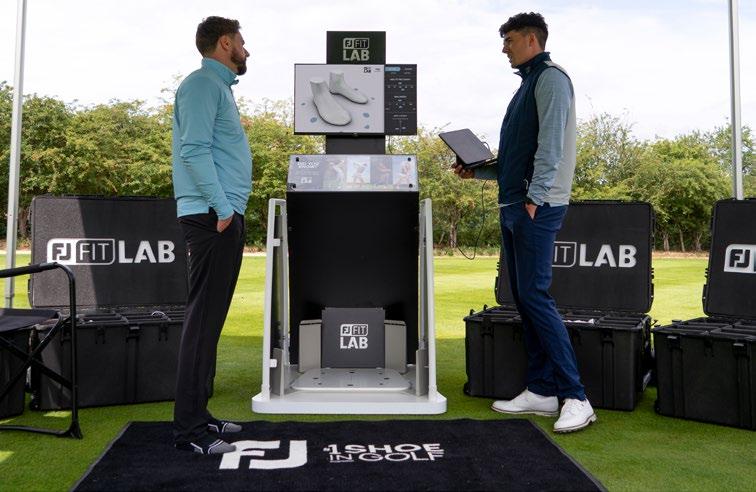
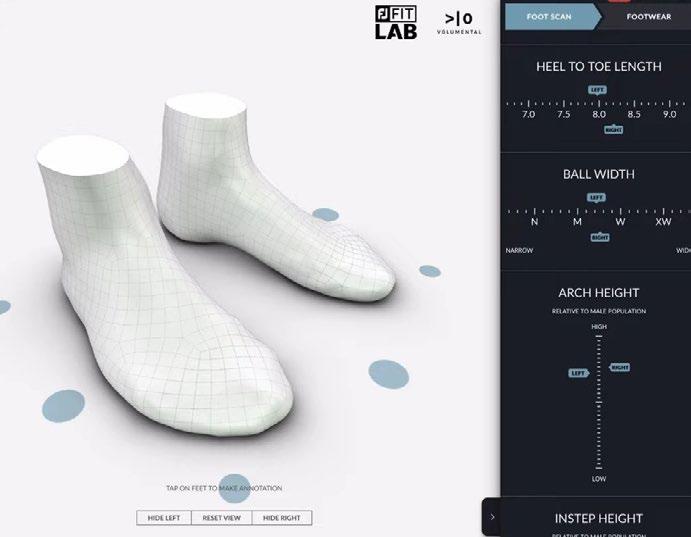
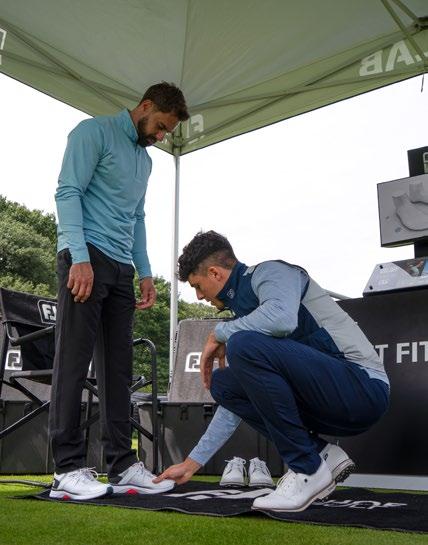
The fitting begins with a foot scan. Within seconds, the system had measured not just the length of each foot but its width, overall volume and, most importantly, my arch profile. Then came the first surprise. Like most people, my feet aren’t identical. One foot is slightly longer, while the other is noticeably wider. Suddenly years of compromise made perfect sense. I’d always bought shoes half a size larger because I hated feeling pressure along the outside of my foot. The extra room solved that problem, but at the expense of creating another: my foot had enough space to move around inside the shoe. It wasn’t much, but in golf “not much” often makes all the difference.
The second revelation concerned my arches. I have relatively flat feet, meaning several shoe designs simply aren’t ideal for me. Certain lacing systems couldn’t tighten sufficiently across the top of my foot, leaving small pockets of movement around the instep. It also explained something that had frustrated me for years: every few holes I’d find myself bending down to tighten my laces again. I always blamed the laces, but in reality I was wearing the wrong shoe.
If that sounds familiar, you’re not alone. FootJoy’s fitting statistics are genuinely eye-opening. During 279 fitting events throughout 2025, the company assessed 2,576 golfers. The results? Nearly 64 per
cent were wearing the wrong shoe size, and 27 per cent required a fitting outside the standard medium width. Almost two out of every three golfers are unknowingly playing in shoes that don’t fit properly.
It’s hardly surprising. Most of us buy golf shoes exactly as we buy trainers: we remember the size from our previous pair, try them on while standing still, walk across the carpet and decide they feel comfortable. Except golf isn’t walking around a shoe shop. It’s four hours of constantly loading,
twisting and driving against the ground while trying to swing a club at over 100mph. Comfort matters, but proper fit matters even more.
Over the last decade we’ve heard coaches constantly talking about “using the ground.” But what does it actually mean? Every golf swing starts with your feet. Before the club moves away from the ball, before your hips rotate and before
your shoulders unwind, your feet are already interacting with the ground. Sports scientists refer to this as Ground Reaction Force. Every time you push into the ground, the ground pushes back, and that energy travels through your ankles, knees, hips and torso before finally reaching the clubhead. The more efficiently you transfer that force, the more potential there is to increase clubhead speed without swinging harder.
The problem comes when your feet move inside your shoes. Even tiny amounts of movement reduce stability. Instead of pushing directly into the ground, part of that force is lost as your foot shifts. It may only be a few millimetres, but those few millimetres are enough to influence balance, sequencing and timing.
As Gareth Benson, PGA Professional and GASP Systems Specialist, explains: “We only have two key kinetics, feet to the ground and hands to the club. Correct fitting is key because lateral, vertical and anterior/posterior forces are fundamental. We’re trying to generate maximum torque, which is effectively your golf swing superpower. FootJoy’s programme has found almost 65 per cent of golfers are wearing the wrong size shoe. The stress placed on the feet is massively underestimated, and we often lose significant forces because the feet are sliding inside the shoe. That influences both the sequence and timing of the golf swing.”
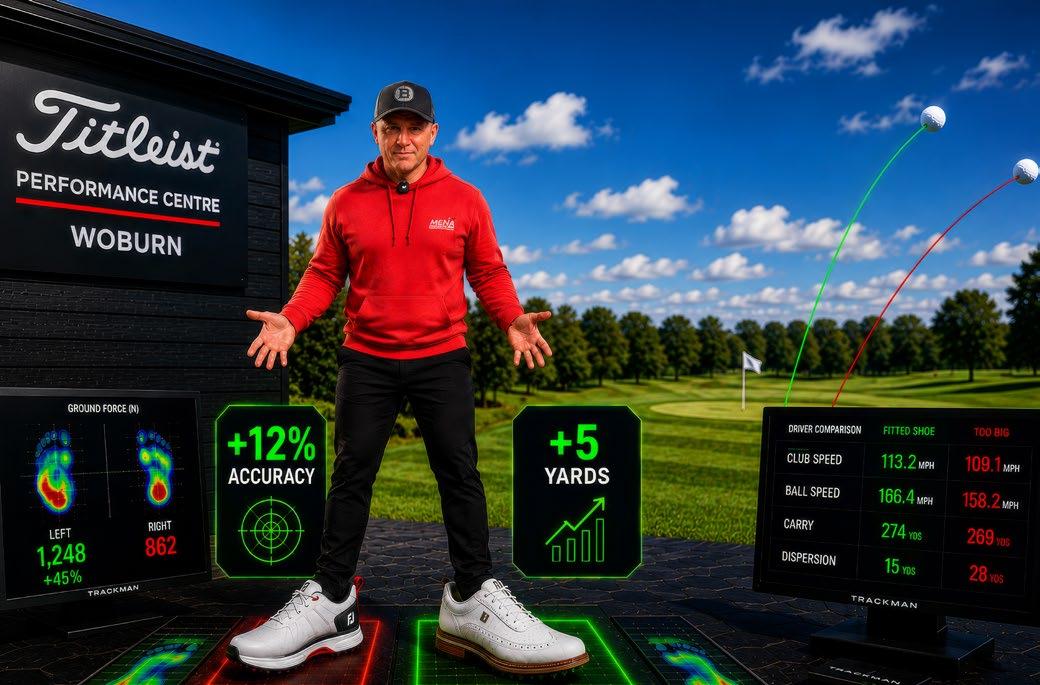
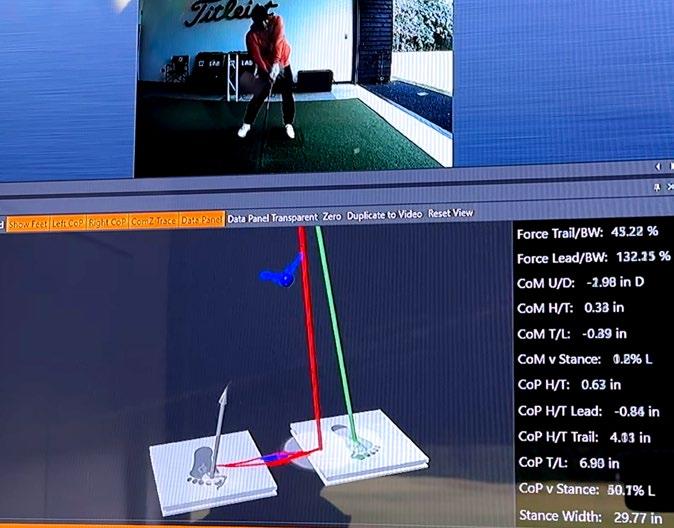
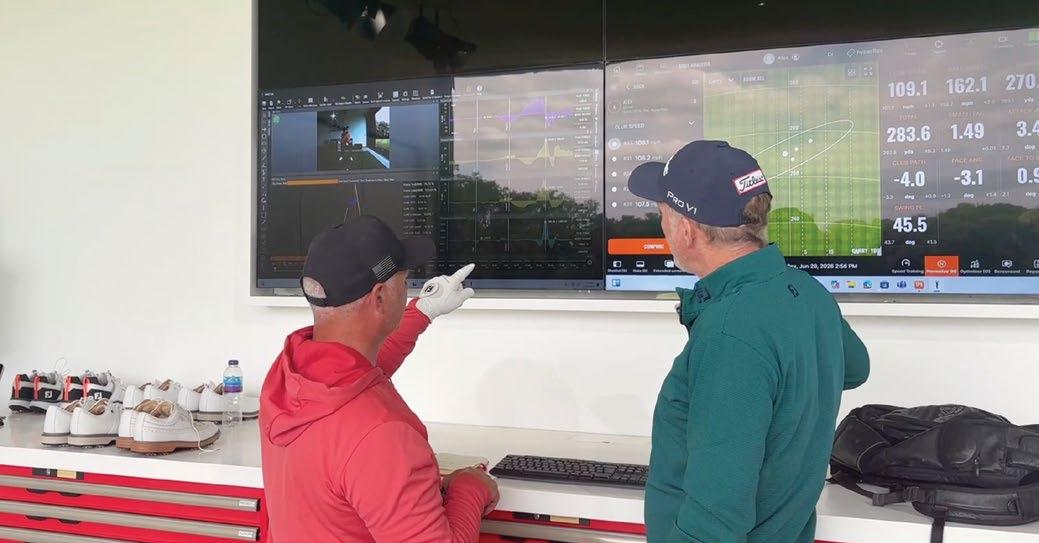
Once we’d narrowed the choice to three suitable models, it was time to let the technology decide. Every swing was measured using TrackMan alongside force and pressure plates that monitored exactly how my feet interacted with the ground. The technology records far more than clubhead speed. It measures how pressure moves between your feet, how effectively you
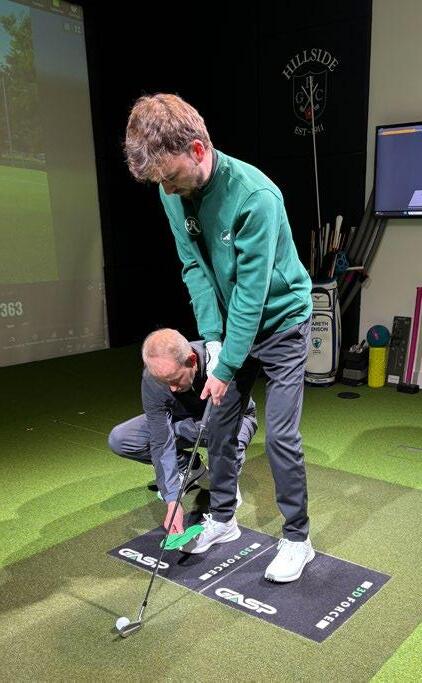
push vertically into the ground, how much rotational force you create and whether you’re maintaining a stable platform or leaking energy through unnecessary movement. Tiny differences that were impossible to feel with the naked eye suddenly became obvious in the data.
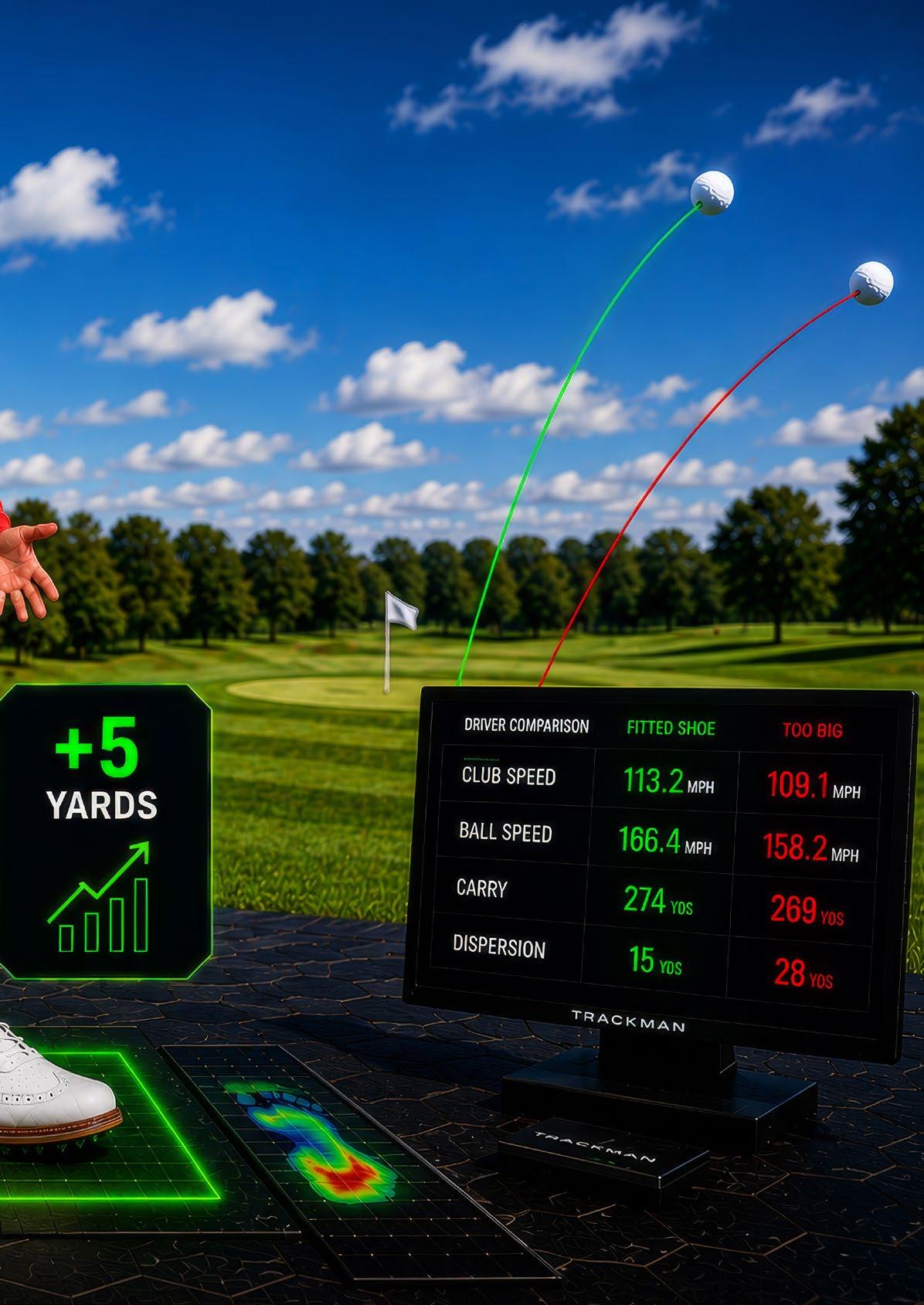
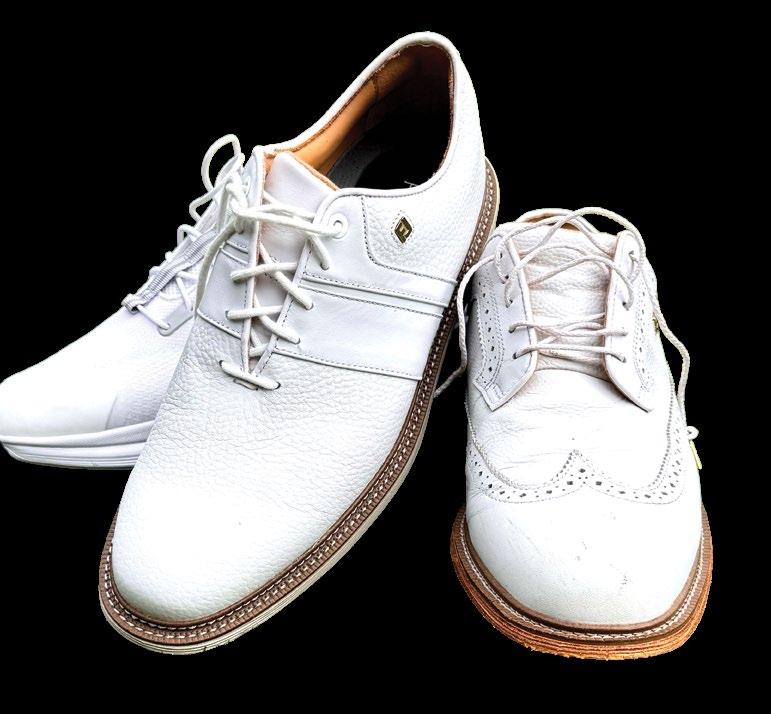
We started with my current competition shoe, the Premiere Series Marquis in a UK 9 Wide. My normal clubhead speed settled comfortably between 108 and 109mph, with solid ball striking and consistent dispersion. The interesting part came when I tried to find another gear. As I pushed harder, my timing became less reliable and my familiar miss appeared, the ball drifting out to the right. Even during the speed challenge, I struggled to get much beyond 111mph while
maintaining control. It wasn’t a huge flaw, but it was a pattern.
Next came the HyperFlex, a shoe I’ve always loved for its comfort. Walking golfers will appreciate how forgiving it feels underfoot. However, after half a dozen drives I could just sense my foot moving ever so slightly inside the shoe. Not enough to make me think it didn’t fit, just enough for me to stop trusting it completely. At 5ft 8in, I don’t generate speed through brute strength; my power comes from creating strong vertical forces and using the ground efficiently. If I lose that connection, even fractionally, I instinctively become more cautious through impact. The numbers agreed, with clubhead speed hovering around 108mph. The HyperFlex
remained outstandingly comfortable; it simply wasn’t the perfect shoe for my foot.
Then came the shoe I hadn’t expected to choose: the Premiere Series Packard. Straight away it felt different. The lacing configuration suited my flatter arches perfectly, securing my foot across the instep. Instead of relying purely on the laces, the shoe seemed to wrap around my foot more naturally. Despite being at the end of a long fitting session, my clubhead speed immediately increased by around 1.5mph. When asked to swing flat out, I stayed completely connected to the ground, stable enough to simply keep accelerating. The result was a clubhead speed of 112mph, and the big push didn’t bring my usual miss into play. The drives stayed on line. That
confidence to commit fully through impact was worth every bit as much as the extra speed.
What the Tour Professionals Say
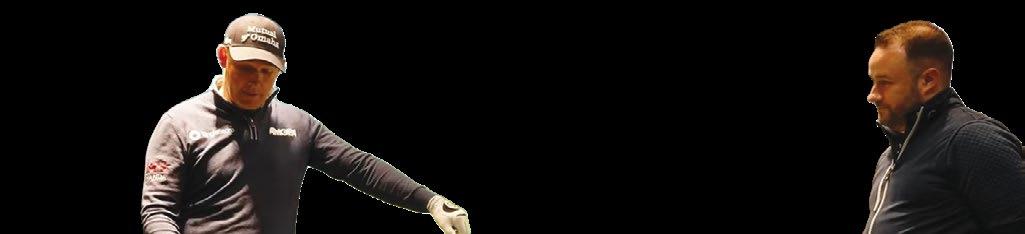
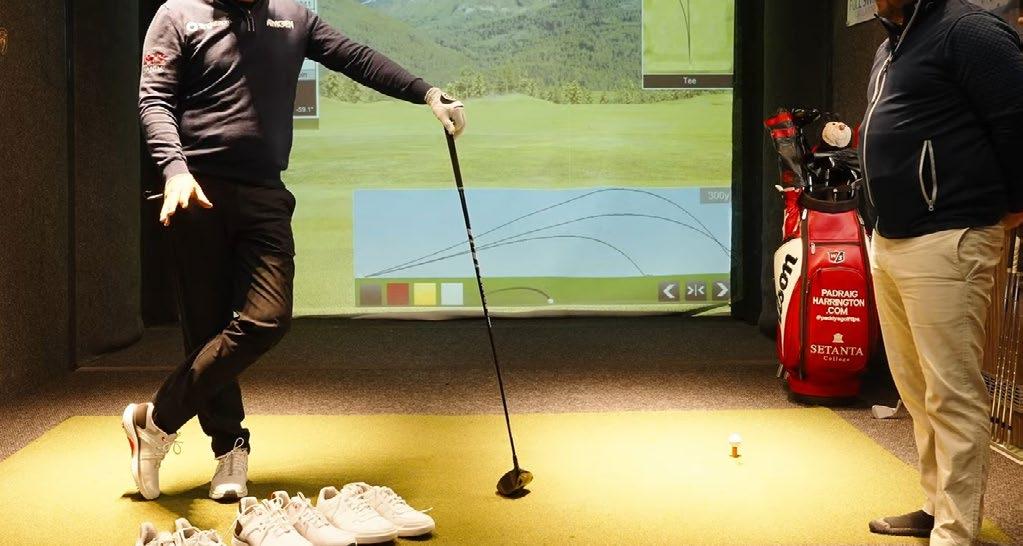
It was reassuring to discover my experience wasn’t unique. Major champion Pádraig Harrington has spoken openly about the difference properly fitted golf shoes make. “I have tested playing in a trainerlike golf shoe before and found my feet generally worked pretty well when hitting shots indoors,” he explains. “The problem was when I tried to add speed and power outside on the grass. I kept slipping and completely lost my confidence.”
It’s Not Just About Distance
Performance might be the headline, but there’s another compelling reason to pay attention to your shoes: injury prevention. The average golfer walks between six and eight miles during a round,
Checking out the force plate data clearly showcased how much I used the ground in the swing and the importance of feeling grounded in the downswing transition
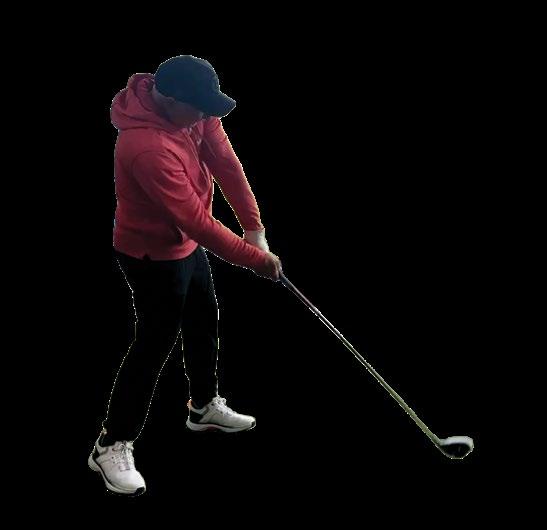
taking 12,000 to 15,000 steps. Multiply that across a season and your feet absorb millions of impacts. If your shoes are too long, too narrow or lacking support, those stresses travel through your ankles, knees, hips and lower back. No shoe can prevent injury on its own, but footwear that supports your natural foot shape and reduces unnecessary movement can lessen fatigue over four or five hours on the course.
The Bigger Picture
The most surprising thing I took away from Woburn wasn’t that one model suited me better than another. It was how personal the fitting process really is. I’d assumed the newest shoe would automatically be the best. It wasn’t. Nor was the shoe I’d already owned. The winning shoe was simply the one that matched my feet. Golfers spend hours being custom fitted for drivers, irons
and putters, yet many still walk into a shop, ask for “a size nine” and hope for the best.
Verdict
I arrived at Woburn expecting to confirm what I already believed about golf shoes. Instead, I left questioning why I’d never been fitted before. Did I suddenly gain 20 yards? Of course not. What I did gain was more valuable: a stronger connection with the ground, greater confidence to commit to aggressive swings and a measurable increase in clubhead speed without swinging harder. An honest gain of around 1.5mph won’t grab headlines like the latest expensive driver, but it’s a genuine improvement achieved without changing my swing. The biggest lesson wasn’t that everyone should buy the same shoe I did. It was that every golfer should know what shoe actually fits them.

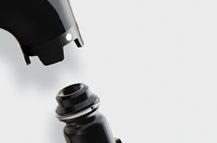
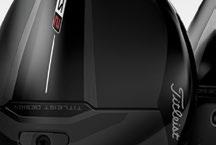
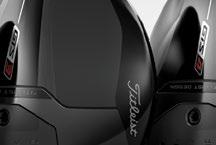
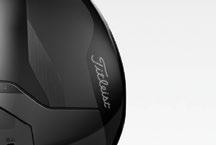
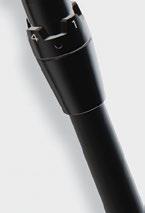
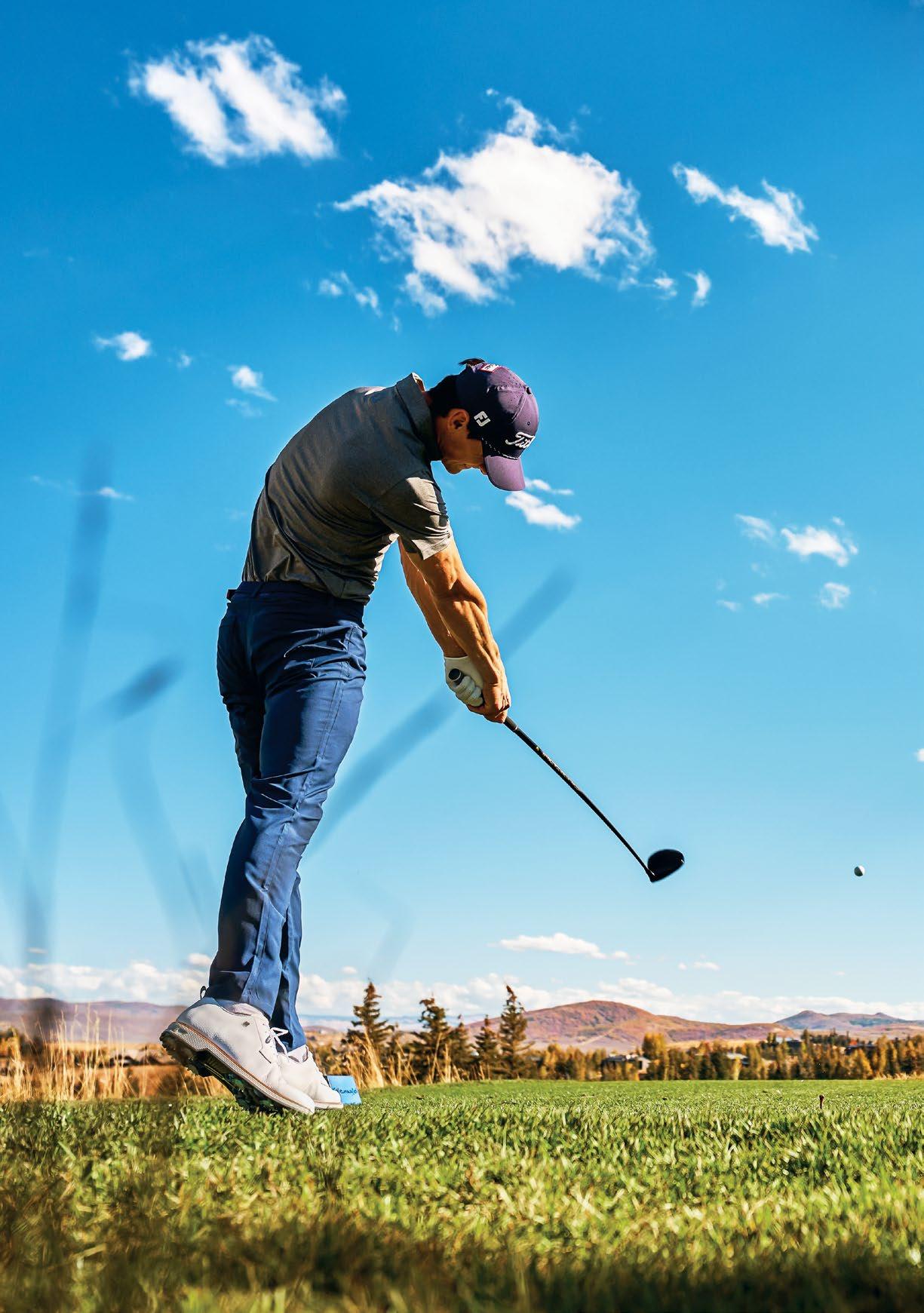
BUILT FOR SPEED. Drivers come in all shapes and sizes with claims of more of everything, but unless it’s optimised to your game, your expectations and drives will come up short (and in the rough). In the new G440 drivers, multiple technologies, including a lighter overall system weight and longer shaft, help bring you more ball speed for more distance, more forgiveness and more fun.
GET FIT. GET OPTIMISED.
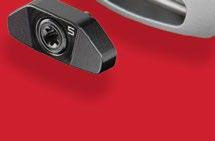
Mass savings from the Free Hosel help optimise the CG, aligning it with the force line for more distance and fairway-finding forgiveness.
Composite crown contributes to lighter overall system, delivering faster speeds for more distance and a pleasing sound.
Shallow, thin face increases flexing to ensure high-launching results for consistent ball speed on off-centre hits.
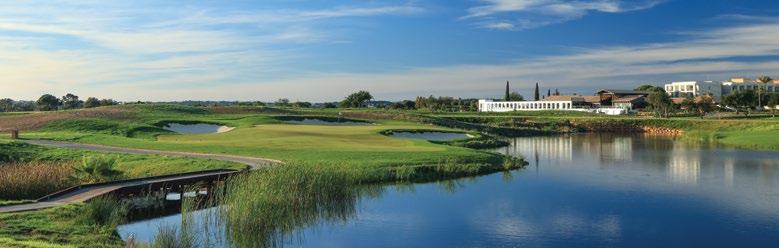
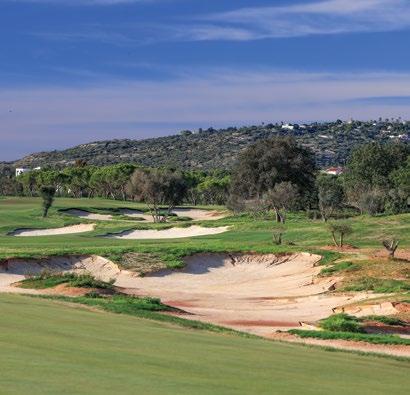
Ernie Els has transformed one of Portugal’s most famous championship venues into Europe’s newest mustplay golf course. Welcome to The Els Club Vilamoura.
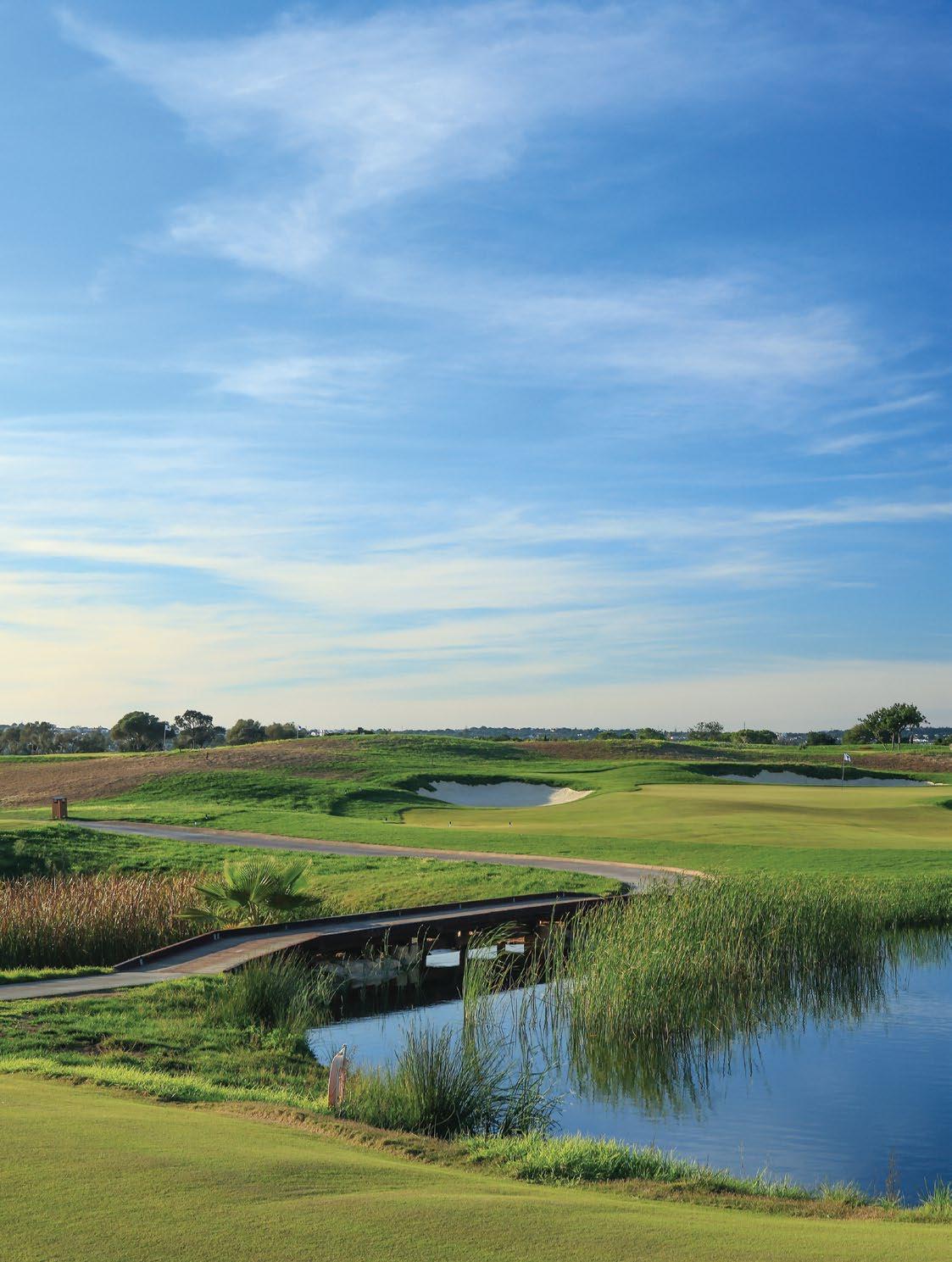
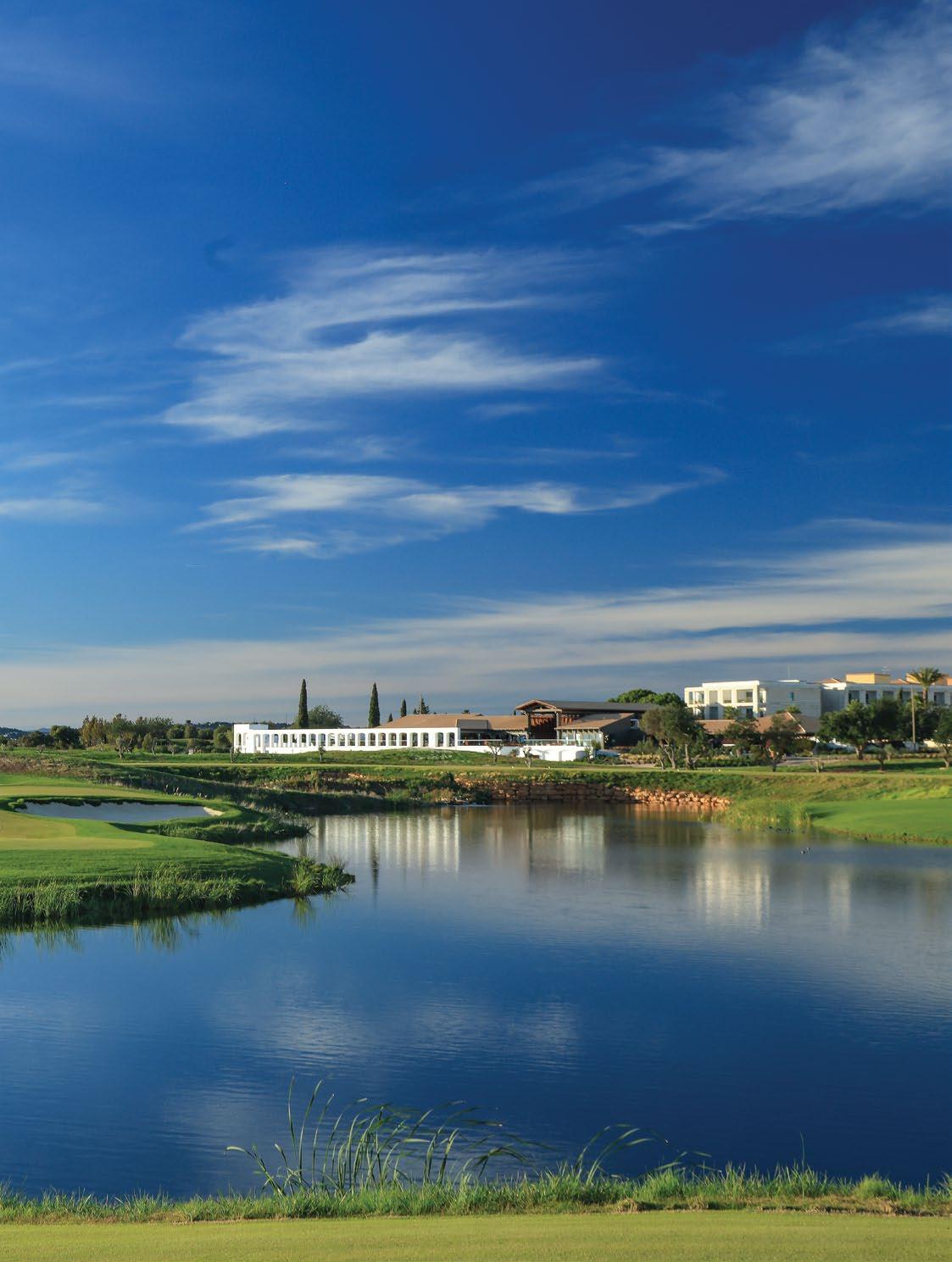
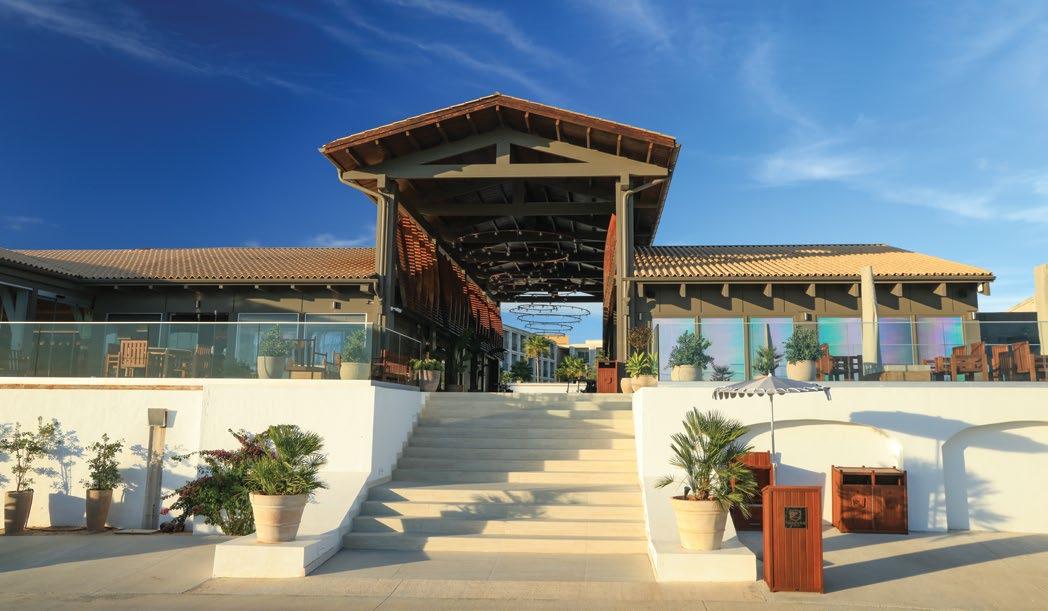
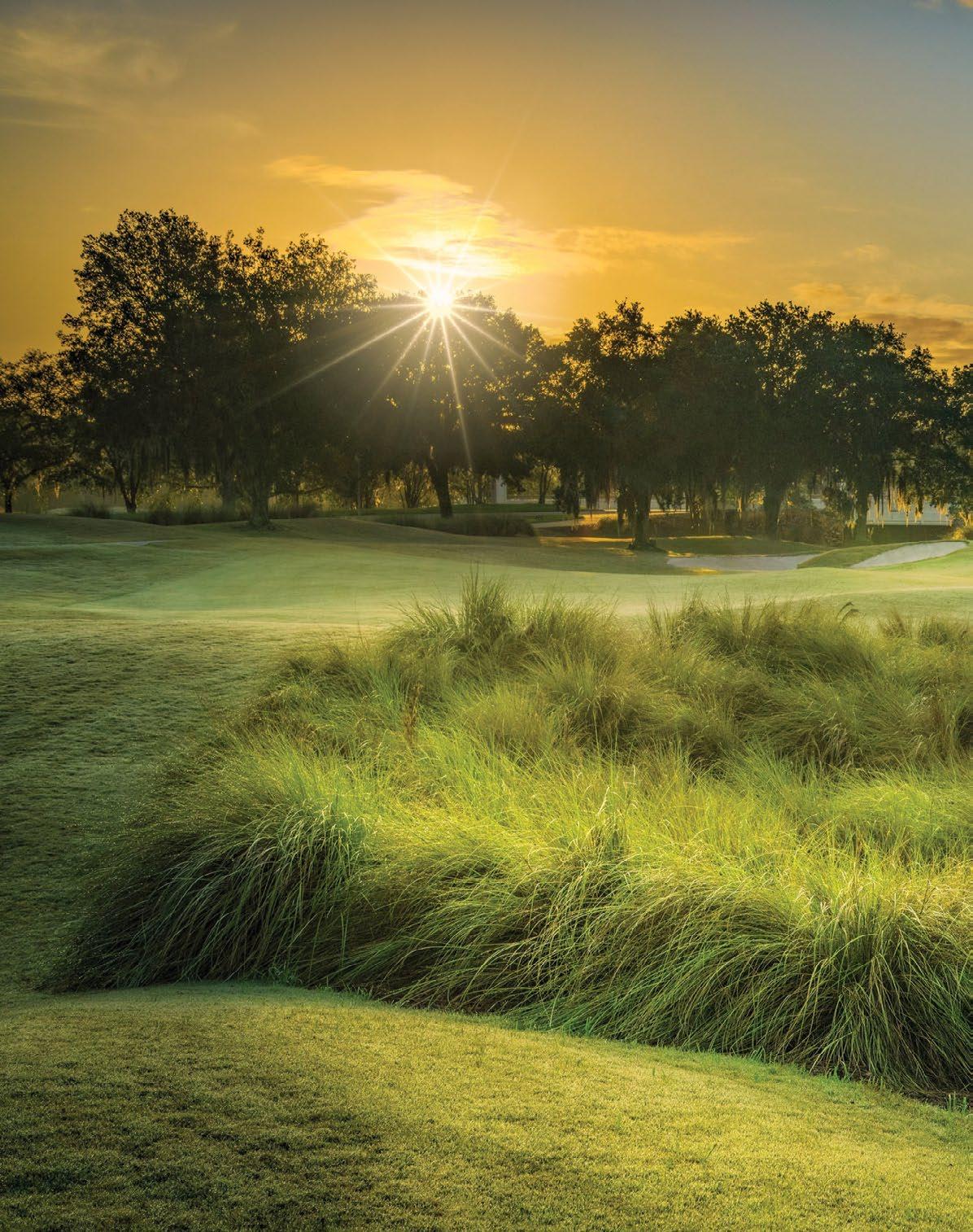
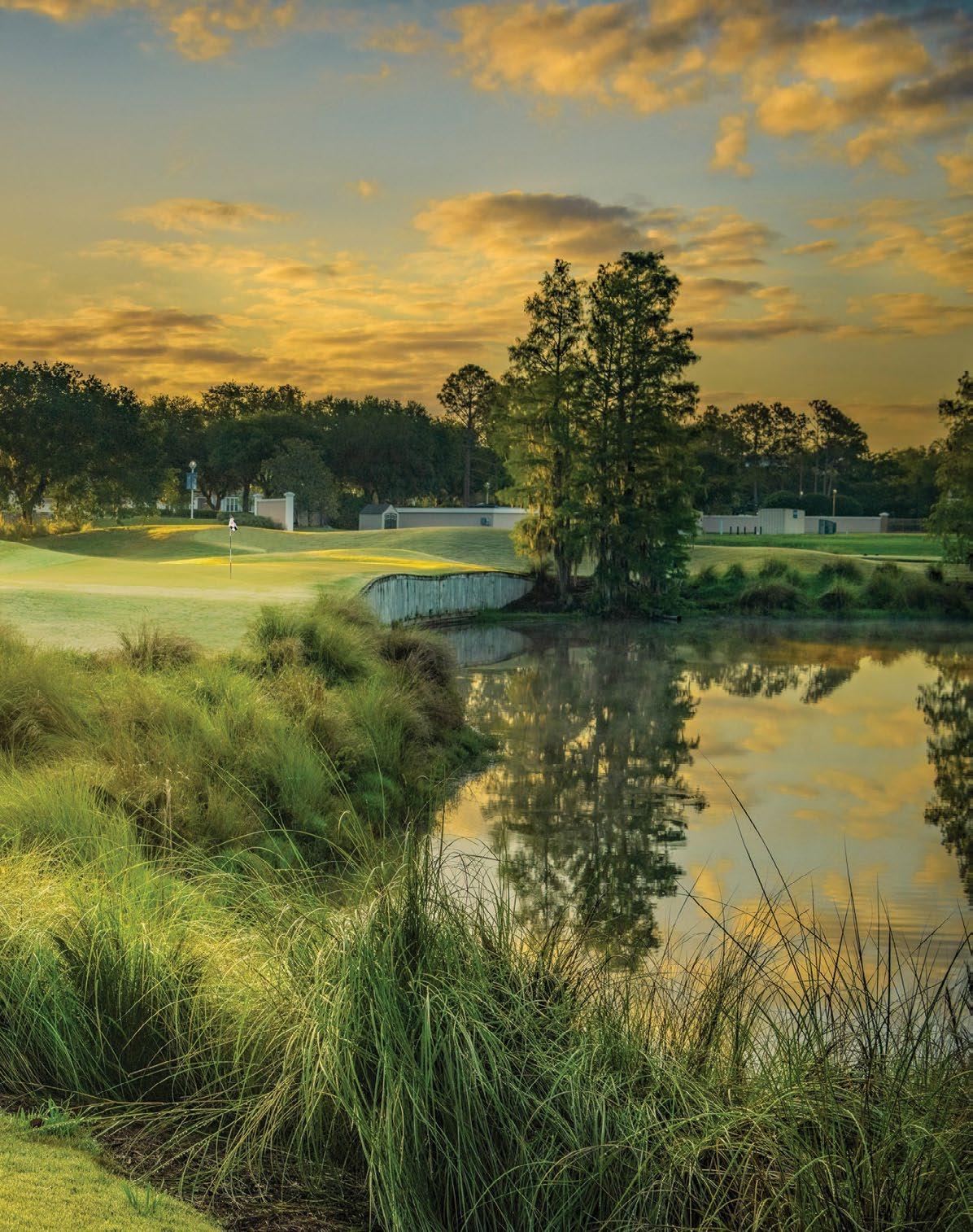
For almost two decades, golfers travelling to Portugal knew exactly what awaited them at Vilamoura’s Victoria Course: wide fairways, immaculate conditioning, and the annual Portugal Masters – a chance to walk the same fairways where the European Tour’s biggest names regularly dismantled the course with astonishing scoring. Then everything changed. Rather than simply refurbish one of Europe’s most recognisable tournament venues, the decision was taken to completely reinvent it. The Arnold Palmer layout that had hosted the World Cup of Golf in 2005 and sixteen editions of the Portugal Masters disappeared, replaced by an entirely new vision from four-time Major champion Ernie Els.
The result is far more than another redesign. It is Europe’s first Els Club, the Algarve’s first truly private members’ golf club, and arguably the continent’s most significant new golf opening in years. Even before golfers had properly discovered
it, another announcement confirmed just how seriously the golfing world was taking the project: beginning this summer, The Els Club Vilamoura will host the inaugural Portugal Invitational, becoming the first venue in Europe to stage an official PGA TOUR Champions event. For Vilamoura, it represents the beginning of an exciting new chapter.
It would have been easy for Els and his design team to tweak what already existed. After all, the Victoria Course had plenty of pedigree. Opened in 2004, it immediately became one of Portugal’s flagship championship layouts. It hosted the World Cup of Golf just a year later before becoming synonymous with the Portugal Masters from 2007 until 2022, producing champions including Shane Lowry, Lee Westwood, Padraig Harrington and Jordan Smith.
Instead, Els chose the far harder option. The
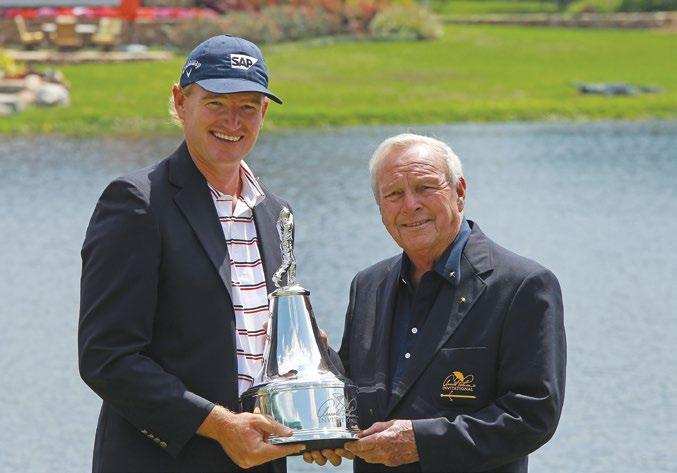
routing was reimagined, the back nine reversed, every green complex rebuilt, fairways reshaped, bunkering repositioned, and strategy completely reconsidered. Rather than preserving history, he created an entirely new golf course.
That bold approach reflects Els’ own philosophy as both a player and course designer. Known throughout his playing career for his wonderfully rhythmic swing and strategic approach to golf, the South African has always believed good golf architecture should reward thoughtful decision making rather than simply power. That philosophy is immediately evident throughout Vilamoura. The course remains generous enough from the tee to encourage aggressive golf, but every approach shot asks a question – angles matter, position matters, and distance control becomes everything. It’s championship golf without unnecessary brutality.
Few modern players possess the architectural credibility of Ernie Els. His portfolio already stretches across South Africa, Dubai, Malaysia and the Bahamas, yet Vilamoura carries particular significance: this is his first signature club in Europe. Speaking at the official opening, Els said the team is very proud of the course, noting there are a lot of great and memorable holes, and that overall it’s a really well-balanced golf course.
That balance becomes apparent throughout the round. There are no gimmicks, no manufactured drama. Instead, the course flows naturally through the Algarve landscape, with expansive lakes, strategic waste areas and beautifully framed bunkering creating visual interest without overwhelming the golfer. It feels unmistakably modern while remaining rooted in traditional shot values. Like the man himself, there’s an understated confidence about the place.
Perhaps the biggest endorsement comes not from architects or critics but from professional golf itself. The PGA TOUR Champions has selected The Els Club
Vilamoura as the home of its first-ever Portuguese event. The Portugal Invitational immediately places Vilamoura alongside some of the world’s most recognisable championship venues, with legends including Ernie Els himself, Bernhard Langer, Padraig Harrington, Darren Clarke, Miguel Ángel Jiménez, Colin Montgomerie and Retief Goosen expected to headline a remarkable field.
For spectators, the appeal is obvious – these remain some of the finest ball-strikers the game has ever seen. For the course, however, the tournament represents something even more important: it proves the redesign was never simply about creating an exclusive members’ club. It was always intended to produce a championship venue capable of testing the very best players.
One criticism occasionally levelled at modern championship golf is an over-reliance on distance. Vilamoura takes a different approach. Yes, it measures over 7,300 yards from the championship tees, but length is only one element of the examination. Approach angles constantly influence club selection, large greens reward imaginative pin positions, and recovery shots demand creativity rather than brute force. Even accomplished golfers quickly discover that playing from the correct side of the fairway often matters more than simply finding it.
That strategic element is becoming increasingly rare. It’s also what makes the course enjoyable for club golfers – multiple teeing options ensure average players can appreciate the same architectural questions without feeling overwhelmed. Good design should challenge everyone, and Vilamoura does exactly that.
Perhaps the most fascinating aspect of the redevelopment is what it says about Vilamoura itself. For decades the Algarve built its reputation on accessible resort golf — outstanding courses, wonderful weather and exceptional hospitality combining to create one of Europe’s great golfing destinations. Now the region is evolving, and luxury has become part of the experience. The Els Club sits comfortably alongside that ambition; from the clubhouse to the practice facilities, everything has been designed to reflect the standards associated with the Els Club brand around the world. Yet despite the exclusivity, the atmosphere remains unmistakably Portuguese: relaxed, welcoming, never intimidating. It feels like somewhere golfers genuinely want to spend an entire day rather than simply arrive, play and leave.

One charming aspect of the redevelopment is that golf history hasn’t disappeared. The ground itself remains steeped in championship memories — this is where Lee Westwood produced one of his finest European Tour performances, where Shane Lowry showcased his extraordinary ball striking, and where Jordan Smith reached an astonishing 30-under-par to claim the final Portugal Masters title. Now a new generation of golfing memories will be created, only this time they’ll belong to a completely different course.
Golf destinations rarely stand still. St Andrews continues to evolve, and the Costa del Sol
constantly reinvents itself. Now the Algarve has delivered perhaps its boldest statement in years. Replacing an established tournament venue with an entirely new championship course was undoubtedly a gamble, yet everything suggests it has been worthwhile. The PGA TOUR Champions clearly believes in the project, and the design has already received widespread praise. Golfers fortunate enough to experience it speak of a course that feels both familiar and refreshingly different.
Most importantly, it gives one of Europe’s great golfing destinations another compelling reason to return. Because while history matters, great golf is ultimately about creating new stories – and The Els Club Vilamoura looks destined to create plenty.
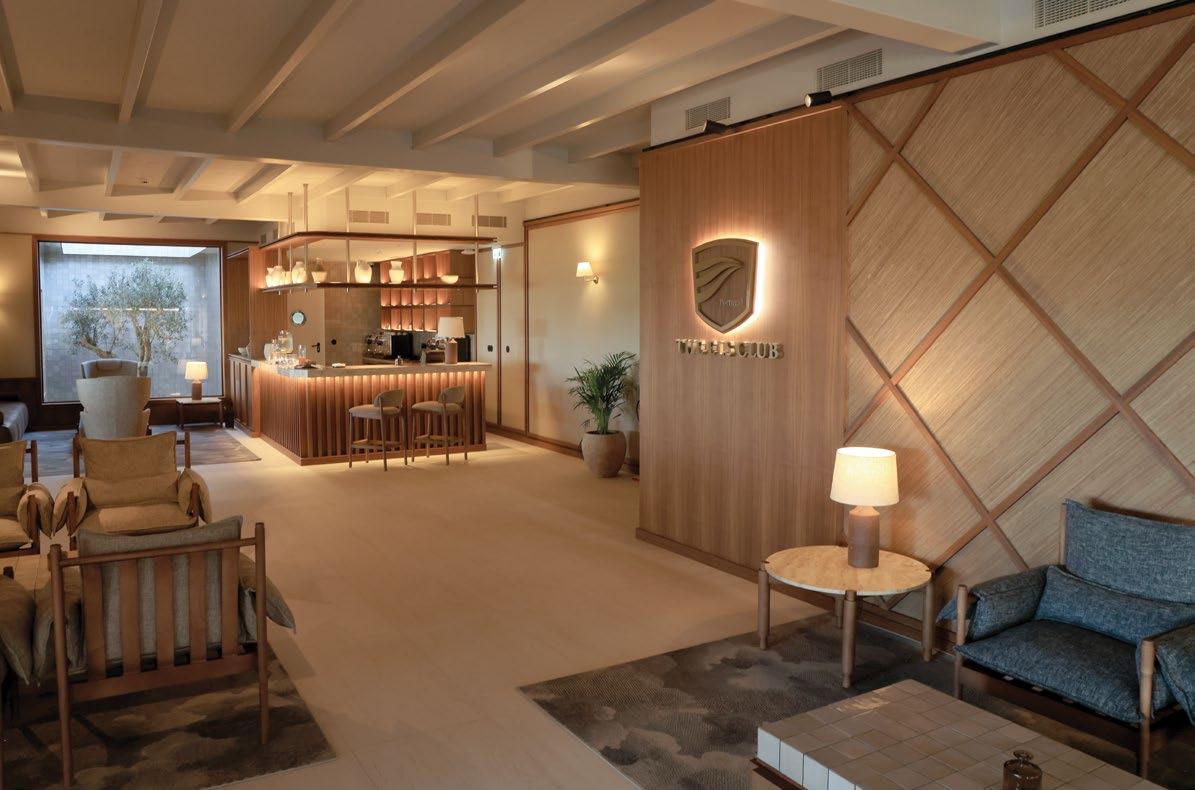
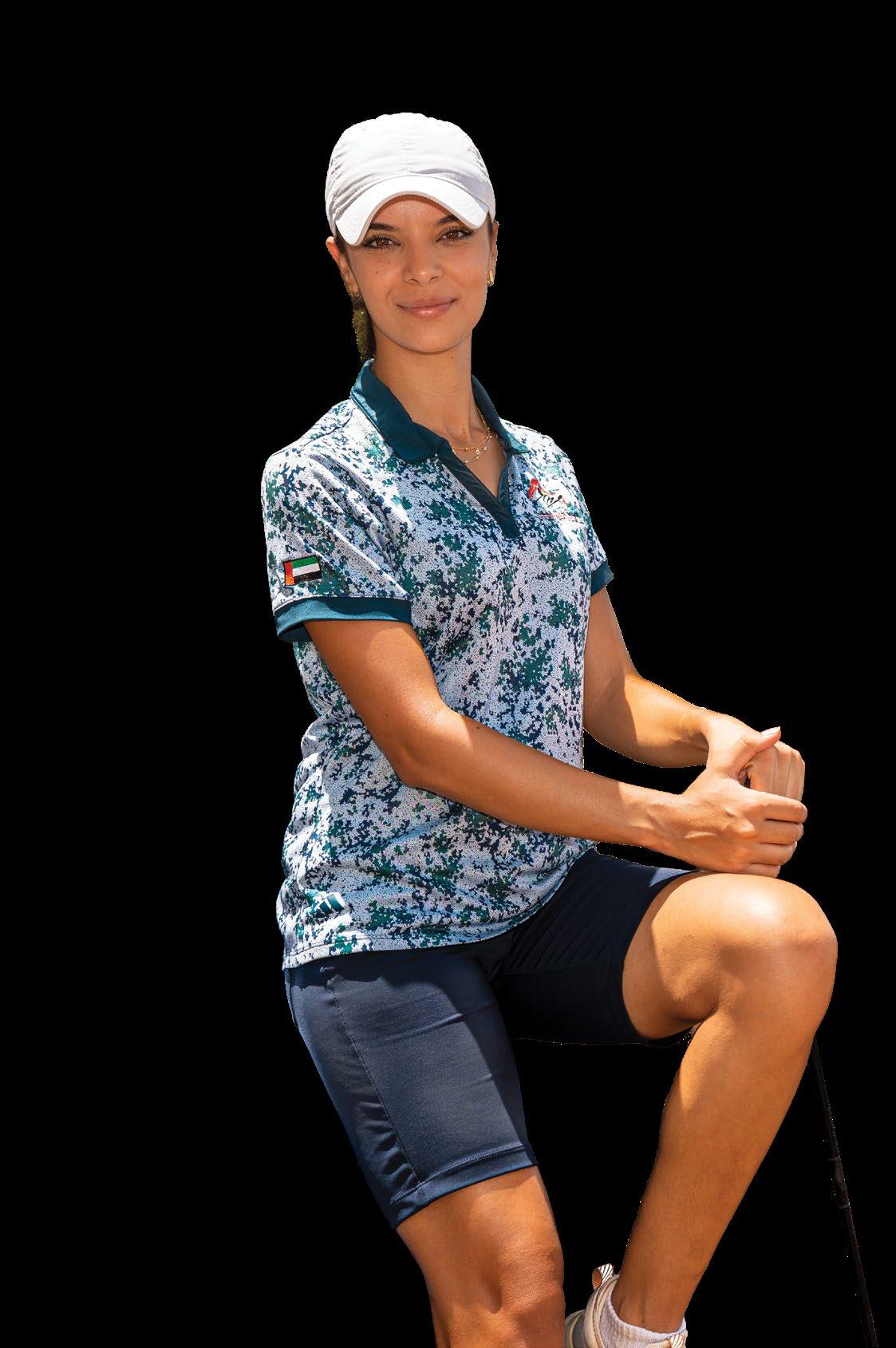

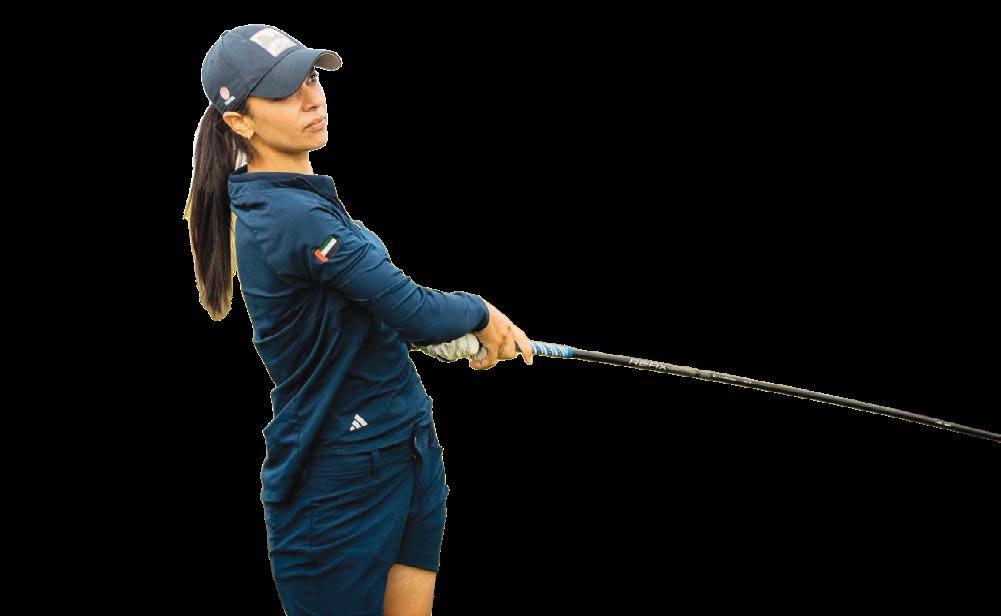
When Intissàr Rich first picked up a golf club in 2012, few could have imagined the impact she would eventually have on the game in the Middle East.
Today, the UAE National Team player stands as one of the region’s brightest talents and a trailblazer for Arab women in golf. Her rise has been built on perseverance, discipline and a willingness to embrace every challenge placed in front of her.
Like many elite athletes, Rich’s journey has not been defined solely by victories. The setbacks, obstacles and moments of uncertainty have been equally important in shaping the player she has become.
“When I look back, the most defining chapter has been the journey from starting golf in 2012 to representing the UAE internationally,” says Rich. “There have been successes and challenges along the way, and those experiences taught me resilience, discipline and the importance of
believing in myself.”
Those lessons have become the foundation of her career.
Golf is not a sport that rewards impatience. Progress can be frustratingly slow and opportunities are rarely guaranteed. Yet during periods when others may have questioned whether the sacrifices were worthwhile, Rich never lost sight of what drew her to the game in the first place.
“My love for the game was always the biggest motivation,” she explains. “Even during difficult periods, I enjoyed the process of improving and competing. My goals kept me focused and I always believed that hard work would eventually create opportunities.”
That belief eventually transformed golf from a hobby into a realistic career ambition.
As her international appearances increased and the results began to arrive, Rich realised she had the potential to compete on a much bigger stage.
“The shift happened when I began competing internationally and achieving strong results. Winning major tournaments gave me the confidence to see golf not only as a passion but as a potential career path.”
That confidence continues to grow with every season.
The UAE has played a major role in that development. With world-class golf facilities, elite coaching and a rapidly expanding competitive landscape, the country has provided an environment capable of nurturing international talent.
“The UAE has played a huge role in my development,” Rich says. “The world-class facilities, competitive environment and support for athletes have helped me raise my standards and approach the game with a more professional mindset.”
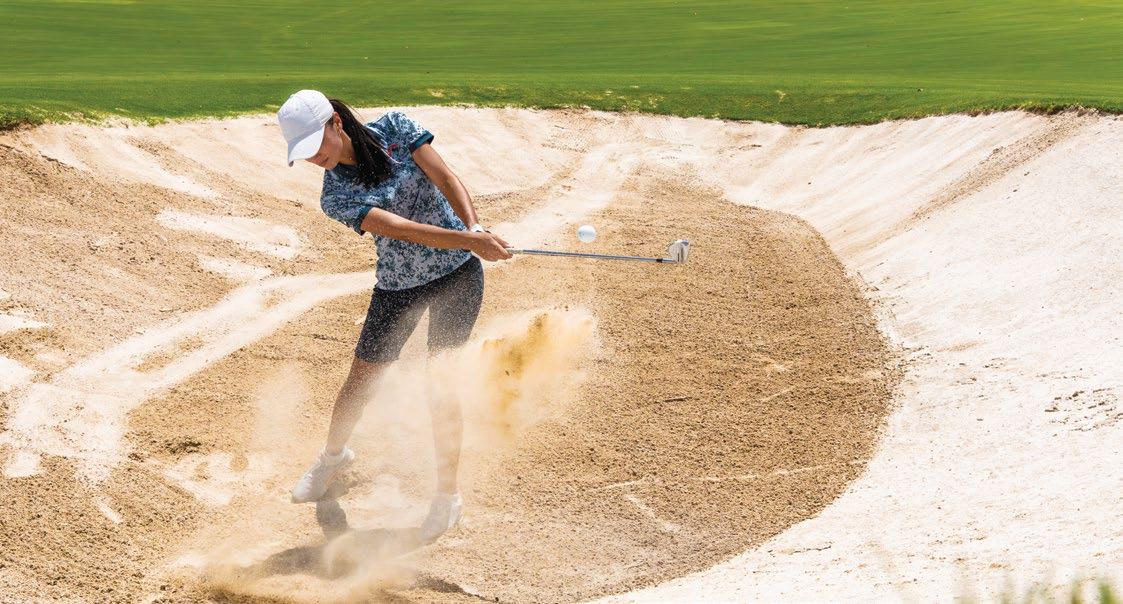

Few achievements carry more significance than representing your country.
For Rich, every opportunity to wear the UAE colours remains a source of immense pride and motivation.
“It is an incredible honour,” she says. “Every time I wear the UAE colours, I feel proud and grateful. It motivates me to work harder and represent the country in the best possible way.”
That pride reached new heights when she achieved what remains the standout moment of her career.
Winning the African Championship was not simply another title. It was a landmark achievement both personally and historically.
“Winning the African Championship is definitely my proudest achievement so far,” says Rich. “It was the result of years of hard work, dedication and sacrifice.”
What made the victory even more significant was its wider impact.
“Becoming the first Arab woman to win this title is a milestone I am incredibly proud of and one that will always hold a special place in my career.”
The achievement resonated far beyond the tournament itself, highlighting the growing strength of women’s golf throughout the region.
Success has a way of changing perspective.
Recent performances have reinforced Rich’s belief that she belongs among stronger fields, but they have also revealed the fine margins that separate good players from truly elite competitors.
“My recent performances have shown me that I can compete at a higher level,” she says. “But they have also highlighted the small details that separate good players from elite players.”
Those differences are often mental rather than technical.
At the highest level, players must remain composed under pressure, trust their preparation and make clear decisions when tournaments are on the line.
“I’ve learned that mental strength is one of the most important parts of golf,” Rich explains. “Through
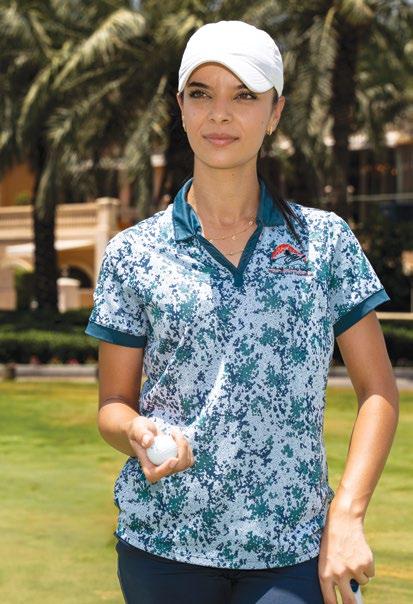
experience, I’ve become better at staying calm, trusting my preparation and focusing on one shot at a time, especially under pressure.”
That growth in maturity has translated into greater consistency.
“The biggest transformation in my game has been consistency and confidence. I feel more comfortable competing at a high level
“Becoming the first Arab woman to win the African Championship is a milestone I am incredibly proud of.”
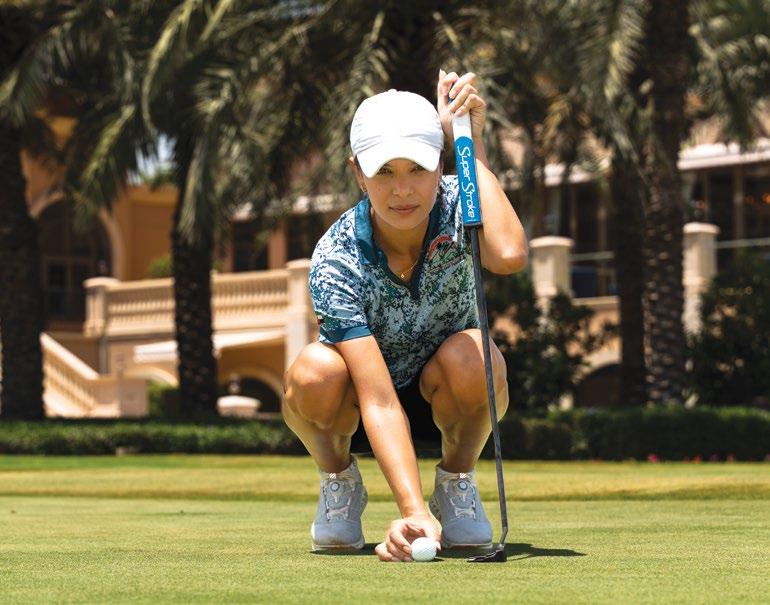
and managing challenging situations during tournaments.”
Consistency, however, remains a moving target. Rich continues to focus on the areas she believes will unlock another level of performance.
“I’m focusing on improving my short game, physical fitness and overall consistency. At the highest level, small improvements can make a big difference.”
As Rich edges closer towards the professional ranks, she has already gained valuable experience competing alongside established professionals.
The biggest lesson has not been about power or shot-making ability.
Instead, it has been about reliability.
“The biggest difference is consistency,” she says. “Professional players are able to perform at a high level week after week, and their attention to detail in every aspect of the game is remarkable.”
Those observations continue to shape her own preparation.
Although the professional game is clearly on the horizon, Rich is determined not to rush the process.
“I want to continue gaining experience, improving my world ranking and making sure every aspect of my game is ready for the demands of professional competition.”
Her pathway may be clearly defined, but she understands the importance of remaining adaptable.
“I have a clear vision of where I want to go, but I also understand that every journey evolves. I’m focused on continuous improvement and taking the right steps at the right time.”
Beyond her personal ambitions, Rich is passionate about the future of women’s golf in the UAE.
The growth of the game has been significant over the past decade and she believes the next generation will have even greater opportunities available to them.
“The future is very bright,” she says. “The UAE continues to invest in sports and create opportunities for female athletes. I expect to see more young girls entering the game and competing at an international level.”
As one of the country’s leading female golfers, Rich has become a role model for aspiring young players.
She hopes her story helps others understand that success is rarely instant.
“Many people think success happens quickly, but the reality is that it takes years of hard work, patience and dedication. The results people see are only a small part of the journey.”
It is advice forged through personal experience and one she hopes resonates with young girls considering a future in the sport.
When asked how she hopes her golfing story will ultimately be remembered, her answer reflects the values that have guided her throughout her career.
“I want my story to be defined by perseverance, passion and pride in representing the UAE. Most importantly, I hope I can inspire the next generation of young girls to believe that they can achieve great things through sport.”
For a player already making history and breaking barriers, that legacy may already be well underway.
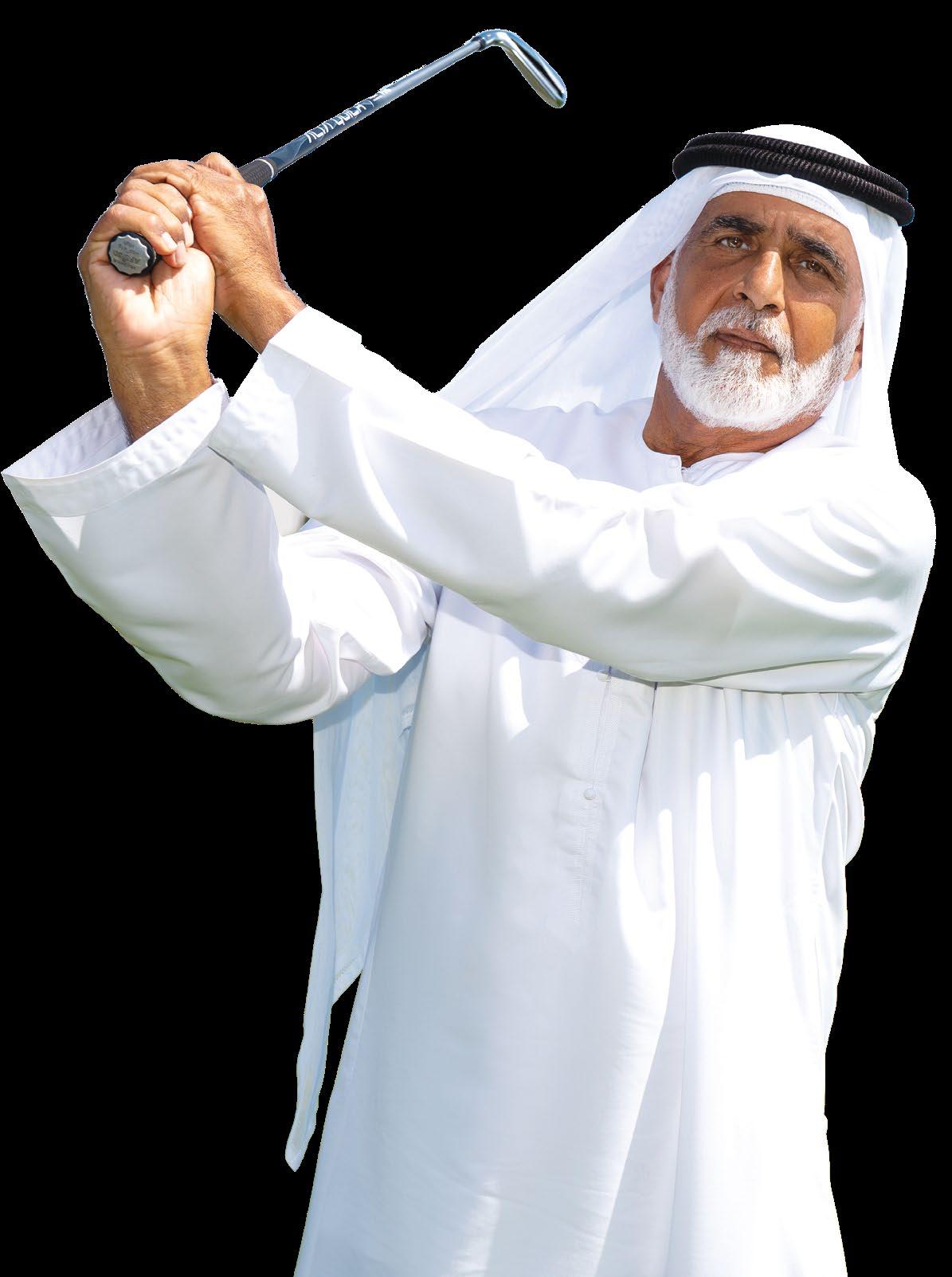


FROM BECOMING THE UAE’S FIRST PROFESSIONAL GOLFER TO WELCOMING TIGER WOODS AND RORY MCILROY TO DUBAI, ISMAIL SHARIF HAS BEEN AT THE HEART OF THE COUNTRY’S GOLFING JOURNEY FOR MORE THAN THREE DECADES.
Photography: Alex Leyno
Few individuals have had a greater influence on the development of golf in the UAE than Ismail Sharif. From discovering the game by chance in the early 1990s to becoming the nation’s first professional golfer, Sharif has witnessed every stage of the sport’s remarkable rise. In this exclusive interview, he reflects on the growth of UAE golf, memorable encounters with legends, the challenges facing the game and why he believes the next decade could produce a new generation of homegrown stars.
Q: You became the UAE’s first professional golfer. Looking back, what first drew you to the game and what challenges did you face developing as a left-handed player?
Ismail Sharif: My introduction to golf happened completely by accident in 1992 when a friend invited me to visit a small pitch-and-putt course next to the Hyatt Regency Dubai. At the time I knew absolutely nothing about the game, but something about it immediately intrigued me.
A few days later I visited Emirates Golf Club and discovered just how difficult the game really was. Being left-handed created additional challenges because equipment and coaching options were extremely limited. Rather than discouraging me, it motivated me. I wanted to prove that an Emirati could excel in golf just as well as anyone else. What started as curiosity quickly became a personal mission.
Q: When you turned professional, did you ever imagine golf in the UAE would reach the level it enjoys today?
Ismail Sharif: I’ve always believed it would because our leadership has consistently aimed for
Historically, access was the biggest challenge. Unlike football, golf required significant commitment from parents in terms of transport, time and financial investment.” “
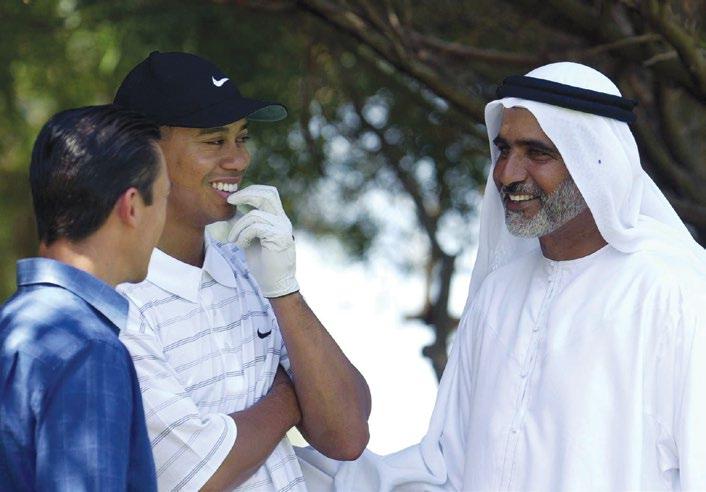
excellence. The vision was always to create worldclass facilities and experiences.
I was fortunate to be involved with the Dubai Desert Classic from its earliest days and witnessed first-hand how Dubai established a reputation for delivering exceptional hospitality. Those standards became a major factor in attracting golfers and tourists from around the world.
Today we have some of the finest golf facilities anywhere on the planet, and that success didn’t happen by accident. It was built through vision, planning and an unwavering commitment to quality.
Q: You’ve seen UAE golf evolve from its infancy. What have been the biggest positive changes and what challenges remain?
Ismail Sharif: The growth in facilities, participation and international recognition has been incredible. However, I still believe our biggest challenge is accessibility.
The UAE has an abundance of world-class championship courses, but we need more affordable, entry-level facilities where beginners can learn the game without significant financial barriers. If golf is to continue growing, we need a broader base to support the pyramid.
One of my proudest initiatives was helping launch the “Get Into Golf” programme. By reducing the cost of coaching and making the game more approachable, we saw significant numbers of beginners become long-term golfers and club members.
Q: The UAE golfing scene has overcome numerous challenges over the years. How
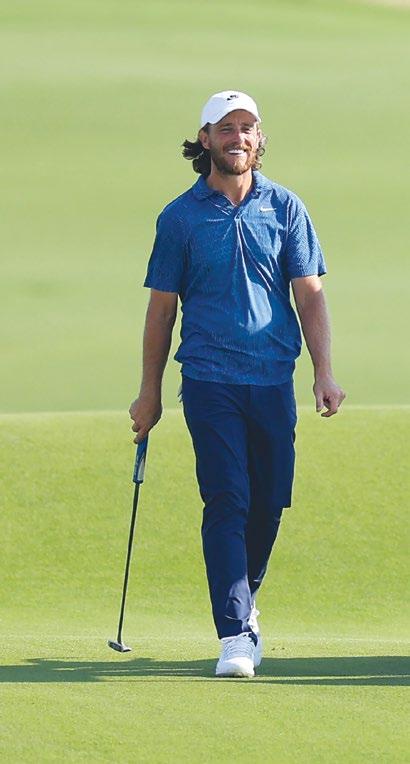
confident are you in its ability to rebound from the current situation?
Ismail Sharif: Extremely confident. The UAE has demonstrated remarkable resilience through economic downturns, regional challenges and even the pandemic.
People choose to live here because they trust the country, its leadership and the quality of life it offers. Golf benefits directly from that confidence. Club memberships remain strong, demand continues to grow and the long-term outlook remains exceptionally positive.
Q: How important have tournaments such as the Hero Dubai Desert Classic and the DP World Tour been in accelerating golf’s growth?
Ismail Sharif: They have been absolutely fundamental.
Firstly, they showcase our courses and facilities to a global audience. Golf tourists watch these events and immediately want to come and play the same courses they see on television.
Secondly, they inspire local players. Having the world’s best golfers compete in your backyard creates aspirations and provides learning opportunities that simply cannot be replicated elsewhere.
Q: How proud are you to see the emergence of UAE National players such as Ahmad Skaik and Rayan Ahmed?
Ismail Sharif: Very proud. They are talented young players who have worked extremely hard to reach their current level.
The reality of professional golf is that talent
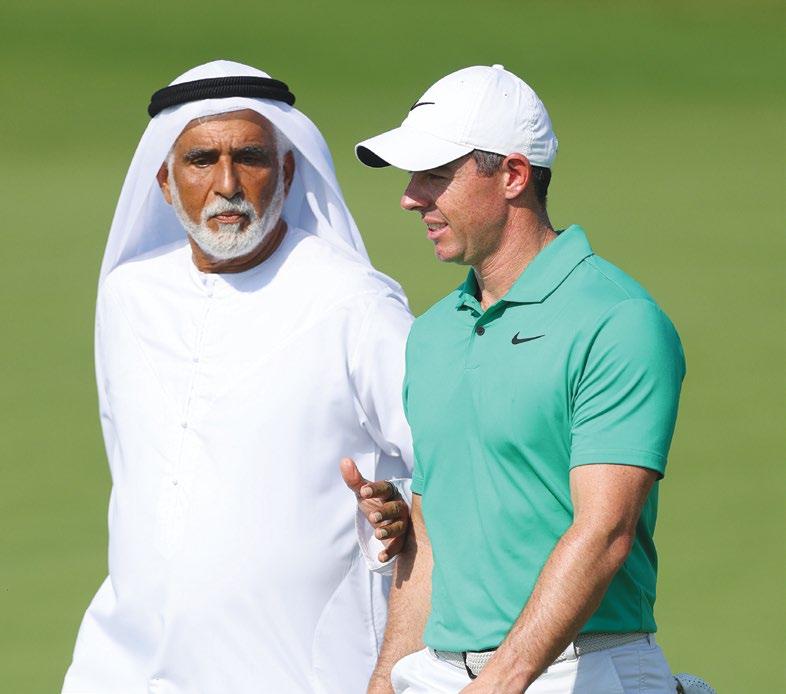
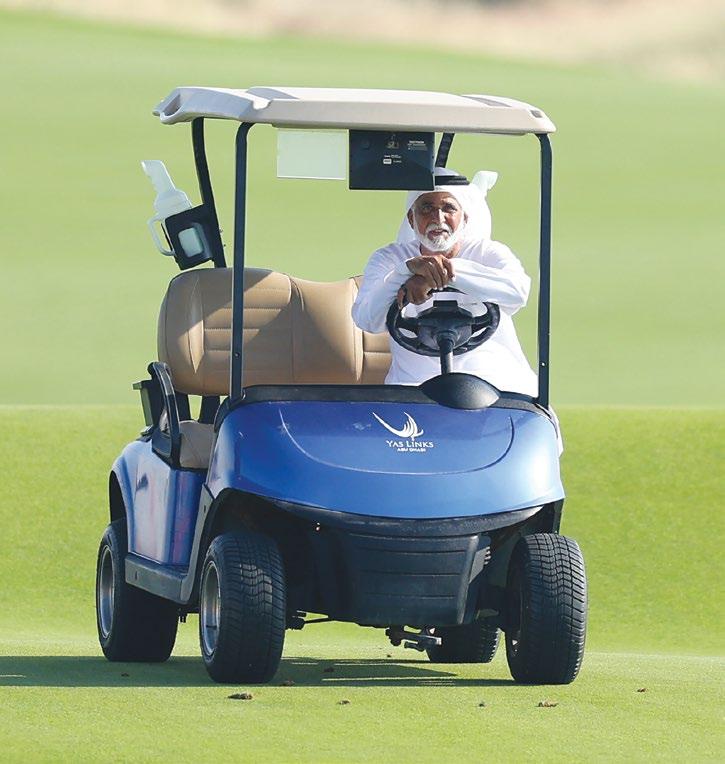
alone isn’t enough. It requires enormous commitment, discipline and sacrifice. Ahmad and Rayan understand that and continue to work tirelessly.
They have strong support from the UAE Golf Federation and are helping demonstrate what is possible for the next generation of Emirati golfers.
Q: Why has it taken time for local players to break through, and can their success inspire others?
Ismail Sharif: Historically, access was the biggest challenge. Unlike football, golf required significant commitment from parents in terms of transport, time and financial investment.
Fortunately, those barriers have gradually reduced. More Emirati families are embracing golf as part of their lifestyle, and that cultural shift is producing results.
Success stories such as Ahmad and Rayan are hugely important because they give young players role models they can relate to.
Q: What more can golf clubs, schools and governing bodies do to make golf more appealing to UAE Nationals?
Ismail Sharif: Every golf club should take ownership of developing local talent.
I believe a practical model would be for each club to support a small group of dedicated Emirati juniors. If every course in the UAE invested in six to eight talented youngsters, we would quickly create a powerful development network across the country.
That approach would be sustainable, cost-effective and highly effective in producing future national team players.
Q: You’ve spent time with some of golf’s biggest stars, including Tiger Woods and Rory McIlroy. What are those conversations like away from the spotlight?
Ismail Sharif: People often assume conversations revolve around golf, but most of the time they’re surprisingly
SMAIL SHARIF
Photography: Alex Leyno
normal and relaxed.
What has always impressed me is the professionalism and discipline of elite players. I remember Tiger Woods arriving in Dubai after a long flight and heading straight to the gym instead of resting. That level of dedication helps explain why he achieved so much.
Rory McIlroy is another wonderful character. He has always enjoyed a laugh and has a genuine affection for Dubai because the city played such an important role in launching his global career.
Q: Of all the golfing legends you’ve met, which encounter stands out most?
Ismail Sharif: Without question, Seve Ballesteros. He wasn’t just a golfing genius; he was an extraordinary human being. We became good friends over the years and he genuinely loved visiting the UAE.
Even today, whenever I step onto a golf course, I think about Seve. His charisma, warmth and passion for the game made him unforgettable.
Q: Is there a piece of advice from one of those legends that has stayed with you?
Ismail Sharif: Absolutely. Tiger Woods once told me: “Stay away from the ball when you’re going back and stay away from the ball when you’re coming through.”
It sounds simple, but it was brilliant advice about maintaining space, posture and balance throughout the swing. To this day, it remains the best technical tip I’ve ever received.
Q: What are your thoughts on the relaunch of the MENA Golf Tour?
Ismail Sharif: I think it’s a fantastic concept and an
important opportunity for players across the region.
The key will be ensuring clear pathways to higher-level tours. If players can see a structured route from the MENA Golf Tour to the HotelPlanner Tour, DP World Tour or Asian Tour, it becomes a genuinely powerful development platform.
Q: Can the MENA Golf Tour help produce a homegrown UAE player on the DP World Tour or PGA Tour?
Ismail Sharif: Yes, but only if those pathways remain strong and clearly defined.
Any developmental tour needs to be connected to the wider professional ecosystem. If players know success will lead to opportunities at the next level, the tour can become a genuine launchpad for regional talent.
Q: If you could fast-forward ten years, what would success look like for golf in the UAE?
Ismail Sharif: Success would be seeing multiple UAE National players competing regularly on the DP World Tour and PGA Tour.
The foundations are already in place. We have world-class facilities, elite coaching academies and strong support from organisations such as DP World and the UAE Golf Federation.
I genuinely believe the next decade could be transformational.
Q: Having played such a pivotal role in the development of golf in the UAE, what achievement are you personally most proud of?
Ismail Sharif: Honestly, I’m most proud of finding a sport that has brought me so much happiness throughout my life.
I still wake up every morning excited to contribute to the industry. Golf has given me
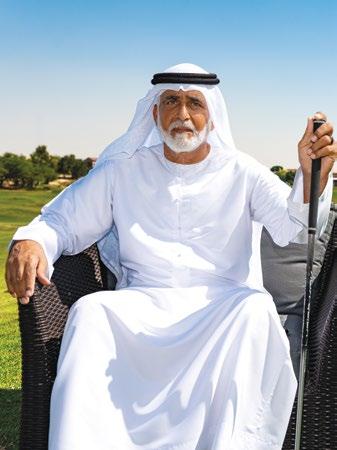
incredible opportunities, wonderful friendships and the chance to represent a country that I love deeply.
Q: Finally, what advice would you give a young Emirati boy or girl dreaming of a career in professional golf?
Ismail Sharif: Be patient and respect the process. Too many young players rush straight onto championship courses before mastering the fundamentals. I spent six months practising on the range and par-three course before I ever played a full course.
Build a strong foundation, learn the basics properly and fall in love with the game. If you do that, everything else becomes possible.
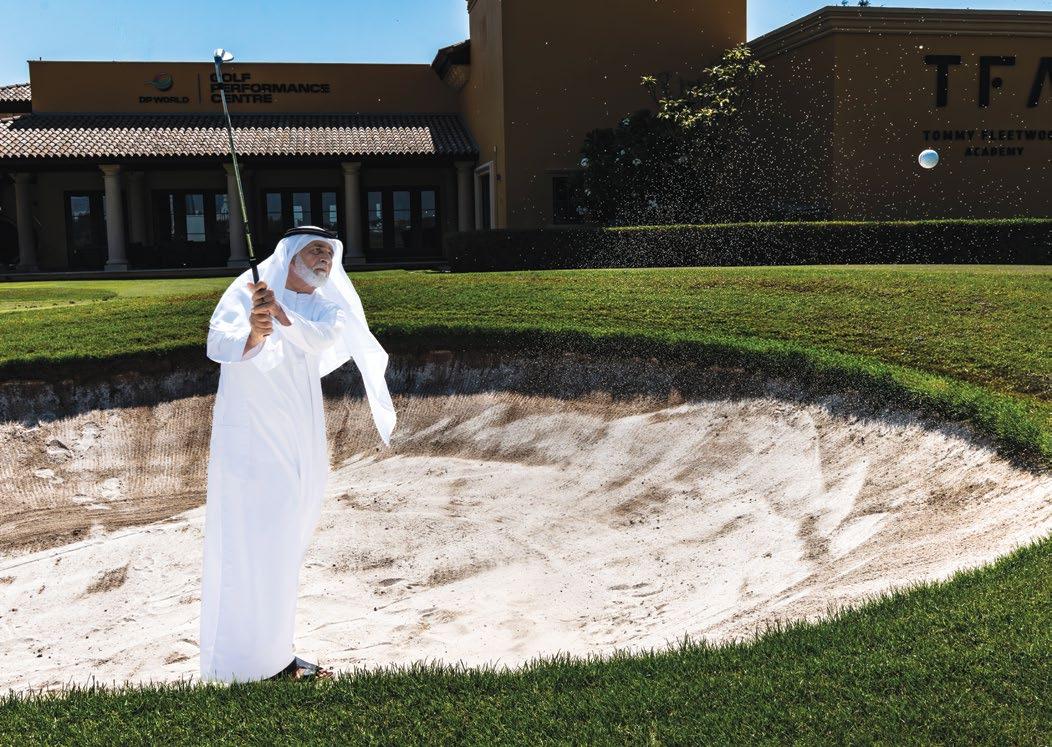


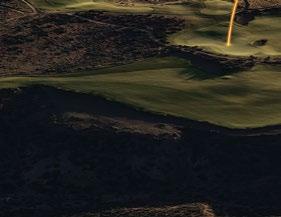












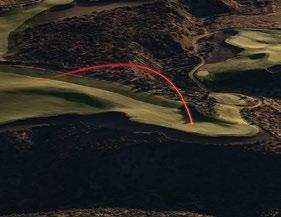




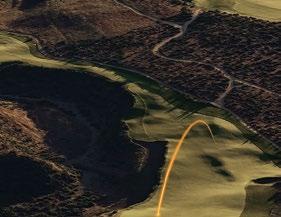



























































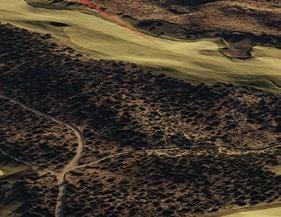




















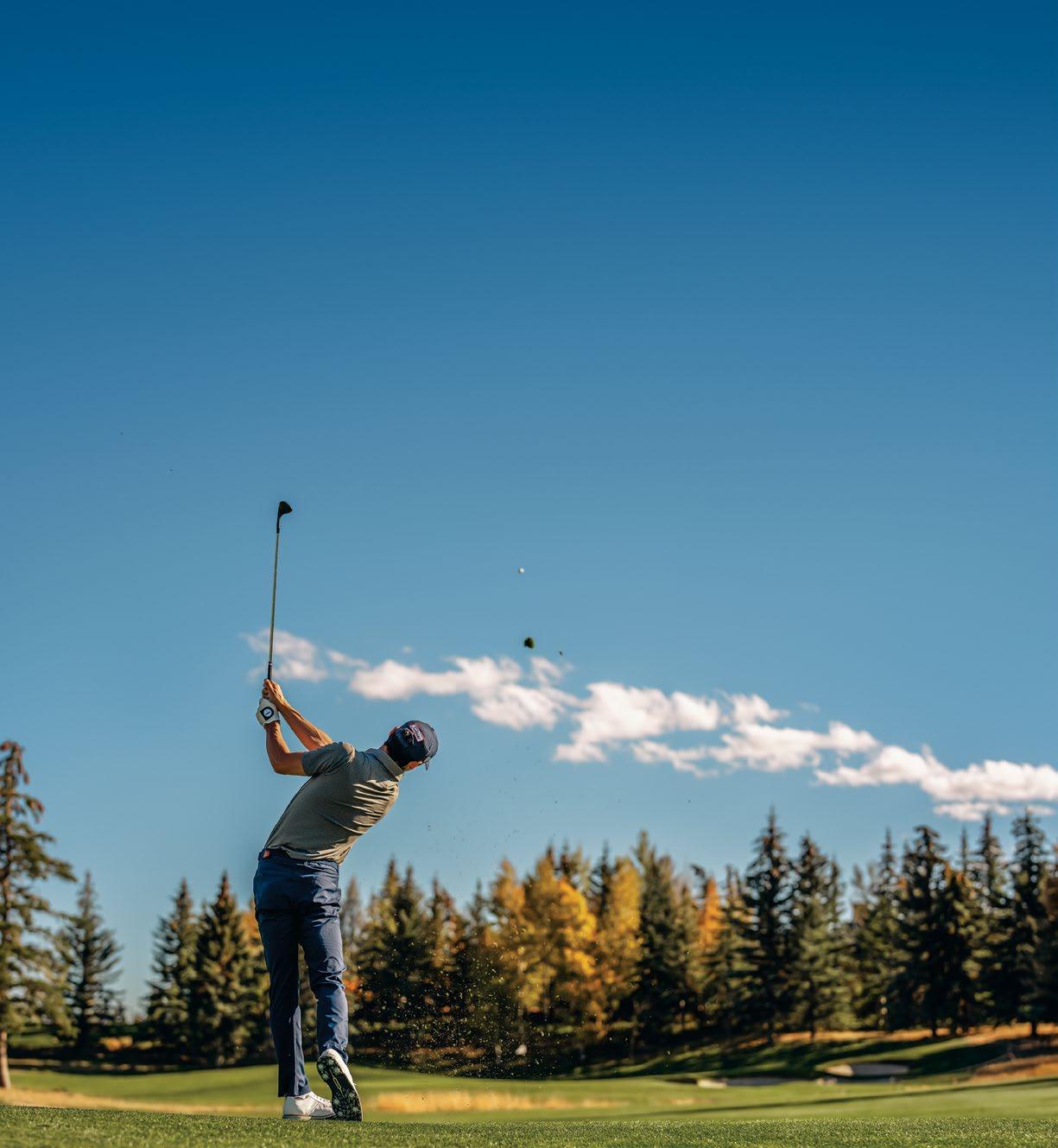














SM11 is designed to produce cleaner contact, controlled flight, and the right amount of spin, delivering the predictability and precision to pull off the exact shots you envision.