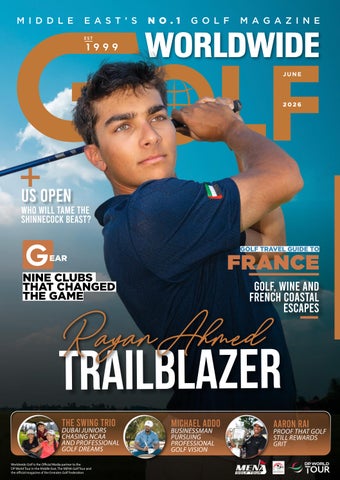
US Open WHO WILL TAMe THe SHInneCOCK Be AST? EAR G NINE CLUBS THAT CHANGED THE GAME GOLf, WIne And frenCH COASTAL eSCApeS
TRAILBLAZER RayanAhmed





50% CASH BACK IS NOW LIVE*
*Applicable on everything in-store except GTS metals, meta glasses, golf balls, gloves, Callaway, and Taylormade. Cashback valid on a minimum spend of 1000 AED and redeemable on your next purchase. Cashback voucher valid for 7 days. Not to be used in conjunction with other promotions/discounts. Cashback to be used and redeemed at the same outlet once.






























DISTANCE

















YOURSELF



By Alex Gallemore, Editor, Worldwide Golf
Is The Game Finally Turning Back Towards Proper Golf?
Golf has always loved a trend. Oversized drivers. Graphite shafts in everything. Then launch monitors arrived and suddenly every member at your club was talking about spin rates like they worked for NASA. Now the modern game is obsessed with speed. Swing faster. Hit it further. Chase bigger numbers. Which is why this summer feels interesting.
Quietly, underneath all the noise around money, mergers and social media golf, there are signs the sport is drifting back towards something more balanced. Golf that still values control as much as power.
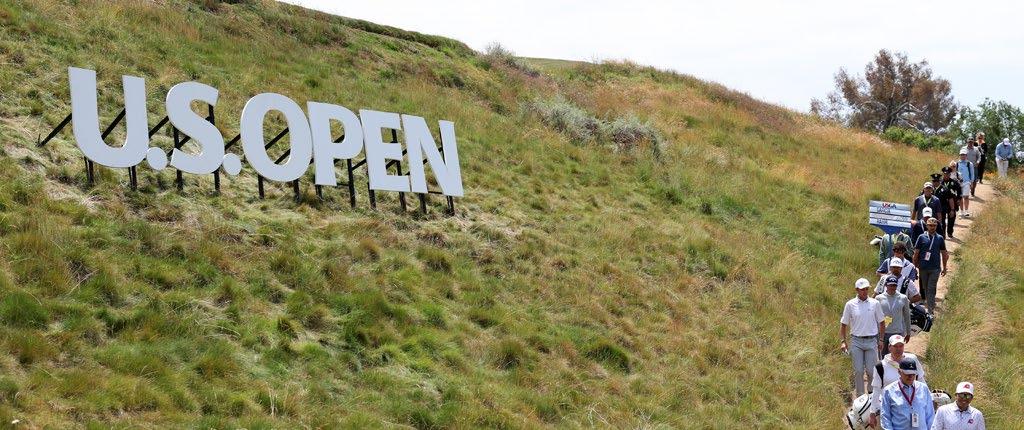
That’s a big reason why the US Open at Shinnecock Hills feels so intriguing. Shinnecock doesn’t care about your TrackMan numbers. It couldn’t care less how far you carry driver indoors at sea level. The course strips things back very quickly. Can you control trajectory? Can you handle pressure? Can you accept that par is sometimes a genuinely good score?
The modern professional game doesn’t get asked those questions often enough.
Week to week on Tour, players are essentially trying to overwhelm golf courses. Bomb driver, hit wedge, repeat. The US Open is one of the few events that still forces players to actually think. Mentally it becomes exhausting because there’s nowhere to hide.
Major drama
When Shinnecock hosted in 2018, the place looked brutal by the weekend. Balls rolling off greens, players looking emotionally wrecked by the seventh hole, commentators trying not to say the USGA had slightly lost the plot. Brilliant television though. That kind of tension has been missing from the modern game.
We have so many players now capable of shooting 62 that watching someone grind out level par feels genuinely refreshing. That’s why Rory McIlroy remains fascinating heading into this week. When he drives it well, there’s still nobody more intimidating in full flow. But Shinnecock has a habit of exposing impatience – the course almost dares players to force the issue.
Scottie Scheffler arrives as the man to beat because his game has very few weaknesses. The unsettling thing about Scheffler is that he never looks rattled. He plays golf like someone completing admin.
Then there’s Bryson DeChambeau, who will probably attempt to launch driver over parts of Long Island nobody else is even looking at. Bryson has almost become the perfect
symbol of the modern game itself – part brilliant golfer, part entertainer, part walking science experiment.
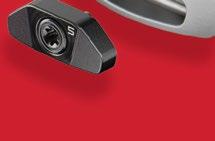
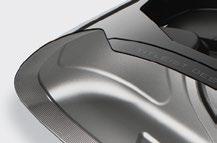
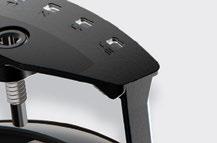
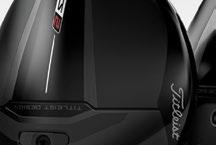
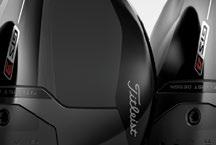
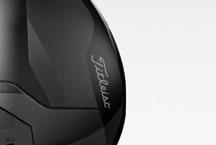
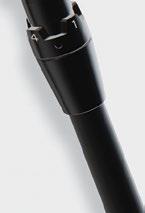
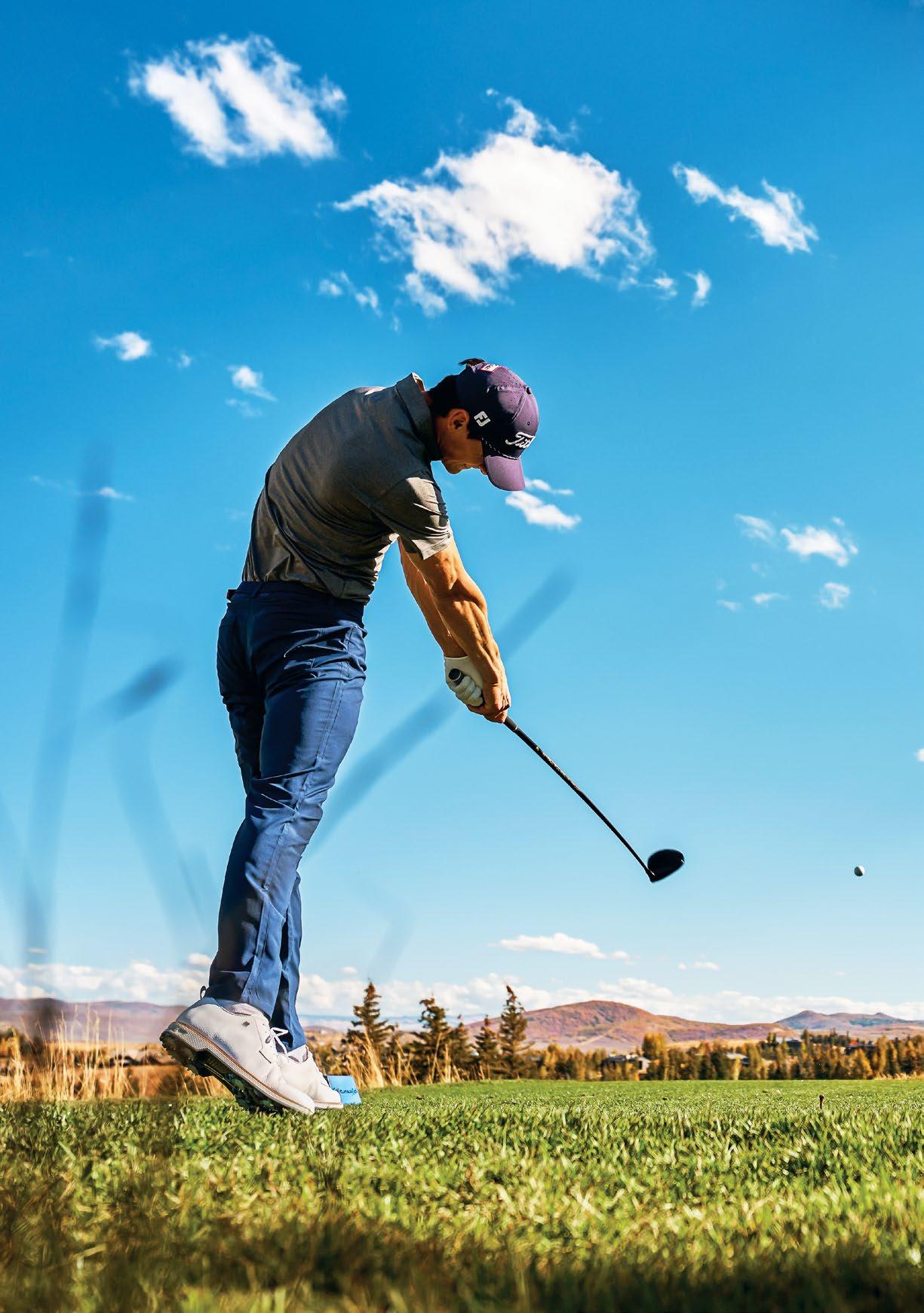
Which brings us to equipment. The new Titleist GTS driver range is arguably the most interesting launch of the year, not because it promises miracle distance, but because it feels aimed at golfers who still care where the ball actually goes.
That sounds obvious, but driver marketing became genuinely ridiculous for a while. Every launch was supposedly longer than ever, despite the rules being pushed to their absolute limit already. At some point golfers started realising three extra yards means very little when the ball is disappearing sideways into trees.
What Titleist appear to have done with the GTS range is focus on balance. The GTS2 offers stability and forgiveness. The GTS3 is built for better players wanting proper shot shape control, while the GTS4 is aimed at high speed players trying to kill spin without losing the plot entirely. None of them look like a transformer toy sitting behind the ball – which still matters more than most golfers admit.
Robert MacIntyre switched into the GTS2 recently and immediately started talking about improved spin control and better shaping in the wind. That’s relevant heading into a summer where the majors will demand exactly those qualities.
The bigger question
Is LIV Golf finally running out of road? A year ago that felt impossible to ask. Now the mood feels different. The headlines are quieter. TV numbers remain underwhelming. Some players look stuck in a strange limbo – still famous, but increasingly absent from the conversations that actually matter.
The Majors are exposing the reality. They remain the only weeks where everyone comes together, and that’s still where the sport feels biggest.
LIV changed golf permanently – players gained power, prize money exploded, the PGA Tour was forced to modernise faster than it wanted to.. But there’s a growing feeling that the sport is slowly drifting back towards something more recognisable. The Majors at the centre. Historic venues. Shot making. Equipment becoming more refined rather than simply louder.
If Shinnecock delivers the brutal, demanding week everyone hopes for, it might remind the sport of something it already knew.
Golf is usually at its best when it gets slightly uncomfortable!











12 PETE COWEN: PUTTING STILL MATTERS
Pete Cowen explains why putting, not power, is the decisive difference at modern Major Championships.
16 BEAUTIFUL BRUTALITY
Shinnecock Hills returns as golf’s purest US Open test where wind, fear and history punish even the world’s best players.
18 THE QUIET CHAMPION
Aaron Rai’s PGA Championship triumph proved humility, precision and relentless work ethic still matter most in modern professional golf.
22 US OPEN PREVIEW
Wind, fear and brutal greens await as golf’s biggest stars battle Shinnecock Hills in the ultimate US Open examination.
28 THE TRAILBLAZER
UAE No.1 amateur Rayan Ahmed is breaking barriers as the first Emirati heading to NCAA Division I golf.
36 SCOTLAND’S QUIET RISER
A grounded Scottish talent, Will Porter, is building momentum through the MENA Golf Tour while chasing golf’s next professional level.



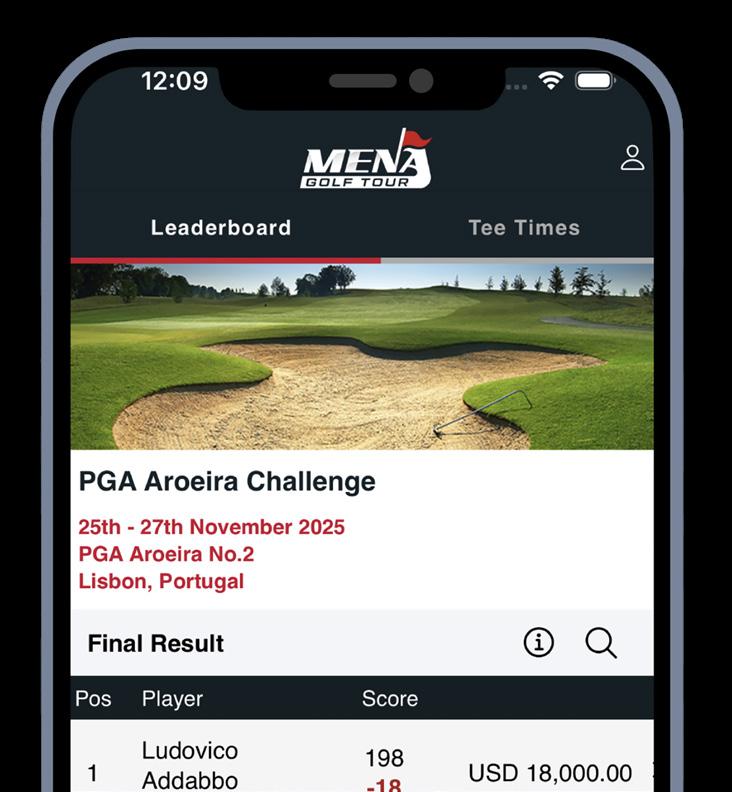
Download the MENA Golf Tour App for player login and registration. Get instant access to the latest news, upcoming events, live scores, current leaders, Order of Merit and more.

BAGUETTES, BORDEAUX & BIRDIES

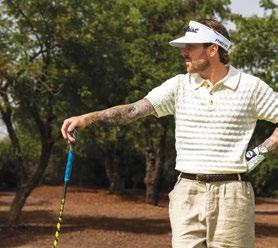
Dubai entrepreneur James Hovey explains how golf’s pressure, patience and discipline mirror the realities of building successful modern brands. BUSINESS LESSONS FROM THE FAIRWAY
Putting Still Wins Majors
I’m always one to say that Major Championships tend to favour the usual suspects. These days it is hard to look beyond Rory McIlroy and Scottie Scheffler because they set the standard week after week. That is why it was refreshing to see Aaron Rai win the PGA Championship. For plenty of people it came as a surprise, but I have followed Aaron’s career for a long time and I can tell you it was no fluke.
He is one of the best ball strikers in the game and has a work ethic that very few players can match. You only have to watch the way he practises to understand why he keeps improving. There is no drama with Aaron, no noise, just hours of repetition and constant attention to detail. His iron play coming down the stretch at the PGA Championship was world class, especially under that kind of pressure. Every shot looked committed. Every swing looked balanced. Yet for me, the real difference was how well he putted.
People still underestimate how important putting has become in the modern game. The margins at the top level are tiny. Nearly all these lads can hit it miles and most of them hit it very straight as well. The courses are longer, the athletes are stronger and launch monitor technology has changed how players train. What separates players now is often what happens from ten feet and in.
One of my favourite stories involving Aaron happened a few years ago at the DP World Tour Championship at Jumeirah Golf Estates. I was on the range working with Ian Poulter alongside his caddie Terry Mundy. Next to us was Aaron Rai going through his practice. Poults had no idea who he was and
genuinely thought he might have been an amateur playing in the pro am.
I remember saying to him: “No, he’s a proper player. He’s here because he’s been putting results together.”
Poulter looked across and joked: “Well, if I don’t beat him this week, I’m giving the game up.”
After three rounds Aaron was five shots ahead of him and Poulter never finished above him that week. Terry and I reminded Poults about his retirement plans afterwards. To be fair to him, he found the funny side of it because he has always had a great sense of humour. Deep down though, I think that week convinced him Aaron Rai was the real deal.
That story says a lot about how quickly the professional game evolves. Players appear from nowhere because the standard is so high globally now. You cannot survive at the top level unless every part of your game is sharp.
Take Pádraig Harrington at this year’s PGA Championship. At 54 years old he still has the speed to compete with players thirty years younger than him. In fact, he now spends more time trying to slow himself down because he knows maximum speed comes with an accuracy cost. He can still swing at over 125 miles per hour when he wants to, which is incredible at his age, but experience tells him efficiency matters more than simply trying to overpower a golf course.
Then you look at someone like Brooks Koepka. Brooks is striking the ball beautifully right now, probably as well as I have ever seen him hit it, but the putter has gone cold. Suddenly people start questioning form, confidence and momentum. That is modern golf. A player can stripe it from tee to green
and still finish frustrated if the putts are not dropping.
This is exactly where amateur golfers can learn something valuable. Too many club golfers spend hours smashing drivers on the range trying to gain another ten yards. Distance helps, of course it does, but it should not be the starting point.
First learn to chip and putt properly. Then learn to find fairways consistently. Once you can control the golf ball and save shots around the greens, then you can start focusing on speed and power. Most handicaps would fall dramatically just from improving from inside 100 yards.
Some people will point at Rory McIlroy and argue that his driving wins him tournaments. Yes, his length gives him a huge advantage, but his short game still has to stand up under pressure. Just look at the way he won Masters Tournament this year. He chipped brilliantly when he had to and holed the putts that mattered.
On the other side of it, look at Bryson DeChambeau. He has all the power in the world and enough speed to dismantle any golf course, but lately he has looked uncomfortable on the greens and that changes everything.
Golf has changed massively over the last decade, but one thing remains exactly the same. The old phrase still holds true.
Drive for show and putt for dough.
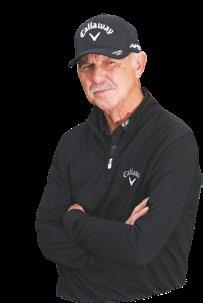
Pete Cowen Master PGA Professional



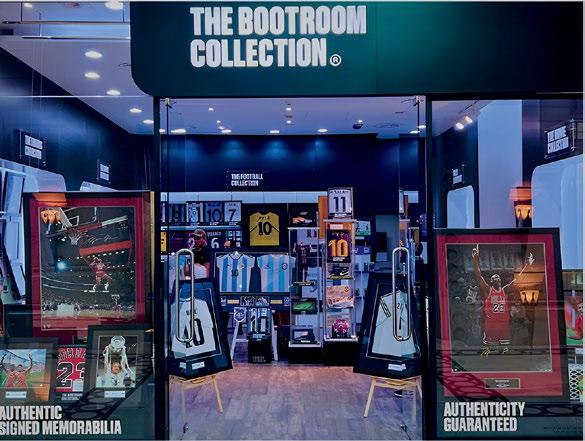
The Bootroom Collection is redefining the memorabilia and collectibles landscape for modern spor ts fans and discerning collectors
Blending authenticity, storytelling and premium presentation, the brand has become a trusted destination for rare signed memorabilia, elite trading cards and exclusive spor ting collectibles.
Known for sourcing authenticated pieces from the world of football, golf and global spor t, the brand blends premium presentation with exper t curation to create a truly elevated collecting experience.

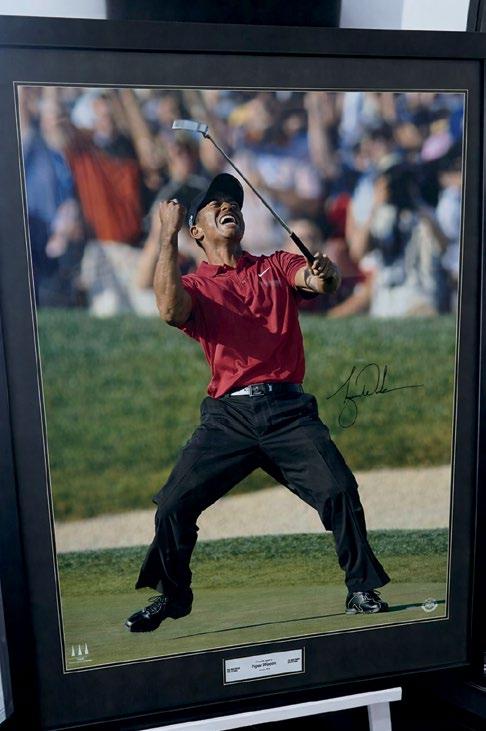
OWN A MOMENT IN GOLFING HISTORY
From major championship triumphs to career-defining signatures, The Bootroom Collection offers collectors the chance to own authentic pieces tied to golf’s most iconic moments.
With flagship locations in Dubai Mall and Atlantis The Palm, alongside par tnerships spanning world-renowned athletes, clubs and brands, The Bootroom Collection sits confidently at the intersection of spor t, culture and collectability.
INTRODUCING
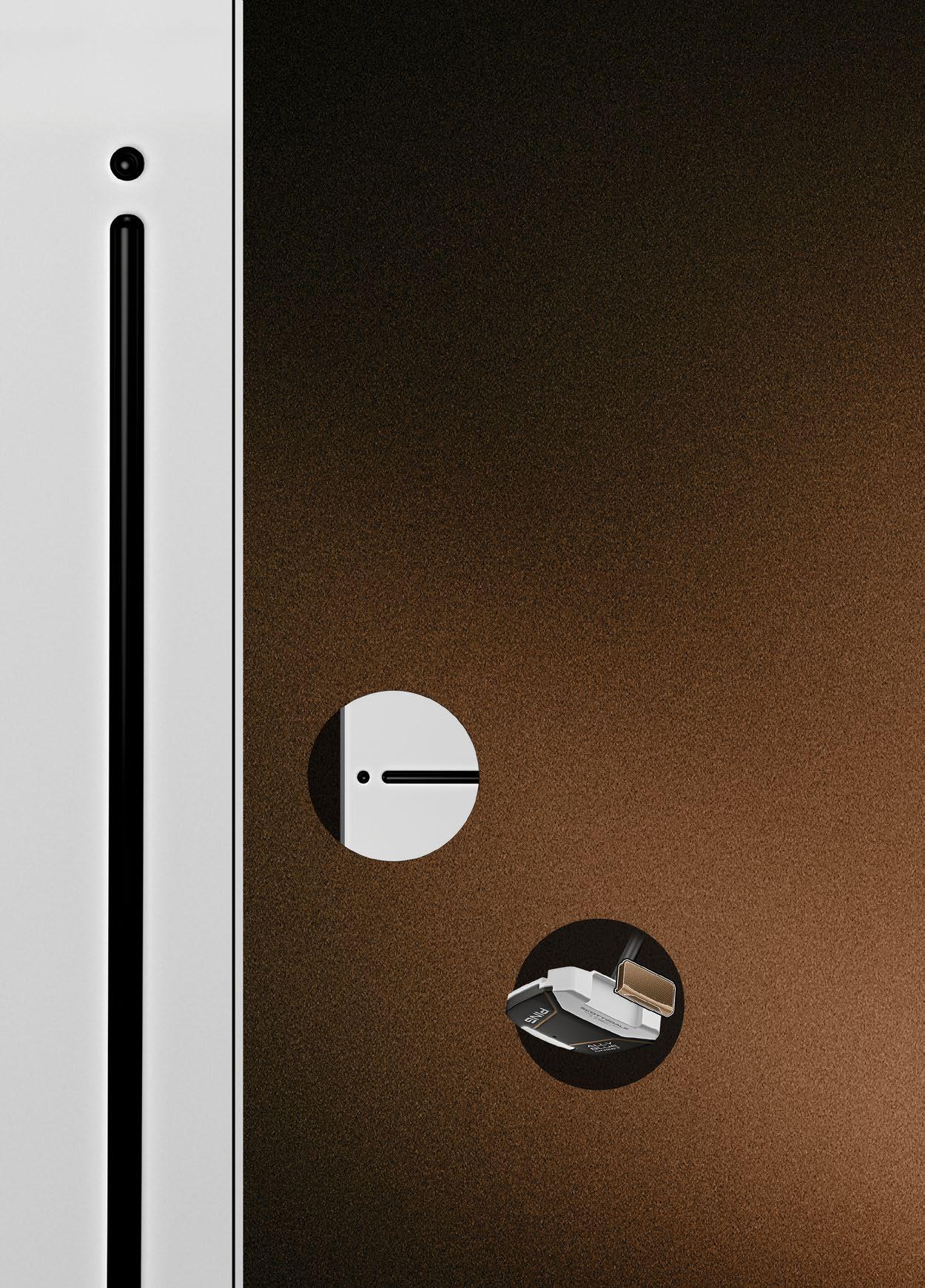
A dot focal point and long alignment line help anchor your gaze, aiding in accuracy and consistency.
FORGIVENESS WITH FEEL
Elastomer insert delivers soft, responsive feel and distance control.
A DIFFERENT POINT OF VIEW.
With a striking white finish, the multi-material, high-MOI Scottsdale TEC putters introduce EYE Q, an alignment technology inspired by eye-tracking research that helps you focus and sink more putts. Each model positions the CG behind the shaft axis to ensure the CG is pulled through the stroke for stability while delivering the torque requirements to match your stroke type.

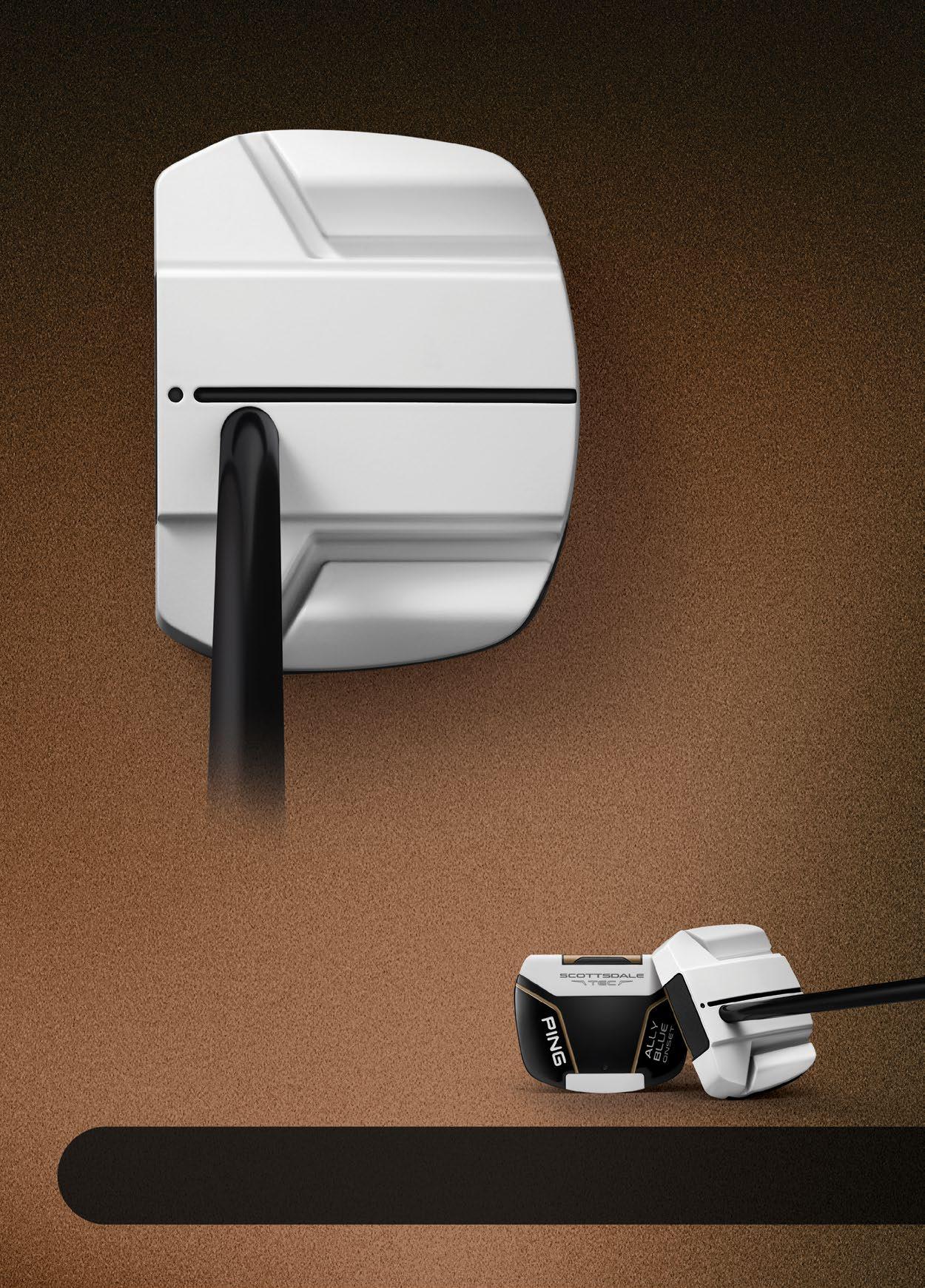
Onset shaft position in Ally Blue and Ketsch models allows you to see entire face for improved alignment.
GET FIT. GET OPTIMISED.
Course
SHINNECOCK HILLS
THE US OPEN’S BEAUTIFUL MONSTER
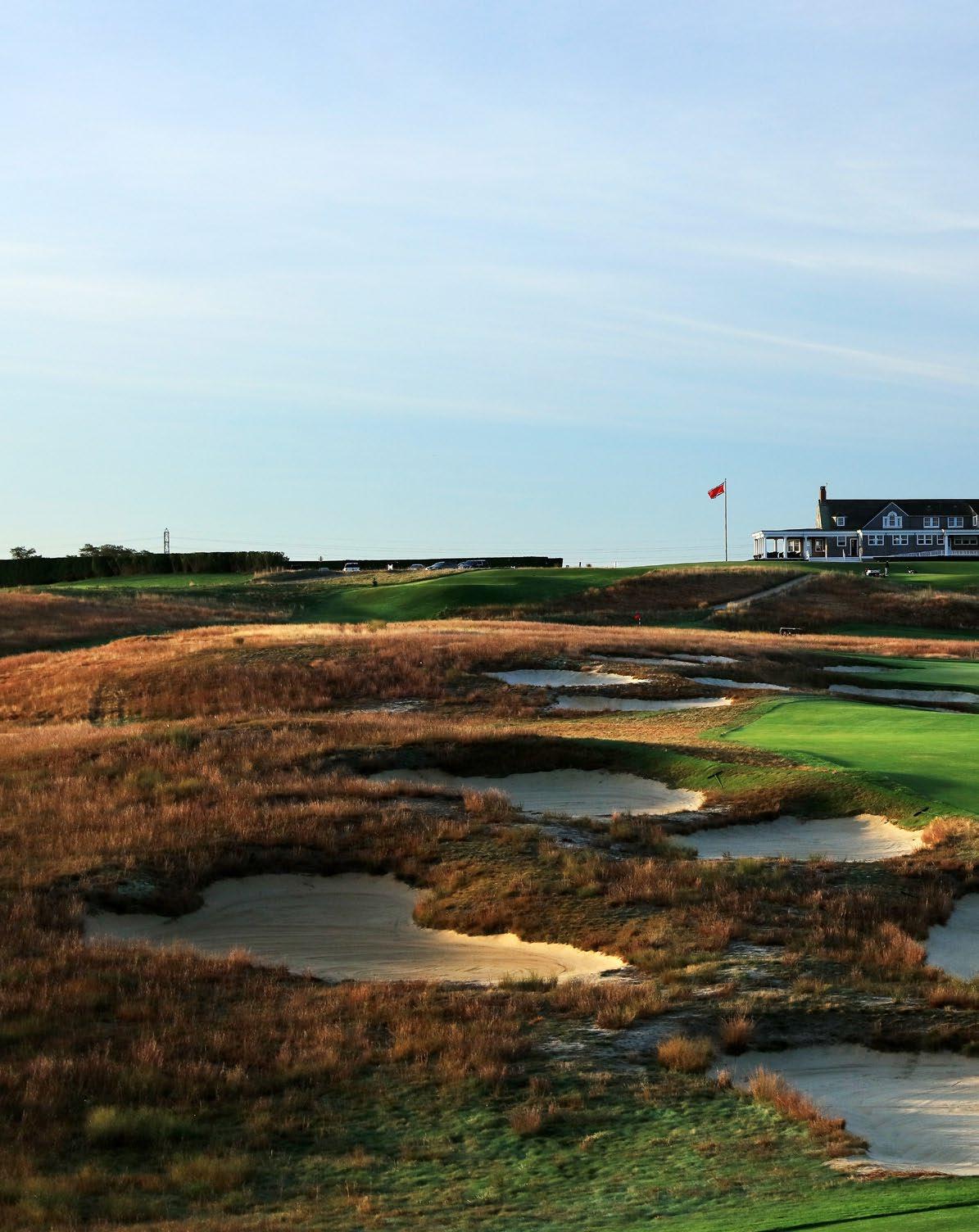
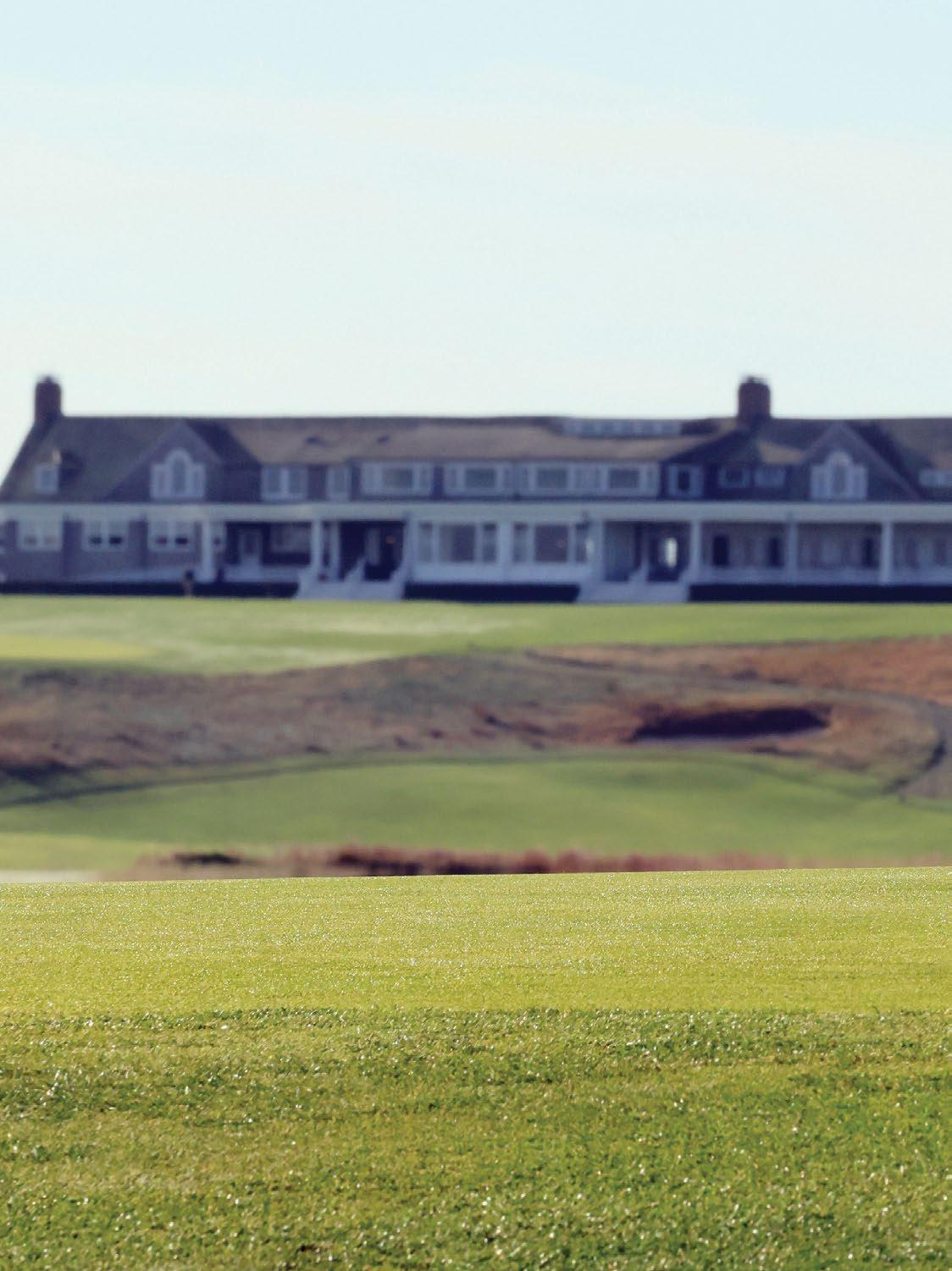
There are famous golf courses, and then there is Shinnecock Hills Golf Club. The kind of place that feels more like golfing mythology than an actual venue. Perched on the windswept coastline of Long Island, Shinnecock is hosting another US Open and, somehow, still manages to intimidate the best players in the world despite looking deceptively calm on television.
What many fans do not realise is that Shinnecock is one of the oldest golf clubs in America, founded back in 1891. Even more impressively, it was one of the first clubs in the United States to admit women as members from the very beginning. Not bad for a venue often painted as old school and brutally traditional.
The course itself has links style DNA
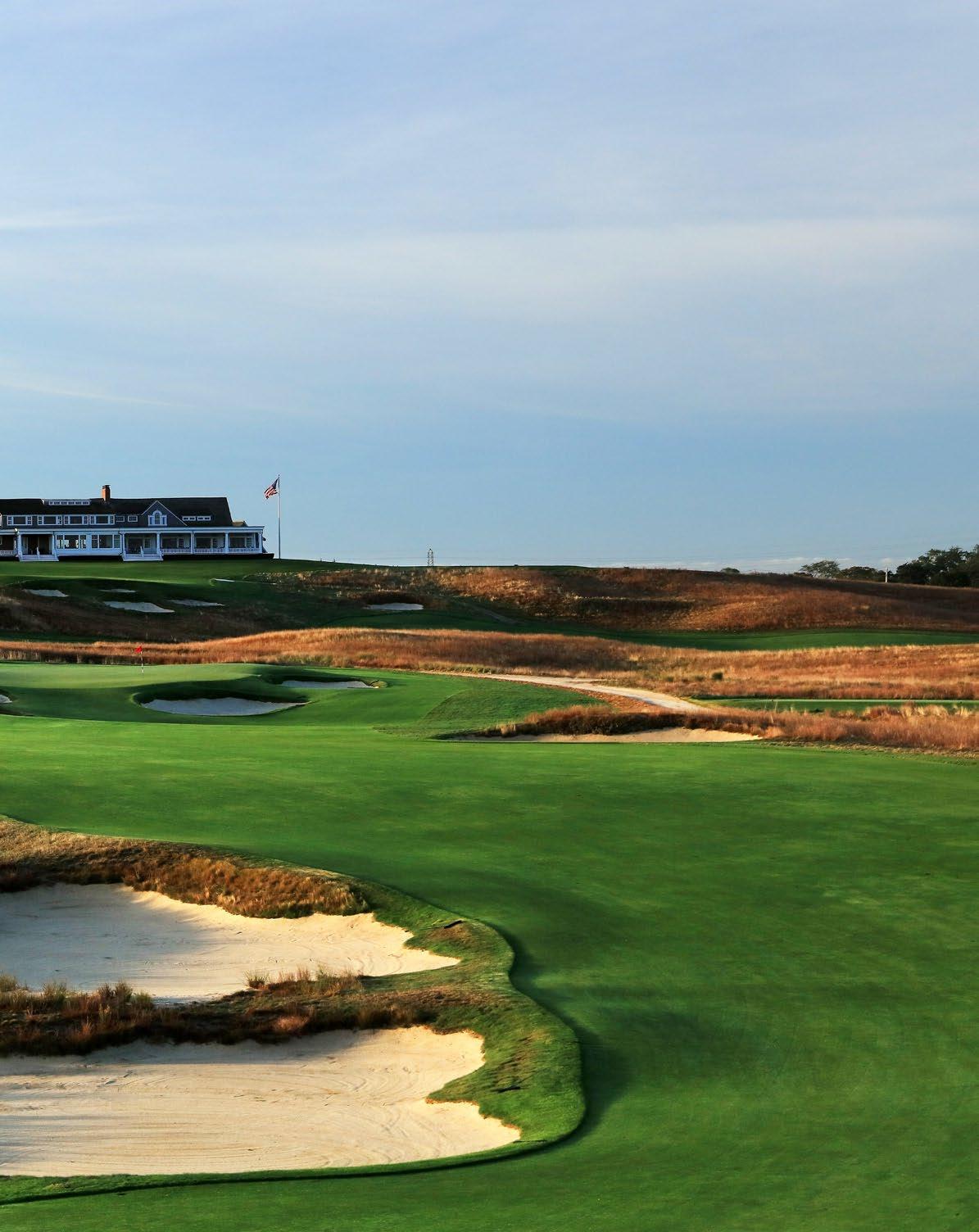
despite sitting thousands of miles from Scotland. There are barely any trees, the fairways rumble and twist naturally through the landscape, and when the wind gets up, the place turns vicious. Players often say Shinnecock does not just punish bad shots. It punishes slightly nervous thoughts.
History
Its history is equally wild. During the infamous 2004 US Open, the greens became so fast and fiery that balls literally would not stay on the putting surfaces.
At one point, officials had to water the 7th green during play while frustrated players looked ready to riot. Retief Goosen somehow survived the chaos to win at four under par, which felt more like four under sanity.
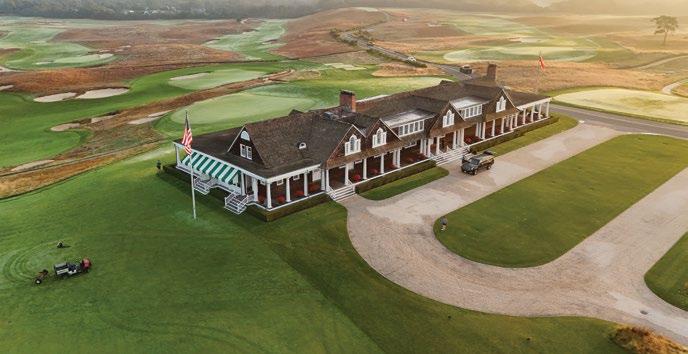
Then there is the clubhouse. Sitting high
above the course like something from a classic American novel, it overlooks rolling fairways and giant fescue dunes that make the property feel almost untouched by modern golf architecture.
The real magic of Shinnecock, though, is that it never feels manufactured. No waterfalls. No gimmicks. No artificial drama. Just golf stripped back to its rawest form where creativity matters, patience gets tested and reputations can disappear into the long grass very quickly.
For one week, the golfing world returns to one of its purest battlegrounds. Most players will leave exhausted. A few will leave broken. One will leave with the US Open trophy and probably the feeling they have survived something rather than simply won a tournament.

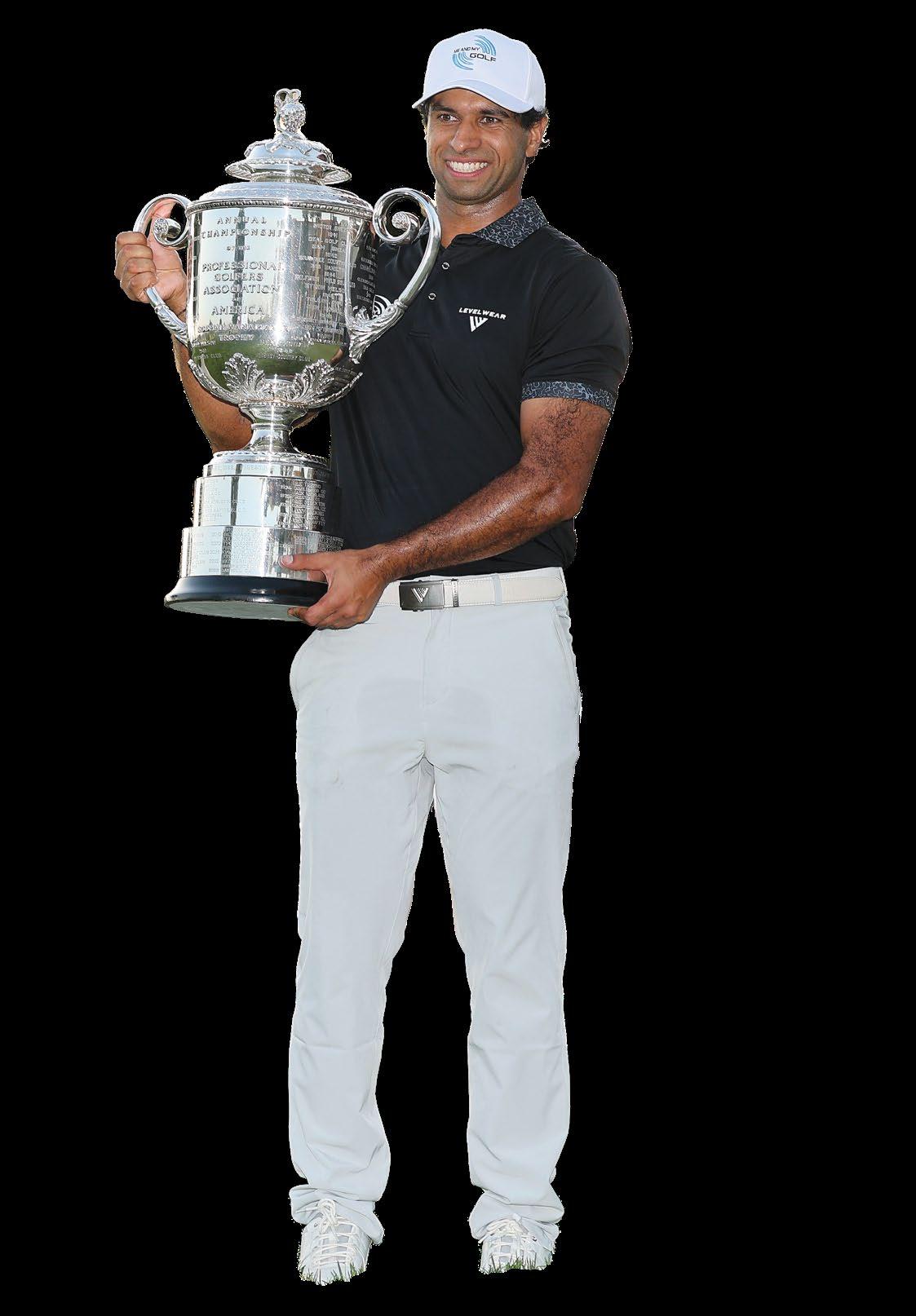
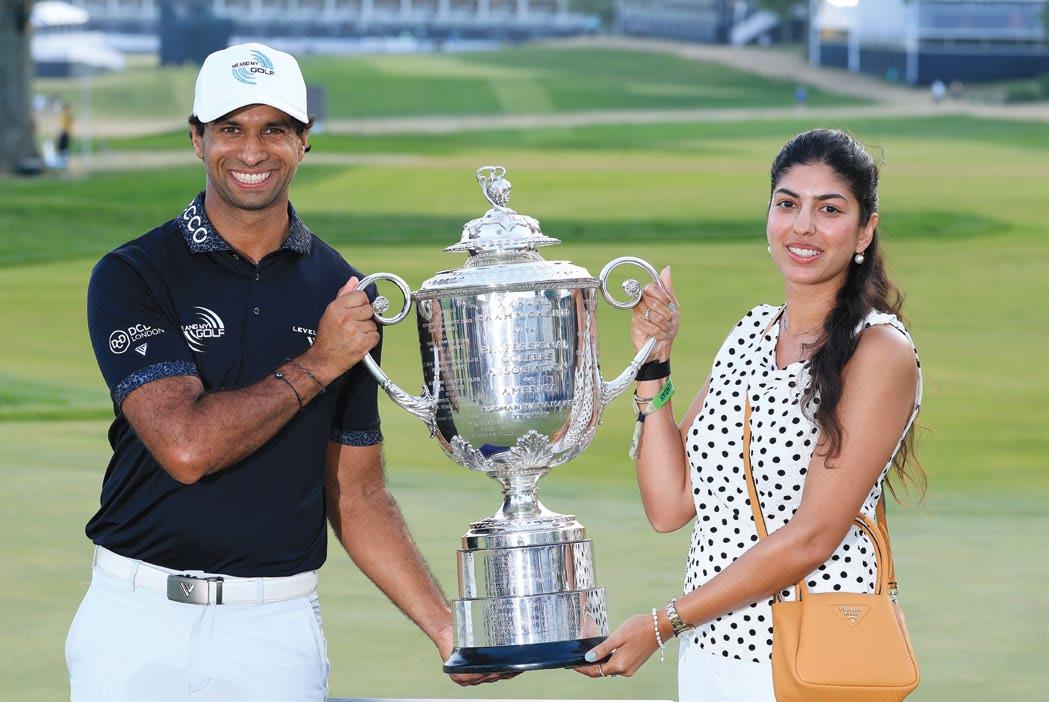
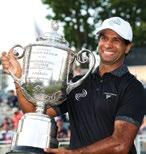
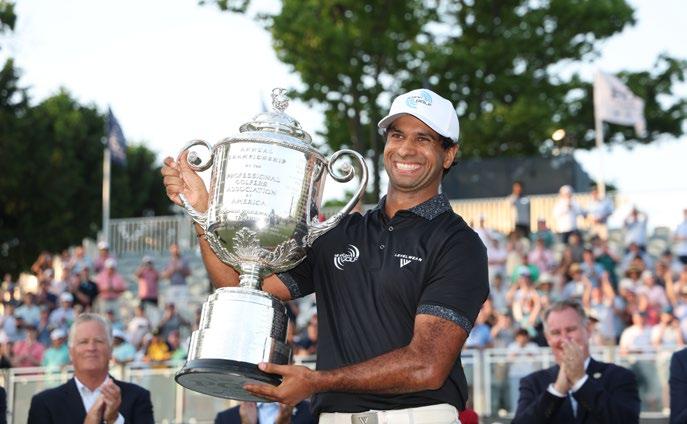
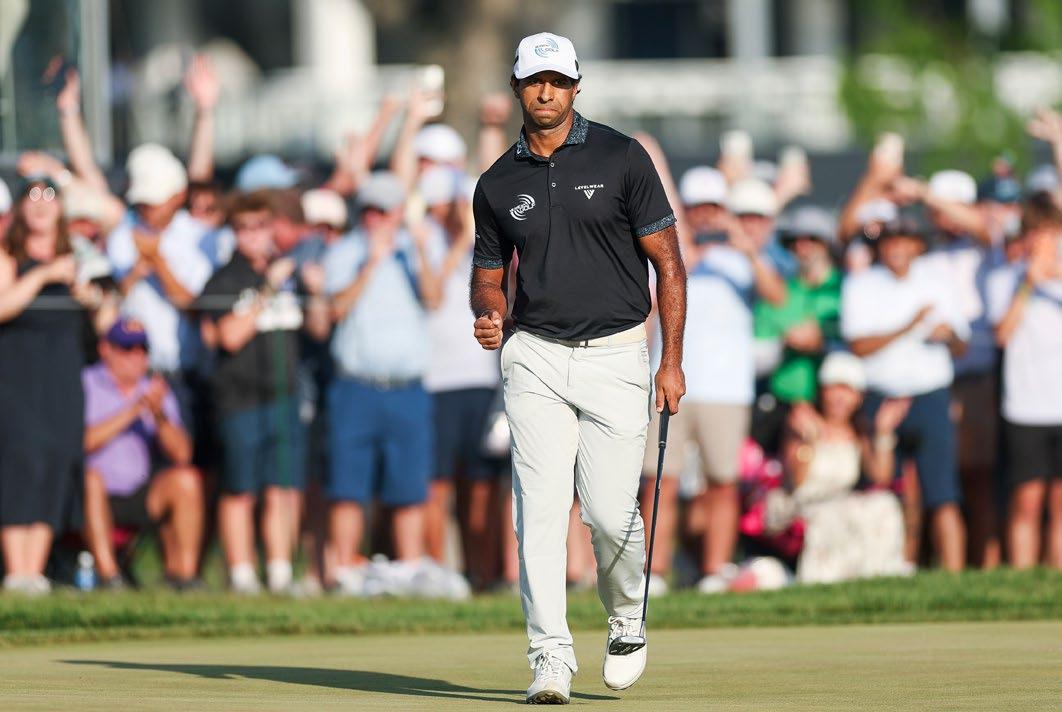
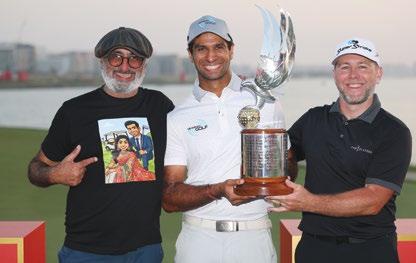
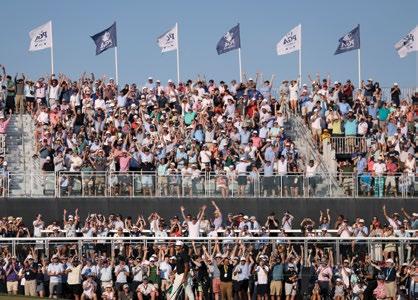
By the time Aaron Rai tapped in for par on the 18th green at Aronimink Golf Club on Sunday evening, the noise rolling across Newtown Square, Pennsylvania belonged entirely to him, and so, at last, did the Wanamaker Trophy. A final round of 65, a winning total of nine-under, and a three-shot margin over Jon Rahm and Alex Smalley had carried the 31-year-old from Wolverhampton past a field of Major Champions and would-be Major Champions, all the way to the kind of statistic that comes round once a century. Not since Jim Barnes, the Cornish émigré who took the title in 1919, had an Englishman won the PGA Championship. In 107 years, no-one had managed it. On Sunday May 17, 2026, Rai did.
His understated response to such an historic achievement tells you everything about the unassuming Englishman. Asked how he intended to celebrate, he paused, glanced over, and let his wife Gaurika Bishnoi field the answer. “He’ll probably have Chipotle,” she said. Rai nodded along, smiling, and confirmed it: “I do love Chipotle on the road. So we’ll probably go to Chipotle.” In a sport that has spent three years drowning in PIF money, breakaway threats, courtroom filings and
“ “
It’s probably hard for me to really express everything that I feel towards them,” Rai said of his parents on Sunday.
nine-figure signing bonuses, golf’s newest Major Champion was off for a fast-food burrito with his wife. A small but revealing moment showing what Rai is all about…and what he’s not about.
For golf fans in the region, Rai needs no introduction, and the line connecting Aronimink to Yas Island is straighter than it might first appear. Six months before Pennsylvania, Rai was holing a birdie putt on the first extra hole at Yas Links to beat Tommy Fleetwood and lift the Falcon Trophy at the Abu Dhabi HSBC Championship. It was the second time Rai had beaten Fleetwood in a play-off, the first having come at the 2020 Scottish Open, and the Yas Links win marked him out as a player back at his very best. He had been waiting more than a year for a win when he arrived in the UAE. 189 days later, he was a Major Champion.
Rai’s victory was historically odd in the best possible way. With rounds of 70, 69, 67 and 65, he became the first player ever to win the PGA Championship while improving his score in every round, and the first to do so at any of the four Majors since Mark O’Meara at the 1998 Masters Tournament. He started Sunday two shots off the lead and quickly looked as though he might play himself out of contention, opening with a birdie at the first before dropping shots at the sixth and the eighth to fall a stroke over for the day. Then came the par-5 ninth, where he holed from 45 feet for an eagle that re-routed the entire round, and from that moment forward he was a different golfer.
A birdie followed at the 11th, then a remarkable up-and-down on the drivable par-4 13th, where his 40-yard bunker shot from the wrong side of a back-pin ridge finished six feet from the hole. Most of the leaders had been undone in that same trap throughout the week; Rai turned it into a one-shot gain. A precise second on the par-5 16th set up another birdie, and then, on the short 17th, he holed the putt of the championship, a winding
read from nearly 70 feet that was the secondlongest converted by any player all week. A safe par at the last completed a closing 65, a winning total of 271, and an evening that brought him $3.69 million, a lifetime exemption into the PGA Championship, five-year exemptions into the other three Majors and The Players, and a leap to 15th in the world rankings.
The most striking thing about Sunday at Aronimink was not the trophy presentation, or even the putt on 17. It was the reaction from the player Rai had just beaten. Standing in front of the microphones with his own near-miss to discuss, Jon Rahm spoke not about himself but about the man holding the Wanamaker.
“I haven’t spent a lot of time with him, but I have heard consistently that there are very few people who are nicer and kinder human beings than Aaron Rai,” Rahm said. “What he did today is nothing short of special.”
The Spaniard went further when the conversation turned to one of Rai’s better-known quirks, his decision to keep headcovers on his irons long after most professionals have shed theirs. “Anybody who wears or uses headcovers on his clubs because he coveted his irons when he was a kid so much that he wanted to respect the equipment, and to still do it, that shows a lot about a person.”
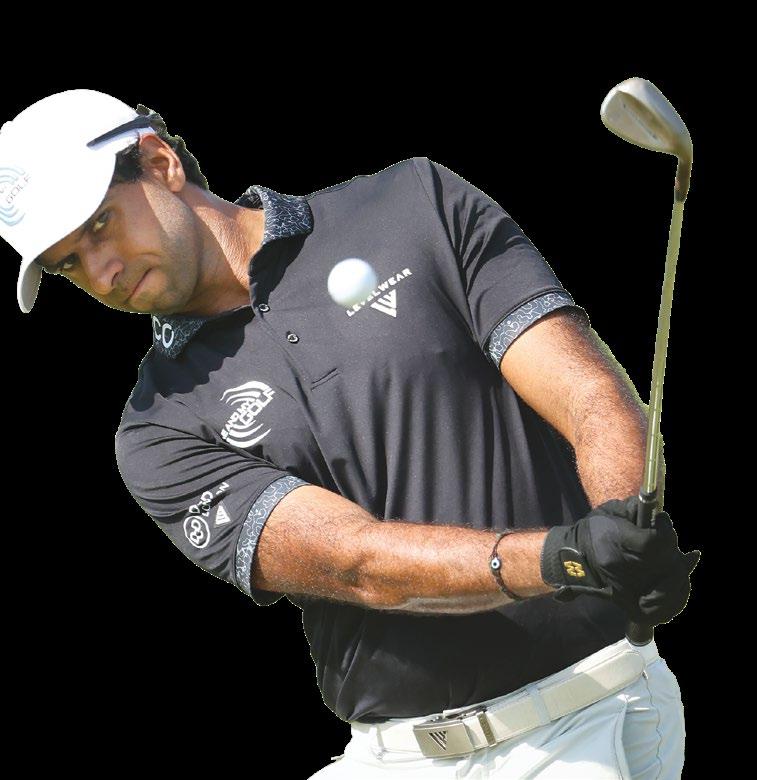
The headcovers themselves are part of an old and rather lovely story. Rai was seven when his father Amrik, a community worker and amateur tennis player, saved up to buy him a set of Titleist 690MBs. After every range session, Amrik would clean each groove individually with a pin and a little baby oil, and to keep the clubs as new as possible he started putting covers over the irons. Two decades on, Rai still does it.
“I grew up in a working-class family,” Rai told the PGA Tour’s Sirius XM channel. “Golf has always been
a very expensive game. My dad used to pay for my equipment, he paid for my membership, paid for my entry fees. It wasn’t money that we really had, to be honest, but he’d always buy me the best clubs. I cherished those irons.”
The two gloves, another Rai trademark, have a similar grace note about them. As a junior, his father wrote to local newspapers looking for sponsors who might be able to help; one of the men who replied offered a pair of all-weather gloves. The brand was Macwet, and Rai has worn two of them on every round, of the same brand, for more than two decades.
Rai was born in Wolverhampton on 3 March 1995, the youngest of four children. His father was born in England to Indian parents; his mother, Dalvir, arrived in England from Kenya as a teenager and worked variously as a mental-health nurse and an aerobics instructor, often holding down more than one job at a time. There was no golf in the family at all until Rai, aged four, was accidentally struck by his brother’s hockey stick, prompting his mother to buy him a plastic set as a safer alternative. From that small domestic accident grew everything else. His father quit his job to focus on his son’s development, the pair spent every available day on the practice ground
“
together, and they watched VHS tapes of a young Tiger Woods two or three times a week, sometimes more, building a method and a temperament that would eventually take Rai through the PGA EuroPro Tour, the Challenge Tour, the European Tour and the Korn Ferry Tour Finals, all the way to a major championship at Aronimink.
“It’s probably hard for me to really express everything that I feel towards them,” Rai said of his parents on Sunday. “I think I’ll get way too emotional to speak. My dad was with me every day that I went to practice from the age of four, five years old. He actually quit his job and started to focus on my golf from a really young age. My mum has been absolutely incredible as well. She works extremely long hours to just provide for the house. I can’t put into words how much they’ve done.”
Asked about the consensus among his peers that he is one of the genuinely good men on tour, Rai gave credit to his family and upbringing.
“My mum and my siblings were very fast to continue to reinforce the importance of just being a good person and trying to do the right things away from golf. Golf in itself is an extremely humbling game. Nothing is ever given in this game at any point.”
It is tempting, in the current climate, to read Rai’s
I haven’t spent a lot of time with him, but I have heard consistently that there are very few people who are nicer and kinder human beings than Aaron Rai,” Rahm said. “What he did today is nothing short of special.
“
win as a cathartic corrective: a quiet, two-gloved, head-cover-wearing reminder that not every story in professional golf has to be told through the language of nine-figure contracts and broadcast deals. He turned professional in 2012 and came up by the long route, winning the 2018 Hong Kong Open for his first DP World Tour title and the 2020 Scottish Open for his second. His maiden PGA Tour victory arrived at the 2024 Wyndham Championship, followed in November 2025 by his third DP World Tour title at the Abu Dhabi HSBC Championship. The Wanamaker is now his second PGA Tour win and his fourth on the DP World Tour.
He lives in Jacksonville, Florida, practises at TPC Sawgrass, and has been coached since the age of 10 by Andrew Proudman and Piers Ward of Me and My Golf, two men he describes more readily as “mentors” and “big brothers” than coaches. His wife Gaurika is a former Ladies European Tour player and, by his own admission, beats him at most of their wedge games on TrackMan. He’s not the kind to chase headlines, and he doesn’t appear to chase very much at all beyond the next shot, the next routine, the next session. In a sport that has spent three seasons being shouted at, the quiet has been his most reliable advantage.
Asked at the end of the night, almost inevitably, whether he was thinking about Ryder Cups or further Majors, Rai shook his head and offered a typical Rai answer:
“I try not to consciously focus on it too much. These things are always around. But I try not to focus on them as real motivations to push me forward. I hope to continue to move in a pretty similar way in terms of practice, training, application towards the game. We’ll see where that takes me.”
In a sport currently losing its head over money, Aaron Rai is keeping his down. And it’s serving him rather well.
BY ALEX GALLEMORE
S HI nne COCK
H ILLS AWAITS 2026 US Open p rev I e W
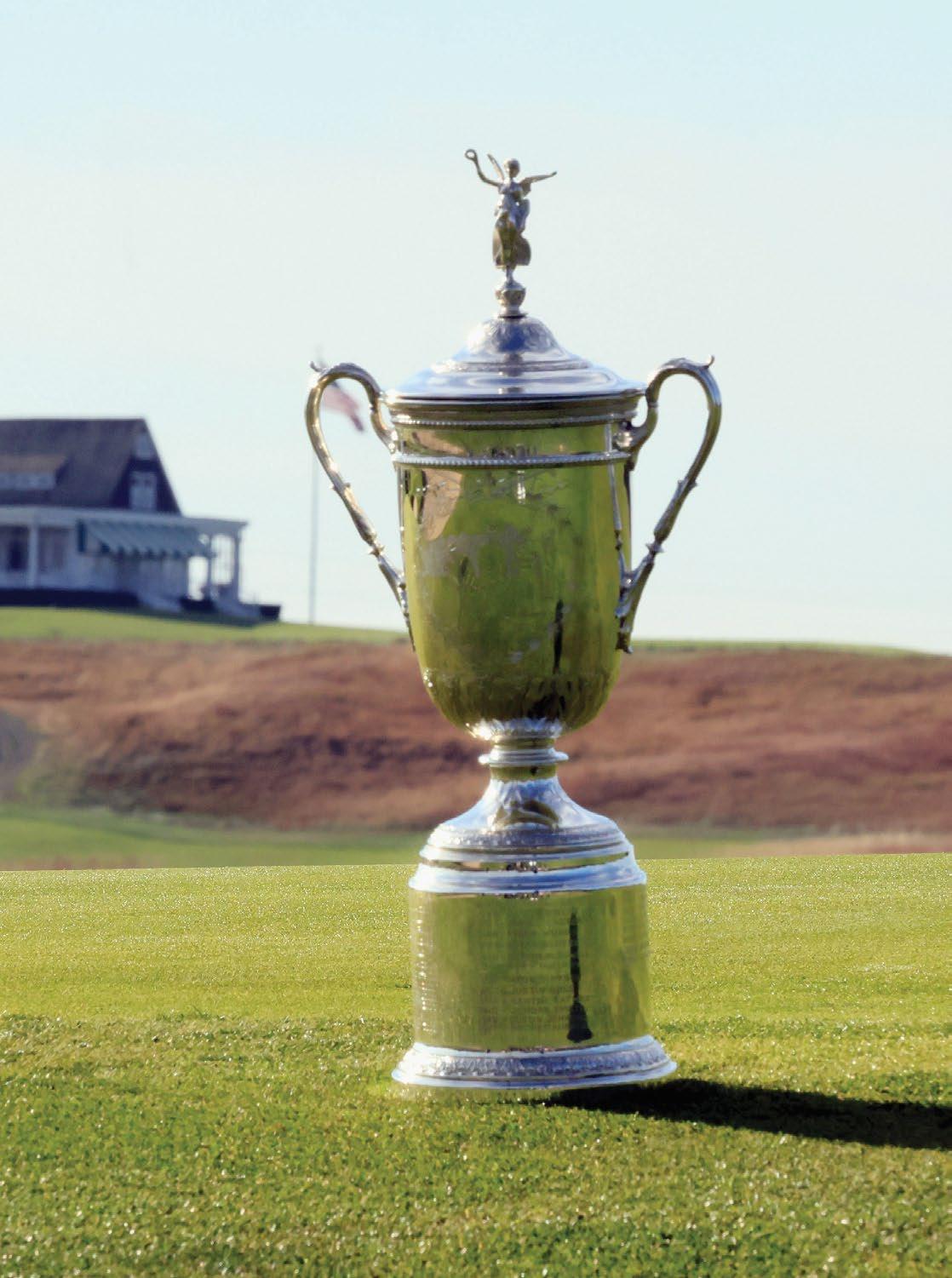
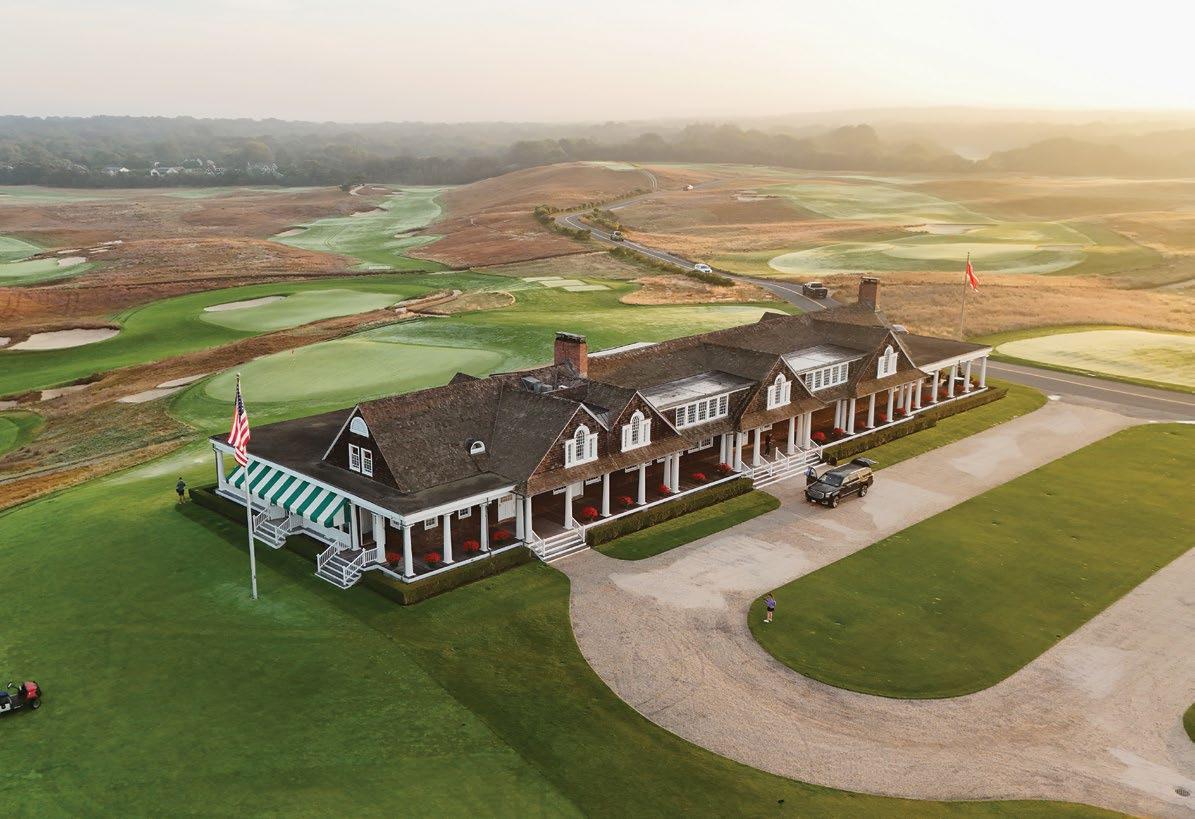
June 18 to 21, 2026 | Shinnecock Hills Golf Club, Southampton, New York
There is a particular kind of cruelty to Shinnecock Hills. It does not hide behind length or gimmicks. The course simply sets itself up on an exposed stretch of Long Island and lets the Atlantic wind do its worst. When the 126th US Open tees off on June 18, the world’s best players will be confronted by one of the most honest examinations in championship golf, a par 70 stretching 7,434 yards across rolling, treeless terrain that has been humbling elite fields since the Victorian era.
THE COURSE: AMERICA’S MOST AUTHENTIC LINKS TEST
Shinnecock Hills is the only golf course to have hosted a US Open in three different centuries, standing witness in 1896, 1986, 1995, 2004, and 2018. This June it welcomes the championship for a sixth time, and the USGA has confirmed it will be the first played without any modifications to William Flynn’s original 1931 design. Nobody at the USGA has been brave enough to argue with Flynn yet, and looking at the history of winners here, it is hard to blame them.
Flynn’s genius was in routing the course so that three sets of consecutive holes form triangular patterns, meaning players face headwinds, tailwinds, and crosswinds in every conceivable combination regardless of the day’s prevailing weather. There is no shelter, no quiet corner where a struggling round can be quietly rebuilt. The
greens compound the punishment: fast, severely contoured, and perched on elevated complexes, they demand the correct approach angle as much as they demand accuracy. The right half of the fairway matters as much as the fairway itself.
Winning totals here tell the story plainly: Floyd at one under in 1986, Pavin at even par in 1995, Goosen at four under in 2004, and Koepka at
one over in 2018. Think of it as a four-day anger management course, with a trophy at the end for whoever holds it together best. The 2018 leaderboard also confirmed that the best iron players rise to the top: Tommy Fleetwood, who lost by a single stroke, ranked first in driving accuracy and second in greens in regulation that week. Distance helps, but precision from 150 to
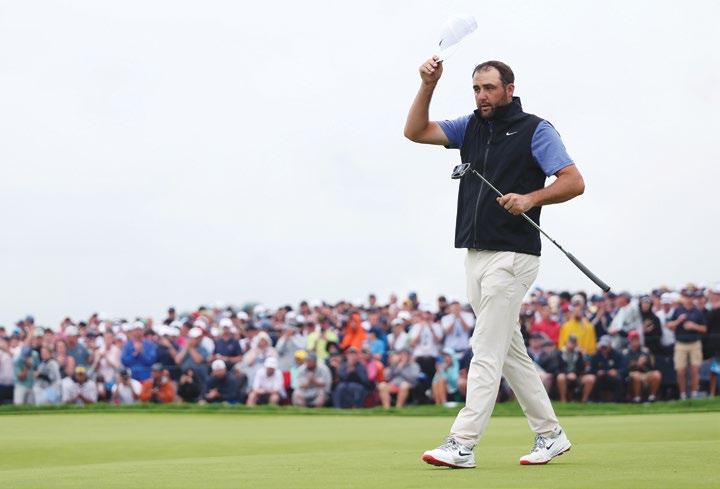
SCHEFFLER
200 yards is the decisive currency at Shinnecock Hills.
THE FAVOURITES: FORM MEETS FIT
Scottie Scheffler arrives as the clear World No. 1 and the man everyone else is chasing. He won the PGA Championship in 2025 at Quail Hollow, has logged multiple top-four finishes in 2026, and has the chance to complete the career Grand Slam. Sunday’s final round falls, almost poetically, on his 30th birthday. His strokes-gained tee-togreen numbers remain the best on tour, and his ball-striking is well-suited to a course that rewards controlled trajectory and approach accuracy. The one question mark is Scheffler’s putter, always the most scrutinised part of his game, which has shown some vulnerability on firm, fast surfaces. At Shinnecock, where putting is not simply a matter of speed but of reading extraordinary slopes under pressure, that could be the shot of difference between lifting the trophy and giving a gracious runner-up speech.
Rory McIlroy arrives carrying the kind of form that makes bookmakers uncomfortable. The 37-yearold successfully defended his Masters title earlier this year, capturing his sixth Major and his second consecutive green jacket, before a creditable
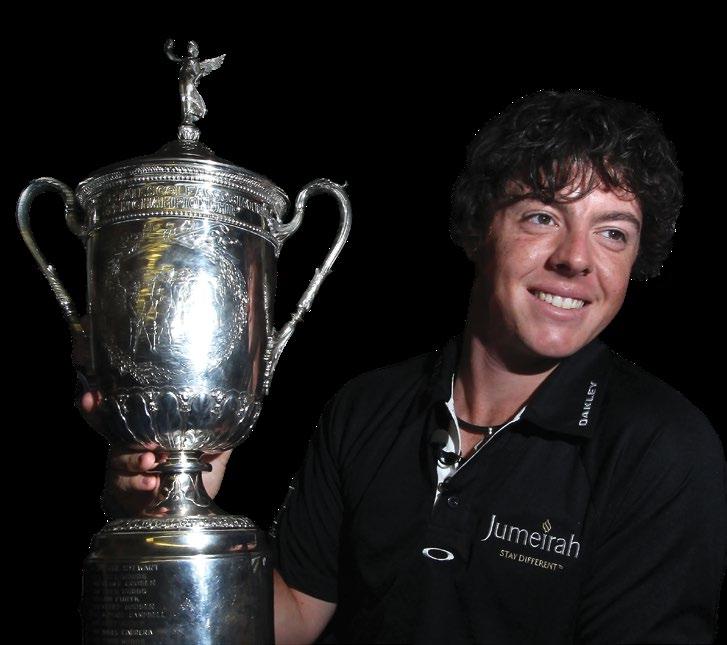
driving distance and accuracy combination sits at the top of the strokes-gained approach rankings, and he is one of the few players on tour who can genuinely shape the ball both ways under pressure. Shinnecock has historically rewarded exactly this type of player. McIlroy has not won a US Open since his 2011 romp at Congressional, and it is the one title that still sits awkwardly in an otherwise extraordinary career. He will not need reminding
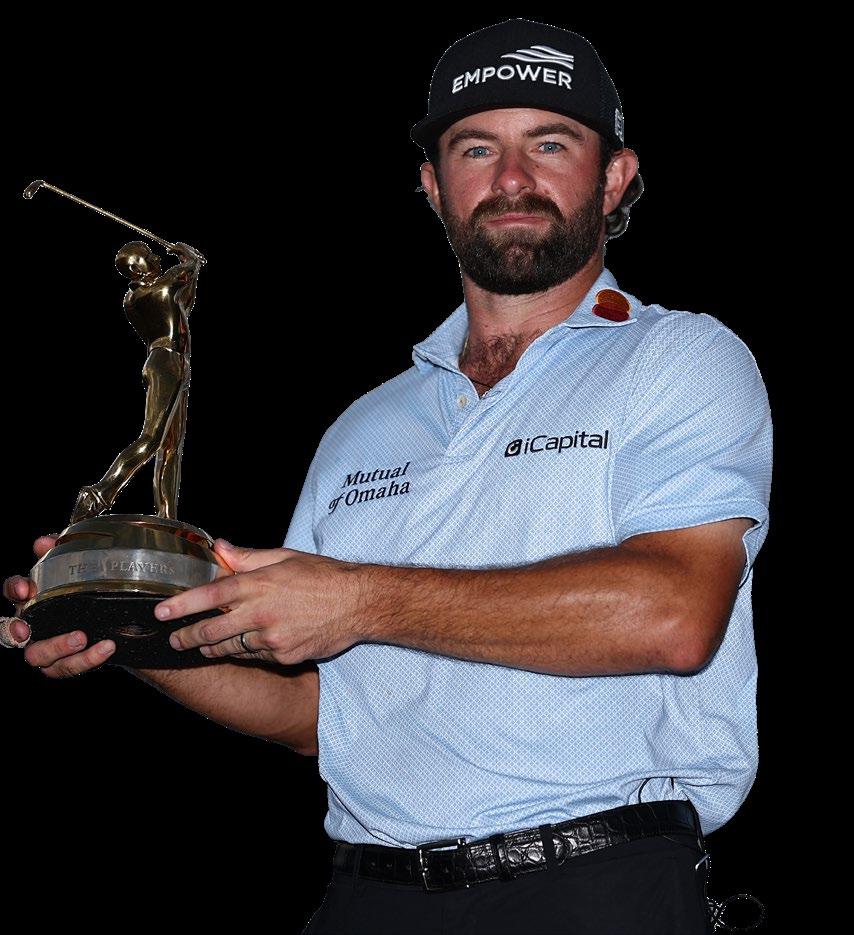
Cameron Young has been the season’s biggest mover. The American won The Players Championship and the Cadillac Championship at Doral, rising to the top of the FedEx Cup standings, and tied for third at the Masters. Young leads the tour in strokes-gained off the tee and ranks highly in approach play from the 150 to 200 yard range, the exact distances that will dominate at a windy Shinnecock. Shinnecock has twice been won by players relying on quiet precision rather than a spectacular game, and Young fits that mould rather
STATISTICAL FLAGS: PLAYERS WHOSE GAMES SUIT THE TEST
Matt Fitzpatrick warrants serious attention from anyone doing their homework before placing a bet. The Englishman has won three times in 2026, including the RBC Heritage, a Harbour Town event that rewards iron precision and scrambling excellence in ways that mirror Shinnecock’s demands almost exactly. His strokes-gained approach figures have been exceptional this season, and he already knows how to win a US Open, having done it at Brookline in 2022. Fitzpatrick plays a low, penetrating ball flight, which in an Atlantic crosswind is a decisive practical advantage over players who habitually launch it high and hope for the best. In short, he is built for this.
Aaron Rai enters the championship on the back of the most stunning result of the season. His final-round 65 at Aronimink to claim the PGA Championship, at odds of 290-1 on the morning of the final day, was not a fluke but the product of a
YOUNG
MCILROY
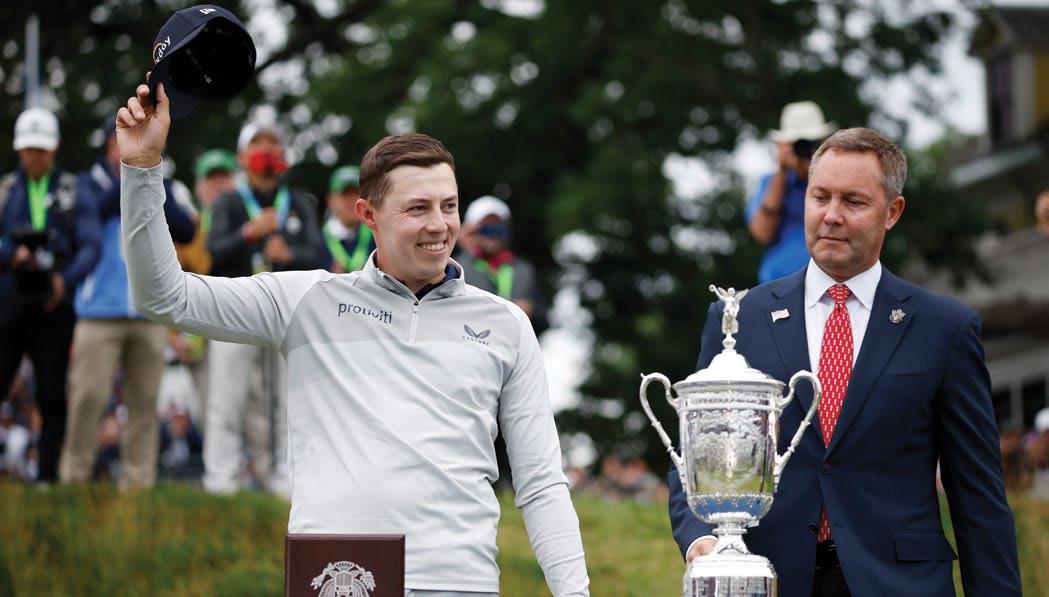
ball-striking week that held up from first tee to last green. His ability to flight irons under wind, a skill refined during years on the DP World Tour, makes him a genuine contender at a course that will ask very similar questions.
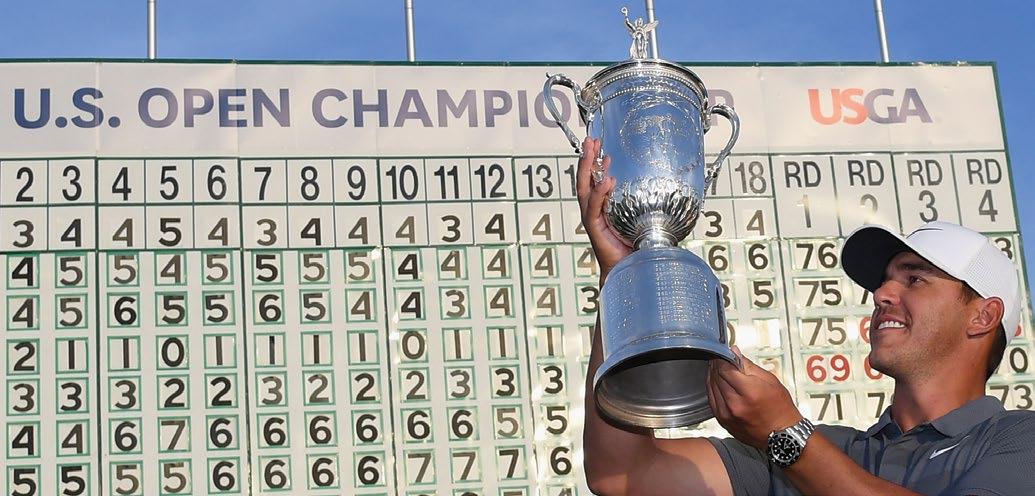
Brooks Koepka, the 2018 Shinnecock champion, is the kind of player you forget about at your peril. His record at US Opens, five top-five finishes in his last eight starts, reflects a player who simply raises his level when the USGA tightens the screws. He knows every wind current and recovery angle at Shinnecock, and that accumulated knowledge is worth shots. Do not let the current world ranking fool you.
THE WILDCARD: WIND AND THE UNDERDOGS
Shinnecock’s great levelling quality is precisely
what makes it dangerous for overwhelming favourites. The routing triangles ensure that no tee time is consistently easier than another, and a calm morning draw can become an ordeal by afternoon. When the wind strengthens, the scoring gap between elite ball-strikers and the rest narrows considerably. A compact iron player with a hot putter can compete with anyone on this layout for four days.
The conditions in Southampton in late June are notoriously unpredictable. The 2004 championship became controversial when the course was allowed to dry to near-unplayable firmness on Saturday afternoon, and the 2018 edition tested every discipline simultaneously. The USGA will aim for a balance between difficulty and fairness, but on this course the weather is not background noise. It is the co-designer.
FINAL WORD
Shinnecock Hills sets up as the most intellectually demanding test on the Major schedule. It does not ask players to hit the ball harder. It asks them to think better. The winning score is likely to land somewhere between even par and four under, depending on conditions, a target that compresses the scoring range and opens the door for any elite ball-striker who finds his iron game for four days.
Scheffler’s Grand Slam quest and McIlroy’s relentless season make them the logical market leaders. But this is Shinnecock. The course has never been impressed by reputation or backstory. It cares only whether the player standing on the first tee on Thursday morning can flight a six-iron under a crosswind and make the right call when the fairway is offering two very different answers.
FITZPATRICK
KOEPKA

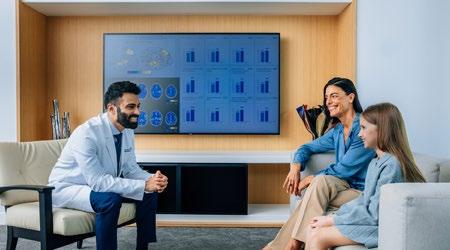
Premium everyday healthcare...
A new standard in primary care
Healthcare should feel simple, seamless and reassuring. The Clinic has been designed to deliver exactly that.
Begin your care
Schedule a consultation
Primary care, elevated Designed around you
• Experienced family physicians
• Longer, unhurried consultations
• In clinic diagnostics
• Seamless multidisciplinary care
Comprehensive primary care
Proactive, personalised care for lifelong health
• Preventive health & screening
• Acute & chronic care
• Women’s, men’s & children’s health
• Lifestyle & metabolic optimisation
• Same-day access when needed
• Continuity with your doctor
• Care tailored to your lifestyle
• Calm, private environment
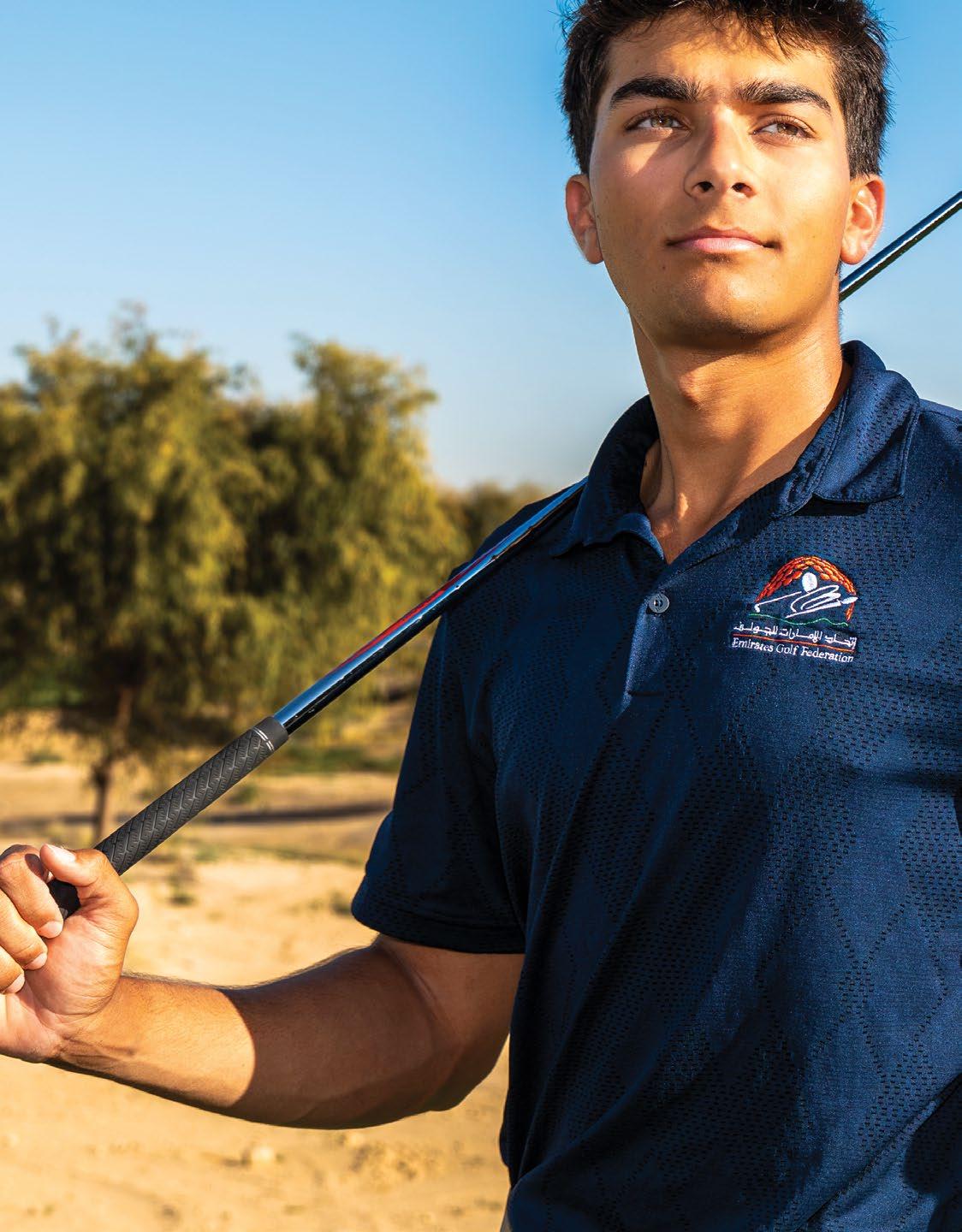
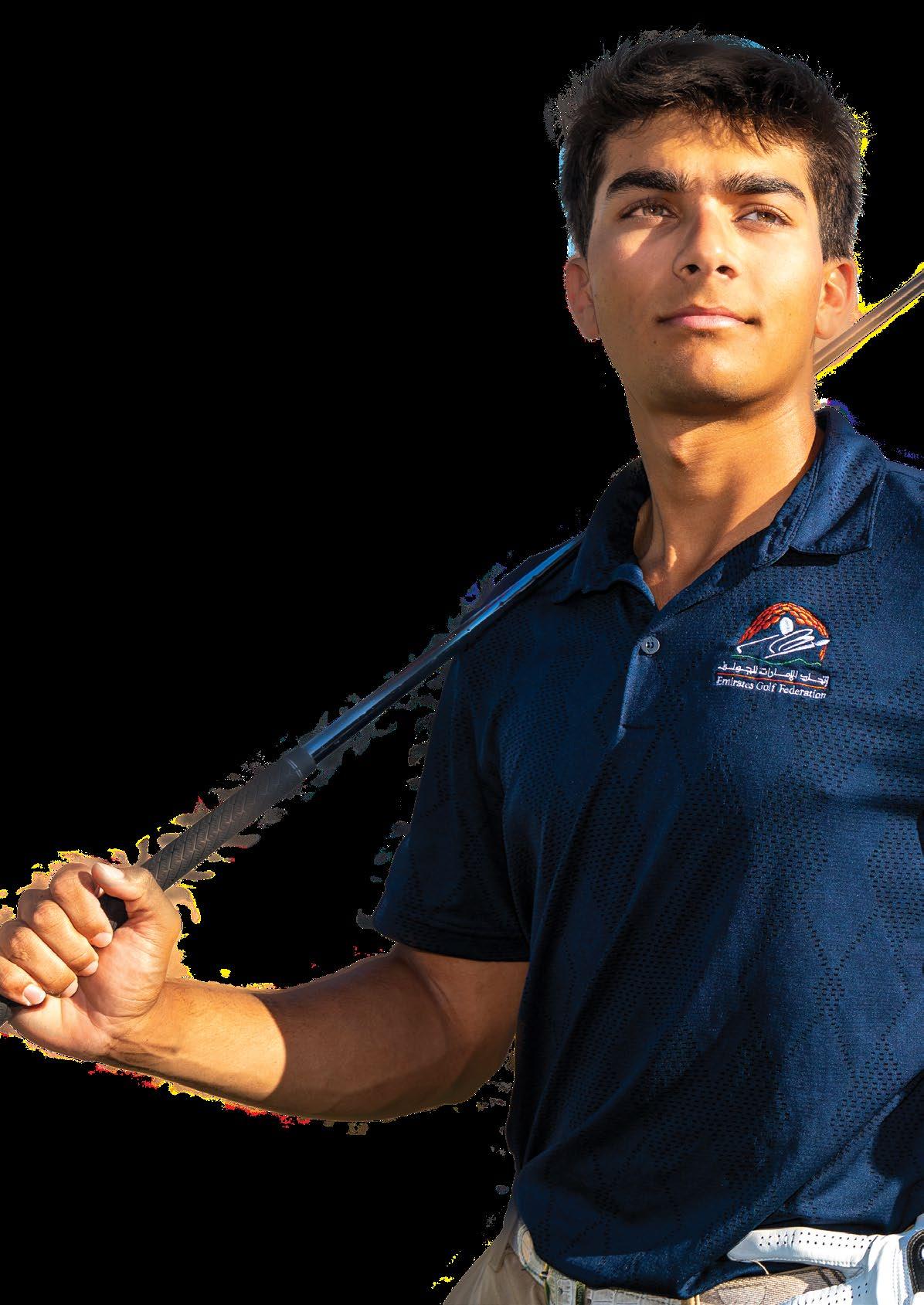
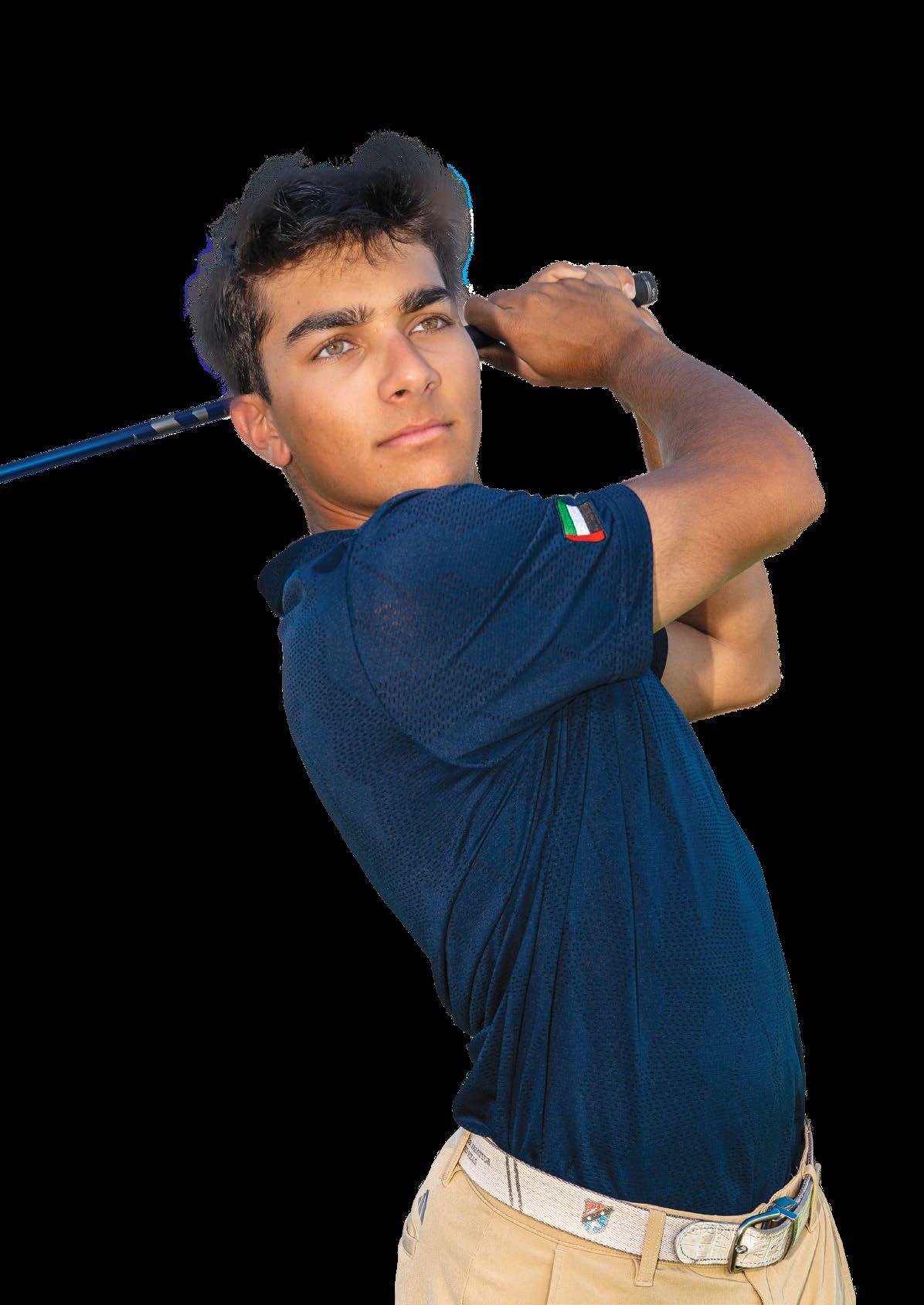
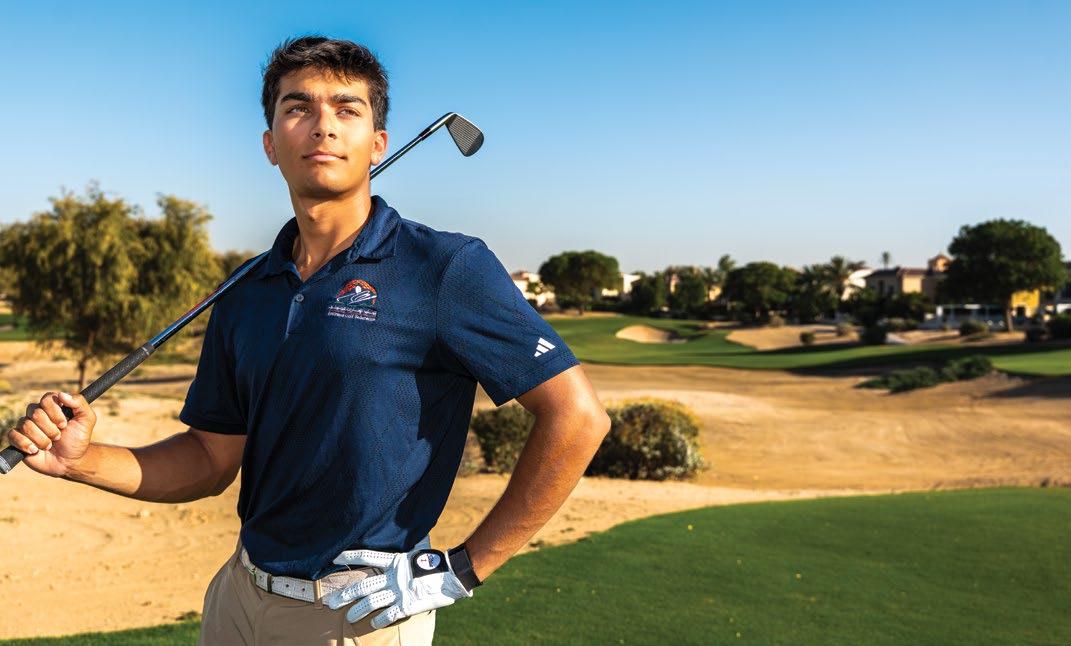
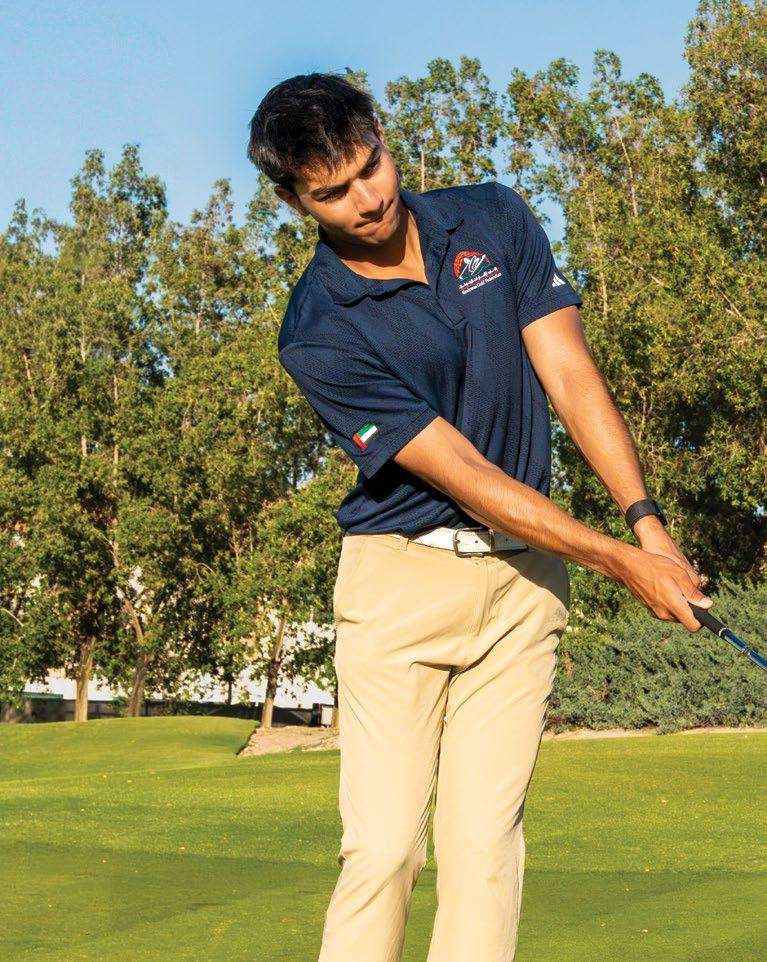
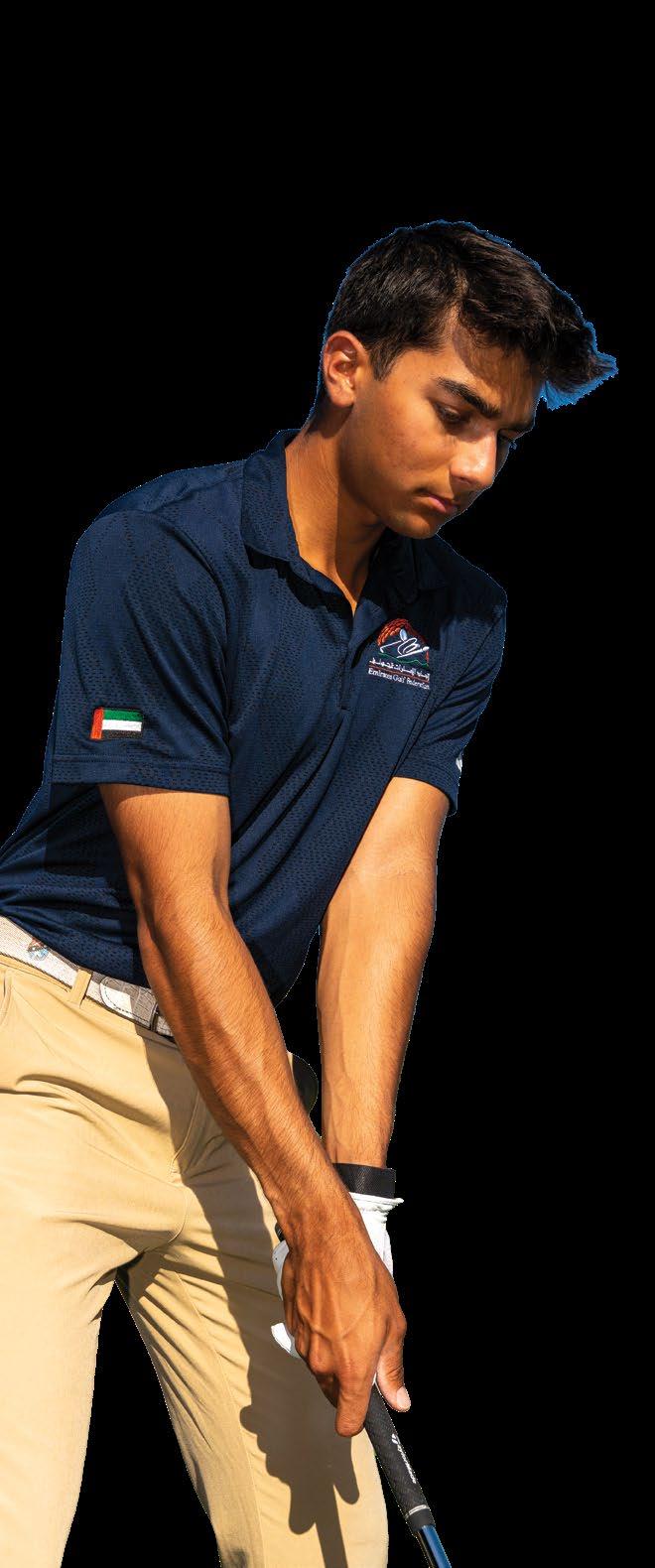
RAYAN AHMED IS 19, THE NO. 1 RANKED AMATEUR IN THE UAE, AND ABOUT TO BECOME THE FIRST MALE EMIRATI TO PLAY NCAA DIVISION I GOLF IN THE UNITED STATES. HE SAT DOWN WITH WORLDWIDE GOLF TO TALK ABOUT THE JOURNEY FROM DUBAI HILLS TO IRVINE – AND WHAT HE INTENDS TO DO ONCE HE GETS THERE.
BY RICK BEVAN
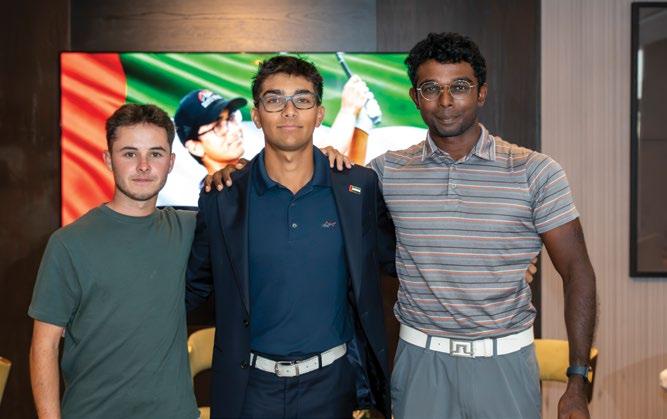
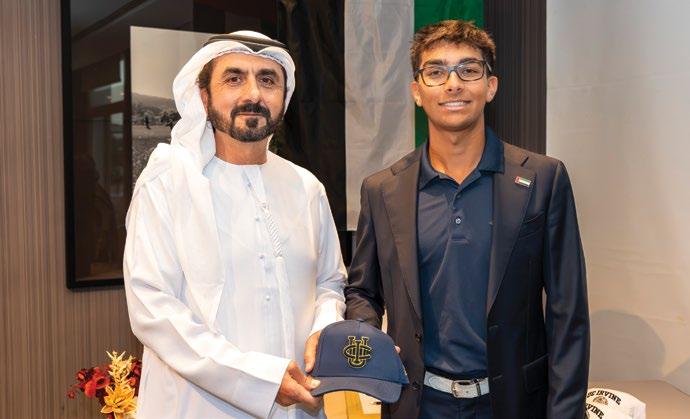
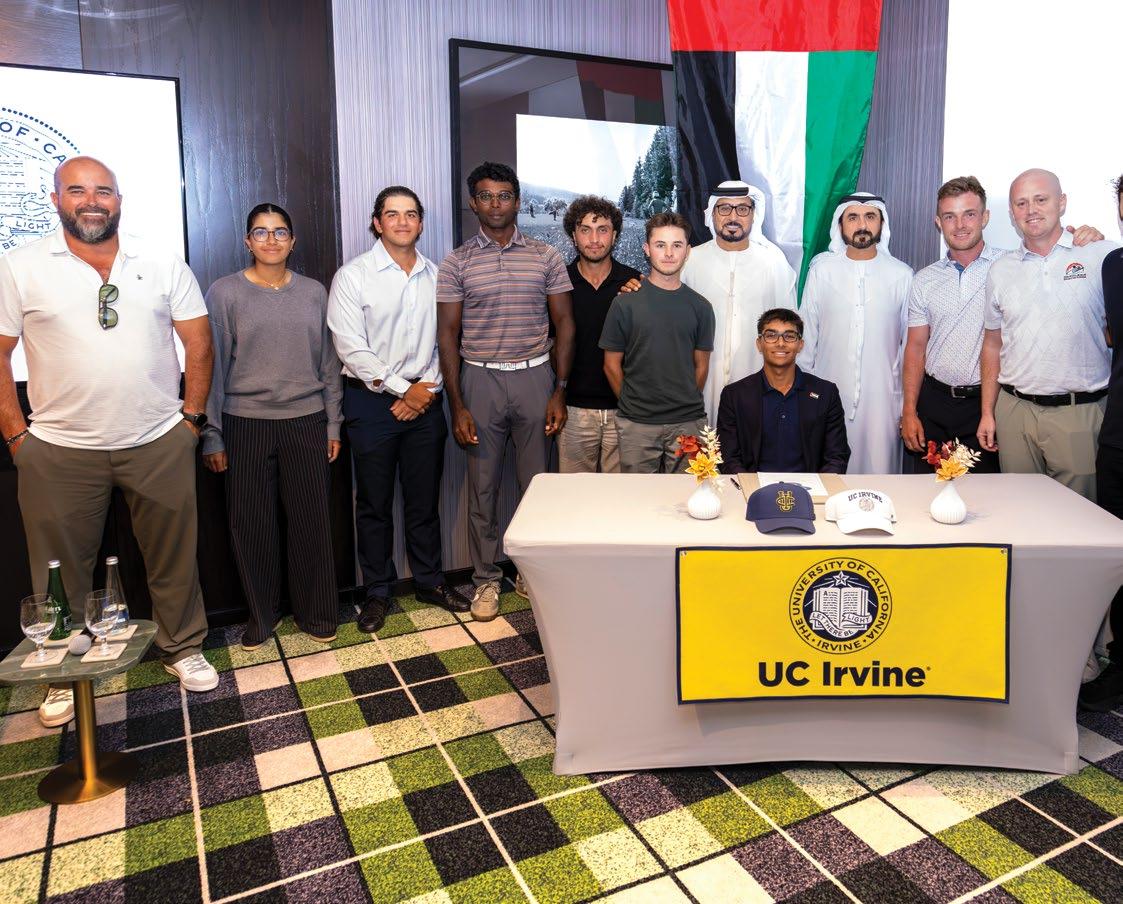
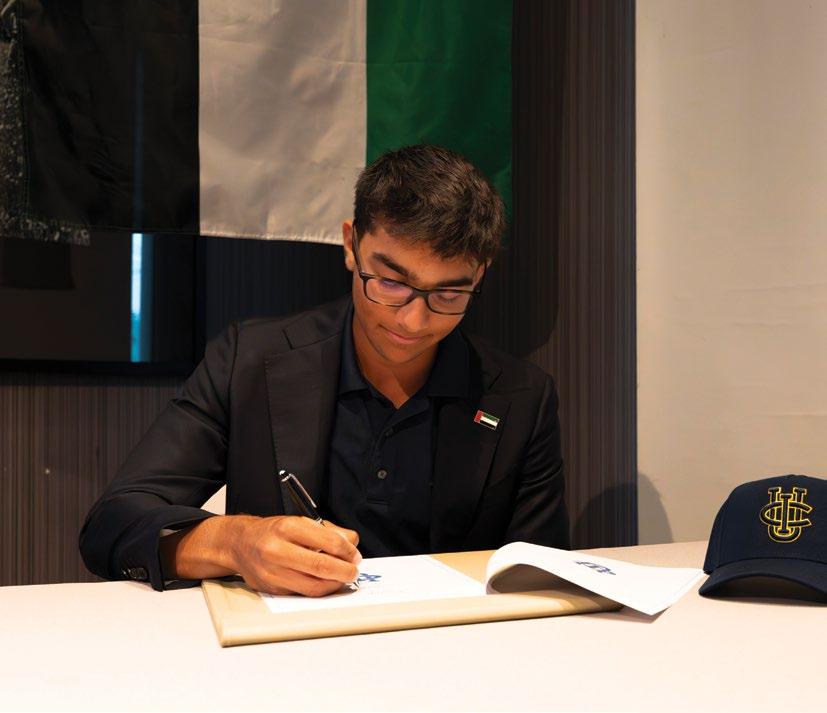
There is, on the following pages, a photograph that could, in time, become the answer to a pub quiz question. A 19-year-old sat at a desk in Dubai, pen in hand, signing the paperwork that makes him the first male Emirati ever to play Division I college golf in the United States. He’s heading to the University of California, Irvine, to play for the Anteaters in the Big West Conference. It’s an historic first for the UAE, achieved by a player most readers of this magazine will already know.
Rayan Ahmed has been making his presence known on regional amateur circuit for two seasons now. UAE No. 1 on both WAGR and the Order of Merit with a peak world ranking of 518 and an impressive +5.2 handicap. He was the first Emirati ever to compete at the US Junior Amateur and the US Amateur, teeing it up in both in the same summer of 2024. He fired a sensational round of 64 to help him secure this year’s RAK Amateur Open at Al Hamra. A double gold at the GCC Youth Olympics. Wins in Oman and Morocco. The Faldo Series. Yas Links. Earth course. The list runs deep.
What it does not yet tell you is who Rayan Ahmed is.
He is, technically, a fourth-generation golfer. His
great-grandfather played. His grandfather played. His father plays. By the family standard, Rayan was late to the party.
“I started golf quite late,” he says. “Even though everyone in my family played, I kicked it on when I was about 13. I started at Dubai Hills Golf Club during COVID. I was there for about six months and really enjoyed it.”
He was playing almost every day. His parents, sensing that this was more than a passing
dalliance with the game, decided to give him every chance of progressing by moving house… to a new place that backed directly onto the driving range at The Montgomerie Dubai.
“We moved literally on the range,” he smiles. “I was essentially living on the golf club. I would just walk out, play, come back, eat. It was just golf all day.”
At 14, he was off 24. A year later he was scratch. Twenty-four shots in twelve months – the kind of trajectory that makes coaches sit up take notice.
He still holds the course record at the Montgomerie – 65. He set it as a teenager and nobody has taken it off him.
Winning the UAE Junior Order of Merit in 2023 put him firmly in the local spotlight. The Emirates Golf Federation invited him into the UAE National Men’s Team, and a few months later he was at the World Amateur Team Championships in Abu Dhabi, paired with Gordon Sargent and Nick Dunlap and the rest of the global elite. It was here he met General Abdullah Al Hashmi, the EGF’s President, who would become as close to a mentor figure as a national federation chief can reasonably be.
“The UAE national team has been instrumental in my growth as a player and a person,” Rayan says. “Without them, I wouldn’t be here today. The EGF has given me so much – the opportunities, the equipment, the clothing, the world-class coaching. I can play any course I like in the UAE.
Photography: Alex Leyno
I’m extremely grateful, and the opportunities I’ve been given are not something I take for granted for a single day.”
That coaching team has now grown into a serious operation. Faycal Serghini, the EGF’s Head Coach, works with him weekly on technique and short game. Liam James – the PGA / DP World Tour coach behind Richard Mansell, Thorbjørn Olesen and Matt Wallace – who works with him on a personal basis. Matthew Brookes, TPI-
certified and coach to Andy Sullivan, runs the strength and conditioning on a fortnightly cycle. Sensei Majid Raees, the professional kickboxer turned mental performance coach, handles the part of the job that does not show up on the scorecard.
It is, by some margin, the most structured support package any Emirati amateur has ever received. The General reveals why:
“Rayan is very dedicated, committed,
“
This is my home, and for me it’s the best place anyone can live in the world. I’m definitely going to miss coming back, being able to relax, having such easy access to golf. You can’t find that everywhere.”
disciplined. He’s unique in his way of thinking. Each player has his character, his identity – and Rayan has the character and identity that makes him what he is today. He fights to get where he wants to go,” said His Excellency.
2024 was when the story stopped being a domestic one. Rayan qualified as medallist for the US Amateur at Columbine Country Club in Denver with a three-under 69. He arrived, by his own admission, in slightly rough shape.
“I reached Denver with my short game all over
Photography: Alex Leyno
the place,” he says. “We spent hours the day before working on 40- to 90-yard wedge shots. I ended up winning the qualifying medal against some of the best college golfers in the region – on a tight, tree-lined course at 7,360 yards. Looking back, I’m still impressed with how I managed it. It tells me a lot about my ability to manoeuvre the ball even when things aren’t perfect.”
That medal took him to Hazeltine National for the US Amateur proper and to Oakland Hills for the US Junior Amateur – two historic firsts for the UAE in the space of a fortnight. Oakland Hills had not seen a UAE competitor in 76 years of running the championship. Now it has.
“The experience itself was surreal,” he says of the US Junior. “Tiger Woods was there. His son was there. There was security everywhere. So many spectators. Most people in the world don’t get to experience that.”
He was drawn alongside Joshua Bai, who had been runner-up the previous year.
“His mental discipline, the thoughts on the course that I didn’t have at that time – it definitely improved my golf. I wasn’t
“ My mantra is Dream Big, Respect all, Outwork all, remain teachable and disciplined.”
as consistent back then. I had a lot of falls. Now it’s just getting better through that experience.”
Roughly 75 percent of PGA Tour players have come through a Division I programme. That number, Rayan will tell you without prompting, is the entire reason he is going. The US college system is the closest analogue to professional golf available to an amateur –the qualifying structure, the team rounds, the carry-your-bag-for-36-holes weekend grind, the gym routines, the qualifiers run inside the team itself for the five spots on the travelling roster. It is, in his words, where you go if you actually want to be ready.
UC Irvine specifically suited him for two reasons. The first is the head coach,
Paul Smolinski who boasts 28 years in the job, eight Big West Championships, ninetime Big West Coach of the Year and 11 NCAA Regional appearances. The second is academic. Irvine sent nine athletes to Paris 2024 and counts five Nobel laureates among its alumni. Rayan scored 1410 on the SAT. He will study Economics, Finance and Management.
“The biggest thing was a really good mix of academics and golf,” he says. “It’s very good academically. Getting in was a nice reminder that I can also study well alongside the smart individuals I’m going to be with. And the golf programme is excellent – they’ve won championships in the past. It’s a really good place for me to develop as a player for when I turn pro.”
He has already met Coach Smolinski. The conversation that mattered, he says, was about how Irvine would handle his existing coaches – Faycal, Liam, Matthew, Sensei Majid – all of whom stay on the team back home.
“He explained that he is going to guide me, work with my coaches remotely plus he manages all the challenges of college

tournament golf, travels, training.”
That is a quietly mature arrangement for a 19-year-old to have negotiated for himself.
Being the first male Emirati to play Division I golf in the United States is a responsibility Ahmed is not taking lightly.
“Being the first means setting the standard early,” he says. “There’s no blueprint to follow – so how I work, compete, and carry myself becomes the reference point for those coming
“When I see my name at number one on the Order of Merit or on WAGR, it reminds me I can actually compete at this level.
I don’t really feel pressure in a negative way. It pushes me to become better. If anything, it helps me feel more at ease going into the next tournament.
“Representing the UAE and Arab golf isn’t just about where I’m from. It’s about showing that players from this region belong at the highest level of the game. For the younger Arab golfers watching, I want it to feel normal – not something distant or unrealistic. Being the first isn’t about standing alone. It’s about making sure I’m not the last
The collegiate run is the means, not the end. Rayan’s calendar will continue to include the international amateur events that have shaped him – the Asia-Pacific Amateur Championship, The Amateur Championship, the US Amateur, the Asian
Games. The professional ranks come after, and possibly earlier if the development demands it. The Olympics is on the list. Augusta National is on the list – actually, top of it. Te Arai Links and Bethpage Black follow. Pebble, Sawgrass, Congressional and the Old Course are already ticked.
The mantra has not changed since he was a kid telling people he wanted to win the Masters before he understood what qualifying for it required.
“Dream big, respect all, outwork all, remain teachable and disciplined.”
Despite the adventure that awaits, there will be things he misses about home.
“What I’m going to miss most about the UAE is the accessibility and the safety,” he says. “This is my home, and for me it’s the best place anyone can live in the world. I’m definitely going to miss coming back, being able to relax, having such easy access to golf. You can’t find that everywhere.”
He will be back every winter. The General concluded the signing ceremony, which took place at The Montgomerie, Dubai last month, by saying:
“Home is not the passport you carry in your hand. Home is where you feel this is home. We are dedicated to supporting everybody that lives on this land and making sure they achieve their goals.”
Ahmad Skaik turned professional last year. Rayan Ahmed crosses the Atlantic this autumn. The trail the UAE is blazing in golf is getting longer, and the players walking it are going further. The future looks bright indeed.

BRING OUT THE PLAYER IN YOU.Ahigh-launching, players-styledesignthatcombinesshot-makingprecisionwith score-savingforgiveness.Engineeredforthebestplayersin theworld.Customfitandcustombuiltforyou.
DISTANCE & CONTROL
LowerCGforincreased ballspeedandhigher launch.
PLAYER PREFERRED
Sizedandshaped fortrajectory control.

Game-improvement forgiveness;softerfeel, pleasingsound.
FORGIVENESS WITH FEEL GET FIT. GET OPTIMISED.
BY ALEX GALLEMORE
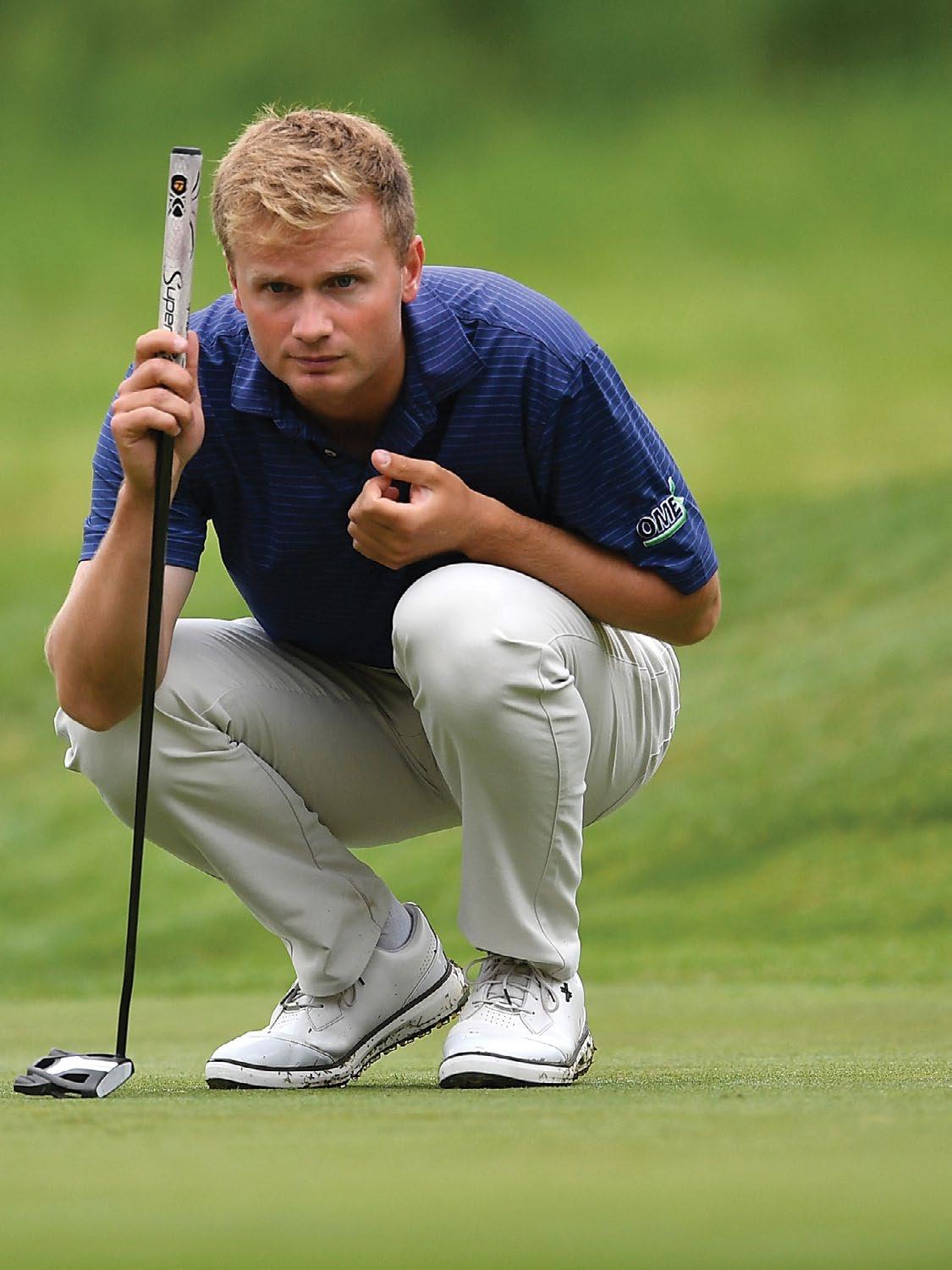
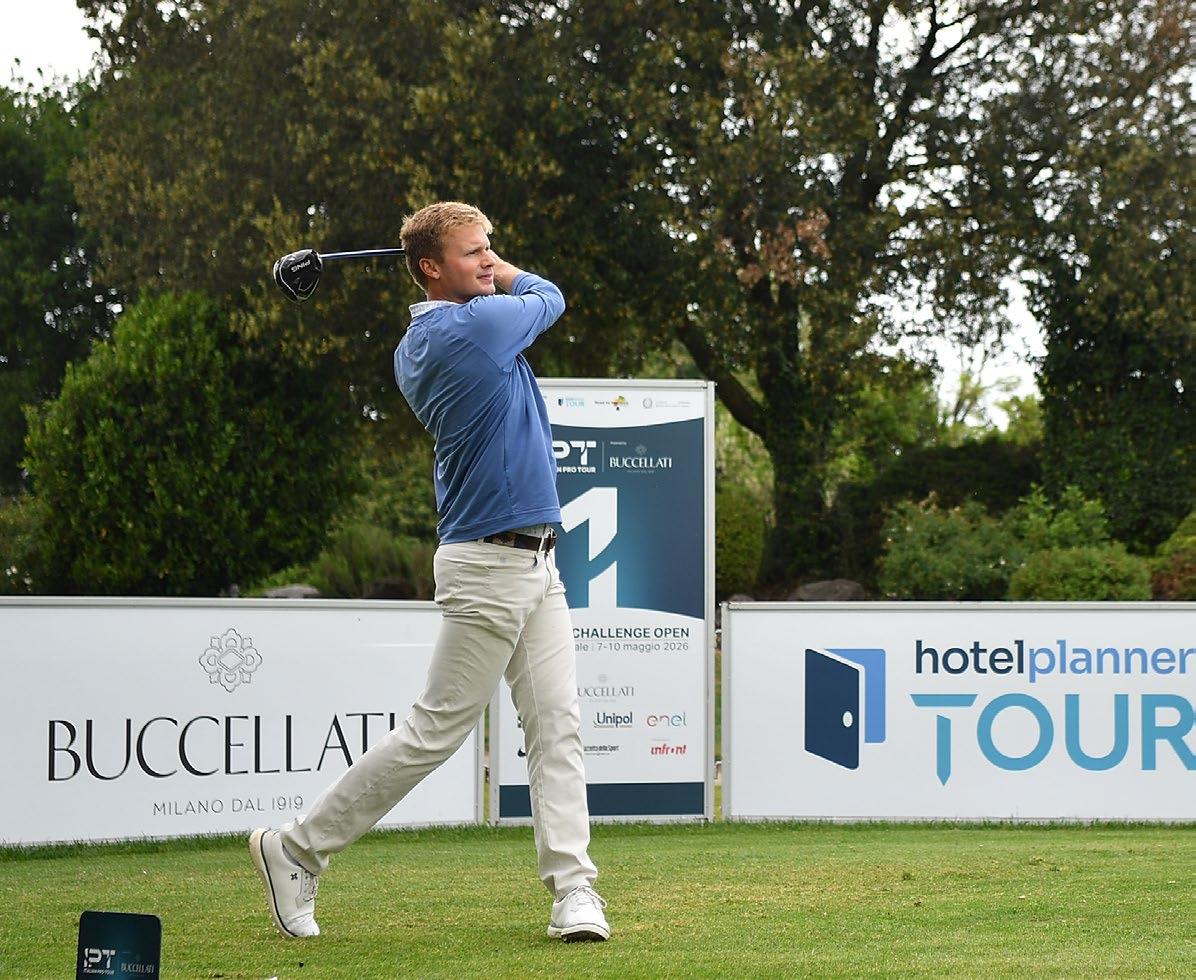
SCOTLAND’S QUIET RISER WITH BIG TOUR AMBITIONS PORTER Will
WILL PORTER DOES NOT SOUND LIKE A GOLFER TRYING TO SELL YOU A DREAM. THE SCOTTISH PROFESSIONAL TALKS ABOUT SHEEP, COOKING LESSONS, WINTER SHEDS AND GETTING ANNOYED AFTER BAD ROUNDS. YET BENEATH THE LAID BACK HONESTY SITS A SERIOUSLY TALENTED PLAYER QUIETLY BUILDING MOMENTUM THROUGH THE MENA GOLF TOUR AND BEYOND.
FROM CARNOUSTIE TO COLLEGE GOLF
There is something refreshing about golfers who still sound like normal people. No polished slogans. No endless talk about “process”. No pretending every missed cut is somehow a positive learning experience. Just honesty. That is probably why Will Porter comes across so well. The young Scot speaks the same way he plays. Straightforward, grounded and quietly competitive. Spend five minutes around him and you quickly realise golf is only one part of the picture. Family matters. Home matters. Scotland matters. Even the sheep on the family farm get a mention before long.
Yet behind the relaxed nature sits a player whose game is moving quickly in the right direction. A recent tied fourth finish at the Italian Challenge Open on the HotelPlanner Tour added another strong chapter to a season already shaped by valuable experience on the MENA Golf Tour, where Porter joined a growing Scottish contingent escaping brutal winters back home in search of competitive golf and bigger tests abroad.
For Porter, the journey started like many young Scottish golfers do. Standing around the ropes at Carnoustie. “I probably first picked up a golf club after the 2007 Open at Carnoustie,” he says. “I went along with my parents and then my grandparents bought myself and my cousins a set of clubs after that.” Like most talented youngsters growing up in Scotland, golf was not the only sport competing for attention. Porter played a variety of sports growing up and admits golf did not fully take over until much later.
“At university I had a meal card and then I moved back home where Mum cooked. So probably just becoming more independent has been the biggest thing.
“
The turning point came around the age of 17 or 18 when the opportunity to head to America for university golf arrived. “That was when I realised professional golf was probably the path I wanted to take.” Not a dramatic movie moment. No life changing speech. Just a gradual understanding that he might actually be good enough to make a career out of this game. By the time he turned professional, Porter had worked his way to plus five at Carnoustie. Serious golf by any standard.
His amateur career already carried strong foundations. Winning the Scottish Boys Championship at 18 opened doors to Scotland representation, European team events and exposure to college coaches across the Atlantic. “That win mapped out the next four years of my life,” he says. Playing for Scotland also fed something else. The competitive edge. “I loved the team environment. That was great fun.”
HARD WINTERS AND HARDER GOLFERS
There is little surprise Scotland continues to produce
hardened golfers. Anyone who learns the game battling sideways rain and numb fingers tends to develop resilience fairly quickly. Porter laughs when discussing winter practice. “The hardest part is definitely the wind and rubbish weather.” Modern problems require modern solutions. In Porter’s case, that means practising in a shed at home into a net off a mat during winter months. “It has been a huge help.”
Still, despite the weather, Porter has never seriously considered leaving Scotland full time. “I absolutely love living at home on the farm,” he says. “It gives me an escape from golf.” That escape matters more than many realise in professional golf, particularly at developmental tour level where life can quickly become repetitive, lonely and financially draining.
Porter is honest about the realities. “You have to learn how to cook because it’s expensive eating out all the time,” he laughs. It sounds simple, but it reflects the adjustment young professionals face. Suddenly you are travelling constantly, funding your own career and managing everything yourself. “At university I had a meal card and then I moved back home where Mum cooked. So probably just becoming more independent has been the biggest thing.”
One constant through that learning curve has been his brother Lleu, who caddies and travels with him regularly. “Lleu has been a massive help,” Porter says. “We have our moments like any brothers do, but it’s a lot more fun travelling with your brother.” That balance seems important because Porter openly admits handling disappointment is still something he is learning. “I’m extremely competitive, so I don’t take
“ “
bad golf too well.” Again, honesty. No fake positivity. Just the reality most golfers understand perfectly.
MENA GOLF TOUR EDUCATION
You are playing longer courses than we have in Scotland and competing all winter in events with cuts, which is important.
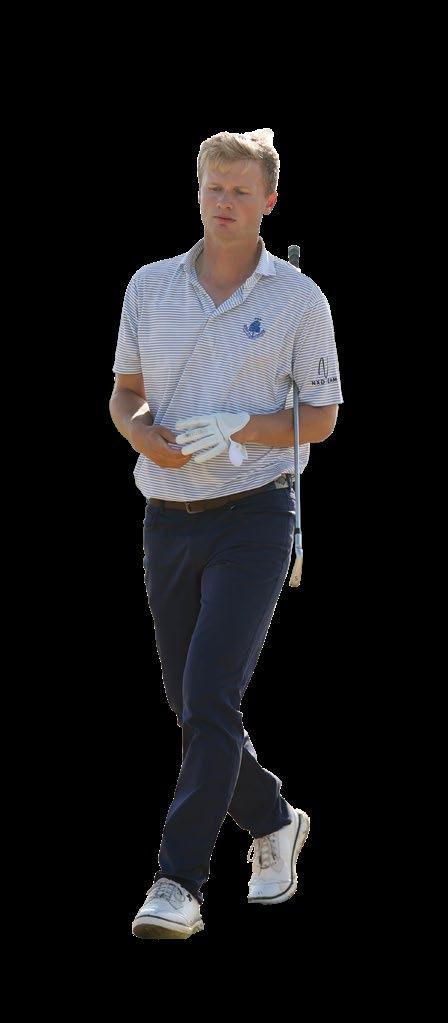
That competitiveness was sharpened further this season through the MENA Golf Tour, where Porter faced stronger fields, bigger golf courses and entirely different conditions from home. “It was brilliant,” he says. “You are playing longer courses than we have in Scotland and competing all winter in events with cuts, which is important.” More importantly, the experience gave him perspective on the level required globally. “It was a real eye opener seeing the standard of golf outside Scotland.”
Egypt particularly left an impression. “Madinaty and New Giza were probably my favourites. I had never been to Egypt before and the courses were excellent.” The MENA Golf Tour has increasingly become an important proving ground for players trying to transition towards the HotelPlanner Tour and beyond. Different grasses. Different climates. Long travel weeks. Wind. Heat. Pressure.
For Porter, it was his first proper experience travelling internationally for tournaments. “A lot of events back home are close enough to drive to, so this was really my first time flying regularly and staying away for golf.” That education appears to be paying off. His tied fourth finish in Italy may not have felt like a breakthrough internally, but it certainly turned heads externally. Porter remains measured. “I think it was more proof that things are trending in the right direction.”
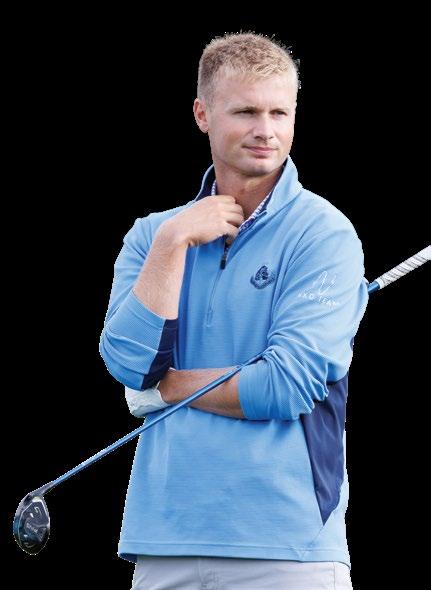
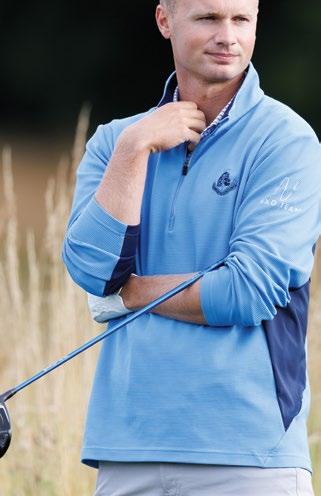
He credits much of that progress to coach Scott Borrowman, who initially began working with him on speed training before helping across the wider game. “Speed is always something we are trying to improve.” Modern professional golf leaves little room for short hitters and Porter knows it. Still, while distance remains a focus, he believes his scoring clubs are currently the strongest part of his game. “My wedges and putting are probably the best parts.” That combination tends to travel nicely under pressure.
BUILDING TOWARDS THE NEXT LEVEL
Porter also saw first hand this winter just how strong lower level professional golf has become. Playing alongside players such as Chris Wood reinforced that reality. When Wood later won in Italy after rebuilding confidence through the MENA Golf Tour pathway, Porter was not surprised. “The level Chris was playing at this winter was so high,” he says. “It shows there are guys on these tours who can compete at a really high level.”
There is perhaps frustration too. Despite his strong Italian finish, Porter still faces the challenge many developmental players encounter. Finding starts. “It’s all well and good having a finish like that, but if you cannot back it up and keep playing, it doesn’t really count for anything.” That is professional golf beneath the glossy television coverage. Endless travel. Waiting lists. Funding worries. Tiny margins.
Porter believes fans often underestimate the standard throughout the game. “Even on mini tours, the depth is unbelievable.” His golfing heroes are predictable but understandable. “Scheffler and McIlroy,” he says. “The consistency and standard they produce is amazing.” Asked which single part of another player’s game he would steal, Porter answers instantly. “Michael Stewart’s short game. Absolutely no doubt.”
Then comes the final answer that probably tells you most about who Will Porter actually is. If he could only play one course for the rest of his life? Not Augusta. Not St Andrews. Not Pebble Beach. “Panmure,” he says. Why? “My brothers play there, my dad plays there and our dog can walk around with us.” Professional golf can often feel obsessed with the next step, the next level and the next ranking point. Will Porter still sounds very happy remembering where he came from first.
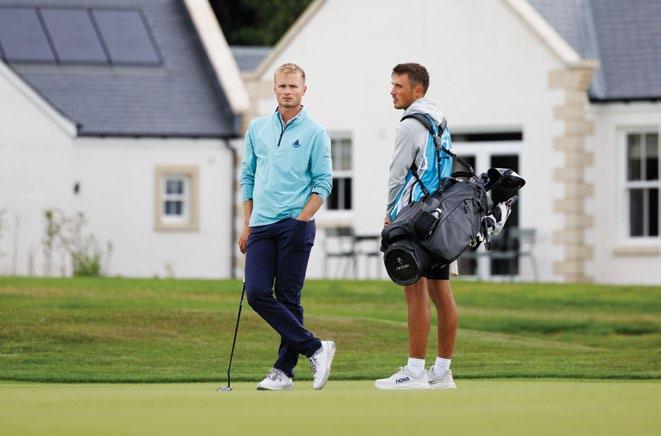
Photography: Alex Leyno
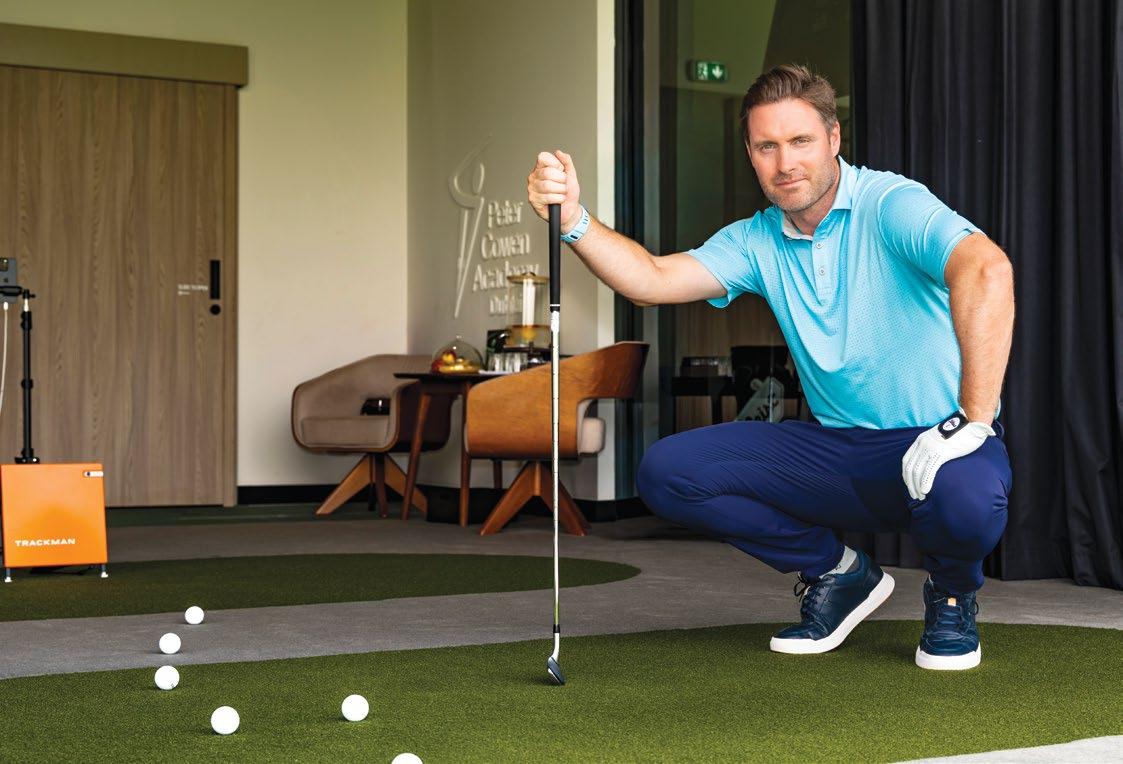
ARC DRILL!!
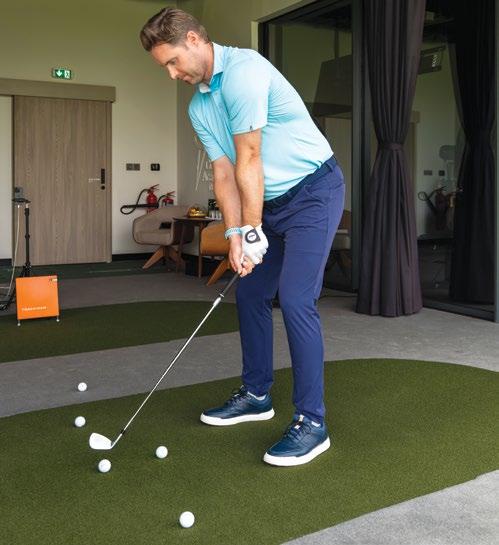
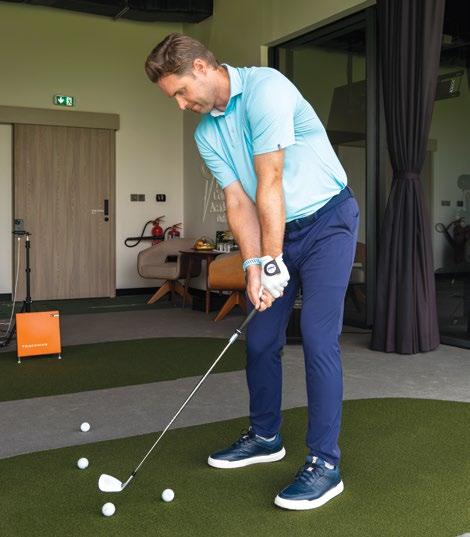
I really enjoy using this visual arc drill with my students. It helps uncluttered the mind of unnecessary swing thoughts and gets the club and body moving on a natural stress free arc. Let’s explain how it works.
Written by Stephen Deane
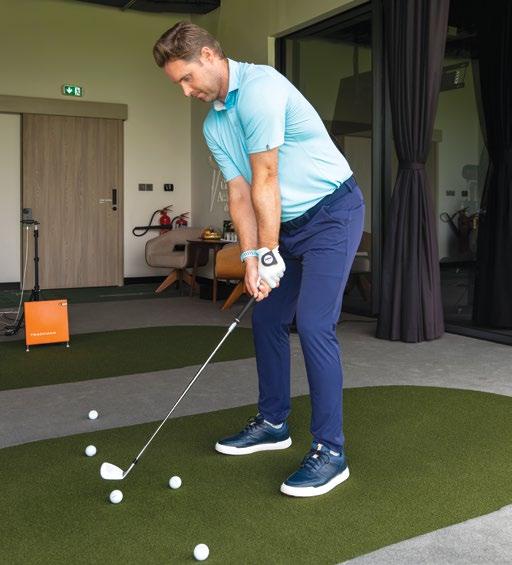
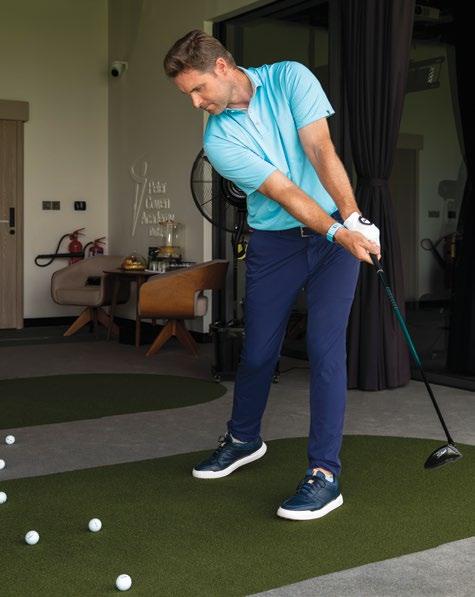
This pause helps you sense the club arc but more important allows you to feel how the body is also working on an arc and how the club and body action are matching or synced.
Place 5 balls two feet apart on a subtle semicircular arc as shown. Hover the club above the middle ball and slowly start to trace the arc both back and through whilst initially stopping at each ball for a few seconds.
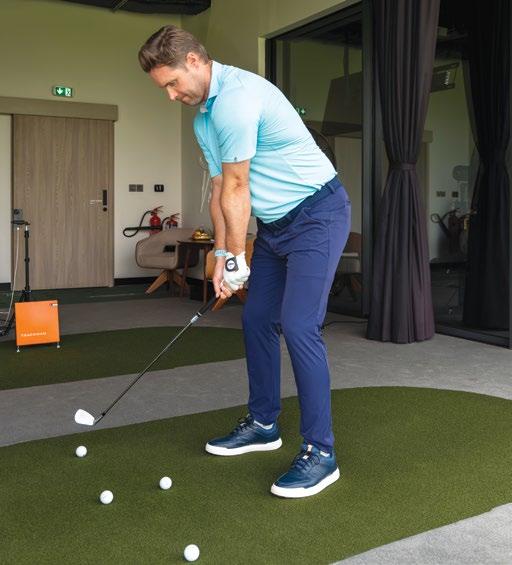
(PICTURE 1)
(PICTURE 2)
Viya Head International Development Coach
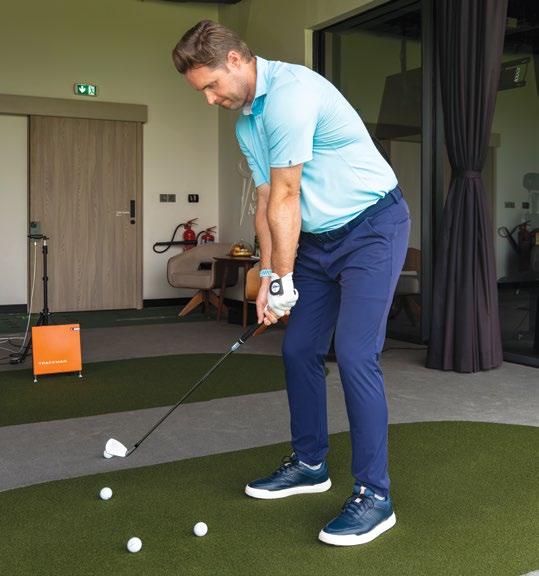
(PICTURE 4)
Moving back to impact you’ll feel how the club hands and arms have stayed under and with your body.
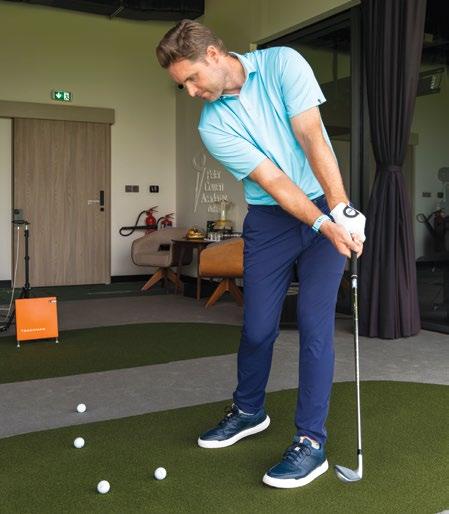
(PICTURE 6)
You can also add a few additional balls and follow the same routine with a fairway wood or driver.
After the pause element you can how move into a smooth flow state whilst you swing the club above the balls again tracing the arc. Do this with good tempo and no need to rush , enjoy feeling the arc and how your bodies responding.
To finish place a ball one foot inside the arc and clip it away with the same sensations as previously rehearsed.
Hit 4 to 5 balls maximum then repeat the process again whilst tracing the arc.
It’s a fun and effective practice drill and one which will clear your mind and get the natural flow into your game
(PICTURE 3)
As you move towards ball three you’ll also sense width and stretch.
(PICTURE 5)
As you move past impact you’ll initially sense how the club has moved much more left than you may have thought and how the clubface has stayed with the arc rather than excessive opening or closing.


THE CLUBS That Changed Golf Forever
NINE GOLF CLUBS THAT GENUINELY CHANGED THE GAME
Golf loves tradition right up until somebody invents something better. Every generation complains equipment has gone too far while quietly buying the newest driver the second the shop opens. From metal woods and perimeter weighted irons to putters that rewired golfer confidence, certain clubs did far more than win tournaments. They changed how golf was played, taught, sold and understood. Some made the game easier. Some made it louder. A few completely shifted professional golf’s power balance. Here are nine clubs that genuinely changed the sport forever, listed in the order they arrived and shook up the golfing world.
BY ALEX GALLEMORE
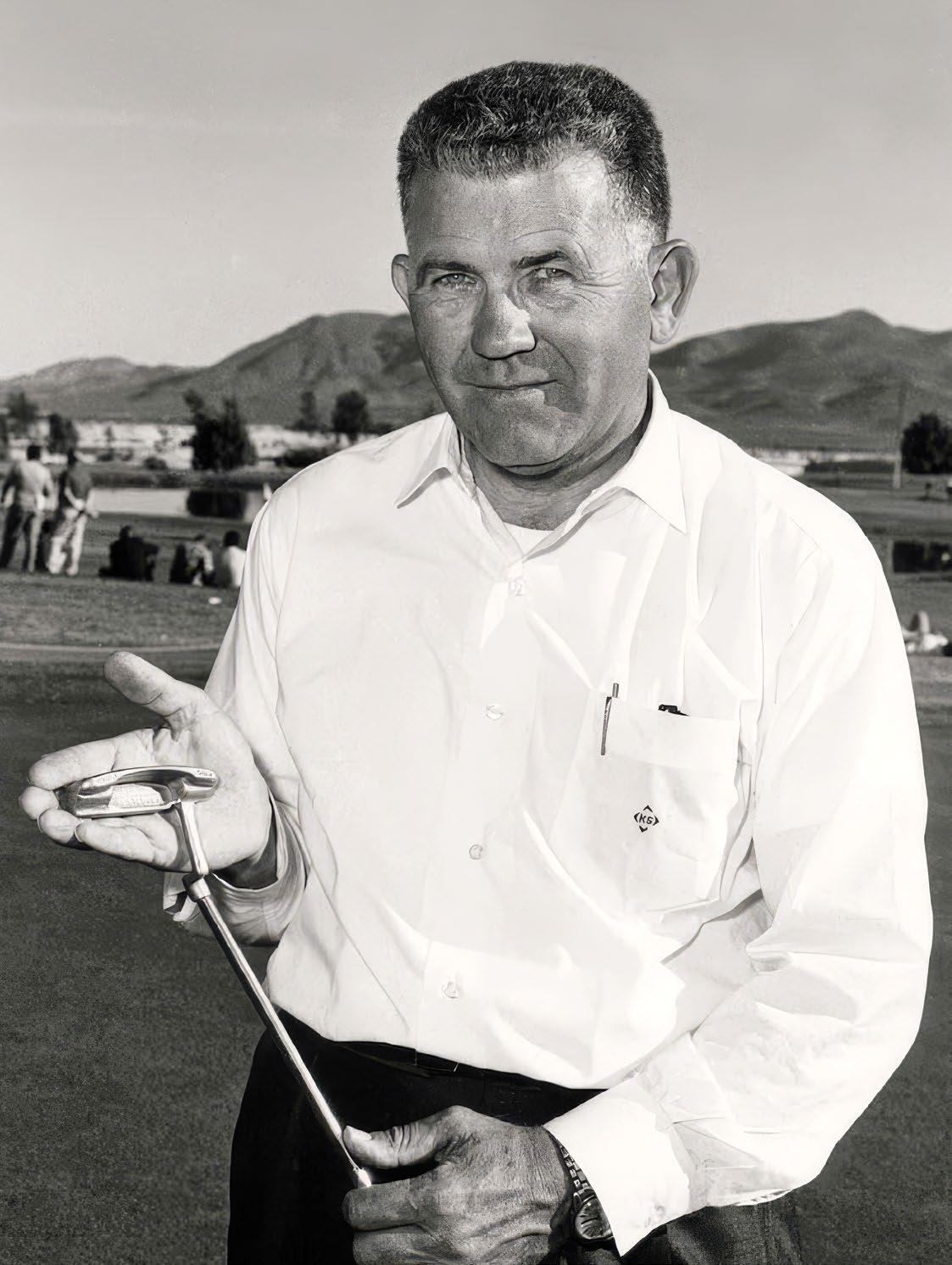
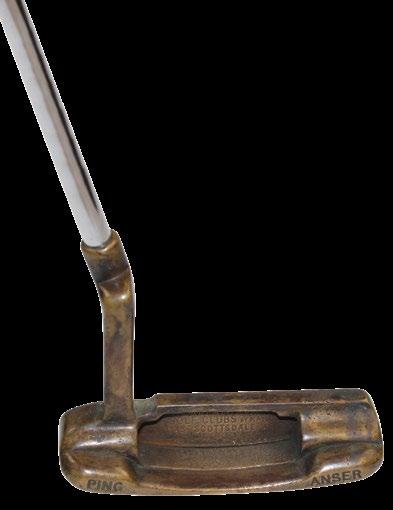
1. THE PING ANSER PUTTER (1966)
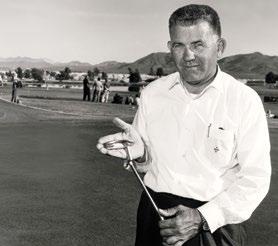
There are famous golf clubs, and then there is the Ping Anser. This thing practically rewrote putting. Before Karsten Solheim produced the Anser in 1966, putters were mostly blades with little forgiveness and even less imagination. Then came this strange looking flat
2. THE TAYLORMADE PITTSBURGH PERSIMMON (1979)
The name sounded traditional. The club absolutely was not.
TaylorMade’s Pittsburgh Persimmon became the first commercially successful metal wood and quietly started the death march for actual persimmon. At first glance, golfers were suspicious. Metal woods sounded different, felt different and looked slightly futuristic in an era where golf still smelled faintly of cigar smoke and old leather grips.
Yet the benefits became impossible to ignore.
The stainless steel head offered more forgiveness, greater durability and more consistent performance than wooden drivers ever could. Persimmon clubs cracked, warped and demanded precision. Metal woods survived abuse and launched the ball easier.
Tour players resisted initially because golfers hate change almost as much as slow play.
stick with perimeter weighting, a cavity back design and balance that suddenly made three footers feel slightly less terrifying.
The genius was not just the shape. It was the consistency. The Anser helped golfers square the face naturally and gave stability through impact that had barely existed before. Tour players immediately noticed it. So did amateurs who suddenly realised putting did not need to feel like surviving a nervous breakdown.
Its influence is ridiculous. Nearly every modern blade putter still borrows elements from the Anser design. Scotty Cameron built an empire from refined versions of it. Odyssey copied the weighting concepts. Even modern mallets owe something to Solheim’s thinking.
Without the Anser, modern putting probably looks completely different.

Eventually, performance won. It always does.
The Pittsburgh Persimmon opened golf’s technological floodgates. Without it, there is no Big Bertha, no 460cc driver arms race and probably no modern launch monitor obsession.

3. THE PING EYE2 IRONS (1982)
The Ping Eye2 irons did not just change golf equipment. They changed who could actually play golf well.
When Karsten Solheim launched the Eye2 irons in the early 1980s, they looked unlike anything else on the market. Perimeter weighting, offset hosels and an investment cast cavity back design made traditionalists grumble immediately. Naturally, they became hugely successful. The genius of the Eye2 was forgiveness without sacrificing performance. Average golfers suddenly found long irons easier to launch, mishits flew straighter and confidence grew quickly. Better players realised they could still shape shots while gaining stability they never had with blades.
Tour professionals embraced them in huge numbers. Amateurs became obsessed with them. Handicap golfers everywhere started improving faster because the clubs genuinely helped.
Most importantly, these irons normalised forgiveness in golf. Modern cavity backs, game improvement irons and even many players irons all borrow heavily from Ping’s thinking here.

4. THE CLEVELAND 588 WEDGE (1988)
Short game equipment rarely receives superstar treatment, but the Cleveland 588 wedge deserves it.
This club became legendary because it mastered versatility. The teardrop shape looked perfect behind the ball, while the sole grind allowed golfers to open the face, manipulate trajectory and create shots previously reserved for magicians.
Tour professionals adored it. Amateurs copied them immediately.
The 588 also helped transform wedges into specialised scoring tools rather than simple sand escape devices. Loft gapping became more important. Spin became a weapon. Creativity around the greens exploded.
Modern wedge fitting culture largely starts here. Bounce, grind and groove discussions became mainstream because golfers realised short game precision actually matters.

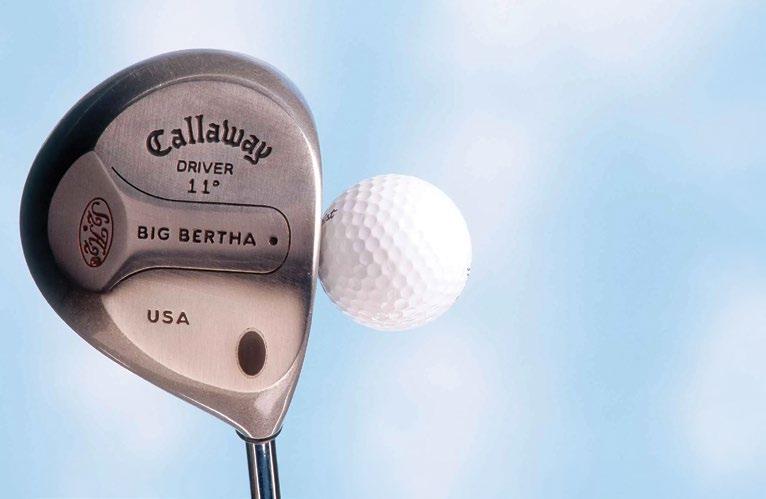
5. THE CALLAWAY BIG BERTHA DRIVER (1991)
Golf equipment before Big Bertha looked sensible. Then Callaway arrived and parked a frying pan behind the ball.
When the original Big Bertha driver launched in 1991, golfers genuinely thought it looked absurd. The oversized 190cc head was gigantic for its time. Traditionalists hated it immediately, which is usually the first sign something revolutionary has arrived.
What made Big Bertha special was forgiveness. Suddenly, golfers did not need to find the exact middle every time to launch the ball miles down the fairway. Mishits survived. Confidence grew. Weekend golfers started swinging harder because they finally believed the club might save them.
Most importantly, Big Bertha changed golfer psychology. Drivers stopped being precision instruments and became weapons. Modern power golf arguably starts right here.
6. THE COBRA KING OVERSIZE IRONS (1994)
Before Cobra King Oversize irons arrived, most golfers thought oversized irons were only for beginners, high handicappers or people emotionally broken by bunker play.
Then Cobra changed everything.
These irons offered enormous sweet spots, perimeter weighting and launch assistance without looking completely offensive at address. Average golfers suddenly experienced a strange sensation previously reserved for tour players. Solid contact.
The real genius was accessibility. Cobra made golf easier without making golfers feel embarrassed about it.
Oversize irons also accelerated forgiveness technology across the industry. Suddenly, every manufacturer was chasing stability, launch


7. THE SCOTTY CAMERON NEWPORT 2 (1997)
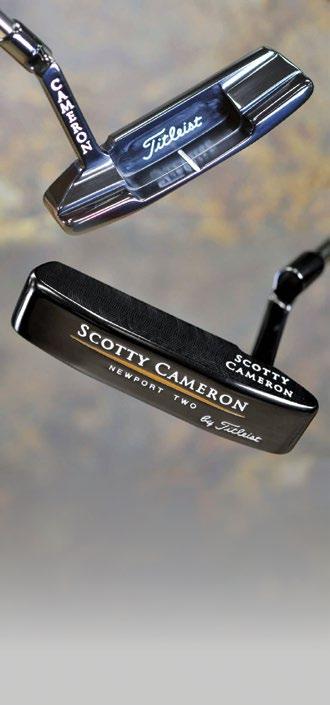
Few golf clubs became status symbols quite like the Scotty Cameron Newport 2. Yes, it performed beautifully. Yes, it won Majors. Yet this club also changed something else. It changed how golfers emotionally connected with equipment.
Tiger Woods made the Newport 2 iconic during the most dominant stretch golf has ever seen. Suddenly every golfer wanted one, even if their putting stroke looked like a panic attack with a grip. Scotty Cameron also created collectability inside golf equipment. Putters stopped being tools and became objects golfers genuinely obsessed over. Confidence is powerful in golf. Delusion occasionally helps too.
8. THE TITLEIST VOKEY WEDGES (1997 ONWARDS)
Before Bob Vokey arrived, wedges were important. After Vokey, they became an obsession.
Modern golfers now discuss bounce angles, sole grinds and loft gapping with the seriousness of Formula One engineers. Much of that traces back to the rise of Vokey wedges and the influence they had on professional and amateur golf alike.
What made them revolutionary was versatility. Vokey created wedges
that allowed players to manipulate shots around the greens in ways older designs struggled to offer.
Open the face, flight it low, hit soft spinners or escape from brutal rough. These clubs gave golfers options, and options create confidence.
Modern short game creativity owes a huge amount to Vokey. Somewhere between artistry and engineering, Bob Vokey completely changed how golfers think from 120 yards and in.
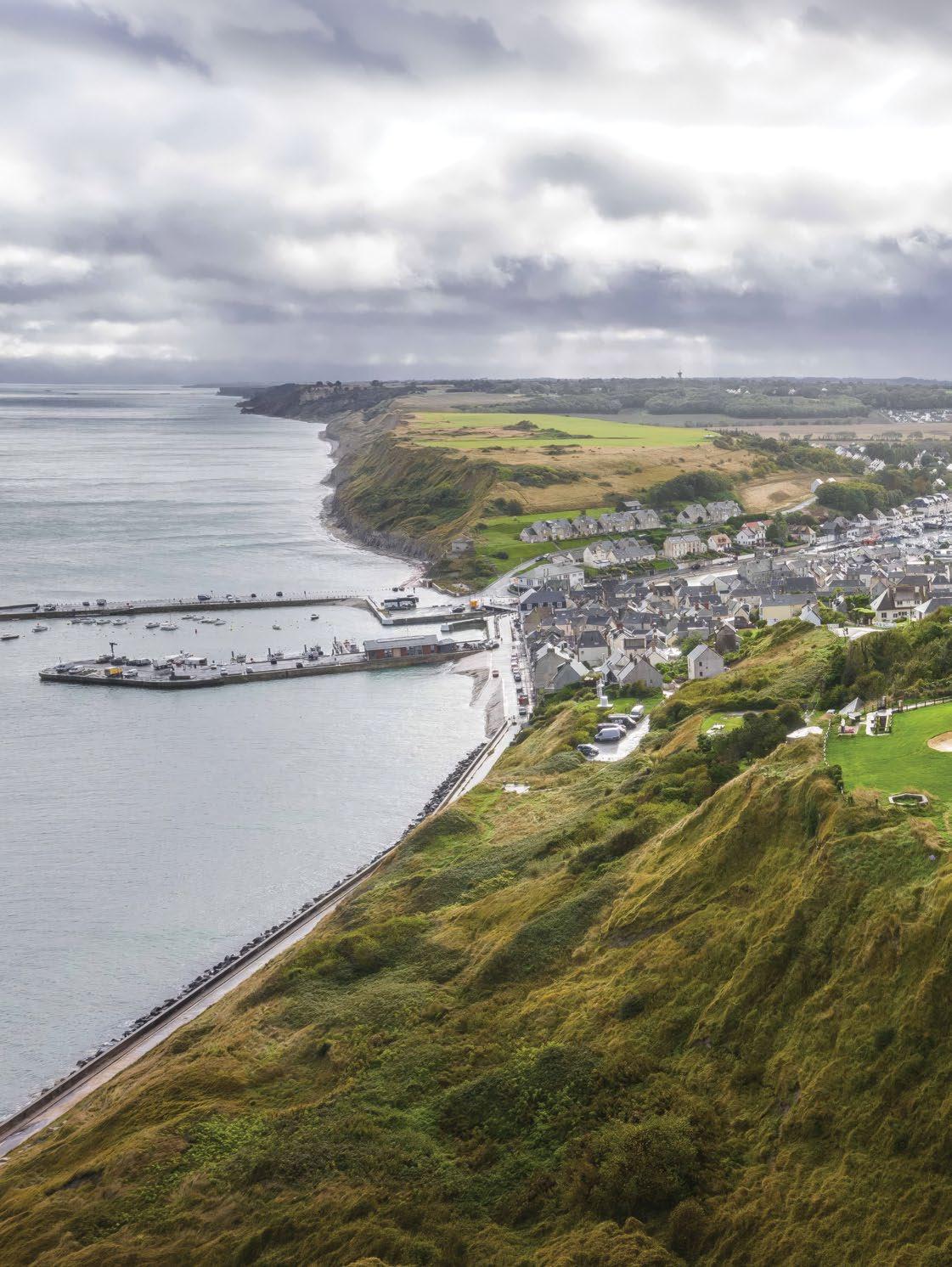
AGUeTTeS, Orde AUX & BIrdIeS
THREE REGIONS, A HANDFUL OF BRILLIANT GOLF COURSES, TOUR HISTORY EVERYWHERE, AND ENOUGH WINE TO MAKE SCORECARDS FEEL SLIGHTLY IRRELEVANT.
FRANCE DOES GOLF DIFFERENTLY. THE FAIRWAYS ARE WORLD CLASS, THE LUNCHES LAST TOO LONG IN THE BEST POSSIBLE WAY, AND NOBODY SEEMS REMOTELY INTERESTED IN HURRYING YOU OFF THE COURSE. FROM THE DRAMATIC CLIFFTOPS OF NORMANDY TO THE RELAXED RHYTHM OF ÎLE DE RÉ AND THE TOUR TESTED FAIRWAYS OF BORDEAUX, THIS IS GOLF TRAVEL AT ITS MOST ENJOYABLE.
BY ALEX GALLEMORE
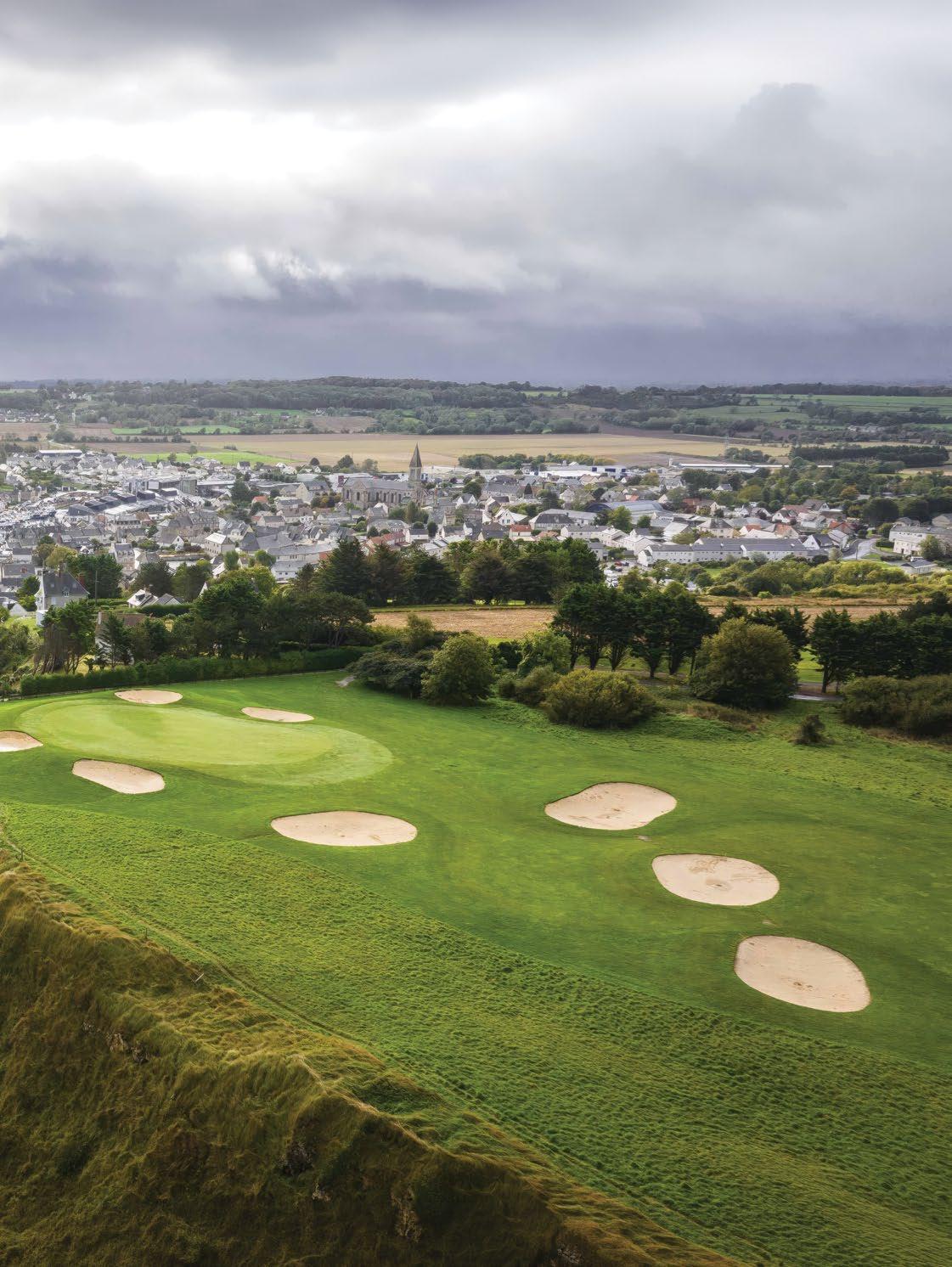
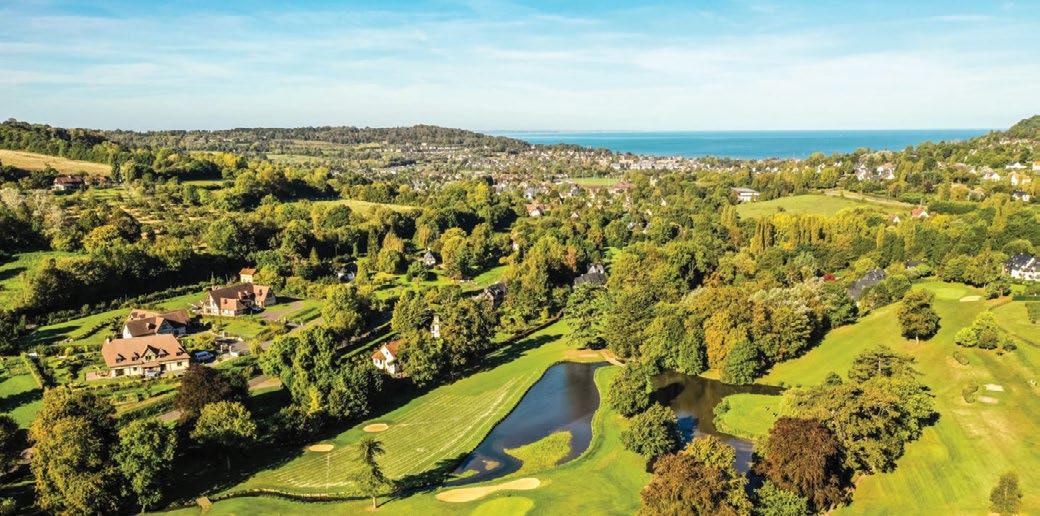
CALVADOS, NORMANDY
History, Heroics and a Very Stiff Headwind
Let’s be honest. Most of us would struggle to break 80 here on a calm day. On the kind of blustery Normandy morning that blows in off the Channel without warning or apology, you are simply hoping to get round in daylight with your dignity intact and a Calvados waiting at the 19th. Welcome to one of the most gloriously awkward and heart stoppingly beautiful golf regions in Europe. The Calvados coastline has been luring golfers over
from Britain for more than a century. Partly because it is barely two and a half hours from London, partly because the golf is excellent, and largely because the Norman table is, frankly, extraordinary. Creamy cheeses, fresh cider, Bayeux butter and the apple spirit that gives the whole département its name. You tell yourself you will be sensible after the round. Reader, you will not be sensible after the round.
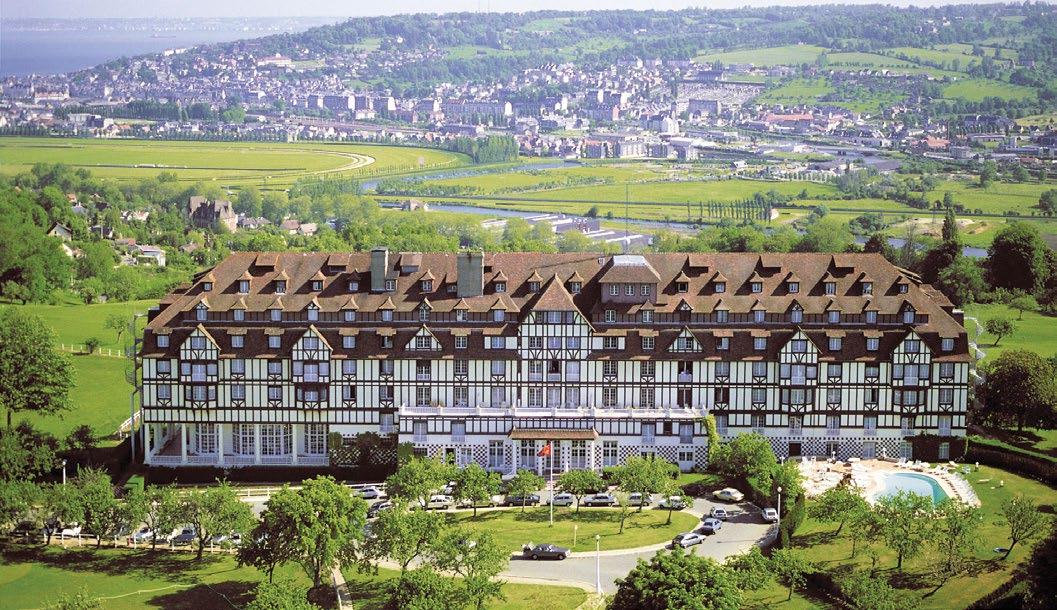
OMAHA BEACH GOLF
The headline act is Omaha Beach Golf, a 36 hole complex set on the clifftops above Port en Bessin, only a few miles from the D Day landing beaches. It is a genuine emotional experience even before you have hit a shot. La Mer has twice hosted the Open de France Seniors in 1994 and 2004, which means proper Tour pedigree underfoot. Each hole is named after a World War II figure including Eisenhower, Churchill and de Gaulle. The 6th green, perched above the harbour with an
original German bunker just behind it, produces a lump in the throat that no amount of three putting can explain away.
La Mer is the one to get on first. It is a links influenced championship course on the clifftops, Tour tested and absolutely stunning. Le Manoir is the inland companion and equally worth your time on day two if your back holds out. The driving range alone feels cinematic, with targets sitting against the backdrop of the English Channel.
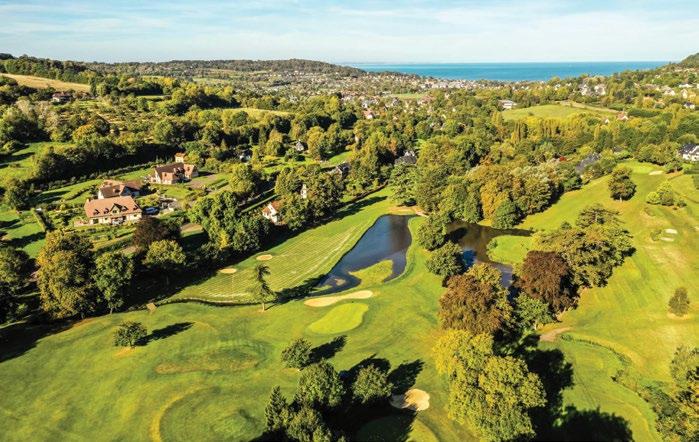
DEAUVILLE’S OLD SCHOOL CHARM
For glamour and golf with proper old school pedigree, head east to Deauville. This is the kind of resort town where the racing fraternity and the golf crowd have been elbowing each other aside since before the First World War. Golf Barrière de Deauville has been operating since 1929 and was designed by the legendary Tom Simpson, the same man responsible for Morfontaine.
There is not a single water hazard anywhere on the course. It does not need them. Simpson preferred to destroy scorecards through subtle gradients, towering oaks and greens that appear straightforward until you actually stand on them. Start on the terrace with a café Calva, an espresso sharpened by a shot of Calvados, and suddenly double bogeys seem far less upsetting.
NORMANDY’S HIDDEN GEM
Between Cabourg and Deauville sits Golf Bluegreen Houlgate, one of the unheralded gems of the region. The opening holes skirt a peaceful pond before the course climbs into the bocage and eventually reveals panoramic views across the bay. It lacks the reputation of its neighbours and seems perfectly content with that fact. The pace of play is relaxed, the atmosphere welcoming and the Norman restaurant clubhouse serves exactly the sort of lunch that ruins any realistic chance of afternoon productivity.
WHERE TO STAY AND EAT
No golf trip to Normandy feels complete without
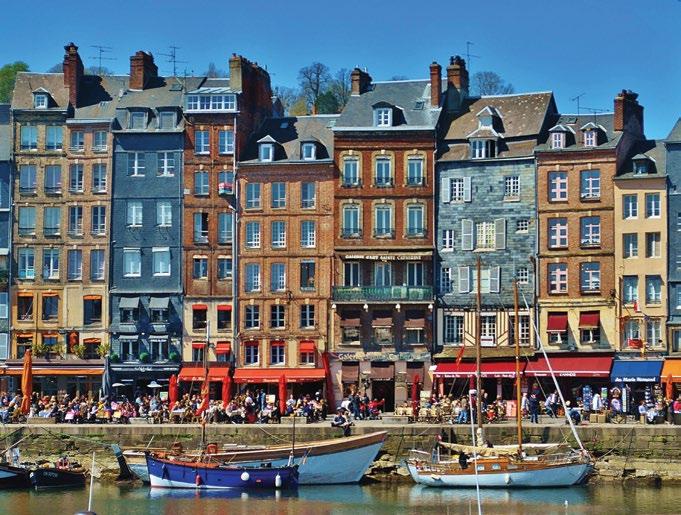
at least one evening wandering around Honfleur. The harbour town looks like somebody built a film set specifically for golfers who enjoy seafood, cider and pretending they definitely meant to leave that bunker shot short. Colourful timber framed buildings surround the old port, seafood restaurants spill onto the waterfront, and there is enough atmosphere here to make you forget tomorrow’s tee time entirely.
Stay at Les Maisons de Léa for boutique charm in the centre of town or Auberge de la Source just outside Honfleur if you prefer countryside calm with proper Norman cooking and dangerously good wine lists. Around Deauville, the Hôtel Barrière Le Normandy delivers old world luxury and is perfectly positioned for evenings between golf, restaurants and the racecourse.
For food, SaQuaNa remains one of the region’s standout restaurants with inventive seafood dishes and Michelin star quality without the stiffness. More traditional golfers should head for La Lieutenance beside the harbour for oysters, mussels and a bottle of crisp Chablis while discussing missed three footers like they were acts of cruel injustice.
The Normandy Golf Pass remains one of the smartest ways to experience the region, giving access to nine courses on a rolling multi round ticket. Book ahead in July and August. Outside peak season, you may feel like you have the entire coastline to yourself.
ÎLE DE RÉ
Nine Holes, a Bicycle and Absolutely No Rush
Right, cards on the table. Île de Ré has one golf course. Nine holes. Par 34. If you are the sort of golfer who needs 27 holes a day and a GPS yardage system attached to every bag, this may not be your paradise. If, however, you are willing to slow down for once and enjoy spectacular Atlantic marshland golf with a cold glass of Muscadet waiting afterwards, then the island
deserves your full attention.
The island itself is a 30 kilometre stretch of salt marshes, pine forests, oyster beds and whitewashed villages linked to La Rochelle by bridge. Parisians adore it and cycle everywhere with the smug certainty of people who have clearly made excellent life decisions. Annoyingly, they appear to be correct.
GOLF DE TROUSSE CHEMISE
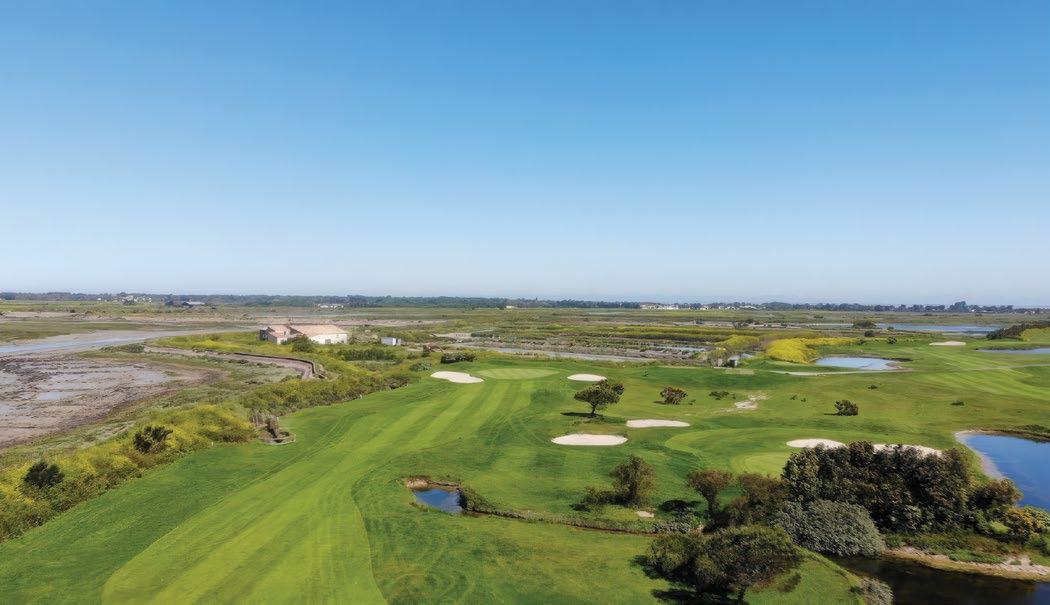
At the northern tip of the island, tucked between pine forest and lagoon, Golf de Trousse Chemise delivers the kind of relaxed golf experience that reminds you why you started playing in the first place before handicaps, launch monitors and swing thoughts took over your life. Water comes into play on almost every hole and the setting
is pure postcard France. The practice range sits on actual marshland.
You hit balls over water while herons stare back from the reeds in silent judgement. Monthly competitions include events sponsored by Veuve Clicquot, which tells you plenty about the general mood around here.
The greens are not especially quick and
nobody is pretending this is Augusta National. That is entirely the point. Once you stop worrying about green speeds and simply enjoy the Atlantic breeze and the scenery, the place clicks into focus beautifully.
Summer green fees are steep at roughly €48 for nine holes, though the golf and the island atmosphere justify every euro.
EXTRA HOLES ACROSS THE BRIDGE
For golfers who still insist nine holes feels cruel, Golf de la Prée at Marsilly sits only seven kilometres from the bridge and offers a proper 18 hole links style test with a slope index of 130. Combine it with Trousse Chemise and suddenly you have yourself a thoroughly civilised 27 hole island golf day.
WHERE TO STAY AND EAT
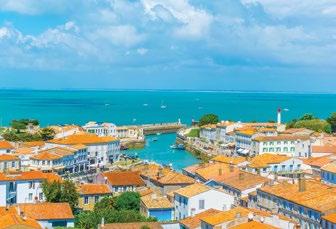
Île de Ré does not really do loud luxury. It specialises instead in understated chic, where everyone arrives on bicycles wearing linen and somehow still looks annoyingly polished after a full seafood lunch. The best base is either Saint Martin de Ré or Les Portes en Ré depending on whether you want harbour life or quieter village charm close to the golf course. Hôtel de Toiras in Saint Martin delivers boutique five star luxury right on the harbour, while Le Chat Botté near Trousse
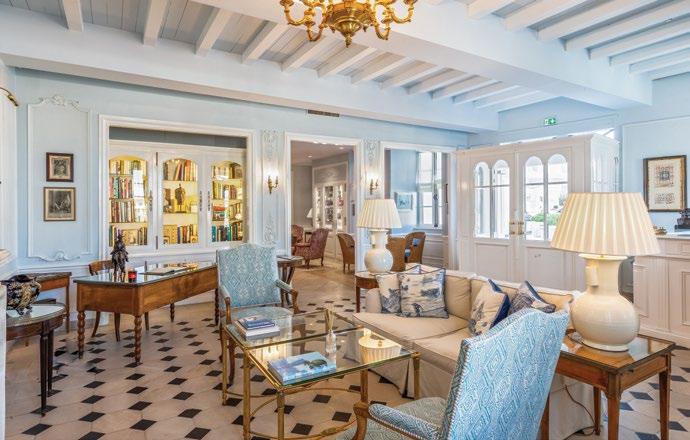
Chemise offers relaxed coastal comfort after a day battling marshland winds and judgemental herons. Food here revolves around seafood, oysters and white wine. Quite rightly too.
La Cabane du Feneau is a brilliant local oyster shack where lunch can disappear into an entire afternoon without anybody noticing. For something more refined, George’s in Saint Martin combines excellent seafood with a terrace perfect for people watching and post round storytelling.
BORDEAUX
The island’s markets are equally dangerous territory for golfers trying to eat lightly before a round. Fresh pastries, local cheeses and chilled rosé have ended many good intentions before the opening tee shot. Fortunately, the cycling helps create the illusion of balance.
The island itself is wonderfully flat and easy to cycle. Reaching the course by bike also provides a useful excuse to stare thoughtfully at the scenery rather than discussing where your tee shot disappeared.
Tour Tested Fairways and Premier Cru Everything
Here is the Bordeaux pitch. You play golf on fairways that have hosted the DP World Tour. You stay in a resort hotel where the distance markers are giant wine bottles. Every hole on the main course is named after a Grand Cru château. Retief Goosen once walked these fairways on his way to winning the French Open. If that does not appeal to you, it may be time to check you still have a pulse.
CABOT BORDEAUX
The heavyweight destination is Cabot Bordeaux, still known to many golfers as Golf du Médoc. Located 30 minutes north of the city, it is arguably
the finest golf resort in France. Both courses have appeared simultaneously in Golf World’s Top 100 Courses in Continental Europe, something no other French resort can claim. Seve played here.
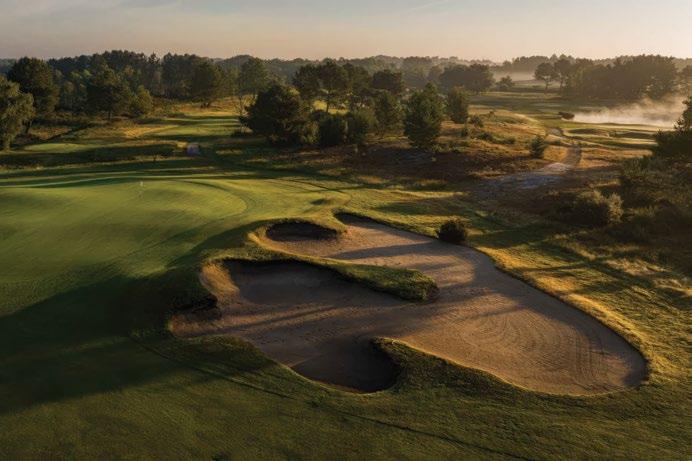
Olazábal played here. Woosnam and Calcavecchia too. That alone should probably be enough.
Les Châteaux is the headline course, designed by Bill Coore and host venue for the 1999 French Open won by Retief Goosen. The layout cleverly mimics Scottish heathland golf with wide fairways, broom lined rough and constantly shifting wind directions. Every hole is named after a Grand Cru estate and even the distance markers are shaped like wine bottles. Bordeaux is not subtle about reminding you where you are.
Les Vignes offers a slightly gentler introduction but only just. It hosted the Challenge Tour Grand Final in 2002, 2003 and 2004, meaning genuine careers were forged here. Rod Whitman’s design moves through maritime pines with long par fours and greens that demand you think one shot ahead. Start here on day one and build confidence before Les Châteaux starts dismantling your ego.
SAINT ÉMILION AND TOM DOAK MAGIC
East of Bordeaux, Grand Saint Émilionnais Golf Club delivers something completely different. Opened in 2015 and designed by Tom Doak, the course winds through vineyard valleys and ancient oak trees near the UNESCO listed village of Saint Émilion.
Doak deliberately created optical illusions from
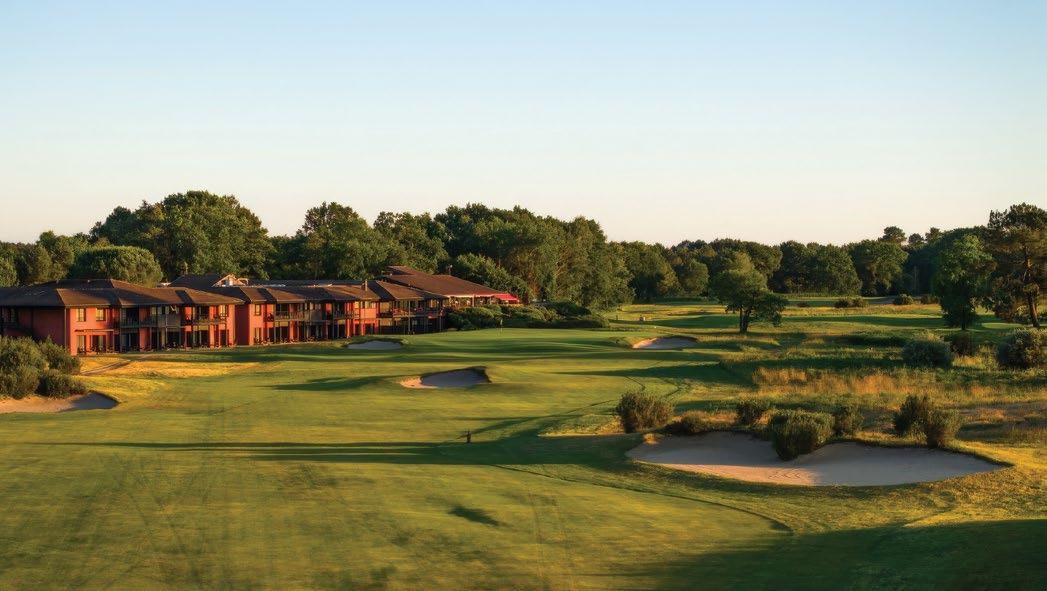
the tee and has even suggested golfers should play without GPS devices to fully appreciate the design. Naturally, most golfers nod politely at this advice before immediately checking the yardage app on the first tee. The greens are wonderfully contoured and the setting is exceptional. Pair the round with a wine tasting nearby and your putting stroke may suddenly feel dramatically improved.
ARCACHON BAY ESCAPE
Out on Arcachon Bay, roughly 45 minutes from the city, the International Golf of Arcachon offers pine forest golf with views towards the famous Dune du Pilat. The clubhouse terrace is ideal for a glass of Entre Deux Mers while everyone in your group debates whether the wind on the 14th was genuinely difficult or simply another excuse for a snap hook into the trees. It was almost certainly the latter.
WHERE TO STAY AND EAT
Bordeaux may be one of the few golf destinations where the post round dinner occasionally overshadows the golf itself. That is saying something considering the quality of the fairways. Staying at Cabot Bordeaux is the obvious play. The resort hotel sits directly beside both championship courses and leans fully into the wine country experience without becoming overly flashy. After 36 holes, the spa, terrace and wine cellar feel less like luxuries and more like medical necessities.
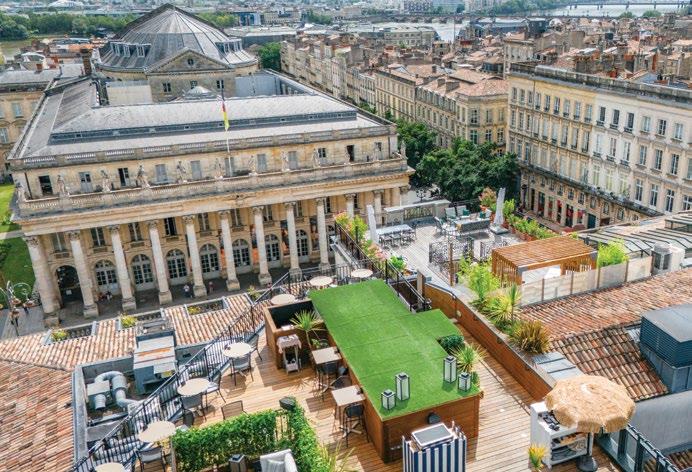
For golfers wanting city atmosphere, stay in central Bordeaux at InterContinental Bordeaux Le Grand Hôtel overlooking the Grand Théâtre. It places you close to the city’s brilliant restaurant scene while keeping the Médoc courses within easy reach.
Le Chapon Fin remains one of Bordeaux’s legendary dining rooms, serving refined French cuisine in spectacular surroundings. More relaxed golfers should head to La Tupina, where enormous cuts of regional beef, duck fat potatoes and local red wine combine to remove any lingering desire to count calories.
Saint Émilion is equally worth an overnight stay. Walking through the medieval streets after golf with a glass of Grand Cru in hand feels wonderfully indulgent and entirely correct.
Spring and autumn remain the ideal times to visit Bordeaux. Mild temperatures, quieter
fairways and the September wine harvest create the perfect atmosphere for a golf road trip. Cabot Bordeaux is the obvious base and, once you settle in, leaving starts to feel slightly disrespectful to the Médoc itself.
Green fees, Tour schedules and the par on the 14th at Trousse Chemise are all subject to change. The Calvados, however, remains wonderfully reliable.
WHAT A TRIP - MERCI
France does golf properly. Normandy brings history and drama, Île de Ré slows everything down, and Bordeaux mixes Tour pedigree with world class wine. Somewhere between the fairways, seafood and long lunches, you stop worrying about your score and start enjoying the trip. Which, honestly, is probably the point.
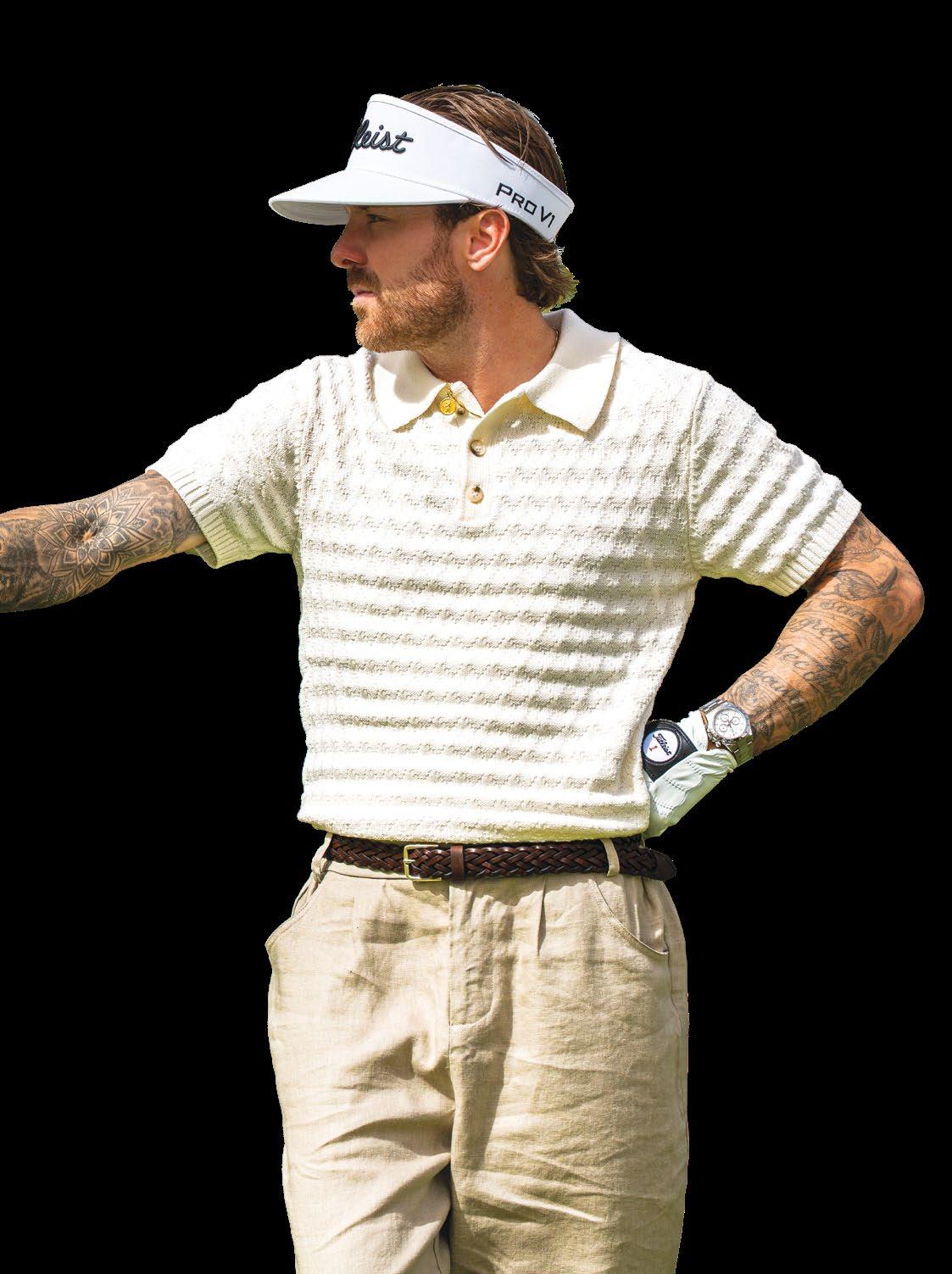
JAMES HOVEY
Photography: Alex Leyno
BY JAMES HOVEY & RICK BEVAN
JAMES
HOVEY
Photography: Alex Leyno
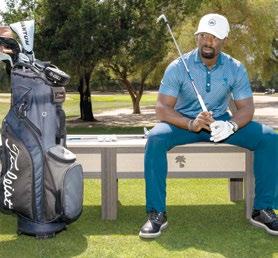
Golf came back into my life at the right time. Business can become very all-consuming, especially when you’re building brands and constantly thinking about growth, pressure, staff, numbers, launches, everything. Golf was one of the first things in a long time that completely humbled me again.
What pulled me in wasn’t even just the sport itself, it was the process of trying to improve. You can’t fake golf. You can’t shortcut it. It forces patience, discipline, emotional control, and consistency. I became obsessed with that side of it. There’s also something addictive about the pursuit. You hit one shot exactly how you pictured it and you spend the next six months trying to recreate that feeling again.
The thing is, both golf and business expose who you really are when things stop going your way. Anyone can look confident when everything’s working. But golf reveals your patience, your ego, your emotional control, your ability to stay disciplined after mistakes. Business does exactly the same. You start to realise how people handle pressure. Some people panic and force things after one bad hole or one bad month. Other people stay composed, stick to the process, and trust that consistency compounds over time. Golf exposes temperament more than talent sometimes. Business does too.
Running a menswear brand means I operate in a world built around presentation, confidence, and detail – and a lot more of that translates onto the course than people probably realise. Golf is detailoriented in the same way fashion is. Small things matter. Consistency matters. Refinement matters. In menswear, people only really notice the final result, but what creates that feeling is tiny details most people overlook. Golf feels very similar. One degree, one swing thought, one mental lapse, one setup change, everything affects the outcome. If you care deeply about presentation, taste, discipline, and refinement in business, you naturally bring that energy into golf too.
What I love is how quickly the game humbles you. You can build successful businesses, have confidence in your own world, and then golf will make you feel like a complete beginner again within five minutes. That’s probably one of the reasons I respect it so much. There are days where I’ve gone from feeling very in control in business to standing on a tee box unable to trust my swing. Golf strips away ego very quickly. It reminded me that success in one area doesn’t entitle you to success somewhere else. You still have to earn progress.
Pressure works the same way in both worlds. It speeds people up mentally. In golf, when people get nervous, they stop committing. They overthink. They force shots that aren’t there. Business is the same. Under pressure, people abandon process and start reacting emotionally. I’ve learned that the best decisions in both worlds usually come from calmness, not emotion. One bad shot or one bad business decision doesn’t normally destroy you. It’s the emotional reaction afterwards that causes the real damage.
Golf has made me more patient as a leader. It taught me that improvement is rarely linear. You can feel like you’re getting worse before you suddenly break through. Business works the same way. Sometimes growth is invisible until it compounds. It also made me realise how important emotional consistency is as a leader. Your team feels your energy. In golf, your body reacts to your mental state immediately. There’s nowhere to hide. The calmer and more disciplined
you become internally, the better both your golf and your leadership tend to become.
The internal dialogue is the part people don’t see. Entrepreneurship is mentally exhausting because you’re carrying pressure that most people never see. Golf feels the same from the outside. People think it’s relaxing until they actually care about performance. Doubt, frustration, impatience, expectation – you’re constantly managing your own mind. That’s why I think ambitious people get addicted to golf. It becomes less about the sport and more about mastering yourself under pressure.
Dubai’s golf culture naturally overlaps with business, networking and relationships, so it definitely becomes part of your professional world over time. A lot of conversations happen on golf courses here. But personally, I still see golf more as a reset. It’s one of the only things that fully takes me out of work mentally because you have to be present. If your mind is elsewhere, your score reflects it immediately. Ironically, when I stop thinking about business for four hours, I usually come back thinking more clearly anyway.
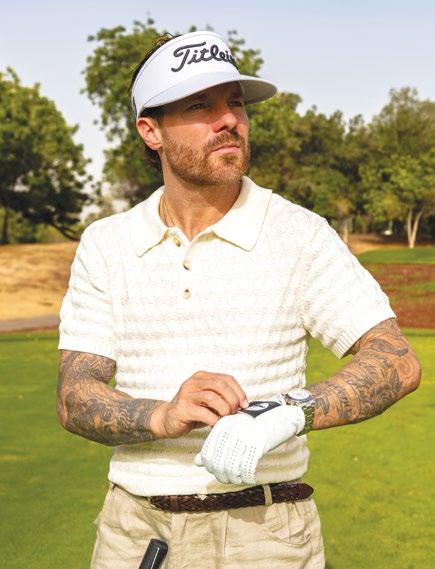

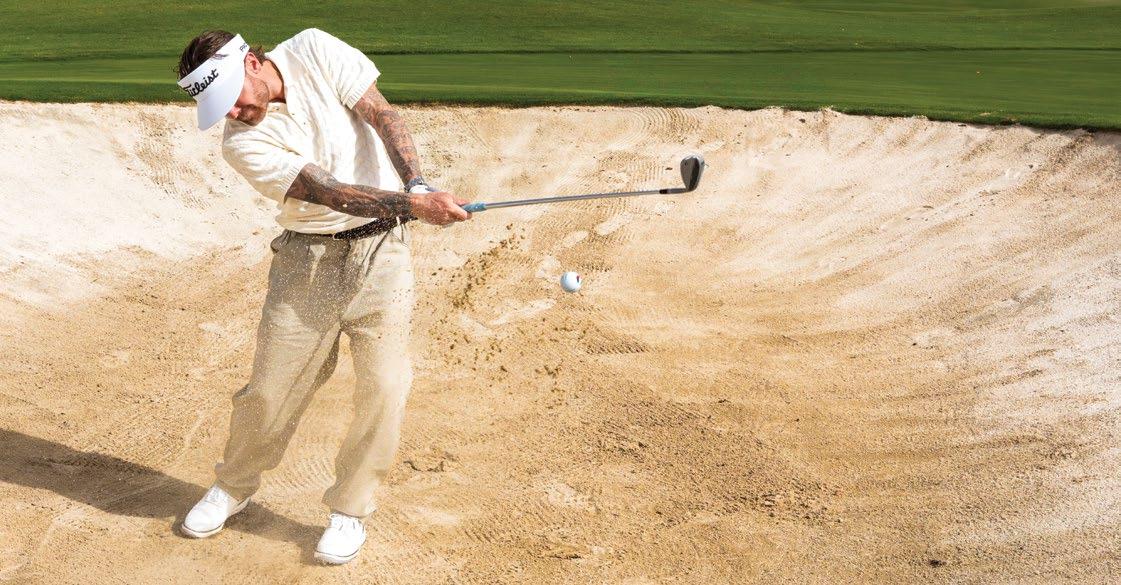
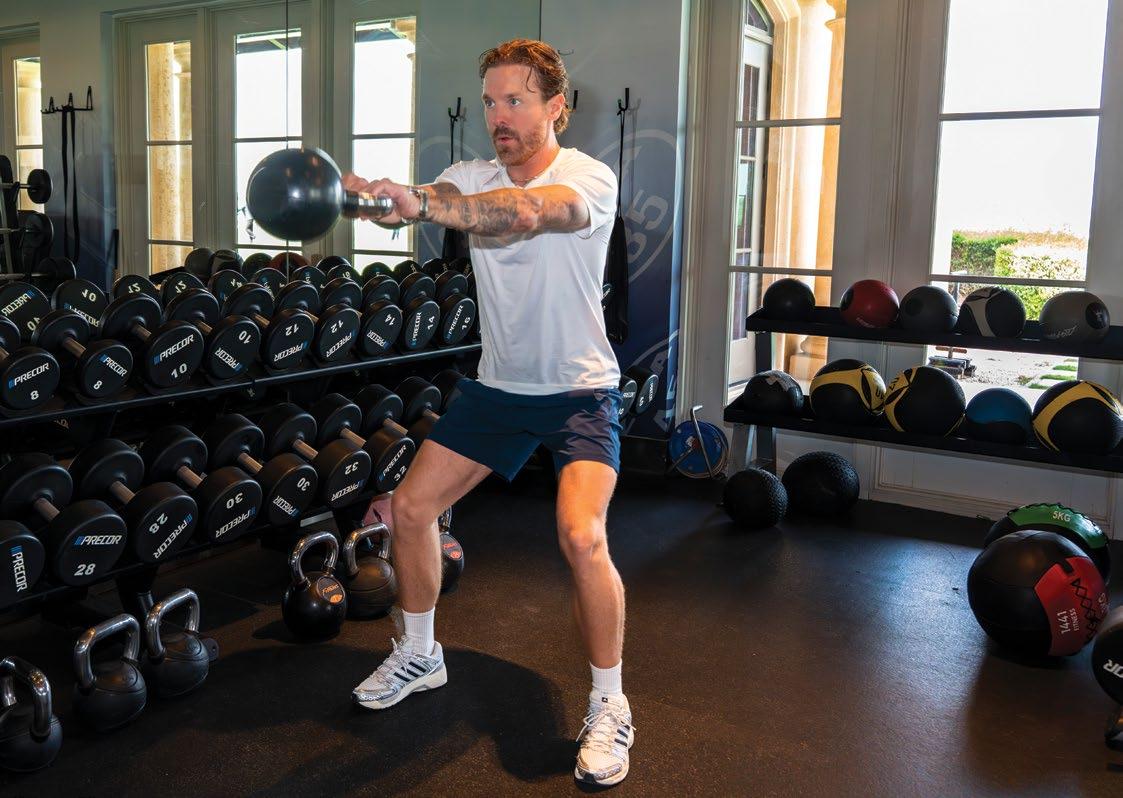
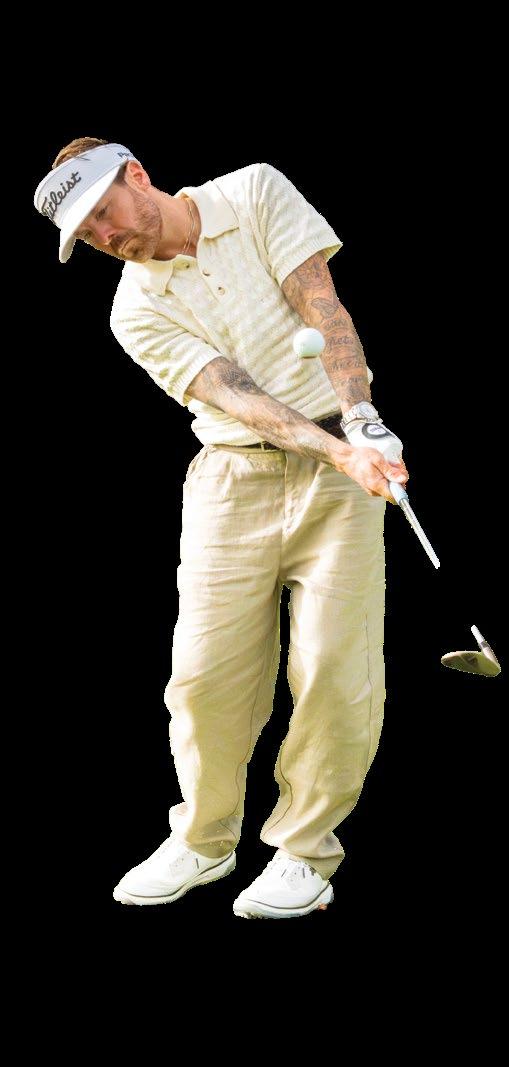
The biggest personal surprise has been how much your emotions affect performance. You can practice for hours, have the right technique, the right equipment, all of it, but if your mind isn’t stable, golf exposes it instantly. I realised patience is actually a skill. Most people think patience is passive, but it’s not. In golf, patience is discipline under frustration. That changed how I view a lot of things in life as well.
Talent helps you start. Patience determines how far you go. The people who become exceptional in either world are usually the ones willing to repeat the boring things for years. Refinement takes time. Social media makes everything look instant now, but real progress is normally built through repetition nobody sees. Golf reinforces that constantly.
My competitive side definitely follows me onto the course – I don’t think that ever really leaves ambitious people. But golf channels it differently. Business pressure is constant and open-ended. Golf gives you a contained challenge. You’re focused on one shot, one hole, one round. So even though I’m competitive when I play, it still feels mentally healthier than constantly being inside business problems all day.
If you asked me which has tested my patience more – building a brand or building my game – it’s golf, without question. In business, I’ve always trusted my instincts. Even through hard periods, I understood how to create momentum. Golf is different because improvement can feel invisible for long stretches. You can spend weeks working on something and suddenly feel worse before it gets better. That tests your patience massively. But honestly, I think that’s also why I’m drawn to it.
Golf can look polished from the outside, but behind that there’s frustration, discipline, and failure – and that mirrors
entrepreneurship completely. People usually only see the polished moments, the nice golf courses, the successful brands, the lifestyle side of things. They rarely see the frustration underneath. Both worlds involve constant failure. You’re just learning how to manage it better over time.
Golf will become a genuine part of the long-term identity of the brands I’m building. I’ve always wanted Belier to evolve naturally around the things I’m genuinely passionate about, rather than forcing concepts just because they’re commercially popular. Over the last couple of years, golf has become a huge part of my life, not just as a sport, but because of everything around it – the lifestyle, discipline, travel, culture, style, and mindset. As that passion has grown, it’s naturally started influencing the creative direction of the brand. We already plan to build golf further into Belier through collections, content, and experiences over time. The reason it works is because it’s authentic. People today connect more with brands that evolve alongside the person building them. Golf hasn’t been added as a marketing strategy, it’s become part of my life first, and the brand reflects that naturally. If someone read my story without knowing whether I was talking about golf or business, the biggest lesson connecting both worlds would be this: real progress usually happens much slower than people expect, and most people quit before the results arrive. Both golf and business force you to stay committed through periods where there’s no immediate reward. You have to learn to trust repetition, stay disciplined when things feel frustrating, and detach your identity from short-term outcomes.
The people who last in either world are normally the ones who keep showing up after bad rounds.
Photography: Alex Leyno
BY ALEX GALLEMORE
From
Reps to Rounds
HOW FITNESS ENTREPRENEUR
MICHAEL ADDO TRADED BUSINESS HUSTLE FOR BIRDIE HUNTING
He built a global fitness empire from scratch in Dubai, alongside his wife and a whole lot of grit. Now Michael Addo has a new obsession, with a pro card firmly in his sights.
There’s a particular type of person who moves to a foreign country at 25 with little more than a vision and an appetite for hard work, registers a company in the middle of Ramadan, waits two months for the paperwork to clear, and still calls the whole experience “exciting.” Michael Addo is that person.
Co-founder of MrandMrsMuscle, the global fitness app that has helped millions of people work out smarter, change faster and build bodies they can trust, Addo has quietly become one of the more compelling entrepreneurial stories to emerge from Dubai’s digital boom. Built alongside his wife across social media, YouTube and their own app ecosystem, the brand has the kind of reach most founders only dream about. But these days, when Addo isn’t thinking about fitness systems and scaling strategies, you’ll likely find him on a golf course, working on his game with the same laserfocused obsession that built his business in the first place.
His mission, stated plainly: turn professional. Whether that happens or not, he says, only time will tell. But anyone who knows Addo’s backstory would be foolish to bet against him.
ROOTS, RESILIENCE AND SCRAMBLED EGGS
Before Dubai, before golf, before any of it, there was a family in London that shaped everything. Addo grew up surrounded by four brothers and
deeply supportive parents, but it was his grandparents, who made the journey from Ghana to London in the late 1960s, who left the most lasting imprint.
“My grandparents were probably the biggest influence,” he says. “My grandfather had operated businesses abroad. Some succeeded, some failed, but every one came with lessons and stories.”
Those lessons took on extra weight after a spinal surgery complication left his grandfather wheelchair-bound for the final two decades of his life. Rather than allow it to diminish him, he adapted. One memory, in particular, has stayed with Addo ever since.
“I was around six years old and it was just the two of us at home. He was only a year into his recovery from the surgery. We were both hungry and he asked me to make us some scrambled eggs and toast. He patiently taught me how to cook it even though I was terrified of using the gas cooker. He kept me calm and talked me through it step by step.”
What sounds like a small domestic moment was, in hindsight, a masterclass. “Looking back, it was my first experience of overcoming fear through responsibility.” It’s a lesson that would echo through every business decision, every obstacle, every cold Dubai morning on a new golf course: stay calm, stay present, and do the thing in front of you.

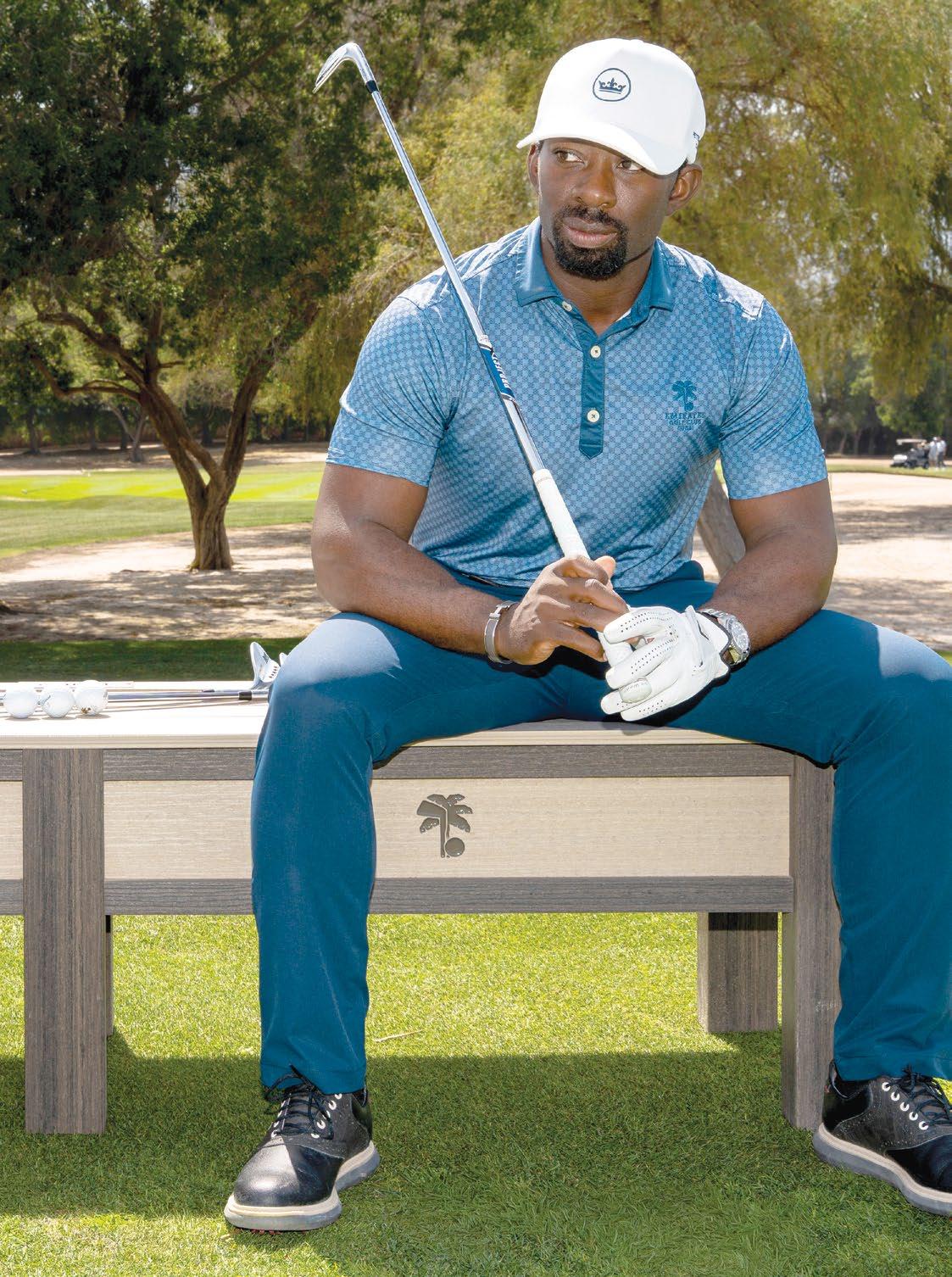
Photography: Alex Leyno
A COMPANY BUILT IN A FOREIGN LANGUAGE
When Addo arrived in Dubai in 2016, he was 25, relatively well-travelled in terms of ambition if not in terms of air miles, and determined to build something. The reality check came quickly.
“Starting a company in Dubai felt completely alien to me compared to London. It was expensive, the paperwork felt excessive, overwhelming and was mostly in Arabic which I couldn’t read. Everything operated differently.”
The company registration process, timed disastrously close to Ramadan, dragged from an expected week into nearly two months. “That was probably the only point where I genuinely questioned whether I’d made the right decision,” he admits. But the doubt didn’t linger. Enthusiasm, it turns out, is a powerful anaesthetic. “I was so consumed by the excitement and adventure of building something abroad that I think enthusiasm protected me from fear.”
An early conversation with a seasoned Dubai veteran helped sharpen his thinking. “During my first week I met an older English gentleman who’d lived here for over twenty-five years. He said to me: ‘Mike, if you don’t have enough money to survive your first year of failure, pack your bags now.’”
That blunt wisdom stuck. Before every major decision from that point on, Addo trained himself to ask the same question: what are the real consequences of this? It’s the kind of disciplined thinking that separates builders from dreamers. As he’d later discover, it’s not entirely unlike the mental process required to stand over a tricky four-footer with a match on the line.
BUSINESS WITH YOUR BEST FRIEND (AND SPOUSE)
If launching a business in a foreign country is difficult, try doing it while married to your cofounder. Addo describes building MrandMrsMuscle alongside his wife as “one of the hardest things I’ve done,” and also one of the most revealing.
“Being on the same page is incredibly important, but actually getting there is another story entirely. It taught me that resilience isn’t always about pushing harder. It’s about trust. Trusting your partner’s judgment, ability and intentions.”
Work and life become deeply intertwined in that kind of partnership, the boundaries constantly shifting. But Addo’s takeaway is ultimately a hopeful one: “If your relationship is truly strong and communication stays open, you can withstand far more than you realise.”
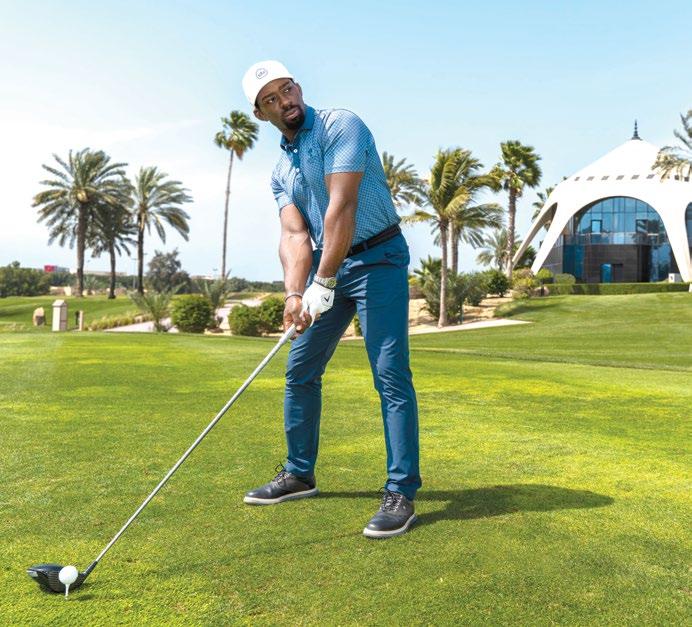
He pauses, then adds with characteristic lightness: “Prioritise date night.”
ENTER GOLF: THE GREAT DISRUPTOR
Ask most entrepreneurs what they do to switch off, and you’ll get answers that still smell faintly of productivity: podcasts about leadership, networking dinners dressed up as social events, gym sessions optimised to the last rep. Addo was the same, until golf found him.
“Most things I’d done still had some underlying productivity attached to them. Golf was different because it demanded complete presence. You can’t be thinking about emails or business decisions over a shot.”
For a mind that had spent years running at full throttle across multiple time zones and digital platforms, that enforced stillness was revelatory.
“In business your thoughts can feel endless. Golf compresses everything down into one shot, one decision, one moment.”
It also, crucially, scratched the same analytical itch
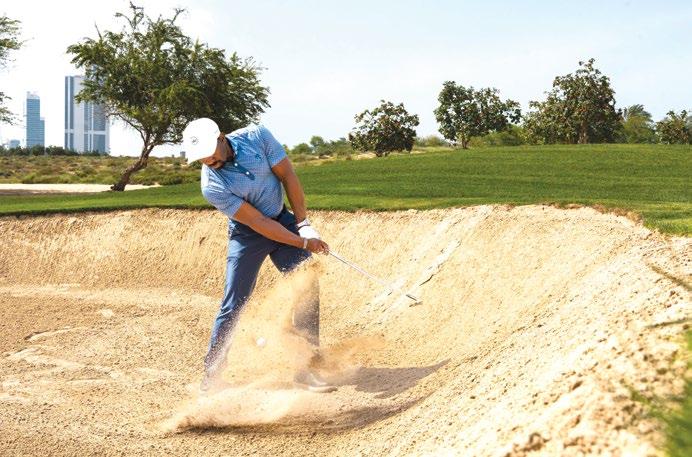
that had made him effective in business. Addo is someone who is fundamentally fascinated by systems, by the idea that small, consistent gains compound into something significant over time. Golf, with its infinite layers of technique, psychology and course management, offers exactly that kind of rabbit hole.
“The ball tells the truth,” he says, with the tone of someone who has learned this the hard way. “You can’t negotiate with it or hide from it. I think entrepreneurs enjoy environments where progress can be tracked, measured and refined. Golf gives you that, but it also humbles you because no matter how analytical you become, there’s always another layer. Always.”
THE OBSESSION WITH TURNING PRO
There’s a version of this story where financial success leads to a comfortable life with golf as a pleasant weekend distraction. Addo has written a different version.
“Financial success definitely created more freedom,” he acknowledges, “but I think freedom is only useful if you have something that genuinely captures you. Golf did that for me. It became more than a hobby. I became fascinated by the mechanics, the psychology and the pursuit itself.”
The time that business success afforded him allowed him to go deeper into the game. But the obsession, he insists, came entirely on its own terms. That obsession has a destination: professional golf. It’s an audacious goal for someone who came to the game as an adult, and Addo knows it. But it fits a pattern.
“Once you successfully achieve something that you set your mind on, nothing feels impossible.”
It’s the same mindset that sat a frightened sixyear-old at a gas cooker and talked him through making breakfast. The same mindset that kept a company alive through two months of Ramadandelayed paperwork. The same mindset that built a fitness empire with millions of followers from a standing start in a city where the rules were written in a language he couldn’t read.
Golf has a new student. Knowing what Michael Addo does with the things he loves, the fairways had better be paying attention.
Dubai-based Suited & Booted is redefining modern luxury menswear for the athlete off the field.
Blending precision tailoring with a contemporary edge, the brand has become a trusted name among elite sports figures across golf, football, boxing and beyond
Favoured by high-profile personalities, Suited & Booted crafts sharp, made-to-measure pieces designed for every moment beyond competition - from public appearances to exclusive events.
With partnerships spanning the ICONS Series and leading golf clubs across the UAE, the brand sits confidently at the intersection of sport and style
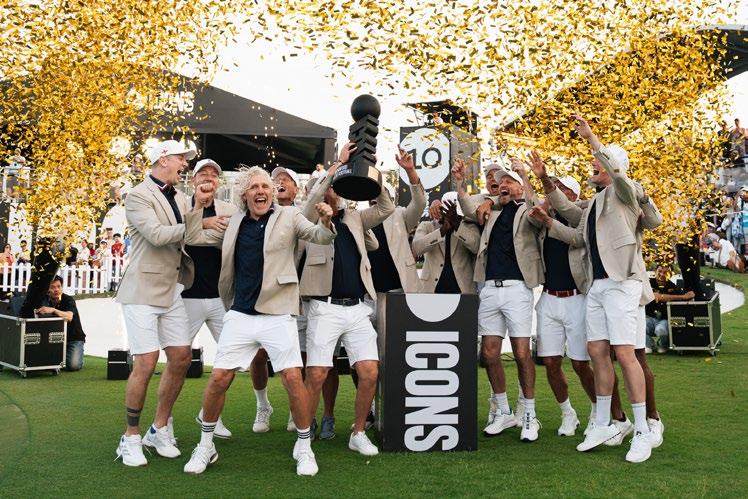
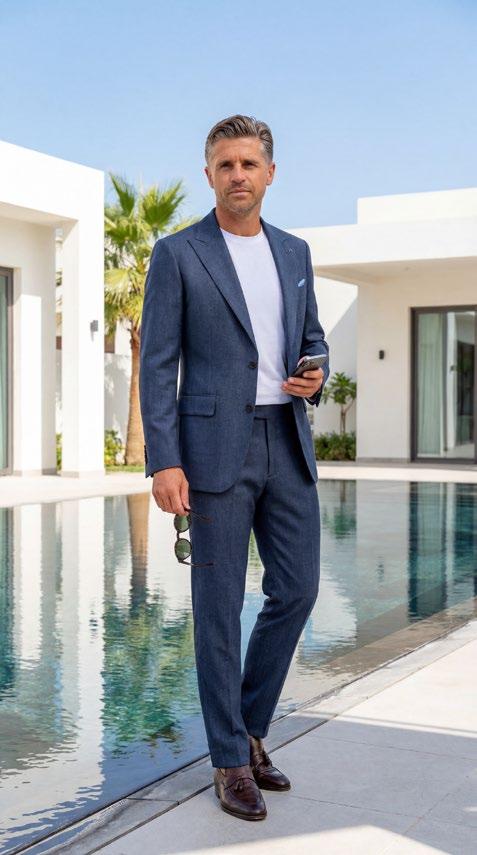
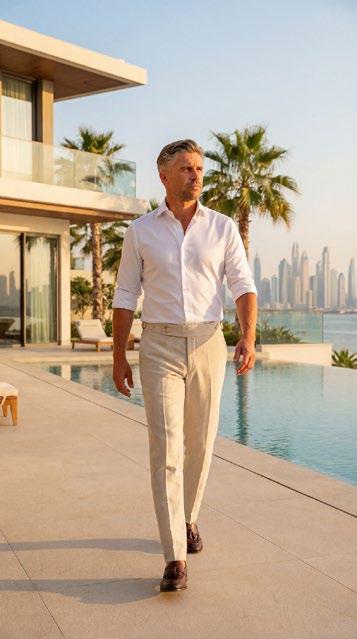
Photography: Alex Leyno
TRIO THE SWING
Camelia, Dalia and Adam Sebti are 15, 13 and 11. Between them they have dropped 22 strokes in a year as they work towards their dream of US college golf.
Plenty of families play golf. Far fewer hand the kids a microphone and tell them to start interviewing tour pros. The Sebti siblings have done both, and in a little over three years.
They picked up clubs together in the summer of 2022 – Camelia, Dalia and Adam, three years apart at each step. By their own admission, it was meant to be a way of spending time with their dad, uncles and grandfather. Then their mum asked the question that quietly rewires a household: do you want to go all in? Three yeses later, the schedule turned into something more serious.
The numbers tell their own story. In the past twelve months, Camelia has gone from a 16 handicap to 9.5, Dalia from 21 to 12.5, and Adam from 18 to 11. That is more than 22 strokes shed between three siblings in a single year, all coached out of Emirates Golf Club by former Asian Tour pro Yasin Ali.
They have already shared a podium, shared a podcast and shared a long list of interview guests that includes Min Woo Lee, Joaquín Niemann, Justin Rose, Shane Lowry and Adrián Otaegui. Camelia just won the Order of Merit on the new Infinity Junior Golf Tour. Dalia is stacking runner-up finishes. Adam, the youngest in the field at last season’s EGC Junior Club Championship, won the Net title playing from the men’s tees.
We sat them all down together. Predictably, they finished each other’s sentences.
You all began your golfing journey together in 2022. Looking back now, did any of you expect the sport to become such a major part of your lives this quickly?
Honestly no; not at first. When we started in July 2022, it was just something fun we wanted to try together as a family, mostly to spend time with our
BY RICK BEVAN
dad, uncles, and grandfather. None of us expected golf to take over our schedules, our weekends or even the way we spend time with each other. But there was one moment that changed everything: a dinner where our mom asked us, “Do you guys want to go all in, practise every week and play competitively?” We all said yes. From that day on, the challenge of constantly improving, the competitive side and the fact that every round teaches you something new just hooked us. The passion grew naturally and quickly.
Growing up as siblings within the same sport creates a unique dynamic. How would each of you describe the balance between competition and support within the family?
Of course there’s sibling rivalry. We love competing against each other, betting on putts, playing matchplays and teasing each other about our scores. But when it really matters, during tough practice sessions or when a tournament isn’t going someone’s way, we have each other’s backs 100%. It’s all jokes until someone needs support, then we’re full team mode. We don’t see each other as competitors. When one of us succeeds, the other two are genuinely happy, and that success becomes fuel for the rest of us. We’re really the Swing Trio; a family first, players second.
Having developed your games at Emirates Golf Club from the very beginning, how much has that environment shaped your love for the game?
EGC has shaped everything for us. It’s our second home. The first couple of years, we were on the Academy Par 3 course almost daily; it was challenging but fun and it’s where we really fell in love with the game. From there, having access to two world-class courses (the Majlis and the Faldo) plus elite practice facilities, completely accelerated our development. But what makes EGC truly special is the people. We know the staff by name, we’ve built lasting friendships with other junior golfers and being surrounded by some of the best juniors in the region pushes us to get better
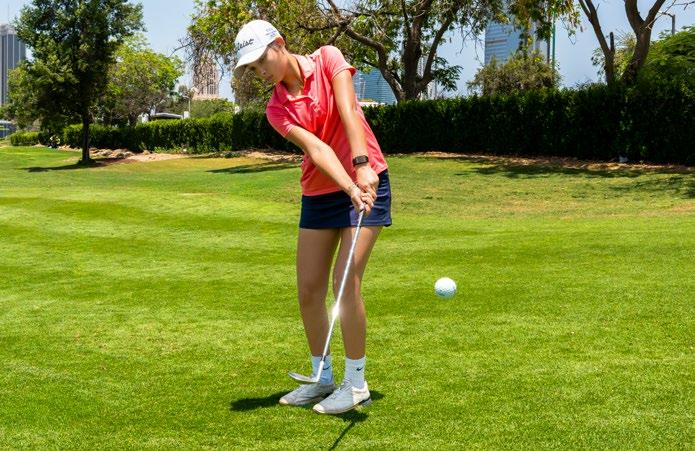
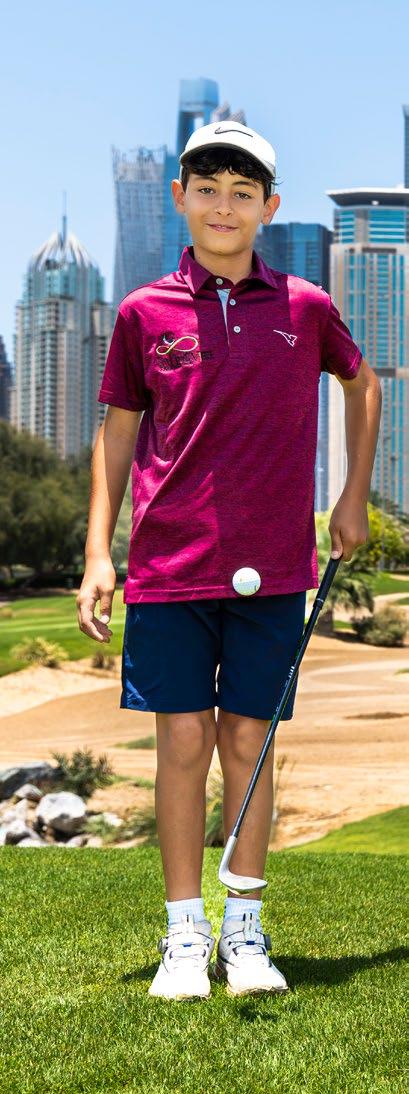
every single day. And because EGC hosts the Hero Dubai Desert Classic, we’ve even had the chance to meet our golf heroes and interview some of them on our podcast Teen Tee Time. That cemented our love for the game forever.
Golf is often described as a sport that reveals character. What do you think the game has taught each of you about yourselves?
Golf is teaching us every day a little bit more about patience, resilience, discipline and emotional control. We also realised that vulnerability is not a weakness. You can play an amazing round one day and a tough one the next; what matters is that you keep showing up and you never give up. We’ve also learned that golf isn’t just about the swings, it’s about the whole package: long practice hours, mental strength, taking care of your body, stretching, eating well and sleeping well. Those lessons go far beyond the course. They shape how we handle school, friendships and pressure in everyday life. Honestly, golf has taught us more about ourselves at our age than we could have learned any other way.
Despite sharing the same journey, do you feel each of you brings a different personality or mentality onto the course?
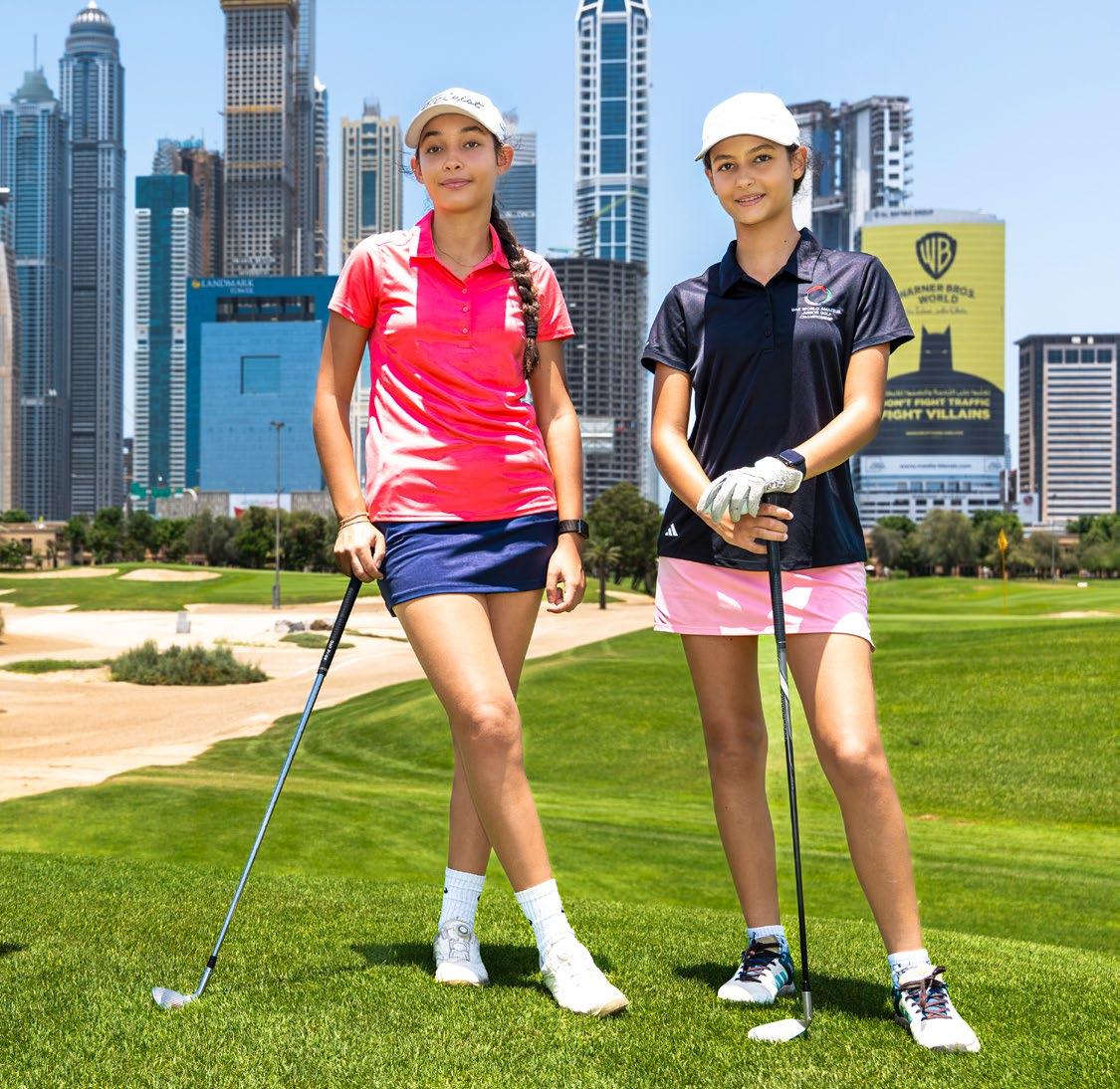
We all share the same passion, respect and commitment for the game, but on the course we are different.
Adam is the social butterfly. He loves people, he loves sharing moments. He plays his best rounds when he’s relaxed but he remains very competitive; alternating between jokes and deep-focused moments. He always sees the positive side and stays optimistic whatever happens.
Dalia is the calm one. She doesn’t speak much, she acts. She can surprise everyone with amazing shots and a natural ability to execute in difficult scenarios. When Dalia sets a goal, nothing stops her.
Camelia is the brainy one, the mature one, the one who calls the others back to discipline if they drift. She knows exactly what she has to do and is very autonomous about it. She’ll spend as much time as needed practising. Her strengths are resilience and focus.
What we all have in common is that we’re constantly trying to stay calm and composed on the course as we understood that controlling our emotions is 90% of playing good golf.
At such a young age, how have you learned to handle the mental side of golf, especially after
difficult rounds or disappointing moments?
The mental side is one of the hardest parts. Every golfer has bad rounds and what matters is how you react. We’re lucky to have a strong support system. Our parents aren’t sports psychologists or golf pros but they’ve taught us a lot from their business and entrepreneurial experiences: how to handle pressure, how to bounce back from disappointment and most importantly how to reset our brains – forgetting the bad shots, letting go of the past and focusing only on the next one. We are working hard to implement this last skill. We also talk things through as a family after every tough round. And we’re incredibly lucky to have our coach Yasin Ali, a former Asian Tour professional who shares not only technical guidance but the real-world perspective of someone who lived the junior-to-pro journey himself. It’s still a work in progress for us but learning these tools at our age is a huge advantage.
Since starting golf together in 2022, what have been some of the key tournament wins or achievements that stand out most for each of you so far?
This season has been a real turning point for all three of us. Camelia reached 1st place multiple times
on the new Infinity Junior Golf Tour and capped the season by winning the Order of Merit on 4 May 2026; but the achievement she’s proudest of came earlier, at a four-day junior tournament in Agadir (Morocco) in December 2025. She was playing against a strong field that included US university students and Morocco Federation girls, on a course she’d never seen before, in pouring rain and heavy wind. She finished in the first half of the field even if she had the highest handicap. Managing herself that well under those conditions against that level of competition taught her more than any trophy could.
Dalia’s biggest moment this season was winning one of the Infinity Tour events but what she’s most proud of is her consistency, with multiple 2nd-place finishes throughout the year. That’s the kind of result that doesn’t always make headlines but shows real progress.
And Adam’s breakthrough was winning 1st place in Net at the EGC Junior Club Championship as the youngest player in the field. They had him playing from the men’s tees. He only reached the fairway 3 times across the entire 18 holes but he pushed hard all day and his woods and short game kept getting him onto the green for par. “Every time I hit a fairway,” he says, “I was at the top of my life.”
But maybe the achievement we’re collectively
Photography: Alex Leyno
most proud of is one that doesn’t show up on any leaderboard: our handicap progression over the past 12 months. Camelia has gone from 16 to 9.5, Dalia from 21 to 12.5, and Adam from 18 to 11 – a combined drop of more than 22 strokes across the three of us in a single year. The trophies are great, but those numbers are the real story of the work behind them.
When one sibling succeeds, whether in practice or competition, does it motivate the others to improve even more?
Absolutely, every time. When one of us plays well, it’s like fuel for the other two. We don’t say it out loud but we definitely feel it. Each one of us may have his or her ups and downs; being in a swingchange phase with average results but seeing our siblings doing well keeps us in a positive mindset and working to achieve better results.
The UAE has become an increasingly important destination for golf. How special is it for you to be growing up and developing your games in Dubai?
Growing up and playing golf in Dubai is incredibly special. The UAE has become one of the most important golf destinations in the world and we have access to facilities, good weather for 6 to 8 months and good coaches. We get to play on luxurious courses where the pros have competed and hopefully one day we’ll follow in their footsteps and play those same courses as professionals ourselves. Being part of the growth of golf in this region is exciting; we feel like we’re part of something bigger than ourselves.
What has been the proudest moment so far for each of you since beginning this journey together?
Our proudest moments aren’t really individual, they’re shared. Seeing each other improve so much since summer 2022, competing in tournaments as siblings and standing sometimes all together on podiums are memories we’ll never forget. Honestly, just looking at how far we’ve come – three siblings who started learning the game together, now competing in tournaments, dreaming of college golf and even interviewing golfers like Min Woo Lee, Joaquín Niemann, Justin Rose, Shane Lowry and Adrián Otaegui on our podcast Teen Tee Time – that whole journey is what we’re proudest of.
Do you think training and competing alongside your siblings has accelerated your development compared to pursuing the sport individually? Yes, without a doubt. Training together pushes us to improve faster because we’re constantly learning from each other. When one of us tries something new, the others notice. When one of us handles a tough situation well, the others take notes. We also create our own mini-tournaments – matchplays, putting contests, even betting on putts, we even bet some pocket money. Siblings see each other’s weak spots more honestly than anyone else and we discuss it openly.
Golf requires discipline, patience, and consistency. How challenging is it balancing school, training, and everyday life at your age?
It’s challenging but it comes down to discipline, organisation, and priority management. Once you build the rhythm, it becomes second nature: home after school, homework for an hour or two then straight to the course for another couple of hours of practice. We manage to go almost daily to practice or for a golf round. If we can’t, then we do stretching and drills in our house to keep the momentum. It’s not for everyone but we love it. And honestly, learning to manage this balance now is what will help us when we get to college and beyond.
Every golfer dreams of reaching the next level. What ambitions do each of you have for the future, both individually and as siblings?
Our individual goals are clear and ambitious. Camelia and Dalia want to compete for a spot on an NCAA Division I college team in the US, ideally at a school with strong academics, and then play professionally on the LET, the LPGA and other international ladies’ tours.
Adam’s roadmap is: play under par consistently, earn a spot at a top NCAA D1 program, compete as an amateur in pro events like the Hero Dubai Desert
Classic, turn professional and earn sponsorships.
As siblings, our shared ambition is to become one of the most successful family trios in golf history at the highest level of the game.
Who inspires you the most in golf today, and are there particular players whose games or mindsets you admire?
Plenty, and they each represent something different we want in our own games. Obviously Tiger Woods, the GOAT. Ludvig Åberg for his composure – one of the calmest golfers on tour and a model for the mentality we’re building. Rory McIlroy and Scottie Scheffler for their power, work ethic and discipline. Viktor Hovland because he always smiles on the course, even after bad shots, and he’s had the courage to rebuild his swing at the highest level. And Tommy Fleetwood, whose mindset says it all: 12 years and 164 PGA Tour starts without a win and he kept showing up until he finally won the 2025 FedEx Cup. If we
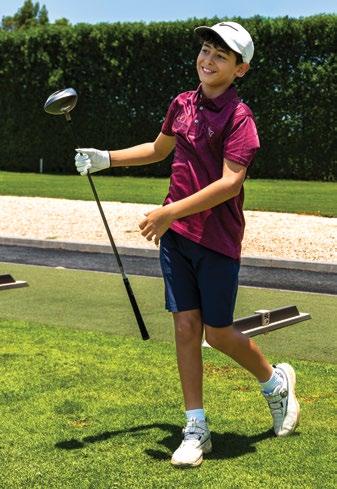
can display a small portion of that persistence in our careers, we’ll be fine.
As young golfers representing the next generation in the region, how do you hope golf continues to grow in the UAE over the coming years?
We hope golf in the UAE keeps becoming more accessible to young players: more junior programs, more entry-level tournaments, more visibility and more opportunities for kids to compete on a variety of courses. We’d especially love to see more girls picking up clubs and more families and siblings getting into the game together. The more juniors involved, the stronger the talent pool gets and that lifts everyone. We feel a real responsibility, as part of this generation, to help make that happen.
Years from now, when people look back at “The Swing Trio,” what would you want them to remember most about your story?
We’d want people to remember the Swing Trio as a golf family affair – three siblings who shared a passion for golf, trained hard together, grew up in this game learning its ups and downs, built a strong bond, had a lot of fun along the way and supported each other through every step of the journey. Three normal kids who juggled school, homework and golf and still went all the way. Or as Dalia likes to put it: “Damn, they knew they were going to be successful since 2022.” That’s the energy we’re carrying.














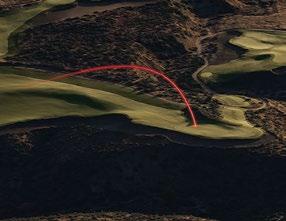




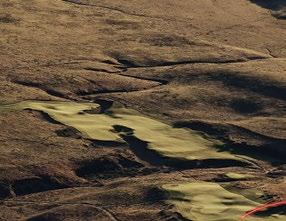
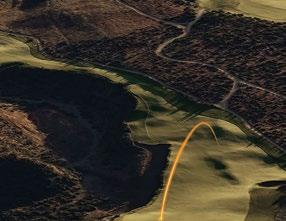






















MORE SPEED MORE CONTROL

























































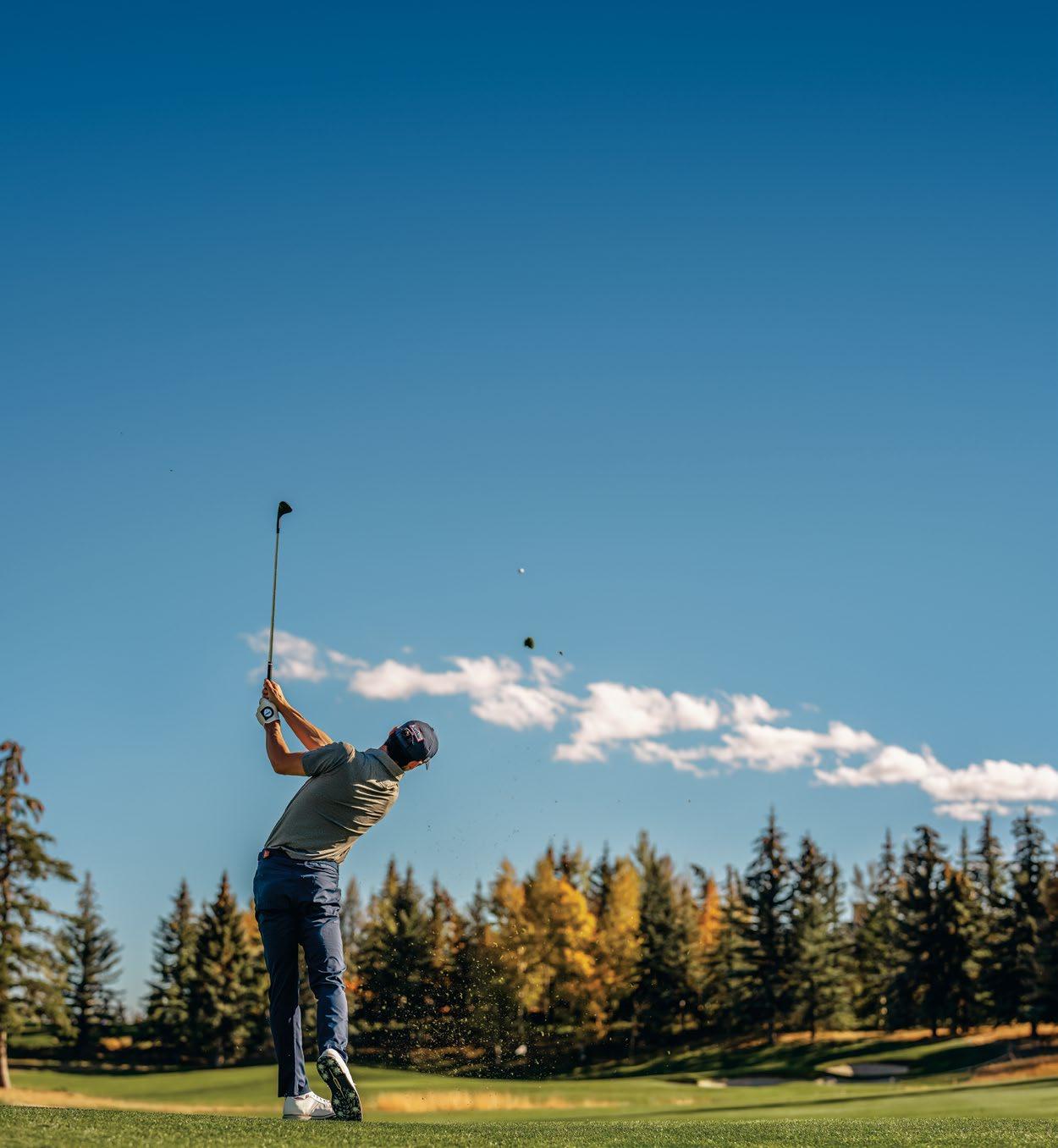









INTRODUCING ALL-NEW SM11 WEDGES





SM11 is designed to produce cleaner contact, controlled flight, and the right amount of spin, delivering the predictability and precision to pull off the exact shots you envision.