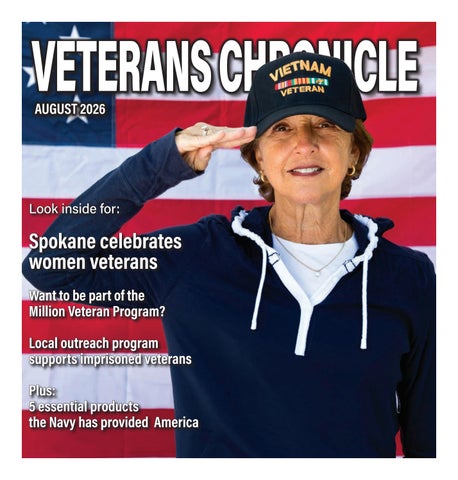
Local outreach program supports imprisoned veterans
Plus: 5 essential products the Navy has provided America
Radar Systems
Radar systems developed for wartime use began when the first operational radar was installed on USS New York in 1938.
Sonar
Developed to detect enemy submarines, it became a vital tool for naval reconnaissance and ocean-floor mapping.
Global Positioning System
Duct tape
Vesta Stout, mother of two Navy sailors, is credited for suggesting a type of fabric-backed tape she had been using, which would help with quick opening and closing of ammo boxes in World War Il.
The War Production Board soon contracted Johnson & Johnson to develop the multi-purpose fastener also known as “duck tape” for its ability to work when wet.
Microwave ovens
Navy veteran Perry Spencer invented the microwave using the applied math and science knowledge he attained while serving as a radio operator during World War I. He was an employee of Raytheon, which patented the device in 1945. The Navy later awarded Spencer the Distinguished Service Medal.
VETERANS CHRONICLE
A supplement to The Spokesman-Review August 9, 2026
VETERANS HELP NET
Don Walker
Bryan Bledsoe
MANAGING EDITOR
Joe Butler
GRAPHIC DESIGNER
Russ Rosenbalm
SENIOR MARKETING ADVISOR
Andrew Christensen
ADVERTISING SALES MANAGER
Jeanne Inman
To share a veteran story or information about resources for veterans, please contact info@ veteranshelpnet.com, call (509) 655 9266 or visit www. VeteransHelpNet.com
For advertising information, please contact advertising@ spokesman.com or (509) 4595095.
No portion of this magazine may be reproduced in whole or in part without written consent of the publisher.
VETERANS CHRONICLE
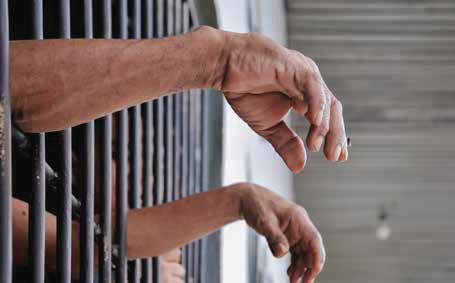
‘For God and Country’ Prison outreach program helps guide, support veterans
By Darrel Maddux Veterans HelpNet Correspondent
Incarcerated military veterans are entitled to VA benefits if they have been honorably discharged from the military and meet other VA requirements. They also need to be recognized for their service to their country.
I make these statements because a couple of years ago I was asked by the staff at Airway Heights Corrections Center to begin a personal outreach program that is sanctioned by the American Legion. They invited me to attend their veterans’ monthly meeting at the prison and to speak to the prisoners.
I asked the veterans how the American Legion could support them. That question started a lively discussion that impressed me and convinced me that I had stumbled onto something that was absent from these veterans. They were looking for answers
that were not easily obtained, since they were living in a prison. I also felt that they were missing some of the pomp and ceremonies that military members have experienced and enjoyed.
Thus, my new journey began, and it has been the most rewarding experience in my 31 years as a member of the American Legion. I meet in person with these veterans and I shake their hands when they
arrive for the monthly meeting and when they depart.
Some salute me and many veterans joke around with me. Last month I joked with one of the veterans and I asked him if he had been staying out of trouble. Veterans in a prison tend to police themselves and keep other veterans in line.
I’m not there to judge or to have any preconceived opinions of these veterans. I feel the same connection to these men as I do when I meet a veteran on the street or in an American Legion Post.
I open and close the meeting by leading the salute of the American flag, leading the reciting of the Pledge of Allegiance and I say the opening prayer. At the close of the meeting, I give the closing prayer and then
I lead the saluting of the American flag. These men deserve the recognition for their willingness to serve their country, they deserve their entitled VA benefits, and they deserve assistance when their time of incarceration ends. I have been able to connect these men with Veteran Service Officers who are helping them with VA claims, with Work Source employees who can help with employment challenges upon release and with other community professionals that can make their reentry into society as smooth as possible.
These men need to know that they have support systems available and that society does not want them re-offending and going back to prison. I am confident that my outreach has made a difference to many prisoners and that re-offending after incarceration will be reduced.
Correspondent Darrel Maddux is also the American Legion 8th District Commander.
VETERANS CHRONICLE
Share your story with VA’s largest research program
The Million Veteran Program (MVP), the Veterans Administration’s largest research program, started in 2011 with the goal of improving health for all Veterans. Since then, more than 1 million veterans have become part of this historic effort -- and you can, too.
When you join MVP, you are asked to give a blood sample, grant researchers secure access to your health records, and complete surveys about health, lifestyle, military experiences, and exposures. Your answers to these surveys (your story) can help improve health care for veterans who have a similar story.
When researchers use MVP’s data, some study a specific condition like tinnitus, depression, cancer, or exposure to a certain toxin. They need to study the data of enough people with that condition, alongside the data of enough people without it. That’s why MVP’s size matters.
Each time a veteran completes a survey, it’s as if another puzzle piece is added to our database and when 1 million veterans complete surveys, we get closer to finishing the puzzle.
Every veteran is invited to join MVP today at MVP.va.gov, or at a participating VA facility. If you are already part of MVP and haven’t yet completed all available surveys, log in to your personalized MVP Dashboard at MVP.va.gov using your VA sign-in.
You can complete surveys at your own pace, save your progress, and return later if needed.
Your story matters. By sharing it with MVP, you can help us study health conditions that matter to you and the people you served with.
The
GO ONLINE
VA.gov
The Department of Veterans Affairs website has resources on every topic relevant to veterans.
VA.gov/welcome-kit
The VA Welcome Guide covers all types of benefits and services available for veterans, new recruits, active service members and their families.
Explore.VA.gov/benefitsnavigator
Explore VA benefits and discover which ones you and your family may be eligible to receive.
IN PERSON
Spokane County Regional Veteran Service
1117 N. Evergreen Rd., Spokane Valley, WA (509) 477-3690
Apply for emergency services, or have any benefits or service questions answered by 5 Veteran Service Officers (VSO) and staff.
Kootenai County Veteran Services and Benefits Office
120 E. Railroad Ave., Post Falls, ID (208) 446-1092
Meet with a VSO or staff for help with VA benefits enrollment, claims or other veteran needs.
Goodwill Support Services for Veteran Families (SSVF)
130 E. Third Ave., Spokane, WA (509) 828-2449
SSVF helps homeless veterans and their families find housing and connects veterans with other support organizations.
Healthcare for Homeless Veterans (HCHV)
504 E. Second Ave., Spokane, WA (509) 435-2019
Provides healthcare and outreach for housing, job opportunities and counseling.
BY PHONE
Spokane County Regional Veteran Service (509) 477-3690
Kootenai County Veteran Services and Benefits Office
120 E. Railroad Ave., Post Falls, ID (208) 446-1092
Veteran Crisis Line
1 (800) 273-8255, press 1
North Idaho Crisis Center (208) 625-4884
Washington or Idaho 2-1-1
Dial “2-1-1” for health and human resources referrals.
VETERANS CHRONICLE Seen, heard, and included? Women veterans have varied experiences with Veteran Service Organizations
By Tzena M. Scarborough Veterans HelpNet Correspondent
Veteran Service Organizations (VSOs), including the American Legion, Veterans of Foreign Wars, Disabled American Veterans, and many local posts nationwide, have long been cornerstones of veteran life. They offer camaraderie, service opportunities, and a collective voice for those who have served. For many women veterans, however, participation in these organizations remains a mixed experience.
A Growing Population, an Outdated Image
Today, women make up more than 10 percent of the U.S. veteran population. Over three million women have served our country since the Revolutionary War, and more than two million women veterans are alive today.
Women have served in every branch, in every era, and in every role the military has to offer. Yet many VSOs still reflect an outdated image of who a “typical” veteran is an image that does not always include women. That disconnect is often felt the moment a woman veteran walks through the door.
First Impressions That Miss the Mark
Women veterans frequently report being mistaken for a spouse or guest rather than recognized as a fellow veteran. Some are questioned about their eligibility or asked to “prove” their service in ways their male counterparts rarely experience. Others report being directed toward auxiliary membership, despite being eligible for direct membership.
While these moments are often unintentional, they can create an immediate sense of exclusion in spaces meant to foster belonging, trust, and shared experience.
Membership Without a Voice
Even when women are welcomed as members, inclusion does not always extend beyond attendance. Leadership roles within many VSOs remain overwhelmingly male. Women who seek greater involvement or who raise concerns about equity, conduct, or organizational culture sometimes report being talked over, dismissed, or labeled as disruptive.
Several women veterans also note that meetings and social environments can feel unwelcoming when sexist language or dismissive behavior goes unaddressed.
When VSOs Get It Right
These experiences are not universal. Many women veterans have found VSOs that lead with respect and inclusion. Posts with diverse leadership, clear codes of conduct, and intentional outreach to women veterans often become stronger and more effective organizations.
Simple steps using inclusive language, publicly recognizing women’s service, and ensuring respectful meeting spaces can make a measurable difference in whether women veterans feel valued and heard.
Why Inclusion Matters
VSOs play a vital role in advocacy, community service, and veteran support. When women veterans disengage because they feel undervalued or unwelcome, organizations lose experienced leaders, dedicated volunteers, and perspectives shaped by modern military service. The broader veteran community loses as well.
Moving Forward Together
Women veterans are not asking for special treatment. They are asking for the same respect, trust, and sense of belonging afforded to any veteran. VSOs face a clear choice: remain rooted solely in tradition or
adapt to reflect on the veterans they serve today.
Listening to women veterans and acting on what they share will determine whether these organizations remain relevant, representative, and strong for generations to come.
This article was written by Tzena M. Scarborough, Army woman veteran (WAC) and American Legion member. She is a veteran advocate and organizer of the “Women Veterans in the Spokane Area” Facebook page, for all women veterans, active duty and reserve members. Tzena encourages all veterans to consider joining a VSO. Contact her at (509) 999-4939 or ladyveterans@comcast.net.
Editor’s note: for this article, author Tzena M. Scarborough asked ChatGPT “What are women veteran’s experiences with Veteran Service Organizations such as the American Legion, VFW, DAV, and others?”
VETERANS CHRONICLE
Women Veterans Day celebration honors service and connection
By Donna Marks and Tzena M. Scarborough Veterans HelpNet Correspondents
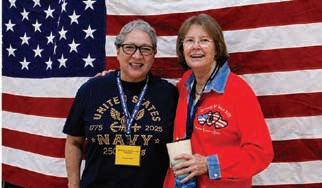
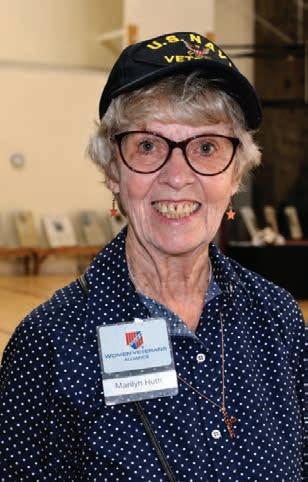
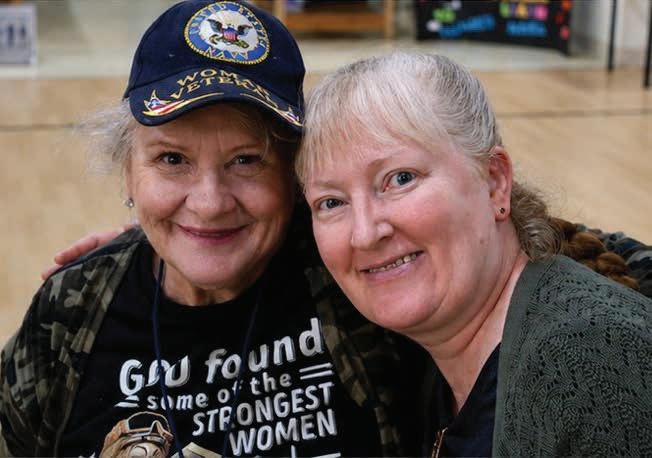
Women veterans from across the Spokane area gathered on June 13, 2026, to celebrate Women Veterans Day and commemorate the signing of the Women’s Armed Services Integration Act on June 12, 1948.
This landmark legislation granted women the legal right to serve as permanent members of the United States Armed Forces.
This year’s theme, “Women Who Served Our Country Are the Veterans You Didn’t See—Until Now,” reflected the experiences of many women veterans whose military service has often gone unrecognized.
The celebration featured a full program that included the reading of Gov. Bob Ferguson’s Women Veterans Day Proclamation, a presentation on the history of Women Veterans Day, guest speakers, and patriotic music. The event was held in the Girl Scouts of Eastern Washington and Northern Idaho gymnasium and attracted over 50 women veterans and supporters. Twenty-three vendor and resource tables provided information on veteran benefits, whole health programs, community services, and veteranfocused organizations. Attendees also enjoyed a 3D-printing demonstration, refreshments, and opportunities to connect with fellow women veterans.
Group photographs were taken of veterans from each military branch. The event concluded with a chair yoga session, door prize drawings, and the playing of Taps.
This fourth-annual celebration was founded by Army veteran Tzena M. Scarborough and is supported by a leadership team dedicated to creating opportunities for women veterans to connect, share resources, and build community throughout the year.
The next quarterly gathering will be a potluck luncheon and viewing of The Six Triple Eight movie on Sunday, Sept. 20, from 1-4 p.m. at Veterans Community Response, 1811 E. Holyoke Avenue, Unit 8, Spokane.
For more information, follow the Women Veterans in the Spokane Area Facebook page
ladyveterans@comcast.net.
VETERANS CHRONICLE
Hey veterans, did you know?...
did you know ?...
You may need a Compensation and Pension Exam for your claim?
When you file a claim with the VA you will likely be required to take a C&P exam (short for Compensation & Pension) Exam.
This is very important! Here’s why The VA hires third-party examiners, along with VA employed examiners to conduct these examinations.
The three main providers in our area are QTC Medical, VES (Veteran Evaluation Services) and VetFed Health Solutions. Remember, they may not clearly identify themselves as a VA contractor, or tell you they are calling in reference to a C&P exam. They may just simply say that they are calling about an exam they scheduled on your behalf. This confuses many veterans!
When you submit a disability claim to the VA, they will direct one of these contractor to contact you directly to schedule an examination
Note, it can take weeks or even months to get an appointment after submitting a disability claim.
Typically these examiners will make only two attempts to contact you by phone and maybe once by mail. It is imperative that you stop screening your calls and answer your phone when you are expecting this call. Some veterans assume these calls are scams – they are NOT!
If you ignore this contact request, it is likely to result in a claim denial or a lower disability percentage. However, if due to an unforeseen, justifiable circumstance, you are unable to attend your scheduled
exam, you can request the VA and/or contractor to have your exam rescheduled, if notified very promptly. But be aware this will cause a delay in your claim processing time.
If you get anything out of this article,“DON’T MISS YOUR EXAMS!”
Written by Thomas (Tom) Freeman, Veterans Services Officer, and Director, Kootenai County Veteran Services Office
did you know ?...
Veterans can become airline pilots for free?
Being a pilot is a challenging yet rewarding vocation. If you love the thrill of flight, travel and working as a team, it’s a great job to pursue.
did you know ?...
DIC (Dependent Indemnity Compensation) isn’t limited to primary cause of death?
Many surviving spouses and families believe a veteran’s serviceconnected disability must be listed as the immediate cause of death to qualify for Dependency and Indemnity Compensation (DIC). That’s not always true.
Resources available for veterans impacted by fires
The recent devastating fires in and around Spokane have affected our entire community, including many of our veterans.
This included the evacuation of the patients and staff from the MannGrandstaff VA Medical Center on Aug. 1 as flames approached.
As of press time, the facility was still closed but expected to open in midAugust.
Veterans seeking medical care can still access local VA community-based outpatient clinics which offer primary care and specialty health services such as mental health care, nutrition counseling, laboratory services, and more.
The Spokane Community Based Outpatient Clinic is 2509 East Mirabeau Parkway, Suite 100, Spokane Valley, (509) 434-7055
The Coeur d ‘Alene VA Clinic (CBOC) is at 915 W. Emma Avenue, (208) 665-1700.
Veterans and military families affected by fires can also utilize a Emergency Family Assistance Cetner set up at Fairchild AFB. The center at Red Morgan Center offers supplies and clothes to all veterans and military families, while supplies last.
Newby-Ginnings of North Idaho is also available to help veterans, active service, and Gold Star families in challenging circumstances, including providing supplies, referrals, and other resources. newbyginnings.org/
Other resources include:
• People wanting to support the overall Spokane community can make donations at my.spokanecity.org/donate
• The Innovia Foundation is collecting donations to aid area non-profits that are assisting fire victims. Learn more at innovia.org/wildfire-response.
• Second Harvest is accepting nonperishable food donations beginning at 1234 E Front Ave.
• Catholic Charities Eastern Washington is collecting donations for its disaster response teams at cceasternwa.org.
Read spokesman.com for current information about fires as well as assistance efforts.
continued did you know ?...
Under 38 C.F.R.3.312, VA considers both the principal cause of death and contributory causes of death.
Principal Cause of Death: A service-connected disability was the immediate or underlying cause of death or was directly related to the cause of death.
Contributory Cause of Death: A service-connected disability doesn’t have to be the primary cause. It may qualify if it contributed substantially or materially to the veteran’s death, combined with another condition to cause death, or aided or lent assistance in producing death. Simply sharing in
VETERANS CHRONICLE
producing death isn’t enough—it must have had a material influence.
Examples of contributory factors:
• Service-connected heart disease that contributed to a fatal heart attack
• PTSD contributing to substance abuse or suicide when supported by the evidence.
• Service-connected diabetes contributing to kidney failure or cardiovascular disease.
• Lung disease from toxic exposures that materially contributed to respiratory failure.
• Service-connected cancer that spread or weakened the veteran, contributing to death.
Even if the death certificate doesn’t list a service-connected condition, DIC may still be granted if medical evidence
shows the disability materially contributed to the veteran’s death. If you’re a surviving spouse or family member, don’t assume you’re ineligible based solely on the death certificate. Review the veteran’s service-connected conditions, medical records, and the cause of death carefully. Many deserving survivors miss out on benefits because they don’t realize VA also considers contributory causes of death.
did you know ?...
Each appeal path takes different amounts of time?
Most VA appeals take about 9-15 months to process, though more complex cases can stretch to 1824 months. The timeline mainly depends on the appeal lane chosen, the strength of the evidence, and whether a board hearing is required.
The VA appeals process can feel overwhelming and frustrating. With rules changing from Legacy to AMA and so much conflicting information out there, many veterans are left confused about what to expect. While some cases move faster, many veterans wait over a year for a decision.
Written by Lt. Commander Brian Boone, U.S. Navy, Retired
For more information on any of these topics see “How Can I Get Help?” on Page 5. Or contact Spokane County Veteran Regional Veteran Services office at (509) 477-3690 or Kootenai County Veteran Services and Benefits office at (208) 446-1090.
VETERANS CHRONICLE
Spokane veteran continues to reflect on Vietnam service
Pat Biggs featured in new book spotlighting military experiences
One year at Annapolis showed Pat Biggs a side of military life he didn’t like.
Referring to that experience as a “365 day boot camp without respite,” Biggs recounts what he calls sadistic treatment of some plebes by some well-known upper classmen. He recalls an instance where a classmate drew especially negative attention with his admission he did not recognize the name of Babe Ruth. After weeks of ridicule, sleep deprivation and physical harassment, that plebe leaped to his death from a tower on the campus.
Biggs nevertheless also has positive memories of the Naval Academy experience, such as a fleeting friendship with classmate Roger Staubach and the thrill of marching in formation before visitors.
“I did have the pleasure of feeling the esprit of marching to military music, to the drums, in spotless dress uniforms, synchronized, before the admiring eyes of visitors,” he said.
Deciding that a Navy career was a poor fit, he left Annapolis after one year, and in 1962 at age 18, he transferred to the University of Washington,
This was a period when the military draft was constantly on the mind of people his age. After a few months in the Navy Reserve, he joined the Army ROTC program, where he participated in a variety of required training events until 1970 that were all similar to the boot camp experience at Annapolis. These included ROTC Summer Camp,
Officer’s Basic, Army Signal School occurred.
Biggs does not look back with favor on those training camp experiences. He has come to view them as “just chuckholes to pass through.” He developed a “private contempt” for these relentlessly authoritarian environments that” inflated the highers and threatened the lowers.”
Explaining this attitude, he shares “With each boot camp, we had to repeat these search and capture, low crawl through a firing
range, run in place with a rifle held perpendicular to the body, locked in a footlocker pounded by baseball bats, pull ups before meals, herded into bleachers at midnight in freezing weather to be instructed on how to kill another human with piano wire; heat, humidity, dust, all the standardissue man stuff.”
He reviews these times and the many chuckholes he was required to pass through, remembers many who never experienced any chuckholes thrown in front of
them, and notes that those chuckholes were encountered along a way that he sees as imposed, hardly chosen. He believes the years of passing through these repetitive events encouraged a childhood tendency to split off, to withdraw emotionally from highly charged situations, and to roleplay what was required to meet social expectations.
He believes his Vietnam era service, from 1962 to 1971, and the consequences of that service have been a primary factor in a series of tragic events in the years that followed. He is discouraged about the prospect that the world will ever be free of “fat old men ordering the prime of youth and opportunity off to some ridiculous and destructive venture, only to walk away to a higher office, great wealth and the claim to fame -provided all the cover-ups pass the test of time.”
Exemptions had prolonged the actual commencement of his active duty until June 1970, though he was initially commissioned second lieutenant in the summer of 1966. By the time he reported to Vietnam in June 1970, following graduation from law school, he was classified as a first lieutenant with nine years of longevity, though his active duty experience was limited to a few months, He also left his wife and two daughters, aged two and six weeks.
His impression of Vietnam: “I was mostly dazzled by my first experience in a foreign country outside of Canada, thousands of miles and worlds away from home, and saw all those small people, the beautiful women dressed in multicolored sarongs, straw hats, sort of like a wild rush of Disneyland.
VETERANS CHRONICLE
Long Binh (Ft. Benning East) was a huge, dusty, tent-and-metal Army base that seemed to go for miles and miles, home to 35,000.”
Though he had hoped to be assigned to a JAG unit, he found himself assigned as the Adjutant co the 39th Signal Battalion, in charge of administration. Seeking legal experience, he acquired the designation of Certified Defense Counsel. This credential eventually led to re-assignment to Nha Trang in Region II and eventually ro Tuy Hoa as a defense counsel. There, he participated as a JAG trial lawyer in over 60 courts-martial proceedings in dozens of places involving travel over much of the central and southern regions of South Vietnam. He reports he “lost the vast majority of the judge trials but won the five jury trials.”
Unlike combat veterans, Biggs was not in the presence of hostile fire though it could often be heard in the distance.
His experiences of war come from being armed, flying thousands of miles over hostile territory in helicopters, and the stories told to him by clients returning from combat.
Today, Biggs rattles off Vietnamese locations like a child reciting a vocabulary lesson: Saigon, Ton San Nhut, Vung Tau, Cam Rahn Bay, Pleiku, Dalat, Phu Cat, Phang Rang, Ban Me Thuot, Can Tho, places he describes as “stops.” He recalls a long helicopter flight from Saigon to Rach Gia, passing over the entire Delta, which he describes as “hundreds of miles of rice patties, pock-marked with bomb craters every few hundred feet, the entire way.”
Though he did not participate in
combat, he lives with the scars he believes he acquired from the entire Vietnam era (‘64 to ‘75) experience and what followed from it, a much longer time than the 12 months he spent serving in Vietnam.
“I didn’t serve in a war,” he says with some stress in his voice, “I participated in the Vietnam Conflict by being there for 12 months, then spent 35 years figuring out thar that service was a great stigma and, if I never mentioned it to anyone, no one would ask about it.”
He sees history repeating itself and sees this as confirmation of the admonition of Heraclitus (535 B.C.) - “Eyes and ears are poor witnesses when the soul is barbarous.”
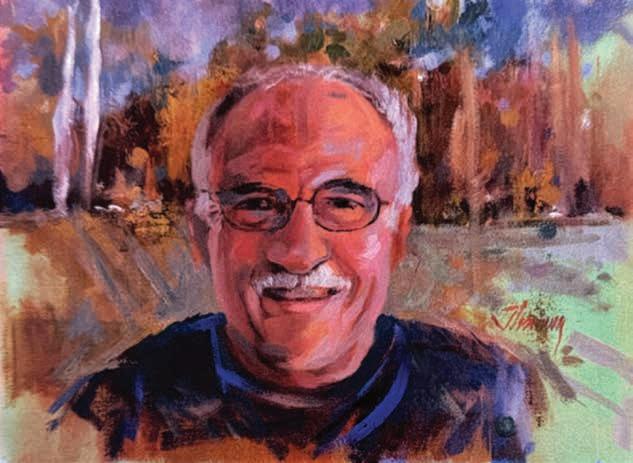
The story and portrait of Pat Biggs are included in the book “VETS”
50 portraits of Veterans and their Stories.” The portraits are all created by John Thamm. This story was compiled by Kathleen Thamm. Most of the veterans have local roots or connections, and each story and portrait make up an uplifting and emotional tribute to these and all veterans. They are sorted by wars and conflicts and fill 150 pages of the book. John lives in Spokane with his wife Kathy. He is a famous courtroom artist and there have been numerous specials and shows featuring his work.
You can find this book and more info about John Thamm at https://jthamm.com. Kathy Thamm can be reached at pinklloyd2@msn.com Portraits and stories printed with their permission.
cont. Pat Biggs
VETERANS CHRONICLE
Importance of the ‘intent to file’ paperwork
Defining this starts the claim process
Your intent to file sets a potential start date (or effective date) for your benefits. If you notify the VA of your intent to file and they approve your claim, you may be able to get retroactive payments.
Retroactive payments are payments for the time between when the VA processed your intent to file and when it actually approved your claim.
You can notify the VA of your intent to file if you plan to file a claim or a Supplemental Claim for these types of benefits:
• Disability compensation
• Pension benefits
• Dependency and Indemnity Compensation (DIC)
After you file your completed claim, your intent to file will no longer be active. This means the VA won’t use that intent to file to determine the effective date for any other claims. But you can still add conditions that you want us to consider while they decide your claim. You can have only one active intent to file at a time.
Do I have to submit a separate intent to file for each benefit type?
How do I notify VA of my intent to file?
You can submit an intent to file form online right now at www.va.gov/ supporting-forms-for-claims/intentto-file-form-21-0966/introduction.
You can also call the VA at 800-8271000 (TTY: 711) to notify them of your intent to file. The VA is here Monday through Friday, 8 a.m. to 9 p.m. ET or notify the VA in person or by mail. If you want to submit by mail, download and fill out an Intent to File a Claim for Compensation and/or Pension, or Survivors Pension and/or DIC (VA Form 21-0966). Then mail your completed form to the address listed in the PDF.
The form can be found at www.va.gov/forms/21-0966/
If you need help submitting your intent to file, work with an accredited attorney, claims agent, or Veterans Service Organization (VSO) representative.
How long do I have to file my claim after I notify VA of my intent? After you notify the VA of your intent to file, you have 1 year to complete and file your claim.
Yes. If you submitted an intent to file for 1 type of claim (like disability compensation), and you plan to file a claim for another benefit type (like pension benefits), you must submit a new intent to file for the second benefit type.
Example: You submit an intent to file for disability compensation on April 2. You then file a claim for disability compensation on July 15. This claim would have an effective date of April 2 for any benefits awarded to you.
You submit a second intent to file for pension benefits on September 1. You then file a claim for pension benefits on November 30. This claim would have an effective date of September 1 for any benefits awarded to you (the date of your first intent to file isn’t relevant to this second claim).
For more information on any of these topics see “How Can I Get Help?” on Page 5. Or contact Spokane County Veteran Regional Veteran Services office at (509) 477-3690 or Kootenai County Veteran Services and Benefits office at (208) 446-1090.