Advertising Supplement to The Spokesman−Review an S−R Media Company • spokesman.com • Wednesday, September 30, 2015
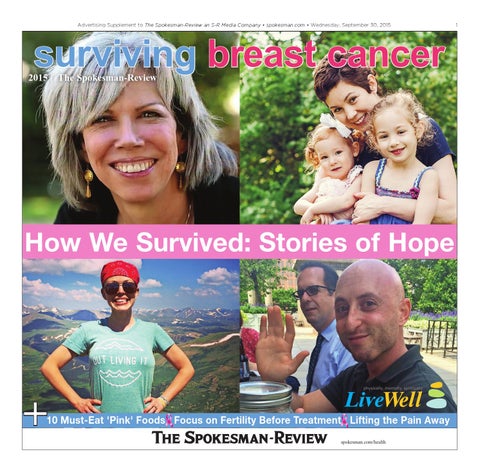
surviving breast cancer
2015 | The Spokesman-Review
How We Survived: Stories of Hope
+
physically, mentally, spiritually
LiveWell
10 Must-Eat 'Pink' Foods Focus on Fertility Before Treatment Lifting the Pain Away spokesman.com/health
1
2
Advertising Supplement to The Spokesman−Review an S−R Media Company • spokesman.com • Wednesday, September 30, 2015
DRESS UP YOUR WINDOWS FOR THE
FREE
HOLIDAYS & REDUCE YOUR HEAT BILL WITH THE MOST ENERGY EFFICIENT BLINDS ON THE MARKET
TOP DOWN/ BOTTOM UP OPTION While supplies last.
FREE
INSTALLATION 1st 10 callers
200 OFF
$
Purchase P Pu rcha of blinds. Call store for details. ls.
Offer expires 11/30/2015
FREE
ON SITE ESTIMATE E
Best Prices, Highest Quality, Professional Installation GUARANTEED
“Call today for a free consultation and on-the-spot bid. You’ll receive the lowest price and we’re always on time.”
Spokane
509-892-5463 Coeur d’Alene 208-664-5858 Cont. #DZLINI*901RB Offer expires 11/30/2015
Locally owned and operated for 16 years strong.
We beat store ads that claim A+ Rating 50%-70% off!
Advertising Supplement to The Spokesman−Review an S−R Media Company • spokesman.com • Wednesday, September 30, 2015
10
Everyday, Life Changing Tips to Reduce Breast Cancer Risk
BY LISA IANNUCCI CTW FEATURES
A
ll women are at a risk for breast cancer and, the older you get, the more that risk increases. How much a person can reduce her own risk depends on the factors at play. “There are risk factors for breast cancer that we can’t control, including your age and gender,” says Deb Kirkland, RN and patient navigator at The Hoffberger Breast Center at Mercy Medical Center in Baltimore, Maryland. “But there some simple changes you can make that will bring that risk down.” Here are 10 simple changes you can make in your everyday life starting right now that could reduce your breast cancer risk:
1. FACTOR IT ALL IN “Every woman should take the Gail Model assessment test (www.cancer.gov/bcrisktool), which measures your risk for breast cancer,” says Dr. Pedro Serrano-Ojeda, chief radiation oncologist and owner of Caribbean Radiation Oncology Center, Doral, Florida. “You will be asked eight questions and get your level of cancer risk. However, it doesn’t take into account obesity, which has surpassed the use of tobacco as a risk.” 2. GET MOVING Get off the couch and exercise, whether it’s a brisk walk around the block, a treadmill workout at the gym or a session of skating at the local roller rink. “Exercising three to five hours a week helps to decrease your risk of breast cancer by 40 percent, and if you’ve already had breast cancer it reduces your risk of reoccurrence by 60 percent,” says Dr. Ruth Lerman, a Beaumont Health internist
specializing in breast health and disease and mindbody medicine in Michigan. According to the National Cancer Institute, there have been more than 60 studies about the connection between exercise and reducing the risk of breast cancer. While the benefits have been proven, how much risk it reduces varies in each study (from 20 to 80 percent). 3. DROP THE POUNDS “Overweight women have a decreased rate of breast cancer, but after menopause, getting to a normal weight actually decreases your risk of postmenopausal breast cancer,” Lerman says. 4. CHILL OUT According to the Foundation for Women’s Cancer, when your body is stressed, it makes stress hormones and these hormones bind with cancer
cells. “Stress does a lot of damage to your body and it predisposes you to cancer,” Kirkland says. One study, published in the Journal of Clinical Investigation in 2003, found that a master gene called ATF3, which helps cells adapt to stress, also could help cancer spread to other parts of the body. Find something that helps you to relax when life gets too stressful. Try meditation, walking or music.
5. DON’T WINE TOO MUCH “Avoid high alcohol intake,” Dr. Serrano-Ojeda says. “There was a study published in the British Journal of Cancer in 2002 of 58,000 women with breast cancer and 95,000 women without. They didn’t pinpoint how alcohol increased the risk of cancer, but it showed that less alcohol was better.”
3
4
Advertising Supplement to The Spokesman−Review an S−R Media Company • spokesman.com • Wednesday, September 30, 2015
everyone ate a healthy diet, nearly one-third of all cancers would be eliminated.” 7. HALT THE HORMONES Serrano-Ojeda says to forget about taking hormones. “Research has shown that taking hormones such as estrogen and progesterone has caused an increased risk of breast cancer,” he explains.
6. EAT BETTER “Eat a diet that’s low in fat, high in fiber and rich in fruits and vegetables,” says Dr. Deena Graham, an oncologist at John Theurer Cancer Center at Hackensack University Medical Center, New Jersey. “I believe in eating in moderation, not in fad diets. Eat a chocolate chip cookie if you want it. It’s not going to cause breast cancer, but just make sure that you are eating enough vegetables that cover the color of the rainbow.” When you’re choosing what foods to eat, Kirkland says to focus on a plant-based diet. “You want to know where your food is coming from,” she says. “The American Cancer Society says that if
8. UP YOUR D INTAKE The Vitamin D Council says that women who have breast cancer often have a low level of Vitamin D. “Get your Vitamin D level checked,” Lerman says. “Women with a higher level of Vitamin D are less likely to develop breast cancer, but not everyone should take the supplement.” Talk to your doctor about getting tested and if taking a Vitamin D supplement is right for you. 9. FEEL AROUND “Every month you should be performing a breast self-exam in the shower to see if you feel something different,” Serrano-Ojeda says. If you’re over the age of 40, you should also schedule an annual mammogram. “While there is a lot of controversy, most healthcare providers believe that a mammography detects early breast cancer,” Graham says. “It’s not perfect, but it’s a good screening tool for someone of average risk. There is some discomfort with mammograms but there are some changes being make it a more comfortable experience.
Cause
Worley, Idaho | 1 800 523-2464 | CDACASINO.COM :LQQLQJùLVùMXVWùWKHùEHJLQQLQJ
FOR A
October 19th, 2015
Shotgun start • 11 am $80 per person / teams of four ($30 per person donated to Susan G Komen Foundation)
10. WASH IT OUT Wash that cancer right out of your hair? Well, not exactly, but Serrano-Ojeda says that shampoos that contain parabens such as sulfate could possibly increase your risk for breast cancer. Parabens are a group of compounds widely used as antimicrobial preservatives in food, pharmaceutical and cosmetics products, including deodorant. They are absorbed through the skin and the gastrointestinal tract. According to the Federal Drug Administration, a study published in 2004 detected parabens in breast tumors, but the study left several questions unanswered. Simple changes will not eliminate your risk for breast cancer, but it could give you a fighting chance. For more information on breast cancer, visit Susan G Komen Foundation at www.komen.org or the National Breast Cancer Foundation at www.nationalbreastcancer.org © CTW FEATURES
Advertising Supplement to The Spokesman−Review an S−R Media Company • spokesman.com • Wednesday, September 30, 2015
Eat Pink! 10 Foods for Breast Cancer W Recovery
BY BEV BENNETT CTW FEATURES
hat you eat could play an important part in your personal fight against breast cancer. Consuming nutrient-packed foods, maintaining a normal weight, getting exercise and avoiding both smoking and heavy alcohol consumption can help reduce your risk of developing
breast cancer. These same steps may increase your potential for surviving it, according to Alice Bender, registered dietitian nutritionist, associate director of nutrition programs, American Institute for Cancer Research (AICR), Washington, D.C. Here are 10 foods Bender and other cancer-nutrition specialists recommend:
5
Advertising Supplement to The Spokesman−Review an S−R Media Company • spokesman.com • Wednesday, September 30, 2015
5.TheSoy same 2014 study on breast cancer survivorship looked at soy consumption. The evidence suggests an inverse relationship between consuming foods that contain soy and all-cause mortality. Bender describes the link as “limited, suggested evidence” and suggests consuming soy in moderation, such as a half-cup of tofu. If soy is one of those foods you’ve been told to avoid if you’ve had breast cancer, talk to your healthcare provider.
6. Tomatoes Postmenopausal women who consume more
1.“There’s Berries lots of research on berries and other colorful fruit,” Bender says. In animal studies a six-month diet of black raspberries were shown to reduce breast tumor volume in rats by 70 percent. Although the protective potential for humans is still being studied, berries, which are high in antioxidants, can be a beneficial addition to your diet.
tomatoes are at lower risk for breast cancer, according to a study conducted by Adana A.M. Llanos, Ph.D., assistant professor at the Rutgers School of Public Health and the Cancer Institute of New Jersey. Tomatoes are rich in lycopene, which encourages the body to produce higher levels of adiponectin, a protein involved in the regulation of blood sugar and fat metabolism. A one-cup serving of tomato juice or a combination of a bowl of tomato soup, a half-cup tomato-based pasta sauce and a tablespoon of ketchup during the day yields a beneficial amount of lycopene, according to Llanos, who conducted her research as a fellow at the Ohio
2. Dark Leafy Greens Kale, spinach, romaine lettuce, Swiss chard and mustard greens are excellent sources of dietary fiber and folate. These robust vegetables also contain carotenoids. Some laboratory research finds that carotenoids can inhibit the growth of certain types of breast cancer cells, according to the AICR.
3.Choose Fishfish that is high in omega-3 fatty acids, says Lori Magoulas, Ph.D., registered dietitian, Rutgers Cancer Institute of New Jersey, New Brunswick. Some, though not all, studies show that women who consume more omega-3 rich fish, such as salmon, have a reduced risk of breast cancer compared with those who eat little fish. In addition, salmon is high in vitamin D, which is being researched for its breast cancer fighting potential.
4. Legumes: There’s an inverse association between the consumption of fiber-containing foods and all-cause mortality, according to a 2014 report on breast cancer survivorship produced by the World Cancer Research Fund International/American Institute for Cancer Research Continuous Update Project Report. Dried beans are an excellent source of dietary fiber, as well as folate, a vitamin that helps repair damaged cells.
A T T O R N E Y S
6
Paine Hamblen proudly supports Breast Cancer Awareness & the ongoing fight to find a cure. Paine Hamblen is a full-service law firm. Our commitment to excellence and to the community is second to none.
SPOKANE | TRI-CITIES PAINEHAMBLEN.COM ~ 888.455.6222
State University Comprehensive Cancer Center. The study also showed greater benefits for women who had a healthy weight, writes Llanos in an email interview.
7.“Definitely Vegetables With Color getting fruits and vegetables is important to prevent breast cancer and important in recovery,” Magoulas says. “Think of the week: have you eaten anything purple, orange or green? Embrace color,” Magoulas says.
8.“Walnuts Walnuts are one of the most studied nuts in terms of cancer,” Bender says. Walnuts contain omega-3 fatty acids and antioxidants that may reduce the risk of breast cancer.
9.Dehydration Watermay increase your risk of developing breast cancer by inhibiting the removal of carcinogens in the body’s cells, according to an older study published in the Journal of Clinical Oncology. Water is a calorie-free way to stay well hydrated.
10. Whole Grains Like legumes, whole grains are a good source of dietary fiber. Different grains contain specific anticancer compounds, so eat a variety. © CTW FEATURES
Advertising Supplement to The Spokesman−Review an S−R Media Company • spokesman.com • Wednesday, September 30, 2015
Eating During Chemo For some women chemotherapy may trigger nausea, mouth sores and lack of appetite. If you’re going through debilitating side effects eating may be the last thing on your mind. And if you’re overweight, you may think your aversion to food is an opportunity to lose weight. Block those thoughts for now. “I hear all the time that women are pleased they’re losing weight during treatment. It’s not a good mindset,” says Lori Magoulas, Ph.D., registered dietitian, Rutgers Cancer Institute of New Jersey, New Brunswick. Although it’s not uncommon to lose 10 percent of your body weight during this
period your goal should be to stay as well nourished as possible. “You want [to eat] things that build muscle. Your muscle mass allows you to do the things you want to do,” says Mary-Eve Brown, registered dietitian, clinical dietitian specialist, The Johns Hopkins Hospital Kimmel Cancer Center, Baltimore, Maryland. That’s why muscle-building protein, should be high on your list. Brown recommends yogurt, fish, lentils and beans that do double-duty delivering protein, vitamins and minerals. If you’re fatigued, liquids may be easier to consume than solids. Try bean soups, fruit smoothies or shakes and vegetable juice. “You get the nourishment of these foods
7
yogurt, fish, lentils, beans
without chewing,” Brown says. Your breast cancer treatment could put you at risk for osteoporosis, according to Brown. Make sure your diet includes calcium-rich foods, such as dairy. Hydration during treatment is critical, Brown says. “If you’re dry during treatment every thing worse. Nausea is worse. Constipation is worse. Don’t get dehydrated,” she says. If you don’t experience the normal thirst triggers, make a plan for drinking more. You should be getting 1 to 1-1/2 ounces of liquid for every kilogram of body weight (divide your weight by 2.2 to get kilograms) daily, Brown says. And if you’re unsure of how to get the nutrients you need, talk to a dietitian specializing in diets for cancer recovery. Once you’re in recovery and have the go-ahead from your healthcare team, you can plan a healthful weight-loss diet if appropriate. “We know weight gain increases the risk of breast cancer recurrence,” Magoulas says. © CTW FEATURES
8
Advertising Supplement to The Spokesman−Review an S−R Media Company • spokesman.com • Wednesday, September 30, 2015
SURVIVE, EXERCISE, THRIVE
BY DANA CARMAN CTW FEATURES
E
rin Chrusciel has had three different types of cancer, including breast cancer. She spent 10 years in and out of doctors’ offices, enduring numerous tests, surgeries and treatments that left her feeling broken. She wanted to get everything back in shape –her mind, body and spirit. At her therapist’s recommendation, she sought out ROW, which stands for Recovery on Water, “a rowing team that gives survivors of breast cancer the unique opportunity to interact, become active in their recovery, and gain support from fellow survivors.” The Chicago-based program has played a hugely
important role for Chrusciel, 50, of Evanston, Illinois. “It is allowing me to move. I feel invigorated. I am going outside. I see people. I’m rowing again. That was such a gift to me,” she says. Whether it’s rowing or another activity, exercise is imperative for women undergoing breast cancer treatments or in recovery. Studies show that exercise, even after diagnosis, is associated with prolonged survival and improved quality of life. In a 2012 systematic review, the Fred Hutchinson Cancer Research Center and National Cancer Institute found that 27 out of 45 observational studies showed consistent evidence that “physical activity is associated with reduced all-cause, breast cancer-
specific and colon cancer-specific mortality.” Additionally, a 2011 analysis of published studies regarding physical activity and survival after breast cancer showed that the mortality rate for women who were very active dropped 34 percent when compared to women who weren’t. According to the American Cancer Society, there is increasing evidence that not only is exercise beneficial during treatment and in recovery but that it can reduce the risk of getting breast cancer. (See sidebar.) While the evidence is clear, the reality is murky. A recent study conducted at the University of North Carolina at Chapel Hill found that 65 percent of the breast cancer survivors followed were not meeting
Advertising Supplement to The Spokesman−Review an S−R Media Company • spokesman.com • Wednesday, September 30, 2015
U.S. DEPARTMENT OF HEALTH AND HUMAN SERVICES RECOMMENDS AT LEAST
150 MINUTES OF MODERATE
ACTIVITY OR 75
MINUTES
OF VIGOROUS PHYSICAL ACTIVITY
PER WEEK
the U.S. Department of Health and Human Services recommendations of at least 150 minutes of moderate activity or 75 minutes of vigorous physical activity per week. African American women participants reported lower activity levels prior to diagnosis and lower drops in activity after, which is particularly problematic as African American women have higher breast cancer mortality rates. Barriers to exercise are not insignificant for breast cancer patients. Treatment eats up a lot of time and can cause significant fatigue and pain. Depression can accompany diagnosis and treatment. Some women must continue working during treatment to afford the healthcare costs and provide for their families. This is especially true for African American women. Additionally, exercise, even in its cheapest forms, is still not free – shoes cost money as do gyms or programs. Education also plays a role. While
more doctors are recommending exercise, there are still some that emphasize “taking it easy” during treatment and recovery. Another reason breast cancer patients may not be exercising is due to a possible increased risk of lymphedema, which is swelling, usually in an arm, following axillary dissection (removal of lymph nodes) or radiation. Dr. Cesar Santa-Maria, an oncologist specializing in breast cancer with Northwestern Medicine in Chicago, says that generally exercise is recommended during breast cancer treatment and recovery and encourages his patients to do so. He acknowledges lymphedema is a consideration and recommends patients speak with their oncology teams to assess that risk and take the proper precautions, which may include holding off on limb exercises for about the first four to six weeks after axillary surgery or
radiation. However, Dr. Santa-Maria points out that a majority of patients do not develop lymphedema and in the event of it, there are ways to manage it, including exercise. The message is still clear, says Dr. Santa-Maria, “I think the role of exercise is very important for breast cancer recovery.” Studies and statistics on exercise’s role in recovery are just one part of the whole picture. It wasn’t the mortality rates that sent Chrusciel back to the sport she once loved in college – it was the need to take back her body and mind from the diseases that were robbing her of her spirit. “Being active reminded me that I am a vital person,” she says. “You remember that as long as you are on this Earth and doing something, you are a valuable member of society and I had sort of lost that sense of myself – that I was of any value to anybody. Rowing gave me back that sense of value.”
Join Andre-Romberg in support of
Breast Cancer Awareness Month! We will contribute $.50 to Susan G. Komen for each NEW “Like” up to 1000 likes and $1.00 for each REVIEW up to 250 during the month of October.
Join us on Facebook: facebook.com/AndreRombergInsurance
509-624-3291 www.andre-romberg.com
9
10
Advertising Supplement to The Spokesman−Review an S−R Media Company • spokesman.com • Wednesday, September 30, 2015
1.25 to 2.5 hrs./wk. of brisk walking reduced a woman’s risk by 18%
In 2015, we provided $362,310 in funding to support local organizations helping Breast Cancer patients and their families. With
$
3 million of grants awarded locally we have: .
. Support Susan G. Komen of Eastern Washington
REGISTER
NOW!
Presented by: Spokane Tribe of Indians
Comedy show to help find a cure. Doors open at 5 p.m. Thursday, October 15, The Lincoln Center, Spokane
Register online at http://komeneasternwashington.org/
Jenn Gibbons, founder of ROW, notes something very important about the women she works with on the water: These women may share the common thread of breast cancer but that is secondary to the fact that they are athletes, every single one of them. This is an important designation because, “you see these women having gone through this experience of not being able to trust their bodies to becoming powerful through this nontraditional and challenging sport,” Gibbons says. “It’s so inspiring.” There is mounting evidence that not only is exercise a key component of recovery from breast cancer but it can reduce breast cancer risk. According to the American Cancer Society, which recommends exercise preand post-diagnosis, some studies have shown that as little as 1.25 to 2.5 hours a week of brisk walking reduced a woman’s risk by 18 percent. Walking 10 hours a week reduced it even more. Other studies have indicated the
reduction of risk is much higher, in the range of 30 to 40 percent when compared to women who are not active. Dr. Santa-Maria says there is evidence that exercise can lessen the risk. He notes that physical activity goes hand in hand with good nutrition and that by eating a balanced diet, high in fruits and vegetables and low in processed foods and bad fats, along with physical activity, a person lessens her obesity risk, which has been associated with breast cancer occurrence. Committing to a healthier lifestyle can not only cut the risk of breast cancer but many other diseases and conditions as well, though it’s easier said than done, which is why baby steps are OK. Sit down and make a diet and exercise plan. The goal is to have a lifetime to keep it up. It’s worth it – it’s lifesaving in every way. © CTW FEATURES
Advertising Supplement to The Spokesman−Review an S−R Media Company • spokesman.com • Wednesday, September 30, 2015
BY RACHEL GRAF CTW FEATURES
First Comes Cancer, S Then Comes Baby
A new study shows that breast cancer patients can conceive healthy children following treatment
urviving breast cancer and having children do not have to be mutually exclusive. Although breast cancer treatments like chemotherapy often do negatively affect a woman’s ability to have children, there are ways to preserve a woman’s fertility should she want to have children after treatment. “It’s not a question of if [posttreatment women] are going to have damage, but if they can afford to have damage from these treatments,” said Dr. Kutluk Oktay, medical director and founder at Innovation Institute for Fertility Preservation and In Vitro Fertilization, New York City. “So, it all depends on the patient’s desire – whether they want to have a large family and what their age is and all that.” For younger women who have undergone breast cancer treatments and do want to grow their family, a study titled, “Fertility Preservation Success Subsequent to Concurrent Aromatase Inhibitor Treatment and Ovarian Stimulation in Women With Breast Cancer” published by the Journal of Clinical Oncology has some encouraging findings. The study concluded that women who froze their embryos with eggs extracted before breast cancer treatment were likely to successfully have children after treatment. The study included 131 women younger than 45 who had been diagnosed with stage I to stage III breast cancer. Of these women, 33 transferred a frozen embryo into either their bodies or a surrogate’s body after breast cancer treatment. These 33 women underwent 40 embryo transfer attempts that resulted in 18 pregnancies. None of the pregnancies had birth defects. This birth rate is very similar to
11
12
Advertising Supplement to The Spokesman−Review an S−R Media Company • spokesman.com • Wednesday, September 30, 2015
33underwent women 40 embryo transfer attempts that resulted in
18 pregnancies
Your Partner in Healthy Living
Downtown Spokane 105 West 8th, Suite 6060 509.838.4211
Mark T. Schemmel, M.D. Kelley M. Mathia, M.D William S. Stovall, M.D. Jason M. Reuter, M.D. Dominique Grant, M.D. Amery D. Baker, PA-C
Spokane Valley 12509 East Mission 509.928.2866
www.spokaneobgyn.com
the birth rate of infertile women of the same age who have undergone in vitro fertilization but who had not been diagnosed with breast cancer, according to the study. Breast cancer patients in particular are well suited for this method of fertility preservation because many breast cancer treatments cause women to undergo menopause 10 years earlier than normal. Also, women are born with a set number of eggs, and they naturally will lose some throughout the course of treatment. This paired with early onset menopause can make natural conception after treatment especially difficult for these women, says Dr. Oktay, who was one of the study’s authors.
“A combination of chemotherapy and waiting doesn’t work very well,” Dr. Oktay says. No major risks beyond those associated with in vitro fertilization have been associated with this procedure, Dr. Oktay says. For fertility preservation to be useful, however, women should not be older than 45, as fertility ends around age 45. The women in the study were an average age of 41.5 when the transfers were completed. “Any female who is healthy enough and younger than 45 and is going to receive a treatment that can affect their fertility should be considered for a treatment that will preserve their fertility,” Dr. Oktay says. © CTW FEATURES
Advertising Supplement to The Spokesman−Review an S−R Media Company • spokesman.com • Wednesday, September 30, 2015
FROM THE MOUTHS OF SURVIVORS: WRITE YOUR OWN STORY Writing about cancer helped these 4 people keep their families informed, but more importantly it helped put the journey into perspective
13
14
Advertising Supplement to The Spokesman Review an S R Media Company • spokesman.com • Wednesday, September 30, 2015
Advertising Supplement to The Spokesman Review an S R Media Company • spokesman.com • Wednesday, September 30, 2015
15
16
Advertising Supplement to The Spokesman−Review an S−R Media Company • spokesman.com • Wednesday, September 30, 2015
ANN SILBERMAN, 57, SACRAMENTO, CALIFORNIA BLOG: BREAST CANCER? BUT DOCTOR … I HATE PINK! The blog name came to me right when I was diagnosed. I was picturing the breast cancer community as all these perky women who run races and wear pink. It’s hard for ‘metsters’ (women with metastatic breast cancer, or cancer that has spread) to find online support. I’ve heard stories of women being kicked out of support groups because their story is just too scary. For early stage women, the greatest fear is relapse, whereas our cancer has already come back. The most common question people ask is, ‘How can you manage to live when you know you’re going to die?’ I’d learned I had end-stage cancer, and I had accepted it. I only wanted to make it to my youngest son’s graduation, which I did. But then a new drug (Perjeta) came out and put me in remission. In my wildest dreams I didn’t think I’d BY DAWN KLINGENSMITH CTW FEATURES
A
s cancer patients are often told, “There’s no right way to do cancer.” But increasing numbers of patients and survivors have something in common besides the Big C. For them, a big part of “doing cancer” is blogging about their experiences. It often starts as a means of keeping family and friends informed, but becomes a way to assist and inspire others facing similar health challenges.
^^HEATHER LAGEMANN, 33, ALTON, ILLINOIS BLOG: INVASIVE DUCT TALES One reason I started writing the blog is because everything you read about cancer on the Internet is so heavy. It helped me keep things in perspective, to tell the funny stories that happened in the middle of this incredibly
emotional, overwhelming experience. I wanted to have a real conversation. I wrote that it’s OK to be scared, sad, angry, confused and generally not so sunny, that you need to feel these things in order to move through this. But the anger I’m feeling took me off guard. Throughout treatment I was honest and open, and now that treatment is over, I think I’m a little bit angry that all of this happened. I thought I would go on to live my best life. I thought I would just feel grateful, not angry and depressed. This is new for me. I’m moving on with my normal life. I’m working again and I have my daughters. Right now I’m a little bit tired of thinking about cancer. For a while I wasn’t sure what that meant for the blog. But maybe writing is just what I need to put these feelings behind me.
still be here. I’m making plans again. I’m planning a vacation. I’m thinking about buying a car. I’m shopping for dresses for my son’s wedding next year. I know in my mind that I could get sick again but I’m not going to live that way. Now that I’m better, I feel like I’ve missed all these years and I’m trying to figure out what to do. Some things, like travel, are very hard on me. The blog has been helpful because it gives me something meaningful to do.
KATIE CAMPBELL, 32, WASHINGTON, D.C.>> BLOG: KATIE CRUSHES CANCER I started blogging I think, literally, the day after I was diagnosed. I thought it was a good communication tool, a good way to keep people updated. It was also cathartic. It was this open space where I could say whatever I wanted. It’s also been a space where I can talk to others going through something similar, along
Advertising Supplement to The Spokesman−Review an S−R Media Company • spokesman.com • Wednesday, September 30, 2015
with offline and Facebook support groups. I’ve told them news before I’ve told my family because with family and friends, you feel you have to protect them in some way. As much as blogging has helped, I’ve only recently come to terms with living in this sea of uncertainty. For a while it was horrifying – like living in a nightmare. I was young, married and expecting to have my whole life ahead of me, and instead I was told the cancer had spread and I had a year to live. Now, the cancer is in remission, I’ve had a number of good scans, so I’ve been able to plan for the future instead of saying my goodbyes. I’ve been rock climbing, diving with sharks, whitewater kayaking, I climbed a 14,000-foot mountain in Colorado, all to prove to myself that my body still works, that even though part
of me is broken in a way, I’m still a whole person. As I shared on my blog, I had the realization that if I’m going to live, I have to keep on living, and if I’m going to die, that’s all the more reason to get out there and start living. My advice to others is that your cancer journey is yours alone and you have to find your own way. For me, it helps to be open and put it all out there, but some people turn inward and want to be private.
BENJAMIN, 31, ARLINGTON, VIRGINIA >> BLOG: CANCER SLAYER BLOG I created this delusion, and it took shape very quickly, that I was literally superhuman. Cancer didn’t affect me, didn’t bring me down like it did other people. I was 16
and so strong in treatment that one man gave me a Superman shirt and boxers. Later, I had to have my entire hipbone removed, and the whole time I kept asking my surgeon when I’d be able to play tackle football again. I just knew I could because I was Superman. My mind couldn’t accept that I’d never run or jump again. I eventually realized I was being unrealistic, but during the second cancer, I still lived by certain rules. I would never complain. I would never bring up cancer. But then I got this powerful urge to write a book (“Twice: How I Became a Cancer-Slaying Superman Before I turned 21,” Woodley Books) and later learned that I’d better talk about it if I wanted to sell books. So I started blogging. But there’s more to it than that. Looking back, that superhero mindset did well for me while I was battling illness,but along with it came this idea that I was superior. It was unethical. I didn’t keep up with the other kids I met in treatment. Now, I want to help kids. I have a new book coming out, another version of my story that younger people can read. It turns out that talking about cancer, bending that rule I had, has been one of the most rewarding things in my life. © CTW FEATURES
17
Join J Jo oin n Our u Cir Circle le e Giving Giv ng g Circles* C s* Cocktail oc Reception ption Benefi B nefiting ti Women Helping Wo W Women en Fu Fund un nd
Imagine I m magin aggine agin nnee the tthhe h Possibilities P Poss ib littitieses November N mb be 5, 5 2015 2015 Riverside ve ers rside Place ce
1110 W. W Riverside Rive v e Avenue. Avenue.
5:00pm-7:00pm 00 0pmpm m 0 00pm D nati n: $20 Donation: $200 $2 0m minimum; in nimum ($150 50 for f first st time tim members) mbers) Women Women n Helpin He Helping ping Wom Wo Women Fund un nd is a n non-profi profit organization orga rganiza rga atio o dedicated de ted d to o empowering empow g w women wo omen en a and nd children dren to o create cr cre te healthy ealt althy families an and d vibrant co communities. munities es Sponsor: nso
Please RSVP Plea SVP Pb by 10/9 9a att 509 5 509.328.8285 .8285 5 or o whwf@qwestoffi wh whw @qwes offfice.net e.ne *Formerly me Pioneer Pione Circ C Circle
WH F WHWFspokane.org
18
Advertising Supplement to The Spokesman−Review an S−R Media Company • spokesman.com • Wednesday, September 30, 2015
UP
Many survivors suffer from swelling and pain during and following treatment. Lifting weights could provide some much needed relief
Weight Lifting Relief
Advertising Supplement to The Spokesman−Review an S−R Media Company • spokesman.com • Wednesday, September 30, 2015
BY RACHEL GRAF CTW FEATURES
F
or many breast cancer patients, the road to recovery is far from over even after successful treatments. These treatments often have unpleasant side effects including muscle and joint pain and fatigue that hinder survivors’ physical ability to complete everyday tasks, according to a May 2015 study titled, “Weight Lifting and Physical Function Among Survivors of Breast Cancer: A Post Hoc Analysis of a Randomized Controlled Trial.”
training program. The researchers encouraged women to lift weights for their upper body as well as lower body, says Justin Brown, Center for Clinical Epidemiology and Biostatistics, Perelman School of Medicine, University of Pennsylvania, Philadelphia, and co-author of the study. He says that lower body strength is important for getting out of chairs and going up and down stairs, and upper body strength is important for carrying groceries and lifting heavier items off the floor. Breast cancer survivors should not overexert
fill out a questionnaire about the level of difficulty they had in completing 10 tasks thought to be critical in being active in a community, such as walking a quarter of a mile. Because there isn’t a surefire way of predicting which breast cancer patients will experience accelerated losses of physical function, Brown recommends that all patients partake in a weight lifting program. “We don’t have understanding as to who are the people who are most susceptible to lose their function,” Brown says. “The argument I would make is that
"The argument I would make is that everyone would likely benefit from doing exercise and doing weightlifting." - Dr. Richard Sadovsky, associate professor of family medicine, SUNY-Downstate Medical Center
Lodging & Support The study’s researchers looked into this decline in physical function, and concluded that weight lifting can help alleviate the negative side effects of treatment. Focusing specifically on women at risk for or with lymphedema, which is postsurgery swelling of a particular body part, the researchers studied the effects of gradual weight lifting on these women. Nearly 300 women participated in the study. Some women did not exercise for a year whereas the other women completed a year of weight lifting exercises, 13 weeks of which included a supervised
themselves when exercising, however, and should start with lighter weights. “The mantra that our group follows is start low and progress slow,” Brown says. “And the idea is that if you give your body time to acclimate to the exercise and don’t do things too aggressively, you minimize risk of becoming injured and maximize health benefits.” Indeed, about twice as many women who didn’t exercise lost some physical function (16.3 percent) compared to those who did exercise (8.1 percent). To determine which women lost physical function, the researchers asked them all to
everyone would likely benefit from doing exercise and doing weight lifting.” Although this study focused specifically on weight lifting exercises, the researchers are trying to pursue a future study about how aerobic exercise would compare to weight lifting exercise for physical function in breast cancer patients, as a lot of people are more inclined to do aerobic activities. They hope to answer the question of whether exercise in general or a specific type of activity will result in the most benefits. © CTW FEATURES
For Cancer Patients & Caregivers Coming to Spokane For Treatment
Bringing A Message of Hope, Healing and a Safe Haven to Those Touched By Cancer
House ’s e y a F
Melody Biehl 509-939-9672 btih@becausethereishope.org www.becausethereishope.org www.facebook.com/becausethereishopespokane
19
20
Advertising Supplement to The Spokesman−Review an S−R Media Company • spokesman.com • Wednesday, September 30, 2015
Whole-Body HEALING
Complementary therapies, such as acupuncture or massage, are moving into the mainstream as emerging research and anecdotal evidence suggests that the road to recovery isn’t always paved with traditional medicine alone BY DANA CARMAN CTW FEATURES
O
ne of the most frequent questions Dr. Cesar SantaMaria, an oncologist with Chicago’s Northwestern Medicine, gets from breast cancer patients is, “What else can I be doing to improve my outcome?” As the holistic approach to healing has become more mainstream overall, increasing numbers of providers are offering and suggesting complementary therapies to assist breast cancer patients during treatment. Not to be confused with alternative medicine, which takes the place of traditional medicine, “these complementary therapies are designed to help strengthen the patient’s immune system and to help the patient manage the side effects of the conventional cancer treatment,” says Shana Deneen, a naturopathic oncology provider with Cancer Treatment Centers of America (CTCA) in Tulsa, Oklahoma. Taken together with traditional treatment, there is growing evidence as well as anecdotal evidence that complementary therapies can improve outcomes and quality of life. “I think if there is a one-size-fits-all complementary therapy, it is exercise,” says Tim Pearman, Ph.D., director of supportive oncology for the Robert H.
Lurie Comprehensive Cancer Center in Chicago. “Physical activity helps to boost immunity, reduce inflammation, reverse insulin resistance, build strong bones and support healthy digestion,” Deneen says. Its vast benefits support whole body health, which is the basis of complementary treatments. Other treatments may include acupuncture, massage therapy, nutritional guidance and support, hydrotherapy, yoga, prayer, music or art therapy and counseling. Not all therapies are created equal, however, and even providers that specialize in natural healing caution that self-prescribing therapies is not best. There are nontraditional treatments that may seem fine in theory, but may interact or counteract the effects of the necessary traditional treatments a patient is receiving. For example, Deneen points out studies suggest that curcumin, a supplement used to combat inflammation, can interfere with Adriamycin, a common chemotherapy for breast cancer. “It’s essential to have a deep level of understanding of natural therapies in order to make safe and appropriate recommendations for patients undergoing cancer treatments,” Deneen says. While years ago complementary therapies were seen as a more fringe
option, they’ve moved into the mainstream in the last decade, Pearman says. Some of that is attributable to more studies being funded on these therapies, while the larger portion is that patients are seeking it out more often. “The breast cancer patients that I see are interested in natural therapies to help reduce their side effects during treatment and to help prevent breast cancer recurrence,” Deneen says. Beyond assisting in their own recovery, Pearman notes that utilizing complementary therapies gives breast cancer patients a hand in their own treatment plan, alleviating some of the feelings of powerlessness that come with the diagnosis. Additionally, more patients are realizing that eradicating cancer requires whole body support. Nutritional guidance is of particular importance here as Deneen notes that the treatments for cancer as well as the cancer itself can affect a patient’s appetite, digestion, and absorption, causing fatigue, weakness and possibly stalling treatments as patients have a tougher time recovering from cycle to cycle. Additionally, Pearman points out that while it may seem that treatments cause significant weight loss, in the case of breast cancer treatments, weight gain can be a common side effect. Several reasons may account for this, primarily lessened physical activity
combined with hormonal changes that prevent weight loss. Working closely with nutrition experts that specialize in breast cancer can help manage and prevent complications that may accompany treatment. The mind-body connection should also not be ignored when discussing complementary therapies. Counseling, support groups, meditation, and yoga are just a few ways that patients can center the brain in support of healing. “High levels of stress can negatively impact the immune system,” Deneen says. Stress reduction is essential during treatment and recovery. Many cancer centers now offer these integrative services and cancer-research organizations, including the American Cancer Society, provide information on their web sites, including how to find providers, illustrating the usefulness of these therapies as well as their place in mainstream medicine. In addition to combatting the effects of breast cancer and its treatment, the simple act of researching, seeking out and utilizing complementary therapies can give patients a psychological boost. There is great value in a patient’s sense of empowerment, which may be the most complementary therapy of all. © CTW FEATURES
Advertising Supplement to The Spokesman−Review an S−R Media Company • spokesman.com • Wednesday, September 30, 2015
21
Cancer Care NW, Komen help arrange genetic screening
Certain genes can bring higher risks for cancer
cancer. Genetic testing has become more affordable in recent years, and Jolie’s very public experience increased its popularity among women with family histories of cancer. The test can be done with a simple cheek swab or blood sample. Dr. Joni Nichols, Medical Oncologist/ Hematologist at Cancer Care Northwest, compiled a Q&A for the local chapter of the Susan G. Komen Foundation to help patients understand the role of genetic testing in the fight against breast cancer. The entire document can be found at the Susan G. Komen Eastern Washington site, komeneasternwashington.org/ In it, Nichols explains who should consider genetic testing, and the risks and benefits. Genetic mutations most commonly carry down through family lines with a 50 Dr. Joni Nichols, Cancer Care Northwest percent chance of passing on to children BY ERIKA PRINS and siblings—though they can also appear without MARKETING CORRESPONDENT family history. Chances are, multiple members of a patient’s family will share the mutation. ngelina Jolie made headlines two years “Genetic testing is most helpful in families with a ago when, despite not having a cancer high incidence of cancer,” Nichols writes. diagnosis, she underwent a double For reliable results on whether a family carries the mastectomy. The actress and director lost her mother, gene, the person who has cancer should be the one aunt and grandmother to cancer and carries a genetic tested, says Dr. Stephanie Moline, Surgical Oncologist mutation that predisposes her to breast and ovarian and Breast Surgery Specialist at Cancer Care Northwest. cancer. “If a woman has breast cancer at 40, and is now 60, In her self-authored New York Times piece and has a daughter, the daughter is not the one to be explaining her decision, she says doctors estimated her tested, but the mother,” Moline says. breast cancer risk at 87 percent. After her mastectomy, If a mutation is found in the person with cancer, her breast cancer risk is below 5 percent. other family members should discuss genetic testing “Cancer is still a word that strikes fear into people’s with their doctor as well. Since genetic testing will hearts, producing a deep sense of powerlessness,” Jolie likely impact family members of the patient, families writes in the piece. “But today it is possible to find out through a blood test whether you are highly susceptible should discuss the potential emotional impact of the results prior to the procedure. to breast and ovarian cancer, and then take action.” “Genetic counseling and testing should be done in For her, action meant a mastectomy and breast concert with a discussion of how to use the reconstruction, a decision she made with the help of information,” she says. A BRCA mutation carries such a her doctors and family. high breast cancer risk—in line with Jolie’s at 86 Patients with a mutation in the BRCA 1 or BRCA 2 percent—and the cancer is often aggressive with early genes are at higher risk for breast cancer and ovarian
A
onset, making it harder to find in dense premenopausal breast tissue. Moline gauges a patient’s readiness for genetic testing by what she is willing to do with the results. “It is essential to think about all the possible outcomes before pursuing testing, as it is not the right thing for everyone,” Nichols writes. Not all genetic mutations are associated with increased cancer risks, and genetic mutations only cause a small percentage of cancer cases. “It is important to remember that a mutation identifies a person who may be at increased risk, but the absence of a mutation does not mean a woman will not get breast cancer or another kind of cancer,” Nichols writes. “Her risk may be that of the average population, or it may be greater, depending on the other factors.” Genetic testing only provides a partial picture of a patient’s cancer risk and regular screenings remain important even if a patient’s genetic tests come back clean. “Being female and having breasts is the risk factor, with age increasing the risk,” Moline says. “Meaning, the longer you have breasts, the slightly higher the risk is with time.” Other factors, like early onset menses and late onset menopause, can also increase risk.
Angelina Jolie’s preventative mastectomy represents an extreme case—a patient at lower risk may be advised to simply increase screenings. “Certain mutations may be associated with higher risk than others,” says Nichols. “Prophylactic procedures, such as what Angelina Jolie went through, may be appropriate for some individuals and not for others.” Jolie chose to have her ovaries removed preventatively as well—The BRCA1 mutation increased her risk of ovarian cancer to 50 percent, so she had planned to have the operation eventually. After a cancer scare at 39, she decided it was time. In her vulnerable op-ed piece in the New York Times chronicling her experience. Jolie is clear that her decision was hers alone, made with the help of her doctors, and not representative of the only path for patients with increased cancer risk. “I did not do this solely because I carry the BRCA1 gene mutation, and I want other women to hear this. A positive BRCA test does not mean a leap to surgery,” she writes. “There is more than one way to deal with any health issue. The most important thing is to learn about the options and choose what is right for you personally.” For more information about options contact http://komeneasternwashington.org/ or www.cancercarenorthwest.com/
Sprinkler System
WINTERIZATION SPECIAL Landscaping • Sprinklers • Paver Patios • Retaining Walls
$
47
99*
for up to 12 Zones SAVE $12.00 Off the regular price
Honest, Dependable & Friendly Service!
509.482.0303
www.CandCYardCare.com WA CONT # CCYARC1000D H
Since 1985
*New Clients Only. Expires October 31, 2015
22
Advertising Supplement to The Spokesman−Review an S−R Media Company • spokesman.com • Wednesday, September 30, 2015
D
mammography now available an important advance in breast cancer detection
On June 1, Inland Imaging introduced its newest weapon in the fight against breast cancer: breast tomosynthesis, also referred to as 3D mammography, which represents a significant breakthrough in imaging technology. Approved by the FDA 2011, breast tomosynthesis puts a powerful tool in the hands of Inland’s specialty trained breast imaging physicians and technologists. A screening and diagnostic tool designed for early breast cancer detection, 3D mammography is done in conjunction with a traditional 2D digital mammogram. “The tomosynthesis exam is very similar to a traditional digital mammogram,” according to Lesley Dykman, breast imaging manager with Inland Imaging, “the equipment looks and feels similar, so for women who are DISCOVERY SHOP accustomed to Bring in receiving an annual this ad screening exam, and receive there’s really very little difference in the experience. In fact, many of our patients have told us they were pleased that the exam was both quicker and more comfortable than they expected.” of Clothing, While standard 2D Accessories, mammography is a Shoes & Purses. highly advanced 805 W. Garland technology, the flat,
40% OFF 1 ITEM
509.328.9373
two-dimensional image it captures can make it difficult for radiologists to detect abnormalities through dense or overlapping tissues. 3D mammography produces a three dimensional picture of the breast that a radiologist can view in 1-millimeter slices — like turning through the pages of a book — making it possible to visualize breast tissue at a
The breast is stabilized then the machine’s imaging arm swings in an arc over the breast capturing multiple image “slices” in a single pass. Everyone who is a candidate for 2D mammography is also a candidate for tomosynthesis. Patients with dense breast tissue may benefit most, but every woman’s breast
level of depth and detail never before possible. The additional 3D images allow radiologists to provide a more comprehensive evaluation of a patient’s breast tissue during screening and in many cases reduces the need for additional follow-up imaging. 3D images are obtained in much the same way as those from a traditional mammogram.
health is better evaluated with 3D mammography. Radiation exposure is well below the limits set by the Food and Drug Administration and followed by the American College of Radiology. A significant research study reported in the Journal of the American Medical Association in 2014 found that tomosynthesis reveals
Advertising Supplement to The Spokesman−Review an S−R Media Company • spokesman.com • Wednesday, September 30, 2015
THE STUDY’S
FINDINGS INCLUDED:
41 % 29 % 40 % 15 %
in the detection of invasive breast cancers
in the detection of all breast cancers
in false positives
in women recalled for additional imaging
significantly more invasive, early stage cancers than a traditional 2D mammogram. Invasive cancers are more aggressive and are more likely to spread quickly or cause death. 3D mammography also reduces the number of women called back for additional imaging, which not only reduces patient anxiety but also helps to lower health care costs. Currently, 3D mammography is available in the Spokane area exclusively at Inland Imaging. “We’ve made a big investment in this technology that we believe is going to pay off in our ability to detect more early stage breast cancers. That means women will have more options to begin treatment sooner, when it’s most effective,” said Kathleen Wilson, Inland Imaging COO. “We currently have a eight 3D units up and running and expect the ninth to go
online at our South Cowley Center later this year.” Many insurance plans, including Medicare and Medicaid along with a growing number of private insurance providers including Premera Blue Cross cover breast tomosynthesis. Consult your insurance plan for coverage details.
23
24
Advertising Supplement to The Spokesman−Review an S−R Media Company • spokesman.com • Wednesday, September 30, 2015
Inland Northwest outreach programs provide SUPPORT, HEALING, HELP
BY RENÉE SANDE MARKETING CORRESPONDENT
I
f you’re 40 or older, you should be getting a mammogram breast cancer screening exam every year. However, if you think you’ll have to go
without just because you live in a rural area where services are not offered or you can’t afford medical insurance to cover the cost of a mammogram or treatment, think again. There are several outreach programs in the area that
Providence Mammography Coach It can’t get much easier than this. The Providence
potentially life-saving screening available to women they
technology right to your neighborhood or work site with
employ.
fast, friendly and personable care. Women who use the Coach come from various social and economic backgrounds. “Often women come to us after not having a mammogram for a decade,� explains Michelle Kozeluh, mammogram technician who has been working aboard the Coach since 2007. “Some are uninsured, and may qualify for a free mammogram made available through grants from The
and support you need.
Providence Health Care Foundation of Eastern
! ! ! " # $
9-5 Mon-Fri ~ By Appt Evening & Saturday
507 S. Sherman St (509) 363-0100 www.essentialwomanboutique.com
business, per the business’ request, to make this
Mammography Coach brings the mammogram
are ready and willing to provide you with the technology
A special place for women with cancer Specializing in Mastectomy Needs
Washington supporters. Other times, the Coach visits a
Some patients may be worried that the Coach’s equipment isn’t the same as something you’d find in an imaging facility or clinic. “Be assured it’s the same digital equipment used in our offices,� said Kozeluh. If after your exam you need additional pictures or testing, their office can assist you in finding programs to help with the cost of further screening. For further information or to schedule your exam call (509) 474-2400 or 877-474.2400
Advertising Supplement to The Spokesman−Review an S−R Media Company • spokesman.com • Wednesday, September 30, 2015
Providence Breast Cancer Outreach Program (BCOP) BCOP at Providence Cancer Center provides women and their families with support services free of charge, including: Personalized, confidential contact with trained volunteers with personal breast cancer experience Comfort pillows for use after surgery Access to Giving Closets that provide free wigs, hats, scarves, post-surgery camisoles, bras and prostheses Information about breast cancer & post-treatment options Tips for coping with cancer and treatment side effects Resource packets Help finding cancer support groups and services For more info: (509) 474-5490 Oncology Nurse Navigator These certified oncology nurses are angels in disguise. If you live in a rural area and are afraid you won’t be able to get the best care and technology available, Nurse Navigators can provide you with a personalized individual treatment and recovery plan to make the complicated more understandable, the overwhelming more manageable, and the overall experience more patient-centered. “We look for the extraneous needs of the patient, and work together with the doctors to ensure they’re getting their questions answered and the treatment they need,” said Beryl Anderson, a nurse navigator with Providence for 15 years. Talk to your provider to find out how you can be connected with a Nurse Navigator or call Providence at (509) 474-5490 Spokane Regional Health District SRHD provides eligible women and men with free breast cancer screenings, education, and access to treatment in nine Eastern Washington counties, including: Adams, Asotin, Ferry, Garfield, Lincoln, Pend Oreille, Spokane, Stevens and Whitman. You most likely are eligible if you are: 40-64 years of age 35-39 years of age with breast symptoms Have limited income Uninsured or underinsured A Washington resident Examinations are provided by contracted providers throughout Eastern Washington. Call today to see if you are eligible: (509) 324-1553 or toll free 888-461-8876 Susan G. Komen Foundation If you are under 35 years of old and have possible breast cancer symptoms, you may be eligible for assistance through Susan G. Komen funds. Contact your health care provider for availability of these services or call Spokane Regional Health District: (509) 324-1553. LiveStrong at the Y Livestrong at the Y is a free 12-week program for cancer survivors who are interested in improving their quality of life following completion of treatment. Classes are held at the Central YMCA, just north of Riverfront Park, with new classes being offered soon at Cancer Care Northwest. Certified instructors and personal trainers, who have undergone specialized training in the elements of cancer, rehabilitative exercise and supportive cancer care, lead survivors on a journey of self renewal and healthy body-mind balance.
25
In addition, the YMCA hosts a Community Resource Fair in the spring, offering free classes, such as yoga, Tai Chi, spiritual wellness and nutritional counseling. For more info: livestrong@ymcaspokane.org or call (509) 777-9622 Cancer Care Northwest Cancer Care Northwest, a member of InnerPacific Alliance, provides follow-up care and limited chemotherapy at seven outreach facilities in the Inland Northwest: Chewelah, Colville, Moses Lake, Ritzville, Davenport, Newport & Grand Coulee. When it comes to your care plan, finances are the last thing you want to worry about. Even before treatment begins, a CCNW patient advocate can meet one-onone with you to: Discuss your health care coverage Help you better understand treatment expenses Guide you through complicated insurance processes and paperwork Develop a payment plan, if necessary Let you know you’re not alone in this fight For more info: (509) 228-1000 or www.cancercarenorthwest.com.
Survivor Celebrate With A
HAPPY A HOUR SPECIALS MONDAY-FRIDAY 3-6
Chips and Salsa........... $2.50 2 Ground Beef Tacos..... $4.25 Nachos ............. $8.25/$11.95
5 Layer Dip ................... $5.95 Chicken Quesadilla ...... $5.25 Steamer Clams............. $9.95
ARACELIA’S
MEXICAN RESTAURANT
7905 E Trent Ave, Spokane Valley, WA
509.924.4304
26
Advertising Supplement to The Spokesman−Review an S−R Media Company • spokesman.com • Wednesday, September 30, 2015
Cancer-Related Events Taking Place In Our Community This Fall Oct. 1:
YWCA of Spokane Women of Achievement Impact Luncheon, Spokane Convention Center. Be inspired by the words of “Wild” author Cheryl Strayed at this annual gathering, and also recognize local women for their accomplishments. Proceeds benefit YWCA programs. http://www.ywcaspokane. org/site/c.duIXJdNTKkL4G/b.8681531/k.3F6C/Women_of_Achievement_ Luncheon.htm
Oct. 4: Oct. 9:
money and awareness at this annual fitness event that includes participation from Zumba studios around the region.
Oct. 10:
Team Hope Walk and 5K, Riverfront Park, Spokane. Join in this scenic
Oct. 15:
Party in Pink Zumbathon, Northern Quest Casino and Resort. Raise
Beyond Pink, Spokane Convention Center. The 6th annual designer bra fashion show and auction is one of the area’s favorite and most elegant fundraisers. It includes a live and silent auction, appetizers, no-host bar, VIP after party for donors, and more fun. Proceeds raise money and awareness for cancer efforts. www.beyondpink.net or (509) 863-7776 journey that also raises money for the Huntington’s Disease Society of America. This year’s theme is super heroes and super villains. hdsa.donordrive.com/index. cfm?fuseaction=donorDrive.event&eventID=640
Laugh for the Cure, Lincoln Center, Spokane. Enjoy a night of PG-themed laughs from two crazy comics plus appetizers, raffle, auction and a wine pull. Proceeds help the Susan G. Komen Eastern Washington Affiliate help women afford cancer treatment. easternwashington.info-komen.org/site/ Calendar?id=19053&view=Detail
For more information or to submit your free listing, please visit www.spokesman.com/health
Advertising Supplement to The Spokesman−Review an S−R Media Company • spokesman.com • Wednesday, September 30, 2015
In the battle against breast cancer, early detection is a woman’s most powerful weapon.
In fact, according to the National Cancer Institute, when breast cancer is detected in an early, localized stage, the ďŹ ve-year survival rate is 98 percent. That’s why it is so important for all women to make breast health awareness a regular part of their healthcare routine. As we recognize Breast Cancer Awareness Month, we remember the women who have lost their lives to the disease, and we voice our support for those in the ďŹ ght of their lives. physically, mentally, spiritually
LiveWell
spokesman.com/health
MY CARE MY WAY IS 1! %)' / + %')n
October is Breast Cancer Awareness Month. Schedule your breast exam today.
Spokane : 123 E. Indiana Ave. Spokane, WA 99207 Spokane Valley : 12104 E. Main Ave. Spokane Valley, WA 99206
PPGWNI.ORG 1-800-230-PLAN
27
28
Advertising Supplement to The Spokesman−Review an S−R Media Company • spokesman.com • Wednesday, September 30, 2015