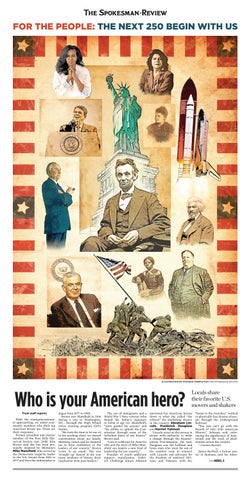
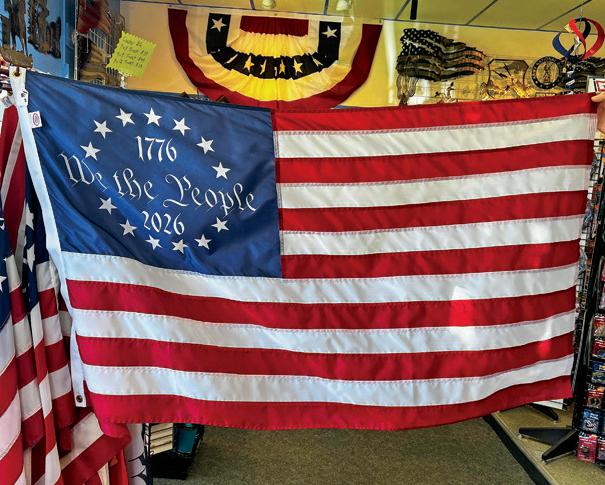
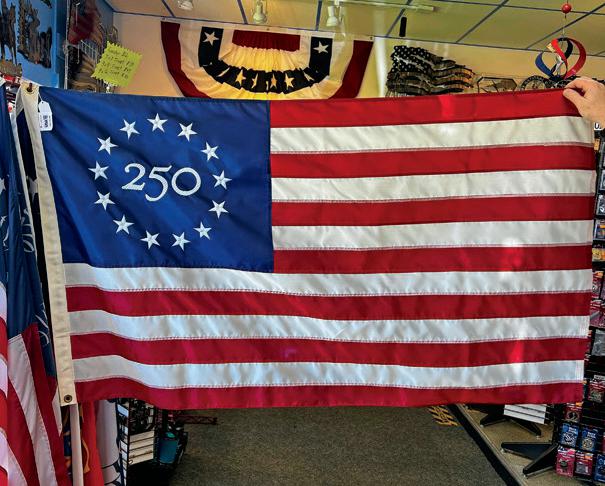
With the semiquincentennial approaching, we asked community members who their top American heroes are. These are their responses: Former president and charter member of the Post Falls Historical Society (est. 1988) Kim Brown said she has been personally inspired by Montana’s Mike Mansfield, who served as the Democratic majority leader in the U.S. Senate from 1961 to 1977 and then the ambassador to
Japan from 1977 to 1988. Brown met Mansfield in 1966 during a trip to Washington, D.C., through the High School civics training program Girl’s Nation.
“He took the time to let me sit in his working chair, we shared conversation about my family, Montana values and he inspired me to have confidence in the leaders of our country,” Brown wrote in an email. “He was ‘straight up’ honest in the way many students of history draw inspiration from past leaders.”
The son of immigrants and a World War I Navy veteran (who forged his father’s signature to enlist at age 14), Mansfield’s “story guided his actions” and “his ability to uphold the Constitution through some of the turbulent times of our history” Brown said.
“Lots to celebrate for America 250, and the story of Mike Mansfield can inspire a new kind of leadership for our country.”
Founder of youth addiction support organization Gabriel’s Challenge Kitara Johnson
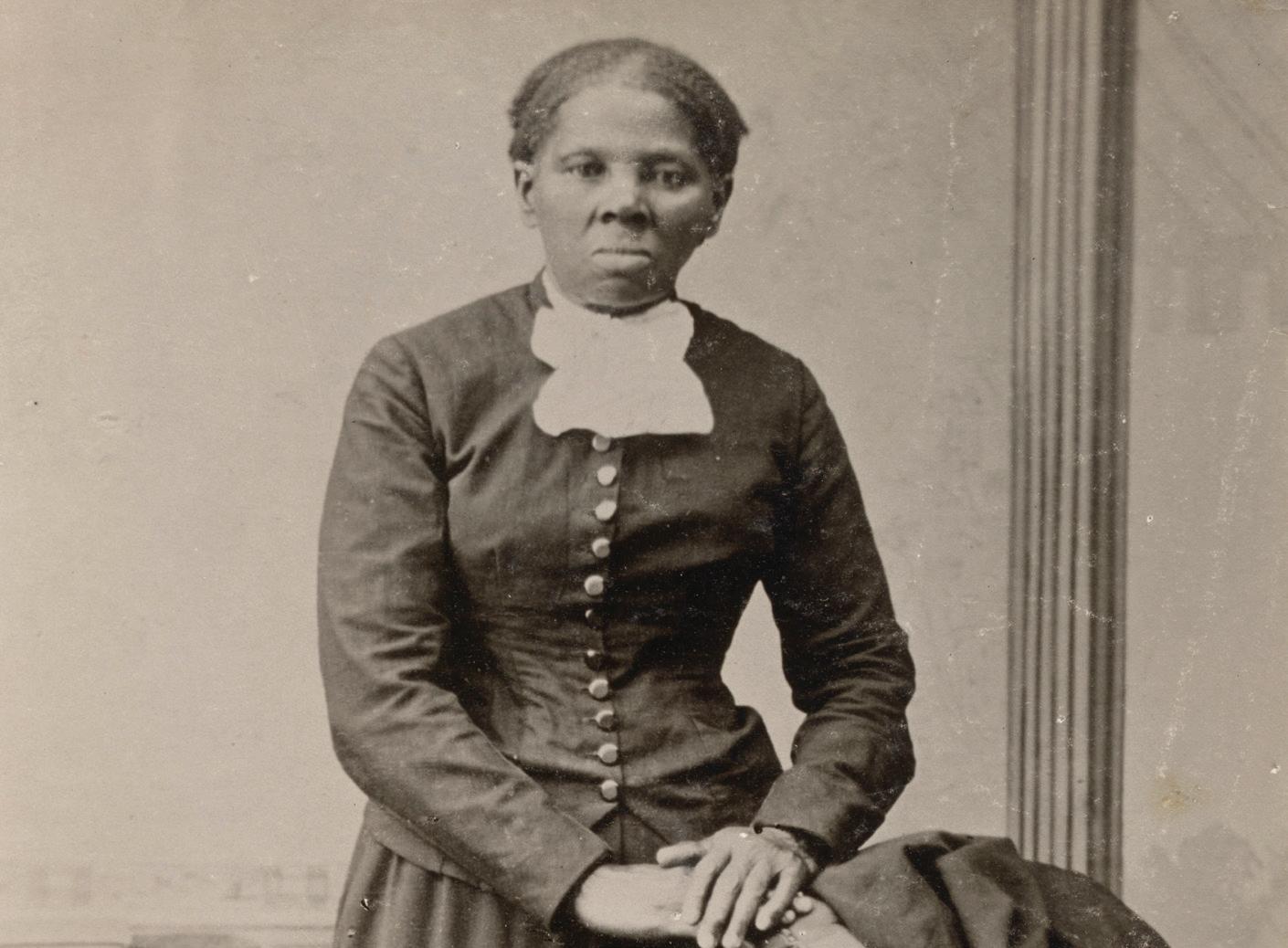
narrowed her American heroes down to what she called “the trifecta” for abolishing slavery in the country: Abraham Lincoln, Frederick Douglass and Harriet Tubman Lincoln acted as the person in power with authority to make a change through the Emancipation Proclamation, she said. Douglass was the brilliant and brave man who went far out of his comfort zone to connect with Lincoln and advocate for the freedom of enslaved Africans, and Tubman, with her
“boots in the trenches,” worked to physically free dozens of people through the Underground Railroad.
“You just can’t go with the Fourth of July with American History,” Johnson said, referencing the significance of Juneteenth and the work of abolitionists across the country.
– Cannon Barnett
James Burford, a former pastor in Spokane, said his Amer-
HERO, 2
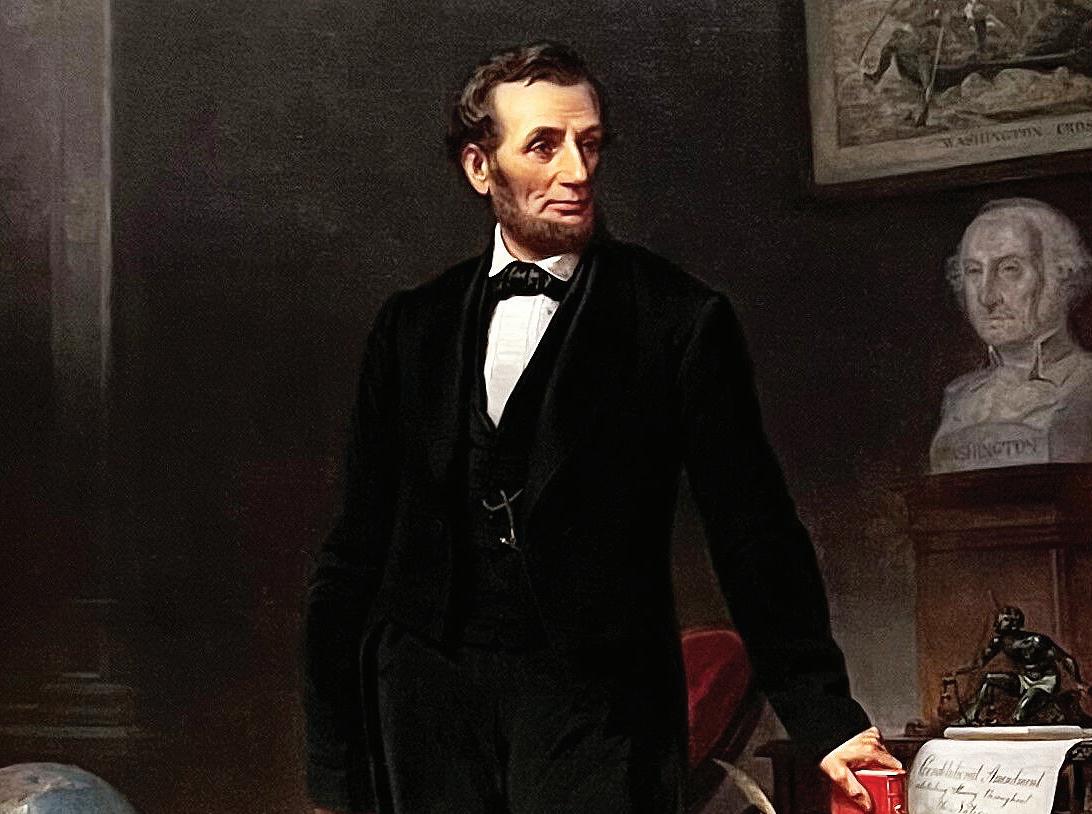
ican hero has to be our country’s 16th president, Abraham Lincoln
As a young man studying at the Chicago Theological Seminary, Burford traveled in a caravan with Rev. Jesse Jackson in March 1965 to protest with Martin Luther King, Jr. in Selma, Ala. Years later, in 1989, Jackson visited Spokane after losing in the Democratic presidential primary and saw Burford standing outside of a hotel. Jackson recognized Burford immediately, and the two spent a night catching up.
Burford, 84, said Lincoln is his hero for freeing people of color “at least for a while and in some areas of the country.” Burford also said that Lincoln has been a hero of his since grade school when he first started taking U.S. history lessons.
– Mathew Callaghan
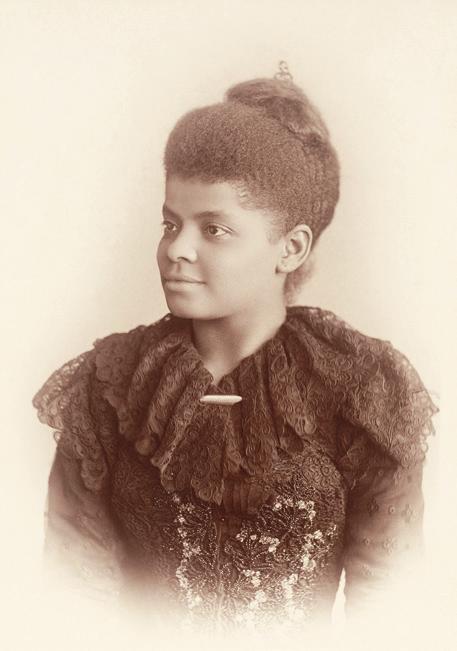
Civics teacher at the Community School David Egly had a few contenders for his American Hero. Ultimately, he landed on journalist and civil rights activist Ida B. Wells. While still in her 20s, Wells became part owner of a Memphis newspaper and reported on lynchings. In 1892, a mob destroyed her printing press after she wrote about a lynching there.
“Talk about bravery,” he said.
“She wrote a newspaper calling out lynching at a time when she very well could have gotten lynched for calling out lynching,” Egly said.
U.S. Army Col. Anne McClain, a NASA astronaut born and raised in Spokane, said her hero isn’t one specific person. Rather, it’s always been the engineers, flight
directors and astronauts working at NASA in the 1960s “that made exploration possible,” she said. They’ve long inspired to her, but McClain said as she gets older, she thinks more about how this team persisted through a turbulent period of history to get to the moon and what that means to her now.
“The ‘60s wasn’t exactly a calm period of time; it was pretty tumultuous, politically, internationally, within the country; it had a lot of the same struggles that we have right now,” she said. “There were visionaries that stayed focused on a mission despite setbacks and did something amazing.”
Jenny Slagle, president
A close-up of an 1865 portrait of Abraham Lincoln by W.F.K. Travers on display at the National Portrait Gallery. Lincoln is former pastor James Burford’s political hero.
NATIONAL PARK SERVICE
A photo, circa 1870s, of abolitionist Harriet Tubman. Gabriel’s Challenge founder Kitara Johnson narrowed her American heroes down to “the trifecta” for abolishing slavery in the country: Abraham Lincoln, Frederick Douglass and Harriet Tubman.
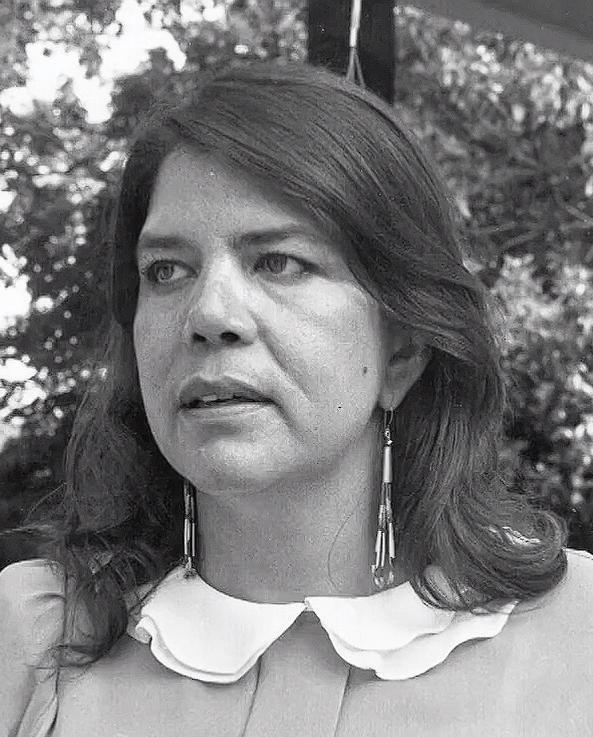
of the Spokane Public Schools board and local business owner, selected the late Wilma Mankiller as her “SHEro;” Mankiller was the first woman elected Principal Chief of the Cherokee Nation in 1985, leading for 10 years.
“She led with courage, humility and a deep commitment to sovereignty, education, health and community,” Slagle wrote. “As we reflect on America’s 250 years, I think it is important to remember that it starts with Native nations and that they have always been part of the story – and Wilma Mankiller’s leadership continues to show what service to the people can look like.”
The school board president’s favorite quote from the former Chief: “I don’t think anybody anywhere can talk about the future of their people or of an organization without talking about education,” Slagle quoted. “Whoever controls the education of our children controls our future.”
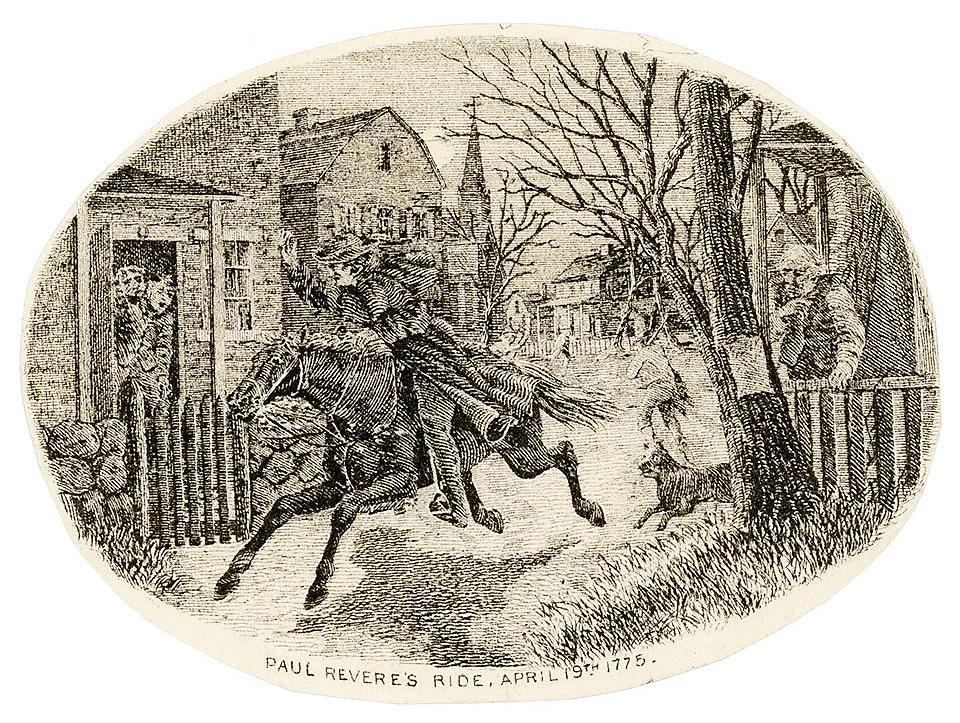
− Elena Perry
Coeur d’Alene Mayor Dan Gookin named President William Howard Taft as his American political hero, referring to Taft’s sense of duty and humility. Gookin said Taft never sought the presidency with the same ambition as many political figures, but accepted the responsibility, served capably and then stepped aside. He compared those qualities to those of George Washington, saying he admires leaders who put service above personal ambition.
Gookin said Taft’s legacy is often reduced to jokes about his weight, overshadowing the former president’s accomplishments. In an era when politics are driven by ego and
self-promotion, Gookin said he respects Taft for focusing on the job at hand, fulfilling his obligations and then leaving public office without seeking the spotlight.
Ron Jacobson, former mayor of Post Falls and chairman of the Kootenai County Republican Party, also chose Abraham Lincoln as his American political hero. Jacobson pointed to Lincoln’s humble beginnings and largely self-taught education, as well as his leadership during the Civil War and his role in issuing the Emancipation Proclamation. He said Lincoln guided the nation through one of the most difficult and divisive periods in American history while helping preserve the Union.
Jacobson said Lincoln’s ability to lead amid deep political and regional divisions remains especially relevant today. He noted that Lincoln faced intense criticism during his presidency, yet remained focused on what he believed was best for the country.
– Liam Bradford
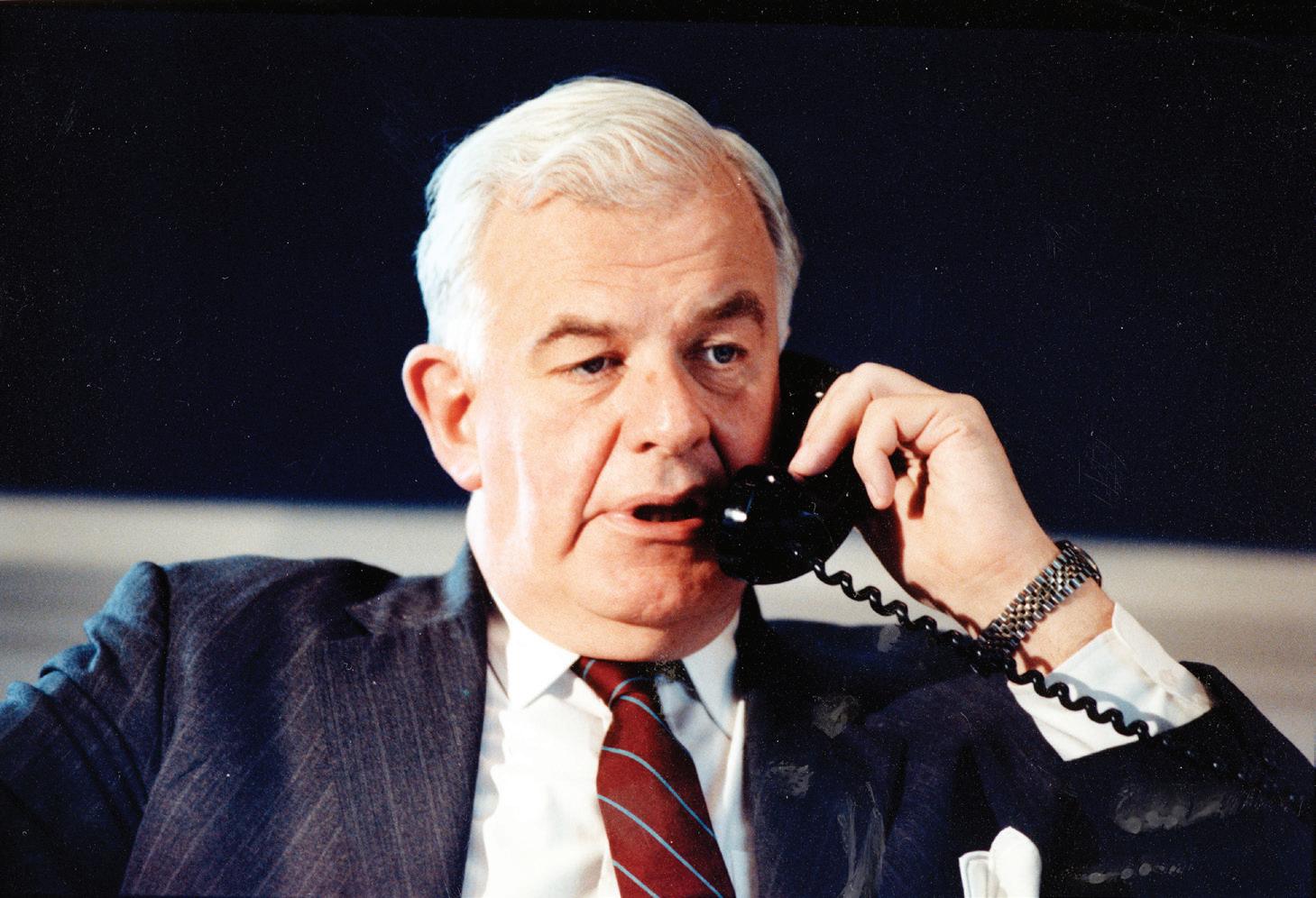
State Rep. Timm Orms-
by knew right away who he would select as his American hero: the fearless Tom Foley, former representative of Washington’s Fifth District and Speaker of the U.S. House of Representatives.
Foley’s civility, integrity and willingness to do difficult things to accomplish what he wanted was what Ormsby admired most about him.
“He was gracious,” Ormsby said. “He was defeated in his election in 1994. Never had an ill word to say about anybody. He’s just a good guy that accomplished a lot.”
State Sen. Mark Schoesler said his American hero is Ronald Reagan and has been since he was about 18 or 20. Schoesler said he would wait up to listen to Reagan’s broadcast while he was in college and was so excited to be able to vote for him.
“He said the things that made sense to me,” Schoesler said, admiring his common sense and his ability to walk away with “no deal rather than a bad deal.”
– Julia Pentasuglio
Masterpiece on the Bluff An Architectural Symphony
Stanley Primmer, a 99-year-old World War II veteran, believes all servicemen and women, past and present, are heroes because they fought for America’s freedom and saved the country.
“It’s real hard to pick just one person,” Primmer said.
Primmer, of Rockford, was knocked unconscious and blown out of his shoes after a Japanese kamikaze pilot dropped a bomb and then slammed the aircraft into the U.S. Navy veteran’s ship during World War II.
Primmer was injured in the strike, which also killed three of his shipmates and wounded 34 others off the island of Okinawa, Japan, in 1945.
– Garrett Cabeza
Betsy Wilkerson, Spokane City Council President, considered naming her mother, but given the recent controversy at the White House, pointed to former First Lady Michelle Obama
“She highlights and embodies the best qualities
of the American woman,” Wilkerson said. “She’s a Harvard graduate, attended Princeton Law School, a philanthropist, author, leader and lawyer. I have admired her skills as a mother and how she raised her daughters, and also, I have admired how she has navigated a role that would be difficult for any woman, as First Lady, but even more so as a woman of color.”
“And now that I’m a grandmother, I really liked her relationship with her mom, how she leaned on her for guidance,” she added. “I’m fortunate, I think I’m walking in that role pretty well with my own daughter and my own grandchildren.”
– Emry Dinman
Weiling Zhu, the president of Spokane Chinese Association, said she can’t name one person as her American hero. She’s inspired by all of the people in Spokane who’ve
made her feel a sense of belonging in the community.
“I am an immigrant,” she said. “I just feel very grateful for the many, many people around us that make us feel at home.”
– Megan Howard
Artistic Legacy: The residence features original Harold
COURTESY OF VALERIE RED-HORSE
Jenny Slagle, president of the Spokane Public Schools board and local business owner, selected the late Wilma Mankiller as her “SHEro.”
COURTESY
A young Ida B. WellsBarnett, in a photograph by Mary Garrity from circa 1893. Community School civics teacher David Egly said his hero is journalist and civil rights activist Ida B. Wells.
12 books to celebrate a milestone Independence Day
By Martin Wolk FOR THE SPOKESMAN-REVIEW
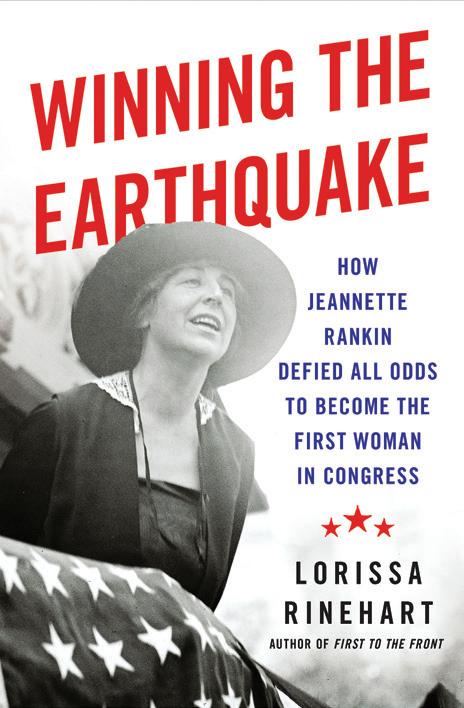
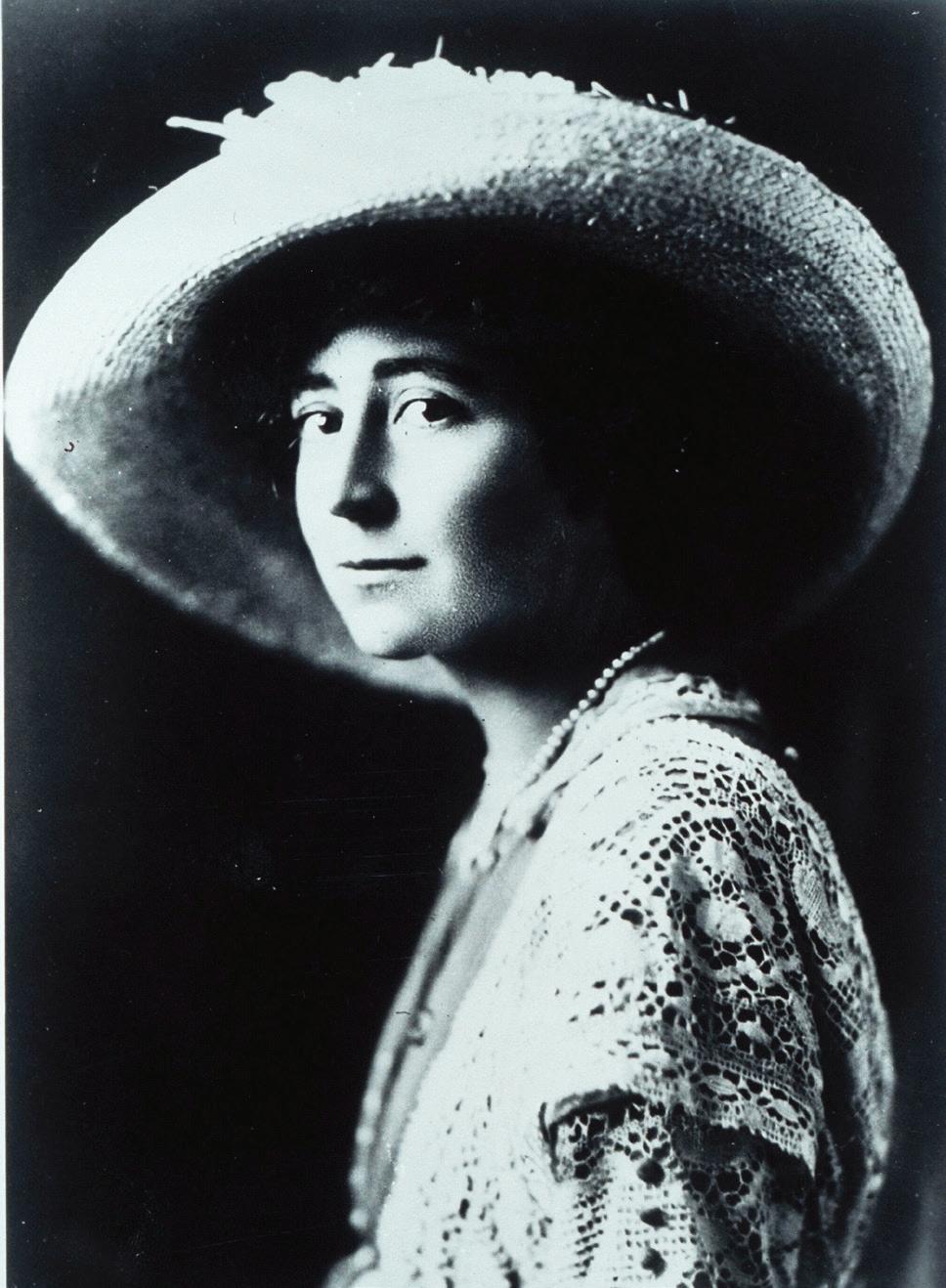
As you drive through Missoula on Interstate 90, you may notice a signpost identifying a 5-mile stretch of I-90 as the Jeannette Rankin Memorial Highway. And if you’re unfamiliar with Rankin’s eventful life and her impact on our nation’s democracy, check out “Winning the Earthquake: How Jeannette Rankin Defied All Odds to Become the First Woman in Congress.”
Lorissa Rinehart’s highly readable new biography, threaded through with fascinating regional and global history, would be a great place to start your nonfiction reading list for the 250th anniversary of American independence.
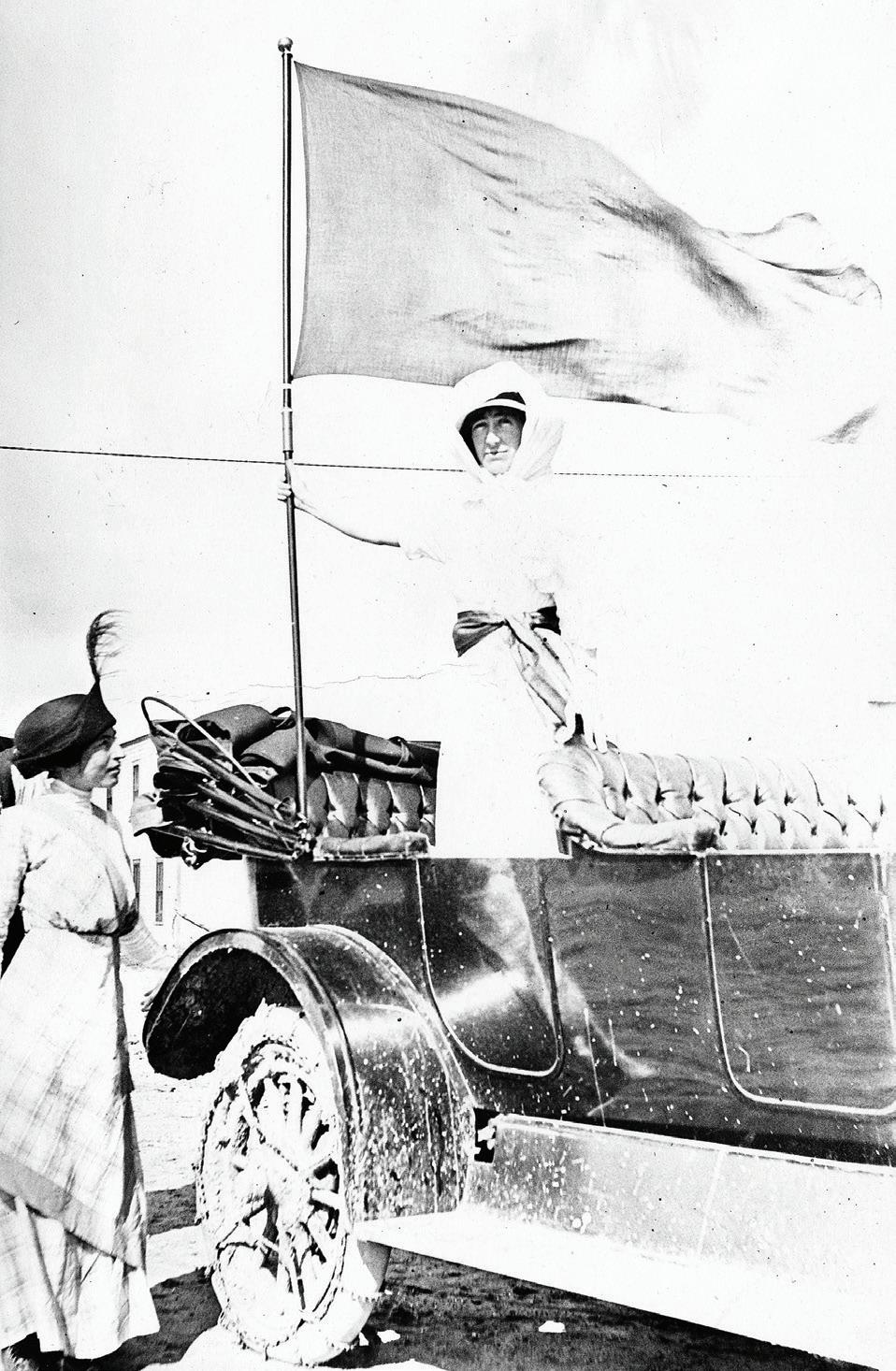
Born in 1880 near Missoula and raised in a ranching family, Rankin became the first woman elected to Congress – even before the 19th Amendment granted women the right to vote nationwide. Due in large part to Rankin’s relentless activism, women in Montana gained voting rights in time for the 1916 election, which propelled Rankin to Congress.
“In her historic campaign, Rankin built an unapologetically progressive, grassroots movement dedicated to democracy, peace and women’s rights – and did what most thought impossible: she became the first woman elected to Congress, four years before women gained the national right to vote,” Rinehart says.
“Rankin’s story, the power of grassroots democracy, and the need for women’s leadership at every level of government is more relevant and more urgent than ever.”
A gifted orator, Rankin’s journey took her from Montana to New York, Boston, Spokane, Seattle, and as far as New Zealand. She was the lone member of Congress to vote against a declaration of war on Japan, just one day after the attack on Pearl Harbor in 1941.
Rinehart’s engaging book, also excellent in audio format, draws on numerous contemporary sources, including interviews with Rankin during her long life. She died in 1973 at 92.
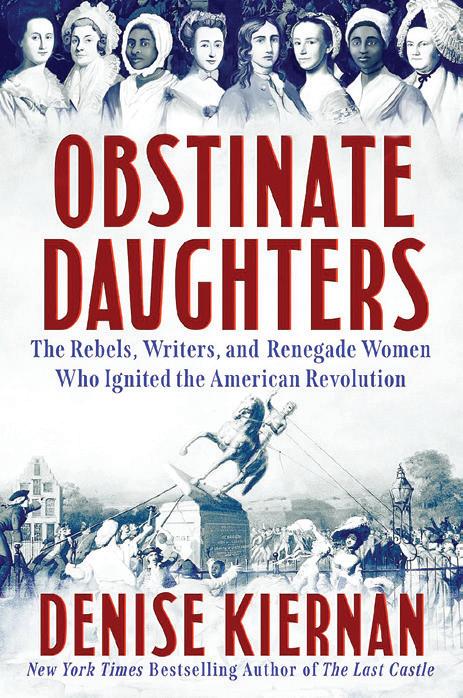
For another view of overlooked heroines, watch for “Obstinate Daughters: The Rebels, Writers, and Renegade Women Who Ignited the American Revolution” by Denise Kiernan. In her new book the author of “The Girls of Atomic City” tells the stories of women who “fought, spied, published,
preached, farmed, (and) organized” as the Colonies struggled for independence. (Dutton, June 23)
Here are more suggestions for this semiquincentennial summer:
“The Greatest Sentence Ever Written” by Walter Isaacson. It all began when the Continental Congress adopted the Declaration of Independence, ratified on July 4, 1776. In this slim volume (80 pages), the bestselling historian unpacks the genius of the crucial second sentence of the Declaration: “We hold these truths to be self-evident, that all men are created equal, that they are endowed by their Creator with certain unalienable Rights, that among these are Life, Liberty, and the pursuit of Happiness.”
Isaacson, a professor at Tulane University, also has written biographies about history’s game-changers, including Benjamin Franklin, Steve Jobs, Jennifer Doudna and Elon Musk. His most recent book reveals the “potency and unfulfilled promise” of perhaps the most famous written passage in American history, says Kirkus Reviews. (Simon and Schuster, 2025)
“National Treasure: How the Declaration of Independence Made America” by Michael Auslin. The author wrestles with the many contradictions of the bedrock document, including how it could be claimed “both by those fighting for equality throughout American history and by those who sought to separate from the United States to ‘preserve’ their liberty.” Auslin concludes that after 250 years, and despite times of national division, the Declaration “remains a powerful symbol of unity.”
(Avid Reader Press/Simon & Schuster, 2026)
“We the People: A History of the U.S. Constitution” by Jill Lepore. After the Declaration, came the Constitution, but only after years of debate following the Revolutionary War. Lepore, a Harvard professor and staff writer at the New Yorker, won a 2026 Pulitzer Prize for this monumental history of the document and the mostly unsuccessful efforts to amend it. Lepore’s book is built on an archive of more than 11,000 constitutional amendments proposed in Congress, plus thousands more that never made it that far.
Since the Bill of Rights was ratified in 1791, the Constitution has been amended only 17 times, most recently in 1992 with a provision limiting pay raises for members of Congress. Lepore makes an argument against the legal theory of “originalism” and in favor of a less onerous process to make
this keystone document more relevant to our times. (Liveright, 2025)
“The American Revolution: An Intimate History” by Geoffrey C. Ward and Ken Burns. Documentarian Burns gave the Revolutionary War his trademark treatment last year with “The American Revolution,” a six-part series available for streaming on the PBS website and app. The companion book expands on the film with illustrations and additional commentary by noted historians. Author Ted Widmer, writing in the New York Times, called the book a “visual feast” that “reminds us how, against all odds, a fractious people came together in the first place.” (Knopf, 2025)
“The Promise of a Nation: Commemorating 250 Years of Patriotism, Resilience, and Aspirations from the National Collection” by Smithsonian Institution. This generously illustrated book takes a decade-by-decade approach to the American enterprise, relying on 600 items from “the nation’s attic” to tell the story of progress. (Smithsonian Books, 2026)
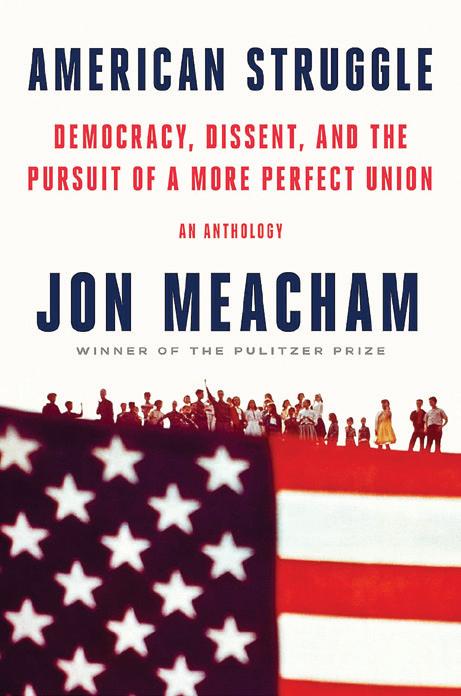
“American Struggle: Democracy, Dissent, and the Pursuit of a More Perfect Union” by Jon Meacham. The Pulitzer Prize-winning historian has pulled together an engaging collection of primary materials for this landmark year. The 544-page anthology collects voices from 1619 to the present, including Abraham Lincoln, Andrew Jackson, Martin Luther King Jr., and Ronald Reagan. Meacham visits Spokane Oct. 16 for a forum hosted by Whitworth University, in partnership with The Spokesman-Review’s Northwest Passages Book Club. (Random House, 2026)
“This Land is Your Land: A Road Trip Through U.S. History” by Beverly Gage. Hit the road with Gage for a look at 13 regions where America has repeatedly “defined and redefined itself,” as Kirkus describes the book. From the birthplace of the Declaration in Philadelphia to the land of imagination at Disneyland in California, the historian
offers a thoughtful take on America’s complicated history and aspirational ideals. Gage, who won a Pulitzer prize for her biography of J. Edgar Hoover, visited 300 historical sites in her research. “This book is for everyone who wants to find American history – to experience it and confront it, to celebrate and condemn it – in the places where it happened,” she writes. It may inspire you to jump in your car and explore some of those places yourself. (Simon and Schuster, 2026)
“On the Record: Music That Shaped America” by Anna Harwell Celenza. Read up
on the origin and impact of some of the nation’s most iconic songs, including “The Star-Spangled Banner,” the civil rights anthem “Lift Every Voice and Sing,” Nina Simone’s “Strange Fruit” and Bob Dylan’s “Blowin’ in The Wind.” Described as a “political history of the United States through a musical lens,” the book also explores the impact that Washington policymakers have had on American music through laws and other initiatives. This one will give you ideas for your Independence Day playlist. (Norton, 2026)
“The Warmth of Other Suns: The Epic
Story of America’s Great Migration” by Isabel Wilkerson. This National Book Critics Circle Award winner reframes 20th-century American history through the lives of those who moved in search of opportunity and freedom. “It invites intergenerational dialogue and deep community reflection,” says author Tracy Chiles McGhee. (Random House, 2010)
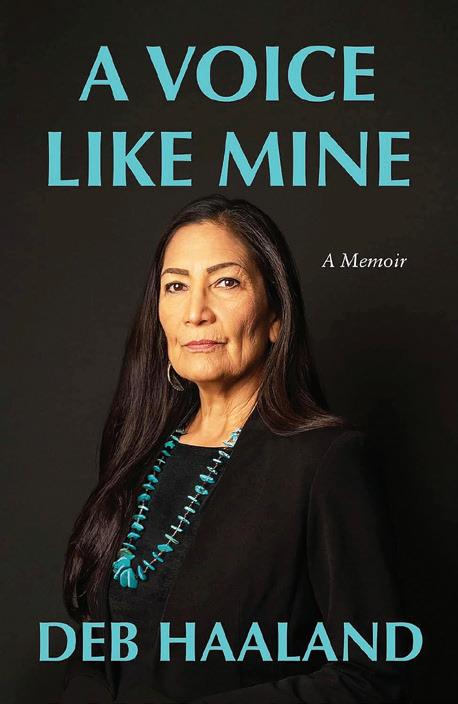
“A Voice Like Mine” by Deb Haaland. The former Interior Secretary and current candidate for New Mexico governor tells the story of her rise from poverty and single motherhood to a successful career in business and politics. As a “35th generation New Mexican,” Haaland has broken numerous barriers, including serving as the nation’s first Native American Cabinet secretary. MacArthur Fellowship-winning author Tommy Orange praised the memoir for its “undeniable ringing of truth.” (Henry Holt and Co., 2026) Martin Wolk is a writer and editor who previously worked for Reuters and NBC News. He divides his time between Washington state and Utah.
COURTESY
Jeannette Rankin wears a wide-brimmed hat.
MONTANA HISTORICAL SOCIETY LIBRARY AND ARCHIVES
Jeannette Rankin, chairman of the Montana Suffrage Activities, holds a suffrage banner, circa 1912-14.
scientists say they’ve
artifacts in the area that indicate people were living here around 16,000 years ago, providing new evidence that the first Americans entered their new home by following the Pacific Coast.
‘THINK ABOUT WHAT IT TOOK’
Northwest tribal leaders reflect on complicated history of those who first called U.S. ‘home’
By Nick Gibson THE SPOKESMAN-REVIEW
Spokane tribal member Margo Hill said the milestone America will mark as July 4 is “a drop in the bucket” compared to the long history of those who first called the land home.
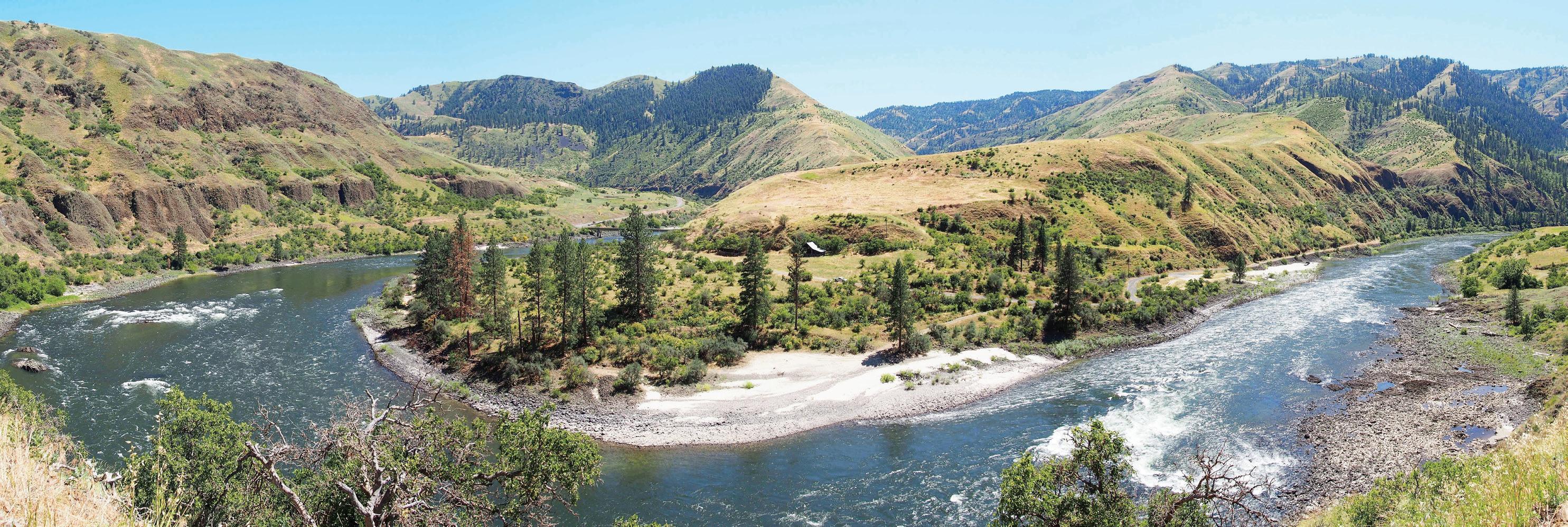
Regionally, the Spokane Tribe can trace its roots to the tail end of the Missoula floods. Archaeological records confirm the Coeur d’Alene have occupied the Inland Northwest for at least 10,000 years. The Nez Perce can point to the discovery of 16,000-yearold tribal artifacts at Cooper’s Ferry that changed science’s understanding of human occupation of North America.
“Compared to the tribal history, it’s a relatively short period of time,” said Samuel Penney, longtime chairman of the Nez Perce. “Tribal members have always stated that the tribes have been here since what they called “time immemorial.”
The relationship between the nation marking a milestone and its first inhabitants has been rife with conflict, faulty promises and trauma. Ways of life passed down for generations were upended as the U.S. came to fruition.
Cultural and governmental autonomy, native languages and ancestral lands were overridden, rooted out in government education programs and taken by force in what was a relatively short time period.
As such, celebrating the semiquincentennial is complicated for many Indigenous Americans, Hill said. She’s a professor at Eastern Washington University and a former Spokane tribal attorney and judge. She often tells her students that the principles the country was founded on, like freedom of religion, freedom to organize and freedom of speech, took decades to be granted to tribal members.
Indigenous people didn’t become citizens until the Indian Citizenship Act of 1924.
“All of those things that we hold sacred, Natives were attacked over and over again for,” Hill said. “So it’s a real complex situation for American Indians in this country.”
Chairman and Chief James Allan of the Coeur d’Alene Tribe noted that the history of conflict, and the work to gain “respect, equal footing,” is closer than some realize.
The 100-year anniversary of the citizenship act just passed. He finds himself reflecting on how far tribes have come as the nation’s 250th anniversary approaches.
“I mean let’s face it, I mean, we don’t fight on the battlefield anymore,” Allan said. “We fight in
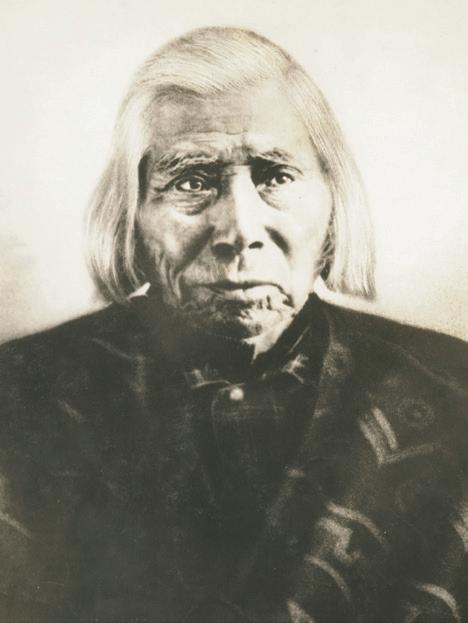
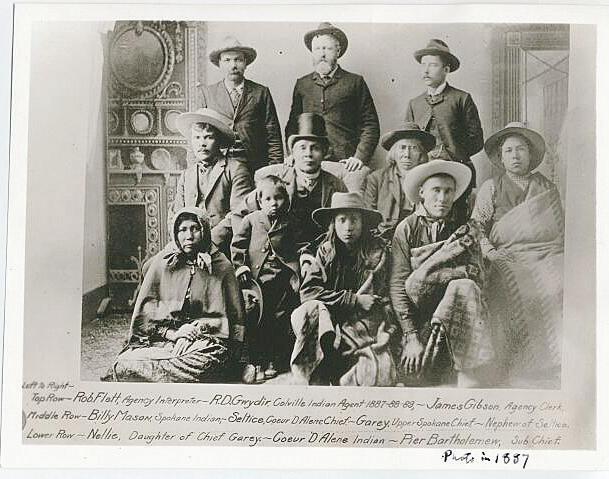
COURTESY OF EASTERN WASHINGTON STATE HISTORICAL SOCIETY A portrait Chief Garry, of the Spokane Tribe.
the courtrooms and in offices and all these things.”
Hill said local residents don’t need to look far for an example of how Indigenous people’s rights were abused. The city of Spokane and the tribe’s namesake, Chief Spokane Garry, was a man of stature in the early 1800s. Born as the Inland Northwest rapidly changed, he became a de facto spokesman for local tribes after learning French and English at a Canadian boarding school. He advocated for peace even as relations strained with white settlers.
In 1883, the Spokane County plot he farmed for more than 30 years was stolen by Joseph Morscher, a German immigrant. The justice system at the time provided no relief for the tribal leader. He died, landless, nine years later.
“And he was doing everything like white people wanted, teaching Christianity, being ‘civilized,’ ” Hill said. “He was a diplomat that protected white settlers in Spokane.”
A 2021 study covered in the academic journal Science found Indigenous people in the United States have lost nearly 99% of the land they historically occupied. The same dataset also shows the tribes were moved to lower value, less economically viable areas, which continues to have effects on economic mobility. Modern tribal lands, like the Spokane Reservation between the Columbia and Spokane rivers, face an increased risk of climate change hazards, like extreme heat and drought.
The Coeur d’Alene, like many tribes across the country, are working to buy back and restore some of its former territory. More than 80,000 acres are now under tribal stewardship, which benefits future generations of tribal members and the broader region alike, Allan said.
“We didn’t want to get pushed out of existence, you know, kind of the Native Hawaiians who live there,” Allan said. “They
NORTHWEST MUSEUM OF ARTS AND CULTURE
Left to right, top row, are agency interpreter Robert Flett; Colville Indian Agent R.D. Gwydir; agency clerk James Gibson. In middle row, left to right, are Spokane member Billy Mason; Coeur d’Alene Chief Seltice; Upper Spokane Chief Garry; and a nephew of Seltice. In the lower row, left to right, are Nellie, daughter of Chief Garry; a Coeur d’Alene member; and subchief Pierre Bartholomew. The group was attending an 1887 agreement signing, when U.S. representatives came to convince the Upper and Middle Spokanes to move to the Jocko, Coeur d’Alene or Colville reservations.
can’t even afford to live on their own land and that’s something that I really put to heart.”
Warren Seyler, a Spokane tribal member, has spent the last nine years teaching tribal history to groups of students, business leaders and museum experts. It’s a side project of his that sprouted out of what he saw as a gap in understanding of the region’s first caretakers, among both tribal members and the general population, he said. He estimates he’s talked to about 18,000 people over the last decade.
“My message to all those, especially the high school students or middle school students, is they need to learn the history of the land in which they live,” Seyler said. “Some of that history is hard to hear, but it’s still the truth, and you shouldn’t shy away from the truth.”
The tribes lost more than land. An estimated 10 million Indigenous people inhabited North America before contact with European settlers. The population declined rapidly, with historians believing the population of the Americas fell by 90% in the first century after European arrival to the continents, driven by disease, battles and resource loss.
“And when they couldn’t kill us, it was cultural genocide,” Seyler said. “Wipe any understanding or knowledge or education about Native Americans from the face of America.”
It’s a long, conflict-strewn history, and Penney said some of the fights are still ongoing.
Presently, tribes are working to have the federal government uphold its treaty commitments as funding for healthcare, education and criminal justice is under attack.
Allan said the Coeur d’Alene Tribe continues to advocate for the region’s natural resources, as environmental protections are rescinded by the Trump administration as it did when launching a lawsuit in 1991 that sparked the Superfund cleanup of mining waste. He hopes people keep in mind their responsibility to the land, and take a note out of the tribe’s book, as the celebration of the 250th approaches.
“Regardless of what political spectrum people are on, we are living in a time of change,” Allan said. “People don’t want to admit that there’s all kinds of things going on. If we were in balance, we would be able to feel that and see that.”
Hill notes water rights and efforts to develop public infrastructure still are being challenged, like in the 2023 decision where the Supreme Court ruled against the Navajo and said the government did not have a responsibility to secure water for the tribe.
The need for Seyler’s work is evidence of the loss and trauma experienced by Indigenous tribes, he said. Assimilation policies wreaked havoc on mother tongues, cultural practices and oral histories. It’s exacerbated by a documented diminishing of tribal history and underfunding of Indigenous education programs.
In 2015, the Washington Legislature and then-Gov. Jay Inslee appeared to agree when they enacted into state law a requirement for K-12 schools to implement Indigenous history programs.
There are lessons in the complicated history of the U.S. government, settlers and the Indigenous tribes that can help Americans as they ring in the 250th, Seyler said. He stands by the old adage that history is doomed to repeat itself, so he believes brushing up could help set a new course and build bridges at a divisive time in American politics.
“We just want them to recognize what’s been done to understand the true history of this land, and so when that is done and that is realized, then the two sides might be able to meet in the middle,” Seyler said.
Hill, and most everyone interviewed for the article, agreed with Seyler. They want modern Americans to know the history of the land the nation sits on, and those who’ve called it home for thousands of years. They want the trauma to be understood, respected and their contributions noted.
“We want what other Americans want,” Hill said. “To be able to raise our families and have good jobs, and to be able to practice our tribal culture and speak our language.”
Healing efforts are underway; Hill pointed to the Salish school, which is helping to revive the Spokane language.
The entire nation has and will continue to ben-
efit from Indigenous ingenuity and sacrifice, Penney said. The Nez Perce selectively bred the Appaloosa horse, an icon of the American West. Today, Penney noted tribal fish restoration programs benefit sportsmen, while also allowing the tribe to keep up cultural traditions. Tribes across the Northwest have similar programs in place in response to dams and public infrastructure projects that disrupted the ecosystem they relied on for generations.
Indigenous Americans serve in the U.S. military at the highest per-capita rate of any demographic, with about 19% having served at some time, according to the U.S. Department of Defense. Allan said he’s proud of that fact.
“When it comes to duty, our people have always answered the call,” Allan said. “Some of our greatest leaders for our tribe are veterans.”
“You ask them why they went into the service, a lot of them say mainly to defend their homeland,” Penney said. Those contributions date all the way back to the nation’s roots, when the Founding Fathers drew inspiration from the Iroquois Confederacy in penning the Constitution, Seyler and Hill noted.
“Think about what it took in all those 250 years,” Seyler said. “It wasn’t just about the Revolutionary War. It was from that point to now.”
Nick Gibson can be reached at 509-459-5039 or by email at nickg@ spokesman.com.
LOREN DAVIS/OREGON STATE UNIVERSITY
This undated photo provided by Loren Davis shows an overview of the Cooper’s Ferry canyon in western Idaho in August 2019. In a report released in 2019,
found
‘I think it’s a lovely symbol’
State rep. helps bring tree from estate of George Washington to Capitol campus
By Mitchell Roland THE SPOKESMAN-REVIEW
OLYMPIA – As the country nears its 250th birthday, a lawmaker from Eastern Washington is working to build a deeper connection between the state Capitol and the state’s namesake.
Inspired by the landscape of his district in the northeastern corner of the state, state Rep. Hunter Abell, R-Inchelium, has helped coordinate the planting of a tree on the Capitol campus from the residence and plantation of the nation’s first president.
“We’ve got a lot of trees in the 7th district. And trees have roots,” Abell said in an interview. “And the roots of this state stretch all the way back to the estate in Mount Vernon in Virginia.”
Sometime this summer, a Black Gum tree from George Washington’s estate near the nation’s Capitol will be planted on the state Capitol campus, coinciding with next month’s semiquincentennial celebration.
“The idea struck me that the story of our state, being that we’re named after the president, it would make sense, it would be appropriate, if we had a tree that was connected to him in some way planted on our Capitol grounds,” Abell said. “And the anniversary of the country here, with our 250th anniversary, seemed like a great opportunity to do so.”
According to planning documents, the Black Gum Tree typically grows to a height of 30 to 50 feet and a width of 20 to 30 feet. The tree is native to the East Coast of North America and is resistant to most weather
conditions. The tree’s berries and nectar are favorites of birds and mammals.
Abell said the Black Gum is a “beautiful tree that will look lovely on the Capitol campus and is hearty enough in our northwest winters.”
Brent Chapman, horticulturist and grounds property manager for the Capitol campus, said during a May 7 meeting of the Capitol Campus Design Advisory Committee that the state had the opportunity to choose from eight different trees.
“The Black Gum has beautiful ornamental features, it’s multiseasonal in its display, it’s a habitat tree for wildlife, the scale is appropriate for the proposed location,” Chapman said. “But most significantly, it’s native to an area that has poor drainage. And if you know anything about West Campus, we have poor drainage.”
While it will be planted in celebration of the country’s 250th anniversary, the tree can live for more than 600 years. The Mount Vernon estate will pay for the cost of the tree and transportation, while the state will pay about $600 to plant it and for a commemorative sign.
After discussions with staff at Mount Vernon, Abell approached Chapman earlier this year to see if there was space on the Capitol campus for the tree and if it was something the state had done previously.
“And the answer was yes on both of those, there is space for it, and there are various commemorative trees planted on the Capitol campus,” Abell said.
Abell said the goal is to plant the tree this year, though it’s not yet known when that will be.
“I think it’s a lovely symbol between our state and George Washington the person,” Abell said. “My hope is that in 50 or 100 years, people will be shaded by the
branches of this tree, and they’ll see a small sign there that indicates it was planted on America’s 250th, and it comes from the estate of George Washington, and the people will find that something neat and meaningful.”
Once planted, the Black Gum tree will join other trees of historical significance on the campus.
A tree recognizing Cal Anderson, a Democrat from Seattle who served in both Legislative chambers and was the first openly gay member of the state Legislature, is planted on a sidewalk in between the state Capitol and the insurance buildings. The 16-foot Kwanzan flowering cherry tree was replanted in 2023 after the original tree, planted in the 1990s, was cut down without the knowledge of lawmakers. According to the Department of Enterprise Services, the tree was dying and was removed for safety reasons.
A large Douglas fir stands on the southeast side of the Capitol campus in recognition of the Apollo 14 mission to the moon. The tree was planted with a seedling that astronaut Stuart Roosa carried aboard the Kitty Hawk as it orbited the moon in 1971. Like the tree recognizing Anderson, a commemorative plaque notes the tree’s historical significance. In 2020, cuttings from the original tree were used to plant three more “moon trees.”
Just to the south of the Capitol campus, a large coastal redwood tree planted in Centennial Park celebrates former Gov. Dan Evans. The tree was planted in spring 1989 to celebrate the state’s 100th birthday and is the tallest tree in Olympia. The Daniel J. Evans Tree recognizes the governor known for his work on environmental issues.
Mitchell Roland can be reached at mitchellr@ spokesman.com.
Celebrating Independence Yesterday,
Today, and Tomorrow
As America marks 250 years of independence, we’re proud to celebrate the freedom, dignity, and sense of belonging that help every person live fully.
SATURDAY, JULY 11 - 11 am -3 pm
Join KSPS at the MAC in commemorating the country’s 250th anniversary of America’s founding with a special community celebration. There’ll be live music, vendors, a beer garden, trivia, and screenings of Ken Burns’ documentary “The American Revolution” followed by panel discussions exploring the film.
Go Fourth with a special edition of the Independence Day Trivia Quiz
By Jim Camden FOR THE SPOKESMAN-REVIEW
So you think you’re a true, red-white-and-blue patriot who is all set to celebrate the big Fourth of July on Saturday. You’ve got 250 different versions of “The Star Spangled Banner” to play on a loop at the barbecue and have swapped your Mariners cap for a tri-corner hat. Then the annual Spin Control Fourth of July Trivia Quiz is just for you. Most years, we offer 13 questions, one for each original colony. This year, because of the big anniversary, we’re offering 50 questions, one for each state. Answers are on page 15 of this section. Only a Tory would cheat. Go Fourth to Celebrate
1. When you celebrate the event with fireworks, you’re taking part in a practice that originated in what country?
A. England
B. Italy
C. China
D. Japan
2. What food is mass consumed at an annual July 4th contest in New Jersey?
A. Pizza
B. Hot Dogs
C. Donuts
D. Hamburgers
3. Which Southern city did not celebrate July 4th for more than 80 years after the Civil War?
A. Richmond
B. Atlanta
C. Charleston
D. Vicksburg
4. Who was the first president to celebrate July 4 in the White House?
A. George Washington
B. John Adams
C. Thomas Jefferson
D. James Monroe
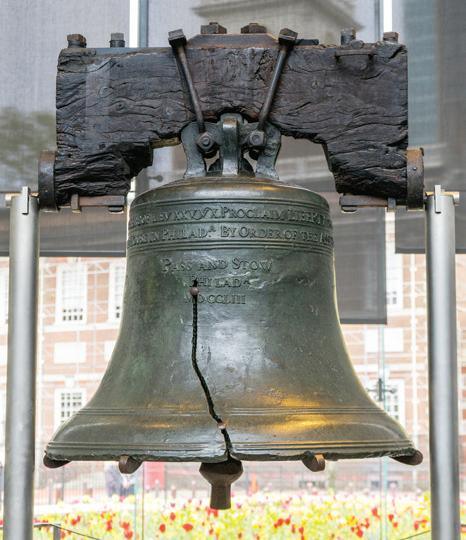
5. How did the Liberty Bell get its final crack?
A. Celebrating the anniversary of the Declaration in 1777
B. Celebrating the end of the war in 1783
C. Marking George Washington’s 104th birthday in 1846
D. Celebrating the surrender at Appomattox in 1865
Colonial history
6. The first British colony in North America was:
A. Massachusetts
B. Virginia
C. New York
D. Maryland
7. Of the 13 British colonies that declared their independence in 1776, the newest one was:
A. North Carolina
B. Maryland
C. New Jersey
D. Georgia
8. Which of the following was not one of the original 13 colonies?
A. New Hampshire
B. Delaware
C. Maine
D. South Carolina
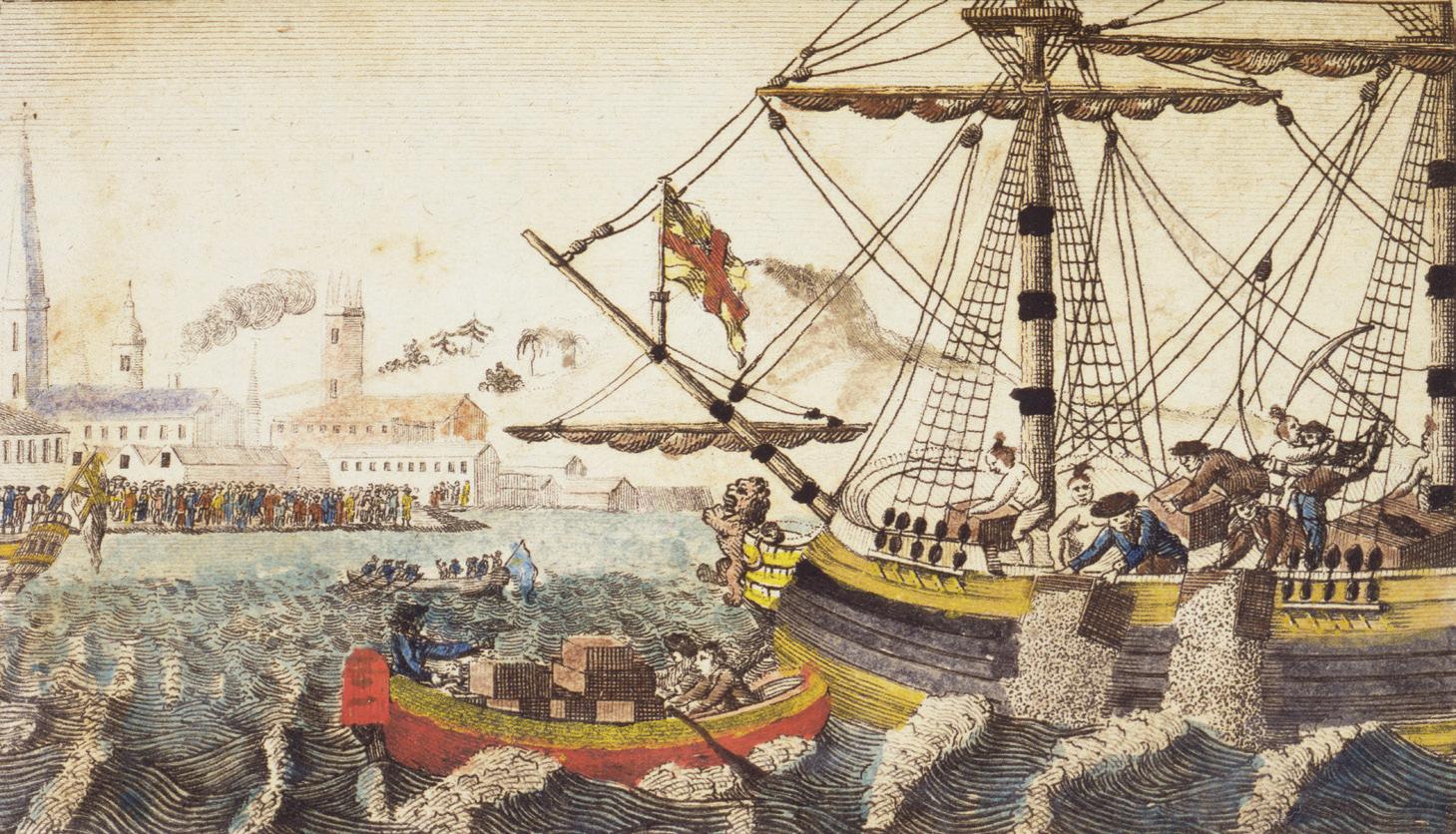
9. What was the name of the group that protested the British tax on tea by throwing crates of it in Boston Harbor?
A. Sons of Liberty
B. Sons of Freedom
C. Sons of America
D. Sons of Anarchy
10. At the time independence was declared, the most populous city in the colonies was:
A. New York
B. Philadelphia
C. Boston
D. Savannah
Grand Old Flags
11. How
(no fair checking the flag in your closet)?
A. 9 B. 10 C. 11 D. 12
12. Betsy Ross probably didn’t design the American flag all by herself, but she is generally credited with what design feature?
A. Putting the blue field in the upper left
B. Starting with a red stripe at the top
C. Using five-point stars
D. Putting a ’76 in the blue field
13. Before the 13 stars and blue field were put in the left corner of the flag, what occupied that space on some flags along with the stars and stripes?
A. A blue field with one large white star
B. A blue field with a lightning bolt
C. Shackles with a broken chain
D. A small version of the British Union Jack
14. What Revolutionary War era flag sparked controversy when it was flown at the vacation home of Supreme Court Justice Samuel Alito?
A. The Bennington flag with the stars arched over the numeral 76.
B. The Pine Tree flag with the slogan “An Appeal to Heaven”
C. The Gadsden flag, with the coiled snake and “Don’t Tread on Me” slogan
D. The “Join or Die” flag with a segmented snake and abbreviations of the colonies
15. How many stars and stripes were on the flag over Fort McHenry that inspired the words for “The Star-Spangled Banner.”
A. 13 stars, 13 stripes
B. 13 stars, 15 stripes
C. 15 stars, 13 stripes
D. 15 stars, 15 stripes
16. How many stars are on the American flag that was in use for the most years?
The leadup to the Declaration
17. What was the main reason the British Parliament raised taxes on the colonies before the revolution started?
A. To raise money for a new London Bridge after the old one fell down
B. To build a new palace for the king
C. To help pay off the debts from the French and Indian War
D. They were just greedy
18. Who said “Give me liberty or give me death”?
A. Patrick Henry
B. Paul Revere
C. Nathan Hale
D. Thomas Paine
19. Who wrote the pamphlet “Common Sense,” which urged independence from Great Britain in early 1776?
A. Patrick Henry
B. Paul Revere
C. Nathan Hale
D. Thomas Paine
The Declaration 20. Who was the primary author of the Declaration of Independence?
A. John Adams
B. Thomas Jefferson
C. Ben Franklin
D. George Washington
21. What exactly happened on July 4, 1776?
A. The Continental Congress began debating independence from Great Britain
B. The Continental Congress voted to declare independence from Great Britain
C. The Continental Congress approved the words formally declaring independence from Great Britain
D. All members of the Continental Congress signed the Declaration of Independence
22. How many peo-
ple signed the Declaration of Independence?
A. 29
23. Which of the following phrases is not in the Declaration of Independence?
A. We the people of the United States
B. The laws of Nature and Nature’s God
C. All men are created equal
D. Governments long established should not be changed for light or transient causes
24. Who was the president of the Second Continental Congress?
A. George Washington
B. John Hancock
C. Thomas Jefferson
D. Ben Franklin
25. The Declaration contains a list of grievances against the king as a reason for independence. Which of the following is not a listed grievance?
A. He required some people to be sent to England for trials
B. He taxed them without their consent
C. He declared slavery illegal
D. He stirred up the Indians against the colonists
26. Which king was that, by the way?
A. George I
B. George II
C. George III
D. George IV
27. The Declaration ends with delegates pledging “our Lives, our Fortunes and” what?
A. Our properties
B. Our liberties
C. Our descendants’ futures
D. Our sacred honor
The war
28. Fighting had started before independence was declared. Which of the following battles took place after the Declaration was signed?
A. The Battle of Lex-
B. John Adams
C. John Hancock
D. Thomas Jefferson
39. Delegates to the Constitutional Convention wrestled with many topics, among them how to count slaves in the apportioning of representatives to Congress. What was the final decision?
A. Slaves were counted like everyone else
B. Slaves weren’t counted at all for population purposes
C. Slaves were counted as half a free person
D. Slaves were counted as three-fifths of a free person.
40. Who was the main author of the Constitution?
A. Thomas Jefferson
B. James Madison
ington
B. The Battle of Bunker
Hill
C. The First Battle of Ticonderoga
D. The Battle of Cowpens
29. Paul Revere and others were warned that the British troops were coming to Lexington when lights were hung in:
A. The old North Church
B. The old South Church
C. The old East Church
D. St. Patrick’s Church
30. The British augmented their native troops with mercenaries from what country?
A. Germany
B. Spain
C. Denmark
D. Russia
31. George Washington and the Continental Army spent the harsh winter of 177778 at Valley Forge, which is in what state?
A. New York
B. Pennsylvania
C. Virginia
D. Delaware
32. To protect his soldiers, Washington had them inoculated against what disease?
A. Measles
B. Smallpox
C. Cholera
D. Typhus
33. As the British were about to capture Philadelphia, the Continental Congress fled to what city?
A. New York
B. Boston
C. Baltimore
D. Richmond
34. Yorktown, the last major battle of the American Revolution, was fought in what state?
A. New York
B. Pennsylvania
C. Virginia
D. Delaware
35. Where was the treaty signed that ended the war?
A. Paris
B. London
C. Philadelphia
D. Boston
A new country
36. Before the Constitution was ratified, what was the guiding legal framework for the United States?
A. Magna Carta
B. Articles of Confederation
C. Declaration of Independence
D. Mayflower Compact
37. Where was the Constitutional Convention held?
A. New York
B. Boston
C. Philadelphia
D. Richmond
38. Who was elected president of the Constitutional Convention?
A. George Washington
C. James Monroe
D. George Washington
41. What is the name of the essays written to explain and support the Constitution?
A. The Government Papers
B. The Constitution Papers
C. The Democratic Papers
D. The Federalist Papers
Founding Fathers
42. Which of the following presidents signed the Declaration of Independence?
A. George Washington
B. John Adams
C. James Monroe D. James Madison
43. What was George Washington’s political party?
A. Federalist
B. Democratic Republican
C. Whig
D. He didn’t have one
44. Who was the last U.S. president to fight in the American Revolution?
A. George Washington B. James Madison
C. John Quincy Adams D. Andrew Jackson
45. Who was the nation’s first post master general? A. Ben Franklin B. Alexander Hamilton C. James Madison D. John Hancock
46. John Adams was Washington’s vice president and Thomas Jefferson was Adams’s vice president. Who was Jefferson’s vice president?
According to the Old Farmer’s Almanac, what crop is supposed to be “knee high by the Fourth of July”?
LIBRARY OF CONGRESS
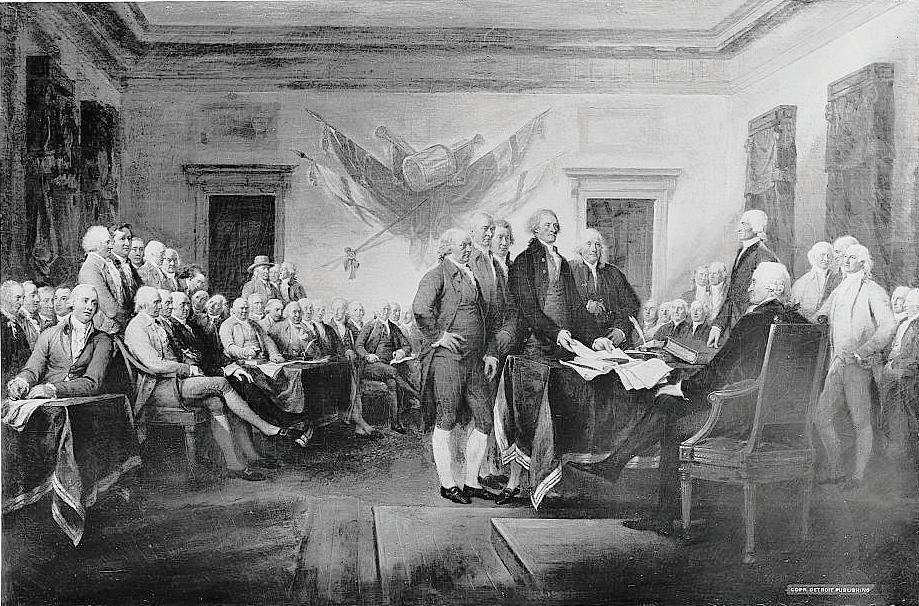
Commissioned in 1817, John Trumbull’s painting depicts the signing of the Declaration of Independence in 1776.
WIKIMEDIA COMMONS
The Liberty Bell outside Independence Hall in Philadelphia in April 2017.
DAUGHTERS OF THE AMERICAN REVOLUTION
STAND GENERATIONS STRONG IN SPOKANE
By Julia Pentasuglio THE SPOKESMAN-REVIEW
When Daughters of the American Revolution member Connie Kienholz began to look into her genealogy, she was trying to learn more about her dad’s side of the family.
Quickly, Kienholz, the regent for the Spokane Garry chapter of the DAR, uncovered that she was related to a “patri
ot” – the word the group use sto describe their relatives who participated in the Revolutionary War effort. Proving a relationship to a patriot is required for membership in the DAR.
But the most inspiring thing Kienholz learned in her journey through her family’s history was the role of the women who came before her.
“I’m starting to see why we have so many strong women in our family,” Kienholz said.
Kienholz is just one of over 350 Daughters of the American Revolution in Spokane who advocate for historical preservation, education and patriotism, with four chapters – Spokane Garry, Jonas Babcock, May Hutton and Esther Reed – operating in the city.
in ways to promote the
The chapters have been preparing for the country’s 250th anniversary with the Spokane America 250 committee beginning the celebration in 2024. The Daughters of the American Revolution has a history of its own in Spokane. The Ester Reed chapter, the oldest in the city and third oldest in Washington, has been around since June 14, 1900.
of the U.S. flag, they are nationally known as the “Flag Chapter.” They perform official flag retirement ceremonies, according to chapter member Christine Olson.
Because the chapter was created on the anniversary of the adoption
The Esther Reed chapter received a $500 Amer-
ica 250 seed grant in 2024 and choose to erect a new headstone for “real daughter” Isabel Johnson Savage Conway, who is buried in Greenwood Cemetery.
Much like it sounds, a real daughter is a direct
50 states and 14 territories, five of which are permanently inhabited. From the Declaration of Independence in 1776 to now, we have grown, advanced in science, culture, and technology. We have fought to protect the Constitution and the civil rights of all people. We have been a leader that the world looks to for guidance and support. All of this has been possible through a government that is, as Abraham Lincoln said, “of the people, by the people, for the people.” Government is a participatory activity. It requires constant engagement to ensure what the Preamble to our Constitution says, “a more perfect union.” That is what we celebrate!
With vigilance we can continue to become more perfect. As George Washington stated, the “preservation of the sacred fire of liberty was staked on the experiment entrusted to the hands of the American people.” We are an experiment, and we are not perfect. All of us bear the great responsibility to continue to work toward a more perfect union. We must ensure for our families, our neighbors, and our nation that the freedoms each one of us have are expanded and continue on for each succeeding generation. Each one of us must find that path.
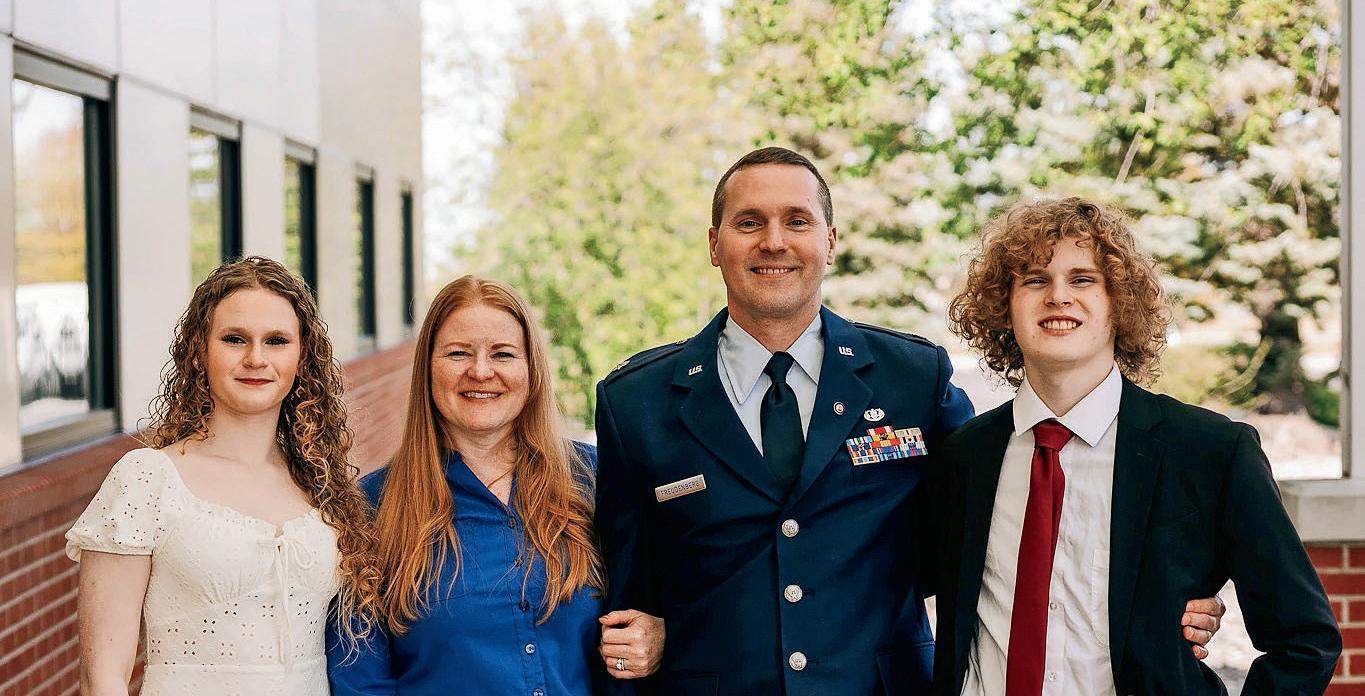
For me, it was working through humble beginnings, finishing college at Washington State University and then law school at the University of Washington. Then serving in the U.S. Air Force Judge Advocate General’s Corps (JAG Corps) and in the Washington Air National Guard. It culminated in my retirement on May 1, 2026, after almost 22 years of service to run for Congress representing Washington’s 5th Congressional District.
For you, it might be teaching our next generation, flying our commercial aircraft, transiting our goods, serving in our local medical facilities, working in business or industry to advance the next generation of technology, farming to
our food and energy, rescuing us in our time of need, enforcing our laws, or answering our nation’s call. Whatever your choice, I hope it is with a full heart that we are advancing the interests of each other, enabling one another to reach our own individual potential. We know what all great people know, that we do not know everything and we need each other. When one of us rises up we should all be lifted. No one is successful on their own. It takes all of us to enable each one of us.
Some may say I am unrealistic or purely idealistic. I have been told I am “so American” more times than I can count. I believe we can achieve the impossible. I believe that duty, honor, and country are not just words or platitudes.
I believe that the Scout Law of: trustworthy, loyal, helpful, friendly, courteous, kind, obedient, cheerful, thrifty, brave, clean, and reverent should be followed. I believe our individual character sets the foundation of the character of the United States of America and we must stand on matters of principle.
The principles of our Country are founded in the rule of law. It is the reason I became an attorney. The law is what binds us to make our society work. Laws are critical to ensuring a free and stable society that protects our individual rights. The attack on any person’s rights are an attack on all of our rights. We must defend the rights of our neighbors and nation as we would ourselves and our families. We cannot lose our way. We must show we are more than our words.
Theodore Roosevelt’s said, “No man is above the law and no man is below it; nor do we ask any man’s permission when we require him to obey it. Obedience to the law is demanded as a right; it is not asked as a favor.” When people violate the law, they should be held to account under the law. When our leaders lose their way we must
descendant of patriot. Conway’s father fought in the Revolutionary War in Pennsylvania. His name, rank and place of birth are scripted on the gravestone.
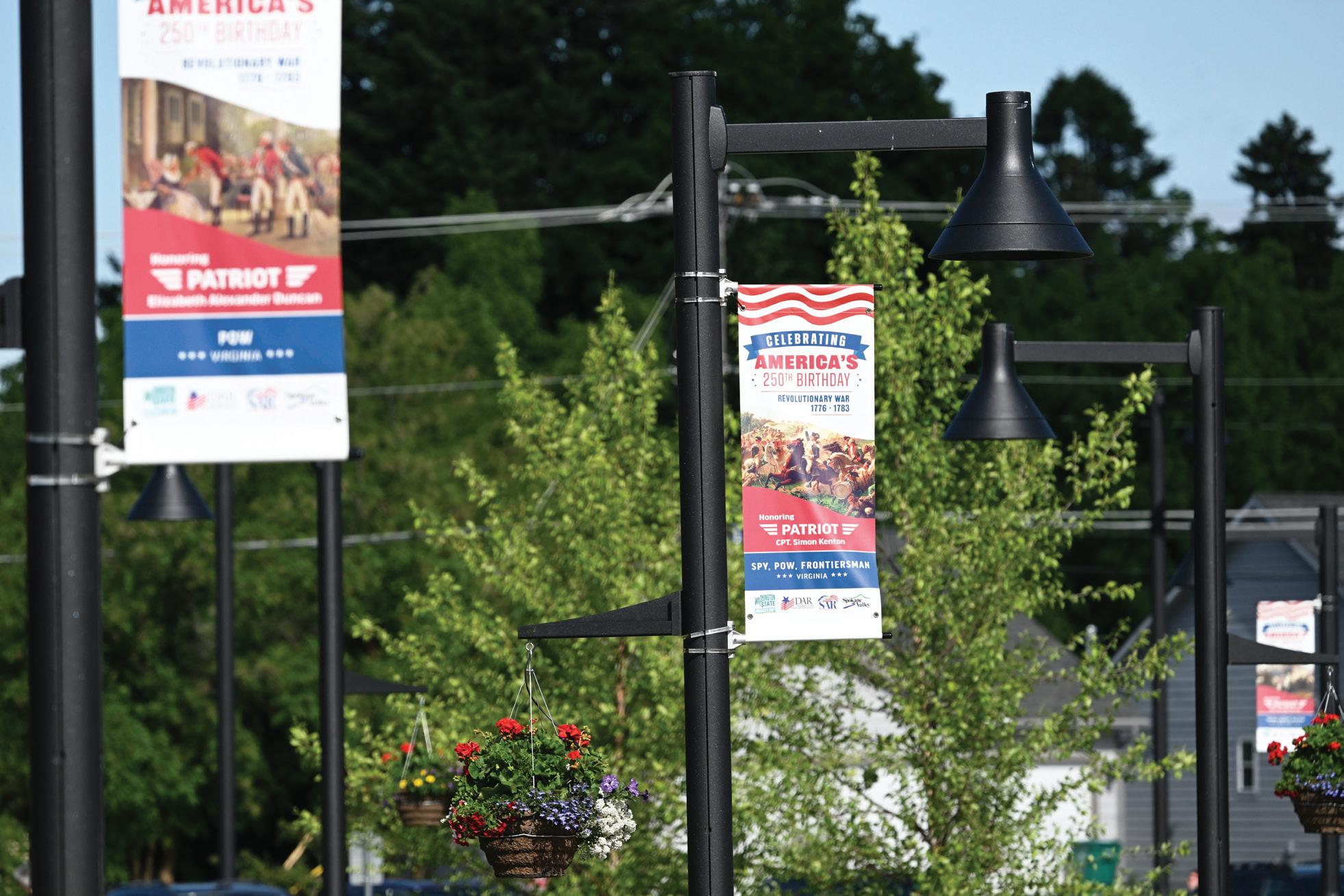
Starting around Memorial Day, the Spokane chapters hung “patriot banners” at Spokane Valley City Hall and at Balfour Park’s Veterans Memorial. The banners will decorate the city for the next five years, the same
See DAR, 11
hold them accountable. However inconvenient it might be, we as a nation must put aside our feelings and ensure that when our laws are violated those individuals must be held to account. We cannot pardon criminal actions of those that would harm us or our leaders. That would lead to the complete erosion of law. One leader pardoning the crimes of their own followers who commit crimes against political adversaries leads to one conclusion, the end of our country. Pardons should be reserved for those that have truly seen the error of their ways and are deserving of mercy. We must be a beacon of light for the rule of law representing the best of what the world has to offer. We cannot lose our way. We must act with bravery and conviction.
I took an oath to protect and defend the Constitution against all enemies foreign and domestic. As far as I am concerned that sacred vow never expires. It should also be the responsibility of every American to stand up against any attack on the rights of any person in this Great Nation. Our government must serve the people not the other way around. It is the responsibility of Government to protect our families, our neighbors, and our nation through the rule of law.
I want to thank each of you for all that you do every day to help those around you and serve our community. Every person should have the opportunity to achieve their full potential. That requires the efforts of all of us. On this 250th anniversary of the United States of America, we need to return our focus to ‘of the people, by the people, for the people’ through family, neighbor, and nation. This is our time. Every person is important and needs to be given a real opportunity for success. We have a real chance to make a change for the
JESSE TINSLEY/THE SPOKESMAN-REVIEW
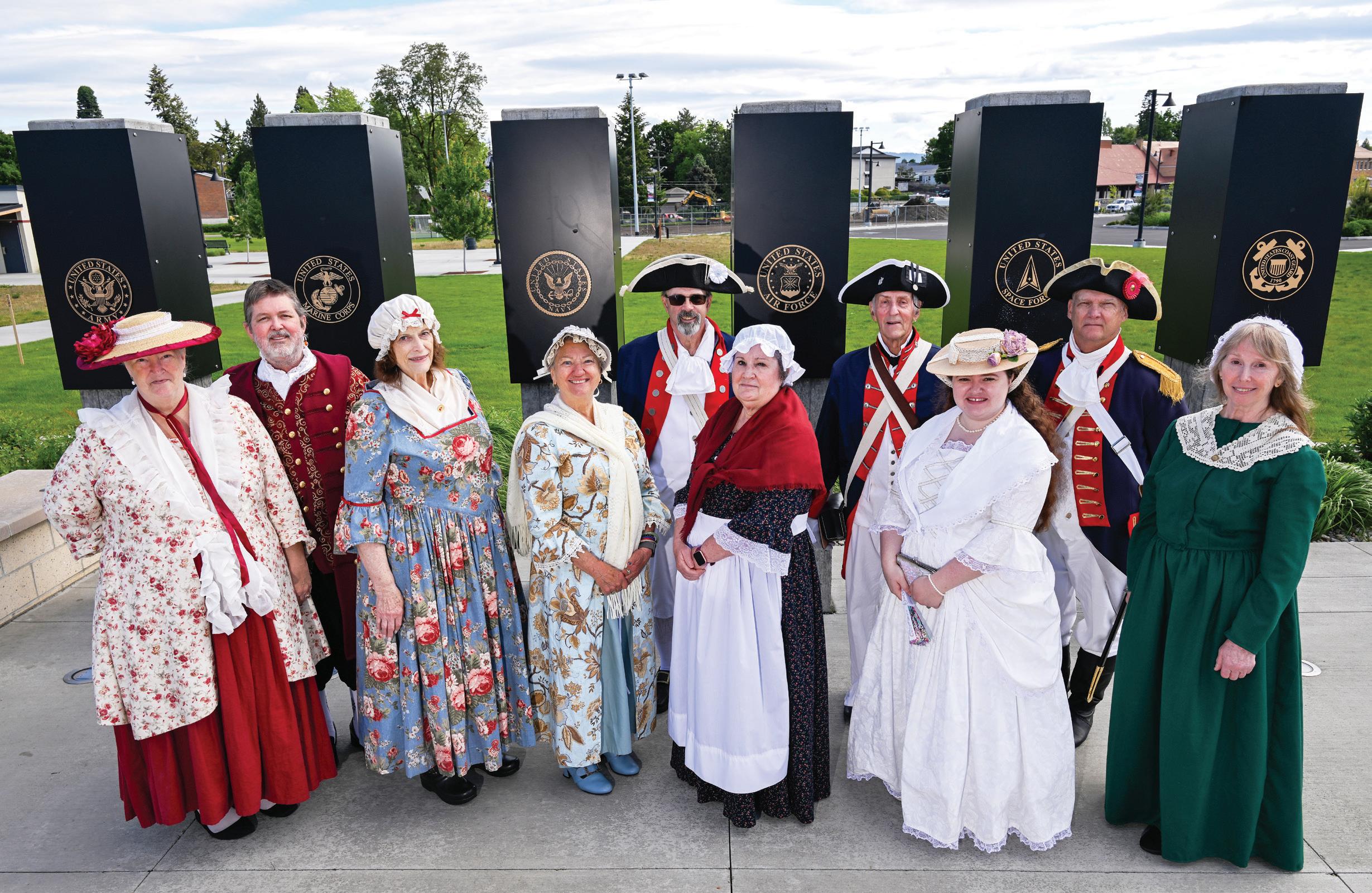
Members of the Daughters of the American Revolution, front row, and members of the Sons of the American Revolution, back row, pose for a photo at Balfour Park in Spokane Valley on May 29. They are, from left, Joyce Corder, Wes Corder, Rae Anna Victor, Connie Kienholz, Doug Jonas,
Cindy Lundberg, John Knauer, Shannon Harper, Stan Wills and Sherrie Morris. The two groups are involved
celebration of the 250th anniversary of the country.
time span as the Revolutionary War.
Kienholz said since joining the DAR in 2020, she’s been lucky to work with so many passionate women who know who they are and what they are capable of – a lesson Kienholz said she has passed down to her own daughters.
Six years in, Kienholz has helped over 20 women find their ancestors and join.
She’s also learned more details about her own family’s history, one of her favorites being her relationship to Samuel Gorton, a political figure in Rhode Island who advocated for women to be allowed to speak in church and incited the antagonism of the Puritans, Kienholz said.
Shannon Harper, a junior member of the May Hutton chapter, said she’s proud to be one of the few DAR members whose patriot is a woman. Harper’s ancestor, Katherine Cole Gaylord, was a refugee following the Wyoming Valley Massacre, a victory for the British and their Iroquois allies.
Harper, 33, said she joined the DAR on her 18th birthday and is a fourth-generation member. Previously, she was part of the Children of the American Revolution.
“My mother has said I’ve been going to DAR meetings since I was in utero,” she said.
Harper said the DAR has been working to register more people, like women, farmers, children and Native American allies, as patriots for their role in the American victory.
“There’s been a lot of strife in our country, especially the last few years. Making sure we all remember, and then helping others remember that, hey, we all came from nothing. This country started as nothing, and we all came together to form this big, huge country. It’s important to remember where we came from.”
Shannon Harper, a junior member of the May Hutton chapter
“There’s been a lot of strife in our country, especially the last few years,” Harper said. “Making sure we all remember, and then helping others remember that, hey, we all came from nothing. This country started as nothing, and we all came together to form this big, huge country.”
“It’s important to remember where we came from,” Harper continued.
Rae Anna Victor, regent of the Jonas Babcock chapter and member of the DAR for 30 years, said the value of preserving American history comes in preventing future mistakes. Victor, 76, has now uncovered her relation to 11 patriots and is part of the DAR alongside her 98-year-old mother, daughter and granddaughter. For Victor, she practices patriotism by supporting the military, especially homeless veterans in Spokane. Every month, the members of the Jonas Babcock chapter take boxes of food to the Spokane Veterans Affairs Clinic, 504 E. Second Ave. Regent of the Esther Reed chapter Allison Sharp said the group also attends naturalization and citizenship ceremonies, and she loves to celebrate the recently-naturalized citizens after it’s official.
“The joy in those people’s eyes and face,” Sharp said. “It’s just so exhilarating. It’s so positive.”
Mary Gilmore, a member of the Esther Reed chapter with over 34 known patriots, said the most impactful part of being a member of the Daughters of the American Revolution isn’t uncovering the names of her ancestors, but revealing the stories of the relatives she finds.
Gilmore said her participation in the organization comes from her desire to honor not only the heroes of the American Revolution but also all the Americans who have died in wars thereafter.
“It’s knowing what the vision of the Founding Fathers was, despite their shortcomings,” Olson said.
Intern Julia Pentasuglio can be reached at juliap@ spokesman.com
July 3rd - 3pm to 5pm 15% off wyld July 17th - 2pm - 5pm 20% off Bacon Buds July 22nd - 1pm - 4pm 20% off Passion Flower July 24th 3pm-5pm 20% off Ray’s
JESSE TINSLEY/THE SPOKESMAN-REVIEW
Members of the Daughters of the American Revolution helped pay for the 250th birthday banners hanging May 29 at the Spokane Valley Library at Balfour Park in Spokane Valley.
America’s independence isn’t the only 250th celebration: Adam Smith’s ‘The Wealth of Nations’ marks same milestone
It’s no coincidence publication appeared at same time as Declaration, says professor
By Bruce Howard FOR THE SPOKESMAN-REVIEW
The Declaration of Independence wasn’t the only writing that changed the world in 1776.
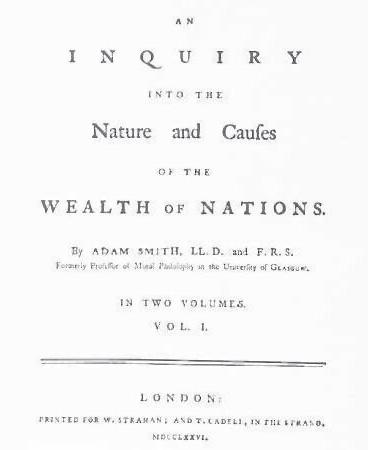
Earlier the same year, another impactful work was published: “An Inquiry into the Nature and Causes of The Wealth of Nations,” by Adam Smith.
The first edition sold out in six months, to the publisher’s surprise, and translations soon showed up. The ongoing interpretation and application of Smith’s ideas have led to its treatment as an authority on free market principles.
Professor Craig Smith, an expert on Adam Smith (but no relation) at the University of Glasgow, says “it is not a coincidence that the ‘Wealth of Nations’ appeared at the same time as the Declaration ... (he) was fascinated by the political economy of ... Britain and her colonies.”
It’s hazardous to oversimplify the concepts in Smith’s 900-page tome, but here goes: The wealth of a nation arises from the productive efforts of its people. As individuals pursue their own interests and freely exchange labor, goods and capital, the division of labor spurs greater productivity. Open competition and voluntary exchange create more prosperity than systems that rely on extensive government control or protected monopolies.
In Smith’s words, “Every man, as long as he does not violate the laws of justice, is left perfectly free to pursue his own interest his own way, and to bring both his industry and capital into competition with those of any other man, or order of men.”
Taken in isolated form to extreme, these notions may strike some as damaging aspects of capitalism. Context matters. In the interactions of Britain and the colonies, Smith observed that commerce and economic opportunity were constrained by monopolies, trade restrictions and favoritism. He wrote in criticism of mercantilism, the dominant economic system of the time, a view of trade as a zero-sum competition among nations that relied on government protectionism, trade restrictions and colonial control. Economic grievances voiced by American colonists arose in that setting.
“The Wealth of Nations” followed publication of his first book
(albeit by 17 years), “The Theory of Moral Sentiments.” In his earlier book, Smith emphasized that people have natural empathy toward each other, and a conscience that leads us to desire to be worthy of others’ empathy. “Man naturally desires not only to be loved, but to be lovely, or to be that thing which is the natural and proper object of love” he wrote.
Smith’s most-referenced phrase is likely the “invisible hand,” used once in each book. The phrase is a metaphor for the observation that self-interest can benefit others, even unintentionally. Later thinkers elevated and expanded on the phrase into a broader theory that free markets will operate perfectly well if simply left alone.
Smith nevertheless recognized roles for government in justice, defense, public works, education and preventing abuses of concentrated economic power. He noted “People of the same trade seldom meet together ... but that the conversation ends in a conspiracy against the public.” And: “Consumption is the sole end and purpose of all production; and the interest of the producer ought to be attended to, only so far as it may be necessary for promoting that of the consumer.” Smith was enquiring on the wealth of nations, not necessarily that of individuals. What does this have to do with the Declaration? Even before “Wealth” was published, founders were familiar with Smith. In fact, Benjamin Franklin met Smith in Scotland and likely became familiar with his developing ideas before publication.
The index of “The Wealth of Nations” includes over 200 entries under “America.” While Smith expressed moral and utilitarian objections to Britain’s colonial efforts, he viewed the conflict in practical terms, within his critique of mercantilism.
Smith’s solution: “Great Britain should voluntarily give up all authority over her colonies, and leave them to elect their own magistrates, to enact their own laws, and to make peace and war as they might think proper.” His alternative was a full integration of the colonies into parliamentary representation. Needless to say, his advice was ignored.
“Wealth” and the Declaration both emerged from the Enlightenment’s emphasis on reason,
liberty and a critical examination of established institutions. Smith’s work continued to impact the founders’ thinking after independence.
As Eamonn Butler, the director of the Adam Smith Institute said in an interview, “Smith’s book came too late to influence the Declaration itself, but Jefferson later called it “the best book extant” about political economy. It influenced Alexander Hamilton’s economic vision and James Madison’s ideas on commerce and extended republics. And it fueled broader debates on banking, manufacture and commercial society – reinforcing America’s preference for open enterprise over mercantilist restrictions.”
Author and Georgetown University Professor Glory Liu calls “Wealth” “the most sophisticated ... analysis of what it means to be at the helm of a nation that cares about national wealth.” She continued: “It’s natural that you have the founders ... reading ‘The Wealth of Nations’ to understand a way of thinking of national wealth.”
Craig Smith emphasizes that the book “had a huge impact on the American Founders.” As to the Revolution, Smith was a pragmatic observer. From “The Wealth of Nations”: “The persons who now govern the resolutions of what they call their continental congress, feel in themselves at this moment a degree of importance which, perhaps the greatest subjects in Europe scarce feel. From shopkeepers, tradesmen, and attornies, they are become statesmen and legislators, and are employed in contriving a new form of government.”
Later, in a memo he wrote during the war, Smith noted, “In their present elevation of spirits, the ulcerated minds of the Americans are not likely to consent to any union even upon terms the most advantageous to themselves.”
“The Wealth of Nations” is still a source of ideas (as well as quotes that can be applied at cross purposes). Few people, however, including Eamonn Butler, recommend reading it: “I
wouldn’t read the book at all because it’s enormous ... it’s in this 18th-century language, and it’s really just impenetrable.”
Economist Russ Roberts, the author of “How Adam Smith Can Change Your Life,” demurs, calling Smith’s book “delightful
and engaging prose from the get-go.”
There are alternatives, including Butler’s own condensed version of “Wealth” (as well as a new graphic novel version). P.J. O’Rourke’s “On The Wealth of Nations” is insightful and fun-
Learn more about Adam Smith
Books
“The Wealth of Nations” (condensed edition, and the graphic novel), Eamonn Butler
“Adam Smith’s America,” Glory M. Liu
“How Adam Smith Can Change Your Life,” Russ Roberts
“Adam Smith: What He Thought, and Why It Matters,” Jesse Norman
“On The Wealth of Nations,” P.J. O’Rourke
Adam Smith’s books are available for free from econlib. org, the Library of Economics and Liberty
Listen Freakonomics
Radio: “Was Adam Smith Really a RightWinger?” and related episodes
Organizations Adam Smith Institute (London) Adam Smith Global Foundation (Kirkcaldy, Scotland)
ny, among many other sources. Smith’s wisdom is still instructive. As he noted in an early lecture, a nation’s progress requires “little else ... but peace, easy taxes and a tolerable administration of justice.” Simple to say.
COURTESY OF NATIONAL GALLERIES OF SCOTLAND
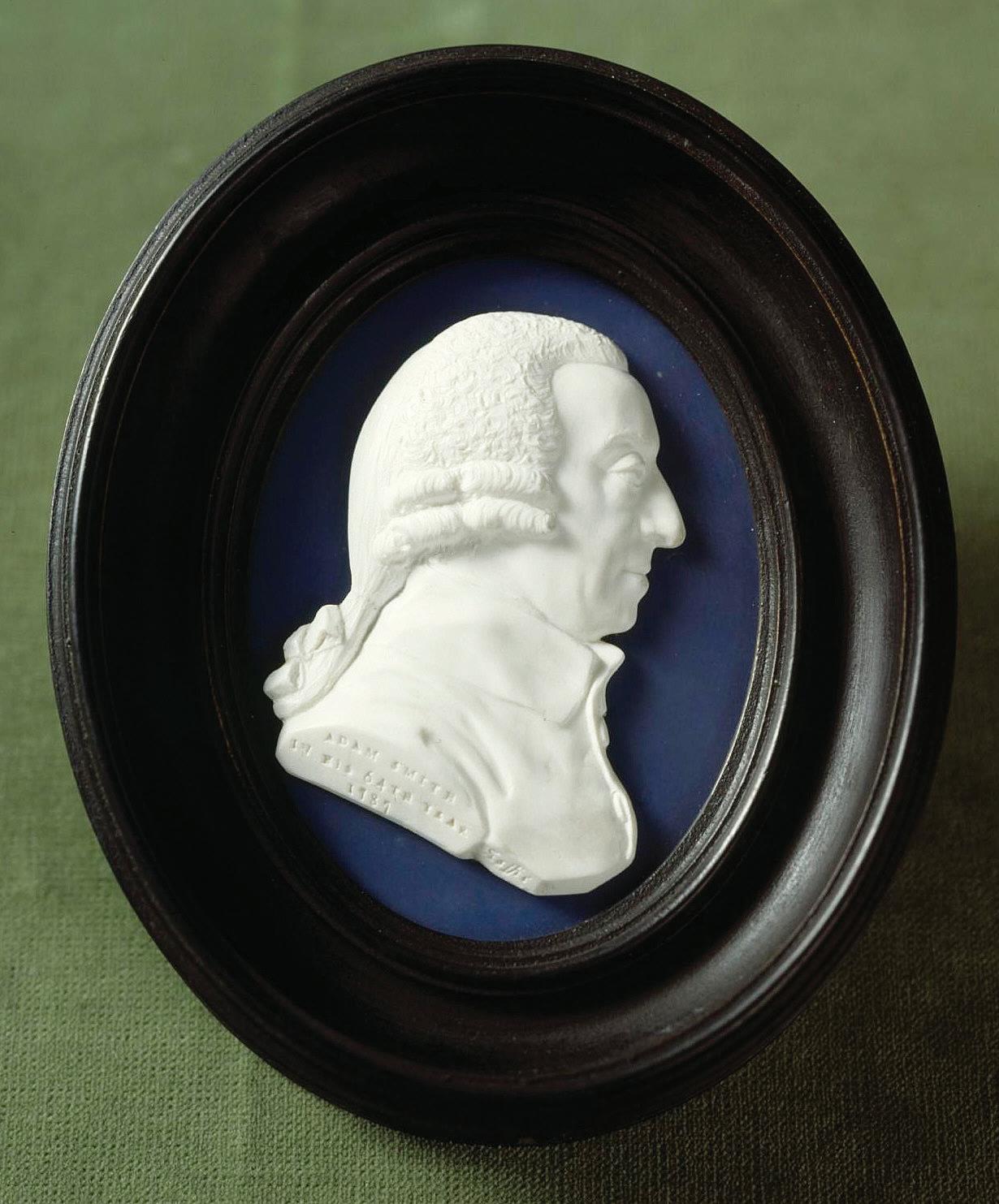
This portrait medallion of Adam Smith is one of two created in 1787 by artist James Tassie. According to a friend, Smith “never sat for his picture,” but some think he may have sat for Tassie’s work.
THE STRENGTH OF A COMMUNITY IS MEASURED BY OPPORTUNITY.
One in three Americans has a criminal record. Too often, a past mistake becomes a lifelong barrier to employment, housing and stability. Yet communities are strongest when people have the opportunity to rebuild their lives, contribute their talents and reach their full potential.
As Spokane celebrates America’s 250th anniversary, let’s renew our commitment to creating opportunity, removing barriers and building a future where everyone has the chance to contribute and thrive.
Because stronger communities are built on opportunity, not exclusion.
FROM THE ORDINARY TO THE HISTORIC
MAC exhibit celebrates ordinary and historic objects from 1770s to today
By Azaria Podplesky FOR THE SPOKESMAN-REVIEW
At first glance, the objects in the exhibition appear to be random, with no connection from one to the next. But looking closer at the items on display, it becomes clear that these seemingly random items form a picture of America’s history, as experienced in the Inland Northwest, from 1776 to 2026.
In the Northwest Museum of Arts and Culture’s exhibition “America at 250: 25 Decades of Collected Memories,” a single object represents each decade of America’s history since the signing of the Declaration of Independence.
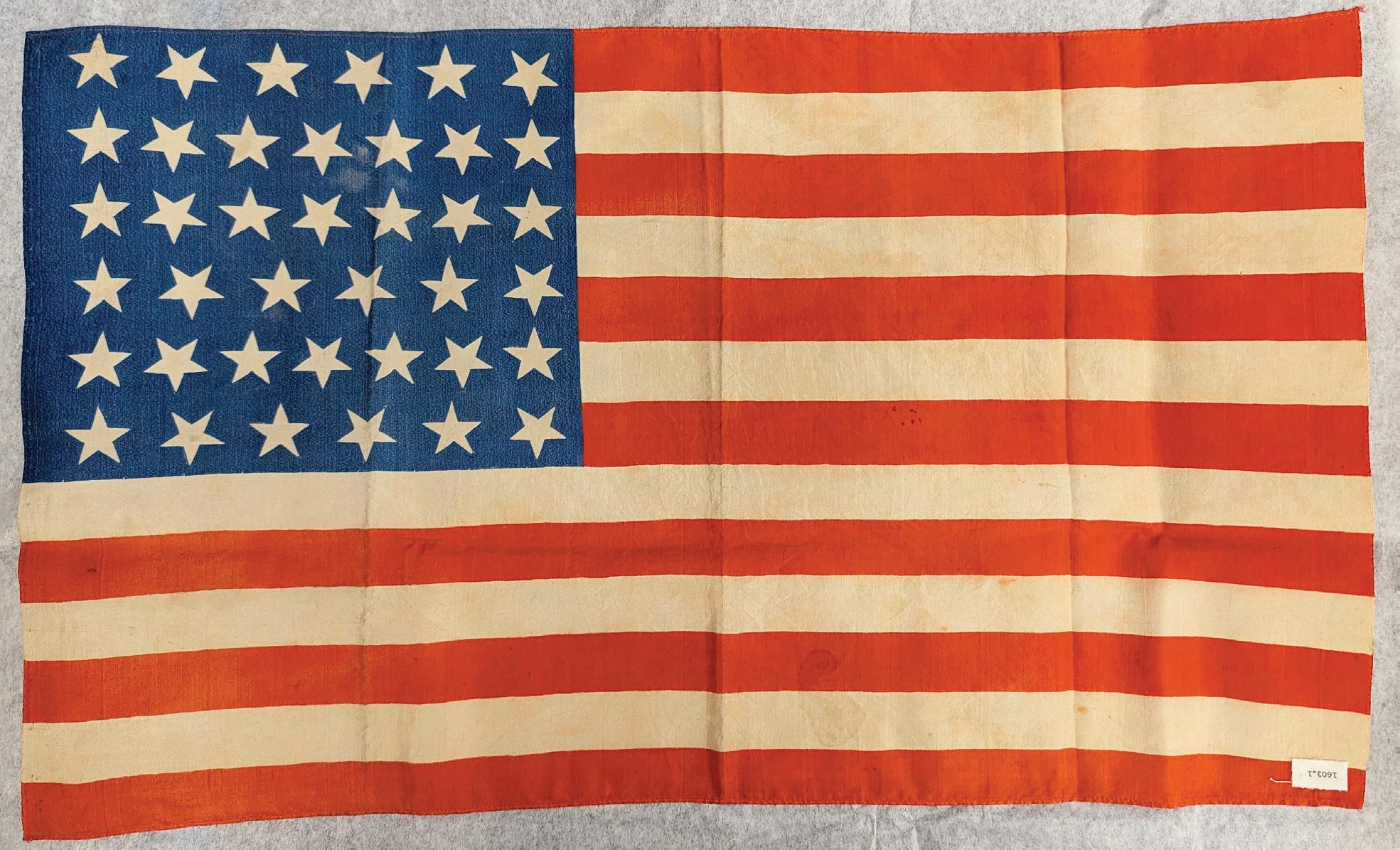
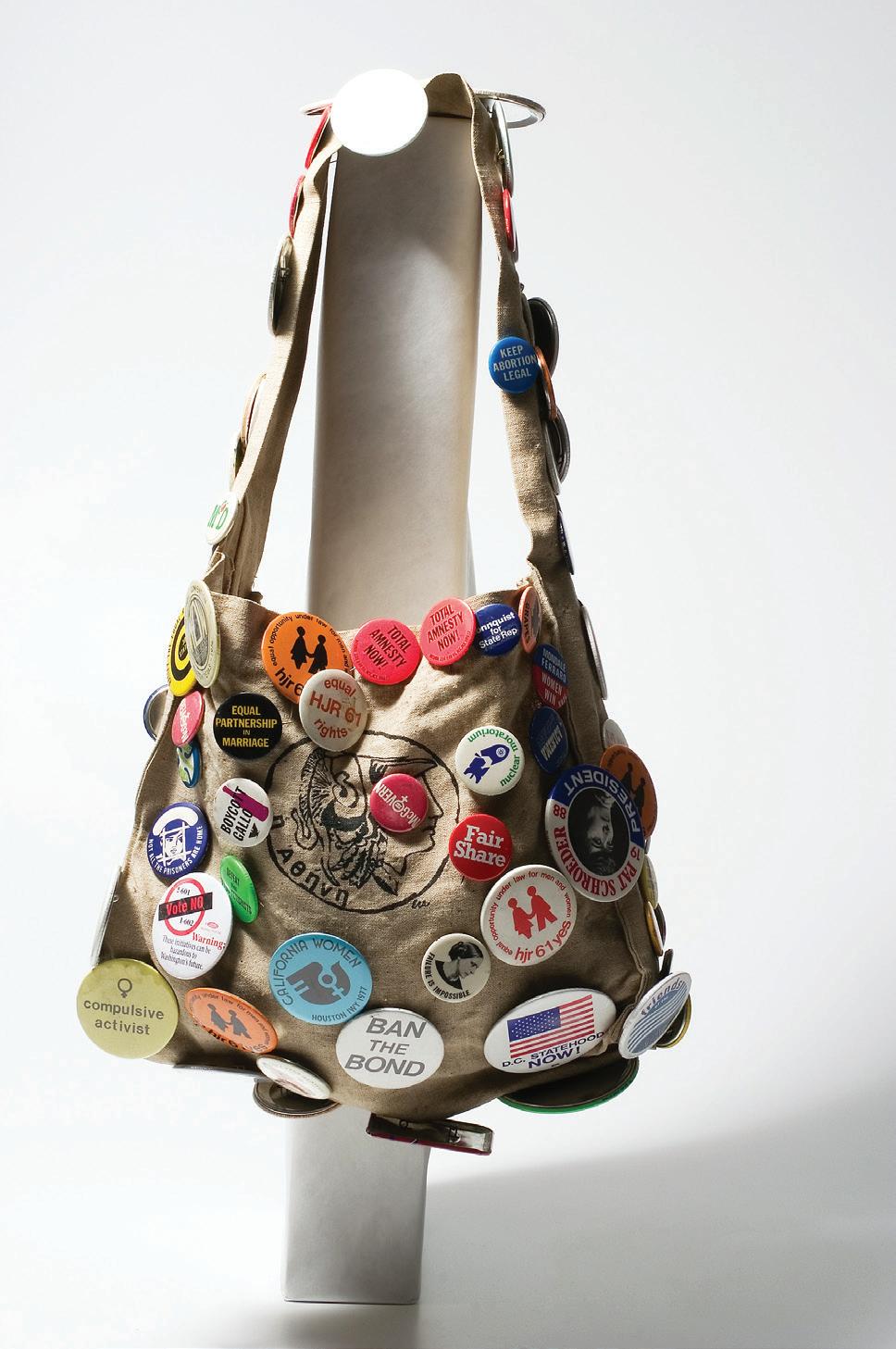
To represent the 1770s, the exhibit features a cane made from wood, antler and silver that was owned by Uriah Slack, a Revolutionary War militia member who is believed to have helped General George Washington and his troops across the Delaware River on Christmas Day in 1776. There is also a 39-star American flag from 1889, the year Washington achieved statehood; a Mahjong set made in a Japanese internment camp between 1942 and 1944; Spokane activist Marion Moos’ political button bag from the 1970s; and a 1984 Apple Macintosh computer.
It’s a collection that shows how much has changed in the last 250 years while also making space to celebrate the present and look ahead to the future. “America at 250: 25 Decades of Collected Memories” runs through Feb. 14 at the MAC.
Ellen Postlewait, curator of history at the MAC, inherited this project when she stepped into the role
two years ago. At the time, she remembers asking herself “How do we talk about 250 years of history from Washington in one room?”
But with a background in material culture studies and an interest in what museums collect and why, Postlewait was excited to answer that question.
Postlewait surveyed the 60,000 objects in the museum’s history collection, thinking of how she could make a story out of just 25 pieces. Seeing how old some of the objects were, many of which long predated the founding of the Eastern Washington State Historical Society in 1916, affirmed that collecting had been a priority for her successors.
“The people who were looking out at the community and going, ‘It’s the post-Civil War Great Migration of people, and everyone’s bringing these things that are important to them from their old life on the other side of the country and coming up here and intermixing with the cultures here and the building new cities’ and all different things,” she said.
“These little pieces were deemed worthy to stay in the museum collection for various reasons.”
When reviewing the museum’s collection, Postlewait worked to include objects that showed the daily life of an average resident, including impeccable items that survived as long as they did because they were never actually used, as well as items representative of major historical events that someone in the region was somehow tied to.
There were some decades Postlewait had a lot to choose from while others presented more
where some of those more personal stories were,” she said. “The quilt cover that was never finished, but this family saved because their mom made it, and so it was important, and they used it and kept it for over 100 years, because that she had anything to do with it made it important. Those are the stories that I feel like are really personal and can connect with so much.”
The exhibition ends with a basket made by Joseph Lavadour, brother of painter James, whose exhibit “Land of Origin” recently closed at the MAC. The basket is part of a collection of baskets gifted to the museum’s American Indian collection earlier this year.
Postlewait knew the turnaround would be quick, but she asked Tisa Matheson, the curator of the American Indian collection, if she could exhibit a basket in “America at 250.” Matheson agreed, and museum staff went “pedal to the metal” to get the basket processed and ready to be put on display.
Postlewait poses a lot of questions to visitors: How do you relate to this item? What would your version of this item be?
At the end of the exhibit, the questions turn to how we might look back on the present: What will be the objects that answer the future’s questions about now? What are the things that people think will be important to save?
Even in a virtual age, Postlewait said, there’s something enchanting about a handmade item.
“I really hope that it prompts (visitors) to think about how do we tell history through the things that we save,” she said. In this semiquincentennial year, MAC Executive Director Wes Jessup believes this exhibit brings the history often read about in textbooks to life, helping visitors understand that history on another level.
I really hope that it prompts (visitors) to think about how do we tell history through the things that we save.”
Ellen Postlewait, curator of history at the MAC
of a challenge. A previous museum director, for example, was interested in military history, so Postlewait had her pick of World War I and World War II history.
She also had a lot to choose from for the 1910s and 1920s, as that was the time the historical society was founded thanks to residents wanting to save their voice and experience as they got older.
“I have some really rich, interesting things from the ’20s, but then there’s these other decades where it’s a little bit less, but then sometimes the beauty of that is that that’s
“That one feels particularly special because it’s this new, beautiful gift, and it was made in ‘24 so it’s my 2020s decade object,” Postlewait said. “As I’m asking everyone, ‘What do you think will be saved to remember now?,’ I get to put a Joey basket on display.”
In the exhibition,
Postlewait said visitors might feel as if they’re time traveling while moving around the exhibit, realizing how long but also how short 250 years really is. As they leave the MAC, Postlewait hopes their thoughts turn to their own treasured items.
“I hope it’s an interesting room that is thought-provoking, and maybe sends people home thinking about the things in their own life that they save or might consider saving,” she said.
Marion Moos’ Political Button Bag from the 1970s, filled with slogans advocating for the Equal Rights Amendment and women’s rights.
PHOTOS COURTESY OF THE MAC
An unusual 39-star American flag from 1889; a rare and revealing artifact from the year Washington achieved statehood. Created under the mistaken belief that the Dakotas would enter the Union as a single state, the flag captures a moment of uncertainty and optimism in the nation’s expansion.
HERE ARE THE ANSWERS TO THE BIG JULY 4TH TRIVIA QUIZ
FROM PAGE 8
By Jim Camden
FOR THE SPOKESMAN-REVIEW
1. C. The Chinese are credited with inventing gun powder and using it, among other things, to celebrate big events.
2. B. The Nathans Hot Dog Eating contest dates back to 1997, with the record set last year at 30 hot dogs in 10 minutes.
3. D. Vicksburg did not celebrate July 4th because it surrendered to Gen. U.S. Grant on that day in 1863.
4. C. The Executive Mansion, as it was then known, wasn’t finished until the fall of 1800, when John Adams was president. But he and his wife had to move out after losing the election that year to Jefferson.
5. C. The bell had several small cracks before that, many of which were fixed, but ringing it for Washington’s birthday in 1846 created the famous crack that ended its tolling days.
6. B. Virginia was the first colony, and its original boundaries were much larger than the current state.
7. D. Georgia was chartered in 1732 and the first colonists arrived the next year.
8. C. Maine was considered part of Massachusetts, but became a state in 1820 as part of the Missouri Compromise.
9. A. They were a secret group that dressed as
Native Americans for that protest.
10. B. New York would become the most populous in the 1800s.
11. C. The flag has alternating rows of six and five stars.
12. C. Some earlier versions had six-point stars but Ross reportedly told George Washington five-pointed stars are easier to sew.
13. D. Some early flags the Continental Army used had the crosses of the Union Jack in that space
14. B. The Alitos were flying a Pine Tree flag, which is sometimes –although not always –
aligned with right wing groups.
15. D. When the first two new states were added, the flag got both stars and stripes. Congress decided, however, that more states would make the flag ungainly, so it went back to 13 stripes and just added stars.
16. D. The current flag holds the record at 66 years.
17. C. Parliament believed that because much of the war had been fought in the colonies, to protect the colonists, they should help shoulder the cost.
18. A. Patrick Henry said it during a speech at
the Virginia Convention.
19. D. Thomas Paine wrote the essay in early 1776.
20. B. Adams and Franklin were also on the committee to draft the declaration but Jefferson did most of the work on his draft and the committee made some changes.
21. C. The Congress began debating independence in June, and voted to declare independence on July 2. It approved the draft from the committee two days later. Most members didn’t sign the document until August.
22. D. A few added their names later, but there are 56 names on the docu-
ment.
23. A. That’s the beginning of the Constitution.
24. B. That’s probably one reason why he wrote his name so big on the document.
25. C. Although the British were promising slaves their freedom to runaway and fight with them, the declaration says nothing about slavery.
26. C. George III, who had one of the longest reigns in British history.
27. D. Although some did eventually lose their property and their liberty.
28. D. The first three happened in 1775, although there was a second battle of Ticonderaga in 1777. Cowpens was in South Carolina in 1781.
29. A. Memorialized for the “One if by land two if by sea” signal in the Longfellow poem.
30. A. The much despised Hessian troops were German.
31. B. It’s relatively close to Philadelphia, where the British were spending the winter.
32. B. Smallpox was a scourge of the colonies, and Washington had his troops inoculated against it to keep from losing men to the illness.
33. C. The Continental Congress had to move several times, but they went to Baltimore after Philadelphia.
34. C. After a monthlong siege, the British surrendered.
35. A. Paris wasn’t actually a neutral site because the French had been funding part of the war.
36. C. The Continental Congress debated and eventually approved the Articles, which didn’t work very well.
37. C. Philadelphia got all the good gigs in those days.
38. A. Washington was the most recognized and
respected person in the new country.
39. D. Not the proudest moment for a country founded on “all men are created equal.”
40. B. Madison is sometimes called “the Father of the Constitution.”
41. D. Madison, Alexander Hamilton and John Jay wrote a total of 85 essays.
42. B. Washington, Monroe and Madison were in the army or the militia.
43. D. Washington famously disliked political parties and didn’t think the country should have them.
44. D. Jackson served as a courier and scout for the Army as a teenager.
45. A. Franklin was a colonial postmaster before the revolution.
46. B. Burr and Jefferson were of the same party and tied in the Electoral vote. Hamilton maneuvered to have Jefferson elected president.
47. B. New York and Massachusetts both claimed the land and Vermont was its own republic briefly after the war.
48. C. Jefferson and Adams died 50 years after the Declaration was approved on July 4, 1826; Madison died five years later.
49. A. Calvin Coolidge was born on July 4, 1872.
50. D. But some more modern strains of corn are much taller by then.
How to score
0-5 Must be a Tory
6-15 Skipped the Ken Burns documentary
26-35 Honorary Minute Man (or Woman)
36-40 Yankee Doodle
41-50 Founding Father (or Mother)
Jim Camden can be reached at jim-camden@ outlook.com or 509-8797461.
NATIONAL PARK SERVICE
“Paul Revere’s Ride,” 1923-49, inspired by poems of Henry Wadsworth Longfellow in the H.W.L. Dana Papers.