
14 minute read
The latest developments in supply chain management

from SPN April 2021
by spnews.com
Supply-chain Sleuths Forward thinking… looking back
Getting the big picture when it comes to understanding the latest developments and challenges surrounding supply chain operations can be a full time job. SPN takes a broad look at the forward thinking of industry leaders and the realities facing packaging companies as they look back at the lessons they have learned from past challenges ( Excerpts courtesy of the Finacial Times )
Advertisement
A most interesting overview was published in the FT recently that made some very interesting observations concerning the current “panic” and “depleted supply chains.” SPN readers may well find this article very helpful when making decisions that can often mean the difference between sink or swim.
There is a mini-panic spreading about shortfalls all along the supply chain for manufactured goods, and how these somehow predict a commodities boom. At the beginning of this week, the ISM Manufacturing survey reported “depleted” supply chains, “increased lead times for deliveries” and “wide-scale shortages”.
The survey’s respondents are supposed to be steady handed supply chain professionals. The investing public, with too much time, stale cash deposits and bandwidth on its hands has responded through its online trading accounts. Thanks in part to people who heard the term supply chain for the first time last year, net noncommercial long positions in Comex copper were up to 75,000 contracts in recent days, close to December’s all-time high of 80,000 contracts.
Not surprisingly, the Twitterverse is agog with “commodities supercycle” talk. Butwe still have continued high unemployment, low wages, vaccine delays and declining bank credit. Yes, since its postCovid economic reopening China increased its imports of basic materials by 40 per cent. But that surge is not going to be repeated given a planned growth rate of 6 per cent. So what can account for the desperation along the goods supply chain?
Whiplash effect
We believe it is the whiplash effect of the depletion of retail inventories during the lockdowns at the beginning of the pandemic. In the world of operations management, ie the systematic analysis of production and distribution chains, this is also called the Beer Game Effect. The Beer Distribution Game is a classroom exercise invented by Jay Forrester of MIT’s Sloan School in the late 1950s to simulate the dynamics of a production-distribution system using (conceptual) cases of beer as the product.
The Covid-19 shutdowns and restarts of production changes disorientated supply chain managers, who responded to initial post-reopening shortages by double-ordering and overstocking supplies. These actions are now echoing down from retail stores to basic materials and producers of sub-assemblies such as semiconductor chips. Ominously, White House deputies and European commissioners have involved themselves in solving the bullwhip effect on critical supply chains.
Those interventions, called adding stage gates in operations management, make matters worse for a while. And speaking of the ISM, its subsequent report this week on non-manufacturing sentiment showed that 19 per cent of respondents reported inventories as too high, up from 10 per cent in December. David Rosenberg, financial economist and president of Toronto’s Rosenberg Research, asks: “Where is the wage boom and full employment? Once the stimulus runs out in two quarters, we are facing a fiscal cliff unless private demand is up by 10 per cent next year. This is all temporary.” If so, one should not buy “supercycle” commodities, but Treasury yield while it is still there.
New waste recycling rules
The UK has an extended producer responsibility regime in force for the recycling of waste packaging. This means that all businesses which make or use packaging – excluding certain smaller companies, have a legal obligation to ensure that a proportion of that they place on the market is recovered and recycled.
The regime first came into force in 1997 and was updated in 2007 with the introduction of the Producer Responsibility (Packaging Waste) Regulations 2007. There have been a number of amendments to the regulations since 2007.
Under the regulations, packaging producers can meet their recycling obligations by buying recycling evidence, known as Packaging Waste Recovery Notes (PRNs), or Packaging Waste Export Recovery Notes (PERNs), from accredited reprocessors or exporters. The system is therefore known to many in the industry as the PRN system. The supermarket selling a product is one type of business which has an obligation under the Packaging Waste Regulations

The obligation applies to all those involved in the packaging supply chain – ranging from raw material manufacturers to retailers – which have an annual turnover above £2 million, and which handle more than 50 tonnes of packaging a year. Organisations can also be obligated if they are part of a group that collectively meets the thresholds. Those obligated companies with a turnover of below £5 million (but above £2 million) can choose to use a simpler allocation method when completing their obligation calculations. Many obligated companies sign up with a Producer Compliance Scheme (PCS), who will buy evidence on their behalf and take on their legal compliance.
The number of PRNs that companies have to buy is determined by targets which are set by the UK government, known more commonly as ‘business targets’. So far, business targets have been set for all materials up until 2020 (see targets page). The targets cover paper and card, glass (of which a certain proportion must be sent to remelt), aluminium, steel, plastic and wood and there is also an overall recycling and recovery target, for which a certain percentage must be met through recycling.
In March 2019 the UK Government has recently launched a consultation, which closed in May, on options to reform the UK Packaging Waste system. This document, along with other consultations held at the same time, will significantly alter the way in which the UK packaging waste system operates in the future, with significant changes and cost impacts for packaging producers. The intended start date for the new system is the beginning of 2023

Meeting new targets
The PRN system is designed to enable the UK to meet the latest targets under Directive 94/62/EC on packaging and packaging waste (Packaging Directive). The Directive required that the UK recovered at least 60% of all packaging waste by December 31 2008 as well as meeting a number of other targets, which the UK has achieved.
The Circular Economy Package included proposals to amend a number of European Waste Directives, including the Packaging Directive. These amendments were published in June 2018, and include new targets to be met in 2025 and 2030. Unlike the systems in use in many other European countries, the PRN system is a market-based supply and demand mechanism, designed to reduce costs for obligated companies while still ensuring compliance with the European Directive. The system effectively subsidises packaging recycling and means that if the price of recyclables drops, the PRN generally increases in value, thereby providing some protection for the market.
Rolled-up obligation
Those who handle packaging and or packaging materials can calculate their obligation based on the amount of packaging they place on the UK market in the previous calendar year. Producers’ obligations are split between different roles within the supply chain, each with a different percentage of responsibility: raw material manufacturer 6%; converter 9%; packer/filler 37%; seller 48%. Importers have a “rolled up” obligation for packaging imported into the UK.
The raw material manufacturer makes raw materials for packaging manufacture (such as a steel mill). A packaging converter converts the raw material into packaging, (such as making sheets for cans). A packer filler puts products into the packaging or packaging around the product (such as a company putting baked beans in a can) and the seller supplies an end user, (such as a retailer selling the cans of baked beans to the consumer).
Calculation
Companies must account for all activities which are carried out on the packaging they handle. The calculation is therefore: packaging placed on the market in the previous year multiplied by responsibility percentage multiplied by national business target. The calculation then provides each obligated business with a fixed tonnage obligation at the start of each year that they must fulfil by proving that they have funded the equivalent tonnage of packaging recycling, thus providing the demand within the market mechanism.
For each tonne of packaging material recycled or recovered, the final reprocessor or exporter is entitled to produce a PRN or PERN (Packaging Export Recovery Note) certificate, provided they are audited and accredited by the enforcement agencies. Materials which are exported for recovery are treated equivalently to UK processing as long as the end destination can be shown to the enforcement authority to have broadly equivalent standards.
Reporting data
The majority of producers either join a Packaging Compliance Scheme, who will take on their legal obligation and obtain the PRNs on the producer’s behalf, or alternatively the Producer can register direct and can then obtain these certificates themselves, as evidence of meeting their legal obligations. The Advisory Committee on Packaging (ACP) have produced the PRN System Guide which provides a detailed explanation of the UK PRN system. In order to monitor fulfilment of national targets, producers, PCSs and accredited reprocessors and exporters have legal obligations to report certain data to the relevant enforcement agency. All information is maintained on the National Packaging Waste Database (NPWD) and reported to the European Commission.
Regulations concerning Essential Requirements
As well as the PRN system, there are also regulations which are intended to ensure that packaging placed on the market meets certain requirements. The requirements include ensuring that:
• The volume and weight of packaging is the minimum to maintain safety, hygiene & acceptance of the packed product for the consumer • The packaging adheres to the recyclability / recoverability requirements • The packaging design minimises the levels of hazardous or noxious substances which may be emitted at the end of life • The packaging adheres to limits on heavy metal substances (calcium, lead, mercury and hexavalent chromium)

Getting to grips with pallet shipping
Since many products are shipped through distribution networks, pallet shipping improves efficiency and protects individual packages from damage and loss during transportation. As you are sure to know, there are many different ways to wrap pallets. When wrapping pallets, you are most likely familiar with stretch film. However, there is a new player in the market you may not have heard of: Gripfilm. In this article, we will discuss the various benefits of the revolutionised Gripfilm, and how it’s a big improvement on standard wrappings.
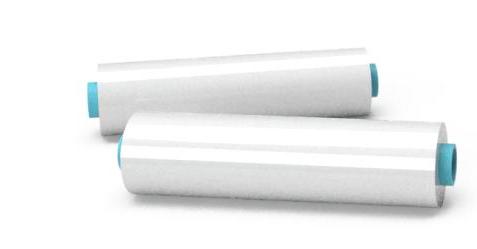
But first, let’s have a look at why stretchwrap is used: Stretchwrap is by definition a lightweight and extremely stretchable film, which is used to bind a load to its pallet. Stretchwrap keeps the products in place and prevents them from moving during transportation. It protects products against damage and increases the probability of products arriving at their destination in good condition. This improves customer satisfaction and reduces returns and refunds, and hence the business can flourish.
But first, let’s have a look at why stretchwrap is used: Stretchwrap is by definition a lightweight and extremely stretchable film, which is used to bind a load to its pallet. Stretchwrap keeps the products in place and prevents them from moving during transportation. It protects products against damage and increases the probability of products arriving at their destination in good condition. This improves customer satisfaction and reduces returns and refunds, and hence the business can flourish.
Diverse Applications
Some of the main benefits of using stretchwrap include: 1. Easy transportation
Due to their stretchable nature, they are used to wrap and cover pallets of either uniform or dissimilar shape. It is used to bind a load to the pallet to prevent movement and collapse during transit. 2. Protects against damage
Stretch films protect against dirt, dust and moisture and are used to wrap pallets in warehouses to prevent damage, and ensure they arrive in good condition at the destination. 3. Securely wrapped items
Stretchwrap clings to the pallet and keeps it secure and safe from unwanted substances and movement. Black pallet film can also be used to hide the load from view, where greater security is required.
Cost considerations
Because every operator must manually apply tension to the film to secure the load, they may over-wrap the load or wrap it loosely. Loose wrapping will almost certainly cause collapse. In the larger distribution centers, a spilled load will be rejected and sent back to the original hub, to be offloaded, restacked, and re-delivered. This is because of the health and safety issues offloading unstable and insecure pallets: people have been injured and even killed by unsafe loads that collapse during unloading. Load rejection like this takes up time, to unload and rewrap each pallet, and transport, because the lorry must return to its collection hub.
A revolutionary dispenser
Gripfilm is a revolutionary dispenser for stretch film, which is cost-effective, eco-friendly, and user-friendly. This new and advanced applicator works with a unique stretch film to reduce your packing time by 30% and your plastic usage by up to 40%. Gripfilm is the easiest applicator system in the market. Being just 800g in weight, the applicator is lightweight and has a reduced changeover time compared to the standard applicators. On top of this the applicator is magnetic so it can be stuck to any metal surfaces for quick and safe storage.
With Gripfilm, your pallets can be securely wrapped and ready for transport quickly. As less film is used there is less material to dispose of when unwrapping, and thus you can also save money on the cost of your packaging. In addition, Gripfilm reduces your business’s carbon footprint with more meterage per roll (and pallet) which therefore makes it environmentally friendly.
Unique process
Gripfilm has self-gripping properties that are achieved through a unique manufacturing process. This allows it tension itself after it has been wrapped around the pallets. It is available in black, red, green, blue, yellow tinted and clear transparent films. With this incredibly strong, puncture-resistant stretch film, you can wrap commercial pallets quickly. Moreover, the construction gives it superior strength that is used for irregular and unbalanced pallet loads. It easily wraps around the uneven edges that stick out.
In addition, thanks to the grip dispenser’s non-slip core, the application is efficient, rapid, and smooth. The Gripfilm roll can run to the core. Running to the core saves an average of 15-20% of material waste, because you are able to use all the material on the roll, which saves waste and unnecessary expense. Moreover, once the roll has finished, the roll’s core can be recycled, as it is clean cardboard.
Many users have said that the Gripfilm system is excellent with its efficiency and longer length rolls. Since Gripfilm is lightweight, it can be used to wrap packages efficiently and effectively.
Its one-hand operation provides free movement, and the ergonomic handle reduces injuries. Less effort required by the operator means that they will not tire quickly.
Reduced Risks
In addition to this, the Gripfilm applicator has a non-slip core, which means the operator does not have to bend low or overstretch to wrap the goods. Therefore, the operator can walk upright, and the chances of back, neck, shoulder, and wrist strain, as well as finger burns and hand abrasions, are reduced.
Another benefit of Gripfilm that reduces injuries is that you will always be walking forwards, and not backward. The operator can always walk forwards while using the Gripfilm applicator, instead of going slowly backwards, not being able to see where they’re going. This, in turn, increases wrapping speeds and prevents trips and injuries.
Eco-Friendly
Gripfilm allows you to use less film and reduce plastic wastage. Each roll contains at least 35% more film than conventional stretchwrap, which means that each Gripfilm roll will last longer than a standard roll. This means that you won’t need to purchase as many rolls in a year to wrap your pallets. This reduces your annual expenses, as well as your organization’s carbon footprint.Gripfilm has high load retention and punctures resistance property. The self-gripping film powerfully tightens around the load and keeps its shape even when stretched due to load movement during transportation. The contents of the pallet are kept secured and thus reducing spillage of items.
Reduced Plastic Waste
Since the roll is protected and less material is used, plastic usage will be reduced by 40 percent. In addition, using all the material on the roll can save you an additional 15-20% of your annual. Therefore, you can take control of your plastic wastage with the Gripfilm applicator.
With so many advantages, it is by far the best option for companies involved with packing pallets. It is something that every business needs to improve their packaging and achieve hassle-free storage and the transportation of pallets.
