




















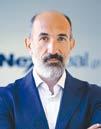
The Greek insurance market is currently entering a new era of major changes and challenges. This time, however, these developments are not driven solely by an economic crisis or a temporary circumstance. They are mainly driven by evolution itself: the evolution of technology, the economy, social conditions, and the risks that households and businesses are now called upon to face. Climate change, natural catastrophes, geopolitical uncertainty, demographic ageing, rising claims costs, and the rapid development of Artificial Intelligence are shaping an entirely new environment for insurance and reinsurance companies.
Within this complex and constantly evolving landscape, the 26th Insurance and Reinsurance Meeting in Hydra, organized by the Hellenic Association of Insurance Companies, is taking place. For more than two decades, this event has served as a stable point of reference for the Greek insurance market and as a meeting place connecting the domestic insurance community with the international reinsurance market.
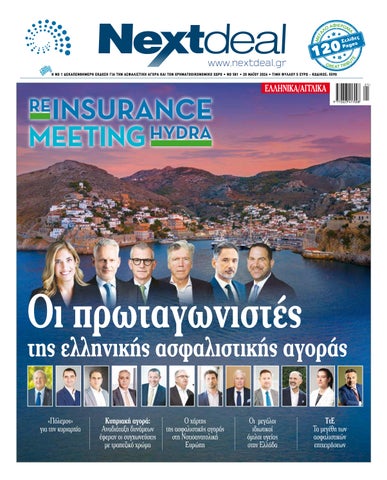
The anniversary bilingual edition of Nextdeal, which accompanies the conference every year, is not simply a record of the sector’s developments. It is a meaningful effort to promote extroversion and international outreach, aiming to showcase to the conference’s international audience the dynamics, prospects, and challenges of the Greek insurance market. Through the parallel presentation of articles in both Greek and English, we seek to build a bridge of communication between the Greek insurance community and international players in the reinsurance and financial markets.
This year’s edition features the views of leading market executives, analyses on climate change and the protection gap, discussions on private health insurance, pensions, and new investment challenges, as well as the major institutional and regulatory developments affecting the sector, including the revision of Solvency II and the growing emphasis on sustainability. At the same time, special focus is given to the insurance markets of Southeastern Europe, where Greek insurance companies are increasingly claiming a more active regional role.
The key message emerging from all these contributions is clear: the Greek insurance market now possesses the knowledge, experience, and momentum required to play a leading role in this new era. Not only as a mechanism for compensation and risk management, but also as a pillar of stability, investment, and social resilience.
For all of us at Nextdeal, this special edition represents every year a unique journalistic challenge, but also a meaningful contribution toward strengthening the extroversion of the Greek insurance market. Consistently, for many years now, we have documented the major transformations of the sector and sought to give voice to all the creative forces within the market, contributing to the public dialogue about the future of insurance. Finally, we hope that all participants in this year’s conference will make the most of these days in Hydra. To exchange ideas, discuss the major challenges facing the industry, and seek common solutions for the benefit of the market and the economy as a whole. And, at the same time, to find a little time to enjoy the unique atmosphere and exceptional beauty of one of Greece’s most beautiful islands: Hydra.


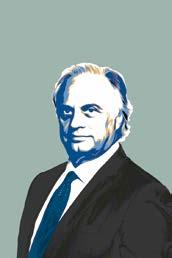
Alexandros Sarrigeorgiou Chairman, Hellenic Association of Insurance Companies (HAIC)
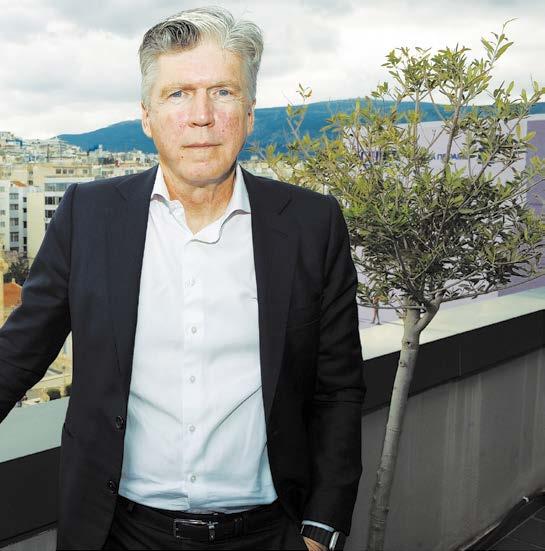
Industry has to evolve and adapt to the new needs of the society
The Insurance Industry, over time, has to evolve, transform and adapt to the new conditions, the needs of society and the circumstances of each era, says Mr. Alexandros Sarrigeorgiou, President of the Hellenic Association of Insurance Companies and Vice President of Insurance Europe, in the context of an interview with the newspaper Next Deal. He characterizes the climate crisis as the probably greatest challenge that the humanity faces today, while regarding the protection gap, Mr. Sarrigeorgiou emphasizes that this continues to expand and today is at the top of the agenda of almost all states. Responding to a relevant question, he stressed that the strengthening of the retirement income of future retirees inevitably passes through the second and third pillars. Insurance companies are actively involved in both: with group pension plans in the second pillar and with individual pension products in the third, notes the President of HAIC. What role will the insurance industry need to
play in a constantly shifting economic and social landscape?
In this landscape of constant transformation, the insurance sector is called upon to play a more substantial and dynamic role than ever before.
Developments in the Middle East remind us how fragile the sense of stability we often take for granted can be. Geopolitical tensions are not confined geographically. They affect international markets, energy costs, supply chains, and even citizens’ sense of security.
During periods of increased uncertainty, the role of institutions that reinforce social stability and resilience becomes increasingly vital. Insurance is one of these institutions.
Its importance becomes particularly evident when societies are tested, when risks cease to be abstract concepts and take on real dimensions. After all, we now live in an era where risk is more complex, more frequent, and often more costly than ever before.
Of course, risks are not new. They have always been present and always will be, just like the need for insurance. However, this does not imply that the environment remains unchanged. On the contrary, challenges are constantly evolving.
For this reason, the insurance sector must evolve, transform, and adapt to new conditions, societal needs, and the circumstances of each era. Only in this way can it continue to fulfill its role as a pillar of trust and stability in the future.
Given that the protection gap from natural disasters remains large in our country, what specific measures should be taken to strengthen insurance coverage and the resilience of the economy and society?
The climate crisis is probably the greatest challenge humanity faces today. According to a major international reinsurer, in 2025 17,200 lives were lost due to natural disasters and with economic losses totaling nearly $224 billion. Of these, only $108 billion-approximately 50%—were insured.
The protection gap therefore remains very large; in fact, it is widening and is at the top of the agenda for almost all countries.
Greece is no exception. We are experiencing floods with increasing frequency and intensity, phenomena such as convective storms and Mediterranean cyclones (medicyclones), wildfires, and other extreme events.
While we focus on these, we often overlook the “elephant in the room” for our country: earthquakes. A major earthquake could paralyze economic activity, severely burden public finances, and test the limits of social and productive resilience.
At the Hellenic Association of Insurance Companies, we systematically collect data on catastrophic events. From 1993 to 2025, 59 catastrophic events have been recorded, with more than 56,000 claims and compensation exceeding €1.3 billion in today’s prices. 2026 started with extreme weather incidents in January, with compensation estimated at over €20 million.
The insurance market fulfills its mission: it compensates those who are insured and stands by them in difficult times. However, the protection gap
Continue to page 10
The Insurance Industry has to evolve and adapt to the new needs of the society
in Greece remains large, both for households and businesses.
In recent years, the State has taken positive steps. The ENFIA (property tax) discount for homeowners who insure their properties against natural disasters is an important initiative. Similarly, the introduction of mandatory insurance for businesses against earthquakes, wildfires, and floods.
As a market, we support these initiatives; however, it is clear that additional strengthening is necessary.
For businesses, the effectiveness of mandatory insurance will be judged in practice, through meaningful inspections and cross-checks. Controls must be carried out to assess the level of compliance with this measure.
For households, the ENFIA discount has had an impact, but at a slow pace. Insurance penetration remains particularly low relative to the actual level of risk, so policies are required that will quickly and effectively increase insurance coverage rates.
Due to the increase in the population aged over 65 in the European Union, what challenges arise for pension systems and
what policies can ensure their long-term sustainability?
The increase in life expectancy is one of the most significant achievements of medical and scientific progress. Today, people can live longer, with the key objective now being that these additional years are accompanied by good quality of life and health.
In the EU, more than 20% of the population is already aged 65 and over. This percentage has increased by 2.9 percentage points over the past decade and, according to official Eurostat projections, is expected to reach 33% by 2100.
This development places significant pressure on pension systems. Traditional pay-as-you-go models are no longer sufficient on their own to ensure an adequate standard of living for future retirees.
In this context, the role of funded schemes becomes particularly important. In practice, strengthening the retirement income of future pensioners inevitably involves the second and third pillars. Insurance companies are actively involved in both: through occupational pension schemes in the second pillar and individual pension products in the third.
Although this need is widely recognized,
Greece still lags significantly behind. The comparison with other European countries is indicative. According to an OECD study, accumulated investments in funded pension schemes in Greece amount to about 1% of GDP. By contrast, in Ireland the figure reaches 26.2%, in Portugal 12.9%, while in countries such as Denmark it exceeds 200%.
This gap does not merely reflect a numerical difference. It reflects different approaches in terms of mindset, policy priorities, and institutional design. We must examine what other countries are doing and draw lessons from them.
International experience has shown that a meaningful development of these supplementary pillars depends on a stable and favorable framework, with incentives that encourage saving. Without these, progress remains limited.
At the same time, fostering a culture of retirement planning from an early age is essential. Therefore, a strategy is needed that combines education and awareness with incentives. In this way, Greece will be able to develop the second and third pillars and ensure adequate and sustainable pensions for the future.
Insurance is one of the fundamental pillars of stability in any modern economy and society. At its core lies a simple yet essential promise: to support citizens and businesses when the unexpected occurs— by managing risks, compensating losses, and ensuring the continuity of economic and social activity.
In Greece, the insurance market fulfills this role every day in a tangible and measurable way, paying approximately €3.7 billion in claims annually. This translates into more than €10 million flowing back into society every day, reaching families and businesses precisely when they need it most. Behind these figures are real stories: individuals rebuilding their lives, businesses that continue operating, and activities returning to normal.
However, the contribution of insurance extends far beyond the payment of claims. As an industry, we recognize our broader and ongoing responsibility to society. This responsibility is not merely theoretical — it is reflected in concrete initiatives that build trust, promote prevention, and strengthen societal resilience.
Based on this strategy Guided by this strategic approach, the Hellenic Association of Insurance Companies plans and carries out designs and implements its work.
Strengthening the relationship between insurance and society is a key priority, with a focus on improving awareness of insurance’s role and fostering public trust. In this context, we engage directly with citizens and actively promote insurance awareness. Through targeted campaigns, a strengthened digital presence, and—after many years—a renewed presence on television, we communicate clearly and simply why insurance matters to everyone. It is not just a financial transaction or an expense, but a vital protection mechanism that enhances protection against the unexpected.
At the same time, engaging younger generations remains a strategic priority. We aim to help young people understand how insurance helps them protect what they build and plan their future with greater confidence, while also raising awareness of the career opportunities the sector offers.
Furthermore, through educational programs and financial literacy initiatives, we cultivate informed and responsible citizens—individuals who understand risk, the value of prevention, and the
importance of long-term planning.
Furthermore, through educational programmes and financial literacy initiatives, we foster informed and responsible citizens who understand risk, appreciate the value of prevention and the importance of long-term planning.
Road safety and the prevention of traffic accidents also feature prominently in our work. This is an issue that concerns us all, as the loss of human life on the roads is unacceptable. We collaborate with the Hellenic Police on awareness campaigns and, over the past three years, have consistently supported traffic police operations through the donation of breathalysers. We believe in the value power of collaboration and remain ready to contribute to the development of a national road safety strategy.
This holistic approach reflects how we see our role: not only as a compensation provider of, but as an active partner in prevention, awareness, and the strengthening of social resilience.
Ultimately, insurance is not just about managing the next loss. It is about enabling society to move forward with greater confidence, knowing it has the tools to effectively face the unexpected. It is about empowering society to move forward with confidence, equipped to effectively respond to the unexpected.

Elina Papaspyropoulou Director General, Hellenic Association of Insurance Companies
The Greek insurance market is entering what may well be the most critical — and at the same time most promising — period of the past twenty years. On one side stand major global challenges: climate change, geopolitical instability, demographic pressures, and the rapid pace of digital transformation. On the other, even the cautious legislative initiatives introduced by the State regarding natural catastrophe coverage, combined with the gradual return of the Greek economy to growth after a decade-long crisis, are helping shape a more favorable environment for the development of the insurance sector. Together, these developments are redefining the way insurance companies operate and plan for the future.

Lampros Karageorgos Editor in chief
The outlook for the Greek insurance market is becoming increasingly attractive, something clearly reflected in the stronger presence of banks within the insurance sector, as well as in the ongoing wave of mergers, acquisitions, and strategic partnerships. Piraeus Bank’s acquisition of Ethniki Insurance, Eurobank’s acquisition of Eurolife, the cooperation agreement between the National Bank of Greece and Allianz, along with other moves expected in the near future, underline the growing belief among banking institutions that insurance will play an increasingly important role in generating revenue and expanding financial services within the Greek economy and society.
At the same time, the Greek insurance market is entering a more mature phase. Despite its relatively small size, it now possesses valuable expertise that is gradually expanding beyond Greece’s borders. This is already evident through the regional expansion of companies such as Hellas Direct and, more recently, Interamerican’s entry into the Romanian insurance market.
The strengthening role of private insurance is also reflected in the sector’s expansion into healthcare services. Generali’s acquisition of Euroclinic is a characteristic example, acting as a catalyst for reshaping the relationship between insurance companies and private hospitals, while accelerating the creation of new healthcare ecosystems.
This special edition of NextDeal for the 26th International Insurance and Reinsurance Conference in Hydra highlights these important developments, while also focusing on the major institutional and regulatory changes affecting the sector, including the revision of Solvency II, the growing emphasis on sustainability, and the need for new investment tools. Insurance companies are now expected to act not only as providers of protection, but also as powerful institutional investors supporting the real economy, the green transition, and innovation.
The real question today is no longer whether the market will change, but who will emerge as the leading players of this new era.
Enjoy your reading.

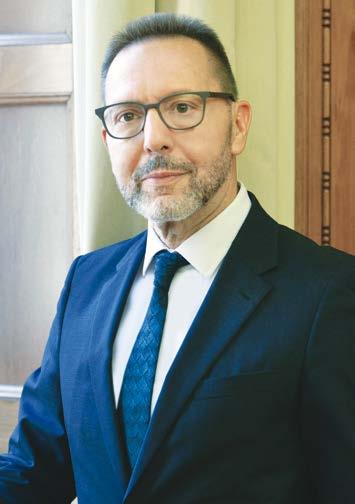
Yannis Stournaras Bank of Greece Governor

The Greek Insurance Market is characterized by significant concentration, especially in companies that carry out Life Insurance operations and in companies that simultaneously carry out Life and Non-Life insurance, as the five largest of them hold 87% of the relevant Market, in terms of technical provisions, while the five largest Insurance Companies that operate in Non-Life Insurance, in terms of gross written premiums, hold a share of 61% of the relevant Market.
According to the Financial Stability Report, released by the Bank of Greece, gross written premiums in Life Insurance in 2025 amounted to 2,9 billion Euros, an increase of 2% compared to 2024. Of the above amount, 1,4 billion Euros concern investment-linked contracts, representing 48% of total gross written premiums in Life activities, compared to 47% in 2024.
At the same time, gross written premiums in with-profit policies increased by 4% while other Life Insurance decreased by 16%. Premiums in Non-Life insurance activities amounted to 2,9 billion Euros in the same period, an increase of 10% compared to 2024.
Of this amount, a significant share is attributable to Land Vehicle Third Party Liability insurance (28%), Fire insurance (22%) and Hospital Expenses insurance (17%), with premium changes, compared to 2024, of +8%, +11% and +10% respectively.
In 2025, contractual claims, without taking into account reinsurance recoveries, amounted to 2,3 billion Euros for Life Insurance, presenting a decrease of 4% compared to 2024, and to 1,1 billion Euros for Non-Life Insurance, increased by 6% compared to 2024.
As far as Non-Life Insurance is concerned, the market loss ratio in 2025 reached 51%, as in 2024, while the expense ratio (management and commissions) reached 48% (compared to 47% in 2024).
It should be noted that the financial figures included concern only the 31 companies, which are subject to the financial supervision of the Bank of Greece under Solvency II.
At 4,2 billion Euros, the equity capitals of insurance companies, increased by 11%
The total assets of Insurance Companies supervised by the Bank of Greece, amounted to 22,1 billion Euros in December 2025, increased by 4% compared to December 2024. Investments in government bonds amounted to 7,3 billion Euros (33% of total assets) and in corporate bonds to 3,1 billion Euros (14% of total assets). Regarding their credit rating, almost all government bonds and respectively 90,6% of corporate bonds had a credit rating of BB- and above. In addition, an amount of 6,3 billion Euros (29% of total assets) concerned investments in insurance whose investment risk is borne by the insured. Accordingly, in 2025 the total liabilities of insurance companies amounted to 17,9 billion Euros (from 17,5 billion Euros in December 2024), with total technical provisions amounting to 16,1 billion Euros for the same period (from 15,8 billion Euros in December 2024), of which 12,5 billion Euros are related to Life insurance and 3,5 billion Euros to Non-Life Insurance. Out of the technical life provisions, 45% concerns investment-linked Life Insurance (compared to 40% in December 2024).
The equity capitals of Insurance Companies amounted to 4,2 billion Euros, increased by 11% compared to December 2024. The total Solvency Capital Requirement (SCR) amounted to 2,3 billion Euros, with total eligible equity of 3,9 billion Euros. As far as the quality of eligible equity in the Insurance Market is concerned, it is classified in the highest quality category (Category 1) at a rate of 92%.
At the same time, all insurance companies have a Solvency Capital Requirement ratio at a level significantly higher than 100%. The Minimum Capital Requirement (MCR) in the entire Insurance Market was set at 0,8 billion Euros, with the corresponding total eligible equity capitals amounting to 3,7 billion Euros.
The Solvency Capital Requirement reflects the capitals that an insurance company must have, in order to be able to absorb losses at a confidence level of 99,5% and with a horizon of
one year.
The Minimum Capital Requirement reflects the capitals that an insurance company must have, in order to be able to absorb losses at an 85% confidence level and with a horizon of one-year, while it represents a level of capitals, below which the interests of insurance policyholders would be exposed to serious risk if the company was allowed to continue operating.
Insurance companies presented changes in their SCR coverage ratio in 2025, however they all remain solvent. Companies appearing above the red line show an improvement in their SCR coverage ratio in 2025 compared to the previous year (45% of all insurance companies), while companies below, present
a deterioration.
According to the Bank of Greece, no significant changes were observed in the structure of the Greek Private Insurance Market in 2025, with 34 insurance companies operating in it. These companies are categorized based on their operating license and insurance operations, as follows: Two Life insurance companies, 19 Non-Life insurance companies and 13 companies carrying out both Life and NonLife insurance activities (including Life Insurance companies which, from Non-Life insurance sector, only carry out operations concerning exclusively “Accident” and “Health”). Of the above 34 insurance companies, 31 are operating and supervised in accordance with the European Solvency II Directive, which
applies to all European Union (EU) countries since 1 January 2016, while three companies are exempt, due to their size, from the application of certain requirements concerning all
three main pillars of Solvency II. Out of the 31 insurance companies, which are subject to the provisions of Solvency II, 11 belong to insurance groups having their
Source: Bank of Greece
headquarters abroad, 7 belong to insurance groups subjected to the supervision of the Bank of Greece and the remaining 13 do not belong to a group having its headquarters in the EU. Also, 8 insurance companies having their headquarters in Greece, operate in other EU countries as well, under the freedom to provide services regime. In addition, according to the most recent available data from the European Insurance and Occupational Pensions Authority, in December 2024, 211 insurance companies having their headquarters in another EU Member-State were also operating in Greece, under either the freedom of establishment (branch) or the freedom to pro-
vide services regime and are supervised, in terms of their financial situation, by the competent supervisory authorities of their countries of origin.
In 2024, the annual premium production of these companies amounted to 416 million Euros for branches and 1,219 million Euros for activity through the free provision of services, or 6% and 17% respectively of the entire Greek Insurance Market.
Source: Bank of Greece ON 31.12.2025, 27 Occupational Insurance Funds were operating in Greece from the public sector, shipping, banking and other professional sectors (such as economists, geotechnical engineers, police officers, firefighters and port authority officers). The total assets of the Occupational Insurance Funds supervised by the Bank of Greece amounted to 620,4 million Euros, increased by 22,5% compared to December 2024. Out of the total assets, 102,1 million Euros (16,5%) were placed in bonds (compared to 131,5 million Euros on 31.12.2024), of which 83,7 million Euros in government bonds (compared to 112,4 million Euros on 31.12.2024) and 18,4 million Euros in corporate bonds (compared to 19,1 million Euros on 31.12.2024). Also, 467,4 million Euros (75%) were placed in collective investment undertakings (compared to 331,9 million Euros on 31.12.2024). Total liabilities amounted to 600,7 million Euros (compared to 489,9 million Euros on 31.12.2024), with technical provisions amounting to 590,4 million Euros (compared to 471,1 million Euros on 31.12.2024), i.e. 98,3% of total liabilities.
It should be noted that these companies have a large market share in the land vehicle liability insurance sector. In 2025, their share (in number of vehicles) decreased and amounted to 18%, from 22% in December 2024.

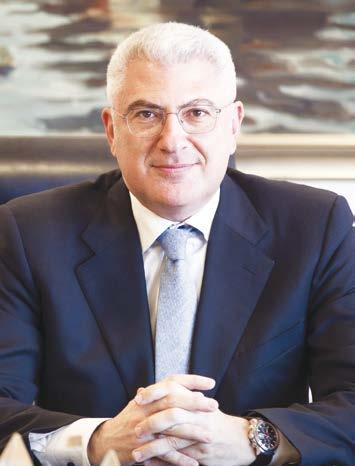
Stavros Konstantas, Director, Directorate of Occupational and Private Insurance Supervision, Bank of Greece
συστημικούς κιν-
δύνους και να ενδυναμώσει την ευρωπαϊκή
Private insurance market remains at the center of significant changes, as it adapts to an increasingly dynamic financial, social, and technological environment. Rising compensation costs, the growing impact of climate change, geopolitical uncertainty, and the rapid pace of digital transformation are only some of the challenges that decisively affect the operation, resilience, and strategic planning of insurance undertakings.
Despite the diversity of these challenges, almost all converge to a common component: their economic dimension, as the role of the insurance industry in the economy is twofold.
On the one hand, insurance undertakings provide protection against a wide range of risks assumed on behalf of policyholders, thereby safeguarding economic prosperity and business continuity. By undertaking these risks, households and businesses pursue their activities with greater security, stability and confidence in the future. On the other hand, the contribution of private insurance to economic growth extends beyond risk coverage to the financial function of the insurance industry. The substantial funds accumulated through insurance premiums are channeled into the financial system and the wider economy, placing insurance undertakings among the most significant institutional investors. These two complementary functions position the Greek insurance market as a strategic driver of economic growth and financial stability.
At the institutional level, the forthcoming national transposition of the revised Solvency II Directive in 2026 is expected to have significant implications for both the insurance market and the financing of the European economy.
In particular, the revised framework reinforces the principles of proportionality, sustainability, and market stability by reducing supervisory requirements and administrative burdens for small and non-complex insurance undertakings, lowering operational cost associated with regulatory compliance while simultaneously freeing up resources that can be directed towards investment, innovation, and growth.
At the same time, the revised framework
introduces incentives for the accumulation of surplus own funds, aimed at enhancing competitiveness and risk-taking capacity, while enhanced capital flexibility is also expected to increase insurers’ ability to undertake longterm investments in the real economy -including infrastructure projects, the green transition, and sustainable development initiativeswhile broadening their investment opportunities and improving returns.
Furthermore, the revision of the supervisory framework enhances cooperation among supervisory authorities in relation to cross-border activities and group supervision, which is expected to strengthen market confidence, reduce systemic risks, and further reinforce the resilience of the European insurance market.
In addition, new regulatory requirements are being introduced to address emerging risks, including the preparation of liquidity and viability plans, as well as the incorporation of climate-related scenarios into the Own Risk and Solvency Assessment (ORSA). These provisions enhance the long-term resilience of the insurance sector against both financial and environmental risks.
Equally significant at the institutional level is the forthcoming transposition of the Insurance Recovery and Resolution Directive (IRRD), which further highlights the critical role of the insurance sector in supporting overall economic activity and preserving financial stability.
The contribution of private insurance to the growth of the Greek economy is also expected to be reinforced through the Savings and Investment Union (SIU), a strategic European Union initiative designed to channel private savings more effectively into productive investments, with the goal of supporting innovation as well as the green and digital transitions. In this context, insurance undertakings are expected to play an increasingly important role as key institutional investors, given that they manage substantial long-term capital and investment portfolios. In this way, acting both as investors and as providers of savings and investment products, insurers can contribute significantly to the financing of the real economy and contribute to the stability and resilience of the financial system.
Despite the geopolitical tensions of recent years and their obvious impact on price stability and economic growth, domestic credit institutions continue to demonstrate positive strong
resilience and maintain positive performance. In combination with their strategic focus on revenue diversification, the accelerated digitalization of banking services, and the adoption of advanced technological tools, credit institutions are well positioned to play a pivotal role in strengthening the insurance market and addressing the low level of insurance penetration.
Strengthening cooperation between insurance undertakings and credit institutions through bancassurance models can make a substantial contribution to the expansion of the insurance market. By leveraging banks’ extensive distribution networks alongside the steadily increasing demand for integrated financial and insurance solutions, such partnerships can improve accessibility, enhance the overall customer experience, and create important synergies across the financial system. Regarding long-term strategic partnerships between insurance undertakings and credit institutions, the restructuring and adjustments observed in recent years now appear to have been smoothly completed, with the expectation that they will unlock the potential of such collaborations while ensuring the uninterrupted operation and efficiency of the distribution networks.
At the same time, the Greek insurance market is going through a period of profound transformation, during which significant challenges coexist with substantial opportunities for renewal and stronger long-term growth. Compliance with the evolving regulatory framework, the integration of digital technologies into business operations and insurance products, the adoption of a holistic approach to risk management, the continuous upgrading of human capital and professional skills, as well as the development of synergies within the broader financial system are all key factors for enhancing the contribution of private insurance to the Greek economy.
In this context, the Bank of Greece plays a decisive institutional role in safeguarding the smooth functioning of the insurance market as an integral component of the financial system, protecting policyholders, and preserving financial stability. At the same time, it contributes to the establishment of a stable, transparent and credible supervisory framework which strengthens the development of private insurance and supports its contribution to the Greek economy.
◗ NN Hellas

τέλος του 2020.
δημιουργεί ένα νέο πρωτοποριακό για τα ελληνικά δε-
δομένα οικοσύστημα υγείας με την εξαγορά της Ευρωκλινικής και ενδεχομένως άλλων μονάδων στο μέλλον. Η Generali είναι σίγουρα ένας από τους βασικούς διαμορφω-
της μελλοντικής ελληνικής α-

The seven leading insurance companies in Greece in terms of production are expected, in the coming years — if not months — to reshuffle once again the deck of the Greek insurance market. Each in its own way operates in a period widely recognized as one of significant transformation. These are changes that will define the profile of the market for many years to come.
Five of these companies are members of international insurance groups, which are well aware — through their parent companies — that their objective in every market is to be positioned within the top five. Therefore, at present, there are seven players (including the two bank-owned insurance companies) competing for the five leading positions in the Greek market. Many developments in the coming years will be shaped within this framework.
First, the largest insurance company in terms of production, NN Hellas, with gross written premiums of €1.03 billion and a particularly strong distribution network, is known to be seeking a new partner in the bancassurance sector, as its cooperation with the Piraeus Bank Group is set to conclude within the year.
The “flying Dutchmen” of NN are expected to find a successor to Piraeus and define new growth targets, either with Credia Bank, as has been speculated, or with another structure. In practical terms, the company remains strong and represents a significant asset of its Dutch parent group.
The recent sales conference demonstrated that the “passion” and “drive” of the distribution network remain a powerful weapon for NN Hellas in its next phase. The
CEO of NN Hellas, Filippa Michali, emphasized that the greatest challenge for the company is not only maintaining its growth trajectory, but also preserving its identity and the human relationship with the customer.
Ethniki Insurance aims to return to the top position in the market. It was founded on 15 June 1891, meaning that in 2026 it will complete 135 years of operation as an insurance company.
For more than 130 years it stood alongside the National Bank of Greece, before being sold in 2021 to the CVC fund. With its acquisition by the Piraeus Bank Group, it is entering a new historical phase, characterized by the stability of the ownership structure, as the bank is not a fund and has deep knowledge of the benefits of bancassurance — a model that Piraeus Bank has been successfully developing in Greece since the early 2000s.
In the coming years, we will likely see a “new” Ethniki Insurance aiming for the top. A strategic target of €1.6 billion has already been officially announced within the framework of the Piraeus Group’s 2026–2030 strategy.
The “new” Ethniki Insurance implies a new health insurance policy, supported by the affiliated healthcare group HIMIΘEA (Errikos Dunan, etc.), a more efficient sales network, and substantial utilization of bancassurance. At the same time, management under Mr. Dimitris Mazarakis has stated its readiness to pursue opportunities for non-organic growth (acquisitions), as the company is becoming a dynamic player in the evolving Greek insurance landscape.
Generali Hellas holds third place, having entered the top three for the first time, and the CEO of the company, Mr. Panos Dimitriou, does not hide that the ultimate goal is the top position.
The “lion” of Generali appears ready to consolidate its position as one of the main protagonists of the Greek insurance market, with widespread expectations that it is also targeting further acquisitions.
“Our goal is the top, and we will reach it — do not ask me for more details,” Mr. Dimitriou reportedly stated recently at a company event, leaving all options open, including a potential new acquisition, following the AXA acquisition at the end of 2020.
At the same time, the company is building a pioneering healthcare ecosystem for the Greek market through the acquisition of Euroclinic, and possibly additional units in the future. Generali is undoubtedly one of the key architects of the future Greek insurance market.
The Eurolife Group is undergoing restructuring, as Eurolife Life has been fully transferred to Eurobank, while 80% of Eurolife General Insurance has been acquired by Fairfax.
Eurobank is expected to further expand bancassurance, as well as the expansion of its life insurance business through its distribution networks, while the presence of Mr. Nikos Delendas as CEO of Eurolife Life serves as a guarantee for a smooth transition.
On the other hand, the non-life insurance company under Fairfax control — a group well known for its global specialization in this sector — is expected to implement a new growth strategy aimed at increasing market share and strengthening profitability. In addition to a possible name change, a new expansion strategy is also expected, including potential acquisitions. With Executive Chairman Mr. Alexandros Sarigeorgiou and CEO Mr. Vasilis Nikiforakis, the company is expected to play a leading role in the coming years in the Greek insurance market and to set its course toward the top positions, with a strong emphasis on profitability, further strengthening

Therefore, at present, there are seven players (including the two bank-owned insurance companies) competing for the five leading positions in the Greek market. Many developments in the coming years will be shaped within this framework
Fairfax’s presence in the Greek insurance sector.
Interamerican is now operating under an ambitious strategy, aiming to serve as the hub of its parent company Achmea for expansion into Southeast and Central Europe, primarily through Anytime. It has already entered the Romanian market and is preparing to expand into additional countries. It is mainly active in non-life insurance and health, and has developed healthcare units in the
private health sector. It was a pioneer in the Greek market with the creation of Euroclinic, which was later sold to a fund and recently came under the control of Generali.
It also operates a comprehensive primary healthcare system (Medifirst), while seeking partnerships in bancassurance and continuing to support traditional distribution channels. It is a characteristic example of a multichannel insurance distribution model, as in addition to Anytime it relies on both brokerage and agency networks. Under CEO Mr. Giannis Kantoros, it aims to further
strengthen its market position and consolidate its presence in Central and Southern Europe.
The “eagle” of the Allianz Group, following its agreement with the National Bank of Greece, is now ready to fully spread its wings in the Greek insurance market.
With a presence in Greece since the 1980s and substantial operations since 1999 following the absorption of Helvetia, Allianz followed a strong upward trajectory that peaked in 2021–2022 with the acquisition of European Reliance for approximately €280 million, including the public tender offer to minority shareholders.
Recently, it announced a major new move: an agreement with the National Bank of Greece, which will acquire a 30% stake in Allianz’s share capital.
It could be said that the German insurance group, the largest in Europe, is closing one chapter and opening a new one of more integrated presence in the Greek market, clearly aiming for leadership and, in the first phase, a
position in the top five. With €444.5 million in production in 2025 under the management of Mr. Vasilis Christidis, and with expected strengthening of bancassurance, it is well positioned to aspire to higher rankings.
ERGO completes the group of seven. It is a subsidiary of the German ERGO Group and part of Munich Re, one of the world’s leading reinsurance groups. In 2025, under the management of Mr. Errikos Moatsos, it recorded growth above the market average at 10.3%, surpassing the €300 million mark and reaching €304.1 million compared to €275.7 million in 2024.
The company is also seeking a banking partner for its bancassurance expansion, as it appears unlikely that its cooperation with Piraeus Bank will continue, while it simultaneously relies on a strong network of insurance intermediaries. Backed by a very large parent group, it has all the prerequisites to play a leading role in the Greek insurance market.



σεις Υγείας και Περιουσίας. Η Croatia Osiguranje διατηρεί ηγετική
Euroherc, Adriatic, Allianz Hrvatska και Generali Osiguranje.
, η α-
(BAM),
Group, Asirom VIG
Generali Romania Asigurare Reasigurare.
Edited by LAMPROS KARAGEORGOS
The insurance markets of Southeast Europe continue to demonstrate strong growth momentum despite inflationary pressures, geopolitical uncertainties, and rising claims costs. From Croatia to Serbia, Romania, and Turkey, most markets are recording double-digit or high single-digit growth rates, with a common characteristic being the dominance of non-life insurance, particularly motor insurance.
In CROATIA, total premium production reached EUR 1.92 billion in 2024, representing an increase of 9.9% compared to the previous year. Non-life insurance grew by 11.2%, while life insurance increased by 4.2%. Motor Third-Party Liability insurance remains the dominant line of business, generating EUR 572.9 million in premiums, while health and property insurance also recorded significant growth. Croatia Osiguranje maintains its leading position with a market share of approximately 28%, followed by Euroherc, Adriatic, Allianz Hrvatska, and Generali Osiguranje.
In BOSNIA AND HERZEGOVINA, the insurance market recorded total premium production of BAM 1.085 billion in 2024, up by 10.3%. Non-life insurance accounts for more than 80% of the market, with compulsory motor insurance remaining the main growth driver. ASA Central Osiguranje emerged as the country’s largest insurance company, while Adriatic, Euroherc, Uniqa, and Triglav also maintain a significant presence. Despite the positive performance, insurance penetration remains low, particularly in the life and health insurance segments.
ROMANIA is also evolving into one of the most important insurance markets in Central and Eastern Europe. Total premium production reached RON 25.8 billion in 2025, recording growth of 10%. The market continues to rely primarily on non-life insurance, especially the RCA segment, namely compulsory motor third-party liability insurance. Groupama Asigurări leads the market with a share exceeding 22%, followed by Allianz-Țiriac, Omniasig Vienna Insurance Group, Asirom VIG, and Generali Romania Asigurare Reasigurare.
In BULGARIA, both non-life and life insurance recorded significant growth in 2025. The
The region’s insurance markets display common trends: the dominance of non-life insurance, the growing importance of private health insurance, the expansion of investment and pension products, and increasing digitalization. At the same time, insurance penetration remains below the European Union average, creating significant room for further growth in the coming years
non-life market exceeded BGN 4.38 billion, driven primarily by motor insurance, while life insurance premiums reached approximately BGN 870 million. In non-life insurance, Euroins holds the leading position, followed by Bulstrad VIG and DZI. In the life segment, DZI Life, Bulstrad Life VIG, and Allianz Bulgaria Life dominate the market. Unitlinked products and health insurance are experiencing particularly strong growth, reflecting the market’s gradual maturation.
The TURKISH insurance market is also experiencing impressive growth and is now considered one of the fastest-growing markets in the region. In 2024, total premium production increased by 74%, reaching TRY 838.7 billion, while insurance penetration rose to 2.48% of GDP. Natural catastrophe insurance and the private pension system BES play a decisive role in market expansion, with the system now exceeding 17 million participants. Türkiye Sigorta remains the market leader, while Allianz, Anadolu Sigorta, and Aksigorta also maintain strong positions.
NORTH MACEDONIA also recorded strong growth in 2024, with total premium production increasing by 11.3% to MKD 15.97 billion. Life insurance expanded faster than non-life insurance, while particularly strong growth was recorded in private health insurance and unit-linked investment products. The market continues to depend heavily on motor insurance, which accounts for nearly 46% of total premium production.
In ALBANIA, the insurance market continued its upward trajectory in 2025, with total premium production reaching ALL 27.09 billion, up by 10.5%. Non-life insurance remains dominant; however, life insurance is record-
ing even higher growth rates. Sigal Insurance Group remains the market leader, while Albsig, Eurosig, and Sigma Vienna Insurance Group also maintain a strong presence.
In SERBIA, the insurance market recorded growth of 8.5% in 2025, with total premium production reaching RSD 143.8 billion. Nonlife insurance represents 83.3% of the market, while private health insurance and casco insurance are experiencing particularly strong growth. Dunav Osiguranje remains the market leader with a share exceeding 26%, followed by Generali and DDOR. The market displays a high degree of concentration, as the five largest insurance companies control nearly three-quarters of total premium production.
MONTENEGRO, although a smaller market, is also recording steady growth. Total premium production reached EUR 125.4 million in 2025, representing an increase of 9.65%. Non-life insurance accounts for more than 81% of the market, with MTPL insurance remaining the dominant segment. Lovćen Osiguranje remains the country’s leading insurance company, followed by Sava Osiguranje and Uniqa. In life insurance, Wiener Städtische Životno Osiguranje maintains its leading position.
Despite differences in size and market maturity, the region’s insurance markets display common trends: the dominance of non-life insurance, the growing importance of private health insurance, the expansion of investment and pension products, and increasing digitalization. At the same time, insurance penetration in most countries remains below the European Union average, creating significant room for further growth in the coming years.
Ms Marina Nikolaou, Chief Insurance Business Officer of Credia Bank, characterizes the combined provision of banking and insurance services as a strategic necessity for modern financial institutions, in an interview with the newspaper Next Deal. She emphasizes that Credia Bank offers its customers a unified security experience and points out that the Bank has entered a phase of redesign and full development.
How important is it for a banking group to offer insurance products alongside its banking services?
The integrated provision of banking and insurance services has become a strategic imperative for every modern financial institution.
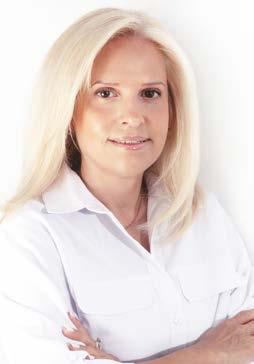
Marina Nikolaou Chief Insurance Business Officer
Customers benefit on multiple levels: convenience, transparency, efficiency, and, above all, access to cohesive solutions tailored to their needs. For example, a customer with a mortgage can simultaneously protect both their home and their loan repayments against unforeseen events. Similarly, a business owner who relies on the Bank for financing can also insure their premises or secure liability coverage.
At CrediaBank, we do not simply offer products; we provide a seamless experience of protection and financial security.
We support our customers at every stage of their lives. From purchasing their first home and covering a vehicle, to safeguarding their health and income. In this way, we act as a trusted partner in managing their personal and family wellbeing. At the same time, customers benefit from expert guidance. Our people understand each customer’s financial profile and needs and can recommend insurance solutions that genuinely fit their circumstances, without unnecessary coverages or protection gaps.
What insurance products does CrediaBank currently offer?
Today, CrediaBank offers a comprehensive range of insurance solutions covering virtually every aspect of an individual’s and a business’ protection needs.
In the areas of life and health insurance, we provide programs designed to ensure financial stability during difficult times, addressing needs such as hospitalization, income loss and long-term care. Through our partnerships with leading insurance providers, our customers gain access to extensive networks of hospitals and medical services that meet the highest quality standards.
In property insurance, we offer flexible solutions that can be tailored to the needs of both individuals and businesses seeking to protect their assets and ensure business continuity. We also provide loan protection products, helping customers and their families avoid financial strain in the event of income loss, illness or other unforeseen circumstances. Our objective is to deliver comprehensive, reliable and accessible solutions, always placing people, rather than products, at the center.


όπως ασφάλειες Ζωής,
και Γενικών Κλάδων, αλλά και λύσεις αποταμίευσης και επενδύσεων.
Οι ασφαλιστικές συνεισφέρουν την τεχνογνωσία τους στον ασφαλιστικό τομέα, αναλαμ-

By GEORGE KALOUMENOS
Extremely bullish seem to be the prospects for bancassurance in Greece, as within the last year four very important deals have been made between the 4 four systemic banks and leading insurance companies, showing that bancassurance operations will constitute a strategic pillar of growth for both banks and insurance companies in the coming years.

The most recent “hit” in the market was the agreement for the acquisition of 30% of Allianz European Credit, by the National Bank, which includes exclusive cooperation in Bancassurance for at least 10 years.
The deal between National Bank and Allianz is a win-win agreement, since the former acquires an insurance company that, after the integration of European Credit (merged with Allianz in 2022), reached a production of 450 million Euros, while the integration with the NBG network could very soon boost this figure to levels of over 600 million Euros.
This way, National Bank will also have a permanent partner in Bancassurance, by acquiring the 5th largest insurance company in Greece, as is already the case with Piraeus Bank, which owns Ethniki Insurance, Alpha Bank with Alpha Life, and Eurobank with Eurolife FFH.
Now we wait to see what Credia Bank and Optima Bank will do, which still do not have a permanent partnership with any insurance company, but they will certainly not going to sit on their hand, standing by and watching the developments.
As for Credia Bank, it has already expressed a strong interest in enhancing its position in Bancassurance, without currently having in its immediate plans the acquisition of a stake in an insurance company. And this, while it is oriented towards a model of cooperation with many insurance companies, offering products to both individuals and businesses.
Optima Bank, for its part, although it did has not shown any activity in bancassurance until recently, it lately added insurance operations
to its scope of operations, according to the statements of its Administration, on the sidelines of the annual General Meeting of Shareholders, held on May 5.
As for whether it will operate through collaboration with insurance companies or through acquisition, no specific decision has been made so far, but what is important here, is that it is also entering the “game” of bancassurance services, further intensifying the existing competition.
Joint bancassurance platforms are created
However, collaborations between banks and insurance companies are significantly boosting revenues, the as market penetration in life, health and unit-linked products increases, while new platforms and agreements are expected by 2027.
The partnerships aim to create an integrated bancassurance services model, which will go beyond a simple product distribution agreement.
Through the banks' physical and digital channels, customers will gain broader access to insurance and savings products, such as life, health and general insurance, as well as savings and investment solutions.
Insurance companies contribute their expertise to the insurance sector, undertaking product development and insurance risk management, while banks will make the most of their extensive network and digital capabilities for the products distribution.
A typical example of the momentum that
can be created by the integration of banking networks with those of insurance companies, is the performance of Ethniki Insurance in 2025, which more than tripled its profits to 48 million Euros, from 15 million Euros in 2024, while not even a year had passed since March 2025, when the agreement with Piraeus Bank was announced.
In any case, indicative of the positive climate in the market is the fact that income from bancassurance is constantly increasing, boosting the profits of banking groups. Unitlinked investment programs are at the forefront, as banks promote insurance products linked to investments.
Digital transformation is expected to play a key role in this development, as new digital platforms are being prepared, such as this of Piraeus with Ethniki Insurance, expected to be ready in 2027, for better promotion of products.
Despite digitalization, market players point out that the specialization of bank employees remains a critical factor for the success of the model. Bancassurance is expected to remain a strong growth driver, as banks leverage their customer base to provide insurance solutions.
In general, the collaborations of systemic banks with insurance companies are redefining the market map, transforming banks from simple distributors into key players in the insurance industry. This trend of banks' return to insurance, aims to capitalize on their customer base and increase commission income.
ΑΣΦΑΛΙΣΤΙΚΕΣ

του εσωτερικού ανήλθαν σε 2.312 εκατ. ευρώ από 1.821 εκατ.

Insurance companies, the largest domestic long-term institutional investor, are locked into a relatively small stake in Greek assets.
The total investment portfolio of insurance companies in Greece amounts to 22 billion Euros. Out of this amount, only 5,8 billion Euros correspond to investments in Greek assets.
As insurance market executives emphasize, it is necessary to amend the Solvency II supervisory framework in order for domestic insurance companies to finance significant investments for the benefit of the Greek economy, with the aim of increasing their participation in Greek bonds and stocks.
Insurance companies are the largest long-term institutional investors that contribute to the stabilization of markets and provide liquidity, even in times of crisis,
investing 17,4 billion Euros or 9,6% in GDP terms.
Mutual funds attracted insurance companies for placements in 2025, which increased by 1,154 billion Euros, compared to 2024.
The total value of insurance companies' assets in 2025 increased by 3,96% or by 840 million Euros and stood at 22,064 million Euros, compared to 21,224 million Euros in 2024.
The value of total investments in mutual fund shares increased by 18,56%, to 7,373 million Euros, compared to 6,219 million Euros in 2024. Investments in domestic mutual funds amounted to 2,312 million Euros, from 1,821 million Euros, while investments in foreign mutual funds amounted to 5,061 million Euros from 4,398 million Euros.
The value of insurance companies' total investments in debt securities decreased by 2,24%
to 10,629 million Euros compared to 10,873 million Euros.
Domestic placements decreased to 2,631 million Euros, from 2,866 million Euros, while foreign
placements decreased less amounting to 7,998 million Euros, from 8,007 million Euros in 2024.
The value of total investments in shares and other means of
ownership increased by 6,27% to 1,034 million Euros, compared to 973 million Euros in 2024.
Investments in domestic shares increased to 497 million Euros, from 483 million Euros and investments in foreign shares to 573 million Euros, from 490 million Euros.
Total deposits of insurance companies increased by just 3 million Euros and amounted to 558 million Euros.
Deposits in domestic credit institutions decreased by 61 million Euros and amounted to 372 million Euros, while deposits in foreign credit institutions increased by 29 million Euros and amounted to 186 million Euros.
Equity increased to 3,897 million Euros, compared to 3,462 million Euros in the previous quarter. Insurance technical provisions increased by 62 million Euros and amounted to 16,056 million Euros.
Euronext Athens
Euronext Athens
With Euronext Athens, as it is the new name of the Stock Exchange, international investors no longer see the Greek Stock Market as a recovery story, but more as an investment destination. The Greek market is changing “track”, after it has been tied to the Euronext chariot and rose to the “Super League 1” of the developed markets.
Now, all major international index providers (S&P Dow Jones, FTSE Russell, MSCI and STOXX) recognize Greece as a developed market. This is another important milestone for the Greek capital market, a development with a strong symbolic and substantive footprint, reflecting years of reforms, improved market quality and strengthened investor confidence.
Greece is returning to the core of developed economies, not only at the level of government bonds, but also at the level of the capital market. This development strengthens the country's credibility, attracts investment capi-
tals, expands the base of international investors and creates new financing prospects for Greek businesses.
The transition from the emerging to the developed market status will have the following benefits:
• Access to global capital: Unlocks trillions in assets under management from global funds mandated to invest exclusively in developed markets.
• Expansion of investor base: Broadens shareholder mix by attracting high-quality long-term institutional “power players”.
• Confirmation of structural reforms: Acts as a definitive “approval” for the decade-long modernization of the Greek economy and market.
• Increase of passive flows: Triggers mandatory purchases from huge ETFs tracking FTSE, MSCI and S&P developed market indices.
• Increased company visibility: Enhances global analyst coverage and puts listed Greek companies on the radar of international port-
folio managers.
• Improved flow quality: Shifts market activity from speculative, highly volatile trading to stable, institutional placement.
• Coordination with Investment Grade: Consolidates Greece’s dual position as a developed jurisdiction for both government bond and equity markets.
• Higher transparency standards: Enforces improved ESG and transparency protocols, aligning ATHEX companies with international best practices.
The
With the integration of the Athens Stock Exchange into the Euronext ecosystem, which is expected to be completed in June 2027, one of the leading market infrastructures in Europe, through the Euronext Single Order Book, Athens will be connected to a deep, pan-European liquidity portfolio, offering improved price formation, spreads and execution quality,
while the transition to a single clearing/settlement framework will optimize post-trade operations and enhance market efficiency.
One of the biggest moments, perhaps the biggest, in the history of the Greek Stock Exchange is its inclusion in the Euronext Group, a market that is twice the size of the London Stock Exchange. The single European integrated market of Euronext carries out transactions of approximately 12 billion Euros per day, more than double the number of transactions carried out in London.
The acquisition of ATHEX by Euronext allows participants in the Greek financial markets to join a network of over 1.800 listed companies, with a total market capitalization exceeding 6 trillion Euros.
What its inclusion in the Euronext bandwagon brings, is a connection to a pan-European, global market.
Greek companies, regardless of their size, will gain increased visibility and access to Europe's largest pool of liquidity.




The first effects of the rise in energy prices on the Greek economy are now visible. Inflation… jumped to 5,4% in April from 3,9% in March. The effects of the war are also leading to a downgrade, as far as estimates for Greek growth are concerned. The economic staff is revising downwards the forecasts for the growth of the Greek economy, as GDP for 2026 is now estimated at 2% from 2,4%, in an environment of increased uncertainty, due to the energy crisis and geopolitical developments in the Middle East.
At the same time, there are growing concerns about stagflation in Europe, leading the government to a change of strategy, focusing primarily to the boost of investments and the maintenance of a stable growth rate in the coming years.
A key factor in the new estimations is the rising in energy prices. The baseline scenario foresees the Brent crude oil average price at $89 per barrel in 2026, up from $62 foreseen in the budget six months ago. However, instability in the Middle East has already pushed prices closer to $120 per barrel.
The military events in the Middle East are leading to a slowdown in Greek growth and a strengthening of inflationary pressures, affecting multiple channels of the Greek economy: energy, banks, industry, tourism and exports.
Greece remains a net importer of energy goods, which means that any increase in oil and gas prices burdens the trade balance and limits growth potential. According to analyses, for every $10 increase in oil prices, Greek GDP is negatively affected by 0,15%.
The revision of growth forecasts for 2026 marks a transitional period for the Greek economy, with the government now systematically investing in public and European co-financed investments, in order to ensure a stable growth path in the coming years, despite international challenges.
One of the challenges for 2026 and the following years is to avoid an investment gap after the gradual weakening of the Recovery Fund.
The new NSRF 2028-2034, which has not yet been finalized at a European level, is also expected to play an important role in boosting growth.
Initial estimates speak about approximately 49,5 billion Euros to Greece, an amount that is expected to begin flowing in from 20282029, further boosting investments and driving growth above 2%.
The race in order to fill the investment "gap" left in the economy by the crisis, is evolving into a marathon. Greece is now gradually filling the investment gap compared to the rest of Europe. Investments are already expected to reach 16% of GDP this year, up from 11% in 2019. In the European Union, investments are expected to reach approximately 22%.
Fitch Rating Agency characterizes the Greek economy as resilient, emphasizing that our country is among the countries with the largest fiscal margins in Europe in the face of a new energy crisis and notes that the fiscal course of recent years has significantly strengthened the resilience of the Greek economy. Greece is achieving real primary surpluses, an approach that reflects real fiscal discipline.
Public debt is reducing at a record pace. Greece is recording the fastest debt reduction in history, according to Oxford Economics and Haver Analytics. The debt-to-GDP ratio stood at 209,4% in 2020, but has been steadily declining since then, to deescalate to 146,1% in 2025. The more than 63 percentage points (pp) reduction in just five years, constitutes the largest and fastest reduction in the debtto-GDP ratio recorded among Eurozone member-states.
www.piraeusagencysolutions.gr

Philippa Michali Chairwoman of the Board & CEO
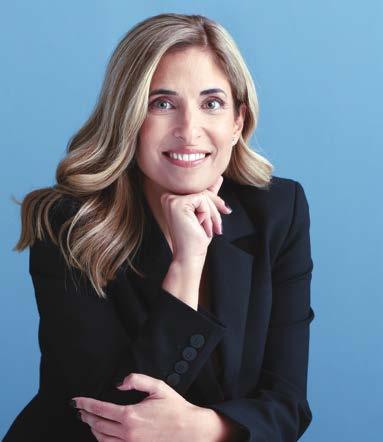
NN Hellas’ strategic priorities for the coming years are presented below, focusing on digital transformation, sustainable growth, and the creation of a more personalized insurance experience. In an ever-changing environment, the company continues to invest in technology, the empowerment of its people, and the strengthening of trusted relationships with customers, aiming to play a leading role in the new era of insurance. What are the key priorities of NN Hellas for the next 3-5 years?
As our performance strengthens, our cus-
tomers’ expectations rise accordingly. For us, NN Hellas’ position in the market is not merely a reward, but the foundation on which we build the strategy for the coming years: to continue evolving into a modern and ever-relevant insurance organization that delivers real value to its policyholders, its people, and society.
From a business perspective, I would say that our core objective is the growth of all distribution channels, with particular emphasis on the Exclusive Partnership Intermediary Network, through a more balanced and sus-
tainable model. We focus on organic growth, on high-quality and profitable new production, and on maintaining strong profitability and capital adequacy ratios. We are not interested in growth at any cost, but in a steady and disciplined course that ensures resilience over time and creates long-term value for all stakeholders.
From a business perspective, I would say that our core objective is the growth of all distribution channels, with particular emphasis on the Tied Agents Network, through a more balanced and sustainable model. We focus on organic growth, high-quality and profitable new production and on maintaining strong profitability and capital adequacy ratios. We are not interested in growth at any cost, but in a steady and disciplined course that ensures resilience over time and creates long-term value for all stakeholders.
In an external environment that is constantly changing, the insurance market is called upon to redefine its role, adapt to new needs, and essentially become a life companion. Today and in the future, at NN Hellas we aim to offer exactly that - a holistic model of protection, prevention, and long-term support for people at every stage of their lives.
To achieve this, we have aligned our strategy around three key pillars: a) technology and innovation, leveraging data and AI for greater personalization; b) customer experience, with simplicity, transparency, and enhanced self-service; and c) people development, through continuous training and modern tools.
We aspire to play a leading role in the transition to a more digital - yet at the same time human-centric - insurance experience, where technology acts as an enabler, freeing up time so that it can then be dedicated to where real value is created for the customer: personalized advisory and building a relationship of trust.
How is digital transformation affecting your customers’ experience?
At NN Hellas, digital transformation goes beyond the digitization of processes - it involves a comprehensive redesign of the insurance experience. We consistently focus on simplifying our relationship with the customer, aiming for greater speed, accuracy, transparency and meaningful personalization at every stage of its journey.
Today’s customers seek clear information, immediate service and consistency, regardless of the channel they choose. At the same time, in insurance - a sector built on trust - the digital experience cannot operate independently of the human factor. On the contrary, it must enhance it and give it more space to deliver real value.
Within this context, we approach technology as a means of removing complexity and barriers from the customer journey. From the self-service capabilities of myNN, our customer portal, to the automation of critical service processes and claims handling, our goal
is to reduce steps and customer effort. At the same time, data and artificial intelligence allow us to better understand policyholders’ needs, reduce response times, and offer more targeted solutions.
What role does sustainability play in the company’s growth strategy?
Sustainability is an integral part of NN Hellas’ growth strategy and is directly linked to our role as an insurance organization. We do not view it as a parallel initiative or a matter of image, but as a fundamental prerequisite for long-term value, resilience and responsible business operations.
For us, sustainable development means creating value that endures over time: for our policyholders, through reliable and meaningful protection solutions; for our people, through an environment that fosters growth and inclusion; for our partners, through empowering their role; and for society, through initiatives that support physical and mental health, financial well-being and active longevity.
At an operational level, our approach is reflected both in the management of our environmental footprint and in the design of products and investment solutions that incorporate environmental and social criteria, in line with European guidelines
At the same time, sustainability is inherently connected to major transitions of our time. Longevity, in particular, highlights the need for more comprehensive solutions that help people plan their future with greater security. What challenges is the insurance sector in Greece currently facing?
One of the key challenges remains strengthening insurance awareness. Insurance is still often perceived as something distant or as a need that is only activated when an unforeseen event occurs. As an industry, we need to highlight more clearly the value of prevention, preparedness, and long-term protection, before the need arises.
At the same time, the challenge of simplification is equally important. Products, processes, and even the language we use must become clearer and more accessible, so that insurance becomes truly useful for citizens. In this direction, technology and artificial intelligence can play a catalytic role, contributing to process automation and the development of more personalized, targeted solutions. Finally, but equally critical, is the need to strengthen resilience against new and systemic risks. These challenges are directly linked to demographic ageing, rising healthcare costs, as well as the need to protect income and quality of life over the long term. The response to these challenges can only be collective. It requires collaboration between the public and private sectors, strategic investment in technology, strengthening financial literacy and a steady focus on the ever - evolving needs of the customer.
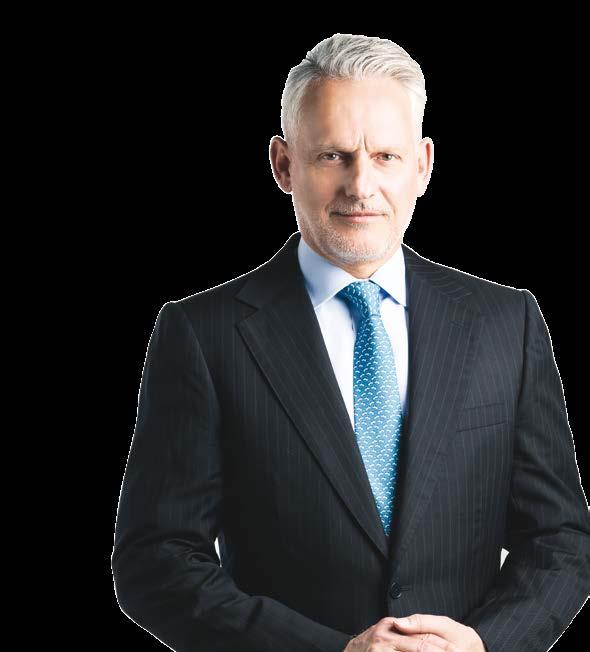
Dimitris Mazarakis
The further strengthening of bancassurance through the collaboration of Ethniki Asfalistiki with Piraeus Bank Group is highlighted as a central pillar of the company's strategy, by its CEO Mr. Dimitris Mazarakis. At the same time, however, we are also investing dynamically in other distribution channels, insurance intermediaries, digital capabilities and new forms of service, Mr. Mazarakis notes and reaffirms that reliability, solvency and consistency towards the insured, are elements that have been built for decades and remain at the core of the company’s identity.
How is Ethniki Asfalistiki evolving within the new economic environment and as part of the Piraeus Bank Group?
2025 marked a milestone year for Ethniki Asfalistiki, as we successfully completed the first phase of the company’s transformation and modernization process, achieving all of our strategic objectives. Today, we are entering a new era, built on stronger foundations, greater operational efficiency, and a clear strategic direction.
Our integration into the Piraeus Group creates significant growth opportunities and accelerates our transition to a more modern, omnichannel insurance model. Through synergies within the Group, we are further strengthening our distribution capabilities, making better use of technology and data, and creating a more comprehensive and seamless customer experience.
At the same time, we continue to consistently implement our transformation strategy, with the aim of becoming an even more modern, agile and customer-centric insurance company that responds effectively to the evolving needs of society and the economy.
The results of the first quarter of 2026 confirm the strong momentum of this journey, as they exceed our targets and show significant improvement compared to the previous year. This gives us confidence that Ethniki Asfalistiki has now entered a new era of sustainable growth and value creation for its customers,
employees, partners, and shareholders. Our vision is clear: to shape a modern insurance company that combines the long-standing trust and reliability of Ethniki Asfalistiki with the innovation and agility required by today’s rapidly evolving environment. With people at the center of everything we do, we continue to invest in a culture of responsibility, collaboration, and high performance, creating long-term value for society and the Greek economy.
What is your strategy for strengthening customer trust?
Trust has always been our greatest asset. Reliability, financial strength and consistency toward our customers are qualities that have been built over decades and remain at the core of our identity.
Today, through the transformation and modernization initiatives we are implementing, our goal is to elevate this relationship of trust into an even more modern and meaningful experience for our customers. Therefore, we do not aim to simply meet our customers’ expectations, but to exceed them by offering simpler, higher-quality and more accessible insurance solutions.
We are investing significantly in enhancing customer experience, simplifying processes, improving transparency in communication and delivering faster customer service. At the same time, we continue to strengthen our customer-centric culture by placing the client at the center of every decision we make.
Our mission is to stand beside individuals and businesses at every important stage of their lives and activities, offering protection solutions that create security, confidence and perspective. For us, insurance is not simply a product; it is a relationship of trust that is built every day through actions, consistency and genuine support.
Our ambition is for Ethniki Asfalistiki to be recognized not only as a leading insurance organization, but also as a trusted partner for individuals and businesses, offering compre-
hensive solutions that fully cover their evolving needs.
How do you leverage data to improve insurance products, particularly in health insurance?
Leveraging data has become a key tool in designing more modern, effective and personalized insurance solutions. Through advanced analytics, we are able to better understand our customers’ behavior, needs, and priorities, and to design products that effectively respond to today’s reality.
This is particularly important in the health sector, where challenges are significant due to rising healthcare costs and structural pressures within the system. Our aim is to design programs that combine high-quality coverage with sustainability and better cost control for each customer.
At the same time, we leverage data to develop initiatives related to prevention, early intervention, and the overall improvement of the patient experience. We believe that the future of health insurance extends beyond compensation alone and moves toward a more holistic approach that supports individuals throughout every stage of their healthcare journey.
Technology and data enable us to move in this direction with greater accuracy, speed, and efficiency. At the same time, we remain committed to the values of responsibility, transparency, and respect for the customer, ensuring that innovation always serves people and their real needs.
What are the company’s expansion and growth plans?
Ethniki Asfalistiki’s growth strategy is based on an omnichannel development model, aiming to be even closer to the customer and to comprehensively address the needs of both individuals and businesses.
A key pillar of our strategy is the further strengthening of bancassurance through our collaboration with the Piraeus Group. At the same time, however, we continue to invest significantly in our other distribution channels, insurance intermediaries, digital capabilities and new customer service models.
We are also systematically investing in technology, data utilization and the development of new insurance solutions that respond to the evolving needs of both individuals and businesses. Our goal is not simply to offer more products, but to create more meaningful, personalized and accessible protection solutions that enhance our customers’ security and quality of life.
Guided by innovation, responsibility, and the continuous improvement of customer experience, we aspire to shape a new generation of insurance services that combine reliability, flexibility, and genuine value for society.
Our ambition is for Ethniki Asfalistiki to continue leading the Greek insurance market, not only because of its size and history, but primarily as a modern insurance company that creates long-term value, invests in its people and consistently stands beside its customers and Greek society.
At a time when the Insurance Market is rapidly transforming under the pressure of technology, climate crisis, as well as the growing demands of citizens for essential protection, Generali Hellas is attempting to redefine the role of Private Insurance in Greece. On the occasion of Generali’s 140 years of presence in the Greek Market and the acquisition of EUROCLINIC, the company’s CEO Mr. Panos Dimitriou, explains how the company stands out as a purely insurance company and aspires to become a “Lifetime Partner” for its policyholders.
What is the development strategy of Generali Hellas for the coming years?
Generali is currently at a point of strong consolidation and at the same time at the starting point of a new dynamic cycle of growth. We are celebrating 140 years of presence in Greece, having secured the 3rd place in the Insurance Market, not through occasional movements, but with consistency, strategic discipline and continuous investment in trust. Our goal is clear: to become a point of reference for the Insurance Market in Greece. Not only in terms of size, but mainly in terms of reliability, quality of services and customer experience. For us, growth is not an end in itself; it is the result of a meaningful relationship that we build day after day with our policyholders, our partners and society.
Central pillar of our strategy is the creation of an integrated ecosystem of protection and care that covers every modern need of individuals and businesses. Health is a particularly important axis of this strategy, which is why the acquisition of the EUROCLINIC Group and the creation of ARISTON mark a new era for Generali in Greece. However, our investment is not limited to hospital care. We want to form a new insurance experience, where the insured will have access not only to compensation, but also to guidance, prevention, support and personalized services at every contact point with Generali. ARISTON was created precisely to function as the connecting link of this experience. Starting from the Healthcare sector, we aspire to gradually expand its philosophy to broader insurance and service sectors, from general insurance and home and property protection to the needs of small and medium-sized businesses, savings solutions and everyday mobility.
I strongly believe that the future of insurance lies in the holistic experience. Citizens today are not looking for a company that will only appear at the moment of damage; they are looking for a stable companion for life and growth. This is exactly what Lifetime Partner means to us. In order to achieve this, we continue to invest consistently in our people, our networks and technology,
always keeping our insurance DNA at our core. How does the company differentiate from the competition?
Generali stands out, forging its own path in the Insurance Market, remaining a purely insurance company. It may sound obvious, but in reality it is not. In an era where many people see health and insurance mainly as a field of investment returns, we continue to focus on people. Our philosophy is not based on opportunistic moves. It is based on creating real value for the insured. We listen to our customers, their needs and their complaints, and we try to respond with immediacy, responsibility and a genuine willingness to solve problems. This is what real reliability means for us.
The acquisition of EUROCLINIC and the operation of ARISTON come to substantially expand our insurance footprint. Our goal is to improve the overall experience of the insured at every point of contact with the health system, reducing anxiety, suffering and uncertainty. Because, ultimately, the most important service in insurance is to make people feel that they are not alone when they need you. In this context, a deeper understanding of modern challenges in the health sector leads us to a broader approach to the future of insurance. We believe that Private Insurance should not operate in competition with the public health system. On the contrary, the future lies in synergies that can enhance the overall resilience and quality of the country's health system.
At the same time, we consistently invest in relationships of trust with our Networks. Our partners are an extension of our philosophy and presence in the Market. Our cooperation framework is based on transparency, support and co-creation, forming substantial development prospects for every serious professional in the field.
Which is the role of innovation in the services you offer?
Innovation for Generali, is a way of thinking, operating and evolving. We adopt new technologies because they can create real value for the insured, the partner and our people.
We leverage AI tools and advanced data analytics in underwriting, claims management, faster processing of large volumes of information, process automation and the ability to offer more personalized and immediate solutions to our clients.
In parallel, we systematically invest in digital platforms and services that render the daily experience of the insured simpler and a lot more human. Through MyGenerali, we create an increasingly integrated digital service environment, while with tools such as Genie Bot we offer our customers direct access to information, support and guidance quickly and easily.
At the same time, technology is also fundamentally changing the way insurance brokerage operates. Our goal is to provide our partners with all modern tools, technology and support they need to achieve “Driving Excellence” in practice. To be able to not only conclude a sale, but most importantly, build long-lasting relationships with their customers.
I deeply believe that the true value of technology only emerges when it works complementarily to the human factor. Artificial intelligence can provide speed, accuracy and the ability to manage complex data at scale. However, it is the human experience that adds judgment, empathy, and meaningful understanding.
This very combination stands at the core of our “Lifetime Partner 27: Driving Excellence” strategy. For us, Excellence is the ability to combine innovation with human connection, creating an experience that is simultaneously modern, reliable and essentially human.
How do you deal with the changing needs of the consumers?
Citizens' needs are changing faster than ever. The modern insured person demands simplicity, speed, transparency, as well as a meaningful presence. In order to respond to this, you must first learn to listen. And have the courage to change. At Generali we strive to listen carefully to our customers and translate this knowledge into practice. We constantly invest in creating more modern and personalized insurance programs, with features and services that respond to the real needs of everyday life and create a more comprehensive experience of protection and care.
We want to be a company that stands out not only for its products, but for the way it behaves. To be a point of reference for the services we offer to our policyholders, a model of cooperation for our networks and a model of responsible corporate citizenship for the country.
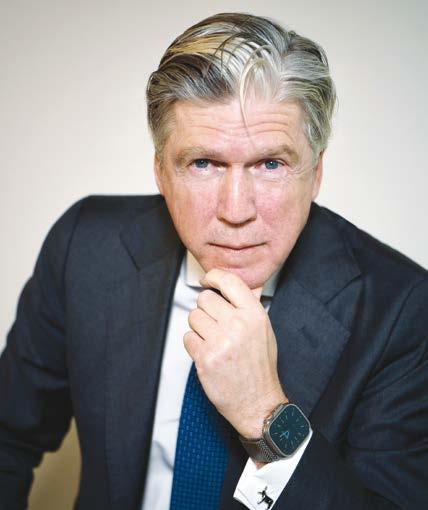
At a time when geopolitical instability, climate change and rapid technological transformation are reshaping the global economic landscape, the insurance industry is being called upon to redefine its role in addressing the evolving needs of citizens and businesses. Eurolife FFH continues to invest in sustainable growth, technology and customer experience, further strengthening its position in the Greek insurance market. In NextDeal’s special feature ahead of the 26th Insurance & Reinsurance Meeting, the Group’s Chairman of the Board and CEO, Alexander Sarrigeorgiou, discusses the challenges and opportunities facing the industry, the role of Artificial Intelligence, the importance of partnerships and the strategy Eurolife FFH is pursuing in an era marked by growing uncertainty but also significant growth potential.
What is the position of the Eurolife FFH Group in the Greek market today?
Eurolife FFH is one of the leading insurance groups in Greece, with a strong presence that has been established over many years in both life and non-life insurance sector. We have a well-formed market position and a consistently upward course, as we do not let our guard down but always aim to further expand our operations.
Our commitment is clear: to provide solutions that improve the lives of our more than 700,000 policyholders. Our ambition is to create innovative products that meet consumers’ evolving needs and that do not just follow the insurance industry developments but shape them.
We consistently invest in our customers’ experience, simplifying processes and strengthening our partnerships, with the aim of being a reliable and steady companion for everyone who trusts us. What is of most value for us is that our success is not measured solely by numbers and performance, but also by the relationship of trust we build with the people who choose us for their safety.
How are international trends affecting the Greek insurance market?
International developments in recent years have created an increasingly complex environment, in which risks are becoming more complicated and less predictable. Ongoing geopolitical tensions, ranging from the war in Ukraine to the continuing instability in the Middle East, are heightening the sense of uncertainty and directly affecting economic activity worldwide. At the same time, climate change and the increasing frequency of natural disasters, as well as rapid technological advances - culminating in the wave known as Artificial Intelligence -, are reshaping the landscape in which the market is called to operate.
For our industry, this means we need to further develop our capabilities in risk forecasting and management, leveraging the data and technological tools at our disposal with greater precision and speed. At the same time, customer expectations are changing dynamically, with an emphasis on immediate, personalized and transparent service, a fact that accelerates the industry’s digital transformation.
In Greece, these international trends highlight further how important it is to raise insurance awareness and address the current gap in protection. Our economy has now gained a positive momentum, but insurance penetration remains lower than the European average. This fact creates significant growth prospects, but also an increased responsibility for the industry to respond more effectively to society’s needs.
As I have pointed out before, the insurance market is both capable and willing to play a more active and strategic role, contributing to economic stability and the strengthening of citizens’ protection.
Which investments do you consider critical for the company’s future?
The investments we make at Eurolife FFH are part of a long-term strategy centred on technology, customer experience and our people.
The effective use of Artificial Intelligence is a key pillar of this strategy, not as an end in itself but as a tool that allows us to simplify processes, improve service speed and offer more personalized solutions. We have long since integrated AI tools into our CRM system, along with automation practices. As a result, we have gained a more comprehensive understanding of our policyholders’ needs and have significantly enhanced our internal operations’ efficiency. With the power of artificial intelligence, management of requests is now faster, fairer and completely transparent, reaffirming our commit-
We consistently invest in our customers’ experience, simplifying processes and strengthening our partnerships, with the aim of being a reliable and steady companion for everyone who trusts us
ment to providing solutions that respect people’s time and trust they place on us.
All of this without overlooking the human factor. We systematically invest in developing our people’s skills, so that technology operates in a complementary way to human experience and judgment. It is the combination of innovation, expertise and a human approach that will shape the future of the insurance experience in Greece.
What is the role of partnerships in your growth?
Partnerships are the foundation of our long-term growth. Our partners’ network is at the heart of our business and the relationships we have built with them are based on mutual trust, transparency and ongoing support.
We substantially and consistently invest in our employees’ training and development, through a range of modern and comprehensive programs that equip them with knowledge and skills. We aim to provide them with the right tools in order to achieve high productivity and quality goals, while also to strengthen their ability to meet the industry’s ever-increasing challenges. As we move forward with the same vision in 2026, we remain committed to investing in these initiatives. For us, success is the result of a joint effort and our partnerships act as value multipliers, with one common goal: to raise the bar of the services we offer every day.
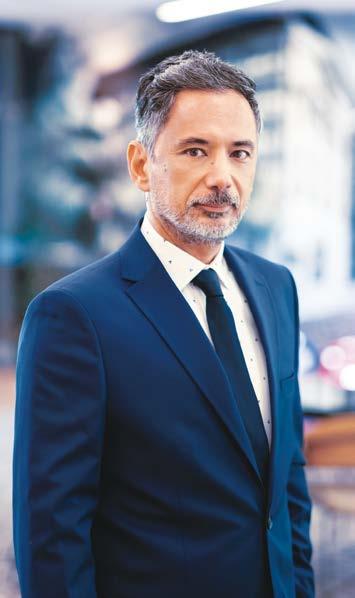
With the support and international expertise of Achmea, the Interamerican Group of companies is constantly evolving, investing in sustainable development and innovation, Mr. Giannis Kantoros, CEO of the Interamerican Group stresses out, in an interview with the Next Deal.
He emphasizes, that stable organic profitability and long-term planning accelerate the company's digital transformation, investing in an ecosystem of accessible services that meet people's needs and upgrade their daily lives. He also notes that extroversion consists a strategic choice for Interamerican, which, with a presence in Greece, Cyprus and Romania, is steadily strengthening its international footprint.
When asked about this, he mentions the model of integrated health services, with the Athens General Clinic, the Medifirst Polyclinics and the extensive nationwide health network, which form a comprehensive care experience.
How is Interamerican’s strategy evolving in today’s environment?
Every major transition brings new challenges. Today, the pace of change is unlike anything we have seen before, with artificial intelligence reshaping the landscape at every level. At the same time, the climate crisis, geopolitical instability and demographic pressures are creating a far more complex environment, fundamentally altering the nature of risk itself.
In this new reality, the insurance industry can no longer operate with the mindset of the past. The key word is “resilience.” And this is reflected in the way the role of insurance is being redefined: it is no longer limited to the moment of compensation, but acts as a mechanism for stability, prevention and everyday support for people. Initiatives such as Rebuilding Tomorrow highlight the pivotal role insurance can play in helping societies prepare for and respond to extreme events that have now become part of everyday life.
At Interamerican Group, supported by the expertise and know-how of our parent company, Achmea, we continue to evolve with a strong focus on sustainable growth and innovation. Our consistent organic profitability and longterm strategic planning allow us to accelerate our digital transformation and transition to an omnichannel model, leveraging the capabilities
of artificial intelligence and big data. Within this framework, we are investing in a comprehensive ecosystem that delivers accessible solutions and services designed to meet people’s needs and enhance their everyday lives.
At the same time, outward-looking growth remains a strategic priority for us, through targeted initiatives and development opportunities both in Greece and internationally. Anytime, the Group’s digital brand, has become a benchmark in digital insurance, reshaping the market through a digital-first model that combines simplicity, speed, and innovation. With an established presence in Greece, Cyprus, and Romania, we continue to strengthen our international footprint.
What is the role of prevention and healthcare within your business model?
Prevention is a core pillar of our strategy and lies at the heart of our approach to healthcare. For us, truly supporting people begins long before hospitalization or compensation, with a strong emphasis on prevention, early diagnosis and continuous support.
At the same time, increasing pressure on healthcare systems, combined with demographic challenges, makes the shift towards a model centered more on primary care and early intervention more important than ever.
At Interamerican Group, we are investing in a fully integrated healthcare services model. Our own healthcare infrastructure - Athinaiki General Clinic and Medifirst - our 1010 Health Line, our ambulance fleet, as well as an extensive nationwide healthcare network, all contribute to a seamless care experience that offers people faster, more direct and more meaningful support.
At the same time, we leverage technology to further strengthen prevention and enhance the experience of our customers. Through innovative solutions such as Telemedicine and the Medi ON app, people have direct access to medical guidance and healthcare services, while Tele-Underwriting makes the health insurance process simpler and faster.
For us, the future of healthcare lies in the ability to combine prevention, technology and a human-centric approach into one unified experience that creates real value for the people. How do you integrate technology into your services?
Technology investment runs across every part of our organization, from the continuous evolution of the Anytime App and the automation of processes such as e-claims, to the integration of artificial intelligence solutions in customer service and partner support. A good example is “Ask the Bot”, an AI-powered tool that supports our Insurance Advisors in real-time, providing fast and targeted answers to their everyday needs.
Interamerican has long been at the forefront of innovation and digital transformation in the insurance industry. We leverage data, automation and AI-driven tools to continuously improve the experience of the people who trust us.
For us, technology is not just about automating processes. It is about creating a faster, more seamless and more human experience for the customer. What are the biggest opportunities for the insurance industry in the years ahead?
The insurance industry is entering a period of profound transformation, as the way risks emerge and evolve is fundamentally changing.
The increasing frequency and intensity of natural catastrophes are driving the need for more proactive approaches and more advanced risk management tools, with greater emphasis on resilience and the early preparedness of society.
In Greece, where insurance penetration remains relatively low and awareness around the risks associated with natural disasters is still limited, the key challenge is to drive a shift in mindset and strengthen insurance awareness.
At the same time, technology and artificial intelligence are opening up new opportunities, improving the use of data, accelerating response times and enhancing the overall customer experience. Meanwhile, demographic trends and growing healthcare needs are making the demand for more modern, sustainable and accessible protection and care solutions increasingly urgent.
Ultimately, the real challenge for the industry lies in its ability to translate these changes into simple, meaningful solutions for everyday life. Those who succeed will not simply adapt to market changes — they will shape them.
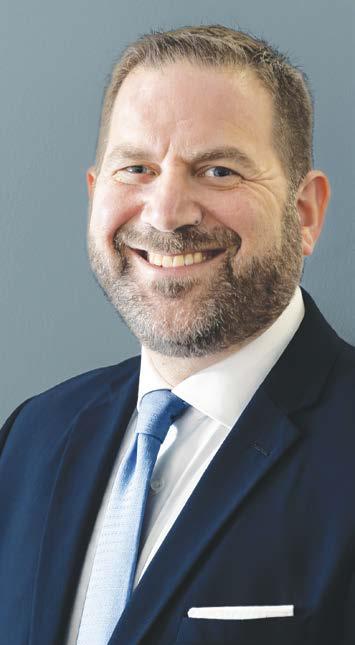
Vassili Christidis CEO
Allianz's commitment to the values of Insurance, focusing on human contact and the creation of longterm relationships of trust, is reaffirmed in an interview of Allianz CEO, Mr. Vasilis Christidis, with the newspaper Next Deal. “We continue to invest in our human resources and network throughout the country, offering our insurance intermediaries professional autonomy and the necessary gear for their sustainability and immediate service of individuals and businesses”, emphasizes Mr. Christidis. He also notes that the company has adopted a multi-channel service strategy and is implementing modern digital infrastructures and tools that allow faster procedures, easier access to services and a simpler handling of requests.
When asked relatively, he noted that: “At Allianz we do not see artificial intelligence as a substitute for the human factor, but as a tool that enhances the capabilities of our people”.
.How is Allianz Greece’s strategy evolving in an environment of increased risks and uncertainty?
Today, our strategy is centered on resilience, adaptability and the ability to respond swiftly in an ever-evolving environment. The insurance industry is facing growing complexity, as challenges such as climate change, cyber threats, geopolitical uncertainty, economic pressure and rapid technological advancement continue to reshape the landscape for both businesses and individuals.
In this context, we consistently invest in agile operating models, enhanced digital infrastructure, and the development of solutions that meet the demands of the industry. At the same time, we are placing strong emphasis on prevention, risk evaluation and the development of products that provide protection and generate long-term value.
Our strategy is grounded in sustainable growth and in strengthening trustbased relationships with our customers, partners and society. That is why we
continue to invest in our people and our network, preserving a strong human presence in the field and cultivating a culture defined by transparency and steady progress.
What role do new technologies (AI, data analytics) play in the company’s decisionmaking process?
New technologies, particularly artificial intelligence and data analytics, already play a pivotal role in the company’s operations and growth. Their integration enables us to make faster, more accurate and more effective decisions in an environment where adaptability and the ability to evaluate data efficiently are more important than ever.
AI applications and advanced data analytics tools are already being leveraged across critical functions, including risk assessment, data validation, fraud detection and the optimization of internal processes. Through advanced analysis, we are able to identify emerging trends at an early stage, gain deeper insights into customer needs, and develop more personalized insurance solutions.
At Allianz, however, we do not view artificial intelligence as a replacement for the human factor, but as a tool that strengthens our people. Technology works alongside the experience, judgment, and advisory expertise of our employees and partners. These qualities remain fundamental in our industry, where trust and personal relationships continue to hold a central role.
How do you approach the training and development of your people?
The growth and development of our people remain a top priority and a fundamental pillar of our long-term strategy. In today’s demanding environment, continuous investment in knowledge, expertise and professional advancement is paramount.
We implement training programs and initiatives that enhance familiarity with emerging technologies, digital tools and artificial intelligence applications, securing technology literacy and empowering our teams to respond effectively and ef-
ficiently.
At the same time, we cultivate a workplace culture that promotes collaboration, innovation and continuous self-improvement. A key part of our philosophy is ensuring that every individual has the opportunity to contribute, while gaining valuable experience, knowledge and professional perspective along the way.
How do you enhance customer experience across all service channels?
In recent years, consumer expectations have changed significantly. Fast service, clear and personalized communication, streamlined processes and a seamless experience across every point of interaction have become a prerequisite. At Allianz, we recognize this shift and we acknowledge it by developing an experience that balances technology with human support and guidance. Our approach is built around a multichannel service model that allows customers to communicate and interact with Allianz in the way that best matches their profile and needs. Through modern digital infrastructure and innovative tools, we enable faster processes, easier access to our services and more efficient request management.
Nevertheless, the most important service channel remains the personal relationship we strive to build with every customer, founded on reliability, transparency, consistency and responsiveness. This is why we continue to invest in and actively support our network across the country, equipping our insurance agents with the autonomy and resources they need to ensure their sustainability and provide effective support to both individuals and businesses. We remain committed to the core values of the insurance profession, keeping human interaction and long-term relationships at the heart of everything we do. Our network throughout Greece stands ready to support customers at every stage of their insurance journey with understanding, guidance, and a consistent presence.
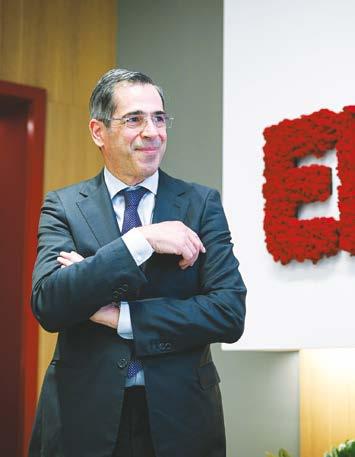
Errikos Moatsos CEO
The Greek insurance market is currently at a critical turning point, as geopolitical developments, climate change, natural disasters and rapid technological progress are reshaping the operating environment of insurance companies. In this new reality, the need for sustainable growth, enhanced resilience and the effective use of innovation has become strategically important for the industry. In Next Deal newspaper’s special bilingual feature ahead of the 26th Insurance & Reinsurance Meeting organized by the Hellenic Association of Insurance Companies in Hydra, ERGO Insurance presents its strategic priorities for the 2026-2030 period, focusing on technical excellence, digital transformation, artificial intelligence and the continuous enhancement of customer and partner experience. At the same time, the feature highlights the decisive role that the insurance sector can play in reducing the protection gap and strengthening the resilience of citizens and businesses against today’s growing challenges.
What is ERGO Insurance’s growth strategy in the Greek market?
For the 2026-2030 period, ERGO Insurance has set as its main objective sustainable and profitable growth, while also investing in strengthening the resilience of both the company and its customers. A central strategic pillar of our growth plan is technical excellence, which is a long-standing direction for us and guides our choices in terms of products, processes, risk management, and overall operations. Within this framework, our key direction is to maintain our leading position in the P&C sector, leveraging the positive prospects of the Greek economy and the insurance market. At the same time, we place particular emphasis on further developing Life and Health insurance, responding to the growing needs of citizens, which are linked to population ageing and the continuously rising cost of healthcare. Of strategic importance to us is also the small and medium-sized enterprise sector, where insurance penetration remains limited. Our goal is to stand by our customers through
meaningful partnerships, offering advisory support as well as prevention and effective risk management solutions. Another major challenge for the insurance market is the increasing frequency and severity of natural disasters in our country, combined with the existing protection gap. For us, it is a strategic priority to contribute substantially to reducing this gap by strengthening citizens’ awareness of risks and offering solutions that support the resilience of individuals, businesses, and society as a whole. At the same time, we focus on continuously upgrading the customer experience by investing in technology, innovation, data utilization, and artificial intelligence, in order to provide faster, more transparent, and more personalized solutions. This approach is also closely linked to strengthening our partner network through modern digital tools and innovative solutions that enhance efficiency, service quality, and the overall value we deliver to businesses and households.
How do you leverage the Group’s international expertise to create competitive advantage?
Our participation in a strong international group, a member of Munich Re, represents a particularly important strategic advantage, which we systematically leverage to strengthen our position in the Greek insurance market. Our strategy is fully aligned with that of the Group, with an emphasis on technical excellence, digital transformation, and the continuous development of our people.
Access to specialized expertise and international best practices allows us to utilize advanced solutions in areas such as systems architecture, data analytics, and artificial intelligence applications. The use of these tools enables us to optimize risk management, improve pricing accuracy, accelerate the claims process, and overall provide a more enhanced experience for partners and customers.
At the same time, the exchange of knowledge and experience, along with close international collaboration, drives the evolution of our digital transformation. The adoption of modern technological solutions, combined with the use
of shared technological infrastructure and tools, enables us to develop even more innovative products and services, maintaining high levels of quality, reliability, and customer service.
What are the main pillars of innovation you are investing in today?
In a world that is evolving technologically at an increasingly rapid pace, innovation is one of the key factors ensuring a company’s profitability and sustainability.
Within this context, we are systematically investing in digital transformation and new technologies in order to respond promptly and effectively to the modern needs of our customers and partners, with an emphasis on modern platforms, enhanced security, and more flexible and efficient operations. At the same time, we leverage artificial intelligence tools to simplify processes, automate tasks, and offer more personalized services.
The use of data allows us to gain a deeper understanding of our customers’ needs and to continuously improve both pricing and risk prevention and management. At the same time, we invest in the customer experience through simple, digital, and user-friendly service channels, as well as in our people, strengthening their skills and fostering a culture of continuous development and innovation.
How do you see the relationship between insurance companies and customers evolving in the coming years?
In the coming years, the relationship between insurance companies and customers is expected to undergo a substantial transformation, moving from the traditional claims-based model to a more holistic model of prevention, support, and continuous collaboration. Customers are no longer seeking only insurance coverage, but meaningful value in their daily lives and solutions that respond in a personalized way to their needs.
In this transition, digital transformation will be the main driver of change, enabling more immediate, transparent, and personalized service. Technologies such as artificial intelligence, digital applications, and telemedicine will further enhance continuous and more meaningful interaction with the customer.
However, despite technological progress, the human factor will remain critical. In insurance, human contact, personal communication, and the role of the insurance advisor continue to be of decisive importance, especially at moments when the customer needs guidance, reassurance, and trust. Despite technological advancements, trust will continue to be the cornerstone of the relationship between the insured and the insurance company. Simplicity, transparency, consistency in service experience, and the right combination of human interaction with digital support will be decisive factors in building longterm relationships of trust.
At ERGO Insurance, our goal is to continuously evolve and to be a stable and reliable partner that is meaningfully present alongside the customer at every stage of their life.
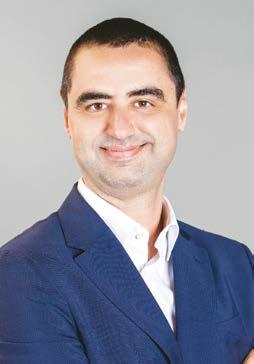
Hassène Feki CEO
At Groupama Insurance, we consistently invest in our people, innovation and infrastructure, constantly improving the quality of our services and contributing substantially to the overall development of the Insurance Industry in Greece, the company's CEO Hassène Feki emphasizes in an interview with the newspaper Next Deal.We do not just offer insurance products, we build relationships of trust, notes Mr. Feki.
What are your main strategic plans for the next 3-5 years and which areas do you intend to invest in the most?
Our strategy for the next five years is built around our goal “Grow stronger to go further”, reflecting Groupama Asfalistiki’s ambition to strengthen its position in the Greek market through targeted growth and investments in technology aimed not only at optimizing operations, but also at enhancing the overall customer experience.
Our key priority is the balanced growth of our portfolio, with particular emphasis on the P&C sector. At the same time, we aim to further strengthen our group insurance portfolio, placing special focus on the needs of small and medium-sized enterprises, while also reinforcing our presence across regional Greece.
At the same time, we continue to invest substantially in the development and strengthening of our Exclusive Partnership Network, while also expanding our collaborations with specialized insurance intermediaries throughout the country.
Leveraging the international expertise and standards of the Groupama Group, we adopt a data-driven approach that ensures the quality of our portfolio while focusing on sustainable profitability. We continue to invest systematically in our digital transformation by utilizing new technologies with the goal of achieving operational excellence and delivering a fully integrated omnichannel experience to our customers.
Within this framework, the company is implementing an extensive plan of strategic initiatives, 16 of which have already been put into operation. Among the most important projects is the new Cheetah Pro platform for partners, which is being progressively developed to provide a more modern and functional working environment, significantly enhancing the day-to-day experience and efficiency of insurance intermediaries.
How would you describe your company’s profile and differentiation in the Greek market, and what makes you stand out from the competition?
Groupama Asfalistiki’s profile in the Greek market is shaped by the unique combination of the international expertise of a leading European group and a deep, meaningful understanding of the local market reality. What differentiates us is our people-centric philosophy, which is reflected in a culture of reliability and immediacy. We do not simply offer insurance products; we build relationships of trust, with speed and quality in customer service and claims handling serving as our key strengths.
Our distinguishing factor lies in our ability to evolve digitally without losing the element of human contact. We invest in cutting-edge technologies to optimize our processes while remaining firmly committed to supporting our networks and partners. Furthermore, the guarantee and reliability associated with the Groupama brand, combined with our commitment to long-term, sustainable growth in the Greek market, enable us to provide confidence and stability in an ever-changing environment. The consistency between our words and actions is what truly sets us apart and allows us to deliver real value to each of our policyholders.

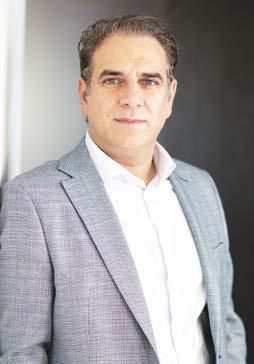
Pavlos Kaskarelis CEO
Astrategic development plan with an emphasis on sustainable profitability, strengthening its customer-centric nature and its operational transformation is being implemented by Ydrogios Insurance, in collaboration with the Reale Group, as emphasized in an interview with Next Deal by the CEO of the company, Mr. Pavlos Kaskarelis.
What are your main strategic plans for the next 3-5 years, and which areas do you intend to invest in the most?
Ydrogios Insurance is currently going through a particularly dynamic and creative phase of evolution implementing, in collaboration with Reale Group, a clear strategic plan for the years ahead.
Strategically, we are concentrating our efforts on four key pillars that support our long-term growth and transformation.
First, on the sustainable and qualitative growth of our portfolio, with emphasis on balanced profitability and long-term value creation for our customers. Within this framework, we aim to strengthen our market share through strategic growth in the non-motor sector, which offers significant growth potential.
Second, on further strengthening our customer-centric approach through modern, reliable insurance solutions and a consistently high level of service. At the same time, we are strongly focused on the company’s operational transformation, investing in technological systems, digital tools, and more agile internal processes, enabling us to operate with greater speed and efficiency.
And of course, at the heart of all these initiatives are our people. Overall, our goal is to continue growing with consistency and stability, while remaining close to our customers, partners, and employees.
How would you describe your company’s profile and differentiation in the Greek market, and what makes you stand out from the competition?
Over the years, Ydrogios Insurance has built a very distinct identity, based on its people-centered approach and the close relationships it develops with both its partners and policyholders. Since its establishment, the company has consistently invested in regional Greece and local communities, which continues to be a core element of its philosophy today. It is indicative that the largest part of our premium production is generated outside the major urban centers, through a network of more than 2,000 insurance intermediaries across Greece.
For us, insurance remains above all a trusted relationship between people. Guided by this philosophy, Ydrogios Insurance has, over the past 53 years, evolved into a company with strong foundations, high solvency, and a steady growth trajectory.
Today, our organization ranks among the leading general insurance companies in Greece, offering comprehensive solutions that meet the evolving needs of both individuals and businesses. What truly differentiates us is the combination of reliability, human approach, and long-term relationships of trust. Throughout our history, we have consistently chosen to invest in people — whether our employees, partners, or policyholders — and we believe this choice is fully reflected in our course and results.
Our collaboration with Reale Group further strengthens this dynamic. Reale is an international group with which we share common values and a common philosophy around responsibility, sustainable growth, and care for people. This partnership provides us with even greater opportunities for the future, while preserving the human character that has always defined us.


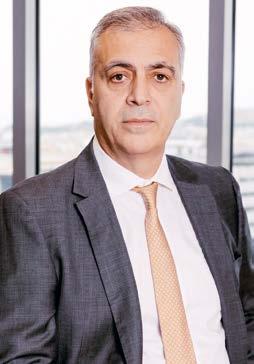
Stavros Karagrigoriou General Manager
Minettas Insurance focuses on balanced growth, that will combine organic profitability, strong capital adequacy and long-term value for customers, partners and shareholders, as the company's general manager Mr. Stavros Karagrigoriou, emphasizes in the newspaper Next Deal.
What are your main strategic plans for the next 3–5 years and which areas do you intend to invest the most?
Our strategy for the next three to five years is centered on sustainable growth, portfolio diversification, and enhanced operational efficiency. A key priority is the further expansion of our Property and Other General Insurance lines, with the objective of gradually reducing our reliance on the Motor segment and building a more resilient and balanced revenue mix.
At the same time, we are strengthening our presence in the Life and Health segments, where we already operate, through the development of new products that more comprehensively address the evolving needs of policyholders. These offerings include enhanced hospital, diagnostic, and income benefit coverages, alongside core life protection benefits, underscoring the fundamental role of life insurance as a cornerstone of private insurance provision.
We are also placing strong emphasis on investments in technology and digital transformation. Our objective is to enhance customer journey by streamlining processes, accelerating service delivery, and leveraging data analytics to provide more targeted and personalized solutions. In parallel, we continue to invest in advanced tools for our distribution networks to improve productivity, service quality, and transparency.
Our people remain a cornerstone of our strategy. We are committed to continuous talent development and upskilling, combining the experience of our workforce with new capabilities, particularly in data analytics, risk management, and digital technologies. At the same time, we foster a corporate culture that promotes innovation, collaboration, and adaptability.
How would you describe your company’s profile and differentiation in the Greek market, and what sets you apart from the competition?
Our Company stands out in the Greek insurance market through a combination of agility, reliability, and a strong customer-centric approach. Our organizational structure and scale enable faster decision-making and immediate responsiveness to changing market conditions, which constitutes a significant competitive advantage in an increasingly demanding environment.
A key differentiating factor is the quality of the relationships we build with our distribution partners. Our collaboration is founded on mutual respect, trust, and transparency, creating a stable and reliable ecosystem that supports long-term growth. At the same time, we actively invest in their development through modern tools and continuous training.
In terms of our product offerings, we place particular emphasis on clarity of terms and simplicity of coverage. Transparency is not merely a regulatory requirement, but a core operational principle that strengthens policyholder trust. Furthermore, we maintain a strong commitment to prompt and fair claims settlement.
Our differentiation is further reinforced by prudent risk management and a focus on organic profitability, ensuring financial strength and long-term stability. Combined with the gradual integration of digital solutions and the ongoing development of new products, we continue to shape a modern, flexible, and reliable corporate profile.
www.minetta.gr


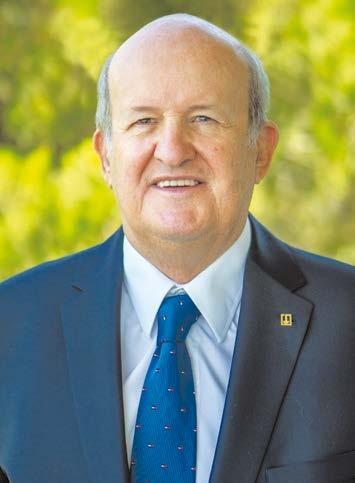
Atlantic Union, throughout its dynamic course spanning more than 56 years, has successfully combined an international profile with stable Greek management. The Company’s management team consists of seasoned insurance professionals with extensive experience and a firm commitment to the development of the Greek insurance market.
Since 1972, the Swiss bancassurance Group Baloise has been a minority shareholder. Following its merger with the Swiss Helvetia Group in December 2025, a new insurance powerhouse was created. This new entity ranks among the ten largest European insurance groups, with annual turnover exceeding USD 25 billion, assets of more than USD 150 billion, while also being the largest employer in the Swiss market.
Since its establishment, Atlantic Union has held operating licenses for all insurance lines, including Property, Liability, Transport, Life & Health, Surety Bonds, Motor and more, addressing a broad range of insurance needs through modern and competitive solutions.
2025 was a year of strong growth for Atlantic Union. Across all lines of business, the Company achieved a significant 12 month increase in premium production of 14.61% compared with the corresponding 12 month period of the previous year. This growth rate was more than double the average growth rate of the Greek insurance market, which stood at 5.60% according to data from the Hellenic Association of Insurance Companies.
This particularly impressive performance was supported by almost all insurance lines, and especially by Property, with an increase of 16.3%, Liability, with 18.3%, Personal Accident, with 23.5%, Transport, with 21.6% and Group Insurance, with 32.7%.
The first four months of 2026 also closed with equally positive results. During this period, Atlantic Union further strengthened the growth rate of its total premium production
compared with the corresponding four month period of 2025, reaching 15.76%. It is particularly noteworthy that this strong performance was supported not only by the aforementioned lines of business, but also by others, such as the Surety Bonds, which recorded an exceptionally impressive rate of growth.
Net profit before tax for the first quarter of the year followed the positive trend of the past 37 years, recording an increase of 126.16%.
During the same period, the Company’s investments amounted to €181.012.861,66, marking an increase compared with the corresponding period of the previous year.
Total assets now stand at €196.804.010, compared with €188.182.054 in the corresponding period of the previous year.
The Company’s own funds in the first quarter of 2026 amounted to €99.111.473, compared with €95.184.450, recording an increase of 4.13% year-on-year. This consistently places Atlantic Union among the top ten companies in the Greek insurance market.
For the 10th consecutive year, Atlantic Union achieved First place among Composite Insurance Companies operating in both General Insurance and Life Insurance, with a Solvency Ratio of 293%, based on results as at 31 December 2025.
Alongside its financial achievements, Atlantic Union continues to modernize and strengthen its operations across all areas. More specifically, the Company:
• Staffs its Divisions and Departments with experienced professionals from the market, while also actively offering opportunities to
young graduates of higher education institutions, who represent the future of the Company.
• Maintains an extensive network of partners, exceeding 1.200 certified insurance intermediaries throughout Greece.
• Offers innovative insurance solutions, including Group Insurance programs for small and medium-sized enterprises, schools, private tutoring institutions, sports academies and other organizations, Travel Insurance programs of short or annual duration, including trip cancellation coverage, insurance for students studying abroad under Erasmus and Erasmus Plus, Environmental Liability insurance and Business Interruption coverage for loss of gross profits, addressed to both small and large enterprises.
At the same time, the Company provides highly competitive insurance programs for pleasure craft and foreign nationals, while dynamically expanding its presence in Surety Bonds. It is worth noting that one of its key strategic priorities is its focus on the insurance needs of small and medium sized enterprises, which constitute the backbone of Greek entrepreneurship.
• Supports the work and efforts of its partners through advanced digital tools, such as Atlaweb, the Company’s corporate portal, which functions as a complete electronic office accessible via computers and/or mobile phones through Atlantiki Enosi Mobile. At the same time, it simplifies and enhances service procedures for insured clients through mobile applications such as Atlantiki Assistance, which operates via mobile phone in the event of a road accident or vehicle breakdown.
• Places strong emphasis on the role of the insurance intermediary, having clearly demonstrated over time that it stands firmly by its partners and has strategically chosen to work alongside them. The Company provides one of the most rewarding incentive schemes in the market, combining a high level of commissions with significant bonuses, as well as a comprehensive training system, delivered both in person and online. This system includes professional training and recertification seminars, in accordance with the requirements of the Bank of Greece, for both knowledge areas, as well as a wide range of independent educational seminars.
• Has earned the trust of more than 400,000 insured clients.
Finally, one of the most important characteristics of Atlantic Union is the sensitivity with which it addresses major issues affecting Greece and, by extension, the planet as a whole. Its contribution in the field of Corporate Social Responsibility brings the Company ever closer to society. At the same time, both the Management and the Company’s people strive every day to justify and reaffirm the vital role of the institution of insurance.
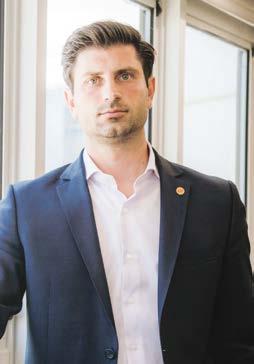
Nikos Zachos General Manager
The triptych: Greek Insurance Company – High growth rates and profitability – Solvency, is what characterizes NP Insurance, the General Manager of the company, Mr. Nikos Zachos, emphasizes in an interview with Next Deal. He notes that the company will be at the top of performance, profitability and solvency within the next 3-5 years.
What are your key strategic plans for the next 3–5 years and in which areas do you plan to invest the most?
NP Insurance aims to achieve autonomous profitable growth over the next 3-5 years, at rates that will exceed the market average and strengthen the fundamental financial figures of the organization, constantly aiming to the autonomous and dynamic course of the Company.
NP Insurance, throughout its 23-year history, has overcome every barrier and obstacle (economic crises, pandemics, wars, energy crises), supporting its efforts based on its strategic goals and stable values.
Every single year in this 23-year course, the Company has shown that it can perform better, not only than the average of the Insurance Market, but also than the entire Greek entrepreneurship.
The average Return On equity (ROI) is at the level of 25-30%, which is a significant business achievement for any Greek business, with the aim of remaining the same in the coming years. At the same time, NP Insurance is the insurance company with the highest Solvency Ratios consistently over the last 10 years, into the Greek Insurance Market, where through the continuation of our positive course, we will remain at the top of the list of solvency ratios of insurance companies in Greece.
As far as the Company's market share is concerned, we have now exceeded 3,5% in General Insurance and our goal is, within the next five years, to achieve significant grow in all Priority Sectors for us, such as Property, Civil Liability, Accidents, Transportation and Automobile.
The growth we aim for and will achieve, will come exclusively through our professional insurers, as they are the most capable and Market insiders and with us they can achieve all their growth aspirations.
How would you describe the profile and differentiation of your company in the Greek Market and what makes you stand out from the competition?
The profile of NP Insurance has been crystal clear for years. We are a purely Greek company, we operate exclusively with the human network and we strictly adhere to our strategic goals with an emphasis on the satisfaction of our insured customers, employees and partners.
The triptych: Hellenic Insurance – High growth and profitability rates – Solvency, is what characterizes us. As far as the competition is concerned, I think the above three parameters give us superiority.

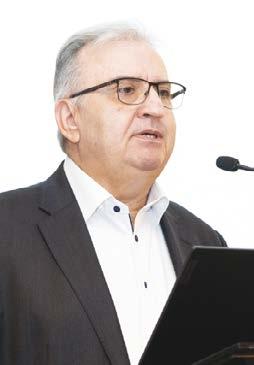
Dimitris Zorbas CEO & General Manager
Syndea's new development strategy pillars are presented by Mr. Dimitris Zorbas, CEO and General Manager of the company, in an interview with the newspaper Next Deal. As he emphasizes, the company aims to establish itself as the most modern cooperative insurance company in Greece within a five-year horizon.
What are your main strategic plans for the next 3-5 years, and in which areas do you intend to invest the most?
Syndea is on a strong growth path, with clear strategic priorities already reflected in the company’s rebranding in January 2024, marking a new era for the organization.
The next three to five years will be a period of further strengthening and development, with our primary goal being to establish Syndea as the most modern cooperative insurance company in the Greek market. Our strategy is focused on four key pillars.
Firstly, we are investing in digital transformation, aiming to enhance the experience of both customers and partners, simplify processes and provide faster and more efficient service.
Secondly, we emphasize the development of new insurance solutions tailored to the evolving needs of individuals and businesses, with particular focus on property protection, business continuity, risks related to climate change and natural disasters, as well as health coverage.
Thirdly, a strategic priority for us is the strengthening of our human capital and partner network through continuous training and development, while also expanding our presence both in major urban centers and across the Greek regions.
Finally, we continue to invest in our cooperative model by strengthening our social contribution and promoting an insurance approach that combines reliability, financial sustainability, and meaningful added value.
How would you describe your company’s profile and differentiation in the Greek market, and what makes you stand out from the competition?
Syndea is the only purely cooperative insurance company in Greece, and this alone makes it truly unique. The company operates based on cooperative principles and stands out for its strong capital adequacy and solvency, factors that consistently place it among the leading companies in the sector. Its shareholding structure is a clear reflection of this identity: 50.55% of the share capital belongs to strong Greek cooperative unions and banks, while the remaining 49.45% is held by leading European cooperative organizations such as Unipol Assicurazioni, Macif, and P&V, which have consistently provided expertise and strategic support over the years.
Our key differentiation lies in our cooperative model, which is not simply part of our corporate identity, but fundamentally shapes the way we operate, design our products and build stable, long-term relationships of trust with customers and partners.
At the same time, we maintain a multi-channel distribution network with more than 1,500 points of sale across Greece, covering the full spectrum of insurance, savings, and investment products. We combine nationwide presence with European expertise, personalized service, flexibility and a continuous commitment to creating tailored solutions.
What truly sets us apart is our ability to combine the human-centered approach of a company that genuinely stands by its policyholders with the dynamic evolution of a modern organization, while remaining firmly committed to our social values and our mission to provide protection with real and meaningful value.



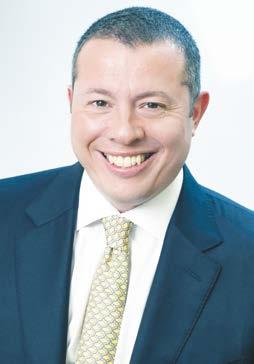
Carlo Saias CEO
We
Organic growth, discipline in strategy and continuous investment in healthy production are highlighted as the company’s goals for approaching 100 million Euros in production in the coming years, by the CEO of Interasco Mr. Carlo Saias.
He also emphasizes that the company's strategic planning is based on the pillars: Health, Automotive and Fire, while at the same time investing in digital tools that improve the efficiency and operation of the network. Which are your main strategic plans for the next 3–5 years and in which areas do you intend to invest the most?
For us at Interasco, the next three to five years are not just another cycle of planning.
It is the next essential step in the maturation of the company.
In a rapidly changing and increasingly demanding market, we consciously choose to move in moderation, with a clean plan and a long-term horizon.
Growth for us is not an end in itself; It is the result of the right decisions.
Our strategic planning is clearly based on our core pillars — Health, Motor and Fire. That's where we know the market, where we can create solid value. We focus particularly on small and medium-sized entrepreneurship, home property and selected commercial risks, with an approach that focuses on the right choice rather than unregulated expansion.
At the same time, we are investing substantially in digital tools and processes that improve the efficiency and daily operation of our network, without losing our human approach of cooperation.
In this context, we have set a clear medium-term target: to approach 100 million euros in production in the coming years. Achieving this target is based on organic growth, discipline in our strategy and continuous investment in healthy production. This is not just a number, but a confirmation that Interasco can grow while maintaining character, balance and substance.
How would you describe your company’s profile and differentiation into the Greek Market and what makes you stand out from the competition?
Our differentiation in the Greek insurance market does not result from an impressive slogan. It results from the way we operate every day. From flexibility in decision-making, to direct communication with our agentes and our ability to really listen to the market. We invest in our people, because we believe that they shape the result.
In a market that matures and does not forgive frivolities, we choose to build the future of Interasco with solid steps, a clear strategy and a clear vision. This is our path — and we follow it consistently.
DGTAL's strategic priorities, with an emphasis on the automation of insurance operations, are highlighted by the company's Co-founder & Group CEO, Vanda Giannaras, in her interview with Next Deal.
What are your key strategic plans for the next 3–5 years, and where do you plan to invest most?
The next three to five years are about one thing for DGTAL: making agentic workflow automation the new standard for how insurance back-offices operate. We are not building another AI tool that sits on a desk waiting to be used. We are building autonomous digital coworkers that actually run the work - end to end — from the first notification of loss all the way through to settlement recommendation.
Our strategic focus is clear. First, we are deepening our presence in insurance operations both underwriting and claims — motor, health, P&C, third party liability etc— because this is where the operational pain is sharpest and where automation delivers immediate, measurable impact. Second, we are expand-
ing into adjacent workflows: agentic payroll, financial audits, reconciliations, and compliance. The same agentic engine that processes a claim can validate an invoice or run a payroll check. Third, we are actively growing in Europe, and Greece is a priority market for us. The Greek insurance market is sophisticated, mature, cost-conscious, and facing the same talent and margin pressures as every other European market. That makes it exactly the right environment for what we offer.
How would you describe your company profile and differentiation in the Greek market?
What separates DGTAL from every other AI vendor in this space is something no competitor can replicate overnight: four years of pretrained models built on real, production insurance data. Not synthetic data. Not demos.
Actual claims, actual decisions, actual outcomes — running live with insurers like Allianz, NN, ENSTAR, SCOR and strong partnerships with PwC Germany & Switzerland and RSM Greece.
This matters because of what the industry
calls the "last mile" problem. Most AI platforms perform well in controlled tests but break down when exposed to the messy reality of real insurance operations — inconsistent documents, ambiguous policy language, edge cases that fall outside any rulebook. DGTAL was trained on exactly that messiness, in production, for years. Our agents do not just understand insurance — they have worked it. We know the issues, we have seen numerous insurance portfolios. This hard earned production knowledge is priceless and it differentiates the new comers from the “veterans” in this space. We do not sell seats. We deliver outcomes. Clients pay per completed workflow, and our contracts are tied to SLAs - turnaround times, accuracy rates, compliance metrics. That alignment of incentives is itself a differentiator: we only succeed when our clients do.
For Greek insurers looking to reduce operational costs, improve claims cycle times, and meet growing regulatory demands - DGTAL is not a future consideration. It is available today, proven in production, and ready to deploy.

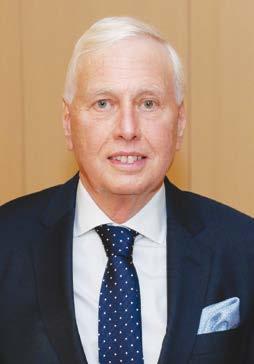
Nikos Makropoulos Executive Vice President and CEO
Our strategic goals for the coming years are based on the significant achievements of 2025, with the aim of continuing the very good performance of the previous year, while they reflect the current trends and challenges of the Greek insurance market, which is entering a period of maturity and transformation. EUROPE Insurance, within this under formation environment, invests, grows and expands, both domestically and internationally.
EUROPE Insurance is one of the most historic and established insurance companies in Greece and has entered a new, dynamic phase as a member of EUROPE HOLDINGS, a company with a capitalization exceeding 300 million US Dollars, belonging to the powerful INTRACOM Group, while is has one of the highest solvency ratios in the Greek insurance market (288,6%).
The company's constant goal is continuous and healthy growth, with the Property Sector as the main pillar of this path, through which we aim to enter the top five of Greek insurance companies within the next two years.
Our key strategic priorities include:
• Development of new innovative products: Against the backdrop of the increase in natural disasters (NatCat risks), we are focusing on designing flexible insurance solutions that cover property risks in a more effective way and provide incentives to policyholders in order to protect their assets. We will also create new innovative products that will cover the constantly evolving needs of consumers, as well as the new risks created as a result of rapid technological developments.
• Investing in Technology and Digital Transformation: We are accelerating the adoption of innovative technologies, such as artificial intelligence (AI), in order to improve our processes, such as underwriting, manage claims in a more effective way and enhance connectivity with partners and customers for their optimal service.
• Strengthening Liquidity and Profitability: Guided by quality underwriting and the correct allocation of the investment portfolio, we aim to maintain and increase strong capital positions that will ensure the future profitability and high solvency of our company.
Our constant strategic priority is to strengthen our already renowned executives with new, experienced ones, who all together will constitute the driving force for the further strengthening our competitiveness, as well as for the expansion of our Partner Network, by developing innovative products in the sectors of General Liability Insurance, Transportation, Technical Works and Guarantees.
2025 was a milestone year for the production activity of EUROPE Insurance, as the company recorded an impressive upward course in 2025, with the total premium production expected to approach 40 million US Dollars and registered growth in almost all sectors in which the company operates. The company's primary goal is the quality production, guided by strong profitability (return on equity), which it has consistently achieved since its establishment. The evolution of EUROPE confirms the company's ability to stand out and adapt to the new landscape of private insurance, laying a solid foundation for the coming years. With its strong financial performance, EUROPE Insurance, a member of the EUROPE Holdings Group, is expected to play a leading role in the Greek insurance market, leveraging synergies with the Group's companies and creating significant prospects for its strong growth in the immediate future, in order to be present in all upcoming developments.

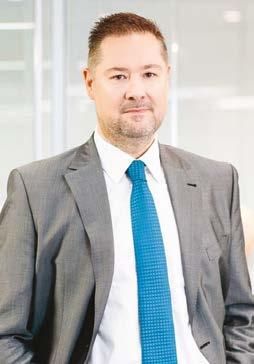
Stathis Froussos CEO
The strategic transformation of GP INSURANCE into a comprehensive pillar of general insurance, with an emphasis on businesses and professionals within the next five years, is announced by the company's CEO Mr. Stathis Froussos, in an interview with the Next Deal newspaper. “The prudent management of insured risks, so that we are present at the moment when our insured is in real need, is our basic commitment”, emphasizes the CEO of GP INSURANCE.
What are your key strategic plans for the next 3–5 years, and in which areas do you intend to invest the most?
In a dynamically changing market, GP Insurance, guided by its deep expertise built over nearly five decades in commercial vehicle insurance, particularly bus insurance, is developing its strategic plan for the next five years with the aiming to evolve into a comprehensive General Insurance provider, with a strong focus on businesses and professionals.
As we approach the milestone of 50 years of operation, our investments will focus on diversifying the risks we underwrite through the design and development of products covering other vehicle insurance segments, as well as the careful expansion of our insurance portfolio into other General Insurance lines beyond motor insurance. This growth plan will be supported both by reinsurance — which for us is not merely a risk transfer mechanism but a strategic foundation for our expansion — and by process optimization through the adoption of modern digital solutions for our customers and partners. For us, digitalization is not an end, but rather the means to strengthen our customer-centric approach.
How would you describe your company’s profile and differentiation in the Greek market, and what makes you stand out from the competition?
In the Greek market, GP INSURANCE stands out as a specialized organization with a proven ability to successfully manage highly complex risks. For many years, we have established ourselves as a leading insurance company in the particularly demanding heavy vehicle and bus insurance sector, remaining a pillar of stability for both our policyholders and partners.
We invest in flexibility and full transparency in our underwriting terms. We do not compete solely on price; instead, we prioritize the quality of the coverage we provide, backed by strong reinsurance agreements. Our insurance programs include substantial benefits even in their most basic form.
At the same time, we maintain one of the highest solvency ratios in the market, which is clear evidence of our prudent risk underwriting and strong capital resilience.
Our Commitment:
The prudent management of insurance risks, so that we are always present when our policyholders truly need us most.

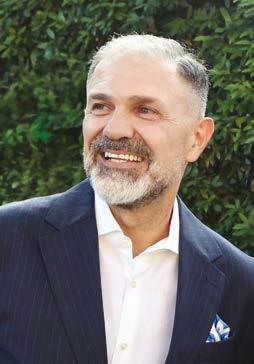
Konstantinos Semertzoglou Managing Director
Our strategy focuses on the continuous strengthening of specialized underwriting and risk consulting, offering our clients the opportunity to integrate insurance into every business decision, emphasizes in an interview with Next Deal the Managing Director of HDI Hellas, Mr. Konstantinos Semertzoglou. He also points out that the company’s orientation remains towards areas of increased complexity and frequency of risks.
What are your key strategic plans for the next 3–5 years and in which areas do you plan to invest the most?
Our strategy for the next 3–5 years is based on a simple yet critical assumption. In order to achieve the development of our insurance industry in line with the strengthening of the Greek economy, not just more production, but also stronger insurance consciousness and better risk management are necessary. For us, this “protection gap” is the key area of responsibility and growth. In practice, our strategy has four components. We will continue to invest in specialized underwriting and risk consulting, so that our clients can integrate insurance into every business decision. We will maintain our orientation in areas where risks are becoming more complex and frequent, such as natural disasters, climate change, property, civil liability, technical projects, transport and cyber risks, while investing, at the same time, in new services and products. We will make greater use of technology and artificial intelligence, not as a substitute for human judgment, but as a tool for better analysis, prevention, faster service and more effective claims management. However, where our value is truly assessed, is in the daily collaboration; in the technical quality of solutions, in the speed and transparency of claims management, in the proximity to the customer, as well as in the ability to transform international experience into practical value for Greek business.
How would you describe the profile and differentiation of your company in the Greek Market and what makes you stand out from the competition?
The profile of HDI Global SE, Hellas into the Greek Market is crystal clear: We are specialized insurers of industrial, commercial and corporate risks, with international strength and deep local knowledge. The branch of Greece has been operating in Athens since 1995 and it is a regional center for the wider area of the South-East Balkans and the Mediterranean. This dual dimension, local presence and international footprint, is crucial for businesses that grow, invest, export or operate in more than one market. Our differentiation is reflected in three axes. The first is the specialization. We focus on complex business risks, offering personalized solutions rather than standardized insurance coverage. The second is the international scale. HDI Global has a network in more than 175 countries, supports over 5.200 international programs and produces more than 30.000 local policies under these programs. Finally, the financial reliability. As part of the Talanx Group, we are associated with an international insurance group that in 2025 recorded insurance income of 49 billion Euros and EBIT (Earnings Before Interest and Tax) of 5,3 billion Euros, while HDI Global had insurance income of 10,3 billion Euros and EBIT of 732 million Euros. The credit rating of AA- / stable from S&P and A+ / stable from AM Best reinforces this image of reliability, especially in large and long-term corporate programs.

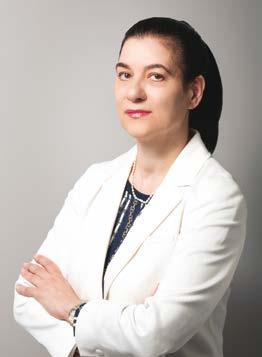
Theresa Skarlatou, CEO, Allianz Trade in Greece
In today’s business environment, uncertainty is no longer the exception but a defining feature of reality. Companies operate within a landscape shaped by geopolitical tensions, volatility in energy markets, and increasingly fragile supply chains. At the same time, access to financing is becoming more constrained, while customers demand greater flexibility and extended payment terms. The combination of these factors exerts significant pressure on liquidity, working capital, and overall credit risk exposure.
As competition intensifies, businesses are often required to offer longer credit periods in order to secure deals and strengthen commercial relationships. However, extending payment terms also means assuming greater financial risk over time - a risk that is becoming increasingly difficult to be assessed and managed by the companies. Payment delays, defaults, and sudden cases of customer financial distress are no longer isolated incidents but growing challenges that can directly impact the profitability and stability of any organization.
Businesses now require solutions that adapt to longer credit cycles, provide clear insight into future financial performance and support growth without compromising financial security.
In this context, Allianz Trade in Greece is introducing this year the Mid-Term Credit Insurance - a unique solution tailored to the needs of an environment characterized by prolonged uncertainty. It includes two specialized products - Cover One and Cover Lease - and provides coverage for contracts with payment terms of up to 60 months.
Mid-Term Credit Insurance strengthens both the protection and growth potential of companies by supporting midterm agreements, investments and equipment sales. At the same time, it offers greater flexibility in financial planning, effectively transforming extended payment terms into a competitive advantage.
Allianz Trade in Greece, responsible for both Greece and Cyprus, stands alongside businesses as a trusted partner, offering solutions that combine expertise, security and financial strength -enhancing their resilience and supporting their growth trajectory in an increasingly demanding environment.

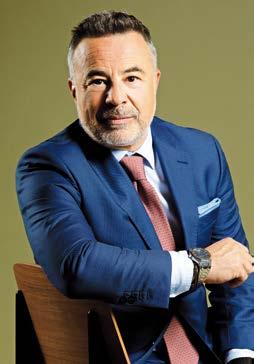
“W
e continuously invest in innovation and in initiatives that create real value, building a culture of trust, growth, and meaningful collaboration,” emphasizes the CEO of Howden Hellas & Cyprus, Mr. Dimitris Tsesmetzoglou. “New technologies now constitute a central pillar in Howden Hellas’ decision-making process,” adds Mr. Tsesmetzoglou, noting that “the insurance market is transitioning from models based exclusively on the analysis of historical data to predictive models that leverage AI and advanced analytics to anticipate risks before they emerge. How is Howden Hellas shaping its strategy in an environment of increasing risks and uncertainty?
Today, we operate in an environment where risks are no longer isolated, but rather multi-layered, interconnected, and constantly evolving. From cybersecurity and artificial intelligence to energy infrastructure and geopolitical developments, businesses are being called upon to manage multiple challenges simultaneously. Within this context, Howden Hellas’ strategy is based on the transition from traditional insurance management to a more holistic and proactive approach to risk management. It is no longer enough to handle losses after they occur; our goal is to participate from the very early stages of designing a business activity, acting as “risk architects.” At the same time, we consider collaboration between the private and public sectors to be critical, especially in terms of data sharing and utilization, because the resilience of economies cannot be built in a fragmented way.
What role do new technologies (AI, data analytics) play in the company’s decision-making?
New technologies have now become a central pillar in Howden Hellas’ decision-making process. The insurance market is shifting from models based exclusively on historical data analysis to predictive models that leverage AI and advanced analytics to anticipate risks before they materialize.
For us, data is the horizontal accelerator of this transition. The higher the quality and timeliness of the data, the more effectively we can design risk management solutions and optimize insurance costs for our clients.
Artificial intelligence, however, creates not only opportunities but also new types of risk. In the coming years, we will see organizations operating with hundreds or even thousands of AI agents, raising new questions around security, governance, and business continuity. This is why we believe the future will require even more sophisticated control and oversight mechanisms, where technology operates alongside human judgment.
How do you differentiate yourselves from the competition?
From the very first incorporation of the company that is today known as Howden Hellas, we have constantly been creating and setting new standards in insurance intermediation, with only one thing in mind: to add value to our clients and create a better life for our people. We continuously invest in innovation and initiatives that make a difference, fostering a culture of trust, growth, and meaningful collaboration.
Sorry, but we are too busy to look at what the competition does.

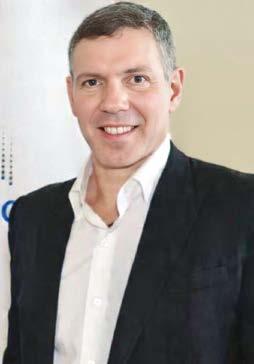
Giannis Bravos CEO
Groupama,
e.Brokers' goal for the coming years is to lead the retail brokerage market, that is the sales of insurance products through insurance intermediaries”, states the company's CEO Mr. Giannis Bravos, in an interview as part of Next Deal's special edition, in view of the 26th Insurance & Reinsurance Meeting. As he points out, the company has already three robust Sales Networks: the agency system (exclusive network), the agency network, as well as the exclusive partnership with the of Groupama Insurance’s exclusive network.
What are your key strategic plans for the next 3–5 years and in which areas do you plan to invest the most?
Our aim for the next 3-5 years is Be.Brokers to lead the retail brokerage market, i.e. the sales of insurance products through insurance intermediaries. Our company has already 3 Sales Networks: an agency system (exclusive network), an agency network and an exclusive partnership with Groupama exclusive network.
1. The agency system is an autonomous network, with separate administration and separate sales regulations, that provides subsidies for life and health bonuses, based on the operating standards of the insurance companies’ agency system. It already has 120 insurers and is growing, as more and more of the insurance companies’ agency networks realize the distinct advantage of working at the Be.Brokers agency: We have all the products of all insurance companies. For an insurer agent, this means that he will never lose any job due to lack of competitiveness. The Be.Brokers agency system has as a competitive advantage the representation of all insurance companies, which results in a profit of 20% to 30% for the insurer through more insurance.
2. The agency network has 800 associates, as well as a specialized sales regulation that yields high commissions, as bonuses are built into the commissions. It must be the simplest and most readable sales regulation of the market. In addition, the network has its own separate administration.
3. Groupama's exclusive network (agency system) consists of 240 insurers who collaborate exclusively with Be.Brokers for insurance that does not fall within the scope of Groupama's underwriting. Following the acquisition of Merimna Group, a subsidiary of Groupama, Be.Brokers is in the privileged position to grow through Groupama's exclusive network, as we have the expertise of agency system networks.
How would you describe your company's profile and differentiation into the Greek market, and what makes you stand out from the competition?
Our main differentiation is the cooperation with and the support provided to the cooperating insurers. It is no exaggeration to say that we are like a family. Even an insurance agent who cooperates with Be.Brokers for the first time, quickly realizes that the company's support goes beyond typical professional relationships.
As far as expertise is concerned, our main differentiation is the service and development of multiple insurer networks.
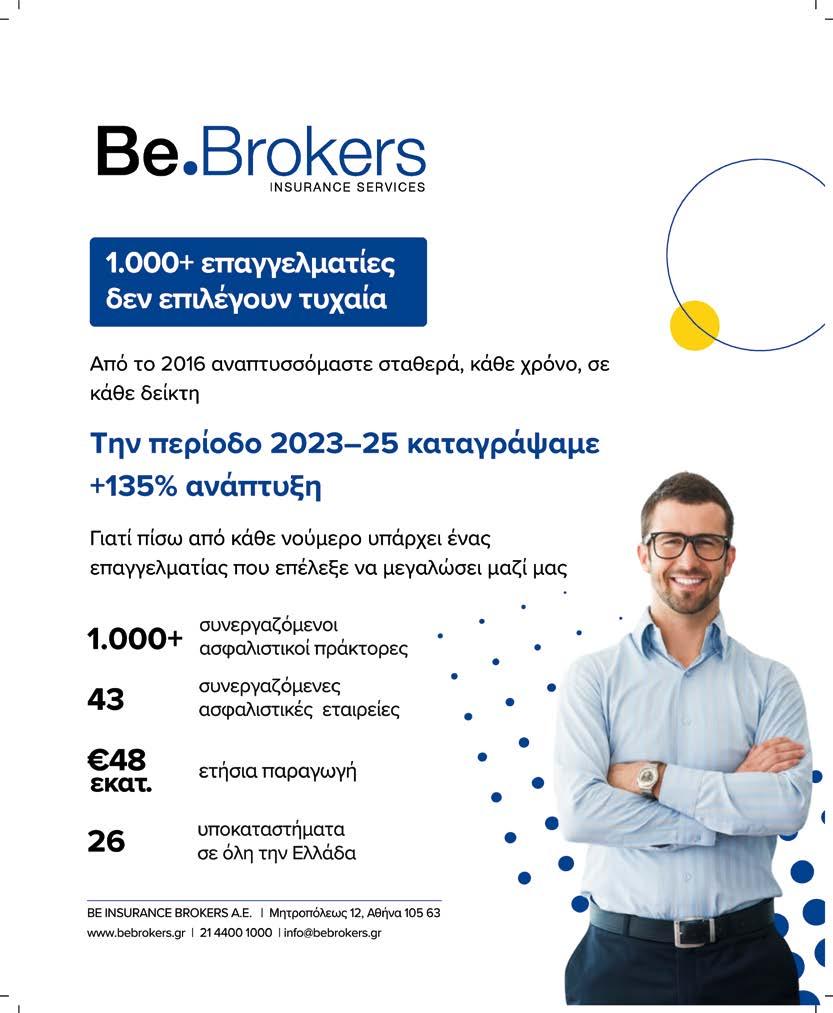
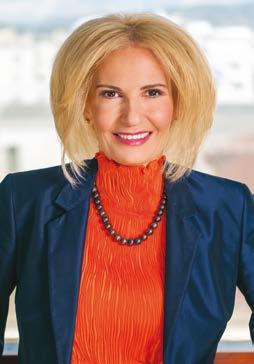
Annie Tryfon Vice Chairperson & CEO
Innovative cybersecurity solutions are provided to the Greek Market by Designia Insurance Brokers, a company with long-standing experience in managing complex insurance and business risks, and as Ms. Annie Tryfon, Vice Chairperson and CEO of the company, emphasizes in an interview with the Next Deal: “We are one of the pioneering companies in the Greek Market. If I had to summarize in one sentence, I would say that we operate as risk management advisors and not simply as insurance intermediaries”.
Which are your main strategic plans for the next 3-5 years and in which areas do you intend to invest the most?
In the coming years, we estimate that the role of insurance brokerage will continue to evolve toward specialized consulting and comprehensive risk management.
In this context, a key focus for us will be the further development of our Risk Management and Insurance Advisory services, with an emphasis on more complex and specialized solutions for businesses. At the same time, we will prioritize areas such as cyber risk, as well as specialized liability and business risk programs.
Digital transformation, along with the use of AI, is also a key pillar of our strategy, enabling greater flexibility, faster service delivery, and optimized decision-making in a way that enhances our services.
Closing, our priority has been, is, and will continue to be, the strengthening of our workforce and partnerships through ongoing training, skill development, and the expansion of our network with leading companies in Greece and abroad, combined with the further strengthening of our customer-centric philosophy.
How would you describe your company’s profile and differentiation into the Greek Market and what makes you stand out from the competition?
Designia Insurance Brokers is one of the most established insurance brokerage firms in Greece, operating since 1992 and with extensive experience in managing complex insurance and business risks. Our profile is characterized by a combination of deep expertise, strong partnerships with the Greek and international insurance markets, and a genuine understanding of the needs of both businesses and individuals.
We approach insurance as part of a business’s overall strategy for protection and growth, providing complete services. We specialize in developing innovative solutions, such as cyber risk insurance, a field in which we are among the leading companies in the Greek market. We have also done similar work in areas such as safety technology, specialized civil liability, credit, and guarantees—always with the goal of meeting the growing and increasingly complex needs of modern businesses.
At the same time, we leverage technology and continuously invest in modern systems and AI tools, with the aim of improving our customers’ experience and providing more efficient services. Particularly important to us is the network of partnerships we are developing both in Greece and abroad, as it enables us to offer our customers and partners access to specialized solutions and the best insurance terms, even for highly complex risks.
If I had to sum it up in one sentence, I would say that we act as risk management advisors, not merely as insurance brokers.

DAT Hellas
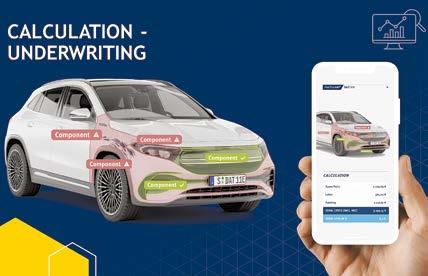

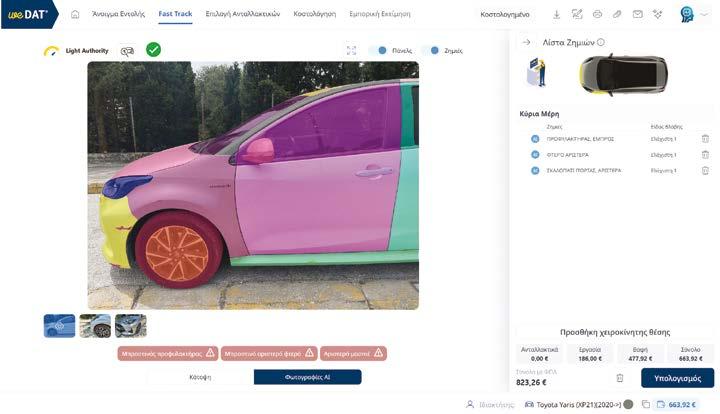
DAT Hellas aims to further strengthen its role as a leading technological and data-driven partner in both the insurance and automotive markets in the coming years, Mr. Savvas Sidiropoulos and Mr. Dimitrios Valavanis, the company's Managing Directors, emphasized in an interview with Next Deal newspaper. “Through solutions such as weDAT®, weDATFastTrackAI®, weDATFastTrackAI® Underwriting and CarValue, we support claim file management, automated valuation, fraud detection and transparent total loss management”, Mr. SIdiropoulos and Mr. Valavanis emphasize.
What are your key strategic plans for the next 3–5 years, and in which areas do you intend to invest more heavily?
Over the next 3–5 years, DAT Hellas aims to further strengthen its role as a technology-driven and data-oriented partner for the insurance and automotive markets. A key strategic priority is the continued digitalisation and automation of critical processes, including claims management, repair cost estimation, vehicle technical inspections and fleet management. Our objective is to provide insurance companies, loss adjusters, repair networks and fleet operators with a faster, more transparent and more efficient experience, reducing manual work, processing times and the risk of error.
We place particular investment emphasis on artificial intelligence, computer vision and automated repair cost estimation. Automatic image-based damage recognition, predictive analytics and potential fraud detection are now becoming crit-
With artificial intelligence, digital tools, high-end knowhow and digitally advanced solutions, DAT Hellas substantially contributes to the transition of the insurance market to a faster, more transparent and efficient operating model.
ical areas for the market. At the same time, we are investing in specialised solutions for electric vehicles, as electromobility is creating new requirements in terms of repair costs, battery assessment, residual values and vehicle lifecycle management. Another important strategic pillar is the further development of APIs, cloud infrastructure and integrations with the systems of insurance companies, repairers and fleet opera-
tors, enabling DAT Hellas to function as a central technology and data hub for the wider mobility ecosystem , during the development of Vehicle Scanning solutions.
How would you describe your company’s profile and differentiation in the Greek market, and what makes you stand out from the competition?
DAT Hellas differentiates itself in the Greek market by combining international expertise, reliable data, advanced technology and a deep understanding of the local insurance and automotive landscape. As part of the German DAT Group, the company has access to a powerful ecosystem of technical information, data intelligence and digital solutions, which it adapts to the specific needs of insurance companies, loss adjusters, repair networks and automotive professionals in Greece.
Our competitive advantage does not lie solely in the tools we provide, but in the way these tools are integrated into the dayto-day operations of our partners. Through solutions such as weDAT®, weDAT FastTrack AI®, SilverDAT FastTrackAI® Underwriting and Car Value, we support claims file management, automated damage assessment, fraud detection and the transparent management of total losses. However, an equally important point of differentiation is our people — and this is where the real difference is made. The DAT Hellas team brings together high-level know-how, technical expertise and in-depth market knowledge, offering not just software, but comprehensive support, training and tangible added value for its partners .
By LAMBROS KARAGEORGOS
The Greek insurance market in 2025 reflected particular dynamics, with most companies recording an increase in premium production, improved profitability and strong solvency ratios. Insurance companies are adapting to the modern needs of customers, investing in new products and services. Below, the newspaper "Next Deal" presents the key activity data of the Greek Insurance Companies based on their recently published solvency reports.


NN Hellenic Single-member Life Insurance Company S.A. recorded an increase in production and a strong capital position in 2025, according to the 2025 Solvency and Financial Condition Report. Regulatory gross written premiums amounted to 1,03 billion Euros in 2025, compared to 950,4 million Euros in 2024, recording an increase of 79,4 million Euros, mainly due to higher regular premiums in Unit/Index-Linked products, as well as in health and accident insurance.
The company's operating result amounted to 97,2 million Euros in 2025, compared to 90,2 million Euros in 2024, presenting an improvement due to higher release of the contractual service profit margin and improved loss experience.
At the same time, the company maintained strong capital adequacy, with the Solvency Ratio (SCR ratio) reaching 155% on December 31, 2025, compared to 152% in 2024, sufficiently covering the capital requirements of the Solvency II framework. Overall, NN Hellas in 2025 presented an increase in the production of written premiums, improved profitability and a strong Solvency Ratio, confirming its

financial stability and the strengthening of its business activity.
Gross written premiums for 2025 amounted to 834,6 million Euros, compared to 850,3 million Euros in 2024, presenting a marginal decrease of 1,8%, mainly due to the lower production of new investment-linked single-payment contracts, despite the positive course of General Insurance and group coverage. Despite the slight decline in production, the company's operating efficiency improved significantly, leading to a substantial increase in profitability. Specifically, pre-tax profits amounted to 48,0 million Euros in 2025, compared to 14,8 million Euros in 2024, recording a significant increase, reflecting the improvement in the technical result, the positive investment return and the more effective management of operating expenses.
At the same time, the company's capital position remained strong, with the Solvency Ratio (SCR) standing at 177% in 2025, compared to 188% in 2024. Although slightly decreased, compared to the previous year, the solvency level still significantly exceeds regulatory requirements and confirms the resil-
ience of the balance sheet and the ability to support future growth. Overall, 2025 was characterized by stable premium production, significant strengthening of profitability and maintenance of high capital adequacy compared to 2024, reflecting the improvement in the quality of results and the financial strength of the company.
In 2025, Generali Hellas presented a significant growth in premium production, increased profitability and a particularly high Solvency Ratio. More specifically, gross written premiums amounted to 617,5 million Euros, recording an increase of 12,1% compared to 2024. Of this, 297,6 million Euros derived from the Life sector and 319,9 million Euros from the Non-Life sector, with both sectors recording positive growth rates.
The increase in production contributed to the improvement of financial results, with the net result after taxes reaching 28,1 million Euros, supported by high technical profitability and positive investment return. At the same time, the operating result was enhanced by
the improvement in the loss ratio, as well as the increase in business volume, thus confirming the company's stable profitability. As far as its capital adequacy is concerned, eligible equity capitals amounted to 275,8 million Euros, while the Solvency Capital Requirement (SCR) reached 148,7 million Euros. As a result, the Solvency Ratio (SCR ratio) amounted to 185,5%, presenting a slight improvement compared to 2024 and reflecting the company's strong capital position and ability to meet the supervisory requirements of the Solvency II framework.
Overall, Generali Hellas in 2025 recorded an increase in the production of written premiums, positive profitability and a high Solvency Ratio, so now is able to claim the third place among the top ten companies, in terms of production, in the Greek Insurance Market, fact that confirms its financial stability and the continuous strengthening of its position within the Greek Insurance Market.
Explosive profit growth and production increase, recorded in 2025
Eurolife FFH Life Insurance recorded an increase in the production of written premiums, improved profitability and strong solvency ratios in 2025, according to the Solvency
and Financial Condition Report.

Eurolife FFH Life Insurance presented total gross written premiums of 616,5 million Euros in 2025, compared to 589,6 million Euros in 2024, recording an increase of 5%. The increase derived mainly from investment-linked life insurance, which amounted to 425,8 million Euros, as well as from the management of collective pension funds, which increased by 12%.
The company's pre-tax profits amounted to 193,5 million Euros in 2025, compared to 133,0 million Euros in 2024, an increase of 45%, mainly due to improved investment results. The Solvency II Ratio stood at 149% in 2025, compared to 159% in 2024, while maintaining strong capital adequacy. It is recalled that in October 2025, the acquisition of the remaining 80% of the Life line of business (“Eurolife Life”) was announced for an amount of 813 million Euros in cash, which corresponds to a price-to-book value (P/BV) ratio of approximately 1,45 times with a reference date of August 31, 2025. Following the completion of the acquisition, Eurobank will own 100% of Eurolife Life and will retain a 20% stake in the general insurance business of Eurolife Holdings (“Eurolife General Insurance”).
Interamerican Hellenic Insurance S.A. presented a significant increase in the production of written premiums for the year 2025, as well as improved profitability and an adequate solvency ratio, confirming its financial stability. Total premium production amounted to 540 million Euros, of which 53 million Euros derived from Life Insurance and 487 million Euros from Non-Life Insurance, recording an increase of 15% compared to the previous year.
The pre-tax results of the company and its subsidiaries for 2025 amounted to profits of 35,9 million Euros, compared to 24,3 million Euros in 2024, positively affected by the increase in premium production and the improvement in investment results. Investment results amounted to 18,2 million Euro, increased compared to the previous year.
At the same time, the company's eligible equity capitals under Solvency II amounted to 181,2 million Euros, boosted by profitability and the positive change in financial assump-
tions. The Solvency Capital Requirement (SCR) stood at 134,3 million Euros, while the SCR ratio stood at 135%, presenting an improvement compared to 2024. The Minimum Capital Requirement (MCR) coverage ratio stood at 273%, confirming the company's strong capital adequacy.
“Allianz European Credit Insurance Company Limited” published its Solvency and Financial Condition Report for the year that ended on 31/12/2025, in accordance with the Solvency II regulatory framework and with the approval of the Board of Directors, on 7 April 2026.
The company is a member of the Allianz Group and operates in Greece and Cyprus in both Life and Non-Life Insurance.
For 2025, the total written premium production amounted to 444,5 million Euros, of which 120,3 million Euros are related to Life insurance and 324,2 million Euros to Non-Life insurance.
The result before tax under IFRS amounted to a loss of -2,5 million Euros, mainly due to exceptional and non-recurring items, while investment income amounted to 25,5 million Euros and equity capitals under IFRS amounted to 252,9 million Euros.
In the Solvency II balance sheet, total assets amounted to 1.397,3 million Euros and core equity capitals to 239,1 million Euros for 2025.
The Solvency Capital Requirement (SCR) amounted to 141,5 million Euros, while the SCR coverage ratio amounted to 162% (159% without adjustments). The Minimum Capital Requirement (MCR) coverage ratio amounted to 339%, confirming the company's adequate capital position.

crease in gross written premiums in 2025, which amounted to 304,1 million Euros, compared to 275,7 million Euros in 2024, recording an increase of 10,3%. Of the total production, 281,9 million Euros derived from Non-Life insurance activities and 22,2 million Euros from Life and Health insurance. The increase is mainly due to the development of the Fire and other property damage, Medical Expenses and General Liability lines of business, while the further strengthening of the Health line also had a positive contribution.
In terms of profitability, the company's insurance result amounted to 34,5 million Euros in 2025, while net profits after taxes amounted to 20,7 million Euros, compared to 38.2 million Euros in 2024. Profitability is mainly due to Non-life insurance, which recorded a strong technical performance, with a combined loss and expense ratio of 85,2%.
The company's capital position remained strong throughout the year. The Solvency Ratio (SCR) strengthened to 156,3% in 2025, compared to 146,6% in 2024, remaining significantly higher than regulatory limits. At the same time, the Minimum Solvency Capital Requirement (MCR) coverage ratio stood at 325,5% from 297,5% in 2024, confirming the company's strong capital adequacy.
Alpha Life, a subsidiary of Alpha Bank, which operates exclusively in the Life and in-
vestment plans sector, recorded gross written premiums of 253,4 million Euros in 2025, compared to 267 million Euros in 2024, recording a decrease of 5% year-on-year. Despite the decline in production, the company maintained a strong operating performance, while further strengthening its position in the Life insurance market, increasing its assets and funds under management. In terms of profitability, net profits after taxes amounted to 16,6 million Euros in 2025, compared to 22,3 million Euros in 2024, remaining at high levels and confirming the maintenance of positive organic profitability. Alpha Life's capital position appears particularly strengthened.
The SCR ratio rose to 279% in 2025, from 255% in 2024, demonstrating a significant improvement in capital adequacy. At the same time, the MCR ratio stood at 715% in 2025, compared to 807% the previous year, remaining at particularly high levels and significantly above the regulatory requirements. Finally, it should be noted that the company’s portfolio includes 83.449 contracts, compared to 81.564 a year ago.

Groupama Insurance recorded an increase in premium production in 2025, with total written premiums (including investment products) reaching 211,5 million Euros, compared to 198,2 million Euros in 2024, presenting an annual increase of 6,7%. The increase
in production derived mainly from the Fire and other property damage, Medical Expenses and insurance with profit participation lines of business. The Medical Expenses sector increased by 11,9%, the Fire and other property damage sector by 7,8%, while Motor Third Party Liability decreased by 8,1% due to a strategic improvement in profitability and portfolio quality.
In terms of results, the company's pre-tax operating result for 2025 amounted to a profit of 430 thousand Euros.
The company's capital position remained strong. The total Solvency Capital Requirement (SCR) amounted to 63,9 million Euros in 2025, an increase of 3%, compared to 2024. The SCR coverage ratio stood at 145,4% compared to 137,6% in 2024, while the Minimum Capital Requirement (MCR) coverage ratio stood at 303,5%, confirming the company's strong capital adequacy.
INTERSALONIKA General Insurance Company operates in the General Insurance sector through its over 90 branches and approximately 1.600 insurance intermediaries, its main sectors being motor vehicle third party liability and assistance services.
In 2025, the company returned to a growth trajectory, with an increase in gross written premiums by 8,2%, which amounted to 139,0 million Euros, compared to 128,4 million Euros in 2024. Earned premiums amounted to 131.6 million Euros, while gross claims paid decreased by 4,5% to 64,0 million Euros.
Regulatory equity capitals amounted to approximately 173,3 million Euros, while eligible equity capitals for the covering of claims amounted to 167,6 million Euros. The Solvency Capital Requirement (SCR) amounted to 76,7 million Euros, leading to an SCR coverage ratio of 218,6%, while the Minimum Capital Requirement (MCR) coverage ratio amounted to 656,2%, demonstrating a strong capital adequacy.
INTERLIFE Insurance, during the fiscal year 2025 recorded a strong improvement in both production and profitability, while maintaining high capital adequacy. Written premiums amounted to 109,27 million Euros in 2025, compared to 100,35 million Euros in 2024, recording an increase of 8,9%. Of this, 48,84% of premiums derived from the Motor Third Party Liability sector and 51,16% from other sectors. The company recorded pre-tax profits of 32,67 million Euros in 2025, compared to 14,77 million Euros in 2024, presenting a significant improvement in profitability. The insurance result amounted to 3,63 million Euros, from a loss of 2,49 million Euros in 2024, while the investment result amounted to 30,99 million Euros, compared to 20,56 million Euros in the previous year.
In terms of solvency, eligible equity capitals amounted to 168,0 million Euros, compared to a Solvency Capital Requirement of 108,3 million Euros, leading to a Solvency Ratio of 155% and a Minimum Capital Requirement coverage ratio of 621%, which confirms the company's strong capital position.
Hydrogios Insurance and Reinsurance Company operates in Greece in the Non-Life insurance sector, Reale International being its main shareholder, which holds 84,9% of the share capital.
For 2025, total premium production amounted to 106,4 million Euros, an increase of 12,5% compared to 2024, with significant growth in the Health, Fire and other damage, and Motor sectors.
The technical result from insurance activities amounted to 4,7 million Euros, compared to 4,0 million Euros in 2024, while
total investment income amounted to 6,5 million Euros.
The results before taxes amounted to 10,5 million Euros, compared to 9,9 million Euros in 2024.
The Solvency Capital Requirement (SCR) amounted to 49,4 million Euros, with an SCR coverage ratio of 245,4%, which demonstrates the company's strong capital adequacy.
The Minimum Capital Requirement (MCR) amounted to 18,3 million Euros with a coverage ratio of 653,8%, confirming the company's adequate capital position.
Eurolife FFH General Insurance recorded an increase in gross written premiums in 2025, which amounted to 95,2 million Euros, compared to 90,6 million Euros in 2024, presenting an increase of 5%.
The increase in production derived mainly from the Property sector, which increased by 17% and amounted to 46,7 million Euros, as well as from the other sectors that recorded an increase of 10% to 13,5 million Euros. On the contrary, the Automotive sector experienced a decline, with production amounting to 35,0 million Euros, reduced by 9% compared to the previous year.
In terms of profitability, pre-tax profits amounted to 16,1 million Euros in 2025, compared to 9,3 million Euros in 2024, presenting a significant improvement. The company's capital position remained strong during the year.
The Solvency Capital Requirement (SCR) stood at 61,9 million Euros, up from 52,4 million Euros in the previous year. The SCR ratio was maintained at 148% in 2025, remaining significantly above regulatory limits. At the same time, the Minimum Capital Requirement (MCR) stood at 15,5 million Euros, with an MCR coverage ratio of 592%, confirming the company's adequate capital structure.
MINETTA Insurance, during the fiscal year 2025, presented a significant growth in premium production and improvement of its results. Gross insurance income increased to 88,1 million Euros, from 74,6 million Euros in 2024 (+18.0%), while the technical result amounted to 25,7 million Euros, from 16,2
million Euros (+58.6%). Profits before taxes increased to 11,28 million Euros, from 2,76 million Euros, while Solvency II eligible equity capitals amounted to 47,4 million Euros, from 36,6 million Euros (+29.5%).
The increase in production derived mainly from the Automotive sector and other General Sectors. Gross written premiums totaled 94,7 million Euros in 2025, compared to 79,4 million Euros in 2024 (+19.3%), with the Automotive being the most important sector of activity.
The technical result under IFRS 17 amounted to 25,8 million Euros, compared to 16,3 million Euros in 2024, while the insurance operating result amounted to 12,08 million Euros, from 3,84 million Euros, reflecting a significant increase in profitability.
The investment portfolio amounted to 126,0 million Euros in 2025, compared to 108,2 million Euros in 2024, while the total investment result amounted to 3,23 million Euros, recording a slight increase compared to the previous year.
The company maintained strong capital adequacy, with a capital requirement coverage ratio of 158,6% compared to 137,4% in 2024, a level significantly higher than the regulatory limits.
NP Insurance for the fiscal year 2025 recorded a total production of written premiums at 58,81 million Euros in 2025, compared to 53,19 million Euros in 2024, presenting an increase of 10,6%. The increase derived mainly from the Motor Third Party Liability sector (+9.0%) and the Land Vehicles sector (+14.3%).
Results after taxes amounted to 16,40 million Euros in 2025, compared to 9,36 million Euros in 2024, recording a significant increase in profitability.
Compensations paid amounted to 24,18 million Euros, compared to 26,21 million Euros in 2024, reduced by 7,7%, mainly due to lower compensations in the Fire sector compared to the previous fiscal year. The Solvency Ratio stood at 308%, while the Minimum Capital Requirement (MCR) coverage ratio reached 1.228%.
Μέλος
ATLANTIKI ENOSSI, during the fiscal year 2025, recorded an increase of premium production, strong profitability and a very high capital adequacy, according to the 2025 Solvency & Financial Condition Report.
Total written premium production amounted to 68,01 million Euros in 2025, compared to 59,35 million Euros in 2024, presenting an increase of 14,60%. This increase derived from growth in many sectors, with significant performances in group Life insurance (+32.71%), Motor (+15.20%) and Property/Fire (+16.31%).
The company remained profitable. Pre-tax profits amounted to 6,22 million Euros in 2025, compared to 7,59 million Euros in 2024, while after-tax profits amounted to 4,81 million Euros. Investment income amounted to 3,63 million Euros.
The company's total investments amounted to 180,61 million Euros in 2025, compared to 170,75 million Euros in 2024, with main investments in bonds, deposits and real estate.
At the solvency level, the SCR ratio amounted to 293%, with a capital surplus of 62,96 million Euros, which means that the company covers almost three times the capital requirements of the Solvency II directive.
Interamerican Assistance had a great performance in 2025, with increased written premiums, improved profitability and maintaining strong capital adequacy. Total premiums written for 2025 amounted to 47,8 million Euros in the Non-Life segment, increased by 4,7 million Euros compared to 2024, reflecting the expansion of operations and the strengthening of the company's presence in the insurance market.
The pre-tax results for 2025 amounted to 1,9 million Euros, compared to 0,7 million Euros in the previous year. At the same time, the company's capital position remained strong, with Solvency II eligible equity capitals of 16,8 million Euros. The Solvency Capital Requirement (SCR) stood at 12,9 million Euros and the SCR Solvency Ratio stood at 130%, while the Minimum Capital Requirement (MCR) coverage ratio stood at 283%.


Interasco General Insurance Company SA increased its insurance revenues by 3,0% in 2025, from 39,7 million Euros in 2024 to 40,9 million Euros in 2025. The other General In-
surance sectors increased by 3,6%, while the Motor sector recorded an increase of 2,0%.
The number of contracts in force increased to 104.457 in 2025, from 94.526 in 2024, with the largest increase recorded in the Health and Personal Accident sectors (+10.6%) and in the Motor sector (+2.0%).
At the same time, it presented a positive result before taxes in 2025 of 384 thousand Euros, compared to 718 thousand Euros in 2024, recording a decrease in profitability. This change is mainly attributed to the increase in written premiums during the second half of the year, which were not fully recognized as accrued within the fiscal year. In terms of solvency, the Solvency Ratio amounted to 166,0%, while the Minimum Capital Requirement amounted to 4,1 million Euros, with eligible equity capitals of 12,3 million Euros and a coverage ratio of 303,7%.

DYNAMIS Insurance recorded a total premium production of 33,82 million Euros in 2025, compared to 28,62 million Euros in 2024, increased by 18,17%. The majority of the production derived from the Motor Vehicle Third Party Liability sector (22,90 million Euros), while the other sectors amounted to 10,92 million Euros.
The results for the fiscal year amounted to losses after taxes of 712,97 thousand Euros in 2025, compared to profits of 754,09 thousand Euros in 2024. The result before taxes amounted to losses of 1.016,18 thousand Euros, affected by a negative insurance result and reduced investment profits.
Core equity amounted to 15,48 million Euros, while the Solvency Capital Requirement (SCR) amounted to 11,56 million Euros. The SCR ratio amounted to 133,90%, while the Minimum Capital Requirement (MCR) coverage ratio amounted to 372,29%, indicating an adequate capital position.
The social economy company has a Solvency Ratio of over 200%
SYNDEA published its Solvency and Financial Condition Report for the fiscal year 2025,

which was prepared in accordance to the Solvency II framework and approved by the Board of Directors on 07/04/2026.
The company operates in Greece in both Life and Non-Life insurance (mixed license), aiming to cover the needs of cooperatives and the broader social economy.
For 2025, total premium production amounted to 30,38 million Euros, of which 3,47 million Euros were related to Life insurance and 26,91 million Eyros to Non-Life insurance, recording an increase of 4,8% compared to 2024.
The company recorded pre-tax profits of 513 thousand Euros, against losses of 752 thousand Euros in 2024, while equity capitals as of 31/12/2025 amounted to 29,33 million Euros, increased by 8.2%.
The Solvency Capital Requirement (SCR) amounted to 15,29 million Euros, with eligible equity capitals of 30,62 million Eyros and a Solvency Ratio of 200,25%, indicating strong capital adequacy.
Accordingly, the Minimum Capital Requirement (MCR) amounted to 8,0 million Euros, with a coverage ratio of 354,11%, confirming the company's adequate capital position.
Overall, Syndea in 2025 recorded a production growth, a return to profitability and a Solvency Ratio of over 200%, maintaining an adequate capital coverage and a stable financial position.
a new shareholder and increased production by 25,6%
EUROPE Insurance operates in the General
Insurance industry, mainly specialized in the Fire and other property damage sector, while in 2025 its acquisition by EUROPE HOLDINGS (INTRACOM Group) was completed.
Total premium production amounted to 27.386 thousand Euros in 2025, compared to 21.804 thousand Euros in 2024, recording an increase of 25,60%. The largest participation derived from the Fire and other property damage sector and the Credit/Guarantees sector, while an increase was also recorded in most sectors of activity. Profits after taxes amounted to 5.870 thousand Euros. Core equity capitals amounted to 37.963 thousand Euros, an increase of 207,89% compared to 2024, while the Solvency Capital Requirement (SCR) amounted to 13.153 thousand Euros. The SCR coverage ratio was 288,62% and the Minimum Capital Requirement (MCR) coverage ratio was 938,91%, indicating a strong capital adequacy.
HORIZON 1964 Insurance, in 2025, exceeded its solvency capital requirements, with an SCR ratio of 237,32% and a Minimum Capital Requirement ratio of 571,06%.
Gross written premiums amounted to 16,59 million Euros in 2025, compared to 14,18 million Euros in 2024, recording an increase of 16,96%. Total investment income amounted to approximately 807 thousand Euros in 2025, compared to 746 thousand Euros in 2024, while profits before taxes amounted to approximately 1,8 million Euros, higher than the previous year.
GENIKI PANHELLADIKI Insurance, for the fiscal year 2025, presented gross written premiums of 13,56 million Euros, compared to 8,96 million Euros in 2024, recording an increase of 51%, the largest among all insurance companies. The increase derived mainly from Motor Third Party Liability insurance (6,63 million Euros) and other vehicle insurance (6,53 million Euros), which recorded a particularly high increase compared to the previous year. The Solvency Capital Requirement (SCR) stood at 6,13 million Euros and the SCR coverage ratio stood at 281%, while the Minimum Capital Requirement (MCR) coverage ratio stood at 431%.
Personal Insurance, for the fiscal year 2025, presented a total gross written premium production of 12,27 million Euros in 2025, compared to 10,05 million Euros in 2024, (an increase of 22,1%). Despite the increase in production, the company remained loss-making. Results after taxes amounted to losses of 352 thousand Euros in 2025, compared to losses of 1,07 million Euros in 2024, mainly due to losses in the Automotive sector. The solvency
capital requirement (SCR) amounted to 8,52 million Euros and is covered by equity capitals of 14,41 million Euros, with a Solvency Ratio of 169%. The Minimum Capital Requirement Coverage Ratio (MCR) was 360%, confirming full capital adequacy.
The company operates in Greece and provides Non-Life insurance. Total premiums production for the year 2025 amounted to 4.636.679 Euros, decreased by 11% compared to 2024. The company's results after taxes, according to IFRS 17, amounted to a profit of 1.043.715 Euros for 2025, compared to the profit of the previous year 2024, amounting to 2.022.926 Euros. The eligible equity capitals to Solvency Capital Requirement (SCR Ratio) amounted to 219%.
INTERSALONIKA Life Insurance operates in the Life and Health insurance sector, has a network of over 90 branches and approximately 800 insurance intermediaries, offering Life, Health and pension insurance products. The registered premium production in 2025 amounted to 3.993.366 Euros, compared to 3.921.150 Euros in 2024, recording an increase of 1,8%, mainly due to an increase in individual traditional life products and group contracts, while the health portfolio for foreigners declined. The Solvency Capital Requirement (SCR) amounted to 20.194.299 Euros and the Minimum Capital Requirement (MCR) to 6.700.000 Euros, with an SCR coverage ratio of 423,7% and an MCR coverage ratio of 1.277,2%, indicating a particularly strong capital position.
Cyprialife Greece recorded a marginal increase in the production of written premiums in 2025, which amounted to 2,954 million Euros, compared to 2,889 million Euros in 2024, presenting an increase of approximately 2%. The increase in production derived mainly from savings and unit-linked products, while the company's portfolio remained overall stable throughout the year. The company's capital position remained strong, although it presented a decline, compared to the previous year. The Solvency Ratio (SCR) stood at 247% in 2025, from 292% in 2024, however remaining significantly higher than the regulatory limits.
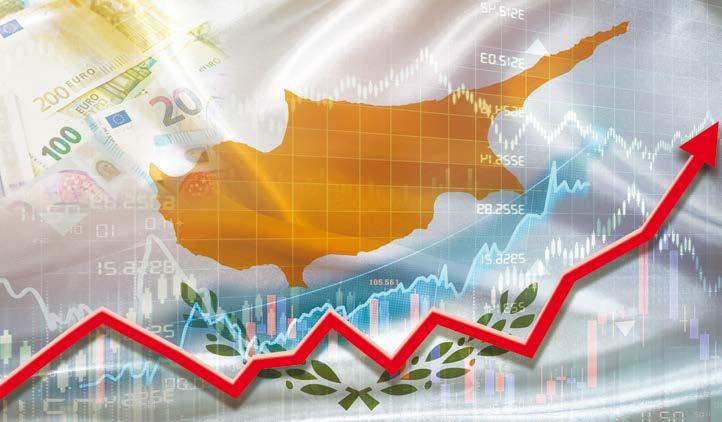
το 2024 (+89%).
Η Progressive Insurance είχε δείκτη κάλυψης SCR 198% το 2025, βελτιωμένο από 174% το 2024. Η αύξηση οφείλεται στα ισχυρά ίδια κεφάλαια. Η παραγωγή μειώθηκε ελαφρά σε 6,84 εκατ. ευρώ το 2025 από 6,87 εκατ. ευρώ το 2024 (-0,4%), με βασική πηγή εσόδων την α-
Trust

By our Correspondent in Cyprus, GIANNIS SEITANIDIS
Cypriot insurance companies recorded a strong solvency and profitability image in 2025, as SCR coverage ratios are comfortably above regulatory limits, equity is strengthened and the majority of companies record positive or improved results, compared to 2024. At the same time, however, the sector is currently being in a phase of deep restructuring, as the acquisitions and mergers of the recent months are forming three large bancassurance groups, under the umbrella of Bank of Cyprus, Eurobank and AlphaBank, radically shifting the balance in the insurance market.
In July 2025, Bank of Cyprus announced the completion of the 100% acquisition of Ethniki Insurance (Cyprus), for a price of 29,3 million Euros.
Eurobank, following the acquisition of the Hellenic Bank, proceeded with the acquisition of the Cypriot activities of CNP Assurances and the consolidation of all its operations under the single entity Eurobank Limited.
In December 2025, Alpha Bank reached an agreement with Universal Life Insurance Public Company Ltd and Altius Insurance Ltd. With the said agreement, Alpha Bank becomes one of the three largest insurance groups in Cyprus.
In the Life sector in particular, the three banks control 2/3 of the market. In 2025, Eurolife, a subsidiary of Bank of Cyprus, owned the largest share (29,7%), followed by Eurobank's ERB Cypria life, with a share of 28,6% and Universal Life, with 15%.
As far as the General Sector is concerned, ERB Insurance (Eurobank) owns the largest share with 22,4%, followed by the company General Insurance of Cyprus (Bank of Cyprus) with a share of 13,5%.
The entry of banks into the insurance field,
tends to increase concentration, as it transfers the clientele, the distribution networks and a strong capital base, to a few large groups, squeezing out smaller players. At the same time, it creates bancassurance schemes with greater bargaining power, while it limits the range of independent choices for consumers. This new concentration of power raises the bar for smaller players, who are called upon to adapt to an environment of intensifying competition, investing in products, networks and technology, without ruling out the possibility of a new round of mergers in the coming years.
Altius Insurance strengthened its capital position in 2025, as the Solvency Ratio reached 278%, from 259% in 2024. The improvement is mainly linked to the increase of equity capitals, which mounted to 34,35 million Euros, from 32,23 million Euros. The company recorded gross insurance production of approximately 55,3 million Euros in 2025, compared to approximately 51,6 million Euros in 2024, that is an increase of 7%. The above increase derived from both Life and General Insurance activities, with a positive contribution from both unit linked and non-unit linked portfolios. Profitability also moved upwards, to 9,23 million Euros, from 9,07 million Euros in 2024.
Ancoria Insurance had a Solvency Ratio of 205% in 2025, up from 193% in 2024, with a total capital of 444,9 million Euros, up from 419,6 million Euros in 2024. Premium production fell to 69,8 million Euros in 2025, down from 85,7 million Euros in 2024 (a 18,6% drop), with net profit limited to 1,6 million Euros, down from 4,4 million Euros. A production percentage of 84% comes from group pension plans.
Atlantic Insurance strengthened its capital position in 2025, as the Solvency Ratio stood at 284,3% compared to 249,2% in 2024. The increase is due to the fact that eligible equity capitals increased to 75,6 million Euros, from 61,1 million Euros, while the required capital
(SCR – Solvency Capital Requirement) recorded a more gentle rise to 26,6 million Euros, from 24.5 million Euros. As far as the production segment is concerned, gross written premiums amounted to 28,07 million Euros in 2025, compared to approximately 26,12 million Euros in 2024, i.e. an increase of 7,5%. The increase came mainly from the Automotive sector, which also represents the largest part of production. The contribution of the Health and Fire sectors was also significant. Profits from insurance operations increased to 7,61 million Euros, from 5,54 million Euros in 2024.
Commercial General Insurance strengthened its capital position in 2025 and the Solvency Ratio stood at 238%, from 208% in 2024. The improvement is linked to the increase of eligible equity capitals, which rose to 9,53 million Euros, from 8,82 million Euros, while the SCR remained almost stable, at 4 million Euros, from 4,23 million Euros. Production amounted to 19,2 million Euros, compared to approximately 18,7 million Euros in 2024. Profitability amounted to 516.000 Euros.
Cosmos enhanced its capital adequacy in 2025, with a SCR coverage ratio of 232,64% compared to 199,07% in 2024. The SCR stood at 7,52 million Euros, from 7,15 million Euros, while equity capitals rose to 17,48 million Euros, from 14,24 million Euros. Production amounted to 22,61 million Euros in 2025 and profit for the year reached 3,21 million Euros, an increase of 19,5% compared to 2,68 million Euros in 2024. The improvement is mainly due to the increase of production in the Automotive and Fire sectors.
ERB Insurance reached the end of 2025 with a Solvency Ratio of 269%, compared to 227% at the end of 2024, while eligible equity capitals amounted to 89,9 million Euros and the SCR to 33,4 million Euros. ERB Insurance’s gross premiums in 2025 amounted to 127,1
million Euros, up from 75,4 million Euros in 2024, also reflecting the merger with Pancyprian Insurance. The increase derived mainly from the Motor Vehicles, Fire/Property Damage and Liability lines of business. The profit from insurance operations amounted to 29,5 million Euros in 2025, up from 18,4 million Euros in 2024.
ERB Cyprialife had an SCR coverage ratio of 253% in 2025, slightly reduced from 259% in 2024, with eligible equity capitals of 188,7 million Euros and SCR of 74,6 million Euros. The decrease was caused by an increase of the SCR by 26% due to higher exposure to life underwriting and market risks. Gross premiums (including fees) reached 247,7 million Euros in 2025, up from 181,6 million Euros in 2024 (a rise of 36%), due to the integration of the Hellenic Life portfolio and an increase in unit linked contracts by 14%. Profitability reached 104,8 million Euros in 2025, up from 72,5 million Euros in 2024 (increased by 45%).
Eurolife's Solvency Ratio for 2025 amounted to 281% compared to 226% in 2024. The increase in the ratio is mainly due to the increase in equity capitals (share capital increase, reserves, valuation of technical provisions). In Life and Health activities (Life & Health), gross written premiums amounted to approximately 229,4 million Euros in 2025, compared to approximately 199,2 million Euros in 2024 (increased by 15%). The increase is mainly derived from Life products, where gross written premiums amounted from approximately 167,8 million Euros in 2024, to approximately 195,8 million Euros in 2025, as well as from the strengthening of unit-linked and other contracts. As far as Health activities are concerned, gross written premiums in 2025 amounted to 27,0 million Euros.
Eurosure recorded a Solvency Coverage Ratio of 115,6% in 2025, compared to 132,5% in 2024, with eligible equity capitals of 4,77 million Euros and SCR of 4,13 million Euros.

Production amounted to 10,12 million Euros, up from 8,87 million Euros in 2024, an increase of approximately 14%. In terms of profitability, the technical result improved to a loss of 119.000 Euros in 2025, compared a loss of 271.000 Euros in 2024.
Cyprus General Insurance strengthened its capital position in 2025, with the SCR coverage ratio standing at 212% compared to 201% in 2024. In the production segment, gross
premiums increased by 8% and reached 73,7 million Euros in 2025, from 68,4 million Euros in 2024. The largest increase was recorded in the Motor and Fire sectors. Profitability amounted to 12,7 million Euros in 2025, slightly lower than the 12,8 million Euros in 2024.
Grawe Insurance had an SCR coverage ratio of 186% in 2025, improved compared to 140% in 2024. The increase was due to the strengthening of equity capitals through profits and the change of ownership (100% subsidiary of the Austrian GRAWE AG). Premium production increased to 54,7 million Euros in 2025, from 49,4 million Euros in 2024 (+11%), with the Life sector accounting for 52% (28,5 million Euros, +14%) and the General sector 48% (26,2 million Euros, +7%). Profitability amounted to 3,2 million Euros, from a loss of 1 million Euros in 2024.
Hellas Direct closed 2025 with a Solvency Ratio of 127%, compared to 145% in 2024, with eligible equity capitals of 66,9 million Euros and an SCR of 52,5 million Euros, due to increased capital requirements and the nature of the growing portfolio. Despite the ratio’s reduction, the company remains comfortably above the minimum regulatory limits, with an MCR ratio of 220%. Premium production increased by 4,25% to 266,08 million Euros in 2025, up from 255,3 million Euros in 2024. The company remains in a scale-up phase and is not making any profits.
Hydra Insurance presented an SCR coverage ratio of 259,2% in 2025, higher than 243,5% in 2024, with eligible equity capitals of 16,54 million Euros. The improvement was due to the increase of equity capitals, despite the increase of SCR, due to greater exposure to underwriting and market risks. Premium production amounted to 21,09 million Euros, from 18,49 million Euros in 2024 (+14%), with the undoubted dominance of the Automotive sector (78% of the total). Profitability amounted to 2,36 million Euros in 2025, from 2,42 million Euros in 2024.
Minerva Insurance had an SCR coverage ratio of 145,66% in 2025, higher than 140% in 2024. The improvement was due to an increase in equity capitals, despite the increase of the SCR, due to higher exposure to insurance risks. Production increased to 23,1 million Euros in 2025, from 21,1 million Euros in 2024 (+9,4%), with the Motor sector accounting for 76,6%. Profitability improved with a net profit of 1,21 million Euros in 2025, from 0,64 million Euros in 2024 (+89%).
Progressive Insurance had an SCR coverage ratio of 198% in 2025, improved from 174% in 2024. The increase was driven by its strong equity capitals. Production slightly decreased to 6,84 million Euros in 2025, from 6,87 million Euros in 2024 (-0,4%), with Motor insurance being the main source of revenues.
Royal Crown Insurance had a coverage ratio of 204,02% in 2025, significantly higher than 174,18% in 2024, with an SCR of 5 million Euros and eligible equity capitals of 10,2 million Euros. Gross premium income amounted to 11.357.523 Euros in 2025, up from 10.991.020 Euros in 2024 (+3,33%). Final profit after tax for 2025 amounted to 1.014.027 Euros, with the company remaining profitable.
Trust International Insurance had an SCR coverage ratio of 185% in 2025, slightly improved from 184% in 2024 (equity capitals: 42,9 million Euros, SCR: 23,3 million Euros). The increase in equity capitals comes from operating profits. Gross premium income amounted to 62,2 million Euros in 2025, up from 57,1 million Euros in 2024 (+9%), with Motor insurance (30%) and Property/Fire (21%) being the main markets. Profit from insurance operations improved to 7,4 million Euros in 2025, from 6,3 million Euros in 2024 (+18%).
Universal Life had an SCR coverage ratio of 198% in 2025 (equity capitals: 64,7 million Euros, SCR: 32,6 million Euros), down from 223% in 2024, due to a decrease in equity capitals (dividend distribution 38,7 million Euros) and changes in risk valuation. Gross production amounted to 86,3 million Euros in 2025 (+1% from 85,5 million Euros in 2024), with the dominance of unit-linked (66,7 million Euros). Pre-tax profit increased to 12,9 million Euros, from 11,7 million Euros in 2024 (+10%), with net underwriting profit amounting to 18,9 million Euros.
Ypera Insurance had an SCR coverage ratio of 214% in 2025 (equity capitals: 18,6 million Euros, SCR: 8,7 million Euros), improved from about 200% in 2024. The improvement was due to high primary equity capitals. Gross income increased by 11,4% to 24,1 million Euros in 2025. The technical result reached 4,9 million Euros.
* Up until the time of the present article’s writing, Central Insurance had not yet issued a solvency report for 2025, having received an extension from the Supervisory Authority, in order to complete the audit of the financial statements.

(Contract Research


ανταγωνιστικό περιβάλλον χρειάζεται συνέπεια στον
στρατηγικό σχεδιασμό και ουσιαστικό συντονισμό μεταξύ όλων των εμπλεκόμενων φορέων. Όπως ανέφερε η κ. Κοράκη, η κλινική έρευνα αποτελεί μέρος ενός ευρύτερου οικοσυστήματος, όπου τα κίνητρα, η καινοτομία και η πρόσβαση των

By ANTHI AGGELOPOULOU
Some very optimistic messages emerged from the Delphi Economic Forum regarding the country's progress in clinical trials, as in recent years a more mature and reliable basis for development has been formed, through specific institutional interventions that enhance the speed, transparency and predictability of the system.
The HACRO Association, which is the institutional body of Contract Research Organizations (CROs) in Greece, organized the panel “Clinical Trials in Europe: Competitiveness, Access and Innovation”, with the aim of highlighting the strategic role of clinical research for Greece. According to the President of HACRO, Mrs. Evangelia Koraki, the immediate goal is the prospect of enhancing competitiveness and attracting investments, through targeted initiatives and substantial interventions of all stakeholders.
As Ms. Koraki explains, Greece has made progress in clinical trials, as in recent years a more mature and reliable development base has been formed, through specific institutional interventions that enhance the speed, transparency and predictability of the system. However, the next phase for Greece to acquire a stable and truly competitive environment requires consistency in strategic planning and substantial coordination between all the stakeholders involved. As Ms. Koraki mentioned, clinical research is part of a broader ecosystem, where incentives, innovation and patient access are directly linked, and the challenge now is to transform this momentum into a coherent and sustainable development model for the country.
When asked where we stand with clinical trials, the Minister of Health Mr. Adonis Georgiadis, responded by saying that there is an increase in the number of applications for new clinical trials, which rose to 272 in 2025, from 212 in 2024, fact that confirms the momentum which is now taking shape. However, as he said, the goal is to further strengthen the country's position on the European map of clinical trials, with the prospect of moving from the 14th place to the top ten. Further, an important step is the need to attract phase 1 trials, in order to increase the amount of investment, given that Greece currently attracts mainly phase 2 and 3 trials.
The footprint of interventions
Mr. Georgiadis also referred to a series of targeted initiatives, in order to strengthen clinical research and improve Greece's competitiveness, saying that the main concern was the provision for the integration into the National Electronic Health Re-
Peak point, the possibility of increasing clawback
for research costs to 50%
The next phase for Greece to acquire a stable and truly competitive environment requires consistency in strategic planning and coordination the stakeholders involved
cord (EHR) of a special field for the declaration of the patient intention to participate in clinical studies, strengthening the interconnection of patients with research and the attractiveness of the country for international investments. At the same time, he said that the development of clinical trials is already a criterion for evaluating hospital administrations.
A key point for the pharmaceutical market, however, is the possibility of increasing the clawback offset for research costs to 50% that the minister referred to, noting that the possibility of implementing this measure will soon be examined.
The transition of the clinical research ecosystem to a more organized and competitive environment within hospitals, with the aim of forming a single "hub" for clini-
cal trials, will be one of the next steps, as revealed at the Forum by the administrator of the 1st Regional Health Authority, Mrs. Olga Balaoura.
The operation of the National Biomedical Research Registry will also contribute in this direction, since it will provide the possibility of comprehensive monitoring of all clinical studies of products, under the jurisdiction of the Hellenic Medicines Authority, as announced by its president, Mr. Spyros Sapounas, who also stated that applications have been already submitted for the country's participation in two new European programs, “FACT EU”, in order to strengthen the evaluation and inspection of clinical studies and “SUPPORT”, which concerns the support of non-commercial clinical trials.
However, in the negative balance is added the problem of limited absorption of funds for phase 1 clinical trials. According to the president of the Hellenic Association of Pharmaceutical Companies Mr. Olympios Papadimitriou, the triptych of success is: speed-quality-incentives, in order to enhance competitiveness, as well as the need to strengthen investment incentives, including the further utilization of clawback offsetting with investment costs. As he said, the formation of a more innovation-friendly environment is a crucial factor in attracting investments. Finally, Professor Meletios-Athanassios Dimopoulos points out the need to simplify procedures in order to tackle delays caused by bureaucracy.
Athens Medical Group has reached a historic milestone, reinforcing its position as a point of reference for quality and safety in healthcare services.

Following the accreditation of the European Interbalkan Medical Center in early 2026 -the first hospital in Northern Greece to receive this international recognition- the Athens Medical Center has also received the Gold Seal of Approval® from the international organization Joint Commission International (JCI), thus making Athens Medical Group the first healthcare group in Greece to have two JCI-accredited hospitals. The integration of both hospitals in the network of JCIaccredited organizations, confirms the Group’s strategic commitment to operate in accordance with the highest international standards of quality and safety, ensuring a consistent level of care, regardless of geographic location.
JCI accreditation is the result of an extensive, independent, and multi-layered evaluation based on 1,100 measurable criteria covering every aspect of a modern hospital’s operations: from patient safety and surgical care to medication management, infection prevention, and the systematic training of human resources.
For the patients and partners of Athens Medical Group, this accreditation translates into evidence-based clinical practices, systematic quality controls, and high levels of safety at every stage of care, further strengthening the Group’s operational consistency and international credibility.
Dr. Vassili G. Apostolopoulos, Chairman of Athens Medical Group, commented: “Athens Medical Group is now the first healthcare group in Greece, and one of the few groups in Europe, to have two JCI-accredited hospitals. This achievement is not merely a distinction, but tangible proof of organizational maturity, consistency, and investment in excellence. Our decision to adopt the strictest global standards is not circumstantial; it is strategic. Our goal is to ensure that all patients, whether in Athens or Thessaloniki, enjoy the same top level of safety, transparency, and evidence-based care, fully aligned with the practices of leading hospitals worldwide.
Joint Commission International (JCI) was founded in 1997 and is a non-profit organization as well as a subsidiary of The Joint Commission, the leading hospital accreditation body in the United States. Through its international accreditation and quality improvement programs, it supports healthcare organizations in more than 100 countries. JCI standards have been developed in collaboration with international healthcare experts, service providers, and patient representatives. They are based on international scientific literature and serve as a framework for measuring, assessing, and continuously improving the quality and safety of healthcare organizations.


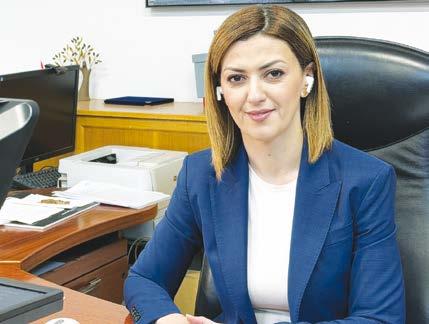


Greece was presented to the European Parliament as an example of good practice in the prevention of cardiovascular diseases. The Greek experience is already emerging as an example of good practice at a European level, with more and more countries adopting relative policies that emphasize in prevention, public health, as well as the reduction of inequalities. Greece is now taking the lead in Europe in the field of prevention and early diagnosis, implementing one of the most comprehensive national preventing screening programs.
The Alternate Minister of Health Ms Irini Agapidaki attended the event co-organized by the European Federation of Pharmaceutical Industries and Associations (EFPIA) and the European Alliance for Cardiovascular Health (EACH), hosted by the European Parliament, entitled: “Promoting Early Detection for Better Cardiovascular Outcomes: Aiming for comprehensive health check programmes across
Europe”.
During her online intervention, Ms Agapidaki presented the pioneering reform and referred to the strategic importance of prevention and early diagnosis for improving the cardiovascular health of citizens. She pointed out that cardiovascular diseases continue to be the leading cause of death in Europe, despite the fact that a significant proportion of them can be prevented through organized public health policies.
“In Greece, we decided to respond to this challenge with specific actions. For decades, our health system –like many others in Europe– was mainly based on hospital care and treating the disease after its manifestation. Prevention remained fragmented and often dependent on the personal initiative, financial capacity or access to large urban centers of each citizen”, emphasized the Alternate Minister of Health. Making particular reference to the National Program “PROLAMVANO” (PREVENT), which provides free and
organized access to preventive screenings for all citizens, both insured and uninsured, regardless of social, economic or geographical situation, she pointed out that: “Already, more than six million citizens have participated in the preventive screenings programs for breast cancer, cervical cancer, colon cancer, but also for the prevention of cardiovascular diseases”.
“The National Program PROLAMVANO is a comprehensive effort to change culture. Our goal is not only to increase preventive checkups, but to create a new health ecosystem focused on prevention, at all stages of life”, the Alternate Minister of Health also emphasized, and in this context, she highlighted as critical conditions for the success of prevention policies the stable political will, cross-sectoral cooperation, ensuring adequate funding and systematic evaluation of results.
Concluding her statement, Ms Agapidaki emphasized that the new European strategy for cardiovascular diseases creates an important opportunity to strengthen cooperation between EU memberstates, as well as to build a strong European framework for prevention and Public Health, with the aim of improving the quality of life of all European citizens.
Cardiovascular diseases are the leading cause of death in our country
Cardiovascular diseases are the leading cause of death, followed by various forms of cancer, according to the latest statistical data released by the Hellenic Statistical Authority, capturing the causes of death for the year 2023. Source for this data are the death certificates submitted by doctors and, in cases of violent or sudden deaths, the Forensic Services. More specifically, the data are as follows:
• Deaths in 2023 amounted to 128.097 (64.898 men and 63.199 women), representing a decrease of 9,0% compared to the 140.792 deaths (70.795 men and 69.997 women) recorded in 2022.

* Includes deaths from Covid-19
• Deaths caused by COVID-19 in 2023, amounted to 5.975 (3.131 men and 2.844 women). Most deaths were recorded in the age group 75 years and older (4.789 deaths), followed by the age groups 60-74 years and 45-59 years, with 941 and 208 deaths, respectively. As for the age group under 15 years, 4 deaths from the virus were recorded. COVID-19 disease was the only cause of death, as reported on death certificates, for 21,9% of deaths from COVID-19 (1.311 deaths), while for 78,1% (4.664 deaths) there was a reference to an underlying disease (comorbidity).
• The leading causes of death in 2023 were diseases of the circulatory system (heart disease and cerebrovascular disease), which caused 40.812 deaths. This was followed by deaths from tumors and deaths due to respiratory diseases, which amounted to 30.095 and 12.894, respectively.
The main underlying diseases of those who died from COVID-19 were diseases of the circulatory system, tumors and diseases of the respiratory system, with rates of 27,9% (1.666 deaths), 18,4% (1.098 deaths) and 6,6% (395 deaths), respectively.
• Compared to previous years, the percentage of deaths from circulatory system diseases, in the total of deaths, from 10,0% in 1938 (the first year for which there are analytical data), rose to 25,0% in 1956 (the first post-war year for which there are data) and to 31,9% in 2023. Correspondingly, the percentage of deaths from neoplastic diseases rose, from 4,1% in 1938, to 11,7% in
1956 and to 23,5% in 2023. On the contrary, deaths from infectious and parasitic diseases have decreased, from 18,4% of deaths in 1938 to 2,8% in 2023. It is worth noting that for the comparability over time of the data, changes in the use of the International Statistical Classification of Diseases should be taken into account.
• The number of deaths from suicide, characterized as such by the Forensic and Investigative Authorities, amounted to 488 in 2023, compared to 516 in 2022 (a decrease of 5,4%). It is noted that possible deviations from data from other institutions may be due to different methodology or other factors, such as
the need for a time-consuming investigation into the circumstances of death by the Forensic Authorities, deaths as a result of belated results of a suicide attempt, etc.
• The above death figures do not include the deaths of refugees/migrants who died while crossing the borders before being registered in the country, or who drowned in Greek territorial waters. These registered deaths amounted to 72 in 2018, 62 in 2019, 59 in 2020, 84 in 2021, 122 in 2022 and 121 in 2023.
• It is also worth noting that in January there were the most deaths (13.168), while most of the deaths (1480) were recorded in the region of Peloponnese.
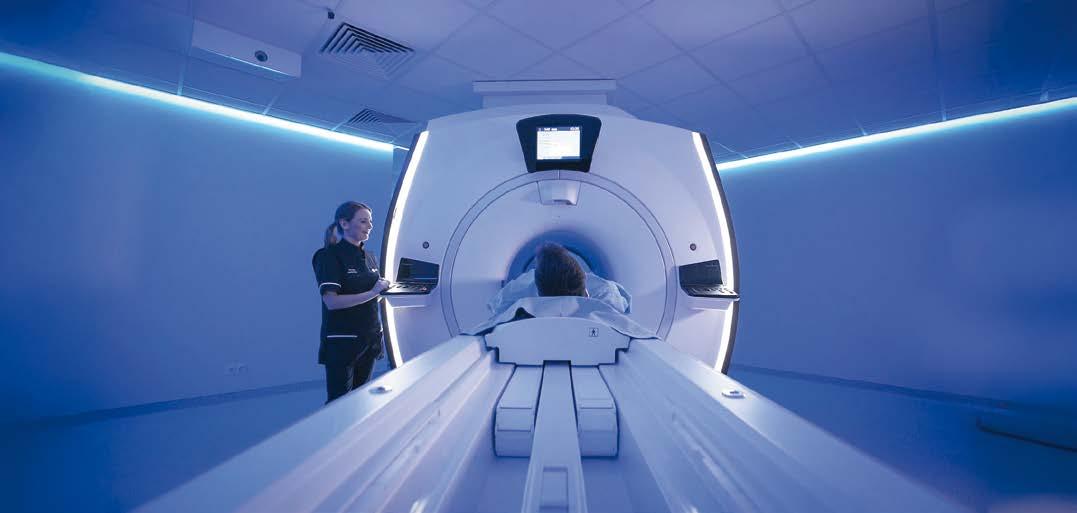




Checkups, medical monitoring and emergency care in state-ofthe-art facilities, at IASO General Clinic.
At IASO Hospital’s General Clinic, Outpatient Clinics of all medical specialties are available, together with an Emergency Department operating on a 24-hour basis.
Outpatient Clinics of all specialties
IASO General Clinic has primary healthcare Outpatient Clinics covering all medical specialties. In a modern, renovated space, with advanced medical equipment, they provide comprehensive and personalized care aimed at prevention, early diagnosis, and monitoring of every case. The clinics operate daily, Monday to Friday, from 09:00 to 15:00 (210 6383090 & 210 6383091.
The Clinics are staffed by leading physicians with extensive experience, as well as highlytrained nursing and administrative personnel. All the necessary laboratory and imaging tests are carried out at the Central Laboratories Department and the Medical Imaging Department of IASO General Clinic, which have been recognized for their high scientific level, the range of tests they provide and the validity of the results.
The following clinics operate at the facility: Vascular Surgery and Laser Treatment Unit for Venous Diseases, Hematology, Allergology, Gastroenterology, General Surgery, Dermatology, Nutritional Support – Dietetics, Minimally Invasive & Endoscopic Spine Surgery, Minimally Invasive & Endoscopic Spine and Brain Surgery, Endocrinology –Diabetology – Osteoporosis, Hepatology, Memory Disorders Clinic, Headache Treatment Clinic, Cardiology, Infectious Diseases, Neurology, Neurosurgery, Nephrology, Orthopedics, Urology, Ophthalmology, Internal Medicine, Pulmonology, Rheumatology, Preventive and Personalized Medicine Department, ENT.
The Emergency Department of IASO General Clinic operates around the clock (tel: 210 6383080), aiming to cover all cases that require urgent medical care, namely the early diagnosis and treatment of emergency or acute health problems.
The Department is staffed with specialized and experienced personnel in Emergency Medicine and the provision of immediate hospital care, using the most advanced medical equipment. The on-duty physicians working at the Department are vigilant and collaborate with an organized network of physicians of all specialties to ensure immediate treatment of every case. It collaborates with leading insurance companies and offers privileged services and benefits to insured patients, ensuring fast and reliable access to the provided healthcare services for every emergency incident.



By MARY LAMBADITI
The dramatic decline in birth rates, together with the aging of the population are intensifying the demographic issue, with adverse consequences both on the labor market, as well as on the sustainability of the social security system.
Demographics are "pressing" all developed
Demographics are "pressing" all developed countries on the planet, even those that can boast of having developed an extremely favorable environment for starting a family and having children
countries on the planet, even those that can boast of having developed an extremely favorable environment for starting a family and having children.
According to the OECD, the ratio of elderly people to the working population has changed dramatically, from 1 to 10 in the 1960s to 1 to 3 today within the OECD countries, while in two to three decades it is expected to reach 1 to 2, with significant implications for economies and public finances.
Increasing the number of births so that each woman has 2,3 children, from 1,45 children currently recorded by the fertility rate, would be the ideal but unattainable condition for solving the demographic problem. The above findings are once again highlighted by the Institute of Demographic Research and Studies (IDRS), which proposes interventions in order to limit the demographic problem by reducing the cost of raising a child, harmonizing family and professional life, and alleviating the acute housing problem.
According to the IDRS data, between 2007 and 2025, the population of women aged 25 to 44 decreased by 27%. The reasons are, on the one hand, the collapse of births after 1980 and,
More specifically, in Greece, less than 65,5 thousand births were recorded in 2025, compared to 117 thousand in 2007-2008. This negative trend is not expected to change. On the other hand, the decline in the general population brings about a decrease, not only in the labor force, but also in women of childbearing age (from 25 to 44 years old, from whom 90% of births occur), which exacerbates the problem.


on the other hand, the mass emigration of individuals (and therefore women) of this specific age group, from 2010 onwards. Also, it seems that since 1960, subsequent generations, in addition to having progressively fewer children, are having them at an older age. The average age at which people became parents was 26 years for those born after 1960 and increased to 31,5 years for those born after 1985. Also, the percentage of women who gave birth and were younger than 25 years old decreased from 28% in 1960 to 10,4% today. On the contrary, the percentage of women who gave birth while they were over 40 years old rose from 3,8% in 1960 to 10,7% in 2023-2024. However, the percentage of couples who do not have children also records a rapid increase. From 13-14% in the 1960s generations, this percentage increased to 24% for generations born around 1985. At the same time, the number of women who choose to bring three or more children into the world is decreasing significantly. More precisely, IDRS data shows that as far as this category of women is concerned, from 300 per 1.000 for those born between 1955-1960, they fell to 130 per 1.000 for those born around 1985.
A specific feature of the practical difficulty that exists is that, according to Byron Kotzamanis, Professor of Demography and founding member of IDRS, “in order to have the same number of births and deaths in 2024 (approximately 126 thousand), the fertility rate in that year would have to exceed 2,3 children. In 2060, however, the annual rate in that year, if there is no positive migration balance, in order to have the same number of births and deaths, the rate would have to reach 3 children/woman. Such high rates are impossible to achieve in the future and it is no coincidence that they are not even included in the most favorable projection scenarios”.
However, it is also important to point out that the relationship between female employment and fertility has swapped sign in Greece, as well. That is, working women are now having more children. In 2019, there were 1,5 children per employed woman compared to just 1 per non-employed woman.
Commenting on the data, Mr. Konstantinos GloumisAtsalakis, Secretary General of Demographic and Housing Policy, emphasizes:
“The data available, clearly demonstrate that motherhood and professional activity do not constitute conflicting choices. On the contrary, we observe that the percentage of employed mothers consistently exceeds that of the unemployed, in almost all age groups.
This finding overturns a widespread perception, that women's
In Greece, less than 65,5 thousand births were recorded in 2025, compared to 117 thousand in 2007-2008. This negative trend is not expected to change. On the other hand, the decline in the general population brings about a decrease, not only in the labor force, but also in women of childbearing age
entry into the labor market acts as a deterrent to family formation. The data show that the reality is much more complex: women seek and are able to combine work and motherhood, provided that there are appropriate support structures and policies are in place.
In this direction, strengthening care services, supporting working parents and access to affordable housing, are critical priorities of our demographic and housing policy”.
Further analyzing the causes of low birth rates in the context of the 11th Economic Forum of Delphi, the Minister of State Mr. Akis Skertsos, emphasized that: “Ιn both developed and developing countries, people are having children at an older age, fact directly associated with lower fertility. At the same time, they are having fewer children, since priority is given to career and professional development before family planning, while they wish to offer their children the best possible standard of living. This is a different mentality and culture, compared to that of our parents or grandparents, who had fewer means”, he noted.
Referring to the initiatives taken by the government, in order to address demographic issues, he pointed out that 20 billion Euros have been committed for the next nine years,
“with the aim of creating a support network for families in Greece”. As he underlined, the main goal is to stabilize the decline in birth rates, while developing policies that cover the entire life cycle.
He placed particular emphasis on healthy aging, noting that an extensive program of preventive examinations is already being implemented, with the participation of over six million citizens. Referring to political priorities, he stressed the importance of fiscal prudence and the creation of fiscal space, highlighting the reduction of public debt, as well as the progress in the fight against tax evasion. At the same time, he talked about tax incentives in favor of families, with decreasing rates depending on the number of children. However, for the time being, increasing migration flows seems to be the only way to achieve a proportional increase in citizens who are at more productive ages, and thus support both the growth rate of the Greek economy, as well as the insurance system.
In particular, Greece, according to the Demographic Research Institute, must achieve a positive migration balance of 700 thousand people by 2050, in order to support youth employment, but also to limit the effects of the inevitable increase of the elderly. With this model only can the total decrease in working force by 515 thou -
sand people, aged 20-64, be balanced by 2050. This translates into approximately 28 thousand more immigrants coming to Greece annually for the next 25 years.
However, the Secretary General of Demographic and Housing Policy has a different approach to the issue: “We have repeatedly said that demographics cannot be solved through immigration. And this is not an ideological position – It is a purely numerical fact. In Greece, in recent years, net immigration has been positive yet limited, of the order of approximately 10.000 to 30.000 people per year. At the same time, however, the natural decrease in the population –that is, the difference between births and deaths– has consistently exceeded 50.000 to 70.000 people each year.
This means that, even if we add immigration, the demographic balance remains strongly negative. If we also take into account the return of Greeks abroad –the so-called brainregain– we see that there is a positive dynamic, but not to an extent that overturns the picture. In other words, immigration can function supportively, but it cannot be the solution to the country's demographic problem”.
The interventions proposed by IDRS in order to limit the demographic problem, are the following:
1)
Reduction of the (direct or indirect) extremely high costs occurring from the birth and raising of a child in our country (mainly education and health costs).
2)
Harmonization of family and professional life.
3)
Attenuation of gender discrimination in public and private life.
4)
Attenuation of the acute housing problem through an extensive program that will aim at creating a stock of low-rent energy-efficient housing, which will correspond to the housing standards and changing housing needs mainly –but not only– of the younger generations.
5)Support of the new generations as they enter adulthood and increase their available real income (purchasing power).
6)Partial protection from risks that these new generations may face, through an expanded and targeted social policy.
7)Eliminating the state of uncertainty – lack of confidence in the future. According to the Professor of Demography, Mr. Vyron Kotzamanis: “The current state of uncertainty creates insecurity and inevitably affects the decision for long-term commitments (such as starting a family and having children), as the fear of an unstable future pushes the younger generations to postpone or even abandon their family plans”.



By COSTAS PAPAIOANNOU
The Greek Insurance Market aims to approach the European production averages, which it falls significantly short of! At the recent open event “Veyond Risk”, organized by the Hellenic Association of Insurance Companies at the “Great Britain” hotel, the President, Mr. Alexandros Sarrigeorgiou, stated:
“As far as all the issues I mentioned today are concerned –natural disasters, health and retirement savings– Greece is at the ¼ of the European average. The risks are real and we remain practically uninsured”.
That is, since ¼ corresponds to 25%, we still have 75% left to approach the European average growth rates!
So the question arising is the following:
How can Insurance Market executives help to achieve this growth?
The truth is that today, Insurance Market executives are more educated than ever before! They have been trained in various different subjects, have attended many training programs and have adapted their knowledge to what modern legislation and supervision impose, and yet at the same time there is still a gap, which is reflected in the overall results of the Insurance Market!
Not because the Insurance Market’s executives do not know enough, but because everything they know does not yet function within them as a unified whole, or rather, to put it more correctly, because they have not been trained and accustomed to facing the challenges of the Insurance Market as a unified whole!
Fortunately, this is something that can be addressed through educational methodology! Modern insurance reality does not require fragmented knowledge, but an understanding of the whole!
• It requires the ability to connect numbers

and KPIs with the growth strategy.
• It requires the ability to connect the Insurance Market people with the results they bring directly to the companies they work for.
• It requires the ability to connect the decisions made by market executives with the results that these decisions bring over time to the entire market!
The modern planning of the training of the Insurance Market’s executives must result from the Market’s existing needs due to developments in issues such as mergers of activities, Bancassurance, current climate risks, new economic data of the Market, the new geopolitical environment and the way it affects insurance risks, as well as other similar challenges that the Market faces today.
More specifically, today's executives should be trained to become effective in areas related to:
• how to transform complexity into efficiency
• how to dare to make difficult decisions, in times of uncertainty and financial demands
• the integrated concept of management in the insurance sector
• the evaluation of insurance products and services
• Business Plans and the general planning of insurance companies
• the evaluation of the contribution and use of modern technology to the efficiency of insurance companies
• the value assessment of insurance products and services, with an understanding of economic, social and business data.
Insurance executives' decisions can no longer be made based solely on experience, their fragmented knowledge on various subjects and their intuition. The decision making also requires synthesis, judgment and a structured approach!
What differentiates an executive is not what he knows, but the way he thinks and the way he uses what he knows!
For the next step in the development of education within the Greek Insurance Market, the goal is NOT the development of new knowledge and skills, but the understanding of the whole!
That is, for executives to see the whole picture and how to make daily administrative decisions, with consistency and with their eyes on the future!
He is a Visiting Professor at the University of Athens MBA, with a specialization in Insurance and Banking Administration and a certified instructor of insurance subjects, with many years of educational experience.
He is the author of the books: “Investments and Insurance”, Spyrou Publications, 2021, “Insurance Agents”, Spyrou Publications, 2022 and “Basic Training of Insurance Intermediaries” in the Life and General Insurance sectors and products, Spyrou Publications, 2024. In addition, he was a co-author of books published by the Hellenic Institute of Insurance Studies and the Hellenic Banking Institute. He is a columnist for “Next Deal”. His articles are also published uploaded on the website of the Athens University MBA (https://mba.econ. uoa.gr/).
He has studied Economics and postgraduate studies in Insurance. He has worked in management training positions in some of the largest insurance companies and banks, operating in the Greek market.


3. Purchase/Onboarding (Αγορά/Εγγραφή)
νοοτροπία του πελάτη είναι «Κά-
απλό - Make it Easy». To InsurTech ανταποκρίνεται με αυτοματοποίηση KYC και πολιτικές απλής γλώσσας. Εταιρείες όπως η
Lemonade έκαναν αυτό το βήμα σχεδόν χωρίς τριβές, πολύ εύκολο και
φιλικό για τον χρήστη.
4. Μετά την αγορά (Silent Phase)
Σε αυτήν τη φάση η σκέψη πελάτη







By LAURA STAVRIDOU
Insurtech is a blend of “insurance” and "technology" and refers to the use of innovative technologies, such as AI, IoT, apps, and big data, to streamline, automate, and improve the traditional insurance industry.
Insurtech is not limited to selling insurance policies, but includes any technological innovation that improves efficiency, accuracy and experience across the insurance value chain.
Clients in the insurance industry (whether individuals or businesses) are increasingly shaped by digital expectations set by companies like Lemonade or Next Insurance.
What they want from insurtech is less about “insurance” itself and more about seamless, transparent, and personalized experiences.
User experience (UX) in a digital insurance company is defined by speed, simplicity, and self-service, aimed at transforming a traditionally complex, jargon-heavy process into a seamless, "invisible" interaction.
Here’s what stands out: Simplicity and speed, transparency, trust and faster, fairer claims processing.
In short, clients want insurance to feel less like a bureaucratic obligation and more like a smooth, on demand service, predictable, fair, and easy to use.
Insurtech is not all about procedures. Most importantly is about the client journey.
Instead of thinking “insurtech as a product,” think of it as interventions along the client journey.
That journey has clear stages, and insurtech shows up at very specific friction points:
1. Awareness.
Client mindset is “Do I even need insurance?”. Insurtech apps can offer personalized nudges, based on behavior/data which have been collected with special applications such as needs analysis.
2. Consideration.
Client mindset is “What does this cost me?”. Instant quotes (API-driven underwriting) and dynamic pricing models. Customers want coverage tailored to their actual behaviour and needs. This is why usage-based insurance (like pay-as-you-drive) or dynamic pricing models are gaining traction. Data-driven insights help create policies that feel fair and relevant.
3. Purchase / Onboarding
Where client mindset is like “Make this
easy.” Insurtech meets it with KYC automation and plain-language policies. Companies like Lemonade made this step almost frictionless.
4. After the policy purchase, there is a “silent phase”.
The client mindset is “I forget this exists… until I need it and as the years go by, there are Pain points like no engagement, or is hard to update policies as the client feel no perceived value.
The key role of insurtech is to keep the relationship alive without being annoying, using mobile dashboards, policy adjustments in real time and notifications reminders.
This stage is massively under-optimized in traditional insurance.
5. Claims
Is a negative emotional moment for the client, with a number of pain points. Usually slow and stressful is a hefty burden that insurtech has to turn into a trust-building expe-
rience. AI damage assessment (photos, video), automated payouts for simple claims and smart triage (what needs a human vs not), can reduce claim handling cost by 30–70%, cut resolution time from weeks to hours even minutes and detect fraud without annoying good customers.
6. In the Renewal / Retention
Stage the client mindset is “Do I stay or switch?” because of price shocks, no loyalty feeling. Also, at this stage most of the clients have already forgot why they even bought a policy in the first place.
Insurtech can reduce churn through relevance, not just discounts.
Usage-based pricing updates, loyalty incentives and smart renewal nudges, more tailored policies, faster service, and easier access to policy management along with improved efficiency, can improve the overall insurance model.
One of the most persistent requests from
customers is prevention. Instead of just paying after something goes wrong, customers appreciate tools that help them avoid risks in the first place, like IoT-based monitoring, alerts, risk assessment apps or health tracking integrations.
The forthcoming years, a key role of insurtech will be the shift insurance from repair to prevention.
Having said that is important to keep in mind the balance between human and digital. Even in a digital-first world, people still want access to human support when things get complex or emotional. The best insurtech blends automation with accessible expert help.
So, no matter the customer and no matter the claim, detailed knowledge of your users brings the opportunity to keep human nature at the forefront of any decision making.

Laura Stavridou is an Insurance Professional since 1987| Founder of Insurance Academy | Risk & Training Innovator, with over 30 years of experience in business insurance, risk analysis, and professional training, Laura Stavridou is dedicated in the evolution of insurance education and digital tools. She is the founder and Head of Training & Research at Insurance Academy, where she designs training programs, digital sales tools as videos/infographics/pod casts and develops algorithmic models to support business needs analysis, risk assessment and insurance planning.
Recent projects:
• Corporate training projects, including the redesign of Euro-Life Cyprus’s training in 2020.
• Algorithmic and Compliance Insurance Neads Analysis “Make it Easy” 2024.
• Large Businesses Risk Assessment algorithmic application 2025.
• The training Book “The insurance Way” that includes new theory on insurance sales based in behavioural economics and field exercises, 2026.
Academic background: Economics (University of Athens), LUTCF.

σύνθετους κινδύνους, όπως η κλιματική αλλαγή, οι φυσικές καταστροφές και οι κυβερνοεπιθέσεις.
Ωστόσο, η έκθεση της ευρωπαϊκής εποπτικής αρχής προειδοποιεί ότι η εξάπλωση της Generative AI συνοδεύεται και από σοβαρούς κινδύνους. Ένα από τα σημαντικότερα ζητήμα-

The European insurance industry is entering a new era of profound technological transformation as Generative Artificial Intelligence (Generative AI) increasingly reshapes the way insurance companies operate, interact with customers and manage risk. A recent report by the European Insurance and Occupational Pensions Authority (EIOPA) provides one of the clearest assessments so far of how next-generation AI technologies are penetrating the insurance sector, while also highlighting the significant risks and supervisory challenges emerging alongside these opportunities.
Generative AI differs substantially from previous forms of artificial intelligence because it is not limited to analysing data or executing automated commands. Instead, these advanced models are capable of generating text, images, analyses, forecasts and sophisticated responses that increasingly resemble human reasoning and communication. This capability is precisely what makes Generative AI highly attractive to insurers seeking to reduce operational costs, improve productivity and enhance customer experience.
According to EIOPA, an increasing number of European insurers are already deploying Generative AI tools in critical operational areas. The most common applications include customer service automation through advanced chatbots, document processing, underwriting support, fraud detection, claims management and the analysis of large volumes of data for the development of new insurance products. The technology offers considerable advantages. Insurance companies can now process enormous amounts of information within seconds, significantly reducing operating costs while accelerating procedures that traditionally required large numbers of employees. In claims management, for example, AI enables faster evaluation of files and shorter settlement times, substantially improving customer experience.
At the same time, personalization of insurance services is entering a new phase. Through advanced data analysis and behavioural pattern recognition, insurers can increasingly tailor products and recommendations to the actual needs of individual customers. This is particularly important at a time when consumers are demanding faster, more transparent and more personalized services.
EIOPA also notes that Generative AI could significantly improve risk forecasting and management capabilities. Large-scale data analysis enables more accurate loss estimation models, better understanding of natural catastrophe risks and more effective forecasting of insurance claims. This becomes especially important in an environment where insurers are facing increasingly complex risks, including climate change, natural disasters and cyber threats.
However, the report also warns that the rapid expansion of Generative AI comes with seri-
ous risks. One of the most important concerns involves the transparency and explainability of AI-driven decisions. So-called “black box” algorithms may make it difficult even for insurers themselves to clearly explain why an insurance application was rejected or why a certain pricing decision was made.
This lack of transparency is particularly sensitive in an industry that relies heavily on customer trust. EIOPA stresses that policyholders must be able to understand how decisions affecting their financial protection are made. Otherwise, there is a risk of undermining trust not only in insurance companies but also in artificial intelligence itself.
Another major concern involves algorithmic discrimination. If AI models are trained using biased or historically unequal datasets, the outcomes generated may result in unfair treatment of certain social groups. For example, AI-driven systems could negatively affect pricing or access to insurance coverage for specific customer categories without direct human intervention.
Cybersecurity is another critical area of concern. Insurance companies handle highly sensitive personal and financial information belonging to millions of individuals, and the integration of AI systems creates new vulnerabilities. EIOPA warns that cyberattacks leveraging AI technologies are likely to increase significantly in the coming years, requiring stronger security infrastructures and stricter data protection protocols.
Within this evolving environment, supervisory authorities face the challenge of balancing innovation with consumer protection. EIOPA considers it essential for insurers to establish clear governance mechanisms for AI usage, while ensuring mandatory human oversight in critical decision-making processes. Insurance companies are expected to guarantee that AI models operate with transparency, reliability and accountability.
This discussion is closely linked to the implementation of the European Union’s AI Act, the world’s first comprehensive regulatory framework for artificial intelligence. The insurance industry is expected to become one of the sectors most affected by the new rules, particularly regarding high-risk AI systems and automated decision-making processes.
Despite these concerns, EIOPA acknowledges that Generative AI could become a major modernization driver for the European insurance market. The ability to improve customer experience, reduce costs, accelerate risk management and develop innovative insurance products creates significant growth opportunities for the sector.
The key question is no longer whether artificial intelligence will transform insurance, but rather how quickly insurers and regulators will adapt to this new reality while preserving the trust, transparency and accountability that form the foundation of the insurance industry.


By GEORGE MOUZOS

Every new car on the road today is, in essence, a connected computer on four wheels. Millions of code lines, dozens of electronic control units, interfaces open to the internet, software updates that reach the vehicle remotely like a simple email. And at every connection point, there is a portal that may hide risk. Risk that no longer concerns only manufacturers, but also every insurer and reinsurer who includes car insurance in his portfolio and has not yet assessed where traditional risk ends and digital risk begins.
IN NUMBERS: Cyberattacks on vehicles in 2025
• 494 publicly recorded cyberattacks on vehicles and digital mobility services worldwide.
• 44% of incidents involved data encryption with ransomware, which is double the rate compared to 2024.
• 92% of attacks were carried out remotely, without physical access to the vehicle.
The silent transformation of the risk
A modern vehicle is not only at risk from traffic accidents. It is at risk from digital interference, from data leaks, from malware that can lock the systems of an entire commercial fleet and a lot of money can be lost in the blink of an eye. It is also at risk from software updates that are tampered during the manufacturer-vehicle “route”. According to the latest report released by Upstream Security, in 2025 there were 494 publicly known cyberattack incidents in the vehicle and digital mobility services industry worldwide, and this number is only the tip of the iceberg. What is dangerous is not the scale of the attacks, but their nature: 92% were carried out remotely, without physical access to the vehicle being necessary. The digital attack surface has completely dominated over the physical one,
and the insurance market is still pricing the latter.
The gaps seen by the Reinsurance Market
The incidents recorded within 2024-2025, are a significant warning. In December 2024, the Volkswagen Group exposed data from 800.000 electric vehicle owners, including detailed location data, revealing the daily movements even of officials and law enforcement officers. In May 2025, Scania confirmed a breach of its insurance claims platform via a third-party IT provider: 34.000 customer insurance documents were stolen and offered for sale on dark web forums.
The common thread: the chain of liability is opaque. When a breach starts with a third-party IT provider, as in the case of Scania, and ends with damage to an insured, which policy can cover it? Car insurance? Cyber insurance?
Manufacturer's liability insurance? The answer, in most cases, is: none.
For the Reinsurance Market, the most worrying thing is not the one and only isolated incident, but the possibility of a systemic event. Imagine a malicious actor exploiting vulnerability in a widely used remote update system, simultaneously affecting hundreds of thousands of vehicles from the same manufacturer. The event would have no geographical boundaries, but would hit portfolios in dozens of countries simultaneously.
The Industry responds, but with a delay
The global cyber-risk insurance market was worth 15 billion US Dollars in 2024, is estimated to have reached 16,3 billion US Dollars in 2025 and is expected to double by 2030, according to MunichRe. However, this growth mainly concerns the corporate cyber risk, not specifically in vehicle coverage. Automotive risk remains a subcategory without established actuarial bases, without historical claims data in sufficient depth and without a clear regulatory framework at a European level.
The more cars are connected to apps, their data is in the cloud, software updates are done remotely, and there are a host of digital services, the more insurance is called upon to address cyber risk beyond traditional boundaries
In 2025, cyber catastrophe bond issuance reached 1,1 trillion US Dollars, increased by 64% compared to 2024, according to Artemis, the world’s largest and most specialized news media concerning catastrophe bonds and reinsurance markets. Alternative investment capital is starting to embrace systemic cyber risk. But the vehicle dimension is still missing from the parameters of these models.
The UNECER 155 Regulation requires manufacturers to implement certified cybersecurity management systems and from July 2024 this obligation applies to every new vehicle produced and sold in the EU, without exception. The manufacturer, the software provider, the connectivity provider, are all now involved in a chain of responsibility that the insurance market must map out now, before claims start to end up in court.
The question is no longer whether cyber risk will have an impact on car insurance portfolios. The question is how much exposure they already have without knowing it.
The history of a whole century is reflected in the Album «Collectible Insurance Contracts», of the publisher and author Mr. Evangelos Spyrou.
The Album, product of the collaboration between Spyrou Editions and Miletos Publications, includes dozens of insurance policies, issued from 1860 to 1960, with an artistic, historical and insurance value, from the private collection of Mr. Evangelos Spyrou.
Further flipping through the book, you will retrace the Insurance and Financial History of Greece for over a century, through contracts which
ETHNIKI Hellenic General Insurance Company – Private truck insurance policy, 1950

210-3229.394, e-mail: press@spiroueditions.gr
«narrate» the personal, family and professional stories of people, who felt the need for private insurance.
The collection of Mr. Evangelos Spyrou preserves precious heirlooms, which reflect the history of an entire era. All these salvaged insurance policies –a very small sample we present to you in this special edition–constitute a very important heritage with historical and at the same time artistic value, which capture the creative effort to expand the insurance institution in Greece and Europe.



LLYOD CONTINENTAL FRANCAIS
LLYOD CONTINENTAL FRANCAIS –Fire Insurance policy of a f ilaments and rugs store in Athens, 1957
of the Industrial Company «G.K. VR ANAS», 1940