



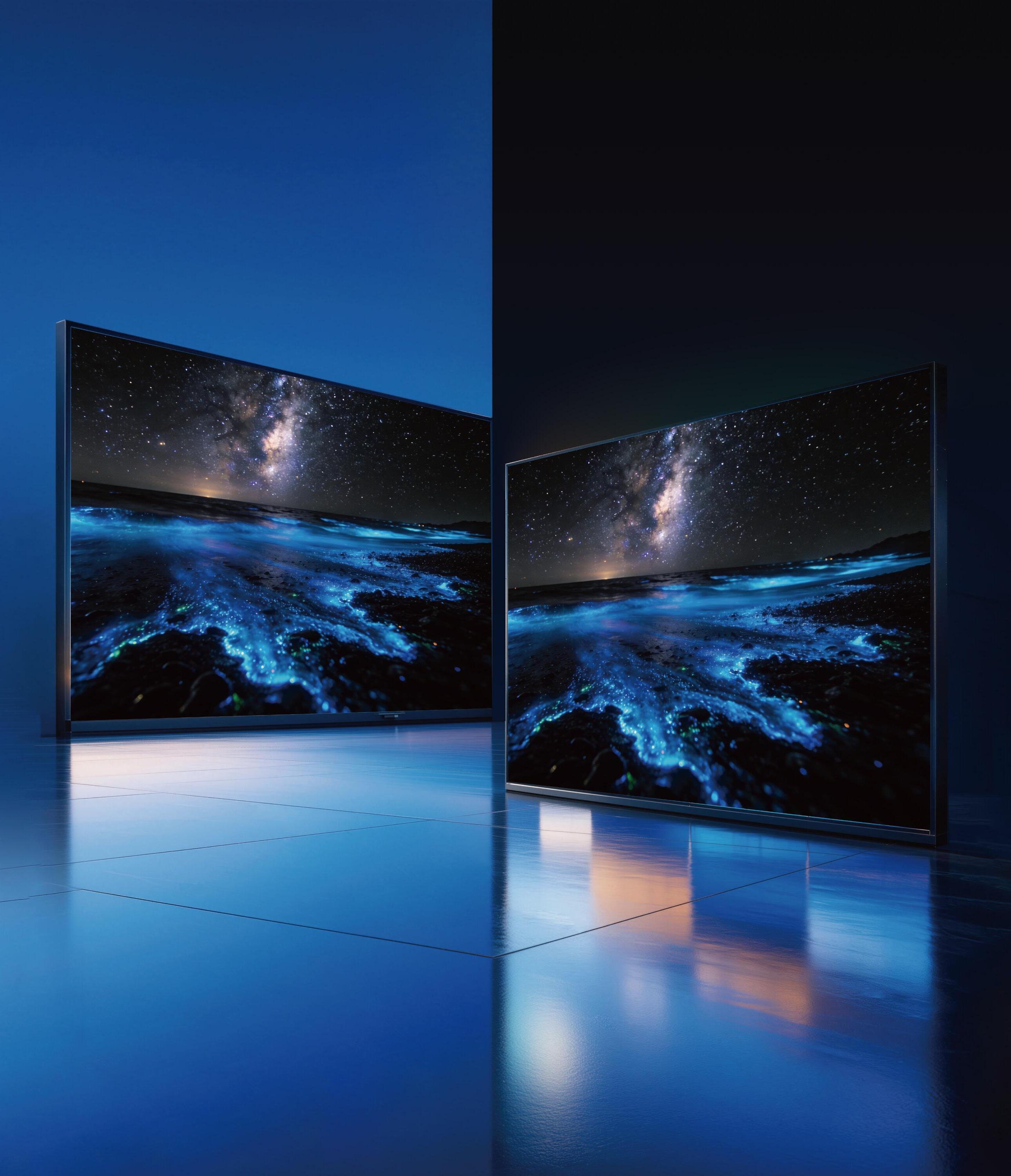


Matching human visual response, delivering authentic color, uniform screen and better viewing comfort.

INDONESIA: Luxury Bali Ocean Front Venue Deploys Crest by the Waves 70 INDIA: RPS - An AV Inspirational Ensemble (Part 2)
Thomas Richard Prakasam Publisher/Editorial Director thomas@spinworkz.com
In this issue, network and cybersecurity take centre stage. In our Voicebox column, Jason Tay of NETGEAR states that vendors must stop treating complexity as a measure of quality and instead deliver infrastructure suited to the region’s realities—especially where qualified AV network engineers are scarce and specialist-dependent systems are a liability, not a differentiator.

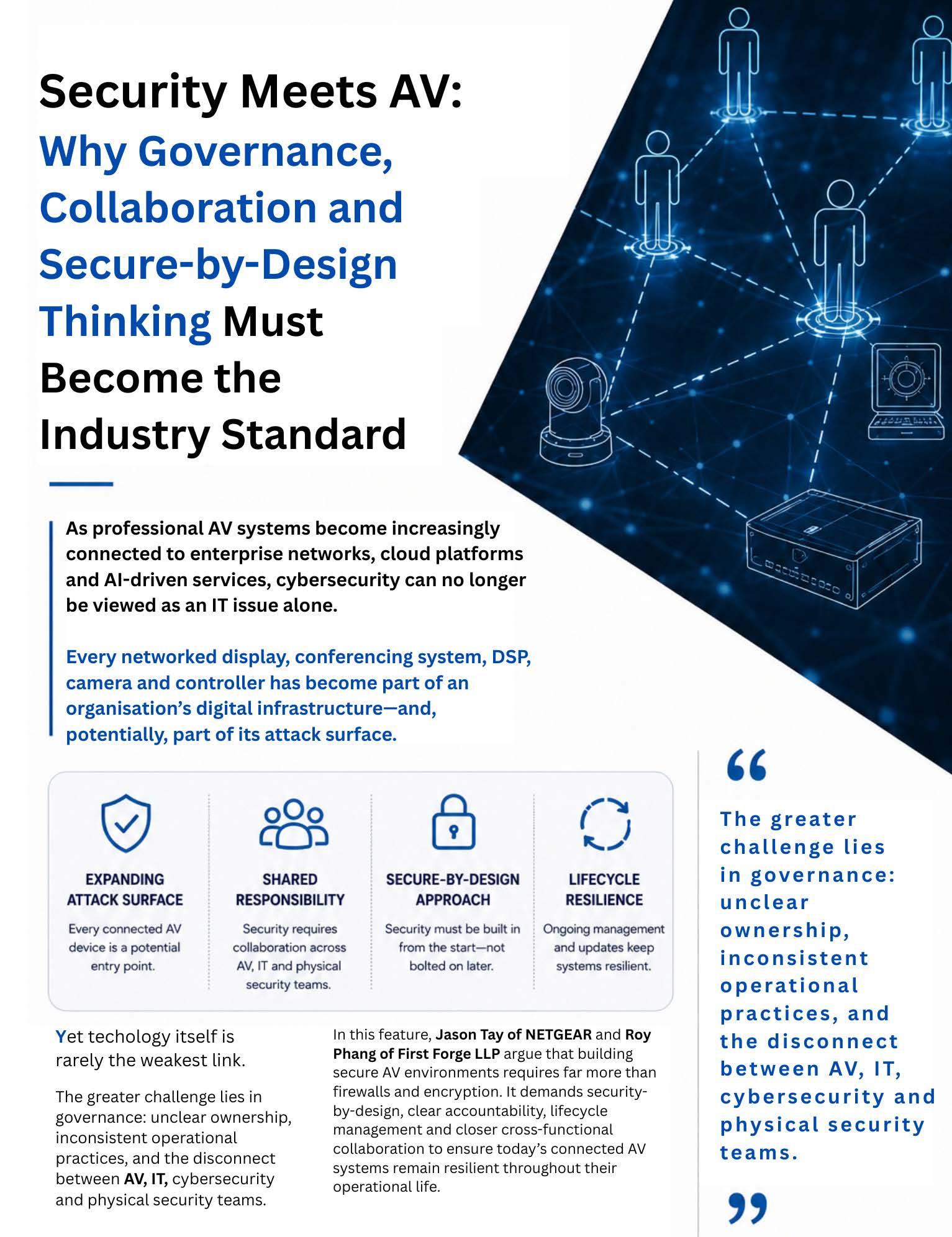
As professional AV systems become increasingly connected to enterprise networks, cloud platforms and AI-driven services, cybersecurity is no longer solely an IT concern. Every connected AV device expands an organisation’s potential attack surface. Yet the greatest vulnerability often lies not in the technology itself, but in gaps in governance, ownership and collaboration between AV, IT and security teams. In our feature, Jason Tay of NETGEAR joins Roy Phang of First Forge LLP to explain why securing modern AV environments requires security-by-design, clear accountability and crossfunctional collaboration throughout the system lifecycle.
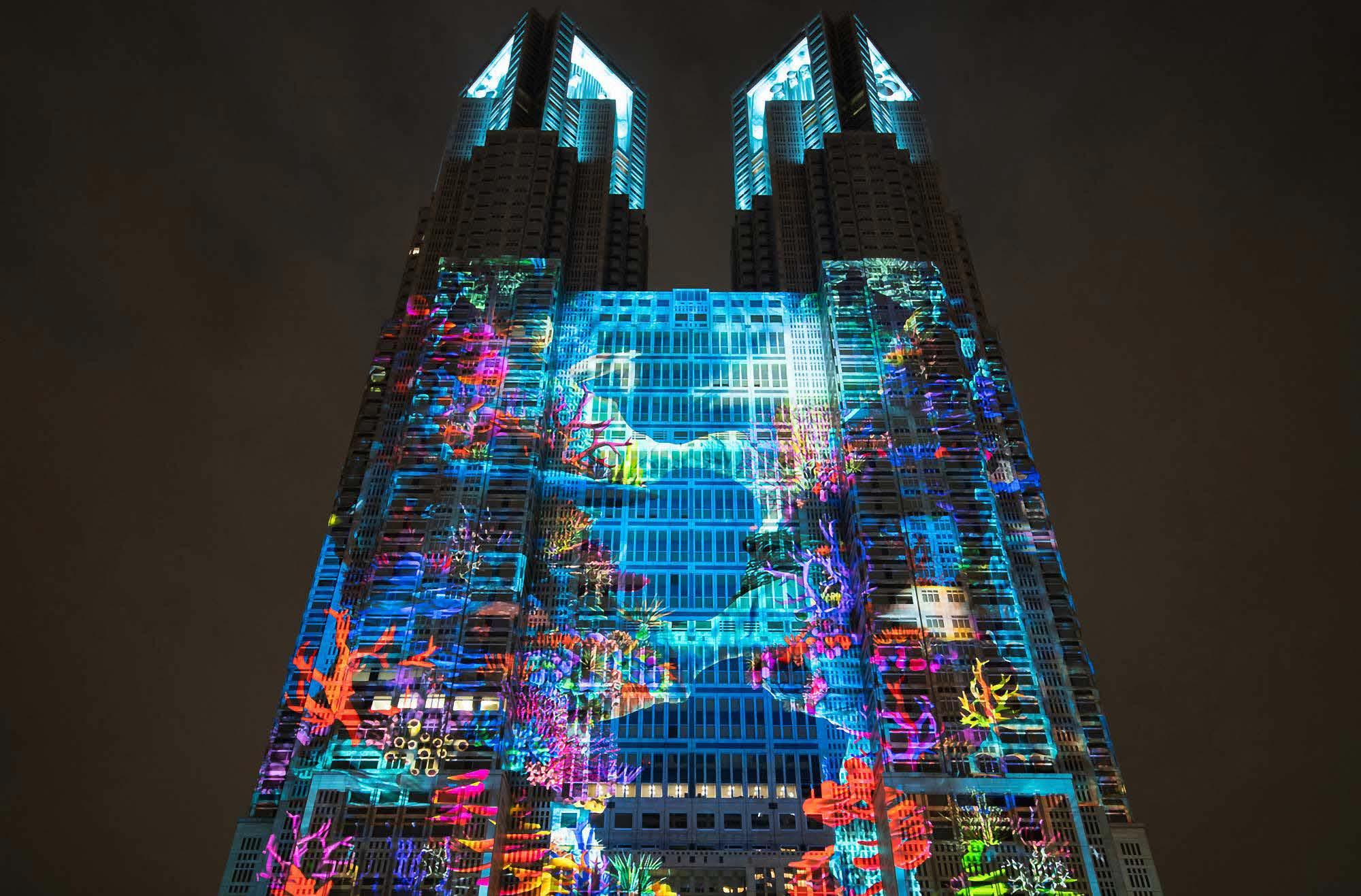
We also conclude our Design Decode series on projection mapping. In the final instalment, Avijit Samajdar, Founder & CEO of Axis Three Dee Studios, explores the future of projection mapping and asks the important question: where does the technology go next?

EDITOR, INDIA AND ME
Ram Bhavanashi
ram@spinworkz.com

MEDIA REP

DIRECTOR
INDUSTRY ENGAGEMENT
Andy Tan andytan@spinworkz.com
CHINA,HONG KONG, TAIWAN
Judy Wang
Worldwide Focus Media
+86-13810325171
judywang2000@vip.126.com

ADMIN & CIRCULATION
Julie Tan admin@spinworkz.com

DESIGN & LAYOUT
Hazel Gundaya
207A Thomson Road, Goldhill Shopping Centre Singapore 307640
Tel: (65) 63162716
Disclaimer: Systems Integration Asia is published 12 times a year. All rights reserved. No part of this magazine is to be reproduced, whether mechanicalor electronic without the prior written consent of the publisher. Views expressed in this magazine do not necessarily reflect those of the editor or the publisher. Unsolicited contributions are welcome but the editor reserves the discretion to use them. Whilst every care is taken to ensure the accuracyand honesty in both editorial and advertising content at press time, the publisher will not be liable for any inaccuracies.
Please be informed that products and company names mentioned in this publication may be protected with tradenames, trademarks or registered trademarks of their respective owners. Our non inclusion of such symbols is not an indication of us not recognising the copyright but rather to have a common look across our articles. Misuse of tradenames, trademarks or registered trademarks is strictly prohibited. It is the obligation of our readers to check if company names and products are protected with tradenames, trademarks or registered trademarks.
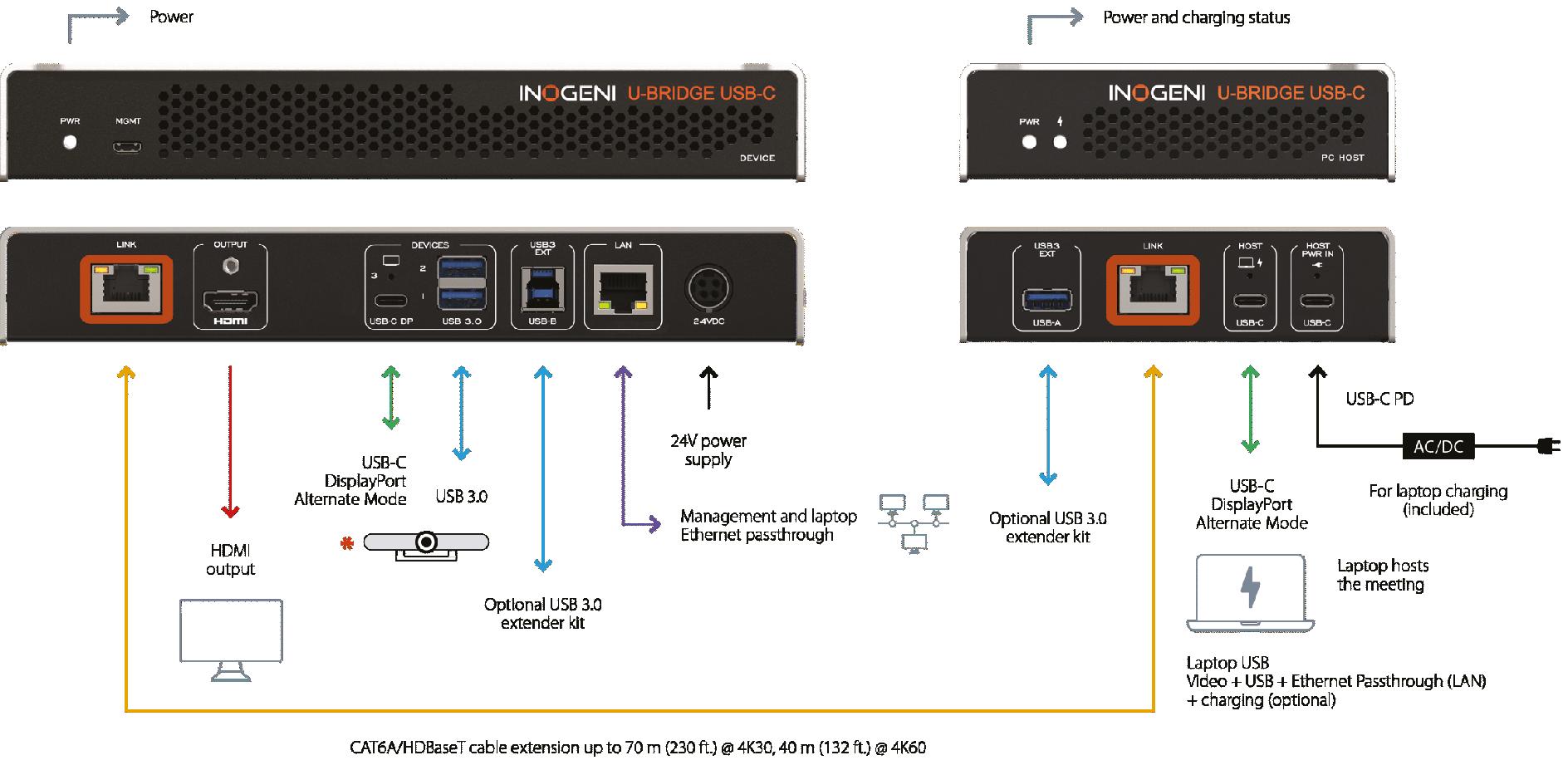
4K60 USB-C extender (USB and DP Alt Mode) up to 40 m over CAT6A
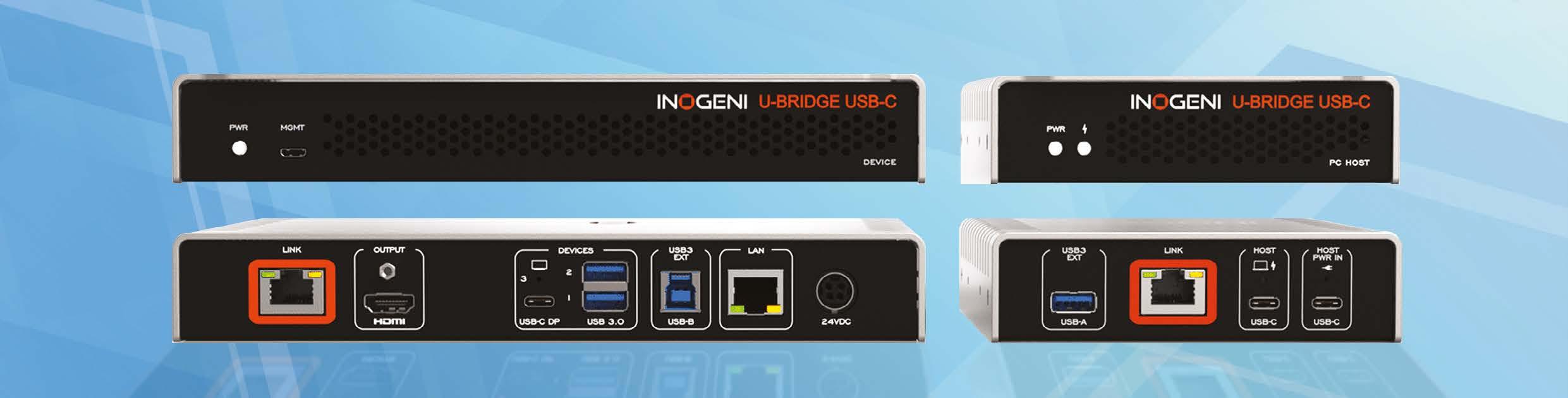
Next-level BYOM exibility with USB-C for AV extension
High-performance audio/video connectivity and 100W charging USB-C extension over CAT6A U/FTP cable up to 70 m (230 ft.)
2x USB 3.0 device ports
4K60 HDMI output
Advanced video processing with 4:4:4 and 4:2:2 chroma subsampling
Versatile USB and video extension
Supports all USB peripherals, including webcams, videobars, audio devices, and HID IP interface with DHCP/static IP support for control and network bridging
Ideal for systems with USB-C connectivity, such as Lenovo Core Gen 2, Cisco Room Bar Pro, Cisco Room Kit EQ, Poly G62, Logitech MeetUp 2 and ClickShare CX50 Gen 2.
Plug-and-play compatibility with Windows, macOS, and Linux—no drivers required Full-featured integration and simple deployment







For most of the pro AV industry's history, the amplifier had a clear and uncomplicated purpose: deliver clean power to loudspeakers. Evaluation was equally straightforward, by verifying that the wattage, efficiency, channel count, signal-to-noise ratio, and thermal performance were all within specification tolerances.
However, how amplifiers are designed, deployed, and valued is changing fundamentally. The device that once sat quietly at the end of the signal chain is becoming one of the most computationally significant platforms in a modern AV system. And that shift has implications that reach well beyond engineering into service delivery, cybersecurity, business models, and the long-term trajectory of the industry itself.
The AV industry has been talking about convergence for years, usually framed around the overlap between AV and IT, such as amplifiers on enterprise networks, DSPs talking to cloud services, and control systems accessible via remote access. That
conversation was important, and it's not over, but it's also not the whole story anymore.
Today's amplifiers are increasingly functioning as intelligent edge nodes. In many installations, the amplifier is the most continuously active device in the entire signal chain, monitoring load conditions, temperatures, network status, and fault conditions in real time. It's now both a power source and an information source.
That distinction changes the evaluation question entirely. "How much power can this amplifier deliver?" remains relevant. But the question that's becoming more important is: "What can this amplifier tell me about my system?"
The broader technology industry has been moving toward edge computing for years. Pushing processing closer to the source rather than routing everything through centralized infrastructure. And pro AV is following the same path.
As systems grow more distributed, the ability to process, analyze, and act on data locally becomes increasingly valuable. A modern amplification platform may be simultaneously handling audio processing, network communications, device diagnostics, security protocols, and management services, all while maintaining real-time performance.
This creates new demands on hardware design. Processing resources, memory capacity, storage architecture, and networking subsystems are core to what the device can do, both now and over time.
The comparison to enterprise servers isn't a stretch. Just as IT infrastructure gets evaluated on its ability to handle future workloads, AV platforms increasingly need to be designed for capabilities that may not even exist yet at the time of deployment.
Here's a thread that doesn't get enough attention: the direct link between hardware architecture and how integrators make money.
Managed services have become one of the most significant growth areas in the industry. Remote monitoring, proactive diagnostics, performance reporting, and predictive maintenance are creating recurring revenue opportunities that traditional project-based AV work can’t offer. They're genuinely changing what integrator businesses look like.
But none of it works without the right hardware underneath.
Remote management needs persistent, reliable connectivity. Predictive maintenance needs access to operational data. Automated alerts need processing resources. Cloud integration needs a secure communications framework. These capabilities depend on architectural decisions made during product development.
Put simply, the amplifier still enables audio performance, but it now also enables service delivery. And that makes hardware architecture a strategic business consideration as well as an engineering one.
Cybersecurity has become an important topic in AV (and rightly so), but the conversation tends to center on software, including firmware updates, access controls, and network
segmentation. All of those are crucial elements to protecting the greater network, but long-term security increasingly depends on hardware. Enterprise customers expect AV devices to meet the same baseline requirements as traditional IT infrastructure: secure communications, authentication, access control, firmware integrity, and lifecycle device management. As pro AV systems become more deeply embedded in enterprise environments, hardware security posture will become an increasingly meaningful competitive differentiator. The industry is heading toward a future in which trust begins below the software layer.
The old version of future-ready was about spare channels, expansion slots, and support for emerging signal formats. Pick a product with room to grow, and you were covered.
However, software capabilities are evolving faster than hardware refresh cycles. Cloud platforms keep expanding. Integration requirements shift. New analytics tools emerge. The relevant question is no longer whether a product can handle today's feature set; it's whether the hardware can support what firmware and software will ask of it three, five, or seven years from now.
Manufacturers are increasingly shipping products that will gain meaningful functionality long after deployment, through firmware updates and cloud-connected services. Whether those updates are even possible depends entirely on decisions made in hardware development, such as processing headroom, memory resources, and networking architecture, before the product ever reaches the market, which makes future-ready as much of a hardware strategy now as a software one.
Historically, once an amplifier was commissioned and the system was working, the amplifier became invisible. Nobody thought much about it until something broke.
Now, network-connected amplifiers can provide continuous visibility into system health, utilization patterns, environmental conditions, and developing faults before they become service calls. As AI and advanced analytics mature, that data becomes increasingly useful. Systems that can flag potential failures, recommend maintenance actions, or surface optimization opportunities automatically are moving from concept to expectation, making amplifiers an active participant in system intelligence.
The platforms that define the next era of pro AV won't necessarily be the ones with the highest power ratings or the longest feature lists. They'll be the ones built on hardware architectures designed to support continuous software innovation, evolving security requirements, managed service delivery, and operational intelligence throughout the product’s entire lifecycle, not just at the time of purchase.
The amplifier's role is changing. What it was designed to do and what it's now capable of doing are increasingly different things. The gap between those two realities is where one of the most important conversations in pro AV is happening right now.
LEA Professional
Secure, simple and reliable. The award-winning VSN series, powering any video wall size imaginable.

Not

Spend time with AV integrators across Southeast Asia and you start to notice that they are deploying more sophisticated systems than ever before. We’re talking AV-over-IP, multi-room management and cloud connectivity, and they are doing it faster, under more pressure, and with less room for error than their counterparts in more mature markets.
In almost every conversation I have, the same question goes unasked: who is actually going to manage these systems once they are in? Because right now, a significant portion of what is being sold into this region is infrastructure that assumes a level of in-house technical expertise that most end users, and many integrators, simply do not have.
The APAC Pro AV market is growing fast. New enterprise campuses, hospitality developments, broadcast facilities, higher education are driving demand. But there simply aren’t enough
qualified AV network engineers in this region to keep up. AV-over-IP adoption across South, Southeast, and East Asia is happening at extraordinary speed, compressing into just a few years the kind of skills development that took much longer in North America and Europe. Finding someone who has time to spare and understands both the AV signal chain and the IP networking layer it runs on is genuinely difficult. The discipline is young and the training pathways are still developing.
An added complication comes from vendors and integrators who are selling increasing complexity into it. If you pay attention at InfoComm Asia, you’ll notice that solutions designed for the most demanding end of the market are being positioned as the default. Multi-layer management platforms, cloudfirst architectures, and feature-rich control systems assume the organization deploying them has dedicated IT staff, an AV team with IP networking skills, and the bandwidth to manage ongoing configuration and troubleshooting.
Most of our market does not look like that. Most deployments in this region are conference rooms, lecture halls, houses of worship, hospitality venues, and mid-size broadcast facilities. The people responsible for keeping those systems running are often facility managers, IT generalists, or a single AV technician covering an entire campus. They need reliable, manageable infrastructure. They do not need a system that requires a specialist to interpret every fault.
The industry has a habit of solving for the top five percent of the market and then wondering why the other ninety-five percent struggle to adopt. APAC, more than most regions, is paying the price for that habit.
Over-engineer a system in a market with a thin specialist pool and the result is predictable. It works until it does not. Then a specialist gets called. The specialist resolves the issue. The cycle repeats. Over time, the organization loses the ability to own its own infrastructure.
In a region where those specialists are scarce, that dependency is a significant business risk. You no longer care that the system is technically impressive if the boardroom that goes dark twenty minutes before a client presentation and nobody is able to solve the issue. Or if your event venue loses its audio feed during a live broadcast. The measure of a good AV network is not how much it can do. It is how reliably it does what it is supposed to do, and how quickly the people responsible for it can restore it when something goes wrong.
The conversation in this industry tends to focus on capabilities: what does the system support? How many devices can it manage? What protocols does it run? But these are not the most important questions for the majority of deployments in this region.
The more useful question is: when this system has a problem at eleven o'clock on a Tuesday night, who fixes it, and how long does it take them? If the answer involves flying in a specialist, or waiting for someone with a specific certification to become available, the system is probably more complex than the deployment warrants.
There is an argument for matching the technology to the operational reality of the
organization deploying it. A system that a competent AV technician can manage, diagnose, and recover without specialist intervention is not a lesser system. It is a better fit for the way most of this market actually operates.
Vendors need to stop defaulting to complexity as a proxy for quality. In a market where qualified AV network engineers are scarce, deploying infrastructure that only a specialist can manage is a liability, not a differentiator. The region deserves infrastructure built for the way it actually works.
Integrators have the more interesting opportunity. The temptation to upsell is understandable. More complex systems can mean larger projects and more ongoing support revenue. But integrators who consistently right-size their deployments, who choose infrastructure that their clients can actually manage day-to-day, build something more valuable than a service contract. They build a reputation for outcomes. In a region growing as fast as APAC, that reputation compounds.

"Over-engineer a system in a market with a thin specialist pool and the result is predictable. It works until it does not. Then a specialist gets called. The specialist resolves the issue. The cycle repeats. Over time, the organization loses the ability to own its own infrastructure."
By Nigel Monisse, Senior Manager, Sony Middle East & Africa
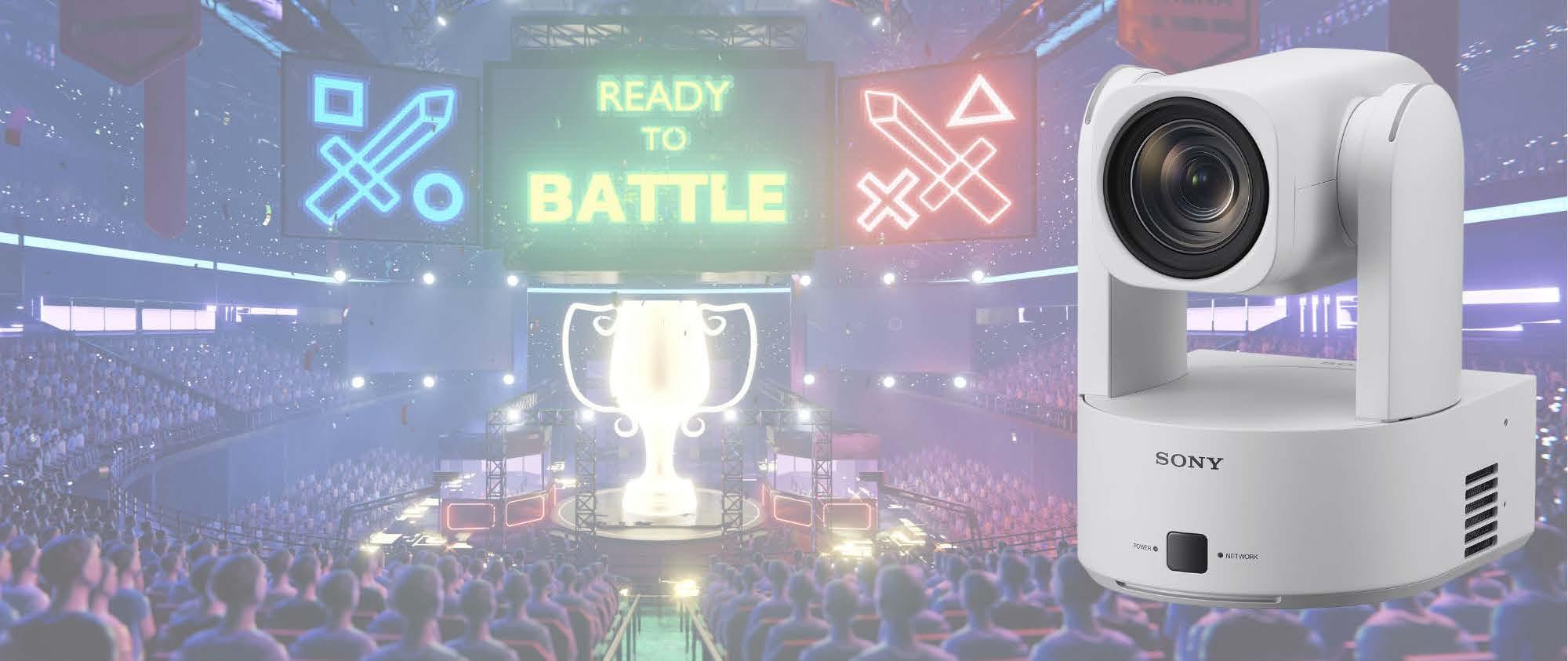
The way we use cameras is changing.
For decades, professional cameras have depended on skilled operators to make creative decisions—where to position the camera, how to frame the subject, and when to capture the key moment. Today, artificial intelligence (AI) is bringing a new level of intelligence to cameras, allowing them to better understand their surroundings and support production teams in new ways.
What started with simple auto-tracking has evolved into something much more advanced. Modern AI-powered PTZ cameras can recognise subjects, analyse movement, maintain composition, and help organisations create professional-quality content more efficiently.
From the early days of standard definition to today’s 4K PTZ ecosystem, Sony continues to drive innovation. The latest PTZ range combines full-frame sensors with interchangeable lenses, bringing cinematic features such as shallow depth of field together with the flexibility and convenience of PTZ operation.
PTZ cameras are providing users with a smarter way to work—where technology handles repetitive tasks, allowing creative teams to focus on what matters most: telling great stories.
When AI was first introduced into PTZ cameras, the focus was mainly on one key capability: automatic presenter tracking.
While tracking remains an important feature, the technology has evolved far beyond simply following movement. Today’s intelligent cameras are designed to understand the scene, recognise subjects, maintain natural framing, and adapt to changing situations without requiring constant operator adjustments.
Consider a corporate presentation where a speaker moves across the stage, interacts with colleagues, or demonstrates a product. Instead of being limited to a fixed position, the presenter can move naturally while the camera maintains professional composition.
In education environments, lecturers can move freely around the classroom and engage with students, while remote participants continue to receive a clear and immersive viewing experience.
Professional PTZ cameras now feature advanced AI analytics that recognise human subjects with high precision. By analysing detailed information such as body pose, head position, face, and clothing, the system enables accurate tracking with smooth and naturallooking framing.
Video has become a central part of how organisations communicate.
Companies use video for executive messages, training sessions, and global events.
Universities are creating hybrid learning experiences. Sports organisations and content creators are looking for more efficient ways to deliver live coverage, while broadcasters continue to explore flexible production approaches.
Traditionally, producing professional-quality content required large teams and dedicated camera operators. While skilled professionals remain essential, AI-powered PTZ cameras are helping organisations achieve more with their existing resources.
Features such as automated framing, subject recognition, and intelligent tracking allow teams to deploy cameras in more locations while reducing the need for constant manual operation.
This is especially valuable in environments where multiple camera angles are needed, but production teams and resources are limited.
Broadcast and live events require reliability, flexibility, and consistent image quality.
The integration of AI into PTZ cameras is creating new possibilities for production teams by providing intelligent camera solutions that complement traditional broadcast cameras.
With advanced AI-based recognition and tracking capabilities, PTZ cameras can support a wide range of applications, from studio productions and interviews to live events and sports coverage.
Rather than replacing traditional broadcast cameras, intelligent PTZ cameras offer additional creative options—helping teams capture more angles, automate secondary camera positions, and allow operators to focus their attention on the shots where human creativity has the greatest impact.
Sports is one of the most demanding environments for any camera system.
The action is unpredictable, subjects move at high speed, and critical moments can happen within seconds. Capturing these moments consistently requires cameras that can respond intelligently and adapt to the scene.
Modern live sports and esports productions require dynamic, multi-angle coverage without the high cost and complexity of deploying large camera teams. Sony’s advanced PTZ (Pan-TiltZoom) camera lineup, including models such
as the BRC-AM7, addresses this challenge by integrating artificial intelligence and deeplearning analytics directly into the camera system.
One example of this innovation is the dedicated Ball Sports Mode, designed specifically for fast-paced sports such as basketball. Unlike traditional tracking systems that focus on a single subject, this technology analyses both the ball movement and player positions to deliver more accurate and natural camera operation during unpredictable gameplay.
Automation is only one part of professional production.
In broadcast and multi-camera environments, consistency is just as important. Maintaining matching colour, exposure, and image characteristics across multiple cameras is essential to achieving a seamless and professional production.
This enables PTZ cameras to work alongside traditional broadcast cameras, combining the efficiency of AI-driven operation with the image quality, precision, and control required in professional workflows.
The growth of hybrid communication has changed expectations around video quality.
Remote audiences now expect experiences that are engaging and professional, whether they are attending a university lecture, watching a corporate presentation, or joining a worship service online.
AI-powered PTZ cameras help organisations deliver these experiences by simplifying production workflows while maintaining consistent visual quality.
For educational institutions, they enable more dynamic learning environments. For businesses, they support professional communication and collaboration. For communities and worship organisations, they provide an effective way to connect with wider audiences.
The next stage of AI development will move beyond automation towards greater intelligence and integration.
Future intelligent cameras will become more connected with production systems, understanding workflows, anticipating movement, and working seamlessly with other technologies across broadcast and AV environments.
By combining AI innovation, professional image quality, 4K capabilities, and advanced workflow integration, intelligent PTZ cameras are expanding what is possible for organisations creating video content.
AI is redefining the role of professional cameras.
The future of PTZ technology is not just about cameras that move remotely or track a presenter. It is about intelligent systems that understand the scene, support production workflows, and help creators work more efficiently.
Across corporate communication, education, worship, broadcast, and sports, AI-powered PTZ cameras are enabling organisations to create more engaging content while keeping creative control in the hands of professionals.
The most successful productions will be those that bring together the strengths of technology and people—using AI to handle repetitive tasks while allowing creative teams to focus on capturing the moments that matter most.
Sony Professional PTZ Camera Portfolio
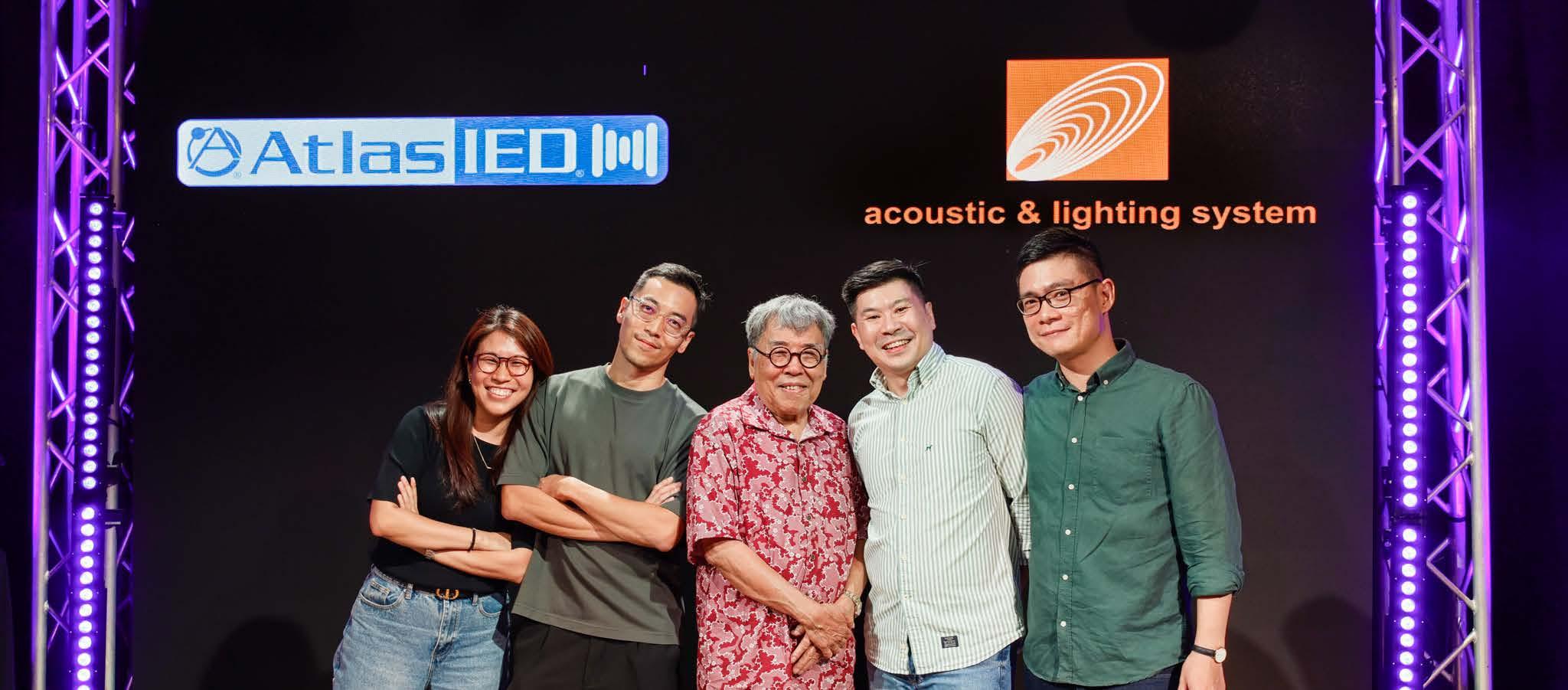
SEA: AtlasIED a recognized leader in the commercial audio and security industries, has announced its partnership with Malaysia-based AV distributor Acoustic & Lighting System (A&L Group). This partnership is set to greatly expand AtlasIED’s presence in Malaysia and Vietnam.
A&L Group joins the partnership with over 35 years of industry experience. Originally founded in Malaysia, the team has expanded its footprint across Southeast Asia, including Vietnam. A&L Group prides itself on the strong, collaborative relationships it holds with clients, suppliers, and industry stakeholders. The team is entirely committed to fostering long-term partnerships based on reliability, quality, and open communication.
“AtlasIED blends a 90-year legacy of quality with innovation, making it a global leader in commercial audio,” said Eugene Yeo, Group General Manager, A&L Group. “This aligns
with our vision. As large-scale infrastructure opportunities expand rapidly across our region, partnering with AtlasIED allows us to elevate our expertise and capture this growing market.”
With strong family-owned operational values, A&L Group aligns perfectly with AtlasIED’s values. Both companies prioritize family, community, and quality, promising a strong collaborative relationship that will bring AtlasIED’s technology catalog to Malaysia and Vietnam.
“Southeast Asia is projected to expand well in the next 1-2 years,” continued Yeo. “To sustain rapid growth with a current infrastructure gap, we see opportunities in several key sectors such as healthcare, education, and transportation. By offering reliable local support in every market, we build lasting trust, allowing our partners to easily scale their businesses alongside us.”
“The team at A&L Group shares our vision for top-notch client support and high-quality engineered solutions,” said Glenn Lin, Director of Sales for APAC at AtlasIED. “When both parties are in sync, partnerships become more valuable and productive, which fosters a positive outlook for the future of AtlasIED’s presence in the APAC region.”

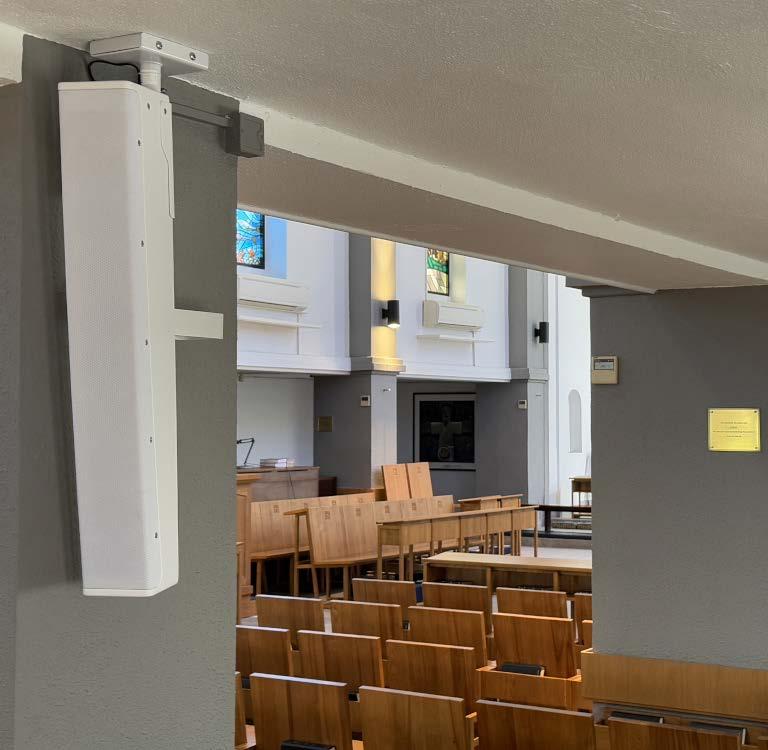
HONG KONG: HK Audio has helped transform the audio experience at Christ Church Kowloon Tong, where a new loudspeaker system has dramatically improved speech intelligibility while respecting the aesthetics of the church’s historic interior.
Built in 1937, the Anglican church is renowned for its modern Gothic architecture, which has been carefully preserved for nearly 90 years. While visually striking, its high ceilings and reflective surfaces create long reverberation times that make clear speech reproduction particularly challenging. Any upgrade also needed to integrate discreetly into the heritage building.
Supplied and installed by Tones Tailor the new system replaces an analogue installation that had served the church for more than two decades. The solution centres on HK Audio’s SI SERIES P10i and P10j column loudspeakers, selected for their controlled vertical dispersion, which minimises reflections from the walls and ceiling while delivering consistent coverage throughout the sanctuary.
“Our previous sound system had been running for more than 20 years, and we were looking to move from analogue to digital,” Explained Raymond WC Chan of Christ Church. “We finally chose Tones Tailor because they understood the background of the church, especially its aesthetic elements.”
To complement the column loudspeakers, Tones Tailor also installed an HK Audio SI SERIES S 210 subwoofer for music and live performances, alongside FINEO FO5 and FO8
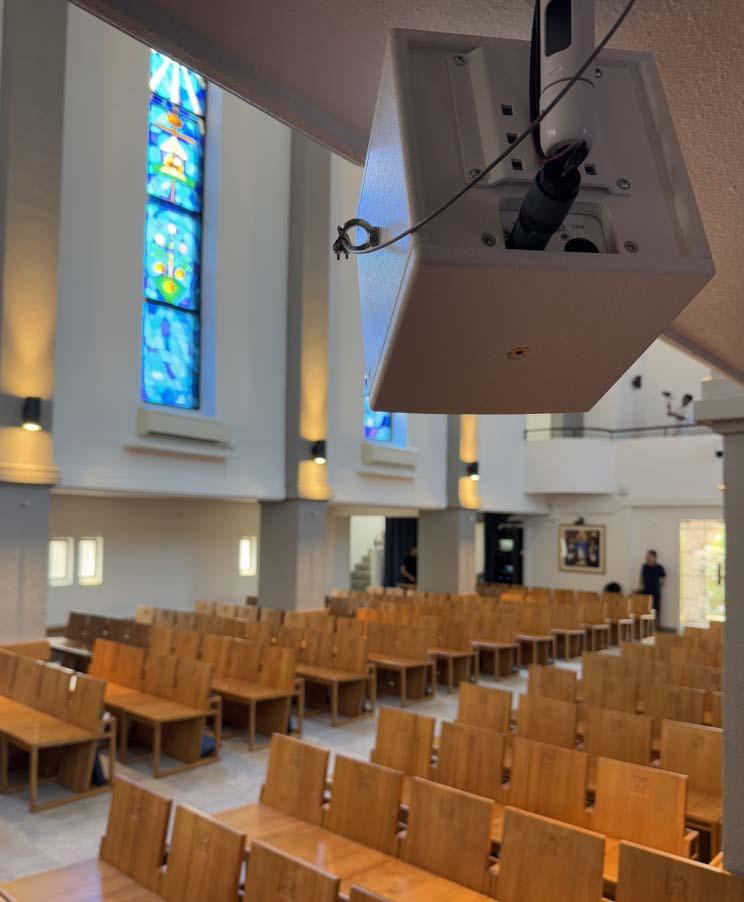
loudspeakers for front fill and monitoring, creating a system capable of supporting both speech and musical events.
“Because of its long reverberation time, the church has a very challenging acoustic environment,” said Howard Chan of Tones Tailor. “There were also high expectations for
how the system would look; you don’t want anything to stand out too much in a historical building like this.

“Thankfully, the HK Audio column system offered excellent vertical dispersion, helping us reduce reflections from the ceiling and walls. The P10 also gave us flexible mounting options, allowing the loudspeakers to integrate neatly into the building while delivering excellent performance.”
The finished installation has transformed the listening experience for both the church and its congregation. “Tones Tailor did a great job proposing the right solution,” added Raymond Chan. “It has solved almost 90% of the problems we experienced before.”
Howard Chan concluded: “After installation and commissioning, the client was extremely happy with the results. Speech intelligibility has improved hugely – they were equally pleased with how discreet the loudspeakers look. The final performance was very close to our acoustic simulations, and the system sounded

in modern workflows
Support a wide range of formats including NDI ® High Bandwidth, NDI ® HX2, NDI ® HX3, SRT, RTMP and RIST for interoperability across broadcast and Pro AV networks
Flexibly support optional Magewell Control Hub software or Zixi Zen Master for centralized management
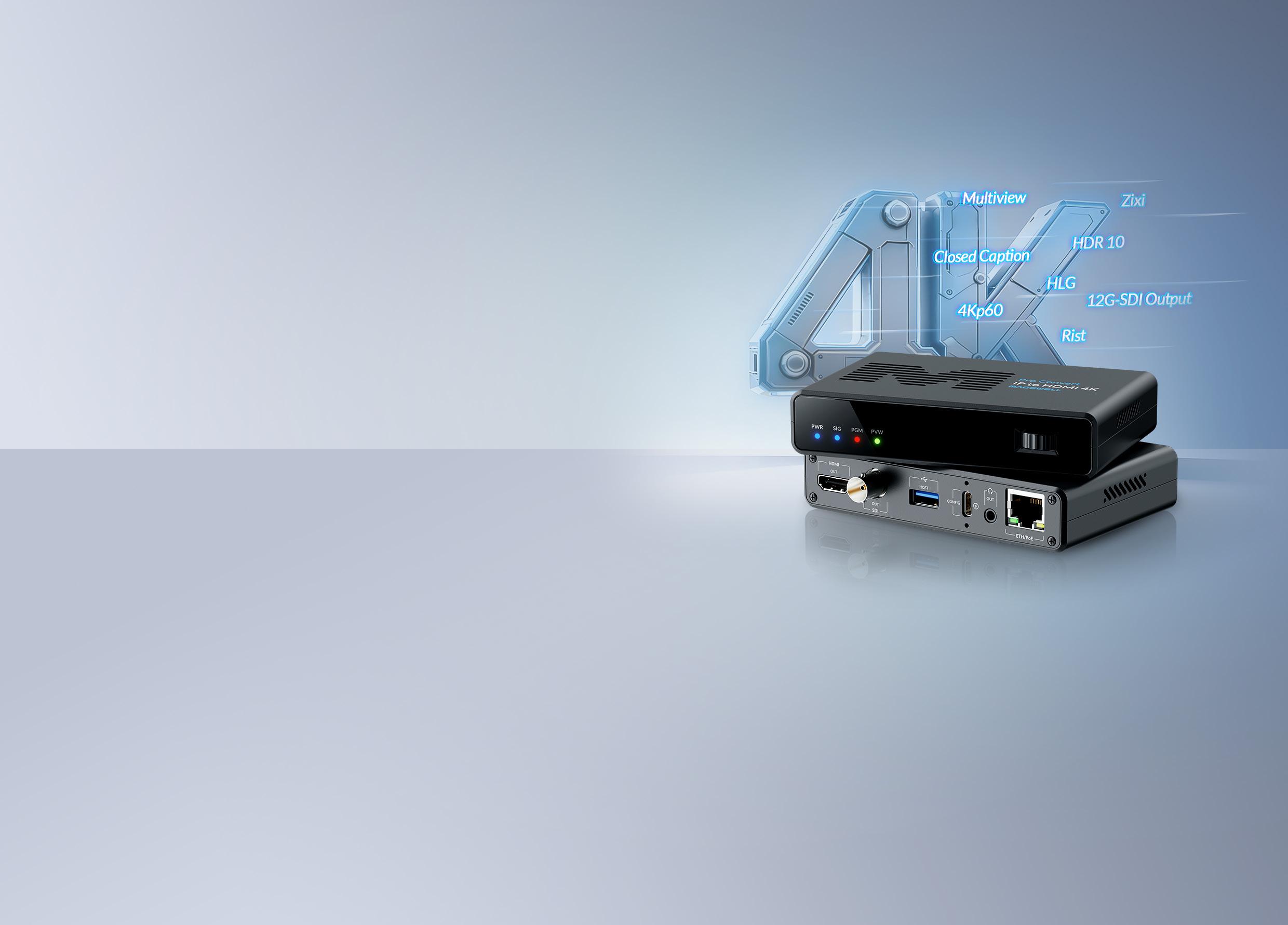
Pro Convert IP to HDMI 4K and Pro Convert IP to AIO 4K convert up to four IP streams into one 4Kp60 HDMI/SDI output in various layouts including Multiview. With broad support for IP protocols and video formats trusted in professional AV, broadcast, and IT environments, these devices enable users easily integrate 4K network streams into existing infrastructures either for production or video distribution purposes. Learn more at https://www.magewell.com/pro-convert-ip-decoder

INDIA: Acroname a leader in programmable USB hardware and automation solutions, announced its partnership with Bengalurubased NTECK SYSTEMS to deliver its industrialgrade portfolio into the rapidly growing Indian market. Under the new agreement, NTECK SYSTEMS is an authorized reseller of Acroname’s complete line of industrial, programmable USB solutions across India.
The partnership centres around the USBExt3c in India, the industry’s first programmable, managed USB-C hub and extender kit for modern meeting room environments. Powered by Valens VS6320 HDBaseT-USB3 technology, the USBExt3c functions as a complete, high-performance hub, featuring integrated bidirectional USB and power extension and automatic host switching from either end of the extension. By simplifying power and connectivity, the USBExt3c eliminates unnecessary deployment and operational complexities.
The USBExt3c supports a wide range of highbandwidth applications, from 4K transmissions in live productions and lecture halls to BYOM and BYOD workflows in high-end corporate conference rooms. It automatically switches room peripherals, such as cameras and speakerphones, between a dedicated room PC and a guest laptop while simultaneously charging the laptop.
Powered by Acroname’s BrainStem platform, the USBExt3c integrates seamlessly with IT dashboards and control systems via industry-
standard APIs to support remote monitoring and management. This deep operational insight allows teams to monitor system status, diagnose connectivity conditions, resolve configuration issues, and maximize overall system uptime.
Beyond the USBExt3c, NTECK SYSTEMS will distribute Acroname’s full portfolio of programmable USB hubs and switches across India -- solutions purpose-built to support and scale complex USB systems across test and measurement, IT, and AV applications.
“With the Indian AV-IT industry growing rapidly across corporate, education, and live production segments, we wanted to accelerate our growth and better support customers with the right local presence,” said Jenn Ryan, Acroname Vice President of Sales. “We needed a reliable partner who possesses the experience, technical acumen, and market understanding to deliver our high-performance solutions across India. We found that partner in Nataraju and NTECK SYSTEMS and are confident this collaboration will set a new standard for USB connectivity in the market.”
Nataraju, founder and CEO of NTECK SYSTEMS, commented: “Our mission has always been to deliver cutting-edge AV-IT system solutions to the Indian market. Low-latency, high-speed data networks require robust infrastructure, and Acroname’s programmable solutions deliver the flexibility and control required to design, deploy, and manage complex, multidevice AV-IT environments. Representing Acroname’s full portfolio of managed switches, hubs, and extenders will enable us to offer a comprehensive set of industrial-grade USB solutions to support a broad range of applications.”
THAILAND: In his new role as Sales Manager, Jatuporn Rattanachirasuth will lead d&b audiotechnik's growth strategy in Thailand, working closely with d&b’s APAC team and local partners to deepen customer relationships and expand the brand’s footprint across the market.
Bringing more than 25 years of experience in the professional audio and technology sectors, Jatuporn has built a strong reputation for
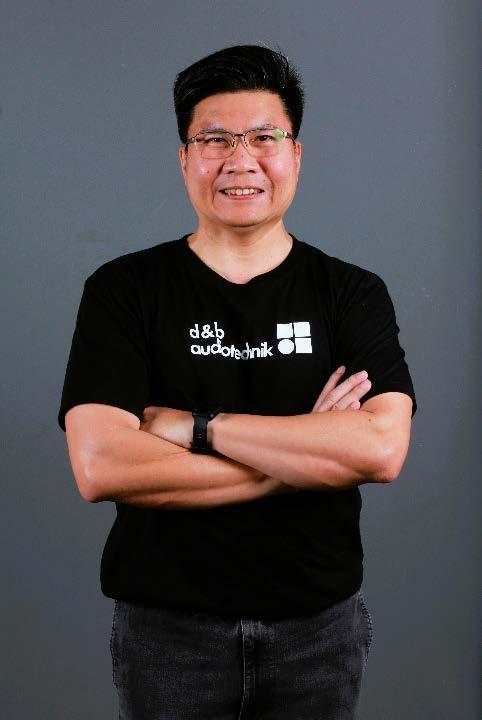
driving business growth, developing partner networks, and delivering commercial success. Much of his career has been dedicated to Thailand’s professional audio industry, where he has worked extensively across distribution, integration, and channel management.
Most recently, Jatuporn spent more than a decade leading sales and business development for Thailand at Sennheiser Electronic Asia, where he played a key role in expanding the company’s market presence and strengthening engagement with partners across multiple customer segments. Earlier in his career, he held commercial positions with Ekarat Solar, Acer, Jebsen & Jessen Marketing, and Epson Thailand, gaining broad expertise in sales operations, business development, and channel strategy.
“I am excited to join d&b audiotechnik APAC and contribute to the continued growth of the Thailand market. I look forward to working closely with our partners and customers to strengthen relationships and deliver impactful sound solutions across a wide range of applications,” says Jatuporn Rattanachirasuth, Sales Manager, d&b audiotechnik.
“We are pleased to welcome Jatuporn to d&b audiotechnik. His deep industry experience and strong understanding of the Thailand market will be a valuable addition to our APAC team,” states Anna Kovyza, Senior Commercial Director, d&b audiotechnik APAC.
The appointment reflects d&b audiotechnik’s ongoing investment in the Asia Pacific region as the company continues to strengthen its local expertise and support customers through closer regional engagement.
d&b audiotechnik
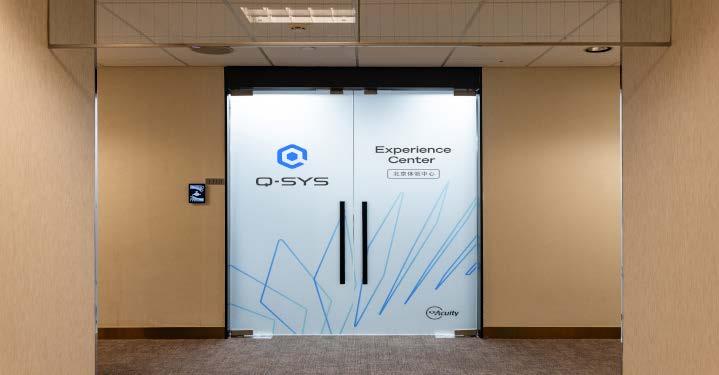
CHINA: QSC’s new Q-SYS Beijing Experience Centre is located in the China World Office Tower 1. The centre offers customers and partners the opportunity to experience Q-SYS solutions firsthand across a range of real-world applications and explore how the Q-SYS Full Stack AV Platform can support a variety of AV needs through thoughtful design and integrated solutions.
Situated in Beijing's business hub, the ~170 sqm centre showcases Q-SYS solutions across a range of high-impact environments, including corporate boardrooms, higher education classrooms, hospitality venues, and entertainment spaces. Visitors can engage with key Q-SYS solution sets, including Q-SYS VisionSuite and Q-SYS RoomSuite, alongside partner solutions.
The opening of the Q-SYS Beijing Experience Centre marks an important step in the continued growth of Q-SYS in the APAC region," said Duncan Savage, Vice President and General Manager, APAC, QSC. "It provides a space for customers, partners, and consultants to engage with the Q-SYS Platform and helps empower them to apply these solutions across a range of environments."
The Experience Centre also features a dedicated Q-SYS training facility offering practical, application-focused sessions led by Q-SYS technical experts. In this space, trainees will have the opportunity to further deepen their understanding of Q-SYS with the award-winning training curriculum.
Contact QSC today to schedule a tour of the Beijing Experience Centre: china.sales@qsc.com
QSC Experience Centres
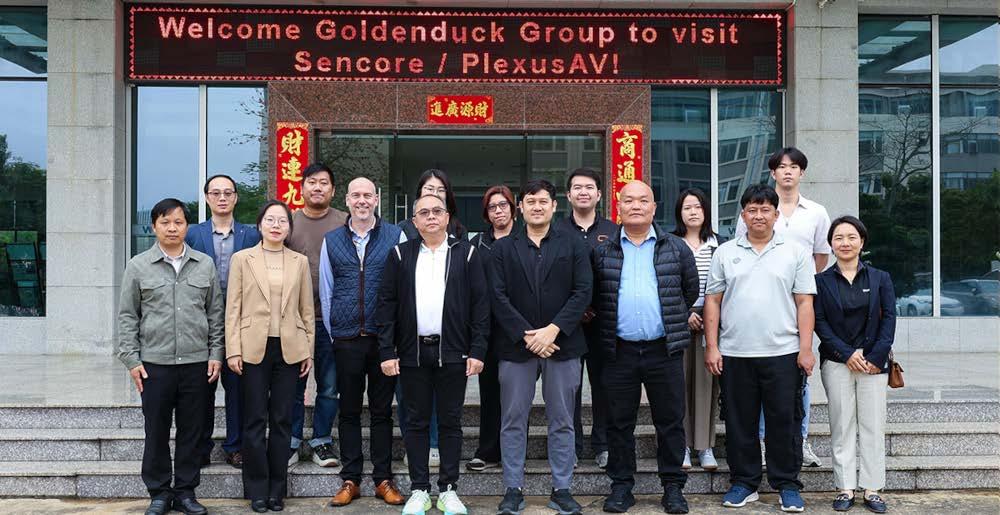
THAILAND: PlexusAV, the professional AV division of Sencore, providing a suite of human-focused AV-over-IP solutions, has appointed Goldenduck Group as its authorised distribution partner for Thailand.
The partnership supports PlexusAV’s continued expansion across the Asia-Pacific region, providing system integrators and AV professionals in Thailand with local access to its high-performance, open-architecture AVover-IP solutions based on the IPMX standard.
Steve Cogels, Global Director of Business Development at PlexusAV, commented, “We’re delighted to welcome Goldenduck Group as our distribution partner for Thailand. Their deep understanding of the local AV market, combined with their technical expertise and strong customer relationships, makes them an excellent partner to support PlexusAV’s continued growth in the region.”
Chanunkarn Boonmarkmee, Sales Director at Goldenduck Group, stated, "We are excited to collaborate with PlexusAV and explore new possibilities in AV-over-IP innovation. This partnership reflects our commitment to delivering advanced, future-ready solutions that provide greater flexibility, scalability, and performance across broadcast and professional AV applications. By combining PlexusAV's cutting-edge AV-over-IP ecosystem with Goldenduck's extensive experience in system integration and ProAV solutions, we aim to better support the evolving demands of modern AV workflows and integrated environments."
The announcement follows a meeting between the PlexusAV and Goldenduck teams at Sencore Asia, where both companies aligned on their shared vision for expanding openstandard AV-over-IP solutions across the region. Through the partnership, Goldenduck will provide local sales, technical support and customer expertise, helping system integrators and end users deploy flexible, scalable AV solutions throughout Thailand.
PlexusAV
AUSTRALIA: Pro AV Solutions has opened its new Sydney showroom in Surry Hills, creating a working workplace technology environment where clients, consultants, designers, and technology partners can experience how workplace technology is designed, delivered, supported, and managed throughout its lifecycle.
Developed as a partner space with Profile Systems, the showroom reflects the way modern workplaces are evolving. Rather than presenting technology as a collection of individual products, the space brings together collaboration settings, meeting environments, personal workstations, support models, and partner technologies in a fully operational workplace experience.
The new showroom responds to a shift Pro AV Solutions is seeing across the Australian market, with organisations moving beyond
standalone meeting room projects and towards more considered workplace technology environments. Clients are increasingly focused on user experience, consistency across spaces, ease of support, platform integration and how technology performs after handover.
This shift also aligns with Pro AV Solutions’ lifecycle focused approach, helping organisations move beyond individual technology projects to environments that are designed, delivered, and actively managed over time.
Anthony Jeffcoat, CEO of Pro AV Solutions, said the showroom reflects the company’s broader approach to helping organisations make more confident decisions about workplace technology. “Clients are no longer looking at workplace technology as a collection of individual rooms or products. They want to understand how these environments will support their people, how they will perform after handover and how they can be managed consistently over time,” said Jeffcoat.
“Our Sydney showroom gives clients a practical way to experience those decisions before they commit to them. It allows us to have more meaningful conversations about user experience, standards, supportability and longterm value, rather than starting with equipment alone.”
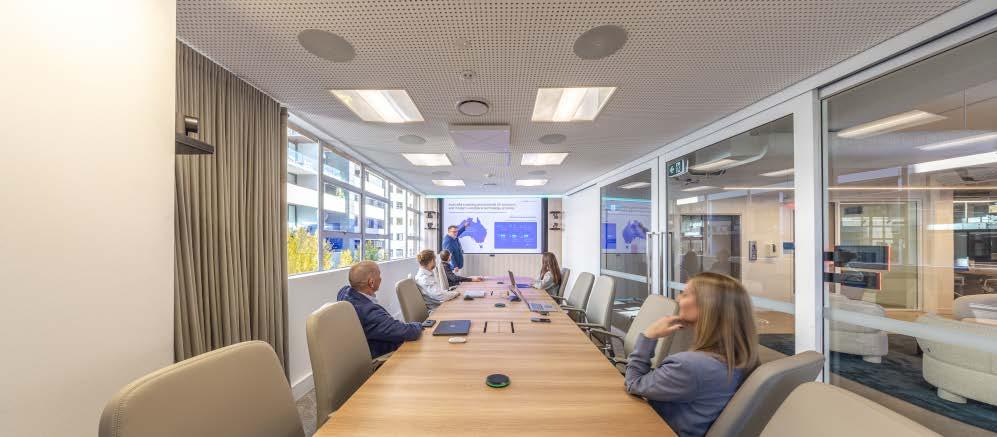
“Many workplace technology decisions are difficult to make from drawings, specifications, or product demonstrations alone. The showroom enables organisations to experience complete workplace environments, compare different approaches and make more informed investment decisions before technology is deployed”.
The showroom includes a range of working environments designed to demonstrate different aspects of workplace AV and collaboration technology. These include executive meeting areas, huddle spaces, a control hub, an innovation lab, a town hall and broadcast space, and persona-based workstations.
Each area has been created to show how technology is experienced in practice, not just how it appears in a specification. The boardroom environment demonstrates executive communication, privacy, audio clarity, control and multi-participant collaboration. The huddle space shows how smaller meeting areas can deliver a consistent and simple user experience without unnecessary complexity. The town hall space has been designed to support collaborative discovery sessions, executive communication, streaming and broader organisational engagement.
As part of the showroom experience, Pro AV Solutions is also demonstrating One Connect, the company’s workplace technology platform that provides visibility, governance, and ongoing management across a customer’s technology estate. A dedicated control hub demonstrates Pro AV Solutions’ lifecycle approach to workplace technology. The space shows how systems can be monitored, managed and supported after installation, helping clients understand the importance of visibility, supportability and ongoing performance.
Jeffcoat said this long-term view is becoming more important as meeting rooms and collaboration spaces become part of the broader technology environment. “A successful
project is not only about what happens on day one, but whether the technology continues to work well for the people using it every day,” he said. “That requires clear design decisions, disciplined delivery and the right support model after handover. The showroom helps clients see that full picture.”
The space also features persona-based workstations that demonstrate how different work styles and user needs can be supported. These settings reflect the growing role of personal workplace technology, from officebased professionals to hybrid workers and remote-enabled contributors.
Jeffcoat said the showroom supports a more outcome-led conversation with customers.
“As organisations place greater emphasis on workplace experience, operational resilience and long-term technology performance, the Sydney showroom gives them a place to move beyond products and focus on outcomes,” he said.
“It helps customers make more confident technology decisions, while giving us the opportunity to build long-term partnerships around the way their environments are designed, used and supported.”
The showroom has been designed for client briefings, partner demonstrations, consultant walkthroughs and media visits. It gives organisations a space to explore workplace technology options, test different environments and consider the operational requirements that sit behind the final user experience. Bookings available here.
For Pro AV Solutions, the showroom is also part of a broader focus on lifecycle technology partnership. This includes supporting clients from early discovery and design through to delivery, management, monitoring and ongoing support.
Pro AV Solutions
GLOBAL: Kramer has made a global customer commitment designed to help partners and end customers quote with confidence, deliver projects on time, and navigate continued market uncertainty through the remainder of 2026.
As organisations continue delivering technology projects against budgets established at the beginning of 2026, many are facing increasing pressure from spiralling costs, supply chain disruption and longer planning cycles. At the same time, many manufacturers across multiple technology sectors have introduced price increases driven by continued volatility in the global semiconductor market.
To help customers reduce uncertainty and keep projects moving, Kramer is making two strategic commitments through the remainder of 2026: Price stability and improved product availability.
As part of a global initiative, Kramer will maintain current pricing across the vast majority of its product portfolio through the end of 2026, helping customers and partners continue delivering projects within approved budgets and quote future work with greater confidence.
PC-based products — including VIA collaboration devices, Control Brains and Management devices — are excluded from this commitment due to the continued volatility of processors, memory, operating system licensing and other computing components.
Alongside its pricing commitment, Kramer is making a strategic investment in inventory across key, high-demand product families to improve product availability and support faster delivery. By increasing inventory levels, the company aims to reduce delivery uncertainty, help customers move more quickly from quotation to deployment, and minimise project delays.
“We understand the pressures our customers and partners are facing, with many of them working within budgets that were approved
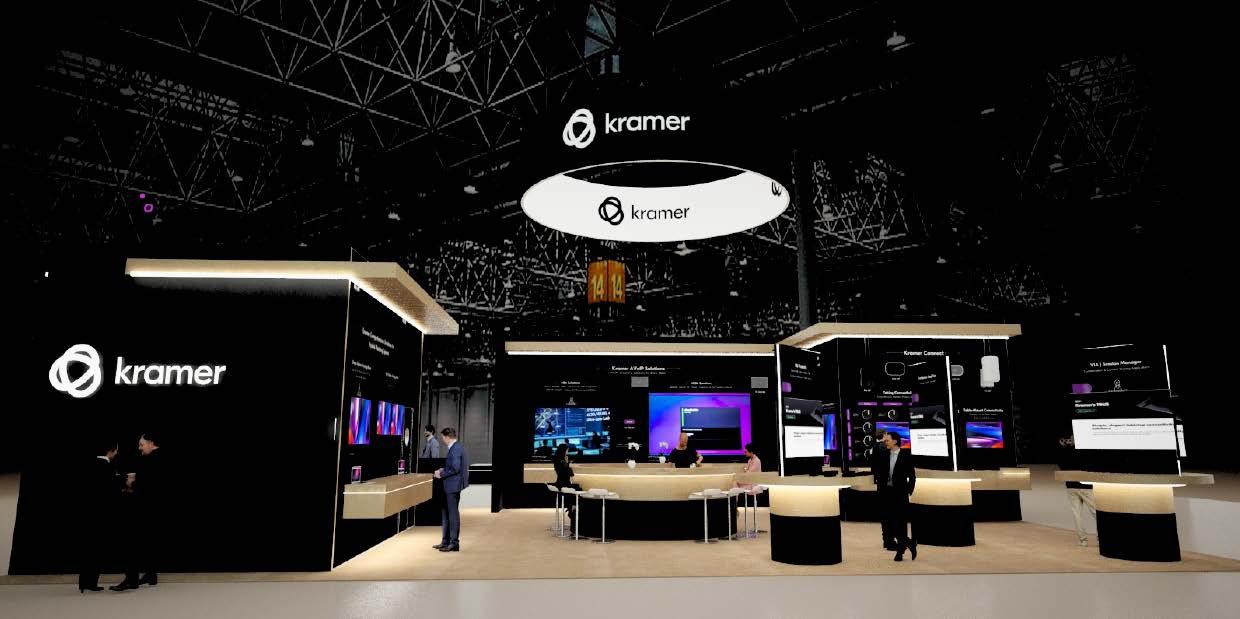

months ago, even as market conditions continue to change,” said Gilad Yron CEO of Kramer. “We believe a technology partner should do more than deliver innovative products. We should also help customers navigate uncertainty wherever we can.
“While costs continue to rise across our industry, we’ve made the strategic decision to maintain pricing across the vast majority of our portfolio through the remainder of 2026 while investing in greater product availability,” Yron added. “It’s our way of sharing the burden with our customers and partners, helping them plan with greater confidence and keep their business moving.”
Yron believes the wider market will continue to experience supply chain volatility for at least another year, driven largely by unprecedented global demand for semiconductor technologies
supporting AI infrastructure and data centre expansion.
“The AV industry is closely tied to the wider semiconductor ecosystem,” he said. “Demand for silicon-based components continues to outpace supply across multiple industries. We expect that imbalance to continue before capacity gradually catches up over the next twelve months. While we can’t control every market condition, we can control how we respond to it.”
The initiative reflects Kramer’s long-standing commitment to building strong partnerships with customers, distributors and system integrators by combining technology innovation with practical business decisions that support successful project delivery.
“Innovation will always remain central to Kramer,” Yron added. “But great partnerships are built not only through technology, but through the decisions we make when our customers need us most.”
Kramer
GLOBAL: PROEL SpA has appointed Alessio Foti as Co-CEO, joining Giacomo Sorbi in leading the Italian manufacturer into its next phase of growth as the company accelerates its global expansion and digital transformation.
The appointment marks a significant milestone for the 35-year-old group, whose portfolio includes the PROEL, AXIOM, Sagitter, Dexibell and Tamburo brands. The company says it is undertaking a comprehensive transformation of its business, spanning new product development, digital processes and international sales while maintaining its focus on Italian manufacturing and craftsmanship.
As Co-CEO, Foti will oversee global sales, working with PROEL’s international teams to strengthen the company’s presence in overseas markets and expand the reach of its professional audio, lighting and musical instrument solutions.
“Joining PROEL at this historic moment is an extraordinary challenge. There is a completely new energy,” said Alessio Foti, Co-CEO of PROEL. “As Co-CEO, my goal is to lead Global Sales, both directly and together with our team, to bring the company into the MI and PRO world. The global market demands fast, intelligent responses; we are ready to provide them.”
He added that customers can expect more than new products, describing PROEL’s ambition to become “a fully digitalised global partner” while preserving the company’s Made in Italy heritage.
Alongside the leadership change, PROEL revealed that it has spent the past two years redeveloping its product portfolio across its

Sound Systems, Stage Equipment, AXIOM professional audio and Sagitter lighting divisions.
According to the company, the programme goes well beyond a product refresh, introducing new hardware architectures, software platforms, electronics and manufacturing processes, together with AI-enabled technologies and the digitalisation of internal operations.
“Technology is no longer a commodity. It is the heart of the product and the DNA of the company,” Foti said. “We place great importance on artificial intelligence, but we remain firmly connected to people. We build our strategies for people and with people, rather than relying on algorithms: we use them only to bring the greatest benefit to our customers. Our core values remain relationships and respect for our market.”
Sorbi said the company’s transformation is focused on building on PROEL’s history rather than replacing it.
“Our history is an enormous asset,” he said. “The challenge is not to change who we are, but to ensure that our history continues to be relevant in the years ahead. To achieve that, we need the right people, and Alessio’s appointment is an important step in our growth.”
PROEL SpA
From a local Hong Kong AV business to a technology partner spanning 28 offices across 18 countries, CEO Steve Medeiros reflects on four decades of transformation, leadership, and why AI represents the industry’s next defining chapter.
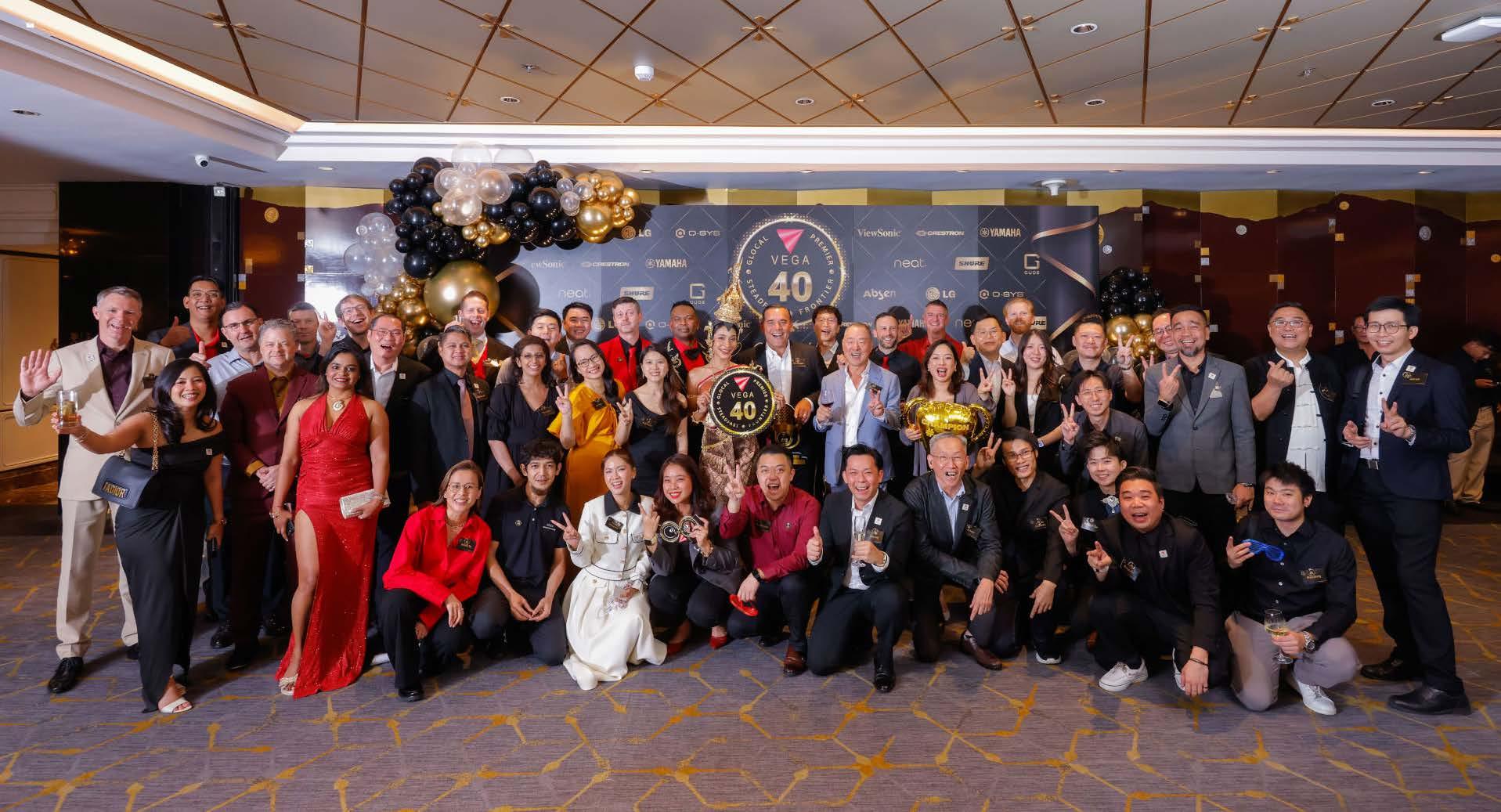
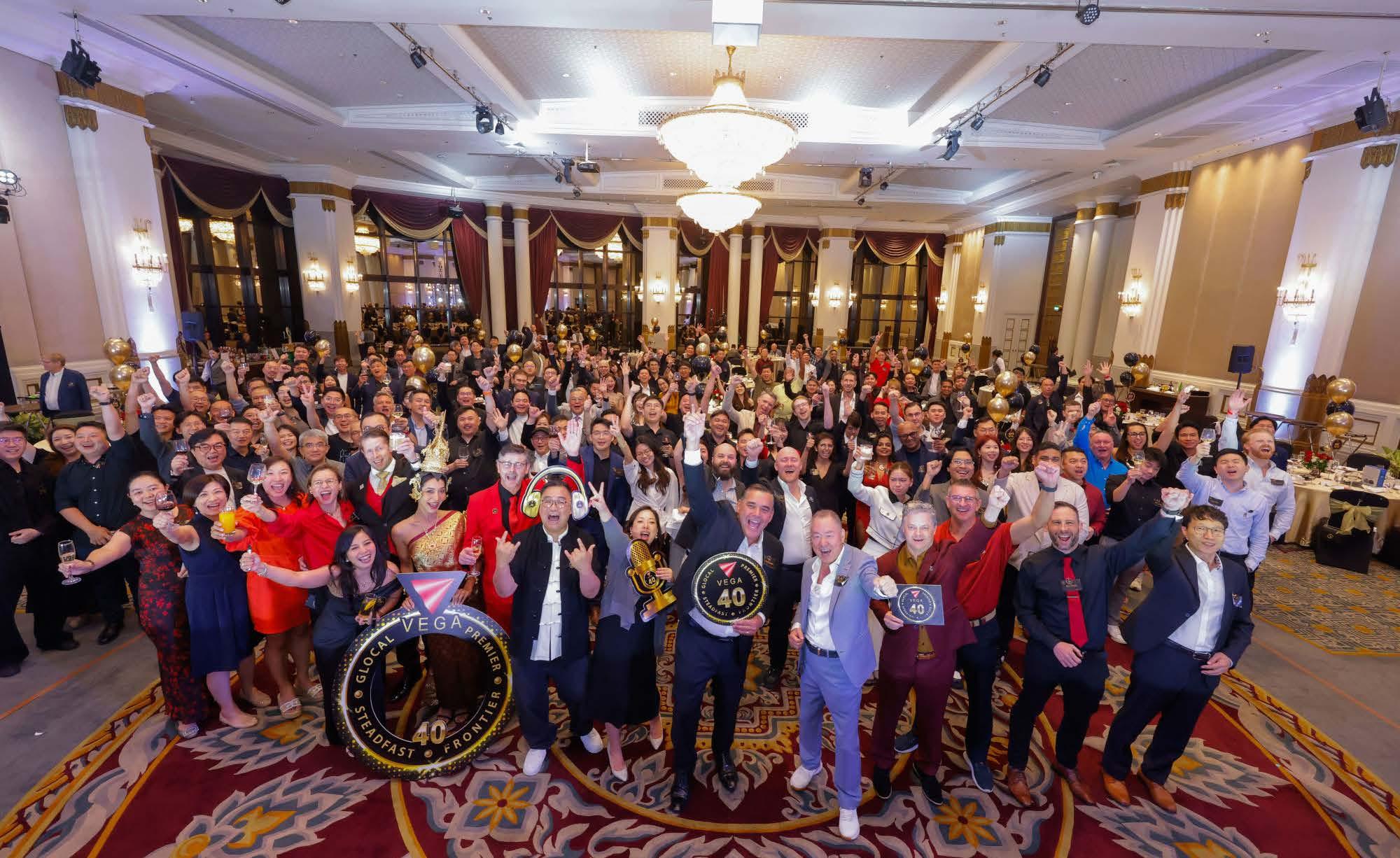
Forty years is a remarkable milestone in any industry, but in the fast-moving world of professional audiovisual technology, it is an achievement that speaks volumes about resilience, adaptability and vision. Since its founding in Hong Kong in 1986 by Laurie Chow, VEGA Group has not only witnessed the evolution of the AV industry but has also helped shape it—navigating the transition from analogue systems to IP networks, cloud platforms, unified communications and now Artificial Intelligence.
Today, with operations spanning 28 offices across 18 countries, VEGA has established
itself as one of the Asia-Pacific region's leading technology integration companies, serving multinational corporations with integrated AV, IT and workplace solutions. As of 2020, VEGA is majority owned by private equity firm Baird Capital.
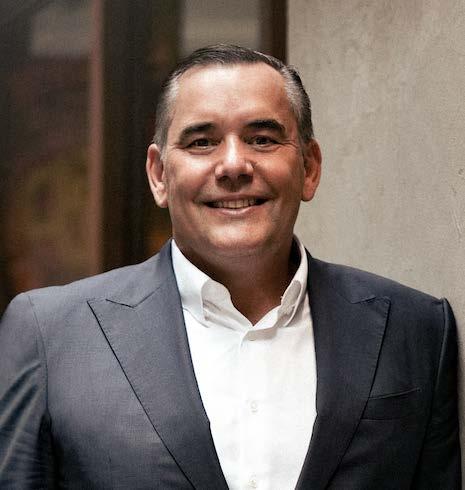
In this exclusive interview, Steve Medeiros, who was appointed CEO of VEGA Group in April 2023, reflects on the company’s 40-year journey, the defining milestones that fuelled
its international expansion, the changing expectations of customers, and why he believes Artificial Intelligence will fundamentally reshape collaboration, communications and workplace experiences over the coming decade.
According to Steve, VEGA’s longevity has never been about standing still. Instead, the company’s greatest strength has been its willingness to continuously evolve alongside the industry.
Founded as an audiovisual equipment distributor, VEGA recognised early that customers required more than products. The company evolved into a systems integrator, expanding beyond workplace technologies to deliver end-to-end solutions across multiple industry verticals, with a strong focus on solving business challenges through integrated technology.
A defining moment came around 2010, when VEGA accelerated its international expansion across Asia-Pacific and beyond.
“Our globalization journey transformed VEGA into a truly international organisation serving multinational and Fortune Global 500 clients,” says Steve.
Equally important has been the company’s commitment to innovation. Instead of reacting to market change, VEGA has consistently anticipated industry shifts—from AV and IT convergence to cloud collaboration and workplace technologies—ensuring it remained relevant as customer requirements evolved.
Yet despite the technological evolution, Steve believes the company’s greatest assets remain unchanged.
“The dedication of our people, the trust of our customers and the strength of our partnerships have enabled us to grow into the global VEGA family we celebrate today.”
Few organisations have experienced as much technological change as those operating in professional AV over the past forty years.
Steve describes the industry’s evolution as moving from hardware-centric installations towards business-enabling technology ecosystems.
Where projectors, displays and presentation systems once defined the AV industry, today it is recognised as a strategic technology enabler—driving unified communications, cloud collaboration, intelligent workplaces and mission-critical solutions across sectors including corporate, education, hospitality, healthcare, transportation and major public venues.
Recognising these shifts early proved pivotal for VEGA. Rather than focusing solely on products, the company repositioned itself as a consultative technology partner.
“We lead with a consultative approach focused on solving business problems rather than margins and rebates,” Steve explains.
Perhaps the most influential industry transformation has been the convergence of AV and IT.
As video conferencing, digital communications and collaboration became mission-critical, organisations increasingly required partners capable of bridging both disciplines. VEGA responded by investing heavily in technical expertise, certifications and service capabilities that allowed it to deliver integrated solutions rather than isolated technologies.
Another significant shift has been the increasing globalisation of business.
As multinational companies sought consistent technology standards across countries, VEGA
expanded beyond Hong Kong into 28 offices covering 18 nations, enabling customers to work with a single integration partner across multiple markets.
Regional expansion has been driven largely by customer demand. As global clients expanded throughout Asia-Pacific, VEGA followed, establishing local operations capable of delivering consistent service while understanding local market dynamics.
However, Steve points out that international customers are only part of the equation.
“While we followed our global clients, we also selected best-in-class local customers. This blend of multinational and local clients demonstrates our commitment to each country and its people.”
Operating across diverse markets naturally presents challenges. Emerging economies often prioritise rapid digital transformation and infrastructure development, while mature markets demand sophisticated workplace technologies and managed services.
At the same time, differences in regulations, cultures and business practices require flexibility rather than a one-size-fits-all approach.
VEGA’s answer has been what Steve describes as a “glocal” strategy—combining global standards with deep local expertise to deliver a consistent customer experience while remaining responsive to the unique needs of individual markets.
While the industry’s evolution has included many innovations, Steve identifies several technological shifts that fundamentally reshaped professional AV.
The transition from analogue systems to IP-based infrastructure and cloud-enabled platforms dramatically increased scalability, flexibility and global connectivity. Equally transformative has been the convergence between AV and IT, which expanded collaboration beyond individual meeting rooms into enterprise-wide digital workplace environments.
Unified communications, cloud collaboration and managed services have also become essential components for organisations supporting increasingly distributed and hybrid workforces.
Now, AI represents the industry’s next major leap. Rather than simply enhancing hardware, Artificial Intelligence is changing how people interact with technology itself.
Steve believes AI will enable organisations to automate workflows, generate valuable insights from operational data and create more intuitive workplace experiences.
“The industry is transforming from hardwarecentric solutions to business-enabling technology platforms.”
Customer expectations have changed dramatically over the past decade.
Today, clients expect technology to work seamlessly across offices, countries and hybrid work environments, often without thinking about the underlying infrastructure. As a result, system integrators are increasingly expected to become strategic advisors rather than installation contractors.
“Customers want seamless, intuitive and consistent experiences that support hybrid work, collaboration and digital transformation,” says Steve.
To meet these expectations, VEGA has expanded far beyond its traditional AV roots. Its portfolio now includes unified communications, workplace transformation, managed services, life-cycle support and global service delivery—all designed to help organisations achieve measurable business outcomes rather than simply complete technology deployments.
Leading an organisation through forty years of industry disruption requires more than technical expertise. For Steve, leadership has always centred around adaptability, resilience and people.
“In an industry that evolves as quickly as ours, we cannot afford to be complacent.”
That philosophy has driven continuous investment in emerging technologies, employee development and organisational capabilities before they become mainstream market demands.
At the same time, Steve emphasises disciplined execution.
Balancing innovation with financial strength has allowed VEGA to pursue long-term growth while remaining resilient during periods of economic uncertainty.
Ultimately, however, he believes success begins with people.
“Great companies are built by great people.”
Creating a culture focused on collaboration, accountability and continuous improvement remains central to VEGA’s continued success.
Artificial Intelligence has rapidly become one of the industry’s biggest talking points, but
Steve believes its impact will extend far beyond today’s early applications.
He compares AI’s significance to previous transformational shifts—from analogue to digital technologies and from standalone AV systems to converged AV/IT platforms.
Future workplaces will increasingly rely on AI-powered capabilities including real-time language translation, automated meeting summaries, intelligent camera framing, content generation and predictive system management.
These technologies promise not only greater efficiency but also richer collaboration experiences.
“AI will help organisations remove barriers to communication, improve user experiences and enable people to focus more on creativity, decision-making and innovation rather than routine tasks.”
For VEGA, AI represents an opportunity to continue delivering smarter workplaces while remaining focused on its core mission of helping people connect, collaborate and communicate more effectively.
Despite celebrating forty years in business, Steve believes the industry’s greatest opportunities still lie ahead.
He estimates the addressable market at approximately US$8 billion, with significant room for growth as organisations continue investing in digital workplaces, intelligent buildings and AI-powered collaboration.
Asia-Pacific, in particular, is positioned to lead this transformation.
According to Steve, 47% of global investment is now taking place in Asia, reinforcing the
region’s role as a global centre of excellence for innovation and technology deployment.
Looking ahead, organisations will increasingly demand seamless integration between AV, IT, cloud, data and workplace technologies. This creates significant opportunities for companies capable of delivering consistent, end-to-end solutions across multiple countries.
For VEGA, the vision remains clear.
The company aims to strengthen its position as what Steve calls the leading “glocal” technology partner—combining local expertise with global delivery capabilities.
He is particularly optimistic about growth opportunities in Artificial Intelligence, managed services, workplace transformation and datadriven collaboration environments.
Yet despite the industry’s accelerating pace of change, Steve believes VEGA’s future success will continue to rest on the same foundations that have carried the company through its first four decades.
“Our people, our culture of innovation, and our ability to adapt to change while staying focused on helping customers connect, collaborate and communicate more effectively than ever before.”
After forty years of continuous reinvention, that philosophy appears set to guide VEGA confidently into its next chapter.
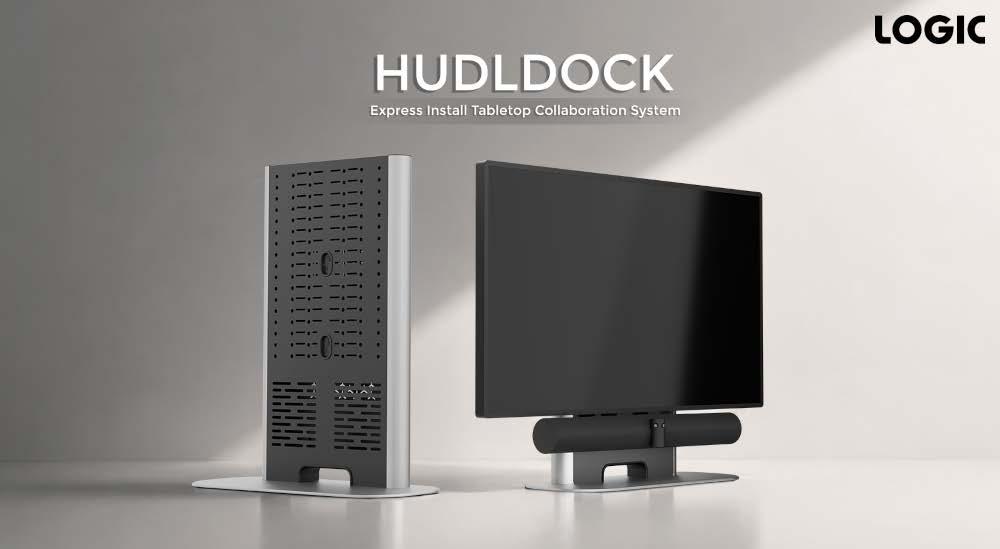
LOGIC, the flagship visual solutions brand of Online Instruments (India) Limited, has expanded its Workspaces portfolio with the launch of LOGIC HudlDock. This all-in-one tabletop collaboration unit is designed to streamline the deployment of technologyenabled huddle rooms and agile meeting spaces.
The release of HudlDock follows the recent rollout of LOGIC Pods, the brand's integrated AV framework engineered for large-scale boardrooms and training centres. With this latest addition, LOGIC now provides enterprises with a unified, scalable AV infrastructure that extends from the largest conference halls down to the most compact focus rooms.
As corporate real estate shifts toward modular and flexible workspace designs, organisations require AV infrastructure that can keep pace without necessitating constant structural
modifications. The LOGIC HudlDock addresses this operational challenge by consolidating display mounting, video conferencing support, and cable management into a single, freestanding tabletop unit. Engineered for rapid scalability, the system features a tool-less installation process that allows a fully operational collaboration space to be commissioned in under 30 minutes.
By eliminating the need for wall mounting, the HudlDock preserves office aesthetics and empowers facility managers to easily reconfigure room layouts. Furthermore, its brand-agnostic architecture ensures straightforward compatibility with a wide array of commercial displays and unified communications (UC) platforms, allowing enterprises to leverage their existing hardware investments.
Key Technical Specifications:
* Display Support: Accommodates 32" to 55" commercial displays, supporting weights up to 35 kg.
* Mounting Compatibility: VESA patterns ranging from 200 × 200 mm to 600 × 400 mm.
* Adjustability: Manual height-adjustable display mount to ensure optimal viewing ergonomics across diverse desk heights.
* AV Integration: Integrated videobar mount with the flexibility to position hardware above or below the display.
* Cable Management: Optional integrated Power Distribution Unit (PDU) for concealed wiring and a clutter-free tabletop environment.
* Ecosystem Flexibility: Brand-agnostic design fully compatible with leading commercial display and video conferencing manufacturers.
With the launch of LOGIC HudlDock, LOGIC continues to strengthen its portfolio of innovative workplace collaboration solutions. Designed to simplify AV deployment while enhancing meeting experiences, HudlDock empowers enterprises to build scalable, futureready collaboration spaces that seamlessly combine functionality, flexibility, aesthetics, and operational efficiency.
LOGIC/HudlDock
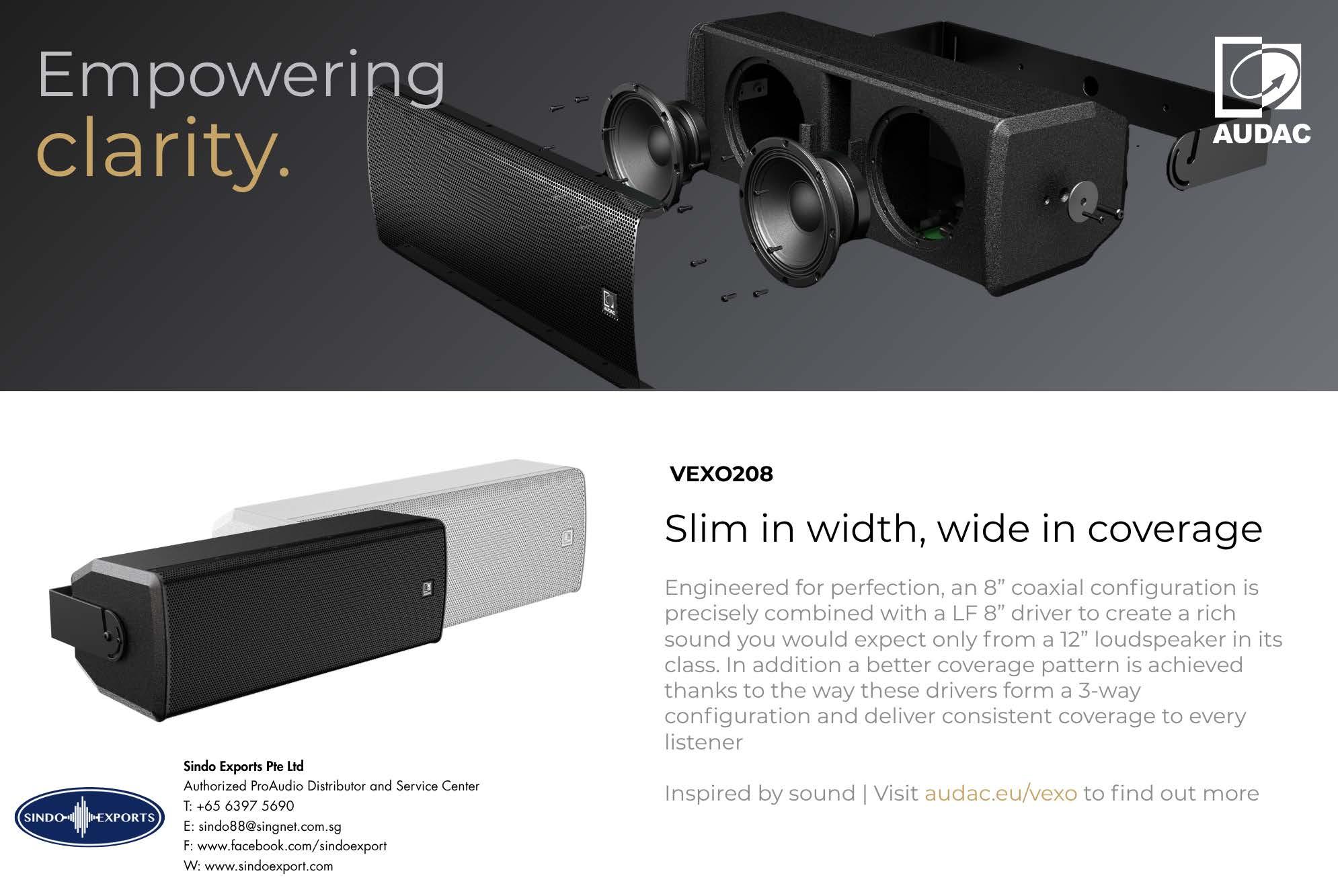
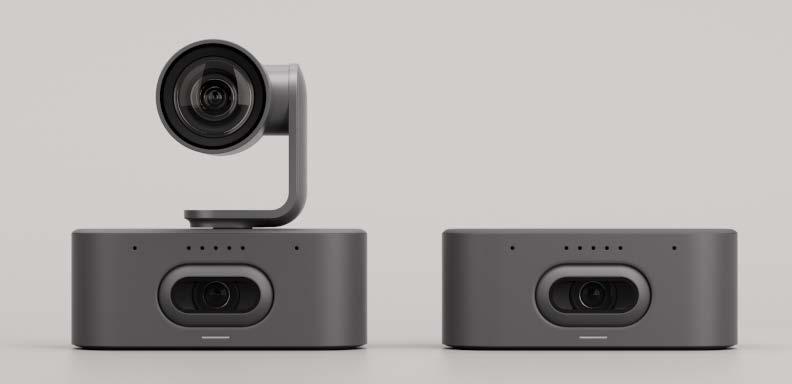
Logitech has expanded its video collaboration portfolio with the launch of the Rally AI Camera and Rally AI Camera Pro bringing advanced AI-powered video intelligence to boardrooms, classrooms and large meeting spaces in a compact design.
Designed for hybrid workplaces, the new cameras combine Logitech’s Rally imaging technology with AI-driven features including adaptive RightSight 2 framing, which automatically adjusts between group views, speaker tracking and participant grid layouts. Multiple cameras can also work together with platforms such as Zoom Intelligent Director and Microsoft Teams multiple camera view to deliver more dynamic meeting experiences.
Both models feature a custom-designed lens with a 1-inch imaging sensor and a 115° field of view for wide room coverage and improved low-light performance. The Rally AI Camera Pro adds a second optical camera with up to 15x hybrid zoom, enabling detailed presenter tracking and close-ups in larger venues.
The cameras offer flexible installation options, including ceiling, wall, display and in-wall mounting, allowing them to blend into meeting room environments while incorporating an automatic privacy shutter.
Beyond video performance, the Rally AI Camera range provides workplace analytics through Logitech Sync, enabling organisations to monitor room occupancy, automate room booking and release, and gain insights to optimise workspace utilisation. IT teams can deploy and manage the cameras remotely over WiFi or Ethernet, with support for USB or singlecable installation and integration with Logitech or third-party audio systems.
The Rally AI Camera and Rally AI Camera Pro will be available in graphite and off-white from September 2026 through authorised Logitech resellers.
Logitech/Rally AI Camera

PPDS has launched its thinnest and lightest 4K UHD digital signage line to date.
The dazzling and unmistakable Philips Signage 7000 Series signals the creation of an exciting new line within PPDS’ evolving digital signage portfolio, opening a wealth of exciting installation opportunities for 24/7 environments where proven quality, unparalleled performance, and visual aesthetics really matter.
Fuelled and finessed using invaluable feedback from global partners and customers around the world – including those with past and current experience of using comparable competitor offerings – the landscape and portrait mountable UHD Philips Signage 7000 Series UltraSlim comes in a choice of size options, including 43”, 50”, 55” and 65”.
Built for versatility and flexibility, the Philips Signage 7000 Series will be available in warehouses from Q4 2026 to support a diverse
range of verticals and environments – with retail, corporate, public venues, hospitality, and food and beverage among target markets.
Designed with a depth of just 30mm for the 65” model and 28.5mm on all others, it is an incredible 60 per cent less deep than its closest Philips Signage counterpart – the Philips Signage 4050Q. The 43”, 50” and 55” models are 10 per cent lighter than their 4050Q size equivalents, and the 65” model weighs 20% less than its 4050Q comparison.
Impossible to ignore, whether used to showcase the latest fashion styles in a retail store or to display mouthwatering menus in a bar or restaurant, all Philips Signage 7000 Series models bring 500 nits brightness inside an elegant 11.5mm even bezel design.
Internally – mirroring other Android SoC models from PPDS – the Philips Signage 7000 Series comes with the out-of-the-box features and
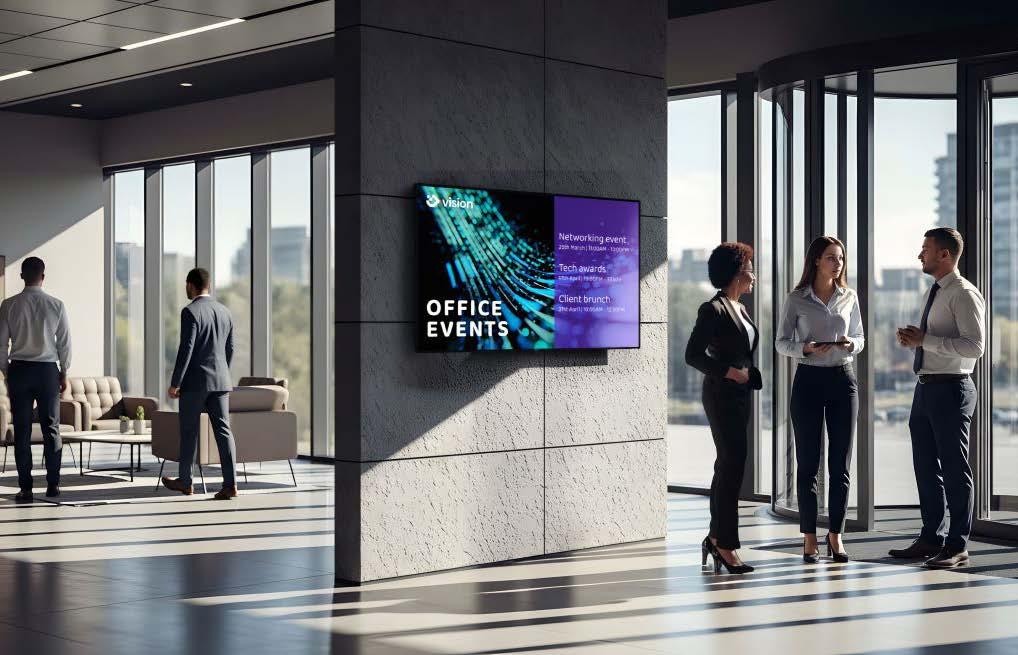
functionalities that have become standard hallmarks of Philips Professional Displays, allowing each display to be tailored to meet the unique requirements of every customer.
Running on a professional Android 16 SoC and with a TOPS 3.0 Neural Processing Unit ready for AI applications, the Philips Signage 7000 Series brings complete reliability and peace of mind to installations, with trusted connectivity and security built in. All while enabling customers to select and install their preferred native Android apps and software directly onto the display.
Unlocking its full power and intelligence still further, the Philips Signage 7000 Series joins PPDS’ portfolio of displays that are compatible with the Philips Wave remote display management platform, putting users in complete control.
Saving on costs, energy, and environmental impact via optimised settings, Philips Wave offers simplified installation and setup, monitoring and controlling displays, upgrading firmware, managing playlists, and setting power schedules. Challenges can be overcome quickly and efficiently with the ability to spot issues in real time or even to identify potential problems before they occur.
Philips Wave users also have access to the Philips ProStore, eliminating any concerns around compatibility with selected partner software and applications used in – but not exclusively for – healthcare, corporate, retail, education, hospitality, and more.
For additional peace of mind, the Philips Signage 7000 Series also features PPDS’ FailOver technology, automatically playing back up content on screen in the unlikely event of a primary media player failure, ensuring screens remain active when it matters.
Ideal for presentation settings, such as in meeting rooms, corporate boardrooms and classrooms, the Philips Signage 7000 Series also comes with an integrated Philips SmartBrowser app, which leverages HTML5 to enable managers to set URLs to play as a media source.
Wireless screen sharing is available with optional Philips ScreenShare, while the Philips Signage 7000 Series also provides a full suite of connections, including HDMI, USB-C, RS232, LAN, USB, WiFi, and Bluetooth, to meet user preferences and promote the reuse of existing cables and equipment.
On the subject of recycling, the Philips Signage 7000 Series adheres to PPDS’ commitment to bringing more sustainable products, using recycled resin for the display’s housing, while significantly reducing plastic used internally, as well as in the packaging.
PPDS/Philips Signage 7000 Series
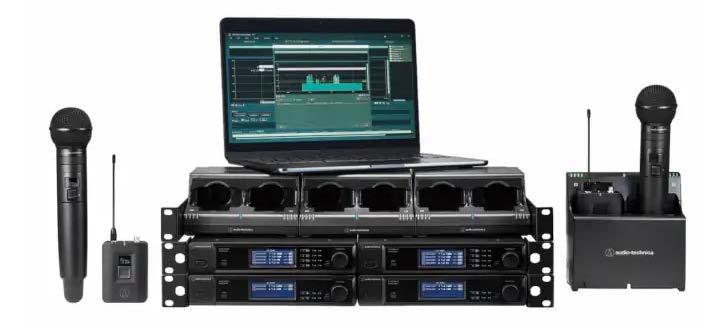
Audio-Technica officially introduced its D50 Digital UHF Wireless System to the Asian market during InfoComm Asia 2026, bringing a next-generation wireless solution designed to meet the evolving needs of professional AV integrators, live production companies, broadcasters, corporate environments and educational institutions
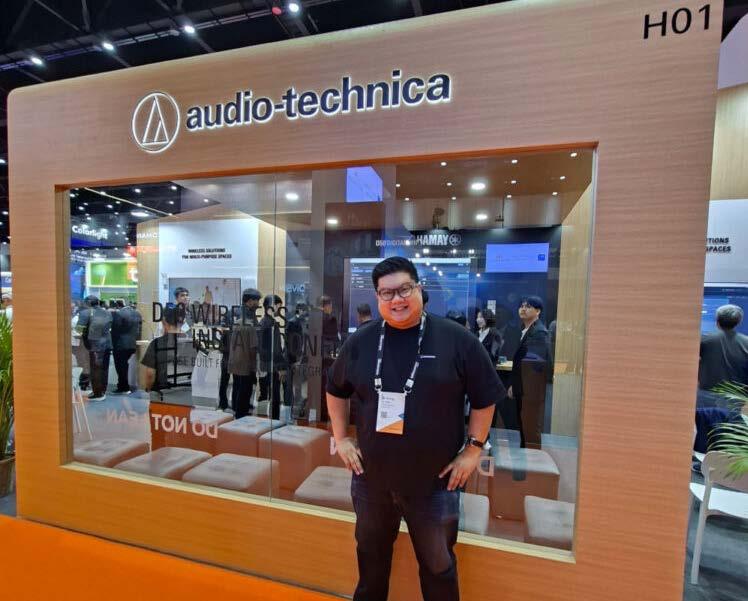
Shaokai Teng, better known in the AV industry as SK, is Managing Director of Audio-Technica South East Asia. According to SK, the new
D50 wireless system represents a significant technological breakthrough.
“The D50 is the result of several years of R&D focused on delivering robust RF transmission, exceptional reliability and audio quality, and high channel capacity," he said. "We also paid close attention to rack-space efficiency, with just 1U accommodating up to eight channels, while our custom-designed battery delivers an industry-leading 18 hours of operation. We are incredibly proud of what we are bringing to the industry and believe the D50 will be a true game-changer, [offering] excellent value for demanding professional applications."
One of the D50’s standout features is its expansive RF bandwidth of up to 244 MHz (region dependent), providing greater flexibility for frequency planning, even in highly congested RF environments. The system also offers a High Density (HD) Mode, increasing the number of usable frequencies within a 6 MHz TV channel block from the standard 17 to as many as 47 simultaneous channels, making
it particularly well suited for large venues and dense metropolitan deployments.
At the heart of the system is a compact halfrack receiver available in three configurations: 4-channel Dante, 4-channel Audio-Technica LINK*, and 2-channel Audio-Technica LINK Users can switch between Antenna Combining Diversity and MRC True Diversity modes to optimise RF performance, while up to four receivers can be linked together using just a single pair of antennas without requiring additional antenna distribution hardware.
The Dante-enabled model supports 96 kHz high-resolution audio, primary and secondary Dante ports for network redundancy, device monitoring and configuration, and PoE+, which can serve as either the primary or redundant power source to ensure uninterrupted operation.
Complementing the receiver are handheld and bodypack transmitters that continue AudioTechnica’s reputation for high-fidelity wireless performance. The handheld transmitter ships with the trusted ATW-C510 cardioid dynamic capsule and is compatible with a wide range of additional Audio-Technica dynamic and condenser capsules. The bodypack transmitter supports lavalier and headworn microphones via Audio-Technica’s robust cH-style 4-pin connector.
Both transmitters utilise newly designed rechargeable lithium-ion batteries that provide extended operating time and can be charged either within the transmitter or separately using dedicated charging stations. External controls, OLED status displays and the innovative SideTrack function—which allows users to switch to a secondary output for private communications—further enhance operational flexibility.
For conferencing and discussion applications, Audio-Technica also offers a dedicated desk stand transmitter featuring configurable talk-button modes, phantom-powered XLR connectivity for compatible gooseneck microphones, multi-colour LED status indicators and USB-C charging, allowing continuous operation while charging.
Installation and system management are simplified through an onboard spectrum analyser and the Wireless Manager software, which provides frequency coordination, advanced walk testing, detailed EQ and compression settings, firmware updates and project file storage directly on the receiver.
Security has also been prioritised, with support for AES256 encryption, compliance with the European Union’s Radio Equipment Directive (RED) cybersecurity requirements, and TAA compliance for the U.S. market.
With its combination of scalable architecture, robust RF performance, intelligent management tools and premium audio quality, the Audio-Technica D50 Digital UHF Wireless System is positioned as a compelling solution for live sound, corporate AV, education, broadcast and conferencing applications across the region.
*The ATW-DR3240LK 4-channel AudioTechnica LINK model is not available in the U.S.
Audio-Technica/D50 Digital UHF Wireless System
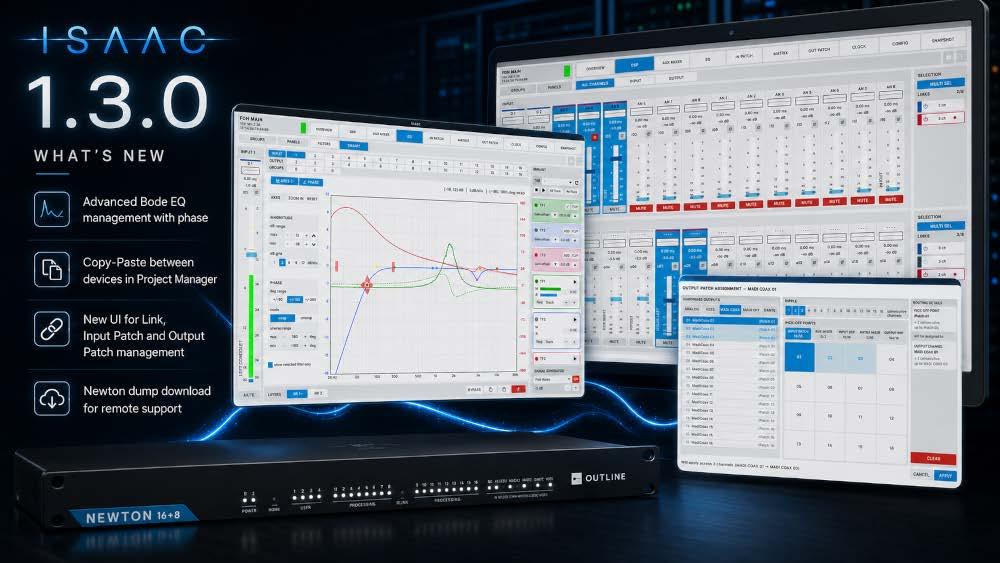
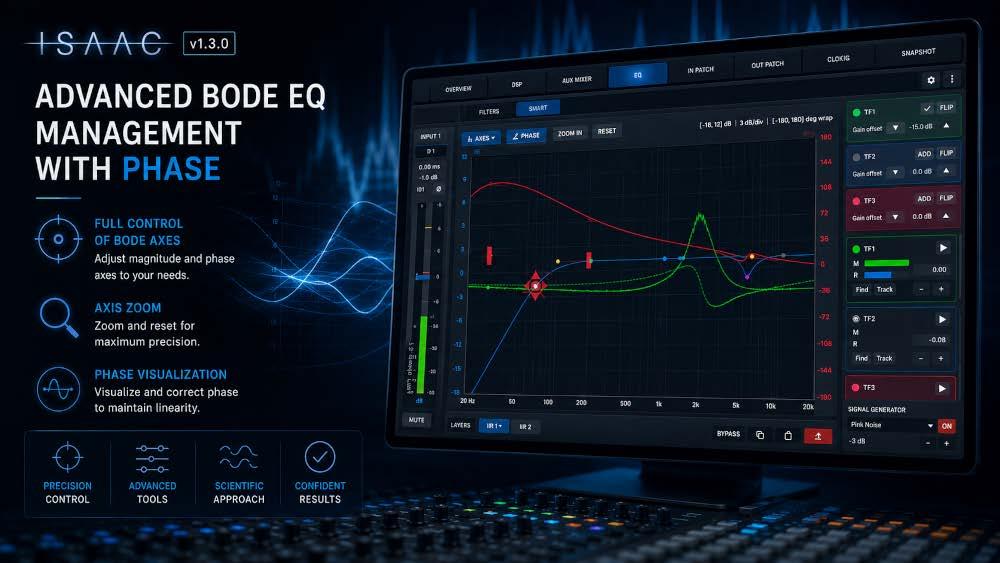
Outline has released Version 1.3.0 of its ISAAC multi-platform control software for the company’s Newton FPGA-based digital signal processor, introducing a range of enhancements focused on audio performance, workflow efficiency and user experience.
The update delivers improved EQ processing with more accurate filter calculations, enhanced phase response, refined graphical visualisation and a deeper zoom function for more precise system tuning.
ISAAC V1.3.0 also streamlines system configuration with new input and output patch assignment dialogues, more responsive user feedback and a new ripple feature that enables
recursive channel configuration, reducing setup time for complex systems.
To simplify support and maintenance, the software now allows users to submit bug reports directly from within ISAAC and generate a Newton status dump file that captures the processor’s settings for remote troubleshooting by Outline’s technical team.
The update also adds a summary of the latest software improvements within the About section, making it easier for users to review new features without referring to separate release notes.
Outline/Software

Ask who is responsible for the security of an AV network in a typical enterprise, and you will get a complicated answer. The AV team deployed it, but they report to facilities. IT owns the network infrastructure, but they did not specify the AV equipment. The security function has a policy, but it was written for IT systems, and nobody applied it to the conference rooms. In practice, the security of the AV network defaults to nobody.
That gap, more than any individual vulnerability, is what makes connected AV environments one of the softer targets in enterprise infrastructure today. The vulnerabilities that show up most consistently in AV deployments are almost entirely due to that ownership gap. Understanding them that way changes how you approach fixing them, and what it means to deliver a genuinely secure AV deployment.
Default credentials are the most persistent. Control processors, DSPs, IP cameras, and digital signage ship with factory-set usernames and passwords publicly listed in manufacturer documentation. They go unchanged because the AV team has no security mandate, and the IT team responsible for security often doesn’t know the devices exist.. One hour with a network scanner and a default credential list is enough to gain access to a significant
proportion of AV infrastructure in any unmanaged deployment.
Open and unmanaged ports follow from the same logic. Remote management is standard practice now, and rightly so, but port forwarding configured for convenience, without authentication or access controls, creates a permanent entry point that nobody is actively monitoring.
Network architecture is where the ownership gap can do the most damage. Where VLANs are used for the AV network, they typically lack the inter-segment inspection that would prevent lateral movement. SANS data shows that 96% of OT incidents begin with a compromise on the IT network before attackers move laterally into operational systems.
The physical layer deserves particular attention. Network ports in conference rooms and publicfacing AV spaces are rarely protected by port security or access controls. Anyone who can plug in - a contractor, a visitor, a delivery person - gains immediate visibility into every device on that segment.
For systems integrators, the most valuable thing you can do is force the conversation on governance and responsibilities at the start of the project instead of after an incident. That means arriving at the pre-deployment
conversation with a clear set of questions: What network will this AV infrastructure run on, and is it isolated from corporate IT? Who owns credential management and firmware updates across the deployment lifecycle? And the question that will eventually come from the customer's security leadership: what is on this network, who can reach it, and how would you know if something changed?
Most customers don’t t have the answers before the project starts. The integrator who surfaces them and proposes a deployment architecture that answers them is delivering something genuinely differentiated. Separate network, documented device inventory, authenticated remote access, port security, a defined process for managing changes. They are the baseline security applications that the AV industry has not yet applied consistently but will increasingly be required by a security-aware customer.
IT and security teams need to meet the AV team halfway too: a security policy written for IT infrastructure will create performance problems on an AV network without solving any security problems, because the latency requirements, discovery protocols, and device lifecycles are fundamentally different.
Security capability is becoming a key selection criterion in enterprise AV procurement, particularly for customers with multinational operations and regulatory exposure. Zero-trust segmentation, where every device is verified, every flow is inspected, and access is granted by policy rather than by default, is the direction the industry needs to move. In practical terms: your IP speaker only communicates with your DSP, your IP camera only reaches its assigned video management server, your digital signage display only connects to its designated media server. Each device operates within a defined policy envelope.
The ownership gap that produces most of the vulnerabilities in connected AV environments is also the opportunity. The integrator who closes it, who delivers a deployment that is secure by design, documented, and auditable, is the one who builds the kind of customer relationship that compounds over time.
The AV networks deployed across Asia Pacific today will be in service for a decade or more. The security posture built in at deployment defines the customer's exposure for the entire lifetime of that installation. That is the conversation worth having at the start of every project.

The convergence of AV, IT and operational technology has fundamentally changed how we think about security.
Not that long ago, most AV systems lived in their own world. Meeting room equipment, public address systems, digital signage and display screens each served a specific purpose and operated largely in isolation.
Today, they're connected to IP networks, cloud platforms and an ever-growing ecosystem of intelligent devices. Remote management, AI, IoT and cloud services have transformed AV into an integral part of an organisation's digital infrastructure.
That transformation has delivered tremendous value. Systems are more intelligent, easier to manage, and capable of generating data and operational insight that simply weren’t possible before. But every new connection creates another potentially-vulnerable point that needs to be protected.
Cybersecurity is no longer something to think about after a project has been delivered. It has become part of good system design.
Coming from a physical security and tactical operations background, I’ve always felt that the conversation around cybersecurity misses something important. We naturally gravitate towards technology. Firewalls. Encryption.
Network segmentation. Identity management. Endpoint protection. These are all essential, of course, and no one would argue otherwise.
But technology is only part of the story.
Many security incidents don’t begin with a firewall failure. They happen because responsibilities become unclear, systems were not maintained consistently, user accounts were forgotten, or no one was quite sure who owned a particular part of the environment.
In other words, they are often operational failures before they become cybersecurity failures.
Take a modern commercial building. The AV environment may include video conferencing systems, digital signage, cameras, environmental sensors and cloud-based management platforms… Different vendors install different systems. Different contractors maintain them, often over many years as equipment is upgraded, replaced and expanded. After a while, simple questions become surprisingly difficult to answer:
* Who is responsible for firmware updates?
* Who approves remote access for vendors?
* When an employee leaves, who reviews every account they had access to?
* Are there connected devices that nobody is actively managing anymore?
* How quickly are newly-discovered vulnerabilities assessed and addressed?
None of these are purely technical. They are everyday operational questions. And when ownership becomes unclear, even welldesigned systems gradually become more exposed and vulnerable–-not because the technology is lacking, but because nobody is consistently responsible for keeping it secure.
In my experience, security is rarely undermined by a single catastrophic failure. More often, it's weakened by small gaps that accumulate over time. A missed firmware update here. An account that should have been removed months ago. A contractor whose remote access was never reviewed. Individually, these may seem insignificant. Collectively, they create theconditions for something far more serious.
The same principle applies to physical security: an unlocked network cabinet, an unattended equipment rack, a laptop permanently connected to the AV network, a control workstation left accessible in a public area.
Individually, none of these appear particularly serious; together, they create opportunities no firewall can ever prevent.
As AV systems become more tightly integrated with enterprise networks and building operations, the line between physical security and cybersecurity continues to blur. One discipline can no longer operate effectively without the other. AI will only make this more important.
Intelligent systems are already helping operators monitor system health, detect anomalies and respond faster to emerging issues. Those capabilities will continue to improve, and they'll undoubtedly make operations more efficient.
But AI is an amplifier, not a substitute. It can identify unusual behaviour in seconds, but it can't compensate for poor governance,
incomplete asset registers or unclear escalation protocols.
What this all means for AV professionals is that security should not be treated as a compliance exercise completed before handover. It needs to be considered throughout the entire lifecycle of a system—from design and procurement to deployment, maintenance and eventually, replacement.
It also means AV professionals, IT teams, cybersecurity and physical security practitioners need to work more closely together. As buildings, workplaces and public spaces become increasingly connected, the AV industry will play an even greater role in shaping the environments we work and live in. With that opportunity comes a corresponding responsibility: not just to deliver smarter systems, but also to ensure they remain secure, reliable, and resilient throughout their operational life.
Good security isn't only about defending networks against increasingly sophisticated attacks. It starts much earlier.
It starts with designing environments where physical security, operational discipline and technology work together to reduce opportunities for compromise before anyone even has the chance to exploit them.
Get those fundamentals right, and the technology has every chance of succeeding.
Roy Phang is the Founder of First Forge an operational transformation advisory that helps organisations redesign the way they operate before investing in growth, technology or AI. After graduating from the National University of Singapore, he began his career with Singapore’s Ministry of Defence before moving into leadership roles in the Singapore Prison Service and the private sector, including serving as Chief Operating Officer of an international school group in Bangkok. Today, he advises organisations on operational transformation, security strategy and organisational design, drawing on more than two decades of experience across the public and private sectors.
16–18 September 2026
Jio World Convention Centre (JWCC), Mumbai Pavilions 1–3 & Jasmine Hall 1

India’s premier platform for Professional Audiovisual and Integrated Experience Technologies — where global innovators, solution providers and senior decision-makers across AV, IT and enterprise meet.




Step into where India’s Pro AV decisions get made. InfoComm India 2026 brings together AV and IT channel professionals, senior end-user buyers and system integrators to explore the technology powering smart cities, hybrid workplaces, live production, education and secure operations - live, on the show floor.
Audio Broadcast AV Command and Control
Conferencing and Collaboration Digital Signage
Live Events, Entertainment Smart Learning Spaces
• 3D Holographic Displays
• Acoustic Surfaces
• Advanced Metering Infrastructure (AMI) Technology
• AI Technology to Capture Demographic Insights
• AI-based CCTV Applications
• AR/VR/MR
• Architectural Lighting Systems Powered by a
• Archiving Solutions
• Atmospherics - Soundscaping
• Audio and Sound Reinforcement
• Audio System
• Audio; PA and Voice Alarm
• Automation Systems
• AV as a Service Over Cloud
• AV over IP
• Building Management System
• Cloud Education Content Management
• Cloud/Web-based Video Conferencing
• Command and Operations Centers
• Content Management Systems
• Control and Automation
• Digital Advertising Displays
• Digital Art Walls
• Encrypted Audio and Video
• Environmental Acoustics
• Event Spaces
• Experience Centers
• High-definition AV Infrastructure
• Image Capture and AI Analytics
• Immersive Solutions
• Interactive Digital Displays
• IoT-enabled AV Systems
• Large Format Displays and Digital Signage
• LED Displays
• Live and Studio Sound
• Medical Simulation Technology
• Medical-grade High-resolution Display
• Networked AV
• Smart Classrooms
• Surgery Recording and Broadcasting
• Telemedicine
• Traffic Management
• Video Surveillance Systems
From smart city command centres and metro operations rooms to hybrid boardrooms, broadcast studios and university lecture halls - this is the technology behind how India’s organisations are run.


• Build new business connections
• Get inspired with smarter AV solutions for your organisation
• Gain valuable insights at our curated networking events
• Experience live AV applications and integration in action
For the first time in India, you can take a CTS®, CTS-D, CTS-I, or ANP exam at InfoComm India at the same location, steps away from the show floor.
Experience the unique advantage of testing alongside the energy of the event, where the camaraderie and encouragement of your peers can boost your confidence and set you up for success.
Prepare for and take an exam at InfoComm India 2026, while it’s fresh in your mind.
16-18 September 2026
Jio World Convention Centre, Mumbai







Where does Pro AV go next in India? The InfoComm India Summit brings the region’s sharpest minds to the stage — exploring the technologies, strategies and market shifts defining the next chapter of our industry. Through keynotes, panel discussions and curated industry briefings, senior professionals gain the foresight and connections needed to lead transformation across Asia’s most dynamic markets.
OPENING SESSION
Opening Ceremony & Session
10:30 AM – 11:30 AM
• Opening Performance
• Welcome Address
• [Opening Session] Leading India’s Next Digital Leap: Technology, Infrastructure and the Intelligent Enterprise
SUMMIT
Education Supported by ICT Academy 11:30 AM - 1:30 PM
Emerging Trends & AI
12:00 PM - 2:00 PM
• [Panel Discussion] How 5G and IoT Are Transforming Connected AV Experiences
• The Role of Artificial Intelligence in Transforming AudioVisual Experiences
• [Fireside Chat] Fireside Chat
• AI in AV: What’s Actually Working, What’s Not, and What Comes Next
Enterprise IT
Supported by Computer Society of India (Mumbai Chapter)
2:00 PM - 4:00 PM
• Dedicated Show Floor Tour
• Invite to Join Welcome Networking Event
New Comer Community Meet Up
12:00 PM - 12:30 PM
• InfoComm India 101: Navigating Your First Experience
• Self Guided Tour
CTS Community Meet Up
1:00 PM - 2:00 PM
• [Panel Discussion] Why CTS Still Matters in an AI-Driven Industry
• Networking - CTS Community
AVIXA Women’s Council Meet Up
2:30 PM - 2:00 PM
• Welcome Address
• [Panel Discussion] Leadership Without Limits: Creating Pathways for Women to Lead and Succeed in AV
• Networking - AVIXA Women’s Council
Welcome Networking Reception
4:00 PM - 6:00 PM
• InfoComm India 101: Navigating Your First Experience
• Self Guided Tour

Day 2 - 17 September 2026
SUMMIT
Digital Signage
10:30 AM - 11:00 AM
• The Pulse of Digital Signage – Global Trends, Managed Solutions & the Future of AI
• [Panel Discussion] Beyond the Screen: The Future of Display Technologies Powering Connected Experiences
• The World’s Coolest Digital Signage Project
• [Panel Discussion] Beyond the Screen: Software, AI and Data Driving the Next Generation of Connected Experiences
• Connect & Network : Digital Signage
Broadcast AV
11:00 AM - 12:00 AM
• [Panel Discussion] The New Content Stack: How AV, IT and Cloud Are Transforming Delivery
Conference & Collaboration
1:00 PM - 2:30 PM
• The Most Expensive Room in the Building: Rethinking Collaboration in the AI Era
• [Panel Discussion] AI-Ready Workplaces: How AV, IT and Workplace Leaders Are Redefining Enterprise Collaboration
Cybersecurity
Supported by Computer Society of India (Mumbai Chapter)
2:00 PM - 5:00 PM
• Dedicated Show Floor Tour
• Networking High Tea
Live Events & Immersive Technologies
Supported by Themed Entertainment Association (TEA)
3:00 PM - 5:00 PM
• Welcome & Introductions
• The Future of Experience: Technology, Storytelling and Human Connection
• [Panel Discussion] Beyond the Stage: Creating Immersive Audience Experiences with AV Technology
• Connect & Network : Live Events & Immersive Technologies
XCHANGE LIVE
Xchange Live: AV/IT Community Meet Up
2:00 PM - 3:00 PM
• [Panel Discussion] Securing Connected AV Systems: Managing Risk in a Converged AV/IT World
• Networking - AV/IT Community
SPECIAL EVENTS
Emerging Trends & AI
12:30 PM - 1:30 PM
• AI-Driven Robotics: Transforming Industries Through Intelligent Automation
• Securing the Intelligent Workplace: Zero Trust for AV, IT & Collaboration
Day 3 - 18 September 2026
AV Design & Integration
11:00 AM - 1:00 PM
• Human-Centred Control Room Design: Beyond the Video Wall
• Elevating the Standards of Live Event Technology: A Framework for Design, Integration and Delivery
• [Fireside Chat] Beyond Surround Sound: Designing Immersive Audio Experiences
Audio
2:30 PM - 2:00 PM
• [Panel Discussion] Future-Ready Audio Systems: Designing for Performance, Flexibility and Scale
• [Fireside Chat] Fireside Beyond Assistive Listening: How Auracast Could Transform Audio Experiences in Public Spaces
• Making Immersive Audio Accessible to Everyone
AVIXA Professional Development: InfoComm India AV Futures
2:00 PM - 3:00 PM
• [Panel Discussion] Securing Connected AV Systems: Managing Risk in a Converged AV/IT World
• Networking - AV/IT Community
Information is correct at the time of print.
Organisers reserve the right to make changes to the programme without prior notice.


Platinum Sponsors




First-Look Launch Pad
Jasmine Hall is where exhibitors debut newto-market solutions first, ahead of the wider show floor
Expanding Every Year
Jasmine Hall has grown edition on edition, now home to dozens of specialist and first-time exhibitors
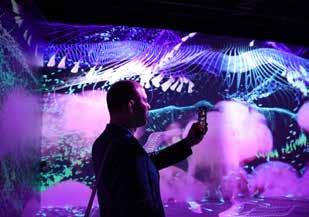
Hands-On Innovation Demos
Live, real-time demonstrations of AIpowered AV solutions across every category

16,


In the first article of this series, we explored how projected light negotiates with matter. In the second, how different cultures teach that light to speak. In the third, we entered the machinery behind the magic… projectors, servers, networks, sound, power, installation and the occasionally heroic engineer holding a laptop at three in the morning.
So, where does projection mapping go next?
Find it here- the last part of this series, authored by Avijit Samajdar, Founder & CEO of Axis Three Dee Studios.
By 2030, people may stop describing it as projection mapping at all.
Not because projection will disappear. Quite the opposite. It will become one layer inside a much larger spatial medium… a convergence of projection, LED architecture, real-time graphics, artificial intelligence, sensing, spatial audio, lighting, digital twins and show-control systems. The future canvas will not merely display content.
It will understand where it is… who is present… and how it should respond.
Across Asia, the scale and variety of installations are already changing the industry’s centre of gravity.
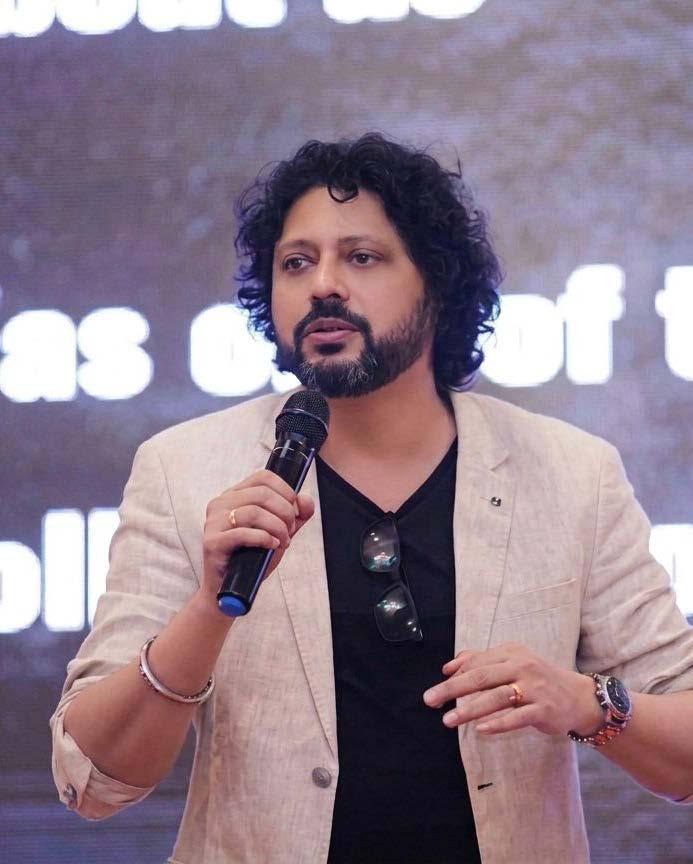
China is converting cliffs, waterfalls, historic districts and entire landscapes into night-time cultural tourism economies. Japan has moved mapping from occasional festival spectacle to civic infrastructure: TOKYO Night & Light uses the Tokyo Metropolitan Government Building as a permanent, year-round canvas. South Korea has fused media façades with immersive art venues such as ARTE MUSEUM, where projection, mirrors, sound and environmental design operate as one continuous sensory language.
Singapore’s Light to Night transforms not one façade, but an interconnected civic district. Malaysia’s TERANG at George Town places contemporary digital narratives upon colonial architecture, while IMMERSIOx brings projection into interactive indoor environments. In the Philippines, Davao’s centenary mapping programme and proposed fountain-mapping systems at Rizal Park show public institutions treating the medium as cultural infrastructure rather than an imported novelty.
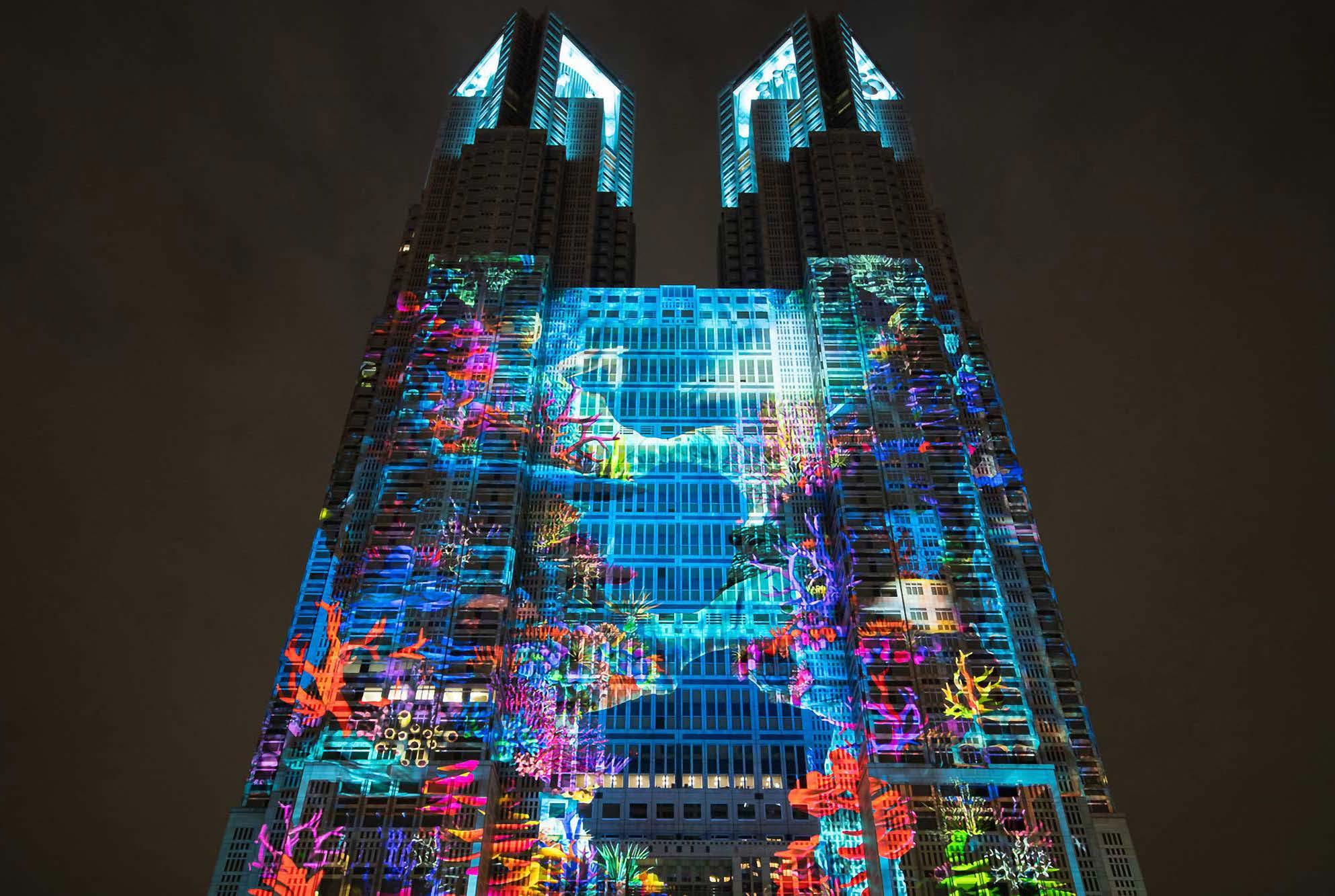
India is moving at a particularly unusual velocity. Forts, temples, monumental statues, museums, dams, riverfronts and public precincts are all becoming canvases… often at scales and on surfaces that overtly cautious people, might politely decline.
And that is before we consider Thailand, Indonesia, Vietnam, Taiwan, Australia and the Gulf, where immersive cultural attractions, destination spectacles and media architecture are expanding just as rapidly.
The critical thing to observe here is that it’s not that Asia is simply installing more systems; It is that Asian clients are becoming far more knowledgeable. They are no longer asking only, “how many lumens?”
They are asking about black levels, native contrast, colour gamut, redundancy, latency, pixel density, calibration drift, environmental
protection, content refresh cycles, remote diagnostics, energy consumption, operational manpower and a five-year total cost of ownership.
This is not encouraging news; it’s rather a pathdefining development for the industry. It may also be mildly inconvenient for anyone who previously survived presentations using only attractive renders and confident adjectives.
By 2030, the professional projector would increasingly behave less like an isolated display device and more like a networked optical instrument.
RGB pure-laser and advanced laser-phosphor systems will continue improving brightness, colour volume, efficiency and consistency. Higher-resolution imagers will matter, but raw
resolution alone will not define quality. The real advances will lie in usable contrast on actual surfaces, tighter spectral control, better lowlevel gradation, more efficient optical paths, quieter thermal systems and longer periods of colour stability between calibrations.
Integrated cameras and external machinevision systems will continuously inspect test patterns, geometry, focus, blend zones and chromatic drift. Auto-calibration will shift from a commissioning event performed at midnight to a background operational process. A projector that moves slightly because of heat, wind or structural vibration may detect the deviation, compare itself with the digital twin, correct its warp and blend, and report the event before the audience notices.
The great hardware specification of 2030 may therefore not be brightness.
It may be self-awareness… written in bits, bytes, hexadecimals and algorithms… yet made meaningful only by that stubbornly more-thananalogue human faculty, called judgement!
Projection would also become more modular and serviceable.
Sealed optical engines, predictive component monitoring, hot-swappable compute and redundant signal paths will be expected in serious permanent installations. IP-based media transport will increasingly connect render nodes, control systems and displays, while edge processing will reduce the need to send every pixel through one heroic central machine.
And no… LED will not kill projection.
LED will dominate where permanent brightness, daylight visibility and architectural integration justify its physical presence. Projection will remain unmatched where the surface must retain its original identity by day… particularly in heritage, sculpture, temporary
transformation and large irregular geometry. The most convincing installations will be hybrid: projection where architecture must remain architecture; LED where light itself can become the architecture.
The most profound change would occur in content.
Until recently, most mapping shows were essentially elaborate linear films. By 2030, many will become bounded real-time worlds. Game engines, procedural graphics and GPU-based simulation already allow particles, weather, crowds, cloth, water and volumetric light to respond live. Open USD-based digital twins are beginning to give multiple departments a common spatial model in which content, lighting, optics, rigging and interaction can be previsualised together.
This changes the workflow completely.
Instead of creating content and later forcing it onto a building, teams will author inside a simulation of the complete venue. They will test sightlines, luminance, projector coverage, occlusion, audience density, lighting interference and even alternative equipment configurations before arriving onsite.
The digital twin will not end after commissioning. It will become the operational memory of the installation… remembering every lens shift, calibration, firmware upgrade and equipment replacement… long after the commissioning spreadsheet named FINAL_v7_ REVISED_FINAL has vanished into corporate mythology.
Artificial intelligence has arrived with the subtlety of a marching band.
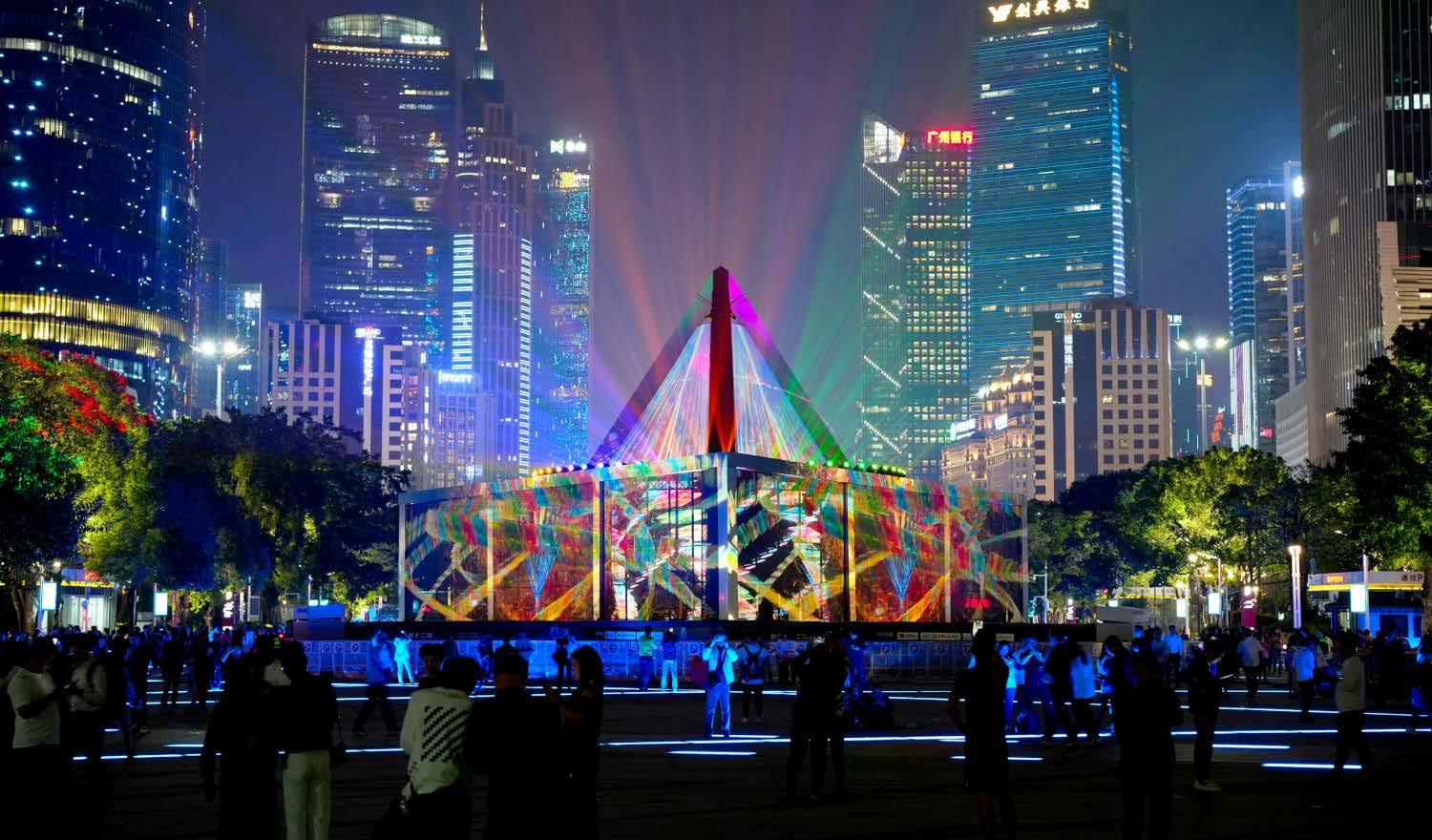
On the ground, its most valuable contribution will not be pressing a button and asking for “one epic heritage show, cinematic, please.” The machine may oblige, of course… occasionally with seven moons, anatomically ambitious horses and a palace that no historian has ever seen.
AI will accelerate the unglamorous, expensive middle of production:
• cleaning point clouds and classifying geometry;
• generating masks, depth mattes and rotoscoped elements;
• searching and tagging enormous asset libraries;
• creating visual variations and localisation versions;
• assisting texture generation, upscaling and frame restoration;
• writing shaders, interaction logic and repetitive control code;
• identifying alignment drift, failing hardware and thermal anomalies;
• adapting content within carefully defined artistic and cultural boundaries.
Its real power will be iteration at scale. A creative team may test fifty palette responses against a bronze surface, simulate different haze levels, generate language variants, or optimise sequences for several viewing zones in the time previously required for one.
But AI will not rescue poor art direction. It can generate abundance… not judgement. It may produce a thousand spectacular images and still remain completely unaware that nine hundred and ninety-eight are culturally wrong, geometrically dishonest or emotionally empty.
There are harder questions too: authorship, training-data rights, performer consent, synthetic voice, historical accuracy, deepfakes and provenance. By 2030, serious clients will demand asset lineage and approval records alongside the final masters. Human creative

direction will become more important, not less… because somebody must decide what the machine is allowed to imagine. The New Client Brief
The coming generation of briefs will move beyond opening-night spectacle. Inauguration night can no longer remain the only evening on which every component behaves impeccably… usually in the presence of invited dignitaries, innumerable photographers and one deeply alarmed system engineer or a show guarantor.
Clients will ask:
• Can the system run 300 nights a year?
• Can content change seasonally without rebuilding the show?
• Can it monitor itself and alert local technicians?
• Can the experience react without storing intrusive personal data?
• Can it degrade gracefully if one projector, sensor or render node fails?
• Can we measure energy, attendance, engagement and operational cost?
• Can another trained team operate it five years from now?
This will favour companies that combine creative intelligence with engineering discipline. The industry will need fewer isolated “content vendors” and “equipment suppliers”… and more experience architects capable of understanding narrative, optics, software, networking, human behaviour and long-term operations as one system.
Cybersecurity would enter the projection booth. Once cameras, sensors, media servers and building-control networks become connected, an immersive venue becomes an IT environment. Access control, encrypted communications, version management and recovery architecture will become as necessary as spare lenses and clean power.
Sustainability will also become measurable rather than decorative. Buyers will compare lumens per watt, cooling loads, expected service life, transport weight, repairability and whether a permanent installation can remain relevant through renewable content rather than repeated hardware replacement.
Curiously… very little.
They will not care that the building has a digital twin, that eight render nodes are genlocked, that an AI vision layer is maintaining alignment, or that the audio is object-based.
However, they will notice that the experience feels uncannily present.
A temple narrative may subtly respond to the movement of a procession. A museum environment may change its depth, language and complexity for different visitors. A public square may carry one visual identity during a festival and another during an ecological event. A façade may react to weather, music or live performance without becoming a chaotic public screensaver.
The best systems will not shout, “Look how interactive I am!”
They will listen, instead.
By 2030, projection mapping will have travelled from mapped surfaces to intelligent places. The winners will not necessarily be those with the brightest projector, the largest server or the most fashionable AI model. The winners will be those who can combine optical truth, cultural understanding, computational intelligence and operational endurance… without allowing the technology to overwhelm the story.
Asia is uniquely positioned to lead this evolution. It has advanced manufacturing, rapidly growing cities, extraordinary architectural diversity, deep cultural memory, ambitious public investment and an audience increasingly fluent in immersive media.
But the responsibility will be equally large. When we project upon heritage, faith, landscape
or collective memory, we are not merely decorating surfaces. We are temporarily rewriting how those spaces are perceived.
The tools of 2030 will make that power faster, cheaper, more adaptive and astonishingly precise.
Wisdom, unfortunately, is not included in the software license. That part… will still have to come from us.
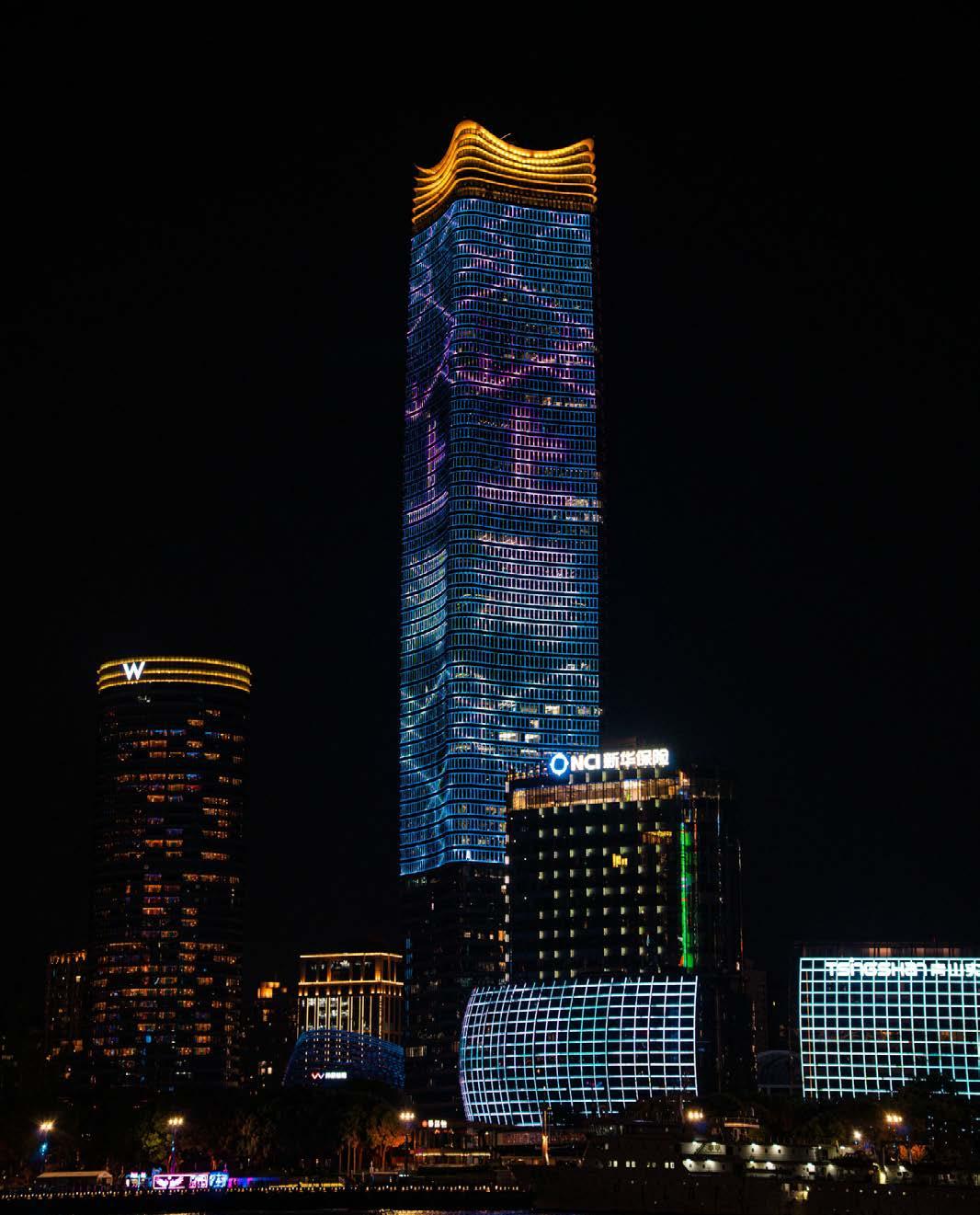
Avijit Samajdar is the Founder & CEO of Axis Three Dee Studios… an internationally acclaimed creative technologist and projection designer, behind many best known and prestigious Indian and global immersive projects. A polyglot, and an avid musical enthusiast, Avijit integrates optics, colour science in visuals, and concepts like Schumann resonances in sound- transforming architecture into living, breathing, immersive narratives of audio visual experiences. He can be contacted at avijit@axis3dstudio.com
With a discreet form factor and acoustic excellence, K-array products deliver high-resolution sound in the luxury vintage-style speakeasy
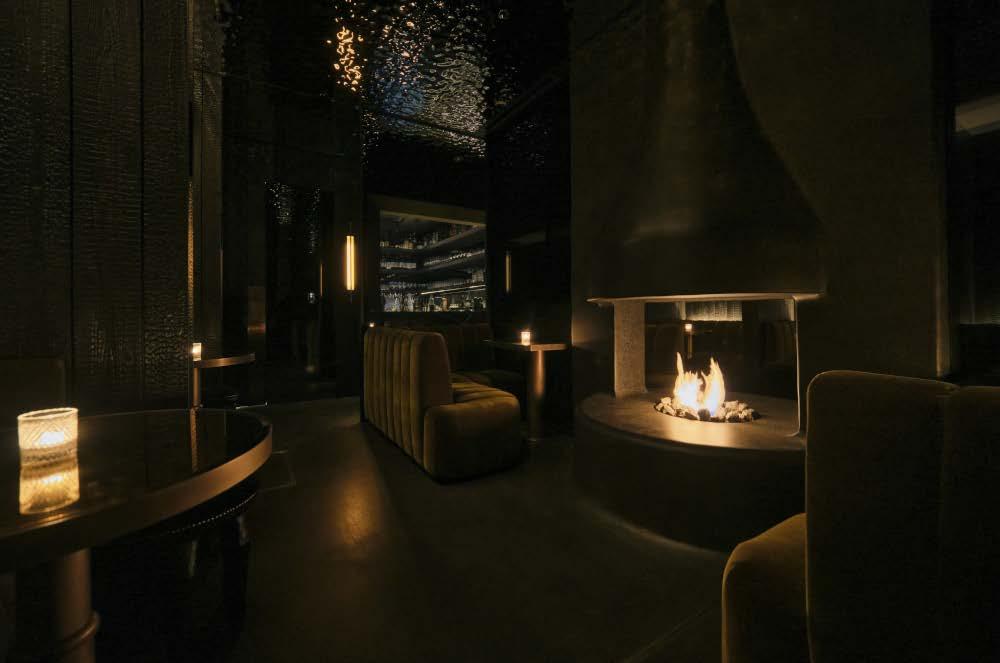
Tucked away in Ebisu, one of Tokyo’s most refined neighbourhoods, BAR DANRO is the kind of venue that rewards those who seek it out. Conceived around a luxury vintage concept, it combines the allure of a hidden speakeasy with the polished elegance of an upscale hotel lounge. At the heart of the space sits a stone fireplace, a focal point around which guests settle into plush sofa seating and relax with a carefully crafted drink, enveloped in warmth and quiet sophistication. In a space this precisely
curated, every element had to earn its place, including the audio.
The brief set by interior design firm cafe.co was unambiguous. Deliver high-resolution sound without compromising the beauty of the interior. Speakers would need to disappear, either wall-mounted or entirely hidden, to preserve the visual integrity of the luxury vintage aesthetic. It was a set of requirements that pointed unmistakably toward K-array.
Project Name: BAR DANRO
Project Location: Tokyo, Japan
Project Segment: Entertainment
Systems Designers and Integrators: cafe.co & SURD Co., Ltd
AV Highlight: To provide exceptional coverage, independent VIP zone control, and an intimate listening experience while keeping loudspeakers virtually invisible
Key AV Brand: K-Array
cafe.co first encountered K-array at a trade show, where the brand’s ultra-slim form factors and sonic performance caught their attention. When the designers began specifying the audio system for BAR DANRO, they approached Tokyo-based integrator SURD Co., Ltd – whose team members have more than 15 years of experience with K-array – initiating a close collaboration between integrator and designer. By the time SURD was formally engaged, cafe. co’s interior design was already complete. This focused the team’s energy entirely on how to introduce a world-class audio system without leaving a visual trace.
“K-array was the right solution from the outset,” said Keita Kawakami, Sales Executive at SURD Co., Ltd. “The products gave us the freedom to be creative with placement because their form factors are so discreet, and the acoustic results exceeded what we had initially anticipated.”
The system is distributed across several distinct zones, each with its own acoustic character and design requirements. In the main bar area surrounding the fireplace, SURD specified Vyper KV25 II ultra-slim line array loudspeakers alongside Rumble KU26 subwoofers. The intention here was to create a pronounced music presence at individual tables. It had to be immersive enough to subtly veil cross-table conversation and heighten the sense of intimacy, without being overly intrusive. One detail speaks to the care taken in the design. Close to the entrance, a Vyper KV25 II is installed at a height of 160 cm, meaning guests are met by K-array sound from the moment they enter the bar. The full experience unfolds from there.
In the two VIP areas, where speaker invisibility was the overriding priority, SURD turned to the
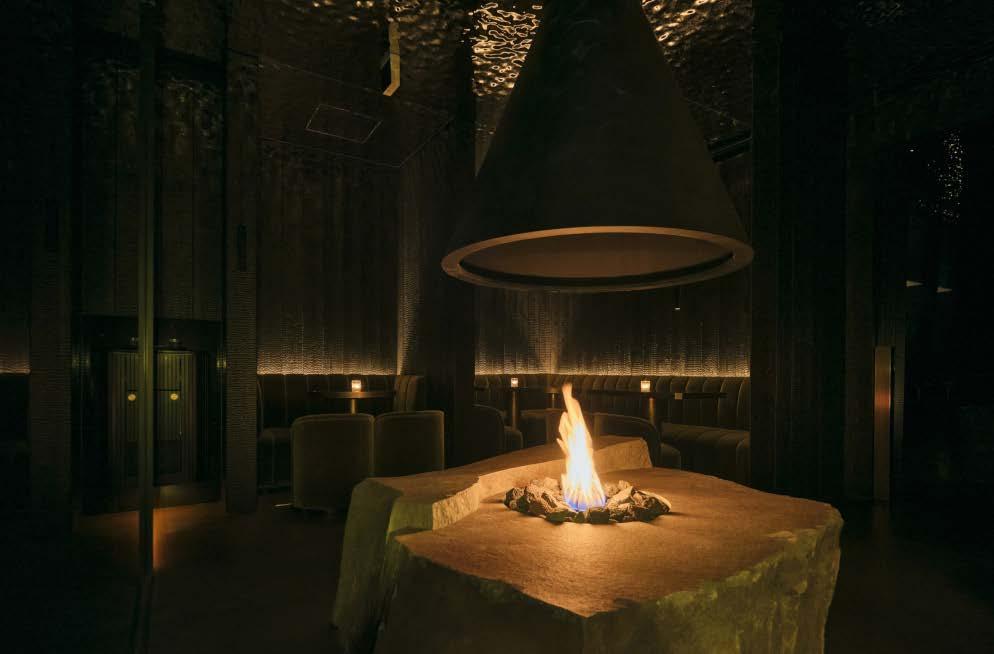
Lyzard KZ1 I miniature line array speakers and Truffle KTR24 compact subwoofers. Both products feature minimalist profiles that allow them to disappear almost entirely into the surrounding interior. Guests in these private rooms have independent volume control and can mute the sound entirely if they prefer, giving them a degree of autonomy that befits the venue’s high-end hospitality ethos. For the remaining spaces, including the restrooms, kitchen, and corridors, GC5 and GC3 ceiling speakers were selected for their combination of acoustic performance and visual unobtrusiveness.
The entire system is powered by five amplifiers, distributing audio from the music source across all zones. Bar staff manage the sound in the main area, while VIP guests control their own environments independently. To ensure even, high-quality coverage in a space with reflective surfaces, variable occupancy, and
ambient noise, SURD applied a professionalgrade calibration methodology, the same measurement-microphone approach used in concert halls and high-end performance venues. The outcome has been warmly received with many guests, including audio engineers and industry professionals, responding with genuine enthusiasm for the system’s clarity and dynamics.
“BAR DANRO is a perfect expression of what K-array’s products are designed to achieve,” noted Alessandro Saudelli, Sales Manager at K-array. “The combination of our Vyper and Lyzard line array speakers with the Rumble and Truffle subwoofers, complemented by our GC ceiling speakers, enabled SURD to create a fully distributed audio environment that is invisible to the eye but impossible to ignore with the ear. When design integrity and sonic performance come together at this level, the result speaks for itself.”
For Keita Kawakami and the SURD team, the BAR DANRO project reinforced something important about K-array. The products’ impact, when thoughtfully installed and precisely calibrated, consistently exceeds initial expectation. In a bar where every detail has been curated to evoke a particular feeling, the sound system has become one of its most quietly powerful elements.
K-array
Hoàng Phú Sound deploys Quattrocanali amps across a commemorative site designed for remembrance and community gathering
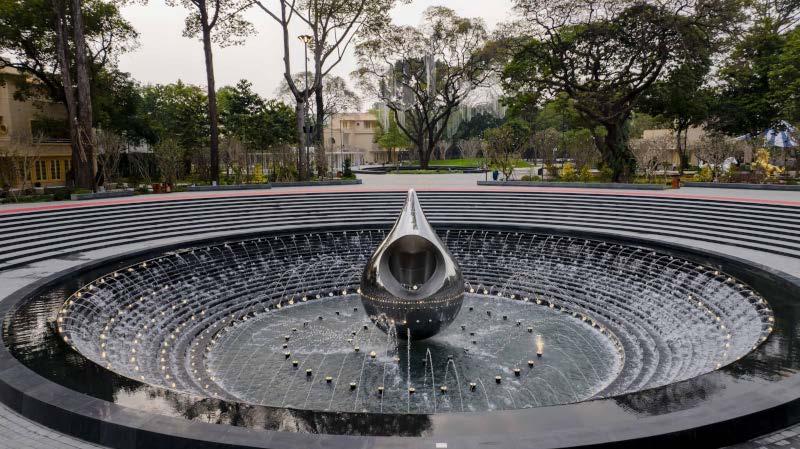
Three Powersoft Quattrocanali 4804 DSP amplifiers are at the heart of the audio system installed at the COVID-19 memorial park in Ho Chi Minh City, Vietnam, where Hoàng Phú Sound has been tasked with delivering background music that serves both as a tribute to those lost during the pandemic and as an amenity for the surrounding community.
The park is home to "The Tear", a six-metre reflective stainless-steel sculpture featuring a teardrop form with a heart-shaped void at its centre. Installed in early 2026, the monument honours both the victims of COVID-19 and the frontline workers who served during the crisis. Its stepped circular base incorporates symbolic motifs drawn from Vietnamese culture, and the site is designed to encourage quiet reflection, remembrance and community gathering.

Hoàng Phú Sound is a Ho Chi Minh City-based audio systems integrator and Powersoft
Project Name: The Tear
Project Location: Ho Chi Minh City, Vietnam
Project Segment: Memorial
Systems Designers and Integrators: Hoàng Phú Sound
AV Highlight: To provide reliable, high-quality background audio across the memorial park with 24/7 operation, efficient high-impedance distribution and flexible multi-zone control
Key AV Brand: Powersoft

distributor specialising in the design, supply and commissioning of end-to-end audio solutions across hospitality, commercial and publicsector projects. The company was appointed to deliver the park's complete audio installation and selected the Quattrocanali 4804 DSP as the amplifier platform for the site.
The project presented a specific set of demands. With the park intended for public use at all hours, the amplifiers were required to operate continuously, 24 hours a day, seven days a week, in an outdoor environment subject to the heat and humidity of Ho Chi Minh City.

The scale of the site also called for long speaker cable runs, requiring a high-impedance distribution solution to minimise signal loss. A further consideration was the reliability of the local electrical supply, with the system needing to perform consistently under variable mains conditions.
The Quattrocanali 4804 DSP addressed every one of these requirements directly. Powersoft's Power Factor Correction (PFC) technology allows the amplifier to operate stably under fluctuating mains conditions, containing current draw, reducing harmonic distortion on the supply and contributing to cooler operating temperatures. This is a big practical advantage in a fixed installation where long-term thermal management matters.
Additionally, the amplifier's high-impedance (Hi-Z) output minimises signal loss across extended cable runs. In a distributed outdoor installation of this scale, Hi-Z distribution allows cables to run significant distances without major signal degradation, while enabling simpler, more cost-effective wiring than a lowimpedance system would require.
Powersoft's patented Smart Rails Management (SRM) technology further improves system efficiency by dynamically managing power rails to match load conditions, reducing energy consumption and heat without compromise to output quality.
"The Powersoft Quattrocanali 4804 DSP proved to be the ideal solution," said Mai Nguyen Hung Truong, Technical Director at Hoàng Phú Sound. "Its multi-channel architecture allowed us to divide the system into multiple zones quickly and easily."
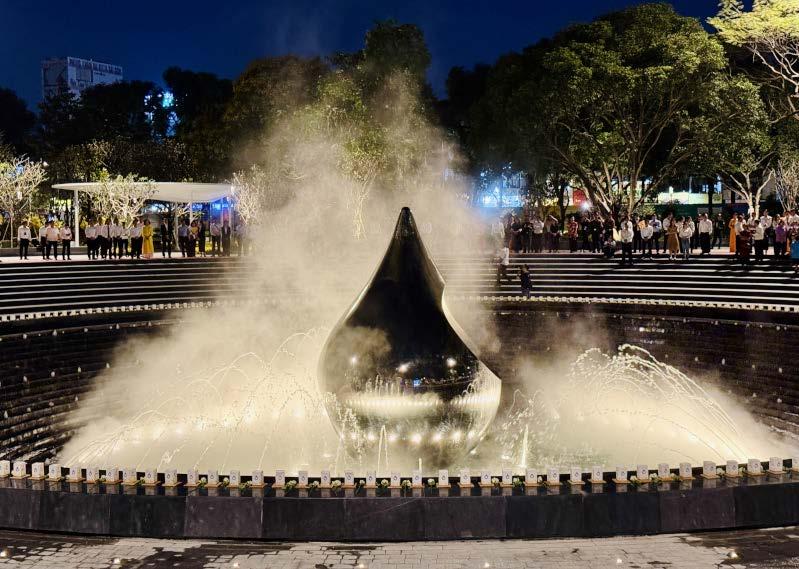
The amplifiers' Power Sharing feature automatically redistributes available power across channels to where it is needed most and operates across channels running at different impedances without any user configuration. This feature provided additional flexibility during system design. "Power Sharing provided flexible power allocation between channels," said Truong. "This significantly streamlined system design and helped optimise overall spend on this solution."
The audio system pairs the Powersoft amplification with Bose Professional loudspeakers and a Bose ControlSpace signal processing and control platform networked via a Cisco Catalyst switch, to deliver background music across the park's commemorative and communal spaces.
For the visitors who gather at Lý Thái Tổ Park, whether in remembrance or simply as part of

their daily lives, the audio system provides a consistent, considered presence. For Hoàng Phú Sound, the project represents a meaningful early milestone in its partnership with Powersoft and is a demonstration of what the two can deliver together in a project of genuine significance to the city.
Powersoft
A complete Crest Audio solution delivers premium sound that enhances every performance, event and guest experience at the luxury beachfront destination

Nestled on Bali's spectacular southwest coastline, Morabito Art Villa has earned an international reputation as one of the island's most distinctive luxury hospitality and entertainment destinations. Blending boutique accommodation, fine dining, exclusive private events and vibrant nightlife, the oceanfront venue attracts guests from across the world seeking an experience that is every bit as memorable as its setting.
Whether hosting internationally renowned DJs, live performers, private celebrations or
sophisticated sunset gatherings, every event revolves around atmosphere. Music plays a central role in shaping that experience, creating the energy that seamlessly carries guests from relaxed afternoons into vibrant evenings.
As the venue continued to evolve, management recognised the need for an audio system capable of delivering exceptional performance across its diverse indoor and outdoor spaces, while standing up to the demanding environmental conditions of a beachfront location.
Project Name: Morabito Art Villa
Project Location: Bali, Indonesia
Project Segment: Entertainment
AV Highlight: To provide concert-quality audio across the venue’s indoor and outdoor entertainment spaces with consistent coverage, exceptional clarity and reliable performance
Key AV Brand: Crest Audio
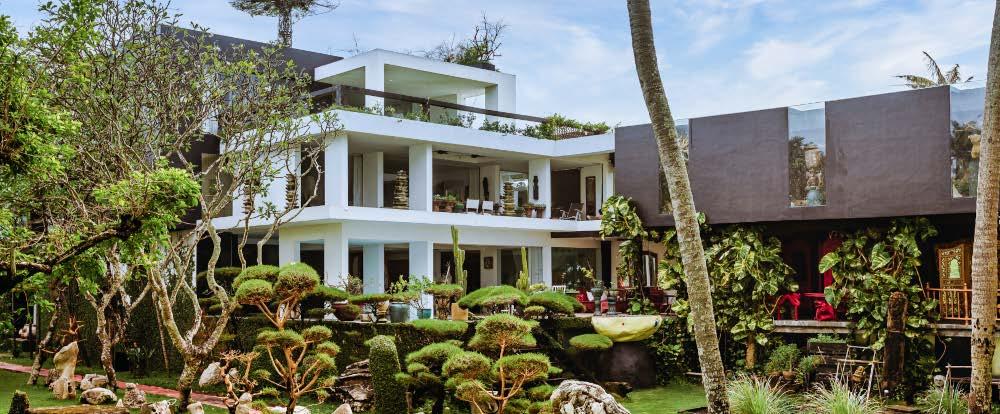
Creating a world-class sound experience at Morabito Art Villa required far more than simply increasing volume. The venue needed concertquality performance for headline entertainment while maintaining the warmth, detail and musicality expected within a premium hospitality environment. Audio also needed to transition effortlessly between lounge sessions, private functions, live performances and highenergy DJ sets, all while providing consistent coverage across multiple entertainment zones.
Adding to the challenge was the venue's location just metres from the Indian Ocean. Salt air, humidity and changing weather conditions create an unforgiving environment for professional AV systems, demanding equipment capable of delivering reliable performance night after night.
To meet these requirements, Morabito Art Villa deployed a complete professional audio solution centred around Crest Audio technologies.
The installation combines Crest Audio Versarray Pro line array systems with powerful CA 218 subwoofers to produce impressive low-frequency impact alongside smooth, detailed full-range reproduction. Additional Crest Audio CPL+ loudspeakers and Peavey SP4 loudspeakers provide flexible coverage throughout the venue, allowing the system to adapt effortlessly to everything from intimate lounge sessions to large-scale entertainment events.
Crest Audio Pro-LITE amplifiers and PCX digital loudspeaker management processors complete the installation, providing advanced
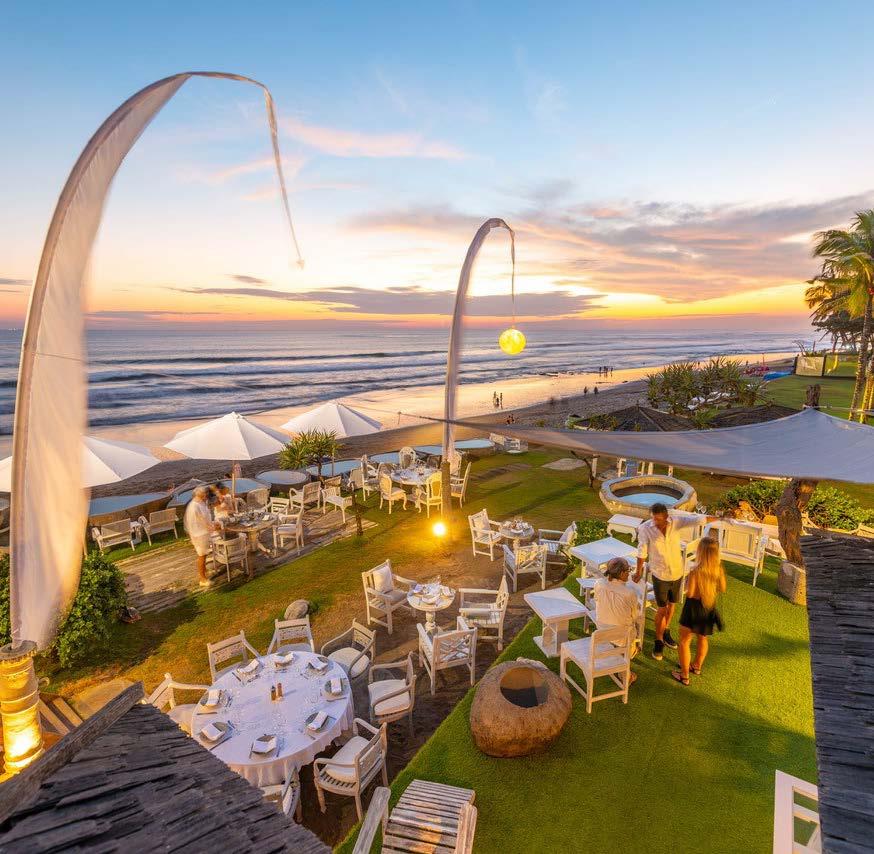
DSP processing, crossover management, equalisation, time alignment and system protection. Together, the technologies create a fully optimised system that delivers consistent tonal balance, exceptional clarity and reliable performance throughout every part of the venue.
For Akshay Vaidya, Director Asia Pacific at Peavey Commercial Audio, the project demonstrates Crest Audio's ability to deliver premium sound in one of the industry's most challenging environments. "Morabito is an exceptional venue, located in an exceptional setting right by the ocean," he said. "We're thrilled to see Crest Audio systems powering such an iconic destination and delivering a premium audio experience for guests in a demanding outdoor environment just metres from the ocean. The ribbon tweeters really shine through, providing exceptional clarity and power that perfectly complements the venue's atmosphere."
Since the installation, Morabito Art Villa has further strengthened the immersive atmosphere that has become synonymous with its brand. Guests now enjoy powerful, crystal-clear audio that enhances every performance while preserving the sophisticated ambience
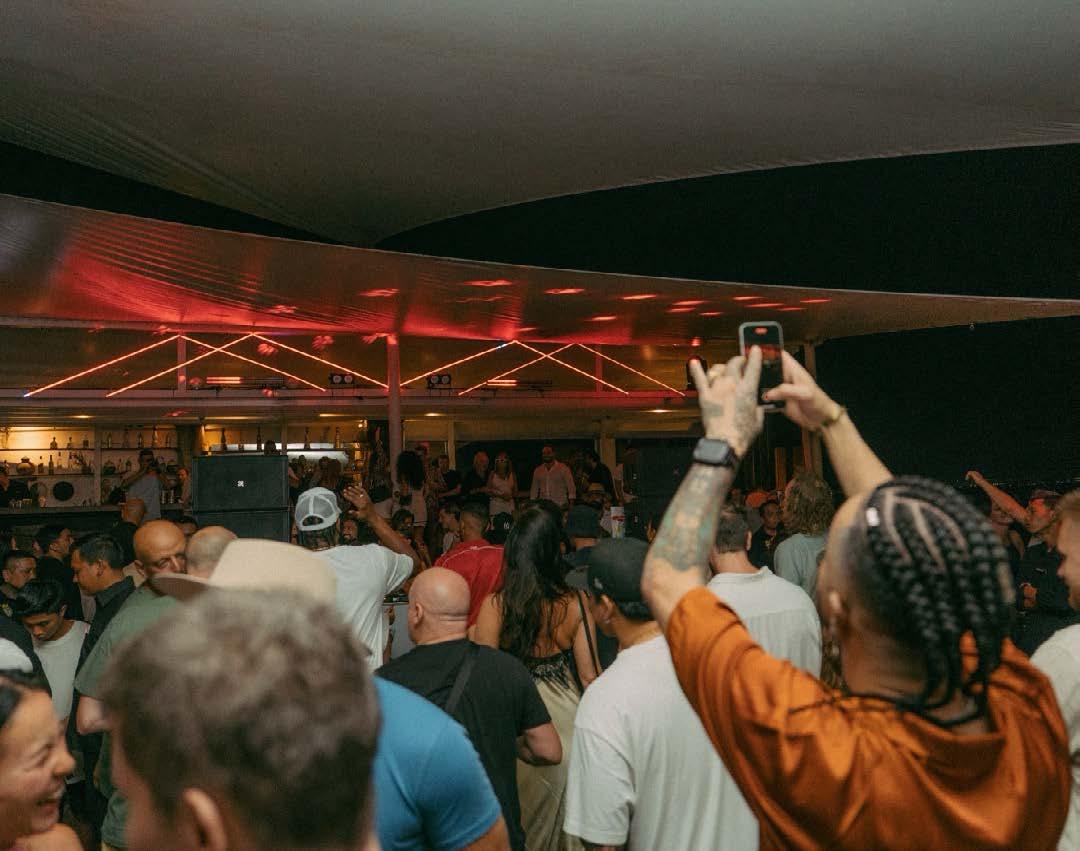
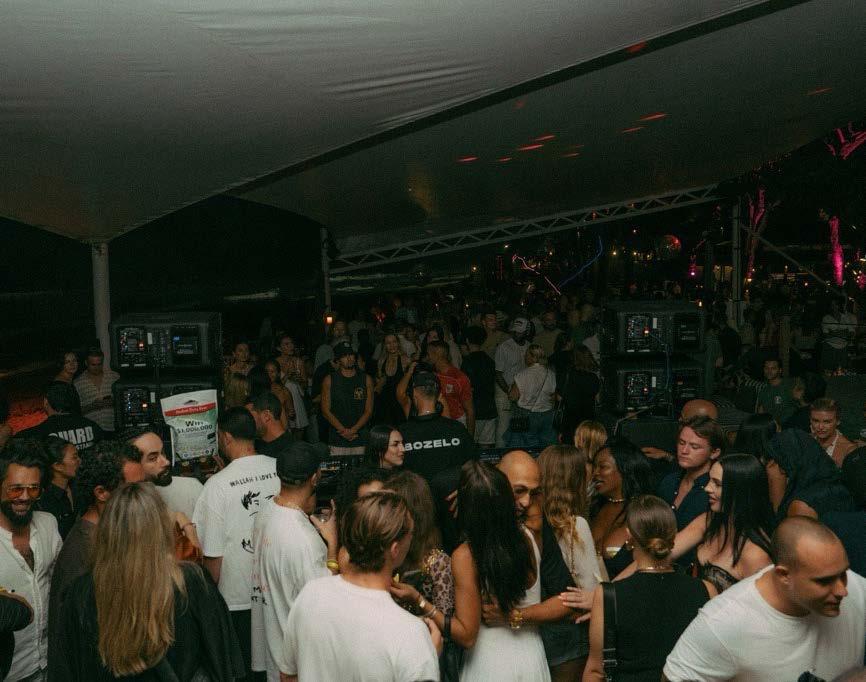
expected of a luxury beachfront destination. Consistent coverage throughout the property ensures music remains engaging without becoming intrusive, allowing visitors to move effortlessly between dining, socialising and dancing while experiencing the same premium sound quality wherever they are.
According to the Villa’s General Manager, Tony Moutran, the difference has been immediate. "Since upgrading to Crest Audio, the vibe and atmosphere have significantly improved," he said. "The sound is crystal clear, and we've received many compliments from guests about the performance of the system. We're very happy with our choice."
Crest Audio
A multi-technology exploit at the massive museum of three Statesmen
by Ram Bhavanashi
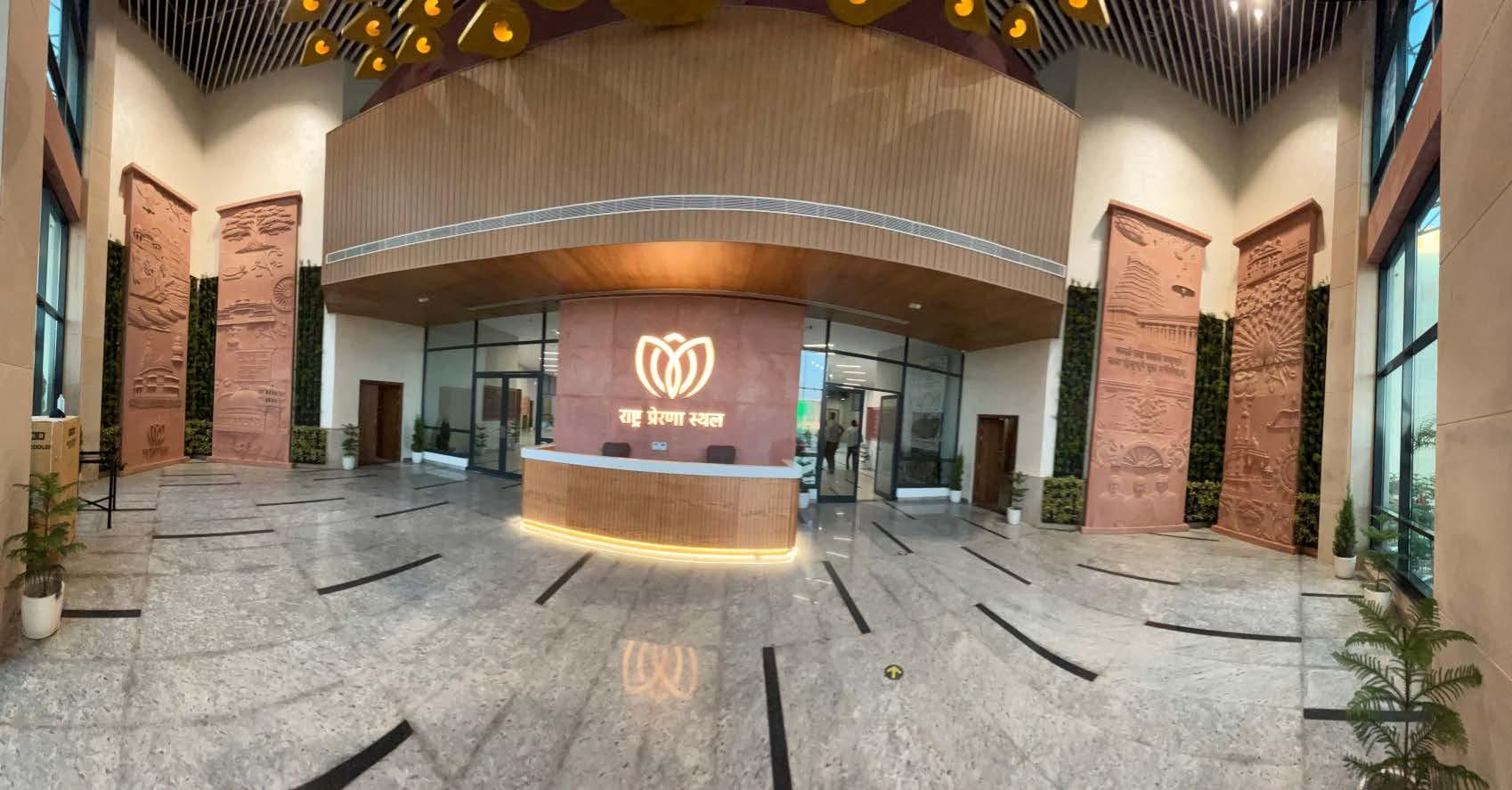
The Rashtreeya Prerna Sthal (RPS) is as colossal inspiration for the nation, as it is a multitechnology ensemble for the AV connoisseurs. For, the scale at which it had been conceived, and curated speaks volumes about extent of expertise, and effort that have been essayed in to make it one-of-its-kind.
In this second, and concluding part, SI Asia presents that perspective that worked behind the ‘prerna.’
That the RPS – as the Rashtra Prerna Sthal is called in short – is unique in scale, shape, size and spread goes without saying. This uniqueness, however, is not just on the exteriors and the exhibits that fill the space(s) inside; it is in the blend of things that the minds behind them acted with.
“Our brief from the client was to create a meaningful and inspiring museum experience centered around national leaders whose lives, values, and contributions continue to
guide the present generation and inspire future generations,” recalls Harbir Singh, Managing Director, PAN Intellecom, the AV systems integrator tasked with the job.
“The core thematic focus of the project was on three Statemen – Dr. Shyama Prasad Mukherjee, Pandit Deendayal Upadhyaya, and Atal Bihari
Vajpayee – presenting their lives as a source of inspiration for today’s youth- highlighting how selflessly they contributed to nationbuilding,” he explains. “It was both prideful and challenging in its own right. Never ever, we had a combination of this scale. Showcasing their journeys, ideals, leadership, and vision through an engaging contemporary format was indeed a big thing.”
The uniqueness of the project began with the selection of the site. In what is seen as the most uncommon thing for such projects, but a grand vision of the Yogi Adityanath ledUttar Pradesh State Government, and the Lucknow Development Authority (LDA) that took the onus of ownership of the process, the location chosen for the project was a massive accumulation of over 6.5 lakh tons of municipal waste.
It was part of the government’s vision on urban reclamation and eco-restoration around the beginning of 2022, following which the LDA conceptualized transformation of the mountainous landfill into a public memorial. The following three years saw a very proactive cleansing operations from the State body, wherein the 65-acre land parcel in the Basant Kunj Yojana area along the Gomti river was scientifically cleared and processed, and was redeveloped at an estimated cost of ₹230 crore (US$240 million approx).
It was on this site, the government at both the State and Centre proposed to create a structure that will inspire a nation’s mindset towards a nationalism that shapes the country to a new perspective of global reckoning. For the first time, perhaps, in contemporary world, such a massive landfill site has been transformed into a truly monumental glory.
On the other hand, like the generic setting for any big project goes, this project too had its own set of challenges. The two most potential
challenges being the limitations of the structure – as the shape and size of the building was predecided into which the technology was to sync in later – and compression of the otherwise reasonably good nine months’ timeline to extremely challenging three months- to be ready by the birth centenary day of former Prime Minister Atal Behari Vajpayee.
With the lotus shape standing as the design language for both the exterior shell, and inner spaces, it’s influence permeated throughout the interiors in stone murals, FRP sculptural elements, vinyl graphics, decorative forms, and spatial transitions. The inspiration for this lotus motif is not just derived from its status of being the county’s National Flower but also its entwinement with Indian ethos of purity, resilience, spiritual awakening, cultural pride.
The project team comprising the content creation team and systems integration team, therefore, had to evolve a seamless harmony between the structure and texture whereby the building itself became part of the storytelling experience.

“Rather than treating architectural constraints as obstacles, the team converted them into opportunities for creativity,” says Arunimaa Shankar Deb, curator from Magical Theatre who designed and integrated the content for the project. According to her, the visual beauty of the museum has its foundation in intense research of diverse source material. The scriptwriting and content development teams carried out extensive study of biographies, speeches, historical records, books, and archival sources to ensure that the narratives presented were both authentic and compelling.
“The objective was not only to showcase historical facts, but also to communicate
values such as courage, integrity, service, sacrifice, and nation-first leadership,” explains Arunimaa. “This research-driven process gave the museum emotional depth and intellectual credibility, making it relevant to visitors of all generations.”
This concept philosophy is exemplified all through the exhibits – irrespective of the technology employed – murals on the stone walls, or the thematic galleries, all brining history alive through art, sculpture, multimedia, design, and immersive interpretation.
The gallery dedicated to Dr. Syama Prasad Mookerjee explores his life as an educationist, nationalist leader, cabinet minister, and founder of the Bharatiya Jana Sangh. It highlights his courage, scholarship, and commitment to national unity. A case in a point is the depiction of Calcutta University setting during his reign at the helm.

The setting of the University’s Convocation Ceremony in 1937 where he invited Gurudev Rabindranath Tagore to address students in Bengali is marked by the mannequins and mapping to near perfection. The setting, while manifesting a significant moment in honoring Indian languages in academia, also throws light on the ambient architectures of the time.
Another important aspect of Mukherjee’s life and integrity – depicted in the same gallery –is the Kashmir set. Reflecting historic journey of Mukherjee to Kashmir in 1953, the set depicts his detention while entering the State, and his passing away, under controversial circumstances, in June 1953. The prison set, the mannequin, and the media reports sparking deep national concern and debate all seek to impose a strong sense of connection as well as legacy of Mukherjee’s idealism.
As a high relief to the story telling, a 11.7 x 2.1 meter curved stone mural on the fourth wall at T-1 (first level) stands as an exquisite element of connection and continuity of the idealism from Shyama Prasad to Pundit Deendayal Upadhyaya. The high-strength fiberglass reinforced plastic (FRP) composition of the mural syncs seamlessly into the technoexperiential journey from Mukherjee’s legacy to Upadhyaya’s time.
The section on Pandit Deendayal Upadhyaya in Gallery-4 presents his philosophy of integral humanism, Antyodaya, and self-reliant development through engaging interpretive displays. That Upadhyaya was a prominent journalist, editor, and publisher, the setting of Rashtradharma Prakashan Limited which he founded in 1947 in Lucknow, and his managing three different journals of national consciousness relives his time at its best.
While the silicon character of Deendayal, and his press in the background speaks volumes about his time, besides the technology employed in the setting, the interactive kiosks, and large projections involving Digital Projection systems are just as inspiring as his preceding luminary.

The corridor of the first floor referred to as the transition era (gallery 4A) – of idealistic nationalism – from Deendayal Upadhyaya to Atal Behari Vajpayee is treated with as many as four low relief stone murals. Identically measuring 3.91m in width and 1.5m in height, these murals depict various aspects of Deendayal’s life, idealistic strength, struggles and sacrifices, movements, and messages.
The first mural artwork depicts Deendayal’s famous vision of Antyodaya(upliftment of the last person in society), second one depicts him as the nation maker highlighting his vision and involvement in key national movements such as Kashmir Movement, Goa Liberation, and Chinese, and POK Invasion.
The third one highlights the historic role of Deendayal and Atal Bihari Vajpayee in shaping nationalist thought through the medium of journalism, with the Panchajanya magazine, while the fourth mural illustrates the democratic foundations of the Bharatiya Jana Sangh and the leadership of its pioneers. It depicts Deendayal (on the left) addressing a crowd during election campaigns, embodying inspiration and guidance, and Atal Bihari Vajpayee (on the right) entering the Parliament symbolizing the transition of ideas into governance.
The actual gallery (4B) of exhibits inside is a high play of multimedia projection and mannequins made of FRP, with a particular reference to a setting in Mugalsarai Railway Station in 1968 where Deendayal’s life came to a sudden and tragic end. (He was found dead under mysterious circumstances near the railway tracks). The install, while inviting visitors to reflect on his life and legacy, invokes enduring questions surrounding his untimely passing.
The visitor then comes to a point of actual transition from Deendayal to Vajpayee shaping up and shown on a large curved stone mural
of FRP composition. Measuring 11.7m x 2.1m in size, the curved mural depicting emergence of Vajpayee and foundation of the Bharatiya Janata Party.
Of some particular focus here are a few squarish stone murals that present the poetic intellect of Atal Behari Vajpayee. The poetic verses also find presentation on Atal Ji’s Poetry Wall of metal art installation using different forms to showcase Vajpayee’s poetic genius.
The visitors then, finally are guided to the crescendo of sorts – to Atal Ji’s gallery – with a rich and ingenious mix of multimedia blending LED wall, projection mapping, interactive LED kiosks, hologram, and other artefacts. It imposes a sense of moving tribute to the poetstatesman whose leadership helped shape a modern and confident India. His contributions to diplomacy, infrastructure, democracy, and national pride are presented in a thoughtful and inspiring manner by means of different forms and formats of AV technology.
While every exhibit here communicates their content and intent, of particular focus can be two exhibits: One- relating to the two nuclear tests conducted during Vajpayee’s second term as India’s Prime Minister. (Referred to as Operation Shakti - or Pokhran-II, since it was the second time India conducted nuclear tests underground at Pokhran Test Range in Rajasthan - firmly established India as a nuclear nation ensuring its defence competence and security in the region.)
The exhibit features a floor-to-ceiling crescent shaped screen faced by three DPI projectors beaming the content of the epochal shaping of powerful India under Vajyapee’s leadership.
The second one: is a hologram of Vajpayee, powered by AI, recreating the lecture he delivered at the United Nations General Assembly. The exhibit assumes significance
since he was the first Indian leader to have addressed the world apex body in Hindi.
“The use of multiple technologies is intentional, creating a layered and emotionally engaging visitor journey rather than a conventional static display,” asserts Harbir. “Wall-turned screens, large-format displays, mannequins, and AIenabled speech cabinets allow history to be experienced through visuals, lifelike presence, sound, and interaction,” he explains.
According to him, each medium was selected to suit different stories, personalities, and moments, ensuring deeper connection and varied visitor engagement. This integrated approach transformed the museum into a living narrative space where heritage, leadership, and inspiration are experienced dynamically.
Even as the visitors come out of the galleries, there is one mini theatre at the entrance itself that plays filmy content scripted in tune with the intent and objective of the museum- focused on the statemen who shaped the inspiring legacy for the nation.

“Rashtra Prerna Sthal is a tribute to the leaders who shaped modern India,” asserts Sankalp Srivastava, the Project Manager at Pan Intellecom, the pridful systems
integrator. “Our aim was to create a space that inspires learning.”
While the limitations of the structure was one architectural challenge, the compressed timeline of just three months for this scale of museum was like racing against time. That required rapid design finalization, parallel execution workflows – with custom content creation – faster decision-making, and careful selection, as well as accelerated integration of diverse but proven technologies with reliable brands to ensure timely delivery, performance stability, and long-term operational efficiency.
The structure being largely in stone with extensive use of sandstone and granite, it was place for the obvious echo, space-wide. It required a substantial intervention of discreet acoustics into the overall design as an integral factor. Materials such as bonded pinewood fibre ceilings, polyfibre acoustic ceilings, carpeted surfaces, and suspended acoustic cloud ceiling panels had to be strategically introduced to enhance sound absorption and reduce reflection across key areas.
According to the project team, the galleries were also acoustically zoned, with controlled sound dispersion ensuring clarity within each space while minimizing audio spill over between galleries.
“This approach created a comfortable and immersive visitor experience while preserving the monumentality and visual integrity of the stone architecture,” explains Sankalp. “This was a practical turnkey project for PAN.”
Then, there is brand reliability. With regards to the extensive use of Digital Projection systems for all the projection requirements, the PAN Intellecom chief asserts that it was based on the systems’ ability to transform architectural surfaces into immersive storytelling canvases. Their capability of projection mapping allowing
static spaces to come alive without disturbing the architectural aesthetics made them an ideal choice.
An important aspect that speaks out in the RPS Museum is not just its technology or physical execution, but in the clarity of its curatorial vision and emotional storytelling. The project was conceived as a meaningful national experience where architecture, art, research, and audio-visual media work together to inspire visitors across generations.
“The most critical success factor—and our key USP—was strong multidisciplinary team coordination, where researchers, designers, curators, architects, content creators, fabricators, and technology experts worked in complete sync toward a common vision,” declares the PAN Intellecom chief. “Equally important was the continuous support of the client, the LDA, which enabled timely decisions and smooth execution,” he explains. Through intensive collaboration, adaptive planning, and meticulous execution, these challenges were transformed into a cohesive world-class museum experience.”
“In an age where museums must go beyond static displays, Rashtra Prerna Sthal sets a new benchmark by creating meaning through immersive experience,” says Aman Arora, Creative Director at Magical Theatre. “It stands as a testimony to what can be achieved when thoughtful design meets national purpose.”
Pan Intellecom
Magical Theatre
Digital Projection Samsung Valaudio