

Know the Risks of Common Tactics When Buying in a Seller’s Market
Buyers and sellers in Queen Anne and Magnolia continue to work within a strong seller’s market. To give themselves a competitive advantage in a multiple offer situation, many buyers are waiving contingencies that protect their interests. A contingency allows a buyer to get out of a contract and have earnest money refunded under certain conditions. Issues can arise after mutual acceptance and the lack of contingencies doesn’t prevent problems, but the contingencies provide the mechanism to solve them. While waiving certain contingencies and conditions may persuade a seller to accept an offer over another, it is important that buyers understand there are advantages they may be forfeiting or risks they may be taking on with these tactics. If a buyer has no contingencies they can still terminate the contract prior to closing, but may forfeit the earnest money or the seller could pursue other remedies against them. Here are some of the contingencies/conditions that buyers often waive, and some potential risks when doing so.
Inspection Contingency:
An inspection contingency allows a buyer to have the property inspected and can

Ken Graff COLDWELL BANKER BAIN
terminate the contract or ask the seller for concessions if dissatisfied with the condition of the property based upon the inspection. Without this contingency, a buyer may not discover prior to closing any materiel defects in the property and its systems that would have been discovered upon inspection. Some buyers will do a pre-inspection and not attach an inspection contingency to the offer. While this is better than not doing an inspection, it should be noted that seller’s can allow a pre-inspection and still not accept an offer, and if an inspector recommends additional inspections by specialists, the buyer will not have the right to those additional inspections if waving the inspection contingency.
Financing Contingency:
This contingency conditions the sale on a buyer’s ability to qualify for a loan on the property, and if the buyer fails to qualify, this will terminate the contract entitling the buyer to have their earnest money refunded. Without this condition, if the buyer fails to qualify for financing and cannot close, the earnest money would be at risk. It is not uncommon for buyers who intend to obtain financing to waive this contingency to gain a competitive advantage. But without this contingency, a seller is not obligated to allow an appraiser to access the property. For my clients who decide to waive financing, I am sure to reserve a contractual right for an appraiser to access the property.
Appraisal Condition:
This condition may be part of the financing contingency, and allows a buyer to terminate the contract if the lender’s appraisal is less than the contract purchase price and the seller doesn’t either reduce the purchase price or provide the lender with an appraisal at purchase price that is acceptable to the lender. I point out to my sellers that low appraisals could be an issue if
➧ KNOW THE RISKS, Page R2
Why Choose Fiberglass Windows?
By Randy Lucas, Signature Window & Door Owner
My business partner and I have been in the window business for over 30 years. We focused on selling vinyl windows in Seattle and neighboring cities because they were the best windows available. But that’s not true anymore.
Over time, we’ve seen increasing failure rates with vinyl windows. So, we started investigating all the windows on the market in search of a product we could completely get behind.
Infinity Fiberglass Windows from Marvin look better, last longer, and save you more money over a lifetime than vinyl… period.
Marvin Windows & Doors was one of the many manufacturers we checked out. They refuse to make a secondrate product. Because of this, they spent years researching and perfecting their exclusive fiberglass windows. They showed us the many ways in which their fiberglass windows beat all other windows -- hands down.

That was how our special relationship with Marvin began. They were seeking to partner with a local company committed to selling and installing the best products; we were seeking to partner with a manufacturer that produces high quality windows and doors. Signature Window & Door Replacement is the Exclusive Regional Distributor for Marvin Infinity Fiberglass Windows in the Greater Seattle area. We are proud to be your source for The Perfect Window.
10 Reasons You Should Choose Marvin Infinity Fiberglass Windows
Marvin Infinity Fiberglass Windows are quite possibly the only perfect replacement window for Seattle – and the entire Pacific Northwest. Dollarfor-dollar, apples-to-apples, fiberglass replacement windows beat all other windows on the market today.
Marvin Infinity fiberglass windows are made from Marvin’s proprietary Ultrex fiberglass. Ultrex is:
8x stronger than vinyl
3.5x stronger than wood/vinyl composites rated for 34,000 lb pressure per square inch
38% longer useful life expectancy than vinyl
Available in 6 exterior colors and 4 interior colors

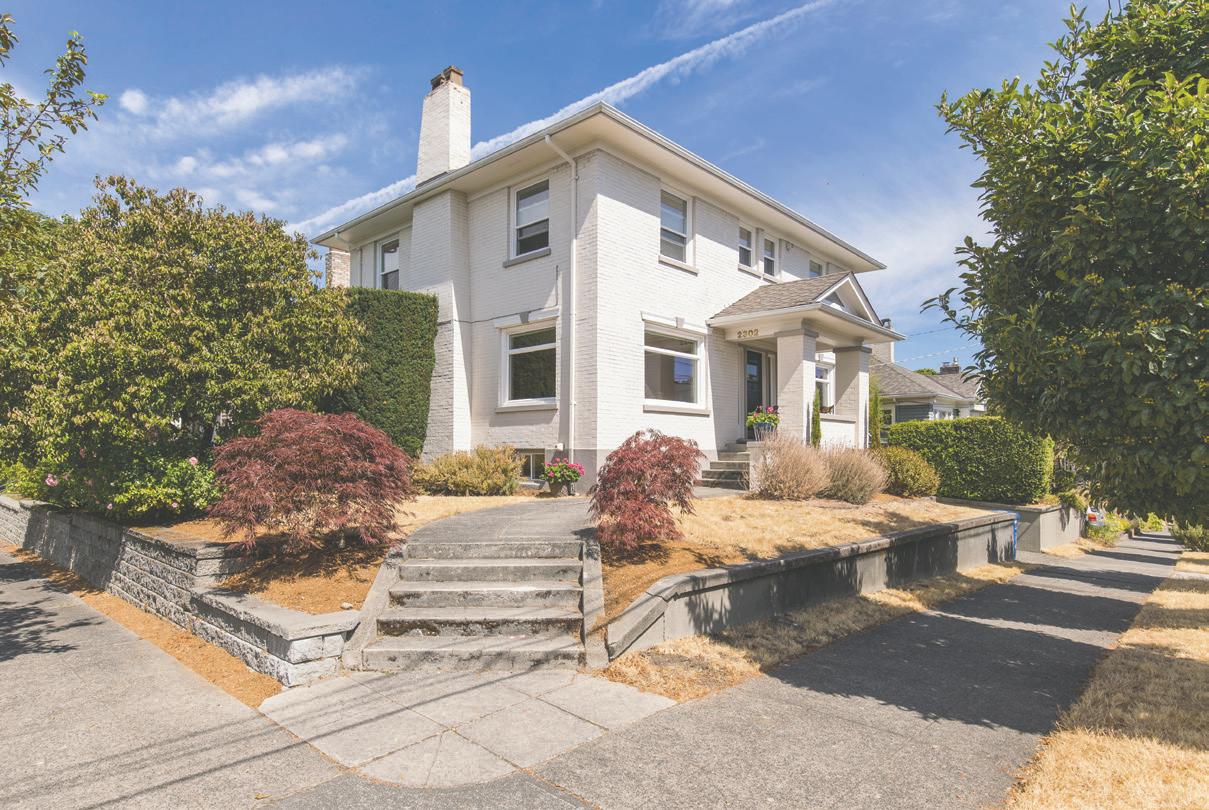


Luxury Lives Here
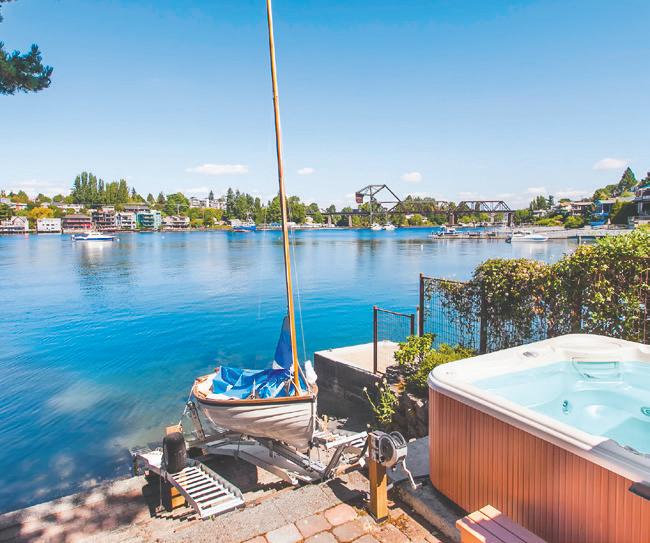
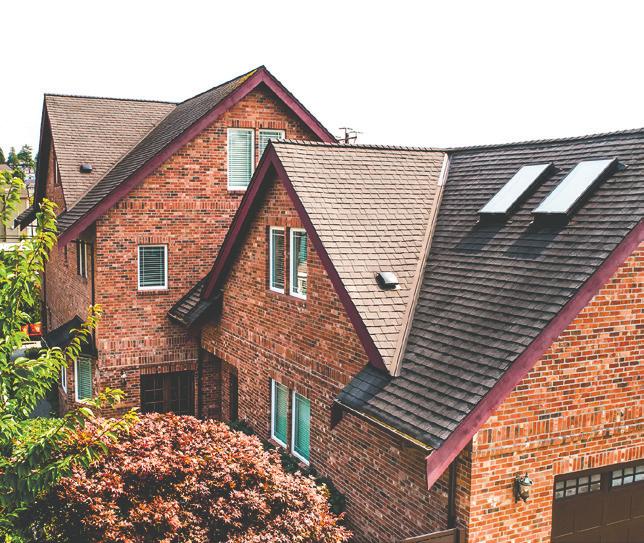


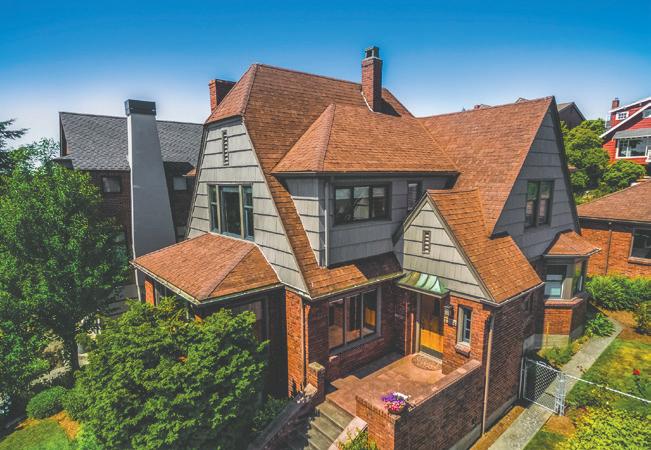
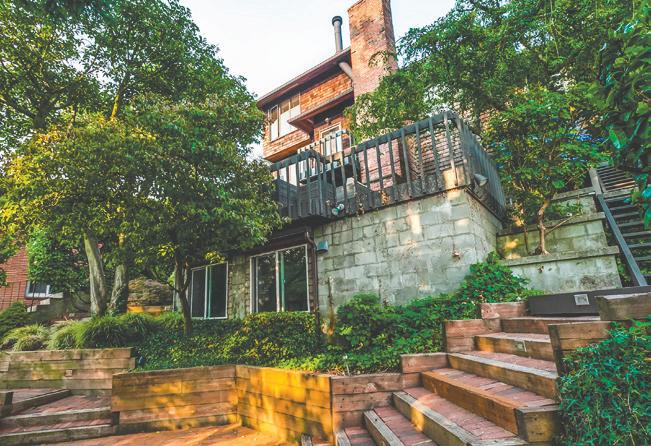
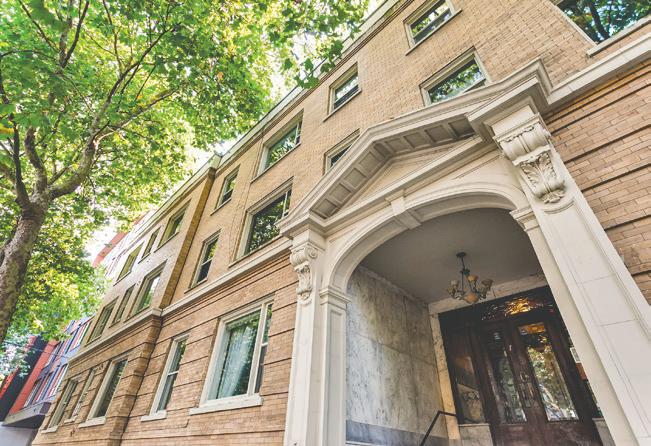
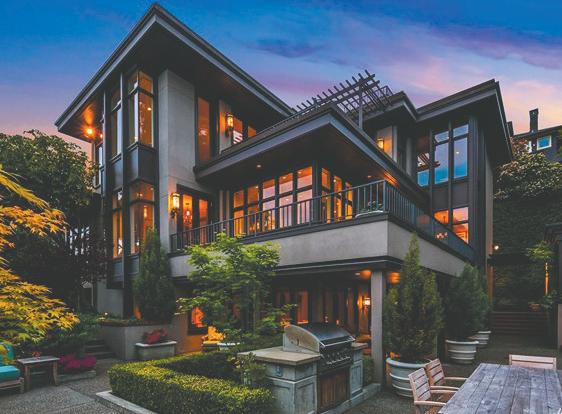
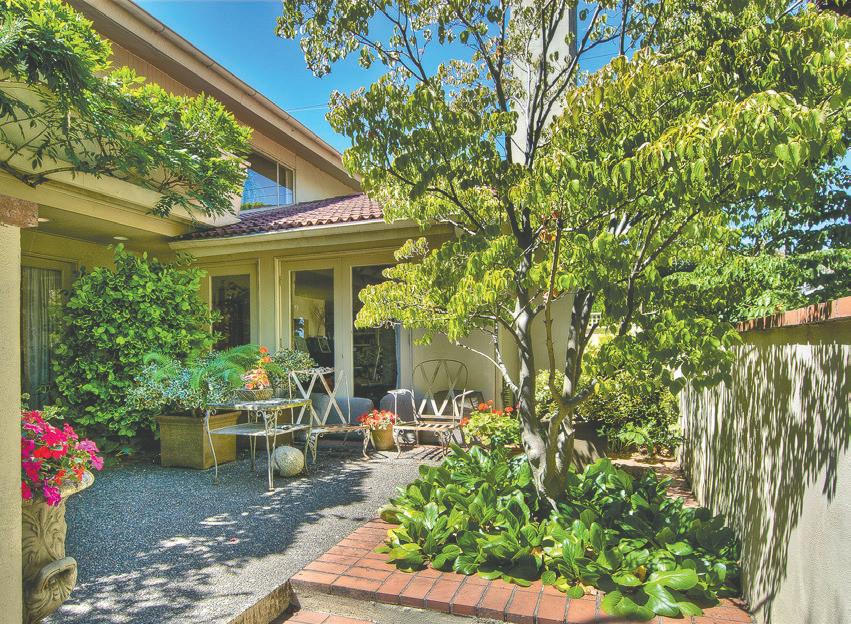
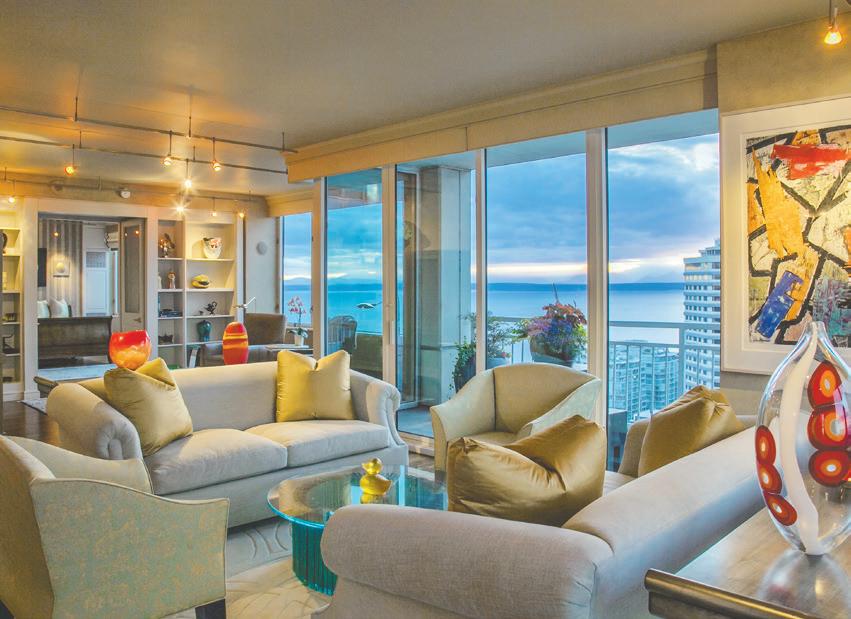
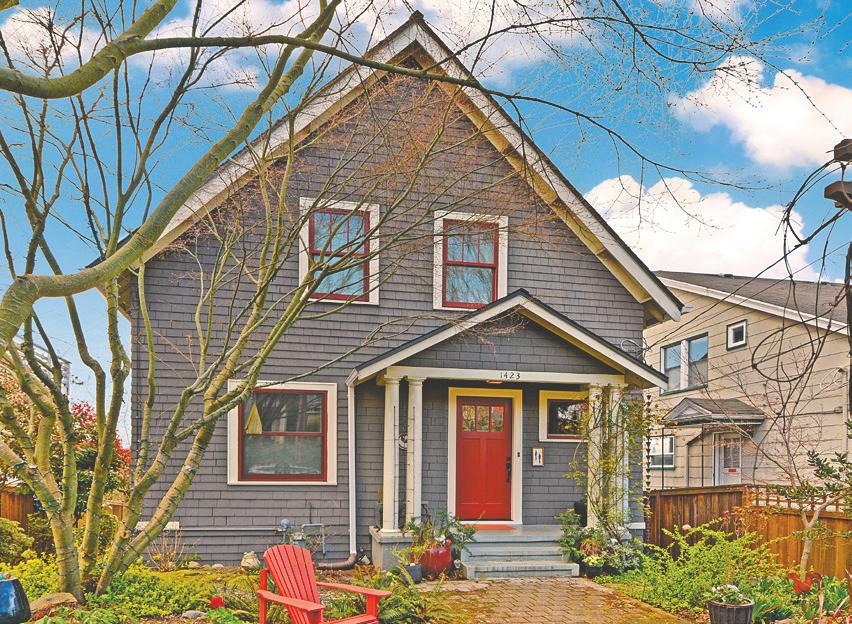
Splendid Views 2334 Rosemont Pl. W. | $1,350,000 Situated on a sought-after street with westerly views, this beautiful & lovingly-maintained brick Tudor home speaks: abundant natural light, original detailing & welcoming living spaces honoring its history. Street-tostreet access offers level back entree + det 2-car garage. NW Contemporary Original! 3034 30th Ave. W. | $1,200,000 Privacy.
➧ KNOW THE RISKS, from Page R1
prices are escalated and offers that address this potential hurdle should be considered over those that do not address this. For my buyers, before they waive this condition, I want them to be sure that they can make up the difference between a potential low appraisal and the purchase price. Without this condition, a buyer may be unable to close and the seller could claim the earnest money.
Title Contingency:
This contingency allows a buyer to review the title report for easements, covenants and/or restrictions which could limit how a buyer can use the property. If the seller doesn’t cure the issues raised by the buyer, the buyer can terminate the contract and have their earnest money refunded to them. Without this condition, a buyer may fail to identify title restrictions that could prevent the buyer from using the property as they had intended. Due diligence must be done prior to submitting an offer without this contingency.
Sale of Another Property Contingency:
This contingency allows a buyer to condition their offer on the successful sale and closing of another property. Without this contingency, if a buyer is counting on the proceeds of the other sale, and the other property doesn’t close, the buyer will either need to find the funds to close, or will need to terminate the contract and forfeit the earnest money.
Now let’s consider risks
associated with common tactics used by buyers to make their offers stand out over competing offers.
Making
Earnest Money Nonrefundable:
Some buyers release the earnest money directly to the sellers upon having their offer accepted, as opposed to having the EM held in an escrow account until closing. In doing so, the EM becomes a deposit and is not refundable to the buyer. The risk here is that even if the seller defaults on the contract and the transaction doesn’t close, or it fails to close through no fault of the buyer, the seller may be able to retain the EM, or make it difficult for the buyer to have EM refunded.
Escalation Addendum:
This addendum is used when a buyer wishes to place an offer at a certain price, but is willing to pay more if necessary to beat a competing offer. This is a good way for a buyer to have some assurance that they are not bidding significantly higher than the competition as the seller must show the competing offer used to escalate the winning offer. I point out to my buyers that the use of this addendum does tip off the seller of the maximum amount that the buyer is willing to pay. This could result in a counter offer at the top price, defeating the purpose of the addendum. Appraisal should be considered here as well. If the price is escalated significantly above what comparable properties have recently sold, lenders may not fund the full purchase price.
Lease Back to Seller:
Some buyers offer to lease the property back to the sellers after closing to allow the seller time to find other housing after closing. This can be a great strategy and my buyers have had success with this tactic. But I am always sure to advise a written lease agreement where the buyer becomes the landlord and the seller a tenant. Consider that there may be insurance and financing issues as a lender may require the buyer to take possession of the property by a certain date. There could be disputes about repairs/damage and whether they arose before or after closing.
These are just a few of the many subjects that buyers should discuss with a qualified and experienced Realtor prior to placing an offer. Many buyers are lured into using a limited service firm with less experienced brokers. This is a mistake that can cost not only money, but also considerable time and stress. It is essential for buyers to work with a top-notch Realtor who listens to what is important to them, who helps to educate them on what it will take to have an offer accepted, who explains the risks associated with the decisions they make, and who helps them comply with the terms committed to in the contract.
Ken Graff is a native Seattle REALTOR® named to Coldwell Banker’s International President’s Elite for his exemplary record of success.
floor, lots of windows & high ceilings. Updated & well-cared for building. Delightful!
What to Expect After Your Purchase
You found the right home, made your offer and it has been accepted and signed-around. You are now at Mutual Acceptance— congratulations!
So what can you expect now that you are under contract? If you are getting a loan, then typically you have 30 days before the home closes. There are a number of steps you can expect between when you make the offer and when you get the keys. Here are the main steps taken by the title company, Escrow Company, your lender, and YOU:

Title is opened, Title Insurance and title search—a title insurance policy (paid by Seller) is set-up for the new owner(s). It insures the owner or others having an interest in the property against loss due to encumbrance, defective title or adverse claims against the title. A few examples are unsatisfied mortgages, forged signatures or false deed, or a previous owner’s heir now claiming ownership of the property. A title search usually uncovers most issues. But even a thorough search may not uncover all issues, hence having title insurance.
Escrow is opened on the transaction—Escrow is an impartial third party process in which documents and funds are deposited by buyers (down-payment), sellers and lenders to facilitate the closing for a real estate transaction. Escrow is required to follow mutual written instructions from all parties. Escrow will coordinate with you (buyer), seller and lenders to obtain required signatures on all documents. Escrow works closely with the title officer to clear liens against the property and record the documents with the county.
Escrow will send you a package—the escrow company will send you a package (via e-mail) containing documents critical to closing your home. These documents include…asking for your contact information and disclosures and liabilities concerning duties of escrow. Get these documents back as soon as possible to keep the transaction moving forward.
Lender orders appraisal—As soon as your lender receives the Purchase and Sale documents, he or she will order an appraisal for your new home. The appraisal consist of an appraiser going to the home, looking at the condition of the home, taking photos, and then giving a value based on homes that have sold nearby. As long as the home “appraises” for the sales price or higher, the transaction continues to move forward towards closing. If your home appraises for less than the sales price, then you and your broker will want to discuss your options based on your terms in the Purchase and Sale Agreement.
Lender requests more information from you—Undoubtedly you will be asked to supply more tax information, employment history, and salary information from you lender while the transaction moves along. Please get back with all the required documents in a timely manner to ensure you close on-time.
2-3 days before closing—Escrow will “balance the transaction” with the lender. Escrow will contact you (the buyer) with the amount they need to close and send you wire instructions for your down-payment.
1-2 days before closing—once escrow reconciles with the lender, they will set up a signing appointment with you. You will be asked to bring two forms if ID with you to your signing. Signing usually takes place one day before the closing.
Signing—this makes many first-time buyers nervous because it seems like a procedure where you sign your life away on a bunch of papers you don’t have time to read. Actually, by the time closing rolls around, the hardest part is truly over. Closing actually feels a little bit giddy and at the end, you have the keys to your new house! You will sign your name 487 times, but if you’ve done everything right up to this point, it will not be stressful. Relax.
Day of closing—Escrow confirms the lender and buyer funds and sends the documents to the county to record. In the afternoon of closing day, escrow receives the recording numbers from the county, and the transaction is officially closed. Escrow contacts all parties with the good news, and the broker will arrange for the buyer to receive the keys.
Last step—Open the bottle and celebrate!




Stewart Karstens
Is Fiberglass For You?
Longer Life Expectancy

It’s worth repeating: Marvin Infinity Fiberglass windows have a 38% longer useful life expectancy than vinyl. For practical purposes, that means you’ll never have to replace your windows again. That is a long-term investment that could save you 10s of thousands of dollars.
Extremely Low Expansion/Contraction Rates
Marvin’s patented Ultrex fiberglass has extremely low expansion and contraction rates. The pulling and pushing of expansion and contraction are what causes window seals to fail. By significantly reducing these opposing forces, Marvin Infinity window seals are going to last!
Good window seals are also a key issue in window energy efficiency. Sealed windows don’t “leak” air, which helps keep your home warm in the winter and cool in the summer.
True energy efficiency is measured over the life of the window – not just when the window is “fresh out from the packaging.” Your window should be just as energy efficient after 10, 20, or even 30 years as they were the day they were installed. That only happens when you start with the right windows and the right installation.
As Strong as Low Carbon Steel




Strong windows remain square, level, plumb, and true. That means your window frames won’t warp, crack, or fail prematurely. Pacific Northwest weather is not window-friendly. The wet winters and tugof-war between hot and cold destroy lesser frames, creating cracks and breaking down joints. Marvin’s Ultrex is so strong, we confidently guarantee it for life.

Narrow Profiles
Because of Ultrex’s exceptional strength, Infinity window frames are smaller. This allows for more visible glass area and expanded views.
Minimal Carbon Footprint
Infinity fiberglass windows are manufactured with silica sand base material. Silica sand is a nontoxic, abundant resource. While it requires massive amounts of petroleum and other harmful chemicals to manufacture vinyl windows, Infinity fiberglass
does not. If you’re concerned about your carbon footprint, Infinity fiberglass windows are the way to go.
Replicate the Look of Traditional Wood Windows
As I said previously, Marvin Infinity windows closely imitate the look and feel of wood windows – minus the care requirements. They are designed with intricate profiles that mimic the look of traditional wood windows.
Super Resistance to Discoloration, Scratches, and Dents
Marvin uses a patented, mechanically-bonded in-line acrylic finish. It is up to 3x thicker than competitive finishes. Marvin Infinity is the first and only window frame on AAMA’s (American Architectural Manufacturer’s Association) verified components list complying with 624-10 and 625-10. This means Ultrex was tested with acid, baked in an oven, and exposed to extremely cold temperatures. Under these conditions, Ultrex did not experience any corrosion, blistering, or peeling. Ultrex was tested in temperatures as low as -40F and as hot was 350F (so, hotter than Arizona in July) with no expansion or contraction.
No VOC Emissions
Ultrex does not emit VOCs (Volatile Organic Compounds). Some home building materials offgas, emitting compounds that can cause short-term discomfort and long-term health problems. Marvin Infinity Fiberglass Windows do not emit VOCs and are a safer window choice for your family’s health.
Can be Painted
When you select your windows, you choose colors that match the rest of your home. If you choose vinyl windows, you’ll be locked in to the original color you chose when you bought your windows. Fiberglass can be painted, giving you long-term flexibility.
Virtually Maintenance Free
Fiberglass windows require much less maintenance than other windows; particularly more than wood windows. We have wood-look fiberglass window options that are virtually indistinguishable from wood windows, but don’t have the same care requirements. You are busy. Reducing home maintenance requirements is always a good thing!
Signature Window & Door Replacement is the Exclusive Regional Distributor of Marvin Infinity fiberglass windows. For more information on Marvin Infinity fiberglass windows, call us at 253.887.7792.






























Young Home Buyers Can Still Exist in Seattle
By Kris Miller
This summer brings a fresh batch of recent graduates to not only the workforce, but also the new housing market. As they close the chapter on their school days and start the notorious chapter entitled, “How to Adult,” more than one life-changing question emerges. First and foremost: “where the heck will I live?” For many Americans, adulthood means venturing out and having your own place to call home. However, in hot real estate markets like the Seattle-area, many recent grads are left wondering if they’re equipped to break into the world of home ownership–but perhaps a better question they should be asking themselves is, “should I?”
The idea of buying a home can be daunting for everyone, especially when you’re a new college graduate, and Seattle has a particular set of challenges all its own. In fact, The Seattle Times recently reported Seattle topped the list for price gains in the U.S. for the seventh month in a row—that’ll get some brows sweating. What’s more, Redfin found that a whopping 90 percent of houses for sale resulted in an-all out bidding war – the highest rate of bidding wars of any city Redfin tracks. Biting any fingernails yet?
While these odds aren’t exactly encouraging, there are still ways to smoothly navigate the Emerald City’s housing market. Before millennials get too spooked, here are some key insights to keep in mind when asking that big question: To buy, or not to buy?
The Lay of the Land
Millennials just starting out in the housing market have likely been told they should consider a “starter home.” Aka, that affordable, single story-one bedroom where their parents began their journey of homeownership–however, while starter homes used to be a viable, mandatory first step, nowadays even what’s considered a starter home can be out of reach for many. The nation’s lack of inventory has caused a strain on many homebuyers, especially the young-adult age group. Starter homes now eat up half of buyers’ income, a huge jump from even five years ago when it was a third of a person’s income—which is much more reasonable. As for condos, the median sale price this year is around $615,900, which is up 8.4 percent compared to this time last year.
Because of this, millennials have continuously been boxed out of the Seattle market, with only 29 percent owning homes in the area. So, while they’ve been told that investing in a home is a wise option, it is not necessarily a feasible one for most. Many have therefore stuck to renting, since the traditional steps to homeownership are not attainable any longer. Renting, while still expensive, is a more accessible option, since millennials aren’t tied to an expensive mortgage with little room to budge in the market.
Be Suburb Savvy
Whether purchasing a starter home is on the immediate horizon or not, it’s important to note there is still hope for a more reasonably priced residence in Seattle. While it may not be the hustle and bustle of downtown, Puget Ridge, Kenmore and South Newcastle are prime real estate options within reach for financially strapped millennials.
Final Tips and Tricks
Regardless of when you decide to buy, there are several standard tips for finding a home that will help to differentiate yourself in the competitive market:
· Be aware of all costs associated with buying a home. In addition to the listing price, the cost of owning a home can include insurance, homeowner’s fees, and more.
· Familiarize yourself with your local market. Do some research to have a good understanding of how long houses last in the market in each neighborhood, and the average home price.
· Learn more about your mortgage options before you begin to look at homes. There are plenty of options when it comes to down payments and loans.
Navigating the Seattle housing market can be daunting, but it is doable. When it comes to being a competitive buyer, knowledge is power. Be sure to know as much as you can about the best location for your budget and lifestyle, and don’t be afraid to lean on the expertise of an agent to help set you apart. Happy house hunting!
Kris Miller is the president of NexTitle, a title and escrow company.

Mountain Ash trees Signal the Change of the Season
Two trees, more than any others, tell us that summer is coming to an end and autumn is on its way – not with foliage color but with bold and brilliant berries. Both are Mountain Ash trees. One is the true native Western species (Sorbus scopulina). The other, its nearly identical but bigger brother, the European Mountain Ash (Sorbus aucuparia) actually is native to Siberia and Western Asia. Interestingly, it has naturalized here, long enough ago that its landed immigrant status has changed in the minds of most plants people and now is considered a full-fledge arbor citizen.
If you see these colorful trees this month, their delicate branches sagging with berry clusters in richly saturated orange to red, the only real clue you’ll have as to what you are seeing is the size of the tree. The Western native grows as a large shrub or small tree, to 15 feet in height with an equal width. The European plant can reach 40 feet in height, sometimes even taller, with a spread of 25 feet.
Unless you are digging the plant in the wild or buying it from a nursery which specializes in native plants, it is more than likely you are getting the European Ash. And who really knows? Could it be that seedcarrying fruits went one way or another across the Bering land bridge in the bellies of birds or mammals or the pockets of migrants some 12,000 years ago and, indeed, the plants are the same?

Both have handsome compound leaves made up of 15 or so leaflets. The leaves are reminiscent of the fronds of the Royal Fern (Osmunda regalis).
The leaves, olive green above, gray green below, are carried on strong, but not stocky, upright branches that stretch up and out forming a dense oval to round crown. The dark brown bark is handsome, closer to smooth than rugged. As winter approaches, the leaves turn, yellow to red. The fruits, which develop from
puffs of creamy spring flowers, hang on into winter.
Mountain Ash trees need good, well-drained soil and some seasonal chill. Actually the best berry set comes in the coldest Northwest climates, spawning the theory that a heavy fruit crop in the mild Puget Sound region heralds a cold winter coming.
Buy plants now, through the winter, to put in the ground upon purchase. A cultivated variety S.a. ‘Cardinal Royal’ has especially large, bright red berries. For a slightly more narrow, upright form, look for Sa.’Fastigiata’. Site the plant where you’ll be able to see it out a window or as you go into or out of your house. And if an errant branch needs snipping off, wait until it sets fruit, then bring it inside to enjoy. It will be as eye-catching in a vase as any flower and will help set the mood for Halloween and Thanksgiving ahead.

Steve Lorton TREE TALK
Photos courtesy of Mary Henry
Mountain Ash trees fill their branches with red and orange berries as fall approaches.
Design Bridging the Generation Gap
There is much discussion about the contrast in life and work styles of different generations of Americans. Two of the most often referenced generational cohorts are the so-called baby boomers (commonly defined as those born between the mid1940s and the early 1960s) and the millennials (usually defined as those born between the early 1980s and 2000).
While there is much debate about the differences in these generations and whether it’s fair to lump together the values and culture of millions of people based primarily on their years of birth, it is an intensely studied subject; the data from which is used to evaluate and forecast important trends spanning from healthcare to work force management, consumer purchasing, and housing.
Baby boomers make up about 20 percent of the US population and millennials account for about 25 percent of our nation’s people. These demographics are important to retailers, employers and housing developers, and are fascinating to design and lifestyle-trend forecasters.
While certainly there is not one specific style that is predominant among either of these generational cohorts, there are definite trends. The most hotly debated point in the baby boomers vs. millennials dialogue is the vast difference in their work and life styles and general attitudes. Interestingly, though, there seems to be a trend developing toward a common design aesthetic popular amongst both cohorts. This aesthetic is likely based on culture for millennials and life stage for Baby Boomers.
The common thread seems to be that of a cleaner, “less is more” design aesthetic focused on getting the most out of smaller spaces. The baby boomers are likely taking this path as they ease into retirement or semi-retirement and are downsizing and redesigning their spaces in consideration of lower maintenance and aging in place. millennials may be drawn to this style based on having been raised during a recession and in a world where people are vocal about the human effect on the environment.

Karen Pfieffer Bush AGING IN STYLE
Sherwin Williams has an annual party for designers to make the big announcement for their “Color of the Year,” which, for 2017, was Poised Taupe (SW 6039). This color is poetically described on their website as “earthen brown combines with conservative gray and the result is a weathered, woodsy, and complex neutral that celebrates the imperfections and authenticity of a well-lived life.”
comfort.
There are complete furniture lines targeted toward small-space living and aging in place considerations.
Prints, Patterns and Textiles
Tropical prints are big as well as natural textiles and art-inspired wall paper (yes, I said wall paper).
Lighting
Natural-hued light and lighting used as art are common themes.
Regardless of the whys, it’s interesting to see that these two groups, often-at-odds with one another, are loving the same look at home. Baby boomers are quite intentionally furnishing and styling their homes for function as they age whiling making sure it “does not look like an old person lives there.” Millennials are about maximizing their spaces for function and efficiency, with a high focus on technology. Baby boomers don’t have a problem with technology at home, as long as it’s easy. So, what is trending in the design world… whether you’re 33 or 73?
Color
Every year, designers and paint manufacturers wrestle with the everimportant prediction of what will be the latest trend in color for the upcoming year.
Warm grays and cool taupes are resonating with baby boomers and millennials alike. Both groups are employing the technique of using grays and taupes as the starting point for wall-color; this is combined a pop of accent color. Pastels in the mauve and sage families are trending for accent walls as are muted autumn tones. Nature is the inspiration for these trending color pallets.
Furniture
Tailored, upholstered furniture in durable, stain-resistant fabrics is where it’s at. Fabric manufacturers who have historically geared their products toward commercial applications are breaking into the residential design world; appealing to all ages.
Combining vintage or antique furniture with new pieces is popular and a striking technique.
Millennials are looking for multi-use pieces to capitalize on efficiency, while both groups are focused on smaller scale and
In essence, the design aesthetic being embraced by many millennials as well as baby boomers is comfortable and efficient, streamlined and beautiful, and guided by nature.
So, baby boomers, if you’ve wondered if the talk about your generation is just hype and/or whether you are keeping up with the design trends of a younger generation, here’s the news: You and your millennial counterparts are setting style standards together. You’re proof that it is possible to Age in Style!
Karen Pfeiffer Bush is a senior living specialist and owner of two Seattlebased companies, Housewarming (www. housewarmingseattle.com) and Studio 65 (www.studio65design.com). Contact Karen at (206) 719-1662 or email her at karen@ housewarmingseattle.com.
Fear Factor: Why homeowners aren’t selling
In a recent survey (June 2017) conducted by the National Association of Realtors, 76 percent of homeowners said they felt the economy was getting better or staying the same. More than 71 percent of people believe it is a good time to sell a home. Most respondents said if they planned to buy a house in the next year, they wouldn’t be worried about their job situation or getting a mortgage.
The survey found that homeowners who survived the Great Recession are comfortable, and they are being cautious with the equity in their home. They’re also staying put longer. Between 1985 to 2008, the median tenure was six years. However, since the Great Recession homeowners are staying nine years, an increase of almost 50 percent.
Falling home prices during the Great Recession left many homeowners in a negative equity situation. While most homeowners have recovered the lost value in their home, the uncertainty of the economy left a lasting impact. Post-recession, homeowners are much more fiscally conservative when it comes to making a move. This, despite the fact that 98.2 percent of homes in Washington with a mortgage are now in a positive equity situation with 90.2 percent of homeowners having at least 20 percent equity. Homeowner equity has more than doubled in the last five years, according to

Ray Akers
CoreLogic. In the first quarter of 2017 alone, the average homeowner in Washington State added $38,000 of value to their home’s equity, according to CoreLogic.
Normally, when home equity is high and interest rates are low, there is an increase in real estate sales. Not so in 2017. In a press release from the Northwest Multiple Listing Service, the total inventory of homes available for sale in June declined 13.9 percent from one year ago, despite the fact the median price in King County is up 18.6 percent from a year ago. With home equity at a record high, and homeowners believe this is a good time to sell, why aren’t more people selling? It turns out homeowners are worried about the future. Housing affordability was ranked fourth in the top-five issues that concern Americans, behind the lack of affordable health care; low wages and debt making it hard to save; and heroin and opioid drug abuse, and ahead of job layoffs
and employment.
The most surprising finding of the survey was that the unsettling political environment in Washington, D.C. may be a key factor in why so few homeowners are selling. The survey found that half of the respondents considered uncertainty in Washington D.C. a bigger worry than whether they could get the price they wanted if they sold their current home. Among the issues most worrisome
to homeowners is tax policy, deductibility of mortgage interest and health care.
When asked in the survey, “what would worry you most when it comes to buying a home in the next 12 months?” 50 percent of respondents ranked the answer “I’m afraid of what is going on in Washington D.C. right now” as the top or secondbiggest fear.
In a separate NAR survey,
conducted in July 2017, 84 percent of Americans believe purchasing a home is a good financial decision –the highest number since 2007. The gap between those wanting to purchase a home and those who are willing to sell a home is wide, and there’s no indication that the uncertainty in Washington, D.C. will be improving anytime soon.



































































































CATHERINE