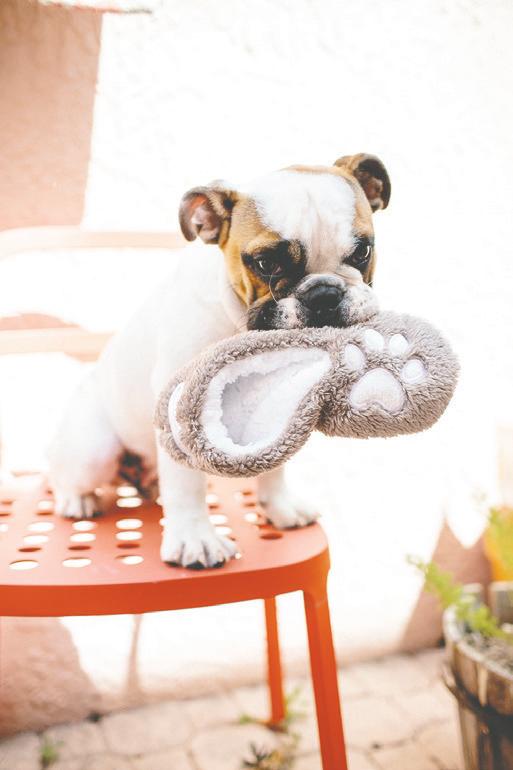
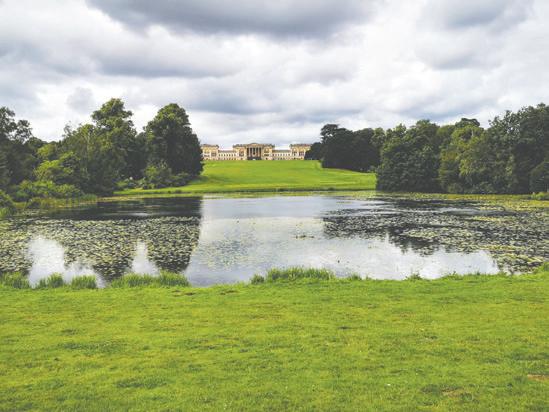
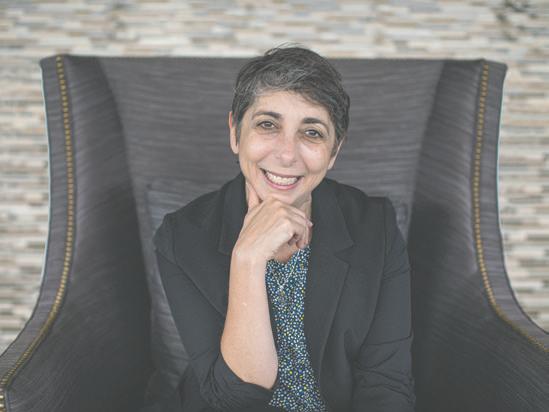
To bring the Chanukah spirit to the community in a safe way, members at the Chabad of Queen Anne-Magnolia brainstormed and came up with the virtual LED truck, which toured Queen Anne and Magnolia, Dec. 15. The truck stopped outside many homes that celebrated Chanukah, which began the evening of Dec. 10 and ended Dec. 18. People responded to the truck positively and danced to the dancing dreidel video. The truck ended the night being joined by all the local Chabad centers of Seattle for a grand menorah car parade with music and menorahs lighting up the town.
Grant will help Upgarden P-Patch make needed improvements for spring reopening
By Jessica Keller QA&Mag News editor
After a great deal of uncertainty, UpGarden P-Patch patrons are feeling better about this spring and a new growing season.
The City of Seattle’s Department of Neighborhood awarded the nation’s only rooftop community garden, on the Mercer
Street Garage, $31,969 through its Neighborhood Matching Fund Program, Oct. 30.
The money, which becomes available in January, tops off a stressful time for the community gardeners.
“It’s been a roller coaster of a year,” UpGarden Community Lead Bob Grubbs said. “This time last year we were just fighting for the survival of our garden.”
The grant funds will be used to restore the community garden, which patrons initially believed would have to close after Department of Neighborhoods staff said they would have to leave so the garden area could be turned back into parking spaces. When the UpGarden was built in 2012, organizers knew the site was only going to be temporary, but gardeners were not happy about
being evicted in favor of parking spaces.
“We just didn’t understand why they had to kick us out to do that,” Grubbs said.
After appealing to District 7 Councilmember Andrew Lewis, gardeners received some good news when they learned they
Have a New Listing You would like to get Front & Center Exposure? For only $150 each week! (Reg $200) You can be on the front page in this space!! Contact Tammy for availability & reservation 206-461-1322
Photo courtesy Chaya Ezagui
N Weeks Piano Service https://www.weeksmusic.net pianos@weeksmusic.net Weeks School of Jazz https://www.weeksschoolofjazz.com richard@weeksschoolofjazz.com 206-283-5928
Neighborhood Marketplace
Nourishing Life for Seniors on First Hill since 1967 leasing@Hilltop-House.org
• Auto & Marine Interiors/Repairs
• Furniture • Medical • Commercial
• Foam & Mattresses • Repairs
• Bunk Sox • Hypervent
• Bar Stools • Dining Chairs
All Repairs & Insurance Work! Custom Upholstery Exceeding Your Expectations Since 1948
The Washington State Parks and Recreation Commission will offer two free days in January, when visitors to state parks will not need a Discover Pass for day-use visits.
Parks could designate up to 12 free days each year when the pass would not be required to visit state parks.
Darrell Gibson, D.C. • Sarah Gibson, D.C. Graeme Gibson, D.C.
David E. Goodall III, LMT
Sarah Rose Nottingham, LMT
Lauren E. Traynor, LMT
SERVING THE FAMILIES OF QUEEN ANN E SINCE 1991 1905 Queen Anne Ave N • 206.282.8275 www.QueenAnneChiro.com
Queen Anne & Magnolia Worship Services
Sunday Worship at 10am Live Streamed on our Facebook page and YouTube. Simply look for Magnolia Lutheran Church.
Twelfth Church of Christ, Scientist
In Person and Online Church Services
All are welcome & warmly invited to join these healing services
For best audio results, please join by clicking on the link from your computer or smartphone and choose “Call Over Internet”
Classified Advertising | Friday, noon 206-461-1332 or class@nwlink.com
The first free day is Friday, Jan. 1, which gives visitors the opportunity to take part in a First Day Hike, a nationwide initiative that aims to get people outdoors New Year’s Day.
To discourage the spread of COVID-19, rangers will not guide First Day Hikes this New Year’s Day. State Parks’ blog Adventure Awaits suggests several ideas for self-led First Day Hikes and activities. State Parks reminds visitors to recreate responsibly by hiking only with members of their household, socially distancing from other groups and wearing face coverings when passing on busy trails.
The second free day is Monday, Jan. 18, in honor of the holiday celebrating Martin Luther King Jr.’s birthday.
State Parks free days are in keeping with the legislation that created the Discover Pass — a $30 annual or $10 one-day permit required on lands managed by Washington State Parks and the Washington departments of Natural Resources and Fish and Wildlife. The Discover Pass legislation provided that State
The Discover Pass is still required to access lands managed by WDFW and DNR on these days.
In addition to Jan. 1 and Jan. 18, Washington State Parks will offer 10 more free days in 2021:
Friday, March 19 — State Parks’ 107th Birthday
Saturday, April 3 — Springtime free day
Thursday, April 22 — Earth Day
Saturday, June 5 — National Trails Day
Saturday, June 12 – National Get Outdoors Day
Sunday, June 13 — Free Fishing Day
Wednesday, Aug 25 — National Park Service
Birthday
Saturday, Sept 25 — National Public Lands Day
Thursday, Nov. 11 — Veterans Day
Friday, Nov. 26 — Autumn free day
The free days do not apply to Sno-Parks.During the winter season, December through March, visitors to Sno-Parks will need Sno-Park permits, which are available for purchase online or from vendors throughout the state.
For more information about winter recreation permit requirements, visit parks.state.wa.us/winter.
SPU hoops season won’t include GNAC games
Courtesy SPU
With eight of 10 member institutions electing to not participate in the conference season due to COVID-19 reasons, the Great Northwest Athletic Conference announced last week that it will not conduct a 2020-21 conference schedule for men’s and women’s basketball.
Alaska Fairbanks elected on Dec. 11 to not participate in the conference season due to health and safety concerns. With that decision and Seattle Pacific’s subsequent decision to opt-out on Dec. 16, the conference schedule was determined to no longer be viable. No regular-season champion in either sport will be declared.
Six GNAC members elected to opt-out the conference basketball seasons on Nov. 13: Alaska
STAFF
Editor: Jessica Keller, 206-461-1310
Art Department: Guy L. Jackson, Production Artist
Subscriber Services | Circulation: Chris Lemmen, 206-461-1337
General Manager: Robert Munford
SUBSCRIPTIONS 206-461-1337
Anchorage, Central Washington, Montana State Billings, Simon Fraser, Western Oregon and Western Washington.
Each GNAC institution shall retain the autonomy to independently schedule basketball contests to occur no earlier than Jan. 7.
Team activities, practice and training opportunities and contests against outside competition will be determined and defined by each member institution but must adhere to NCAA policies and local public health authorities.
The Seattle Pacific men’s and women’s basketball teams plan to produce schedules for games that will be contested early in 2021. Those schedules will likely be comprised of local colleges and while they would not count as official conference contests, they
might include some of the other three GNAC schools from the state of Washington.
The Falcons 2021 basketball schedules will be released in early January.
All games will be contested without spectators present. Teams will comply with NCAA, state and local health protocols, including weekly COVID testing, mask-wearing by participants not actively on the court and isolation and quarantine in the event of positive tests or exposure.
The GNAC Management Council and CEO Board continue to look at the feasibility of the spring seasons for baseball, softball, outdoor track and field, men’s and women’s golf and women’s rowing; and the suspended fall seasons for cross country, men’s and women’s soccer and volleyball.
Why does water in ponds not get soaked up by the dirt?
That’s a great observation. If we investigated the bottom of a pond, we might find a few different things. Besides a few fishes and frogs swimming around, we might observe mud, algae, rocks and soil at the bottom.
My friend Joan Wu, a hydrologist at Washington State University, is really curious about the water on our planet. She told me a few different earth materials help keep pond water from seeping down into the ground.
Let’s imagine we filled a jar with one of these earth materials: rocks. Inside the jar, we would see some gaps between the rocks. If we poured water into the jar, the water will be able to move into those empty spaces. But now let’s say we had a jar of rocks, and we poured in some sand.
This time, the grains of sand would fill spaces between the rocks. Next, we could add particles of earth called silt that are so small they could fill in any spaces between the grains of sand.
Finally, we could add some even smaller particles of clay. In the jar — or the bottom of a pond — these materials are packed together. The material isn’t very permeable, which means it can keep the liquid from passing through it.
“Over a long, long time, the bottom of the pond itself evolves and changes,” Wu said. “The materials settle and the little particles, or sediments, fill in the large pores.”
As water, wind, gravity and even animals break down rocks, the rocks become smaller and smaller particles that sink to the bottom of the water. When water runs across the Earth’s surface during a storm or as snow
melts, these fine materials can also end up in a pond.
For the most part, these materials keep the pond from losing too much water, but sometimes a little does escape into the ground. Meanwhile, a little water can also escape into the air.
“Eventually, you will lose water from the top and from the bottom of a pond,” Wu said.
We lose the water from the top of a pond because of something called evaporation. You may know about evaporation if you’ve ever seen a puddle on a sidewalk that was there one day and gone the next.
When the sun heats up the surface of water, the water can turn from a liquid into teeny
tiny drops called vapor. The vapor rises up into the atmosphere where it can eventually become clouds. Those clouds help produce rain and snow that fall back into lakes, rivers and ponds.
When we take the time to look, we can find a lot of connections between our atmosphere, water and earth. These systems shape many habitats for life on our planet.
The next time you visit a pond, see what kinds of living things call it home. Who knows, maybe one day you’ll be a scientist who can help us learn more about the world of water.
Sincerely, Dr. Universe
Queen Anne resident recreates holiday classic
Queen Anne resident and choreographer Amber Willet and local ballet dancers have recreated scenes from the popular holiday ballet, “The Nutcracker,” in an online project called “A Neighborhood Nutcracker.”
“A Neighborhood Nutcracker” features site-specific dances, staged against “iconic sights and scenes of Seattle and the Pacific Northwest,” according to a press release from Willet.
“Without knowing when the performing arts will be able to welcome audiences back into the theaters, and thereafter, when people might feel comfortable coming in, our hope is to make the joy of the Nutcracker accessible to audiences near and far.
In the press release, Willet said the production was made in part to “celebrate the beauty of this dynamic city and landscape, in part to mourn what we have lost as it develops at fever pace, and also to support artists and small businesses when they need us the most.”
The vignettes will be released gradually up through the New Year.
One of the vignettes celebrated the Pink Elephant Car Wash, a civic landmark since 1951, which closed this year. Willet said in the press release she wanted “to create an homage to the site and to the vanishing Seattle it represents.”
Other offerings include A Turned-Out Tea Party in Hing Hay Park, choreographed by Alex Ung of the Guild Dance Company, Spanish Chocolate, choreographed by Victoria Gutiérrez outside of the Theo Chocolate Factory, tap dancing by LaTwon Allen from Northwest Tap Connection at Pike’s Place Market and The Waltz of the Flowers at the Pink Elephant Elephant Car Wash. Willet also included some scenes with her own family, staged at Fort Casey on Whidbey Island.
According to the release, Willet is a choreographer known for her orca whale ballet, “APEX,” and a contemporary ballet of “Romeo and Juliet.” She is teaches modern dance at Pacific Northwest Ballet School.
Go to https://www.amberwillett.com/work/nwnutcracker for more information and links to the vignettes.
Local ballet dancers Victoria Gutiérrez and Mija Bishop perform a scene from ‘The Nutcracker’ ballet that is included in local choreographer Amber Willet’s ‘A Neighborhood Nutcracker.’
Photo courtesy Amber Willet
Vaccination procrastination
As of this writing, both the Pfizer and the Moderna vaccine to inoculate the world against COVID-19 have received emergency authorization. Health care workers and residents of skilled nursing and long-term care facilities are among the first to receive the vaccine. Sounds great, right? It is great, but only partially great.
For a Life Plan Community (LPC) like Bayview, a non-profit senior living community that has independent living, assisted living, memory care, skilled nursing and an intergenerational children’s center all on one campus, this still leaves a large portion of our residents vulnerable to the coronavirus. Why? Unlike communities
that have separate buildings or even separate campuses for different levels of care, residents of urban LPCs often live under the same roof as is the case with Bayview. Our residents have loved ones in different levels of care and occupy much of the same space.
Nancy Weinbeck
Our independent residents are a major constituent of our community. While residents in skilled nursing and assisted living will receive the vaccine, their independent living counterparts will not. Thus, our risk for our
resident population will remain high even though a portion of our community will be vaccinated, assuming those that are eligible opt to be vaccinated.
I understand that the powers that be at the state and federal level consider residents who live in higher levels of care at greater risk, but the fact is that almost all seniors are at significantly higher risk for grave outcomes if exposed to the virus. Here at Bayview, we are strong advocates for all our residents, and we find it disheartening that half
of our community will temporarily remain unprotected while that same half is at high risk for significant consequences if they contract the virus.
We are grateful that the initial phase has prioritized residents in long-term care facilities and health care personnel.
However, considering the potentially devastating health outcomes of seniors who contract COVID-19, all seniors should be top priority for the vaccine, alongside health care workers, no matter where they live — in their own homes, or in senior living communities. This “gap” is a missed opportunity to protect the well-being of our treasured and beloved members of society. Even
one week can make the difference between contracting the virus and not. Don’t we owe all our seniors the best chance of surviving the pandemic?
• When this article was submitted, it appeared that only residents in skilled nursing and longterm care facilities were being prioritized for the COVID-19 vaccination. As of Monday, Dec. 21, we quickly learned most older adults could possibly receive the vaccine sooner than we original were told. This is promising. More work needs to be done to prioritize the health of all our seniors but this is a promising first step.
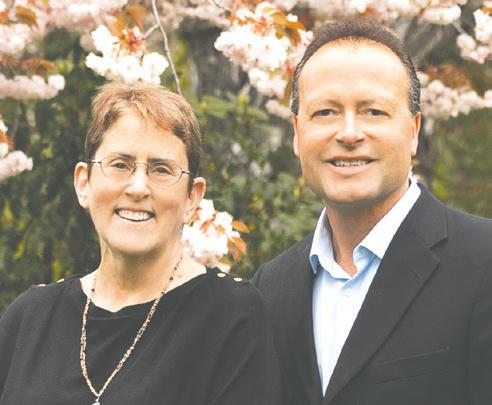
— Nancy Weinbeck is the CEO of Bayview in Queen Anne.
Noticing memory problems? What to do next
Dear Savvy Senior, My mom, who’s 76, has become more forgetful lately and is worried she may be getting Alzheimer’s disease. What
Life Well Celebrated
resources can you recommend to help us get a handle on this?
Oldest Daughter
Dear Oldest, Many seniors worry about memory lapses as they get older, fearing it may be the first signs of Alzheimer’s disease or some other type of dementia. To get some insight on the seriousness of your mom’s problem, here are some key warning signs to be vigilant of and some resources you can turn to for help.
Warning signs
As we grow older, some memory difficulties — such as trouble remembering names of people or places or forgetting where you put your glasses or car keys — are associated with normal aging. But the symptoms of Alzheimer’s disease are much more than simple memory lapses.
Knowing the early warning signs is a good first step in recognizing the difference between typical age-related memory loss and a more serious problem.
To help you evaluate your mom’s condition, here’s a checklist
of some common early symptoms to watch for:
• Asking the same questions repeatedly.
• Getting lost in familiar areas.
• Failing to recognize familiar people.
• Having difficulty following directions. Misplaces items in inappropriate places, for example putting her keys in the microwave.
• Having difficulty completing familiar tasks like cooking a meal or paying a bill.
• Having trouble remembering common words when speaking or mixing up words.
For more information, see the Alzheimer’s Association list of 10 early signs and symptoms at 10signs.org.
Another good tool to help you evaluate your mom is the Self-Administered Gerocognitive Exam (SAGE test) that was developed at The Ohio State University Wexner Medical Center. This free test helps identify mild cognitive impairment and early dementia and can be taken at
home in about 10 to 15 minutes.
The SAGE test can be taken online at BrainTest.com.
Get help
If you would rather have professional assistance in evaluating your mom, the Alzheimer’s Foundation of America (see alzfdn.org) is another good resource you can turn to.
Every Monday, Wednesday and Friday they provide free, confidential virtual memory screenings done via video chat in real time.
Your mother will need a phone, tablet or computer with a webcam and internet capability to complete the screening.
The screenings are given by healthcare professionals and take about 10 to 15 minutes to complete.
Once the screening is complete, the screener will review the results with her and let her know if she should see a doctor for further evaluation.
To set up a memory screening for your mom, call 866-232-8484 and make an appointment.
If you find that your mom does
need further evaluation, make an appointment with her primary care doctor for a cognitive checkup and medical examination. Depending on what’s found, she may be referred to a geriatrician or neurologist who specializes in diagnosing and treating memory loss or Alzheimer’s disease. Keep in mind that even if your mom is experiencing some memory problems, it doesn’t necessarily mean she has early-stage Alzheimer’s.
Many memory problems are brought on by other factors like stress, depression, thyroid disease, side effects of medications, sleep disorders, vitamin deficiencies and other medical conditions. And by treating these conditions she can reduce or eliminate the problem.
Send your senior questions to: Savvy Senior, P.O. Box 5443, Norman, OK 73070, or visit SavvySenior.org. Jim Miller is a contributor to the NBC Today show and author of “The Savvy Senior”book.
Safety review workgroup authorizes Moderna vaccine
Courtesy Office of Jay Inslee
Gov. Jay Inslee announced Sunday the authorization of the Moderna COVID-19 vaccine by the Western States Scientific Safety Review Workgroup.
The announcement comes after the FDA and CDC granted their initial authorization of the Moderna COVID-19 vaccine.
The Western States Workgroup, comprised of vaccine
experts from Washington, California, Oregon and Nevada, have been meeting to review the data and analysis to ensure the safety and efficacy of both the Pfizer BioNTech and Moderna vaccines federally authorized.
The Pfizer vaccine was authorized last week and is already being administered throughout Washington state.
“I’m pleased that the Western States Workgroup gave their unanimous recommendation to the Moderna vaccine today and encourages immediate use of the vaccine in our states,” Inslee said in a press release.
“Having two vaccines to combat COVID-19 will help us begin to recover from this
destructive pandemic.”
Workgroup members hope that their independent review inspires confidence in Washingtonians around the vaccine’s safety and efficacy.
The first of the Moderna vaccine doses are expected to start arriving from the federal government this week.
The storage and handling of this vaccine is logistically easier and should help get the vaccine to all areas of the state.
Gov. Inslee
Seattle Public Schools board approves return to some in-person learning
First group of students could return to schools by March
Courtesy SPS
The Seattle Public Schools Board of Directors last week approved a resolution that directs SPS to begin the process of bringing approximately 9,000 students back into school buildings and classrooms.
The plan, first recommended to the board by Superintendent Denise Juneau and staff at a Dec. 5 board retreat, will initially resume in-person instruction for preschool through first-grade students and students enrolled in moderate to intensive special education service pathways (focus,
moderate/intensive, social emotional learning, distinct, medically fragile, bridges, preschool — Developmental/Seattle Pre-School Program, and continue serving individual students who have had an Individualized Education Program team determine in-person services for resource and access service pathways.
“I’m very pleased that our school board today made the decision to move forward on bringing preK-first-grade students and students enrolled in moderate to intensive special education services pathways back into our classrooms,” Juneau said. “Our
entire staff will be getting a lot of work done over the next couple of months to make sure we are ready to greet students in-person.”
Some highlights of Resolution No. 2020/21-4.1:
• In-person for students who are preschool through first grade;
• In-person for students enrolled in Special Education Moderate to Intensive service Pathways: Focus; Moderate Intensive; Social Emotional Learning; Distinct; Medically Fragile; Bridges; Preschool (Developmental/Seattle PreSchool Program); individual students whose Individualized Education Program team has determined inperson services necessary;
• Up to five days per week;
• Beginning on March 1, 2021
Taproot co-founders retire after 44 years
The first act for Taproot Theatre Company is coming to a close:
Producing Artistic Director Scott Nolte is retiring from his position after co-founding Taproot with his wife Pam after 44 years.
The company began as a touring company in 1976 with performances in churches, schools and libraries, but in 1977 when the company was incorporated into a not-for-profit theatre with a board of directors and by-laws, the future vision already included an acting school and mainstage productions.
Under Nolte’s guidance, Taproot has grown to become Seattle’s oldest and largest midsize professional theater serving over 180,000 people annually with its “theatre of hope” through its Mainstage and touring productions and acting studio, according to a press release.
The first printed program for Taproot Theatre describes the 1976 company as “an ensemble of actors with our life and faith firmly rooted in God the Creator.”
“That rootedness has remained, allowing the company under Scott’s leadership to pursue plays exploring issues of justice, race and economic division in addition to plays that entertain and bring laughter,” according to the press release. “This combination is what Scott has liked to call ‘a wellbalanced meal’ for the company’s over-3,000 subscribers. That
same rootedness has also granted perseverance for the challenging job of maintaining and growing a theatre company through four location moves, five recessions, floods, thefts, a massive fire which destroyed an entire building, an explosion and, now, a global pandemic.”
In 1988, Nolte’s vision and leadership led to the purchase of an old movie house, The China Theatre, in the Greenwood neighborhood of Seattle and renovation work began with contractors and the efforts of countless volunteers and donors. Taproot’s existence, producing in three different locations over 20 years ended in 1996 when the company moved into the remodeled space as a fully operational 226-seat theater in Greenwood.
A devastating fire destroyed the company’s second building in 2009. Seattle’s entire theater community joined Taproot’s patrons to help at that time. The Kendall Center opened in 2013, which provided more room for the company’s acting classes, offices and the 119-seat Isaac Studio Theatre. Taproot now had the space that Nolte envisioned to help grow the next generation of theatre artists.
Nolte directed more than 150 productions in his 44 years with Taproot Theatre including regional premieres, classics, and new works along with his beloved classic comedies.
Co-founder Pam Nolte served in multiple positions through the years with the company working
for 25 years as the theater’s marketing director, Taproot’s community liaison, a company actor and teaching artist.
Her most recent years were spent creating and managing Taproot Theatre’s work in providing theater classes for individuals experiencing memory loss.
According to the press release, although the Noltes’ formal roles with Taproot are ending, they will continue their work as theater artists, directing and acting with the company when their skills are requested.
When the theater is allowed to reopen its Jewell Mainstage, post-pandemic, Scott Nolte will direct two of Taproot’s postponed productions, and Pam Nolte will resume the acting roles she was originally cast in for the Mainstage season.
Over their 44-year tenure, the Noltes created a family of over 1,000 actors, designers, technicians, teaching actors and staff members. Their legacy will continue through that family, which also includes the hundreds of thousands of donors, subscribers and students Taproot has served with its “theatre of hope.”
“At the end of this difficult year, Scott Nolte can trust that as he passes the torch to incoming Producing Artistic Director Karen Lund, Taproot Theatre Company will continue to tell the stories of hope and courage that Taproot’s audiences can look forward to for years to come,” according to the press release.
for PreK-1 and begin bringing back students enrolled in moderate to intensive service pathways before or on March 1;
Preparation for bringing back additional students:
• SPS staff will begin configuring 75 elementary and K-8 schools to support a 1:15 teacher- student ratio;
• Expansion of Special Education services in secondary schools;
• Bargaining new working conditions with the Seattle Education Association;
• Hiring additional bus drivers and custodial staff;
• Resumption of in-person nutrition services as necessary.
In January, SPS will be conducting a survey of families to enroll students for the in-person
model and determine how many will opt to continue with remote learning.
The district will continue to monitor COVID-19 transmission rates and follow guidance from key public health agencies, including the Washington State Department of Health and Public Health — Seattle & King County.
SPS board action comes after Washington Gove. Jay Inslee and the Washington State Department of Health announced revised guidelines for schools as they consider reopening for inperson instruction. For more detailed information on the resolution, please see the SPS website, seattleschools.org. For more information about the Washington State Department of Health guidelines, please see the DOH website, www.doh.wa.gov.
Mayor signs Cultural Space Agency charter
Mayor Jenny A. Durkan last week signed the Cultural Space Agency Public Development Authority charter to create the first new PDA in nearly 40 years.
According to a press release, the Cultural Space Agency is a first-of-its-kind cultural real estate development company, chartered by the City of Seattle and guided by Black, Indigenous, and People of Color leaders from across the cultural, community development and commercial real estate sectors.
“The Cultural Space Agency is central to our work to ensure an equitable recovery from COVID-19 for our artists, nonprofits and cultural organizations,” Durkan said in a news release. “Our artists and cultural communities have been on the frontlines of the slew of crises we’ve faced this year, and the pandemic, an economic downturn with job losses and civilrights reckoning have laid bare and further magnified our region’s inequities. We can choose the city that we want to be as we recover from COVID-19.
The Cultural Space Agency will lead with equitable development strategies, and center our artistic and cultural communities as a central tactic to rebuild civic health and wealth.”
According to the news release, the purpose of the Cultural Space Agency “is to develop cultural space real estate
projects in a way that reflects the needs and desires of communities that have borne the burden of institutional racism; build community wealth through investment opportunities in cultural real estate projects; and partner with commercial real estate developers and cultural community stakeholders to create real property projects that reflect the interests and priorities of both.”
The Cultural Space Agency will seek long-term site control on behalf of and in partnership with community cultural organizations representing communities of color. The organization will acquire properties and create property ownership opportunities in communities historically denied ownership options.
The City of Seattle has dedicated $500,000 each year for two years for initial operating costs and anticipates leveraging philanthropic investments to secure millions of additional dollars in capital investment in community-based projects.
The newly formed Public Development Authority will be paired with the nonprofit Cultural Space Agency. Working together, they will support the mission and vision of affordable, locally-controlled, culturally-focused community space. The PDA will be primary in stewarding inter-governmental relationships and in executing commercial real estate transactions, while the nonprofit will take the lead on philanthropic and community relationships.
Courtesy Taproot Theatre
Seattle news release
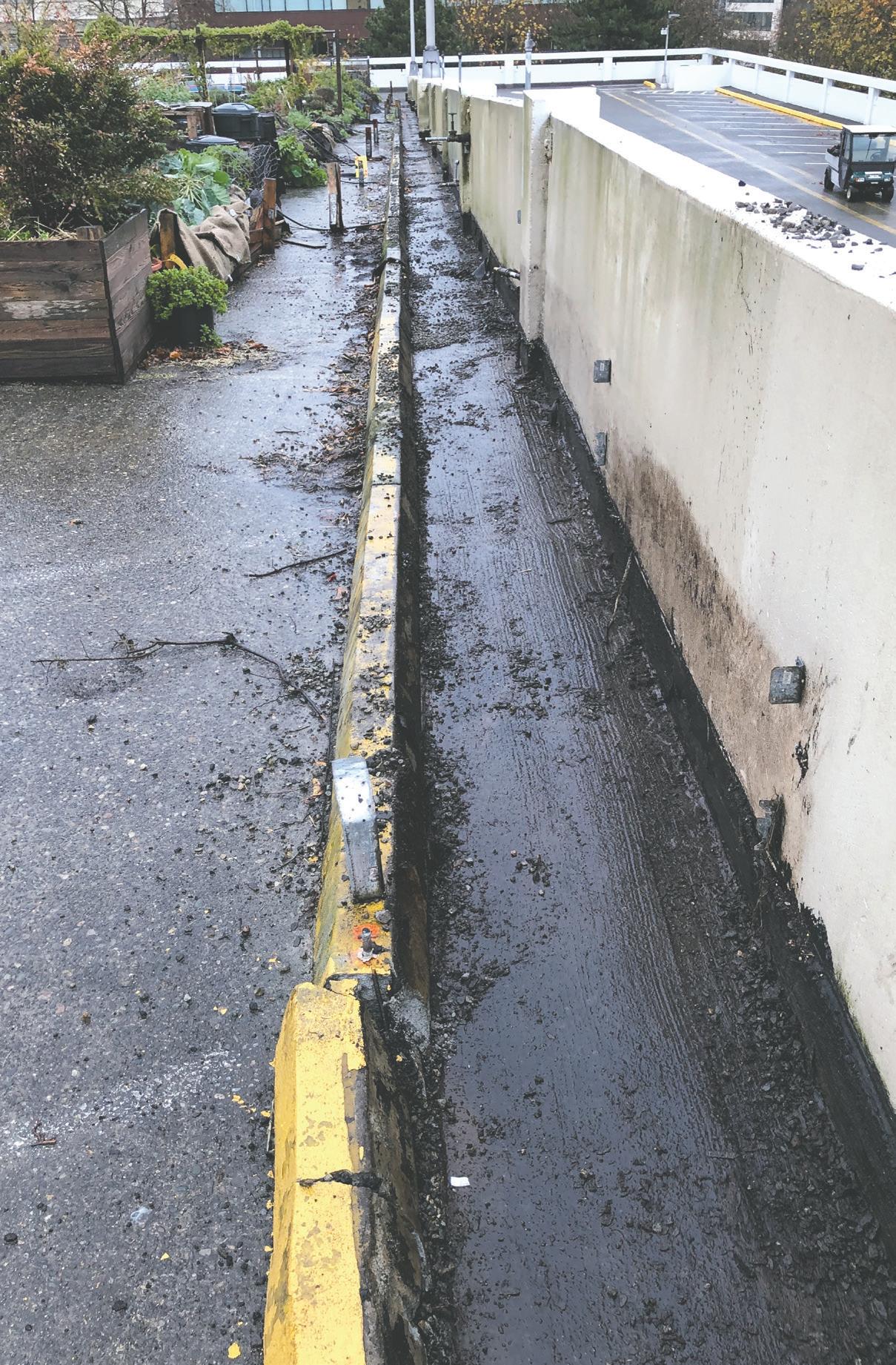
would not have to move out. They still had to work with Seattle Center, however, to accommodate a renovation project by taking apart some of the garden. Grubbs said the parking structure, which was built for the World Fair in 1962, needed to be renovated because water was seeping through the cracks of the roof, and the rebar was starting to rust. He said Seattle Center management was concerned the structure could collapse.
To allow workers to repair the damage and seal the cracks where water was seeping through, volunteers had to remove a large section of perennial flower beds, which included moving a large amount of soil, deconstruct the irrigation system and open up a stretch of the garden so construction workers could access the area.
“It took us the better part of six months to do it,” Grubbs said. “It was a tremendous amount of work.”
Grubbs said, as he is retired, he had the time to devote to such a massive project and had a vision of what needed to happen. He worked with a landscape designer who uses the garden on restoring aspects of it and redesigning the layout of the beds to better preserve the concrete and building materials underneath.
“I think the end product is going to be a pretty amazing space,” Grubbs said.
When the grant funds become
available, Grubbs said he and others will begin work. Grant funds will first go toward restoring the plot beds. Rather than butting up against the side of the garage walls, they will be situated further out — about three and a half feet — and cedar walls will be built around them to contain the soil and keep it from washing away, Grubbs said. In addition, the grant funds will be used to restore and prepare the soil for spring planting and restoration of the beehives, compost and irrigation system.
With the renovations made to the garage structure by construction workers, which included filling cracks with epoxy, Grubbs said water will flow out of the building much faster and should seepage.
“I think just the whole redesign should facilitate that, and we shouldn’t have that problem,” he said.
In addition, the grant funds will allow for additional amenities to make it more enjoyable for the gardeners, including benches and a gazebo and pergola. Grubbs said he has already salvaged three other pergolas that he will install, which will provide some shade for the gardeners because the P-Patch can get hot in the summer.
A bike rack will be added, as well as a extra storage shed to hold supplies.
“In the end, I think we’ll have a restored garden that has some nicer amenities to it that will make it a nicer place to be,” Grubbs said.
While Grubbs said P-Patch
volunteers would find someway to make all the changes necessary to reopen the UpGarden, the Department of Neighborhoods grant will ensure a smooth reopening.
“This was just a real godsend,” Grubbs said. “I’m not really sure how it would have worked without it.”
The UpGarden is important to residents of Uptown who don’t have yards to allow for gardens, Grubbs said.
“That’s what we do up there, so it really is the heart of our community to the people who utilize it,” he said.
The UpGarden also provides important services to the community. Grubbs said, through the Giving Garden, gardeners have donated 1,000 to 1,500 pounds of food to food banks every year. The education program for students, including some with disabilities, offers youth a chance to learn about and experience gardening.
The UpGarden P-Patch is also popular with the public who go up to enjoy the views of the Space Needle and downtown and perhaps have a picnic.
“It’s just a little oasis in the middle of this really urban area,” Grubbs said.
This year, it also became a popular site for girls to show off prom finery they couldn’t otherwise wear because school dances were canceled. As a result, the UpGarden became a TikTok phenomenon, garnering 15,000 hits, Grubbs said.
“So that was a really interesting aspect of this year,” he added.
The UpGarden P-Patch, on the roof of the Mercer Street Garage, will be rebuilt following a construction project to repair damage and seal cracks where water was seeping through. A $31,969 matching grant will allow UpGarden volunteers make needed improvements so the P-Patch can continue to operate.