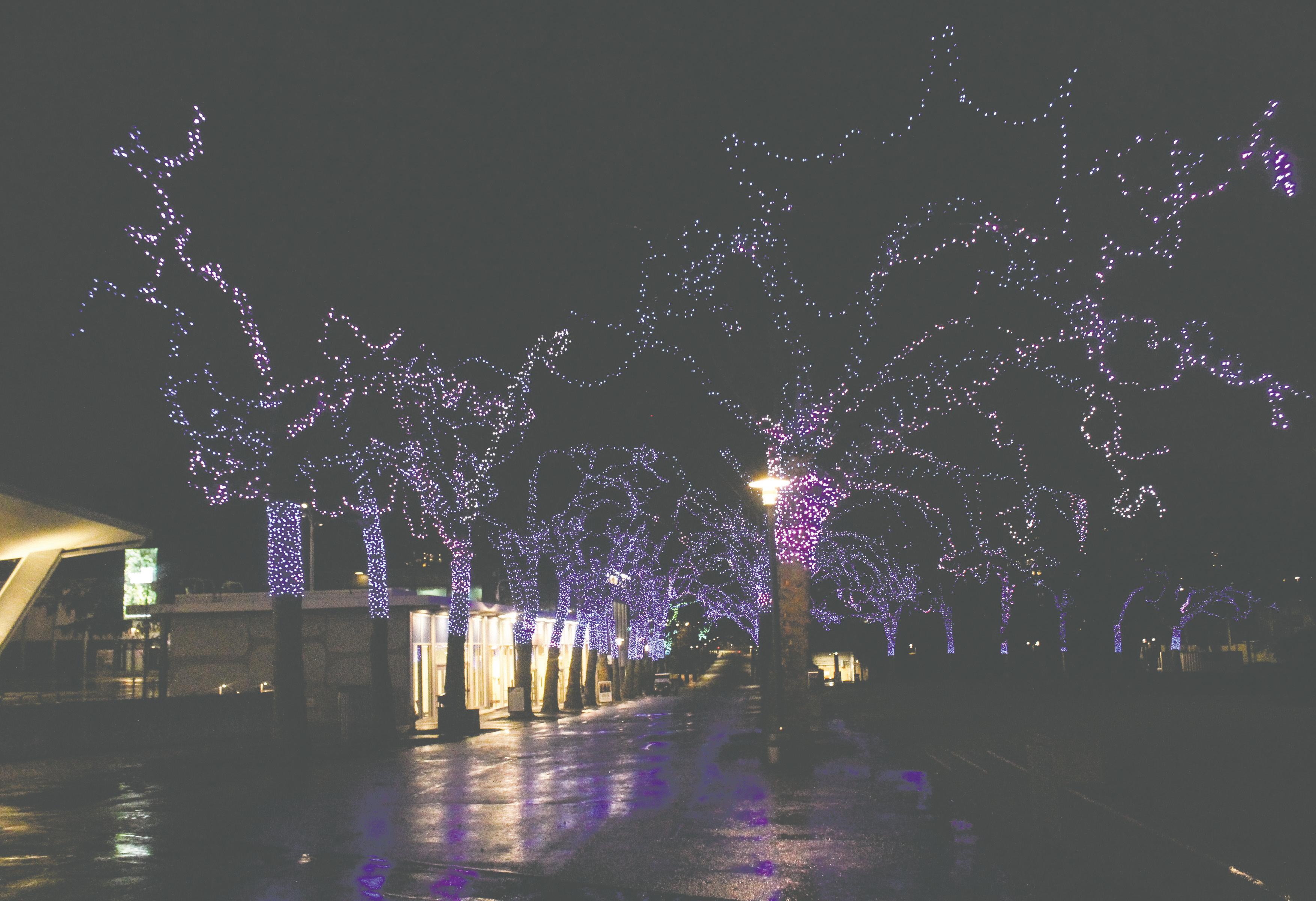
The Seattle Center campus in Uptown is awash with holiday lights throughout the month of December. There are also a number of activities for people of all ages, many of them free. Go to https://seattlecenter.com/events/featured-events/winterfest.

The Seattle Center campus in Uptown is awash with holiday lights throughout the month of December. There are also a number of activities for people of all ages, many of them free. Go to https://seattlecenter.com/events/featured-events/winterfest.
By Jessica Keller QA&Mag News editor
A Queen Anne ballfield project previously delayed by the Seattle Parks & Recreation Department is back on the docket and with it a host of difficulties.
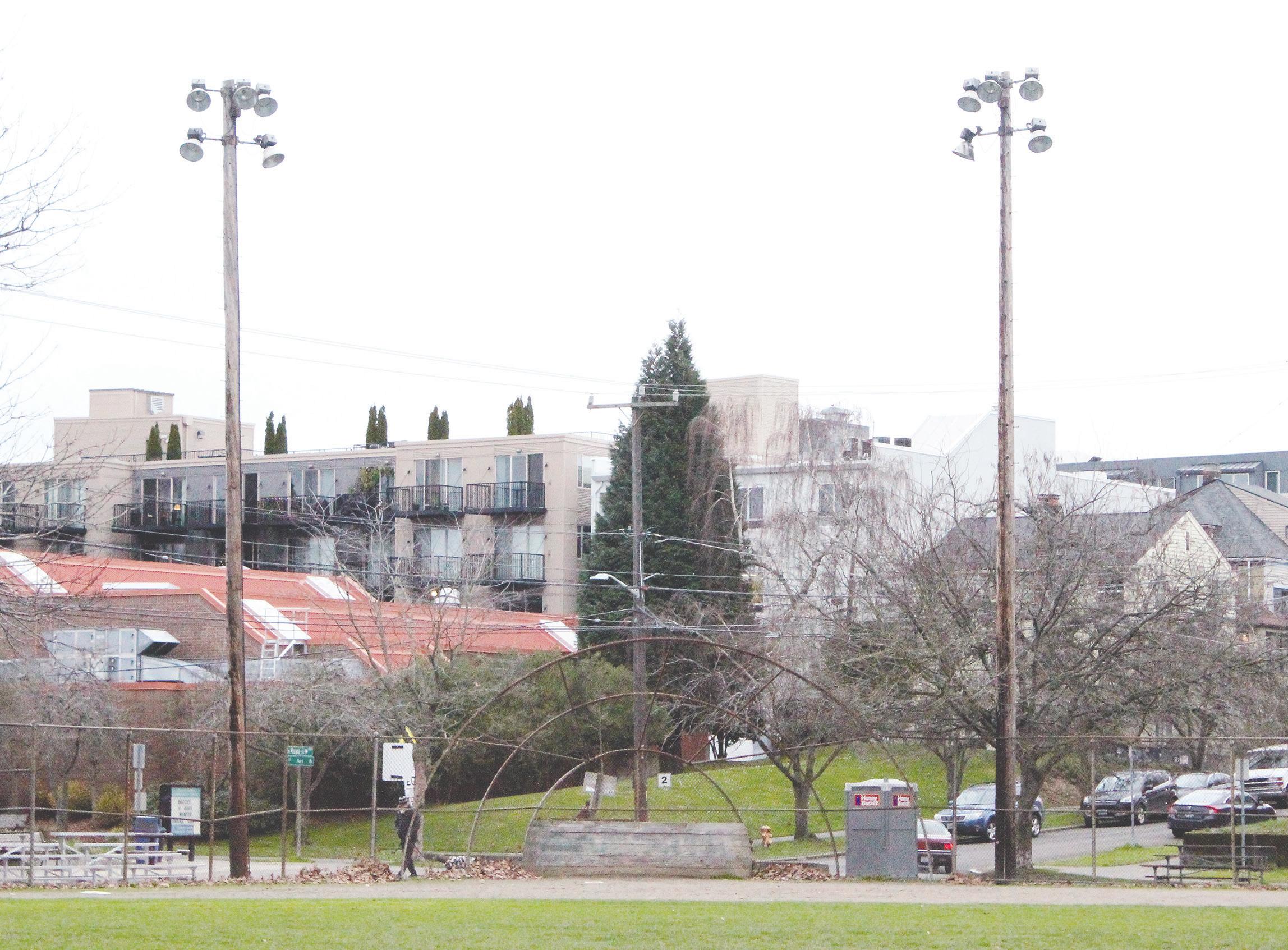
Seattle Parks & Recreation announced last year the project to replace the lights at the Big Howe ballfields had been delayed because of COVID-19 and budgetary cutbacks.
At the December Queen Anne Community Council meeting, Parks Committee Chairman Don Harper reported that the project was back on but won’t take place in late winter like it was initially planned. Instead, construction will begin in the spring of 2022, likely in May. During the construction, which will take three to four months to complete — throughout the summer and into early fall — the ballfields will be closed, he said.
This is problematic, said Tom Koerick, out-going president for Queen Anne Little League, because those fields at Big Howe are used for baseball, softball and soccer games beginning in early spring and throughout the

Have a New Listing You would like to get Front & Center Exposure? For only $150 each week! (Reg $200) You can be on the front page in this space!! Contact Tammy for availability & reservation 206-461-1322
summer. Plus, the Little League officials have to soon obtain permits to play games on the fields in time for the season’s start in late February.
Without the lower two fields at Big Howe, the teams will have to rely on the fields at Interbay and the upper field at Big Howe Park, although that does not have lights.
Koerick said a bigger issue, however, is nobody from the city’s Parks Department told him or incoming QALL President Tommy Kim that the project will take place this spring or that the fields will be closed during that time, and they had spoken to somebody from the department last week.
“So there’s been zero communication with us, and we rent the fields from them for those months,” Koerick said. “It would seem proper to have some kind of dialog with the groups who rent the field at that time.”
In fact, Koerick said he had not heard of the city’s plans until contacted by the Queen Anne & Magnolia News. After reaching
out to the city, Koerick said he was told by QALL’s park’s liaison they would look into the matter.
“This kind of brings up the bigger question — our community’s communication with our city,” he said.
Part of the problem has been turnover in the city’s Park’s Department. Koerick said, since he’s been president for the last three years, QALL has been assigned four different leads from the city with whom to communicate.
None of them, he said, had a record of QALL’s needs pertaining to the fields or the Queen Anne Community Center.
“We’ve had the same conversation for three-plus years,” Koerick said. “I don’t want to create bad blood, but I also can say that we have requested a lot of the same things for many years.”
Harper said the only reason the lights for the lower two Big Howe ballfields are set to be replaced now is because the poles are old and have been deemed a hazard by the city.
Harper confirmed that he learned of the construction time line after he was contacted by someone directly tied to the
project.
The community will have to wait for at least a few more years before the city makes the other improvements intended — replacing the fences and the fields with artificial turf.
Harper said those improvements have been pushed off — again — until 2027, but they have been postponed so many times that he is skeptical.
“We get on the schedule and then it’s gone,” he said. “We get on four to five years later, and then it’s gone. Last time, we were pretty secure in thinking we were going to get it.
“The fact that they’re saying 2027 just doesn’t mean anything anymore,” Harper added.
Koerick said QALL’s issue with the Big Howe ballfields aren’t with the lights.
“The challenge we have is the playability of the field surfaces,” he said, adding QALL volunteers work hard prior to baseball and softball season making the fields safe — filling in holes and leveling the dirt kicked up by dogs and people. “That’s the priority, the top priority is injury prevention and quality of play.”
Food bank needs winter donations
The Queen Anne Food Bank at Sacred Heart of Jesus Parish, is seeking donations of different winter items for the clients the organization serves. The food bank needs warm winter gear, including gloves, hats, warm socks and belts to distribute to people the food bank serves.
Email Steve Kreins, food bank operations manager, at steve@ sacredheartseattle.org, or call him at 530-301-5974 about how to make a donation.
The food bank serves people lunches from 8:30 a.m. to 11:30 a.m. Monday through Friday and allows people to come get boxes of food from 1 p.m. to 2:30 Thursdays at the food bank, 232 Warren Ave. N., Seattle.
Donations and volunteers are always needed. For more information, visit the food bank website at sacredheartseattle.org/qafb.
Queen Anne organization
Counterbalance has arranged for Vam Studios’ Suitcase Theater and VIP Troupe to give a special dance performance, featuring tap and Irish dance, and a seven minute Nutcracker at 2:30 p.m. Saturday across from the Queen Anne Pool, adjacent to the during the Queen Anne Farmers Market. Depending on the weather, performers may visit different venues on Queen Anne Avenue North.
Counterbalance is a nonprofit dedicated to bringing arts to the community







Sunday Worship at 10am Live Streamed on our Facebook page and YouTube. Simply look for Magnolia Lutheran Church.
Twelfth Church of Christ, Scientist
In Person and Online Church Services
All are welcome & warmly invited to join these healing services
For best audio results, please join by clicking on the link from your computer or smartphone and choose “Call Over Internet”
All Zoom Services Meeting ID: 418 806 2637 https://us02web.zoom.us/j/4188062637
Sunday Services 11:00am – 12noon Pacific
Wednesday Testimonies 7:30pm – 8:30pm Pacific
Christian Science Quarterly Bible Lessons
Our weekly Bible Lesson Sermon may be found here: https://quarterly.christianscience.com/
Additional Healing Resources: ChristianScience.com CSWashington.com SeattleMetroReadingRoom.org
For additional assistance, please contact us at seattle12cs@gmail.com or 206.283.2300 ChristianScienceTwelfthSeattle.com
Queen Anne Dental Group

Dr. Frank J. Calvo & Family Cosmetic, Implant, & General Dentistry
400 Boston St. 206-284-7812 www.QADG.net
DEADLINES
News Submissions | Wednesday, Noon 206-461-1346 or QAMagNews@pacificpublishingcompany.com
Retail Display Advertising | Wednesday, 1:30 p.m.
Tammy Knaggs, 206-461-1322 or ppcadmanager@pacificpublishingcompany.com
Legal Advertising | Friday, noon
Jody Vinson, 206-461-1323 legalads@pacificpublishingcompany.com
Classified Advertising | Friday, noon 206-461-1332 or class@pacificpublishingcompany.com
Chiropractic AND Massage Therapy
Darrell Gibson, D.C. • Sarah Gibson, D.C. Graeme Gibson, D.C.
David E. Goodall III, LMT Sarah Rose Nottingham, LMT Lauren E. Traynor, LMT
SERVING THE FAMILIES OF QUEEN ANN E SINCE 1991 1905 Queen Anne Ave N • 206.282.8275 www.QueenAnneChiro.com
STAFF
Editor: Jessica Keller, 206-461-1310
Art Department: Guy L. Jackson, Production Artist
Subscriber Services | Circulation: Chris Lemmen, 206-461-1337
© 2021 Pacific Publishing Co. Inc. Mailing address | P.O. Box 80156, Seattle, WA 98108 Physical address | 636 S. Alaska St., Seattle, WA 98108
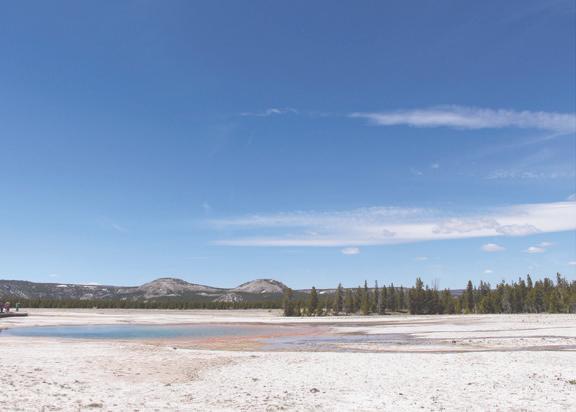
One of the most eye-catching hot springs in Yellowstone National Park is the bright and colorful Grand Prismatic Spring. It’s blue in the middle with bands of colors ranging from green and yellow to orange and reddishbrown.
My friend Peter Larson is a geologist at Washington State University who is very curious about hot springs. He spent much of his research career in Yellowstone National Park. Larson said that when we look into the hot spring, we are seeing the colors of tiny living things called cyanobacteria.
In the middle of the hot spring, there aren’t any cyanobacteria. The water is nearly boiling, and they can’t survive the high temperatures.
But as we move out from the middle of the hot spring, the water gets a bit cooler. We find a lot of cyanobacteria showing off their green and yellow colors. These colors come from something called pigments. In fact, a lot of the colors we find in nature come from pigments. You even have pigments in your hair, eyes and skin. Pigments absorb certain waves of light from the sun and reflect others, which helps to give us the colors we see.
One very important pigment that cyanobacteria have is called chlorophyll. It not only gives them
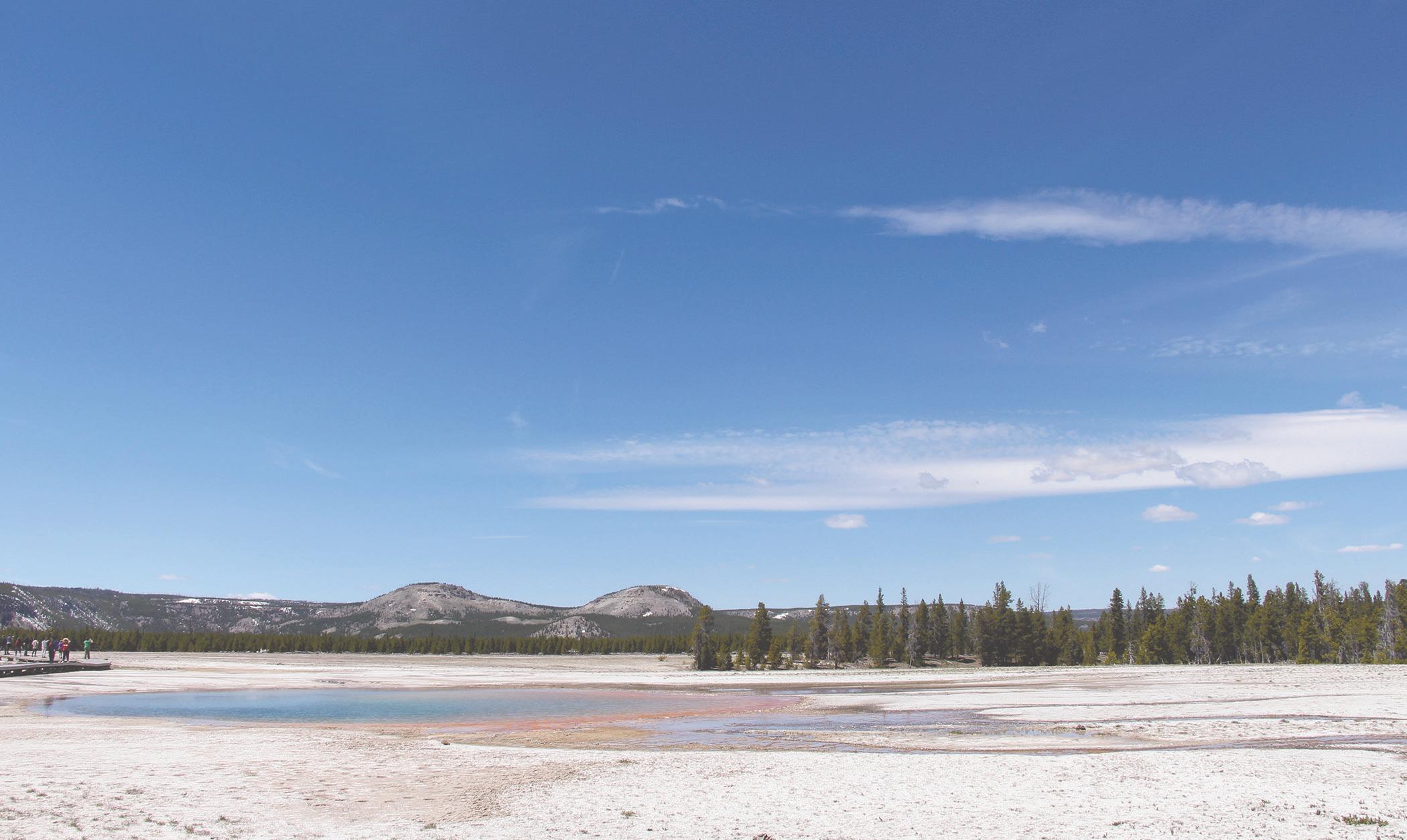
their yellow and green colors but also helps them survive. Cyanobacteria can use their chlorophyll molecules to absorb energy from sunlight — an important ingredient they need to make their own food. When we see a lot of green or yellow in the hot spring, we know that the cyanobacteria are alive and well. Some cyanobacteria also make pigments such as carotenoids, which help them use chlorophyll. Carotenoids can also provide them with some protection from the sun. When we see orangish parts of the hot springs, there are
likely some carotenoid-making cyanobacteria in the water. At the very edge of some hot springs, we can also see some reddish-brown colors. This is the coolest part of the spring and home to a diverse community of cyanobacteria and other kinds of bacteria that give off red and brown colors. Even though this is the coolest part of the hot spring, it’s still really hot — around 131 degrees Fahrenheit.
Organisms that live in extreme environments, including some of the cyanobacteria in hot springs, are called extremophiles. Lar-
Summer’s flowers and fall’s leaves have fallen away, and the winter garden reveals a new world of beauty wrought in bark.
Like a sepia photo, without color to jostle for our attention, texture jumps into relief.
If you pause a moment, there’s
riveting pattern everywhere outside — mottled, gnarled, gleaming, striated and speckled. This often-overlooked element creates a springboard to rich plant combinations that can get you through the winter.
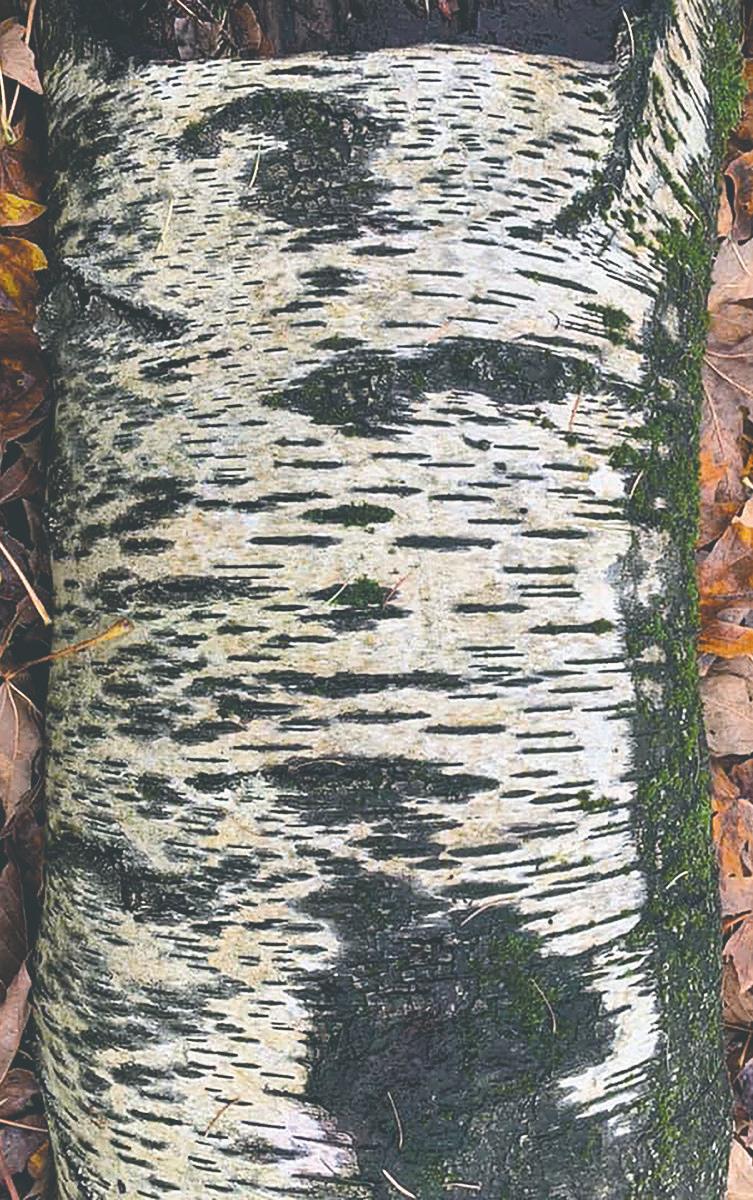
Among flashy barks, probably the most popular is the stark
white paper birch (Betula papyrifera), so much so that people buy real and faux logs and branches for decoration indoor and out.
Native to the northeast, it’s a winter icon, but unfortunately has become susceptible to bronze birch borer recently in Seattle. Alternatives include Himalayan birch (Betula utilis), which is white barked and grows 40 feet tall, and peachy tan river birch (Betula nigra), which comes in more compact varieties for urban gardens, like HERITAGE, featured in the Great Plant Picks website, https://www.greatplantpicks.org/.
The maples have many beautiful bark offerings, perhaps none more so than the paperbark maple (Acer griseum), which peels in layers from glossy cinnamon to

son said hot springs and these extremophiles often get a lot of attention when scientists are wondering about the origins of life on Earth.
One idea some scientists have proposed is that hot springs provided just the right conditions for early life on Earth to develop. Larson also adds that scientists who are curious about life on Mars often look to the old hot springs on the Red Planet as they search for evidence of life.
Larson and I want to thank you for your great science question. It’s a good reminder that a single
question can take us into many scientific fields. From geology to biology to astrophysics and beyond, it sure is an amazing world to explore.
Sincerely, Dr. Universe
olive and buff. To pump up the drama, find bark that contrasts with its plant partners or your house color.
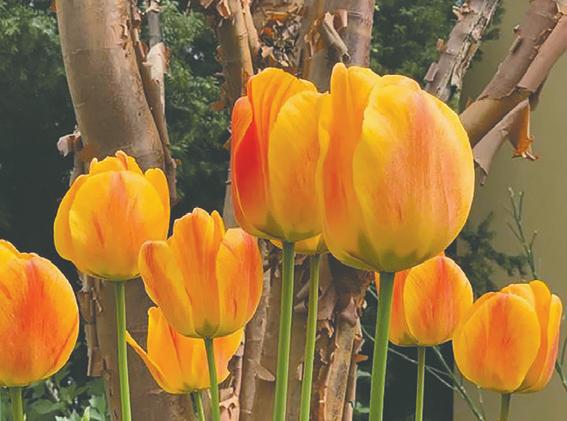
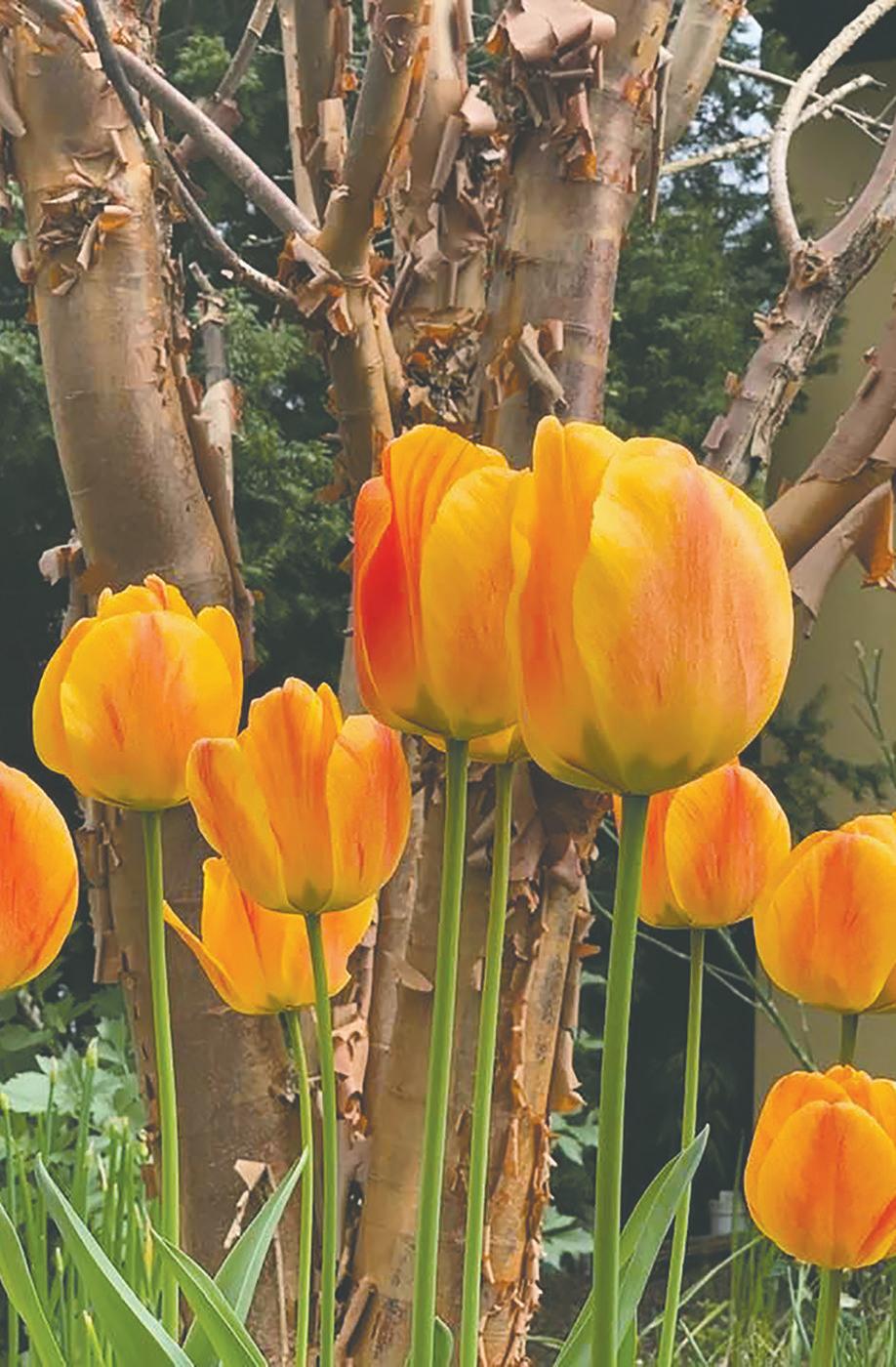
Glossy evergreens can set off bark nicely, whether as a backdrop or a base. An unforgettable combination at a neighbor’s house last spring highlighted orange and red bicolor tulips framed by the mahogany bark. Luscious.
If the bark is colorful enough — like that of the “Pacific Fire” vine maple tree or some of the shrubby dogwoods (Cornus sericea and C. alba varieties) — it can hold its own against the ashiest Seattle sky.
Planted in community, red branches emit an ethereal haze that leavens stolid conifers and broad-leafed evergreens. Averaging about 8 feet tall and wide, these dogwoods take up some serious room. I had to remove a lovely Cornus “Bud’s Yellow” with lemon stems that was crowding its neighbors and sending up colonies. For smaller spaces, seek out “Artic Fire” (sunset orange, about 4 feet) or “Kelsey’s Dwarf” (crimson, 2 feet-ish). Trimmings can spice up winter container plantings.
At Blooms of Bressingham’s nursery in the United Kingdom, Adrian Bloom uses these bark superstars liberally in his renowned Winter Garden.
White birches erupt from purple winter heath, as an apricot dogwood fog hovers in the background.







There are so many choices to add texture and color to your garden’s views this time of year.
Cherry trees’ horizontal hashmarks look like some kind of calligraphy waiting to be decoded, and some, like Tibetan cherry (Prunus serrula), shine in bronze tones. Stewartia and crepe myrtle sport mottled patches and drops, like a watercolor of a pond.
Willows (Salix spp.) can have lovely red, yellow or like my “Haruko Nishiki,” burgundy bark to complement its pink and white leaves.
More subtle, but no less striking, include shrubs like oakleaf or climbing hydrangea vine, known for peeling bark, or roses like Rosa glauca, with dusky burgundy bark.
In my garden, I designated a corner seen from the dining room window as my mini-winter garden — and the changing view cheers me for months.
Hellebores ground the scene with leathery evergreen foliage in inky blue-green punctuated now with white flowers.
Backed by a robust — some might say overgrown — “P.J.M.” rhododendron, Kerria japonica (which later will bring acid yellow spring flowers) lights up the edge now with a scramble of chartreuse stems echoing the buttery witch-hazel (Hamamelis) hybrid flowers.
While I wouldn’t call it pretty in the same way, in the foreground our venerable plum tree’s nubby aged bark and gnarled fingers make satisfying viewing, as the wrinkles and knots spell out
by Erica Browne Grivas
Bicolored tulips with an interesting tree bark as a background in a neighbor’s yard made an unforgettable combination. Barks can also cheer up a dreary winter garden.
its history and speak of years of harvests, jams and pass-by snacking. The winter landscape repays
slower, introspective viewing, and it just gets more beautiful the closer you look.
SDCI accepting public comment on Queen Anne project
Seattle Department of Construction and Inspections is currently reviewing the Master Use Permit application for a proposed project in Uptown. Under consideration is an eight-story, 132-unit apartment building with hotel and parking for 95 vehicles at 101 W. Roy St.
The existing building will be demolished.
People can comment on the project until Dec. 20.
Written comments should be submitted to PRC@seattle. gov or by mail to Department of Construction & Inspections ATTN: Public Resource Center PO Box 34019 Seattle, WA 98124-4019.
Commenters providing an email address or return US mail address will be sent notice of any public meetings or hearings and notice of the SDCI decision with information on the right to appeal. All correspondence will be posted to the electronic library.
The project file, including application plans, environmental documentation and other additional information related to the project, is available in the electronic library at Seattle Services Portal, https://cosaccela. seattle.gov/portal/welcome.aspx.
The project number is 3036111-LU.