From the local businesses who are able to stay open offering us groceries and pick up meals, to the front line workers at our local clinics and hospitals.
We think it would be a great idea to thank those in our community and recognize those people for all they do. If you would like to thank someone who has shown kindness to others, or give a shout out to your local grocery store, restaurant, retail or health care workers serving the Queen Anne and Magnolia area, we are offering 1/8 page size ads for only $25 (black and white) every week in the newspaper. The ads will all appear in a special THANK YOU TO OUR COMMUNITY page.
Space deadlines are every Wednesday at 10am for the following week’s newspaper.
Queen Anne &Magnolia
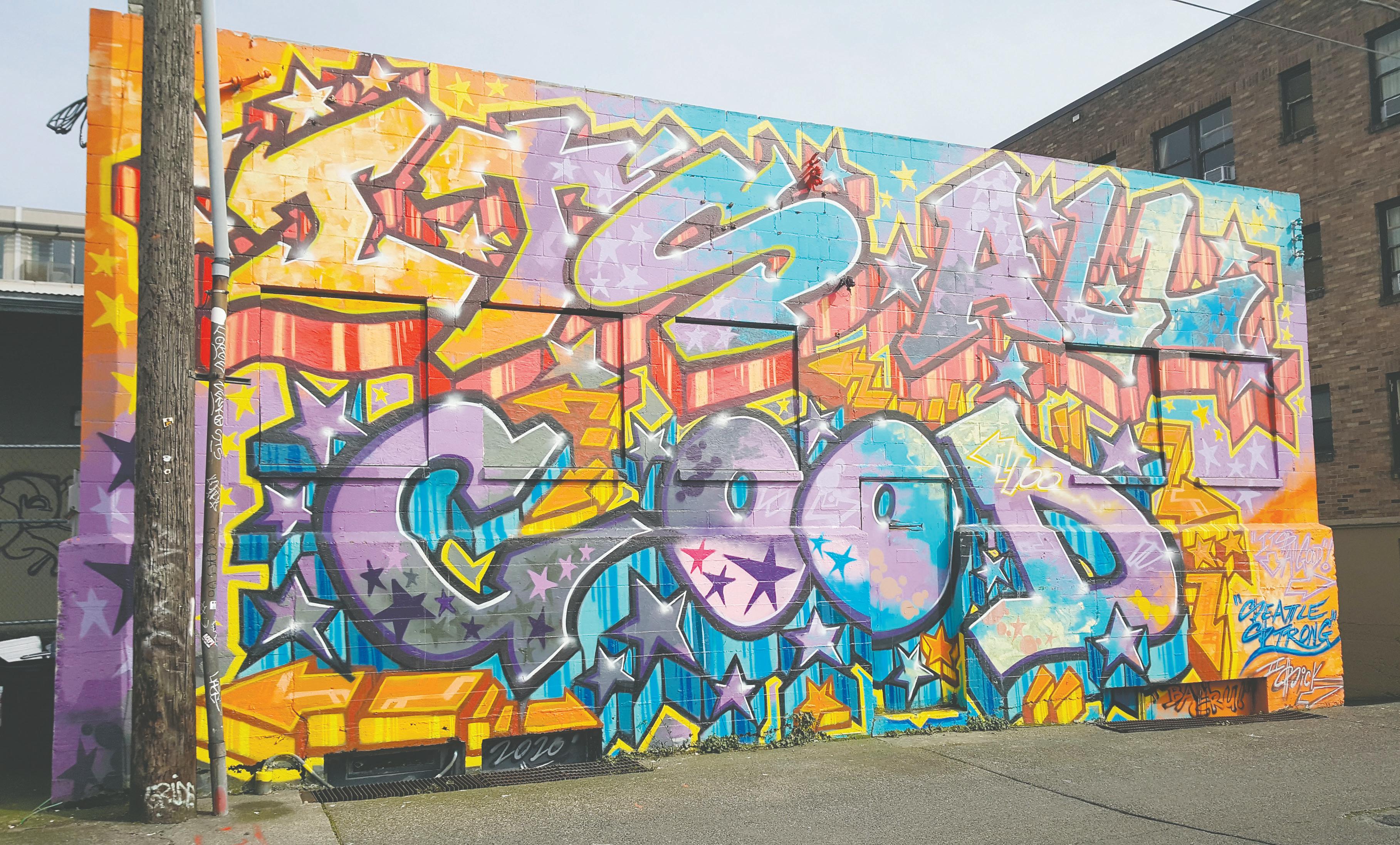
This mural painted on the back of a building in Uptown is colorful, but Heather Pihl, of the Uptown Alliance Tidy Uptown subcommittee, warns because the piece includes ‘graffiti-style’ lettering, taggers might be encouraged to tag other property nearby so their graffiti receives attention. Pihl said, otherwise, murals on empty walls are a good way to prevent tagging.
A community concern to watch
Graffiti a growing problem in Uptown but not in other areas
By Jessica Keller QA&Mag News editor
While graffiti is more of a problem in Uptown than in other areas of Queen Anne, community leaders are advocating for residents to become aware of the issue, as well as be proactive in their neighborhood.
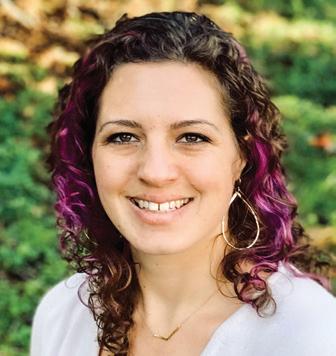
Pihl, who is a member of the Uptown Alliance Tidy Uptown subcommittee, spoke to the Queen Anne Community Council Public Safety Committee about graffiti at its meeting last week.
Queen Anne resident Heather
Committee Chair Robert Kettle said he invited Pihl to speak because of her familiarity with the topic. In addition to her participation on Tidy Uptown,
which has made tackling graffiti one of its priorities, Pihl’s background includes working for the city’s anti-graffiti program from 1995 to 2000, a crime prevention coordinator with Seattle Police Department and as a volunteer coordinator of FAWN, a linking of block watches along Aurora
SEE GRAFFITI, PAGE 8
School board appoints new member
Dury replaces Mack as District 4 director
By Jessica Keller QA&Mag News editor
The Seattle Public Schools Board of Directors filled its vacant
Please email your request to ppcadmanager@nwlink.com or call 206-461-1322, leave us a message and someone will return your call to get the details. Have a New Listing You would like to get Front & Center Exposure? For only $150 each week! (Reg $200) You can be on the front page in this space!! Contact Tammy for availability & reservation 206-461-1322 JUST LISTED
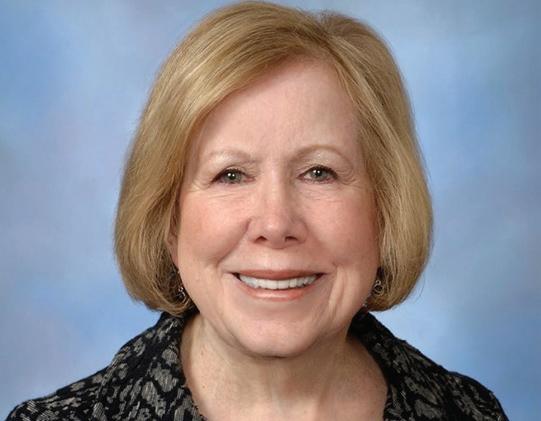
District 4 seat last week by appointing Ballard resident Erin Dury.
Dury was selected from two other applicants, Magnolia’s Eric Souza and Queen Anne’s Laura Marie Rivera, to fill the vacancy left after former board member Eden Mack
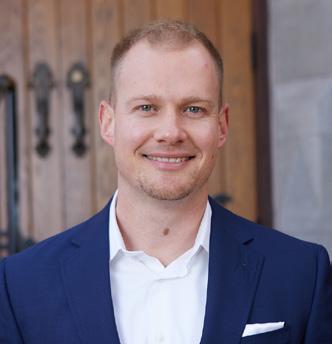
Erin Dury
resigned in January.
As the District 4 board member, Dury represents Magnolia, Queen Anne and some of Ballard.
Dury will serve out the remainder of Mack’s term, which expires with the November election.
Dury could choose to run for a
new term in the fall election.
“I am honored and grateful to serve District IV and Seattle Public Schools, and I recognize the privilege and position of power this appointment has, and I know that true service will be shown through action,” Dury said in a SPS news release. “I look forward to working with the community,
SEE BOARD, PAGE 4
Photo by Jessica Keller
Neighborhood Marketplace
Queen Anne Dental Group
Dr. Frank J. Calvo & Family Cosmetic, Implant, & General Dentistry
400 Boston St. 206-284-7812 www.QADG.net
CHIROPRACTORS
Chiropractic AND Massage Therapy
Darrell Gibson, D.C. • Sarah Gibson, D.C. Graeme Gibson, D.C.
David E. Goodall III, LMT
Sarah Rose Nottingham, LMT Lauren E. Traynor, LMT
SERVING THE FAMILIES OF QUEEN ANN E SINCE 1991 1905 Queen Anne Ave N • 206.282.8275 www.QueenAnneChiro.com
Queen Anne & Magnolia Worship Services
Sunday Worship at 10am Live Streamed on our Facebook page and YouTube.
Twelfth Church of Christ, Scientist
In Person and Online Church Services
All are welcome & warmly invited to join these healing services
For best audio results, please join by clicking on the link from your computer or smartphone and choose “Call Over Internet”
All Zoom Services Meeting ID: 418 806 2637 https://us02web.zoom.us/j/4188062637
Sunday Services 11:00am – 12noon Pacific
Wednesday Testimonies 7:30pm – 8:30pm Pacific
Christian Science Quarterly Bible Lessons
Our weekly Bible Lesson Sermon may be found here: https://quarterly.christianscience.com/
Mailing address | P.O. Box 80156, Seattle, WA 98108 Physical address | 636 S. Alaska St., Seattle, WA 98108
State Legislature votes to further extend voting rights of felons
Bill waiting for Inslee’s signature
By Ruairi Vaughan Contributing writer
The Washington State Legislature has approved a bill that will automatically restore voting rights to people convicted of a felony once they are released from prison.
Under current state law, felons have their voting rights restored once their entire sentence is completed. House Bill 1078 will extend the franchise to people on parole and those in debt.
HB 1078 is part of a broader national movement to extend voting rights to formerly incarcerated people. Seventeen states already allow parolees to vote, and almost identical re-enfranchisement bills are under consideration in New
Mexico and Virginia this year.
Maine, Vermont and the District of Columbia have never restricted prisoners from voting. On March 3, the U.S. House of Representatives approved the restoration of voting rights to formerly incarcerated people as part of the For the People Act.
Washington’s HB 1078 was introduced in the state House by Rep. Tarra Simmons (DBainbridge), a freshman legislator who is one of the first formerly incarcerated people to become a lawmaker.
Simmons’ bill was co-sponsored by Rep. Jesse Young (R-Gig Harbor). Simmons and Young effectively teamed up in committee hearings. In the Senate State Government Elections Committee hearing on March 10, Simmons described the obstacles she faced once out of prison, including not having the right to vote, while Young told stories of his own hard upbringing with historical arguments about the intentions of the country’s Founding Fathers.
A range of stakeholders supported the legislators’ arguments during committee meetings. A variety of witnesses, all of whom supported the measure, spoke during the March 10 hearing.
Many of them pointed to research showing that civic engagement helps people reintegrate into society.
Mason County Auditor Paddy McGuire represented the Washington Association of State Auditors, the office that administers elections. She argued that the bill would significantly simplify the system.
“We like bright lines and clear standards,” she said.
Arthur Rizer, a conservative legal expert at the Scalia Law School, argued that the bill would help reduce government overreach.
“The most powerful thing the government can do to you is take away your right to participate in the civic process,” he said.
A representative of the state’s Department of Corrections informed the committee that more
County Council approves sixth supplemental COVID budget, prepares for next
The King County Council last week approved a sixth supplemental COVID-19 budget at its meeting last week.
The $92 million budget amount is dedicated to maintaining existing support for COVID-19 efforts and programs.
According to a news release, specific funds earmarked include:
• $45.2 million for rental assistance;
• $29 million for public health response and county operations;
• $11.2 million for vaccination efforts for 60 days;
• $5 million to establish a revolving fund to provide upfront payment for grants to community-based organizations that cannot wait for reimbursement
• $1.9 million to extend the homeless response programs JustCARE and Co-LEAD to the end of March.
While King County Councilmember and Budget Committee Chair Jeanne Kohl-Welles had initially stated staff were to employ the same tenant lottery system in determining who should benefit from rental assistance, that plan was changed in the budget review process.
than 26,000 Washingtonians will be affected by the law.
Despite the unanimous support in public hearings and the support of Young, the bill was strongly opposed by Republicans in both the House and the Senate.
On the Senate floor, members of the GOP introduced a number of amendments to limit the scope of the law by excluding certain offenders —sexual predators and those who used firearms in their crimes, efforts which were rejected by Democrats.
Discussions over these amendments turned heated, with state Sen. Keith Wagoner (R-SedroWooley) boiling down his party’s line.
“I think the bright line is between people who have fully repaid their debt to society and those who have not fully repaid their debt to society,” he said. “We’re telling the state of Washington how we feel about these crimes. They should not have the privilege, and voting is a privilege.”
Senator Patty Kuderer (D-
BOARD, FROM PAGE 1
particularly those most impacted by the decisions of the board and district. We have an opportunity to reimagine education and access. I am ready to do the work to see a new vision and I am here in service.”
Bellevue) responded.
“Denying people the right to vote doesn’t help victims,” she said. “We’ve heard that voting is a special privilege, but I’d just like to remind the body that people have died for that privilege.”
Her first argument was supported by Sen. Sam Hunt (DOlympia), who read a statement from the Washington State Coalition Against Domestic Violence, stating, “Relentless punishment from the state, including the inability to exercise the vote, is not a priority we hear about from survivors of domestic violence or advocates that work with them.”
The House of Representatives passed the bill, 57-41, on Feb. 24, and it passed in the Senate, 27-22, March 24. Young was the only Republican to vote for the measure, while one Democratic lawmaker, Sen. Steve Hobbs (DSnohomish), voted against it. Gov. Jay Inslee is expected to sign the bill into law.
The Washington state legislative session is due to end on April 25.
education is a foundational right in our country for all students and all people to experience, and at a level that ensures their success,” Dury said at the forum.
Prior to the March 24 vote, SPS Director Chandra Hampson said she was grateful to everyone who applied.
Kohl-Welles
Instead, funds will specifically prioritize residents “suffering disproportionate health and economic impacts from COVID-19 pandemic, such as those performing essential work during the COVID-19 pandemic and those who historically have been disproportionately impacted by inequities and discrimination related to housing.” As well, the county will use a “hub-and-spoke model” to provide support, such as through grants, to primary “hub” community-based organizations. Those larger organizations may then contract with smaller “spoke” community-based organizations to provide eviction prevention and rent assistance to people in their communities.
According to the legislation, the organizations that will be utilized in the “hub-and-spoke” model will
serve communities throughout the county with residents suffering the greatest from COVID and who have been disproportionately affected by housing inequities and discrimination.
With the passage of the American Rescue Plan Act, the County Council now turn its focus to a new $600 million COVID recovery budget proposal.
Unlike last year, which required the council to pass numerous supplemental budgets, Kohl-Welles thinks the council may only need four supplemental budgets — possibly one each quarter — to account for distribution of the latest rescue package funds.
According to a county news release, the $600 million supplemental budget proposal includes $253 million for public health response/vaccinations and COVID operations; $199 million for rental assistance, childcare and behavioral health; $92 million for economic recovery; and $40 million for the King County Jobs Program.
The $600 million supplemental budget will be comprised of ARP Act and other federal funds and county and state money.
Dury’s appointment wraps up an application process that began online with letters of intent and background information, multiple interviews and last week’s vote.
Initially, eight applicants expressed interest in the position, but only Dury, Souza and Rivera opted to remain in contention.
At a candidate forum, March 15, moderated and planned by the NAACP Youth Council, Dury and the other candidates answered a number of questions ranging in topic from educational justice, student voice, community voice, working with the board, curriculum and COVID-19.
In her introduction, Dury said she was interested in serving on the Board of Directors because she supports and is excited about the district’s commitment to dismantling and reconstructing the educational system in Seattle schools.
She said collaborating with community members of all backgrounds, as well as her fellow board members, will be a priority for her, as will prioritizing equity among all students and schools.
“Educational justice, to me, means that we recognize that
“What a difficult time to choose to be of service,” Hampson said in the press release. “No one currently on the Board chose to lead during a pandemic, and it speaks volumes of the dedication and character of each of our candidates.”
Dury’s background includes nonprofit work and fundraising, strategic planning working with underserved individuals and families.
She was the executive director at the West Seattle Helpline from 2017 through early 2020, when it merged with West Seattle Foodbank. Prior to that she was the founder of Heartwood Solutions, a nonprofit consulting firm.
Dury earned her masters of nonprofit management from the University of Oregon in 2013, where she also completed her bachelor’s degree in women and gender studies.
Dury has a fourth-grader at Salmon Bay K-8 in Ballard, where she serves as the director of the parent-teacher organization, Friends of Salmon Bay.
To learn more about the Director IV appointment process and timeline, go to https:// www.seattleschools.org/district/ school_board/director_appointment.
Jeanne
KIDS IN FOCUS SPONSORED
BY:
Schedule an orientation to see how Kumon can benefit your kids and get FREE Registration!*
Kumon Math and Reading Center of Seattle - Queen Anne kumon.com/seattle-queen-anne 206.216.4426
How do trees give us air to breathe?
Our planet is home to all kinds of different plants, and they help make a lot of the oxygen we breathe. To find out how plants make oxygen, I asked my friend Balasaheb Sonawane.
Sonawane is a scientist at Washington State University who researches photosynthesis, or the ways plants use energy from the sun and make oxygen. He said that in a way, plants breathe, too.
“They don’t have a nose or mouth,” Sonawane said. “They have tiny microscopic organs on their leaves called stomata.”
The stomata allow gases to move in and out of a leaf. We breathe oxygen gas, but plants take in carbon dioxide gas using the stomata on their leaves.
Meanwhile, plants also use their leaves to help absorb energy from the sunlight. They also suck up water through their roots.
Water is one key thing plants need to make oxygen. You may remember that atoms are like building blocks. When two or more atoms get together, we get a molecule. For instance, one oxygen atom and two hydrogen atoms make a water molecule.
During photosynthesis, plants can convert sun energy into energy they can use to make sugar from the carbon dioxide molecules. When this happens, water molecules break apart and form oxygen molecules — air we breathe. Along with oxygen, plants also let a little water vapor out of their stomata. This is important for humans and other animals because it can be hard to breathe in dry environments. The moisture and oxygen help our lungs keep working.
There are also living things in the ocean called phytoplankton, and they produce about half of the oxygen in the air. Like plants on land, they use carbon dioxide, sunlight and
water as they produce food and oxygen.
Plants and phytoplankton both need carbon dioxide to do their work, but now there is too much carbon dioxide in the atmosphere and it contributes to climate change.
“Humans generate a huge amount of carbon dioxide as they burn fossil fuels in cars, planes and industries,” Sonawane said. “Plants are helping us reduce the levels of carbon dioxide, but they cannot do enough to make Earth’s environment happy.”
The good news is there are ways to help reduce the carbon dioxide in the air.
First, humans can try to avoid doing things
County approves spending $65 million for West Point treatment Plant upgrades
The King County Council last week approved dedicating $65 million to make important upgrades to the West Point Wastewater Treatment Plant in Magnolia’s Discovery Park to prevent untreated waste and stormwater from being released into the Puget Sound.
A storm Jan. 13 created a series of voltage fluctuations at the treatment plant that caused the in-plant pumping station to shut down repeatedly between midnight and 2 a.m.
As a result, the emergency caused an estimated 11 million gallons of stormwater and sewage to overflow without treatment into Puget Sound. Approximately 80 percent was stormwater and 20 percent was sewage.
The upgrades include improvements to provide more reliable on-site power supply. West Point treats wastewater from homes and businesses in Seattle, Shoreline, north Lake Washington, north King County and parts of south Snohomish County.
According to a county news release, to run at its peak capacity of 440 million gallons a day during peak storms, the facility requires about 10 megawatts of electricity — the equivalent of powering about 11,000 homes.
According to the county report, the Wastewater Treatment Division will work with Seattle City Light on the power upgrades. Included in the funding is $3 million to analyze schedules and cost estimates if high-voltage power lines are needed at West Point.
Both agencies are also evaluating the feasibility of more targeted solutions such as a battery storage system, or other power conditioning devices.
“I’m very pleased that the council has approved this significant investment in the West Point Treatment Plant’s energy connections,” Councilmember Jeanne Kohl-Welles, who sponsored the legislation,
said in the press release. “Maintaining the power supply at the plant is integral to ensuring that equipment is operating well and that the emergency bypass system is not activated. This investment and the urgency shown by the Executive [Dow Constantine] in addressing this problem is a good thing for the health of our region’s waters and the people, plants, and animals that call King County and beyond home.”
Constantine also signed an emergency declaration that allows the Wastewater Treatment Division to quickly purchase services and equipment, which the council approved on March 9. This earlier council action provided for a two-year extension of that emergency declaration, to allow time for necessary work to be completed.
According to a county news release, in the past 20 years, the West Point Treatment Plant has diverted a “highly diluted mixture of stormwater and wastewater” into Puget Sound 15 times because Seattle City Light power disruptions caused equipment shutdowns when the plant was operating at or near capacity.
More than half of these bypasses — 53 percent — occurred over the past five years, according to the press release.
“West Point is a vital facility that protects the health of people and Puget Sound,” Constantine said in a press release issued March 9. “Even a momentary disruption in the electrical power supply can have catastrophic results. Difficult technical issues remain to be resolved with Seattle City Light, but I am taking urgent action today to help the plant better withstand power problems, and strengthen our ability to protect water quality for generations to come.
I thank Seattle City Light for working with King County to ensure greater reliability and resiliency for this critical infrastructure.”
that release carbon dioxide gas. Instead of taking a car that releases carbon dioxide, you might walk or ride a bike when you can. We can also plant more new trees on the planet.
“To make a happy and healthy environment, we need to plant more and more trees,” Sonawane said.
Perhaps, you and your friends can work with your town or city to help plant new trees in your neighborhood. The next time you see a tree, remember all of the amazing things it does to give us air to breathe.
Sincerely, Dr. Universe
Seattle Library patrons can now borrow materials from Tacoma
Public
Library
As of this week, patrons of The Seattle Public Library will have broader access to print and electronic resources because of a new reciprocal borrowing agreementwith Tacoma Public Library.
This is the first reciprocal borrowing agreement between Seattle and Tacoma libraries, and it is the eighth borrowing agreement the library shares with nearby systems.
“We are very excited to partner with Tacoma Public Library on providing our respective patrons expanded access to the great collections that both of our library systems have to offer,” said Andrew Harbison, assistant director of The Seattle Public Library’s Collection & Access Services, in a press release.
Patrons of The Seattle Public Library will be able to use the following services through TPL:
• 60 physical material checkouts
• 20 Overdrive checkouts
• 10 Hoopla checkouts per month
• 10 Kanopy play credits per month
• Unlimited RB Digital Magazine checkouts
TPL patrons will have similar access to services from The Seattle Public Library.
“This reciprocal agreement is a great benefit for patrons of both library systems,” stated TPL Director Kate Larsen in the press release. “We are excited to enter into a deeper partnership with The Seattle Public Library, and thus broaden library access in our region.”
To complete an application for a Tacoma Public Library card, patrons of The Seattle Public Library will need:
• A current Library card from The Seattle Public Library
• A government-issued picture ID
An application can be completed in person at any TPL branch, or online through TPL’s website.
Because neither library collects overdue fines, no charges will be associated with overdue items. Fees will still apply to any materials that are lost or damaged.
For more information, visit spl.org/card, call the Library at 206386-4636 or Ask Us.
that worked to reduce the impacts of run-down motels, from 1998 to 2008.
Pihl said Uptown and upper Queen Anne are facing very different graffiti problems. First, between Climate Pledge Arena and numerous other projects, a lot of construction is taking place in Uptown, causing regular disruptions to neighborhood activity and fewer pedestrians on the streets. There are also vacant store fronts. In upper Queen Anne, however, there is regular pedestrian traffic and open shops from one end to the other.
“So there’s a feeling that there’s a lot of activity going on all the time,” Pihl said, adding this activity and atmosphere deters wouldbe graffiti vandals.
In a recent walkabout the neighborhood, Pihl did find some graffiti, but not anywhere to the extent that Uptown is experiencing.
Two of the incidents, which she reported to the city, and which have been subsequently removed, were gang graffiti. Because they were the only graffiti in their locations, Pihl said she thinks they were isolated incidents.
Of all the types of graffiti in the city, only 1 percent is gangrelated, Pihl said, and the letters and words are plainer and easier to read than other kinds.
“So, I’m just letting you know, but I’m not particularly concerned about it,” she said.
With the exception of an of-
fensive drawing and word above a business that Pihl thought was possibly hate related, and which she reported to the city, the remaining graffiti she noted in upper Queen Anne was standard tagging.
Most graffiti is done by taggers, Pihl said, who are generally white males between 12 and 23 who come out at night and mark buildings or property that have either not been tagged or to tag over other graffiti with their own letters or symbols.
Pihl said while she doesn’t think upper Queen Anne will see graffiti creep up the hill from Uptown, she recommends residents address any graffiti that they do find immediately.
First, in the case of public property, she advises contacting the property or building owner in case they aren’t aware. She also recommends filing a report with the city, either using the Find It, Fix It app, or the city’s graffitireporting system.
Pihl said removing graffiti as soon as possible is best, but people should avoid drawing over it with marker, like she saw in a few instances in upper Queen Anne. She said city staff would rather people report the graffiti so they can remove it rather than do it themselves or draw over it.
“It just becomes a huge mess,” Pihl said.
When removing graffiti from property, building owners should use paint that matches the color of the rest of the building. Pihl said, for whatever reason, taggers are more inclined to re-tag a wall
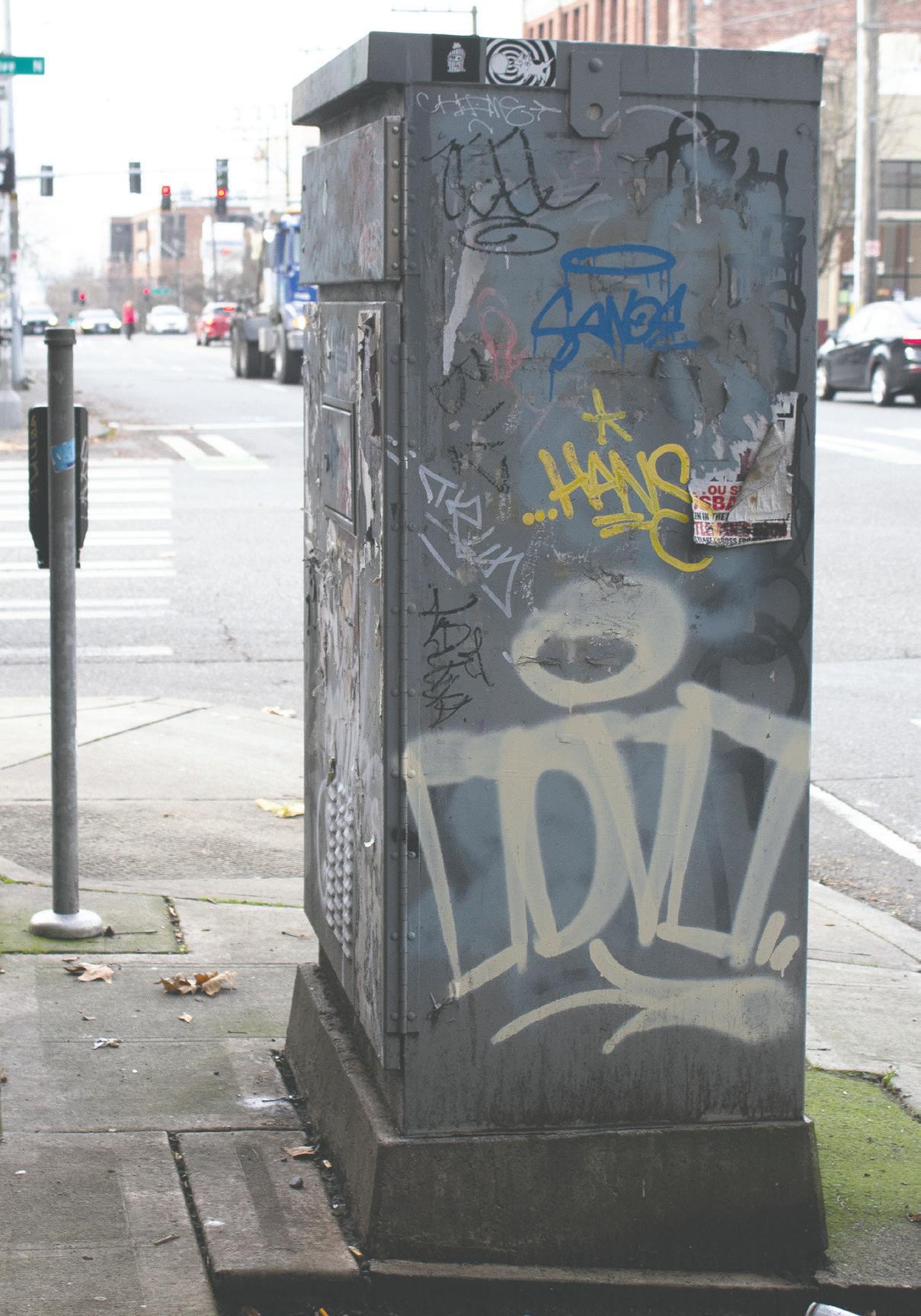
Photo by Jessica Keller Uptown Alliance Tidy Uptown member Heather Pihl states that signal boxes, such as this one seen in Uptown in December, next to intersections are a popular target for taggers.
or section of a wall that is painted with a lighter color. If that isn’t possible, then the paint should be a few shades darker or layers
so the colors bleed through an prevent people from seeing the graffiti underneath. One proactive step Pihl recom-
MakeSeattleYourHome.com
mends, which the Tidy Uptown members are exploring in Uptown, is to commission an artist to paint a mural on a blank wall.
Not all murals are created equal, however. One piece that was painted in January on the back of a building near Dick’s Drive-In features bright colors, stars, arrows and the words, “It’s all good.”
Pihl said, while the bright colors are welcome, she has reservations about that mural because it incorporates “swooshy swoosh” graffiti lettering. She doesn’t recommend murals that incorporate graffiti art because it may encourage others to tag nearby to draw attention to themselves and “affiliate” themselves with the legal piece.
“Having a legal piece is a sought after goal,” Pihl said in an email. “The point of tagging is to be prolific, outdoing other taggers, and what happens is they will tag newspaper boxes, public property, buildings, etc., on the way to and from the legal piece.”
Pihl recommends murals with subject-related art.
“There are just so many kinds of murals that you can apply that beautify the neighborhood that relate locally,” she said.
For more information on the city’s graffiti prevention and removal program, go to https:// www.seattle.gov/utilities/protecting-our-environment/safe-andclean-seattle/graffiti.
For more information on removing graffiti, visit https://www. seattle.gov/utilities/protectingour-environment/safe-and-cleanseattle/graffiti/remove-graffiti.