

Queen Anne &Magnolia
A meaningful expedition
Queen An &Magn
Seattle man to scale African peak to raise awareness about kidney donations
By Jessica Keller QA&Mag News editor
Seattle resident Bobby McLaughlin has had previous invitations to climb Mount Kilimanjaro in Tanzania, but something always led him to turn them down.
Queen
Until now. In March, the former Magnolia resident and 21 other kidney donors, all members of Kidney Donor Athletes, will scale Africa’s highest peak as part of the organization’s mission to raise awareness of the importance of kidney donations and demonstrate that being a kidney donor does not mean giving up adventures.
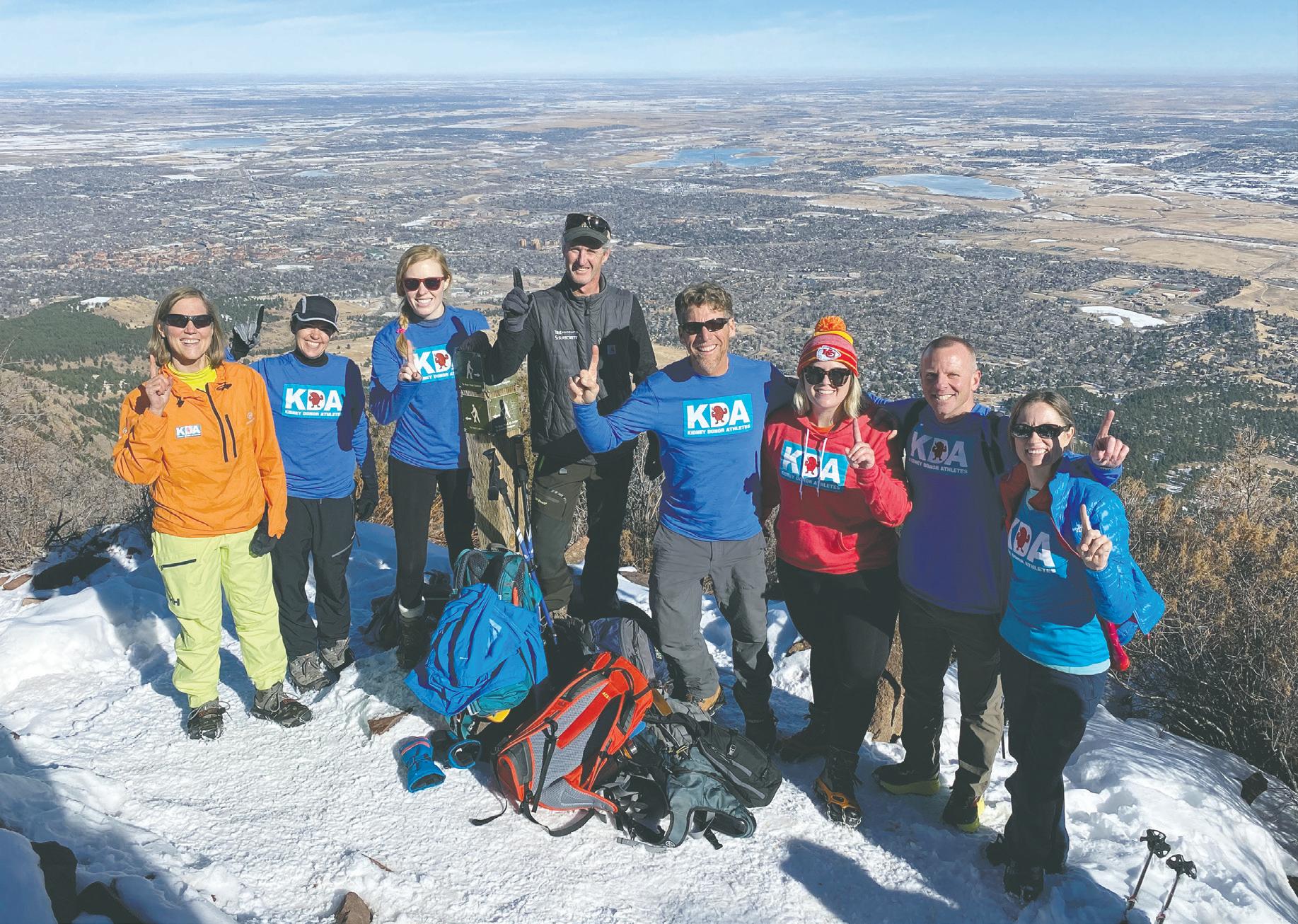
courtesy Bobby McLaughlin
Former Magnolia resident and kidney donor Bobby McLaughlin, second from right, stands with seven other climbers on Bear Peak in Colorado, Jan. 15. The climb was a practice run for their expedition climbing Mount Kilimanjaro, Africa’s highest peak, in March.
“It’s ironic or not ironic, I’ve turned down other opportunities to climb Kilimanjaro because it didn’t quite fit with the timing for my life, and I’m actually really grateful now that this will be my first to do it this way,” McLaughlin said. “No offense to my friends who invited me before, but this will be a powerful, powerful experience.”
Beginning a new journey McLaughlin’s started his journey to kidney donation and Mount Kilimanjaro accidentally in 2016 after he fractured his wrist in a bad bike crash. He didn’t know that accident would
Owner
of new Queen
change his life.
“There’s a lot of times in life where things happen where we might not realize the chain of events of things unfolding, and I didn’t realize at the time, so it went from a really bad bike crash to the best one ever,” McLaughlin said.
Anne
He said all he remembers after his breaking his wrist McLaughlin is the immense pain. The injury was so severe that it required surgery to repair. When he came out of surgery, the surgeon informed him his injury was worse
SEE DONORS, PAGE 3
establishment hopes to give neighborhood residents the ‘bar they deserve’
By Laura Marie Rivera
Contributing writer
Brian Claudio Smith is the force behind Queen Anne’s newest restaurant Bar Miriam. He is the owner/operator of Baker’s in Sunset Hill and is branching out to Queen Anne with the goal of “bringing the neighborhood the bar they deserve.”
Bar Miriam opened Feb. 2 with a local crowd, and Smith is looking forward to welcoming more people from the neighborhood and beyond.
Queen Anne was one of the first places Smith lived in Seattle, and he said he has been eyeing the perfect corner at Third and McGraw for as long as he can remember. Smith said he loves that the people and traffic all pass through the intersection and that
it has a “unique” energy that is separate from Queen Anne Avenue. Bar Miriam is a 21+ bar and restaurant that features cocktails and natural wines. Smith said he hopes it will become the local haunt that all the neighbors will want to frequent.
Once upon a time, audiences could have seen Smith at Seattle Shakespeare Company. He followed a girl who would later

Listing You would like to get Front & Center Exposure? For only $150 each week! (Reg $200) You can be on the front page in this space!! Contact Tammy
Photo
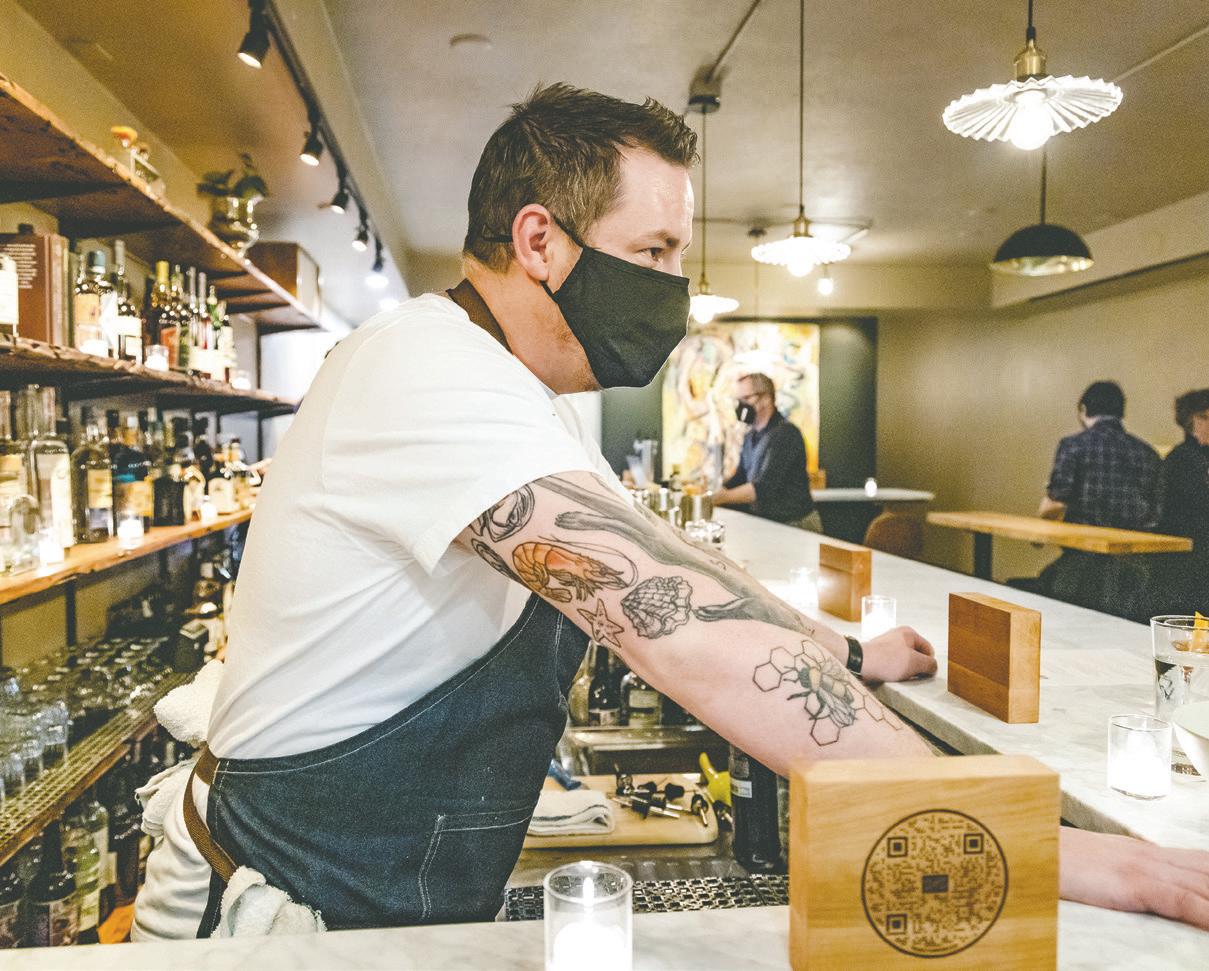
Photo by Thor Radford
Bar Miriam chef Cody Westerfield stands behind the bar at Bar Miriam, 307 W. McGraw St. in Queen Anne. Bar Miriam, a 21 and older bar and restaurant opened Feb. 2.
It is with extreme sadness that we announce the passing of James (Jim) Thomas Smith on January 25, 2022 at 93 years old. An artist, skier, singer, cyclist, sailor, musician, pilot, community activist and devoted husband to his wife of 62 years. His immense talents and thirst for life was an inspiration, and he will be deeply missed by so many.
JAMES (JIM) SMITH
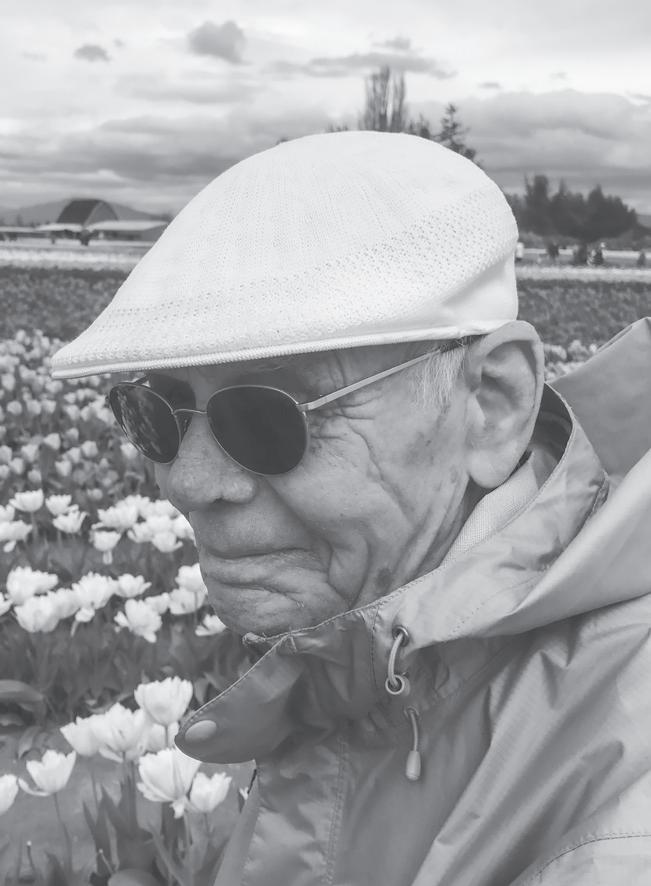
Born in Minneapolis, Minnesota on October 24, 1928 to Thomas Edwin Smith and Lillian Adele (Olson) Smith. He was a middle child to his two beloved sisters, Patricia Anne Rhay and Barbara Jean Ashmore. The family moved to Seattle in 1930 where his father worked as a state politician. In 1945, the governor appointed Jim’s father to the position Of Warden of the Washington State Penitentiary and Jim attended Walla Walla High School. He found many perks of being the son of the Warden living on the prison grounds as inmates took over his normal household chores and the motor pool shop inside the prison restored his Model A. He graduated from Wa- Hi in 1947 and attended Whitman College before enlisting in the U.S. Army. Jim served three years in the army before venturing out to explore his passions in 1951.
Jim headed to New York to pursue a career as an artist. He began working with Gray Advertising Agency while attending Pratt Institute. His heart called him back to the Northwest in 1956, where he attended Seattle’s Burnley Art School and worked as a Graphic Artist throughout his career.
Seattleites would head for a week of skiing at Sun Valley every February. It was there that Jim first met his future wife, Joan Jamieson, although it wasn’t until a year later when they saw each other skiing at Stevens Pass that




the romance began to blossom. After a two yearlong courtship, the couple Was married on August 29, 1959. In 1962, the couple purchased their lifetime home on the Queen Anne hillside overlooking Elliott Bay. Jim served as an active member of the Queen Anne Community Council Board of Trustees for over 50 years. He was also an active member of the Barbershop Harmony Society since 1956 and sang with Seattle Sea Chords men for over 63 years.
Jim and Joan loved the outdoors and adventure. They were avid bicyclists; biking to and from work and enjoying bicycle vacations around Europe. At 68, Jim rode his bike from Seattle to Walla Walla for his 50th High School Reunion. During the ski season you would find them on a mountain skiing Double Diamonds or on the outback. Sailing the waters of Puget Sound in their sailboat was a favorite during the summer months. At 66 years old, Jim became an Ultra-Light pilot and built an “Air bike” from a project kit. He flew out of Arlington Airfield for 17 years, logging 401 hours of pilot time. His lifetime of interests did not stop there. Jim was a member of the Puget Sound Group of NW painters, played the Bagpipes, loved sports cars and adored his cats.
Jim is survived by his loving wife, Joan, along with eight nieces, a nephew, and many grandnieces and grandnephews.
A memorial will be held at the Queen Anne Baptist Church on Sunday, February 27th, at 3:30 p.m.


DENTISTS
For a Healthier You CHIROPRACTORS
Queen Anne Dental Group

Dr. Frank J. Calvo & Family
Cosmetic, Implant, & General Dentistry
400 Boston St. 206-284-7812 www.QADG.net
Chiropractic AND Massage Therapy
than expected, and bone and tissue from a donor was needed to fix it.
Afterward, he was able to exchange communications with the donor family.
“And that was a really powerful experience for me,” he said.
DEADLINES
News Submissions | Wednesday, Noon 206-461-1346 or QAMagNews@pacificpublishingcompany.com
Retail Display Advertising | Wednesday, 1:30 p.m. Tammy Knaggs, 253-254-4972 or ppcadmanager@pacificpublishingcompany.com
Legal Advertising | Friday, noon Jody Vinson, 206-461-1323 legalads@pacificpublishingcompany.com
Classified Advertising | Friday, noon 206-461-1332 or class@pacificpublishingcompany.com
Darrell Gibson, D.C. • Sarah Gibson, D.C. Graeme Gibson, D.C.
David E. Goodall III, LMT
Sarah Rose Nottingham, LMT
Lauren E. Traynor, LMT
SERVING THE FAMILIES OF QUEEN ANN E SINCE 1991 1905 Queen Anne Ave N • 206.282.8275 www.QueenAnneChiro.com
STAFF
Editor: Jessica Keller, 206-461-1310
Art Department: Guy L. Jackson, Production Artist
Subscriber Services | Circulation: Chris Lemmen, 206-461-1337
© 2022 Pacific Publishing Co. Inc.
Mailing address | P.O. Box 80156, Seattle, WA 98108
Physical address | 636 S. Alaska St., Seattle, WA 98108
Queen Anne & Magnolia Worship Services

Sunday Worship at 10am Live Streamed on our Facebook page and YouTube. Simply look for Magnolia Lutheran Church.
Twelfth Church of Christ, Scientist
In Person and Online Church Services
All are welcome & warmly invited to join these healing services
For best audio results, please join by clicking on the link from your computer or smartphone and choose “Call Over Internet”
All Zoom Services Meeting ID: 418 806 2637 https://us02web.zoom.us/j/4188062637
Sunday Services 11:00am – 12noon Pacific
Wednesday Testimonies 7:30pm – 8:30pm Pacific
Christian Science Quarterly Bible Lessons
Our weekly Bible Lesson Sermon may be found here: https://quarterly.christianscience.com/
Additional Healing Resources: ChristianScience.com CSWashington.com SeattleMetroReadingRoom.org
For additional assistance, please contact us at seattle12cs@gmail.com or 206.283.2300 ChristianScienceTwelfthSeattle.com
Shortly after that, he met a woman who was a living kidney donor and heard about her experience and how transformational it was for her. He also met her recipient, as well.
The exchange was so powerful that afterward he called the University of Washington and made an appointment to see if he qualified to be a kidney donor, beginning the extensive six- to eight-month process.
After a series of health checks and exams, McLaughlin was cleared in the summer of 2018, and on Jan. 2, 2019, his surgery was complete.
“It was really great. It was really straight forward and simple for me,” he said.
It was also an easy decision to make.
“I’ve always been one to want to help people in whatever way that I could, and I’ve been most fortunate in my life and my active lifestyle,” McLaughlin said.
After meeting the woman who donated her kidney and learning more about the process, McLaughlin didn’t think twice about donating one of his.
“I had two of them and somebody else needs one of them, and why wouldn’t I do that,” he asked. “Why wouldn’t we do that. Why wouldn’t we do this.”
McLaughlin said he has always lived a healthy lifestyle and been an active, athletic person — he played soccer in high school and college, including at Seattle Pacific University. This benefited him as a kidney donor. After speaking with many donors about their experiences prior to his own surgery, McLaughlin learned that, because he was physically fit, active and in good health prior to the surgery, there was no reason he would have to change that part of his lifestyle. They were not wrong.
“So 12 days after, I was able to do my first hike, although it was not a super hard one or anything like that,” he said.
In April of that year, three months after his surgery, McLaughlin climbed his first 14,000-foot mountain in Colorado and ran a marathon eight months after his surgery.
“It’s been really cool to show after donating my kidney that all of these things are still possible to donors,” he said, adding that is one of the missions of Kidney Donor Athletes, for which he is president.
McLaughlin said what many people don’t know, and what he didn’t realize before starting his journey, is that the body only needs one kidney to survive.
When a healthy person donates a kidney, the other remaining kidney grows to compensate for the loss of the other. McLaughlin said the adjustment period while the kidney is growing is two years,
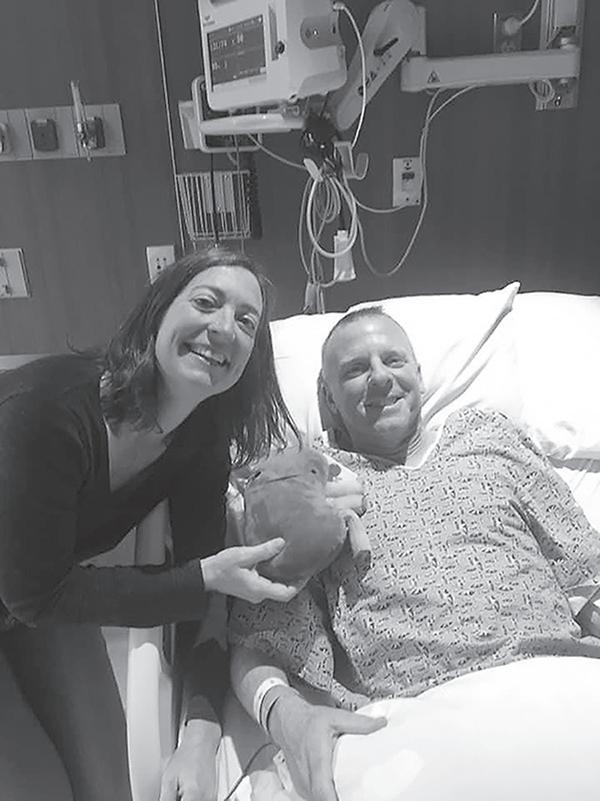
Photo courtesy Bobby McLaughlin Former Magnolia resident and kidney donor Bobby McLaughlin smiles with his donor mentor, Amy, a day after his surgery, Jan. 3, 2019. A lifelong athlete, McLaughlin, who now lives in Ballard, will climb Mount Kilimanjaro in Tanzania with a group of other kidney donors in March.
but after that, the donor’s kidney function is back to normal, with the organ cleaning and filtering the blood as intended. Likewise, the kidney donor can do all the things they did before.
“Our bodies are amazing,” McLaughlin said. “And now I’m going to go stand on the top of Africa and share the message that you can do whatever you want in your life afterwards.”
A trek up a mountain McLaughlin said the expedition up Mount Kilimanjaro originated during a virtual yahtzee tournament among kidney donors. He said a couple who participated said they were planning a trip up the African peak and extended an invitation to everyone to join them.
“It didn’t take us long to say, ‘OK, we’re in,’ ” he said.
From there, the group grew to include other members of his organization.
He said, at that time, it dawned on the group that by sharing their plans with the public they had a “huge opportunity” to share the message of what is possible post donation and dispel the myth that kidney donors can’t live healthy, happy, active lives afterward.
“Most of us would say we’re even more healthy after donating, and we lead a more active and healthy life after donating, and that would be true for me, as well,” McLaughlin said.
McLaughlin and the rest of the climbing party will begin their eight-day trek on March 4 and reach the 19,341-foot summit of Mount Kilimanjaro on March 10, which is also World Kidney Day.
“There’s shorter routes up Kilimanjaro, but the success rate from
this longer route is higher, which is why we’re doing it,” he said, adding the expedition will be led by Embark Exploration Company out of Portland, Oregon.
McLaughlin said he typically trains two to three times a week and has climbed other mountains in preparation for climbing Mount Kilimanjaro. In Washington, the highest he has climbed is Mount Adams, at 12,200 feet, but has climbed up to 14,000 in Colorado.
Not only is this trip important to him and his organization in their mission to raise awareness about the importance of kidney donation, it is exciting to him as an athlete.
“I’m just completely hooked on getting high up,” the former soccer player said. “I totally love it. I love the challenge of it, the reward of it. It fills me with energy every time I go.”
The trip, however, is important to Kidney Donor Athletes because it part of a fundraiser to support the group’s three-year strategic plan of education and advocacy for kidney donation. McLaughlin said roughly 100,000 people are on a waiting list to receive a kidney transplant to improve or save their lives.
To learn more about Kidney Donor Athletes and the climb up Mount Kilimanjaro, visit https:// kidneydonorathlete.org/onekidney-kili-climb/.
People can donate to Kidney Donor Athletes’ fundraiser by going to https://www.gofundme. com/f/kdakiliclimb2022.
To learn more about kidney donation, visit https://kidneydonorathlete.org/wp-content/ uploads/2022/01/Fact-Sheet_Living-Kidney-Donors.pdf.
Why is too much salt bad for you?
The human body uses salt in all kinds of different ways. Salt helps the cells in our bodies do their jobs, it helps the muscles contract and it plays a big part in keeping us hydrated.
But as you’ve pointed out, too much salt can cause problems. My friend Catalina Aragon told me all about it. As an assistant professor at Washington State University Extension, she works with communities all across the state to share information about food and how it impacts our health.
When humans eat food, they can get lots of nutrients such as calcium, potassium, iron and sodium. Sodium is the mineral our body gets when we consume salt. The sodium gets absorbed into the blood and gets delivered around the body through channels called blood vessels.
Eating too much salt can lead to high blood pressure, or hypertension. Over time, high blood pressure can make the blood vessels stiff and narrow. That makes it harder for blood to pump through the blood vessels and deliver all the important things the body needs. High blood pressure can lead to stroke and heart disease.
It’s important to be mindful of how much salt we eat, Aragon said. While it depends on the person and what their doctor recommends, the Dietary Guidelines for Americans generally recommends that people 14 years old and older
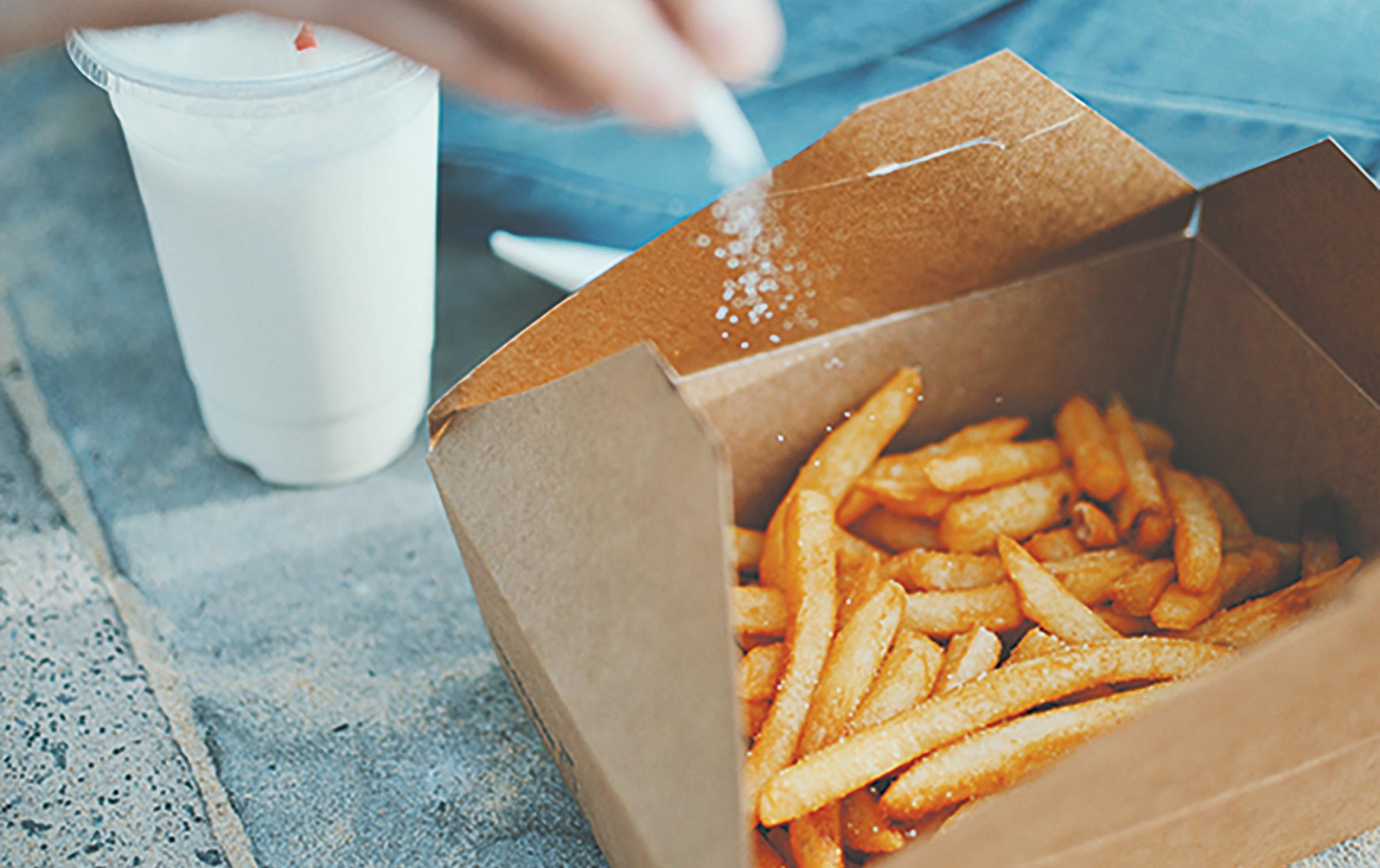
limit sodium to 2,300 milligrams a day. That’s equal to about one teaspoon of salt.
“A lot of people think about the salt they can see and sprinkle on top of food,” Aragon said. “But 70 percent of sodium in the American diet comes from prepackaged and prepared foods.”
She said one good rule of thumb is to read nutrition labels and look at the daily value (DV) percentages per serving. If the amount is below 5 percent of your daily value, that’s a low amount of sodium. If the daily value is above 20 percent, that’s a high
amount of sodium. Maybe you can use these guidelines to check out some of the nutrition labels around your house to learn more about what’s in your food.
Some of the top sources of sodium are bread, rolls, pizza and sandwiches. A lot of people really enjoy salt because it adds flavor to their food, but there are some other ways to make food taste good. Aragon said one thing that can be fun to try is experimenting with a variety of spices in the kitchen. Instead of going right for the salt, you might try something

like garlic, sage, paprika, oregano or even cinnamon. Maybe even a little lemon juice, depending on your recipe.
With help from a grown-up, the kitchen can be a great place to learn more about different types of food and all kinds of science. You can practice your math skills when measuring, learn how different food ingredients interact with each other — and the best part is when you are all finished, you might even be able to eat your experiment.
Sincerely, Dr. Universe
Pruning your life in the garden
“Perfection is achieved, not when there is nothing more to add, but when there is nothing left to take away.”
— Antoine de Saint-Exupéry
Garden writer
Toni Gattone, tonigattone. com, who specializes in inspiring people to enjoy gardening at every age, wrote an inspiring blog post recently. In it, she eschews well-meant but often ineffective “fix it” New Year’s resolutions in favor of taking the gift of winter’s slower pace to assess how to make your life — and garden — grow with ease and beauty.
Erica Browne Grivas Get Growing
She asked a question that hit me like a ton of bricks: “What are you willing to prune out of your garden and your life?”
While the act of pruning a green branch may feel cruel to a novice gardener, when done thoughtfully, it boosts the plant’s health rather than decreases it. There’s even a type called “renewal pruning” done in stages over three years to encourage fresh growth.
The idea of “pruning your life” can feel much the same, as anyone who has “Marie Kondo’d” their indoor clutter can attest.
Case in point: our overgrown four-variety tiered apple espalier, which has not sparked joy in a while. It’s hardly earning its keep since the lower tiers, which are naturally bland yellow apples, are taking over the others. Spokes of waterspouts are shooting in all directions because I forgot to prune again this summer.
The idea was great, but in execution, not so much.
I wondered what I could replace it with that I (and probably passers-by) would enjoy more. Star jasmine or southern magnolia for evergreen winter interest? That would prune away the work of pruning, bagging each apple to prevent coddling moth and cleaning up rotting leftovers from the ground — and my annual guilt at forgetting to prune.

by
A rose grows on a bush at Woodland Park Zoo Rose Garden. While it can be hard to cut spindly stems, pruning encourages blooms on fuller growth on roses.
Photo
Erica Browne Grivas
Puzzle Answers
King County Council’s Kohl-Welles hosting town hall
The past two years of the pandemic have only intensified issues facing King County residents, from housing instability to inadequate access to physical and behavioral health care and community safety.
To further explore these human-centered issues and highlight what King County is doing, residents are invited to join King County Councilmember Jeanne Kohl-Welles for a virtual town hall meeting,
6 p.m. to 7:30 p.m. Feb. 23, with five King County leaders who work in homelessness response, housing, human services and public health. Panelists will include Vazaskia Crockrell, division director for community health service with Public Health — Seattle and King County; Lisa Daugaard, coexecutive director/policy with the Public Defender Association; Marc Dones, CEO of the King County Regional Homelessness Authority; Leo Flor, director of the King County Department of Community and Human Services; and Dennis Worsham, interim director of
Public Health — Seattle and King County. The town hall will be streamed live at, https://www. facebook.com/CMKohlWelles/ videos, but people do not need a Facebook account to attend.
Questions may be submitted in advance or during the event via a Google form. The link to the form, as well as updated information, will be available on Kohl-Welles’ Facebook page, https://www.facebook. com/CMKohlWelles.
For questions about the event, contact Kohl-Welles at jeanne. kohl-welles@kingcounty.gov, or call 206-477-1004.

MIRIAM, FROM PAGE 1
become his wife to Denver and New York City but he said he knew that he always wanted to come back and settle in Seattle.
“I love this city, this climate,” Smith said. “I love it even when it’s cloudy.”
Smith’s acting days are over, but he has now moved his storytelling into hospitality.
“You can tell fun stories through food and dining,” he said. In the effort to create a setting that would inspire community building, Smith hired former Queen Anne resident Peter Dylan O’Connor, whose skills have been on display at Seattle Public Theater, Oregon Shakespeare Festival, Tooth and Nail Construction and many other spaces.
O’Connor describes the new interior as “a great place to sit and hang out.”
“It’s good for conversation and a sense of warmth,” he said.
Bar Miriam features a 27-foot marble bar, a green velvet banquette and stained cherrywood butcher blocks for tables.
On a more personal note, there’s a small piano in the corner with a photograph from 1941 of Smith’s grandmother Miriam. She
had been a strong presence in his life until her death last year at the age of 99, he said.
During his many years in the restaurant industry, Smith has created over 500 cocktails. For this latest endeavor, he is highlighting the concoctions of bar director Stef Rider. Her cocktails, Cloud City Reception Committee and Auntie Whispers — a caraway spirit drink with bubbly grapefruit and an agave-based liqueur with pineapple and absinthe, he hopes will become classics.
“If we are elevating the cocktails, the food must match,” Smith said.
Bar Miriam’s inaugural menu included small plates like Kentucky fried softshell crab and seared scallops with huckleberry borscht.
For this locally sourced and rapidly evolving menu, Smith said he is proud to partner with chef Cody Westerfield. The pair previously worked together at Lecosho, the waterfront favorite that came to a close in 2020.
Smith said he was able to assemble a top-notch staff during this challenging time because of his commitment to fair wages and creating a space for talented people to shine. Bar Miriam has a
semi-open kitchen and a knowledgeable staff, he said.
There is no automatic gratuity or added service charge, but Smith said that guests tend to tip well for good food and great service. These tips are split fairly between the front- and back-ofhouse staff, and the house never takes a cut.
In addition, full-time staff have 100 percent employer paid healthcare at Bar Miriam and Baker’s. Smith proudly reports that Baker’s continued to pay for health insurance during the restaurant shutdown in 2020.
Bar Miriam is a place for “great food and great cocktails with the over-arching goal of making you happy,” Smith said.
At least one resident said the restaurant is a welcome addition to the neighborhood.
“You may feel like you’re in a dream sequence or COVIDinduced fever spell,” Queen Anne resident Barbara Platzer said. “A sliver of a vision for post pandemic joy may have just arrivedwhere the intimacy of catching up with neighbors, beloved Seattle icons and close friends feels heaven sent. Brian and his team treat you to well-poured drinks and easy conversation.”
Photo by Thor Radford
Bar Miriam owner Brian Claudio Smith, right, and bar director Stef Rider survey the bar/restaurant in Queen Anne. The bar and restaurant is named after Smith’s grandmother, who had a strong presence in his life.
Just like an overflowing closet or bookcase stacked from floor to ceiling (ask me how I know), clutter in the garden is just as troublesome.
When negative becomes positive
Negative space is soothing because our brains don’t have to analyze or process it — they just sail on to the next thing to notice. One hallmark of compelling design is that it “reads” easily — or at least some main elements do. Think of rolling hills punctuated by a handful of fir trees, or a curated wall of plants on Instagram — the hills highlight the trees, as the wall space does the pothos and philodendron.
Negative space needn’t be empty — it just needs to be made up of one thing, whether that’s a sea of sedges, sunflowers or paving.
Please skip the lawn, however. While used effectively in parks and golf courses, a grass lawn is my least favorite version of negative space.
A green blanket is not worth the cost in soil health, time and maintenance.
It’s worth considering what tasks you enjoy the most — would you rather spend your summer arranging flowers from a cutting garden, or eating home-grown salads? Shaping a topiary, or mowing a wildflower meadow?
Conversely, which tasks do you compulsively avoid? Prune them away as best you can.







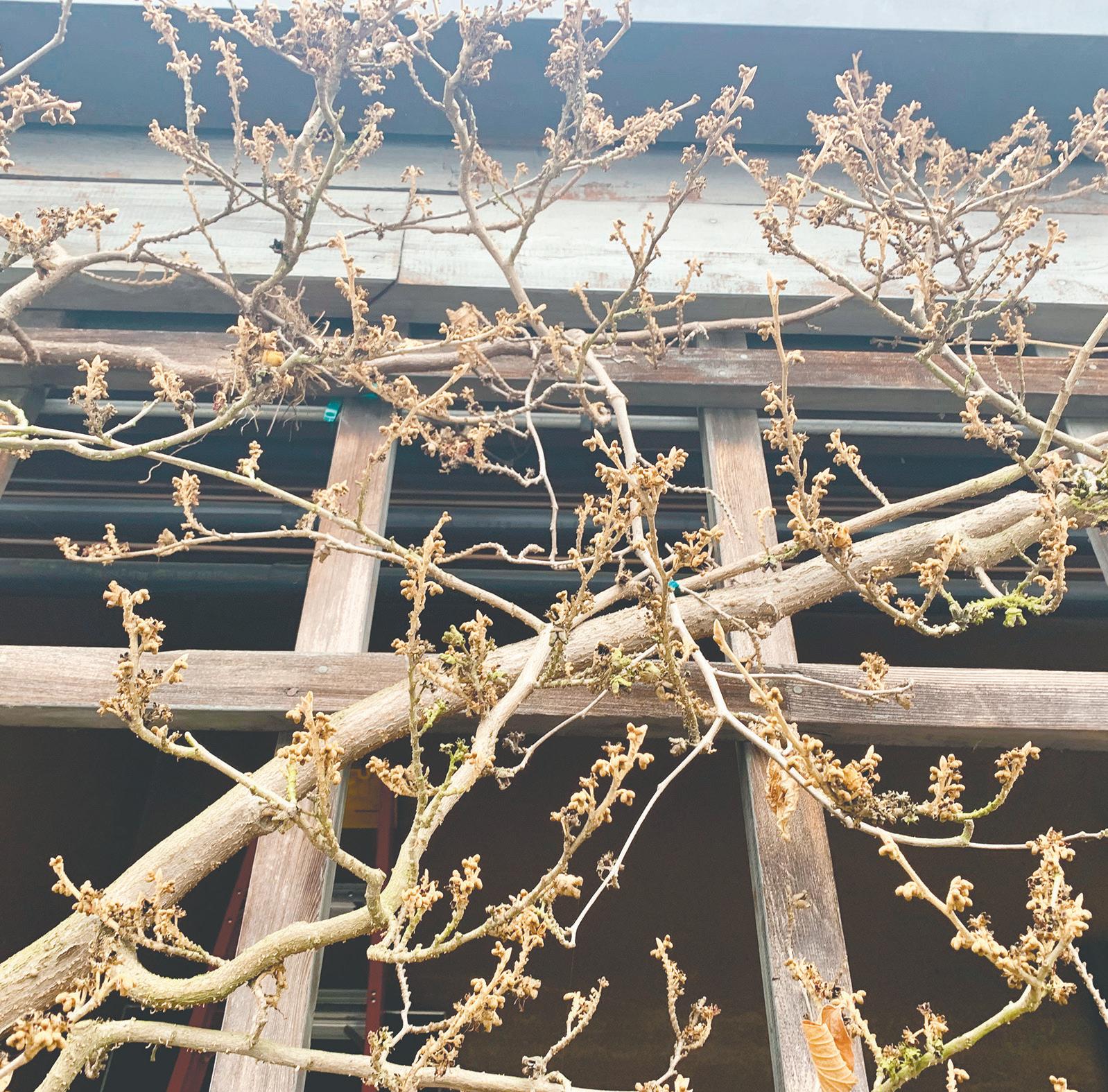
to grow.
If you have had it with weeding, plant a good ground cover that can play nicely with your plants. Streamlining your efforts down to what you love to see and take care of will reap benefits for years to come in your body, which will have fewer aches, in your mind, which will have a shorter to-do list, and in your garden, which will be more beautiful and peaceful. Casting around our yard, I see we need some negative space, more repetition, as well as more winter interest.
Years of cramming plants in where they mostly fit and usually grow has led to a Jackson Pollockstyle landscape rather than an intentional one.
There are numerous examples of plants that are hogging sun and nutrients from their neighbors or just adding visual chaos. There could be a lot of digging in my near future but imagining the calm to come will keep me going. What in your life could use some pruning attention?

February features fun events at Seattle Center
The month of February has a variety of events to offer in venues across Seattle Center’s campus. Artists at the Center (IP/F) features pop-up performances of emerging artists on the Seattle Center grounds to commemorate Climate Pledge Arena’s inaugural year. The program presents dance with El Sueño Dance Day, 2 p.m., Feb. 20, Armory Stage; and Gender Tender, 2 p.m., Feb. 27, Fisher Pavilion Rooftop.
Seattle History Worth Preserving: Buffalo Soldiers Exhibit (IP/F) invites visitors to learn why Fort Lawton is essential to the historical narrative of Seattle and how hundreds of Buffalo Soldiers were stationed there. The exhibit presents Pearl Django, Feb. 20, and Lance Buller and Road Stars, Feb. 27, on the Armory Main Stage. Book-It Repertory Theatre offers The Three Musketeers (V, audio drama), through June 30. It’s heart-pounding, winespilling, swashbuckling at its finest when young adventurer endeavors to seek his fortune, especially when he befriends three musketeers. Together they protect the realm, with detours into illicit love affairs and palace intrigue along the way. An on demand video of Beowulf (V) is available through Feb. 27, Center Theatre.


Classical KING FM 98.1 broadcasts Unmute The Voices, (V/F), 3 p.m., Feb. 19, on-air and online. The monthly radio show celebrates the classical artistry of composers and performers from BIPOC communities.
Climate Pledge Arena presents Battle of the Sound (IP), 6:05 p.m., Feb. 26. Tickets for The Who go on sale at 10 a.m. Feb. 11.
Seattle Children’s Theatre tickets to live (IP) experiences in 2022 are now on sale. Offerings include Red Riding Hood, through March 6.
Seattle Opera presents Blue(IP), 7:30 p.m. Feb. 26, and 2 p.m. Feb. 27 through March 12. From the award-winning team of librettist Tazewell Thompson and composer Jeanine Tesori comes Blue, a portrait of contemporary African American life: of love and loss, church, sisterhood and most importantly, family; Becoming Blue: A Talk with Tazewell Thompson (IP/V), 7 p.m., Feb. 25, Tagney Jones Hall; and Blue Performance Talks (IP), 6:30 p.m., Feb. 26, and 1 p.m., Feb. 27, McCaw Hall.
In-person events at venues across the grounds require attendee health measures such as masking, currently a state mandate, and proof of vaccination or recent negative COVID test, a King County mandate. To learn more about virtual and in-person activities at Seattle Center this month and beyond, visit www.seattlecenter.com, or call 206 684-7200.






Photo by Erica Browne Grivas Hamamelis — witch hazel — is espaliered on trellis at the Center for Urban Horticulture. Pruning can give a gardener space