Queen Anne &Magnolia
courtesy Bayview
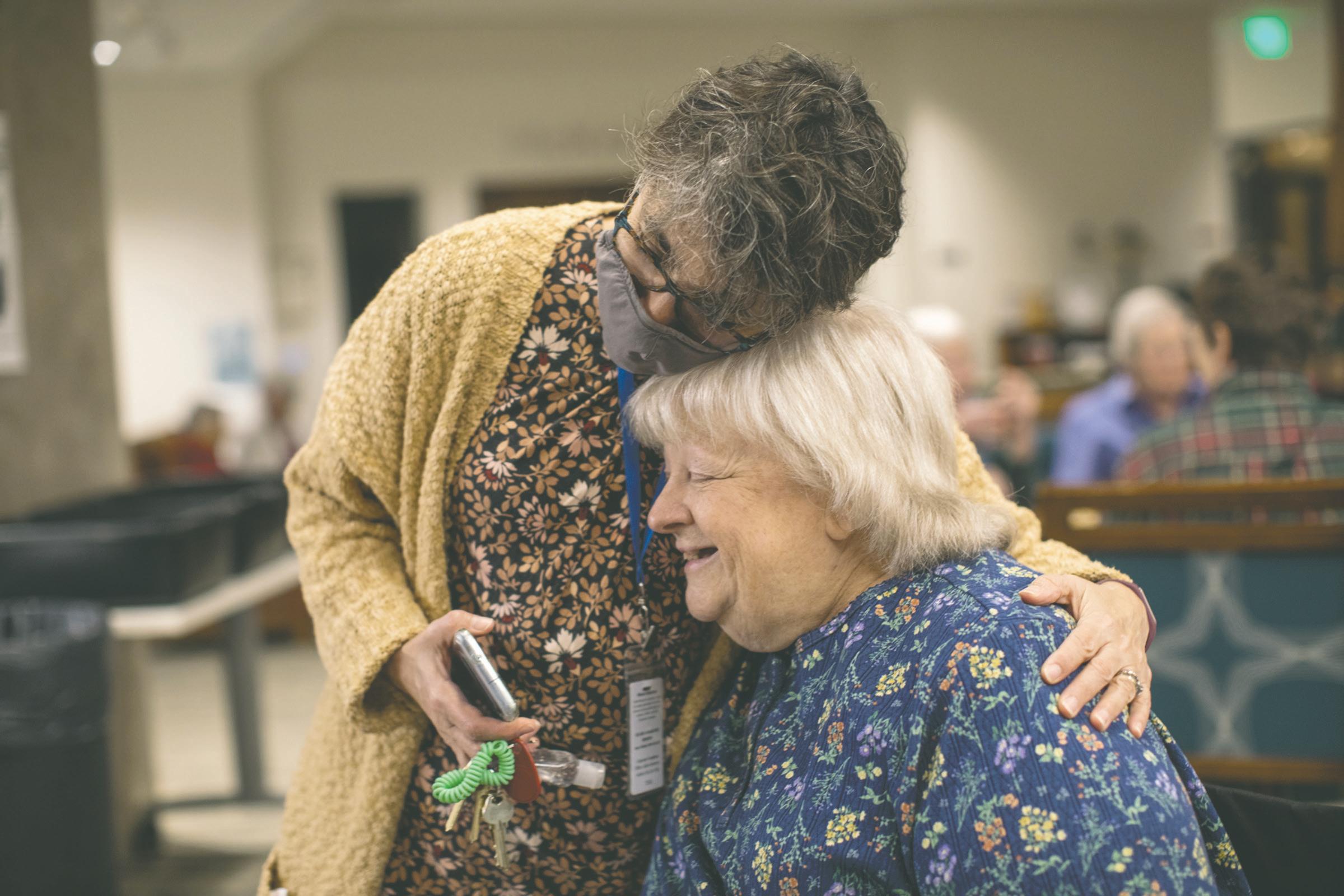
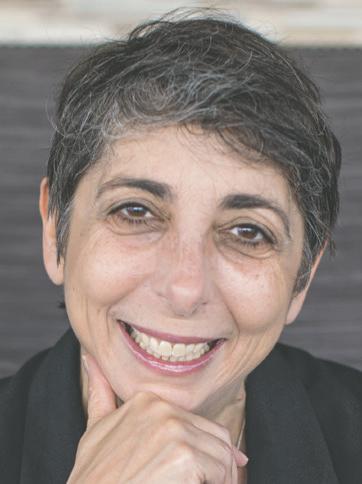
Bayview CEO Nancy Weinbeck hugs Janis, a Bayview resident, during a happy hour/tree-lighting ceremony recently. Bayview has been able to offer residents more opportunities by hosting test-only events, which require prior negative COVID tests.
A careful balancing act
Bayview weighs resident, staff safety with more gatherings
By Jessica Keller QA&Mag News editor
Ever since the first cases of COVID-19 were found in
Washington state, Bayview Life Plan Community in Queen Anne has followed strict protocols to keep both residents and staff safe, which has meant limiting
programs and activities previously offered.
Since then, Bayview administrators have researched and adopted different strategies they hope will allow residents to enjoy greater access to each other and programs.
One of the first things Bayview administrators did in 2021 was set up a program to detect the
COVID-19 virus in areas of the facility through weekly surface testing.
Now Bayview has gone a step further by partnering with a lab company to process COVID-19 tests for any staff and residents that are taken in house twice a week. The turn-around time is
SEE BAYVIEW, PAGE 5
District 36 senator won’t seek re-election
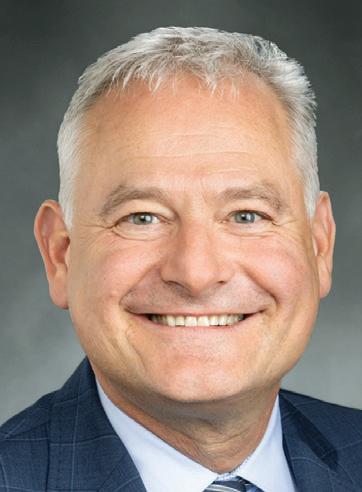
State Sen. Reuven Carlyle, D-Seattle, announced Monday he will not seek re-election in 2022.
Carlyle, 56, represents the 36th Legislative District, which includes Queen Anne, Magnolia, South Lake Union, Belltown, Ballard and Greenwood. He has served in both the state House and Senate in his 13-year career in the Legislature.
Carlyle first joined the Legislature after he was elected to the House of Representatives from the 36th Legislative District in 2008, when he succeeded 36-year veteran Rep. Helen Sommers. There, he served as chair of the Finance Committee and as a budget writer. He was elected to
the state Senate for the 36th in 2015 when he succeeded Sen. Jeanne KohlWelles, who is now a King
County Council member. Carlyle has been elected and re-elected six times since 2008.
“The ideal of servant leadership in our part-time citizen legislature — overseen by an engaged public
and a rigorous and independent media — is core to the integrity of our constitutional republic,” Carlyle said in a statement. “It’s a profound honor to serve as a state legislator. We are the quiet warriors in the trenches of representative democracy. I am proud that during my time leading the Senate’s climate strategy our state has passed the strongest, most comprehensive, and impactful suite of climate legislation in the United States. We are widely recognized as a premier leader in the world in tackling climate change as the most important issue of our era.
“Civic engagement is part of the soul of my DNA,” Carlyle continued. “I will remain passion-
ately and enthusiastically engaged at every level in the quality of life of our community. It is now time for me to consider new opportunities for leadership in other public and private sector arenas. In gratitude for the overwhelming support I’ve enjoyed from voters, I want to repay that respect and voluntarily stand aside and allow sufficient time for everyone in our community to have a fair and equal chance to seek this important office.
“People elect us to listen, learn, do our homework and make good policy decisions and not tremble
SEE CARLYLE, PAGE 3




Photo
Reuven Carlyle
COVID testing site open at Seattle Pacific University
Residents can now sign up for appointments to get tested for COVID-19 at Seattle Pacific University.
The Curative testing kiosk is open from 8:30 a.m. to 3:30 p.m. at SPU’s Student Union, 315 W. Bertona St. People can make an appointment via https:// book.curative.com/search?utm_ medium=email&utm_source=gov delivery#9/47.5357/-122.3503.
Because this is not a drive-up site, people can park in the SPU parking lots.
The new testing site was announced by Seattle Mayor Bruce Harrell last week.
“As the Omicron variant continues to surge in our community and around the country so has demand for COVID-19 testing. We know that testing — along with vaccines, masks, and social distancing — is key to tackling this pandemic, which is why Seattle is launching a new testing site and swifter tests through our partnership with Curative,” Harrell said in a press release.
Existing Curative sites at the
Paramount Theater, Convention Center and Garfield Playfield will be adding expanded capacity and a new type of rapid PCR test to deliver faster results later this month. Rapid PCR tests detect viral RNA, which is a more direct and sensitive method of detection, leading to higher accuracy of test within two hours. Locations for new rapid PCR tests include:
Paramount Theatre, 911 Pine St.; open noon to 7 p.m.
WA State Convention Center, 705 Pike St.; open 7:30 a.m. to 3 p.m.
Garfield Playfield-Tennis Court, 501-653 25th Ave.; open 7:30 a.m. to 3 p.m.
Additional city testing sites include fixed locations with UW Medicine and Curative kiosks placed throughout Seattle Appointments are strongly encouraged at all locations and sites. Because of an increase in testing volumes at all sites, longer wait times in line should be expected.
Results may take up to 48 to 72 hours for non-rapid PCR tests.
For more on any of the sites, visit www.seattle.gov/covid-19-testing.
UW Lab locations:
Aurora Drive Through Harborview
Rainier Beach
SODO Drive Through University District
UW Medical Center Northwest
West Seattle
Visit the UW website for more locations, https://www.uwmedicine.org/coronavirus/testing.
Curative locations: Paramount Theater
Seattle Center
Summit Public School: Atlas Don Armeni Boat Ramp / West Seattle
Mount Baker Light Rail
WA State Convention Center
Garfield Playfield
Seattle University
Gas Works Park
Lower Woodland Park
Northgate
Seattle Pacific University
Visit the Curative website for more locations: https://book.curative.com/ search#9/47.5357/-122.3503.
State launches at-home rapid COVID-19 test portal
In an effort to increase access to at-home rapid tests across the state, the Washington State Department of Health has launched a statewide portal that will allow COVID-19 tests to ship directly to households.
Washington state residents can visit www.sayyescovidhometest. org to order rapid-antigen COVID tests online, and will receive those tests delivered at no cost. People can order up to five free tests for a household. Currently, supplies are limited, but tests will be restocked as they become available.
People can still get COVID-19 tests through any of the following options:
• Order four free at-home COVID-19 tests through the federal program COVIDtests.gov.
Seattle Homes Fair
slated for this weekend
Seattle Department of Constructions & Inspections is hosting the Seattle Home Fairs online Saturday and Sunday.
Both dates will have the same presentations to give people a couple of opportunities to attend the sessions that most interest them.
The schedules for both Saturday and Sunday are:
From 10 a.m. – 12 p.m. (RSVPs are appreciated.)
• Landslide preparation: Learn
• Purchase an at-home test at local retailers and pharmacies.
• For residents with health insurance, most insurers will now directly cover or reimburse up to eight at-home tests per month, for each person on a plan.
• Find a test at a nearby testing location.
It is possible to report a positive test result from an at-home test through the state’s COVID-19 hotline. Hotline personnel will determine next steps based on a resident’s zip code so results can be recorded and reported. Staff can also guide callers through any questions they may have.
The state hotline, 1-800-5250127 (then press #), is available from 6 a.m. to 10 p.m. Monday and 6 a.m. to 6 p.m. Tuesday to Sunday. Language assistance is
how to prevent landslides.
• Tree regulations: Learn about tree rules and how the city enforces tree codes.
• Accessory dwelling unit: Learn about accessory dwelling unit rules, permitting and addressing issues.
From 1 p.m. to 3 p.m. (RSVPs are appreciated.)
• Earthquake home retrofit: Learn how to protect homes in case of an earthquake.
• Rental housing: Learn about landlord and tenant rights and responsibilities.
• Floor Area Ratios in singlefamily zones: Learn about some
available.
DOH encourages all smartphone users to download or enable WA Notify, https://www.doh. wa.gov/Emergencies/COVID19/ WANotify, for exposure notifications and to plug in positive results. Those using WA Notify at the time they test positive for COVID-19 can record their positive test results directly from their devices.
It is important to note that Washington is experiencing a surge of cases across the state, so if people who have symptoms should assume they have COVID-19 even if they don’t have a test to confirm it, and stay home if sick.
For information on Seattle COVID-19 testing sites, visit www. seattle.gov/covid-19-testing.
new single-family standards on how to calculate floor area ratio and how it relates to lot coverage. During these presentations, people will hear from knowledgable staff on some of the most requested topics.
After the presentation, participants can ask questions specific to their projects, property or situations.
Sessions will be recorded and videos posted on the SDCI website.
People can sign up for the different presentations by going to https://buildingconnections. seattle.gov/.
Puzzle Answers
Man arrested after pulling gun on family in Magnolia
By Public Affairs
Seattle Police Department
Police arrested a 62-year-old man for assault and harassment Jan. 18 after he pulled a gun on two brothers as they were teaching their mother to drive in Magnolia.
Around 10:45 p.m., the family called 911 and reported a man with a gun was following them in a black Chevrolet Suburban as they drove through Magnolia.
Police met the family at a gas station and contacted the Suburban driver a few blocks away.
The brothers — 19 and 24 —told officers they’d been teaching their 43-yearold mother to drive in the 2600 block of Thorndyke Avenue West when they saw a man out walking his dog.

The man approached their car, spoke briefly with the victims, left, and then returned a short time later with a gun. Then
FROM PAGE 1
in the political winds,” Carlyle continued. “More than anything, I have tried to be a policy workhorse who can count votes and pass historically significant legislation. I’ve tried to live by the guiding principles of bipartisan relationships, negotiations, and compromise. I reject rigid ideology and hit-and-run politics in favor of the grace of dialogue.
“While raising our four wonderful children with my wife, Dr. Wendy Carlyle, and working full time in my professional career as a technology and sustainability entrepreneur, I have tried to enhance the dignity of public service. I sometimes failed and I apologize deeply for times that I missed the mark. I have worked to represent the gracious people of my community with a sense of courageous honesty, curiosity, passion, solid data, intellectual rigor and deep listening.
In his statement, Carlyle thanked his wife and their children, Adi, Liat, Zev and Nava, for their “unyielding support of my passion for public and community service.”
According to a press release, Carlyle, chair of the Senate Environment, considers among “his proudest work cap and invest carbon pricing, 100 percent clean energy, a clean fuel standard, environmental justice, public disclosure of tax exemptions, reforming marijuana and telecommunications taxation, higher education finance, foster youth success and leadership on national data privacy policy.”
According to the press release, as a member of the Legislature, Carlyle has actively supported a range of bills, amendments, budget language and other initiatives that include: New investments in K-12 public education; major funding for educational success of youth in foster care; renewable energy and utility system reliability, oil and coal train safety; co-founding the University of Washington Center for Human Rights, UW, Western Washington University and support for higher education institutions across the state; 100 percent pro-choice record
for women’s reproductive freedom; 100 percent support of marriage equality and LGBTQ rights; 100 percent gun safety record; budget help to reopen Magnolia Elementary School and assist other Seattle Public Schools, major funding for the Pacific Science Center, Nordic Heritage Museum, KEXP, Daybreak Star Indian Cultural Center, Treehouse, Jewish Family Services, Seattle Opera, Seattle Aquarium and other art and cultural organizations; Rapid Ride D and other public transportation, improved safety on the Aurora 99 bridge; support for physicians, hospitals and the medical community; natural resources; water quality and stormwater protection
DENTISTS
the man reportedly tapped the barrel of the gun on the victims’ car window, and the victims drove away.
The victims soon noticed the suspect was following them in his Suburban, flashing its high beams and pulling behind and next to their vehicle.
The victims called 911 and pulled into a gas station, where they met with officers.
When police contacted the suspect, he admitted he had several firearms in his vehicle. Police recovered three handguns, arrested the man for assault and harassment, and booked him into the King County Jail.
Police reports SPD West Precinct
BANK ROBBERY: On Jan. 18 at 4:04
under Aurora 99; public disclosure of tax preferences; support for the aviation sector; strong support for the technology sector; smarter use of technology in government.
According to the press release, Carlyle has sponsored unsuccessful legislation to repeal the death penalty, which passed the Senate multiple times with bipartisan support but failed to receive a vote in the House.
Carlyle also founded the Legislature’s Jewish Caucus.
During his service, Carlyle received the Achievement Award from the National Caucus of Environmental Legislators; he was named the Washington Conservation Voters Legisla-
CHIROPRACTORS
p.m., an unknown male robbed the Chase Bank located at 2424 34th Ave. W. in Magnolia.
The suspect was described as a male in his 20s, wearing a grey beanie, black mask and black pants. According to the police report, the suspect was armed with a semiautomatic handgun.
The suspect was described as loud and aggressive, demanding all the money. The victim complied and the suspect fled with $2,000 in cash, according to the police report.
CAR JACKING: At 7 p.m. Jan. 18, near Seattle Center, an unknown suspect or suspects took a victim’s car at gunpoint. The victim’s dog was in the car when it was taken. The car was not located, and the dog is still missing.
tor of the Year and elected to the Boys & Girls Club Alumni Hall of Fame. He also received special honors by Treehouse, Washington Coalition for Open Government,
UW Center for Human Rights and Pacific Science Center, and he participated in the UN Climate Summit COP26 and the Aspen Institute of Germany.
Queen Anne Dental Group Queen Anne & Magnolia Worship Services

Dr. Frank J. Calvo & Family Cosmetic, Implant, & General Dentistry 400 Boston St. 206-284-7812 www.QADG.net
DEADLINES
News Submissions | Wednesday, Noon 206-461-1346 or QAMagNews@pacificpublishingcompany.com
Retail Display Advertising | Wednesday, 1:30 p.m. Tammy Knaggs, 206-461-1322 or ppcadmanager@pacificpublishingcompany.com
Legal Advertising | Friday, noon Jody Vinson, 206-461-1323 legalads@pacificpublishingcompany.com
Classified Advertising | Friday, noon 206-461-1332 or class@pacificpublishingcompany.com
Chiropractic AND Massage Therapy
SERVING THE FAMILIES OF QUEEN ANN E SINCE 1991
Darrell Gibson, D.C. • Sarah Gibson, D.C. Graeme Gibson, D.C.
David E. Goodall III, LMT Sarah Rose Nottingham, LMT Lauren E. Traynor, LMT
1905 Queen Anne Ave N • 206.282.8275 www.QueenAnneChiro.com


Twelfth Church of Christ, Scientist In Person and Online Church Services
All are welcome & warmly invited to join these healing services
For best audio results, please join by clicking on the link from your computer or smartphone and choose “Call Over Internet”
All Zoom Services Meeting ID: 418 806 2637 https://us02web.zoom.us/j/4188062637
Sunday Services 11:00am – 12noon Pacific
Wednesday Testimonies 7:30pm – 8:30pm Pacific
STAFF
Editor: Jessica Keller, 206-461-1310
Art Department: Guy L. Jackson, Production Artist
Subscriber Services | Circulation: Chris Lemmen, 206-461-1337
© 2022 Pacific Publishing Co. Inc.
Mailing address | P.O. Box 80156, Seattle, WA 98108
Physical address | 636 S. Alaska St., Seattle, WA 98108
Christian Science Quarterly Bible Lessons
Our weekly Bible Lesson Sermon may be found here: https://quarterly.christianscience.com/
Additional Healing Resources: ChristianScience.com CSWashington.com SeattleMetroReadingRoom.org
For additional assistance, please contact us at seattle12cs@gmail.com or 206.283.2300 ChristianScienceTwelfthSeattle.com
CARLYLE,
Dr. Universe: How does hail form?
During a thunderstorm, there are often lots of tiny water droplets in the clouds that form precipitation like water, snow or hail. But that precipitation doesn’t always fall right to the ground.
Sometimes a falling raindrop will get swept back up in a current of air. The air current can carry the raindrop to higher parts of the thunderstorm cloud where temperatures are below freezing.
Under these super cold temperatures, a raindrop will freeze. Then, other water droplets will start clinging to the frozen droplet. This is how hail, or a hailstone, begins to form.
That’s what I found out from my friend Jonathan Contezac, a field meteorologist with AgWeatherNet at Washington State University.
“As long as the updraft within the storm is strong enough to keep this hailstone suspended in the atmosphere, it’ll continue to grow. If it gets too heavy, it will fall to the earth, or if the updraft weakens, it will fall to the earth,” Contezac said.
While it may not hail very often in places like San Diego, there are some regions that experience really intense hailstorms.
According to the National Severe Storms Laboratory, Florida has the most thunderstorms, but Nebraska, Colorado and Wyoming get the most hailstorms.
In the summer, when humidity and warmth fuels thunderstorms,

the region can experience anywhere from seven to nine days of hail. It’s no wonder this part of the country has even been given the name “hail alley.”
Often hailstones are about the size of a pea, but sometimes they can grow to the size of grapefruit. Contezac told me that the size of a hailstone depends on how long it stays up in the storm. As the hailstone gets tossed around, new layers of ice can form around it. In fact, if we look at a hailstone
cut in half, we might just be able to observe some icy rings. They would look sort of similar to the rings you might find if you sawed open a tree trunk. The way the icy rings look can tell us a bit about the hailstone’s journey through the storm. A white, cloudy ring of ice means the water droplets froze very quickly as they met the hailstone. The water froze so fast, some air bubbles were even left in the water which made it appear cloudy.
Naked in the garden
cranky, officious woman with whom he is hopelessly in love.
Winter in the Pacific Northwest allows us to see nature disrobed.
From November into March we get to enjoy the sculptural beauty of deciduous trees and shrubs out of leaf. This spectacle is at its peak in January. Autumn debris is raked away; Christmas lights are packed away. The low crawling sun shines its light on and through these powerful forms.
Chattering birds embellish branches, and the acrobatics of squirrels aren’t shrouded in foliage. Nature’s artful arrangement of branches and twigs juxtaposed against our muted silver skies is horticultural filigree. Low growers form a network over dormant beds or swaths of evergreen ground cover.
A spray of bare limbs and branches against a garden wall or the side of a house complement the architecture like a veil of loose lace over the face of an 18th century beauty. It’s an aesthetic that often goes undiscovered, but once ignited in the psyche, it can become a gentle and pleasing obsession.
In his poem “My November Guest,” Robert Frost celebrates the passions of a somewhat
“She loves the bare, the withered tree….” Frost tells us, attesting to her haughty but endearing ability to savor the subtle.
Once, when I was writing for a native born (and hopelessly geocentric) editor in California, I pitched a story on deciduous trees in winter. “Oh no!” he said in a condescending voice. “Readers don’t want to read about that. Most species here are broadleafed evergreens … Western privilege trees.” Western privilege trees? Please … I turned my back, rolled my eyes, but kept my cool. Then this dogmatic editor announced that he’d be going to a remote part of Asia for a month, pretty much out of touch, and his assistant editor would be in charge. His plane was barely off the runway when I pitched the story to the assistant, this time with photographs and a recitation of the entire Frost poem. I channeled my ancestors, the rolling grandiloquence of the Irish, the showmanship of the Jewish.
It worked! The story got approved and landed in print.
Positive comments from subscribers fell on the desk of our Readers Service Department like leaves in October. The real payoff
came when one of my sentences was quoted at the annual editorial conference as the the best line of the year: “When I visit a garden in winter and don’t see any defoliated deciduous trees and shrubs, I feel as if I’ve been to an art museum and haven’t seen any nudes.”
Smug as I felt about outfoxing that editor’s California horticultural arrogance, every glowing word I wrote about trees out of leaf was from the heart. I love them.
Oaks, with their massive and marvelous crowns, are among the most spectacular, towering above most everything around them. The delicacy of the deciduous magnolias is striking. Lofty and grand, Magnolia campbellii, M. dawsoniana and M. denudate punctuate the skyline. When it comes to intricacy of branching pattern and winter interest, nothing can surpass the common magnolia soulangeana. Little wonder it appears so often in Chinese scroll paintings.
Smaller, garden-scale trees for naked winter beauty are aplenty. Crepe myrtle (Lagerstroemia fauriei) gifts the garden with its smooth, blondish bark in addition to noble structure.

When we see a ring of clear ice, it tells us that droplets were freezing more slowly onto the hailstone. There was enough time for the air bubbles to escape before the water froze, so the ice looks clear.
While some hailstones make the journey to Earth’s surface, there are other hailstones that simply melt away on their journey down from the atmosphere. Hail might make us take cover, but it sure makes me curious,
too. Who knows, maybe one day you will become a meteorologist and help us learn more about our planet’s incredible weather.
Sincerely, Dr. Universe

Photo by Mary Henry Japanese maples are a no-fail choice for trees with year-around interest in the garden, not the least of which is their winter inthe-nude beauty. Several have very colorful bark, like this A.p. ‘Bihou’ with its yellow branches.
By Steve Lorton Tree Talk
Senior Scene Savvy Senior: How to get your affairs in order
Dear Savvy Senior, I would like to get my personal, legal and financial information organized so my kids will know what’s going on when I’m no longer around. Can you offer any tips on the best way to do this?
Unorganized Emma
Dear Emma,
Organizing your important papers and getting your personal and financial affairs in order is a smart idea and wonderful gift to your loved ones. Here are some tips to get you started.
GET ORGANIZED
The first step in getting your affairs in order is to gather up all your important personal, financial and legal information so you can arrange it in a format that will benefit you now, and your loved ones later. Then you’ll need to sit down and create various lists of important information and instructions of how you want certain things handled when you die or if you become incapacitated. Here’s a checklist of areas you need to focus on.
PERSONAL INFORMATION
Contacts: Make a master list
of names and phone numbers of close friends, doctors, and professional advisers such as your lawyer, accountant, broker and insurance agent.
Medical information: Include a list of medications you take, along with any allergies and illnesses.
Personal documents: Include such items as your birth certificate, Social Security card, marriage license, military discharge papers, etc.
Secured places: List all the places you keep under lock and key such as safe deposit boxes, safe combination, security alarms, etc.
Digital assets: Make a list of all your digital assets, including everything from social media accounts to online banking accounts to home utilities that you manage online. It should include usernames and passwords. Use Rutgers Digital Assets Inventory Worksheet (njaes.rutgers.edu/ money/pdfs/digital-assets-worksheet.pdf) as a guide.
Pets: If you have a pet, give instructions for the care of the animal.
End of life: Indicate your wishes for organ and tissue donation and write out your funeral instructions. If you’ve made prearrangements with a funeral home include a copy of agreement, their contact information and whether you’ve prepaid or not.
LEGAL DOCUMENTS
Will, trust and estate plan: Include the original copy of your will and other estate planning documents you’ve made.
typically two days, Health Services Administrator Joel Smith said.
While staff in regulated areas have always been tested twice a week to ensure their safety as well as that of Bayview’s most vulnerable residents, the weekly testing program is free and now open to independent living residents.
Combined with the environmental testing, this second community-wide test-based strategy has allowed Bayview to open up activities, events and programming.
Larger events that require eating or where social distancing is not possible are designated “test-only events,” which are open to all independent living residents, and require participants to show a negative test prior.
For Bayview’s purposes, a negative COVID test is good for seven days. The test is only “a snapshot of a moment of time when the test was taken,” however, Jill Chang, Bayview director of marketing and sales, said.

Financial power of attorney:
This document names someone you trust to handle money matters if you’re incapacitated.
Advance health care directives: This includes a living will and medical power of attorney, which spell out your wishes regarding your end-of-life medical treatment when you can no longer make decisions for yourself.
FINANCIAL RECORDS
Financial accounts: Make a list of all your bank accounts, brokerage and mutual fund accounts, and any other financial assets you have.
Debts and liabilities: Make a list of any loans, leases or debts you have – mortgages owed, car loans, student loans, medical bills, credit card debts. Also, make a
given, “frequent and consistent testing is recommended to mitigate Bayview’s risk of exposure,” Chang added.
While the activities are planned taking into consideration COVID-19 risks, some of the events Bayview has hosted in the past include a wine social, music event and town hall, which were all well received, Chang said.
list of all credit and charge cards, including the card numbers and contact information.
Company benefits: List any retirement plans, pensions or health benefits from your current or former employer including the contact information of the benefits administrator.
Insurance: List the insurance policies you have (life, longterm care, home, auto, Medicare, Medigap, prescription drug, etc.) including the policy numbers, agents, and phone numbers.
Property: List real estate, vehicles and other properties you own, rent or lease and include documents such as deeds, titles, and loan or lease agreements.
Taxes: Include the location of your tax records and your tax preparer’s contact information.
“For the last year and a half to almost two years, there’s been a time where you just haven’t seen people smile much, you haven’t seen people be social, you haven’t seen people interact with each other, and for the first time, you are seeing people begin to really socialize again,” Chang said. “It’s like people are coming back to life again.”

Because exposure can occur any time after the COVID-19 is
Opening up the events for independent living residents has brightened spirits, especially during the holiday season, Chang said.
“It really signalled, I think, a lot of hope for the end of the
year, and I think going into 2022, and that’s such a difference from [2020],” she said.
Smith said Bayview administrators have found that a large percentage of residents are taking advantage of the weekly testing and don’t mind having to get tested to attend the events.
“The testing allows us to be proactive about our situation,” Smith said. Bayview also offers activities and events for the regulated areas of the community, including assisted living, memory care and skilled nursing, Chang said. Until co-mingling policies evolve and change based on state and federal regulations, these events and residents are kept separate for the safety and health of everyone, she said in an email.
By following the two test-based strategies, Bayview staff intends to continue hosting test-only events, tailoring them so they are appropriate and safe.
“It brightens a path for us moving forward because we saw we could be successful moving
Keep all your organized information and files together in one convenient location, ideally in a fireproof filing cabinet or safe in your home. Also be sure to review and update it every year, and don’t forget to tell your kids where they can find it.
If you need help, get a copy of “Get It Together: Organize Your Records So Your Family Won’t Have To” at Nolo.com for $17.50 for the downloadable versions, or $20 for a printed copy.
Send your senior questions to: Savvy Senior, P.O. Box 5443, Norman, OK 73070, or visit SavvySenior.org. Jim Miller is a contributor to the NBC Today show and author of “The Savvy Senior” book.
forward with these test-based strategies,” Bayview CEO Nancy Weinbeck said.
Weinbeck stated Bayview would not be able to provide residents with more social activities without Smith’s efforts to keep the community on a “straight and narrow path,” including parsing through data and making sure Bayview was doing everything appropriate to mitigate risks.
Smith said, in addition to following all state and federal rules and procedures, Bayview staff follow strict social and sanitary practices to ensure safety of everyone, including a daily cleaning regimen, social distancing and requiring face masks and hand hygiene. The facility has also implemented screening procedures for staff and permitted visitors, as well as signage, COVID-19 education and safety training.
Smith said the only cost Bayview incurs is through the surface-based testing. He said Bayview pays $6,000 annually for the program.
“The surface-testing is a bit of an investment for Bayview,” he said. “It is something we hadn’t budgeted for but felt it was important to make that investment.”
BAYVIEW, FROM PAGE 1
Nancy Weinbeck
Seattle Public Library temporarily reduces hours at most sites
As of last week, The Seattle Public Library temporarily reduced open hours at most locations in response to ongoing staff shortages related to the current surge of COVID-19 cases in the community.
“While our community navigates the current surge of COVID cases, we are making these reductions in order to provide a more consistent and reliable schedule for our patrons.” Interim Chief Librarian Tom Fay said in a press release. “We look forward to expanding hours once again when the COVID outlook improves and staffing levels stabilize. We appreciate our patrons’ patience and support as we continue to navigate ongoing impacts of the pandemic.”
The Library continues to hire and train new staff to build up its capacity to withstand future disruptions once the health outlook in the community improves.
The new, temporary schedule was created based on factors such as geographic spread, staffing availability in the region, and neighborhood use.
The Library is scheduling between two to four branches to be closed most days of the week, with additional closures scheduled on Saturdays.
Book drops will remain open on days that locations are scheduled to be closed.
Library locations will operate according to the schedules listed below. This new schedule will be posted at the Library’s Hours and Locations page, www.spl.org/ Hours.
Check spl.org/hours for a complete list of hours and services at each branch. For up-to-date information on unexpected closures and schedule changes, the Library will update http://www.spl.org/ Today.
Ballard Branch, 5614 22nd Ave. N.W.
10 a.m. to 6 p.m. Monday, Tuesday, Friday and Saturday 10 a.m. to 8 p.m. Wednesday and Thursday
Noon to 5 p.m. Sunday
Central Library, 1000 Fourth Ave.
10 a.m. to 6 p.m. Monday, Tuesday, Friday and Saturday
10 a.m. to 8 p.m. Wednesday and Thursday
Noon to 6 p.m. Sunday
Magnolia Branch, 2801 34th Ave. W.
1 p.m. to 8 p.m. Monday and Tuesday
11 a.m. to 6 p.m. Thursday
Noon to 5 p.m. Sunday
Closed Wednesday, Friday and Saturday
Queen Anne Branch, 400 W. Garfield St.
1 p.m. to 8 p.m. Monday and Tuesday
11 a.m. to 6 p.m. Wednesday and Saturday
Closed Thursday, Friday and Sunday
COVID PRECAUTIONS
The Library continues to take many precautions to protect patrons, staff and the community from the spread of COVID-19. It is a fully vaccinated workforce and requires masks for everyone in the Library, regardless of vaccination status.
The Library provides masks free of charge to patrons and visitors at all locations and provides a variety of masks, shields and other protective equipment to staff. It requires that staff maintain 6 feet of distance from patrons and each other in public areas and has increased the ventilation in buildings.
Library patron can request Curbside service on an individual basis for pickup of their holds: Patrons can call the branch’s phone number — found on signs at a specific branch or on the Hours & Locations page on spl.org — to let staff know they have arrived and need assistance with a holds pickup.
Contact the Library’s Ask Us service by phone at 206-386-4636 or by email or chat at spl.org/Ask.
The bark of Stewartia pseudocamellia is an out-of-leaf eye-catcher with its bark mottled in silver, gray, brown and shades of green. The cinnamon-colored bark of Stewartia monadelpha is equally stunning, shining like polished copper in the winter mist.
WINTER, FROM PAGE 4 “Now is a perfect time to scout nurseries and make additions to your garden. Nurseries will be sparsely populated with customers, and the staffs are eager to dispense advice.”
Japanese maples are a no-fail choice for year-around interest, not the least of which is their in-the-nude beauty. Several have very colorful bark: Acer palmatum “Sango-Kaku” for vibrant red winter twigs, A.p. “Bihou” for its yellow branches.
Our native vine maple Acer circinatum couples perfect city garden scale with a handsome arrangement of branches and interesting bark. The newly introduced A.c. “Pacific Fire” has creamy yellow and coral red stems to enliven any winter garden.
The dogwoods Cornus florida and C. kousa are known for their bouquets of bare twigs. Their shrubby cousins, the redtwig dogwood (C. stolonoifera) and yellowtwig dogwood (C. s. “Flaviramiea”) will light up the dreariest of January days with vivid bark.
The Pacific Northwest’s mild winters invite planting in all but the few days when the temperature drops below freezing.
Getting plants in the ground now still gives them time to establish before summer heat and drought sets in. They’ll send out roots in what is left of winter and in our cool, moist spring, making the plants more adept at absorbing hot season irrigation. Now is a perfect time to scout nurseries and make additions to your garden. Nurseries will be sparsely populated with customers, and the staffs are eager to dispense advice. Offerings will be surprising: dozens of conifers, early flowering trees like Chinese witch hazel and cornelian cherry, a vast array of broad-leafed evergreens and the seductively beautiful sculptural branches of trees and shrubs out of leaf. You’ll likely ask yourself, “With all there is to choose from, what shall I get?”
My advice is simple: Get naked!







Two police use-of-force bills pass out of House committee
By Brett Davis
The Center Square contributor
A pair of bills meant to clear up confusion around police accountability laws in Washington state moved another step closer to a floor vote in the House Thursday afternoon.
House Bill 1719 clarifies that police can still use certain lessthan-lethal weapons. House Bill 1735 clarifies that police can still use force to transport people to treatment when those people are suffering a mental health crisis.
Both passed unanimously out of the House Public Safety Committee with a do-pass recommendation.
The legislation comes in response to laws passed by the legislature last year and signed into law by Gov. Jay Inslee that law enforcement leaders say make it difficult for police to do their jobs.
HB 1719 specifically addresses what was a prohibition on firearms over .50 caliber. Legislation last year, House Bill 1054, inadvertently banned the use of less-lethal munitions launchers and beanbag rounds for shotguns.
“This bill will clarify the intent on the prohibition of .50 caliber weapons so that it only applies to rifles and not shotguns or less-lethal ammunition launch-








ers, which is what we originally intended,” said Rep. Jesse Johnson, D-Federal Way, who sponsored both the initial legislation and the bill to correct that mistake.
He went on to say, “We heard from several law enforcement agencies that unfortunately had to put these less-lethal ammunitions back on the shelves. And we do not want that.”
The other piece of new legislation, HB 1735, is meant to tweak last year’s House Bill 1310 that limits the situations in which police officers can use physical force.
According to HB 1310, police are allowed to use physical force when there is probable cause to make an arrest for a crime, as well as to prevent someone from escaping after they’ve been arrested or jailed. Furthermore, officers can use physical force to protect against “an imminent threat of bodily injury,” either to the officer, the person the officer is responding to, or someone else.
Some law enforcement professionals have interpreted HB 1310 to say they can’t physically restrain someone who is experiencing a mental health episode. Others have said the law makes it pointless for officers to respond at all to mental health calls.
“Because of the actions of this committee and the legislature, this last year we have had nearly intol-
erable working conditions that the bill did not, as originally passed, contemplate,” explained Rep. Dan Griffey, R-Allyn, a fire service lieutenant and emergency medical technician with the Central Mason Fire Department in Shelton. “We do use force at times to save people’s lives.”
HB 1735 gives police officers the authority to use physical force, to the extent necessary, to take an individual into custody or provide assistance under the Involuntary Treatment Act and other behavior health statutes, take a minor into protective custody, or execute or enforce a court order.
It clarifies the police officers are not prohibited from performing lifesaving measures and community caretaking functions such as welfare checks or assisting first responders and medical professionals.
“This bill will provide the much-needed clarity for law enforcement to assist in behavioral health, mental health situations that require involuntary commitment, child welfare and community caretaking,” said Johnson, who sponsored both HB 1735 and HB 1310.
More changes are expected to police reforms bills passed last year during the 2022 60-day legislative session that convened on Jan. 10.
Seattle Public Library names most popular titles of the year for 2021
The most popular book checked out last year from The Seattle Public Library was “The Vanishing Half” by Brit Bennett, the selection for the Library’s 2021 Seattle Reads program. The bestselling novel was checked out in digital and physical formats 11,400 times, more than any other fiction or nonfiction title.
SPL’s 10 most popular adult fiction books in 2021
This list ranks adult novels by combined circulation for e-books and physical books, but does not include audiobooks, e-audiobooks or renewals.
1. The Vanishing Half, by Brit Bennett: The bestselling novel about twin sisters, inseparable as children, who ultimately choose to live in two very different worlds — one Black and one white — was the Library’s selection for the 2021 Seattle Reads program.
2. The Midnight Library, by Matt Haig
3. The Four Winds, by Kristin Hannah
4. Klara and the Sun, by Kazuo Ishiguro
5. Anxious People, by Fredrik Backman
6. Project Hail Mary, by Andy Weir
7. The Invisible Life of Addie LaRue, by V.E. Schwab
8. The Searcher, by Tana French
9. The Guest List, by Lucy Foley.
10. Malibu Rising, by Taylor Jenkins-Reid:
SPL’s 10 most popular adult non-fiction books in 2021 This list ranks adult nonfiction books by combined circulation for e-books and physical books, but does not include audiobooks, e-audiobooks or renewals.
1. Nomadland: Surviving America in the 21st Century, by Jessica Bruder: Bruder chronicles the lives of transient older Americans who travel the nation as a new kind of migrant labor force, “workampers.”
2. Caste: the Origins of our Discontents, by Isabel Wilkerson
3. A Promised Land, by Barack Obama
4. Crying in H Mart, by Michelle Zauner
5. Think Again: The Power of Knowing What You Don’t Know
6. Maybe You Should Talk to Someone: A Therapist, HER Therapist, and Our Lives Revealed, by Lori Gottlieb
7. Keep Sharp: Build a Better Brain at Any Age, by Sanjay Gupta
8. The Premonition: A Pandemic Story, by Michael Lewis
9. Mediocre: The Dangerous Legacy of White Male America, by Ijeoma Oluo
10. Educated: A Memoir, by Tara Westover