

Home Remodels to Improve Resale Value
One common concern shared by both long-time and new homeowners alike is which updates or upgrades translate to the highest return on investment.
When homeowners anticipate owning a property for over a decade their priorities skew towards the updates and upgrades most appealing to their household. Today, most buyers anticipate owning their home for significantly less time. It is still not uncommon nationally for homeowner tenure to last for ten or more years. But based on a 2016 statistic, 53% of millennial homeowners expect to own their home for five years or fewer. As a result, more and more homeowners are prioritizing the project’s impact on resale value into their home improvement plans. The most accurate way to address this question is to consider the typical constraints of most Queen Anne and Magnolia homes. In general, the three projects we recommend homeowner focus their efforts and funds towards are a kitchen remodel, adding a master bedroom if one doesn’t exist, and/or finishing an unfinished basement.
Upgrade the kitchen:

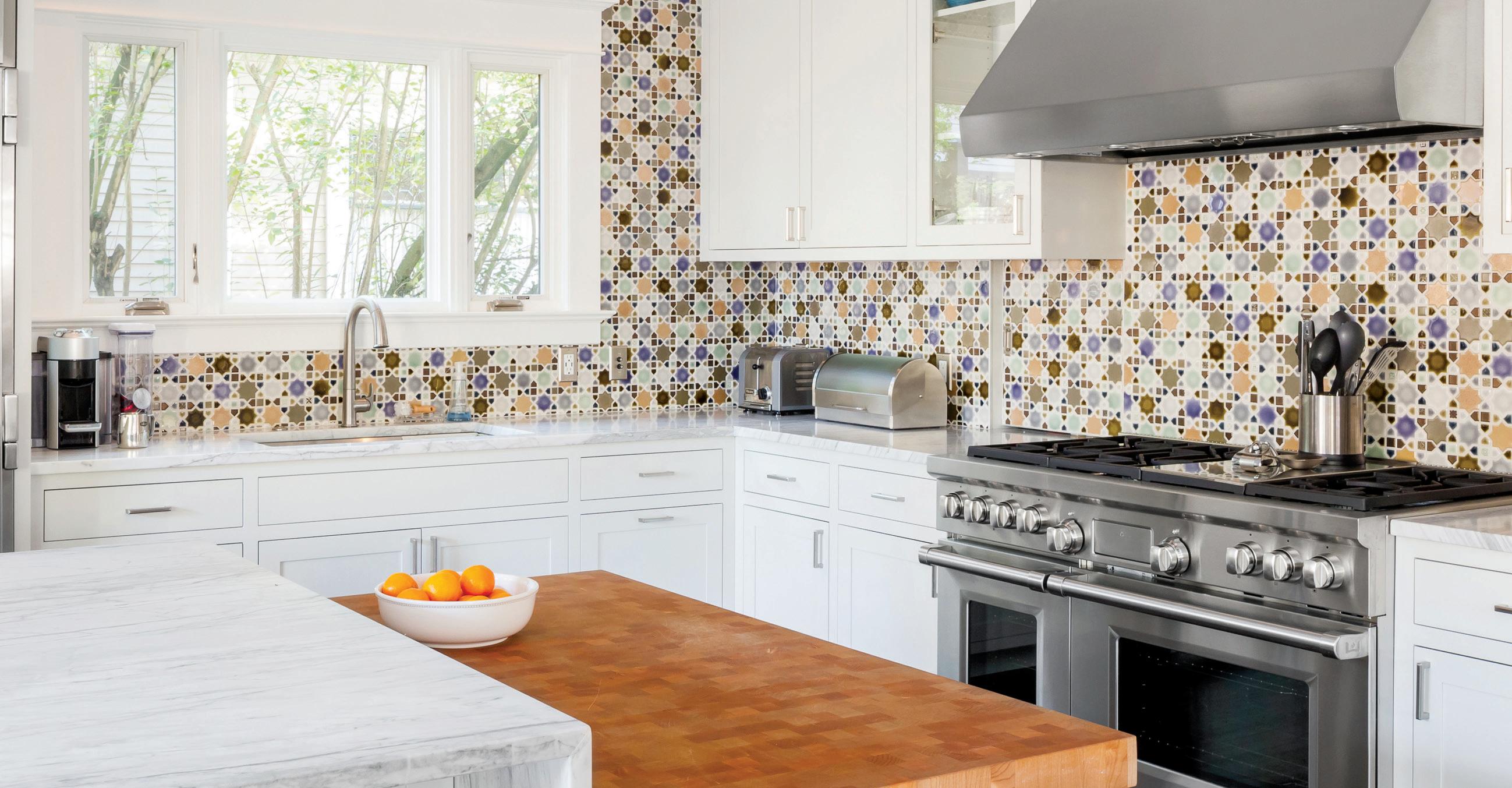
appliances, cabinets, countertops, backsplash, and, in some cases, flooring are valued by virtually all buyers.
Add a master:
Most of the area’s homes were constructed prior to master bedrooms being normative. Today, a true master bedroom nears the top of most buyer wish lists. So, finding a way to transform existing square footage into a master bedroom will help a home stand out to buyers as most buyers seek to add this feature when not already present. When adding an en suite bathroom to an existing bedroom doesn’t work with a home’s current bedroom layout, unfinished basement or attic spaces are other strong candidates for adding a master suite.
Finish basement or attic:

An upgraded kitchen is one of the most highly desired home traits amongst first time and veteran buyers alike. We find that although many buyers voice a willingness to make this update on their own, it often winds up being a deciding factor on the property they ultimately decide to purchase. We find buyers consider higher priced homes with this update completed more than any other home improvement. If your kitchen hasn’t been updated in 20 or more years, this update is worth the investment. We frequently help homeowners select finishings to maximize buyer appeal should they desire or need to sell within a few years. A more elaborate kitchen remodel may involve opening a wall to create an open concept living space, as this is a trait many buyers find desirable. This solution isn’t right for every home’s configuration. Updated
When looking to expand their livable space, most homeowners on Queen Anne and Magnolia are limited to their property’s existing footprint. Due to the neighborhoods’ hilly geography, most properties have basements, attics, or both. If the ceilings are sufficiently high, transforming unfinished basement or attic space into finished living space is a relatively inexpensive way to make a past era’s floor plan livable for today’s households. Assuming a master bedroom is already present, we typically suggest the addition of a second living room or bonus room. When feasible, we suggest adding an adjacent halfbath to the new living space as well. Most buyers will view this added living space as an asset to their lifestyle. Most commonly, buyers state intentions to use these types of finished spaces for media rooms, children’s playrooms, home offices, or occasionally, guest bedrooms. The addition of a half-bath to these types of spaces makes for a logical addition to any of these common uses.
Queen Anne Home Sales (Low to High)
By Kirsten Dunn, Dunn Lumber
Q: Any easy outdoor projects to plan while waiting for warmer days to start rolling around?
Usher in the spring season with a DIY planter bed—it’s easy, affordable and can be completed in an afternoon. Not to mention, there’s nothing quite as satisfying as growing your own garden. One of my favorite springtime projects is building a planter bed. It’s not only a reminder that sunnier, warmer months are on the horizon, but it’s also easy and affordable to make—a DIY win-win in my book. The nice thing about a planter bed, as opposed to a traditional garden, is that you can start completely from scratch— you don’t even have to have a soil foundation. Plus, a planter bed is customizable and allows you to control the soil and weeds without having to till your yard. Let’s get to it!
Step 1: Choose a spot
If you’re growing produce that requires a lot of light, keep that in mind as you plan your space and choose the best spot for your planter. Try to find some earth that’s relatively level—if you need to even things out, a shovel and a little bit of elbow grease will get the job done. I built a 4x8 planter because that’s what worked best for my yard, but the steps are scalable, so choose the dimensions that work best for you.
Step 2: Purchase and cut your lumber
Most people choose a naturally rot-resistant wood like cedar or juniper, but you can use pressure-treated wood, too. I opted for cedar, which comes in 8-foot boards. Juniper should be around 8 feet, but it’s not precision-cut, so double-check your measurements before you get too far! We’ll be using six boards total—four will remain the 8-foot length, and two will be cut in half to equal 4 feet. Make your cuts with a circular saw or hand saw (or have Dunn Lumber do it at no extra cost). Once you’re finished, you should have eight boards— four 8-foot boards and four 4-foot boards.
Step 3: Lay out your planter
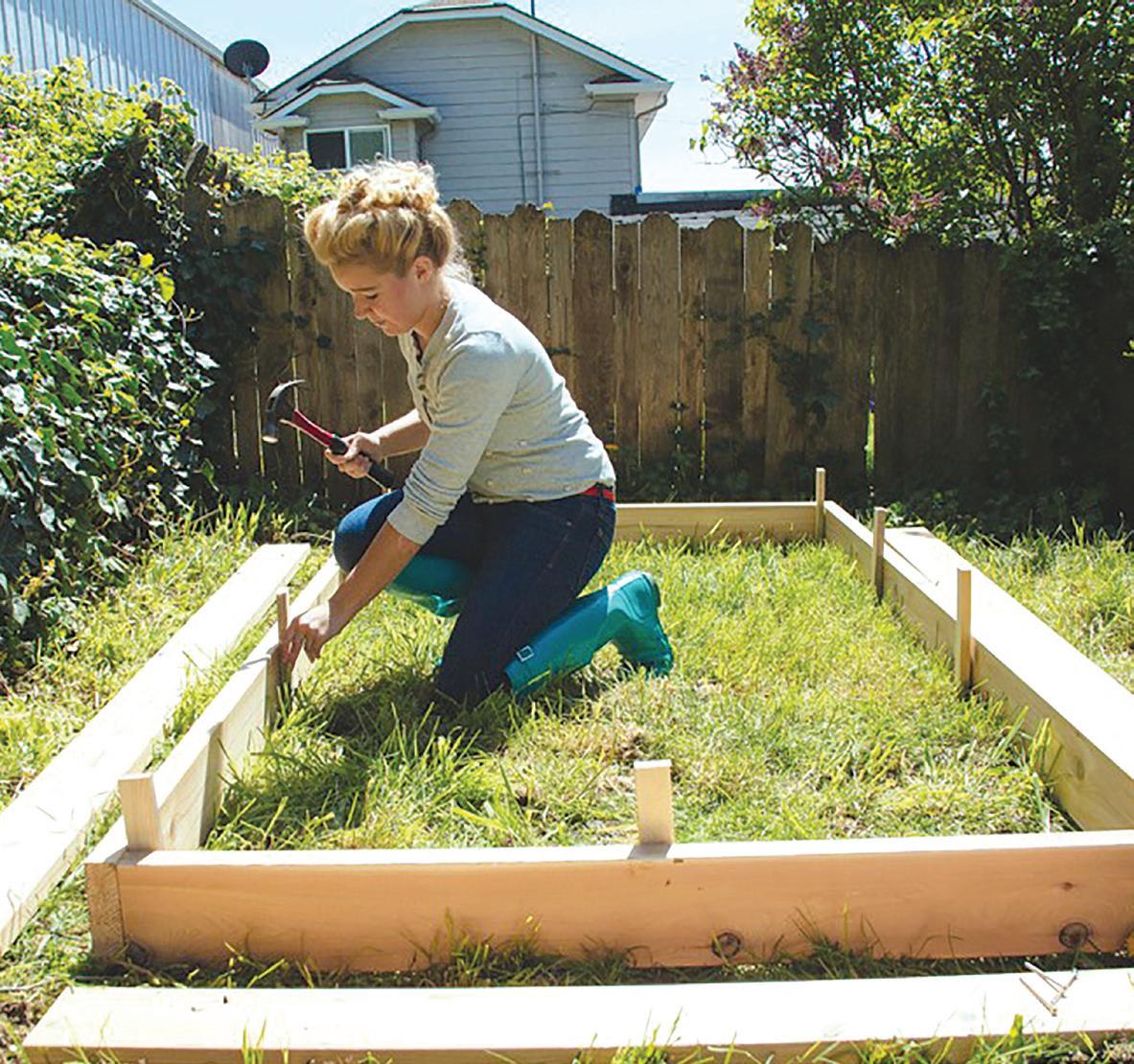
Start by framing a rectangle on the ground, using two of the 4-foot boards for the short end and two of the 8-foot boards for the long end. Attach the boards with two 3 1/2-inch exterior screws in each corner. I put the shorter boards on the inside, but the choice is yours. Once the rectangle is screwed together, make sure it’s positioned where you want it. Then, if placing over a soil foundation, hammer in 1x2 wood stakes in the inside corners and along the walls—two on each long side and one on each short side. If you’re working over concrete or another hard surface, hold the stake level to the ground. Once the stakes are placed, attach them from the inside with 1
VALUE , Page R4
Sam Konswa
QUEEN ANNE REAL ESTATE
“Ask Sam”

Question:
What data should I be viewing for estimating my home value: zillow.com, city home sales etc.?
Answer:
Online home value estimates like those on Zillow.com and on other websites can sometimes be useful as starting points in estimating home value, but you should never price your home solely based on these general estimates. These online home estimates are generated purely by algorithms, so they have substantial limitations. They work much better in areas such as Bellevue where homes are closer in age and similar in style. In Queen Anne and Magnolia, every house is different, so the algorithms break down. These algorithms are also limited by the accuracy of the underlying data from listings and county records, which are often outdated, incomplete, or incorrect. Many home features, including most updates and remodels, are not easily quantifiable or even tracked in the data used by these algorithms.
There is simply no substitute for a home estimate by an experienced real estate broker who knows and specializes in your particular neighborhood, especially in this market where prices change substantially from month to month. The human factor can bring both expertise and common sense that an algorithm lacks. Most real estate brokers will be happy to provide a home estimate and a full comparative market analysis free of charge.”
How to Remodel Your Home
in an Eco-Friendly Way
A: It’s absolutely possible to make ecofriendly choices during a remodel—but it takes careful planning. Remodeling fundamentally uses a lot of resources and creates a lot of waste. To counter that, you should work with reputable professionals who can suggest appropriate methods and materials for making your home healthier. It’s important to not only think about the new materials going into your home but where the old materials will end up. From thoughtful deconstruction, to repurposing and reusing, to choosing certified products, you always have eco-friendly options during your remodel.
The first thing to note: There’s absolutely a difference between demolition and deconstruction. Demolition is the action or process of forcefully tearing down, whereas deconstruction is the dismantling of something into its constituent parts. The latter provides an opportunity for items to be reused or repurposed. There are plenty of salvage building stores around the Seattle area, such as Ballard Reuse or Second Use, that will resell your old cabinets or lights. One homeowner’s old clawfoot tub is another’s vintage treasure.
When talking with a contractor before your remodel begins, insist that your space be thoughtfully deconstructed. Also ask about your contractor’s recycling policy. We recycle at least 80% of debris for every remodel without being prompted, but not all companies do that automatically. Recycling services in the Seattle metro area are abundant, and recycling doesn’t necessarily cost the contractor any more than taking debris to a landfill. It’s one of the single smartest choices you can make during your remodel, and it’s in the hands of your builder. Second, there’s an ever-growing selection of eco-friendly appliances, materials, and furnishings. Thinking about new countertops? Consider recycled glass or butcher blocks made with certified lumber. In need of a new refrigerator? Look for the ENERGY STAR label, or choose one with a top-mount freezer and no ice maker if you want higher efficiency. Building a new deck? Use sustainably forested wood or TREX decking, which is 95% recycled wood and plastic film. The point is, there’s a more eco-friendly solution for almost everything inside and outside the home!
Enlist the help of a knowledgeable contractor, or spend some time at stores like Green Home Solutions that provide a showroom setting for green building options.
Send your questions for “Ask Sam” to pacsales@nwlink.com
When it comes to smart remodeling, there are really two things to remember: buy smart and use less. Walls and cabinets require forests, tile and counters require stone quarries, plumbing and other fixtures require metal foundries. The smaller your space, the more

Sam Konswa
QUEEN ANNE REAL ESTATE
Sam Konswa is the Founding/Managing Broker of Queen Anne Real Estate.
Cindy Apple Photography for Model Remodel









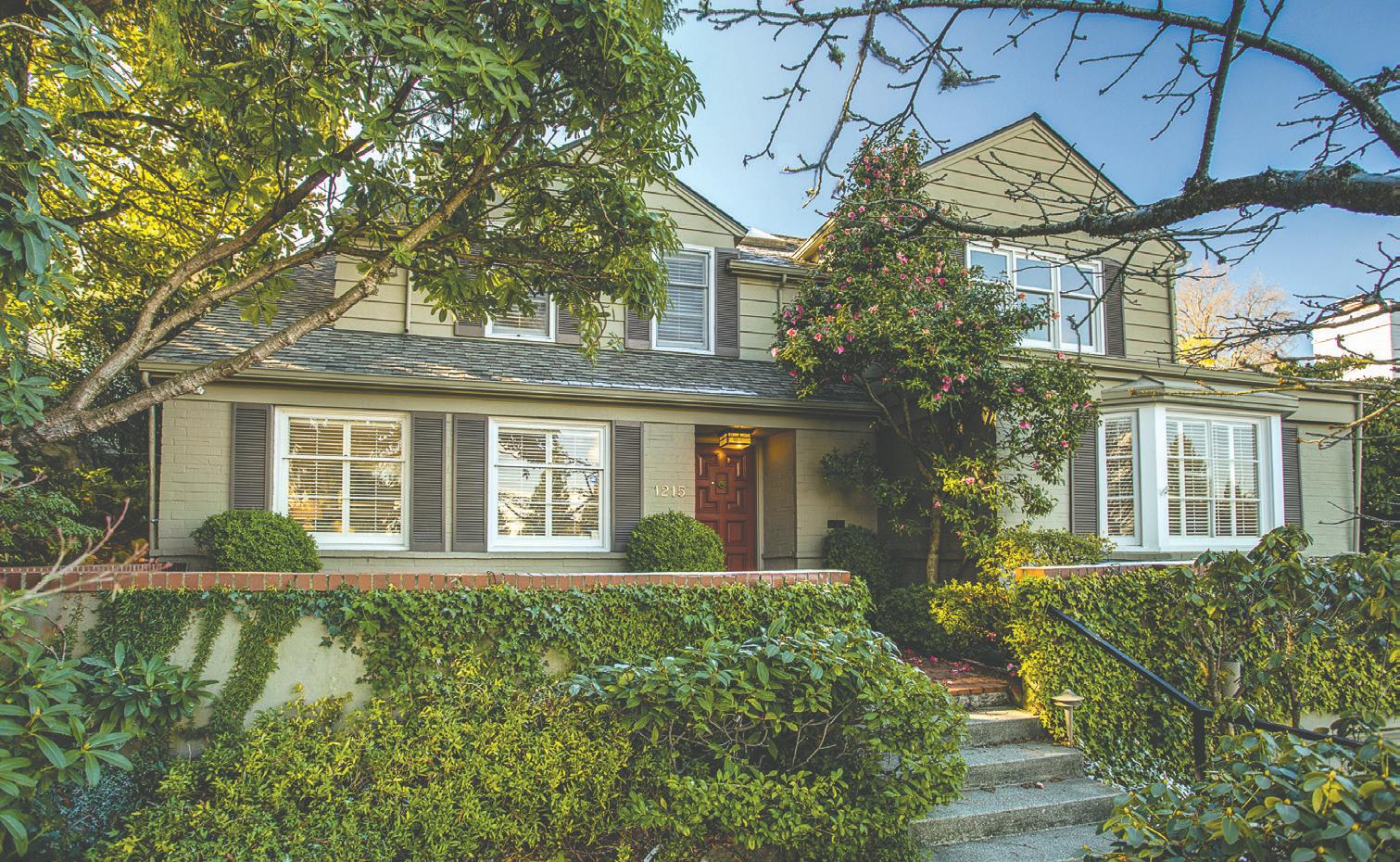

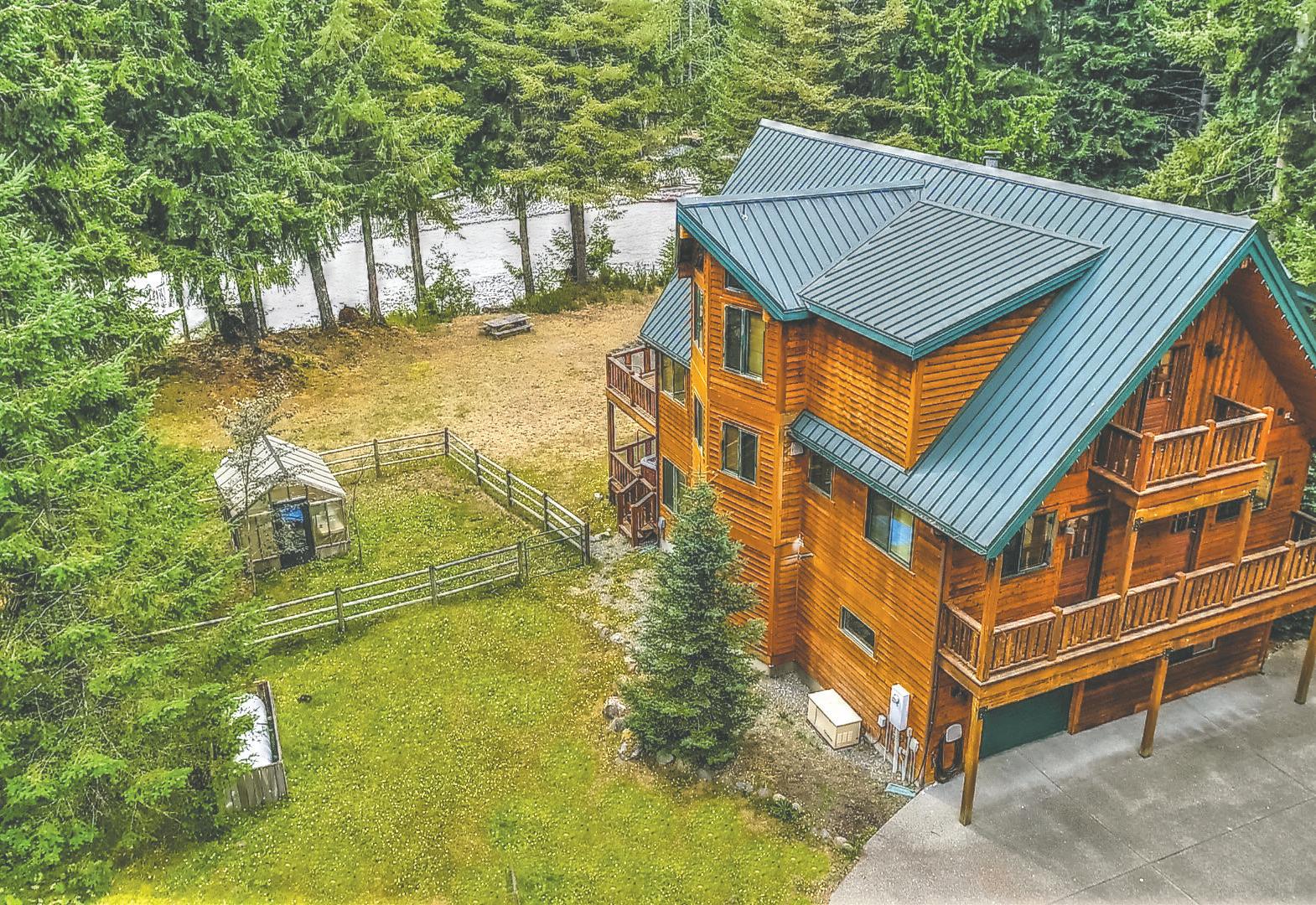

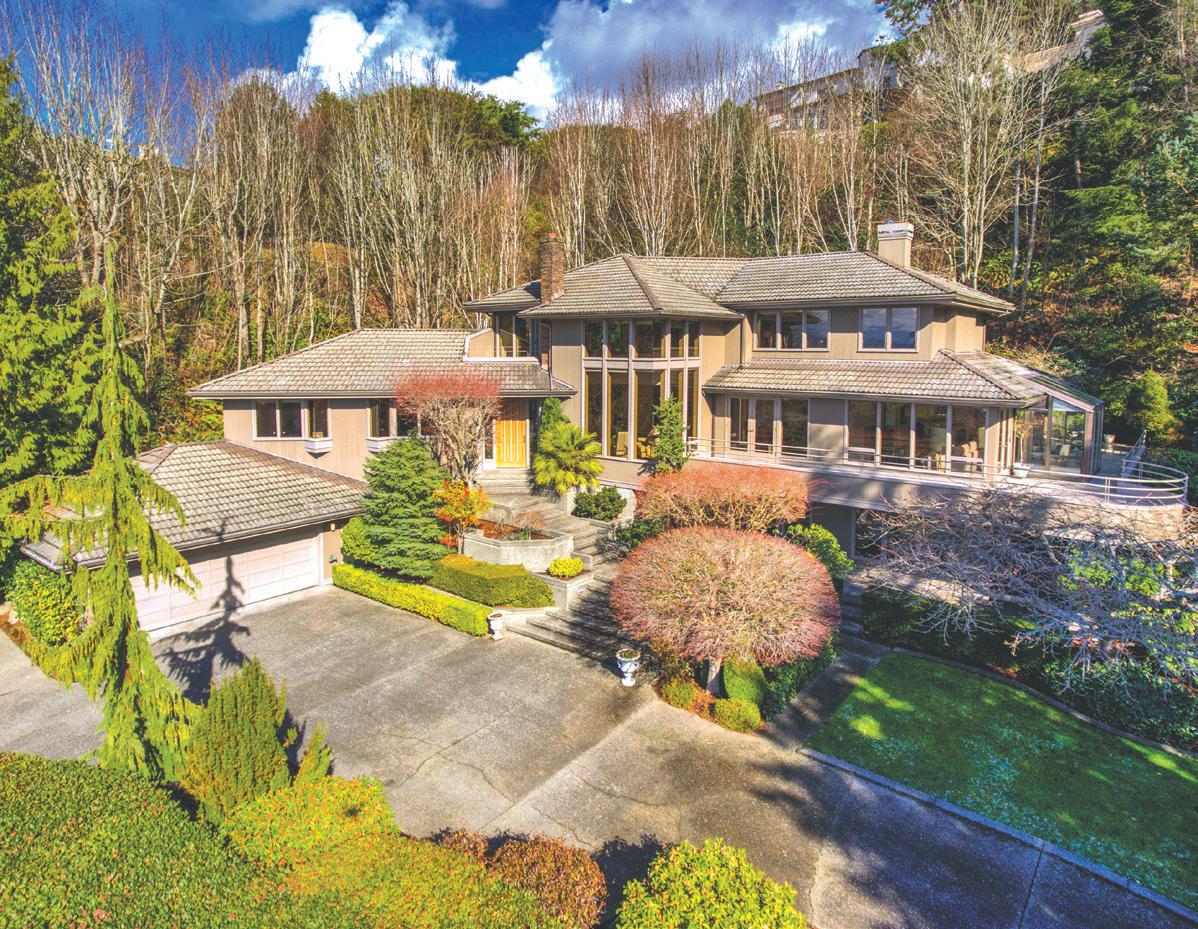



“Stewart is very knowledgeable, and professional. Selling and buying at the same time can be very stressful, but Stewart was always able to put our minds at ease. Thank you, Stewart, for helping us get our “little castle”! We could not be happier with our home, and your service!”
-Matt and Christine
Exceptional Service with your Goals in Mind

STEWART KARSTENS
206-601-3421
www.stewartkarstens.com

Knowledgeable and Personable

My partner and I were extremely satisfied working with Nicole Bailey. She took the time to really understand the house (location, size, price) we were looking for. She was knowledgeable about the frequently changing market and was always honest with us about expectations and reality in affording a home. She was very responsive to inquires and was on top of all the new listings in the areas of our liking.
I think that the thing I really enjoyed about Nicole was how personable she was throughout the entire process. It is obvious she loves what she does and she is very good at it [....] We would recommend Nicole to anyone looking to purchase or sell in the greater Seattle areas. We truly do not have enough great things to say about her.
—Samantha, a Seattle home buyer.






Ultimately:
Homeowners should consider which updates will upgrade the layout of the areas’ homes for more contemporary lifestyles. Based on the most common buyer desires, the upgrades that translate to the highest resale returns are updating to a modern kitchen, adding a master bedroom, and finishing unfinished space to incorporate a second living space.
Sam Konswa
Founder/Managing Broker of Queen Anne Real Estate
Sam Konswa specializes in the Queen Anne and Magnolia neighborhoods, using his local market expertise to give his clients a distinct advantage in these areas.
Phone: 206-972-4045
Email: sam@queenannerealestate.com
Website: www.QueenAnneRealEstate.com
Magnolia Home Sales (Low to High)
3/4-inch screws—just make sure they don’t poke through the other side or you’ll scratch yourself.
Step 4: Add another level
If you’re growing vegetables, you’ll want at least 12 inches of dirt for the roots, and if you’re growing carrots specifically, you’ll want even more room. I’m building a two-level planter, but there’s really no height rule, so build as many as you want (you’ll just need long enough stakes and additional lumber and soil). The second level goes up just like the first one: frame the rectangle, screw it together, then slide it over the first. Once it’s placed, screw the stake to the frame.
Step 5: Lay landscape fabric, filler, and soil
To prevent weeds from creeping in, lay down landscape fabric—it’s breathable, so the water will
drain away just fine. If you want to raise your bed even higher than two levels, add a filler (concrete blocks, large rocks, etc.) so you aren’t filling the entire bed with expensive soil. If not, add your soil and start planting.
I love this project because it’s affordable, completely customizable (you can add a cold tent for the winter months and even stain the frame to match your deck or siding) and easy to accomplish in an afternoon. Happy planting!
Kirsten Dunn is a proud fifth-generation Dunn family member. Dunn Lumber is a member of the Master Builders Association of King and Snohomish Counties. Find Dunn at the 2018 Northwest Flower & Garden Festival and watch Kirsten lead a live tutorial from the DIY stage Wednesday, Feb. 7. For this project and more just like it, visit dunndiy.com.
economical it will be in price and usage of natural resources. Be aware of the products you or your contractor are purchasing and don’t be afraid to ask questions. Your research will
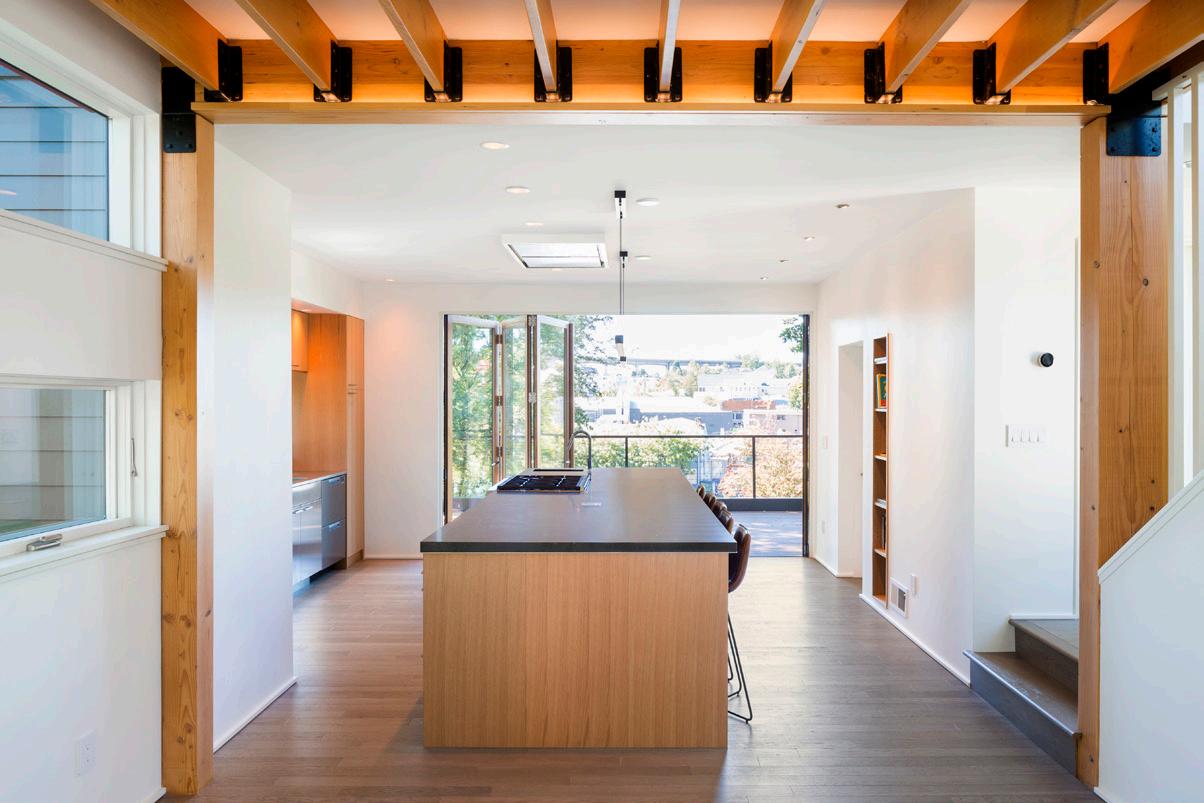
pay off in dividends on the environment. You can also reduce your energy bill by insulating properly and purchasing efficient appliances. It can be as simple as installing dimmer or motion-activated light switches, which allow you to use less light and therefore less electricity.
Just because you’re not building a new home doesn’t mean you can’t be eco-friendly. Great options are out there for the choosing. Every little bit helps! Master Builders Association of King and Snohomish Counties member Model Remodel (MRM) is a full-service, green contractor, serving clients in Seattle and its surrounding areas.

Photo by Mary Henry
The majestic elm
Turn uphill on East 36th Avenue off East Madison Street. This month you’ll find yourself looking up through a black filagree of graceful tree limbs and branches — elm trees in their winter nudity.

Come summer, this structure will leaf out, becoming a canopy of green, gently filtering sunlight, casting a dapple of shadows on the pavement below. Now close to a century old, these majestic trees belong to the genus Ulmus. The plants closest to Madison Street are English Elms (Ulmus minor), further up they are American Elms (Ulmus americana).
All together, there are more than 100 elms in Washington and Madison Parks. Fortunately for us, ours have survived the dreaded Dutch elm disease, a micro fungus dispersed by bark beetles. In a matter of a few years, Dutch elm disease turned romantically shaded streets all over North America into barren, sun-scorched byways.
And, while the disease has been spotted on this side of the
Cascades, it appears not to have taken hold.
Theories differ as to why, but one is that our cool summers and mild wet winters are not hospitable to the carrier beetle.
Taken virtue by virtue, elms seem to be less than desirable trees. They are shallow-rooted. It is hard to garden beneath them. The bark is rough and dull gray. Their oval, sawtoothed, dark green leaves are somewhat roughly textured.
Fall color is, for the most part, unimpressive, but the leaf drop is heavy. But then, just look down a street flanked by mature elms, gracefully arching over to meet in the middle and the overall effect is nothing short of rhapsodic. Even standing alone (and you’ll see a number spotted around our neighborhood) the tree has a stature, imposing in its size and dignity. They can reach 180 feet in height with a trunk circumference exceeding 12 feet.
The British and Americans have long cherished elms for their beauty, the shade they provide,



CONDOMINIUM
Steve Lorton Tree Talk
Fresh Home Upgrades for Spring
(Family Features) After a long winter cooped up indoors, spring is the perfect time to start re-imagining your home and making upgrades that create a fresh, welcoming vibe. These project ideas – some big, some small – can help breathe new life into your home so you’re ready to enjoy your favorite rooms to the fullest.
Air it out
Months of closed windows and doors can make any room feel dusty and stale. As soon as temperatures allow, throw open the windows and skylights to let the fresh air chase away the remnants of winter. It’s a perfect time to launder window treatments and clean area rugs. After a few passes with a carpet cleaner, allow rugs to air-dry outdoors. If you’re considering an update to the overall decor, changing out these textiles is an easy and affordable way to create a new look. Just donate the used drapes and rugs after cleaning instead of bringing them back into the room.
Shift your outlook
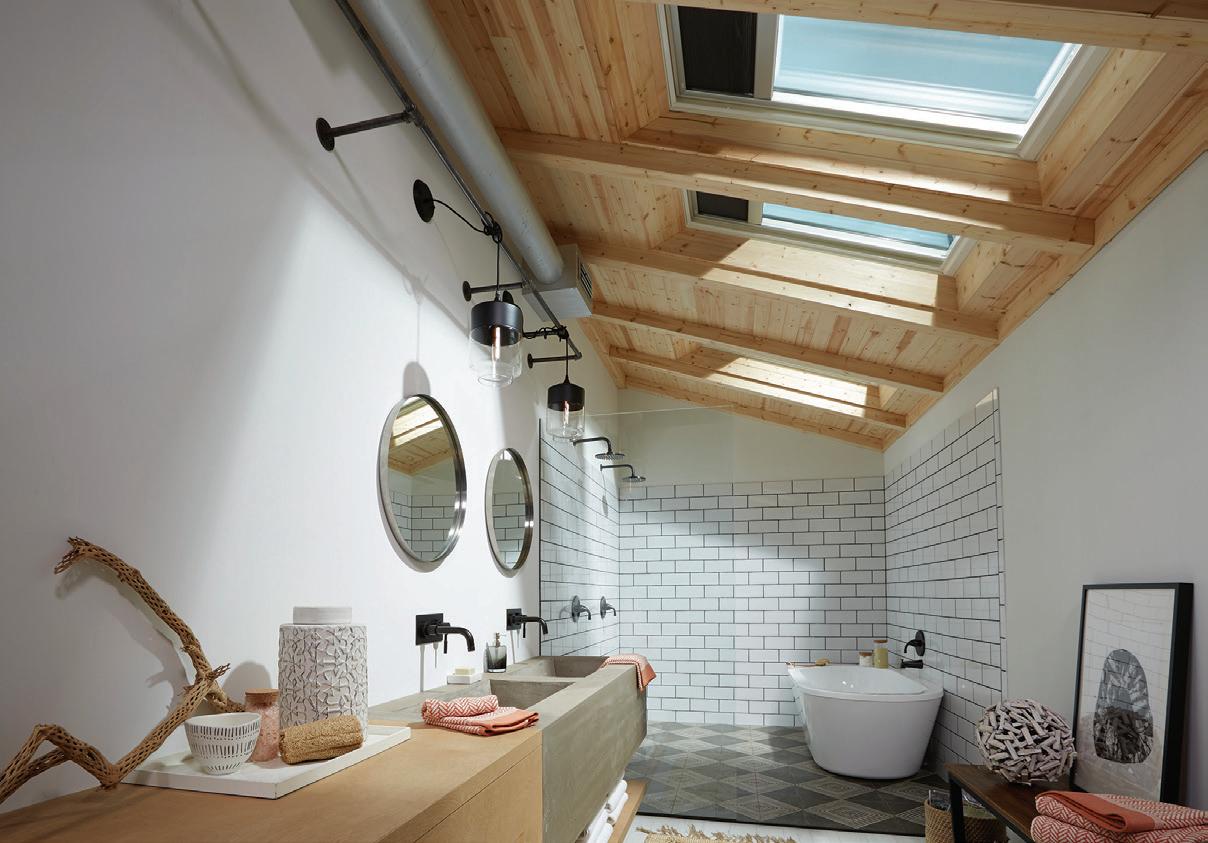
Whether you’re seeking more natural light, access to fresh air, a sense of spaciousness or a way to bring sophistication to a room, a skylight may be just the solution. For example, Velux roomdarkening and light-filtering blinds can add a splash of color just where you least expect it, and they’re efficient in shielding your space from the sun, meaning the blinds and installation are eligible for a 30 percent tax credit. Learn more at whyskylights.com
Paint to perfection
Over time, once cheerful walls can grow dull. Create a livelier ambiance with a fresh coat of paint, either in the same shade or something completely new. If you’re not sure exactly where to start, tackle the project room by room. To choose the right hue, select a favorite item in the room, such as an heirloom throw blanket or a piece of wall art, and consider color shades that complement the item well.
When contemplating changes to a room’s aesthetic, most people focus on the floor, walls and elements like furniture and accessories. As some homeowners are discovering, there’s a whole other space waiting to be discovered. The ceiling, a fifth wall of sorts, opens up endless creative design opportunities.
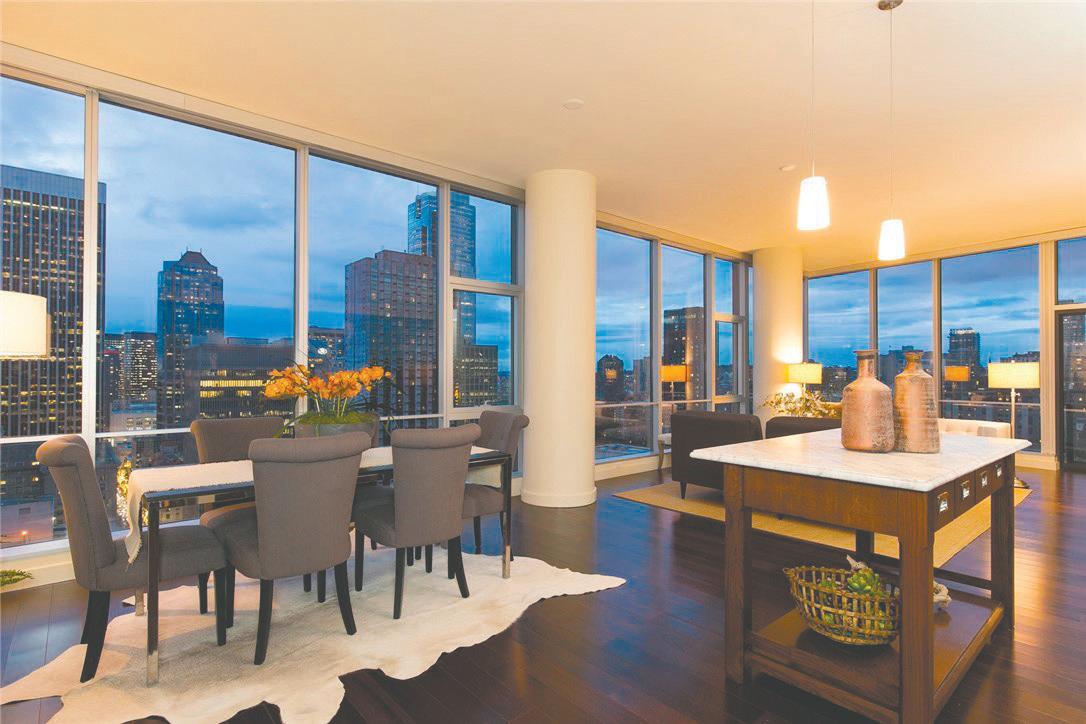
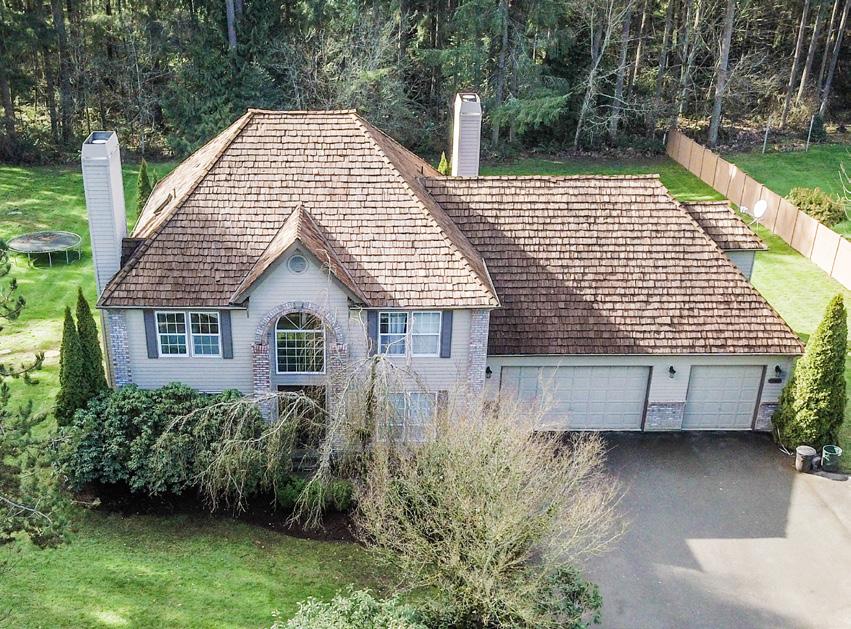
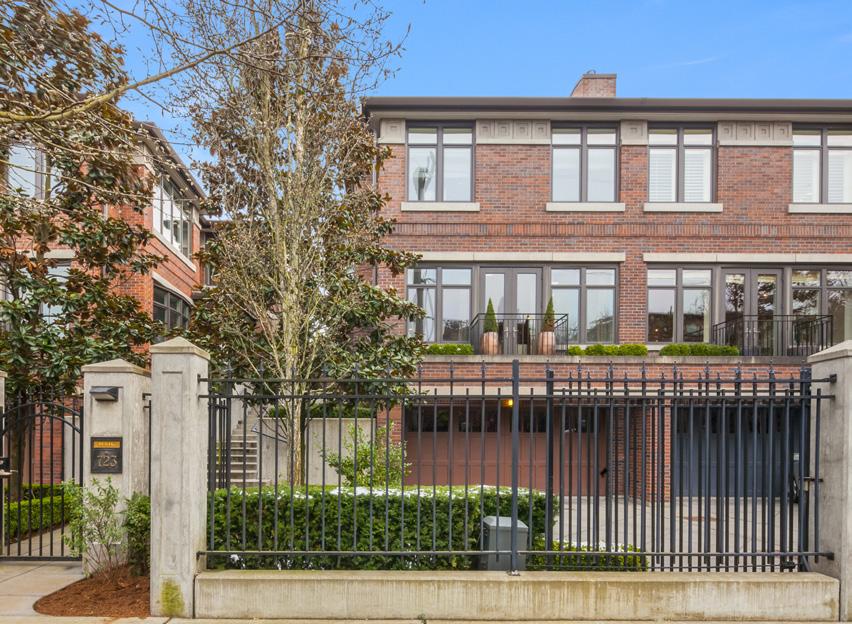
Beautiful 20th floor luxury downtown home with breathtaking city views of Space Needle, Puget Sound & Olympic Mountains. Light-filled open spaces with 10’ ceilings, chef’s kitchen with top-of-the-line appliances and gas cooking. 1 bedroom, 1.5 bathrooms. Great neighborhood near Seattle Public Library, Pioneer Sq., Sports Stadiums, Waterfront. 24/7 concierge, exercise room, pet area, entertainment area BBQ, guest suite. 1-car garage pkg & storage rm. No rental cap.
Make what’s old new again
Sometimes a fresh perspective is as simple as rearranging a room to better fit your needs. Over time, the furnishings can become almost an afterthought because they’ve been in place so long. Try moving things around to create new conversation groupings or to highlight a piece that has been tucked away in the shadows. An updated arrangement may inspire to you add and embellish with some simple new accessories or accent pieces for a room that only looks brand new.
Get earth smart
With all of the new growth and hues of green that abound during spring, it’s natural to be more mindful of the environment. Earth-friendly upgrades like switching out inefficient lighting or installing low-flow toilets and shower heads can make a sizable difference. Another option for energy conservation: Look for ways to maximize natural light for heat and to brighten rooms. Wellplaced windows and skylights can harness energy naturally, so you can minimize your reliance on electricity for comfort and convenience.
as well as for their resistance to rot when saturated, making the hollowed-out trunks, in centuries past, excellent pipes to carry water.
Artists have painted elms, woodworkers have painstakingly dried the wood and fashioned it into furniture, bonsai aficionados have lovingly tended the dwarfed trees, and poets have celebrated them, as this stanza from Oscar Wilde’s Symphony in Yellow attests:
The yellow leaves begin to fade
And flutter from the temple elms and at my feet the pale green Thames
Lies like a rod of rippled jade.
If you have space in your garden for a tree to grow to great


size, you’ll find elms which have been genetically engineered to resist Dutch elm disease. The British led the charge to save elms through selective breeding. But, given the fact that the disease appears not to have taken hold here, I’d not be timid about transplanting a seedling of one of our mature plants in my garden. Elms are not fussy about soil. Water plants during our summer drought for their first three years. Elms are a bit awkward looking between seedling stage and maturity — as it is with teenagers.
Once up, you’ll cool yourself under them in summer, enjoying the rustle of their foliage, and find their stark beauty standing against a gray winter sky, soothing and inspiring.
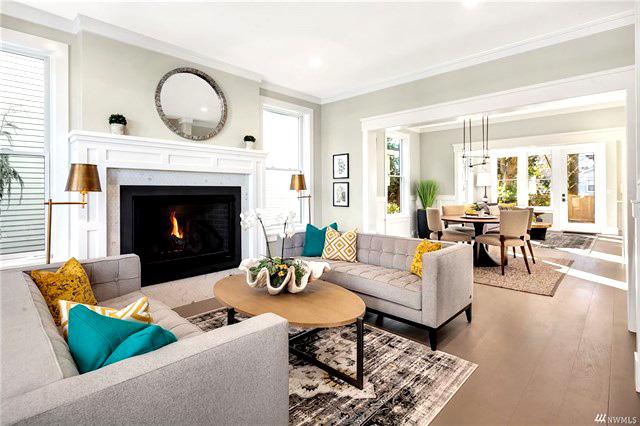
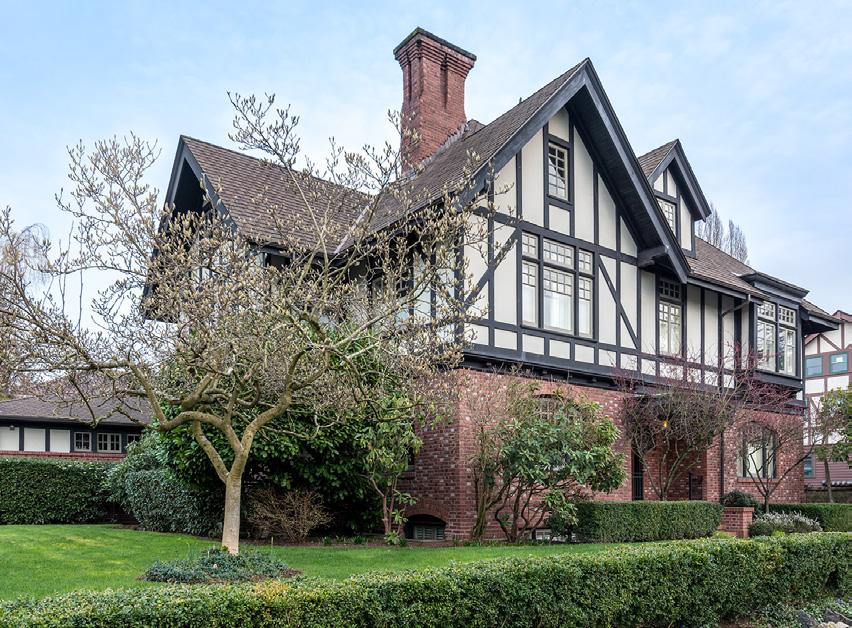
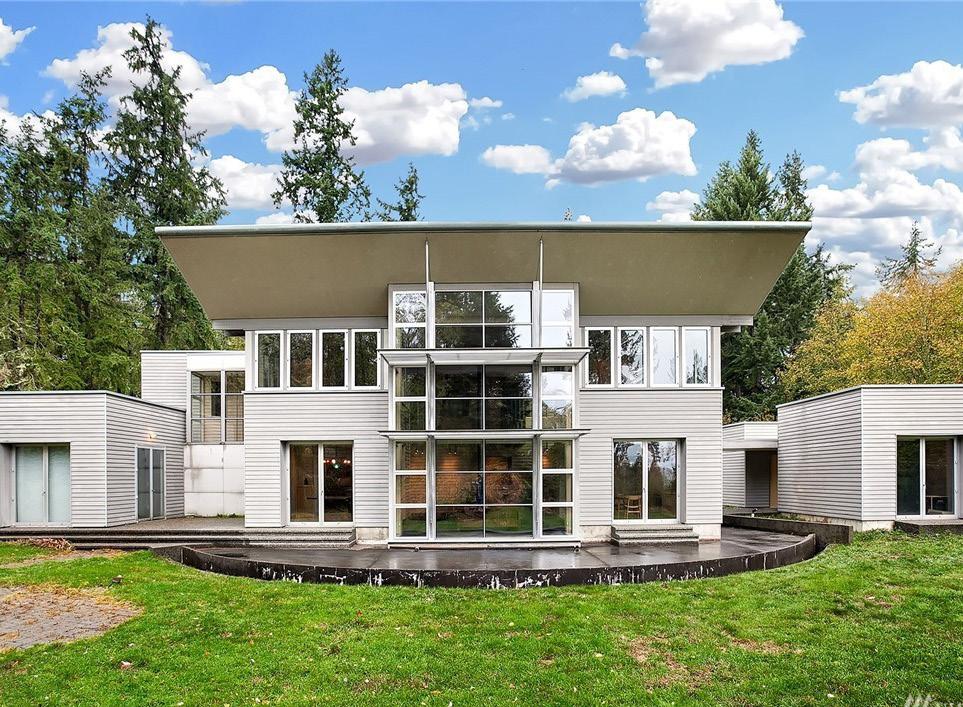
Outstanding custom construction and design by Eugene Sherman Design & Development nestled on the top of Queen Anne Hill. Open-floorplan main level greets you with light-filled living room with gas frpl, dining room, true chef’s kitchen with adj. family room. 2nd floor offers king size master suite with spa-like bath, laundry, 2nd full bath and two additional bedrooms. 3rd floor has 2 bedrooms full bath and open area. Lower level provides media room and wine room. One car detached garage.
ELM , from Page R5

















































2017 Market Data Results
How Queen Anne Real Estate Compares
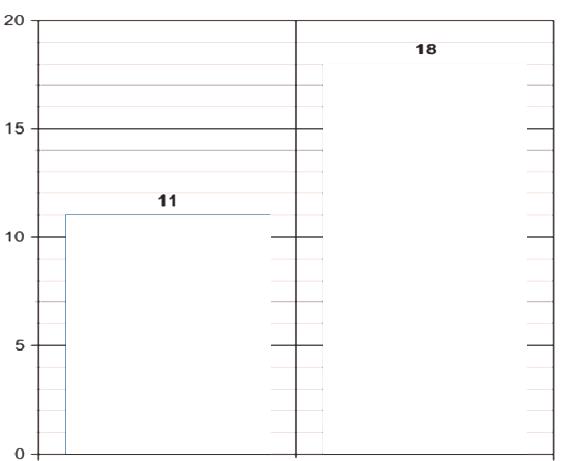
In 2017, Queen Anne Real Estate’s residential listings sold for 15% more per square foot than Seattle’s average ($531 vs. $463). Queen Anne Real Estate sold residential listings in Queen Anne 39% faster than the area's average (11 days vs. 18 days).














Jeff Strand has a degree in Business Administration from the University of Washington, with a background in technology management and marketing. Jeff has been involved with the Seattle business community for over 15 years and he currently co-owns a small business. He is a top-producer in software sales for the world's largest business management software company.

Jeff's strengths are in deal negotiations, customer service and customer follow-thru, where he has built a strong reputation within the local real estate community. Jeff specializes in Queen Anne, Capitol Hill and South Lake Union neighborhoods.
“Working with Sam was an outstanding experience. Not only did he negotiate a purchase of our dream home at significantly less than asking, he then sold our old house off market with a 20 day close. I feel so fortunate to have worked with Sam and truly do not believe another broker could have pulled it off. Thank you Sam” -P.G.



Sam Konswa
Sam Konswa was named one of the "100 Most Influential Real Estate Brokers in Washington State" by Real
10 Year Winner Sam Konswa
Marcel Kluetz
Queen Anne Real Estate Brokers
Queen Anne Real Estate Other Brokers
Queen Anne Real Estate Other Brokers
Courtney Longhurst
Craig Watson
Paul Crawford Charlotte Crockford
Tim Gaydos
Carol Griffith
Price Per Square Foot
Days On Market
Client Testimonial
Featured Broker Jeff Strand
Brooke Roberge Maria Hewett