Madison Park
Making seasons bright
Photographer Jeff Schenekl visits Seattle every year during the holidays. He was born and raised in Chicago but now lives in Arlington and has been practicing photography since 2016.
“Seattle has so many nostalgic locations. It’s always my goal to make the most of my visits to these beautiful places and share my work, hoping to make someone’s day a little brighter,” Schenekl said. He was able to catch the Space Needle with the Christmas Tree during a recent break in the fog.
— Submitted by Laura Marie Rivera

History and sports from 100 years ago still alive today
By Laura Marie Rivera Contributing Writer
While Seattle sports history is powering Hollywood’s holiday lineup, another inspirational Seattle sports tale likewise received a new treatment. Queen Anne author Kevin Ticen has released the second edition of his book, “When It Mattered Most.” When It Mattered Most tells the triumphant story of the Seattle Metropolitans, America’s first Stanley cup champions, as they claimed hockey’s greatest prize amidst the uncertainty of the United States entering World War I. The new second edition features an updated hardback cover and six additional chapters taking the story
through the war’s conclusion, the Spanish Flu pandemic, and culminating with the monumental 1919 Stanley Cup Final.
Daniel James Brown, author of The Boys in the Boat, calls Ticen’s book “a fine addition to the growing body of works that unveil forgotten chapters of Seattle’s sports history.” Brown knows these stories captivate us because the dramas of sports competitions present themselves like life in miniature.
“Athletic struggles reveal character in the same way that war and other extreme events do, but with a lot less bloodshed,” Brown said.
While Brown was able to interview
Page 5Æ





Horticultural sunshine for the dark months
Years ago, I wanted a palette of plants with white variegated foliage or white blooms to spot around my garden, to give it light in the dark of January. The gardener I was talking to said, “Right idea, but it will be even brighter and lighter if you go with yellow. White is cold. Yellow is warm, the color of sunshine.” He was right. It’s a lesson I never forgot, the wisdom of which has only been reinforced every January, thereafter, when I found a yellow leaf or flower or even branch to add to my winter garden.
Unlike Spring, Summer and even Autumn, offerings for Winter yellows are slim. But they are out there and, in three cases, fairly big and spectacular, all happily at home in our climate and soil. The flowering tree Cornelian Cherry (Cornus mas) tops the list. Masses of small sulphur-colored blossoms cover the defoliated branches of this 15 to 20 foot tree. Edible scarlet fruits follow the flowers and the flaking, mottled tan and gray bark provides winter interest.
Chinese Witch Hazel (Hamamelis mollis and the hybrid H. x intermedia) covers its angular, zig-zagging branches with bright yellow tassels. This garden scale tree commonly reaches a height of 10 to 15 feet. The bloom period is unusually long and the flowers have a spicy scent. Plant it where you can see it, looking through a window or where you’ll pass it regularly, enjoying the sight of the flowers and catching their fragrance.
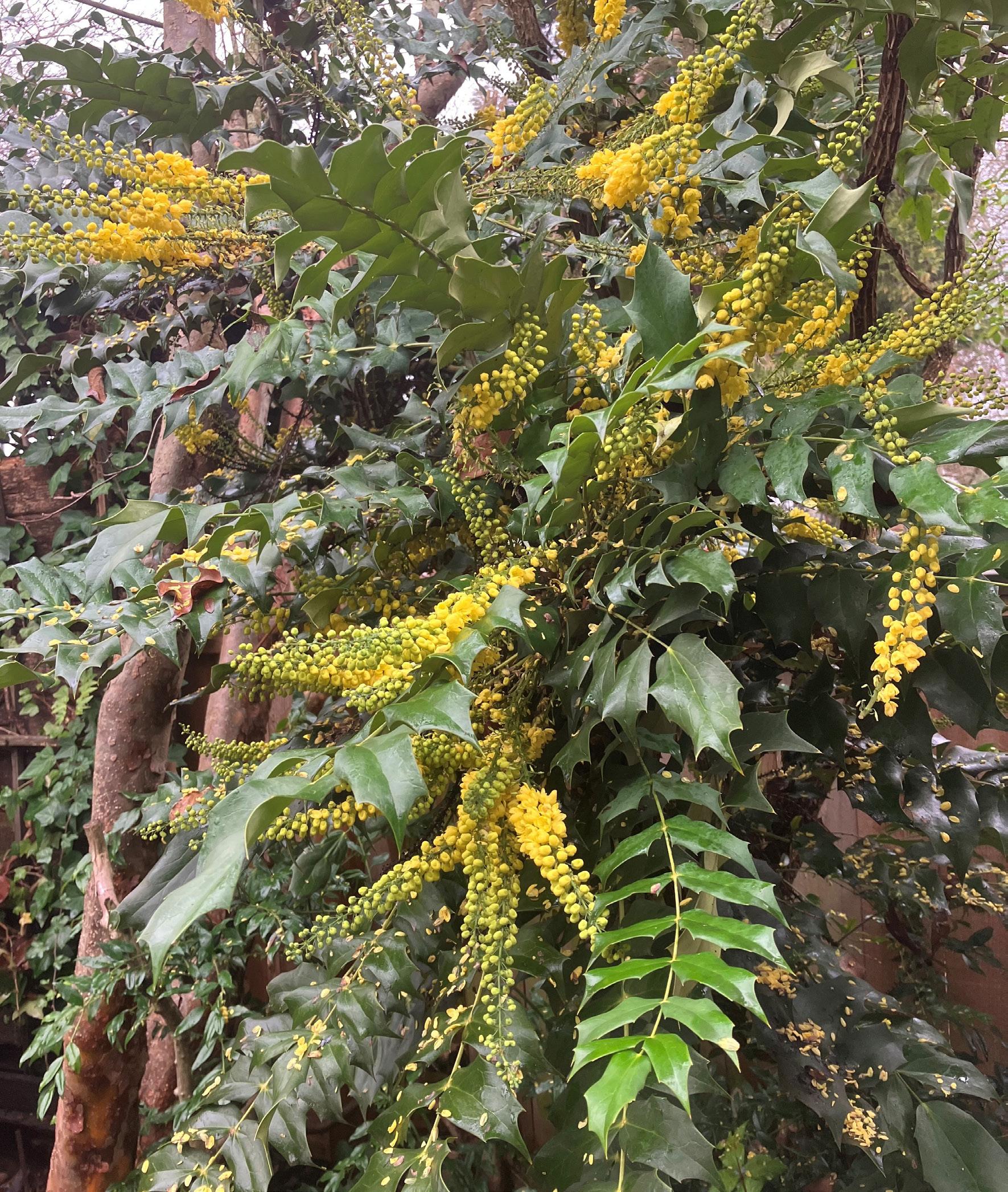
There are several January blooming Mahonias, primarily the hybrids between M. bealei and M. lomarifolia. Mahonia x media ‘Charity’ is the the most robust, famous and widely available. But there’s a bit of Northwest pride to be enjoyed in knowing and growing its precursor, Mahonia ‘Arthur Menzies’. A natural hybrid, it was discovered in the Washington Park Arboretum and introduced to world horticulture in 1967. This sturdy shrub, which can be trained as a tree can reach 8 to 10 feet, sometimes more. The big, yellow bursts of
stemmed flower clusters are attractive to our overwintering hummingbirds. When the flowers fade, they become clusters of metallic blue berries that stand tall well into Spring, a great food source for robins.
In any search for horticultural sunshine, yellow and golden conifers are, perhaps, most abundant and easiest to find. Most make great background plantings, others, especially the ones with irregular shapes, perform beautifully in pots, some crawl over the ground or spill through rock gardens. The genuses of pine, spruce, fir, juniper, and false cypress all have multiple offspring in shades of yellow, in sizes and growth patterns from dwarfs to timber trees. Once purchased, enjoy one in a handsome outdoor container for a few years, then plant it out in the garden. I’ve had my eye on a brilliant gold Lodgepole Pine (Pinus contort ‘Chief Joseph’). It’s a stunner. When introduce a few years back, plants in 5-gallon cans were selling for $225. Due to popularity and ease of propagation, prices dropped substantially. Put this Northwest native where it gets as much sunlight as possible, lighting up the garden in all seasons.
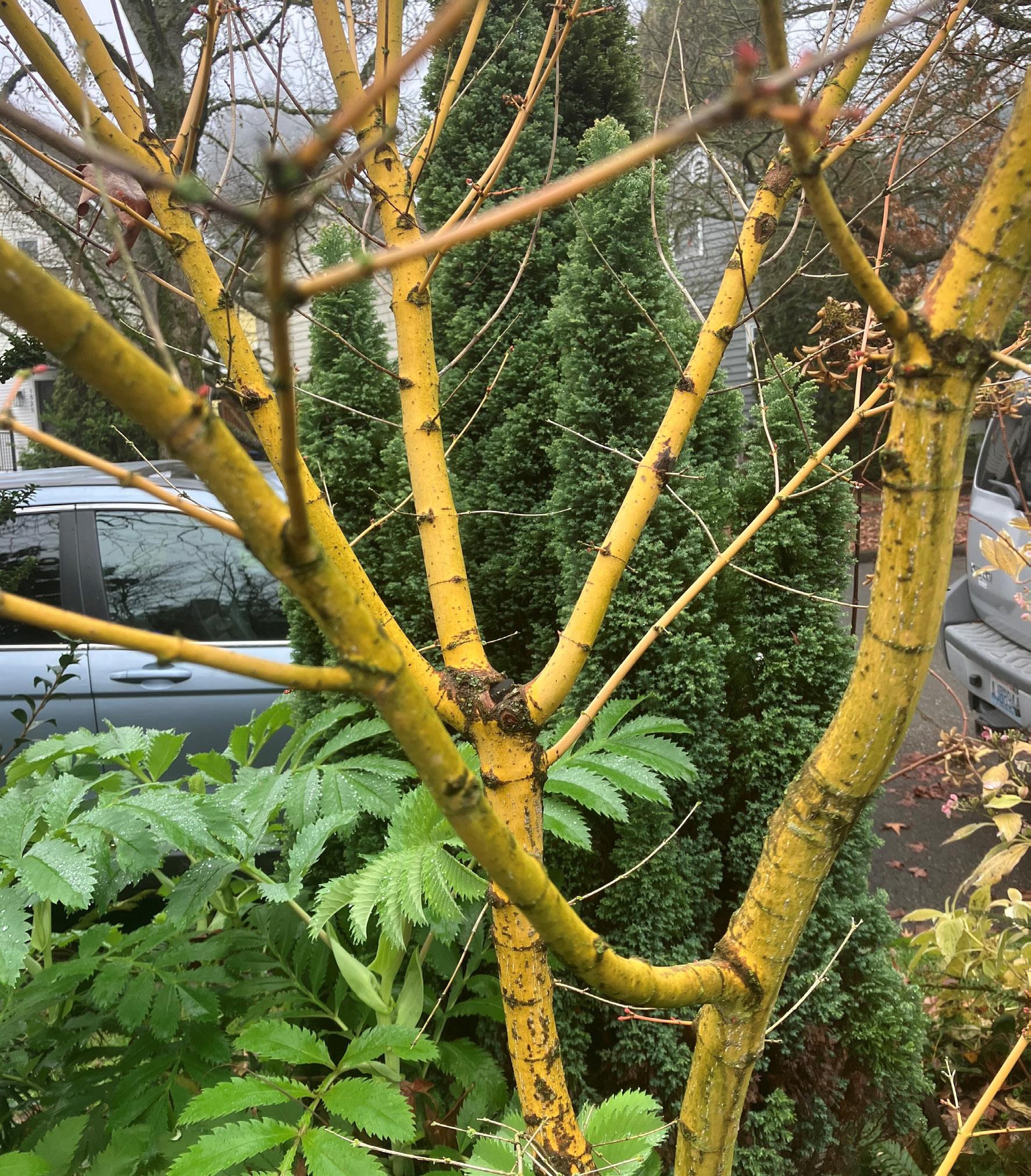
Three more plants with the power to channel sunlight in winter, merit mention. The bare branches of Yellowtwig Dogwood (Cornus stolonoifera ‘Flaviramea’) shoot through the winter garden like streaks of lightning. Coupled with dark evergreens, broad leafed and coniferous, they are striking. The same is true of the yellow barked Japanese Maple (Acer palmatum ‘Bihou’). Finally, we are beginning to see yellow flowered hellebores on the market. Clustered at the edge of a border, along a walkway, or in a pot, were you easily see them, their cheerful blossoms are an eyecatching harbinger of Spring. Light up your garden this month. Buy now. Plant now. Enjoy now. Yellow leaves, needles, branches, and blossom all ameliorate winter gloom. They’re the color of sunshine!
Mary Henry
Acer palmatum ‘Bihou’
Mary Henry
Mahonia ‘Arthur Menzies
Steve Lorton Tree Talk
Teens, TikTok and mental health
Social media can be a force for good, making us more informed by sharing and learning from others and promoting mental health.
TikTok seems to live up to that ideal in their own country. ByteDance, the Beijing-based company that founded the app, ensures that the algorithm only serves up educational content to teens in China, such as videos about science, art history, and museum exhibits. To promote healthy habits (i.e. sleep), kids under 14 years of age living in China cannot access TikTok between the hours of 10 pm and 6 am, and daily usage is limited to 40 minutes.
Outside of China, the app performs differently. Without any restrictions on use, TikTok’s algorithms are highly addictive. In the U.S., teens describe daily use of TikTok as “almost constant.”
If the time spent on the app is not enough of a concern, then the content will undoubtedly be. Instead of receiving videos about history, and science, teens in this country are watching content that seems to promote self-harm.
Here’s a brief sampling of viral TikTok challenges and what your teens need to know about the
Jenny Martin, EdD
dangers they face in participating:
THE SALT AND ICE CHALLENGE
Participants pour salt on their bodies and cover it with ice, creating a burning sensation. The object is to see who has the higher pain tolerance and can withstand the pain the longest.
Tell your kids: The mixture of salt and ice cubes can cause third-degree frostbite and burns because adding salt to ice or ice water makes it colder. It can also cause permanent disfigurement.
THE CHOKING GAME
Calling this a game is misleading, to say the least. Participants engage in self-strangulation or strangulation by another person with hands or a noose to achieve a brief euphoric state caused by cerebral hypoxia. The blackout challenge is similar to this, which involves holding your breath until you faint.
Tell your kids: Cutting off oxygen supply to the brain can cause permanent brain damage or death. Children needlessly die each year due to this challenge.
THE CHROMING CHALLENGE
Participating in this challenge involves inhaling toxic fumes such as house paint, spray deodorants, hair spray, shoe polish or gasoline. This challenge alone has over 500 million views on TikTok.
Tell your kids: Inhaling these chemicals can cause long-term cognitive impairment (memory deficits, difficulty concentrating, etc.) heart attacks, seizures, coma, choking, suffocation, organ damage and even death.
While it may be evident to the reader that these activities are unsafe, it is often less obvious to a young TikTok user. Dangerous challenges are often framed as fun games. And young app users are especially vulnerable to this deception. Their prefrontal cortexes, responsible for decision-making, judgment, and impulse control, aren’t fully developed.
Teens who are having suicidal ideation are especially at risk by using this app. Being praised for engaging in self-harm is not beneficial to any person, especially a child who is already emotionally at risk. Seattle Public Schools sued TikTok and other social media
giants this year due to the negative impact on student’s mental health.
So what can parents do? First of all, recognize that social media is here to stay. We are not likely going to revert back to a non-internet world. However, realize that tech founders restrict their children’s use of social media. Why? Because they know the dangers.
Consider following the lead of those in the know. If it’s good enough for Steve Job’s, Bill Gates and Mark Zuckerberg’s kids to have restricted use of social media, then consider implementing guidelines around using such apps in your home.
At the very least, sit your kids down and explain that what seems like a game (ie. the ‘choking game’) can have serious, lifelong consequences. A quick search on YouTube will pull up various Dr. Phil episodes with parents warning other parents about the dangers of social media challenges after losing a child.
Let’s not lose any more of our kids to these reckless challenges. Social media is potentially a positive lifeline for youth if it’s used with discretion.
Jenny Martin Madison Park resident and also a Psychologist
Cascadia Pipe Band seeks community support
Staff Report
Started in the fall of 2021, Cascadia Pipe Band is the greater Seattle area’s newest competitive pipe band. After a successful debut season, Cascadia Pipe Band was promoted by BC Pipers to grade 2 for the 2023 competition season, and achieved grand aggregate its first season in the new grade.
It’s been more than 30 years since Seattle has had a competitive grade 2 band— since the City of Seattle Pipe Band, which dissolved in 1990.
The Cascadia Pipe Band was founded in 2021, and has grown tremendously ever since. They now have 32 musicians.
“Our drum section has increased to 9 sides, 5 tenors and a bass, which requires us to purchase new drums to be competitive at the highest level,” Cascadia Pipe Band wrote on GoFundMe.
“Costing the band more than $20,000 for new drums, heads and hardware, we are appealing to the generosity
of our community once more.”
The band started a GoFundMe hoping the
community will help them raise some of the money needed for the drums.
To view the GoFundMe,
visit: https://gf.me/v/c/vjps/ give-the-gift-of-drums-tocascadia-pipe-band

Emergency preparation: What’s your next step?
The question isn’t whether we might have a major earthquake, but when. If we gamble on it not happening during our lifetime, that begs the question, what if it does? Where are you in your thinking and planning for this wish-I-didn’thave-to-think-about-it possibility? Are you ready to take whatever the next step is for you? If not, when will it land on your to-do list?
Are you aware that the Seattle area faces a significant threat of major earthquakes as we live with two major faults—the Cascadia Subduction Fault off the Pacific coast and the Seattle Fault that crosses just south of downtown?
Anticipated earthquakes will likely cause prolonged, widespread destruction that will preoccupy regular emergency services or take them out completely, along with bringing down communication systems we typically rely on like internet and cell phone services. These more severe earthquakes are poised to cause major damage to our urban infrastructure— the electrical grid, roads, bridges, gas, water and sewer lines we rely on for everyday living. If our social networks are across town or beyond our state borders, we may find ourselves fairly anxious.
But there’s good news here. Our city and county governments, along with a large cadre of citizens, have been steadily learning how to prepare and develop educational resources, protocols and systems for
Margie Carter Emergency Hub
neighbors to know how to step up and help each other. As citizen neighbors we’re learning how to prepare our homes to handle the threats we might encounter in a quake and to proactively prevent possible hazards. We’ve found checklists with recommended tools and survival supplies and been steadily stocking and storing them where we live and in our vehicles. If you haven’t begun this process, a first step might be to view the short video Build a Kit on a Shoestring Budget (youtube.com)
Beyond supplies to gather and some skills to learn, another important preparation step you can take is to make sure your social network includes in-person relationship building with your immediate neighbors, and ideally, folks on a wider sweep of blocks around you. If this doesn’t come easy for you, check out the resources for how to get organized with your neighbors through what our city emergency management team calls SNAP—Seattle Neighborhoods Actively Prepare. They offer an online participants manual with steps to take in 3 stages:
1) Gather contact information and arrange a meeting to introduce the idea of working together to get your homes prepared and identifying the types of assistance you might render each other after a quake (e.g., search and rescue, shelter, first aid, sharing food and water).
2) Get organized by setting priorities and delegating roles, responsibilities, and tasks to be achieved on a reasonable timetable.
3) Gain confidence and build neighborhood cohesion by helping each other learn things like how to use a fire extinguisher, shut-off utilities and/or construct an emergency toilet.
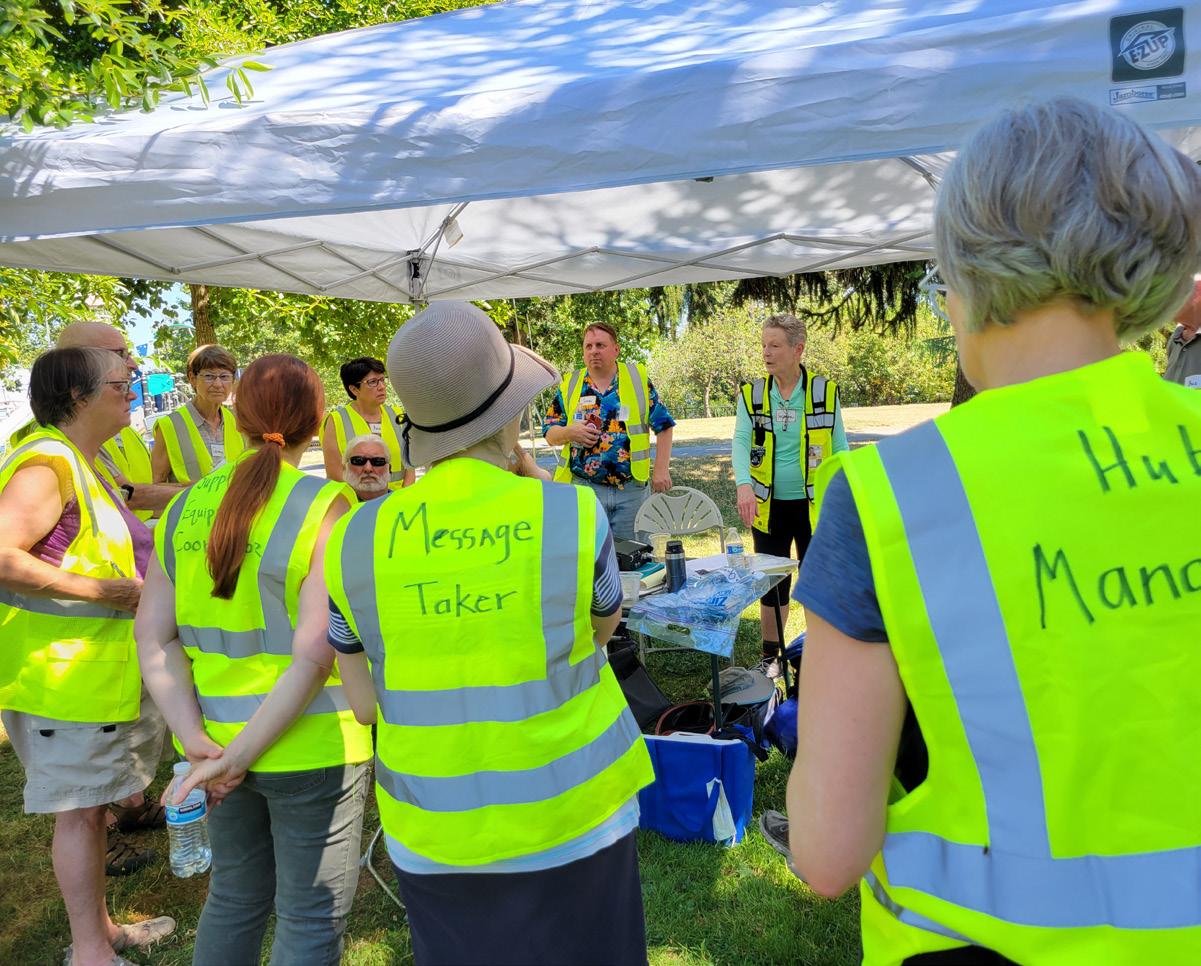
Here in Madison Park, you might want to step into some of the organized inperson social networking underway with the allvolunteer community organization Friends of Madison Park (FOMP). The Madison Park Emergency Communications Hub now functions as a subgroup of FOMP’s Public Safety Committee, and you can find links to our events and resources on their website.
After a quake, the city plan is for neighbors and volunteers to gather at our Emergency Hub by the tennis courts in the park and begin to operate an immediate response network until traditional
communication systems and other basic services are restored.
The Hub will set up a system to display information so that neighbors can connect needs with resources (i.e., medical, lost and found, emergency power sources, transportation). In addition, the Hub will have posters with information about how to access clean water, manage utility shutoffs, dispose of human waste and find impromptu shelter.
No one knows when one of our two major fault lines might cause a destructive earthquake, but we do know a number of ways to prepare and practice how to respond. Practice drills are an important component of Emergency Hub work because they will build the capacity our individual brains need to keep our amygdala and frontal lobe brain regions working well together, as well as our collective capacity to quickly problem solve and set up mutual aid systems for our community.
USEFUL LINKS
https://seattleemergencyhubs.org/resources/ training-education/ https://www.seattle.gov/ emergency-management/ prepare/prepare-yourneighborhood/seattleneighborhoods-activelyprepare
https://www.friendsofmadisonpark.com/
You can learn the basics of how a Hub functions by attending one of our introductory Hub 101 drills or watching Hub 101 - Virtual edition (Mar 2022) (youtube.com). With that initial foundation, you might want to join our next Madison Park practice, Hub 202, on Feb 12, 6:30pm at Parkshore Senior Living. Keep an eye out, too, for some informal pop-up gatherings at sone of our community business partners, Madison Park Pharmacy and Wellness Center, where we’ll meet in person to answer your individual questions and share strategies and tips on a variety of emergency home preparation topics. It’s a new year in a troubled world. Don’t go to sleep tonight without deciding what your next step might be to get yourself better informed and prepared in Emergency Preparation work. You’ll be surprised at how much less anxious you’ll be when you are engaged with others around you who are eager to be helpful. Contact us at madparkhub@gmail.com for more information on what you might do.
Margie Carter is a Madison Park Emergency Hub Volunteer.

a few of his subjects to glean their story, Ticen’s heroes were all long since deceased. Instead, Ticen relied on newspaper accounts and his own athletic experiences to fill in gaps and bring the Mets story back to life. A former captain of the University of Washington baseball team, he played professionally in the Los Angeles Angels organization before returning to coach at UW and the 18U Boys of Summer teams.
While he was successful in carving out a career in sports as a player, coach, manager, and ambassador, he had not yet realized the role writing had played throughout his life. Raised by a writer, he had spent his coaching days writing speeches as well as recruiting and donor material, and his post-coaching days writing event bids and blog posts.
A chance meeting brought everything together.
“Writing has always interested me. It is the thread that has run through every part of my life,” Ticen said.
In 2017, Ticen was working at the Seattle Sports Commission when he was asked to plan a centennial celebration for the Seattle team that had won America’s first Stanley Cup. Unaware that Seattle had ever won the Stanley Cup, he was quickly intrigued by the story and pitched multiple authors to write the story.
When he didn’t receive a response, he started researching the story in earnest.
“I was instantly hooked, and I had to
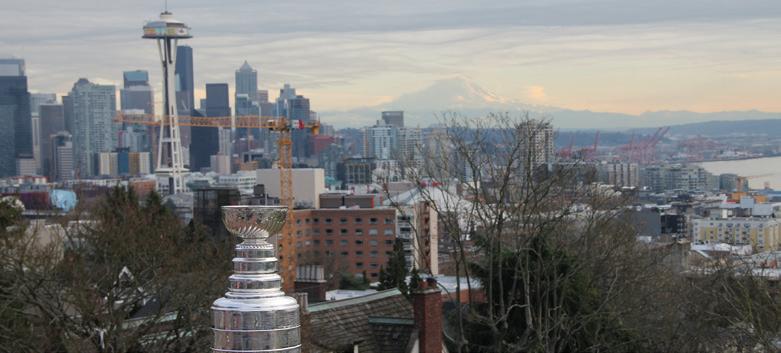
Photo by Kevin Ticen
The idea for Kevin Ticen’s book, When It Mattered Most, started when he planned a centennial celebration of America’s first Stanley Cup win. The trophy was given a VIP tour of the city. Here it is shown at Queen Anne’s Kerry Park, during the Space Needle’s renovation in 2017.
figure out a way to write this story,” Ticen said.
He started poring through the microfiche film at Seattle Central Library. Quickly, an inspirational story was uncovered, and the rest is history.
Shaun Scott is another local author drawing upon the richness of Seattle history to enhance our lives. His newly released Heartbreak City outlines 170 years of how this community has rallied around their teams.
For his research, When It Mattered Most is one of the first books that he read. Scott said Ticen’s book uncovered an important story, “The Metropolitans were the first example of professional sports in Seattle and the city really united around the team.”
He noted the similarities to today’s enthusiasm surrounding the Kraken and Huskies. As an historian, Scott
emphasizes continuity and remarked, “Things that excited the city 100 years ago are not so different from today.”
In addition to written accounts of the team, Ticen was able to explore other artifacts to bring the story to life with the help of a local collector. Dave Eskenazi is a Seattle history and sports buff. He has worked with the Mariners on historical tributes and has loaned the Kraken a pair of ice skates worn by Metropolitans star, Cully Wilson. And over the years, he has curated a scrapbook with original scorecards, tickets, and images of the Mets’ Hall of Fame players.
“I love the Metropolitans. It is such a rich story,” Eskenazi said.
The players came together as a group while the world was facing the uncertainty of World War I and the aftermath of a pandemic.
Adding, “And 100 years later, Seattle finally gets the NHL and then a pandemic. The parallels are eerie.”
This year, the NHL’s annual outdoor hockey game, the Winter Classic, is coming to Seattle’s T-Mobile Park on New Year’s Day. Wearing Metropolitans inspired jerseys for the contest, the Kraken are additionally hosting the Enterprise NHL Fan Village, a free community event on December 29 and 30 to welcome guests. There will be family-friendly interactive games, special appearances, and a chance to take a photo with the greatest sports trophy: the Stanley Cup. More information can be found at https:// www.nhl.com/events/2024-nhl-winter-


classic.
From the past to the present, sports have played an important role in the history of Seattle. While The Boys in the Boat has finally found its way to the silver screen, one only wonders how long it will take until the Metropolitans story is similarly glorified. The books can be found at:
www.clydehillpublishing. com/when-it-mattered-most uwapress.uw.edu/ book/9780295751993/ heartbreak-city/ www.danieljamesbrown.com/ books/the-boys-in-the-boat/
Krause & Thorpe Wealth Management Team
build and preserve wealth
LETTER TO ROSE
Rose, your email came at just the right time. Because here it is December, and I’m at a loss. Everything “holiday” has been written before. I have my doubts as to whether I can find a fresh angle. When you become a writer, Rose, you’ll understand, I promise. Before I forget, your saying that you read my column is the best present ever. How many 15- year-old girls even read the paper? Which makes your gift even more precious. Sure, your mom and I know each other. Still, knowing her, knowing you, I infer no female in your home is deciding what the other female reads, period.
What I need to tell you, readers, is that Rose wants to be a writer. But when she told one of her teachers, she did not get the reaction she was hoping for. In Rose’s words, “I’m told I need a backup plan.”
Rose, trying to do the jigsaw of maturing is no easy feat. But, trust me, if you have already found work that makes you happy, a huge piece of you will not go missing. I will go so far as to say your desire to write may turn out to be your truest friend in life. This might not be an easy thing to hear in your BFF world, but no friend, especially no boyfriend (doubly hard, sorry), will be able to fill that place inside of you that longs for so much.
Only you can fill it. And writing will help.
But, boy, I was thrown into a tizzy after reading your email. You see, in the seventh grade, I called my Home-
Economics teacher by my English teacher’s name and in front of my classmates, she yelled, “Mary Lou, get your head out of the clouds! Pay attention!”
I was mortified.
How could I have explained to her that I was paying attention. Or that I know how important names are to people, I’m just so bad at remembering them. But ask me anything, anything at all, about what she was wearing, the everchanging color of her hair, the little lines around her mouth filled with coral-colored lipstick (scary to a teenager), and I knew, baby, I knew. I was obsessed with the details. Noticing was my skill in the world, I just didn’t know how to apply it yet. I didn’t know how to make use of the fact that not only could I remember, sense, specify, describe, perceive, elaborate, but I loved doing so. But retrieve someone’s name unless I know them well, honestly, to this day, I go blank. I soak up the visual, but I’m porous to forenames. They leave me. I’m a sieve.
And surnames? Forget it.
Rose, just think how much time I could have saved if my guidance counselor had picked up on my wordy, descriptive babbles and leaned me toward creative writing instead of laying the secretary/nurse option on so thick. Insecure, vulnerable me might have left high school with a feeling of I’m going to be a writer!
See, the thing about my guidance counselor, the thing about my guidance counselor and me, is when I look back at the two of us sitting
face to face in her office with fifteen minutes for concerned-looking her to make a stab at my future, what you have to understand is that I knew that the person before me, a fullfledged member of the adult working world, was going to be of no help whatsoever.
Here’s what she said to me, “You can make more money as a secretary. But nursing offers better benefits to your family.” Benefits? Family? Death to a seventeen year old.
Funny, she said nothing about teaching, which is what she did before becoming a counselor. And she certainly said nothing that helped me perceive my individualities as the very traits a writer needs. Gradually, through the years, I learned this on my own.
High school, for me, bristles with so many of these memories. But not to worry. In time, all the lost little parts of me came together, together enough anyway (there are still gaps), to make me see how I really had no choice about what I was meant to do in this world because I was already doing it.
Just as you are.And it’s great, isn’t it?
It’s not hard to see how the rest of my life fell into place around me in all the determined, shared-bywriters, obsessive ways it needed to: notebooks full of ideas, every surface of my home well thought out because I thought if I could just keep my place clean and well organized, I could keep my writing goals in order, too.
By the way, I still believe this.
As the world around me grew more daunting, in other words, as I grew older, I sat for longer and

longer intervals, trying to make sense of it all, or some of it, any of it. Which, when I think about it, especially as a college freshman, was way better than drugs and alcohol, or dividing a tomato into a day’s worth of calories.
So, Rose, I advise you to keep following the swerving stretch of road onto your very next page.
Above all, promise me, promise yourself, that you will be totally and completely selfish about making time for your own work. Remember the word “selfish” is rarely applied to selfdisciplined men. And be open. There will be possibilities that will come along that you never envisioned. Don’t pass them up.
And more than anything, Rose, more than anything in the world, insist on passion.
Mary Lou Sanelli is the author of Every Little Thing, a collection of essays nominated for a Washington State Book Award. Her previous titles include fiction and non-fiction. She also works as a speaker and a master dance teacher. For more information about her and her work, visit www. marylousanelli.com.




Mary Lou Sanelli Falling Awake
Will this be the year?
In the aftermath of the Great Depression and WWII, children had gotten used to staying indoors. The blackouts kept our days short, but we finally found freedom toward the end of the war and enjoyed it to the fullest. Maybe we were just energetic, as unfearful boys can be, but when we walked to J. J. McGilvra we discovered the thrill of running and sliding on small frozen bodies of water (as in chuckholes). Even the alleys were icy and begging for recognition.
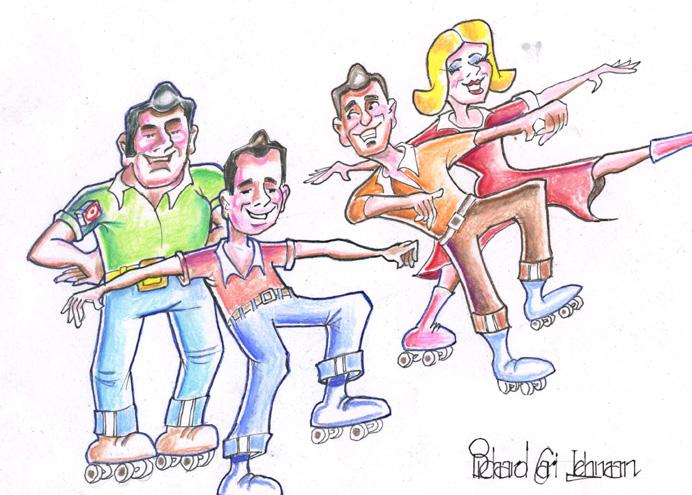
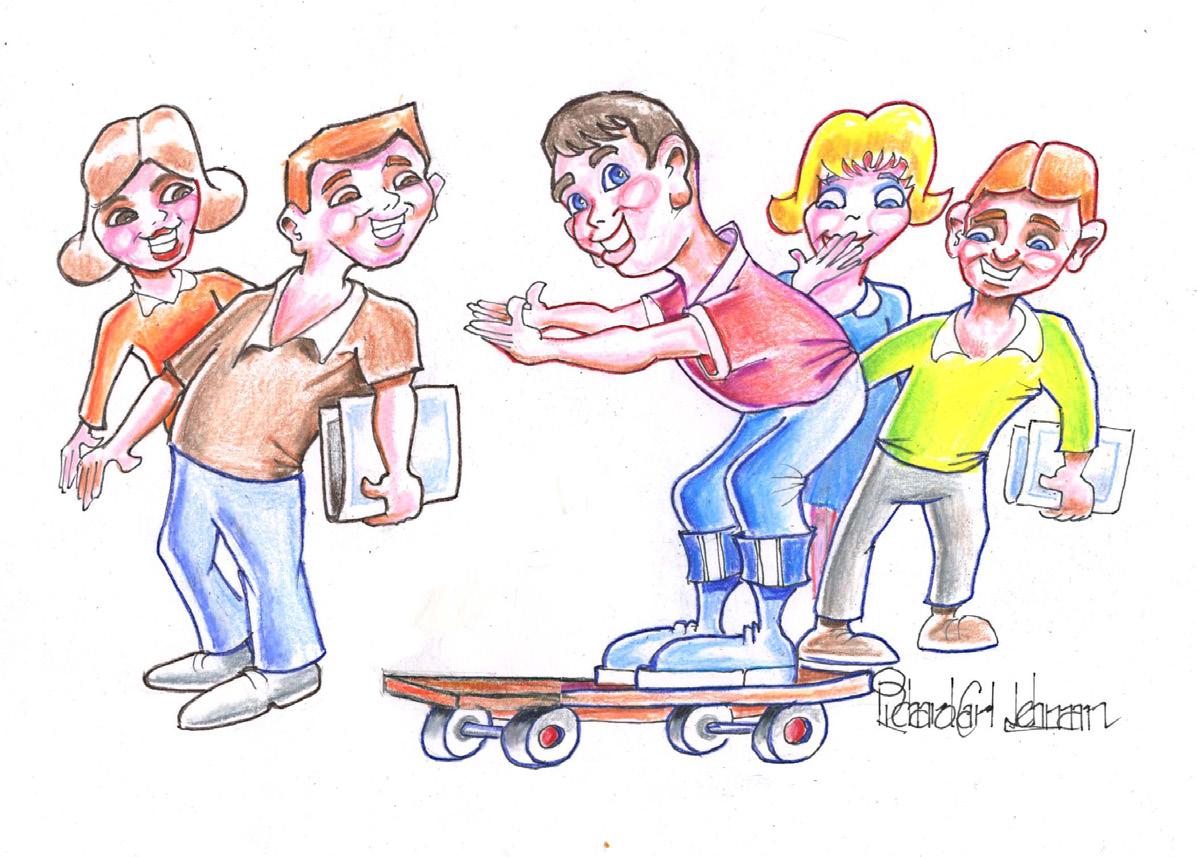
Where Bert’s Red Apple is now there was a parking lot that filled up with water and then ice. We ran and slid where others might have dared to skate. We were thrilled when one of our parents took us to the Civic Ice Arena. It was built in 1928 and later it was called the World’s Fair Arena, the Seattle Center Arena, and the Mercer Arena. This is where we transferred our running and sliding skills and applied them to ice skates. Just standing atop those thin blades was a feat. A few bruises later and much wetness, we gave up, turned in our ice skates and opted for the dryer version — roller skates. We even designed a fashion of skate keys attached to our jackets. Roller skating from school was doable about half the way but had to take them off on other sections of rough sidewalks. The best place to skate was the tennis courts but the players always shooed us away. Roller skates were the best bet pre-bike. When the strap clamps wore out, we nailed the wheels to a board and turned an apple box upright (for steering) and voila’ we had a scooter. We had races to test our skills. One kid put wheels on a plain board and used it as a scooter without the steering mechanism (box) and called it a board skate. Really? What a dumb name and it would never catch on. A simple multi-milliondollar enterprise gone in a minute. *
Richard Carl Lehman Revisiting the Park
In our early teens a friend drove us to an actual roller-skating rink, The Ridge Roller Skating Rink on 85th and Greenwood. We were pumped and we could hear and smell it before we even saw it. Fresh hot dogs wafted into our nostrils, and we heard the music we would skate to. After checking out skates and noticing GIRLS, we gathered by the refreshment stand. Lacing up our skates we journeyed out to the rink and noticed a new trick: people skating backwards and doing jumps! We caught on to a few of the maneuvers receiving a few bruises here and there but at least we weren’t wet.
This roller rink had special skate groups like kids under 12 couples, women, and men. We chose men (I think we were 13). A man was playing the organ in one corner protected by a wire screen. The music started playing faster and faster, the skaters were skating faster, and it was getting hard to keep up. I took one corner full throttle and ran head on into the wire screen. The music was too loud, and I found a large tattoo of the screen on my larger than average forehead and blacked out. Coming to, we all laughed and skated to the refreshment bar for hot dogs, coke, and GIRLS. Some of us exchanged phone numbers so we were able to call the experience a success.
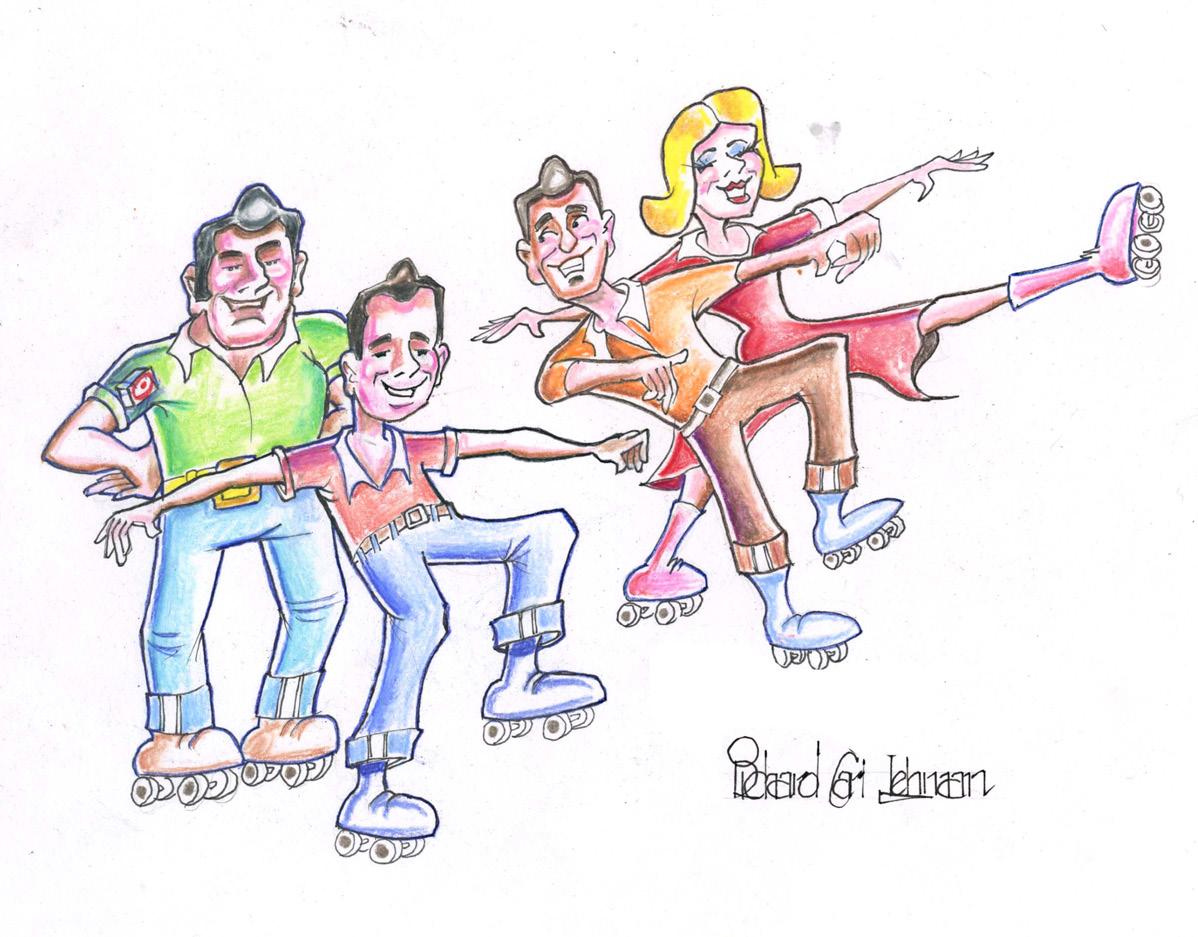
Another roller-skating arena was the Renton Bowl. Now this was a rink! There were mostly regulars but others there were not received well because of their mannerisms. This was skating with big kids with an attitude. A fashion began here, and the label was “Rink” which depicted the style and the person. Jeans with big cuffs, belt buckle consisted of a bottle opener, keys, pocketknife, and a lighter. These guys usually wore leather jackets
with the collar turned up, a T-Shirt with short sleeves turned over a pack of cigarettes to show the brand (usually Lucky Strike with the circular logo showing) and hair styled in a pompadour doused in 40 weight oil. All of them had sideburns, some straggle-y, some perhaps penciled in. Top all of that off with a non expressive stare and it was a “Rink”!
At the refreshment stand there were GIRLS of course but the combination of perfume and the Rinks’ cigarette smoke was not refreshing. We skated by the Rinks and saw they were checking us out, but they began skating backwards around us. One of my friends said, “Did you see that chick? She smiled at me!” She wore makeup and perfume. Here is where one should know the word “caution”. After a hundred laps or so we paused for hotdogs and GIRLS. We sat at a table with a few of them and discussed our schools. They thought Edmund Meany and Garfield were tough schools. Oh yah! The Rinks joined our table, and one guy kissed a gal there (showing off).
Another Rink sat near me and said, “You’re tough Garfield & Meany, Gee!”
This was not a friendly greeting. As we resumed skating, it was no longer pleasant, there was a lot of shoving and bumping. When it got a bit to rough, we decided to plan our egress. One by one, we peeled out of there with our driver waiting in his car for us.
In the early 70’s Seattle had a long cold spell. Many delivery trucks were stranded and the word in the Madison Park Bakery was, “The arboretum is frozen!” This was a mustsee event, so camera in hand we managed to get there to see people walking on the ice at the north end of the park! The second indication was the ponds were frozen-- ducks were landing on their butts. A dog tried to step onto the lake but backed out unsure
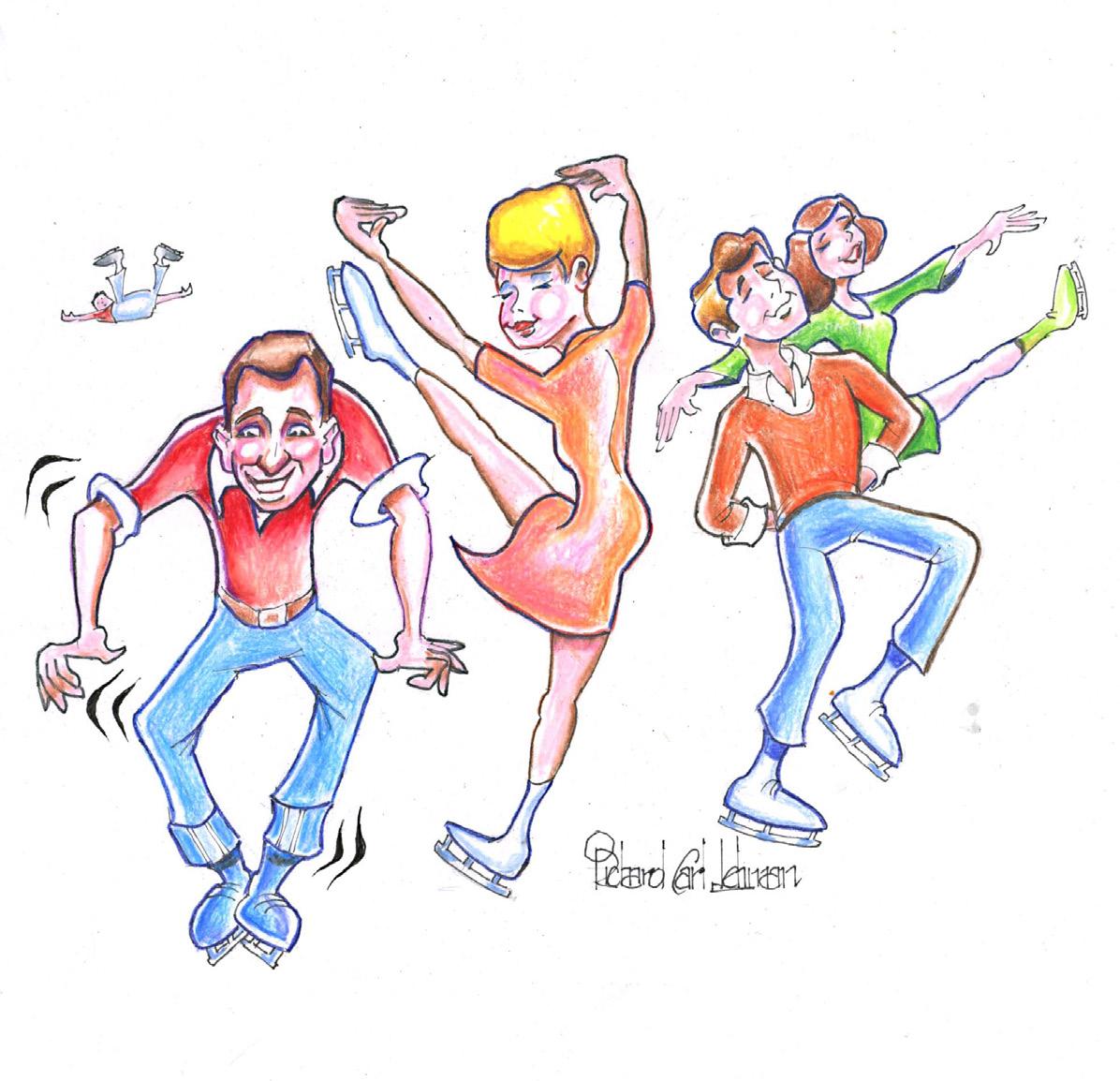
of the firmness. One of my friends put her skates on and chanced it, she is still alive. The cars parked nearby all played music on KJR and others joined in and skated in unison. There was a thin film of ice on the shallow end of the lake in front of the Edgewater apartments, but no one tried it. Many a pipe was frozen, so most of us learned that they must be wrapped during these cold spells. All the years living here in the wintertime, we would have to call in “unable to commute”. Coworkers from Burien and other areas had no issues. Good for them. Good for us. Unbeknownst to us Madison Parkers there
were alternate routes that we hadn’t discovered. It was more fun to stand at the payphone in front of the dry cleaners next to the pharmacy and call-in kindof-sick and join the revelers at the Red Onion and watch the snow fall making sure the snow did not fall into our schooners.
*Our makeshift scooters found their way to a soap box derby in Pike Place Market in the mid 70’s taking advantage of the myriad of downhill alleyways from Pike and First Street to lower Post Alley and Madison. https://pauldorpat. com/2018/10/06/seattlenow-then-pike-marketsoap-box-derby-1975/
Committed to Community
In 2023, Windermere agents and offices proudly supported a diverse array of charitable organizations, demonstrating an enduring commitment to the well-being of our Seattle communities. Channeled through the Windermere Foundation, these contributions impacted numerous causes, with a particular emphasis on aiding low-income and homeless families throughout the city.
AFRICAN HOUSING & DEVELOPMENT AIM AKI KUROSE VILLAGE AMARA ARBOR HEIGHTS ELEMENTARY ART FOR ALL ASSISTANCE LEAGUE OF SEATTLE AURORA COMMONS BACKPACK BRIGADE BALLARD FOOD BANK BALLARD NW SENIOR CENTER BALLARD PERFORMING ARTS BENEFITS LAW CENTER BIKE WORKS BOYS & GIRLS CLUB HIDDEN VALLEY BOYS & GIRLS CLUB OF BALLARD BYRD BARR PLACE CANCER LIFELINE CASA CATHOLIC COMMUNITY SERVICES-YOUTH TUTORING PROGRAM CITY FRUIT COMMUNITY ROOTS HOUSING COMPASS HOUSING ALLIANCE DEARBORN PARK INTERNATIONAL ELEMENTARY SCHOOL
DENISE LOUIE EDUCATION CENTER DUNLAP ELEMENTARY PTSA EL CENTRO DE LA RAZA ELIZABETH GREGORY HOME GOODWILL OF NORTHWEST WASHINGTON FAMILY SUPPORT FUND FOR RISING STAR, VIA SPS FARESTART FISHER FOUNDATION
FOOD LIFELINE FRANKLIN HIGH SCHOOL FRED HUTCHINSON CANCER CENTER FRIENDS OF JANE ADDAMS MUSIC GAGE ACADEMY OF ART GENDER JUSTICE LEAGUE GIRLS ON THE RUN OF PUGET SOUND GRAD NIGHTS GRAHAM HILL PTA GREEN LAKE ELEMENTARY
H.O.P.E. CENTER RESOURCES HAZEL WOLF K-8 HIDDEN MANNA HIGHLAND PARK PTA FAMILY SUPPORT WORKER PROGRAM HOLIDAY STOCKINGS FOR HOMELESS CHILDREN HOMESIGHT/SAM SMITH FUND HOPE CENTER RESOURCES HUMBLE DESIGN HUNGER INTERVENTION PROGRAM I CAN AND I WILL GUILD INVESTED ISLANDWOOD JANE ADDAMS PTSA KIDS AND PAPER KIDVANTAGE
LAKESIDE SCHOOL LAURELHURST COMMUNITY CLUB LESCHI PTA LEVEL THE FIELD SPORTS LINCOLN HIGH SCHOOL
LOW INCOME HOUSING INSTITUTE LOWELL SCHOOL PTA MADRONA ELEMENTARY SCHOOL PTSA MAKE A WISH FOUNDATION MEANY MIDDLE SCHOOL
MOCKINGBIRD SOCIETY MONTLAKE COMMUNITY CENTER MOTHER AFRICA MOUNT BAKER COMMUNITY CLUB MULTI-COMMUNITIES NAMI SEATTLE
NEW BEGINNINGS NORTH HELPLINE NORTHGATE ELEMENTARY NORTHWEST FAMILY LIFE NORTHWEST HOPE & HEALING NW EDUCATION ACCESS
OLYMPIC HILLS ELEMENTARY OUTDOORS FOR ALL FOUNDATION PEPS PHINNEY NEIGHBORHOOD ASSOCIATION QUEEN ANNE ELEMENTARY PTSA QUEEN ANNE FOOD BANK AT SACRED HEART QUEEN ANNE HELPLINE RAIN CITY ROCK CAMP FOR GIRLS RAINIER BEACH HIGH SCHOOL
RAINIER VALLEY FOOD BANK RAISBECK AVIATION HIGH SCHOOL PTSA RECOVERY CAFE REFUGEE ARTISAN INITIATIVE
REFUGEE WOMEN’S ALLIANCE RONALD MCDONALD HOUSE CHARITIES OF WESTERN WA & AK ROOSEVELT FOR THE MUSIC
ROOSEVELT HIGH SCHOOL ROOSEVELT PTSA SAFE CROSSINGS FOUNDATION SAIL SAND POINT SAND POINT ELEMENTARY PTA
SAND POINT ELEMENTARY/FAMILY SUPPORT WORKER PROGRAM SANISLO ELEMENTARY PTA SEATTLE CENTRAL FOUNDATION
SEATTLE CHILDREN’S FOUNDATION SEATTLE CHILDREN’S SOCIAL WORK EMERGENCY FUND SEATTLE TENNIS & EDUCATION FOUNDATION
SEATTLE UNITED FC SEATTLE UNIVERSITY SCHOOL OF LAW SEATTLE WORLD SCHOOL SEATTLE/KING COUNTY COALITION ON HOMELESSNESS
SHUNPIKE SOLID GROUND WA SOUND FOUNDATIONS NW SOUTHEAST YOUTH AND FAMILY SERVICES STEVENS PTA
STROUM JEWISH COMMUNITY CENTER TEEN FEED THE BIG-BRAINED SUPERHEROS CLUB THE EMERGENCY FEEDING PROGRAM OF SEATTLE & KING COUNTY THE GREATER SEATTLE BUREAU OF FEARLESS IDEAS THE LEARNING TREE MONTESSORI THE PHINNEY NEIGHBORHOOD ASSOCIATION
RECIPIENT NON-PROFITS THANK YOU All in, for our collective well-being.
We thank our Madison Park and Seattle neighbors for supporting the Windermere Foundation through the years. We wish you a New Year brimming with opportunity, community and collective generosity.
SEATTLE REOPENS AN ICON
By Laura Marie Rivera Contributing Writer
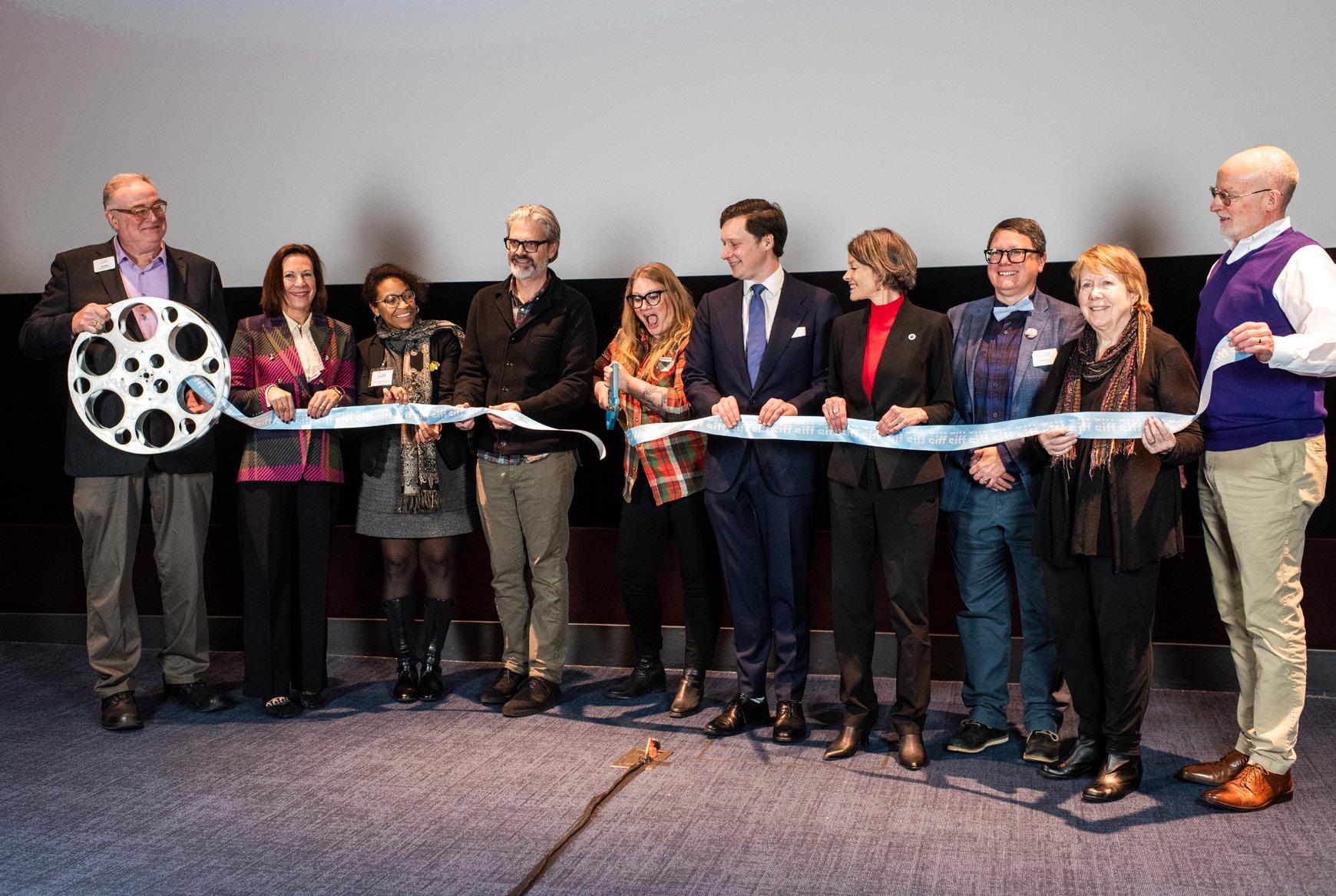
Earlier in December, leaders from Seattle International Film Festival (SIFF) and across the region gathered to officially cut the ribbon and welcome visitors to SIFF Cinema Downtown, the theater formerly known as Cinerama. Local politicians, business leaders, and film lovers gathered in the lobby of the historic theater and waited for their first taste of the famous chocolate popcorn since the theater closed in 2020.
The Seattle Cinerama Theater, at the corner of Lenora and 4th Avenue, opened in 1963. Originally part of an elite group of theaters across the country, it is one of only three remaining
Cinerama theaters. Built for the latest 70mm technology, the three projectors and 97-foot curved screen made it a premier destination for film makers and film lovers alike. Because the 70mm film is twice as large as 35mm film, the picture is bigger, brighter, and more vivid.
The theater has been through its ups and downs over the years and was almost turned into a dinner theater in the 1990s. Luckily, Paul Allen, Microsoft founder and philanthropist, was also a film lover. He saved the theater and upgraded accessibility and state-of-the-art technology.
Tom Mara, SIFF Executive Director, said, “I am particularly
CINEMA Page 3Æ


“Lisa has now helped us with four home transactions. What I love about Lisa is the passion, intelligence and strategy she brings to the table. I have used a number of high end realtors in the past and none have come close to Lisa. She doesn’t just come with a resume, she comes with a plan and how to execute it. I have appreciated her home preparation ideas especially when she had the people to execute. I am also grateful to her for finding a hard to come by rental that could accommodate our family when we were between homes. She knows her work and works hard.” - Broadmoor Client

Courtesy Hello There You photos Seattle leaders and film lovers come together to assist Mel Eslyn in cutting the ribbon and welcome the public to the newly reopened SIFF Cinema Downtown.









CINEMA from Page 1Æ
appreciative of Paul Allen for stepping up to save Cinerama and I feel a strong responsibility to continue that legacy.” He explained that this has been a huge effort of staff, government, and community. And his most recent round of appreciation started with District 7 City Councilmember Andrew Lewis. Mara recalls Lewis reaching out to him before he had even started his role at SIFF. He said, “Andrew is a real movie fan and played a key role in this acquisition. He had a hope and a dream and an expectation to figure out a way to ensure this theater remains in our lives.”
When Cinerama closed for a planned renovation in early 2020, it was unable to reopen because of the pandemic. And some Seattleites, understanding the costs associated with operating a luxury movie theater in the age of streaming video, feared it may not ever reopen. Lewis recognized that the value of the theater was much greater than the land it was occupying. “It could have been a loss to history and to the recovery of the neighborhood,” Lewis said. To some extent, he says it is now owned by the people, due to the combined efforts of the community, Mayor’s office, city council, county council, and local donors. “I am really proud to have been a part of the history of this really important place.”
King County Councilmember Jeanne Kohl-Welles highlighted the importance of the arts. “I love this theater, the history, the tradition,” she said. Her favorite Cinerama moment was seeing the U.S. premiere of the re-release of 2001: A Space Odyssey. She also mentioned the recent success of the King County Doors Open program that will benefit arts, culture, science, heritage, and film.
Seattle City Councilmember Sara Nelson celebrated the theater in relation to Seattle’s film economy. “You saved an icon! That will bring

tremendous joy and help activate downtown.” In 2022, Nelson championed the legislation to create the Seattle Film Commission and she called the re-opening of this theater the perfect ending to the year.
Chris Swenson, the Film Program Manager for Seattle Office of Economic Development, recognizes the unique history of the theater and welcomes its return. “A vibrant and healthy landmark theater, reimagined with access and diversity, has the potential to elevate moviegoing for community, cultural, and industry events, and become a pillar for the cultural revitalization of Downtown Seattle.”
After all of the fanfare, gratitude, and chocolate popcorn, it was time to cut the ribbon and declare the new SIFF Cinema Downtown open. The official honor went to local film producer, Mel Eslyn.
Wonka, which was coincidentally the code name for the top-secret acquisition, was the first scheduled film and will be playing until mid-January. In addition to new releases and limited showings of
classic films, the new SIFF Cinema Downtown will host film festivals in the new year. “We have a lot of work to do and I am tickled to be in this position,” Mara said. Other priorities include expanding their commitment to education and developing their role in the Seattle film ecosystem. “SIFF can champion vibrancy in the community and the economy.” Movie times and more information can be found at www.siff.net.
Ewing & Clark Welcomes
Residential Real Estate Broker
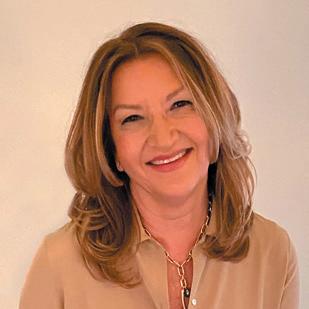
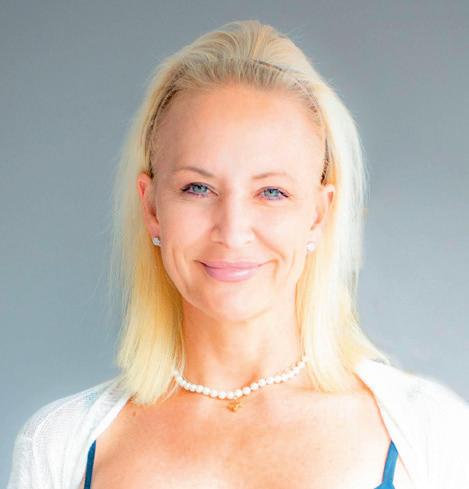
Alexandra joins the Madison Park office as a Residential Broker. With an AB from Harvard and her Masters from the San Francisco Conservatory, she offers personal experience preparing and listing estate properties. Alexandra began her professional career as an opera singer and has a big spot in her heart for the arts, her faith, and children. A former Broadmoor resident of almost 20 years, Alexandra now calls Washington Park home, where she lives with her husband, two sons, and two dogs. Casey Losh, CEO, says “We are excited that Lexi is joining us. She is a Madison Park resident who brings both local neighborhood and real estate knowledge to our team.”



“My husband and I worked with Laura in 2022, during the search for our new family home, and ultimately, the sale of our previous home. Her knowledge of the market and understanding of how to be successful in your goals is exemplary. Her communication skills are excellent, along with her sense of urgency. A top professional!” - Georgina & Jose Ubeda





Laura Marie Rivera
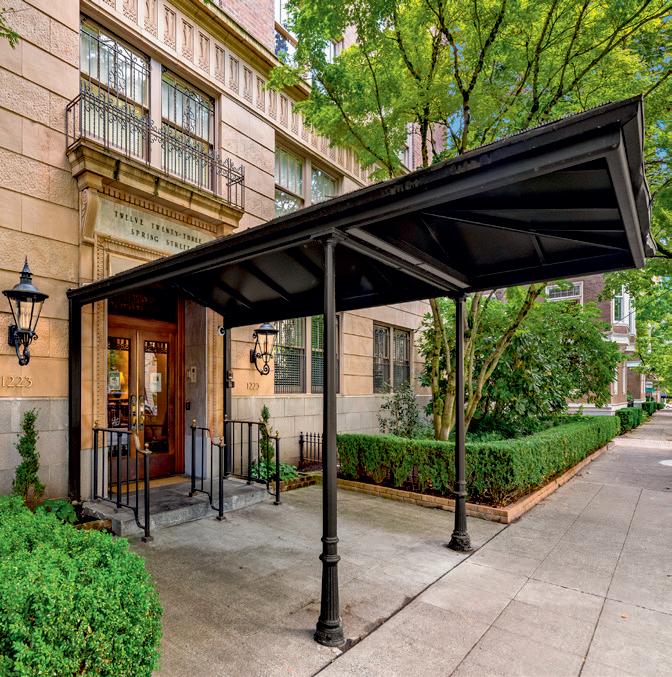
The historic Cinerama Theater at Lenora and 4th Avenue reopens as SIFF Cinema Downtown.
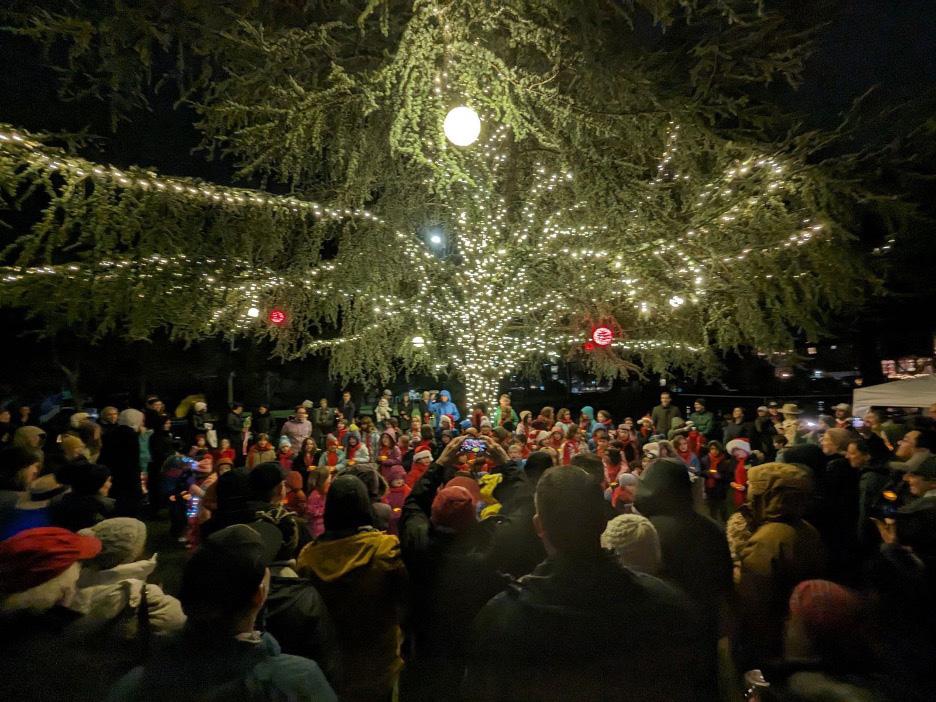
Madison Park closed out 2023 with multiple holiday events- the first Tree Lighting in the Park with over 50 from McGilvra Elementary School singing “Frosty the Snowman” and “Hot Chocolate” wreath making class at the Bathhouse, Pop-up Artisan Markets and Santa visiting Red Wagon Toys. On Dec. 21, Santa visited the Bathhouse, along with Christmas Ships and cookies and a beach bonfire.
FRIENDS
OF MADISON PARK WELCOMES 2024 WITH TUESDAY TED TALKS
Every second Tuesday of the month beginning Jan. 9.
Subscribe for the full series for $65, or single tickets $15 online and $20 at the door. Details on each event can be found online. Register at https://www.friendsofmadisonpark.com/ tuesday-ted-talks-registration
Talk #1
January 9th - Casey Brown - Revitalize Your Resolutions
Talk #2
February 13th - Salla Eckhardt - Navigating the AI Frontier
Talk #3
March 12th - Kate Gavigan - The Creative Comeback
Talk #4
April 9th - Lisa Port - Elevate Your Garden Design
The talks will take place at Madison Park Bath House, 1898 43rd Avenue E Seattle, WA, 98112. Talks will take place from 7-8:30 p.m. Doors open at 6:30.
Winter months are also our time to be mindful and supportive of our local restaurants and bars that always feel an economic lull after the holidays have passed and before the spring and summer seasons get us out again. We’ve got a counter to that: Neighbor’s Night Out. Make your reservations for dinner with friends at one of the 13 restaurants between Madison Park and Madison Valley. Choose a midweek night when traffic is slow, pick a new spot each week or re-visit a spot you always liked but haven’t been back to in a while. Grab a group of friends and support your local eateries. We are lucky to have so



Like lost socks in the laundry, plant tags tend to wander. Who knows what happens to them? Sometimes, they take a dive and bury themselves at planting, sometimes they fly away on the wind, and sometimes the tag sticks around, but the faded writing needs an archeologist to resurrect. Whether it’s happenstance, a mischievous raven or spirit having a little fun, it leaves the gardener at a loss as to how to proceed. Knowing what you’re growing is a basic building block for your horticultural efforts.
GARDEN MARKERS AND TAGS
Naturally I’d prefer to use less plastic in the garden overall, and there are a lot
of tags each year. I’ve seen some lovely but pricey slate markers that I’d consider as a gift or to use in a small herb garden, for instance. There are also soft copper tags that can be etched with a pen that lasts basically forever, but they are not as easy to read. I would likely use these for long-term garden players like trees and large shrubs. It doesn’t help with the hapless burying or puckish sprites, but to help with the fading of names, I’ve taken to marking wide and short black “chalkboard” plastic tags with a white waterproof “paint” pen. My second choice is pencil on a white plastic tag – pencil lasts better than Sharpie markers,
GRIVAS Page 6Æ




Talk #5
May 14th - Bruce Balick - Unveiling the Cosmos
Erica Browne Grivas Your Best Life













from Page 4
many choices- many within walking distance- and so many flavors to choose from.
2024 IS THE YEAR TO VOLUNTEER
Friends of Madison Park’s website is filled with events planned for the year and a need for people to pitch in with their time and energy so that we can
GRIVAS from Page 4Æ
though sometimes I’ll do both so I can read it from afar until the Sharpie layer

continue with the successful events of 2023 and new projects we want to get started in 2024. Our VOLUNTEER PAGE makes it easy to see what is being planned and with a click, let you get involved. https://www.friendsofmadisonpark. com/volunteer.
One of our main goals for 2024 is our Beautify Madison Park Campaign. The vision is to spruce up our Business
melts away with watering. This is one of the many times when a garden journal saves me. If I can’t name a plant, I hunt through my
LADDERS FOR LIGHTS!


District with planters, flower baskets and benches, to weed, prune and clean up our public spaces in the park and along the beach, our road end parks and around the playground area. We have a city sponsored Spring Clean Up Day on April 20 and a Garden Tour scheduled for May 18. All these need VOLUNTEERS! VOLUNTEERS! And fundraising to make it all happen. We also have an Easter Egg Hunt
garden journals before I plant in its spot or dig it up.
JOURNALS
Journals help you to remember what you planted. Some people simply keep ring binders with plastic pages to hold plant tags like baseball cards – I would probably alphabetize them.
A great thing about this is it subverts the user error I’ve encountered when I plant the plant, come inside having left the tag outside (probably to be soon blown away or buried), and then write down the wrong name. I know a lot of plant names, and often I’ll conflate two similar names or categories. This is why I can’t be sure if I have ‘Arnold Promise’ or ‘Primavera’ witch hazel – both yellow Hamamelis x intermedia cultivars. I’ve considered but never tried making an index card for every new plant to add notes to over the years, like a recipe card holder. Which would work for me if alphabetized until it gets so big I can’t lift it.
You’ll also want to note where the plant was put, because of the tag issues mentioned above – more on maps later.




For bonus points, consider including notes about how it performed amid onslaughts of rain, heat, slugs, and rabbits. You might note the date it was planted, when it emerged and what it looked like (very helpful when weeding in spring), and when it bloomed. How long did it bloom? If you fertilized it, what you used and when, and how it responded. How is it as a cut flower? Keep notes about unusual weather, if spring came late, or frosts
March 30, a Second Chance Spring Prom in the works, A Neighborhood Yard Sale to plan, the goal of a monthly Farmer’s Market, possibly a spring Art Walk to follow the popular September Art Walk, Kids Music Concerts and again the Children’s Parade and Picnic July 13, The Music in the Park each Thursday in August and our Warmth and Wine Fundraiser this coming October plus everything Halloween
came early. This helps you know when your plants bloom in varied conditions in your yard, helping you better plan new additions. Knowing that your allium bulbs bloom the first two weeks of June, at the same time as your groundcover rose is much more helpful than the catalog’s promise of “early spring”.
FROM ANALOG TO DIGITAL
Years ago I journaled the analog way, freeform in a blank notebook. I found the act of creating a handmade testament to my gardening efforts rewarding, just looking at the stack of seasons past with an oftensmug sense of satisfaction. However, these journals had no index. So if I wanted to look something up, it was impossible, without rereading every page, sometimes over multiple seasons, to find it –and sometimes even then.
There are premade journals, but I have yet to find the structure that vibes with my needs. I’m not purely a vegetable gardener, so need more than a planner. I don’t write every week, so I feel like a calendar-based one leaves a lot of unused paper.
For now, I write an annual Word document each year. It’s not tactile but takes less paper, and the key that puts this method over the top is: that it’s searchable. Can’t remember the name of the Baptisia? Search ‘baptisia” in my Mac finder, and scroll through the yearly documents using [command-f] until I find it. If you have an MS system, I imagine it has a similar function.
Special projects get their documents, like “Seeds to Buy” (wishlist for the year), “Seeds Master List” (what’s planted vs. remaining, so I know not to buy seven packets of Poppy ‘Amazing Gray’ again), Dahlias, Tomatoes, Flowering Bulb
Lawn and Fall Bulbs. I also have a “master plant list” Excel document, but, while searchable it’s unwieldy and hard to read. Having started it about twelve years ago, I have scores of plants (bare-root plants, bulbs, and dahlias) still listed that disintegrated before I figured out where the most well-drained spots were in our yard. Their names stand because a) hope springs eternal and b) laziness.
MAPS
But then there is the need to locate where you’ve put the plant, now that you know what it’s called, meaning maps. This is simple if you only plant the same three raised beds or window boxes every year, you can just draw some boxes on paper or the computer, or you can use a planning app – these are usually for vegetables, but not always. In my garden, I have multiple freeform beds as well as raised beds and containers that change regularly.
Even in my computer journal, it seems inefficient to write descriptions of the location, like “planted between Geranium ‘Rozanne’ and Hellebore ‘Ice n’ Roses Rose’, in the center of the NW-facing bed along the fence.” As a visual person, I find it invaluable to see what’s happening – and how much room might be left.
My dream is to have a master plan diagram for each section of my garden, that I can just edit with a few keystrokes. Dahlia [erase] (rotted) Pacific Coast Iris [insert]. I have tried in Word using bubbles (that lasted a couple of hours before I threw my hands up), and have yet to find the right program for a non-landscape designer, so I have made single-page maps on graph paper. I’ve lost these at least twice, so my organization system needs help!


We would like to thank our clients, family, friends and community for your trust and continued support. Happy New Year!





























Broker
Ryder Fasse Sales Broker
Andrea Whitehall Sales Broker
Memoree Myers Office Manager
Chris Sudore President/Founder
Megan Bassetti Marketing