Things to stop doing in 2022
There’s been a lot of unlearning happening in my garden. I learned to not do a lot of things I was doing.
The good news of all this upheaval is most of these learnings add up to less work in the balance of thing and more diversity in the soil and species in my garden. The goal in all of them is creating an environment that is as selfsufficient as possible.
Stop amending planting holes
From Linda Chalker-Scott, an associate professor of Washington State University, I learned two crucial planting techniques.
The first was a new (to me) way of planting nursery-bought plants. Chalker-Scott says that when water hits any new medium, going from one soil texture to another, it slows or stops.
Better to have one medium, your garden soil, throughout the root zone. So that means shake or rinse off the nursery soil, using garden soil in the hole.
Amend around the crown only with nursery soil, fertilizer or amendments that will trickle down via watering and worms.
Here are the details: https:// s3.wp.wsu.edu/uploads/ sites/403/2015/03/soil-amendments.pdf.
The old wisdom of planting was basically: dig hole, plunk in plant as-is and add compost or fertilizer
to hole.
When you keep the plant in the nursery soil, the plant, which adapted those cushy conditions, will often stay within that original shape without sending roots out to acclimate to the existing garden soil. It eventually fills that space and starves or drowns just as if it was an overgrown plant in a tiny pot.
It’s heart-rending to pull out a sad plant after a season and see a wimpy root ball that never got wider than the original quart-size pot.
I began applying ChalkerScott’s method and noticed new plants were establishing much faster, even in areas with challenging soil conditions.
So now I dig the hole as deep
as the root ball and twice and wide, putting the garden soil to the side. I water the hole and the new plant. I shake off the fertilizer-filled nursery soil into another pile (some go as far as to rinse it off entirely). If roots are circling, I loosen the root ball with my hands — or in dire cases, my hori-hori knife — and replace garden soil around the plant. Then I top-dress with nursery soil and/or compost or any desired fertilizer.
Don’t line containers with gravel
Many people believe a layer of gravel at the bottom of a pot will “improve drainage” even if there is no hole in the pot, thinking excess water will collect in the gravel and save the plant roots from drowning. Chalker-Scott did a simple presentation at the Northwest Flower and Garden Show a few years ago that blew my mind.
I have been warning nursery customers off using gravel, Styrofoam, bits of clay ever since.
You can try the demonstration yourself: Take a clear plastic cup or glass, line with a layer of gravel topped with soil. Pour in water. The water will hit the gravel and retreat to the soil level. If there were a plant in there, the water would be pooling around the roots — exactly where you don’t want it. The reason? It goes back to
the idea of water slowing down with each change in soil texture. It hits the gravel, says “nope” and heads back up. You can learn the specifics here: https://s3.wp.wsu. edu/uploads/sites/403/2015/03/ container-drainage.pdf.
Stop pulling weeds
This is a tough one. Pulling weeds is so satisfying — both physically and mentally. You feel so virtuous as the soil releases the offending root into your grip — gotcha! However, every time you pull out a plant — whether a dandelion, a cover crop of alfalfa or a spent tomato plant — it wreaks havoc with the bacterial web in the soil, which is the garden’s life support. Also, pulling weeds (or tilling soil, for that matter) can bring buried weed seeds into the light, adding to the problem.
The better way to go, experts say, is to cut weeds to the ground — repeatedly if necessary — and smother with a competitive ground cover or bark chips. I can hear you — but what about the insanely vigorous plants that grow twice with each cut?
This fall I was interviewing ecofriendly landscapers to help clear an area riddled with Trollius (buttercup) and bindweed, and they all agreed — cut and smother, and potentially repeat. If you missed some, cut off the flowers before they can go to seed, and selective-
ly water desirable plants instead of the weeds if possible.
Stop cleaning up, and leave the leaves
Say goodbye to “fall clean-up” as you know it. You may have seen the “leave the leaves” campaign in fall on social media.
All that obsessive raking and bagging of fallen leaves and dried perennial stems takes away wildlife winter food sources, shelter and nesting sites and nutrients for your soil.
Happier and easier alternatives are to mow over your leaf pile (if it’s thick heavy oak leaves, say) and add as a shredded nutritious mulch that warms your plant’s roots while feeding them, compost them or just leave them, depending on your tolerance for wildness.
Even dead trees left upright, also called snags, can be a benefit to birds and other wildlife over the winter. The Bellevue Botanical Garden’s Native Discovery Garden has several large snags giving shelter to fungi, birds, insects and animals.
Ultimately, your easiest, happiest garden will come from choosing plants that want to grow where you put them, rather than creating false bubbles for them to live in temporarily. (That’s what containers and greenhouses are for.)
Erica Brown Grivas Get Growing
Seattle Night Market | Lunar New Year
So, a new year began
January felt more long-awaited than other months because it was.
In December, I just felt — anxious. Christmas, for a lot of us, means family, friends, food, everything right about the season. But now that we launch into it a week before Thanksgiving, are they enough to sustain all of it? As the month passes, it becomes more of a mood, an emotional one. And by New Year’s, I’ve pretty much run the span of my emotional reserve.
Not only that, twice in December I woke in the middle of the night after having the same dream where I am standing at the edge of a canyon, and with my hands pressed against my ears I yell, “Stop!” at the top of my lungs.
Now, when my husband thrashes from a dream, I immediately wake. But he doesn’t, typically, when I have one, but this time he
does. “You were crying,” I hear him whisper.
I laid there in sort of an altered state — roughly three-quarters me, or maybe only a half — until the dream let up. How could it be that I didn’t hear myself cry?
Mary Lou Sanelli
“Everything all right?” he said. “Or did you read ‘Time’ in bed again?” Which made me smile. I rolled over. I felt his body move to accommodate my turning
Falling Awake
over. I reached for my robe and walked into the living room. I thought more about tears, how our eyes are actually cleansing themselves of irritants. I sighed, not wanting to sound ridiculous, even to myself, but still, you’d think crying might want to seek a higher feat and flush out some of this fear.
I’m telling you this because, yes, I do read “Time Magazine” in bed. As a gift to my psyche, I cancelled the cable. And because I work at my laptop, I don’t want to read my news online. Any other place is better at the end of my day.
Anything to get up and stretch and walk around and take in the world that is not on a screen. The 2022 me still reads as many books as she can but only one factchecked news source of serious journalism a week, balanced by Saturday Night Live, especially the opening scenes.
Anymore is deliberately succumbing to another nosedive, and I don’t want to spend that much
time being down anymore.
And on this night I’d read an in-depth piece about Frances Haugen, the Facebook whistleblower (I prefer integrity-keeper) who is the kind of articulate woman who compels you to listen. Which I did.
I listened closely, her findings stressing truths within truths within truths. It was the first piece of writing on the whole Facebook mess — because it is a mess and should be one, and (hopefully) a crackdown on big tech and their sneaky, manipulative practices, yes, a muddied, complicated mess — that cleared up questions I didn’t have answers for yet.
Haugen studied what was happening during our last election and in countries like Ethiopia and India, about “engagement-based ranking” — commonly known as the algorithm — that chooses which posts to rank at the top of a user’s feed.
But it was Haugen’s argument about human nature that really drew me in, that this system of ranking is doomed to exaggerate the worst in us. She warns us (without prophesying, which is really hard to do) that one of the most dangerous things about engagement-based ranking is that it is much easier to inspire someone to hate than it is to inspire compassion and empathy. “And given that the internet tends to amplify the most extreme content, we are going to see more and more people who, for example, think it’s okay, even right, to hate and be violent. And that destabilizes societies.”
It was like reading my worst
‘Artists at the Center’ offers music other performances
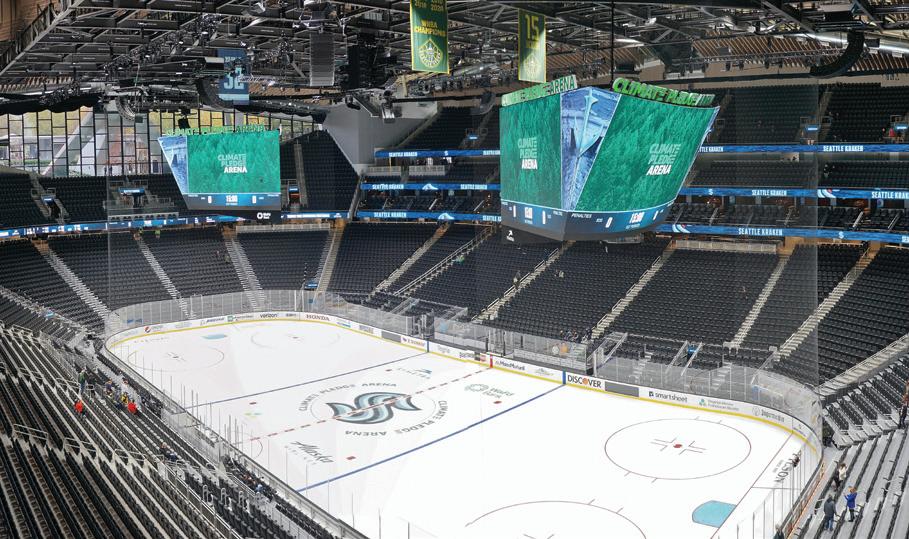
Artists at the Center, a yearlong slate of performances featuring up-and-coming artists to celebrate the opening of Climate Pledge Arena, offers varied performances during the first three months of 2022. From classical music and poetry to modern dance and rap, Artists at the Center will have something for everyone to enjoy.
Scheduled performances:
FROM PAGE 1
we’ve seen since 2020 could start to level off in the spring if a few things come to pass that industry leaders are expecting.
First, if interest rates do continue to rise, some of the buyers might decide to press pause on their home search. That means fewer offers for sellers to choose from, and it makes it just that much more difficult for sellers to negotiate their ideal terms.
Second, a combination of those rising interest rates and more sellers entering the market in the busy spring selling season could cause a recipe for home price sales growth to level off.
Higher interest rates will mean buyers will have less flexibility to escalate their offers, and there will be more houses to make offers on,
fears all over the page. I felt as though I could not breathe. This is not whistle-blowing; it’s turning noisy data into something cohesive to understand. If anything, it reflects ourselves back at ourselves, exposes how easy it is to con us, how culpable we are, how crazy it is to trust these new Mad Men in hoodies.
The other dream — and this is a relief — had more to do with how many times since Thanksgiving I found myself scarfing down another piece of pumpkin pie because once I learned how to make one, I just couldn’t STOP! Why, I wondered, had I convinced myself baking was so hard? Pumpkin. Milk. Sugar. Eggs. Easy. And, oh, compared to writing, do I ever mean easy.
Anyway, my sister, who is an R.N., swears that tears do cleanse us emotionally. And she is very opinionated, my sister, nothing at all like me, so when she said she absolutely knows this to be true, I knew enough not to object. I offered only a smile. But we know each other so well, it’s as if she could tell it was a doubtful smile.
But I’ve started to like the idea that this cleansing in sleep (and, admittedly, in waking hours when necessary) will help offset the fear I have of becoming re-addicted to sweets, and just how right Haugen is.
Mary Lou Sanelli’s latest collection of essays, “Every Little Thing,” has been nominated for a Pacific Northwest Book Award and a Washington State Book Award.
206 Zulu, Feb. 19 at Northwest Courtyard
El Sueno, Feb. 20 at Seattle
Center Armory
Gender Tender, Feb. 27 at Fisher Pavilion Roof
Sumayya E. Diop Dance & Drum, at the Monorail Alfonso Cervera Dance, March 5 at Northwest Courtyard
Das Biest, March 25 at Fisher Pavilion Roof
Orquestra Northwest, March 26 at Seattle Center Armory
Seattle Center, the Seattle Office of Arts & Culture, Climate
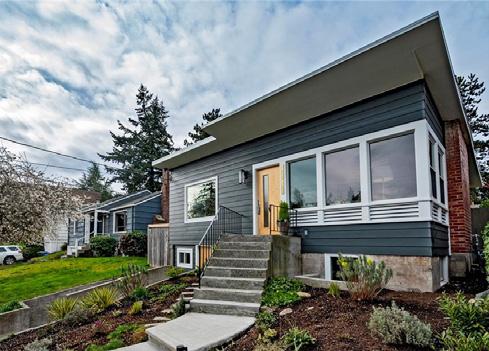
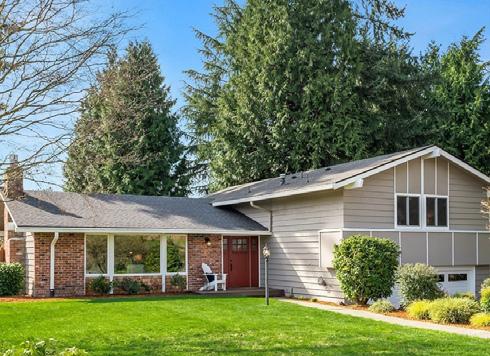
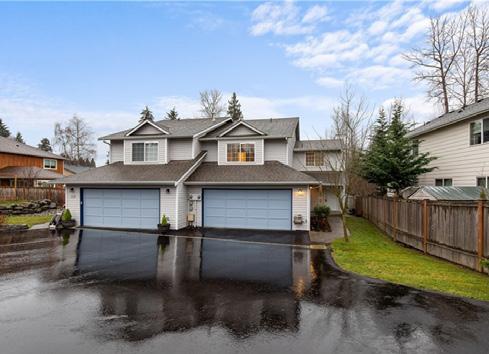
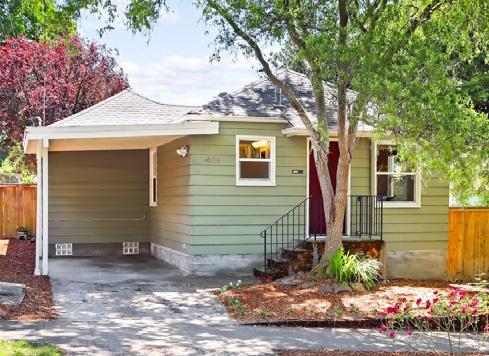
“The truth is, there hasn’t been a better time to be a seller. Historically, spring is the time to list. More buyers are entering the market in the spring, and it usually creates an ideal environment."
easing the competition. The truth is, there hasn’t been a better time to be a seller. Historically, spring is the time to list. More buyers are entering the market in the spring, and it usually creates an ideal environment. But if you’re planning on listing your home for sale, and
Pledge Arena, Uptown Arts & Culture Coalition and Seattle Kraken partnered to create Artists at the Center. The program features free pop-up performances on Seattle Center grounds through September 2022.
For performance schedule, details and to learn more about the artists, visit http://www. seattlecenter.com/events/featuredevents/artists-at-the-center. To learn more about virtual and inperson activities at Seattle Center, visit www.seattlecenter.com, or call (206) 684-7200.
you can list now, you are at a huge advantage. So few homes are on the market that multiple offers are common. That doesn’t just make it more likely for the seller to get a high offer; it also puts them in a great position to negotiate additional terms that will benefit them in the long run — including protections if you haven’t found your next home.
Last year proved to be a challenging and rewarding year in real estate. I’m so honored I was able to guide my clients through the process of selling a home or finding their next. If you’re thinking about what a move in 2022 could look like for you, let’s grab a coffee or set up a time to connect.
Neda Perrina 206-218-8589
neda.perrina@rsir.com