

Easier seed-sowing with seed snails

With so many trends surfing by on our social media feeds these days, it’s difficult to tell what’s worth our attention. Last year, a particular new garden method caught my eye — and by the look of TikTok, I wasn’t alone.
Innovation is always exciting, especially when it works. This new seed-sowing method, with the funny name of seed snails, was invented and introduced on social media by a UK gardener named Farida Sober (@ faridasober on Instagram). In many ways, it’s easier and more efficient than both indoor seedstarting and direct sowing. Seed snail-sowing (say that five times fast) looks as funny as it sounds, too. When I saw my first video, my jaw dropped. Sober cuts strips of polyethylene sheeting approximately 17” wide by 6” deep, lays them flat, tops them with potting soil (not seed starting mix), leaving some space on the sides and bottom, turns them upright and tapes the sides shut. Looking at the “snail” from the top, it looks like a cinnamon roll – that’s what I wish it was named – but so be it. She sows the seeds rather thickly in the soil on the top of the cinnamon roll, choosing the appropriate depth for that type of seed. She stacks them upright in potting trays or cookie sheets, but you can also hold them in round plastic pots or collected in plastic storage tubs (more on that later).

Sober is growing in a greenhouse, but you can use this method indoors with grow lights or outside under proper weather conditions for the seeds you’re growing.
King County and Seattle to use combined $134M to build 1,600 housing units
By Spencer Pauley
King County and Seattle plan to use a combined $134 million to pay for the construction of 1,600 affordable homes. Seattle announced it is using $108 million toward affordable housing through its 2023 Housing Levy. The city anticipates the funds to create 655 affordable homes throughout Seattle.
The Seattle Housing Levy’s tax rate is 45 cents per $1,000 of assessed value, or $383 a year for the median Seattle homeowner. It is anticipated to collect $970 million through 2030, or $138.6 million annually.
The city’s proposed One Seattle Comprehensive Plan increases zoning capacity to more than 330,000 new housing units, which more than doubles the city’s current housing capacity.
The initial plan estimated that at least 112,000 new units of housing will be needed over the next 25 years.

“By leveraging the voter-approved Housing Levy and working together with our community partners, we are creating affordable homes that will serve generations of Seattle residents,” Seattle Mayor Bruce Harrell said in a statement. “This is how we advance our One Seattle vision and ensure that everyone, regardless of income, has a
HOUSING, 7


The author sowed Zinnia 'Floret Precious Metals' in a seed snail June with great results.
COURTESY ERICA BROWNE GRIVAS
The Center Square
ADBOE STOCK
GRIVAS, 6
Erica Browne Grivas Get Growing

GETTING THE WORD OUT: Using radio in an emergency

After a disaster, if cellular and Internet communications become unstable, your neighborhood Hub — if you have one — will hopefully spring into action, setting up tables and tents with volunteers to help neighbors connect and share needed resources.
But what about the city and the wider world? After an earthquake, say, how would we get the word out about our status in Madison Park, and find out what city services we can expect to continue — or be halted?
We’ll do that — the hope is — with radio. Part of a typical Hub setup, including the essential Resource and Volunteer tents, includes a Radio tent designed to send messages to and from the Hub, but the details of how radio works vary from Hub to Hub. Some lucky Hubs include volunteers who are licensed amateur radio operators (called “hams”) who can send and receive messages to other hams. (And some of those hams are also ACS members — but more on that in a bit.)
Other Hubs, like ours, include a few volunteers who use GMRS handheld radios. These short-range radios require an FCC license to use (with a onetime fee) but there’s no required knowledge test as with amateur radio. GMRS radios work well at short distances (including between houses, if the houses are in the same area and reasonably line-of-sight), but we can communicate much farther with them using the city’s emergency repeaters (designated radio towers

just for this purpose).
Several of our volunteers also participate in the weekly Seattle Emergency Hubs GMRS radio checkin — I have heard Hubsters check in over radio from as far as Kent, Kirkland, Everett, and even Maple Valley.
But in an emergency, we won’t be able to use GMRS radios to talk to the city, and even fully licensed hams won’t be able to directly interact with city services. (A recent news story covered a ham getting a hefty fine for interfering with fire suppression efforts in the California wildfires, despite his good intentions to help.) Although hams could get messages to and from other hams around the city in an emergency — a huge help.
Ready and willing: understanding the ACS Seattle ACS (Auxiliary Communications Service), part of Seattle’s Office of Emergency Management, is a collection of amateur radio operators supporting the City of Seattle in times of disaster and emergency. Per the ACS website, “Being a part of Seattle ACS means putting your skills as a licensed ham radio operator to positive, civic use. Members are expected to participate on an ongoing basis in regular on-the-air nets as well as occasional in person meetings and even real-world events and activations. It’s a good way to hone your amateur

radio operation skills and learn from a friendly and enthusiastic community.”
ACS members, in addition to having an active radio license, are registered state emergency workers who have taken a series of classes from FEMA’s Emergency Management Institute designed to help understand how emergency messaging works. You can learn more at the ACS website: seattleacs.org
If I had the bandwidth (a radio joke), I’d join ACS myself, as their activities sound like fun to me. In addition to emergency drills (admittedly, emergencies are my jam), they participate in Field Day, a special outdoor event where hams come together each summer to practice the hobby. (I’ve heard it can sometimes involve zombies?) ACS has also been involved with the Seattle Marathon and the Fremont Solstice Parade.
How can a ham — or ACS member — help a
Hub?
A ham radio operator volunteering with a Hub would take part in Hub drills, which is where we practice setting up the Hub and trying out emergency scenarios, with volunteers playing the parts of neighbors who need help. In the Radio tent during a drill, the volunteer ham sends and receives simulated emergency messages (this is done with real radios or on paper). A radio Hub volunteer could also help test and refine a Hub’s radio procedures. And, of course, if a real emergency arose, a ham would hopefully bring their rig to the Hub and spring into action!
In a real emergency here in Madison Park, anyone with a ham radio license could listen for information from the City about warnings, conditions, and service availability, and share it with the Hub.
But an ACS member working at a Hub, in addition, could engage in
two-way communications with the city, reporting local neighborhood status and coordinating any resources or response from the city.
What we’d love to have in our area, and active with our Hub (we dream BIG here at the Madison Park Hub), is either a ham or an ACS member to help out in an emergency. Could this be you, or someone you know? If you know of any ham radio operators who live in Madison Park, we’d love to connect (find our email at the end of this column).
Intrigued to learn more about radio in a disaster?
If you’d like to find out more about being an amateur radio operator and being at the forefront of information during a disaster, there are a lot of resources out there. Go to www.arrl.org/gettinglicensed to find out more about ham radio licensing and hamstudy.org to find tools for studying for the
technical knowledge test. And if you want to learn how to use GMRS radio, consider becoming a member of your local Hub. (Madison Park and neighbor Hub Madison Valley both have active GMRS-using volunteers). This summer, our Hub is hoping to run a GMRS radio scavenger hunt.
As always, this column is part of Madison Park Emergency Hub’s outreach effort. We’re an all-volunteer org focused on neighbors helping each other in the event of an emergency (our Hub will spring up right next to the tennis courts and playground). We always need volunteers and ideas for new ways to prepare, and there are many roles to choose from. If you’d like to get involved with neighbors who want to help neighbors, it’s a light lift AND a lot of fun. Contact us at madparkhub@gmail. com with questions or to get on our mailing list.
Dana Armstrong Emergency Prep

Anne Woodford beautifying Madison Park
By Elizabeth Ayer
If you’ve ever admired our Friends of Madison Park bulletin board outside of the pharmacy or noticed the sidewalk sandwich boards that announce our community meeting dates, then you’ve appreciated the handiwork of Anne Woodford.
A long-time resident of Madison Park and engaged community volunteer, Anne lends her skills to beautifying our streets and local businesses with her calligraphy and artwork.
Anne has been creating chalkboard art for over a decade, having worked for Met Market, Trader Joe’s, and Corks & Canvas Events. You can see Anne’s work locally at McGilvra’s, Madison Books, Bar Cotto, and many other spots around town. She’s a vocal supporter of our small businesses and believes that creating attractive signage for them elevates the look and feel of the entire community. Using waterproof chalk paint, Anne updates our bulletin board quarterly to keep us apprised of upcoming events and cites those days as among

her favorites because of the spontaneous interactions she enjoys with so many neighbors who stop by to chat!
In addition to her incredible artwork, Anne founded the Artisan’s market, which she has been running regularly on the third Sunday of most months (spring, summer, and fall). She utilizes her wide network of artists to bring handcrafted, locally made items to Madison Park. Most of the artists represented live right here in 98112, and the participation from the neighborhood has been remarkable.

Mark your calendars for Sunday, Feb. 9: Anne is organizing a Valentine’s Day pop-up market at Parlour Wines, so swing by to find gifts for loved ones and enjoy some bubbly.
Anne is available for private commissions and specializes in custom hand-lettered chalkboard art as well as murals and canvas painting. Please check out her work online and contact her at www. annewrittenart.com or on Instagram: @annewrittenart
One Seattle Plan top of mind
By Friends of Madison Park
Happy New Year! 2025 brings us a new neighborhood meeting schedule: please note that community meeting times have moved to the first Tuesday of each month at 7 p.m. at the bathhouse. Meetings will be livestreamed and recorded for later viewing. We invite you to join us for our next gathering on Tuesday, Feb. 4. Conversation will focus on the details of the One Seattle Plan.
Speaking of the One Seattle Plan, a new neighborhood committee has formed to craft Madison Park’s response to this proposal. If you have expertise in land use law, urban planning, water management, geotechnical engineering, historical preservation, or other relevant industries, please join us! To learn more about the plan go to https://www.seattle.gov/ opcd/one-seattle-plan. Note the public hearing with the Seattle City Council on Wednesday, Feb. 5 at 5 p.m. downtown at City Hall. All are invited to participate. Attention children! (and their parents): The successful Little Beats concert series has two remaining shows: enjoy the musical stylings of Alleyoop on Feb. 1, and Johnny Bregar on March 1, both at 11 a.m. at Pioneer Hall. Cost is $25 for a season pass, or $5 tickets at the door. Thank you to Park Shore for their sponsorship and the Friends of Madison Park volunteers for organizing these fun family events!
Stay updated on all the news and events of the neighborhood by subscribing to the Friends of Madison Park digital newsletter: www.friendsofmadisonpark. com

COURTESY PHOTOS


Pruning your Japanese maples
As you walk the streets of your neighborhood for a bit of exercise or walking the dog, you will, undoubtedly, see one or two Japanese maples (Acer palmatum or A. japonica) in front yards. Mine happen to be in the back yard where they can receive a bit of protection from the hot afternoon sun. Although I say “grown in the yard,” the smaller, dwarf specimens of these trees can also be grown in containers.
Whether they are full-size or dwarfs, pruning these plants to optimal size and shape is a reasonably easy task. The goal is to prune to a natural shape and airy canopy. February is the perfect month to prune, especially for trunk and branch structure. When the leaves have dropped, the structural beauty and natural silhouette of these trees can be more easily seen. Also, large cuts heal more easily during winter. Normal garden tools like hand pruners, loppers and a small handsaw are all the tools you will need for this early season. Some things to consider while shaping the Japanese maple should include:
■ Know how your Japanese maple should naturally look. There are two basic types of trees. The upright varieties have branches that point upward, resembling open fans. The weeping, laceleaf maple (A. palmatum dissectum) has branches that grow to the sides, and downward, with a veil canopy.
■ Prune to shape mature trees for the sake of appearance. Removing dead, dying, and diseased wood can be done at any age, but the removal


of unappealing branches should wait until after the tree reaches two to three years of age. This gives the tree a chance to settle into its new site and begin to grow to its natural shape.
■ Prune at the right time of the year. After the tree has lost its leaves in the winter, it is easier to see which branches interfere with the structure of the tree. In late spring, a light pruning will lessen new growth, preventing out of-control growth. It is best not to prune in early spring, when leaves and bark are tender and the “sap is running,” nor in the full heat of summer.
■ Make good pruning cuts. When making thinning cuts (a.k.a., removing entire branches), remember to cut just outside the branch bark collar, which is the ridge of material that fosters natural healing. The branch collar is a distinctive bulge at the base of the branch, where it connects to the trunk. Cutting into the branch collar will put your tree at risk. The branch collar seals off the wound, minimizing the chances of disease and decay. Proper pruning leaves the branch collar intact.
■ Remove diseased, dying and dead stems. Dead wood is often found on the inside bottom of the tree. This helps to keep the tree healthy and reduce the spread of disease.
■ Remove crossing or intertwining branches. Overlapping branches will interfere with the growth of preferred branches. Cut these overlapping branches at their base, nearest the trunk, instead of just trimming where they overlap.
■ Remove weak branches that interfere with strong branches. Clumpy foliage can be caused by branches that are too close to each other. Prune the weaker or less important of the branches.
■ Remove branches growing in the wrong direction. Upper branches that are growing downward on an upright tree can be trimmed. On a weeping tree, a limb growing straight or upward would need trimming. Both limbs should be removed at the base next to the trunk, but outside the branch collar.
■ Your branches should all have a “Y” shape. Remove the center stem of any “extra” branches to retain the “Y” shape.
■ Remove lower branches on upright trees if they hang low enough that walking underneath

the tree is difficult. With a laceleaf tree, branches should hang low, although you may remove any that are touching the ground.
■ Manage the buds. The direction of the buds determines the direction that the tree will grow. If the buds are growing in an inconvenient direction, they can be hand plucked to redirect the tree’s growth direction.
■ Any limb with a diameter that is more than 1/4 to 1/3 the size of the tree trunk should not be removed unless there are problems as mentioned elsewhere here. Never remove more than 1/5 of the tree’s crown, or more than 30% of the tree each year. Removing tree growth can stimulate excessive growth and cause stress to the tree. Enough foliage should be retained to enable the tree to catch the sunshine and produce nutrients it needs. By examining the tree from all angles, (top to bottom, top to base, and side to side) you can determine the desired shape of the tree. Shrinking the tree to fit a location by pruning should really be avoided. If the tree does not fit the location, it should be removed or relocated. Simply because Japanese maples are small trees does not mean all of them will fit under a roof eave. Research the variety before you purchase it and find the one that wants to grow to the size you need. It will keep future problems to a minimum for you and the tree. A Japanese maple’s best feature is its delicate, arching sweep of branches. Trying to prune it into a lollipop shape to fit near an entryway destroys its beautiful aesthetic.
When sunlight dapples through

the leaves of your Japanese maple and creates a watercolor, seethrough, dazzling effect of varying colors, you will be happy you took the time to find the right member of this acer palmatum group for your yard, gave it the appropriate planting site and took the time to learn about pruning your tree into a work of art all of them are meant to be. Happy gardening all!
Additional Reading Brickell, Christopher& Joyce, David. AHS Pruning & Training. 1996. New York, NY: DK Publishing.
Brown, George E. & Kirkland, Tony. The Pruning of Trees, Shrubs and Conifers. 2004. Portland, OR: Timber Press.
Kenney, Neil. An Illustrated Guide to Japanese Maples for Garden Planting and Patio Pots. 2015. Kent, UK: Larchfield Publications. Vertrees, J.D. & Gregory, Peter. Japanese Maples: The Complete Guide to Selection and Cultivation, 2010. Portland, OR: Timber Press. Bruce Bennett is a WSU Master Gardener, lecturer and garden designer. Contact Bruce at gardenguy4u@gmail.com.
Bruce Bennett
Arboretum to host all-new ‘Botanical Bash’ at the Garden Festival
The Northwest Flower & Garden Festival returns to the Convention Center in mid-February, and once again, the Festival is partnering with the Arboretum Foundation to host their annual gala benefitting the Washington Park Arboretum.
Instead of a formal sit-down dinner, this year’s Botanical Bash will be a vibrant, after-hours, one-of-a-kind dance party!
After the visiting public has left the Convention Center on Friday, Feb. 21, the show garden floor will be transformed into an illuminated, flowerfilled dance hall, with visionary Seattle DJ Marco Collinsspinning the tunes.
Guests will sip botanically infused cocktails and dance the winter blues away in a sparkling nocturnal
garden-scape. They’ll also be able take part in a raffle and silent auction to help raise funds for Seattle’s most treasured park and botanic gardens.
Proceeds from the Botanical Bash will fund the stewardship of the Arboretum’s world-class plant collection, as well as core science education and volunteer programs.
The event will take place from 8:30 a.m. to 11 p.m. at the Seattle Convention Center, 705 Pike St.
Ticket levels: General entry is $50.
VIP tickets are $250 and include two drinks, nibbles and desserts, access to the VIP Lounge, and complimentary parking.
Purchasing tickets: To register or get more information, visitarboretumfoundation.org/events/ botanical-bash or call 206-325-4510
(Monday to Friday, 9 a.m. to 5 p.m.).

Do psychedelics reveal a deeper dimension of reality?
By Jenny Martin
Today, there is often the question – are psychedelic experiences simply hallucinations happening in the brain, or can you access another dimension during a plant medicine journey?
Typically, we are told by popular media and scientific researchers that the brain produces the trip. In other words, it is a delusion.
However, this would not be a foregone conclusion if we lived in ancient Greece or today in Peru and other places.
It is the materialist worldview — that nothing exists beyond the physical dimension — that has us interpret the psychedelic experience as a hallucination.
This limited view of the world can be problematic when we are trying to integrate a psychedelic experience.
Take a story recently shared with me.
Jack (not the real name), an investment banker living in NYC, travels to South America and discovers plant medicine for the first time. While under the influence of DMT, he encounters a realm that he didn’t know existed. Once the trip ended, he was grateful to return to ‘reality.’ He chalked up the bizarre visions to some trick his brain had played on him.
However, on the plane back home and for the next couple of weeks, he noticed his perception had not returned to normal.
Ever since the DMT trip, he saw a faint aura around everyone he met.
Worried he was losing touch with reality, he booked an appointment with a psychiatrist, who confirmed his fears and gave him a script for antipsychotic medication. The psychiatrist, trained in Western medicine rooted in a materialist worldview, interpreted Jack’s experiences as a sign of mental illness.
If Jack lived at another time in history or even in another culture today that incorporates a supernatural perspective, his

story could have turned out differently. He likely would not have ended up as a psychiatric patient.
While psychedelics don’t often send people down such a path, it’s worth considering that the secular context in which many people are using these sacred medicines today is not preparing them to cope with the aftermath of these experiences.
Cynicism trumps a belief in the metaphysical these days.
We’ve lost a sense of wonder and awe about the world. And therefore, there is no place to hold reverence for the sacred journey that plant medicine can take us on. Not only does materialism place no value on the mystical, but these perspectives are supposedly in opposition.
It’s popular these days to think that a supernatural worldview
is in direct competition with a scientific approach.
But this is a short-sighted perspective, especially considering the individual who began the scientific revolution.
After all, the scientific revolution began with someone who didn’t feel the need to have to trade religion for science or vice versa.
Isaac Newton (1642–1727), the founder of modern science who played a key role in the scientific revolution, was also religious. He didn’t dispense with God to work on math and physics.
Instead, his belief in the supernatural propelled his intellectual curiosity. Newton had a brilliant mind, loved rational inquiry and it was his pursuit of science that strengthened his belief in a Higher Power, rather than detracting from it.
What is often overlooked is that Newton, the same person who brought us calculus, optics, built the first telescope and explained the force of gravity, spent more time writing about alchemy than on any other topic.
He was obsessed with alchemy because he believed it represented a bridge between science and spirituality.
To Newton, physics and math bolstered his belief in God. And his faith in intelligent design fueled his scientific inquiry.
The alchemy that Newton was investigating was not based on materialistic methodology. It was about far more than turning base metals into gold. It was a system of inquiry incorporating non-material reality, a vital force linking the visible and invisible worlds.
Professor Betty Jo Teeter of
Northwestern University, who spent decades studying Newton’s interest in alchemy, writes: “It was Newton’s conviction that the passive particles of matter could not organize themselves into living forms. Their organization required divine guidance, the latent spirit that he said was present in all things…”
It was this vital spirit linking the worlds of mysticism and matter that alchemy was concerned with. And Newton contended that alchemy represented the original religion, where science and spirit were not separate.
We’ve come a long way from this version of alchemy. The word today often conjures up images of Hogwarts and Harry Potter. Meanwhile, believing in science often means rejecting religious and spiritual beliefs.
But to the founder of the scientific revolution, these tradeoffs were not only unnecessary but unthinkable. For Isaac Newton, the most natural companions were God and science.
Today, there is growing acceptance in psychotherapy of psychedelics as a therapeutic tool. Researchers have shown that it is access to a mystical state of awareness that is profoundly healing to the human psyche. However, in our secular interpretation of these experiences today, we dilute their healing potential by suggesting that these are mere hallucinations. Today, we can benefit from adopting Newton’s holistic perspective and realize there is much more to reality than we might think. Glimpses ‘beyond the veil’ that plant medicines can offer can restore us if we understand them as such.
Jenny Martin is a psychologist and psychedelic integration coach who helps clients process their experiences from plant medicine journeys for personal growth. She regularly contributes to Madison Park Times and writes on Substack @drjennymartin.
COURTESY
The more you know, the less you understand
About a month ago
my good friend Susan asked me a question. She and I were sitting across from each other at Pegasus and as she reached over to take a chunk of my scone, thief that she is, she asked me what my next book is about.
This is no question for a writer.
I’m kidding, hahaha. No, her interest in my work is friendship at its most generous and I know it. And because she reads my column in this paper, my answer was easy, “You’ve been reading what my next book is about.”
“Oh, I thought it would be about more,” she says, though it sounds more insensitive here than it was in person. Still, a writer has to wonder sometimes if she should ever try to answer such a question before publication, what with her thin skin and all.
However. What Susan said, she had said.
“More? How so, more?” I say. But here’s what I think: Just when you think you have matured past feeling vulnerable about your work, when you least expect it to reappear, there it is.
“Well …” she says.
“Well is not a complete sentence.”
“I’d like to read about how you got started in all of this.”
Given that I’m a better writer than talker (I think so, anyway), especially when the conversation is harder than I expected, I lifted my shoulders, let them drop, and changed
HOUSING
From page 1 place to call home in our growing and thriving city.”
A lack of affordable housing is not just a Seattle issue. King County has worked to improve the region’s housing capacity as more residents move in.
King County announced it is distributing $26 million in funding for the construction of nine affordable housing developments. In total, the funding will generate 848 new homes, 66 renovated rental units, and 25 new home ownership units across King County over five years. The funds come from the King County Department of Community and

the subject.
Mary Lou Sanelli Falling Awake
A few hours after seeing Susan, I got to work. As Dianne Reeves said, “I think the only way for you to grow is to keep listening.” So, here’s my best stab at “more” and “all of this,” though I promise I am not using air quotes:
In my twenties, after college, I worked as a cocktail waitress. And there was a man who frequented the bar I worked at, a prominent man, a newscaster, everyone knew him; he had power and influence and one night, after he patted my butt for the third time, I threw a drink in his face.
I was promptly fired. Being fired was what I wanted, of course, even if I didn’t consciously know it at the time. Being fired was the best luck of my life. Being fired made me stop and think about my life. How I wanted to spend my hours. Who I wanted to be. Being fired was the birth of my life as a writer. Ever since, my idea of the perfect workday is four to five hours alone at my desk. Writing is the greatest luxury, and the hardest work I’ve ever done. Writing pleases me. I hope it pleases my readers. Writing leads me to my truest places, informs me about myself and sheds light on the world. Writing is my genre.
Human Services’ Housing Finance Program. The program administers capital funding for affordable housing projects through federal and local sources.
In January 2024, King County distributed $26 million from the program to local organizations to create up to 760 units of affordable housing. Both the county and city announced the housing funding on Thursday.

But here I smile. Because no matter what we believe our genre to be, or not to be, there are always a few established practices of what we do and how we do it, and it’s important that we honor them. So, I do my best to be utterly truthful, which is easier than ever, what with all the pent up need for more truthfulness that has built up in me lately. And it’s still necessary to change certain names and abbreviate certain occurrences.
Some of my previous columns took on some heavy issues. I wrote them during our last presidential campaigning years. The political climate was intense. And then some.
My instinct now is to turn away from news that, day in and day out, triggers fear, and instinct generally points us in the right direction. The more you know, the less you understand, and since January 20th has come and gone and it’s apparent that no one is going to come and wake me from this repeat of a bad dream, I feel as though I understand very little.
I have no interest — no writing interest — in the next four years of what already feels like a chaotic presidency. I am interested in writing about what I love, who I love, and who and what loves me back. And somehow the years will pass, just as always, just as before, and the things we thought were such a big deal are not so big — and this gives me courage (depending on how well I slept). And
It is estimated that there are only 23 units of affordable housing for every 100 low-income households in King County.
The Washington State Department of Commerce projects that nearly 200,000 additional units of affordable housing will be needed by 2044 to ensure that the number of low and fixed-income households can afford a place to call home.
Indeed
courage for me has become a choice, or maybe more of a determination, to put hope in charge. While taking really good care of myself.
I mean, when you think about it, even the word “news” is a misnomer. When, really, it’s the same old story (so old, soooo old) written over and over.
And so. I canceled the cable. I no longer monitor social media. I’ve asked my dependable marketing director to post what needs posting about my books, my talks, and I don’t bother to check it. What’s done is done.
I want to relax more into my writings. Take more downtime between them. Write from a place that has little to do with fear or confusion or retro politics. I want my writing to be more peaceful. I want my mind to be more peaceful. I want to focus on the everyday. I want to focus on being here.
Mary Lou Sanelli is the author of fourteen titles, including Among Friends, Every Little Thing, and In So Many Words, nominated for a 2025 Washington State Book Award. Ple ase ask for it at Queen Anne Book Co., Magnolia's Bookstore, or your favorite independent bookstore. Visit Sanelli at www.marylousanelli.com.
LETTER TO THE EDITOR
Advocating for more wound care nurse-led wound care mobile clinics for unhoused patients
I am writing this letter to advocate the establishment of mobile wound care facilities that can cater to the wound care of unhoused patients. In recent years there has been an increase in unhoused patients.
As per Point-in-time and Housing inventory counts,(2024) the number of homeless people in 2024 was 31040. The percentage of those experiencing unsheltered homelessness was estimated to be about 52.2% of the total homeless population, sheltered homelessness 47.8, emergency shelter 37.7%, transitional housing 10.4%, and safe havens 2%. This is a very huge population and many of them are patients at various hospitals.
While at the medical facilities, unhoused patients do get the medication and frequent wound care that they need. Upon discharge, this becomes an issue because they are not able to get to their wound care appointments due to various reasons, including transportation and their distance from the hospitals. For others, it is because they are not in a position to leave their belonging at a specific location to go for their wound
care appointment in fear of being robbed.
As per Fitzpatrick et al., (2022), the availability of nurse-led clinics which are can lead to the improvement of wound care in the community. The nurses can provide care at different locations thus being able to meet the unhoused patient at more convenient locations which can be a way to encourage the patients to attend their wound care appointments.
The nurses can also provide wound care supplies and provide the needed education that the patients need to reduce infection. With the coordination of the social workers and case managers, the shelter facilitators can be provided information about the mobile nurse-led clinics which they can provide to the unhoused patients that are living in their shelter. This can play a big role in reducing the readmission of these unhoused patients to various medical facilities due to wound-related infections. Therefore, I propose that we bring to light the need for the establishment of nurse-led wound care mobile clinics.
Thank you for your attention on this important issue.
Catherine Botswana
Seattle


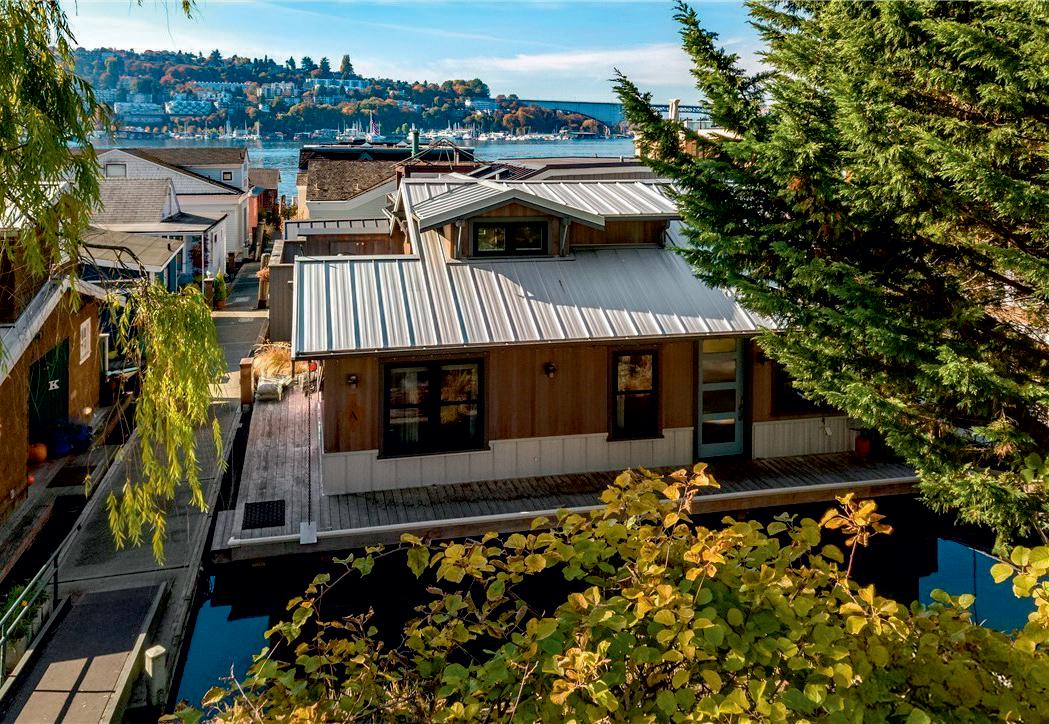


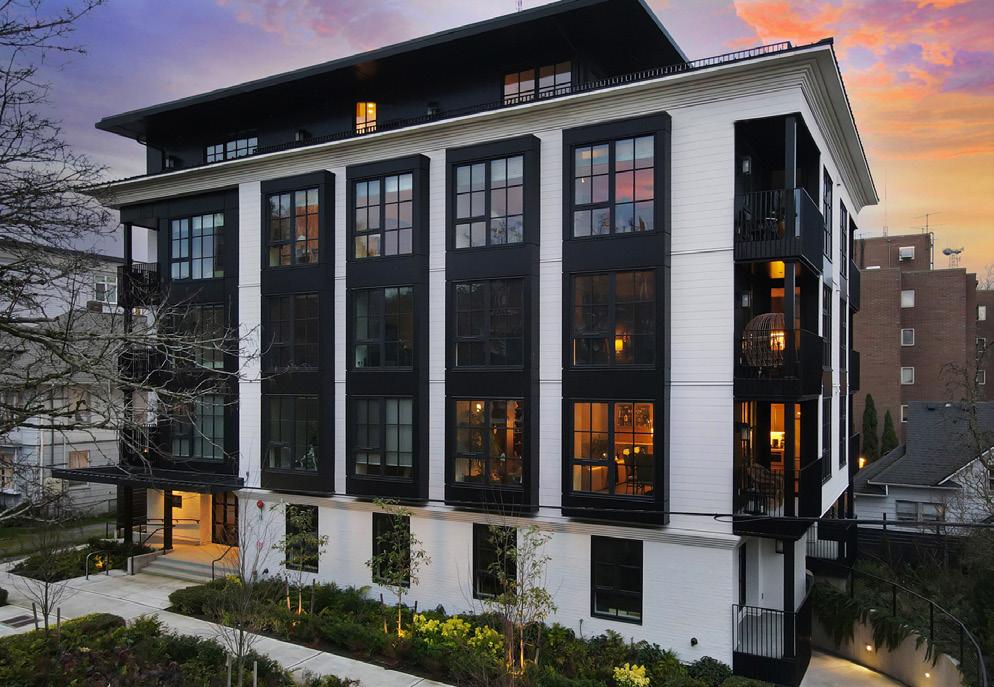


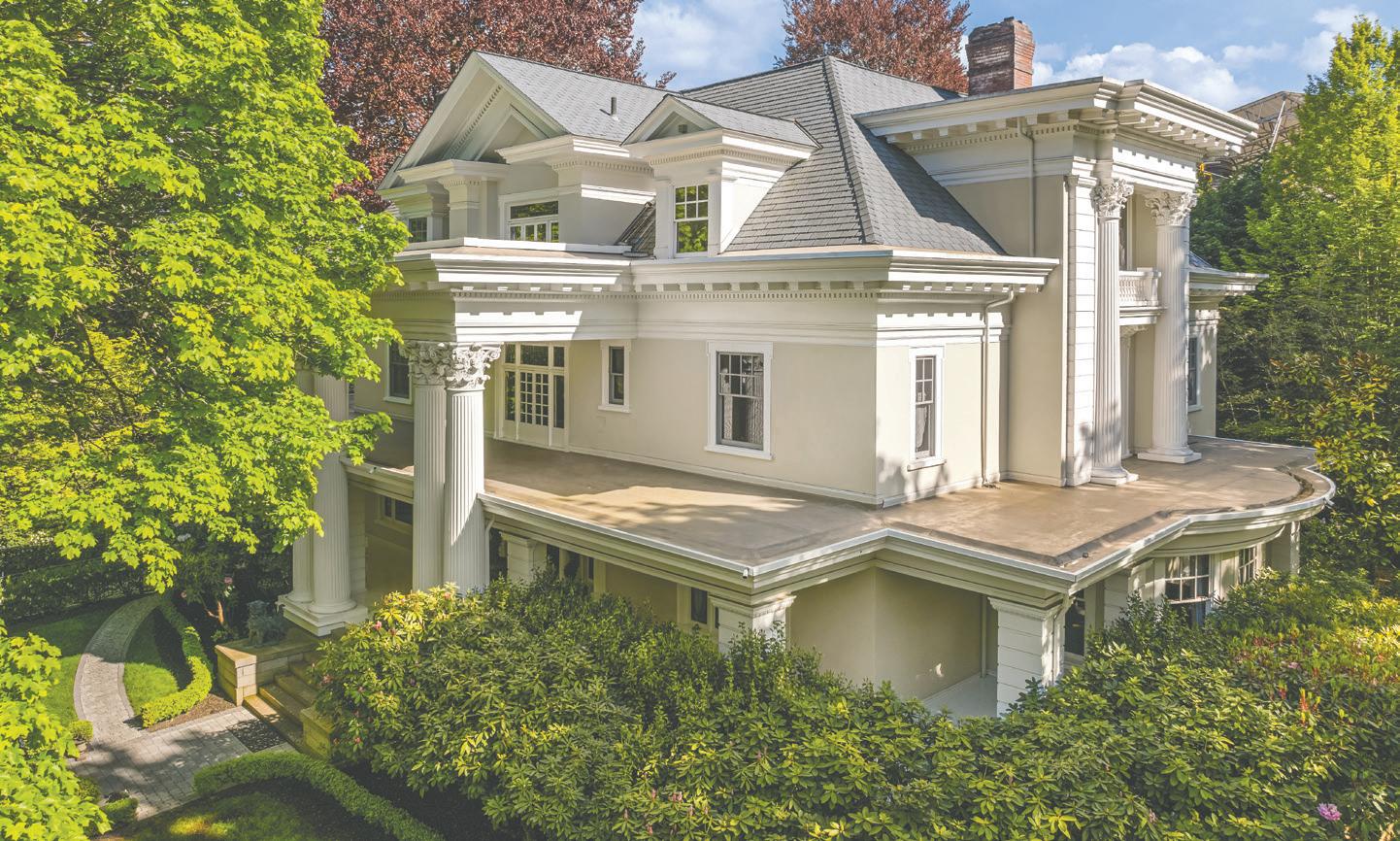
Market news: A recap and look
As we prepare to achieve our goals in the new year, it’s crucial to set ourselves up for success by examining the past before diving into the future, and your real estate goals are no exception. Market data gives you a deeper understanding of past and current market conditions, allowing you to make informed predictions about potential future market decisions. Before looking forward, let’s summarize Seattle’s fourthquarter market with insights from Realogics Sotheby’s International Realty’s recently released report.
John Madrid
During Q4-2024, buyers searching for their first home, vacation property, dream estate, or investment opportunity in Seattle were motivated to make their moves despite the final months of the year historically being a slower period for the market. In fact, the number of homes sold increased by 29.69% year over year from 916 homes in Q4-2023 to 1,188 homes in Q4-2024. This year-over-year boost in buyer activity meant that demand outpaced supply, creating a seller’s market with just 1.2 months of inventory. However, buyers weren’t pressured to make hasty decisions when choosing their ideal Seattle home as evidenced by the average days on market, which was 36 days. There was price growth in the Seattle market, with a yearover-year increase of 8.15%

MADRID, 7










Ryder Fasse Sales Broker Andrea Whitehall Sales Broker Memoree Myers Office Manager
Seattle's outdated school construction code
By Spencer Pauley
The Center Square
Seattle’s outdated school construction code is costing more than $2 million a year to fix.
The Seattle School Traffic Safety Committee presented its annual update to the Seattle Transportation Committee on Tuesday. STSC members spoke on what is needed to improve safety for students going to and from school.
Since 2022, STSC has been working with the Seattle Public Schools’ capital project team and the Seattle Department of Constructions and Inspections to update outdated city codes that cost taxpayers an estimated $2.5 million annually.
“Basically, the Seattle city code on public schools and residential areas’ non-parking requirements are somewhat outdated remnants that reflect car-centric thinking,” STSC Chair Ryan Baum said during a Seattle Transportation Committee meeting on Tuesday. “That really is not applicable to our urban schools today.”

A recent example of outdated city codes presented by Baum is the reconstruction of Alki Elementary School. Project costs are now over $2.5 million due to process delays related to the city’s school construction code.

The STSC's presentation finds that some immediate traffic safety improvements would come if the Seattle Police Department were able to bring temporary enforcement patrols back to patrol high-risk areas. However, staffing issues within the department mean these patrols have not been available.
If staffing issues are addressed, Baum said the
temporary enforcement patrols would serve as a shortterm solution while the Seattle Department of Transportation makes physical improvements to its streets that reduce driving speeds.
The STSC also reports that there is a crossing guard vacancy rate of 55% within Seattle Public Schools. However, STSC Committee Member Mary Ellen Russell notes that hiring more crossing guards is presumably not a top priority for the district due to the job positions totaling $400,000 a year, while the district is in the midst of a $100 million budget deficit.
Ellen Russell blames a lack of support from the state level to go toward addressing the crossing guard vacancy.
“It’s very clear, in the plain language of our current state statute, that [crossing guards] should be paid for by the state, and they have never funded it, not a dollar,” Ellen Russell said.
The STSC consists of 11 volunteer members that represent Seattle Public Schools, the Seattle Department of Transportation, Seattle Police Department, King County Metro, pedestrian advocates, bicycle advocates, and parents.
Six of the positions are appointed by Seattle Mayor Bruce Harrell and are confirmed by the Seattle City Council.


ADOBE STOCK
MADRID
From page 1
bringing the median sales price up to $995,000. Looking ahead, one of the biggest questions many buyers and sellers are wondering is: how will the presidential election affect the market? According to Lawrence Yun, the chief economist of the National Association of REALTORS® (NAR), “We’ve seen after presidential elections— and it doesn’t matter who wins—that there’s usually a slight boost in home sales.” The NAR has predicted that there will be an 11% rise in new home sales in 2025. This is welcome news, especially after low levels of inventory during the earlier part of 2024 served as an obstacle for many interested homebuyers. There is good news for sellers as well: the NAR has also predicted a 2% year-over-year increase in home prices.
Mortgage rates continue to be a major factor that affects when and how buyers and sellers approach their real estate goals. Realogics
Sotheby’s International Realty’s mortgage lending partners Movement Mortgage have forecasted that by the end of 2025, the 30-year fixed rate will be 6.4%. Those hoping for a major decrease in rates may be disappointed as they continue to stay above 6%, and experts predict they will stay that way this year. However, those looking to make a real estate move in 2025 should reexamine their budget, explore alternative loan options, and
consider refinancing in the future. Prices, mortgage rates, and inventory levels all remain top of mind for those watching the market closely, but another major piece of news has Seattle residents curious about changes on the horizon: the return of work-from-home employees to city offices. Although Amazon’s recent mandate remains the most noteworthy, many major Seattle- and Eastside-based companies have been slowly transitioning from remote schedules to in-office requirements, creating more traffic into the greater Seattle area. This could also affect the market as more homebuyers search for in-city homes to cut down on their daily commute times. Before diving into the home search, homebuyers should take stock of their finances, research neighborhoods, create a list of wants and needs in a home, and reach out to a trusted real estate advisor who can guide them from the very beginning of their journey and through the closing. Sellers should prepare to take advantage of the busy spring selling season and perform value-boosting repairs and renovations to their homes now, clean up their landscaping to enhance curb appeal, and research recent sales in the neighborhood, all with the help of an experienced real estate agent.
John Madrid can be reached at 206-498-1880 or john@live206.com to get started on your real estate goals.


Bill requiring more local say for large wind, solar projects faces gloomy future
By Carleen Johnson The Center Square
A bill to give local communities more say in large renewable energy projects got a public hearing this week, but Washington Rep. Mary Dye, R-Pomeroy, isn’t holding her breath that her sponsored legislation will get a vote out of committee this session.
House Bill 1188 would prohibit the governor from approving recommendations by the Energy Facility Site Evaluation Council if county commissioners for affected counties or tribes do not support it.
Dye is the ranking Republican on the House Environment & Energy Committee and told The Center Square the bill was introduced in response to former Gov. Jay Inslee’s decision to press ahead with the massive Horse Heavens wind and solar energy project near the Tri-Cities.
That’s despite opposition from
Benton County, local residents and members of the Yakama Nation, as well as concerns from state biologists over impacts to ferruginous hawk nests.
Inslee’s final decision did include the incorporation of some mitigation measures to address wildlife and habitat concerns.
“There were so many good people that signed in and testified, and I was very pleased that the counties came in in support,” Dye said. “Overall, the message got back to this body loud and clear that the people that are expected to host renewable energy are not being heard.”
Dye said Inslee's handling of the process for authorizing the Horse Heaven Hills project left locals out.
“They’re being disrespected, and they are not considering that we care about our community and our environment, and these projects are not without significant impacts on our community,” she explained.


