to Consider when Buying a Condo Page 2 The Owner / Builder / Architect relationship Page 4
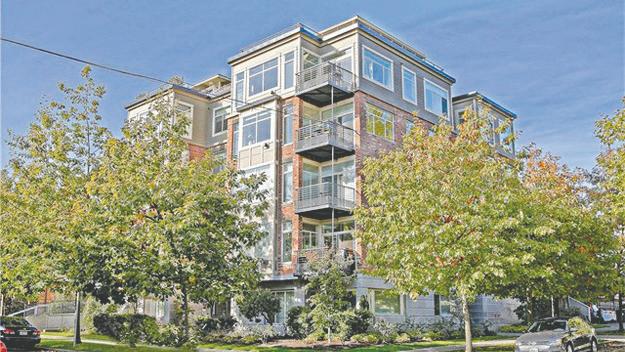
hen talking with clients about what condo might be right for them, I ask them about their plans for the property. Are they going to live in it for many years, use it purely as an investment, or do they plan to live there short term? If they are going to occupy it for many years, things like location and amenities such as a workout rooms may add value for them, and resale value might be less important. If they are going to buy it purely as an investment, things such as looking into whether the building has been approved by the FHA for financing, or if the building is on the list of Fannie Mae approval buildings is important.
Fannie Mae is the nickname for the Federal National Mortgage Association, a corporation that trades in mortgages. Lenders want to be able to have their loans secured by Fannie Mae, so it helps resale values if condo buildings are on Fannie Mae’s good list. Not being on the
CONDOS, Page 7
Ken Graff
CB BAIN
Connect to Nature, No Matter Where You Live
In this age of smartphones and streaming video, it is easy to forget about the world beyond our little screens. And for the 80 percent of Americans living in urban areas, the natural world can seem even more remote. But experts say it’s important to find the time to disconnect, unplug, and appreciate what nature does for you.
Surprisingly, you don’t have to travel outside your town to enjoy nature or benefit from it.
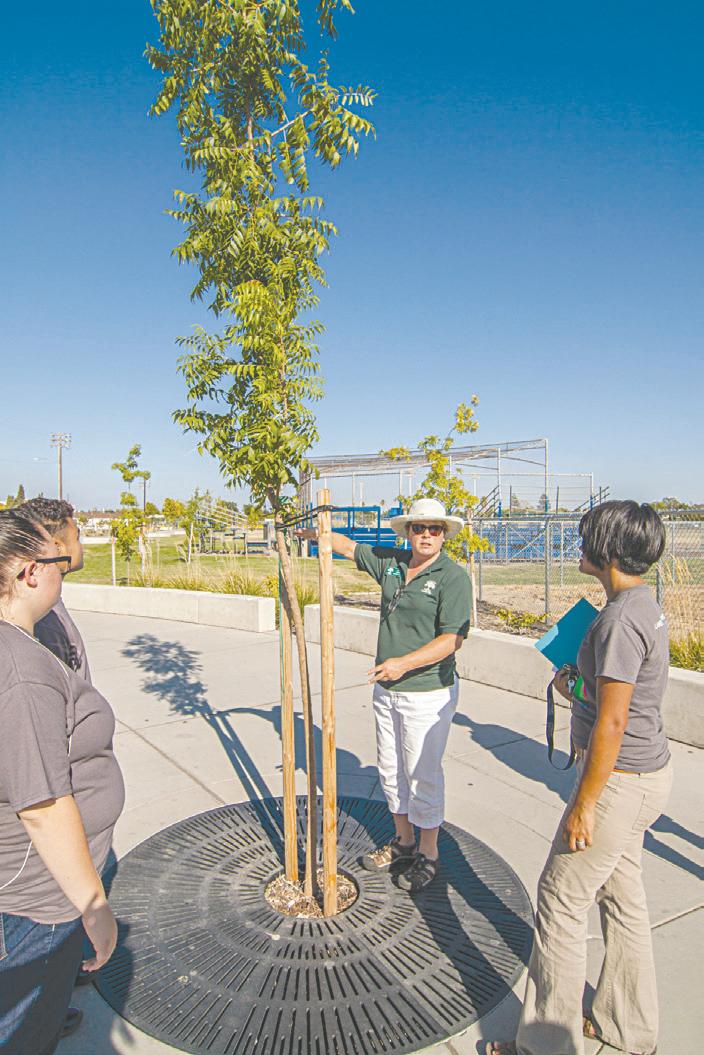
“Your very own neighborhood is likely home to a wide variety of trees,” says Lisa Allen, Missouri State Forester and chair of the National Association of State Foresters (NASF) urban and community forestry committee.
“From your backyard to the park, trees offer residents improved quality of life and a healthier local environment.”
But trees are at risk from a number of threats, such as invasive pests. So a healthy community forest doesn’t exist without proper planning, management and community investment. Fortunately for urban dwellers, thousands of communities nationwide understand the need for green infrastructure, and are actively working with their state forestry agency to manage these landscapes.
Beyond enjoying the trees around you, you can get involved by helping to raise awareness about the many benefits trees offer. Start a local eco-appreciation society, get involved in local street cleanups, or ask your children’s school to incorporate environmental education into the curriculum. Lastly, stay current on community forestry issues.
To learn more about urban and community forestry, visit www. mytreeourforest.org.
➻ NATURE, Page 6
The Owner / Builder / Architect relationship
When contemplating small or moderate sized remodels, many homeowners wonder if they really need to hire an architect. And many homeowners who’ve hired an architect to design even very large projects often wonder if they need to keep their architect involved beyond the design or permitting phase. Having worked as both an architect and a builder and seeing this play in many different ways, I can say that the answer to each is emphatically ‘YES!’.
Brian Neville VAN ZANdt deVelopmeNt + BuIldINg oWNeR
Remodeling is expensive, and it should result in something that addresses the needs of the homeowner in the best way possible. This is where hiring an architect can pay huge dividends,
because the typical homeowner doesn’t have the perspective or experience to imagine all the possibilities, and builders aren’t trained to work as designers. Good architects are good listeners who take the time to understand what their clients need, want, and can afford, and they present multiple design options for the client to consider. It is this measured, thoughtful approach that results in finished projects that exceed owner’s expectations. And this CAN be done without significantly increasing overall costs provided the architect is involved during the construction process, and the builder is engaged during early design.
Architects are often criticized for designing things that are beyond the means of the clients they work for, and this is not necessarily undeserved. But architects don’t specialize in cost the way builders do, and this is why it’s important to utilize both early on in the design process. Bringing a builder into the conversation when the
design is still at the schematic level can help to steer a project down an affordable path. As design moves forward, a lot of decisions are made for very good reasons, but those reasons are not necessarily obvious during construction. Without the continued involvement of the ➻ RELATIONS, Page 6
Home owners need Builders and Architects
architect, things can easily go in the wrong direction. Even the most well-intentioned builder may make suggestions that deviate from the big picture and result in problems farther along or a finished product that misses the mark in multiple places.
The builder and the architect have very different roles, both
are important, and neither can truly take the place of the other. Neither can really be completely effective without the other.
Consider the following:
• Does it make sense to spend money to build something that is poorly designed? Of course not. So hire an architect if you
are planning to do some remodeling work. The cost of design and architectural oversight is low relative to the cost of construction, and the return is well worth it.
• Does it make sense to spend money to design something unaffordable? Obvioulsy, no. So engage a builder early to provide input on cost and feasibility (which is really just another word for cost) to avoid having your plans turn into a pipe dream.
• Free Estimates
• No Deposits
Fabulous south facing condo with views of the Space Needle. Close to shops, downtown and all that the Queen Anne lifestyle has to
$730,000
Fabulous
• Does it make sense to spend money building something that is not what was carefully imagined by the designer? One more time, No. That wastes money at the front end and the back end. So keep your architect engaged during construction.
In the years that I’ve been involved in residential remodeling, I’ve seen a lot of successful projects, and I’ve some that left a lot to be desired. The ones that stand out are those where the owner got more than they wanted without spending more than they were prepared to spend. More often than not, this is what happens when a builder is brought in early and an architect is kept engaged all the way to the end.
Happy Remodeling!
You can also consider ordering “My Tree—Our Forest” tree tags. Each recyclable, weatherproof tag informs people on the ways that trees make oxygen, keep drinking water clean, save money, make city life fun and keep streets safe. Along with your school or community group, hang the tags on local trees (be sure to check local ordinances for permission!) to remind your neighbors to take care of the environment. Then spread the word on social media using the hashtag #MyTreeOurForest.
Remember, you don’t have to leave your beaten path to enjoy the benefits of trees. Thanks to efforts happening at the local level, trees are a vital component of many densely populated communities across the country. (Statepoint)
So, you wan to buy a condo?
CONDOS from Page 2
good list might hurt resale value.
Your Real Estate Broker can research owner occupancy percentages. Some lenders have restrictions on the number of rentals allowed. Note that a recent Court of Appeals ruling might make enforcement of rental restrictions by homeowner’s associations difficult. This could affect resale value.
If you are buying a condominium to live in, it is wise to visit a few times, and at different times of day and on different days of the week. Can you hear the neighbors? Are there barking dogs, or loud music? If you meet residents, ask them how they like living there. Ask them what they like and dislike about the building. I have found that residents of condos I meet while touring can be valuable and sources of information.
Consider your monthly homeowner’s association (HOA) dues in your budget. These dues can vary greatly. HOA dues that are too low can be a red flag. Roofs need to eventually be replaced, elevators and common areas require maintenance and if there are not sufficient funds in reserve, homeowners in the building will face an assessment to pay for the projects. Reserves are pretty much a bank account that all owners hold in common. If there are sufficient reserves to maintain the property, or to deal with unexpected issues, then homeowners are unlikely to face a mandatory assessment.
When writing your offer, your REALTOR® should include Northwest Multiple Listing service form 22D in the offer and request this information, and make the closing contingent upon your approval of these items:
• Complete copy of the house rules, and the CC and R’s. (Conditions, Covenants and Restrictions)
• Condo association meeting minutes from the last two years.
• Condo association board of
director’s meeting minutes from the last 6 months
• Association financial statements from the last two years, and current operating budget.
The CC&Rs govern how owners can use or improve the property and the rules that they and all residents must live by. Review the CC and R’s to make sure that your intended use of the property is allowed and that you are comfortable with the rules of the association.
Read the meeting minutes carefully. The association is required to let you know of any current assessments, but in reading the minutes, you might learn of a project that may be on the horizon that could one day cost you money. Look in the minutes for any recurring issues residents are facing. Unresolved recurring issues could mean ineffective management of the building.
Review the financial statements to see how much money the association has in reserve. Low reserves could mean assessments down the road. You want to protect yourself from future financial difficulties of the association. Keep an eye out for an unusual amount of foreclosures, a large amount of homeowners delinquent in paying their HOA dues or a high number of vacant units. The HOA may need to increase monthly dues to compensate for the losses of revenue.
It is important to make sure you are working with a REALTOR® who understands these issues and can explain your options to you. Condominiums can be great investments, but you must understand the risks, and how the purchase fits with your financial goals.
Ken Graff is a native Seattle REALTOR® named to Coldwell Banker Bain’s International President’s Circle for his exemplary record of success.