New Playground Equipment Coming to ESD Elementary Schools
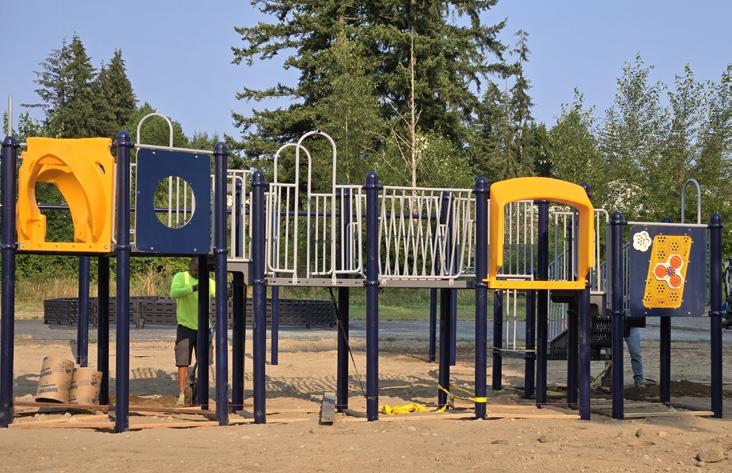
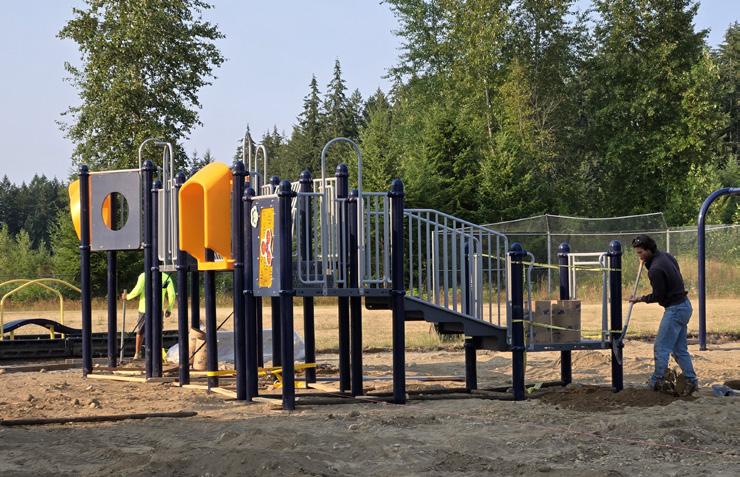
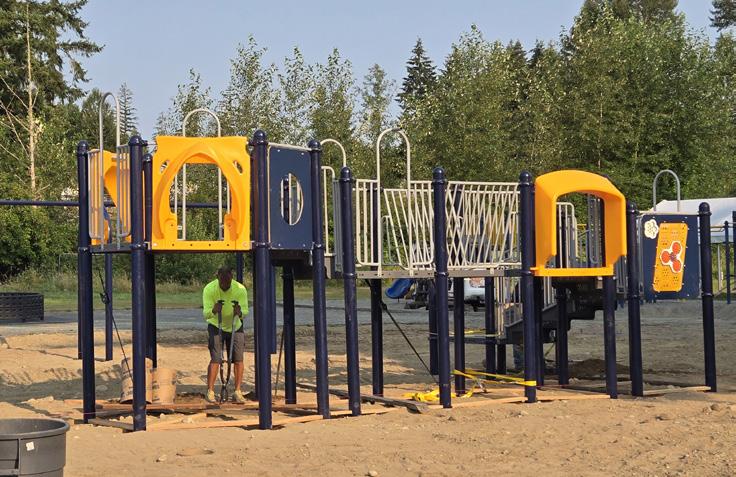
Thanks to the continued support of local voters, Eatonville School District elementary schools will receive new playground equipment through a phased rollout funded by the district’s recently approved levy.
Weyerhaeuser Elementary School is the first school scheduled to receive new equipment. Installation is currently underway, and the project is progressing nicely.
Throughout the summer, members of the district’s Maintenance Department have completed the installation entirely in-house. Their skill, dedication and hard work are saving the district a significant amount of money, allowing levy funds to have an even greater impact on students and schools.
Playgrounds provide students with important opportunities to be active, build friendships, develop social skills and enjoy time outdoors. The new equipment will create an engaging and welcoming space for WES students during recess and other school activities.
Eatonville School District extends its sincere appreciation to local voters for investing in students and supporting improvements across the district. The district also thanks its Maintenance Department for the exceptional work being completed to bring this project to life.
Additional elementary school playground improvements will follow as the levy-funded rollout continues.
As Postage Prices Rise, Readers Question Local Mail Service
Staff Report
AJuly 12 postage increase has renewed frustration among some Dispatch-area residents who say they are already dealing with delayed mail, confusing delivery rules, missed packages and limited home delivery.
The United States Postal Service raised several mailing prices this summer, including a 4-cent increase in the cost of a First-Class Forever stamp, from 78 cents to 82 cents. USPS also announced a 3% increase for some competitive products, including PO Box pricing. USPS says it generally receives no tax dollars for operating expenses and relies on postage, products and services to fund its work.
For households already frustrated with local mail service, higher prices are landing badly.
Screenshots shared with the Dispatch show years of residents posting in local Facebook groups about similar problems: packages routed away after arriving locally, delivery attempts that residents say never happened, mail arriving late or not at all, confusion over PO Boxes and frustration from people who say they live in town but do not receive home mail delivery.
The posts are not official delivery records, but they point to recurring questions worth answering.
Why do some homes not receive carrier delivery? Why do some residents get a free PO Box, but still run into problems receiving packages? Why does a package sometimes appear to arrive nearby, leave for another facility and come back later?
And when service breaks down, who is actually responsible for fixing it?
USPS offers no-fee Group E PO Boxes for some customers who are not eligible for carrier delivery.
USPS’ premium PO Box rules say Street Addressing is not available for Group E free box customers. Street Addressing is the service that lets a PO Box customer use the post office’s street address, followed by the box number, for deliveries from private carriers. Without that service, residents may be able to receive regular USPS mail at the free box but still run into trouble with packages ordered from Amazon, UPS, FedEx or other shippers.
some of the advice residents share with each other. Some say to use the post office’s street address and box number. Others say that only works if the customer pays for the box or has Street Addressing.
Residents dealing with package issues should ask the local post office these specific questions:
Do I have a Group E no-fee PO Box or a paid PO Box? Does my box qualify for Street Addressing?
What exact address format should I use for USPS packages?
What exact address format should I use for UPS, FedEx, Amazon and other privatecarrier packages?
If a private carrier hands a package to USPS for final delivery, will that package be accepted for my box?
Can I receive oversized packages at the counter, or will they be returned or rerouted?
Those questions matter because package delivery is no longer a side issue. Many households rely on shipped items for medication, school supplies, business materials, pet food, equipment and basic household goods. When a package is delayed, routed away or marked as attempted when a resident says no attempt happened, the problem is not just inconvenient. It can affect work, health and daily life.
Informed Delivery is another common source of confusion.
USPS Informed Delivery lets customers preview images of incoming lettersized mail and track some packages. But an Informed Delivery notice does not always mean the mail will arrive that same day. Weather, staffing, route delays, scanning problems and operational issues can affect final delivery.
mail less frustrating, but it does mean the email should be treated as a preview, not a guarantee.
For residents who repeatedly receive Informed Delivery notices for mail that does not arrive, the best step is documentation. Save screenshots of the notice, write down the date the mail was expected, note when it actually arrived and report repeated problems through USPS customer service. A single delayed letter may be difficult to investigate.
Package routing can also look strange from the customer side. A tracking scan may show a package arriving at a nearby post office, moving to another facility and later returning. That can happen because of sorting systems, carrier handoffs, route assignment, address format issues or operational errors. Residents should ask USPS to explain the route when a package appears to take an unnecessary trip, especially if it happens repeatedly.
The frustration is not universal. Some residents praised individual carriers and counter staff, describing workers as helpful or saying their packages are delivered without trouble. Others made clear their complaint was not with their carrier personally, but with policies, staffing, routes, management or national systems.
That distinction matters in a small community. Complaints about “USPS” can sound like criticism of local workers, even when the problem may be tied to national rules, package contracts, staffing levels, route design, safety requirements or software.
Residents who need help should start locally, but not stop there if the issue continues.
For missing mail or package problems, USPS recommends using its online help request system or calling
is not resolved through the local office, the Postal Regulatory Commission says customers can contact USPS District Consumer and Industry Affairs, where staff handle local service complaints. The PRC also accepts mail service complaints and may forward them to USPS for response.
When filing a complaint, residents should include dates, tracking numbers, screenshots, names if available and a short description of what happened. Useful complaints are specific: “Package tracking showed arrival at the local post office on this date, then it was sent to Spanaway and returned two days later,” or “Informed Delivery showed this mail piece on this date, but it has not arrived after five delivery days.”
Residents with no home delivery should also ask for a written explanation of their delivery status. The key questions are simple: Is this address eligible for carrier delivery? If not, why not? Is the household eligible for a no-fee Group E box? What package services are excluded from that box? What paid options would change that?
Those answers may not satisfy everyone, but they give residents something more useful than rumor: a clear statement of which rules apply to their address.
The July 12 price increase did not create local mail frustration, but it has made the frustration harder to ignore. For residents who already feel they are doing extra work to receive basic mail and packages, higher postage prices raise a fair question.
What exactly are customers paying more for?
The answer may be different depending on the address, route, box type and carrier involved. But the first step is the same: get the rules in writing, document the pattern and push complaints into official channels where they can be tracked.
FIND IT FAST SERVICE DIRECTORY
(253) 846-1276
Contact: Christina Hill 206-461-1300 ext 305
News Submissions | Friday, noon
Reserve Ad Space | 10am Wednesday Christina Hill, 206-461-1300 ext. 303 or dispatch@pacificpublishingcompany.com
Retail Display Advertising | Wednesday, 1:30 p.m.
Christina Hill, 206-461-1300 ext. 305 or ppcadmanager@pacificpublishingcompany.com
Classified and Legal Advertising | Friday, noon
Jody Vinson, 206-461-1300 ext. 304 or legalads@pacificpublishingcompany.com Subscriber Services | Mikayla Morris, 206-461-1300 ext. 302 or ppccirc@pacificpublishingcompany.com
Savvy Senior: With Social Security Uncertainty, Should You Claim Benefits Early?
By Jim Miller
Dear Savvy Senior, I turn 62 early next year and plan to retire soon after. Most advice says I should wait to claim Social Security because my monthly benefit will be higher. But with all the recent news about Social Security’s financial problems, I’m wondering if taking benefits early might be the safer choice. Is there ever a good reason to claim at 62?
—Ready to Retire
Dear Ready, You’re definitely not alone in asking this.
The latest Social Security Trustees Report projects the retirement trust fund could be depleted around 2032 if Congress doesn’t act. If that happens, Social Security would still collect payroll taxes and pay benefits, but retirees could face an across-the-board cut of about 22 percent.
Before you rush to file, keep things in perspective. Most experts still expect Congress to step in, as it has before, to strengthen Social Security. And even if lawmakers don’t act, waiting would still produce a higher monthly benefit because any across-the-board benefit cut would apply to everyone. While claiming at 62 means collecting benefits sooner, it also permanently locks in a smaller check.
That said, there are several situations where claiming Social Security at 62 can make good financial sense.
HOW CLAIMING AGE AFFECT YOUR BENEFITS
You can start Social Security at 62, but doing so permanently reduces your monthly benefit by about 30 percent compared with waiting until full retirement age (67 for those born in 1960 or later). Delaying until 70 increases your benefit by about 24 percent.
For example, a $2,000 monthly benefit at full retirement age would drop to about $1,400 at 62, or rise to roughly $2,480 if you wait until 70.
WHEN
CLAIMING EARLY MAKES SENSE
your early 60s while delaying withdrawals from retirement accounts or a pension.
Some retirees also claim Social Security early to reduce withdrawals from their IRA or 401(k) during market downturns. The tradeoff is a permanently reduced lifetime benefit.
For married couples, timing can be coordinated as part of a broader strategy. One spouse may claim early to bring in income while the other delays to boost their future or survivor benefit. Health is another big factor. Delaying only pays off if you live long enough to collect those higher monthly checks. The break-even point between claiming at 62 and full retirement age is around age 78 or 79.
If you’re still working, be careful here too. Before full retirement age, earnings above Social Security’s annual limit can temporarily reduce your benefit, and claiming early locks in that lower amount for life.
WHY DELAYING HELPS
For many retirees, waiting means a larger guaranteed monthly benefit for life and often a higher lifetime payout if you live into your late 70s or beyond. It can also provide stronger protection against outliving savings.
For couples, delaying the higher earner’s benefit can increase the survivor benefit, which may help provide more financial security for a surviving spouse.
Before deciding, it’s smart to review your numbers. You can create a free account at SSA.gov/myaccount to check your earnings record and estimate benefits at different ages. Tools like OpenSocialSecurity.com or MaximizeMySocialSecurity.com (a paid tool with a $49 fee) can also help you compare claiming strategies.
There’s no one-size-fits-all answer. For most people, waiting still makes the most sense. But if you need income, have health concerns or are coordinating benefits with a spouse, claiming at 62 may be the better choice. The key is to base your decision on your own circumstances – not fear about Social Security’s future.
For some retirees, claiming at 62 is a practical move. If you’ve stopped working and need income for basic expenses, Social Security can provide a steady check right away. It can also serve as a bridge if you retire early or lose a job in
Send your questions or comments to questions@savvysenior.org, or to Savvy Senior, P.O. Box 5443, Norman, OK 73070.
Notes from the Eatonville Town Council July 27 th
The Eatonville Town Council approved a midyear budget amendment, declared several vehicles and pieces of equipment surplus for auction, and discussed plans to improve crosswalk visibility during its July 27 meeting. Council members also received updates on the search for a permanent police chief, utility rate planning, and several upcoming public works projects.
DEPARTMENT REPORTS
Public Works Director Eric Phillips updated the council on the West Eatonville Highway project and sought direction on several upcoming street improvements.
Phillips asked the council for direction on budgeting the replacement of faded crosswalk markings with thermal striping, a material that costs about five times more than conventional paint but provides a much longer service life. Staff recently completed an inventory of 15 crosswalks and discussed prioritizing the busiest locations first. Rather than committing to a specific budget, council members agreed that Phillips should return at the Aug. 10 meeting with a la carte cost estimates showing how many crosswalks could be completed at various funding levels before deciding how much of the available street funds should be dedicated to the project.
Councilmember Matt Paul reported that the Public Utility Committee continued reviewing long-term utility rate projections. Committee members requested additional financial modeling before making recommendations for future electric, water and wastewater rate adjustments. Stormwater utility rates were also discussed, with additional analysis expected
before any recommendations are brought forward.
Councilmember Aaron Litzenberger reported that the Public Safety Committee finalized the police chief job description, allowing the recruitment process to move forward. The committee also discussed traffic safety near the elementary school, including the possibility of restricting left turns during school hours to improve safety.
Councilmember Josh Dunn reported that the Finance Committee continued refining the town’s proposed financial policies following their tabling earlier this month. Committee members also discussed updating job descriptions, the potential value of a wage study before future union negotiations, and police overtime projections for the remainder of the year. Staff estimated approximately $15,000 in additional overtime if current staffing patterns continue but noted that upcoming personnel changes could affect that estimate.
MAYOR’S REPORT
Mayor Emily McFadden announced that Town Clerk Miranda Doll has officially earned her Certified Municipal Clerk designation from the International Institute of Municipal Clerks. McFadden said Doll’s application was approved the previous week and her certificate had already been received.
Earlier in the meeting, Yelm City Clerk Kathy Linnemeyer addressed the council to congratulate Randy Gall and Deputy Clerk Christina Darby on earning the Certified Municipal Clerk designation. Linnemeyer, who previously served as Eatonville’s city clerk for 18 years, also thanked the town for supporting continuing education and professional development for its staff.
INVITATION TO BID BY THE TOWN OF EATONVILLE SURPLUS VEHICLES SALE
The mayor also announced that the police chief position had been posted. Applicants will be given approximately three weeks to respond before the town conducts its first review of applications. McFadden also asked council members to begin considering whether Eatonville’s sign code should be updated after questions arose regarding temporary event signs on town property. The discussion was prompted by preparations for the Eatonville Lions Arts & Music Festival and may return for future council consideration.
ORDINANCE 2026-13
The council unanimously approved the second reading of Ordinance 2026-13, adopting several amendments to the town’s 2026 budget. The ordinance updates revenues and expenditures to reflect grants, vehicle purchases, Transportation Improvement Board funding, utility projects, and other budget adjustments approved since the budget was originally adopted.
RESOLUTION 2026-KK
Council members unanimously approved Resolution 2026-KK, declaring several town vehicles and miscellaneous equipment surplus and authorizing their sale through a future public auction. Proceeds from the sale will be returned to the appropriate town funds. During discussion, Councilmember Dunn confirmed that declaring the equipment surplus does not necessarily require the town to replace each item.
ADDITIONAL BUSINESS
The council also approved two change orders for the West Eatonville Highway project, authorizing the work to be completed using funds already budgeted for street improvements.
Sealed bids will be accepted in writing by the Town of Eatonville at 201 Center Street West, Eatonville, WA, until 5:00 PM on Friday, August 14, 2026, or in person at 370 Mashell Ave S on August 15, 2026 between 8:00AM and 12:00PM for the sale of the following vehicles and equipment:
1995 Ford F250 Utility Bed Truck VIN 1FDHF25G8TEA72425 (vehicle will not be able to be driven, must arrange to haul)
1998 Chicago Pneumatic Jumping Jack Tramper/ Compactor
1998 Kubota KX 121 Mini Excavator 0XE1121
Swenson Spreader V Box Sand Spreader
• Cable Glider cable pulling system
Heli h2000 series 50 forklift Model #F650 S/N 46632
2 spools 6” bore pipe
• 2 Protec side toolboxes
Ladder/Pipe rack-fits 2004 Ford F-150 1000’ 6” fiberglass conduit (length is approximate)
Winning Bids will need to be paid by Certified check, bank cashier’s check, cash or credit card in the amount of 100% of the bid. Make check payable to the Town of Eatonville. Viewing of the vehicles and equipment can be done by appointment only on Tuesday, August 11, 2026 or Thursday, August 13, 2026. Please reach out to Jason Coots for an appointment at jcoots@eatonville-wa.gov. You may also view items on August 15, 2026 between 8:00AM and 12:00PM, 402 Mashell Ave S. Please call 360-832-3361 with any questions. The Town reserves the right to accept or reject any and all bids and to waive informalities or irregularities in the bid or in the bidding.
All Bids are due by 12:00PM on August 15, 2026. Winning bidders will have until 4:00PM on August 28, 2026 to arrange to pay for the item and haul away as is.
Miranda Doll Town Clerk
Sealed bids will be accepted in writing by the Town of Eatonville at 201 Center Street West, Eatonville, WA, until 3:00 PM on Friday, August 14, 2026 for the sale of the following office equipment: • 5 miscellaneous desks
plotter
miscellaneous
door with window
Winning Bids will need to be paid by Certified check, bank cashier’s check, cash or credit card in the amount of 100% of the bid. Make check payable to the Town of Eatonville. Viewing of the equipment can be done in person on August 14, 2026 between 12:30PM and 3:00PM, 201 Center St W (auction items will be located behind Town Hall in the parking lot area). Please call 360-832-3361 with any questions. The Town reserves the right to accept or reject any and all bids and to waive informalities or irregularities in the bid or in the bidding. All Bids are due by 3:00PM on Friday, August 14, 2026. Winning bidders will have until 3:00PM on August 28, 2026 to arrange to pay for the item and haul away as is.
Miranda Doll Town Clerk
The Search is On
The Town of Eatonville has formally opened its search for a permanent police chief, with the first review of applications scheduled for Friday, Aug. 14.
The position is open until filled. Town Council Public Safety Committee Chair Kyle Litzenberger previously told The Dispatch that the town will conduct an open search and consider all applicants. The committee met July 23 to discuss a draft of the job description.
The posting describes a “working” police chief who will combine command responsibilities with regular patrol duty. The chief is expected to participate in the patrol rotation for approximately 70% of the work schedule, to the extent practical.
Administrative responsibilities include overseeing department personnel and operations, maintaining operational readiness, evaluating and disciplining employees and advising town administrators about significant public-safety matters.
Minimum qualifications include certification as a Washington state peace officer, a two-year college degree or equivalent education and five to 10 years of law enforcement experience. The full-time position carries an annual salary of $140,000.
Jeff Justman is leading the Eatonville Police Department on an interim basis while the search is underway. The town’s staff directory identifies Justman as interim police chief.
The chief announcement and complete job description are now available on the employment page of the town’s website at eatonville-wa.gov. Applications are also available at Eatonville Town Hall, 201 Center St. W., from 8:30 a.m. to 5 p.m. weekdays.
Completed applications may be emailed to Town Clerk Miranda Doll at townclerk@ eatonville-wa.gov. Applications may also be delivered to Town Hall or mailed to the Town of Eatonville, P.O. Box 309, Eatonville, WA 98328.
The town has not announced when interviews will begin or when it expects to appoint a permanent chief.
83rd Annual Morton Loggers’ Jubilee 2026
33rd
ADMISSION PRICES
Logging Shows
Adults: $15
Students: $10
Lawnmower Races
Adults: $15 Seniors: $10
Children (6-12): $5
Children 5 and under FREE
Sponsored by: King Beverage
Thursday, August 6, 2026
70 th Annual Queen Coronation
Morton High School Gymnasium, 8 pm
Friday, August 7, 2026
Hampton Lumber Mill Tours
8 am-1 pm (last tour starts at Noon)
Lawnmower Races
Gates open 4:30 pm Time Trials 6:30 pm Racing 7:30 pm
Saturday, August 8, 2026
10K Run, Morton High School Registration - 7 am, Run - 8 am
On April 27, 2026 the Eatonville Town Council voted to approve Ordinance 2026-9. An Ordinance of the Town of Eatonville, Washington, amending Eatonville Municipal Code Section 16.54.050 relating to Stormwater Management and Erosion Control and authorizing a Fee-inLieu of on-site Stormwater management and Flow Control. Ordinance 2026-9 may be found on the Town’s website at www.eatonville-wa.gov or at Town Hall.
Published August 5, 2026
PUBLIC NOTICE
TOWN OF EATONVILLE
On April 27, 2026 the Eatonville Town Council voted to approve Ordinance 2026-10. An Ordinance of the Town of Eatonville, Washington, eliminating the Town of Eatonville Fire Department and repealing Eatonville Municipal Code Chapter 2.28. Ordinance 2026-10 may be found on the Town’s website at www.eatonville-wa.gov or at Town Hall.
Published August 5, 2026
PUBLIC NOTICE TOWN OF EATONVILLE
On April 27, 2026 the Eatonville Town Council voted to approve Ordinance 2026-11. An Ordinance of the Town of Eatonville, Washington, eliminating the Town of Eatonville Airport Commission and repealing Eatonville Municipal Code Chapter 2.35. Ordinance 2026-11 may be found on the Town’s website at www.eatonville-wa.gov or at Town Hall.
Published August 5, 2026
PUBLIC NOTICE TOWN OF EATONVILLE
On July 27, 2026 the Eatonville Town Council voted to approve Ordinance 2026-13. An Ordinance of the Town of Eatonville, Washington, amending the 2026 Budget of the Town of Eatonville, as adopted by Ordinance 2025-12. Ordinance 2026-13 may be found on the Town’s website at www.eatonville-wa.gov or at Town Hall.
Published August 5, 2026
Legal Notices
IN ACCORDANCE WITH THE REVISED CODE OF WASHINGTON (RCW 46.55.130), READY SET TOW #11850 WILL SELL ABANDONED VEHICLES TO THE HIGHEST BIDDER ON August 11, 2026. VIEWING STARTS AT 9:00 AM AND AUCTION STARTS AT 10:00 AM. FOR A LIST OF VEHICLES OR QUESTIONS CALL 253-290-8479. YOU MAY ALSO VISIT OUR FACEBOOK PAGE, READY SET TOW TACOMA, THE FRIDAY PRIOR, TO VIEW THE AUCTION LIST. THE SALE LOCATION IS: 2253 LINCOLN AVE TACOMA, WA 98421 Published in the Dispatch August 5, 2026
IN ACCORDANCE WITH THE REVISED CODE OF WASHINGTON (RCW 46.55.130), READY SET TOW #17124 WILL SELL ABANDONED VEHICLES TO THE HIGHEST BIDDER ON August 12, 2026. VIEWING STARTS AT 9:00 AM AND AUCTION STARTS AT 10:00 AM. FOR A LIST OF VEHICLES OR QUESTIONS CALL 360-870-6159. YOU MAY ALSO VISIT OUR FACEBOOK PAGE, READY SET TOW Olympia, THE FRIDAY PRIOR, TO VIEW THE AUCTION LIST. THE SALE LOCATION IS: 2747 Pacific Ave SE; Suite B17, Olympia WA 98501 Published in the Dispatch August 5, 2026
IN ACCORDANCE WITH THE REVISED CODE OF WASHINGTON (rcw46.55.130), GRAHAM TOWING #5124 WILL SELL ABANDONED VEHICLES TO THE HIGHEST BIDDER ON August 11, 2026 AT 11:00am. PRIOR INSPECTION WILL BE FROM 10:00am UNTIL 11:00am. THIS COMPANY CAN BE CONTACTED AT 253262-2869. FOR QUESTIONS REGARDING THE AUCTION. THE SALE IS LOCATION IS: 10015 213TH ST E GRAHAM, WA 98338 Published in the Dispatch August 5, 2026 IN THE SUPERIOR COURT OF THE STATE OF WASHINGTON FOR PIERCE COUNTY ICON REAL ESTATE SERVICES, INC., a Washington professional service corporation; Plaintiff, v. NICOLE FECTEAU aka NICOLE WENTZ; Defendant. Case No. 26-209191-4 SUMMONS (60 days) The State of Washington to the said Defendant: NICOLE FECTEAU aka NICOLE WENTZ. IN THE NAME OF THE STATE OF WASHINGTON: You are hereby required to appear and defend the Complaint filed against you in the above case within thirty days after the first date of publication of this summons, and if you fail to appear and defend, the Plaintiff will apply to the court for the relief demanded in the Complaint. The object of the Complaint is breach of contract. NOTICE TO DEFENDANT: READ THESE PAPERS CAREFULLY! You must “appear” in this case or the other side will win automatically. To “appear” you must file with the court a legal paper called a “motion” or “answer.” The “motion” or “answer” must be given to the court clerk or administrator within 30 days of the date of first publication specified herein along with the required filing fee. It must be in proper form and have proof of service on the plaintiff’s attorney or, if the plaintiff does not have an attorney, proof of service on the plaintiff. If you have questions, you should see an attorney immediately. If you need help in finding an attorney, you may call the Washington State Bar’s Lawyer Referral Service toll free in Washington at (888)201-1014. DATED: June 25, 2026 HERSHNER HUNTER, LLP
By /s/Nancy K. Cary Nancy K. Cary, WSB 32262 Of Attorneys for Plaintiff ncary@hershnerhunter.com P.O. Box 1475, Eugene, OR 97440 Telephone Number: (541) 6868511 Published in the Dispatch July 1, 8, 15, 22, 29 & August 5, 2026 IN THE SUPERIOR COURT OF THE STATE OF WASHINGTON IN AND FOR THE COUNTY OF KING IN RE THE ESTATE OF CHRISTOPHER
Personal Representative named below has been appointed as Personal Representative of this estate. Any person having a claim against the decedent must, before the time the claim would be barred by any otherwise applicable statute of limitations, present the claim in the manner as provided in RCW 11.40.070 by serving on or mailing to the Personal Representative or the Personal Representative’s attorney at the address stated below a copy of the claim and filing the original of the claim with the court. The claim must be presented within the later of (1) Thirty days after the Personal Representative served or mailed the notice to the creditor as provided under RCW 11.40.020(3); or (2) Four months after the date of first publication of the notice. If the claim is not presented within this time frame, the claim is forever barred, except as otherwise provided in RCW 11.40.051 and 11.40.060. This bar is effective as to claims against both the decedent’s probate and nonprobate assets. Date of filing copy of notice to creditors July 10, 2026. Date of first publication of notice to creditors: July 22, 2026. /s/ TRACEY ANNE ISABELLE WELLS TRACEY ANNE ISABELLE WELLS Personal Representative for the Estate of CHRISTOPHER JOHN TURNER c/o Marine View Law 19655 1st Ave. S., STE. 207 Normandy Park, WA 98148 Tel: (206) 212-6604 s/Renee Roman Renee Roman, WSBA #17728 Attorney for the Estate of CHRISTOPHER JOHN TURNER c/o Marine View Law 19655 1st Ave. S., STE. 207 Normandy Park, WA 98148 Tel: (206) 212-6604 Published in the Dispatch July 22, 29 & August 5, 2026 IN THE SUPERIOR COURT OF THE STATE OF WASHINGTON IN AND FOR THE COUNTY OF KING IN RE THE ESTATE OF JOZEF IGNACZAK, Deceased Case No.: 26-4-05349-6 KNT PROBATE NOTICE TO CREDITORS (RCW 11.40.030) PROBATE NOTICE TO CREDITORS The Personal Representative named below has been appointed as Personal Representative of this estate. Any person having a claim against the decedent must, before the time the claim would be barred by any otherwise applicable statute of limitations, present the claim in the manner as provided in RCW 11.40.070 by serving on or mailing to the Personal Representative or the Personal Representative’s attorney at the address stated below a copy of the claim and filing the original of the claim with the court. The claim must be presented within the later of (1) Thirty days after the Personal Representative served or mailed the notice to the creditor as provided under RCW 11.40.020(3); or (2) Four months after the date of first publication of the notice. If the claim is not presented within this time frame, the claim is forever barred, except as otherwise provided in RCW 11.40.051 and 11.40.060. This bar is effective as to claims against both the decedent’s probate and nonprobate assets. Date of filing copy of notice to creditors: July 20, 2026. Date of first publication of notice to creditors: July 29, 2026. s/EMMALINA KRIST-IGNACZAK EMMALINA KRIST-IGNACZAK Personal Representative for the Estate of JOZEF IGNACZAK c/o Marine View Law 19655 1st Ave. S., STE. 207 Normandy Park, WA 98148 Tel: (206) 212-6604 s/Renee Roman Renee Roman, WSBA #17728 Attorney for Estate of JOZEF IGNACZAK c/o Marine View Law 19655 1st Ave. S., STE. 207 Normandy Park, WA 98148 Tel: (206) 212-6604 Published in the Dispatch July 29, August 5 & 12, 2026
IN THE SUPERIOR COURT OF THE STATE OF WASHINGTON IN AND FOR THE COUNTY OF KING IN RE THE ESTATE OF PETER GORDON WORNSON, Deceased Case No.: 26-4-04931-6 KNT PROBATE NOTICE TO CREDITORS (RCW 11.40.030) PROBATE NOTICE TO CREDITORS The Personal Representative named below has been appointed as Personal Representative of this estate. Any person having a claim against the decedent must, before the time the claim would be barred by any otherwise applicable statute of limitations, present the
claim in the manner as provided in RCW 11.40.070 by serving on or mailing to the Personal Representative or the Personal Representative’s attorney at the address stated below a copy of the claim and filing the original of the claim with the court. The claim must be presented within the later of (1) Thirty days after the Personal Representative served or mailed the notice to the creditor as provided under RCW 11.40.020(3); or (2) Four months after the date of first publication of the notice. If the claim is not presented within this time frame, the claim is forever barred, except as otherwise provided in RCW 11.40.051 and 11.40.060. This bar is effective as to claims against both the decedent’s probate and nonprobate assets. Date of filing copy of notice to creditors: July 13, 2026. Date of first publication of notice to creditors: July 22, 2026. s/ JOHN PAUL WORNSON JOHN PAUL WORNSON Personal Representative for the Estate of PETER GORDON WORNSON c/o Marine View Law 19655 1st Ave. S., STE. 207 Normandy Park, WA 98148 Tel: (206) 212-6604 s/Renee Roman Renee Roman, WSBA #17728 Attorney for Estate of PETER GORDON WORNSON c/o Marine View Law 19655 1st Ave. S., STE. 207 Normandy Park, WA 98148 Tel: (206) 212-6604 Published in the Dispatch July 22, 29 & August 5, 2026 IN THE SUPERIOR COURT OF THE STATE OF WASHINGTON IN AND FOR THE COUNTY OF PIERCE IN THE ESTATE OF GERALD ELTON SCHOLER, Deceased Case No.: 26-4-01251-5 PROBATE NOTICE TO CREDITORS (RCW 11.40.030) PROBATE NOTICE TO CREDITORS The Personal Representative named below has been appointed as Personal Representative of this estate. Any person having a claim against the decedent must, before the time the claim would be barred by any otherwise applicable statute of limitations, present the claim in the manner as provided in RCW 11.40.070 by serving on or mailing to the Personal Representative or the Personal Representative’s attorney at the address stated below a copy of the claim and filing the original of the claim with the court. The claim must be presented within the later of (1) Thirty days after the Personal Representative served or mailed the notice to the creditor as provided under RCW 11.40.020(3); or (2) Four months after the date of first publication of the notice. If the claim is not presented within this time frame, the claim is forever barred, except as otherwise provided in RCW 11.40.051 and 11.40.060. This bar is effective as to claims against both the decedent’s probate and nonprobate assets. Date of filing copy of notice to creditors July 24, 2026 Date of first publication of notice to creditors: August 5, 2026 s/ Daniel T. Scholer DANIEL T. SCHOLER Personal Representative for the
GERALD ELTON SCHOLER c/o Marine View Law 19655 1st Ave. S., STE. 207 Normandy Park, WA 98148 Tel: (206) 212-6604 s/Renee Roman Renee Roman, WSBA #17728 Attorney for Estate of GERALD