




Our experienced staff of hearing care professionals is here for you.
At Northgate Hearing Services we’re dedicated to helping our patients achieve a better quality of life through better hearing. Northgate Hearing Services’ staff of hearing care professionals have been bringing the best possible hearing care to this area for nearly 30 years. We will work with you to find the hearing solution that best fits your individual needs and budget. Call us today and you will see why a visit to Northgate Hearing Services is the first step toward improved hearing.

When was the last time you printed out a photo?
Chances are today you pass your smartphone to a friend or loved one to scroll through the images you took of your children or last vacation.
We’re using technology to store our digital assets on computers and social media sites, and often these devices are password-protected or fall under website clause agreements that can make it difficult for your family to retrieve them in the event of incapacitation or death.
It’s not just photos and videos – financial statements and other electronic records are frequently stored on smartphones, in email accounts, on webpages or even in a cloud account. Your electronic assets might have value to family members – both financial and sentimental – and being able to access those documents and digital media upon the event of your passing could be a challenge.
Wondering what kinds of digital documents might have financial value?
If you are a creative person who works as a writer or artist, your unpublished works might have value. Perhaps you’re an investor in cryptocurrencies like bitcoins, or a video gamer who has purchased assets that are stored in the game console – all of these may have value to your family.
Digital assets are one reason to create an estate plan. There are three challenges you might face when establishing your estate plan, and here are the steps you can take to tackle those challenges so you can eliminate any hurdles your loved ones might face.
Passwords: For security purposes, many
use multiple secure passwords for different accounts; however, this can make it difficult for family members to keep track of all of your assets. This is where password management Internet sites may be useful. These sites securely store passwords for all of your online accounts, and require your loved ones to only remember one secure password. Make certain you write down the master password and save it in a location easily accessed by your family. Also update your estate planning documents with your attorney to include how you would like your digital property distributed and provide clear authorization of who you want responsible for those assets.
Computer crime laws: Social media and digital storage websites often have user agreements that fall under both state and federal laws. Some user agreements have clauses that restrict users from sharing their passwords, or letting anyone else access their account or page. Breaking these user agreements is considered a computer crime. When setting up your estate plan, make sure you understand what you need to do to give your loved ones legal access to your accounts, and list the powers they’ll have in your absence.
Data privacy laws: It’s a good idea to ask your estate planning attorney or advisor about the state laws regarding fiduciary access to your digital assets. There is movement urging state legislatures to revise the current laws, but in the meantime, use your legal team to find out if your estate plan pre-empts the service agreements you signed when you opened the accounts. For U.S. Bank
It’s the same story every year - kids return to school, temperatures drop, summer vacation becomes a fading memory and the local farmers market closes. While you may spend winter longing for the return of 80-degree days and sunny skies, you don’t have to miss out on your favorite fruits and veggies. Many are still available in local grocery stores and some smart tricks and choices can help you eat like the farmers market is still open ... all winter long.
“The seasonal nature of farmers markets doesn’t have to keep you from reaping the benefits of fresh and locally grown produce,” says registered dietitian Paul Kriegler, assistant program manager for nutrition and weight loss, Life Time - The Healthy Way of Life Company. “The average store carries more than 45,000 different foods, so it’s important to know what to buy and what to avoid.”
To eat as if the farmers market is still in session, keep these tips in mind on your next visit to the grocery store:

• Plan meals and menus for the week and make your shopping list accordingly. If you stick to your list, it will help you avoid impulse purchases.
• Keep kids involved. If your children loved visiting the farmers market and learning how to eat healthy, there’s no reason you can’t continue their education in the grocery store. Take them shopping with you and give them a small budget so they can pick their own produce. Encourage them to pick fruits and vegetables from every color of the rainbow.
• It’s not just folklore - if you shop while hungry, you’re more likely to make poor choices. “When you’re hungry, anything looks good, and junk looks even more appealing,” Kriegler cautions. “Have a healthful snack like a handful of nuts or a piece of fruit before you shop.”
• Your diet should consist of mostly fruits and vegetables, so make the produce aisle the first stop when you visit the grocery store. If you fill your
cart with more produce, you’ll have less room for less healthful choices.
• Shop from the outer aisles, where you’re most likely to find whole, unprocessed foods - like fresh produce. Inner aisle have more processed foods.
• Don’t be afraid to try new things. As the seasons turn, new and unexpected items may appear in produce aisles. Varieties of squash begin appearing in September and staying through March, as well as turnips, rutabagas, carrots and other cool weather favorites. An online search can help you find new recipes for virtually any type of unfamiliar

produce. Experimenting with new veggies and fruits can be exciting and nutritious!
• Take advantage of store resources. Many grocery stores now include signage in the produce aisle that tells you where different items originated,
➧ GROCERY, Page 9





first



Dear Sheila I’m 65 years old and scheduled for knee replacement surgery after which I’ll spend 2 weeks at a rehabilitation center.
I know I’ll need help once I get home, but I live alone so I need to do some advance planning. But how can I make plans when I don’t know how much or what kind of help I’ll need?
Thinking Ahead
Dear Thinking Ahead,
The rehabilitation center won’t release you until you’ve shown maximum improvement and are ready to go it alone. You most likely will be discharged home with physical therapy services through the Medicare program. Everybody heals at their own rate and it’s hard to know now what you may need upon discharge. If you have family or friends who can help you for a few weeks after surgery, that can be very helpful.
Many people prefer to hire someone to help with their transition home and to independence. A home care agency like Family Resource Home Care can help you with all your needs. We can meet you at the rehab center to explain our services and learn about your needs, routine and how you like things done. As needed, our helper can assist you with bathing, exercises, chores, meal prep, errands and transportation. We can help for as little as 2 hours up to 24-hours/day. Good luck with your surgery. Give FRHC a call if you think we can be of help.
Sheila McKannay, MA, CMC, is Vice President of Client Care for Family Resource Home Care, greater Seattle’s largest provider of private caregiving services for seniors. For more Dear Sheila letters or other helpful articles, visit our website: www.familyresourcehomecare.com/blog
After a stressful day, there are many ways to wind down and let go of tension. Reading, conversation, gentle exercise and meditation or prayer are all time-honored ways to encourage relaxation. You can further enhance your relaxation routine by adding in herbs.
These five herbs from the Western tradition will complement any homerelaxation ritual.
Lavender
This herb native to the Mediterranean is treasured for its calming and soothing effects. The essential oil is inhaled for its pain-relieving, anxiety-reducing and mood-stabilizing effects. In a 2012 study in European Neurology, lavender essential oil was found to significantly reduce the severity of migraine headaches. In another study, lavender essential oil as aromatherapy was shown to decrease agitation in patients in nursing homes.
Add lavender to your relaxation routine:
In its dried or fresh form, lavender is ideally suited for use in a bath: Fill a mesh bag with lavender flowers and add it to your bathtub. Soak and relax for 20 minutes.
Chamomile
This plant could be the most widely used relaxing Western herb. Among its many properties, it calms nerves and muscle spasms, aids in digestion by relieving gas and bloating, helps with dizziness and motion sickness, and can safely be used for children and infants to promote restful sleep, according to 2010 research published in Molecular Medicine Reports
Add chamomile to your relaxation routine:
A cup of chamomile tea before bed is a classic bedtime ritual.
Retail Display
Advertising: Tammy Greenaway 461-1322
Leilani McCoy
Carolyn Trujillo
Diana Lull
Maria Alvord
Matt Wilemski
Art Department: Mark Falconer
Art Director
Mitch Barchi, Jacqie Callahan
Production Designers
General Manager: Robert Munford
This mint family plant has a pleasant citrus taste and reduces anxiety, calms digestion and elevates mood. Lemon balm is traditionally indicated for restlessness and nervous indigestion. It also has been shown to enhance cognitive performance through its actions on acetylcholine receptors in the brain, in a 2002 Pharmacology Biochemistry and Behavior study.
Add lemon balm to your relaxation routine:
One tablespoon of fresh or dried lemon balm per cup of hot water makes a delicious and soothing tea. Lemon balm may theoretically interfere with thyroid hormones, so avoid taking it long-term at high doses if you have hypothryoidism.
Hawthorn
The leaves, flowers and fruit of this plentiful plant are often used to strengthen the cardiovascular system and relax blood vessels, lowering blood pressure, according to a 2010 article in Pharmacognosy Review In traditional Western herbalism, hawthorn is also used to soothe the emotional stress of heartache and to facilitate healing by opening the heart and inviting forgiveness. It can alter the need for certain heart medications, and any cardiac patient taking hawthorn should be monitored by a physician, as noted in a 2002 research review in the American Journal of HealthSystem Pharmacy
Add hawthorn to your relaxation routine:
Brew it into an evening tea, using a tablespoon of hawthorn per cup of hot water. If you prefer not to drink a lot of fluid right before bed, you can take 1/8 teaspoon of solid extract of hawthorn, which has a syrup-like consistency.
➧ STRESS, Page 9
Circulation: 31,100
You’ve earned your retirement, and while it’s a chance to relax and relish in your deserved time off, it’s still important to keep track of your finances, savings and budget. With that in mind, here are five ways you can maintain a healthy budget and enjoy your dream retirement.
• Understand your expenses. Your life as a retiree is different now than it was during your employed years. Gone are the day-to-day working responsibilities; and here to stay is more free-time to explore hobbies and spend with friends and family. To learn how much money you’ll need for your new lifestyle, it’s a good idea to create a budget. Record all expenditures month-to-month, and assess where to add on or cut back. Make note of large expenses (trips or big purchases), but don’t disregard them as one-offs. It’s often a good idea to anticipate and save for the next big purchase.
• Discover cost-cutting options. Whether in your home or out and about, it’s important to stay connected. However, standard cellphone plans can be expensive and often cause you to pay for services you’ll never use. TracFone offers a more cost-effective alternative by offering you reliable service on the nation’s largest and most dependable network without any contracts or hidden fees. And, for retirees who are on-the-go, TracFone’s StaySafe No-Contract Mobile Bonus pack can ensure you’re keeping the lines of communication open and

that assistance - if you should need it - is just a call away. Sold at Kroger, the plan includes a TracFone Big Easy Flip phone that makes dialing easy, 800 minutes, a year of service, a hands-free headset and a car and wall charger, and costs only $79.99 vs. a retail value of $149.99. To learn more about the cost-saving options available from TracFone, including the StaySafe bundle pack, visit www.TFStaySafe. com.
• Stay healthy. Medical bills can get expensive very quickly, so maintaining good health is essential to managing your budget. Take a cooking class, join a gym or make positive changes to your diet. Anything you do to protect your good health will pay dividends in the years ahead.
• Practice moderation. Budgeting can feel constraining, but you don’t want
to deny yourself the simple luxuries in your retirement. There’s no need to tighten the belt, but everyone can benefit from moderation. Instead of taking trips every year, plan for
every other year. If eating out is your ideal treat, cut back to once a week as opposed to multiple nights out. Exercising moderation will help you manage your money and make those moments when you do indulge even more savory.
• Control your debt. Don’t throw your years of hard work away by falling into the trap of debt. Keeping credit card use to a minimum is one way to protect against debt, and if you do have outstanding debt, allocate excess money to pay down debts with the highest interest rate first. Then, move on to the second-highest interest rate. This will reduce your overall debt more quickly.
By understanding your budget and planning accordingly, you’ll make the most of your retirement and establish financial security for the months and years ahead.
(BPT)


Every transition is an opportunity, regardless of your stage in life. With the right preparation, a new home can provide the fresh start and continual enjoyment you’ve been working towards. A Seniors Real Estate Specialist® has both the education and real estate experience to serve as your trusted advisor through the unique financial and lifestyle transitions involved in relocating or selling your family home.

JEFF L. GREEN broker, abr, asr, crs©, realtor©, sres©
Windermere Greenwood 311 N 85th Street (206) 909-4190
jeffgreen@windermere.com
HALandJEFFhomes.com
CATHY MILLAN Managing Broker, SRES® Senior Transitions Specialist Luxury Portfolio International Windermere Real Estate Co. 5424 Sand Pt. Way NE cathymillan.com 206-228-8558
FEDVA DIKMEN SRES,CNE,REALTOR
Windermere Real Estate/ Madison Park 206 852-5595 fedvadikmen@windermere.com fedvadikmen.withwre.com
Are you an SRES® Broker? Advertise here!



The kids are gone and you’re looking to move to a smaller space. Maybe a townhouse or even a condo, somewhere fun and warm? Now, how will everything fit into a much smaller bedroom?
All downsizing advice starts with the same sentence; get rid of clutter. The rule in our house is if you haven’t used it in a year you may not need it. If you haven’t used it in over 2 years you really should consider to sell, donate or toss. The more you get rid of the more space you will have and the better your will feel.

Let’s start with your bedroom set, will it fit into the new bedroom? Just because the room is large enough, doesn’t mean you should keep your bedroom set. If you love it, and would never dream of getting rid of it look at breaking it up. You may put some pieces in another room or bedroom to give you more space. If you have a large closet, try putting your dresser in the closet. Or get rid of your old set and organize your closet with drawers (home improvement stores, closet stores and Ikea have closet organizers that work really well for this).
Is your bed too big? If you are sleeping with another person, you may have a standard king size bed (76” x 80”). In many apartments, condos and townhouses the master bedroom is too small to have this large of a bed. If you can’t imagine giving up your king and going to a queen (60” x 80”) you may have room for a California king (72” x 84”). If you are not sharing your bed, consider going to a full size (54” x 75”) or a full extra-long (54” x 80”). Some may even go for a twin (38” x 75”) or a twin extra-long (38” x 80”).
If you have an extra room in your new place but you want to use it as a den or office you can still have an extra bed for guests with a cabinet bed. Similar to the old Murphy bed (wall bed) this is a bed that folds up into a cabinet when not in use. The cabinet measures about 64” by 24” by 41” high so it can fit into most bedrooms and even the living room. When it is opened, it is a queen bed with a length of 81”.
Now is also a great time to change from synthetic materials to all natural mattress, bedding and furniture. The less toxins in your new bedroom the better. The Sleep Store has everything you need to outfit your bedroom with non-toxic materials from bedroom furniture, mattresses and bedding.
Courtesy of Lillian Fisher , The Sleep Store, Bellevue


Spinning and yoga classes are no longer reserved for only the young and restless. Take a closer look around, and you might just find that it’s great-grandparents who are out-pedaling you on the stationary bikes. In fact, according to UnitedHealthcare’s 100@100 survey, nearly a quarter of 100-year-olds (24 percent) report doing cardiovascular exercise indoors at least once a week; almost one-third (29 percent) meditate or do other stress-relieving activities; and even more say they exercise to strengthen their muscles (34 percent).
Every year, UnitedHealthcare polls 100 centenarians for their insights and perspectives on reaching the century milestone. To mark the survey’s 10th anniversary in 2015, UnitedHealthcare also polled 100 10-year-olds to compare responses among the generations.
Findings from the survey suggest 100-year-olds are staying active, feeling positive, and embracing the present. And the kids? Though they may be small, their thoughts are anything but. Here are some key takeaways.
1. Embrace your smile lines.
Mind and body are linked, according to 1 in 4 centenarians surveyed who say the key to staying healthy is having a positive attitude. This aligns with last year’s 100@100 survey, in which two-thirds of centenarians said attitude is as important as physical health in terms of living 100 years or more.
When it comes to positivity, the 100-year-olds have an edge on the kids. More than half (61 percent) say they feel very positive, while only 44 percent of 10-year-olds say the same. On the bright side, centenarians say it gets easier to maintain a positive attitude with age, so 10-year-olds have the next 90 years to catch up. Both groups say family and friends are key to maintaining a positive attitude.
2. Nurture family relationships.
Despite many years together, centenarians feel anything but “stuck” with their families. In fact, they actively stay in touch, with 83 percent saying they speak with extended family members at least weekly. Nearly 9 in 10 centenarians (89 percent) say visiting with family and


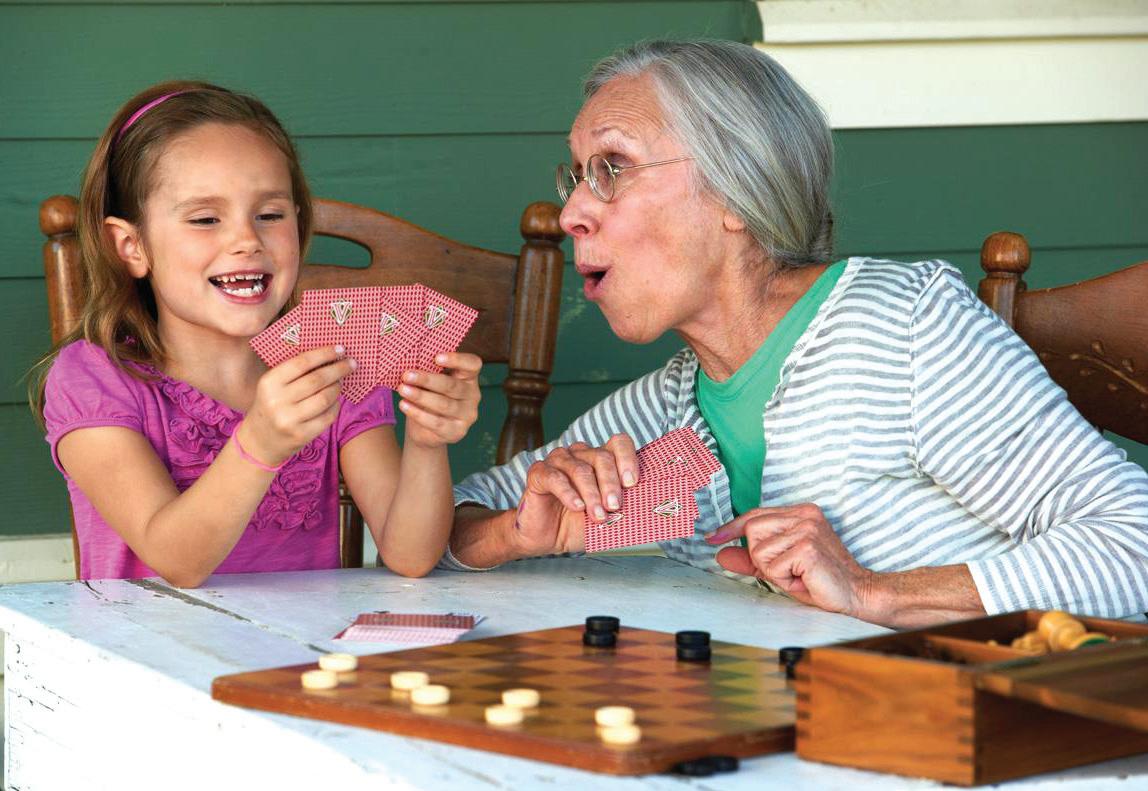
friends makes them happy, and two-thirds of 10-year-olds agree.
What’s more, almost half (45 percent) of 100-year-olds and 40 percent of 10-yearolds say they’d prefer to spend time with a family member above anyone else in the world. And when it comes to childhood role models, both groups cite family above teachers, celebrities or others, with mom being the most popular choice.
3. Remember, age is just a number. While both groups say it’s good to be
young, many centenarians embrace their age. Perhaps that’s because, on average, the 100-year-olds report feeling more than two decades younger than they are, and 60 percent say they do not feel old. Given the choice between being their current age or 10-years-old, more than half of centenarians (58 percent) say they would rather be 100.
For more information on UnitedHealthcare’s 100@100 survey, visit UHC.com/100.
(BPT)
Jayne DeHaan Senior Real Estate Specialist

CRS, CNE, ALHS, SRES, ASP, CDPE & Remax Hall of Fame
Managing the financial and emotional challenges facing those over 50 when selling or buying a new home.
*Ask about my 30-day guarantee.

ladyj@jaynedehaan.com • www.JayneDeHaan.com • (206) 963-3877 Your Neighborhood Specialist Since 1976
Sat, Sept. 19th 1:00pm
Aegis of Queen Anne on GalerThe new 58-unit development responds to a growing senior housing need on Queen Anne. Close to 10,000 seniors aged 75+ live within three miles, almost 20,000 live within five miles. Sitting atop Queen Anne Hill, Aegis of Queen Anne on Galer, is inspired by the old world charm of this landmark Seattle neighborhood. The most innovative feature of the community transports our residents to the heart of the Public Market, designed by local design and fabrication firm Dillon Works. It includes many features that recreate the iconic Seattle landmark. This Public Market area will serve as an activity center for the many Aegis Living Life Enrichment programs such as Chair Tai
Chi, TED Talks and music therapy. The community will also feature a state-ofthe-art movie theatre, The Sports Den, a mercantile shop, a beauty salon and barbershop.
In addition to Galer, Aegis Living is developing seven other communities in the Seattle/Bellevue area including Aegis Gardens (Newcastle) (110 units), Aegis of West Seattle (80 units), Aegis of Bellevue at Overlake (72 units), Aegis of Queen Anne at Rogers Park (129 units), Aegis at Ravenna (80 units), Aegis of Mercer Island (89 units) and Aegis at Laurelhurst (73 units), a total of nearly 700 units, creating more than 700 jobs. Aegis Living CEO and Founder Dwayne Clark says, “We’re excited to bring innovative programs to the next generation of Seattle’s senior housing market.”
If you have questions about senior living, we have answers. Aging is often difficult with a seemingly endless number of decisions and changes. Let us offer simple solutions. We’ll share with you information on your many options and offer a helping hand to assist you on your journey.
Brookdale Admiral Heights
Formerly Emeritus® at Admiral Heights
Independent Living | Assisted Living 2326 California Ave SW Seattle, WA 98116 (206) 938-3964
Brookdale Queen Anne
Formerly Emeritus® at Queen Anne
Independent Living | Assisted Living 805 4th Avenue North Seattle, WA 98109 (206) 284-0055
For more information, contact a community near

Brookdale West Seattle
Formerly Emeritus® at West Seattle
Independent Living | Assisted Living 4611 35th Ave SW
Seattle, WA 98126 (206) 932-5480

What’s retirement like? The answer may depend upon whether you’re a man or a woman.
Women report more positive experiences in retirement than men, yet also say they are more likely to experience negative emotions, especially stress, according to a study conducted by MassMutual. The study’s findings have implications for retirement planning, both financially and emotionally.
“Women often experience high levels of stress before retirement as they juggle both professional and family responsibilities,” says Elaine Sarsynski, executive vice president of MassMutual Retirement Services. “We are learning that the stress women feel often carries over into retirement, but we’re also hearing that women often make more of their retirement opportunities and experiences than men.”
The study surveyed 905 retirees within 15 years after retirement and 912 preretirees within 15 years before retirement. The responses for both groups were evenly split between men and women and respondents had a minimum of $50,000 in retirement savings.
One in five women (20 percent) is at least moderately stressed in retirement compared to 15 percent of men, the study finds. Women also are more likely to feel frustrated, sad, lonely and nervous.
Before retirement, women are much more likely than men to report being stressed. The study finds that 49 percent of women pre-retirees say they are at least moderately stressed compared to 38 percent of men pre-retirees.
Though whether you are a man or a woman, saving for retirement contributes to positive emotions and experiences in retirement. Those who have a 401(k) or other retirement savings plan were more likely to report experiencing positive emotions as compared to those who did not. Of the retirement plan participants, 74 percent say they are “extremely” or “quite a bit” happy compared to 68 percent who did not participate in a retirement plan and 70 percent of retirement plan participants say they are “extremely” or “quite a bit” relaxed compared to 61 percent who did not have a plan.

“Overall, positive emotions for both men and women tend to increase and negative emotions tend to decrease in retirement,” says Mathew Greenwald, president of Greenwald & Associates, whose firm conducted the study on behalf of MassMutual. “People also tend to exaggerate expectations for retirement, especially women, partly because it’s difficult for many people to envision what life in retirement will actually be like.”
In the years before retirement, women have markedly higher expectations than men for enjoying the social aspects of retirement and somewhat lower expectations for their financial fortunes. During retirement, women report having less free time than men and yet are more likely to have new experiences, find more time for friends, and enjoy more opportunities. Men’s expectations tend to be more in line with their eventual experiences, which are typically less fulfilling than women, according to the study.
Sarsynski recommends that pre-retirees take steps to help themselves gain a more concrete understanding of what their lives may be like once they retire.
“Spend time with retirees to gain insights and better prepare both financially and emotionally for retirement,” Sarsynski says. “We also suggest that pre-retirees track all of their purchases, especially when on vacation or participating in activities they enjoy. That will help them better understand how costly, and therefore how feasible, the lifestyle they envision will actually be.”
(BPT)
➧ STRESS, from Page 4
The beautiful flower of a vine native to the tropics and sub-tropics, passionflower promotes restful sleep and relaxation. According to a 2010 study in Phytomedicine: International Journal of Phytotherapy and Phytopharmacology, passionflower works chiefly by affecting GABA receptors and other neurotransmitters in the central nervous system.
Add passionflower to your relaxation routine:
Add dried leaves, roots and flowers to a small pouch to create an herbal sachet for
near your pillow, or add them to a warm bath. Passionflower works well and tastes good as a tea, too — especially when combined with hawthorn. Passionflower should not be taken by people who are already taking other sleep medications.
As with all natural products, choose herb sources that are high-quality, organic and sustainable, to help ensure plant medicines will be available for future generations. If you are taking medications, or if you are pregnant or breast-feeding, always consult a health professional before you take herbs.
By Natalie Walsh,
ND, MS, a resident naturopathic physician at Bastyr Center for Natural Health.
➧ GROCERY, from Page 3
how you might use them, flavor and nutrition - even recipes. If your grocery store offers free recipe cards beside a new vegetable, give both a try.
• Whenever possible, buy organic. “I commonly hear the question, is organic really necessary,” Kriegler says. “Your first goal is to increase the amount of fruits and vegetables your family eats, but once you’re doing that it’s important to choose organic produce. It will help you avoid toxins,
herbicides and pesticides in your food that could affect your metabolism and cause other health problems.”
• If you must buy prepackaged and labeled foods, read the ingredient list first. If it’s full of unrecognizable or unhealthy ingredients, put it back on the shelf and look for a better alternative.
For more healthful living and nutrition information, visit LifeTimeFitness.com.
(BPT)

“Excuse me, can you say that again?” If this sounds typical, you’re not alone. Hearing loss is the third most common health problem in the U.S. with more than 40 million people suffering from it to some degree. Despite all this, only 30 percent of Americans with hearing loss (most of whom are seniors) seek treatment.
To find out why, the manufacturer of Siemens hearing aids polled several hundred seniors at a national conference. Despite most of them admitting to having hearing loss, the survey found seniors are quite passive about their hearing health. About one third of respondents admitted to having their hearing checked only once or twice in their entire life. When visiting their doctor, hearing was the least likely routine health check received - tied with a colonoscopy.

Seniors struggle with perceptions Seniors completely overestimate how others will
react to them wearing hearing aids, according to the data. The majority (51-67 percent) said they don’t wear hearing aids because they fear others will perceive them as “old, feeble or kind of dorky.” Some worry that wearing hearing aids will make them stand out in a crowd in a negative way. Ironically, the vast majority of seniors are not judgmental of another person wearing hearing aids.
Many respondents are also in denial over the social repercussions of their hearing loss. One in four said they don’t want to interact with someone who continuously asks them to repeat themselves, citing that person as “annoying.” Yet, when the situation is reversed, most seniors think it’s perfectly acceptable if they are the ones doing the repeating.
“What I find so interesting is seniors’ perceptions of what makes them look old,” says Emmalyn Loeffler, Au.D., manager of audiology for Sivantos, Inc. “While only one in seven seniors with hearing loss wears hearing aids, 50 percent of seniors admitted to having procedures more commonly associated with vanity, such as getting Botox injections.”

Another common concern among seniors is the perception of hearing aids themselves. Many still view hearing aids as large, clunky devices that simply amplify sound. According to Dr. Loeffler, this is no longer the case.
“We refer to today’s hearing aids as ‘smart’ because they automatically adapt to your environment, learn your preferences, and intelligently focus on sounds you really want to hear. Most people can’t even tell you’re wearing them and some are even invisible when worn,” she says.
Survey respondents were asked what new features and capabilities they would like to see added to hearing aids, and their answers reflected today’s technology-driven society:
• 73 percent would like rechargeable batteries
• 63 percent suggested adding wireless connectivity
• 54 percent want hearing aids to be water and dirt-proof for outdoor use
• 51 percent would like to control their hearing aids via a smartphone app
➧ HEARING LOSE, Page 11
LOSS, from Page 10
According to Dr. Loeffler, seniors who regularly have their hearing tested and are proactive in trying to address hearing loss are better able to maintain active social lives, extend their careers, and receive diagnoses of potentially more serious medical conditions early. Moreover, leaving hearing loss untreated makes it difficult to understand and follow a doctor’s advice, respond to notifications and alerts (e.g., doorbells, car horns), or enjoy conversations with friends and family. All of these outcomes are frustrating and embarrassing, and some could be dangerous. Rather than ignoring hearing problems, Dr. Loeffler recommends the following:
• Be proactive about getting your hearing checked. Ask your doctor to test your hearing during your yearly checkup to be sure there are no changes. Medicare guidelines will cover diagnostic hearing exams if your physician suspects a problem, so if you are Medicare-eligible, your exam

should be covered.
• Baby boomers and seniors are concerned about staying and looking young. One of the best ways to accomplish this is to wear hearing aids to treat hearing loss. Remember, hearing aids don’t make you look old ? not wearing hearing aids when they’re needed does.
• Stay socially active. A simple and painless hearing test can help avoid the irritation that arises from asking others to repeat themselves when you can’t hear. This will benefit you socially and in your career, if you’re still working.
(BPT)

from Page 2
Deposit products offered by U.S. Bank National Association. Member FDIC
Credit products offered by U.S. Bank National Association and subject to normal credit approval.
This information represents the opinion of U.S. Bank and is not intended to be a forecast of future events or a guarantee of future results.
U.S. Bank is not responsible for and does not guarantee the products, services or performance of U.S. Bancorp Investments.
Investment products are:
For U.S. Bancorp Investments:
Investment products and services are available through U.S. Bancorp Investments, the marketing name for U.S. Bancorp Investments, Inc., member FINRA and SIPC, an investment adviser and a brokerage subsidiary of U.S. Bancorp and affiliate of U.S. Bank.
Insurance products are available through various affiliated non-bank insurance agencies, which are U.S. Bancorp subsidiaries and affiliates of U.S. Bank.
Products may not be available in all states. CA Insurance License# OE24641. Policies are underwritten by unaffiliated insurance companies and may not be available in all states.


By Mary Justice,
Washington State Market Leader of The Private Client Reserve of U.S. Bank in Seattle and Dorothy Mitchel, U.S. Bancorp Investments, Inc. Division Manager in Everett, Washington.