Exploring Seattle’s Neighborhoods


•
•
•
•

•
•
•
•
Seattle is a city defined by its many distinctive neighborhoods and captured between bodies of water and connected through its central core by Interstate 5, the 12th longest highway in the U.S. and the fifth longest northsouth highway after Interstate 15.
One has to only look up, as all around us we see cranes restarted that were once waiting for funds and new ones being thrown up into new projects, as Seattle’s downtown continues to soar skyward and the city continues to re-engineer itself.
We hope that this guide allows you to escape all these noisy building exercises — above and below — and take refuge in the diverse and ever changing neighborhoods that remain welcoming for so many of us call home. We say we live in Seattle when we describe where we live to outsiders, but we say our neighborhoods by name when we speak with fellow residents. We hope this guide spurs greater interest in your neighborhood and exploring and dining in those around you and throughout the city to truly know your city well. We hope you find Seattle Annual Manual to be an enjoyable resource for your Seattle exploration.
If there are things we left out, please let us know so we can ensure what makes your neighborhood yours is reviewed for inclusion in next year’s edition.
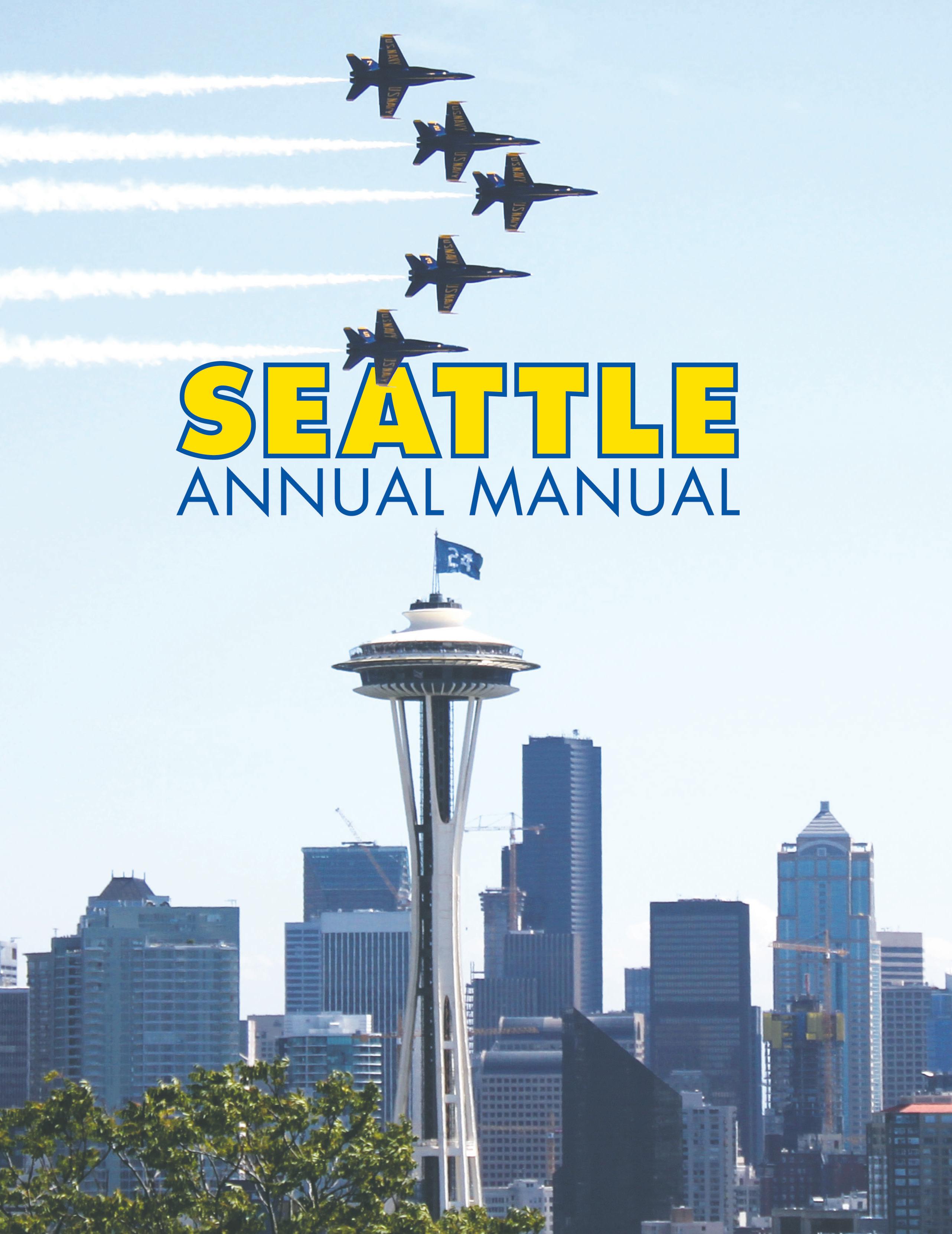
ON THE COVER: The U.S. Navy Blue Angels soar past the Space Needle (topped with a flag honoring Seattle Mariners legend Ken Griffey Jr.) during the annual Seafair Air Show in August. While the jet team performs its aerial acrobatics over Lake Washington, this image was taken from Kerry Park at the top of Queen Anne as the Blues returned to Boeing Field at the end of their show. Photo by Joe Veyera
STAFF:
Director of Sales & Marketing
Tammy Greenaway
Retail Advertising
206-461-1322
Classified Advertising
206-461-1332
Advertising Representatives
Kaleb Gentry, Kibby Brackman
Matt Wilemski
Art Director
Mark Falconer
Production Designers
Jacqie Callahan
Nick Brosas
Photographers
PPC Staff (unless otherwise noted)
Writers (Contributing writers as noted)
Physical Address
Pacific Publishing Co.
636 South Alaska Street Seattle, WA 98108
Mailing Address
PO Box 80156 Seattle, WA 98108
General Manager
Robert Munford

Suzie Capuzzi
Broker, CMRS, CMMS & CNAS
206.200.2008 suziecapuzzi@cbbain.com
Real Estate is the best investment on earth! It provides the highest returns and greatest value with the least amount of risk.
Allow my 20+ years of experience to represent you and your Real Estate needs and dreams.
Be choosy, call Suzie Capuzzi.

Ken Graff
REALTOR®, Previews® Broker
206.498.7818
KenGraff@cbbain.com
Ken Graff, a member of Coldwell Banker’s International President’s Circle, is your best option whether buying or selling a home. He will skillfully advise and negotiate for you to help you realize the best possible results. Expert guidance and superior service are the foundation of Ken’s success.

KenGraffHomes.com
Andrea Chatard
Broker, CNE
206.351.0711 andreachatard@cbbain.com
Entrusting me with the responsibility of assisting you buy or sell one of your most significant investments is a privilege/gift. I have built my business on a commitment to honesty and integrity, with the goal of building strong relationships, so I become your trusted real estate advocate for life.

www.andreachatard.com
Annabel S. Kuppens
REALTOR®, MCNE, SRES
206.834.5601
annabelkuppens@cbbain.com
I am your “Dream Maker.” With my knowledge, innovative thinking and excellent people skills, I will help you navigate the Seattle Real Estate Market to realize your goals and dreams of home ownership.
“Client and Result oriented. Changing the world one home at a time.”
Christina McDonald
206-999-3044
christinamcdonald@cbbain.com www.christinamcdonald.com
I was born and raised in Wallingford and know the Seattle neighborhoods intimately. I promise to give you my in-depth knowledge and show you how to buy and sell Seattle homes with results that will keep you smiling.



www.annabelsellwa.com
David T. Snead
Real Estate Broker 425.457.2594 davidtsnead@cbbain.com
I fell in love with Seattle when I first saw the Space Needle. My wife Ruthie and I moved here in 2000. I’m active with local arts and culture non-profits and was voted Visit Seattle’s “Tourism Ambassador of the Year” in 2014. I know and love Seattle! Helping people buy and sell real estate here is what I do best! I look forward to helping you find your Seattle!
www.SeattleDaves.com
Jamie Flaxman
REALTOR®, ABR, CNE, CRS, SRES, SRS 206.790.0081
Jamie@JamieFlaxman.com www.jamieflaxman.com
Whether you’re buying your first home or selling a home of 40 years, I will help you achieve your real estate goals with integrity and humor.

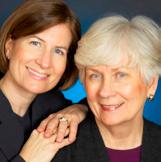
“Buyer or seller, we would recommend Jamie in a heartbeat.” – Will and Patty Lake Union Office 1200 Westlake Ave. N., Suite 406 206-283-5200 | cbbain.com/lakeunion
Magnolia Office 3300 West McGraw St., Suite 210 206-283-3604 | cbbain.com/magnolia
Whitney & Virginia Mason
REALTOR®, Broker, CRS
206.310.3985 whitneymason@cbbain.com
Experience Counts ~ Expect the Best!
FIVE STAR: Best in Client Satisfaction Real Estate Agent 2015 - 10th Year Winner * Previews Property Specialist Specializing in Seattle Neighborhoods of Magnolia & Queen Anne
www.SoldinSeattle.com
Beth Toomey
Luxury Specialist, CRS, SRES
206.949.6325
bethtoomey@cbbain.com
As a Seattle native, I know and appreciate the special neighborhoods in the greater Seattle/ Eastside area. As the recipient of Seattle Magazine’s “Best in Customer Service 2008-2015”award, let me share my proven track record to help with your real estate needs. Diligent, enthusiastic and results orientedI am here to help!
www.BethToomey.com
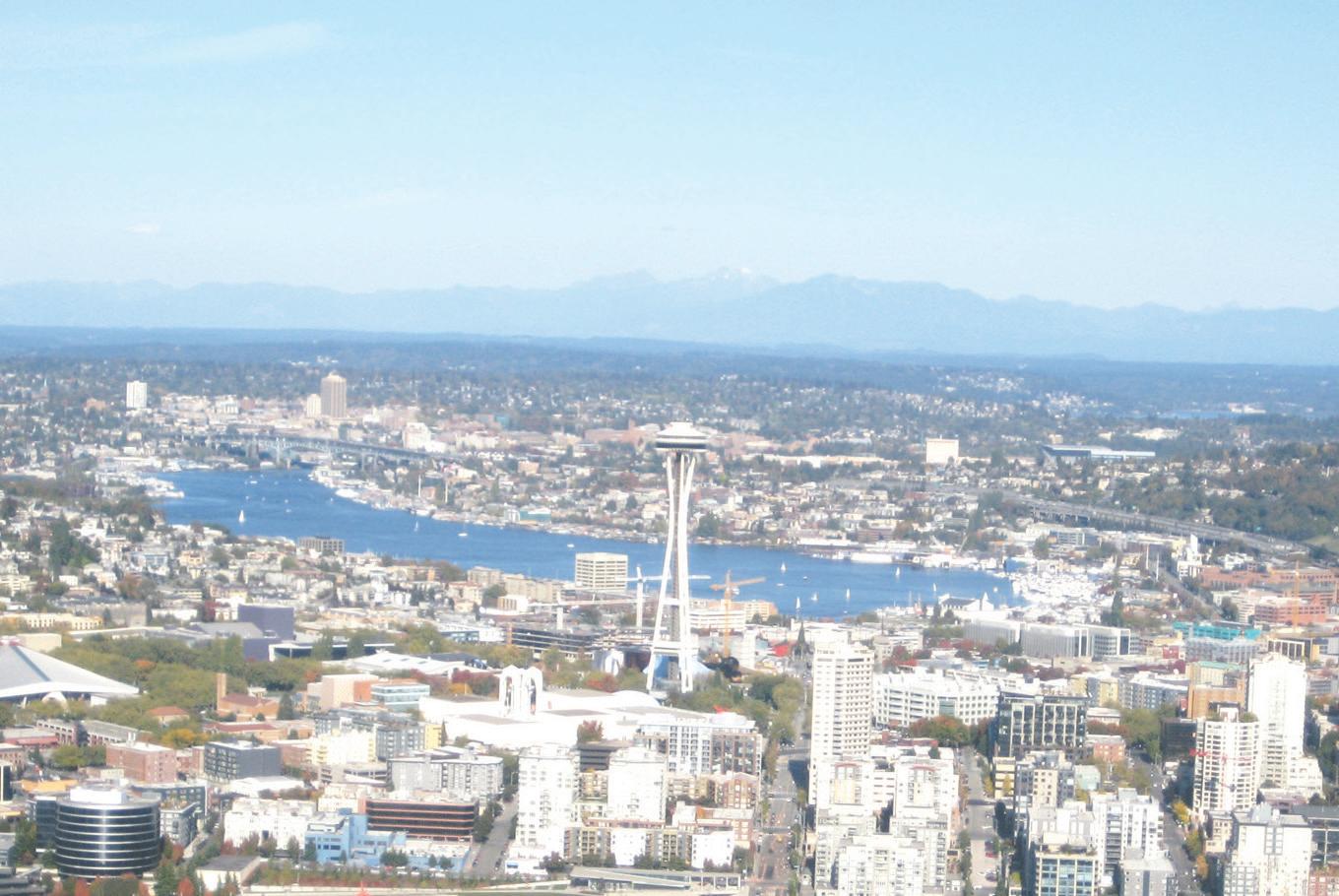
(Int’l District, Pioneer Square, Belltown & South Lake Union) Wallingford & Fremont
Greenwood, Phinney & Green Lake
(Lake City, U-District, Maple Leaf, Ravenna & Roosevelt)
Madison Park, Madison Valley, Madrona & Leschi
Queen Anne, Magnolia & Interbay
(Georgetown, Beacon Hill, Rainier Valley & Columbia City)

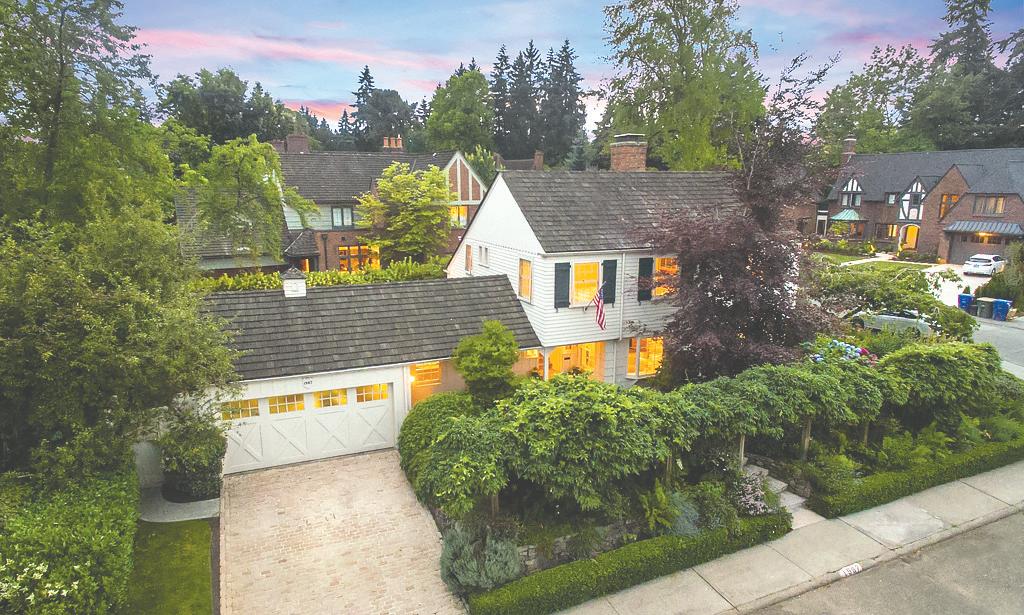
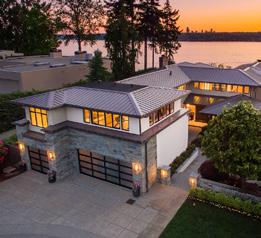
SENIOR CENTERS
BALLARD NORTHWEST
SENIOR CENTER
5429 - 32nd Ave. N.W. www.ballardseniorcenter. org (206) 297-0403
CENTRAL AREA
SENIOR CENTER
500 30th Ave. S. www.centralareasrcenter. org (206) 726-4926
GREENWOOD SENIOR CENTER
525 N 85th St. www.phinneycenter.org (206) 297-0875
INTERNATIONAL DROP-IN CENTER
7301 Beacon Ave S. www.idicseniorcenter.org (206) 587-3735
PIKE MARKET
SENIOR CENTER 85th Pike St. #200 www.pikemarketsenior center.org (206) 728-2773
SALVATION ARMY SENIOR CENTER 9050 16th Ave. S.W. www.salvationarmynw.org (206) 767-3150
SENIOR CENTER OF WEST SEATTLE 4217 S.W. Oregon St. www.sc-ws.org (206) 932-4044
SHORELINE LAKE FOREST
PARK SENIOR CENTER 18560 1st Ave. N.E. www.shorelinelfp seniorcenter.org (206) 365-1536
SOUTH PARK SENIOR CENTER 8201 10th Ave. S. Suite 4 (425) 749-0391
SOUTHEAST SEATTLE SENIOR CENTER 4655 S Holly St. www.sessc.org (206) 722-0317
WALLINGFORD COMMUNITY SENIOR CENTER 4649 Sunnyside Ave. N. #140 www.wallingfordseniors. org (206) 461-7825
SEATTLE PARKS AND RECREATION
Seattle Parks and Recreation Lifelong Recreation offers a wide range of fitness and social programs for people age 50 and older that change each season. Visit www. seattle.gov/parks/seniors/ index.htm
8061 Densmore Ave N. Office hours: 8 a.m. to 3 p.m. (206) 684-4951



SENIOR SERVICES
ALZHEIMER’S ASSOCIATION
www.alz.org (206) 363-5500
KING COUNTY CAREGIVER SUPPORT NETWORK www.kccaregivers.org (206) 436-2975
COMMUNITY DINNERS www.communitydinners. com (206) 364-5200
PROJECT ENHANCE www.projectenhance.org (206) 727-6297
MEALS ON WHEELS www.mealsonwheels america.org (206) 448-5767
SHIBA (STATEWIDE HEALTH INSURANCE BENEFITS ADVISORS) HELPLINE 1-800-562-6900
HYDE SHUTTLES (206) 727-6262
SENIOR INFORMATION & ASSISITANCE CAREGIVERS ADVOCATES www.soundgenerations.org (206) 448-3110
SENIOR SERVICES VOLUNTEER TRANSPORTATION www.seniorservices.org (206) 448-5740



Whatever it is, Seattle most likely has a museum, theater or attraction you will find inspiring and informative. The foundational Seattle Art Museum, for example, located downtown, is internationally recognized for its collection of Asian, African and Native American art produced by Pacific Northwest artists. The permanent collection includes around 21,000 pieces.
The Northwest African American Museum in the Central Area displays artwork from many places of origin and religious backgrounds, representing all walks of African-American life.
The Wing Luke Museum in the International District depicts the Asian-American experience in America through photographs, artwork and text.
The Henry Art Gallery, on the University of Washington campus, is one of the region’s leading museums in modern and contemporary art. The Henry also hosts lectures and other events.
The Children’s Museum at the Seattle Center is the perfect spot for kids, with all types of interactive exhibits.
For music lovers, Seattle has Benaroya Hall, home of the Seattle Symphony Orchestra and one of the premier facilities for music performances. Other performing arts facilities include the Fifth Avenue Theatre and EMP, among countless other performance spaces throughout the city.
Are you a techie? Check out SODO’s Living Computer Museum, which presents the milestones in the evolution of computers and how people use them. Microsoft co-founder Paul Allen and assembled the collection, which attempts to preserve the history that put him and Bill Gates on the path to founding the world-transformational company.
The Duwamish tribe has long been a part of the Pacific Northwest, and the Duwamish Longhouse & Cultural Center in Southwest Seattle is a fascinating place to visit. Authentic and rich in meaning, the cabin will feed your mind about the Duwamish’s rich heritage, culture and history.
The Space Needle is always a must for Seattle newbies. Built for the 1962 World’s Fair, its can’t-miss presence on the Seattle skyline makes it awe-inspiring and something that must be explored. Take the elevator up and experience spectacular views, or take in dinner at its rotating restaurant.
THE BURKE MUSEUM OF NATURAL HISTORY AND CULTURE
4331 Memorial Way / On the UW campus at 17th Ave. N.E. and N.E. 45th St. (206) 543-5590 www.burkemuseum.org
SEATTLE ART MUSEUM/ SEATTLE ASIAN ART MUSEUM
1300 First Ave. (206) 654-3100 www.seattleartmuseum. org
DAY BREAK STAR CULTURAL CENTER
5011 Bernie Whitebear Way / Discovery Park (206) 285-4425
www.unitedindians.org
LIVING COMPUTER MUSEUM
2245 1st Ave. S. (206) 342-2020 www. livingcomputermuseum.org
OLYMPIC SCULPTURE PARK 2901 Western Ave. Seattle, WA 98121 (206) 654-3100 www.seattleartmuseum.org
MUSEUM OF FLIGHT
9404 E. Marginal Way S. (206) 764-5700 www.museumofflight.org
NORTHWEST AFRICAN AMERICAN MUSEUM
2300 S. Massachusetts St. (206) 518-6000 www.naamnw.org
WING LUKE MUSEUM OF THE ASIAN PACIFIC AMERICAN EXPERIENCE
719 S. King St. (206) 623-5124 www.wingluke.org
NORDIC HERITAGE MUSEUM
3014 NW 67th St. (206) 789-5707 www.nordicmuseum.org
HENRY ART GALLERY
On the UW campus at 15th Ave. N.E. and 41st St. (206) 543-2280 www.henryart.org
MUSEUM OF HISTORY AND INDUSTRY (MOHAI) 860 Terry Ave. N. (206) 324-1126 www.mohai.org
FRYE ART MUSEUM
704 Terry Ave. (206) 622-9250 www.fryemuseum.org
SEATTLE CENTER 305 Harrison St. (206) 684-7200 www.seattlecenter.com
EXPERIENCE MUSIC PROJECT MUSEUM
325 Fifth Ave. N. (206) 770-2700 www.empmuseum.org
PACIFIC SCIENCE CENTER 200 2nd Ave. N. (206) 443-2001 www.pacificsciencecenter. org
THE CENTER FOR WOODEN BOATS
1010 Valley St. (206) 382-2628 www.cwb.org
THE CHILDREN’S MUSEUM 305 Harrison St. / Seattle Center (206) 441-1768 www.thechildrensmuseum. org
BENAROYA (HOME OF SEATTLE SYMPHONY ORCHESTRA)
200 University St. Seattle, WA 98101 (206) 215-4800 Administration (206) 215-4747
Tickets: www.seattlesymphony.org/ benaroya
5TH AVENUE THEATRE
1308 5th Ave. (206) 625-1900
www.5thavenue.org
ACT THEATRE
700 Union St. / WA State Convention Center (206) 292-7676
www.acttheatre.org
ARTSWEST
4711 California Ave. S.W. (206) 938-0963
www.artswest.org
BOOK-IT REPERTORY THEATRE
305 Harrison St. / Seattle Center www.book-it.org
BROADWAY BOUND
CHILDREN’S THEATRE
5031 University Way N.E. (206) 526-5437
www.broadwaybound.org
CENTER THEATRE AT SEATTLE CENTER
305 Harrison St. (206) 684-7200
www.seattlecenter.com
FREEHOLD THEATRE
2222 2nd Ave. Suite 200 (206) 323-7499
www.freeholdtheatre.org
GREEN STAGE (206) 748-1551 www.greenstage.org
INTIMAN THEATRE
201 Mercer St. (206) 441-7148 www.intiman.org
LANGSTON HUGHES PERFORMING ARTS INSTITUTE
104 17th Ave. S. (206) 684-4757 www.langstoninstitute.org
LIVING VOICES
600 N 36th St. #221 (206) 328-0798
www.livingvoices.org
MEANY HALL FOR THE PERFORMING ARTS
University of Washington campus 4140 George Washington Lane (206) 543-4880
www.artsuw.org
MOORE THEATRE 1932 2nd Ave. www.stgpresents.org
NEPTUNE THEATRE 1303 N.E. 45th St. www.stgpresents.org
NORTHWEST PUPPET CENTER
9123 15th Ave. N.E. (206) 523-2579
www.nwpuppet.org
ON THE BOARDS
100 W. Roy St. (206) 217-9886
www.ontheboards.org
PARAMOUNT THEATRE
911 Pine St. www.stgpresents.org
PLAYBACK THEATER NORTHWEST
3820 Meridian Ave N. (206) 726-1415
www.playbacktheaternw. org
THE REPERTORY ACTORS THEATRE
1122 E. Pike St. (206) 364-3283 www.reacttheatre.org
SEATTLE CHILDREN’S THEATRE
201 Thomas St. (206) 441-3322 www.sct.org
SEATTLE GILBERT & SULLIVAN SOCIETY
9250 14th Ave NW (206) 682-0796 www.pattersong.org
SEATTLE PUBLIC THEATER 7312 W. Green Lake Drive. N. (206) 524-1300
www.seattlepublictheater. org
SEATTLE REPERTORY THEATRE
155 Mercer St. / Seattle Center (206) 443-2222 www.seattlerep.org
SEATTLE SHAKESPEARE COMPANY
305 Harrison St. / Seattle Center (206) 733-8228
www.seattleshakespeare. org
STONE SOUP THEATER 4029 Stone Way N. (206) 633-1883
www.stonesouptheater.org
TAPROOT THEATRE COMPANY
204 N. 85th St. (206) 781-9707
www.taproottheatre.org
THEATER SCHMEATER 2125 3rd Ave (206) 324-5801
www.schmeater.org
THISTLE THEATRE
6344 NE 74th St. Suite # 103 (206) 524-3388
www.thistletheatre.org
SEATTLE THEATRESPORTS IMPROV COMEDY Post Alley / Market Theater in Pike Place Market (206) 587-2414 www. unexpectedproductions.org
SEATTLE UNIVERSITY www.seattleu.edu
UNIVERSITY OF WASHINGTONSeattle Campus www.washington.edu
SEATTLE PACIFIC UNIVERSITY 3307 3rd Ave. W. www.spu.edu
ANTIOCH UNIVERSITYSeattle Campus 2326 6th Ave. www.antiochseattle.edu
SEATTLE COMMUNITY COLLEGES (CENTRAL, NORTH, SOUTH, SVI www.seattlecolleges.edu
ARGOSY UNIVERSITYSeattle Campus 2601 Elliott Ave www.argosy.edu
THE ART INSTITUTE OF SEATTLE 2323 Elliott Ave. www.artinstitutes.edu/ seattle
CORNISH COLLEGE OF THE ARTS 1000 Lenora St. www.cornish.edu
GAGE ACADEMY OF ART 1501 10th Ave. #101 (206) 323-4243 www.gageacademy.org
PRATT FINE ARTS CENTER 1902 S. Main St. (206) 328-2200 www.pratt.org
SCHOOL OF VISUAL CONCEPTS 2300 7th Ave. www.svcseattle.com
PHOTOGRAPHIC CENTER NW 900 12th Ave. (206) 720-7222 www.pcnw.org

Thanks to Seattle’s public transportation system, it’s fairly easy to get around the city. The Link light rail, for instance, is fast and smooth, has great views and currently travels from Sea-Tac International Airport to Westlake Station in downtown. Light rail will soon travel to Capitol Hill, beginning in late 2015 and later to the University District. Light rail trips take up a fraction of the time that bus and car trips do, especially given Seattle’s infamous traffic problem.
The ferries are another iconic feature of Seattle transportation. They travel to the surrounding islands with speed and style, and commuters can take their car onboard. In fact, many Vashon Island residents take the ferry to work in Seattle every morning, with minimal hassle. Depending on where you are headed, the ferries lend themselves to stunning views. They also have a cafeteria for hungry travelers. Both outdoor and indoor seating is available.
Uber and Lyft are two ridesharing services that can be found in the city. They are private companies and compete with public transportation and the taxi agencies.
King County Metro is the agency that runs the public transportation system in the county.
There are two floating bridges in Seattle, one that travels from the Mount Baker neighborhood to the Eastside as part of Interstate 90. The other floating bridge, state Route 520, travels from the Montlake area to the Eastside; a new SR 520 bridge is currently under construction.
Lastly, Seattle is home to several freeways and highways. Interstate 5 cuts across the city from north to south through downtown, and state Route 99 runs parallel to the west.
Also, the West Seattle bridge connects West Seattle to the rest of Seattle.
— Gwen Davis
Thorough and timely, Metro will take you anywhere you want to go in the city and beyond for about $2. Fares for seniors, students and children are discounted. And if the bus might be your main mode of transportation, consider the automated ORCA card. ORCA costs $5 and is accepted by transit systems throughout the Puget Sound region. ORCA card value can be easily added online or by phone. For more information visit http://metro.kingcounty.gov/tops/bus/bus.html and www.orcacard.com
Also known as “transportation network companies,” or TNCs. Utilizing a mobile app, they allow consumers with smartphones to submit a trip request which is then routed to drivers who use their own cars. Pricing is similar to that of metered taxis, and payment is handled exclusively through the companies and not with the driver personally. At the end of a ride, the complete fare is automatically billed to the customer’s credit card.
www.uber.com/cities/seattle www.lyft.com/Seattle
Pronto is Puget Sound’s cycle sharing system with 500 bikes and over 50 stations across Seattle. Providing Seattle residents and visitors with an additional transportation option. For residents, Annual Memberships are available, or you can purchase 24-hour & 3-day passes. Helmets are also available at all stations for a rental fee. A cycle sharing system consists of a fleet of specially designed, sturdy, very durable bikes that are locked into a network of docking stations located throughout the city. Pronto bikes can be rented from and then returned to any station in the system, creating an efficient network with many possible points and combinations of departure and arrival.
www.prontocycleshare.com
Car2Go uses a smart phone app, website or call center find the closest Car2Go. For only 41 cents a minute, parking, fuel, insurance, maintenance, cleaning, GPS navigation, 24/7 customer support and roadside assistance are all included. You only pay for the minutes you use. The more you drive, the cheaper it gets. One hour costs a maximum of $14.99, and a full 24 hours is no more than $84.99. Online at seattle.car2go.com
Zipcar is another handy resource. Sign up online, pay the $60 annual fee and find a car in your neighborhood. The hourly rate is $8. Members are issued a key card that will open the door of any Zipcar in the country. Just reserve the car you want and you’re good to go. Online at www.zipcar.com
Among the tiers of services Sound Transit offers throughout the Puget Sound, Link Light Rail is its most modern offering. The all-electric train whisks riders into downtown and SeaTac airport in minutes. It currently serves the central and south neighborhoods. Construction will link Link to northern neighborhoods and the University of Washington. The maximum fare is $2.75 and ORCA cards are welcome. Visit www.soundtransit.org for schedules and station locations.
For that daytrip or Seattle-plus commute, Sound Transit Express regional bus is your ticket into Snohomish, King and Pierce counties. STE accepts ORCA cards and has reduced fares for seniors and veterans and provides access for persons with disabilities.
The big white boats take you and your vehicle across the Puget Sound to neighboring islands and even into Victoria, B.C. Quick, fun and affordable, and now serving local wines and microbrews, Washington State Ferries offers riders panoramic views of the Cascades, Olympics and the Seattle skyline. Visit www.wsdot.wa.gov/ferries/ for schedules, destinations and rates.
Seattle’s eclectic nightlife comes with accommodating, 24-hour taxi service from several independent companies. Courteous drivers will get you to your destination safely and quickly. There’s a $2.50 flat rate for picking you up, $2.50 for every mile, 50 cents for each extra passenger and 50 cents for every minute the driver waits at red lights.
The quirky new addition to downtown Seattle and its thriving South Lake Union district is the Seattle Streetcar. Neighbors and workers can climb aboard and get some midday shopping done or grab lunch. The ORCA card Metro transfers work. Visit www.seattlestreetcar.com for routes.
The monorail, created for the World’s Fair of 1962, was the first full-scale monorail system in the country. The elevated train travels from Seattle Center to the downtown shopping district of Westlake Center. Just $2.25 for adults and discounted fairs for kids and seniors. Trains leave every 10 minutes. Visit www.seattlemonorail.com for more.
Seattle consistently has been rated one of the top spots in the country for bicycling. It is estimated that between 4,000 and 8,000 people bicycle commute in Seattle each day.
SDOT’s Bicycle Program has been working steadily toward developing an urban trail system to accommodate bicyclists. Seattle has about 45 miles of shared use paths.
For more information go to www.seattle.gov/transportation/ bikeprogram.htm
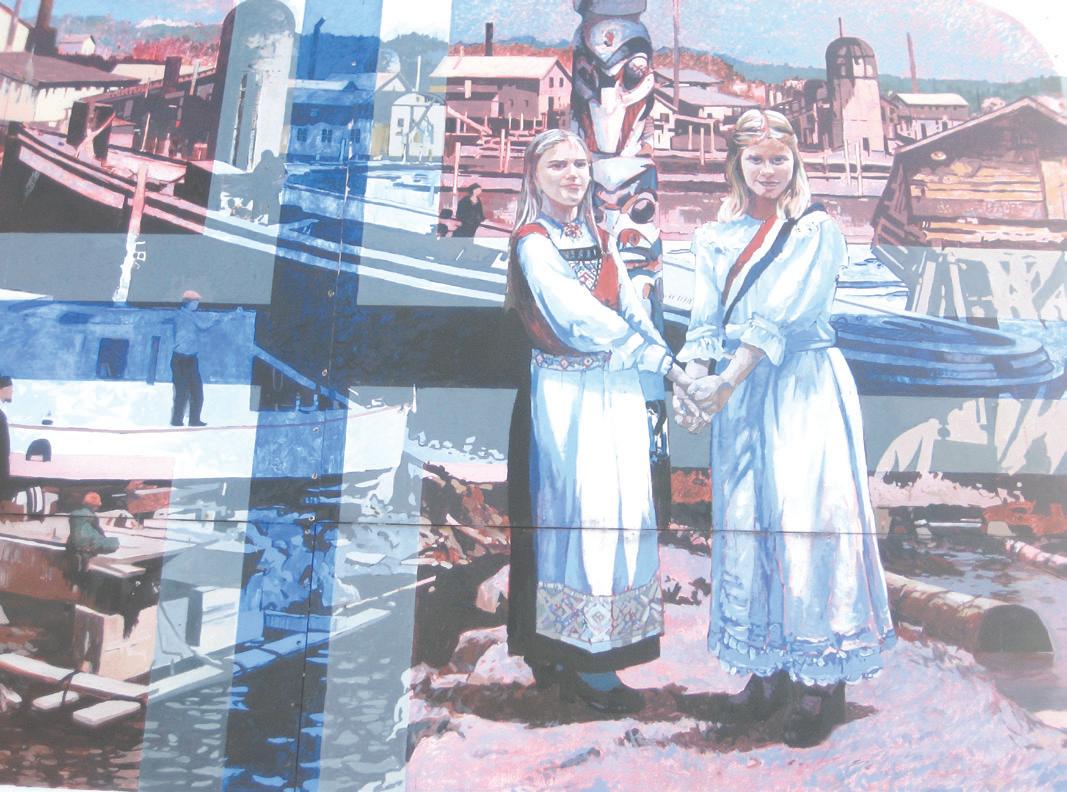
Aside from South Lake Union, there is no other Seattle neighborhood that has undergone a more complete transformation than Ballard. Ten years ago, the Ballard of old had but a Safeway and QFC set back-to-back. An unassuming library quietly served the community, a Denny’s stood in the futuristic Googie architectural style and the neighboring Sunset Bowl provided bowlers with hours of fun. Single-family Craftsman homes lined every avenue, not a single faux-futurist box house in site.
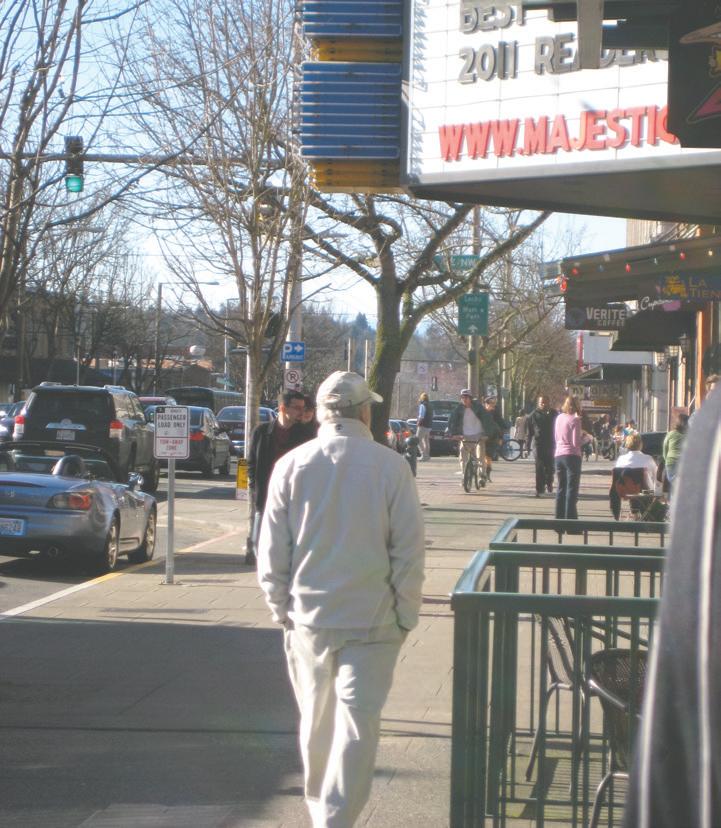
Today, those places exist only as memories stored in greyer heads. Old Ballard was leisurely; new Ballard is far faster. New Ballard is home to tasty microbrews, authentic restaurants, and savory donut shops (gotta love Mighty-O). The QFC has been modernize and has been joined by Trader Joe’s. A luxurious library is just across the street from both a skate park and children’s spray park. The Majestic Bay, a triplex cinema built in 1914 and renovated at the turn of the millennium, is the perfect spot for a night of silver screen dreams. The neighborhood is also home to Swedish Ballard, a hospital with a host of amenities, including a maternity ward, oncology center, surgical services and diabetes education program. The Craftsmans have given way to behemoth condominiums and apartment complexes.
In some ways the two Ballards have learned to coexist. The tang of sea salt and creosote are carried alongside the cries of gulls in the air. Hip businesses like Oaxaca and Card Kingdom, operate in the same brick buildings of old. St. Alphonsus holds mass just up the street from Mod Pizza. Beachgoers of all stripes marry, play volleyball and sun bathe at Golden Gardens on gorgeous summer days.
Ballard also remains home to the SeafoodFest in July, Viking Days in August and the May 17 Nordic Heritage Parade. If events like that can introduce lutefisk and Norwegian charm to the sleeve-tattooed 25-year-olds pulling six figures from Amazon, Seattle’s spirit may survive yet.
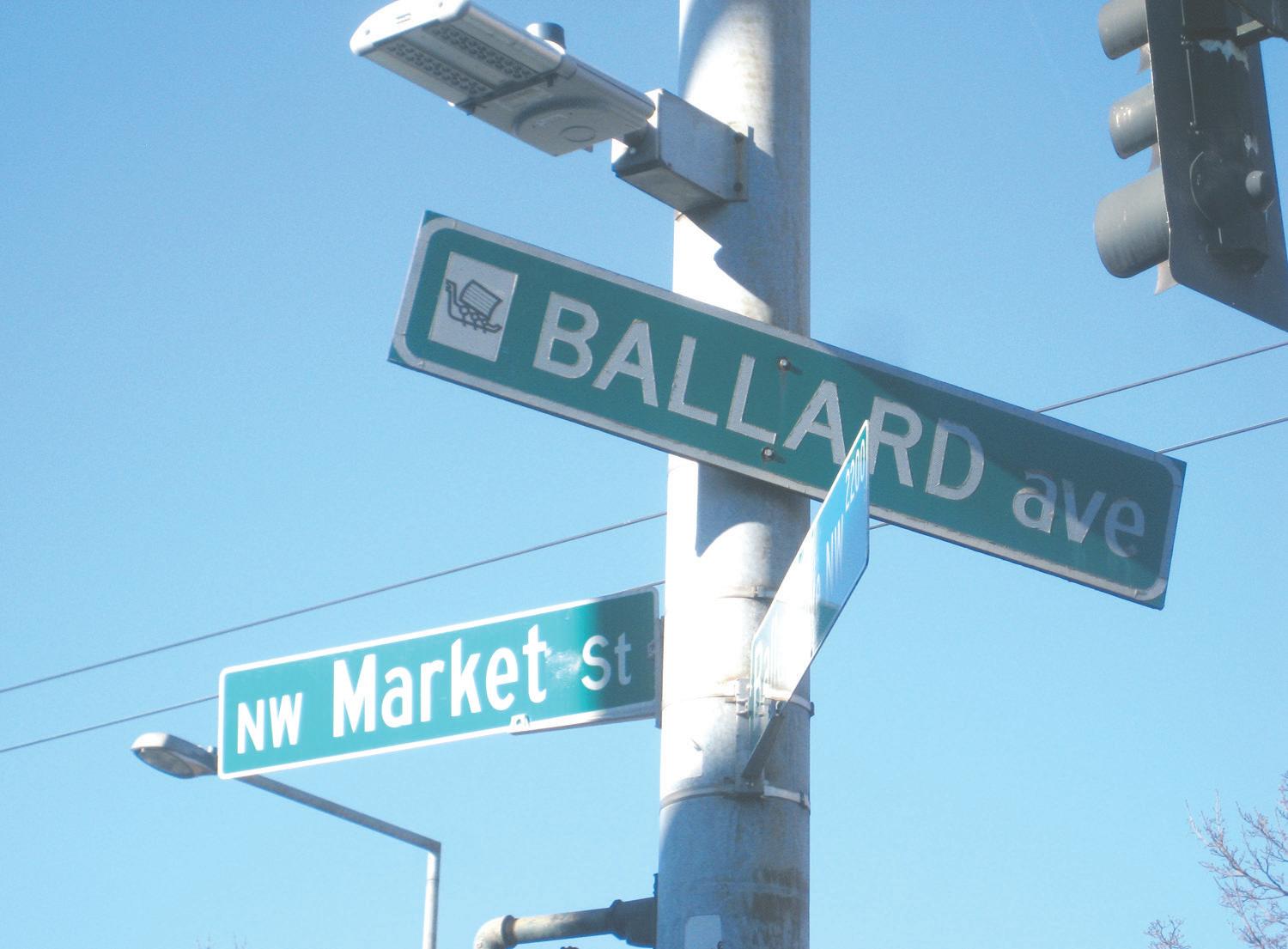
ZIP: 98107, 98117
BOUNDARIES:
North: Northwest 85th
Street
East: 8th Avenue
Northwest
South: Lake Washington
Ship Canal
West: Puget Sound
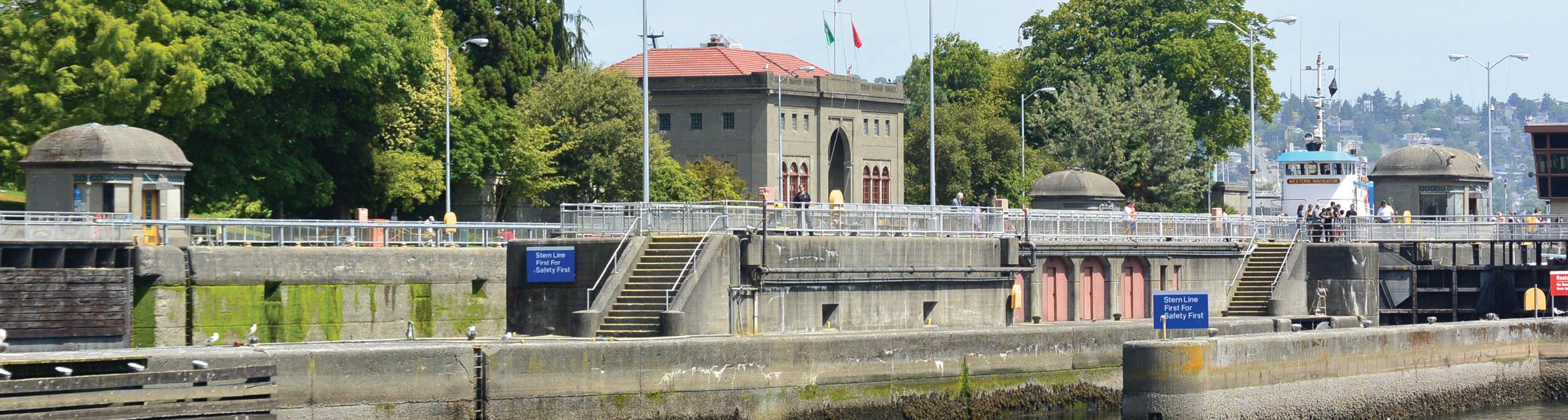
The Hiram Chittenden Locks will be 100 years old in 2017! The Ballard Locks connect fresh and salt waters, holding back the flood of an enormous water basin (Lake Union, Lake Washington and Lake Sammamish).
Imagine walking through your neighborhood, smartphone in hand. Not unusual, right? These days, everyone seems to go through their day with their eyes glued to a screen lest they miss the latest work email, tweet or Facebook post.
But further imagine that you could use your little digital god to learn more about the world immediately around you — and not just an catch-all wiki summary, but a block-by-block archive of rich information, courtesy of local historians.
The Ballard Historical Society did just that over a period of nine months ending July 2016, with an interactive mapping project to preserve and celebrate Ballard’s history since 1988. The project was funded by a grant from the city of Seattle’s Department of Neighborhoods.
The project — Mapping Historic Ballard: Shingletown to Tomorrow — built a living map of the area, courtesy of a team of volunteers using the Open Street Maps platform. The historical society updated and digitized previous historic resource surveys and conducted a contemporary survey to fill in information.
Their work enabled the society’s Geographic Information System (GIS) consultant and mapping team to create timeperiod “snapshots” of the northwestern neighborhood.
Volunteers learned about periods and styles of architecture so that they might contribute to the final product through photography and research.
The fruits of that work resulted in “snapshot” maps of Ballard in the years 1904, 1937 and 1996.
Those maps can be seen on a dedicated webpage maintained by the Ballard Historical Society, at www.ballardhistory.org/ballard-mapping/
Seattle is cleaved in two by the Lake Washington Ship Canal, Lake Union and the Hiram M. Chittenden Locks at Salmon Bay. The waterways that connect Lake Washington to Puget Sound make a handy route for the boats that support the city’s port economy, but limit the connections between the city’s north and south to six bridges.
Two of those are freeways — Interstate 5 and State Route 99 — but if you regularly travel on one of Seattle’s four street bridges, you’re likely to find yourself stopped for one of the maritime giants that regularly pass from Lake Washington to Puget Sound.
The city owns and operates the Ballard, Fremont and University bridges, while the Washington State Department of Transportation owns and operates the Montlake Bridge. As the Ship Canal is defined by federal law as a navigable waterway, the U.S. Coast Guard has regulatory authority over these bridges.
A number of years ago the Coast Guard granted the city the authority to keep the bridges closed on weekdays from 7 to 9 a.m. and from 4 to 6 p.m. (The bridges must still open during these hours for large commercial vessels.)
While the number of bridge openings has remained fairly constant in recent years, the impacts of bridge openings have become more pronounced and problematic, especially with longer morning and afternoon commute periods.
Walrus & Carpenter, 4743 Ballard Ave. NW. This is Renée Erickson at her finest: simple ingredients and simple preparations, all dedicated to the freshest possible oysters. Long waits for walk-in seating but you can while away the time at Barnacle, the adjacent bar.
Staple & Fancy Mercantile, 4739 Ballard Ave NW, is an Ethan Stowell hit, with its own wine cellar and, more importantly, a custom kitchen that turns out prix-fixe meals involving homemade pasta and grilled fish. Volterra, 5411 Ballard Ave. One of Seattle’s treasures, a house with a garden out front and an Italian menu.
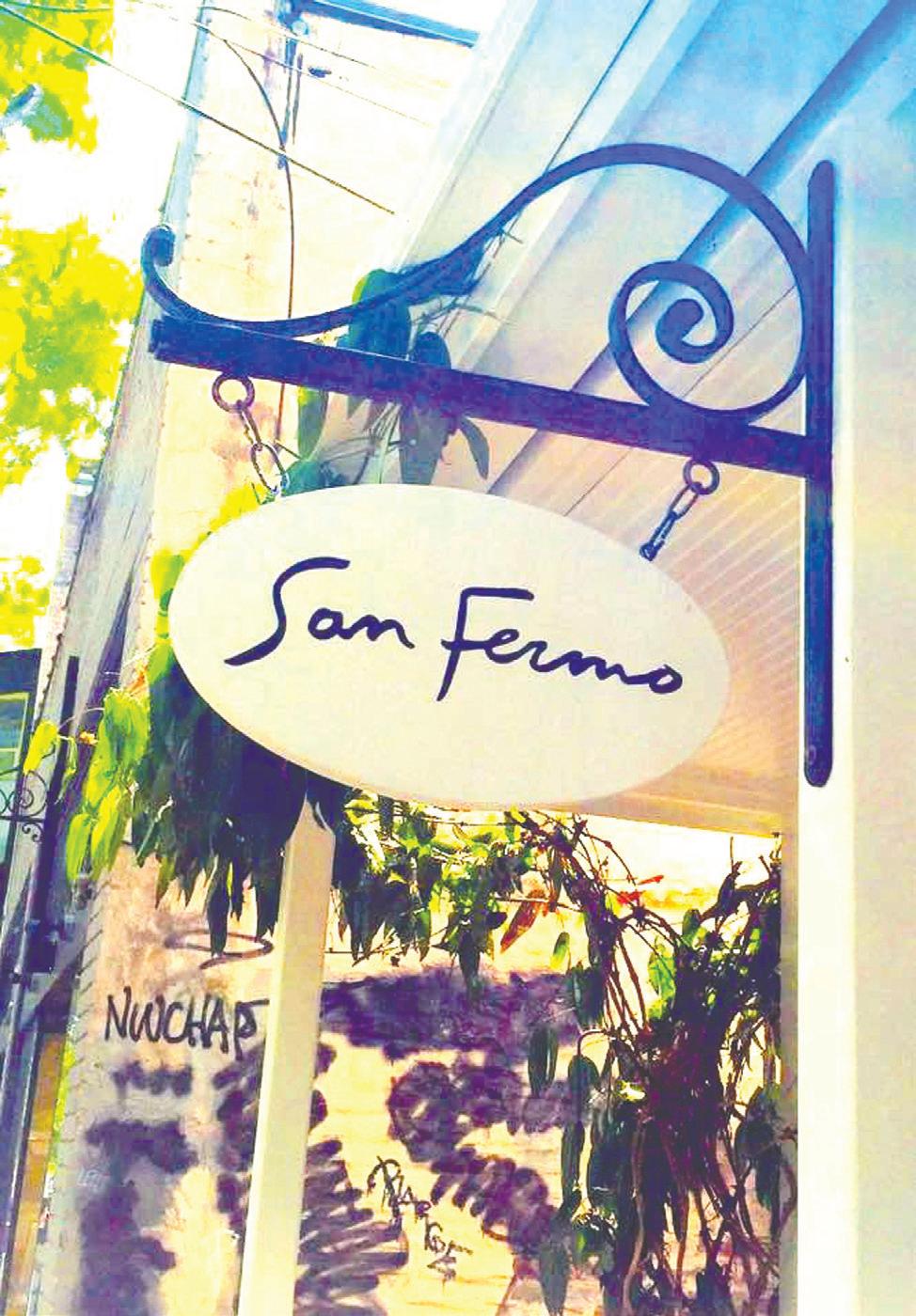
San Fermo, 5341 Ballard Ave. NW, is housed in a pair of woodframe, carpenter-built cabins transported from Chinatown and lovingly converted into a 50-seat Italian restaurant.
Bastille Café & Bar, 5307 Ballard Ave. NW. A French-style brasserie, noisy and bustling. Oysters, steak tartare, crème brûlée. The rooftop garden supplies the restaurant with herbs. If it’s full, head across the street to Stoneburner, 5214 Ballard Ave. NW, with the same chef.
Copine, 6460 24th Ave NW, is Shaun McCrain’s new spot, where he turns out carefully constructed dishes of premium ingredients (duck breast and duck liver in a pastry crust).
By Brandon Macz
Capitol Hill is among one of the most rapidly growing and changing neighborhoods in Seattle, and the cranes looking down on it and neighboring First Hill will be a longterm reminder of this fact, with several more years of construction down the road.
As hip as it ever was, Capitol Hill is no longer just Seattle’s “gayborhood.” Its bevy of restaurants, quirky nightlife and music venues attracts people from across the region. While longtime residents worry about shrinking arts space, there is also a lot being done to preserve what’s left and create new venues. Signs now boast the Capitol Hill Art District in the Pike/Pine corridor, and the Thursday Capitol Hill Art Walk gets the whole neighborhood involved.
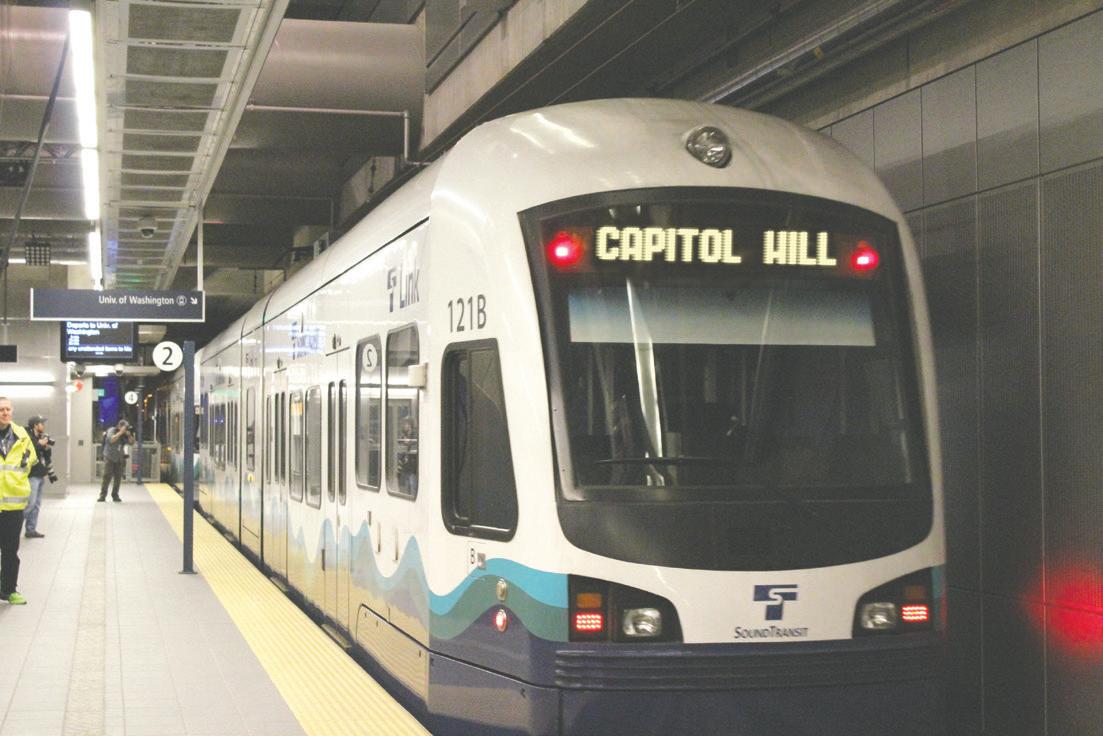
The neighborhood has been around since the 1880s and overlooks Lake Washington from the east and Lake Union and downtown to the west. With the opening of Sound Transit’s University Link light rail line, Capitol Hill is just a fourminute ride away from either the University of Washington or Westlake Center downtown. In a few short years, the Broadway station will be transformed by major transit-oriented
development that includes much needed affordable housing.
A consolation for not adding more stations between downtown and Capitol Hill, the First Hill Streetcar provides a quaint, scenic trip from Seattle Central College on 12th Avenue to Pioneer Square, with many stops along the way in First Hill, including in front of Seattle University.
First Hill boasts an older crowd, but is also becoming
Continued on page 21
ZIP: 98112, 98122, 98102
BOUNDARIES:
North: East Roanoke Street
South: Most pick Pike Street as the dividing line between Capitol Hill and First Hill, with First Hill running south to Yesler Way
West: Interstate 5
East: 23rd Avenue. Broadway unites
First and Capitol Hill

St. Joseph School educates and inspires students to reach their God-given potential.
Learn more or apply online at www.stjosephsea.org
Bateau, 1060 E. Union. Look, it’s Renee Erickson again! This time with a very high quality steak house that wants to be known as Seattle’s best restaurant.
Ba Bar, 550 12th Ave. Eric Banh and his sister, Sophie, have created in this old warehouse a bustling and welcoming Saigon café. Seattle’s best pho is here, more expensive than the rest because the ingredients are better. Open from early morning to late at night.
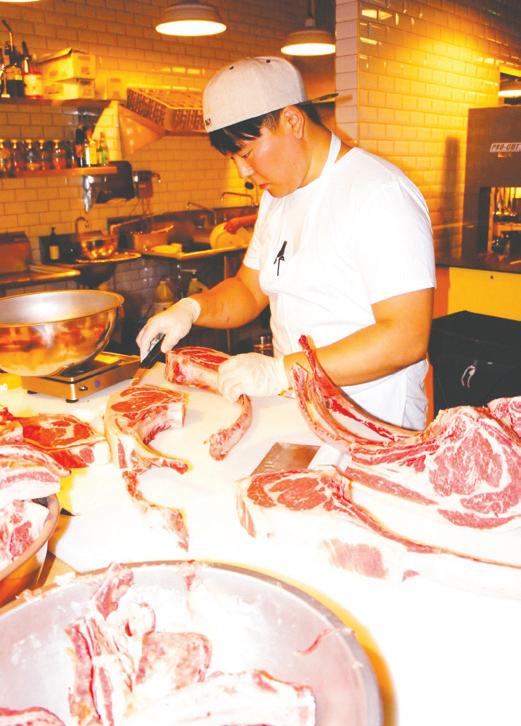
Seven Beef, 1305 E. Jefferson. And it’s Eric Banh again, this time teamed with meat man Scott Emerick, just around the corner from Ba Bar. It’s a Vietnamese steak house with valet parking, too.
Pizzeria 88, 416 Broadway E. The kitchen is supervised by Mamma Enza, whose regular job is in Magnolia, at Mondello, Her Sicilian pizza dough, meatballs, lasagna, and gnocchi are legendary in Seattle.
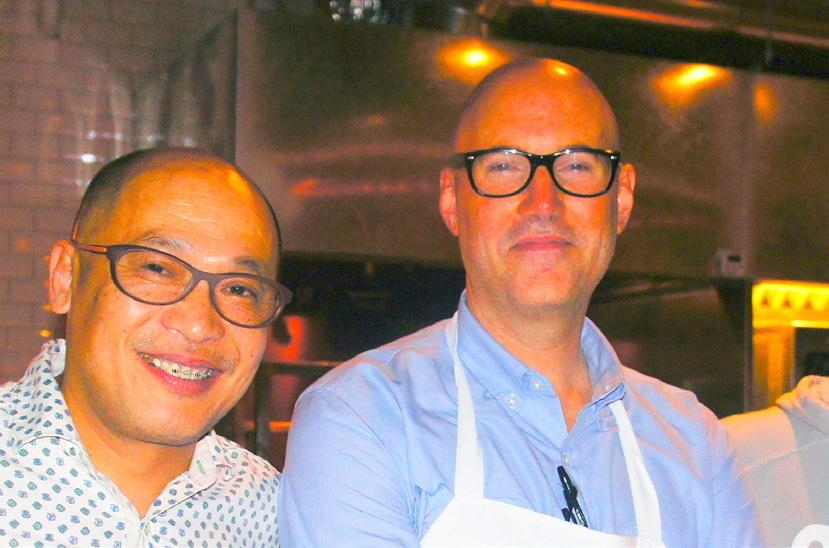
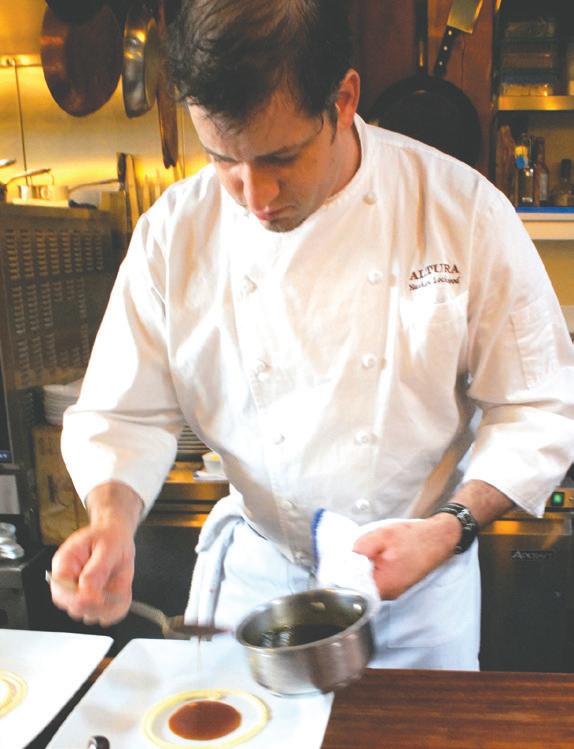
Altura, 617 Broadway E. Nate Lockwood is a genius in the kitchen, which serves prix fixe dinners (and matching wines) at elevated prices. But if you sit at the counter, watch the cooks’ ballet, and taste what’s on your plate, you won’t mind a bit.
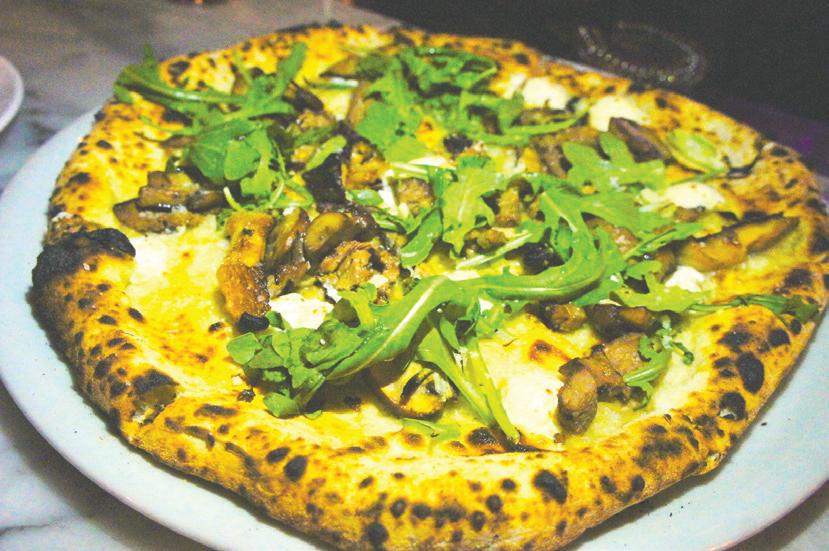
Momiji, 1522 12th Ave. The Hill now boasts half a dozen upscale Japanese spots offering more choices than simple (hah!) sushi parlors or noodles. There’s as much emphasis on décor and service at these places, and none accomplishes this mission as well as Momiji.
Bar Vacilando, 405 15th Ave. E., is the latest outpost from the folks behind Belltown’s Black Bottle. Small plates, often surprising, expertly prepared.
Dino’s Tomato Pie, 1524 E. Olive Way. Dino is Brandon Pettit, the New Yorker who also runs Delancey in Ballard. The emphasis here is on big “New Jersey” pizzas.
Poppy, 622 Broadway E. Jerry Traunfeld, onetime wunderkind of Seattle’s culinary galaxy, has settled into a comfortable role as the city’s purveyor of Thali, a platter of uniquely spiced small dishes. If you prefer modern Chinese to ancient Indian, go next door to Taunfeld’s other spot, Lionhead.
Spinasse and Artusi, 1531 14th Ave. Adjacent temples of northern Italian cuisine, Spinasse being the mother-ship of handmade artisanal pasta, and Artusi the casual bar where you have a before-dinner cocktail (and, maybe, a bite). At its best (hand-cut tajarin pasta with butter and sage, for example) there’s no better Italian-style food in Seattle.
Terra Plata, 1501 Melrose Ave. The concept is “earth-to-plate,” and owner Tamara Murphy has the resources to carry it off. The roast pig with chorizo and clams is one of those combinations that sounds weird but tastes great. In good weather, the rooftop deck offers a unique setting.
more and more attractive for young families, both likely bolstered by the handful of hospitals in the neighborhood, including Swedish Medical Center, which is planning a major campus expansion, and Virginia Mason.
With old charm in its buildings, such as the Hotel Sorrento, designed by Harlan Thomas, who would become the first dean of the School of Architecture at the University of Washington, First Hill is changing too, and its First Hill Improvement Association is working hard to always have a seat at the table.
In a few short years, FHIA will be performing a major overhaul of First Hill Park, making better use of an important public space in a neighborhood that’s always fighting for more.
Connected to Capitol Hill and First Hill to the east is the Central District, a neighborhood that is also experiencing rapid growth while trying to maintain its identity as a historically black neighborhood, though before that it had been home to a large Jewish population and then Japanese-Americans.
Keeping the spirit alive in the Central District is the newly renovated and reopened Washington Hall, a community event and arts space on 14th Avenue, as well as the Langston Hughes Performing Arts Center.
With concerns about gentrification, such as Paul Allen’s Vulcan purchasing the site where the popular Red Apple grocery store has been serving the neighborhood for years, it will be interesting to watch as Seattle developers work to fold the new in with the old in all three of these larger-thanlife neighborhoods.
A haunted Coke machine? For more than a decade people puzzled over a strange and incredible retrolooking Coke machine on the corner of Broadway and John, which spits out a random assortment of sodas.
The Nevertold Casket Company is a spooky little store that collects rare curios which purport to be haunted, all in the name of keeping the world wondrous. In addition to the cornucopia of strange collectables the store does in fact sell caskets as the name implies.

By Dan Aznoff
Filmmaker Jim Kanter had two bizarre destinations in mind after he settled into his apartment on Capitol Hill: He wanted to visit the gravesites of Bruce Lee and Jimi Hendrix.
The newcomer went to the Lake View Cemetery just a few blocks from his house, where the martial arts legend is laid to rest in a tranquil setting next to his son, Brandon. Kanter blamed his excitement for the unusual energy he felt radiate through his body as he approached the memorial.
The rotunda at Greenwood Memorial Park in Renton, where the musician is buried, was more of a “Hendrix experience.” Kanter could see the domed memorial from across the memorial park, but he could also hear the undeniable sounds of the rock legend’s guitar licks as he approached the grave.
“I thought, ‘That’s kind of nice,’ and wondered if there was an electronic sensor that detects visitors as they approach the grave that started the music,” Kanter remembered.
When Kanter went to the office to ask about the music, the groundskeeper could only smile. He told the visitor the music he heard was either in his head or from a ghost.
“Either way,” Kanter said. “I got the hell out of that cemetery. I had enough of dead people for one day.”
Seattle is not often mentioned in the same sentence as cities like New Orleans when it comes to creepy legends or experiences with the supernatural. However, the city has created its own set of urban myths based on tales about deceased citizens from the city’s colorful history.
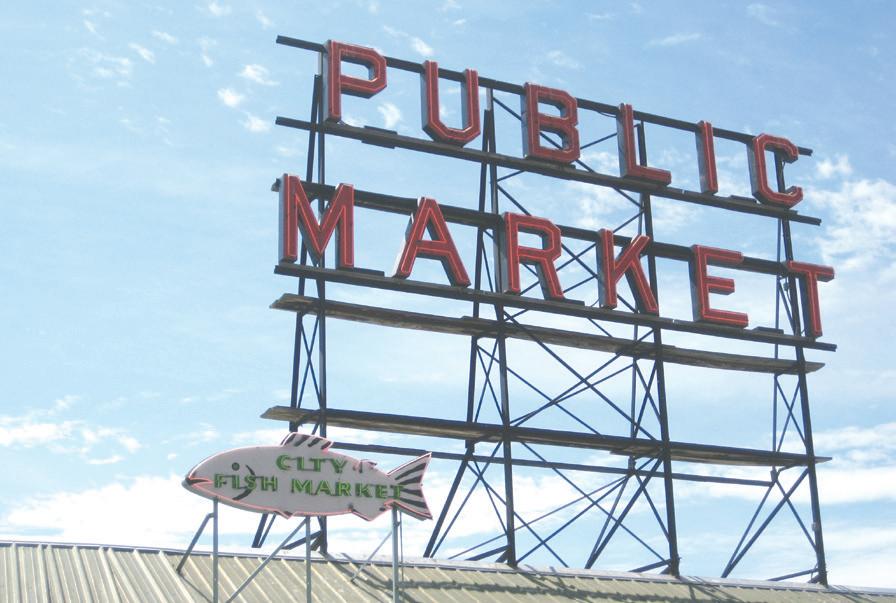
The spookiest place in Seattle, according to Trip Advisor, is the city’s most popular tourist destination: the Pike Place Market. The market itself is built on top of land that that had been the tribal burial grounds for the Suquamish and Duwamish tribes for thousands of years. Native Americans lost the sacred grounds as part of the Treaty of Port Elliott signed in 1855. According to merchants in the market, ghostly images of tribal elders are regular visitors to lower levels of the market.
Mercedes Yeager has owned and operated Market Ghost Tours in Post Alley for more than a dozen years. Her tour is focused on the “quirky” personalities who still live within the walls of shops and market stalls.
Her favorite ghostly legend revolves around a woman who was a fixture at the market for many years. The woman would walk between vendors offering to relieve them so the merchants could use the bathroom or go to the bank. Nobody really knew her name, but she was referred to as “Mae West,” based on her outrageous purple outfits and her raunchy sense of humor.
One day, Yeager remembered, the merchants at the market received a phone call from Harborview hospital about a woman named Lois Brown, who had been severely burned while cooking in her apartment above the market. Brown turned out to be “Mae West.”
According to her last wishes, Brown’s ashes were spread throughout the market, and her remains were buried in a tin can on a nearby hillside.
According to Yeager, there is often a purple mist over the gravesite at sunset, and a large white plum tree near the grave suddenly began producing fruit in in prolific quantities.
The Georgetown Castle (6420 Carleton Ave. S.) was the hub of the red light district that catered to sailors and loggers during the Gold Rush in Alaska. The castle was a three-story structure that housed a gambling hall, a rowdy tavern and women of “ill repute.”
The owner of the castle was a gambler and brothel owner named Peter Gessner. The proprietor was reportedly found dead in one of the rooms of his hotel from an apparent suicide. The new owner was a Dr. Willis H. Corson, who was the chief of the Seattle’s coroner’s office at the time. The good doctor took possession of the castle in 1912.
There have been numerous reports over the years of a woman who wakes guests in the house while she
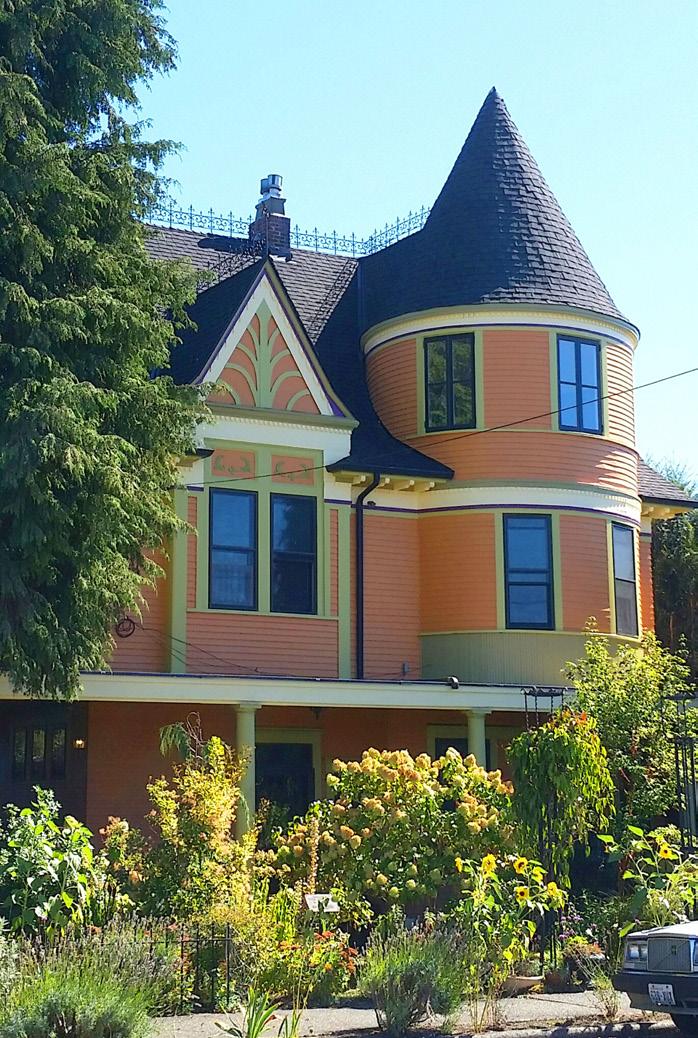
hovers over them as they sleep. Other guests said a woman awakened them by trying to grab their throat and that children’s voices could be heard from the third floor.
The castle is now a private residence.
The large complex of buildings on Beacon Hill that once served as the headquarters for Amazon.com was originally built as a Navy hospital, with a cauldron of supernatural activity. Many of the incidents have occurred on the sixth floor, which once served as the mental ward for the hospital.
Janitors reportedly walked away from their posts at Amazon after witnessing items elevate off desks.
There are also stories told about a dead nurse who roams the hallways. People said they could smell the perfume the nurse used to wear, but nobody would comment on how anybody knew the nurse’s scent of choice.
In a separate part of the building, passengers in stalled freight elevators have described people laughing and calling out their names while they were trapped between floors.
The small Civil War cemetery (1200 E. Howe St.) in Capitol Hill, adjacent to the Lake View Cemetery, contains more than 500 gravesites and is ostensibly haunted by fallen Confederate soldiers.
The cemetery was established in 1895 and became known as GAR (Grand Army of the Republic) Cemetery.
According to stories that have been told for more than 100 years, the blood-curdling cries and shouts of fallen soldiers can still be heard at night as they march into a battle they never won.
The vintage movie house (807 E. Roy St.) in Capitol Hill closed earlier this year.
The three-story brick building was constructed in 1925 as a meeting place for The Woman’s Century Club.
According to former employees of the theater, echoes of laughter and apparitions of women dressed in early 1900s-style clothing were encountered by ushers working on the third floor.
Patrons reported some sort of shadow person or persons haunting the lobby.
Former student Rose Higginbotham, who hung herself at West Seattle High School in 1924, continues to haunt her alma mater. Higginbotham and several other students of the era have reportedly been seen and heard in the park adjacent to the high school on particularly foggy mornings.
Martha Washington Park (6612 57th Ave. S.) in the Brighton neighborhood along Lake Washington was originally the site of a boarding school for delinquent girls known as The Martha Washington School for Insane Girls.
Rumors of violence committed by both the students and the staff haunted the school, including multiple suicides and murders.
Complaints by neighbors eventually closed the school in the early 1970s, and the abandoned buildings were taken over by a satanic group.
After more than a decade of vandalism, animal sacrifices and other strange goings-on, the Seattle City Council finally voted to demolish the historic buildings and turn the site into a park.
However, that did not halt the paranormal events at the park, especially around the old trees planted by some of the original residents of the school.
Huskies are apparently not immune to ghosts. Students and faculty have experienced unexplained phenomena through the years in the Ceramics and Metal Arts Building, including water faucets that turn on and pottery wheels that start spinning for no reason.
Even creepier, students reported that they feel as if they are continually being watched while they are working in the studios.
Campus security guards have reported that students walking through the gardens on campus looking for some romance have been scared away by strange noises and bushes that shake violently.
A spokesperson for Washington State University denied that any Cougars were responsible for the paranormal activities on the Montlake campus.
There’s no denying that, while outlying neighborhoods have their own distinct personalities and flavors, Seattle’s heart and soul lies in Downtown, the International District, Pioneer Square and South Lake Union. The city’s central neighborhoods have so much to do it could take months to experience it all.
In Pioneer Square — Seattle’s first and, arguably, most beautiful neighborhood — fine art galleries and cafés have brought new life to century-old structures. Occidental Park is perhaps the neighborhood’s greatest feature. The street is now a brick promenade where you can get some pizza or a cheesesteak at Tat’s and gather with friends at the steps or an outdoor table amid the dotted shade of trees. It’s wide, open and urban. In the summer, with all the dappled light, it feels like being inside an impressionist painting.
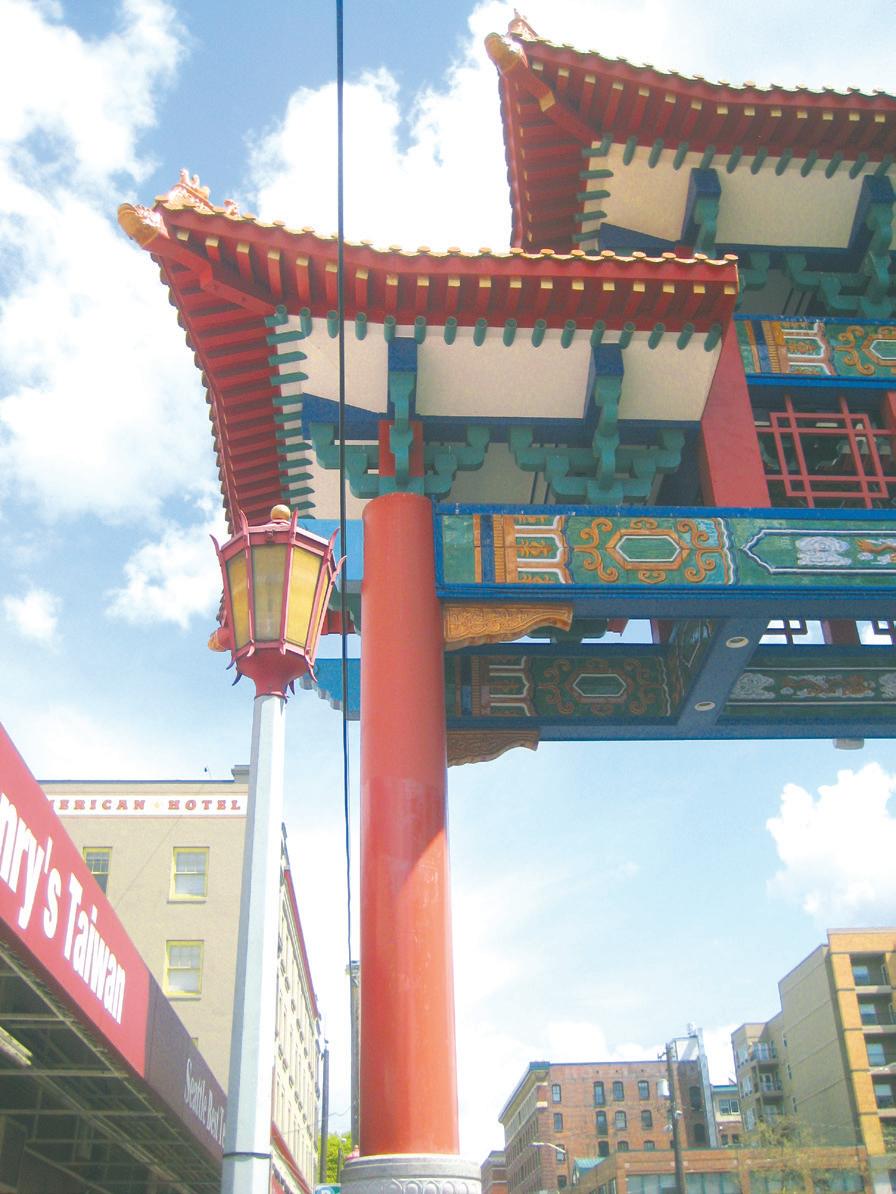
city’s headquarters for pho, dim sum, dumplings and noodles. One place to get it all is Uwajimaya (600 5th Ave. S.), a massive Asian market and food court. It has a way of transporting you to Tokyo or Beijing. And if you want some great olives pulled from barrels freshly shipped from Italy, or world-renowned cheeses in bulk –head up to Big John’s PFI at 1001 6th Ave. S.
Meanwhile, Downtown proper is all about shopping: Vera Wang, Tiffany, Nike, Barney’s, Turgeon Raine. Maybe take in a show in the gorgeous 5th Avenue, Paramount or Moore theaters. Want to live downtown? Throw a rock and you’ll hit a potential place to stay – especially as you head north to South Lake Union.
Buy some gelato at the Caffe Umbria at 320 Occidental Ave. S. before heading over to Seattle’s own coliseums — Centurylink and Safeco fields. The gargantuan arenas are home to Seattle’s home teams, the Seahawks, Mariners and Sounders. Try some liquid courage at nearby Elysian Fields before checking out a game.
Immediately to the east is the International District, where Cantonese, Vietnamese and Japanese are spoken over authentic Asian cuisine. The neighborhood is the
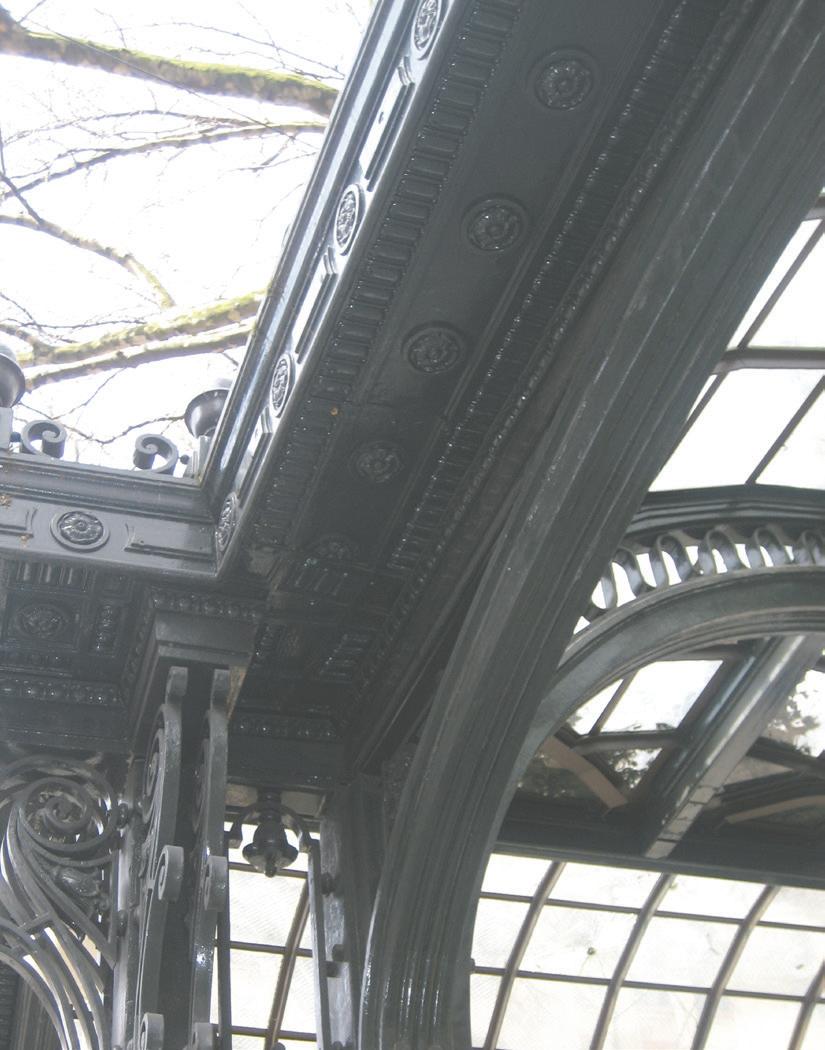
South Lake Union, thanks largely to Paul Allen’s Vulcan Inc., has transformed the sleepy industrial neighborhood into a major hub of modern business. The big tenant of course is Amazon.com whose employees are predominantly on the younger side of 30. Accordingly, shops, gyms, quick eats and condos have been built up around Seattle’s golden goose. South Lake Union is also home to Fred Hutchinson Cancer Research Center, where independent scientists work on cures for major worldwide diseases like cancer to malaria. The real estate development has led to the reworking of Mercer Avenue and the viaduct tunnel – which should be complete by 2017.
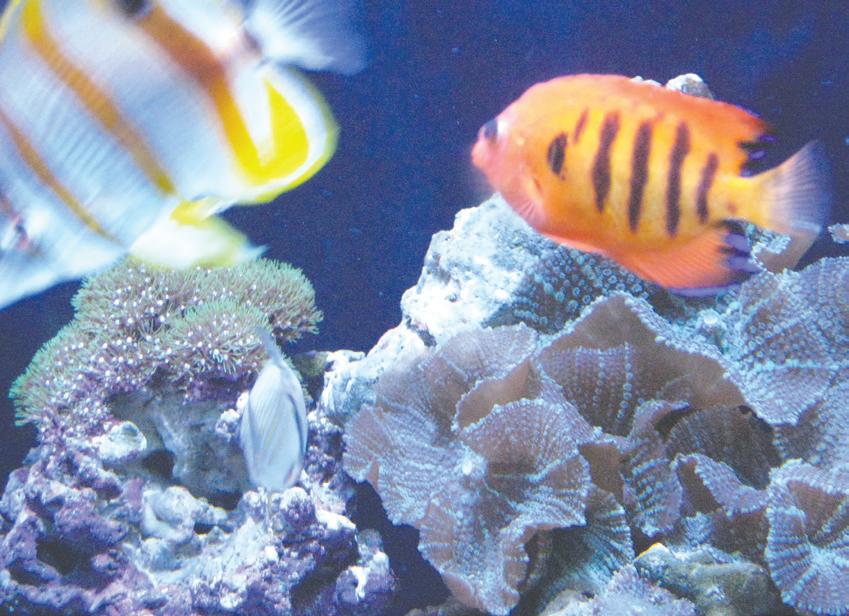
Giant popsicle ‘art’! This vivid-red 17ft-tall piece of steel and epoxy art is posted up on a street corner North of Downtown.
SOUTH LAKE UNION TRANSIT
The streetcar (some like to find humor in the streetcar’s acronym) runs between South Lake Union and Westlake Center downtown and makes getting around fast and easy.
SOUTH LAKE UNION PARK 860 Terry Ave. N.
ZIP: 98109
BOUNDARIES:
South: Denny Way
East: I-5
West: State Route 99
North: Galer Street, Lake Union and East Newton Place
BELLTOWN BUSINESS ASSOCIATION www.belltownbusiness association.org
Have a downloadable map and list of neighborhood businesses.
BELLTOWN COMMUNITY COUNCIL www.belltowncc.org
ZIP: 98104
BOUNDARIES:
West: Alaskan Way S.
South: King Street
East: Fifth Avenue
North: Yesler Street, or a couple of blocks beyond Yesler Street
A truly fine park of five acres deeded to the city by the US Navy in 2000 with its Center for Wooden Boats and vintage Naval Reserve Building, and now home to the Museum of History and Industry. www.atlakeunionpark.org
SOUTH LAKE UNION CHAMBER OF COMMERCE www.sluchamber.org
SEATTLE STREETCAR www.seattlestreetcar.org
Seattle Pinball Museum,dedicated to the “preservation of pinball for future generations”, this arcade boasts more than 30 working vintage pinball machines.
BELLTOWN P-PATCH 2520 Elliott Ave. www.speakeasy. org/~mykejw/ppatch THE OLYMPIC SCULPTURE PARK 2901 Western Ave. www.seattleartmuseum.org
ZIP: 98121
BOUNDARIES:
North: Denny Way
South: Virginia Street
East: Fifth Avenue
West: Elliott Bay
ZIP: 98104
BOUNDARIES:
West: Fifth Avenue South East: Boren and Rainier Avenue South
South: South Dearborn St.
North: South Main St.
Amazon has opened a “Community Banana Stand,” which is exactly what you would imagine. The stand is open every day between 8 a.m. and about 3:30 p.m., with free bananas available to anyone who walks by. As long as it’s popular, it will be a fixture of the company’s campus in Seattle’s South Lake Union neighborhood. The stand is staffed by “banistas” and even offers fun banana facts.
ZIP: 98122
BOUNDARIES:
North: Denny Way (includes Belltown by some definitions) East: I-5
South: Yesler Way West: Elliott Bay
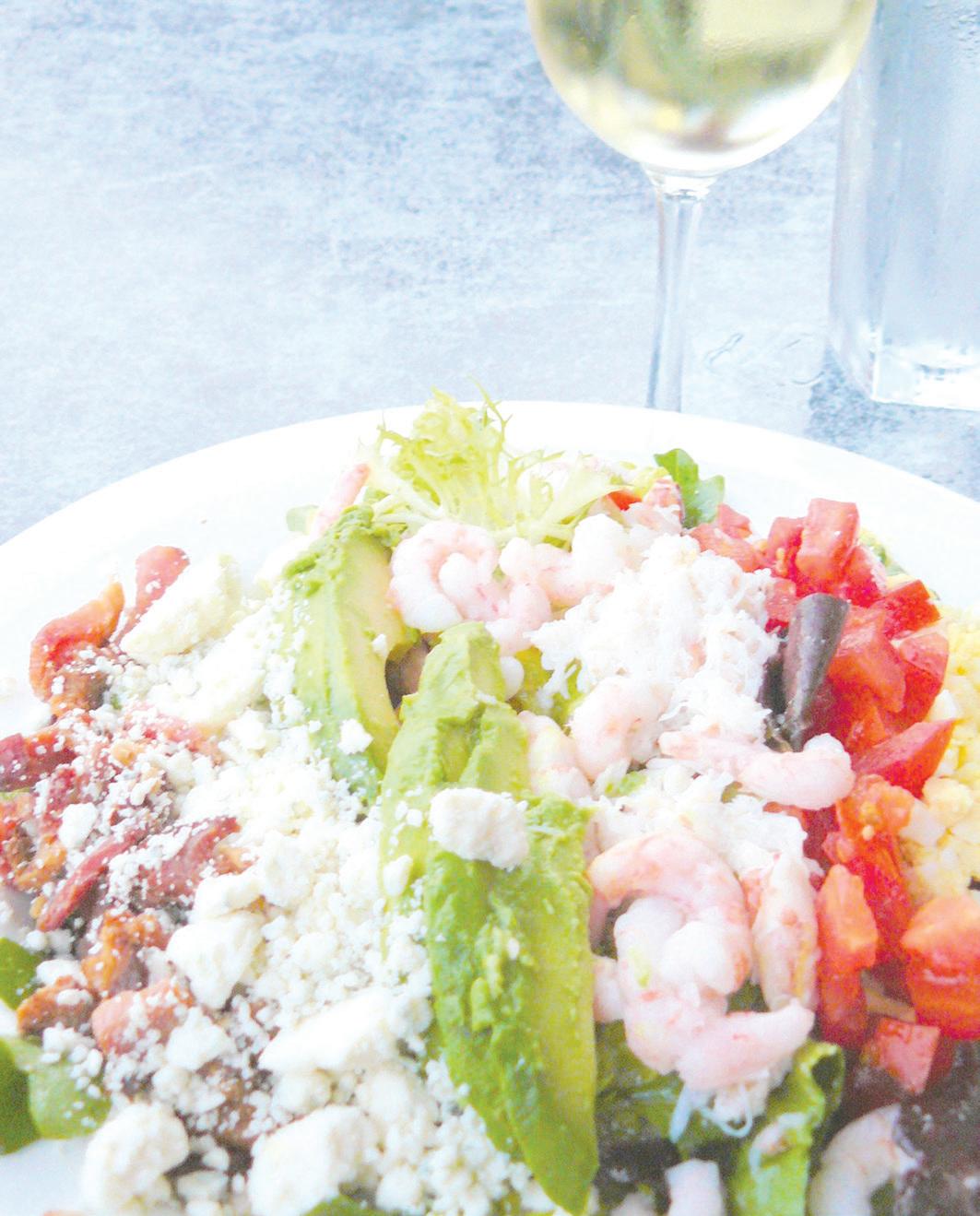
Elliott’s Oyster House, 1201 Alaskan Way. Oysters, check. Salmon, check. Fresh cracked crab, check. Outdoor seating, check. Watch the tour boats pull into the dock, watch the ferries come and go. Drink craft beer or fine local wines. They’ll be digging up the streets around here for months, but it’s still the best piece of waterfront real estate in town.
Wild Ginger, 1401 3rd Ave. This great fusion palace offers everything from Asian street food to Vietnamese spring rolls to Malaysan “bouillabaisse.” They don’t have to have such a good wine list, but they do; it’s exceptional, in fact.
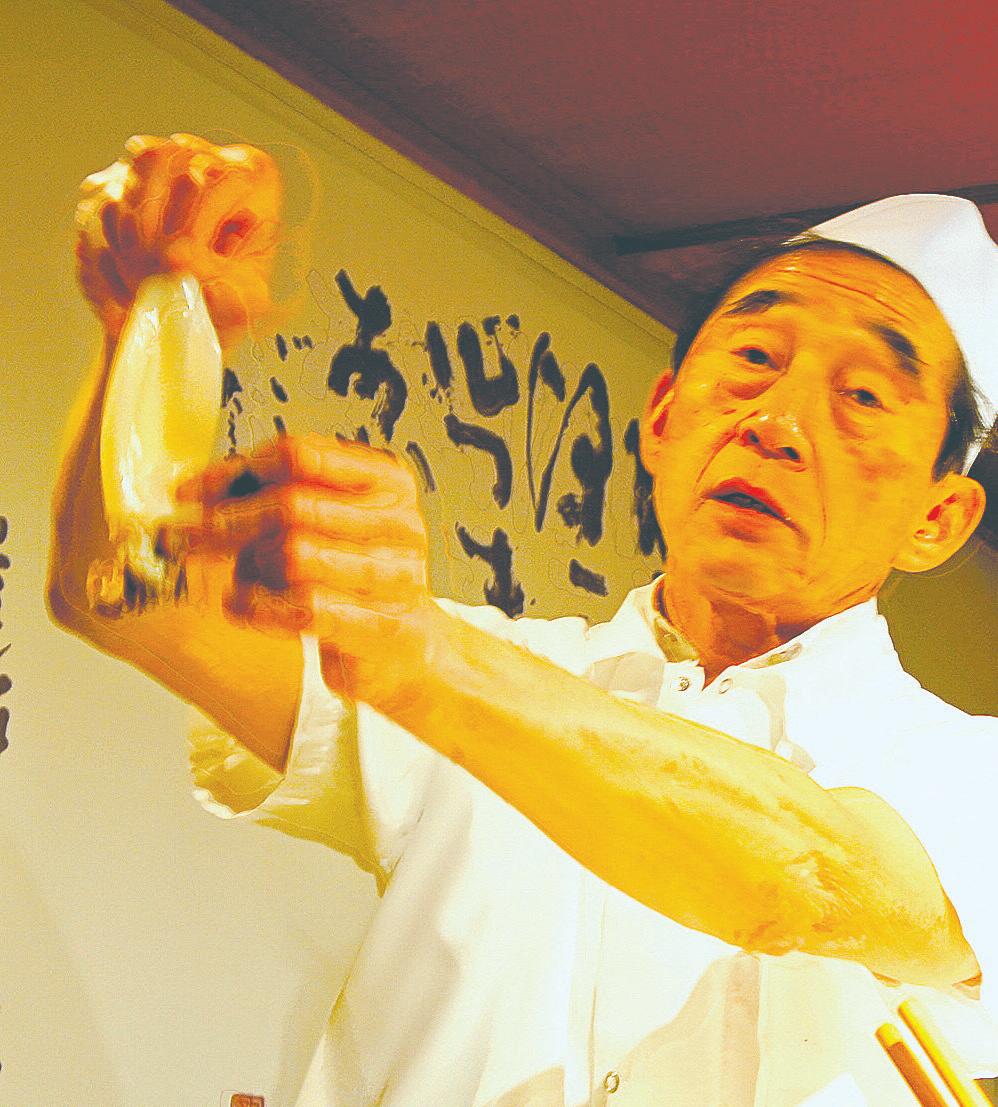
Shiro, 2401 2nd Ave. The legendary Shiro Kashiba himself is no longer on the team of this classic Belltown sushi parlor (he opened another place in the Market), but the crew he trained is experienced and talented. Get here when it opens at 5:30, sit at the sushi bar, and eat what they put in front of you. Can get expensive quickly.
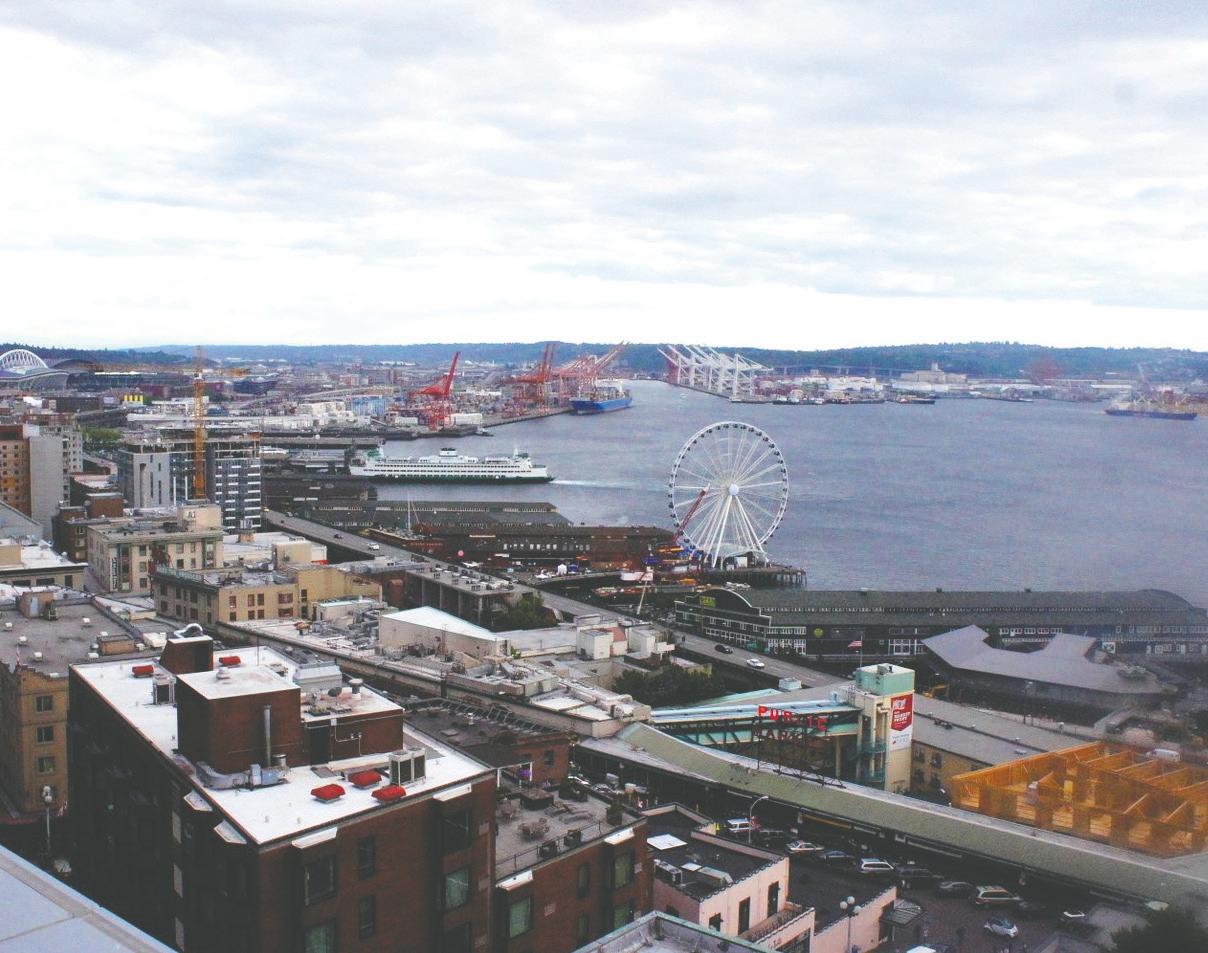
Seattle’s number one visitor attraction is full of tourist traps. Here are some alternatives.
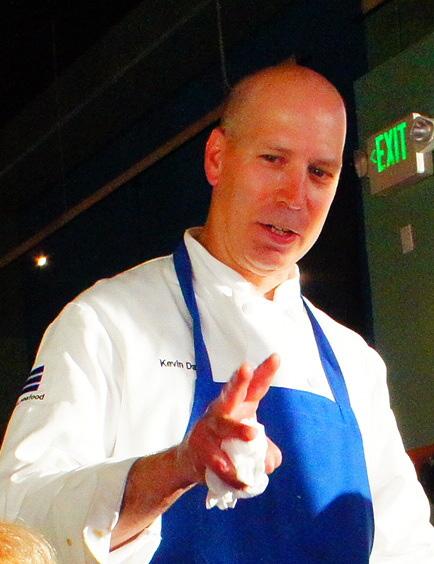
Steelhead Diner, 95 Pine St. Oysters (on the half-shell, or in a Po’Boy), troll-caught Alaska salmon, the city’s best crab cake, all served in an unpretentious diner in the heart of the Market. One of three restaurants from Chef Kevin Davis.
Maximilien, 81 Pike St. Very French, very romantic. Escargots, onion soup, cassoulet, profiterolles. Great water views from the window seats and the adjacent terrace.
Pink Door, 1919 Post Alley. No sign, just a pink door that leads down to a charming restaurant with an Italian-American menu and a splendid garden. Weeknight cabaret.
Le Pichet, 1933 First Ave. Tiny, crowded, with a limited menu. In other words, very French. Oeufs plat (baked ham & eggs with gruyère), freshly baked brioche, and hot chocolate with whipped cream are must-try items in the morning hours. Chicken-liver mousse and roast chicken at night. Wines by the glass, pitcher and bottle. Under same ownership: Café Presse, 1117 12th Ave. on Capitol Hill.
Sushi Kashiba, 86 Pine Street in the courtyard of the Inn at the Market. This is where the master hangs out, Shiro-san himself. If you want to be sure of a seat at the sushi bar, the doors open at 5 p.m., but the line starts much earlier. Or reserve a table and enjoy the black cod.
Nest, 110 Stewart St., on the roof of the Thompson Hotel, has the very best view in town
Thai Curry Simple, 406 Fifth Ave S. Weekday lunch only from the talented Picha Pinkaow, who posts her menu daily on Facebook. Minimal décor but less than $10 for specials like kaprawmoosub kaidao (sautéed minced pork with spicy chili and basil).
Il Terrazzo Carmine, 411 First Ave. S. A beacon of elegance in Seattle’s catch-as-catch-can “sandwich district.” A European-style antipasto buffet; ravioli filled with venison and spinach; pan-seared sweetbreads. If it’s full, just saunter into the bar next door, called Intermezzo and have an aperitivo while you’re waiting.
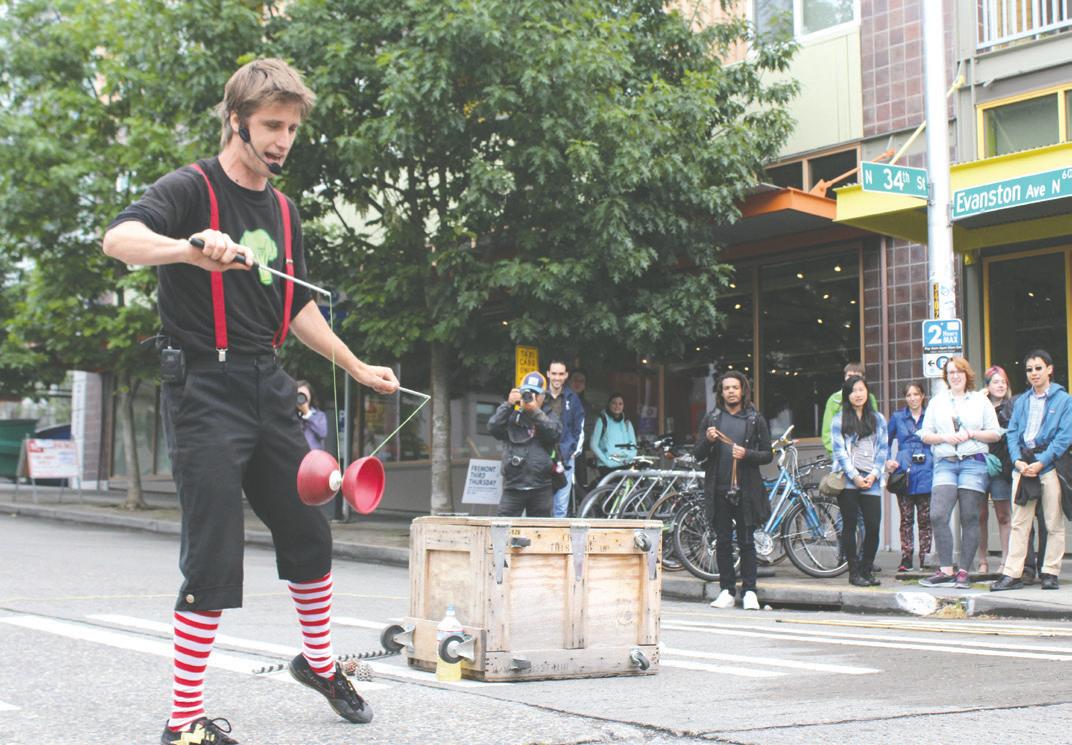
In most communities you’d move to, you might expect welcomers to arrive dressed conservatively, carrying warm lasagnas and warmer smiles. But if you’ve moved to Fremont, your welcome wagon could very well arrive in their birthday suits.
That’s just par for the course in Seattle’s self-proclaimed “Center of the Universe.” It’s also sometimes referred to as “The People’s Republic of Fremont,” a name gained from the neighborhood’s reputation, gained in the early 1970s, as home to countercultural revolutionaries and artists.
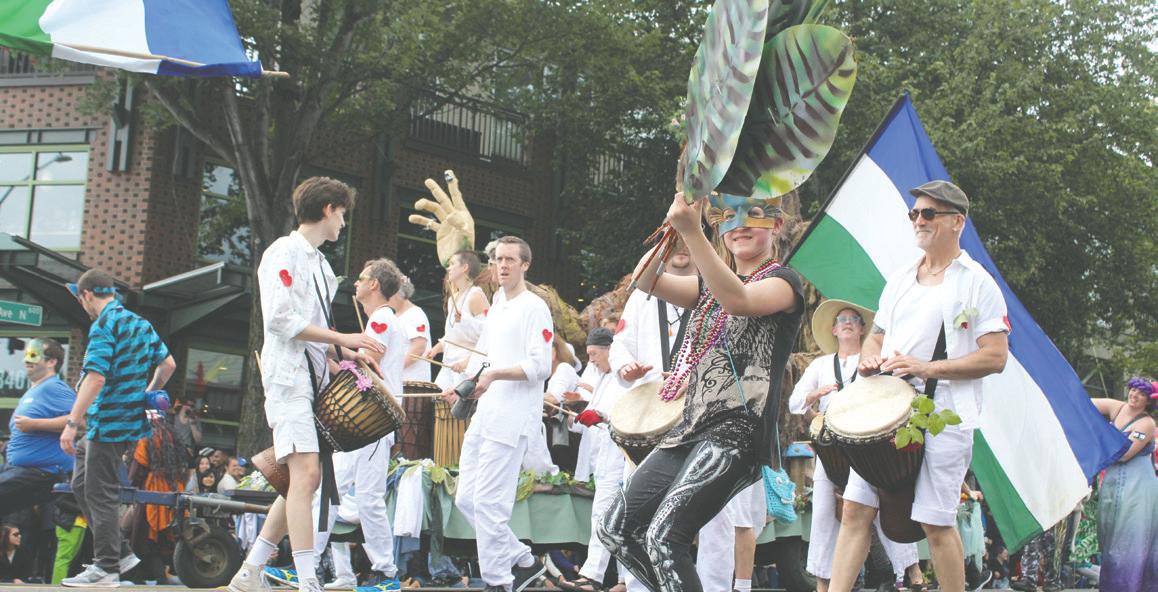
Fremont’s biggest claim to fame is the Solstice Fair held every June — the most likely time you’ll catch a naked eyeful. Men and women, honoring the summer solstice, paint their bodies in a rainbow of colors before sitting astride their bicycles and riding the parade route along Leary Way Northwest before the regularly scheduled floats.
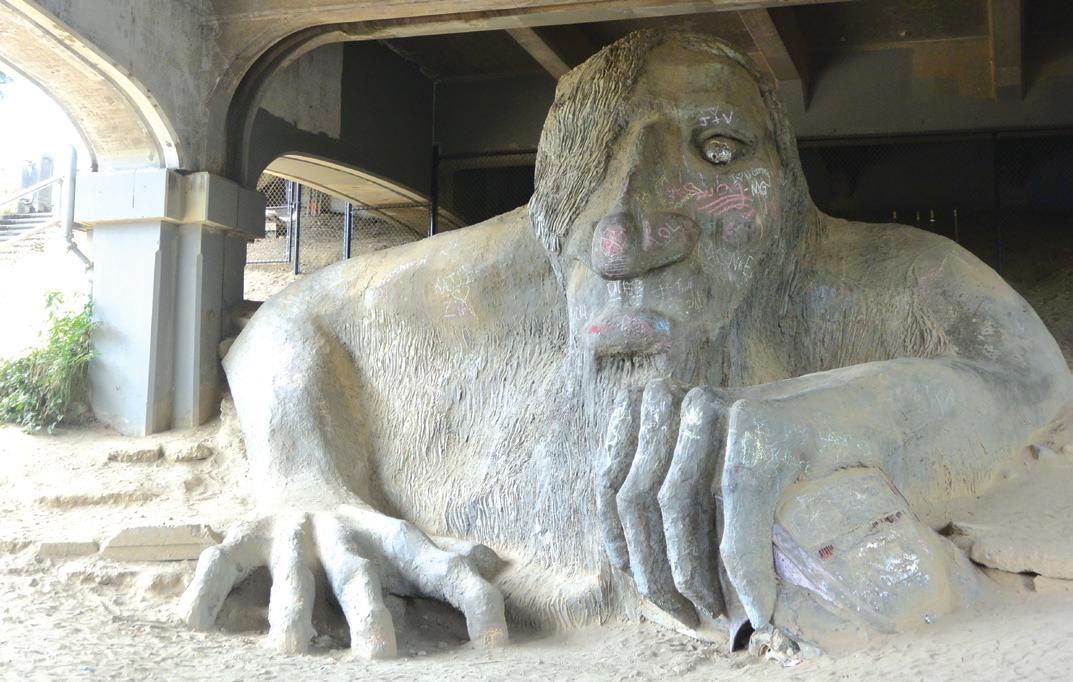
Fremont is also home to the prettiest and busiest doubleleaf bascule bridge in town. It opens on average more than 30 times a day to let boaters in the Fremont cut make their way into Lake Union or out to the Puget Sound. There are also an assortment of restaurants and funky shops, a Spanish-style library, a famous troll under the Aurora Bridge who grips the shell of an actual Volkswagen Beetle, an oversized statue of Russian revolutionary Vladimir Lenin, waterfront promenades, marine repair facilities and a few fantastic breweries (Fremont Brewery is the local favorite with plenty of newcomers making themselves known). It’s
ZIP: 98103
BOUNDARIES:
The Fremont-Wallingford boundary west of Stone Way is a talking point. These are the consensus borders:
Fremont:
South: The Fremont “Cut,” or Lake Washington Ship Canal East: Stone Way North
North: North 50th Street
West: Eighth Avenue
Wallingford:
South: Lake Union
East: I-5
North: North 50th Street West: Stone Way North
The town below Lake Washington! According to divers, this 33 square mile lake is littered with the wrecks of several hundred boats and ships, dozens of airplanes (including a fully armed WWII bomber, sitting on its wheels), a bridge, an ancient forest, and an 1870s train of coal cars. Best of all, there is likely an entire Native American settlement covered in mud on the bottom.
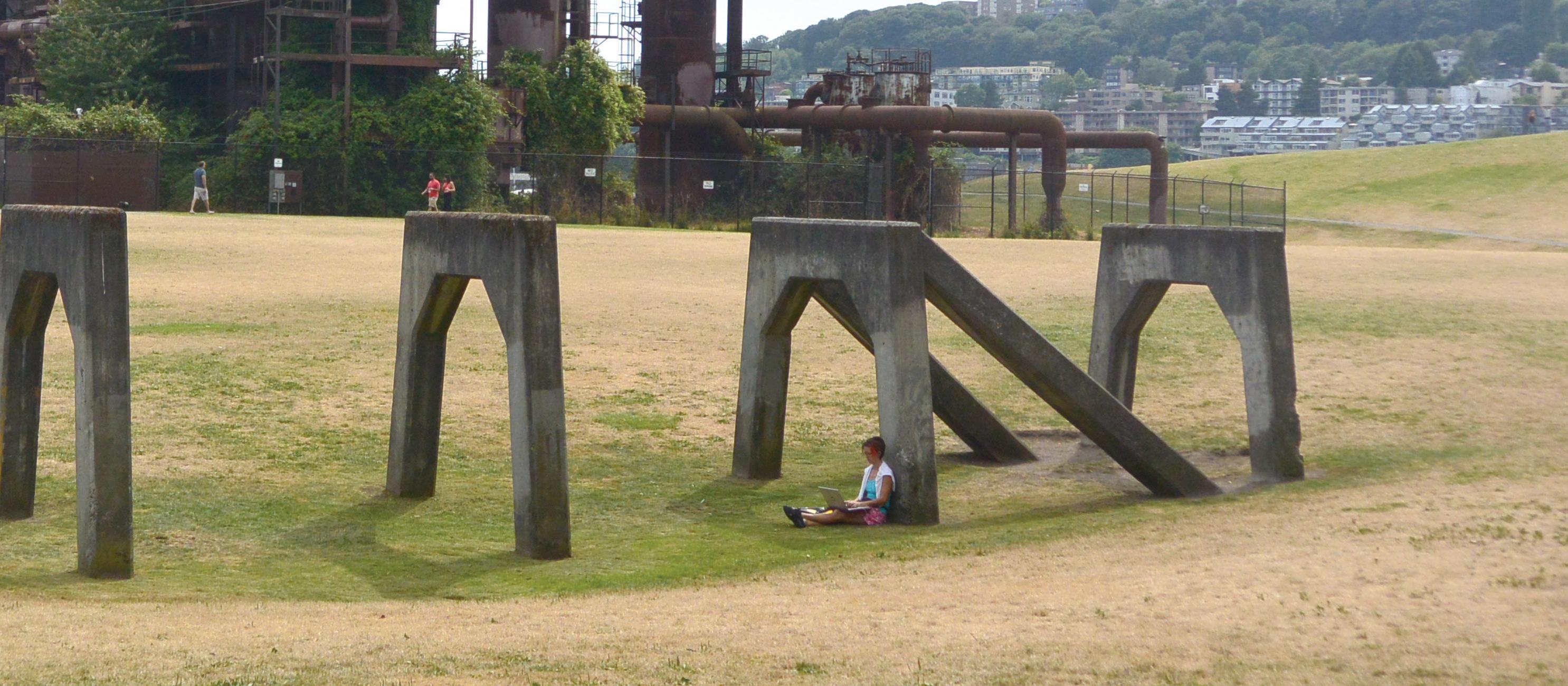
also home to Gasworks Park, one of the best seats from which to watch fireworks on the Fourth of July.
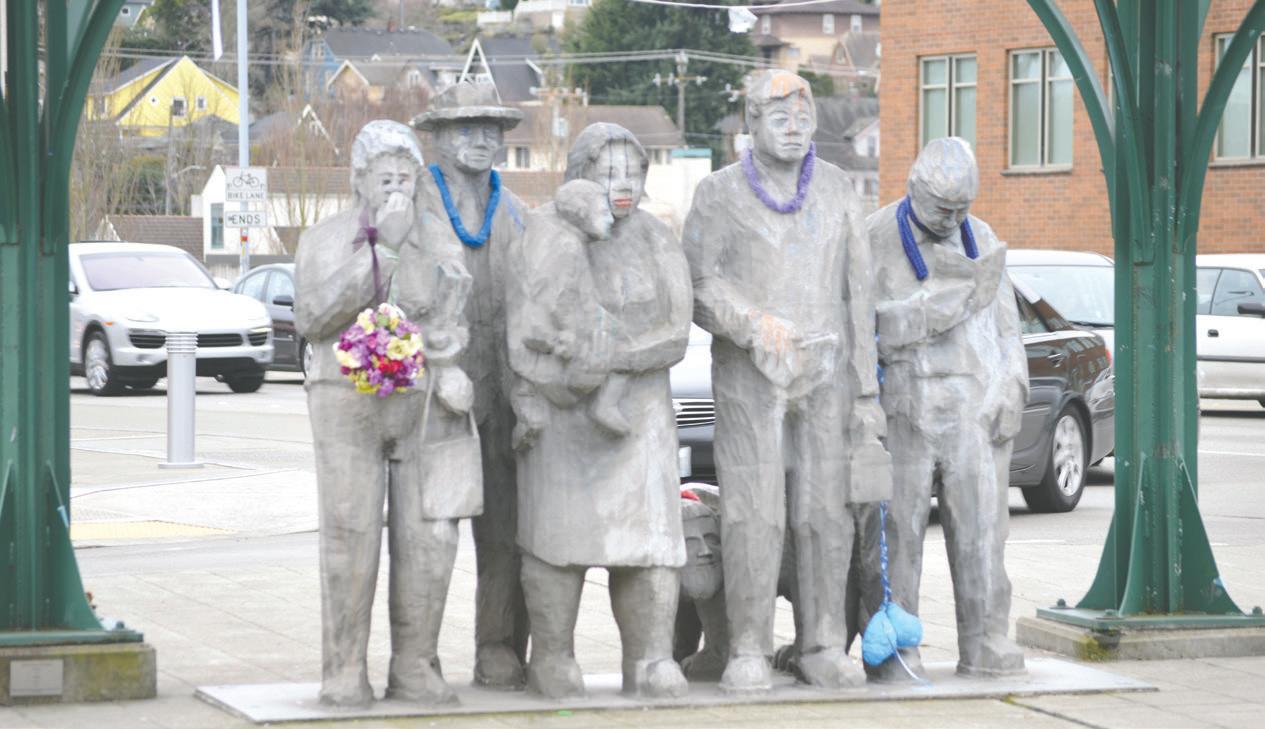
From Fremont, head up the hill to Wallingford, and there’s a chance for (just a little) respite. Here, too, there is much to do and see - particularly along Wallingford Avenue North. In Wallingford, one is afforded magnificent southerly views of downtown Seattle. The neighborhood is also close to just about anything you might desire. There’s the neighborhood downtown drag, shops, other neighborhoods (the North 40th Street throughway is a quiet shortcut that can take one all the way to the University of Washington), restaurants, parks, pubs (Murphy’s is an exceptional Irish pub) and new perspectives on ice cream (there are still lines out the door at the original Molly Moon’s). One of Wallingford’s greatest features, though, is the Guild 45th Theatre. It opened in 1919, added a second screen in 1983 and still operates today. It’s both nostalgic and legit as it shows first-run movies and is a great way to close the night after dining out.
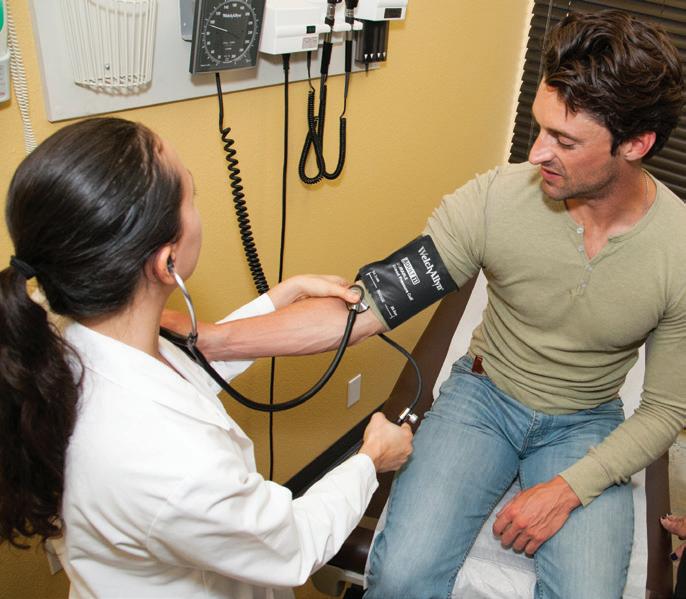
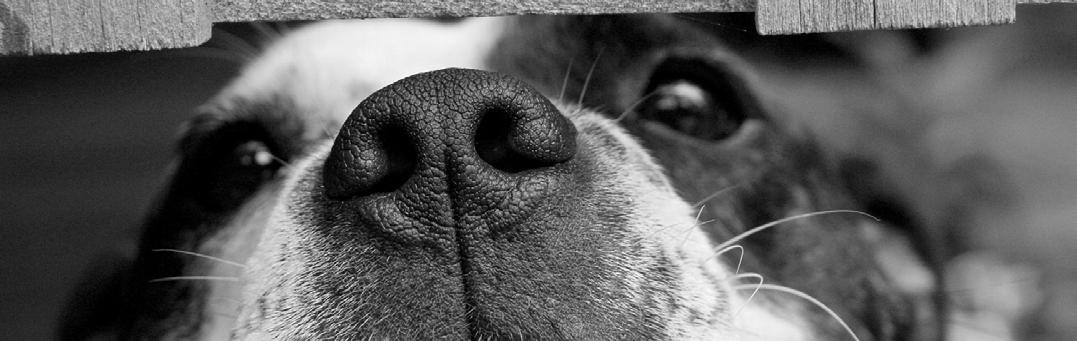
www.SeattleVetAssoc.com
Westward, 2501 N. Northlake Way. One of Seattle’s best views. You’re on the waterfront, looking at the city skyline across Lake Union to the south. An oyster happy hour (and interesting cocktails), then perhaps a trout or a braised lamb shoulder? Hard to say at this fine spot.
Rock Creek, 4300 Fremont Ave. N. Serious commitment here to fresh seafood (sardines, sea bass, grouper) from Eric Donnelly. A James Beard award-winning chef.
Revel, 403 N. 36th St. Korean dishes prepared with a French touch by Rachel Yang, one of Seattle’s true genius chefs. (Want more great cooking from women? Try Maria Hines’s certifiedorganic Tilth, 1411 N. 45th St.)
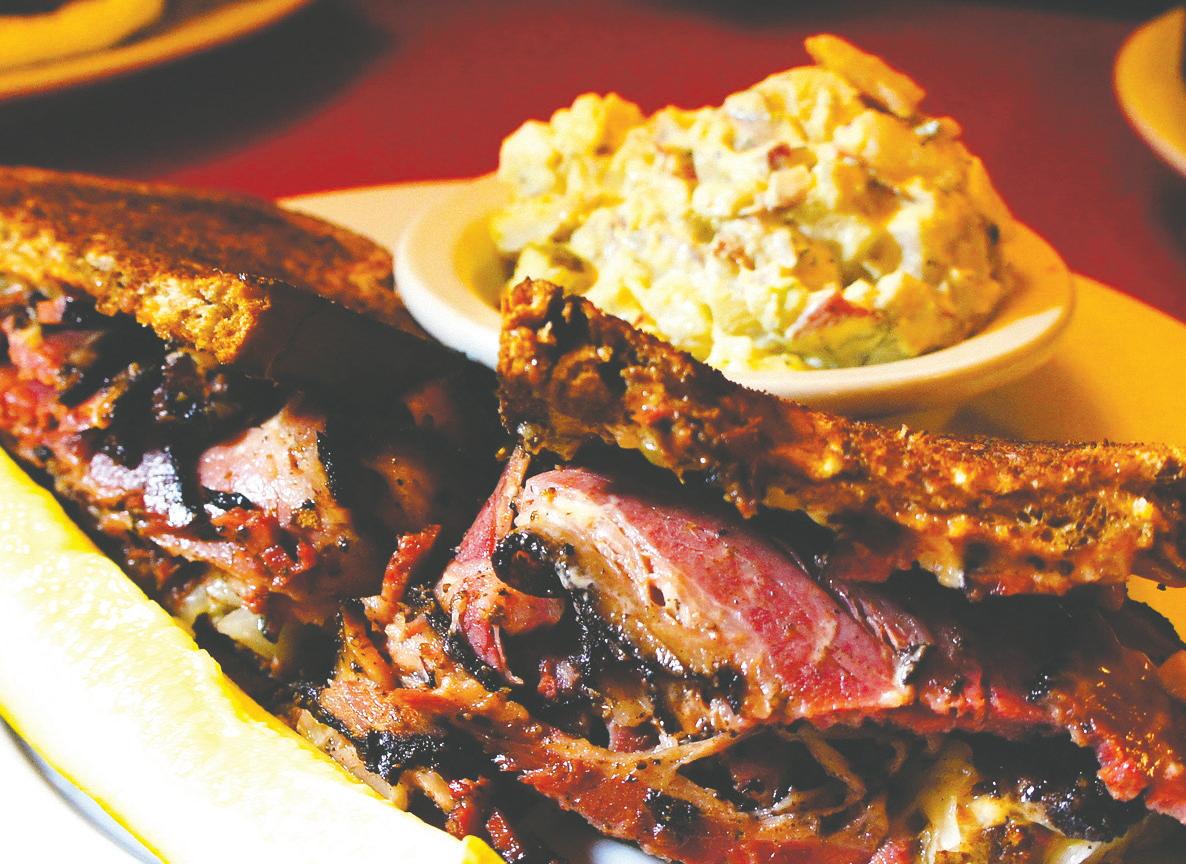
Roxy’s Diner, 462 N. 36th St. This East Coast deli is the closest thing Seattle has to a Jewish diner. A big menu, lively atmosphere, and the best lox and bagels in town. But don’t forget the Reuben. And be patient; they’re working as fast as they can.

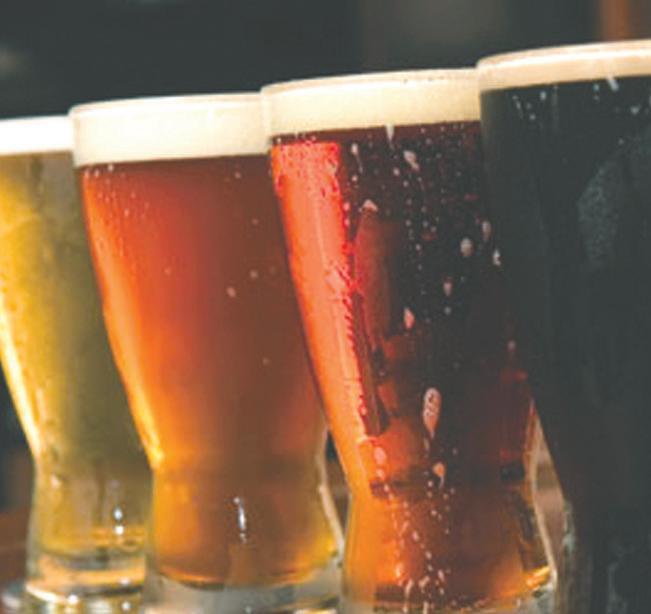
The newfound interest in cider may be due to the fact that apples are gluten-free. But they’re also pretty easy to mash and convert to a most pleasant, low-alcohol beverage.
Though it’s only two years old, Seattle Cider, located in SoDo, is the oldest in town. It was founded by Joel VandenBrink, originally from Holland, and shares its tasting room with another of the Dutchman’s ventures, the Two Beers brewery, at 4700 Ohio Ave S.
Along the Interbay corridor (at 945 Elliott Ave W #203), you’ll find Number 6 Cider. They brew and sell half a dozen of their own ciders. Founder (“and chief kegwasher”) is fomer tech executive Tom Todaro.
The majority of Washington’s twodozen (and more) cideries are outside of Seattle, closer to the source of the fruit. But two spots in Seattle have come to specialize in cider. The Noble Fir in Ballard (at 5316 Ballard Ave. NW) is one, with over a dozen beers and ciders on tap and many more in bottle.
Capitol Cider (at 818 E Pike St.), is a fully licensed restaurant on two levels in the Pike Pine corridor of Capitol Hill with an extensive list of ciders on tap. If you want to get yourself an orientation, start here.
There are hundreds of bars that serve beer on tap, and even a few that call themselves “brewpubs” without actually brewing beer on the premises. But almost two dozen breweries in Seattle do have a tasting room where you can sample the wares; many of them qualify as fullfledged pubs, with real kitchens and table service. Here are a few of the more interesting ones.
Rooftop Brewing, in Lower Queen Anne (at 1220 W Nickerson St.) is the most recent entry in the brewpub category, even if the grub turns out to come from a food truck parked outside.
Big Time Brewery actually started it all, in 1988, in the U District (at 4133 University Way NE). A dozen or so beers on tap, pizza from the kitchen, and a no-nonsense attitude (it’s called “Grumpy Hour” for a reason). They brew about 1,500 barrels a year, and sell almost all of it on the premises.
Pike Brewery, founded in 1989 and located in the Pike Place Market (at 1415 First Ave.), is also one of Seattle’s largest restaurants, owned and operated by Charles and Rose Ann Finkel. Most importantly, there’s also a highly informative microbrewery museum. A baker’s dozen brews on tap, notably Kilt Lifter and XXXXX Stout.
Elysian has three brewpubs, on Capitol Hill (at 1221 E. Pike), in Sodo (across from Safeco Field at 542 1st Ave S.), and in the TangletownGreenlake neighborhood (at 2106 N 55th St.) They’ve been acquired by a national brewery but their individual production still ranks them as “craft.”
Elliott Bay also operates three brewpubs, though only two of them are in Seattle. They’re in West Seattle (at 4720 California Ave. SW) and in Lake City (at 12537 Lake City Way NE).
Gordon Biersch: Yes, this is a big chain, based in Texas. Yes, they produce many of the specialty beers you find at Trader Joe’s. But they also do a good job, at their 500-seat downtown Seattle brewpub (at Pacific Place, 600 Pine Street) of German-style sausages. How’d the copper kettle and fermenting tanks get to the 4th floor location? Lowered by helicopters before they finished the roof.
Hales, along the corridor between Fremont and Ballard, remains one of Seattle’s most popular brewpubs.
I’m going to make an exception for Fremont Brewery’s lack of a restaurant because their beer is so damn good. Especially the Summer Ale (tangerine flowers in a glass)! They open the industrial space (at 3409 Woodland Park Avenue N.) to the general public four afternoons a week, but if you want more than pretzels, you’ll have to bring your own food.
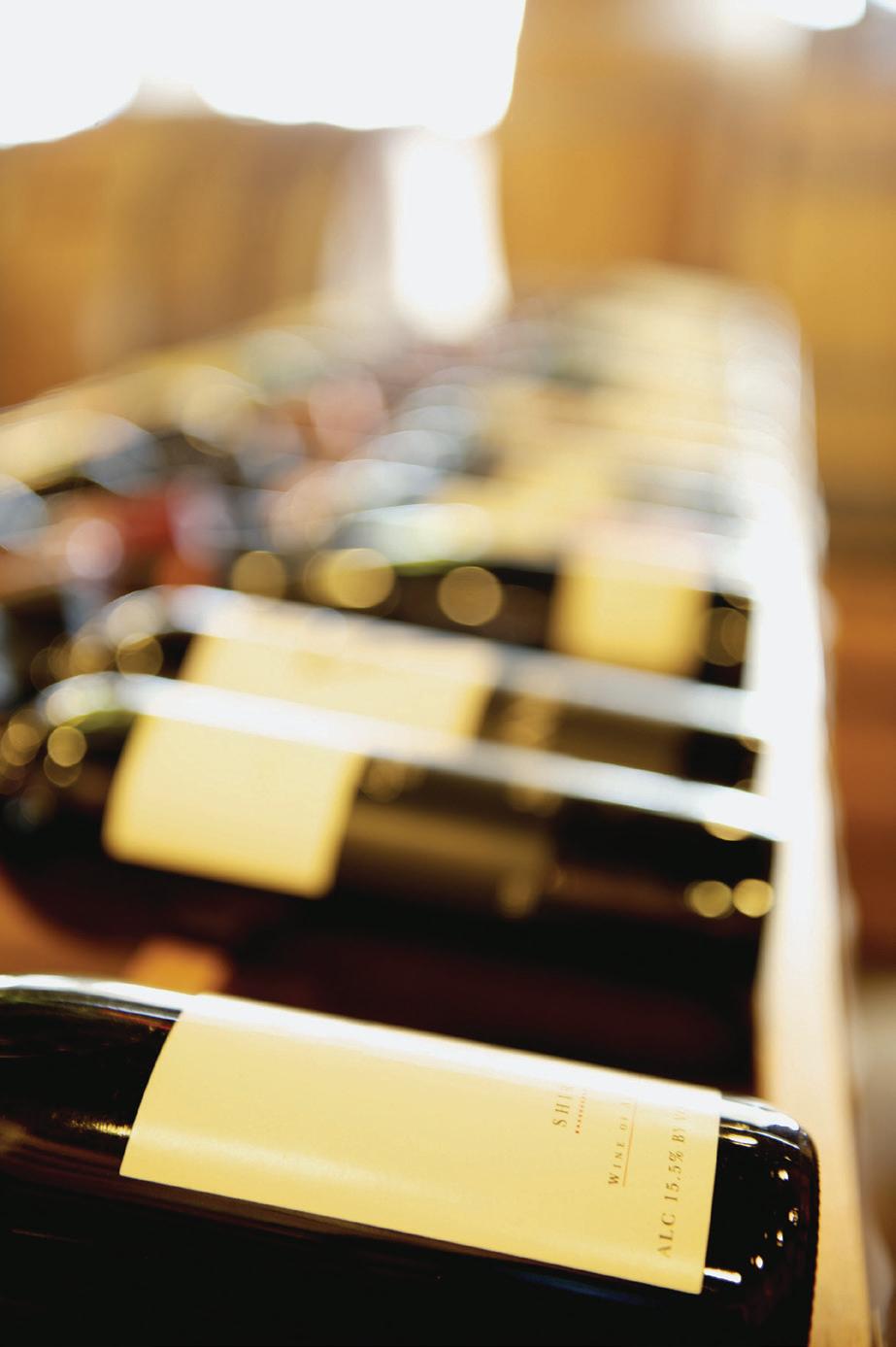
Boy, are there ever a lot of these — literally two-dozen! Your best bet might be to try the multi-winery tasting rooms. Who says you have to leave town to go wine tasting? Sure, there’s a romantic allure to driving through the vineyards of eastern Washington (or even the perimeter of Puget Sound), but there are more than enough wineries to turn your head without leaving Seattle’s city limits.
The Washington Wine Tasting Room in the Market (at 1924 Post Alley) is a cooperative venture of half a dozen small local wineries (Camaraderie, Harlequin, Latitude 46 N, Bunnell, Naches Heights, Wilridge and Wineglass). Wilridge also has a tasting room of its own in Madrona (at 1416 34th Avenue)
The Ward Johnson winery in Interbay (at 1445 Elliott Avene West) is open on weekends, and has a delightful tasting room that features excellent red wines from Red Mountain.
Nota Bene Cellars in South Park (at 9320 15th Ave S) concentrates on Rhone varieties. They’re open one weekend a month.
Also in South Seattle, specifically Georgetown (at 5608 7th Ave South) is Laurelhurst Cellars, open the second Saturday of the month.
A newcomer to Lower Queen Anne (at 1403 Dexter Avenue N.), is Falling Rain Winery, with Bordeaux-style blends.
And finally, a superb winery, Fall Line, with an aristocratic pedigree. The owners, Tim Sorenson and Nancy Rivenburgh are both university professors with advanced degrees. They’ve joined the South Seattle Artisan Winery association, and open their Georgetown production facility (at 6122 Sixth Avenue S.) on the second Saturday of the month.
Seattle’s latest claim to fame (after coffee micro-roasters and micro-breweries) are its craft distilleries. You can taste half-ounce samples and buy one or two bottles on-site.
The biggest of the newcomers, and most ambitious, is Westland (in SoDo at 2931 First Ave. S). Built at a cost of $4 million, with a production of 60,000 gallons a year, it’s the largest malt whiskey distillery (by volume) west of the Mississippi. Master distiller Matt Hofman is not yet 30 years old. Hofmann dropped out of the University of Washington to sign on, and he set out for Scotland with his friend from Bellarmine Prep, Emerson Lamb. “We weren’t old enough to drink in the States,” is how Lamb put it. They financed their venture with loans from family and friends, bought grain from the Skagit Valley, casks from Missouri, and put their bright copper Vendome pot still to immediate good use making American single-malt whiskey. Tours & tastings are $5 (refunded with purchase) Wednesday through Saturday. Call 206-767-7250 to reserve a spot.
Also in SoDo are several smaller outfits that are open to visitors (but call ahead). 2Bar Spirits (at 2960 4th Ave S,)
is one, 3 Howls (at 426 S Massachusetts) is another. And Letterpress (at 85 S. Atlantic). And Glass Spirits (1712 1st Ave, S). Almost forgot Sodo Spirits (at 2228 Occidental Ave. S.) is the first American maker of a Japanese-style spirit called Shochu. In fact, there’s enough activity in SoDo alone to warrant a designated driver!
Right downtown (at 1250 Alaskan Way) is Copperworks, owned by Jason Parker and Micah McNutt. Parker’s a longtime beer guy, the original brewmaster for Pike Brewery; McNutt came from the software industry. They released their first gin shortly after they opened their distillery in the fall of 2013.
Fremont Mischief has its distillery and tasting room overlooking the Ship Canal (at 132 Canal St.), producing vodka, gin and a Commemorative Soldier Whiskey.
Two more distilleries are in Interbay: Batch 206 (at 1417 Elliott Ave.), which makes Batch 206 vodka and Counter gin; and Sound Spirits (1630 15th Ave. W.), which produces Ebb & Flow vodka and Old Tom gin.
On Capitol Hill we have two distilleries. Oola (at 1314 East Union St.) offers a very smooth vodka. Sun Spirits (at 514 E. Pike) operates as a full-fledged cocktail lounge.
By Daniel Nash
Walk into Lake View Cemetery and the first thing that strikes you is a feeling of being enveloped by a curtain of solitude. While the neighborhood surrounding the grounds couldn’t be called “loud” by any stretch of the imagination — Volunteer Park sits southward and affluent residential neighborhoods bound the properties remaining three sides — the silence here is something special and overwhelming. It’s 40 acres that belong to the dead — and the crows. But the dead are a generous lot when it comes to lending solitude, and visitors will find that Lake View is a wonderful place to sit among beautiful stonework and contemplate life.
Easily the most popular destination within Lake View is the grave site of Bruce and Brandon Lee, dug side-by-side near the center of the grounds within the southwest quadrant. At any given moment, it’s not unusual to see visitors paying their respects to the martial artists turned actors, or leaving coins, flowers, toys or other small offerings on their headstones.
But it would sell the cemetery short to focus only on the Lees. Lake View was founded in 1872 and consequently holds the remains of Seattle’s most favored sons and daughters, such as the members of the original Denny Party.
The cemetery also stands as a grand monument to the city’s rich history of immigration, with rows and rows of gravestones in Chinese, Japanese, Russian, Greek and other languages.
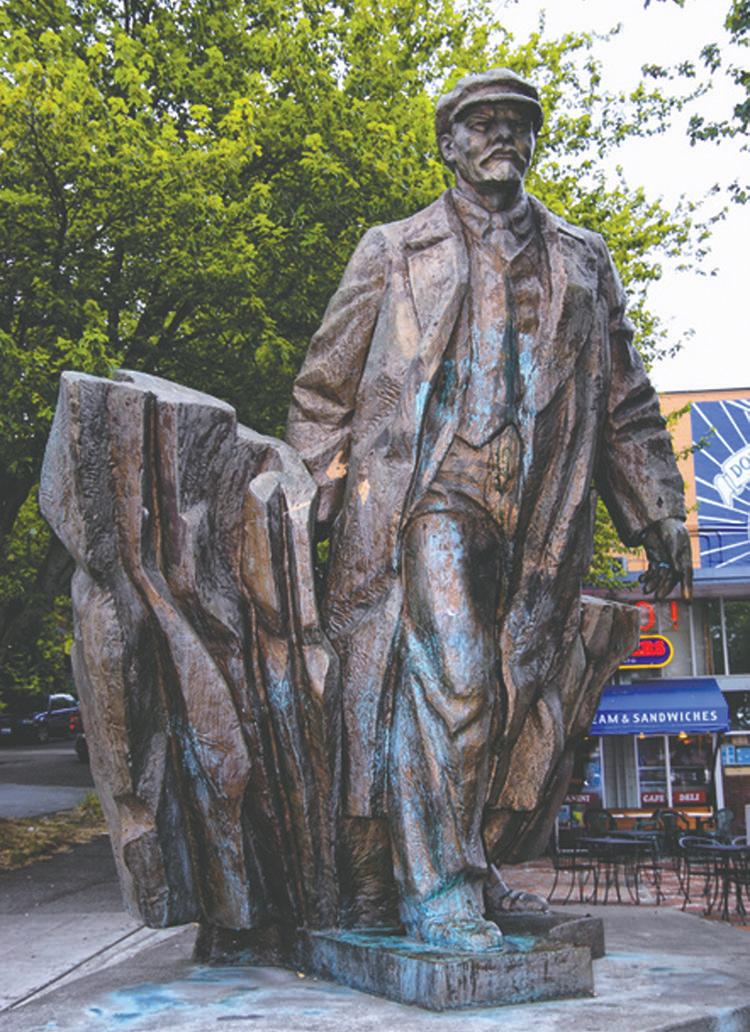
In 1989, less than one year had passed since the people of Czechoslovakia (now Slovakia) had shucked the communist government in favor of a parliamentary republic.
Though peaceful in nature, the Velvet Revolution was not without its minor casualties. Among these was a 16-foot bronze statue of Russian Communist revolutionary Vladimir Ilyich Lenin, which had been completed only months before the fall of the communist government, but was quietly removed from the Poprad city hospital and scheduled to be melted down.
Issaquah native Lewis Carpenter was teaching English in Poprad when he discovered the statue and, smitten, decided to buy it and ship it back to Washington state. Carpenter is rumored to have mortgaged his home to pay for the purchase and cost of shipping.
Carpenter died in a car accident in 1994 and his surviving family has sought a buyer for the statue since the late 1990s. But the statue continues to sit at its current home on North 36th Street in Fremont.
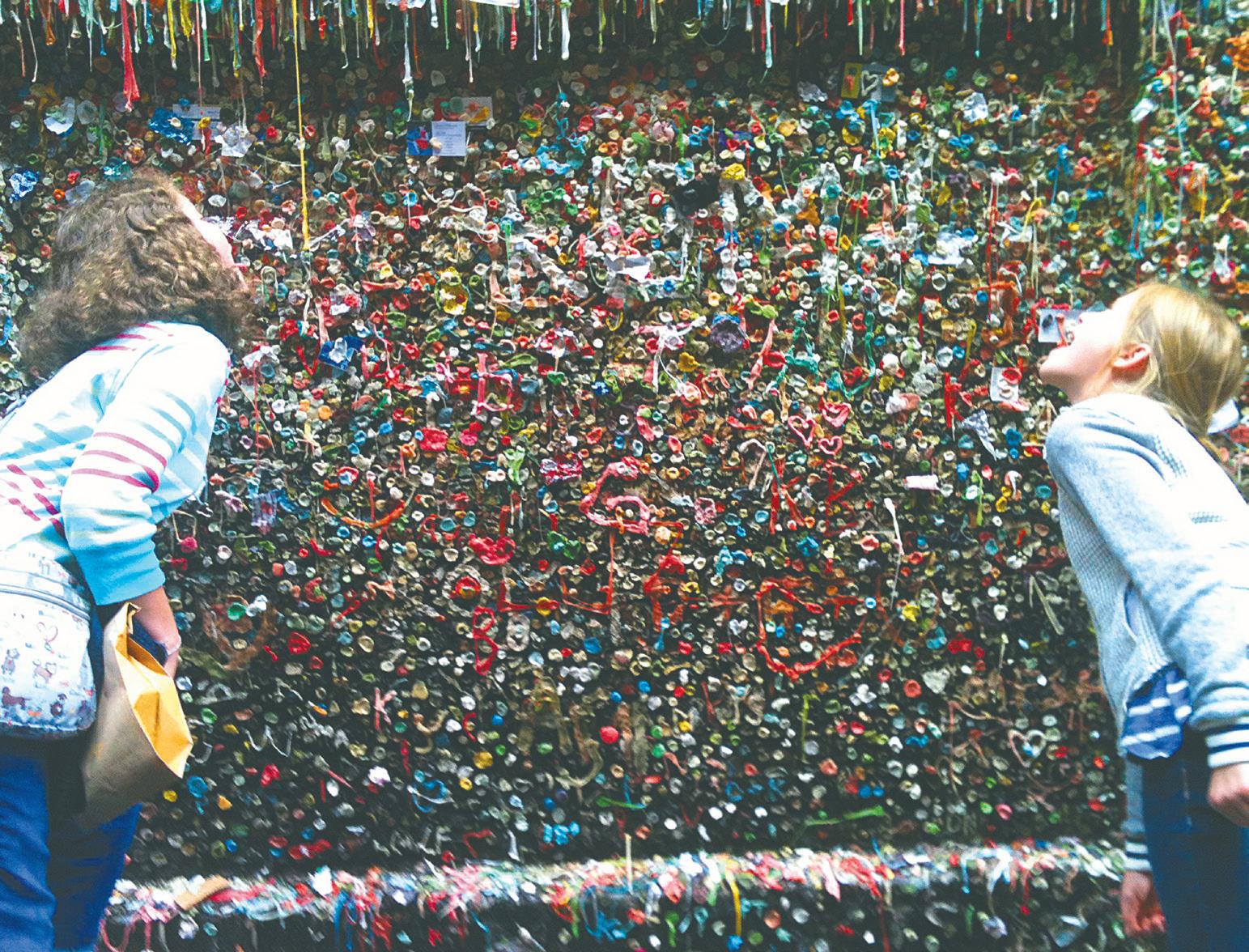
It’s not unusual for historic sites to be cleaned and maintained to prevent decay, but the Market Theatre Gum Wall may be the only tourist attraction treated to prevent tooth decay.
In early November 2015, the Pike Place Market Preservation and Development Authority cleaned more than 2,350 pounds of gum off the wall in Post Alley to prevent brick erosion from exposure to sugar (no, really). It was the first comprehensive cleaning of the wall since patrons of the Market Theatre’s improv shows began sticking their used Bazooka Joes to the wall in the early ‘90s.
How successful was the effort? Let’s put it this way: Less than two weeks after the cleaning, the brick was already well on its way to disappearing behind a new sheen of multi-colored goo.
Want to read about alchemy? Angels? UFOs, the Illuminati, psychic warfare or the proper interpretation of runes? You can find all the knowledge your tin-foil covered head can hold in Old Ballard’s Kress Building.
Speaking of sugar, if you have a spare 75 cents rolling around in your pocket, you might want to check out the Mystery Soda Machine on the corner of East John Street and 10th Avenue East on Capitol Hill.
Put your three bits in this vintage relic and it will spit out a surprise soda with each press of a button.
You might be asking “So? What’s the big deal? That just sounds like a poorly operated vending machine.” And you’d be right! But what makes the Mystery Soda Machine interesting is that, over decades of operation, no one has taken credit for its operation or the stocking of its inventory — not even the proprietors of Broadway Locksmith, where the machine sits.
Greenwood, Phinney Ridge and Green Lake are like a set of triplets — as thick as thieves and occasionally hard to tell apart.
Phinney Ridge is truly that — a ridge no wider than Phinney Avenue North which descends to Green Lake to the east and Greenwood to the west and north. Each neighborhood has much to offer in a very accessible way.
Probably the area’s greatest asset is Woodland Park. The park is underrated as a respite from the urban hustle, perhaps due to its proximity to the more popular Green Lake Park. But in Woodland you can escape under the quiet of the tall maples, cedars and firs as if you were somewhere along Mount Rainier’s Wonderland Trail. A pleasant side effect of the park’s solitude is that there’s always a table available for picnics. If you want to play tennis, go lawn bowling, baseball or skateboard, you can. Does Fido need to stretch his legs? There’s a dog park for that. If you want to see Malaysian tigers up close, the Woodland Park Zoo is right next door.
ZIP: 98117, 98103, 98133
BOUNDARIES:
Greenwood:
East: Aurora Ave. N.
North: N. 105th St.Holman Road N.W.
West: Eighth Ave. N.W.
South: N. 80th St.
Phinney:
North: N. 80th St.
East: Aurora Ave. N.
South: N. 50th and Market
streets - N.W. Market St.
West: Eighth Ave. N.W.
Green Lake:
East: Interstate 5
North: N. 85th St.
West: Aurora Ave. N.
South: Woodland Park
Of course, Green Lake is one of the most popular recreation spots for locals. The lake retains much of its history. The Bathhouse still hosts theater, and the southerly Aqua Theater’s stadium seats still packs in fans of competitive boating.
Back up the ridge there’s more than 20 blocks of shops both new and old. Greenwood Hardware has been around since 1948. There, Marty Spiegel — known to many locals as the “Honorary Mayor of Greenwood” — will answer all of your questions.
The ridge also plays host to the Greenwood Car Show, which gets bigger and bigger each year.
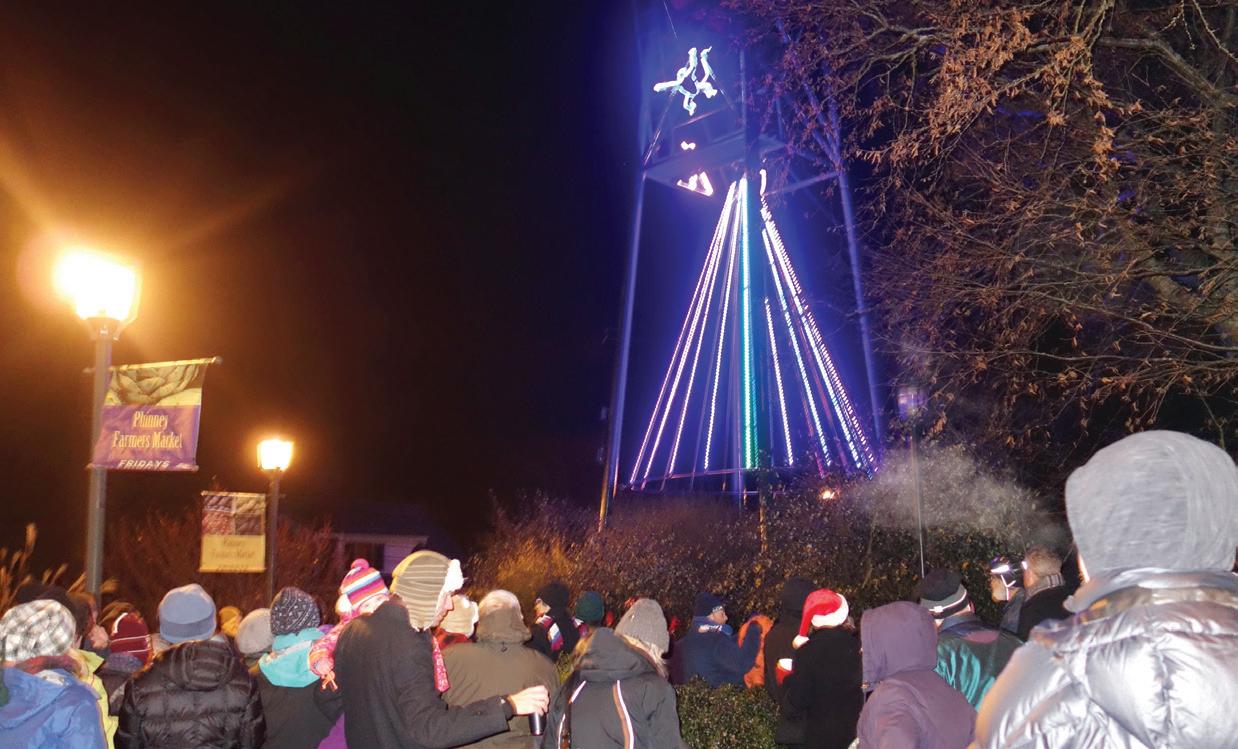
In addition to the funky restaurants and shops around the intersection of Greenwood Avenue North and North 85th Street (if you’re into squirrel taxidermy, check out The Cozy Nut pub at 123 N. 85th St.), the neighborhood plays host to an annual Seafair Parade in late July. People line the streets with lawn chairs and coolers and await the slaloming motorcycle cops, kids on unicycles, drill teams and the boom of the Seafair Pirates’ cannon fire. A block up from the parade’s end at Sixth Avenue Northwest is Greenwood’s new gem: Chuck’s Hop Shop. Converted a few years ago from a sleazy mini-mart, this place now lets you enjoy some of the best beers in the world while your kid can eat scooped ice cream, your dog can chill out under you and the aroma of one of the various food trucks fills your nostrils.
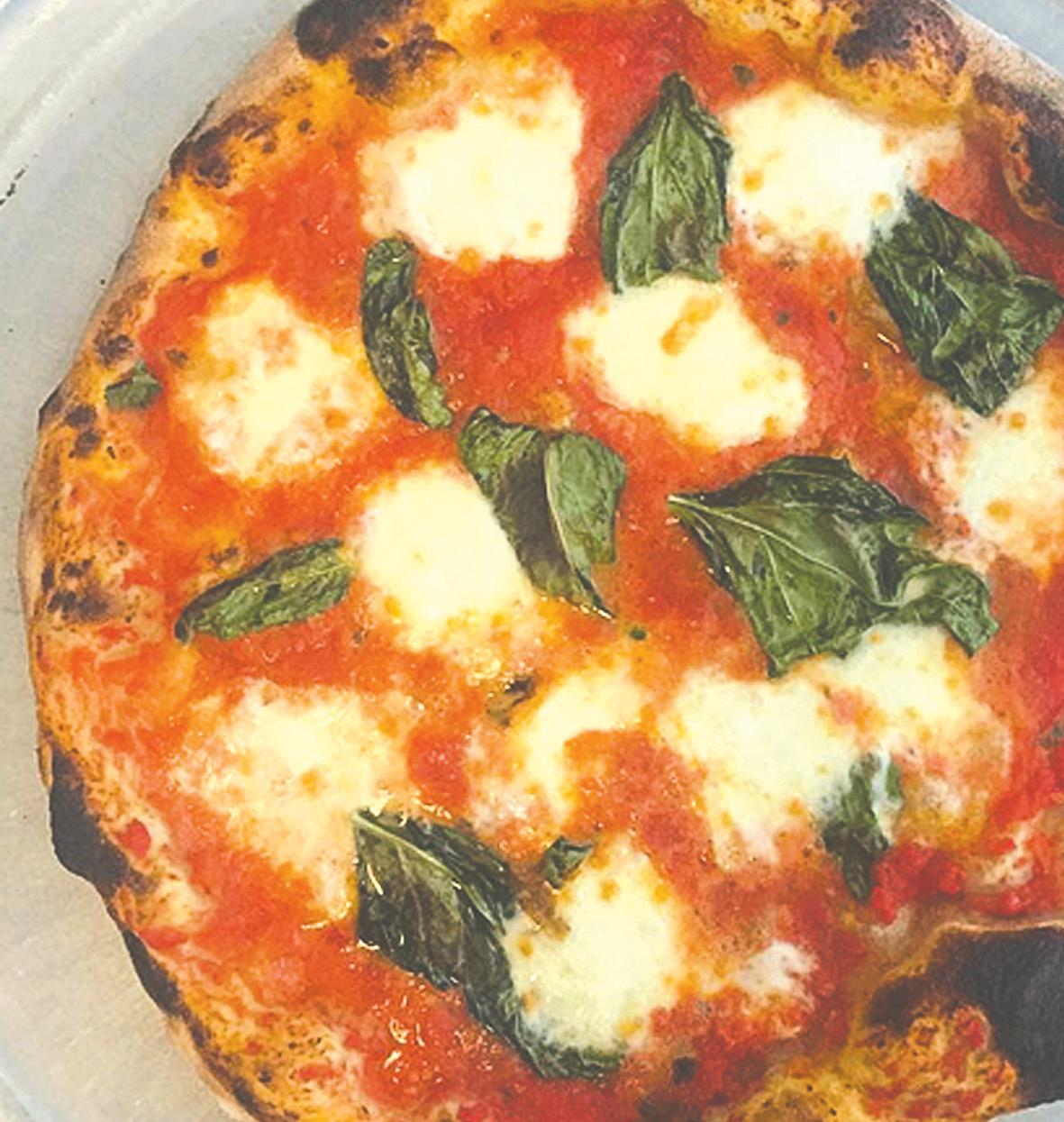
Delancey, 1415 NW 70th St. Hand-made thin crust pizza from a New York musician. Far from ho hum, however. This is the real deal. There’s a bar next door, Essex, that provides a spot for a drink while you wait for your table.
Cantinetta, 3650 Wallingford Ave N. Trevor Johnson’s original neighborhood restaurant, with Tuscan-style dishes prepared under the direction of Emran Chowdhury, one of Seattle’s best “unknown” chefs. Bufala mozzarella, risotto, pappardelle bolognese. Additional outposts in Bellevue and Madison Valley.
Greenwood was initally called ‘Woodland’ and was little more than a bog that also housed a cemetery.
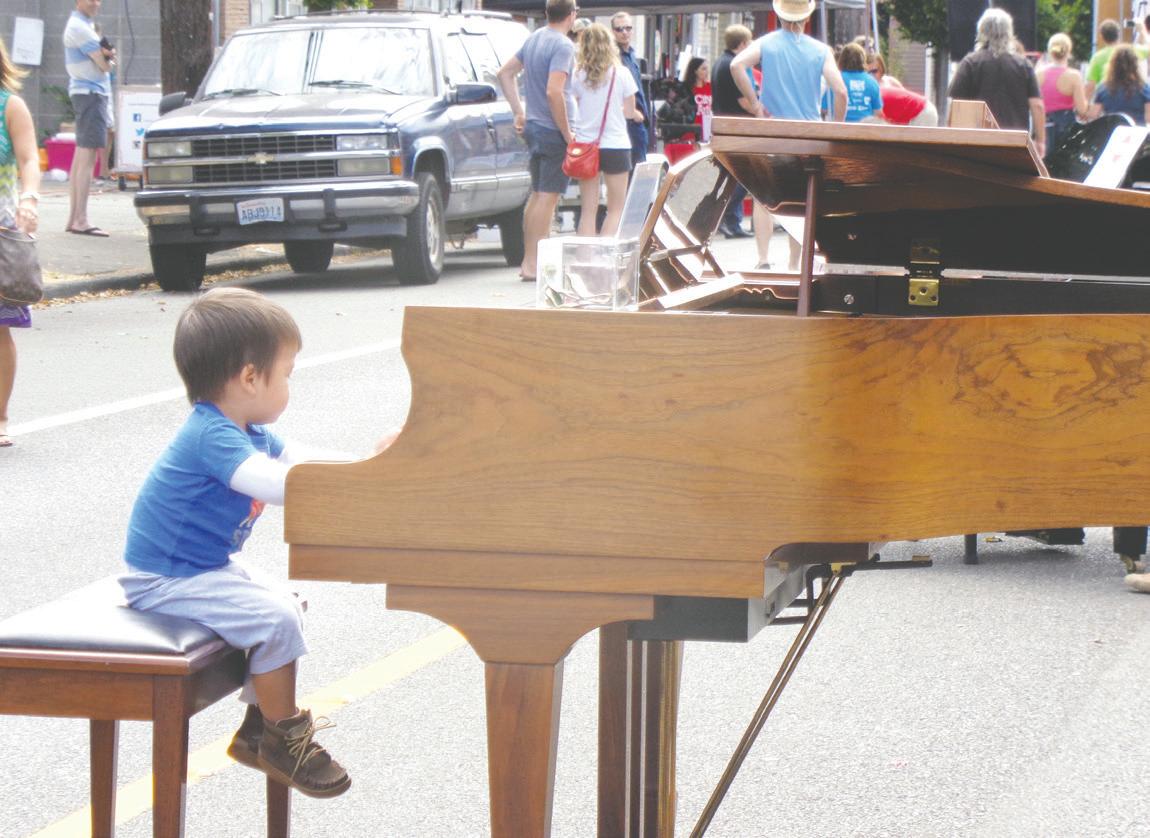
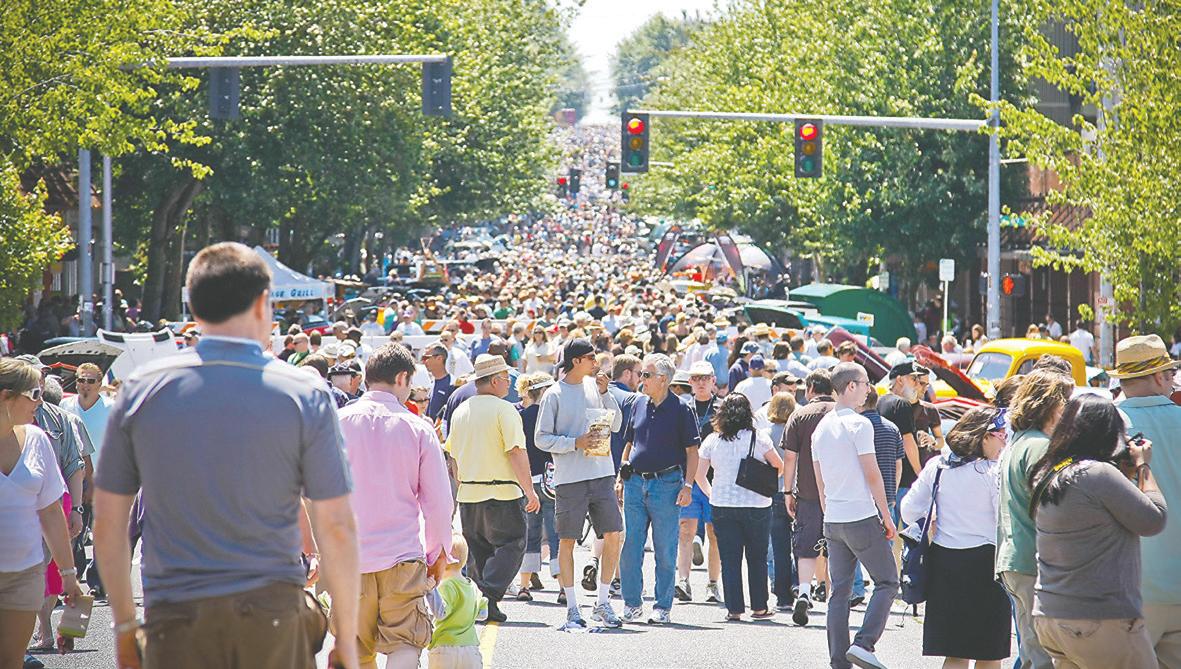
Among Seattle neighborhoods, the northeast is a bit of an island — most readily reached by car and one of the notoriously least walkable sections of the city, for lack of sidewalks.
But it would be a mistake to write off Northeast Seattle, which has some real treasures for residents.
The north end’s shopping hub is Northgate Mall, with local anchor tenant Nordstrom. Nearby is the towering visage of Thornton Place, a residential and retail complex that features a multi-story Regal stadium theater, a plaza with tables and chairs, a water fountain popular with visiting children, and adjoining restaurants and condominiums.
Wander west and you’ll find Bitter Lake Park (where kids play soccer rain or shine) or the hidden entryways to Haller Lake.
Head east and you’ll find tight-knit Lake City. Douglas Park provides a locale for a nice stroll or, if it’s August, you can catch the Pioneer Days Parade.
Venture south and you’ll approach Maple Leaf with, its nook shops on Roosevelt and the sprawling Maple Leaf Reservoir Park. The park affords views of the city and Mount Rainier.
Further south and you’ll hit Ravenna. There, you can stop inside Bagel Oasis, one of the only authentic bagel shops in the city. You can also find Third Place Books and its adjoining


café, Vios, as well as the basement bar, Third Place Pub. If you need a killer guitar, there’s the long-standing Trading Musician. You could use it to play tunes while chilling in the west end of Cowen Park — or you could just play volleyball on one of Cowen’s courts.
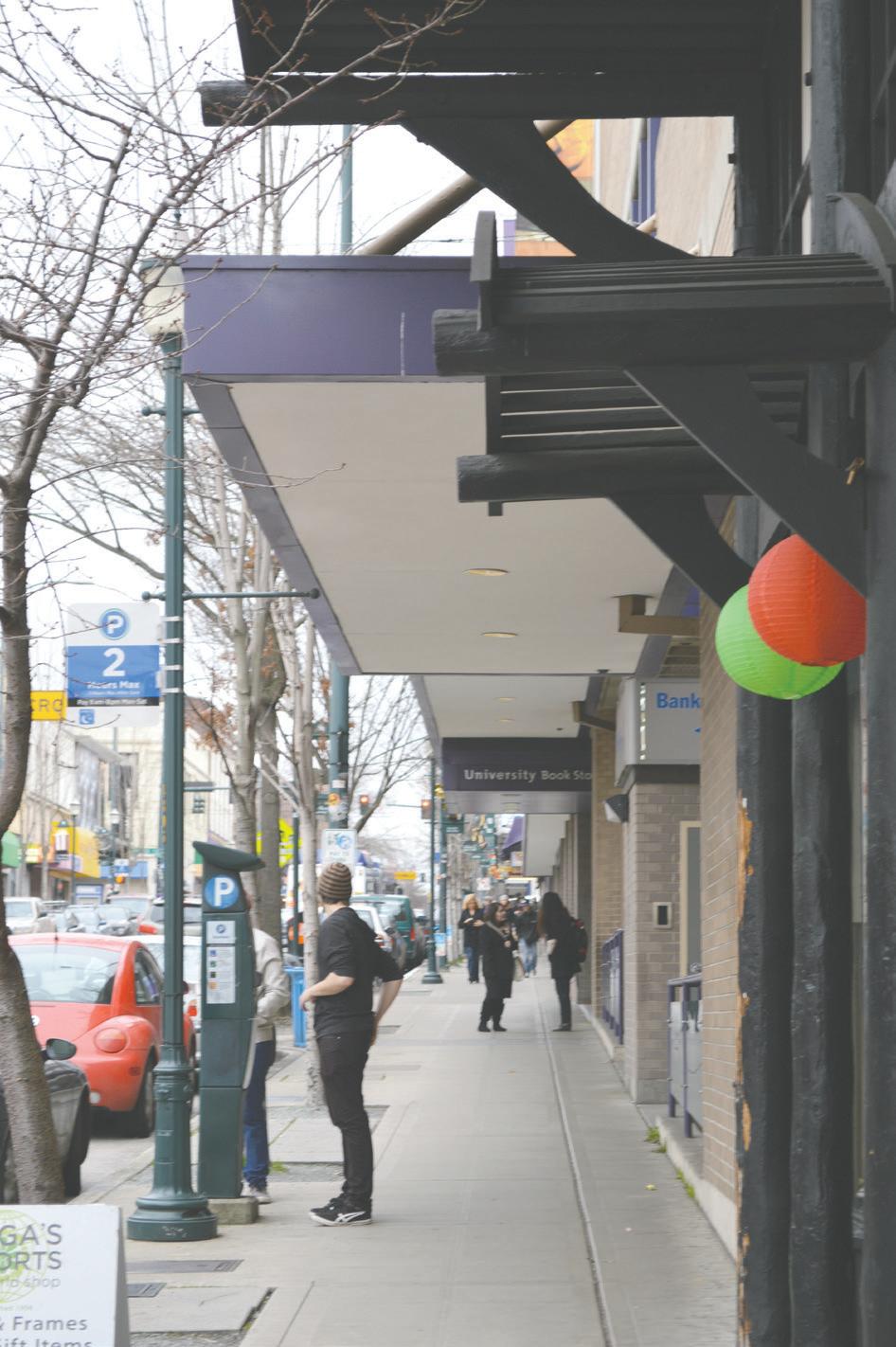
Further westward brings the curious observer to Roosevelt, where the beautifully remodeled high school stands sentinel amid shops, dive bars, soccer pubs (Atlantic Crossing), restaurants and boutiques. Roosevelt is also the throughway to the U-District where the university seems to be driving constant construction. Green bike lanes, busy Northeast 45th Street flush with cars and hustling college students, the “Ave” humming with pubs and shops and the University BookStore; the University of Washington continues to grow with new dormitories and a completely revamped sports complex. And the once sleepy University Village shopping plaza has evolved into a major arena of upscale shops and restaurants. Where else can you get internationally renowned dim sum, a platinum wedding band, the latest iPhone and a cup of frozen yogurt before treating your severe case of sticker shock at an onsite hospital?
But if its old-school shopping and browsing that’s needed, then try the University District Farmers Market which, unlike most markets in the city, runs year round and offers way more than just local fruit and vegetables.

When talking about the subject of rich and poor, conversations naturally drift to the inequality of income. The rich have more income, the poor have less — it’s inherent to the discussion. But few people talk about the difference the two parties face when money flows in the other direction — out.
Simply put, it’s expensive to be poor. Poor people have less income to negotiate better borrowing rates, or buy in bulk, or buy one-time purchases that could make them more self-sufficient.
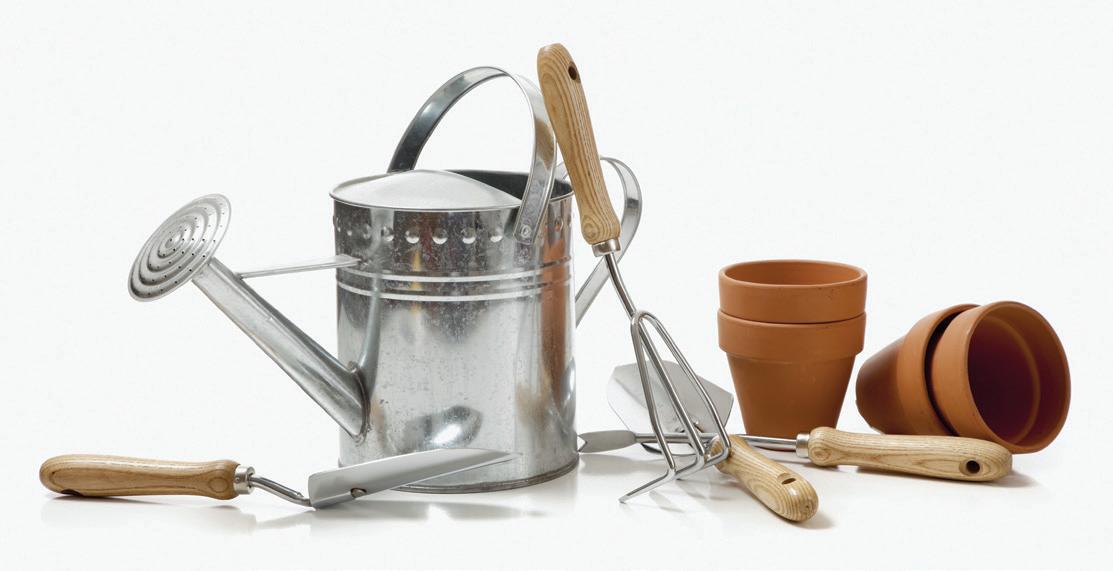
But, on the latter point at least, a number of nonprofit tool libraries have sprung up around Seattle to let people who don’t have the means to purchase their own tools make their own repairs to their homes and automobiles, saving scads of money in the long run.
One such organization, the NE Seattle Tool Library, is a volunteer-staffed, nonprofit organization providing community access to a wide variety of tools, training and sustainable resources. The organization helps neighbors regardless of income, while reducing consumption of tools through sharing, repair and reuse.
Community members can join the library to borrow tools and take classes to pursue such activities as backyard gardens, home energy improvements, food preservation and water harvesting.
The Tool Library also hosts community events.
Those interested in donating tools to the library can visit the website (neseattletoollibrary.org) for a list of tools needed. For more information, call (206) 524-6062 or email neseattletoollibrary@gmail.com
The NE Seattle Tool Library started as a project of Sustainable NE Seattle in 2012 and opened its doors in January 2013. It received a $25,000 Small and Simple Projects Fund award from Seattle Department of Neighborhoods later that year to help it grow its inventory, train volunteers and establish regular hours.
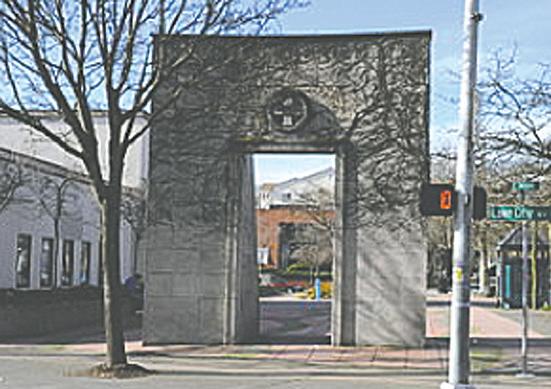
The name for the north Seattle community Maple Leaf either came from the Maple Saw Mill which operated nearby or the trees which once grew in the area. There is also an apocryphal story that Maple Leaf was so far north of downtown Seattle that it got its name for being near Canada..
LAKE CITY / UNIVERSITY DISTRICT / RAVENNA / MAPLE LEAF
Din Tai Fung, 2621 NE 46th St (University Village). Soup dumplings (xiao long bao) are the big attraction here, plus the free parking. If you can’t get in, grab a burger at Joey’s in the same building.
Salare, 2404 NE 65th St. Up-and-coming chef Edouardo Jordan’s new spot in Ravenna. House made charcuterie, clams, mussels, halibut, oxtail vie for attention on the straightforward, unfussy menu.
Pair, 5501 30th Ave NE. The perfect example of a neighborhood bistro. A popular cambozola fondue can be a great starter, the natural beef brisket an ideal main course, but they’re strong on vegetarian options as well.
GALLERIES & MUSEUMS
BURKE MUSEUM OF NATURAL HISTORY & CULTURE
UW campus, Northeast 45th Street and 17th Avenue Northeast.
Another one of those undersung civic treasures. www.washington.edu/ burkemuseum
HENRY ART GALLERY
15th Avenue Northeast and Northeast 41st Street on the University of Washington campus.
The Henry has maintained a consistently high standard in the last several years. www.henryart.org
LIBRARIES
UNIVERSITY BRANCH OF THE SEATTLE PUBLIC LIBRARY
5009 Roosevelt Way.
A Carnegie Library that opened in 1910. Its auditorium makes a community gathering place. People love this beautiful old building. Hours: Monday -Tuesday 1-8 p.m. Wednesday-Thursday 11 a.m.-6 p.m. Friday closed. Saturday 11 a.m.-6 p.m. Sunday closed. www.spl.org
SUZZALO & ALLEN LIBRARIES
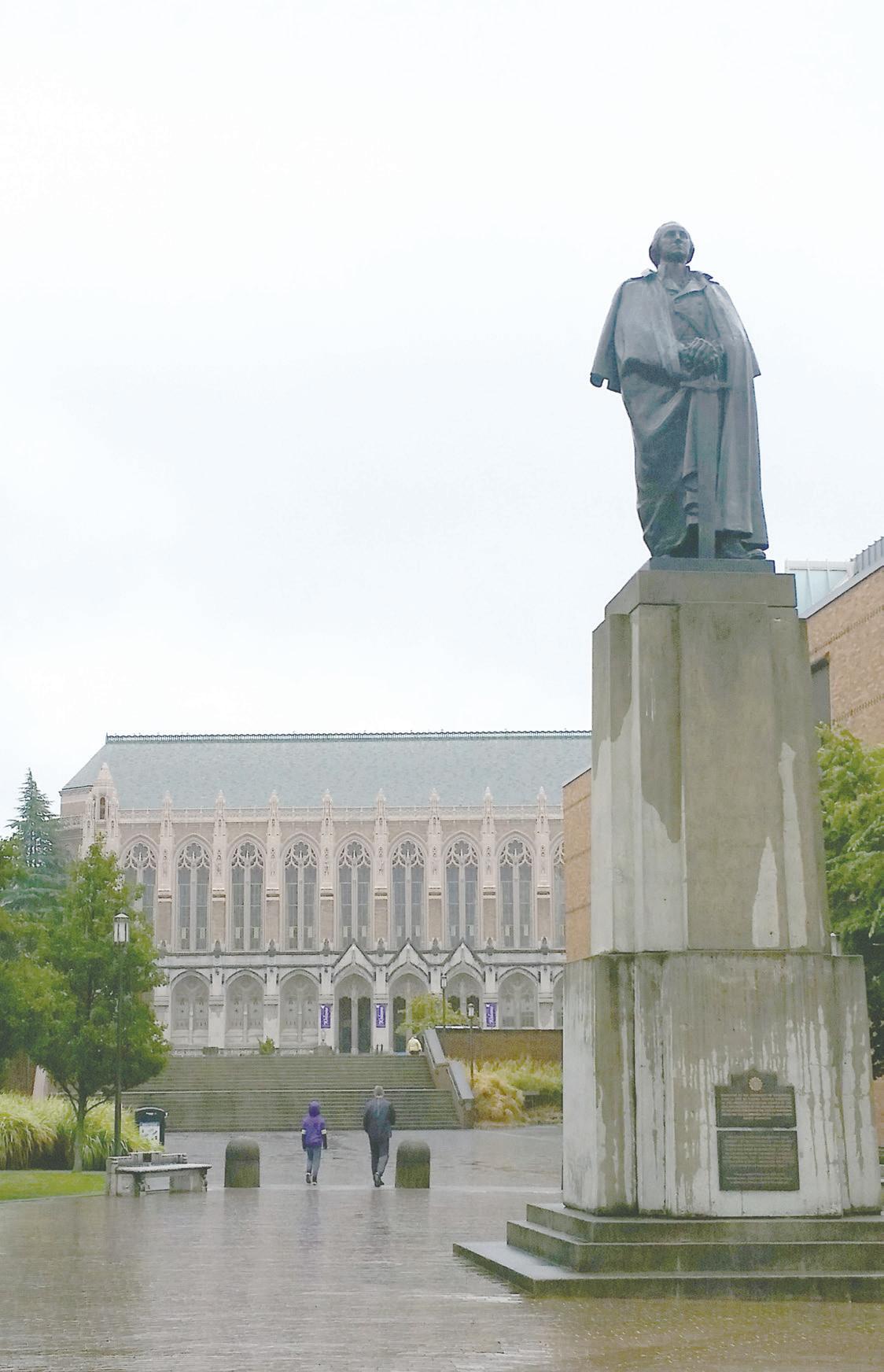
On the University of Washington campus offer tours. Suzzalo’s reading room is properly beloved. Ground was broken here in 1923. www.lib.washington.edu/ suzzallow
LANDMARKS
GRAND ILLUSION CINEMA
1403 N.E. 50th St. Opening in 1968, this is Seattle’s longest-running, independent movie house, with 49 seats. The Grand Illusion planted the seed for Seattle’s reputation as a cinema-loving town.
COLLEGE INN
4000 University Way N.E. This charming, Europeanstyle hotel was built for the 1909 Alaska-Yukon-Pacific Exposition.
THE WILSONIAN
4719 15th Ave. NE.
This elegant building with modest courtyard was built in 1923 as a five star hotel. It’s now an apartment building that also houses offices, including the Greater University Chamber of Commerce. Many others know the Wilsonian for its classic ballroom.
By common usage, the University District is bounded on the west by Interstate 5; on the east by 25th Avenue NE; on the south by the Lake Washington Ship Canal; and on the north by NE Ravenna Boulevard. It also includes, east of these boundaries, a small district on the north shore of Union Bay, bounded on the north by NE 45th Street and on the east by 35th Avenue NE. This extension consists mainly of the “east campus” and extensive parking lots of the University.
HOTEL DECA
4507 Brooklyn Ave. N.E.
This renovated 1931, modernist building, formerly the Edmund Meany Hotel, was designed by Robert Reamer and came about through a community-wide effort to build a hotel — but not just any kind of hotel — in the U-District.
BLUE MOON TAVERN
712 Northeast 45th Street. Yes, Dylan Thomas drank here, and so did Theodore Roethke. It’s suitably downhome for those seeking literary associations and home for those who don’t care.
GREEK ROW
17th Avenue Northeast between Northeast 45th and 50th Streets.
Built mostly in the 1920s. Renowned architects who had their hand in shaping the neighborhood include Arthur Loveless and Harlan Thomas.
UNIVERSITY HEIGHTS
COMMUNITY CENTER
5031 University Way NE.
Started out as a school more than a century ago.
SEVEN GABLES THEATRE
Built in 1925 as a dance hall, now a destination for cinema aficionados. 911 Northeast 50th Street.
DRUMHELLER FOUNTAIN
On the University of Washington campus, or “Frosh Pond.” Built for the 1909 Alaska-YukonPacific-Exposition, the site commands a stunning view of Mount Rainier.
BLESSED
SACRAMENT CHURCH
5080 Eighth Ave.
A beautiful Catholic Church built in 1910.
HUSKY STADIUM
On Montlake Boulevard Northeast and Union Bay. The stadium opened in 1920 with a capacity of 30,000 people and after its late 1980s renovation now holds up to 72,500.
SEATTLE CHILDREN’S HOSPITAL
4800 Sand Point Way NE.
An heroic institution on the hill.
PARKS
UNIVERSITY PLAYGROUND
9th Ave. NE and NE 50th St.
A pleasant green place with a pair of tennis courts and baseball diamond and playground area for kids.
COWEN PARK
5849 15th Ave. NE.
Cowen Park joins the west end of Ravenna Park and features picnic areas, a ball field, barbecue pits and kids play area.
RAVENNA PARK
5520 Ravenna Ave.
A relatively big — 49.90 acres. Formed by a wooded ravine and is favored by hikers, joggers and picnickers. Amenities include tennis courts, ball field, trails and wading pool. A woodsy oasis in the city.
WARREN G. MAGNUSON PARK
7400 Sand Point Way.
Includes a mile-long shoreline along Lake Washington and occupies 350 acres, second only to Discovery Park. Formerly a US Navy airfield, this is a popular spot for boating, swimming, walking, flying kites.
PEACE PARK
At the corner of Northeast 40th Street and Roosevelt Way Northeast, this little spot beneath the University Bridge built by legendary peace activist Floyd Schmoe, is home to a statue of young Hiroshima victim Sadako Sasaki.
To order a full color brochure of Seattle Parks go to www. seattle.gov/parks
UNIVERSITY DISTRICT COMMUNITY COUNCIL www.neighborhoodlink. com/University_District_-_ Seattle
GREATER UNIVERSITY CHAMBER OF COMMERCE www.udistrictchamber.org
UNIVERSITY
NEIGHBORHOOD SERVICE CENTER www.seattle.gov/ neighborhoods/nsc/ university.htm
ROOSEVELT NEIGHBORHOOD ASSOCIATION www.rooseveltseattle.org/ blog.aspx
UNIVERSITY HEIGHTS COMMUNITY CENTER www.uhcca.org
RAVENNA-BRYANT COMMUNITY ASSOCIATION www.scn.org/rbca
ROOSEVELT CHAMBER OF COMMERCE 206-528-5997
CITY/EMERGENCY NORTH PRECINCT 10049 College Way N. 206-684-0850
FIRE STATION
Fire Department No. 17, 1050 NE 50th St
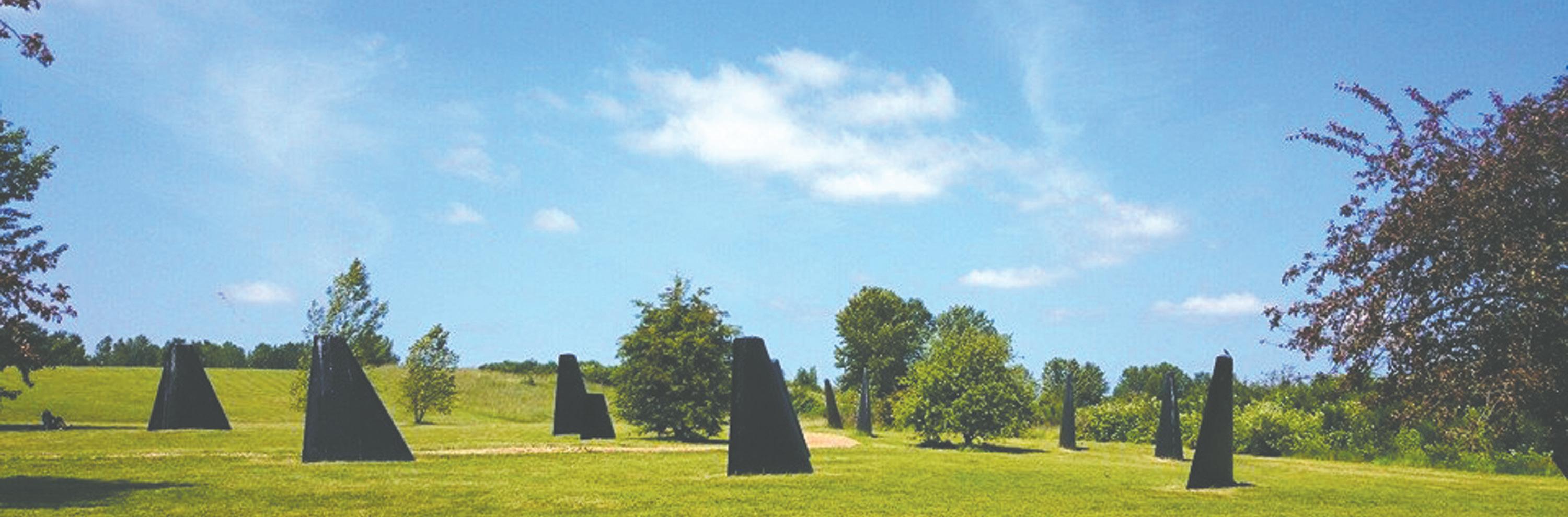
Mayor Ed Murray announced in February 2016 that Lake City would become the first neighborhood in Seattle to benefit from a new integrated planning effort coordinated by Seattle’s new Office of Planning and Community Development.
Seattle estimates that it will add 120,000 residents and 115,000 jobs in the next 20 years. The mayor cited voter approval of funding for transportation, transit, parks and preschools, as well this year’s renewal of the Seattle Housing Levy, as opportunities to invest in neighborhoods across the city.
The Planning and Community Development Office called for an integrated planning approach involving all city departments and expanded community input in the Lake City neighborhood. The office is referring to the effort as a “Shared Vision for Lake City.”
The city’s integrated planning effort in Lake City will include:
• New development standards for new buildings that create a more walkable streetscape and pedestrian-friendly neighborhood;
• Investment in future park sites in the neighborhood, improvements to existing parks and better walking access and transportation to Meadowbrook Community Center;
• New affordable housing with family-sized apartments and Seattle Preschool Program classrooms at the site of the former Fire Station 39; and
• A minimum of 20 blocks of new sidewalks to support Safe Routes to School and neighborhood walkability.
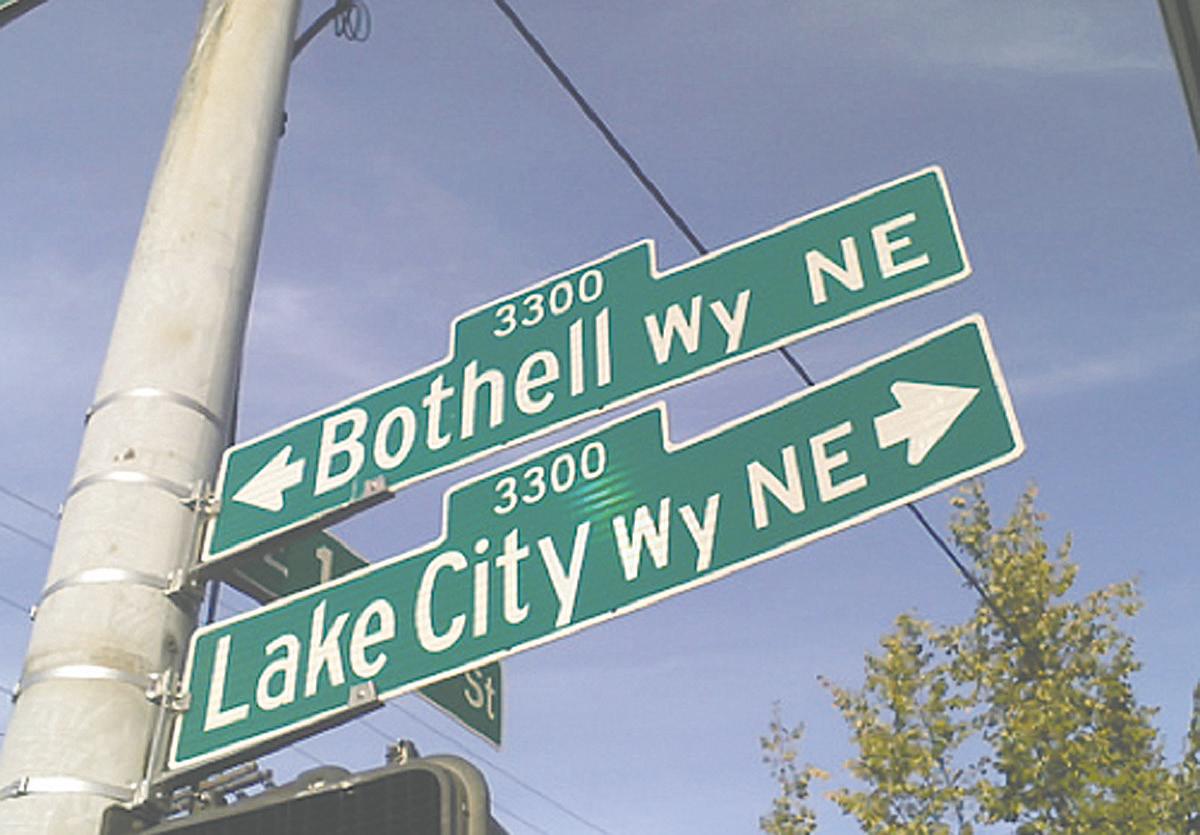
SEATTLE PUBLIC LIBRARY
Lake City Branch, 12501 28th Ave. N.E.
The expanded branch opened in autumn 2005 and incorporates bronze gates fashioned by iconic Northwest artist and sculptor George Tsutakawa. The interior renovation daylighted the original structure’s brick. The building includes 71 glass panels by Portland artist Linda Haworth. This is a place worth checking out, even if you’re not checking out a book.
(206) 684-7518.
www.spl.org/locations/ lake-city-branch
LAKE CITY
COMMUNITY CENTER
12531 28th Ave. N.E.
The navel of the community, with activities ranging from North Seattle Karate, Round Dance, Lake City Sews, after school tutoring, Tai Chi for seniors; multi-cultural music and art programs are in the works.
(206) 382-4378 www.lccommunitycenter. org
LAKE CITY
NEIGHBORHOOD SERVICE CENTER
12525 28th Avenue N.E. (second floor). Though many “Little City Halls have been closed down in the past few years, Lake City still has its own.
(206) 684-0896
www.seattle.gov/ neighborhoodservices/ lakecity.htm
FAMILIES FOR LAKE CITY
This group of Lake City residents aims, according to their website, to “make Lake City a safe, successful, and family-friendly neighborhood.” Lots of news and community activities appear here: www.familiesforlakecity. com
BOUNDARIES:
North: Northeast 145th Street
East: Lake Washington
South: Northeast 95th and 98th Streets
West:15th Avenue Northeast
By Joe Veyera
For a region with a national reputation for dreary weather, it may come as a surprise that, on average, Seattle receives less rain in an average year than locales like Atlanta, Houston, New York, and Washington D.C.
So, what is one to do with all the surprisingly fair weather? Get outside, of course! And without heading out into the mountains or the forests — which conveniently enough are just a few hours outside of the city limits — the best way to do that is to take in one of Seattle’s numerous parks.
While it’s hard to go wrong with any of them, Discovery Park in particular stands out, spanning more than 500 acres of the Magnolia neighborhood, with plenty of trails to navigate along with sweeping views of the Cascade and Olympic Mountains. Somewhere a bit more recognizable (ever see ’10 Things I Hate About You’?) is Gasworks Park, another locale ideal for walking, running, or biking, but this time complete with a view of the skyline.
Also worth mentioning is the 27-mile long Burke-Gilman Trail, which transports pedestrians and bikers from Seattle (and the University of Washington campus) all the way to the Eastside. Just be sure to take heed of any calls of, “on your left!”
Looking for somewhere a bit more laid back? Golden Gardens Park has one of the most beautiful beaches in the Northwest. Once used as a naval station, the land that now houses Magnuson Park contains everything from sports fields to the city’s biggest playground, with plenty of open space to explore as well.
The approximately 3-mile loop of Green Lake can also be leisurely, with plenty of spots to stop along the way to take a seat, and watch the kayakers, paddle boarders, and rowers pass by on the water.
If fandom is more your speed, Seattle also boasts a bevy of professional franchises.
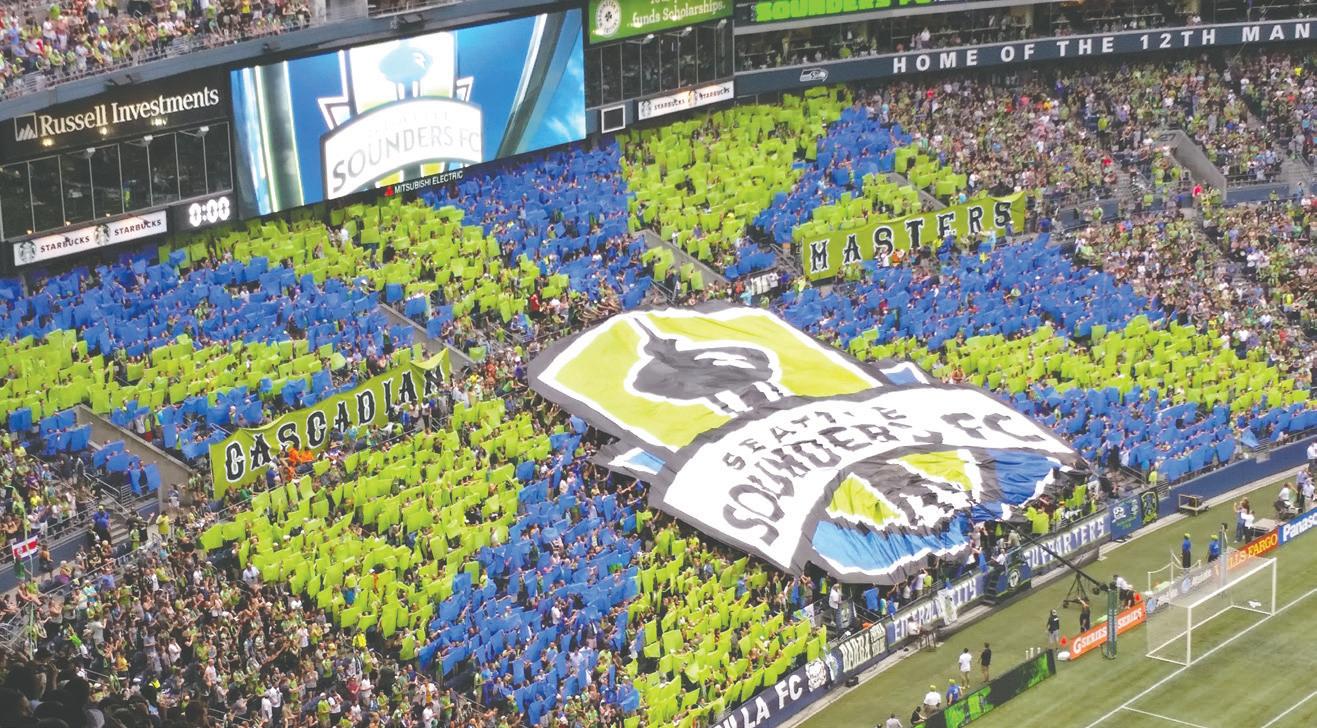
On Sunday afternoons during the fall and into the winter, the city grinds to a standstill for three hours of Seahawks football. Quarterback Russell Wilson leads the charge on offense for the 2014 Super Bowl champions, with the help of receivers Doug Baldwin and Jermaine Kearse, while the defense makes waves with the likes of Richard Sherman, Earl Thomas, and Bobby Wagner. Just remember: Being loud at Centurylink Field isn’t just recommended. It’s a requirement.
Of course, the Seahawks also share the stadium with Sounders FC, the class of Major League Soccer. Both players and fans are expected to give their “Full 90” as the team chases its thus far elusive first league title. But with Uruguayan international Nicolas Lodeiro and up-and-coming U.S. National Team sensation Jordan Morris in the fold for the long-term, the future looks bright.
The Mariners sport a playoff drought spanning almost two decades, but have flirted with contention each of the past several seasons led by second baseman Robinson Cano, third baseman Kyle Seager, and ace starter Felix Hernandez. Win or lose, Safeco Field stands out as one of the premiere venues in all of baseball.
With back-to-back No.1 picks Jewell Loyd and Breanna Stewart, along with Japanese star Ramu Tokashiki, the Storm have a dynamic young core to pair with longtime guard Sue Bird as the team attempts to get back to the WNBA championship heights it reached in 2004 and 2010.
Since joining the National Women’s Soccer League in 2013, Reign FC has burst onto the scene with a pair of championship game appearances in their first three seasons. U.S. Women’s National Team star Megan Rapinoe, Scottish international Kim Little, and Welsh midfielder Jess Fishlock have wowed the crowds at Memorial Stadium with their slick footwork and penchant for finding the back of the net.
From Alki Beach one can see breathtaking views of the jagged and snow-capped Olympic Mountains to the west and to the east. The Cascades loom dark behind the sharpened relief of Seattle’s downtown.
West Seattle is a salty neighborhood for sure – there’s even a famous restaurant called Salty’s in the north end (1936 Harbor Ave. S.W.) just off the West Seattle Bridge and the port’s Terminal 5. The neighborhood, which was annexed by Seattle at the turn of the 20th century, has the best beach in town, Alki Beach, where visitors can find treats like a miniature of the Statue of Liberty. Along the length of the beach are numerous tide pools and, above the bulkheads, a jogging/ walking path stretches for miles.
It’s enough to make you wonder if you’ve been transported to southern California.
Many have dropped anchor in Alki. In the 19th century, Alki is thought to be the point where the Denny party first settled the city. Today, pirates come ashore here to mark the beginning of Seafair. The spot is also the call to port for the West Seattle Water Taxi and where you can grab some good Korean BBQ and adult shave ice at Marination Ma Kai before heading back to the mainland.
ZIP: 98116, 98106, 98146, 98136, 98126
BOUNDARIES:
West: Puget Sound
North: Elliott Bay
East: Duwamish River
South: Arbor Heights
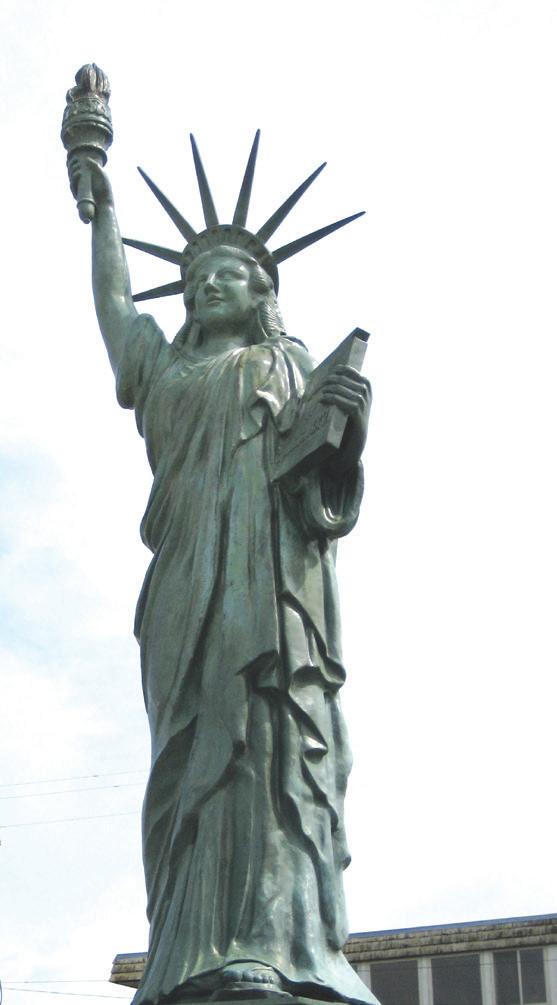
Southbound along California Avenue Southwest, the neighborhood’s main thoroughfare, storefronts and restaurants abound — from boutiques to a cool PCC Natural Market. The street intersects with its equally known counterpart Fauntleroy Way Southwest and curves down to the ferry terminal and one of West Seattle’s treasures: Colman Pool.
The historical swim center, which features a beautiful, original mural (restored in 2015), uses salt water pumped in from
Mashiko, 4725 California Ave. SW. This is Seattle’s the goto sushi parlor for anyone serious about sustainable fish. Reservations essential. Ideally, follow the advice of owner Hajime Sato and have the chef’s choice omakase.
Ma’Ono, 4437 California Ave. SW. This is a fine spot for brunch, for Hawaiian-style pu-pus (appetizers), and, of course, for fried chicken.
Salty’s, 1936 Harbor Ave. SW. This waterfront space can get overrun, but go anyway, for the view of the Seattle skyline across Elliott Bay and the (not inexpensive) weekend brunch.
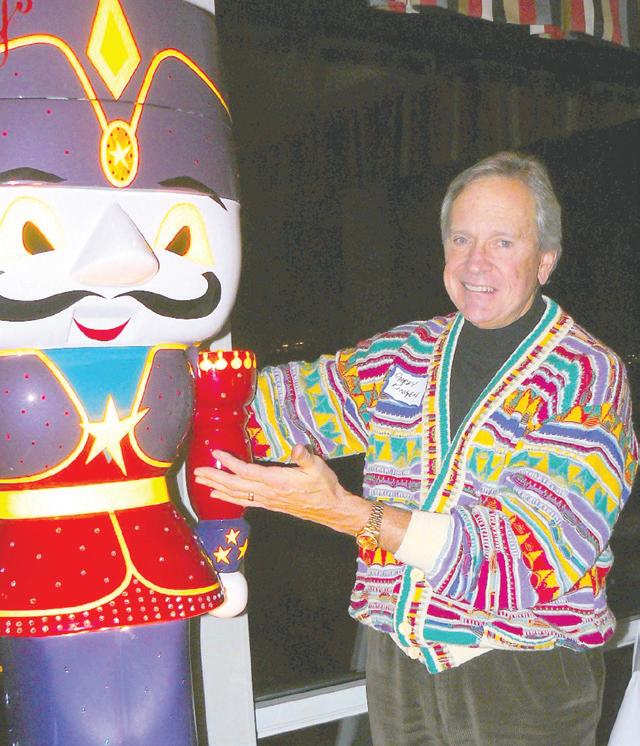
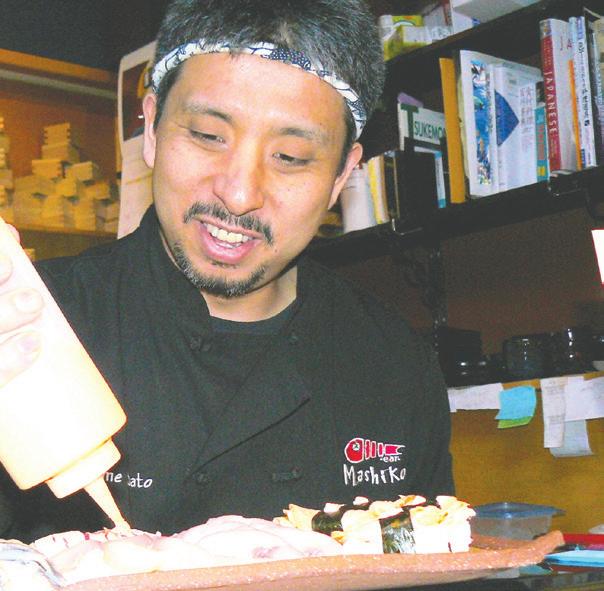
the neighboring ocean. The salty taste of the pool is barely noticeable and adds buoyancy. The Colmans — descendants of one of Seattle’s pioneer families — built the pool in 1941 and donated it to the city. It sits on the western edge of the equally awesome Lincoln Park. There is no parking nearby so one must take a short walk either from the south end near
the ferry terminal or from the east through the park to get there. But that just adds to the “throwback” experience. The park, meanwhile has several picnic tables, open areas as well as cool trails amid a forest of trees with peek-a-boo views of the Olympics. And at the playground at the south end of the park, there’s a zipline kids will love.
When ReachNow launched its self-described “premium free floating carshare service” back in April 2016, several Seattle neighborhoods were notably missing from the initial coverage home area of coverage.
Though members could reserve cars for up to 96 hours, and take them just about anywhere in that span, trips had to both start and end in an area that stretched from North 105th Street and Northgate Way to South Lander Street, and from 15th Avenue West to Lake Washington. That meant Magnolia and West Seattle residents, among others, were basically left out as the company tried to establish itself as a legitimate alternative to the likes of Car2Go and ZipCar.
Not anymore.
In May, the Seattle-based company announced its first expansion, extending the home area boundaries to South Orcas Street in Southeast Seattle, and Southwest Alaska Street in West Seattle, while adding all of Magnolia to the fold as well.
ReachNow CEO Steve Banfield said expansion was always in the company’s plans, but the timing had to be right, noting “cars don’t just show up magically,” and the rollout of additional service takes time.
“As we looked at the demand, look at the opportunity, it just made a lot of sense for us to go ahead and take the time to expand now,” said Banfield, who joined the company in May.
To that end, in line with the wider home area, ReachNow has also added 150 MINI Clubman vehicles to its fleet — which also includes the BMW 3 Series, electric BMW i3s, and two and for door MINI Hardtops — increasing the number of available cars on city streets to 520.
Before the expansion, Banfield said, Magnolia had been
basically cut off with the western boundary of 15th Avenue West.
“All of Magnolia was left in this no man’s land,” he said. “We really thought that adding Magnolia, giving people the chance to take a car home, to take a car into that neighborhood, which is such a vibrant and important part of the city, was really going to be something that we wanted to do.”
In its first month, more than 13,000 people registered for membership, though Banfield would not reveal further numbers since that announcement.
“We’re excited by the growth,” Banfield said. “It’s far exceeding any of our expectations.”
For some, he said, there may have been hesitancy to sign up because of the initial home area.
“I heard that there were some people that were holding off on signing up until we were going to be in there area, or neighborhood,” he said.
Lifetime registration for the service is $39, while vehicles are charged 49 cents per minute while being used and $0.39 per minute parked. However, the program is still offering free registration and a discounted rate of 41 cents per minute for vehicle use as a promotional rate. The price is capped at $50 for three hours, $80 for 12, and $110 for a full day.
Banfield said more expansion is on the way, and emphasized ReachNow’s status as a “hometown company,” with its North American headquarters in Belltown.
“Seattle’s not just a town for us,” he said. “It’s our home.”
This article was originally written by Joe Veyera for Queen Anne & Magnolia News
ZIP: 98112, 98122, 98144
BOUNDARIES:
North: Foster Island in Washington Park Arboretum, Lake Washington
South: Leschi’s boundaries run south to about S. Norman St.
West: 23rd Ave. E. through Madison Valley, then Martin Luther King Jr. Way through Leschi
East: Lake Washington
Fine Linens
Antica Farmacista
Simon Pearce Match
Karen Lee Ballard
Votivo • Gien
Le Jacquard Francais
Arte Italica
Bridgewater • Juliska
Madison Park • 4218 East Madison St. 206-568-0347
Ah, Seattle’s “Gold Coast”: Where the city’s affluent lead quiet lifestyles by the shore of Lake Washington.
Of course, that all changes when Seafair’s in session. Then the lake becomes prime real estate for watching hydroplane races, or the airborne acrobatics of the Blue Angels.
Southeast-Central Seattle was once a sleepy and blue collar bedroom community, but the latter half of the 20th century saw considerable wealth migrate into Madison Park, Madison Valley, Madrona and Leschi.
Madison Valley is home to the Washington Park Arboretum, which contains 230 acres of lush greenery and trails in the middle of the city. It’s a place you can go boating, go for a swim, have a picnic and enjoy unrestricted views of Mount Rainier. On a winter night, you can relax and watch the annual Argosy Christmas Ships Festival light up glassy Lake Washington.
Madison Park Beach is a popular destination east of the Broadmoor Golf Club, where one can just chill on the lawn or leap into the lake to cool off. The area is also home to Viretta Park where grunge icon Kurt Cobain is memorialized with a wood and metal bench, nicknamed “Kurt’s Bench.”
Madison Park Beach is a popular destination east of the Broadmoor Golf Club, where one can just chill on the lawn or leap into the lake to cool off. The area is also home to Viretta Park where grunge icon Kurt Cobain is memorialized with a wood and metal bench, nicknamed “Kurt’s Bench.”
Madison Park Beach is a popular destination east of the Broadmoor Golf Club, where one can just chill on the lawn or
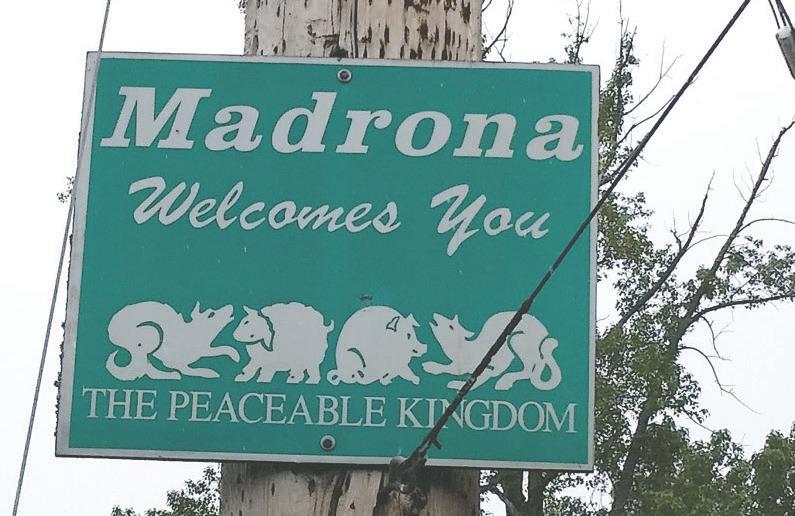
leap into the lake to cool off. The area is also home to Viretta Park where grunge icon Kurt Cobain is memorialized with a wood and metal bench, nicknamed “Kurt’s Bench.”
Madisoners celebrate the neighborhoods’ French heritage every July with the Bastille Day Festival. Yet the establishment of the modern Madison area was the doing of the former Illinois entrepreneur, Judge John J. McGilvra who established the area after the Duwamish people. McGilvra bought 420 acres in Madison Park in the 1860s, paying just $5 an acre. He cut a straight path to the land from central Seattle, a path recognized today as Madison Street. McGilvra sold his land in lots and helped establish a trolley line, the Madison Street Cable Railway Co.
For the most part, these neighborhoods are relaxed — the type of place a tatted up 20-something would definitely stand out. But each year these otherwise quiet places get loud when Lake Washington Boulevard becomes part of the Seattle Marathon route. Each year, residents set up tables of water or stand and cheer passing runners and walkers.
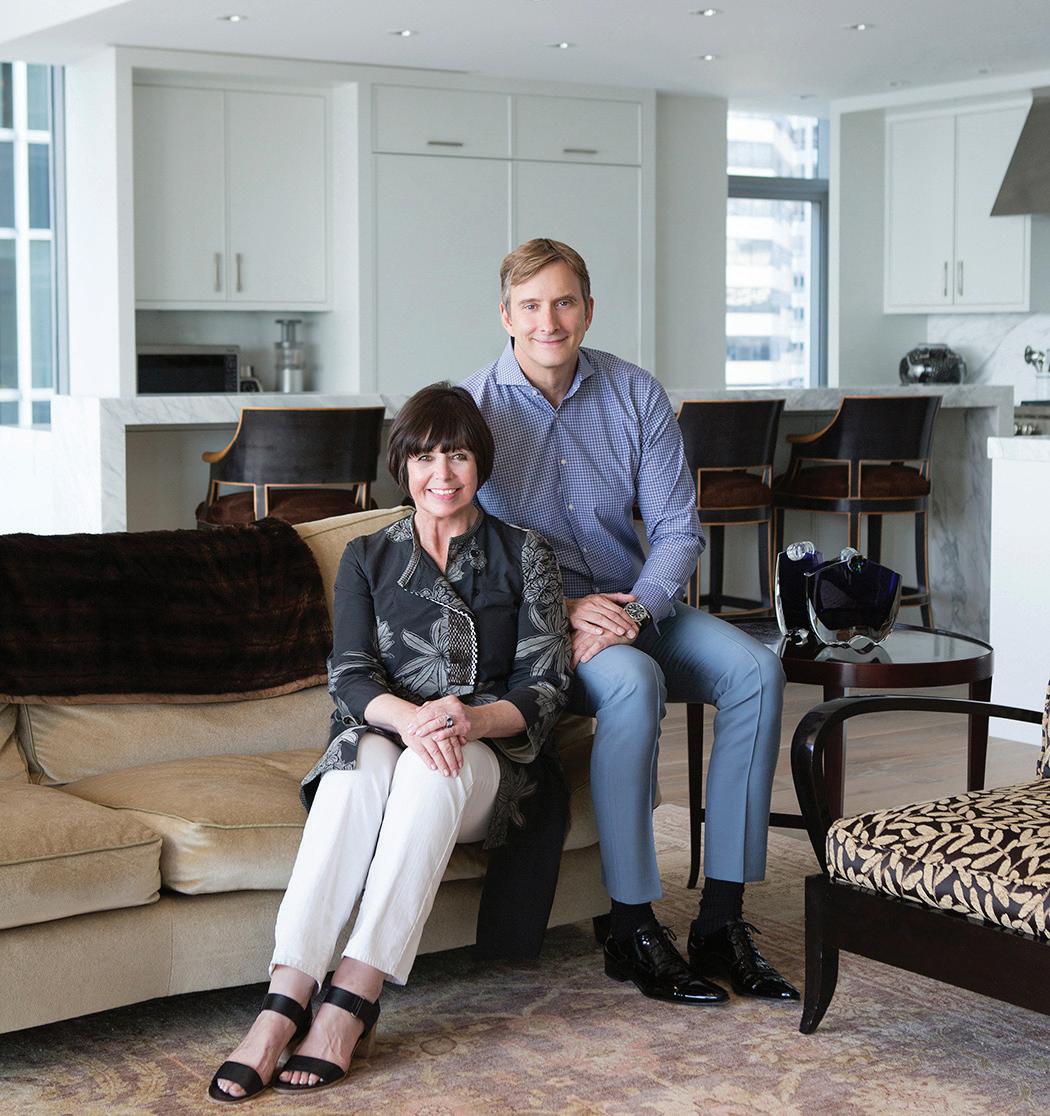
MADISON PARK / MADISON VALLEY / MADRONA / LESCHI
Vendemmia, 1126 34th Avenue, in the heart of Madrona, features handmade pasta from Brian Clevenger, an alum of Ethan Stowell’s restaurant group. The Chef’s Counter special is well worth the commitment.
Harvest Vine, 2701 E. Madison St. Seattle is blessed to have this serious, hardworking example of Spanish cuisine from the Basque Country. Small plates (tapas) are quite sophisticated.
Cafe Flora, 2901 E. Madison St. The city’s foremost vegetarian restaurant. The sort of place you can go, even if you’re a carnivore, and enjoy the mushroom burger.
Luc, 2800 E. Madison. An unpretentious French restaurant with a strong neighborhood following. Onion soup, beef bourguignon, pôt de crème, from Thierry Rautureau, Seattle’s famous “Chef in the Hat.” (If you can’t get in, try the French-style café, Voilà! Bistrot or the Italian-themed Bar Cantinetta, both just across the street.)
Red Cow, 1423 34th Ave. Ethan Stowell’s outpost in Madrona offers several imaginative variations on steak-frites. (If you can’t get in, don’t despair; try St. Cloud’s in the next block.)
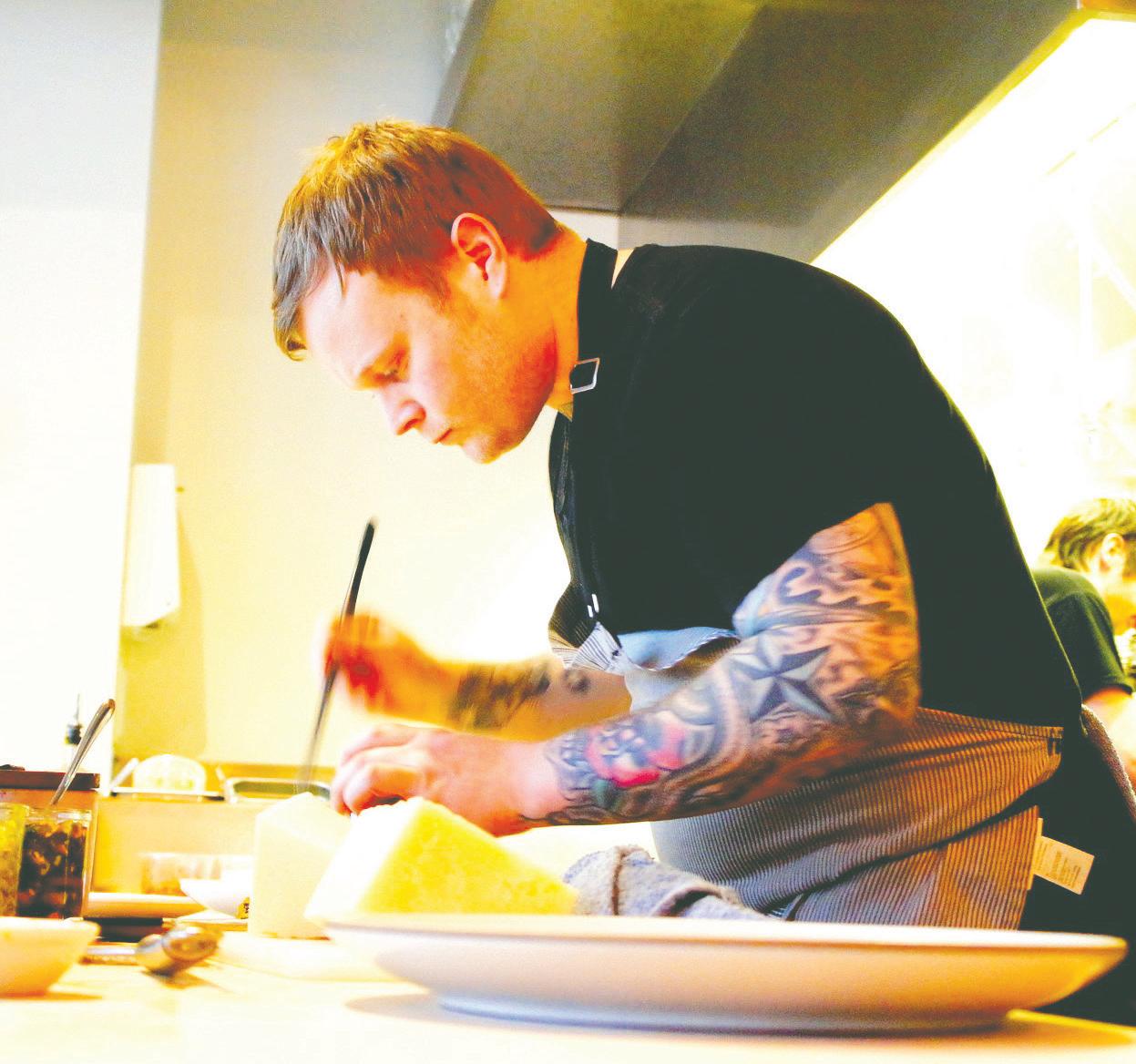


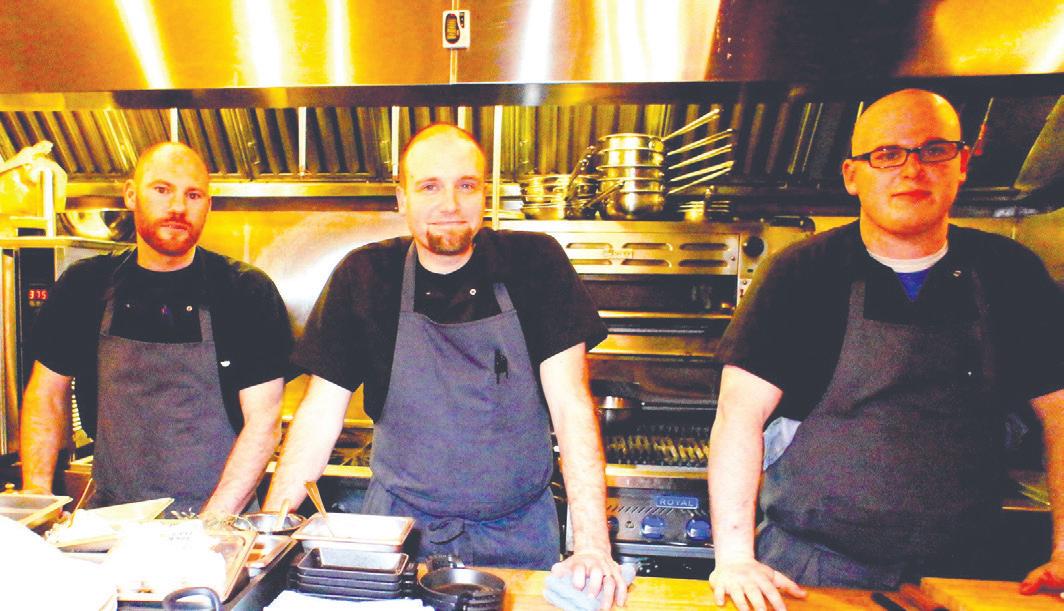
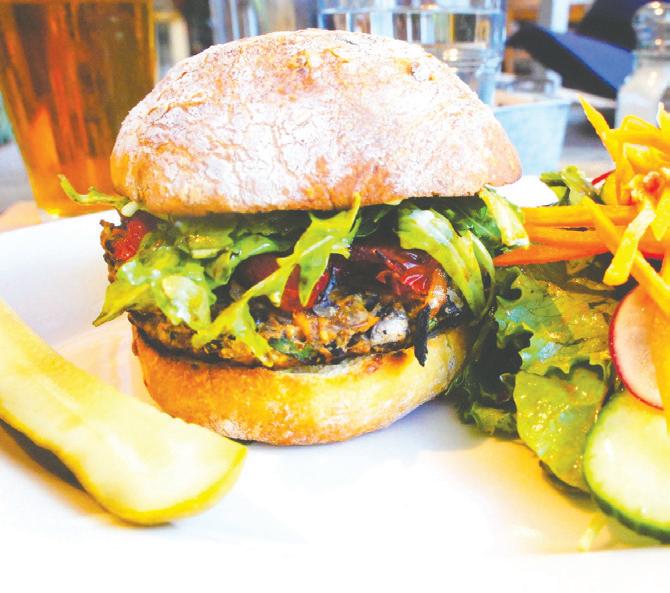
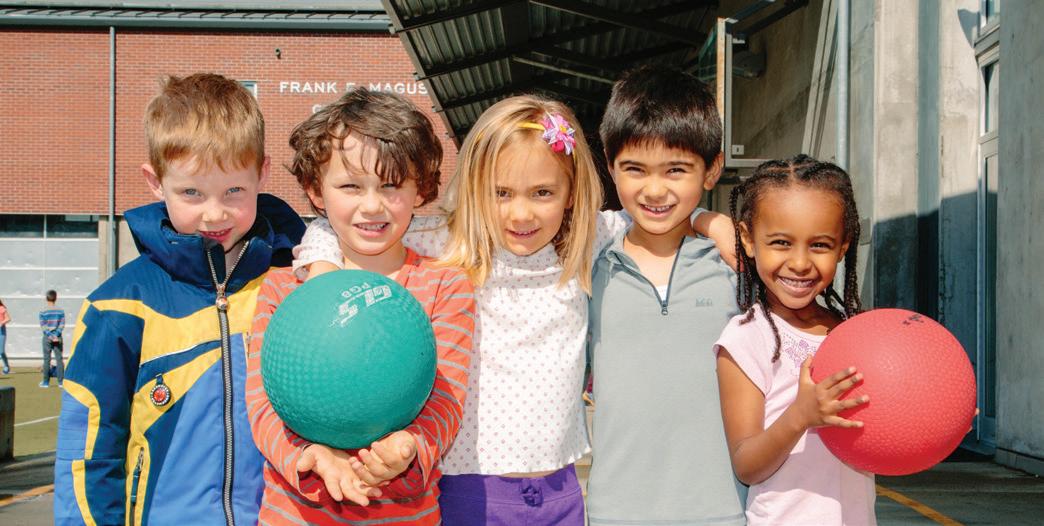
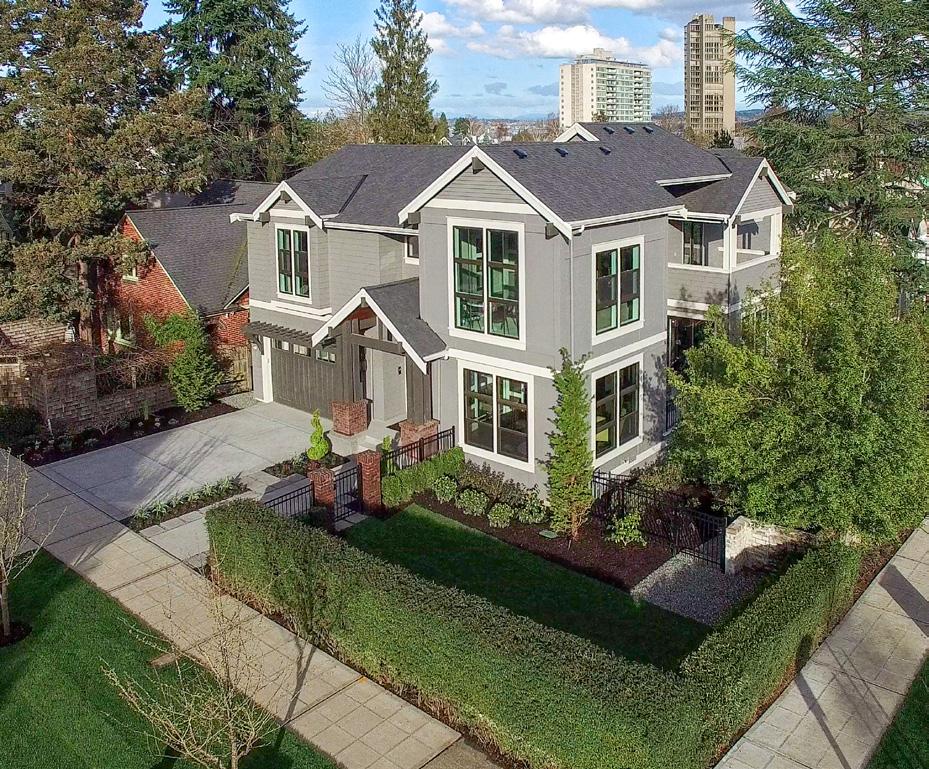
Middle School Open House (Grades 6–8)
Thursday, November 3
Upper School Open House (Grades 9–12)
Wednesday, November 9
Lower School Open House (Grades K–5)
Saturday, November 19
Kindergarten Information Evening
Monday, December 12 | Parents only
By Joe Veyera
A trip to Queen Anne or Magnolia is much like a trip to a small town. Each has a bustling main thoroughfare of retail, a bevy of dining options and a number of coffeeshops, good neighborhood schools, a community center, a weekly farmers market, a bookstore, and plenty of parks and green space.
With few exceptions, all the necessities of day-to-day life are within close range.
Indeed, these two neighborhoods that most would offhandedly describe as merely residential have a lot in common, but each provide a different flair that warrant a visit.
Queen Anne has increasingly become a dining destination, with newcomers like Eden Hill (run by Chef Maximillian Petty)
ZIP: 98199
BOUNDARIES:
North: Salmon Bay and the Fremont Cut
South: Elliott Bay Park
West: Elliott Bay East: 15th Avenue NW
ZIP: 98119 (Western Queen Anne), 98109 (Eastern Queen Anne)
BOUNDARIES:
North: Lake Washington Ship Canal
South: Denny Way
West: Elliott Avenue West
East: Shores of Lake Union and Westlake Avenue North
joining the more established options like Ethan Stowell’s How to Cook a Wolf, and longtime favorites like the Paragon Bar & Grill and the 5 Spot. But for every local restaurant there’s seemingly at least one small, locally-owned shop or service also worth a stop. Blue Highway Games runs the gamut with board and card game options for all ages, Queen Anne Frame & Avenue Arts seamlessly integrates its picture framing business with a gift shop, and both Three Birds Home and Gifts and Queen Anne Dispatch stand as their own unique outlets. Queen Anne Book Company brings a bevy of authors through their doors each year for readings and special events, as a worthwhile way to spend an evening.
And for all of the overarching perks of Queen Anne, much of the same goes for Magnolia (with its own twist). While Queen Anne has the Avenue, Magnolia has the Village, where for every meal option like El Ranchon, Rogo’s, and the new Petit Pierre Bakery (a French outlet run by a pair of former Parisians), there’s a quaint shopping outlet. This includes the Magnolia Garden Center, The Brik Boutique, and another recent addition to the neighborhood, Modele’s Home Furnishings.
Also worth a mention is the nautical flair of Fishermen’s Terminal. As the home of the North Pacific Fishing Fleet, vessels move in and out as passersby stroll the stretch of retail and restaurants at the dock. It all comes together in a quintessentially Seattle display with the Fishermen’s Fall Festival, which celebrates the return of the fleet with a day of live music, demonstrations, fresh seafood, and community.

Fishermen’s Terminal also straddles the area between Magnolia and Queen Anne known as Interbay. Despite its reputation as an industrial expanse down 15th Avenue West, Interbay has become a destination all its own, with the Jan
206-949-4526
JanSlawson.com jslawson@windermere.com
Continued on page 56
Where else would you find the Grey’s Anatomy house? The fictional living place for the interns is found at the following coordinates: 47°37’49”N 122°21’39”W on historic Queen Anne Hill.The fictional address on the show is at 613 Harper Lane. But there is no such street on Seattle’s Queen Anne Hill.
Vera Project inspires youths to participate in live music
By Joe Veyera
Most clubs stay open because they make more money off of beer than tickets, but The Vera Project (305 Harrison St.) has managed to keep itself in the local music scene for more than a decade, and it’s still alcohol-free.
The Vera Project is an all-ages, volunteer-run music venue in Uptown. It started in 2001, when a group of people aimed to overturn the Teen Dance Ordinance, the law that made it difficult for people under 21 to see live music in Seattle.
“The Teen Dance Ordinance required a ridiculous amount of additional insurance, security and a lot of other measurements.” said Tim Lennon, executive director of The Vera Project.
The Vera Project founders had two objectives: one was to change the law, and the other was to create an alcohol- and drug-free space for people to enjoy music, Lennon explained.
The Vera Project and other advocates successfully repealed
the Teen Dance Ordinance in 2002. The Vera Project remains to support all-ages music concerts.
Their members believe that age shouldn’t be a barrier to love and enjoy music and art.
“Because we believe that there’s no significant distinctions between someone who’s 16 and a fan of the music, and someone who’s 40 and a fan of the music,” “We do intentionally say all-ages to make everybody feel welcome,” said program and membership manager Elizabeth Maze. “But a big part of the work we do is engaging young people and giving them leadership development skills.”
Lennon pointed out that most people only see the singers or musicians on the stage in a show. But the large
Continued on page 53

Canlis, 2576 Aurora Ave. N. Let’s get this out of the way: deservedly the most famous restaurant in town, with an ambitious tasting menu of contemporary Northwest cuisine. Award-winning wine list, exquisite service. Elegant décor, dressy clientele.
Mondello, 2425 33rd Ave. W. A totally authentic, family-run Sicilian spot where Mamma makes everything: bread, pastas, sauces, desserts. The lasagna is nationally famous, the gnocchi are ethereal. Tiny-tiny, so let them know you’re coming.
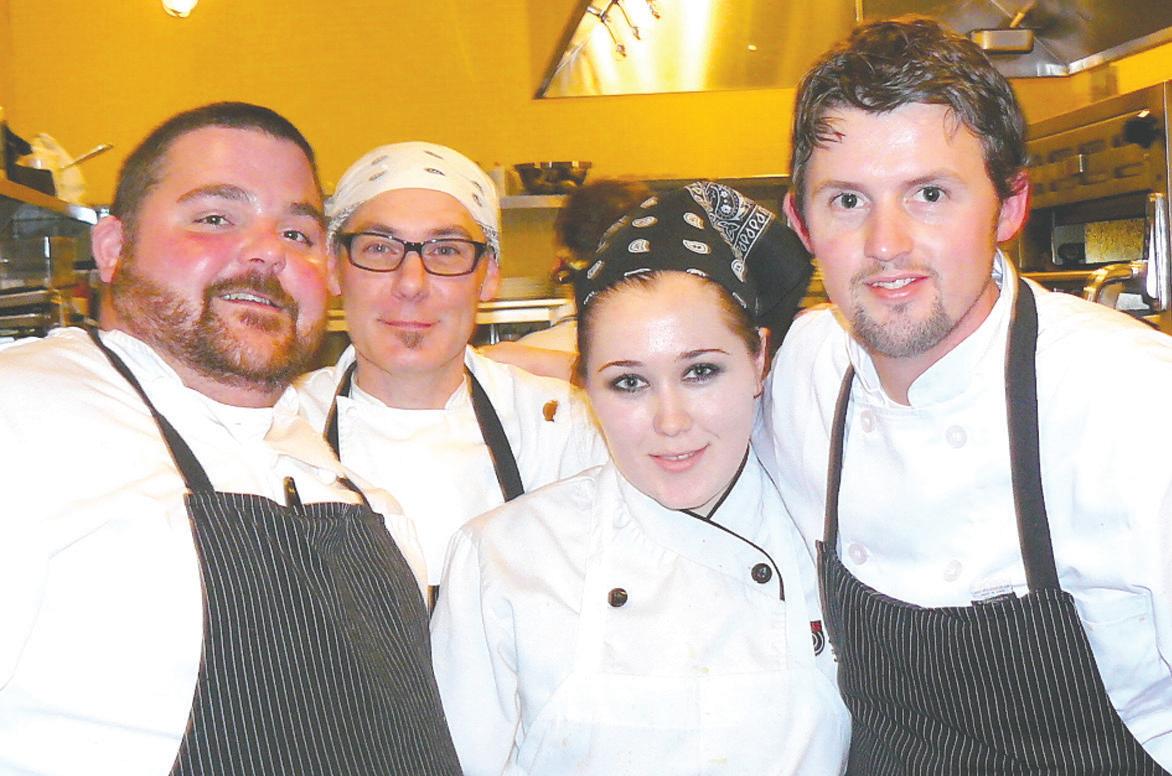
Toulouse Petit, 601 Queen Anne Ave. N. A block from Seattle Center, this spot named for a street in New Orleans starts early (beignets, Eggs Benedict) and continues through late-night. Always full, always pulsating.
LloydMartin, 1525 Queen Anne Ave. N. Atop the “counterbalance,” Sam Crannell and his small staff turn out soul-satisfying dishes like spaghetti with Wagyu meatballs, lamb pappardelle, and oxtail with polenta.
Eden Hill, 2209 Queen Anne Ave. N. Chef Maximilien Petty is the quiet superstar who runs this place virtually singlehanded. Go for the five-course tasting menu.

Continued from page 51
crew behind the scene who have full-time, year-round employment creating culture often are unnoticed.
“We don’t teach people how to play guitar or how to sing here,” Lennon said. “We teach people how to run the stage, the venue, how to create a whole show, how to market a whole show. There are a lot of people who can play a guitar well, but not as many people who can run a show well. We’re filling that gap.”
The Vera Project’s audiences see the behind-the-scene volunteers, and many decide to become part of it, Lennon said. They take a class at The Vera Project, and a couple months later, they can run the soundboard.
Maze herself started volunteering at the Vera Project after attending her first concert when she was 13.
“Vera gave me my start in the audio community,” Maze said. “It was always something I was interested in the local music scene, but it also felt very distant and unapproachable. [Vera] is kind of demystifying this whole performance aspect.”
Maze then became an intern and eventually a core staff member after attending school for audio and radio.
“Over half of my life, I’ve been involved with Vera one way or another,” she said.
High school student Jessica Schollmeyer also started volunteering after attending her first concert at The Vera Project.
“There’s not a lot of all-ages, all-accessible art and opportunities for people to get involved in the area,” Schollmeyer said. “Vera is a very safe place to go out of your comfort zone to see what you want to get involved in. That impacts the community because it provides access.”
Young people’s opinions are often devalued in adultdominated music scene, Maze said. The Vera Project staff do a lot of the back-end work to let young people’s opinions be heard.
Since “it’s mostly volunteer-run, it means everyone is included in the decision-making process,” said Sydney Bolton, another high school volunteer. “It’s a place for people like me to be heard.”

This story was originally written by Tina Lu for City Living Seattle.
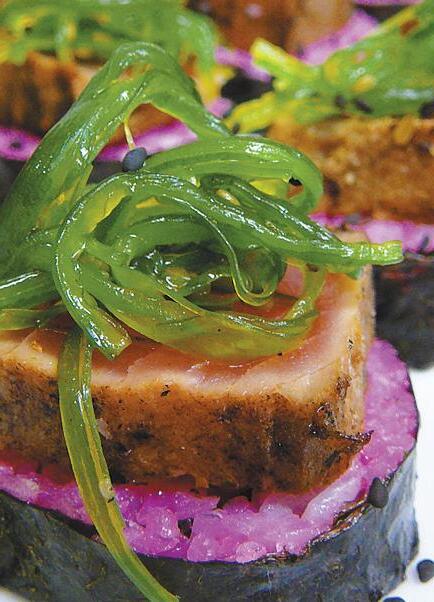
• Chamber Board Meetings 2nd Tuesday of the month
• Chamber General Meetings 4th Tuesday of the month
• Halloween October 31st 4 to 6pm Winterfest/Small Business Saturday November 26th, 4 to 8pm
• Springfest April
• Summerfest August 4th - 6th
• Fallfest September



Magnolia Office 3300 W. McGraw, Suite 102 Seattle, Washington 98199
Office (206) 352-5960
Direct (206) 297-2831
Cellular (425) 269-1554
Fax (206) 352-5962
heather.ussery@peoplesbank-wa.com
NMLS#875325
from page
Interbay Golf Course the main attraction for many, and the Interbay P-Patch a somewhat hidden gem despite being one of the city’s largest community gardens.
Speaking of green space, Kerry Park provides the iconic postcard view of the skyline from the top of Queen Anne, while the expansive Discovery Park in Magnolia provides a welcome reprieve from the hustle and bustle of urban life. The city’s largest public park is also considered one of the best to view wildlife, with hundreds of species of bird known to call it home.
No conversation about these three neighborhoods is complete without mentioning the area just down the hill from Queen Anne: Uptown, another increasingly burgeoning area. Of course, the biggest attraction at the base of the hill is one that’s been there for over a half-century.
That brings us to Seattle Center.
Nearly 60 years after it hosted the World’s Fair, the campus has experienced a revitalization of sorts in recent years, with the opening of Chihuly Garden & Glass and addition of radio station KEXP — and plenty of live music — to the site to accompany other attractions like the Pacific Science Center, the Experience Music Project and, of course, the Space Needle. Most weekends throughout the summer, the Center is bustling with events like the Bite of Seattle and Bumbershoot.


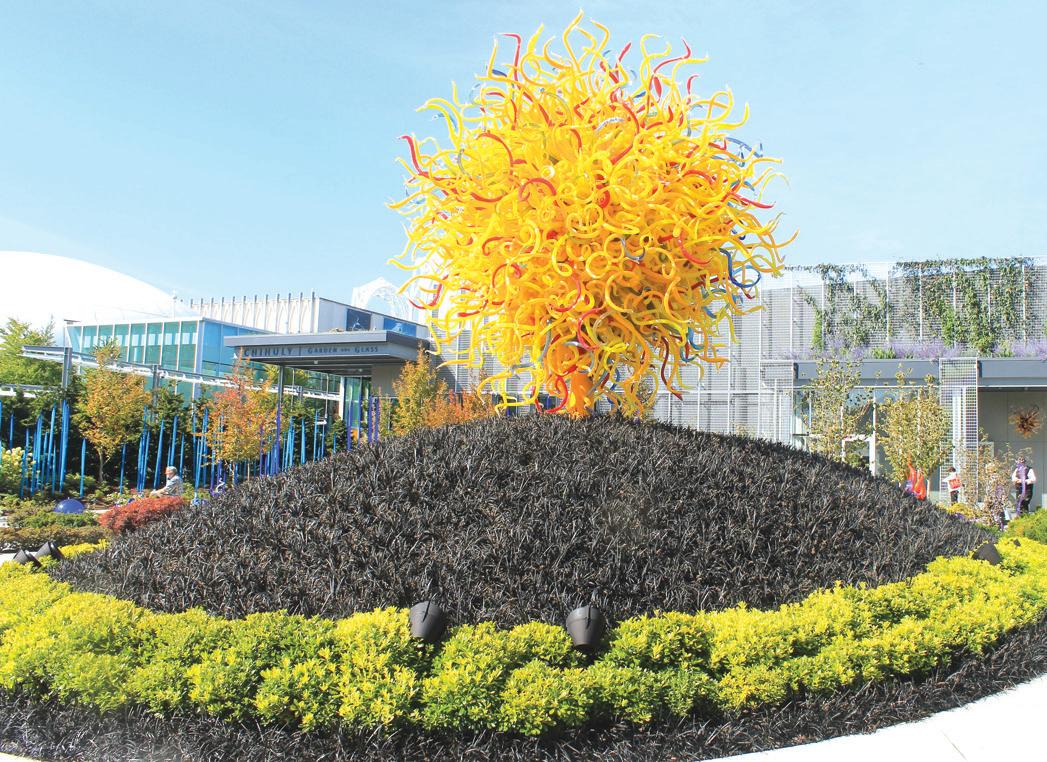
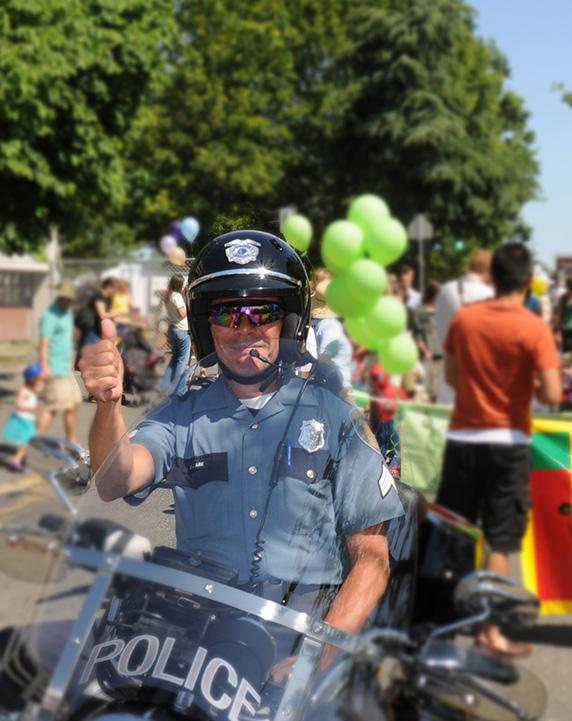
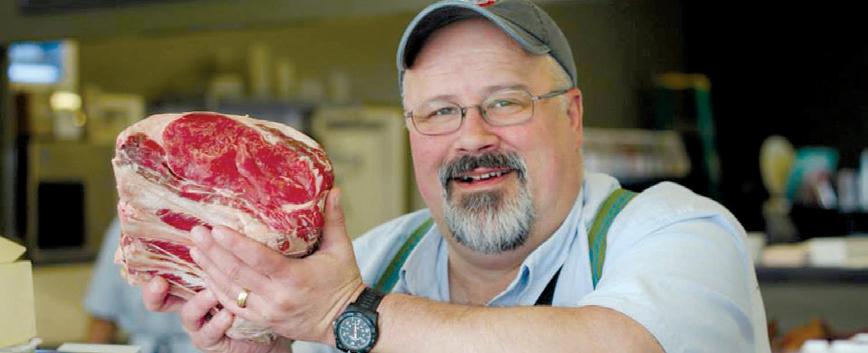
Established in 1920, Virginia Mason Health System in Seattle began as a clinic and 80-bed hospital with six physician offices. It was named for the daughters of James Tate Mason, MD, and John M. Blackford, MD, who co-founded the clinic with radiologist Maurice Dwyer, MD. The founders’ vision was to provide a single place where patients could receive comprehensive medical care, a “one-stop shopping” place for virtually any medical problem or need.
Today, Virginia Mason is recognized as one of the top medical and research centers in the nation.
The organization encompasses more than 450 physicians; Virginia Mason Hospital in Seattle’s First Hill neighborhood; a network of outpatient medical facilities in Seattle, Bellevue, Bainbridge Island, Federal Way, Issaquah, Kirkland and Lynnwood; Bailey-Boushay House, a nursing residence and chronic care center for people with AIDS and other illnesses; Benaroya Research Institute, which is dedicated to eliminating
HARBORVIEW MEDICAL CENTER is the only designated Level I adult and pediatric trauma and burn center in the state of Washington and serves as the regional trauma and burn referral center for Alaska, Montana and Idaho. Harborview also serves as the Disaster Medical Control Center for Seattle/King County.
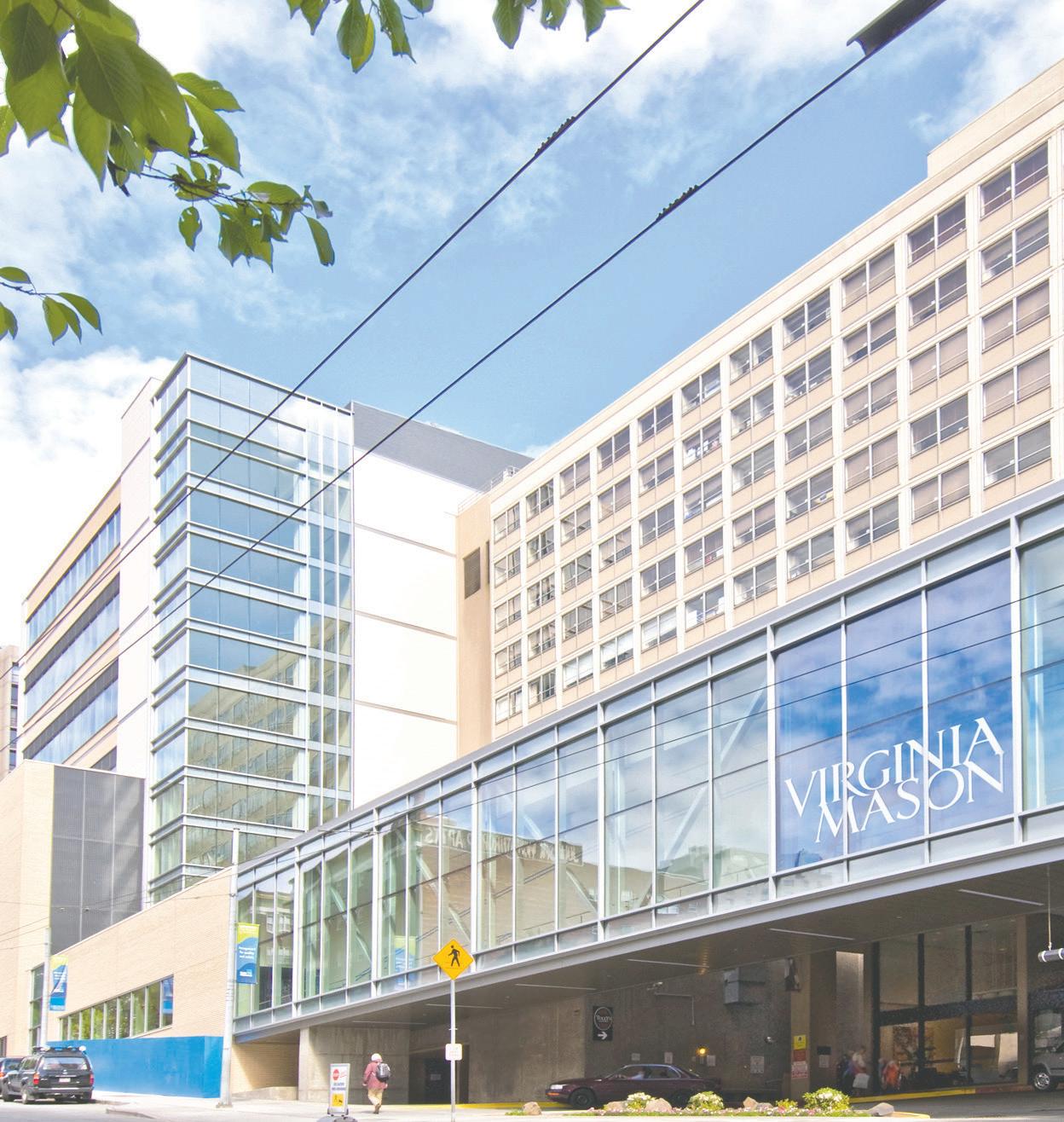
autoimmune diseases such as type 1 diabetes, arthritis, lupus and multiple sclerorsis; the Virginia Mason Institute, which teaches health care professionals around the world how to improve care delivery, quality and safety by using principles of the innovative Virginia Mason Production System; and Yakima Valley Memorial Hospital and its affiliated clinics.
Virginia Mason’s comprehensive medical and surgical services include primary care; emergency and urgent care; dialysis; pediatrics; women’s health; orthopedics and sports medicine; and a wide range of specialty care at its Cancer Institute, Heart Institute, Digestive Disease Institute, Neuroscience Institute, Benaroya Diabetes Center, and the Center for Hyperbaric Medicine.
“Virginia Mason was founded on the belief that doctors working together as an integrated care team would provide better and more comprehensive health care than doctors working alone,” said Chairman and CEO Gary S. Kaplan,
CENTER is a full-service, nonprofit community hospital, offering comprehensive medical, surgical and therapeutic services. Our Seattle Breast Center is one of only a few in the area to offer all-digital mammography, boardcertified breast radiologists, and breast MRI and MRI biopsy all under one roof.
MEDICAL CENTER is one of the nation’s leading academic medical centers, which provides highly specialized medical care in areas such as cardiology, highrisk pregnancy and neonatal intensive care, oncology, orthopaedics and organ transplantation. UW Medical Center partners with the Fred Hutchinson
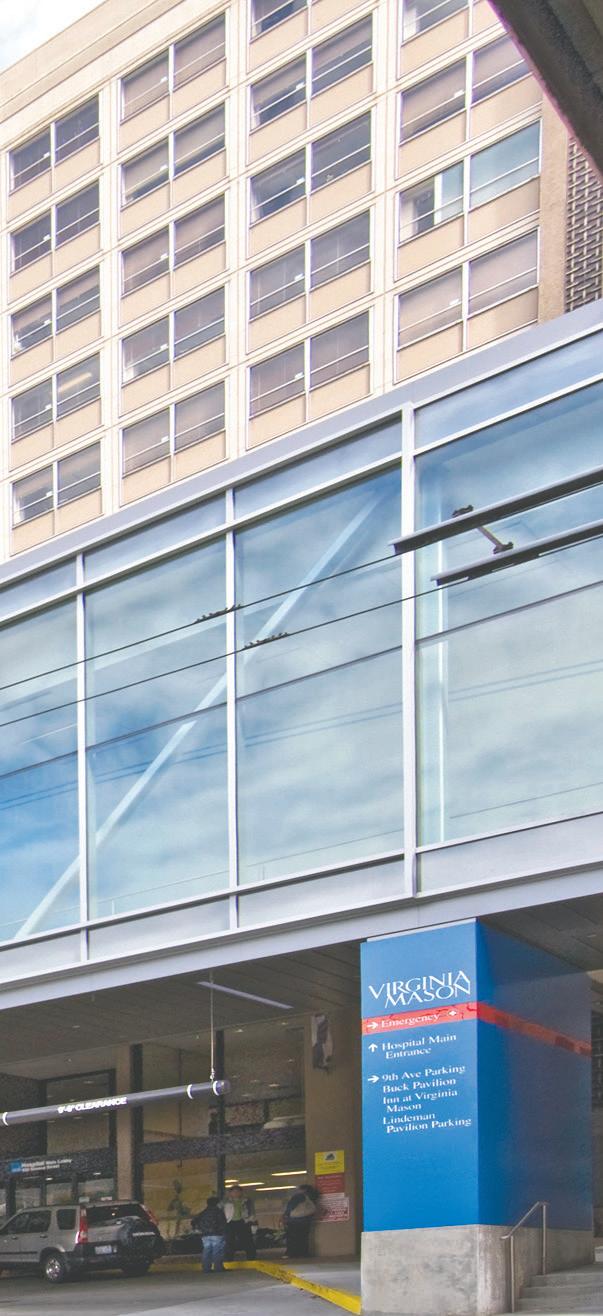

MD. “Soon thereafter, teamwork with nurses, pharmacists, therapists and many others proved critical to the teamwork that characterizes care at Virginia Mason. Over the years, we’ve continued to expand our notion of team to include the entire care team along with support teams, and now patients and families, who all work together to ensure a remarkable patient experience.”
For example, survival rates for a variety of cancers treated at the Floyd & Delores Jones Cancer Institute at Virginia Mason are among the best in the United States, data shows. Fiveyear survival rates for patients with esophageal and pancreatic cancer are nearly double the national averages.
Virginia Mason was named a 2015 Top Hospital by The Leapfrog Group, a coalition that advocates for greater health care transparency, safety, quality and affordability. This is the
Continued on page 60
Seattle Children’s Hospital, Foundation and Research Institute together deliver superior patient care, advance new discoveries and treatments through pediatric research, and raise funds to create better futures for patients. Consistently ranked as one of the top 10 children’s hospitals in the country by U.S. News & World Report, Seattle Children’s Hospital specializes in meeting the unique physical, emotional and developmental needs of children from infancy through young adulthood. Through the collaboration of physicians in nearly 60 pediatric subspecialties, Seattle Children’s Hospital provides inpatient, outpatient, diagnostic, surgical, rehabilitative, behavioral, and emergency and outreach services to families from around the world.
Located in downtown Seattle’s biotech corridor, Seattle Children’s Research Institute is pushing the
Continued on page 60
Cancer Research Center and Seattle Children’s through the Seattle Cancer Care Alliance to provide the most advanced cancer diagnosis and treatment available.
All are entities of UW Medicine.
SWEDISH MEDICAL CENTER is the largest nonprofit health care provider
in the greater Seattle area with five hospital campuses: First Hill, Cherry Hill, Ballard, Edmonds and Issaquah. Swedish’s innovative care has made it a regional referral center for leadingedge procedures such as robotic-assisted surgery and personalized treatment in cardiovascular care, cancer care,
neuroscience, orthopedics, high-risk obstetrics, pediatric specialties, organ transplantation and clinical research. Swedish is affiliated with Providence Health & Services, a Catholic, not-forprofit organization founded by the Sisters of Providence in 1856.
Continued on page 60
Continued from page 59
10th consecutive year Virginia Mason has received the honor. In 2010, Virginia Mason was named “Top Hospital of the Decade” by The Leapfrog Group, and is the only hospital in the U.S. to be named a Top Hospital every year since 2006.
Virginia Mason is also designated as one America’s 100 Best hospitals by Healthgrades, an online information resource about U.S. physicians and hospitals. With this designation, Virginia Mason ranks among the top 2 percent of U.S. hospitals. Virginia Mason also received Healthgrades’ Specialty Excellence Award for cardiac, pulmonary, gastrointestinal, general surgery and critical care, placing it among the top 5 percent nationally for these services.
With its Patient Cost Estimator service, Virginia Mason is one of the few medical centers in the nation that provides individuals with an estimate of their out-of-pocket cost for services and procedures before the services and procedures are performed.
“Teamwork, integrity, excellence and service – these are the attributes that guide our everyday work,” Dr. Kaplan said. “They were important to our founders 96 years ago, and they remain just as relevant today.
Virginia Mason is online at VirginiaMason.org. Schedule an appointment by calling (206) 223-6881 or (888) 862-2737 toll-free. Most medical insurance cards, including Medicare and Medicaid, are accepted.
Continued from page 59
boundaries of medical research to find cures for pediatric diseases and improve outcomes for children all over the world. Internationally recognized investigators and staff at the research institute are advancing new discoveries in cancer, genetics, immunology, pathology, infectious disease, injury prevention, bioethics and much more.
Seattle Children’s Hospital and Research Foundation and Seattle Children’s Hospital Guild Association work together to gather community support and raise funds for uncompensated care, clinical care and research. The foundation receives nearly 80,000 gifts each year, from lemonade stand proceeds to corporate sponsorships. Seattle Children’s Hospital Guild Association is the largest all-volunteer fundraising network for any hospital in the country, serving as the umbrella organization for 450 groups of people who turn an activity they love into a fundraiser. Support from the foundation and guild association makes it possible for Seattle Children’s care and research teams to improve the health and well-being of all kids.
For more information, visit seattlechildrens.org or follow us on Twitter, Facebook and Instagram.
Continued from page 59
SEATTLE CANCER CARE ALLIANCE represents an alliance of partners who’s vision in 1998 was to lead the world in translating scientific discovery into the prevention, treatment, and cure of cancer. It is the same vision that inspires our work today. Our three visionary partners:
FRED HUTCH and its innovative and driven research teams.
SEATTLE CHILDREN’S and its compassionate pediatric experts. UW MEDICINE and its nationally recognized physicians.
SCCA Locations are South Lake Union, UW Medical Center, EvergreenHealth, UW Medicine’s NW Hospital and Seattle Children’s.
KEY RESOURCES
COLUMBIA CITY BUSINESS ASSOCIATION www.columbiacity seattle.com
HILLMAN CITY BUSINESS ASSOCIATION www.facebook.com/ HillmanCityBusiness Association
MARTIN LUTHER KING BUSINESS ASSOCIATION www.mlkba.org
NORTH BEACON HILL COUNCIL www. northbeaconhillcouncil.org
RAINIER CHAMBER OF COMMERCE www.rainierchamber.com
SOUTH BEACON HILL NEIGHBORHOOD COUNCIL www.neighborhoodlink. com/S_Beacon_Hill
SOUTHEAST EFFECTIVE DEVELOPMENT www.seedseattle.org
CITY/EMERGENCY
SOUTH PRECINCT
3001 S. Myrtle St. (206) 386-1850 — Mike Nolan, captain
SOUTH SEATTLE CRIME PREVENTION COUNCIL
Meets first Wednesday, 7-8:30 p.m. at Southeast Senior Center, 4655 S. Holly St. www.columbiacitizens.net/ sscpc:welcome
CRIME PREVENTION (206) 386-9766 — Mark Solomon, coordinator
FUNFACTS - BEACON HILL
Beacon Hill was originally named “Greenish-Yellow Spine” by the Duwamish Indian tribe, but that name did not stick.
FUNFACTS - GEORGETOWN
What was once the world’s sixth largest brewery (the source of Rainier Beer) as hops grew well in the fertile soil of the area that had once been covered by the Duwamish River.
ZIP: 98108
BOUNDARIES:
Georgetown is bordered on the north by the mainlines of the BNSF Railway and Union Pacific Railroad, on the west by the Duwamish River, on the east by Interstate 5 and on the south by Boeing Field. Despite being surrounded on all sides by industry and major transportation corridors, Georgetown is becoming an oasis of residences and businesses.
ZIP: 98118, 98108, 98144, 98134, 98178, 98168
BOUNDARIES:
North: Dearborn Street East: Lake Washington West: I-5, plus Georgetown, which lies to the west of I-5 South: The city line
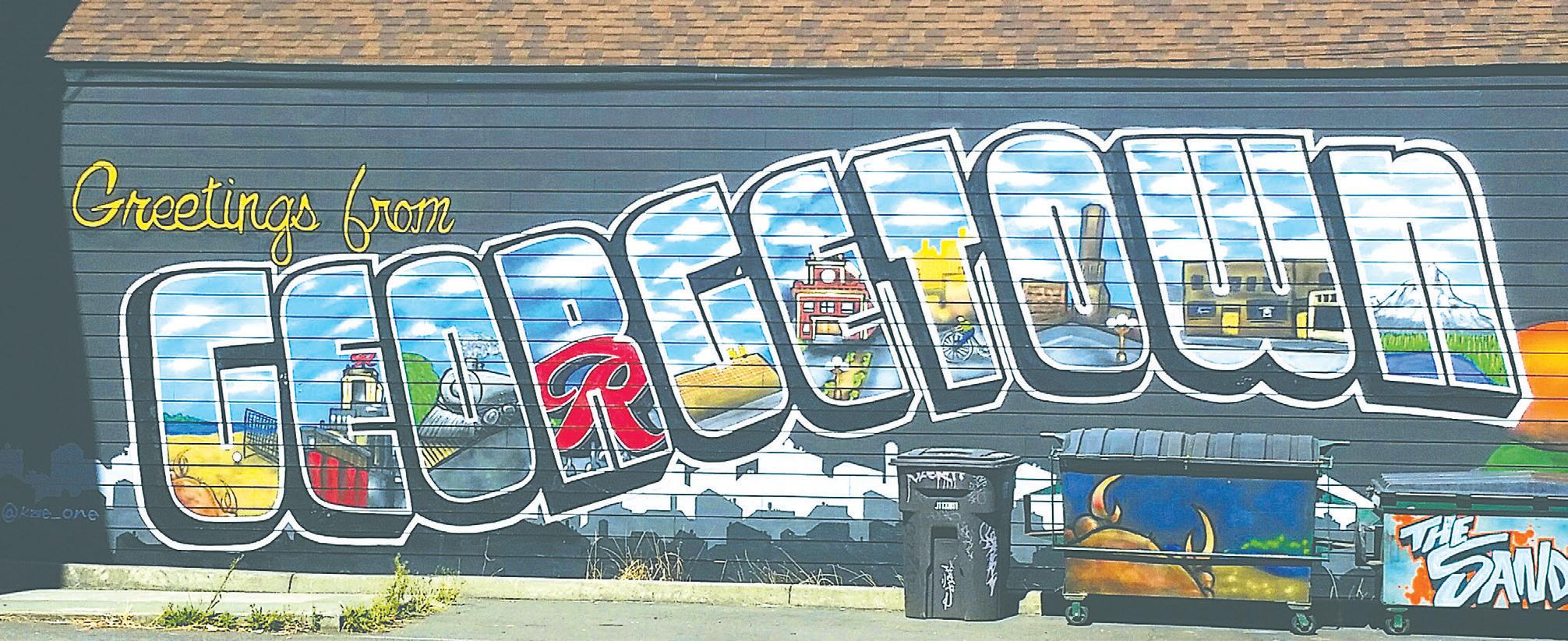
La Medusa, 4857 Rainier Ave. S. A Mediterranean restaurant owned by longtime employees who bought the place when the proprietors retired. The chalkboard menu features Sicilianinfluenced appetizers and pastas.
Salted Sea, 4915 Rainier Ave. S. A relatively new seafood bar in the heart of Columbia City, but with a Vietnamese twist.
Bar del Corso, 3057 Beacon Ave. S. One of the best independent pizza parlors in town, but it hardly ends there. Roman street food like suppli (rice balls), grilled octopus, house-made Calabrian sausage. Owner and chef Jerry del Corso is a local lad, with his wife, Gina, contributing the Italian creativity.
Fonda La Catrina, 5905 Airport Way S. This lively, south-ofthe-border spot in the industrial Georgetown neighborhood offers contemporary Mexican dishes alongside a broad selection of tequilas.
The Corson Building, 5609 Corson Ave. S. Communal dining on Saturdays and Sundays, served family style. This can be great (new friends!) or a nightmare (getting the smallest portion!), so you might want to try Thursday or Friday instead for an à la carte experience. Inventive and imaginative, if you’re on chef Matt Dillon’s wavelength, borderline insufferable if it’s not your thing. Dillon has a couple of more accessible places in Pioneer Square (London Plane) and Capitol Hill (Sitka & Spruce).
Hitchcock Deli, 6003 12th Ave S. Yes, sandwiches. The chef has a high-end restaurant on Bainbridge Island, but lunch here doesn’t require a ferry ride. Corned beef brisket with Swiss cheese, pickles and mustard on rye. How can you say no?

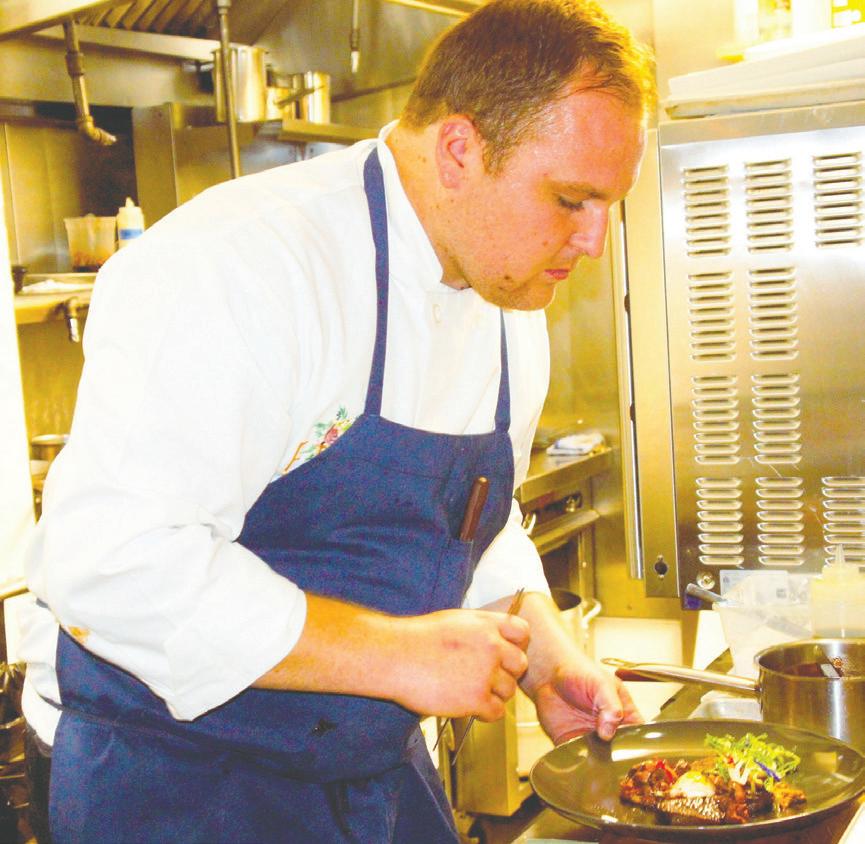
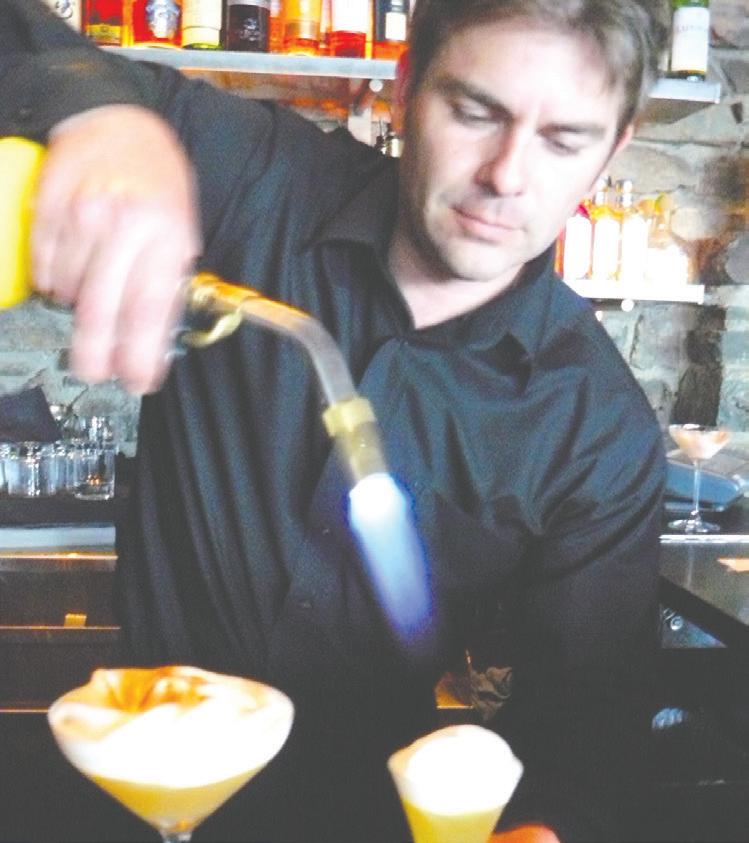
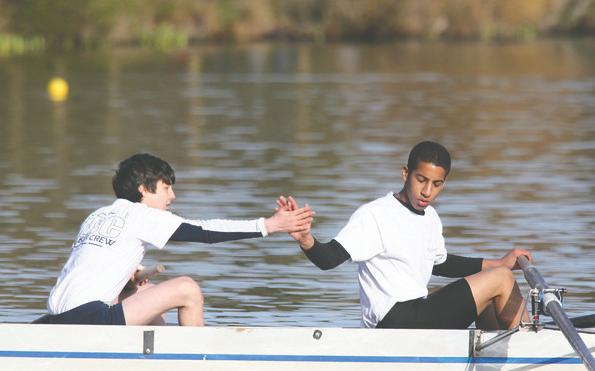




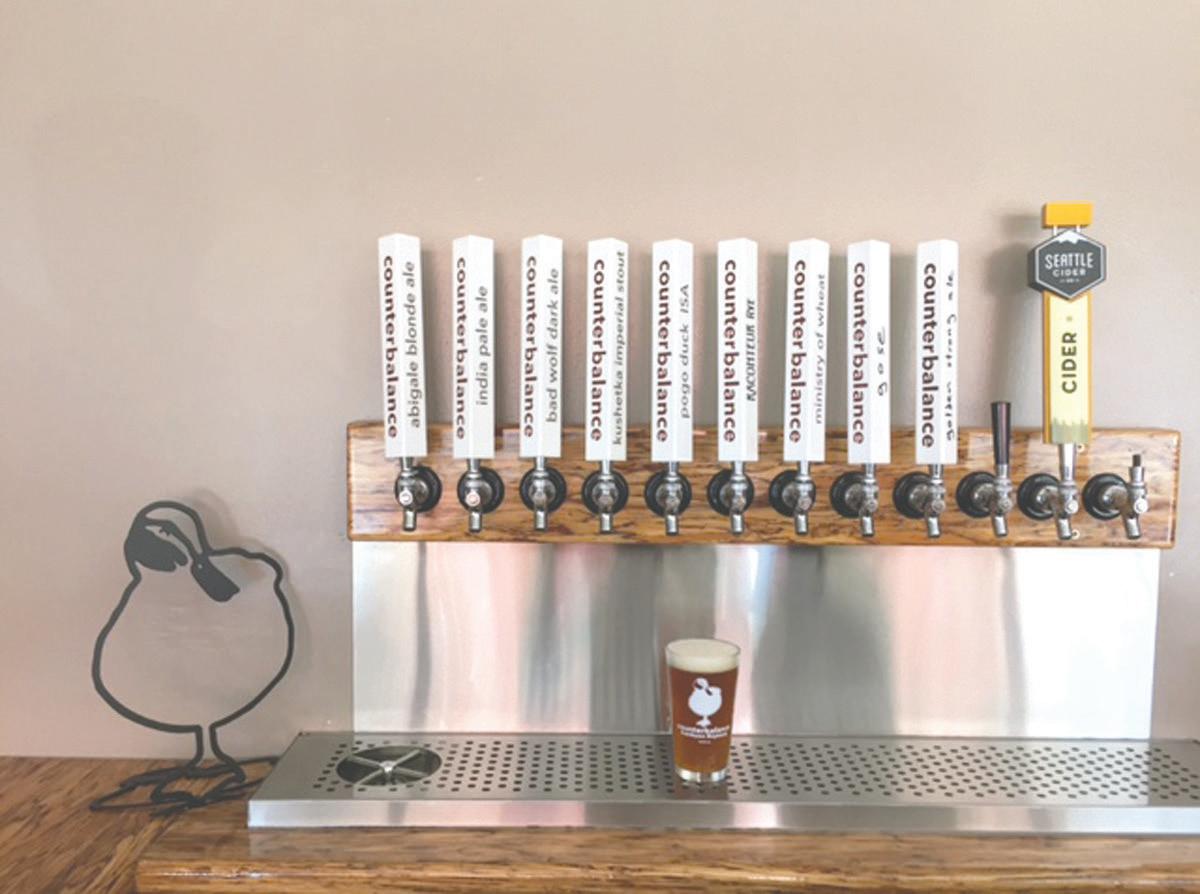
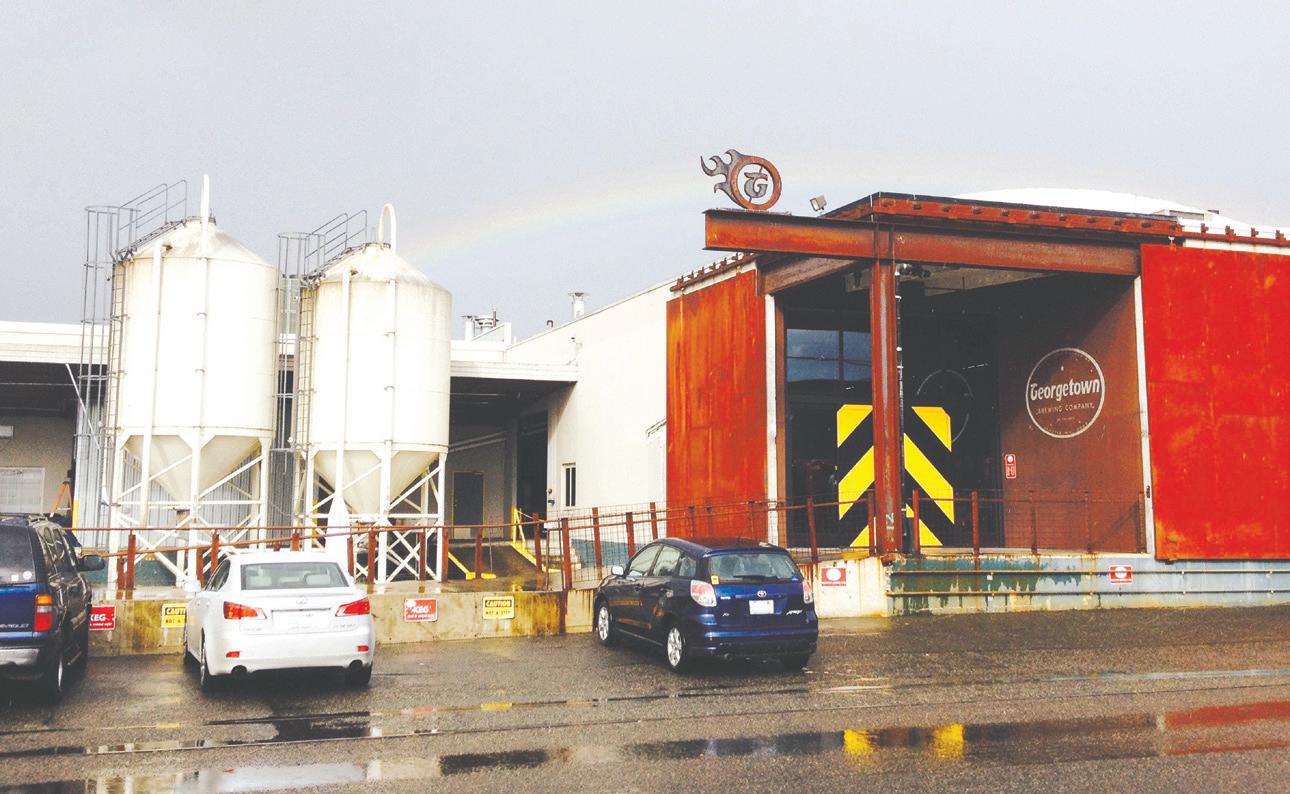
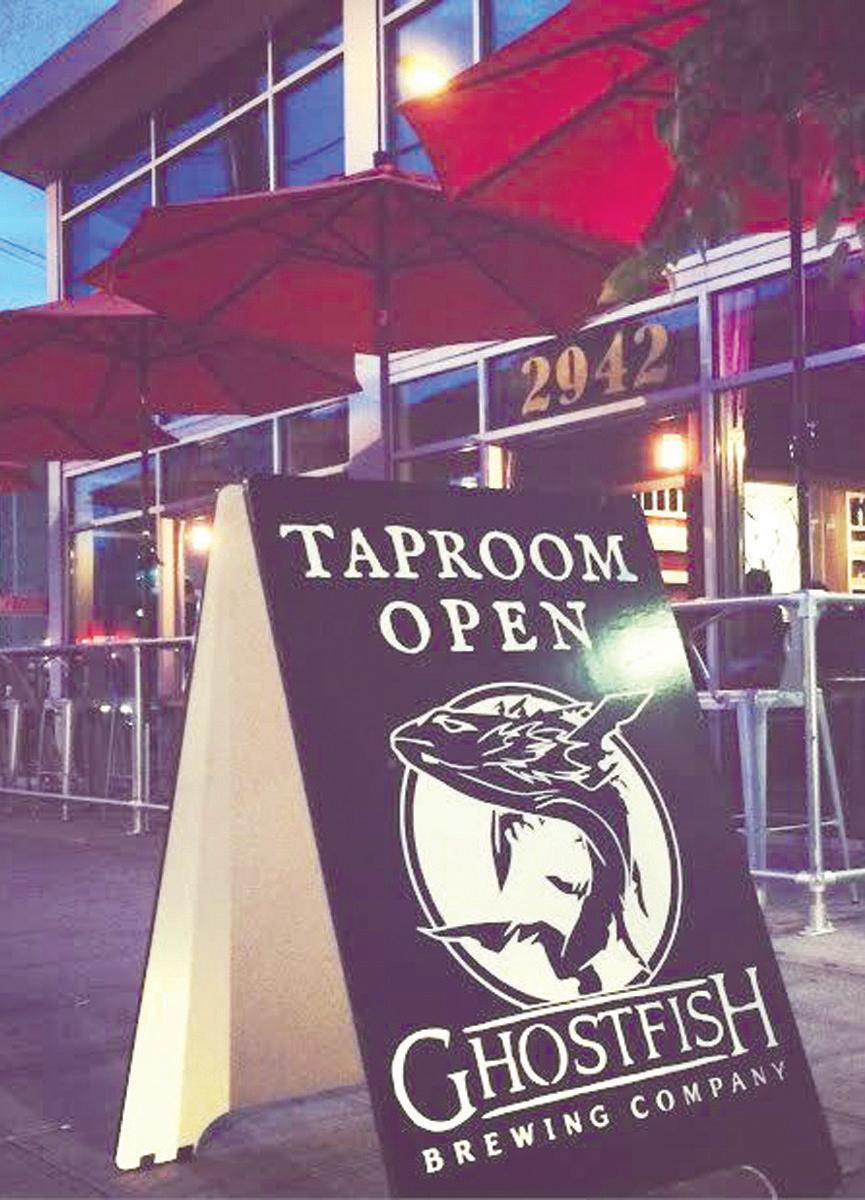
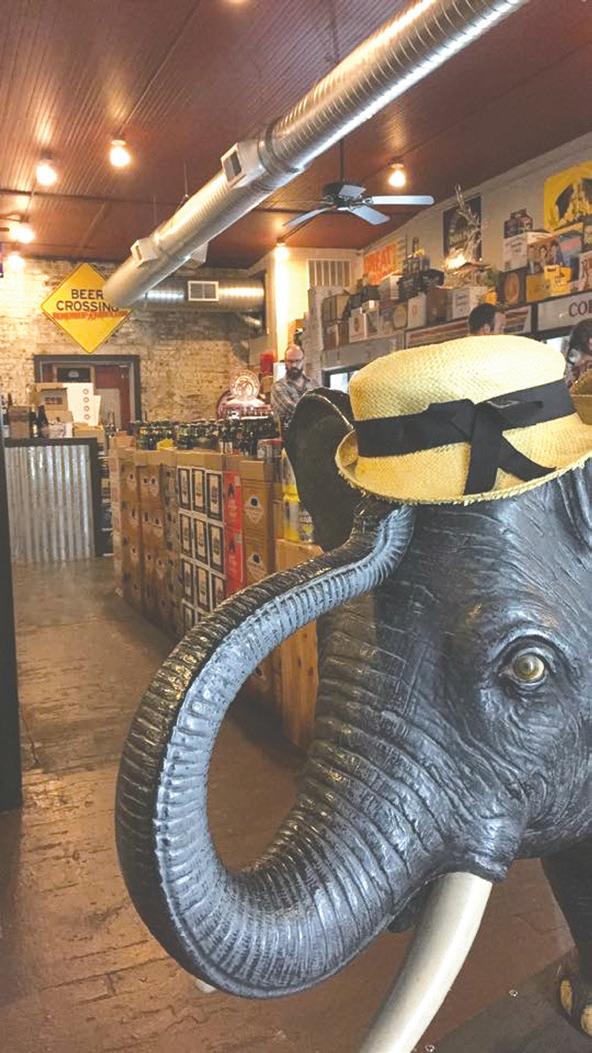
ing’s Schools faculty excel as educators.
Schools faculty
ing’s Schools faculty excel as educators.
through award-winning classroom teaching, mentoring and collaboration.
through award-winning classroom teaching, mentoring and collaboration.
In a close-knit learning community our students are challenged to grow intellectually and given opportunities to build character in ever y aspect of school life. As a result,
ing’s through award-winning classroom teaching, mentoring and collaboration. In a close-knit learning result,
King’s graduates are well prepared for college and more importantly for life.
King’s graduates are prepared for college and more importantly for life.
King’s graduates are well prepared for college and more importantly for life.
To learn more about King’s inspired education visit us online or schedule a campus visit today.
To learn more about King’s inspired education visit us online or schedule a campus visit today.
To learn more about King’s inspired education visit us online or schedule a campus visit today
To learn more about King’s inspired education visit us online or schedule a campus visit today www.kingsschools.org
In a close-knit learning community our students are challenged to grow intellectually and given opportunities to build character in ever y aspect of school life. As a result, King’s graduates are well prepared for college and more importantly for life.