Seattle Center arena looking up
Oak View Group construction VP says excavation work nearly complete; next will be reconnecting roof
By Brandon Macz Madison Park Times editor
Construction crews began pouring concrete for the first of many columns under the iconic Seattle Center arena roof. While 2019 was about digging down, 2020 is about building the arena back up, said Ken Johnson, executive vice president of construction at Oak View Group.
The developer behind the $930 million rebuild of the arena invited media to tour the site on Tuesday, Jan. 21. An October media tour showcased the raising of the original roof from 1962 on supports while crews began excavating the bowl of the new arena.
Johnson said crews, led by general contractor Mortenson Construction, are removing 600,000 cubic yards of dirt from the site to double the arena’s original size. About three-fourths of the excavation has been completed, he said, with the rest expected to finish in February. The new arena bowl will be 53 feet below ground.
The 44-million-pound roof, designed by architect Paul Thiry for the Seattle World’s Fair, is being supported by 72 temporary steel columns and two “kickstands,” or spliced together steel reinforcement structures on the exterior, said Mortenson project executive Greg Huber.
“You’re never going to see something like this again,” Huber said of the engineering
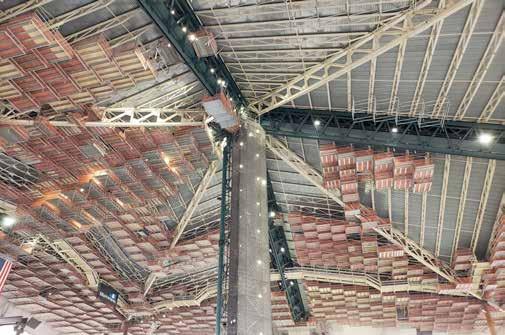
that went into supporting the massive roof.
The Seattle Landmarks Preservation Board required the roof and the arena’s original windows to be preserved. Johnson said the windows are catalogued and in a Kent storage facility.
Scaffolding has been erected under the roof, where crews are ensuring it will be able to support various equipment.
“It’s our one chance to check under the roof,” Johnson said, “so we’re making sure we do it right.”
While Jan. 21 marked the first concrete pour for the project, the total rebuild will

Photo by Brandon Macz
Excavation work is nearly finished under the iconic roof of the Seattle Center arena. Oak View Group plans to spend 2020 building the facility back up.
PCC Community Markets filling Central District grocery space
Co-op taking over vacated New Seasons space, remains committed to opening Madison Valley location
By Brandon Macz
Madison Park Times editor
PCC Community Markets will take over space in the Central District vacated by New Seasons Market late last year following its merger with Good Food Holdings.
The grocery space inside Lake Union Partners’ East Union building at 23rd and Union had already been built out when New Seasons pulled out, Good Food Holdings planning to keep its Metropolitan Market as the Seattle region’s exclusive brand.
“As soon as we learned that New Seasons intended to exit the market, we just stepped in,” said PCC Community Markets CEO Cate Hardy. “We just thought it was really important that the neighborhood got the grocery store that they were promised.”
New Seasons’ plans to open a store in the Central District was met with pushback by the community for being an anti-union company. News that PCC would take its place was positively received by the United Food & Commercial Workers 21 union.
“This is a huge win for Seattle workers. For nearly 40 years, PCC has been an excellent partner helping raise the bar for grocery industry standards,” said UFCW 21 president Faye Guenther in a PCC news release. “The Central District PCC will bring quality union jobs with a written contract that provides workers with health care, a pension
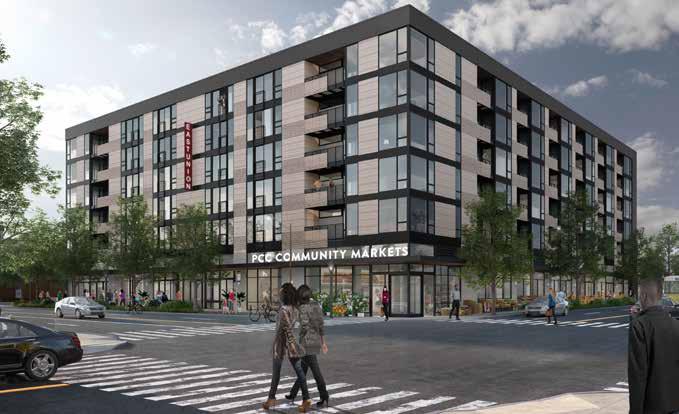
After Portland-based New Seasons Market was sold to Good Food Holdings, the grocer pulled out of plans to open a new store in the East Union building at 23rd and Union. Now, PCC Community Markets is coming in.
they can rely on, and a voice at work. UFCW 21 is excited to work with PCC to ensure that this store reflects the neighborhood’s importance as a center of Seattle’s African American community.”
Hardy tells the Madison Park Times that PCC held a
Jan. 7 community meeting with Central District residents who had been actively following the New Seasons development and a senior leader with the UFCW 21 to talk


Image courtesy of PCC Community Markets
Plymouth Housing breaks ground on Uptown affordable housing project
Ceremony kicks off 18-month construction schedule for apartment building with nonprofit arts space below, across from Seattle Center
By Brandon Macz Madison Park Times editor
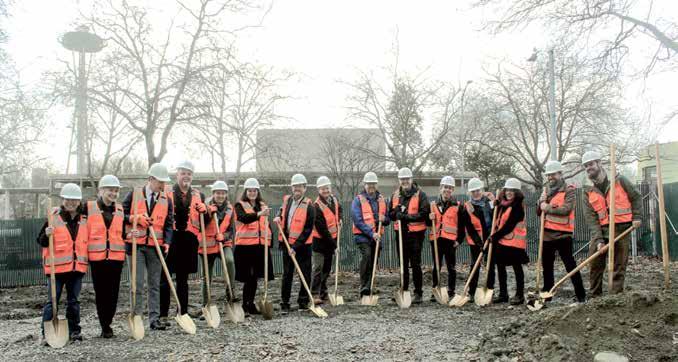
The sun came out for Plymouth Housing’s groundbreaking ceremony in Uptown, where it will spend the next 18 months constructing more than 90 affordable housing units above a nonprofit community arts space. The cold, however, underscored the need for more affordable housing stock in order to bring those experiencing homelessness inside.
“We are here with warm hearts for what we’re going to do here today,” said Plymouth Housing board president Jane Zalutsky, who is also executive director of the Seattle Center Foundation.
Located on the southwest corner of Second Avenue North and Mercer Street, the 11,000-square-foot “K” site was gifted to Seattle Center by the Kreielsheimer Foundation while the rest of the 43,000-square-foot block was donated to the Seattle Opera, which sold its land to Washington Holdings in 2016.
The City of Seattle and Plymouth Housing last November announced plans to redevelop the “K” site for affordable housing and in partnership with Path with Art, a nonprofit that uses art to improve the lives of people experiencing homelessness and addiction. The Office of


Housing provided $6.9 million in funding for the project at that time, and the Seattle City Council approved a 99year ground lease with Plymouth in September, charging just $1 per year.
“This outcome was one of my favorite during my time with the city,” said former Office of Housing director Steve Walker, who recently returned to work at the Washington State Housing Finance Commission as its executive director.
The commission carried out the sale of $21 million in low income tax credits (LITC), which is the main source of financing for the affordable housing development.
Walker thanked U.S. Sen. Maria Cantwell for championing a temporary expansion of the LITC program in 2018.
“Without that, today’s celebration would have been significantly delayed,” he said.
Cantwell and U.S. Rep. Suzan DelBene are working on expanding the program again with bipartisan legislation,

Walker said.
Ninety-one studio apartments at Second and Mercer will be income-restricted units, with 19 dedicated to people who had formerly experienced homelessness, and 72 for Plymouth Housing clients exiting supportive housing. Two units will be for site managers.
“Without a doubt, homelessness is one of the central challenges facing our city and region,” said Office of Housing director Emily Alvarado, adding permanent supportive housing is the proven solution. “This saves lives, and it saves public resources.”
Alvarado thanked the Uptown Arts & Culture Coalition and other community stakeholders for supporting plans for affordable housing and pushing for it to anchor arts and cultural spaces in the neighborhood, which allowed the Office of Housing to include both in its request for proposal.
e are noting a significant rebound in most markets as of yearend 2019 on account of historically low interest rates, reduced inventory levels, and finally, some good housing news in the headlines. Fortunately, the stock market appears to be booming and consumer confidence is rising. Personally, I feel there are many would-be buyers and would-be sellers that have been trying to time the recent correction these past 18 months. If you’re considering making your next move, now is an opportune time to set—and achieve—your real estate goals.


A CONTINUED LEGACY
RSIR ranks amongst the largest, most productive and fastestgrowing real estate companies in Washington with access to 23,000 brokers in 70 countries that generate U.S. sales of $100 billion+ annually.
Photo by Brandon Macz
Plymouth Housing and its partners broke ground on a new affordable housing project at Second Avenue North and Mercer Street in Uptown on Thursday, Jan. 16.
Sotheby’s auction house presents Marcus Hiles | Macallan in Lalique, Pappy & Madeira, a selection of superlative spirits and ancient madeiras.
The market: 2019 vs 2018
We are about a month into 2020, and the real estate market is off to a positive start in our area. At the end of 2019 we noticed an upswing in the market; unusual during the typical November/December slowdown.

Some of this uptick in activity could have been attributed to high-end homeowners looking to sell before 2020 with the Jan. 1 implementation of the graduated Real Estate Excise Tax (REET.) However, the first few weeks of 2020 point to continued strength in our local market.
Year in Review: 2019 vs 2018
2018 Madison Park/Washington Park/Broadmoor
• 103 sales
• Average sales price:
$1,893,158
• Average price per square foot: $739
PCC, from Page 2
• Average days on market: 26
• Highest sale: $12.5 million
• 33 sales less than $1 million
• Four sales more than $4 million
2019 Madison Park/Washington Park/Broadmoor
• 87 sales
• Average sale price: $2,191,222
• Average price per square foot: $699
• Average days on market: 69
• Highest sale: $13,750,000
• 19 sales less than $1 million
• Eight sales more than $4 million
Takeaways
In 2019, there was uncertainty on the market, including fears of a recession, which led to longer market times. At the same time, less inventory translated to fewer sales, but with an increase in average sale price; up 15 percent on average.
From four to eight sales at more than $4 million shows buyers are willing to pay more to be in our area. Fourteen fewer sales less than $1 million in 2019 shows increasing pressure on pricing.
The lack of inventory continues to be one of the biggest drivers in
about how to be a good partner in the neighborhood.
PCC reports each location provides roughly 100 union jobs and prioritizes recruiting directly from the surrounding neighborhoods it serves. Hardy said the grocer will soon be holding job fairs in the neighborhood.
Plans are to open by July 1, if not sooner, Hardy said, adding PCC is still finalizing terms and details with Lake Union Partners (LUP).
“We knew it was important to bring to the Central District a grocery partner who would respect the community and all that this location represents,” said LUP principal Patrick Foley in the news release. “In our previous experience working with PCC, they have always shown a deep regard for the neighborhoods they enter and serve. We are very happy to have them as the anchor neighborhood store at East Union.”
Part of the challenge for LUP was finding a new tenant at East Union after the space had already been built out for New Seasons.
“New Seasons does a nice job in their stores,” Hardy said, “and we certainly will make some changes, but we found some of the elements we would have brought are already there.”
Among the tweaks and changes PCC will make is expanding the store’s bulk section.
PCC will not fill the entire footprint that New Seasons had planned to at East Union, according to
our market. According a recent report from Zillow, Seattle experienced the largest drop in inventory in the 50 largest markets in the country.
“Inventory overall was down year-over-year in 46 of the 50 largest markets. For-sale inventory fell the most from a year ago in Seattle (-28.5% year-over-year.),” according to the online real estate site.
Real estate brokers in our area will tell you: the buyers are out there, we just don’t have homes to sell them.
In other words: if you have a home to sell, now is a great time. There is strong evidence that the jobs economy in Seattle will continue to grow, and we will have even more buyers looking for homes. Kiplinger recently rated Washington fifth for fastest projected rates of job growth for 2020.
“A big boost to the state’s economy comes from the information services sector, which is little surprise as Seattle is home to fastgrowing Amazon, and Redmond is headquarters for Microsoft. Construction, manufacturing, health care, and hospitality are
the news release, and has asked LUP to find another retailer to fill the leftover space focused on food and beverage.
The co-op remains committed to opening another location in Madison Valley that has been stalled by the Save Madison Valley group, which argues the mixedused development the grocery store would occupy is too large and out of scale with the neighborhood.
Deputy Hearing Examiner Barbara Ehrlichman sided with SMV on two matters that were remanded back to developer Velmeir Properties and the Seattle Department of Construction and Inspections, which is still waiting for the developer to respond to corrections regarding shadow impacts to a nearby P-Patch and updating a drainage report. SMV plans to continue challenging the project once those corrections clear SDCI.
PCC will occupy the ground floor of the six-story apartment building on the City People’s Garden Store site at 2925 E. Madison St.
“We don’t want the neighborhood to think we’re not coming,” Hardy said. “We don’t want anyone to think our plans have changed.”
She said the market has shown that communities can sustain grocery stores with closely sited locations, such as the PCC in Fremont and a recently opened Ballard store. The co-op also benefits from working with a small developer like Velmeir, said Hardy, adding she’s known managing director Geza de Gall for years.
“He knows and likes PCC, and his company knows and likes PCC,” Hardy said, “and we just keep mutually signing up.”



















The common name of this remarkable plant, Heavenly Bamboo, is half right. It is heavenly, or certainly ethereal in its stature, delicate foliage and ease of cultivation, but Nandina domestica is not a bamboo.
Native to China and Japan, this member of the barberry family likely got its common name due to its cane-like stems, gently branched and supporting lacy evergreen complex leaves. Unlike bamboo, it grows in clumps, its size expanding over the years by suckers (infant shoots) which pop out by the sides of the parent stems. In horticultural jargon, it is a “clumping shrub.”

Growing to a height of six to eight feet, this is an excellent filler plant. Filler plant? Yes.
Spotted around the garden, here and there, Nandina will fill in among the trunks of deciduous plants, conifers and large-leafed evergreens, with quietly beautiful foliage, bringing visual continuity and weaving a cluster of disparate plants into a graceful whole. Or, one alone, placed as a focal point in the garden can be equally useful. Best of all, it performs well in either sun or shade.
In summer this plant blooms in upright, conical clusters of tiny creamy blossoms, which turn into small fruits. The fruits appear late in the fall and stay on well into winter, if not spring, or until birds gobble them. They seem to be a favorite of robins.
If you can bear to rob your winter garden of these flashes of bright color, cut a cluster of berries and bring them inside to enjoy in a vase of water. They last longer, by far, than most cut flowers.
In the garden, this month, Nandina shimmers, its firm, glossy foliage wet with rainwater. If it has been grown in ample light, our recent cold snap will probably have turned the leaves red, and atop the plant will be the loose cones of brilliant red berries.
To show off Nandina at its best, remove the lower branches and leaflets up the bottom two-thirds of the upright canes, exposing the woody stems. Allow the upper leaves, topped by flower and then berry clusters, to carry the spectacle. Nandina domestica Moyers Red is a choice selection, favored for its broad leaflets that color up vividly in winter. Its pinkish flowers are followed by a robust crop of fruits that appear a month or two earlier than the berries of the basic species.
There are many cultivated varieties of Nandina domestica. Some are cherished for their dwarf size and bright red winter leaf color. Look for N.d. Fire Power, Harbor Dwarf or Moon Bay, among others. These rarely exceed three feet in height and fill in the garden at ground level, not needing to have their major vertical stems groomed to be showy. Give these plants good, rich acidic soil, ample water with good drainage, although they will tolerate drought. Give them a boost in early spring and early summer with a light application of a complete fertilizer or a top dressing of compost.



Steve Lorton Tree Talk
Photo by Mary Henry Tree Talk columnist Steve Lorton recommends adding Heavenly Bamboo, which is not really bamboo, to your garden.


ARENA, from Page 1
include 37,000 yards of concrete for columns, slabs and footings, which is roughly 3,700 truck loads, Huber said.
Johnson said the project remains on schedule to finish in summer 2021.
One benefit of preserving the roof has been the cover it provides from the rain and other elements, Huber said. It also limits the cranes and other equipment that has to work around the temporary supports.
“This probably takes the cake in terms of times we’ve had to be creative with our piledriving work,” Huber said.
As crews work back up from the bowl, the arena’s 20 permanent “Y” columns and four buttresses will be reconnected, the columns extending down to the base of the structure.
“How we build up and take things out is a very important part of how we do things in the next 6-8 months,” Johnson said.
Horizontal boring continues south of the Pottery Northwest building as an access tunnel is being worked on that will be used by delivery trucks to reach the arena’s loading dock; access will be on First Avenue North, between John and Thomas streets. Huber said there will not be public parking under the arena.
When completed, the Seattle Center arena will provide more than 18,000 seats for concerts and basketball games. Huber said seating is scheduled for delivery in spring 2021.
The summer 2021 opening will be ahead of the start of hockey season for Seattle’s new NHL team, which does not yet have a name. The arena also does not have new naming rights yet, and the KeyArena signage remains on top of the historic roof in the meantime.




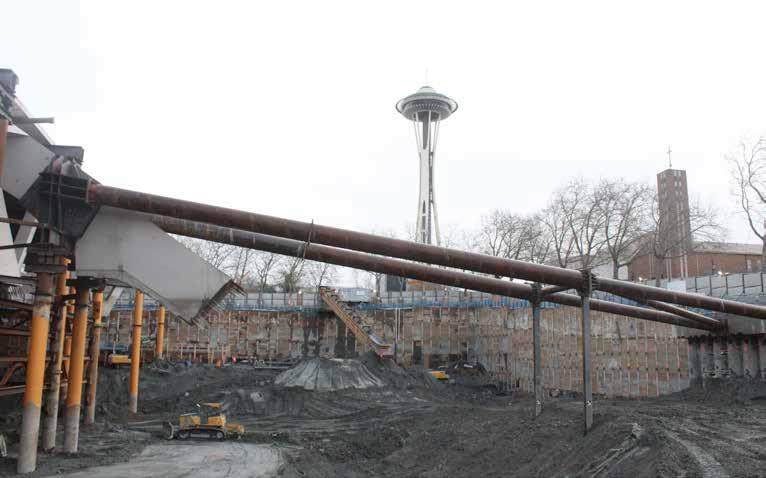

(Above) A ‘kickstand’ is seen assisting with supporting the roof around where a new arena atrium will be built.
(Left) Oak View Group executive vice president of construction Ken Johnson speaks with reporters about progress being made with the arena rebuild at Seattle Center on Tuesday, Jan. 21.
Photos by Brandon Macz
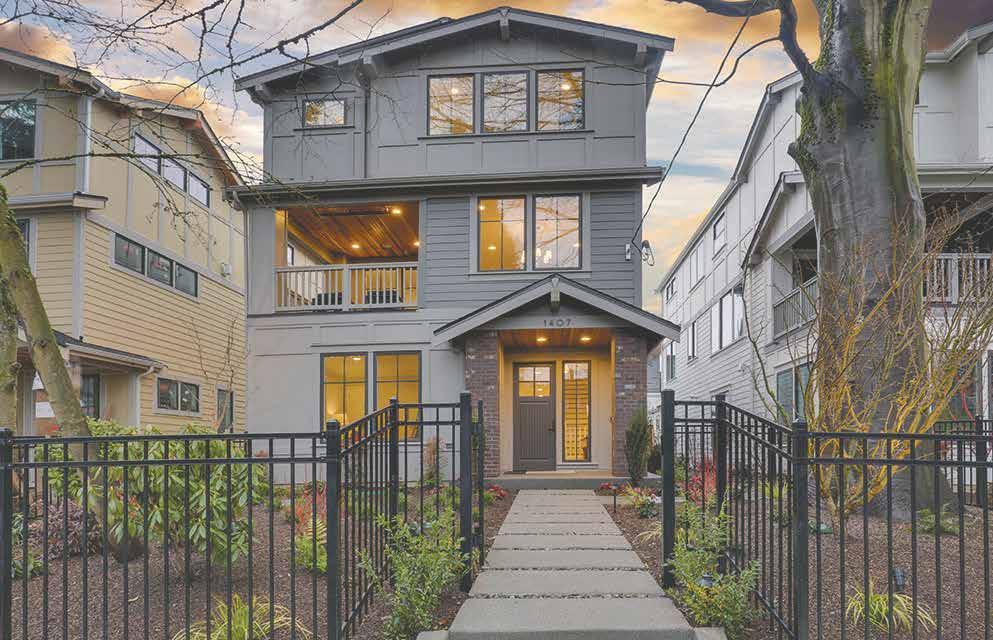
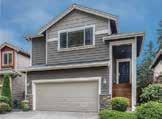
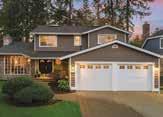
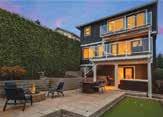
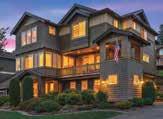
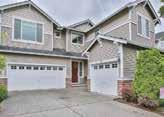
Chaffey Building Group is proud to unveil 1407 at Holliston Place presented in one of Seattle’s most sought-after neighborhoods! Multi-story masterpiece brimming in natural light, airy open spaces, luxurious details, thoughtful construction, fully-integrated smart home technology with immersive Sonos audio throughout. Gourmet kitchen paired with quartz and stainless steel appliances on the main floor. Master suite with vaulted ceiling and lavish spa-like bath on the upper. 2 car garage prewired for electric vehicle charging on the lower.
Located just a few steps away from Madrona’s eclectic vibe, shops, and eateries with easy access to downtown Seattle, S Lake Union, Lake Washington, and the Arboretum Park!
Contacts: Ian Porter 206.673.3409 vwpsales@windermere.com
Albert Clark 206.465.4129 albert.clark@compass.com
Arboretum Premier Listing
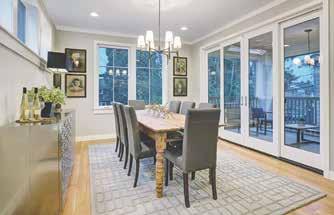


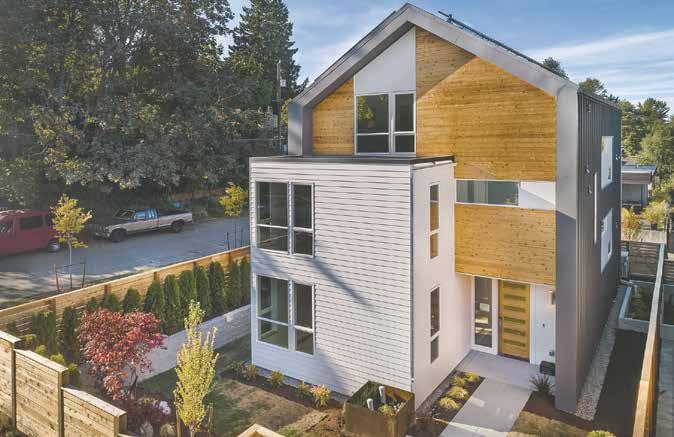
E Ward St, Seattle | $2,000,000 | MLS# 1540288
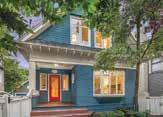
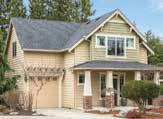
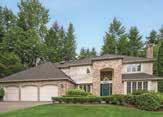
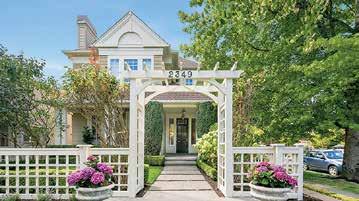
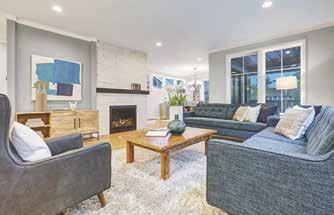
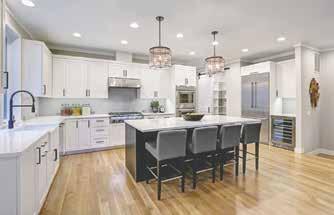
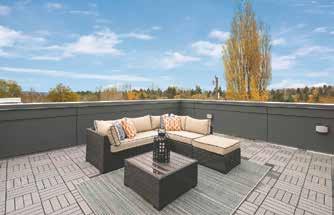
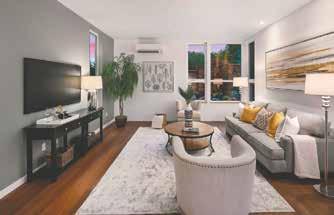
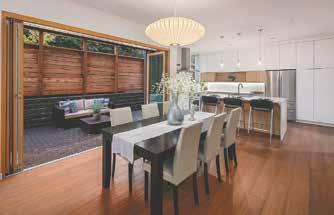
The Arboretum neighborhood proudly welcomes its most stylish energy efficient home to date, built by Green Canopy Homes. Comprised of exceptional materials and highly efficient systems, this generously proportioned 3,321 sq ft showstopper combines sustainably built components with an exquisite open floor plan, delivering elegant, bright, and minimalistic rooms that flow seamlessly to the next, providing supreme indoor/outdoor comfort and superior healthy living. Featuring 5 beds, 3.5 baths, and pre-installed solar panels, this home is also net-zero certified and will
reduce your energy expenses throughout the year! Truly an unrivaled offering in an established, peaceful neighborhood, just moments from Capitol Hill, UW, Downtown, and the Eastside!

Contacts: Christine Holcomb 206.673.3409 vwpsales@windermere.com www.vanwyckandporter.com



Seattle’s homelessness committee reviewing tiny house legislation
New ordinance would ease restrictions, allow shelter model in residential zones
By Brandon Macz Madison Park Times editor
The Select Committee on Homelessness will have another meeting to take a deeper dive into legislation proposed by District 3 Councilmember Kshama Sawant that would allow for more tiny house villages in Seattle.
“As long as we have this [homelessness] crisis, we should have a tiny house for everyone who doesn’t have a place to go,” Sawant said during the first committee meeting of the year on Jan. 22.
The Seattle Department of Construction and Inspections issued a Determination of NonSignificance (DNS) last August for Sawant’s ordinance, which would allow transitional encampments for people experiencing homelessness on property owned or controlled by a religious organization without having to first establish an accessory use; allow transitional encampments to be permitted on all public property; increase the number of allowed encampments — not associated with a religious organization — from three to 40; allow unlimited renewals of one-year permits for transitional encampments; authorize encampment on an interim basis in residential zones; remove a requirement that encampments be at least one mile apart from each other, and to make renewal of sixmonth temporary-use permits for existing encampments a Type 1 (nonappealable) decision.
An existing ordinance on tran-
from Page 4 PLYMOUTH, from Page 3
also growing briskly. Competition for skilled employees among high-tech companies in the region is fierce,” according to Kiplinger.
sitional encampments passed in 2015 is slated to sunset in March.
Durkan proposed $4 million in her 2020 budget to fund eight existing transitional encampments — some consisting only of tiny homes and others that include tents — but the council added $2 million to support two more tiny house villages. HSD is expected to propose potential locations by February, which it will determine through coordination with the Low Income Housing Institute, which runs the city’s existing transitional encampments. LIHI executive director Sharon Lee said the hope is to site one tiny house village in Seattle’s north end.
The Port of Seattle Commission unanimously approved a one-year lease extension for the Safe Harbor Tiny House Village to continue operating at the Tsubota site in Interbay last October.
with the group since it was Tent City 5 on Dravus Street, and remembered being excited when it transitioned to a tiny house village, because people had houses to live in and a place to keep their belongings, without worrying about them being taken during one of the city’s ongoing sweeps of unsanctioned encampments.
“As long as we have this [homelessness] crisis, we should have a tiny house for everyone who doesn’t have a place to go.”
Procella, who has spent the past year in supportive housing, said there had been a number of businesses in Interbay that protested Safe Harbor coming into the community, but a year later many were voicing support for the tiny house village to continue and expand. Remaining tents at Safe Harbor were replaced with 23 more tiny houses in spring 2019.
Kshama Sawant, Seattle City Counci, District 3
Port Commissioner Peter Steinbrueck offered his support for the tiny house village shelter model, saying it provides people experiencing homelessness with a sense of pride, dignity and hope. He applauded the work of Safe Harbor’s program manager and two case managers, as well as the residents’ ability to self-manage their community.
“This is a widely recognized — nationally — most successful model that we have today,” Steinbrueck said, pointing to a 46 percent exit rate compared with 4 percent for traditional shelter models.
Former Safe Harbor resident Joseph “Panda” Procella had been
“Art heals people and community,” said Path with Art executive director Holly Jacobson, who thanked Plymouth and the city for recognizing how art promotes connectivity and creativity.
Path with Art has a $50,000 grant from the Seattle Office of Arts and Culture it will use to build out its ground-floor art, education and office space.
Alvarado also highlighted the project for its piloting of a Community Workforce Agreement that will mean constructing the affordable housing development with local workers from economically disadvantaged neighborhoods, including women and people of color.
Plymouth Housing hopes to have its certificate of occupancy by June 2021.
“It’s our hope that this project inspires everyone in Seattle,” said Plymouth Housing
Lee said 648 people were sheltered in tiny house villages last year, and 10 percent of the residents were children. Every village addresses different populations and needs, she said.
Councilmember Alex Pedersen said he was skeptical of the tiny house village model at the start, but came around when he saw exit rate data in 2018, however, he believes allowing up to 40 villages is too high. Herbold said she wanted to make sure that eliminating the one-mile separation requirement for transitional encampments doesn’t result in a disproportionate number of villages in certain neighborhoods, particularly communities of color.
The next Select Committee on Homelessness is scheduled for Wednesday, Feb. 26.
According to the Puget Sound Regional Council, the region will have nearly 3.4 million jobs by 2050— an increase of 1.2 million. Amazon continues to drive Seattle growth and vibrancy, holding nearly 13 million square feet of current and future office space, and the need for housing more than 50,000 employees.
Because the jobs being created in Seattle are high-paying, this relatively wealthy workforce is seeking homes in our neighborhood. As more people move into and around the region, our lack of inventory should cause home prices to remain stable, if not go up. Mortgage rates are also a key consideration for the 2020 outlook. The average rate for a 30-year fixed mortgage has been hovering below 4 percent for a lengthy period of time, and most industry analysts expect to see those rates for the foreseeable future. Between these low interest rates and continued job/economic growth, real estate in the Seattle area continues to be a wise investment. No matter how tight the inventory, pricing and presentation will always be key principles to a successful transaction. Working with a savvy broker with extensive neighborhood knowledge will help you price your home competitively.
If a home goes on the market even a bit too high, it can sit, and that may result in a larger price reduction than if the home had come on the market at a reasonable listing price. It is important to work with a broker who can help you be objective about price.
With regard to presentation, homes that hit this market should be show-ready; otherwise you are likely leaving money on the table. Our Compass Concierge program was designed to help sellers through this process without hassle. From staging to flooring to painting and tiling, we front the cost to transform a home before it hits the market, increasing the likelihood of a quick sale, and for more money. In this Seattle market, buyers will pay for a house that is turnkey, and our Concierge program is designed with that in mind.
For buyers, as the market continues to heat up, having your financing ready is critical. Our new Compass Bridge Loan program can give you an edge in a competitive situation. Imagine a house you love hits the market, but your existing home isn’t quite ready for sale, and a contingent offer just won’t do. Compass Bridge Loans Services gets you access to competitive rates and dedicated support from industry-leading lenders, with the exclusive option to receive up to six months of your loan payments fronted.
As of press time, there are 12 homes for sale in Madison Park, including Broadmoor. The most expensive is a Broadmoor home with extensive updates for $4,975,000, and the least expensive is a condo in the heart of Madison Park for $595,000. If you have given any thought to taking advantage of the continued strong market, now may be the time for you to make your move.
Our Compass experts have a long history in Madison Park, and are ready to help you navigate this market to your advantage with the latest technology, top-notch marketing and proven pricing strategies. If you’re buying, our knowledgeable agents will help you achieve success in this still competitive market.
Evan Wyman is a partner and broker with The Wyman Group at Compass.
cated
be its 16th affordable housing development — but never with
so many people, Lambros said. After seeing the request for proposal, he said, Path with Art was considered the best partner for the project.
“I could not be more proud to welcome new neighbors to my community,” said District 7 Seattle City Councilmember Andrew Lewis.
Lewis lives near a Seattle Housing Authority apartment building in Uptown and a DESC shelter, he said, and will be chairing the Select Committee on Homelessness and Housing Authority. Lewis said he’s committed to pushing for more permanent supportive housing, and more groundbreakings in District 7.
The Second and Mercer development is part of Plymouth’s PROOF campaign to build eight new buildings with 800 apartments, and has raised $53 million toward that goal, Lambros said, with about $21 million to go. The nonprofit housing developer plans to break ground on two more housing projects by the end of the year; one in First Hill and another in the International District.
CEO Paul Lambros. Plymouth has carried out many compli-
projects — this will
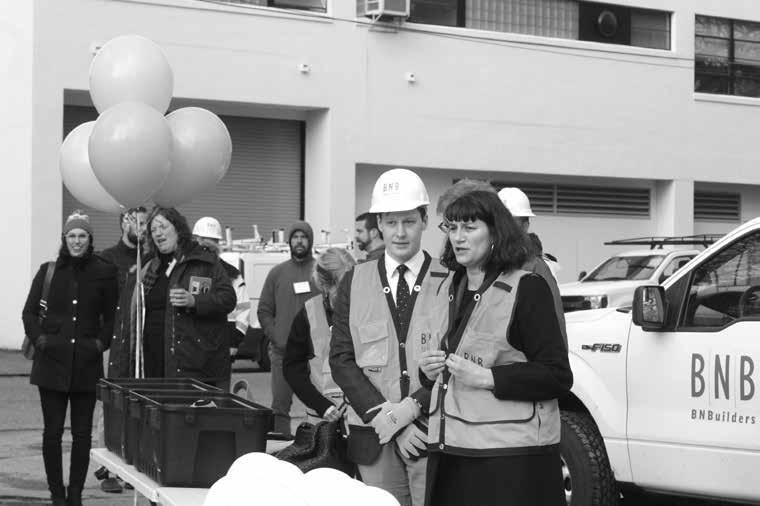
Photo by Brandon Macz
District 7 Seattle City Councilmember Andrew Lewis and Office of Housing director Emily Alvarado gear up for the groundbreaking.
WSDOT seeks proposals for temporary Montlake Market vendor space on site corner
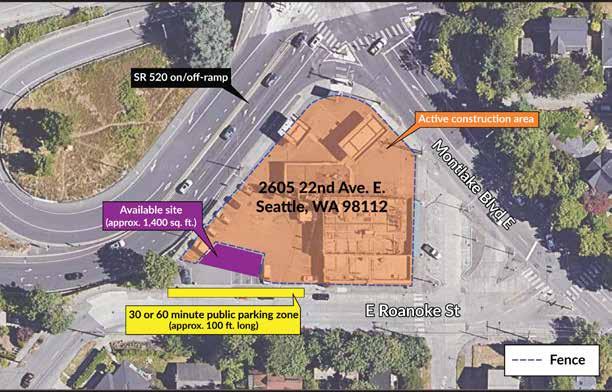
1,400-square-foot portion of property being offered for $425 per month as potential pop-up market, food truck, coffee stand
By Brandon Macz Madison Park Times editor
Montlake Market has closed, the property deemed necessary for the Montlake Project portion of WSDOT’s SR-520 Bridge Replacement and HOV Program.
To fill the void, WSDOT has put out a request for proposal (RFP) to place either a small community market or food truck on a portion of the property. Proposals are due by 5 p.m. Friday, Feb. 21.
Most of the site will be an active construction area, but 1,400 square feet will be set aside for a vendor space on the southwest corner of the property fronting East Roanoke Street.
The RFP asks applicants about their existing business and how it would meet the desires laid
out by the community in a survey launched last fall. Seventy-three percent of respondents live in Montlake, and the top-rated reasons they went to Montlake Market were for groceries, produce and prepared meals.
Eighty-one percent of survey takers responded favorably to WSDOT’s proposal to allow a temporary market, food truck or coffee stand on the property. Respondents, given two choices, voted most strongly for a small market and food trucks space at 48.1 percent and 43.8 percent, respectively.
A draft of the ground lease provided with the RFP states the lease would be for three years. Rent would be $425 per month.
The RFP can be found at wsdot.wa.gov/biz/ contaa/Contracts/montlakeneighborhood.html.
Tacos Chukis paying back wages after Labor investigation
The U.S. Department of Labor reports it reached an informal agreement with the owner of Tacos Chukis that resulted in its paying nearly $420,000 to employees to resolve violations of overtime requirements.
The department’s Wage and Hour Division found that Tacos Chukis employees did not have their hours combined when they worked at multiple restaurant locations, and when employees did work 40 hours at one location, “Tacos Chukis artificially divided those hours to make it appear as if employee [sic] had worked the hours at two separate locations,” according to a Jan. 15 DOL news release. Tacos Chukis has locations in the Central District, Capitol Hill, Beacon Hill and South Lake Union.
“Employers are required to pay
their employees the wages they have legally earned for all the hours that they work, including overtime,” said Wage and Hour Division district director Thomas Silva in the news release. “Other employers, especially those with multiple locations, should use the outcome of this investigation as an opportunity to review their own pay practices to ensure they comply with the law.”
A DOL spokesperson tells MPT the Wage and Hours Division does not typically disclose the reason for an investigation, and could not confirm if a complaint against the restaurant had been filed. Under the agreement, Tacos Chukis agreed to comply with all provisions of the Fair Labor Standards Act in the future, and the company was not assessed any civil penalties.
TREE, from Page 6
If you need to reduce the height of a plant, do so by cutting the tallest canes all the way to ground level, allowing the newer, shorter canes to stay in place at the height you want the plant. If you cut Nandina at mid-stem, it will branch, but you’ll lose that simple and towering effect that makes the plant so appealing.
Nandinas make dramatic container subjects, given a generous pot to grow in and reasonable attention with watering and feeding. They last for years, rarely needing repotting. One often sees them elegantly sprouting from handsome earthenware jars in China and Japan. To the Western eye, they seem to shout “ancient and imperial Asia!”
You’ll have no trouble finding most Nandinas in nurseries now. Until you figure out just where to plant one in your garden, enjoy it slipped into a decorative container at your entry or placed out on a terrace where you can see it from indoors. Valentine’s Day is coming. So give your Valentine, or yourself and your winter garden, a heavenly dose of foliage and fruit. It will be a colorful and artistic addition to your environment that has all the zing of Cupid’s arrow.




Map coutesy of WSDOT
The southwest corner of the former Montlake Market site, fronting East Roanoke Street, is being offered for a short-term lease by WSDOT to prospective markets, food trucks, coffee stands and other businesses.